
A fresh coat of paint can turn a dated bathroom cabinet into a polished focal point without the expense of a full remodel. These bathroom vanity paint ideas explore classic neutrals, nature-inspired greens, dramatic dark tones, and warmer statement colors. Each look includes coordinated countertops, hardware, walls, flooring, lighting, and decorative details, so the finished bathroom feels intentional rather than pieced together. White and off-white remain popular vanity choices, while warmer, more expressive colors are giving today’s bathrooms greater personality. () Before committing, test your chosen shade beside the countertop and tile under both daylight and vanity lighting. The complete schemes below make it easier to find practical, stylish inspiration among these 20 bathroom vanity paint ideas.

1. White Bathroom Vanity
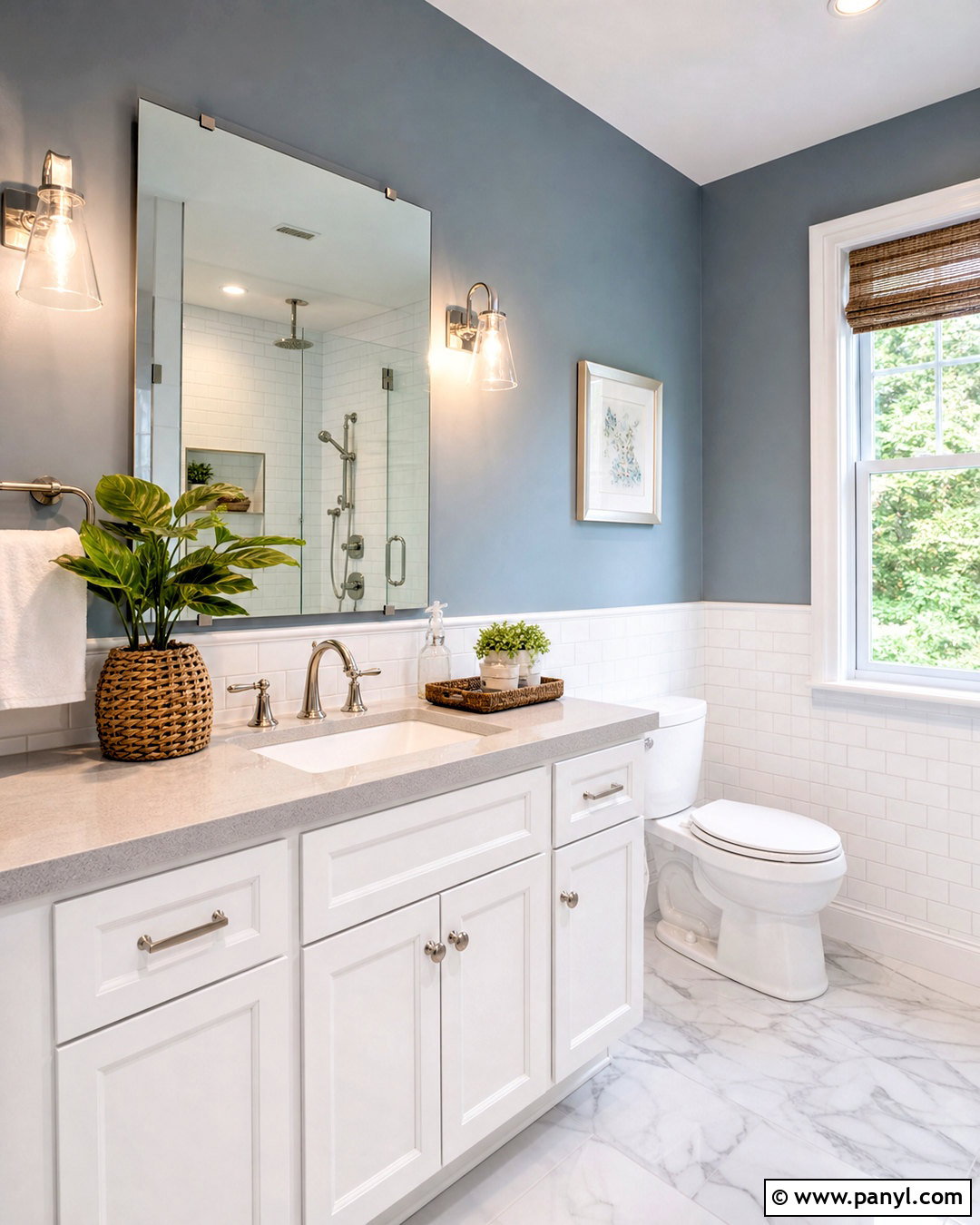
A crisp white vanity gives a bathroom a clean foundation and works especially well in a compact space. Pair the painted cabinet with a pale gray quartz countertop, white ceramic sink, and polished nickel faucet. Light gray marble-look floor tile adds gentle movement without competing with the cabinetry. For dimension, install soft blue-gray walls and a white subway tile backsplash with medium gray grout. A frameless mirror keeps the room open, while clear glass sconces provide simple sparkle. Finish the design with folded white towels, a woven storage basket, and one leafy plant. Choose a durable satin or semi-gloss cabinet finish so water spots and everyday marks are easier to wipe away.
2. Warm White Bathroom Vanity
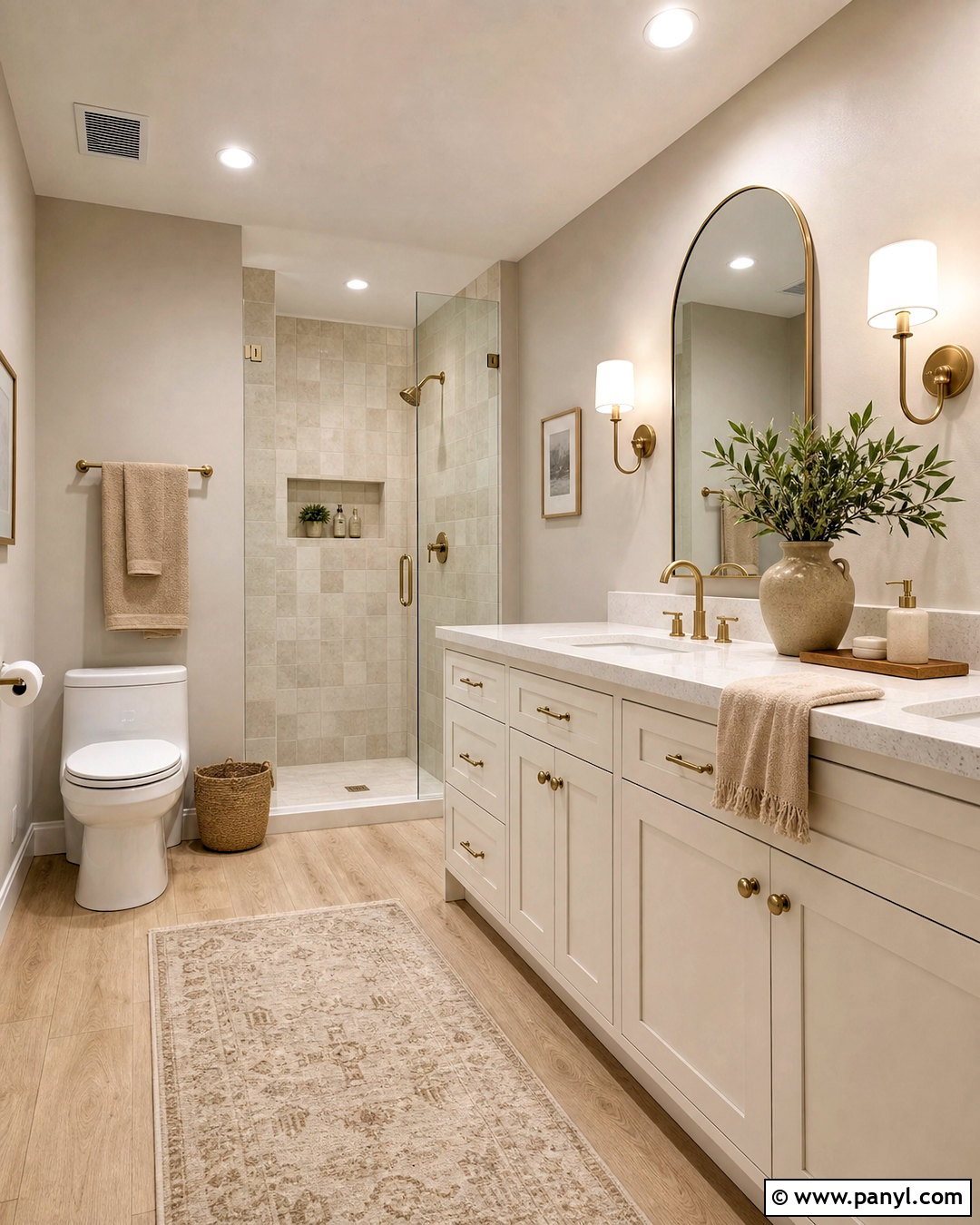
Warm white paint creates a softer bathroom than bright, cool white, particularly when the room receives northern light. Build the look around a creamy vanity with an ivory quartz countertop and an undermount sink. Brushed brass pulls, a matching faucet, and rounded brass sconces bring comfortable warmth. Use handmade beige wall tile behind the vanity, warm greige paint elsewhere, and light oak-look flooring underfoot. An arched mirror adds a gentle shape that suits the relaxed palette. Keep accessories simple with sand-colored towels, a small ceramic tray, and a natural linen shade. This complete scheme feels bright without looking stark, making it a useful choice for traditional, transitional, or softly modern bathrooms.
3. Greige Bathroom Vanity
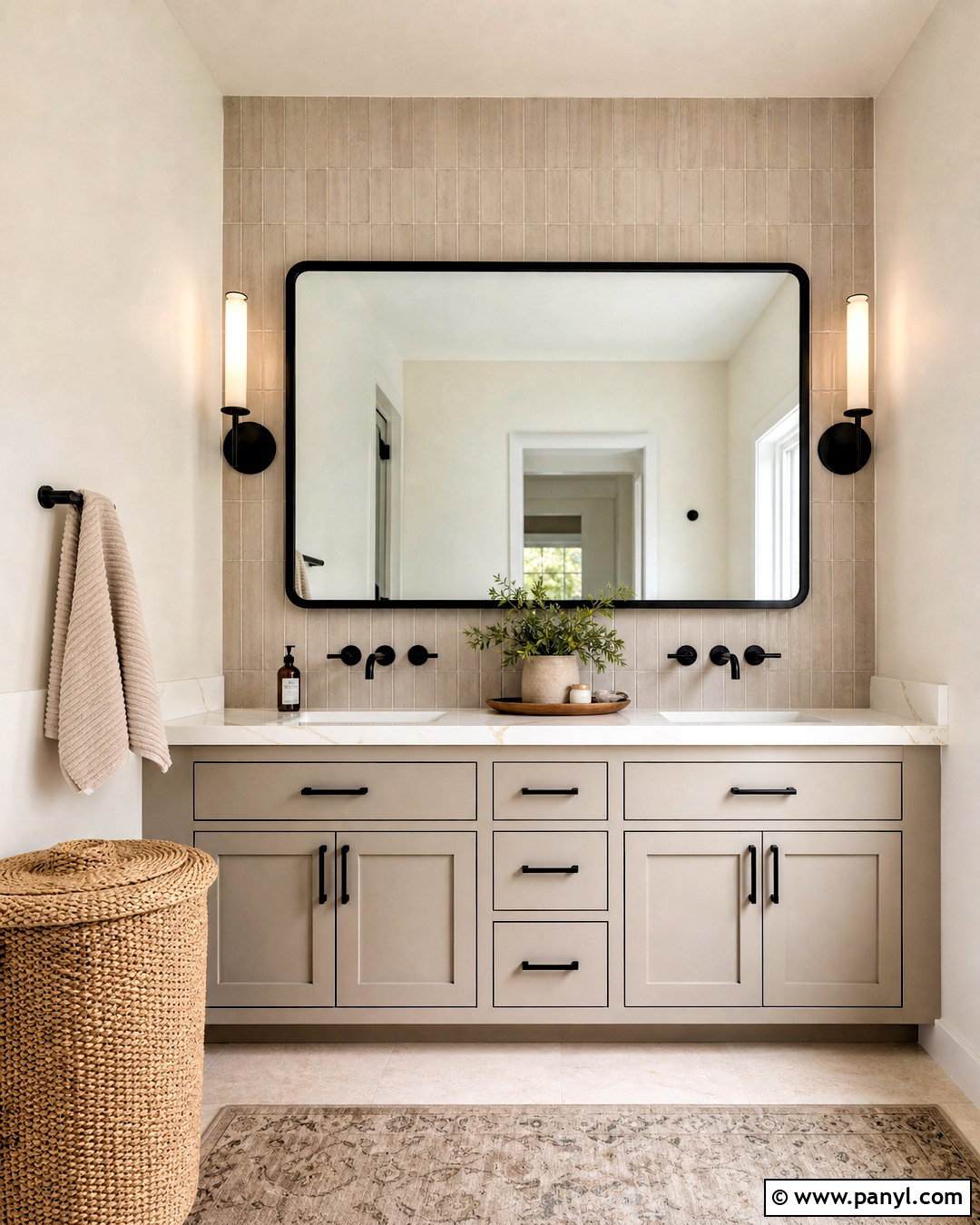
Can’t decide between gray and beige? A greige vanity bridges both colors and adapts easily to changing decor. Select a medium-light greige with warm undertones, then add a white quartz countertop with subtle taupe veining. Matte black hardware gives the cabinet definition, while a black-framed mirror and streamlined sconces repeat the contrast. Use creamy white walls, large-format limestone-look floor tile, and a vertical backsplash in soft mushroom beige. The restrained palette allows texture to become important, so include ribbed towels, a woven hamper, and a stone soap dispenser. This vanity scheme works especially well when existing bathroom tile contains several neutral shades that need one balanced cabinet color to connect them visually.
4. Taupe Bathroom Vanity
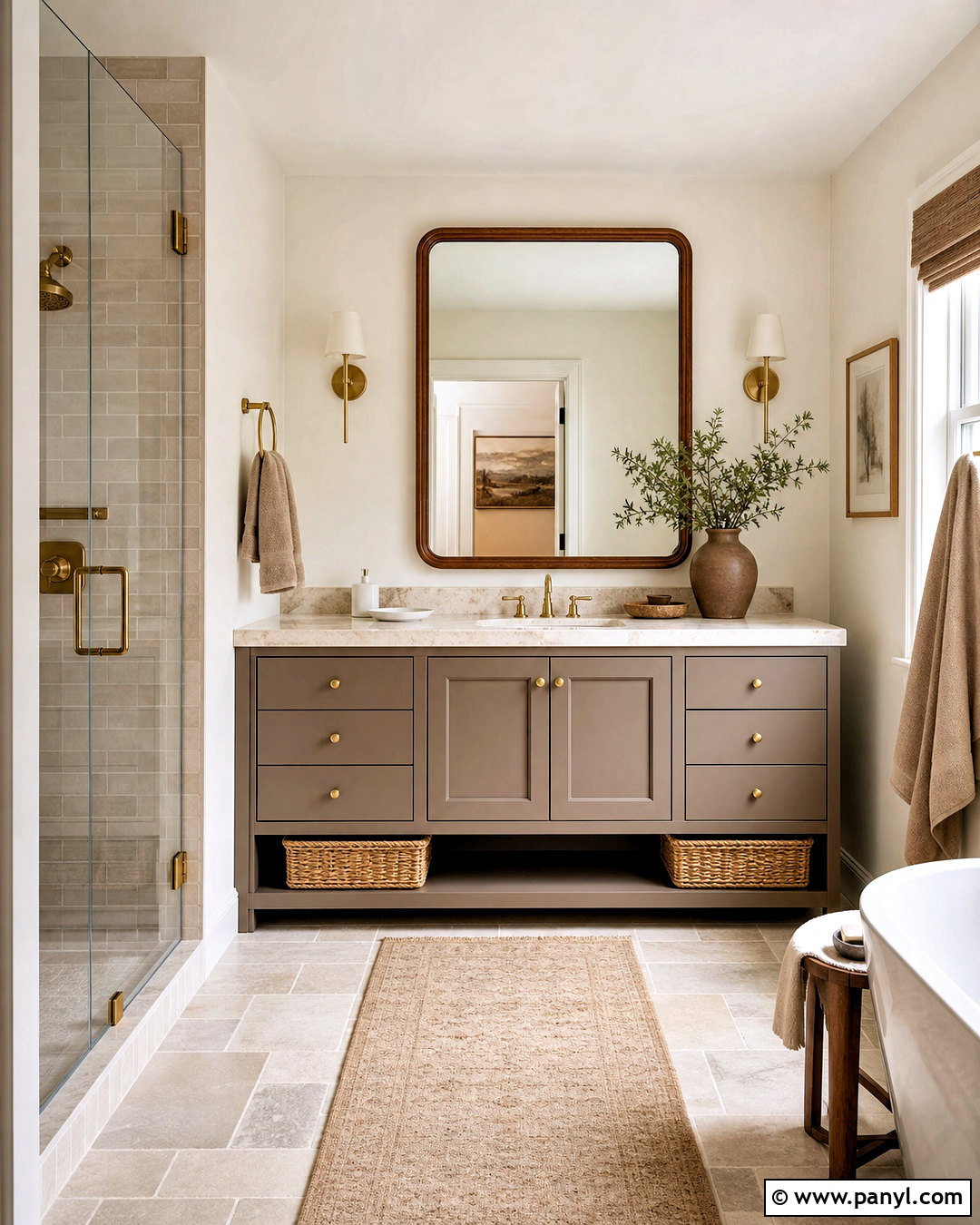
Soft taupe brings warmth and depth to a bathroom while remaining understated. Paint the vanity a medium taupe with a slight brown undertone, then top it with creamy white marble or marble-look quartz. Antique brass knobs and a warm brass faucet make the color feel richer. Continue the relaxed look with ivory walls, tumbled stone floor tile, and a narrow backsplash of glossy cream zellige-style tile. A walnut-framed mirror introduces natural grain without overwhelming the painted cabinet. Add oatmeal towels, a low clay vase, and woven baskets beneath an open vanity shelf. The combination feels collected and comfortable, offering a graceful update for bathrooms where cool gray paint would look flat beside beige flooring or warm stone.
5. Charcoal Bathroom Vanity
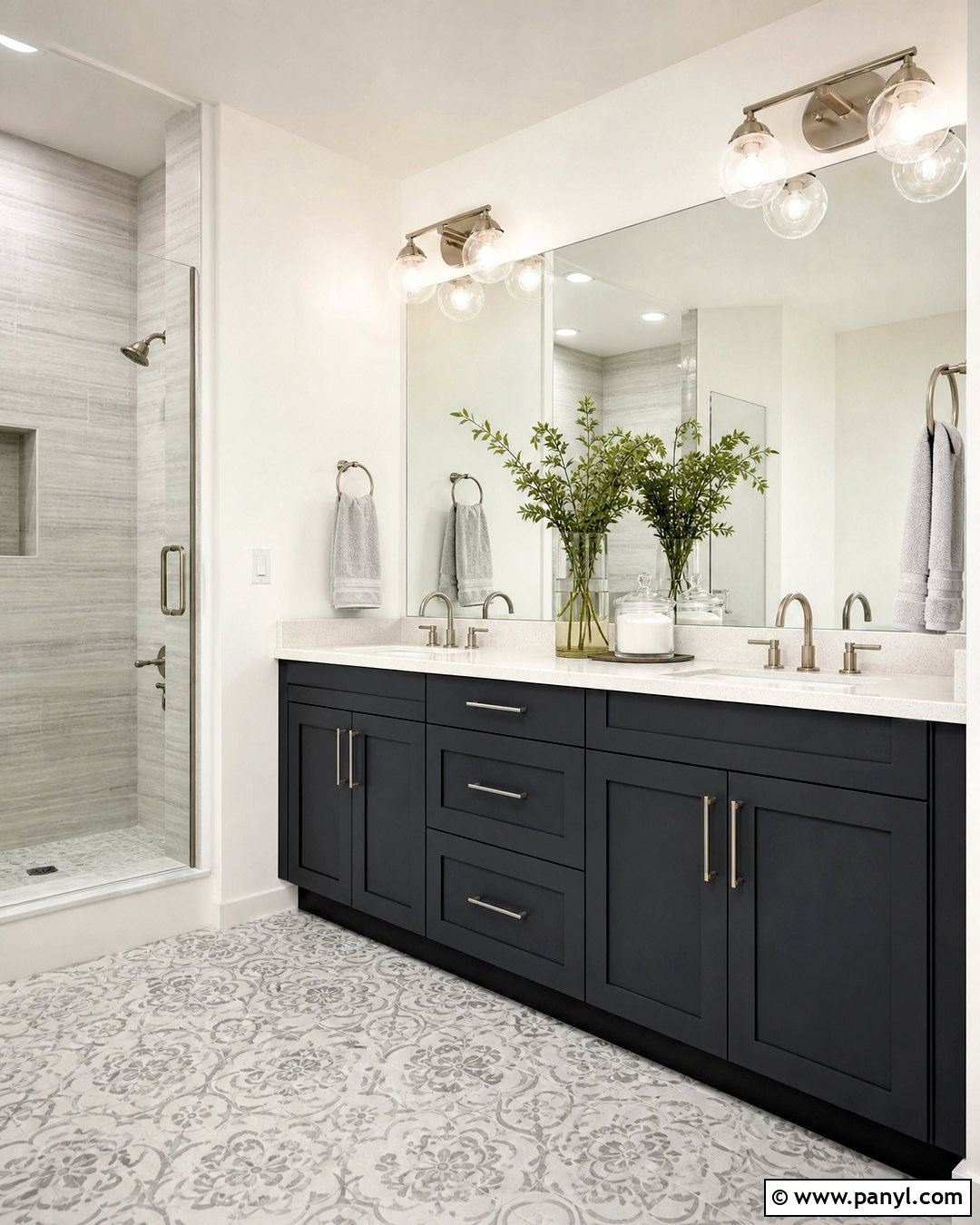
A charcoal vanity can anchor a bright bathroom without the severity of solid black. Choose a deep charcoal paint with a neutral undertone and balance it with a thick white quartz countertop. Brushed nickel pulls and faucet fixtures keep the scheme crisp and contemporary. Surround the vanity with white walls, a pale gray stacked-tile backsplash, and lightly patterned porcelain flooring. A wide frameless mirror reflects more light, while two simple globe sconces prevent the dark cabinet from feeling heavy. Add pale gray towels and minimal glass accessories to maintain the clean appearance. This full design works best when the bathroom has strong artificial lighting, a window, or enough light-colored surfaces to support the vanity’s visual weight.
6. Black Bathroom Vanity
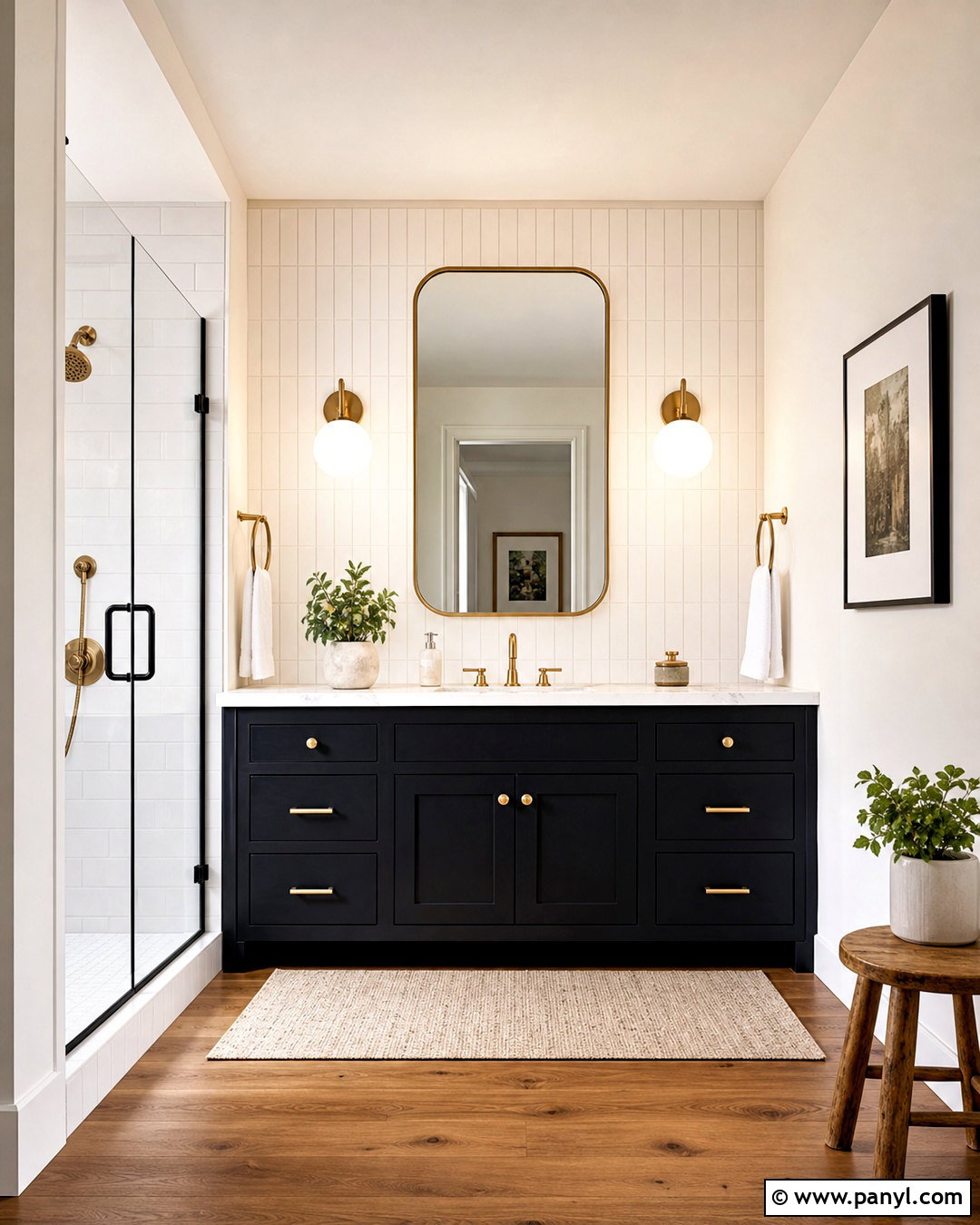
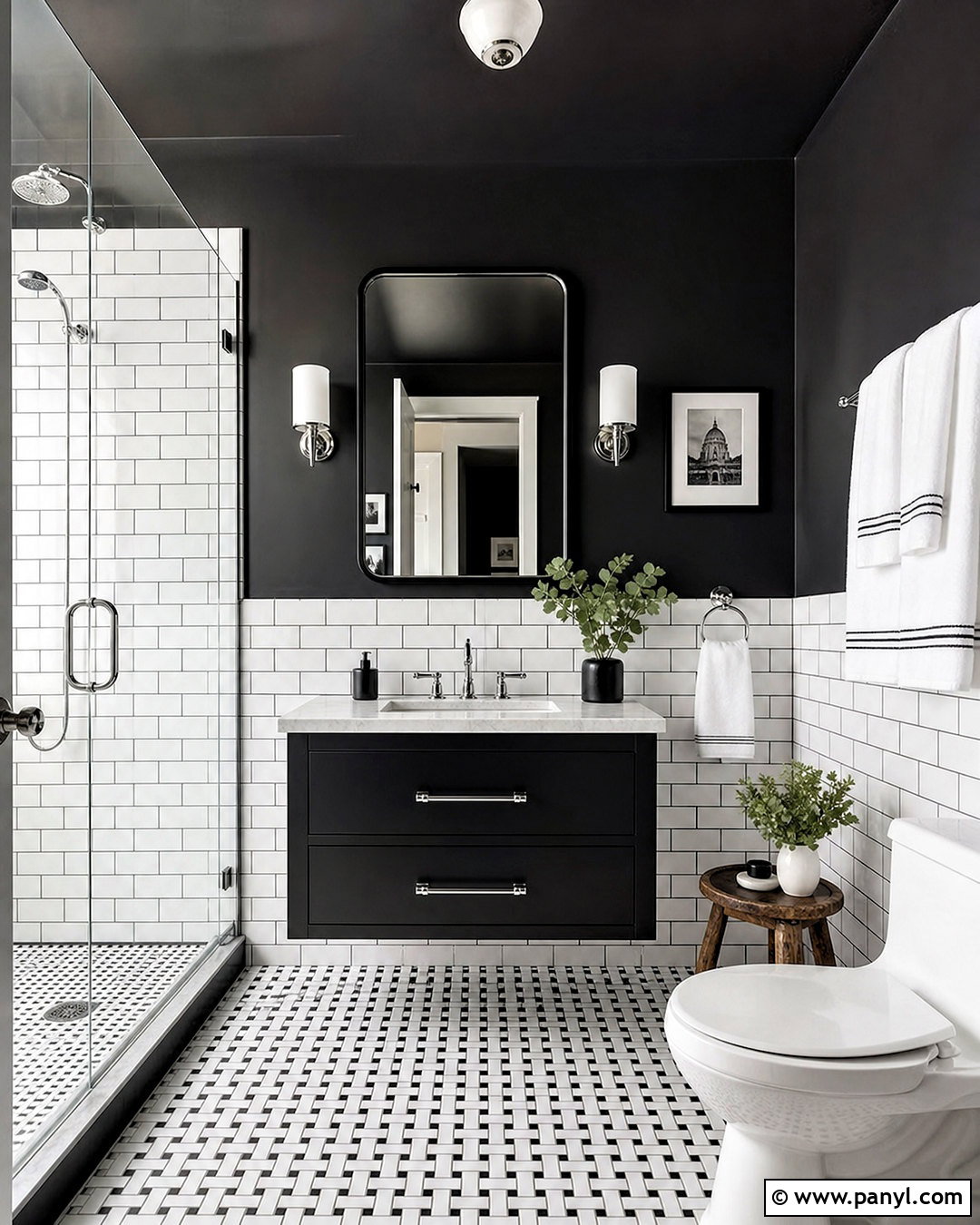
Few updates create sharper contrast than a smooth black bathroom vanity. Use soft black rather than blue-black for a more flexible finish, then pair it with white marble-look quartz and brushed brass hardware. A matching brass faucet and slim brass mirror frame give the dark cabinetry a refined edge. Keep the walls warm white and install white vertical tile behind the sink to emphasize height. Medium-tone oak flooring or oak-look porcelain prevents the room from becoming overly monochromatic. Complete the space with globe sconces, white towels, and a small wooden stool. The finished scheme feels bold yet approachable because natural wood, warm metal, and creamy surfaces soften the black paint and keep the room inviting.
7. Navy Blue Bathroom Vanity
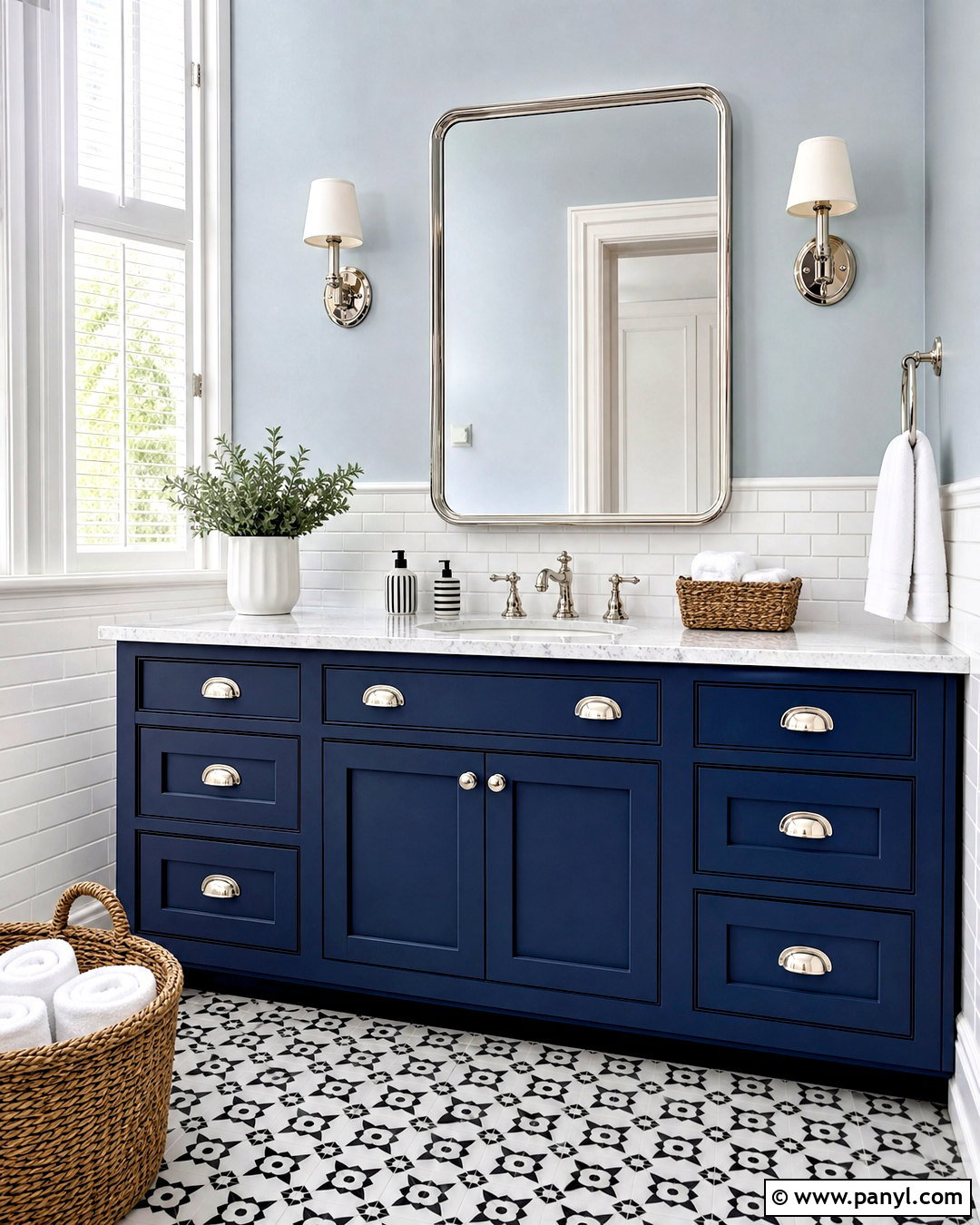
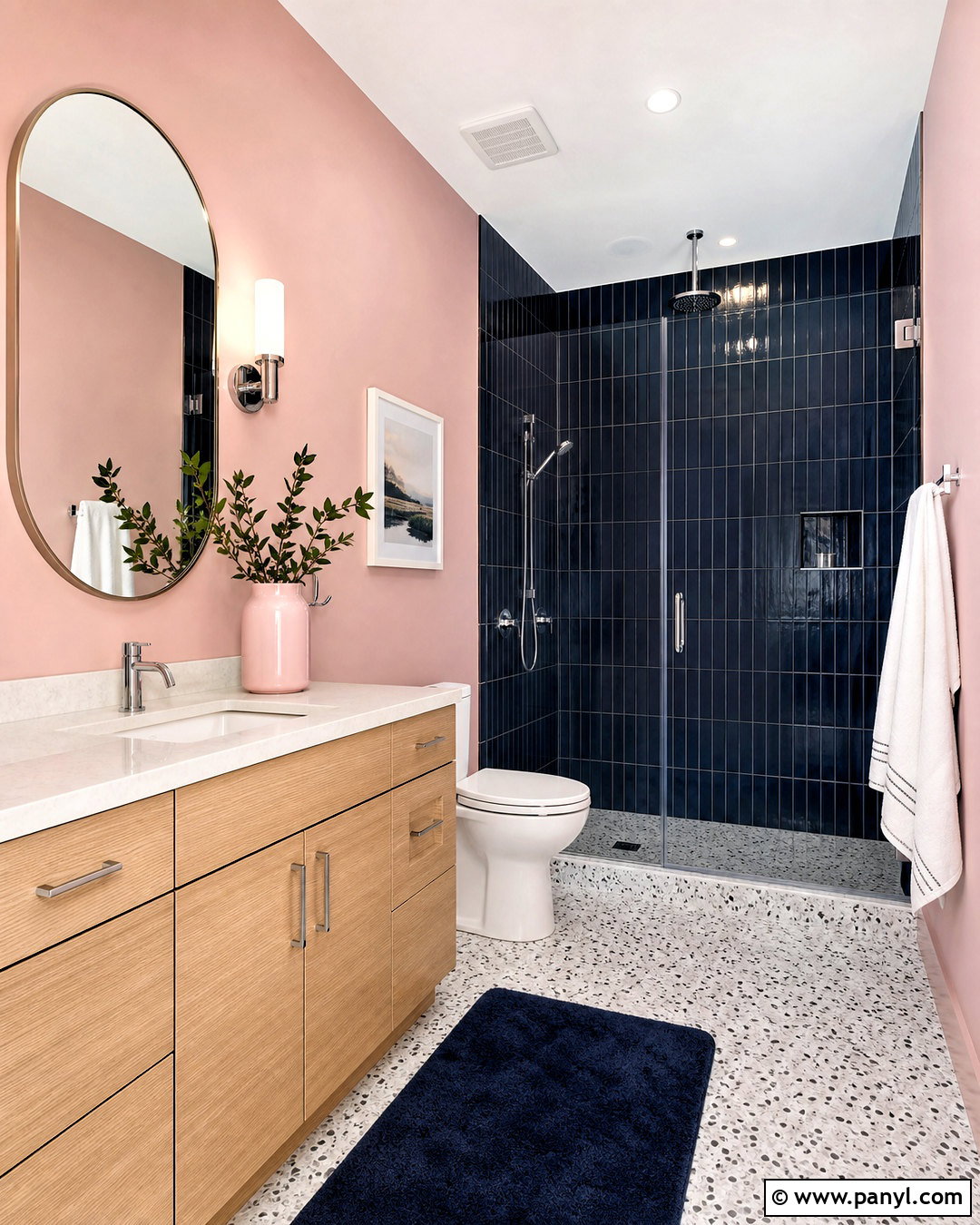
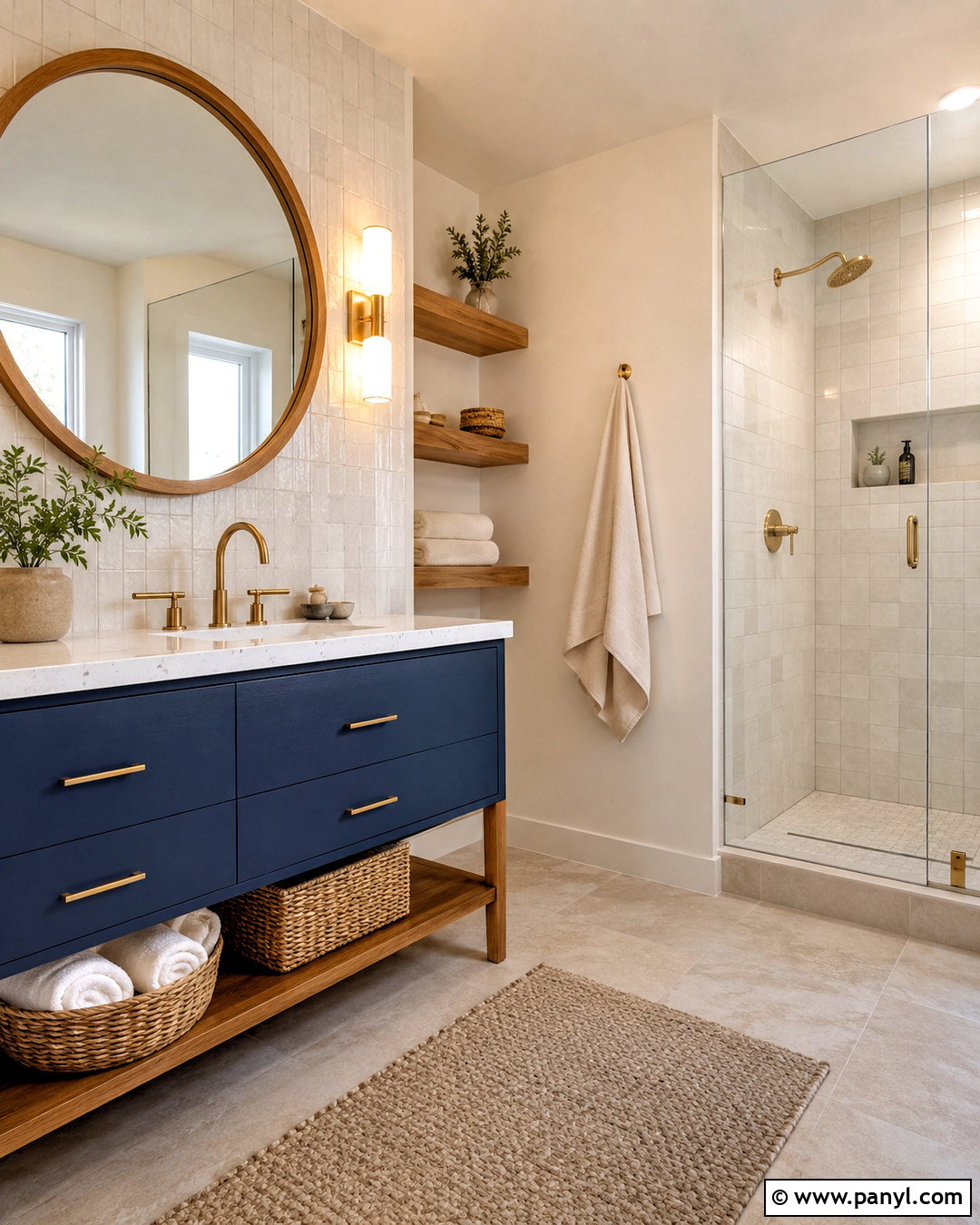
Deep navy paint gives a vanity classic color while remaining almost as versatile as a neutral. Combine the navy cabinet with a bright white quartz top, polished nickel cup pulls, and a traditional widespread faucet. Use pale blue-gray walls, white subway tile around wet areas, and patterned black-and-white floor tile for character. A polished nickel mirror and shaded sconces support the tailored appearance. Keep towels white and add one or two natural accents, such as a woven basket or small oak tray. This design suits a family bathroom because the dark cabinet has enough presence to disguise minor everyday marks. Good lighting is essential, particularly when the vanity is large or the room has no window.
8. Dusty Blue Bathroom Vanity
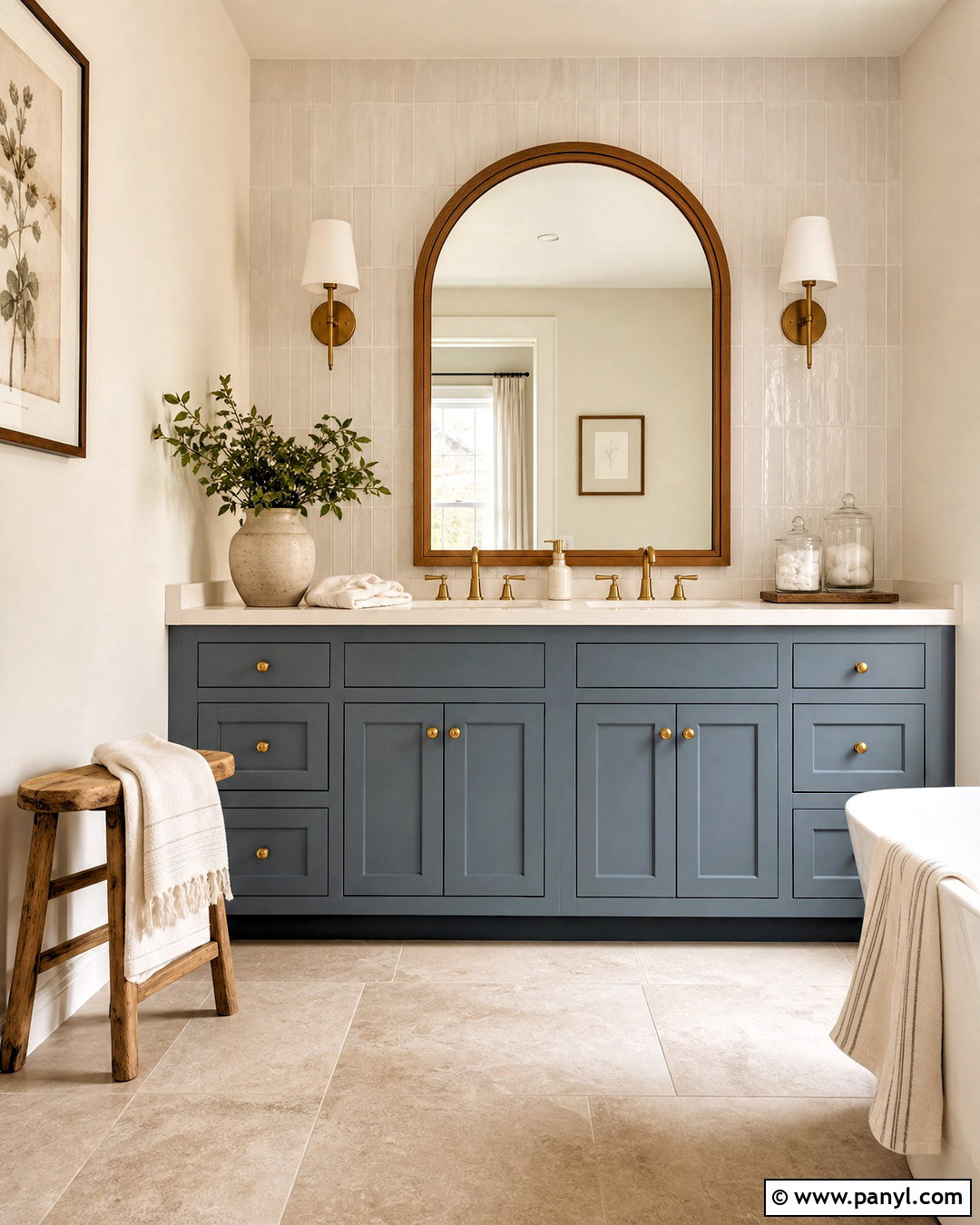
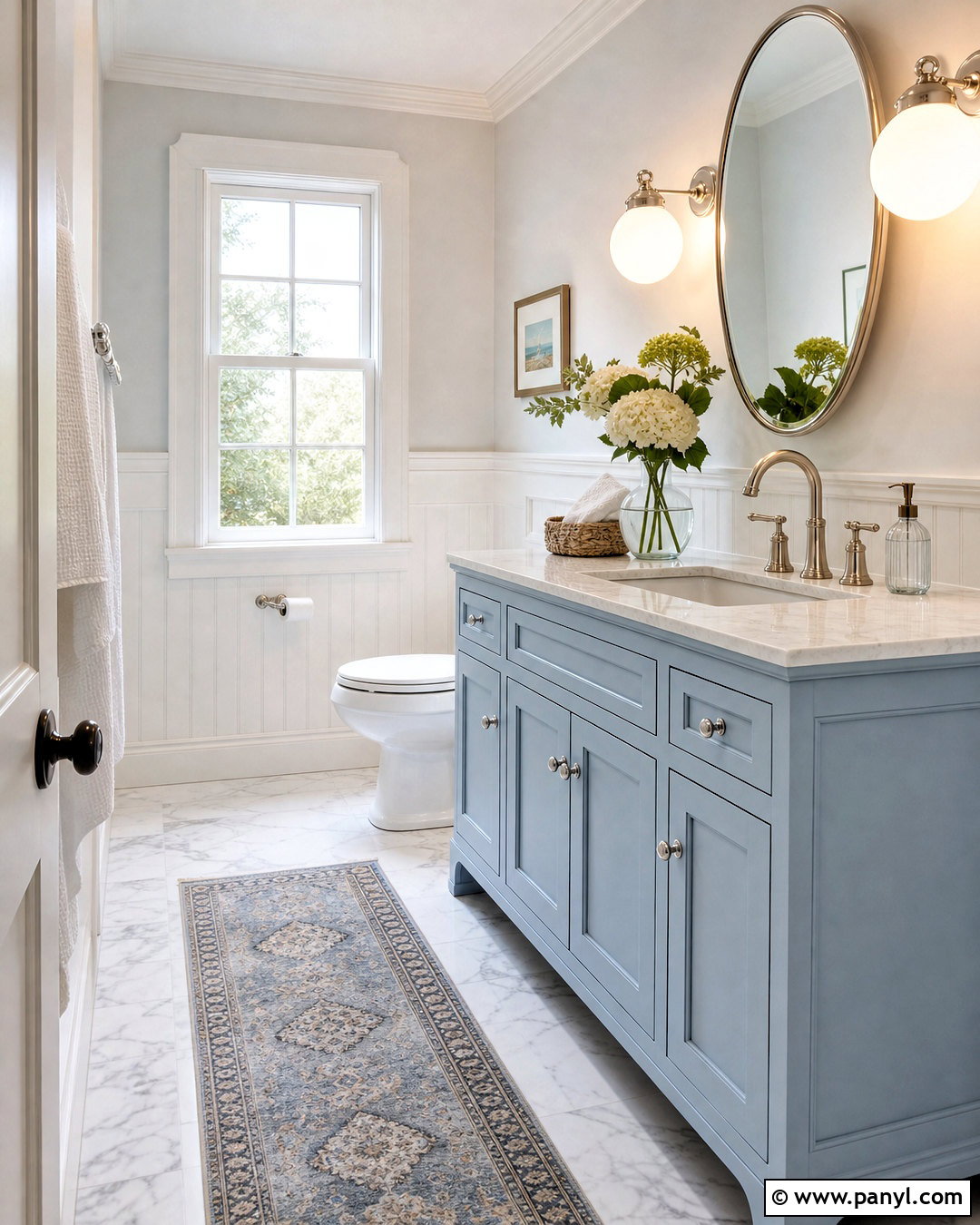
Dusty blue gives a bathroom gentle color without making the cabinetry feel overly bright. Choose a muted blue with noticeable gray undertones and pair it with a warm white quartz countertop. Satin brass knobs and a matching faucet add a subtle golden contrast. Continue the calm palette with off-white walls, pearly vertical backsplash tile, and light limestone-look flooring. An arched oak mirror warms the blue while connecting with a small wooden shelf or stool. Finish the space using ivory towels, clear glass containers, and understated coastal artwork without obvious themed decorations. The complete look feels airy and relaxed, making dusty blue particularly effective in guest bathrooms, cottage interiors, and smaller spaces that need personality without visual heaviness.
9. Powder Blue Bathroom Vanity
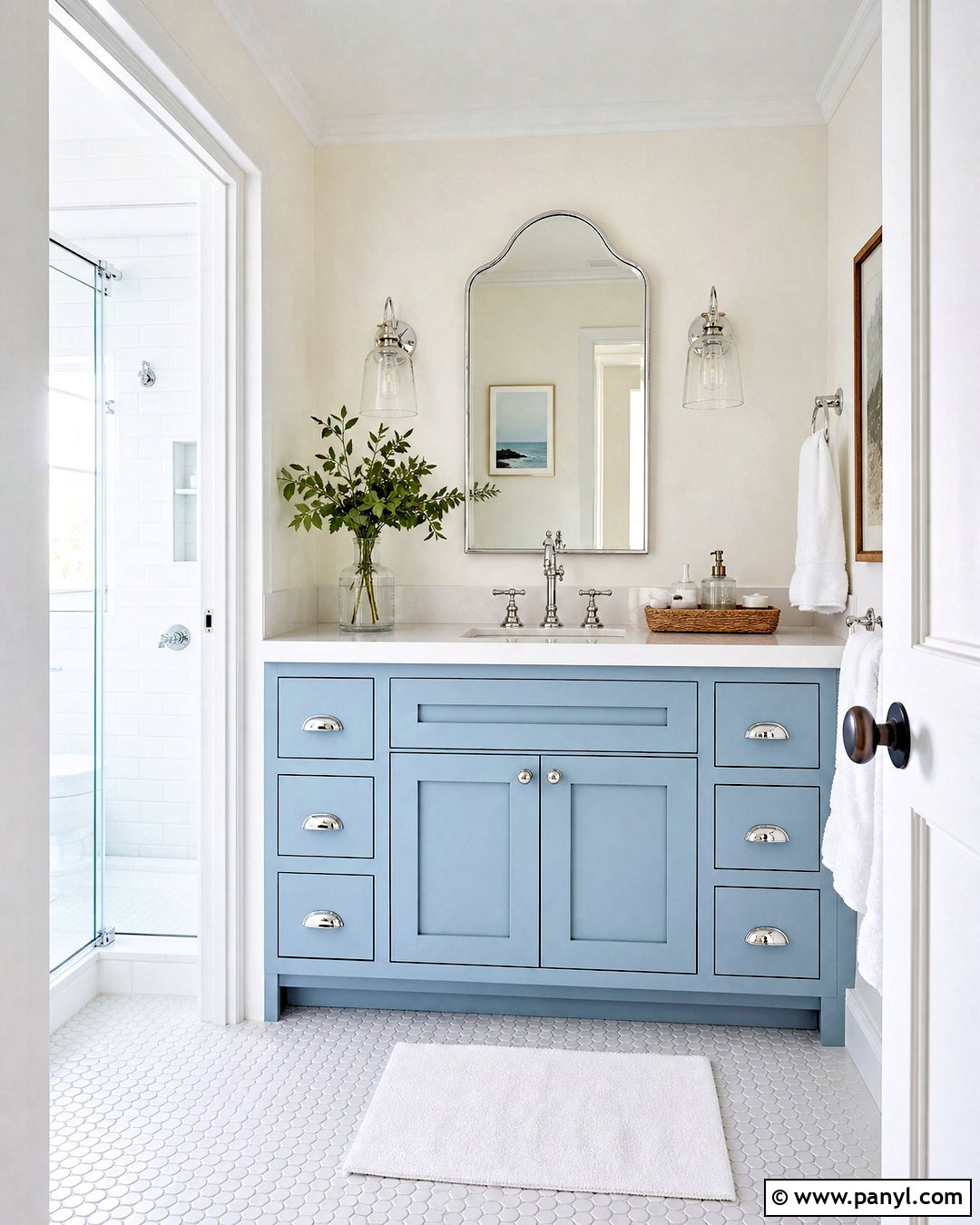
Imagine opening the door to a bathroom that feels instantly light and cheerful. A powder blue vanity creates that effect when surrounded by clean, warm finishes. Add a white solid-surface countertop, polished chrome faucet, and small chrome knobs for a fresh appearance. Use creamy white walls instead of stark white, then introduce white penny tile flooring with pale gray grout. A scalloped or softly curved mirror complements the playful cabinet color, while simple glass sconces keep the scheme grown-up. Include white towels, a pale wood tray, and one small vase of greenery. This balanced design is ideal for a children’s bathroom, powder room, or cottage-inspired space where gentle color should feel charming rather than overly decorative.
10. Sage Green Bathroom Vanity
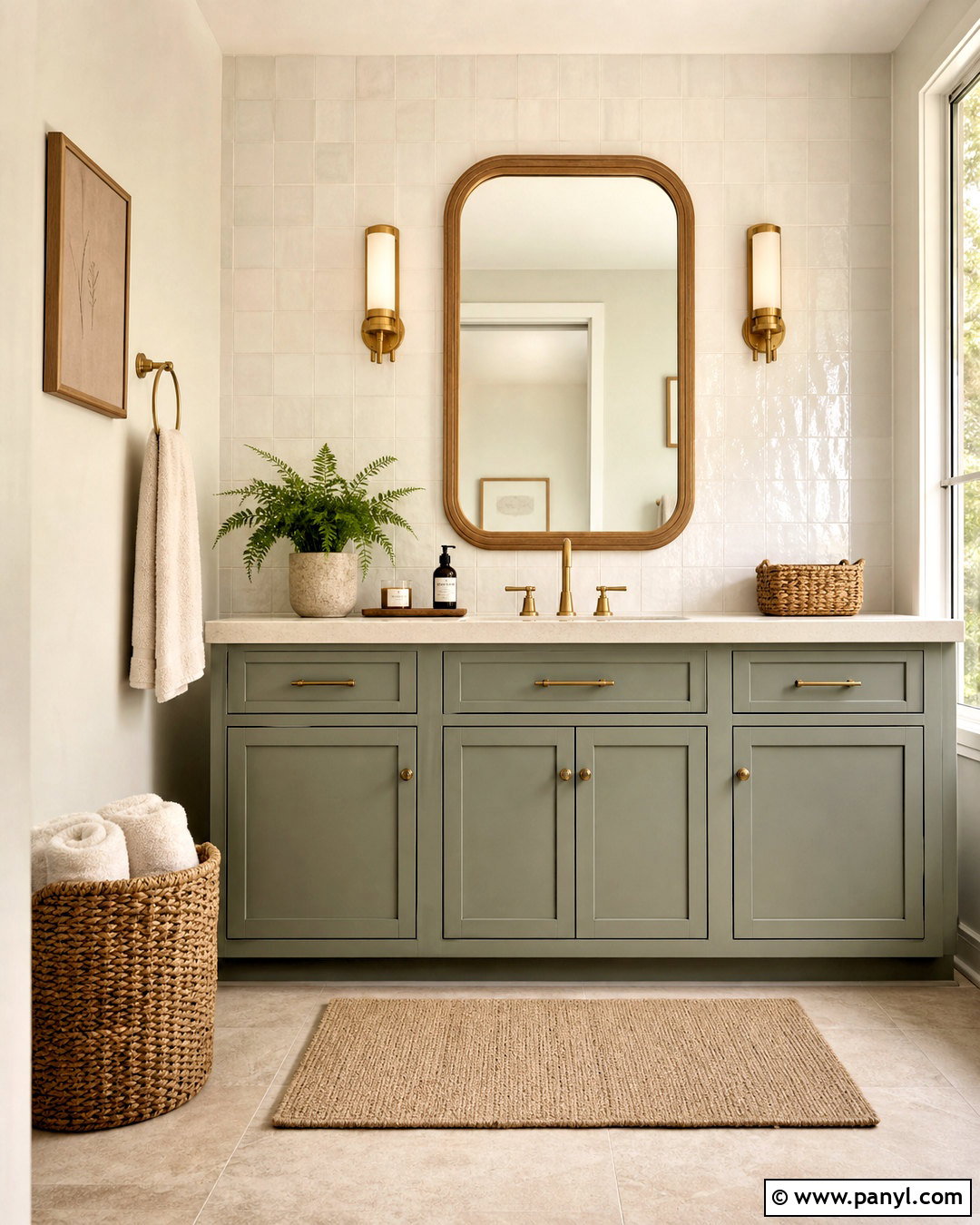
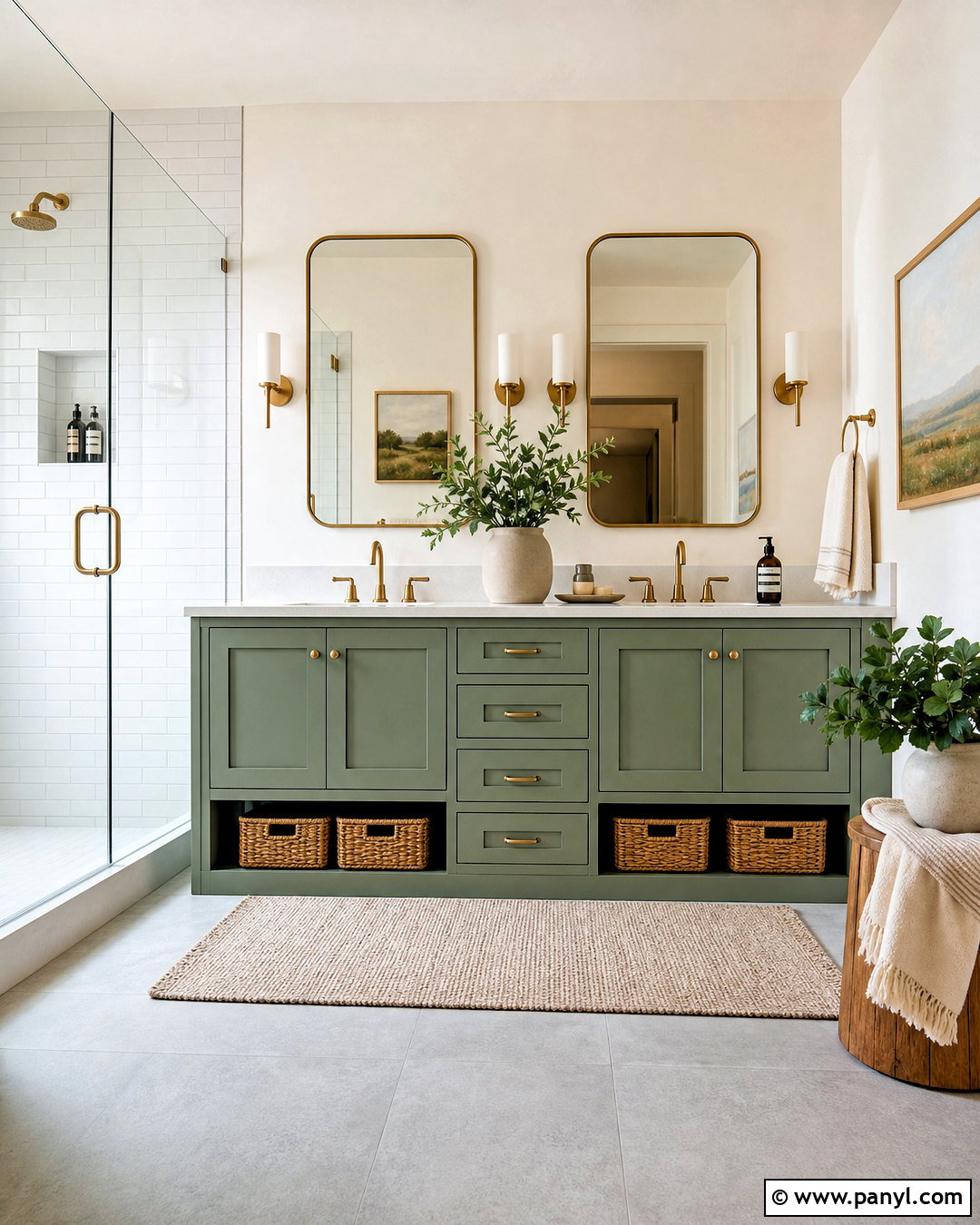
Sage green is an easy way to create a soothing, nature-inspired bathroom. Paint the vanity a muted mid-tone sage and add a creamy quartz countertop with delicate beige veining. Brushed brass hardware provides warmth, while an aged brass faucet adds character. Use soft ivory walls, light travertine-look flooring, and glossy off-white tile behind the sink. A rounded oak mirror reinforces the organic palette. Complete the room with natural linen towels, woven storage baskets, and a small potted fern where daylight permits. The result feels fresh but not trendy because every finish relates to colors found in stone, wood, and plants. Sage also pairs gracefully with both traditional cabinet doors and clean, flat-front cabinetry.
11. Olive Green Bathroom Vanity
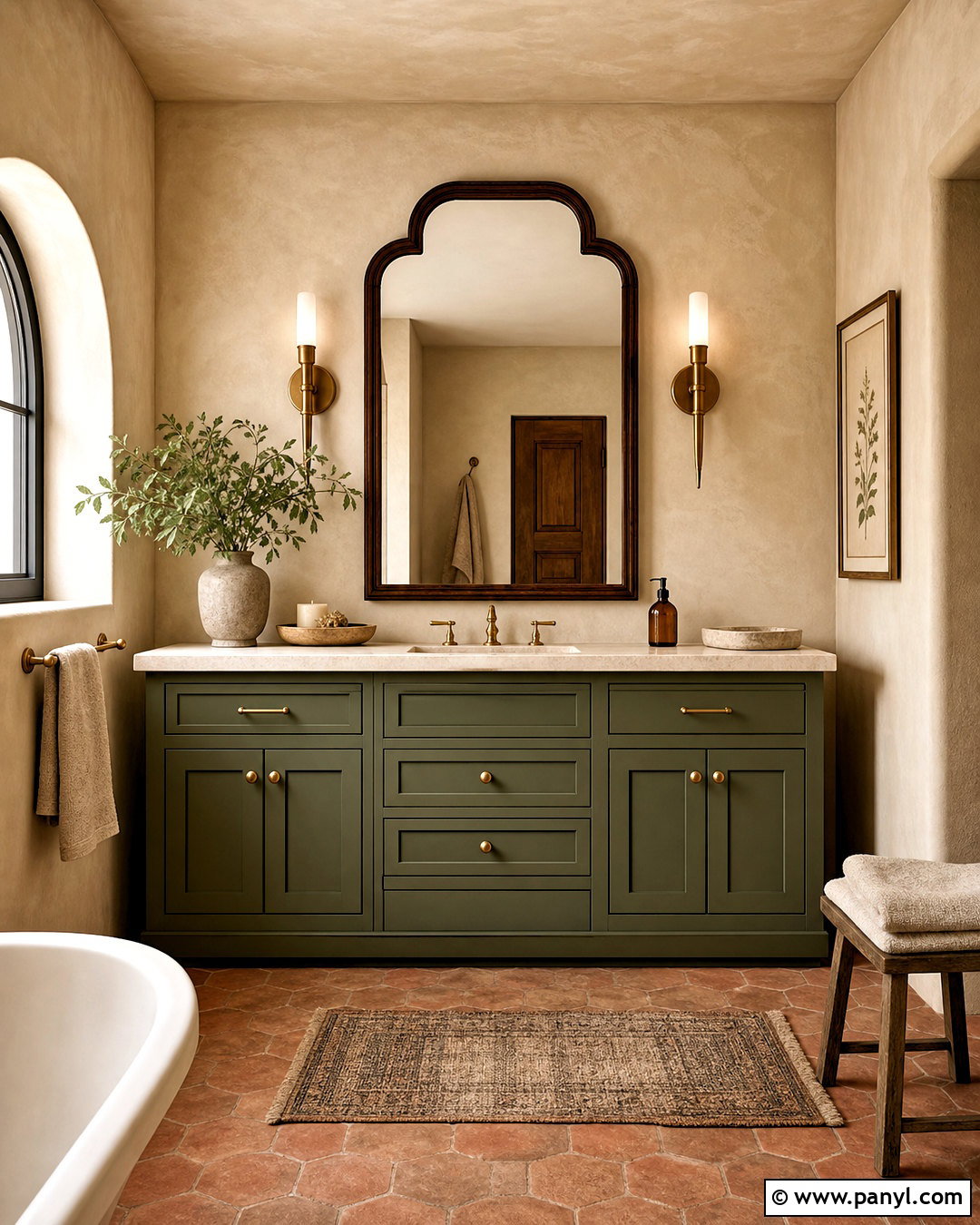
For a richer earthy look, choose an olive green vanity with warm yellow-brown undertones. Balance its depth using a creamy stone countertop and an ivory undermount sink. Aged brass pulls, faucet fixtures, and picture lights complement the warmth in the paint. Consider pale beige plaster-look walls, terracotta-look porcelain flooring, and a short backsplash made from handmade cream tile. A dark oak mirror frame adds structure without introducing another painted color. Style the vanity with folded oatmeal towels, a stone tray, and one restrained botanical print. This cohesive bathroom feels grounded and welcoming rather than dark. Olive is especially successful in rooms with warm flooring, vintage details, or natural materials that would clash with cooler blue-based greens.
12. Forest Green Bathroom Vanity
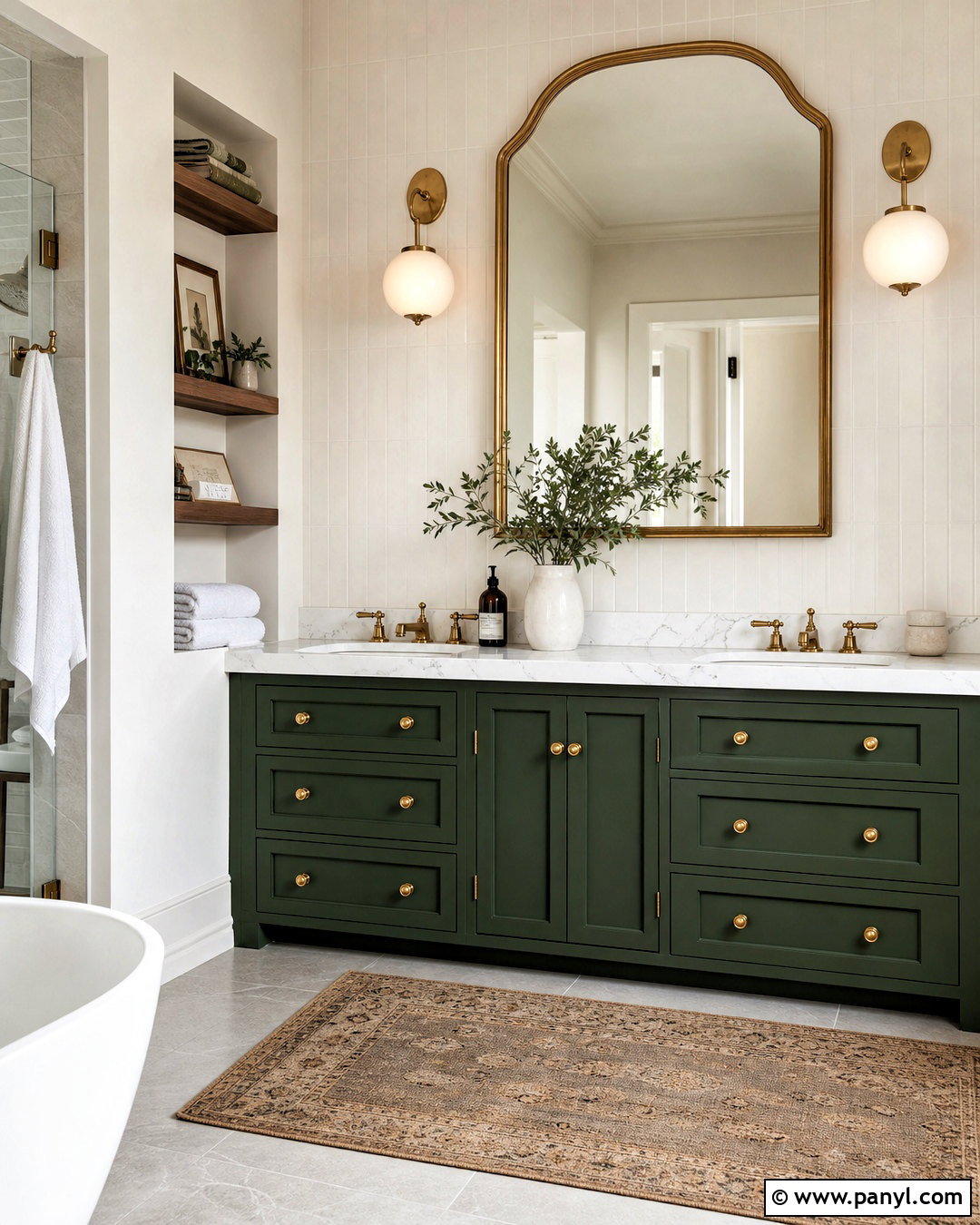
A forest green vanity creates a strong focal point in a spacious bathroom or well-lit powder room. Pair the saturated cabinet with white marble-look quartz, unlacquered brass pulls, and a traditional brass faucet. Keep the walls a soft warm white so the green remains the main feature. Install pale gray stone flooring and a backsplash of elongated ivory tile for quiet texture. A large brass-framed mirror reflects light across the deep finish, while milk-glass sconces add a vintage touch. Introduce walnut shelves, white towels, and a simple ceramic vase to complete the design. The lighter countertop, walls, and textiles prevent the dark green from dominating, resulting in a dramatic bathroom that still feels balanced and practical.
13. Teal Bathroom Vanity
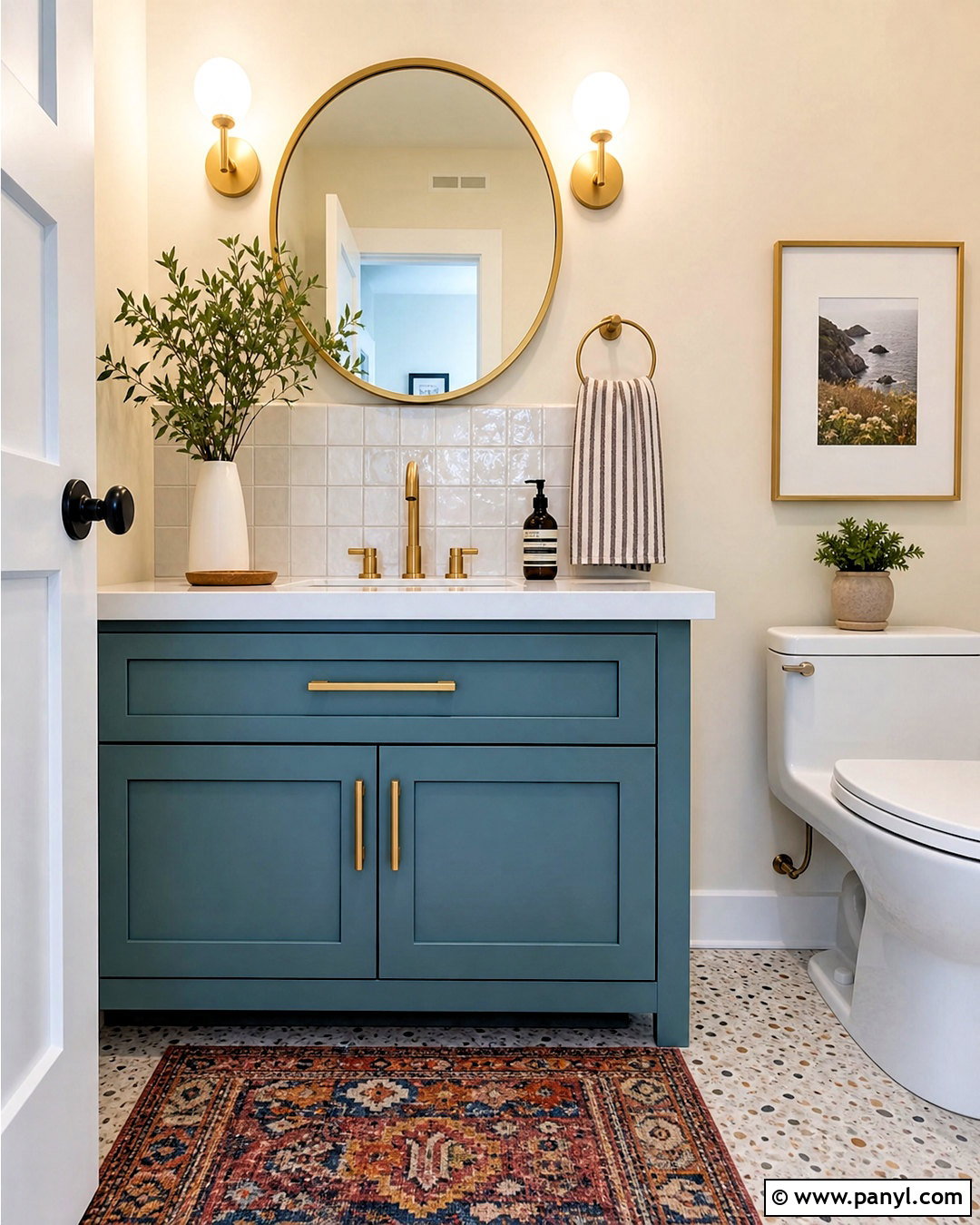
A teal-painted vanity brings energy to the bathroom while combining the calming qualities of blue and green. Choose a medium-deep, slightly muted teal rather than a highly saturated tropical shade. Top the cabinet with white quartz and use brushed brass pulls for clean contrast. Warm white walls, pale terrazzo flooring, and glossy square backsplash tile keep the surrounding surfaces bright. Repeat the cabinet color sparingly through a striped hand towel or small framed print. A round brass mirror and globe sconces complete the modern arrangement. This full scheme works particularly well in a powder room, where a stronger color can make the limited space memorable. Keep accessories restrained so the vanity remains the clear focal point.
14. Terracotta Bathroom Vanity
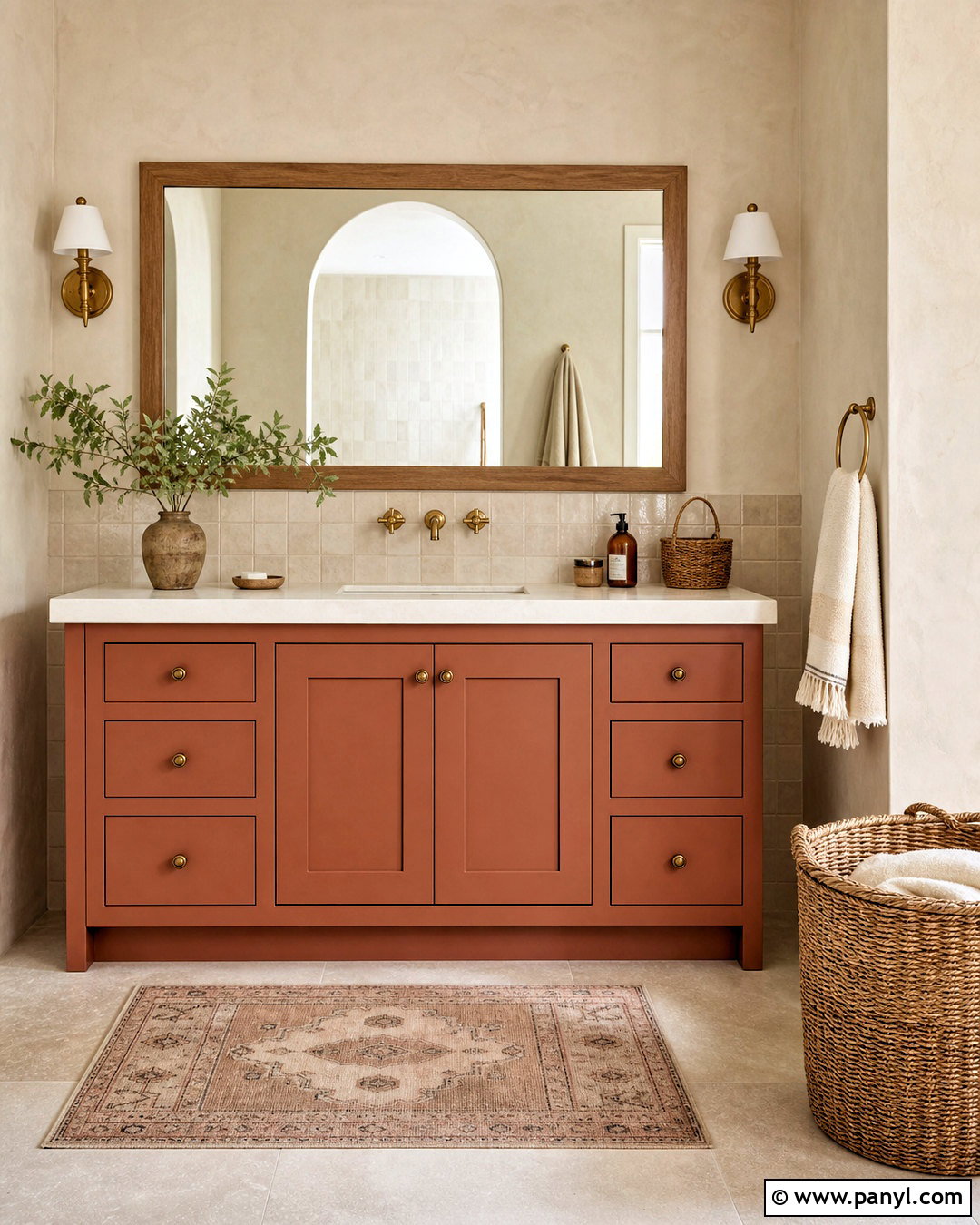
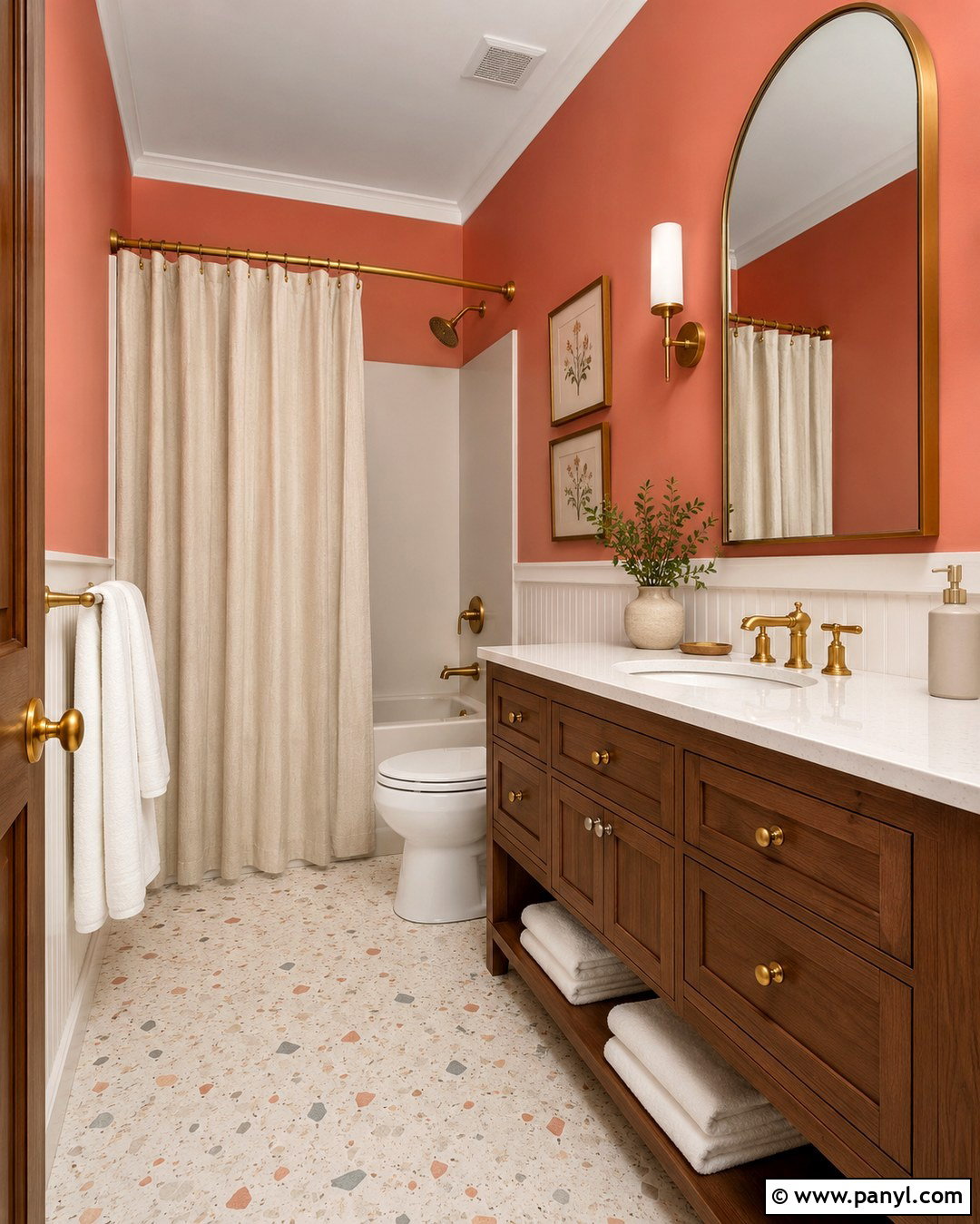
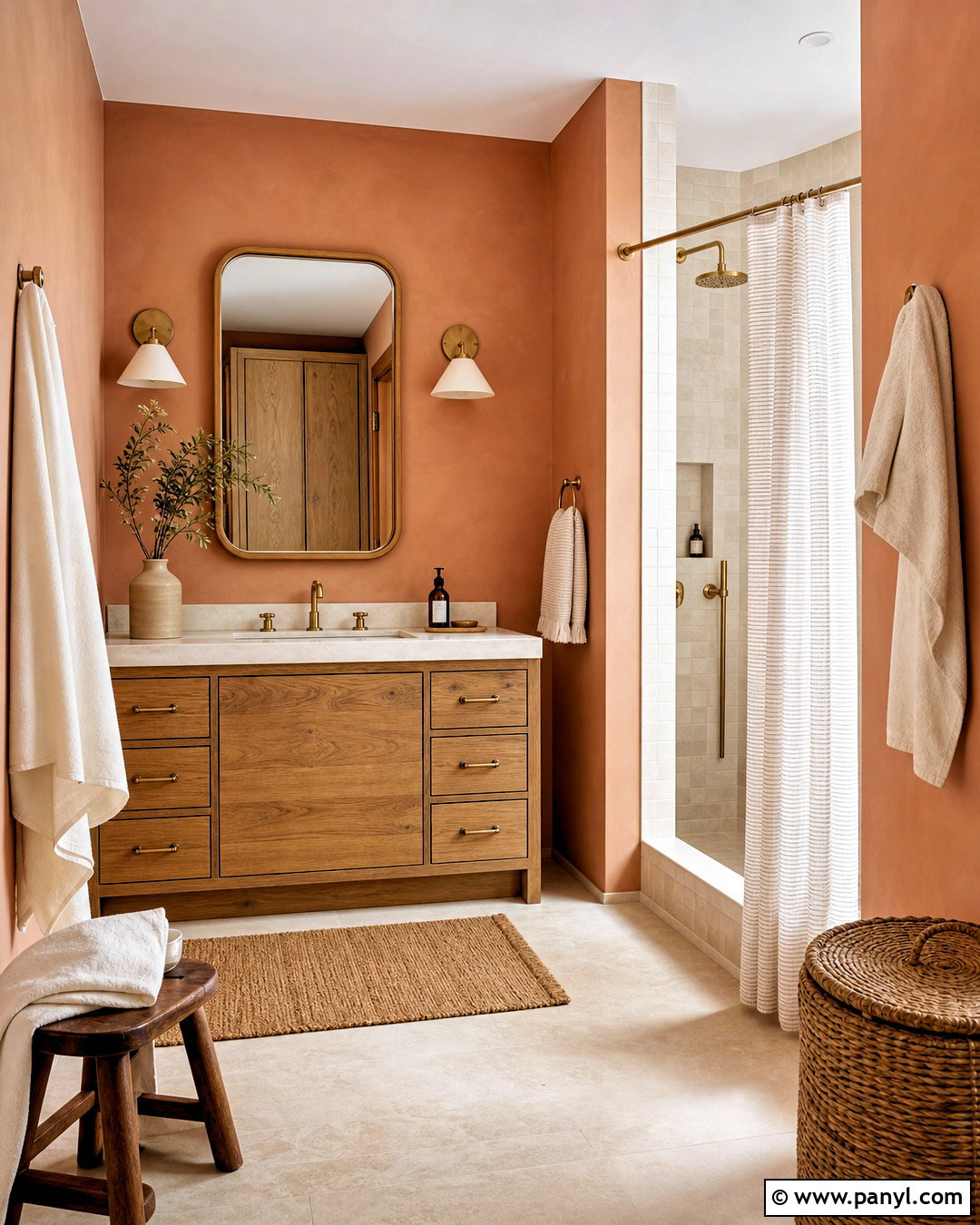
Warm terracotta paint can make a basic vanity feel custom and inviting. Select a muted clay shade with brown and coral undertones, then pair it with a creamy quartz countertop. Antique brass knobs and faucet fixtures strengthen the sun-warmed palette. Use pale plaster-colored walls, ivory handmade backsplash tile, and beige limestone-look flooring to keep the design grounded. A simple oak-framed mirror introduces natural texture, while woven baskets provide practical storage. Add off-white towels and a small earthenware container rather than repeating terracotta everywhere. The finished bathroom feels warm and contemporary, not rustic or themed. This vanity color is particularly useful for balancing cool daylight or adding character to bathrooms dominated by plain white fixtures.
15. Dusty Rose Bathroom Vanity
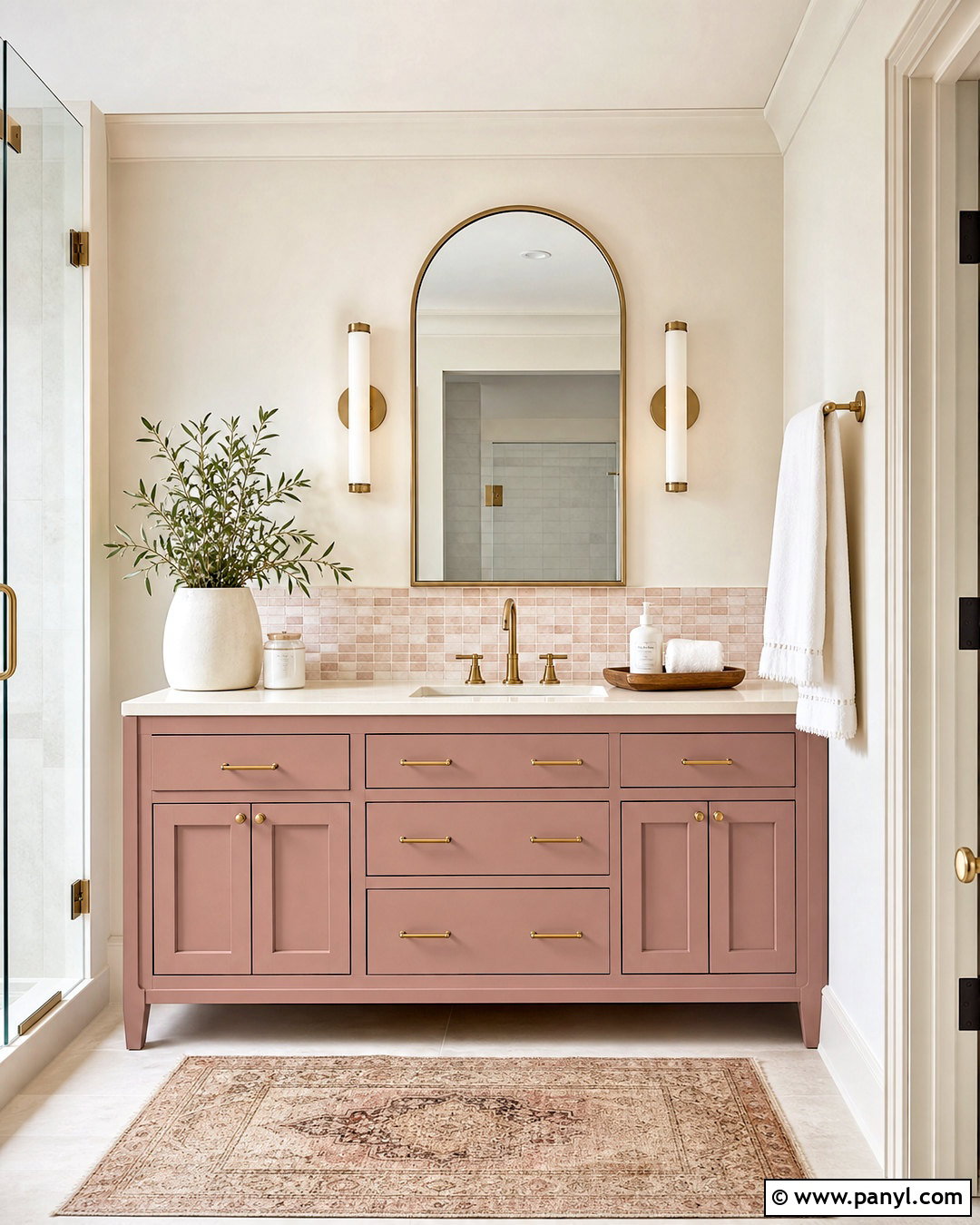
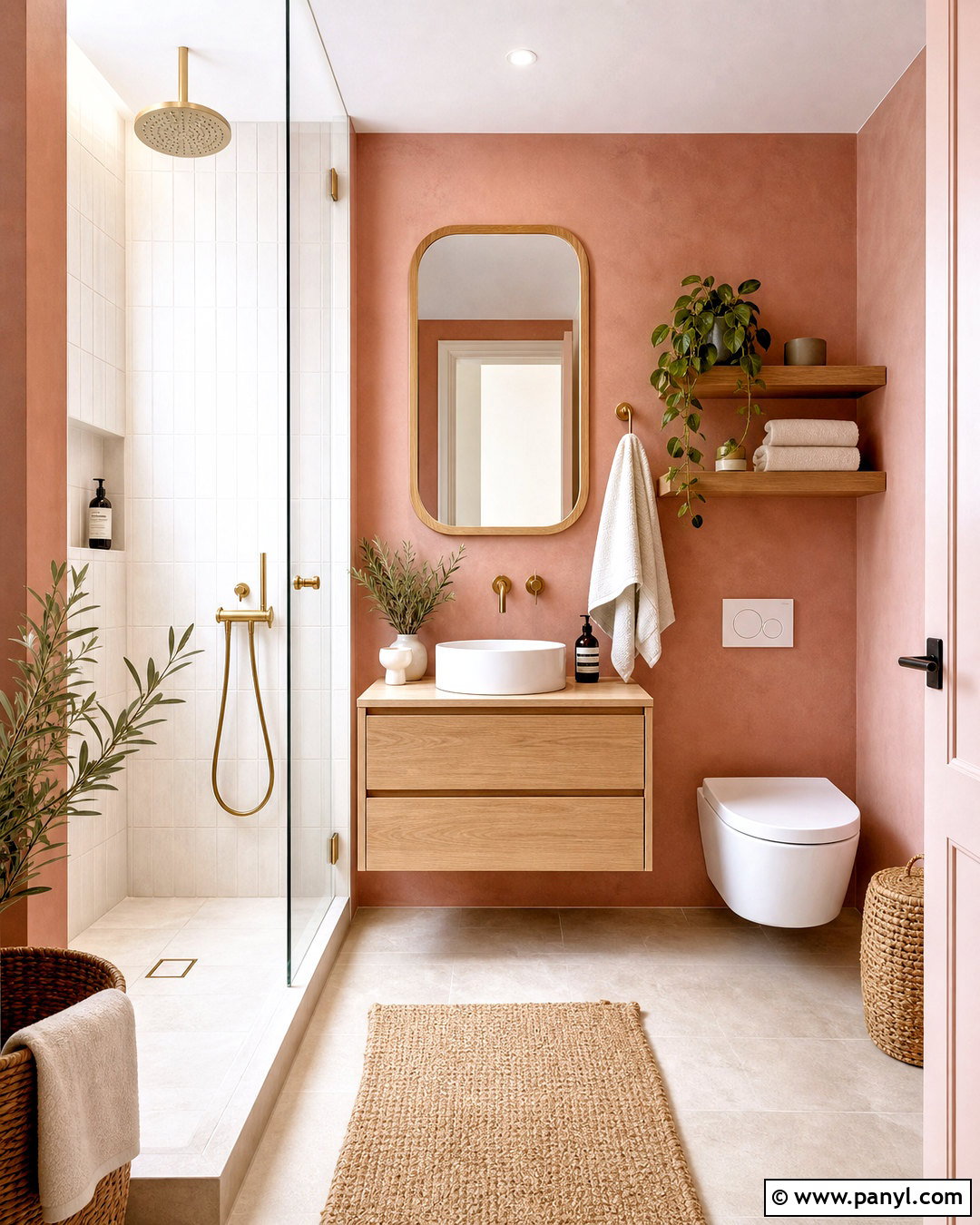
Dusty rose offers a sophisticated alternative to bright pink. Look for a muted shade with taupe or brown undertones, which will feel calmer beside permanent bathroom fixtures. Pair the painted vanity with ivory quartz, aged brass hardware, and a warm brass faucet. Use creamy white walls, pale beige floor tile, and a backsplash of softly varied blush and ivory tile. An arched mirror with a thin brass frame repeats the graceful lines of the scheme. Finish with white towels, a walnut tray, and minimal ceramic accessories. Because the supporting colors stay neutral, the vanity appears distinctive without making the whole room overly sweet. This complete look works beautifully in powder rooms, guest bathrooms, and vintage-inspired primary suites.
16. Burgundy Bathroom Vanity
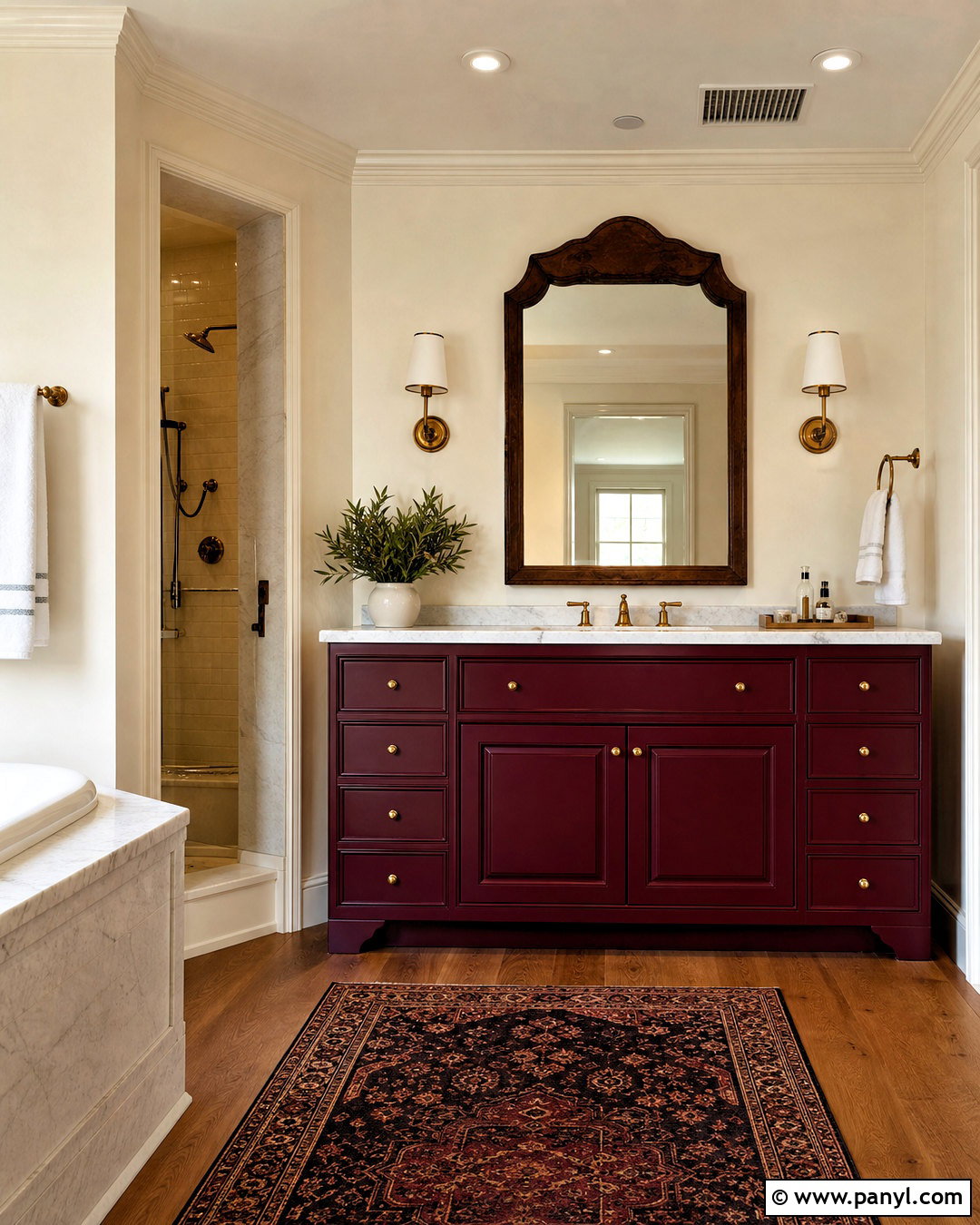
A burgundy vanity can make a small bathroom feel polished and enveloping when the remaining finishes are carefully balanced. Choose a deep red with brown undertones, avoiding shades that appear too purple under vanity lights. Add a creamy marble-look countertop, aged brass hardware, and a traditional brass faucet. Warm off-white walls and a matching ivory tile backsplash provide breathing room around the saturated cabinetry. Use medium oak flooring or warm stone-look porcelain to reinforce the red’s earthy character. A dark wood mirror and shaded brass sconces complete the tailored design. Keep towels cream and accessories minimal. The resulting room feels rich and established, offering a distinctive option for homeowners who want color beyond familiar blue or green cabinetry.
17. Muted Mustard Bathroom Vanity
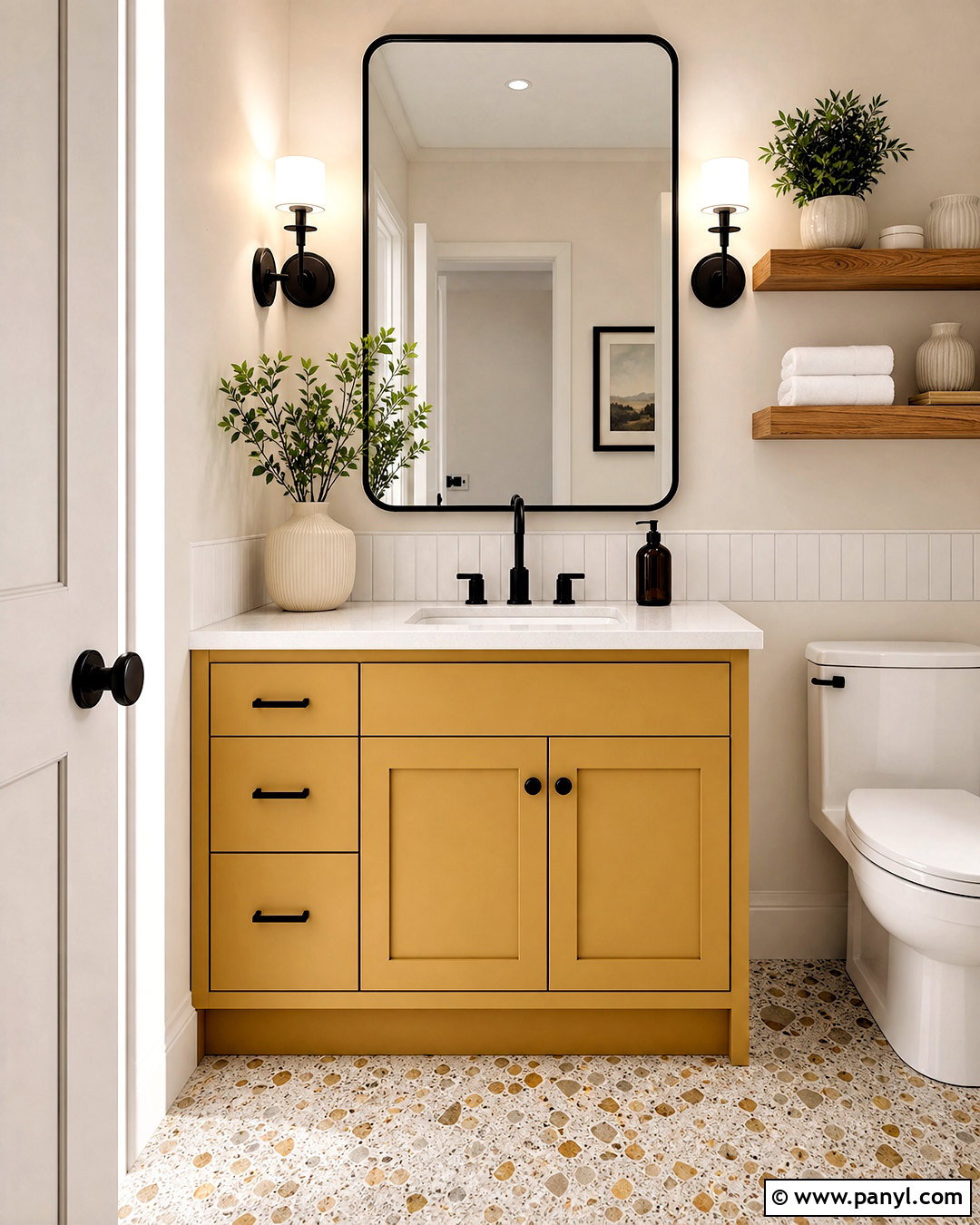
Muted mustard paint introduces sunny warmth without the intensity of bright yellow. Select an ochre-based shade with plenty of brown or gray, then ground it with a white quartz countertop and matte black hardware. A black faucet and thin black mirror frame create a clean outline around the warm cabinet. Use soft cream walls, simple white backsplash tile, and gray-beige terrazzo flooring containing small golden chips. Add oak shelving, white towels, and one ribbed ceramic container to finish the look. The vanity becomes playful yet sophisticated because every supporting surface remains restrained. This scheme is especially effective in a windowless powder room, where a warm cabinet color can add visual energy beneath clear, bright vanity lighting.
18. Chocolate Brown Bathroom Vanity
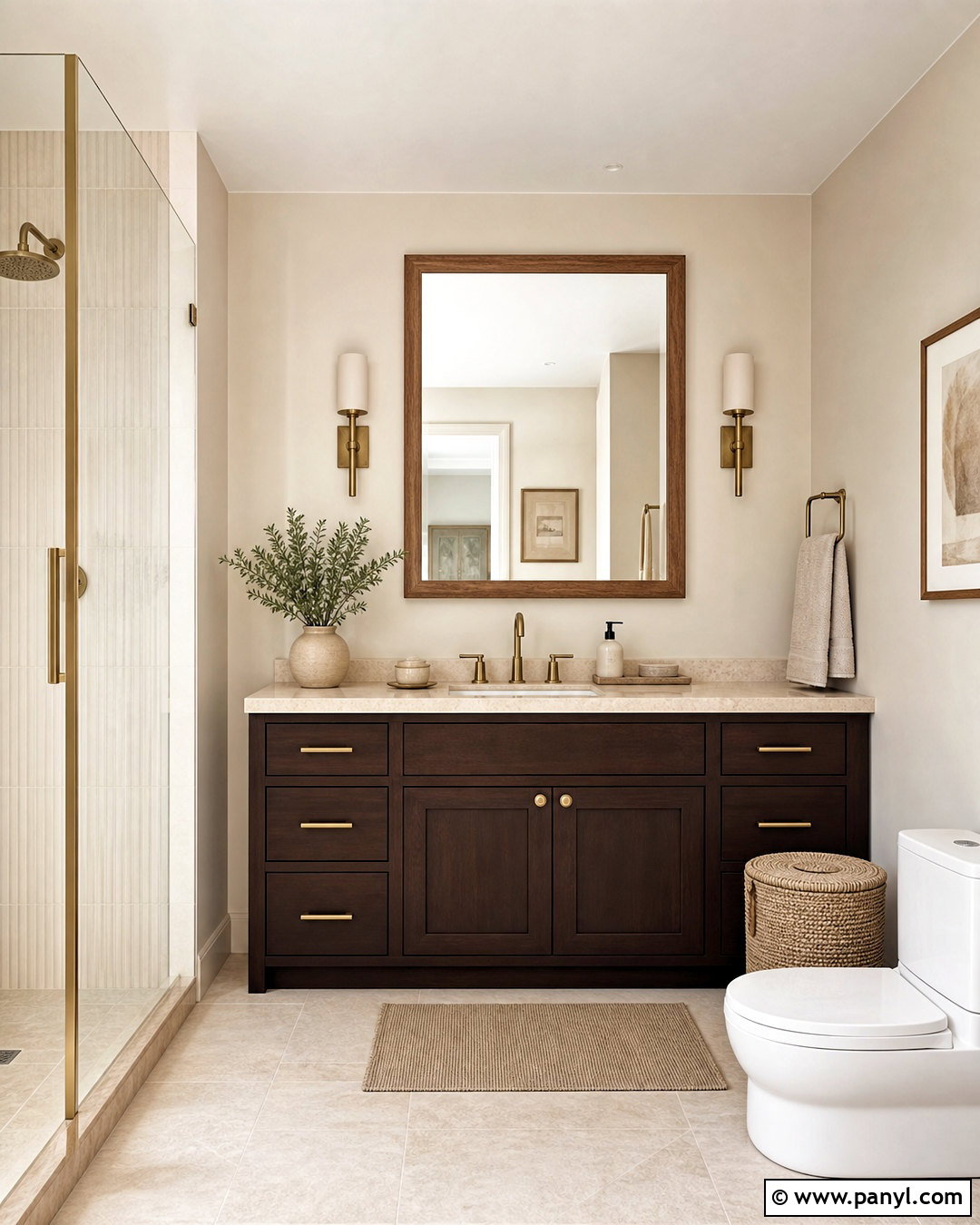
Deep chocolate brown gives painted cabinetry the richness of dark wood while providing a smoother, more uniform finish. Pair the brown vanity with creamy travertine or warm white quartz, then add brushed brass pulls and faucet fixtures. Use light beige walls, ivory fluted backsplash tile, and pale limestone-look flooring to brighten the composition. A large mirror framed in medium oak creates subtle contrast rather than matching the cabinet exactly. Complete the bathroom with oatmeal towels, a woven hamper, and softly rounded ceramic accessories. This warm tonal scheme feels particularly current after years of cool gray bathrooms. It also works well with existing beige tile because the dark vanity adds intentional contrast without forcing homeowners to replace every warm surface.
19. Two Tone Bathroom Vanity
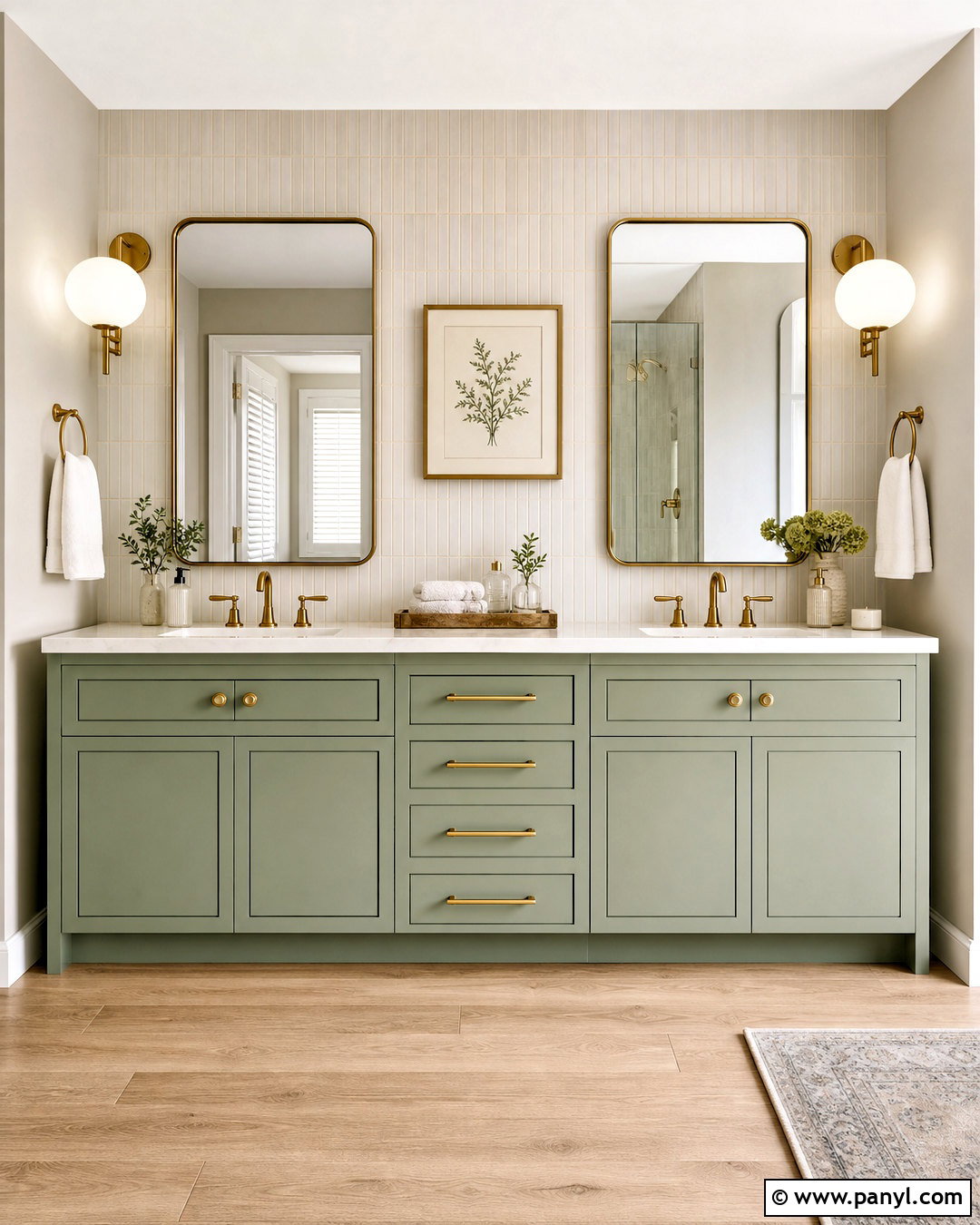
A two-tone paint treatment gives a large vanity more dimension and can visually separate drawers from cabinet doors. Paint the vanity frame and side panels warm white, then use muted sage green on the drawer and door fronts. Connect both colors with a creamy quartz countertop and brushed brass hardware. Install a backsplash of narrow ivory tile, soft greige walls, and pale oak-look flooring. Two brass-framed mirrors above a double vanity create symmetry, while globe sconces provide even lighting. Keep towels white and use sage only once more in a small accessory. This design feels coordinated rather than busy because the colors have similar softness and share warm undertones. Careful masking is essential for crisp transitions between finishes.
20. Color Drenched Bathroom Vanity
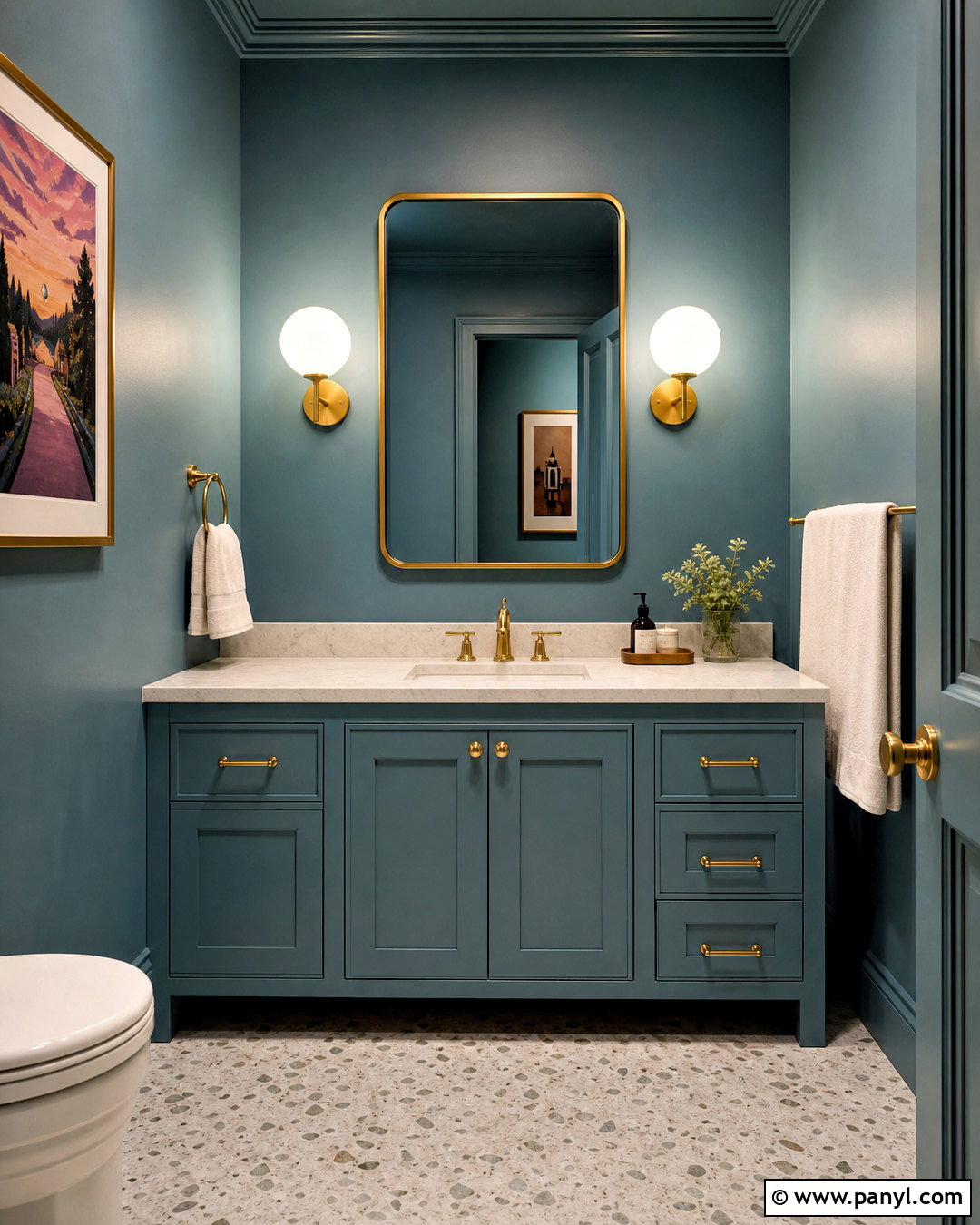
For a bold, seamless effect, paint the vanity and surrounding walls in the same muted blue-green shade. Use a satin cabinet finish for durability and an eggshell wall finish to create a subtle shift in sheen. A pale stone countertop, ivory sink, and brushed brass hardware break up the continuous color. Continue the scheme with matching painted trim, a brass-framed mirror, and simple cream globe sconces. Choose light terrazzo flooring and warm white towels to keep the bathroom visually open. This color-drenched approach reduces sharp boundaries, helping a compact powder room feel cohesive rather than chopped into sections. Test the paint carefully under every light source because the large amount of color will amplify its undertone throughout the room.
Conclusion:
The best vanity color should connect the bathroom’s permanent surfaces while creating the mood you want. Light neutrals can brighten a compact room, earthy greens bring a restful quality, and deep blues or reds make cabinetry feel more substantial. Before painting, clean the vanity, repair damage, sand glossy surfaces, and apply a compatible bonding primer. Use a durable cabinet coating in satin or semi-gloss, which generally handles moisture and cleaning better than flat paint. () Always sample the color beside the countertop, flooring, and backsplash before committing. With thoughtful hardware, lighting, and accessories, these 20 bathroom vanity paint ideas can transform an ordinary cabinet into a convincing centerpiece.

Related Ideas and Inspiration:
Leave a Reply