
Purple can make a room feel calm, playful, sophisticated, or dramatic, depending on its undertone and depth. These purple room paint ideas explore complete, livable looks rather than isolated color swatches. You will find soft lavender bedrooms, smoky mauve living spaces, plum dining rooms, and bold violet creative zones. Each scheme also considers trim, ceilings, flooring, furniture, lighting, and accent colors, helping the finished space feel balanced. Purple works especially well with warm wood, crisp white, muted green, soft gray, and aged metallic finishes. () Before choosing a shade, test it throughout the day because natural and artificial light can change how purple appears. Use these 20 purple room paint ideas to find a complete look that suits your space.

1. Lavender Purple Bedroom
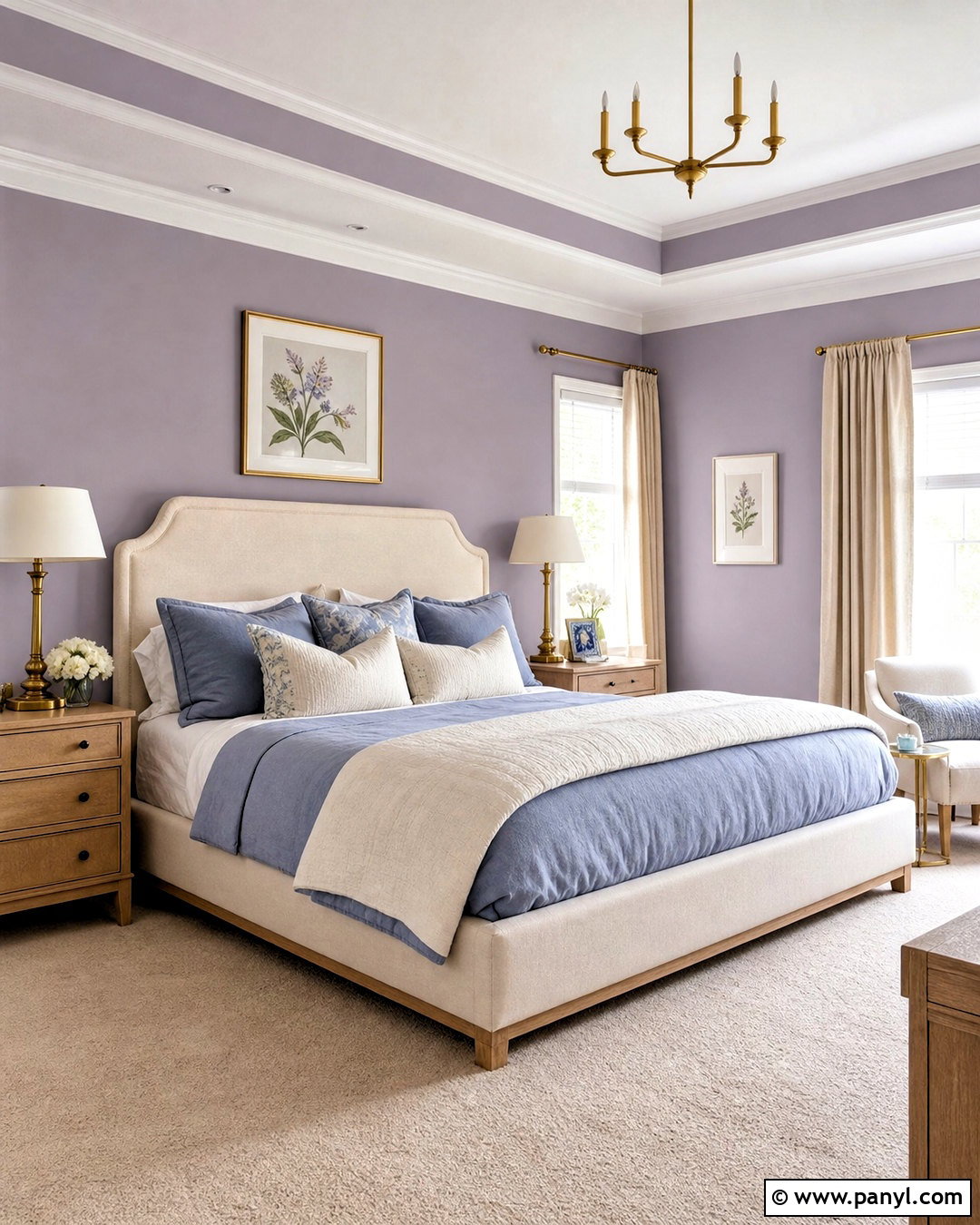
Soft lavender walls create a restful bedroom that still has more personality than a standard neutral. Choose a muted lavender with gray undertones to keep the color sophisticated. Paint the ceiling warm white and repeat that shade on the trim for a clean transition. An upholstered cream bed, pale oak nightstands, and light beige carpet will soften the purple further. Add dusty blue bedding, a textured ivory throw, and brushed brass lamps for gentle contrast. Hang simple botanical artwork above the bed and use full-length oatmeal curtains around the windows. This complete palette works especially well in bedrooms with moderate or strong daylight. If the room faces north, select a slightly warmer lavender so the walls do not appear too cool.
2. Plum Purple Living Room
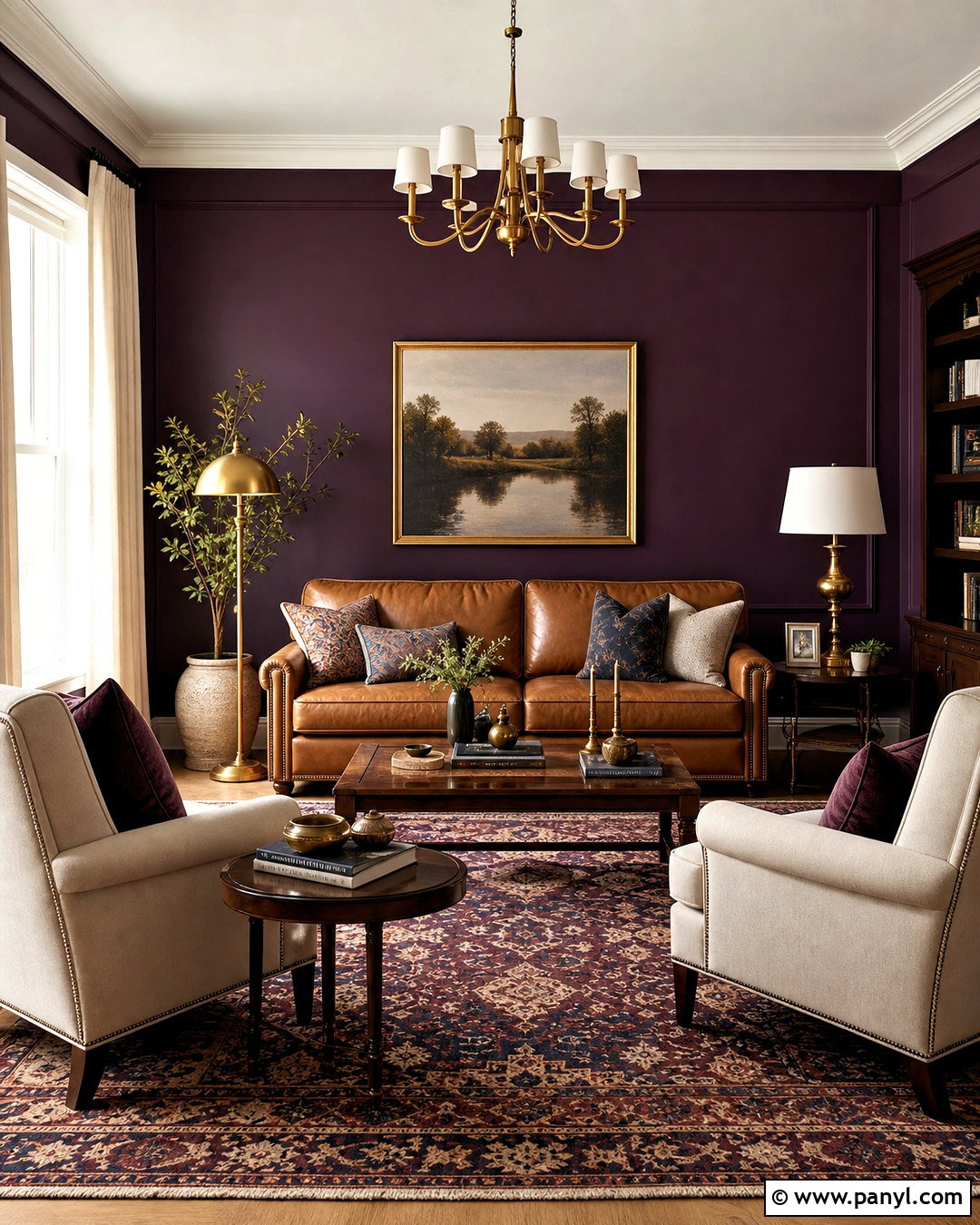
Rich plum walls can turn an ordinary living room into a comfortable, polished gathering space. Paint all four walls rather than leaving one disconnected accent surface, then keep the ceiling and architectural trim creamy white. A camel leather sofa brings warmth, while two oatmeal armchairs prevent the darker paint from dominating the room. Ground the layout with a patterned rug containing plum, rust, beige, and muted blue. Medium walnut tables, antique brass lighting, and linen curtains add depth without creating visual clutter. Place the main seating near the brightest window and use mirrors strategically to reflect daylight. Finish with framed landscape art and a few plum accessories in slightly lighter or darker tones, creating a coordinated room without making every element match.
3. Lilac Purple Living Room
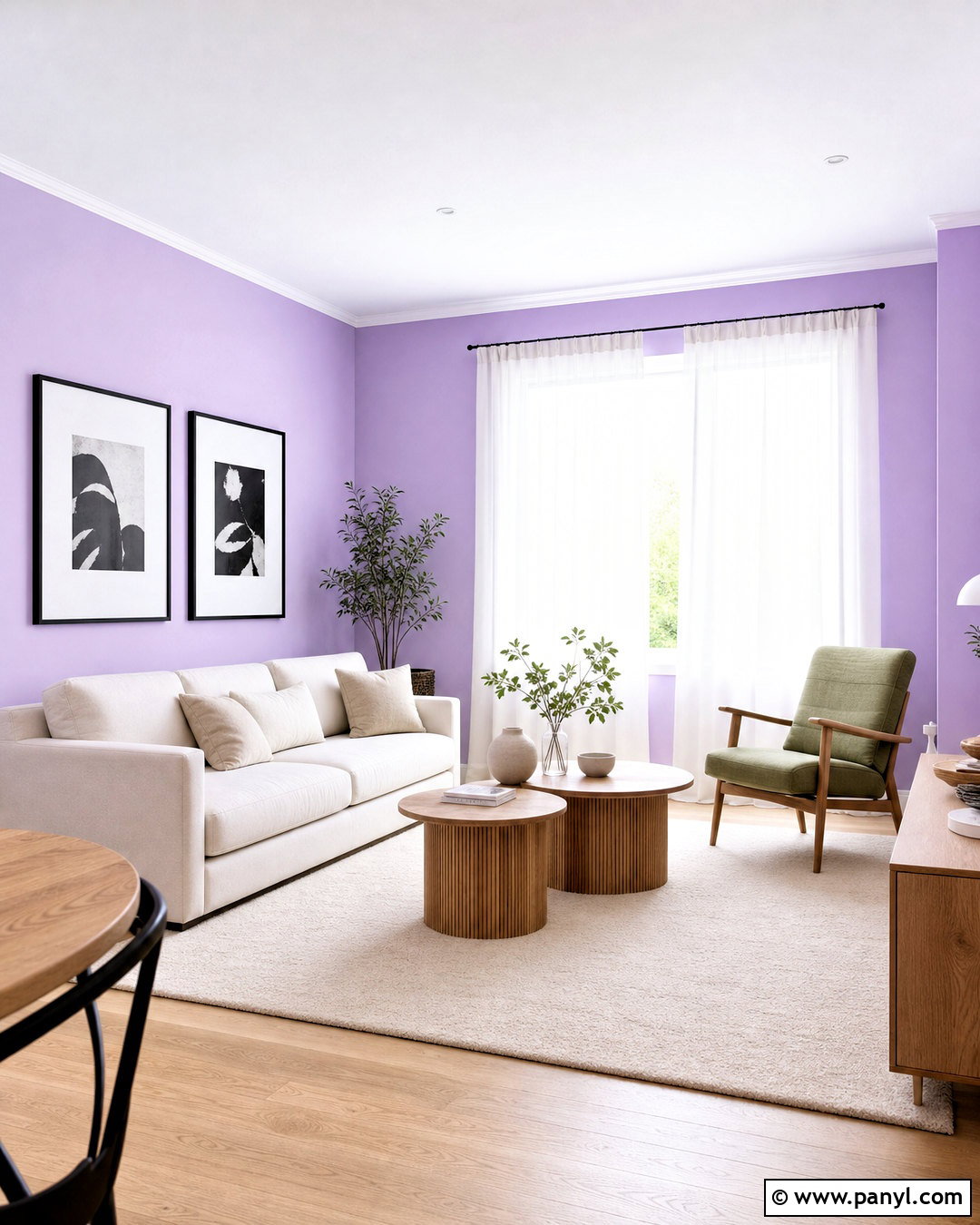
What if a purple living room could feel bright, open, and easy to decorate? Pale lilac walls provide a light foundation that works beautifully with Scandinavian-inspired furniture. Pair them with a white ceiling, crisp trim, and light natural oak flooring. Choose a streamlined ivory sofa, a pale gray lounge chair, and nesting wood coffee tables to maintain an airy layout. Black picture frames and a simple black floor lamp will add definition. Bring in muted sage through cushions, ceramics, and one comfortable reading chair. Sheer white curtains allow the wall color to remain luminous throughout the day. A low-pile cream rug completes the space. Keep accessories minimal so the soft purple paint remains noticeable without making the living room feel overly decorative.
4. Eggplant Purple Dining Room
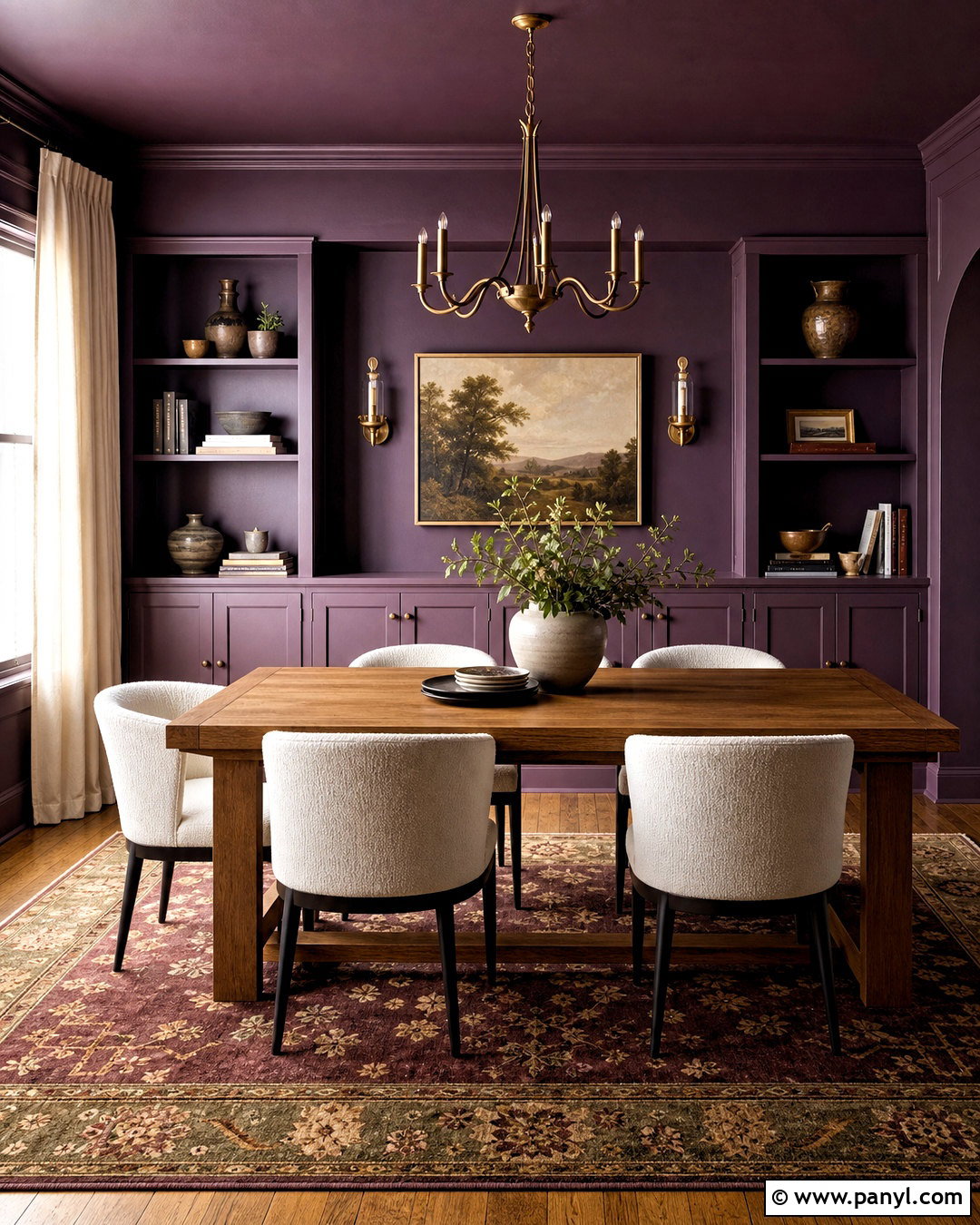
Deep eggplant paint gives a dining room an intimate, tailored character that suits evening meals and special gatherings. Color-drench the walls, baseboards, window trim, and built-in cabinetry in the same velvety purple, but use a slightly glossier finish on the woodwork for subtle contrast. Center a medium-toned oak table beneath a sculptural aged brass chandelier. Cream boucle dining chairs will brighten the composition and introduce softness. Add an antique-style rug featuring burgundy, olive, beige, and faded blue beneath the table. Off-white linen curtains should extend from near the ceiling to the floor. Complete the room with a large landscape painting and a simple ceramic centerpiece. The mix of dark paint, warm timber, and pale upholstery keeps the dining area dramatic but welcoming.
5. Mauve Purple Home Office
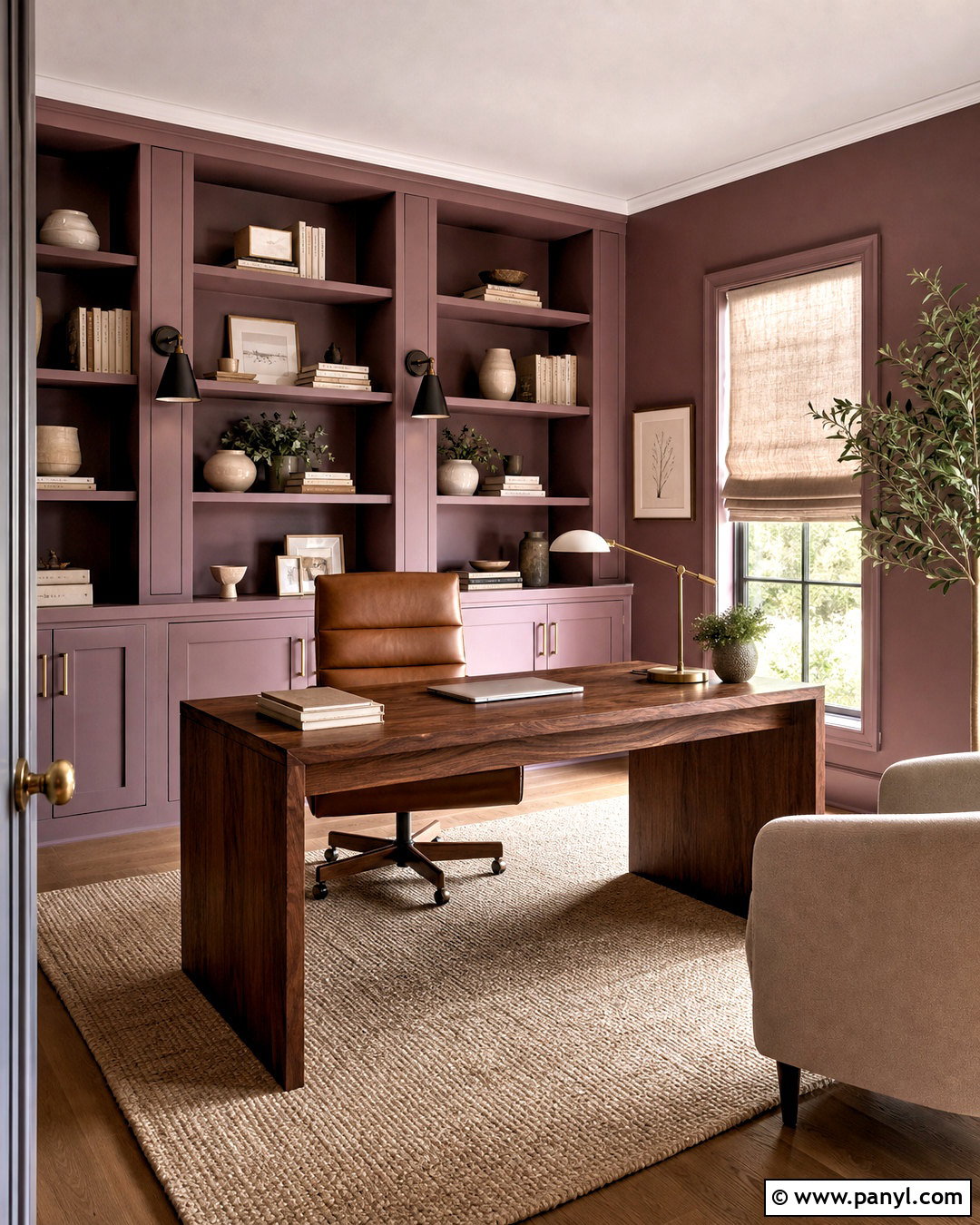
A dusty mauve office feels warm and focused without relying on corporate gray or stark white. Choose a muted purple with brown undertones and apply it to every wall, including built-in shelves if the room has them. Keep the ceiling soft white to preserve a sense of height. Position a walnut desk near the window and pair it with a comfortable tan leather chair. Use a flat-woven cream rug to define the work area and soften hard flooring. Matte black sconces, dark bronze cabinet pulls, and black frames give the gentle wall color a sharper edge. Include closed storage for supplies and reserve open shelves for books, ceramics, and small plants. Natural linen Roman shades finish this practical, grown-up purple room without reducing valuable workspace.
6. Purple And Sage Green Bedroom
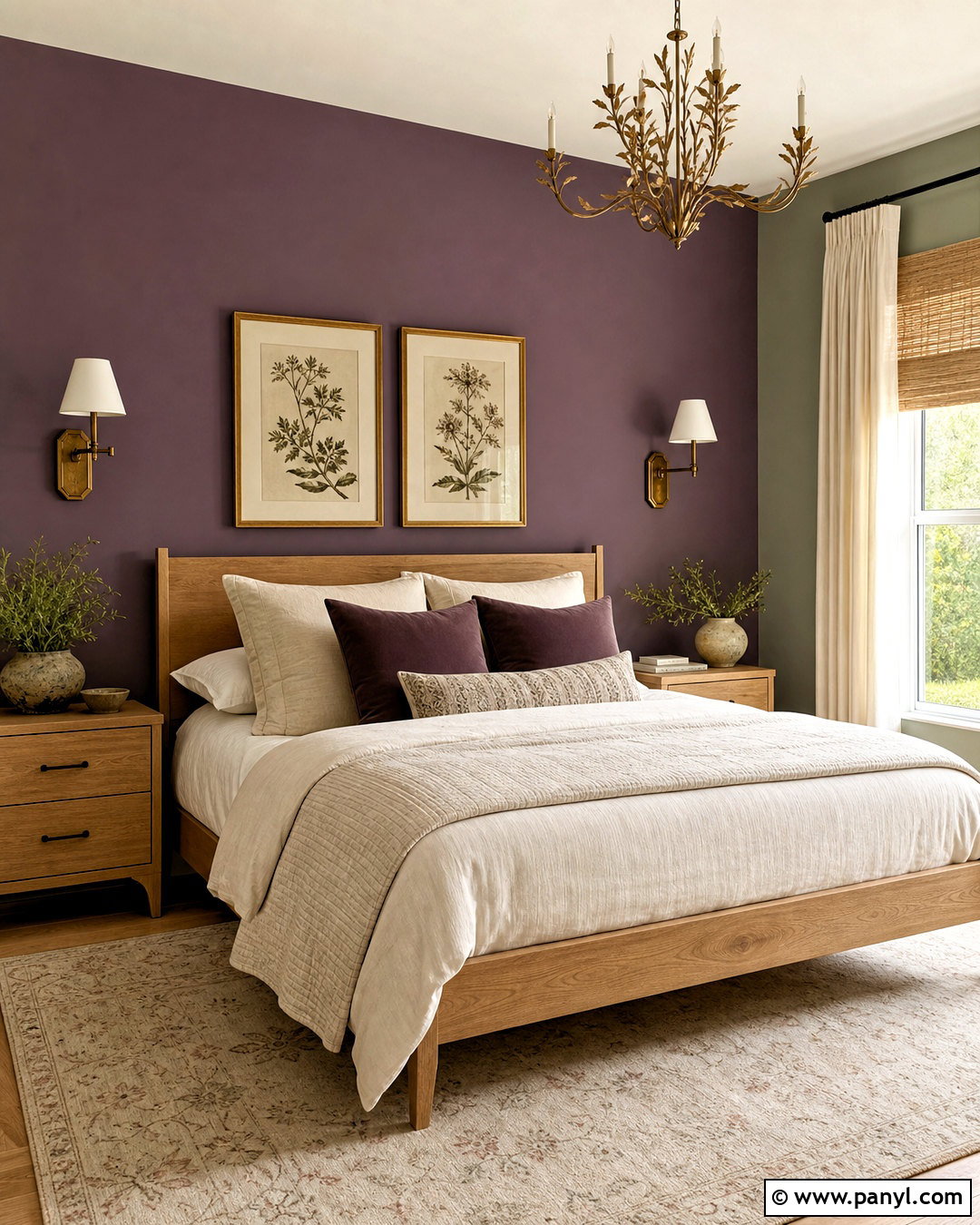
Purple and sage green create a soothing bedroom palette inspired by garden colors. Paint the wall behind the bed a muted grape purple, then use soft sage on the remaining walls. Unify both colors with warm white trim and a simple white ceiling. A natural oak bed and matching dresser introduce an organic quality, while cream bedding prevents the two-color scheme from becoming busy. Layer in a sage quilt, plum cushions, and a small floral-print pillow that includes both shades. Woven blinds and full-length ivory curtains will frame the windows without competing with the paint. Add aged brass reading sconces and a muted botanical print above each nightstand. This balanced arrangement offers noticeable color while maintaining the quiet atmosphere needed in a comfortable bedroom.
7. Purple And Gray Guest Room
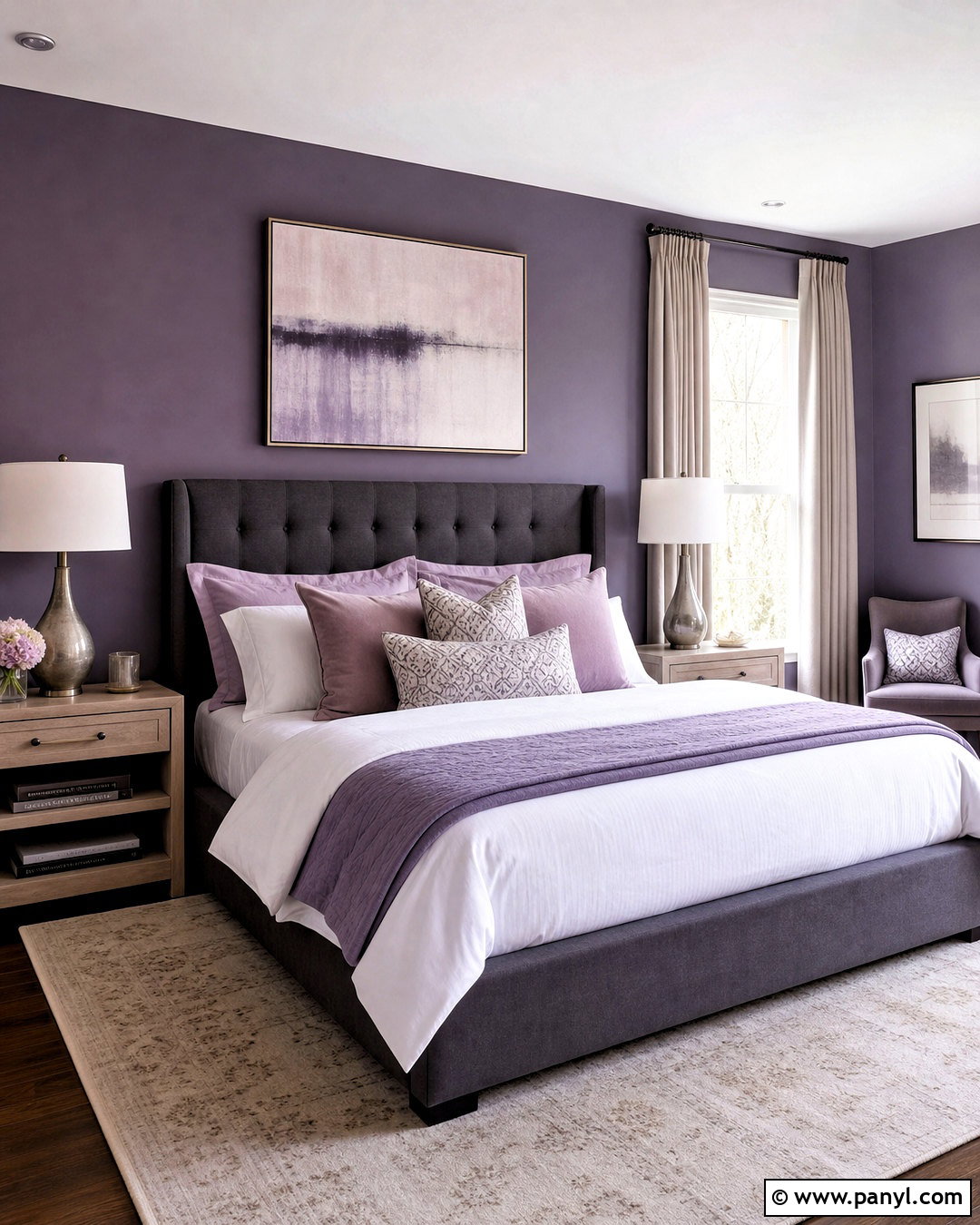
Smoky purple and warm gray can make a guest room feel collected, calm, and suitable for different ages. Use a gray-purple shade on the main walls and a slightly deeper charcoal-purple behind the bed. Paint the ceiling, doors, and trim a gentle off-white rather than a sharp, cool white. Choose a charcoal upholstered bed with simple lines, then brighten it with white sheets, a light gray duvet, and lavender accent pillows. Pale wood nightstands keep the darker elements from feeling heavy. Add a cream rug, brushed nickel lamps, and abstract artwork containing purple, gray, and muted blush. Blackout curtains in natural flax provide privacy and texture. Leave enough open floor area around the bed so the compact room remains comfortable and easy to navigate.
8. Purple Accent Wall Living Room
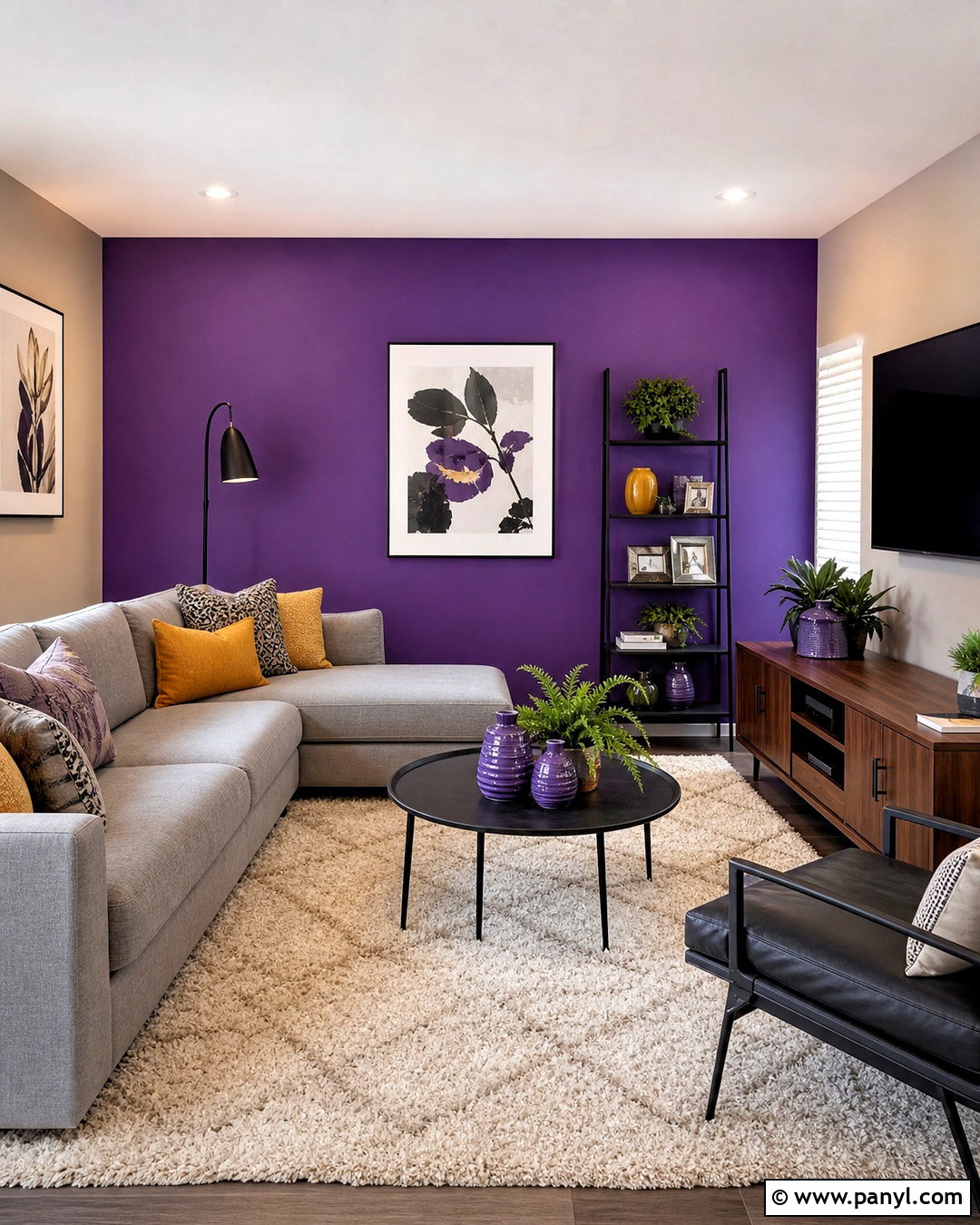
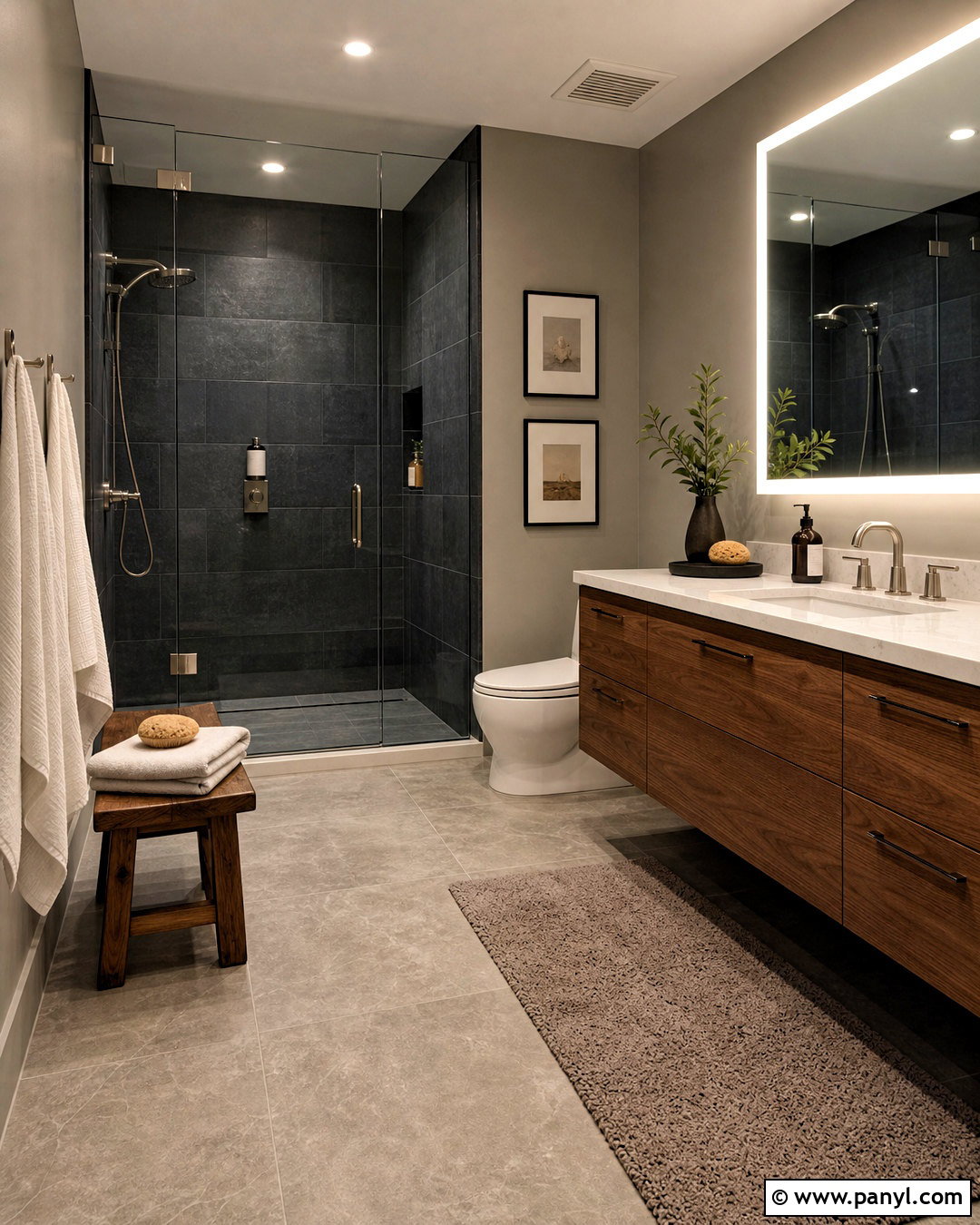
If painting an entire room purple feels overwhelming, create one purposeful accent wall that anchors the complete furniture arrangement. Select the wall behind the sofa or media console and paint it a saturated royal purple. Cover the remaining walls in a warm, light greige and repeat that color on the ceiling. A light gray sectional, walnut media cabinet, and cream rug will balance the stronger feature wall. Add mustard yellow pillows in small amounts for lively contrast, along with black metal lighting and framed graphic artwork. Position plants near the purple surface so their green leaves stand out clearly. The accent wall should connect visually with the seating, rug, and decor rather than appearing random. Repeat purple once or twice through cushions or ceramics to finish the scheme.
9. Purple Color Drenched Reading Room
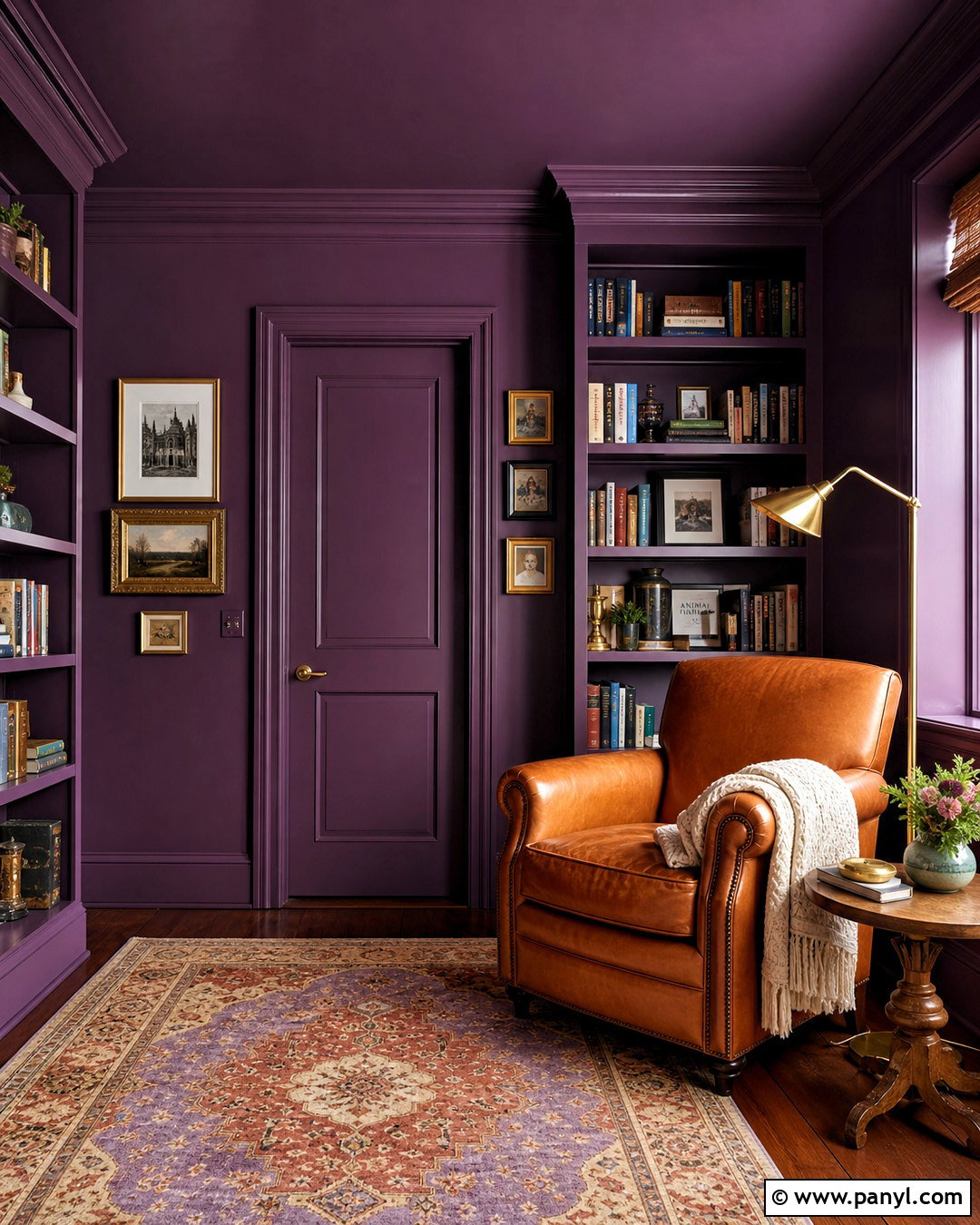
A small reading room is an ideal place to experiment with immersive purple paint. Choose a medium blackberry shade and apply it across the walls, ceiling, trim, shelves, and door. Use an eggshell finish on broad surfaces and satin on woodwork to create dimension within the single color. Place a caramel leather lounge chair beside a compact walnut table and a brass floor lamp. Built-in shelves filled with books add varied color and prevent the room from feeling flat. A vintage-inspired rug with rust, cream, and faded lavender introduces pattern underfoot. Include one framed print and a textured oatmeal throw for softness. Strong task lighting is essential in this darker space. The finished room should feel like a cozy retreat rather than an underlit storage area.
10. Violet Purple Creative Room
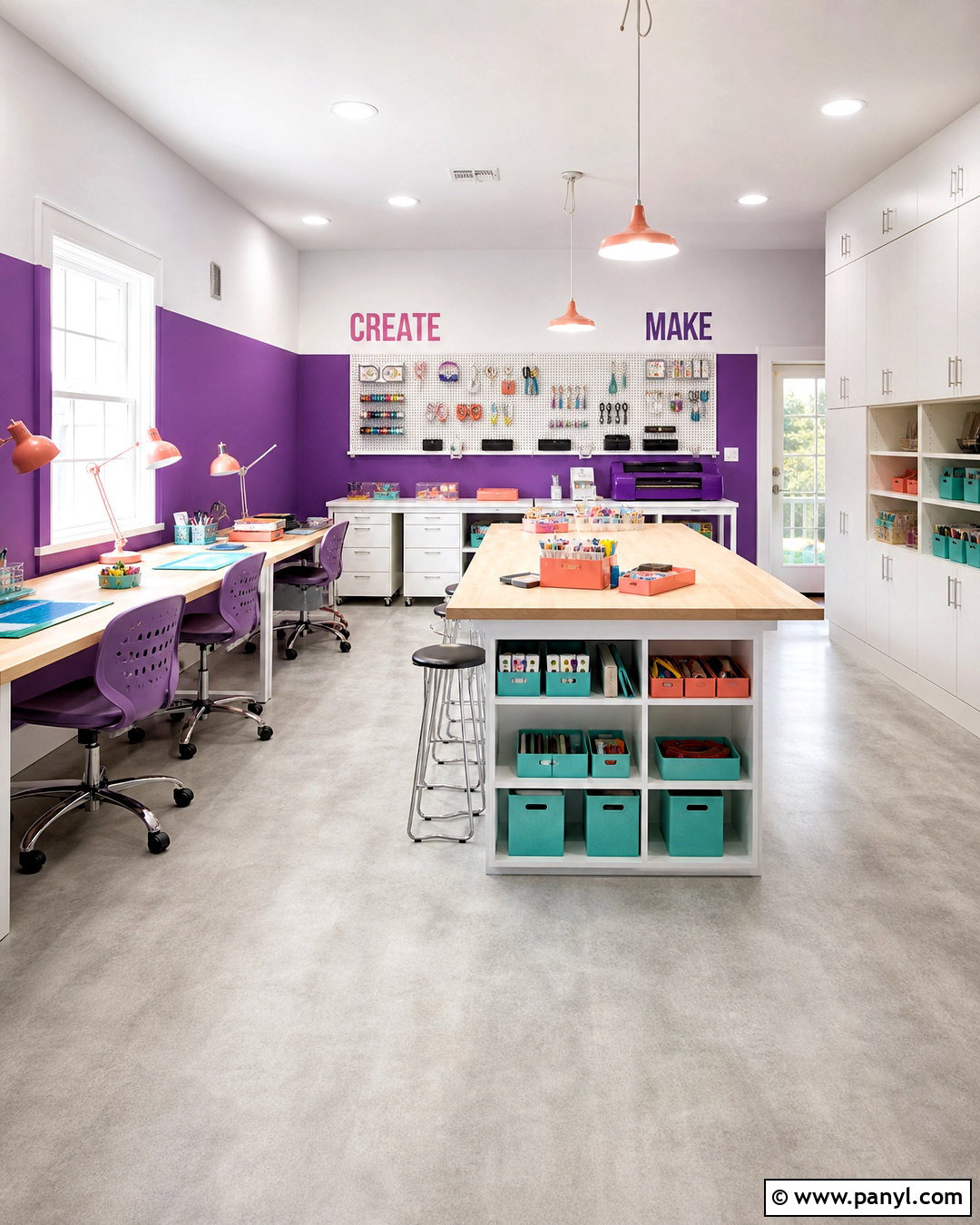
Bright violet walls can energize an art room, craft space, or creative studio when the furnishings remain simple. Paint the lower two-thirds of the walls a clear violet and finish the upper portion in crisp white. A narrow white picture ledge can create a neat transition between the colors. Choose pale birch worktables, white storage cabinets, and pegboard organizers to provide plenty of functional workspace. Add a washable light gray floor or a durable neutral rug that will not compete with the walls. Incorporate turquoise storage bins and small coral accessories for playful contrast. Adjustable white task lamps will keep projects clearly illuminated. Use closed cabinets for visual clutter and display only selected supplies. This arrangement makes the strong purple paint feel intentional, productive, and suitable for regular use.
11. Dusty Purple Nursery
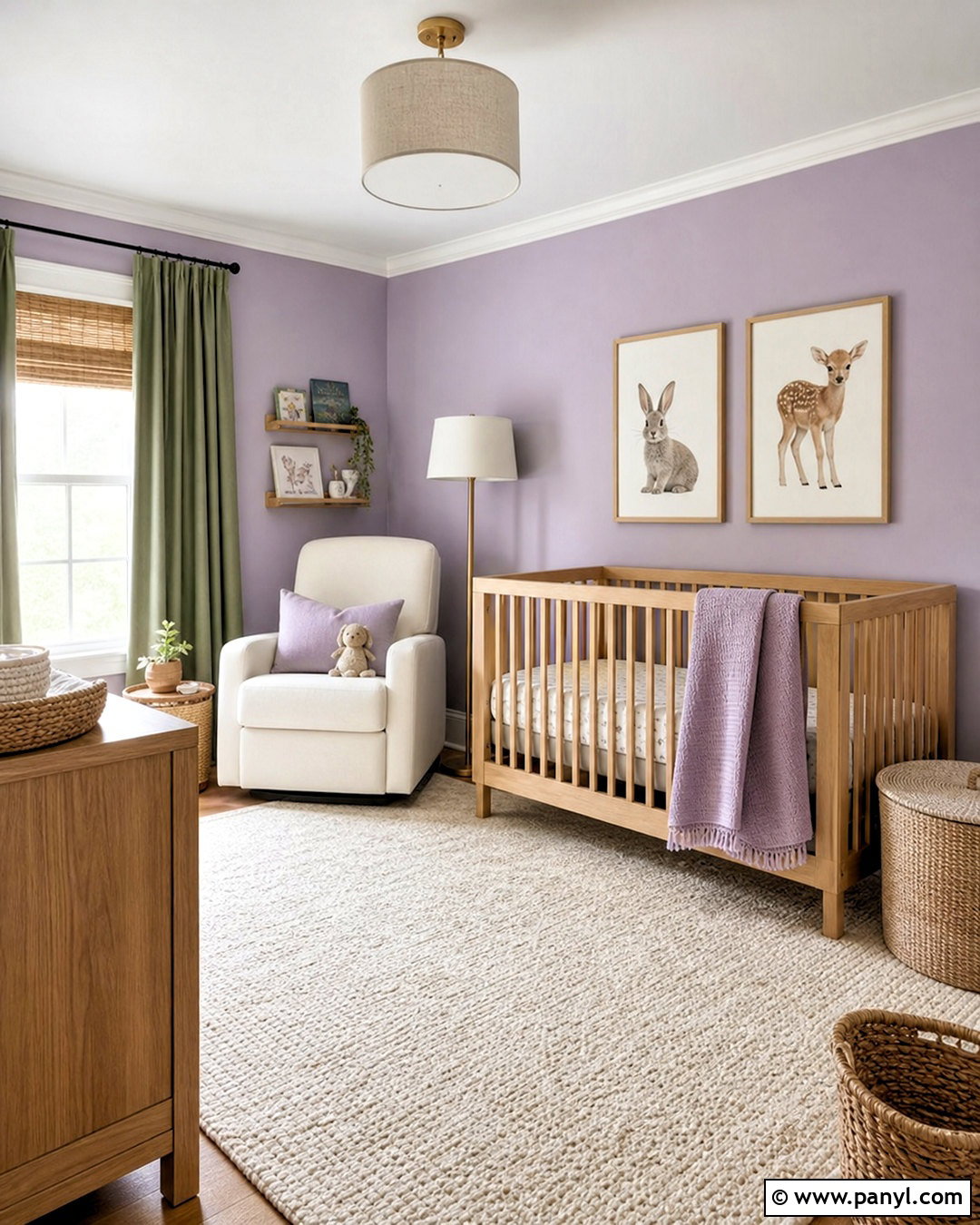
A dusty purple nursery can feel gentle and timeless without becoming overly themed. Select a pale heather shade with warm gray undertones for all four walls, then use creamy white on the ceiling, doors, and trim. Place a natural wood crib against the longest uninterrupted wall and anchor the opposite corner with a comfortable ivory glider. A washable cream rug, oak dresser, and woven baskets add warmth and practical storage. Use sage green curtains with blackout lining to control daylight. Simple woodland prints, a soft lavender blanket, and muted floral details introduce character without crowding the room. Keep shelving secure and the floor plan open around the crib and chair. The understated paint palette can adapt easily as the room changes from a nursery into a child’s bedroom.
12. Purple And Navy Media Room
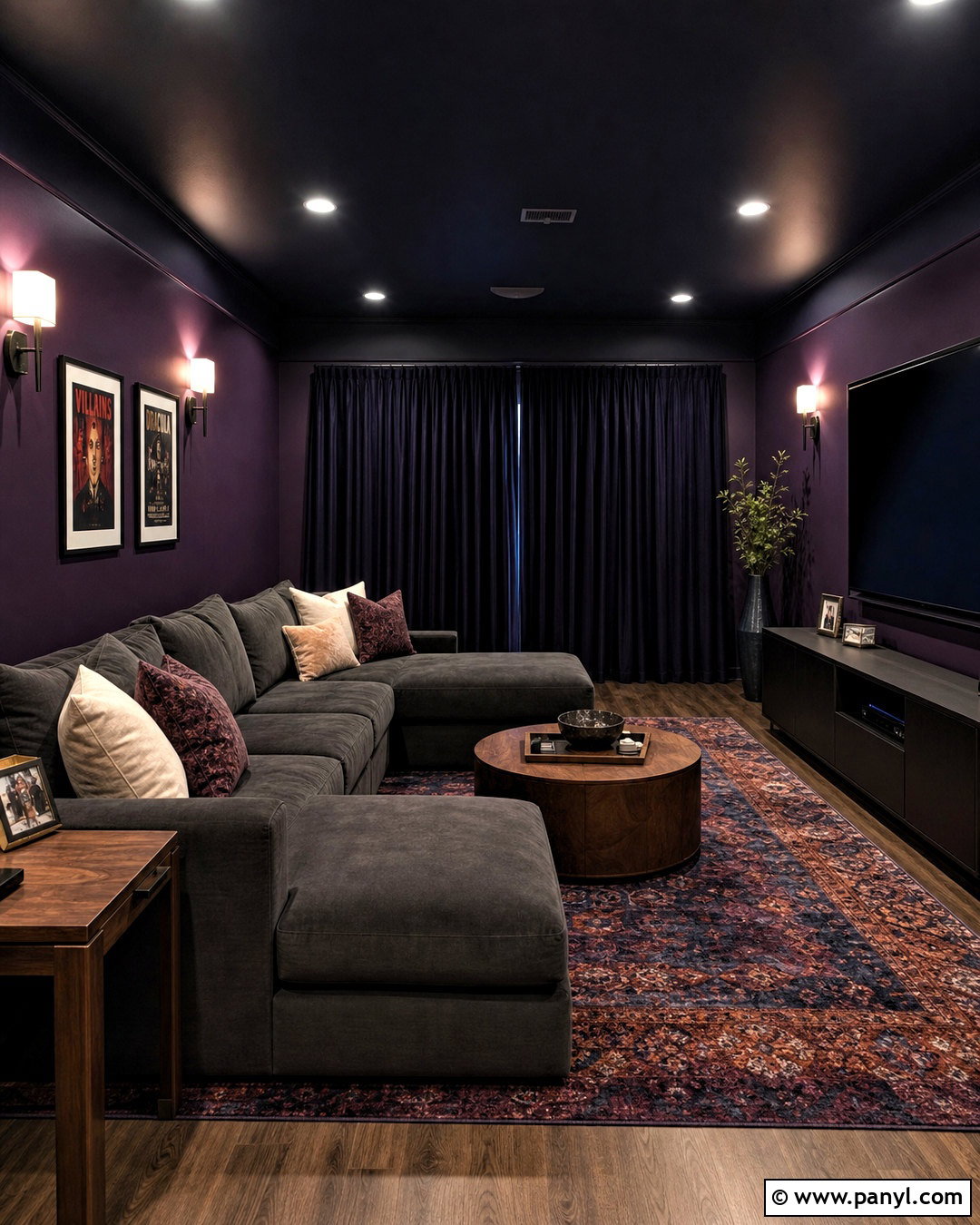
Deep purple and navy produce a comfortable media room with less glare than pale walls. Paint the walls a dark blue-purple and cover the ceiling in a slightly deeper navy for an enveloping effect. Use matte finishes around the screen to reduce distracting reflections, while keeping baseboards and doors in matching satin paint. Arrange a charcoal sectional toward the television or projector wall, leaving a clear pathway behind it. Add a large patterned rug containing plum, navy, and muted rust for warmth. Blackout curtains should match the wall color as closely as possible. Include walnut side tables, dimmable wall sconces, and a low black media cabinet. A few cream cushions provide needed contrast, ensuring the darker room feels designed and comfortable instead of unfinished or cave-like.
13. Purple And Cream Sitting Room
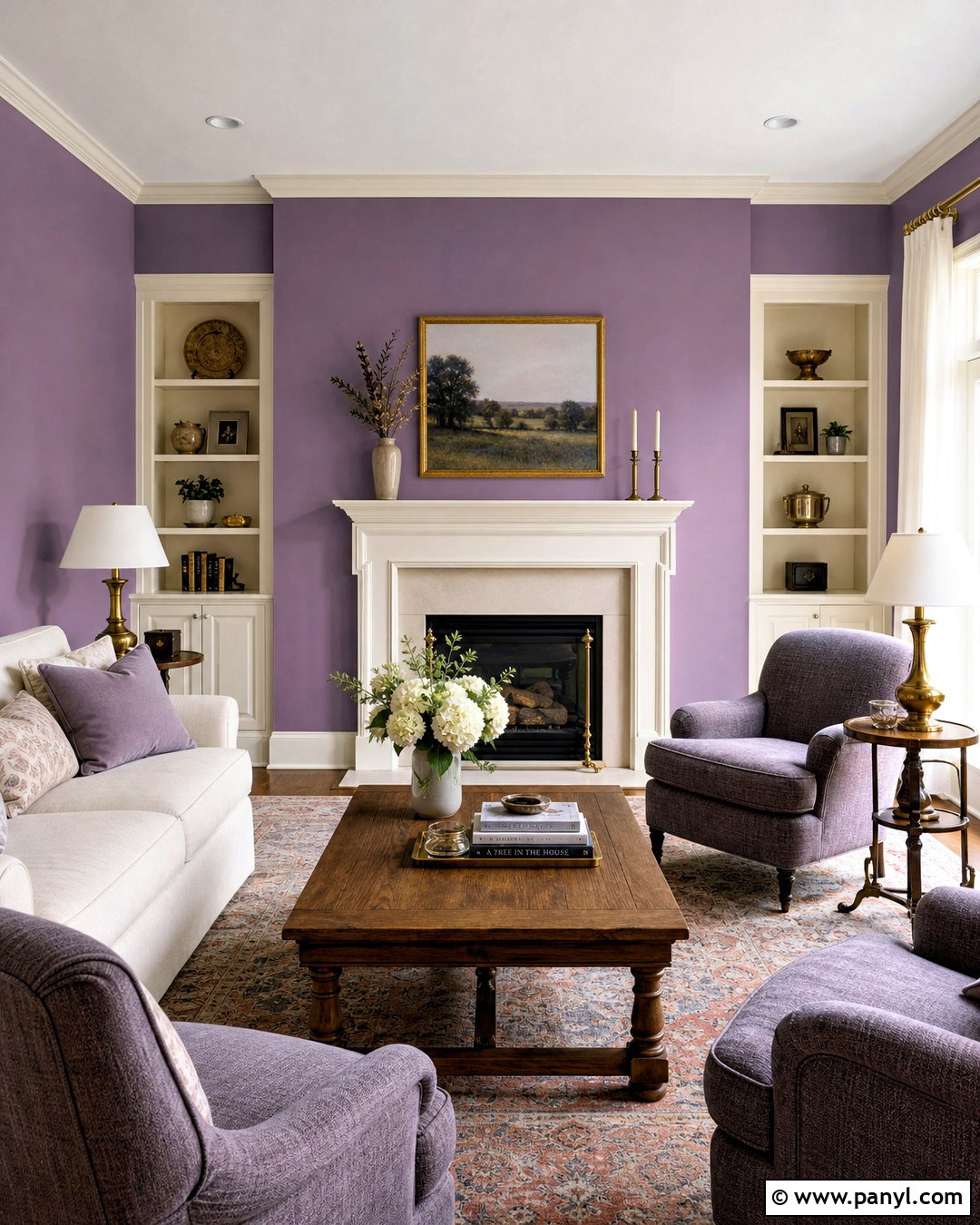
Warm cream is an easy partner for purple when you want a traditional sitting room with a lighter atmosphere. Paint the walls a soft iris purple and use creamy white across the ceiling, trim, fireplace surround, and built-in cabinets. Arrange a cream sofa opposite two lavender-gray armchairs to create a conversation-friendly layout. A medium oak coffee table and antique brass lamps will warm the cooler wall color. Place a faded Persian-style rug beneath all the seating, choosing a pattern that combines purple, beige, blue, and rust. Full-length ivory curtains add softness without disappearing against the trim. Decorate the mantel with a mirror, simple candlesticks, and one ceramic vase. The balanced mix of painted surfaces, classic furniture, and aged finishes creates an inviting, cohesive sitting area.
14. Purple And Teal Powder Room
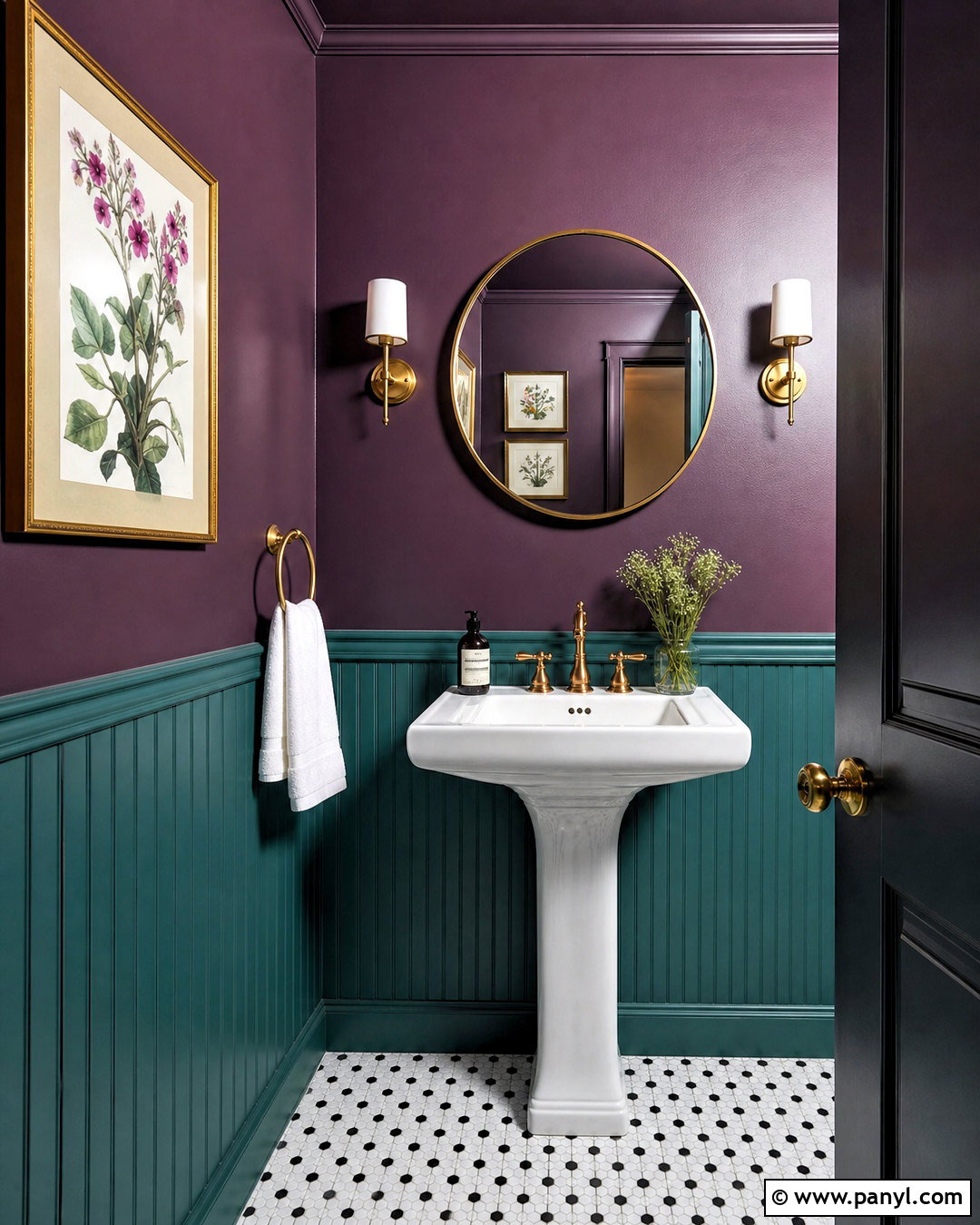
A powder room can handle a stronger purple palette because it is compact and used for shorter periods. Paint the upper walls a saturated aubergine and install teal-painted beadboard or paneling below. A thin chair rail in the same teal creates a clean connection between the two colors. Choose a white pedestal sink or compact vanity to break up the darker surfaces. Add a round brass mirror, matching wall sconces, and a vintage-style brass faucet. Small black-and-white floor tiles will ground the colorful scheme without introducing another dominant hue. Keep towels white and use minimal countertop decor. A framed botanical print can repeat purple and teal in a controlled way. Bright, accurate lighting is important so the room feels jewel-toned and polished rather than dark or cramped.
15. Purple And Blush Bedroom
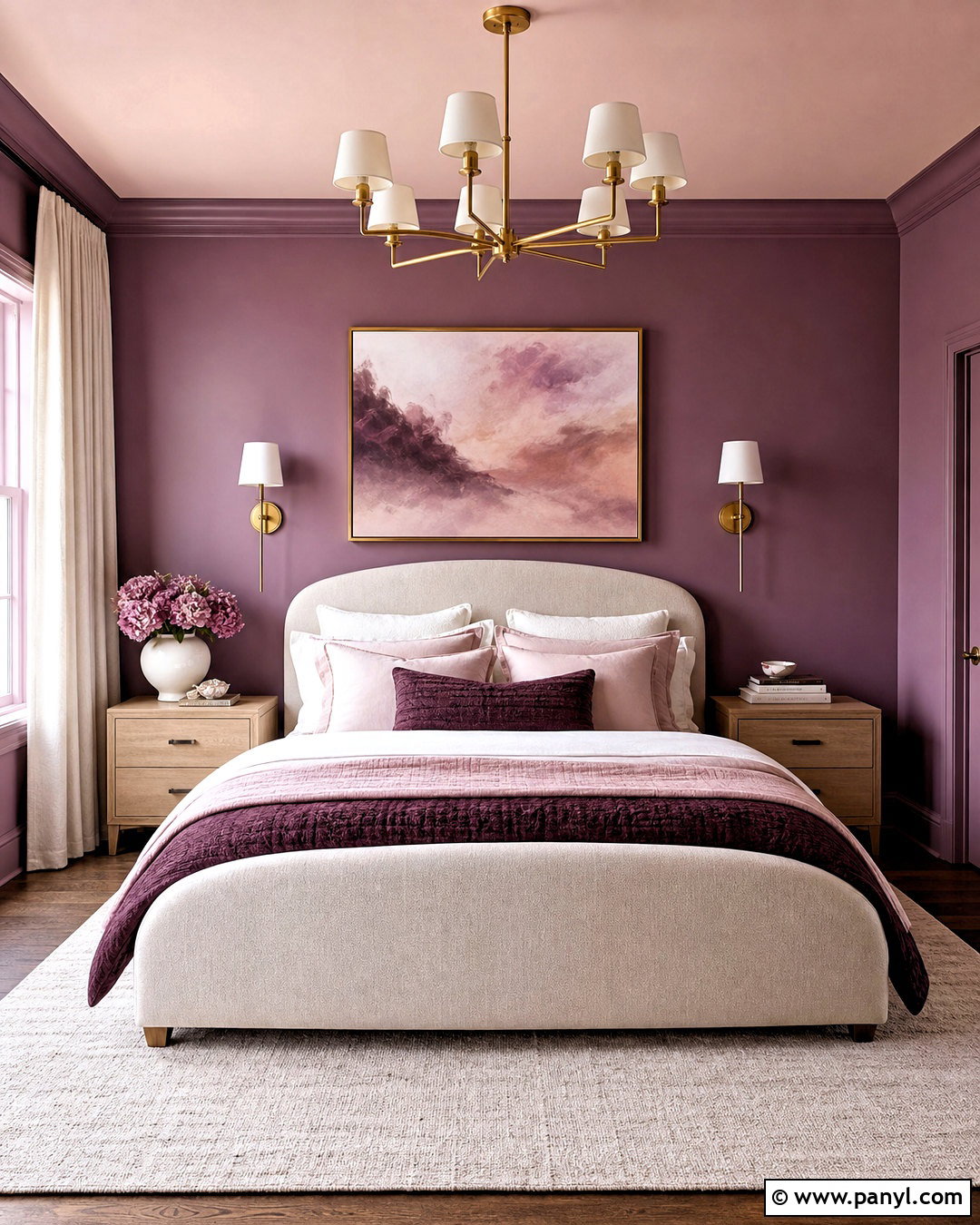
Muted purple and blush can create a romantic bedroom that still feels mature and balanced. Paint the walls a dusty orchid shade, then use soft blush on the ceiling for an unexpected but gentle color transition. Warm white trim provides a narrow visual break between the two painted surfaces. Choose a curved beige upholstered bed, light oak nightstands, and a large cream rug to ground the palette. Layer white bedding with a blush quilt and plum velvet cushions. Brushed brass sconces and small marble-topped tables add subtle polish. Hang abstract artwork containing burgundy, pale pink, and taupe over the bed. Natural linen curtains keep the window treatment relaxed. Limit shiny finishes and decorative accessories so the room remains restful, uncluttered, and easy to live with.
16. Purple And Mustard Dining Room
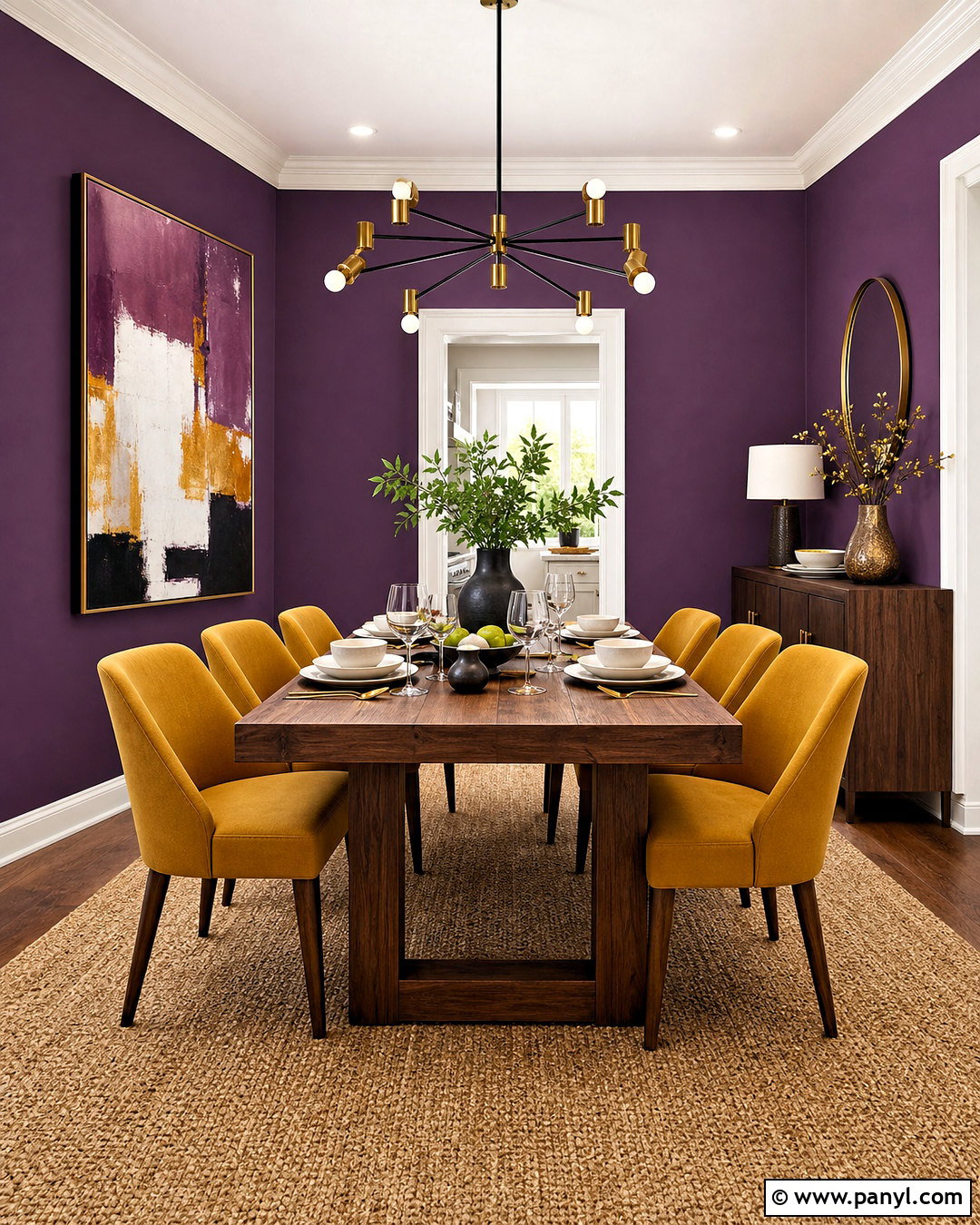
Purple and mustard yellow form a confident dining room palette when one color clearly takes the lead. Paint the walls a medium mulberry purple and reserve mustard for upholstered dining chairs, curtains, or a painted sideboard. Keep the ceiling and detailed trim warm white to frame the stronger colors. A solid walnut table will connect the reddish undertones in the purple with the earthy yellow accents. Hang a black and brass chandelier above the center of the table and add a neutral jute-blend rug below. Use simple cream tableware and clear glass accessories to avoid unnecessary visual competition. One oversized modern artwork can combine purple, ocher, white, and charcoal. The finished room feels lively and layered, yet the controlled color placement prevents it from looking chaotic.
17. Purple Wainscoting Bedroom
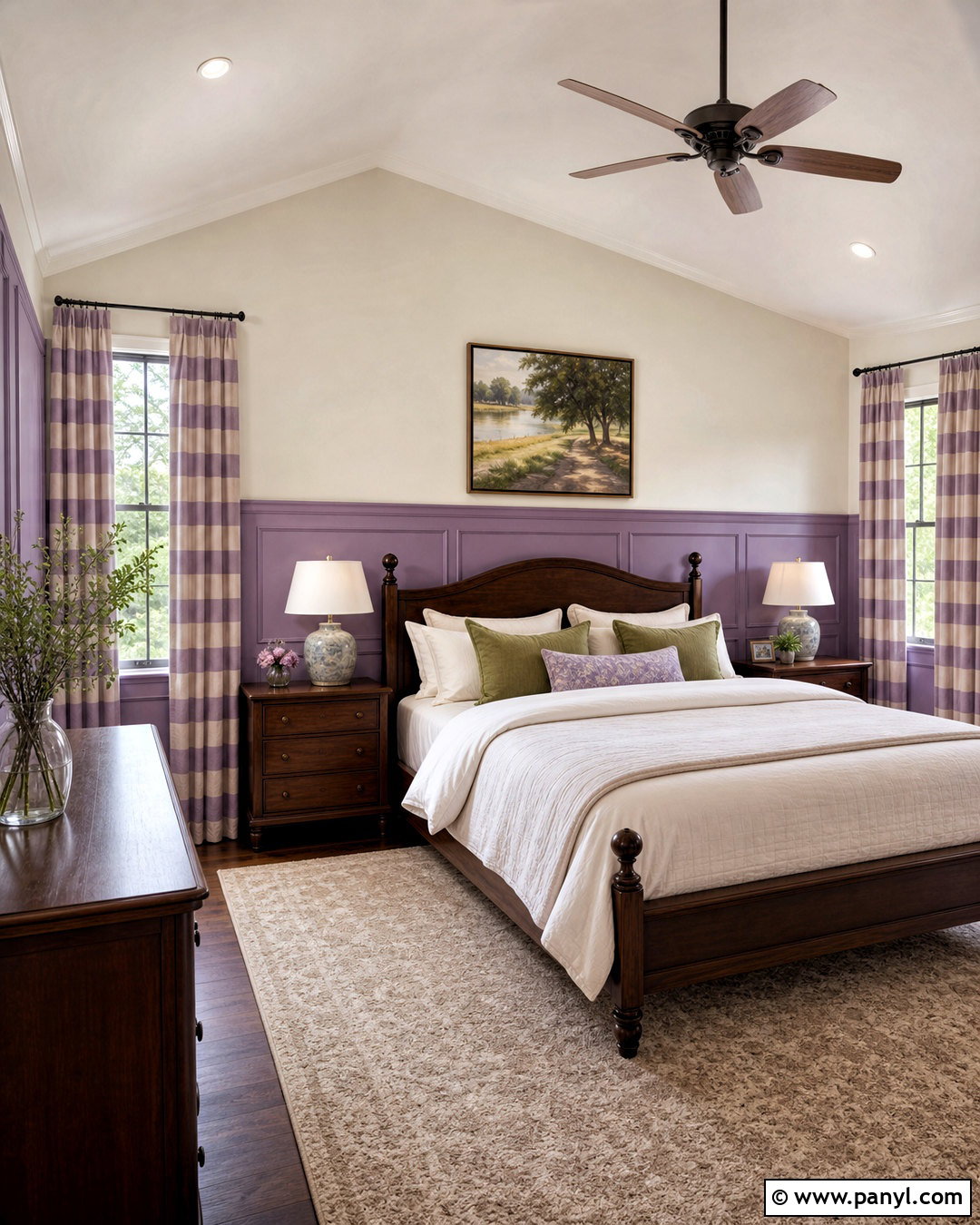
Painted purple wainscoting adds color and architectural interest without surrounding the entire bedroom in a saturated shade. Install simple rectangular wall molding across the lower half of the room and paint it a medium lavender-purple in a durable satin finish. Use warm white above the molding and continue that shade across the ceiling. Position a dark walnut bed against the paneled wall to create a strong central feature. Dress it with ivory linens, a lavender coverlet, and muted green pillows. Add matching walnut nightstands, ceramic lamps, and a soft beige rug. Full-length striped curtains can combine white, purple, and taupe. Keep artwork minimal because the molding already adds detail. This complete approach works especially well in traditional, cottage, and transitional bedrooms with plain existing walls.
18. Purple Painted Ceiling Room
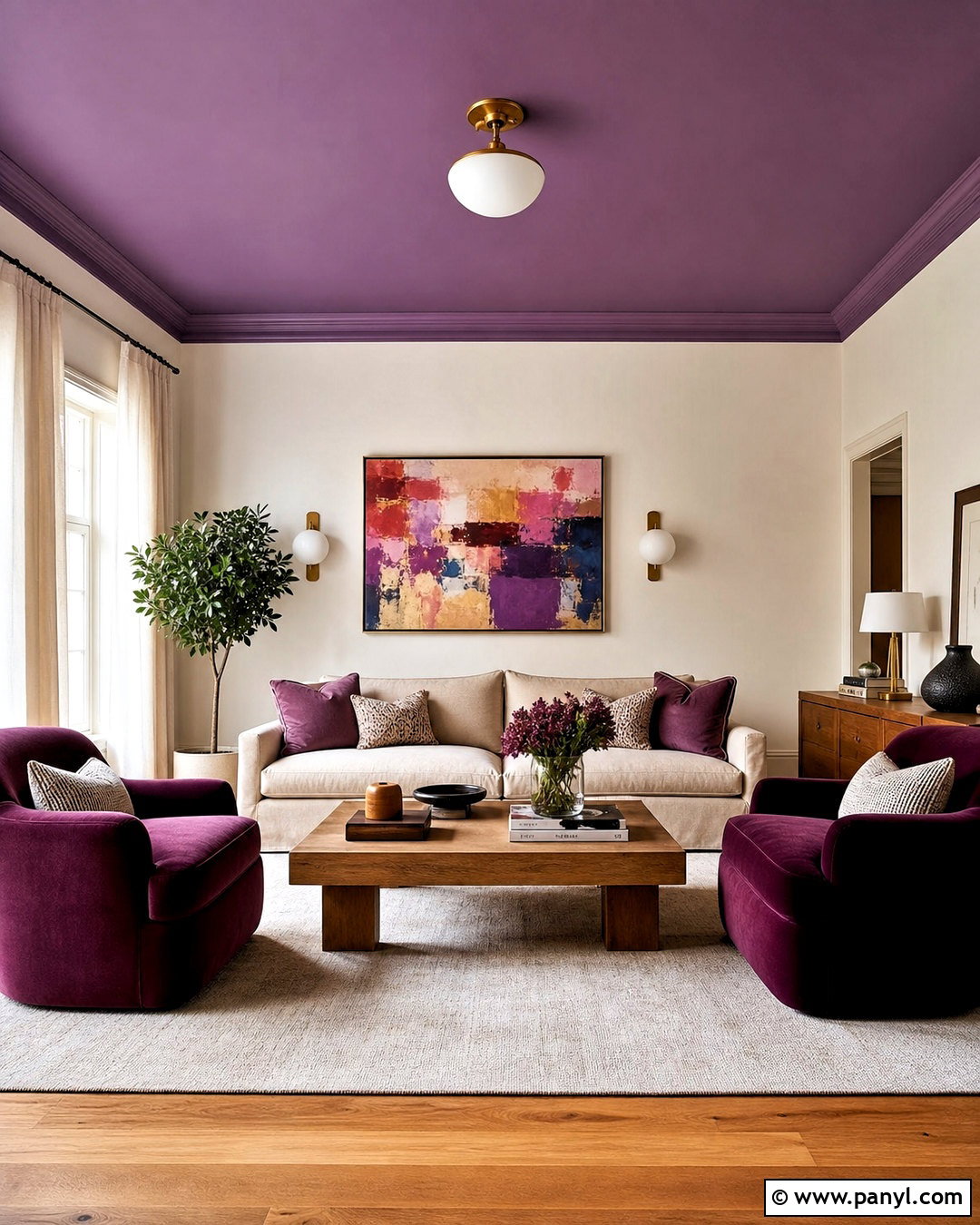
A purple ceiling offers an interesting alternative when you want color overhead but prefer neutral walls. Paint the ceiling a soft grape or medium lilac, then use warm white on the walls and trim. Carry the purple down through the crown molding if you want the ceiling to appear more substantial. In a living room, pair this treatment with a light beige sofa, two plum armchairs, and a natural oak coffee table. A cream rug and sheer linen curtains will maintain brightness below the colored ceiling. Add a central opal glass light fixture with brass hardware to draw attention upward. Repeat the ceiling shade through a few cushions and artwork. This scheme works best when the room has attractive ceiling height and enough daylight to keep the upper color clear.
19. Purple Ombre Bedroom Walls
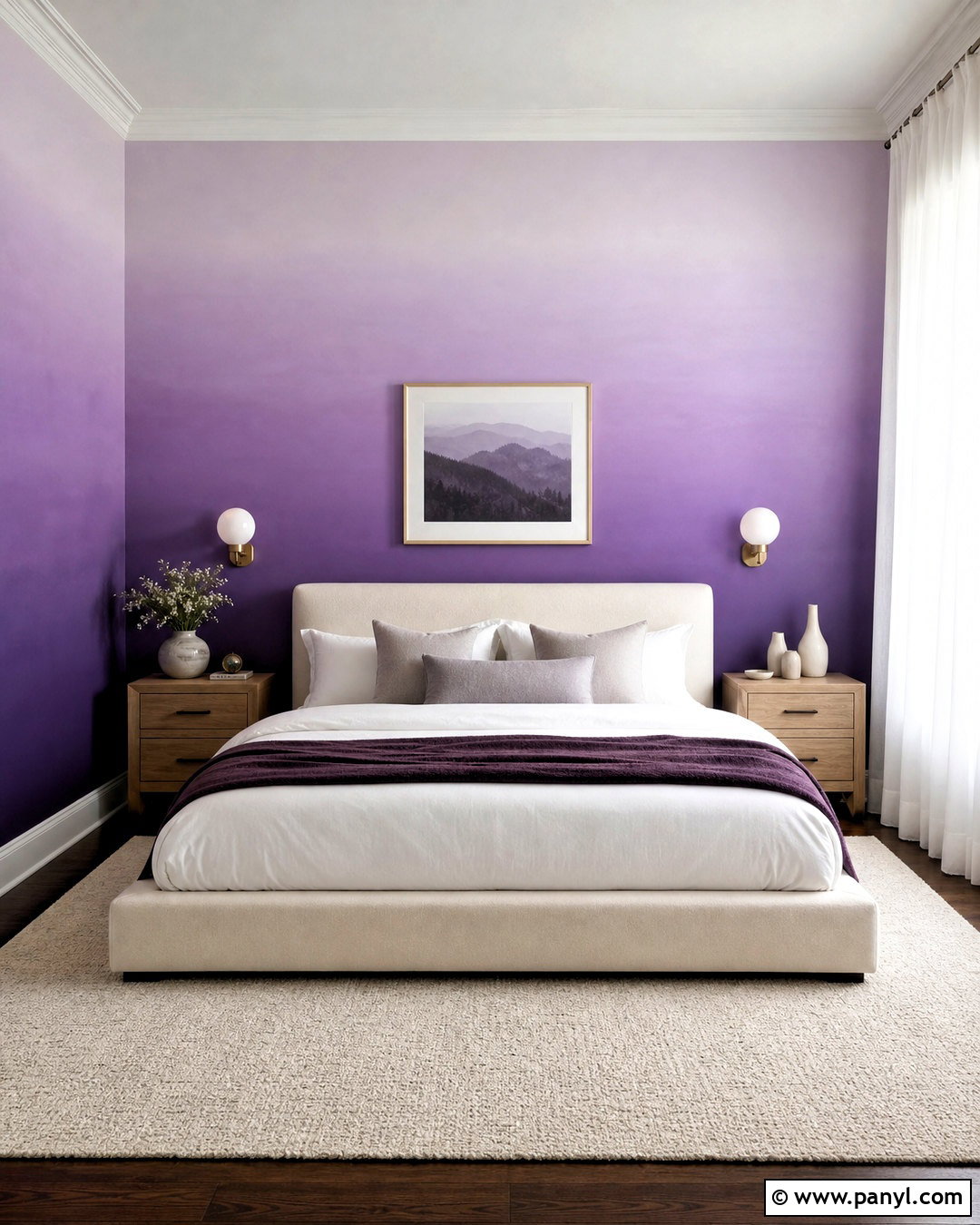
Purple ombre walls can give a bedroom a custom painted finish while maintaining a soft, restful atmosphere. Begin with deep violet near the floor and gradually blend upward through lavender into pale lilac near the ceiling. Keep the ceiling white so the lightest portion has a crisp endpoint. Choose a simple ivory platform bed and position it against the most evenly blended wall. White bedding, a plum throw, and pale gray pillows will complement the gradient without hiding it. Use minimal light wood furniture and a solid cream rug instead of additional patterns. Modern globe sconces and sheer white curtains preserve the clean appearance. The transitions should look smooth and intentional, so test the colors together and plan enough working time before beginning each blended section.
20. Blackened Purple Library
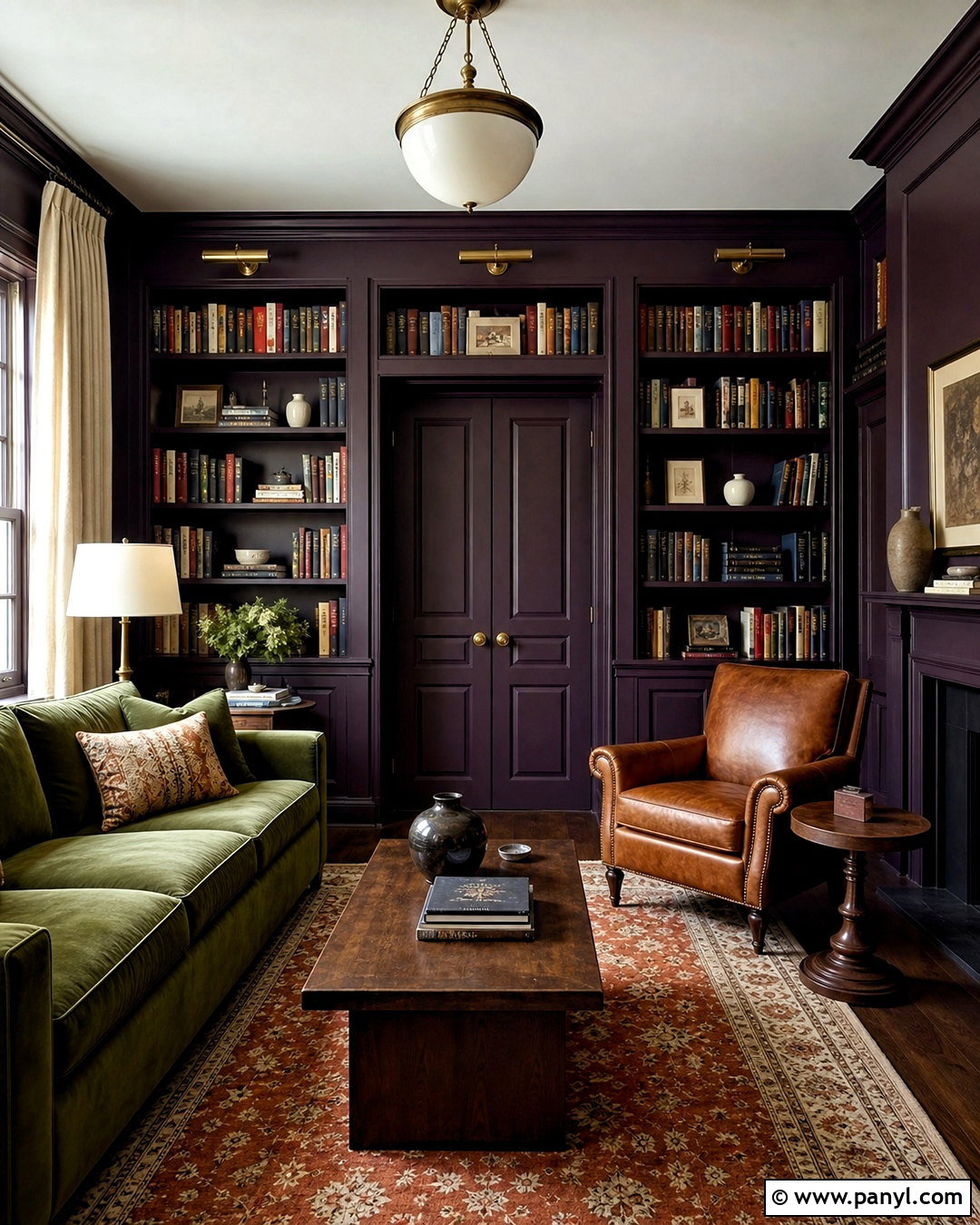
Almost-black purple paint gives a home library or den remarkable depth while appearing softer than pure black. Apply the color to walls, shelving, trim, and the back of the door for a continuous finish. Keep the ceiling a muted warm white if the room is small, or continue the purple overhead in a larger, well-lit space. Fill the shelves with books, framed photographs, and a few pale ceramics that contrast with the cabinetry. Place a moss green velvet sofa opposite a cognac leather chair, then connect them with a vintage rust-and-cream rug. Walnut tables and antique brass picture lights reinforce the warm undertones. Finish with heavy natural linen curtains. The complete room feels intimate, useful, and richly layered without depending on excessive decoration.
Conclusion:
The best purple room paint ideas combine wall color with a complete plan for furniture, flooring, trim, lighting, and accessories. Pale lavender and dusty mauve can make bedrooms and offices feel calm, while plum, aubergine, and blackened purple bring warmth and depth to dining rooms, libraries, and media spaces. If you prefer a lighter commitment, consider purple wainscoting, a painted ceiling, or one carefully connected accent wall. Always compare paint samples beside your existing flooring and fabrics before deciding. View each sample during morning, afternoon, and evening light. With thoughtful undertones, balanced contrast, and practical finishes, purple can become a surprisingly flexible foundation for a stylish and comfortable room.

Related Ideas and Inspiration:
Leave a Reply