
Sage green brings a soft, earthy character to the kitchen without feeling overly colorful. It can brighten a compact cooking space, soften a modern layout, or add freshness to traditional cabinetry. The most successful 20 sage green kitchen ideas combine this versatile hue with coordinated countertops, backsplashes, flooring, hardware, lighting, and natural textures. Warm whites create an airy effect, while wood, brass, terracotta, and black introduce depth. Sage also works on more than cabinets. It can transform walls, islands, tile, pantry doors, and built-in storage. Whether you are planning a full renovation or a budget-friendly refresh, the goal is a complete design that feels balanced and practical. Explore these distinctive 20 sage green kitchen ideas to find a look that suits your home.

1. Sage Green Kitchen Cabinets With White Countertops
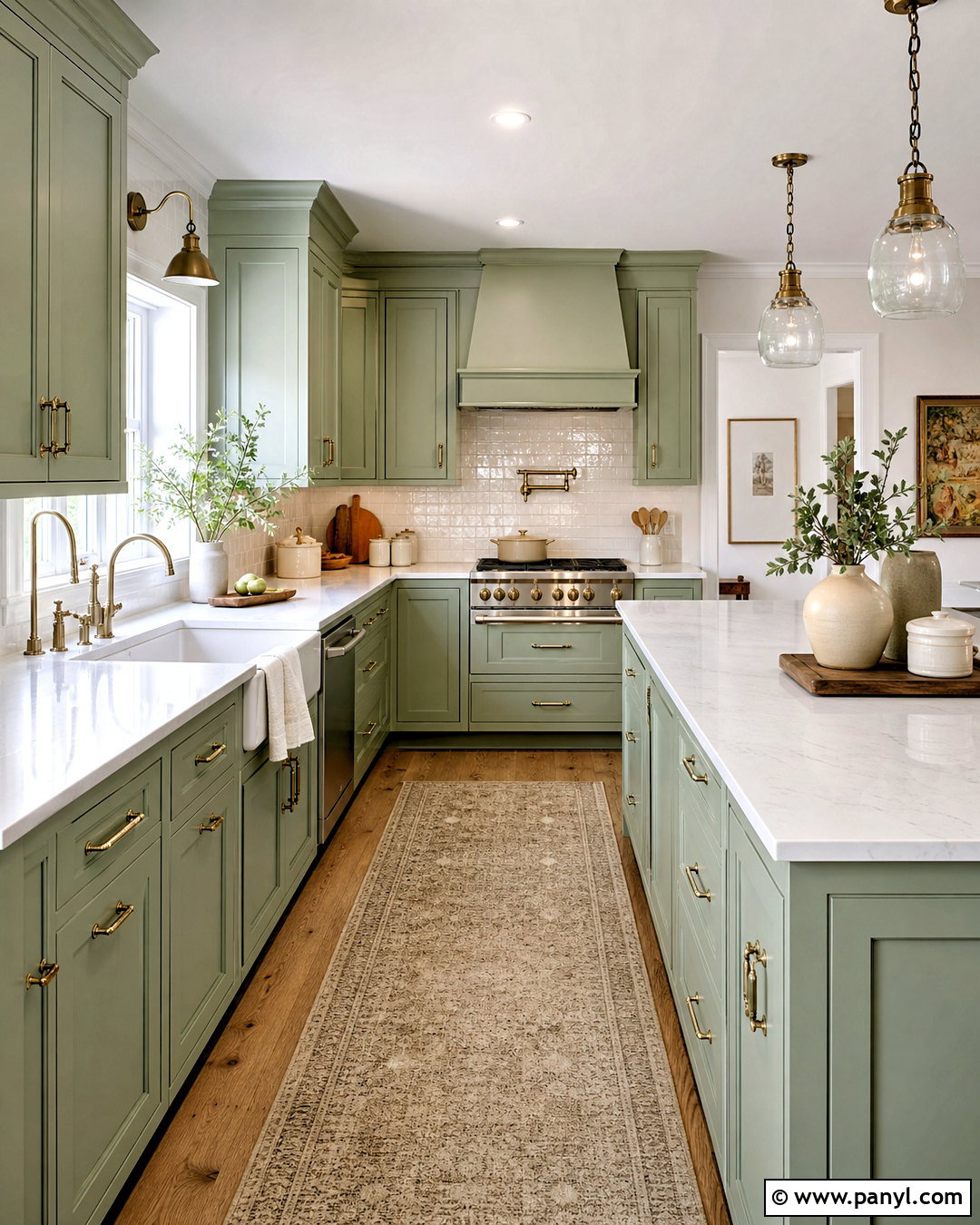
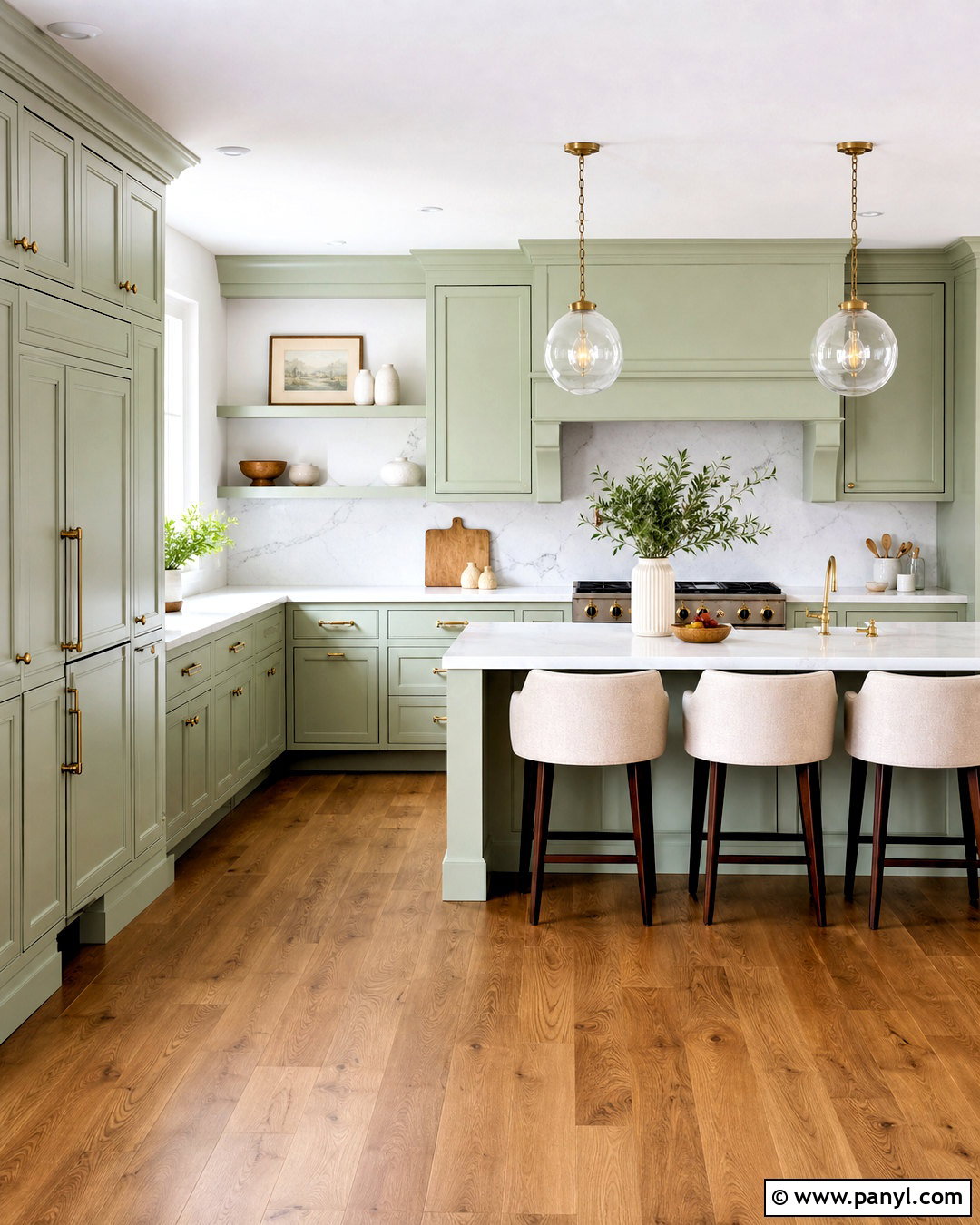
Soft sage green cabinets and clean white countertops create a bright kitchen that still feels warm and inviting. Choose simple Shaker doors for a balanced design that works in traditional, transitional, or modern homes. A quartz counter with faint gray or beige veining adds movement without distracting from the cabinetry. Continue the light palette with warm white walls and a glossy off-white subway tile backsplash. Brushed brass knobs, a matching faucet, and clear glass pendants bring gentle warmth. Ground the room with medium oak flooring and a neutral washable runner. Natural wood cutting boards and cream stoneware complete the look. Keep countertop decor limited so the green cabinetry remains the room’s strongest feature.
2. Sage Green Kitchen With Natural Wood Cabinets
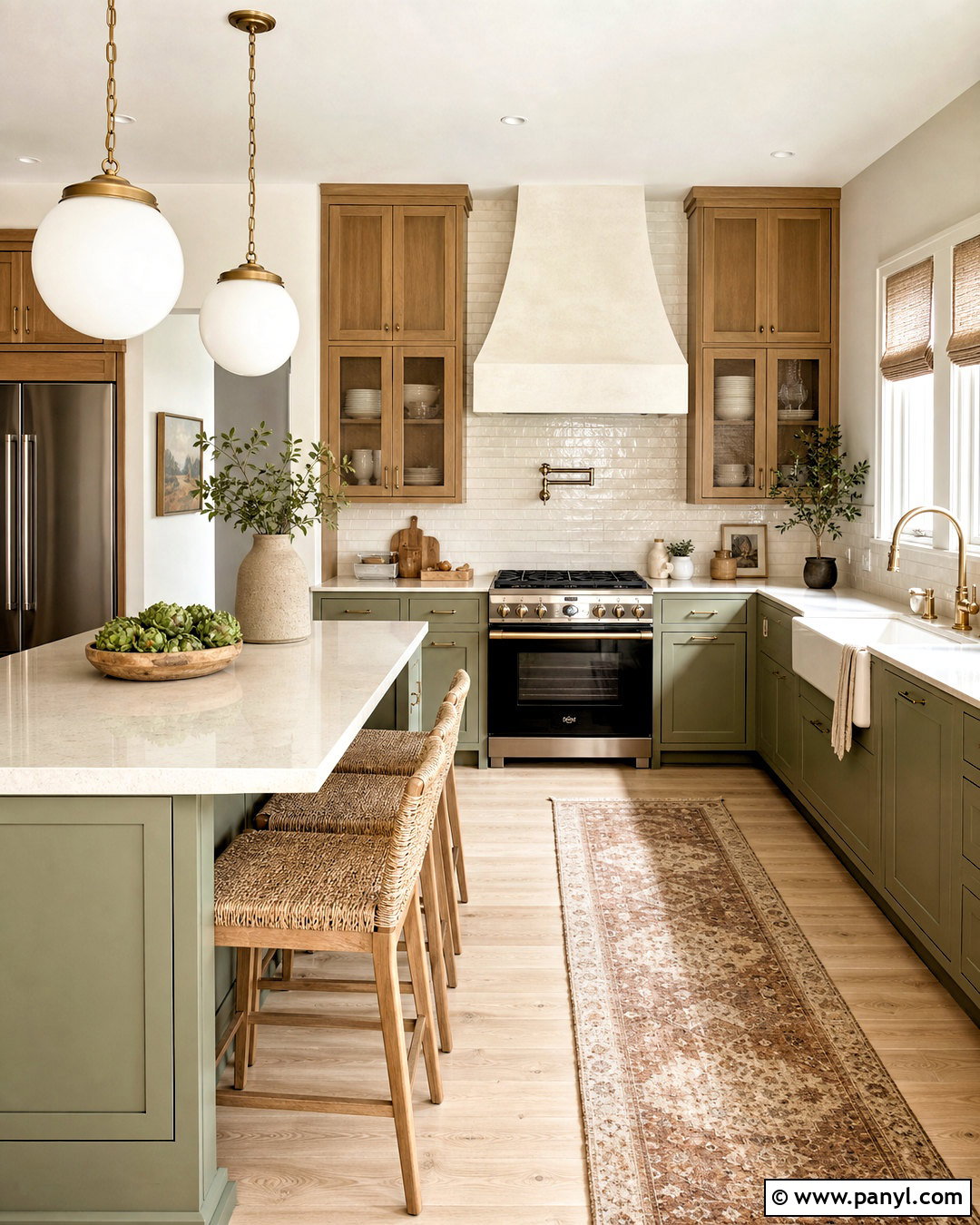
Can’t decide between painted and wood cabinetry? Combine sage green base cabinets with natural oak uppers or tall pantry units. The green provides personality, while visible wood grain makes the room feel relaxed and grounded. Use flat-panel doors for a streamlined contemporary look, then connect both finishes with warm white quartz countertops. A creamy handmade tile backsplash adds subtle texture. Choose brushed nickel or aged brass hardware, depending on whether you want a cooler or warmer result. Pale oak flooring can continue the natural theme, although muted beige porcelain tile is another practical choice. Finish the kitchen with woven counter stools, linen window shades, simple ceramic accessories, and understated globe pendants that illuminate the entire workspace.
3. Sage Green Shaker Kitchen With Brass Hardware
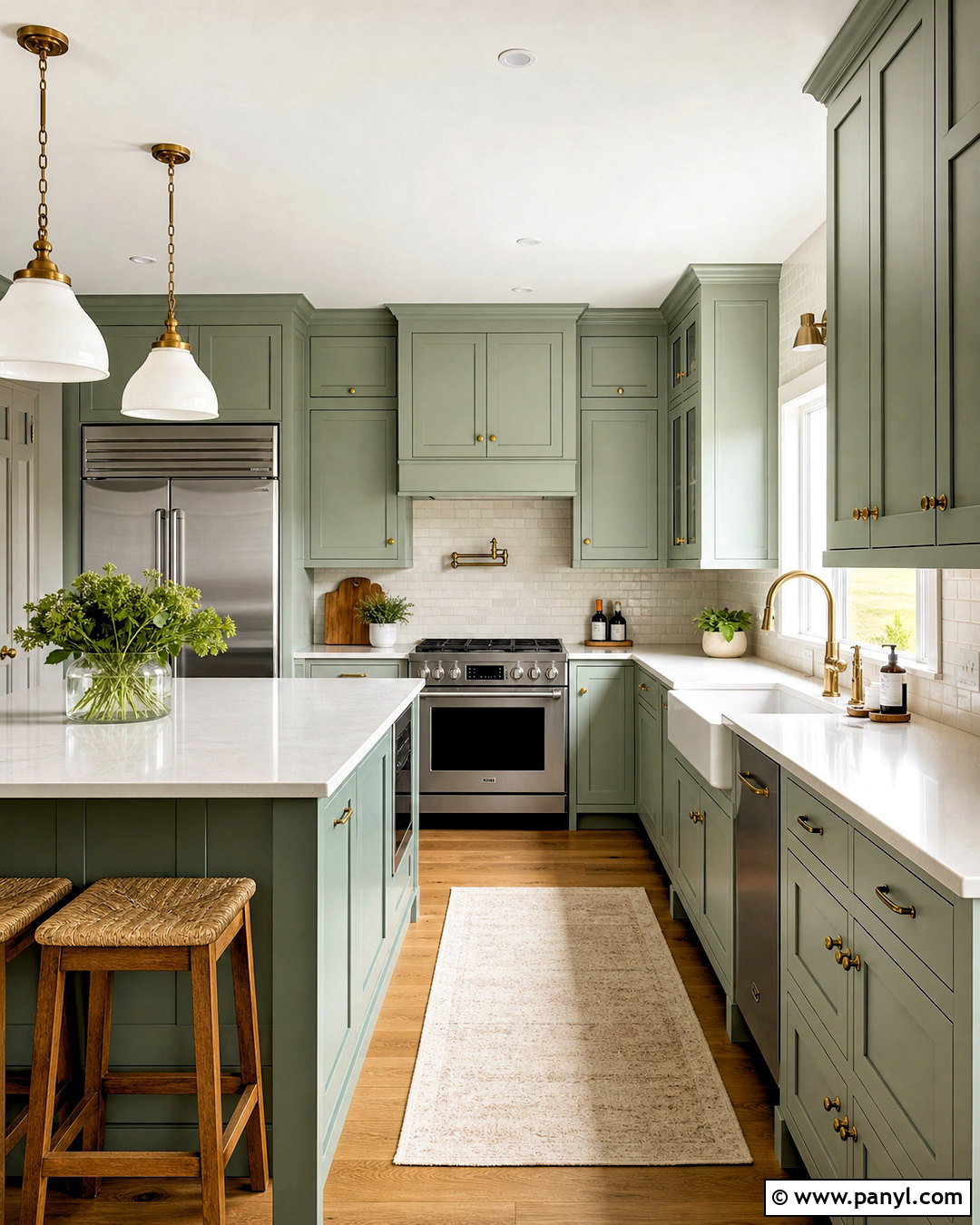
A classic Shaker kitchen feels fresher when every cabinet is finished in a muted, gray-based sage green. Pair the cabinetry with brushed or aged brass cup pulls, round knobs, and a bridge-style faucet for a coordinated finish. Cream quartz countertops and an ivory ceramic backsplash prevent the metal accents from looking too formal. Add a large central island in matching sage, topped with a lightly veined stone surface. Warm oak flooring and woven-seat stools introduce an approachable, lived-in quality. For lighting, choose two brass pendants with white glass shades. A farmhouse sink, paneled range hood, and a few glass-front upper cabinets reinforce the traditional character without making the room feel old-fashioned or heavily decorated.
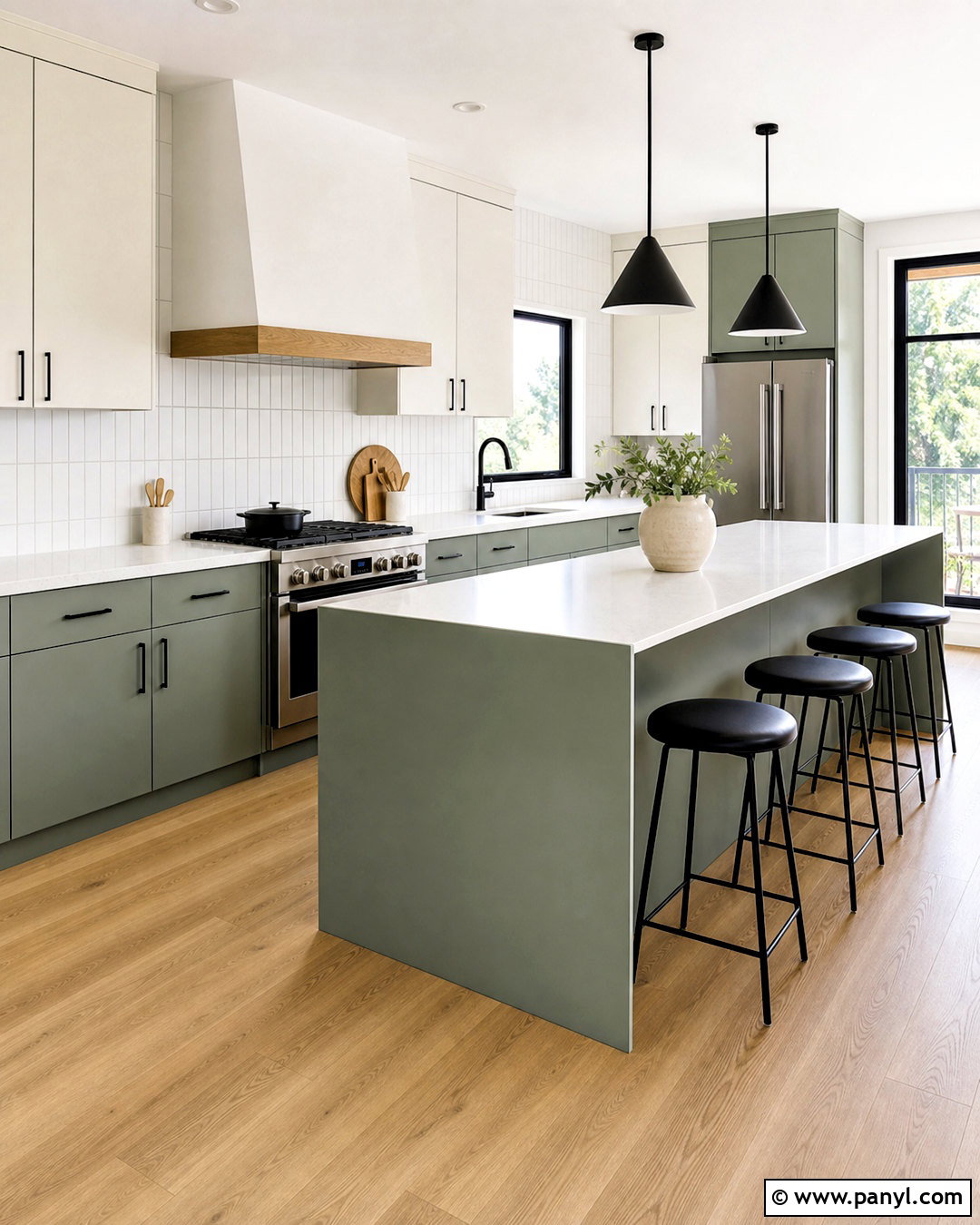
4. Modern Sage Green Kitchen With Black Accents
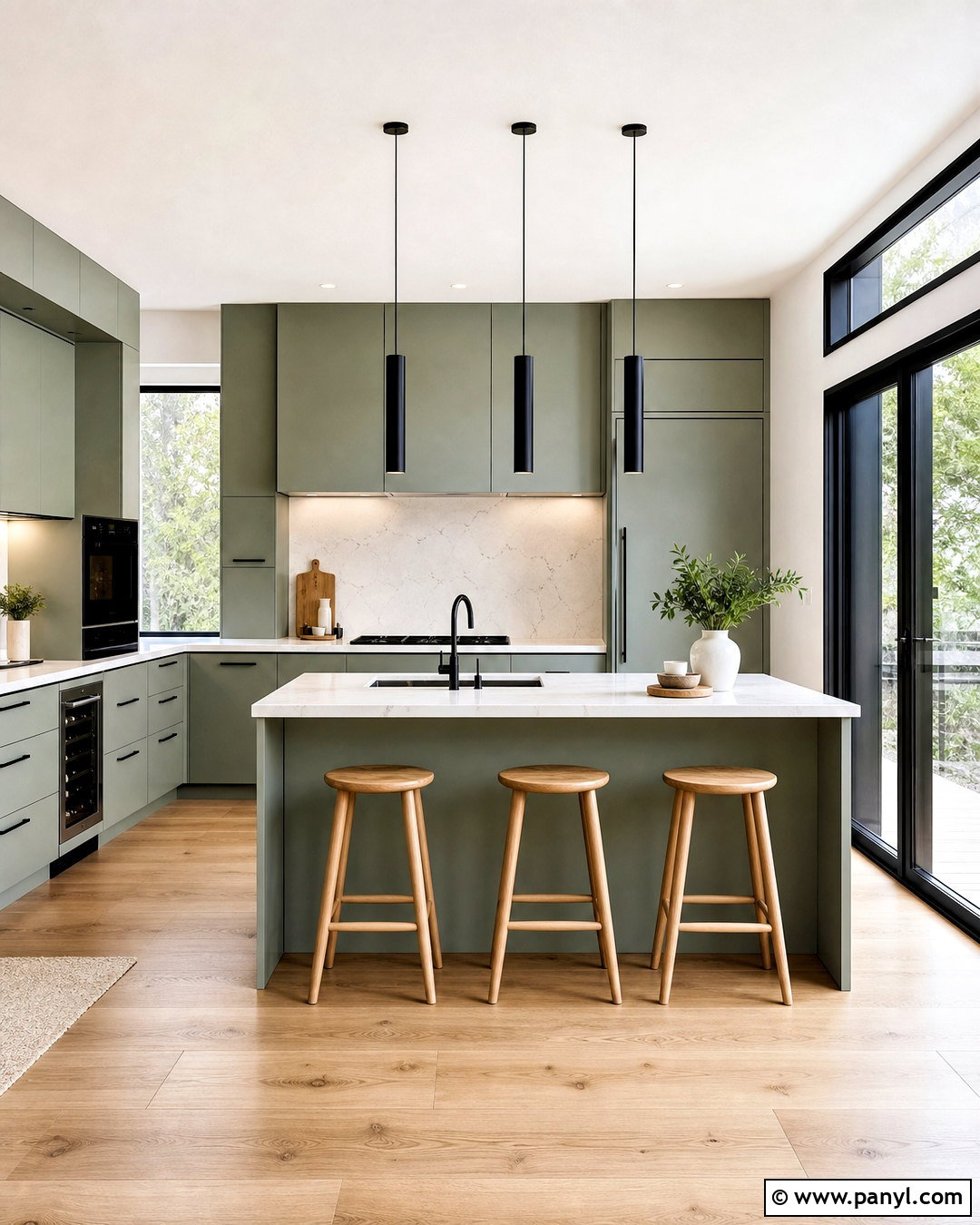
Crisp black details give sage green cabinetry a sharper, more contemporary edge. Select smooth slab-front cabinets in a medium sage tone and install slim matte black pulls for clean visual lines. Use white quartz countertops with minimal veining and carry the same material up the wall as a seamless backsplash. Black-framed windows, a black faucet, and simple cylindrical pendants repeat the strong accent color. Balance those dark features with pale wood flooring and warm white walls. A waterfall island can define the center of an open layout, while backless oak stools keep walkways clear. Add integrated appliances where possible, then limit decor to a few sculptural bowls and practical wooden accessories for an uncluttered finish.
5. Sage Green Farmhouse Kitchen With Butcher Block
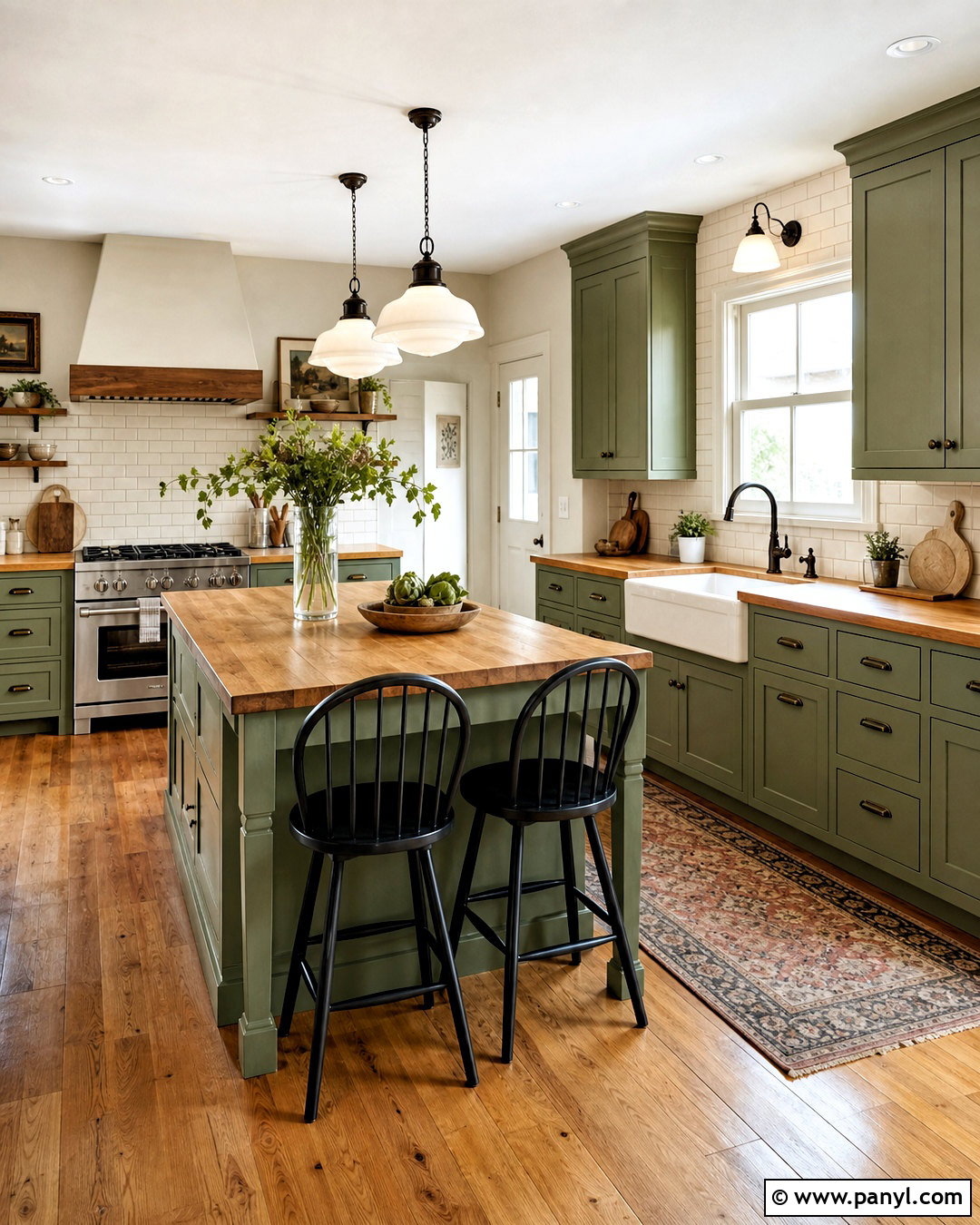
For a welcoming farmhouse look, combine sage green Shaker cabinets with thick butcher block countertops and a white apron-front sink. The wood brings warmth to the muted paint color and makes the kitchen feel comfortable rather than polished. Install a creamy subway tile backsplash with lightly irregular edges, then use antique bronze or aged brass hardware. A freestanding wood island can provide extra preparation space while giving the layout collected character. Wide-plank oak flooring, spindle-back stools, and schoolhouse pendants complete the foundation. Display everyday dishes in one glass-front cabinet or on a short oak shelf. Linen cafe curtains, ceramic crocks, and a washable patterned runner add softness without covering the functional surfaces with unnecessary decor.
6. Small Sage Green Kitchen With Open Shelves
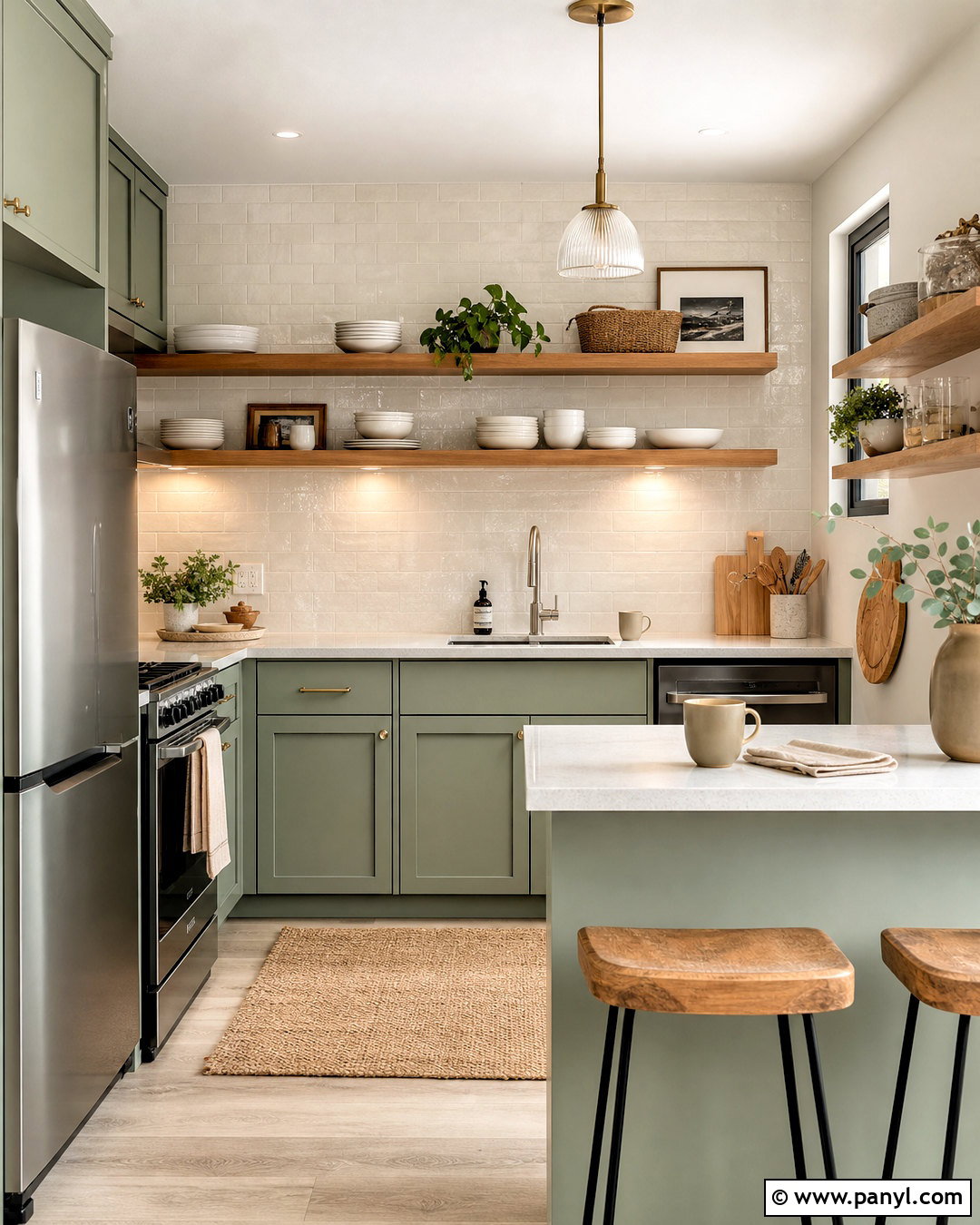
A compact kitchen can handle sage green beautifully when the upper walls remain open and bright. Use pale sage cabinets along the lower perimeter, then replace selected upper cabinets with two or three light oak shelves. Warm white walls and an ivory backsplash will reflect light around the room. Choose slim brass pulls, a compact white quartz counter, and small under-cabinet fixtures to keep work areas clear. A single-bowl undermount sink preserves valuable surface space, while an integrated trash cabinet improves organization. Keep shelf displays practical by arranging white dishes, clear glasses, and a few wooden boards. Light flooring, one simple pendant, and minimal window treatments prevent the complete kitchen from feeling crowded or visually top-heavy.
7. Sage Green Kitchen Island With White Cabinets
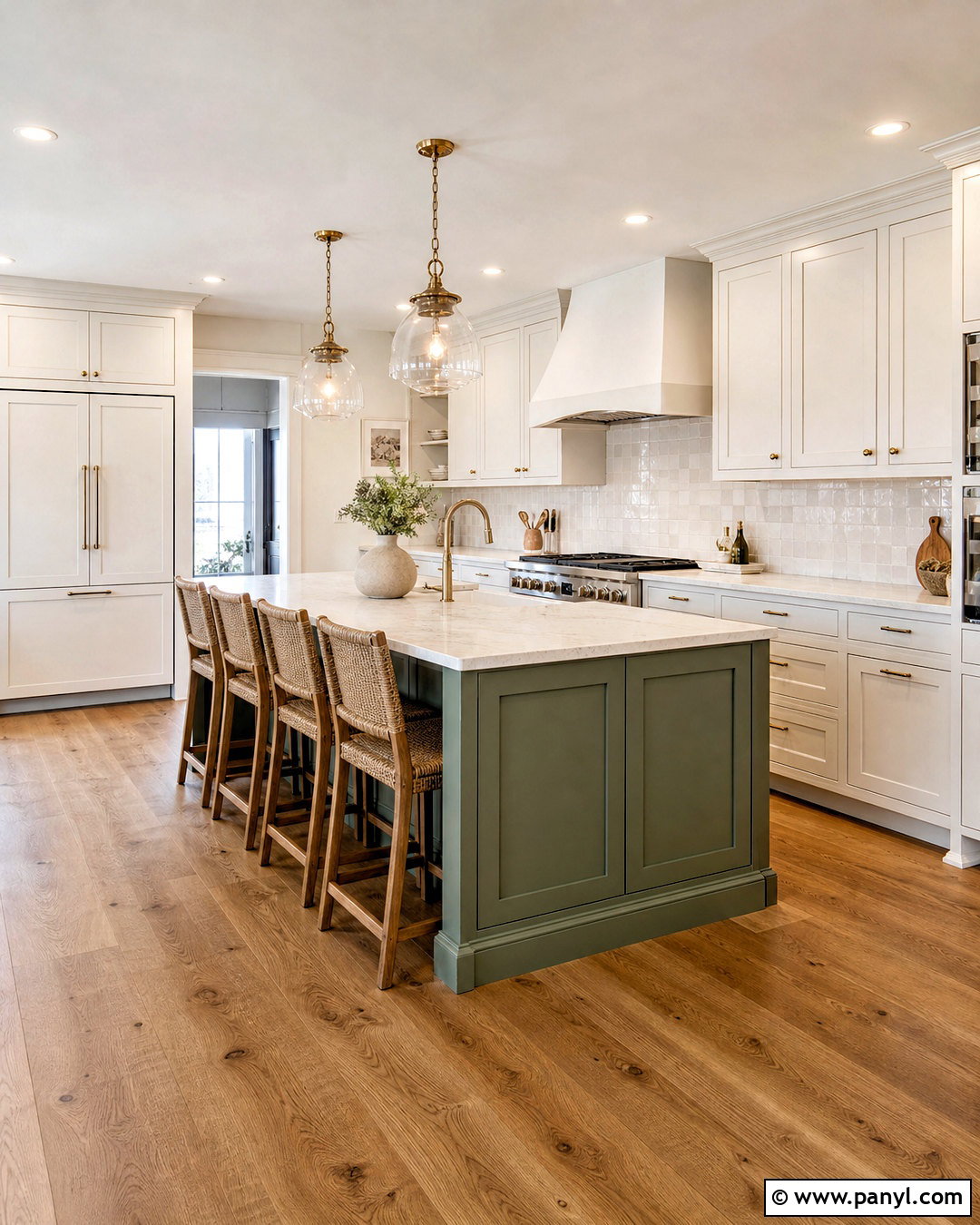
Painting only the island sage green is an easy way to introduce color while keeping the perimeter timeless. Surround the island with warm white Shaker cabinets, lightly veined quartz counters, and an off-white backsplash. Repeat the green subtly through a patterned runner, small ceramics, or a nearby pantry door. A natural oak island countertop can create a casual contrast, while white stone offers a cleaner and more unified finish. Use aged brass hardware across both cabinet colors so the room feels connected. Comfortable woven stools and oversized white glass pendants make the island an inviting gathering point. Medium-tone wood flooring anchors the light cabinetry and keeps the complete design from appearing too pale or washed out.
8. Two-Tone Sage Green And Cream Kitchen
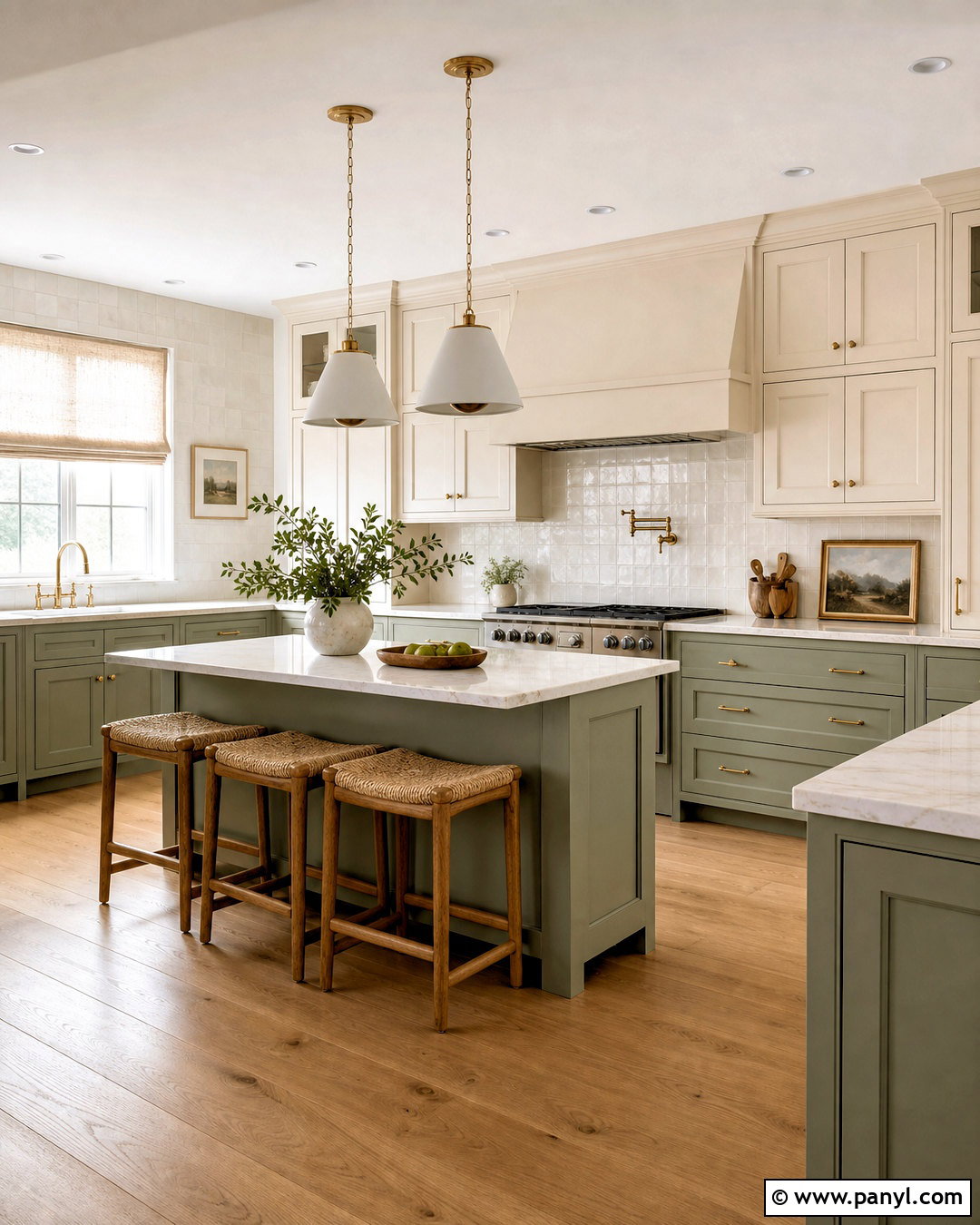
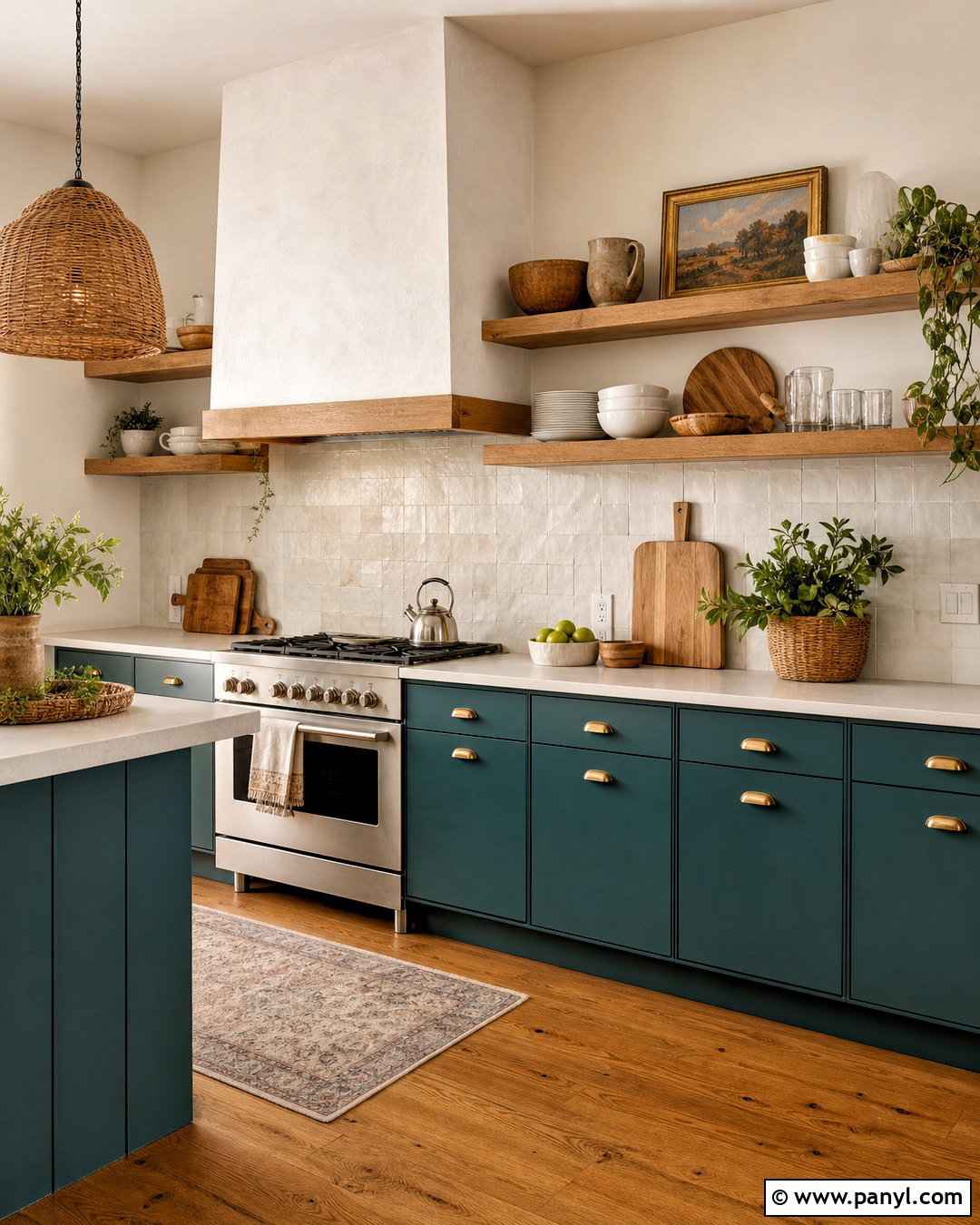
Cream upper cabinets and sage green lower cabinets create a gentle two-tone scheme that feels lighter than an entirely green kitchen. Select warm cream rather than stark white so both colors share the same soft undertone. Use simple Shaker fronts, aged brass hardware, and a pale quartz countertop with delicate tan veining. A backsplash of glossy ivory rectangular tile reflects light and connects the upper cabinetry to the work surfaces. Continue the sage color across the island for visual balance. Medium oak floors, cream linen shades, and natural woven stools add warmth throughout the room. Keep appliances in stainless steel or panel them to match the cabinets. The finished kitchen feels layered and colorful without becoming busy or overly contrasted.
9. Sage Green Kitchen With Marble Backsplash
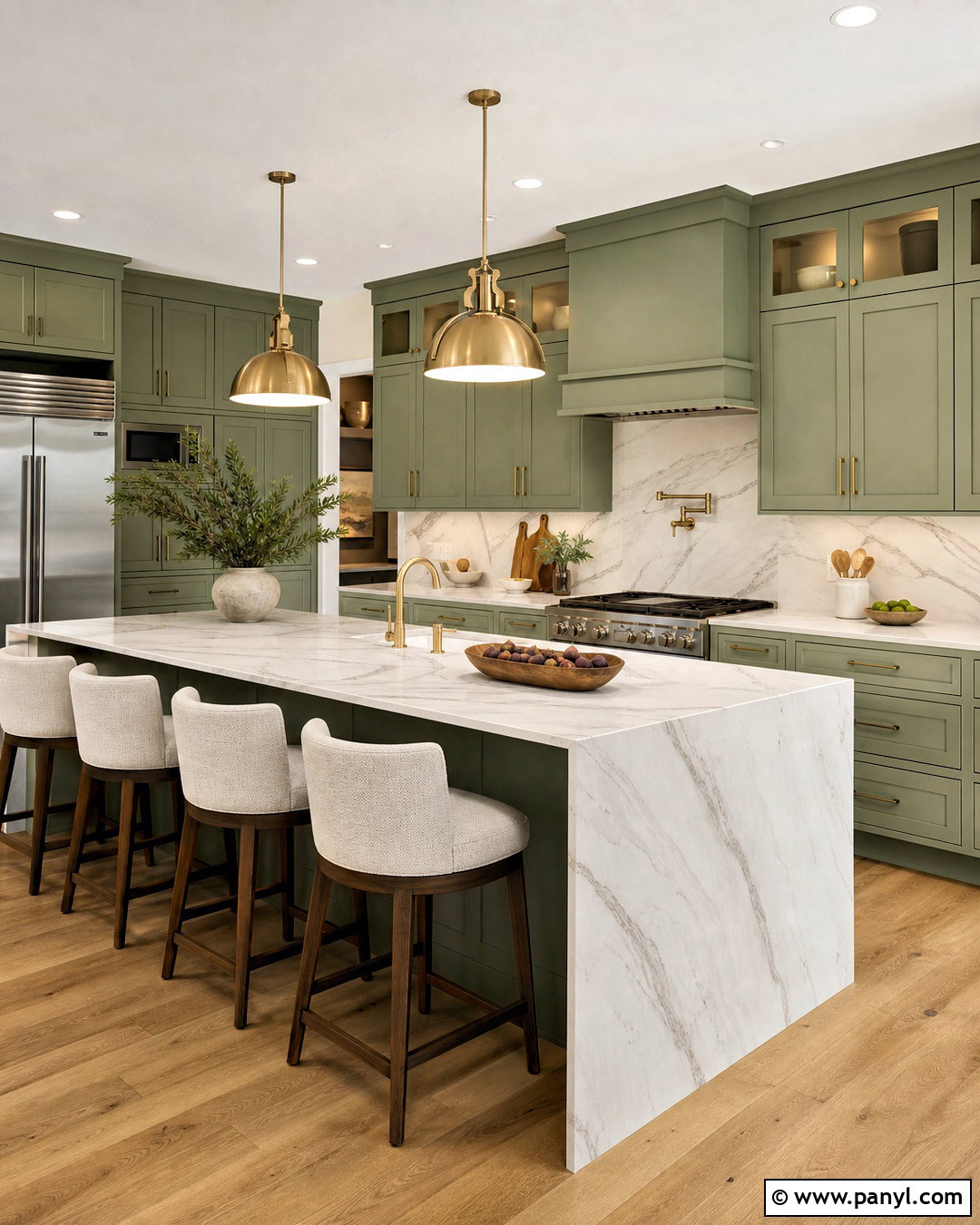
A dramatic marble backsplash can make sage green cabinetry look refined while preserving its natural softness. Choose a white or creamy stone with flowing gray, taupe, or muted green veining. Continue the marble from the countertop to the underside of the upper cabinets for an uninterrupted statement. Simple sage Shaker cabinetry keeps the stone from competing with ornate door details. Add brushed brass hardware, a coordinating faucet, and understated pendant lights to introduce warmth. Natural oak flooring prevents the design from feeling cold. On a spacious island, waterfall edges can showcase the marble, while a standard eased edge suits smaller rooms. Complete the kitchen with upholstered counter stools, white ceramics, and a few restrained wood accents.
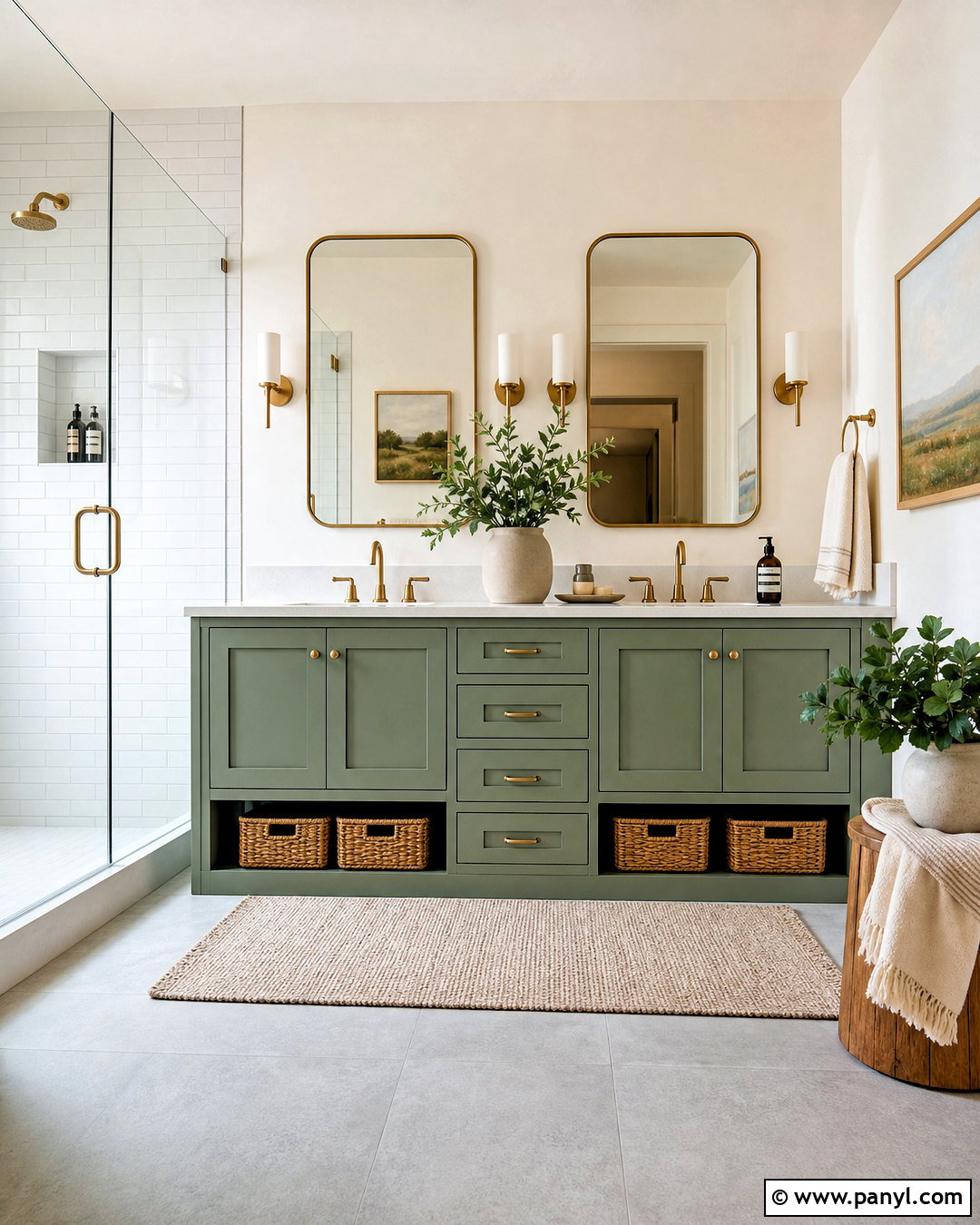
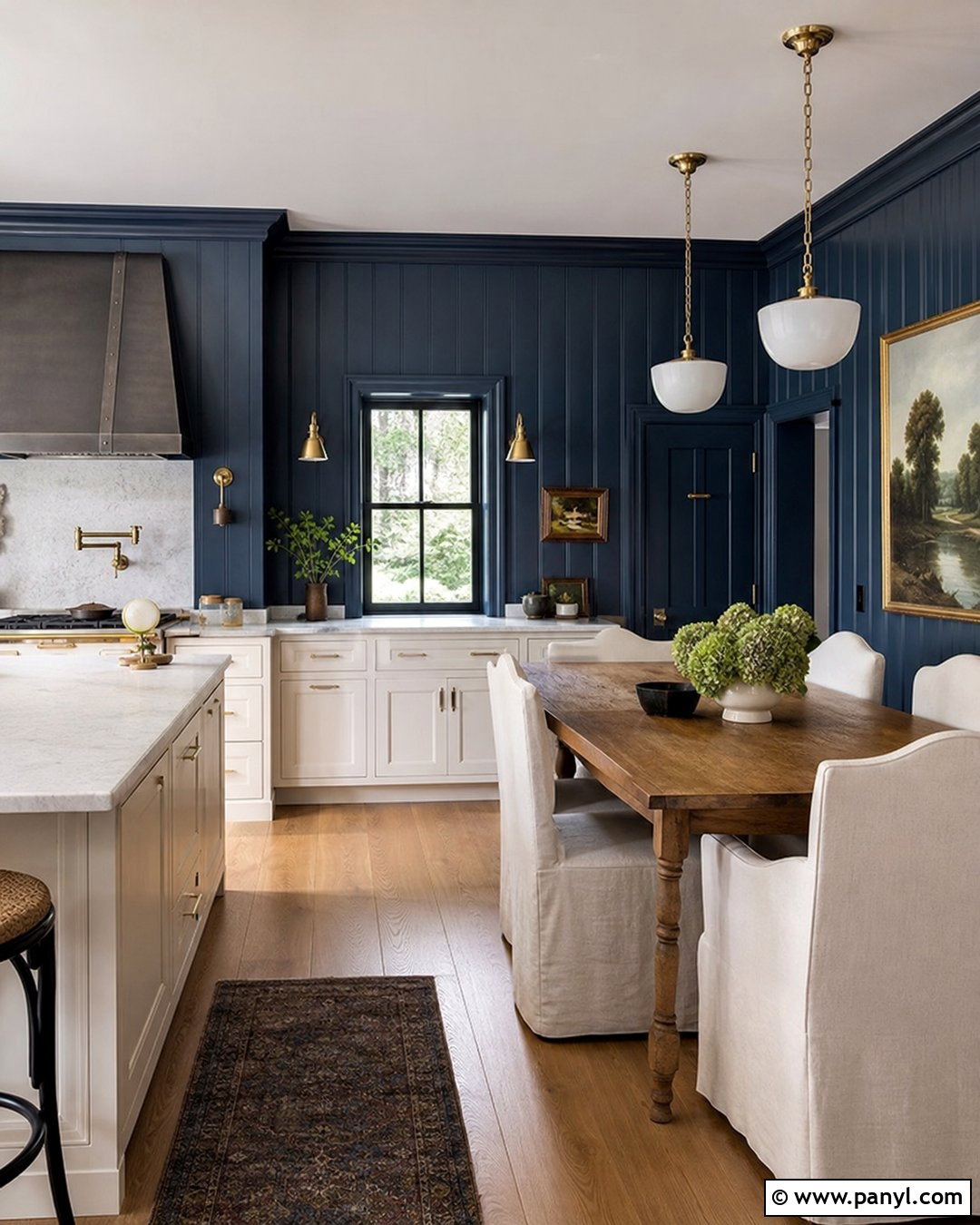
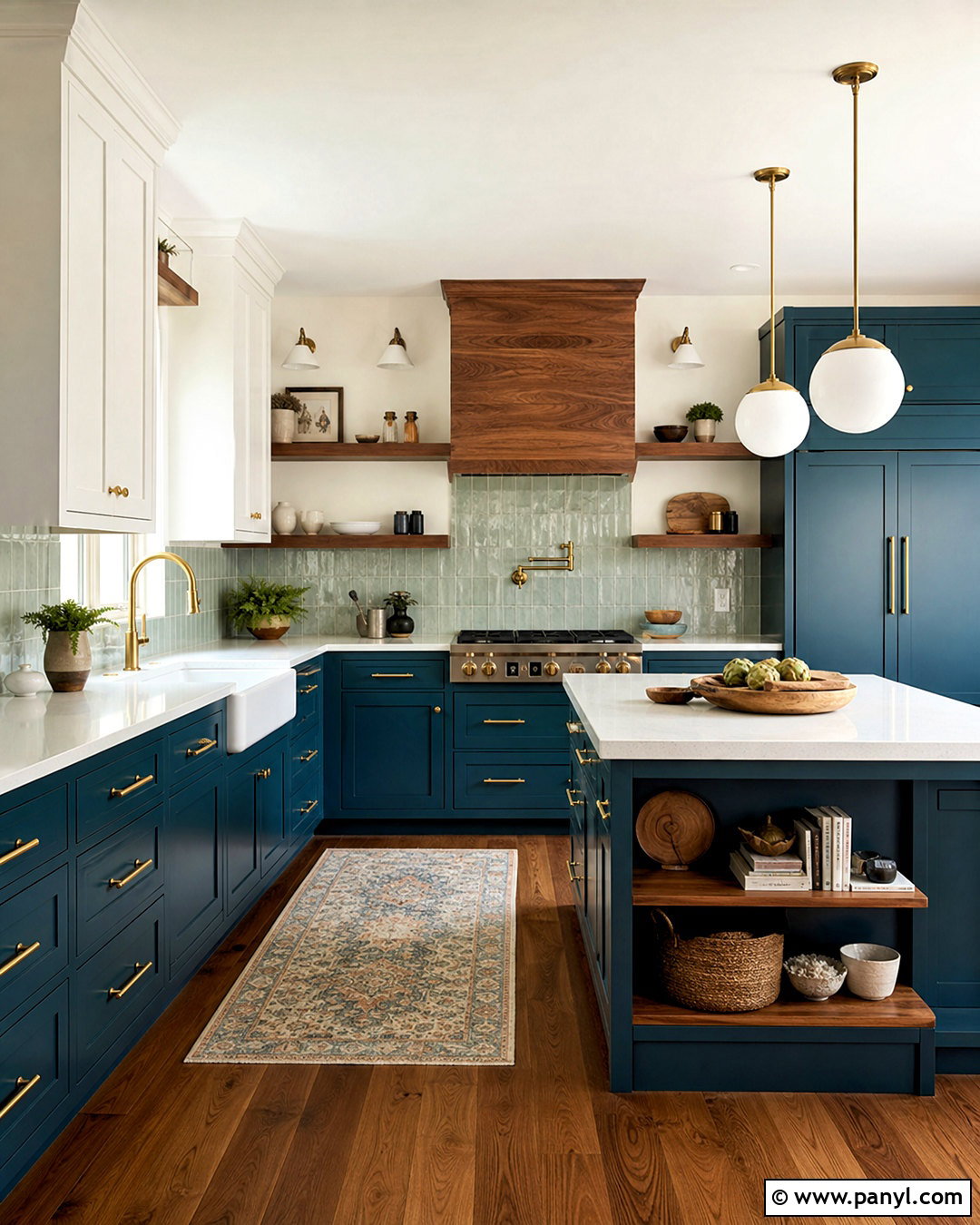
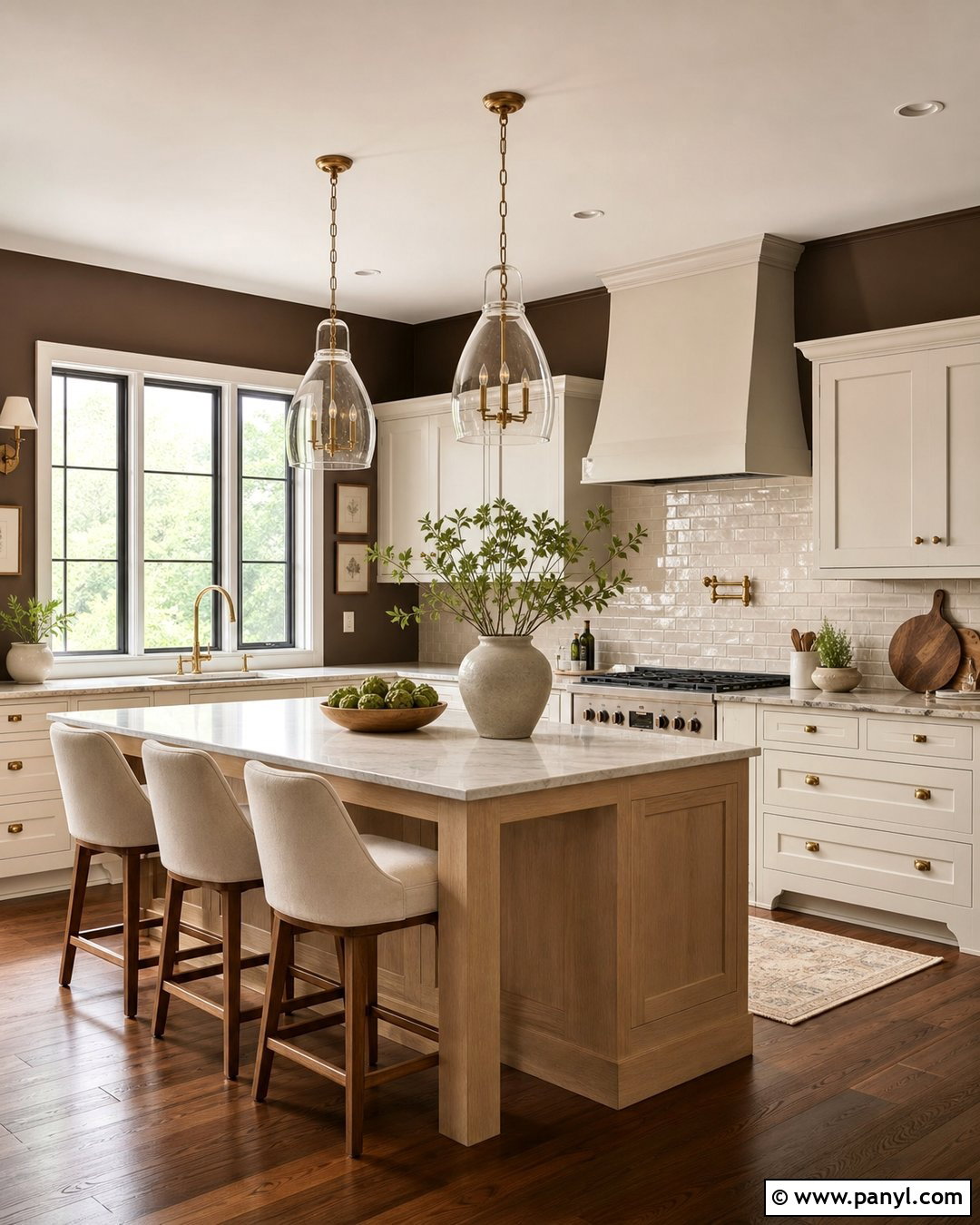
10. Sage Green Kitchen With Zellige Tile
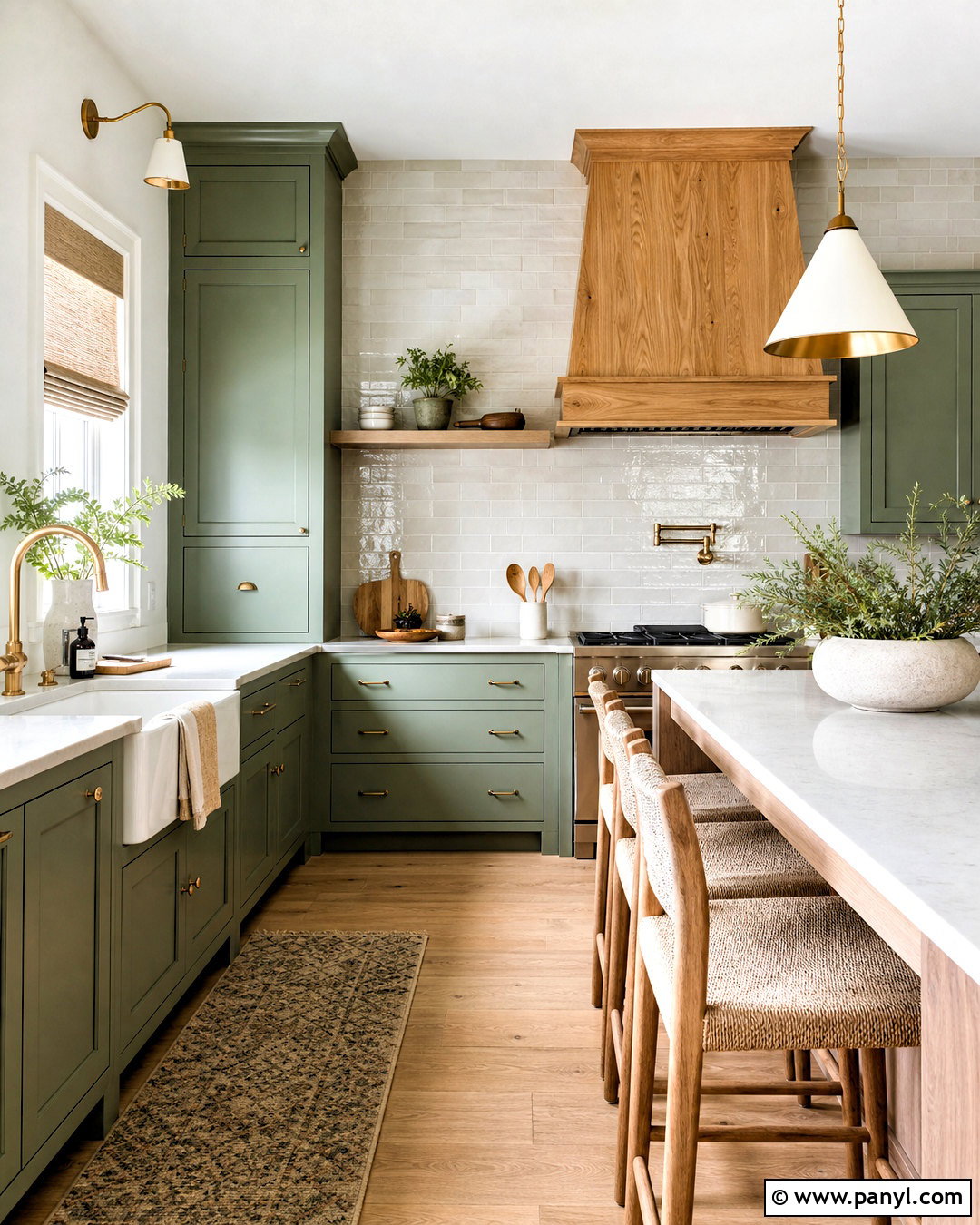
Handmade-look zellige tile gives a sage green kitchen depth through its gently uneven surface and varied glaze. Choose creamy white tiles if the cabinets are medium or dark sage, or use pale sage tiles with lighter cabinetry for a tonal design. Install the tiles from the countertop to the upper cabinets, allowing their reflective finish to brighten the workspace. Pair them with warm white quartz, unlacquered brass hardware, and an oak range hood or floating shelf. A farmhouse sink and traditional faucet can soften the design, while streamlined pendants keep it current. Ground the room with wide-plank wood flooring. Keep accessories simple because the tile already contributes movement, texture, and handcrafted character to the completed space.
11. Dark Sage Green Kitchen With Wood Floors
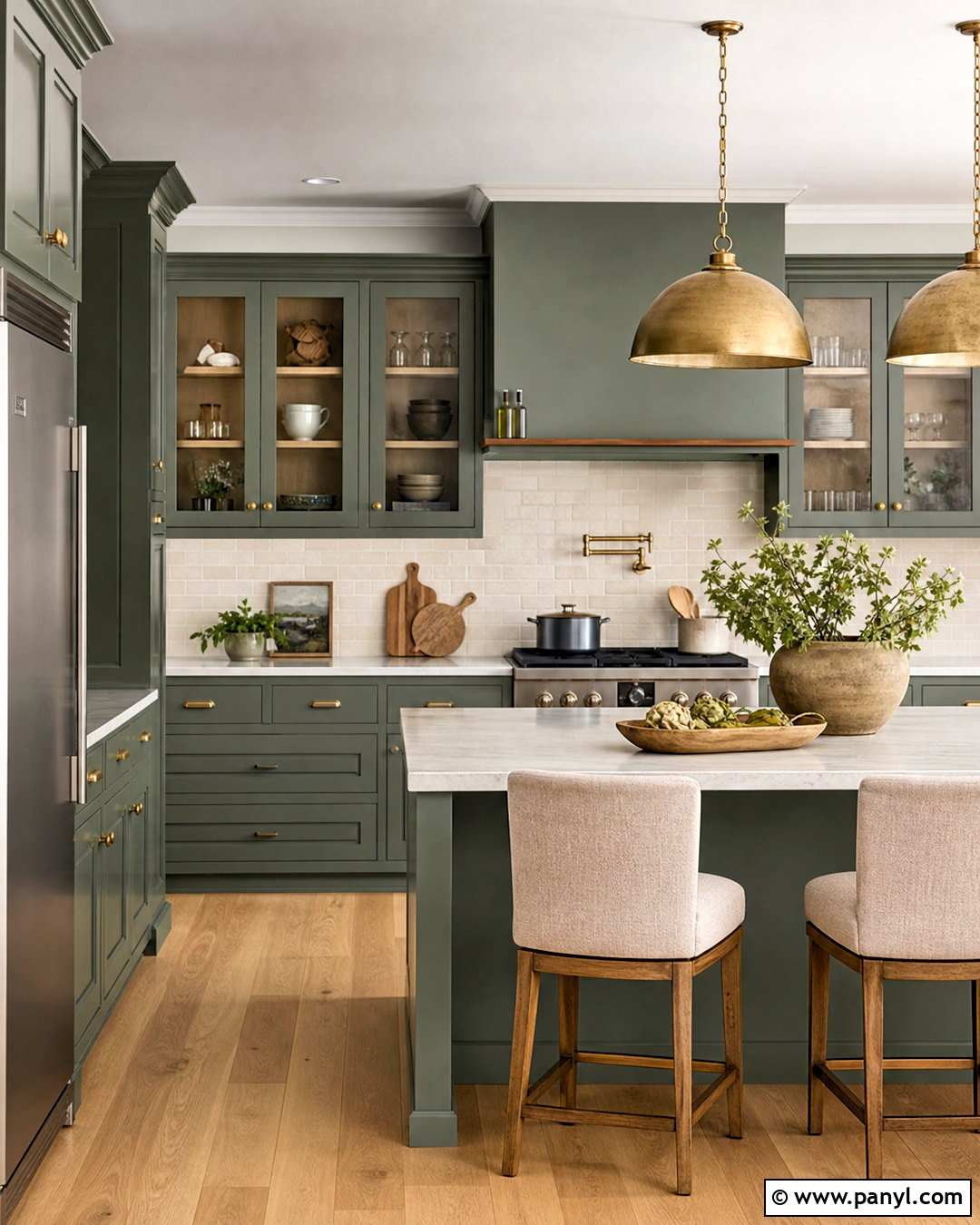
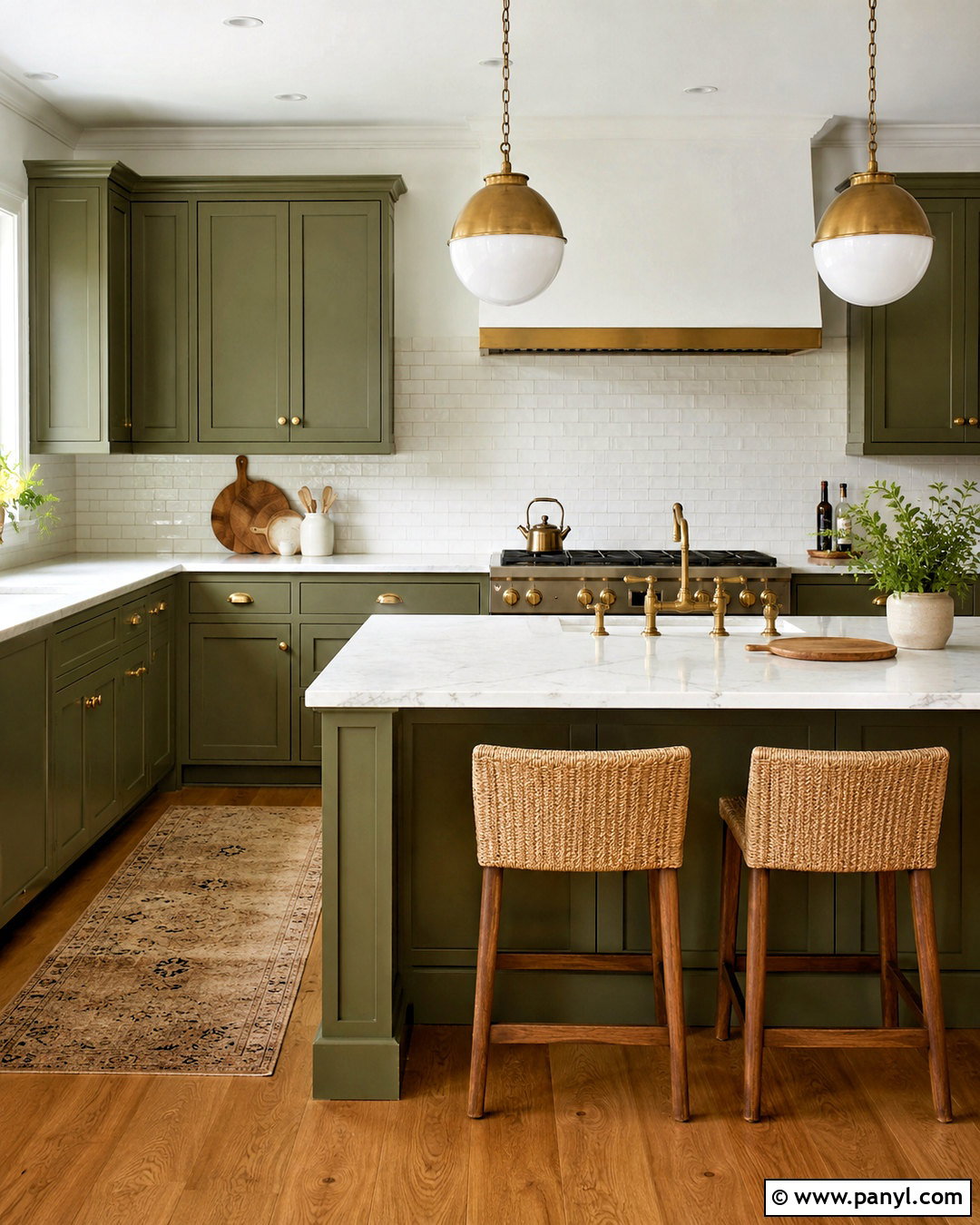
Deeper sage cabinetry creates a cozy, grounded kitchen without the heaviness of forest green. Use the color across lower cabinets, tall pantry storage, and the island, then balance it with warm white walls and countertops. Medium or light oak flooring supplies essential contrast and highlights the green’s earthy quality. A full-height backsplash in cream stone or lightly textured tile keeps the work area bright. Choose aged brass pulls and warm metal pendants for a traditional approach, or matte black accents for a cleaner modern finish. Glass cabinet doors can break up a long wall of dark cabinetry. Add upholstered stools in oatmeal fabric, simple wooden serving boards, and under-cabinet lighting to keep the complete room comfortable and visually balanced.
12. Light Sage Green Kitchen With Oak Accents
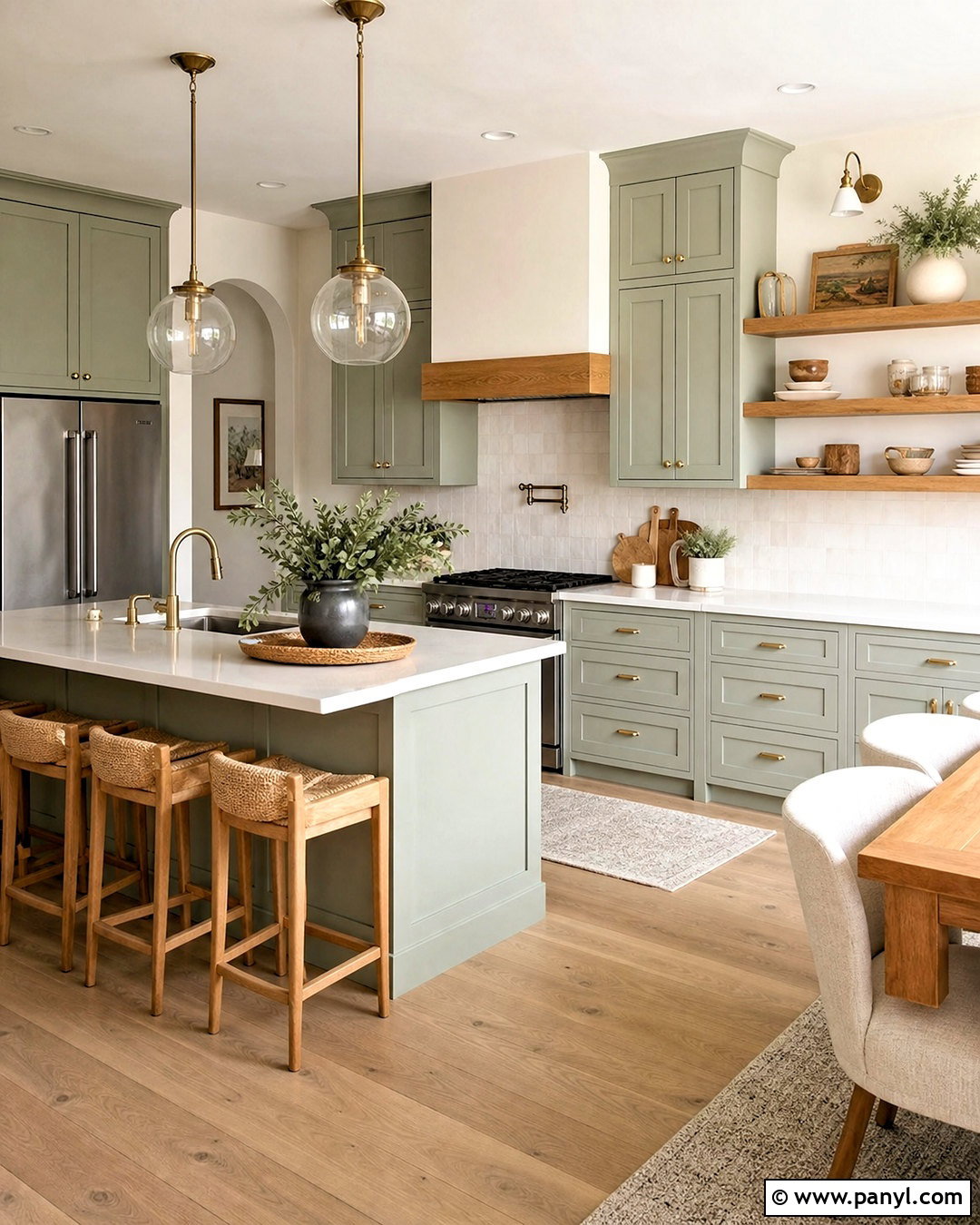
Pale sage green works especially well in a kitchen that receives limited natural light. Select a soft, slightly warm shade for Shaker or slim-profile cabinets, then introduce oak through floating shelves, counter stools, a range hood, or the island base. White quartz countertops and a warm white backsplash maintain an airy foundation. Brushed nickel hardware can create a quiet transitional look, while soft brass adds greater warmth. Use pale oak or limestone-look flooring to continue the light color scheme. Glass pendants and discreet under-cabinet lighting provide brightness without adding visual weight. Finish with cream textiles, white dishes, and a few green plants. The complete palette feels fresh, natural, and spacious without becoming sterile or plain.
13. Sage Green Kitchen With Black Countertops
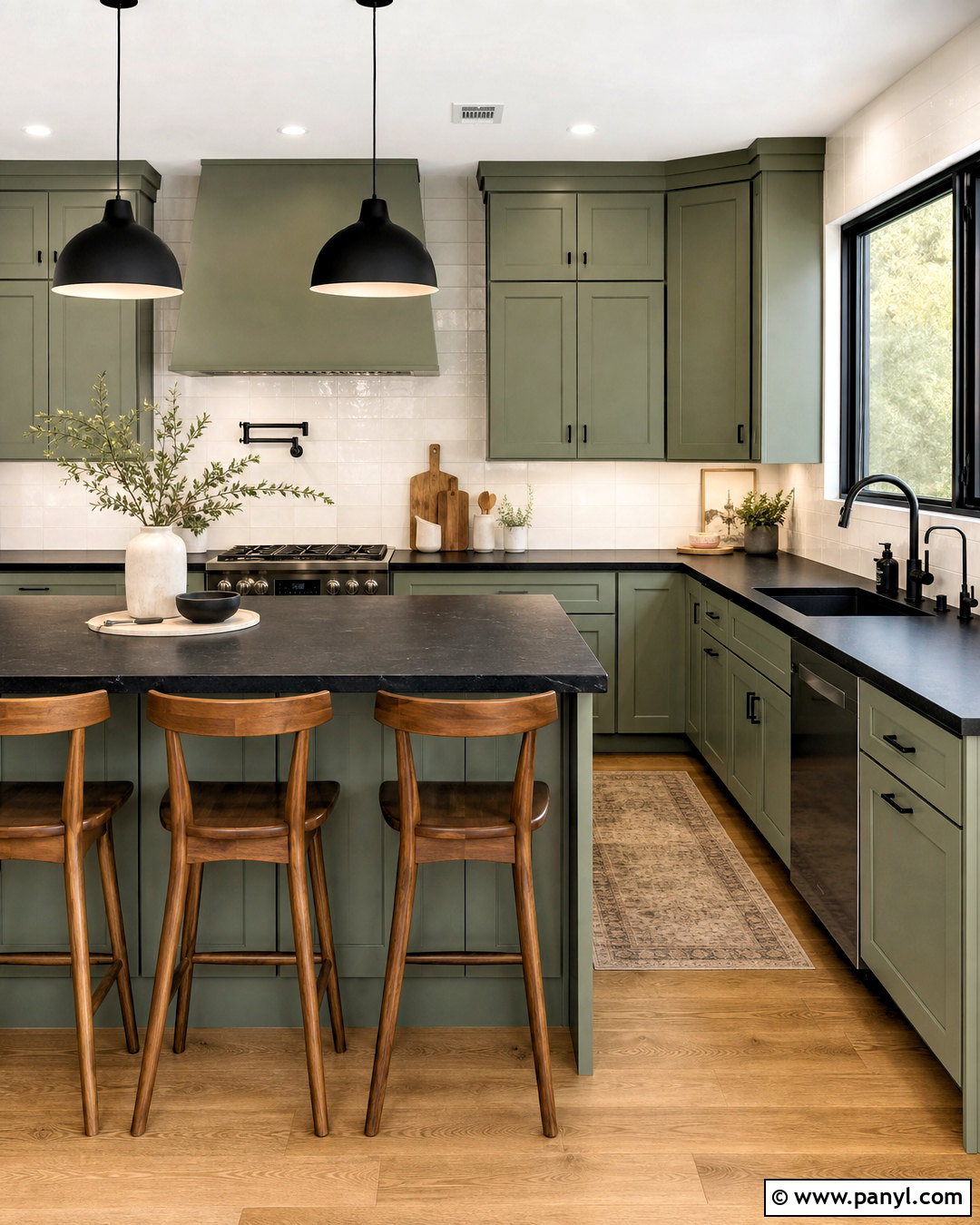
Black countertops create bold definition against sage green cabinets and suit homeowners who prefer a grounded, high-contrast kitchen. Choose honed black granite, soapstone, or dark quartz with a low-sheen finish for a softer result. Use a simple warm white backsplash to prevent the surfaces from making the room too dark. Matte black hardware provides continuity, while aged brass lighting can add a controlled touch of warmth. Medium oak flooring and a wood-topped dining area soften the stronger color combination. If the room is small, reserve black for perimeter counters and use lighter stone on the island. White walls, bright task lighting, and minimal countertop accessories keep the completed design crisp, practical, and welcoming rather than severe.
14. Sage Green Kitchen With Terracotta Floors
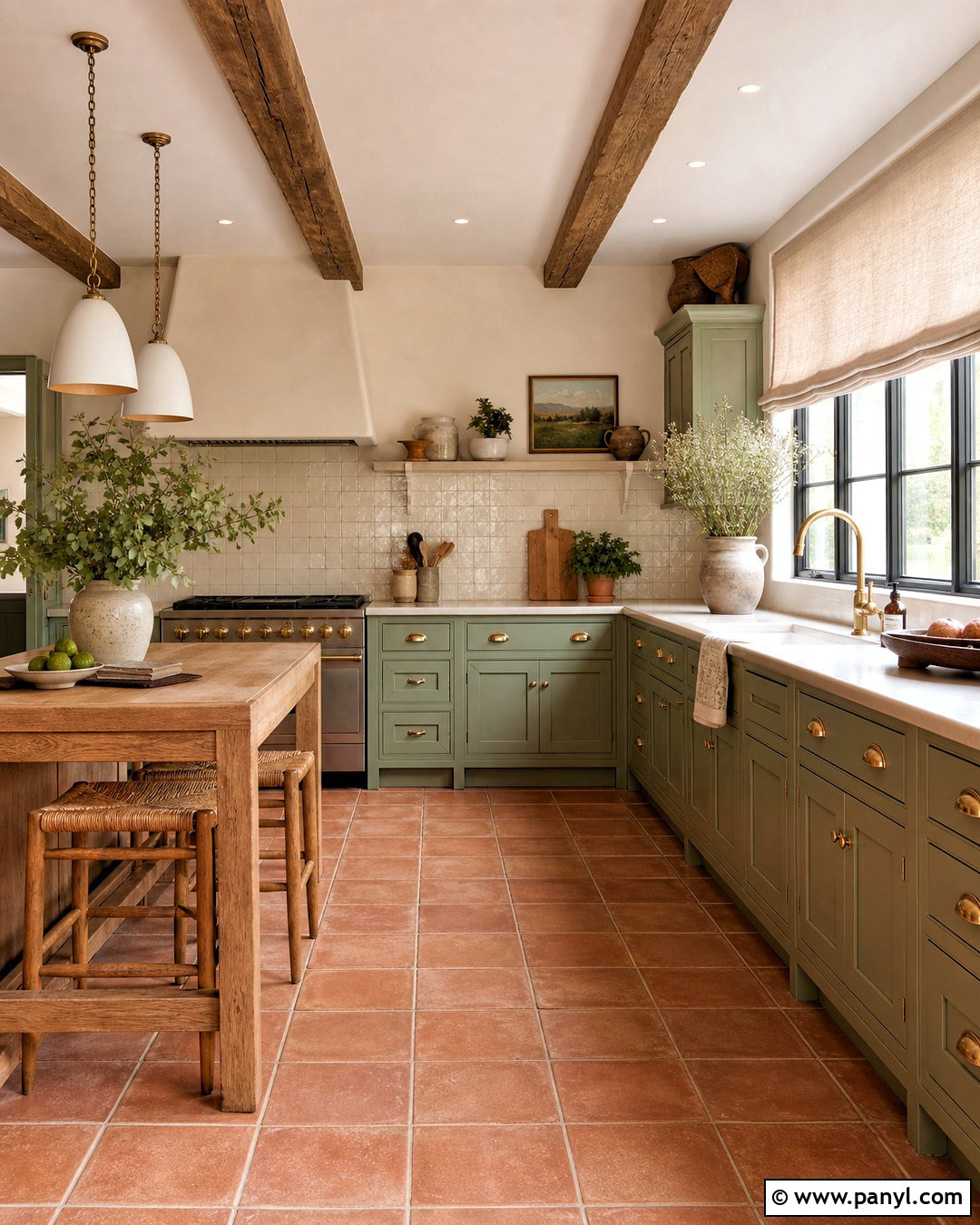
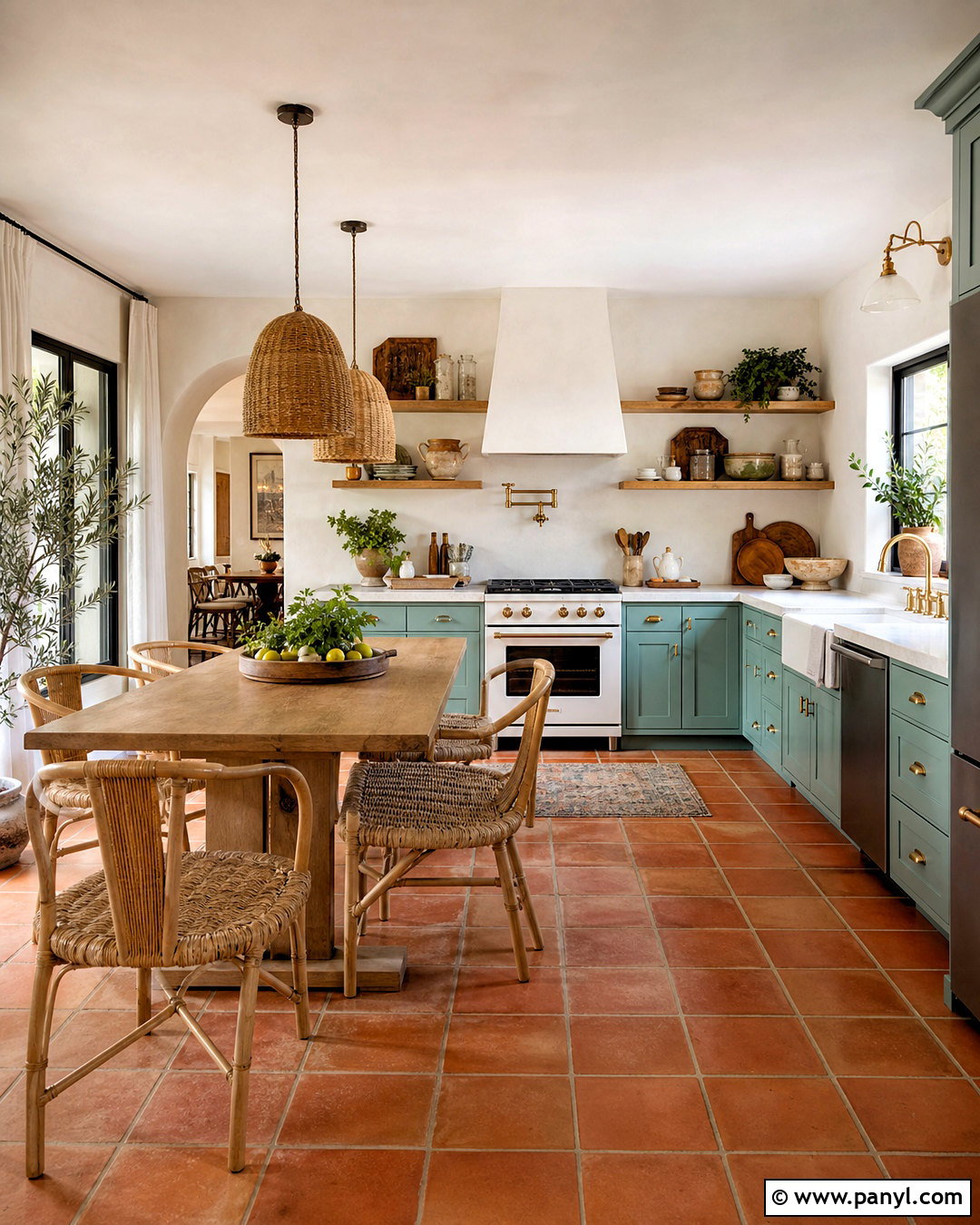
Warm terracotta flooring gives sage green cabinetry an inviting Mediterranean or English country character. Choose muted clay tiles with natural variation rather than bright orange surfaces. Their earthy red undertones provide a rich contrast to the cool green cabinets. Cream plaster walls, ivory quartz or limestone counters, and an off-white handmade backsplash keep the palette soft. Use aged brass or dark bronze hardware, then add a simple plaster range hood for architectural interest. A rustic oak island and woven counter stools enhance the relaxed mood. Linen window treatments and pottery in cream, brown, and soft green complete the design. Because the flooring already has strong color and texture, keep decorative patterns restrained and allow the natural materials to lead.
15. Sage Green Scandinavian Kitchen
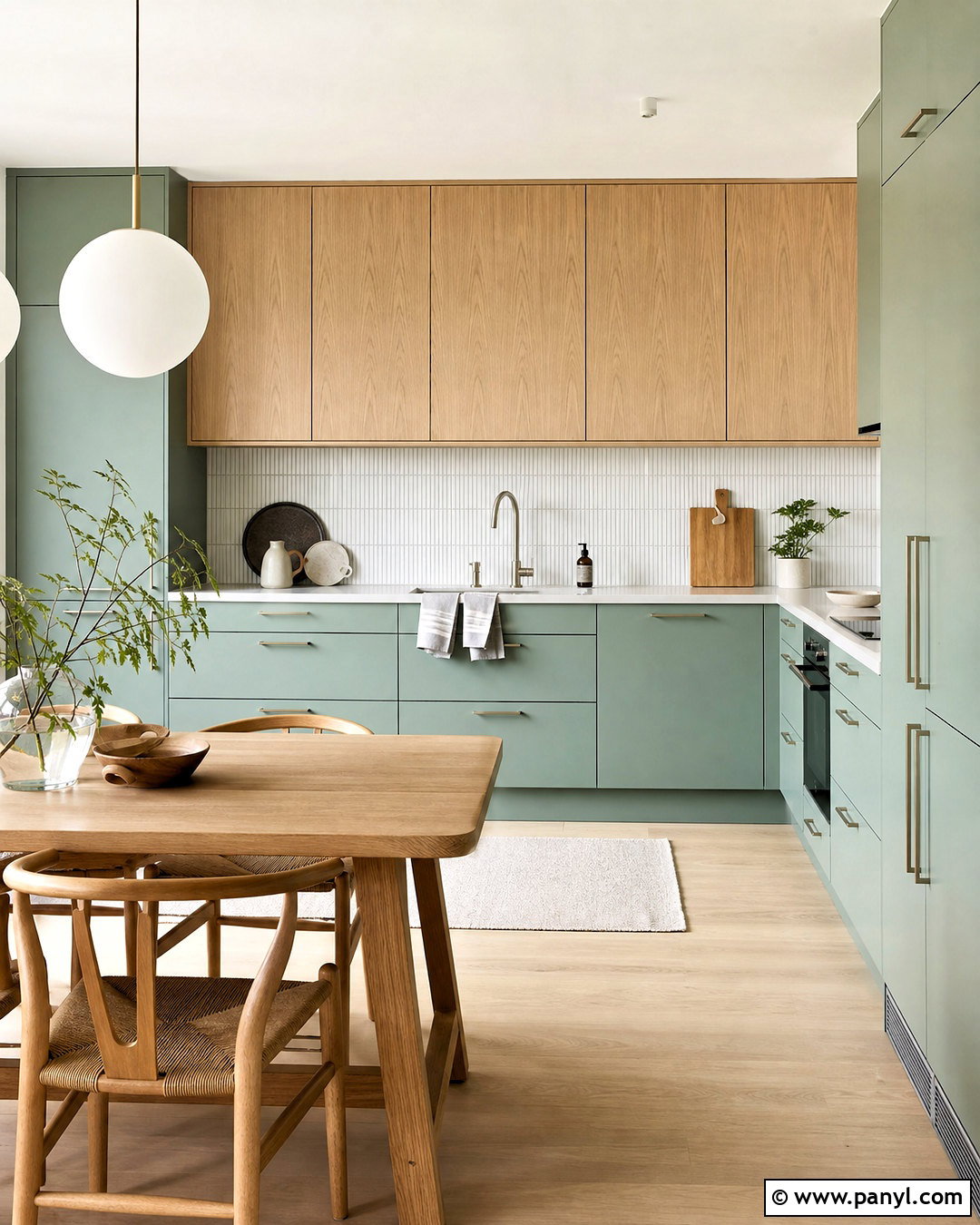
A Scandinavian-inspired sage kitchen relies on simple forms, pale materials, and efficient storage. Choose flat-front cabinets in a light, dusty sage finish and combine them with white quartz countertops. Add pale oak upper cabinets or open shelves to provide warmth without visual clutter. A vertical white tile backsplash introduces subtle rhythm, while small brushed nickel pulls maintain the streamlined appearance. Use light wood flooring and a compact oak dining table to create continuity throughout an open-plan room. White globe pendants, under-cabinet lighting, and uncovered windows make the kitchen feel bright. Keep decor functional with neutral dishes, wooden utensils, linen towels, and one or two leafy plants. The finished space should appear calm, organized, comfortable, and easy to maintain.
16. Sage Green Cottage Kitchen With Vintage Details
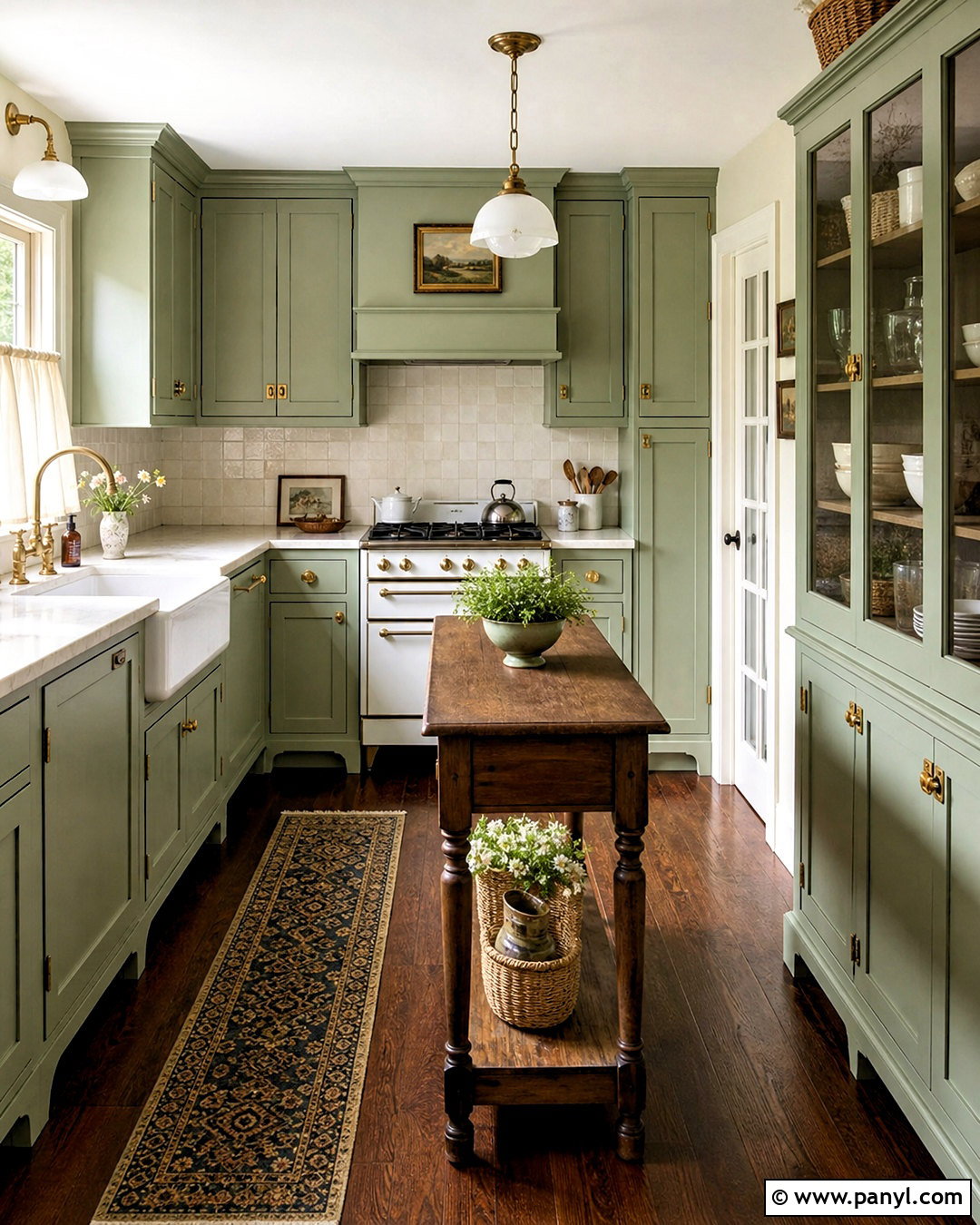
Uneven textures and familiar vintage forms can turn sage green cabinetry into a charming cottage kitchen. Select inset Shaker doors, traditional latches, and aged brass cup pulls. Pair them with cream stone countertops and small square backsplash tiles in a softly varied white glaze. A skirted sink cabinet, plate rack, or glass-front pantry adds character while providing useful storage. Use warm wood flooring and a narrow freestanding island to avoid making the layout feel overly fitted. Milk glass pendants, a wall-mounted faucet, and linen cafe curtains continue the nostalgic theme. Display a controlled collection of white dishes, wooden boards, and ceramic containers. These pieces should look practical and collected, leaving enough open surface area for everyday cooking.
17. Sage Green Kitchen With Stainless Steel Appliances
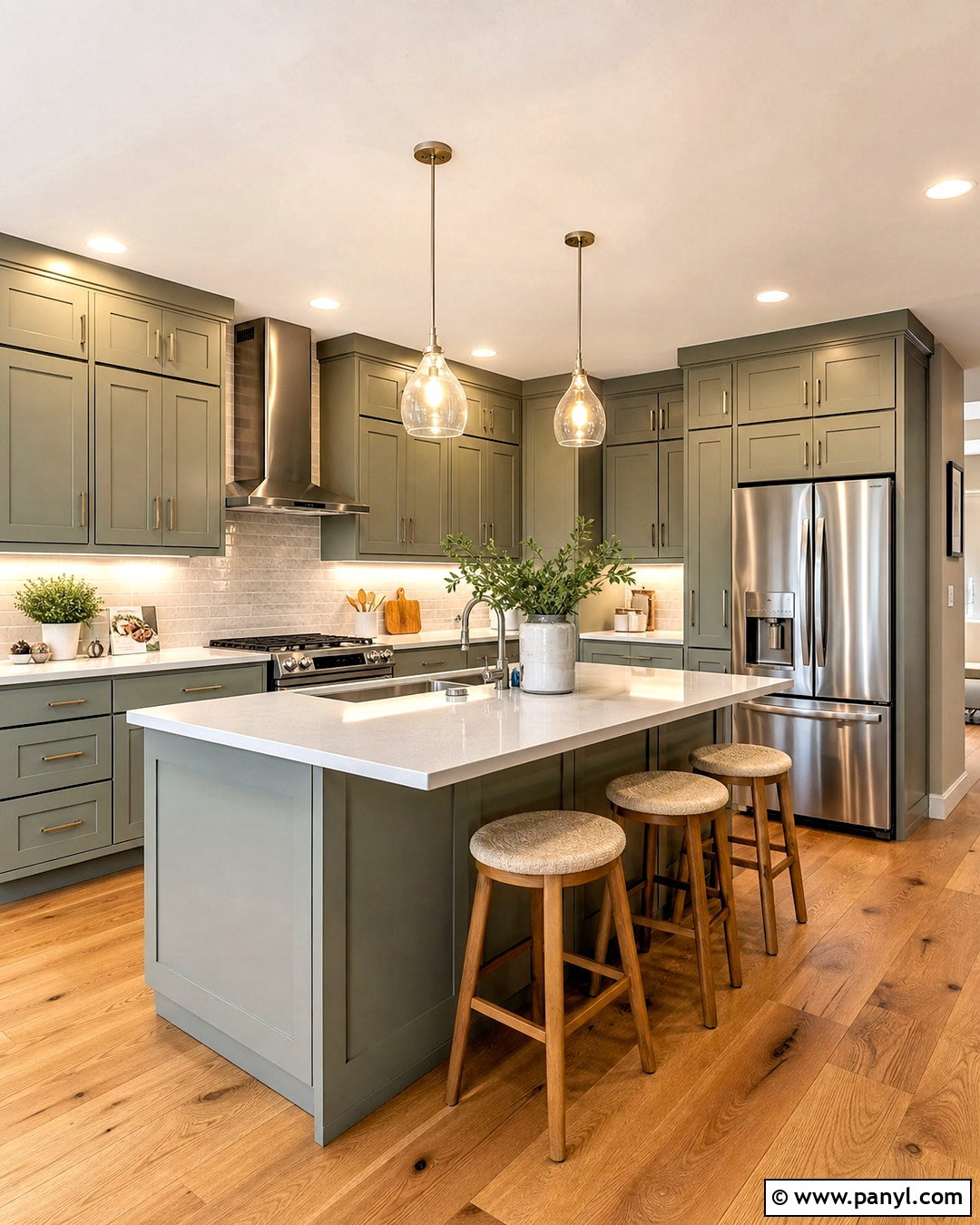
Stainless steel appliances can look softer and more integrated when surrounded by sage green cabinetry. Choose a medium sage with gray undertones to complement the cool metal finish. Simple Shaker or narrow-frame doors provide enough detail without competing with the appliances. Add white quartz countertops, a pale gray backsplash, and brushed nickel hardware for a clean, cohesive palette. Warm up the room with oak flooring, wood counter stools, and a few natural accessories. A stainless range hood can become an intentional focal point when centered between balanced cabinet runs. Use bright under-cabinet lights and clear glass pendants to reduce shadows. The result feels practical and contemporary, yet the sage cabinetry keeps it from looking commercial or overly cool.
18. Sage Green Kitchen With Matching Walls
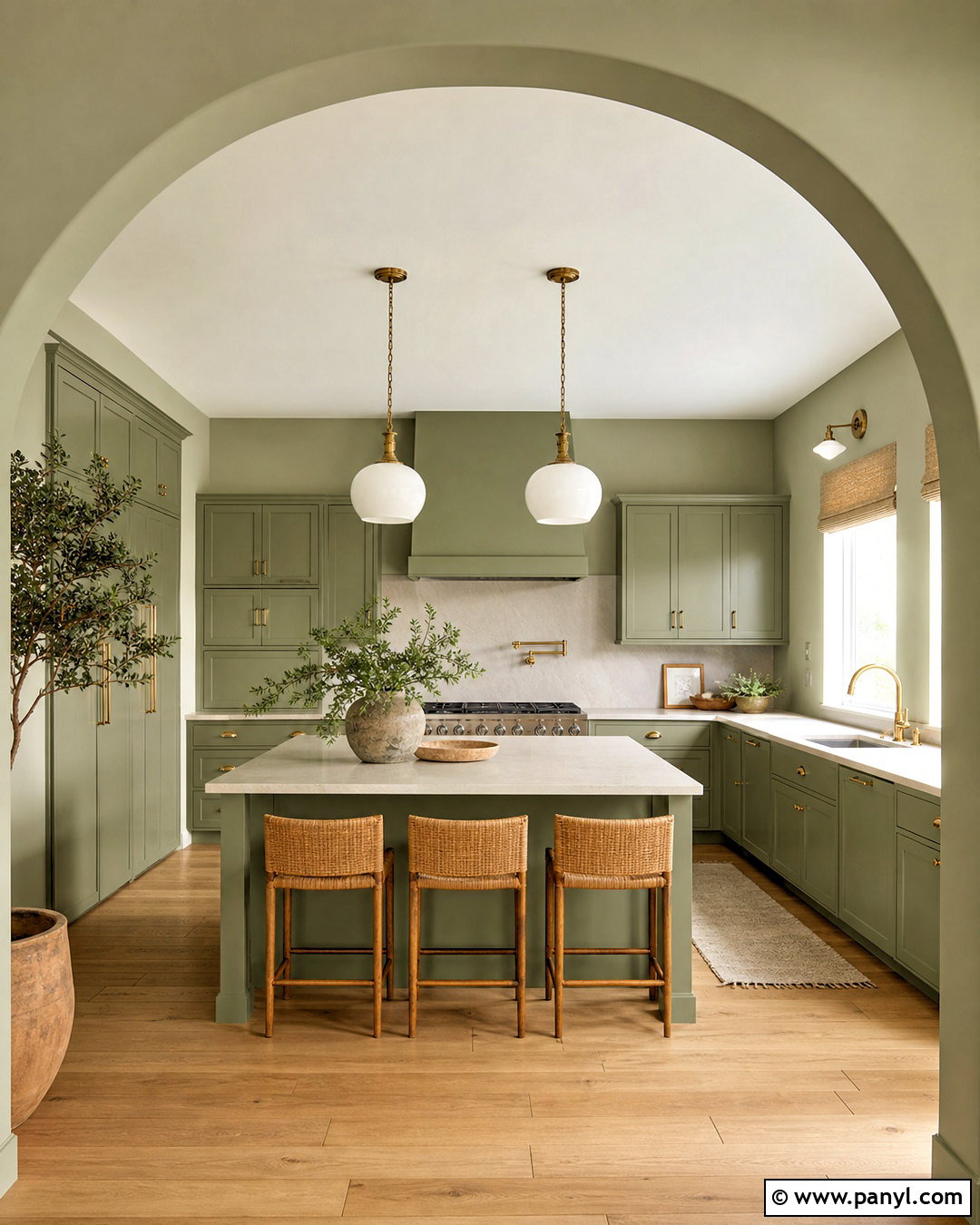
A color-drenched sage kitchen can feel surprisingly spacious when cabinets, walls, trim, and the range hood share closely related green tones. Use a lighter finish on the walls and a slightly deeper sage on the cabinetry so the architectural details remain visible. Cream stone countertops and a matching backsplash introduce a quiet visual break. Keep the ceiling warm white to reflect light, especially in a smaller room. Aged brass hardware, natural oak flooring, and woven stools add warmth to the tonal palette. Choose simple cabinetry and limited wall decor so the green does not feel overwhelming. Soft linen shades and white ceramic lighting complete the room. The finished design feels cohesive, enveloping, and more sophisticated than a single painted accent.
19. Sage Green Galley Kitchen
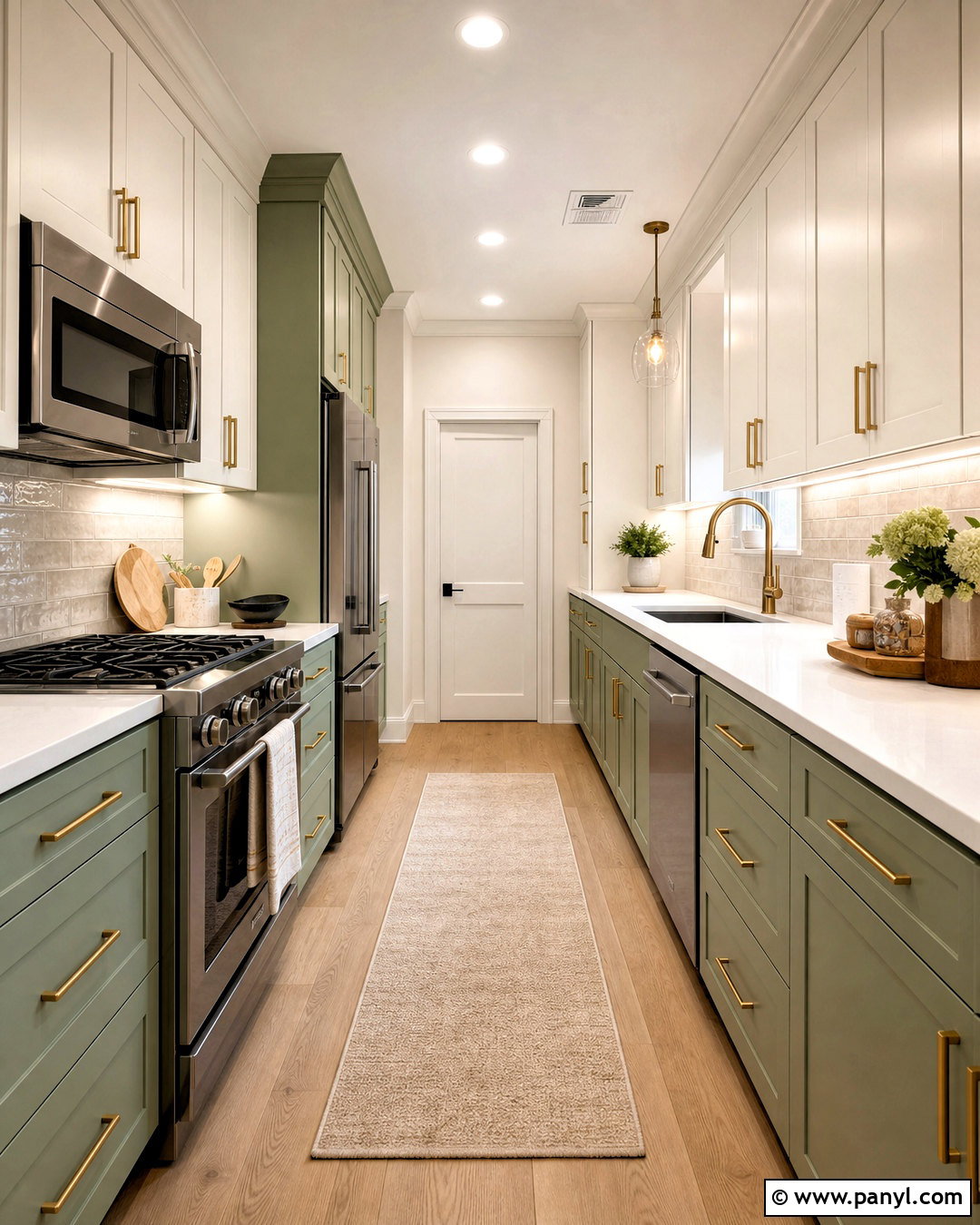
A narrow galley layout benefits from a carefully balanced sage green palette. Place sage cabinets along the lower sections and use warm white uppers to preserve an open sightline. If storage needs require full-height green cabinetry, limit it to one end wall. Choose white quartz counters, glossy cream backsplash tiles, and continuous under-cabinet lighting to bounce light through the passage. Slim brass or nickel pulls reduce visual bulk, while pale oak flooring laid lengthwise can emphasize the room’s flow. Keep appliances flush with the cabinet fronts and organize small appliances inside a dedicated cupboard. A simple runner adds comfort without interrupting circulation. The complete kitchen feels colorful and efficient while maintaining the clear pathways essential in a galley arrangement.
20. Budget Sage Green Kitchen Makeover
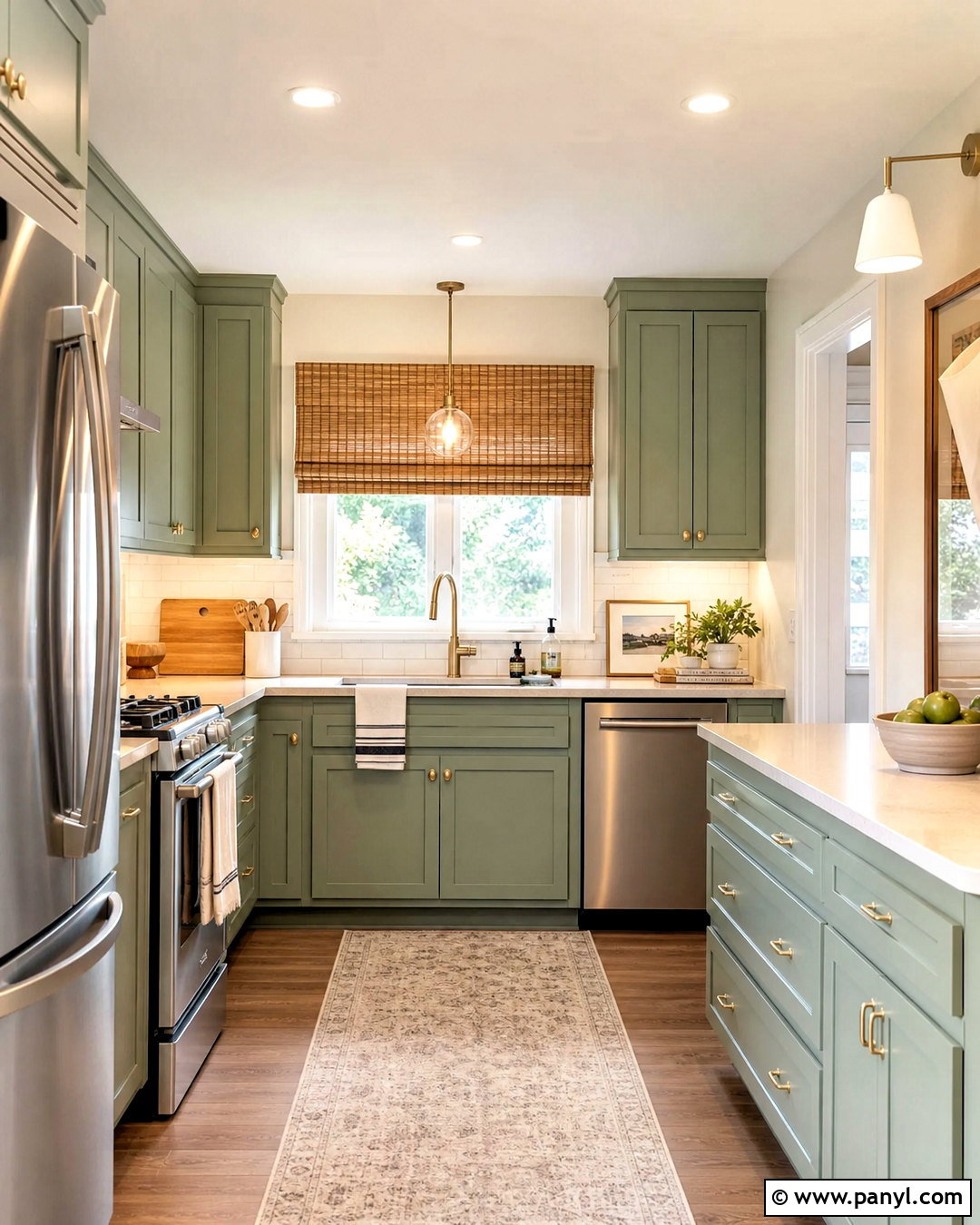
A complete sage green kitchen refresh does not require replacing every surface. Paint structurally sound cabinets in a soft sage shade, then add simple brass or matte black hardware. Keep existing neutral countertops if they coordinate, and update the backsplash with affordable white ceramic tile or a carefully installed removable option. Warm white wall paint can brighten the entire room at a modest cost. Replace an outdated fixture with one clean-lined pendant and add plug-in under-cabinet lighting for better task visibility. A washable runner, woven shade, and a few wooden accessories bring in texture. Finish by organizing open surfaces and removing mismatched decor. These coordinated changes make the kitchen feel intentional, polished, and noticeably fresher without altering its original layout.
Conclusion:
The best sage green kitchen balances color with practical surfaces, warm materials, and a clear visual direction. White stone creates brightness, wood adds natural warmth, and black or brass accents provide definition. Sage can cover every cabinet or appear selectively on an island, lower cabinet run, backsplash, or wall. Before committing, view a large color sample beside your flooring, countertops, and backsplash throughout the day. This simple step helps reveal whether the shade appears gray, yellow, cool, or warm in your space. Use these 20 sage green kitchen ideas as complete design plans rather than isolated color suggestions. With coordinated finishes and thoughtful lighting, sage green can create a kitchen that feels welcoming, functional, and distinctly personal.

Related Ideas and Inspiration:
Leave a Reply