
Blue can make a kitchen feel calm, polished, cheerful, or dramatic depending on the shade and materials around it. These 20 blue kitchen ideas explore complete, livable spaces rather than isolated color choices. You will find navy cabinets paired with marble, powder blue finishes warmed by wood, colorful backsplashes, two-tone layouts, and budget-friendly updates. Each look considers cabinetry, countertops, flooring, lighting, hardware, and practical storage, so it is easier to imagine the finished room. Blue also works across farmhouse, coastal, traditional, and modern kitchens, making it surprisingly flexible for different homes. Whether you want a subtle refresh or a full remodel, use these complete 20 blue kitchen ideas to find a balanced design you can confidently recreate.
1. Navy Blue Kitchen Cabinets
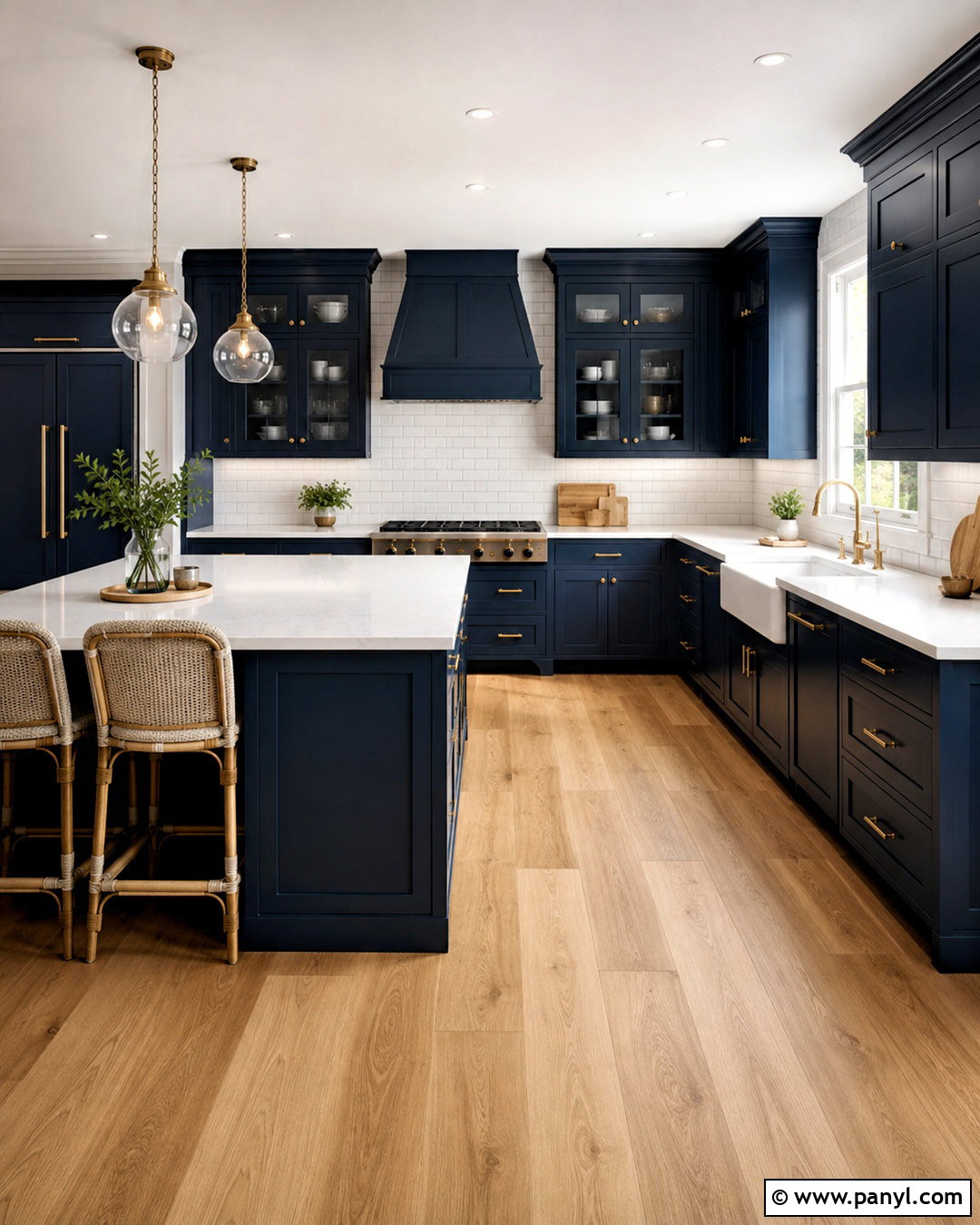
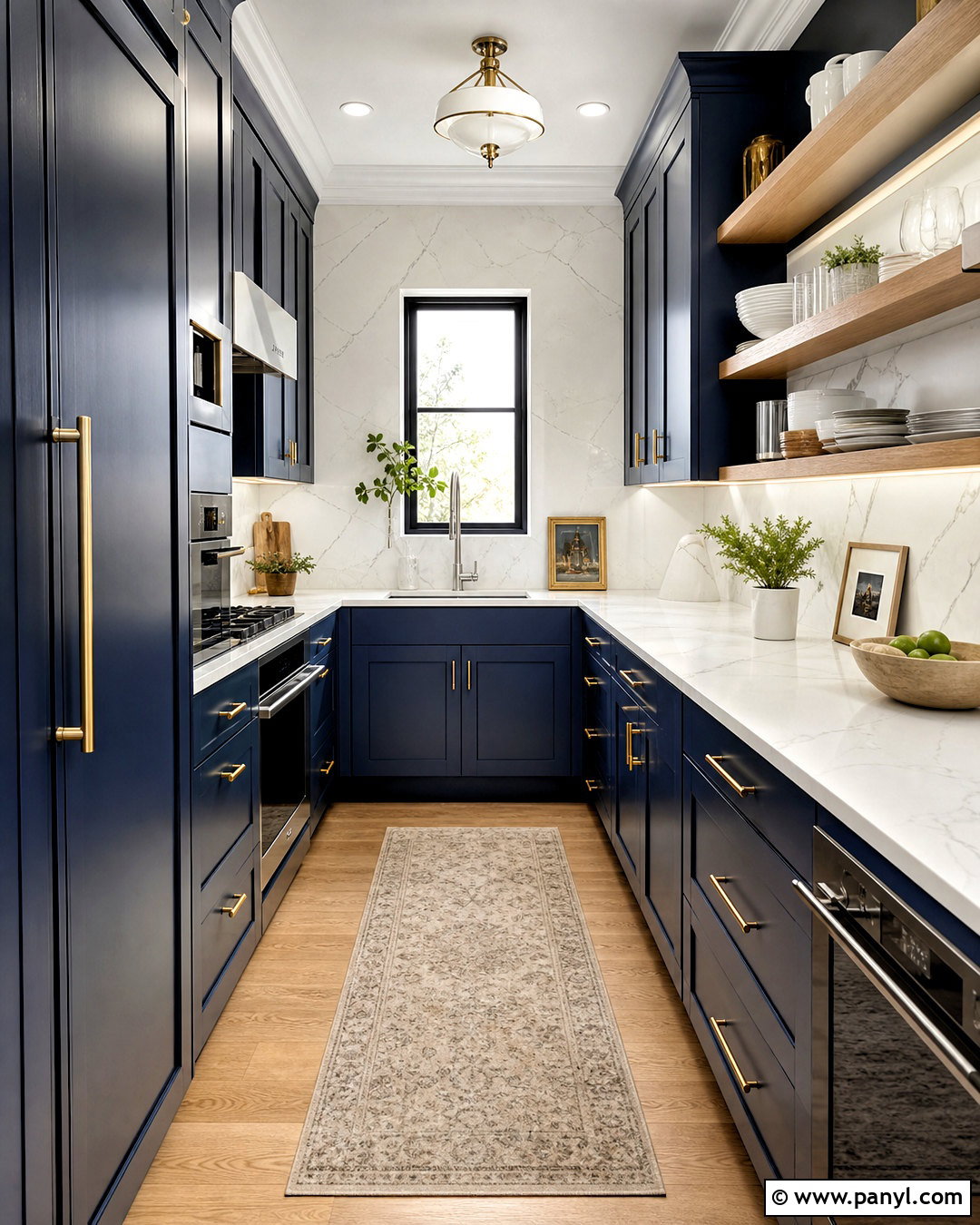
Deep navy cabinets give a kitchen a grounded, tailored look without feeling as harsh as black. Choose simple Shaker doors and continue the navy across both lower and upper cabinetry for a cohesive finish. Bright white quartz countertops and a white subway tile backsplash will keep the room clear and balanced. Add brushed brass knobs, a matching bridge faucet, and two glass pendant lights for warmth. Medium-tone oak flooring prevents the blue-and-white palette from becoming overly cool. If the room has limited daylight, use glass-front doors on one upper cabinet and install under-cabinet lighting. A large white apron-front sink and paneled dishwasher complete this practical transitional kitchen while allowing the rich cabinetry to remain the main feature.
2. Light Blue Farmhouse Kitchen
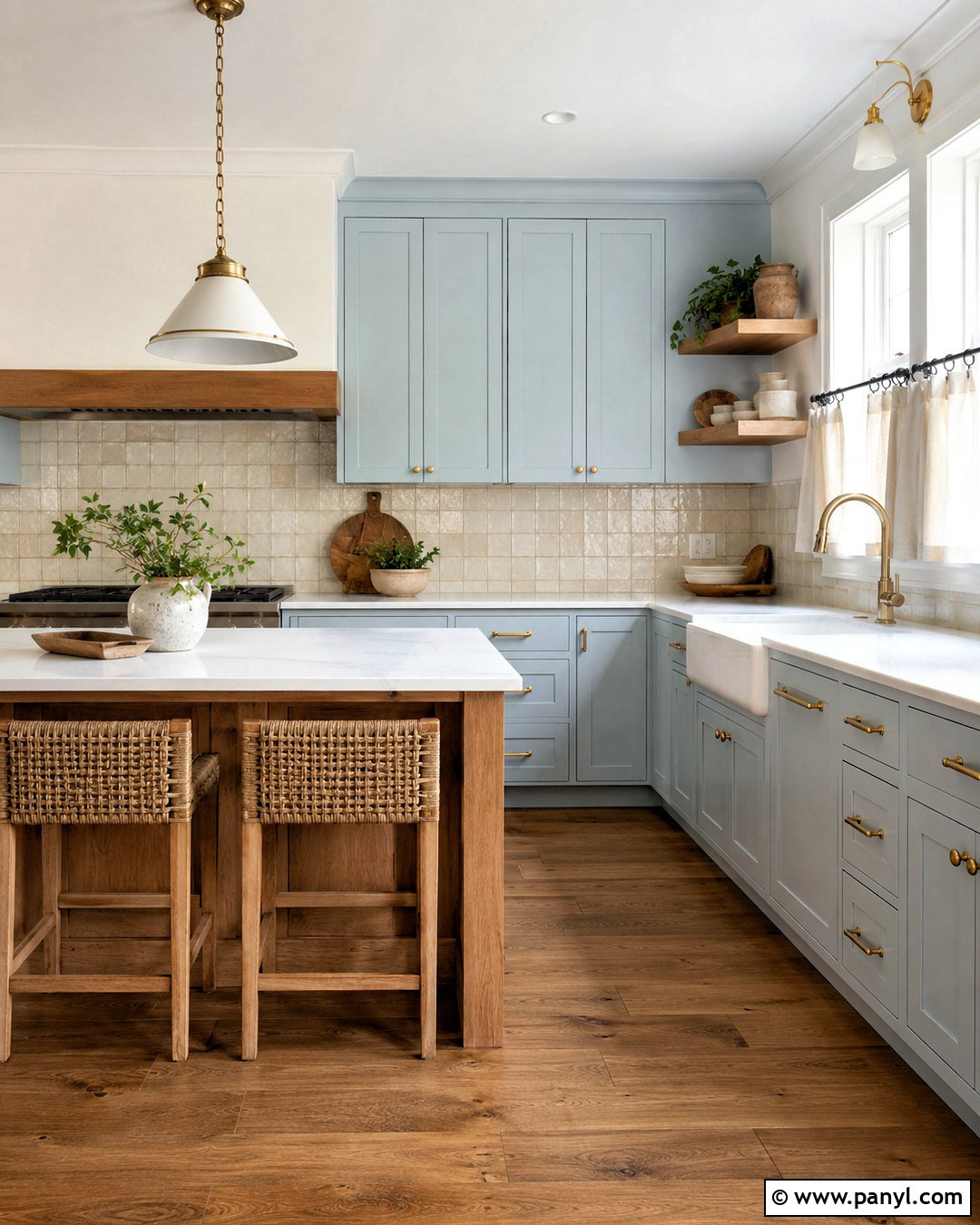
Soft powder blue cabinetry brings a fresh, relaxed character to a farmhouse kitchen. Use the color on recessed-panel cabinets, including a tall pantry wall, to create a complete and consistent scheme. White quartz counters with subtle gray veining provide a durable work surface, while handmade cream backsplash tiles add gentle texture. Warm oak flooring, woven counter stools, and open wood shelves keep the pastel blue from looking too sweet. Choose aged brass cup pulls and traditional shaded pendants for an inviting finish. A wide island can hold the farmhouse sink, dishwasher, storage drawers, and seating for three. Finish the room with simple pottery, linen café curtains, and a natural runner rather than excessive rustic decorations that could make the kitchen feel crowded.
3. Dusty Blue Small Kitchen
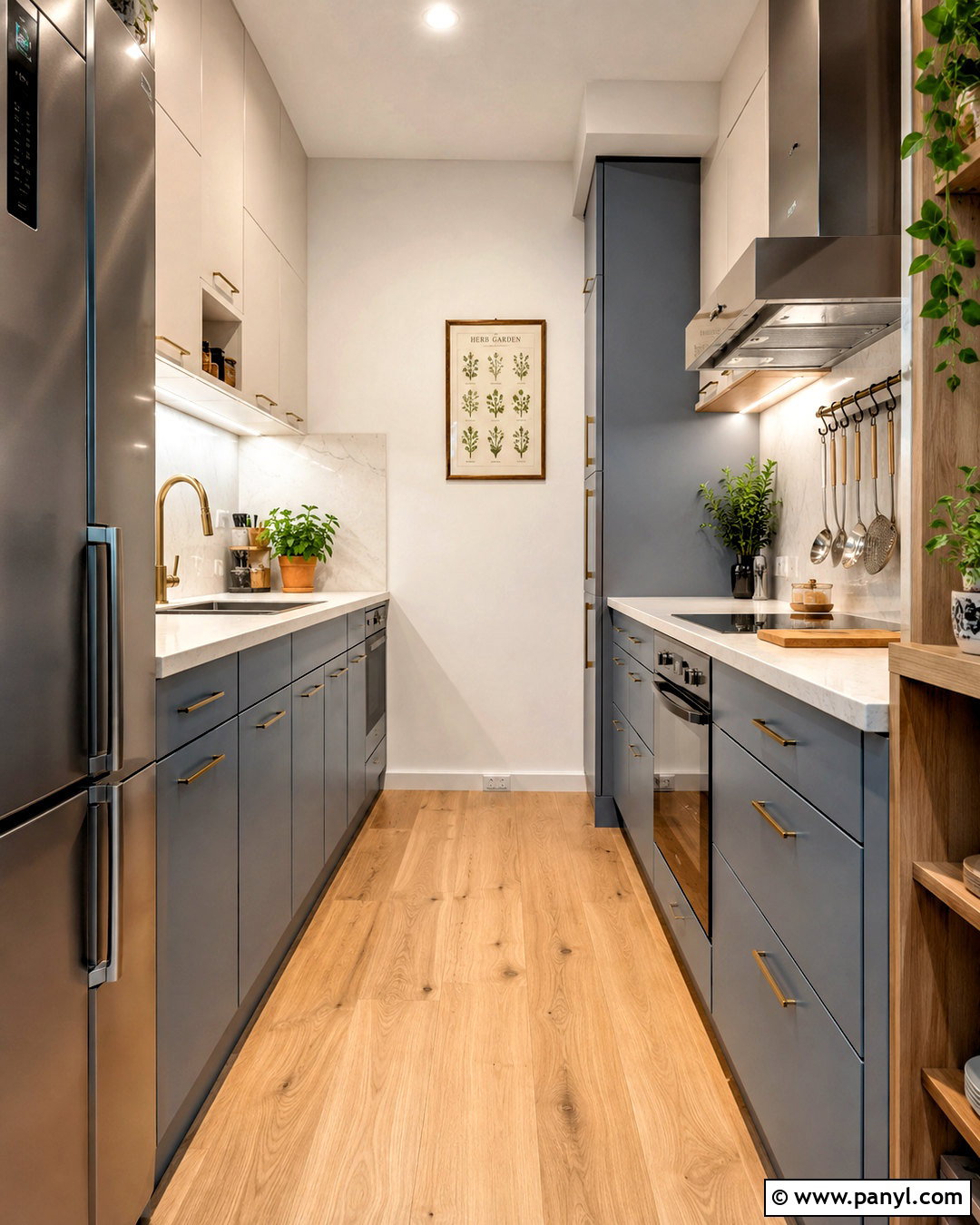
A muted dusty blue is an excellent choice for a compact kitchen because it adds personality without creating harsh contrast. Paint the lower cabinets and one tall storage unit blue, then use warm white upper cabinets to preserve an open feeling near eye level. Select slim Shaker doors, small brass pulls, and integrated appliances to reduce visual clutter. Pale quartz countertops and a matching short backsplash make the limited counter area appear continuous. Light oak flooring laid lengthwise can visually stretch a narrow room. Add one compact ceiling fixture and strong under-cabinet lighting instead of oversized pendants. A wall-mounted rail can organize utensils while leaving counters clear. Finish with two wood cutting boards and a small herb planter for natural warmth and useful everyday detail.
4. Blue And White Kitchen Cabinets
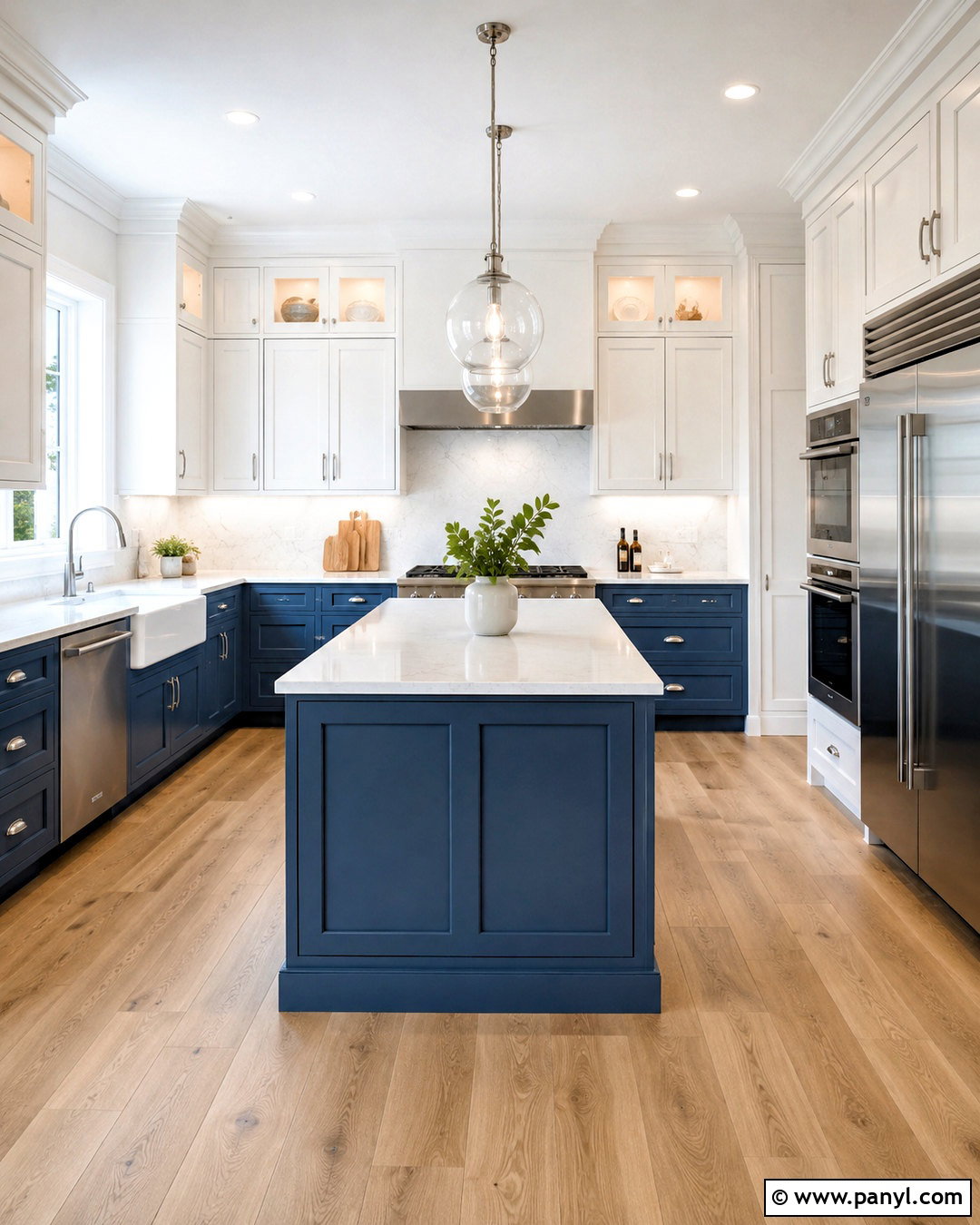
Two-tone cabinetry creates a balanced way to use blue throughout a busy family kitchen. Choose rich medium-blue base cabinets to hide everyday marks, then install warm white upper cabinets to keep the ceiling area bright. Repeat the blue on a large island so the color feels intentional from every viewpoint. White quartz counters and a lightly veined marble backsplash connect both cabinet finishes. Use satin nickel hardware when you want a quieter alternative to brass. Wide-plank white oak flooring adds warmth, while stainless steel appliances blend naturally with the cool palette. Include deep island drawers, a pullout trash cabinet, and a tall pantry beside the refrigerator. Clear glass pendants and simple blue-and-cream stools complete the room without competing with the two-color cabinet arrangement.
5. Blue Kitchen Island With White Cabinets
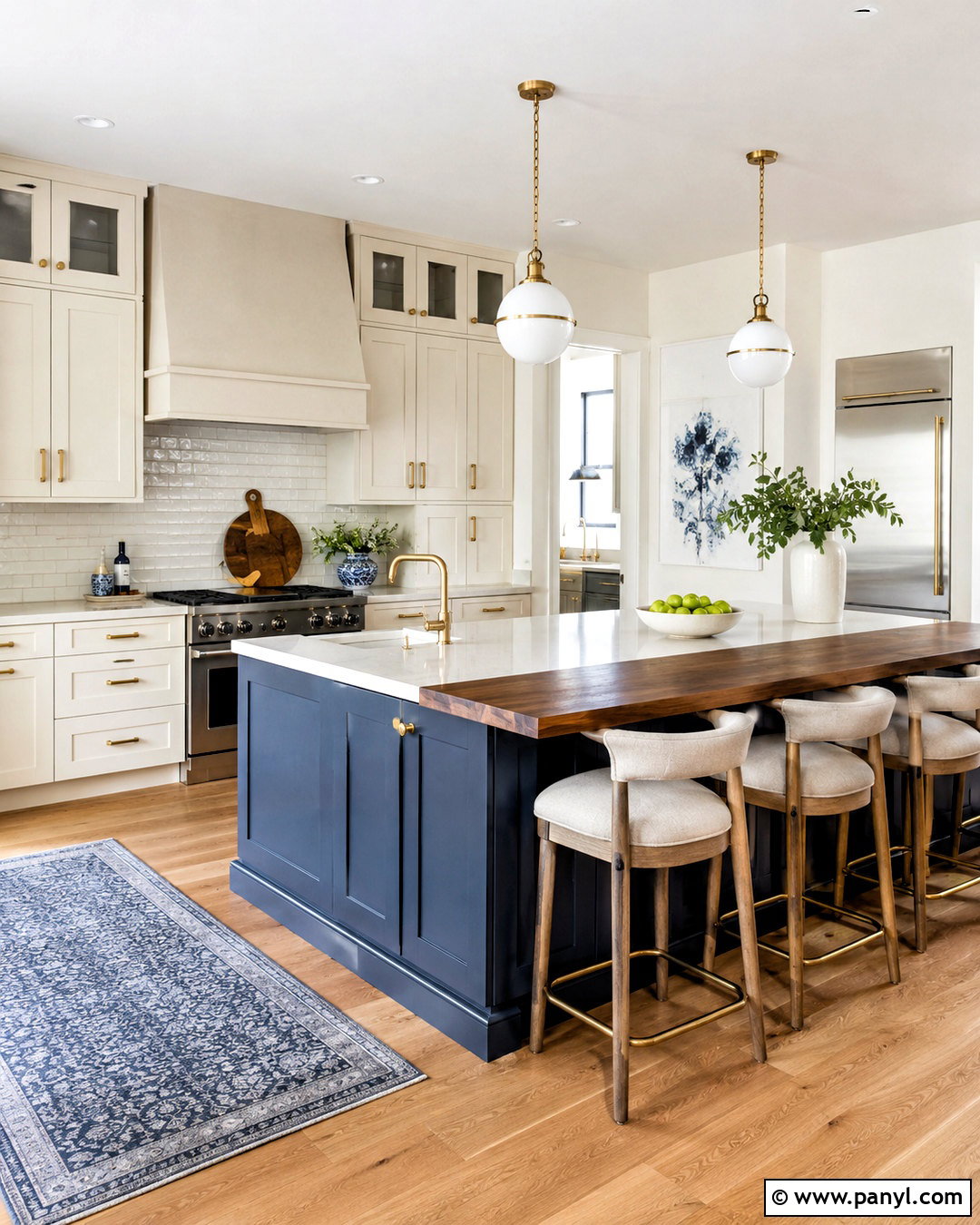
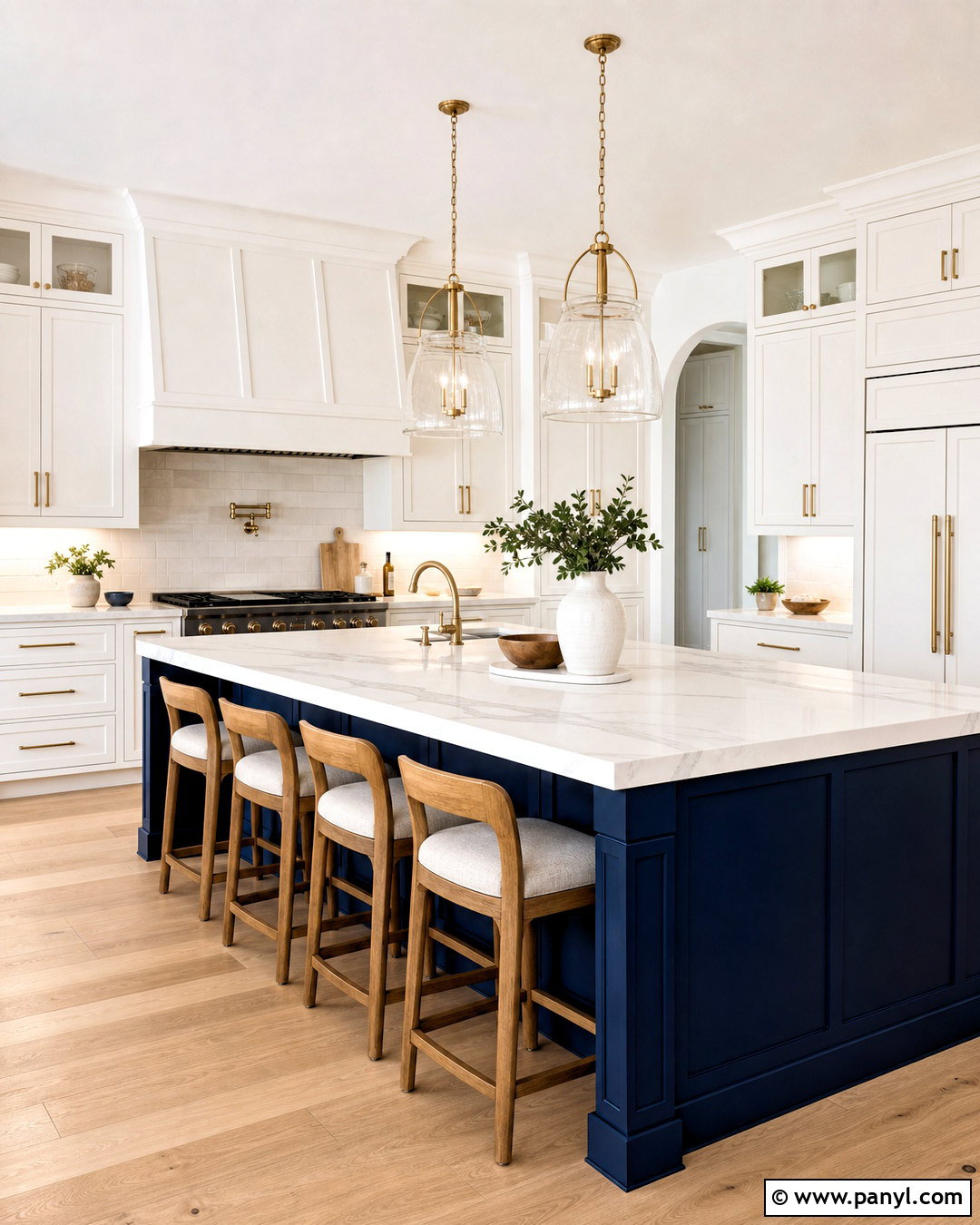
If a full wall of blue cabinets feels overwhelming, make the island the room’s colorful centerpiece. Start with warm white perimeter cabinets, soft white quartz counters, and a full-height backsplash made from the same material. Paint the island a saturated denim blue and give it paneled ends for a finished, furniture-like appearance. A walnut butcher-block section can create a warm seating zone while the remaining stone surface handles food preparation. Choose brushed brass hardware and large white globe pendants to connect the cool island with the warm wood floor. Upholstered counter stools in cream performance fabric add comfort without introducing another strong color. Repeat the island blue through a small Roman shade, framed artwork, or practical countertop canisters for a thoughtfully connected kitchen.
6. Blue Kitchen With Butcher Block Counters
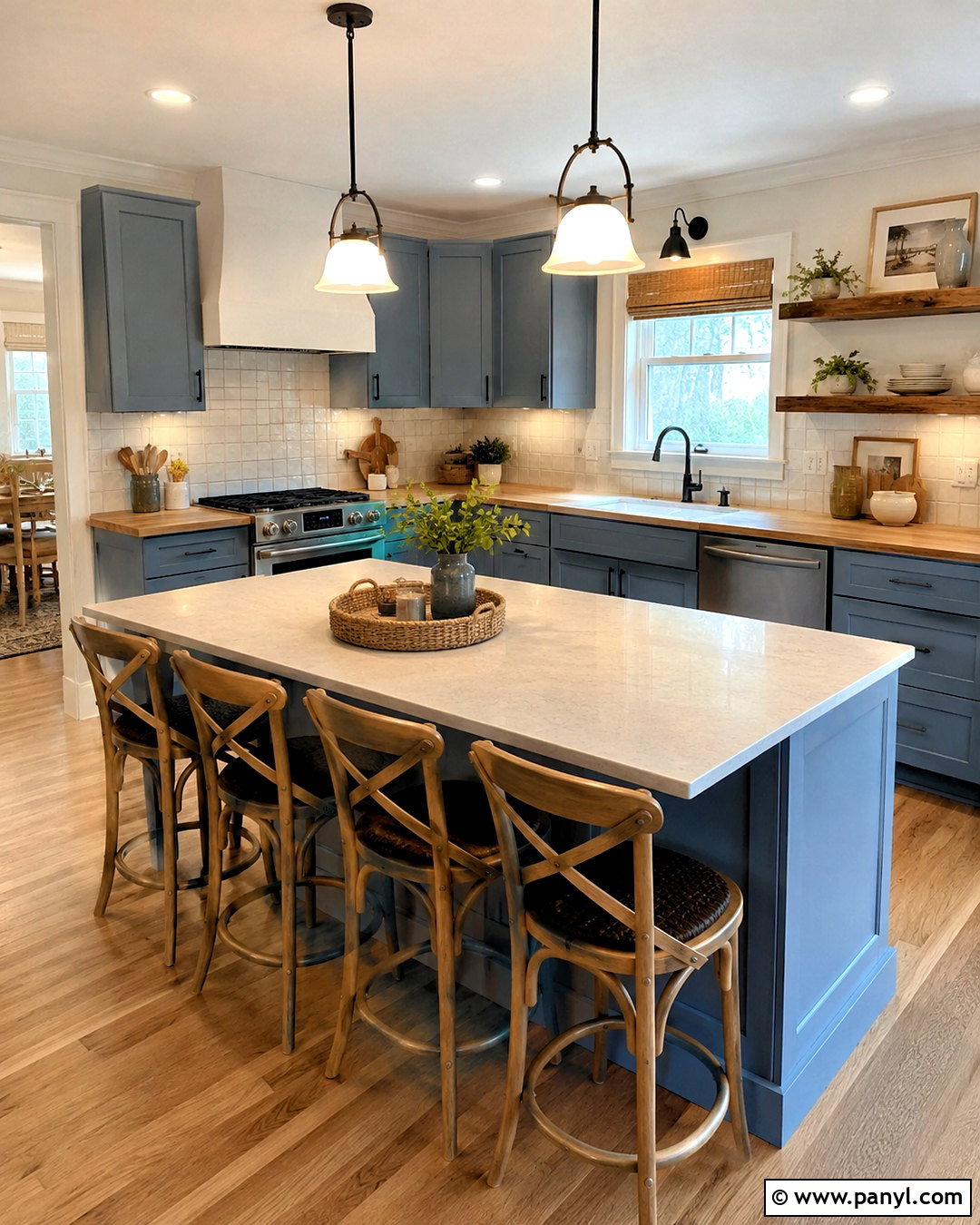
Butcher block countertops make medium-blue cabinetry feel warmer and more relaxed. Use a durable sealed white oak or maple surface across the perimeter, then choose a pale quartz counter for the island to simplify maintenance around the sink. A creamy square-tile backsplash softens the transition between the painted cabinets and natural wood. Black bin pulls, a black faucet, and matte black pendants add clean definition without making the room formal. Carry the wood tone into floating shelves, flooring, and simple counter stools. Keep the walls warm white and use an off-white ceiling to avoid a cold blue cast. This combination works especially well in a casual cottage kitchen where visible grain, practical storage baskets, and easy-to-reach shelves contribute to the welcoming character.
7. Blue Kitchen With Black Countertops
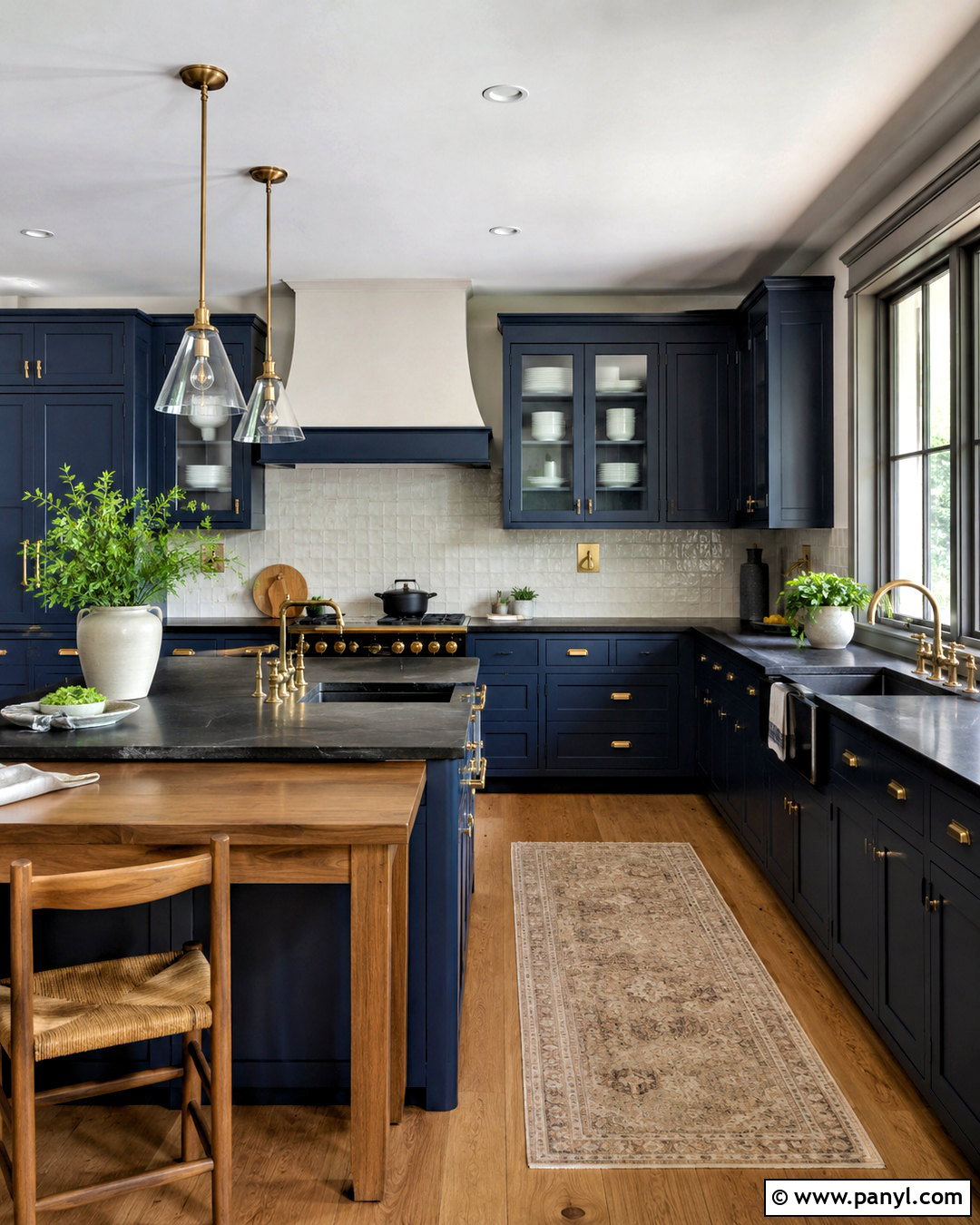
Inky blue cabinets and black countertops can create a dramatic kitchen that still feels comfortable when lighter surfaces are included. Choose honed black granite or soapstone for a soft, low-sheen appearance rather than a highly reflective finish. Install a warm white backsplash with lightly irregular tiles to brighten the work zone. Medium oak floors and a wood-topped dining extension on the island will break up the dark surfaces. Use antique brass hardware and adjustable wall lights to add small points of warmth. Reserve glass-front cabinetry for one section where white dishes can provide contrast. Generous recessed lighting and under-cabinet strips are essential in this scheme. Finish the space with simple linen shades and a pale runner so the darker materials feel layered instead of heavy.
8. Blue Kitchen With Marble Backsplash
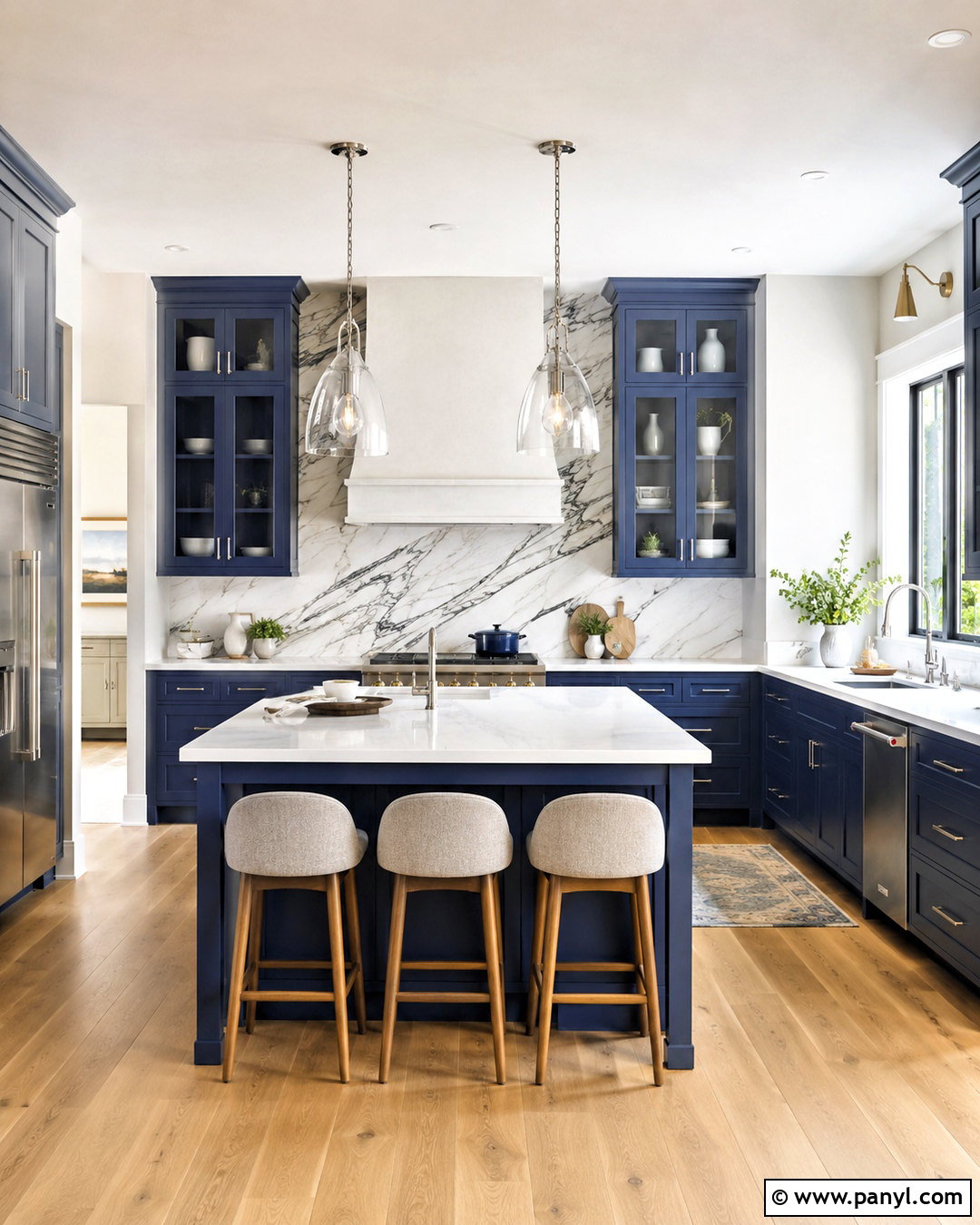
A marble backsplash gives blue cabinetry an elegant focal point while keeping the overall palette simple. Choose deep slate-blue cabinets with slim framed doors and pair them with white quartz countertops for easier everyday care. Behind the range, install a large marble slab featuring soft gray and blue veining, then continue plain stone or matching quartz beneath the remaining upper cabinets. A plaster range hood painted to match the walls will allow the natural veining to stand out. Add polished nickel hardware, a bridge faucet, and clear glass pendants for a refined finish. Pale oak flooring keeps the space approachable, while a matching blue island adds generous preparation space and storage. Limit decorative accessories to white ceramics, wood boards, and one leafy plant for a clean appearance.
9. Blue Kitchen With Blue Backsplash
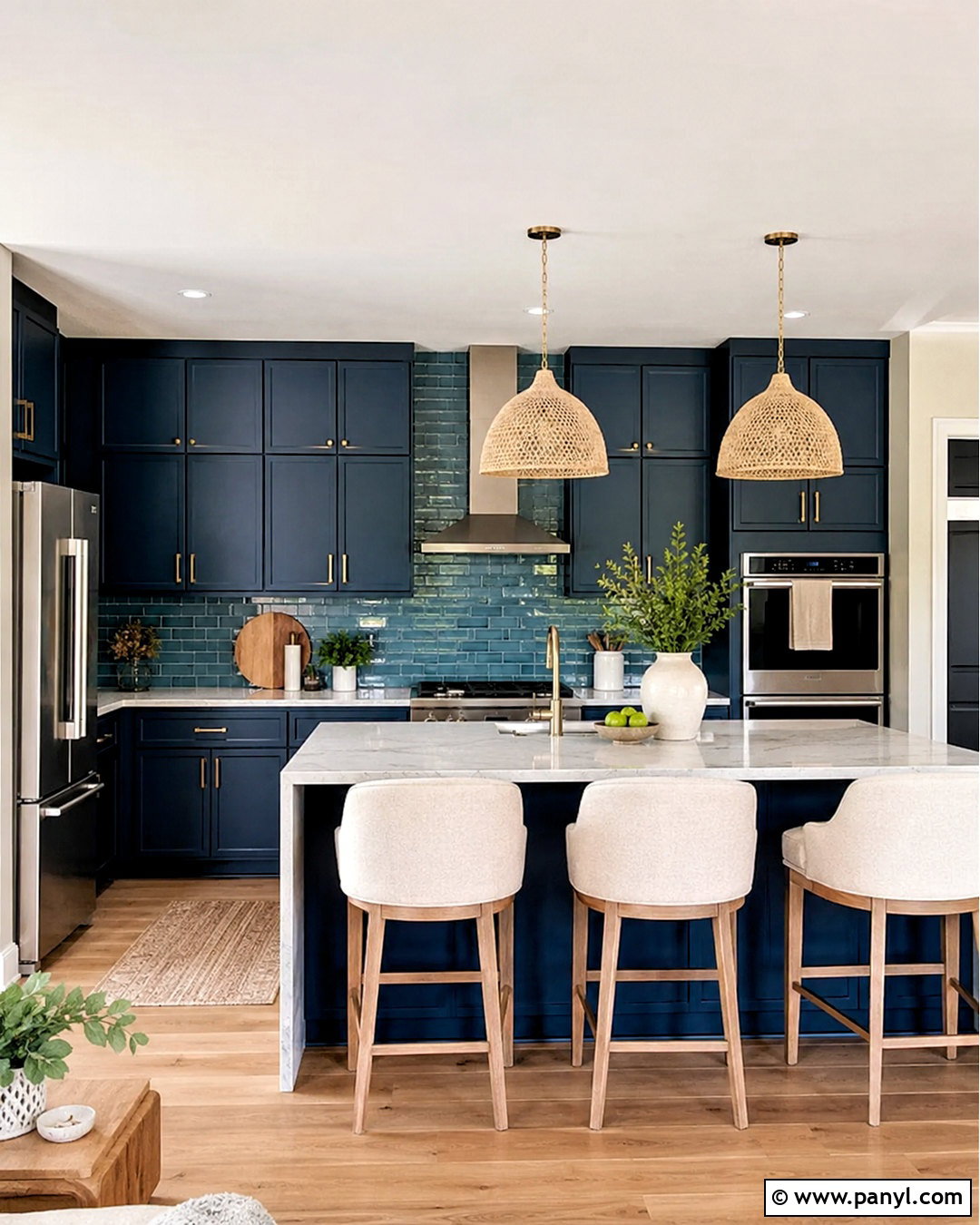
A layered blue-on-blue palette can feel rich and cohesive when the shades and finishes are clearly different. Use matte navy cabinets as the darker foundation, then install glossy blue-green subway tiles across the backsplash. Their reflective surface will catch light and prevent the deep cabinetry from appearing flat. Choose pale gray quartz countertops to create a quiet break between the two blues. Warm brass hardware and natural oak flooring balance the cool colors, while off-white walls keep the surrounding room bright. On the island, repeat the navy cabinetry but use a light waterfall countertop for definition. Cream counter stools and woven pendant lights introduce softer texture. Keep dishes and appliances mostly neutral so the varying blue surfaces remain organized rather than visually overwhelming.
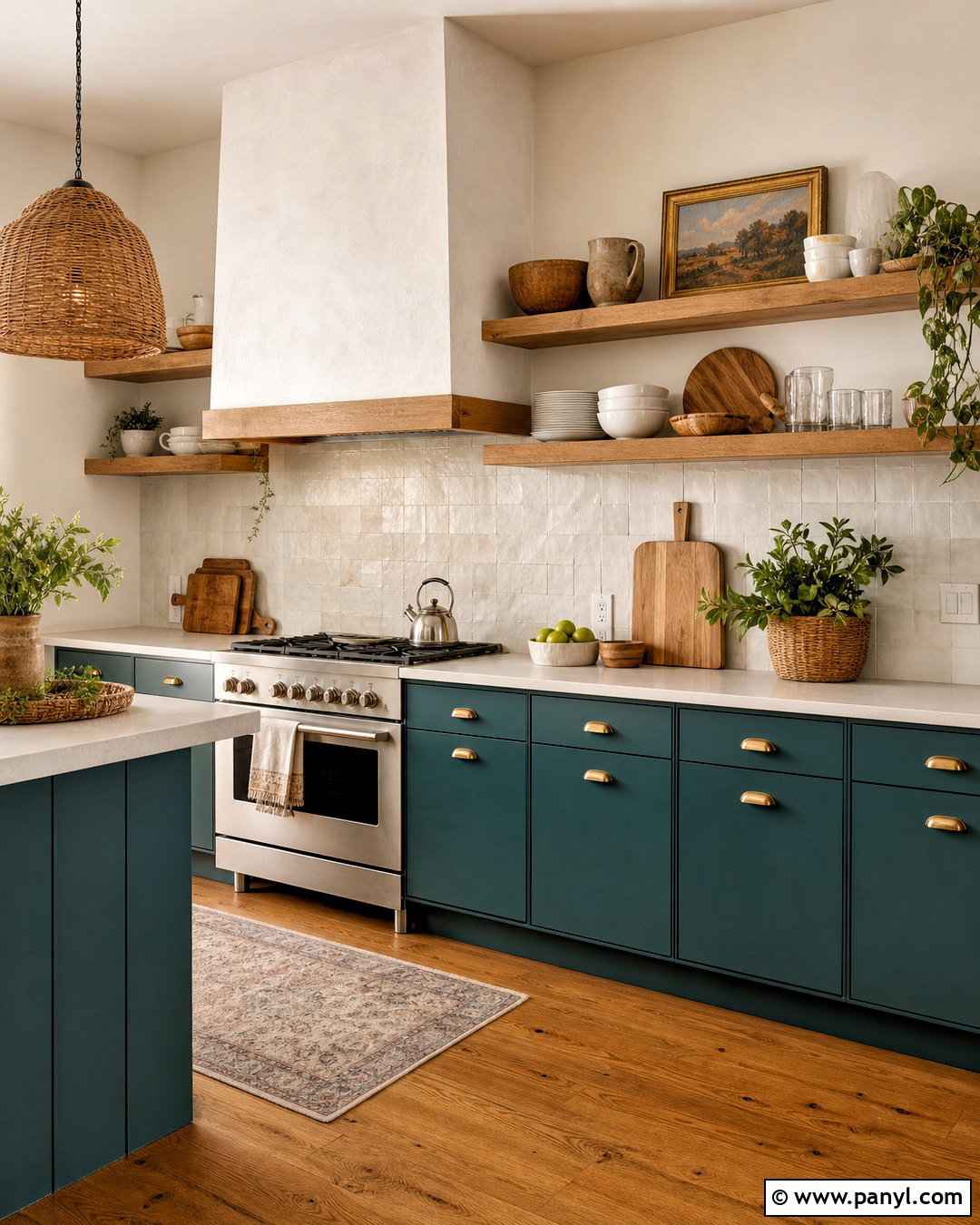
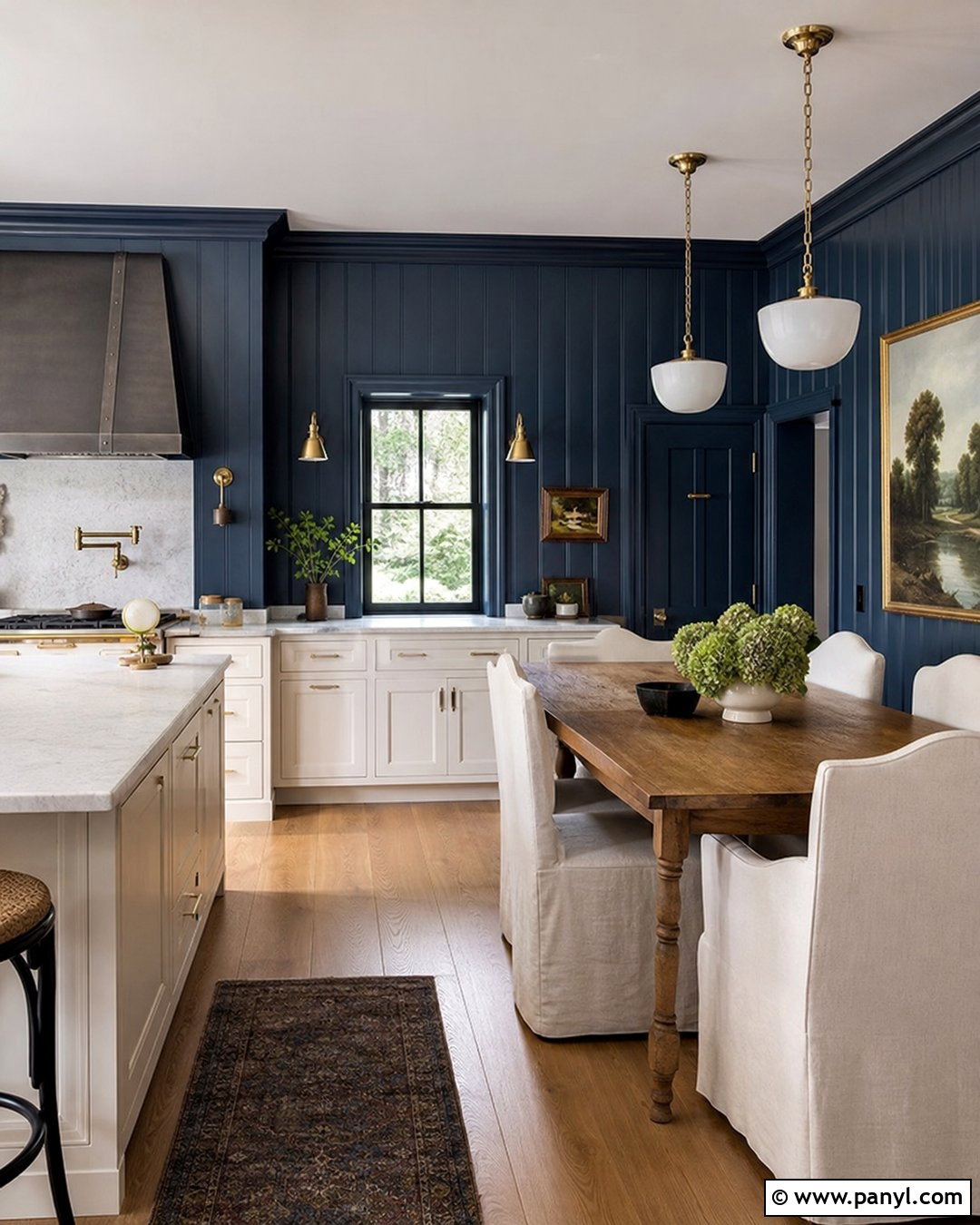
10. Coastal Blue Kitchen
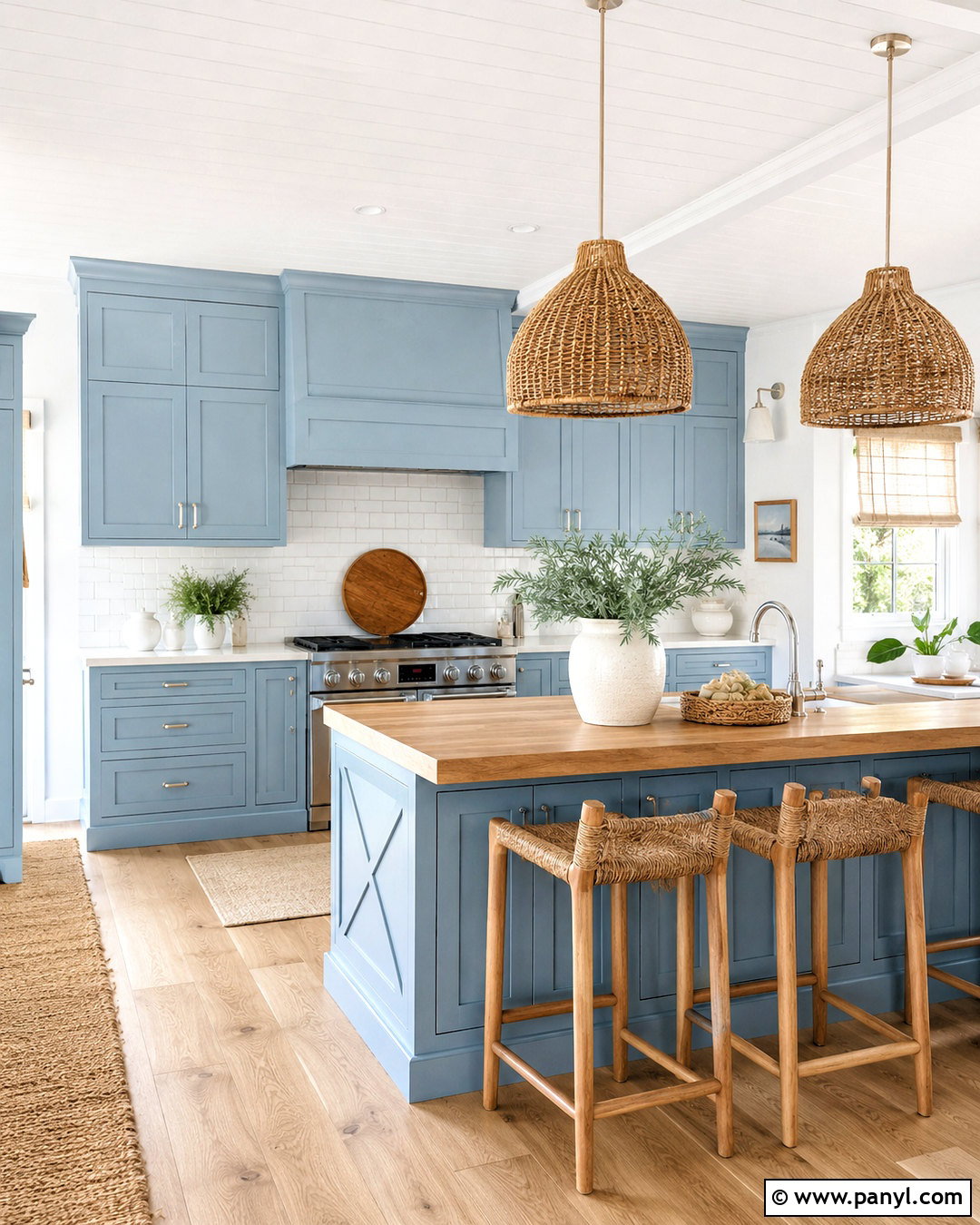
A coastal kitchen can use blue without relying on obvious nautical decorations. Begin with soft ocean-blue Shaker cabinets, white quartz countertops, and a backsplash of glossy pearl tiles that subtly reflect daylight. Use pale white oak flooring and a matching oak island top to bring in the warmth of natural shoreline materials. Woven counter stools, oversized rattan pendants, and simple linen window shades add relaxed texture. Choose polished nickel hardware for a clean finish that works well with stainless steel appliances. A large island should provide seating, deep storage, and an open shelf for everyday serving pieces. Complete the room with white pottery and a few clear glass accessories. The result feels airy and coastal while remaining practical enough for an everyday family home far from the beach.
11. Modern Matte Blue Kitchen
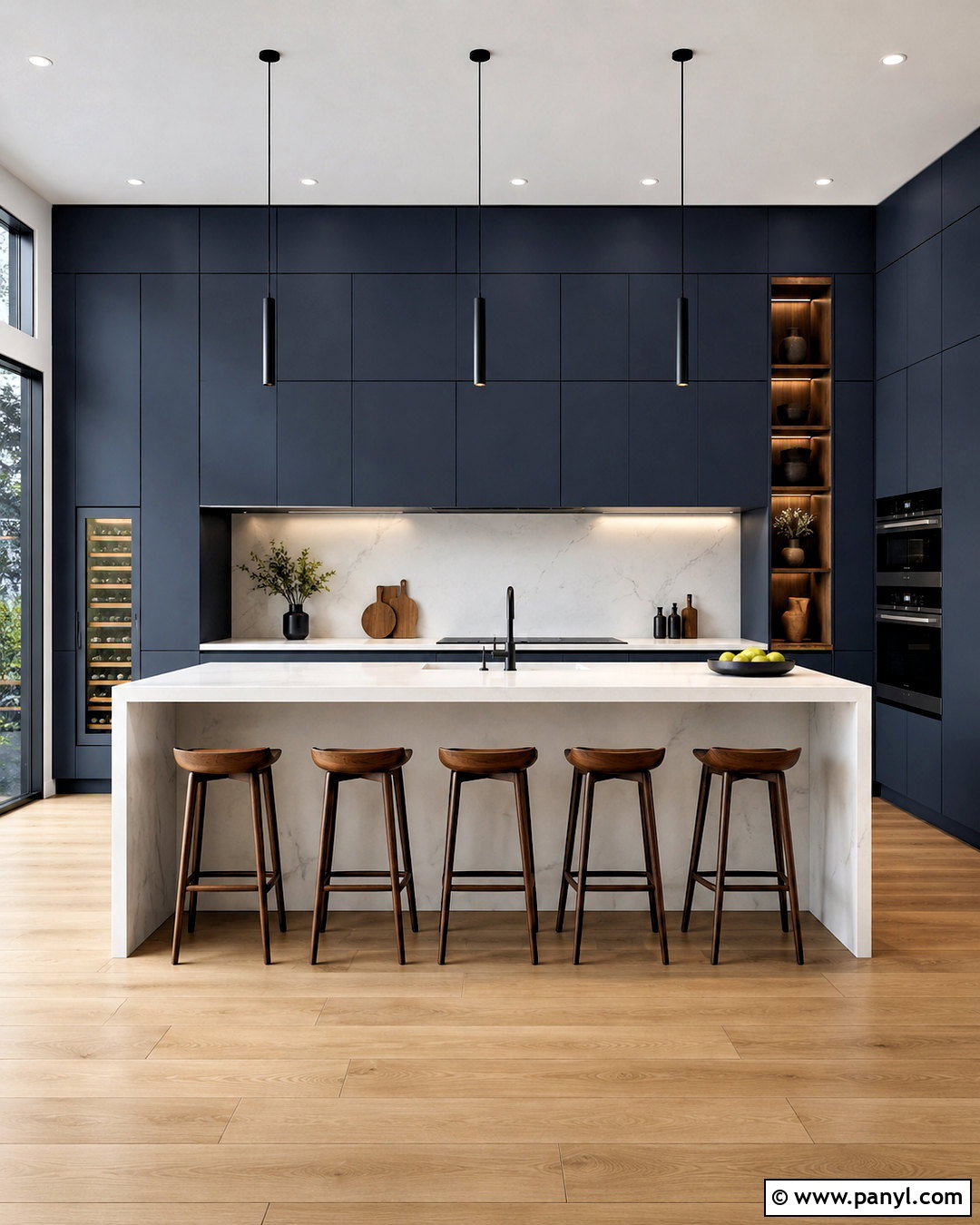
Flat-panel cabinets in a matte midnight blue create a sleek kitchen with strong architectural lines. Run the cabinetry from floor to ceiling along one wall to conceal the refrigerator, pantry, and small appliances. On the opposite side, use a long island with a white quartz waterfall counter and handle-free storage. A pale gray large-format backsplash reduces grout lines and supports the minimalist look. Select light concrete-look flooring or wide pale oak boards to keep the dark cabinets from dominating the room. Thin black pendants and recessed ceiling lights provide focused illumination without visual clutter. Introduce warmth through walnut stools and one wood display niche built into the cabinet wall. Keep counters nearly clear, using concealed outlets and appliance garages to preserve the smooth, uninterrupted surfaces.
12. Blue Gray Transitional Kitchen
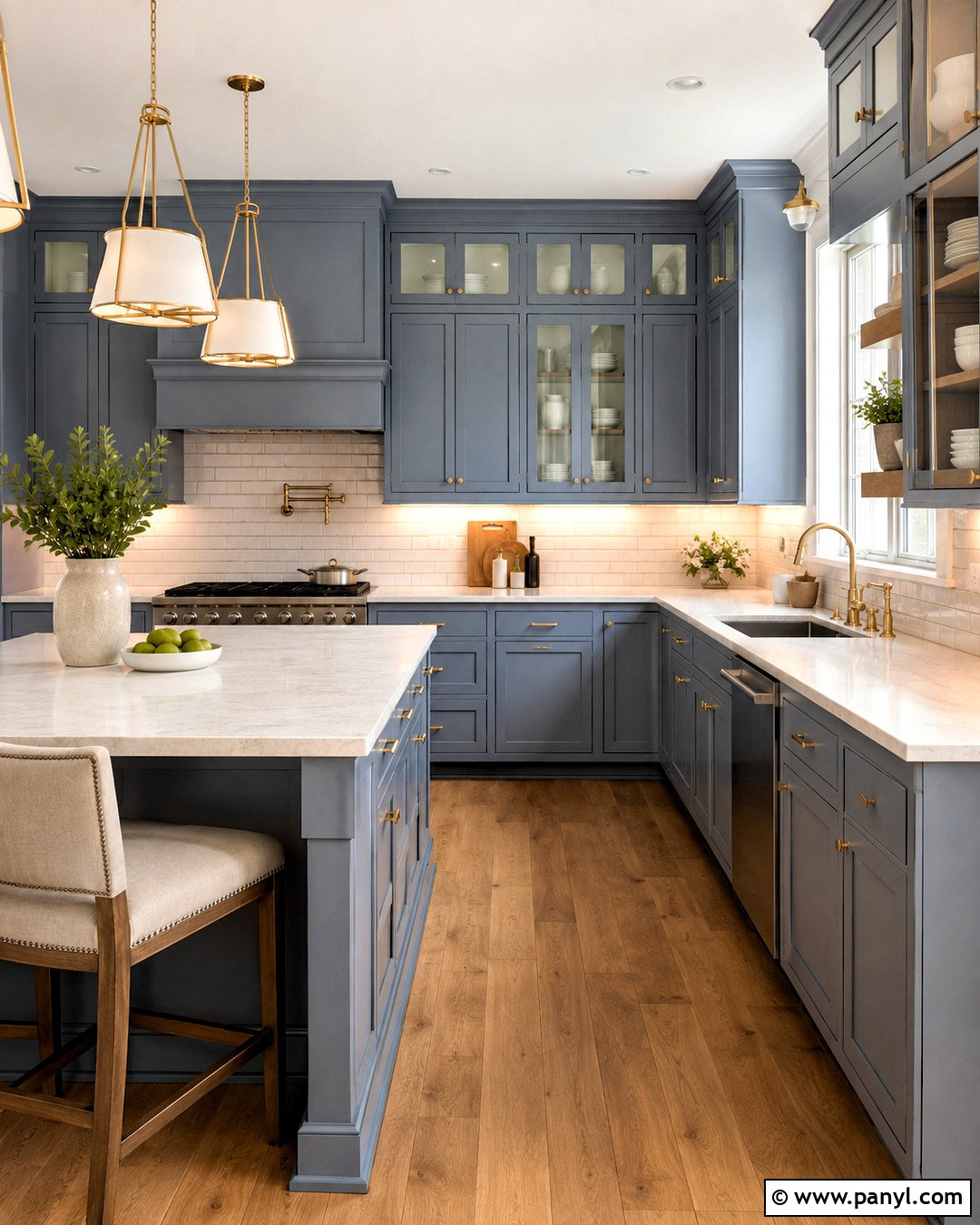
Blue-gray cabinetry offers a softer alternative to navy and works especially well in a transitional kitchen. Choose a medium blue with subtle gray undertones for Shaker cabinets, the island, and a tall pantry unit. Pair it with creamy white quartz counters and a warm white backsplash laid in a simple brick pattern. Satin brass hardware adds gentle contrast, while medium-tone oak floors keep the color scheme from becoming too cool. Use upholstered stools in oatmeal fabric and shaded pendants with brass frames to make the island comfortable and inviting. Crown molding and paneled cabinet ends can add traditional detail, but keep the lighting and faucet shapes simple. A balanced mix of closed storage, glass-front cupboards, and deep drawers makes the polished space functional for everyday cooking.
13. Teal Blue Kitchen Cabinets
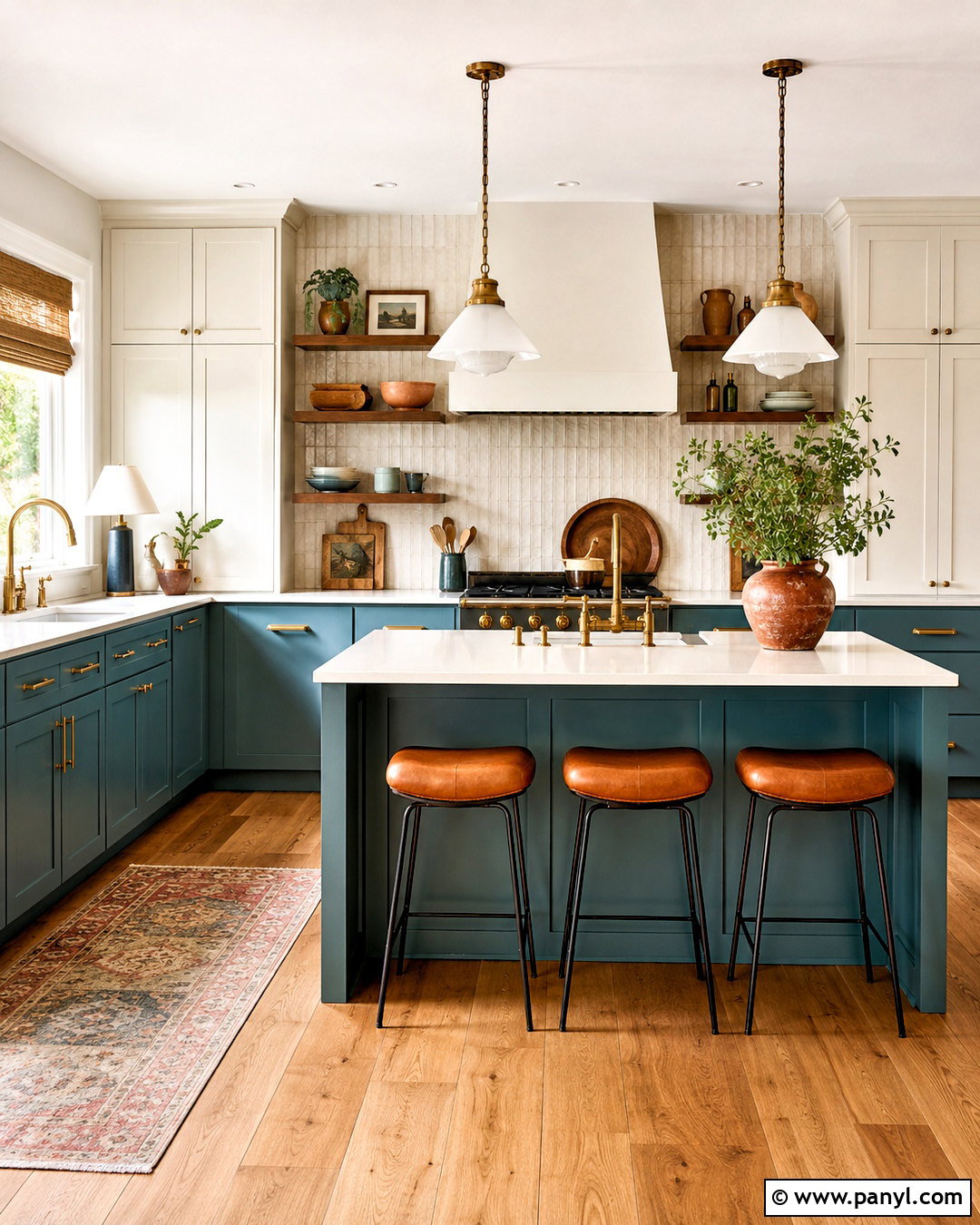
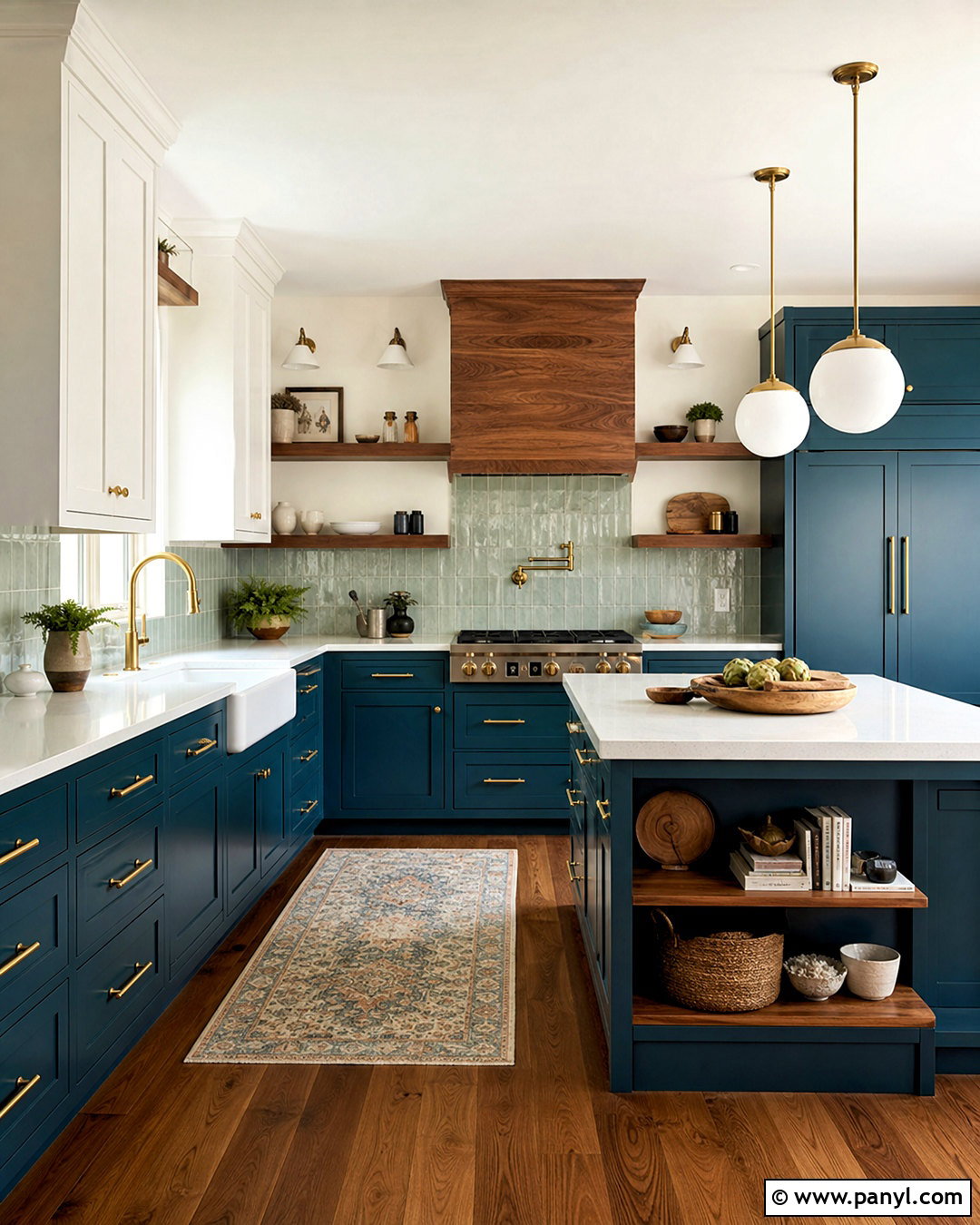
Teal blue cabinets bring lively color to a kitchen while maintaining the calm quality associated with deeper blues. Select a muted teal with more blue than green, then use it across the base cabinets and tall storage wall. Warm white upper cabinets will prevent the stronger shade from enclosing the room. Choose creamy quartz countertops and a handmade off-white tile backsplash to create a soft backdrop. Walnut shelves, cognac leather stools, and honey-toned oak flooring enhance the warmth within the teal. Antique brass knobs and cone pendants provide a subtle vintage note. On the island, repeat the teal finish and add practical deep drawers beneath a wide preparation surface. Terracotta pottery and simple woven accessories can complete the palette without turning the room into an overly colorful space.
14. Cobalt Blue Modern Kitchen
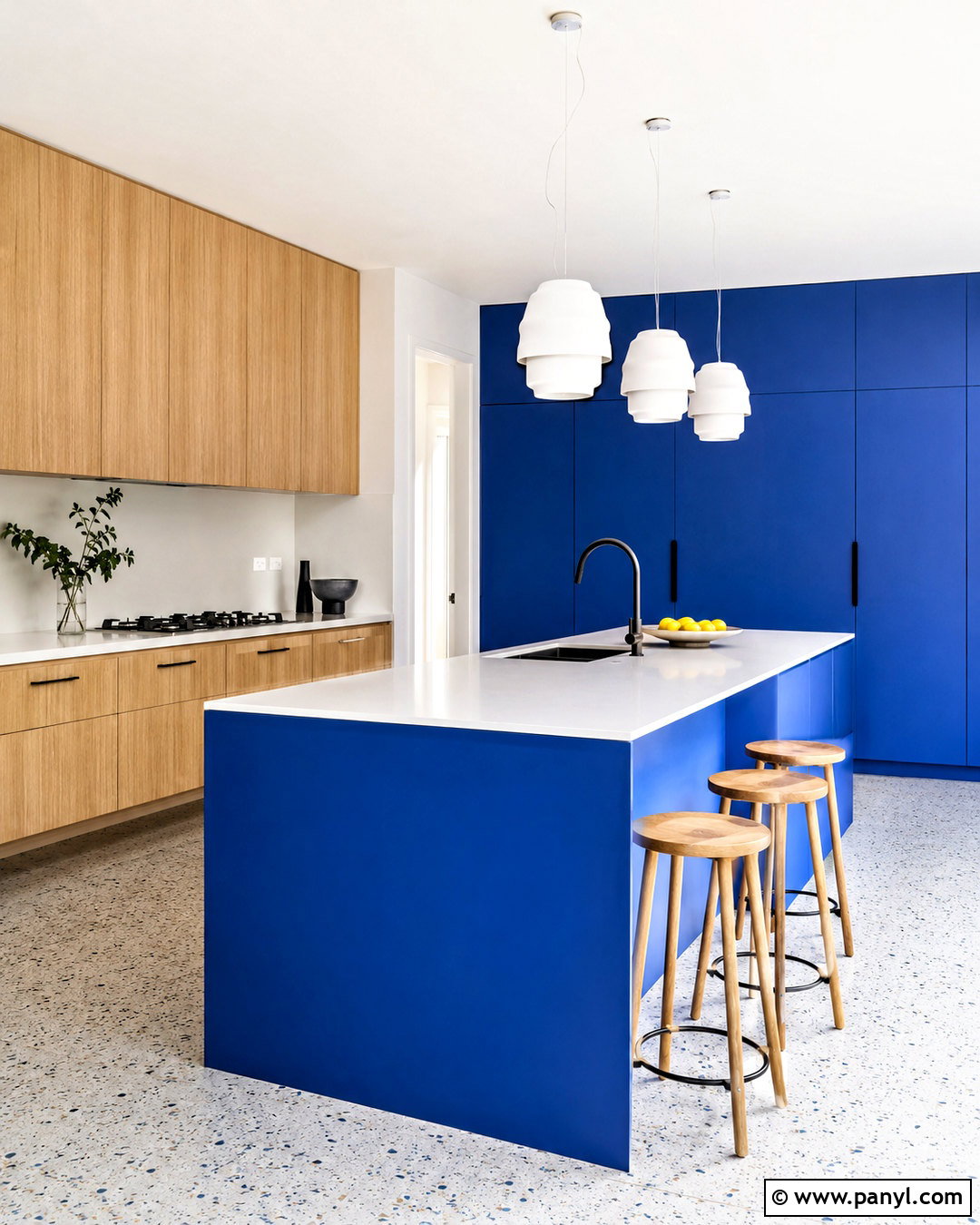
Vivid cobalt blue can produce a bold modern kitchen when it is balanced by simple shapes and quiet materials. Apply the color to a large flat-panel island and one floor-to-ceiling cabinet wall. Keep the remaining cabinets white or pale oak so the saturated blue has room to stand out. Select crisp white quartz counters, a plain white backsplash, and minimal black hardware. Light terrazzo flooring with small blue and warm beige flecks can connect the entire palette without competing with the cabinetry. Install sculptural white pendants above the island and add backless oak stools for natural contrast. Concealed appliances and uncluttered counters will make the strong color feel controlled. A few cobalt accessories may be repeated around the room, but avoid adding multiple competing accent shades.
15. Blue Kitchen With Natural Wood Cabinets
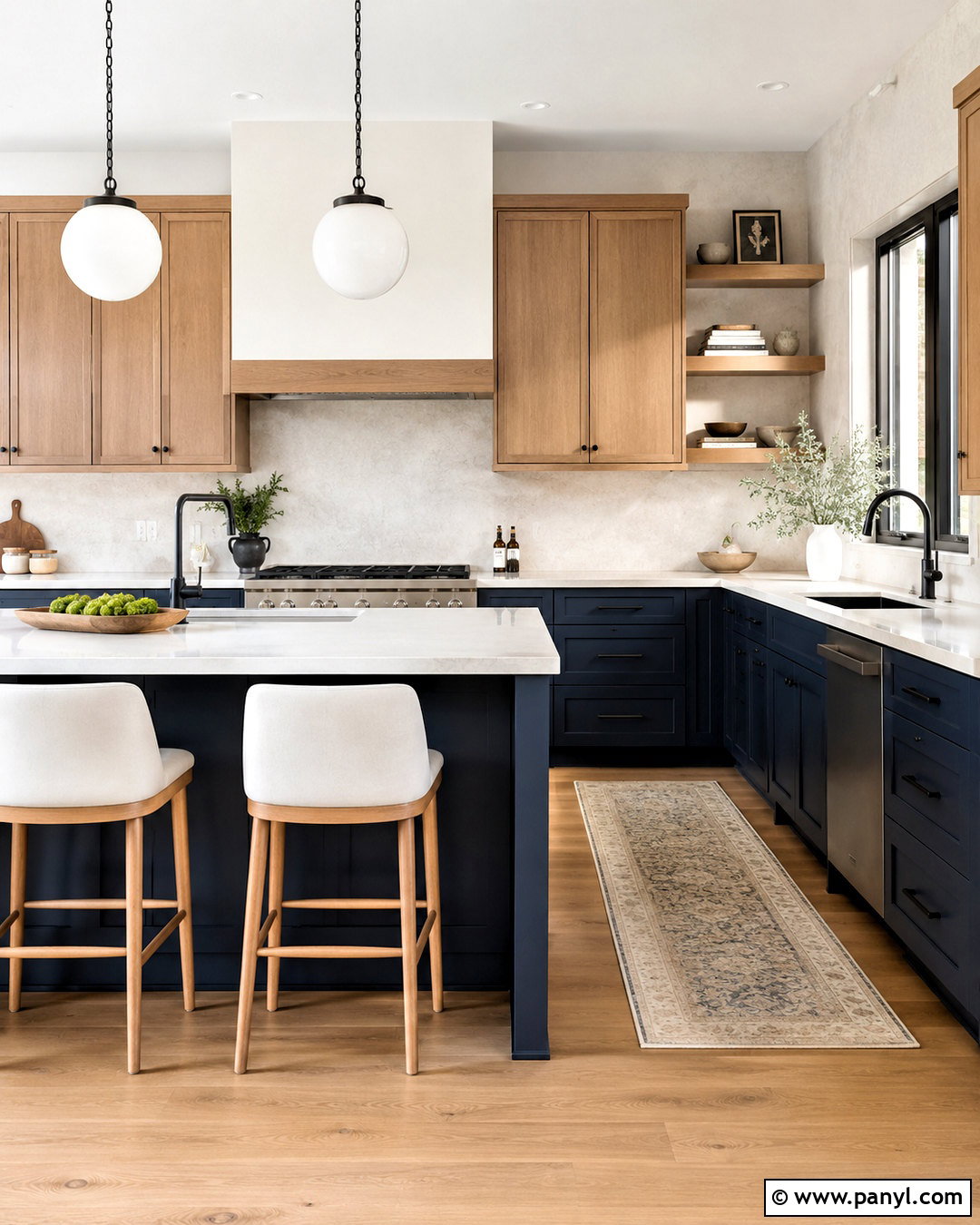
Mixing painted blue cabinets with natural wood creates a kitchen that feels colorful yet grounded. Use navy blue on the lower perimeter cabinets and island, then choose white oak for the upper cabinets and tall refrigerator surround. A warm white quartz countertop keeps the combination bright, while a full-height creamy stone backsplash adds quiet movement. Match the oak flooring closely to the wood cabinetry for a continuous, spacious appearance. Black hardware and simple black pendants introduce crisp lines between the blue, wood, and white surfaces. Include open oak shelves near the sink for frequently used dishes, but rely on closed cabinetry for most storage. Cream counter stools and a neutral runner soften the contrast. This complete scheme suits modern, transitional, and Scandinavian-influenced homes without feeling tied to one trend.
16. Blue Kitchen With Terracotta Tile
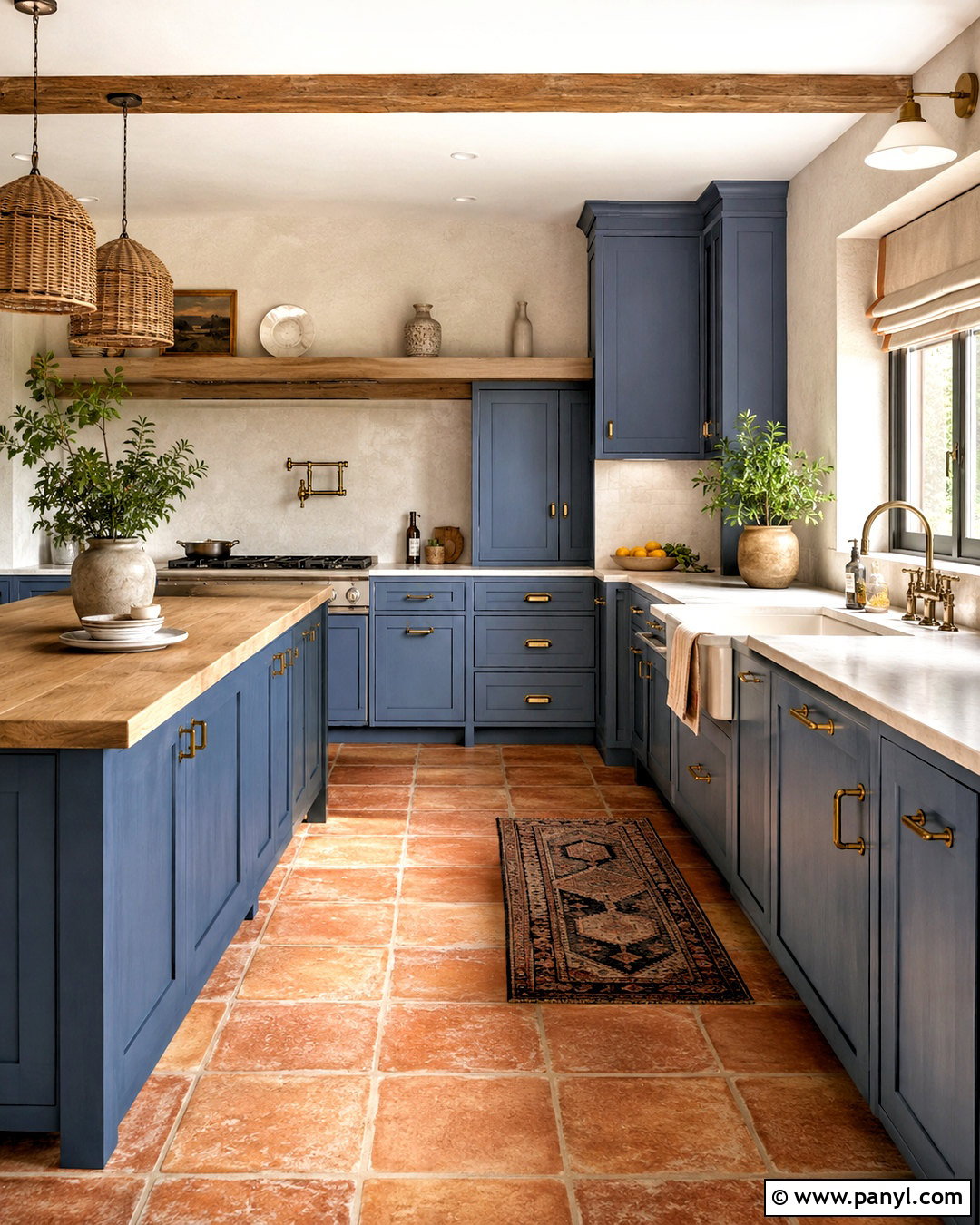
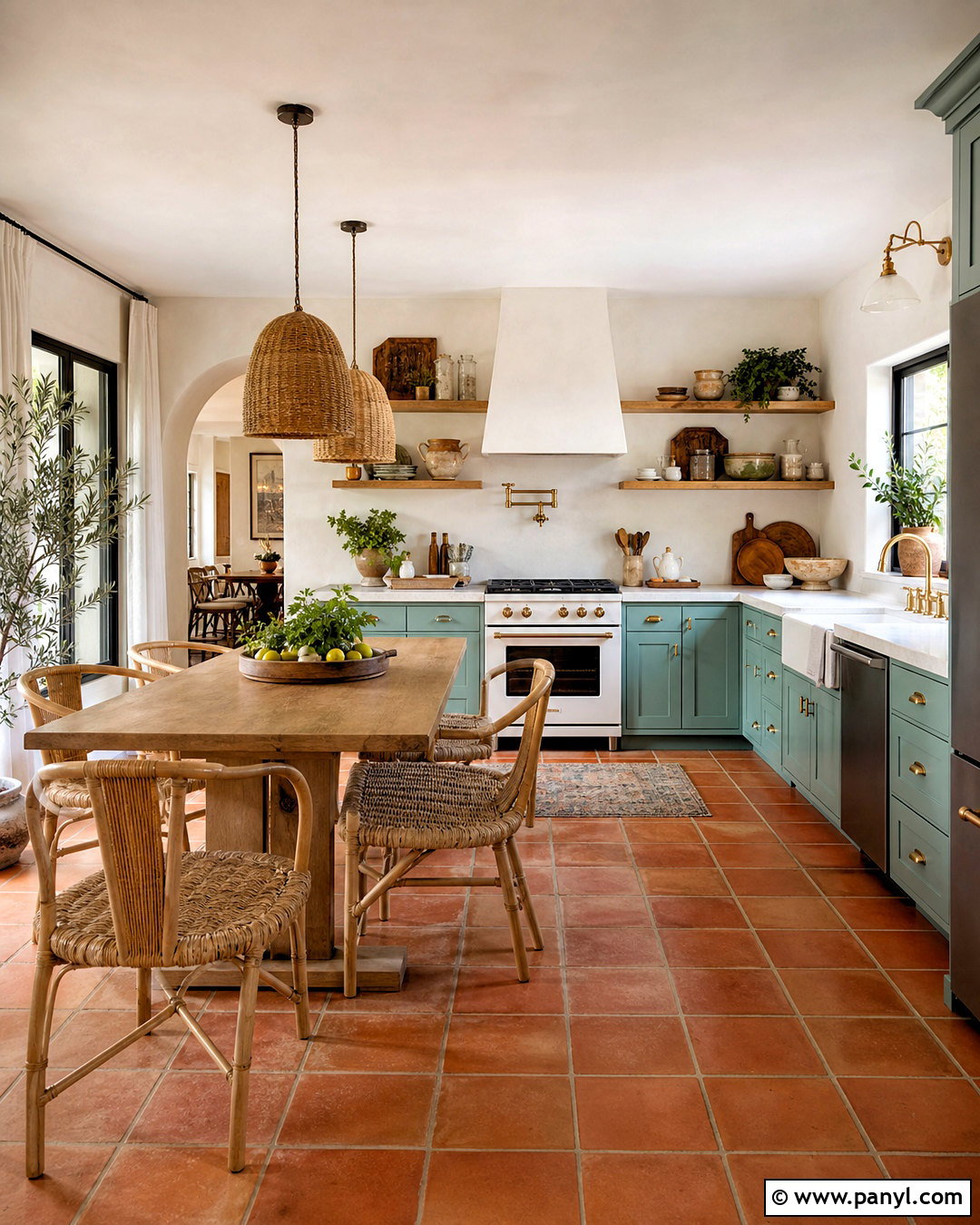
Earthy terracotta adds warmth and character to a blue kitchen, making the contrast feel inviting rather than sharp. Choose muted denim-blue cabinets with simple Shaker fronts and combine them with handmade terracotta floor tiles in varied rust and clay tones. Cream quartz countertops and an off-white plaster backsplash will keep the room from becoming too busy. Use aged brass hardware, a brass faucet, and woven pendant lights to reinforce the warm palette. A wood-topped island can provide preparation space, seating, and deep storage while connecting visually with open oak shelves. Finish the windows with relaxed linen shades and display a restrained mix of cream pottery and wood boards. The finished kitchen feels Mediterranean-inspired but remains practical, comfortable, and appropriate for an average family home.
17. Blue Kitchen With Brass Hardware
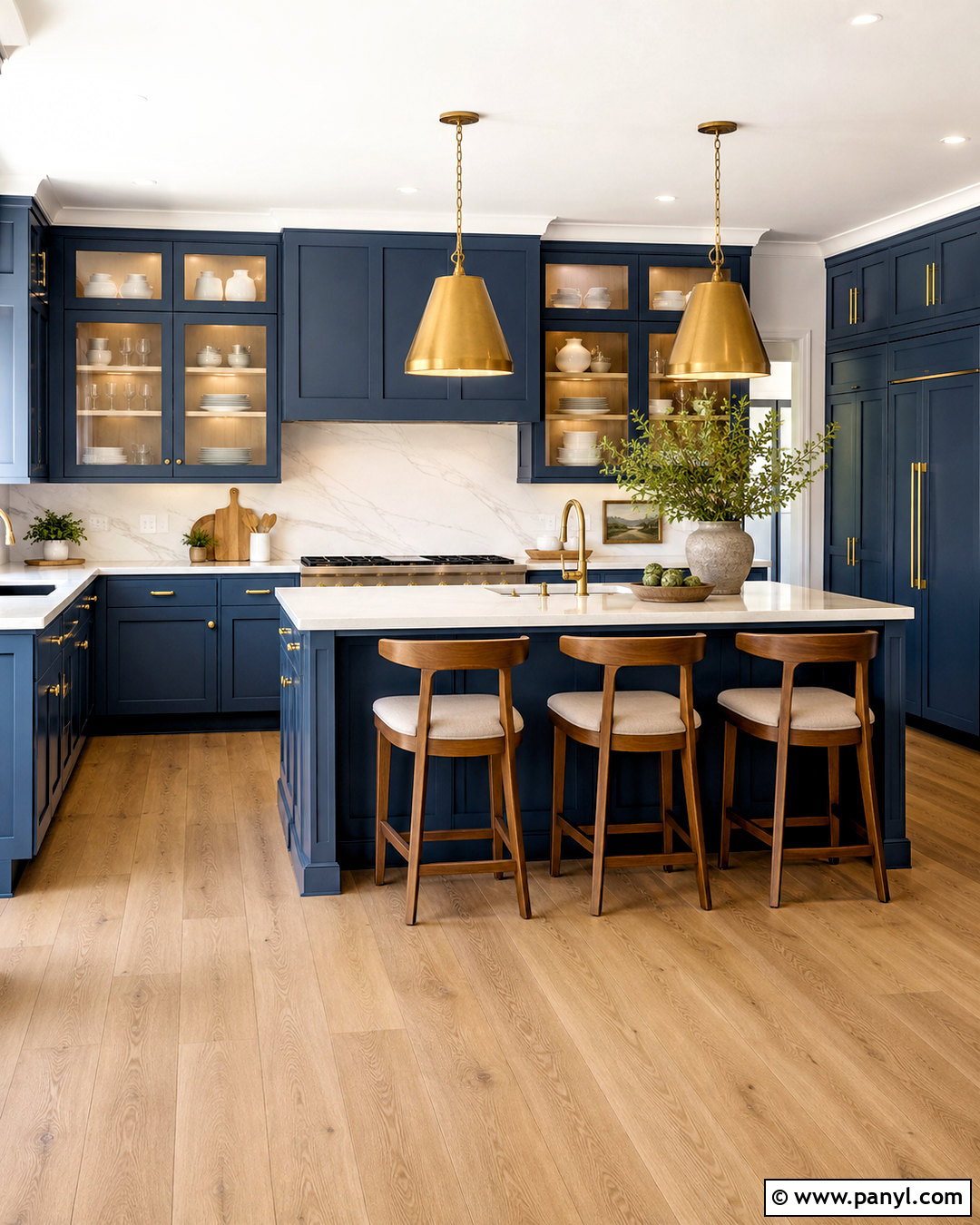
Brass hardware can warm blue cabinetry and give the entire kitchen a more finished appearance. Start with medium navy Shaker cabinets, then use unlacquered or brushed brass consistently on knobs, drawer pulls, the faucet, and pendant lights. White quartz countertops and a lightly veined stone backsplash provide a clean background that allows both finishes to stand out. Add a large matching blue island with paneled sides, seating, and deep drawers for cookware. White oak flooring and simple wood stools prevent the brass from making the room feel overly formal. If the kitchen includes glass-front cabinets, use warm interior lighting to highlight white dishes. Keep other metal finishes limited and coordinated, choosing stainless appliances with minimal visible trim so the blue-and-brass combination remains the clear design focus.
18. Blue Kitchen With Stainless Steel Appliances
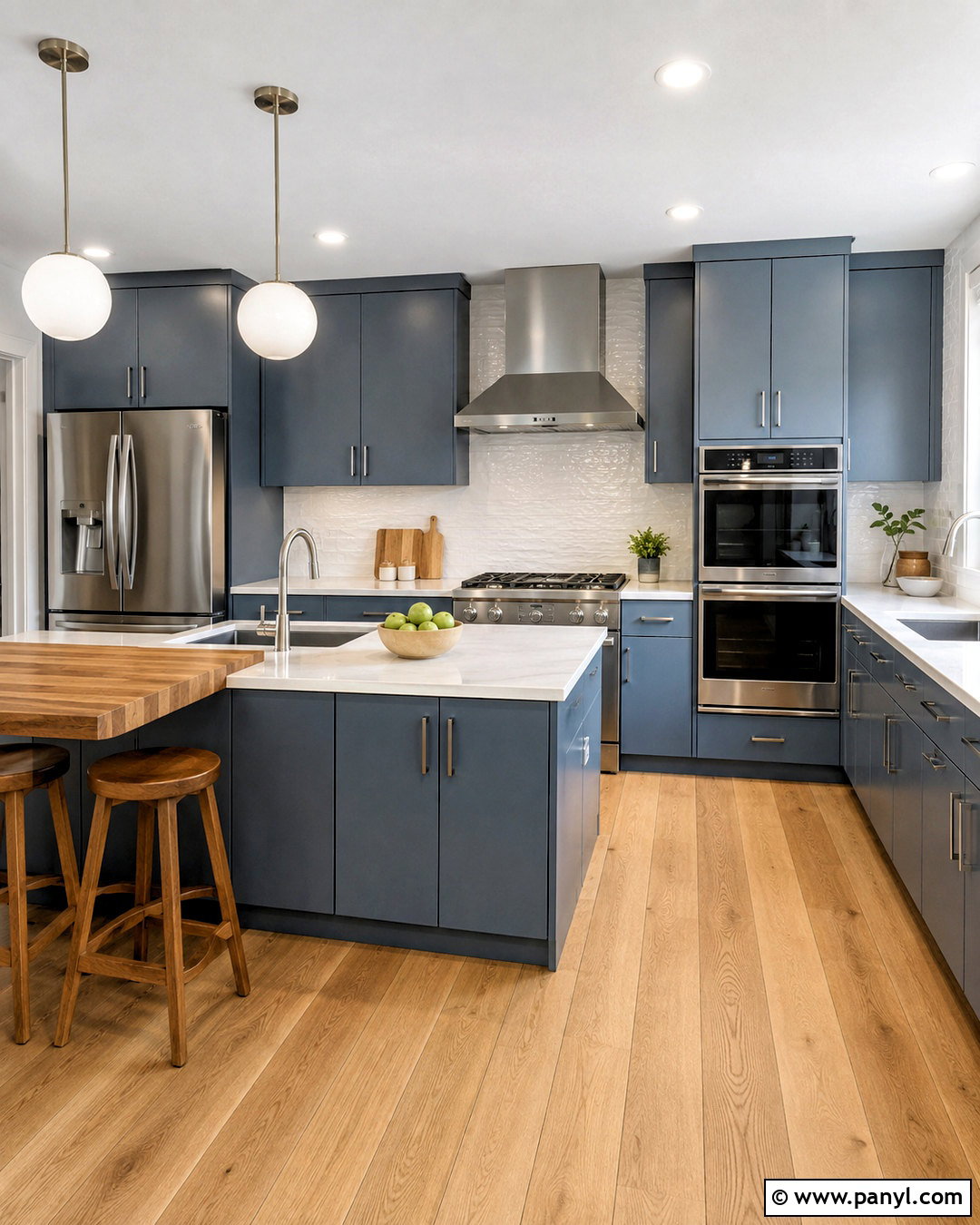
Stainless steel appliances work naturally with blue cabinetry because both have cool undertones, but the room still needs warmth. Choose smoky blue flat-panel cabinets and arrange the stainless refrigerator, wall oven, and range within clean, balanced cabinet runs. Add white quartz counters and a softly textured white backsplash to brighten the work surfaces. Wide oak flooring, wood stools, and a butcher-block breakfast ledge will keep the combination welcoming. Use brushed nickel pulls to relate directly to the appliances without creating excessive shine. A blue island with an undermount sink can include recycling storage, a dishwasher, and wide utensil drawers. Finish the design with white globe pendants and warm under-cabinet lighting. This creates a streamlined kitchen where standard appliances look coordinated rather than visually disconnected.
19. Blue Kitchen Pantry Wall
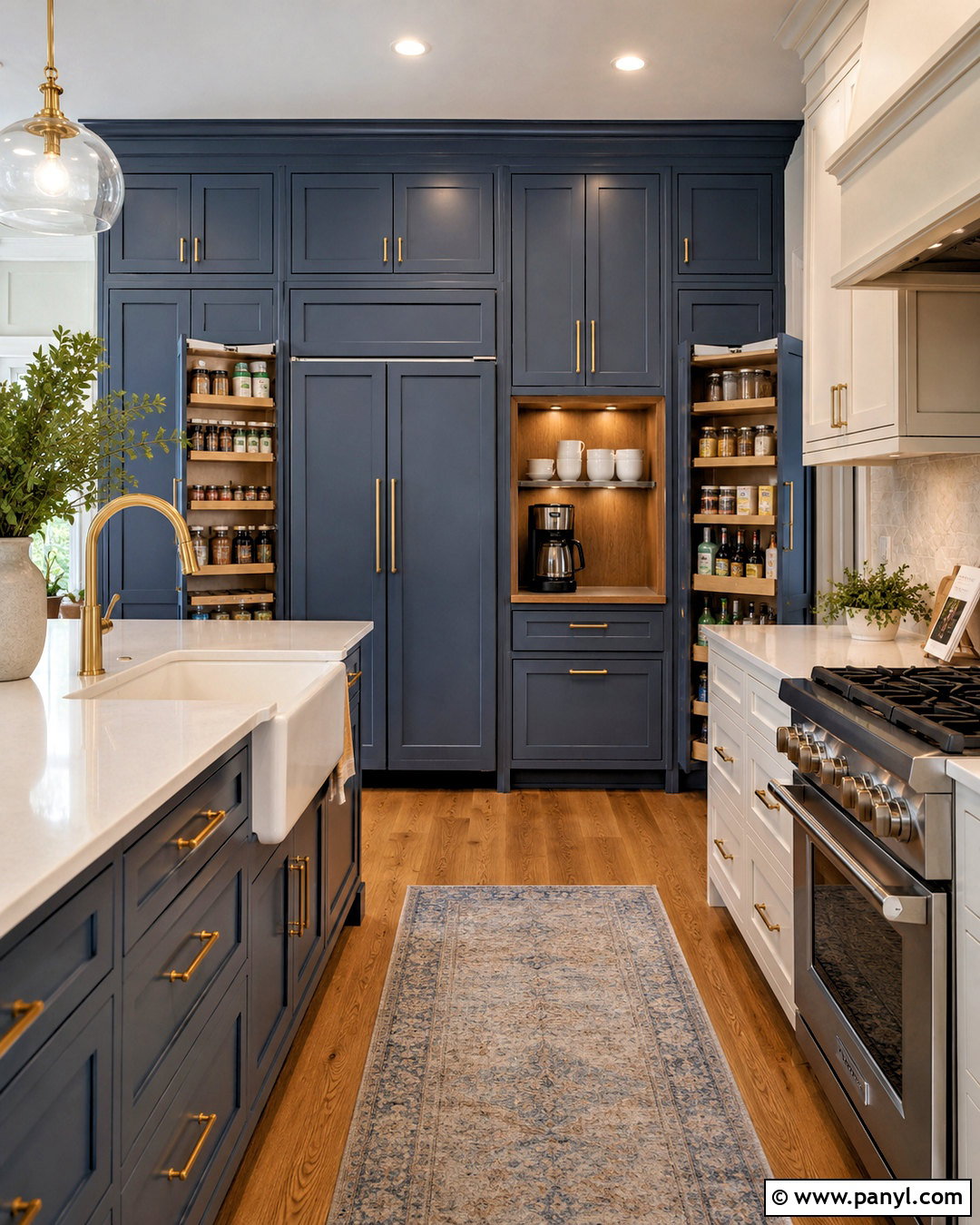
A blue pantry wall can transform storage into an intentional part of the kitchen design. Paint floor-to-ceiling cabinetry a deep slate blue and include a concealed appliance garage, pullout pantry units, refrigerator panels, and a small open coffee station. Use natural oak inside the open niche to add warmth and make the functional area easy to identify. Balance the tall blue wall with warm white perimeter cabinets, pale quartz counters, and a simple cream backsplash. Repeat the blue on the island so the pantry does not feel isolated. Brass hardware and shaded pendants provide a polished finishing layer, while light oak floors connect every zone. Carefully planned doors, drawers, outlets, and interior lighting will keep appliances and food supplies organized behind one calm, streamlined cabinet elevation.
20. Budget Blue Kitchen Makeover
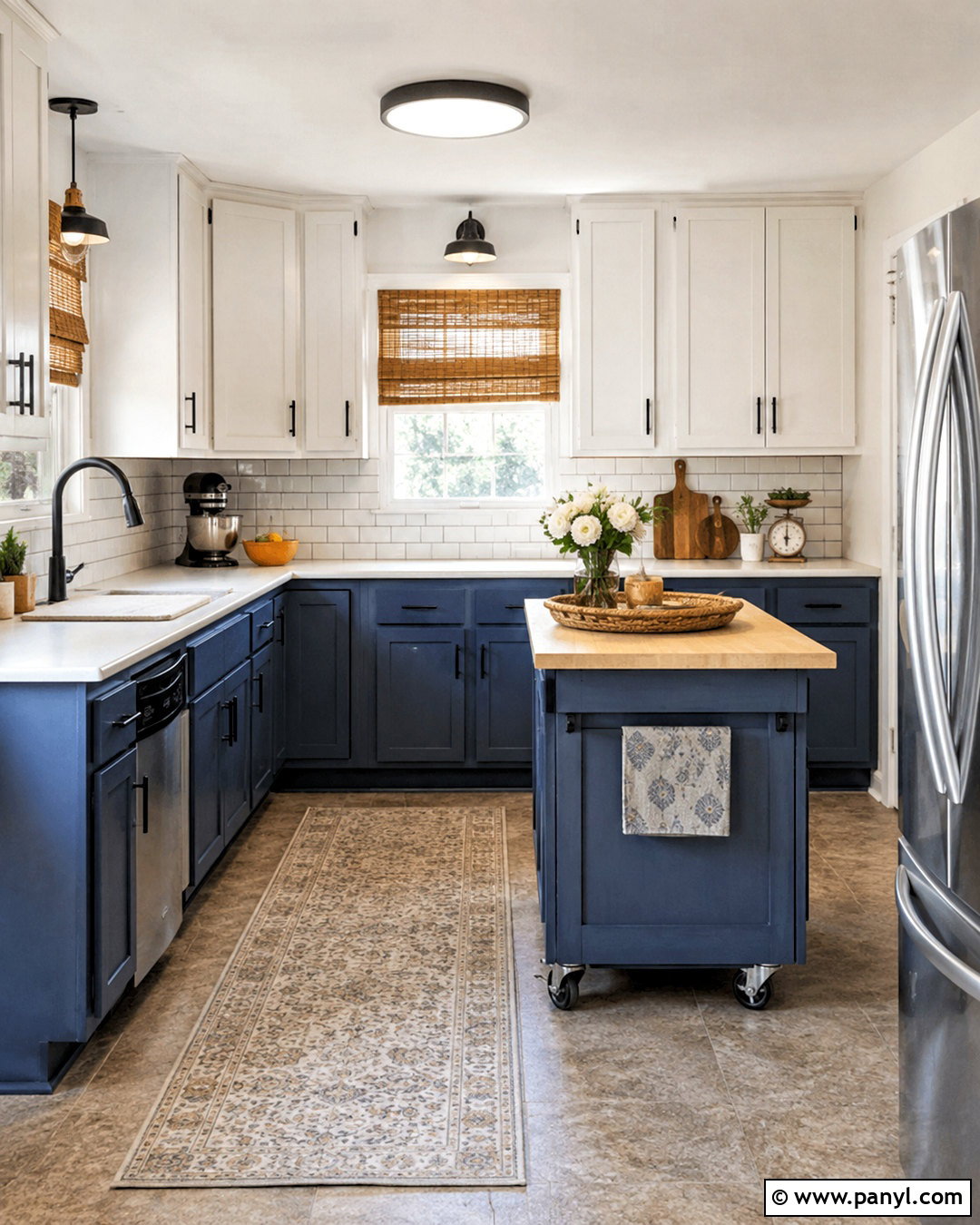
A budget-friendly blue kitchen can look complete without replacing every major surface. Paint sound lower cabinets a medium denim blue and leave the upper cabinets warm white to reduce labor and paint costs. Update old knobs with simple matte black pulls, then install an affordable white laminate or butcher-block counter. A peel-and-stick backsplash can work as a short-term solution, but choose a plain white subway pattern for a believable finish. Replace one dated ceiling fixture with a bright black pendant and add rechargeable under-cabinet lights. Keep existing neutral flooring, then introduce warmth through a washable runner, wood cutting boards, and simple woven shades. Matching blue paint on a small rolling island will provide extra storage and help the refreshed color scheme feel deliberate throughout the room.
Conclusion:
The best 20 blue kitchen ideas show how flexible this color can be when every surface is considered together. Navy creates depth, pale blue brings softness, teal adds energy, and blue-gray offers an understated middle ground. Before choosing a shade, compare it with your flooring, countertop, backsplash, appliances, and available daylight. Warm wood, brass, cream, and terracotta can balance cooler blues, while white and stainless steel create a cleaner look. You can introduce blue through every cabinet, a statement island, a pantry wall, or an affordable painted base. Whatever approach you choose, repeat the color thoughtfully and include practical storage so your finished kitchen feels cohesive, comfortable, and easy to use.

Related Ideas and Inspiration:
Leave a Reply