
Turquoise brings fresh color, energy, and personality into one of the most-used spaces in the home. The right shade can feel coastal and airy, vintage and playful, or deep and sophisticated. It also works with many familiar kitchen materials, including white quartz, warm wood, marble, terracotta, brass, and black metal. The key is building a balanced palette rather than adding turquoise as an afterthought. Consider how cabinetry, countertops, backsplash tile, flooring, lighting, and hardware will work together before choosing your shade. Whether you want a colorful island or a full cabinet makeover, these complete designs offer practical inspiration for different layouts, budgets, and decorating preferences. Explore these 20 turquoise kitchen ideas to find a cohesive look that fits your home.

1. Turquoise Kitchen Cabinets With White Countertops
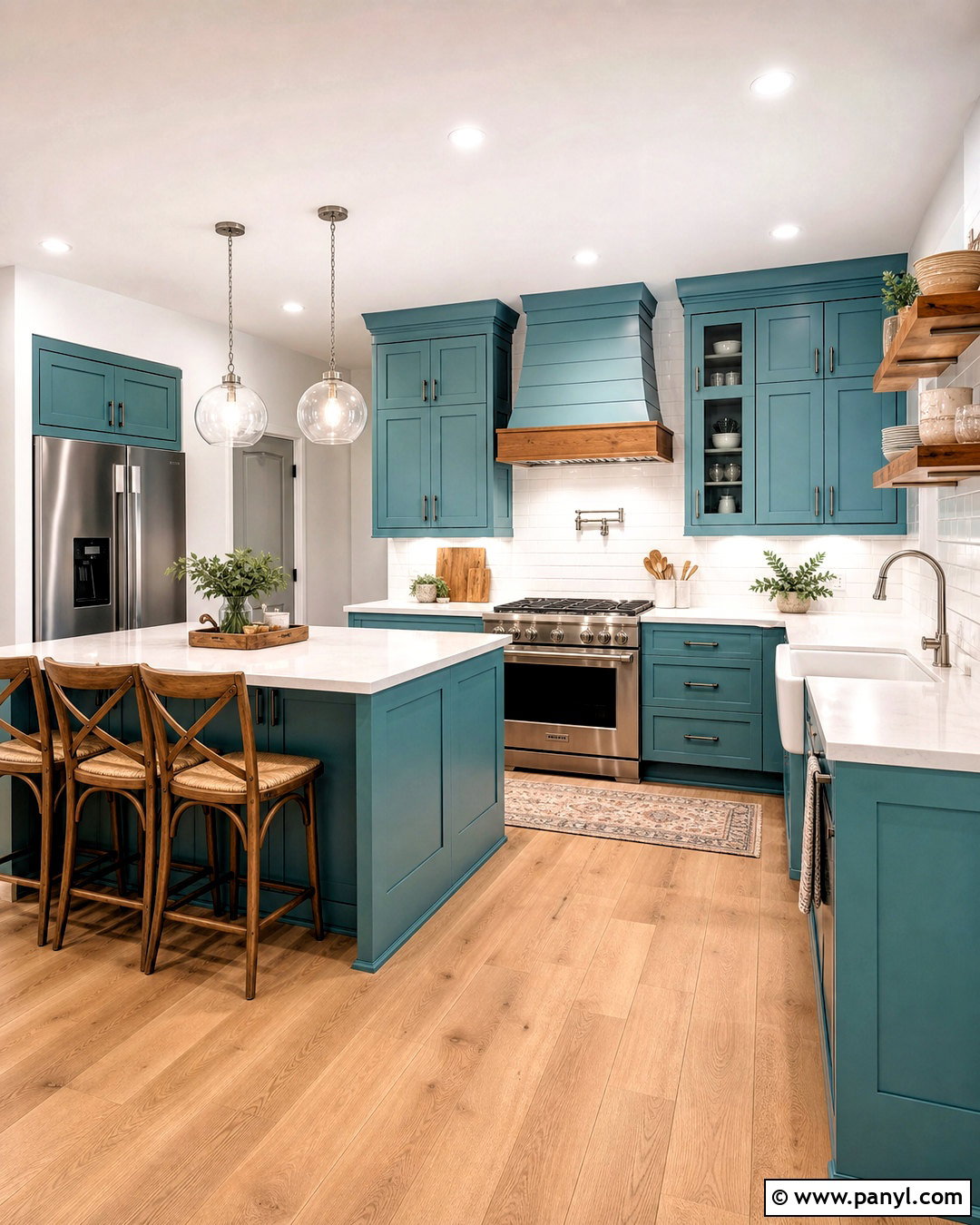
Full turquoise cabinetry makes a confident statement, while white countertops keep the room open and balanced. Choose medium turquoise Shaker cabinets for a color that feels cheerful without appearing overly bright. Pair them with crisp white quartz counters and a simple white backsplash to create breathing room around the bold cabinetry. Light oak flooring adds warmth, and stainless steel appliances introduce a familiar neutral finish. Complete the design with slim brushed nickel pulls, clear glass pendants, and a white farmhouse sink. Keep countertop decor minimal, using only a wood cutting board, a ceramic utensil holder, and a small herb planter. This combination works especially well in medium or large kitchens where natural light can highlight the blue-green cabinet color.
2. Two Tone Turquoise And White Kitchen
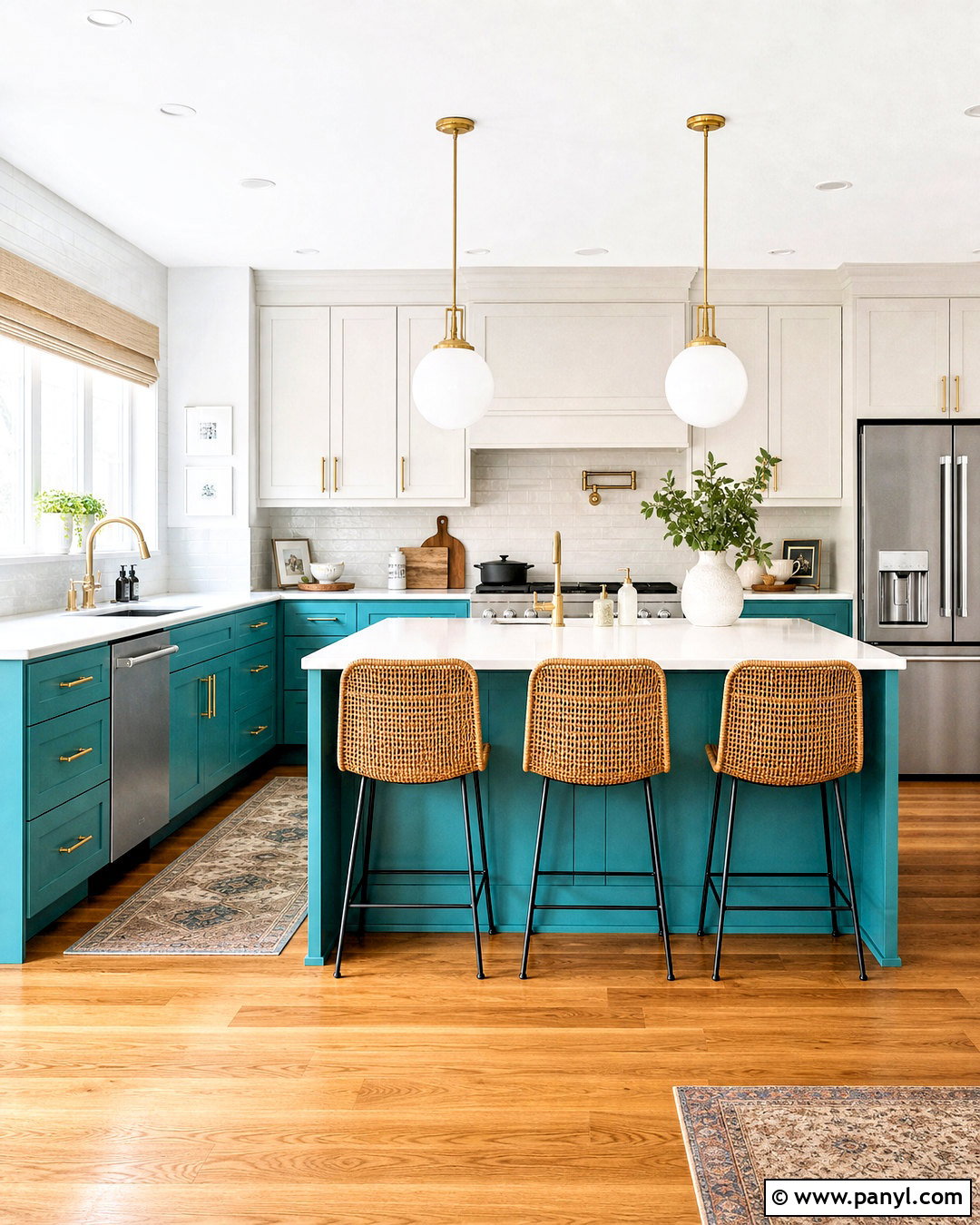
Wondering how to use turquoise without covering every cabinet? Paint the lower cabinets a rich turquoise and keep the upper cabinets soft white. This two-tone arrangement grounds the room while maintaining a bright sightline at eye level. Use white quartz countertops to connect the two cabinet colors, then install pale gray subway tile with light grout for subtle texture. Warm oak floors and woven counter stools prevent the palette from feeling cold. Choose brushed brass hardware and simple globe pendants to add gentle warmth. A turquoise island can match the lower cabinets if the space is large enough. Finish with white dishes, natural linen towels, and a few leafy plants so the kitchen feels colorful, organized, and comfortable rather than visually crowded.
3. Turquoise Kitchen Island With Wood Cabinets
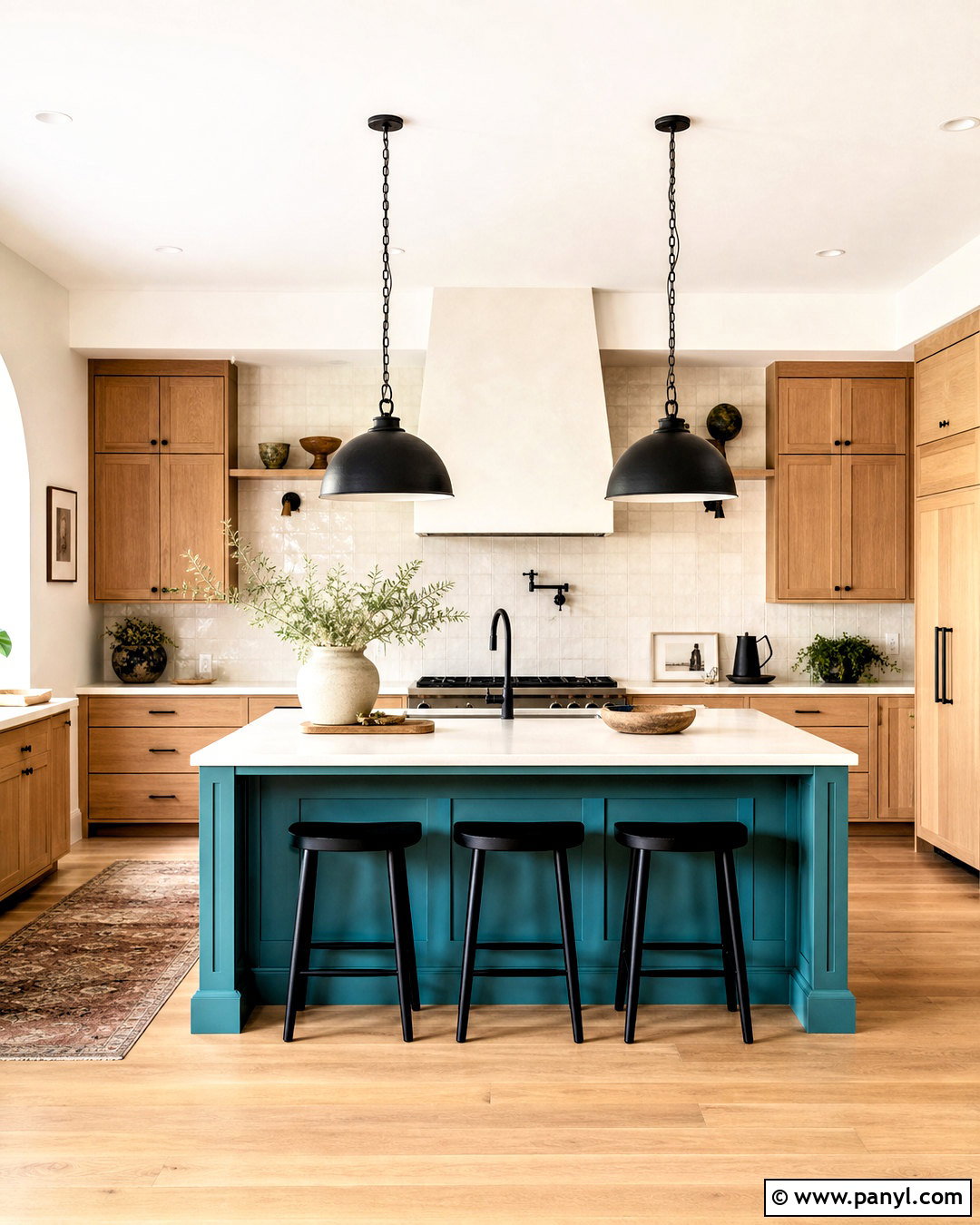
A turquoise island becomes a natural centerpiece when surrounded by warm wood cabinetry. Start with flat-panel or simple Shaker cabinets in white oak, walnut, or natural maple. Paint the island a saturated blue-green turquoise, then cover all work surfaces with creamy white quartz for consistency. A backsplash of handmade off-white tile adds texture without competing with the island. Repeat the turquoise subtly through a striped runner or ceramic vase. Black counter stools and matte black pendants provide clean definition, while warm metal accents can appear on the faucet or cabinet pulls. This complete kitchen scheme feels modern yet welcoming because the natural wood softens the strong color. It is also practical for homeowners who want turquoise without repainting an entire room of cabinets.
4. Turquoise Kitchen With Butcher Block Countertops
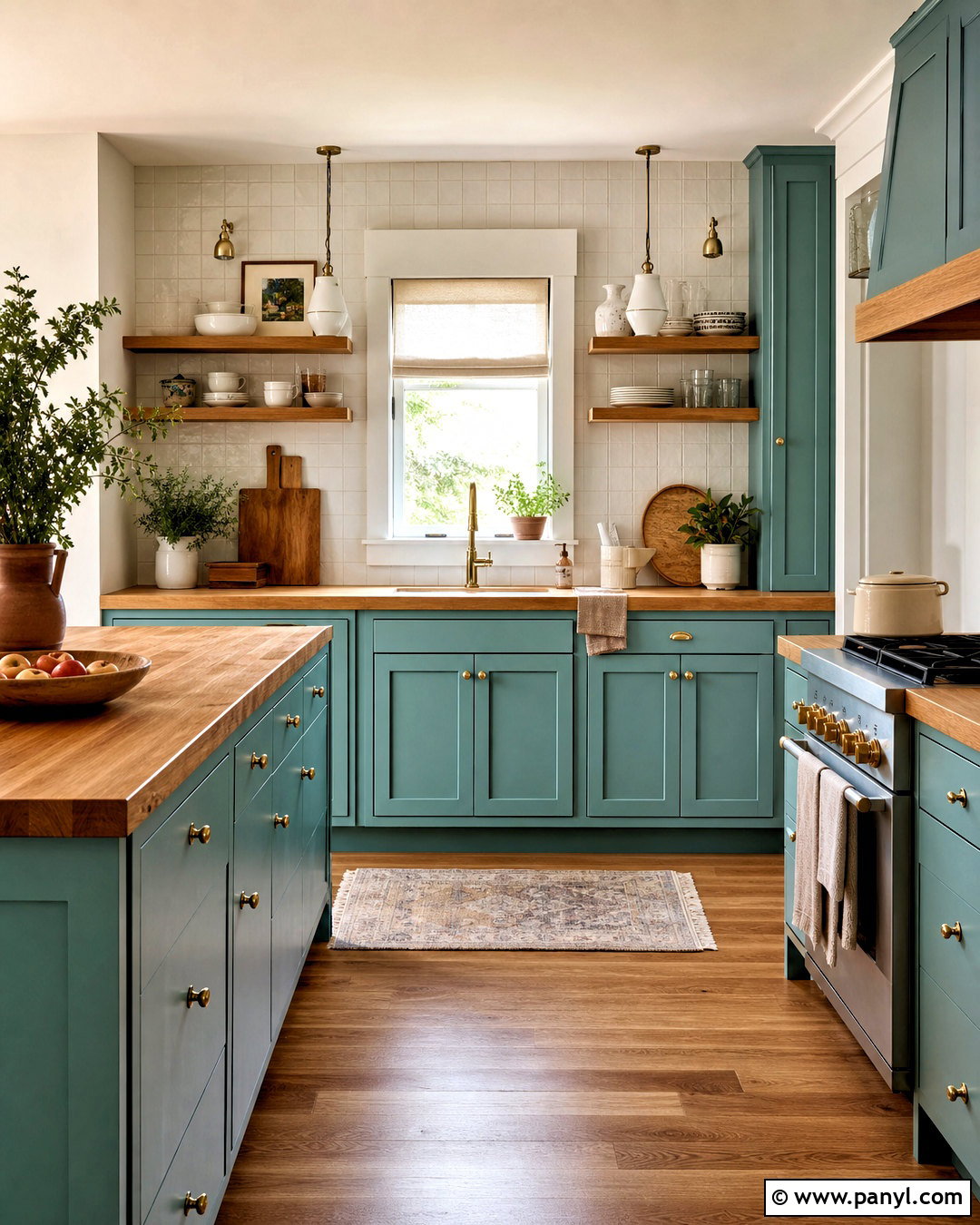
The warmth of butcher block makes turquoise cabinetry feel inviting and casual. Use a slightly muted turquoise on Shaker cabinets so the wood grain remains an equally important part of the room. Install thick maple or white oak countertops and protect busy areas near the sink with a durable clear finish. A creamy square-tile backsplash, ivory walls, and warm white ceiling keep the kitchen light. Choose unlacquered brass pulls, a bridge-style faucet, and simple enamel pendant lights for relaxed character. Medium-tone wood flooring can work if it differs slightly from the counters, preventing an overly matched appearance. Complete the space with open shelves, white stoneware, woven baskets, and small potted herbs. The resulting kitchen feels cheerful, practical, and naturally layered.
5. Turquoise Kitchen With Marble Backsplash
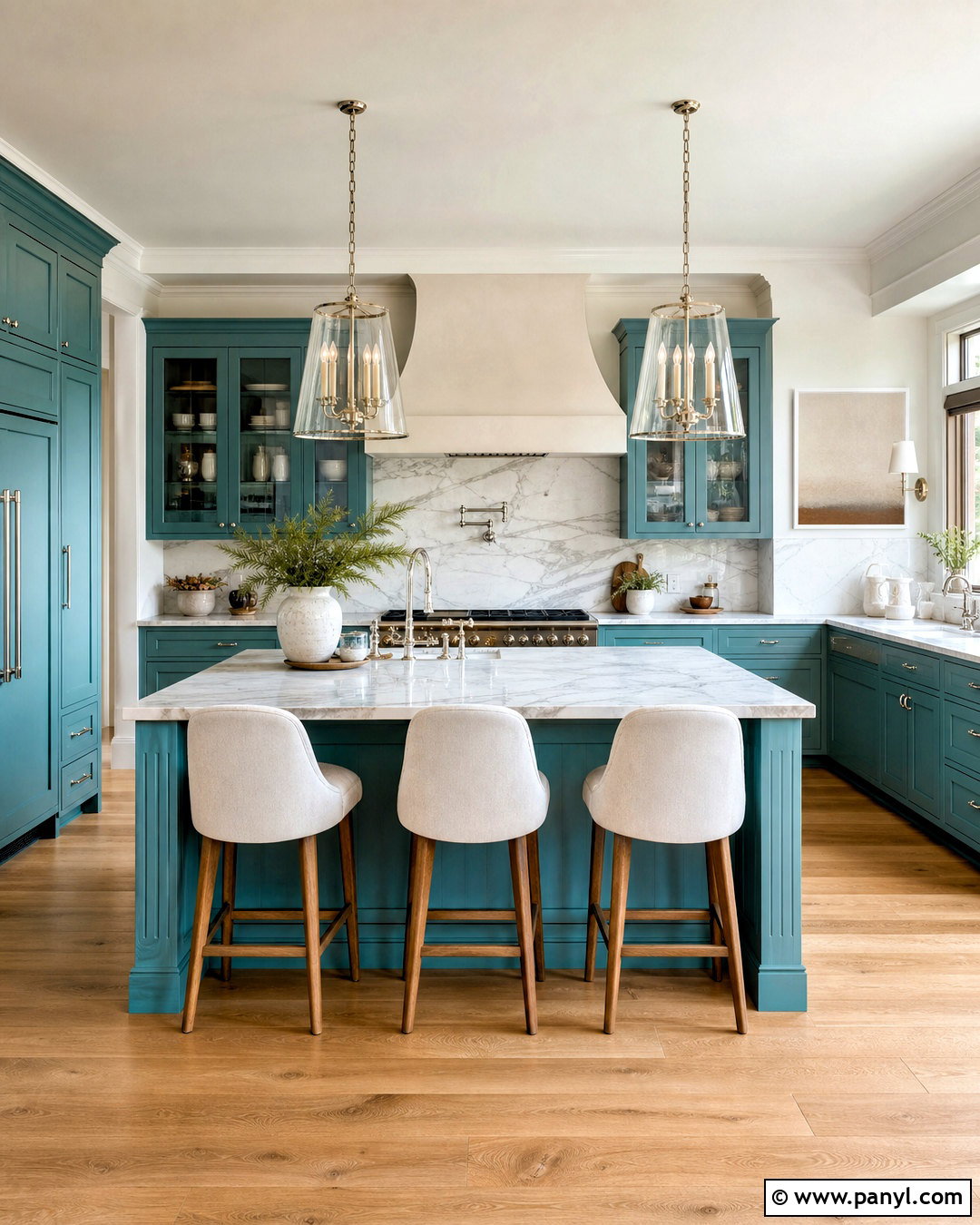
For a more refined turquoise kitchen, combine deep blue-green cabinets with a marble backsplash and matching countertops. Select white marble or marble-look quartz with soft gray veining so the surfaces brighten the saturated cabinetry. Carry the backsplash to the bottom of the upper cabinets, or extend it behind a simple plaster range hood for a cleaner finish. Polished nickel hardware provides a crisp accent, while warm white walls keep the color palette balanced. Use medium oak flooring and upholstered counter stools to soften the stone surfaces. Large glass pendants can illuminate the island without blocking the view. Keep accessories restrained and repeat only a few materials. The finished space feels polished and colorful, but the classic stone prevents the turquoise from looking trendy or temporary.
6. Turquoise Kitchen With White Subway Tile
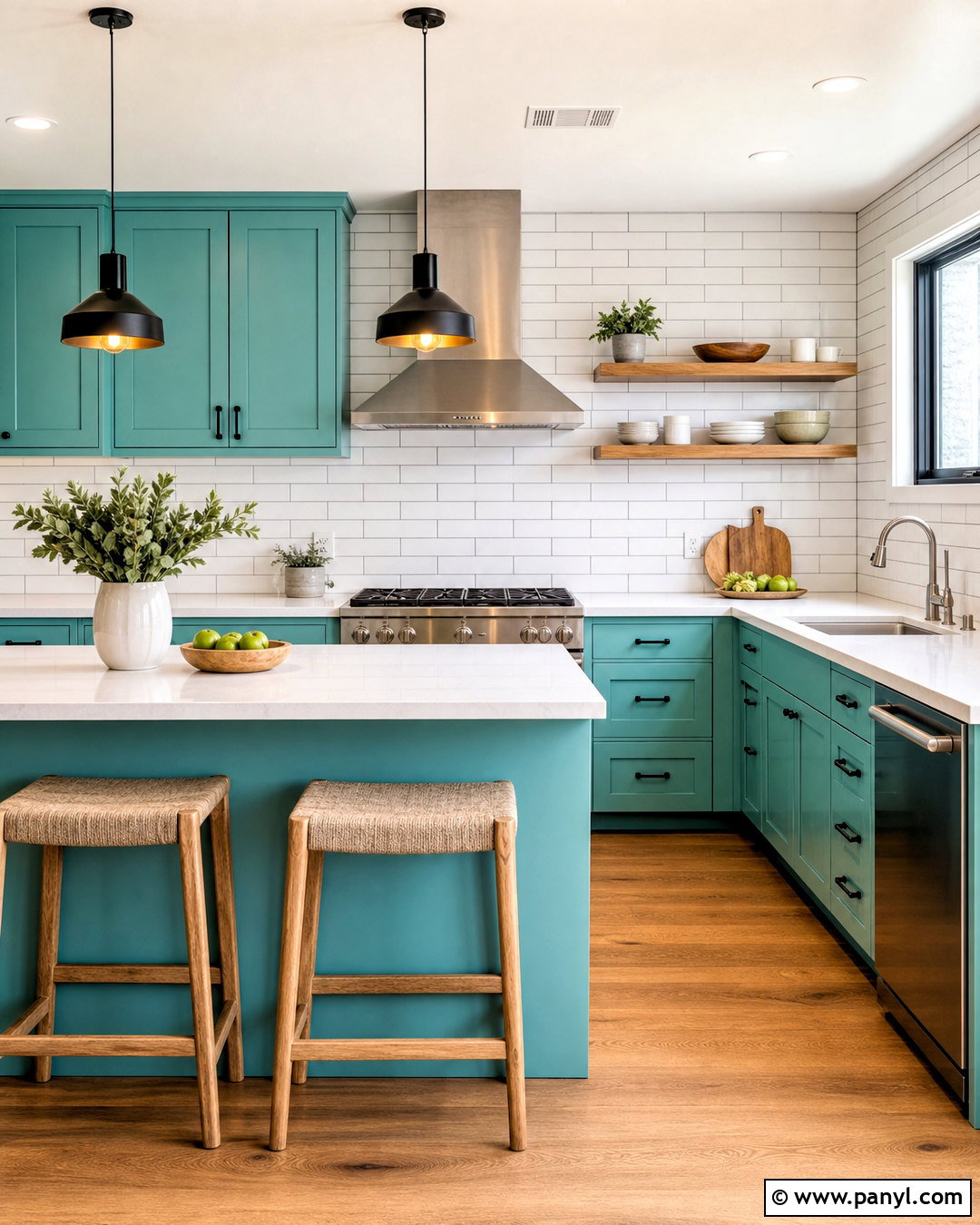
The familiar simplicity of white subway tile allows turquoise cabinets to take center stage. Choose a clear medium turquoise for the lower and upper cabinets, then install glossy white subway tile in a traditional horizontal pattern. Light gray grout can define the tile without creating harsh contrast. Add white quartz countertops, a stainless steel range, and warm oak flooring for a practical, easygoing foundation. Matte black pulls, a black faucet, and compact black pendants sharpen the cheerful palette. If the room includes an island, keep it turquoise but use natural wood stools to add warmth. Open counter space is important in this colorful design, so store small appliances behind cabinet doors. White ceramics, wood boards, and one patterned runner complete the coordinated kitchen.
7. Turquoise Kitchen With Patterned Tile Backsplash
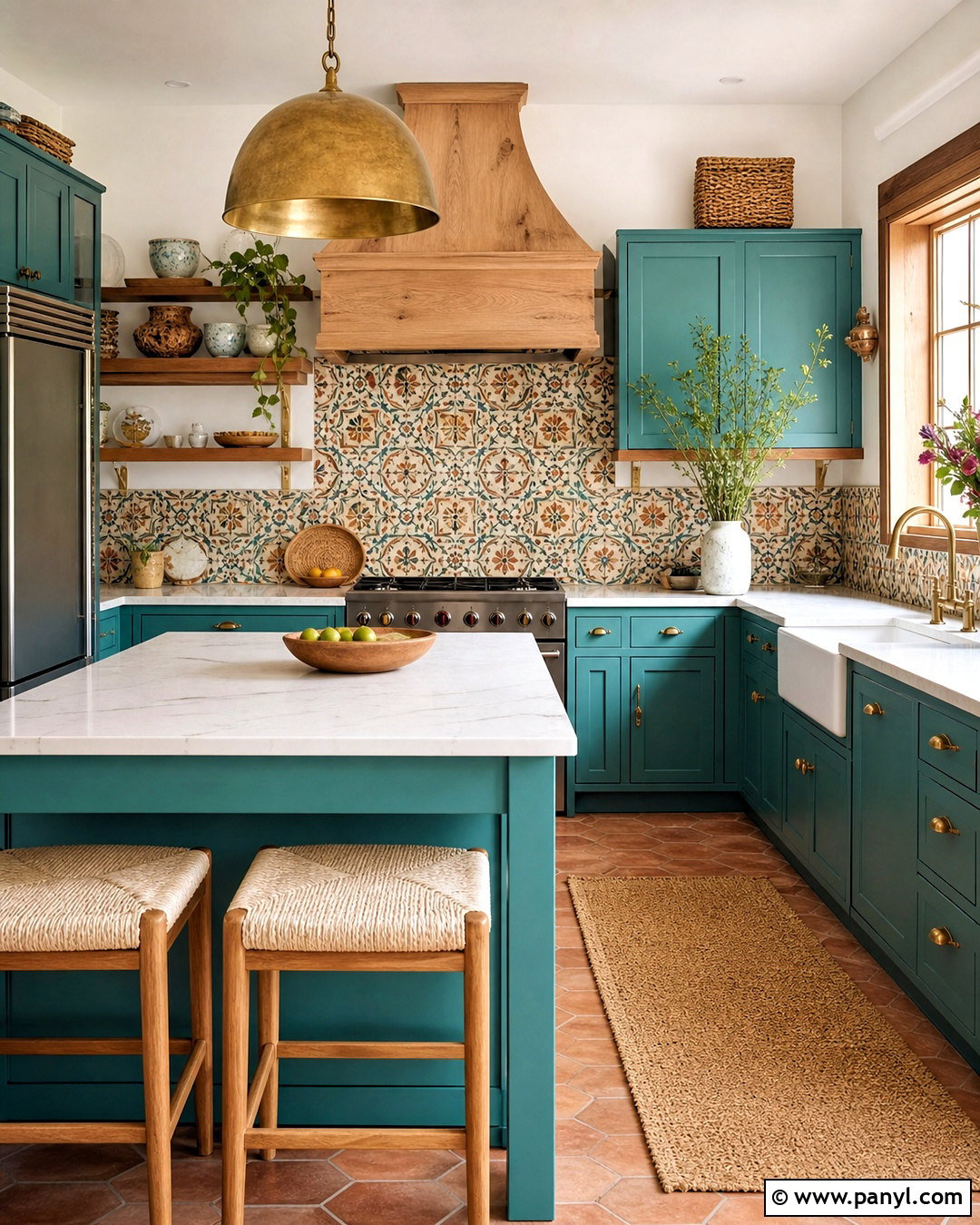
Patterned tile can make a turquoise kitchen feel collected and full of character. Begin with muted turquoise cabinets and select a backsplash featuring blue-green, cream, and warm terracotta details. Keep the countertop quiet with solid white quartz or lightly speckled stone. A natural wood range hood and open shelves provide visual relief between the colorful surfaces. Use aged brass hardware, a cream farmhouse sink, and simple off-white walls to support the warmer tones in the tile. Terracotta or oak flooring can continue that warmth underfoot. Avoid introducing several additional accent colors, since the backsplash already provides movement. Finish with neutral counter stools, woven baskets, and plain ceramic dishes. Every element then supports the pattern instead of competing with it.
8. Turquoise Kitchen With Terracotta Floors
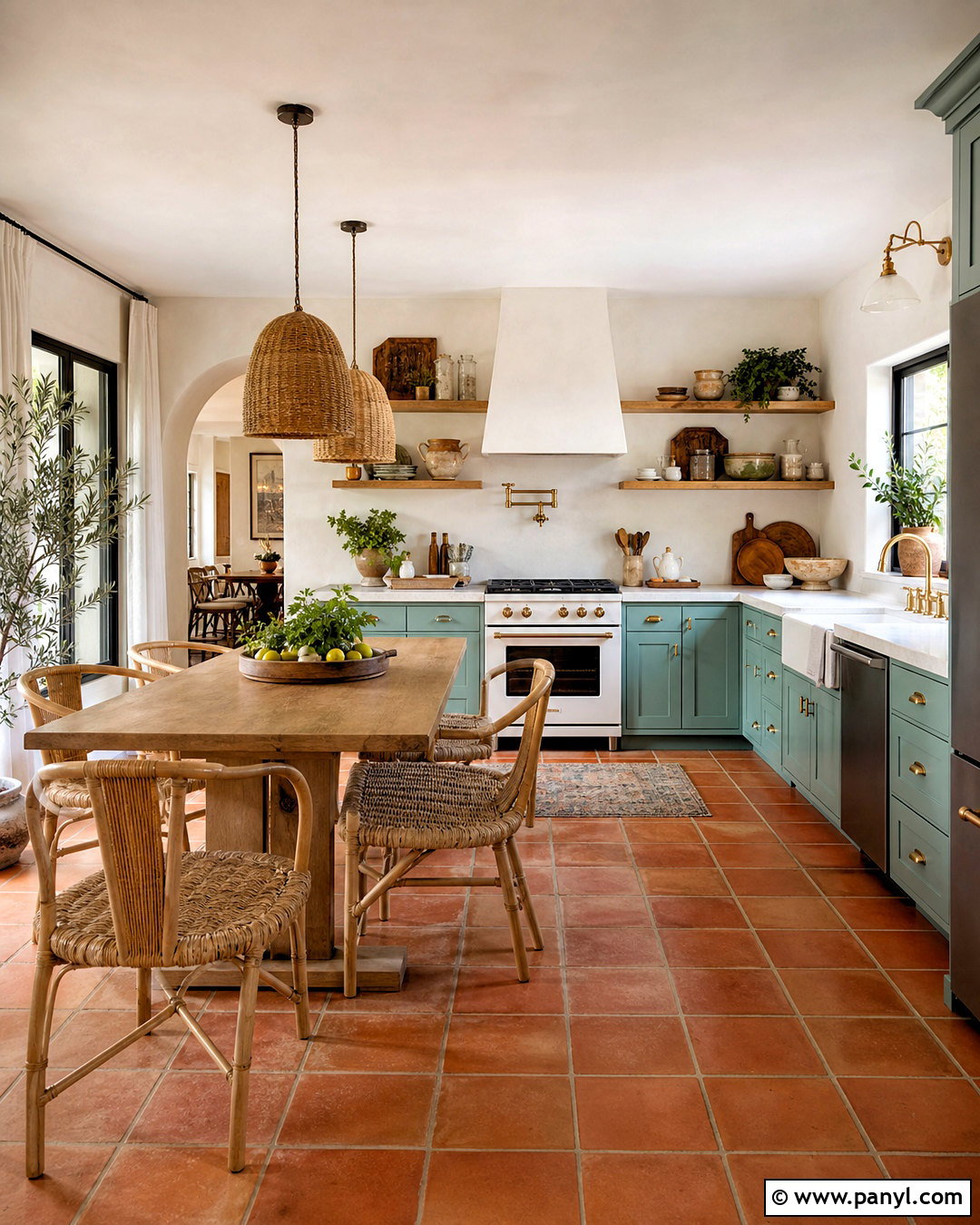
Sun-warmed terracotta floors create a striking contrast with cool turquoise cabinets. Choose a slightly dusty blue-green cabinet color rather than a neon or highly saturated shade. The softened turquoise will complement the earthy red-orange variation in handmade terracotta tile. Use creamy quartz countertops, an off-white plaster backsplash, and warm white walls to connect the two bold colors. Natural oak shelves and a simple wood dining table reinforce the relaxed Mediterranean influence. Select antique brass pulls and woven pendant lights for additional warmth. Keep appliances integrated or choose stainless steel models with uncomplicated lines. Linen café curtains, stoneware bowls, and potted herbs can finish the room. This full palette feels sunny, welcoming, and distinctive while remaining grounded in natural materials.
9. Turquoise Kitchen With Light Wood Accents
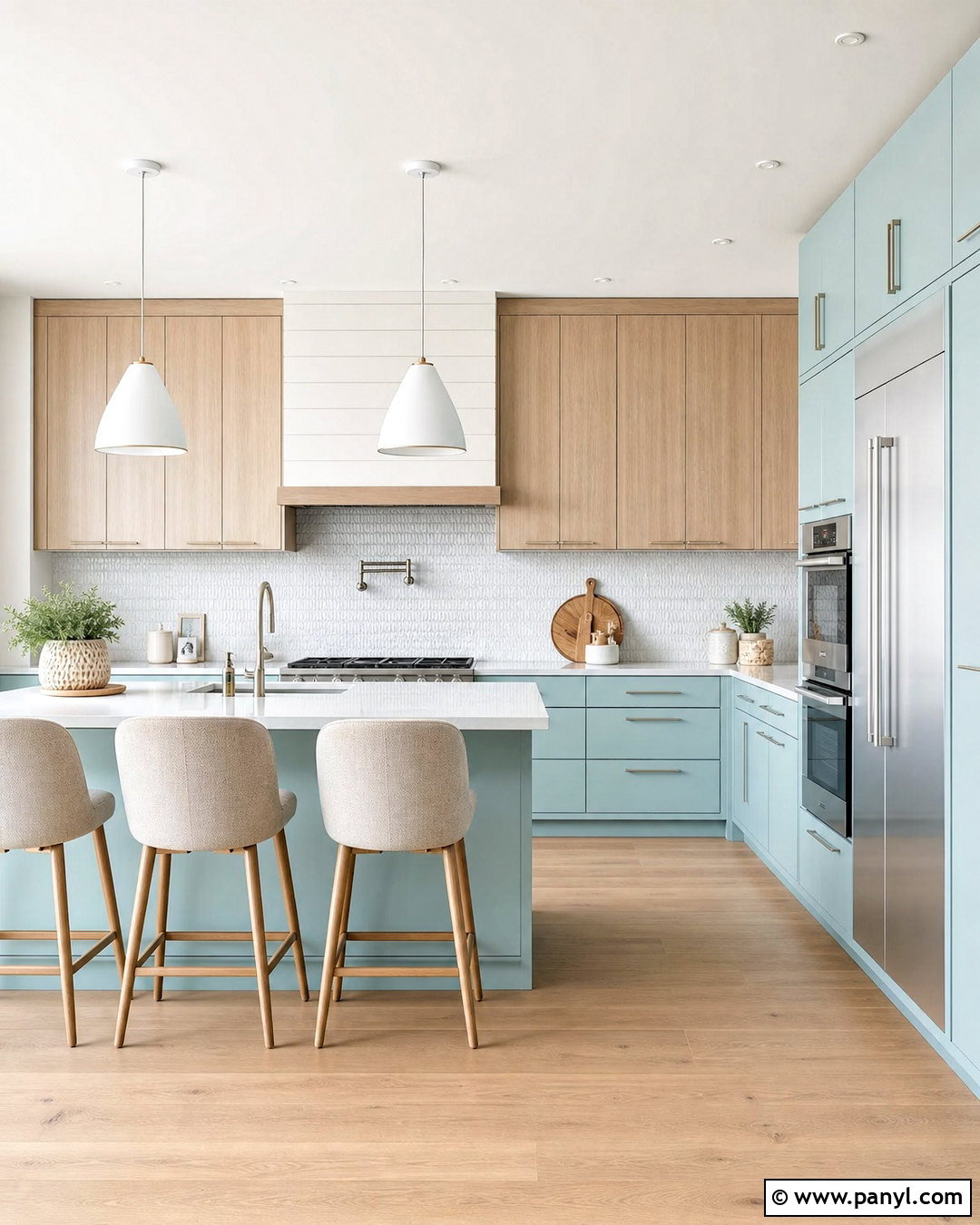
Pale turquoise and light wood create a calm kitchen with an airy, modern character. Paint the base cabinets soft turquoise and use white oak for the upper cabinets, open shelving, and island paneling. Install matte white quartz countertops and a lightly textured white backsplash to keep the palette clean. Pale oak flooring can continue the natural material across the room, creating an easy visual flow. Choose minimal brushed nickel pulls and slim white pendant lights rather than strongly contrasting fixtures. Upholstered stools in oatmeal-colored fabric bring softness to the island. Keep window treatments light and simple so sunlight reaches the colored cabinets. A few white ceramics, clear storage jars, and small green plants complete this gentle design without distracting from the balanced mix of wood and turquoise.
10. Turquoise Kitchen With Black Hardware
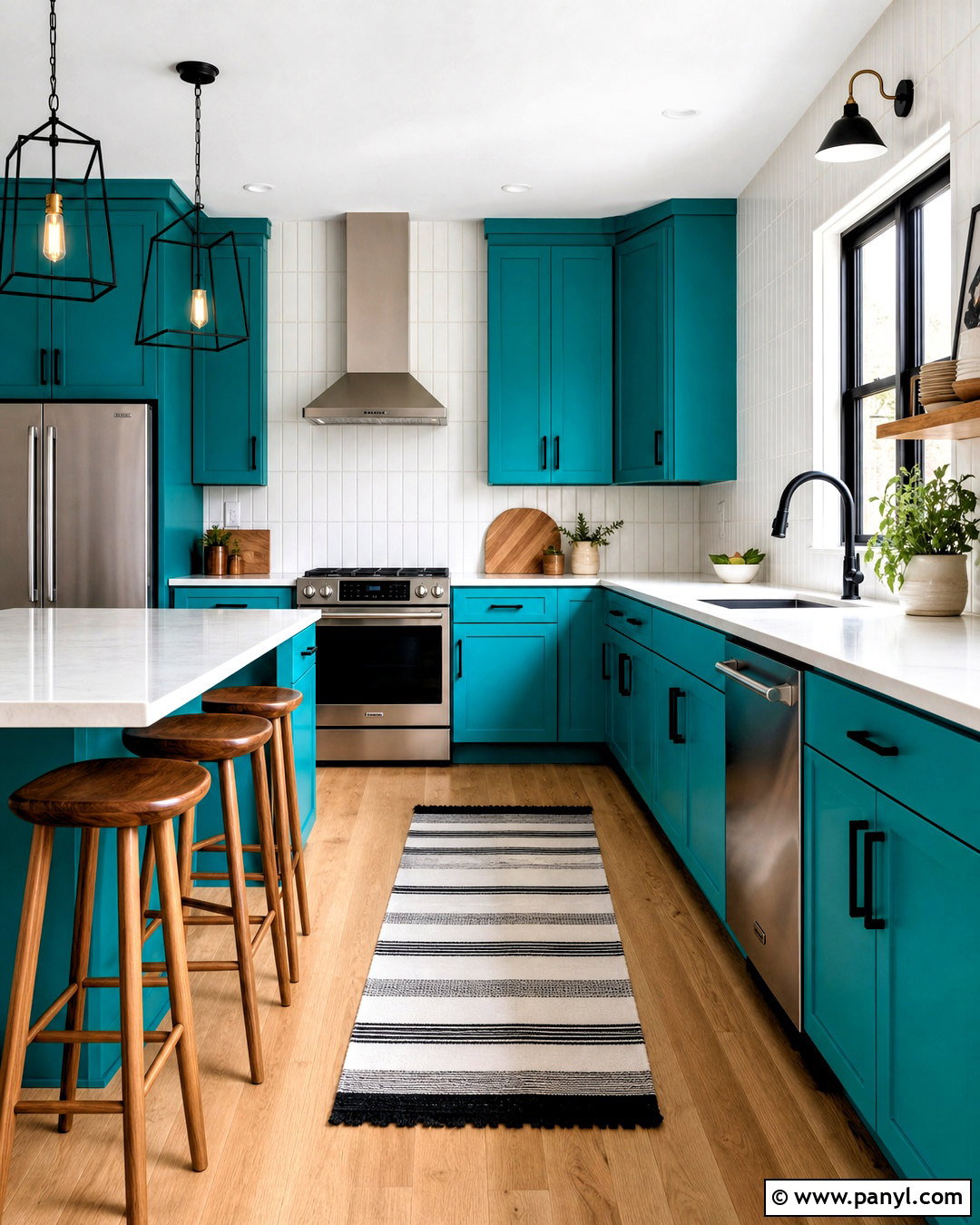
Black hardware gives bright turquoise cabinets sharper definition and a more contemporary edge. Use streamlined Shaker or narrow-frame cabinets in a vivid yet balanced turquoise. Add long matte black pulls, a black gooseneck faucet, and black-framed pendant lights to repeat the contrast throughout the room. White quartz countertops and a white vertical subway-tile backsplash prevent the palette from becoming heavy. Medium oak flooring and wood counter stools introduce enough warmth to soften the black details. A black-framed window or range hood trim can strengthen the coordinated look, but avoid covering large surfaces in black. Finish with stainless steel appliances, simple white dishes, and one washable runner. The final kitchen feels graphic and energetic while remaining functional, bright, and easy to decorate.
11. Turquoise Kitchen With Brass Hardware
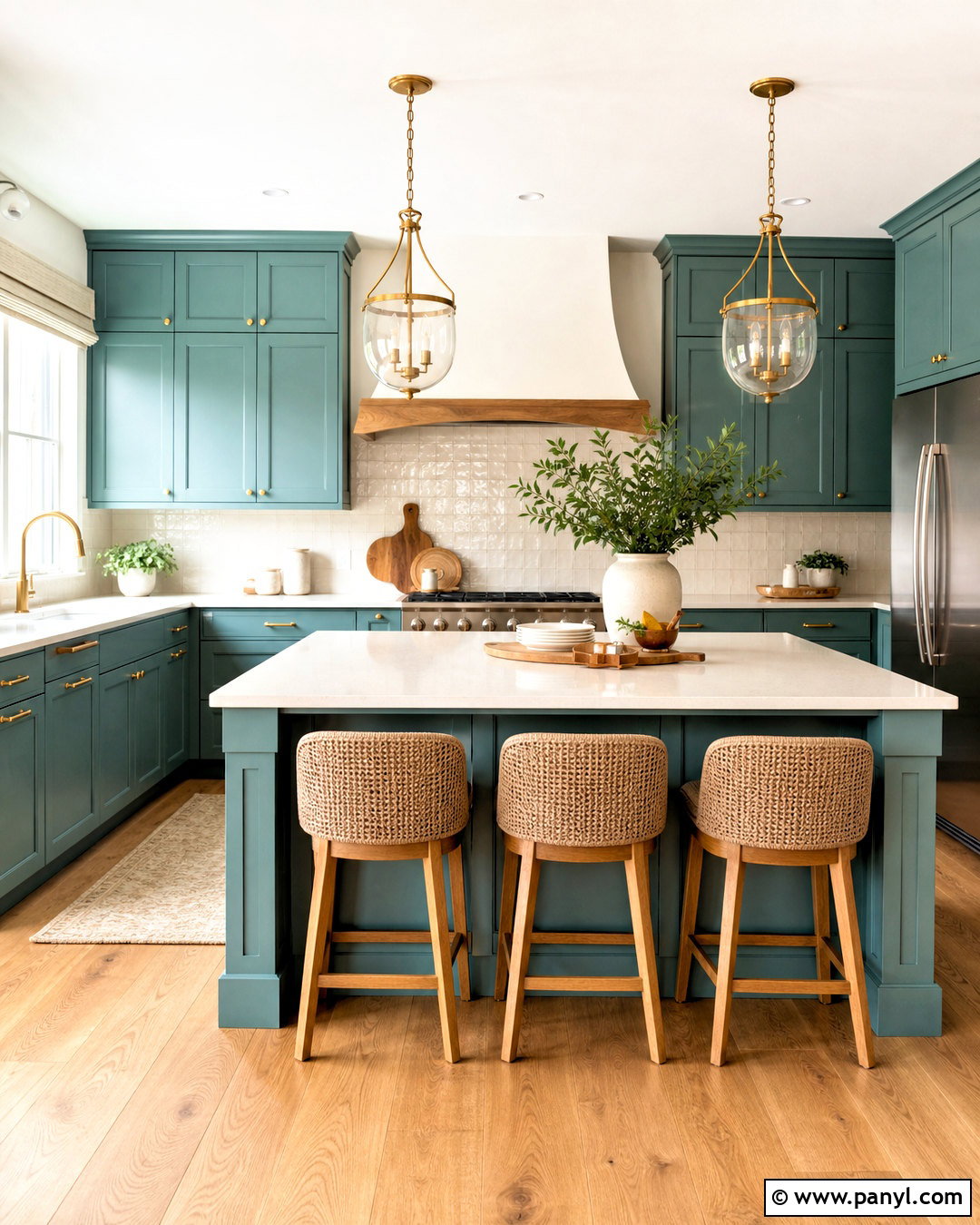
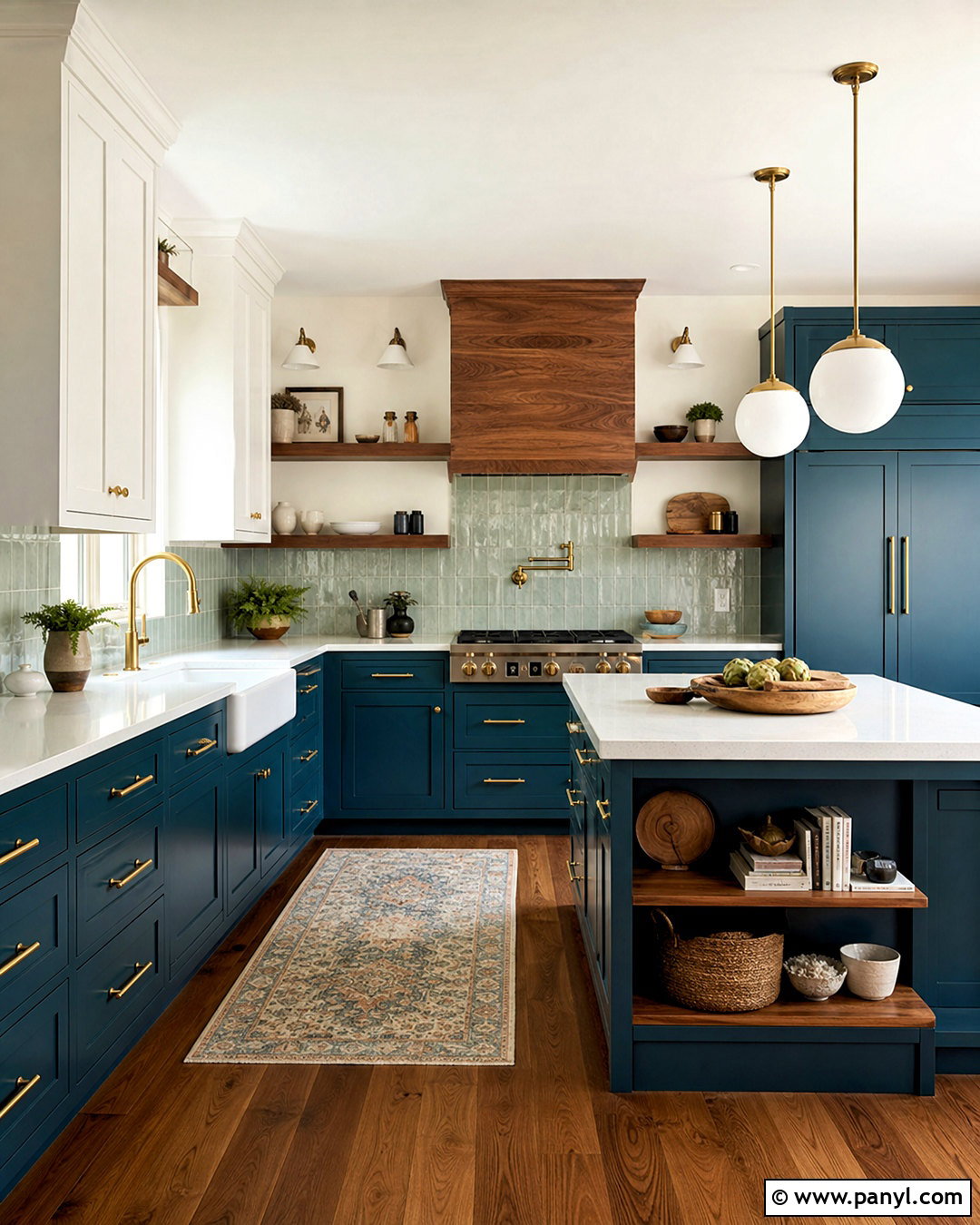
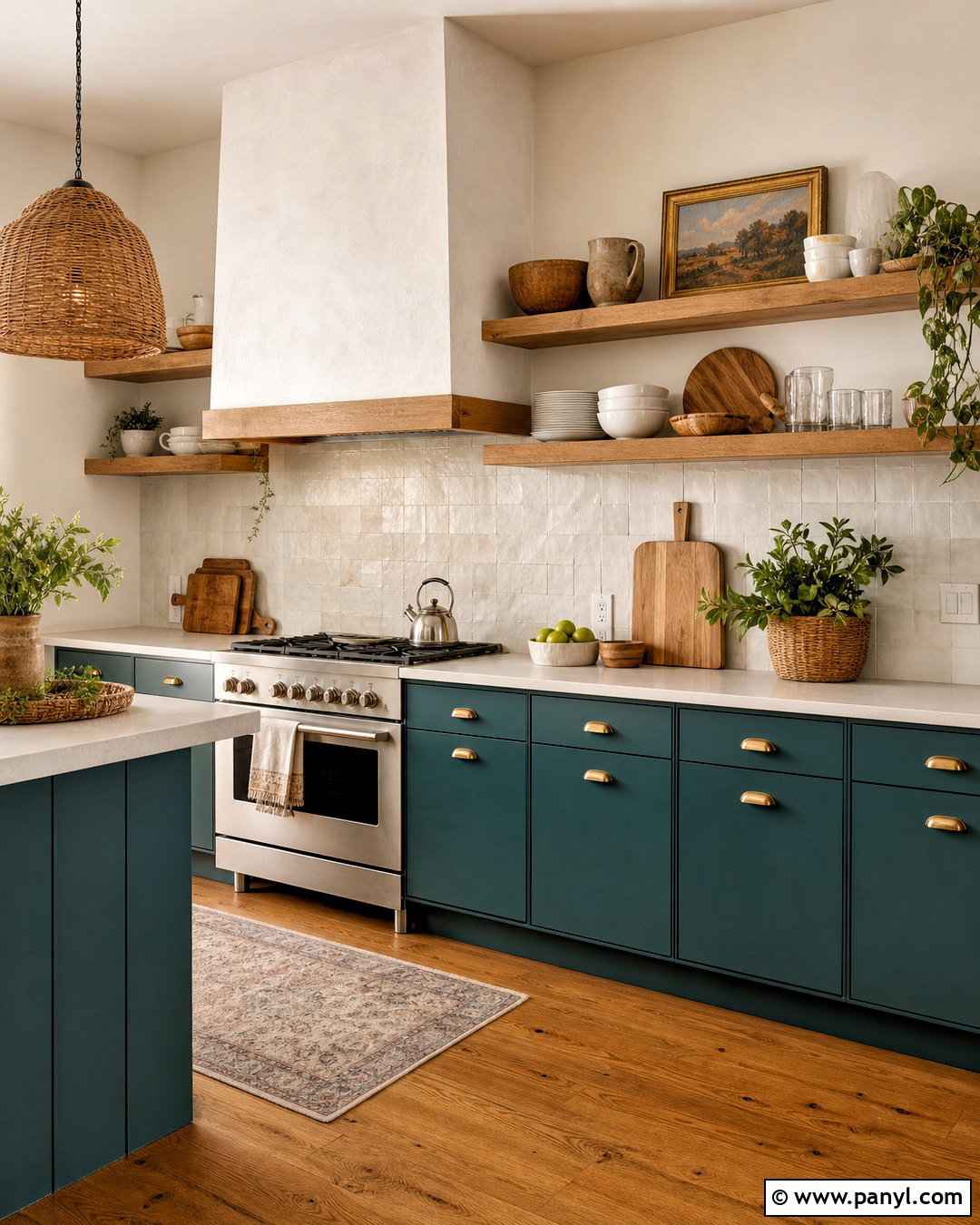
Brass brings warmth and a polished glow to turquoise cabinetry. Select a medium to dark turquoise with slightly green undertones, then add brushed brass knobs, cup pulls, and a matching faucet. Creamy white quartz counters and warm white zellige backsplash tile will soften the contrast and reflect light. Use oak flooring and woven counter stools to continue the warm material story. Two brass-framed glass pendants can highlight the island while keeping the room visually open. For balance, choose stainless steel appliances or panel-ready models rather than adding another strong metallic finish. Decorate with ivory stoneware, wood serving boards, and a small vintage-style rug. This complete scheme feels colorful and elegant, making it suitable for both traditional homes and updated transitional kitchens.
12. Coastal Turquoise Kitchen
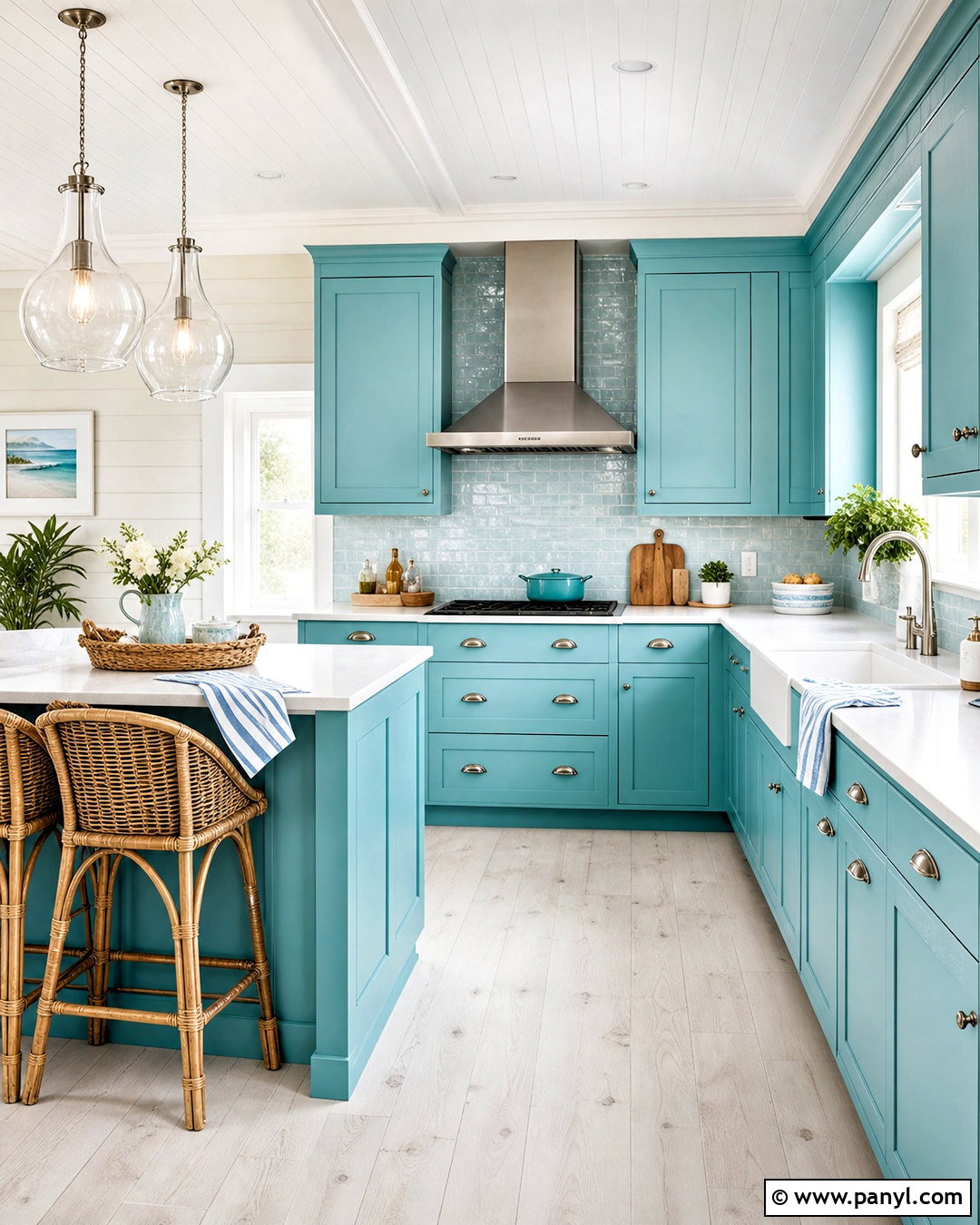
Imagine a breezy kitchen where clear turquoise cabinetry recalls shallow ocean water without becoming themed. Pair soft turquoise Shaker cabinets with white quartz countertops, white plank walls, and a pale blue glass-tile backsplash. Light oak or whitewashed wood flooring keeps the room casual and bright. Add woven rattan counter stools, brushed nickel hardware, and clear glass pendant lights for natural coastal texture. A large farmhouse sink and simple stainless steel range provide practical focal points. Instead of obvious seaside decorations, use striped linen towels, pale wood boards, and white pottery. Keep the windows uncovered or install light woven shades to maximize daylight. The completed kitchen feels relaxed, fresh, and connected to coastal color while still looking appropriate in an everyday home.
13. Farmhouse Turquoise Kitchen
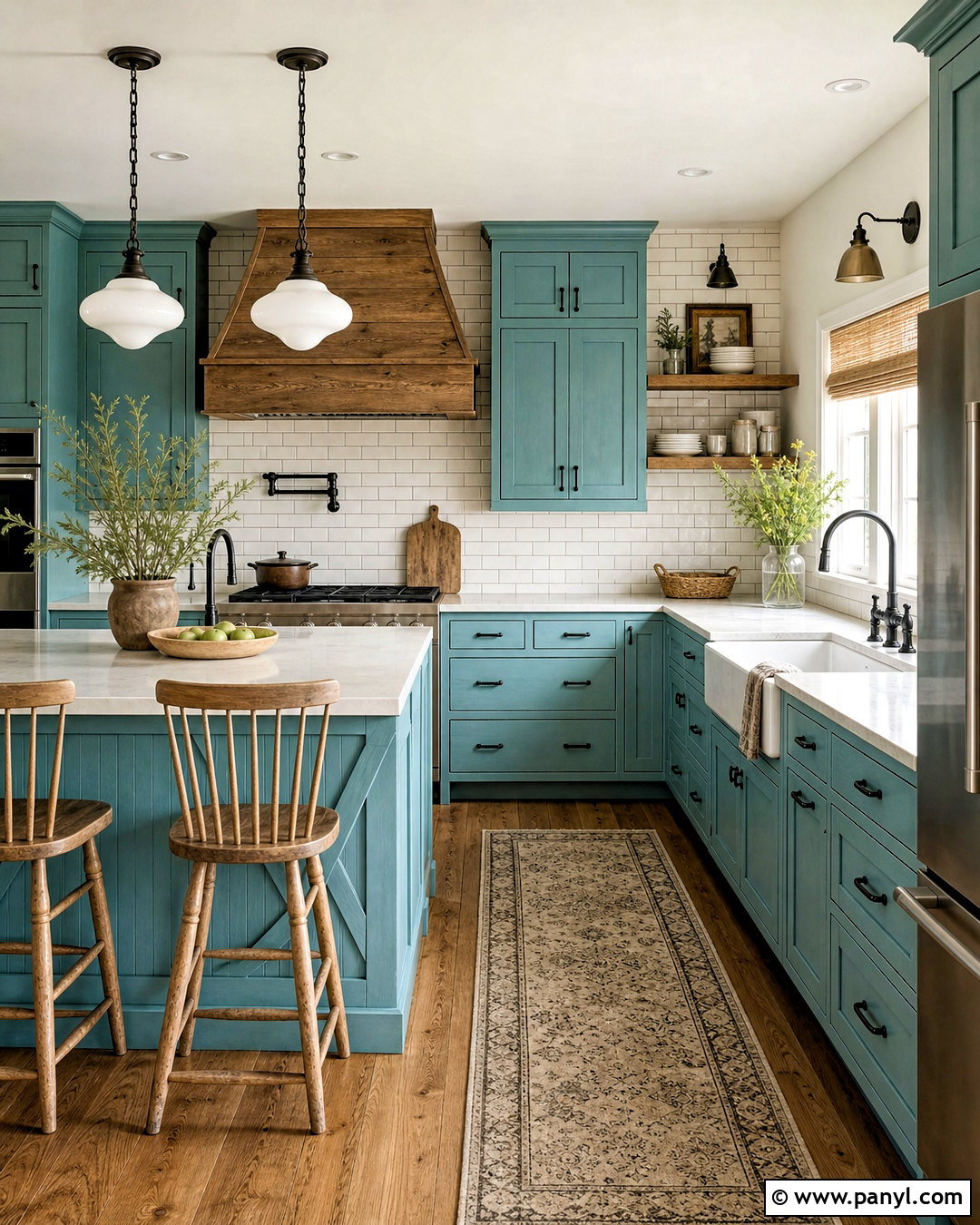
A farmhouse kitchen gains cheerful personality from weathered turquoise cabinetry and warm traditional materials. Use muted turquoise Shaker cabinets with a white apron-front sink and thick butcher block or creamy quartz countertops. Add a backsplash of ivory subway tile with slightly uneven edges for handcrafted texture. Medium oak flooring, a reclaimed wood island top, and simple spindle-back stools create an inviting foundation. Choose black iron pulls and classic schoolhouse pendants to add contrast. A wood or painted white range hood can become the central feature above the stove. Keep open shelving limited to one wall and fill it with useful white dishes, glass jars, and wood bowls. The complete room should feel practical and welcoming, with turquoise adding color rather than turning the kitchen overly rustic.
14. Modern Turquoise Kitchen
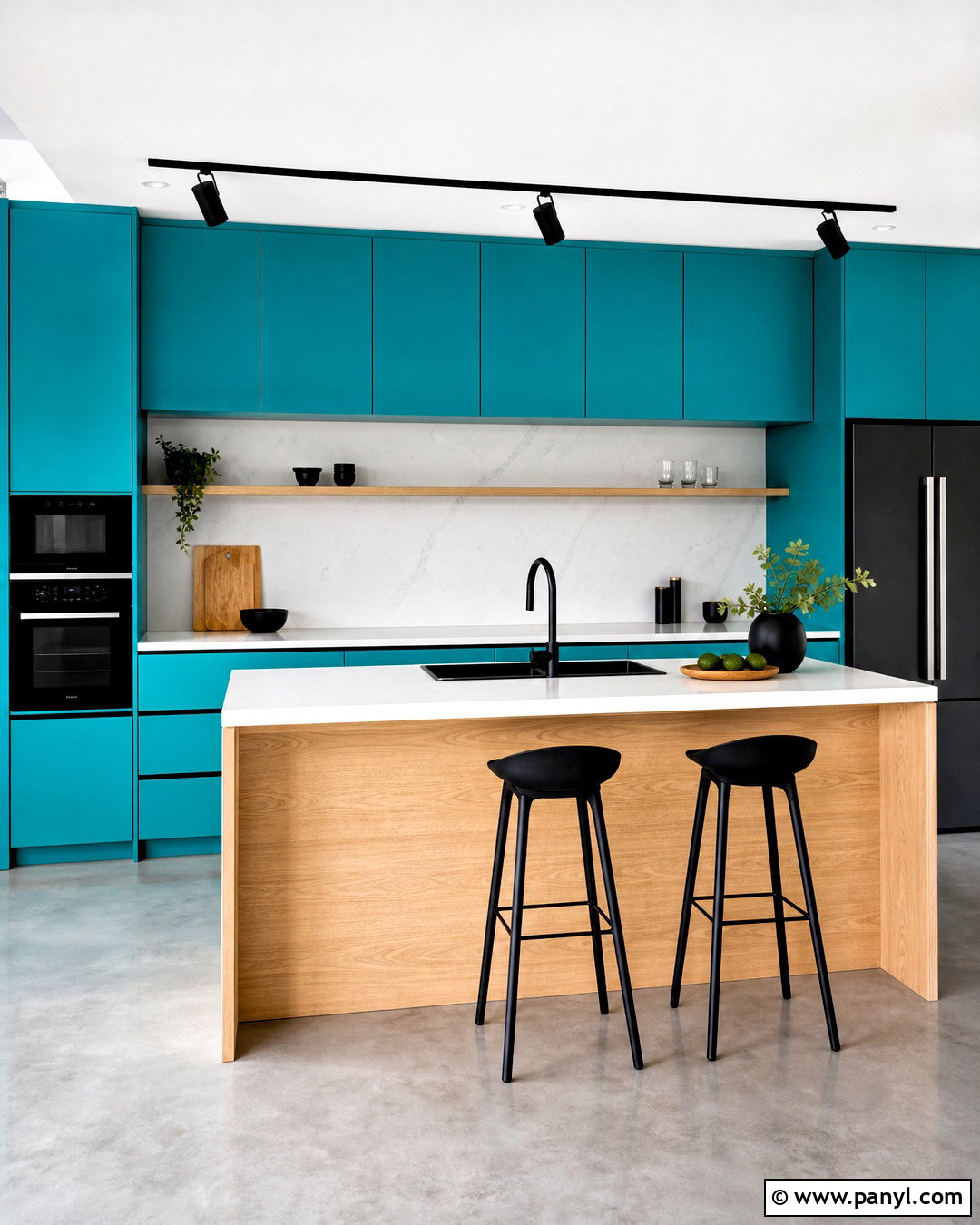
Clean lines allow turquoise to look bold and architectural in a modern kitchen. Choose handle-free, flat-panel cabinets in a deep turquoise with a smooth matte finish. Pair them with thin white quartz countertops and a full-height backsplash made from the same material. Light concrete-look flooring creates a quiet base, while natural oak panels around the island or refrigerator add necessary warmth. Use integrated appliances to maintain uninterrupted cabinet lines. Minimal black track lighting and sculptural black stools provide definition without unnecessary decoration. Keep countertop items hidden in appliance garages or deep drawers. One long wood shelf can display a few simple ceramics. This restrained arrangement makes color the main design feature, resulting in a turquoise kitchen that feels sleek, organized, and comfortably livable.
15. Midcentury Turquoise Kitchen
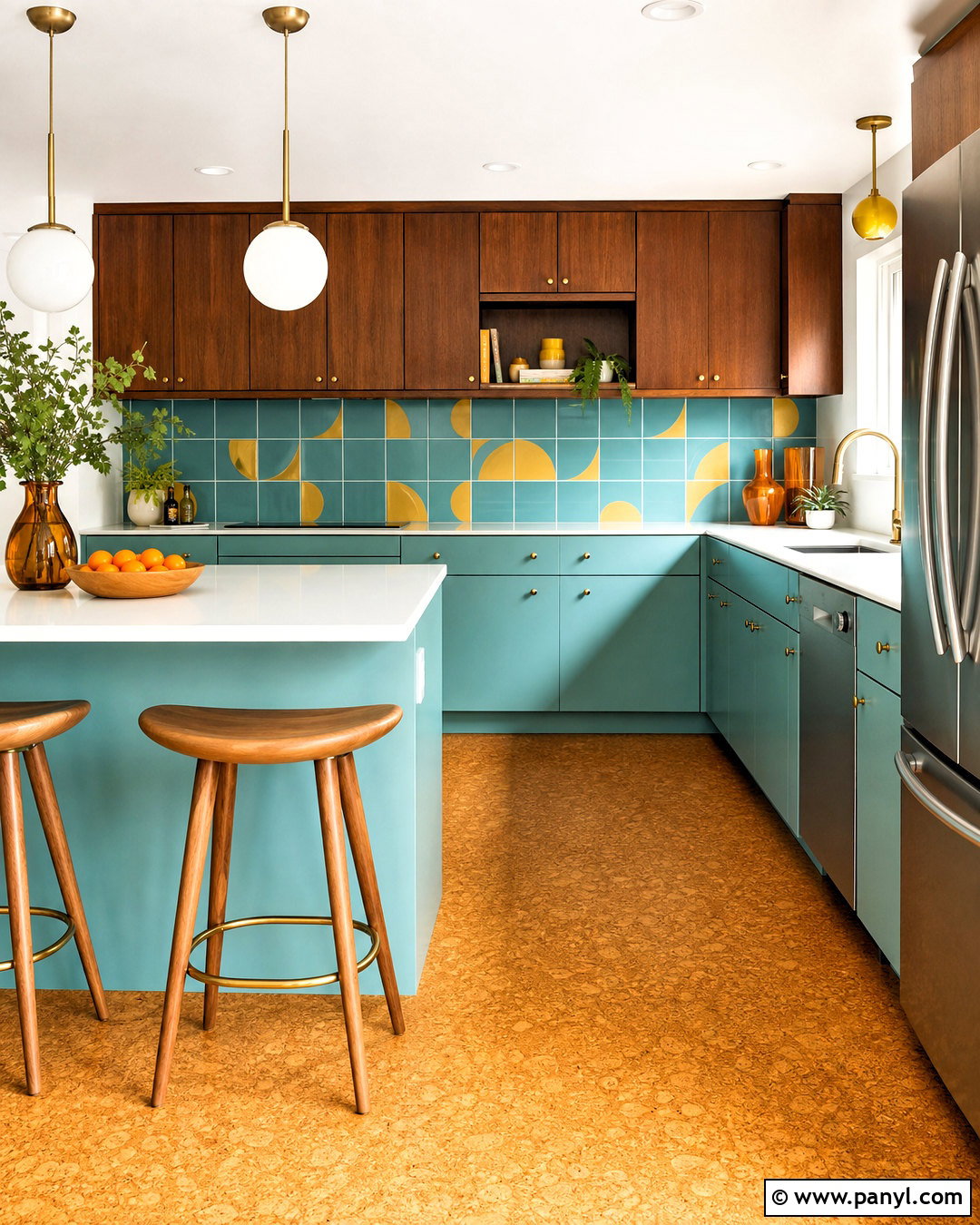
Turquoise fits naturally into a midcentury-inspired kitchen filled with warm wood and playful geometric details. Combine turquoise lower cabinets with walnut upper cabinets and a slim white countertop. Add a backsplash of small geometric tile in white, turquoise, and muted mustard for controlled pattern. Terrazzo or warm cork flooring supports the retro palette without making the room feel like a reproduction. Choose globe pendant lights, tapered-leg counter stools, and simple brass knobs. A white or stainless steel refrigerator maintains a clean background for the colorful surfaces. Keep the cabinet profiles flat and uncluttered, reflecting the period’s practical lines. Finish with a patterned runner and a few amber glass accessories. The room will feel nostalgic, energetic, and updated for daily cooking.
16. Small Turquoise Kitchen
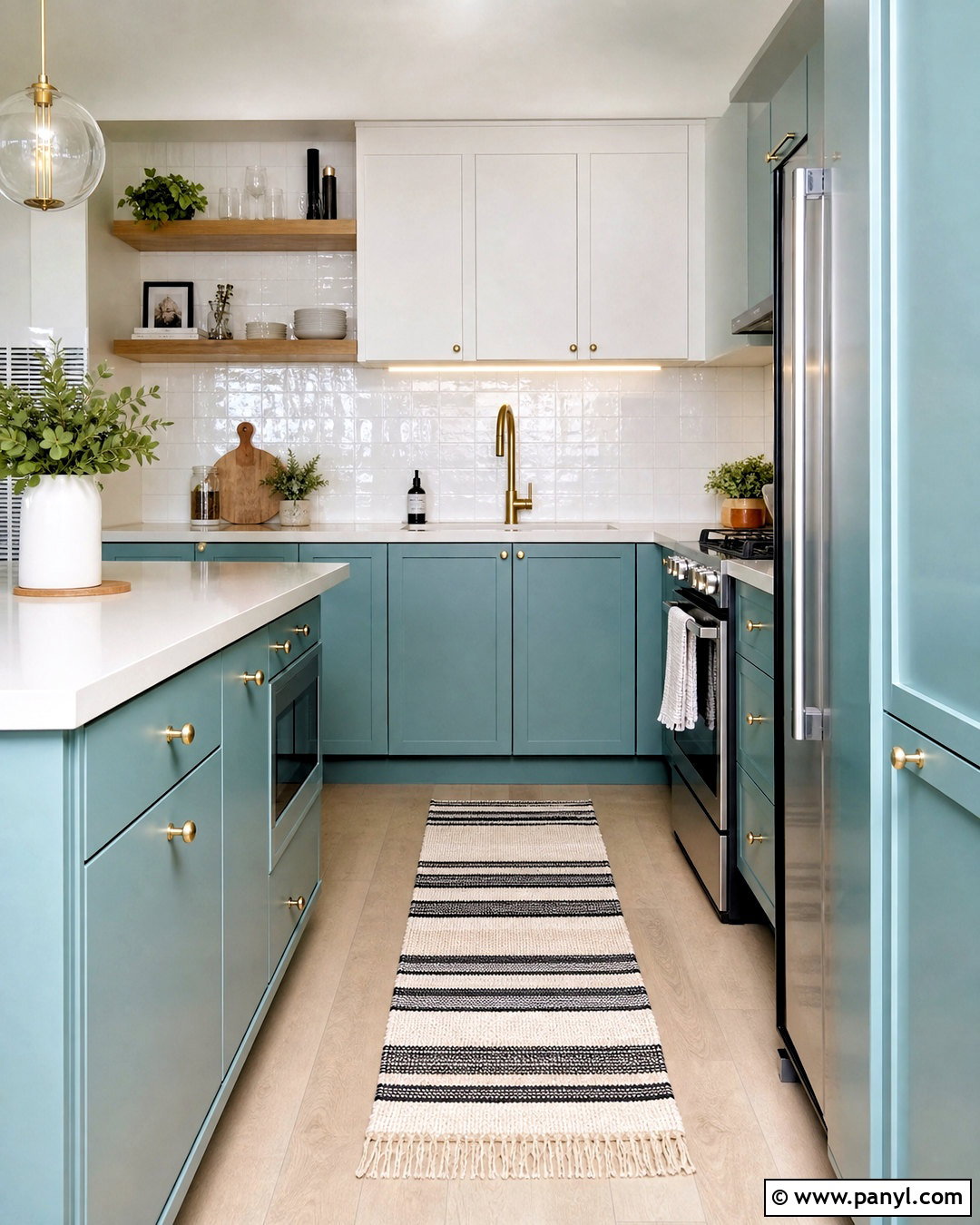
A small kitchen can handle turquoise when color placement supports an open, efficient layout. Use pale turquoise on the lower cabinets and keep upper cabinets white or replace some of them with light wood shelves. White quartz countertops and a glossy white backsplash will reflect light around the compact room. Choose a single-wall or L-shaped arrangement with full-height storage beside the refrigerator. Small brushed brass knobs, undercabinet lighting, and one compact pendant add function without visual clutter. Continue the flooring from the adjoining room to make the kitchen appear larger. Store appliances inside cabinets and use wall-mounted rails for frequently needed tools. A narrow striped runner can introduce pattern. The result feels colorful and welcoming while preserving valuable light, movement, and counter space.
17. Turquoise Galley Kitchen
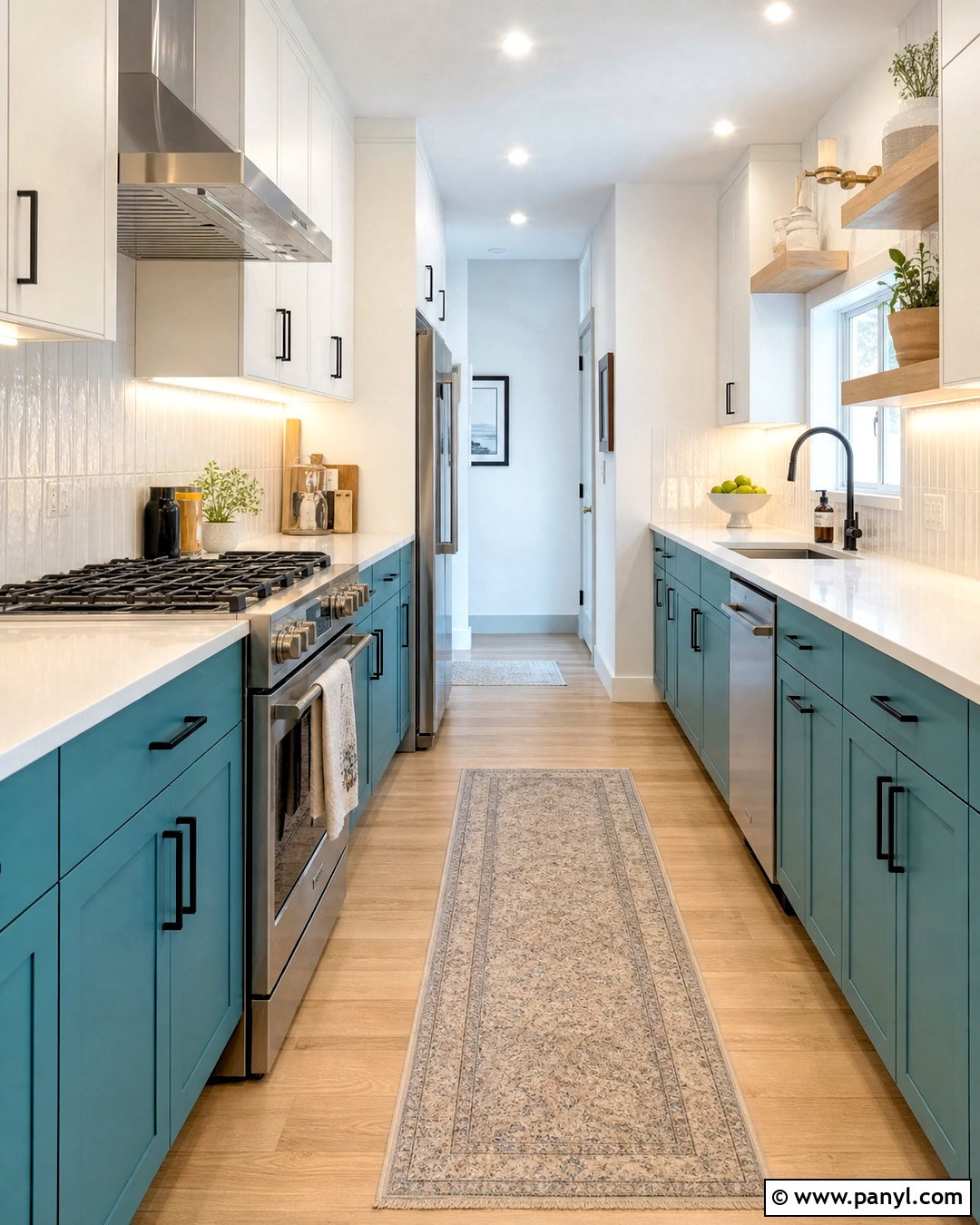
In a narrow galley layout, turquoise can create depth without making the walkway feel enclosed. Paint the base cabinets medium turquoise on both sides, then use soft white upper cabinets to keep the upper half bright. Install white quartz counters and a glossy vertical-tile backsplash that draws the eye upward. Pale wood flooring laid lengthwise can emphasize the room’s clean sightline. Choose recessed ceiling lights, undercabinet strips, and one simple fixture near the far window. Slim black pulls provide contrast without projecting into the walkway. Keep the refrigerator and pantry together at one end to improve visual order. A small wood shelf, white ceramics, and a washable runner complete the kitchen. This balanced arrangement gives the galley personality while protecting its practical workflow.
18. Dark Turquoise Kitchen
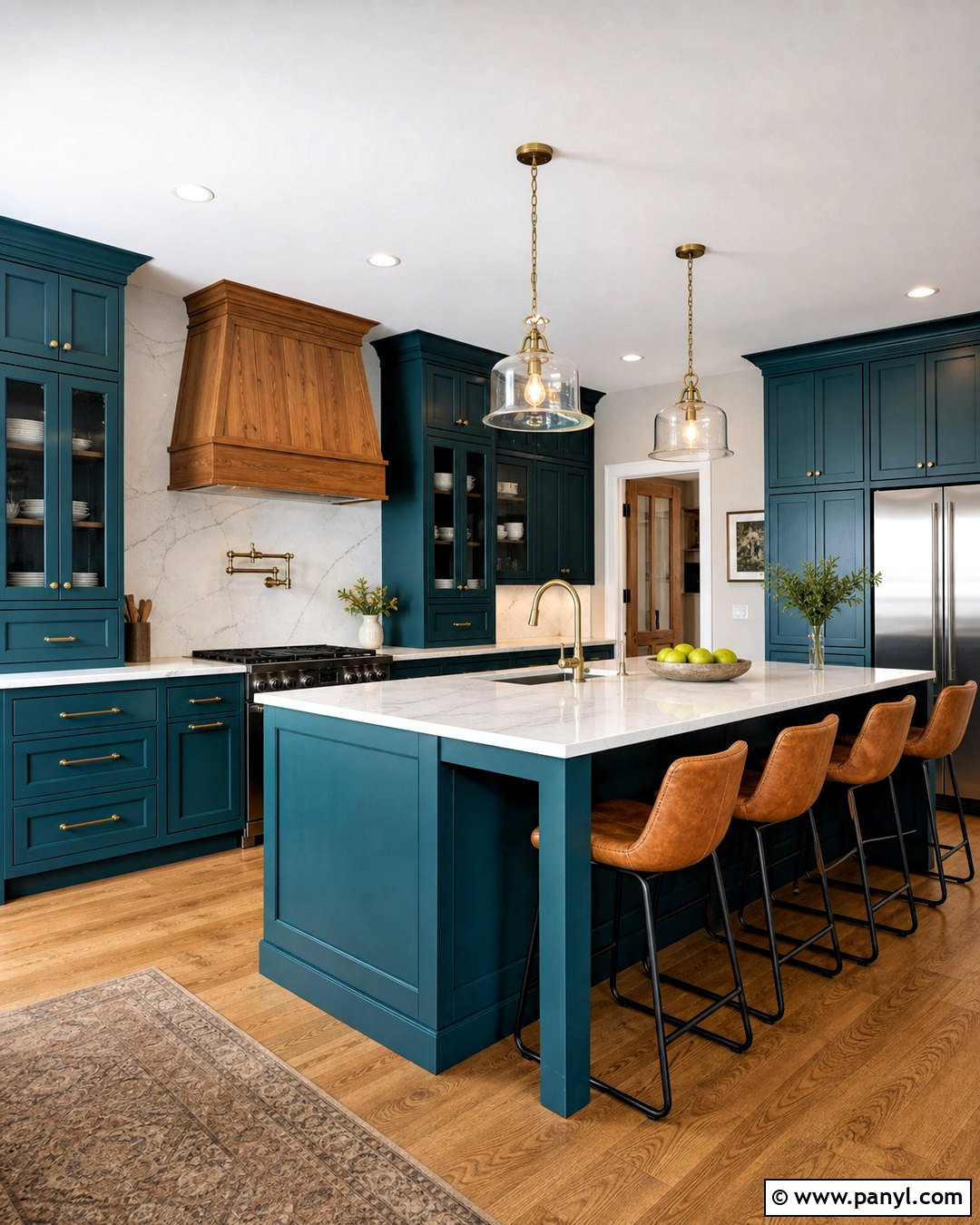
Deep turquoise cabinets create a dramatic kitchen that still feels colorful and inviting. Use the saturated shade across full-height cabinetry and the island, then brighten it with white marble-look countertops and a softly veined backsplash. Warm oak flooring, tan leather counter stools, and aged brass hardware prevent the dark color from feeling cold. Large windows and layered lighting are especially important, so include undercabinet strips, ceiling lights, and glass pendants. Paint the ceiling and remaining walls warm white to maintain contrast. A plaster or oak range hood can interrupt the long stretches of turquoise cabinetry. Keep decor minimal and use warm neutral accessories. The completed design feels rich and sophisticated, making dark turquoise a strong alternative to navy, charcoal, or forest green.
19. Pale Turquoise Kitchen
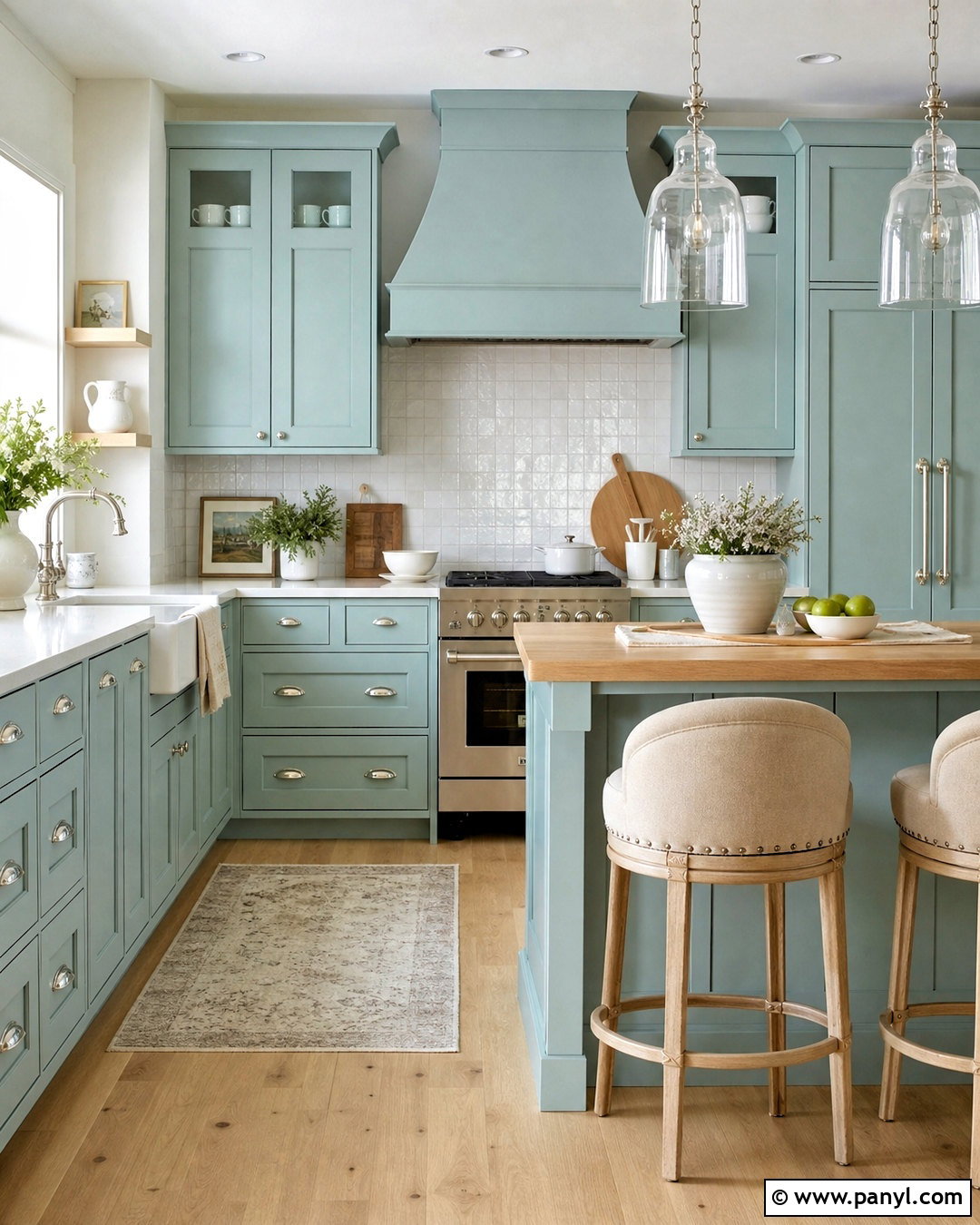
Soft, watery turquoise gives a kitchen gentle color while maintaining a light and relaxed atmosphere. Use the shade on classic Shaker cabinets and pair it with creamy white countertops and pearl-toned square backsplash tile. Pale oak flooring and a natural wood island top bring warmth to the delicate palette. Choose polished nickel pulls, a white farmhouse sink, and clear glass lighting for a subtle finish. Warm white walls will prevent the turquoise from looking icy. If the kitchen includes an eating area, add a light wood table with cream upholstered chairs. Decorate with linen towels, white bowls, and a small botanical print. The final room feels fresh rather than bold, making this approach comfortable for homeowners who usually prefer neutrals but want a little more personality.
20. Turquoise Kitchen With Open Shelving
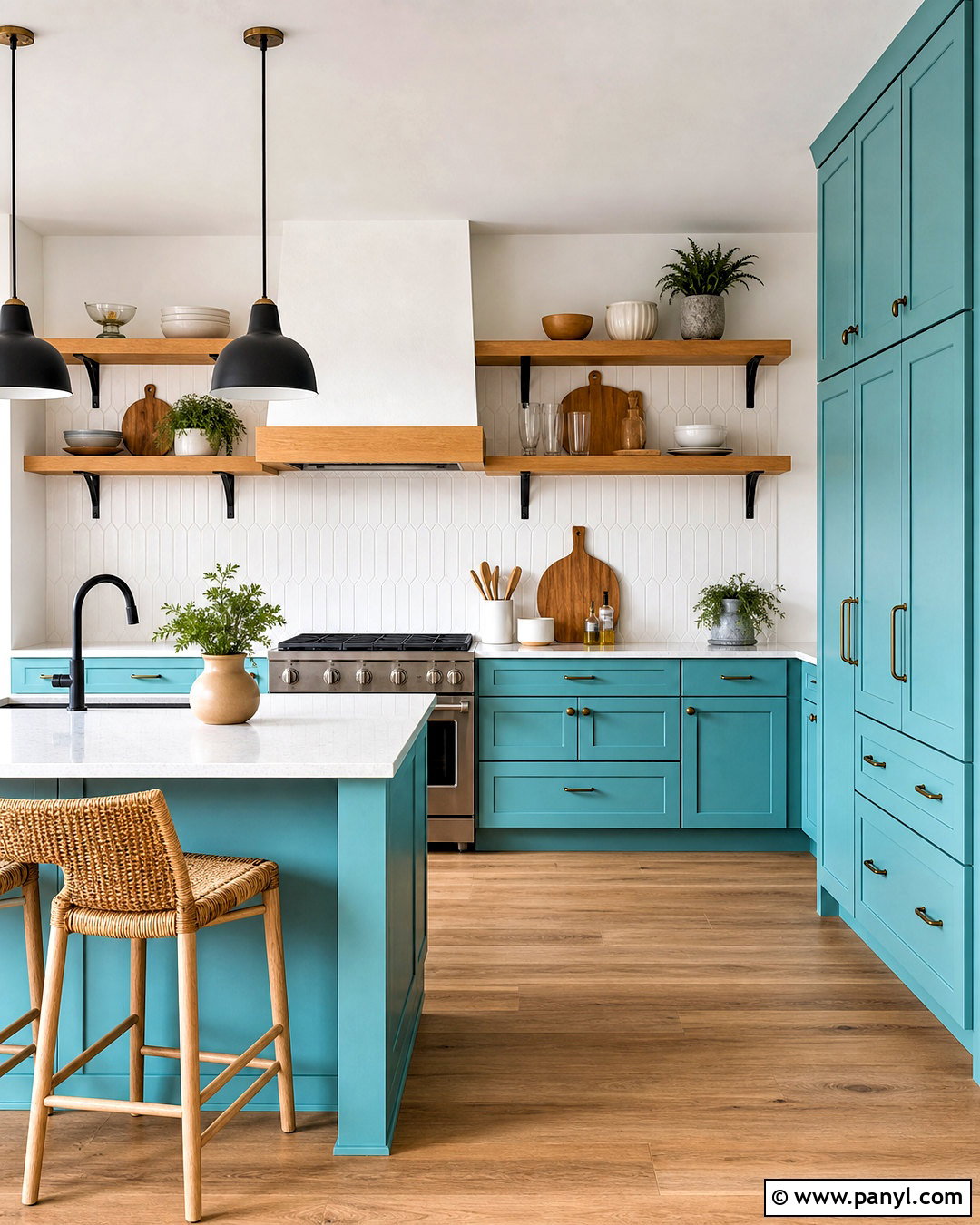
Open shelving breaks up turquoise cabinetry and gives the color room to breathe. Use rich turquoise on the lower cabinets and one wall of tall pantry storage. Replace selected upper cabinets with thick natural oak shelves mounted against a white handmade-tile backsplash. White quartz countertops will keep the working surfaces bright, while medium oak flooring connects with the shelving. Add matte black brackets, black cabinet pulls, and simple black pendants for crisp structure. Display useful white plates, clear glasses, wood boards, and a few neutral storage containers rather than filling every inch. A turquoise island can repeat the cabinet color in a larger room. This complete design feels casual and accessible, with enough closed storage to prevent the open areas from becoming cluttered.
Conclusion:
Successful turquoise kitchens balance expressive color with practical materials and a clear visual plan. White surfaces make turquoise feel brighter, while wood, brass, butcher block, and terracotta add welcome warmth. Black details create sharper contrast, and marble introduces a more refined finish. You can cover every cabinet in turquoise or limit it to lower cabinetry, an island, or a compact storage wall. Before committing, test several blue-green shades in your kitchen throughout the day because natural and artificial light can change their appearance. Then repeat a small selection of finishes to keep the room connected. With thoughtful color placement and coordinated surfaces, these 20 turquoise kitchen ideas can inspire a distinctive kitchen that remains comfortable, functional, and easy to enjoy.

Related Ideas and Inspiration:
Leave a Reply