
A turquoise feature wall can make a room feel fresh, energetic, and welcoming without requiring a complete remodel. Its balance of blue and green works with crisp white, warm wood, soft gray, terracotta, blush, black, and metallic finishes. Current design inspiration also shows turquoise moving beyond basic painted drywall into paneling, wallpaper, built-ins, and color-drenched architectural details. () The key is choosing the right intensity and repeating it through a few carefully placed accents. Pale turquoise feels airy and coastal, while saturated shades create stronger contrast and drama. The following complete room designs include practical layouts, coordinated furnishings, lighting, textiles, and decor. Use these 30 turquoise accent wall ideas to create a polished look that feels personal rather than overpowering.

1. Turquoise Accent Wall Living Room
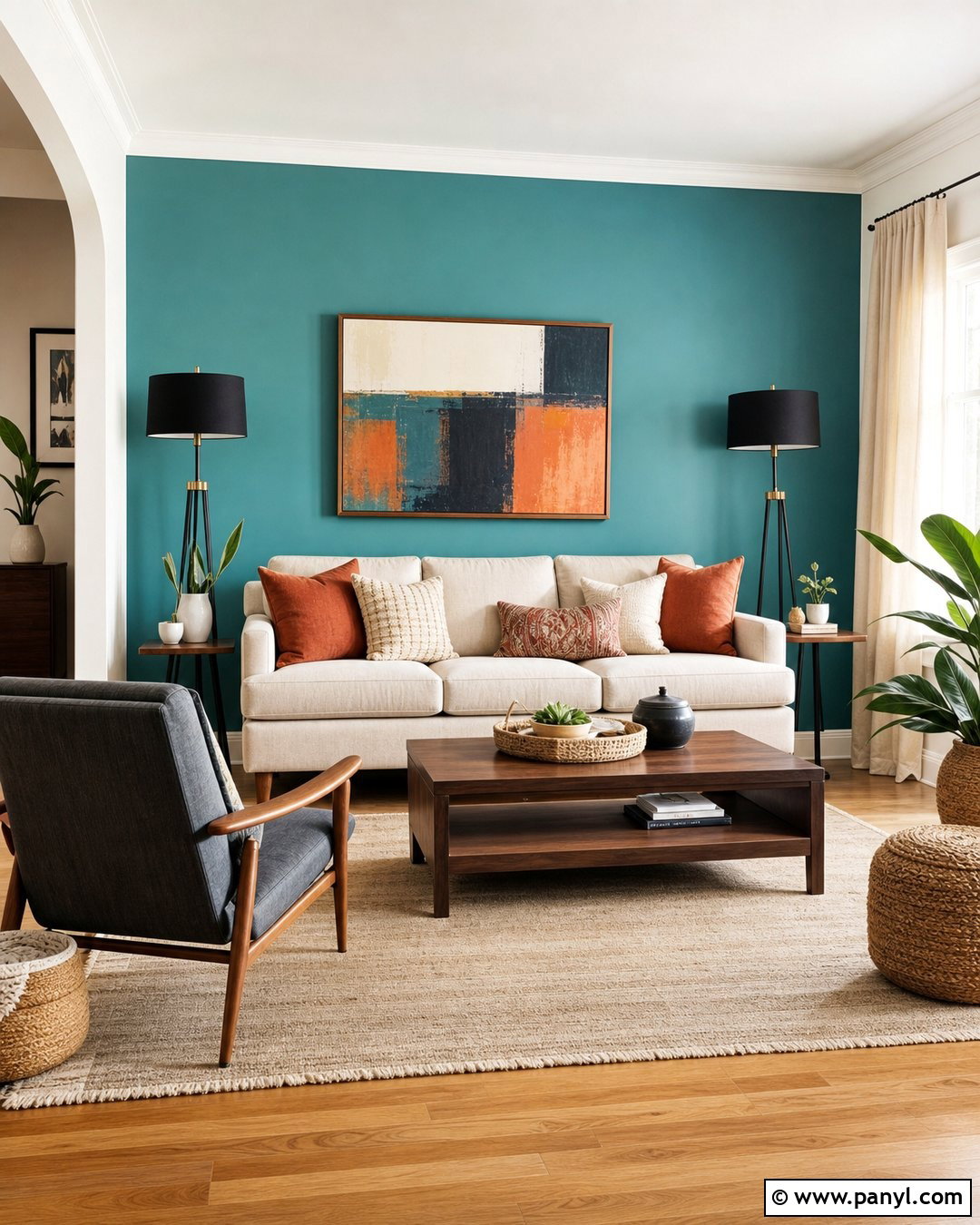
Give a neutral living room an inviting focal point by painting the wall behind the sofa a balanced medium turquoise. Choose a warm white for the remaining walls and add a natural oak floor or light wood-look flooring. An oatmeal sofa keeps the palette calm, while turquoise, cream, and rust pillows repeat the wall color without becoming too matched. Place a large cream rug beneath a round walnut coffee table to soften the contrast. Simple black floor lamps and thin black picture frames provide definition. Finish the room with linen curtains, woven baskets, leafy plants, and abstract artwork containing small touches of turquoise. This arrangement feels colorful and comfortable while allowing the accent wall to remain the clear visual anchor.
2. Dark Turquoise Accent Wall Living Room
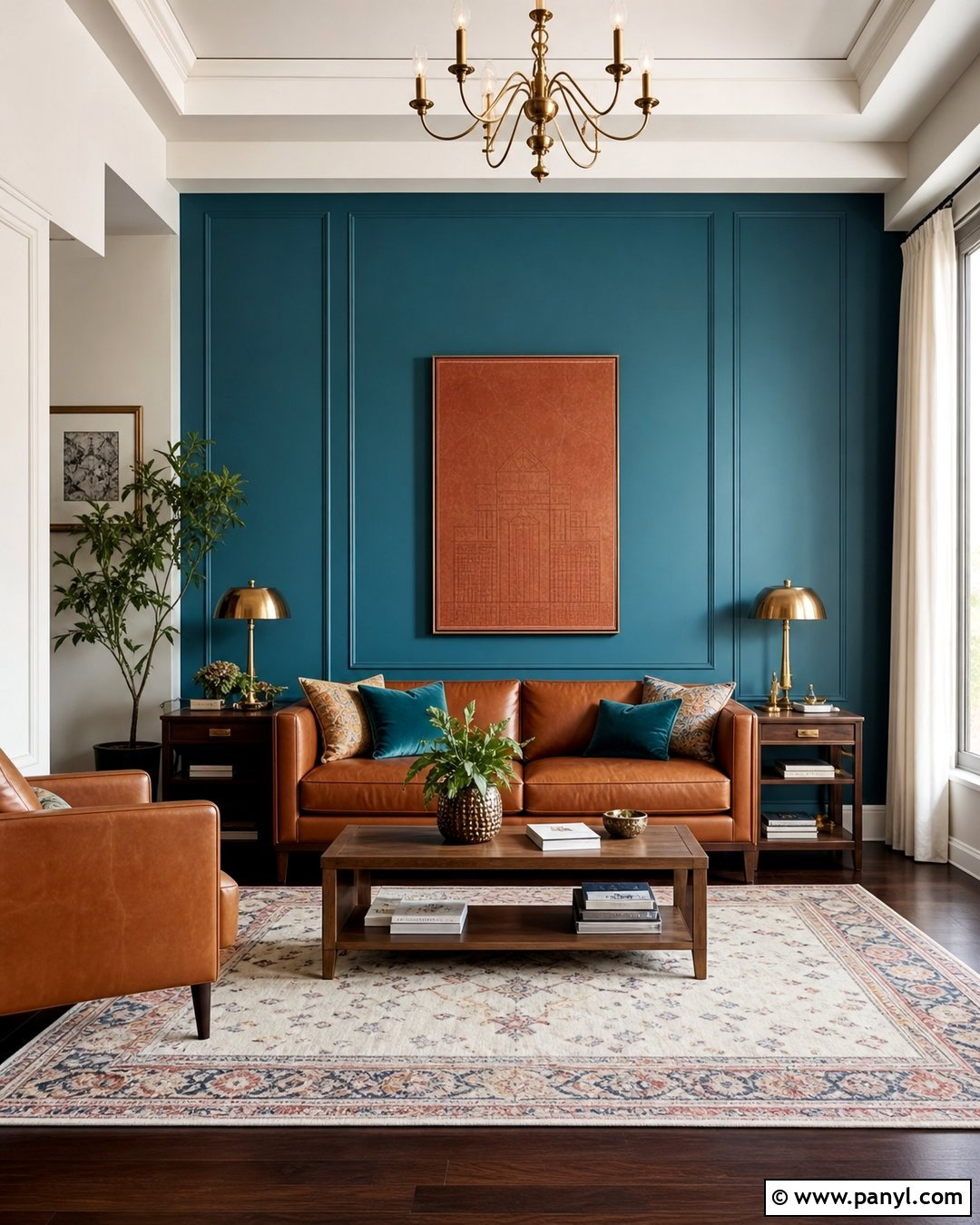
Deep turquoise creates a sophisticated living room when it is balanced with warm, light materials. Use the darkest wall behind a camel leather sofa or a cream boucle sectional, then paint the surrounding walls soft ivory. Walnut side tables, a medium-toned wood floor, and antique brass lamps bring out the shade’s warmer undertones. Ground the seating area with a patterned rug that combines cream, faded blue, and muted terracotta. Instead of filling the wall with many small decorations, hang one oversized abstract canvas in off-white and rust. Add velvet pillows in teal and tobacco brown, plus full-length ivory curtains. The finished room feels dramatic but not gloomy because pale upholstery and reflective metal keep the deeper turquoise from visually closing in the space.
3. Turquoise and White Accent Wall
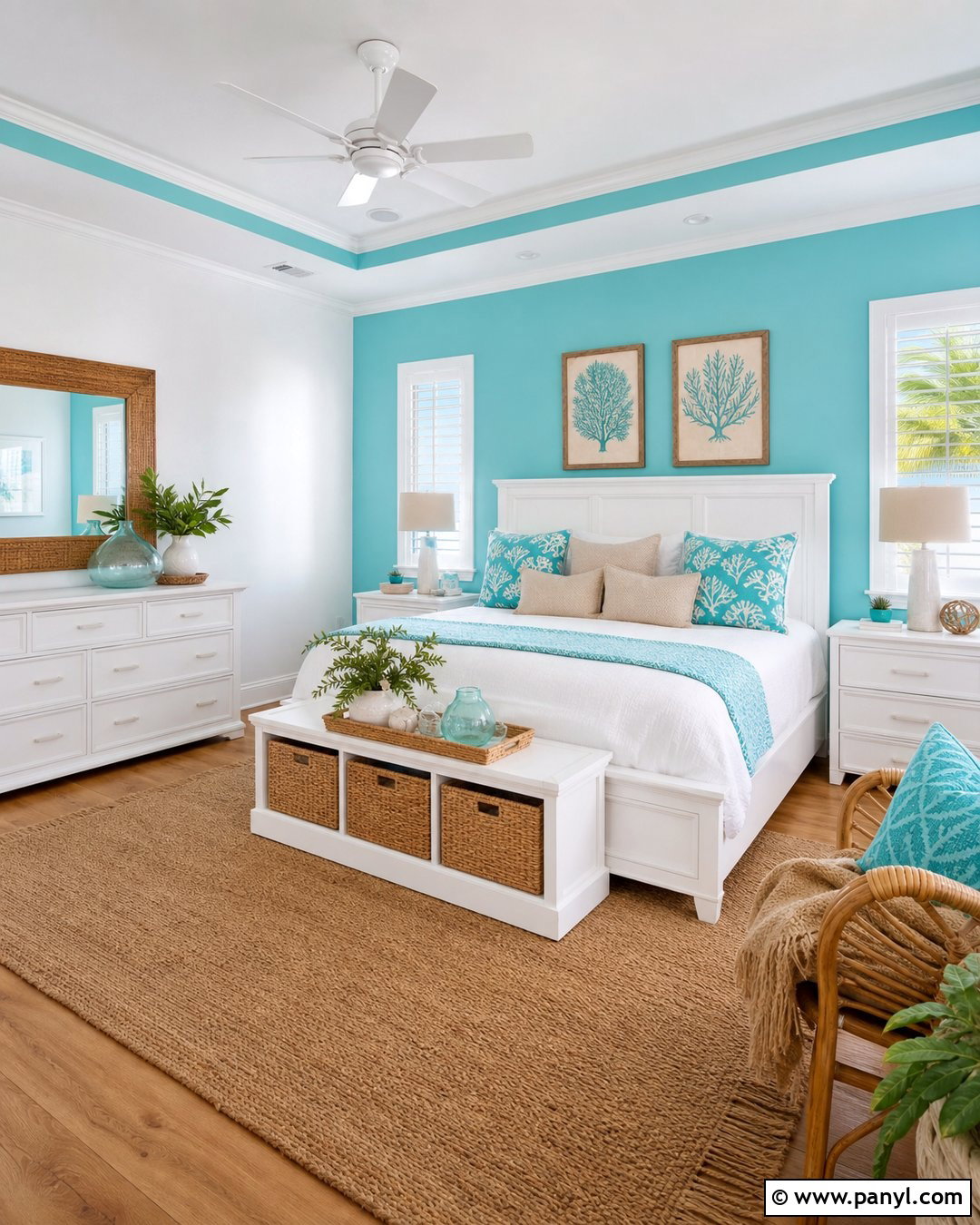
Crisp white creates one of the cleanest backdrops for a bright turquoise wall. Paint the wall behind a low-profile white sofa or upholstered bed, depending on the room, and keep the ceiling, trim, and adjacent walls a consistent soft white. Bring in warmth through a honey-toned oak floor, woven jute rug, and light rattan accents. White furniture prevents the strong color from feeling heavy, while turquoise-patterned pillows connect the wall to the foreground. Add a few sandy beige textiles and clear glass accessories to soften the contrast. A large wood-framed mirror can reflect daylight and make the color appear more luminous. Keep decorative pieces simple and generously spaced so the white and turquoise combination remains fresh, uncluttered, and easy to live with.
4. Turquoise and Gray Accent Wall
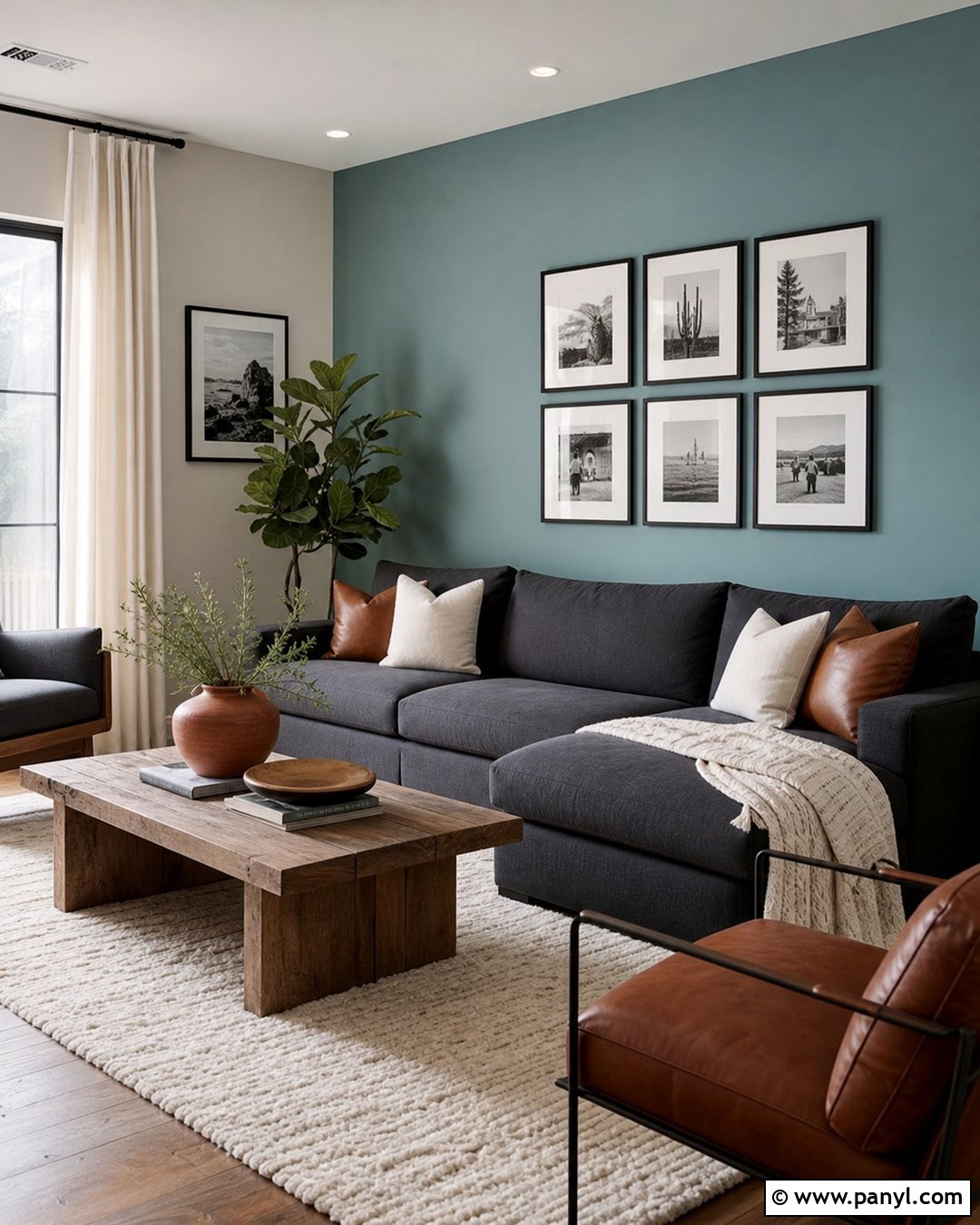
A turquoise and gray room feels more welcoming when the gray has warm rather than icy undertones. Start with a muted turquoise wall behind a charcoal upholstered sofa, then use pale greige across the other walls. Layer the seating with light gray, ivory, and turquoise cushions in different textures. A weathered oak coffee table and creamy wool rug prevent the palette from becoming overly cool. Add brushed nickel lighting for a streamlined finish, but introduce one or two warm accents through cognac leather or terracotta pottery. Black-and-white photography looks especially sharp against turquoise and helps connect darker furniture to the wall. Finish with sheer ivory curtains and a tall plant. The complete scheme is contemporary, balanced, and colorful without resembling a themed coastal room.
5. Turquoise and Gold Accent Wall
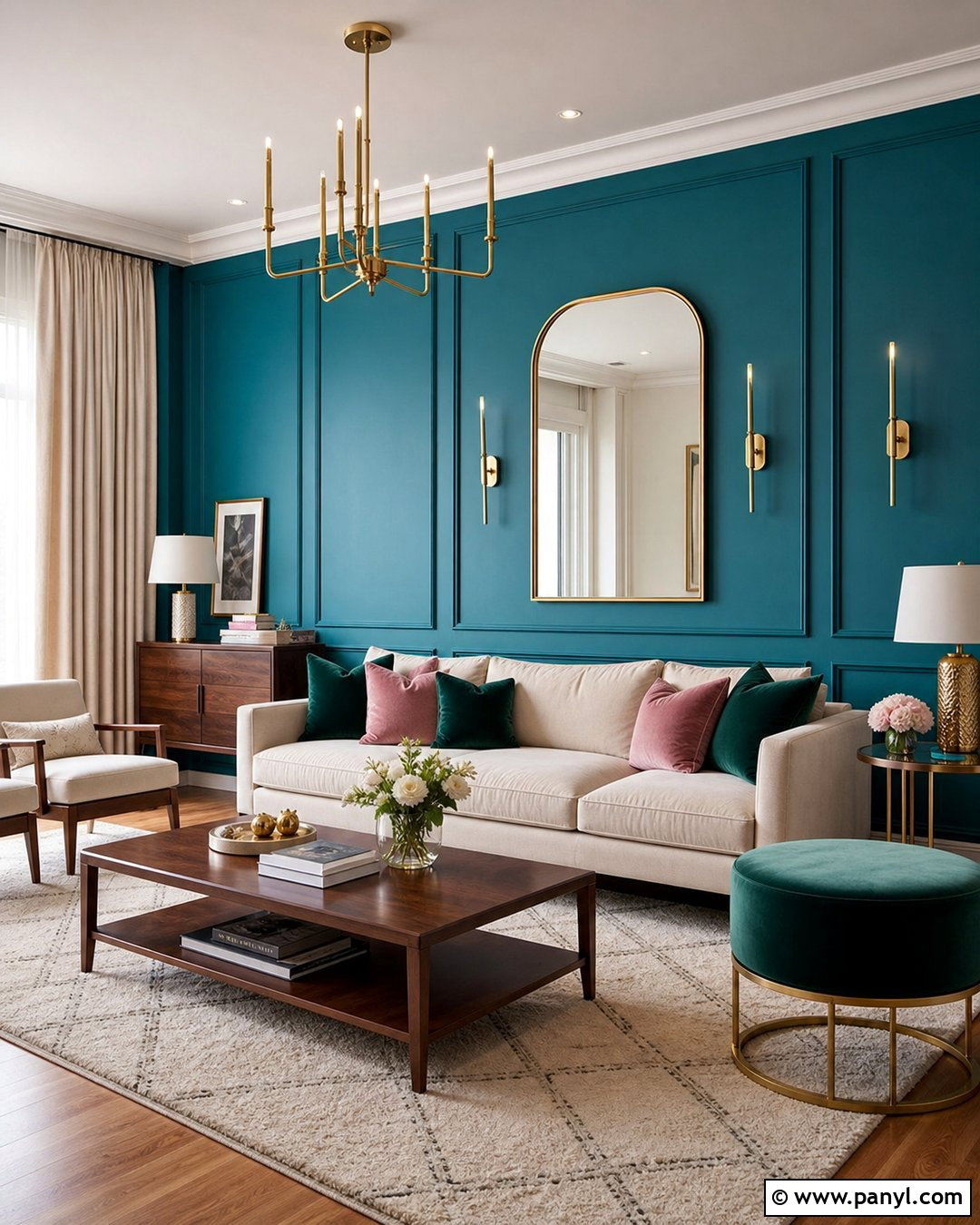
Turquoise and gold can create a refined jewel-tone interior when the metallic finish is used selectively. Choose a rich turquoise wall behind a cream velvet sofa, bed, or dining console. Add a slim brass chandelier, gold-framed mirror, and small metallic details rather than multiple oversized gold pieces. Warm white walls and pale upholstery provide breathing room around the saturated color. Use walnut or espresso wood furniture to give the palette depth, then introduce a cream rug with a subtle geometric pattern. Emerald, navy, or dusty rose cushions can enrich the scheme without competing with turquoise. Keep curtains neutral and lighting bright. This complete look delivers glamour through color, texture, and carefully controlled shine instead of relying on ornate furniture or excessive decorative accessories.
6. Turquoise and Terracotta Accent Wall
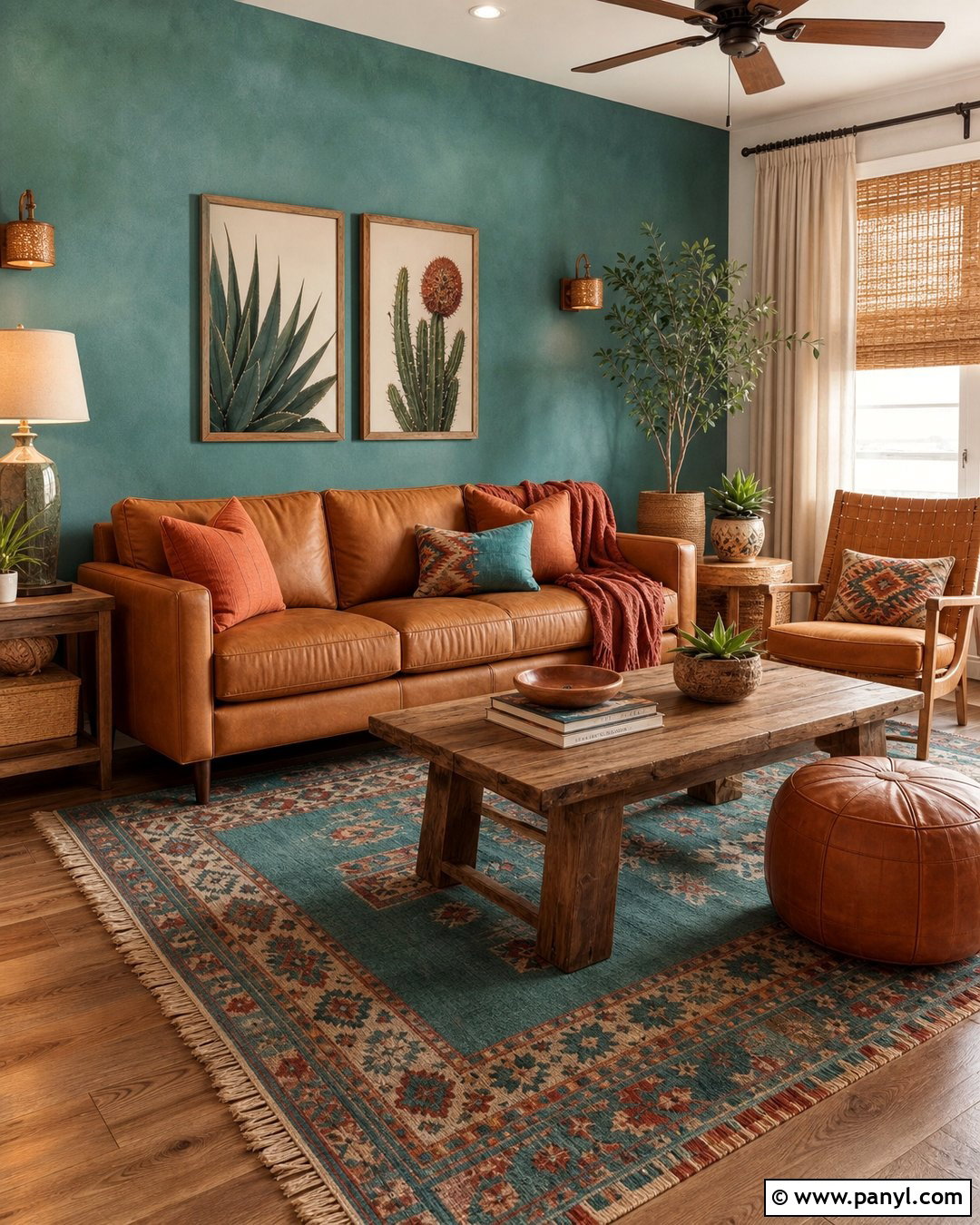
Bring earthy warmth to a turquoise wall with terracotta textiles, natural wood, and handmade-looking finishes. A slightly green turquoise works especially well behind a caramel sofa or simple wood-framed bed. Paint the other walls creamy beige and use warm oak flooring to connect the cool and warm colors. Add terracotta cushions, a rust-colored throw, and a patterned rug featuring turquoise, clay, and ivory. Woven shades filter daylight without hiding the palette, while ceramic lamps add a casual handcrafted character. Decorate with botanical prints, baskets, and a few leafy plants. Avoid using equal amounts of turquoise and orange; let the wall dominate and keep terracotta as a supporting accent. The result feels sunny, grounded, and suitable for relaxed living rooms or bedrooms.
7. Turquoise and Black Accent Wall
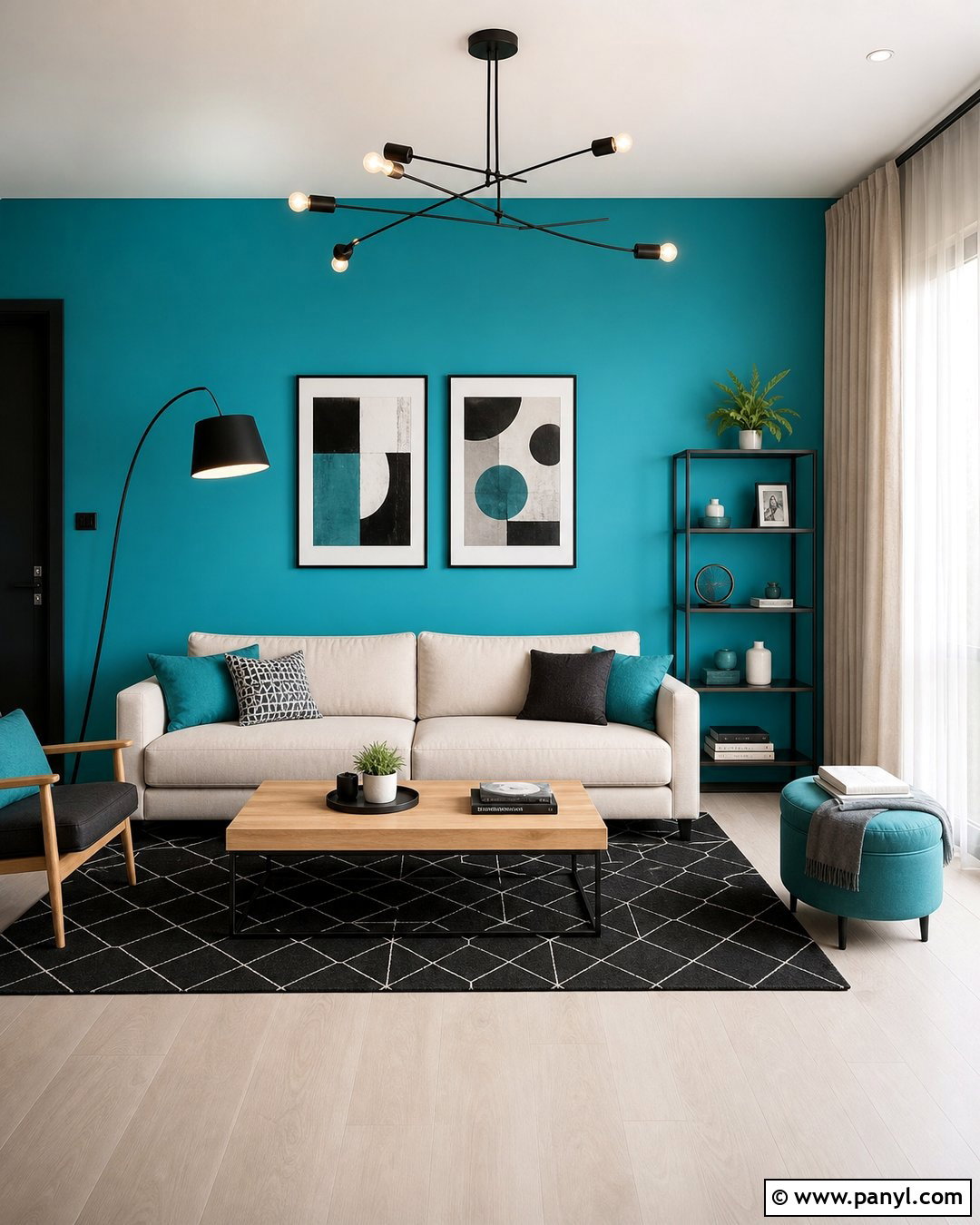
Sharp black accents give turquoise a cleaner, more modern edge. Paint a vivid turquoise wall behind a streamlined cream sofa or platform bed, then outline the space with matte black lighting, narrow furniture legs, and thin window frames where possible. Use warm white on nearby walls to preserve brightness. A black-and-ivory geometric rug anchors the room, while pale oak furniture keeps the contrast from becoming severe. Choose simple artwork with broad white areas and black frames so the wall still shows around it. Repeat turquoise only once or twice through a pillow, vase, or desk accessory. Soft linen curtains and natural textures prevent the room from feeling too graphic. This controlled palette works particularly well in contemporary apartments, offices, and compact living areas.
8. Turquoise Accent Wall Bedroom
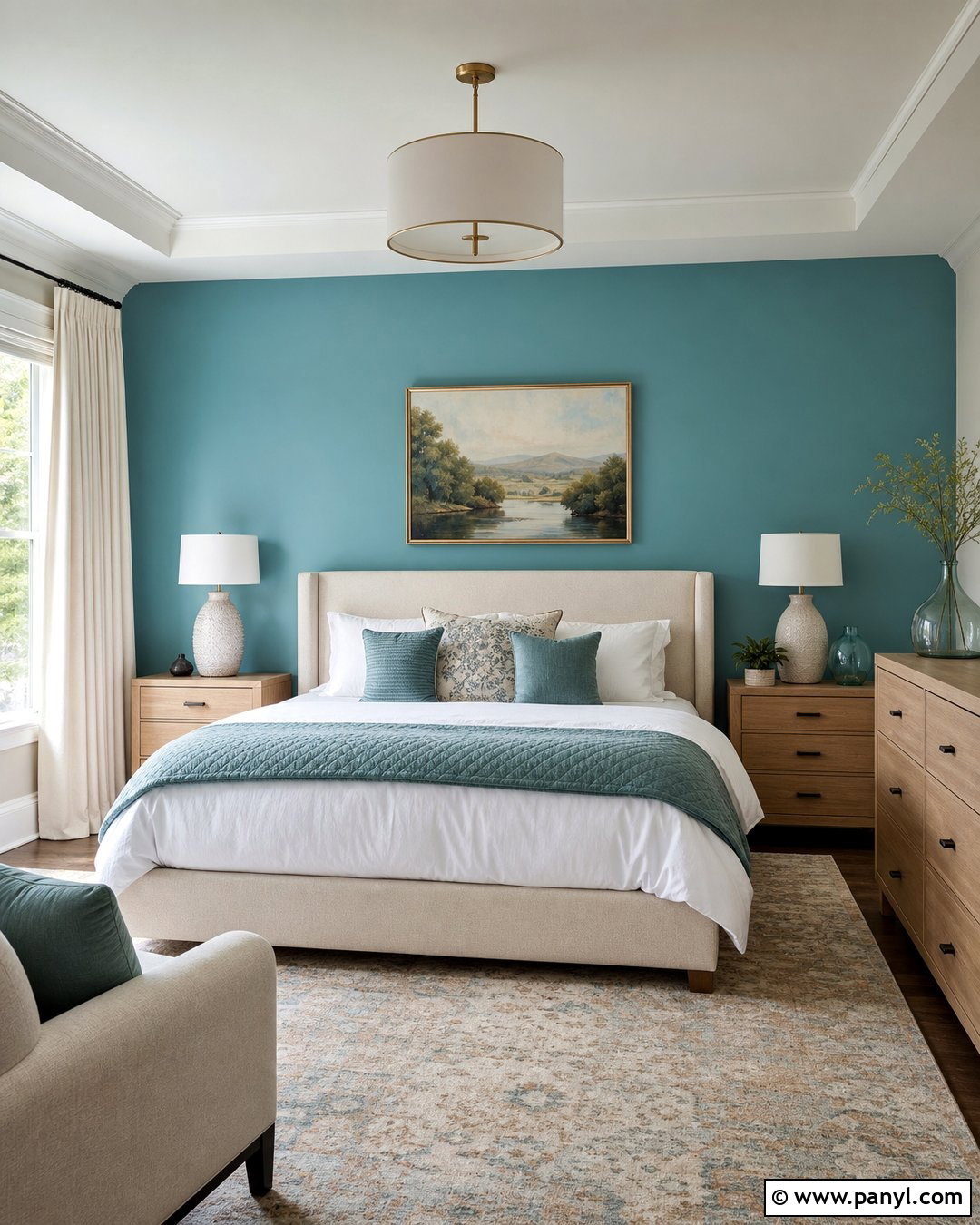
Make the bed the natural focal point by placing it against a calming medium turquoise wall. Choose an upholstered oatmeal headboard, crisp white bedding, and a folded quilt in soft blue-green. Light oak nightstands and ceramic lamps add warmth without distracting from the color. Keep the remaining walls pale cream and use full-length ivory curtains to create a restful background. A large rug in beige, faded turquoise, and muted rust can unify the entire room. Instead of matching every accessory, add only a few coordinated pieces, such as a turquoise-edged pillow and small glass vase. Hang one wide landscape print over the headboard. The finished bedroom feels peaceful and layered because the bold wall is balanced by simple furniture, soft textiles, and generous neutral space.
9. Pale Turquoise Accent Wall Bedroom
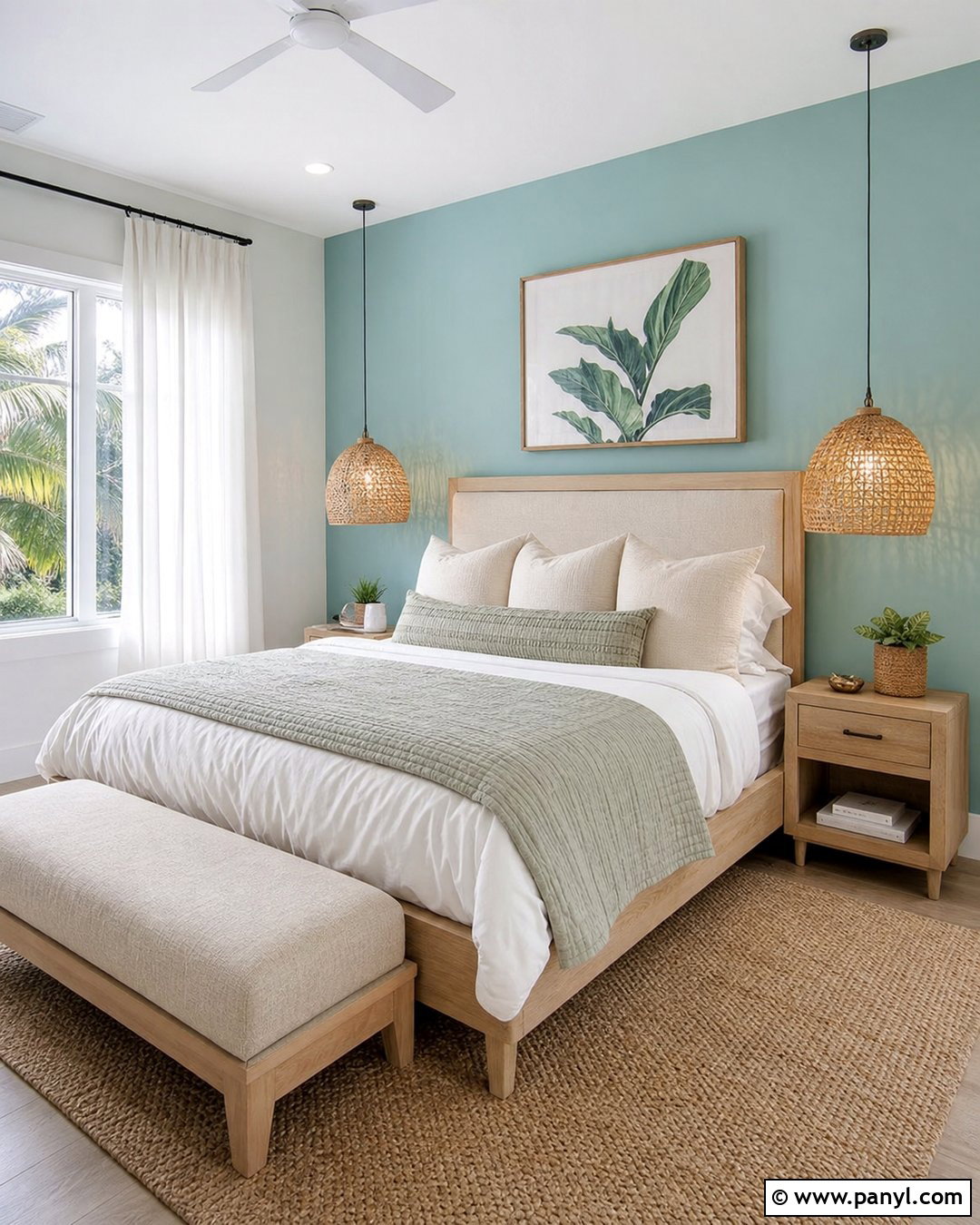
A pale turquoise wall offers gentle color for a bedroom that needs to feel brighter and more open. Use the shade behind a white oak bed with an upholstered linen headboard. Dress the bed in warm white sheets, a light gray quilt, and two dusty blue accent pillows. Pale wood nightstands, woven pendant lights, and a natural fiber rug give the cool wall a warmer foundation. Keep the other walls creamy white rather than bright blue-white, which can make the palette feel cold. Add sheer curtains, delicate botanical artwork, and a bench in oatmeal fabric. Minimal decor allows the subtle wall color to create a soft glow throughout the space. This approach works especially well in small bedrooms, guest rooms, and interiors with limited natural light.
10. Turquoise Accent Wall With Wood Panels
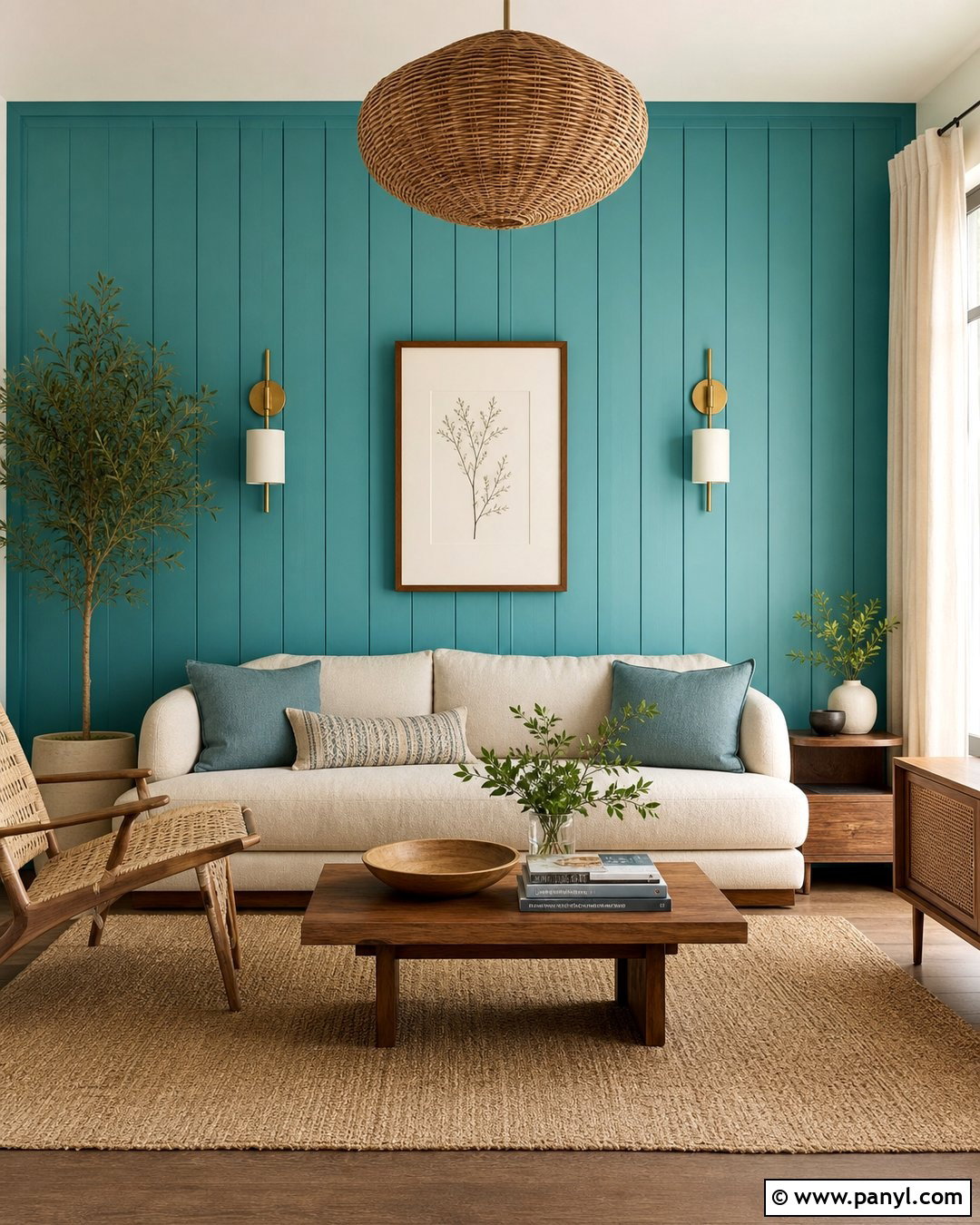
Wood paneling introduces texture and architecture to a turquoise accent wall. Install simple vertical slats or evenly spaced molding, then paint the entire treatment a saturated blue-green turquoise for a unified finish. Place a low cream sofa or neutral upholstered bed in front so the raised pattern remains visible. Add walnut furniture to complement the panel lines and warm the cool wall color. A beige wool rug, linen curtains, and woven lighting keep the room comfortable rather than formal. Use minimal wall decor because the paneling already provides visual interest. One brass sconce on each side can highlight the texture and create symmetry. The completed design feels custom and substantial, yet the straightforward painted treatment can work in an average living room, bedroom, office, or dining space.
11. Turquoise Shiplap Accent Wall
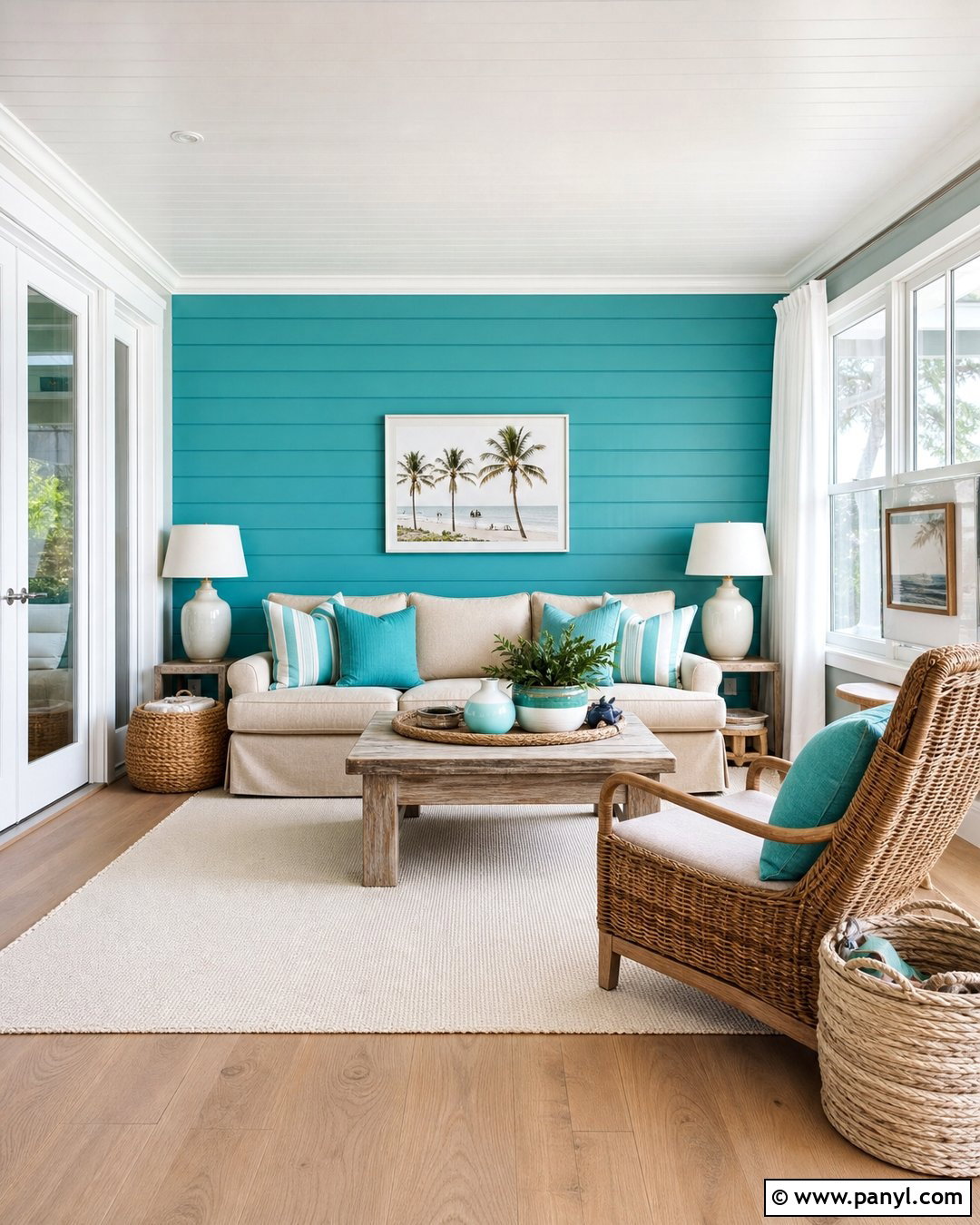
Painted shiplap creates a relaxed turquoise backdrop with subtle horizontal texture. Use it behind a tan linen sofa in a sunroom or casual family room, pairing the wall with warm white surroundings and a light oak floor. Choose a weathered wood coffee table, woven lounge chair, and cream area rug for an easy coastal influence that does not feel overly themed. Add striped pillows in turquoise, ivory, and muted navy, then layer in rope baskets and pale ceramic decor. Keep window treatments airy so natural light reveals the shiplap lines. A simple seascape or abstract print can complete the wall without covering too much of it. The combination feels bright, approachable, and durable enough for a busy everyday gathering space.
12. Turquoise Geometric Accent Wall
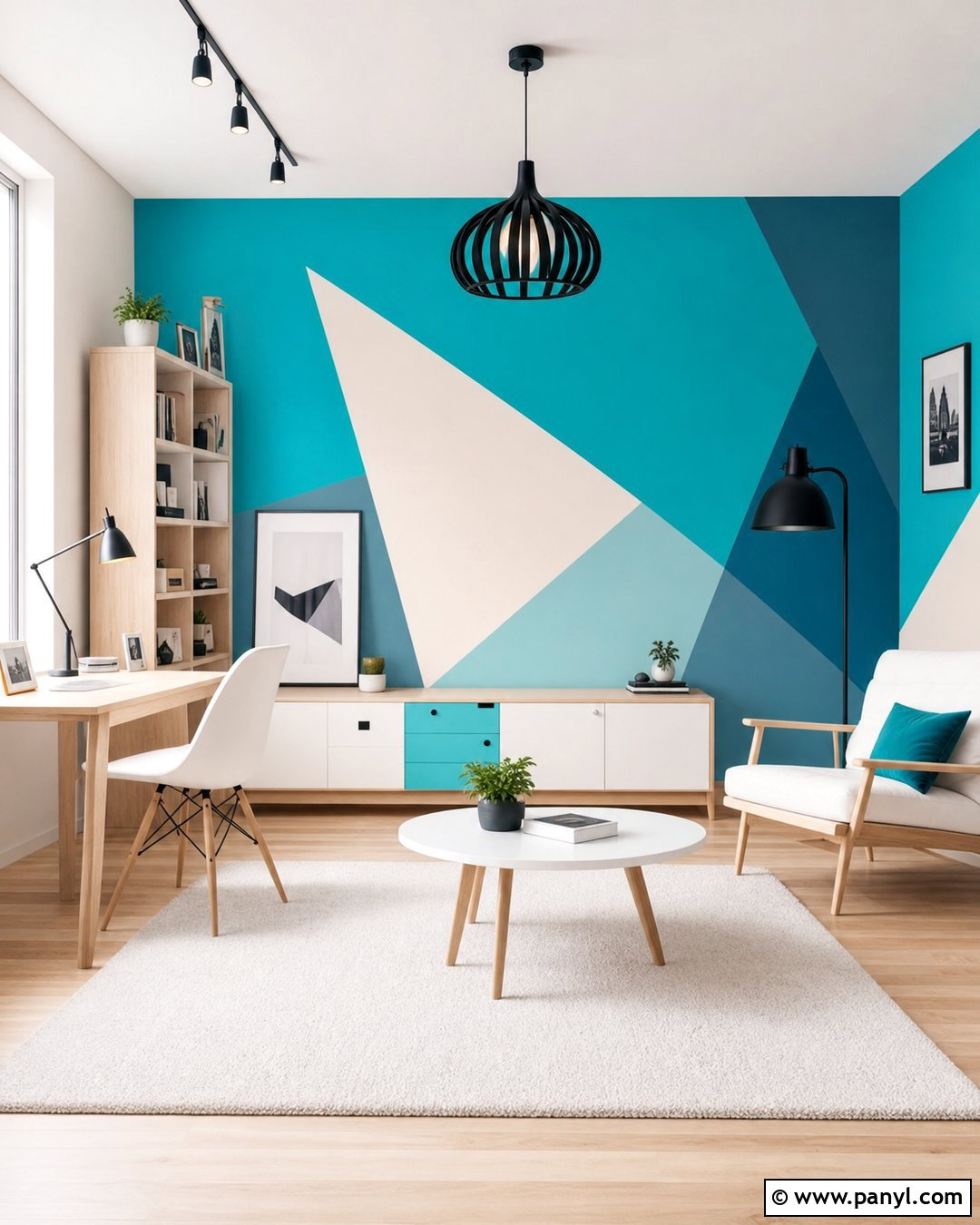
A painted geometric pattern can turn turquoise into an energetic feature without requiring wallpaper. Begin with a soft turquoise base, then add large angular shapes in deep teal, warm white, and muted blue. Keep the design concentrated behind a simple sofa, desk, or bed so it has a clear purpose. Furniture should remain streamlined, with pale wood, white upholstery, and minimal ornamentation. Use a solid cream rug and mostly plain textiles to prevent competing patterns. Black lighting and a few matte black accessories can sharpen the edges of the design. Repeat one geometric shape through a cushion or side table, but avoid copying the entire pattern elsewhere. This complete look suits creative offices, teen bedrooms, playrooms, and modern living rooms that need more personality.
13. Turquoise Wallpaper Accent Wall
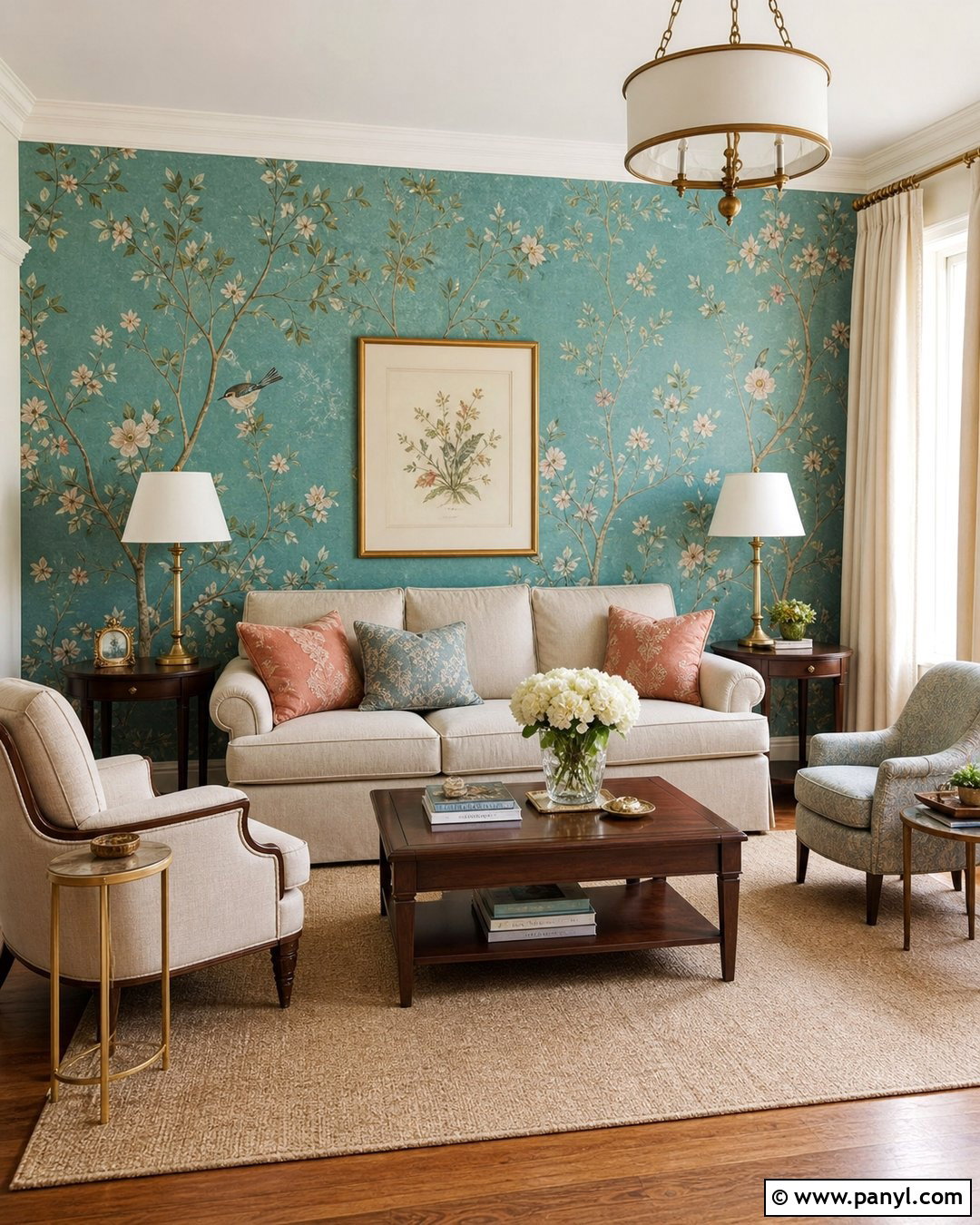
Choose turquoise wallpaper with a spacious botanical, geometric, or block-print pattern to create depth beyond solid paint. Install it behind the main furniture piece and use colors from the pattern throughout the room. For example, pair turquoise-and-ivory wallpaper with an oatmeal sofa, walnut tables, and muted coral pillows. Keep adjacent walls warm white so the pattern remains contained and easy on the eyes. A plain textured rug balances the detailed surface, while solid linen curtains prevent visual competition near the windows. Select artwork carefully or leave the wallpaper mostly uncovered. Brass or matte black lighting can add a clean finishing edge. This coordinated approach produces a layered room that feels intentional, with the wallpaper serving as the source for every supporting color and material.
14. Turquoise Ombre Accent Wall
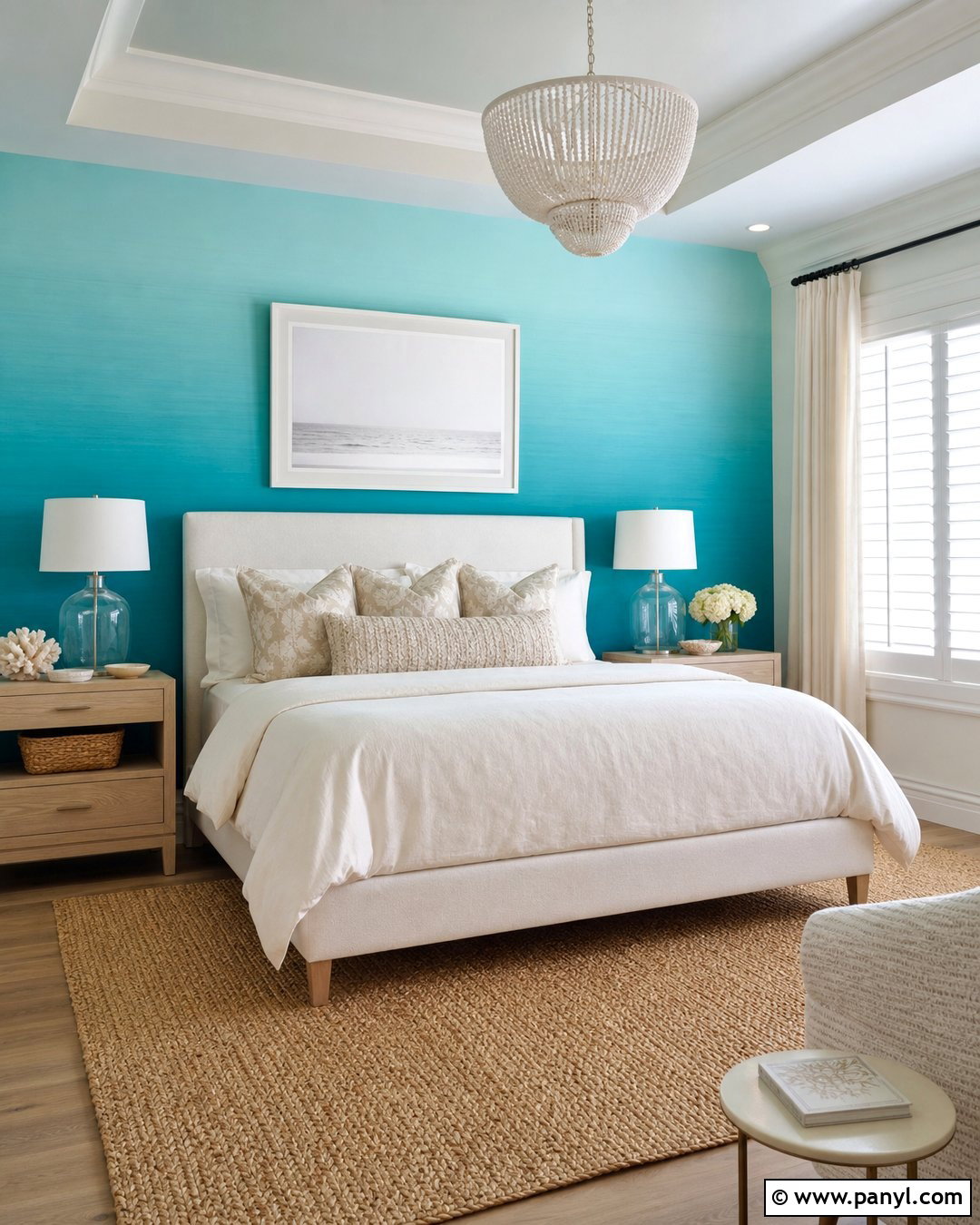
An ombre turquoise wall creates a softer transition than a single saturated block of color. Blend deep turquoise near the floor into medium aqua and pale turquoise toward the ceiling. Keep the fade gradual and place it behind low furniture so the complete transition remains visible. A white upholstered bed or cream sofa provides a quiet foreground, while pale oak tables and a natural jute rug add warmth. Use solid bedding, curtains, and pillows instead of strong patterns. Clear glass lamps and simple white artwork maintain the light, fluid effect. Repeat the deepest turquoise in one small cushion or throw. The complete design feels airy and artistic, making it especially effective in bedrooms, creative studios, reading rooms, or relaxed contemporary living spaces.
15. Turquoise Arch Accent Wall
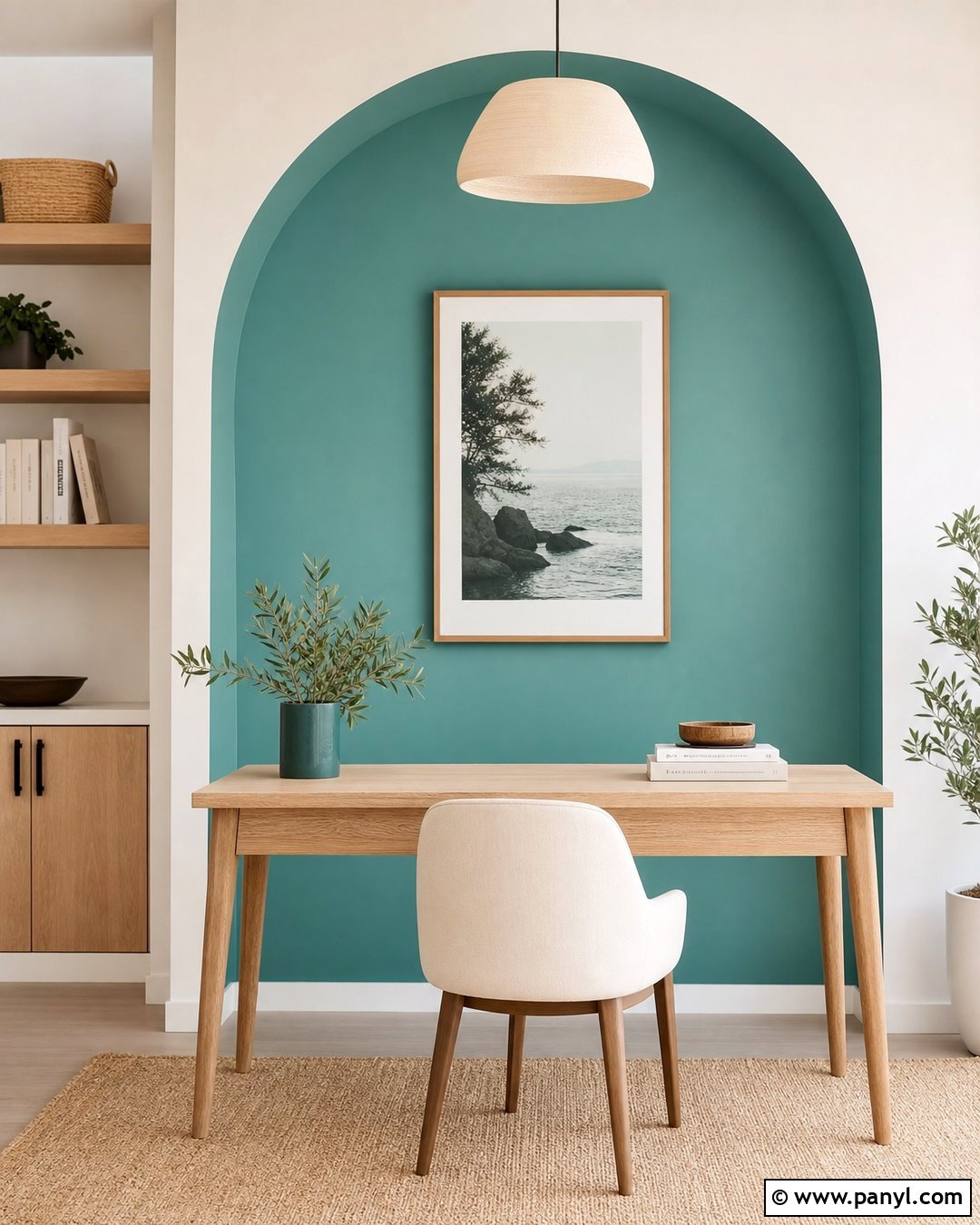
A painted turquoise arch can define a functional zone without covering the entire wall. Create a wide, symmetrical arch behind a bed, desk, reading chair, or entry console, allowing the furniture to sit comfortably within its outline. Use warm white on the surrounding wall for clean contrast. Pale oak furniture, a woven rug, and cream textiles keep the curved shape relaxed and modern. Add one central pendant, mirror, or framed print inside the arch instead of several scattered decorations. A small turquoise accessory elsewhere in the room helps the feature feel connected to the overall palette. This design works well in rentals or compact rooms because it delivers architectural character with paint alone. Careful measuring and smooth edges make the finished feature look intentional.
16. Turquoise Accent Wall With Fireplace
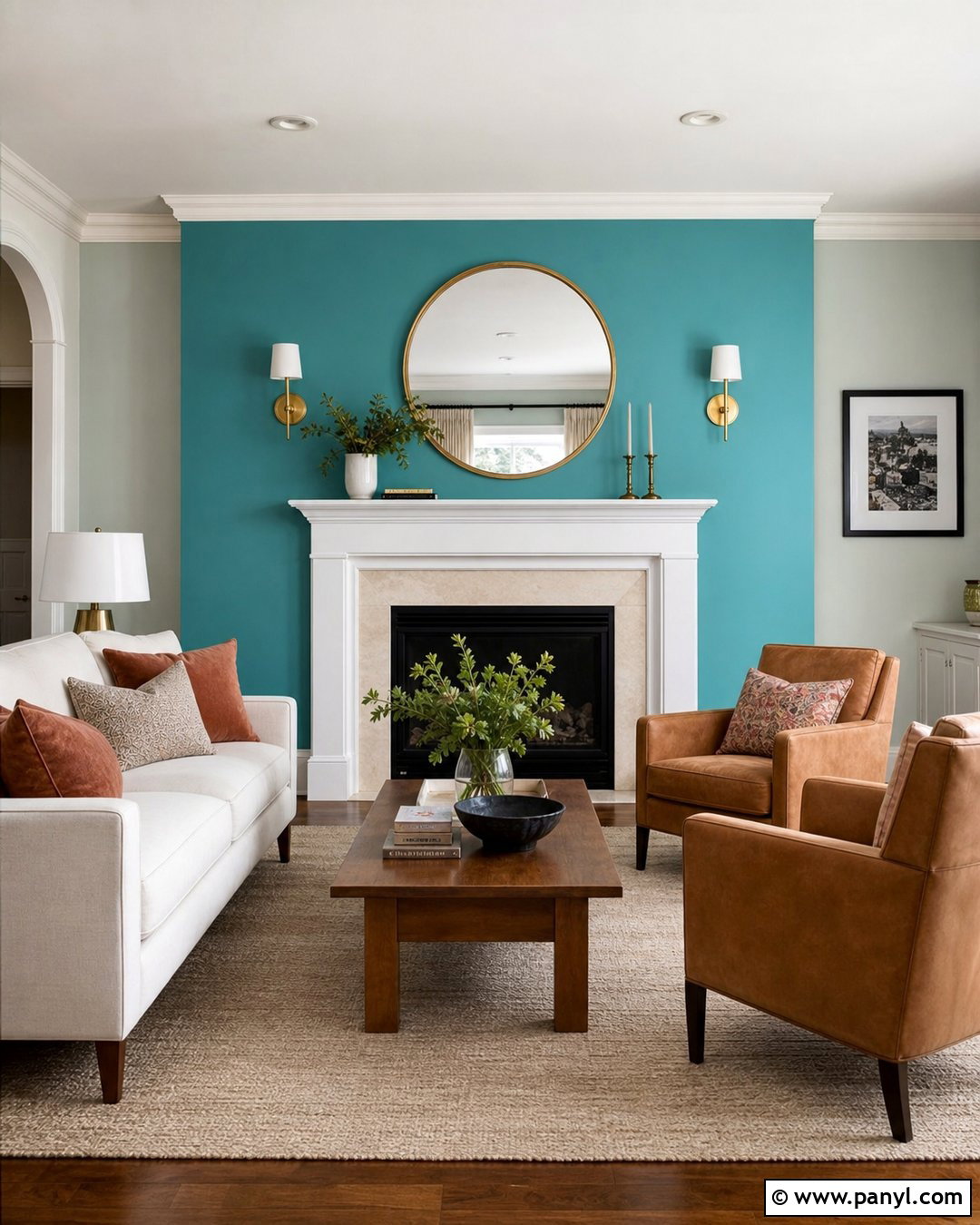
Turn a fireplace into a stronger focal point by using turquoise across the entire wall surrounding it. A medium or deep shade works well with a simple white mantel, pale stone surround, or matte black firebox. Arrange a cream sofa and two tan chairs facing the fireplace to create a balanced conversation area. Use a warm wood coffee table and large neutral rug to soften the bold wall. Above the mantel, hang one round brass mirror or an understated landscape rather than several small pieces. Repeat turquoise in two pillows and introduce muted rust through a throw or ceramic vase. Built-in lighting or matching sconces can emphasize symmetry. The completed room feels cohesive because the furniture layout, color palette, and architectural feature all share one clear center.
17. Turquoise Accent Wall With Built-In Shelves
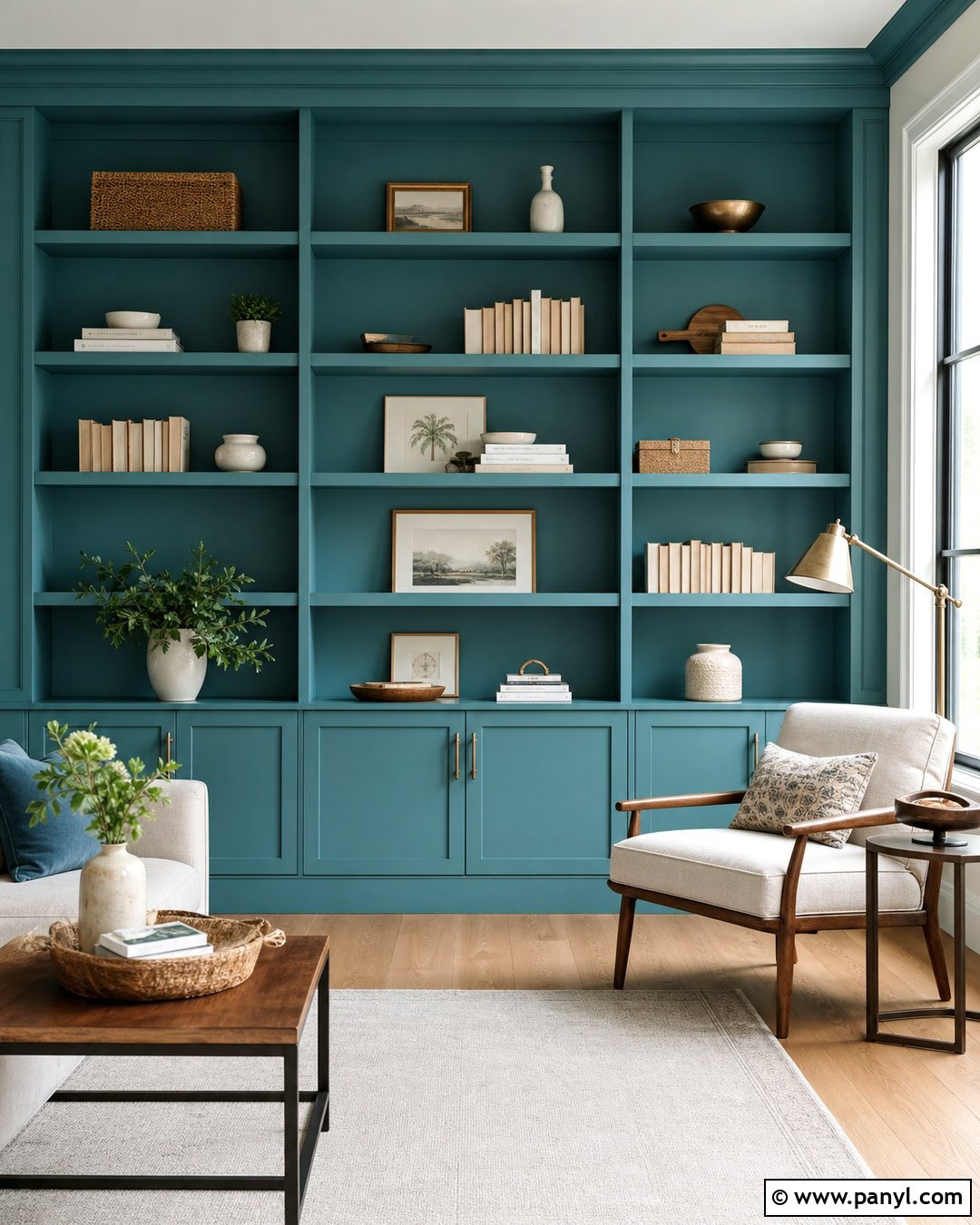
Paint an entire wall of built-in shelves and the surrounding background in the same rich turquoise. This color-drenched treatment turns basic storage into a tailored architectural feature. Keep shelf styling light by mixing cream books, white ceramics, woven boxes, and a few natural wood objects. Position a beige sofa or reading chair nearby, then add a warm oak floor and understated ivory rug. Brass cabinet pulls and picture lights add polished contrast without overwhelming the shelving. Leave some open space around displayed objects so the turquoise remains visible. Use closed lower cabinets to hide everyday clutter and maintain the clean composition. The finished room combines storage and decoration in one cohesive look, making it practical for living rooms, home offices, libraries, and family spaces.
18. Turquoise TV Accent Wall
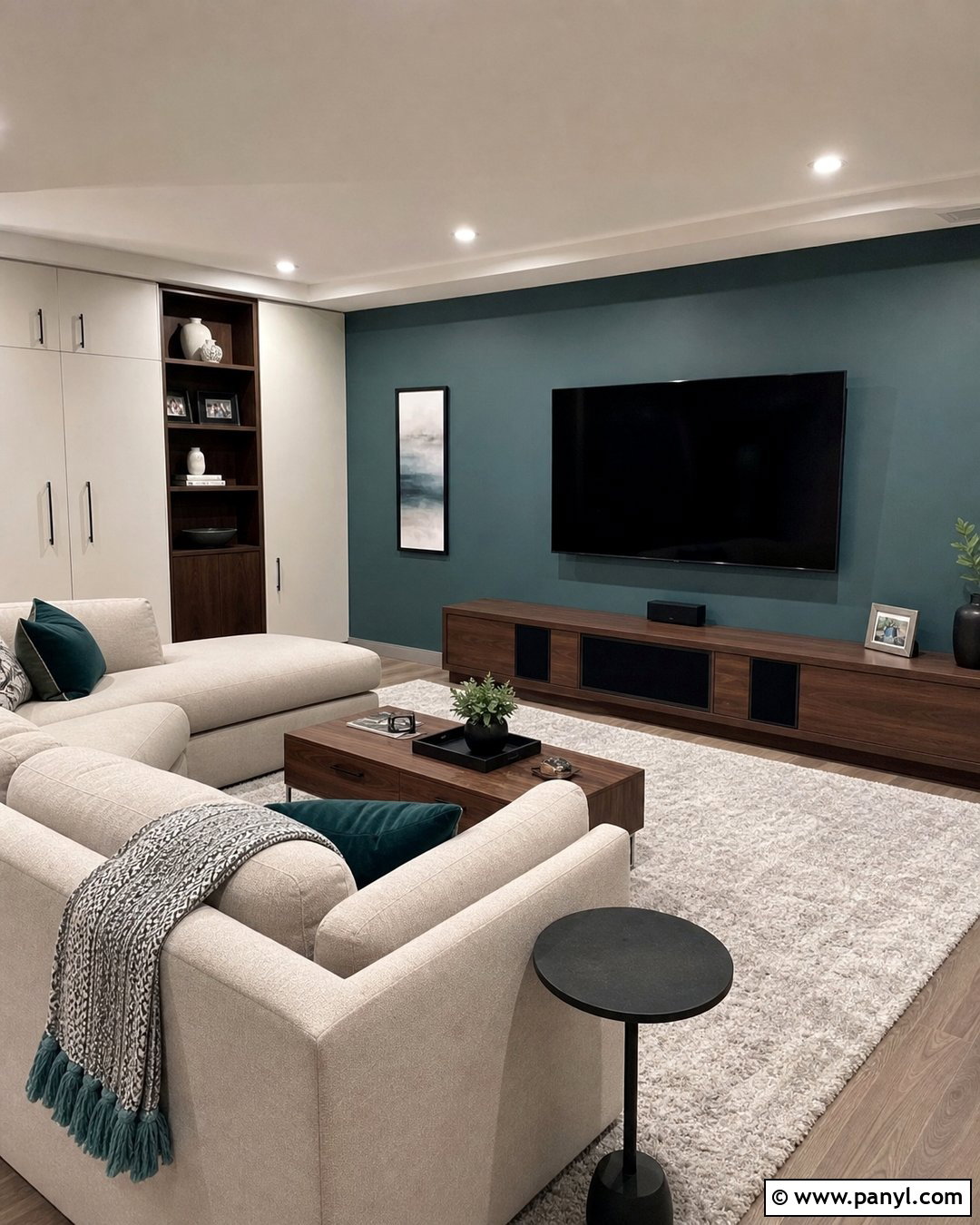
A turquoise TV wall can make a black screen feel more integrated instead of allowing it to dominate the room. Choose a deep, slightly muted turquoise and mount the television at a comfortable viewing height. Install a long walnut media console below it to add warmth and provide concealed storage. Keep cords hidden and use only a few low decorative objects so the arrangement remains uncluttered. Warm white surrounding walls, a cream sectional, and a soft gray rug balance the darker feature. Add black table lamps and narrow black frames elsewhere to repeat the television’s finish. Turquoise pillows and one patterned throw can connect the seating area to the wall. This complete setup looks polished, functional, and appropriate for an everyday family living room.
19. Turquoise Dining Room Accent Wall
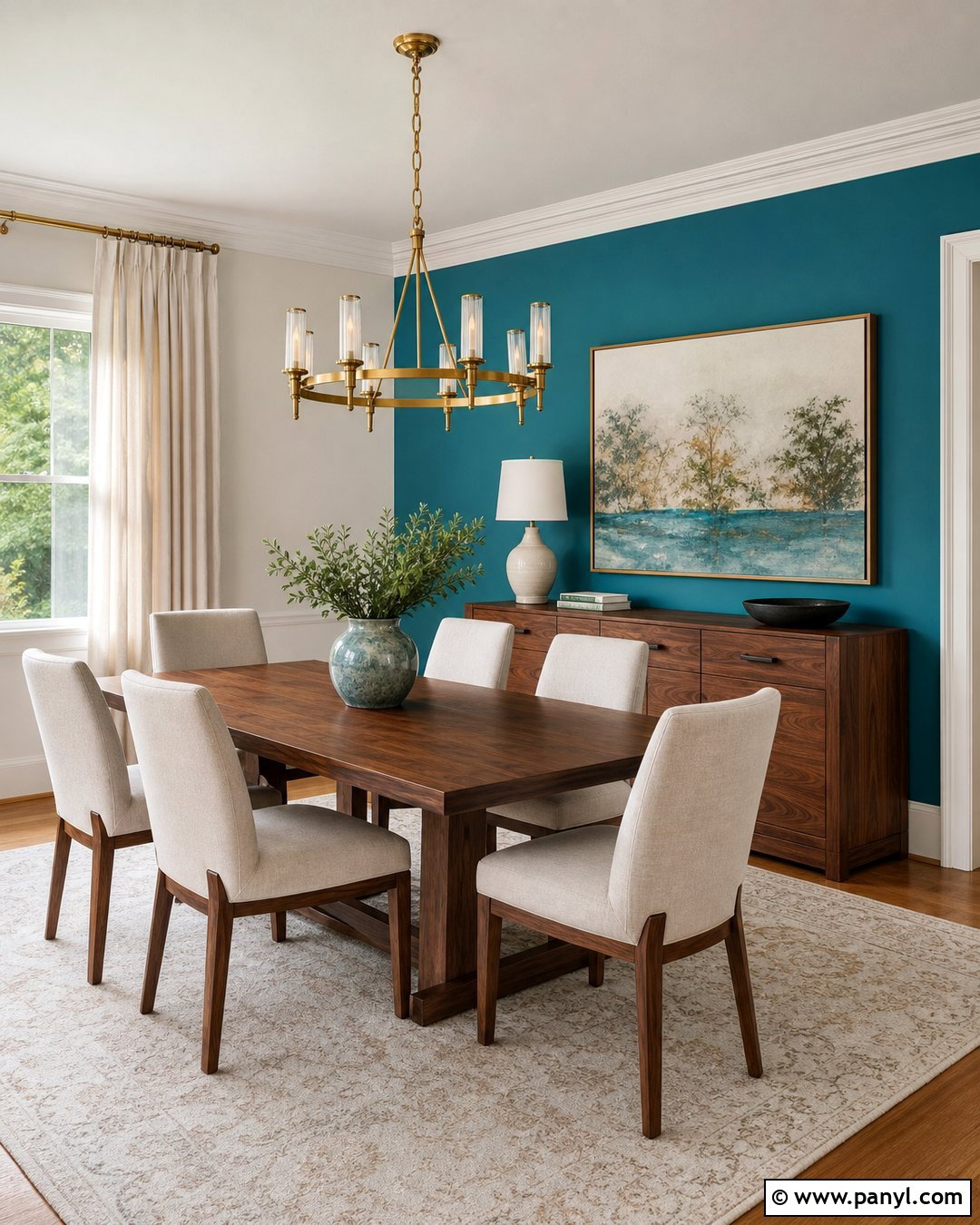
Create a colorful dining room by placing a turquoise wall behind a substantial sideboard or buffet. Pair it with a walnut dining table, upholstered cream chairs, and a simple brass or matte black chandelier. The remaining walls should be warm white or very pale greige to keep the dining area bright. Place a large framed artwork or round mirror above the buffet, leaving enough turquoise visible to frame it. A flat-woven rug in ivory, blue, and muted rust grounds the table and supports the palette. Add linen curtains and a ceramic centerpiece for softness. Avoid filling the sideboard with numerous small accessories. A few well-scaled pieces will make the design feel calmer, while the turquoise wall supplies all the color and personality the room needs.
20. Turquoise Kitchen Accent Wall
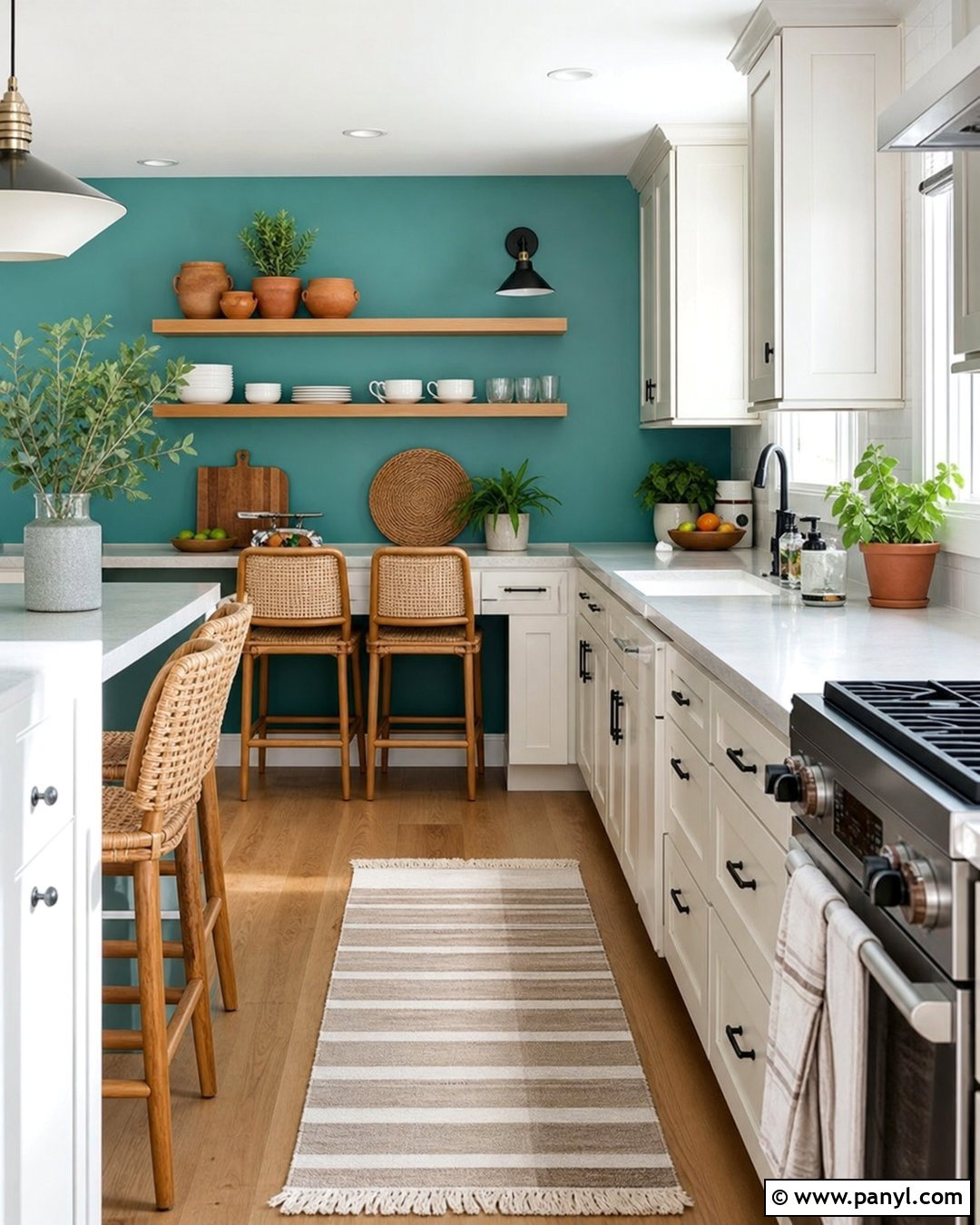
Use turquoise on one kitchen wall to brighten the room without repainting every cabinet. The most effective location is behind a breakfast table, open shelving, or a freestanding hutch rather than directly beside a busy collection of appliances. Pair the wall with warm white cabinets, pale quartz countertops, and a light oak or wood-look floor. Black hardware gives the kitchen definition, while woven stools and a small wood table add warmth. Install simple floating shelves in natural oak and display white dishes, clear glassware, and a few terracotta pieces. A striped washable runner can repeat turquoise in a smaller amount. This finished kitchen feels cheerful and coordinated because the strong wall color is supported by clean cabinetry, practical materials, and restrained countertop decor.
21. Turquoise Breakfast Nook Accent Wall
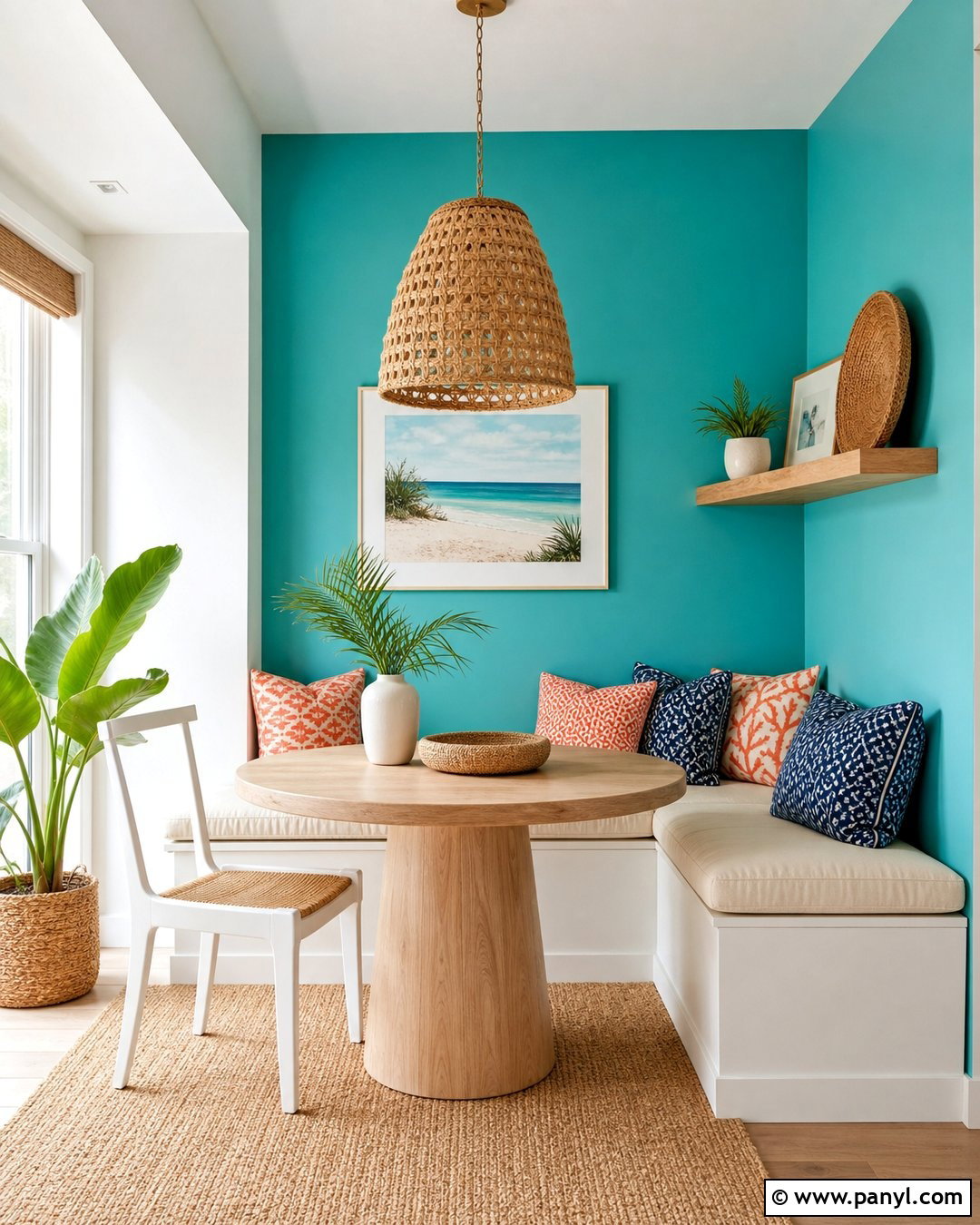
A small breakfast nook is an ideal place for playful turquoise because the color can visually separate it from the surrounding kitchen. Paint the wall behind a built-in bench or compact dining set in a clear medium turquoise. Add a white or pale oak pedestal table and upholstered bench cushions in cream performance fabric. Patterned pillows can combine turquoise with yellow, coral, or navy for a lively morning palette. Use a woven pendant light overhead and a washable natural-look rug under the table. A framed print or shallow wood shelf completes the wall without consuming valuable space. Keep the adjacent kitchen finishes simple and neutral. The result is a bright, practical dining corner that feels intentional rather than like leftover space between cabinets and windows.
22. Turquoise Bathroom Accent Wall
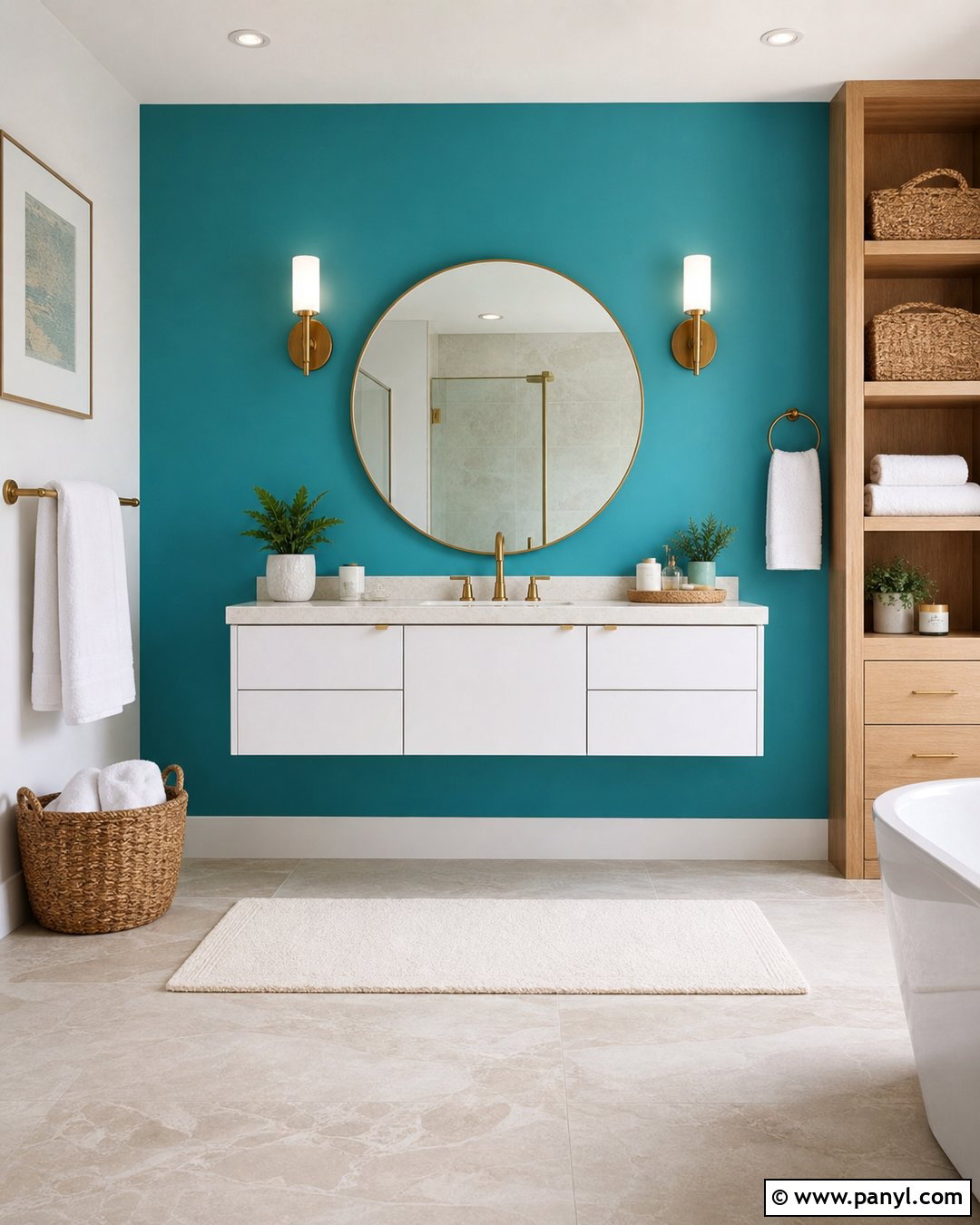
Introduce turquoise to a bathroom through the wall behind a freestanding tub or floating vanity. Choose moisture-resistant paint in a washable finish, or use turquoise glazed tile where frequent splashing is expected. Pair the color with a white vanity, pale quartz counter, and brushed brass or polished chrome fixtures. A light wood cabinet and woven storage baskets keep the bathroom from feeling overly cool. Use white towels, a cream bath mat, and a simple shower curtain to balance the stronger surface. One round mirror and two streamlined sconces create a tidy focal arrangement. Avoid adding several competing blue-green shades. A controlled turquoise, white, and natural wood palette will make even a modest bathroom feel brighter, fresher, and more thoughtfully designed.
23. Turquoise Tile Accent Wall
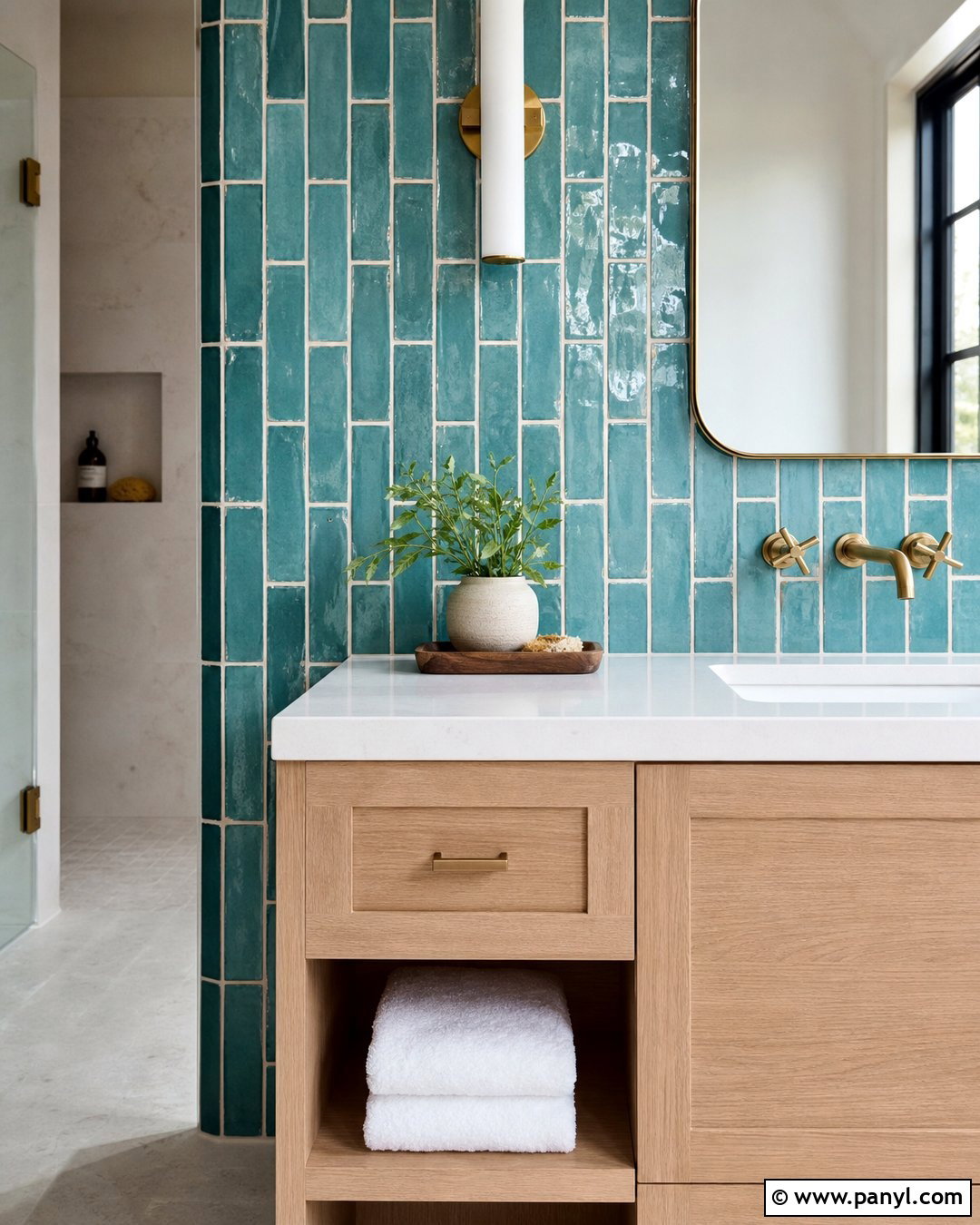
Glossy turquoise tile adds color, texture, and light reflection to kitchens and bathrooms. Cover one complete backsplash or vanity wall with rectangular, square, or handmade-look tile rather than scattering small turquoise sections around the room. White grout creates a crisp grid, while matching grout produces a smoother surface. Pair the tile with white oak cabinetry, warm white countertops, and brushed brass fixtures for balanced contrast. Keep flooring neutral with pale stone or simple porcelain. Open shelves can display white dishes or neatly folded towels, depending on the space. Because glazed tile already has movement and shine, use restrained accessories and straightforward lighting. The finished wall becomes a durable focal point that looks rich and dimensional without requiring additional patterns or elaborate decoration.
24. Turquoise Home Office Accent Wall
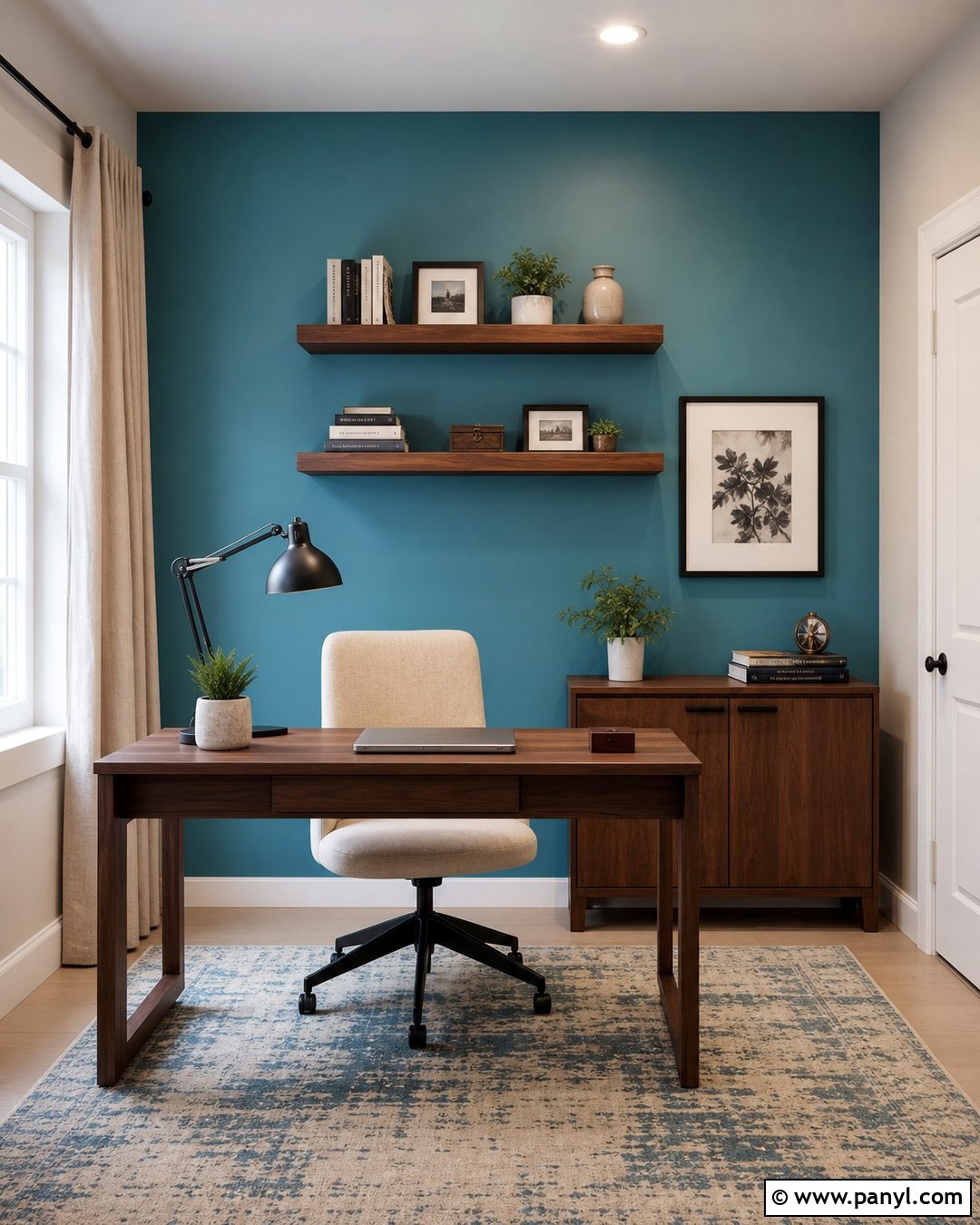
A turquoise wall can give a home office energy while providing a polished background for the desk. Select a muted medium shade and place a walnut or pale oak desk directly in front of it. Add a cream upholstered chair, black task lamp, and closed storage cabinet to keep the workspace practical. Floating wood shelves can hold a limited mix of books, boxes, and ceramic objects. Use warm white on the remaining walls and hang linen curtains to soften daylight. A low-pile rug in cream and faded blue defines the work zone without interfering with the chair. Include one large framed print rather than a crowded gallery. The completed office feels focused and professional, yet the turquoise prevents the room from becoming bland or overly corporate.
25. Turquoise Entryway Accent Wall
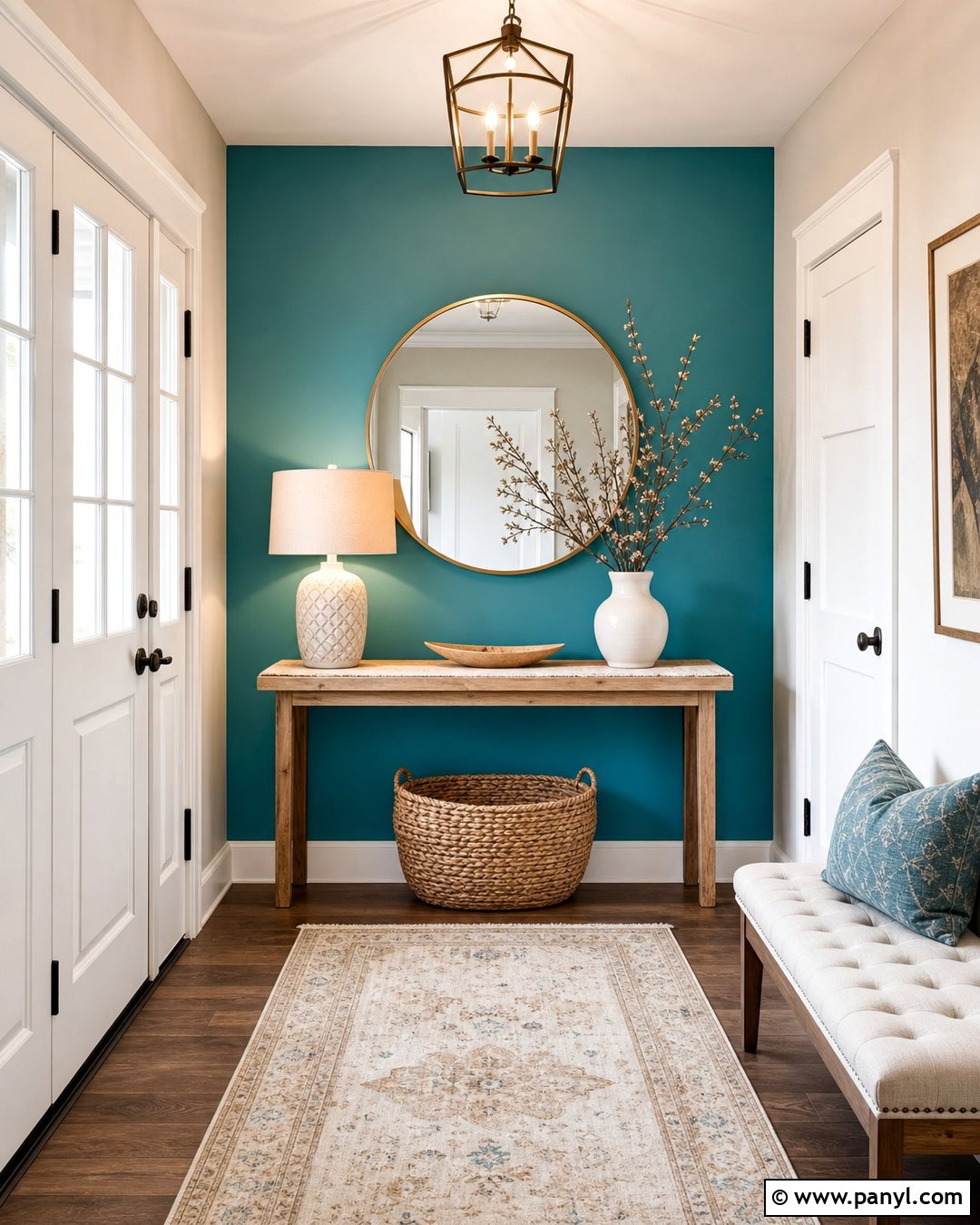
Welcome guests with a turquoise accent wall behind a slim entry console. Use a lively but slightly softened shade that looks attractive in both daylight and artificial light. A natural wood console, woven basket, and cream runner provide a grounded base. Hang a large round mirror with a thin brass or black frame to reflect light through the entry. Add one table lamp, a ceramic bowl, and a small branch arrangement while leaving the rest of the surface clear. Paint surrounding doors and trim warm white for definition. If space allows, place a simple upholstered bench opposite the wall. This complete entryway feels cheerful, organized, and practical, with storage for daily essentials and enough open space to keep the bold turquoise from appearing visually crowded.
26. Turquoise Hallway Accent Wall
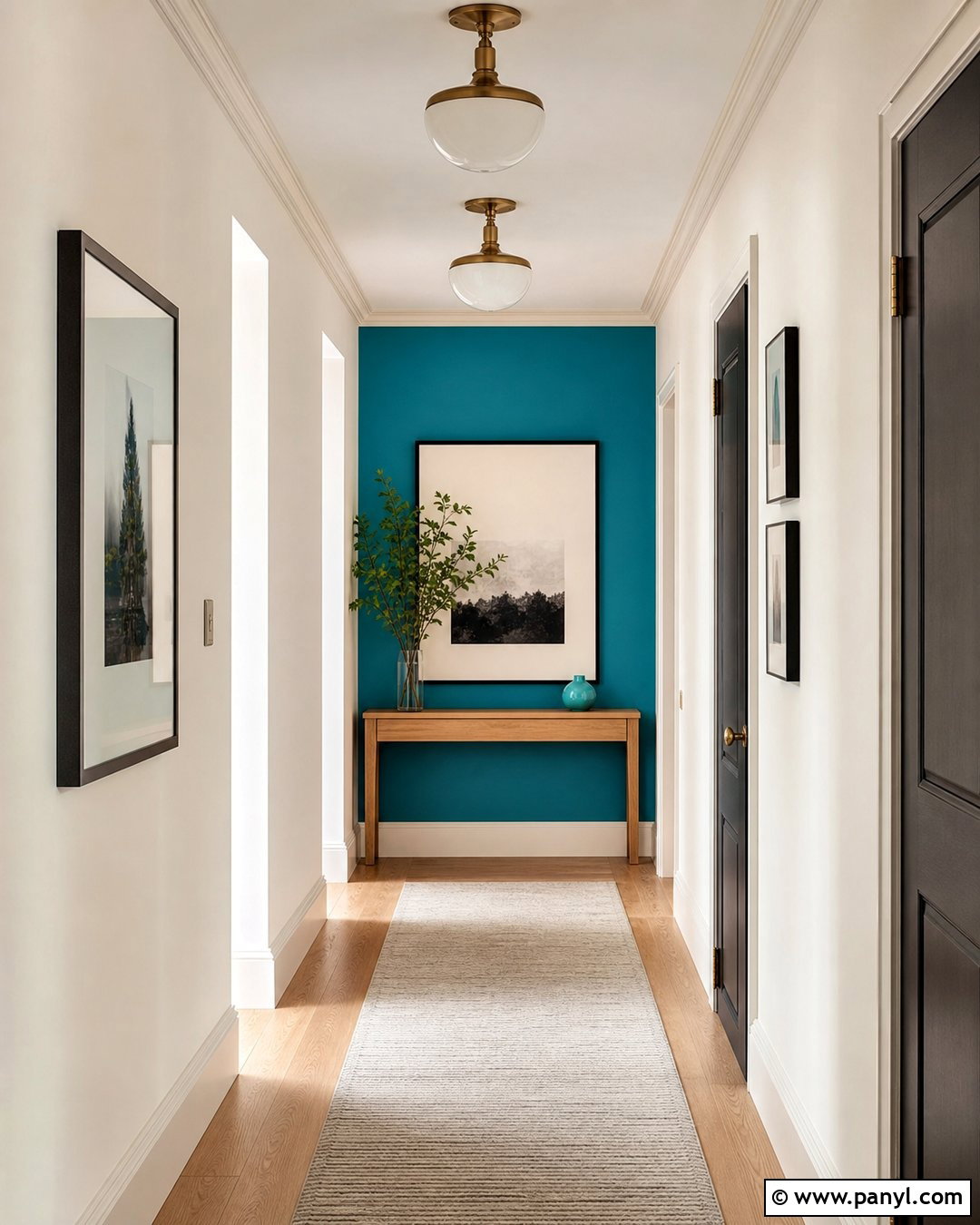
A turquoise wall at the end of a hallway can create a destination and make a long passage feel more purposeful. Paint only the terminating wall, then place a narrow console, bench, or tall plant against it. Keep the side walls warm white to direct the eye toward the color. A light oak floor and neutral runner brighten the path, while black or brass ceiling fixtures add a clear visual rhythm. Hang one large framed artwork or mirror on the turquoise surface rather than a busy collection. Repeat the color subtly through the runner or a small object on the console. This arrangement uses the hallway’s natural sightline to create impact. It also introduces personality without making the entire narrow space feel darker or more enclosed.
27. Turquoise Kids Room Accent Wall
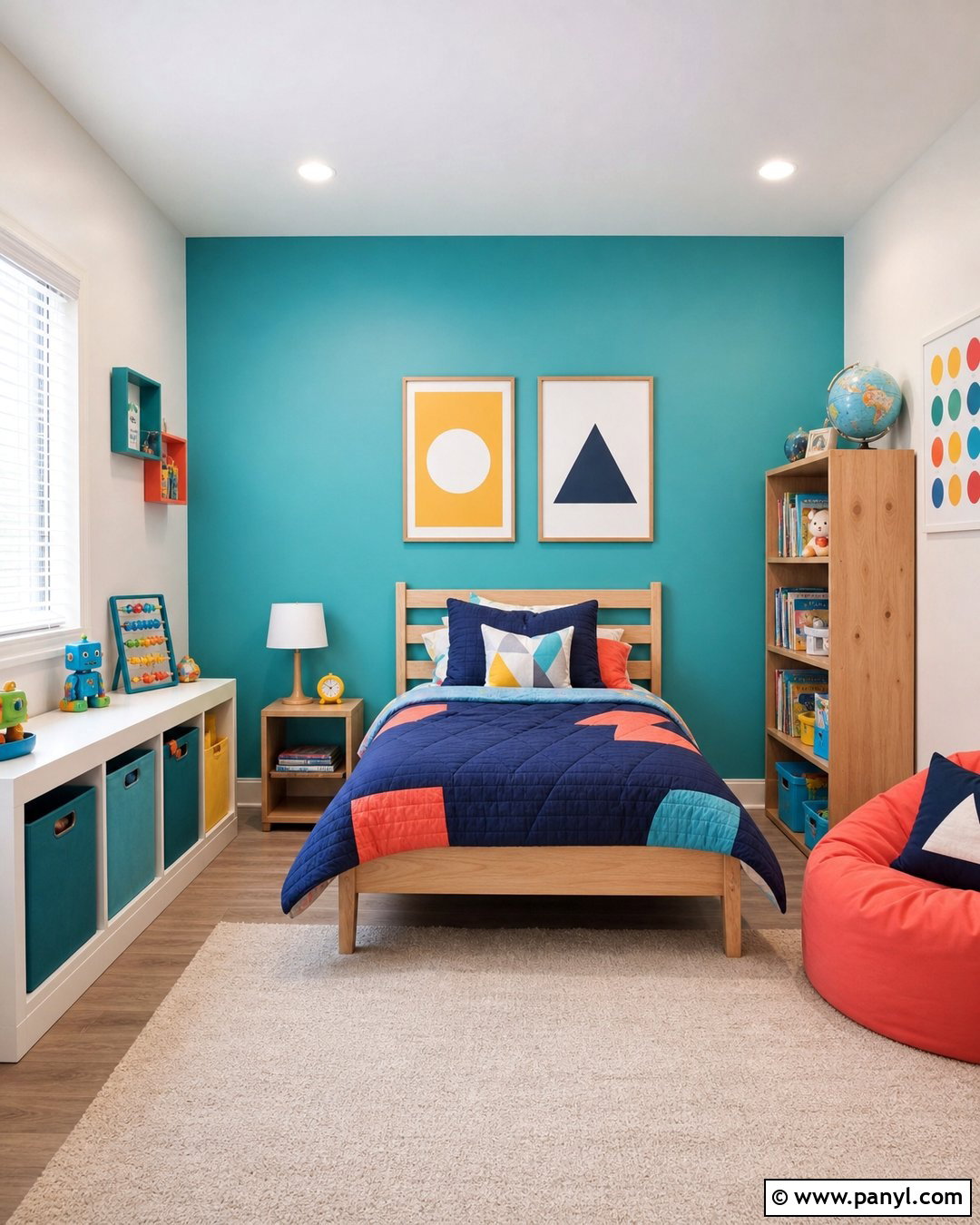
Design a cheerful children’s room with a medium turquoise wall behind the bed or main storage area. Balance the color with warm white walls, light wood furniture, and durable cream flooring or a washable rug. Add bedding that combines turquoise with sunny yellow, coral, and navy in small amounts. Closed bins and low cabinets keep toys organized, while one floating shelf provides space for books and a few decorative objects. Choose simple artwork with large shapes instead of covering every inch of the wall. A white ceiling light and adjustable bedside lamp keep the room bright for play and reading. The completed look feels youthful without being overly themed, allowing the furniture and color palette to adapt as the child grows.
28. Turquoise Nursery Accent Wall
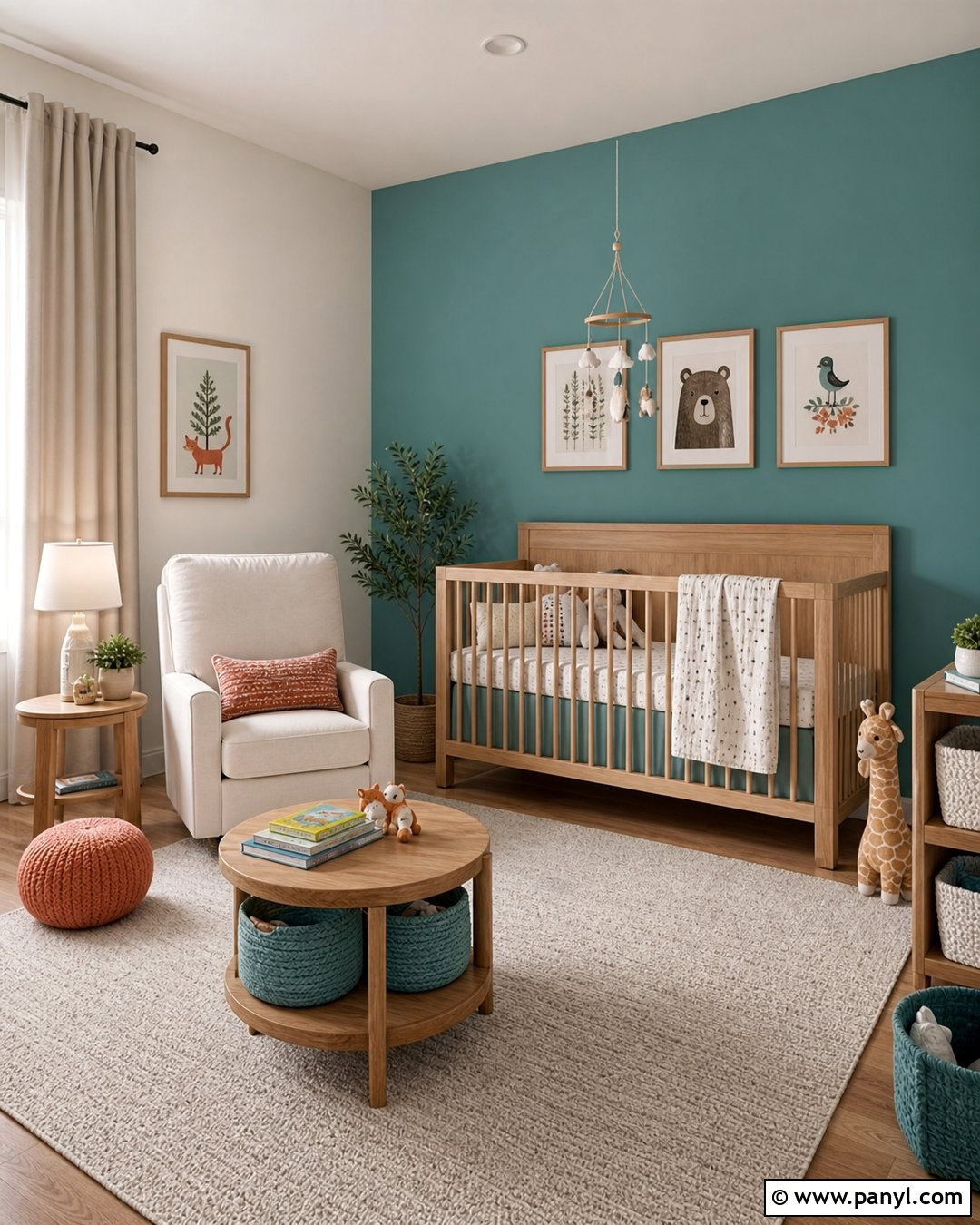
A softened turquoise wall creates a calm nursery backdrop that works with many different color palettes. Position a natural oak or white crib against the painted wall, ensuring artwork and shelving are securely installed away from the sleeping area. Use warm white on the other walls and add blackout curtains in oatmeal or ivory. A cream upholstered glider, round wood side table, and washable beige rug make the room comfortable for everyday care. Introduce gentle accents through a dusty coral throw, pale yellow cushion, or blue-green storage baskets. Choose one simple mobile and a few framed illustrations rather than excessive wall decor. This complete nursery feels soothing, practical, and flexible, with enough color to be interesting while still supporting a peaceful atmosphere.
29. Turquoise Laundry Room Accent Wall
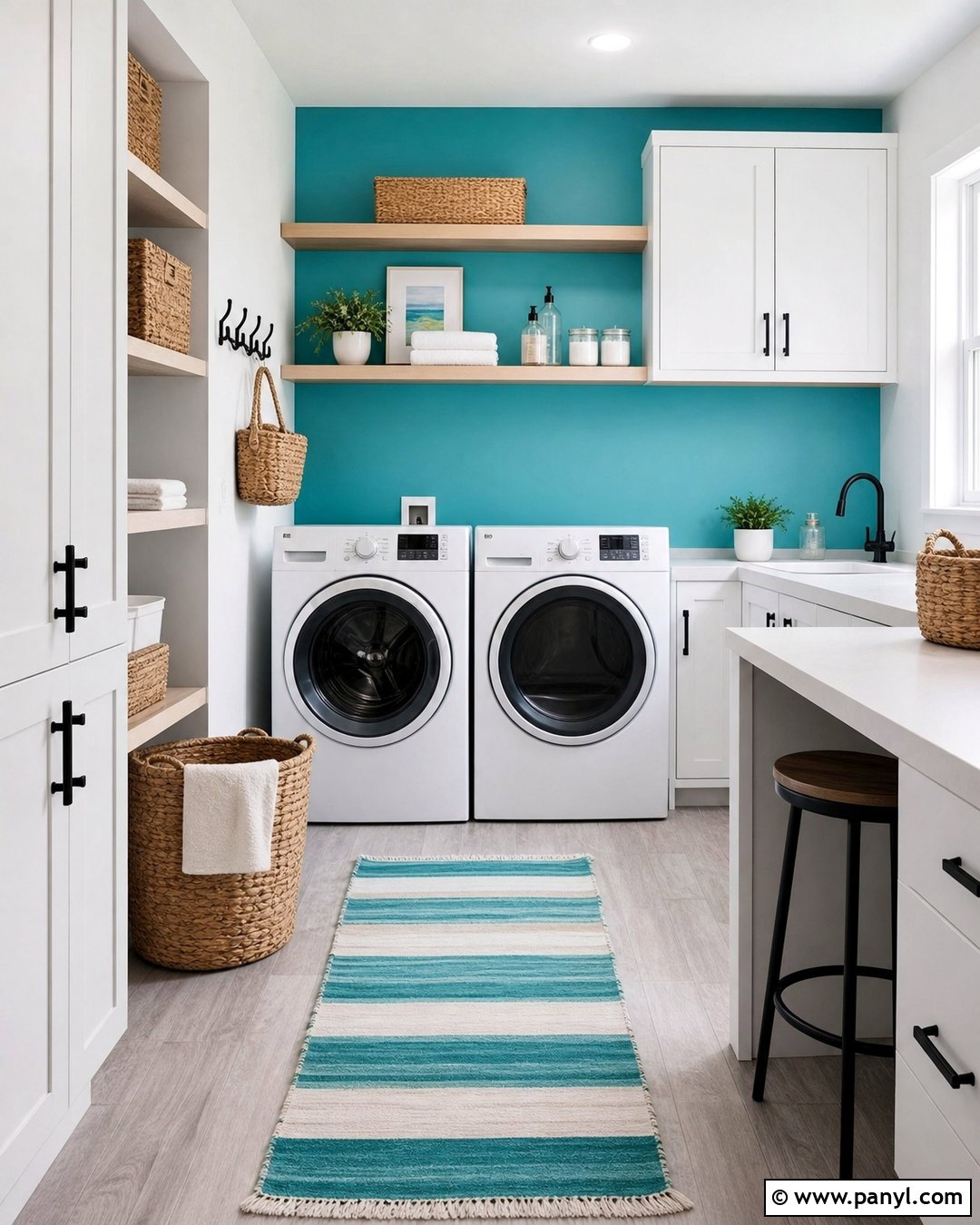
Turn a practical laundry room into a more enjoyable workspace with a turquoise wall behind the washer, dryer, or utility sink. Combine it with white cabinetry, pale wood shelves, and durable light gray flooring. Matte black hooks and cabinet pulls add clean contrast, while labeled woven baskets provide organized storage without making the room feel clinical. Use a white quartz or laminate folding counter to reflect light and create a useful work surface. A small striped runner can bring turquoise, cream, and charcoal into the foreground. Keep cleaning products inside cabinets or matching containers so the accent wall remains the visual focus. The finished laundry room feels bright and orderly, proving that hardworking household spaces can still have a thoughtful, coordinated design.
30. Turquoise Outdoor Accent Wall
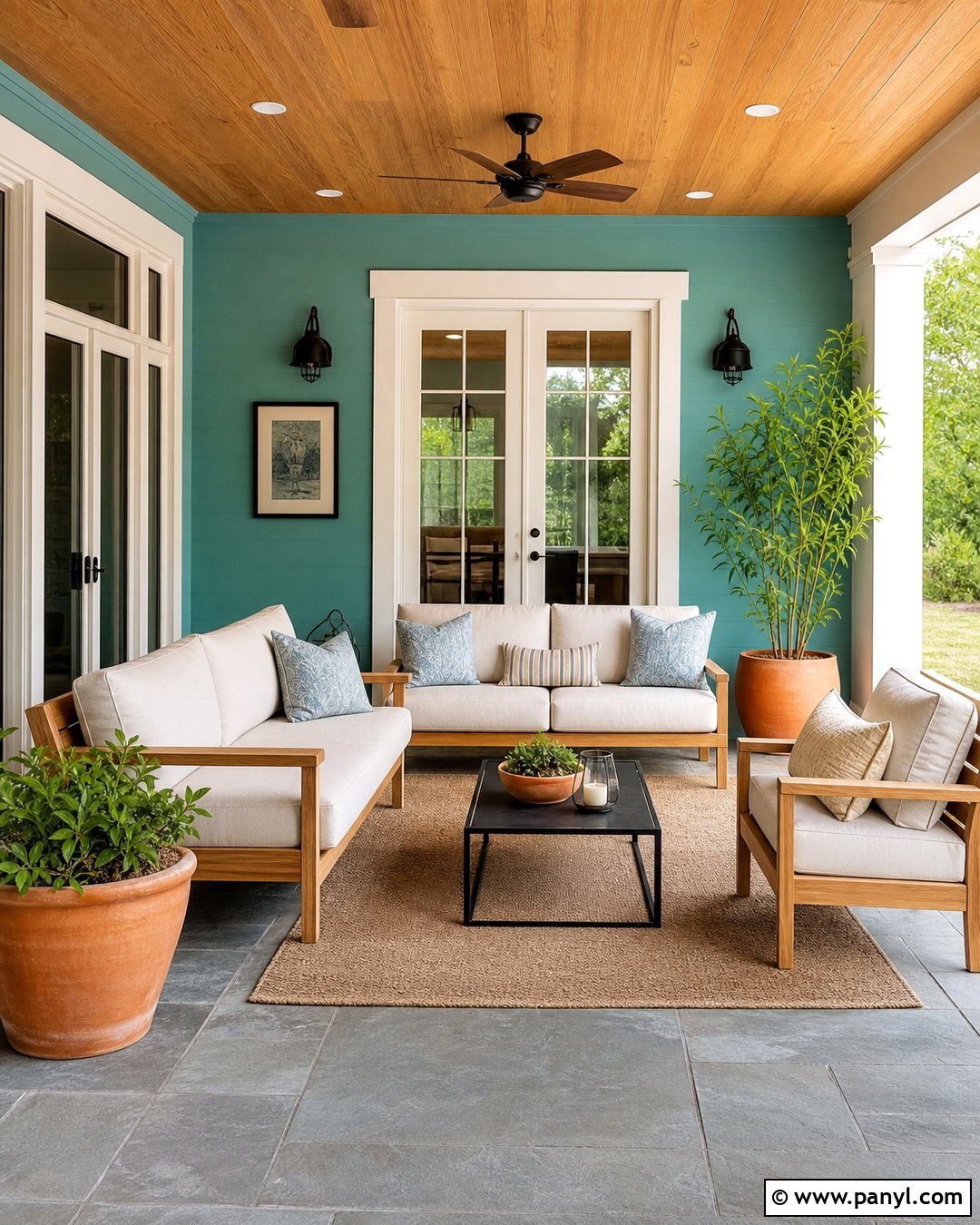
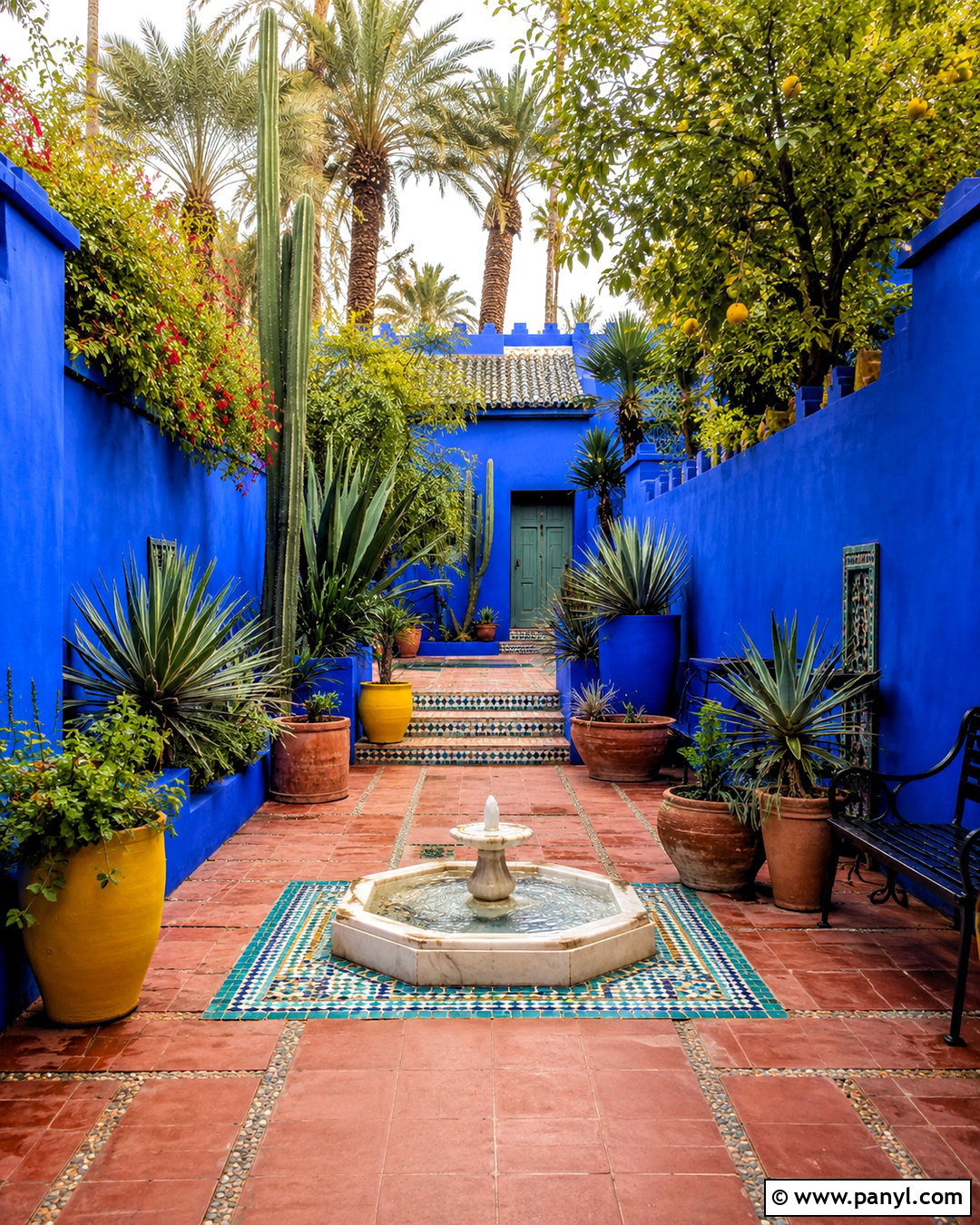
Turquoise can bring character to a covered patio, courtyard, or balcony when applied to a protected exterior wall. Choose an exterior-rated paint with a slightly muted finish, then pair it with natural cedar seating, cream outdoor cushions, and terracotta planters. Add a woven outdoor rug and a simple black metal coffee table to create a complete conversation area. Green foliage looks especially vibrant against turquoise, so use a mix of tall container plants and smaller herbs. Warm white trim helps define doors and windows, while black sconces create a crisp daytime detail. Keep the furniture at a realistic residential scale and leave clear walking space. This finished outdoor setting feels fresh, relaxed, and connected to the surrounding landscape without relying on a literal tropical theme.
Conclusion:
The best turquoise feature walls feel connected to the entire room rather than added as an afterthought. Start by selecting a shade that suits the available light, room size, and mood you want to create. Then balance it with warm neutrals, natural wood, practical furniture, and a limited number of repeated accents. Paint offers the simplest transformation, while paneling, wallpaper, tile, shelving, and geometric treatments add extra texture or architecture. Turquoise can work in living rooms, bedrooms, kitchens, bathrooms, workspaces, and outdoor areas when every element supports one clear palette. These 30 turquoise accent wall ideas provide complete, adaptable looks that can bring fresh color and personality to homes of many sizes and design preferences.

Related Ideas and Inspiration:
Leave a Reply