
Color can turn an ordinary cooking space into the most memorable room in the house. These 20 vibrant kitchen ideas explore complete, livable designs rather than isolated pops of color. Current kitchens are moving beyond predictable all-white palettes toward warmer hues, earthy greens, playful contrasts, patterned surfaces, and expressive combinations. () The key is balance. Bold cabinets look more grounded beside natural wood, while colorful tile feels calmer when counters and flooring stay simple. You can also introduce personality through an island, wallpaper, lighting, or painted trim if a full remodel is not practical. From sunny yellow and cobalt blue to terracotta and soft pastels, there is an approach for every home. Use these **20 vibrant kitchen ideas** to create a space that feels cheerful, cohesive, and unmistakably yours.

1. Colorful Two Tone Kitchen
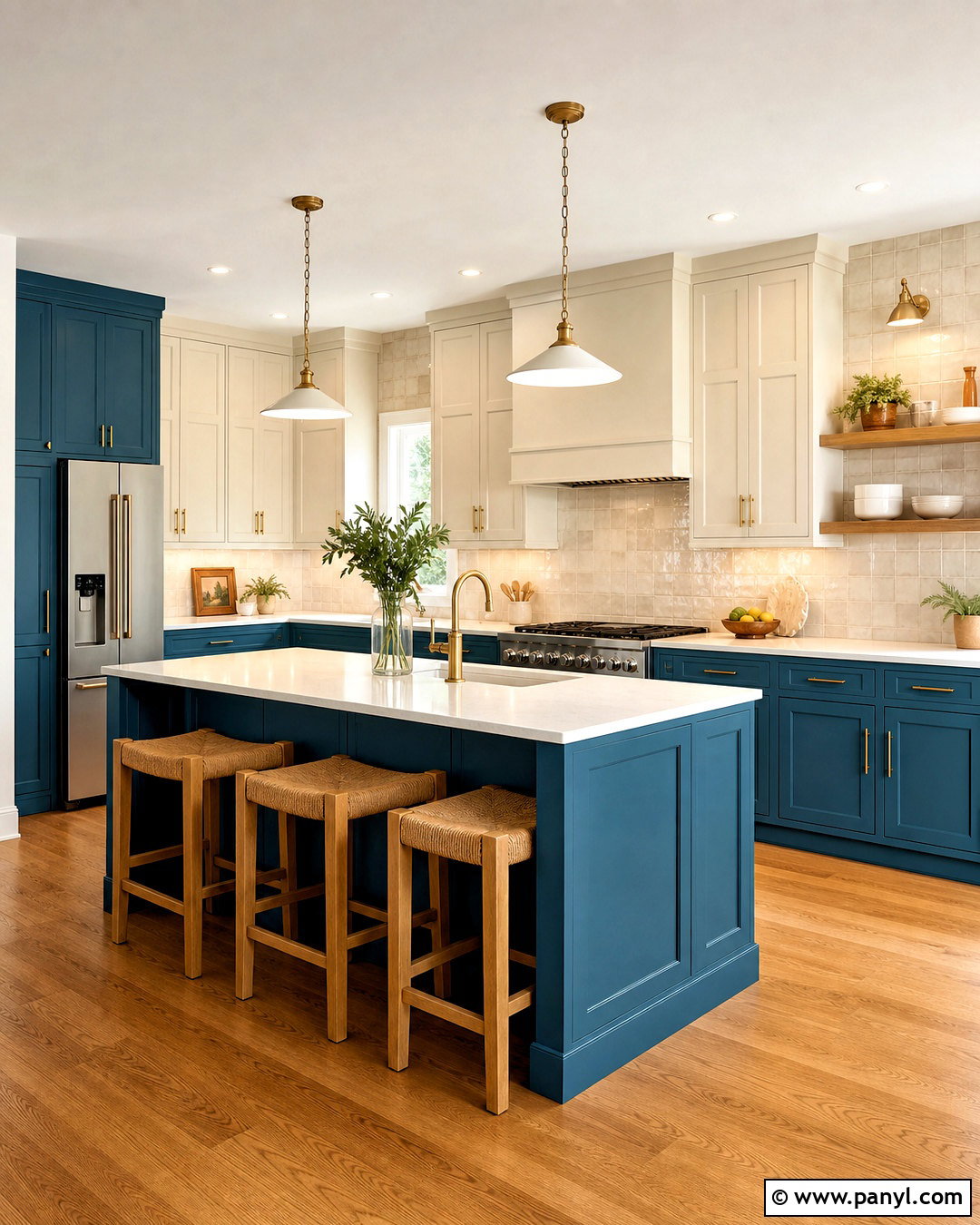
A two-tone palette makes bold color easier to live with because each shade has room to breathe. Paint the lower cabinets a rich peacock blue and use warm ivory on the uppers to keep the room feeling open. Carry the blue onto a generous island with a pale quartz countertop and rounded oak stools. A backsplash of glossy cream zellige tile adds texture without introducing another competing hue. Finish the scheme with aged brass hardware, white globe pendants, and medium-tone oak flooring. For a controlled accent, display a few coral bowls or framed prints near the breakfast area. Repeating each color at least twice makes the complete kitchen feel intentional rather than pieced together.
2. Deep Green Kitchen
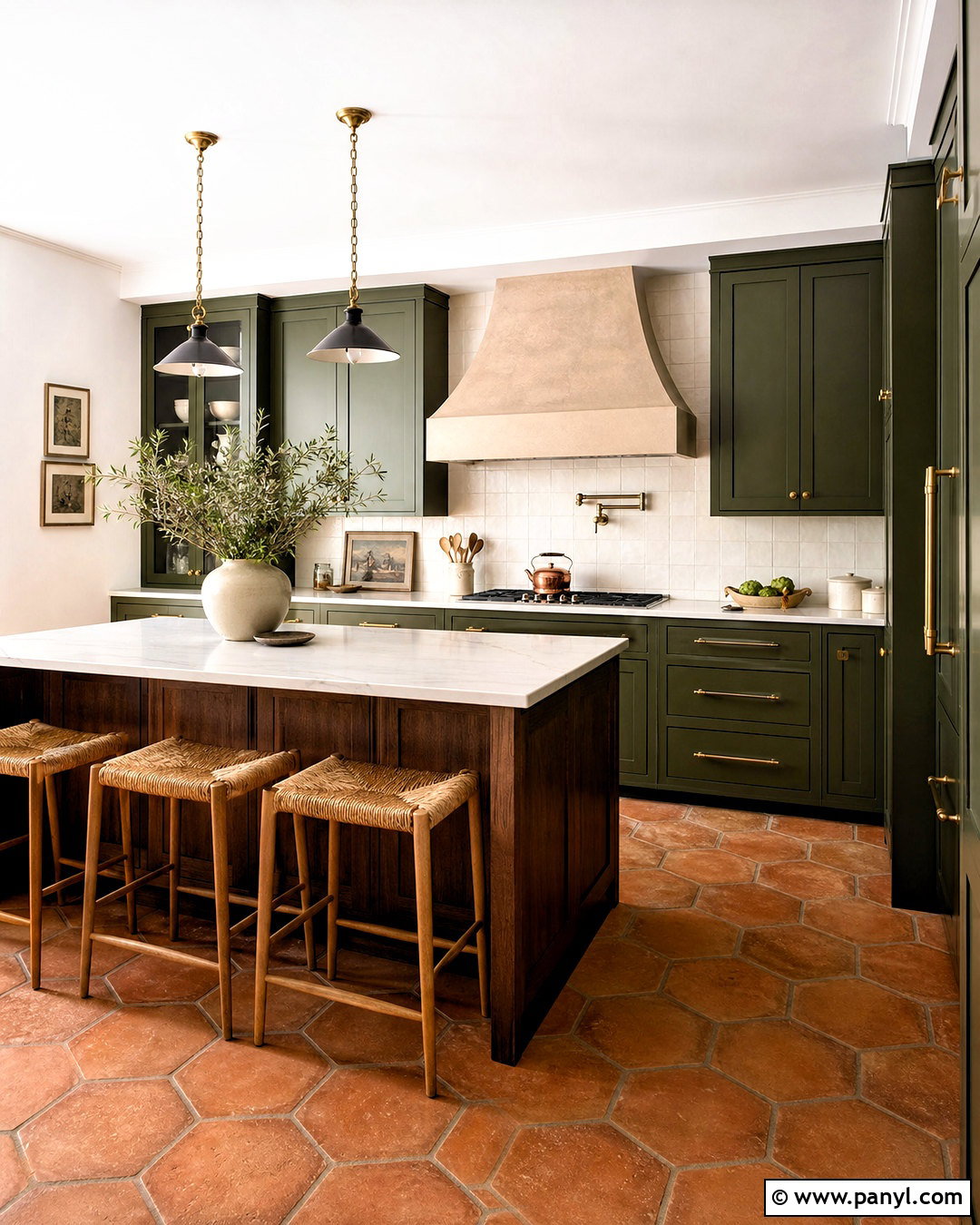
Deep olive green creates a vibrant kitchen that still feels grounded and comfortable. Use the color across Shaker cabinets and a paneled refrigerator for a seamless, furniture-like look. Choose creamy marble-look quartz counters with subtle brown veining, then install a warm white backsplash to reflect light around the room. A natural walnut island adds contrast and prevents the green from becoming visually heavy. Bring in unlacquered brass pulls, a plaster range hood, and woven counter stools for a layered finish. Terracotta floor tile introduces an earthy red note that complements the cabinetry. Keep accessories practical and restrained, using cream pottery, wooden boards, and small leafy herbs to complete this welcoming, nature-inspired kitchen.
3. Cobalt Blue Kitchen
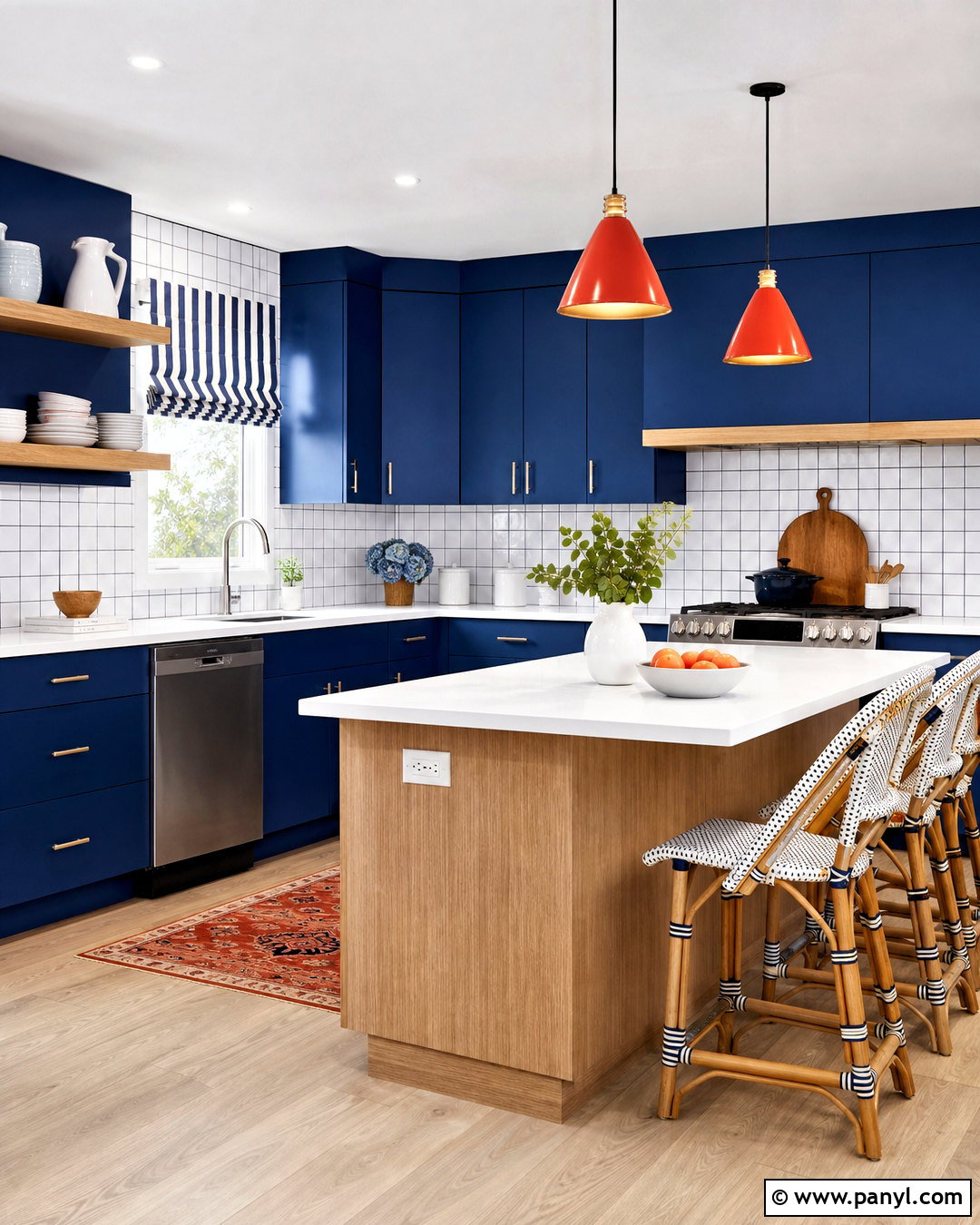
Imagine opening the door to a crisp kitchen lined with confident cobalt blue cabinetry. This clear, saturated shade works especially well in a simple layout where clean lines keep the color controlled. Pair flat-panel blue cabinets with bright white quartz counters and a white square-tile backsplash finished with blue grout. Add a white oak island, stainless steel appliances, and brushed nickel hardware for a fresh modern balance. Red-orange pendant lights can provide a small but energetic contrast above the island. Pale wood flooring softens the stronger colors and keeps the room from feeling cold. Finish with striped Roman shades, clear glassware, and a few white ceramic pieces so the cabinetry remains the main attraction.
4. Sunny Yellow Kitchen
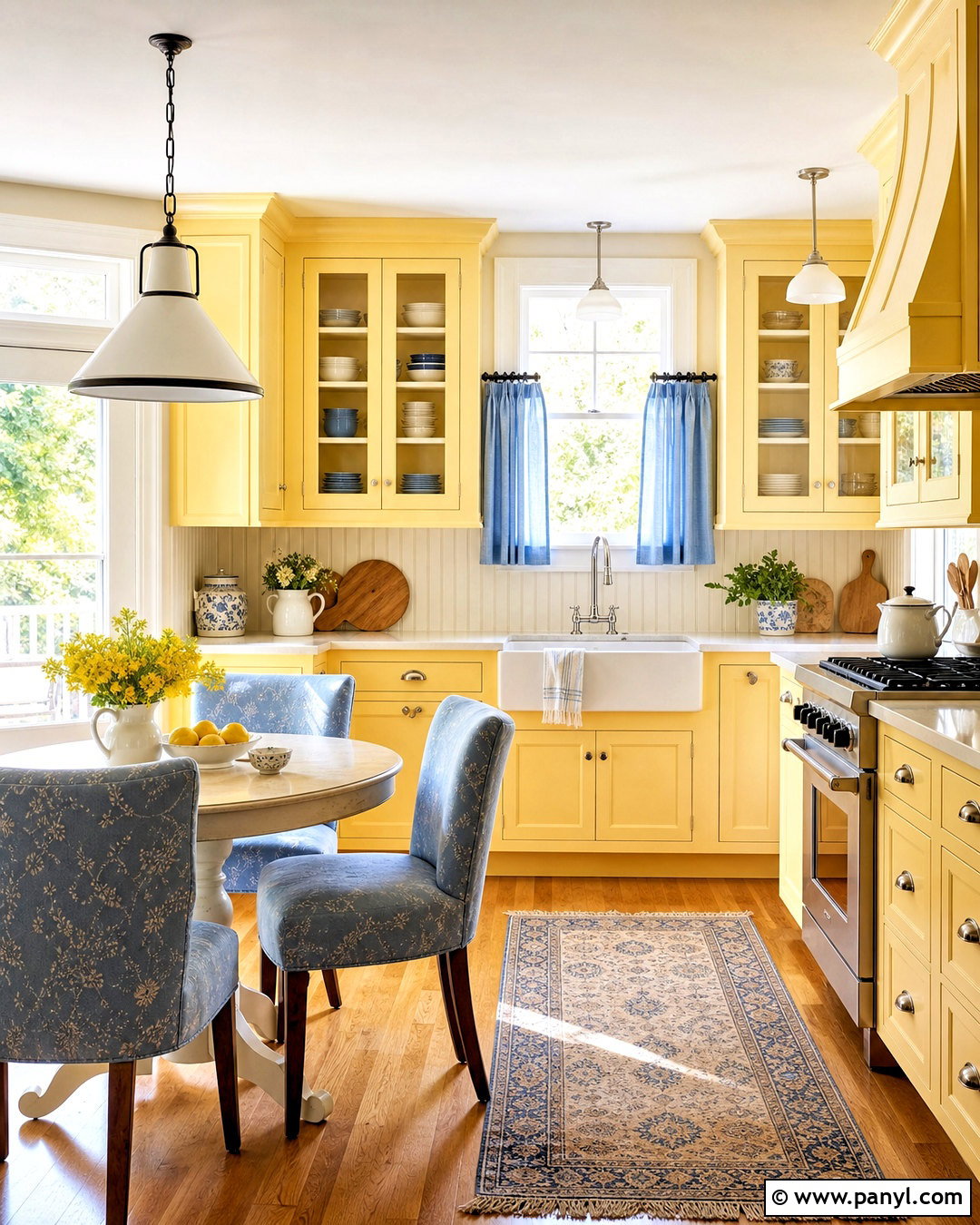
A buttery yellow kitchen can feel cheerful from morning through evening without becoming overly bright. Cover traditional inset cabinets in a warm golden yellow, including the island and built-in pantry. Balance that sunny color with creamy stone counters, a white beadboard backsplash, and medium oak flooring. A farmhouse sink, polished nickel faucet, and simple ceramic knobs give the room a relaxed character. Introduce soft blue through cafe curtains, upholstered breakfast chairs, and a patterned runner. These cool details provide contrast while maintaining an easy, welcoming mood. Open shelves can hold everyday white dishes and amber glassware. Keep the ceiling and window trim crisp white so natural light makes the complete yellow palette appear fresh and spacious.
5. Terracotta Kitchen
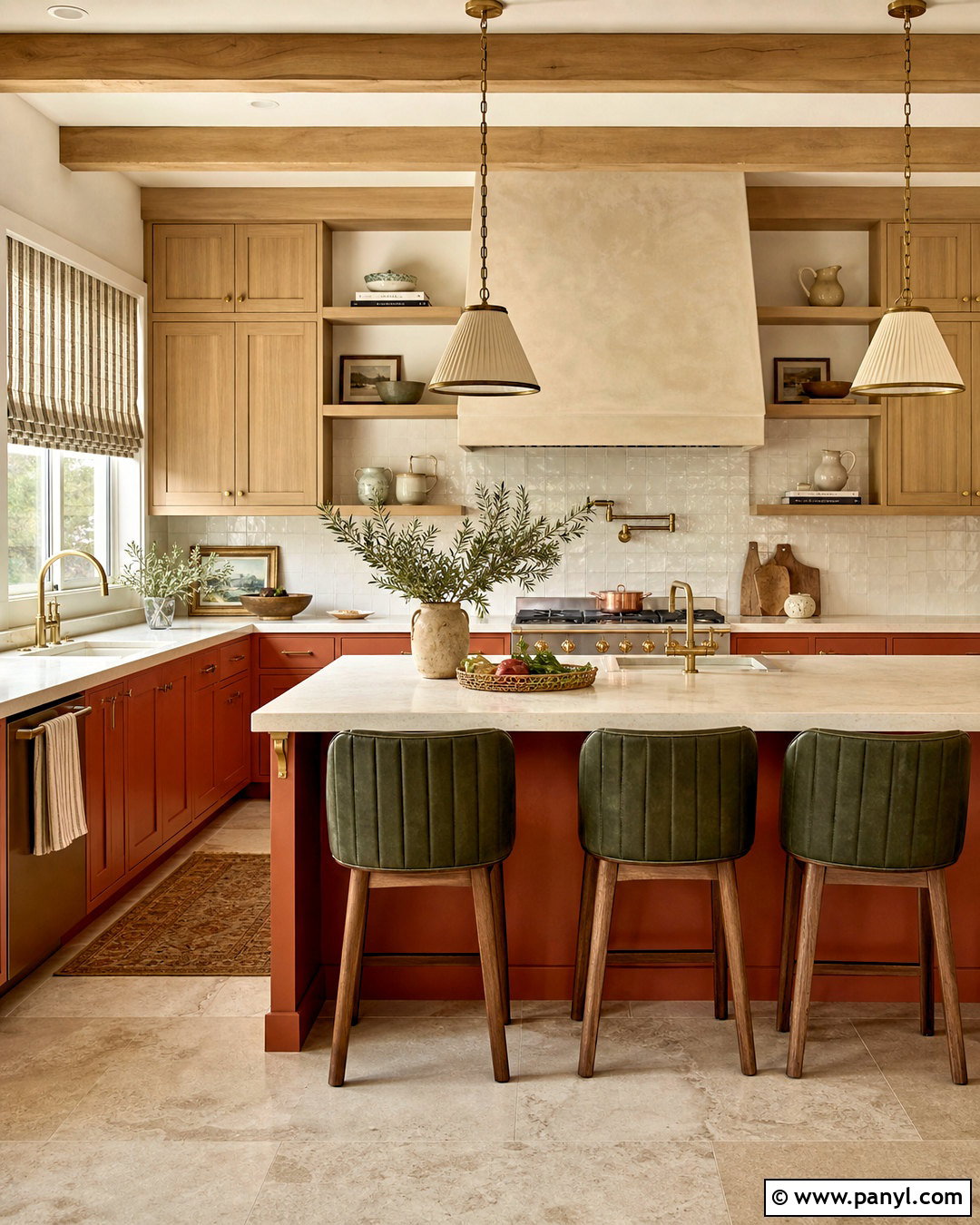
Warm terracotta gives a kitchen the glow of sunbaked clay while remaining softer than a vivid red or orange. Use terracotta on the lower cabinets and tall pantry units, then choose light oak for the upper cabinets and open shelving. Cream quartz counters and handmade off-white tile create a calm break between the two materials. Continue the earthy theme with tumbled limestone flooring, woven pendant lights, and antique brass hardware. A plaster range hood in pale sand can become a subtle focal point without competing with the cabinets. Add olive green stools and striped linen shades for natural contrast. Simple pottery, wooden utensils, and potted herbs complete a colorful kitchen that feels warm, practical, and collected.
6. Pink And Red Kitchen
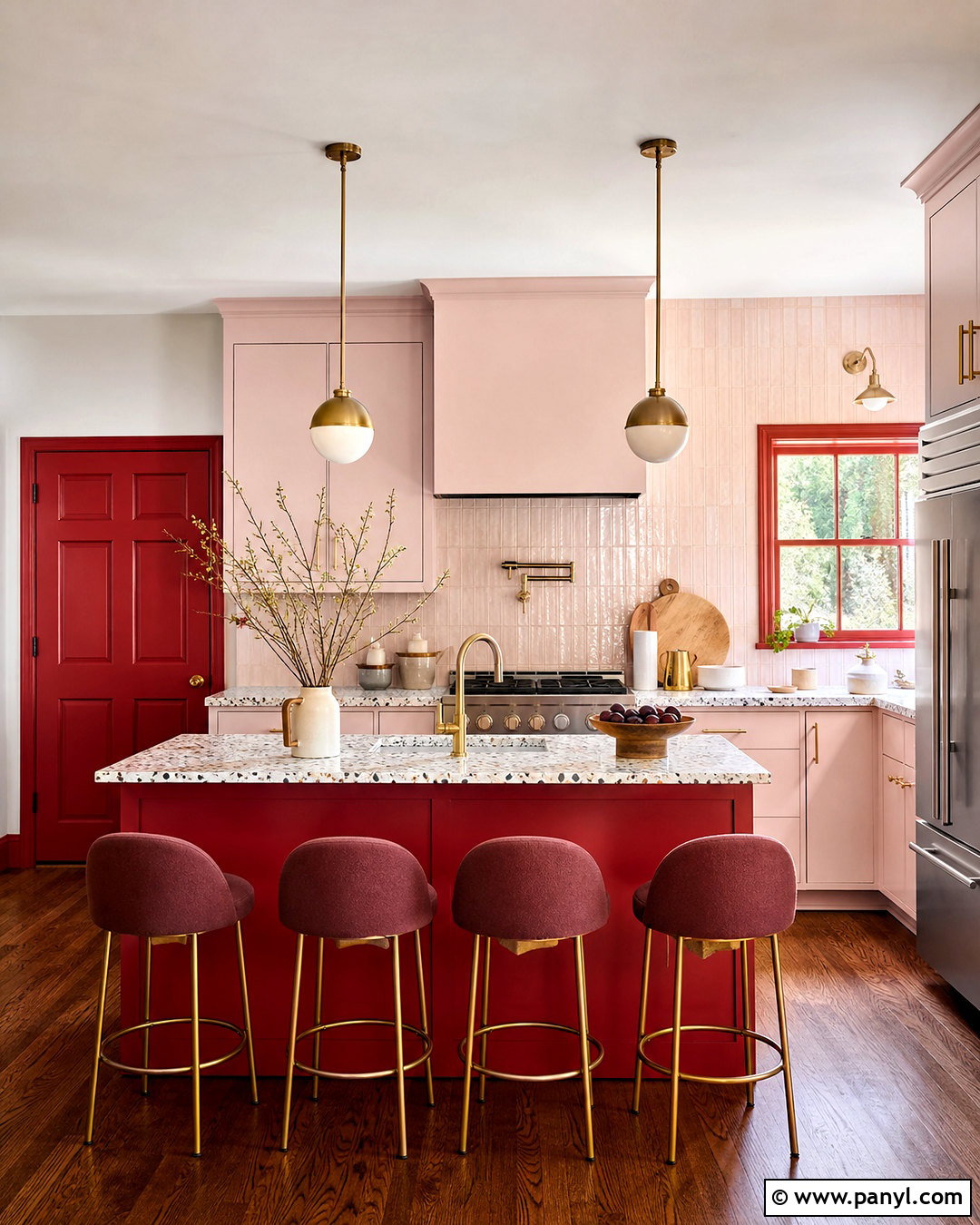
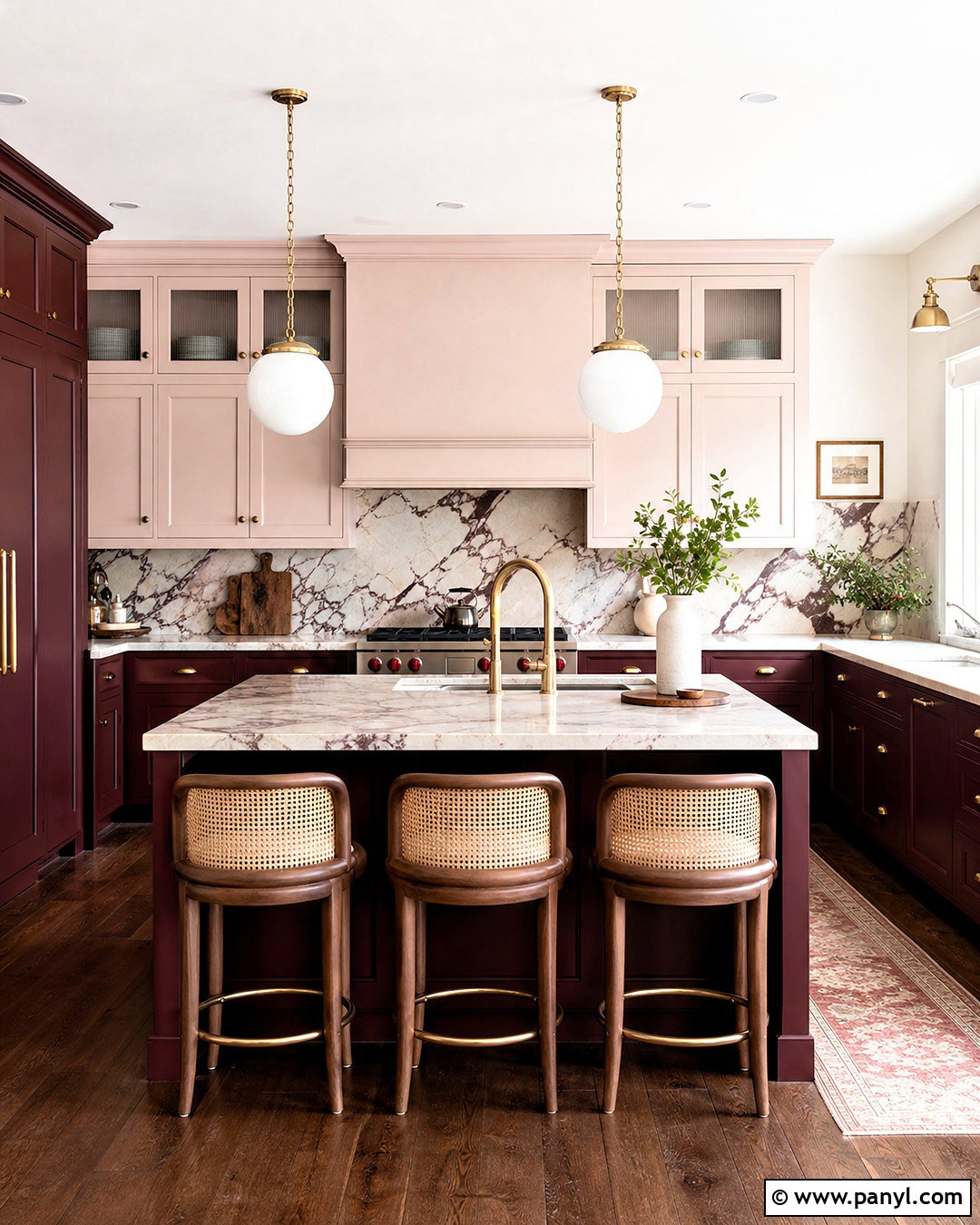
Pink and red can create a surprisingly polished kitchen when their intensity is carefully controlled. Paint the main cabinets a muted blush pink and reserve deep tomato red for the island, pantry door, and window trim. White terrazzo counters with small red and tan chips will connect the two shades naturally. Use pale pink vertical tile on the backsplash, keeping the grout light and understated. Walnut flooring and a dark wood dining table add depth, while brushed brass fixtures provide a warm metallic finish. Choose simple globe lights instead of ornate pendants so the palette remains the focus. Finish with burgundy seat cushions and cream ceramics. The completed room feels playful and expressive but still suitable for everyday family life.
7. Teal Kitchen
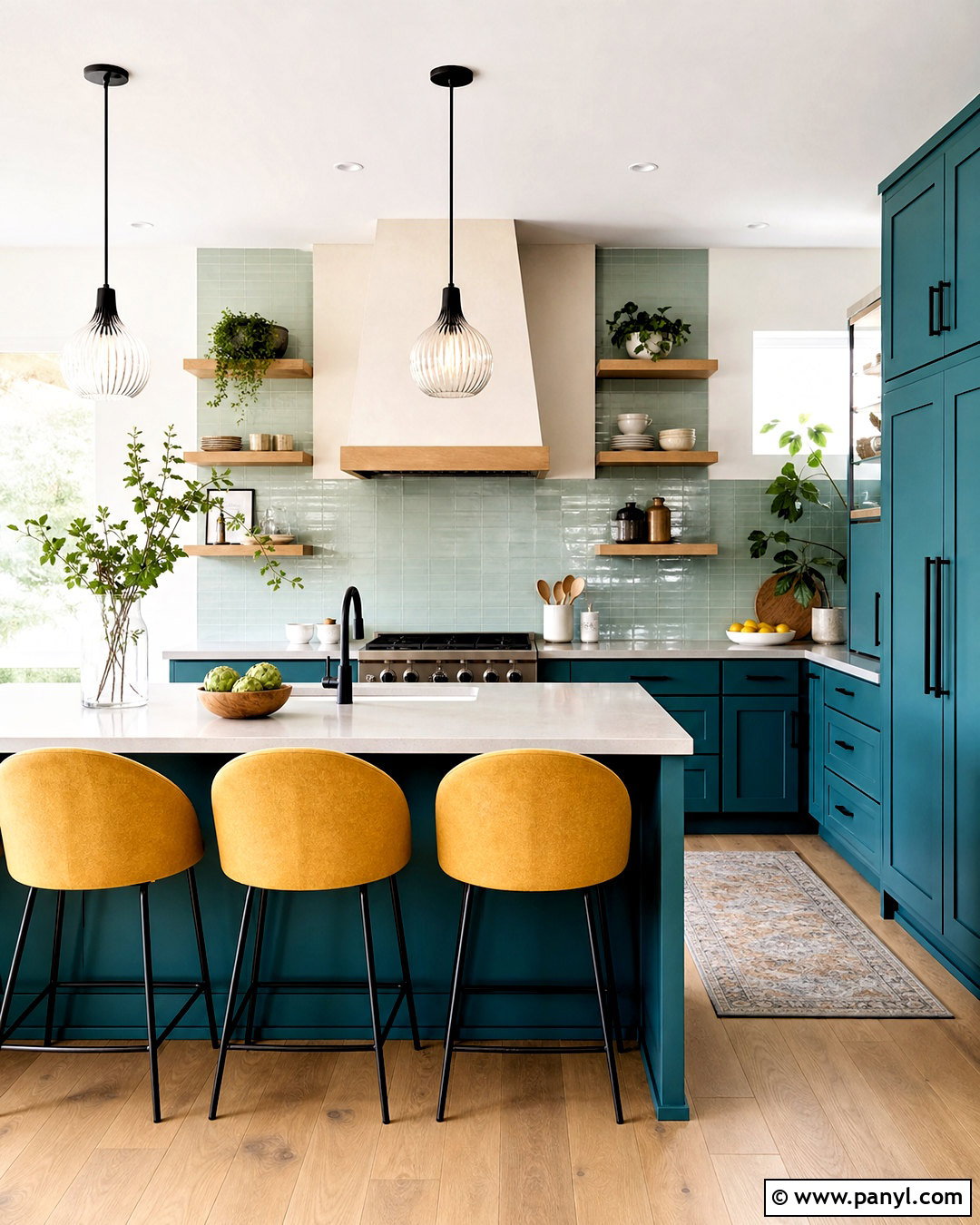
Rich teal brings together the calming quality of blue and the organic warmth of green. Wrap the lower cabinets, island, and tall storage in this saturated shade, but leave the upper walls warm white for breathing room. Pair the cabinetry with pale gray quartz counters and glossy seafoam backsplash tile. A light oak range hood, matching floating shelves, and natural oak flooring balance the cooler colors. Matte black hardware gives the kitchen definition, while ribbed glass pendants keep the island area bright. Consider a breakfast nook upholstered in mustard yellow for one clear contrasting accent. White dishes, green glassware, and a patterned runner can repeat the palette without cluttering the counters, creating a vibrant yet restful cooking space.
8. Burnt Orange Kitchen
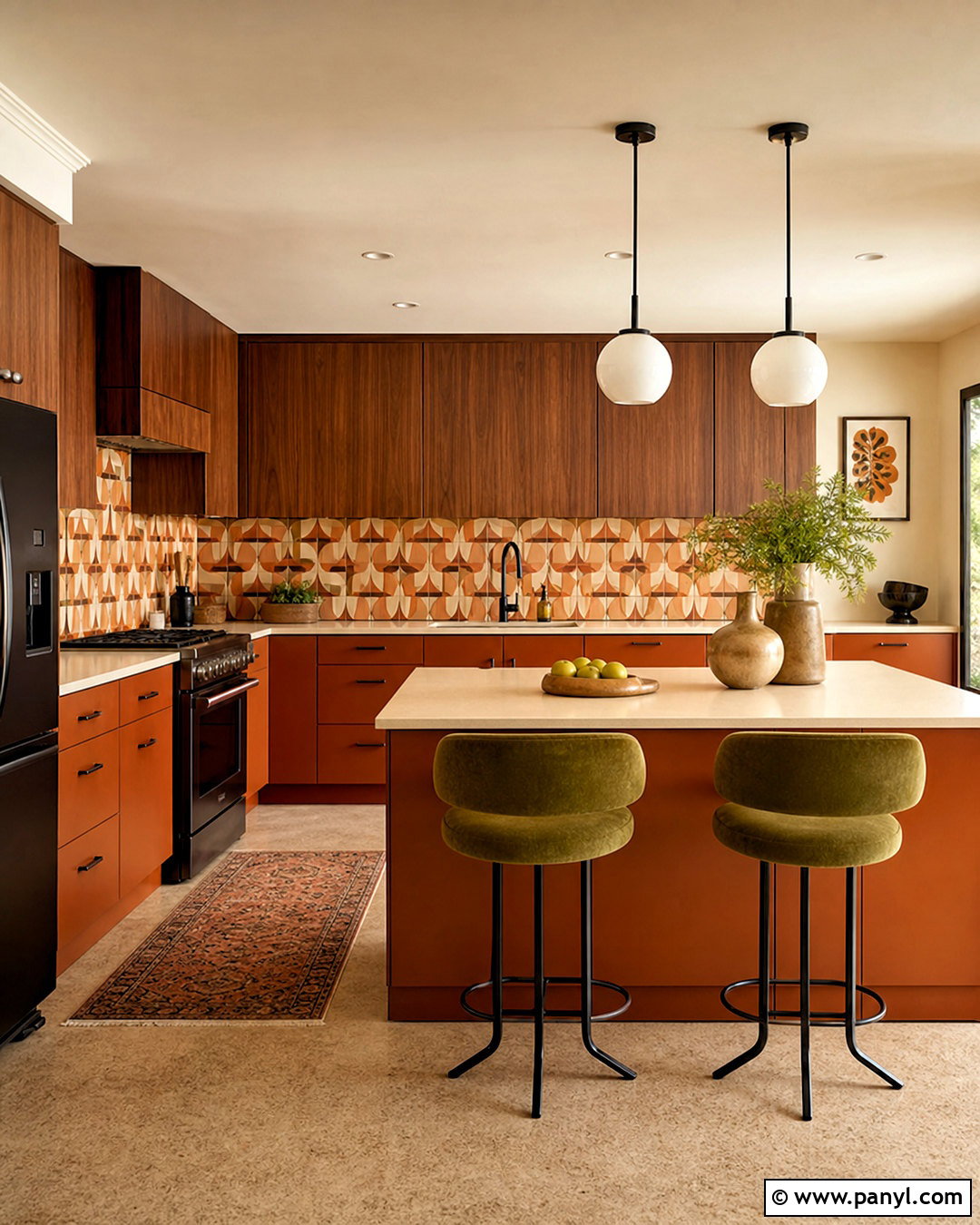
Burnt orange delivers strong personality while feeling warmer and more sophisticated than a bright citrus shade. Use it on streamlined lower cabinets and a large central island, pairing it with walnut upper cabinets for a rich, balanced composition. Select creamy solid-surface counters and a geometric backsplash in orange, beige, and brown. Large-format light beige floor tile will prevent the room from becoming too dark. Black-framed windows, matte black faucets, and slim pendant lights add crisp structure. Introduce a few olive green stools to reinforce the earthy seventies-inspired palette. Keep appliances integrated where possible and limit countertop decor to wooden boards and sculptural ceramics. The result feels retro, practical, and distinctly modern rather than themed.
9. Plum Purple Kitchen
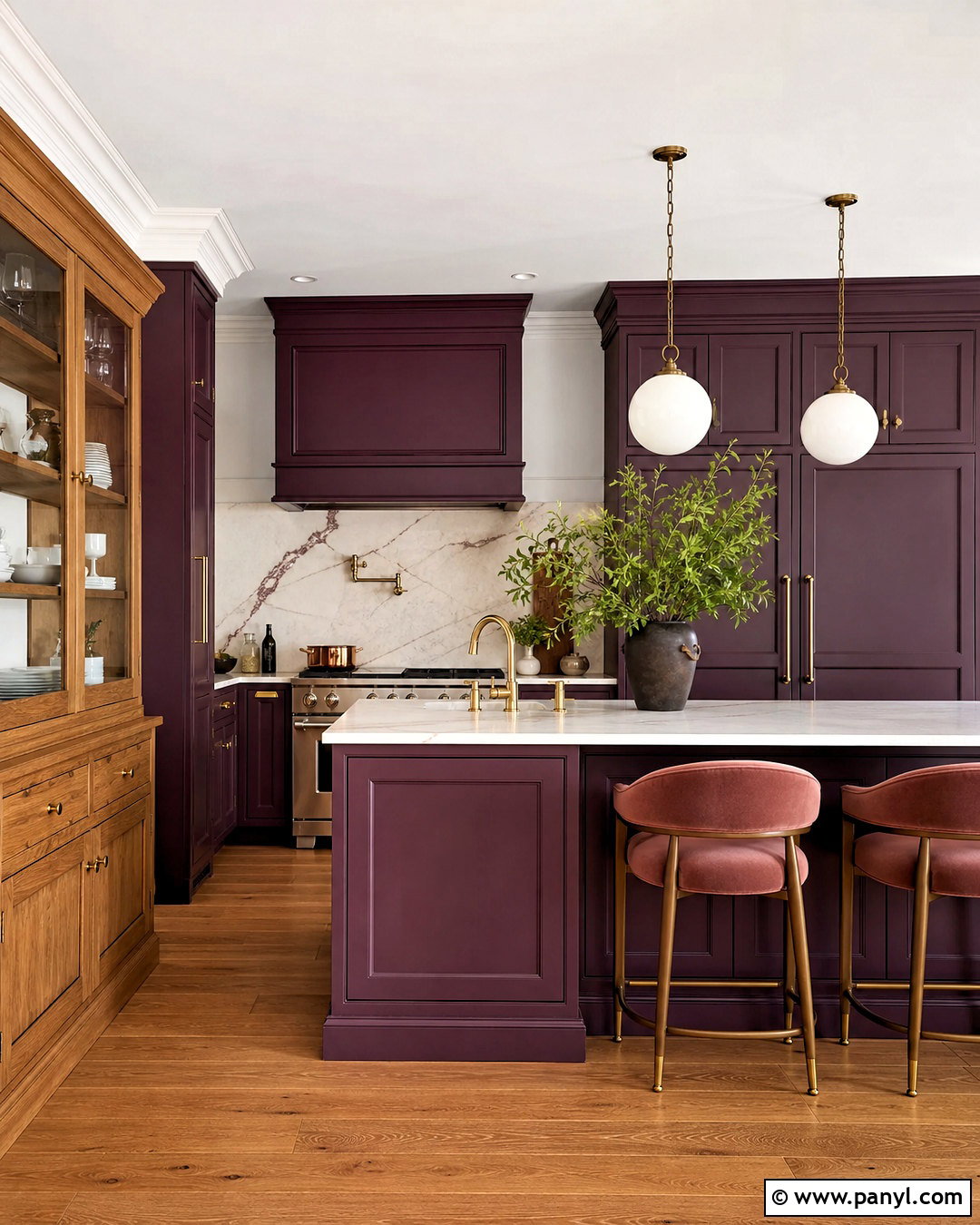
Plum cabinetry creates a dramatic kitchen without the harshness sometimes associated with black or charcoal. Choose a warm aubergine-plum finish for the base cabinets, island, and full-height pantry wall. Use soft mushroom paint above the counter and install a backsplash of creamy marble with delicate burgundy veining. A medium oak floor and oak-lined display cabinet introduce essential warmth. Add aged brass pulls, a brass bridge faucet, and opal globe pendants for gentle contrast. Upholster island stools in dusty rose fabric to develop a tonal purple-red palette. Keep the work surfaces uncluttered and choose closed storage for small appliances. This complete look feels colorful and elegant, making it suitable for both contemporary and traditional homes.
10. Colorful Retro Kitchen
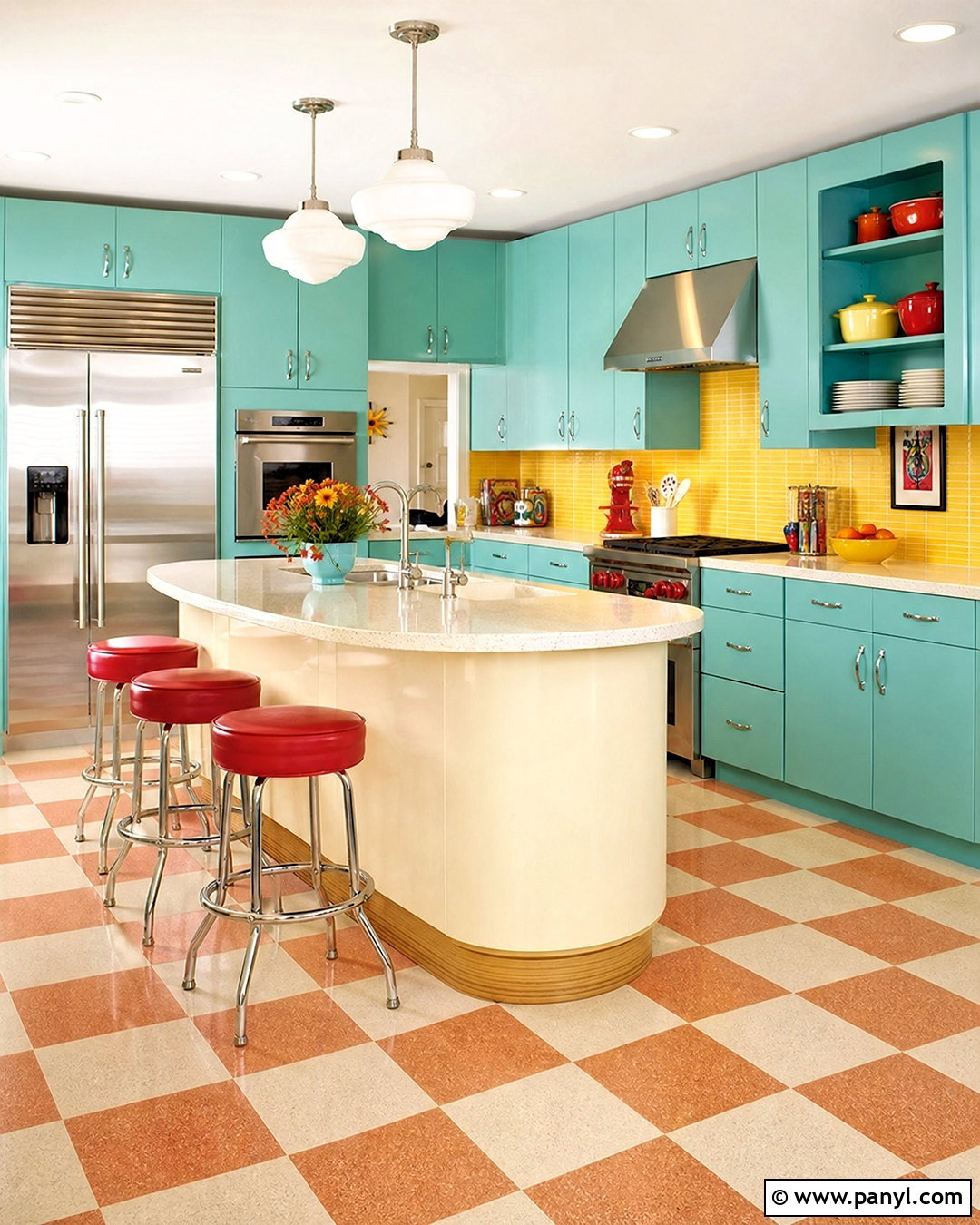
For a retro kitchen that still functions like a modern space, begin with turquoise flat-panel cabinets and a cream island with rounded corners. Use small checkerboard floor tiles in warm white and pale terracotta instead of harsh black and white. A sunny yellow backsplash can run behind open shelves and the range, giving the room an upbeat focal point. Choose modern stainless steel appliances with clean profiles rather than overly themed reproductions. Chrome hardware, milk-glass pendants, and red vinyl counter stools add carefully measured vintage character. Keep the counters pale and simple to calm the mixed palette. Finish with graphic dish towels, colorful cookware, and one streamlined wall clock, ensuring the kitchen feels nostalgic without becoming crowded or costume-like.
11. Colorful Farmhouse Kitchen
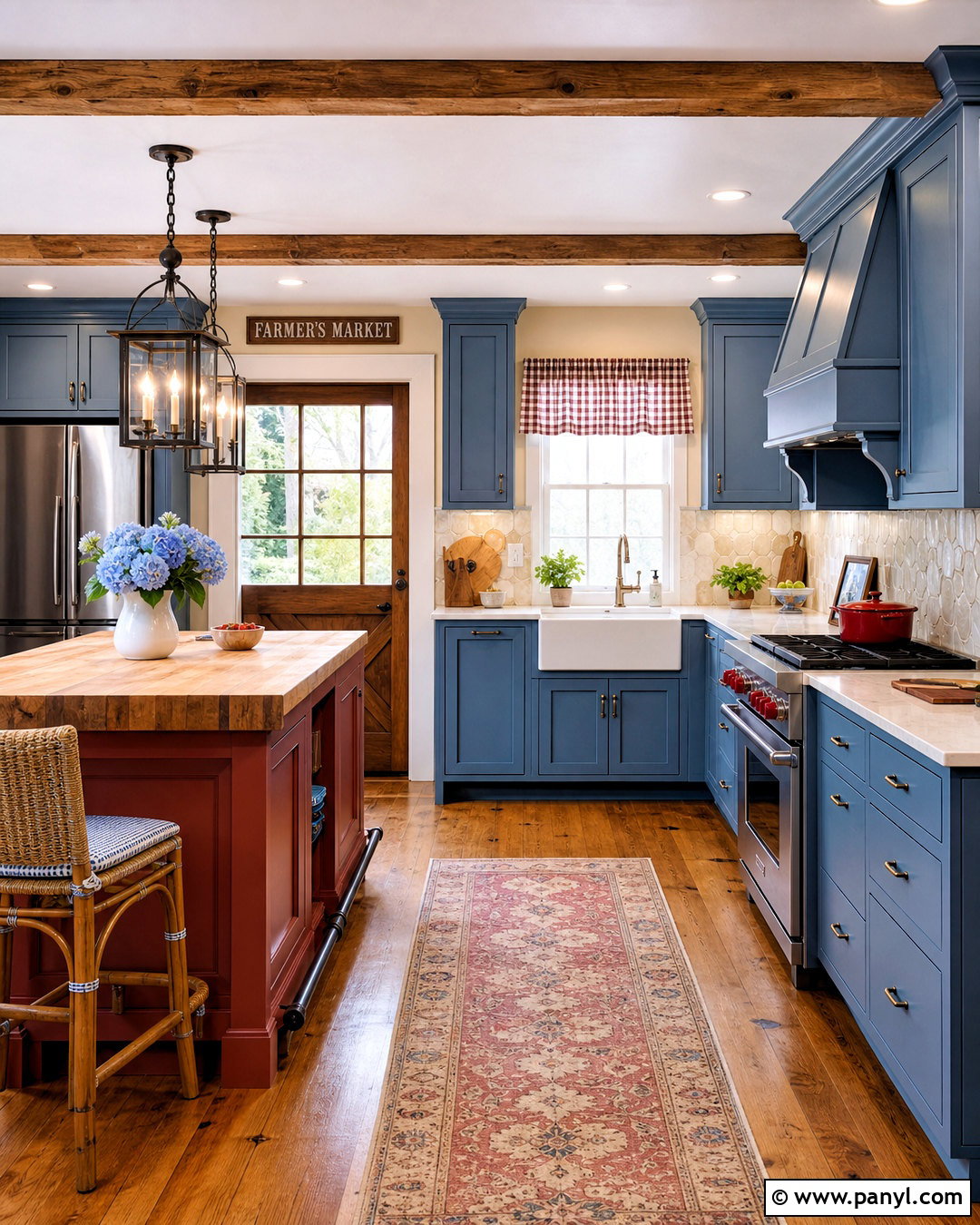
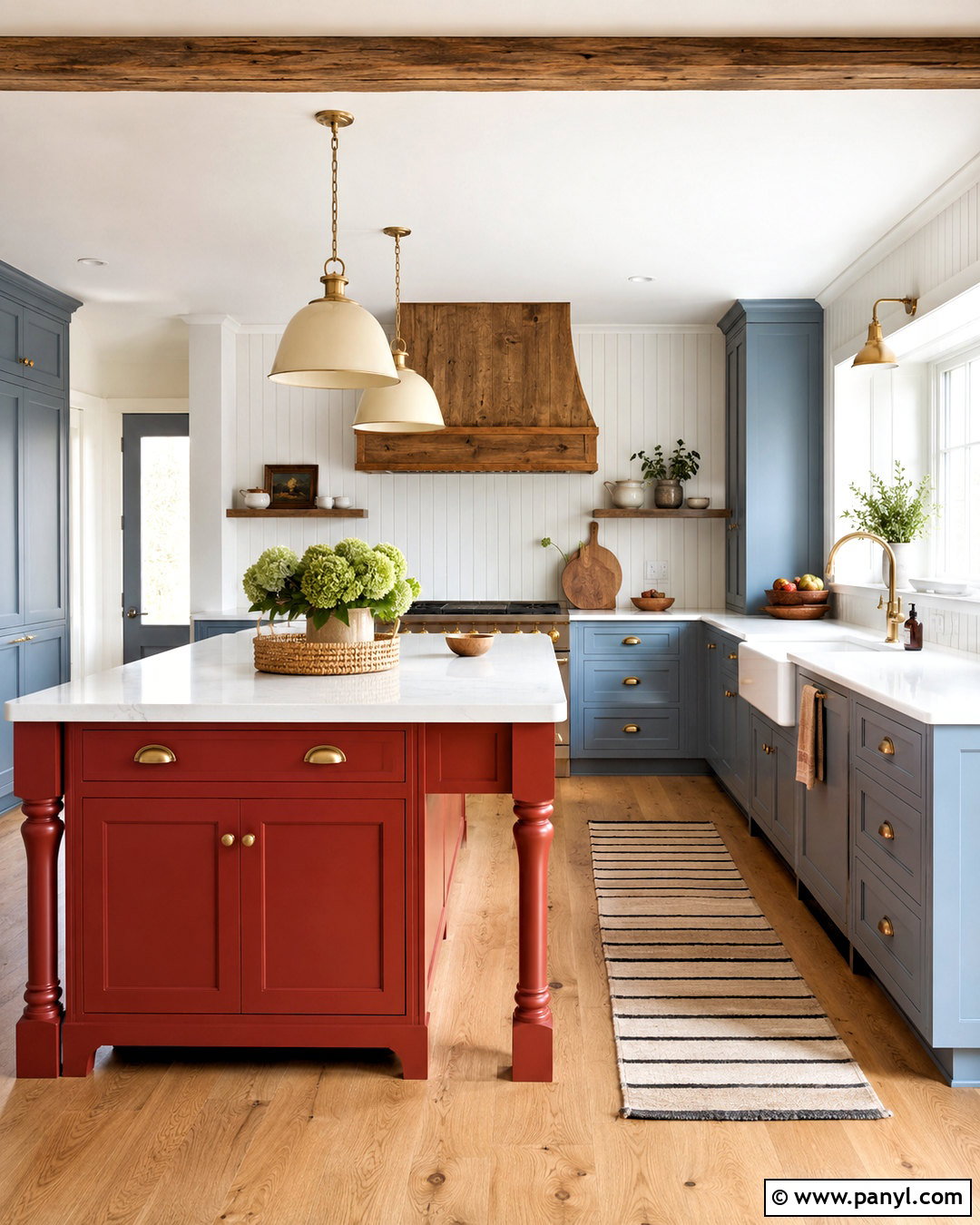
A colorful farmhouse kitchen should combine relaxed materials with a palette that feels naturally aged. Paint Shaker cabinets a soft cornflower blue and choose a deep brick-red island for contrast. Butcher-block sections beside creamy quartz counters bring useful warmth to the workspace. Install a white apron-front sink, traditional bridge faucet, and backsplash made from irregular ivory tiles. Wide-plank oak flooring, woven stools, and simple iron lanterns reinforce the farmhouse foundation. Rather than filling every surface with accessories, display a small collection of cream pitchers and blue dishes on one open shelf. Add gingham cafe curtains and a faded patterned runner. The complete room feels cheerful and familiar while avoiding the overly distressed finishes common in themed farmhouse designs.
12. Colorful Small Kitchen
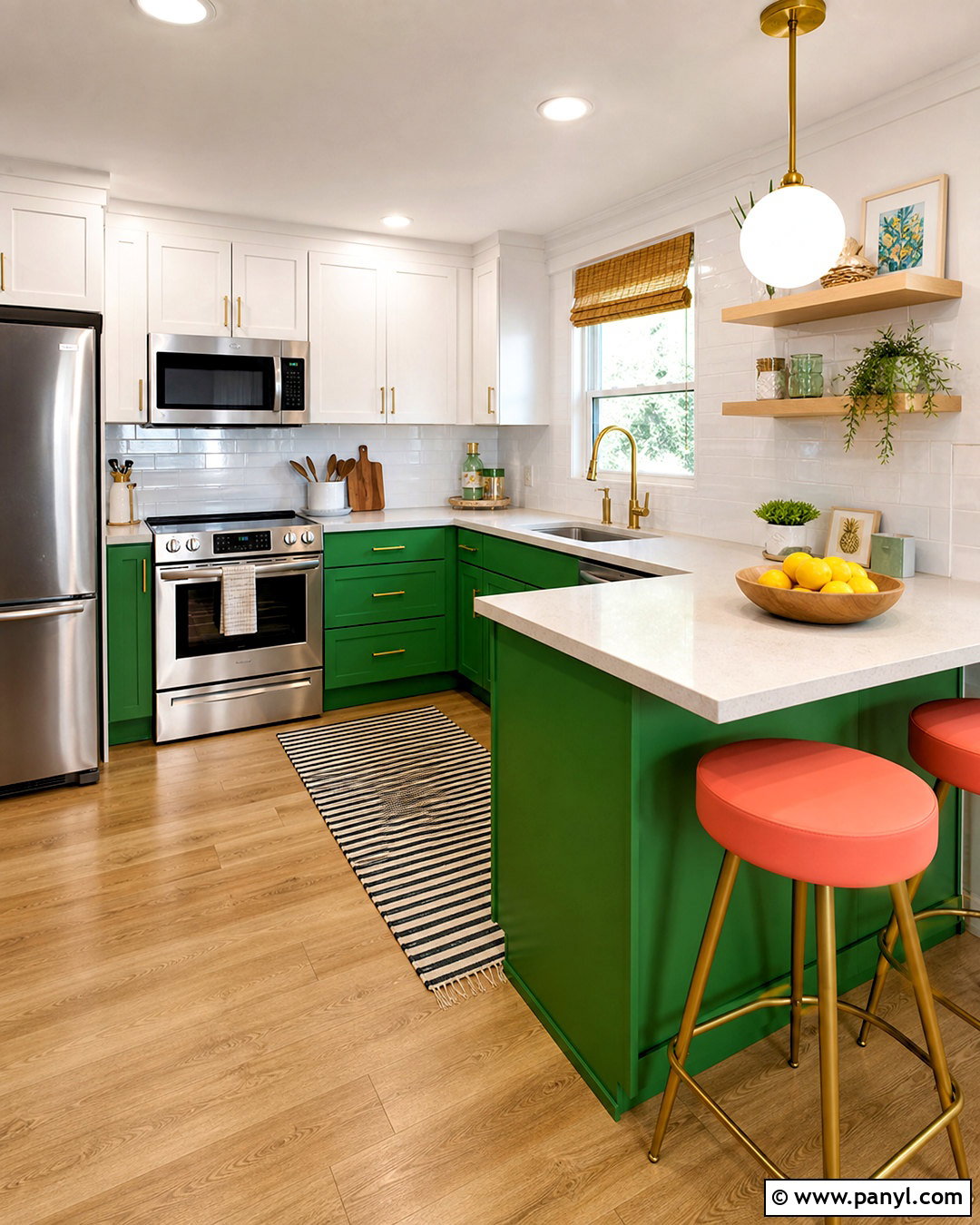
A small kitchen can carry bold color when the layout remains clear and the surfaces reflect light. Paint lower cabinets vivid grass green and use warm white cabinets above to reduce visual weight. Continue a glossy white backsplash to the ceiling, helping light move around the compact room. Choose slim brass pulls, pale quartz counters, and light oak flooring to keep the foundation airy. A narrow peninsula can provide extra preparation space and two backless coral stools without blocking circulation. Install under-cabinet lighting and one simple glass ceiling fixture rather than oversized pendants. Keep frequently used items inside organized drawers, then add color through a striped runner and framed botanical print. This creates energy without sacrificing function or precious space.
13. Jewel Tone Kitchen
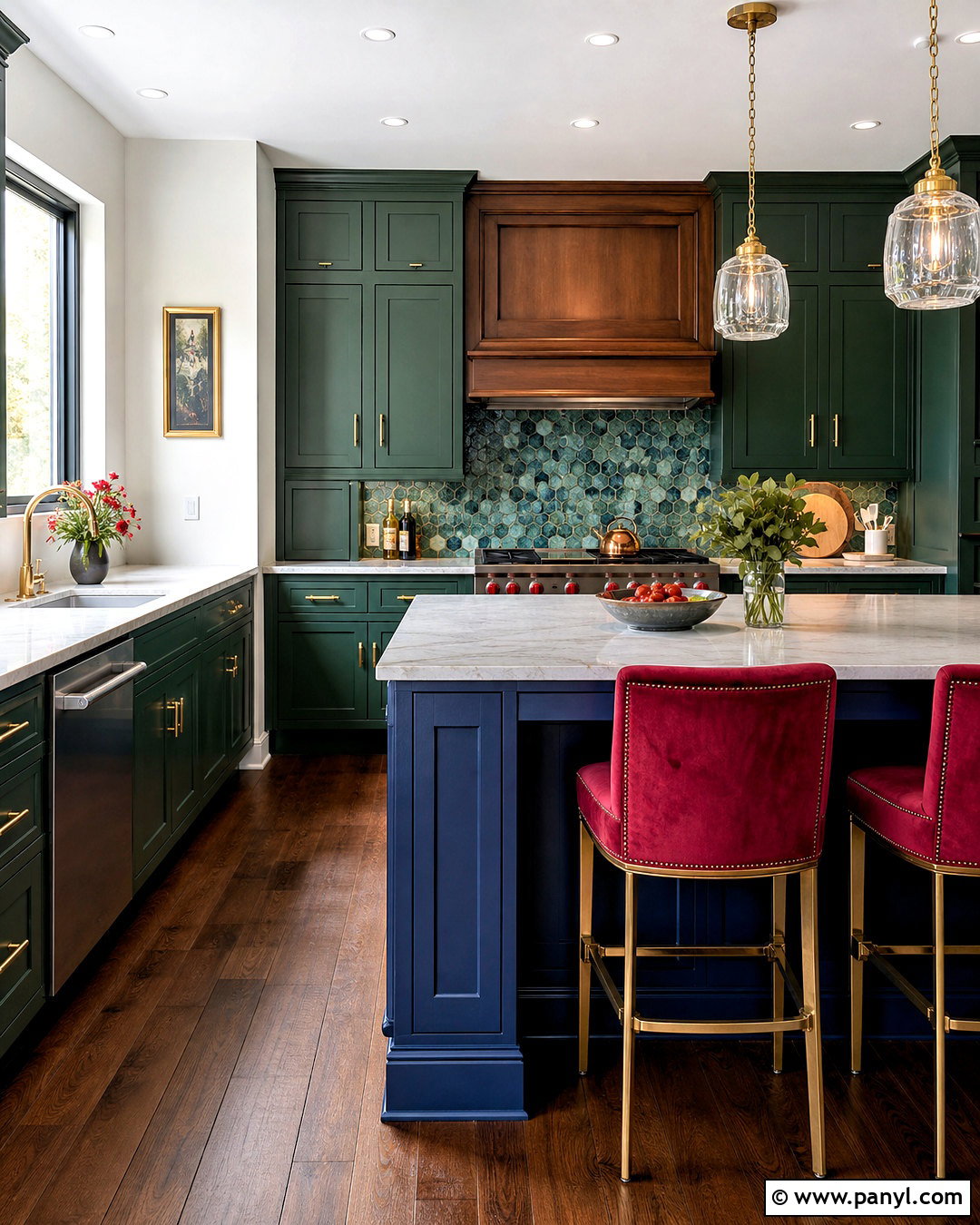
Jewel tones make a spacious kitchen feel layered, luxurious, and full of depth. Cover the perimeter cabinets in emerald green and paint the island a rich sapphire blue. Use warm white quartzite across both areas to unify the contrasting colors. A backsplash with subtle green, blue, and cream movement can connect the palette without looking busy. Dark walnut flooring and matching stool frames provide a strong foundation. Choose polished brass hardware and sculptural glass pendants to amplify the luminous quality of the colors. Ruby red can appear sparingly through upholstery, cookware, or a narrow vintage-style runner. Keep walls, trim, and the range hood creamy white. These neutral areas prevent the jewel-toned cabinetry from overwhelming the room and preserve a bright overall atmosphere.
14. Pastel Kitchen
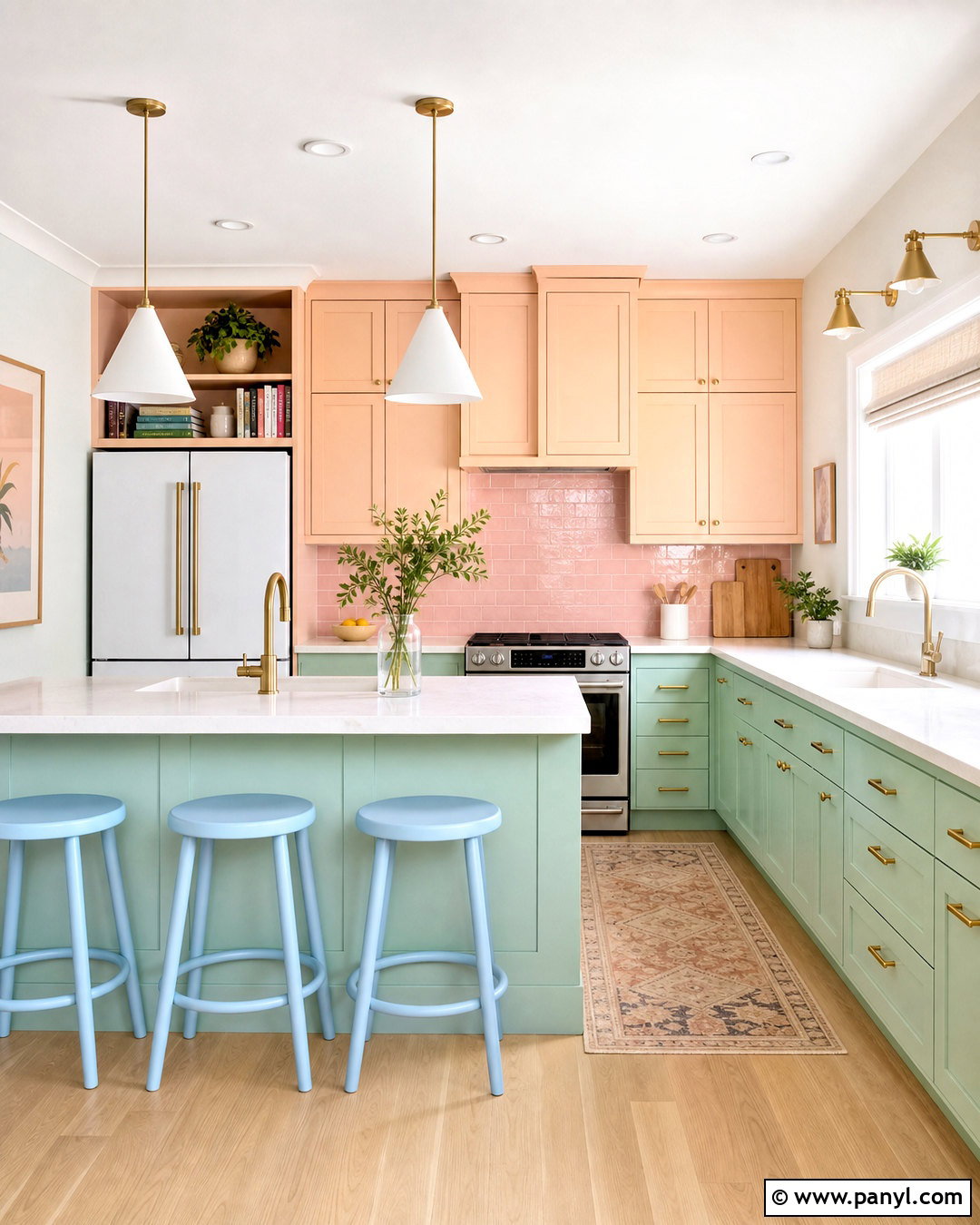
Soft color can be vibrant in spirit even when the shades are gentle. Combine mint green lower cabinets with pale peach upper cabinets for a fresh, unexpected pairing. A cream island with a mint base offers a visual resting point and useful gathering space. Choose white quartz counters, small blush-pink backsplash tiles, and light maple flooring to maintain an airy finish. Brushed brass hardware warms the pastels, while white cone pendants keep the lighting simple. Add curved counter stools in pale blue and a washable runner that quietly repeats all three hues. Avoid overly sweet decorative accessories. Instead, use streamlined ceramics, clear glass containers, and a few wooden pieces. The finished kitchen feels playful, modern, and suitable for a smaller or naturally bright home.
15. Colorful Coastal Kitchen
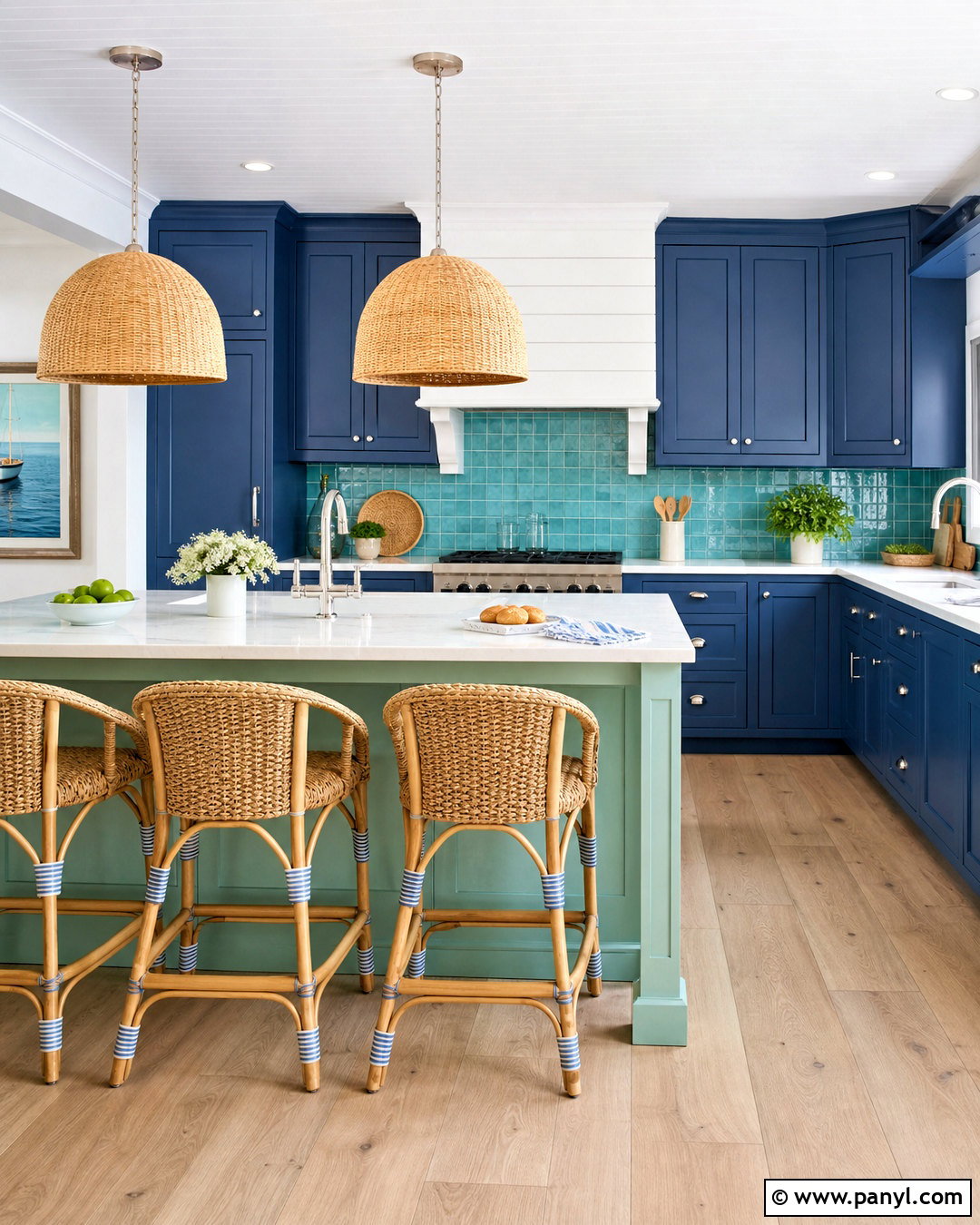
A coastal kitchen can use stronger color without relying on obvious nautical decorations. Start with deep ocean blue cabinets around the perimeter and a sea-glass green island at the center. Pair both shades with white quartz counters and a backsplash of pearly blue-green tile. Natural white oak flooring, woven counter stools, and rattan pendant lights bring in relaxed texture. Use polished nickel fixtures for a clean finish that reflects light. White walls and a simple tongue-and-groove ceiling help the saturated cabinetry feel fresh rather than heavy. Introduce sandy beige through linen shades and a washable runner. Keep decor minimal with clear glass, white pottery, and one bowl of fresh citrus, creating a breezy kitchen that feels colorful but not overly themed.
16. Colorful Mediterranean Kitchen
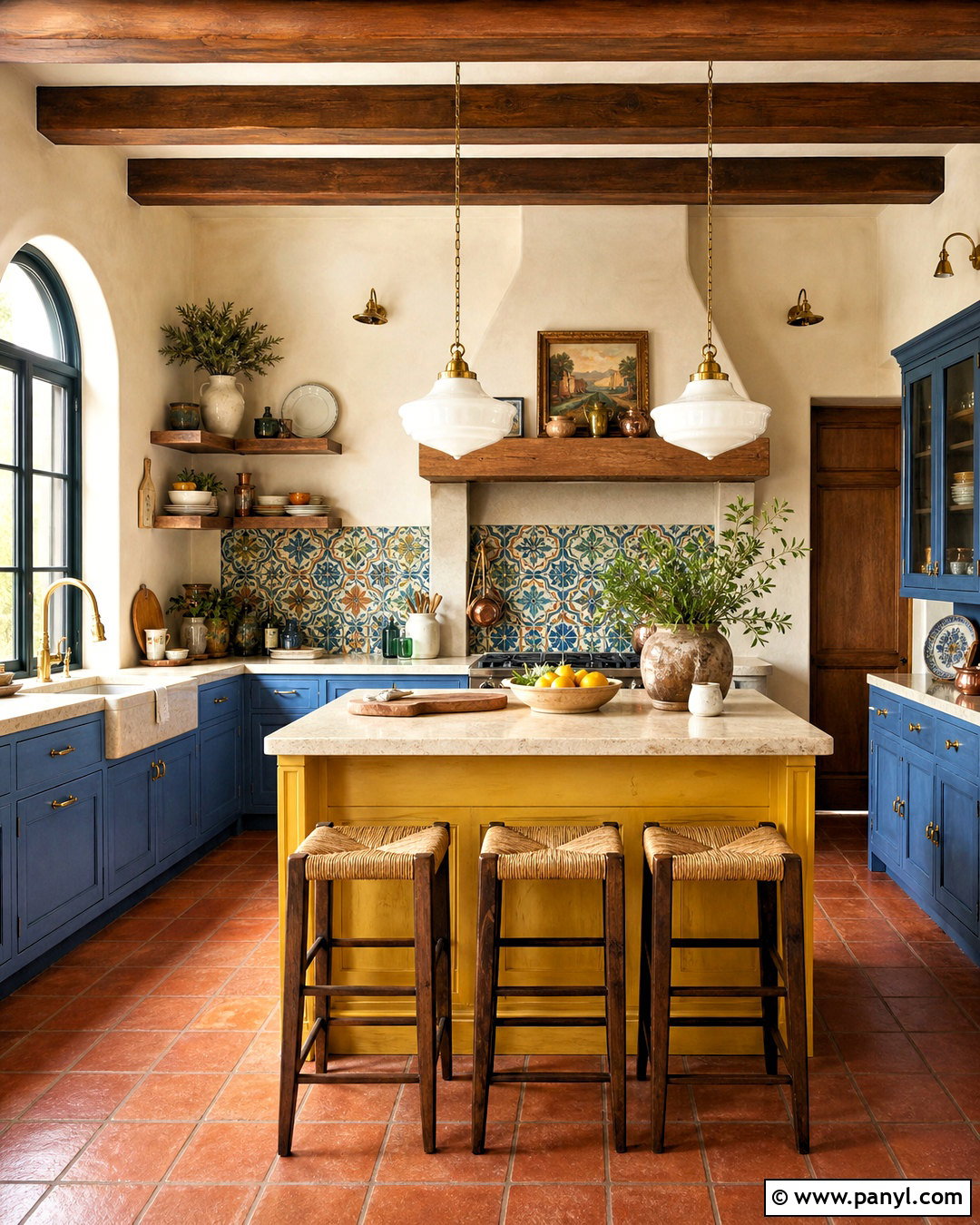
Sun-washed color and tactile materials give a Mediterranean kitchen its distinctive warmth. Use dusty blue lower cabinets with creamy plaster walls and a large island painted muted ochre yellow. Install patterned backsplash tile in blue, rust, green, and ivory behind the range, then keep surrounding counters a simple pale limestone. Terracotta floor tiles establish an earthy base and work beautifully with warm wood ceiling beams. Choose open oak shelves, aged brass fixtures, and woven rush stools for an informal finish. A curved plaster range hood can anchor the room without introducing another material. Display a restrained mix of ceramic dishes, copper pans, and herb pots. Every component feels connected, producing a vibrant kitchen that looks comfortably layered rather than overly decorated.
17. Colorful Modern Kitchen
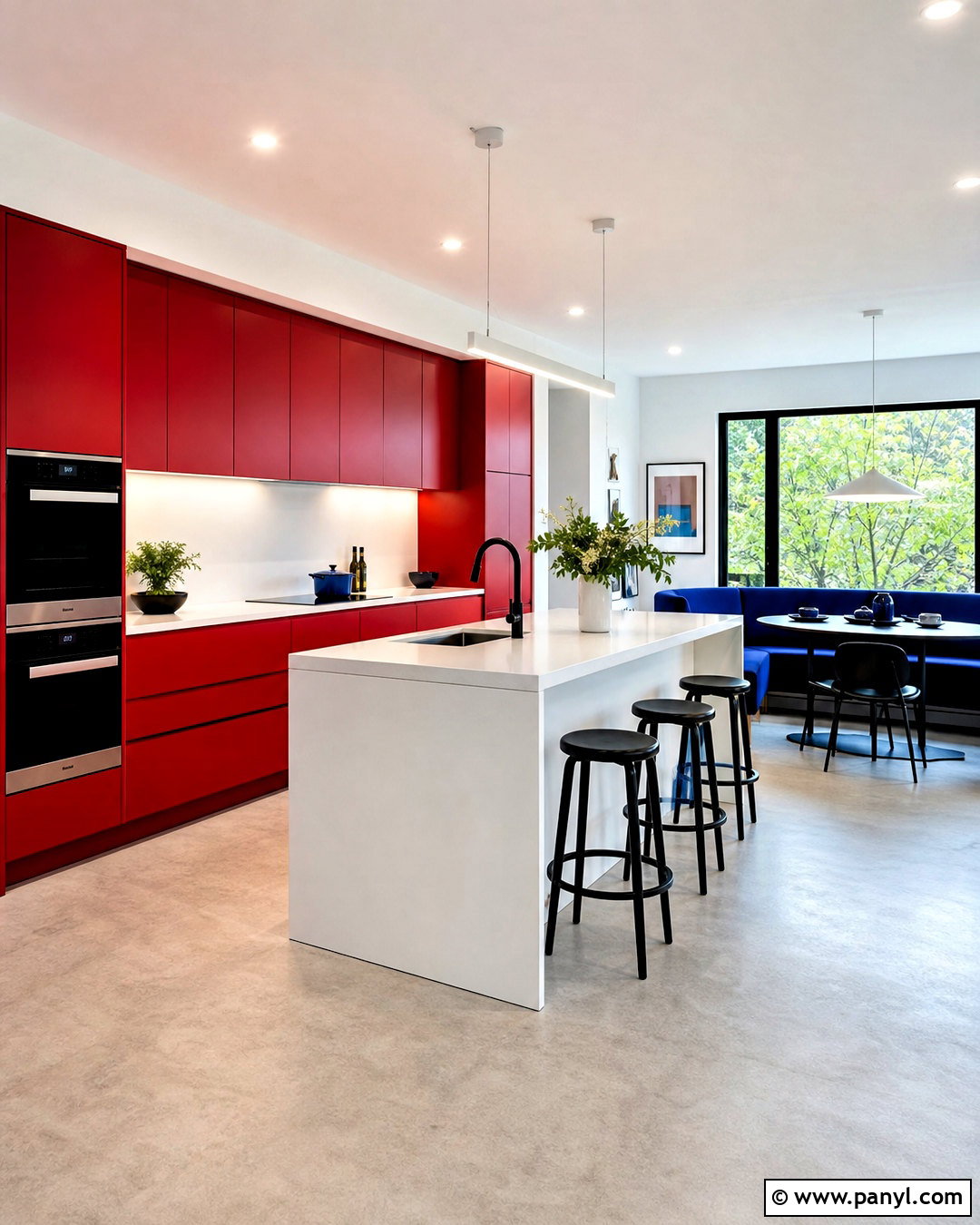
Clean-lined cabinetry allows saturated color to look crisp instead of chaotic. Choose handleless cabinets in bold cherry red for one full wall, including concealed appliances and pantry storage. Balance them with a matte white island, pale gray quartz counters, and a smooth white backsplash. A cobalt blue dining banquette can introduce a second primary color while defining the eating area. Use light concrete-look flooring and slim black window frames for a streamlined architectural base. White linear pendant lights will illuminate the island without adding decorative clutter. Keep accessories graphic and limited, such as two blue bowls and one red countertop appliance. This highly edited approach proves that a vibrant kitchen can feel sophisticated, organized, and easy to maintain in a contemporary home.
18. Colorful Eclectic Kitchen
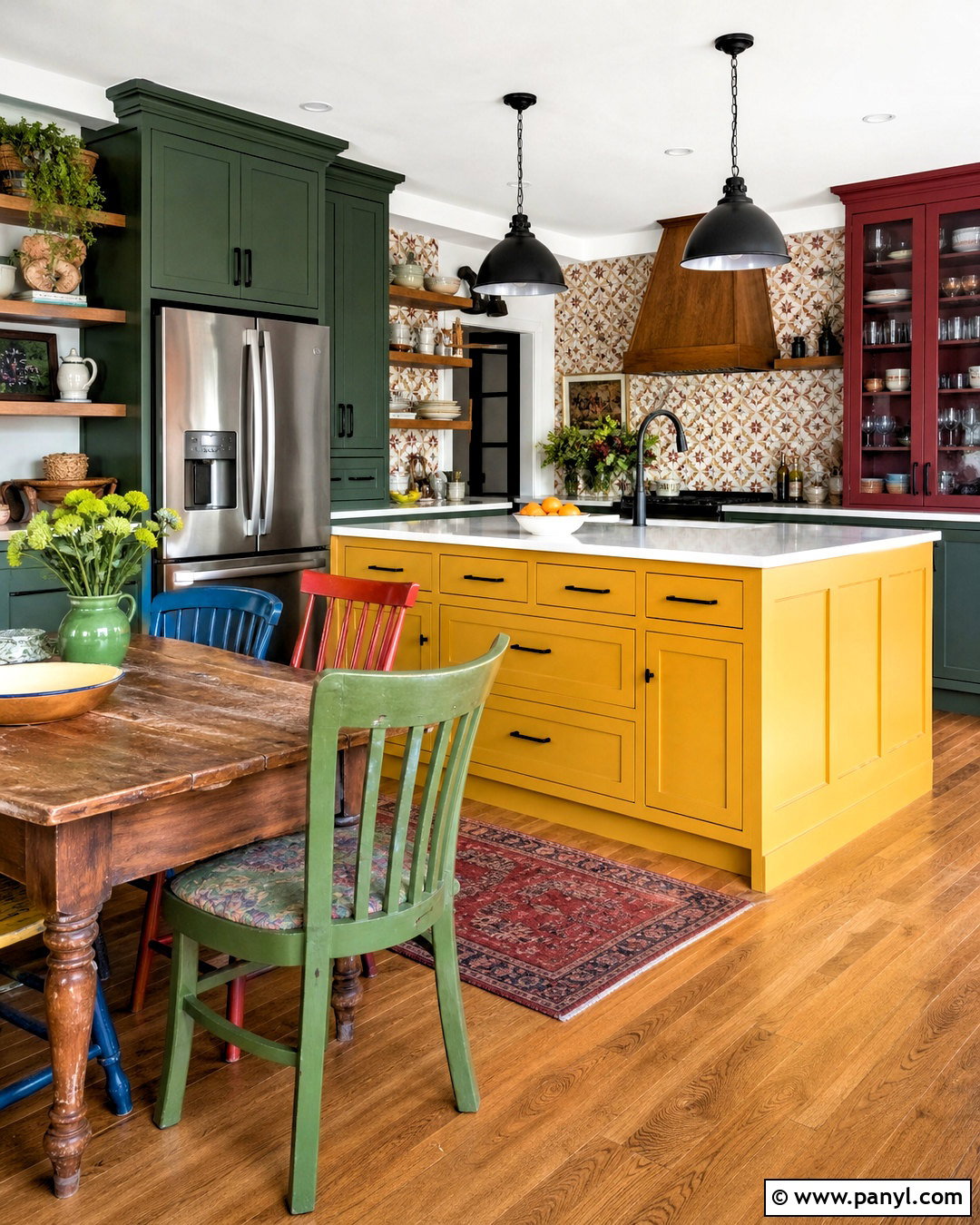
An eclectic kitchen works best when varied colors and patterns share a clear visual connection. Paint the main cabinets forest green, use a mustard yellow island, and add burgundy inside a glass-front display cupboard. Tie the palette together with patterned encaustic-style backsplash tile containing all three colors. Warm white quartz counters and medium oak flooring create quiet areas between the stronger elements. Mix aged brass cabinet pulls with simple black pendant lights for a collected finish. A vintage wood table and mismatched painted chairs can form a casual breakfast area nearby. Repeat colors through art and textiles, but avoid covering every surface. Leaving countertops mostly clear ensures the completed room appears personal and layered rather than disorderly or visually exhausting.
19. Colorful Kitchen With Wallpaper
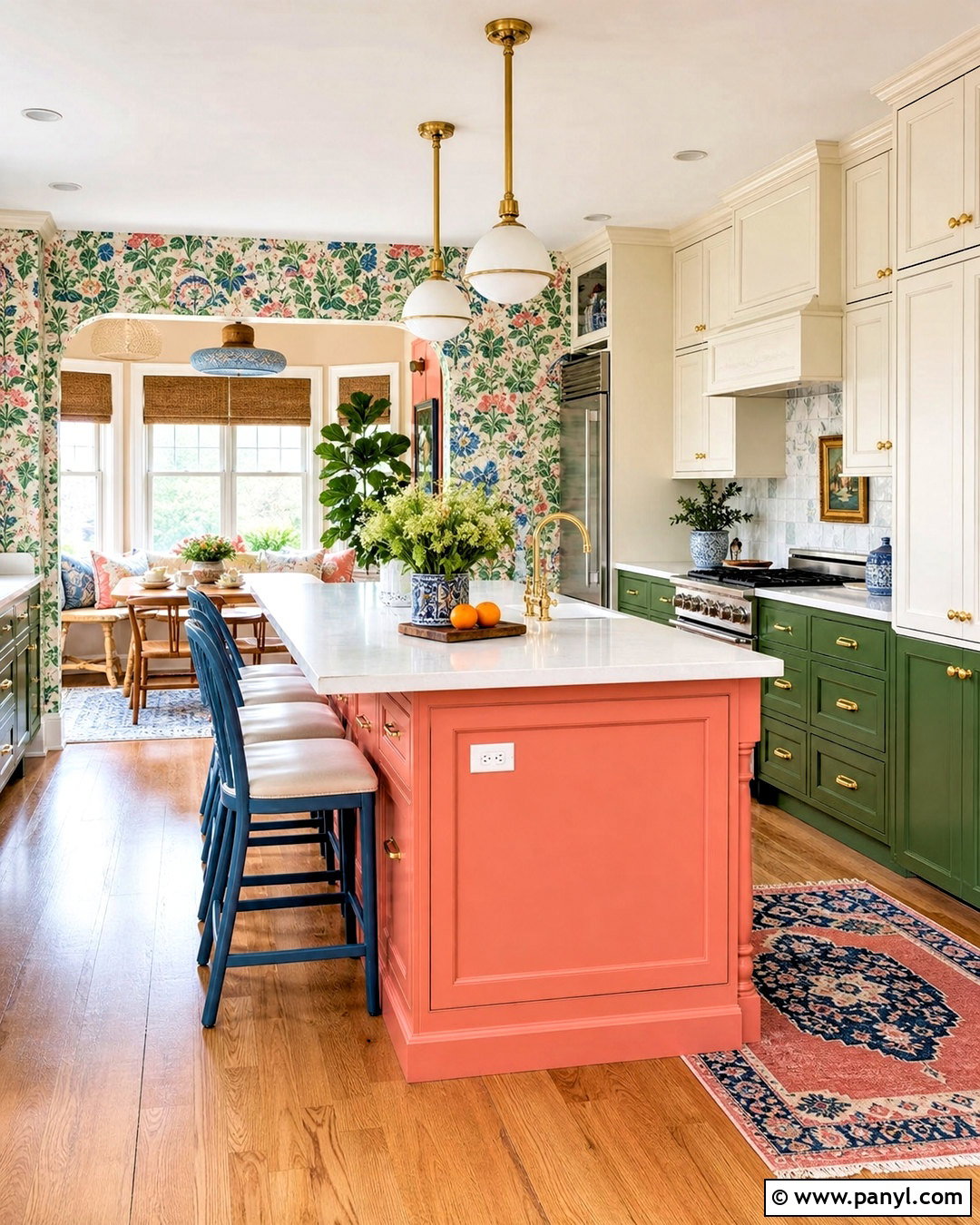
Wallpaper can shape an entire kitchen when its colors guide every other selection. Choose a botanical pattern featuring leafy green, coral, blue, and cream, then install it above a high tiled backsplash and around the breakfast nook. Paint lower cabinets a deep leafy green and use warm cream for the upper cabinets. A coral island creates a confident connection to the wallpaper without matching it exactly. Add pale quartz counters, medium oak floors, and brushed brass hardware for warmth. Protect wallpaper near cooking and washing zones by limiting it to low-splash areas or using a suitable clear covering. Blue upholstered stools and simple cream pendants complete the palette. The result feels richly patterned while remaining practical and coordinated.
20. Colorful Kitchen With Painted Ceiling
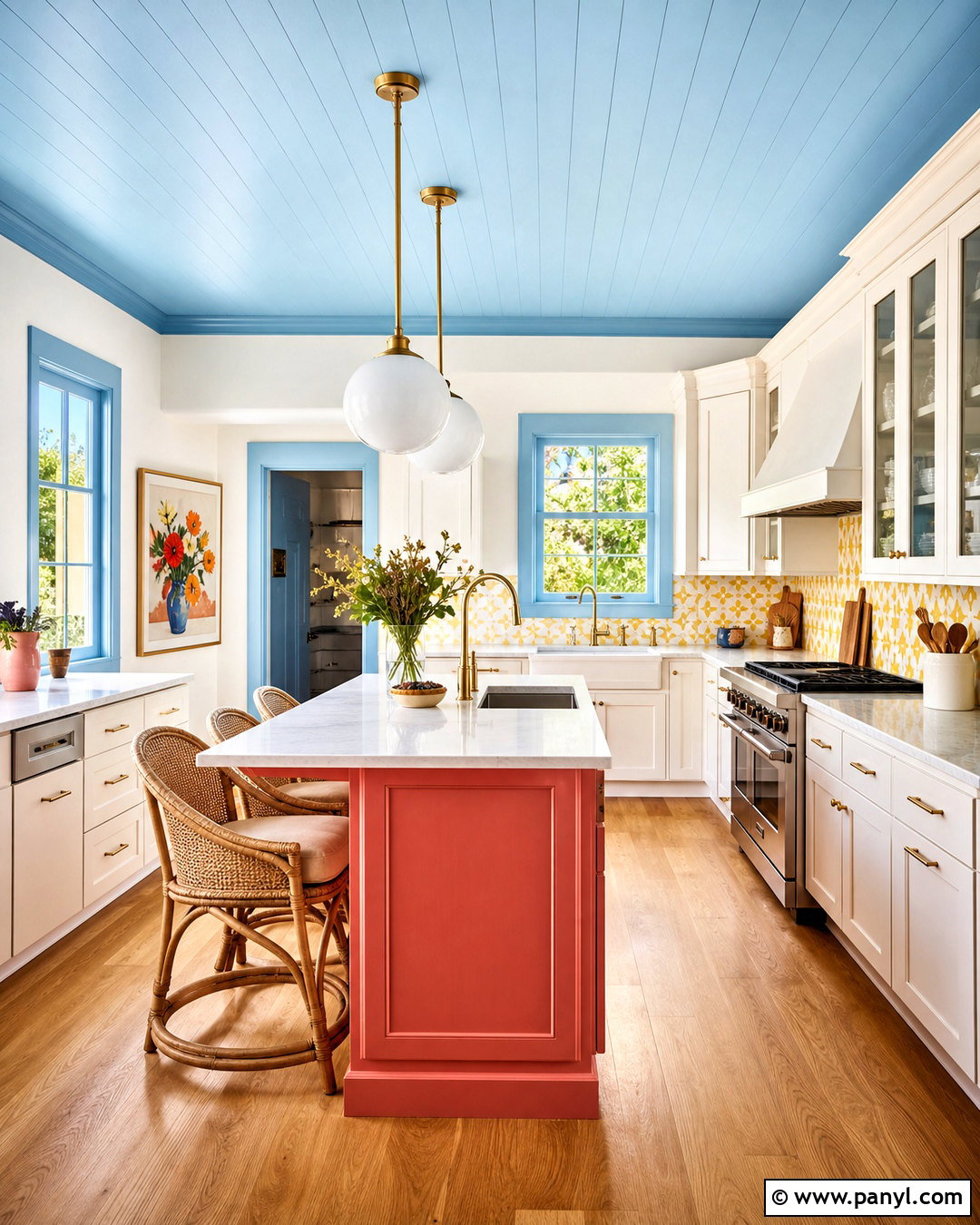
Looking upward reveals an often-missed opportunity to add color without sacrificing neutral cabinets. Paint the ceiling a clear sky blue and carry that shade onto the window trim for a connected look. Use warm white cabinetry around the room, then introduce a coral red island with a pale stone countertop. A backsplash of small yellow and white tiles adds another cheerful layer beneath the upper cabinets. Choose honey-toned oak flooring, woven stools, and brushed brass hardware to warm the palette. White globe pendants will stand out cleanly against the blue ceiling. Keep walls creamy and countertop accessories limited. By distributing color across the ceiling, island, and backsplash, the complete kitchen feels bright and balanced rather than dominated by one dramatic feature.
Conclusion:
The most successful **20 vibrant kitchen ideas** combine confident color with practical layouts, durable surfaces, and calm supporting materials. Whether you prefer earthy olive, bright cobalt, soft pink, or layered jewel tones, treat the entire room as one connected composition. Select a dominant shade, add one or two supporting colors, and repeat them through cabinetry, tile, seating, and textiles. Wood, cream, and pale stone can provide breathing room between stronger hues. You also do not need to renovate everything at once. A painted island, patterned backsplash, wallpapered nook, or colorful ceiling can transform a neutral kitchen. Choose colors that make daily life feel happier, then build a functional, balanced space around them.

Related Ideas and Inspiration:
Leave a Reply