
A fresh paint plan can turn an ordinary bonus room, basement, or spare bedroom into a playful space that feels organized and welcoming. These 20 kids playroom paint ideas include gentle neutrals, cheerful color blocking, interactive walls, and imaginative murals. Current playroom inspiration frequently features chalkboard surfaces, geometric patterns, two-tone treatments, nature-based colors, and washable finishes that support creativity without overwhelming the room. () The best approach connects the wall palette with storage, furniture, flooring, and activity zones, creating one complete look rather than a collection of unrelated colors. You can also adapt each design as children grow by changing artwork, rugs, and accessories. Explore the sections below to find practical, colorful, and cohesive 20 kids playroom paint ideas.
1. Sage Green Playroom
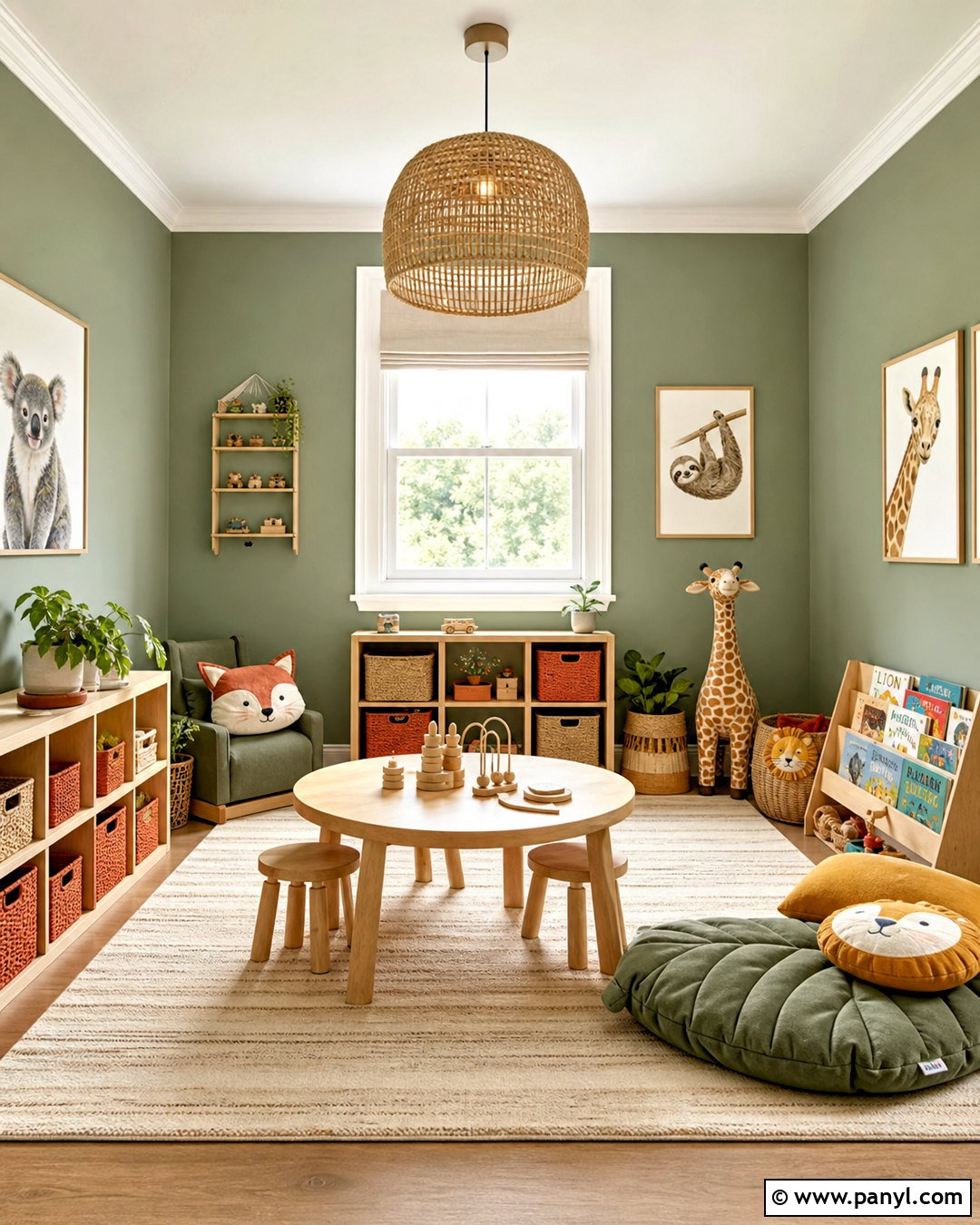
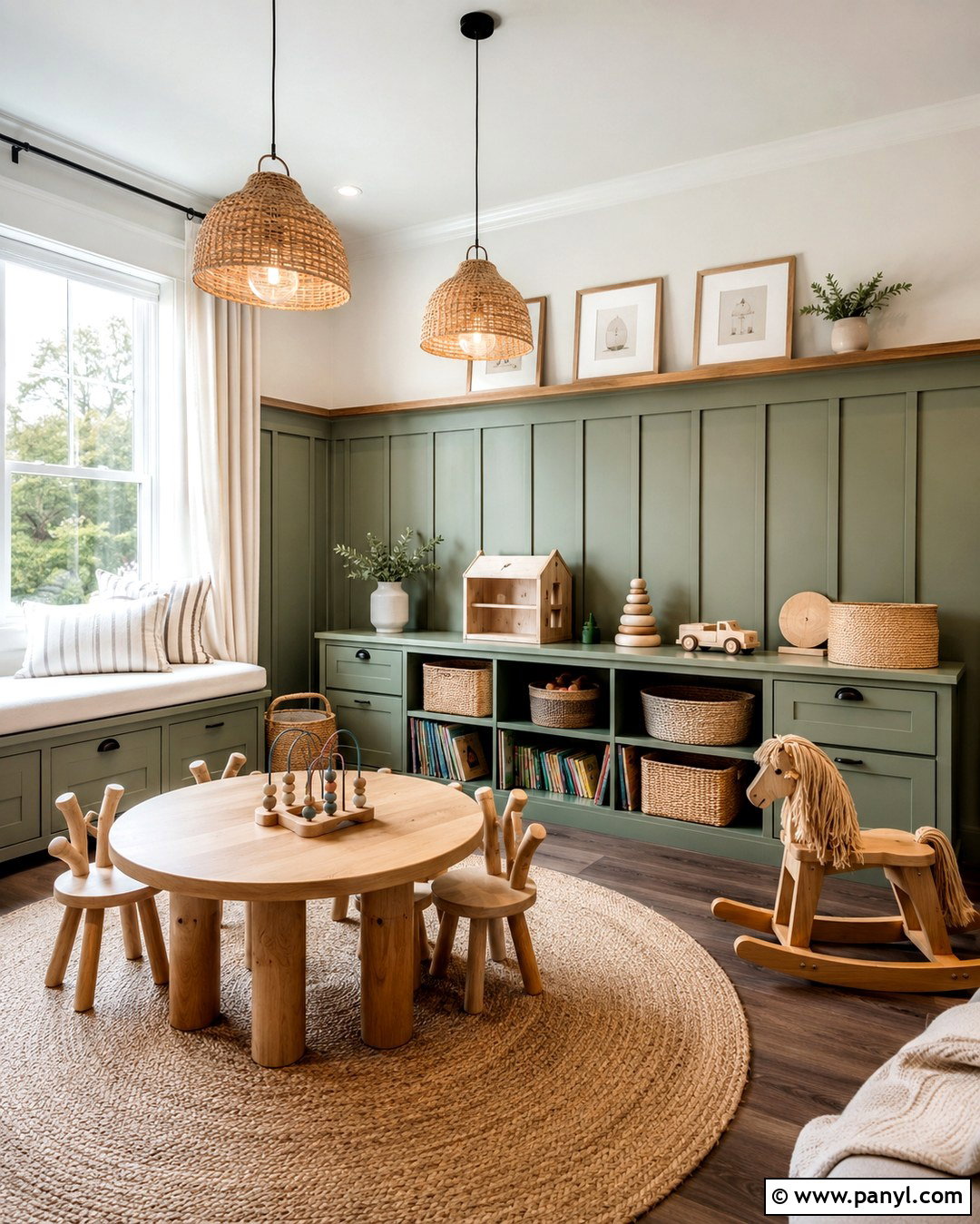
Soft sage green creates a peaceful playroom that still feels colorful and connected to nature. Paint every wall in a warm, muted sage, then use creamy white on the ceiling, baseboards, doors, and window trim. Add low natural-oak cubbies along one wall, leaving open floor space for building and pretend play. A washable ivory rug with subtle green stripes keeps the room light, while rust, mustard, and dusty blue storage baskets add controlled contrast. Complete the space with a round wooden activity table, woven pendant light, leaf-shaped cushions, and framed animal prints. This palette works especially well in sunny rooms because the gentle green balances strong daylight without appearing cold or overly bright.
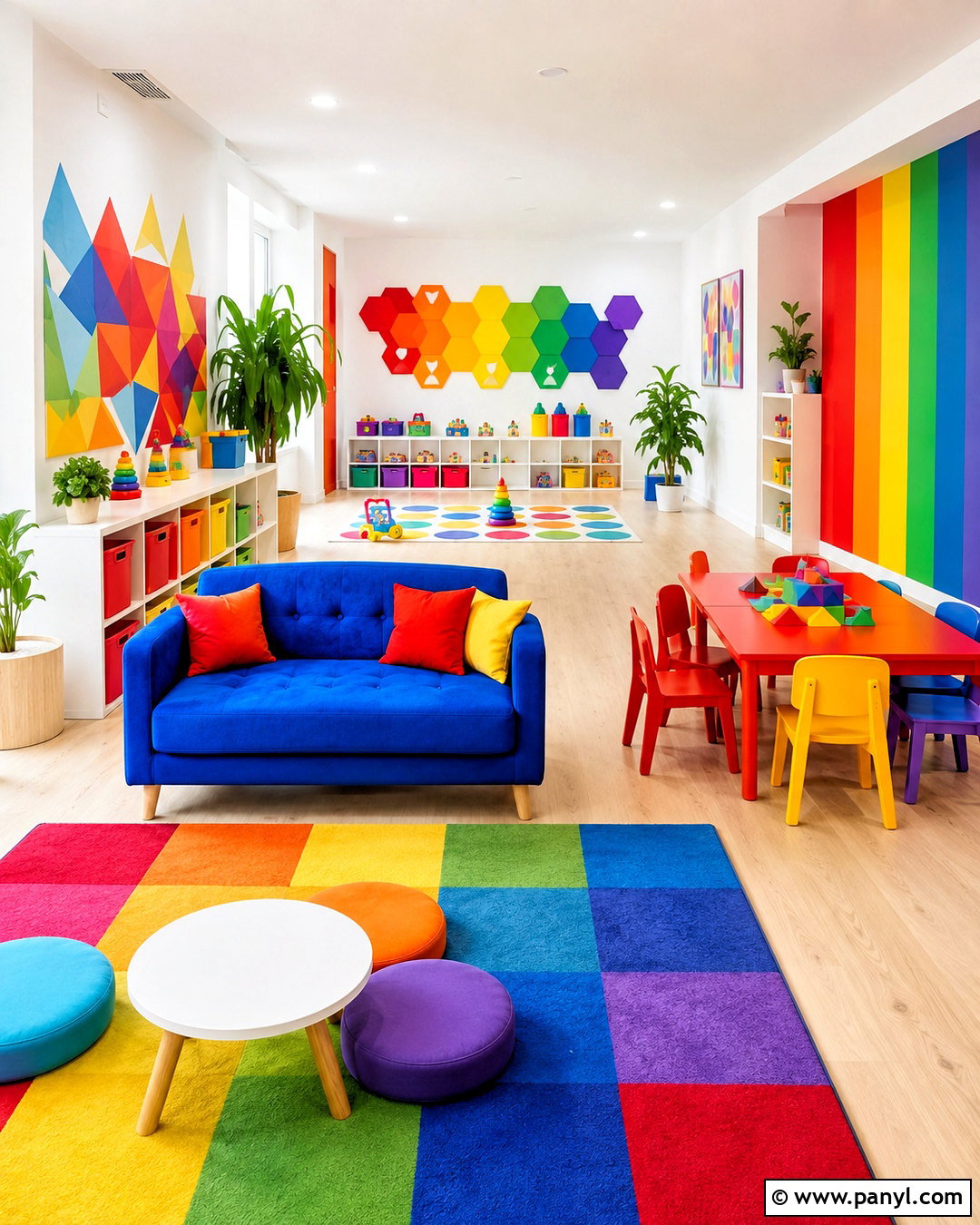
2. Sky Blue Playroom
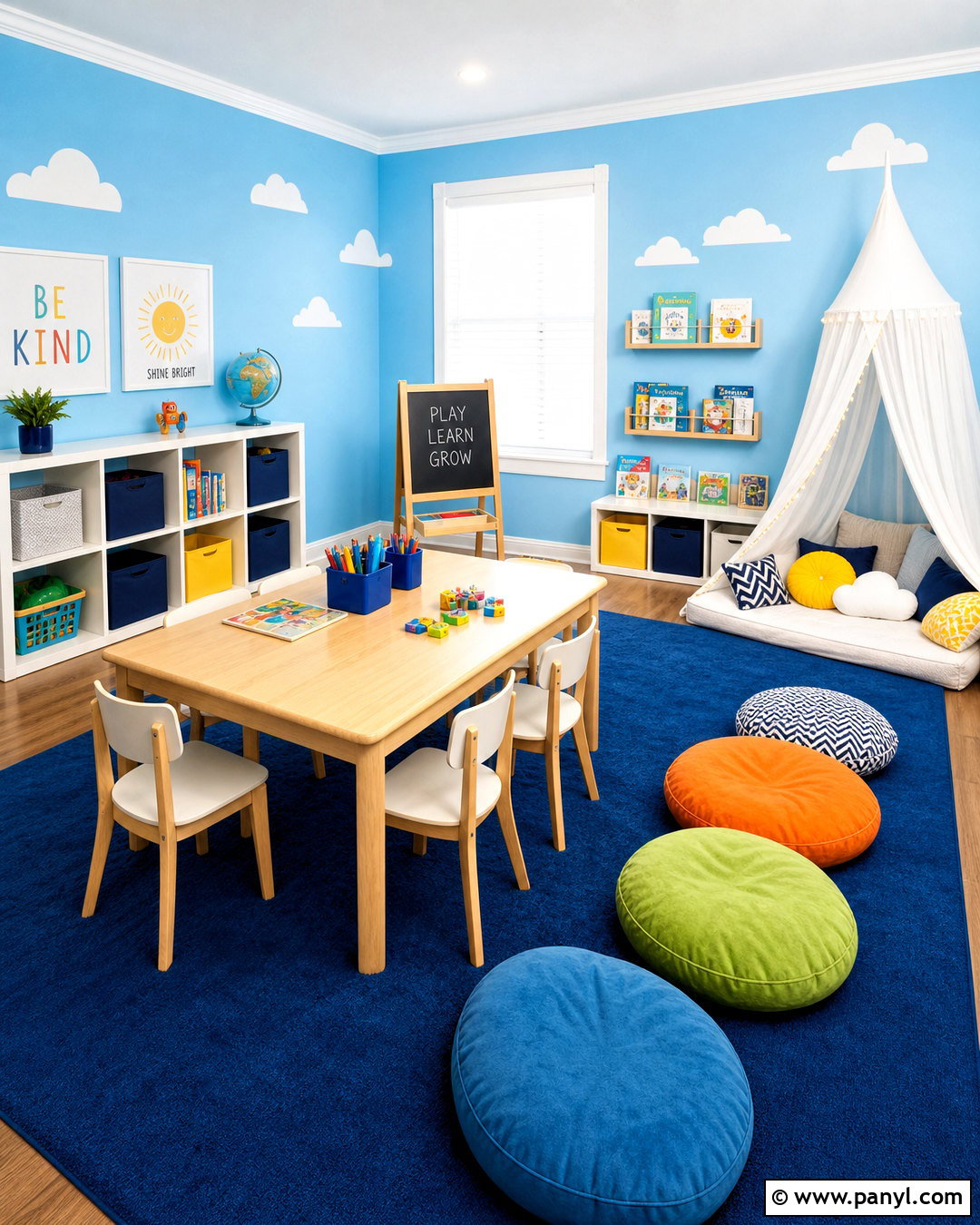
Imagine a bright blue sky stretching around the entire playroom. Use clear sky blue on the walls and crisp white across the ceiling, trim, shelving, and doors. Paint a few simple white clouds above the reading corner rather than covering every surface with a busy pattern. White cube storage with navy and yellow bins provides contrast, while a pale wood craft table warms the cooler wall color. Place a deep blue rug in the center and add floor cushions in sunny yellow, turquoise, and white. A white fabric canopy can define a quiet book nook without making the room feel crowded. This complete palette feels fresh, open, and lively, making it particularly useful for a smaller playroom with limited natural light.
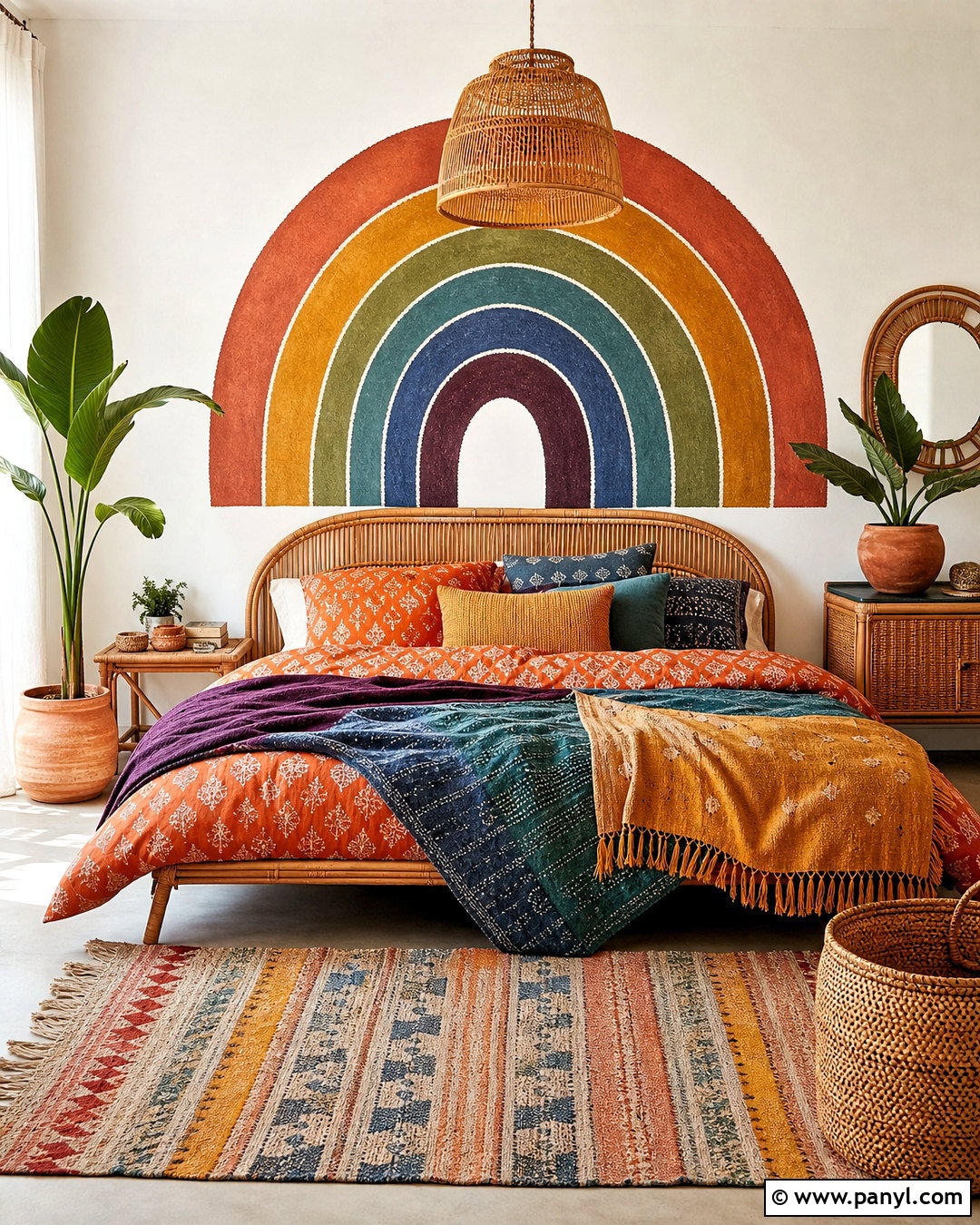
3. Rainbow Arch Playroom
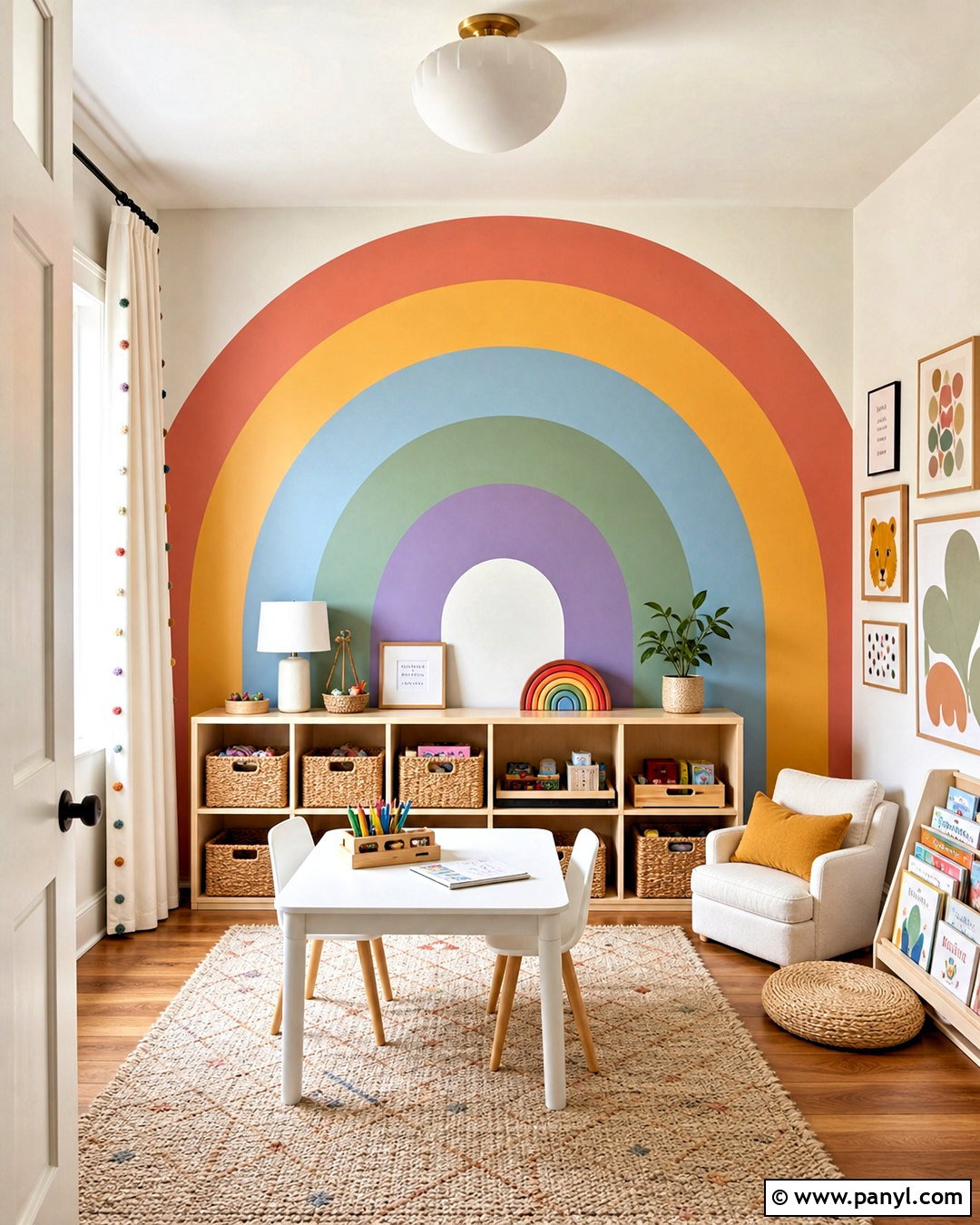
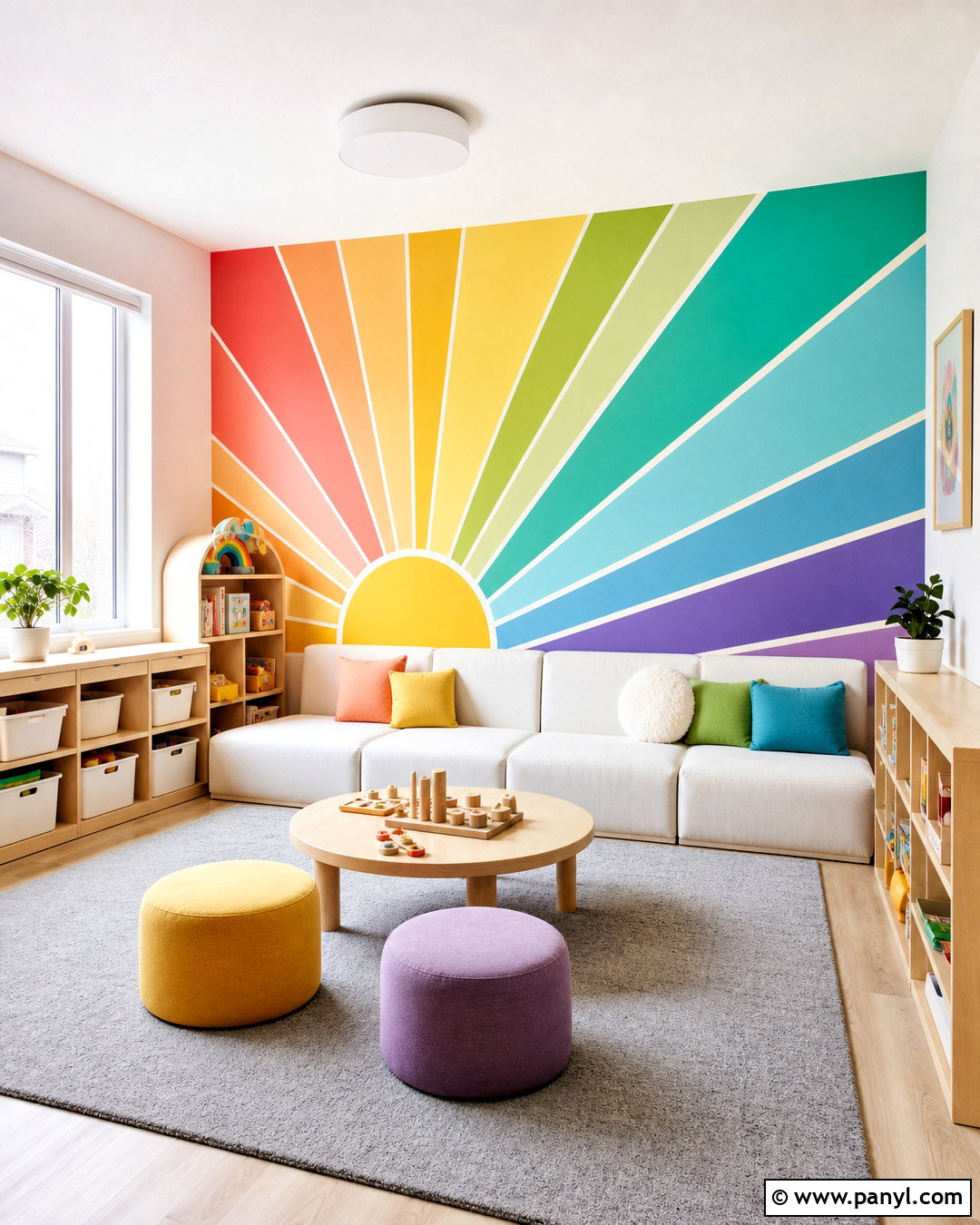
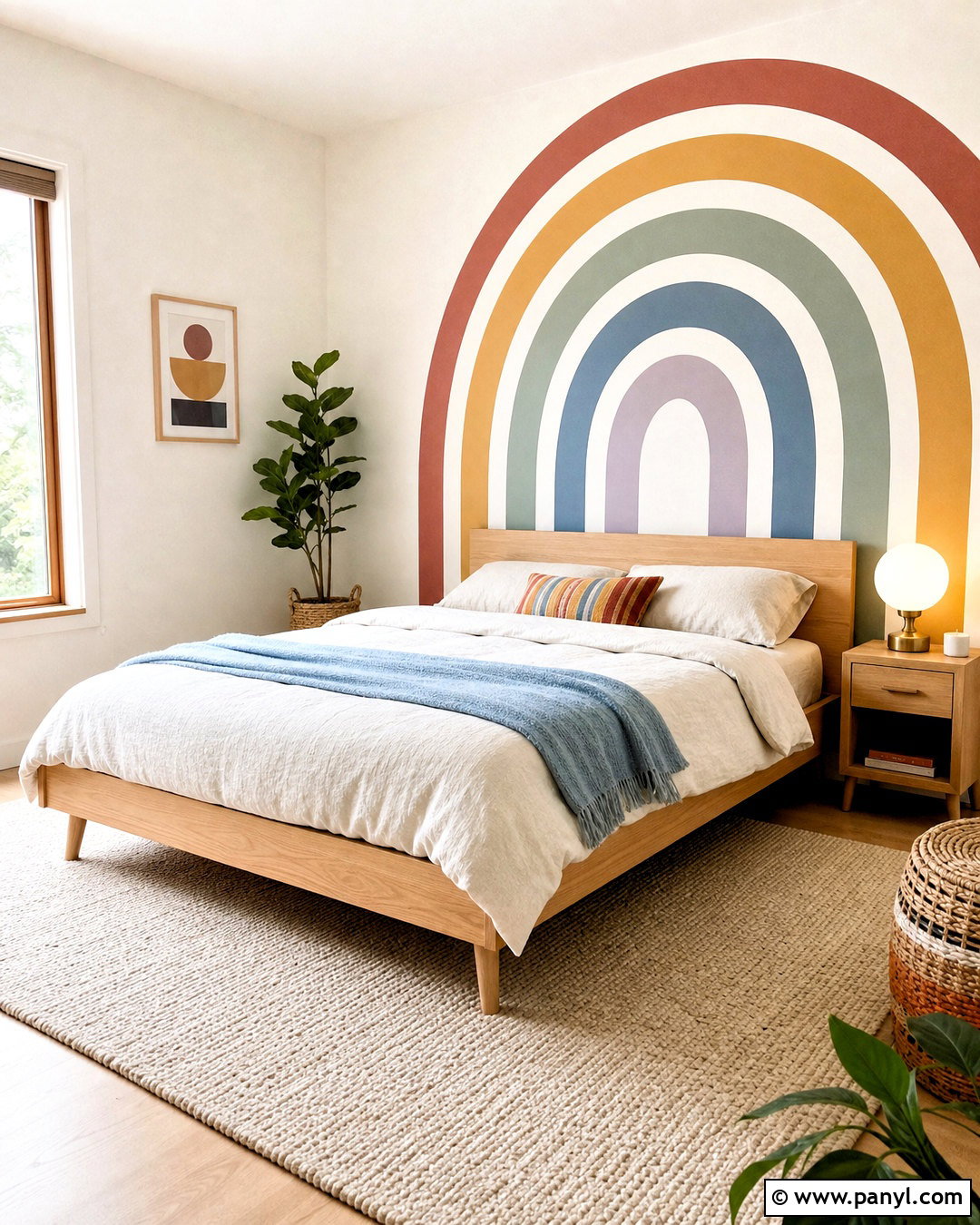
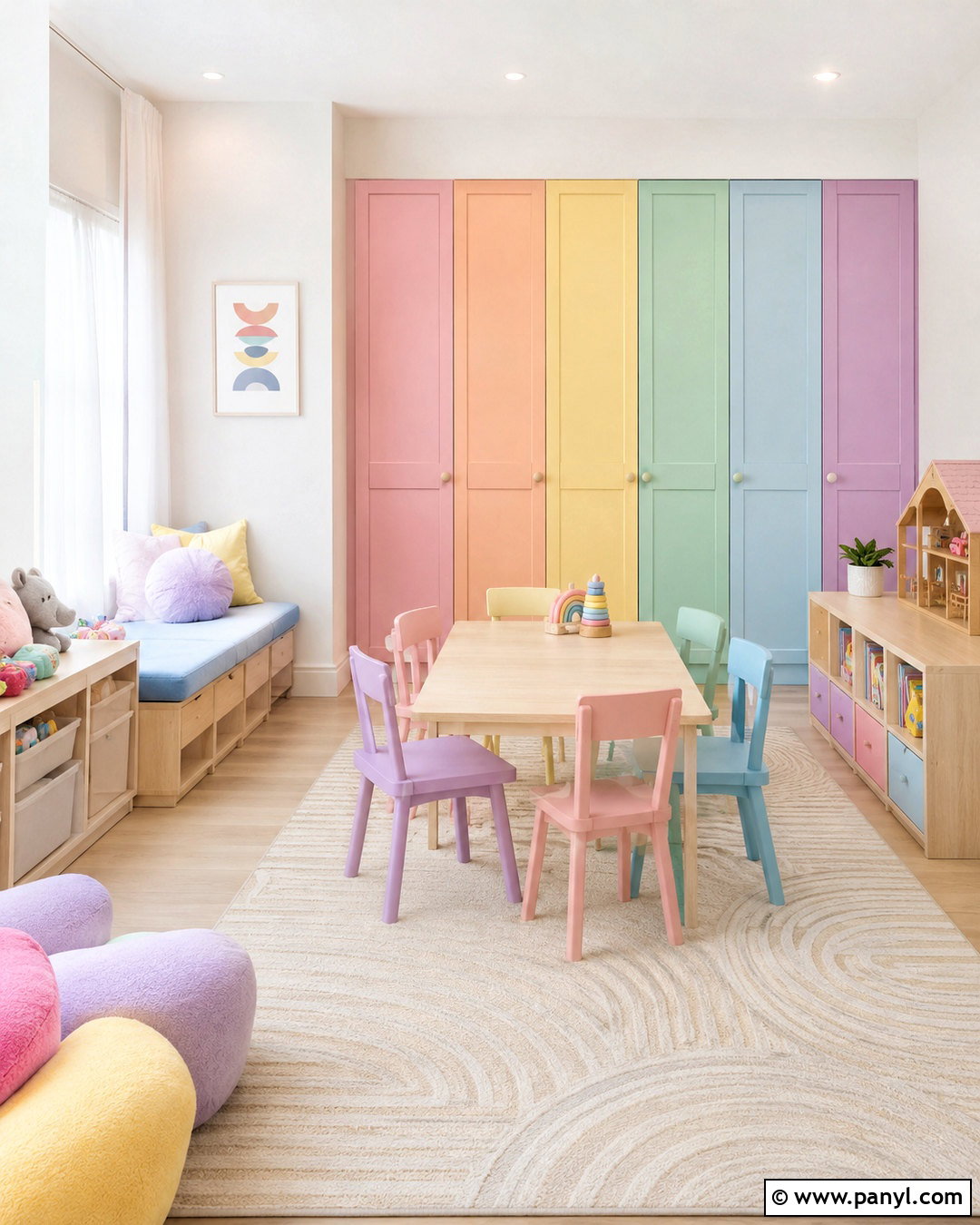
A large painted rainbow can create a cheerful focal point without requiring brightly colored walls everywhere. Begin with warm white walls and paint an oversized arch behind a low reading bench using muted coral, golden yellow, dusty blue, sage green, and soft lavender. Carry those colors into labeled storage baskets, washable cushions, and a patterned area rug. Choose pale birch cubbies and a simple white craft table so the rainbow remains the main feature. Keep the remaining walls mostly quiet, displaying children’s artwork in matching natural-wood frames. The finished room feels playful but not chaotic because every accent repeats a color from the mural. This design can also grow with children since the softened rainbow palette works beyond the preschool years.
4. Blue And Green Playroom
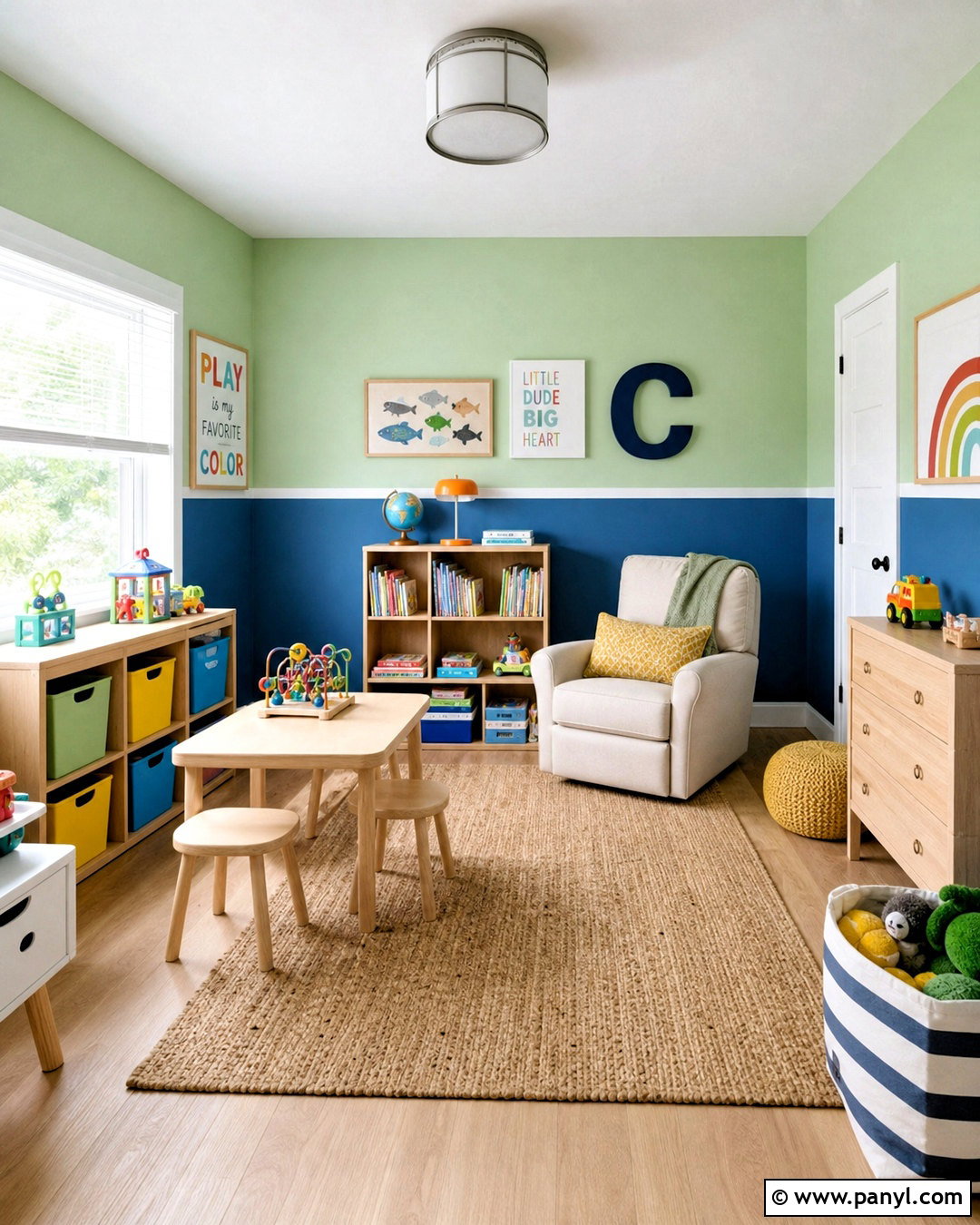
Two coordinating colors can divide a multipurpose playroom into clear activity zones. Paint the lower two-thirds of the walls in medium ocean blue and the upper section in soft mint green, separated by a narrow white stripe. Position toy storage and an active building area against the deeper blue portion, which visually anchors the room. Create a reading corner near the mint wall with a cream chair, low bookshelf, and navy floor cushion. Light oak furniture, white trim, and a natural woven rug prevent the cool palette from feeling stark. Add small orange and sunny yellow accents through bins and artwork. This balanced combination suits children of different ages and gives a shared playroom a colorful look without relying on a specific character theme.
5. Terracotta And Cream Playroom
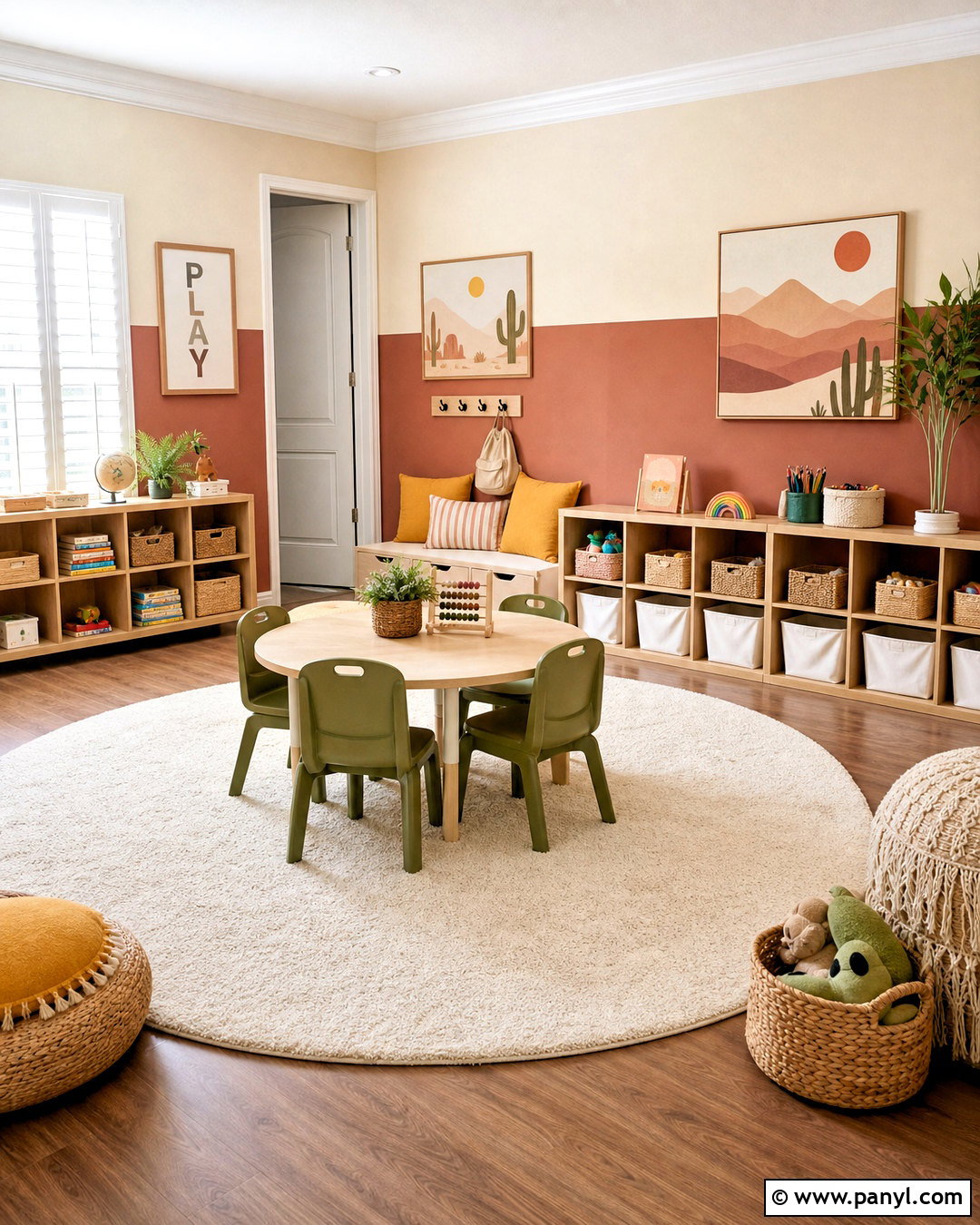
Warm terracotta gives a playroom an earthy, cozy personality that feels different from typical primary-color schemes. Paint the lower half of the walls in muted clay terracotta and the upper half in creamy off-white. Use a clean horizontal line instead of molding for a simple, budget-friendly finish. Add light wood storage units, a round cream rug, and a child-size table with olive green chairs. Woven baskets and canvas bins maintain the natural look, while mustard cushions and simple desert-inspired artwork introduce extra warmth. Keep the ceiling, trim, and doors bright white to make the room feel open. This complete scheme works especially well in a family room or visible play area where the children’s space needs to coordinate with surrounding adult decor.
6. Pastel Color Block Playroom
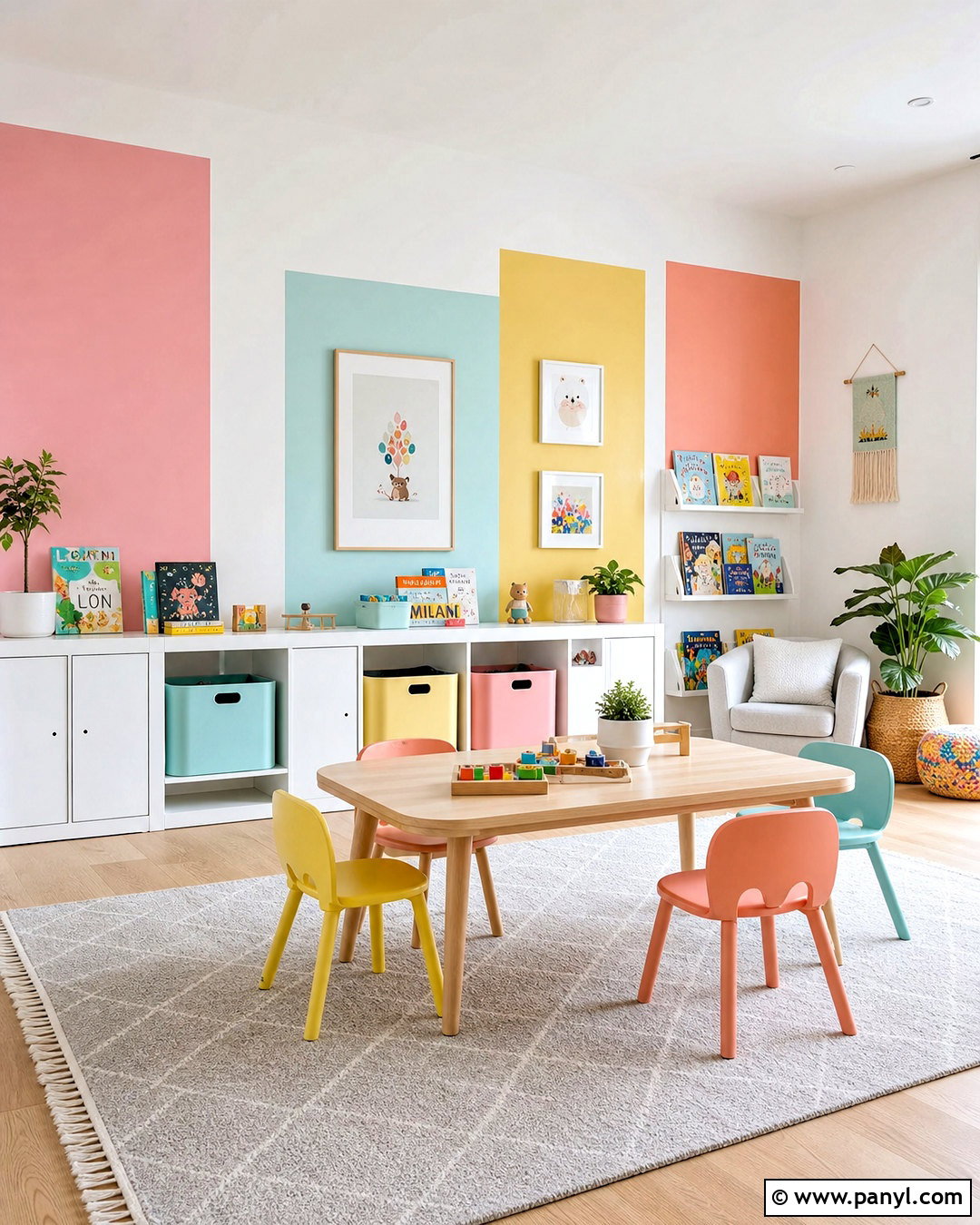
Soft color blocking creates movement while keeping the playroom gentle and easy on the eyes. Start with a warm white base, then paint large overlapping rectangles in blush pink, pale aqua, butter yellow, and light peach across one main wall. Keep the shapes wide and simple so they frame the furniture rather than competing with it. Place a low white storage cabinet beneath the design and arrange coordinating pastel bins inside each cubby. A pale gray washable rug grounds the room, while a blond-wood activity table adds natural texture. Repeat the wall colors through cushions, book covers, and framed artwork. The other walls should remain white, giving children’s toys and projects space to stand out without making the finished room feel visually crowded.
7. Chalkboard Playroom Wall
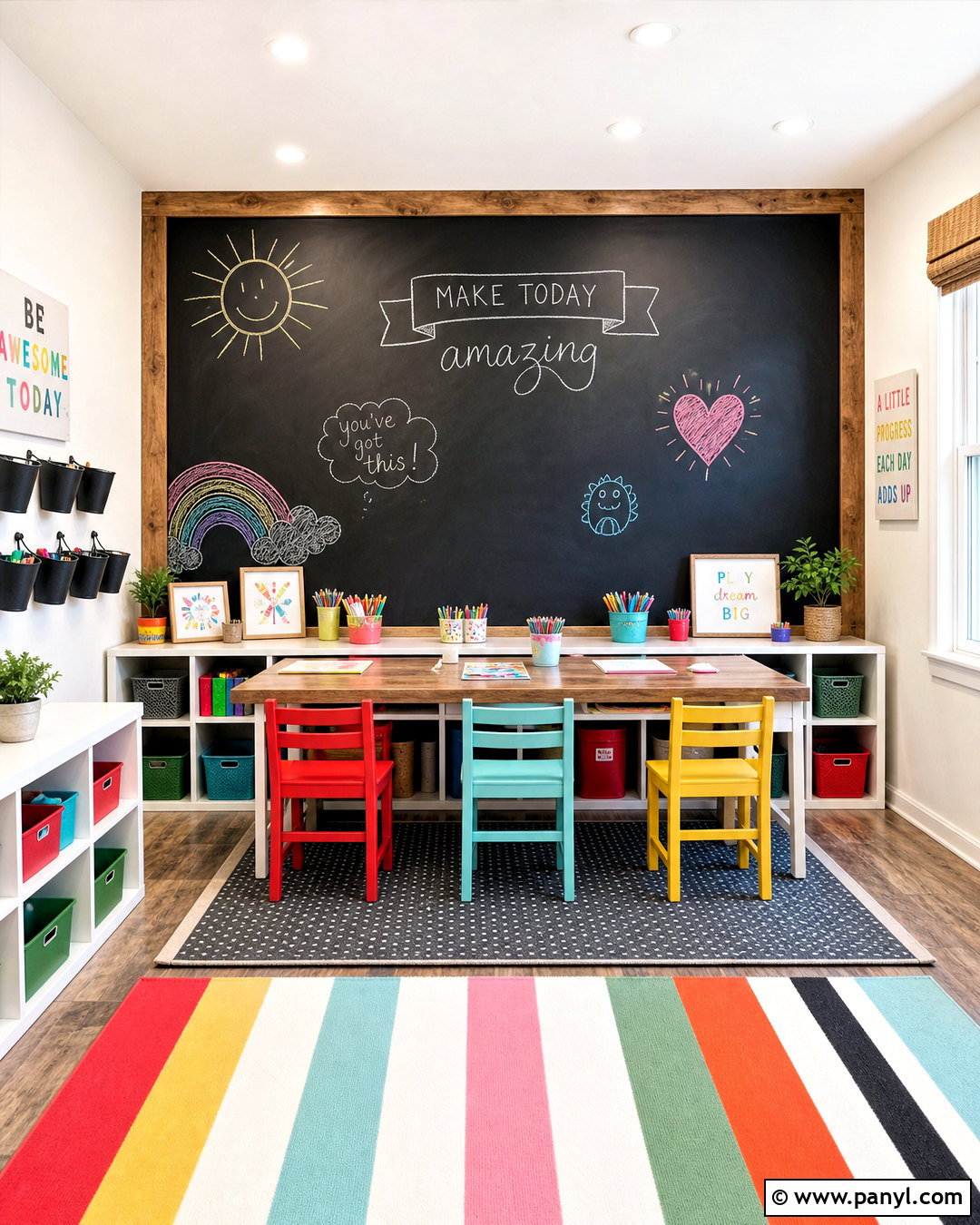
A chalkboard feature can make creativity part of the room’s permanent design. Paint one full wall in deep charcoal chalkboard paint, then frame it with simple natural-wood trim to create a polished, oversized drawing surface. Keep the remaining walls soft warm white so the dark section does not dominate the room. Position a long, low craft table in front of the wall, with covered chalk containers and an easy-to-clean floor mat nearby. White cubbies, colorful storage bins, and a bright striped rug balance the charcoal backdrop. Add red, turquoise, and yellow chairs for energy. The completed space feels like an inviting art studio, while the clearly defined drawing area helps separate creative activities from the reading and toy-storage zones.
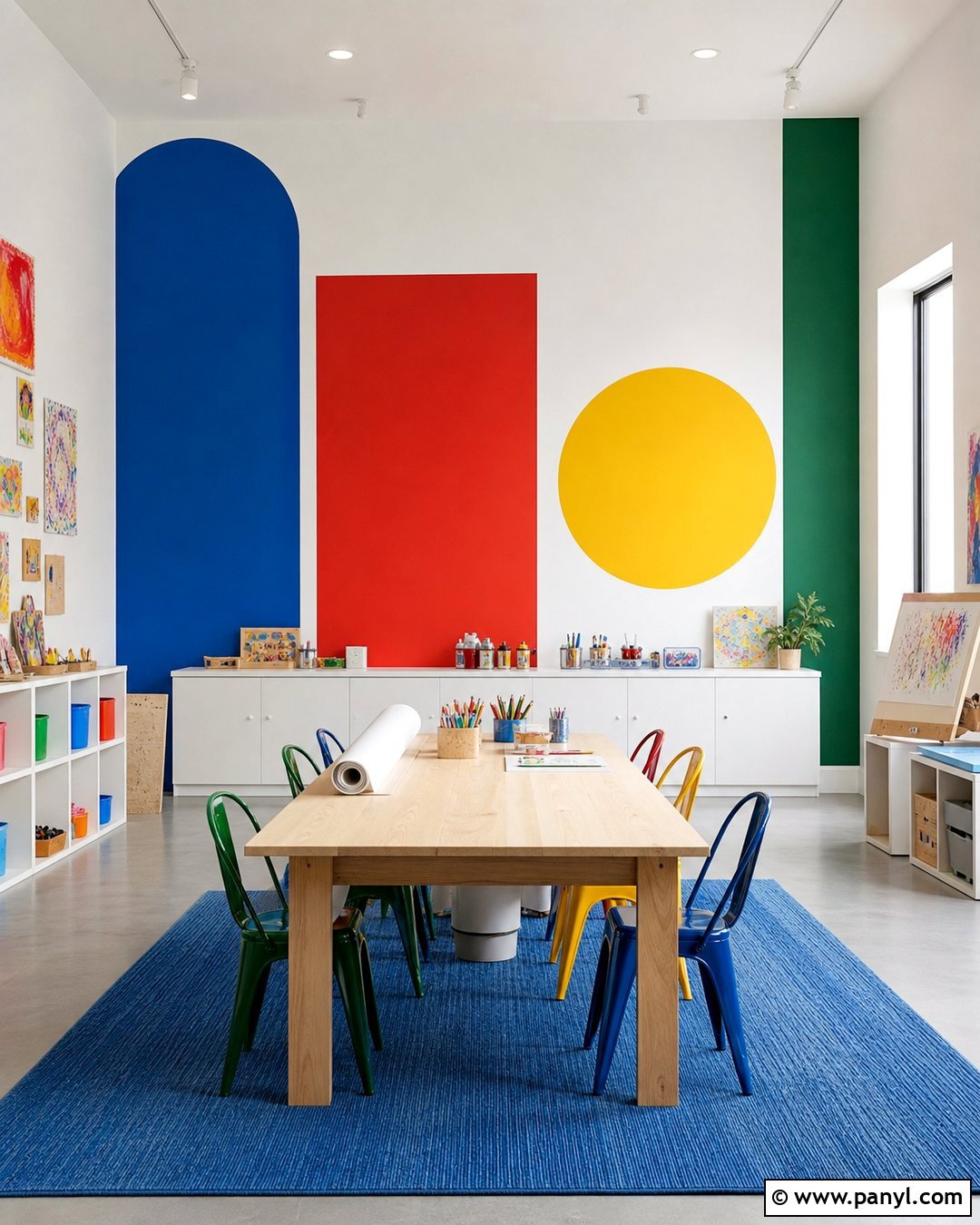
8. Geometric Playroom Wall
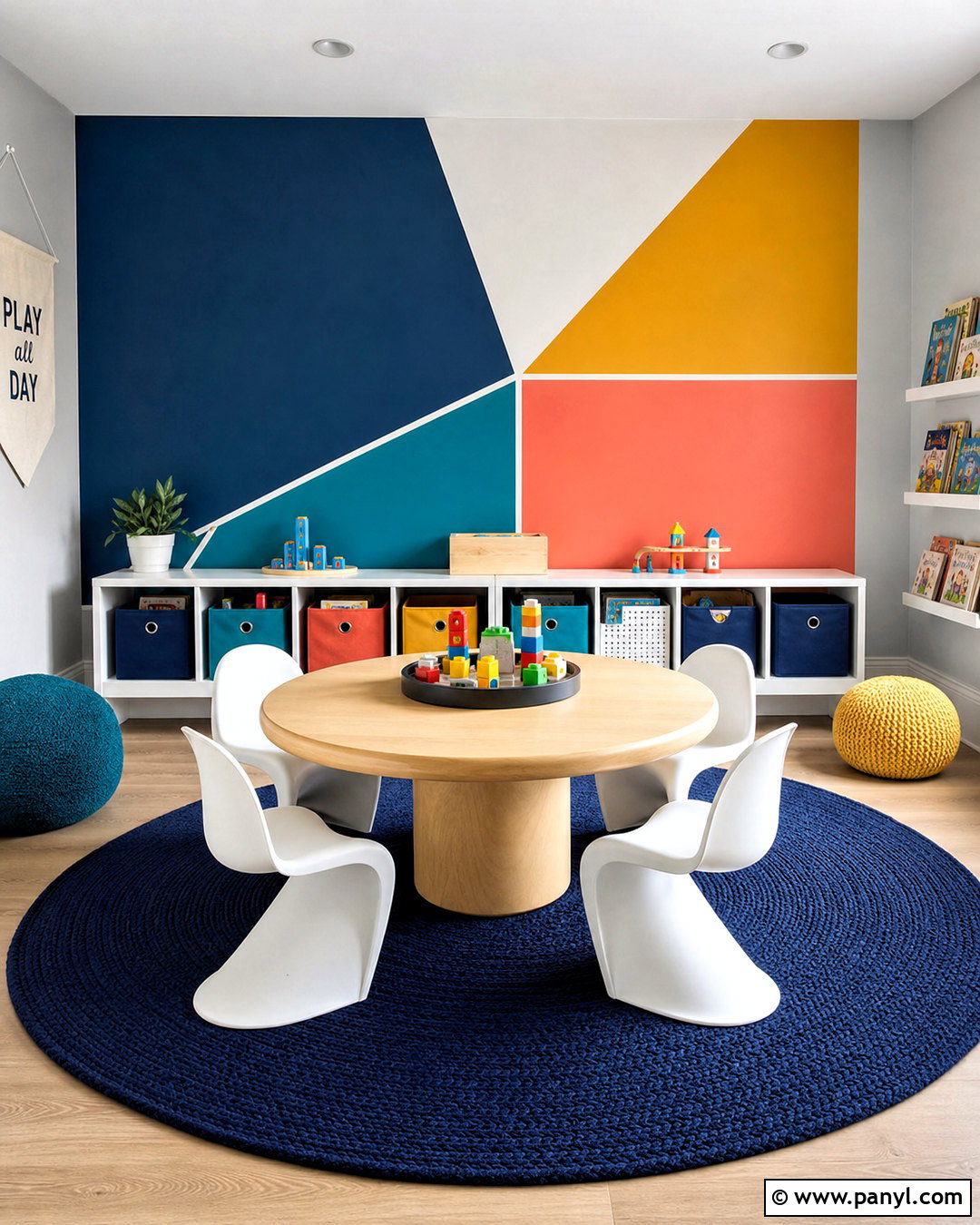
Large geometric shapes bring bold color into a playroom without requiring a detailed mural. Cover the main wall with oversized triangles, semicircles, and rectangles in navy blue, turquoise, mustard yellow, coral, and warm white. Keep the other walls pale gray to provide visual breathing room. Arrange low white cubbies along the patterned wall and choose solid-colored bins that repeat the mural palette. A round navy rug softens the angular design, while a light oak table and curved white chairs add warmth. Limit additional wall decor because the painted pattern already provides plenty of interest. This complete room feels energetic and modern, making it ideal for building sets, games, and active play while remaining coordinated enough to sit beside an open family living area.
9. Striped Playroom Walls
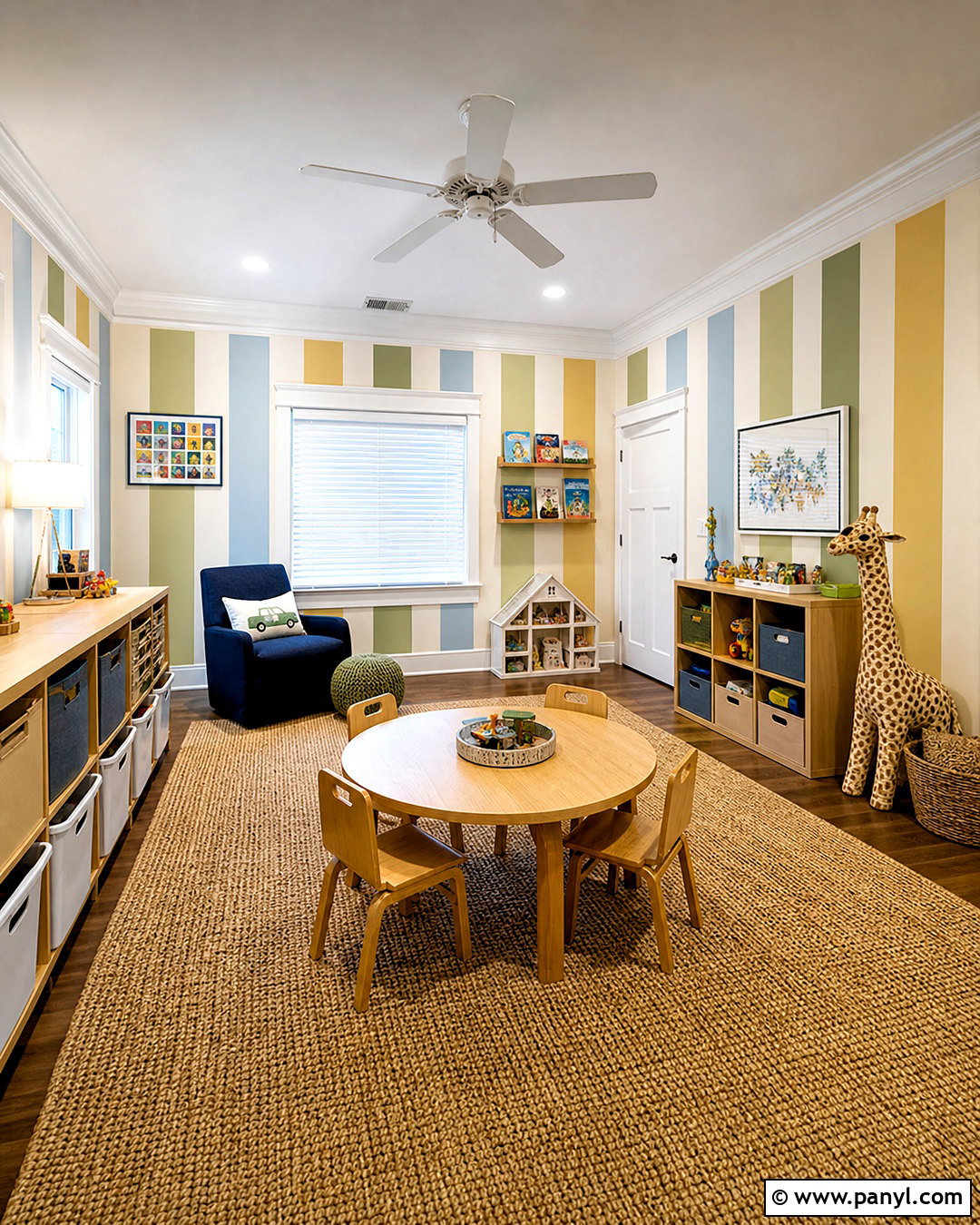
Wide vertical stripes can make a low-ceiling playroom appear taller while introducing several colors in an orderly way. Paint the walls with alternating bands of creamy white, pale blue, muted green, and soft golden yellow. Keep each stripe broad so the pattern remains clean rather than resembling a narrow circus stripe. Use solid white trim and a simple white ceiling for a crisp boundary. Ground the room with a natural jute-style washable rug, pale wood cubbies, and a deep blue reading chair. Choose storage bins in only two wall colors to avoid excess visual noise. A small round table in the center leaves clear walking paths around the room. The resulting design looks cheerful, structured, and appropriate for both toddlers and elementary-age children.
10. Scalloped Playroom Wall
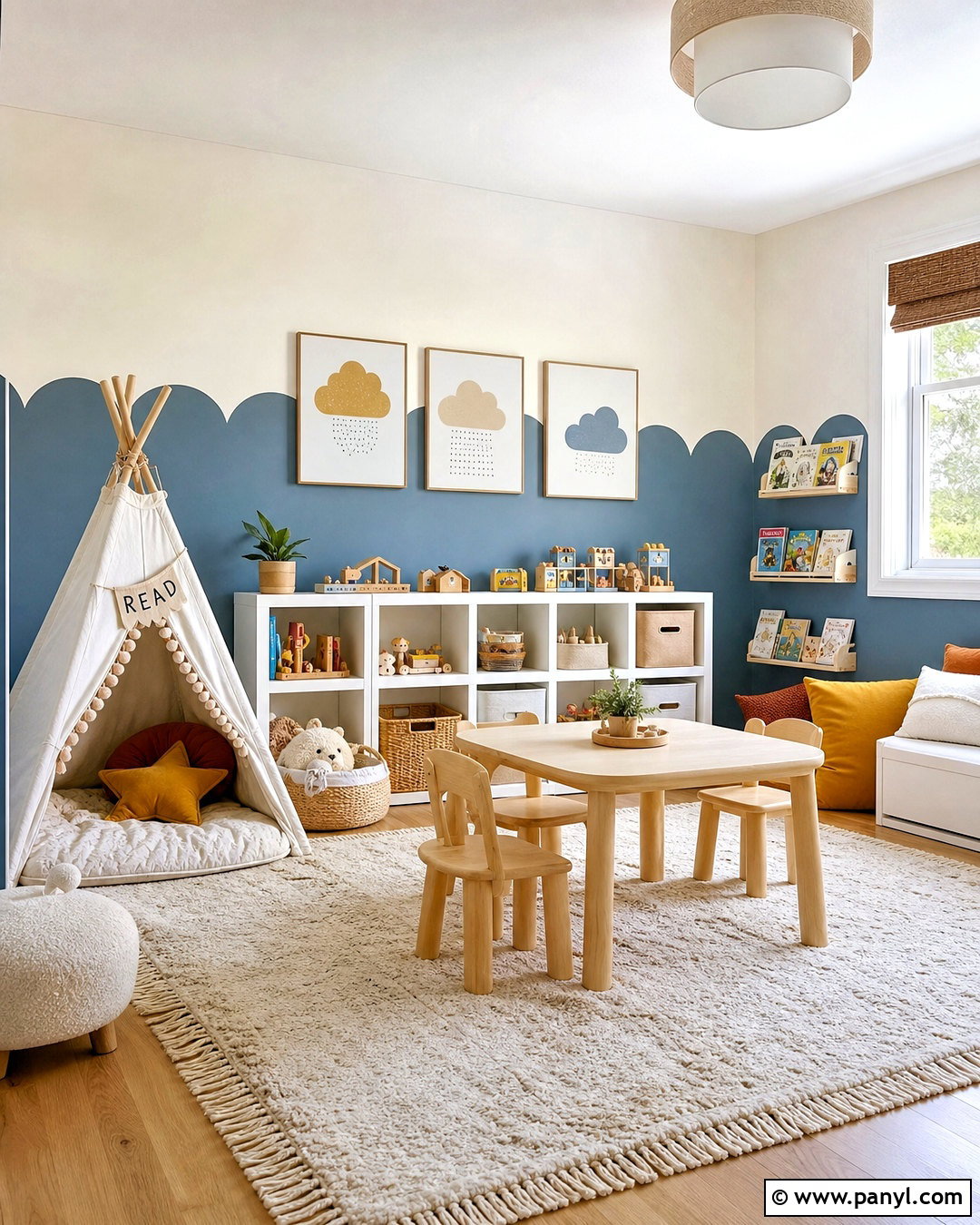
A painted scalloped border gives the room a playful finish without filling every wall with intense color. Apply dusty blue paint from the floor to approximately chair-rail height, then create a row of large rounded scallops along the top edge. Paint the upper walls warm white and repeat that color on the trim and ceiling. Place low white toy storage against the blue section so the scallops remain visible above it. Add a soft cream rug, a pale wood table, and cushions in rust, mustard, and blue. Simple cloud artwork and a fabric reading tent continue the curved theme without becoming overly literal. This finished design is whimsical enough for younger children but restrained enough to remain attractive as the room’s toys and furniture change.
11. Mountain Mural Playroom
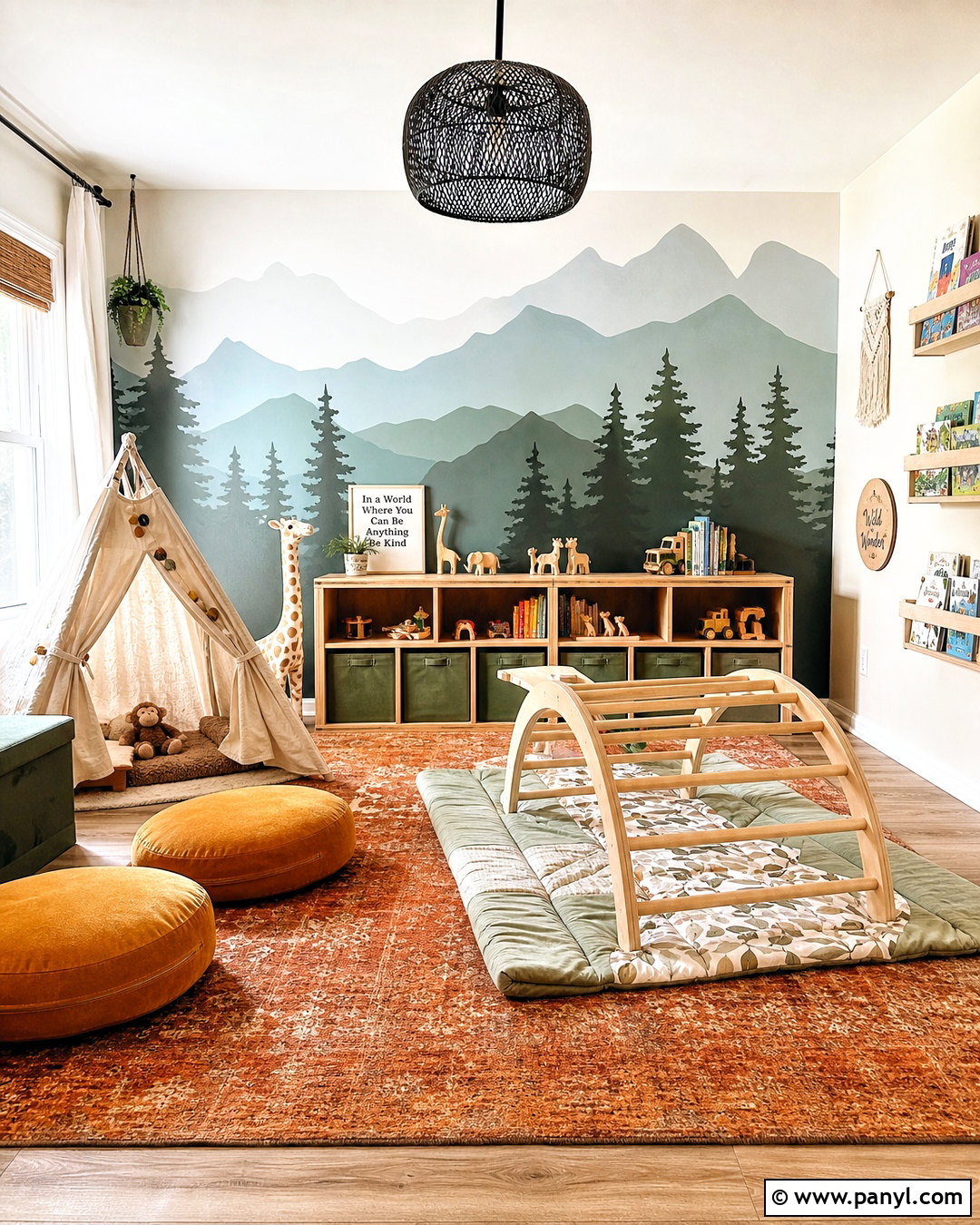
A layered mountain mural transforms the playroom into an adventurous landscape while using a surprisingly simple paint technique. Cover one focal wall with overlapping mountain silhouettes in deep forest green, medium sage, misty blue, and pale gray. Use warm white for the other walls and ceiling, allowing the mural to remain the main attraction. Position a natural-wood climbing arch and cushioned play mat near the painted mountains. Store toys in low oak cubbies with green and blue fabric bins. A rust-colored rug and mustard floor cushions warm the cooler landscape palette. Complete the design with a canvas reading tent and wooden animal figures. The whole room feels imaginative and outdoorsy without depending on temporary cartoon characters or overly detailed decorative accessories.
12. Woodland Playroom Mural
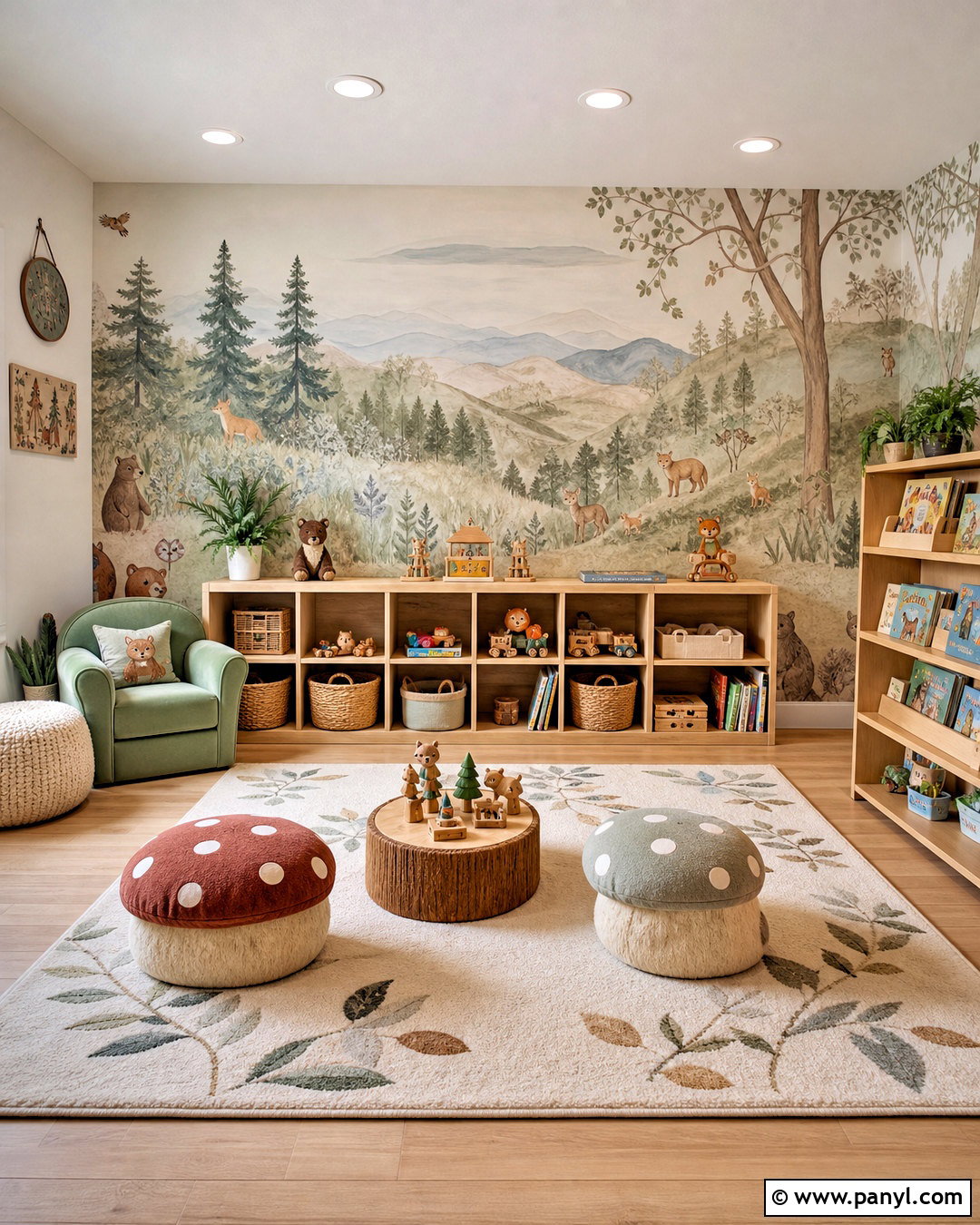
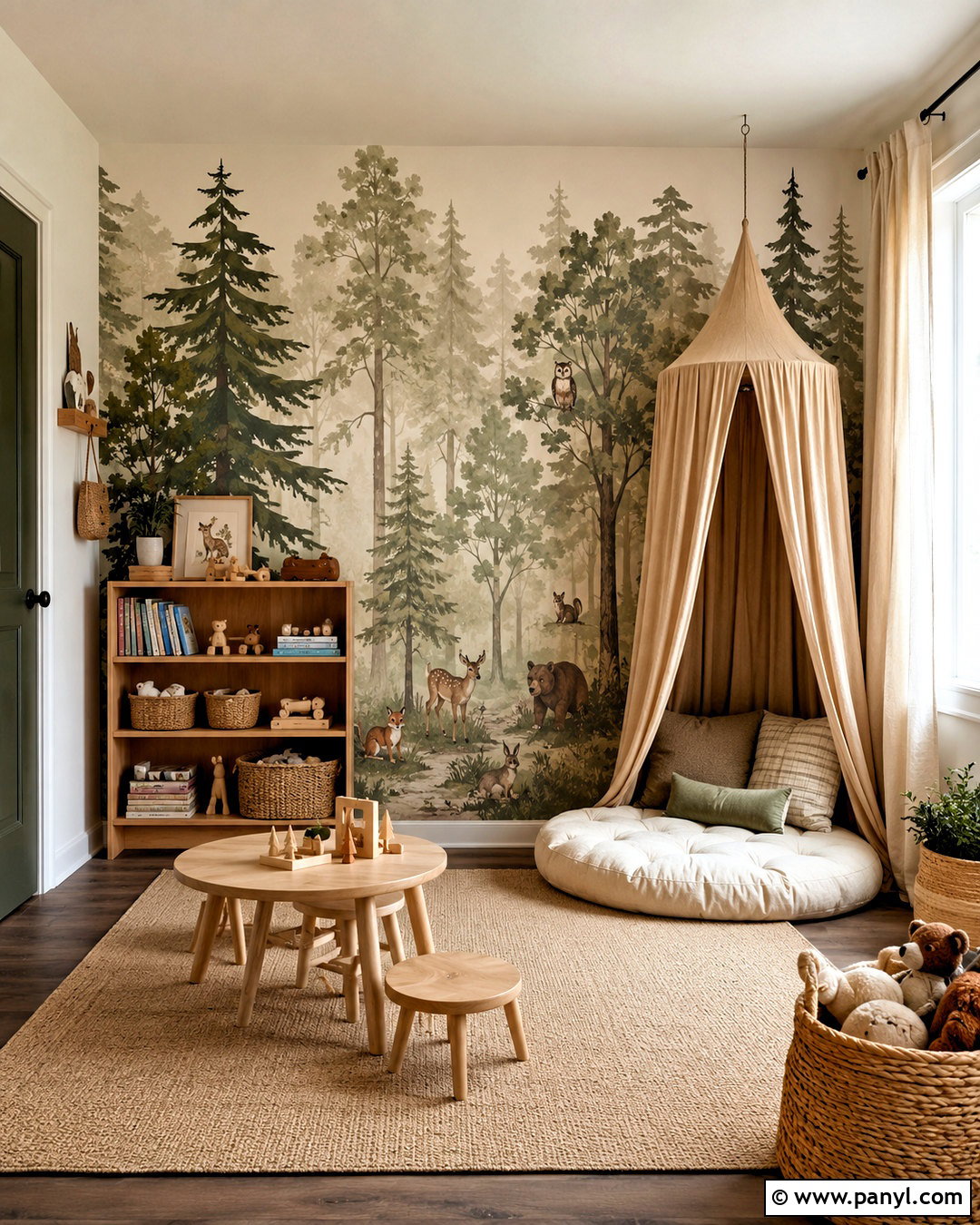
Bring a gentle forest scene indoors with a hand-painted woodland mural in muted, natural colors. Paint soft beige walls throughout the room, then add slim trees, leafy branches, rolling hills, and small forest animals to the main play wall. Use sage green, olive, warm brown, dusty blue, and subdued rust so the mural feels calm rather than overly bright. Arrange wooden toy shelves beneath the trees and place a green upholstered reading chair beside a low bookcase. A cream rug with subtle leaf shapes provides a comfortable central play zone. Add woven baskets, mushroom-shaped cushions, and simple wooden toys to complete the setting. Keeping the mural concentrated on one wall allows the room to feel imaginative while preserving enough visual quiet for focused reading and creative play.
13. Under The Sea Playroom
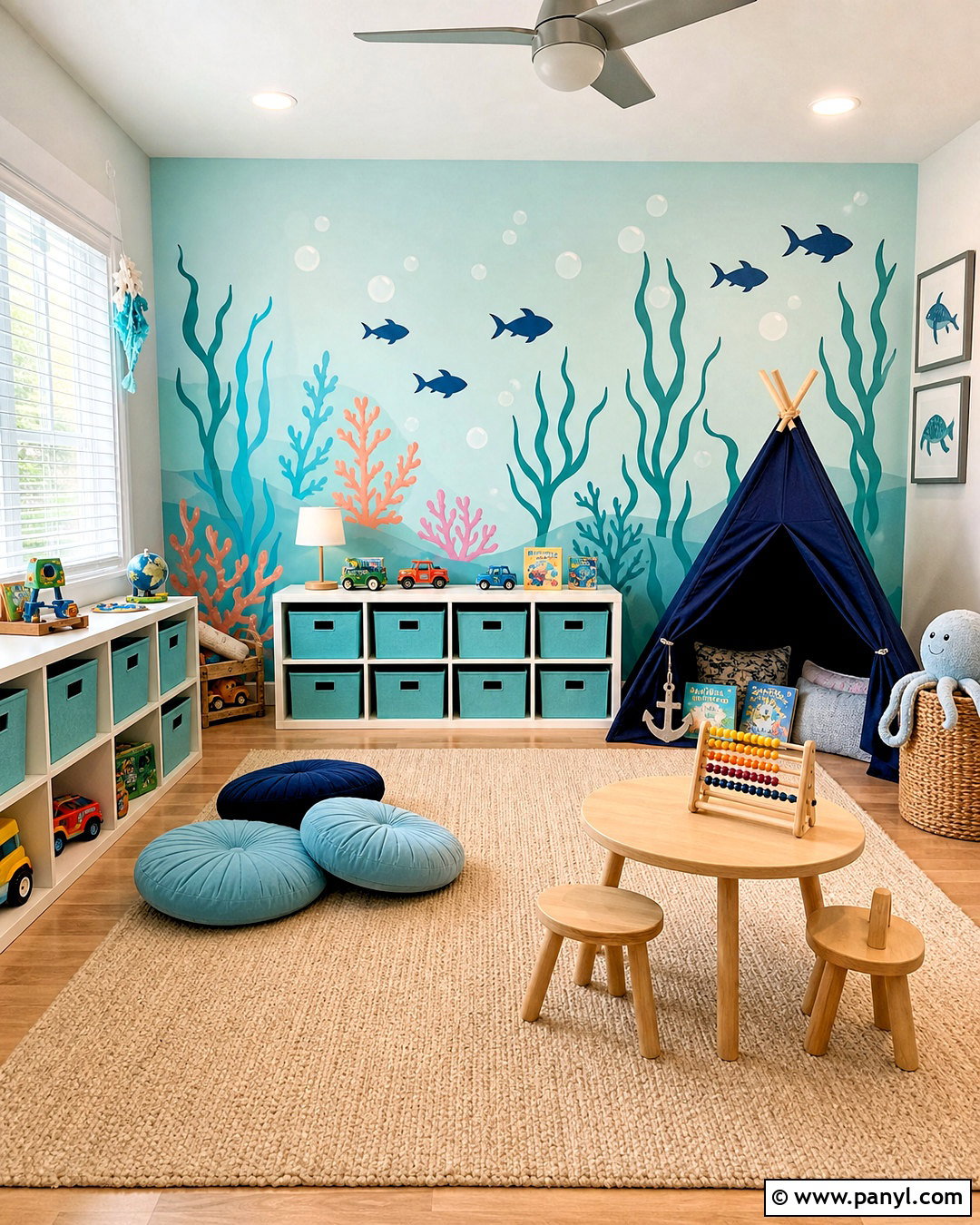
An underwater mural creates an immersive playroom filled with movement and cool, refreshing color. Paint the focal wall in a medium aqua blue, fading slightly lighter toward the top. Add simple seaweed, coral, fish, bubbles, and gentle wave shapes in teal, navy, coral pink, pale yellow, and seafoam green. Keep the surrounding walls soft white to balance the detailed scene. Use a sandy beige rug, white cubby storage, and turquoise bins to continue the coastal palette. A navy reading tent can resemble a small underwater cave, while round blue floor cushions suggest bubbles. Choose light wood furniture to warm the blues. The completed room encourages imaginative ocean play but remains practical, bright, and organized through coordinated storage and open floor space.
14. Outer Space Playroom
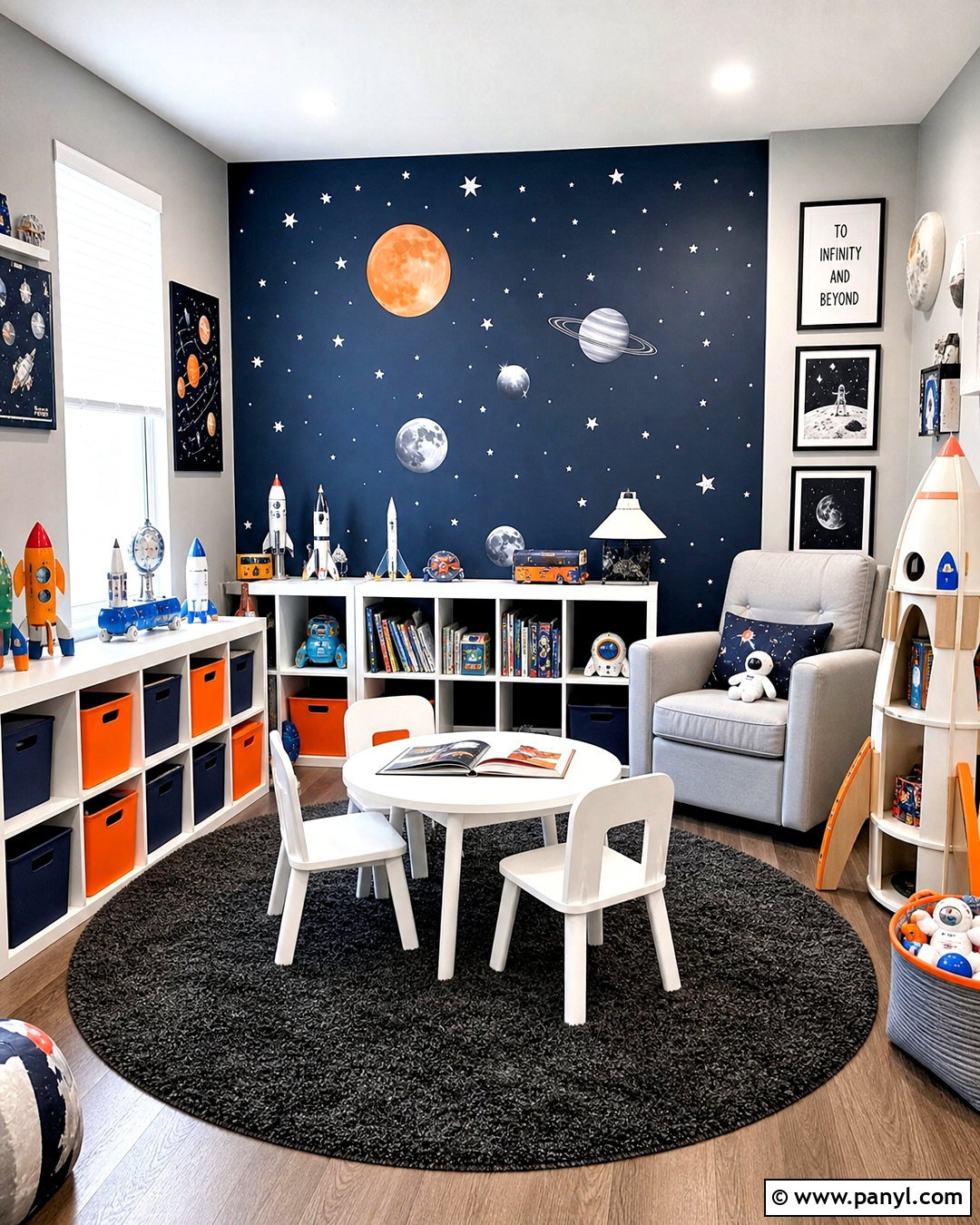
A space-themed playroom can feel dramatic without becoming dark or difficult to use. Paint one feature wall in deep navy blue and add scattered white stars, pale gray planets, and a large muted orange moon. Keep the remaining walls light gray, with crisp white trim and ceiling paint to maintain brightness. Position a white play table and low storage units against the lighter walls, using navy, orange, and silver-gray bins. A round charcoal rug creates a clear building zone, while a light gray reading chair softens the deeper colors. Add a few wooden rocket toys and framed astronomy illustrations instead of filling every surface with themed decorations. This coordinated look feels adventurous, clean, and flexible enough to remain appealing as children develop new interests.
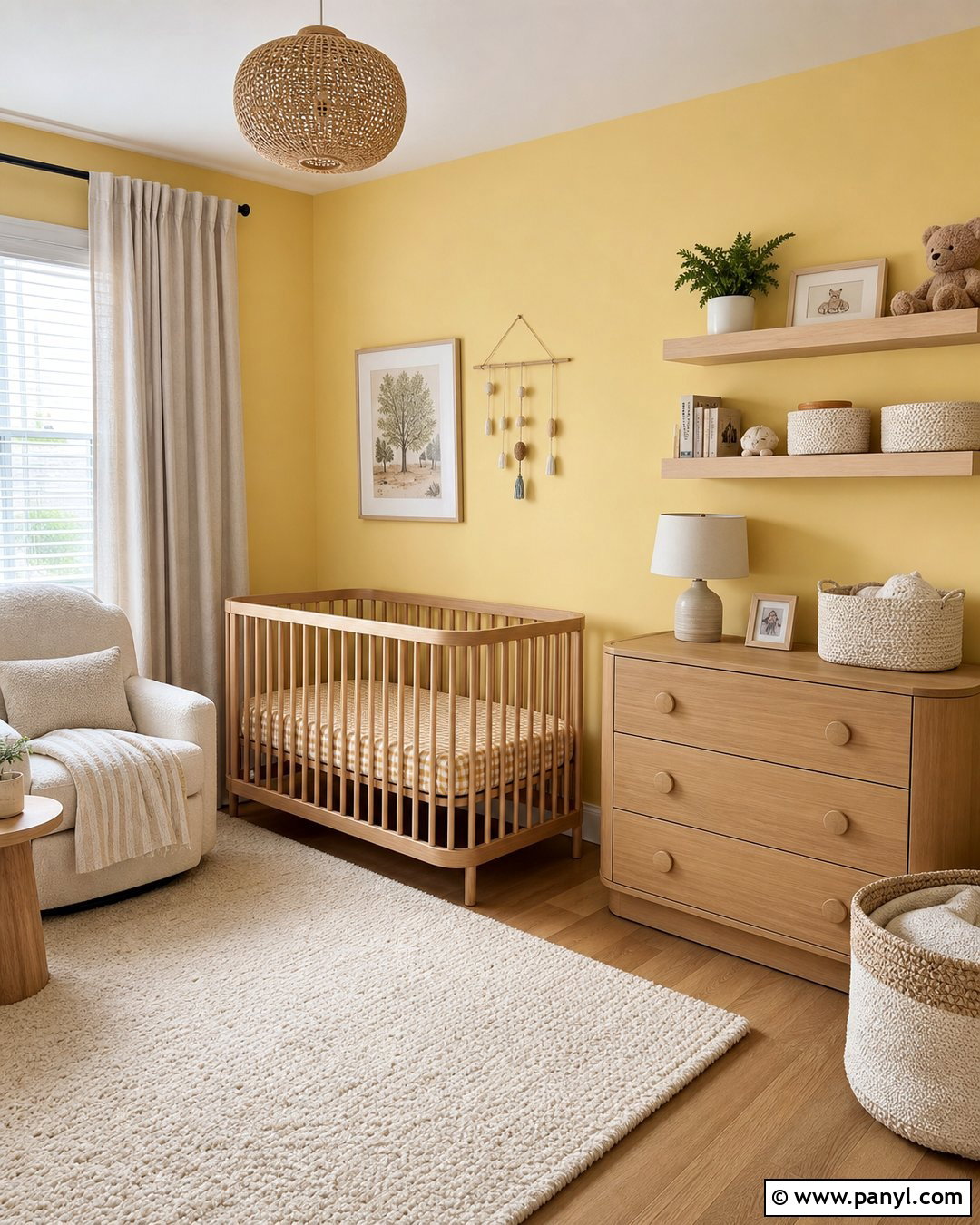
15. Yellow Accent Playroom
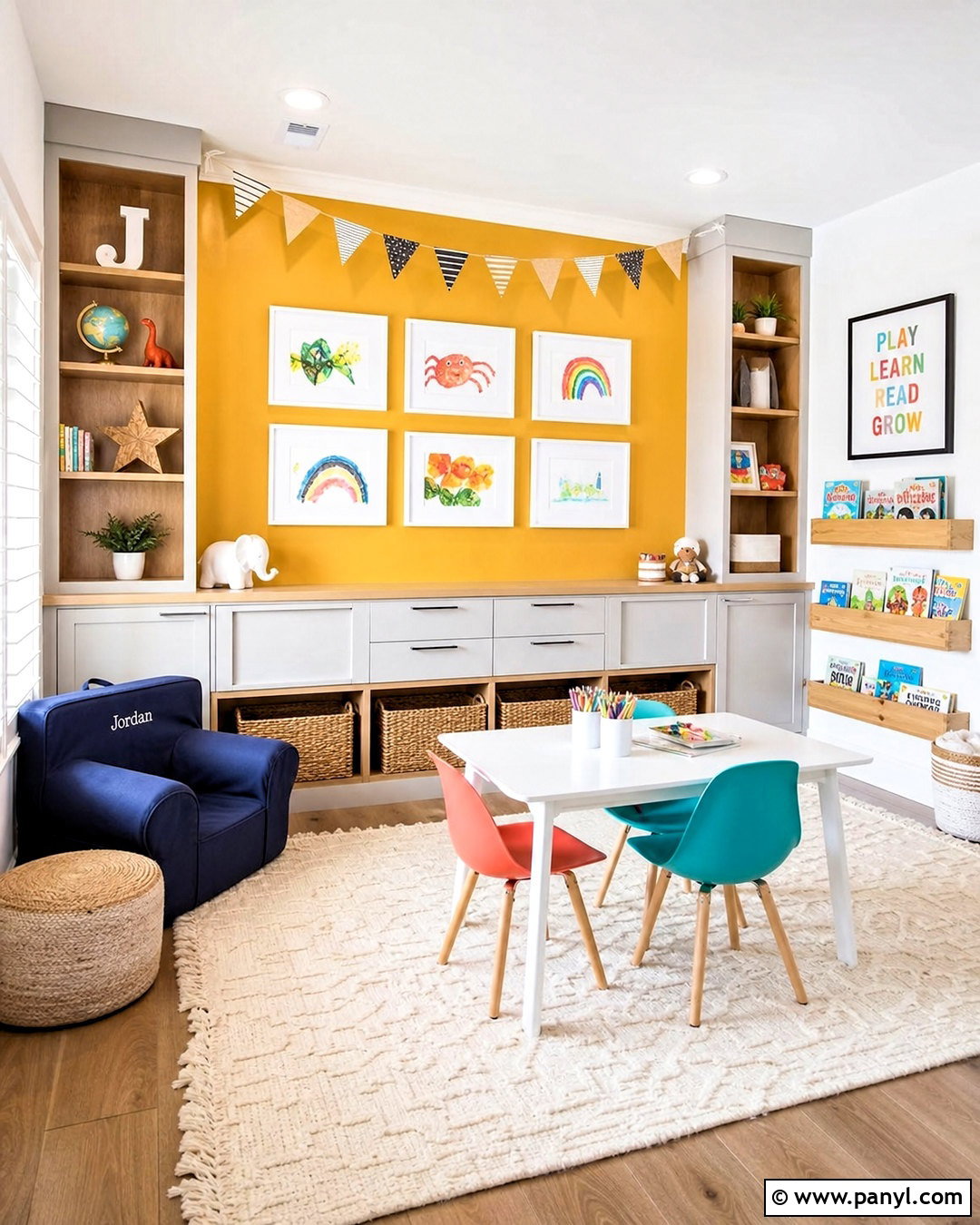
Sunny yellow can energize a playroom when it is balanced with calm neutrals and natural materials. Paint the main activity wall in a warm golden yellow rather than a sharp lemon tone. Cover the remaining walls in soft white and use pale gray on built-in storage for subtle definition. Set a white craft table in front of the yellow wall, adding teal and coral chairs for colorful contrast. Natural wood shelves, woven baskets, and a cream rug keep the room grounded. Hang simple framed shapes and children’s artwork in white frames, leaving portions of the bright wall visible. A navy reading chair provides a deeper accent across the room. The completed palette feels happy and lively while maintaining enough balance for puzzles, reading, and quieter creative activities.
16. Pink And Coral Playroom
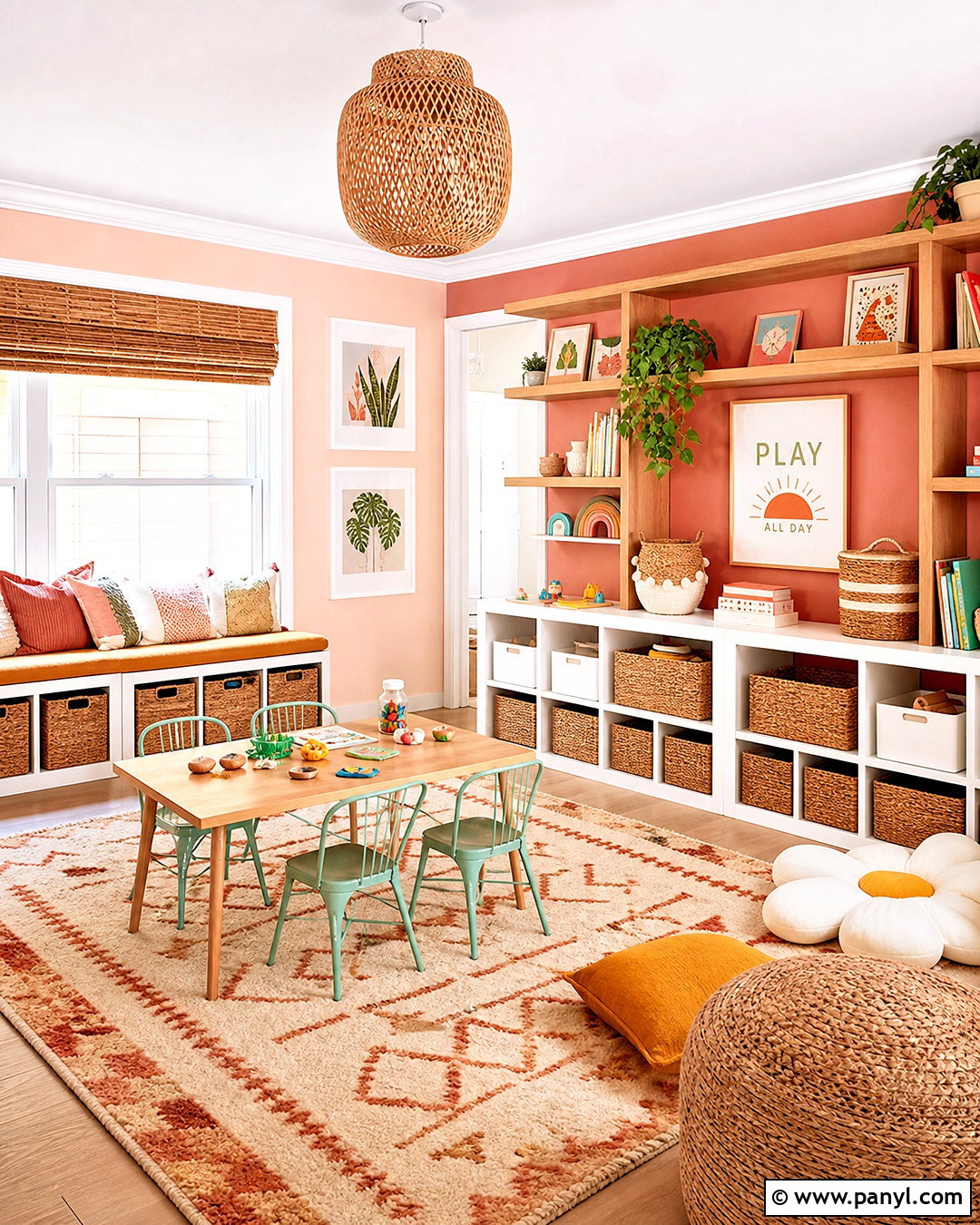
Dusty pink and warm coral can produce a playful room that feels colorful without becoming sugary or overly themed. Paint three walls in a pale blush and use muted coral on the focal wall behind the toy-storage system. Choose white cubbies, light oak shelves, and natural baskets to soften the warm palette. A cream rug with small terracotta shapes defines the main floor area, while mint green chairs add a refreshing contrast around the craft table. Include mustard cushions and simple botanical prints to broaden the color story. Keep the ceiling and trim clean white so the room stays bright. This complete design works well for art, pretend play, and reading, with a sophisticated palette that can adapt easily as children’s preferences and favorite accessories change.
17. Navy And White Playroom
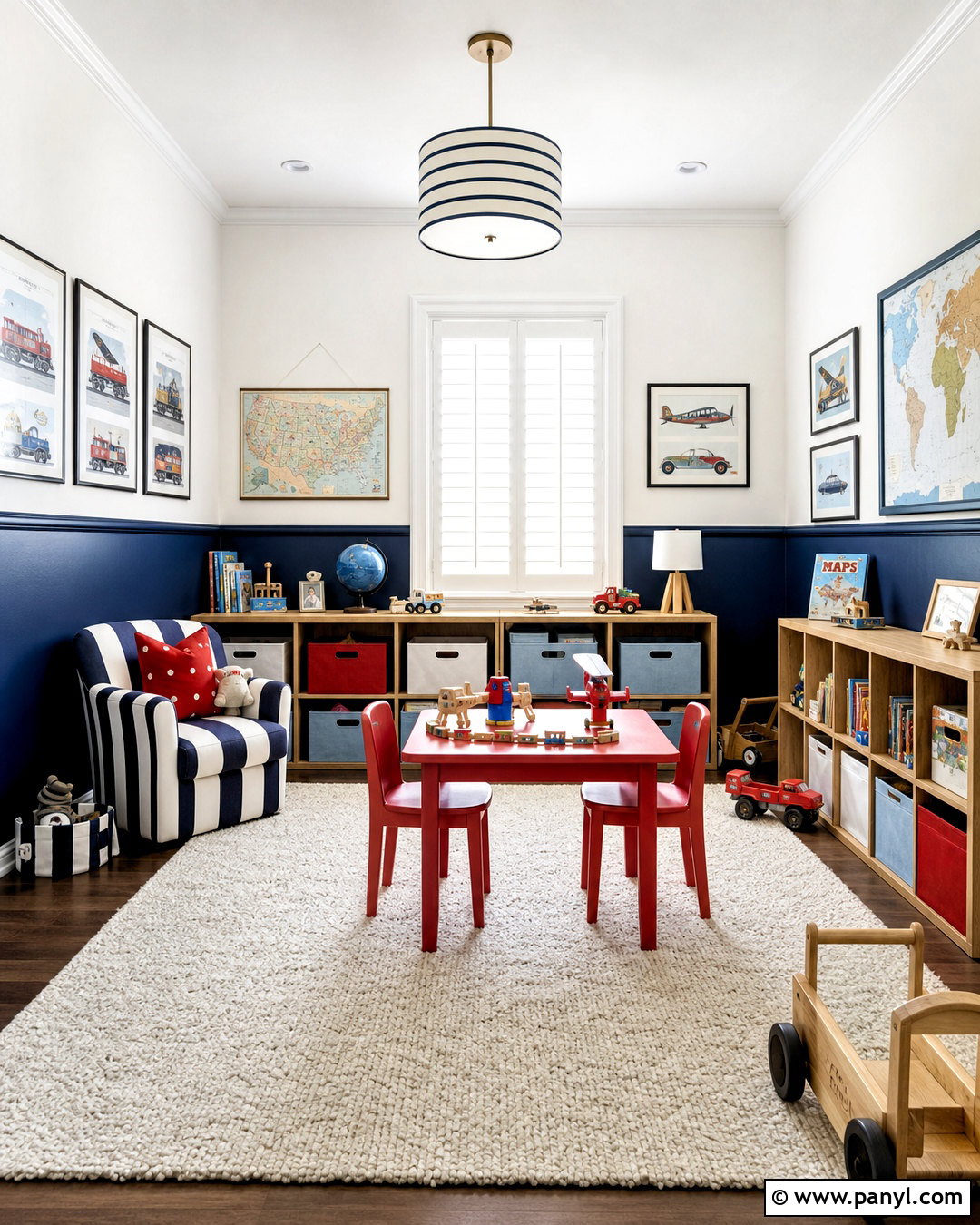
Deep navy can create a polished playroom when used strategically with abundant white and light wood. Paint the lower half of every wall navy blue, then use warm white above it, creating a crisp two-tone boundary. White trim, doors, and ceiling paint keep the room fresh. Place blond-wood cubbies against the darker section and fill them with white, red, and pale blue bins. A large cream rug brightens the floor, while a navy-and-white striped reading chair connects both wall colors. Add a red activity table or a few red stools for an energetic accent. Simple framed maps and transportation artwork complete the room without creating a narrow theme. The finished space feels durable, organized, and suitable for children from preschool through the elementary years.
18. Lavender And Mint Playroom
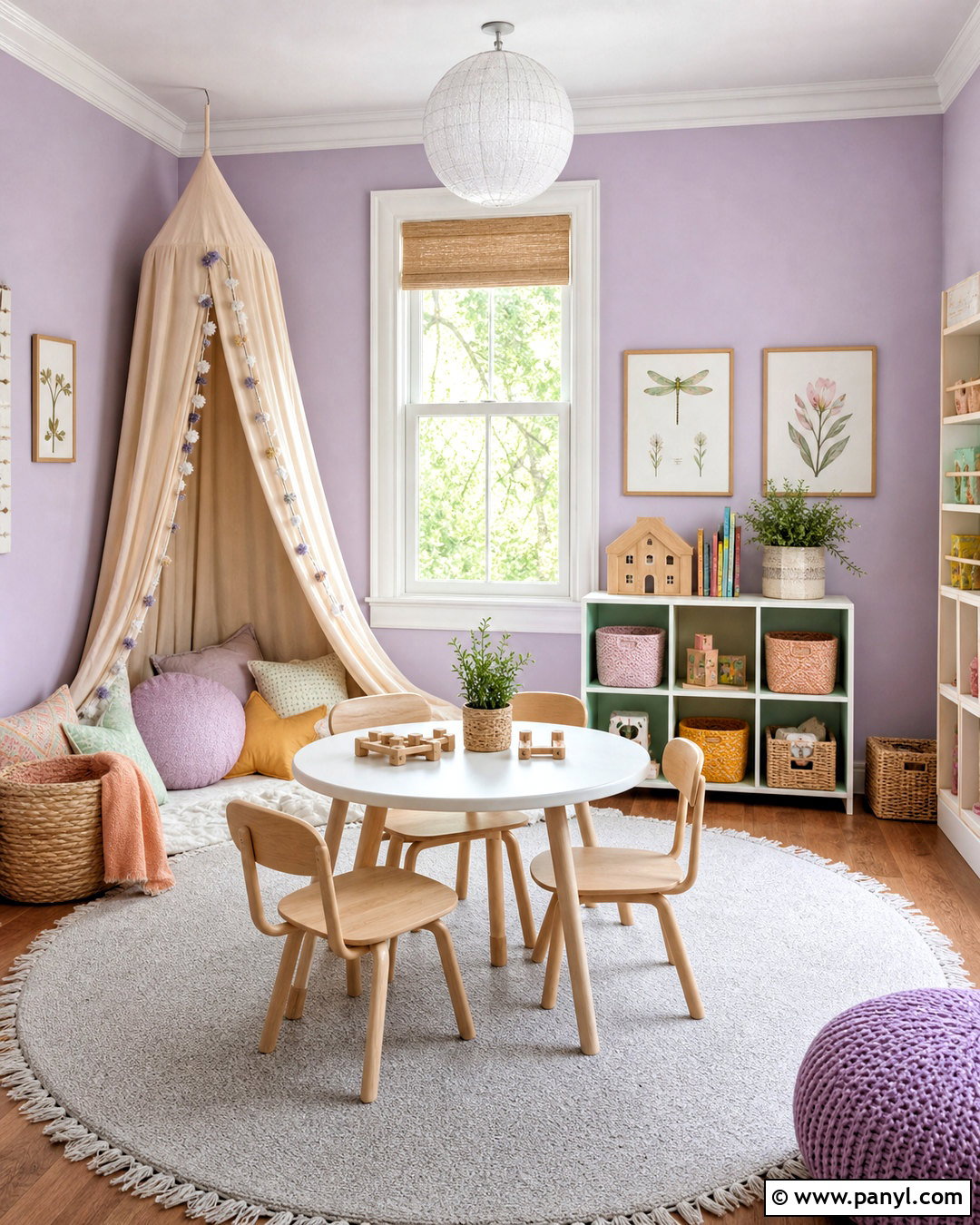
Lavender and mint create a light, imaginative playroom that feels gentle without looking colorless. Paint the walls in pale lavender and use mint green on the inside backs of built-in shelves or freestanding cubbies. Keep the trim, ceiling, and doors creamy white for warmth. Place a white round table in the center with natural-wood chairs, leaving plenty of open floor space around it. A soft gray rug grounds the pastel palette, while peach and golden yellow baskets provide small bursts of contrast. Add a fabric canopy over the reading corner and use lavender, mint, and cream cushions underneath. Minimal flower and butterfly artwork can finish the space. The balanced colors create a cheerful setting for crafts, reading, dolls, puzzles, and quiet imaginative play.
19. Greige Playroom With Colorful Trim
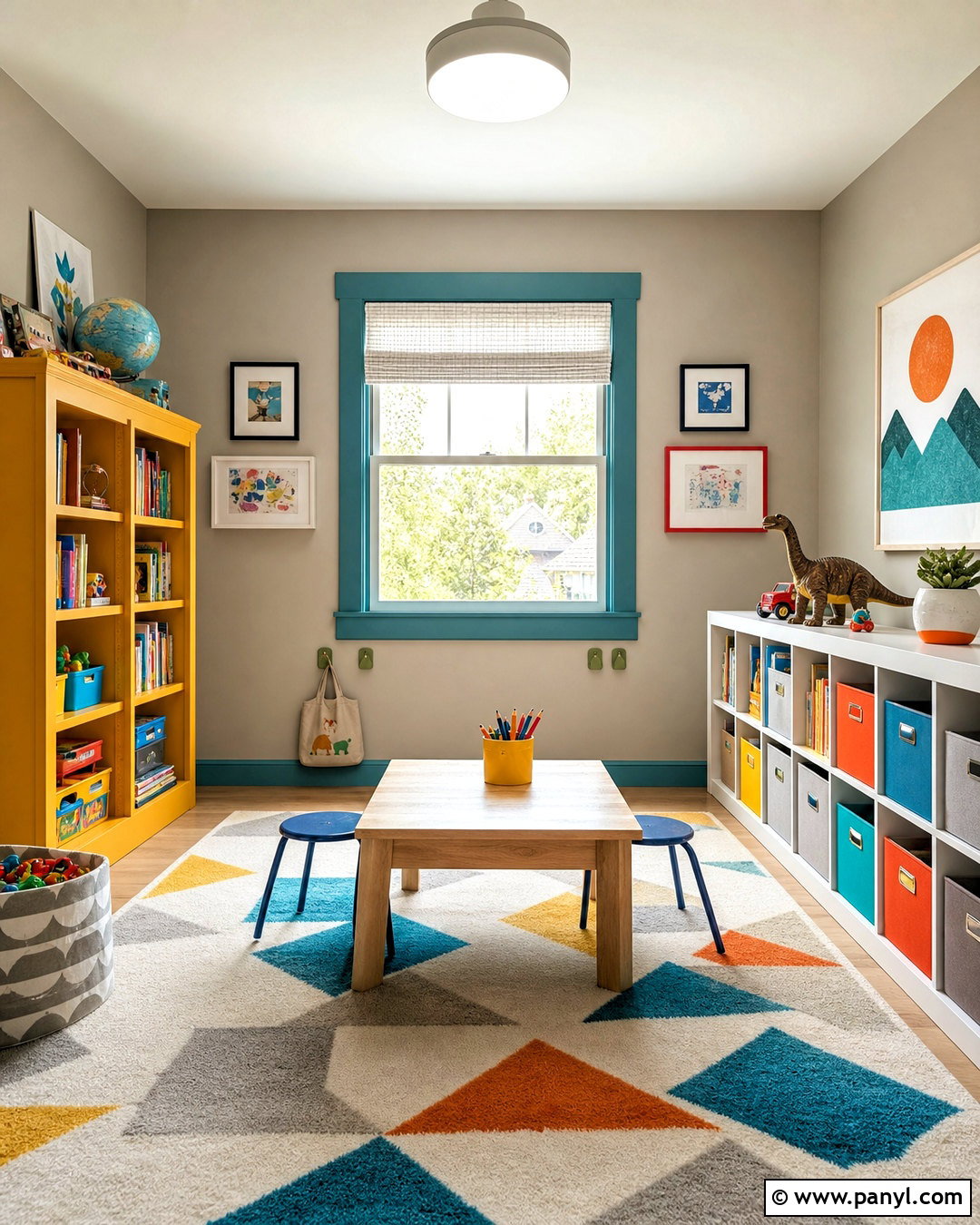
Neutral walls can still produce a playful room when the trim and furniture supply carefully placed color. Paint the walls in a warm light greige, then apply clear teal blue to the baseboards, window trim, and interior door. Use mustard yellow on a built-in bookshelf or storage bench to create a second focal point. Add white cube storage, a natural oak craft table, and a washable rug with simple red, blue, and yellow shapes. Display children’s artwork in bright frames that repeat the trim colors. Because the large wall surfaces remain neutral, toys do not make the room look overly busy. This complete scheme is especially useful in shared family spaces or rental homes where a flexible background and smaller painted details offer personality with less repainting later.
20. Sunset Ombre Playroom
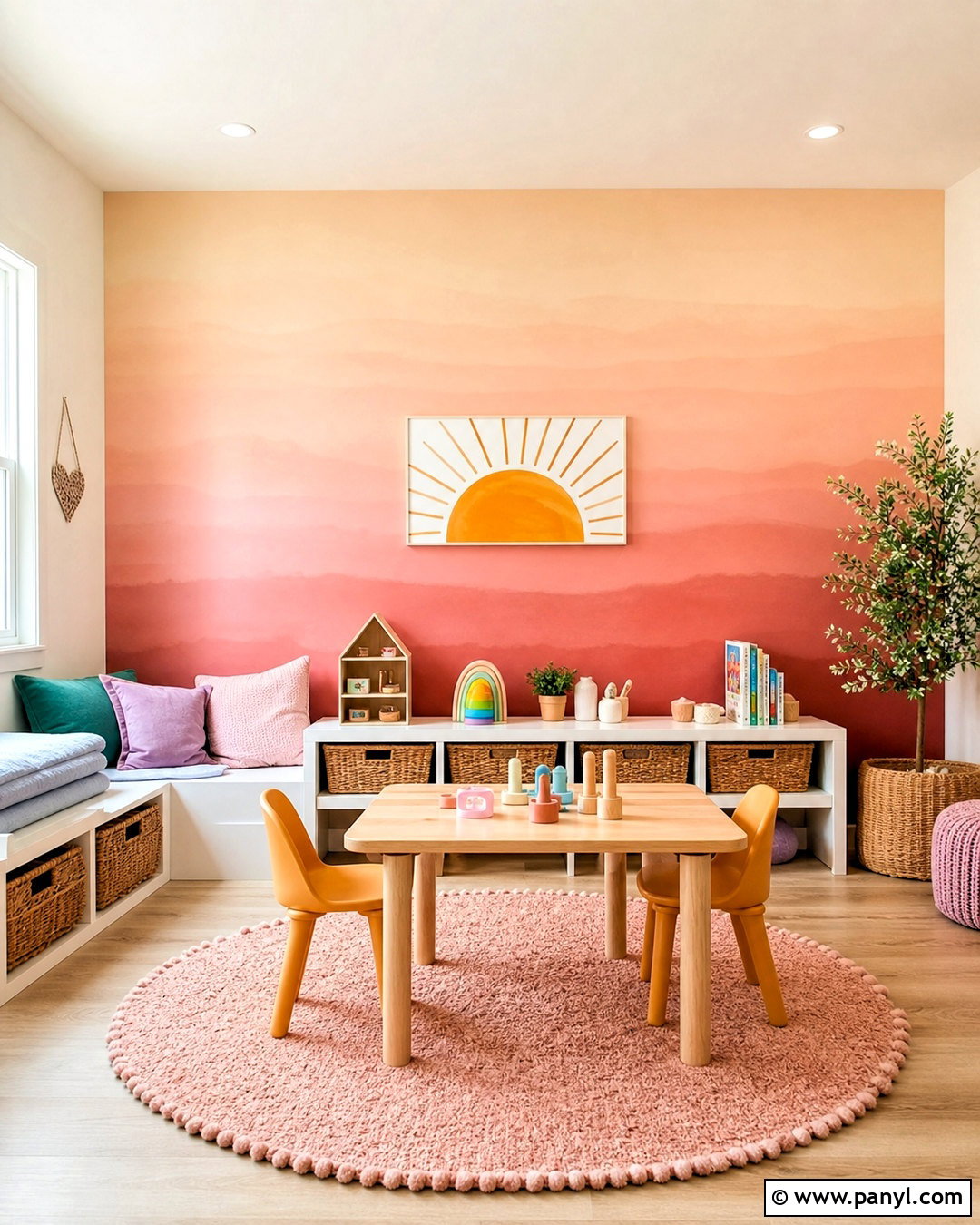
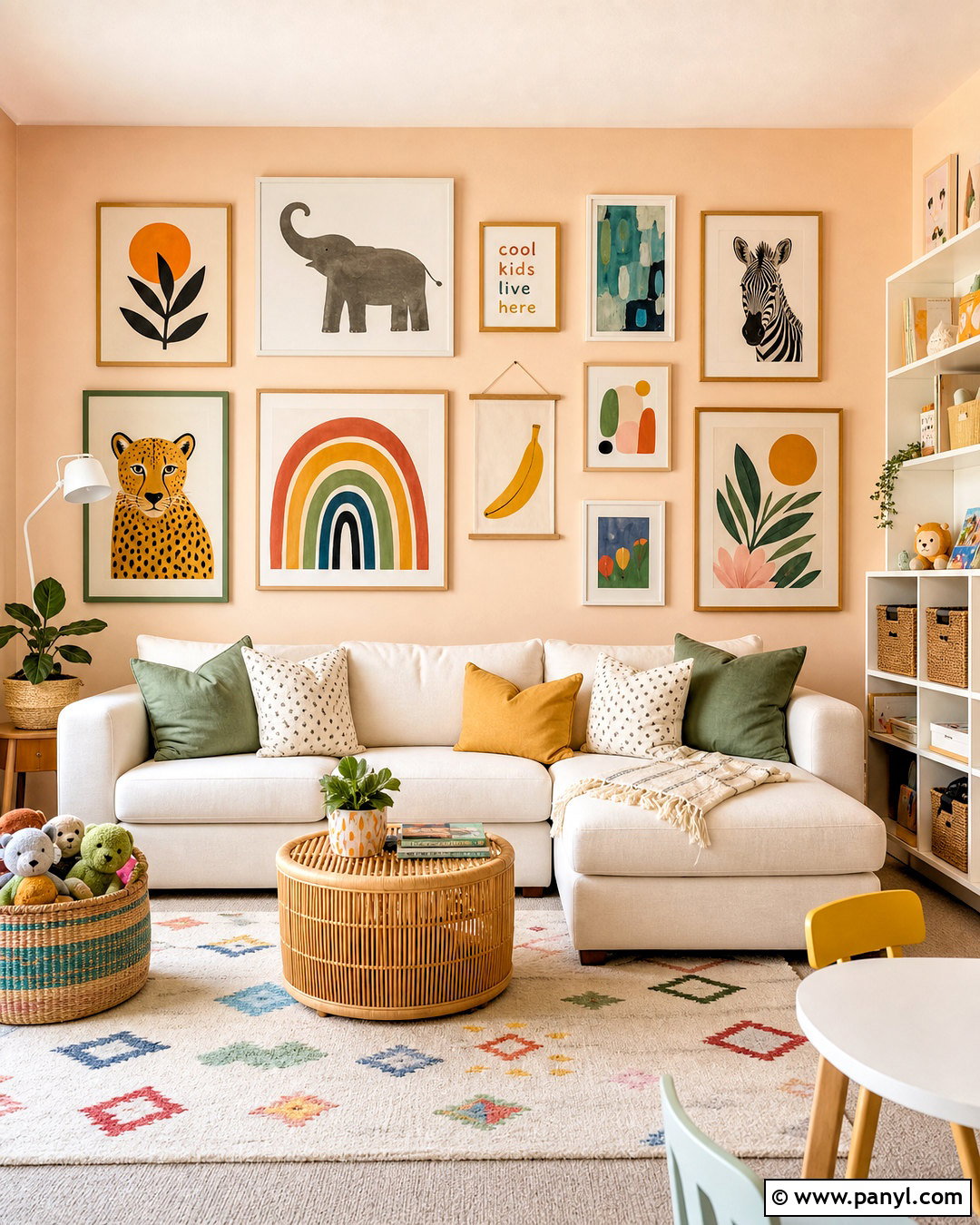
A sunset ombre wall brings several warm colors into the playroom through a smooth, visually connected design. Create the feature wall with pale peach near the ceiling, blending into soft coral, dusty pink, and muted terracotta toward the floor. Keep the other walls creamy white so the gradient remains the room’s centerpiece. Place low white storage along the ombre wall and use natural baskets to avoid blocking the painted transitions. A round blush rug, pale wood table, and mustard chairs carry the warm palette into the room. Add a few lavender and deep teal cushions for cooler contrast. Simple sun and cloud artwork completes the look. The finished playroom feels joyful, cozy, and creative without relying on complicated patterns or character-based decorations.
Conclusion:
Paint can establish the mood, organization, and personality of a playroom before furniture or toys are added. These 20 kids playroom paint ideas demonstrate how solid colors, two-tone walls, geometric patterns, murals, interactive surfaces, and softer neutrals can each create a complete setting. Begin by considering the room’s light, size, existing flooring, and primary activities. Then connect the chosen wall treatment with practical storage, comfortable seating, a washable rug, and open play space. Testing colors on several walls before painting the whole room can also help you see how they change throughout the day. Most importantly, choose a palette that feels joyful to children while remaining manageable, functional, and comfortable for the entire household.

Related Ideas and Inspiration:
Leave a Reply