
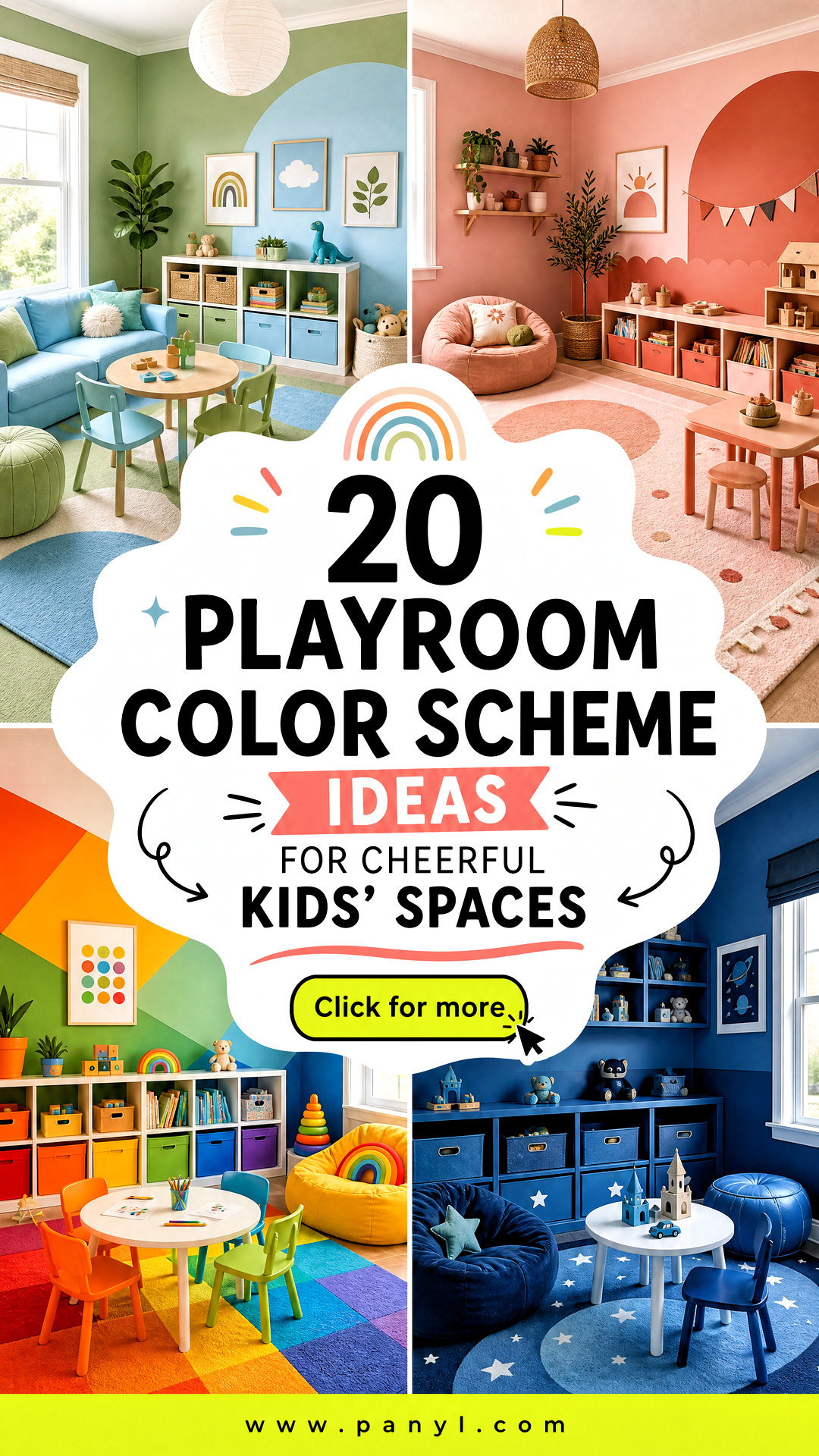
A thoughtful playroom palette can make the space feel cheerful, organized, and comfortable without turning every surface into a burst of competing color. The best **playroom color scheme ideas** combine a practical base with playful accents that connect the walls, furniture, storage, rugs, and activity zones. Some families may prefer soft earth tones and natural wood, while others want energetic primary colors, graphic color blocking, or a gentle pastel rainbow. Consider the room’s natural light, existing flooring, and visibility from nearby living areas before choosing your palette. Washable finishes and flexible neutral pieces will also help the design adapt as children grow. The complete looks below offer colorful, realistic, and easy-to-personalize inspiration through 20 playroom color scheme ideas.
1. Warm White And Primary Color Playroom
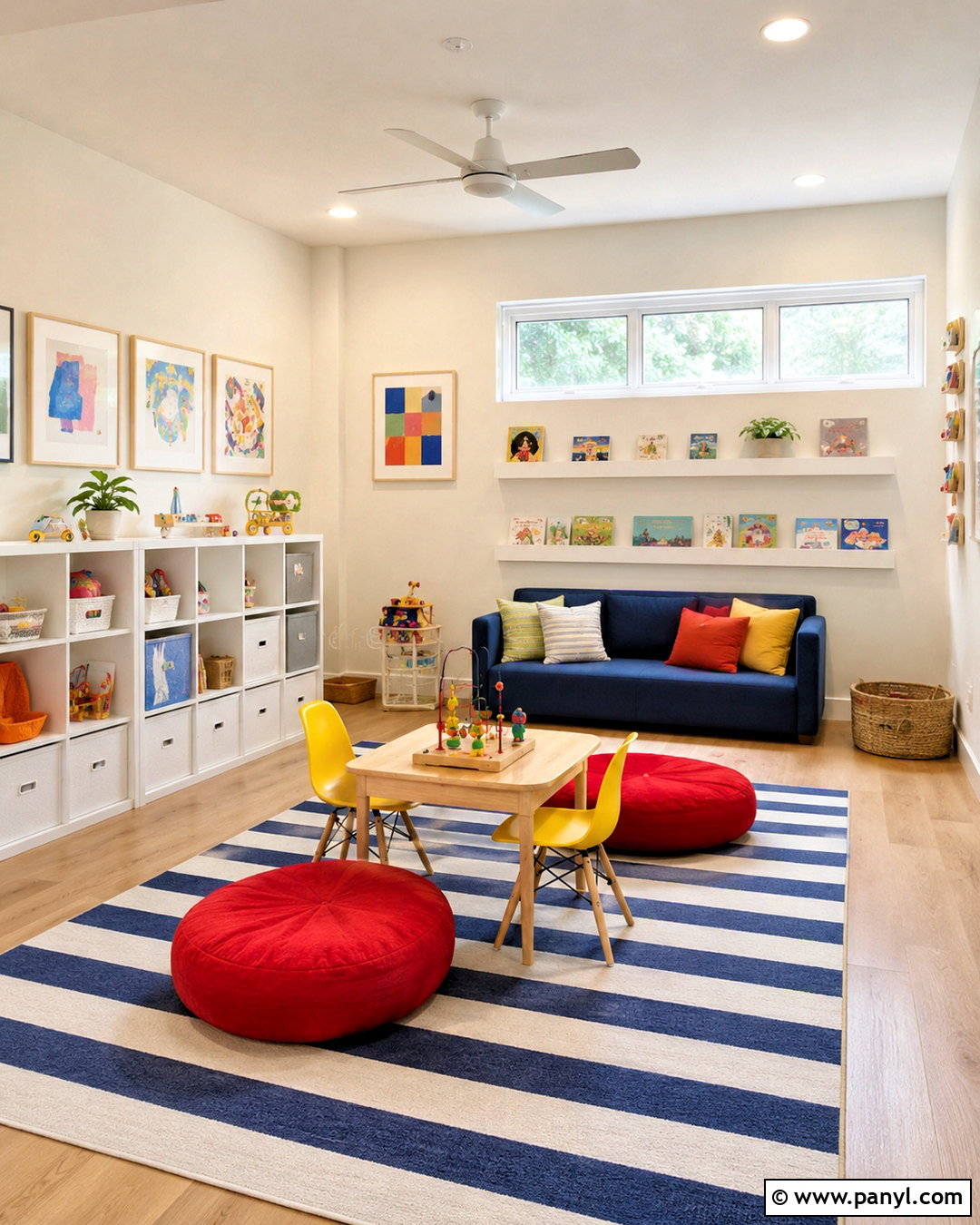
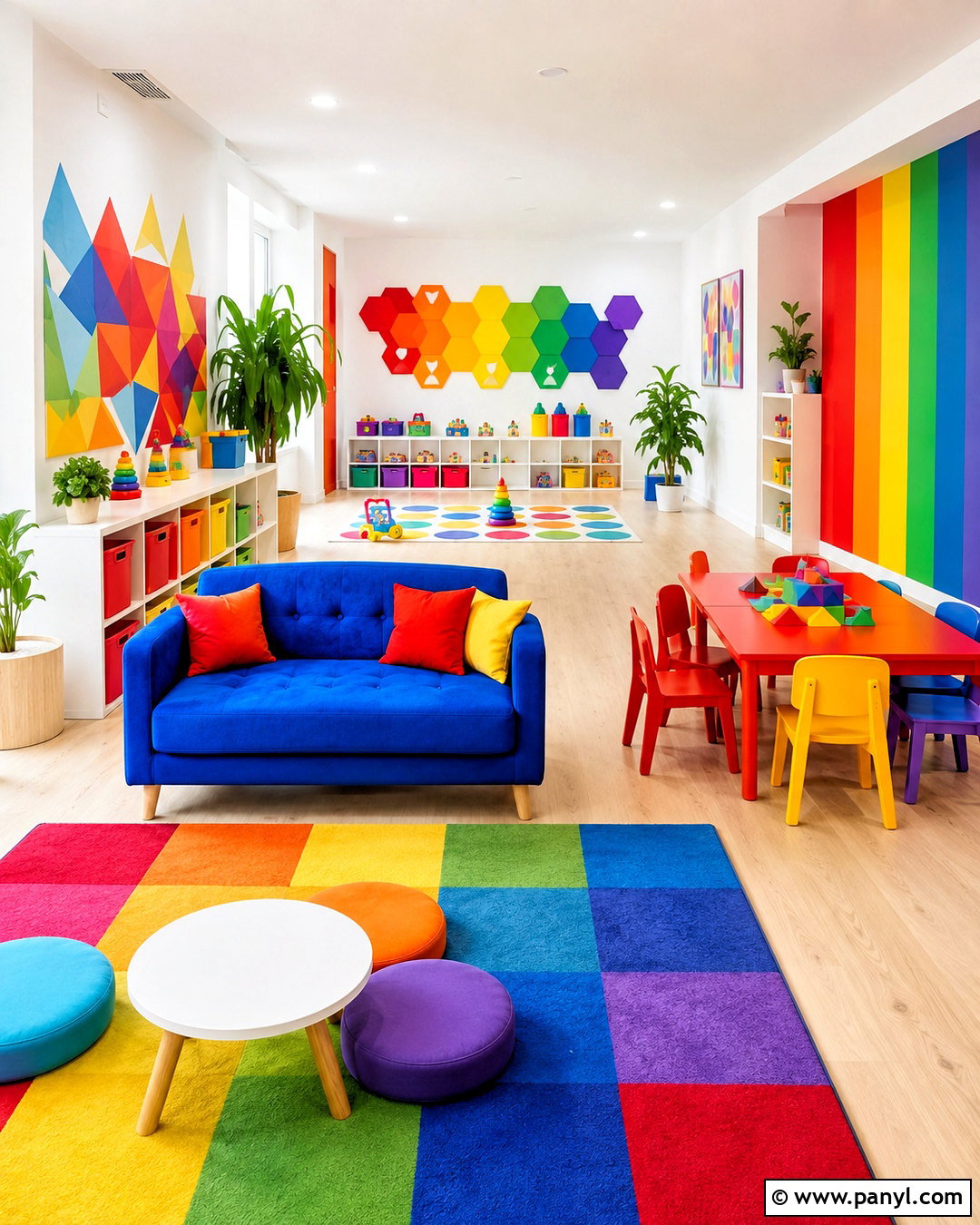
Warm white walls give classic red, blue, and yellow accents enough breathing room to feel playful rather than overwhelming. Start with washable ivory paint, crisp white storage cubbies, and pale maple flooring or a natural woven rug. Introduce primary colors through a cobalt blue sofa, cherry red floor cushions, and sunny yellow chairs around a light wood activity table. A striped rug can repeat all three shades while defining the main building and game zone. Keep larger furniture simple so toys provide additional color without creating visual clutter. Finish the complete playroom with framed children’s art, low picture ledges, labeled bins, and a white pendant light. Small touches of black can sharpen the scheme and give it a clean, modern finish.
2. Sage Green And Sky Blue Playroom
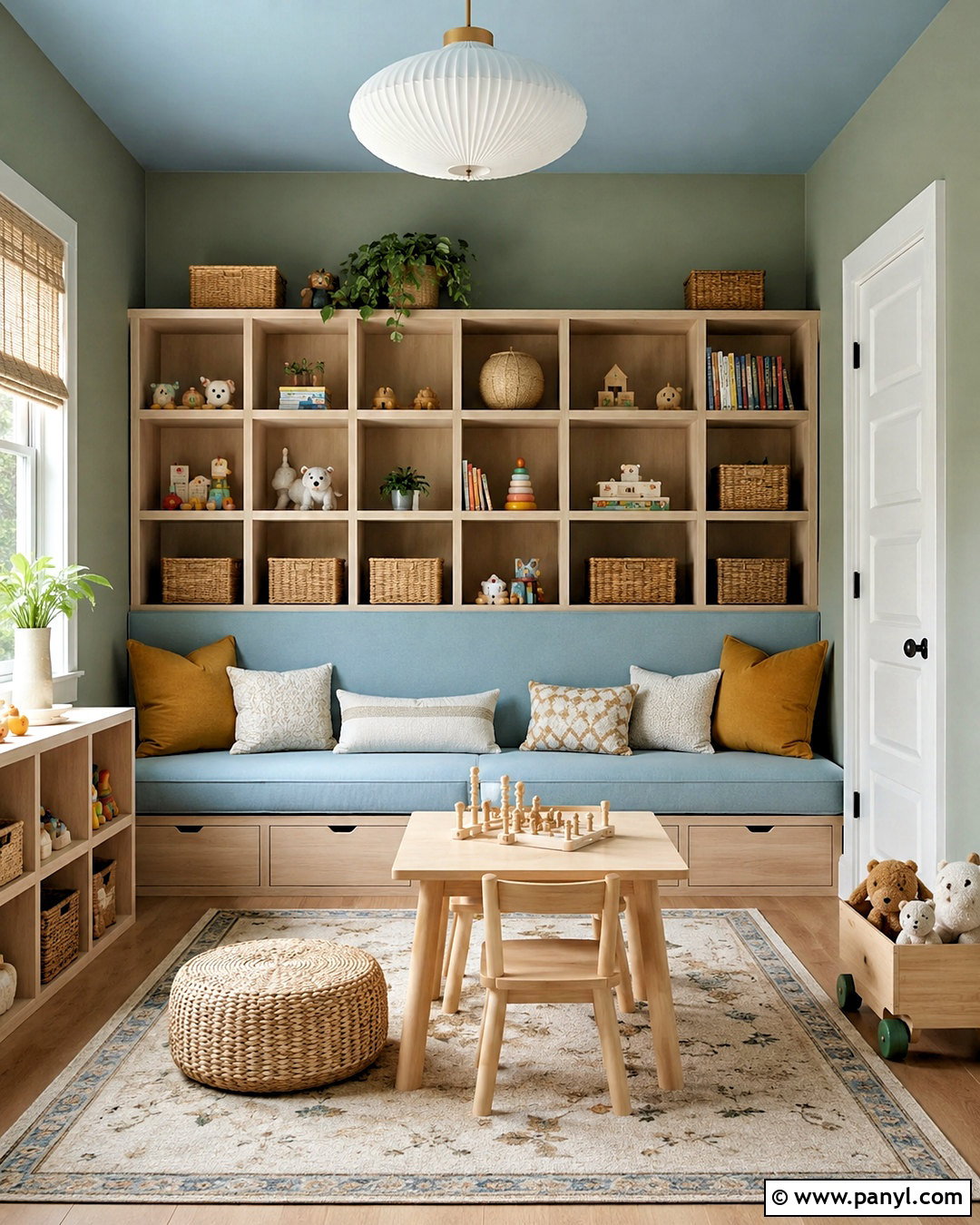
Soft sage green and sky blue create a fresh playroom that feels connected to nature. Paint the walls a muted sage, then use a pale blue ceiling to make the room feel open and airy. Choose white oak cubbies, a natural wood craft table, and woven baskets to add warmth. A cloud-blue sofa or reading bench can anchor one wall, while mustard yellow pillows bring in a controlled pop of sunshine. Add an ivory rug with a simple green border to keep the floor calm. Botanical prints, wooden animals, and a small fabric canopy complete the gentle theme without making it overly decorative. This balanced palette works especially well in shared spaces because it is colorful, welcoming, and easy to update with changing toys and artwork.
3. Butter Yellow And Soft Blue Playroom
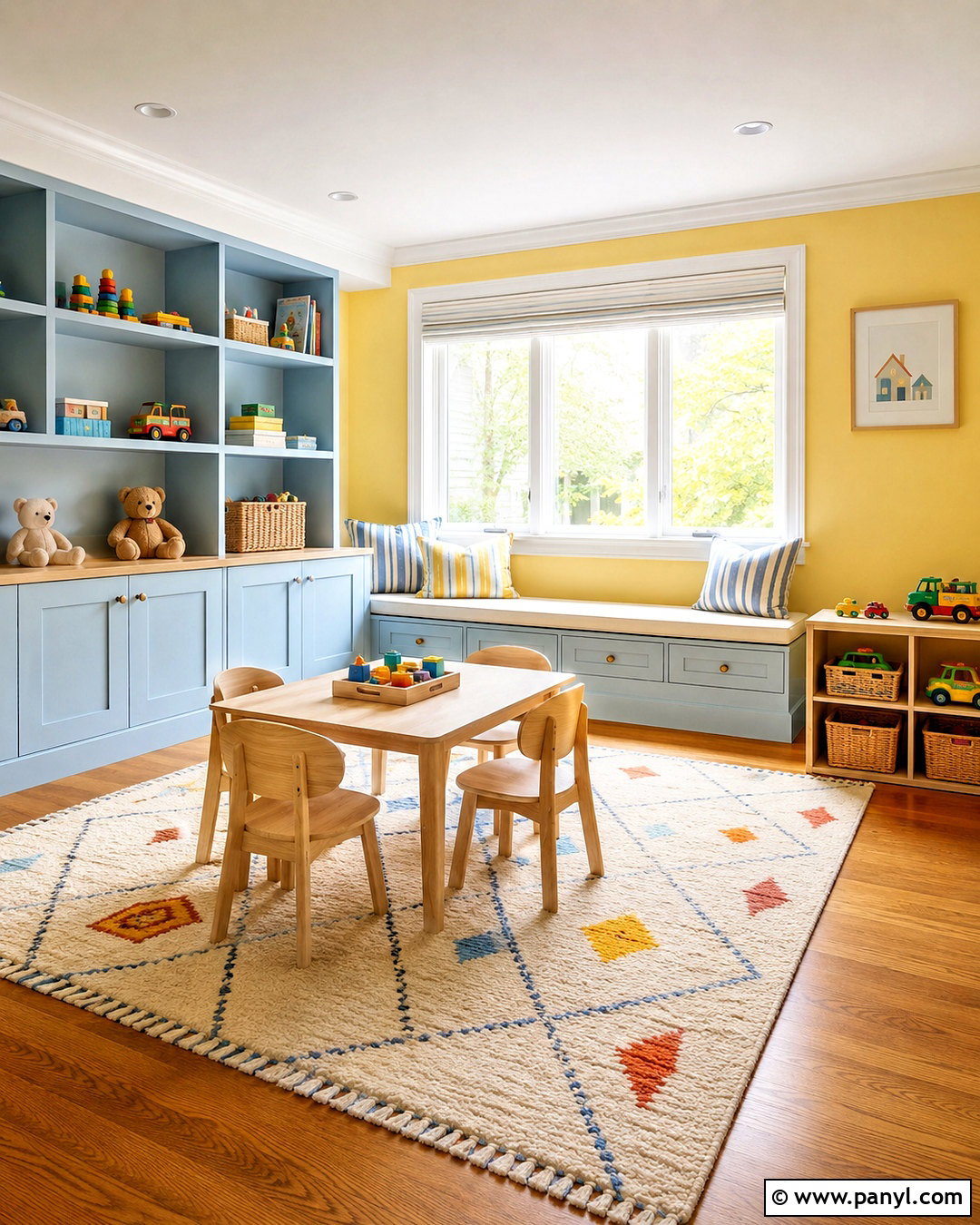
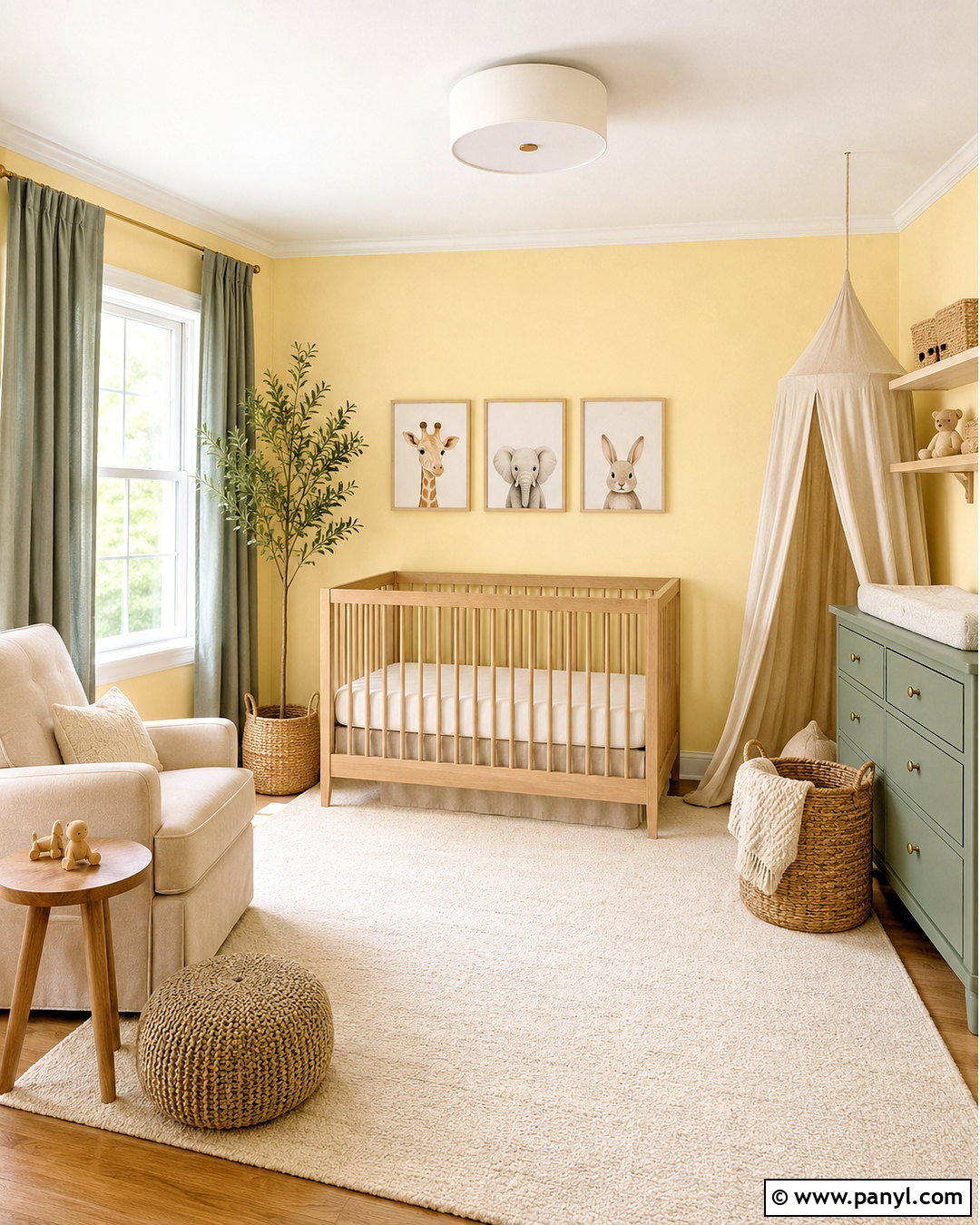
Imagine a sunny playroom that remains bright even when the weather is gray. Butter yellow walls create that cheerful backdrop, while powder blue cabinetry keeps the warmth from becoming too intense. Use white trim and a warm oak floor to make both colors look clean and inviting. Place a round birch table in the center with blue and white chairs, then add a washable cream rug patterned with small yellow shapes. A built-in window bench can feature blue cushions, striped pillows, and drawers for games. Keep active toys in low cabinets and display favorite books on yellow picture ledges. White globe lighting, simple cloud artwork, and a few red accents provide definition. The completed space feels optimistic, comfortable, and organized rather than overly themed.
4. Blush Pink And Terracotta Playroom
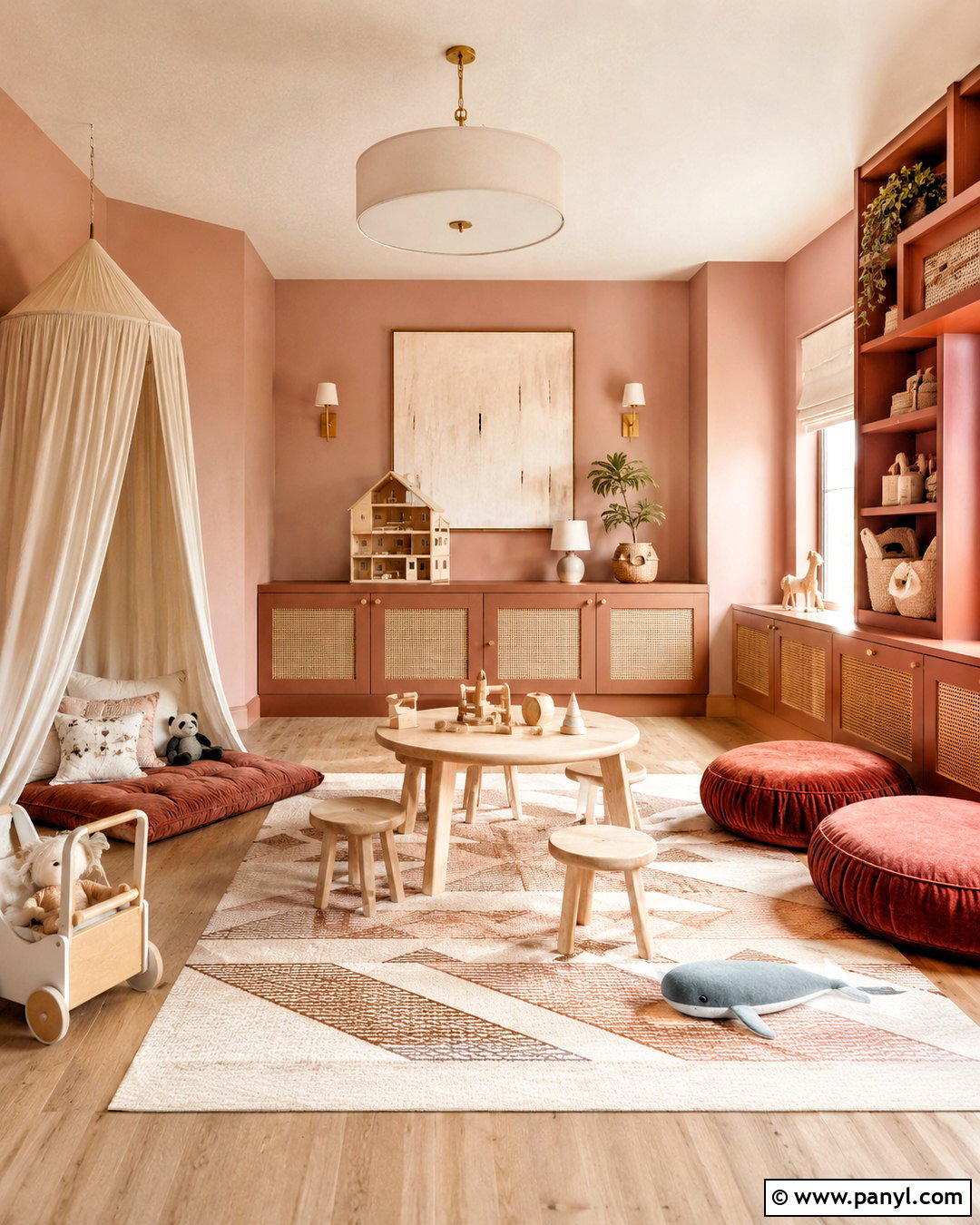
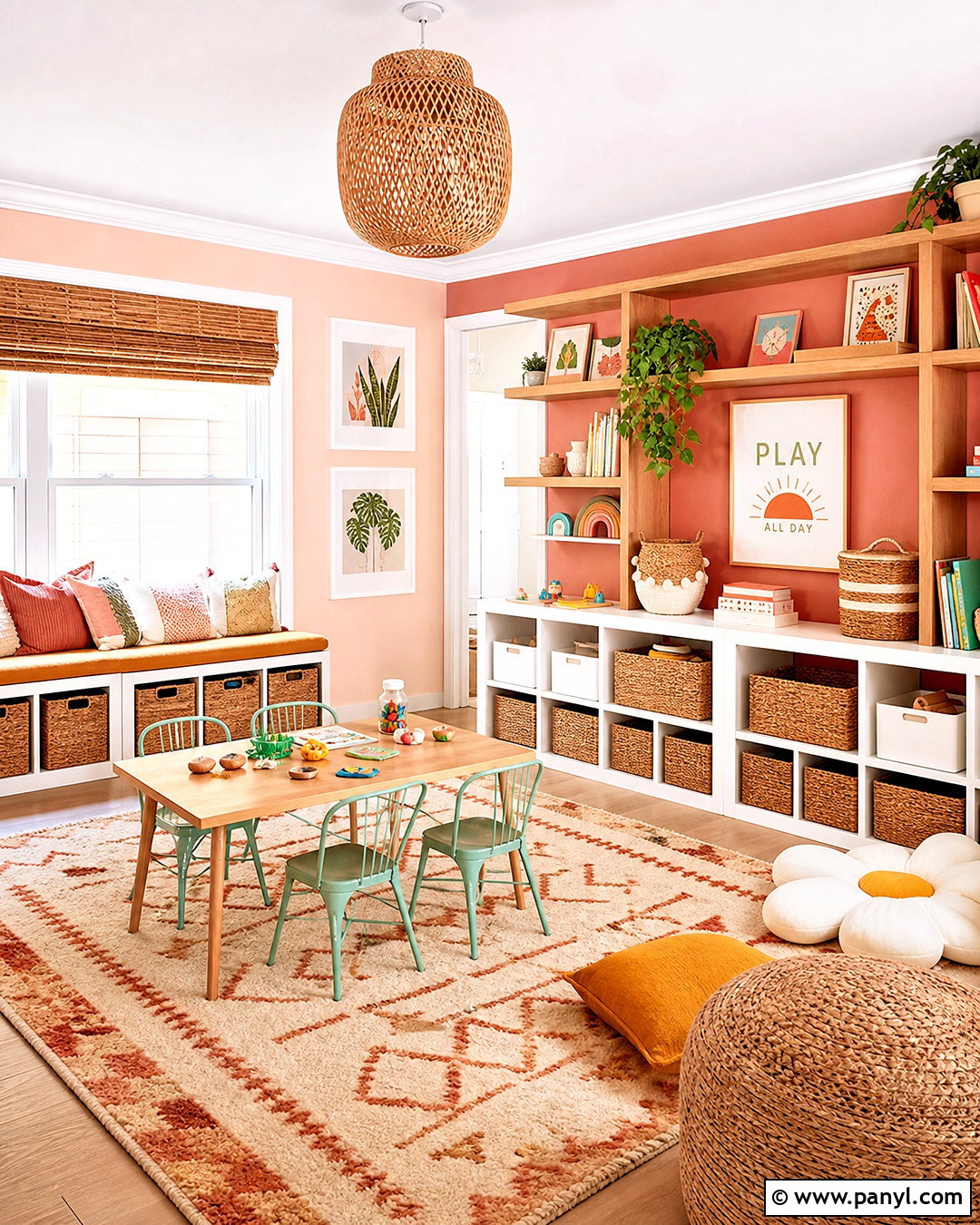
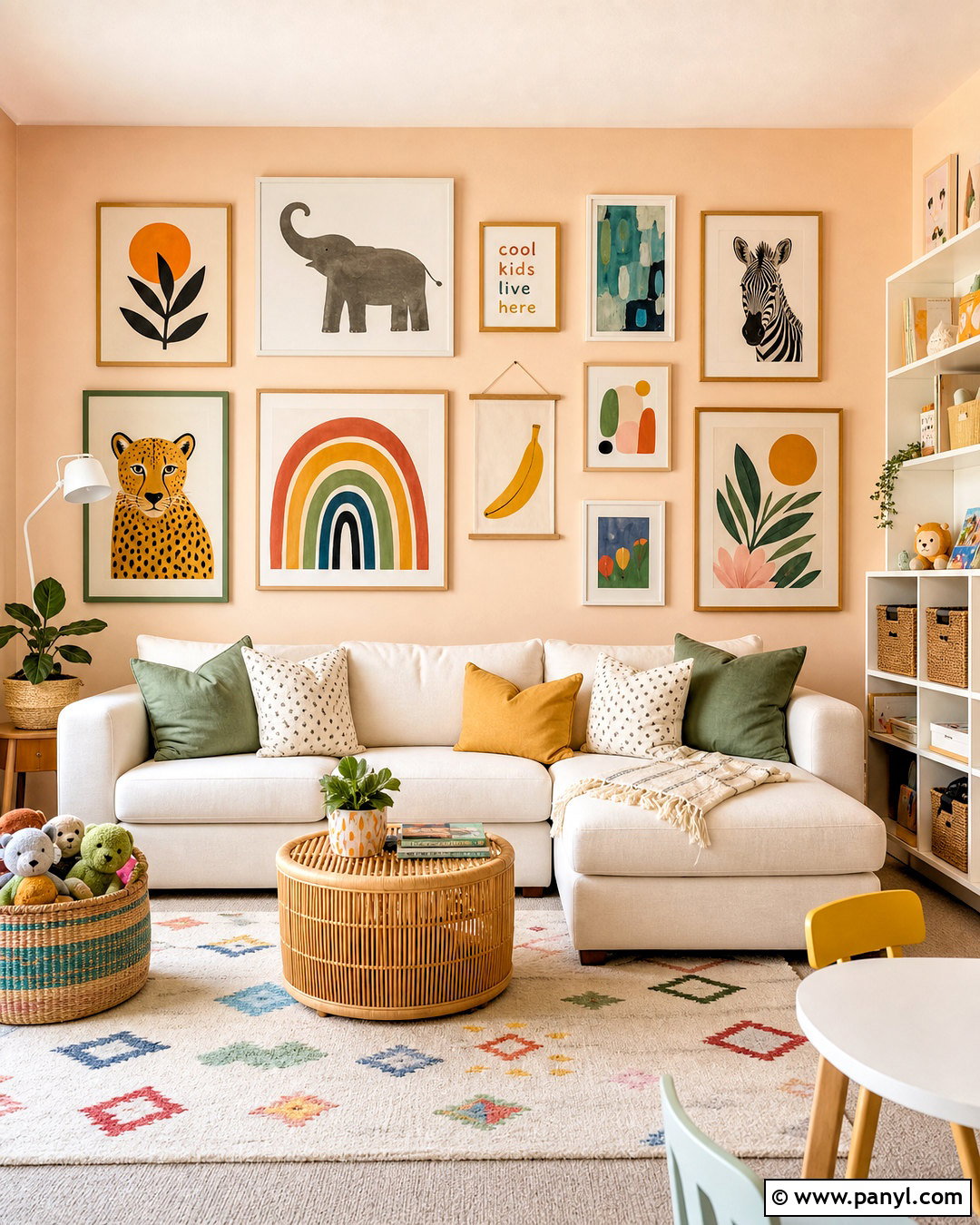
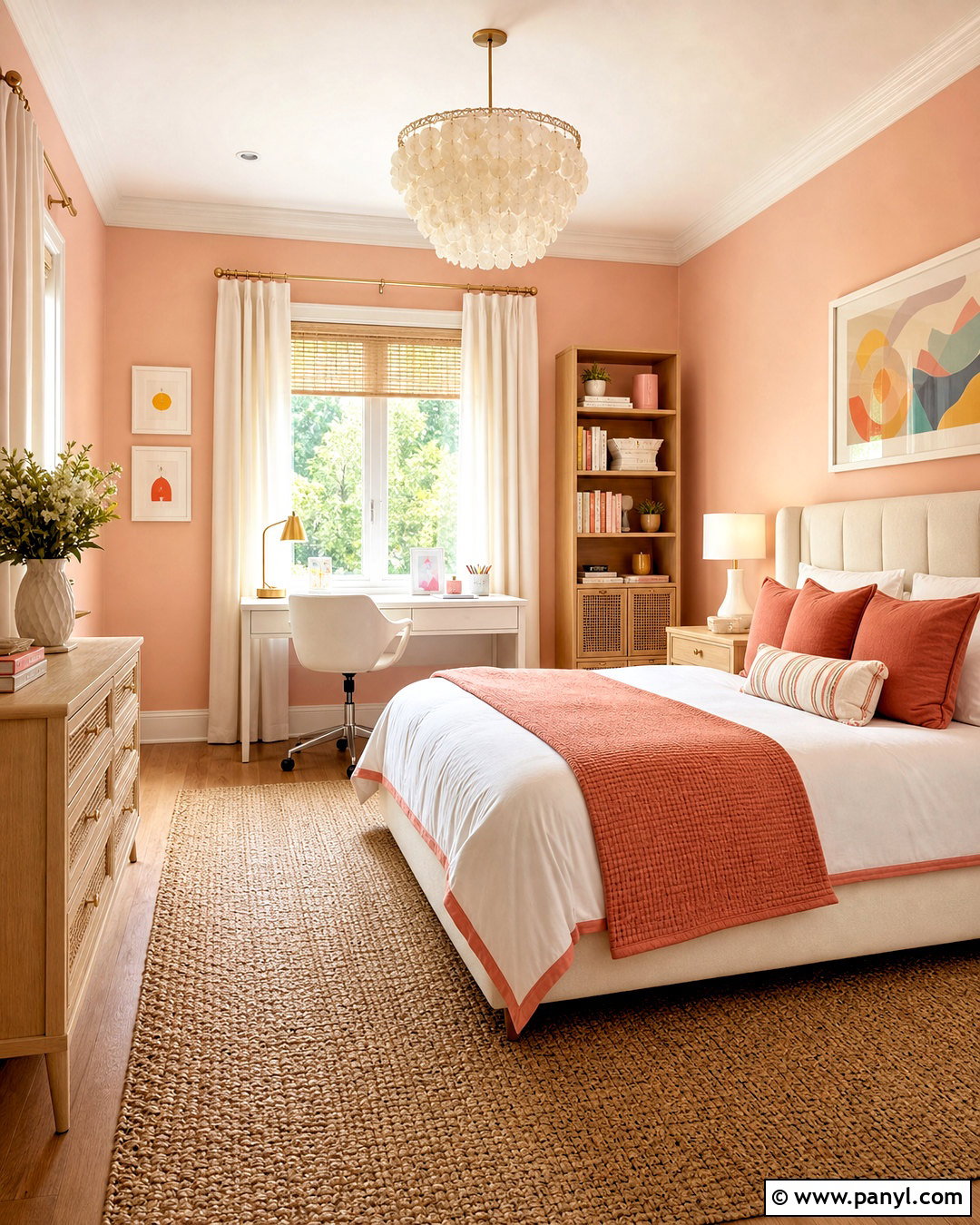
Blush pink becomes more grounded when it is paired with earthy terracotta and creamy white. Cover the walls in a soft dusty pink, then paint the lower storage cabinets a muted clay color. A warm ivory ceiling and natural jute-style rug will prevent the room from feeling too rosy. Choose a light oak play table, cane-front cabinets, and washable linen-look floor cushions for a relaxed finish. Peach, rust, and burgundy accents can appear in a geometric rug, art supplies, and throw pillows. Create a reading corner with a cream canopy and a low terracotta bookcase. Add brushed brass sconces and simple floral or abstract artwork for warmth. This complete palette feels playful enough for children while blending comfortably with an adult-friendly home interior.
5. Navy Blue And Mustard Playroom
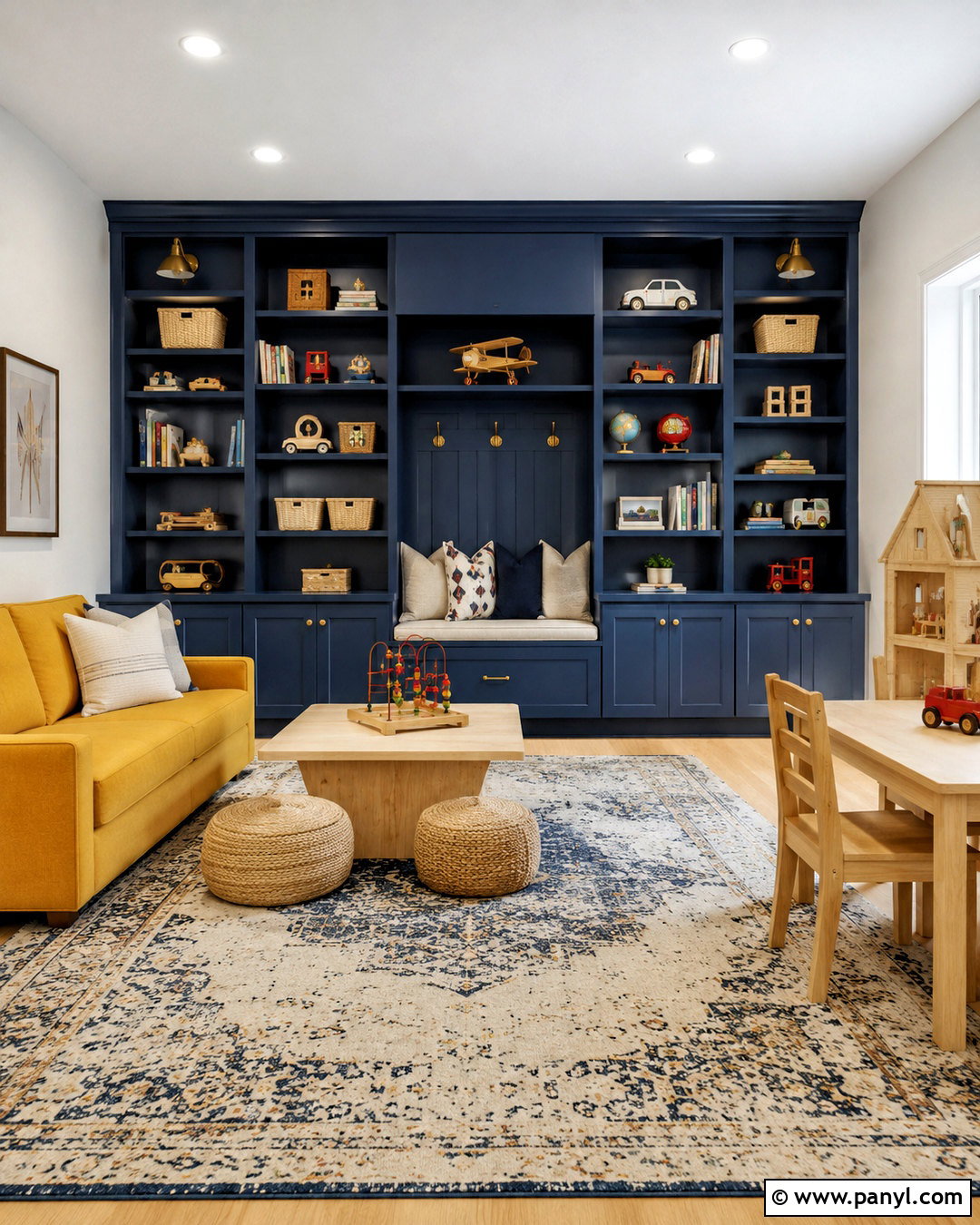
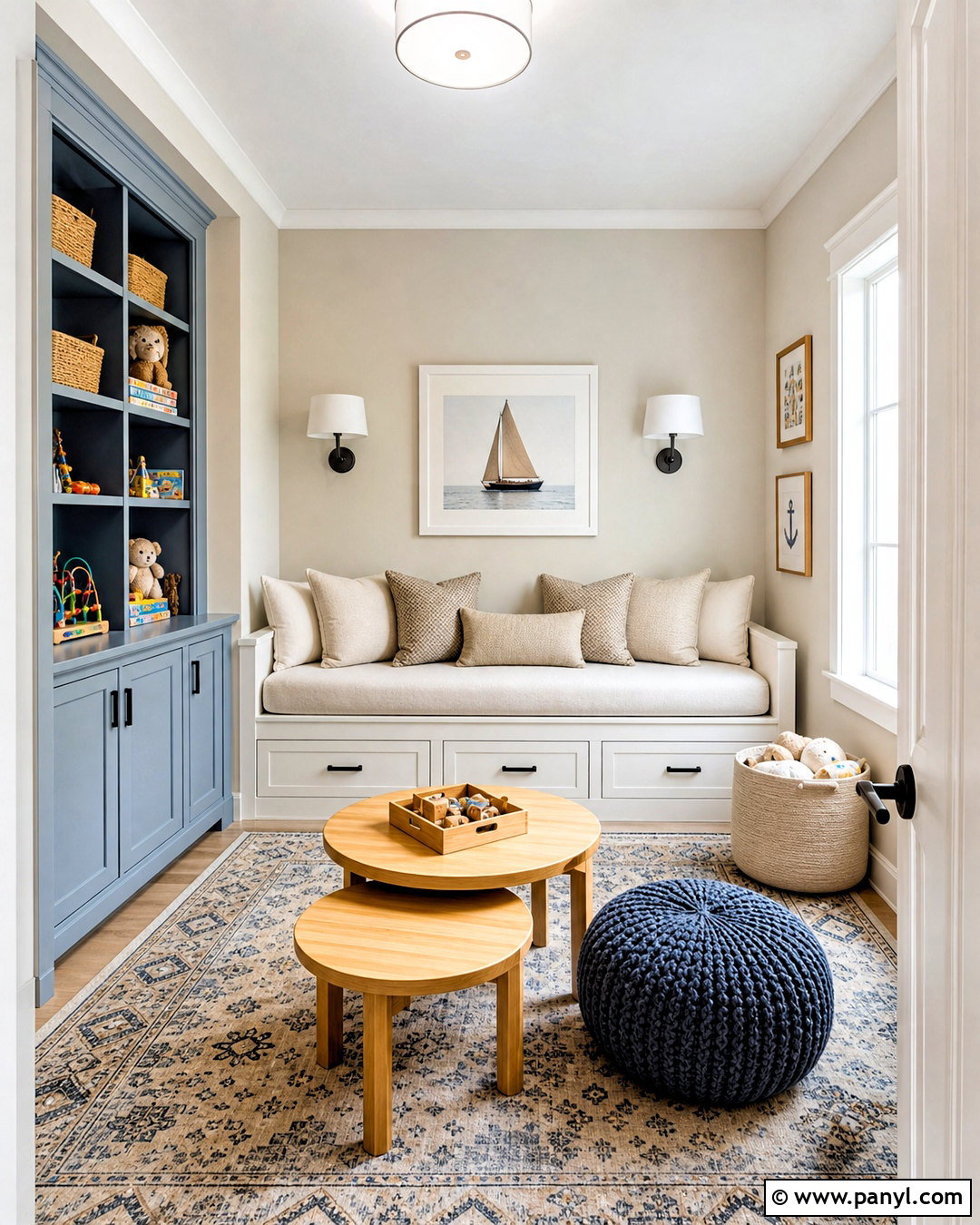
Deep navy gives a playroom a strong foundation, especially when it is balanced with mustard yellow, white, and pale wood. Use navy on built-in storage or one feature wall rather than covering every surface. Paint the remaining walls a warm white to reflect light and showcase colorful toys. Place a mustard sofa or cushioned reading bench opposite the cabinetry, then connect the palette with a blue-and-cream patterned rug. A blond wood table, white chairs, and woven storage baskets soften the darker sections. Add small red details through art frames or building blocks for extra energy. Bright ceiling lighting is important in this scheme. With clearly defined craft, reading, and open-play areas, the finished room feels bold, practical, and suitable for children of different ages.
6. Mint Green And Peach Playroom
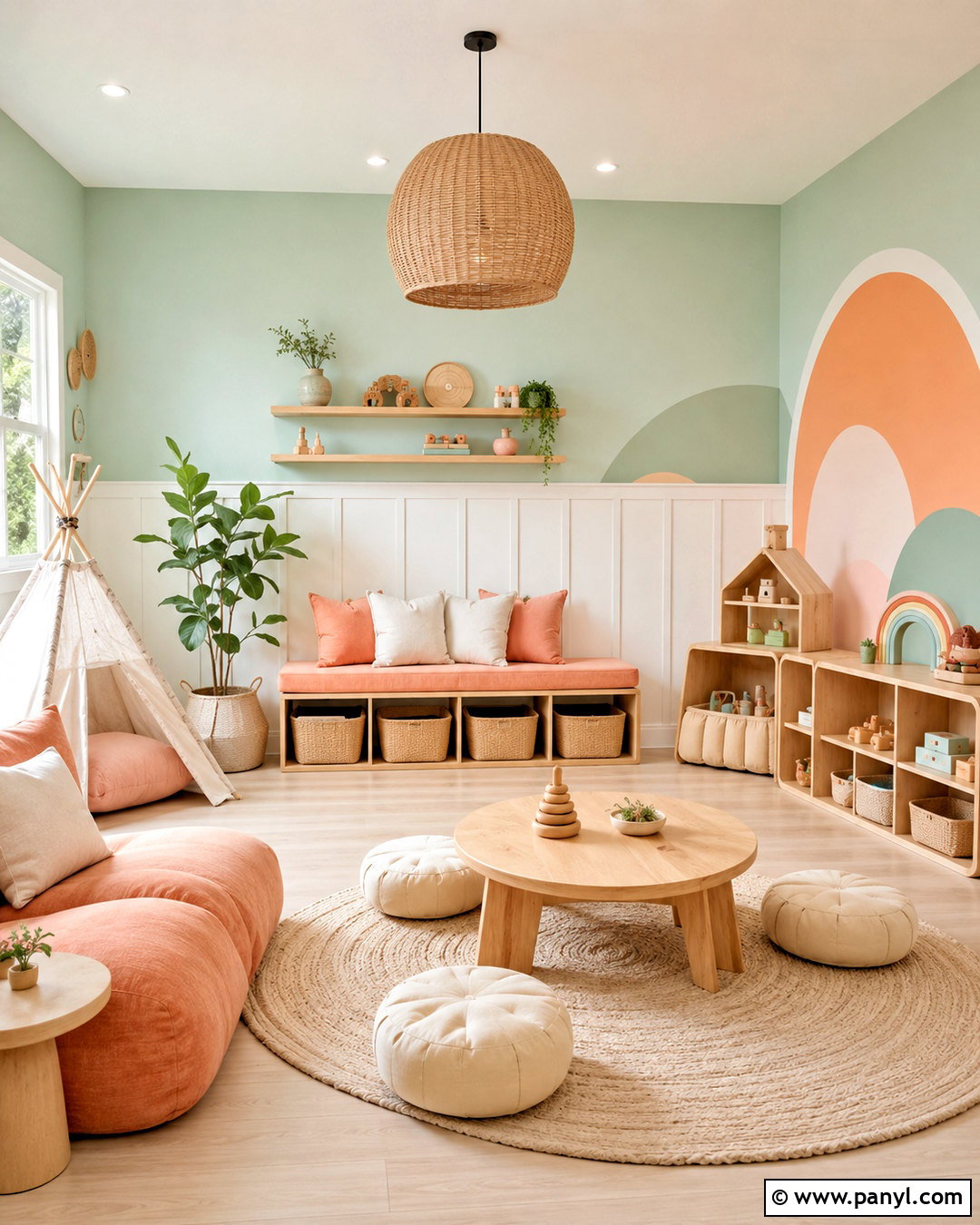
Mint green and soft peach bring gentle color into a playroom without creating a sugary or overly themed appearance. Paint the upper walls pale mint and use warm white wainscoting below for an easy-to-clean, structured base. Introduce peach through a small sofa, storage bins, and a washable rug with curved geometric shapes. Light birch shelves and a rounded activity table will complement both hues. Include cream floor cushions and a natural woven pendant to add quiet texture. A simple arched wall mural can combine mint, peach, tan, and white behind the reading nook. Keep books and toys arranged in low open cubbies so children can reach them easily. The final space feels bright and modern, with enough contrast to remain interesting as furnishings change over time.
7. Lavender And Cream Playroom
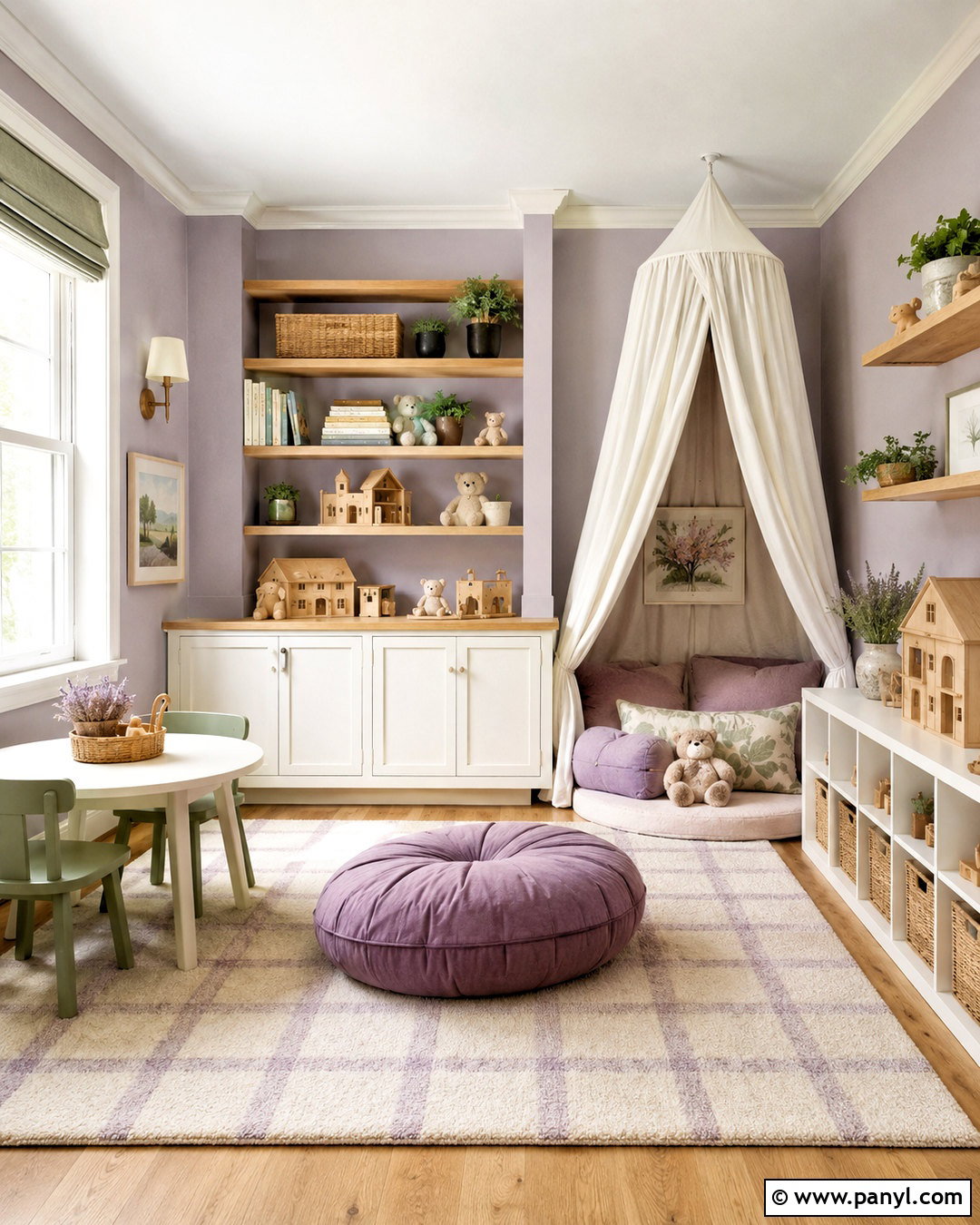
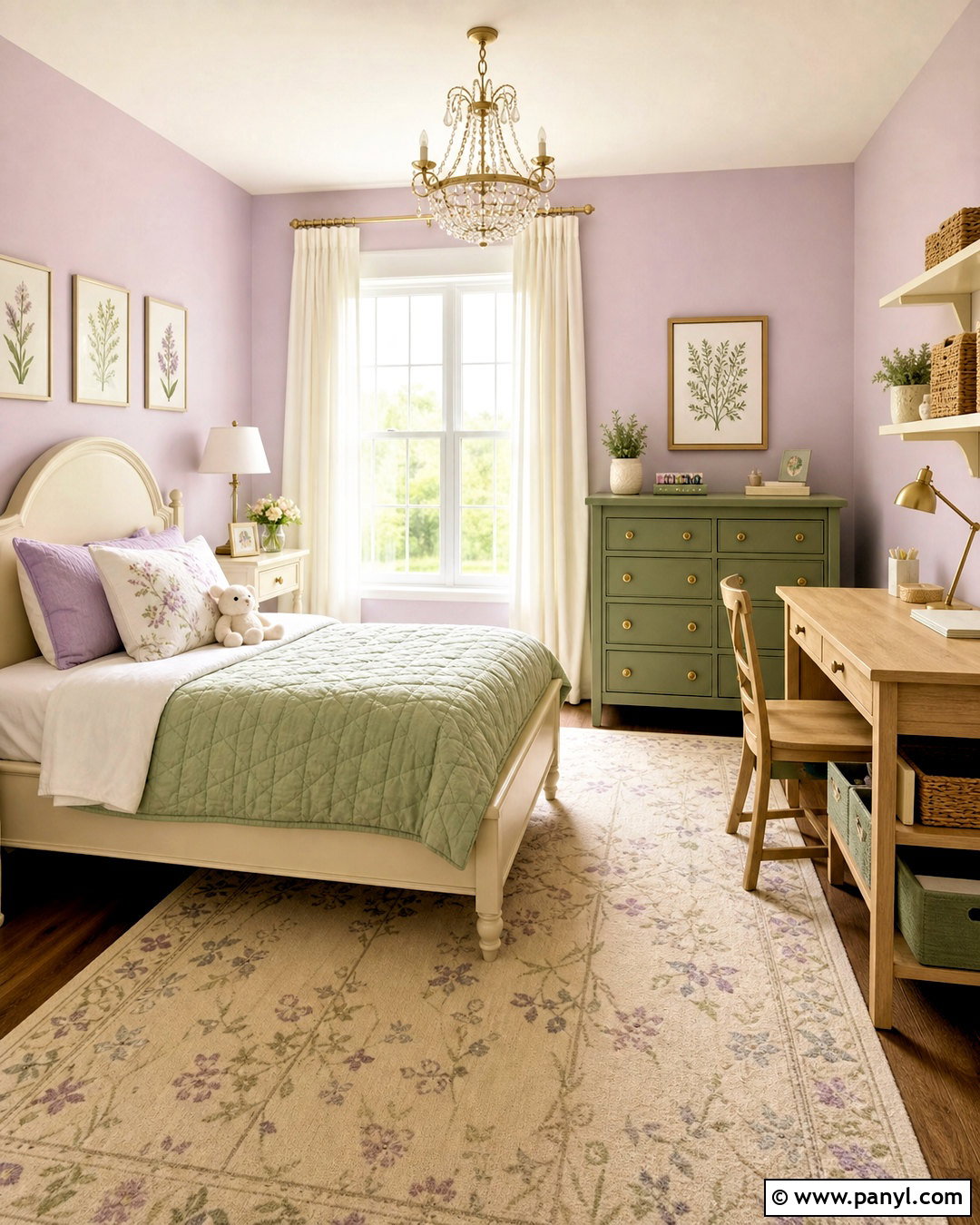
Pale lavender can feel calm and sophisticated when surrounded by creamy white and natural wood. Paint the walls a soft gray-lavender, keeping the ceiling, doors, and baseboards warm white. Use ivory storage cabinets with lavender knobs, then add a light oak table and matching wall shelves. A cream rug with subtle lilac checks can define the center of the room without competing with toys. Create a cozy corner using a muted plum floor cushion, white canopy, and lavender book ledges. Touches of sage green in baskets or artwork prevent the scheme from looking one-dimensional. Choose simple globe lights and washable cotton textiles for a clean finish. This complete design supports imaginative play, reading, and crafts while remaining gentle enough for a multipurpose family space.
8. Teal And Coral Playroom
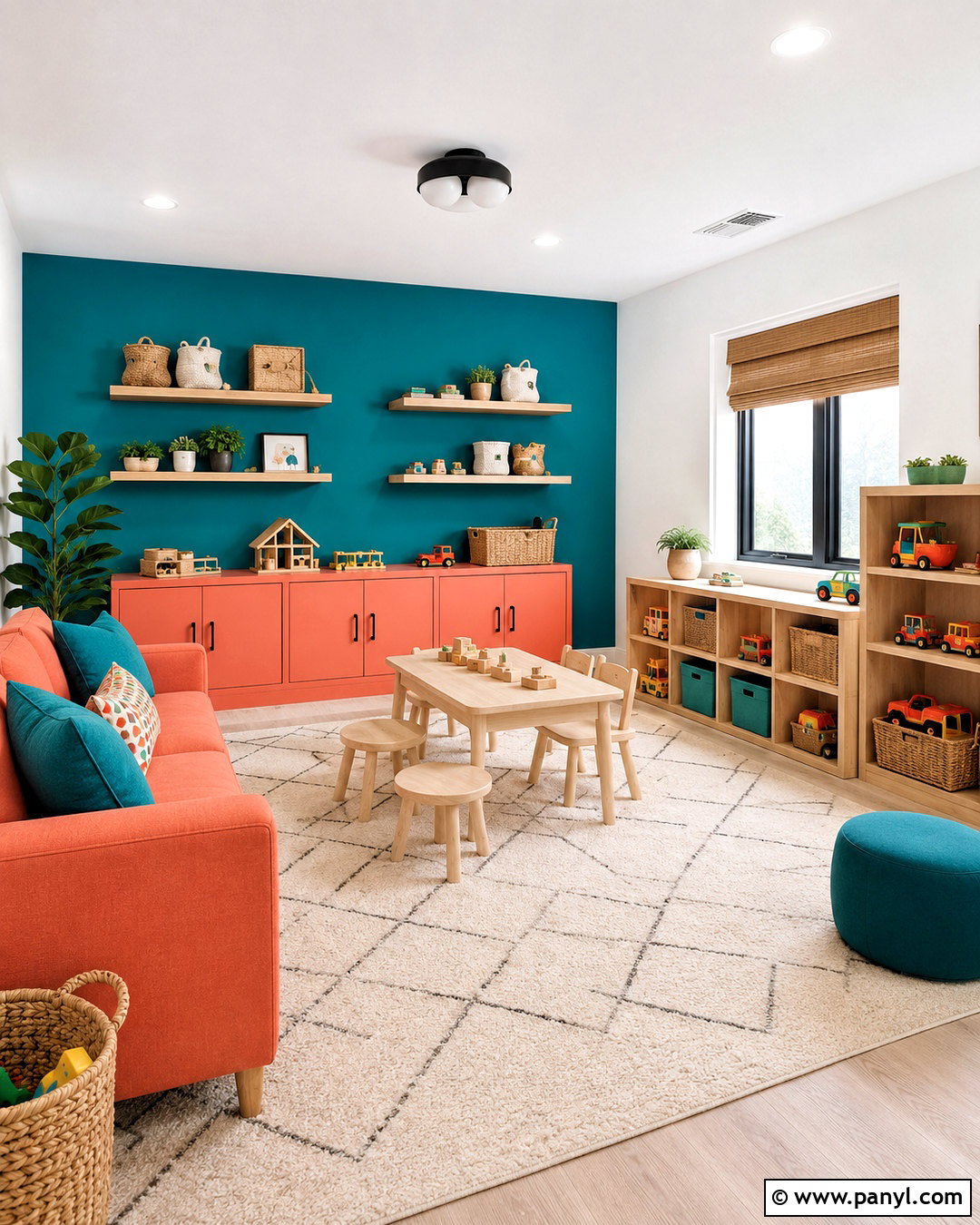
Rich teal and lively coral create a high-energy combination that still looks balanced when used in controlled amounts. Paint one wall deep teal and keep the other walls crisp white. Place coral storage cabinets or a coral sofa against the darker surface so the two statement colors connect immediately. A large cream rug with teal, coral, and pale blue shapes can unite the room. Choose a light wood craft table, white chairs, and natural baskets to provide visual rest. Repeat teal in a reading canopy and coral in pillows, art frames, and toy bins. Matte black hardware adds a modern outline without introducing another strong color. The complete playroom feels adventurous and creative, with distinct storage, reading, and activity zones that help contain the bold palette.
9. Black And White Rainbow Playroom
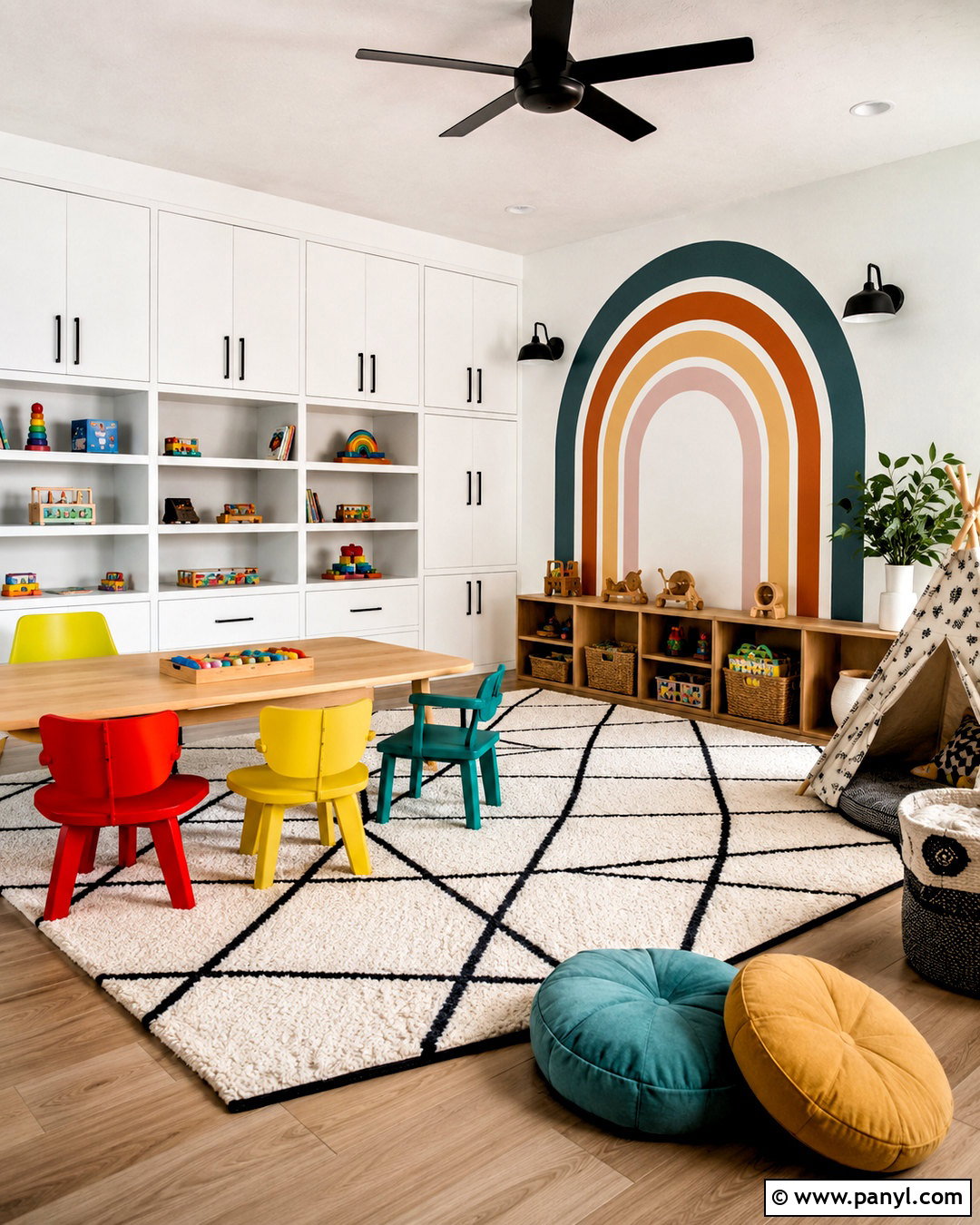
A black-and-white foundation lets rainbow accents stand out while keeping the overall playroom neat and modern. Begin with white walls, black window frames or hardware, and a simple black-lined geometric rug. Choose white modular cabinets with black pulls so colorful toys remain the focus. Add a curved rainbow mural using muted red, orange, mustard, green, and blue rather than neon shades. Repeat these colors across small chairs, floor cushions, baskets, and framed artwork. A natural wood table softens the graphic contrast and makes the room more welcoming. Keep the ceiling and larger seating pieces white or cream to preserve brightness. This full scheme works well for families who enjoy color but want the playroom to coordinate with contemporary living spaces elsewhere in the home.
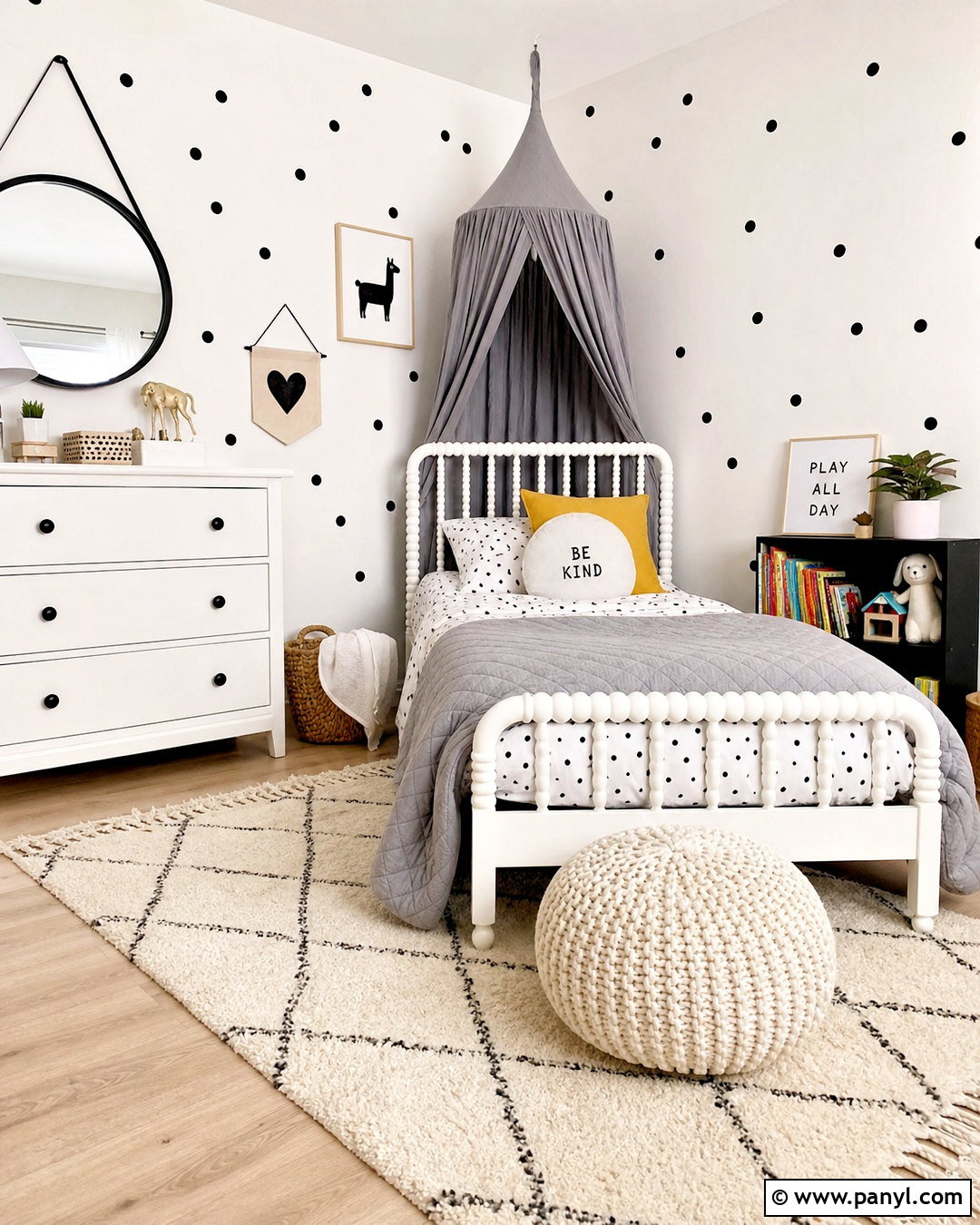
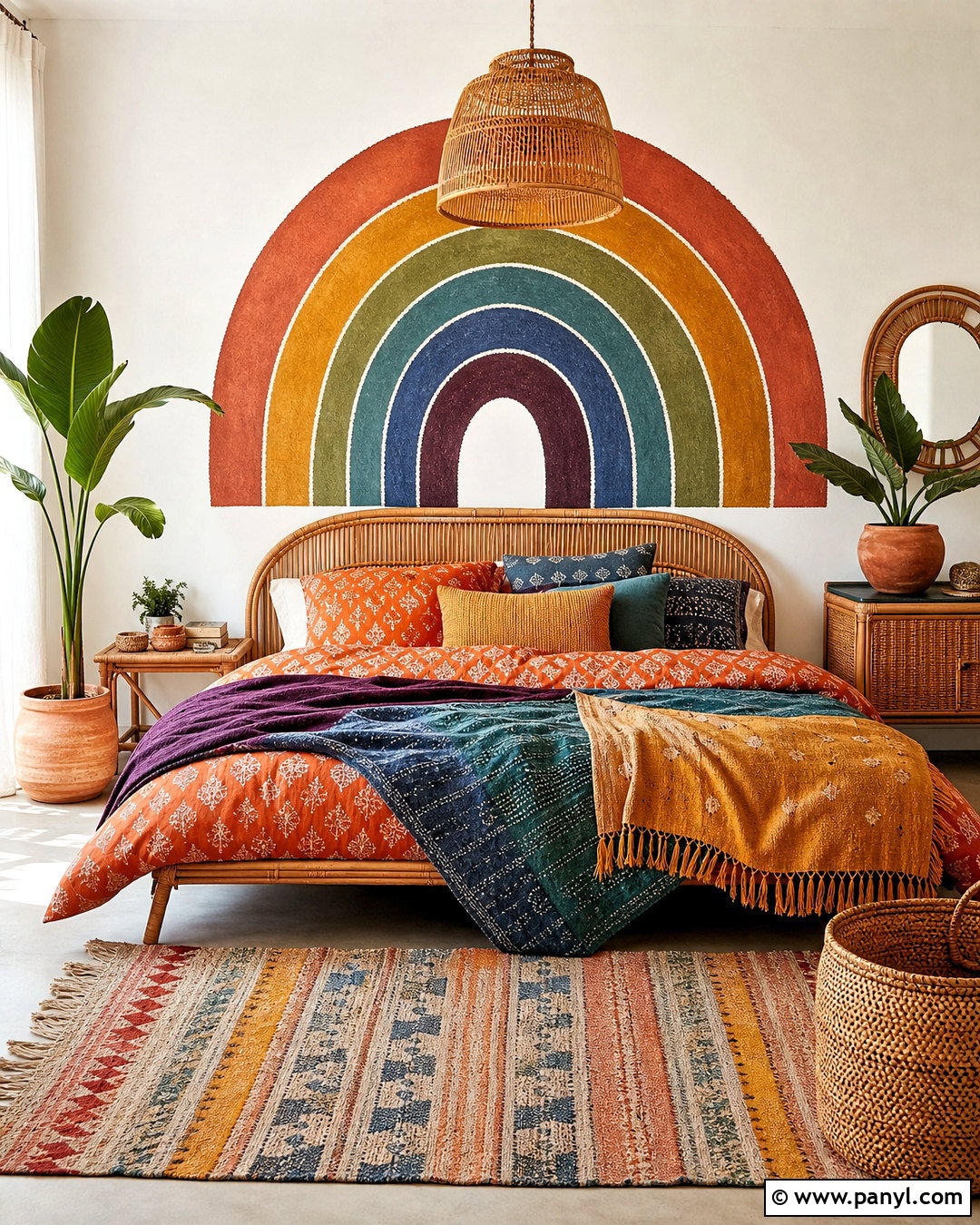
10. Beige And Earth Tone Playroom
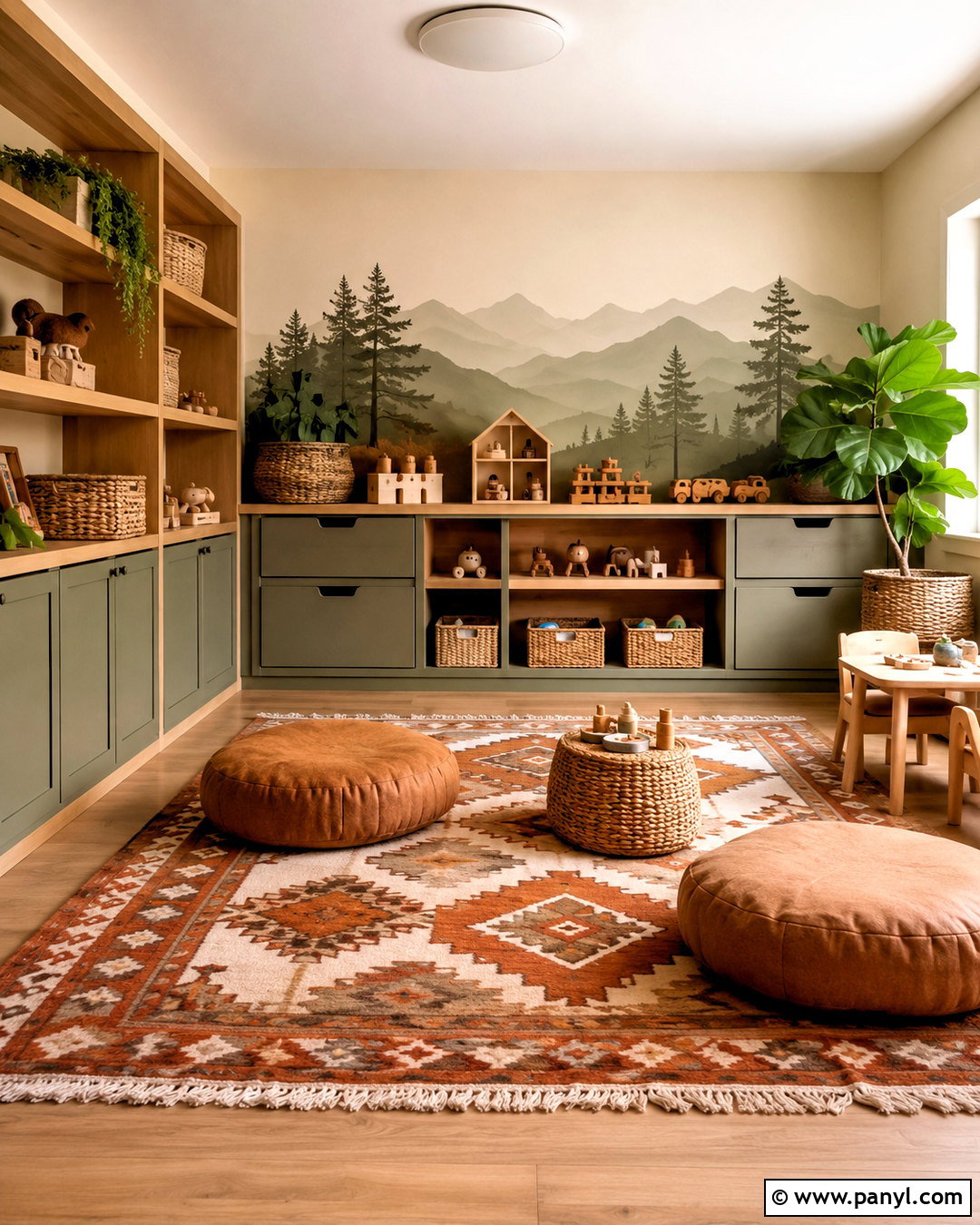
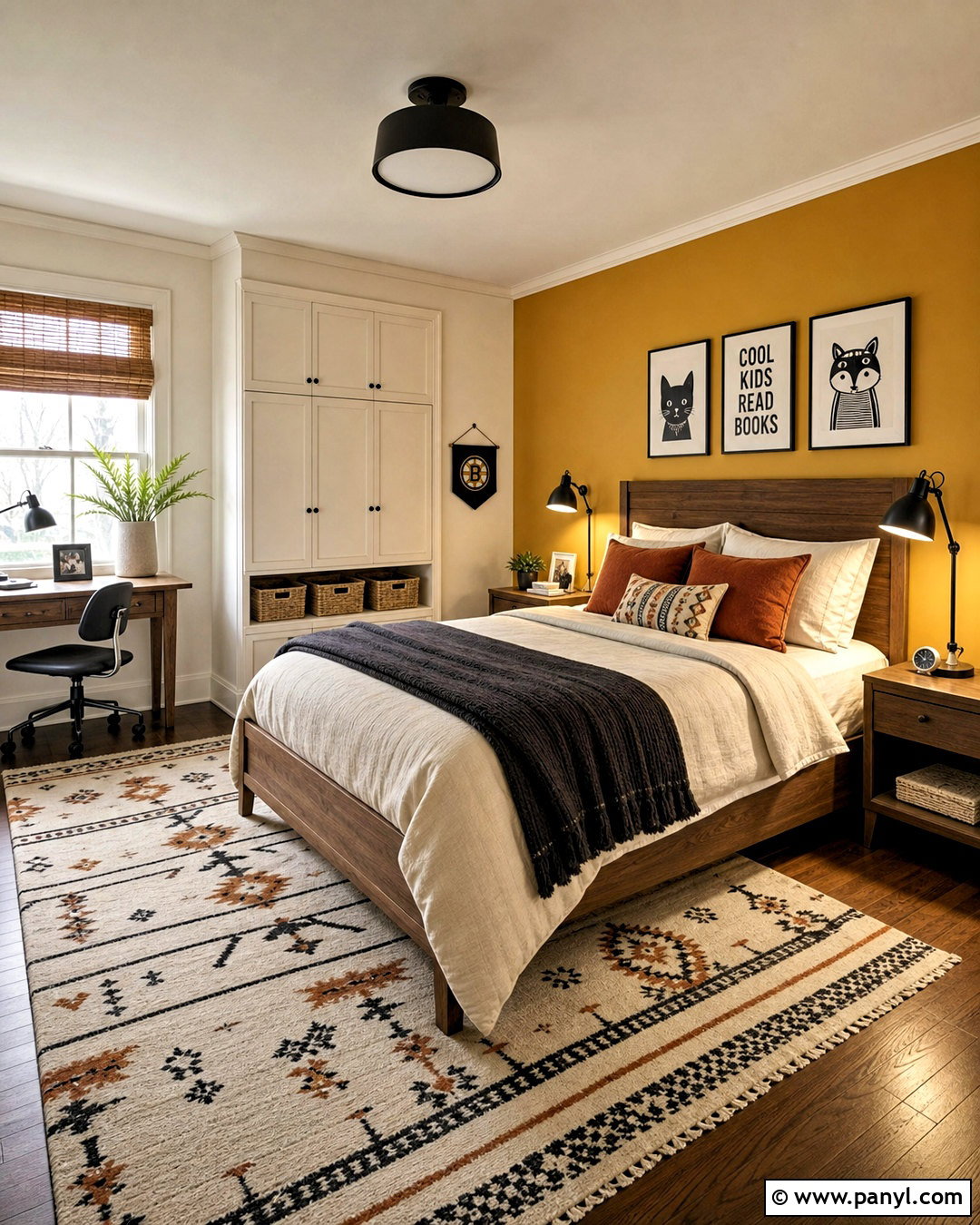
Warm beige, camel, olive, and clay can produce a cozy playroom without relying on bright wall colors. Paint the room a creamy sand tone, then introduce olive green through low cabinets and a cushioned reading bench. Choose honey-toned wood for the activity table, shelves, and pretend kitchen. A washable rug featuring muted rust, tan, and brown shapes will add pattern while hiding everyday marks. Use woven baskets, canvas bins, and soft camel floor cushions to create inviting texture. A small nature-inspired mural with hills, trees, and a warm sun can supply a playful focal point. Keep lighting bright and add white trim for contrast. The finished room feels calm and tactile, yet toys, books, and creative supplies still bring plenty of personality and movement.
11. Forest Green And Rust Playroom
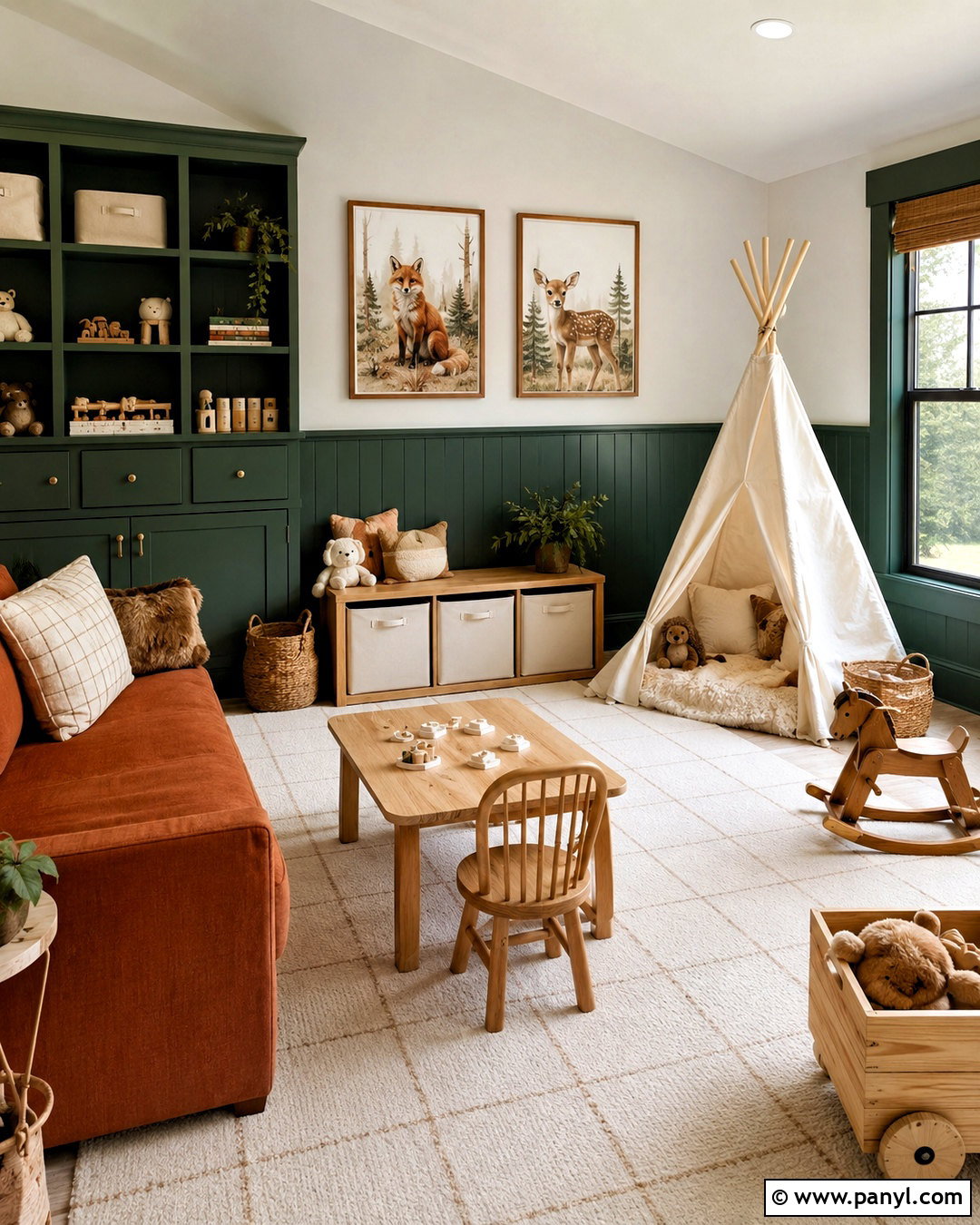
Forest green walls can make a large playroom feel cozy, especially when paired with rust, cream, and medium-tone oak. Use the green on the lower two-thirds of the walls or across built-in cabinetry, leaving the upper walls warm white to maintain brightness. Add a rust-colored sofa, caramel floor cushions, and an ivory rug with a simple green grid. A sturdy oak table and matching open shelves will reinforce the natural palette. Include cream storage bins to break up darker cabinetry and keep supplies visually organized. Woodland artwork, leaf-shaped cushions, and a canvas play tent can support the theme without making it feel temporary. With strong white lighting and an uncluttered layout, this complete scheme looks rich and welcoming rather than dark or overly serious.
12. Light Blue And Red Playroom
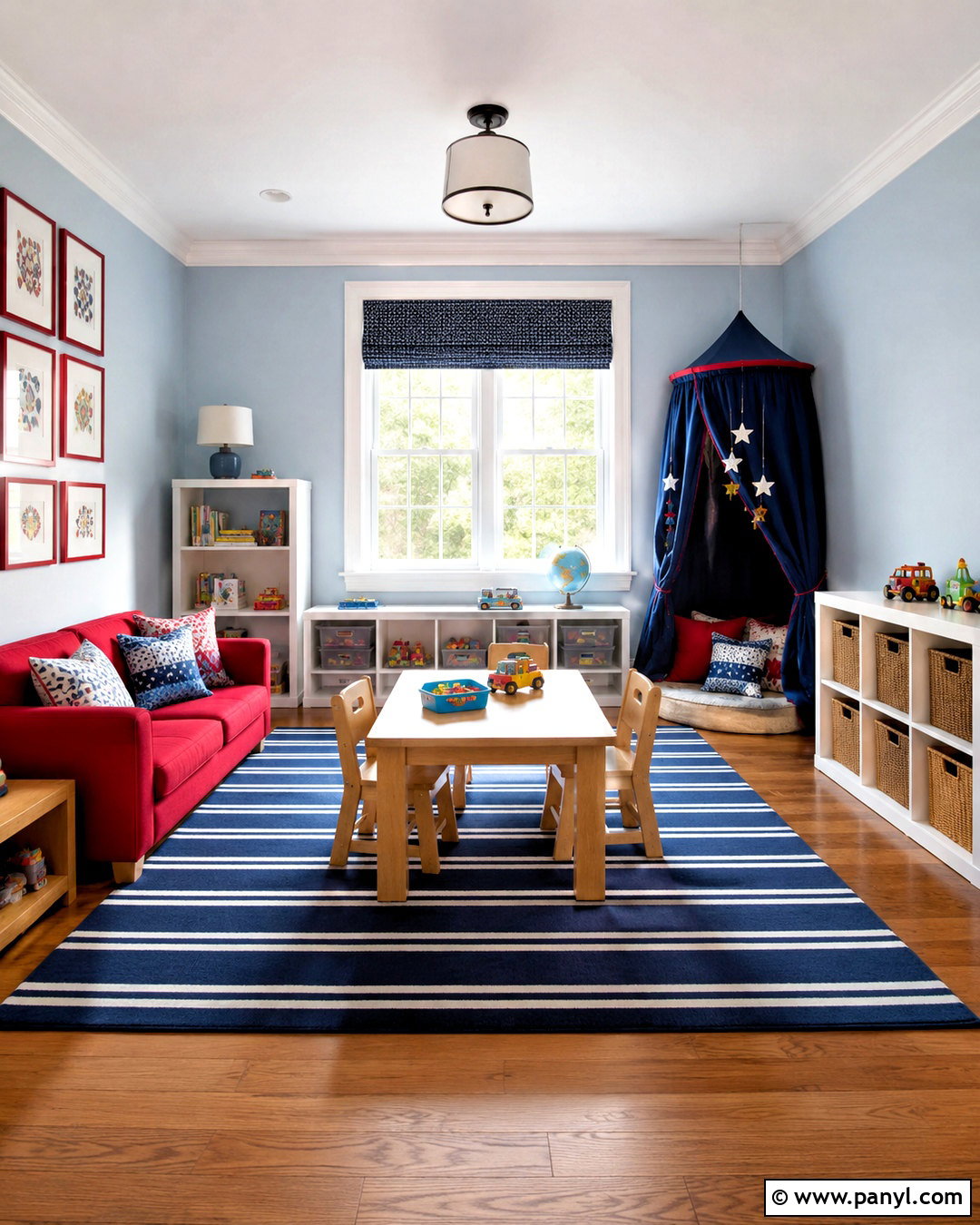
Light blue walls create a calm base for energetic red accents. Choose a clear, airy blue for the walls and crisp white for the ceiling, trim, and larger storage units. Add red through a compact sofa, chair legs, toy bins, and narrow picture frames instead of using it across an entire wall. A navy-and-white striped rug can ground the room and connect the softer blue with the stronger red. Use pale wood for the play table and book ledges to warm the palette. A fabric canopy in blue chambray creates a comfortable reading corner, while graphic artwork can repeat red, blue, and yellow. The completed playroom feels bright and active, but the generous white surfaces stop the high-contrast accents from becoming visually tiring.
13. Peach And Aqua Playroom
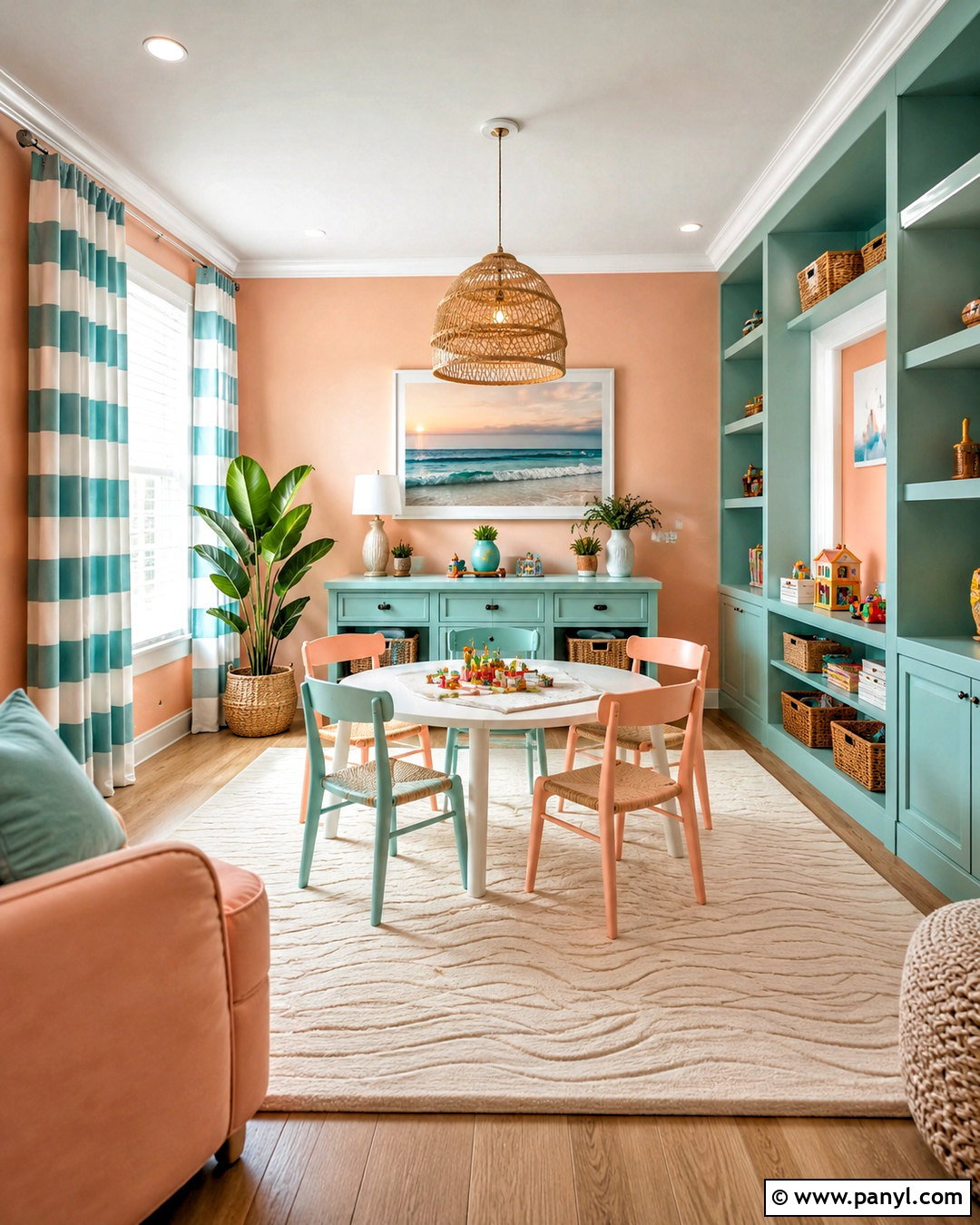
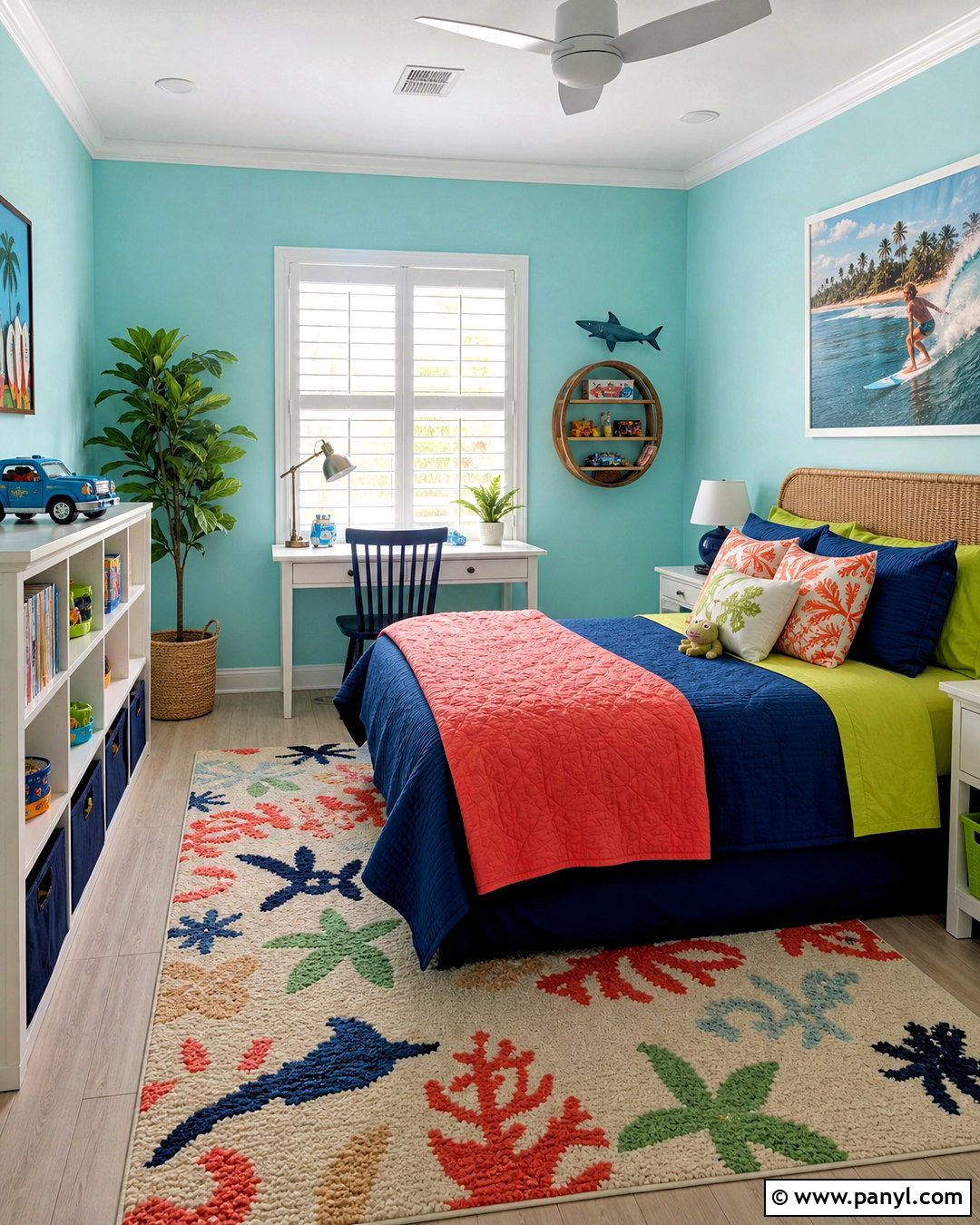
Peach and aqua deliver a playful coastal feeling without requiring obvious seaside decorations. Paint the walls a light peach and use aqua on built-in cabinets, a reading bench, or the back panels of open shelving. Warm white trim and pale oak floors will keep the combination soft. Center the room around a round white table with natural wood legs and a mix of peach and aqua chairs. Add a cream rug featuring gentle wave shapes in both colors. Woven baskets, cotton floor pillows, and simple striped curtains bring texture without clutter. A small sun mural or abstract landscape can fill the main wall. The finished playroom feels fresh, sunny, and imaginative, with practical storage integrated into a color scheme that also suits adjoining family rooms.
14. Lilac And Mint Playroom
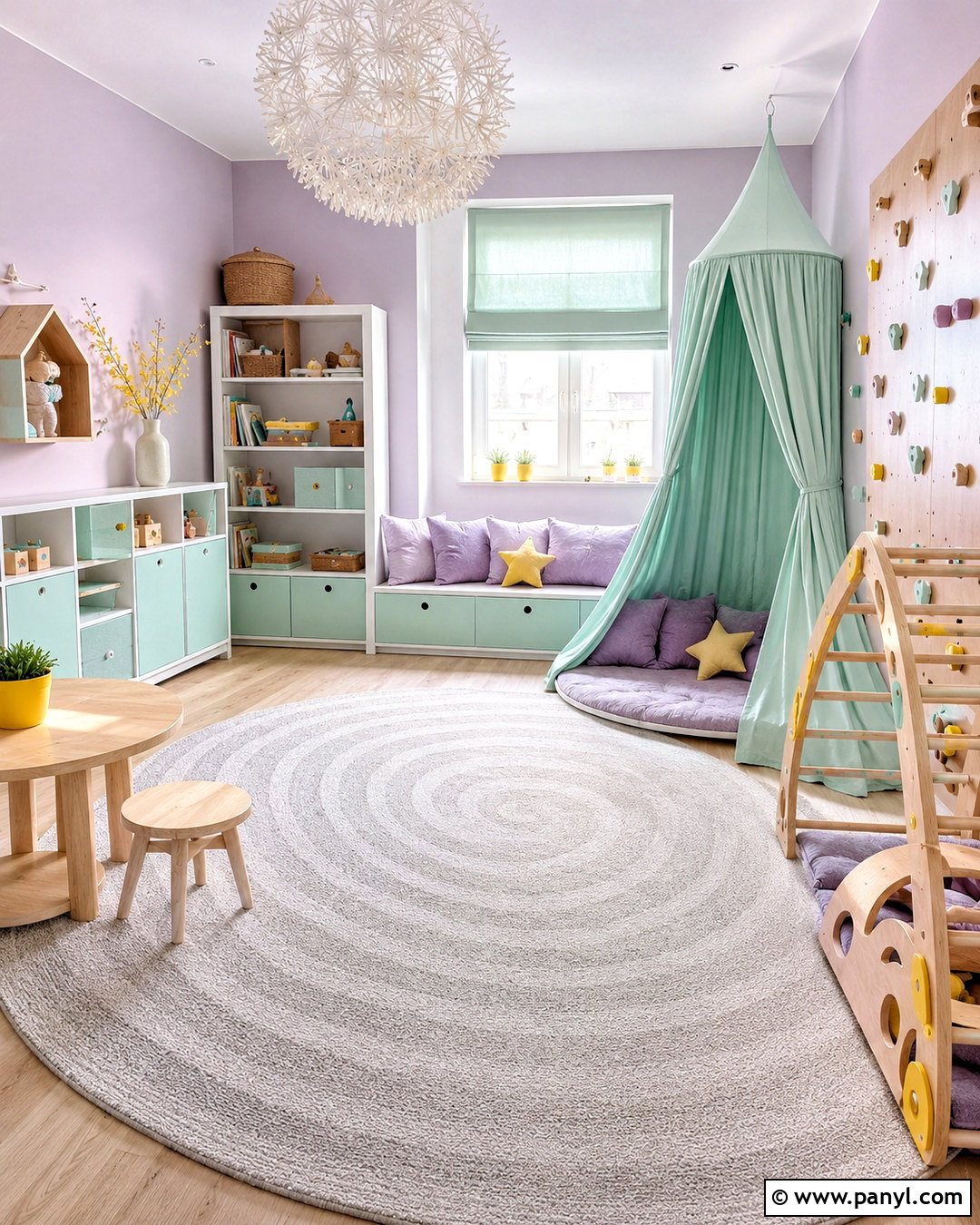
A lilac and mint playroom feels whimsical when the colors are softened with white, pale gray, and blond wood. Use light lilac on the walls and paint cabinet doors a muted mint green. Keep cabinet frames white so the two pastels remain crisp and distinct. A pale gray rug with lilac and mint circles can establish an open activity zone. Choose a blond wood table, white chairs, and low picture ledges for books and art. Add a mint reading canopy with lilac floor cushions in one corner. Small yellow accents in artwork or storage bins will keep the cool palette from feeling flat. The complete design has plenty of personality, yet its controlled color placement allows toys and craft materials to enter the room without creating unnecessary visual chaos.
15. Gray And Yellow Playroom
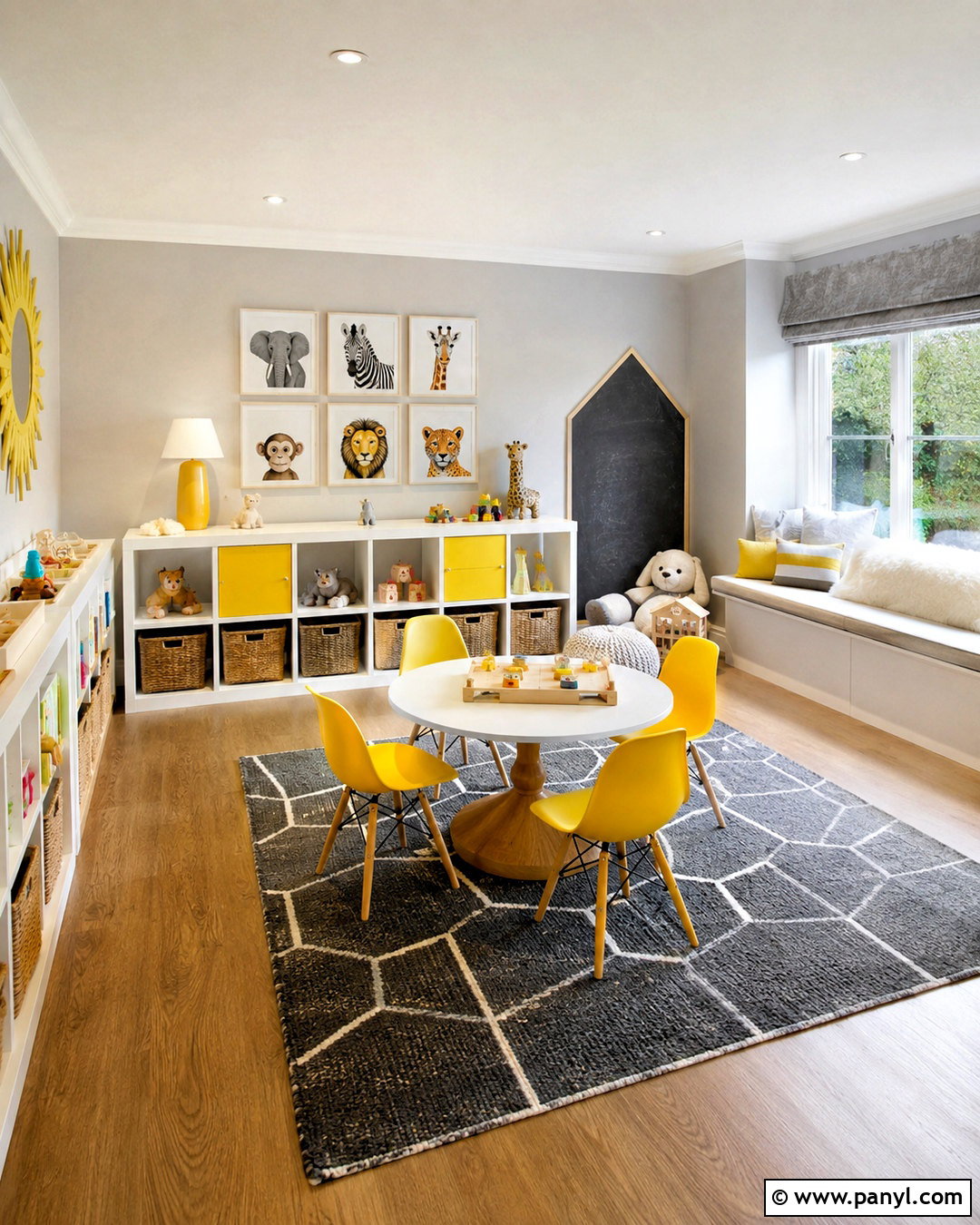
Soft gray provides a practical backdrop for a playroom filled with sunny yellow details. Select a warm, pale gray rather than a cool industrial shade, then pair it with white trim and light oak flooring. Use yellow on a window bench, several cabinet doors, and a few child-size chairs. White cubbies and natural baskets will keep the storage wall looking bright. Place a charcoal-and-cream patterned rug beneath a round wood table to give the room definition and hide minor marks. Add yellow pendant lighting, graphic animal prints, and gray floor cushions to repeat the palette. A small black chalkboard section can serve as a creative station. The completed look feels cheerful but controlled, making it suitable for both active play and quieter homework sessions.
16. Color Block Rainbow Playroom
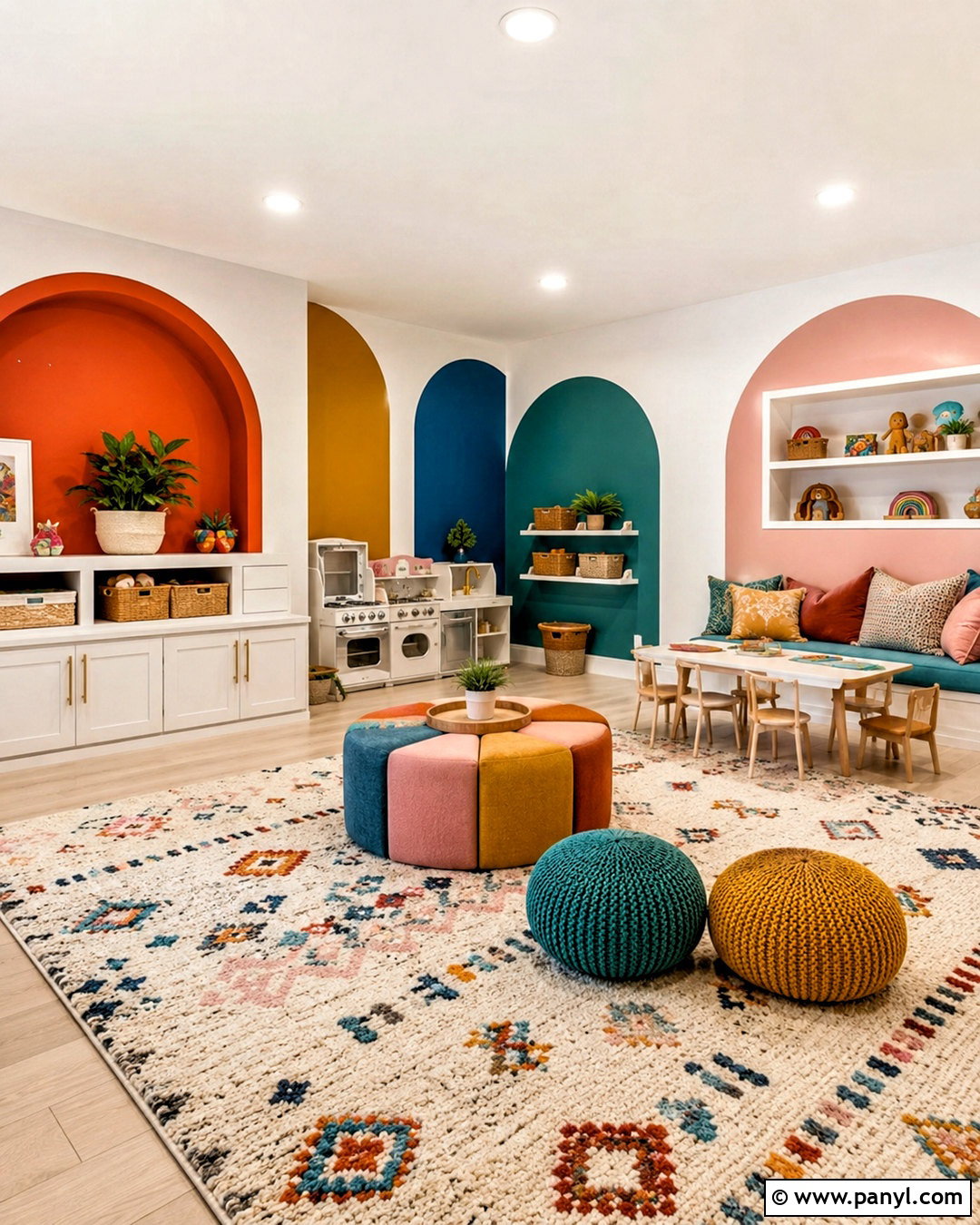
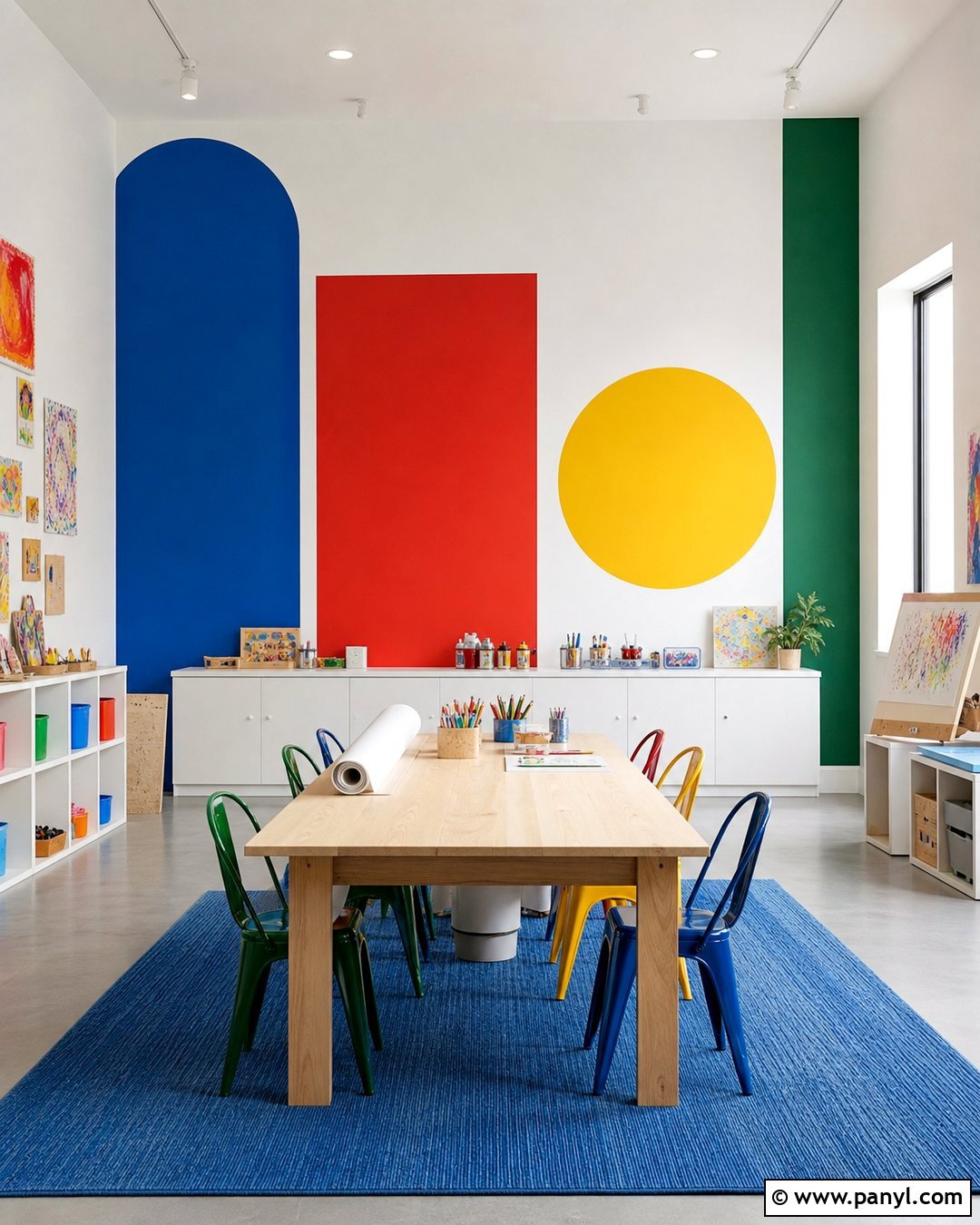
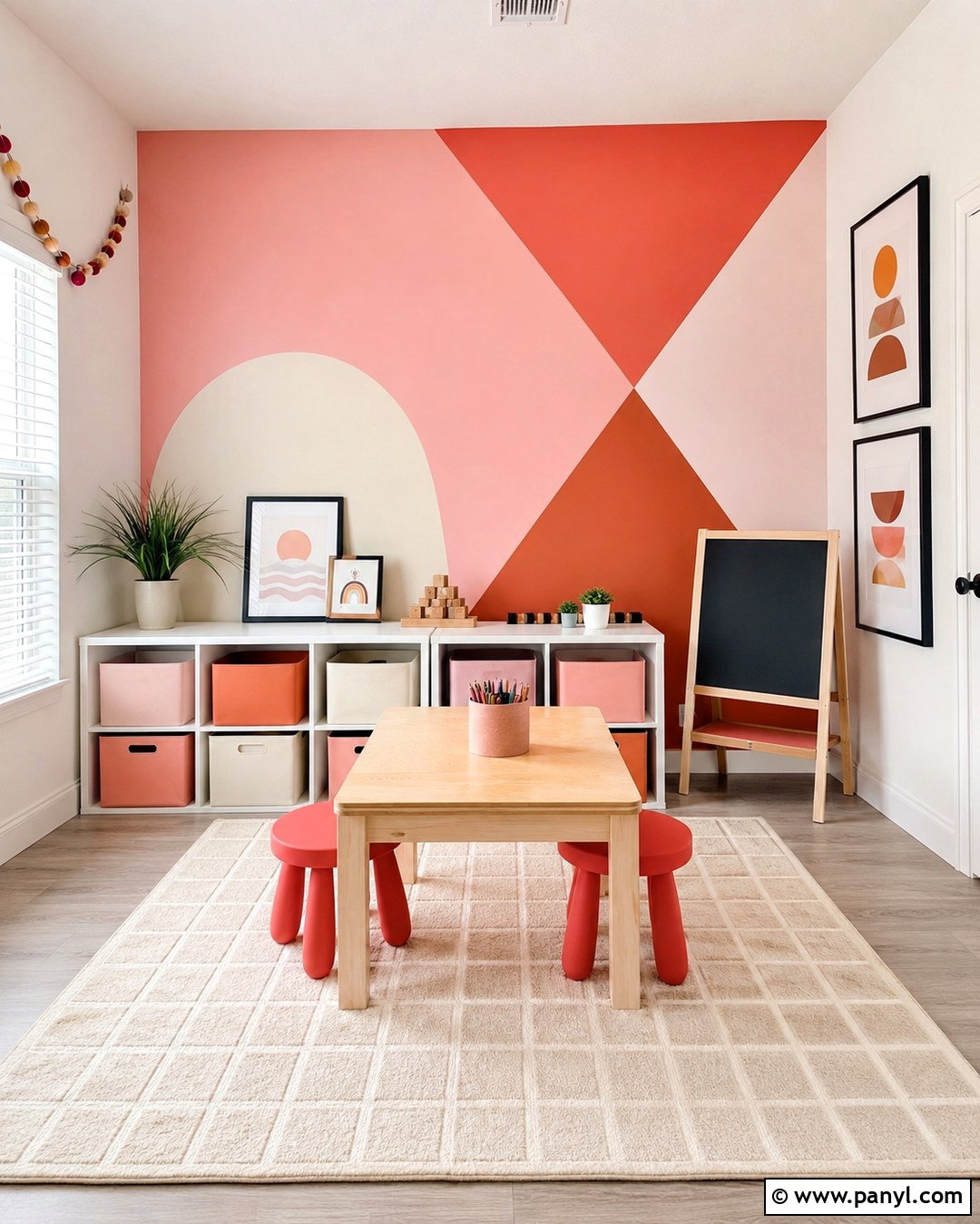
Color blocking turns an ordinary playroom into a bold, coordinated space without requiring patterned wallpaper. Start with warm white walls, then paint large arches or rectangular sections in terracotta, mustard, teal, blue, and dusty pink. Keep each block connected to a functional zone, such as the reading corner, craft table, or storage wall. Choose white cabinetry and pale wood furniture so the painted shapes remain the main feature. A cream rug with small multicolored details can link the zones without adding another large pattern. Repeat each wall color in one or two baskets, cushions, or chairs. Leave some white space between the painted sections. This intentional layout makes the full room look colorful and imaginative while preserving visual order and plenty of flexibility.
17. Pastel Rainbow Playroom
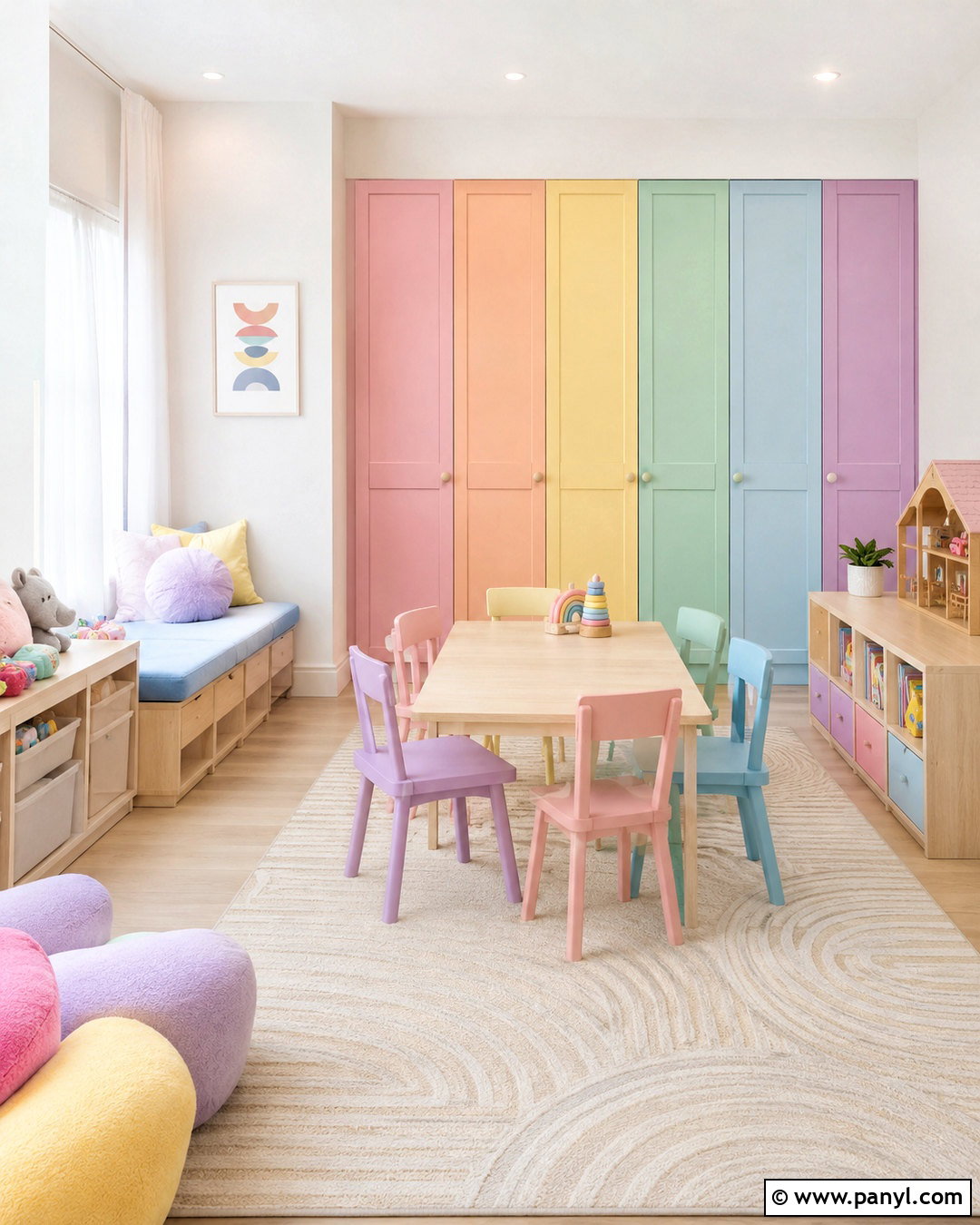
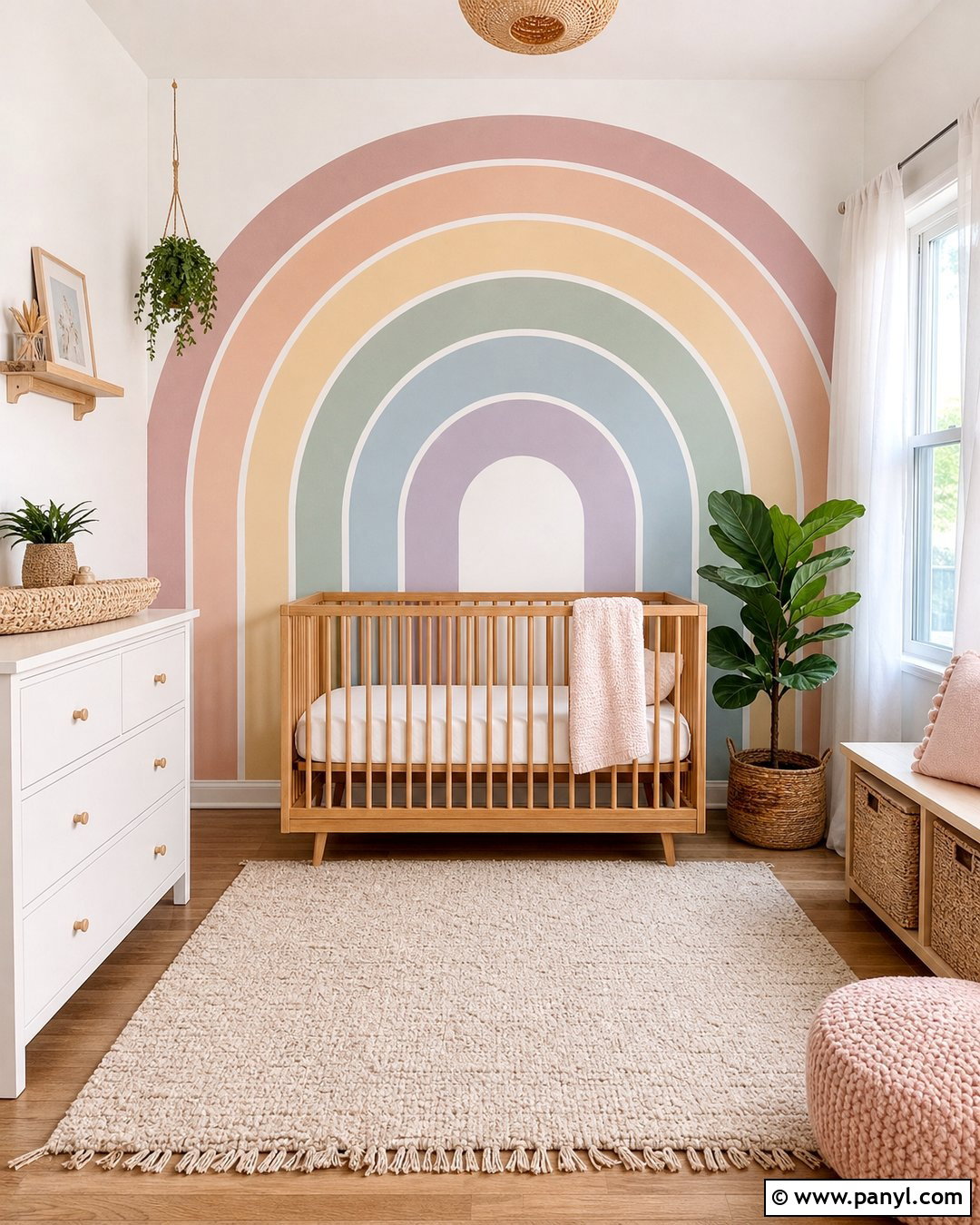
A pastel rainbow palette works best when every shade shares a similar soft intensity. Begin with creamy white walls and introduce dusty pink, apricot, butter yellow, mint, powder blue, and lilac through furnishings and painted details. A low storage unit can feature one pastel color on each cabinet door while maintaining a white frame. Add a pale wood activity table with mismatched pastel chairs and a cream rug patterned with small arches. Build a reading nook with a powder blue bench, pink cushions, and a subtle rainbow wall decal. White curtains and natural baskets prevent the room from becoming overly sweet. The finished playroom looks colorful from every angle, yet the muted tones create a calm setting for crafts, pretend play, building, and reading.
18. Monochrome Blue Playroom
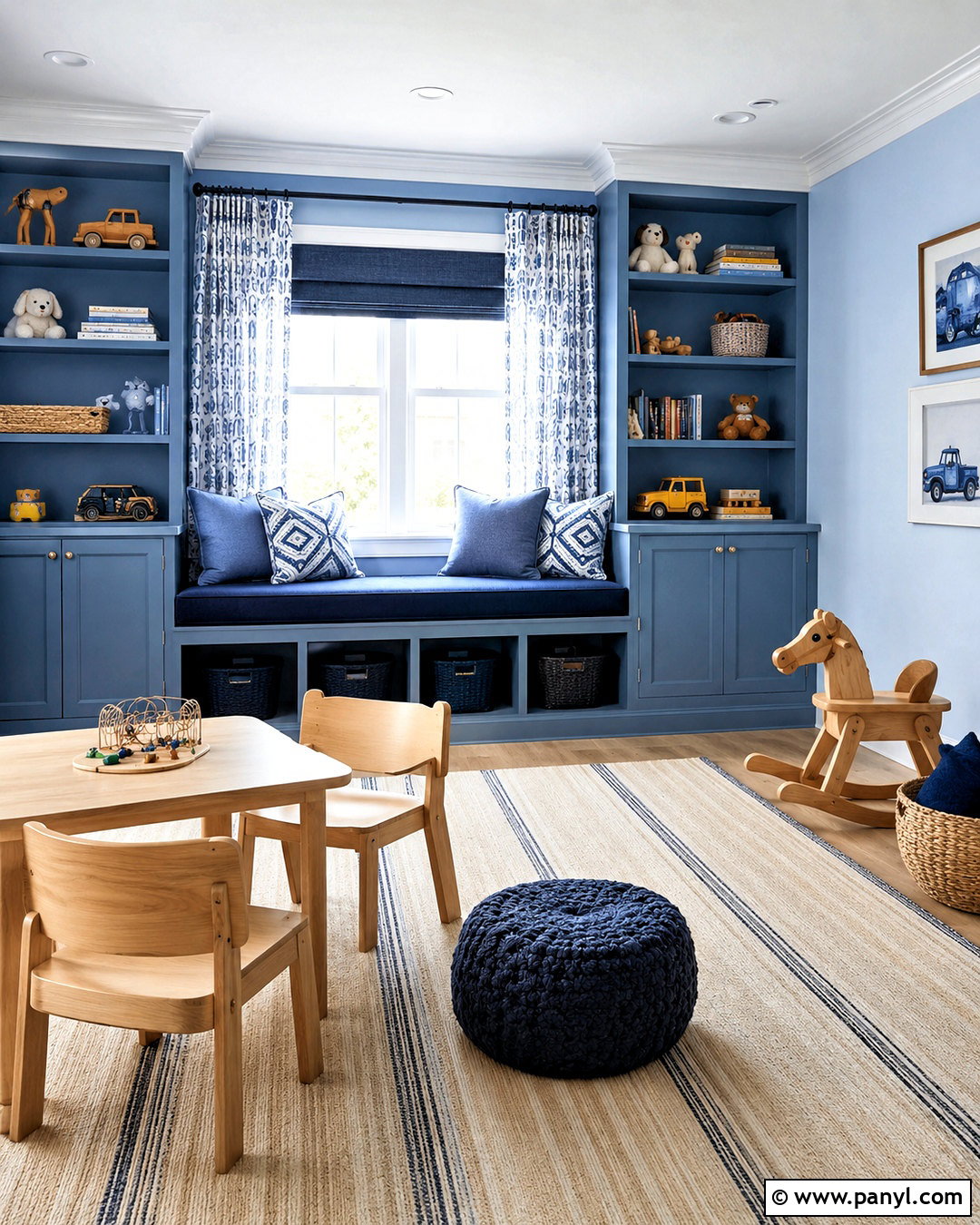
Using several shades of blue can create depth while keeping the playroom visually consistent. Paint the walls a soft sky blue, use medium denim blue on the storage cabinets, and reserve deep navy for a sofa or window seat. Crisp white trim and pale wood furniture will brighten the layered palette. Choose a cream-and-blue rug with broad stripes to establish the central play area. Add cornflower floor cushions, navy baskets, and blue patterned curtains without requiring every item to match exactly. Warm the room with tan leather-look handles, woven storage, and natural wood toys. A white ceiling and bright lighting are essential for balance. The completed scheme feels fresh and organized, offering plenty of color while remaining flexible enough for changing interests and age groups.
19. Warm Neutral Montessori Playroom
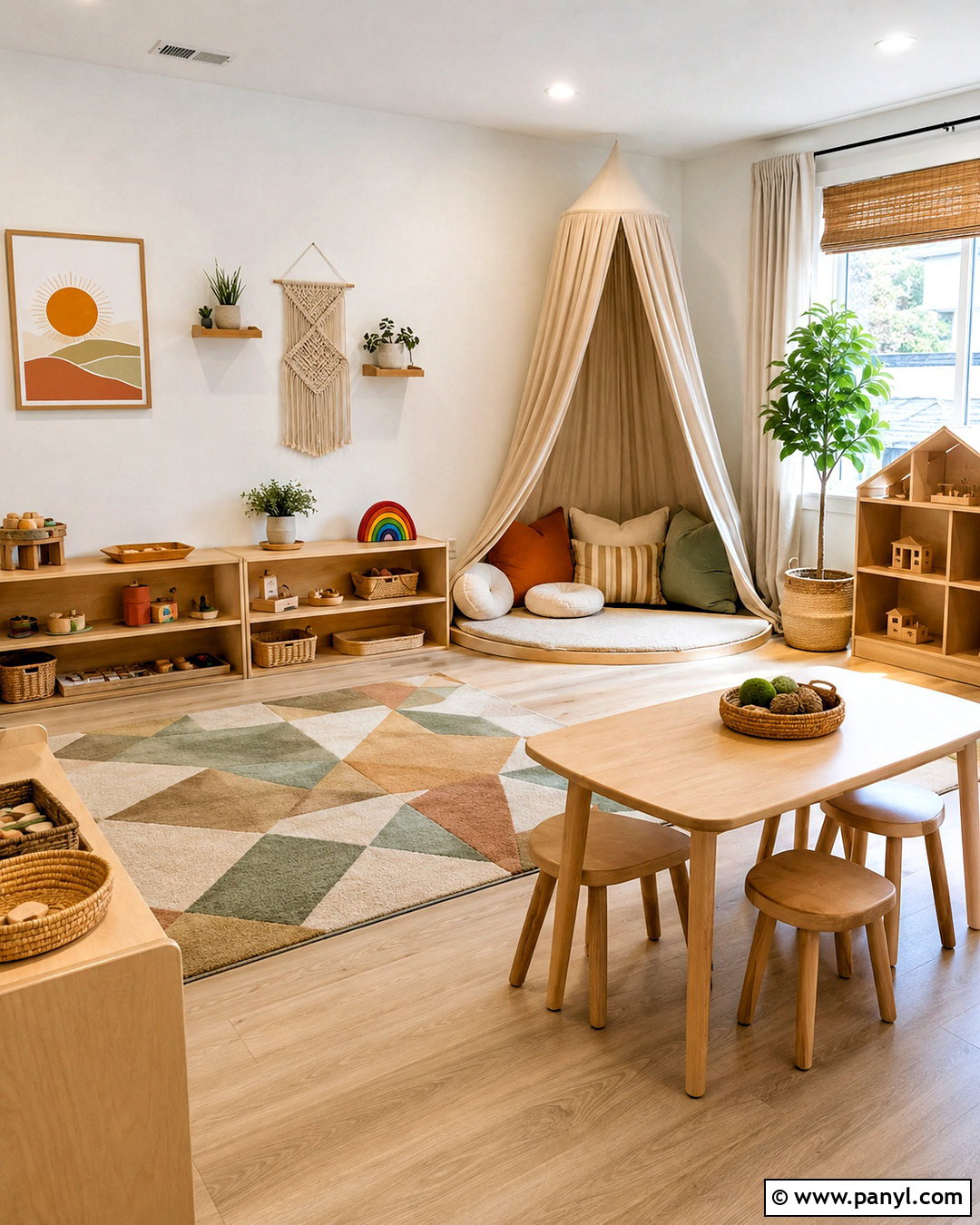
A warm neutral Montessori-inspired playroom focuses on accessible furniture, natural materials, and a quiet color palette. Use creamy white walls, light oak flooring, and low birch shelves that allow toys and activities to remain visible. Add muted tan, soft sage, and clay through floor cushions, baskets, and a washable geometric rug. Keep the center of the room open for movement, with a child-height table placed near natural light. A small reading corner can include a natural linen canopy, front-facing book ledges, and a thick cream mat. Choose only a few decorative pieces, such as simple landscape art or wooden wall shapes. The completed space feels warm rather than bare, with coordinated activity areas that encourage children to choose, use, and return items independently.
20. Dark Green And Bright Accent Playroom
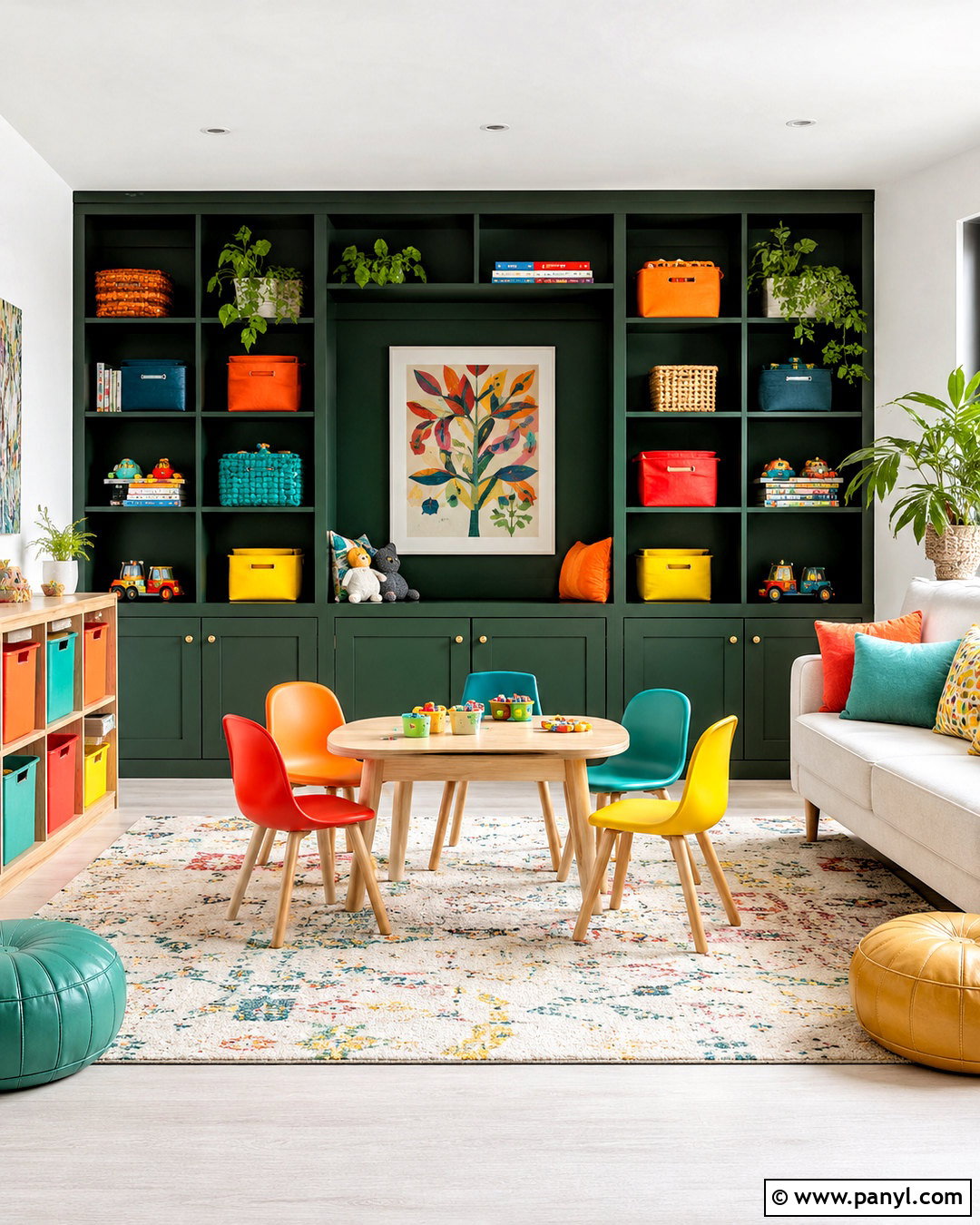
Dark green can support a lively playroom when it is surrounded by bright white, light wood, and clear accent colors. Paint one long storage wall a deep botanical green, including the cabinet doors and open shelving for a built-in effect. Keep the remaining walls white and use a pale floor or large ivory rug to reflect light. Introduce orange, turquoise, yellow, and red through chairs, cushions, toy bins, and framed artwork. A blond wood activity table will bridge the dark backdrop and colorful furnishings. Add a white reading sofa with patterned pillows beside a green canopy. Use strong overhead lighting and keep the windows unobstructed. The complete scheme feels confident and colorful, while the concentrated dark paint helps the room appear organized rather than visually scattered.
Conclusion:
The most successful playroom feels exciting to children while remaining manageable for the adults who organize and maintain it. These **20 playroom color scheme ideas** demonstrate how a consistent palette can connect storage, seating, activity tables, rugs, artwork, and reading corners into one complete design. Begin with the room’s largest surfaces, including the walls, floor, and cabinets. Then repeat two or three supporting colors throughout smaller furnishings and accessories. Bright palettes benefit from white or wood for balance, while neutral rooms need texture and a few stronger accents. Whether you prefer earthy greens, joyful primary colors, soft pastels, or modern monochrome blue, thoughtful color placement will create a playful space that looks coordinated and grows comfortably with your family.

Related Ideas and Inspiration:
Leave a Reply