
Color blocking gives a playroom energy, structure, and personality without requiring expensive wallpaper or complicated artwork. The right painted shapes can frame a reading nook, define an activity table, highlight toy storage, or make a small room feel more thoughtfully arranged. Current approaches range from simple half-painted walls to arches, oversized geometric shapes, wraparound bands, and playful murals created with painter’s tape. () To keep the finished room balanced, connect the wall colors to rugs, furniture, baskets, and practical storage. You can also choose softer shades for a calm family space or saturated colors for a more energetic setting. The complete rooms below offer approachable inspiration for creating **20 Color Block Wall Playroom Ideas**.
1. Pastel Arch Color Block Wall
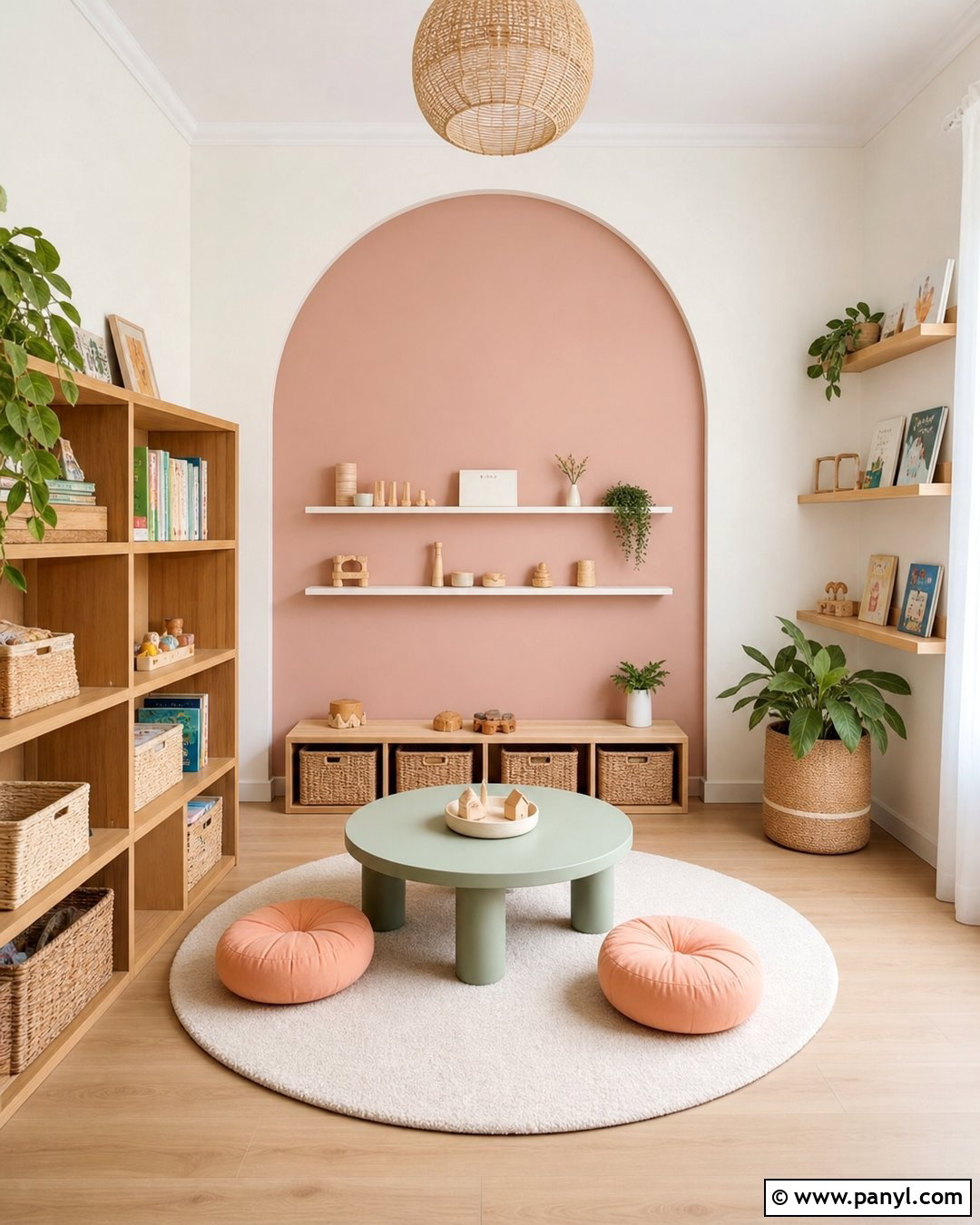
A large pastel arch creates a natural destination within a bright playroom. Paint the main wall warm white, then add an oversized dusty pink arch behind a low natural oak bookcase. Layer a peach floor cushion, round cream rug, and small sage green table in front of it. The arch visually frames the reading area while leaving the rest of the room open for active play. Repeat pink, peach, and green through storage baskets, book covers, and soft toys without making everything match perfectly. White walls and pale wood flooring keep the palette light. Finish the space with two small wall shelves inside the arch and a simple flush-mount ceiling light for a polished, practical look.
2. Rainbow Stripe Color Block Wall
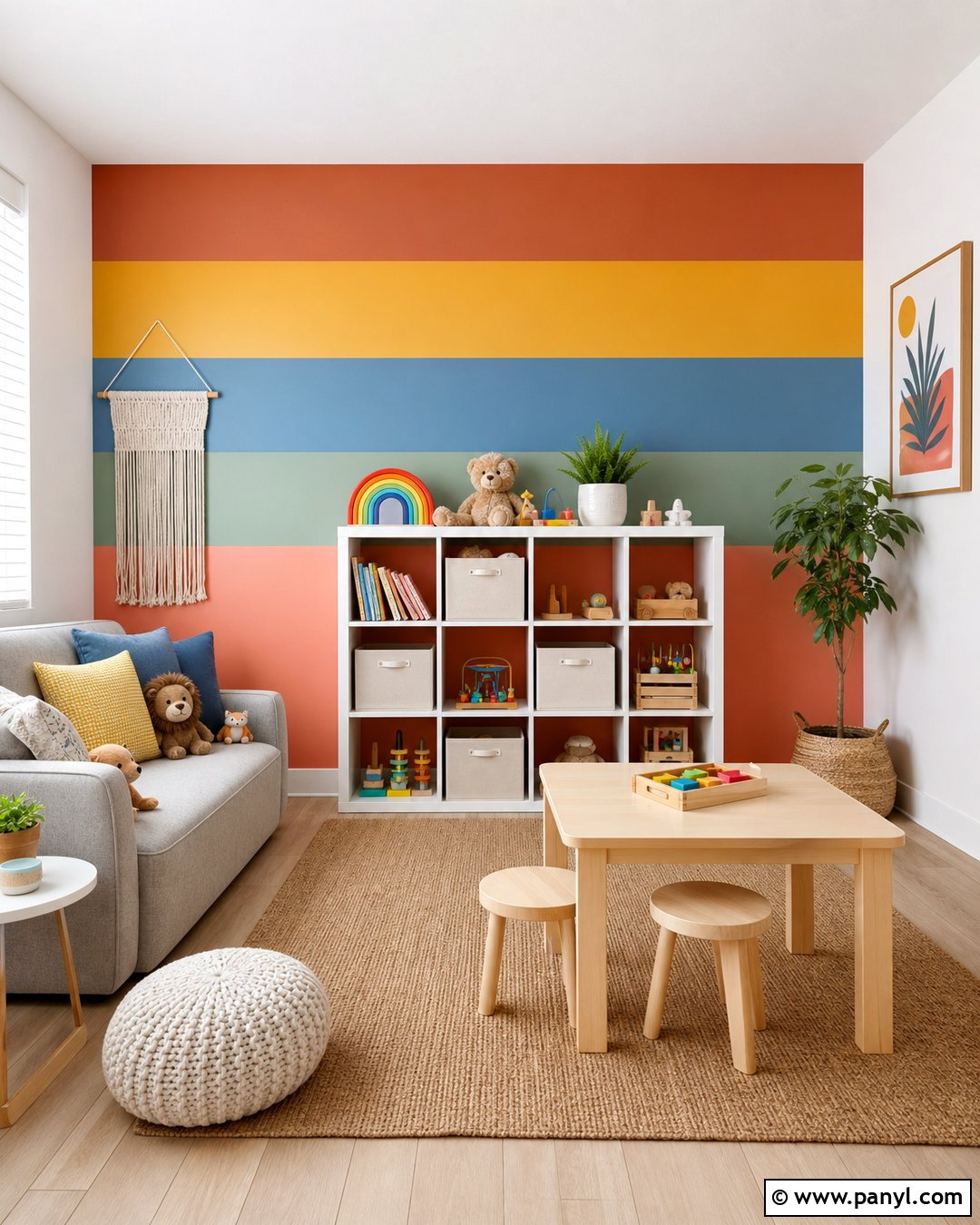
Wide rainbow stripes can feel modern when the colors are slightly muted and the layout stays clean. Run horizontal bands of terracotta, mustard yellow, dusty blue, sage green, and soft coral across one playroom wall. Keep the remaining walls creamy white so the pattern remains the main feature. Place a long white cube organizer against the striped wall, using solid canvas bins that repeat two or three of the painted colors. A pale gray play sofa and round natural jute rug provide visual breathing room. Add a white craft table near the window and use light wood chairs for warmth. The finished room feels colorful and cheerful without depending on character themes that children may quickly outgrow.
3. Geometric Triangle Color Block Wall
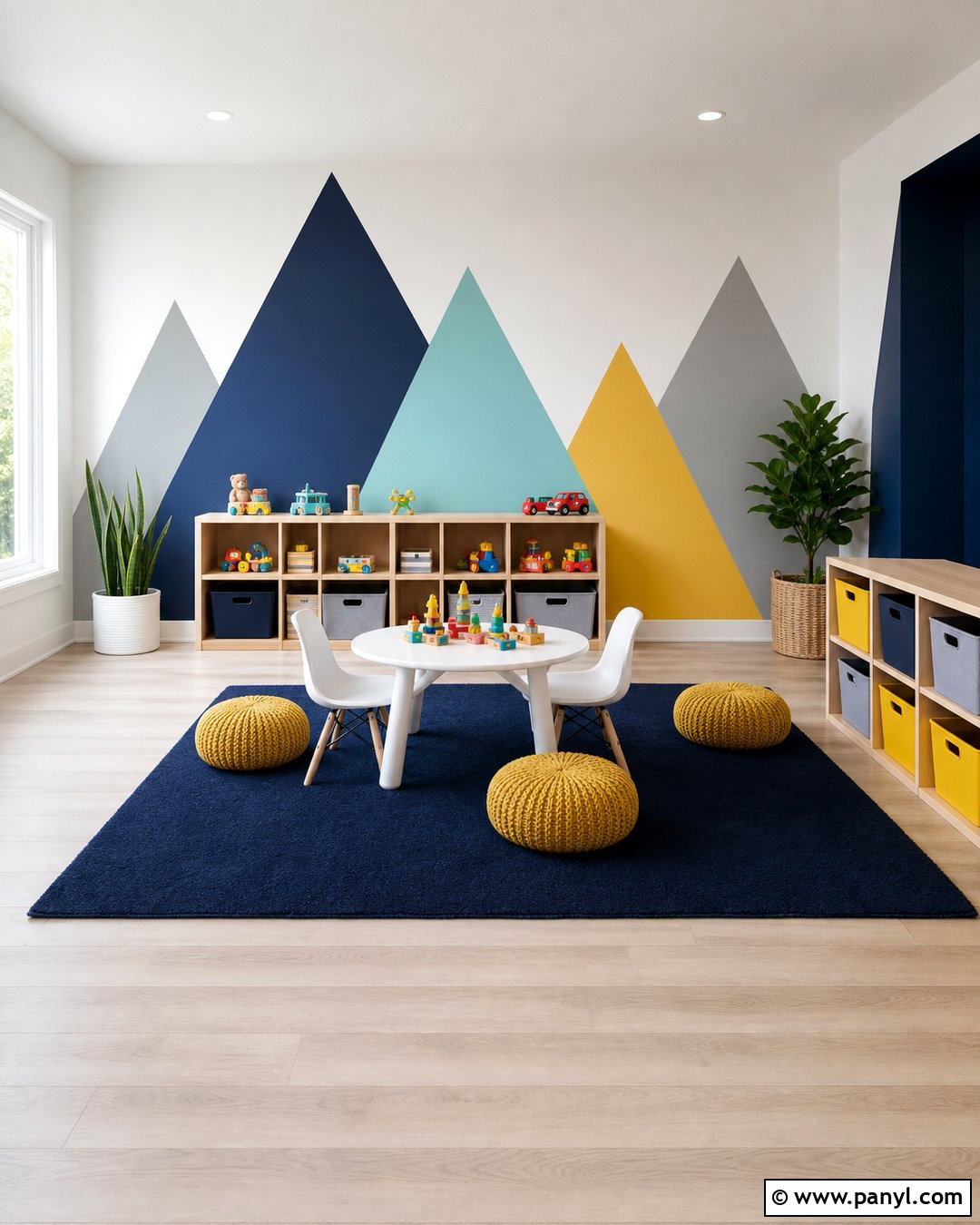
Sharp triangular blocks introduce movement to a playroom while helping awkward walls feel intentional. Start with a soft white background and create large overlapping triangles in navy blue, golden yellow, aqua, and warm gray. Concentrate the strongest colors behind a low toy cabinet rather than covering every wall. Choose pale maple storage, a navy washable rug, and a simple white activity table to balance the graphic pattern. Open baskets keep frequently used toys accessible, while closed cabinets reduce visible clutter. Carry golden yellow into one pendant light and a pair of floor cushions. Keep artwork minimal because the painted wall already functions as a major decorative feature. This room works especially well for school-age children who want something playful but not overly juvenile.
4. Half Wall Color Block Playroom
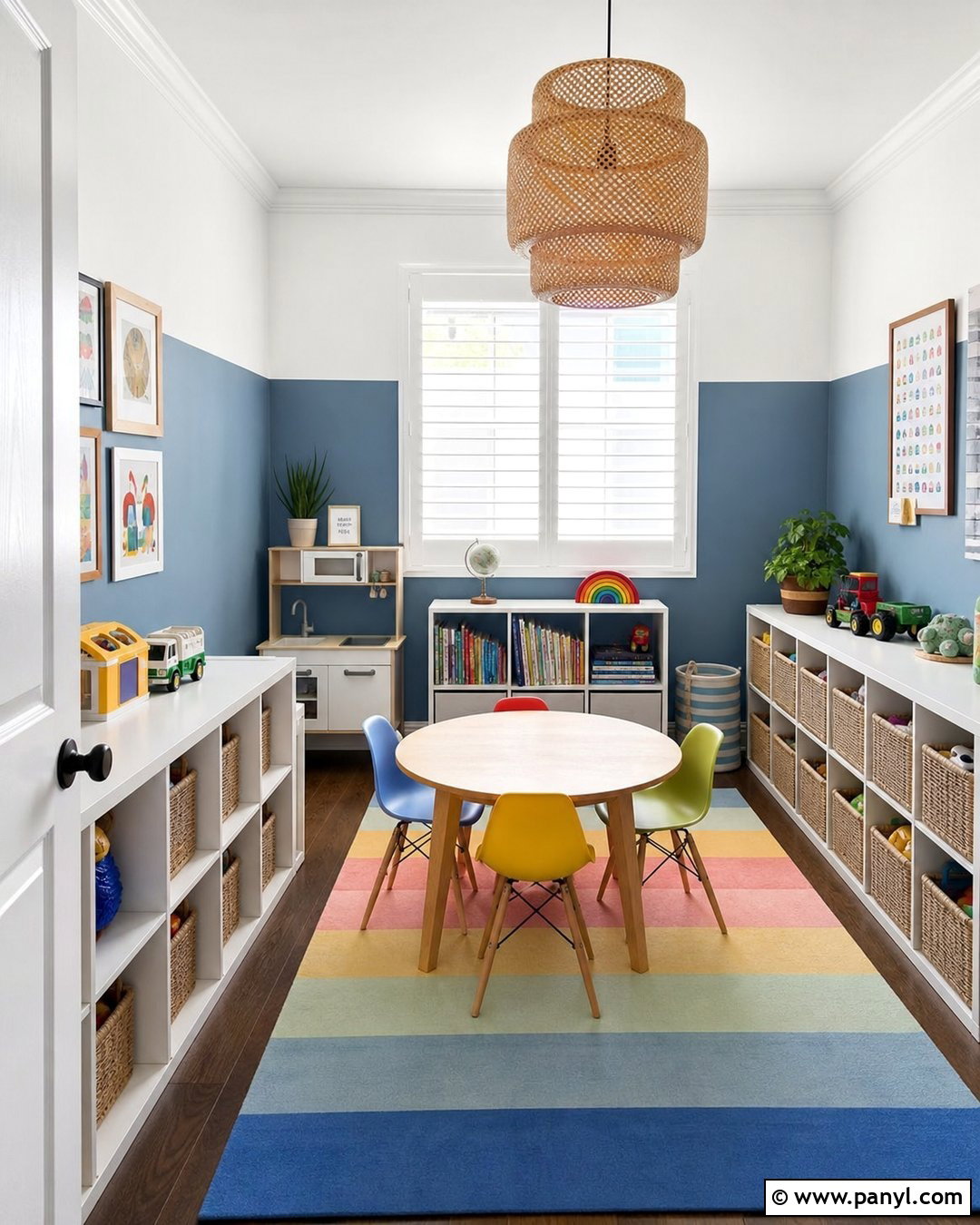
A horizontal color block is one of the easiest ways to give a playroom a complete, connected look. Paint the lower two-thirds of the walls a medium blue and leave the upper portion crisp white. Align the dividing line with the tops of the windows or storage cabinets for a more deliberate finish. Place white cube storage along one wall, then add blue bins, natural wicker baskets, and a long wood display ledge above it. A multicolor patterned rug prevents the room from feeling too coordinated. Complete the layout with a round birch table, four colorful chairs, and a soft reading chair near the corner. Painting the lower wall in a durable finish also makes everyday smudges less visually distracting.
5. Scalloped Color Block Wall
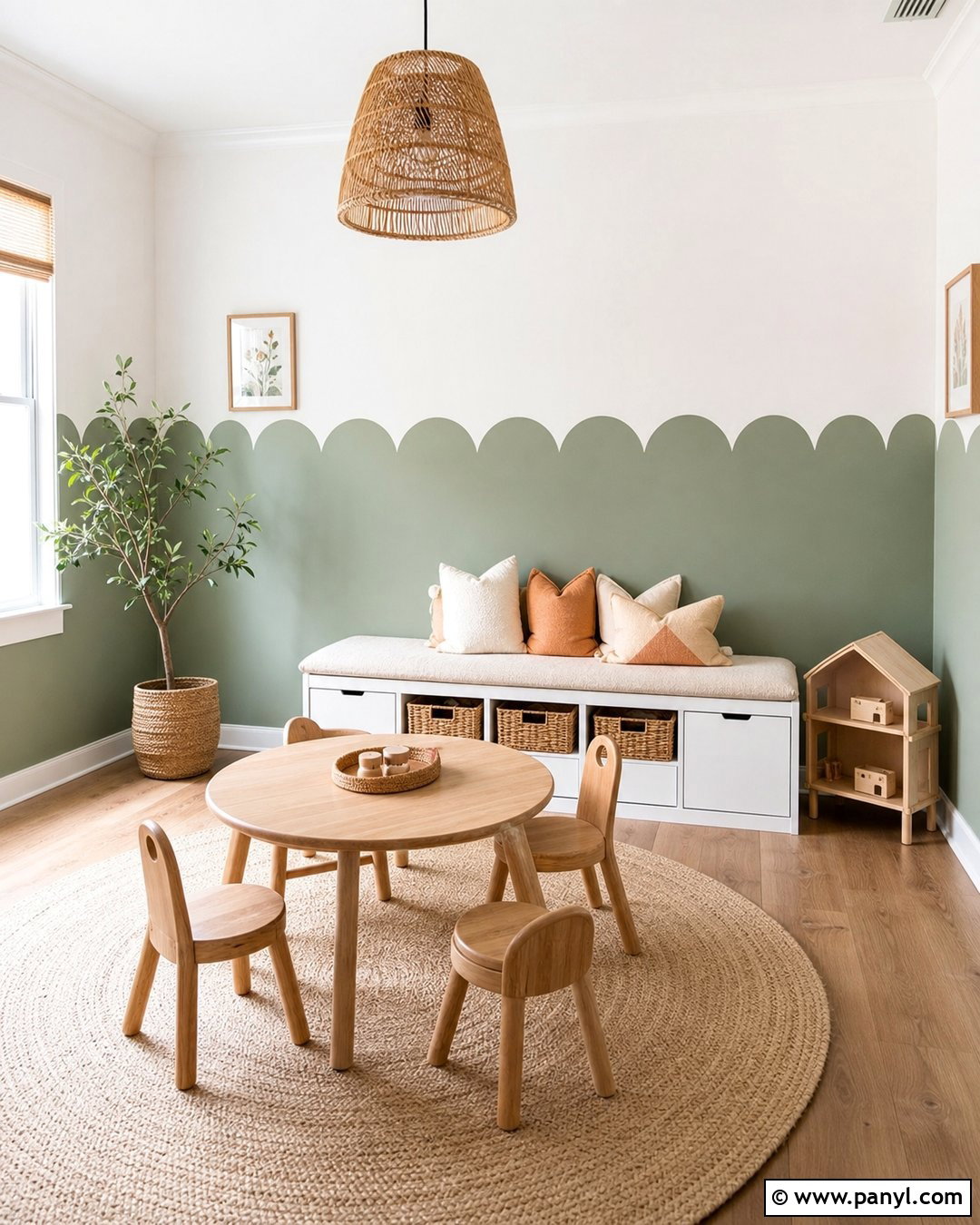
Soft scallops create a playful border without turning the entire playroom into a mural. Paint the lower half of the room warm sage green, then form large rounded scallops along the upper edge. Keep the remaining wall area bright white to emphasize the curved outline. A low white storage bench can sit beneath the pattern, topped with washable cushions in cream, green, and muted apricot. Add a round rug, light wood play table, and woven pendant to create a gentle nature-inspired atmosphere. Simple leaf prints and wooden toys reinforce the palette without competing with the wall. Continue the scalloped treatment around two adjoining walls for a more immersive look, or limit it to one feature wall in a smaller shared family space.
6. Primary Color Block Wall
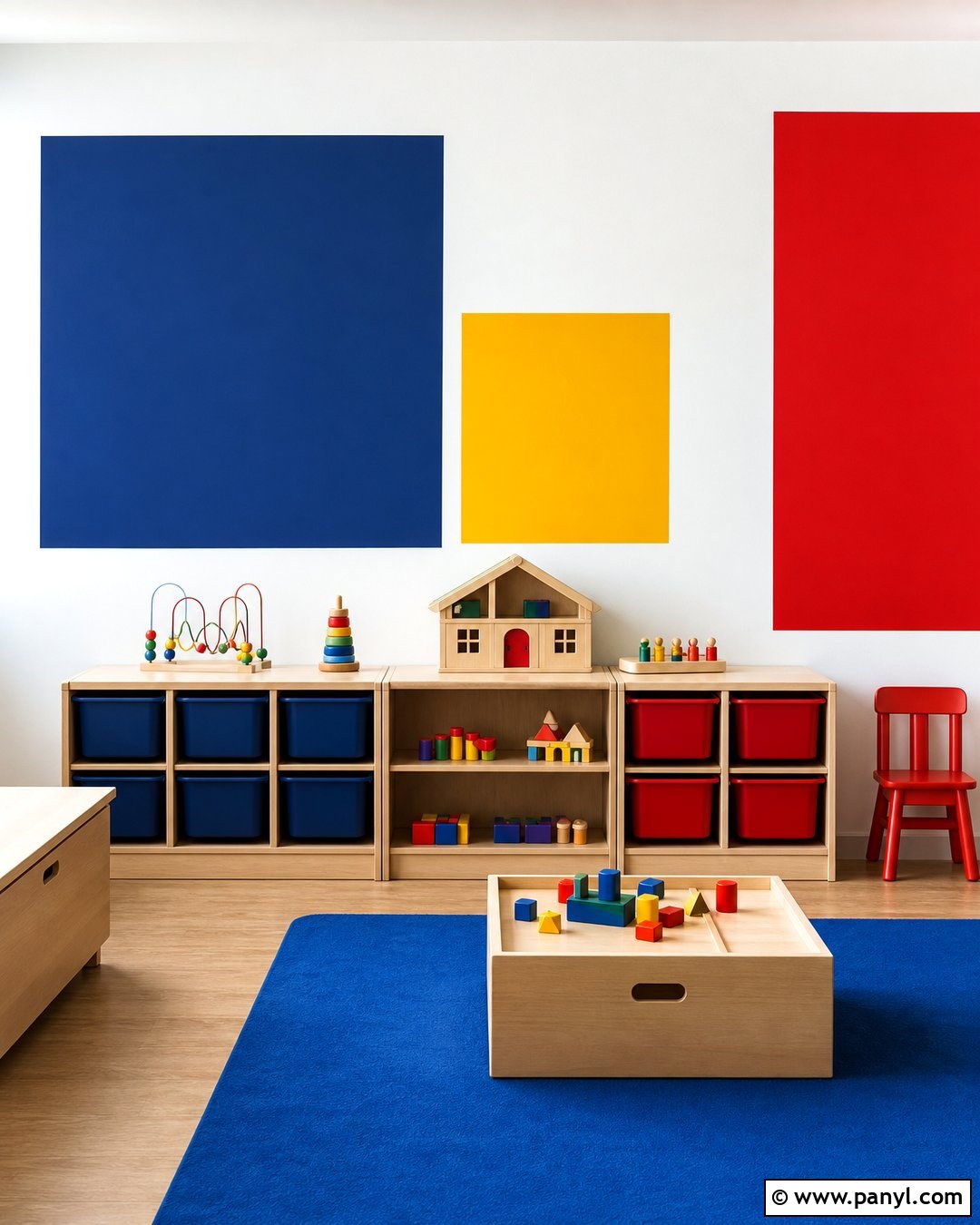
Red, blue, and yellow can look polished when they appear in large, controlled sections. Divide one white playroom wall into a navy rectangle, a golden yellow square, and a smaller tomato red block. Leave visible white space between some shapes to keep the composition open. Position a streamlined birch toy cabinet below the design and use matching solid bins instead of highly patterned storage. A blue floor mat defines the building area, while a red child-size chair creates a strong accent near the book corner. Choose white walls elsewhere, light oak flooring, and a neutral ceiling fixture. The result feels inspired by modern graphic art, giving the room bold character while maintaining a practical layout for reading, crafts, construction toys, and imaginative play.
7. Mountain Color Block Wall
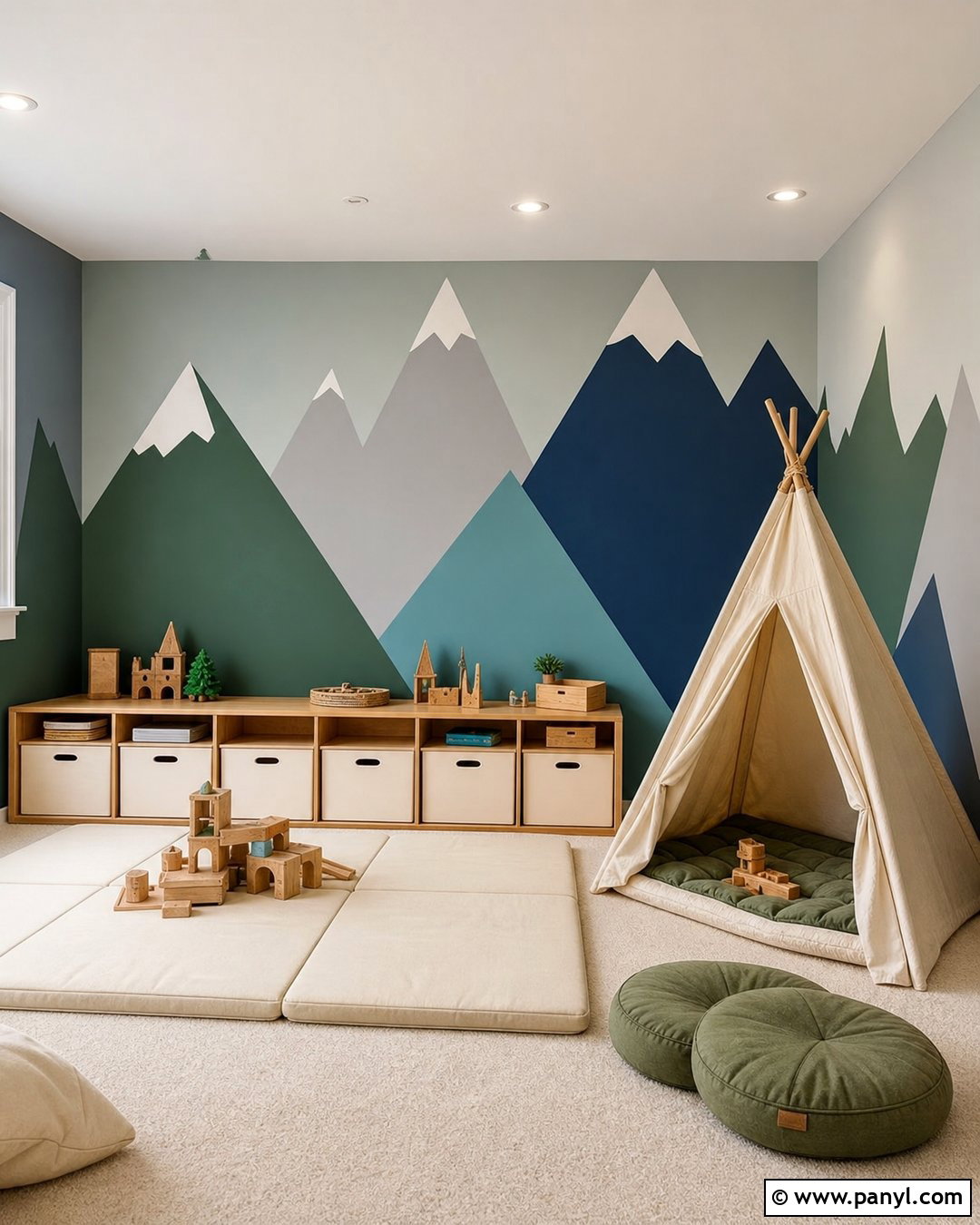
Painted mountain shapes can establish an adventurous playroom without requiring detailed scenery. Create overlapping peaks across the main wall using muted forest green, dusty teal, pale gray, and deep blue. Keep the shapes broad and simple, with no intricate outlines. Place a low wood climbing structure or padded play mat in front of the mural, leaving plenty of open floor space around it. Natural pine storage cabinets, canvas bins, and a thick cream rug soften the cooler palette. Add a reading tent in oatmeal fabric and several green floor cushions in one corner. A few wooden animal figures and simple landscape prints complete the theme. This full-room design feels imaginative, calm, and suitable for a wide range of ages.
8. Diagonal Color Block Wall
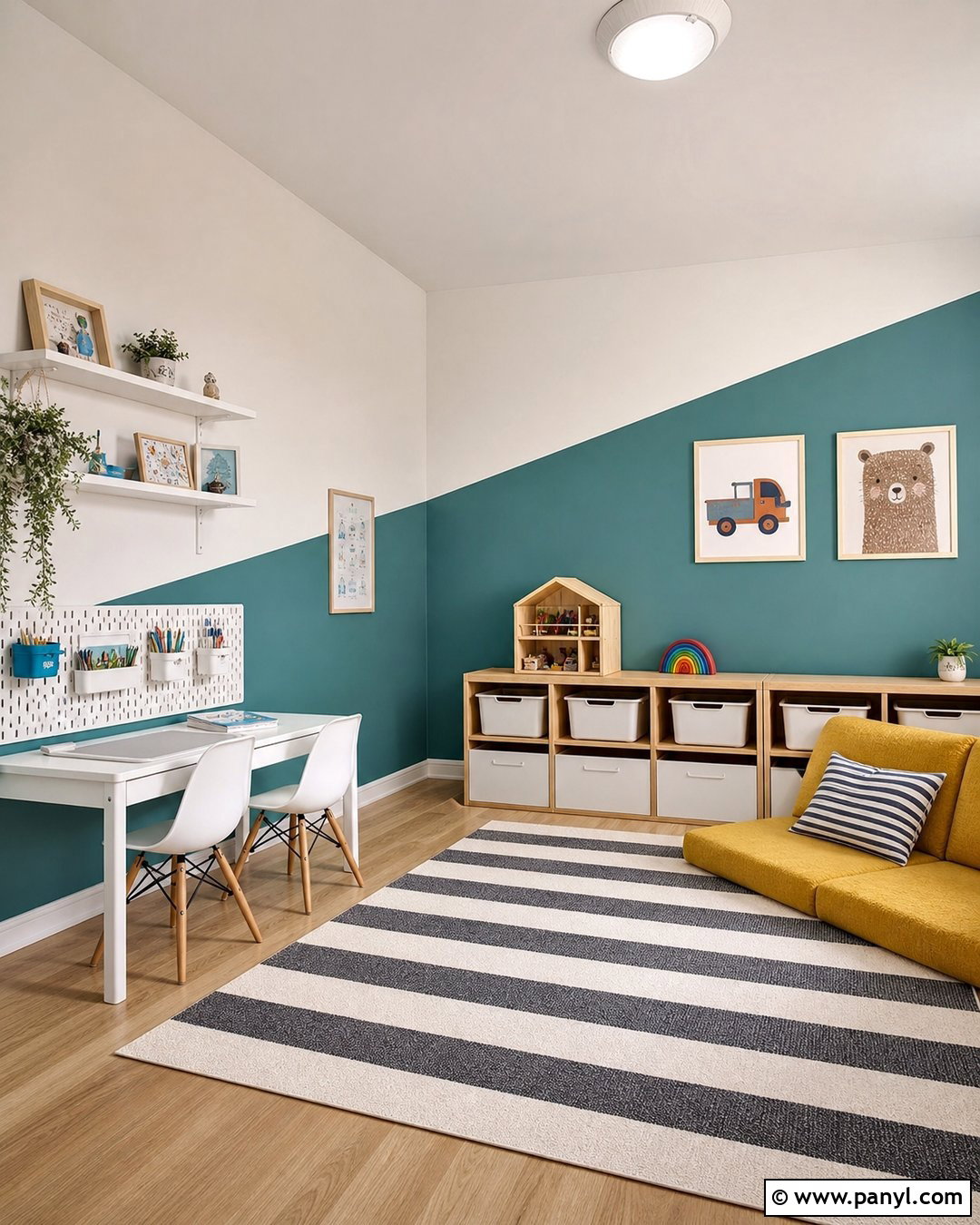
A bold diagonal line can make a narrow playroom appear more dynamic. Paint the lower section muted teal and keep the upper section warm white, running the division upward from one corner of the wall to the other. Extend the teal across the adjacent corner to create a connected architectural effect. Place a white craft desk where the color rises, making that area feel like a defined creative zone. On the opposite side, use a low oak toy organizer, mustard floor cushions, and a cream reading chair. A simple striped rug brings teal and mustard into the center of the room. Add white floating shelves against the colored section so books and supplies remain visible, organized, and easy for children to reach.
9. Terrazzo Color Block Wall
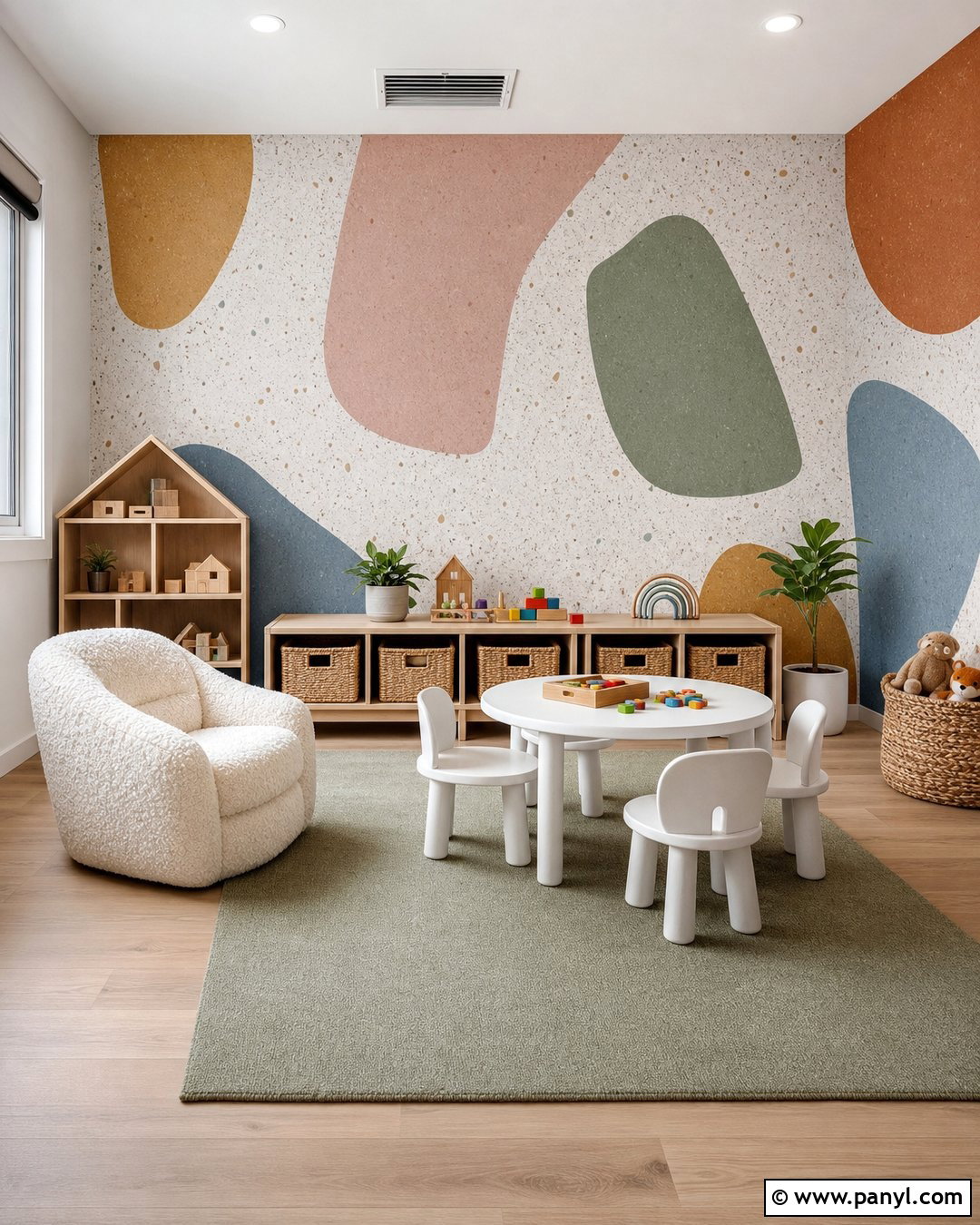
An oversized terrazzo-inspired wall brings scattered color into the playroom without looking overly busy. Begin with a warm white base, then paint irregular rounded blocks in dusty pink, ochre, sage green, muted blue, and terracotta. Space the pieces generously and vary their sizes for a relaxed composition. Use only one patterned wall, leaving the surrounding walls neutral. A pale wood storage system, cream boucle chair, and solid sage rug balance the colorful backdrop. Add a white play table with mismatched chairs that repeat three wall colors. Keep smaller decor simple, using woven baskets and a few wooden toys. The finished playroom feels creative and contemporary, with enough color to excite children and enough neutral space to remain comfortable for adults.
10. Checkerboard Color Block Wall
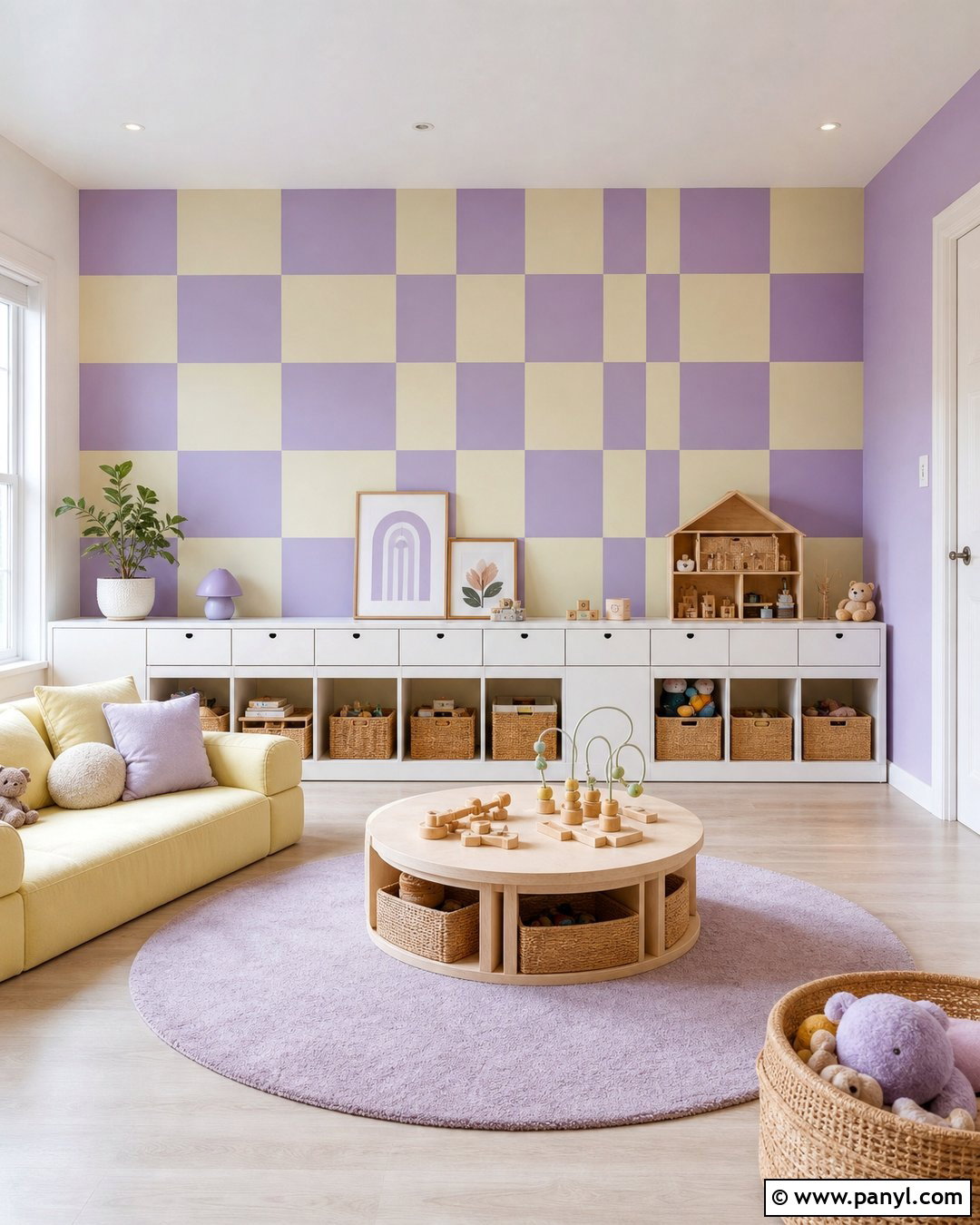
A large-scale checkerboard pattern creates a playful backdrop that can still feel orderly. Paint oversized squares in soft lavender and warm cream across one feature wall. The gentler contrast keeps the pattern from overwhelming the room. Position a long white storage cabinet along the bottom, using lavender bins and natural baskets to connect it with the wall. Add a pale yellow play sofa, round lilac rug, and small birch table in the center. Keep the other walls cream and use uncomplicated window treatments in white cotton. Limit accessories to a few framed children’s drawings and solid-color cushions. By enlarging the checks and reducing the number of colors, the finished space feels fresh, organized, and easier to coordinate than a smaller, busier pattern.
11. Sunset Color Block Wall
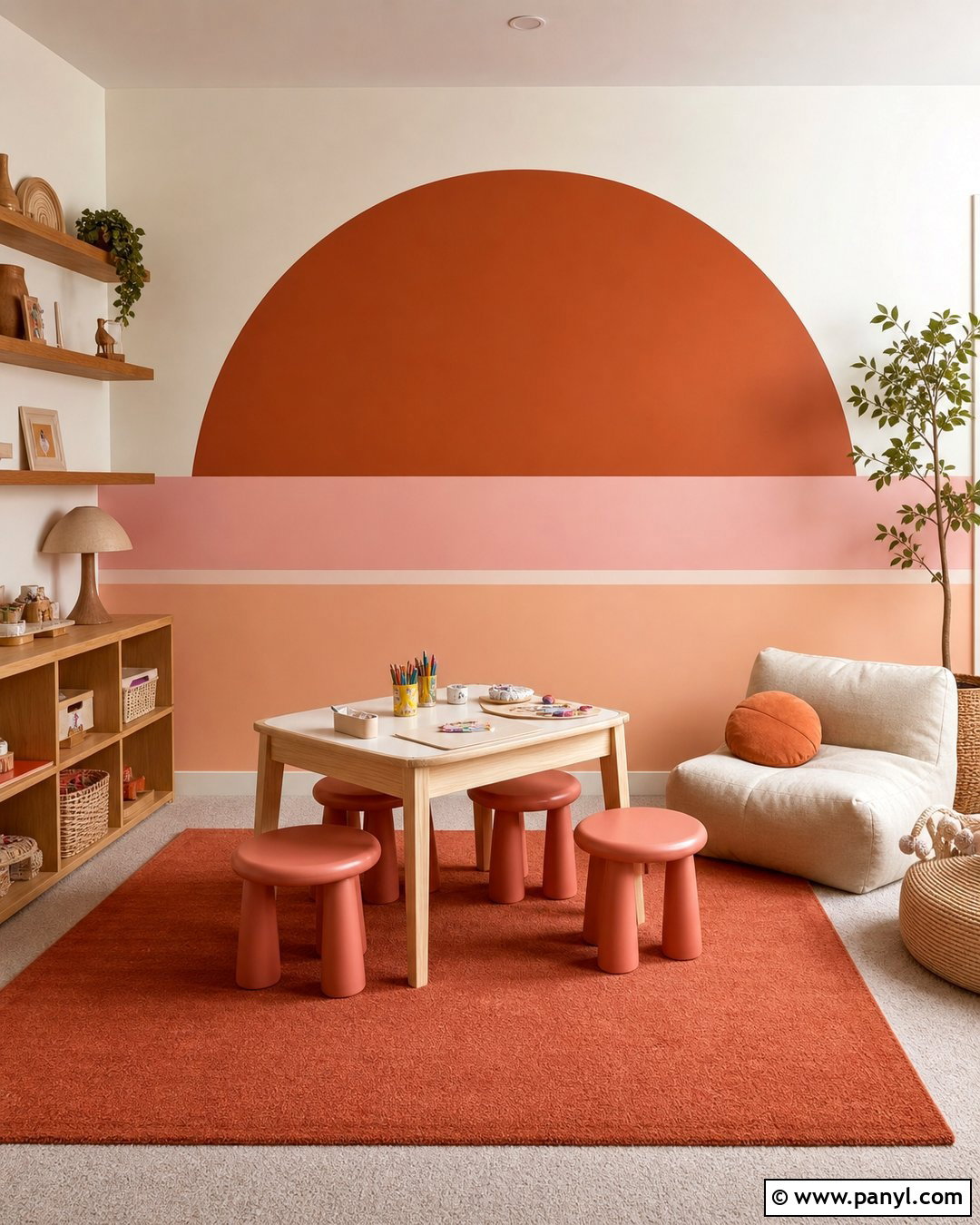
Warm sunset colors can make a basement or north-facing playroom feel much more inviting. Paint a large burnt orange semicircle behind the reading corner, then overlap it with horizontal blocks of blush pink and pale peach. Use creamy off-white on the remaining walls and ceiling. Ground the design with a rust-colored rug, light oak shelves, and an oatmeal upholstered floor chair. A low craft table with peach and coral stools adds function without interrupting the palette. Include closed storage in warm white to control clutter, plus woven baskets for texture. Rather than filling the room with themed accessories, repeat the sunset shades through simple cushions and storage labels. The coordinated room feels sunny, comfortable, and suitable for both quiet activities and lively play.
12. Blue Wave Color Block Wall
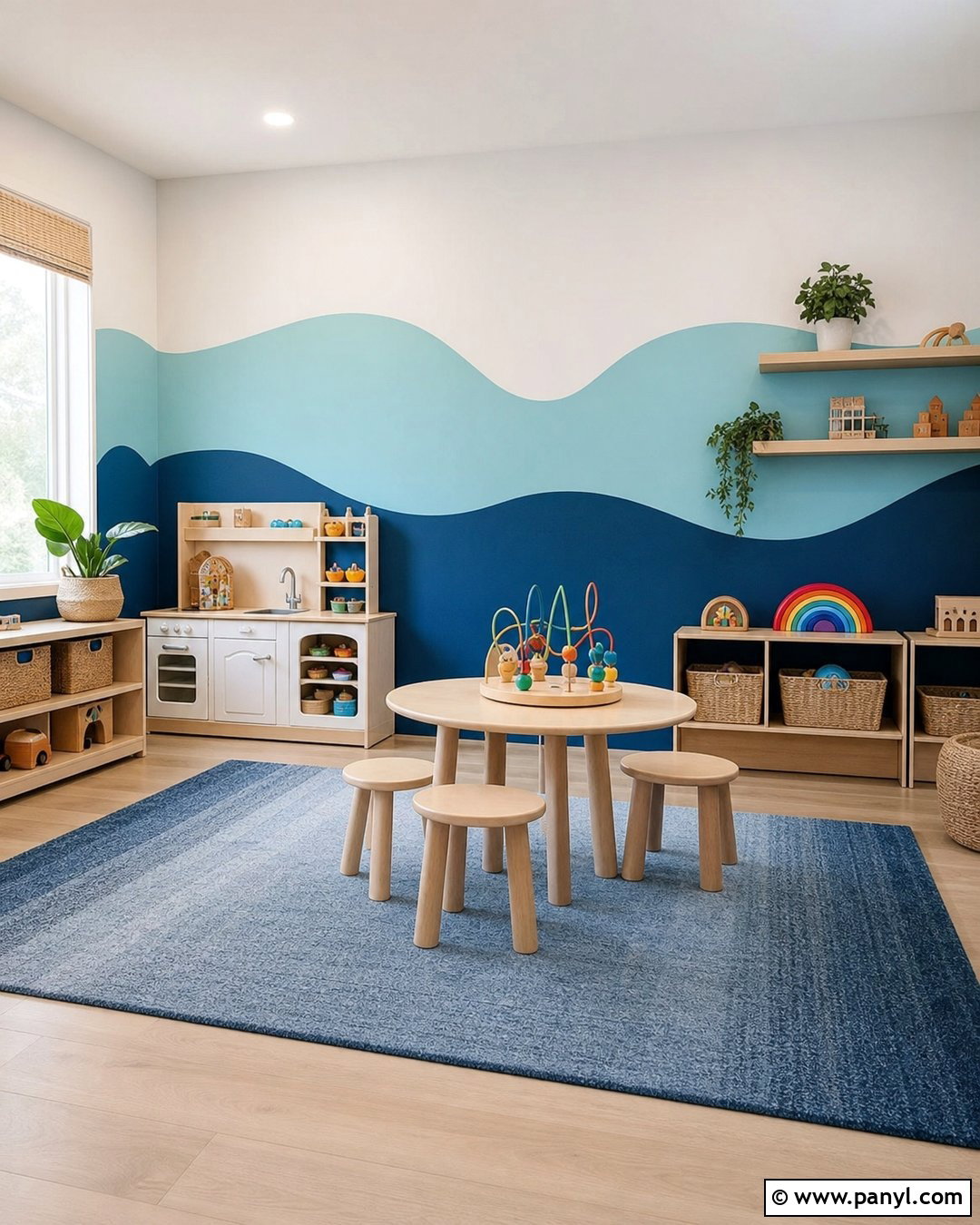
Curved blue blocks can give a playroom a breezy, energetic rhythm. Paint the bottom portion of the feature wall medium aqua, adding a rolling wave line that rises and falls across the room. Layer a smaller deep navy curve behind a pale wood play kitchen or toy workbench. Keep the upper wall soft white and repeat the blue tones through a washable rug, floor pillows, and storage bins. Natural rattan baskets and maple furniture prevent the design from feeling cold. Add a round table in the center and open shelving along the opposite wall. Avoid literal ocean decorations if you want the room to grow with the children. The abstract curves provide enough movement and character while remaining versatile for changing toys, artwork, and furniture.
13. Neutral Color Block Wall
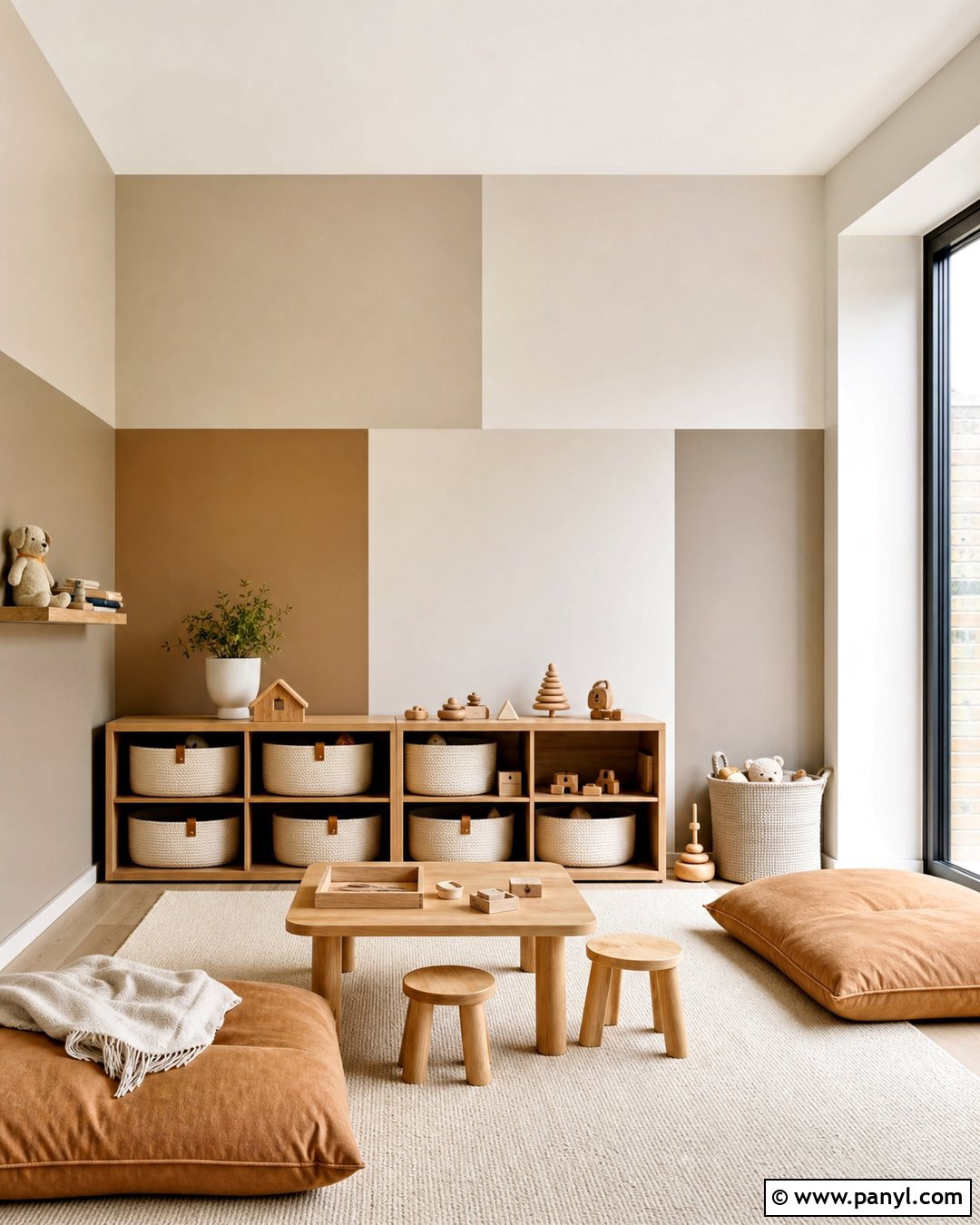
Color blocking does not need bright paint to create impact. Combine warm greige, creamy white, camel, and soft taupe in oversized rectangular sections across one wall. Place a natural oak storage unit against the darkest block to make the furniture feel built into the composition. Use a thick ivory rug, tan floor cushions, and a small wood table to develop a calm, tactile play area. Add interest through ribbed baskets, cotton curtains, and a few black accents on shelf brackets or lighting. Children’s artwork supplies the room’s smaller bursts of color. This neutral playroom works especially well in an open-plan home where the play zone needs to coordinate with nearby adult spaces while still providing a comfortable, clearly defined area for children.
14. Sage And Mustard Color Block Wall
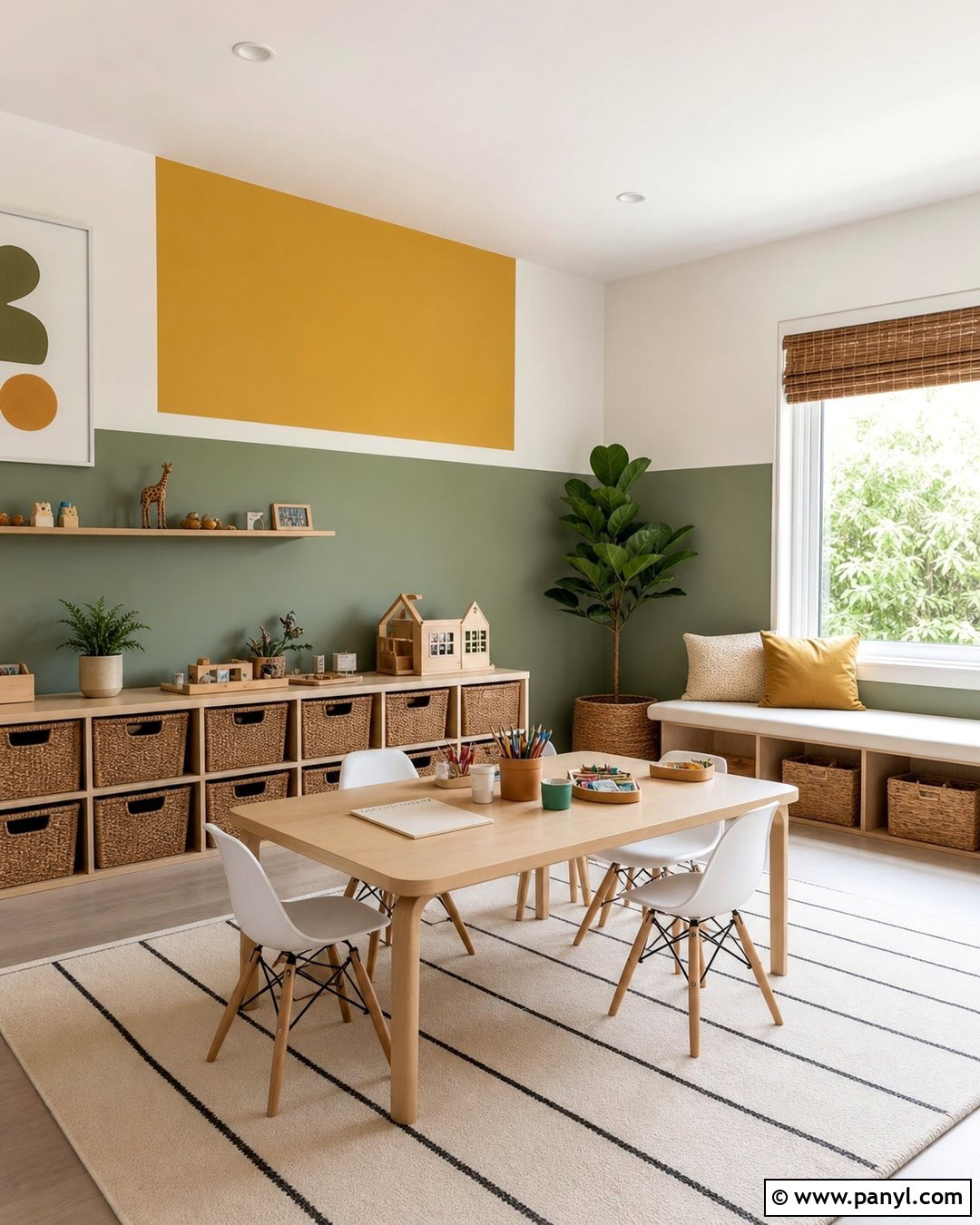
Sage green and mustard yellow create a lively combination that remains grounded and easy to decorate. Paint the bottom half of the playroom sage, then add a wide mustard rectangle behind the craft station. Leave the upper walls warm white for brightness. Furnish the room with a natural birch table, white chairs, and a low sage storage cabinet with woven bins. A cream rug with thin mustard stripes ties the zones together. Add two picture ledges for rotating children’s artwork and a cushioned reading bench beneath the window. Small terracotta accents can warm the palette without introducing another dominant color. This complete scheme combines creative energy with natural tones, making it appropriate for toddlers, older children, and shared family rooms.
15. Color Block Reading Nook
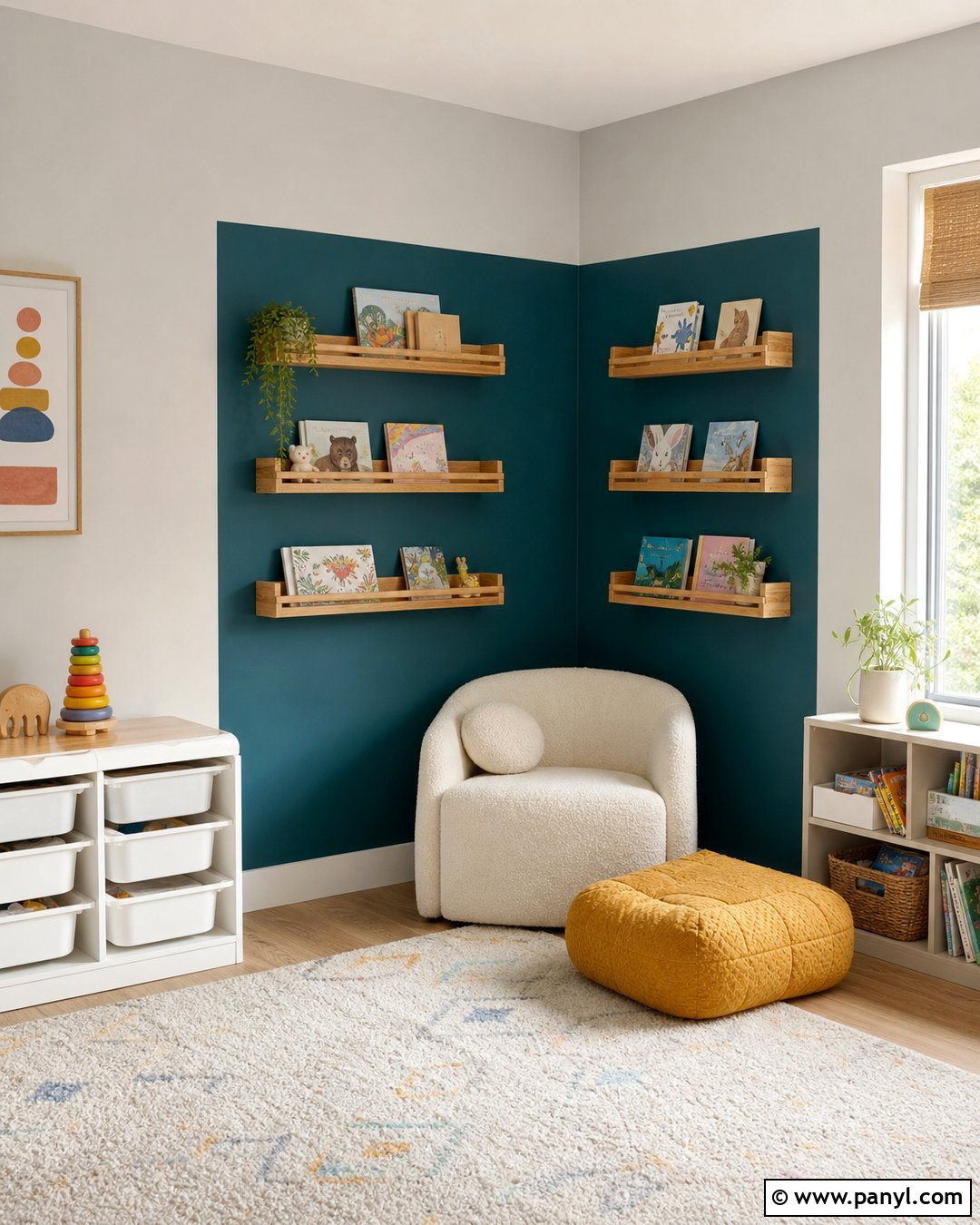
A painted block can transform an unused playroom corner into a clear reading destination. Wrap a deep teal rectangle across both walls of the corner, extending from the floor to slightly above a low book display. Add a soft cream chair, mustard floor cushion, and warm oak picture ledges within the painted zone. Keep the rest of the playroom light greige, with white toy storage and a subtle patterned rug. A small wall-mounted reading light makes the corner useful throughout the day. Position the main activity table outside the teal area so quiet and active zones remain visually separated. The wraparound color gives the nook a cozy feeling without adding walls, curtains, or bulky structures that would reduce usable floor space.
16. Color Block Playroom Storage Wall
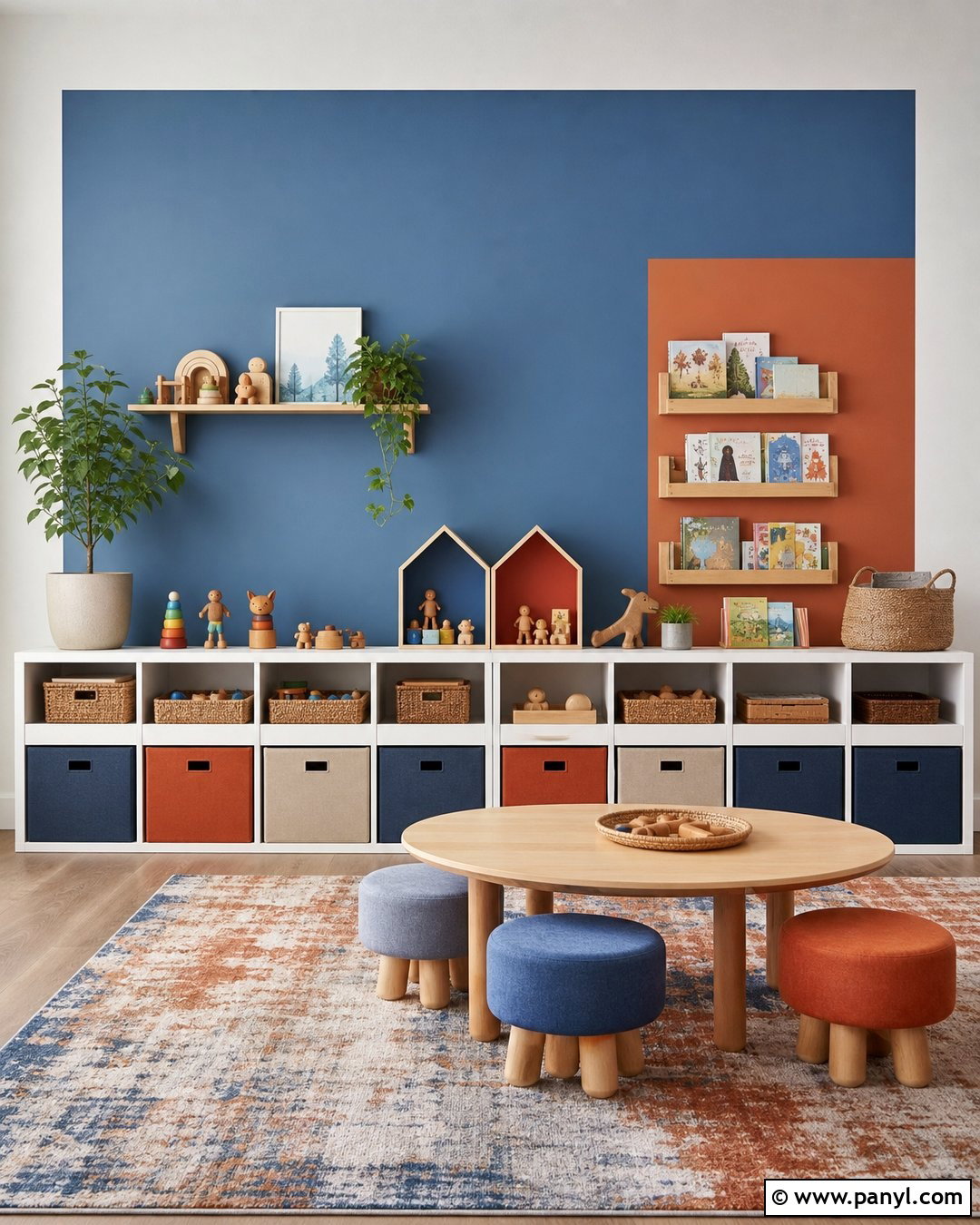
Use bold paint to make an entire storage system look integrated rather than added later. Paint a wide dusty blue block behind low white cabinets, continuing the color from the floor to just above the tallest shelving. Add a smaller clay-colored rectangle behind a nearby book display to separate reading materials from toys. Closed cupboards hold visually distracting items, while open cubbies display coordinated bins and frequently used activities. Place a rust and blue rug in the center, along with a round light wood table. The remaining walls should stay warm white, allowing the storage wall to become the room’s primary feature. Matching a few cabinet knobs and baskets to the painted blocks creates a finished look without requiring custom built-in furniture.
17. Color Block Playroom Corner
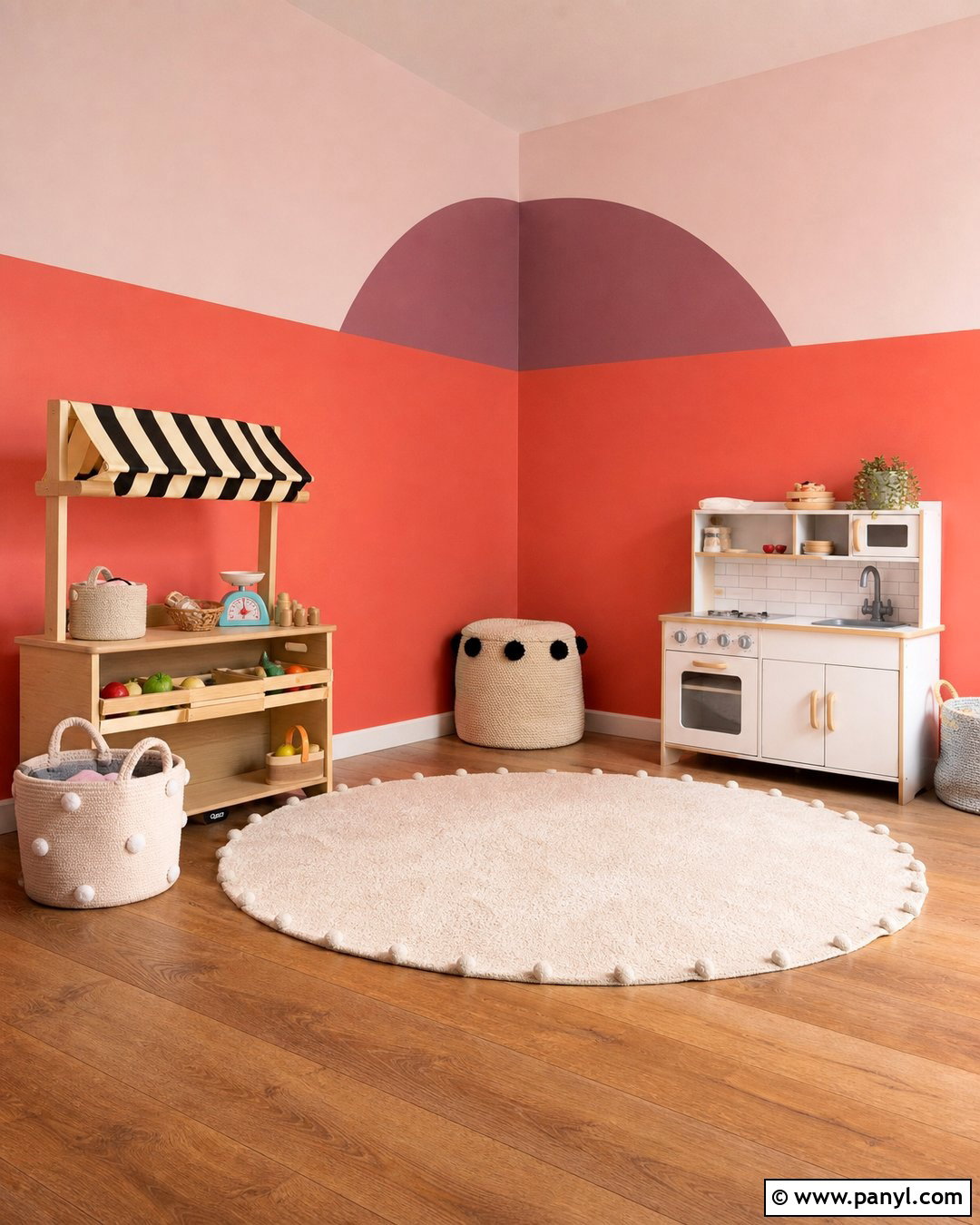
Painting an entire corner can give a small playroom more depth and purpose. Cover two adjoining lower walls in coral, then introduce a soft pink block above one side and a muted plum arch above the other. Arrange a compact white play kitchen directly in the corner so it becomes the focus of the painted composition. Add a round cream rug, pale wood market stand, and a few solid-color storage baskets nearby. Keep the opposite side of the room white with low toy cabinets to prevent visual overload. Light cotton curtains and white trim brighten the warmer colors. This arrangement creates a complete imaginative-play zone while preserving open floor space for blocks, puzzles, and movement activities elsewhere in the room.
18. Color Block Ceiling And Wall
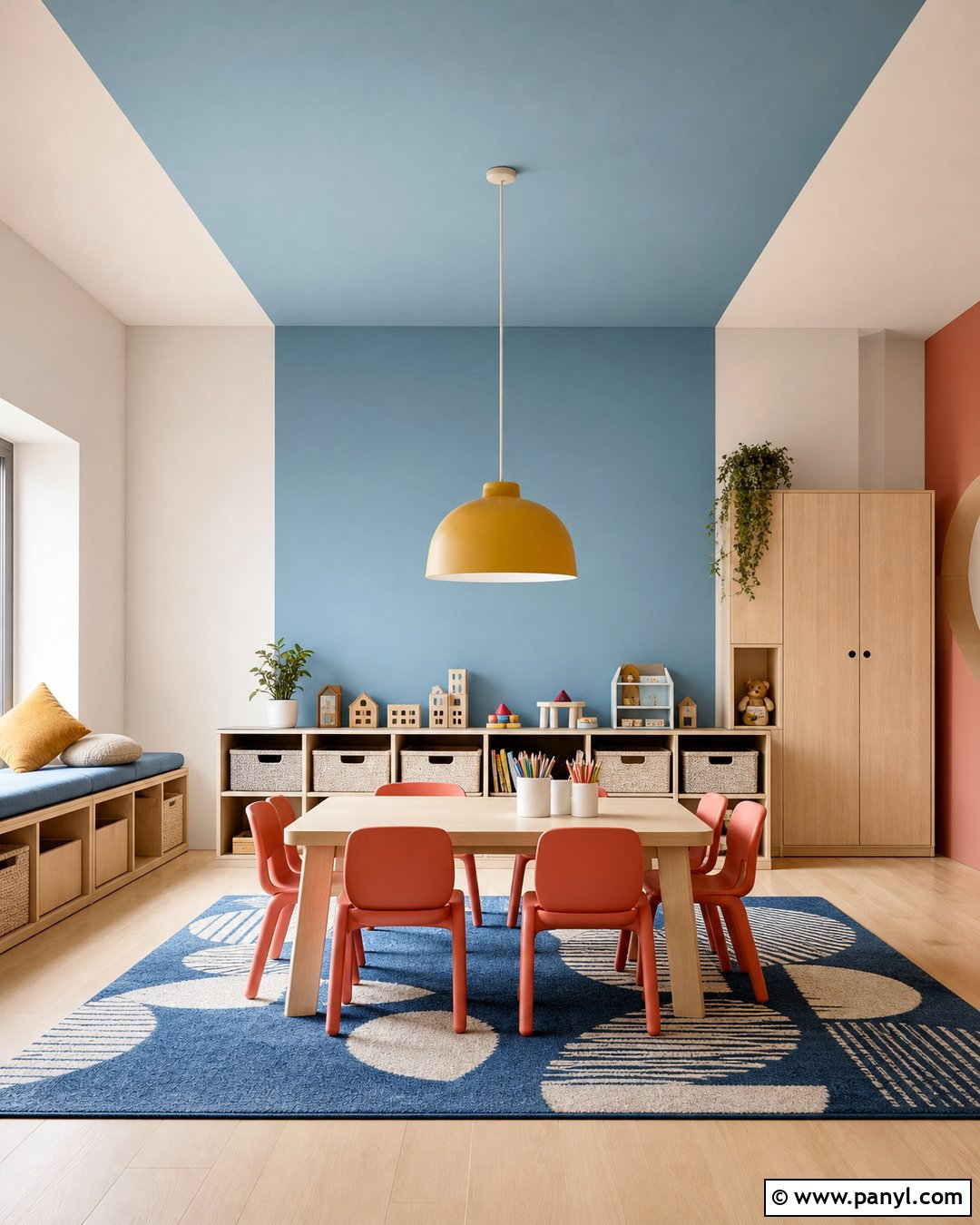
Extending one painted block onto the ceiling produces an immersive play zone with surprisingly simple lines. Begin with a dusty sky blue rectangle on the main wall, then carry the same width across part of the ceiling. Position a craft table directly beneath it so the painted area visually frames the workspace. Use warm white on the remaining surfaces and add pale oak storage along the side wall. A coral chair, mustard pendant, and blue patterned rug introduce measured contrast. Keep the furniture compact and allow open floor space near the center. This treatment works particularly well in a room with a plain ceiling and few architectural details. The overhead color creates dimension without filling every wall with shapes or decorative accessories.
19. Soft Pastel Color Block Wall
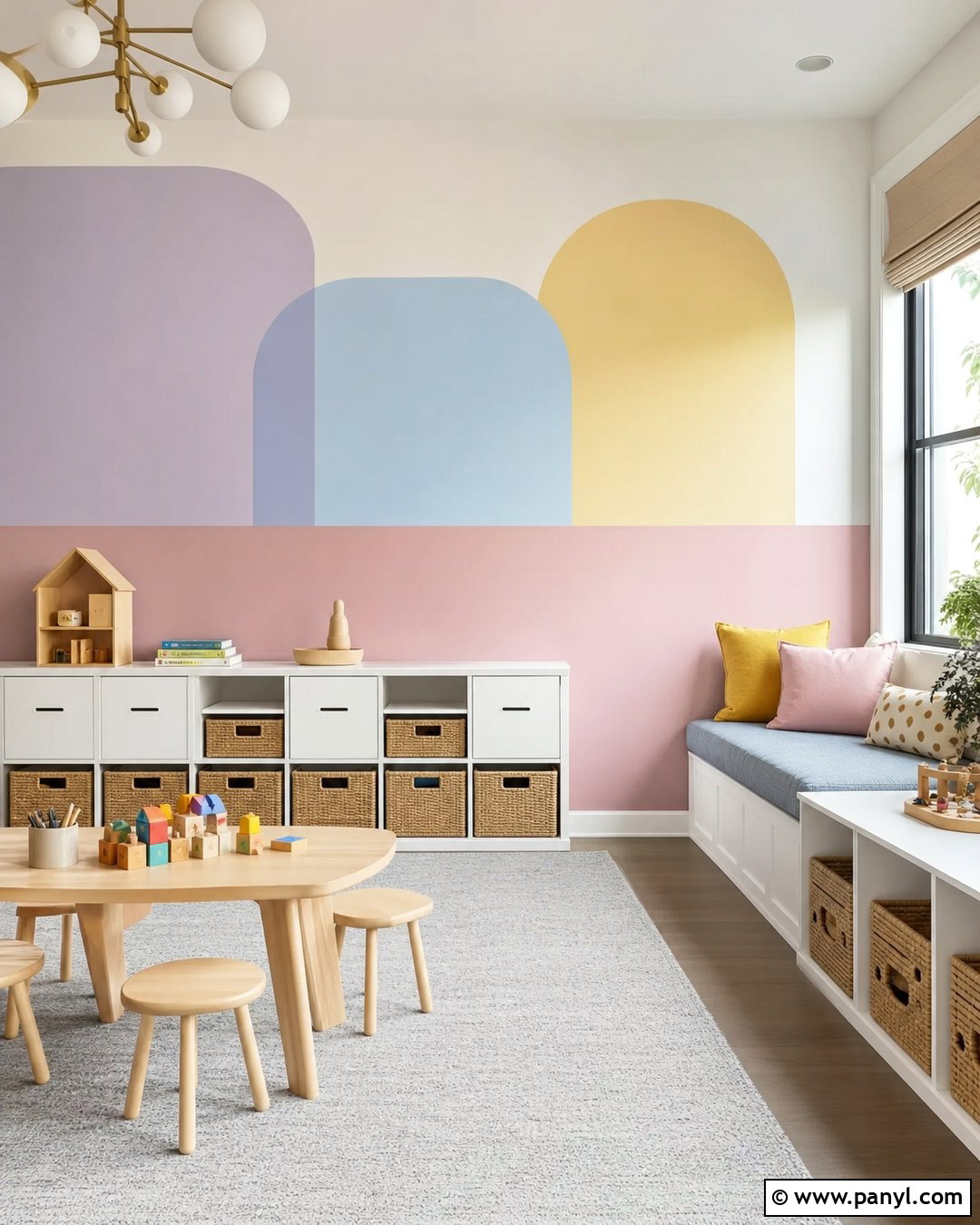
For a gentle playroom, combine broad pastel blocks instead of using tiny patterns. Paint a blush pink lower wall, then add large overlapping sections of pale lavender, powder blue, and buttery yellow behind the main storage area. Round several corners to soften the geometric composition. Choose white cabinets, a light gray rug, and a small maple table so the colors remain clear but not sugary. Storage bins in cream and dusty blue maintain a coordinated appearance. Add a window bench with lavender and yellow cushions for reading or quiet play. Keep lighting bright and window treatments simple. The completed room feels cheerful and calm, making the palette especially useful for a playroom that also serves as a homework, crafting, or relaxation space.
20. Bold Abstract Color Block Wall
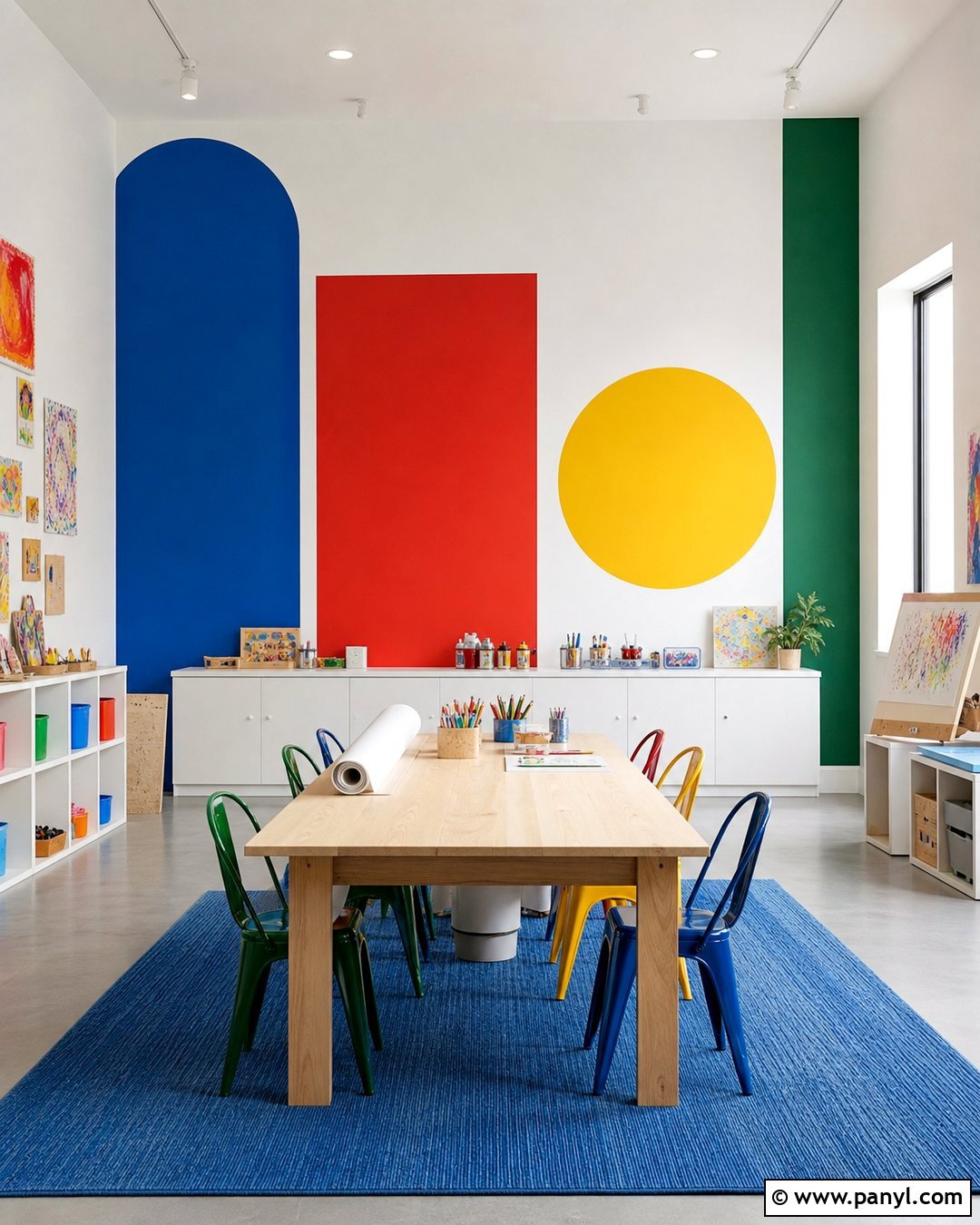
An abstract painted wall can become the centerpiece of an energetic, art-focused playroom. Combine a cobalt blue arch, tomato red rectangle, golden yellow circle, and forest green vertical block on a crisp white background. Overlap only two shapes so the design remains readable. Place a long natural wood art table beneath the composition with colorful metal chairs and organized supply containers. Use white cabinets along the adjacent wall and a solid blue rug under the table. A mobile art display rail can hold finished projects without competing with the paint. For crisp lines, measure the composition carefully, seal painter’s tape firmly, and remove it according to the paint manufacturer’s directions. () The finished space feels confident, creative, and functional.
Conclusion:
The best **20 Color Block Wall Playroom Ideas** combine memorable paint treatments with furniture, storage, lighting, and open space that support everyday play. Choose colors that relate to the surrounding home, then decide which activity deserves the strongest visual focus. An arch can define a reading corner, a wide rectangle can frame storage, and wraparound blocks can separate activities without physical dividers. Softer palettes create a restful shared room, while bold primary or abstract schemes encourage a more energetic atmosphere. Before painting, test the complete palette together and plan every line around windows, shelves, and furniture. With thoughtful placement, even a simple painted shape can make the whole playroom feel intentional, organized, and inviting.

Related Ideas and Inspiration:
Leave a Reply