
Sliding wardrobes cover a large visual area, so their color can shape the entire mood of a bedroom. The best schemes coordinate the doors with wall paint, flooring, bed upholstery, textiles, lighting, and hardware rather than treating storage as an afterthought. Current bedroom palettes favor warm neutrals, natural wood, gray-green, smoky blue, burgundy, and other character-rich colors, while streamlined doors and mixed finishes keep wardrobes looking polished. () Whether your space is small, spacious, modern, traditional, or minimalist, thoughtful color placement can make the wardrobe feel beautifully built in. The complete room schemes below balance appearance with everyday practicality, giving you 20 sliding wardrobe color ideas bedroom ideas to adapt to your home.

1. Warm White And Oak Sliding Wardrobe
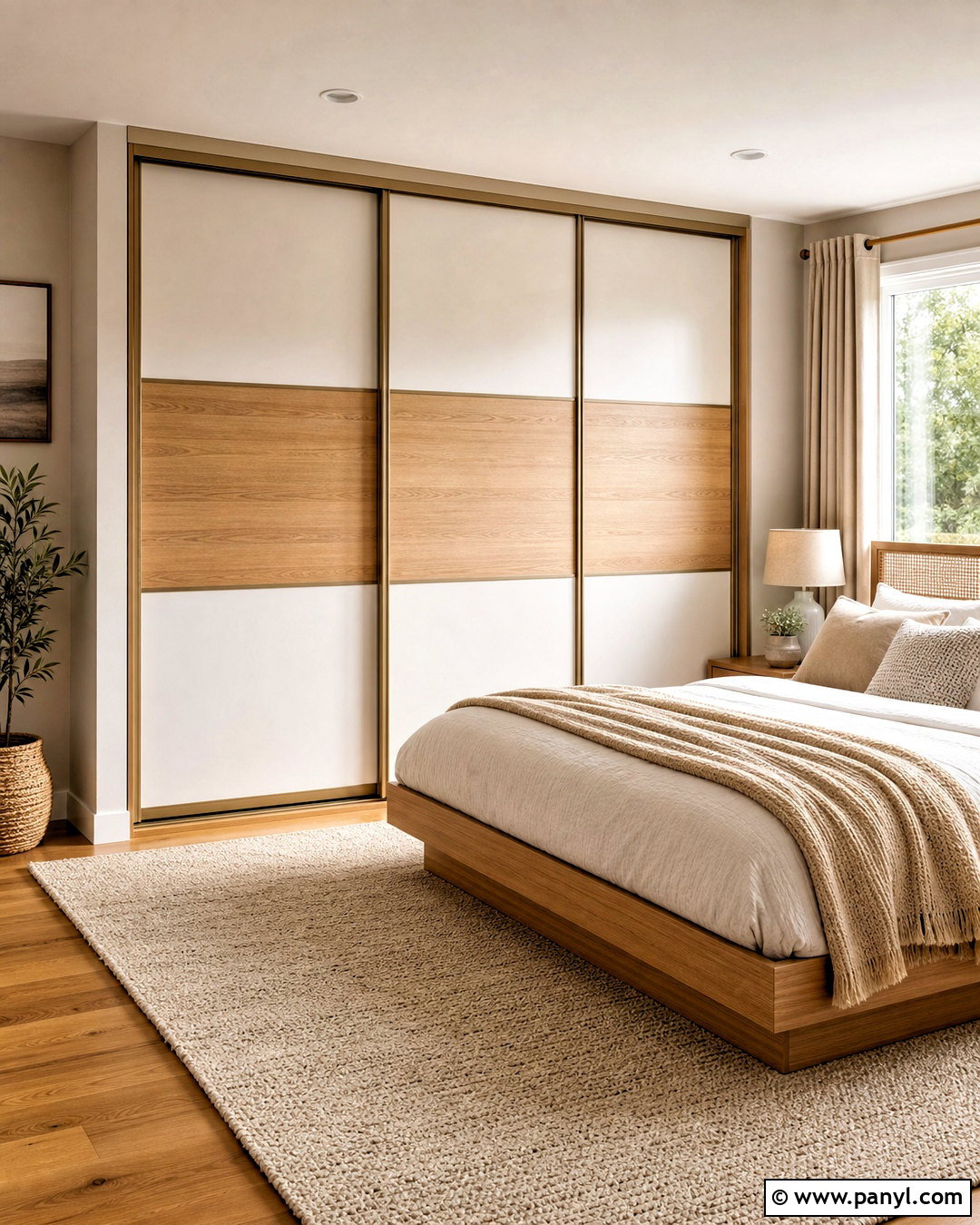
Warm white doors paired with light oak create an airy bedroom that still feels comfortable and natural. Choose matte white for the larger sliding panels and use oak on one central panel, the lower drawers, or narrow vertical bands. Continue the oak tone through a simple platform bed and floating nightstands. Soft oatmeal bedding, beige curtains, and a woven rug prevent the white surfaces from appearing stark. Paint the walls a pale creamy neutral with warm undertones. Slim champagne-colored tracks can add polish without disrupting the relaxed palette. This complete look works especially well in a compact bedroom because the light doors visually recede, while the oak grain provides enough movement and contrast to keep the room interesting.
2. Greige And Walnut Sliding Wardrobe
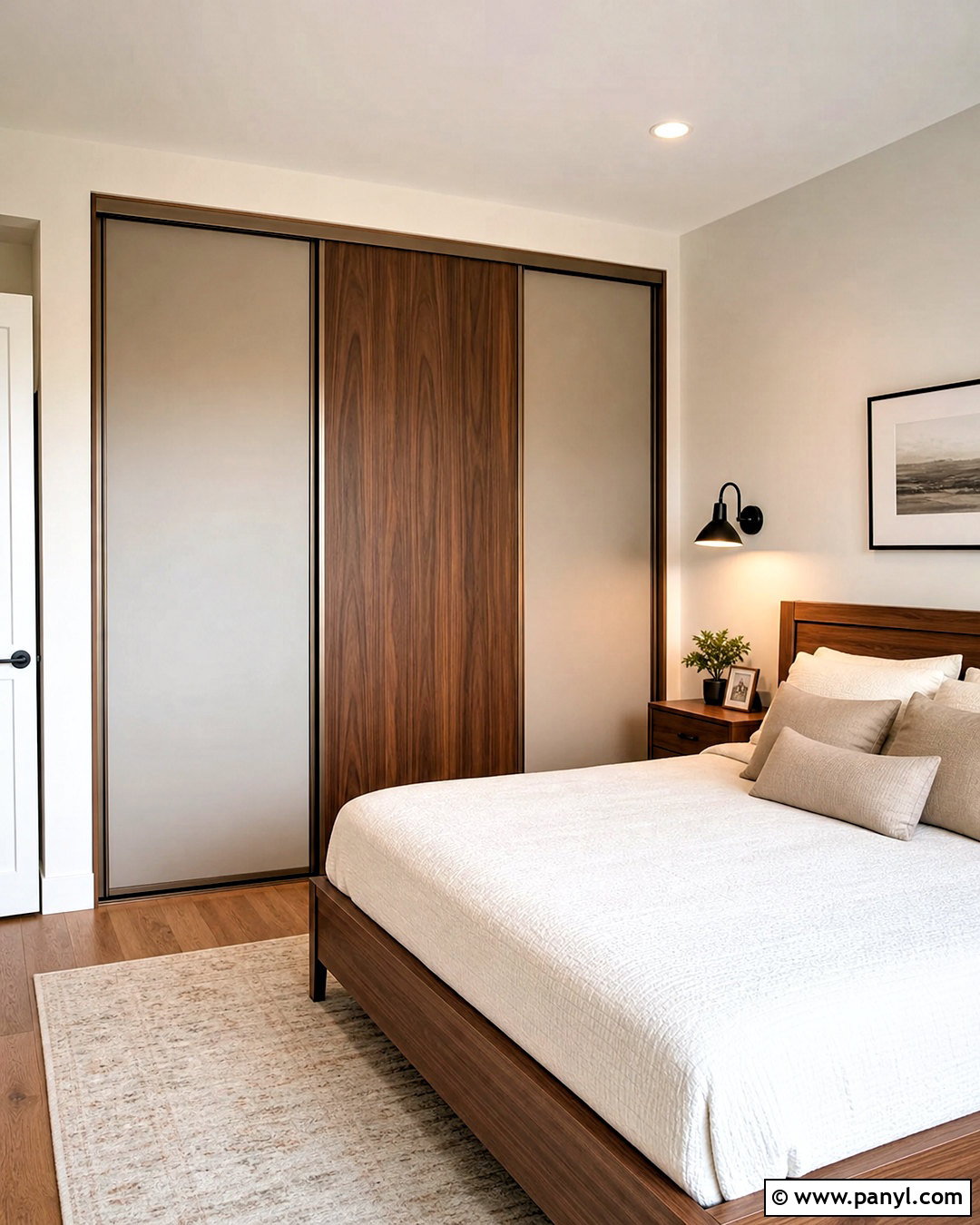
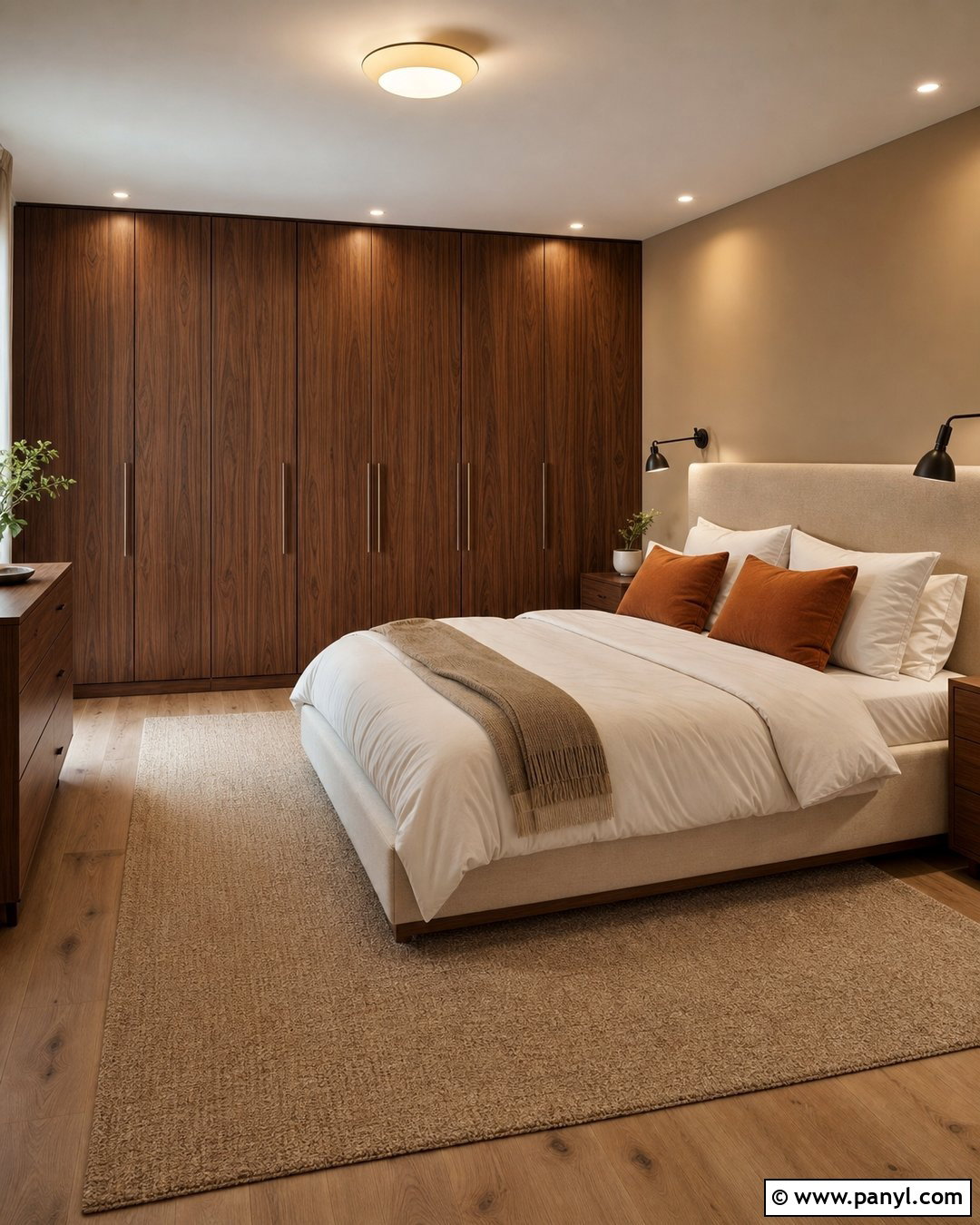
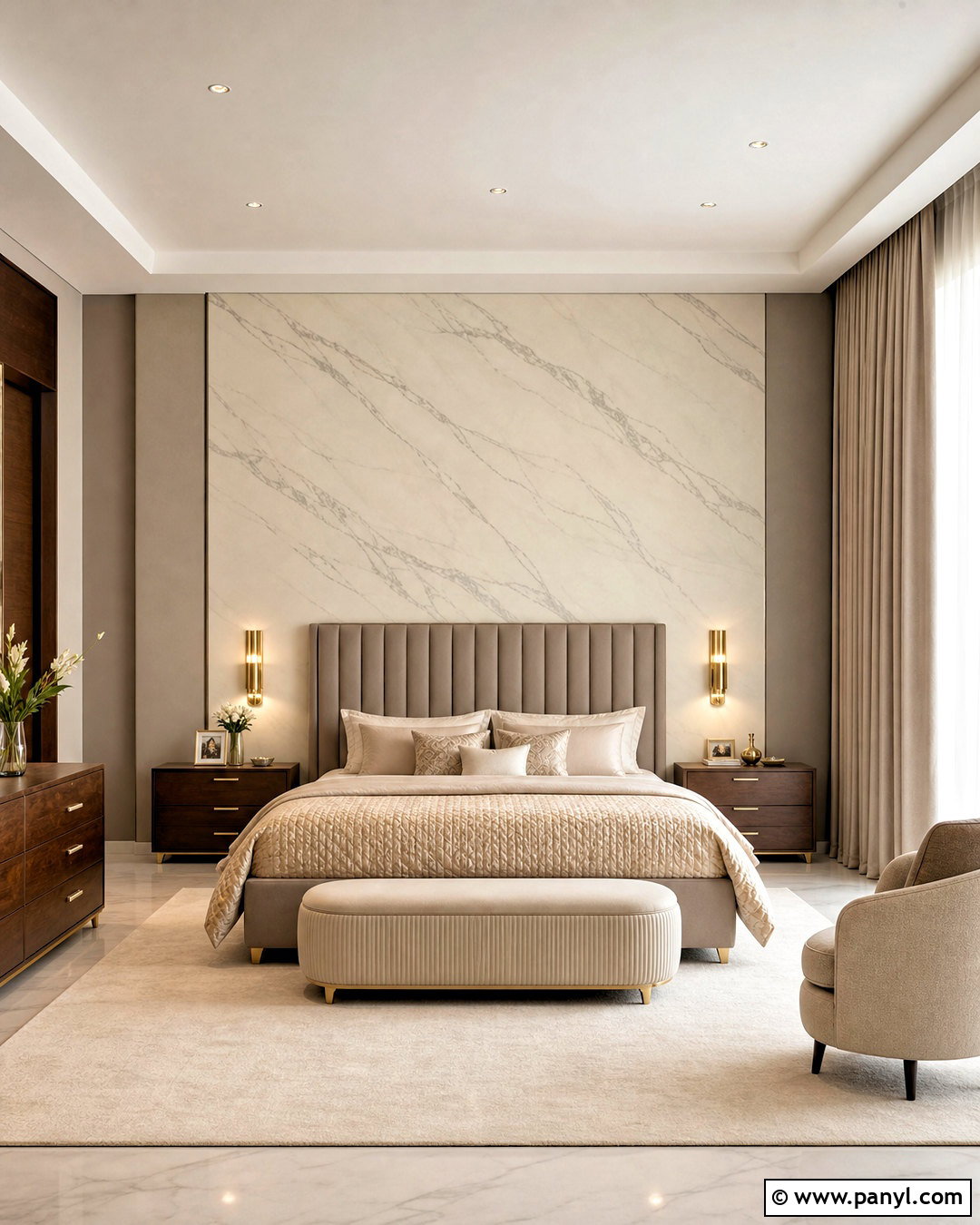
Imagine a calm bedroom built around soft greige wardrobe doors and deep walnut accents. Use greige across two matte sliding panels, then introduce walnut on the middle panel or along a wide horizontal section. A walnut bed frame connects the wardrobe to the rest of the room, while ivory bedding and taupe pillows soften the contrast. Choose warm white walls, medium-toned wood flooring, and a textured cream rug for a balanced foundation. Black reading sconces can sharpen the scheme without making it feel heavy. Keep handles minimal or select recessed tracks in dark bronze. The finished bedroom feels grounded, modern, and quietly luxurious, making this combination suitable for primary bedrooms where comfort and understated character are equally important.
3. Sage Green And Cream Sliding Wardrobe
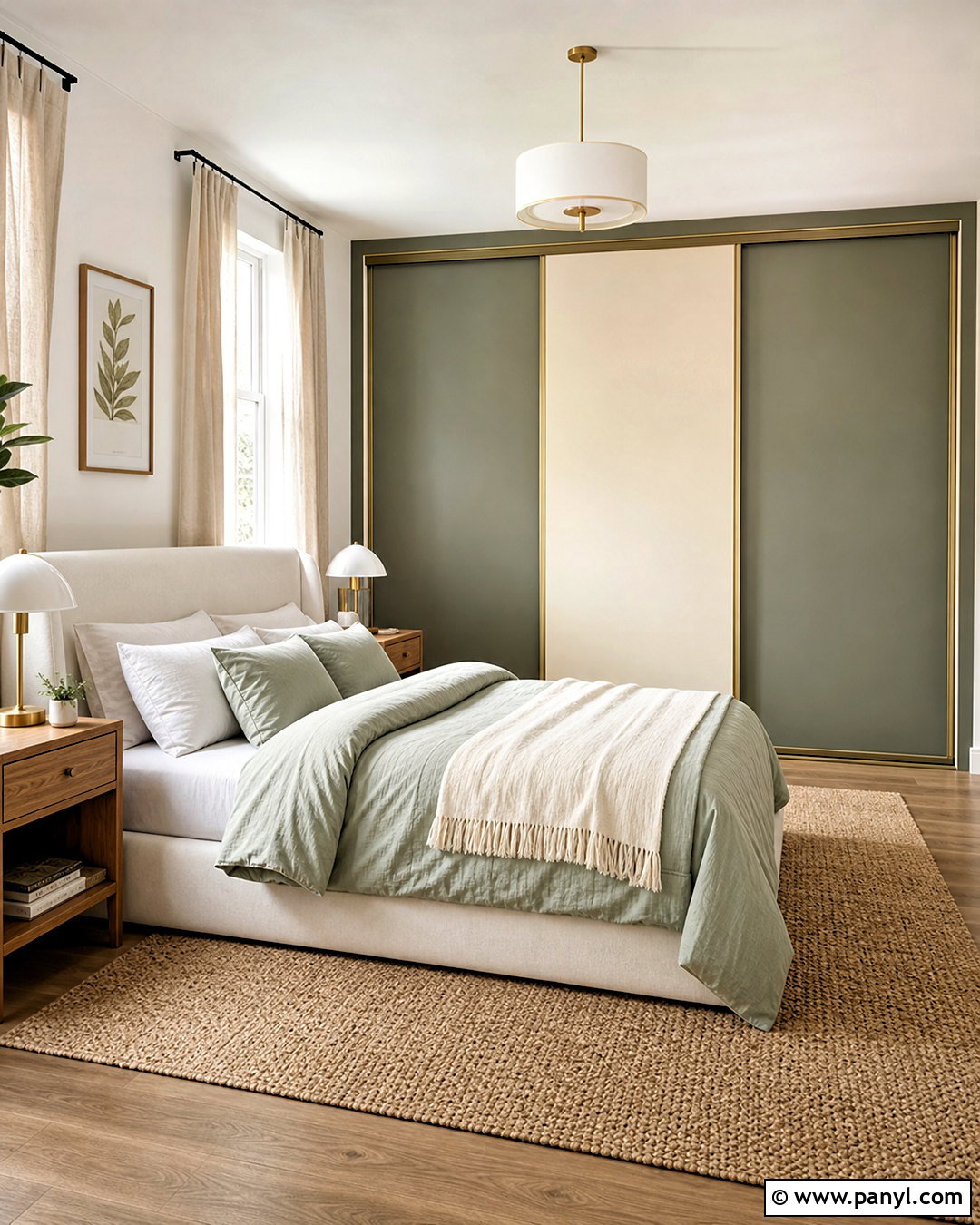
A sage green and cream sliding wardrobe brings gentle color into the bedroom without overwhelming the space. Choose muted gray-green for the main doors and use warm cream on one offset panel to create a clean, asymmetrical design. Pair the wardrobe with an upholstered cream bed, natural oak nightstands, and white bedding layered with sage and tan accents. Walls in a softer version of the wardrobe green create a connected, restful backdrop. Add linen curtains, a jute-blend rug, and ceramic lamps in warm white. Brushed brass tracks or narrow edging provide subtle warmth. Gray-green works particularly well with natural materials and organic textures, helping the entire room feel fresh, restorative, and thoughtfully coordinated rather than overly themed. ()
4. Navy Blue And White Sliding Wardrobe
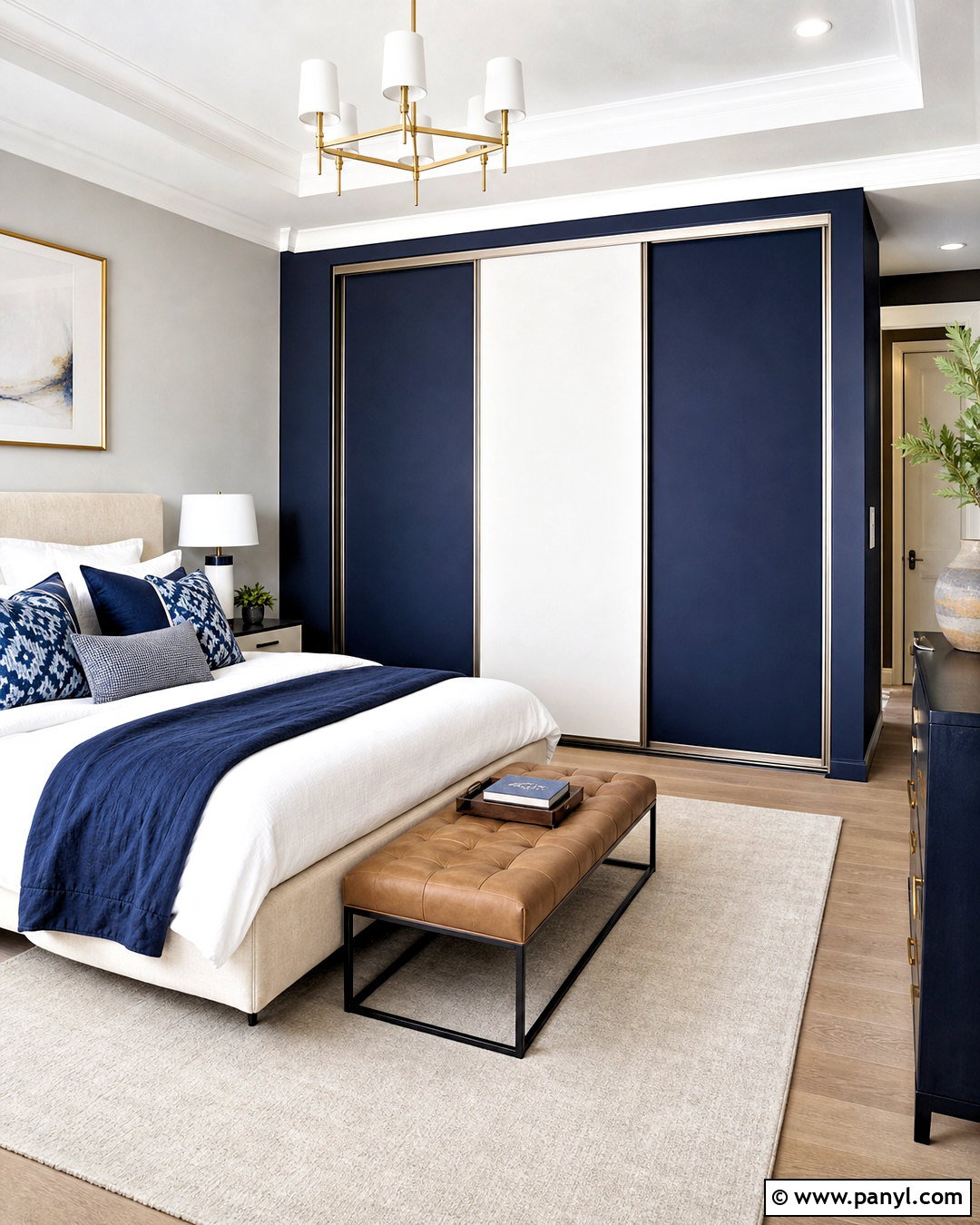
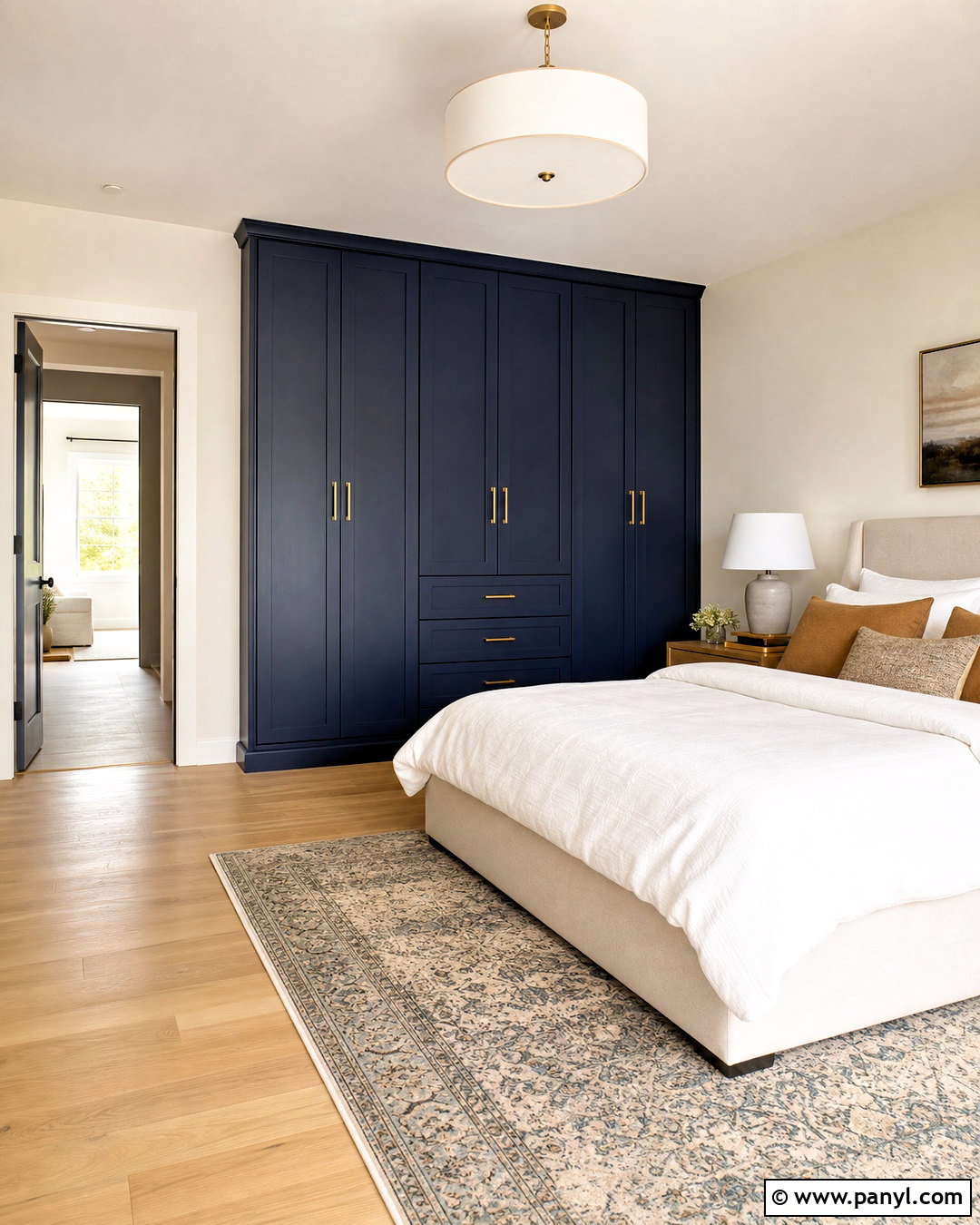
For crisp contrast, combine deep navy sliding doors with bright white framing and one white center panel. Let the wardrobe become the bedroom’s strongest feature while keeping surrounding surfaces light. White walls, pale oak flooring, and an ivory upholstered bed prevent the navy from closing in the room. Repeat the dark blue through a tailored bed throw, patterned pillows, and framed artwork. Add warm tan leather or camel fabric on a bench to loosen the strict blue-and-white palette. Satin nickel tracks offer a cleaner finish than highly reflective chrome. This complete look suits coastal, transitional, and modern bedrooms, yet it avoids obvious nautical decorating. Balanced lighting is important, so include pale curtains and layered bedside lamps to keep the navy looking rich rather than nearly black.
5. Charcoal And Mirror Sliding Wardrobe
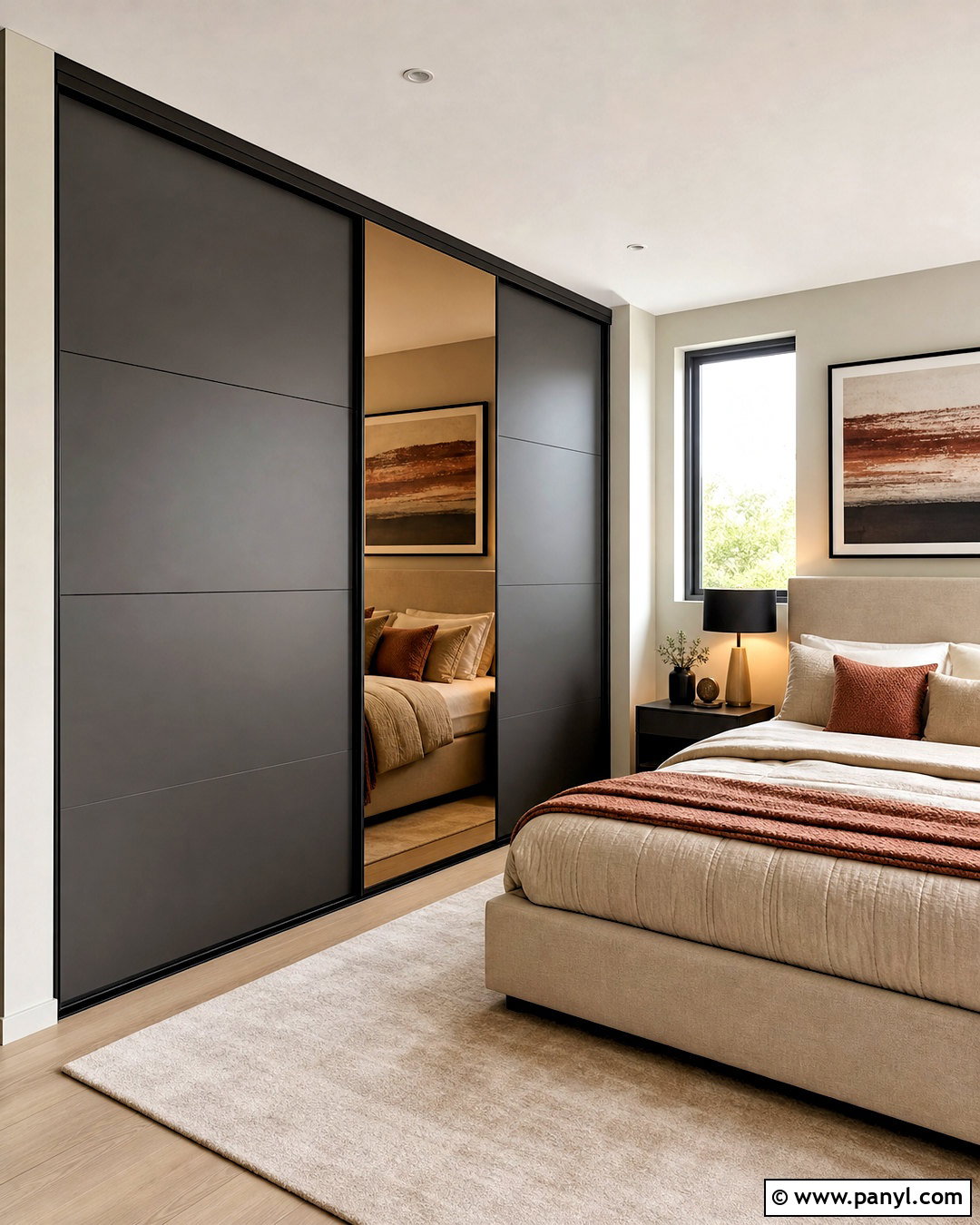
Charcoal doors and a carefully placed mirror panel can give a bedroom a sharp, architectural finish. Cover two sliding panels in matte charcoal laminate and position a full-length bronze-tinted mirror on the third. The slight warmth of the tinted glass feels softer than a highly reflective silver mirror. Balance the dark wardrobe with warm white walls, light wood flooring, and a low beige upholstered bed. Layer the bedding with stone, black, and muted rust accents. Use black bedside tables with pale lamps to distribute the wardrobe color around the room. A large cream rug adds softness underfoot. Choose minimal black tracks so the panels appear streamlined. The result is a practical dressing area and a sophisticated bedroom that feels dramatic without becoming cold or excessively dark.
6. Dusty Blue And Ash Wood Sliding Wardrobe
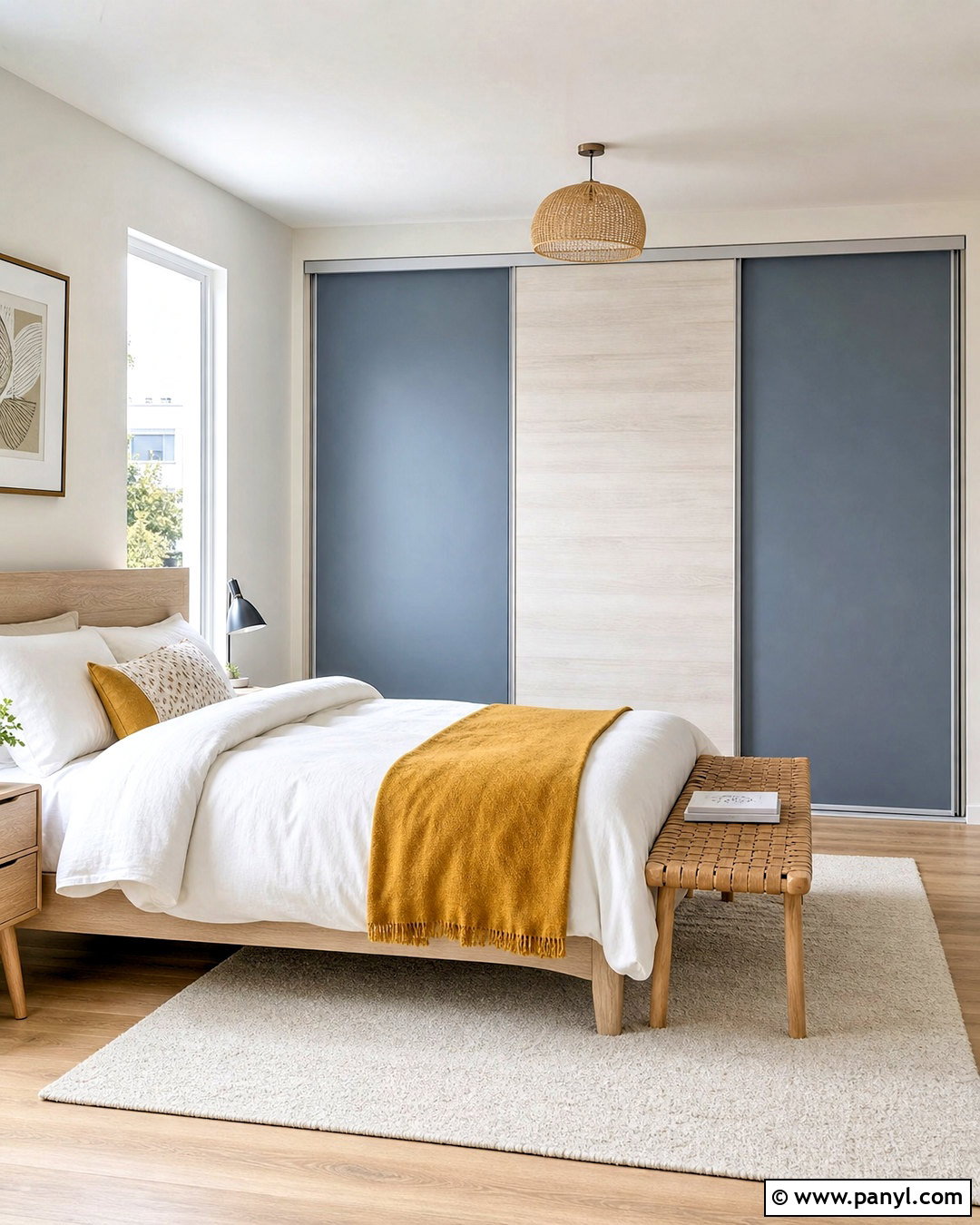
Dusty blue sliding doors look relaxed and contemporary when combined with pale ash wood. Apply the blue to broad matte panels, using ash wood for the center door and slim outer borders. Coordinate the wardrobe with a light ash bed, soft gray flooring, and off-white walls. Dress the bed in white linen, blue-gray layers, and a small amount of muted ochre for warmth. A woven bench and natural fiber rug make the cool color palette feel more inviting. Select brushed silver tracks that blend into the ash grain instead of creating strong contrast. This complete bedroom scheme works in spaces with good daylight, but it can also brighten a north-facing room when the blue has soft gray undertones. Keep decorative accessories simple, sculptural, and lightly colored.
7. Blush Pink And Ivory Sliding Wardrobe
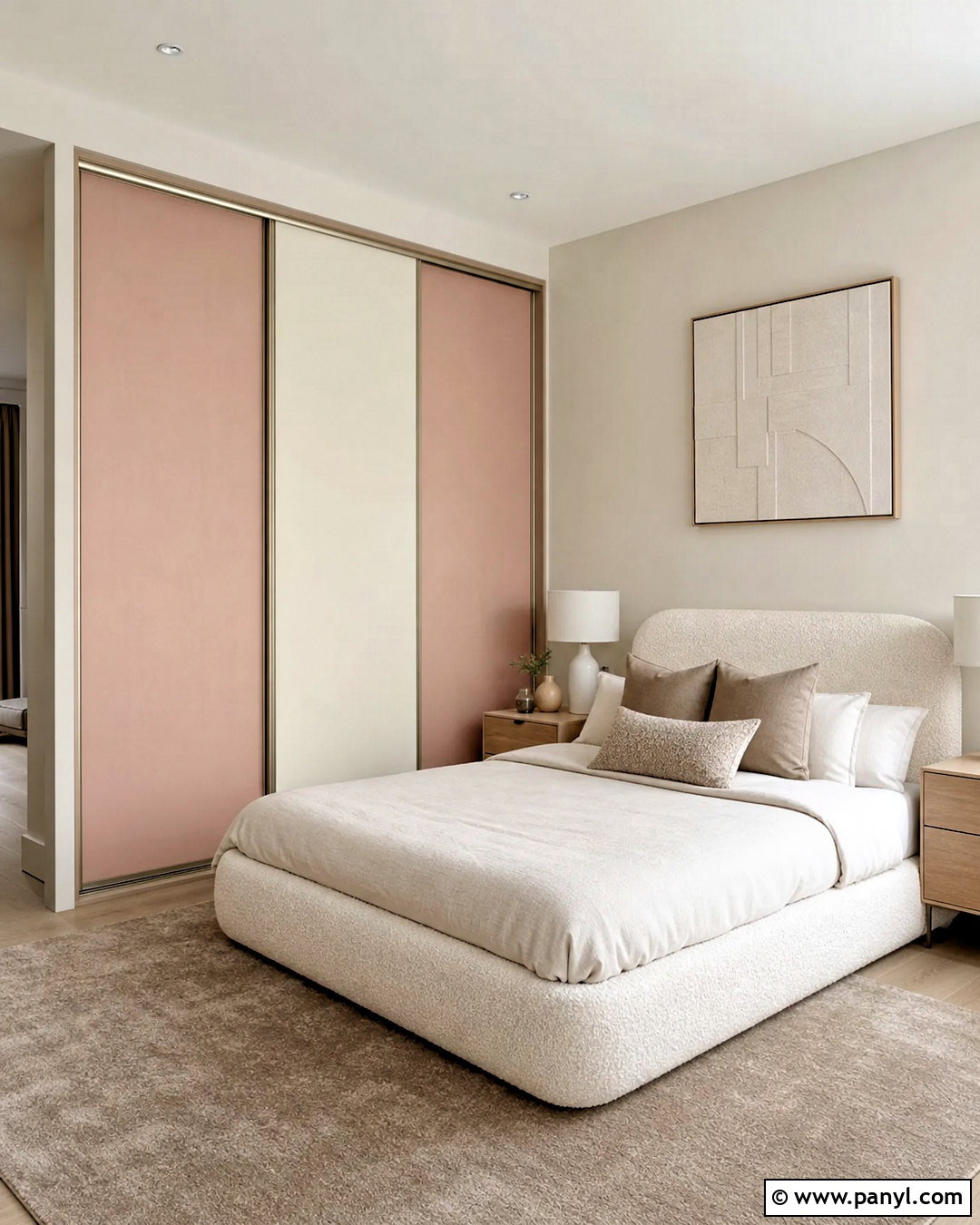
Blush pink can feel sophisticated when it is muted, matte, and balanced with generous areas of ivory. Use dusty blush on the two outer sliding doors and ivory on the central door, framing everything with slim champagne metal. Add an ivory bouclé bed, light oak nightstands, and creamy walls to create a warm foundation. Bedding in white, blush, mushroom, and soft brown gives the room depth without turning it overly sweet. Ground the palette with a taupe rug and dark bronze bedside lights. Minimal line artwork and a few ceramic accessories complete the space. This wardrobe combination suits an adult bedroom, teen bedroom, or guest room. The key is avoiding bright pink and choosing earthy undertones that coordinate naturally with wood, beige, and textured fabrics.
8. Terracotta And Beige Sliding Wardrobe
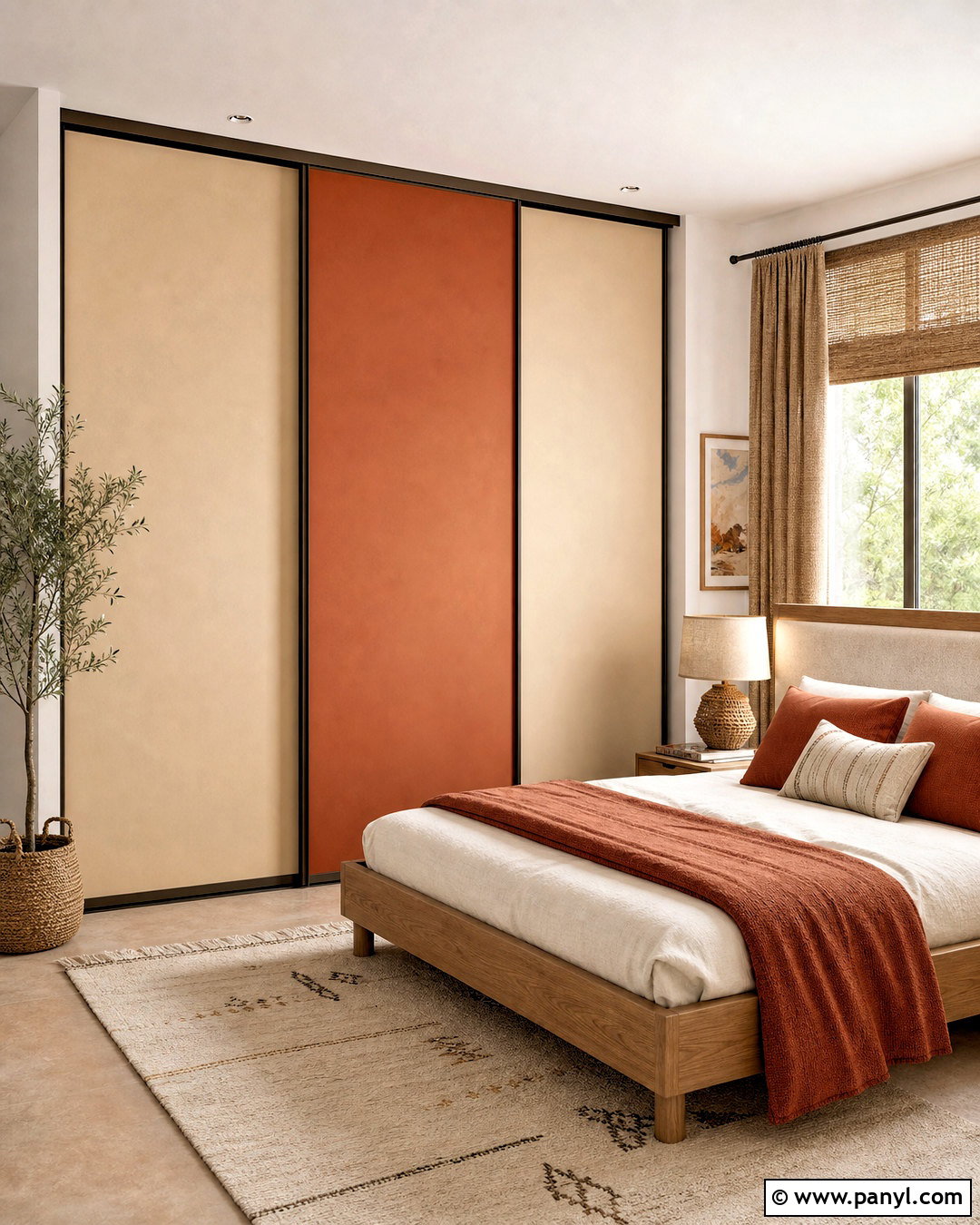
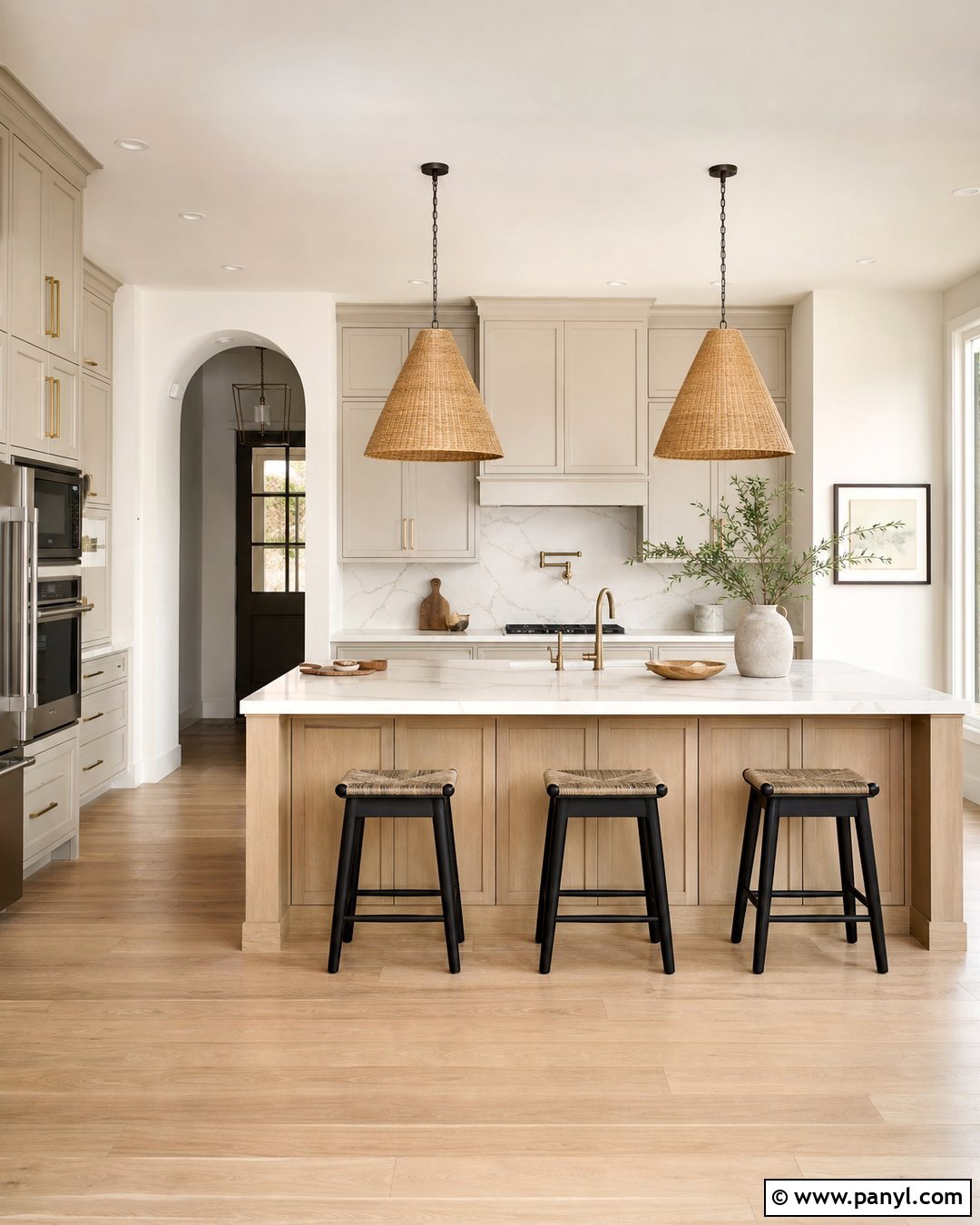
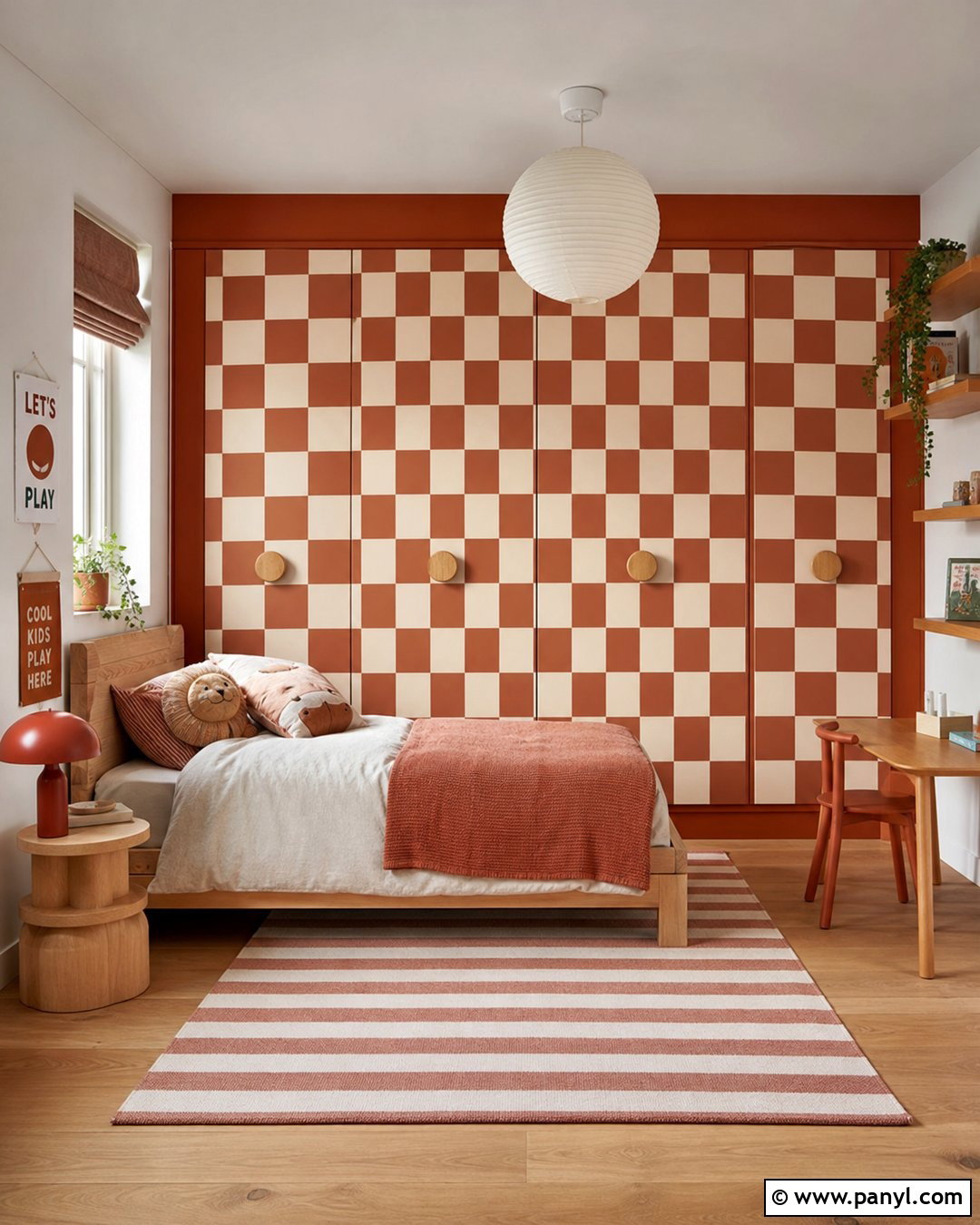
Warm terracotta wardrobe doors can make a plain bedroom feel inviting and distinctive. Use the earthy orange tone on one wide central panel, then surround it with matte sand-beige doors. Repeat terracotta in a lumbar pillow, a small throw, and simple artwork rather than covering every surface with it. A natural oak bed, oatmeal upholstery, and creamy white walls balance the wardrobe’s warmth. Choose woven curtains, a flat-weave rug, and handmade-looking ceramic lamps to support the earthy direction. Dark bronze tracks add definition and coordinate with warm wood grain. This complete scheme is ideal for bedrooms influenced by desert, Mediterranean, or modern organic design. Keep the terracotta slightly muted so it remains comfortable in changing daylight and easy to pair with neutral seasonal bedding.
9. Forest Green And Brass Sliding Wardrobe
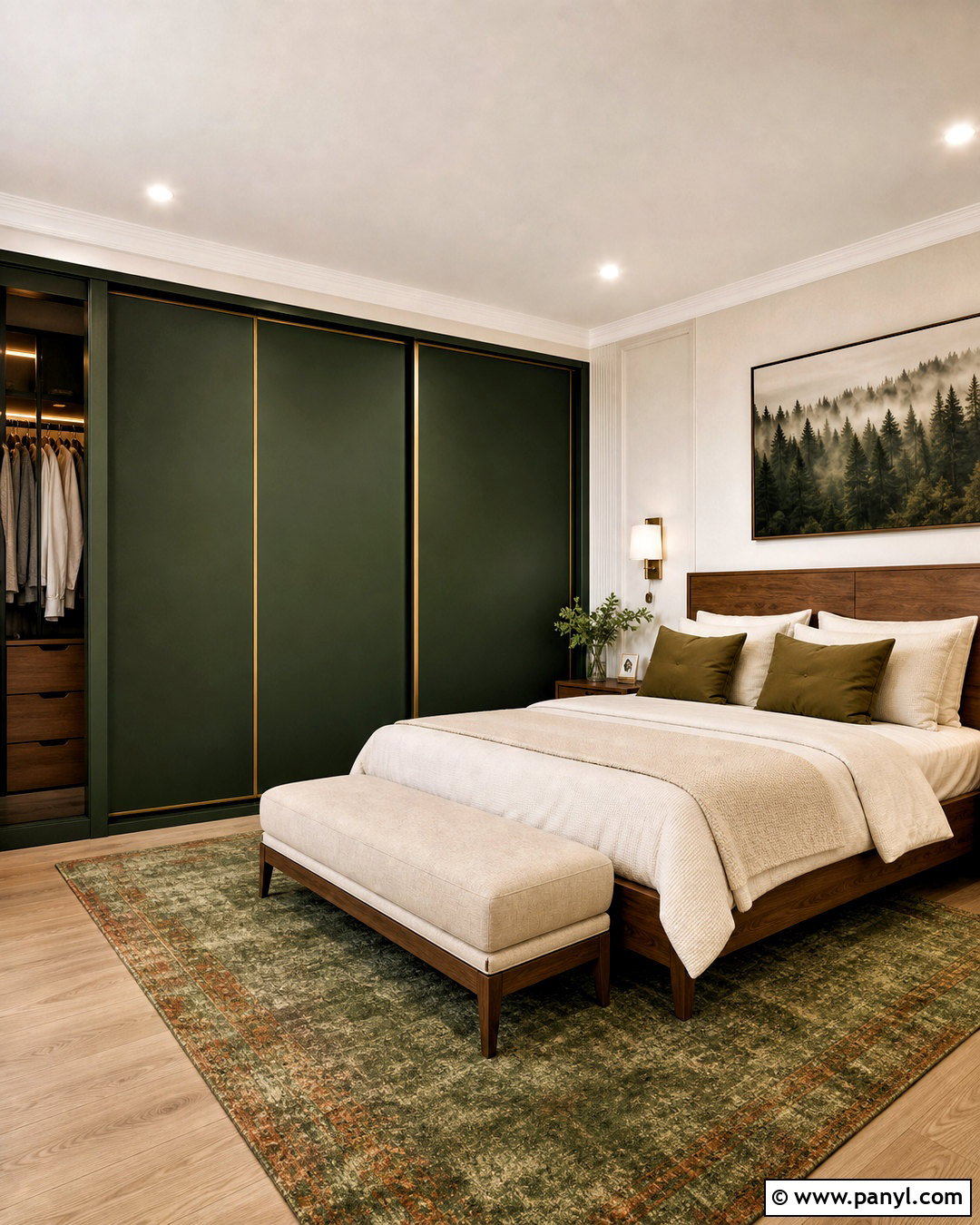
A forest green sliding wardrobe creates an elegant focal wall, especially in a larger primary bedroom. Choose a deep green with warm undertones and a smooth matte finish. Divide the broad doors with slim brushed brass tracks, but avoid excessive decorative trim. Pair the wardrobe with a walnut bed, cream bedding, and warm white walls to prevent the green from feeling too dominant. Add a beige upholstered bench, olive pillows, and a vintage-inspired rug containing muted green and rust. Brass bedside sconces connect naturally with the wardrobe framework. Medium oak flooring keeps the overall look warm and approachable. This full bedroom design feels rich and grown-up, while restrained accessories allow the saturated wardrobe color to remain the clear visual anchor without making the space look crowded.
10. Black And Natural Oak Sliding Wardrobe
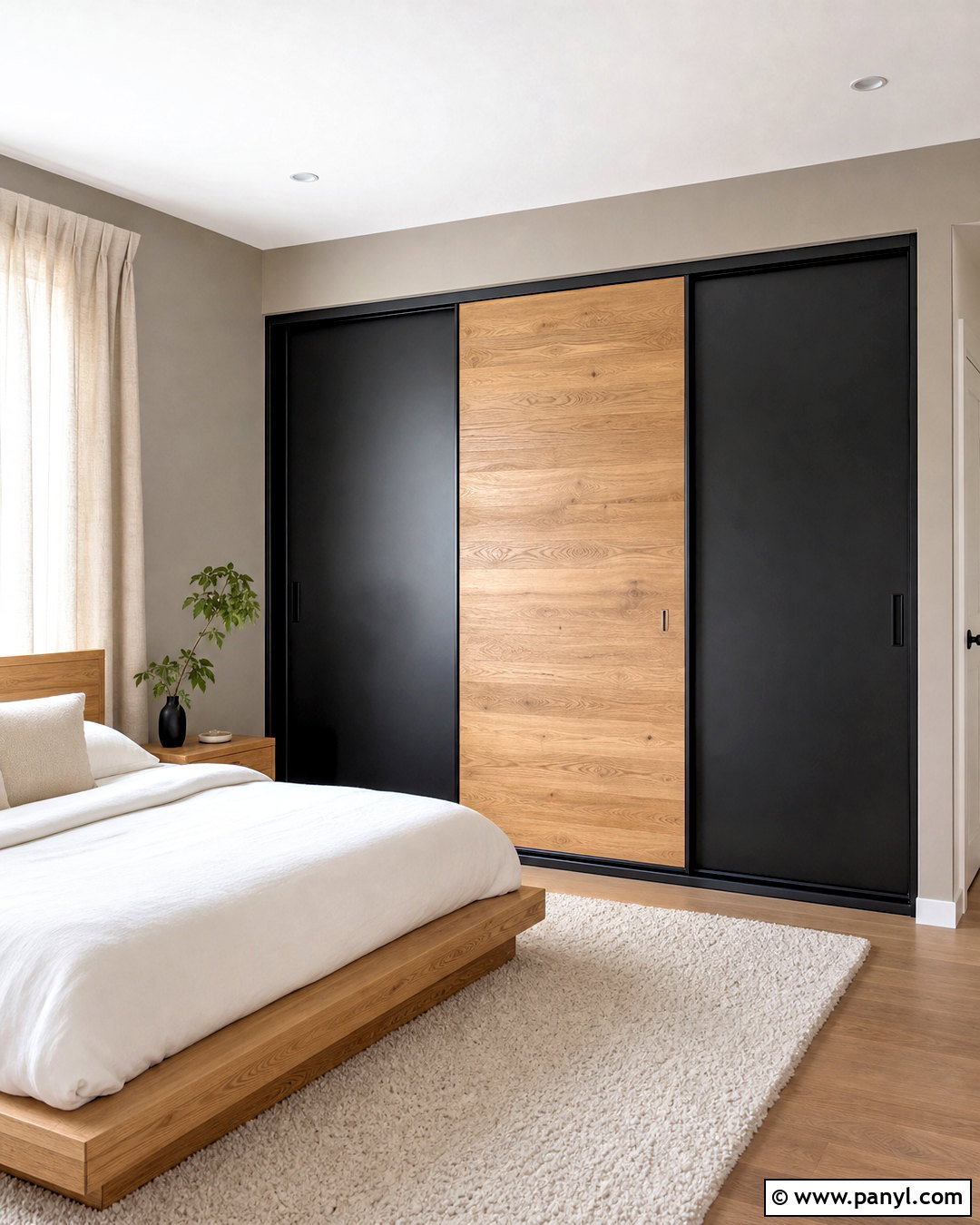
Black and natural oak produce a bold wardrobe that still feels welcoming. Use matte black on the outer sliding doors and warm oak veneer on the center panel. Keep the track system black so the darker sections appear continuous and clean. A matching oak platform bed, white bedding, and pale greige walls create balance across the bedroom. Introduce black again through small sconces, thin picture frames, and one bench base rather than adding several large black furnishings. Soft linen curtains and a thick ivory rug reduce the visual hardness of the wardrobe. This color scheme works best with simple door profiles and limited ornamentation. The finished bedroom feels modern and grounded, with the oak providing natural texture while the black gives the storage wall a strong, tailored outline.
11. Taupe And Bronze Sliding Wardrobe
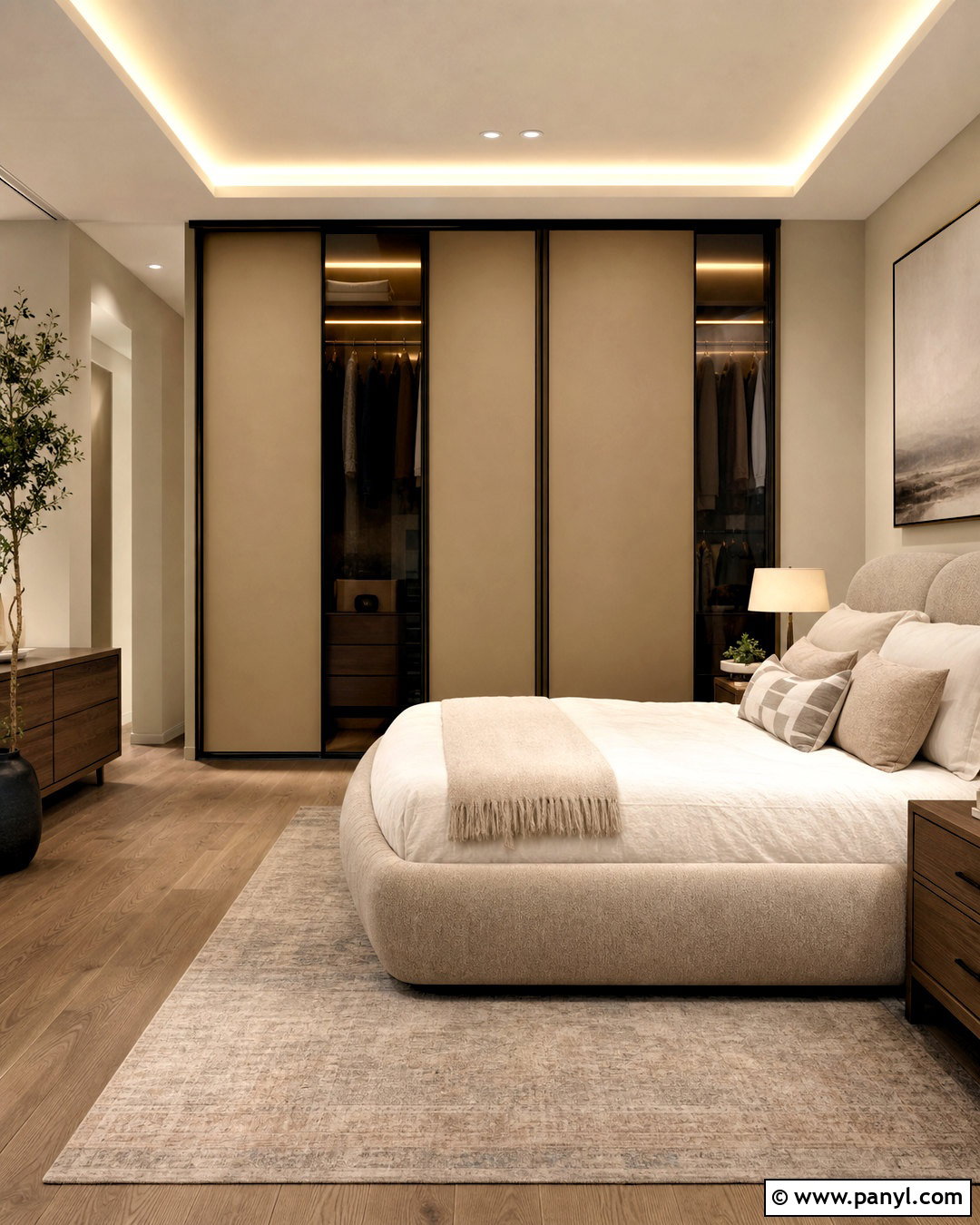
Soft taupe wardrobe doors framed in dark bronze offer a warmer alternative to conventional gray. Choose a medium taupe with beige undertones and apply it consistently across flat, full-height sliding panels. Add one narrow bronze-tinted glass section or subtle bronze vertical divisions for depth. Continue the palette with a mushroom upholstered bed, walnut nightstands, and creamy white bedding. Walls in a lighter taupe create a layered, enveloping effect without making the room appear overly matched. Use ivory curtains, a faded neutral rug, and bronze reading lights to complete the look. This scheme is particularly effective in transitional bedrooms because it bridges contemporary clean lines and classic warm finishes. A few black accents may be added, but keep them limited so the bronze remains visually distinct.
12. Burgundy And Cream Sliding Wardrobe
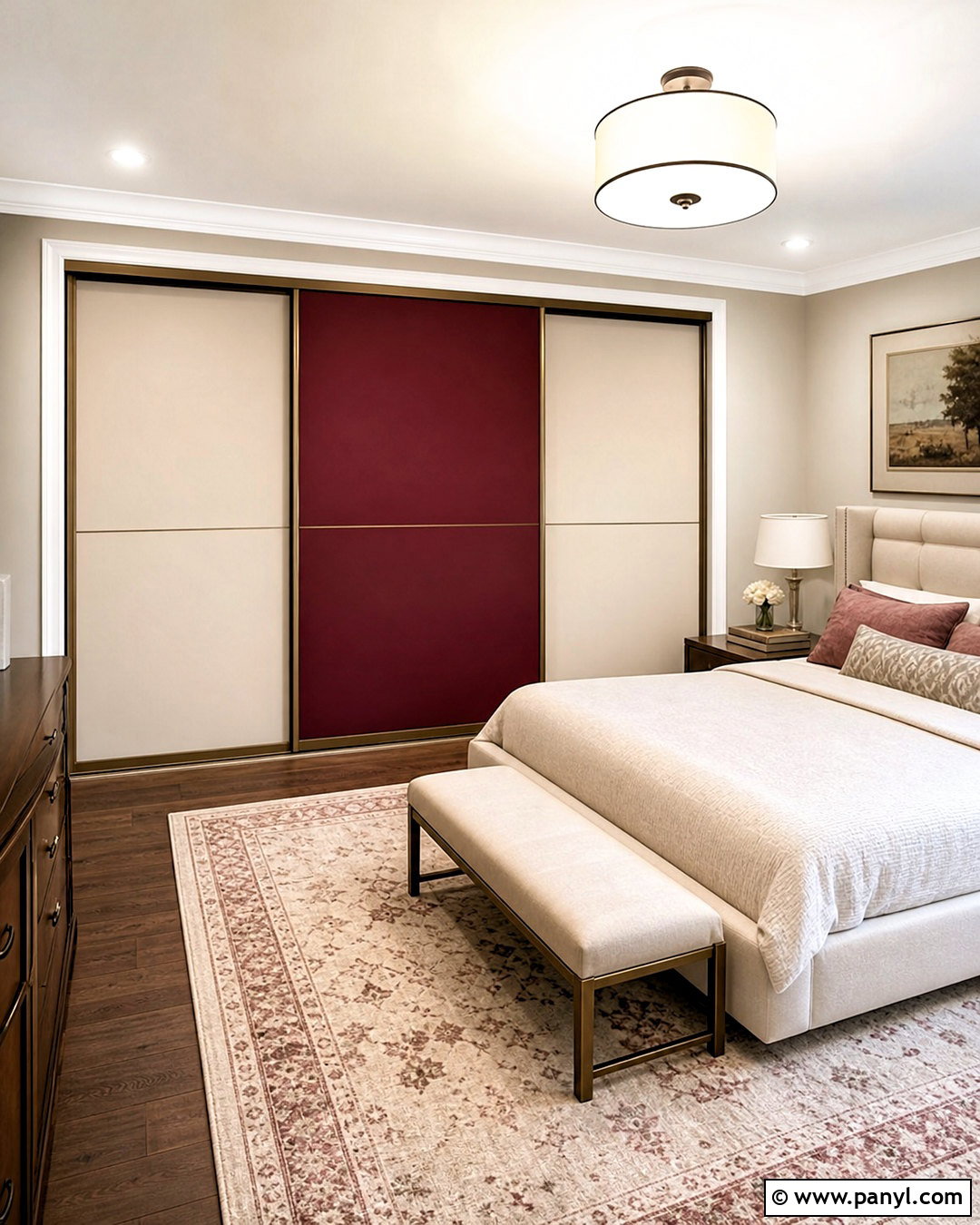
Burgundy can transform sliding wardrobe doors into a confident bedroom feature when it is paired with calming cream. Place the rich red tone on a central matte panel, with warm cream doors on both sides. Use bronze or dark brown tracks instead of bright metal. A cream upholstered bed and light beige walls give the saturated wardrobe space to breathe. Layer the bedding with ivory, burgundy, dusty rose, and soft brown, using mostly solid fabrics to avoid visual clutter. Walnut nightstands and warm table lamps strengthen the cozy atmosphere. Finish with a traditional-pattern rug containing small touches of burgundy and faded blue. The complete room feels dramatic yet restful, reflecting the current move toward expressive bedroom colors while remaining practical enough for long-term use. ()
13. Teal And Walnut Sliding Wardrobe
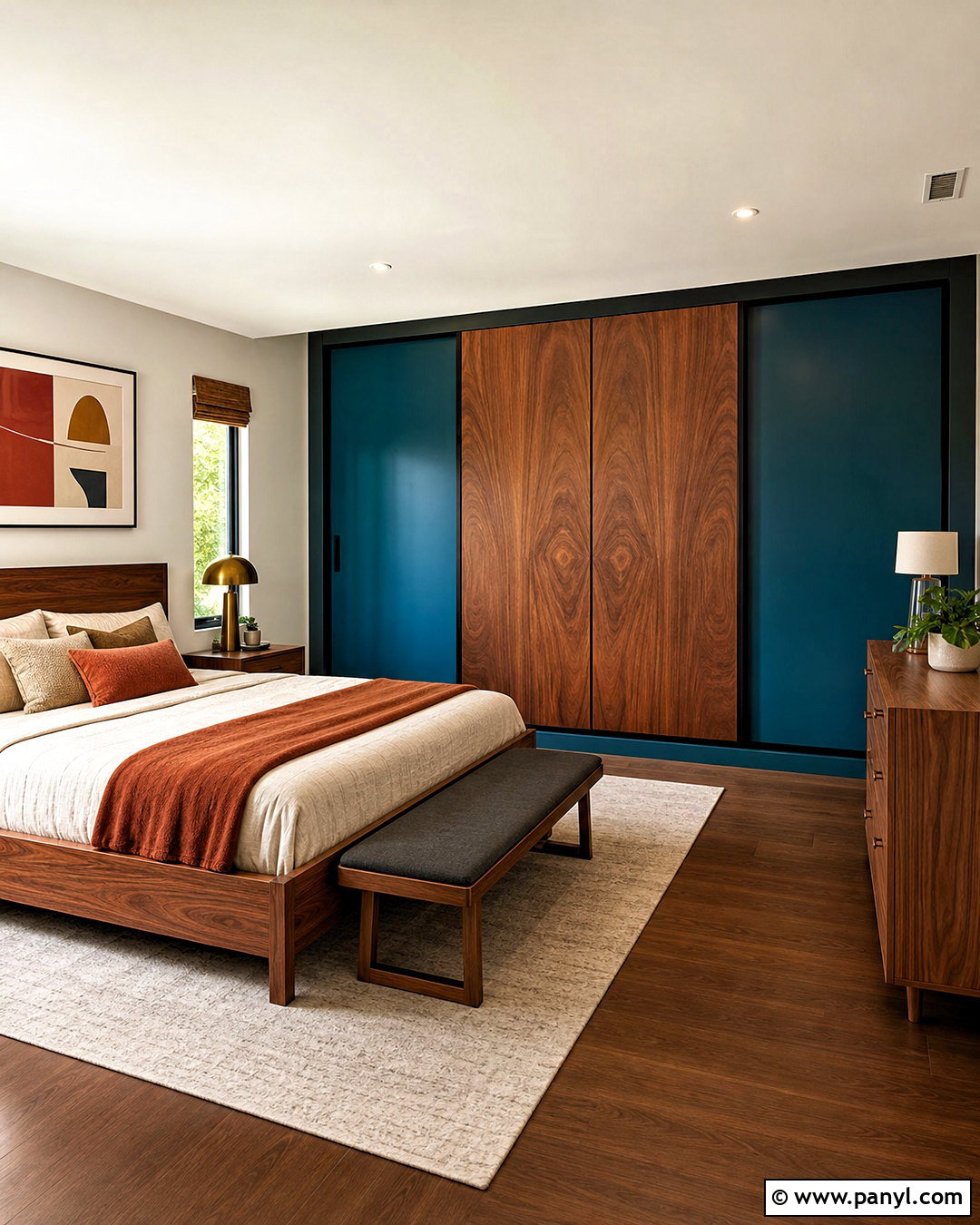
Deep teal and walnut form a sophisticated combination with plenty of warmth and personality. Use teal on two smooth outer doors and book-matched walnut veneer on the central sliding panel. Slim black tracks provide a clear outline without competing with the rich colors. Pair the wardrobe with a walnut bed frame, warm white walls, and neutral oatmeal bedding. Repeat teal sparingly through two pillows or a bedside chair. A rust-colored throw adds warmth, while a cream rug keeps the lower half of the room light. Choose aged brass lamps for softer contrast than chrome. This complete bedroom design works well in both midcentury-inspired and contemporary spaces. The teal brings character, while walnut grain gives the large wardrobe surface natural variation that prevents it from appearing flat or overly imposing.
14. Lavender And Soft Gray Sliding Wardrobe
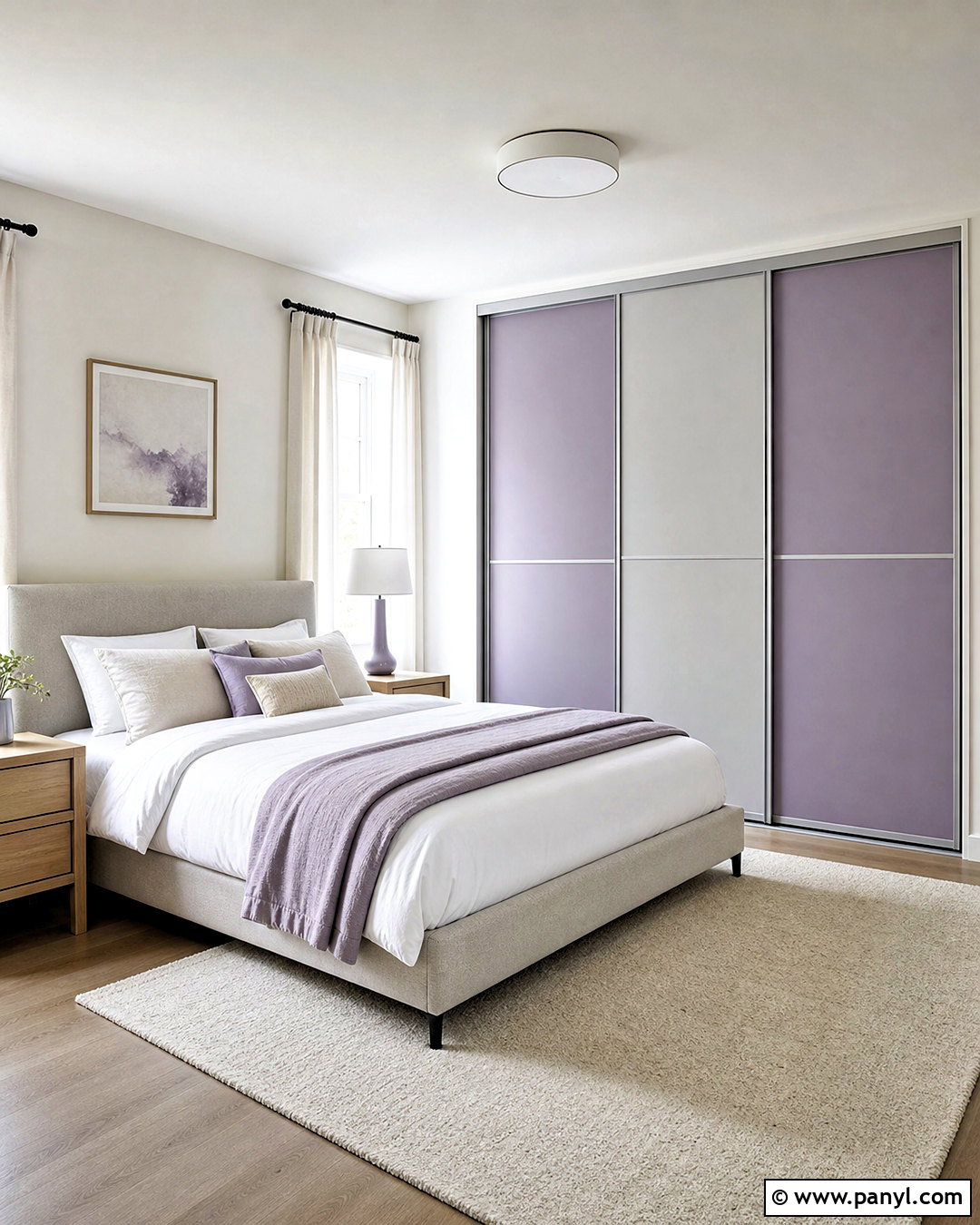
Muted lavender sliding doors create a gentle bedroom palette that feels more distinctive than standard white or beige. Select a gray-based lavender rather than a bright purple, and pair it with one soft gray central panel. Use silver-gray tracks to keep the finish light and cohesive. A pale gray upholstered bed, white bedding, and light wood nightstands establish a quiet foundation. Add lavender through a textured throw and one or two pillows, then introduce warm beige curtains to prevent the room from becoming too cool. Walls can be soft white with a slight gray undertone. Complete the space with a cream rug and simple brushed nickel lighting. The finished bedroom feels calm, modern, and personal, making it appropriate for primary bedrooms, guest rooms, or refined teen spaces.
15. White And Mirror Sliding Wardrobe
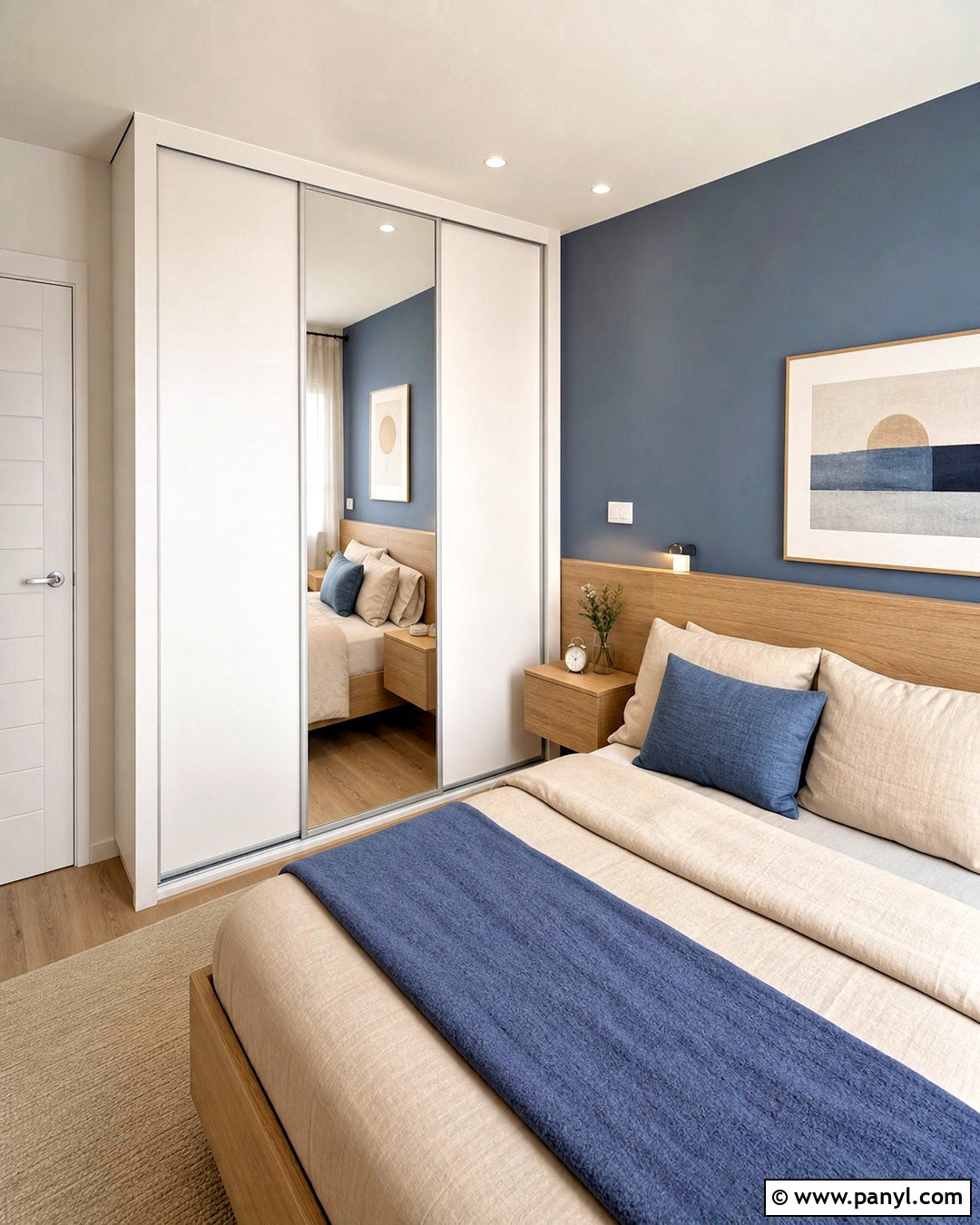
White sliding doors with one integrated mirror panel remain practical for a small bedroom, but thoughtful detailing keeps the design current. Choose warm matte white rather than glossy blue-white, and place a clear or lightly bronzed mirror on only one door instead of covering the full wardrobe. Match the door tracks closely to the white finish for a quieter appearance. Add a light oak bed, warm white walls, and pale beige carpeting or a large cream rug. Bedding in oatmeal, white, and muted blue introduces gentle contrast. Position the mirror where it reflects daylight or an uncluttered wall rather than the bed’s busiest area. Finish the room with compact floating nightstands, soft linen curtains, and simple wall lights, creating an open, functional space without excessive reflection.
16. Mushroom Beige And Rattan Sliding Wardrobe
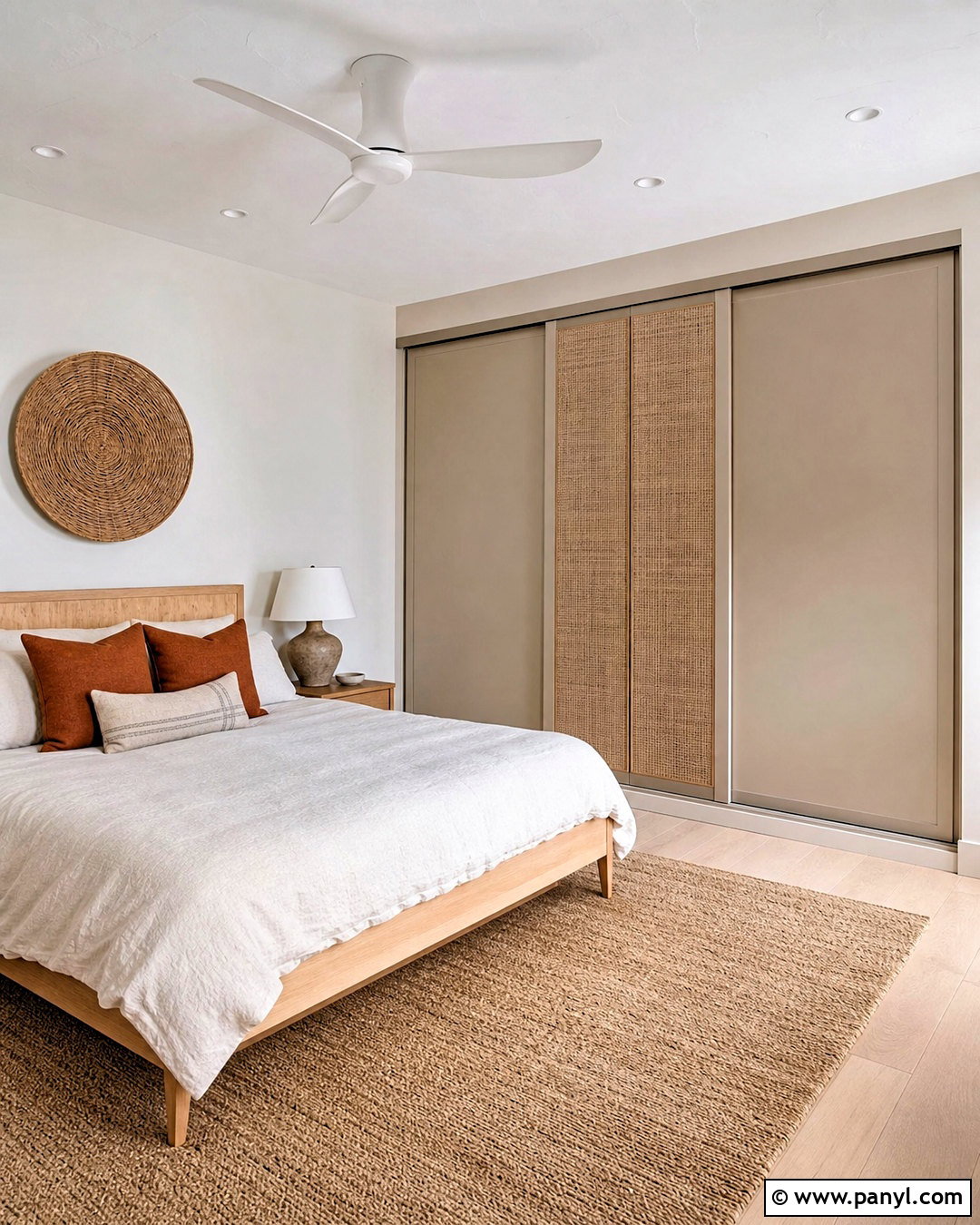
Mushroom beige doors paired with woven rattan inserts create a relaxed bedroom filled with natural texture. Use matte mushroom laminate on the outer sliding panels and frame a sealed cane or rattan section on the center door. Keep the weave fine and tightly fitted so the wardrobe remains polished and easy to maintain. Coordinate it with a light oak bed, oatmeal linen bedding, and warm cream walls. Add terracotta pillows, a jute rug, and ceramic bedside lamps for subtle earthy contrast. Tracks in champagne or pale bronze complement both the beige finish and the woven center. This complete scheme suits organic modern, coastal, and casual contemporary bedrooms. Avoid adding too many other woven furnishings; one wardrobe panel and a simple basket are enough to establish the natural character.
17. Pale Blue And White Sliding Wardrobe
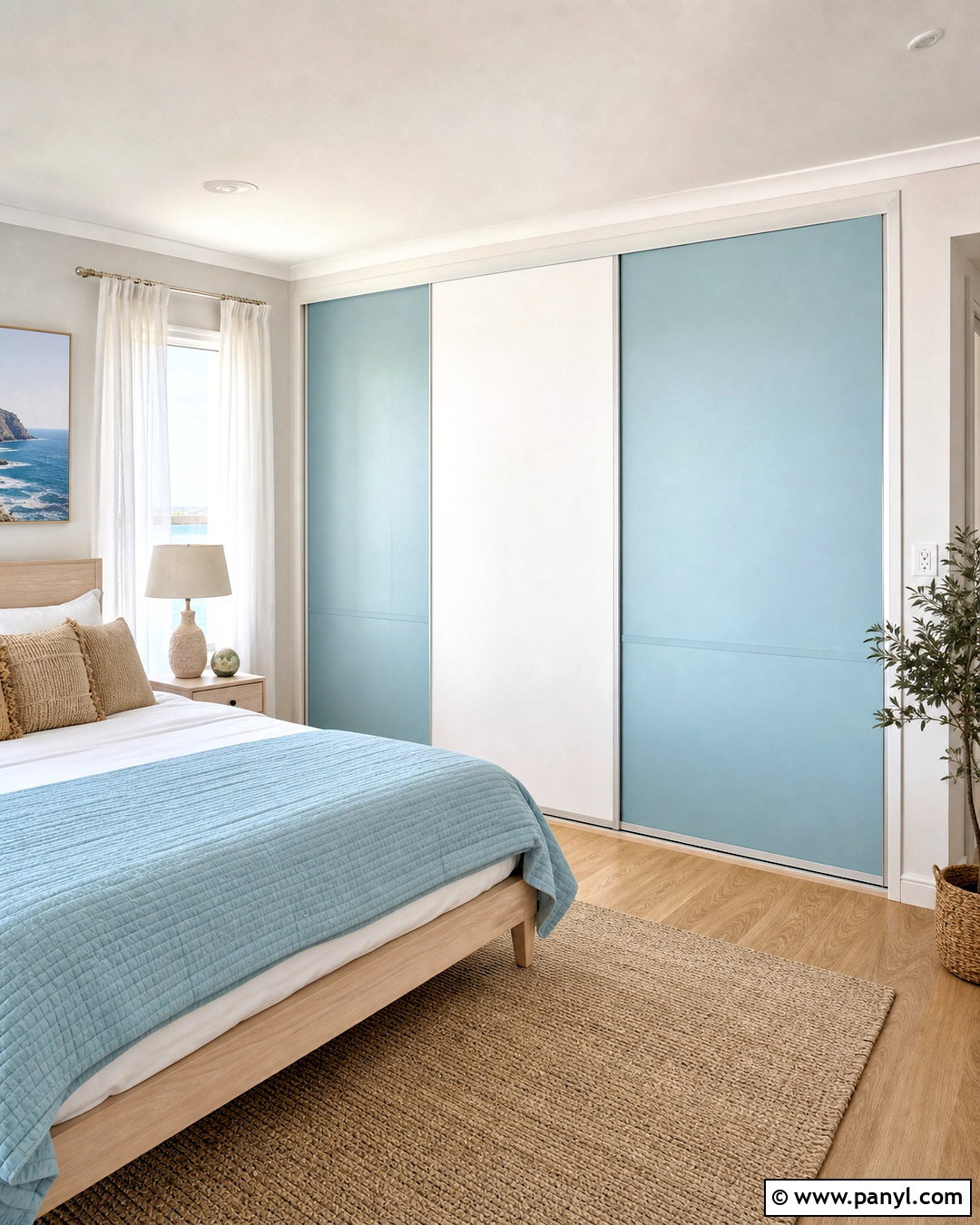
A pale blue and white sliding wardrobe can make a compact bedroom feel fresh, bright, and orderly. Apply powdery blue to two doors and clean warm white to the central panel. White tracks help the wardrobe merge visually with surrounding white walls. Bring in a light wood bed and nightstands so the room does not feel overly cool. Layer the bed with white sheets, a blue quilt, and small sand-colored accents. Sheer curtains, a pale woven rug, and simple glass or ceramic lamps keep the atmosphere light. This complete palette is an easy fit for coastal bedrooms, children’s rooms, or peaceful guest spaces. Choose a blue with gray undertones for greater versatility, and avoid heavy nautical accessories so the bedroom remains subtle and suitable for year-round decorating.
18. Olive Green And Camel Sliding Wardrobe
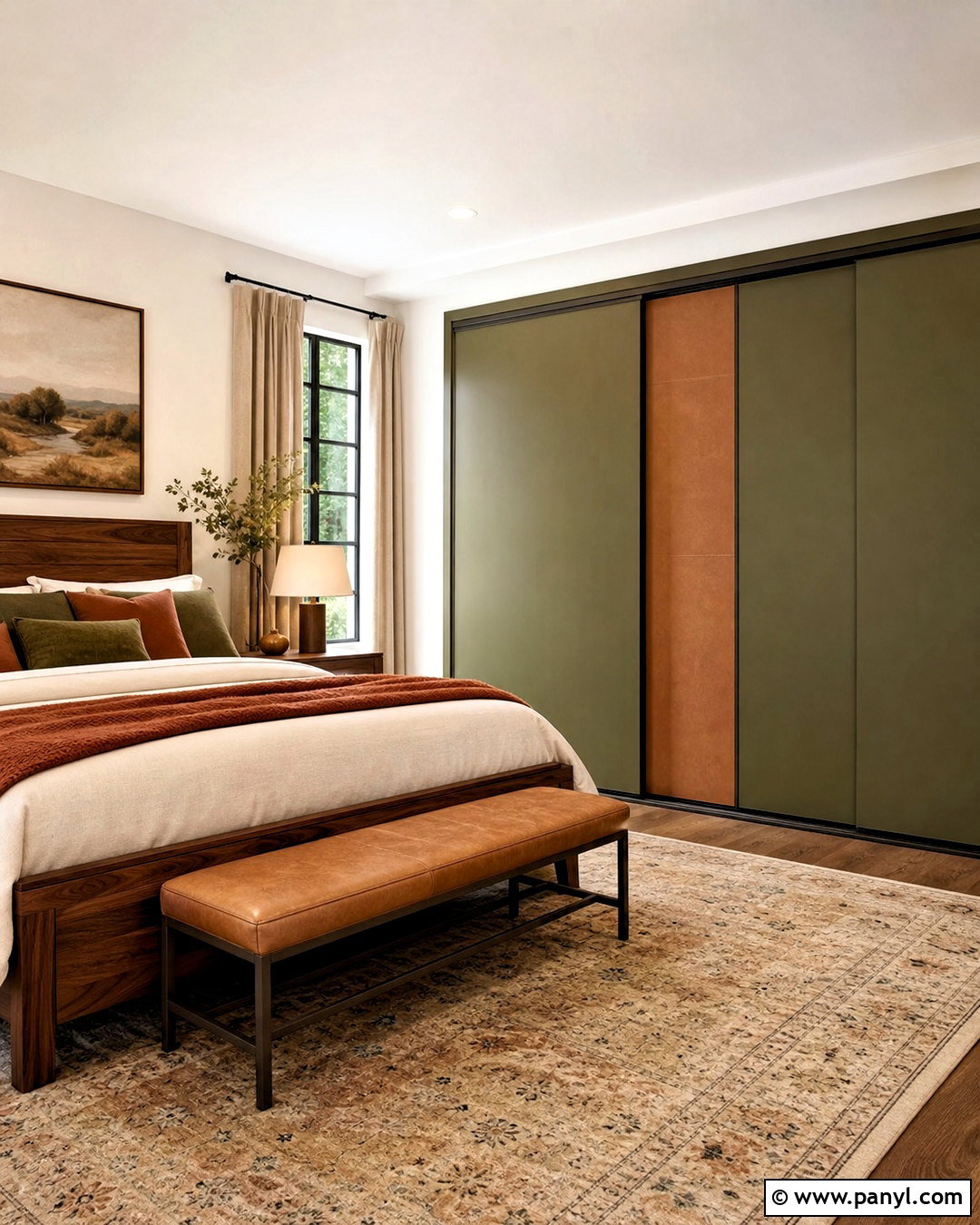
Olive green doors paired with camel accents produce a bedroom that feels earthy, mature, and comfortable. Use muted olive across the main wardrobe panels, then introduce camel-colored faux leather or textured laminate in one slim central section. Dark bronze tracks provide structure and complement both warm colors. Pair the wardrobe with a walnut bed, beige walls, and ivory bedding layered with olive and rust textiles. A camel upholstered bench reinforces the center panel without looking overly coordinated. Add linen curtains, an antique-style neutral rug, and blackened bronze lighting. The completed space has enough color to feel memorable, yet every shade comes from a natural palette. This combination is especially effective in bedrooms with medium or strong daylight, which reveals the green’s subtle brown and gray undertones.
19. Mocha Brown And Champagne Sliding Wardrobe
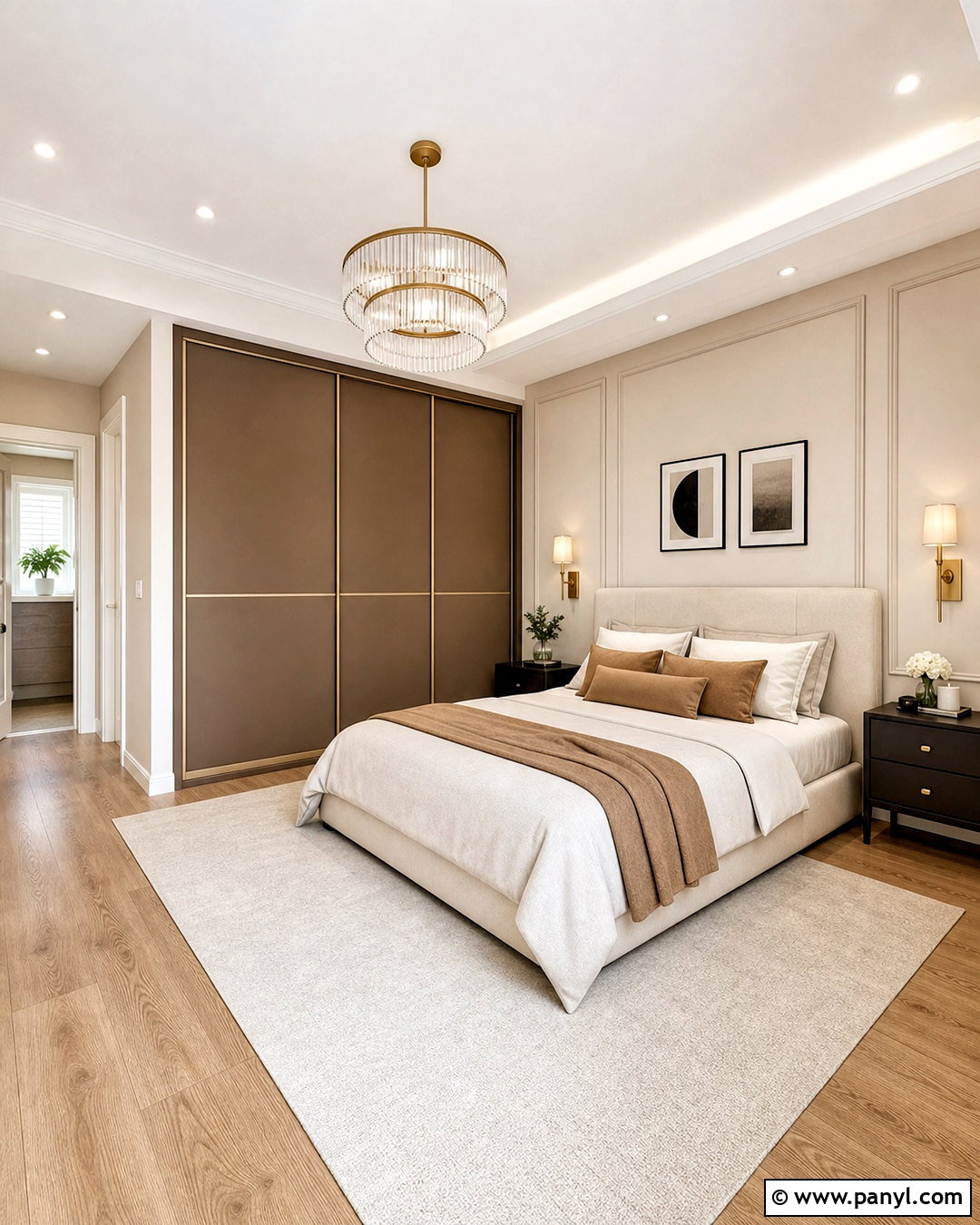
Mocha brown gives sliding wardrobe doors a deep, comforting appearance without the severity of black. Cover the panels in a smooth matte mocha finish and divide them with thin champagne-colored metal strips. Pair this storage wall with a cream upholstered bed, pale beige walls, and medium oak flooring. White and oatmeal bedding brightens the center of the room, while chocolate pillows and a caramel throw repeat the wardrobe color in smaller amounts. Use champagne-finish bedside lamps and a soft ivory rug to maintain a polished atmosphere. The design works particularly well in a spacious primary bedroom, although lighter walls make it adaptable to medium-sized spaces. Keep the wardrobe doors plain and full height so the rich brown reads as sophisticated architectural paneling rather than bulky freestanding furniture.
20. Wall-Matched Sliding Wardrobe
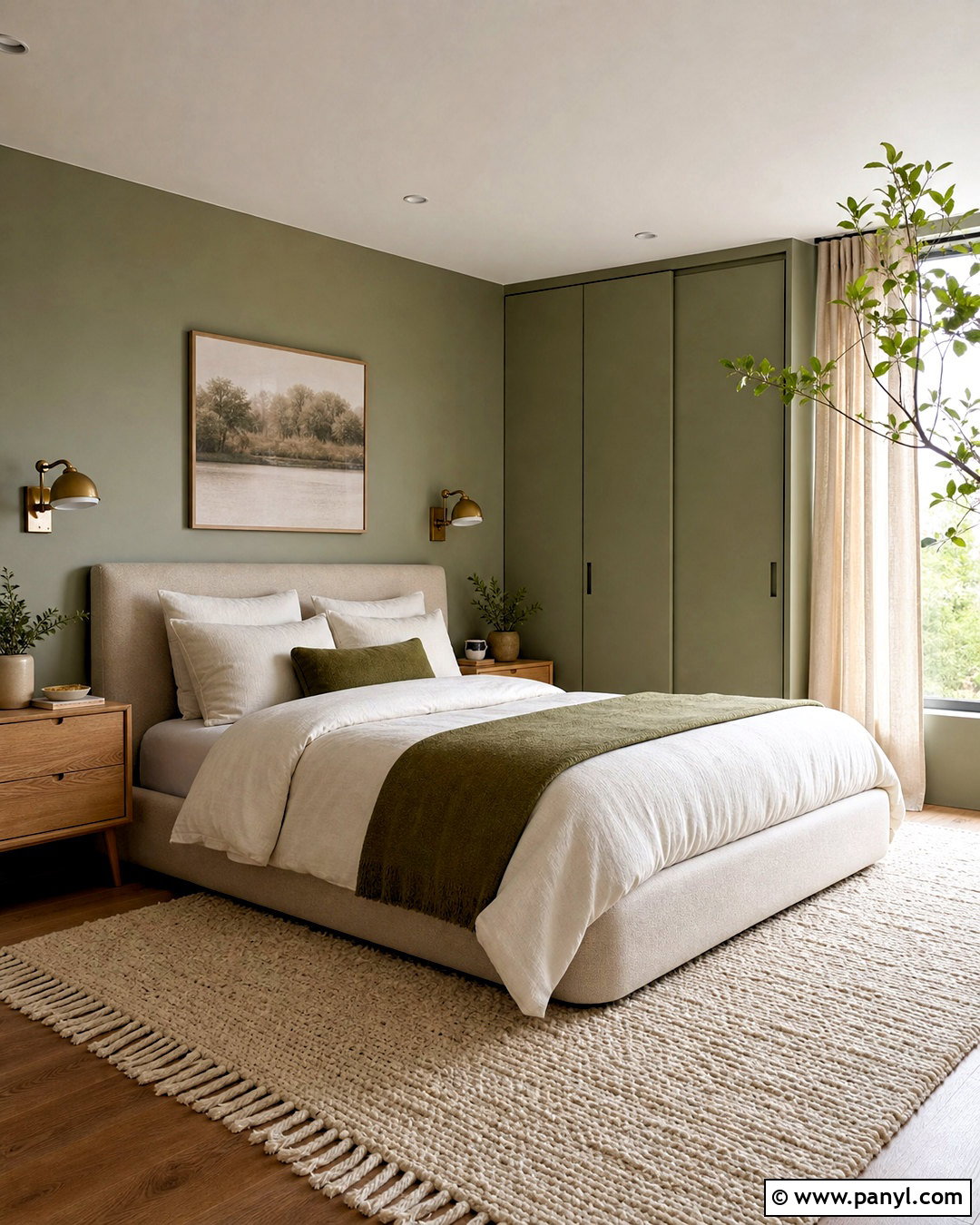
For the most seamless result, paint or finish the sliding wardrobe in the same muted color as the surrounding walls. Soft clay, warm sage, dusty blue, and mushroom taupe all work beautifully for this color-drenched approach. Use full-height matte doors with minimal tracks and recessed pulls so the storage nearly disappears into the architecture. Build the rest of the bedroom around tonal variations of the chosen color. For example, pair sage doors and walls with an oatmeal bed, oak nightstands, cream bedding, and olive accents. Introduce contrast through texture rather than several competing hues. Linen curtains, wool rugs, wood grain, and woven fabrics prevent the room from looking flat. The finished bedroom feels calm and custom, even when the underlying wardrobe structure is relatively simple.
Conclusion:
Choosing wardrobe color becomes easier when you design the entire bedroom as one connected space. Start with fixed features such as flooring, wall color, room size, and natural light. Then select wardrobe doors, tracks, furniture, bedding, and accessories that share compatible undertones. Pale neutrals and reflective details can lighten compact rooms, while walnut, forest green, charcoal, teal, or burgundy create stronger focal points in larger bedrooms. Matte finishes generally feel calm and modern, while wood, glass, metal, and woven inserts add useful texture. Most importantly, test samples inside the actual room before ordering full-size panels. These 20 sliding wardrobe color ideas bedroom ideas offer complete looks that can be personalized without losing visual balance.

Related Ideas and Inspiration:
Leave a Reply