
Kitchen color is becoming warmer, richer, and far more personal. The latest palettes move beyond stark white and cool gray, favoring creamy neutrals, natural wood, earthy greens, softened blues, and grounded statement shades. Designers are also using color across complete surfaces rather than limiting it to one island or accent wall. Tonal cabinets, coordinated walls, expressive stone, and warm metal finishes create depth without making kitchens feel busy. Current reports support this shift toward wood grain, off-white, green, blue, and nuanced two-tone combinations. () Whether you are planning a full remodel or repainting existing cabinets, these practical schemes balance personality with everyday livability. Explore these **20 Current Kitchen Color Trends** to find a complete look that suits your home.
1. Warm White Kitchen
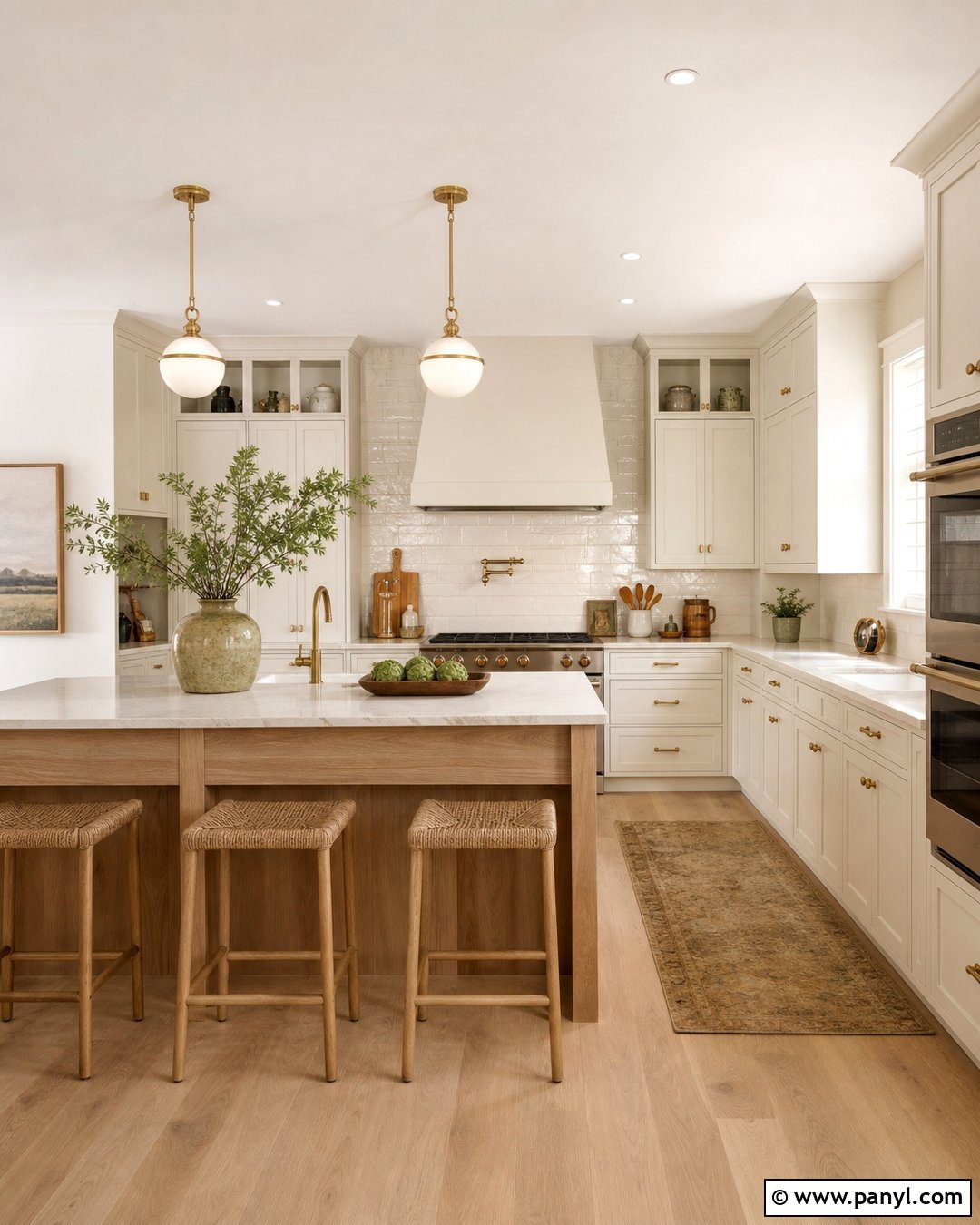
Warm white creates a clean kitchen without the cold, clinical feeling of blue-based white. Choose creamy white cabinets with soft white walls to produce gentle contrast rather than an exact match. Add pale oak flooring, warm quartz counters, and a handmade ivory backsplash for natural variation. Brushed brass hardware and milk-glass pendants reinforce the welcoming undertones. A light wood island can prevent the room from appearing flat while offering a durable focal point. Keep major appliances stainless steel or panel-ready so they blend into the calm palette. For balance, introduce small amounts of muted green through pottery, herbs, or a washable runner. This complete scheme works especially well in kitchens with limited daylight because it reflects light while remaining soft and comfortable.
2. Cream Kitchen
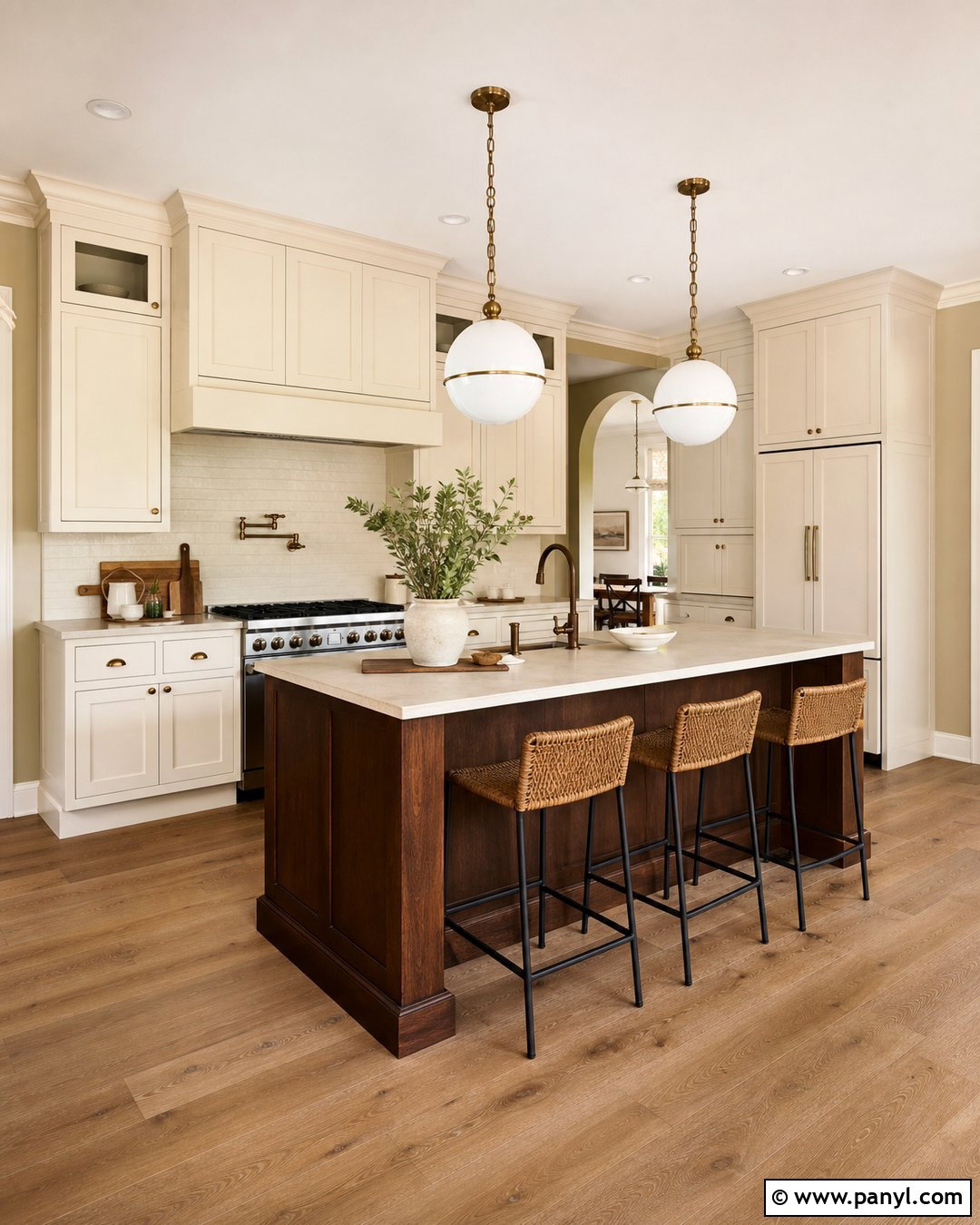
Cream cabinets bring back traditional warmth, but streamlined details keep the result fresh. Select a gentle vanilla or oatmeal cream instead of a yellow-heavy shade. Pair it with honed limestone-look quartz, an off-white backsplash, and medium oak flooring. A walnut island creates enough contrast to define the center of the room without overpowering the lighter perimeter. Use aged brass knobs, simple globe pendants, and woven counter stools for a relaxed transitional finish. Paint the walls a slightly paler cream so the cabinetry remains visible. Dark bronze window frames or a bronze faucet can provide a crisp finishing note. The completed kitchen feels layered and collected, making cream an approachable choice for homeowners who want warmth without committing to a stronger cabinet color.
3. Mushroom Kitchen
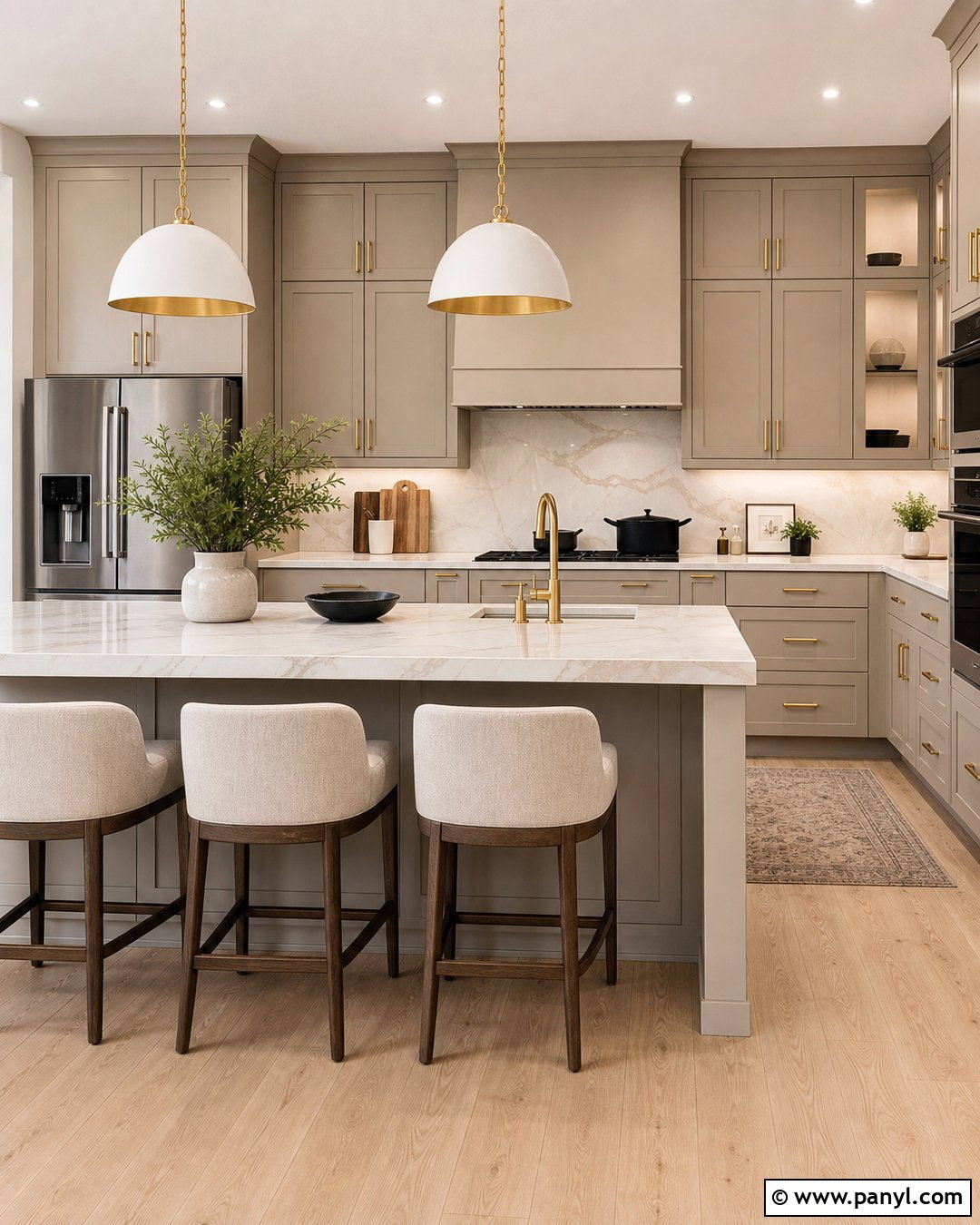
Mushroom sits between beige, taupe, and soft brown, giving a kitchen subtle depth that changes throughout the day. Use mushroom-colored cabinets across the perimeter and island for a calm, continuous foundation. Creamy quartz counters with delicate brown veining will connect naturally to the cabinetry. Add a plaster-look backsplash, white oak flooring, and satin brass hardware to keep the room light. Walls painted in warm off-white provide quiet separation without creating harsh contrast. For a more tailored result, choose slim Shaker doors and upholstered stools in oatmeal fabric. Black accents should be limited to small details, such as window frames or a range trim. This balanced palette is particularly useful in open layouts because it transitions smoothly into beige, brown, cream, and wood-filled living areas.
4. Taupe Kitchen
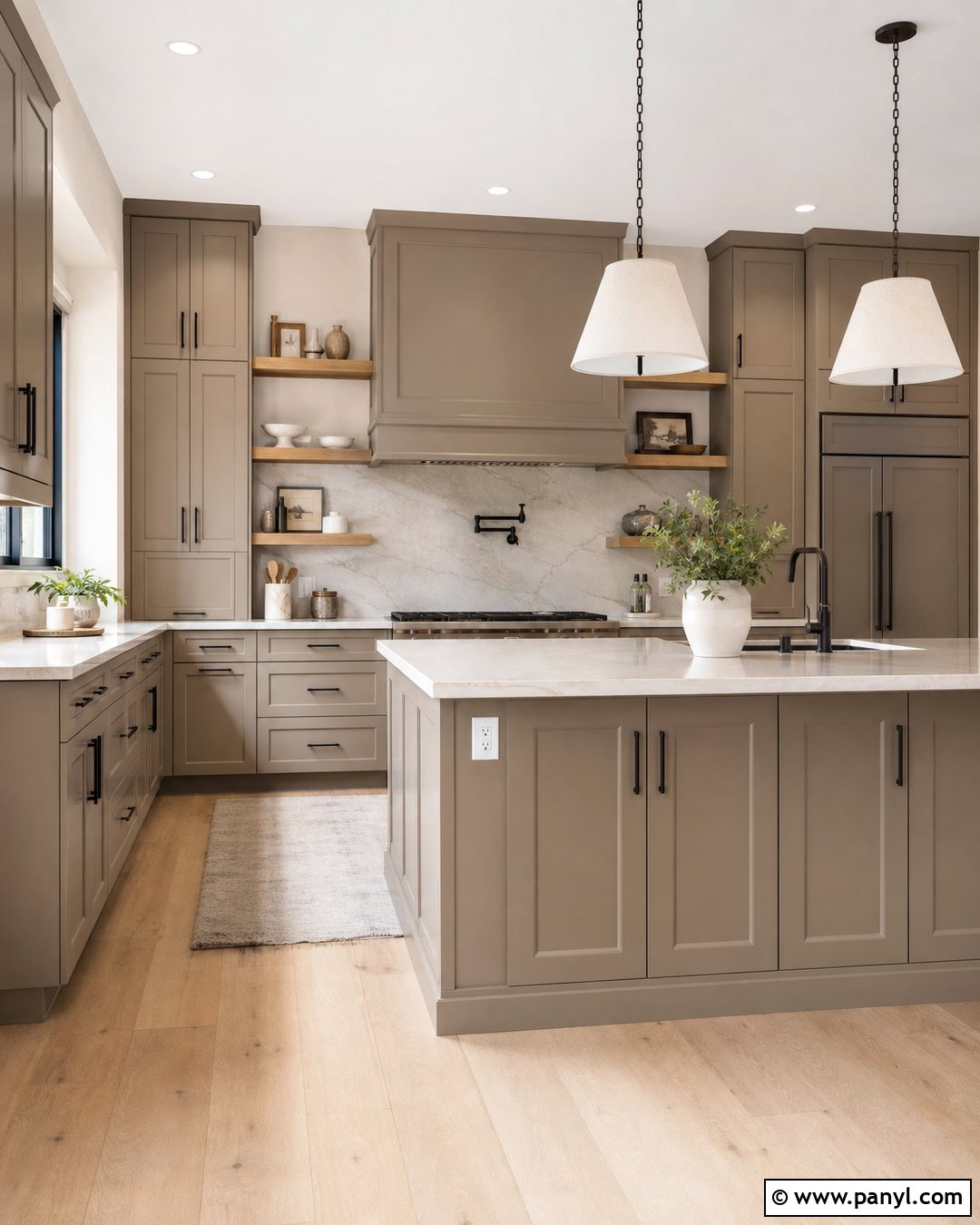
Can a neutral kitchen still feel substantial? Taupe cabinetry answers that question with a mix of gray restraint and brown warmth. Cover lower and upper cabinets in a midtone taupe, then add pale quartz counters and a full-height backsplash with soft charcoal veining. Wide-plank white oak flooring keeps the overall room from becoming too formal. Choose dark bronze hardware for definition and oversized linen pendants for softness. Walls in a chalky off-white will make the taupe appear richer, while a stained oak ceiling beam or open shelf brings organic contrast. Use the same taupe on the island for a seamless, furniture-like look. The completed palette feels polished but practical, and its balanced undertones coordinate easily with stainless steel appliances and surrounding neutral rooms.
5. Soft Greige Kitchen
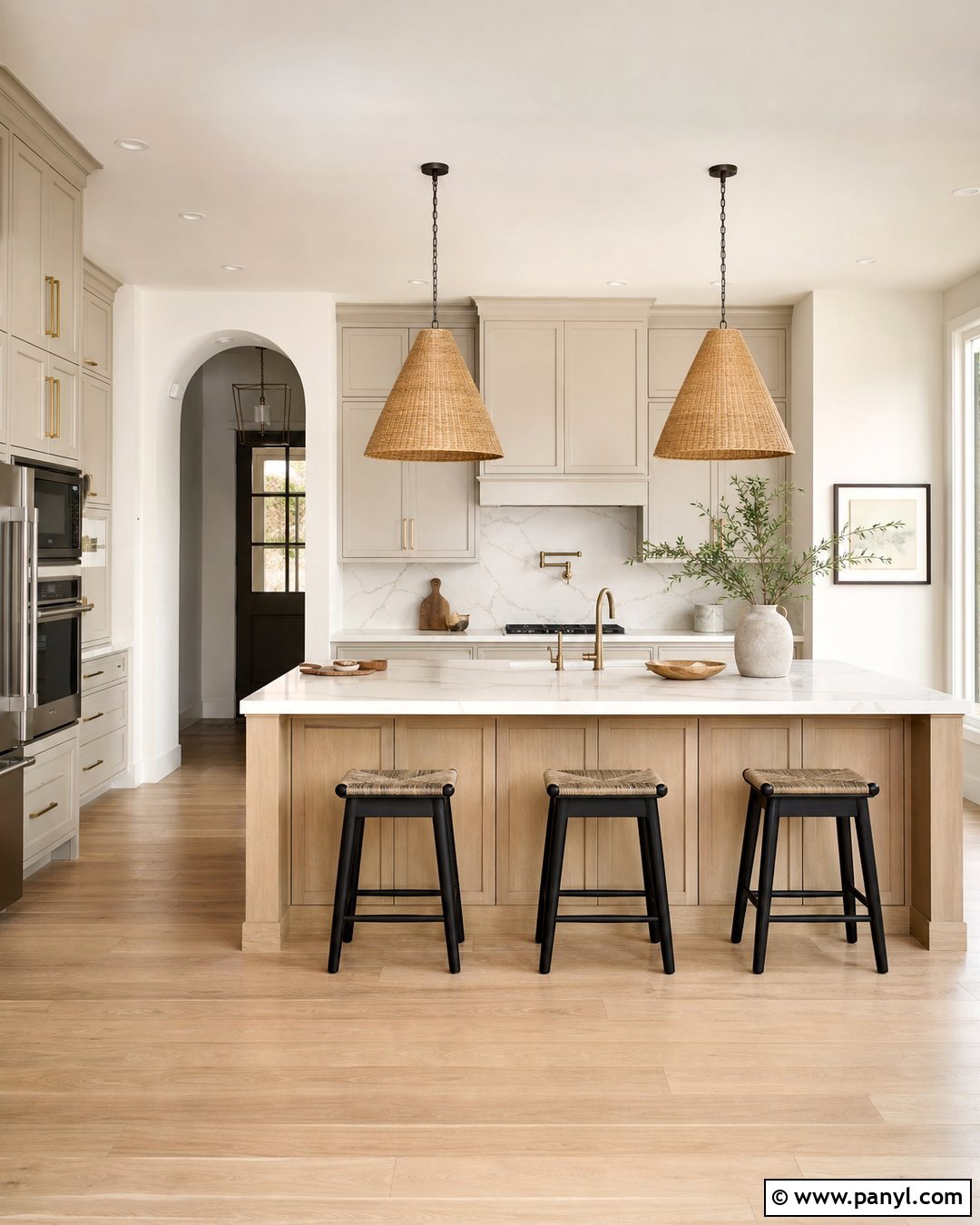
Soft greige remains useful when it leans warm rather than noticeably silver. Choose greige cabinets with beige undertones, creamy walls, and light oak floors to create an updated neutral kitchen. A white quartz countertop with faint taupe veining adds movement without introducing another dominant color. Continue the counter material up the backsplash for a simple, spacious effect. Champagne bronze hardware offers gentle contrast, while natural woven pendants keep the room casual. On the island, use vertical wood paneling in pale oak to break up the painted surfaces. Decorate with stoneware, clear glass, and restrained black accents. Because each finish shares a warm undertone, the complete kitchen looks coordinated in both daylight and artificial light. Always sample greige beside the flooring before making the final selection.
6. Sage Green Kitchen
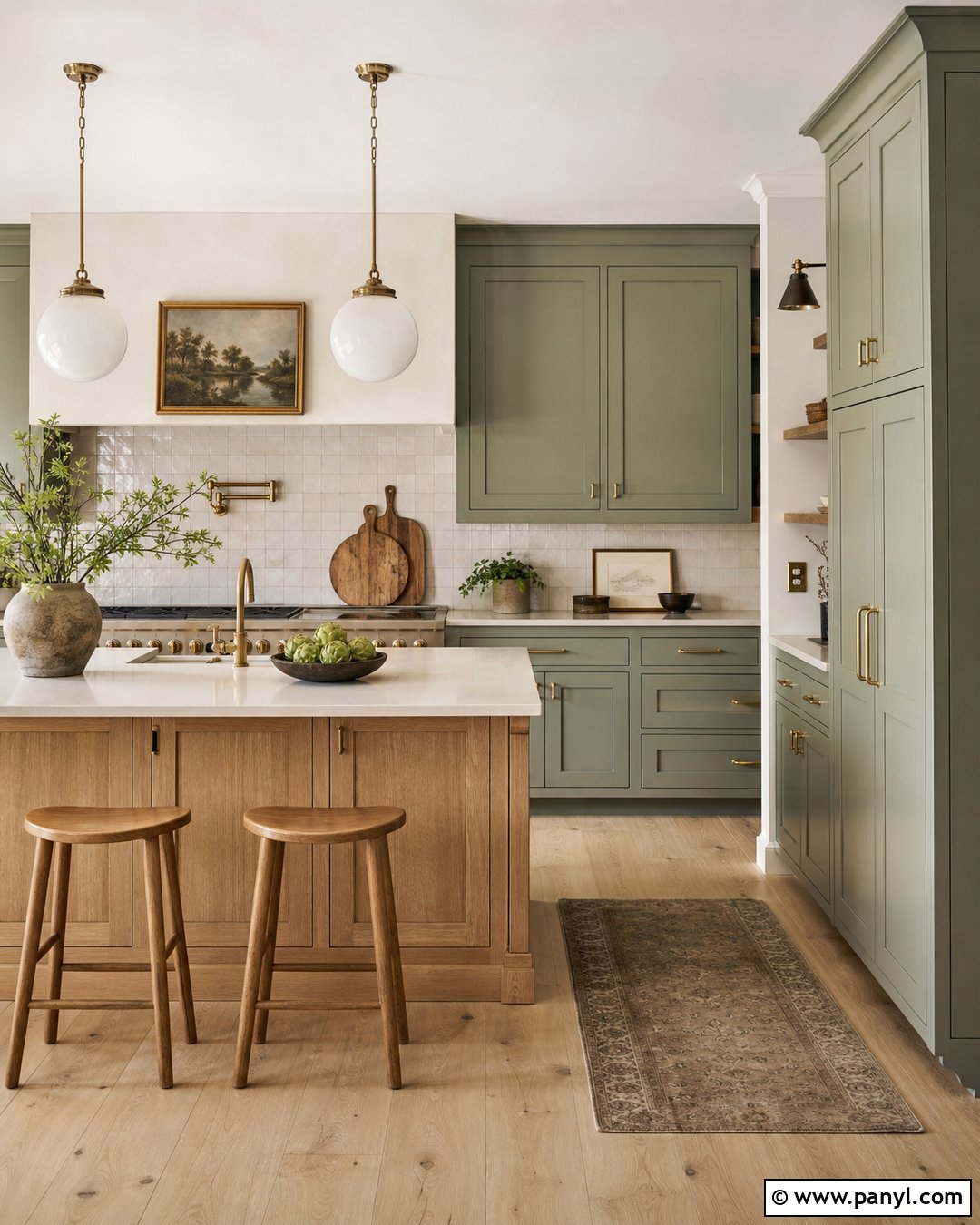
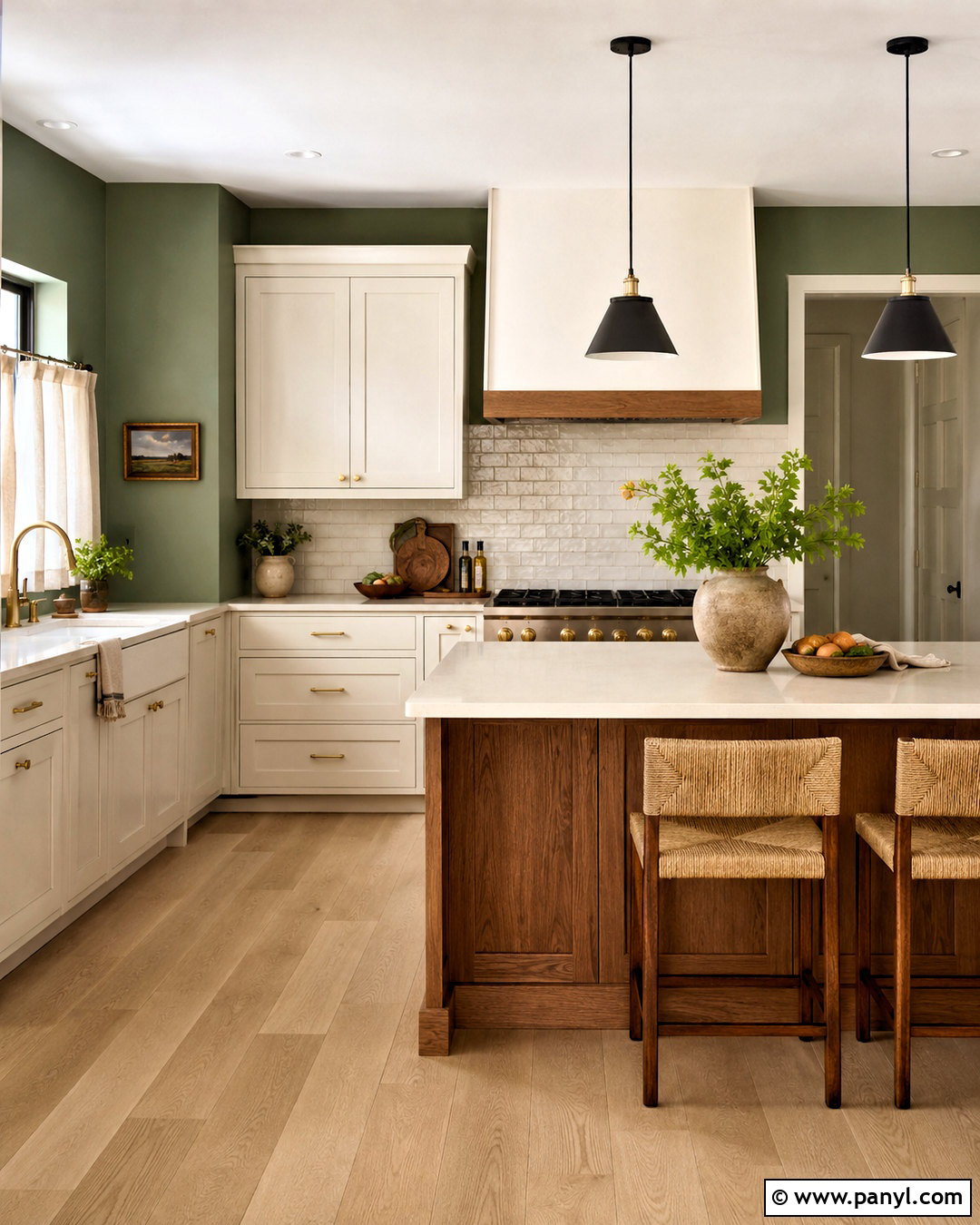
Morning light makes sage green cabinetry feel especially soft and natural. Use the color on Shaker cabinets throughout the kitchen rather than treating it as a small accent. Pair it with warm white walls, pale oak flooring, and creamy quartz counters for an airy foundation. An ivory zellige-style backsplash adds texture through its uneven surface and subtle color shifts. Choose unlacquered brass hardware, a brass bridge faucet, and opal-glass pendants to warm the green. A freestanding oak table or wood-topped island can give the room an informal farmhouse influence without making it feel themed. Keep window treatments simple and neutral. The finished scheme is calm enough for everyday use while still providing more personality than white, beige, or conventional gray cabinetry.
7. Dark Olive Kitchen
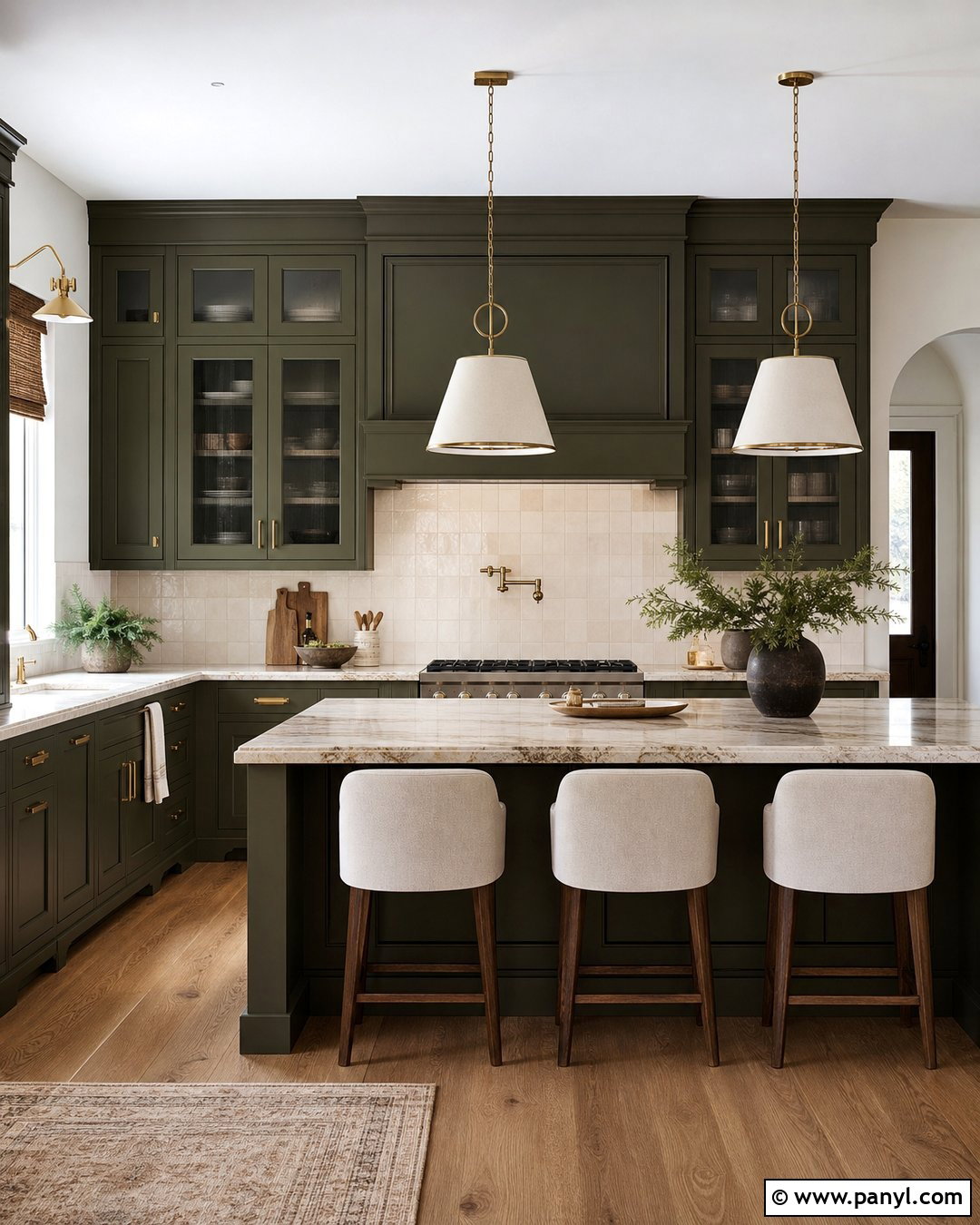
Dark olive offers a deeper, more grounded alternative to pale botanical green. Apply it to perimeter cabinets and a substantial island, then balance the intensity with warm plaster-white walls. Cream quartzite or quartz counters with brown veining brighten the work surfaces and connect with aged brass hardware. Medium oak floors prevent the green from feeling overly formal, while an off-white backsplash keeps the cooking area clear and practical. Consider glass-front upper cabinets in one section to reduce visual weight. Linen counter stools, ceramic lamps, and natural wood accessories can soften the darker color further. This complete kitchen works best with generous daylight, although layered ceiling, undercabinet, and pendant lighting will maintain clarity. The result feels earthy, tailored, and noticeably different from familiar sage schemes.
8. Forest Green Kitchen
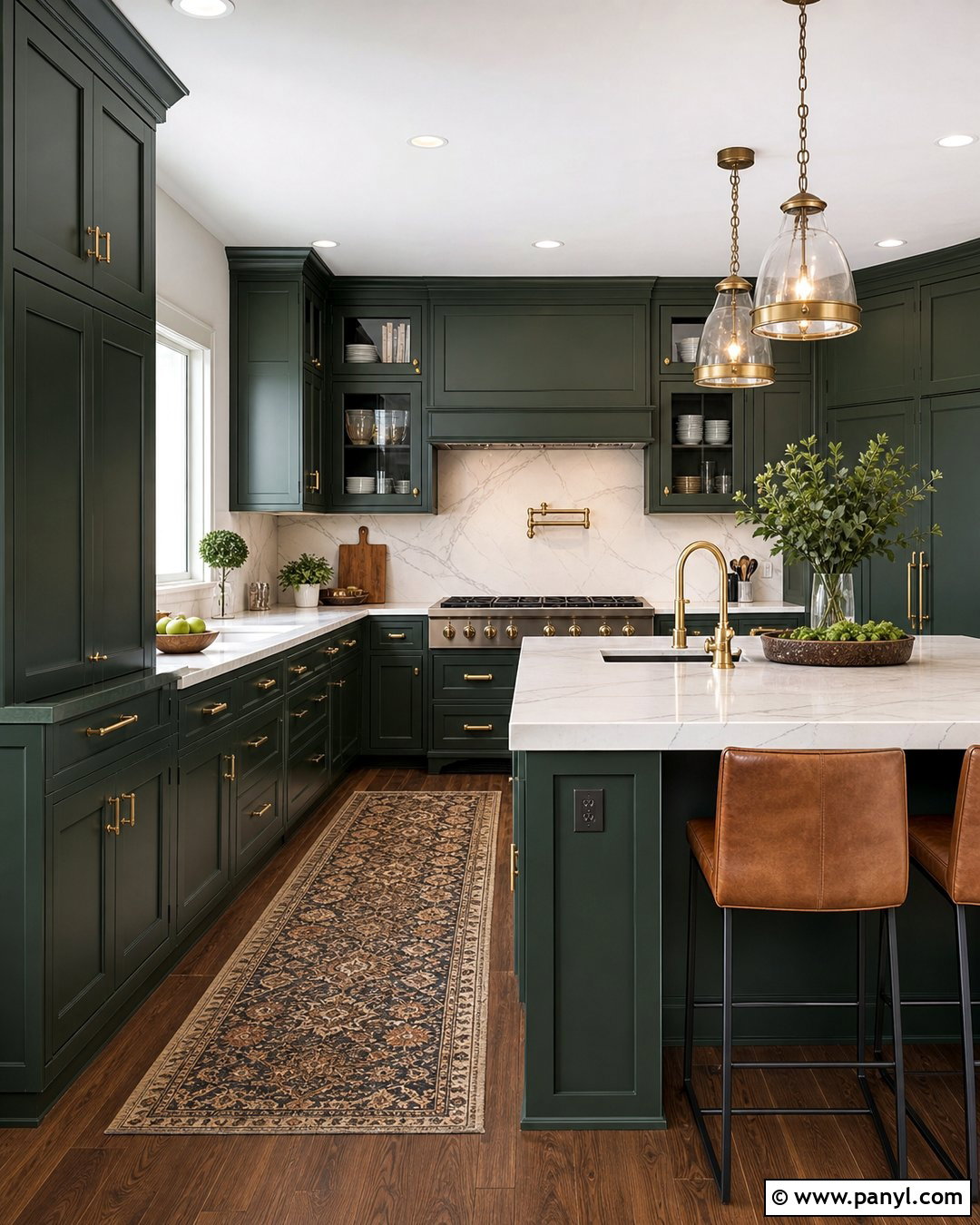
For a dramatic kitchen that still feels connected to nature, combine forest green cabinets with substantial warm materials. Use the deep green across lower cabinetry, tall pantry units, and the island. Keep some upper walls open or install a limited number of glass-front cabinets so the room can breathe. Select creamy marble-look quartz, a full-height stone backsplash, and rich walnut flooring. Brass hardware and warm metal pendants will stand out beautifully against the saturated cabinet finish. Paint remaining walls in a soft ivory rather than bright white. Add counter stools in camel leather and a vintage-style runner containing green, rust, and cream. The finished room feels sophisticated yet usable, with enough pale surfaces and layered lighting to offset the depth of the cabinetry.
9. Powder Blue Kitchen
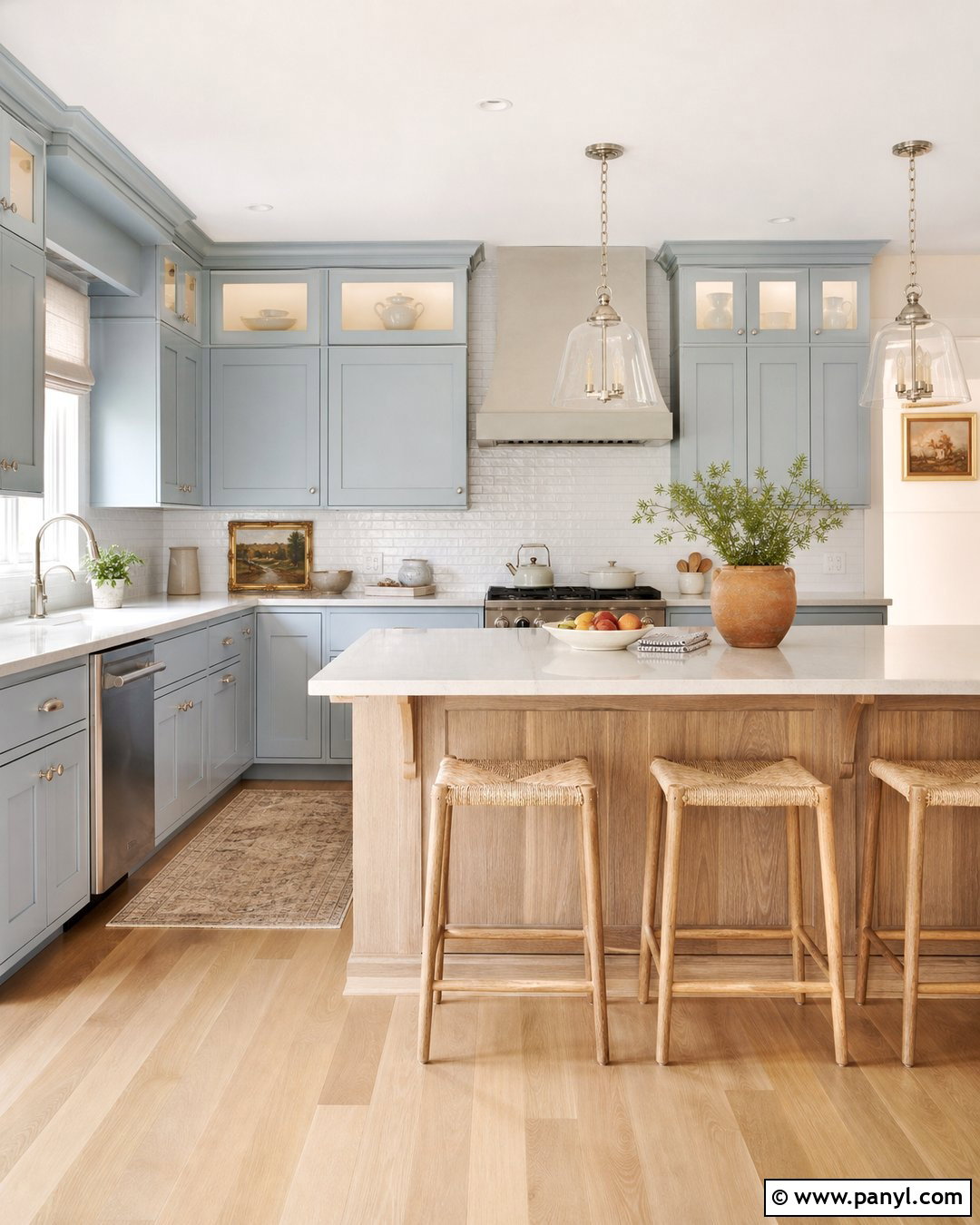
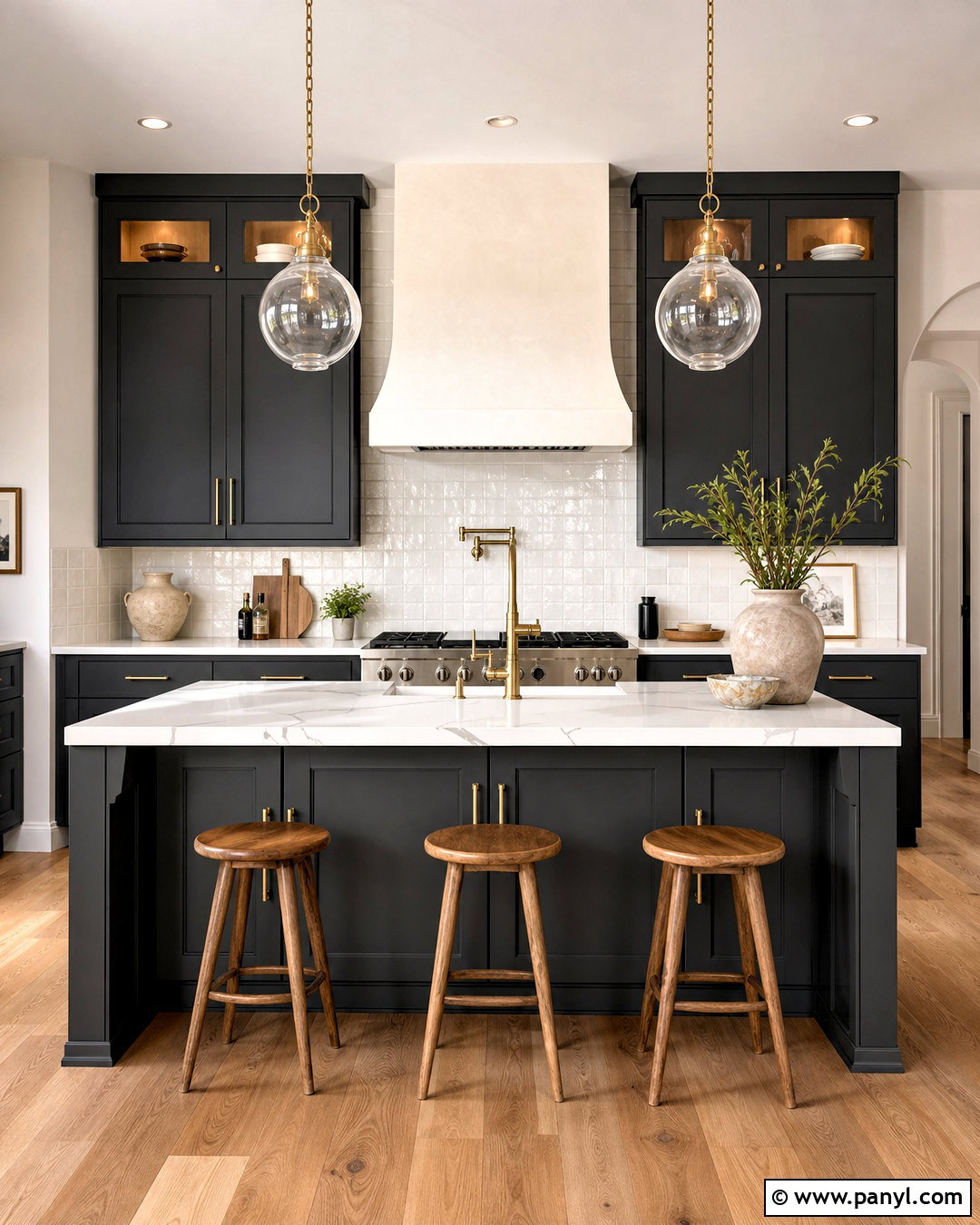
Powder blue can make a smaller kitchen feel open while adding more character than a standard neutral. Choose blue cabinets with a softened gray undertone so the color remains easy to coordinate. Combine them with warm white walls, light maple or oak flooring, and ivory quartz counters. A glossy white backsplash reflects light and gives the matte cabinetry subtle contrast. Polished nickel hardware keeps the scheme crisp, while natural woven stools prevent it from feeling too cool. Use a pale wood island if the layout permits, or repeat the powder blue for a more continuous appearance. Small accents in terracotta or muted red can provide welcome warmth. This complete palette feels cheerful and relaxed, making it well suited to cottage, coastal, transitional, and compact urban kitchens.
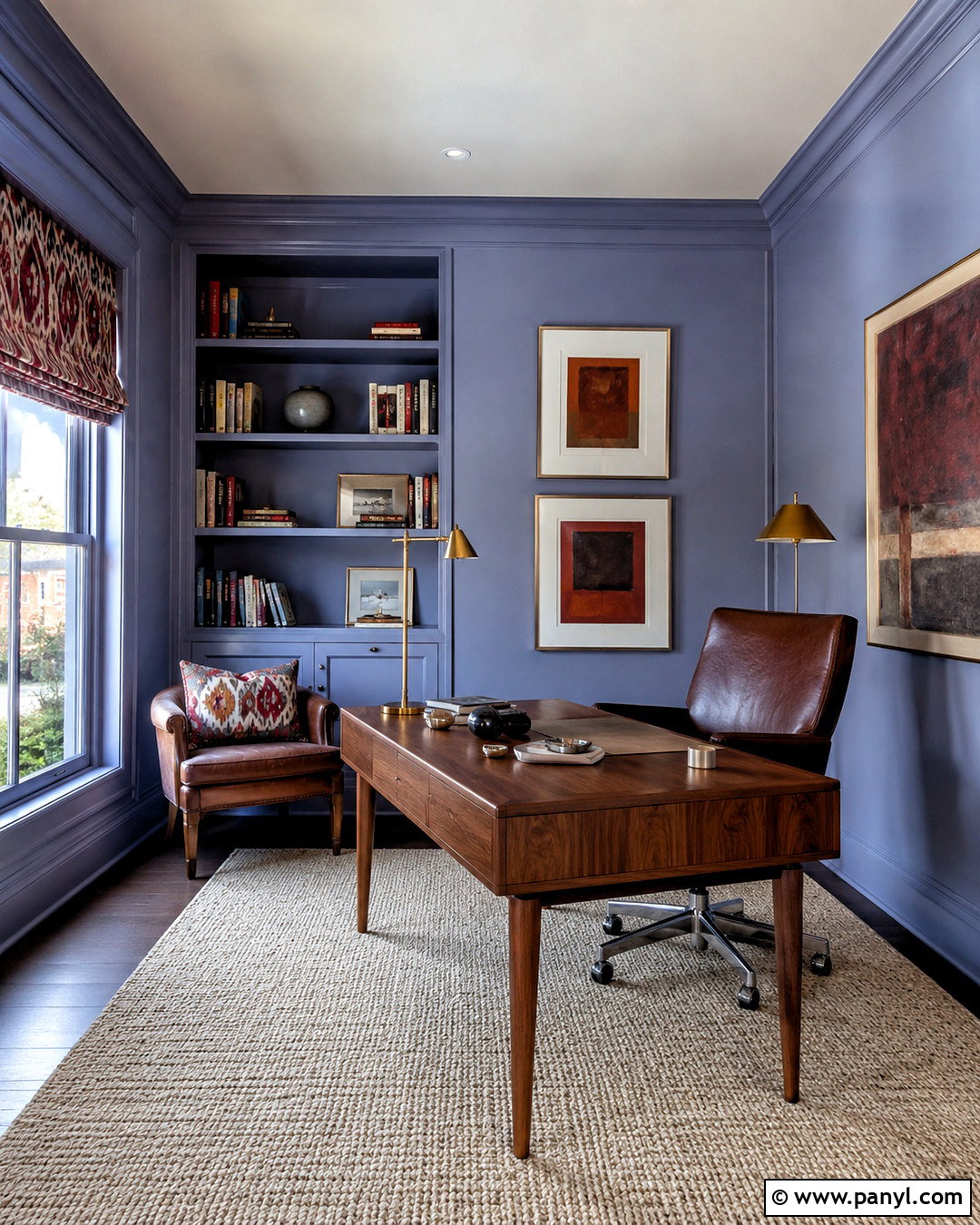
10. Dusty Blue Kitchen
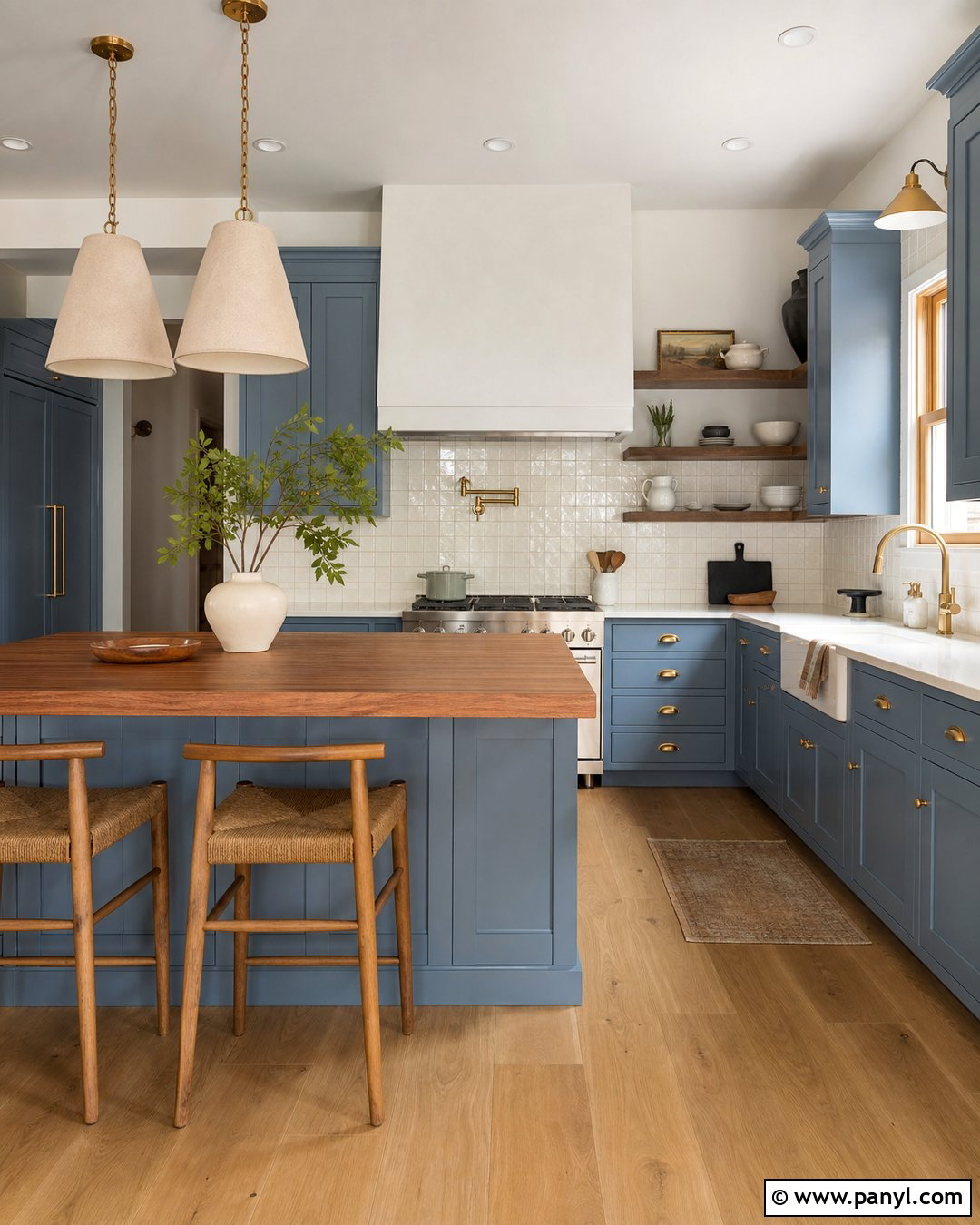
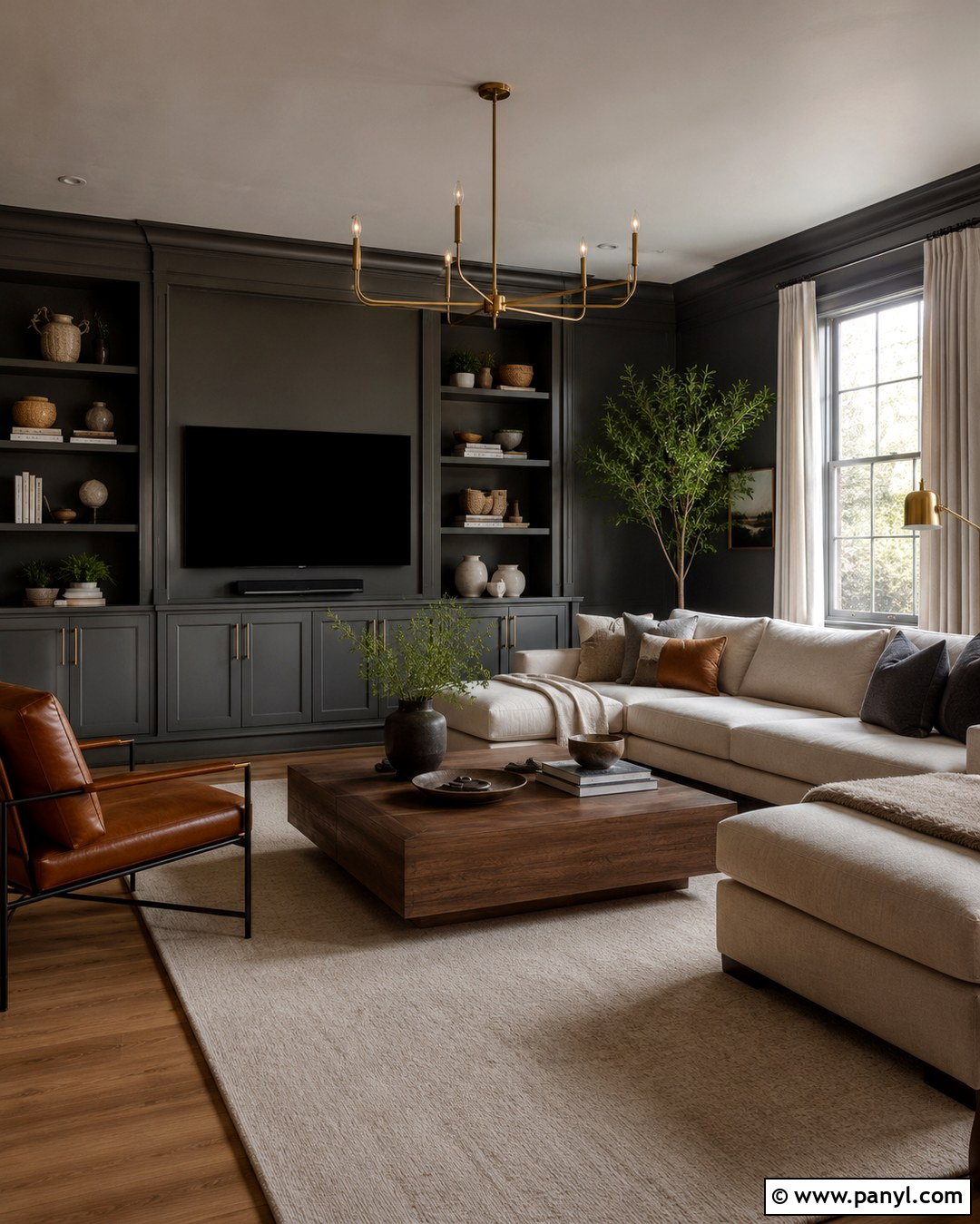
Dusty blue cabinetry creates a quiet, timeworn quality without making the kitchen look old-fashioned. Select a medium blue with gray undertones and use it across simple inset or Shaker doors. Warm the palette with butcher-block details, medium oak flooring, and an island topped with creamy quartz. An ivory tile backsplash softens the contrast, while antique brass pulls introduce a subtle traditional note. Paint the walls warm white and keep the ceiling bright to preserve an open atmosphere. A few walnut shelves can display practical ceramic dishes and glassware. Choose off-white linen pendants rather than black fixtures, which may make the blue appear cooler. The completed kitchen feels comfortable and established, offering enough color to be memorable while remaining gentle enough for an entire room.
11. Inky Navy Kitchen
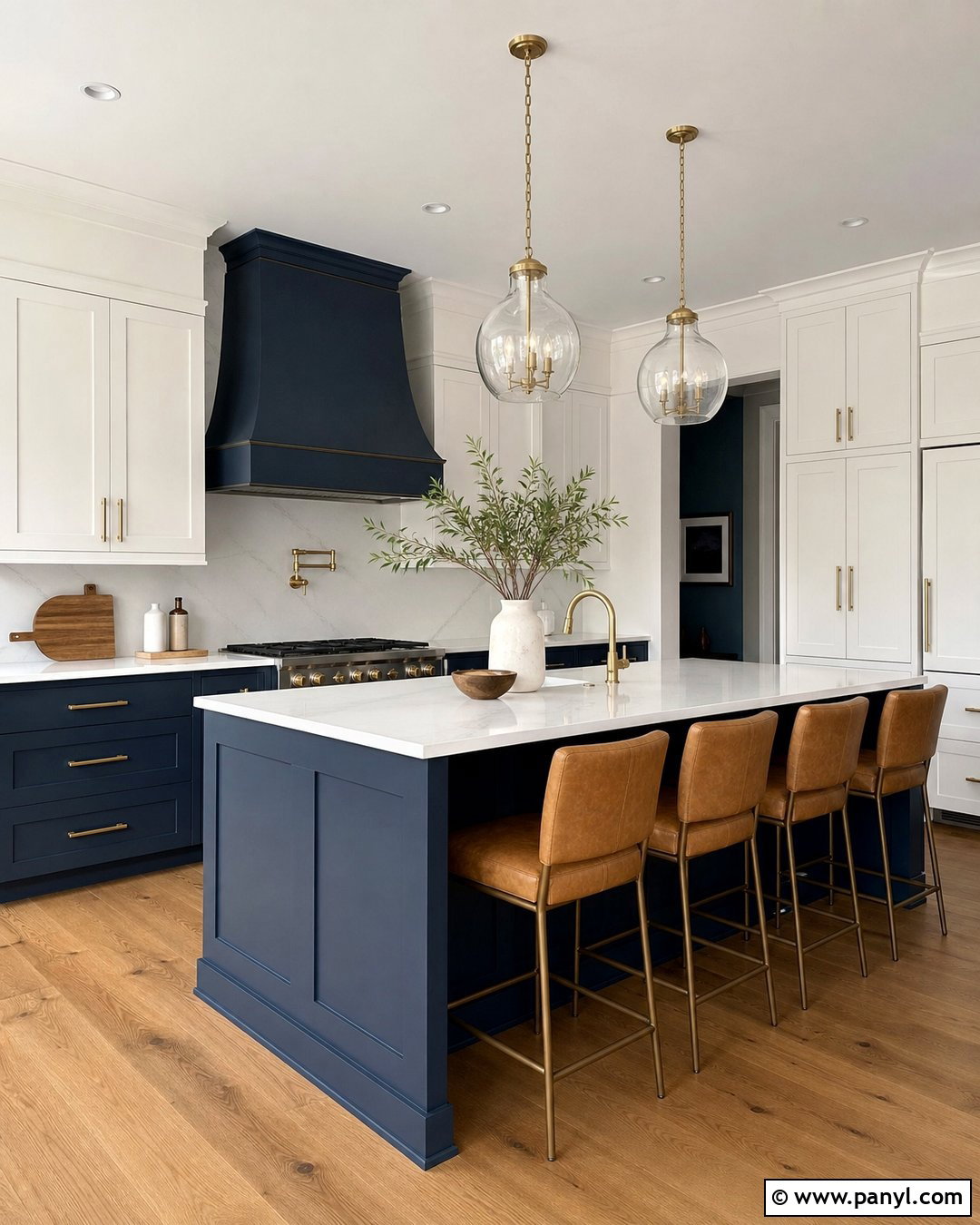
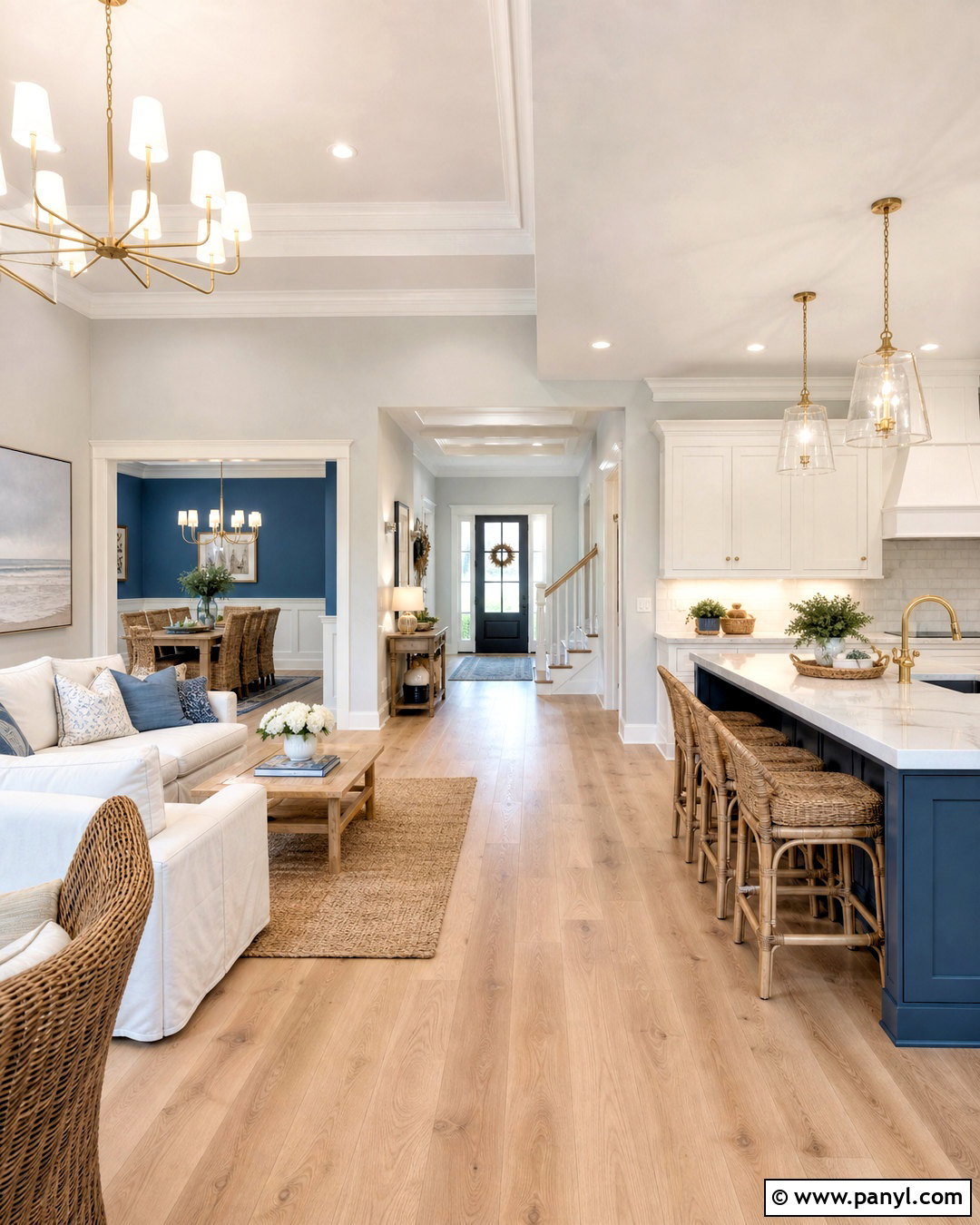
Inky navy brings architectural definition to a kitchen when it is balanced with reflective and natural finishes. Cover the island and lower cabinets in deep navy, then use warm white uppers to avoid enclosing the room. White quartz counters and a matching slab backsplash create clean visual breaks between the dark surfaces. Add medium oak flooring, aged brass hardware, and clear-glass pendants for warmth and brightness. A navy range hood can connect the upper and lower portions of the design without requiring every cabinet to be dark. Upholstered counter stools in camel or oatmeal provide a comfortable finishing layer. Keep walls creamy rather than stark white. The finished two-tone kitchen feels bold and tailored, yet the classic blue, wood, and white combination remains approachable for daily family use.
12. Blue Green Kitchen
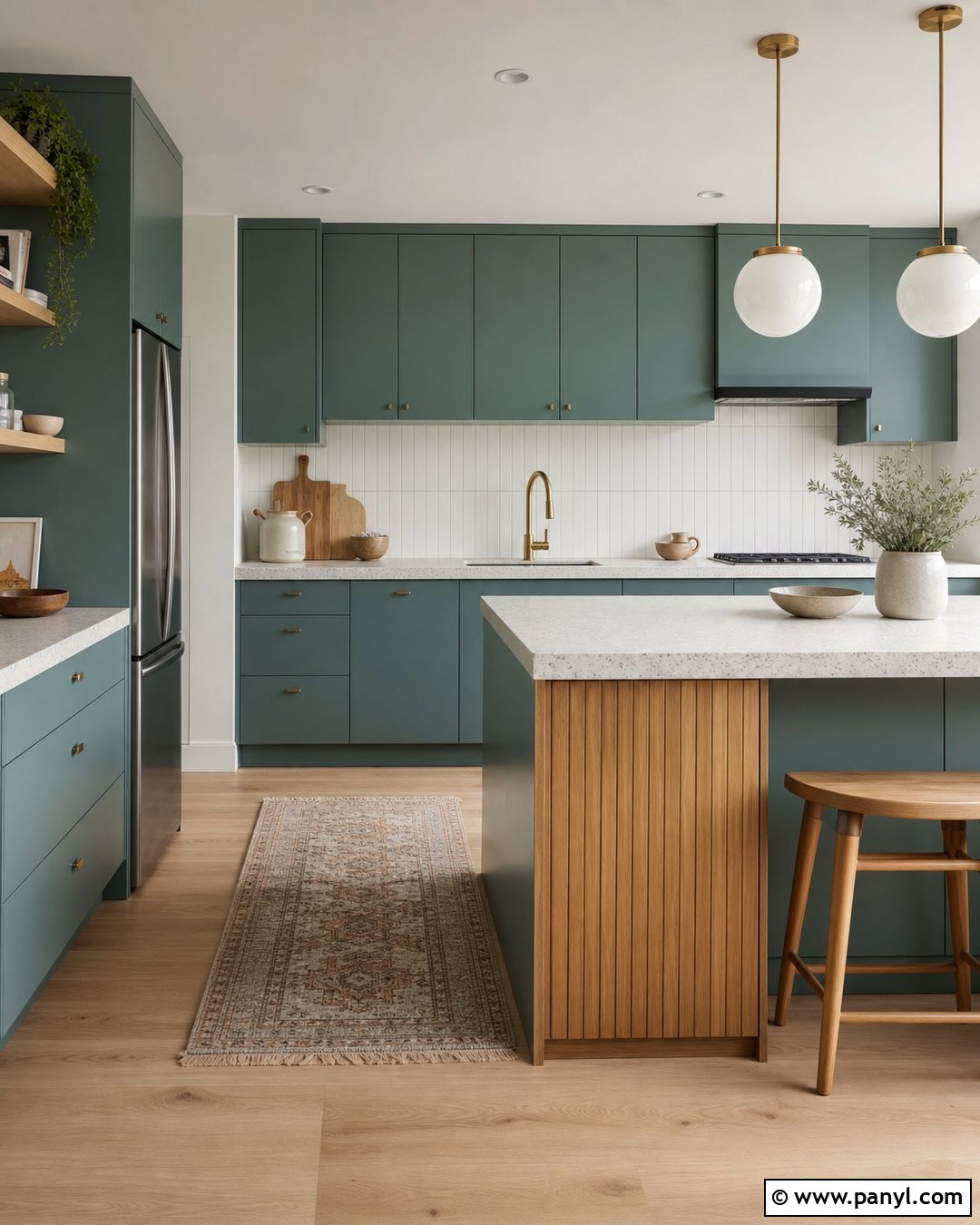
Blue-green cabinets shift between teal, eucalyptus, and muted turquoise as the lighting changes. Use this flexible color on flat-panel cabinetry for a clean contemporary look, then surround it with warm neutral materials. Pale terrazzo or softly veined quartz countertops will brighten the cabinets, while a vertical ivory tile backsplash adds gentle texture. Choose white oak flooring and an oak-paneled island end to reinforce the organic side of the palette. Brushed brass fixtures make the blue-green feel warmer, whereas matte black can create sharper contrast. Paint the walls a subdued cream and add globe pendants with milky white shades. The complete design feels colorful without becoming loud. It is particularly effective in kitchens connected to patios or gardens because the color visually bridges indoor and outdoor areas.
13. Butter Yellow Kitchen
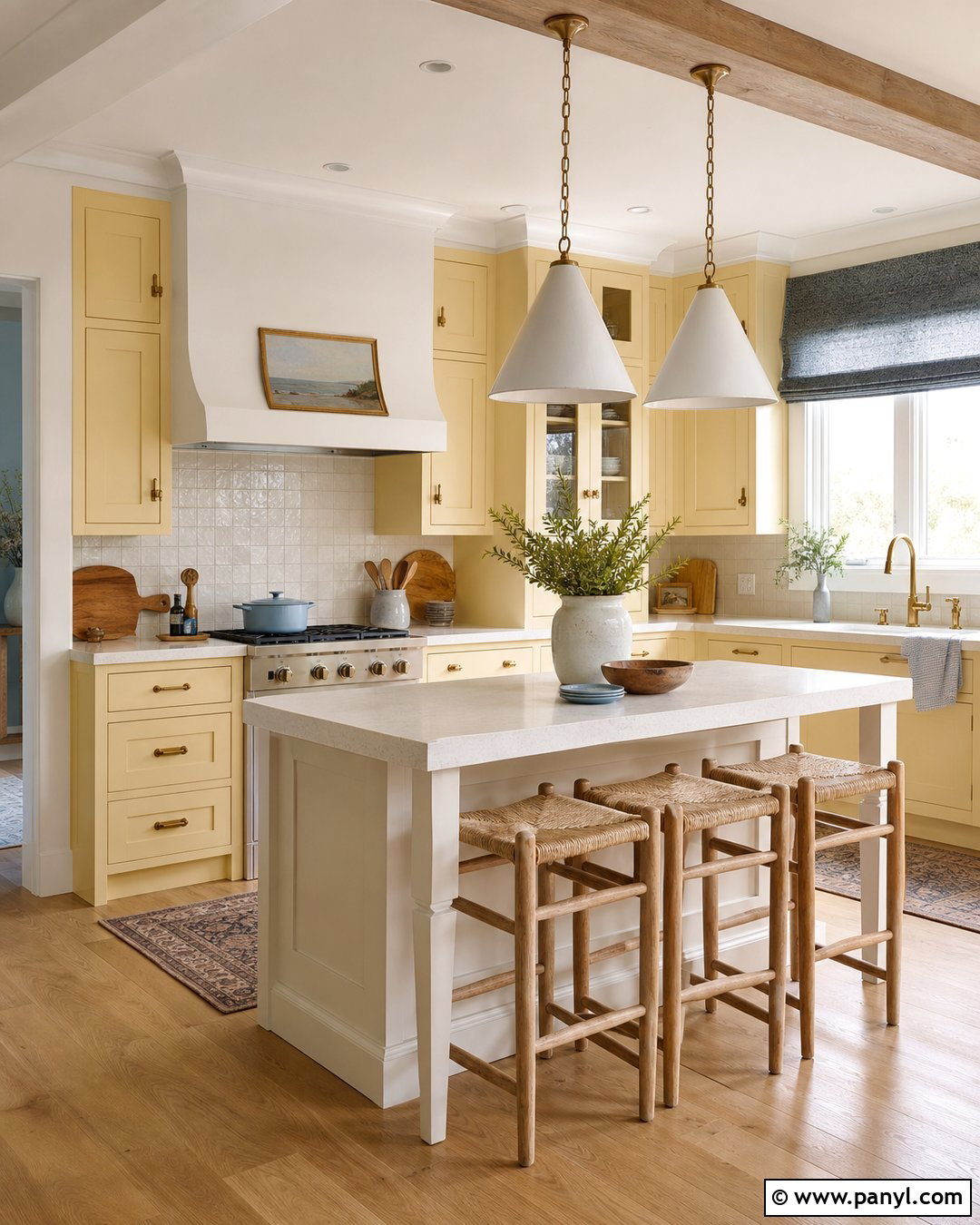
Butter yellow introduces sunny warmth in a softer and more livable form than bright primary yellow. Apply the color to traditional cabinets, pairing it with warm white walls and lightly stained oak flooring. Cream quartz counters and a square ivory tile backsplash will keep the palette cohesive. Use aged brass latches and cup pulls to enhance the gentle vintage character. A warm white island can provide a visual pause, especially in a large kitchen, while rush-seat stools add texture. Include restrained accents of dusty blue through dishes, a runner, or a painted pantry door. Avoid highly orange wood or cool gray surfaces, which can compete with the yellow undertone. The finished kitchen feels cheerful throughout the year and works beautifully in breakfast rooms, cottages, and family-centered spaces.
14. Dusty Rose Kitchen
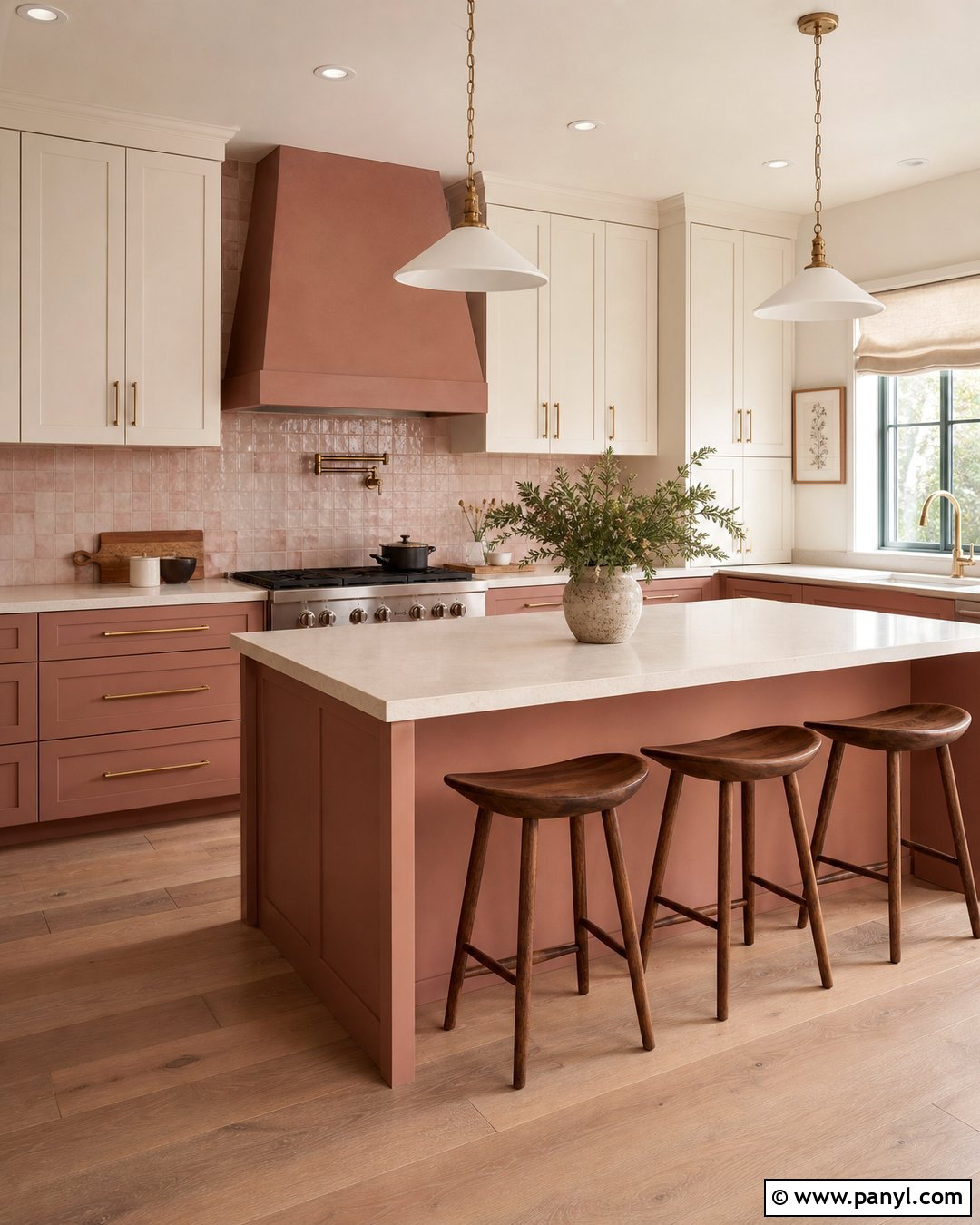
Dusty rose gives kitchen cabinetry an unexpected warmth while remaining softer than true pink. Select a muted clay-pink shade with brown or gray undertones and use it on lower cabinets and the island. Keep upper cabinets and walls creamy white to maintain balance. Pair the scheme with pale oak flooring, warm white quartz, and a handmade backsplash in ivory or blush-tinted tile. Brushed brass hardware complements the rosy color, while walnut stools add deeper contrast. A matching dusty rose range hood can make the palette feel intentional instead of decorative. Finish the space with linen shades and simple earthenware. This complete kitchen is expressive but not overly sweet, and the natural materials help the color read as earthy, architectural, and suitable for a hardworking everyday room.
15. Terracotta Kitchen
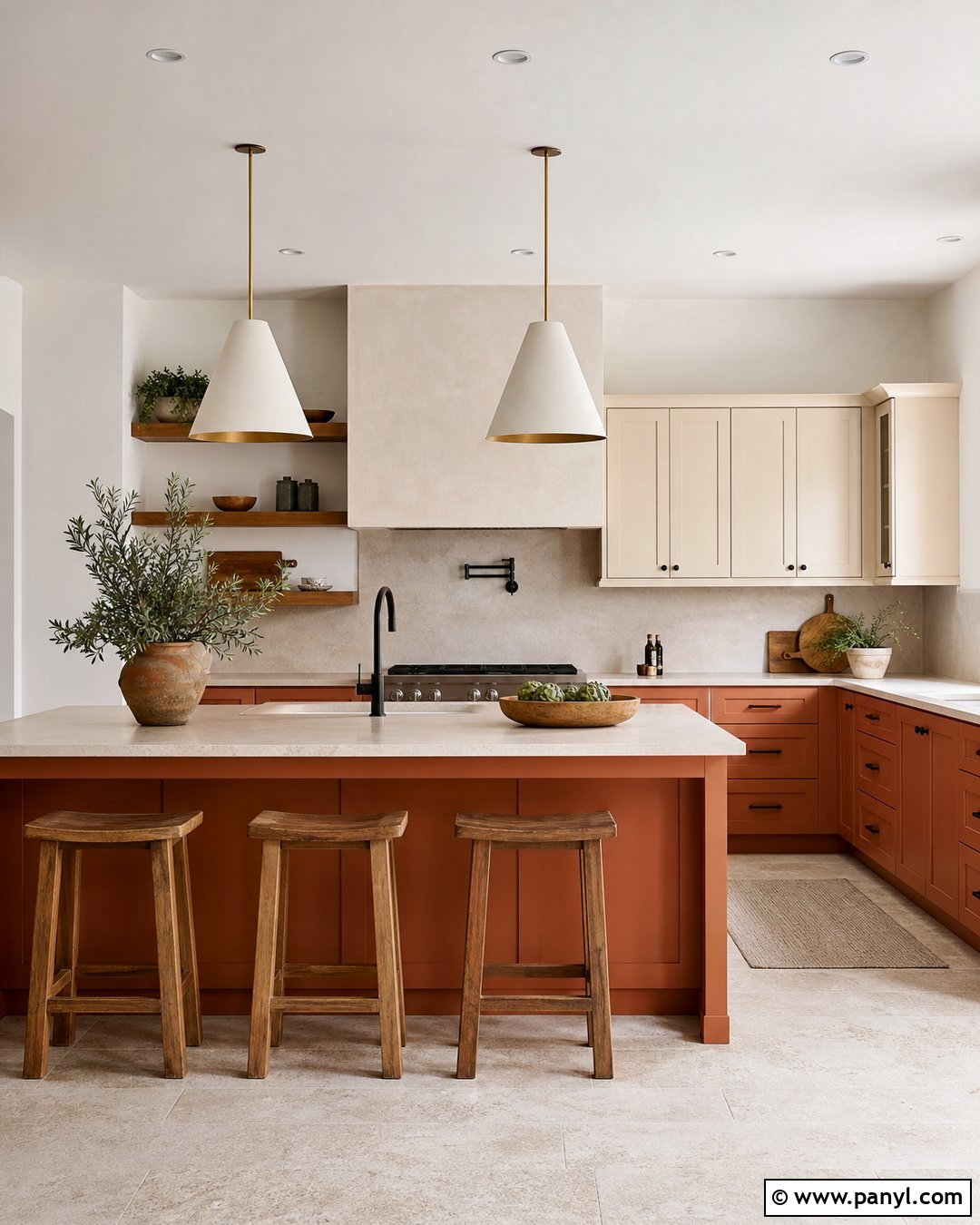
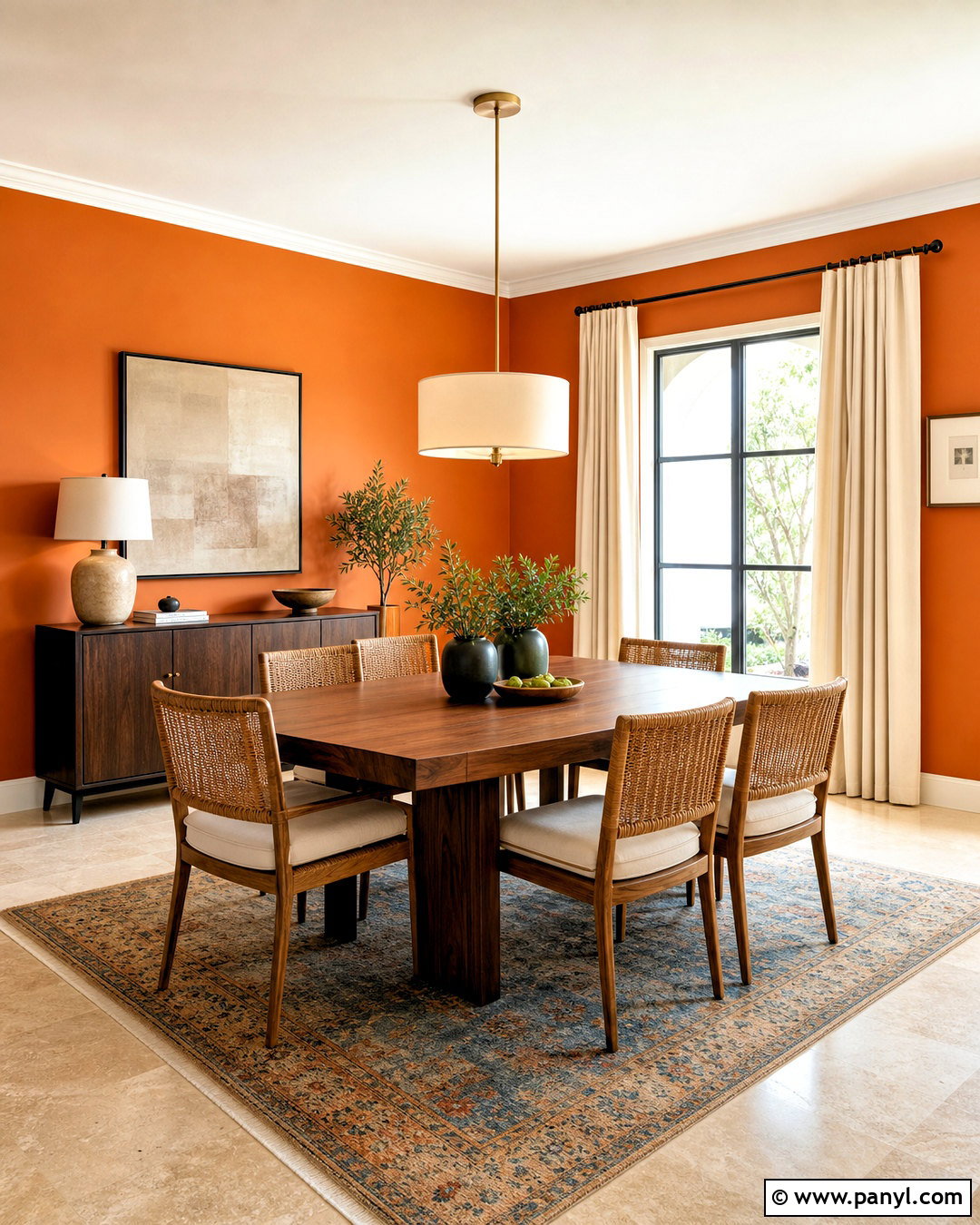
Imagine the welcoming glow of sun-warmed clay carried across an entire kitchen. Terracotta-painted cabinets create that effect when paired with quiet, natural finishes. Choose a softened red-orange shade for the lower cabinets and island, then use creamy uppers or open oak shelves above. Select light beige quartz counters and a warm off-white plaster backsplash to prevent excessive color competition. Travertine-look flooring reinforces the earthy character, while dark bronze hardware adds definition. Counter stools in natural oak and woven fiber keep the room casual. Walls should remain light, although a terracotta-painted doorway can connect the palette to an adjoining space. The completed kitchen feels warm and energetic rather than rustic, especially when cabinetry has simple lines and lighting is clean, bright, and contemporary.
16. Burgundy Kitchen
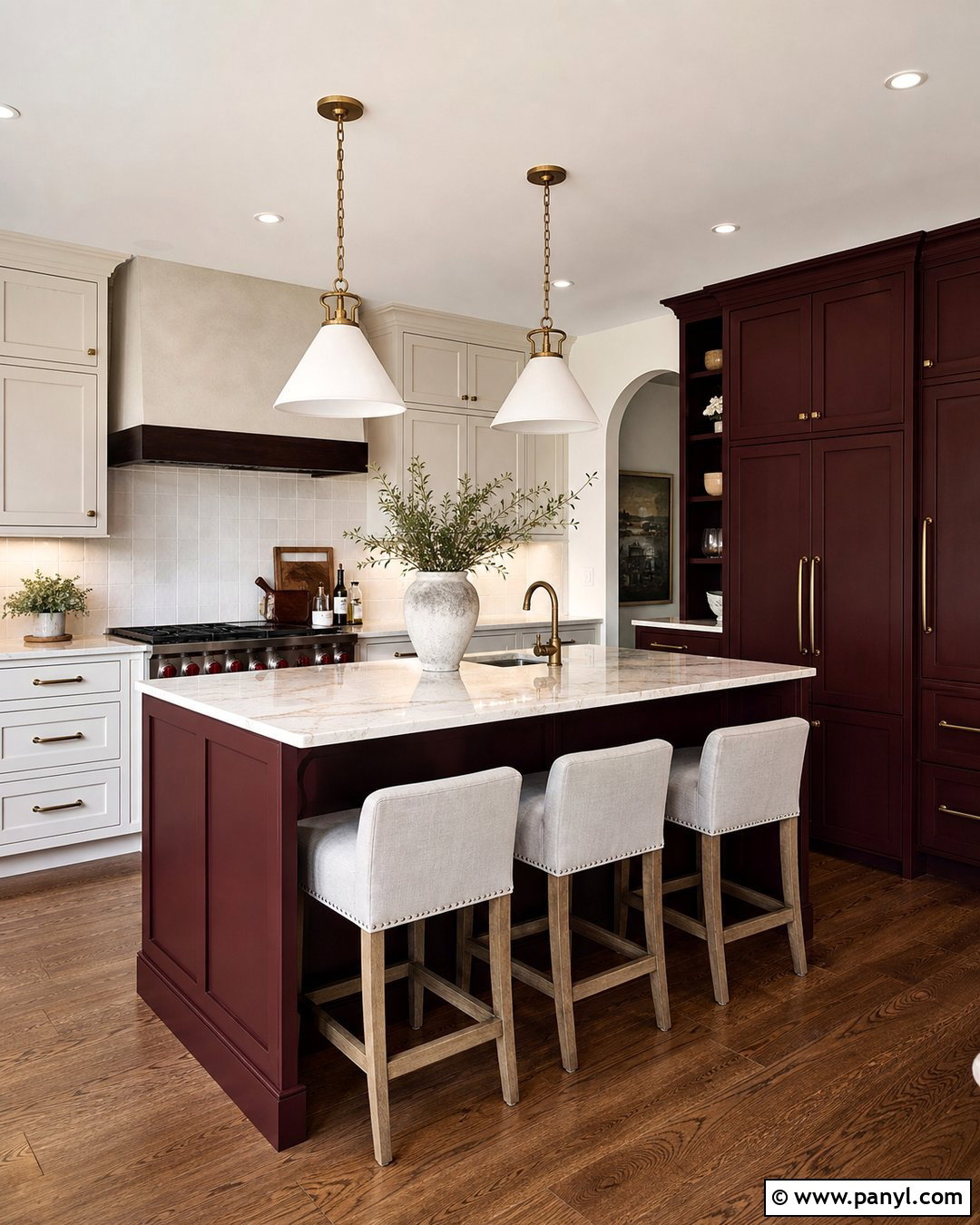
Burgundy cabinetry delivers rich color while appearing more refined than bright red. Use it on a large island and one wall of tall pantry cabinets, allowing warm white perimeter cabinets to lighten the room. Cream quartzite counters with subtle burgundy or brown veining will make the color relationship feel deliberate. Add walnut flooring, antique brass hardware, and softly curved ivory pendants. A backsplash in warm white tile provides a practical, understated background around the range. Repeat burgundy sparingly through a runner or small ceramic pieces rather than filling every surface with it. This complete design benefits from generous natural light and balanced task lighting. The final kitchen feels dramatic and polished, with enough neutral cabinetry and natural wood to make the stronger shade comfortable for long-term use.
17. Chocolate Brown Kitchen
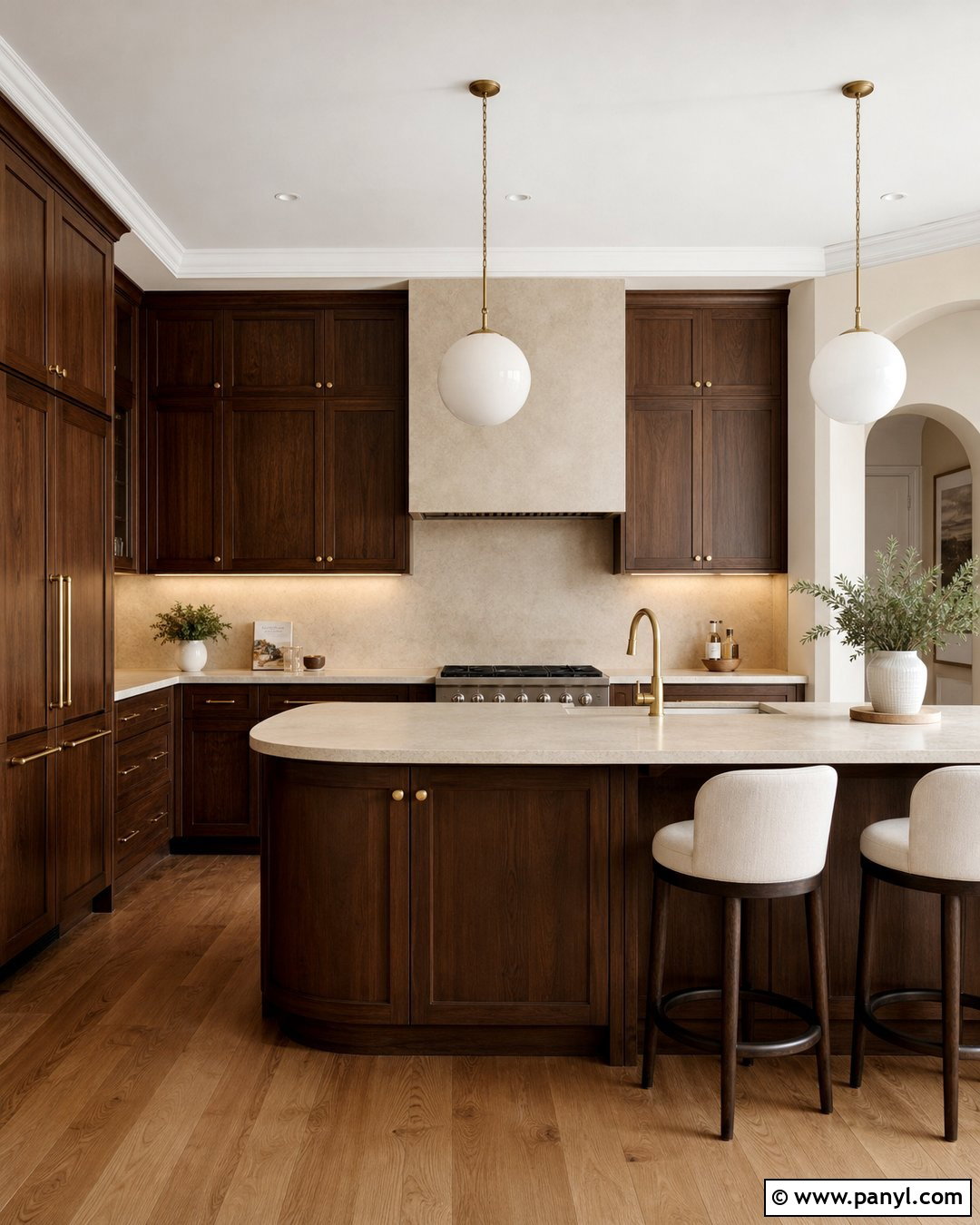
Chocolate brown is returning through painted cabinetry, dark wood stains, and richly veined surfaces. For a warm contemporary kitchen, use walnut or brown-stained oak cabinets with visible grain. Pair them with creamy limestone-look counters and a matching backsplash to brighten the darker wood. Choose pale beige walls and medium-toned oak flooring that differs slightly from the cabinetry, preventing a heavy matching effect. A softly curved island can feature the same brown finish for continuity. Add brushed brass hardware, ivory upholstered stools, and simple white globe pendants. Avoid filling the room with black accents; warm bronze provides gentler definition. The completed kitchen feels grounded, tactile, and luxurious without relying on ornate details. It also complements open-plan rooms furnished with cream, tan, rust, and natural textiles.
18. Charcoal Kitchen
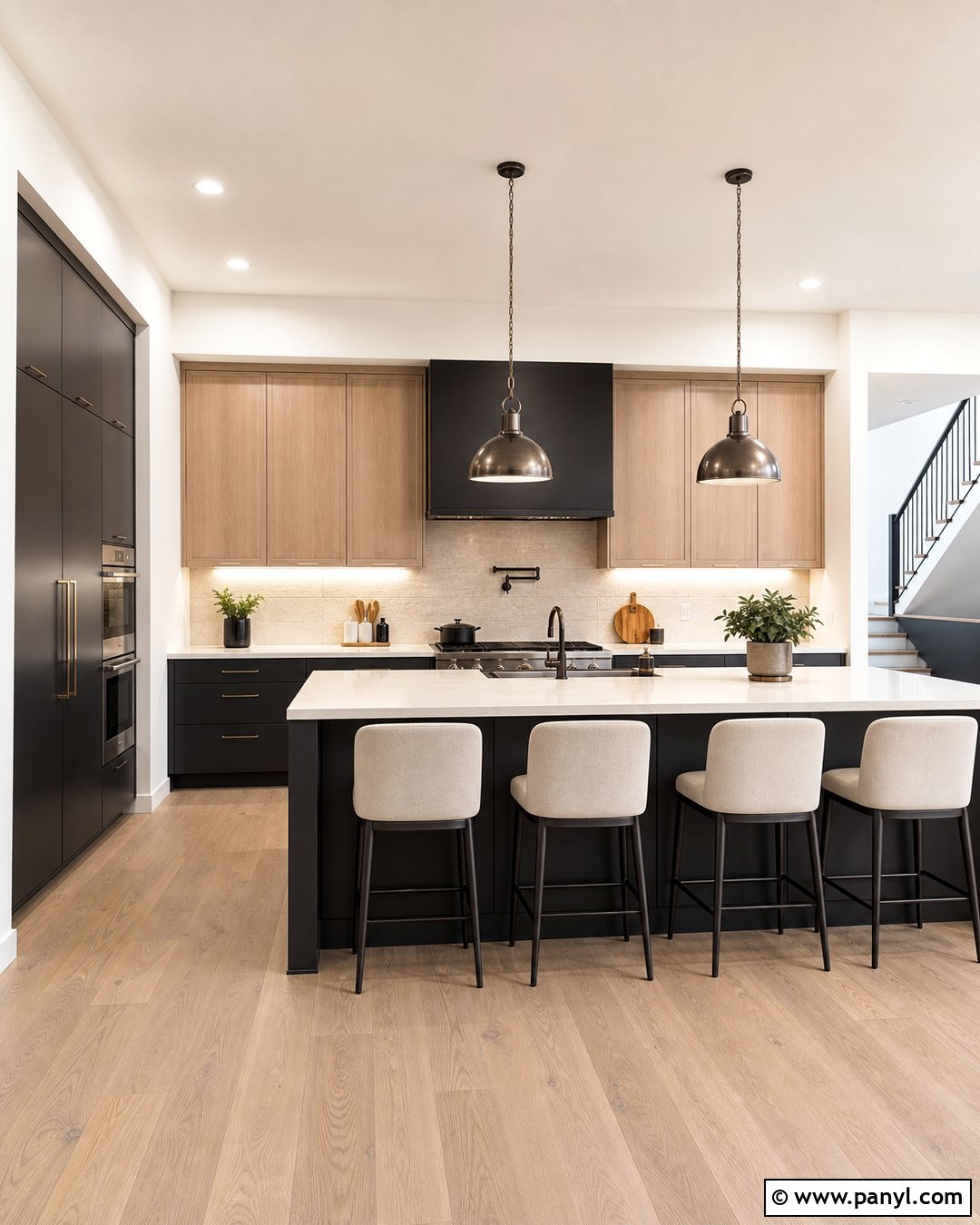
Charcoal creates a strong kitchen framework while remaining softer and more adaptable than solid black. Use it on flat-panel lower cabinets, the island, and a streamlined range hood. Balance those dark surfaces with white oak upper cabinets, warm white walls, and light quartz counters. A full-height backsplash in softly veined cream stone keeps the cooking wall bright. Choose brushed stainless steel or pewter hardware rather than high-contrast black pulls. Pale oak flooring and oatmeal counter stools introduce warmth and texture. Undercabinet lighting is essential for illuminating work areas beneath darker cabinetry. Continue the charcoal onto a nearby pantry door for visual consistency. This complete palette feels modern and architectural, yet the wood grain and creamy surfaces stop it from becoming cold, severe, or overly industrial.
19. Natural Wood Kitchen
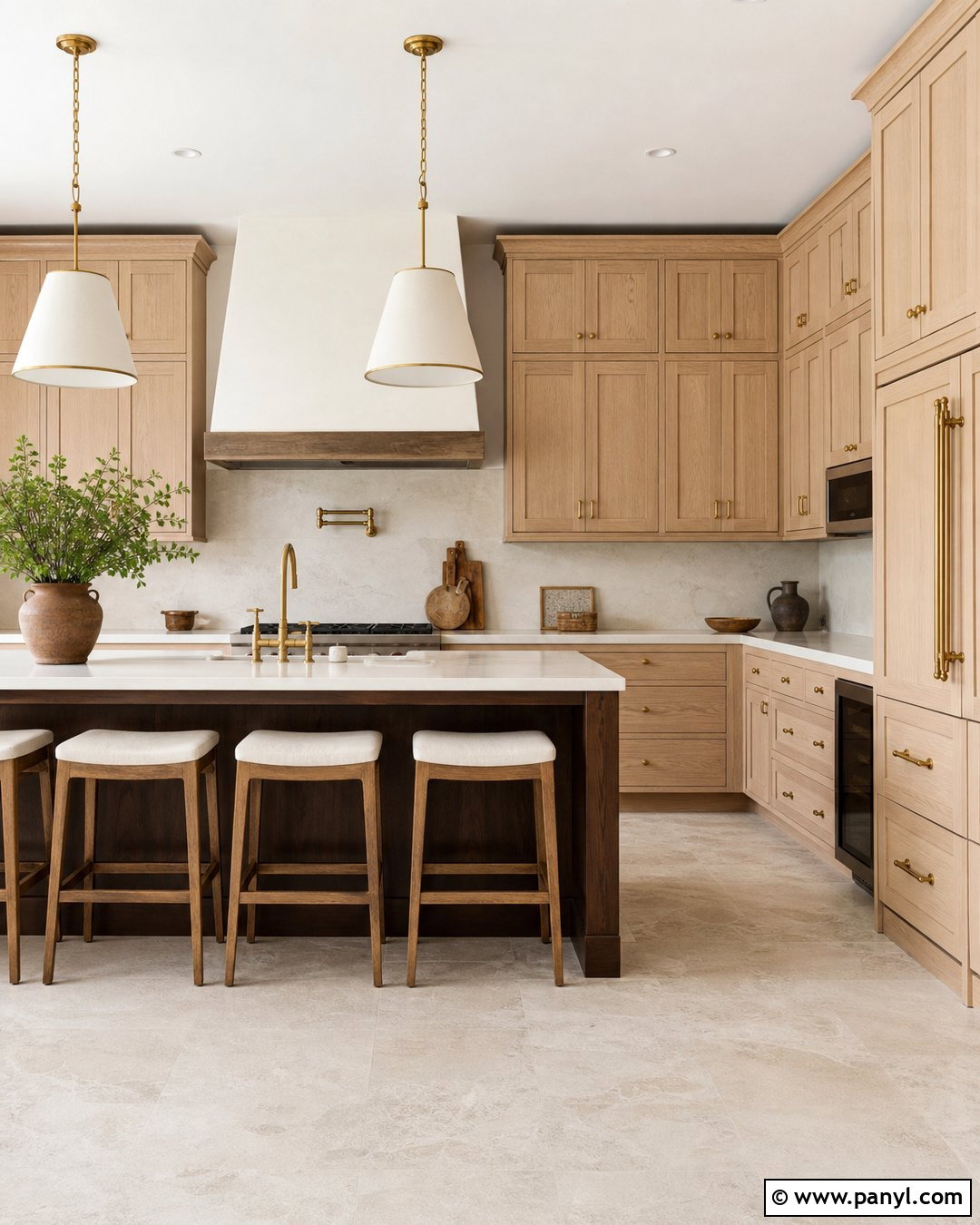
Natural wood is functioning as a major color statement, not merely a supporting material. Wood grain has gained prominence alongside painted cabinetry in recent kitchen trend reporting. () Create a complete warm kitchen with white oak cabinets in a clear matte finish, allowing the pale golden grain to remain visible. Use creamy quartz counters, an ivory slab backsplash, and light limestone-look flooring for gentle contrast. A darker walnut island can define the center while preserving the natural palette. Choose aged brass hardware and oversized off-white pendants to soften the clean cabinet lines. Paint the walls a warm white that does not turn yellow beside the oak. The final design feels organic and current, yet the durable material combination can adapt easily as decorative colors change.
20. Two Tone Kitchen
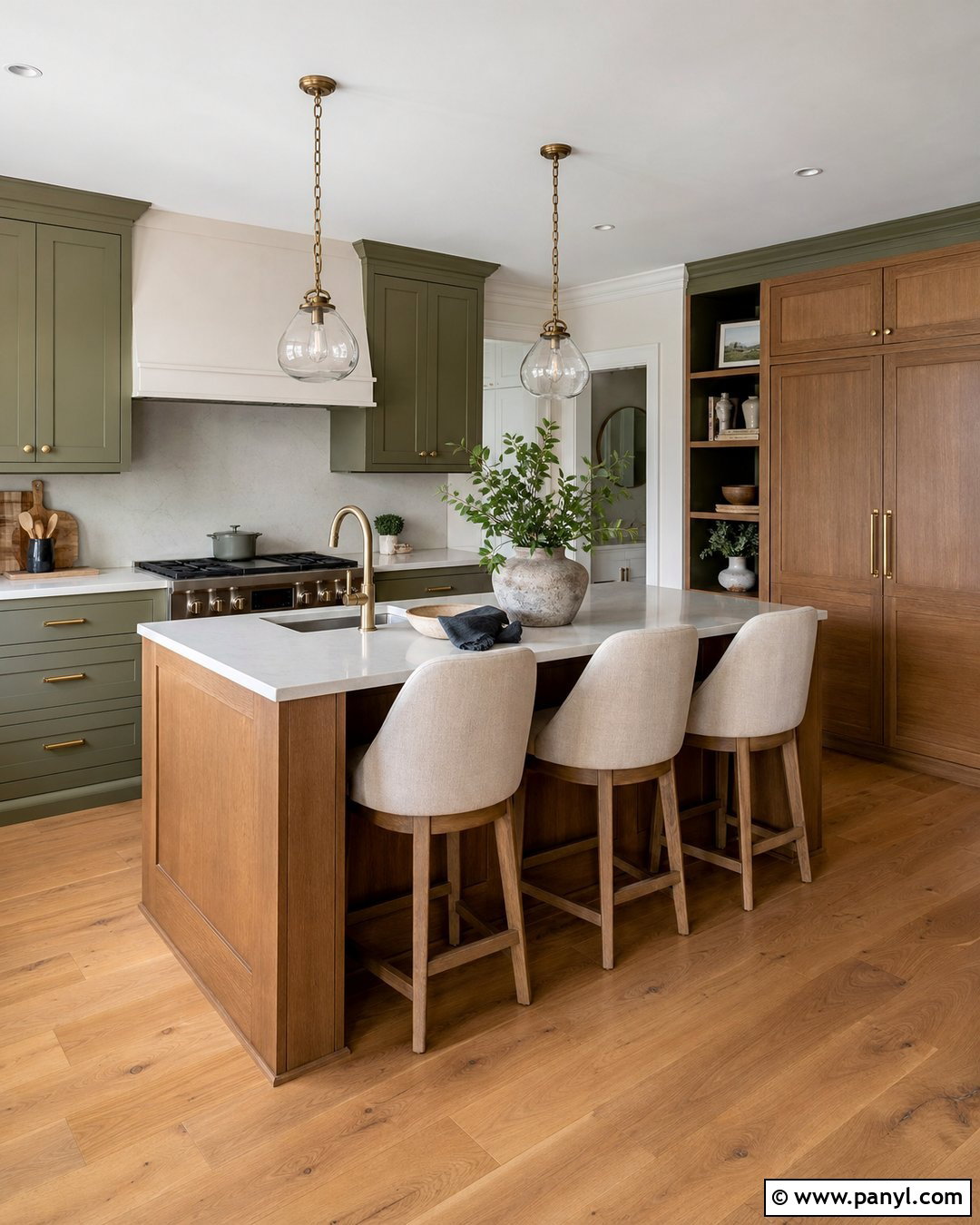
Two-tone kitchens now extend beyond the predictable combination of dark lowers and white uppers. Create a more integrated look by pairing muted olive perimeter cabinets with a warm wood island and matching oak pantry units. Paint the walls in creamy beige, then use pale quartz counters and a full-height backsplash to connect the different cabinet finishes. A narrow olive trim detail on the oak pantry can repeat the painted color in a subtle way. Choose aged brass hardware throughout so both cabinet treatments share one consistent finish. Medium oak flooring, linen counter stools, and simple glass pendants complete the space. This layered approach gives each kitchen zone an identity while maintaining harmony. It is also practical for homeowners who want color without painting every cabinet in one strong shade.
Conclusion:
The best kitchen palette should feel current while supporting the way you cook, gather, and live. Warm whites, mushroom neutrals, natural wood, earthy greens, and softened blues offer flexible foundations. Butter yellow, terracotta, burgundy, and dusty rose provide more distinctive alternatives when used with balanced materials and thoughtful lighting. Before committing, sample every cabinet and wall color beside the actual flooring, countertop, backsplash, and hardware. Observe each sample during morning, afternoon, and evening light, since surrounding finishes can alter its appearance. These **20 Current Kitchen Color Trends** show that a cohesive room matters more than one fashionable shade. Build the complete palette together, and your kitchen will feel intentional, welcoming, and personal.

Related Ideas and Inspiration:
Leave a Reply