
Dark blue kitchens bring depth, character, and a polished finish to one of the hardest-working rooms in the home. The color can feel classic, modern, coastal, or rustic depending on the cabinet profile and surrounding materials. Recent design coverage also shows that deep blue remains relevant when it is balanced with warm metals, natural wood, nuanced stone, and layered lighting. () Instead of treating navy as an isolated statement, build a complete palette around it. Consider the flooring, backsplash, counters, hardware, appliances, and amount of natural light. Even a compact room can carry this rich shade when reflective or pale surfaces are placed thoughtfully. The following 20 dark blue kitchens offer practical, complete looks for creating a balanced and inviting space.
1. Dark Blue Kitchen With White Quartz
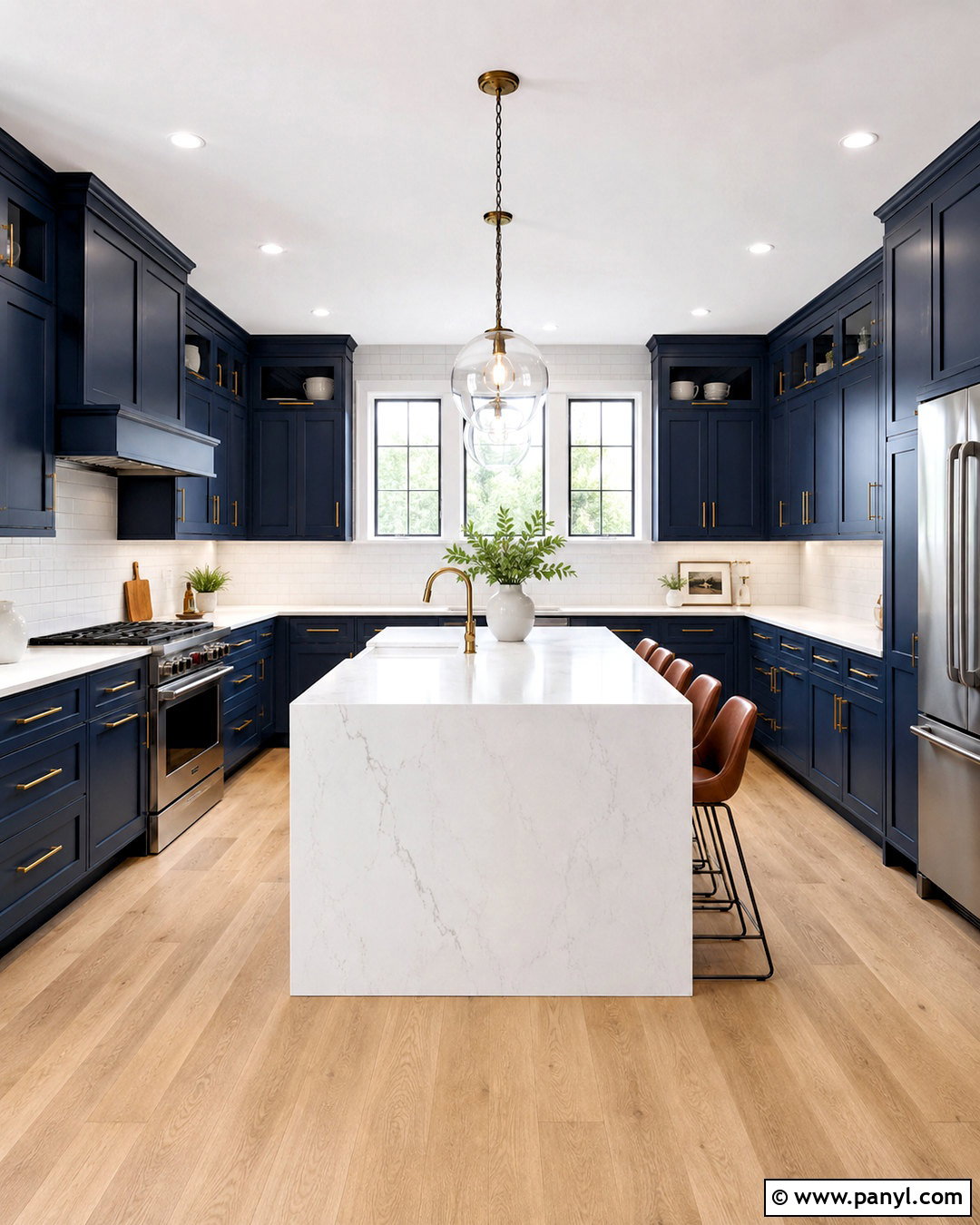
Crisp white quartz gives dark blue cabinets a clean, bright counterpoint without making the kitchen feel cold. Choose simple Shaker cabinetry in a matte navy finish, then run lightly veined white quartz across the counters and waterfall island. A glossy white subway tile backsplash will reflect natural and artificial light around the room. Add warm white walls, pale oak flooring, and streamlined brushed brass pulls to soften the contrast. Three glass pendants can illuminate the island without adding visual heaviness. Keep counter decor minimal, using a wooden bowl, neutral pottery, and one leafy plant. This complete combination works especially well in a medium-size kitchen where you want dramatic cabinetry but still need the room to feel open.
2. Dark Blue Kitchen With Brass Hardware
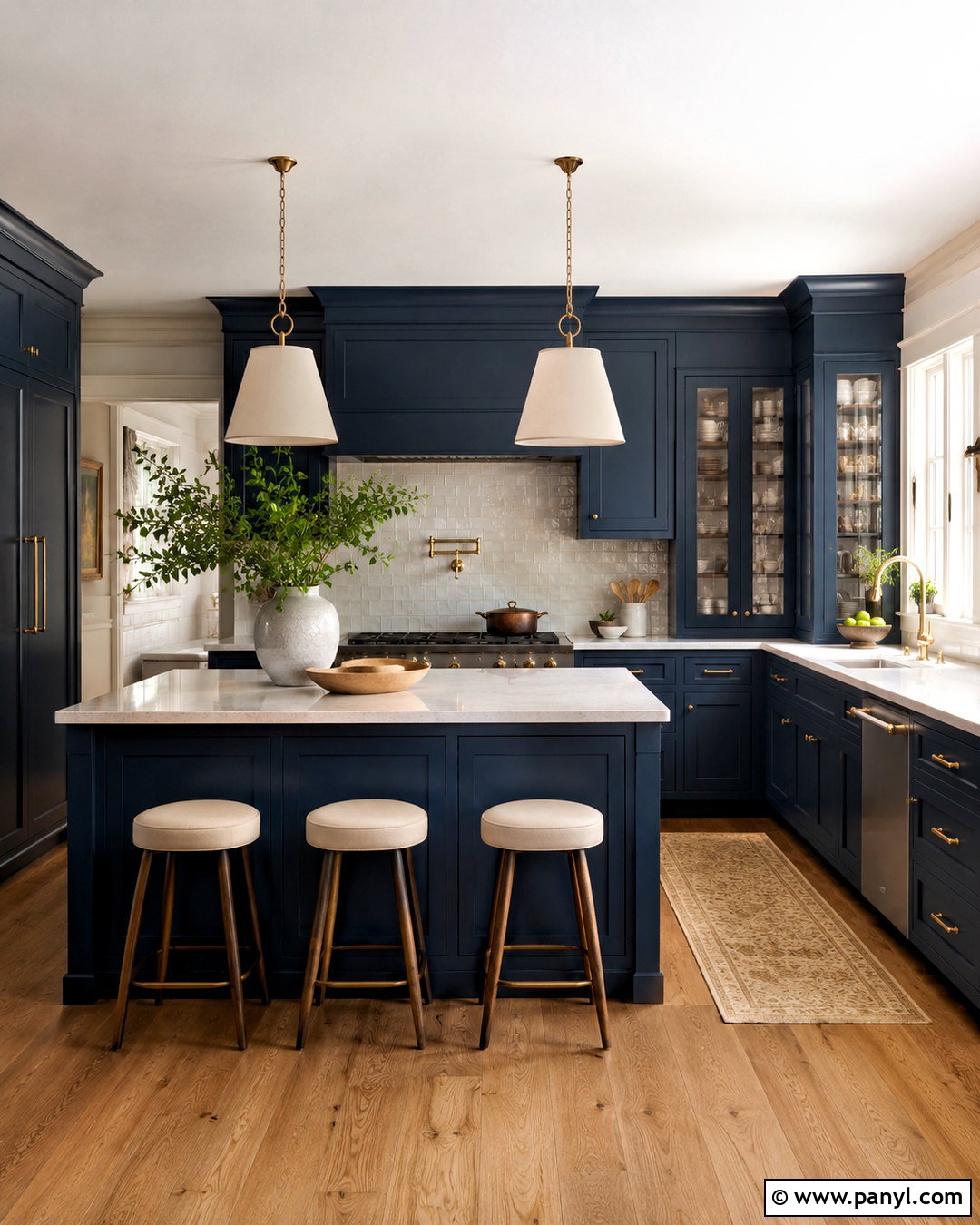
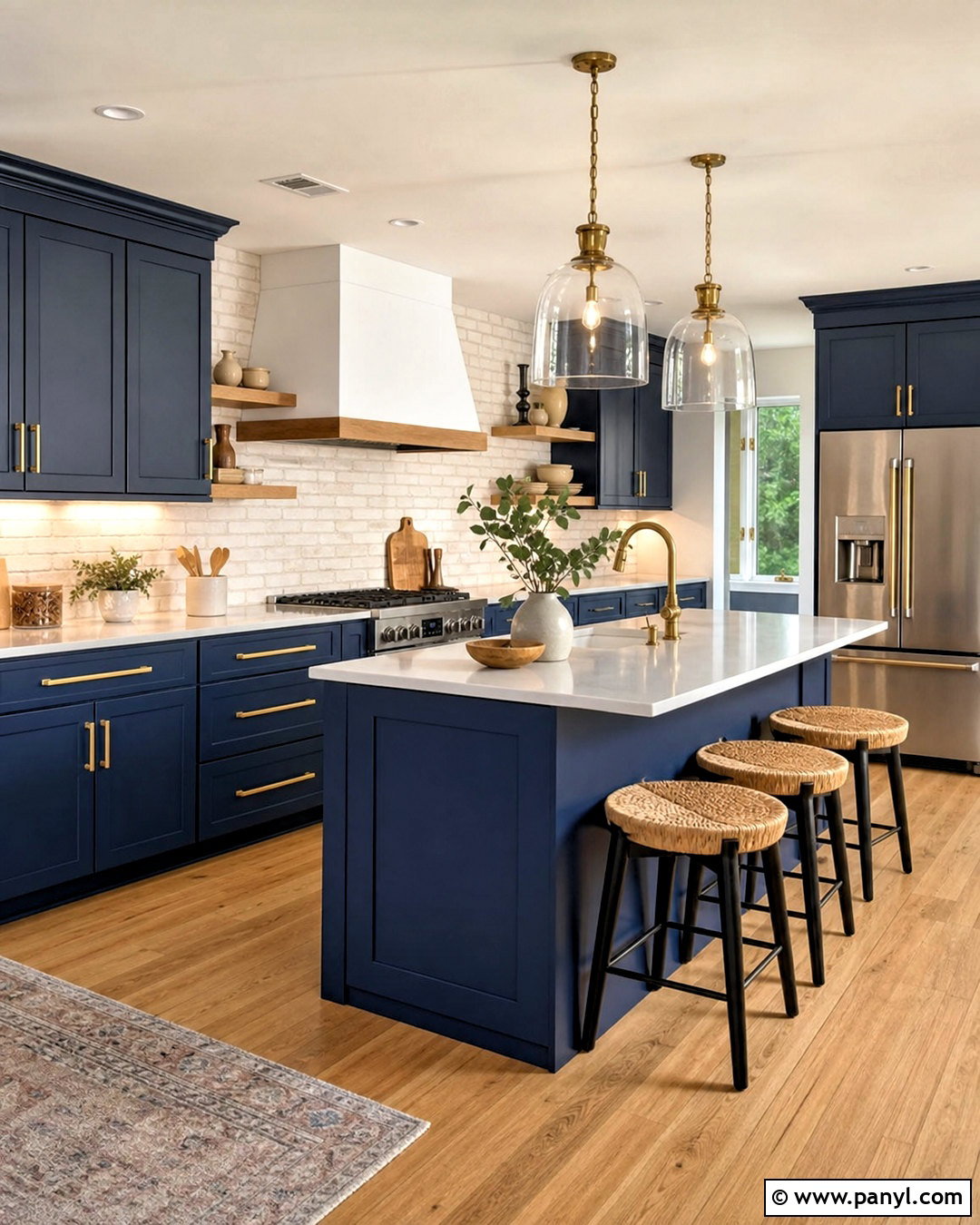
Brass hardware can transform dark blue cabinetry into a warm and sophisticated focal point. Use long satin brass pulls on drawers and smaller matching knobs on doors for a collected appearance. Continue the metal through a bridge faucet, simple pendant lights, and narrow details on counter stools. Creamy quartz counters and an ivory zellige backsplash prevent the blue-and-gold pairing from becoming too formal. Medium-tone oak floors introduce natural warmth underfoot, while a plaster-style range hood adds softness above the cooking area. Finish the room with linen shades and a vintage-inspired runner containing muted blue and tan. The result is elegant but comfortable, with enough warm texture to make the dramatic cabinet color feel approachable for everyday living.
3. Dark Blue Kitchen With Wood Cabinets
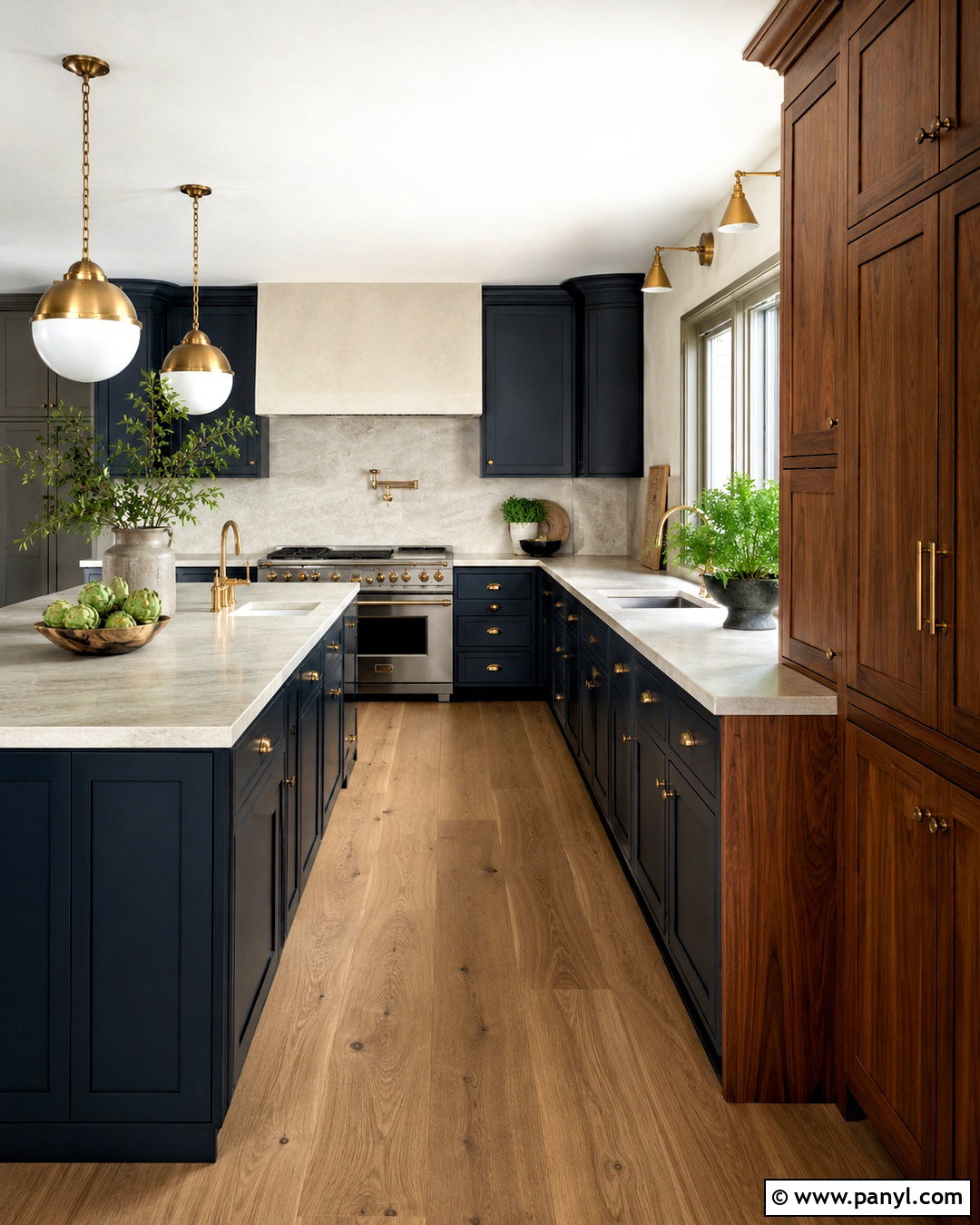
Mixing dark blue paint with natural wood creates a layered kitchen that feels less uniform and more personal. Place navy cabinets along the main perimeter, then use walnut for the tall pantry wall or refrigerator surround. The wood grain breaks up the blue while providing a warm architectural feature. Select creamy stone counters with quiet brown veining to connect both cabinet finishes. A backsplash made from the same material will keep the mixed cabinetry from looking busy. Add aged brass hardware, warm white walls, and wide-plank oak flooring. Over the island, choose understated milk-glass pendants instead of bold fixtures. This balanced design suits open-plan homes because the natural wood helps the kitchen relate comfortably to nearby dining and living furniture.
4. Dark Blue Kitchen With Marble Backsplash
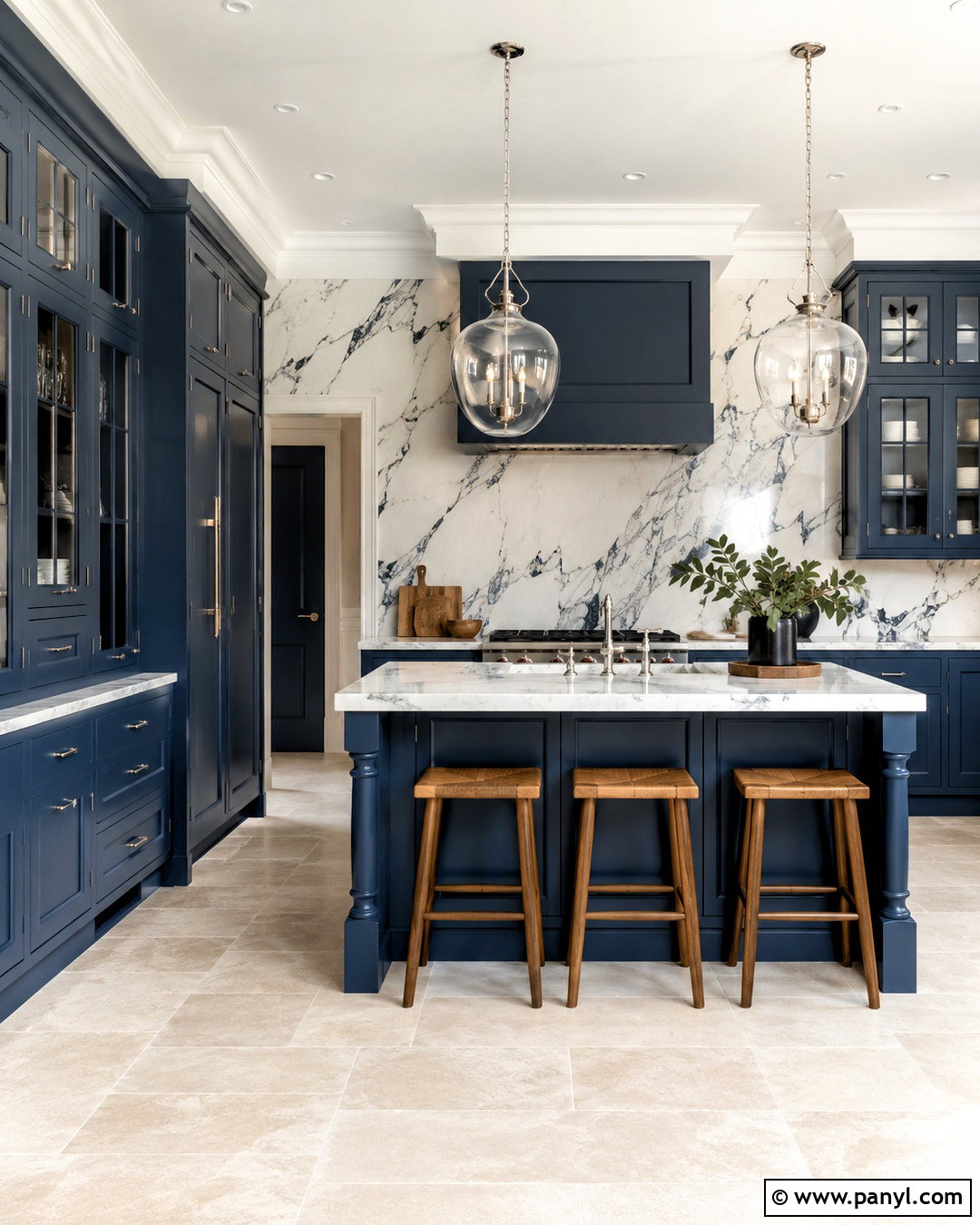
Few materials complement dark blue cabinets as naturally as expressive marble. Choose a white slab with soft gray and blue-gray veining, then carry it from the countertop to the underside of the upper cabinets. Using one continuous surface creates a calmer result than combining several small patterns. Keep the cabinetry traditional with inset doors, a deep navy finish, and understated polished nickel hardware. Pale stone flooring and warm white walls brighten the space, while a dark blue island anchors the center. Add clear glass pendants so the marble remains visible from across the room. Wooden stools and woven shades introduce relaxed texture. Seal natural marble carefully, or use a realistic porcelain or quartz alternative if easy maintenance is a priority.
5. Small Dark Blue Kitchen
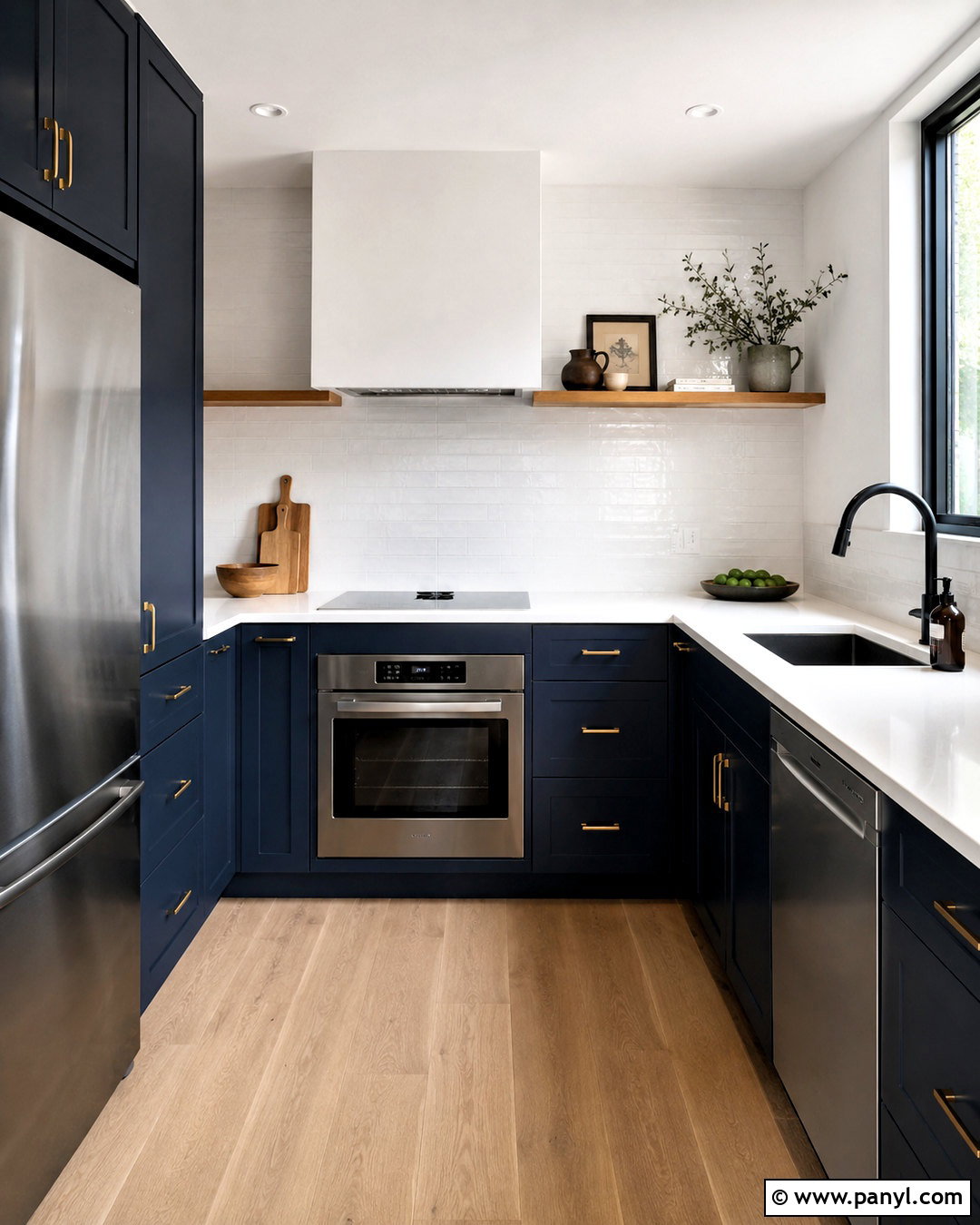
A small kitchen can support dark blue cabinetry when the color is balanced with bright surfaces and efficient lighting. Use navy only on the lower cabinets and one tall pantry unit, leaving upper walls white to create breathing room. Choose handleless or slim-profile doors so the cabinetry looks neat rather than bulky. White quartz counters, a glossy backsplash, and pale wood flooring will bounce light throughout the compact layout. Install under-cabinet LED strips to remove shadows from the work surfaces. One open oak shelf can replace a heavy upper cabinet near the window. Keep appliances integrated where possible, and select simple brushed brass pulls for warmth. This approach provides rich color and practical storage without making the kitchen feel crowded or enclosed.
6. Dark Blue Kitchen With White Upper Cabinets
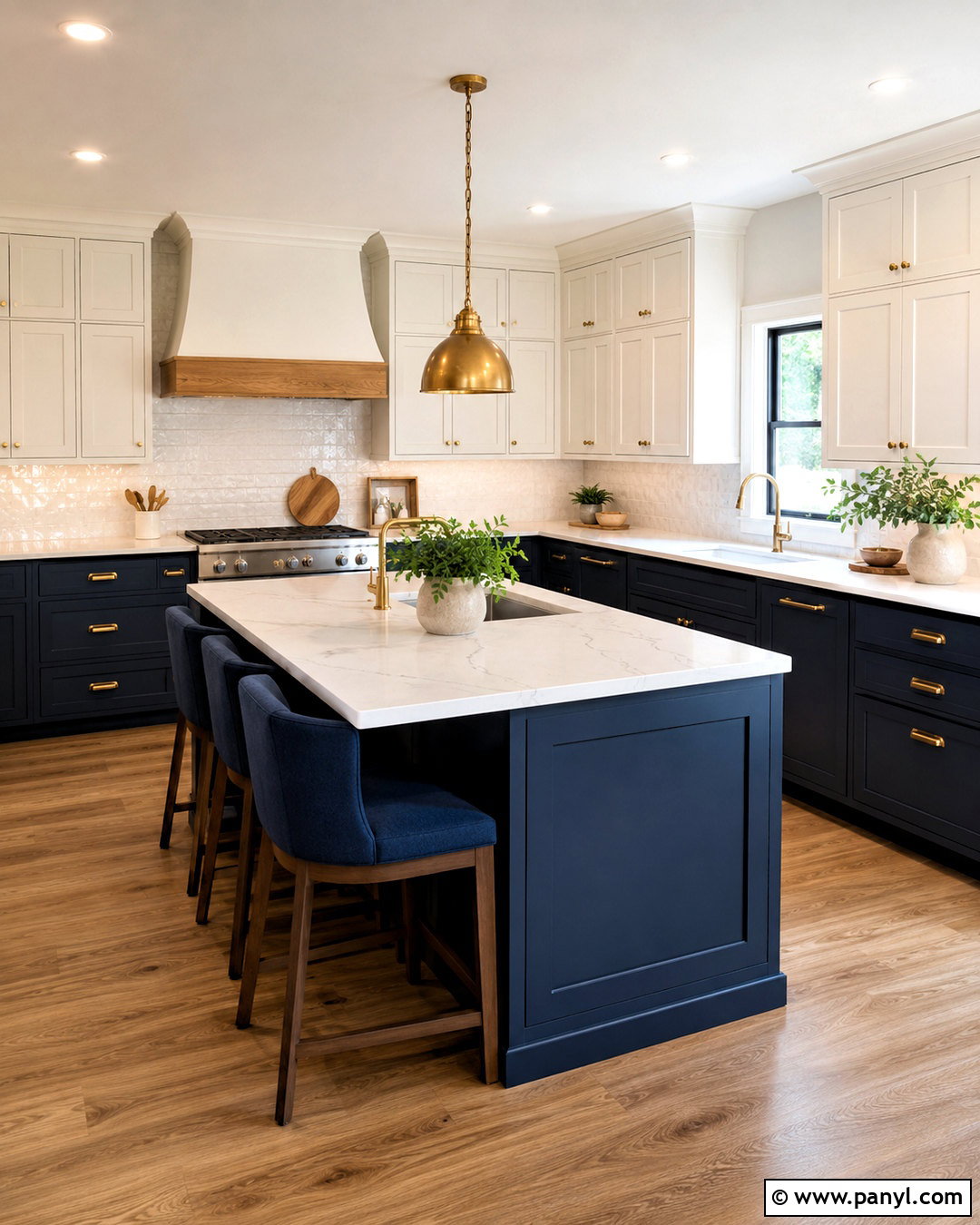
Two-tone cabinetry offers an easy way to enjoy dark blue without covering every wall in a strong color. Paint the base cabinets and island deep navy, then use soft white for the upper cabinets and tall storage. The darker lower section grounds the room, while the pale uppers visually lift the ceiling. Connect both colors with white quartz counters featuring delicate blue-gray veining. A handmade white tile backsplash adds gentle texture, and medium oak flooring keeps the palette warm. Use the same aged brass hardware across both cabinet colors for continuity. Dark blue counter stools can repeat the lower cabinetry around the island. This scheme is particularly effective in family kitchens because it feels colorful and distinctive while remaining bright, flexible, and easy to decorate.
7. Dark Blue Kitchen With Oak Island
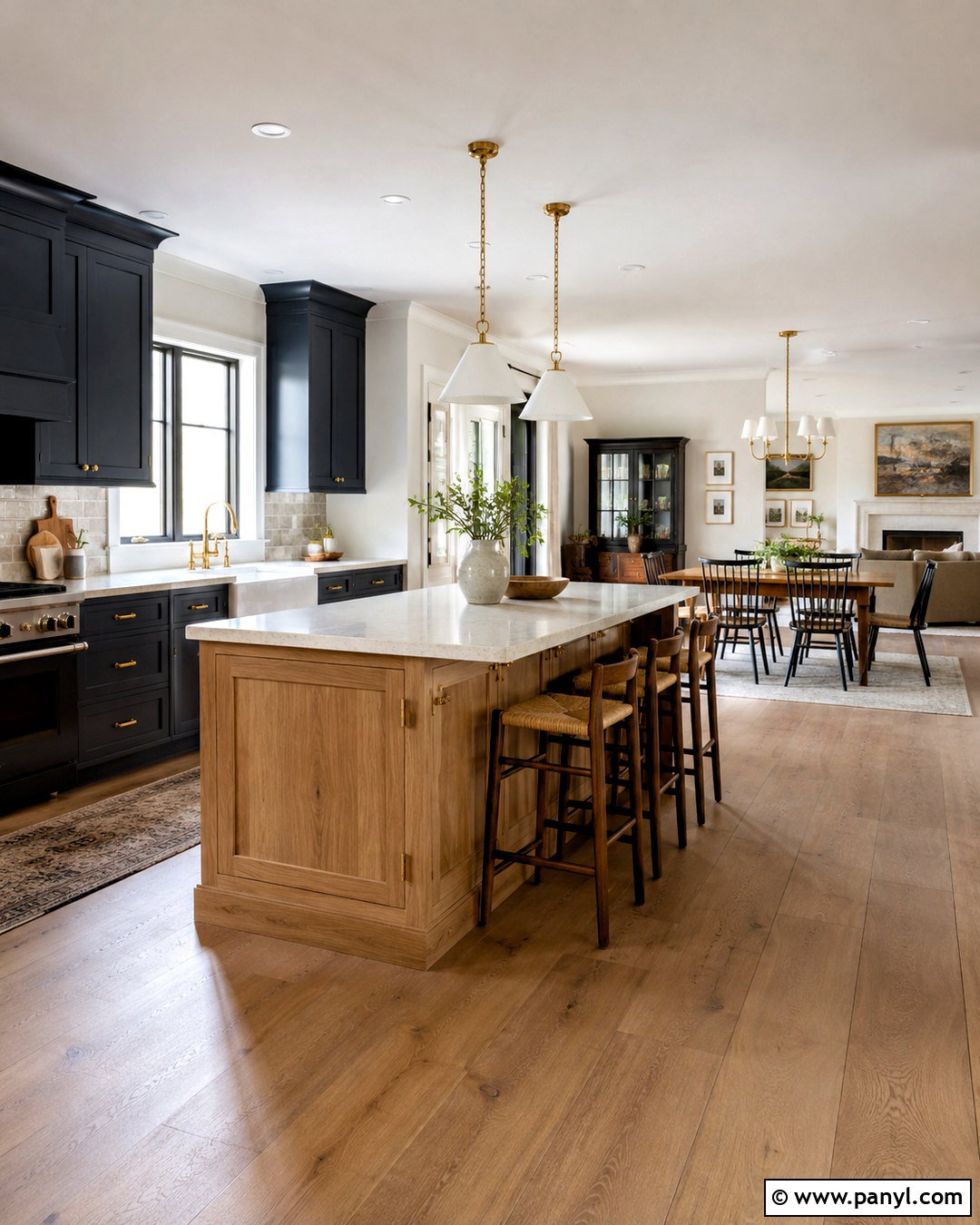
A natural oak island creates a warm gathering place inside a dark blue kitchen. Use deep blue Shaker cabinets around the perimeter, then give the central island a clear or lightly stained oak finish. Top every surface with creamy white quartz so the contrasting cabinet colors still feel connected. Add a large ceramic sink, brushed brass faucet, and matching cup pulls for a relaxed traditional look. Wide-plank oak flooring can echo the island, although the floor should be slightly lighter or darker to avoid an overly matched result. Finish the walls in soft ivory and use simple linen pendants above the island. The wood center keeps the darker perimeter from becoming visually heavy while making the kitchen feel welcoming from adjoining rooms.
8. Dark Blue Kitchen With Black Accents
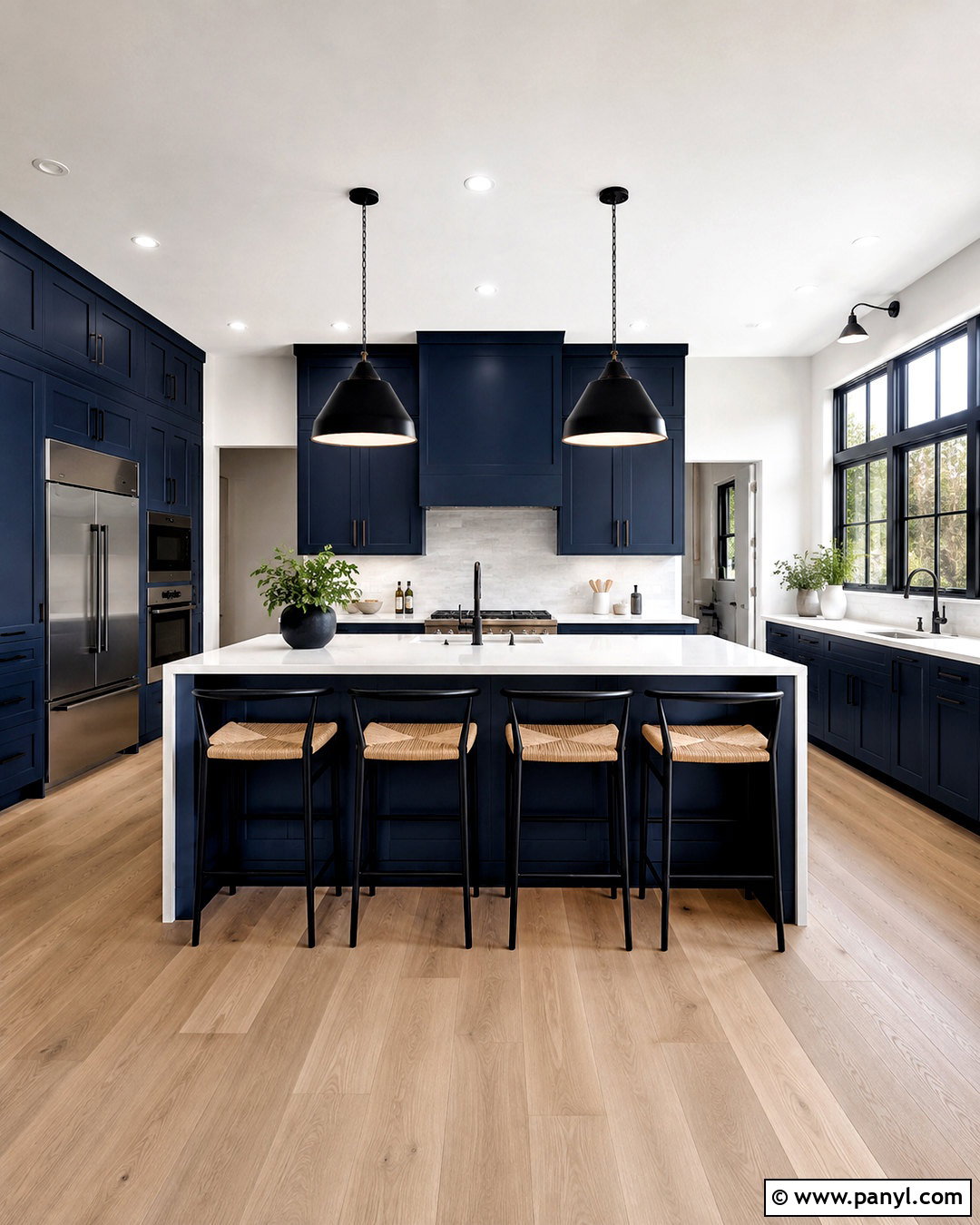
Black accents give dark blue cabinetry a sharper, more contemporary edge. Select flat-panel cabinets in a rich midnight blue, then introduce matte black through slim pulls, a modern faucet, window frames, and linear pendant lights. White quartz counters provide necessary brightness, while a backsplash of large pale gray porcelain tiles keeps grout lines to a minimum. Choose light oak flooring to soften the dark finishes and bring subtle warmth into the room. Black-framed stools with woven seats can repeat the metal without making the island area feel severe. Keep the walls clean white and use strong under-cabinet lighting. Because navy and black can merge in low light, place each black detail against a lighter surface where its shape and purpose remain clearly visible.
9. Dark Blue Farmhouse Kitchen
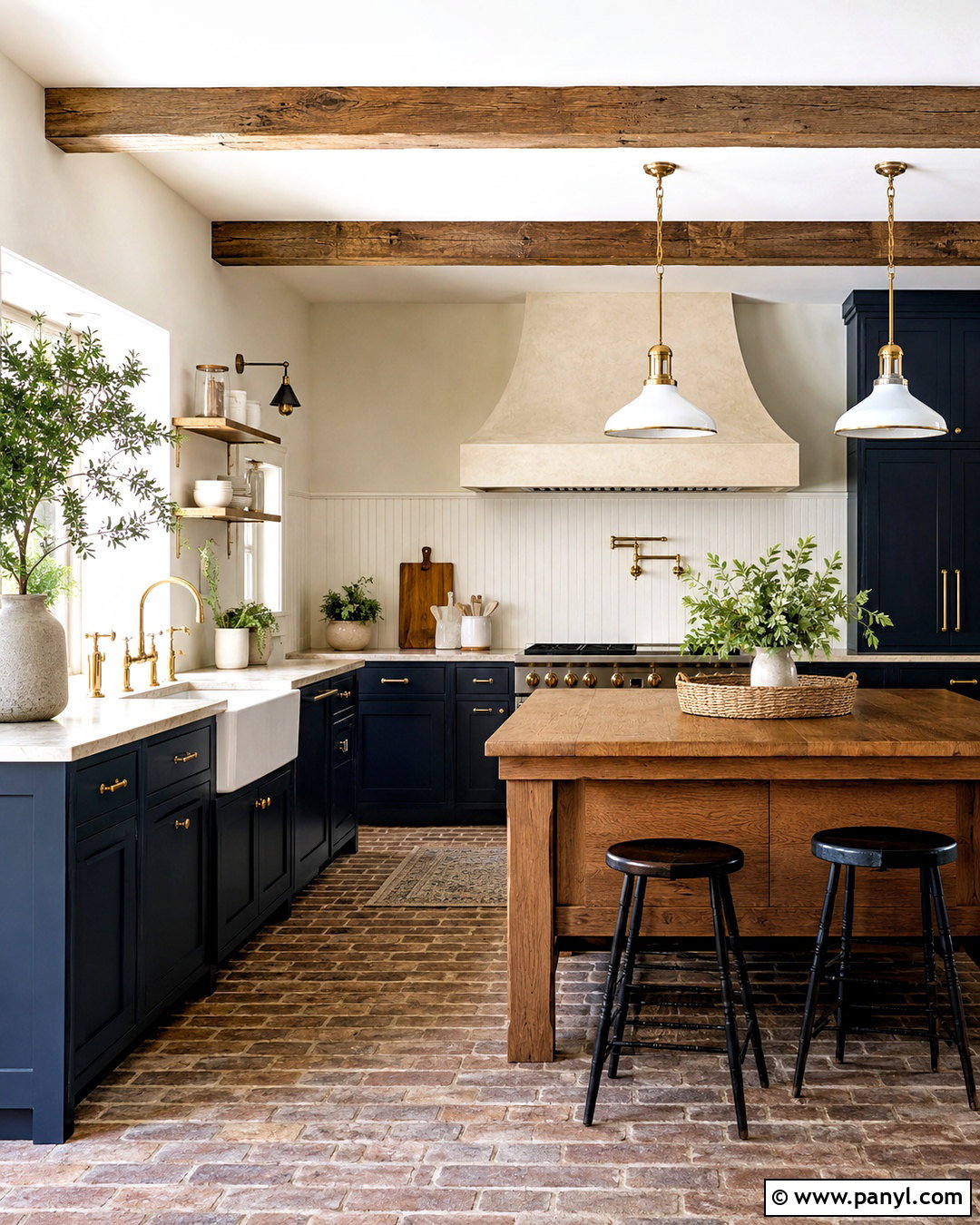
A farmhouse kitchen feels richer and more grounded when dark blue replaces predictable white cabinetry. Choose navy Shaker doors, a large white apron-front sink, and creamy quartz counters with a soft stone appearance. A warm white beadboard or irregular subway tile backsplash will add traditional texture without competing with the cabinet color. Include a stained oak island with turned legs and comfortable counter stools for a furniture-like centerpiece. A plaster range hood, aged brass hardware, and milk-glass pendants complete the relaxed character. Underfoot, use durable brick-look porcelain in a warm terracotta shade or wide oak planks. Open shelves can display neutral stoneware and wooden boards. Keep accessories practical and restrained so the room feels authentic rather than overly themed.
10. Modern Dark Blue Kitchen
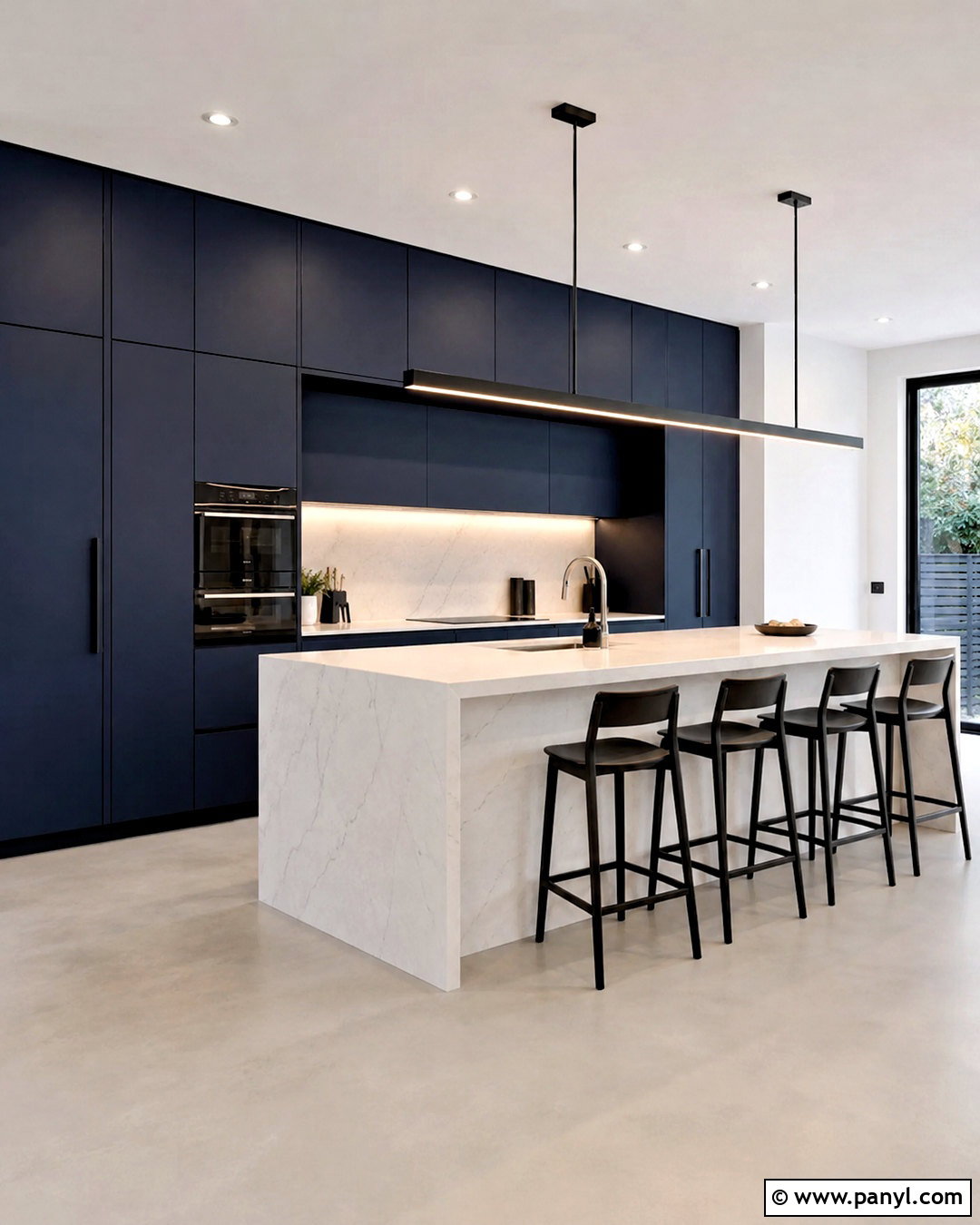
Clean lines allow dark blue to look bold and architectural in a modern kitchen. Use full-height, flat-panel cabinetry in a velvety midnight blue with concealed or integrated pulls. Continue the cabinets across one wall to hide pantry storage and appliances behind a streamlined facade. Balance that visual weight with a white waterfall island, pale microcement floor, and softly textured off-white walls. A long linear pendant provides focused lighting without interrupting the minimal composition. Add a brushed stainless steel faucet and thin black details for a controlled mix of finishes. Instead of many small accessories, display one sculptural ceramic bowl and a simple wooden cutting board. The finished room should feel precise but not sterile, with natural textures preventing the dark cabinetry from appearing overly formal.
11. Dark Blue Galley Kitchen
A galley layout becomes striking and efficient when dark blue cabinets frame a bright central walkway. Use deep navy base cabinets on both sides, but limit full-height blue storage to the far end of the room. White upper cabinets or open shelving will stop the narrow space from feeling top-heavy. Run pale quartz counters and a glossy white backsplash along both walls to distribute light evenly. A light oak or stone-look floor laid lengthwise can emphasize the room’s depth. Install flush ceiling lights, under-cabinet strips, and a small pendant near the sink if space allows. Polished nickel hardware provides a subtle reflective finish. Maintain clear counters and integrate waste bins, spices, and small appliances into the cabinetry for a streamlined, workable kitchen.
12. Dark Blue Kitchen With Open Shelving
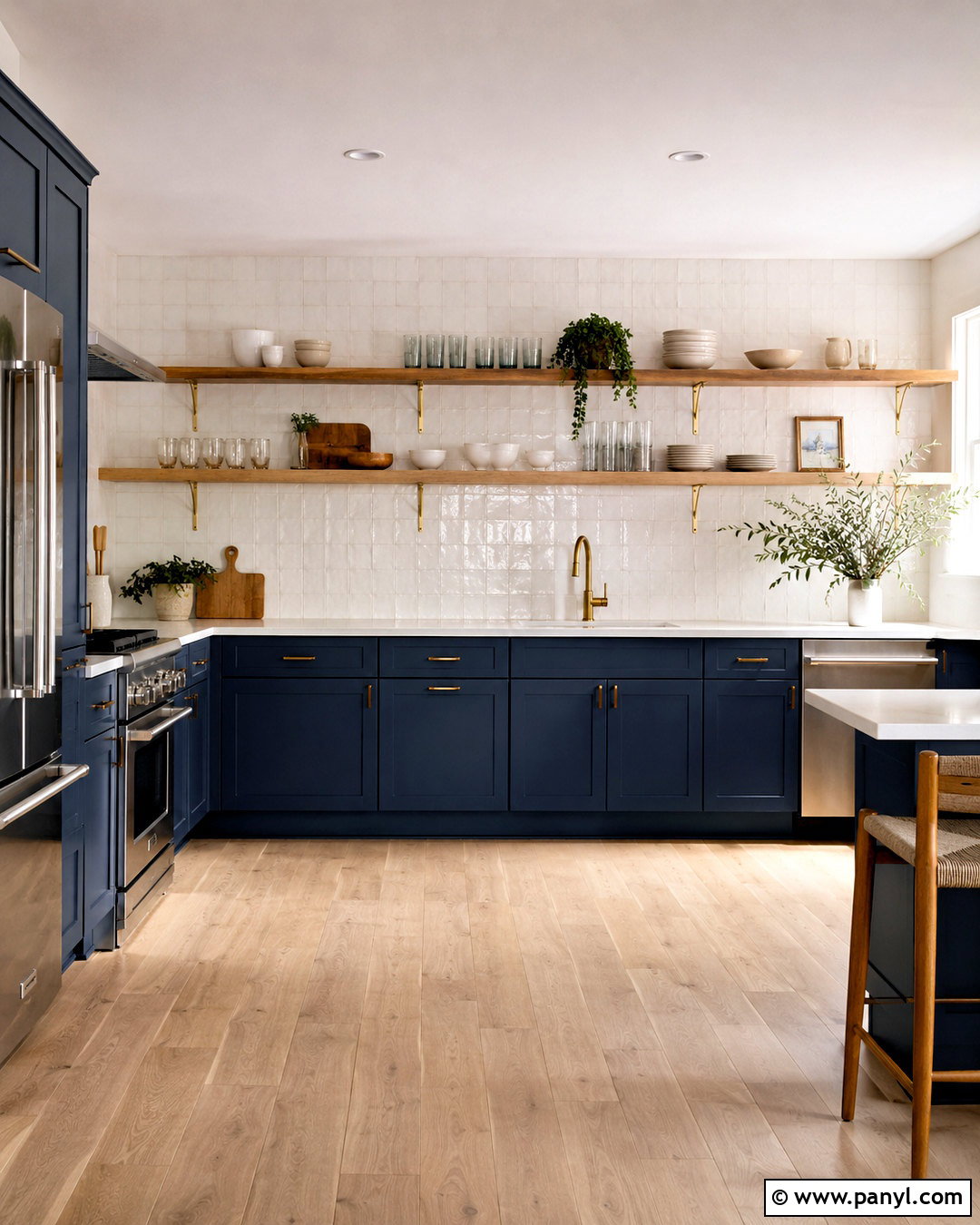
Open shelving brings visual relief to a wall of dark blue cabinetry while creating accessible storage for attractive everyday pieces. Begin with navy lower cabinets and a few matching full-height units, then place two thick oak shelves above the main counter. Use warm white handmade tile behind the shelves to keep the display bright. Arrange neutral dishes, clear glasses, wooden boards, and small ceramic containers in loose groups rather than crowded rows. White quartz counters and pale oak flooring will support the airy effect. Add brass shelf brackets, cabinet pulls, and pendant lights for a consistent metal finish. This look works best when closed cabinets handle less attractive supplies. The completed kitchen feels relaxed and personal without sacrificing the strong architectural impact of dark blue.
13. Dark Blue Kitchen With Copper Accents
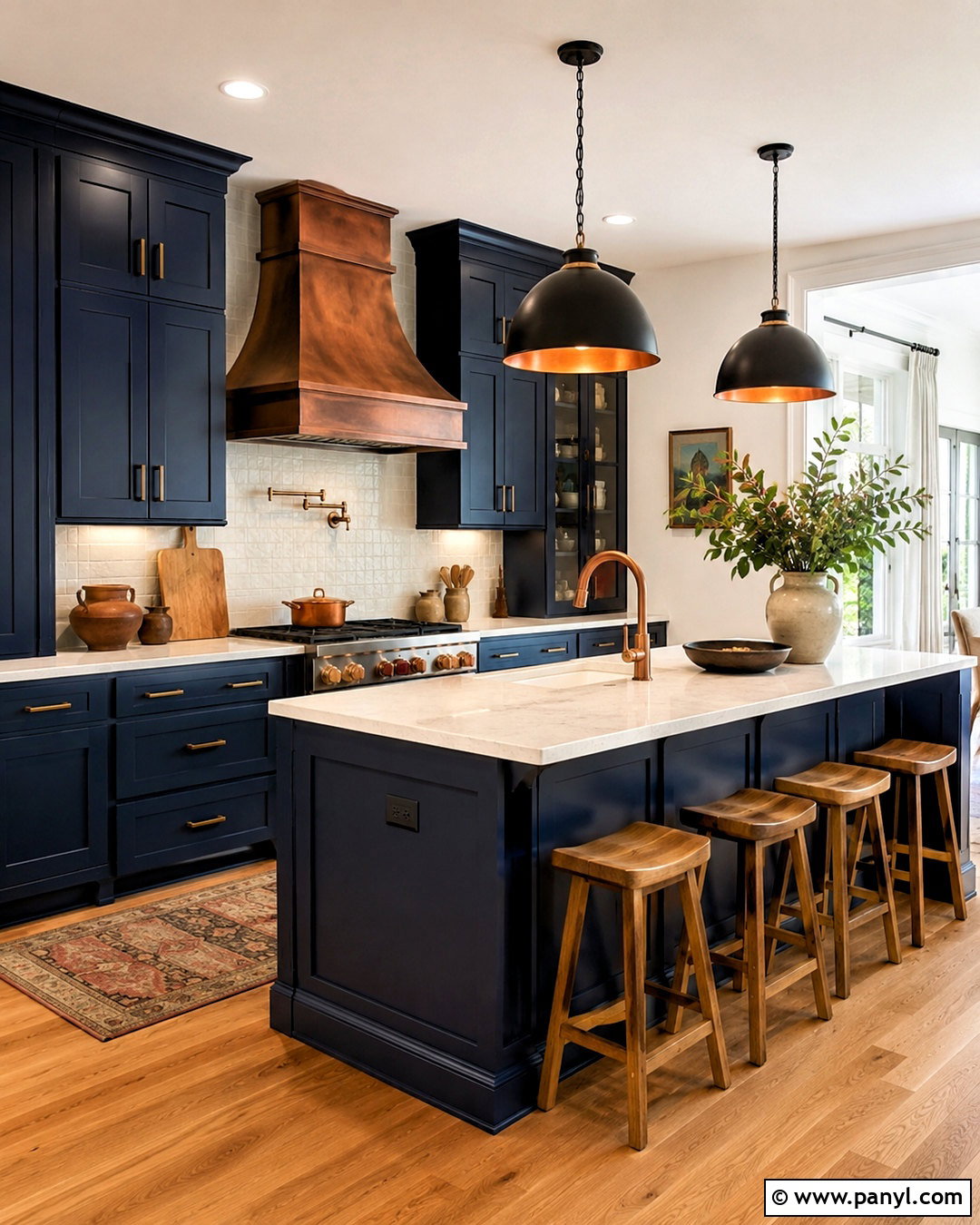
Copper introduces a warm glow that makes dark blue cabinetry appear even richer. Use copper selectively on a statement range hood, pendant interiors, faucet, or a short backsplash section behind the cooktop. Too many copper surfaces can overwhelm the room, so balance them with off-white quartz counters and simple navy Shaker cabinets. Warm oak flooring and cream walls will reinforce the inviting palette. Choose unlacquered copper if you enjoy a naturally changing patina, or select a sealed finish for a more consistent appearance. Dark bronze hardware can sit quietly beside the stronger copper features. Complete the kitchen with wooden stools, linen shades, and a few earthy ceramic pieces. The overall look feels warm and distinctive without losing practical, everyday comfort.
14. Dark Blue Kitchen With Patterned Tile
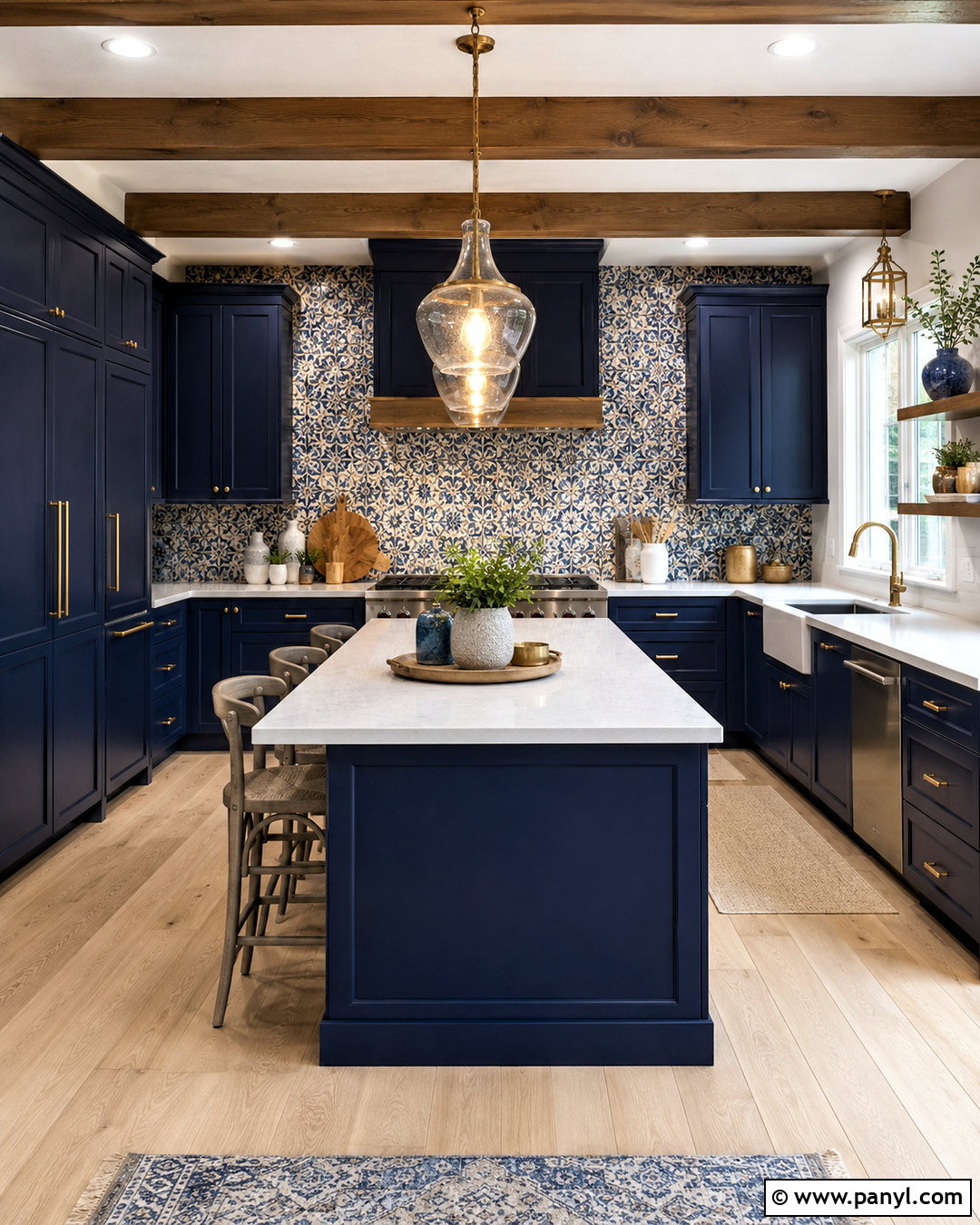
Patterned tile adds movement and personality to a dark blue kitchen, especially when the rest of the finishes remain simple. Choose a backsplash featuring navy, soft white, and muted gray in a small geometric or Mediterranean-inspired pattern. Pair it with plain dark blue cabinets and solid white quartz counters so the tile receives enough visual space. Brushed brass hardware adds warmth, while pale oak flooring prevents the design from becoming overly cool. Keep the island free from additional pattern, using a navy base and uncomplicated counter stools instead. White walls and clear glass pendants will make the room feel brighter. For a more restrained version, install patterned tile only behind the range and use quiet white tile across the remaining backsplash areas.
15. Dark Blue Kitchen With Butcher Block
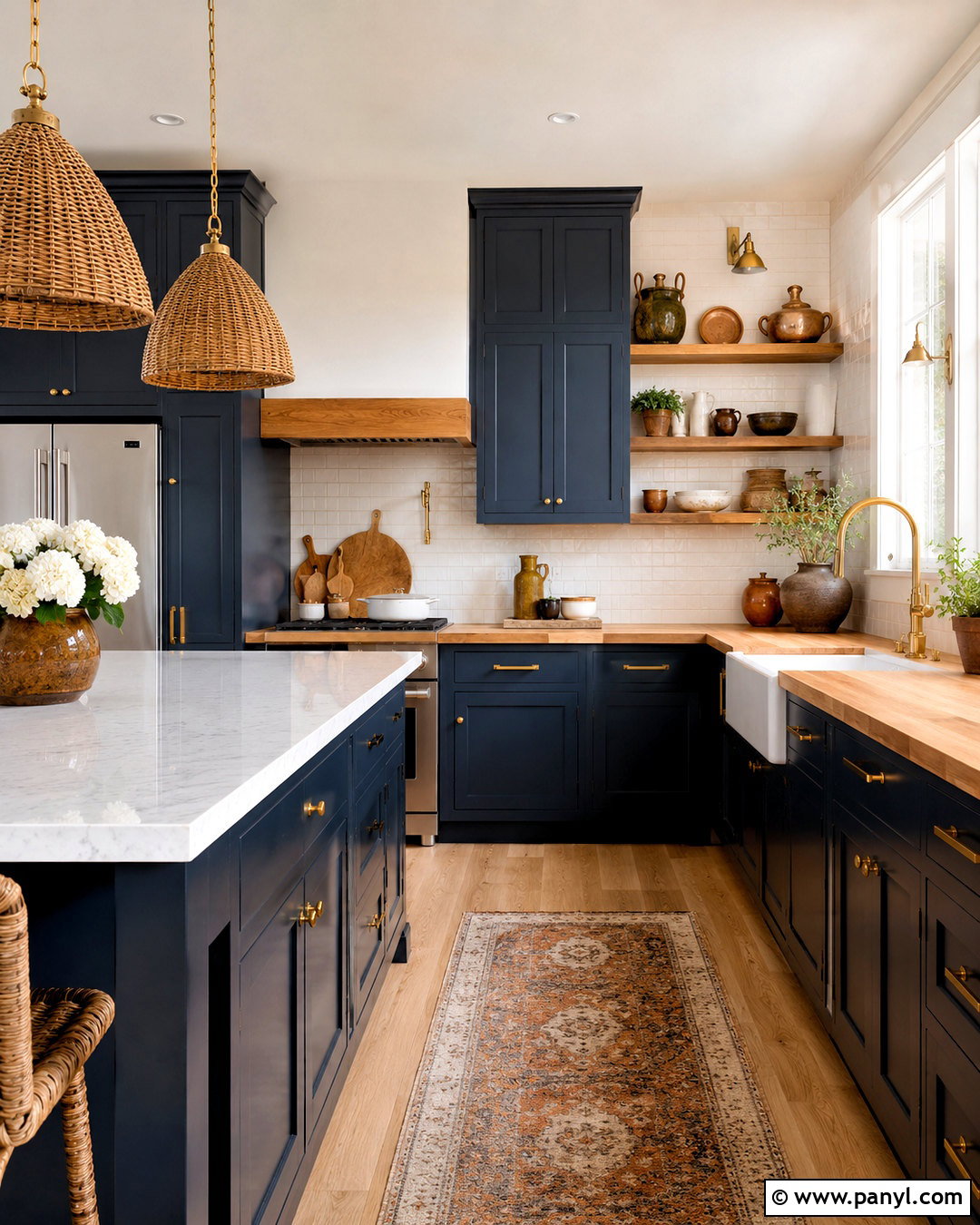
Butcher block counters give dark blue cabinetry a cozy, practical character that suits casual homes and budget-conscious renovations. Select a medium-tone maple or oak surface with a simple square edge. Use it across the perimeter, then choose durable white quartz for the island if you want a heat- and stain-resistant work zone. Warm white subway tile, cream walls, and antique brass hardware complement the blue-and-wood combination. Add a deep ceramic sink and a traditional bridge faucet for subtle vintage influence. Light oak flooring can continue the natural palette, but vary its tone from the counters. Regular sealing will help protect real wood near water. Finish with woven pendants and simple shelves displaying everyday pottery for an inviting, lived-in kitchen.
16. Dark Blue Kitchen With Stainless Steel
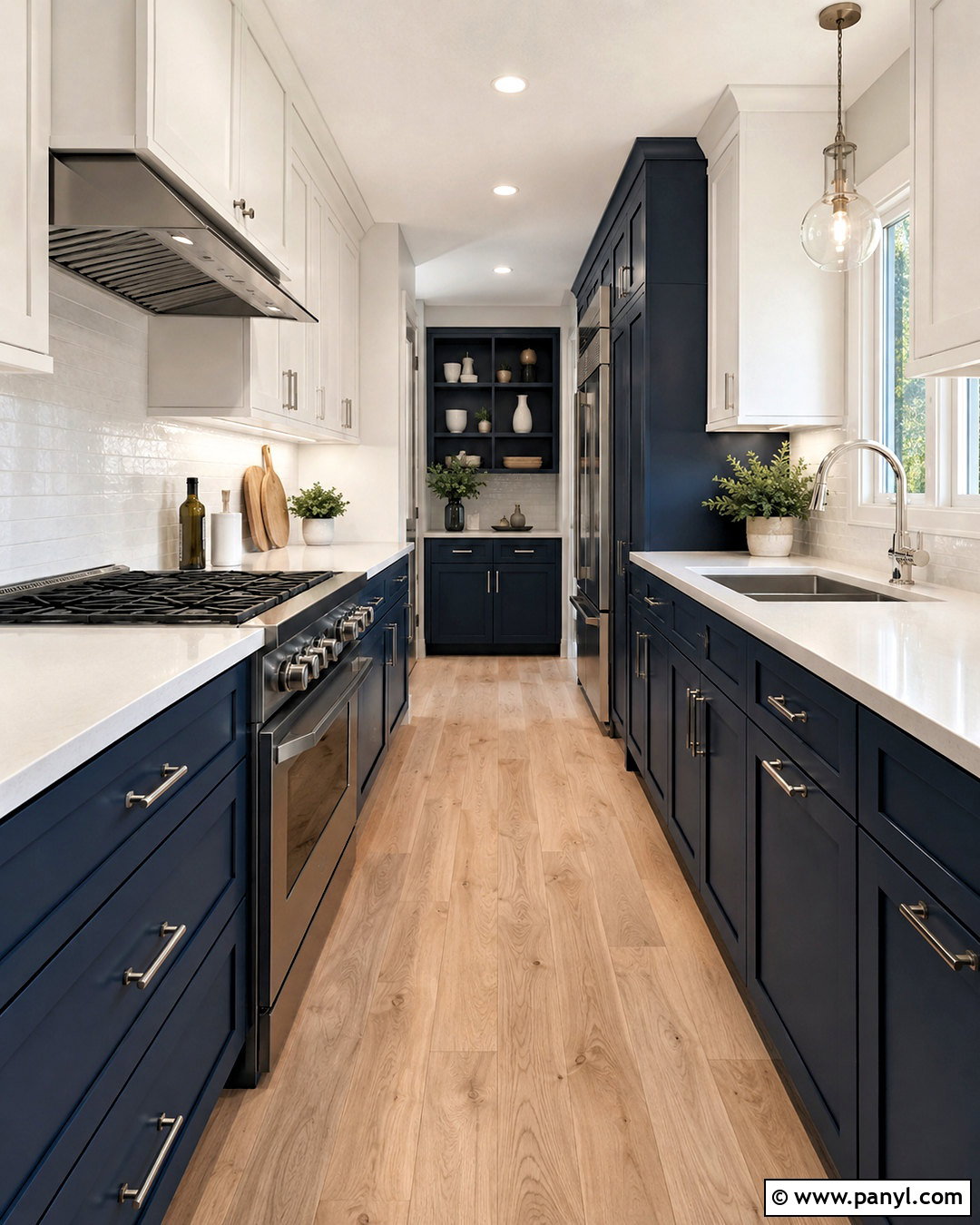
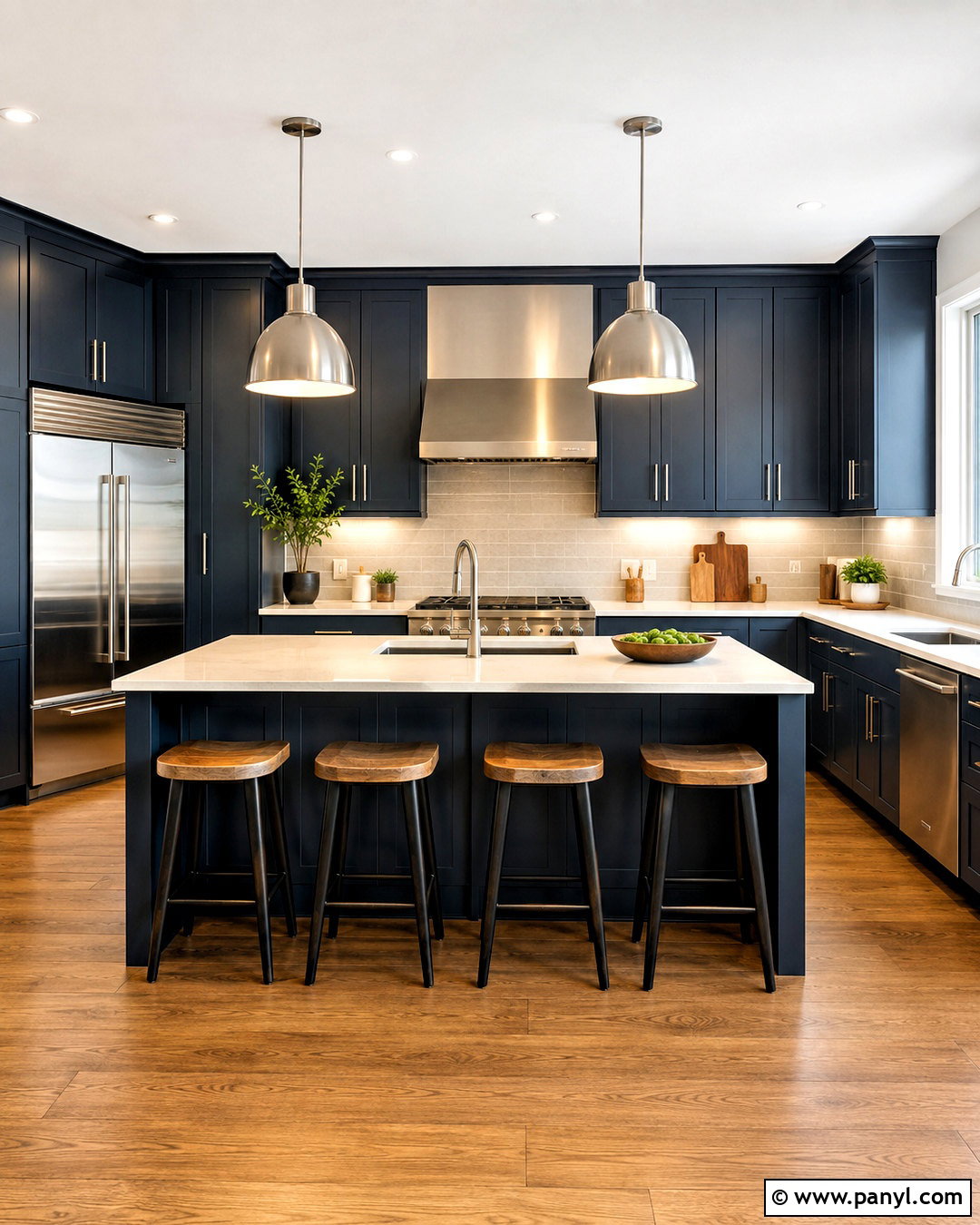
Stainless steel appliances look intentional beside dark blue cabinets when their cool finish is repeated throughout the room. Choose a substantial stainless range, refrigerator, and vent hood, then echo the material with cabinet pulls, a faucet, and small pendant details. Dark navy flat-panel or narrow Shaker cabinets will provide a refined background for the appliances. Warm white quartz counters and a pale gray backsplash soften the industrial influence. Introduce oak flooring and wood counter stools to prevent the palette from feeling cold. A large island can combine navy cabinetry with a bright stone top and integrated storage. Keep appliance fronts aligned with nearby cabinets wherever possible. The resulting kitchen feels professional and polished but remains warm enough for a comfortable family home.
17. Dark Blue Kitchen With Blue Walls
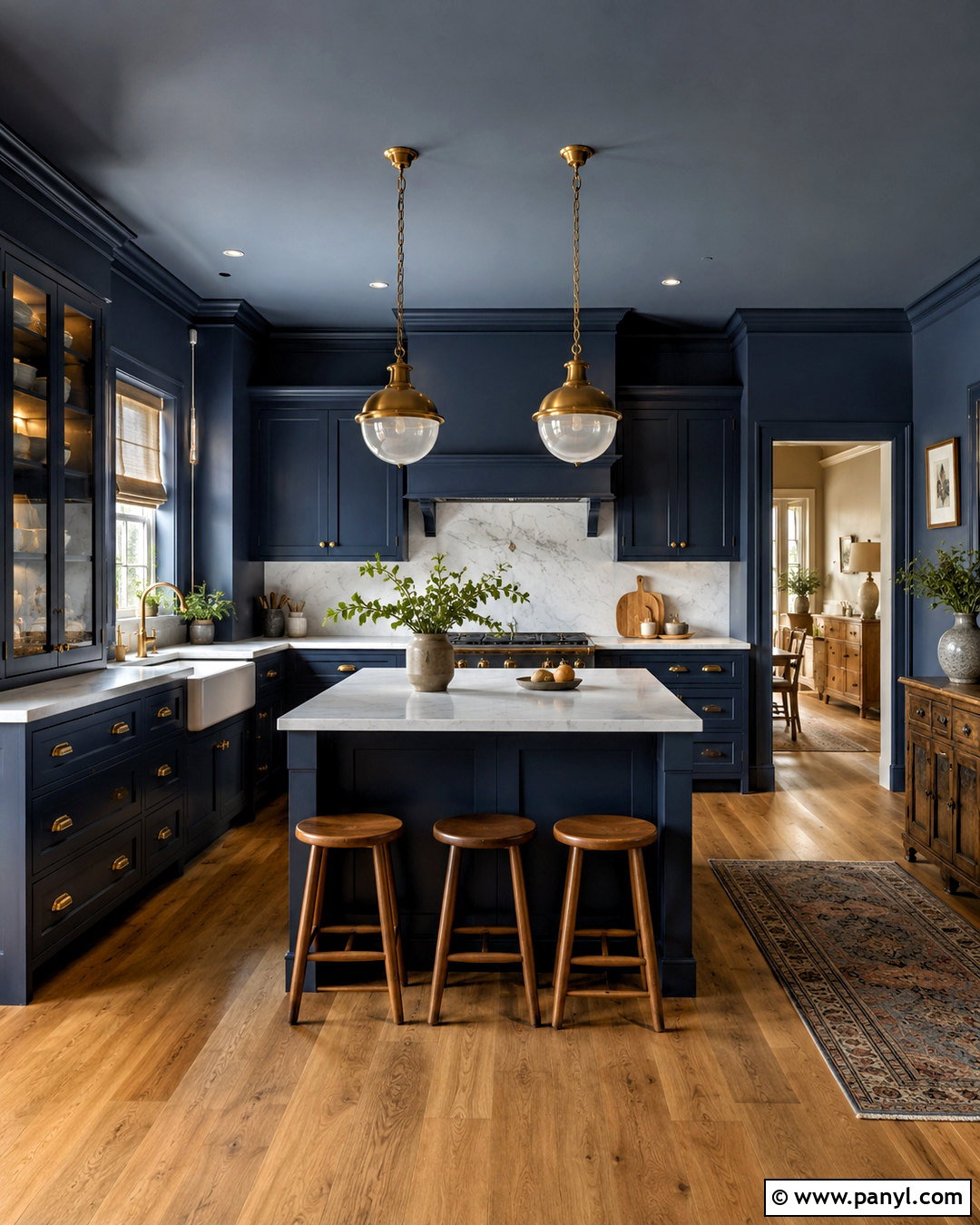
Color drenching creates a cocooning kitchen by carrying dark blue from the cabinets onto the walls. To preserve dimension, choose related shades rather than one identical color everywhere. Pair midnight blue cabinetry with slightly lighter smoky blue walls and a soft blue-gray ceiling. White marble-look counters and a matching slab backsplash provide a clear visual break. Use aged brass hardware, warm oak flooring, and natural wood stools to balance the cool palette. Large windows and layered lighting are especially valuable in this look, so include under-cabinet strips, ceiling fixtures, and focused island pendants. Keep textiles pale and accessories minimal. The finished kitchen feels immersive and sophisticated, with tonal variation ensuring that cabinet details remain visible instead of disappearing against the walls.
18. Dark Blue Kitchen With Glass Cabinets
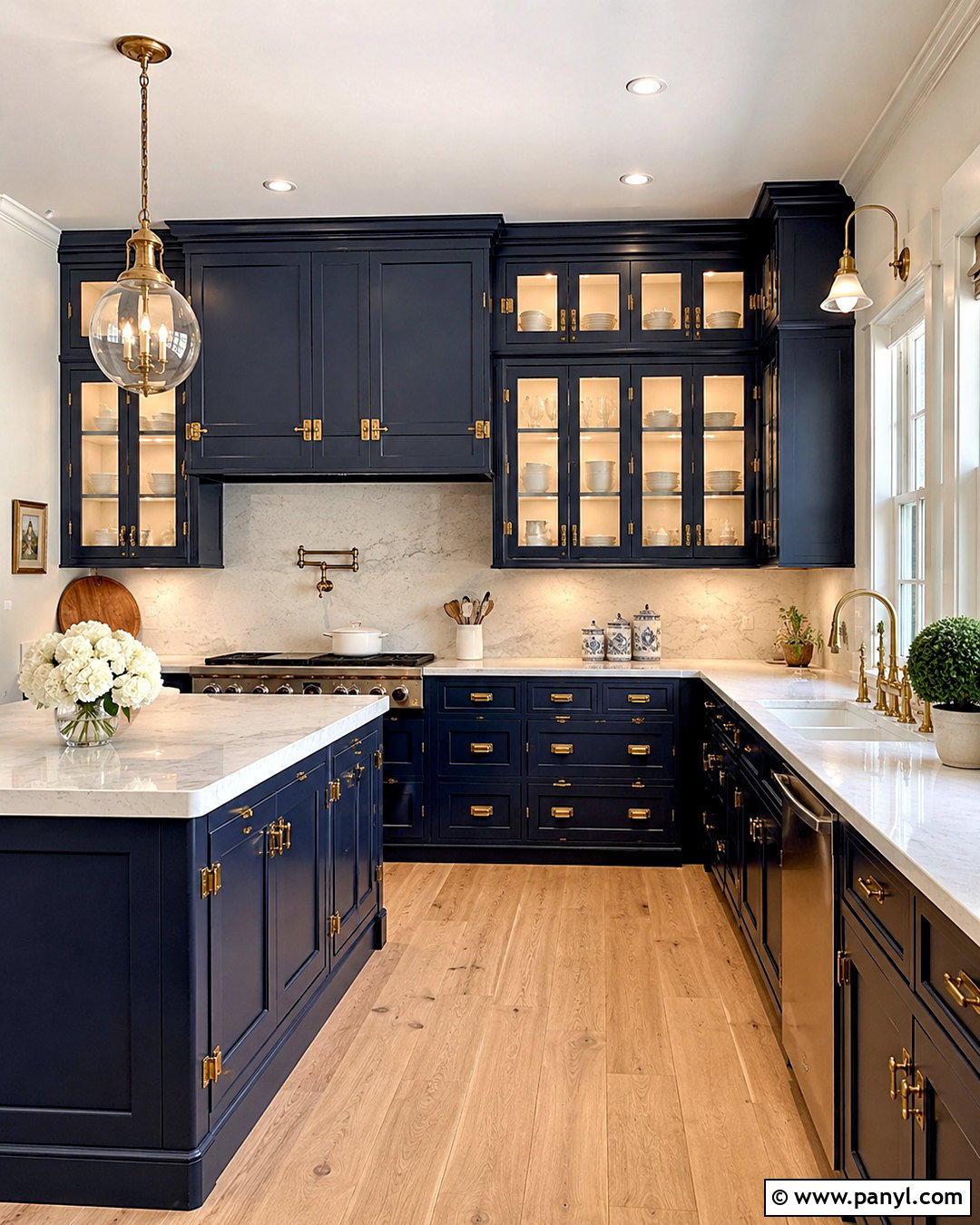
Glass-front cabinets reduce the visual weight of dark blue cabinetry and provide a graceful place to display dishes. Use solid navy base cabinets, then add glass doors to selected upper units near the sink or dining area. Paint the cabinet interiors warm white or natural oak so displayed pieces remain easy to see. White quartz counters and a marble-look backsplash will brighten the composition, while aged brass latches add traditional detail. Include interior cabinet lighting to create a soft glow and improve visibility after sunset. Pale wood flooring and cream walls can keep the room from feeling overly formal. Display coordinated white dishes, clear glassware, and a few blue ceramics, leaving some open space so the cabinets appear organized instead of crowded.
19. Dark Blue Coastal Kitchen
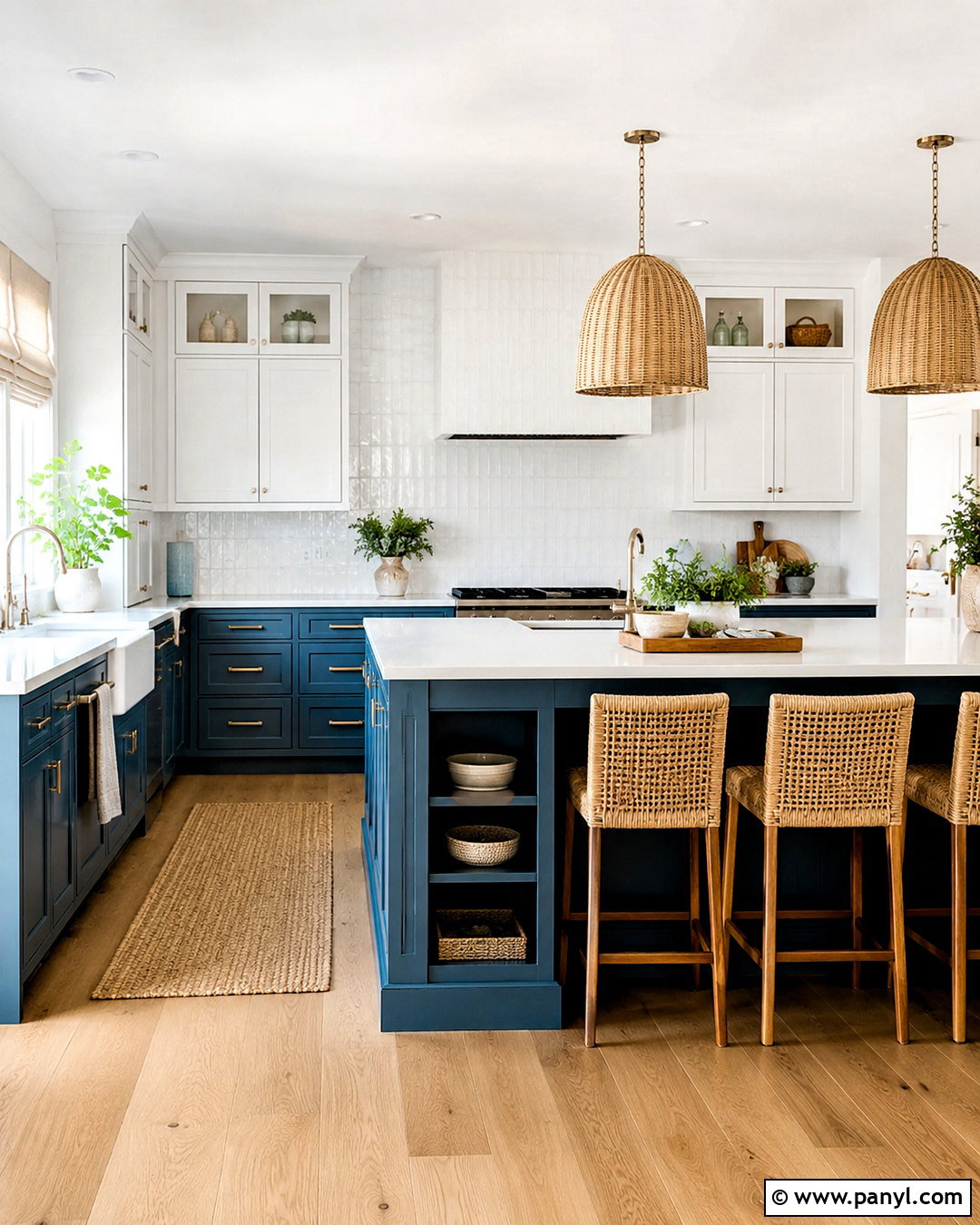
A coastal kitchen can use dark blue without relying on obvious nautical decorations. Select deep ocean-blue base cabinets and soft white upper cabinets, then add pale quartz counters and a backsplash of glossy white rectangular tile. Natural white oak flooring, woven counter stools, and rattan pendant lights introduce breezy texture. Use polished nickel hardware for a clean, light-reflective finish that suits the relaxed palette. A large island with open end shelving can hold cookbooks and textured baskets. Dress windows with simple white linen shades to maximize daylight. Instead of anchors or signs, decorate with clear glass, handmade pottery, and one muted seascape. The complete kitchen feels fresh and coastal while remaining subtle enough for a home far from the shore.
20. Dark Blue Kitchen With Cream Cabinets
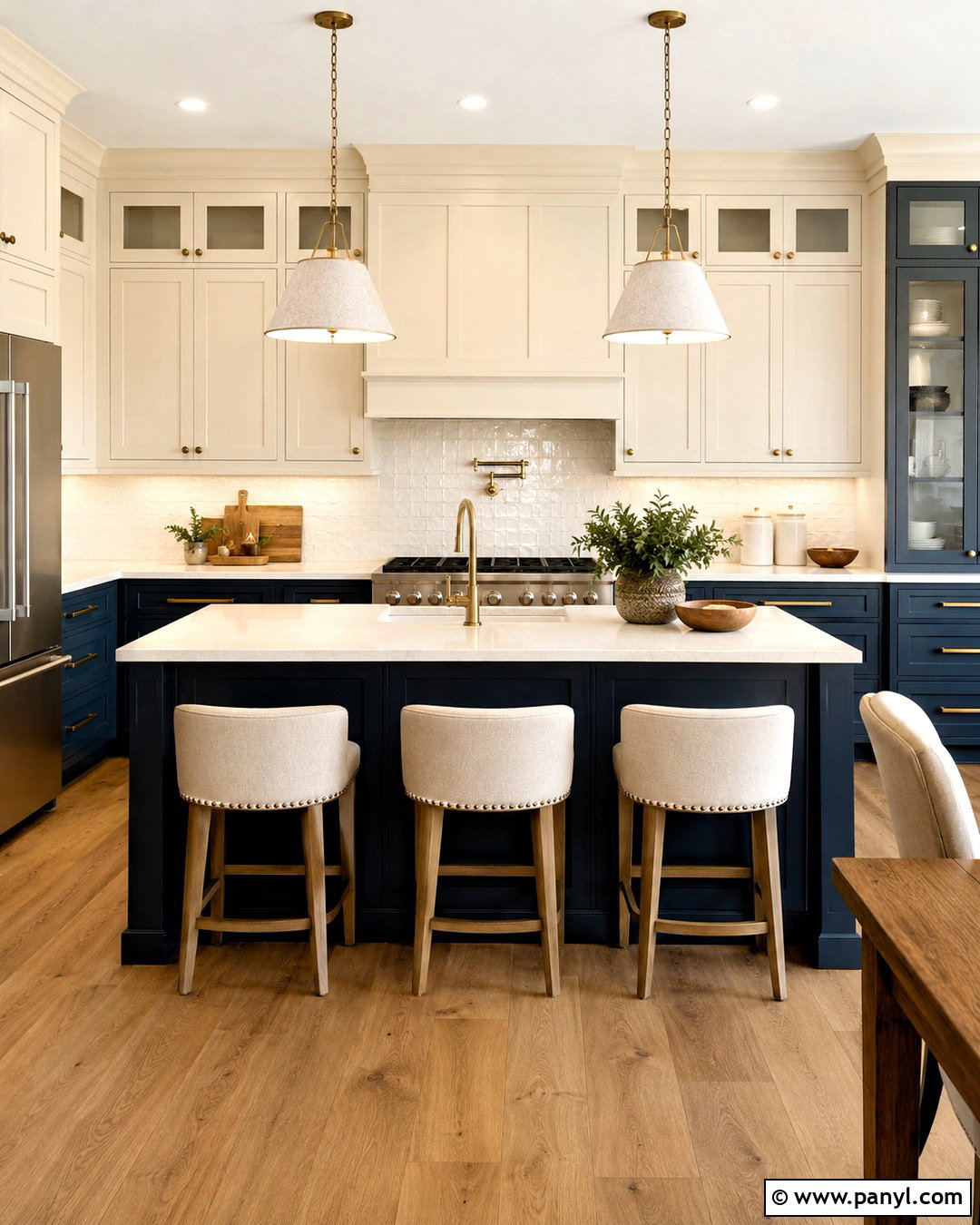
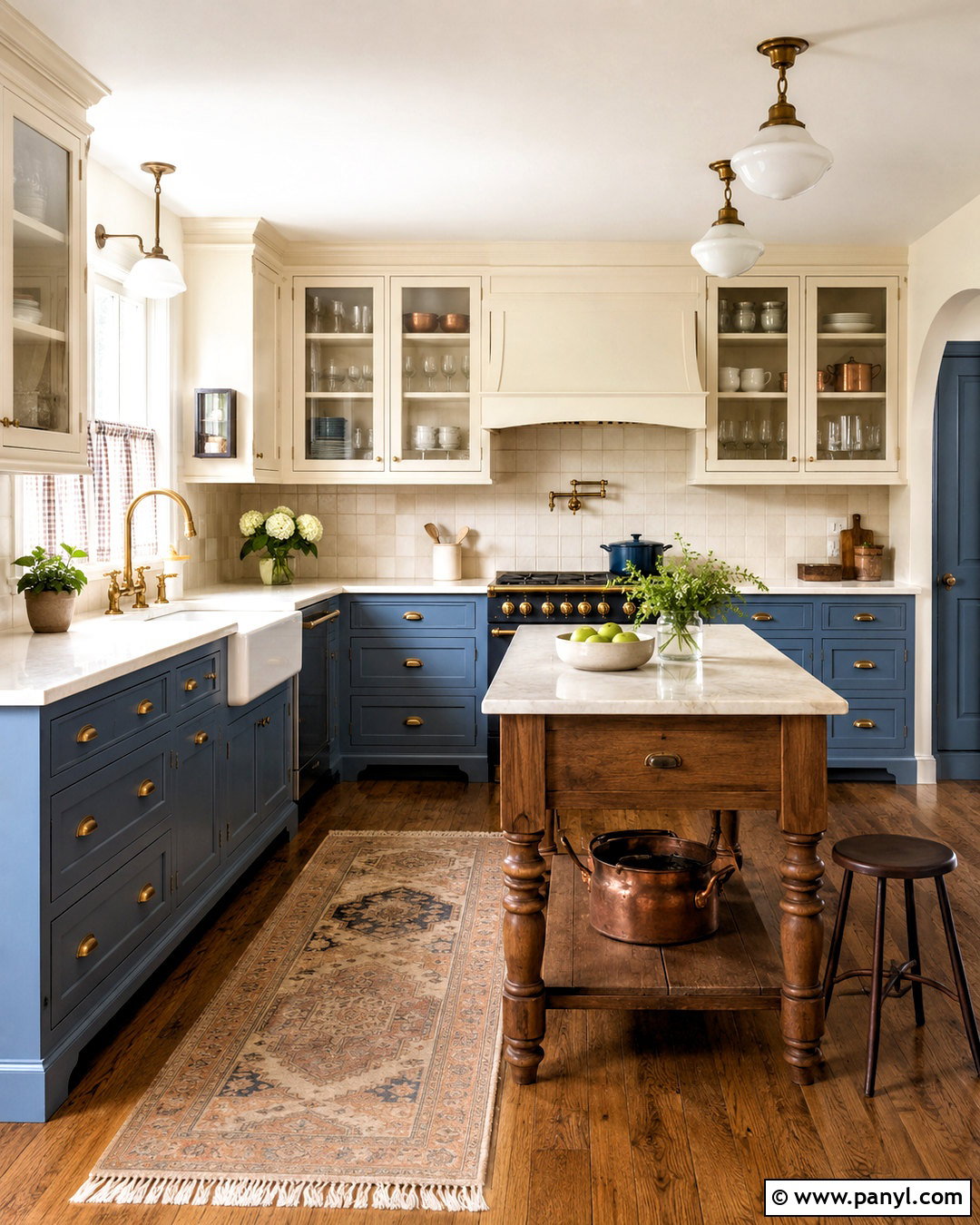
Cream cabinetry softens dark blue and creates a warmer alternative to the familiar navy-and-bright-white combination. Use deep blue on the island and lower perimeter cabinets, then place buttery cream on upper cabinets and tall pantry storage. Connect both finishes with warm white quartz or limestone-look counters. A backsplash of handmade ivory tile adds gentle color variation and reflects light without appearing stark. Choose aged brass hardware, honey-toned oak flooring, and linen pendant shades to continue the warm direction. Upholstered island stools in a neutral woven fabric can make the central area comfortable for meals. This complete palette works beautifully in traditional and transitional homes because it offers noticeable contrast while avoiding the sharp, graphic quality that pure white can create beside dark navy.
Conclusion:
The most successful dark blue kitchens balance their strong cabinet color with lighter surfaces, effective lighting, and materials that add natural warmth. White quartz can make the room feel crisp, while marble, oak, butcher block, brass, and copper produce a softer, layered result. Two-tone cabinets are useful in small or dim kitchens, while full navy cabinetry can feel wonderfully immersive in a larger, well-lit space. Always sample the blue beside the actual flooring, counters, and backsplash before making a final decision. Also view it during the morning, afternoon, and evening. Whether you prefer modern minimalism or relaxed farmhouse character, these 20 dark blue kitchens show how thoughtful combinations can turn a dramatic color into a practical, lasting design.

Related Ideas and Inspiration:
Leave a Reply