
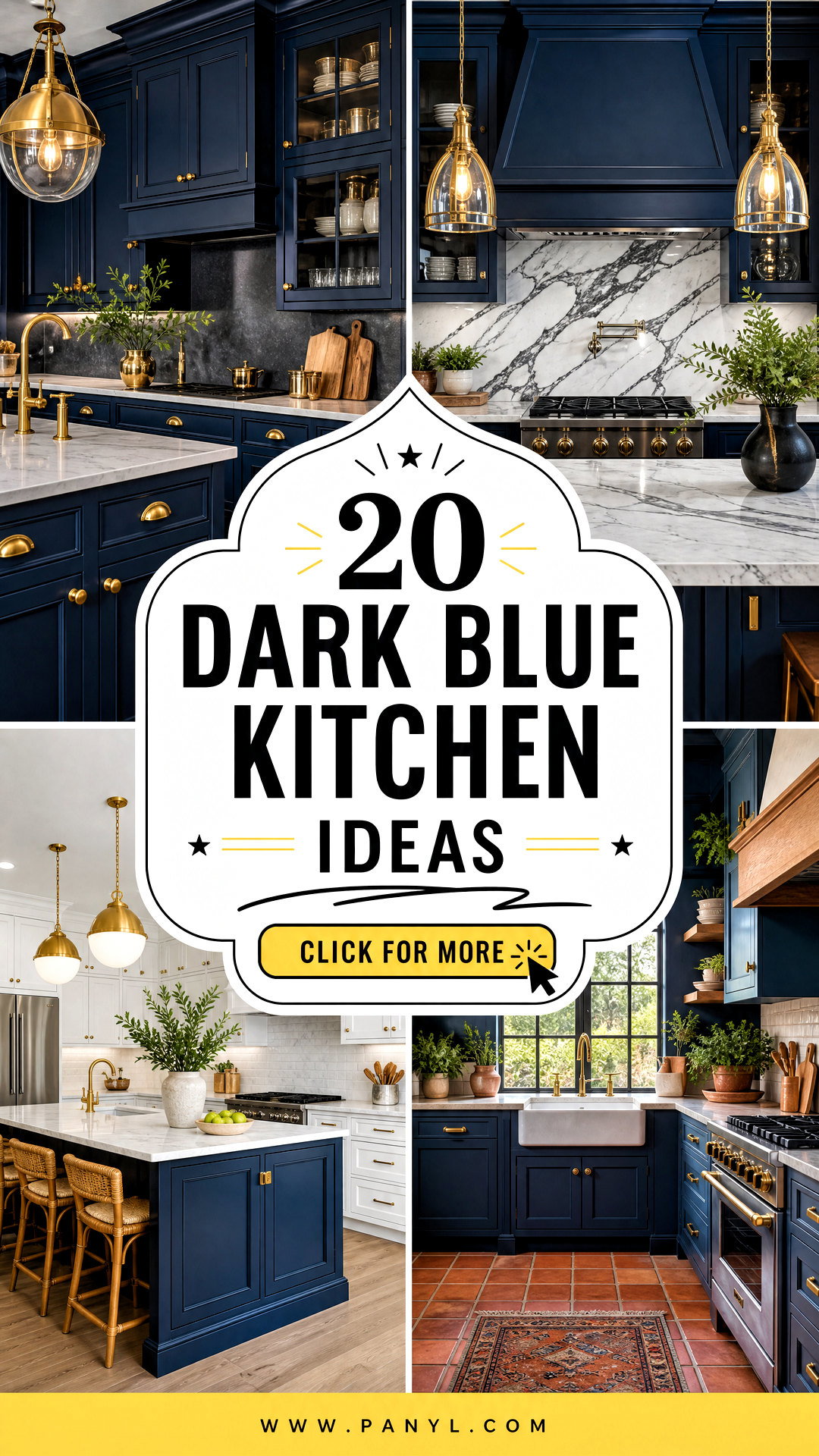
Dark blue kitchens bring depth, character, and a polished look to one of the busiest rooms in the home. From classic navy Shaker cabinets to sleek midnight blue slab fronts, this versatile color can feel traditional, coastal, modern, or rustic depending on the surrounding finishes. The key is creating balance through lighter countertops, thoughtful lighting, warm metals, natural wood, or contrasting upper cabinets. These 20 dark blue kitchen ideas explore complete, practical looks for large rooms, compact layouts, and open-plan spaces. Each design combines cabinetry, counters, backsplash, flooring, hardware, and decor so the finished kitchen feels intentional rather than overly dark. Use these combinations to find the materials and mood that best suit your home while exploring 20 dark blue kitchen ideas.
1. Dark Blue Kitchen With White Countertops
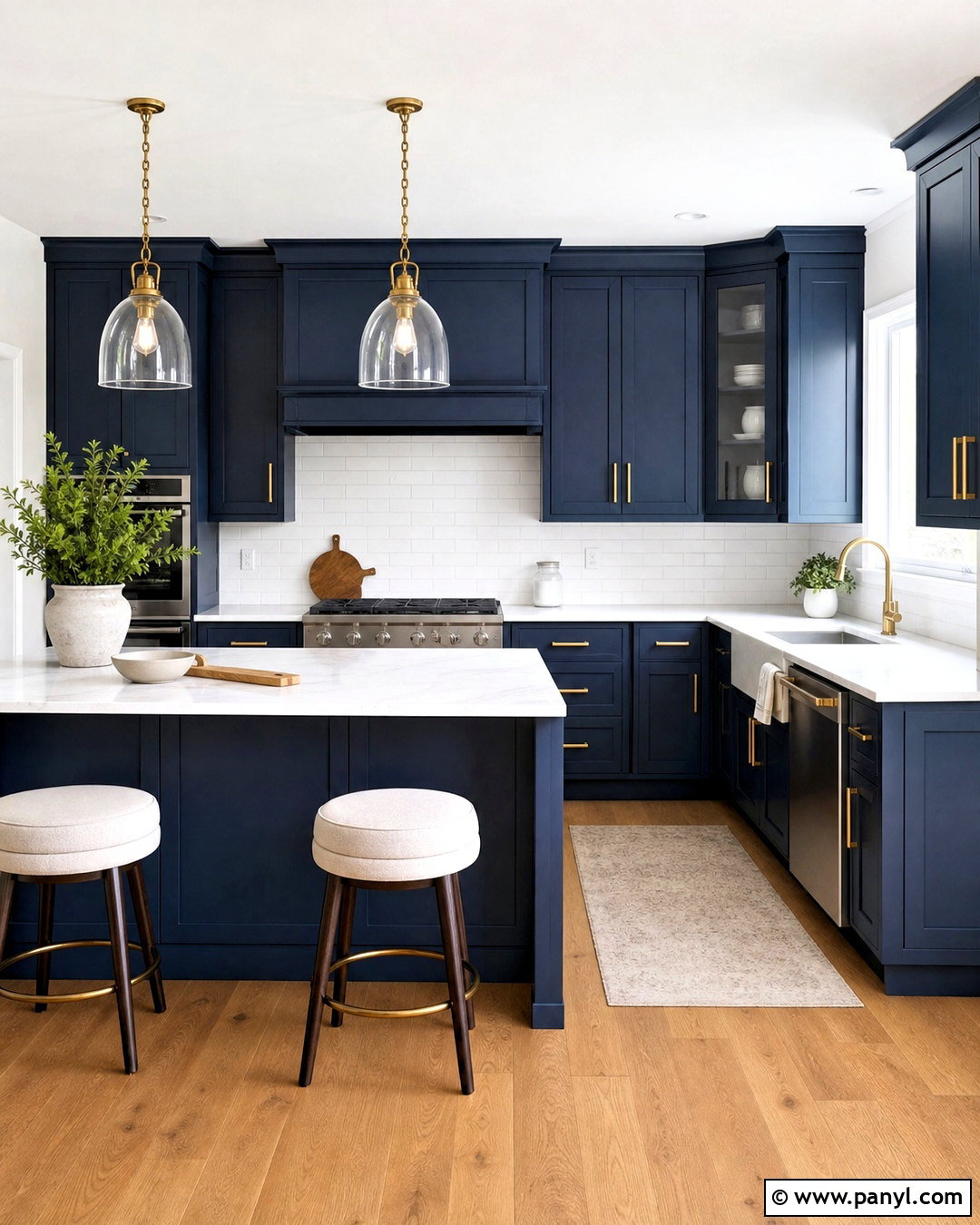
Crisp white surfaces create a clean contrast that allows dark blue cabinets to become the room’s defining feature. Choose simple Shaker doors in deep navy, then add white quartz countertops with very soft gray veining. Continue the bright effect with a glossy white subway tile backsplash and warm white walls. Brushed brass pulls, a matching faucet, and two understated pendants keep the palette from feeling cold. Medium oak flooring adds natural warmth without competing with the cabinetry. For an open layout, use navy on the base cabinets and island while keeping tall pantry units white. A few wooden cutting boards, cream ceramics, and clear glass containers soften the contrast and make the kitchen feel welcoming, practical, and easy to maintain.
2. Dark Blue Kitchen With Brass Hardware
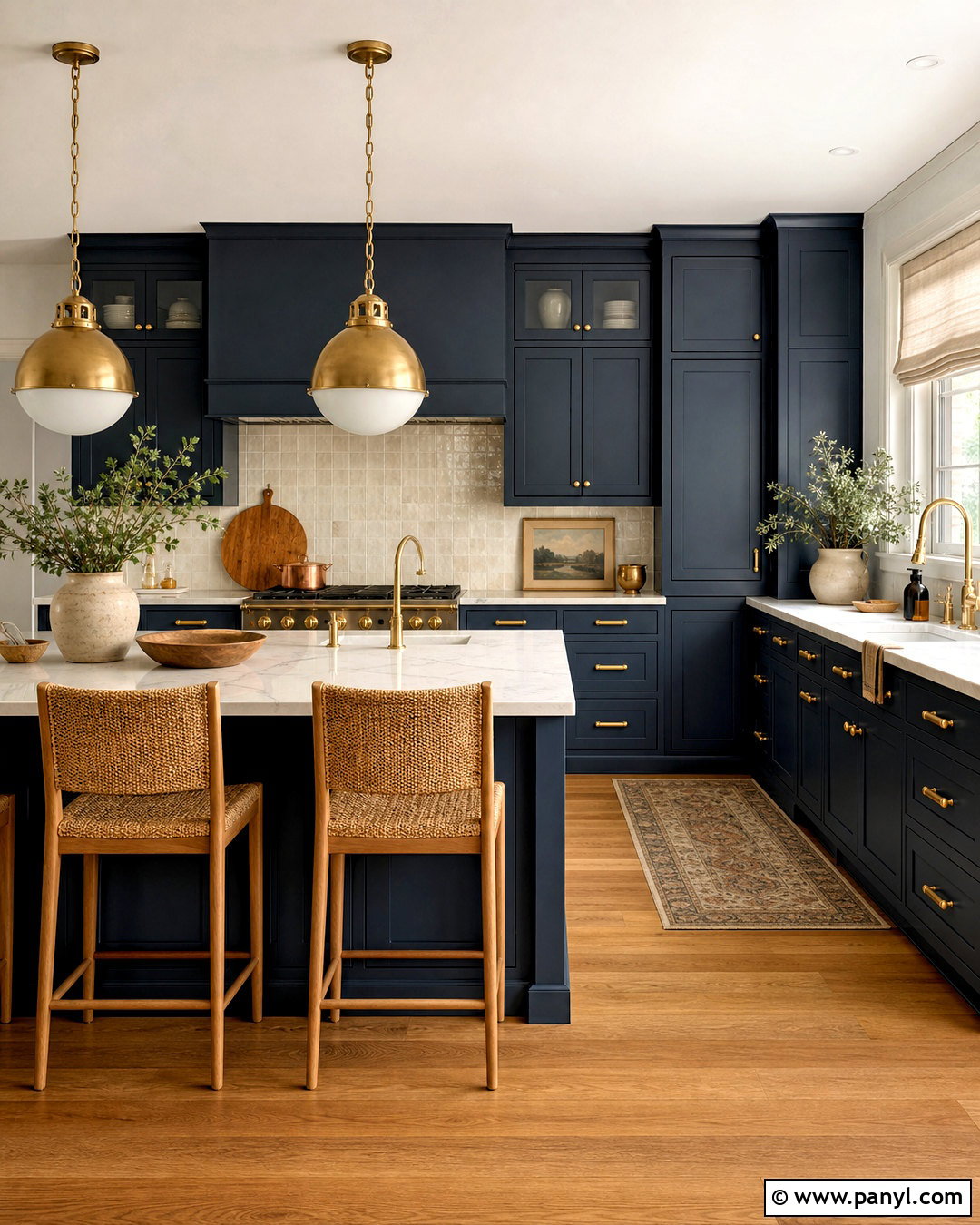
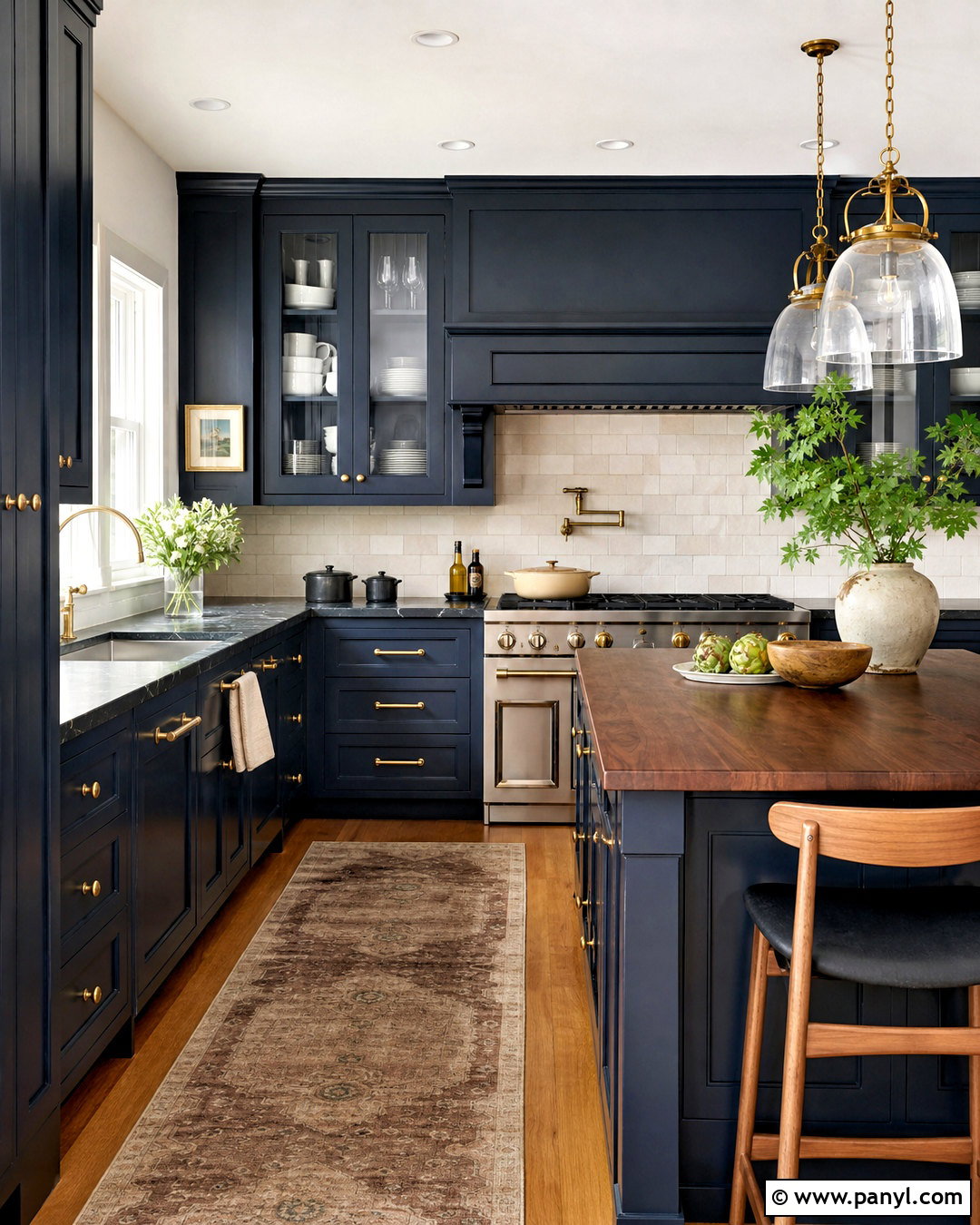
Warm brass hardware can transform dark blue cabinetry into a rich, inviting kitchen centerpiece. Begin with matte midnight blue cabinets extending from floor to ceiling, including a matching island with generous drawer storage. Select unlacquered or brushed brass pulls with simple shapes, then repeat the finish on the faucet and pendant lights. A creamy marble-look quartz countertop feels softer than stark white and works well with a handmade ivory tile backsplash. Choose warm oak flooring and counter stools with woven seats to introduce relaxed texture. Keep walls light beige or warm white so the room remains balanced. Finish the scheme with linen window shades, wooden bowls, and small potted herbs. The complete look feels polished and substantial without becoming too formal or ornate.
3. Dark Blue Kitchen With Wood Countertops
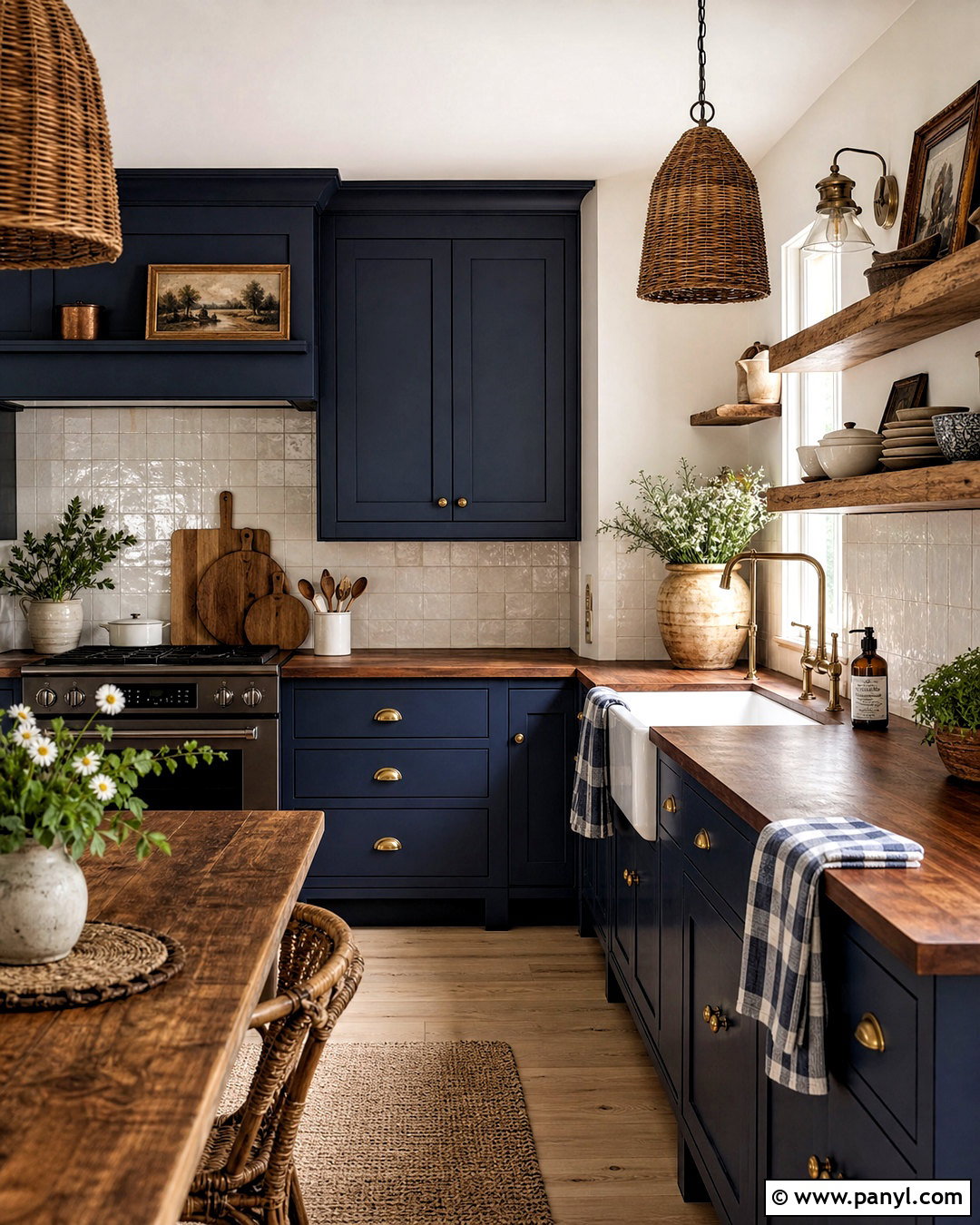
Can a dark blue kitchen feel cozy and casual? Natural wood countertops provide the warmth needed to make deep cabinetry feel relaxed and approachable. Use navy Shaker cabinets with medium-toned walnut or sealed oak counters, especially along the main perimeter. A white farmhouse sink and creamy square backsplash tiles keep the workspace bright. Add simple aged-brass knobs, open oak shelves, and off-white walls for a comfortable cottage influence. Wide-plank wood-look flooring can work well, but choose a slightly lighter or darker tone than the countertops to prevent everything from blending together. Complete the room with woven pendant lights, checked textiles, pottery, and practical storage baskets. This combination works particularly well in older homes, small kitchens, and rooms with original architectural details.
4. Dark Blue Kitchen With Marble Backsplash
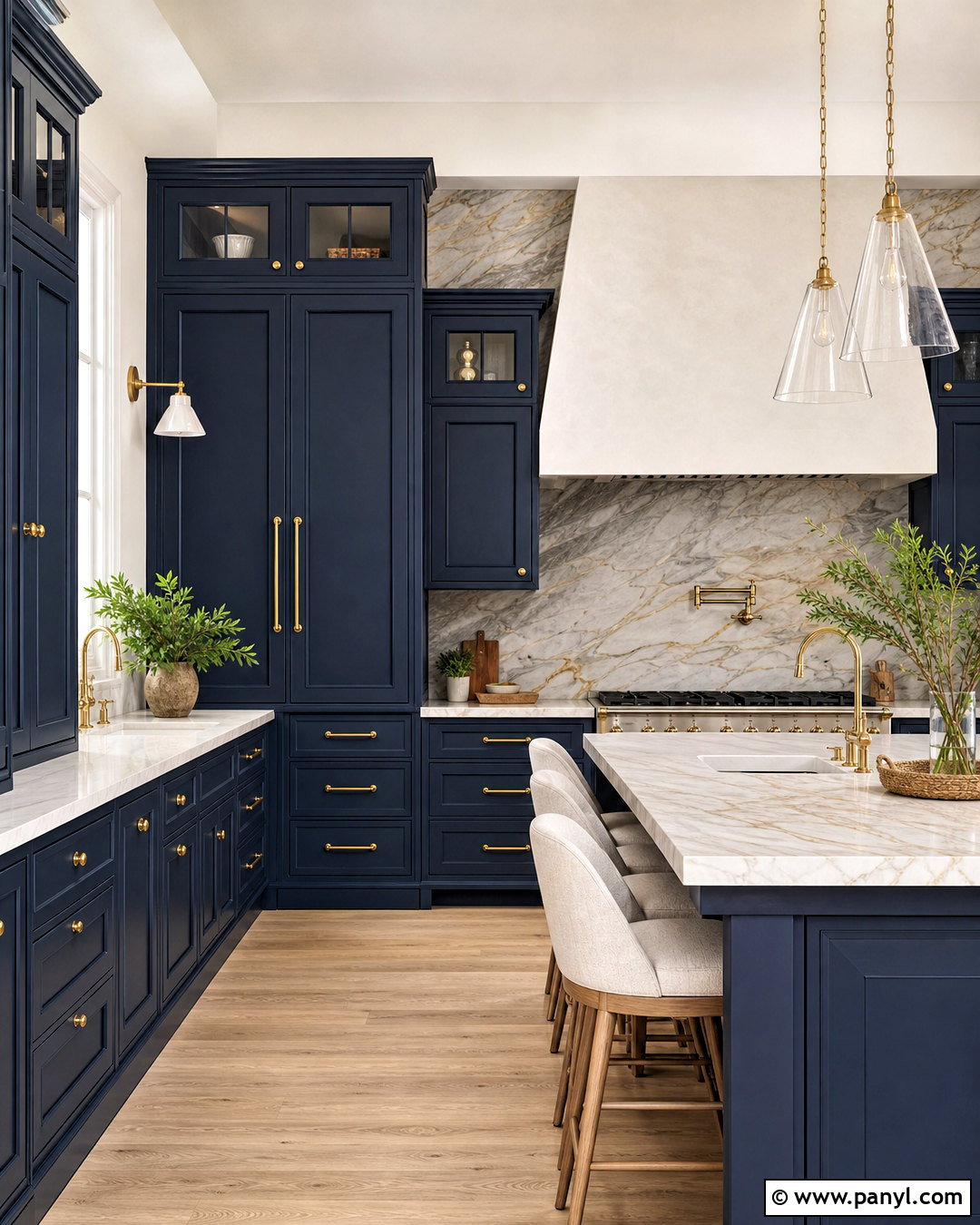
A full-height marble backsplash gives dark blue cabinetry a refined focal point while visually lifting the entire room. Select navy inset cabinets with discreet brass knobs and pair them with white marble or marble-look quartz featuring graceful gray and beige veining. Run the same surface from the countertop to the upper cabinets for a seamless appearance. On the range wall, extend it to the ceiling and frame it with narrow navy cabinets or open shelves. Light oak floors prevent the scheme from looking too formal, while warm white walls preserve brightness. Add glass pendants, a plaster range hood, and upholstered island stools in oatmeal fabric. Keep countertop accessories restrained so the stone remains visible. The resulting kitchen feels luxurious, balanced, and suitable for everyday family life.
5. Dark Blue Kitchen With White Upper Cabinets
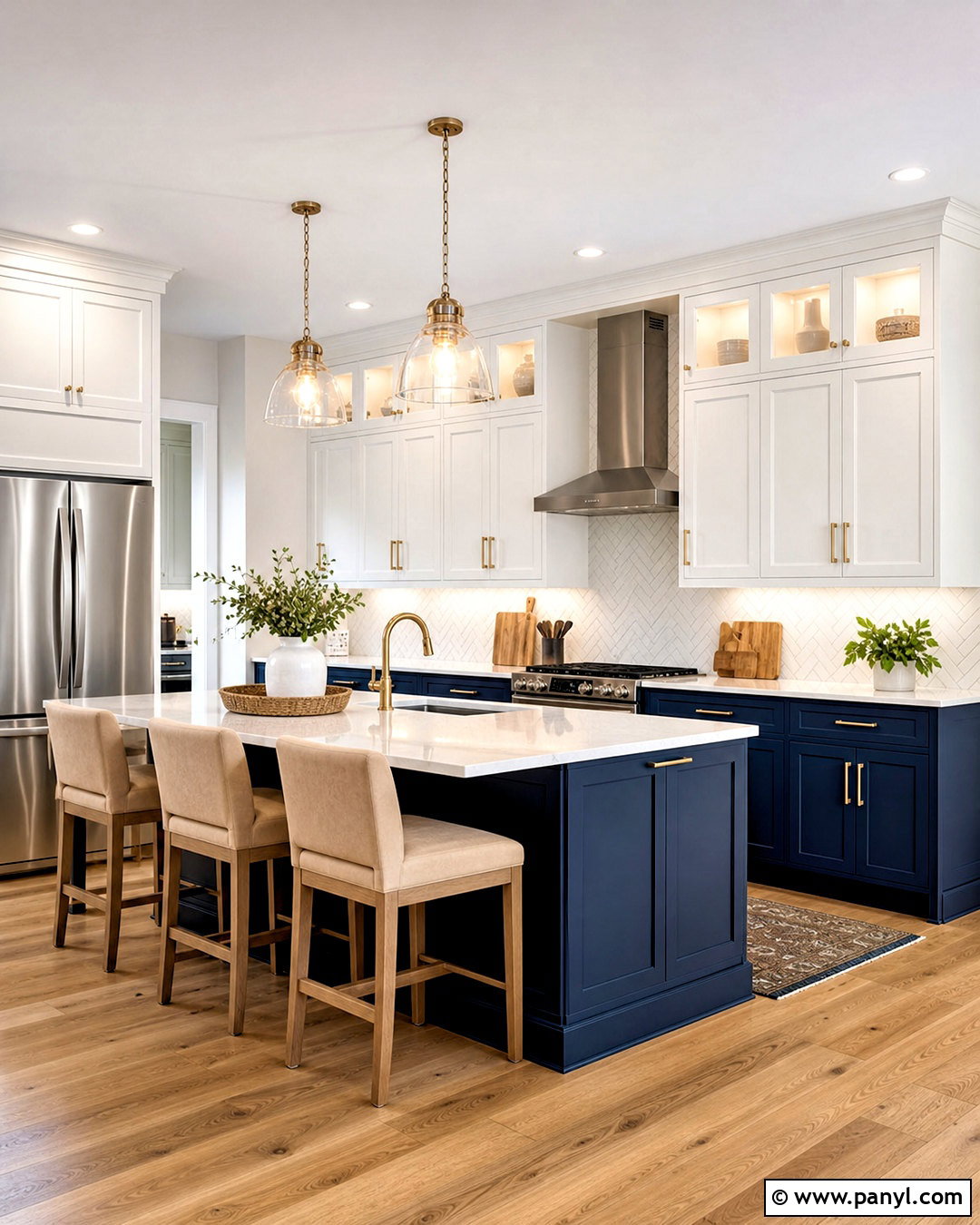
Two-tone cabinetry offers an easy way to enjoy dark blue without covering the entire kitchen in a deep color. Place navy cabinets on the lower half of the room, including the base cupboards and island, then use warm white cabinets above. A pale quartz countertop visually connects both colors, while a white herringbone tile backsplash adds quiet movement. Choose slim brass handles for warmth and install under-cabinet lighting to eliminate shadows on the work surface. Natural maple or white oak flooring keeps the overall palette bright. For a unified appearance, repeat navy inside a glass-front cabinet or on a small pantry door. Cream counter stools, a simple runner, and wooden accessories complete this practical design, which is especially effective in narrow kitchens or spaces with limited daylight.
6. Dark Blue Kitchen Island With White Cabinets
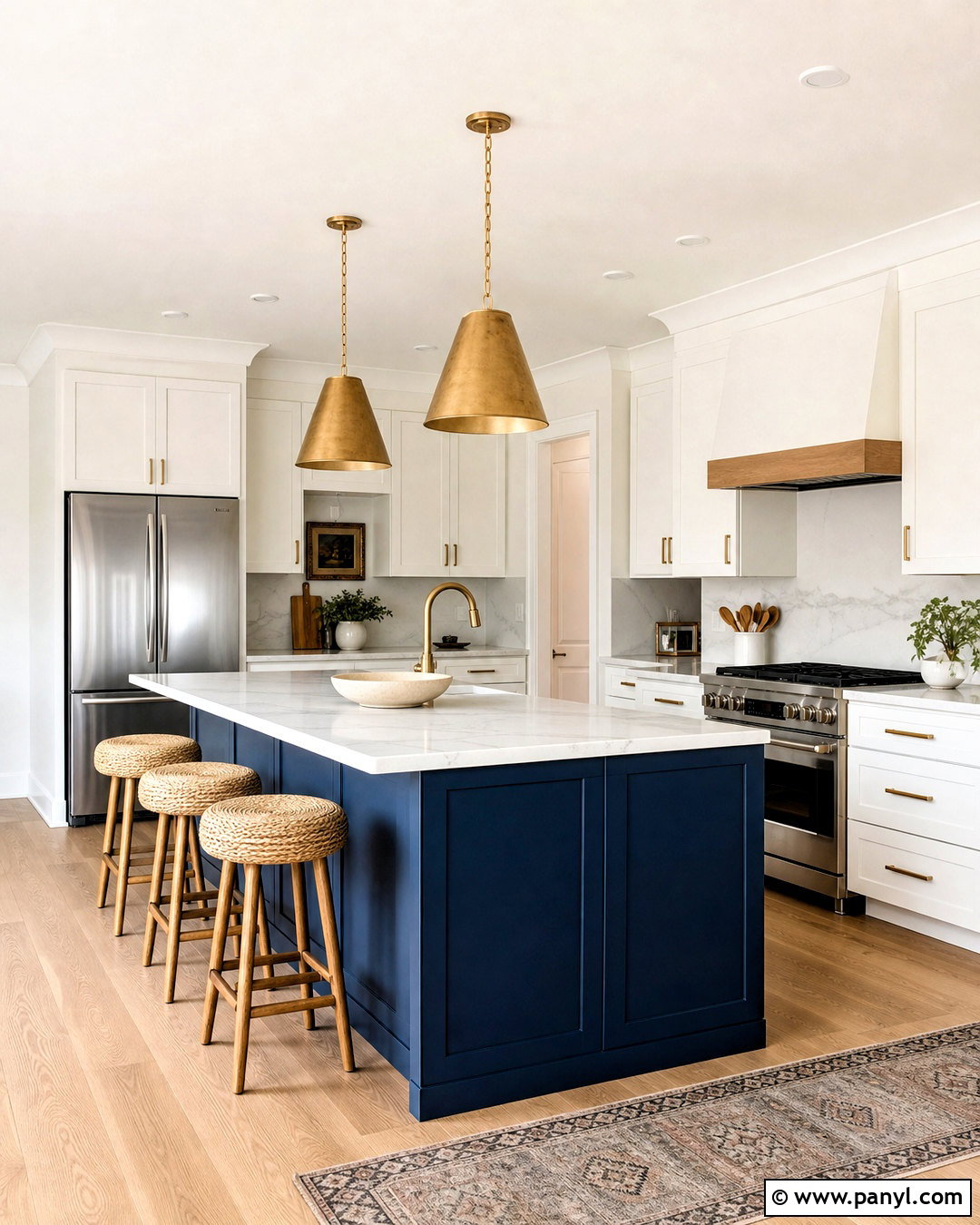
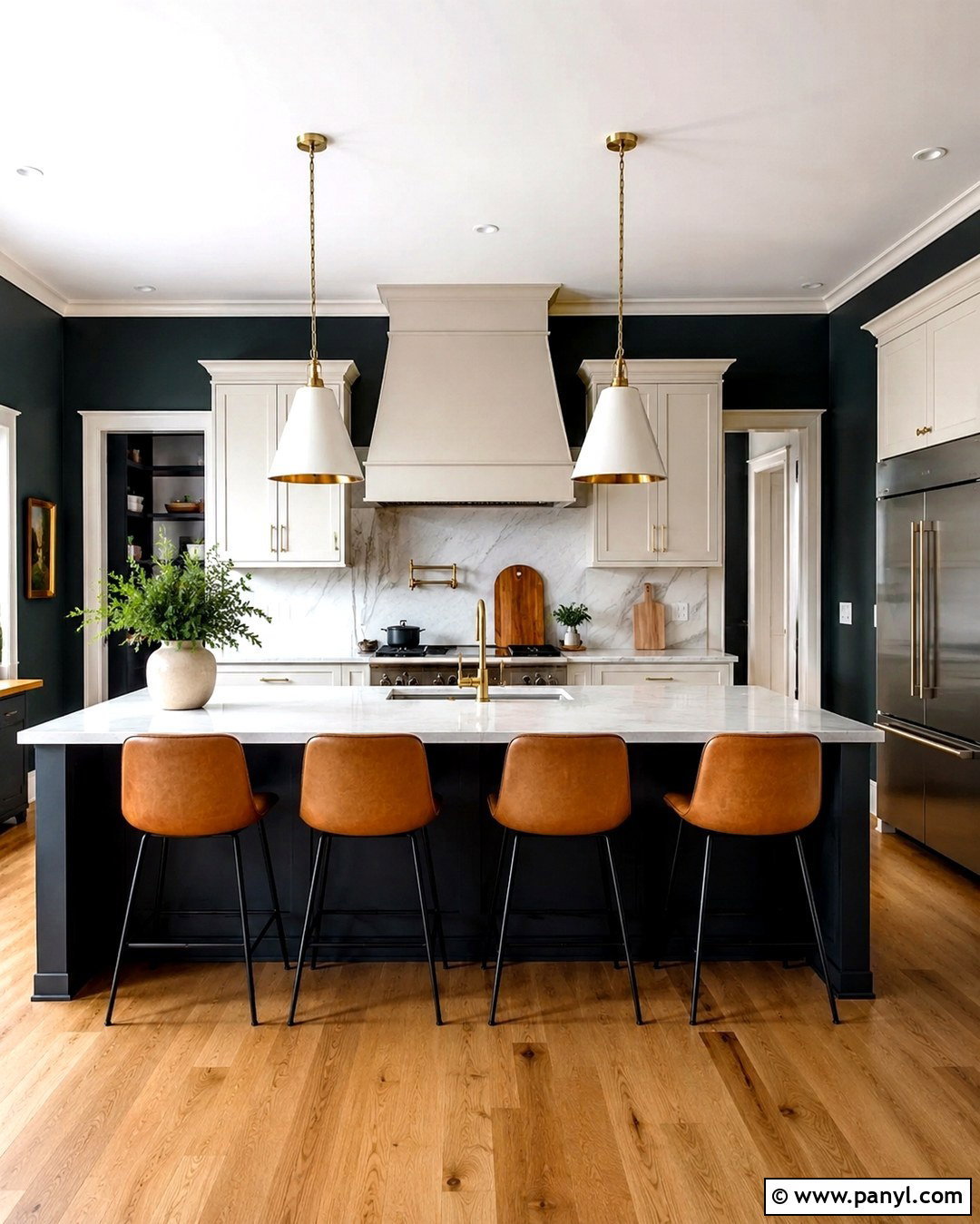
If you prefer a lighter kitchen, make a dark blue island the central accent rather than painting every cabinet. Surround the navy island with soft white perimeter cabinets, pale quartz counters, and a simple white tile backsplash. Top the island with thicker marble-look quartz and allow room for three or four comfortable stools. Brushed brass lighting and cabinet hardware create consistency across both cabinet colors. Choose light oak flooring to warm the white surfaces and help the blue feature feel grounded. A dark blue range hood or pantry door can provide a second color reference without overwhelming the room. Finish with woven stools, a ceramic fruit bowl, and a muted patterned runner. This balanced layout brings personality to an airy kitchen while remaining flexible and broadly appealing.
7. Dark Blue Kitchen With Black Countertops
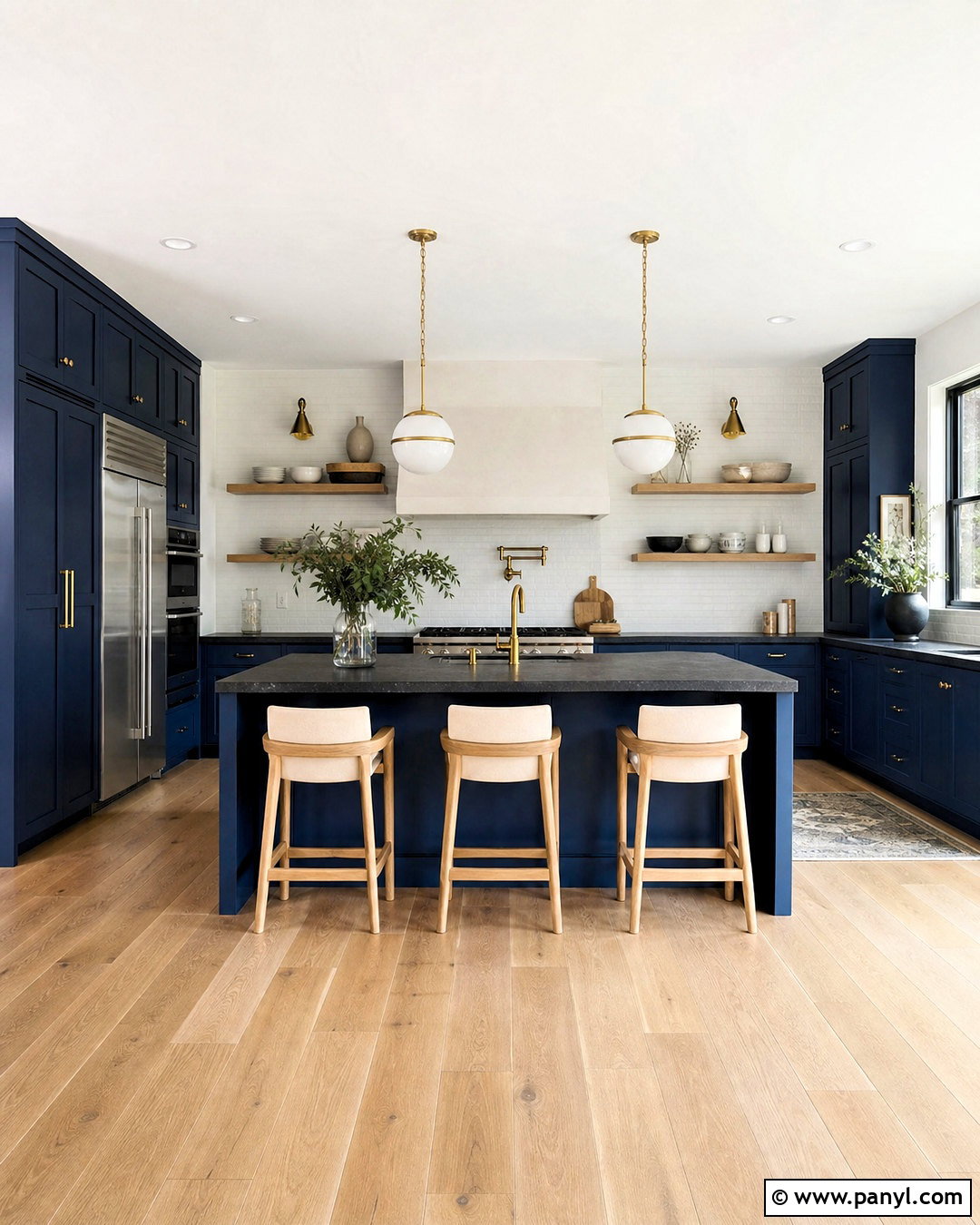
For a dramatic kitchen that still feels livable, combine dark blue cabinetry with black counters and several carefully placed lighter finishes. Choose rich navy slab cabinets and honed black granite or soapstone countertops with subtle veining. Use a warm white backsplash, pale walls, and light wood flooring to prevent the lower half of the room from becoming visually heavy. Matte black hardware creates a streamlined appearance, while a brushed brass faucet or pendant light introduces one warm accent. Keep upper storage limited to a few cabinets and floating oak shelves if the layout allows. Large windows, strong ceiling lighting, and under-cabinet LED strips are essential to this darker scheme. Finish with cream stools and simple stoneware so the bold surfaces remain the main attraction.
8. Dark Blue Kitchen With Oak Cabinets
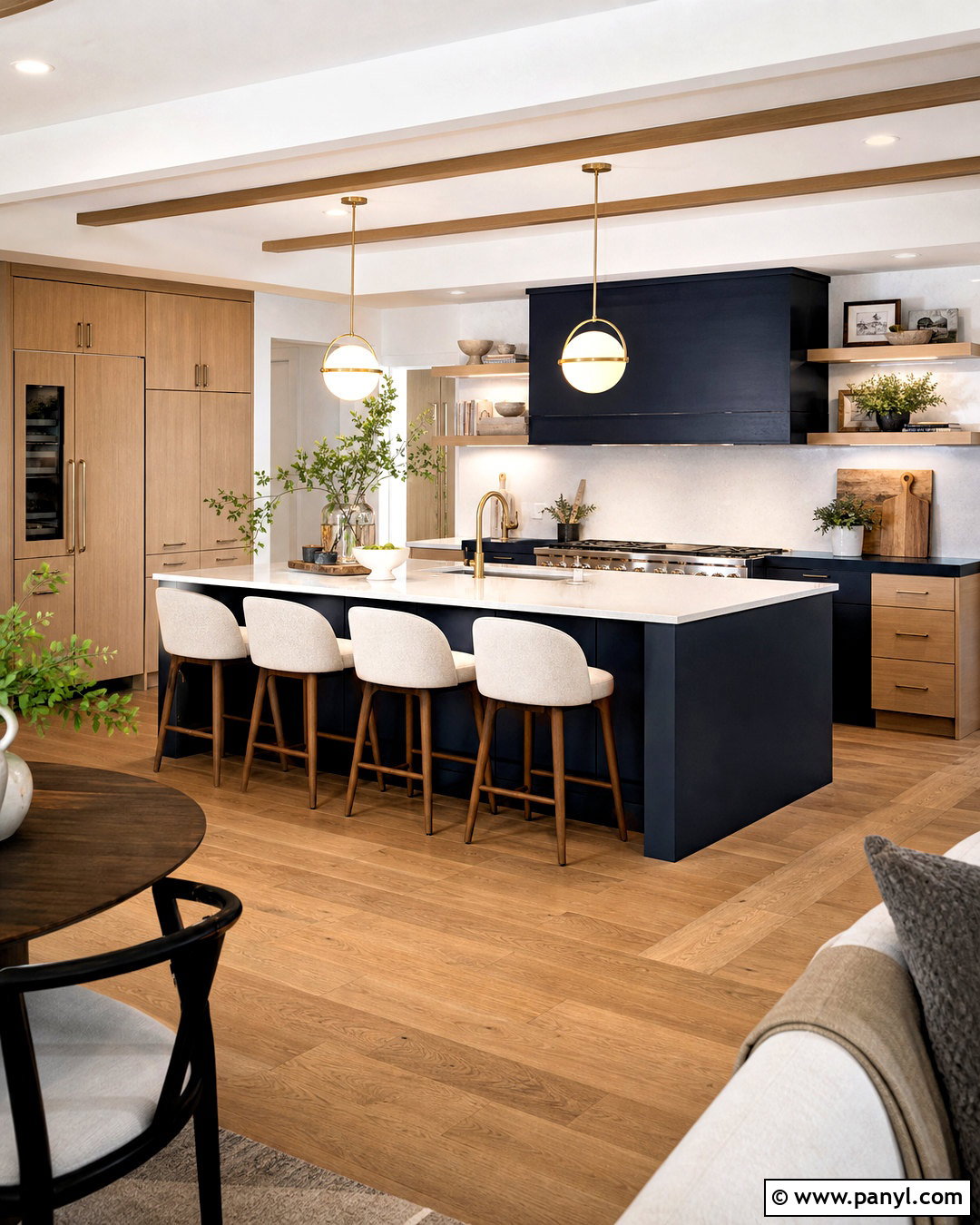
Dark blue and natural oak create a layered kitchen that feels warm, modern, and connected to nature. Use navy cabinetry on the main range wall and island, then install flat-front white oak cabinets around the refrigerator and pantry. Select warm white quartz counters and carry them up as a short backsplash or full-height range surround. Brushed nickel or soft brass hardware complements both finishes without drawing too much attention. Wide-plank oak flooring can continue the natural theme, provided its tone coordinates with the cabinets. Add globe pendants, oatmeal-colored stools, and a small amount of greenery. Keep decorative objects simple and textural rather than colorful. The contrast between painted and wood cabinetry gives each zone a clear purpose while making an open-plan kitchen feel thoughtfully furnished and comfortable.
9. Dark Blue Kitchen With Open Shelving
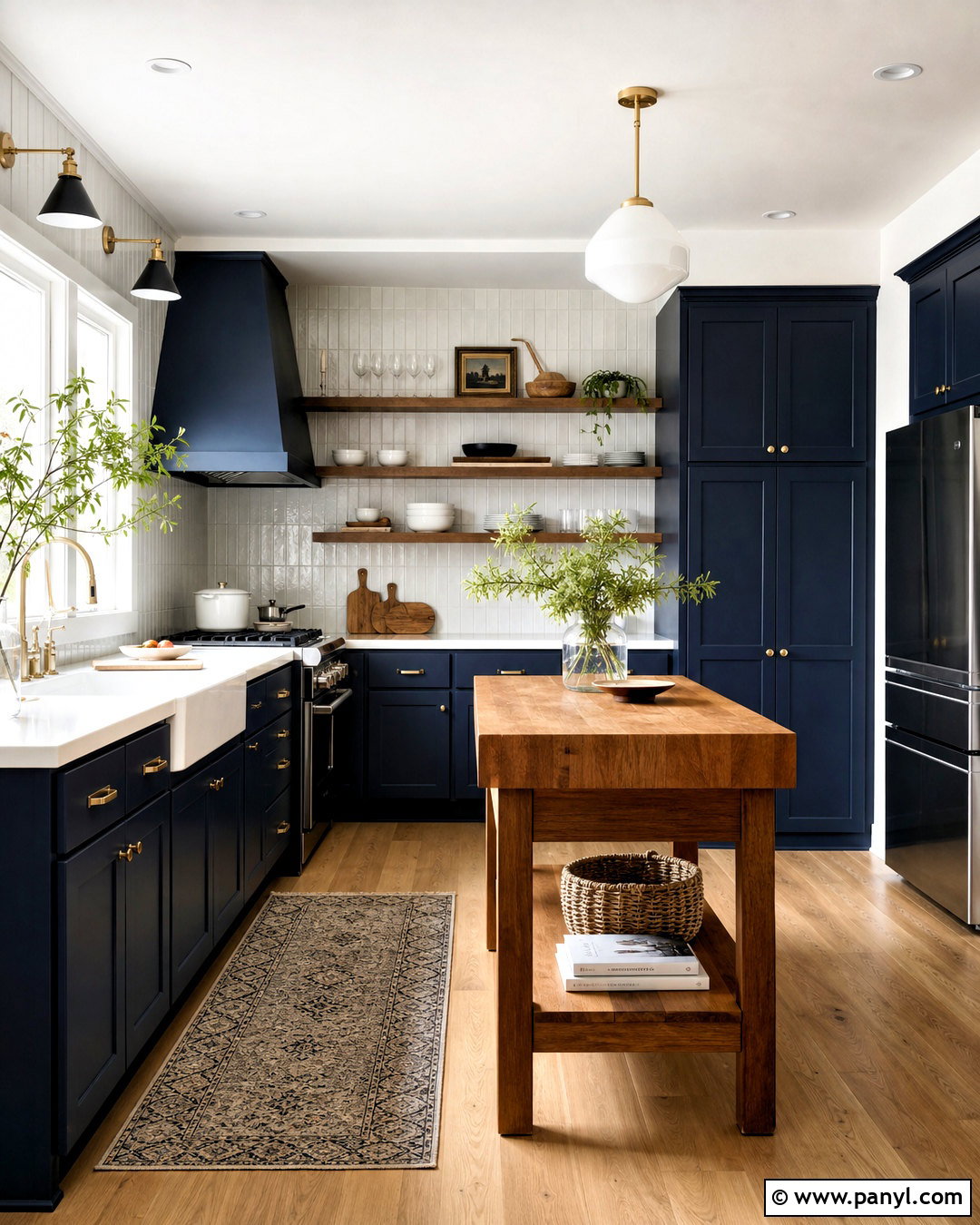
Open shelving can make a dark blue kitchen appear lighter while creating space for useful everyday pieces. Install deep navy base cabinets and tall pantry cupboards, but replace several upper cabinets with thick oak shelves. Use pale quartz countertops and vertically stacked ivory backsplash tiles to create height. Brass shelf brackets, cabinet pulls, and a curved faucet add warmth against the blue. Display white plates, clear glasses, wooden bowls, and a few muted ceramics, leaving open space between groups to avoid clutter. A light wood floor and warm white ceiling help reflect daylight around the room. Add a narrow island or butcher-block worktable if space permits. This complete arrangement feels relaxed and personal, yet it remains functional when displayed items are limited to things used regularly.
10. Dark Blue Kitchen With Subway Tile
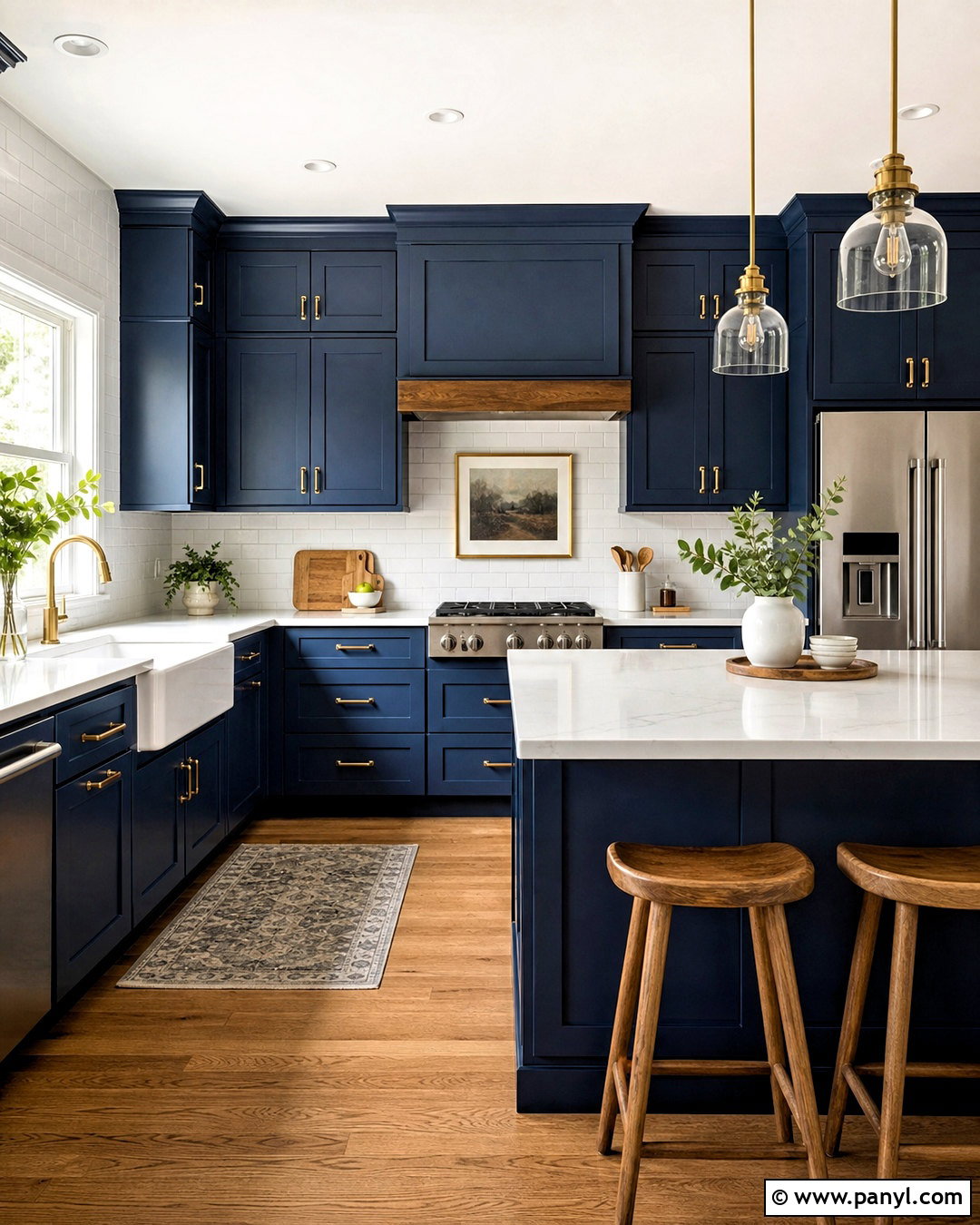
White subway tile provides a familiar, affordable backdrop for a dark blue kitchen with classic character. Choose navy Shaker cabinets, white quartz counters, and rectangular ceramic tiles with softly uneven surfaces. Install the tile in a traditional brick pattern for a timeless look or use vertical stacking for a cleaner update. Light gray grout defines the shape without creating a harsh grid. Add polished nickel or brushed brass hardware, depending on whether you prefer a cooler or warmer finish. Medium oak flooring, white walls, and clear glass pendants keep the room comfortable and bright. Include a farmhouse sink, simple counter stools, and practical wooden accessories. The combination works across many budgets because the cabinetry supplies the color while straightforward surrounding materials keep the design accessible and easy to recreate.
11. Dark Blue Kitchen With Patterned Tile
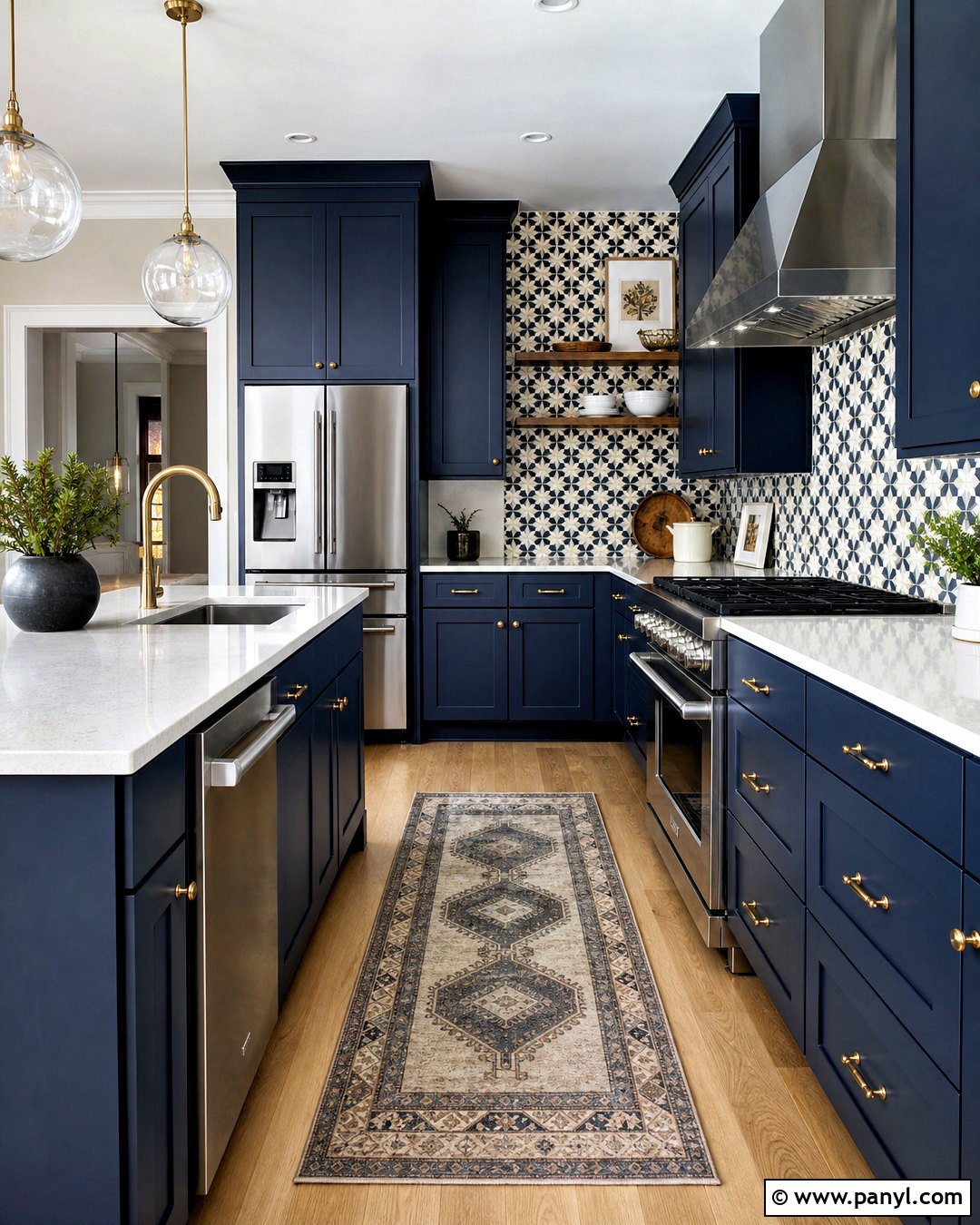
Patterned tile brings energy to dark blue cabinets, but the room needs a controlled palette to stay cohesive. Choose navy base and upper cabinetry with uncomplicated door fronts, then add a backsplash featuring blue, cream, and muted gray geometric motifs. Use plain off-white quartz countertops so they do not compete with the pattern. A light oak floor and warm white walls balance the stronger cabinet and tile colors. Select understated brass knobs, a simple stainless steel range, and clear pendant lights. If you want another pattern, use it sparingly in a narrow runner with similar colors. Keep dishes and countertop appliances neutral. By limiting the room to a few repeated hues and straightforward materials, the finished kitchen feels lively and collected rather than busy, themed, or visually disorganized.
12. Dark Blue Kitchen With Copper Accents
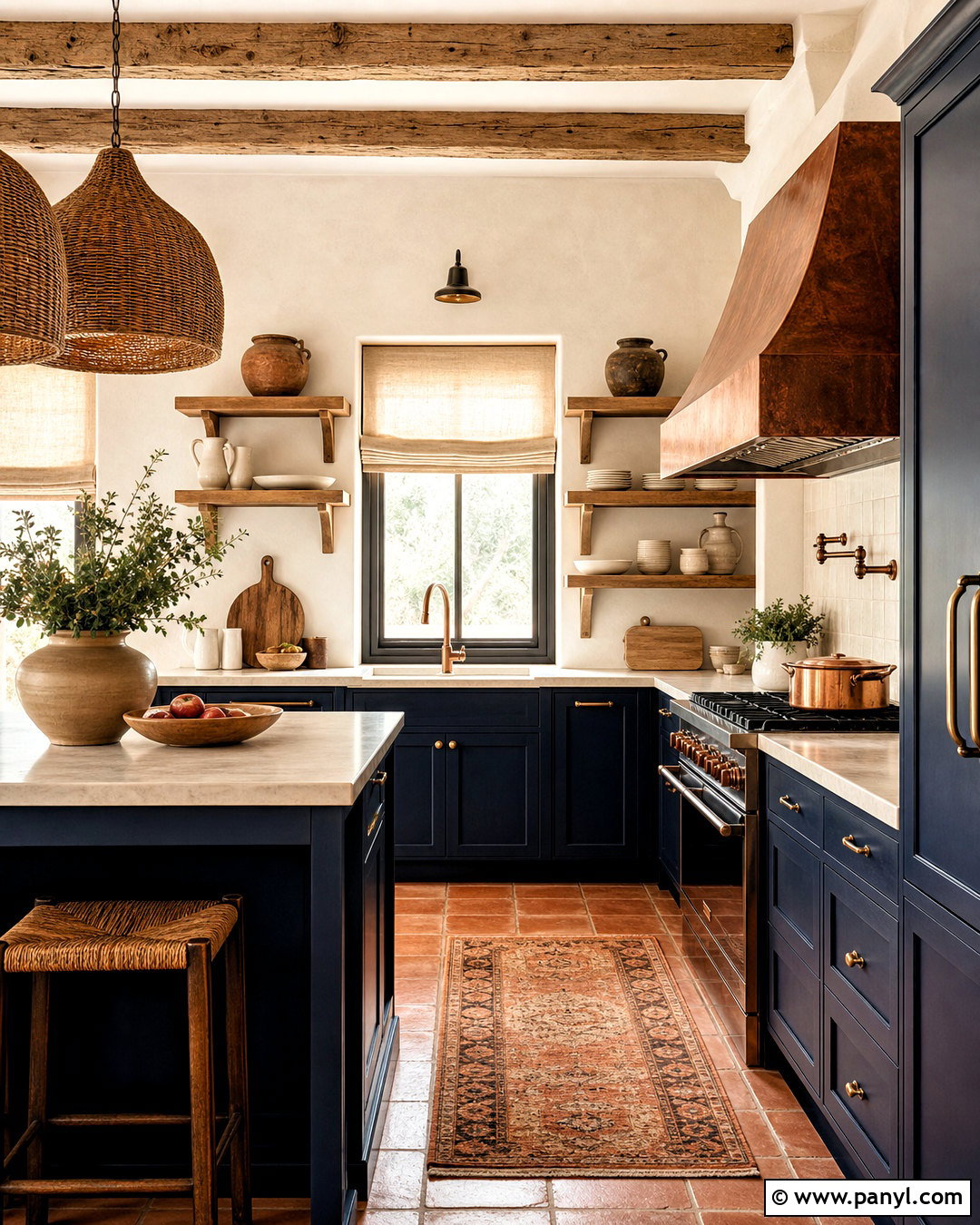
Copper introduces a glowing, handcrafted quality that beautifully offsets cool dark blue cabinetry. Start with deep navy Shaker cabinets and creamy stone countertops, then use copper on a statement range hood, faucet, or narrow backsplash panel. Because copper naturally commands attention, keep smaller cabinet hardware in aged brass or dark bronze for a quieter supporting finish. Warm terracotta floor tiles reinforce the earthy palette, while ivory walls and open oak shelving brighten the room. Add woven pendants, linen Roman shades, and simple cream pottery for softness. Avoid filling the kitchen with too many copper accessories; two or three substantial features will look more intentional. This complete scheme suits farmhouse, Mediterranean, and traditional interiors, yet clean cabinet lines can also give it a comfortable contemporary edge.
13. Dark Blue Kitchen With Stainless Steel Appliances
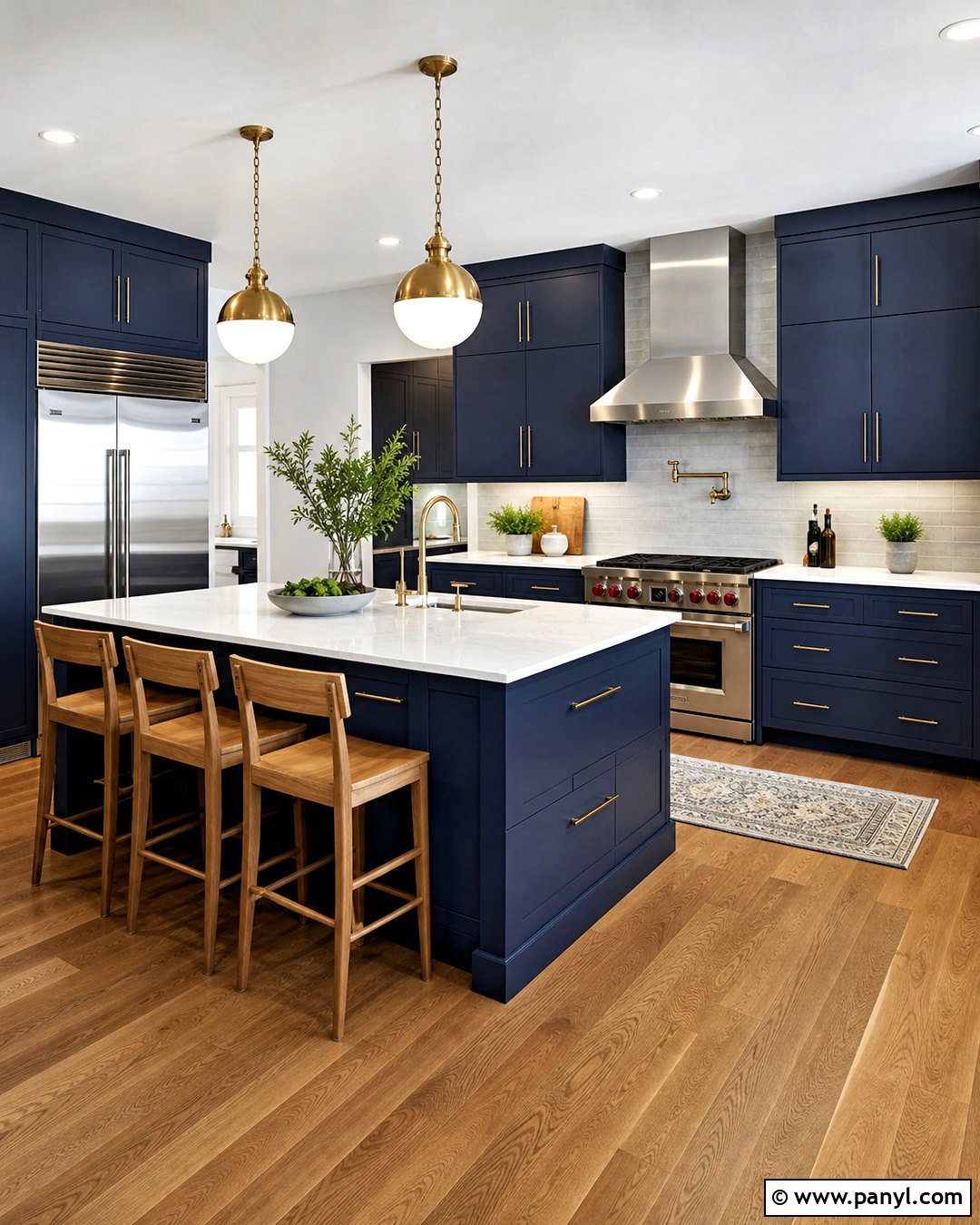
Stainless steel appliances give dark blue cabinets a practical, professional edge without making the room feel industrial. Select flat-panel navy cabinets with long brushed stainless steel pulls, then integrate a large range, refrigerator, and dishwasher into the layout. White quartz counters and a pale gray backsplash reflect light around the metallic finishes. Introduce warmth through oak flooring, wooden stools, and one or two pendant lights with soft brass details. Keep walls warm white rather than cool gray to avoid a sterile atmosphere. A navy island with deep drawers can anchor the center and provide a generous food preparation area. Complete the room with streamlined storage, hidden countertop appliances, and minimal decor. This design feels organized and durable, making it well suited to active households and enthusiastic home cooks.
14. Dark Blue Kitchen With Matte Black Hardware
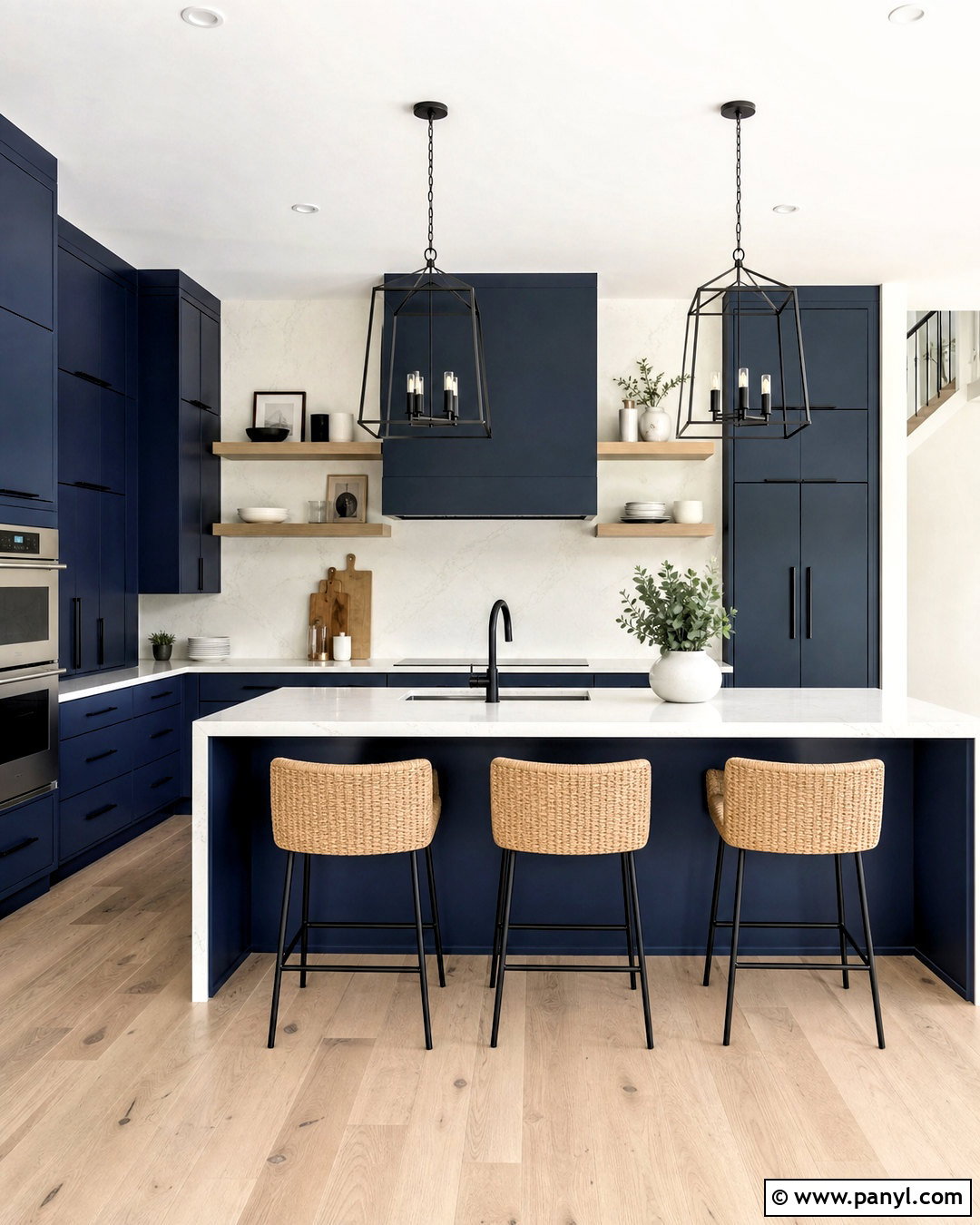
Matte black hardware creates a sharp, modern outline against dark blue cabinets without adding shine. Use midnight blue slab-front cabinetry, slim black pulls, and a black pull-down faucet for a streamlined appearance. Pair these features with lightly veined white quartz countertops and a simple off-white backsplash to maintain contrast. Black-framed pendant lights and window trim can repeat the hardware finish, but use them selectively to avoid making the room feel severe. Pale oak flooring and matching open shelves introduce warmth and texture. Choose stools with black frames and woven seats to connect both sides of the palette. Finish with warm white walls, under-cabinet lighting, and restrained greenery. The final kitchen feels crisp and contemporary, with enough natural material to remain welcoming rather than overly stark.
15. Dark Blue Farmhouse Kitchen
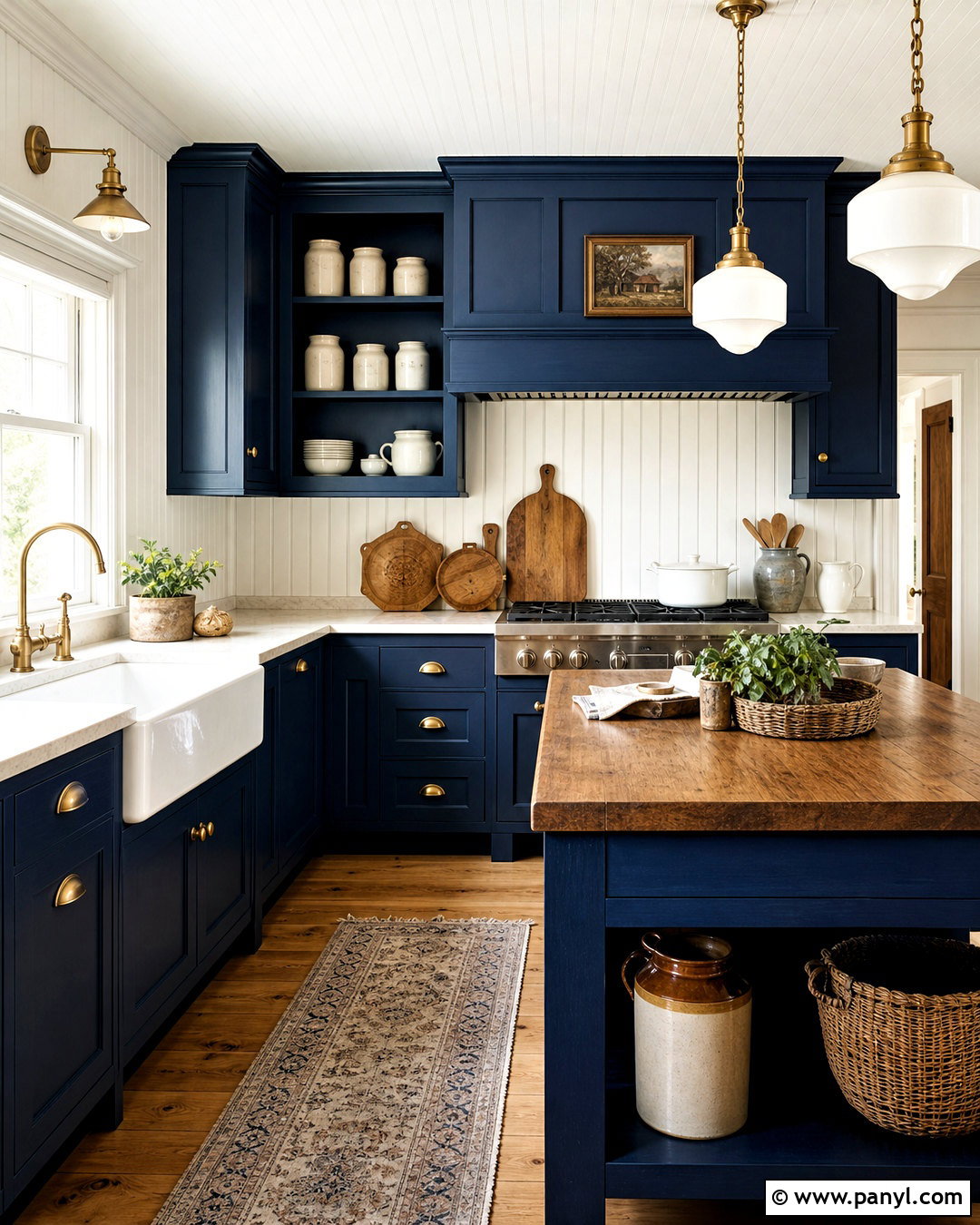
A farmhouse kitchen gains depth and personality when traditional details are finished in dark blue. Choose navy Shaker cabinets, a large white apron-front sink, and creamy quartz or durable soapstone-look counters. Add a white beadboard or handmade square tile backsplash for subtle texture. An oak island with a navy base can provide workspace and a warm visual center. Use aged-brass knobs, bridge-style faucets, and milk-glass pendant lights to reinforce the classic character. Wide-plank medium oak flooring and warm white walls complete the foundation. Bring in useful decor through wooden cutting boards, ceramic crocks, linen towels, and woven baskets rather than purely ornamental signs. The overall kitchen should feel comfortable and hardworking, combining familiar farmhouse elements with a strong cabinet color that makes the room feel updated and distinctive.
16. Dark Blue Modern Kitchen
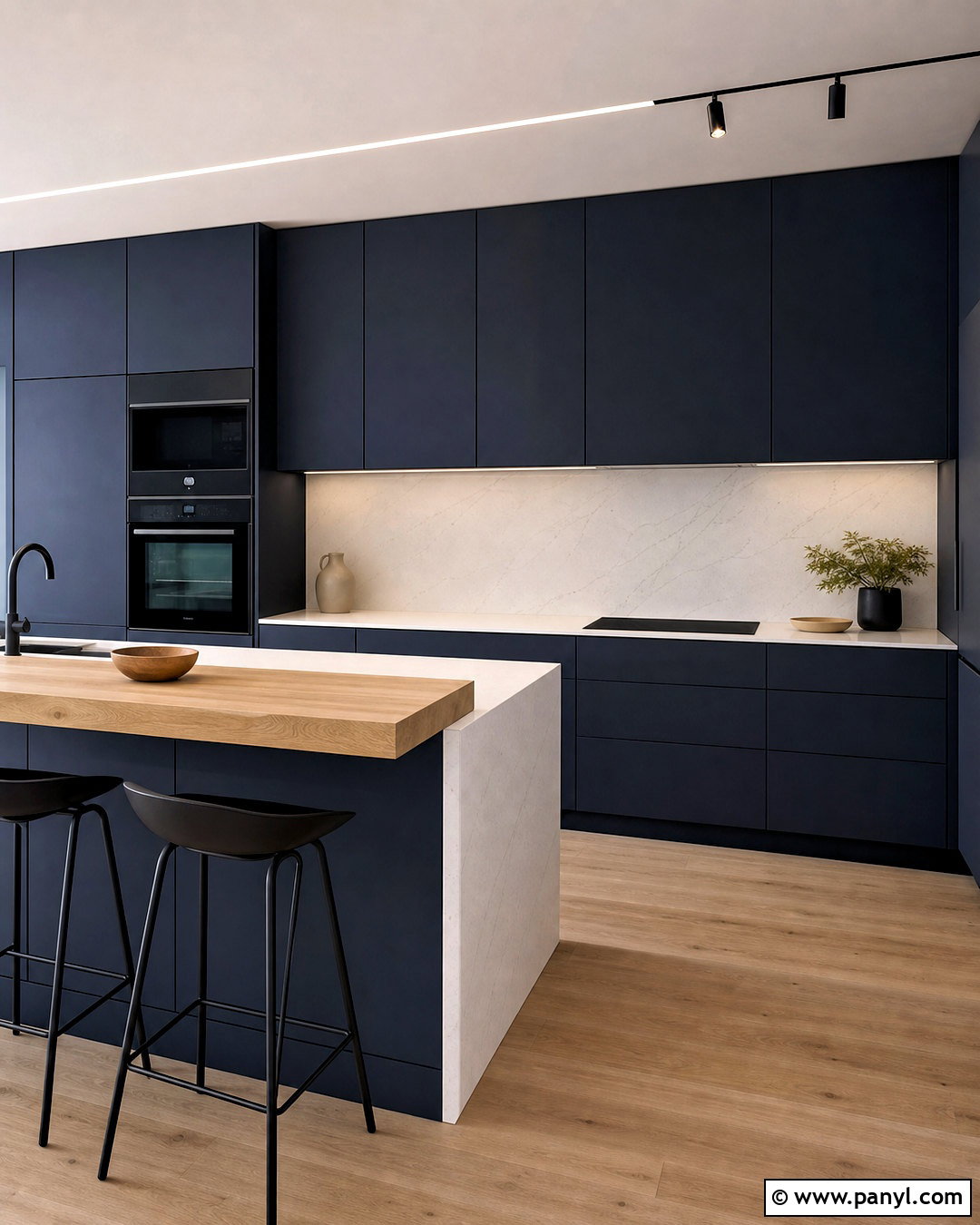
Clean lines allow dark blue to become the primary decorative feature in a modern kitchen. Choose handleless midnight blue cabinets with a matte finish and extend them to the ceiling for a continuous architectural look. Add thin white quartz countertops and a matching full-height backsplash with minimal veining. Integrated appliances help preserve the uninterrupted cabinet surfaces, while a black induction cooktop blends into the streamlined design. Use pale oak flooring and a matching wood breakfast bar to soften the sharp geometry. Simple linear pendants or recessed ceiling lights provide bright, even illumination. Keep the island broad and uncluttered with storage hidden beneath. A single ceramic bowl, sculptural stool, and small plant are enough decoration. This carefully edited palette feels sophisticated, functional, and calm rather than cold.
17. Dark Blue Coastal Kitchen
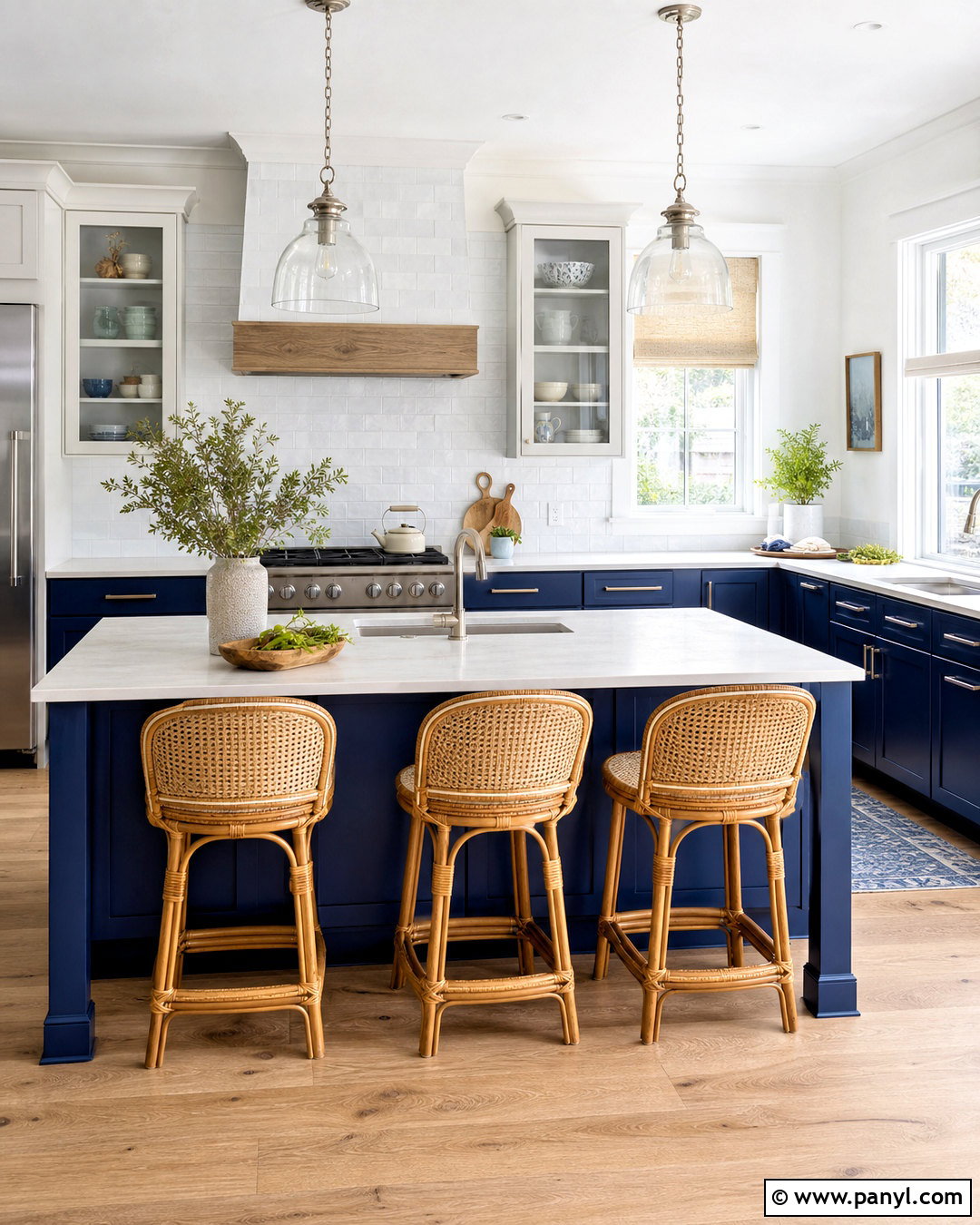
Dark blue can support a coastal kitchen without relying on obvious nautical decorations. Begin with navy lower cabinets and glass-front upper cupboards painted soft white. Add pale quartz counters, glossy white zellige-style tiles, and brushed nickel hardware for a fresh finish. Light white oak flooring gives the room a sun-washed quality, while woven rattan stools and linen shades introduce natural texture. Use a navy island with open shelving at one end for baskets or cookbooks. Clear glass pendants keep sightlines open and allow daylight to move through the space. Finish with white ceramics, muted blue textiles, and small touches of weathered wood. The complete kitchen feels breezy and relaxed because the design focuses on light, texture, and natural materials instead of themed signs, rope details, or excessive blue accessories.
18. Dark Blue Small Kitchen
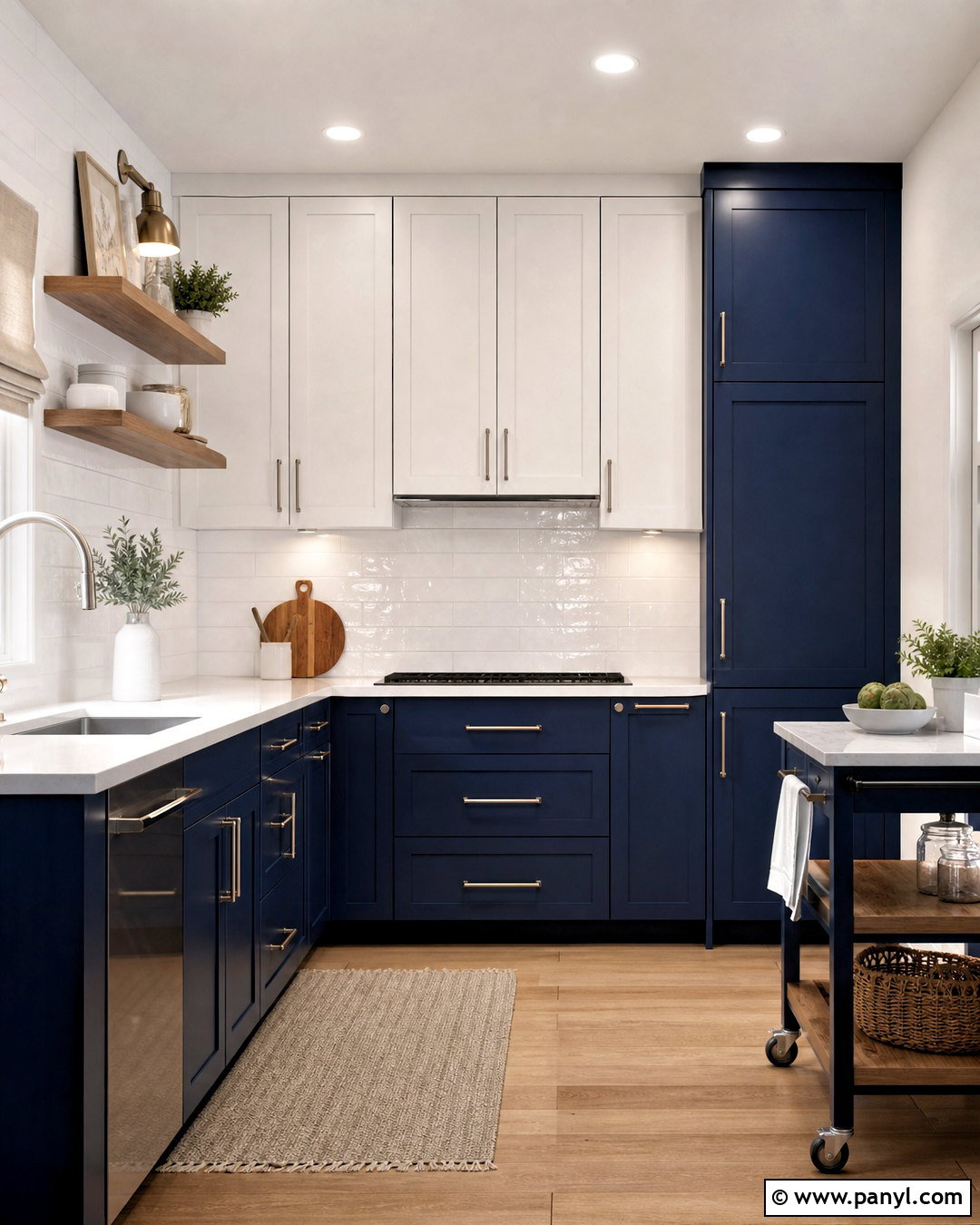
A compact kitchen can handle dark blue cabinetry when the layout includes enough light surfaces and open visual space. Place navy on the lower cabinets and one tall pantry unit, then use warm white upper cabinets or open oak shelves. Choose reflective white quartz counters and glossy backsplash tiles to bounce light around the room. Keep hardware slim and brass or polished nickel, rather than using oversized pulls. Pale wood or light stone-look flooring prevents the base cabinets from making the room feel bottom-heavy. Install bright under-cabinet lighting and a simple flush-mount ceiling fixture. A narrow rolling cart can provide extra preparation space without blocking movement. Limit countertop decor to a wooden board, utensil container, and small plant. The result feels colorful and efficient while preserving an open, comfortable atmosphere.
19. Dark Blue Kitchen With Terracotta Floors
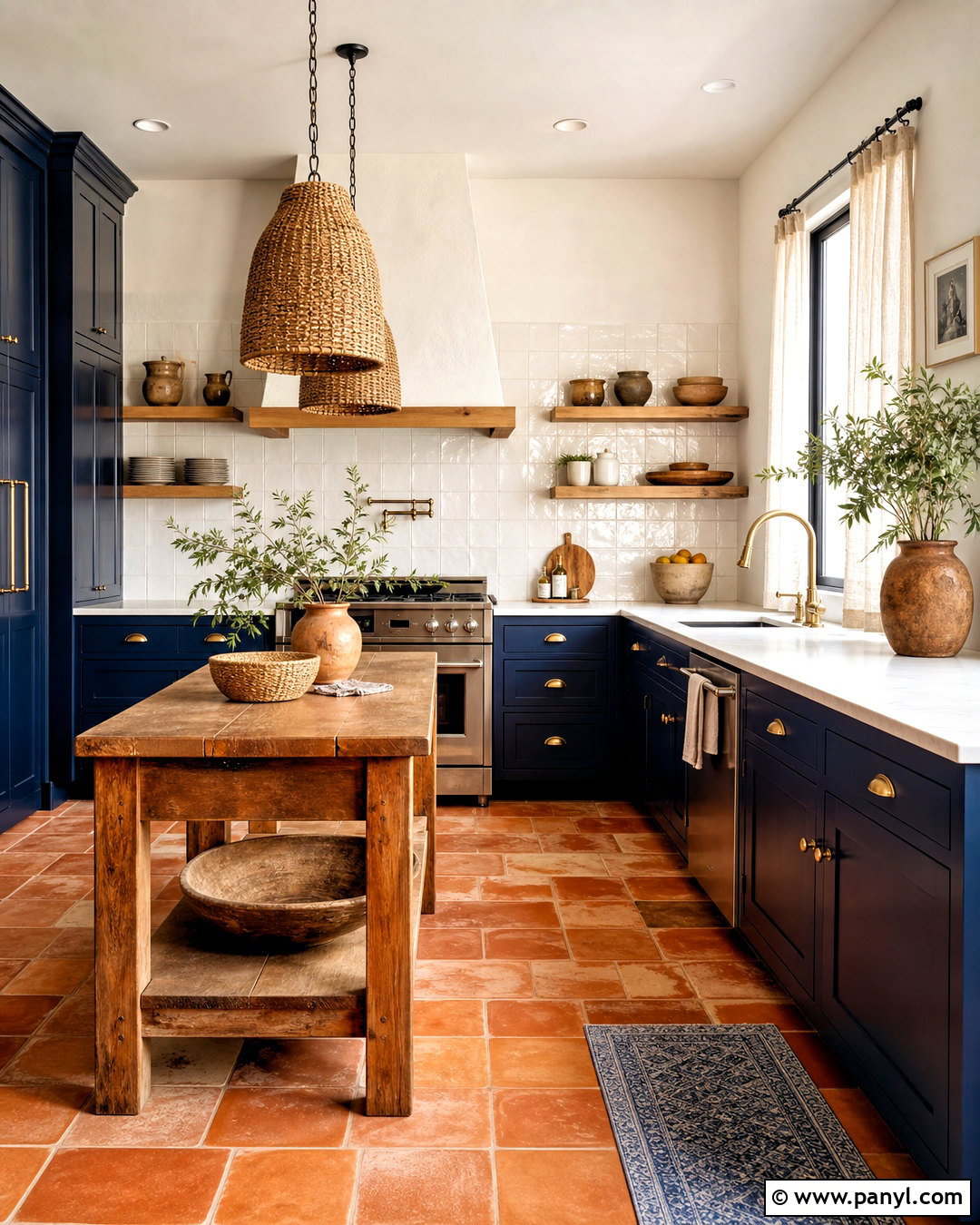
Terracotta flooring warms the cool depth of dark blue cabinets and gives the kitchen an inviting, established character. Select navy Shaker cupboards with warm cream countertops and a handmade ivory tile backsplash. Use aged brass or bronze hardware to bridge the blue cabinetry and reddish-brown floor tones. A large oak table or butcher-block island can serve as the room’s central work and gathering area. Keep walls a soft plaster white and introduce open shelves for simple pottery and glassware. Woven pendant lights, linen cafe curtains, and natural wood accessories enhance the relaxed texture. Choose terracotta tiles with varied tones and a matte finish rather than a perfectly uniform surface. This complete combination works especially well in Spanish, Mediterranean, rustic, and casual country-inspired homes.
20. Dark Blue Monochrome Kitchen
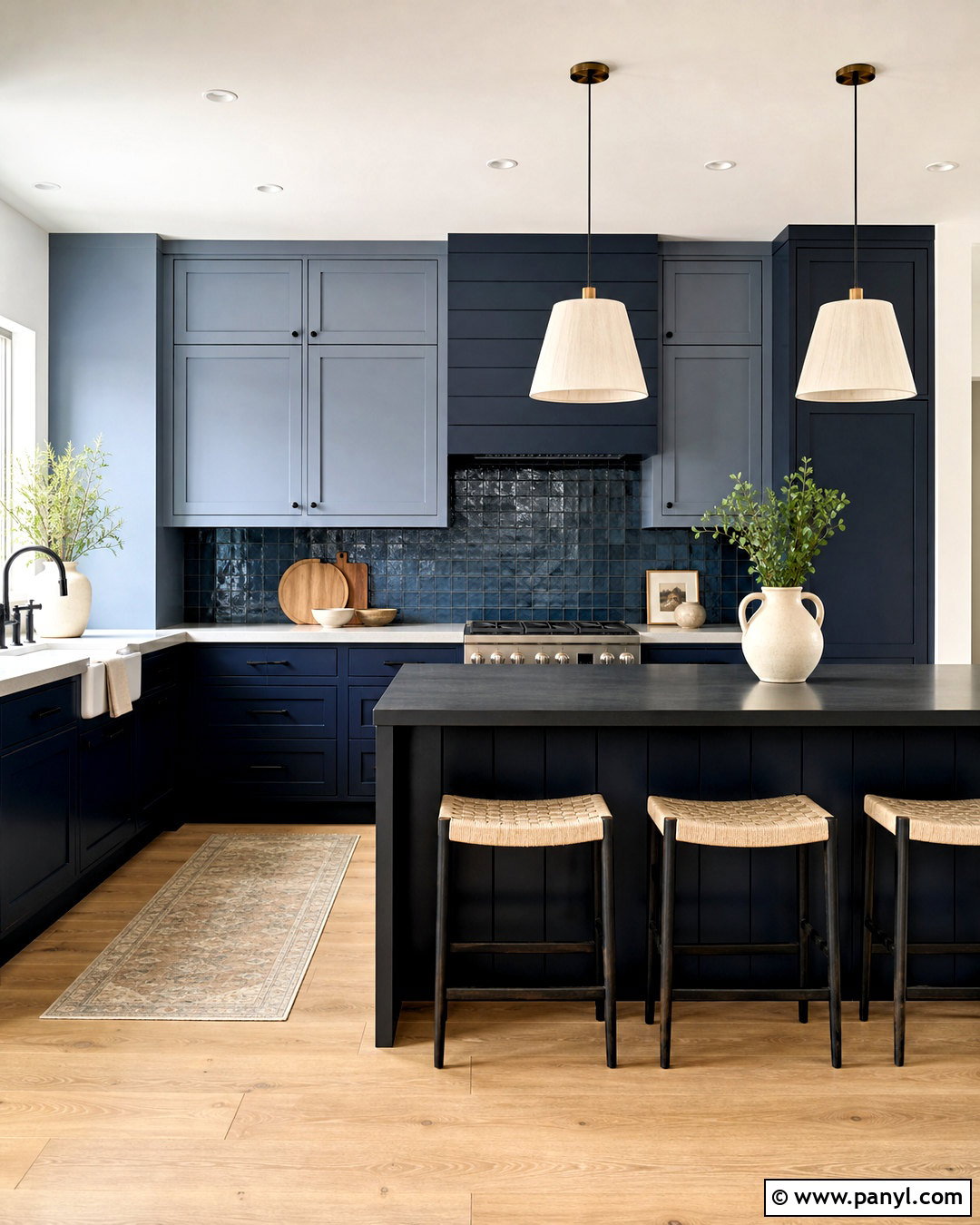
For a bold color-drenched look, layer several dark blue tones instead of using one identical shade everywhere. Paint the base cabinets deep navy, choose slightly softer blue-gray upper cabinets, and cover the island in a near-midnight finish. Add a blue-toned tile backsplash with visible variation, then introduce pale gray quartz counters to create a necessary visual break. Blackened bronze hardware keeps the palette cohesive, while light oak flooring prevents the room from becoming too heavy. Use bright ceiling lights, under-cabinet strips, and pale fabric pendants to illuminate every work zone. A few cream ceramics and natural wood boards provide quiet contrast. The finished room feels immersive and dramatic, but subtle shade changes ensure that cabinets, walls, and architectural features remain clearly defined.
Conclusion:
The best dark blue kitchen ideas balance strong cabinet color with finishes that bring light, warmth, and useful contrast. White quartz creates freshness, wood adds comfort, and brass or copper introduces a welcoming glow. Homeowners who want a lighter result can limit navy to lower cabinets or an island, while spacious, bright rooms can support full dark blue cabinetry. Consider the room’s daylight, flooring, appliance finishes, and connection to nearby spaces before selecting the final shade. Most importantly, treat the kitchen as one complete composition rather than choosing each material separately. With coordinated counters, backsplash, lighting, hardware, and decor, dark blue can create a kitchen that feels distinctive, practical, and comfortable for years.

Related Ideas and Inspiration:
Leave a Reply