
Dark blue walls can make a home feel grounded, polished, and surprisingly comfortable. The key is designing the entire room around the paint rather than treating color as an afterthought. Current color coverage highlights classic navy, softened indigo, and muted blue-gray tones, along with warm pairings such as cream, brass, walnut, terracotta, and sage. () Consider natural light, undertones, flooring, furniture, and paint sheen before choosing your shade. A blue that looks crisp in bright daylight may appear almost black at night, so always test a large sample on multiple walls. From dramatic bedrooms to practical kitchens and welcoming entryways, these complete looks show how to confidently decorate with 20 dark blue wall paint ideas.

1. Dark Blue Living Room With Cognac Leather
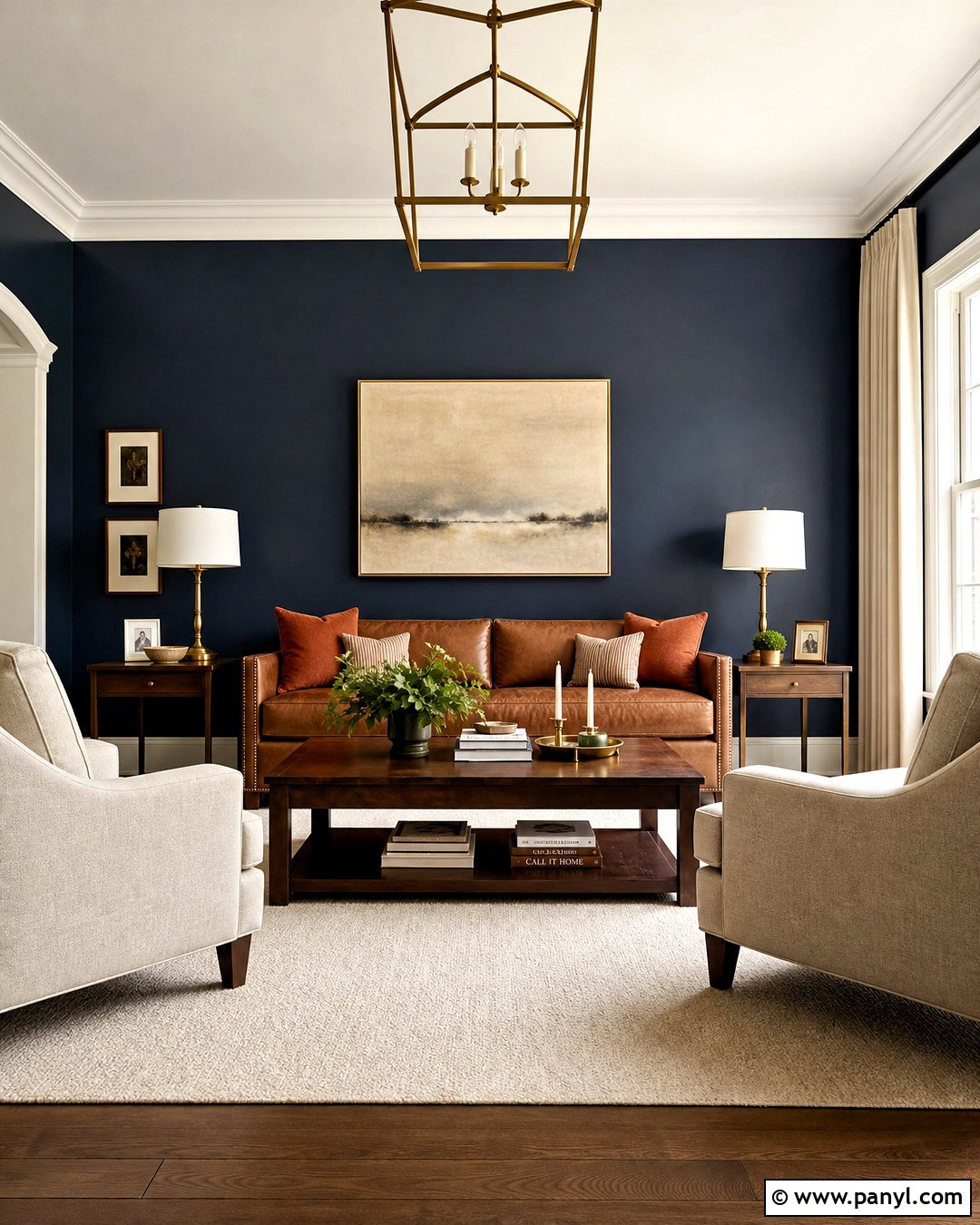
A dark blue living room becomes warm and approachable when paired with cognac leather and creamy neutrals. Paint all four walls a deep navy with subtle gray undertones, then keep the ceiling and trim warm white. Place a streamlined cognac leather sofa opposite a simple oak media console. A cream wool rug will lighten the floor and define the seating area without creating sharp contrast. Add two oatmeal linen chairs, a round walnut coffee table, and brushed brass floor lamps. Rust, camel, and pale blue pillows connect the room’s warm and cool colors. Finish with oversized abstract artwork in cream and muted brown. This balanced layout makes the dark walls feel intentional, while natural wood and leather prevent the space from appearing cold.
2. Dark Blue Bedroom With Matching Trim
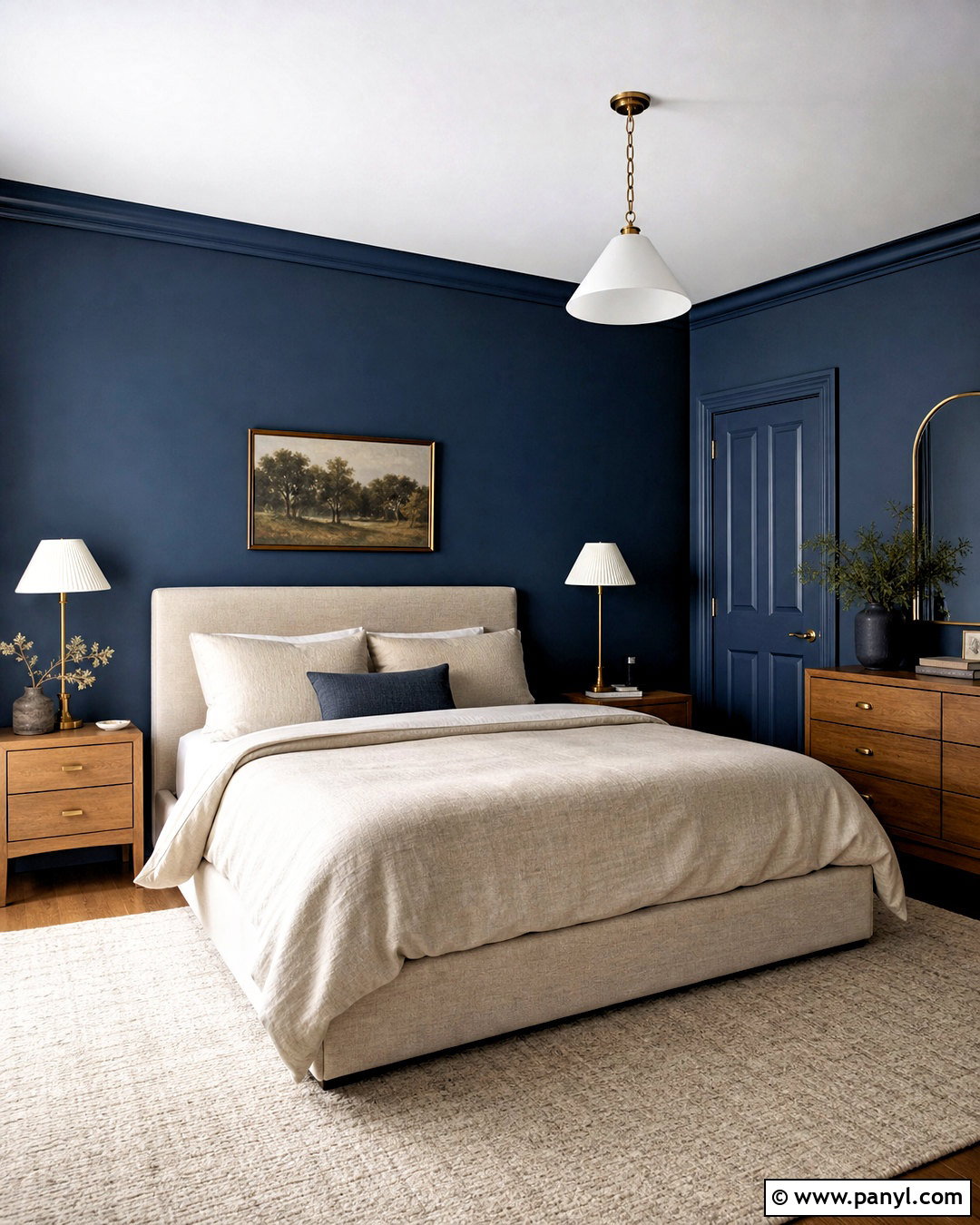
Imagine entering a bedroom where the walls, baseboards, window trim, and doors share one continuous dark blue finish. This color-drenched treatment creates a calm, enveloping backdrop with fewer visual interruptions. Choose a muted midnight blue rather than a bright nautical navy. Use matte paint on the walls and durable satin paint on the woodwork for subtle depth. Center a beige upholstered bed against the longest wall and layer it with white sheets, flax linen bedding, and a chocolate brown throw. Medium oak nightstands and pleated cream lampshades soften the darker surfaces. Keep window treatments close to the wall color for a seamless effect. A light wool rug, minimal artwork, and antique brass hardware complete a restful bedroom that feels cozy rather than crowded.
3. Dark Blue Dining Room With Brass Accents
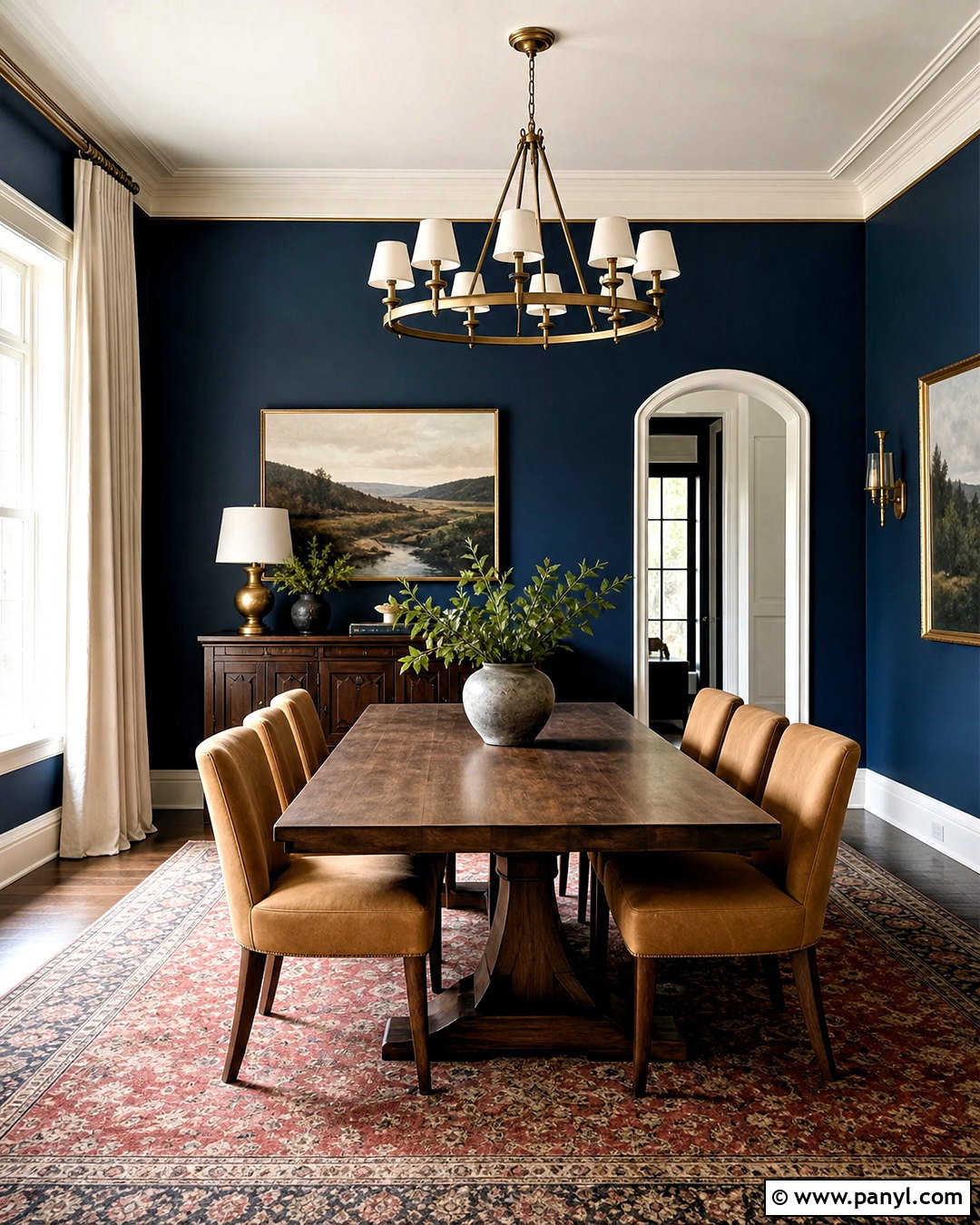
Dark blue paint gives a dining room enough visual weight to feel special, even when the furniture is simple. Cover the walls in a rich ink blue and retain warm white crown molding to create a crisp architectural outline. A rectangular walnut dining table provides natural warmth, while camel upholstered chairs make long meals more comfortable. Hang a sculptural aged brass chandelier low enough to anchor the table without blocking views across the room. Add a dark wood sideboard topped with ceramic lamps and a large warm-toned landscape. Cream curtains and a faded red patterned rug introduce softness and gentle contrast. Instead of filling every wall, leave some open blue space around the artwork. The result is formal enough for entertaining but still relaxed for everyday family dinners.
4. Dark Blue Home Office With Built-In Shelves
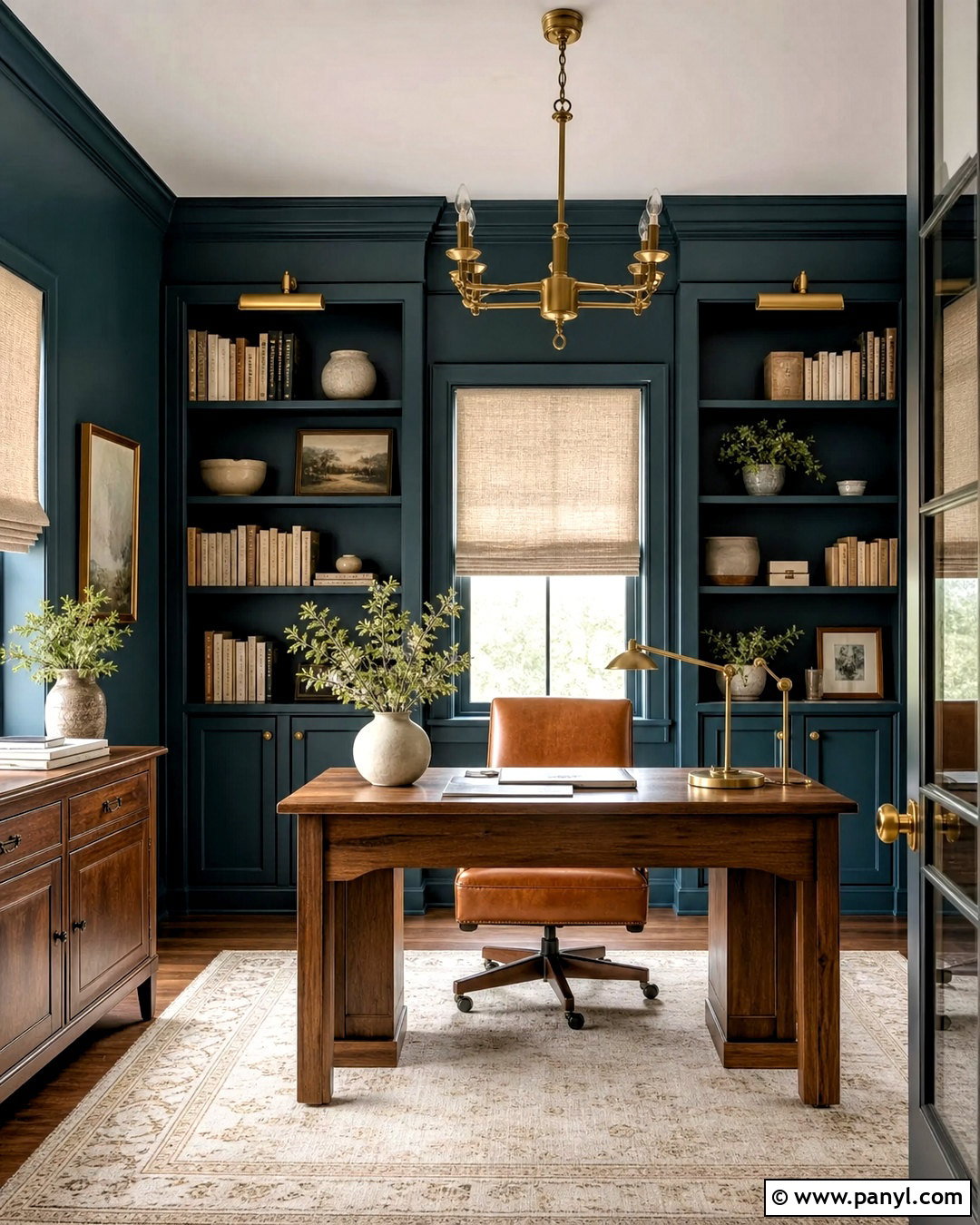
For a focused home office, combine dark blue walls with built-in storage painted in the same shade. The matching finish allows shelving, cabinetry, and walls to read as one organized composition. Use a deep blue-green tone, which works especially well beside walnut and aged brass. Position a substantial wood desk in the center or facing a window, then add a caramel leather office chair. Style the shelves sparingly with cream books, framed photographs, pottery, and a few leafy plants. A pale vintage-style rug prevents the floor from feeling heavy. Install an adjustable brass desk lamp and soft white ceiling lighting for practical brightness. Linen Roman shades filter glare without hiding natural light. This complete setup feels professional, collected, and comfortable enough for long work sessions.
5. Dark Blue Bathroom With White Marble
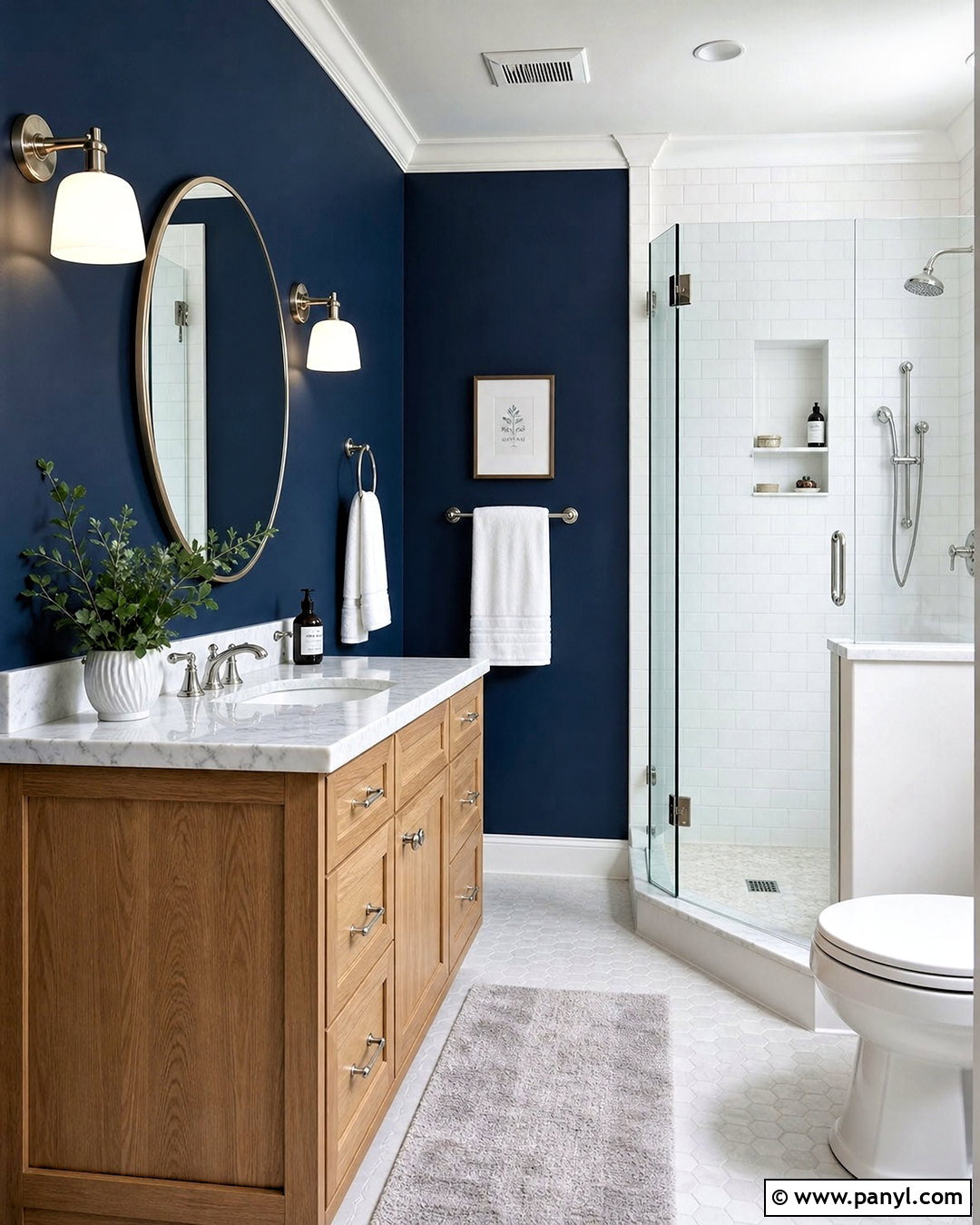
A dark blue bathroom feels fresh and sophisticated when bright stone surfaces balance the painted walls. Choose a saturated navy with a clean, slightly cool undertone, then pair it with a white marble vanity top and glossy white shower tile. A natural oak vanity keeps the palette from becoming too formal. Install polished nickel faucets, clear glass shower panels, and two milk-glass sconces beside a rounded mirror. Use the dark paint above the tile or on the vanity wall where it can create a strong focal point. White towels, a pale gray bath mat, and simple ceramic accessories maintain an uncluttered appearance. For durability, select a moisture-resistant eggshell or satin finish. The mix of deep color, reflective surfaces, and light wood makes an average bathroom feel brighter and more finished.
6. Dark Blue Kitchen With Warm White Cabinets
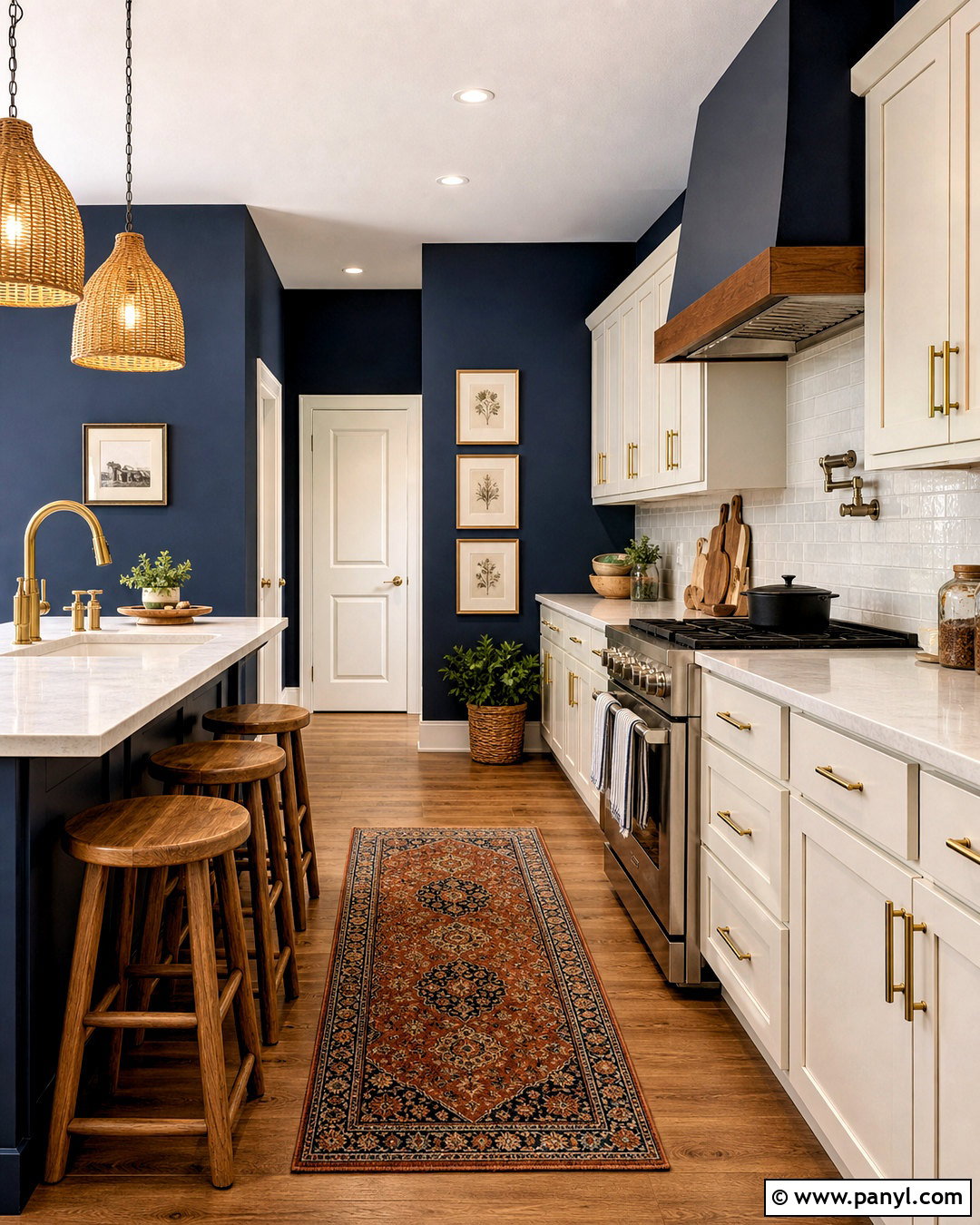
Dark blue walls can add depth to a kitchen without requiring dark cabinetry. Paint the open wall areas a softened navy blue, then use warm white cabinets with simple Shaker doors. The contrast outlines the cabinetry while keeping the workspace visually bright. Choose light quartz counters with faint beige veining and a glossy cream subway tile backsplash. Unlacquered brass knobs, oak counter stools, and woven pendant lights introduce warmth. On the floor, medium-tone wood or wood-look tile will connect the blue walls to the natural accents. Keep small appliances and countertop decor limited so the colors remain the focus. A washable runner with rust and denim details can add pattern near the sink. This full scheme feels classic, practical, and welcoming rather than overly nautical or theme-driven.
7. Dark Blue Entryway With White Wainscoting
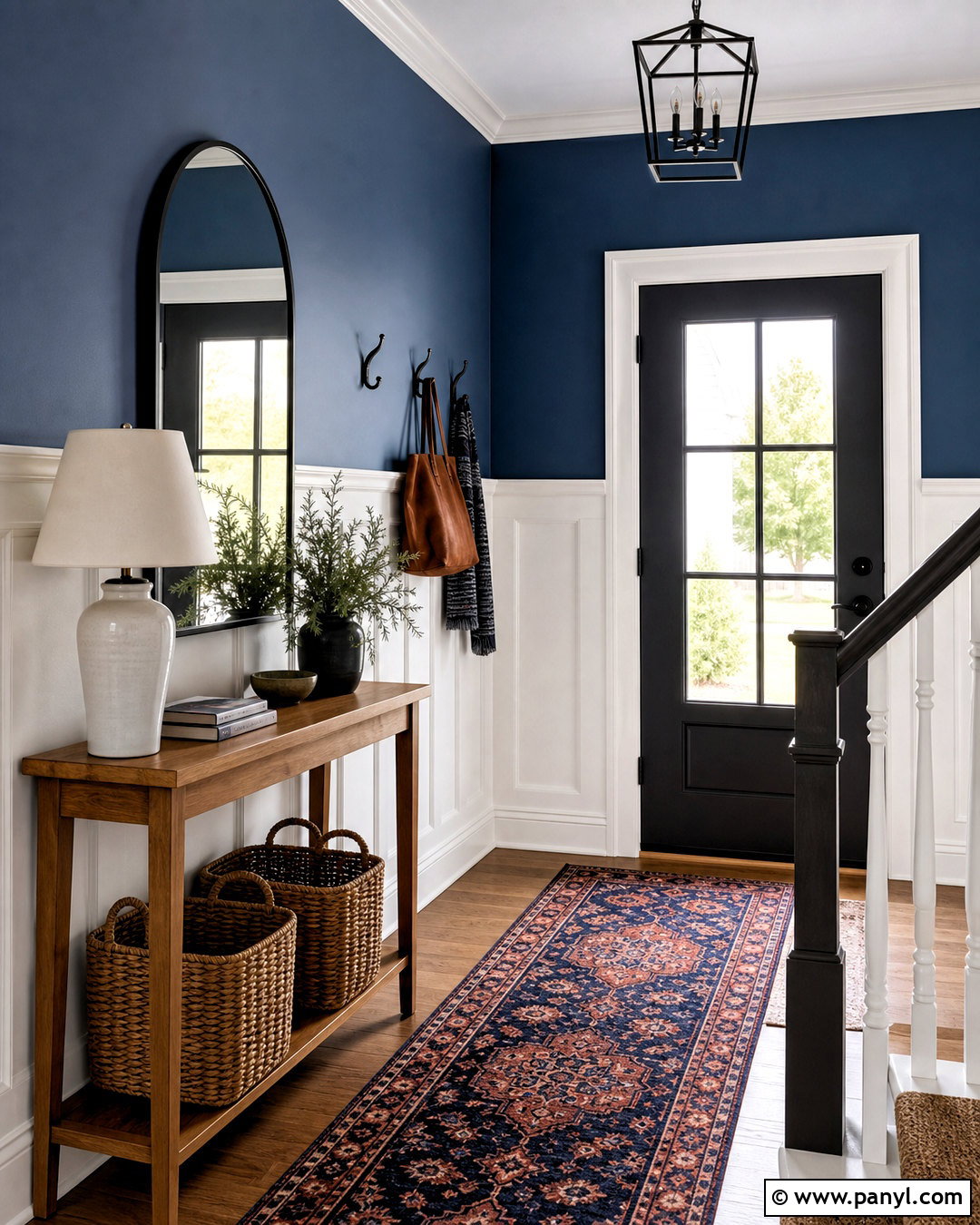
An entryway offers a manageable place to introduce dark blue without covering every surface from floor to ceiling. Install white paneled wainscoting on the lower third of the walls and paint the upper portion a deep denim blue. The lighter lower section protects the visual brightness of a narrow hall, while the blue creates a memorable first impression. Add a slim natural oak console, an arched black-framed mirror, and a ceramic table lamp with a linen shade. A patterned runner featuring navy, tan, and faded brick red will hide everyday wear. Use woven baskets beneath the console for shoes and bags. Black hooks and a simple flush-mount light maintain a clean look. Repeating white, wood, and dark blue throughout the area makes this compact entrance feel coordinated and useful.
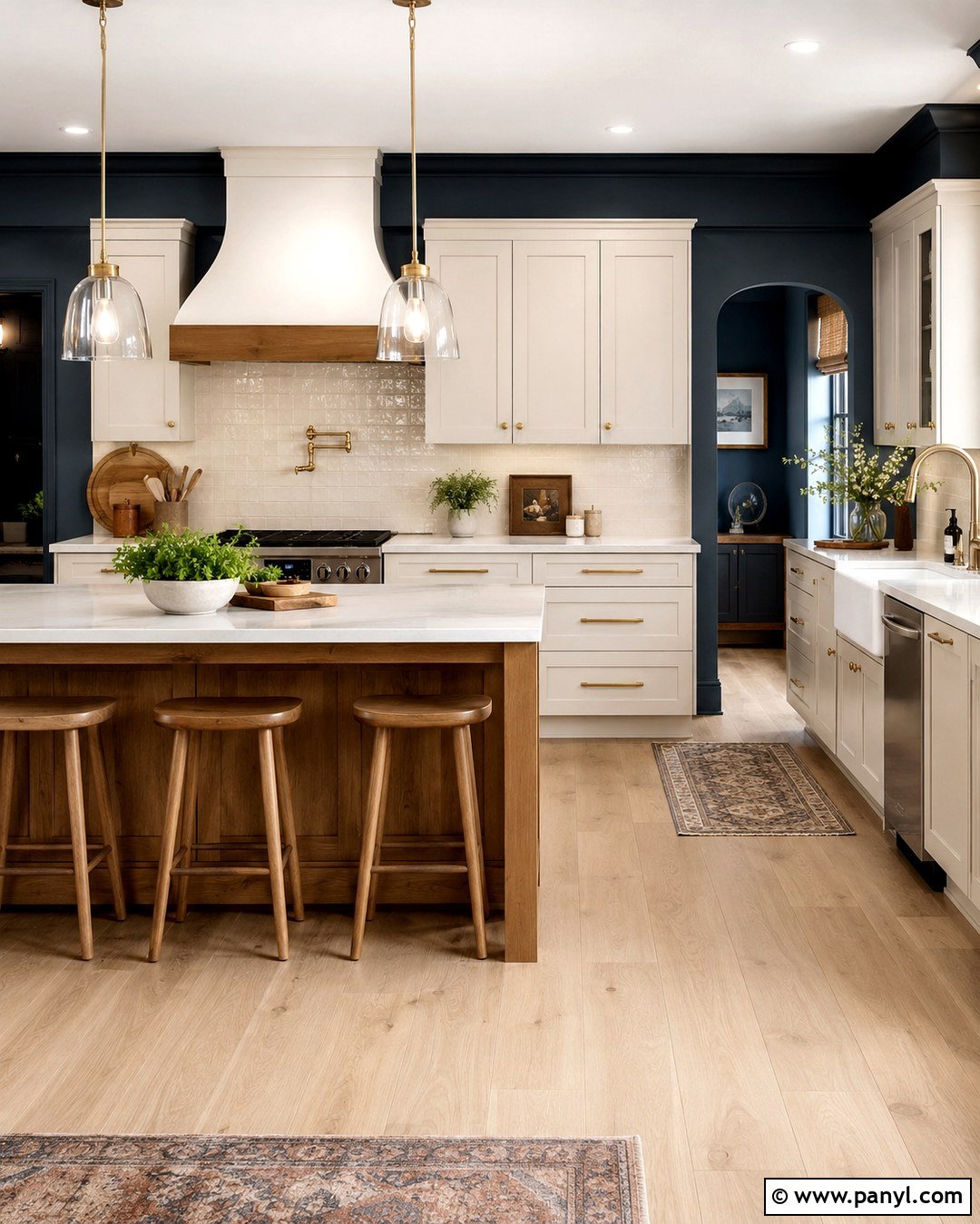
8. Dark Blue Nursery With Light Wood Furniture
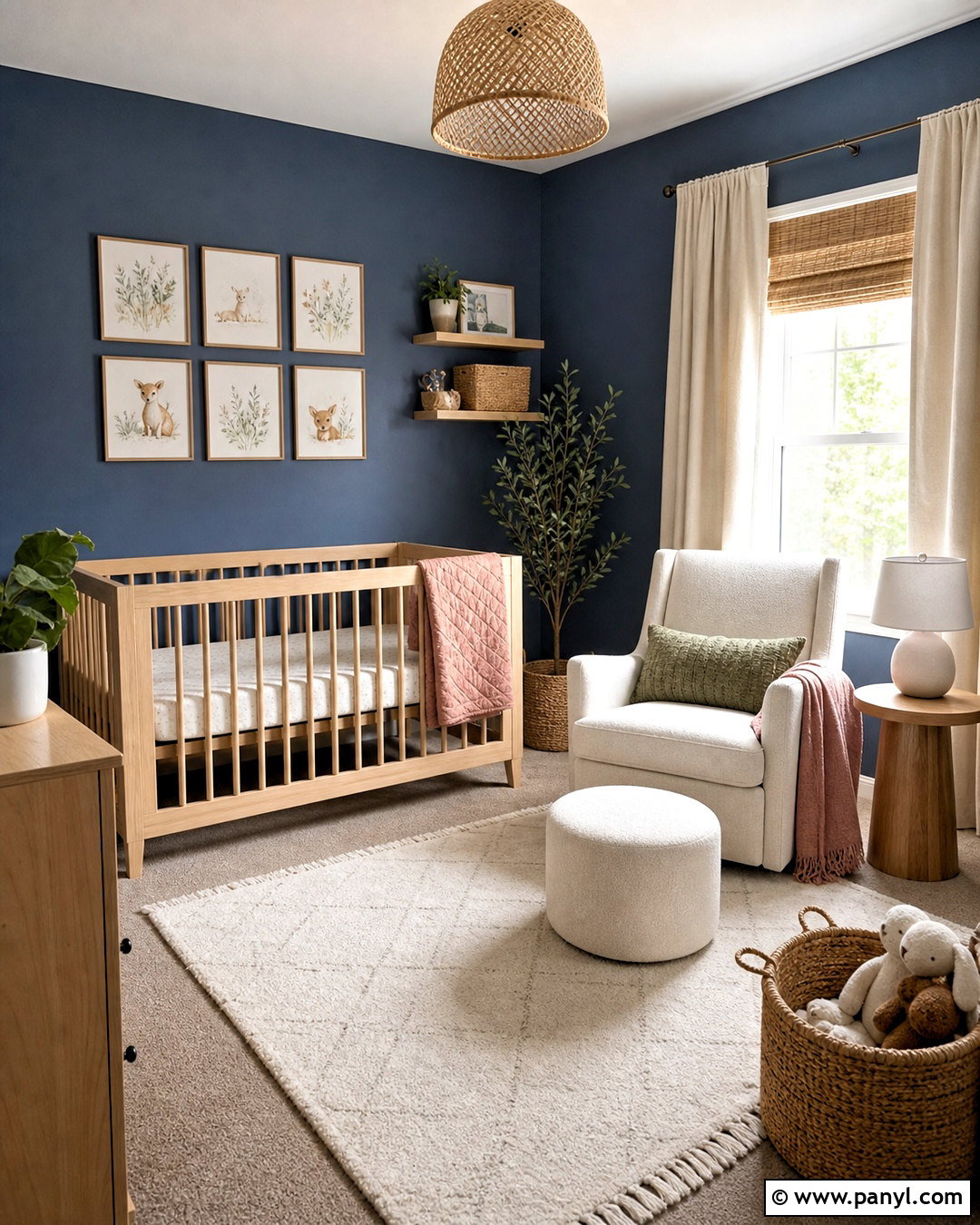
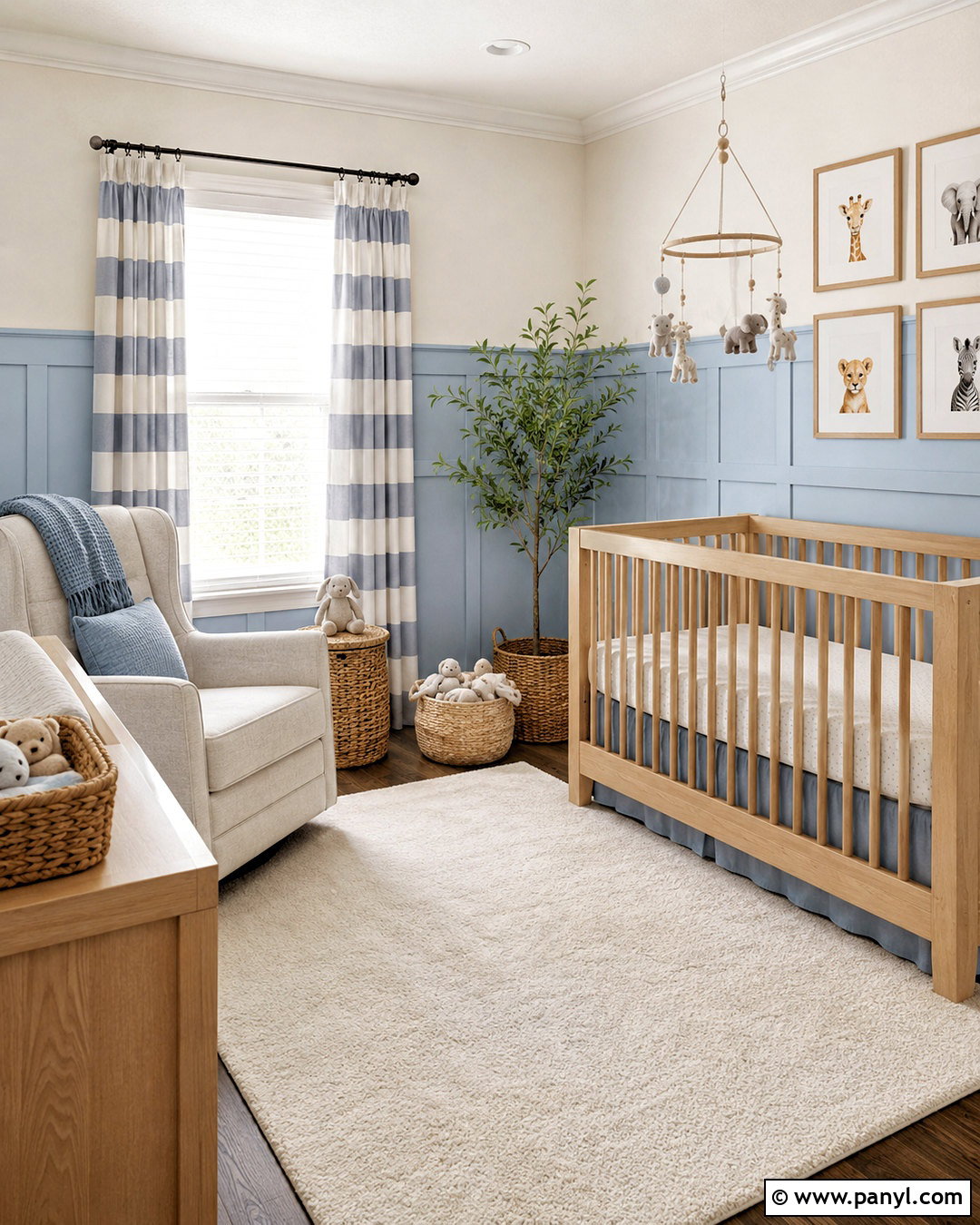
Dark blue walls can create a peaceful nursery when the surrounding pieces remain light, soft, and simple. Select a dusty navy with gray undertones instead of a highly saturated royal blue. Paint the walls in a washable matte finish and leave the ceiling warm white. Place a natural maple crib against the main wall with safe, minimal bedding. Add a cream boucle glider, a pale oak dresser, and a soft ivory rug for brightness underfoot. Dusty rose, sage green, or muted mustard accents can appear in framed art, storage baskets, and a lightweight blanket. Use lined linen curtains and a dimmable ceiling fixture to control light. Keep furniture securely anchored and decorative objects out of the crib. The finished room feels soothing, flexible, and suitable for changing decor as the child grows.
9. Dark Blue Powder Room With Patterned Tile
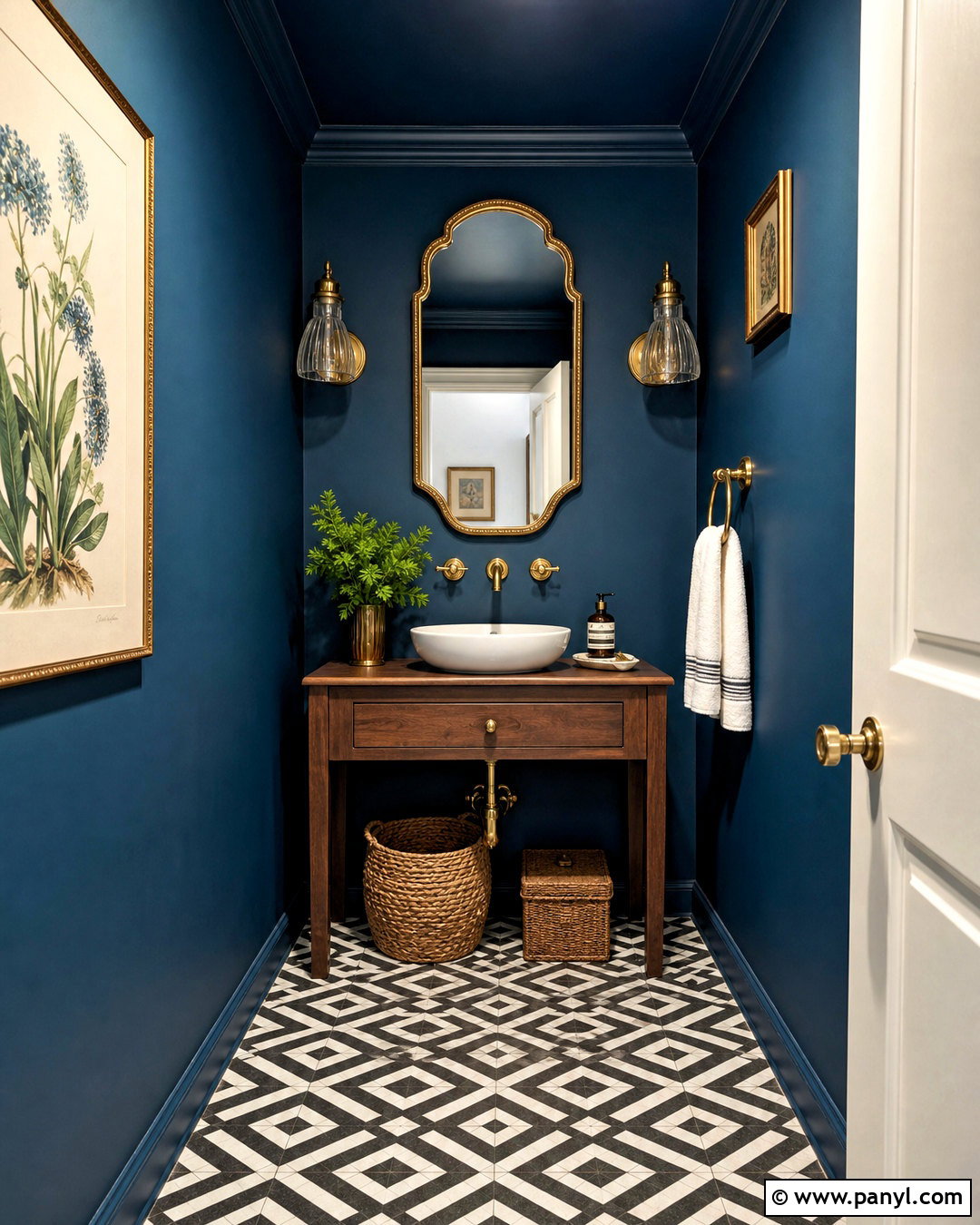
A powder room can handle a bold, immersive palette because it is small and used for shorter periods. Paint the walls and ceiling a deep peacock blue, allowing the compact room to feel jewel-like rather than unfinished. Ground the color with black-and-white geometric floor tile and a narrow walnut vanity. A white vessel sink creates a bright visual break, while aged brass faucets and sconces add warmth. Hang an ornate brass mirror to reflect light and give the room a strong focal point. Keep towels and accessories white or cream, and add one small framed botanical print for contrast. Because dark paint reveals uneven preparation, smooth the walls carefully before painting. The completed powder room feels dramatic and memorable, yet every fixture remains functional and appropriately scaled.
10. Dark Blue Media Room With Charcoal Furniture
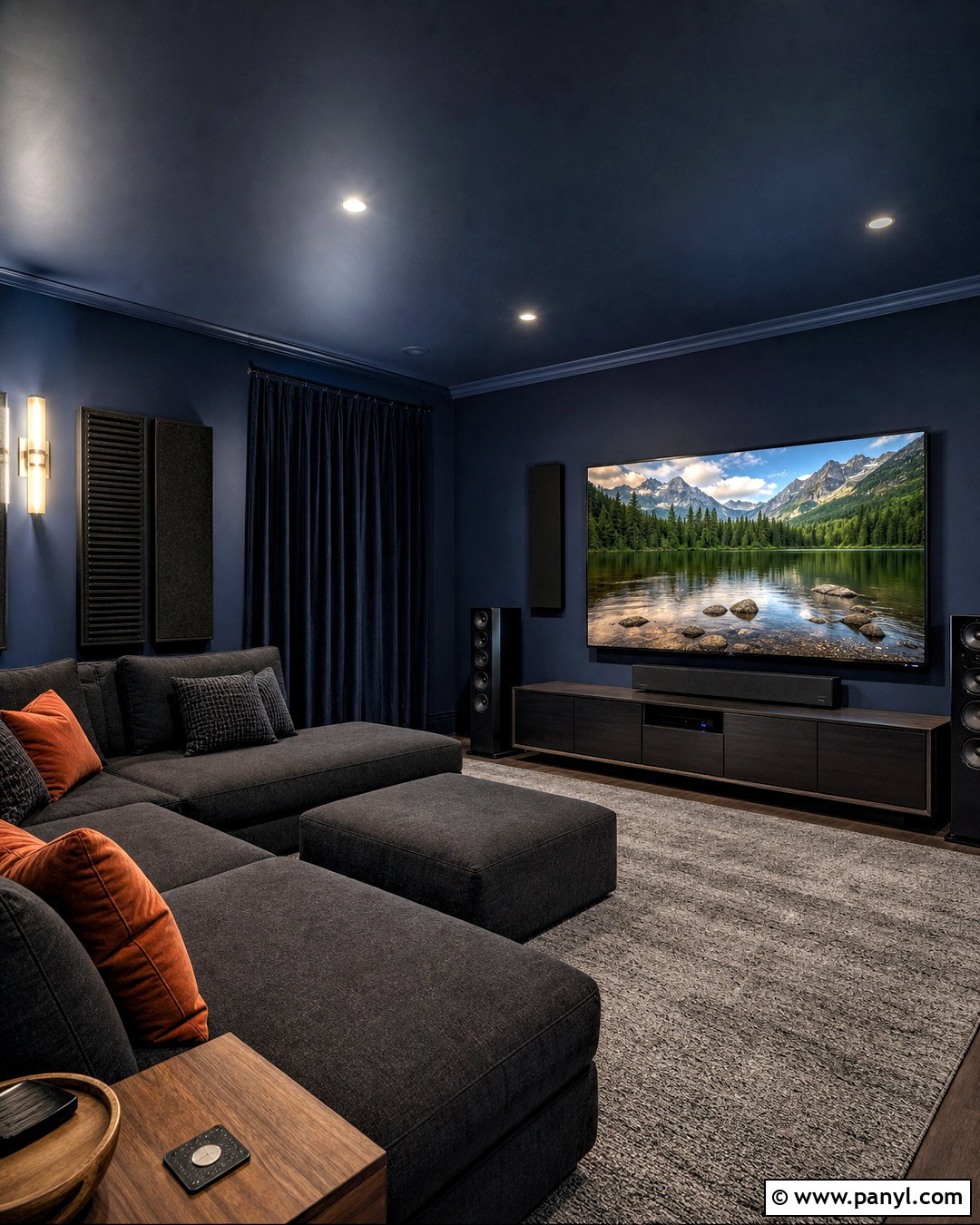
Deep matte blue is an excellent backdrop for a media room because it reduces distracting contrast around the screen. Paint all walls a blue-black shade and consider continuing it onto the ceiling for a more enclosed effect. Choose a low charcoal sectional arranged directly toward the television or projector wall. Add a wide black media cabinet with closed storage to hide cables and equipment. A thick gray rug, navy curtains, and soft acoustic panels can improve comfort while blending into the palette. Use dimmable wall sconces rather than a strong central fixture, but include brighter task lighting for cleaning and setup. Walnut side tables and rust-colored pillows keep the room from feeling flat. This design supports movie nights while still looking polished when the screen is turned off.
11. Dark Blue Coastal Living Room With Natural Textures
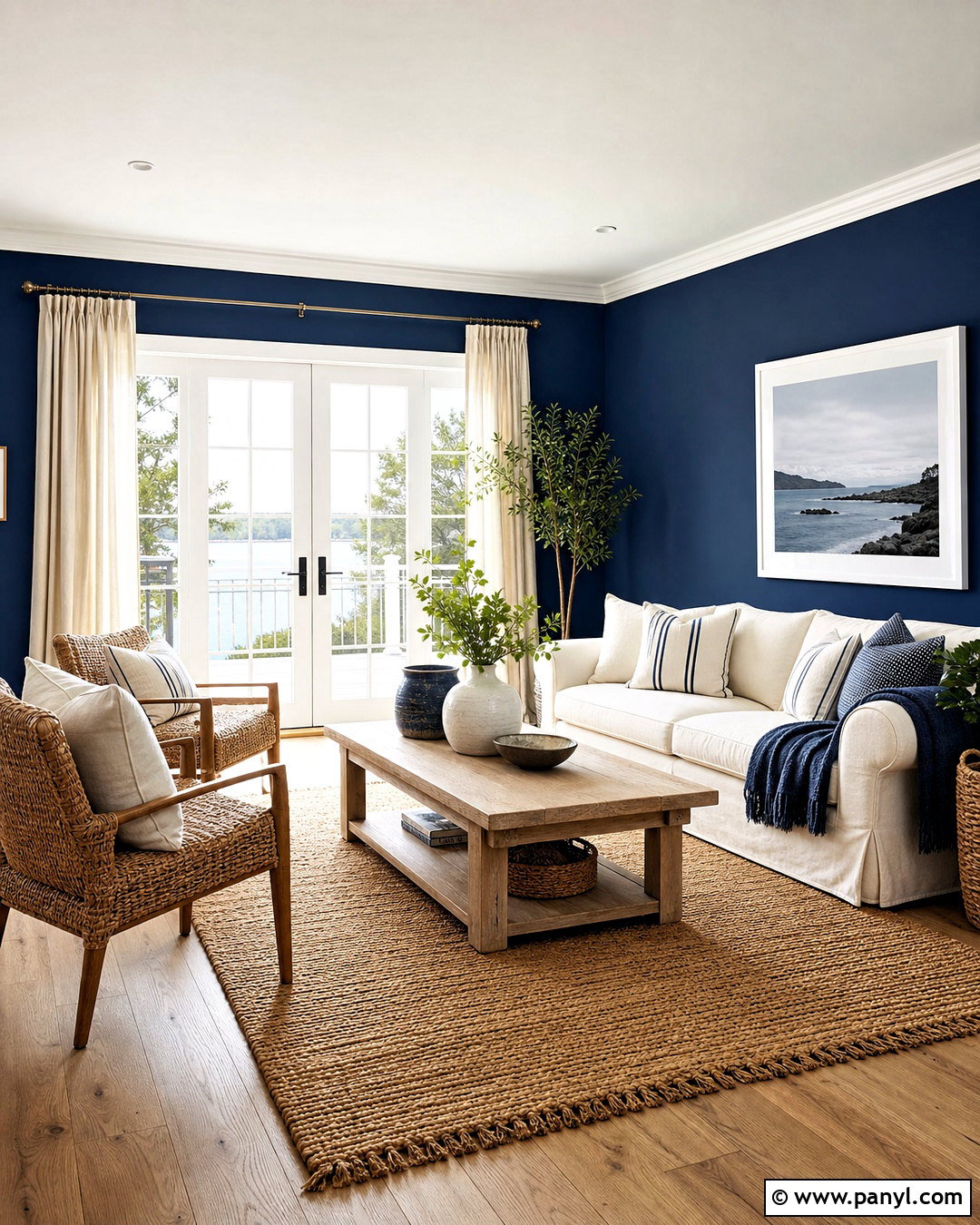
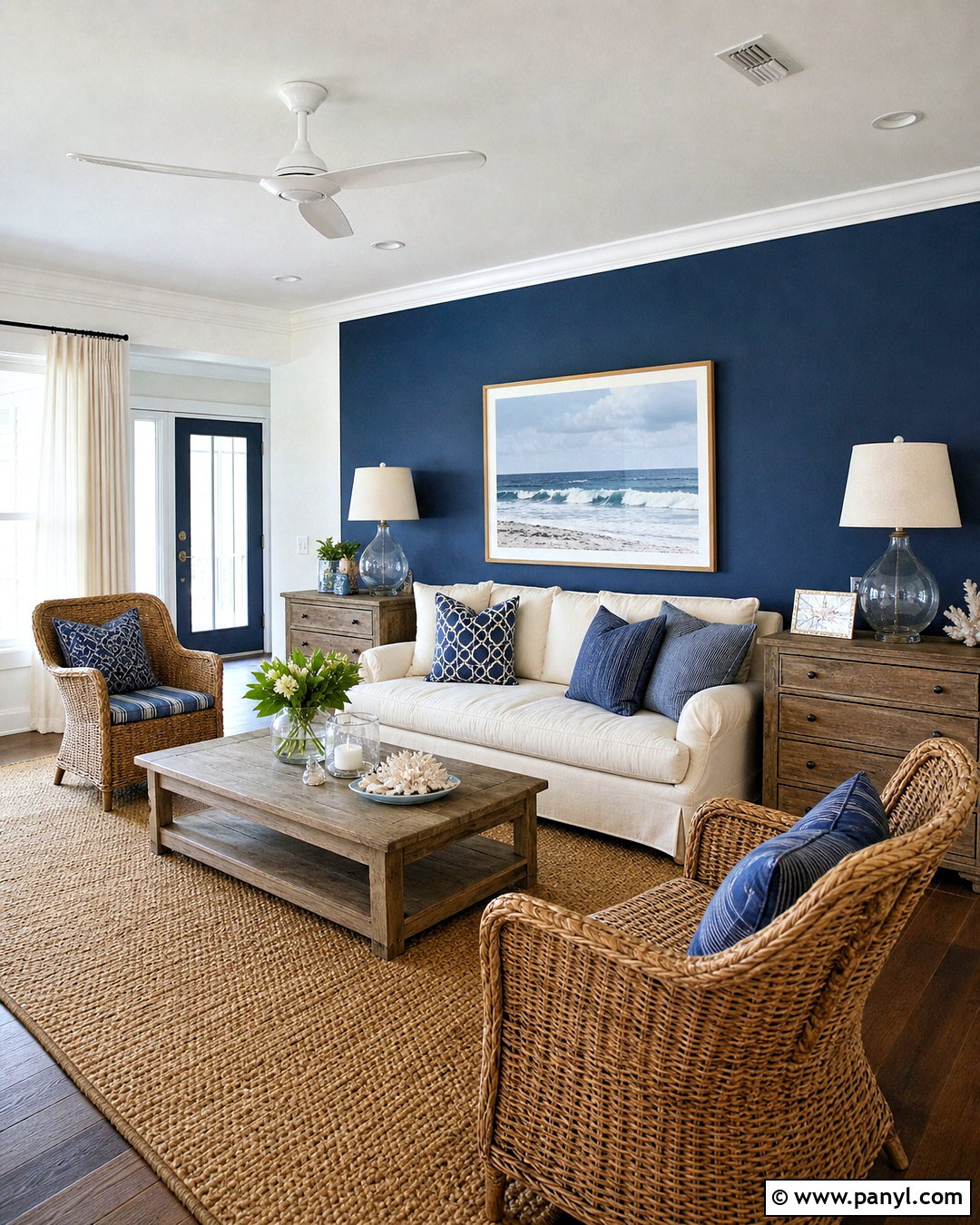
A coastal room does not need pale aqua walls or themed accessories. Dark blue paint can create a more grounded coastal look when paired with white upholstery and weathered natural materials. Choose a clean navy for the walls, crisp white for the trim, and pale oak for the flooring. Arrange a slipcovered cream sofa with two woven lounge chairs around a light wood coffee table. Add a large jute rug, striped blue-and-white pillows, and airy linen curtains. A few pieces of sea glass, handmade pottery, and framed shoreline photography provide subtle references to the coast. Avoid decorative anchors, ropes, or excessive shells. The finished living room should feel open and breezy, with generous walking space and restrained accessories that allow the dark walls and natural textures to work together.
12. Dark Blue Farmhouse Bedroom With Iron Bed
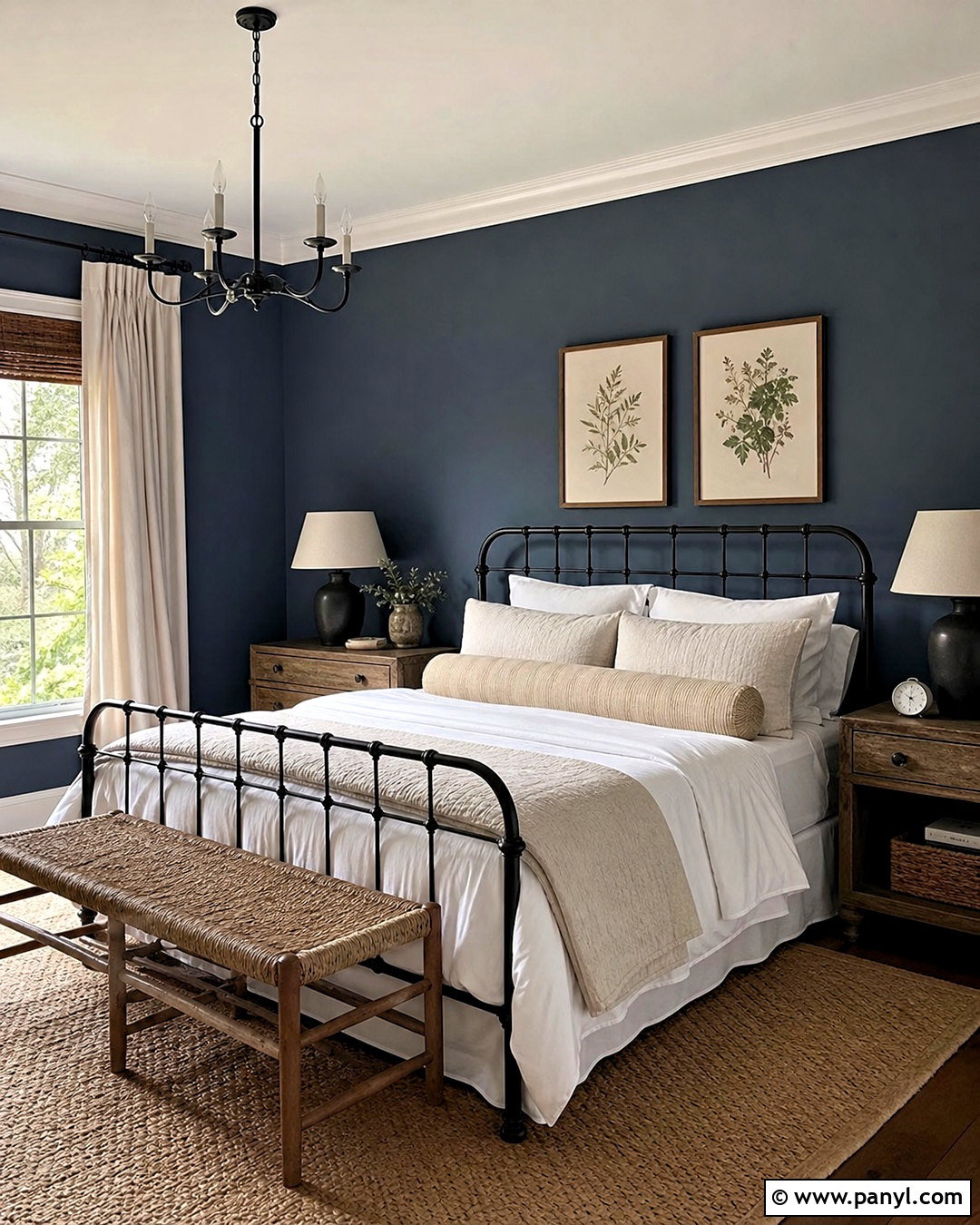
Dark blue walls give farmhouse furnishings a cleaner and more contemporary backdrop. Start with a muted navy that has enough gray to avoid looking overly bright. Position a simple black iron bed against the main wall and layer it with white cotton sheets, a cream quilt, and a faded blue plaid blanket. Use reclaimed wood nightstands with matte black lamps for practical symmetry. A warm beige rug will soften painted or hardwood floors, while off-white curtains bring light toward the center of the room. Add one antique dresser, a woven bench, and restrained botanical artwork rather than filling the room with signs and small decorations. Warm white trim keeps the architecture defined. This straightforward combination preserves farmhouse comfort while making the bedroom feel updated, uncluttered, and cohesive.
13. Dark Blue Midcentury Living Room With Walnut
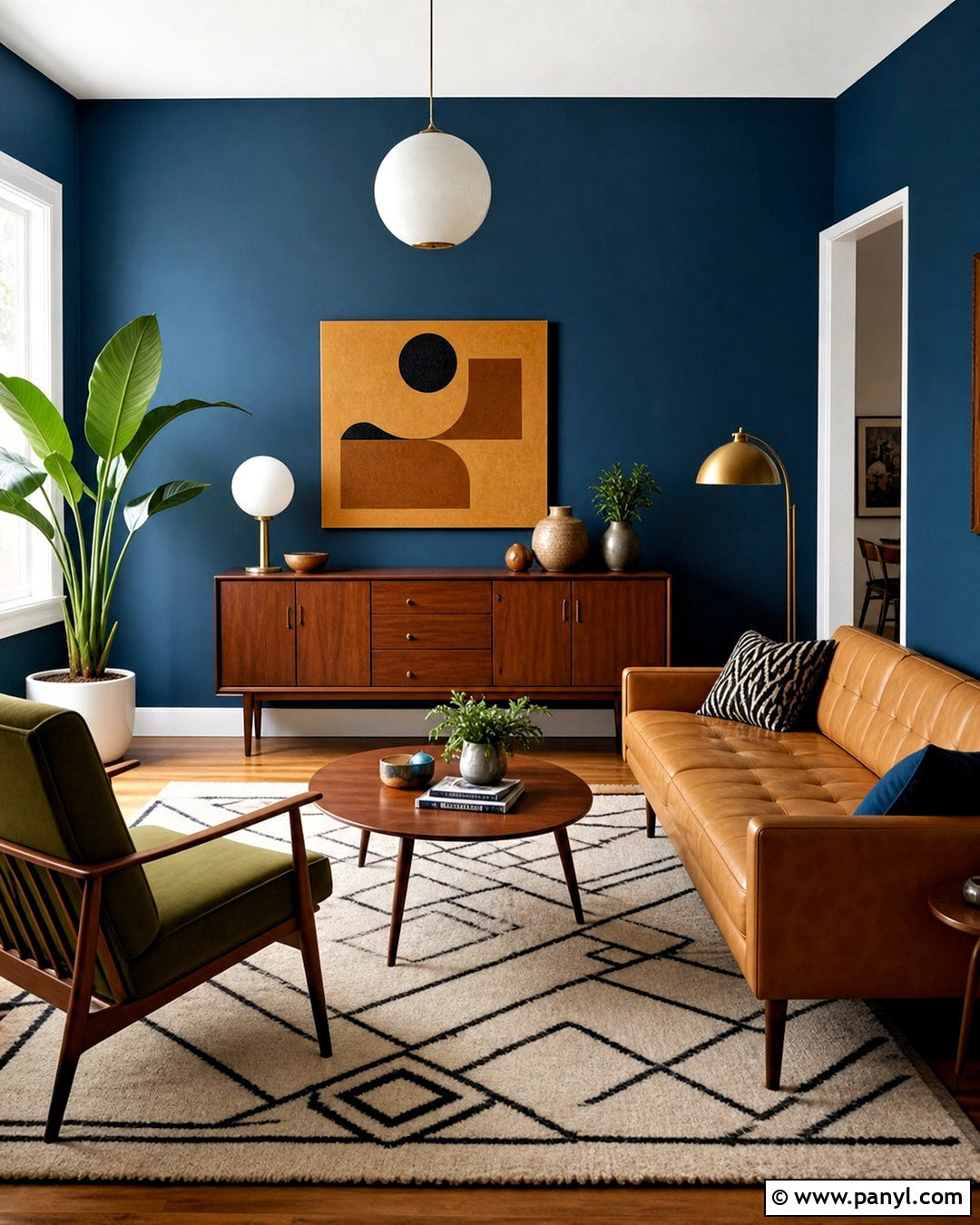
Could your vintage furniture use a stronger background? A dark teal-blue wall color makes walnut furniture and midcentury silhouettes stand out without turning the room into a period display. Paint every wall the same deep blue, then keep the ceiling simple white. Place a low-profile camel sofa beside a walnut credenza and add one olive green lounge chair for tonal contrast. A geometric cream rug should extend beneath the front legs of the seating. Choose globe-shaped lighting, a round wood coffee table, and abstract art containing ochre, black, and pale blue. Limit accessories to a few ceramics and plants so the furniture remains visible. The mixture of saturated walls, warm timber, and curved shapes creates a complete living room that feels nostalgic, practical, and current at the same time.
14. Dark Blue Gallery Wall With Colorful Art
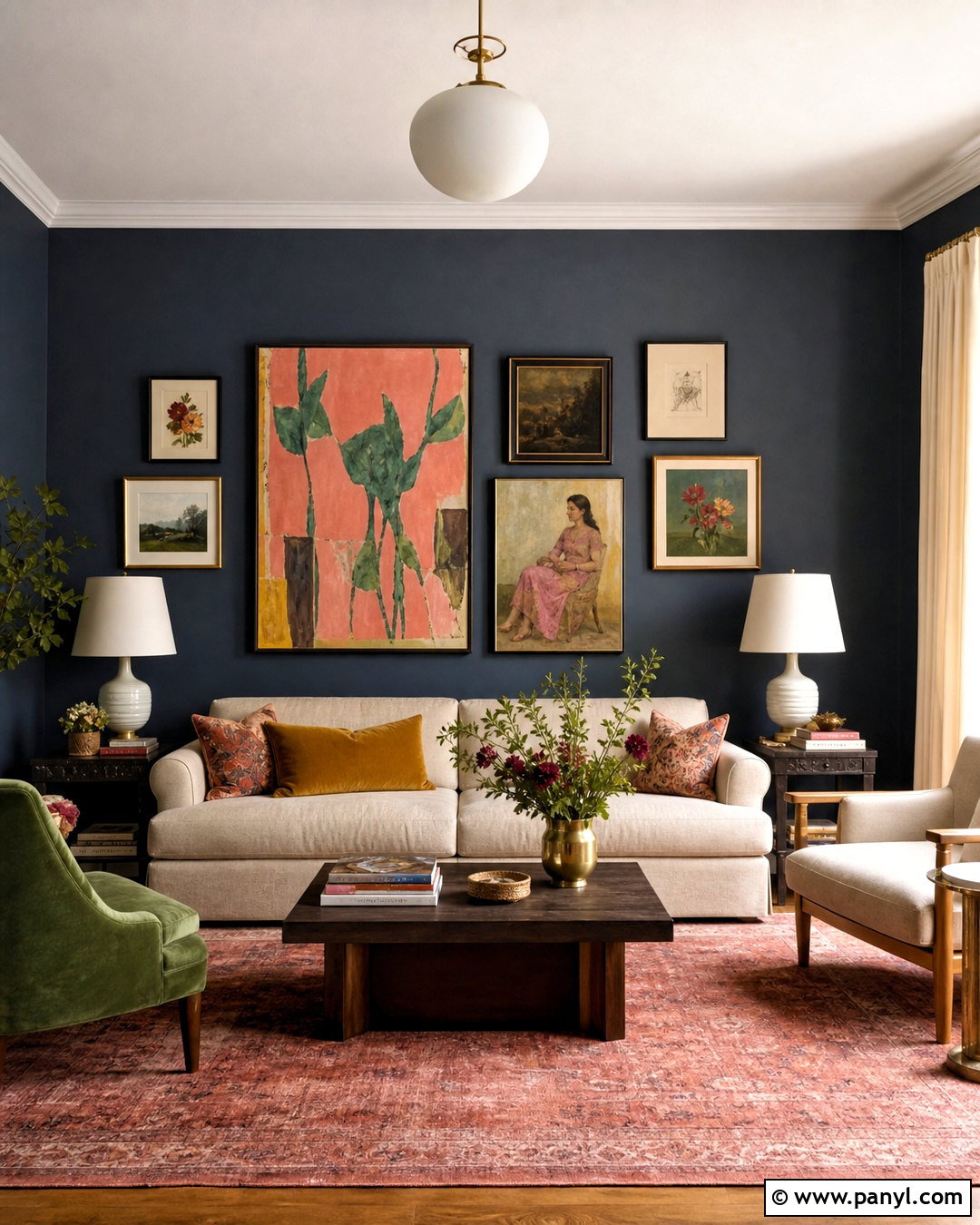
Dark blue paint can unify an eclectic art collection by providing a consistent background for different frames and colors. Choose a flat, smoky navy wall finish, then arrange the gallery above a neutral sofa or low sideboard. Mix black, oak, and antique brass frames, but repeat each finish several times to keep the display connected. Artwork in coral, mustard, cream, green, and pale pink will appear especially vivid against the blue. Before hanging, build the arrangement on the floor and maintain similar spacing between pieces. Complete the room with a mushroom-colored sofa, a red patterned rug, and a dark wood coffee table. Cream curtains and white lampshades provide brighter resting points. The final space feels personal and layered without allowing the collection to become visually chaotic.
15. Dark Blue Living Room With Sage Green
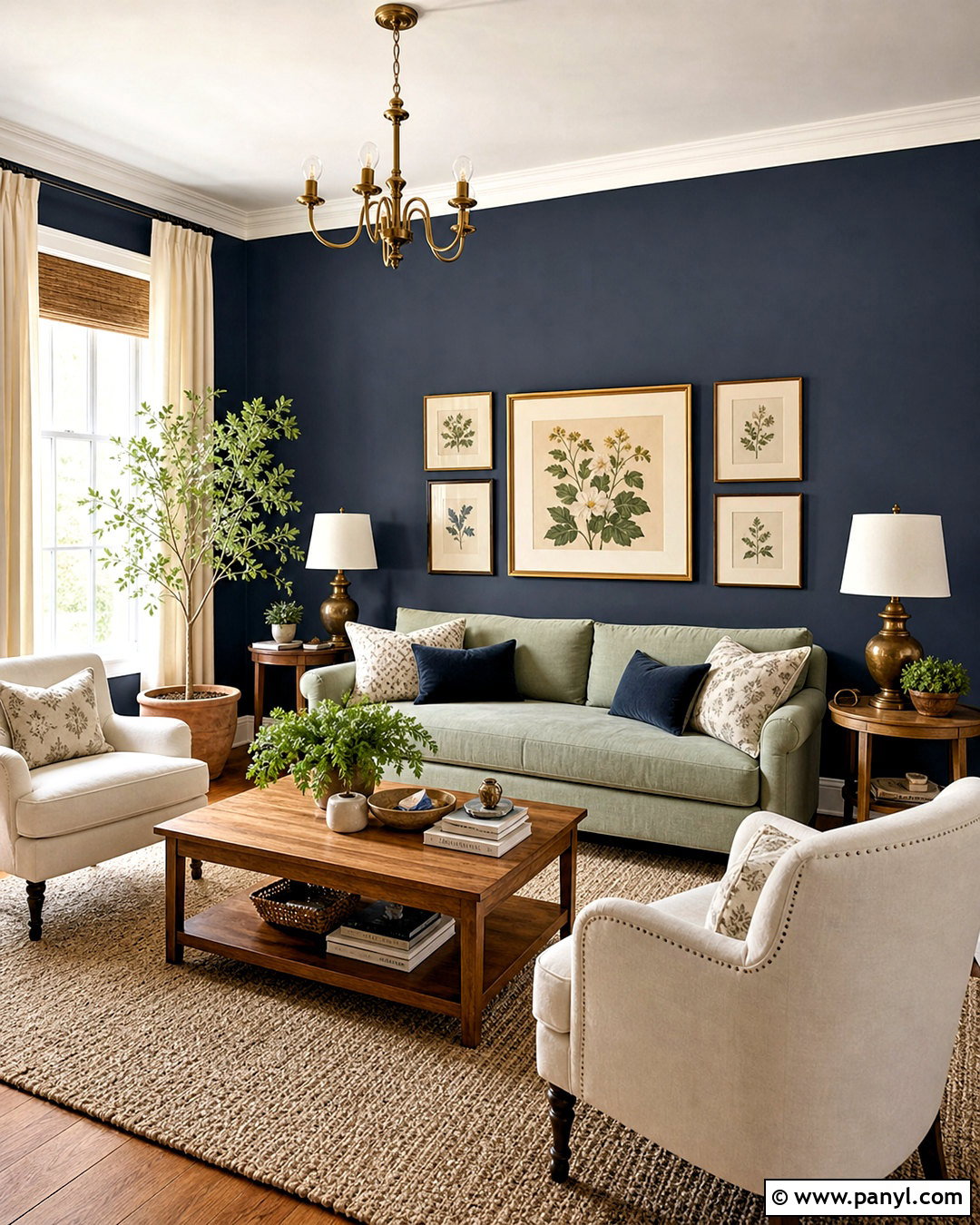
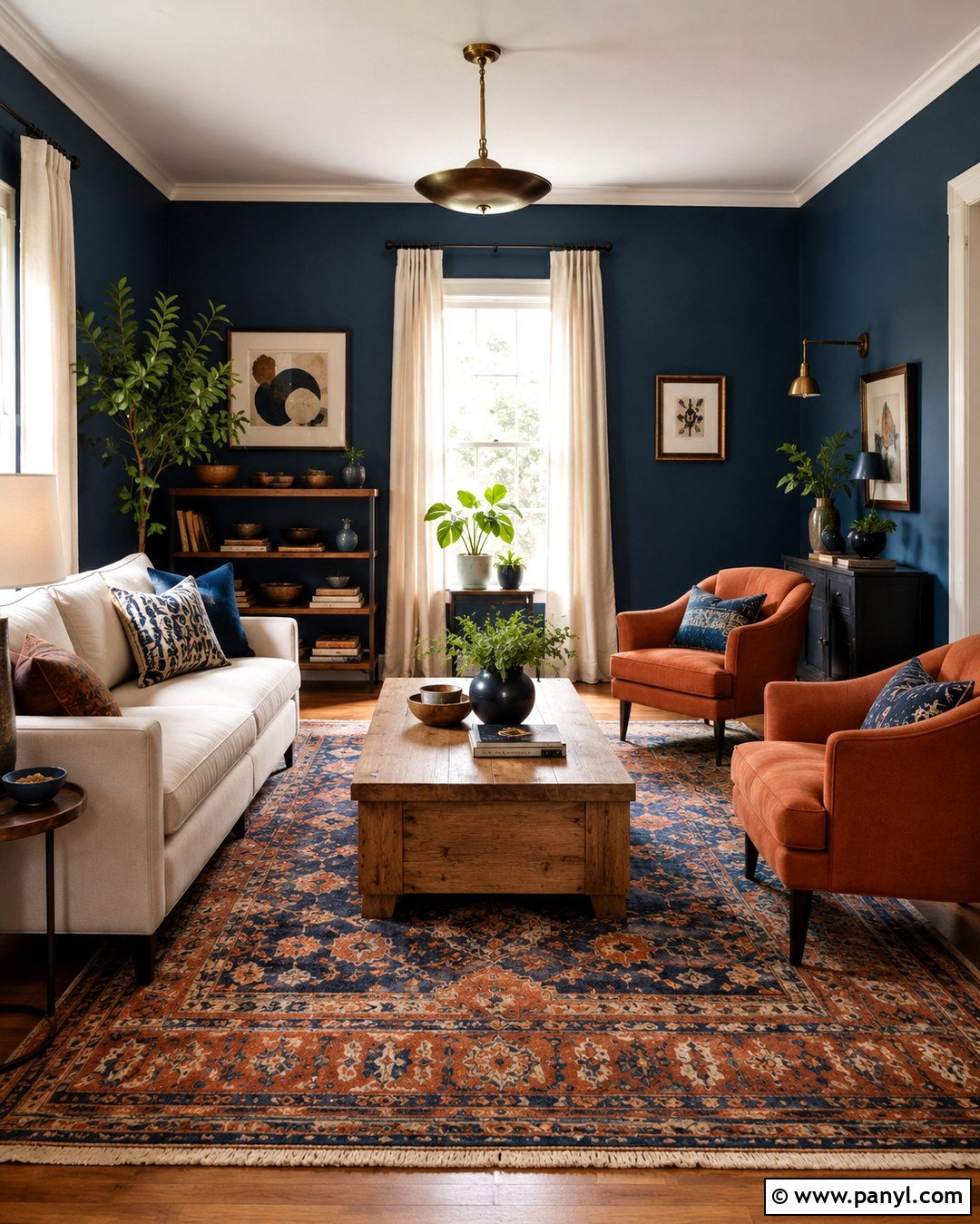
Pairing dark blue walls with sage green creates a relaxed palette inspired by natural landscapes. Use a slightly green-based navy on the walls and choose a muted sage sofa as the central piece. Add two cream accent chairs, a medium oak coffee table, and a textured beige rug to keep the room from becoming overly cool. Linen curtains in warm white should frame the windows without blocking daylight. Repeat sage through ceramic lamps and botanical artwork, but vary the exact tones so the room does not look overly matched. Antique brass fixtures provide a small amount of warmth and shine. Terracotta planters and dark green houseplants add another natural layer. This well-rounded scheme works particularly well in traditional or transitional rooms with wood floors and simple architectural details.
16. Dark Blue Dining Room With Terracotta
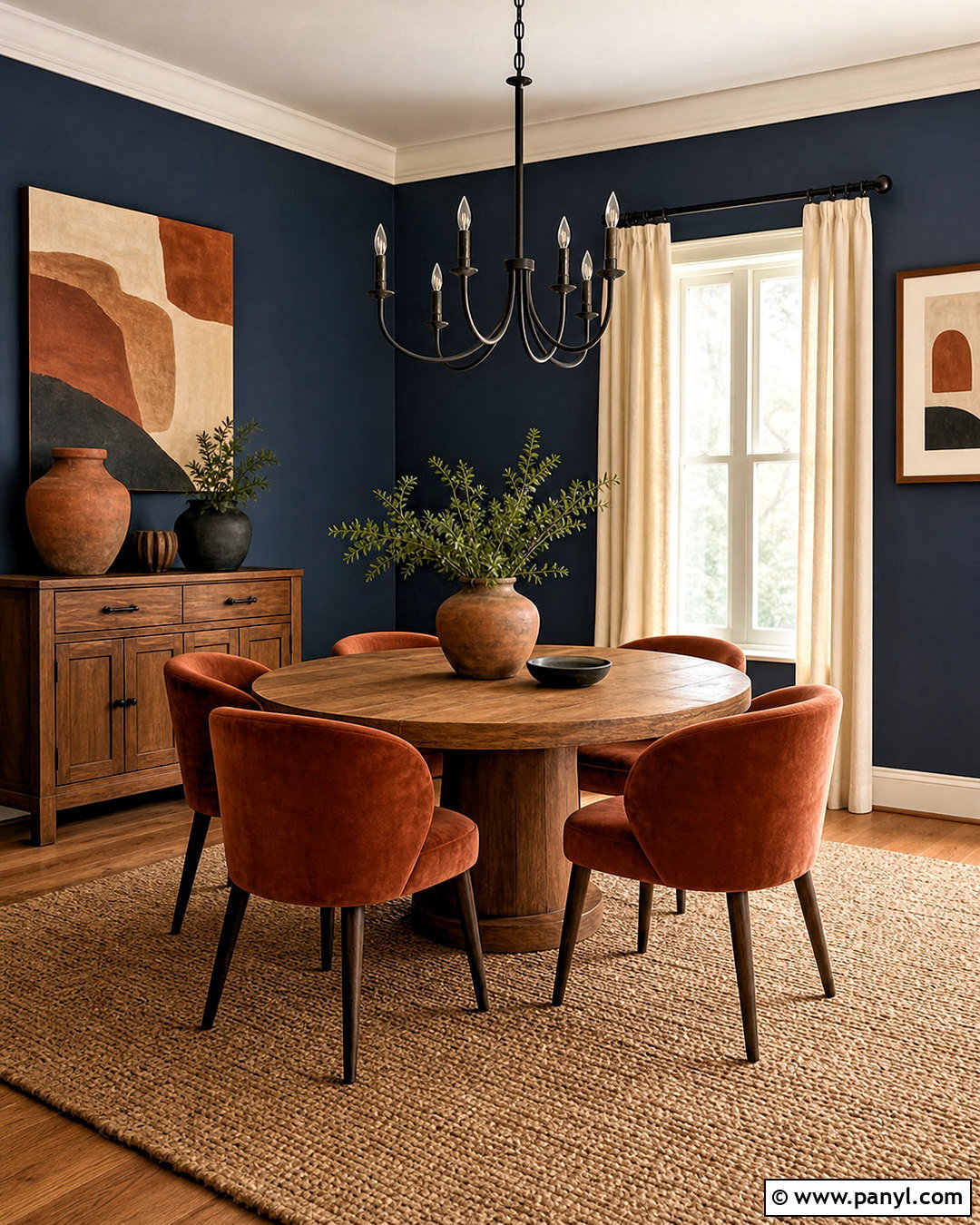
Warm terracotta brings energy to a dark blue dining room while preserving an earthy, comfortable atmosphere. Paint the walls a deep indigo blue and use warm cream on the ceiling and trim. Center a round oak table in the room and surround it with rust-colored upholstered chairs. A large natural fiber rug creates a soft boundary beneath the dining set, while a black metal chandelier adds structure overhead. Display handmade terracotta pottery on a simple wood sideboard and hang one oversized abstract painting containing clay, sand, and blue tones. Cream curtains will soften the windows and reflect daylight into the space. Use terracotta selectively rather than repeating it on every surface. The resulting dining area feels rich and sociable, with a balanced combination of cool paint and sun-warmed accents.
17. Dark Blue Two-Tone Bedroom Wall
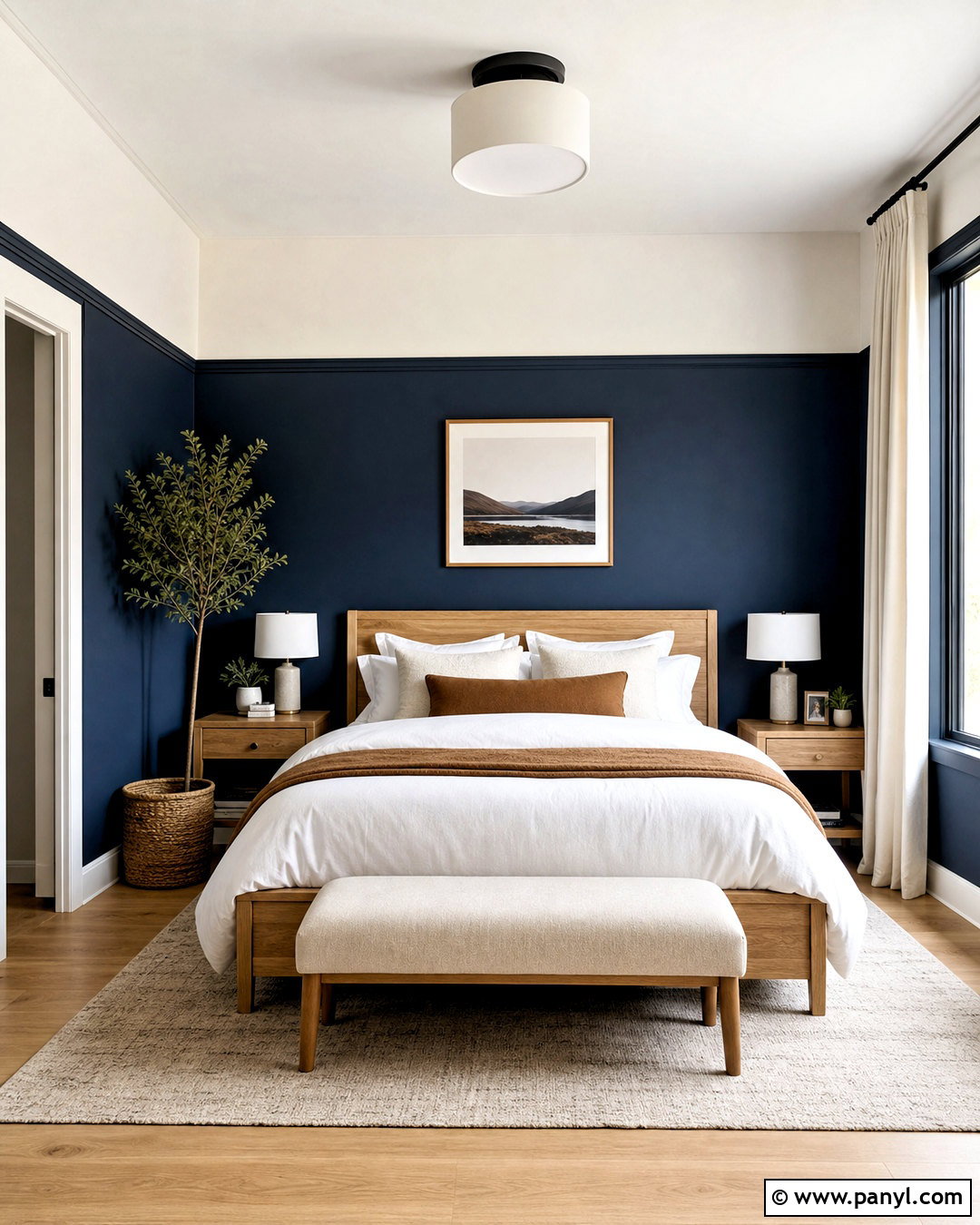
A two-tone treatment offers dark blue impact while preserving more brightness in a modest bedroom. Paint the lower two-thirds of each wall a deep navy and cover the upper portion in warm white. Separate the colors with a narrow painted molding or a clean horizontal line positioned above the headboard. Choose a pale oak bed, matching nightstands, and simple white bedding with navy and camel accents. A beige upholstered bench and a large cream rug soften the angular paint division. Hang artwork entirely within the blue section so it feels anchored instead of floating between colors. Natural linen curtains and ceramic lamps provide additional warmth. Keeping the same two-tone treatment around the full room creates continuity and looks more intentional than limiting the dark paint to one disconnected accent wall.
18. Dark Blue Hallway With Board And Batten
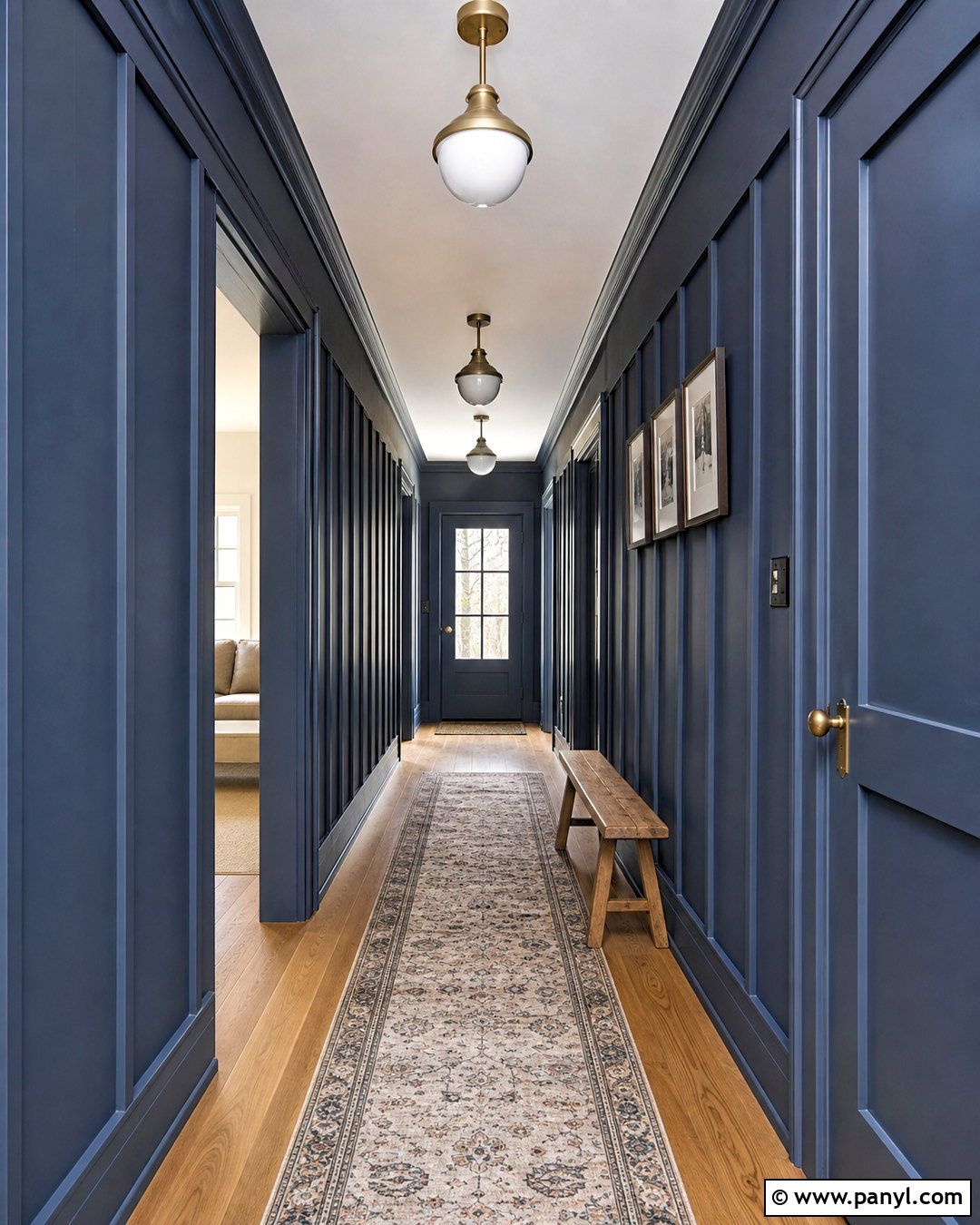
Long hallways often need architectural rhythm more than extra furniture. Install simple board-and-batten molding from floor to ceiling, then paint the walls, trim, and doors in one dark slate blue. The repeated vertical lines break up the length of the corridor and allow the deep color to feel structured. Use a satin finish on molding and doors, with a lower-sheen finish between the panels. Add a pale patterned runner that leaves several inches of flooring visible along both sides. Brass ceiling lights, small framed prints, and a narrow oak bench can provide warmth without blocking movement. Keep door hardware consistent in aged brass or matte black. The completed hallway becomes a designed transition between rooms rather than a forgotten passage, while the monochromatic paint disguises minor architectural inconsistencies.
19. Dark Blue Fireplace Wall With Built-Ins
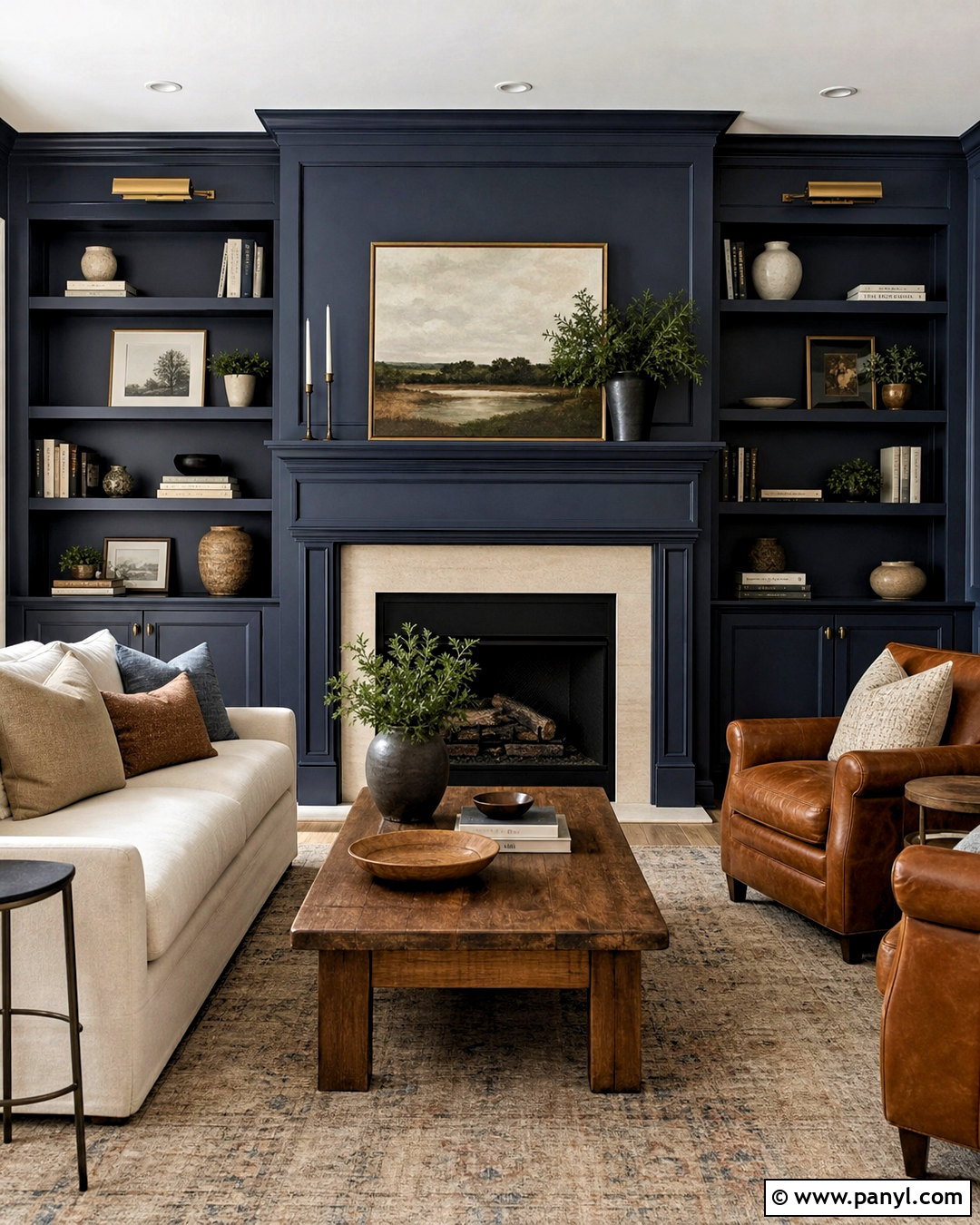
A fireplace wall becomes a strong living room anchor when dark blue paint connects the surround and adjoining built-ins. Paint the cabinetry, shelving, wall, and mantel in the same deep navy, using satin paint on the woodwork for durability. Keep the firebox black and introduce a light stone or white tile surround to provide contrast. Place a cream sofa facing the fireplace, then add tan leather chairs and a walnut coffee table. Style the shelves with books, pottery, framed art, and small plants while leaving visible empty space. Brass picture lights above the shelves can brighten the composition. A faded multicolor rug will tie the blue, cream, and brown furnishings together. This unified treatment makes standard built-ins look custom and gives the entire seating arrangement a clear focal point.
20. Dark Blue Open-Plan Room Divider
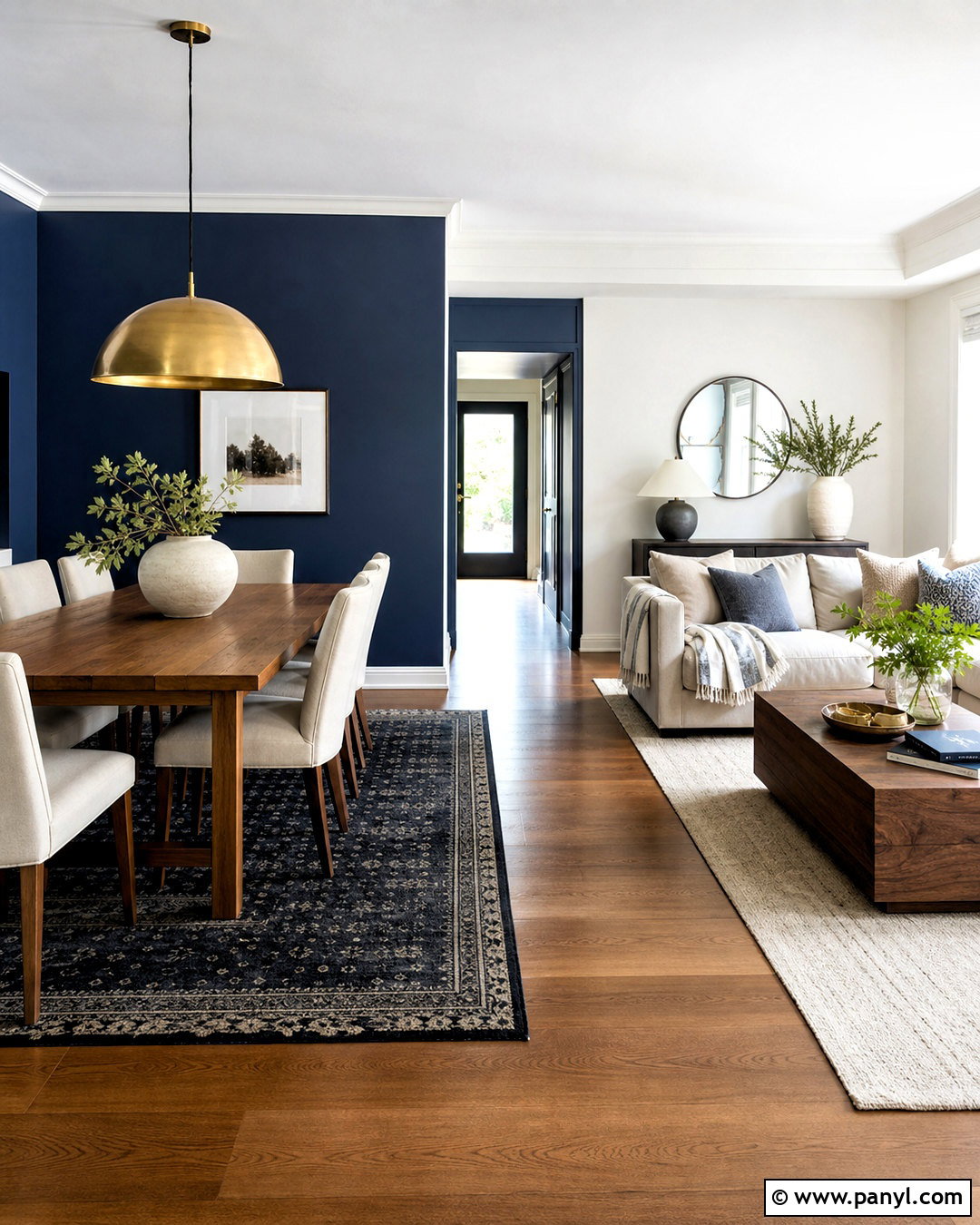
Dark blue paint can define one zone within an open-plan home without installing a physical partition. Apply the color to the dining area’s walls, including any shallow alcove or architectural return, while keeping the connected living space warm white. Repeat dark blue through a rug, pillows, or artwork on the lighter side to establish continuity. In the dining zone, use a medium oak table, cream chairs, and a large brass pendant. The living zone can feature an oatmeal sofa, a walnut coffee table, and light neutral textiles. Keep flooring consistent across both areas so the color change feels purposeful rather than abrupt. Align furniture with the painted boundaries and preserve a clear walkway between spaces. This approach adds structure, depth, and identity while maintaining the openness of the original floor plan.
Conclusion:
These 20 dark blue wall paint ideas show how one dramatic color can support many different rooms and design directions. Dark blue feels most successful when lighting, furniture, flooring, trim, and accessories are planned as one complete composition. Warm woods, cream textiles, brass metals, and earthy accent colors prevent deep blue from feeling cold or flat. White marble and reflective finishes can brighten bathrooms and kitchens, while matching trim creates a more immersive bedroom, office, or hallway. Before committing, paint large test sections and view them throughout the day. Once the undertone and finish are right, dark blue can make an ordinary room feel grounded, distinctive, and thoughtfully designed.

Related Ideas and Inspiration:
Leave a Reply