
Hallways handle constant foot traffic, yet they are often treated as simple pass-through spaces. The right paneling can change that by adding architectural detail, protecting lower walls, and creating a polished transition between rooms. If you are searching for **half wall paneling ideas hallways**, consider the corridor’s width, ceiling height, flooring, doors, and available light before selecting a design. Slim vertical details can visually lift a low ceiling, while wider panel layouts may help a long hallway feel calmer. Paint color also matters because narrow spaces can quickly appear darker or smaller. From classic white beadboard to warm oak slats and bold painted molding, these complete hallway looks offer practical inspiration. Explore the following **half wall paneling ideas hallways** can use for character, durability, and better visual balance.
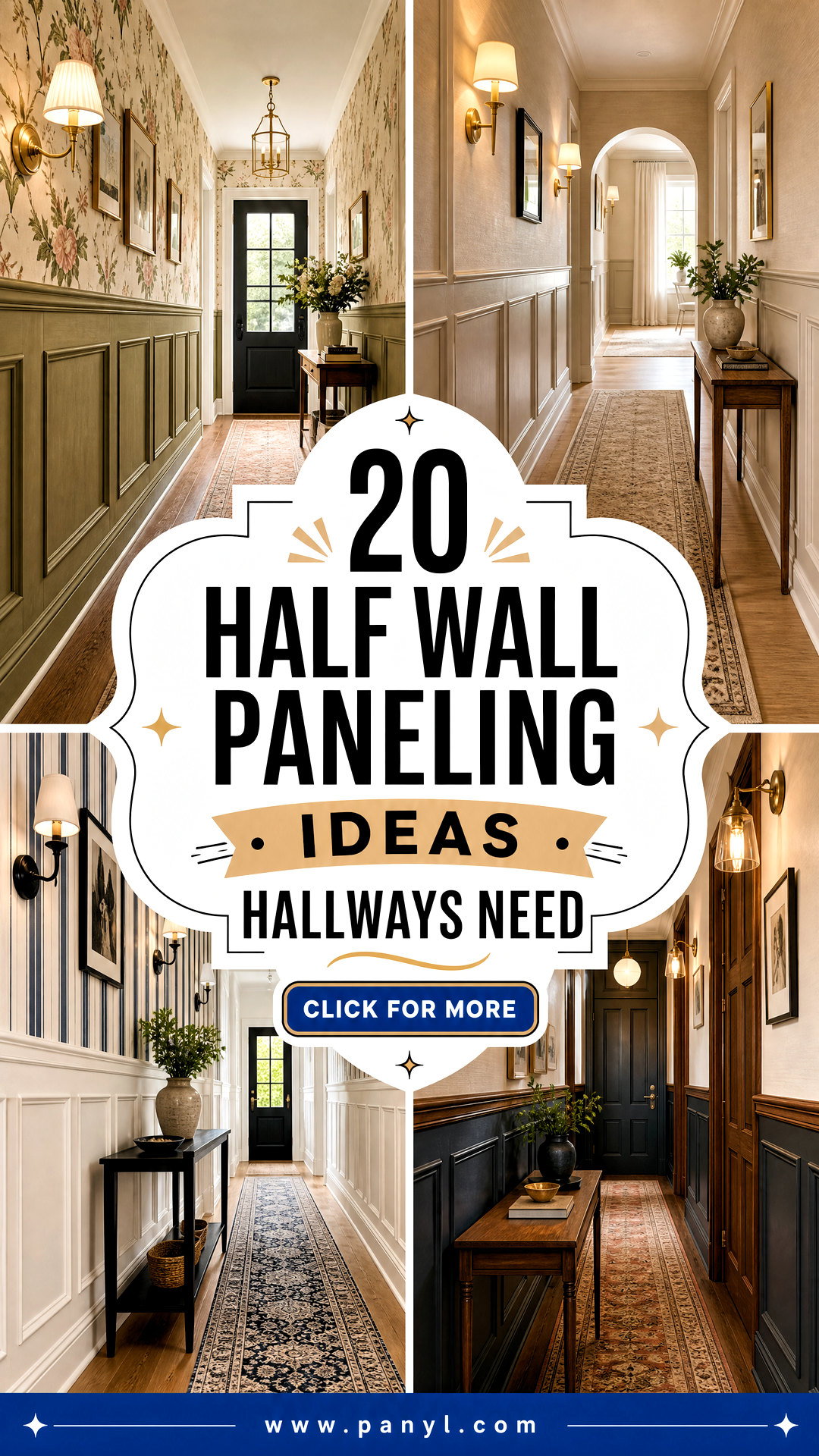
1. White Board And Batten Hallway Paneling
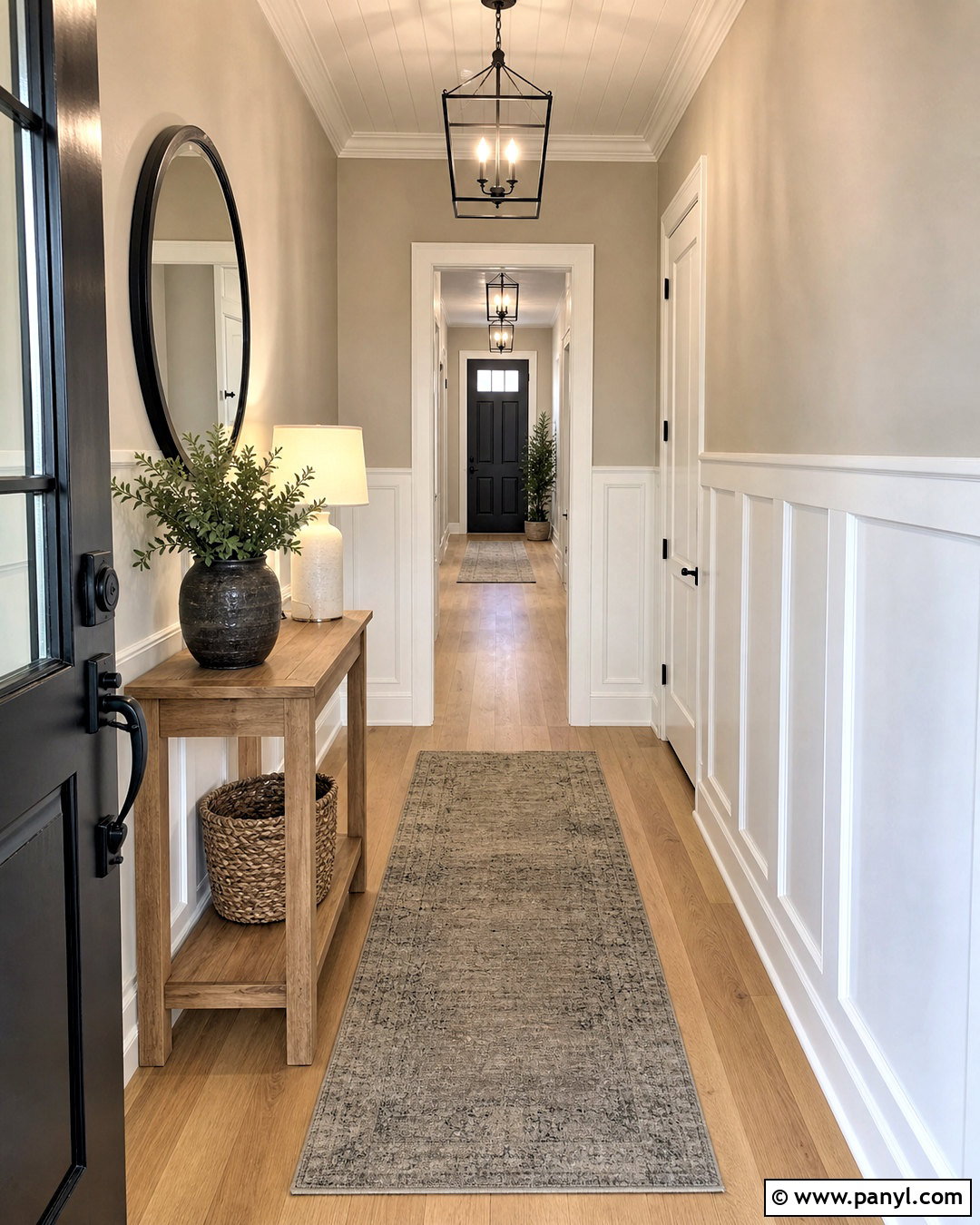
Crisp white board and batten gives an ordinary hallway a clean, structured appearance without making the narrow space feel crowded. Install evenly spaced vertical battens across the lower third of the walls, then finish the top with a simple horizontal cap. Paint the paneling, baseboards, and door trim the same warm white for a seamless result. A soft greige paint above adds gentle contrast while reflecting natural and artificial light. Complete the hallway with light oak flooring, a slim wood console, and a rounded black-framed mirror. Matte black ceiling fixtures bring definition without overwhelming the design. Keep artwork minimal and choose washable satin or semi-gloss paint below the rail so everyday marks can be cleaned more easily.
2. Sage Green Shaker Hallway Paneling
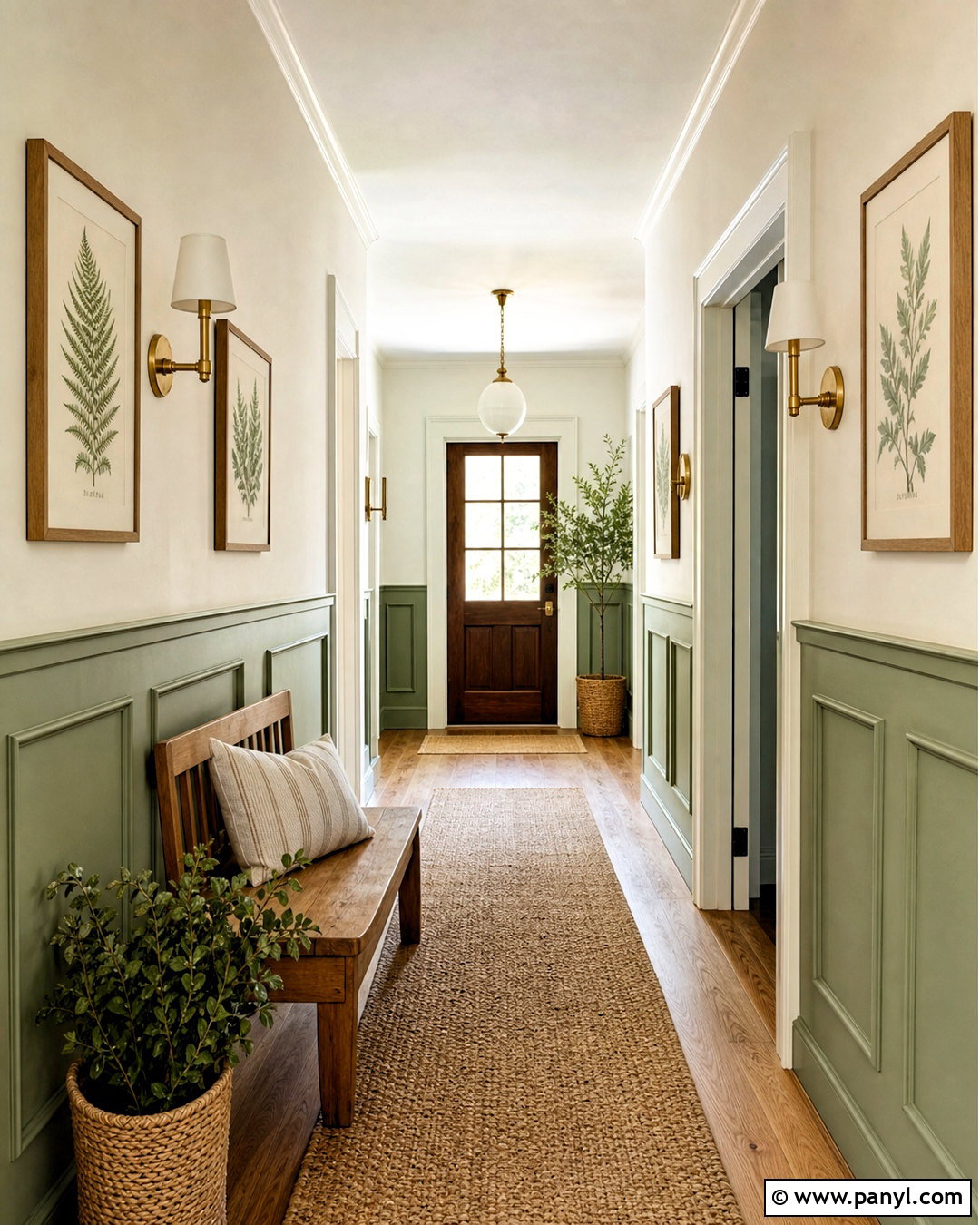
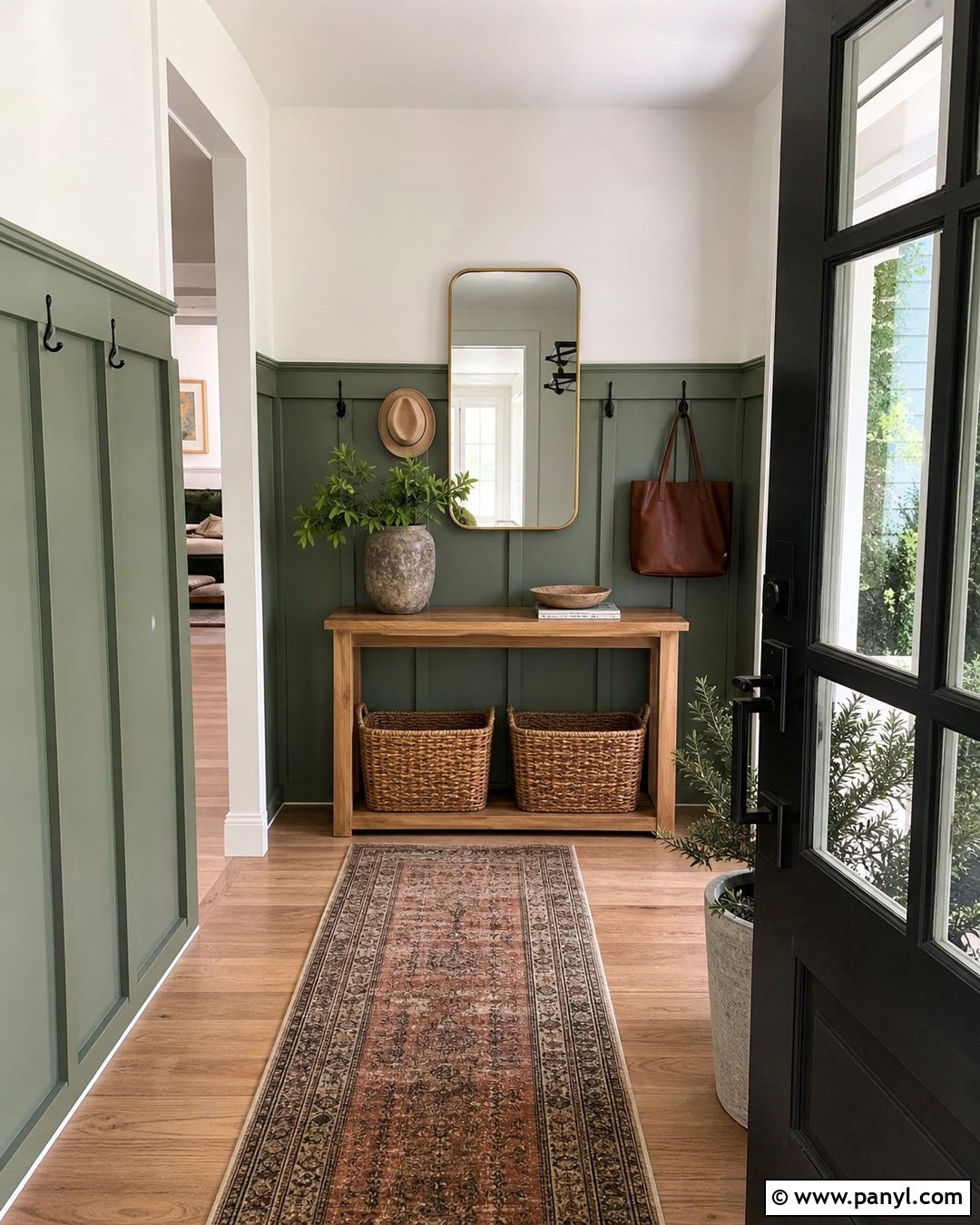
Soft sage green shaker paneling creates a calm hallway that feels connected to nature. Build rectangular frames across the lower wall, keeping their widths consistent around doors and corners. Painting the baseboard, frames, backing wall, and top rail in one muted green shade makes the treatment look professionally fitted. Use warm off-white paint above to maintain brightness, especially in a hallway with limited windows. Natural oak flooring, a woven runner, and a narrow oak bench add comfortable warmth. A pair of antique brass wall lights can provide layered illumination while complementing the green. Finish the complete look with understated botanical prints in wood frames. This palette suits traditional, cottage, transitional, and modern farmhouse homes without appearing overly themed.
3. Dark Blue Hallway Wall Paneling
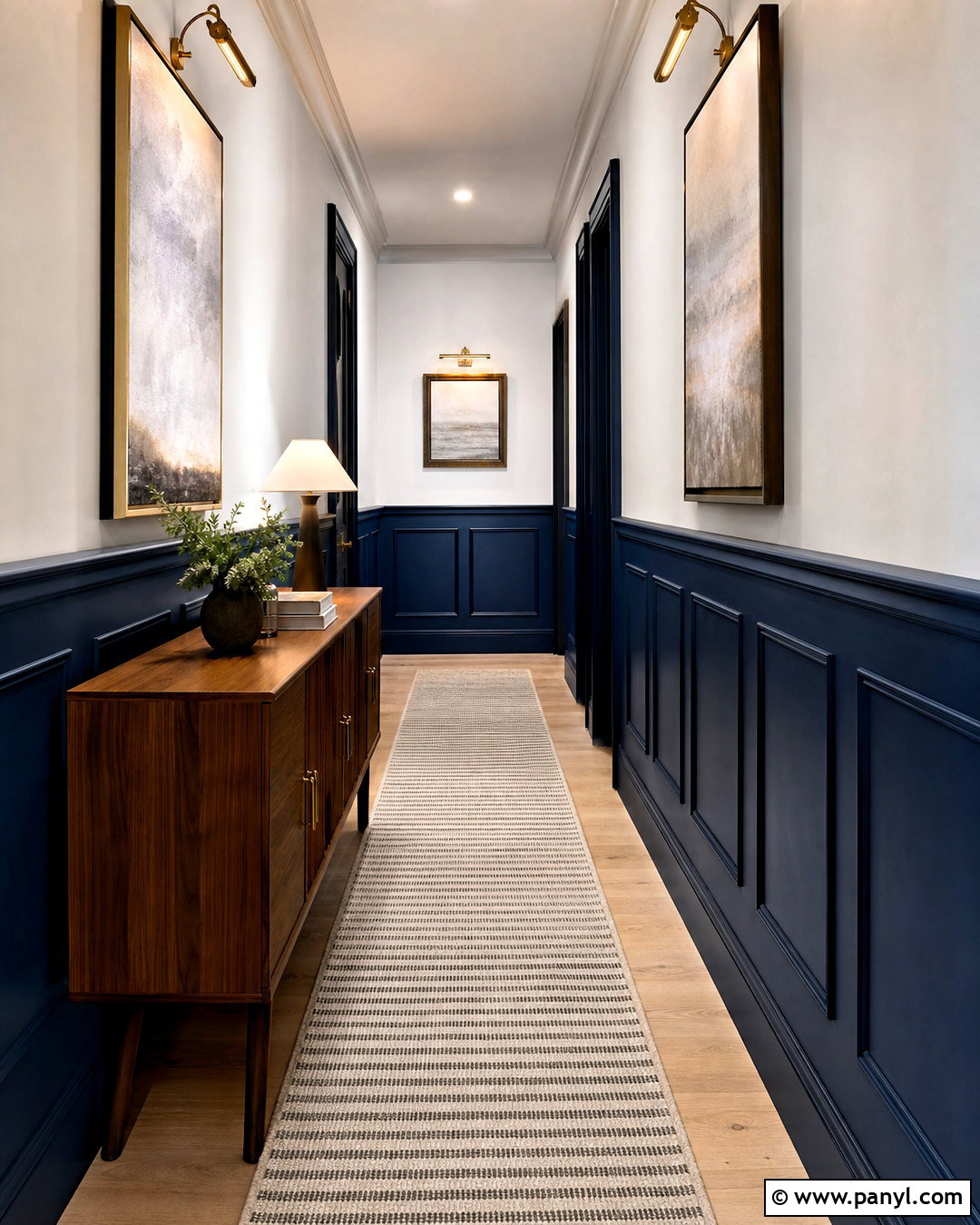
Deep navy blue paneling can make a hallway feel dramatic and polished when the surrounding finishes remain light. Use simple square molding panels across the lower 40 inches of the wall, including a narrow ledge-style cap. Continue the navy color across the baseboards and nearby door casings for a strong, intentional finish. Keep the upper walls bright white and use a pale natural wood floor to prevent the corridor from feeling enclosed. A washable striped runner introduces pattern and leads the eye toward the end of the hall. Add aged brass picture lights, a slim console, and one large light-toned artwork rather than several small pieces. The resulting space feels tailored, balanced, and practical enough for a busy family entrance.
4. Natural Oak Slat Hallway Paneling
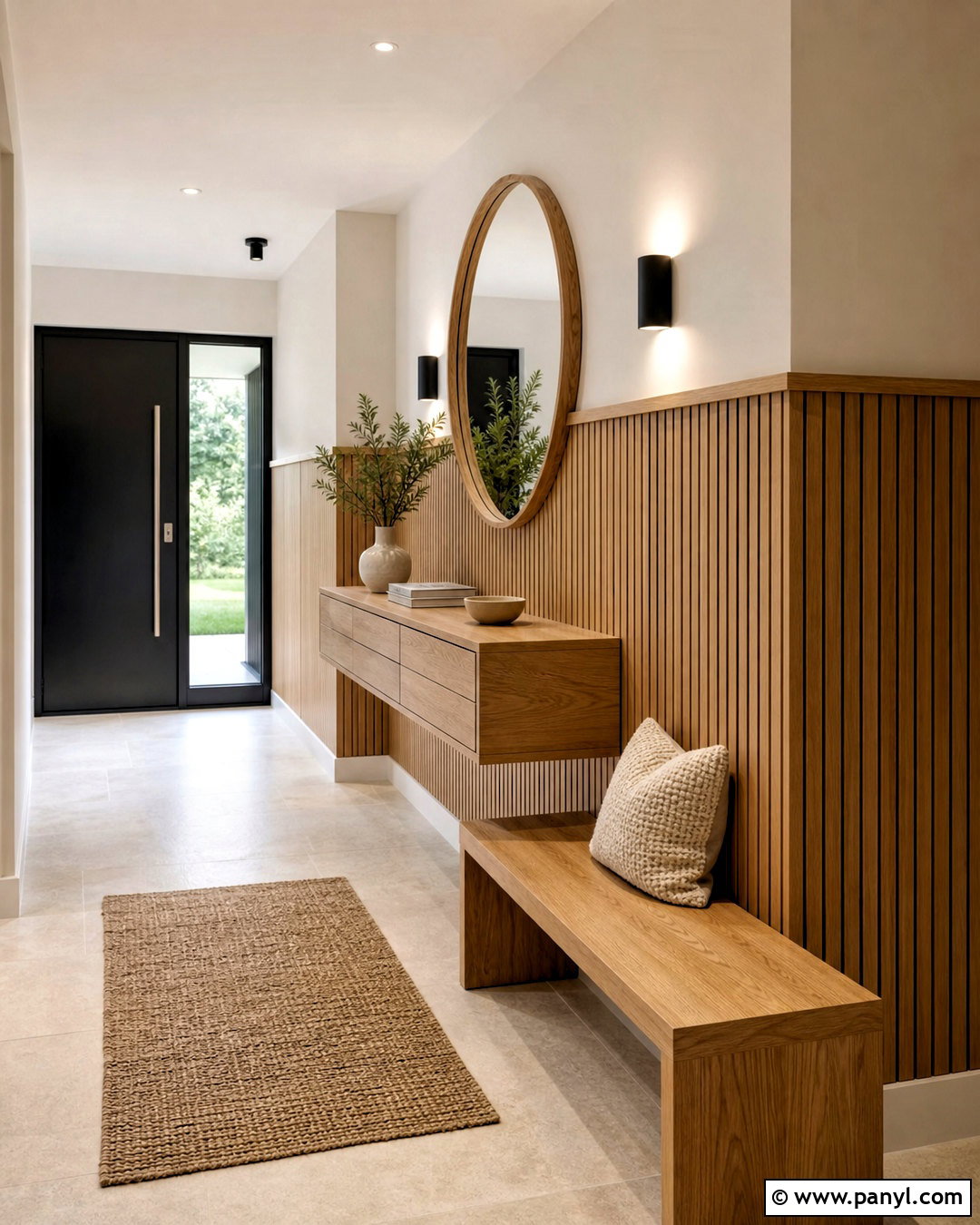
Warm oak slats bring natural texture to a modern hallway while keeping the overall design streamlined. Position narrow vertical slats over a matching oak backing panel, covering approximately the lower third of each wall. Use consistent spacing and finish the top with a clean square edge instead of decorative molding. Creamy white upper walls and pale limestone-look flooring keep the corridor airy. Repeat the wood tone through a floating console, a simple bench, and an oak-framed mirror. Matte black wall lights and door hardware add sharp contrast. Because deeply grooved surfaces may collect dust, select shallow slats or place this treatment along the less frequently touched wall. The complete hallway feels warm and contemporary without relying on excessive furniture or accessories.
5. White Beadboard Hallway Paneling
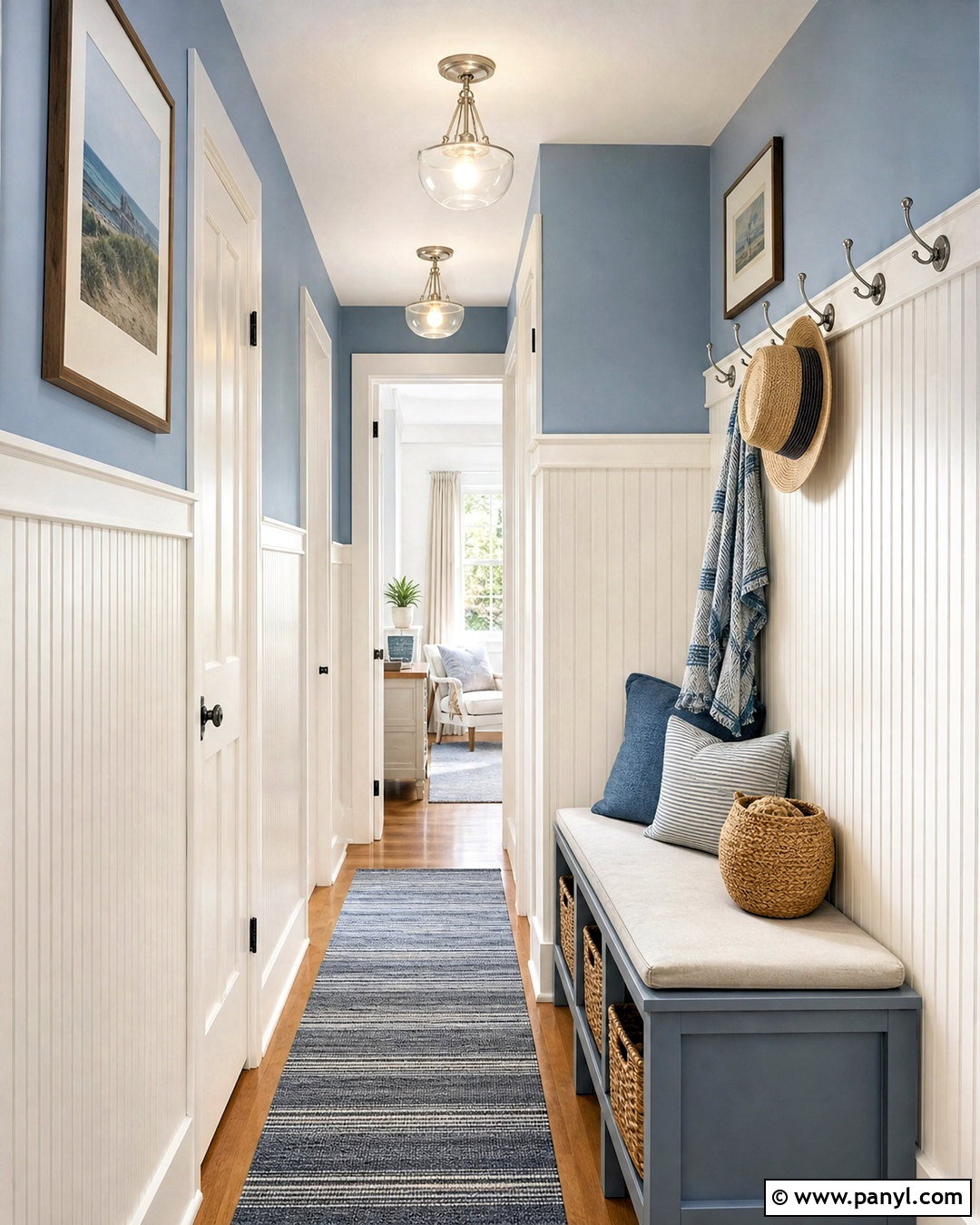
Beadboard gives a hallway familiar cottage character while providing a practical surface along the busiest part of the wall. Choose narrow vertical grooves and install the boards between a substantial baseboard and a gently projecting chair rail. Warm white paint keeps the lower section fresh, while pale dusty blue above adds a soft coastal influence. Pair the walls with medium-tone oak flooring and a blue-gray striped runner for continuity. A compact painted bench, woven baskets, and nickel hooks can turn an entrance hallway into useful storage without blocking the walkway. Use clear glass ceiling lights to preserve visual openness. This complete design works especially well in older homes, cottages, and relaxed family spaces where comfort and durability are equally important.
6. Black Geometric Hallway Paneling
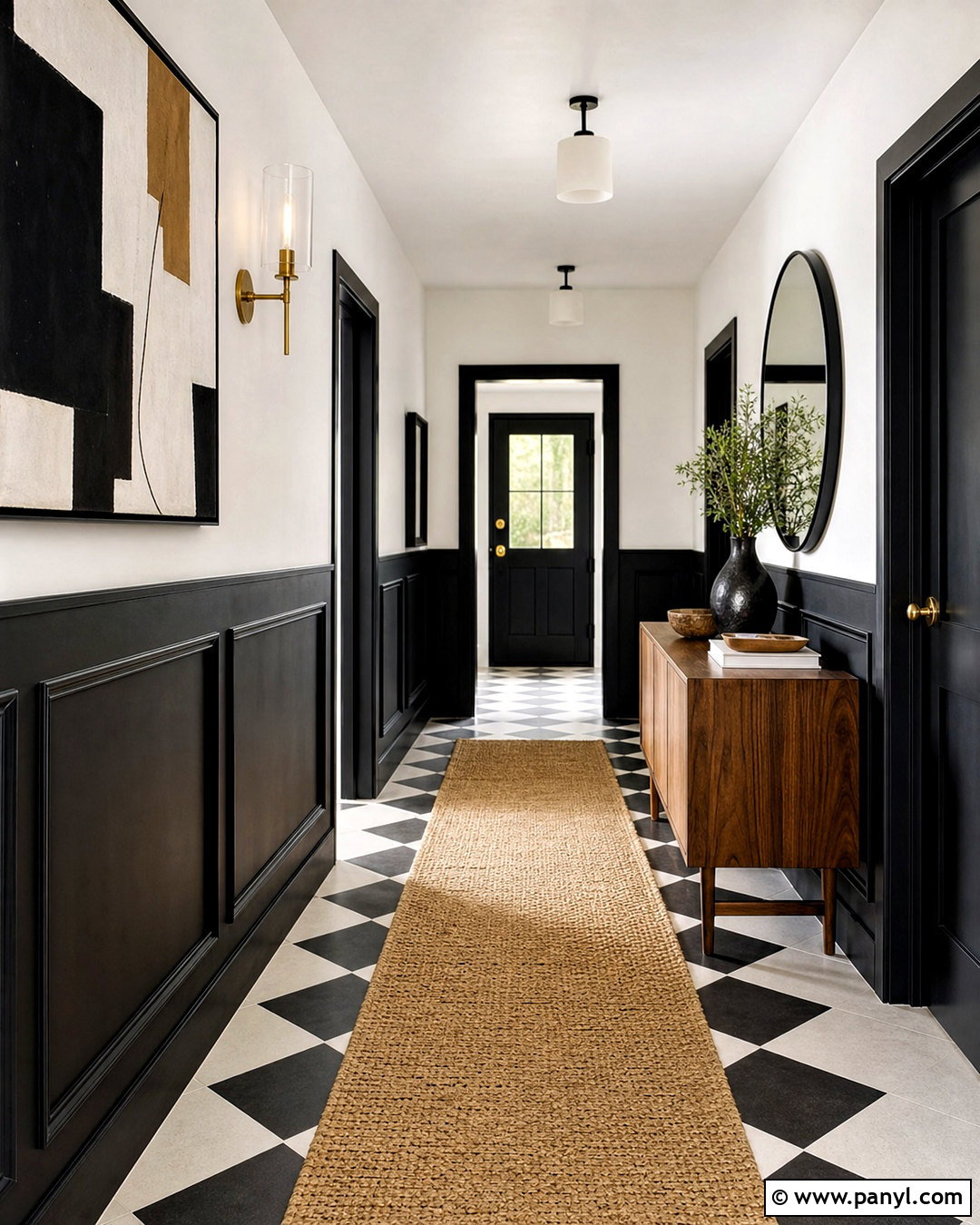
Black geometric paneling creates a striking hallway with a sharper, more contemporary personality. Arrange slim molding strips into large repeating rectangles across the lower walls rather than using a crowded grid. Paint every lower surface in a soft matte black, including the cap and baseboards. Bright white upper walls, white door frames, and a light checkerboard floor balance the dark finish. Introduce warmth through a narrow walnut console and a natural jute runner. Minimal brass sconces add a refined metallic accent, while one oversized abstract print at the end of the hall establishes a clear focal point. This look works best with generous lighting and clean sightlines. Avoid filling the walls with small decorations because the panel pattern already supplies substantial visual interest.
7. Hallway Paneling With Floral Wallpaper
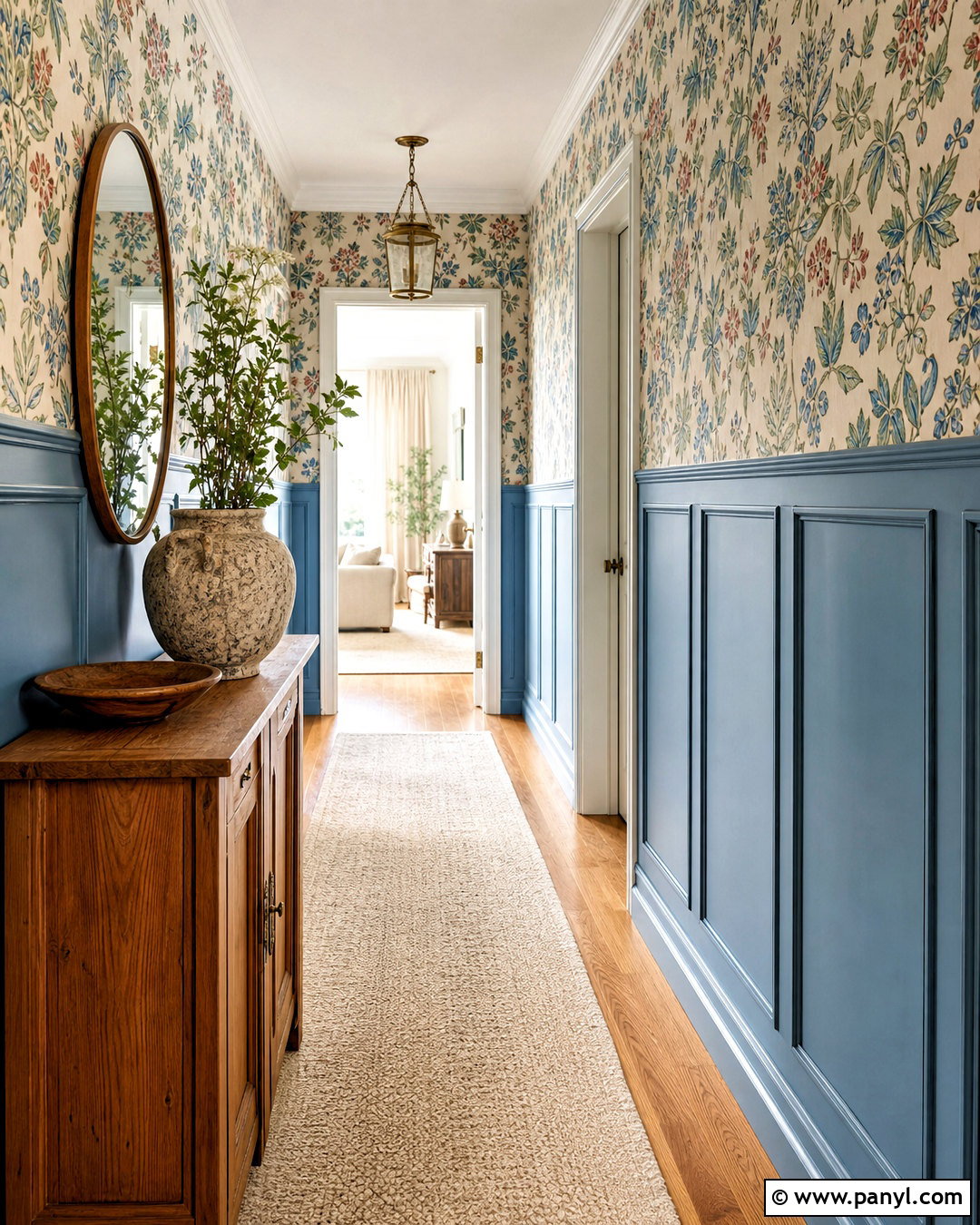
Combining painted paneling with floral wallpaper creates a layered hallway that feels cheerful rather than plain. Use simple recessed rectangular panels on the lower wall and paint them a dusty blue or muted teal. Above the rail, apply wallpaper with a small botanical pattern containing cream, blue, green, and touches of warm coral. Selecting a controlled print prevents a narrow hallway from becoming visually busy. Continue the panel color onto the interior side of the front door for a connected scheme. Warm oak flooring and a neutral runner help ground the pattern. Add an antique brass pendant, a small wood console, and an oval mirror. Keep additional artwork limited because the wallpaper already acts as decoration throughout the complete space.
8. Warm Greige Raised Hallway Paneling
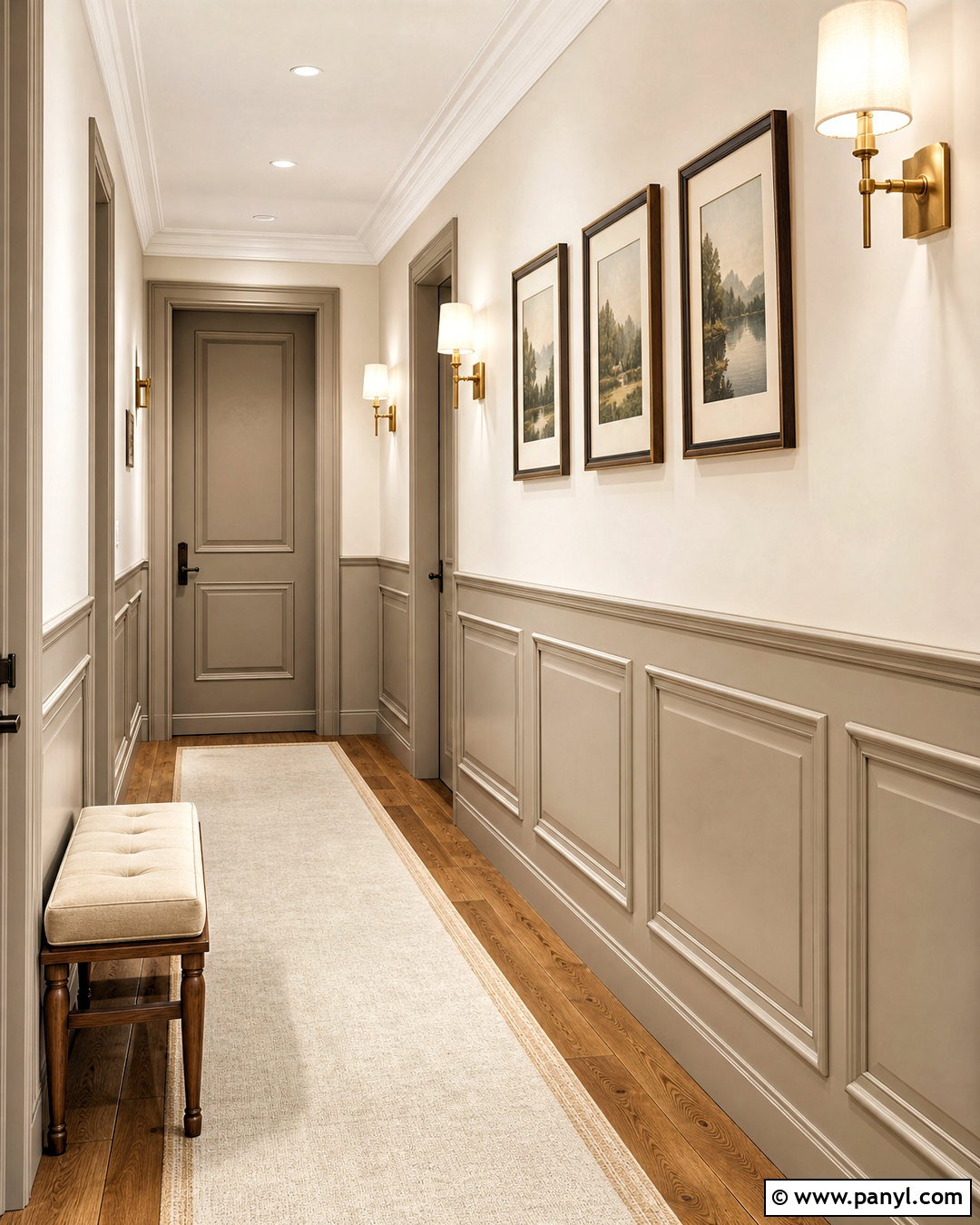
Raised panel molding painted warm greige offers a subtle way to make a hallway appear more finished. Create broad rectangular sections with traditional beveled trim, allowing the panels to align logically with nearby doorways. Paint the entire lower wall in a durable satin greige, then use a slightly lighter cream on the upper section. The low contrast keeps the hallway calm and visually continuous. Medium oak floors, an ivory runner, and a slender upholstered bench reinforce the welcoming neutral palette. Choose oil-rubbed bronze hardware and simple fabric-shaded sconces for gentle definition. A group of three coordinated landscape prints can fill a longer wall without creating clutter. This complete treatment suits transitional homes where classic detail and restrained color need to work together.
9. Vertical Tongue And Groove Hallway Paneling
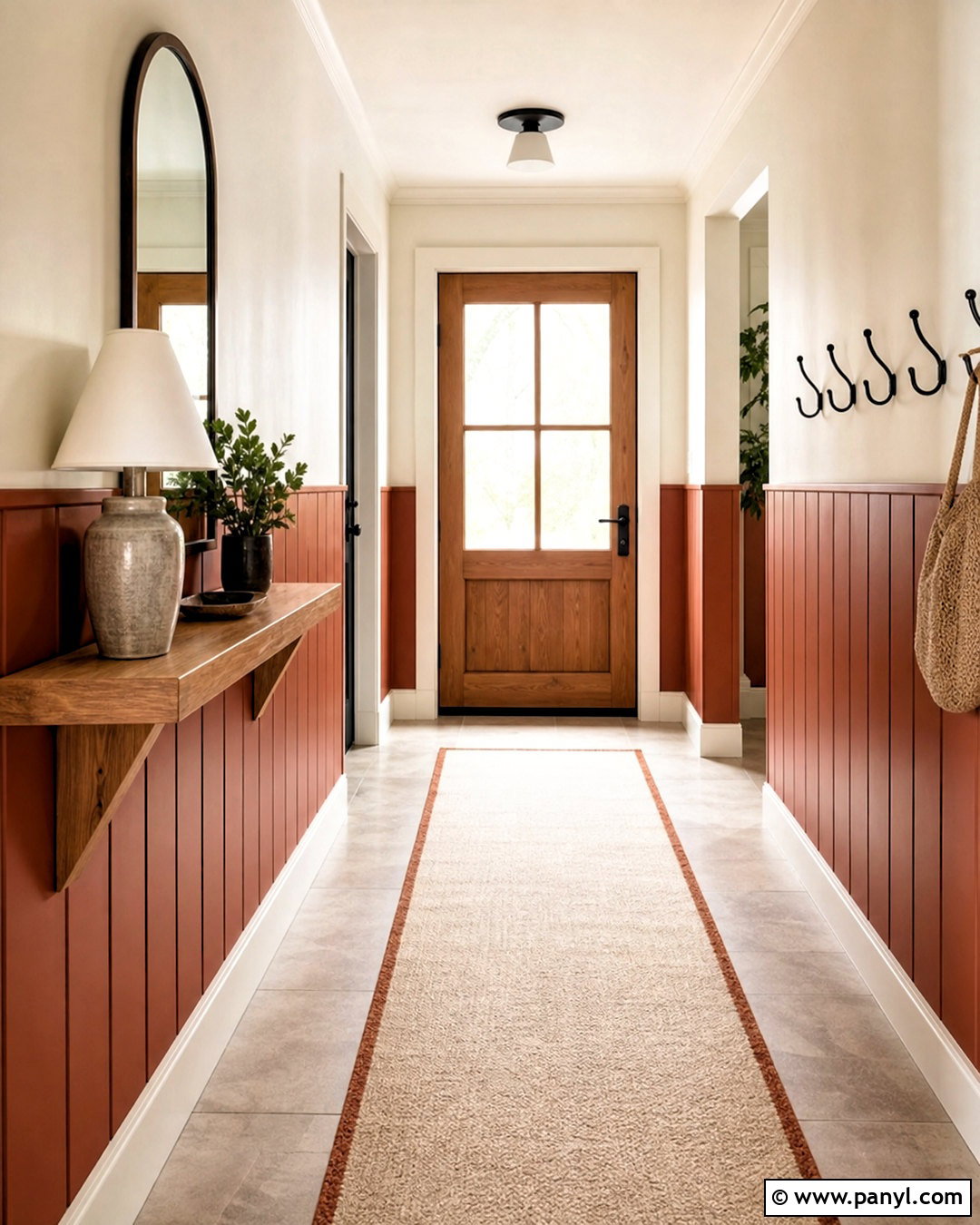
Vertical tongue and groove boards can visually stretch a hallway with a low or average ceiling. Run slim boards from the baseboard to a straightforward cap positioned around 36 to 42 inches high. A muted clay or soft terracotta paint gives the lower wall warmth without becoming too intense. Balance it with creamy upper walls and pale stone-look tile underfoot. Use an off-white runner with a subtle rust border to connect the two surfaces. A light oak shelf, ceramic lamp, and simple arched mirror create a useful landing area near the entrance. Black metal hooks can be included where coats are needed. The finished hallway feels relaxed and handcrafted, yet the limited palette keeps the vertical texture from appearing overly rustic.
10. Two Tone Green Hallway Paneling
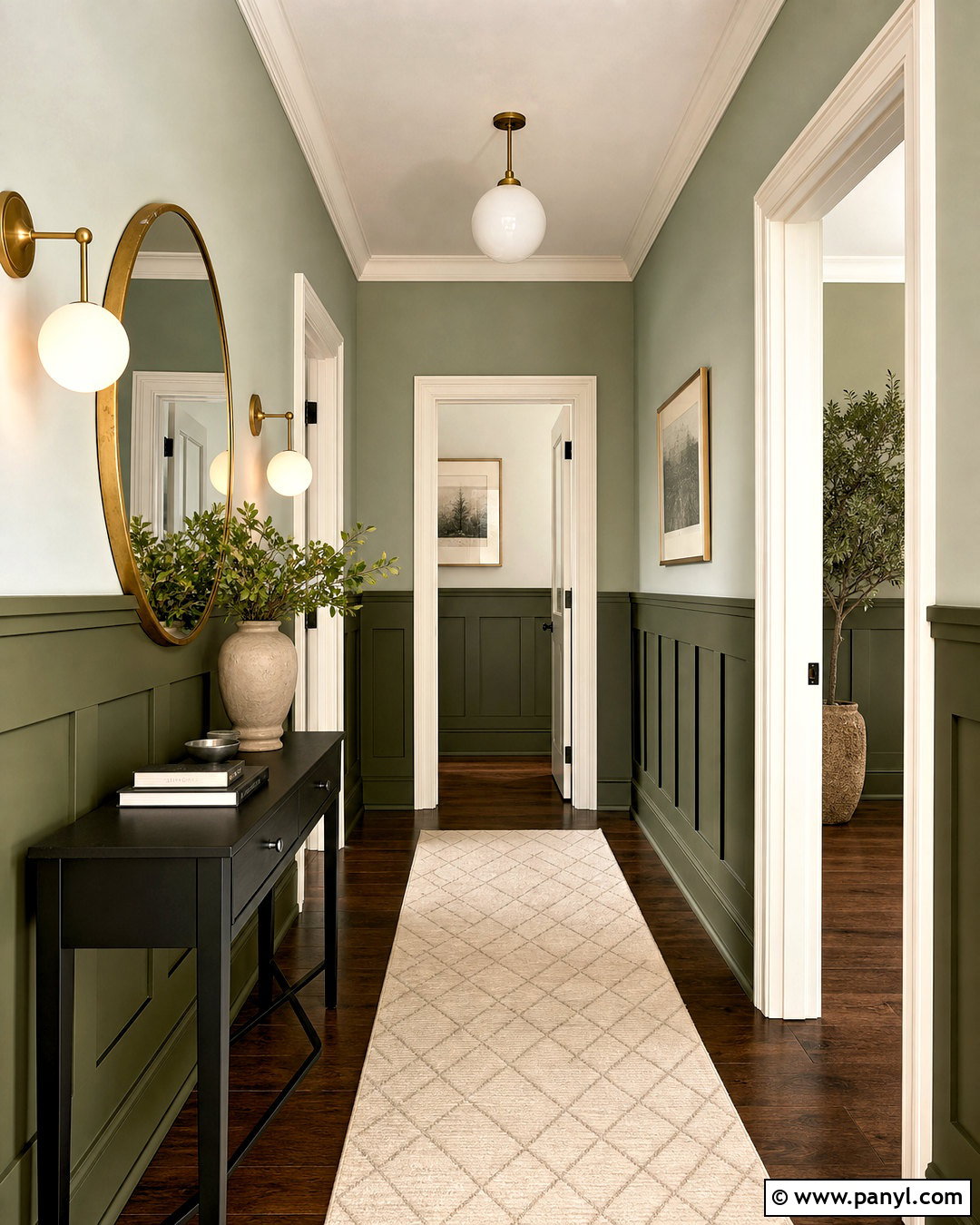
A two-tone green scheme gives hallway paneling depth while maintaining a cohesive appearance. Paint traditional square panels in a rich olive green, then use a softer gray-green above the chair rail. The related shades create contrast without visually chopping the walls in half. Warm white ceilings and door trim keep the color combination fresh. Pair the walls with dark-stained wood flooring and a cream runner featuring a quiet geometric pattern. A narrow black console provides functional storage, while a brass-framed mirror reflects light along the corridor. Add a frosted globe ceiling fixture and one small lamp for softer illumination. This complete palette works particularly well in hallways connected to kitchens, dining rooms, or living areas containing natural wood and earthy colors.
11. Traditional White Wainscoting Hallway
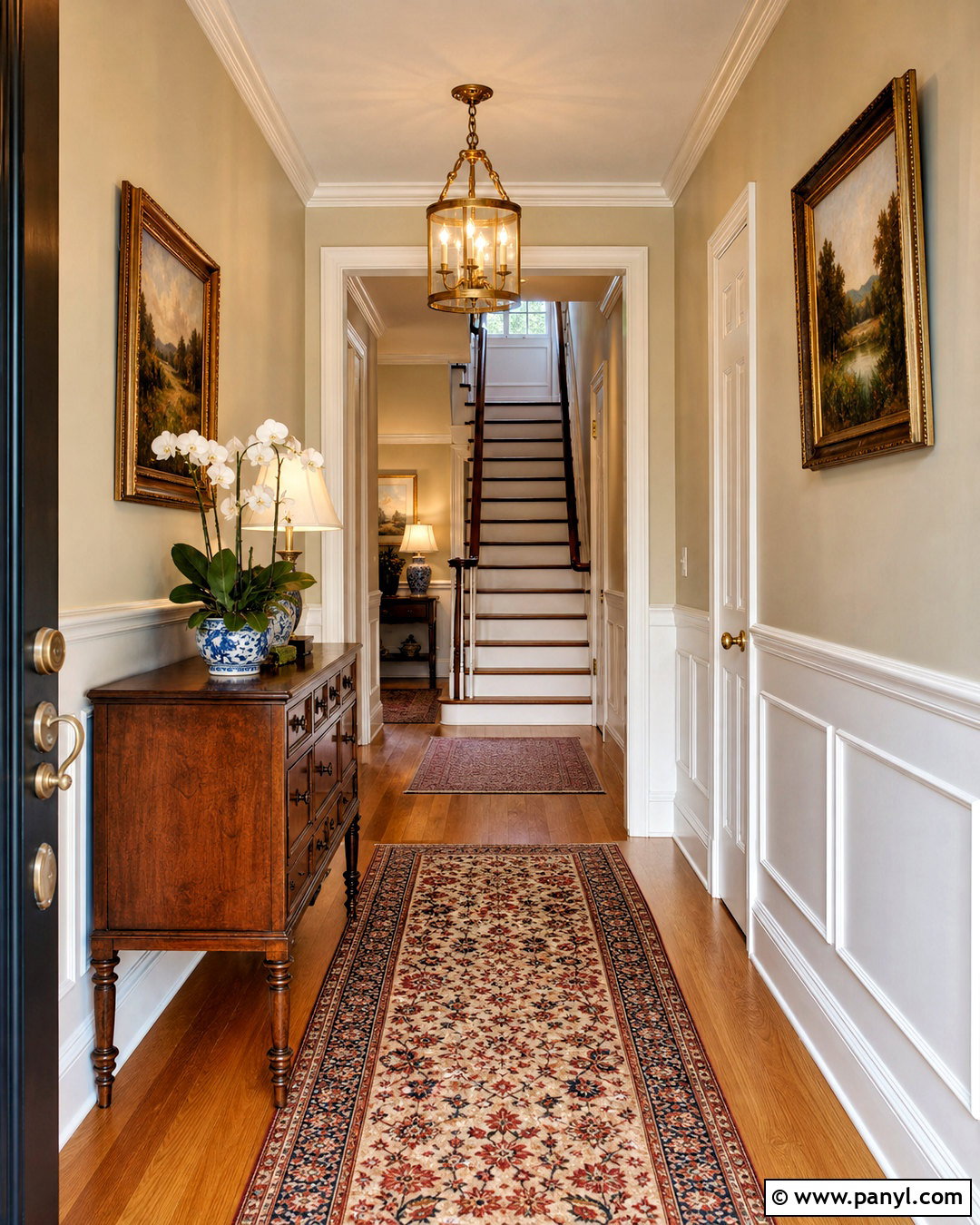
Classic white wainscoting brings architectural order to a traditional entrance or upstairs corridor. Use recessed panels with balanced proportions, a sturdy baseboard, and a molded chair rail that complements existing door casings. Set the paneling at roughly one-third of the wall height unless taller ceilings support a slightly higher installation. Warm white paint across all woodwork creates continuity, while pale beige or light taupe above adds understated contrast. Complete the setting with honey-toned hardwood flooring, a Persian-inspired runner, and an antique wood console. A brass lantern pendant and framed landscape artwork reinforce the traditional direction. Keep furniture shallow enough to protect the walkway. The final hallway feels established and detailed, even when the underlying architecture is relatively simple.
12. Modern Square Hallway Paneling
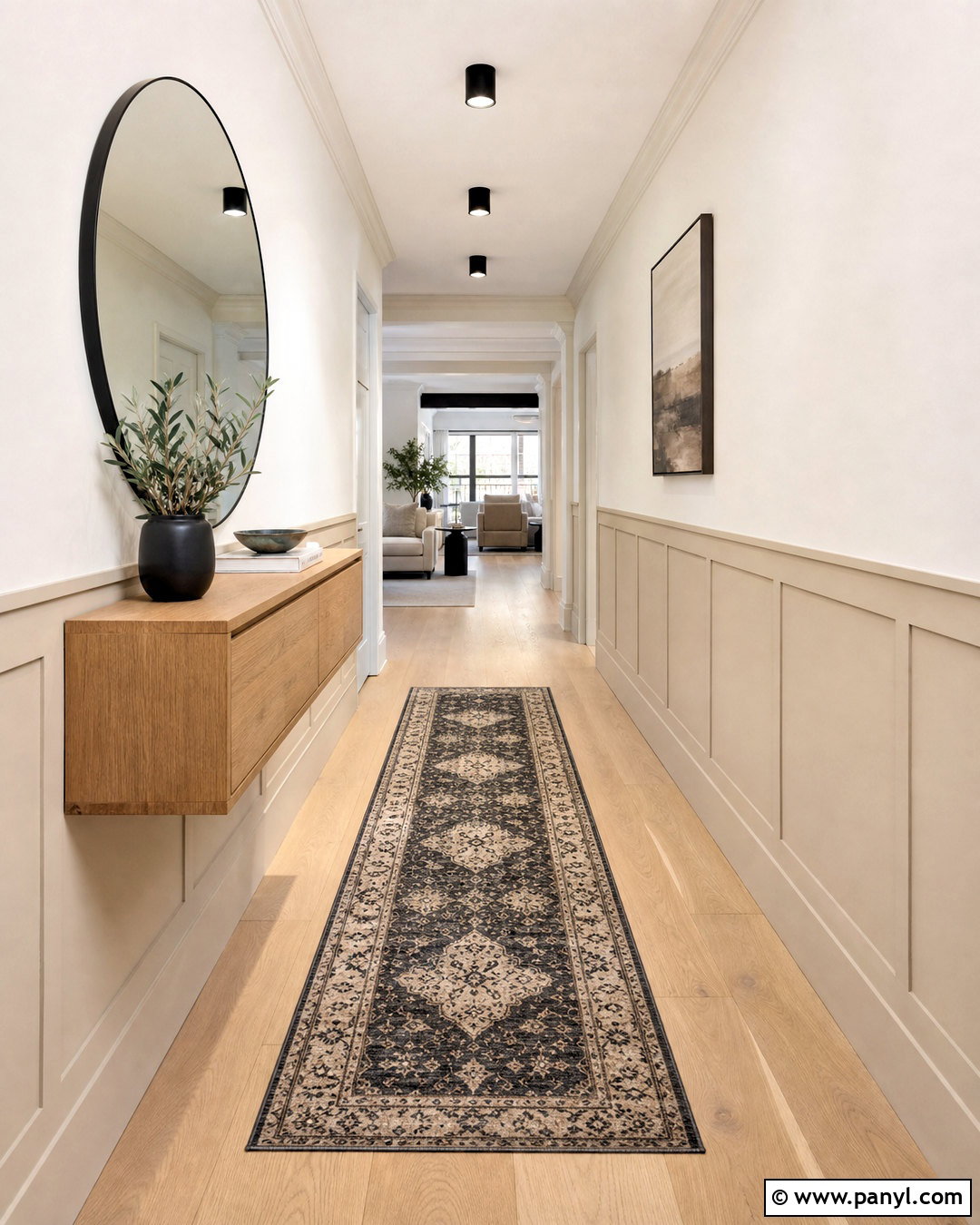
Large square panels offer a modern interpretation of traditional hallway molding. Build a clean grid across the lower wall using narrow, flat trim with minimal projection. Paint the complete treatment in a soft mushroom beige, including the baseboard and squared top cap. Use bright warm white above to open the corridor and emphasize the panel geometry. Wide-plank white oak flooring supports the contemporary look, while a flat-weave black and cream runner adds movement. Select a floating oak console to preserve visible floor space and make the hallway appear wider. A round frameless mirror and simple black cylinder lights complete the streamlined arrangement. Careful spacing is essential, so map the full wall before installation and adjust panel widths around electrical outlets, corners, and door openings.
13. Hallway Paneling With Picture Ledge
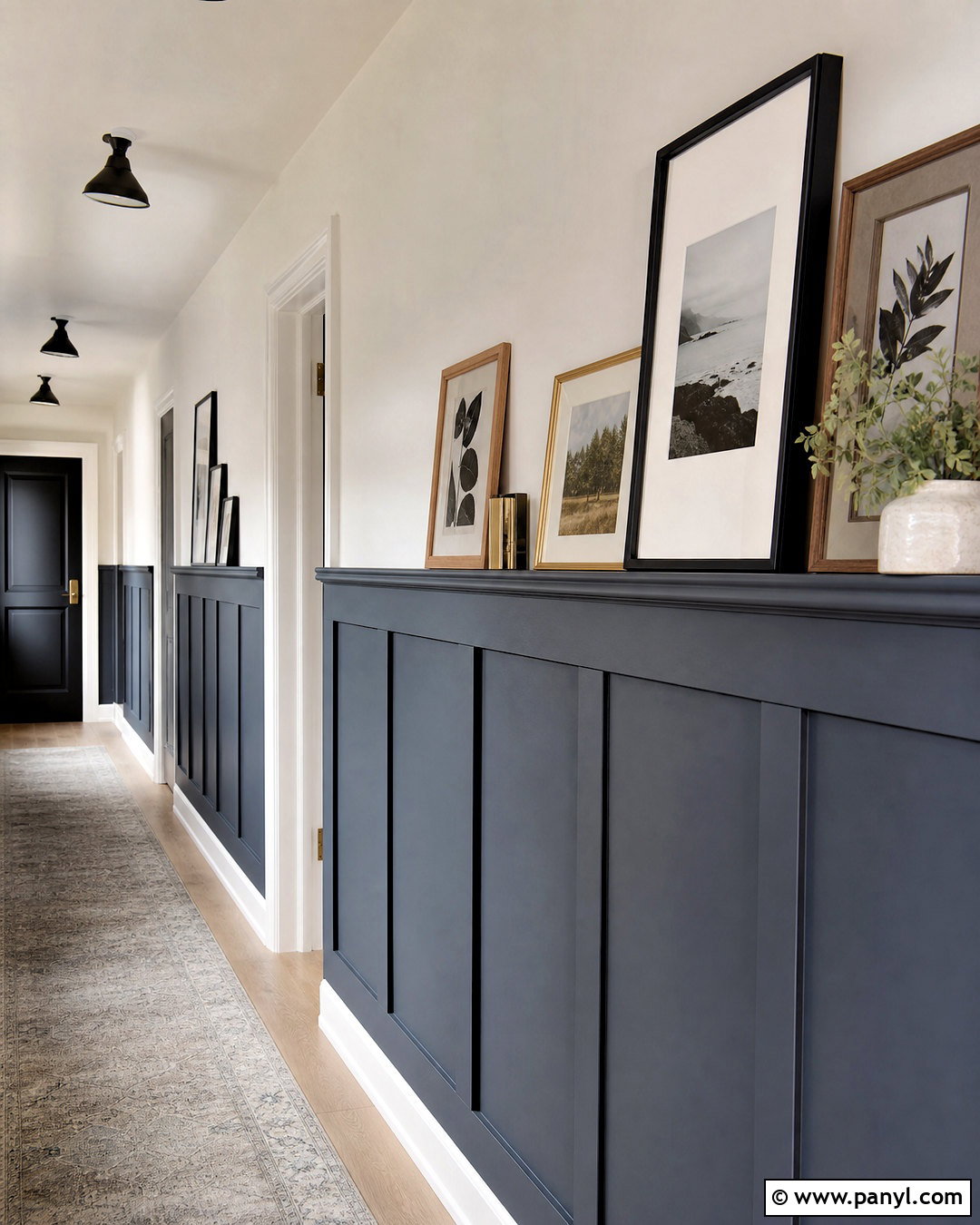
A picture ledge built into half wall paneling turns the hallway into a flexible display space. Install simple vertical battens below and cap them with a ledge that projects just enough to support lightweight framed art. Paint the paneling and shelf a smoky blue-gray, then keep the upper wall a clean ivory. Arrange several overlapping frames in black, oak, and brass finishes, but leave open areas so the display feels relaxed. Light wood flooring and a faded neutral runner brighten the lower portion of the corridor. Add small directional ceiling lights to illuminate the artwork evenly. This design is especially useful for people who enjoy changing photographs or prints because the display can evolve without repeatedly placing new holes in the wall.
14. Light Gray Hallway Paneling
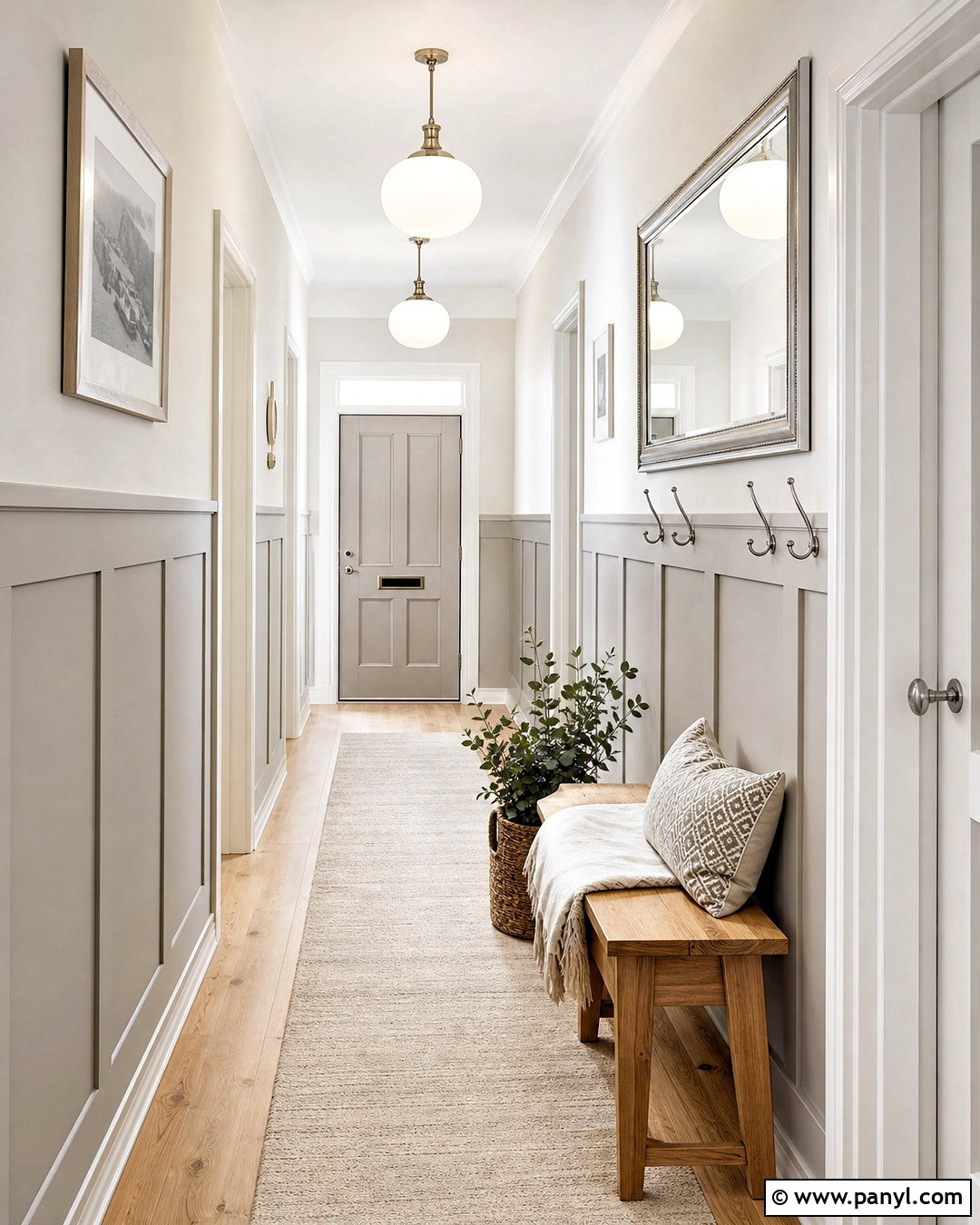
Light gray paneling provides definition while preserving the brightness needed in a narrow or windowless hallway. Choose simple shaker frames with wider spacing to avoid making the walls look overly detailed. Paint the lower section in a pale warm gray and use soft white above, keeping the difference noticeable but gentle. White-painted door trim creates a crisp boundary around adjoining rooms. Pale oak flooring, an ivory runner, and a small blond wood bench prevent the gray from feeling cold. Brushed nickel hooks and a thin silver mirror frame add practical accents without introducing heavy contrast. Finish the complete hallway with frosted ceiling globes that distribute light evenly. This restrained palette also makes it easier to coordinate the corridor with several differently decorated rooms.
15. Rustic Wood Hallway Paneling
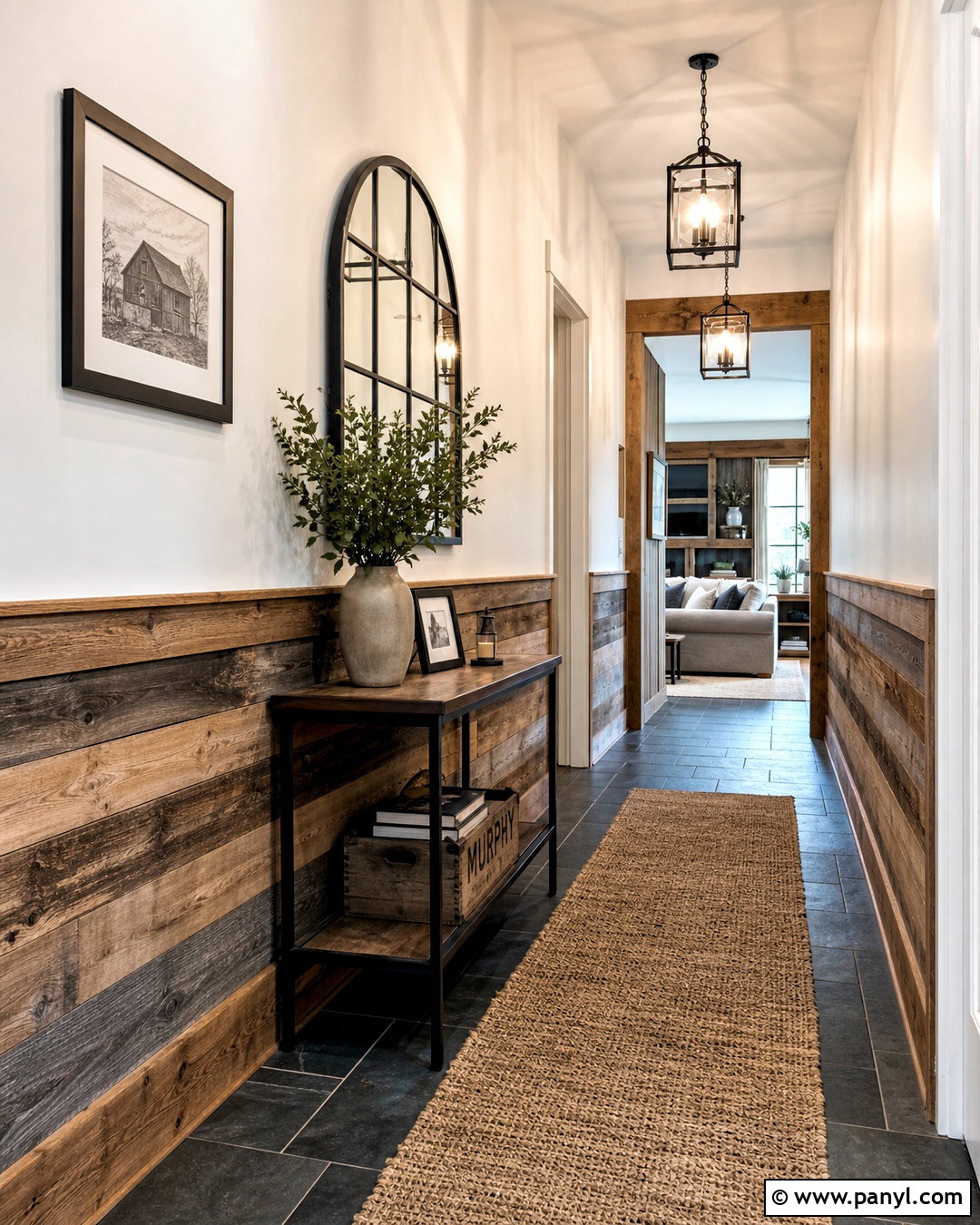
Reclaimed wood paneling gives a hallway warmth, visible grain, and a relaxed rustic character. Select boards with compatible brown and weathered gray tones, then install them horizontally across the lower wall. A simple medium-brown wood cap provides a neat transition to the warm white paint above. Because reclaimed boards can vary significantly, arrange them on the floor first to distribute knots and darker sections evenly. Complete the hallway with slate-look tile, a natural woven runner, and a narrow black metal console with a wood top. A large iron-framed mirror and clear glass lantern fixture reinforce the rustic materials. Keep other decorations simple so the wood remains the focal feature. Properly sand and seal the boards to create a touch-friendly, cleanable surface.
16. Dusty Pink Hallway Paneling
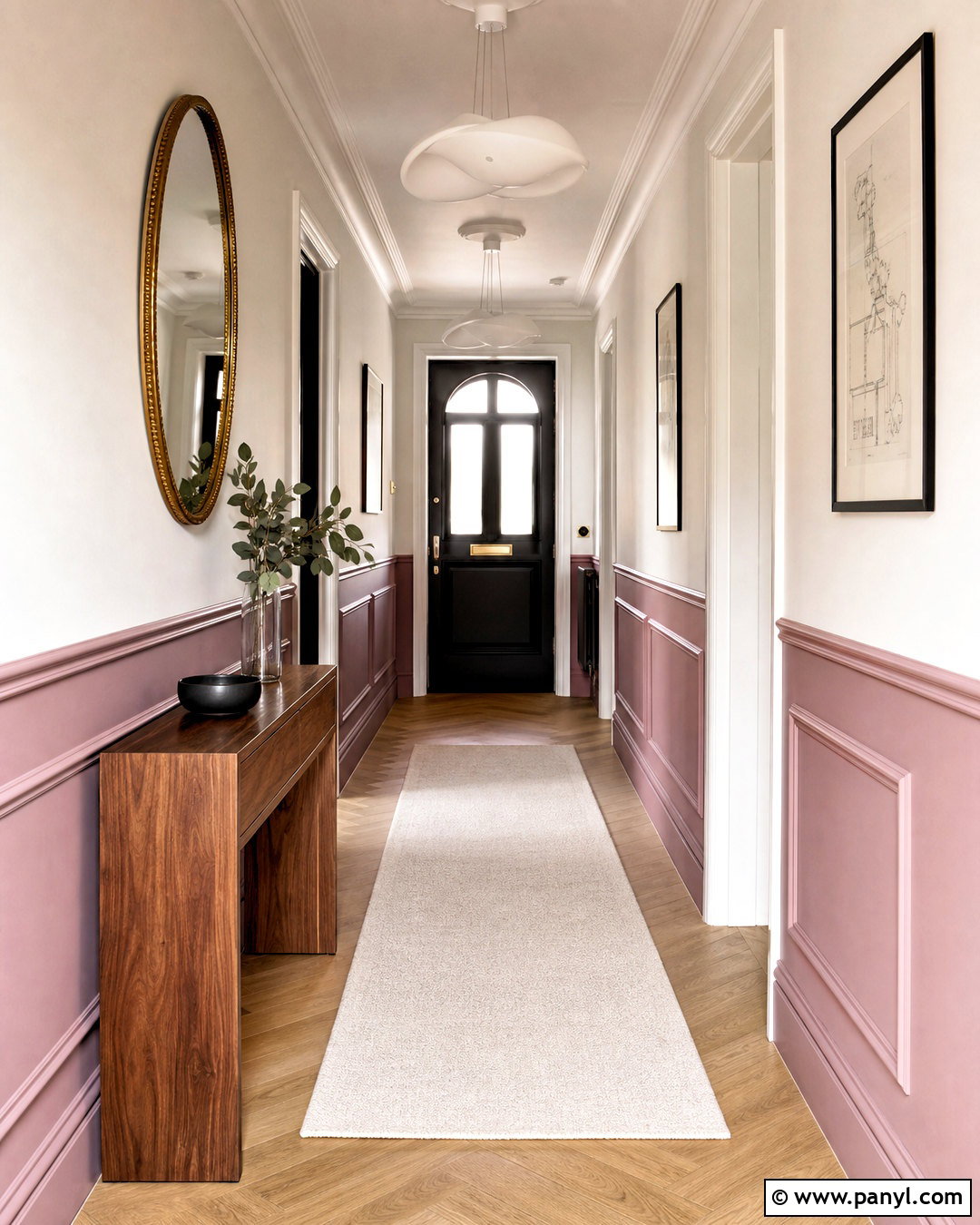
Dusty pink paneling can create a welcoming hallway that feels sophisticated rather than overly sweet. Choose broad rectangular molding panels and paint the entire lower wall in a muted rose with warm brown undertones. Use creamy white above to soften the contrast and maintain a bright atmosphere. Light oak parquet flooring adds pattern and works naturally with the warm color palette. A slim walnut console, an oval brass mirror, and an ivory runner complete the hallway without competing with the paneling. Include a sculptural white ceiling light and a small ceramic table lamp for layered brightness. Black-framed line drawings provide a modern counterpoint. Repeating the dusty pink on an interior door or nearby cabinet can make the full arrangement appear coordinated and deliberate.
17. Fluted Wood Hallway Paneling
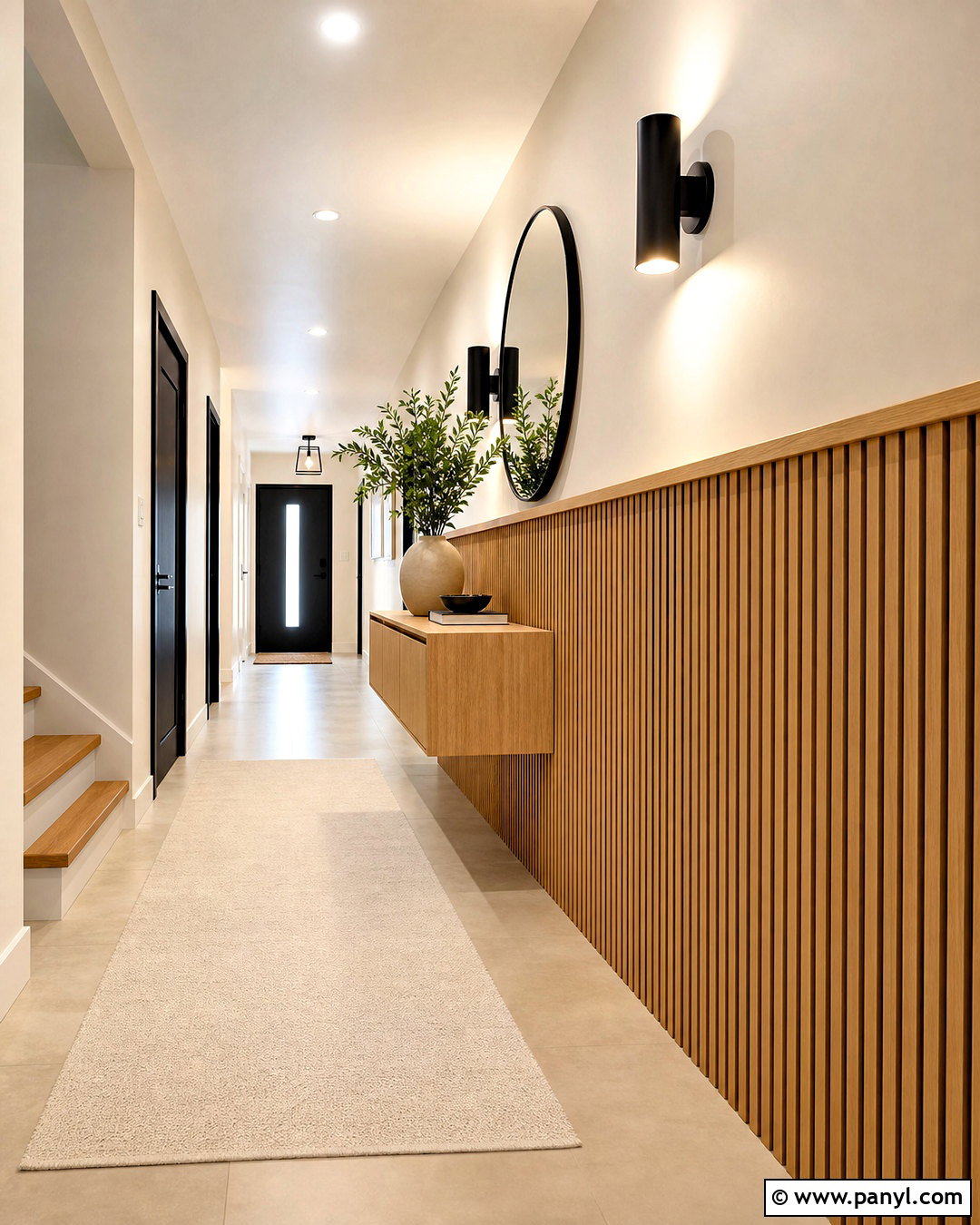
Fluted wood paneling introduces refined texture to a hallway without requiring complicated ornament. Cover the lower portion of one long wall with narrow rounded oak flutes, then use smooth warm white paint on the opposite wall and above the panel line. Ending the fluting with a slim oak cap gives the installation a clean finish. Pair it with large-format beige floor tile and a low-pile cream runner to maintain an uncluttered foundation. A floating oak cabinet can provide concealed storage near the entrance, while black wall lights add contemporary contrast. Use a large round mirror rather than multiple frames to simplify the visual field. This complete design works well in modern homes, particularly when the fluting repeats cabinetry or furniture finishes used in nearby rooms.
18. Hallway Paneling With Striped Wallpaper
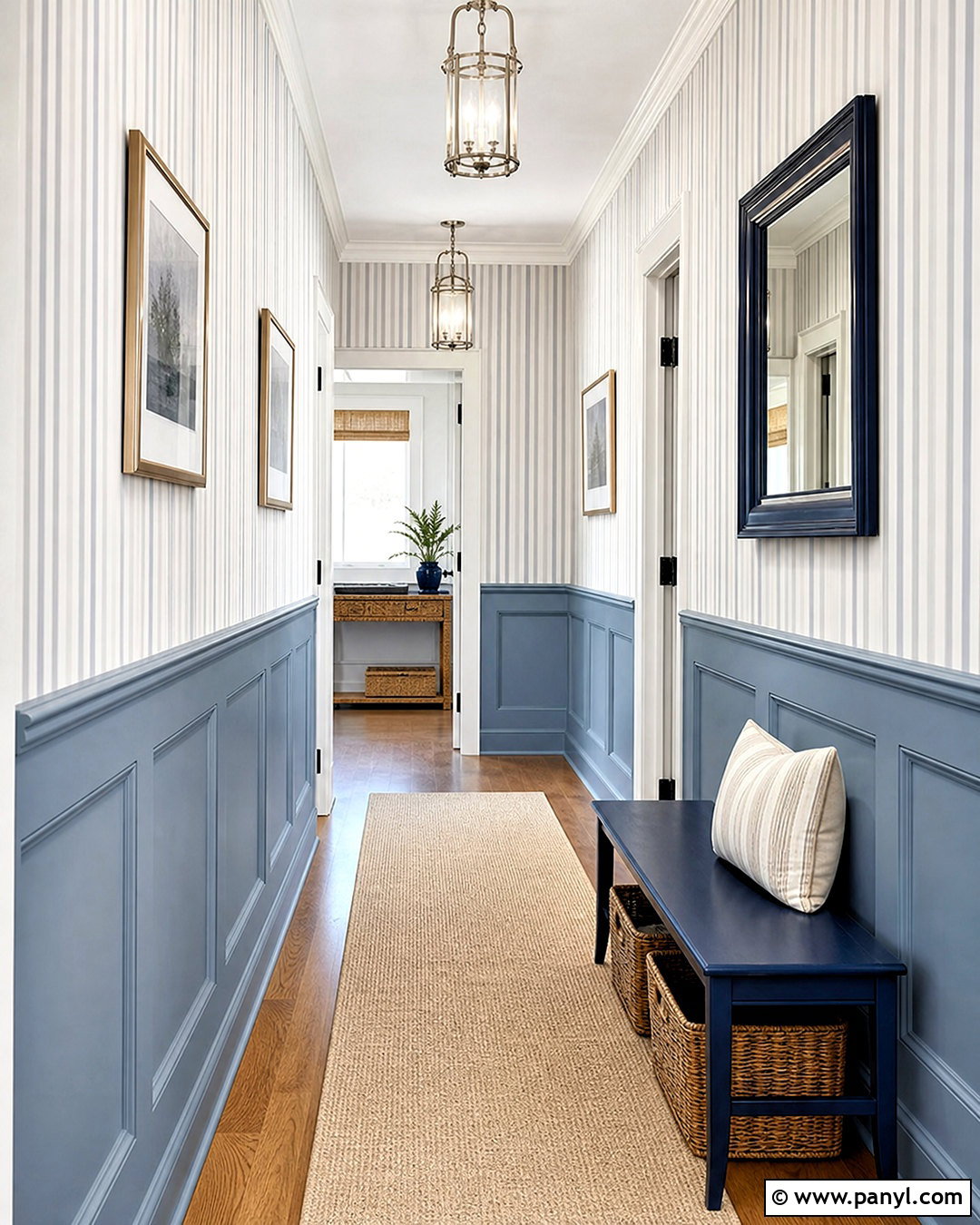
Striped wallpaper above half-height paneling can visually correct the proportions of a short or low-ceilinged hallway. Install modest rectangular panels below and paint them a soft blue-gray. Add narrow vertical wallpaper stripes in white and muted blue above the rail to draw the eye upward. Keep the ceiling, cornice, and door trim bright white for a crisp transition. Medium oak flooring and a plain oatmeal runner balance the repeated wall pattern. Finish the hallway with a compact navy bench, natural baskets, and polished nickel wall lights. A simple framed mirror at the end reflects both light and stripes, strengthening the sense of height. Limit additional wall art so the vertical pattern remains clear and the corridor does not feel overly decorated.
19. Charcoal Hallway Paneling With Wood Trim
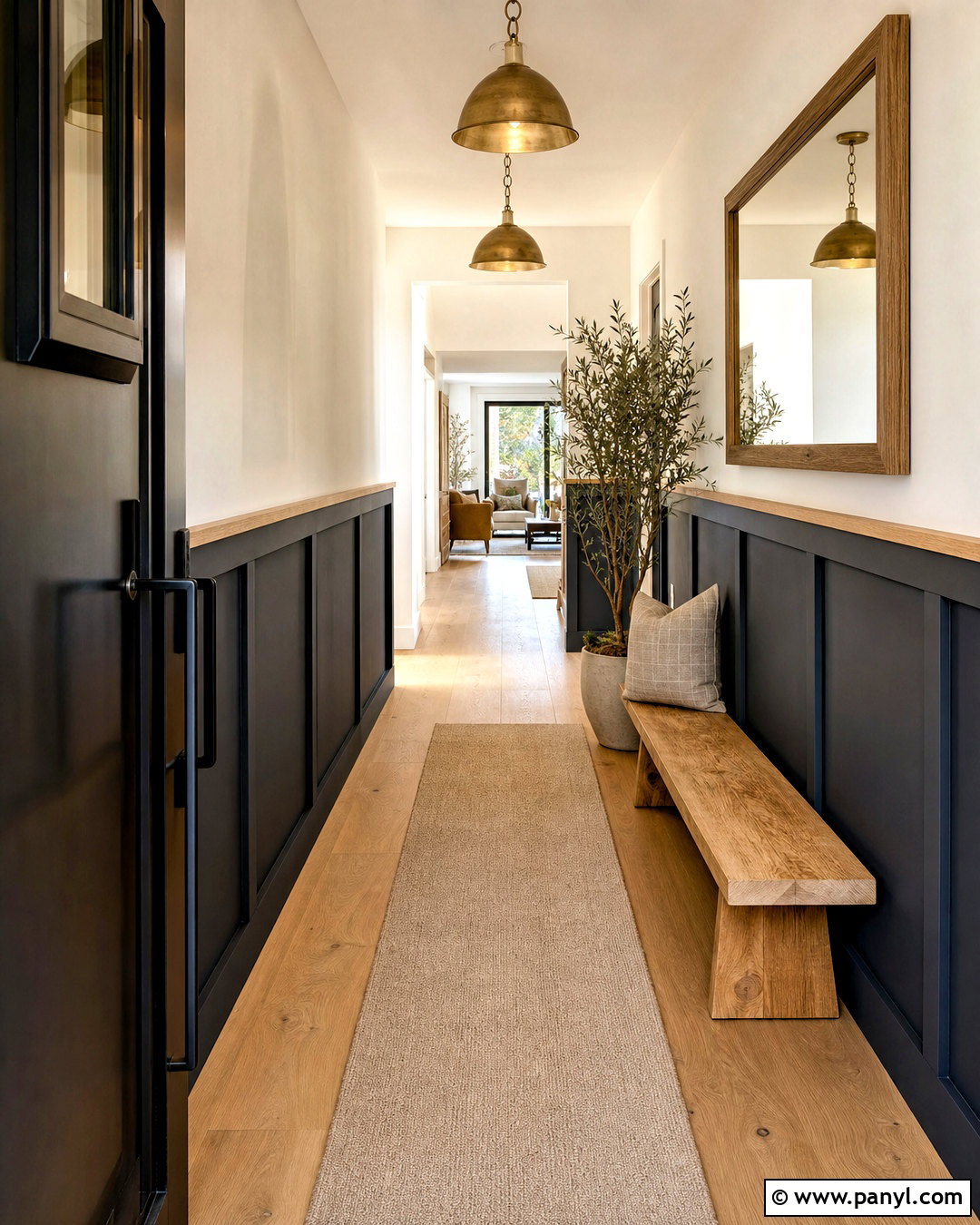
Charcoal paneling becomes warmer and more approachable when paired with natural wood trim. Create wide shaker panels across the lower walls, paint them a deep charcoal gray, and finish the top with a clear-coated oak cap. Keep the upper walls warm white to balance the dark foundation. Repeat the oak through the flooring, a slender bench, and a large rectangular mirror frame. A pale beige runner provides softness and makes the walkway easier to see. Choose matte black hardware for continuity, then add warm brass ceiling lights as a restrained accent. The contrasting materials create a hallway that feels modern but not stark. In a particularly narrow corridor, use charcoal on one side only and repeat the oak ledge on the opposite wall.
20. Hallway Paneling With Checkerboard Flooring
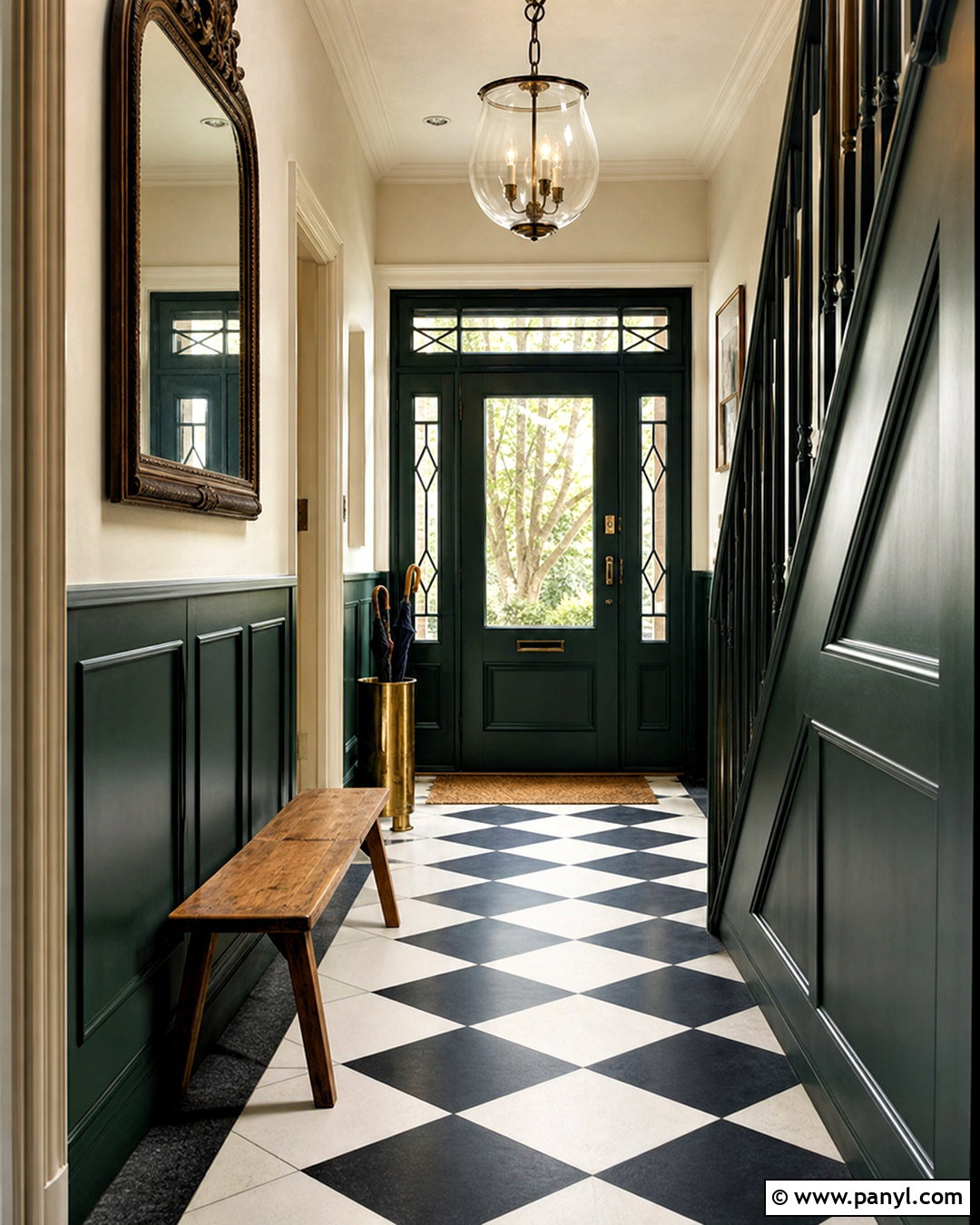
Half wall paneling and checkerboard flooring create a complete entrance with strong traditional character. Use straightforward recessed panels painted in a muted forest green, capped by a narrow molded rail. Warm white paint above keeps the rich lower color from dominating the corridor. For the floor, choose medium-scale black and off-white tiles arranged diagonally to make the hallway feel wider and more dynamic. A small oak bench and brass umbrella stand introduce useful furnishings without hiding the wall treatment. Hang one large vintage-style mirror near the entrance and install a clear glass lantern overhead. Keep accessories controlled because both the paneling and floor provide noticeable pattern. This coordinated hallway feels memorable, durable, and appropriate for classic or updated period homes.
Conclusion:
Thoughtfully designed paneling can turn a neglected corridor into one of the most distinctive areas of the home. These **half wall paneling ideas hallways** can use range from restrained white wainscoting to colorful shaker frames, natural oak slats, and bold charcoal treatments. The strongest result comes from treating every detail as part of one design. Coordinate the panel height, upper wall finish, flooring, lighting, furniture, and door trim rather than choosing each element separately. Before installing molding, test the proposed height with painter’s tape and view it from adjoining rooms. Select durable, washable finishes for this high-traffic area. With balanced proportions and a practical layout, half wall paneling can make almost any hallway feel brighter, more finished, and more welcoming.

Related Ideas and Inspiration:
Leave a Reply