
Indigo sits between deep blue and violet, giving walls a rich color that can feel calm, dramatic, classic, or modern. The right supporting palette prevents this saturated shade from looking heavy. Warm whites create crisp contrast, natural woods add softness, and brass brings out indigo’s luxurious side. Because indigo paints can have blue, gray, green, or purple undertones, test large samples under both natural and artificial light before making a final choice. () You can use the color across an entire room, highlight one architectural feature, or create a practical painted treatment. The complete rooms below explore different layouts, furnishings, finishes, and color combinations, giving you 20 distinct ways to recreate these **Indigo Wall Color Ideas**.

1. Indigo Living Room With Warm White

Create a balanced living room by covering the main walls in deep indigo while keeping the ceiling, crown molding, and window trim warm white. Place a light oatmeal sofa against the darkest wall so its shape stands out clearly. Add two camel leather chairs, a medium-tone oak coffee table, and a cream wool rug to warm the cool blue backdrop. Linen curtains should match the trim instead of introducing another strong color. Finish the room with brushed brass lamps, simple black frames, and pillows in blue, cream, and muted rust. This complete palette feels polished without becoming too formal. During the day, natural light brightens the indigo. At night, multiple soft-white lamps keep the room comfortable and inviting.
2. Indigo Bedroom With Natural Wood

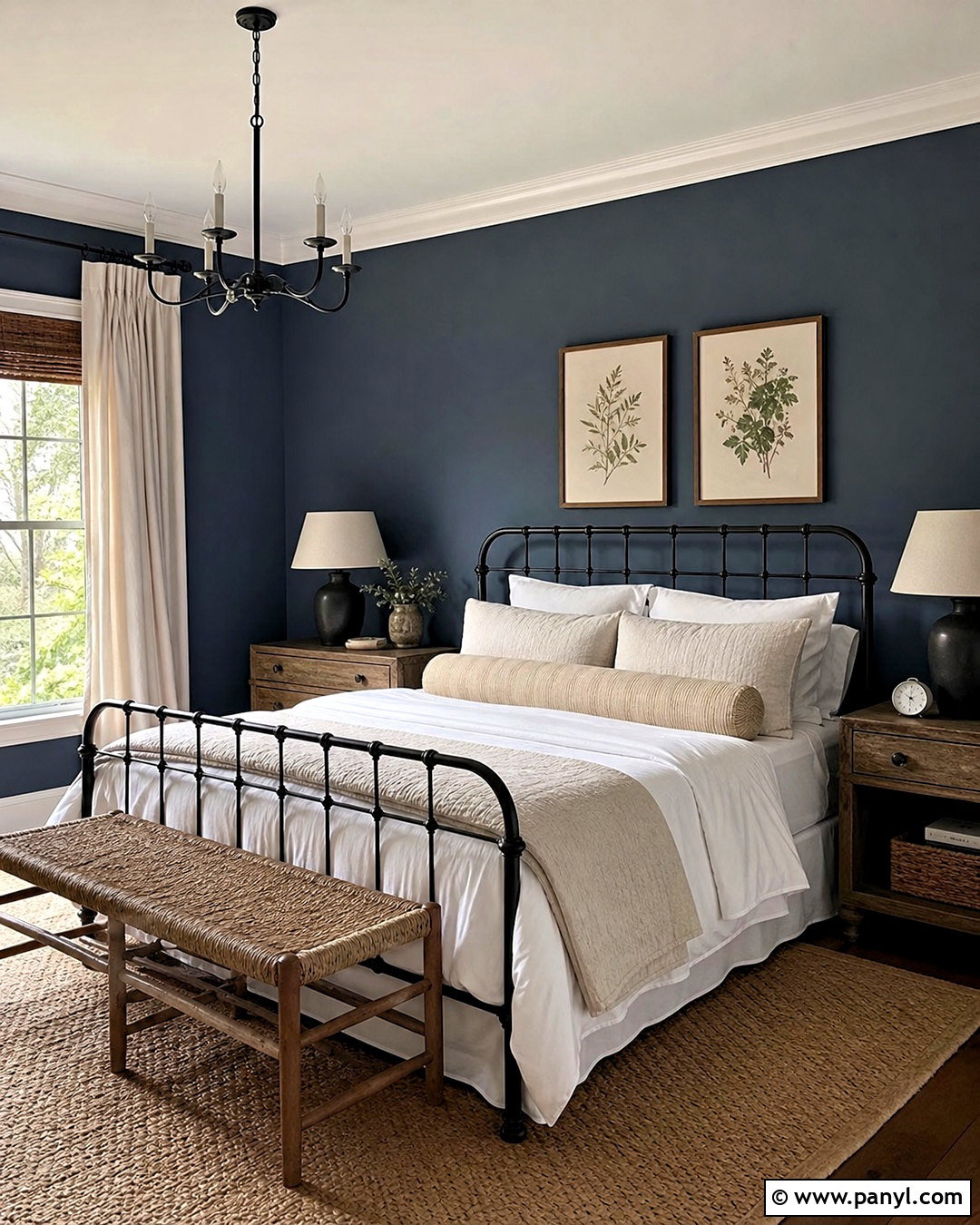
Imagine waking up in a bedroom where rich indigo walls frame simple, warm wood furniture. Use the color on all four walls, then balance its depth with a white ceiling and pale oak flooring. A low walnut or oak bed introduces an organic contrast, while ivory bedding prevents the room from feeling overly dark. Layer the bed with denim-blue pillows, a sand-colored quilt, and one muted clay lumbar cushion. Place woven shades at the windows and add cream curtains for softness. Matching wood nightstands, ceramic lamps, and a natural jute rug complete the relaxed arrangement. Keep artwork minimal, choosing one large botanical print above the bed. The resulting bedroom feels grounded, uncluttered, and cozy rather than intensely dramatic.
3. Indigo Dining Room With Brass
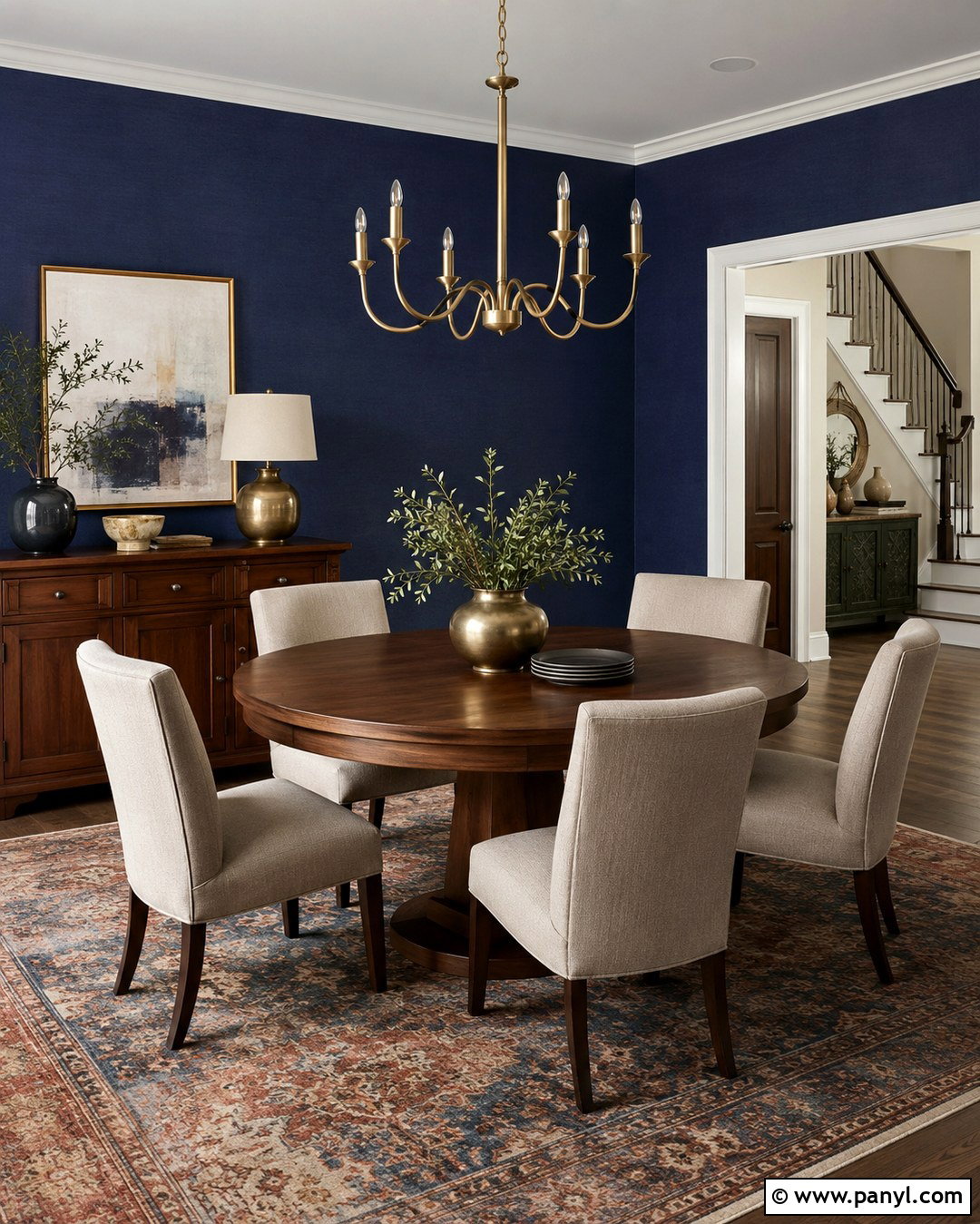
A formal dining room can handle indigo beautifully, especially when the color is paired with warm metallic details. Paint every wall a saturated blue-violet shade and use creamy white on the trim and ceiling. Center a round walnut dining table beneath a modern brass chandelier, then surround it with upholstered chairs in warm beige or mushroom gray. A faded Persian-style rug containing rust, ivory, and muted blue connects the furniture to the walls. Choose a dark wood sideboard topped with two brass lamps and a large landscape painting. White linen curtains soften the strong wall color without weakening the design. This layered scheme creates a welcoming dining space that feels elegant enough for gatherings but comfortable enough for everyday meals.
4. Indigo Home Office With Cognac Leather
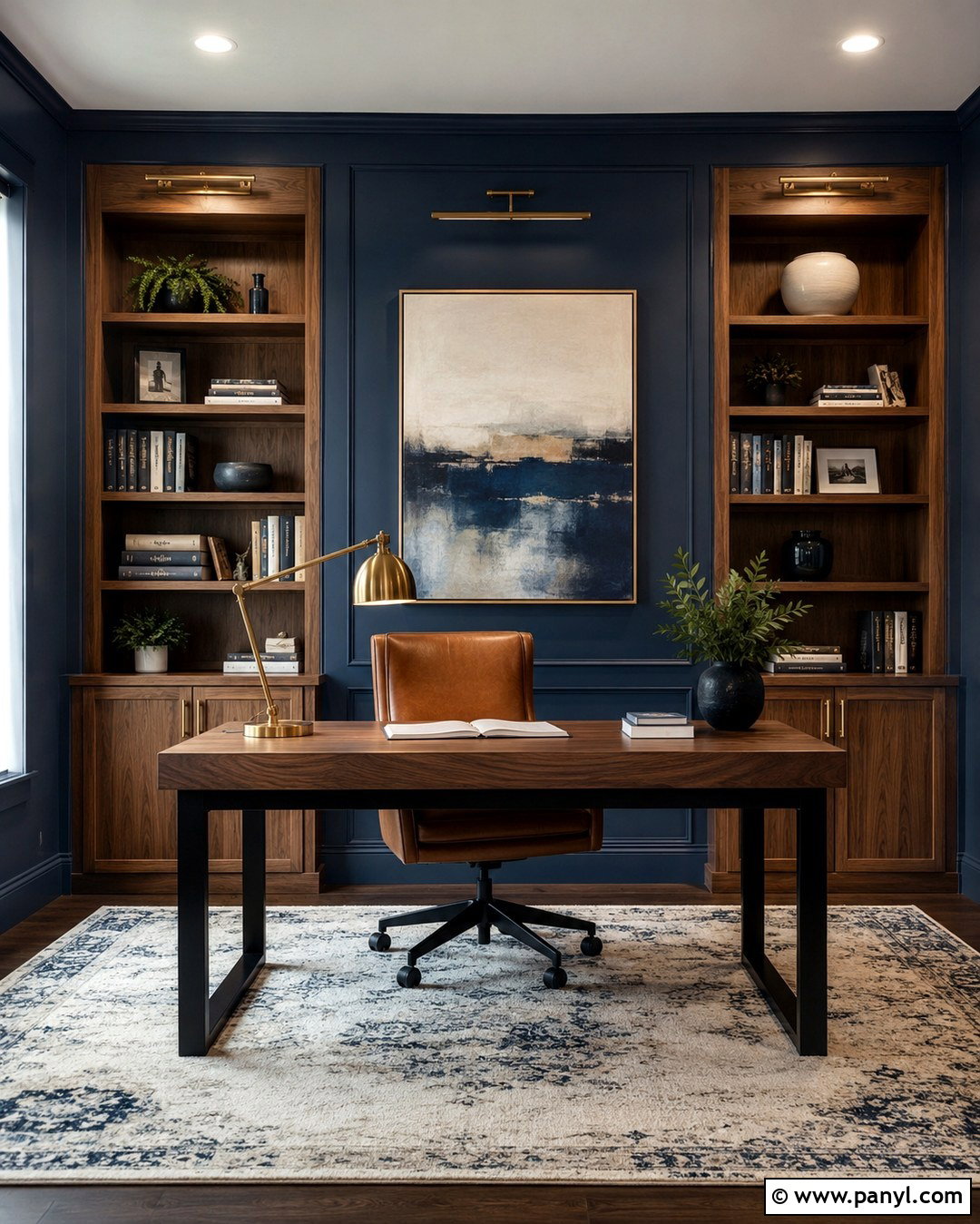
When a home office needs more visual energy, combine an indigo wall color with cognac leather and dark wood. Paint the wall behind the desk indigo, then continue the shade onto the adjoining walls for a focused, enclosed effect. Choose a streamlined walnut desk with matte black legs and a supportive cognac leather chair. Add floor-to-ceiling oak bookshelves on one side, leaving enough open space for books, storage boxes, and a few sculptural objects. A cream-and-blue patterned rug will brighten the floor and soften sound. Use a black metal desk lamp, warm brass picture lights, and framed abstract artwork. The finished office feels professional and expressive while providing practical storage, comfortable seating, and a visually organized background for video calls.
5. Indigo Powder Room With White Marble
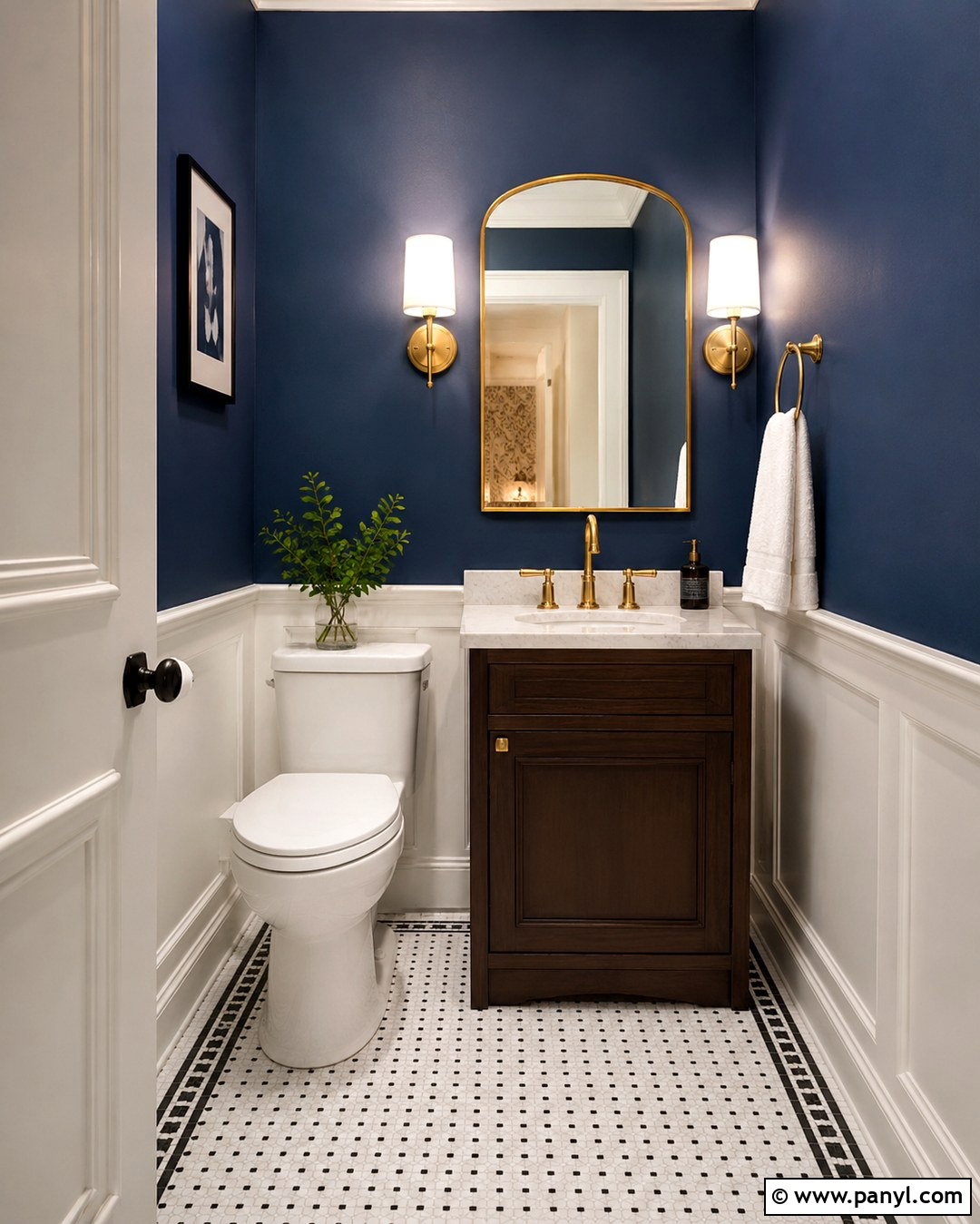
Small powder rooms offer an ideal place to use indigo with confidence. Cover the walls in a washable eggshell or satin finish, then introduce a compact white marble vanity with subtle gray veining. A dark walnut cabinet beneath the sink adds warmth and useful storage. Choose an arched brass mirror, matching wall sconces, and a brushed brass faucet to bring light against the saturated background. Keep the ceiling, door, and baseboards crisp white for clean definition. Black-and-white mosaic floor tile adds pattern without competing with the walls. Finish the room with a white hand towel, one small framed print, and a simple ceramic vase. The complete design feels bold and memorable, yet every material remains practical for a hardworking bathroom.
6. Indigo Kitchen With White Cabinets
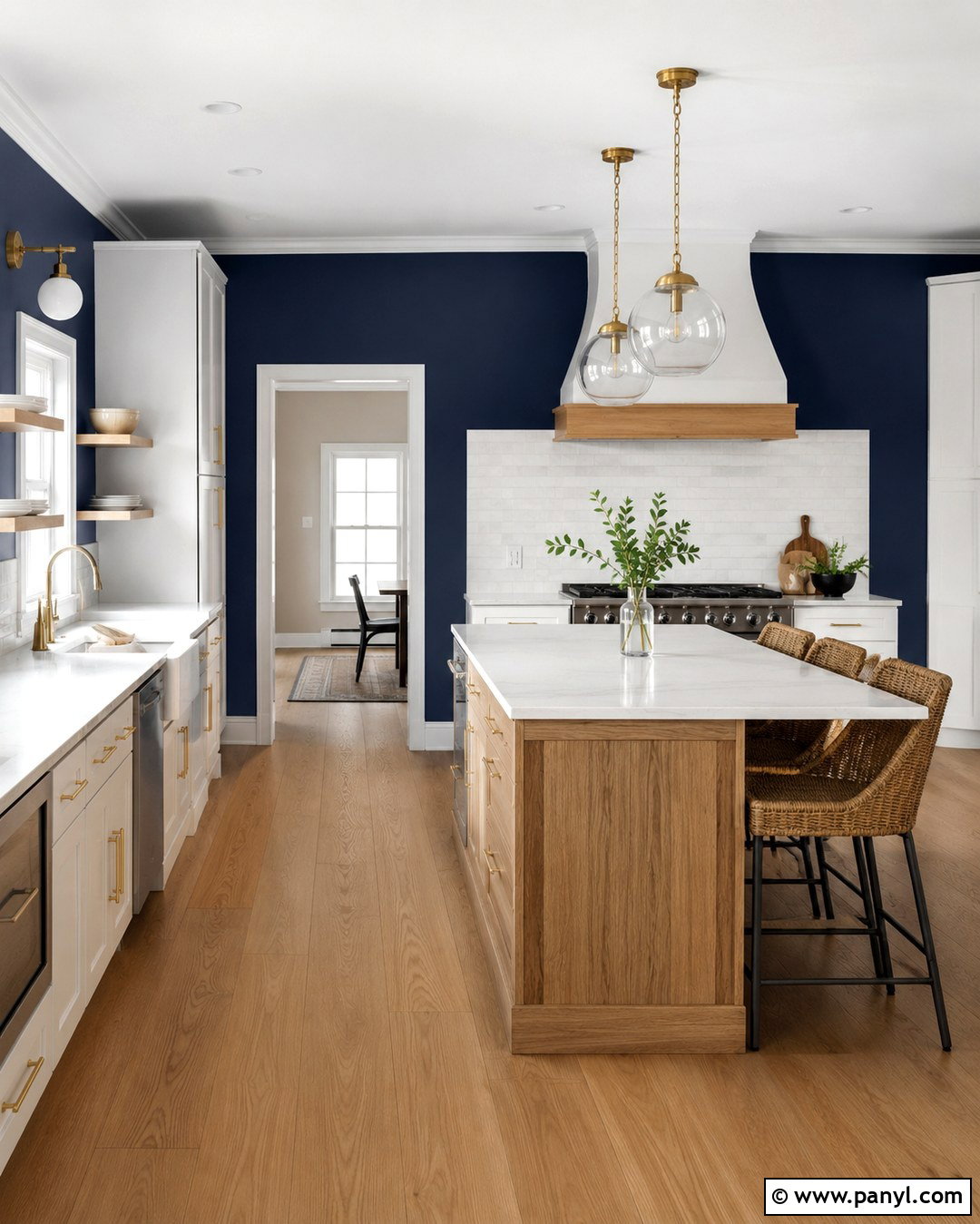
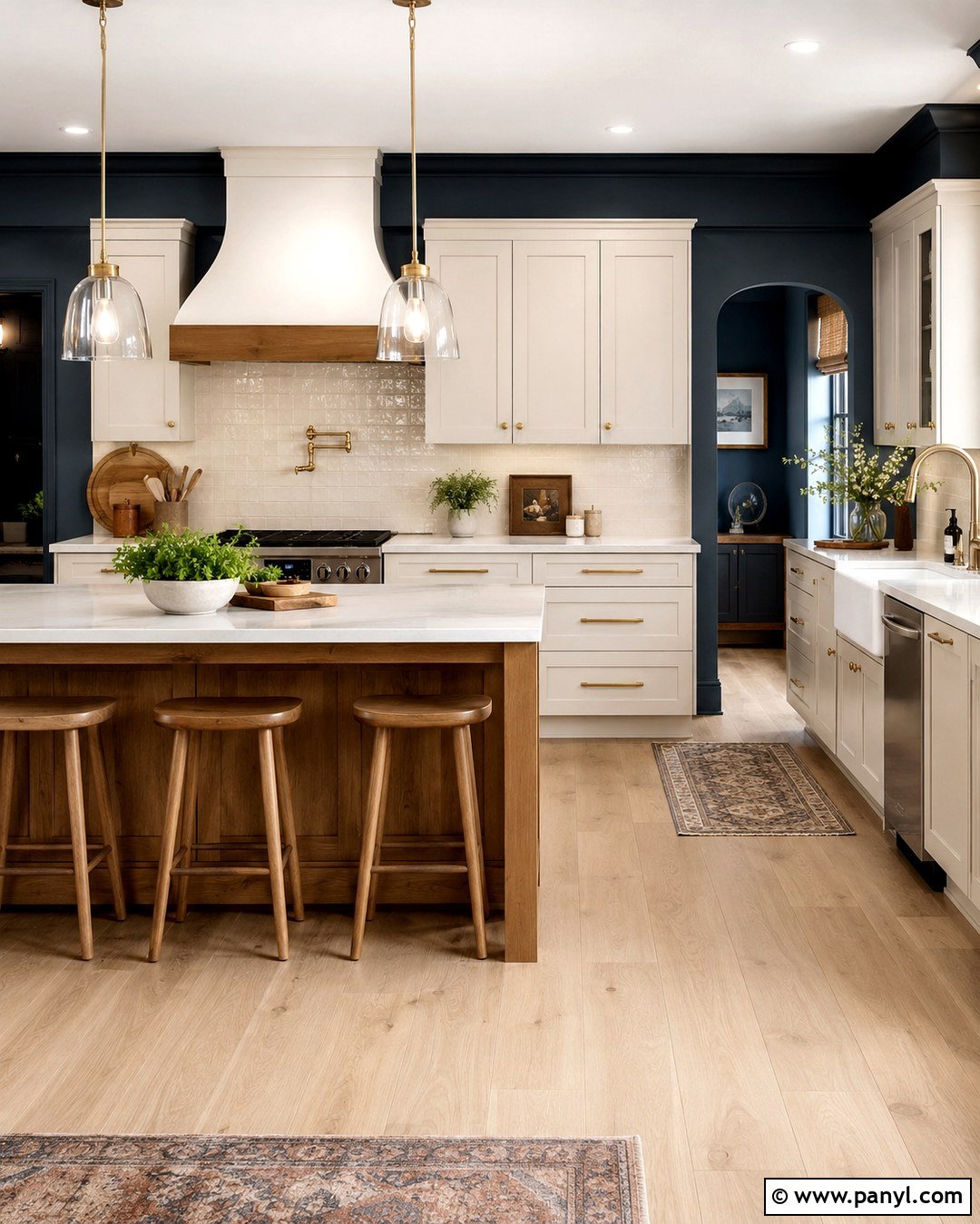
Indigo walls can bring character to a kitchen without requiring colorful cabinetry. Start with simple white Shaker cabinets and paint the open wall areas a deep, slightly muted indigo. Choose white quartz counters, a handmade white subway tile backsplash, and medium oak flooring to maintain brightness. A navy or indigo island can reinforce the wall color, but use a natural wood island if you want a lighter result. Add aged brass cabinet pulls, woven counter stools, and clear glass pendant lights. Display white ceramics and wood cutting boards on one short open shelf. Keep small appliances mostly black, white, or stainless steel. This coordinated kitchen looks clean and contemporary while the indigo walls supply enough depth to keep the white surfaces from appearing plain.
7. Indigo Entryway With Black Accents
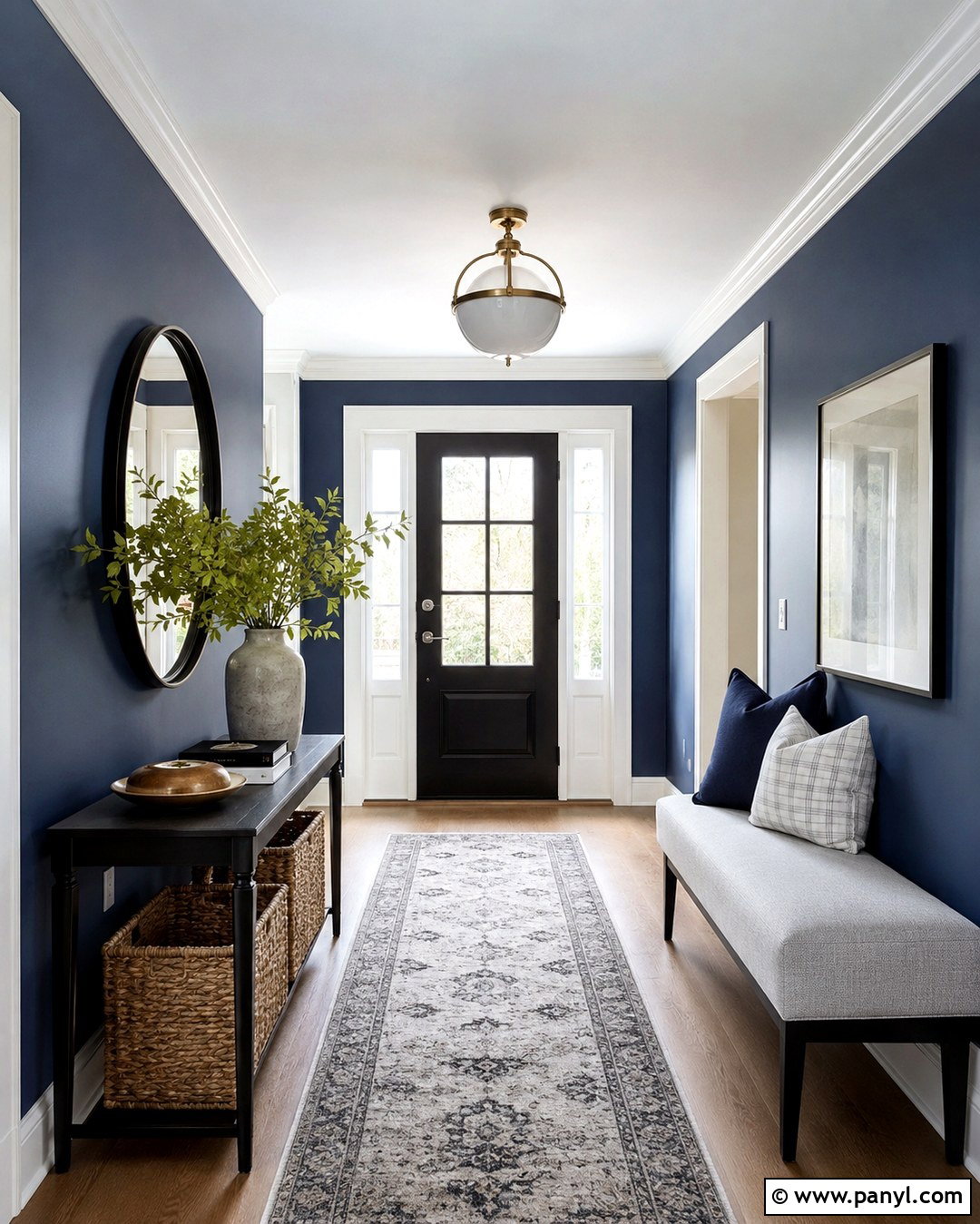
Give a basic entryway stronger definition by pairing indigo walls with graphic black accents. Paint the complete foyer in indigo, including the wall around the front door, but leave the ceiling and trim soft white. Place a narrow black console along one side and hang a large round black-framed mirror above it. An ivory runner with a simple charcoal pattern will brighten the floor and guide visitors into the home. Add a small upholstered bench in light gray, woven storage baskets, and black metal coat hooks for everyday function. A semi-flush brass ceiling light warms the palette and keeps the space welcoming. Limit accessories to a ceramic bowl, leafy branches, and one lamp so the compact entry remains open, useful, and easy to navigate.
8. Indigo Fireplace Wall With Light Stone

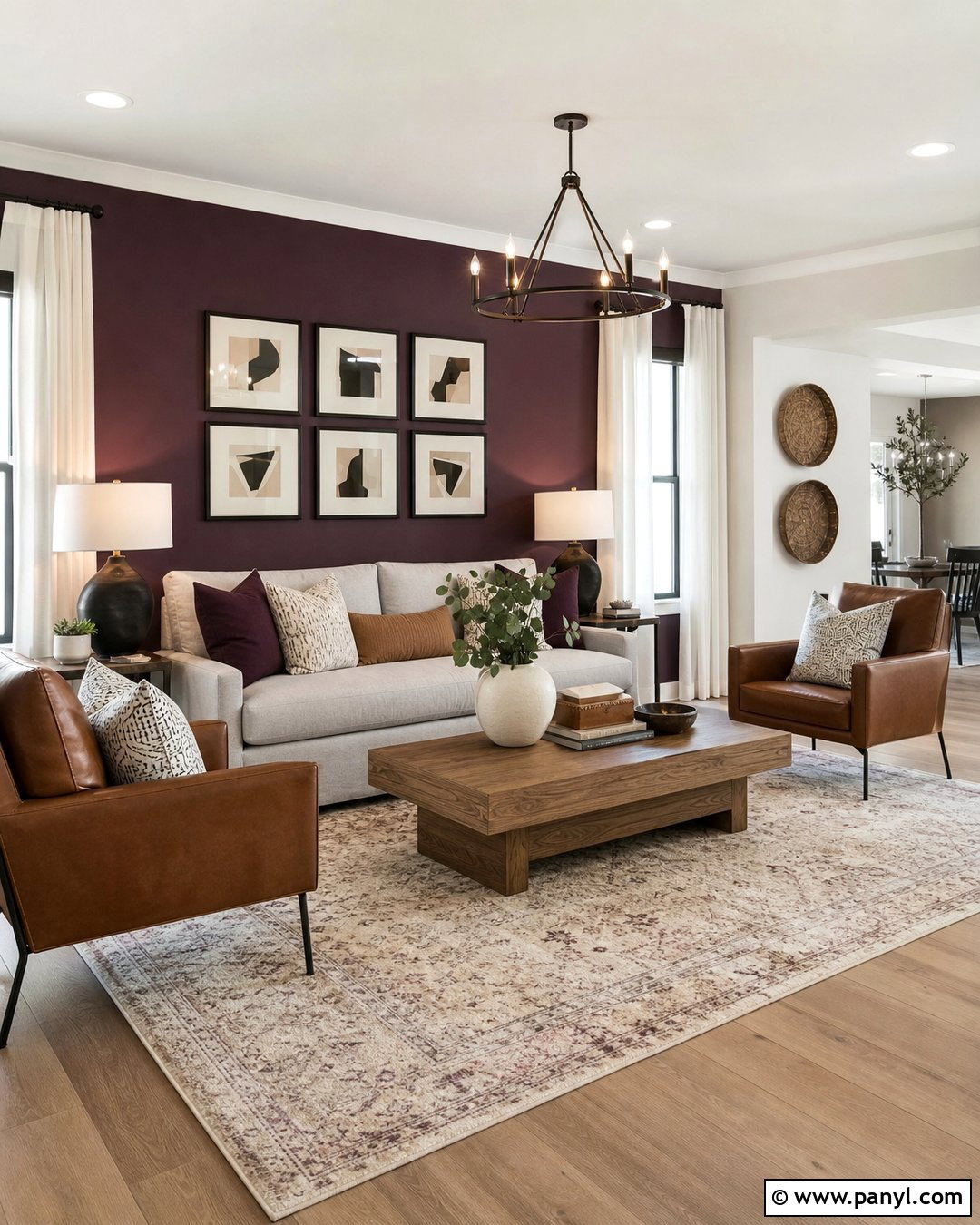
A fireplace becomes a natural focal point when its surrounding wall is painted indigo. Apply the color across the entire fireplace wall, including built-in shelving or shallow alcoves, to create one cohesive architectural feature. Use pale limestone, off-white brick, or softly veined quartz around the firebox for contrast. A thick reclaimed-oak mantel adds warmth and gives the room a relaxed character. Arrange a cream sectional facing the fireplace, then add a brown leather ottoman and a textured beige rug. Style the shelves with books, white pottery, and small framed pieces rather than filling every surface. Brass sconces on either side provide symmetry. The completed living room feels substantial and comfortable, with the indigo wall visually anchoring all the lighter furniture.
9. Indigo Board And Batten Wall

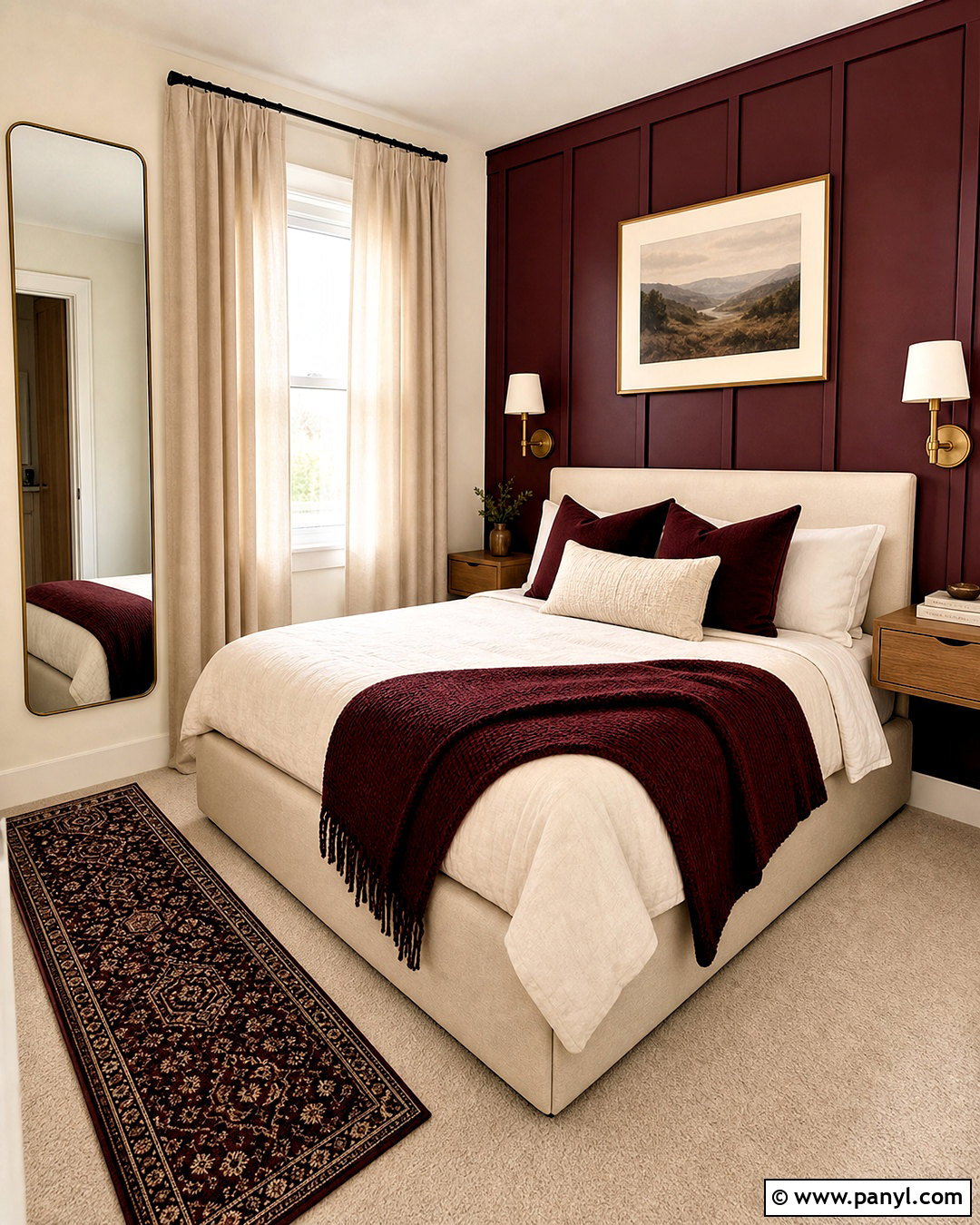
Board and batten gives indigo extra dimension because the molding creates changing highlights and shadows. Install the treatment from floor to ceiling on the wall behind a bed or living room sofa, then paint every panel and strip the same matte indigo. In a bedroom, pair it with an oatmeal upholstered headboard, white bedding, walnut nightstands, and woven pendant lights. Use a pale greige carpet or a large cream rug to keep the lower half of the room bright. A rust-colored throw and two patterned pillows can provide a controlled warm accent. Keep the remaining walls warm white if the room is small. This complete design delivers architectural interest without wallpaper, elaborate artwork, or several competing colors, making the indigo feature feel intentional and finished.
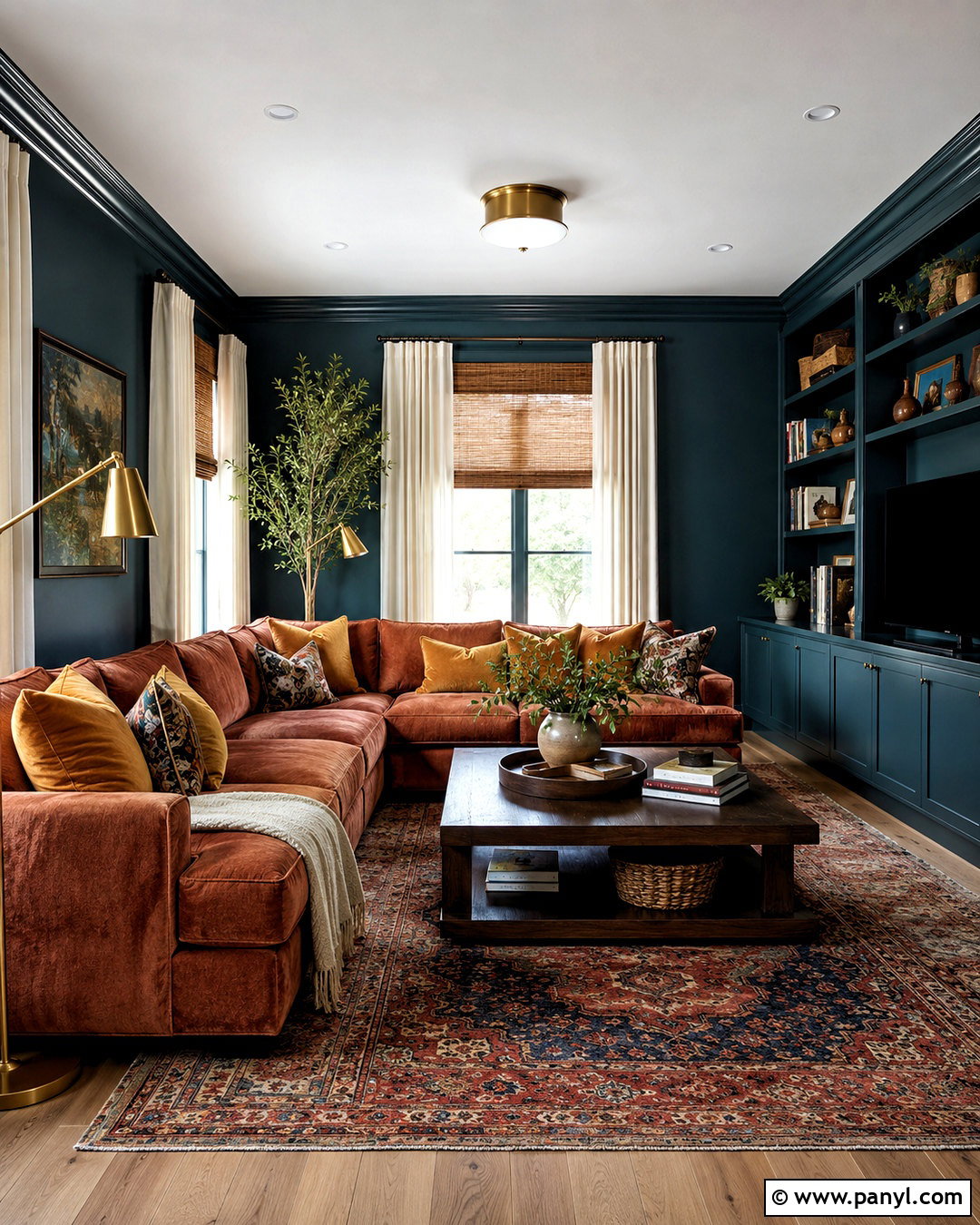
10. Indigo Color Drenched Bedroom
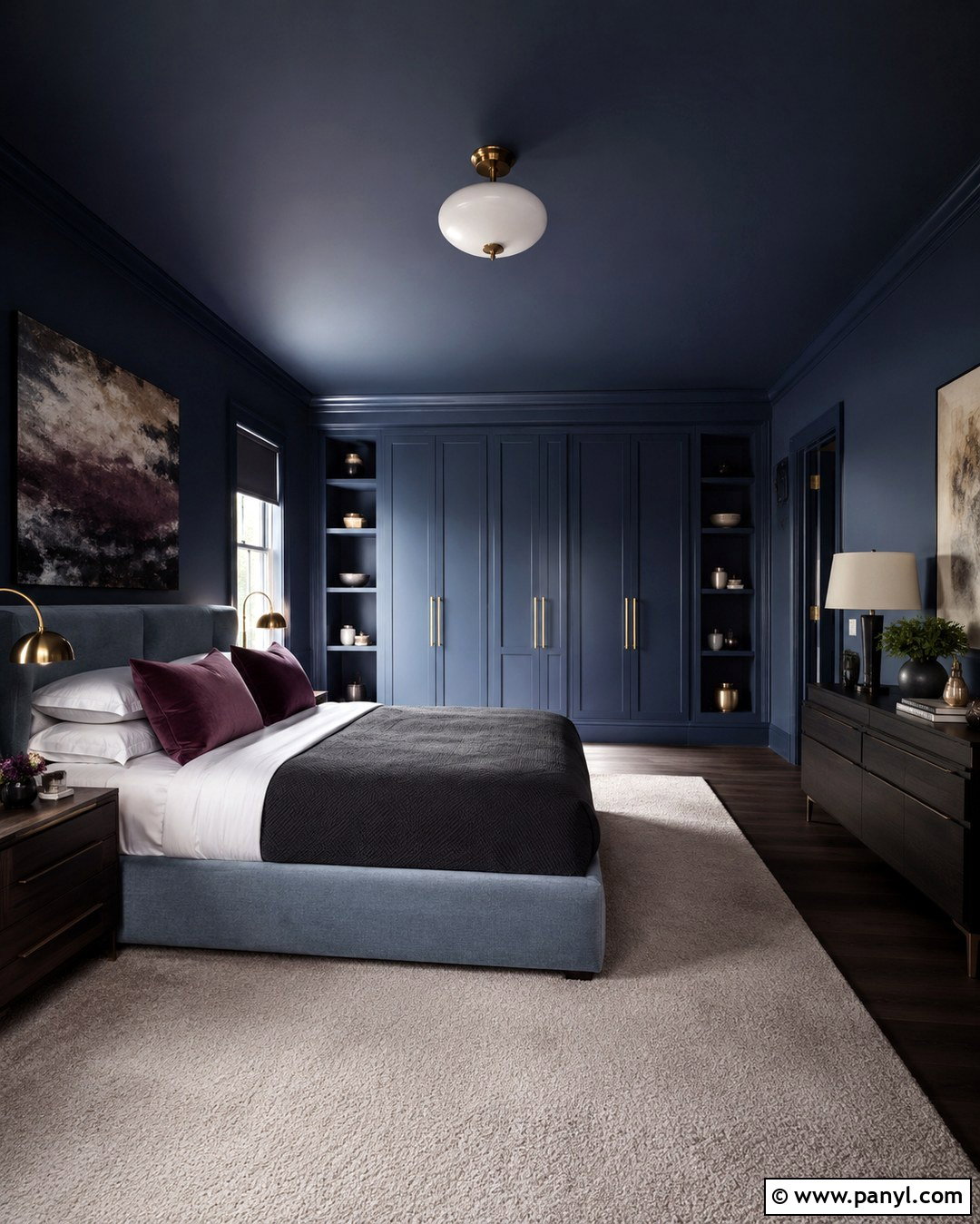
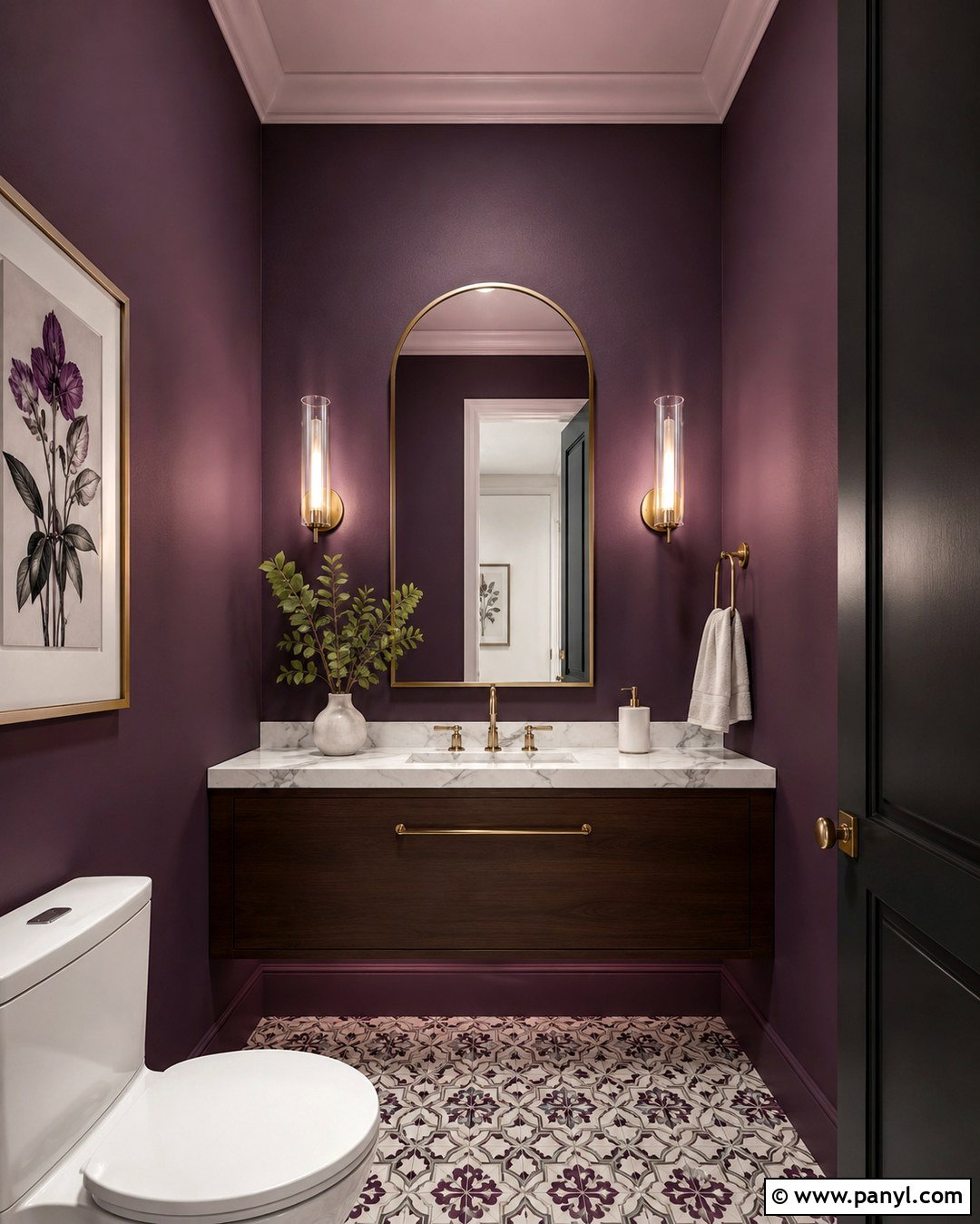
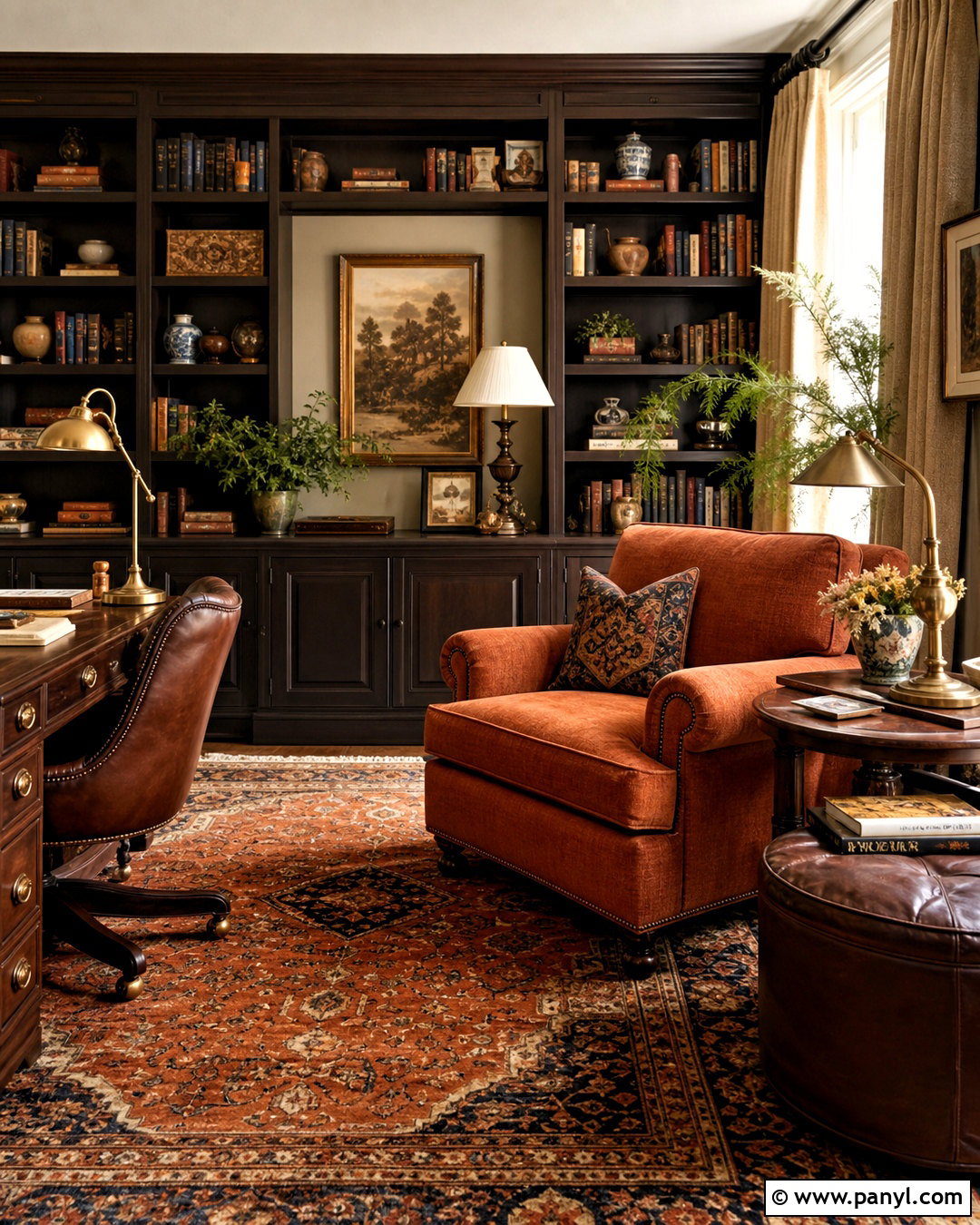
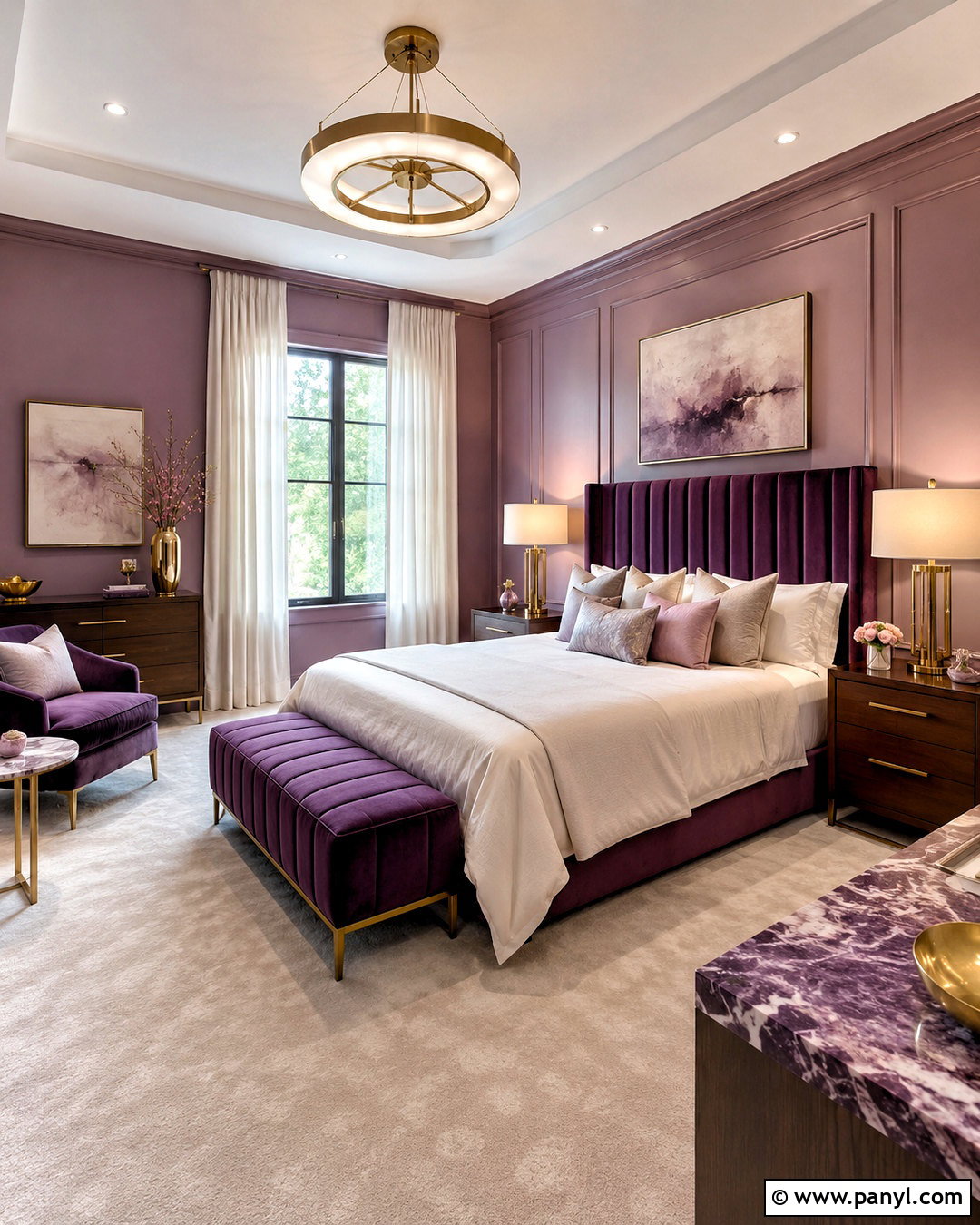
For a deeply enveloping bedroom, carry indigo across the walls, ceiling, trim, doors, and built-in wardrobes. Use one consistent shade but vary the finishes: matte on walls and ceiling, satin on trim and cabinetry. This subtle difference creates depth without breaking the color-drenched effect. Choose a tall upholstered bed in dusty blue-gray, then layer it with crisp white sheets, a charcoal coverlet, and plum accent pillows. Dark oak nightstands and antique brass lamps reinforce the room’s intimate character. Add a large ivory rug to prevent the scheme from becoming visually flat. Instead of numerous decorations, hang one oversized abstract painting with cream and muted pink details. The final room feels immersive and restful while still offering contrast through texture, sheen, and carefully placed lighter elements.
11. Indigo And Blush Bedroom
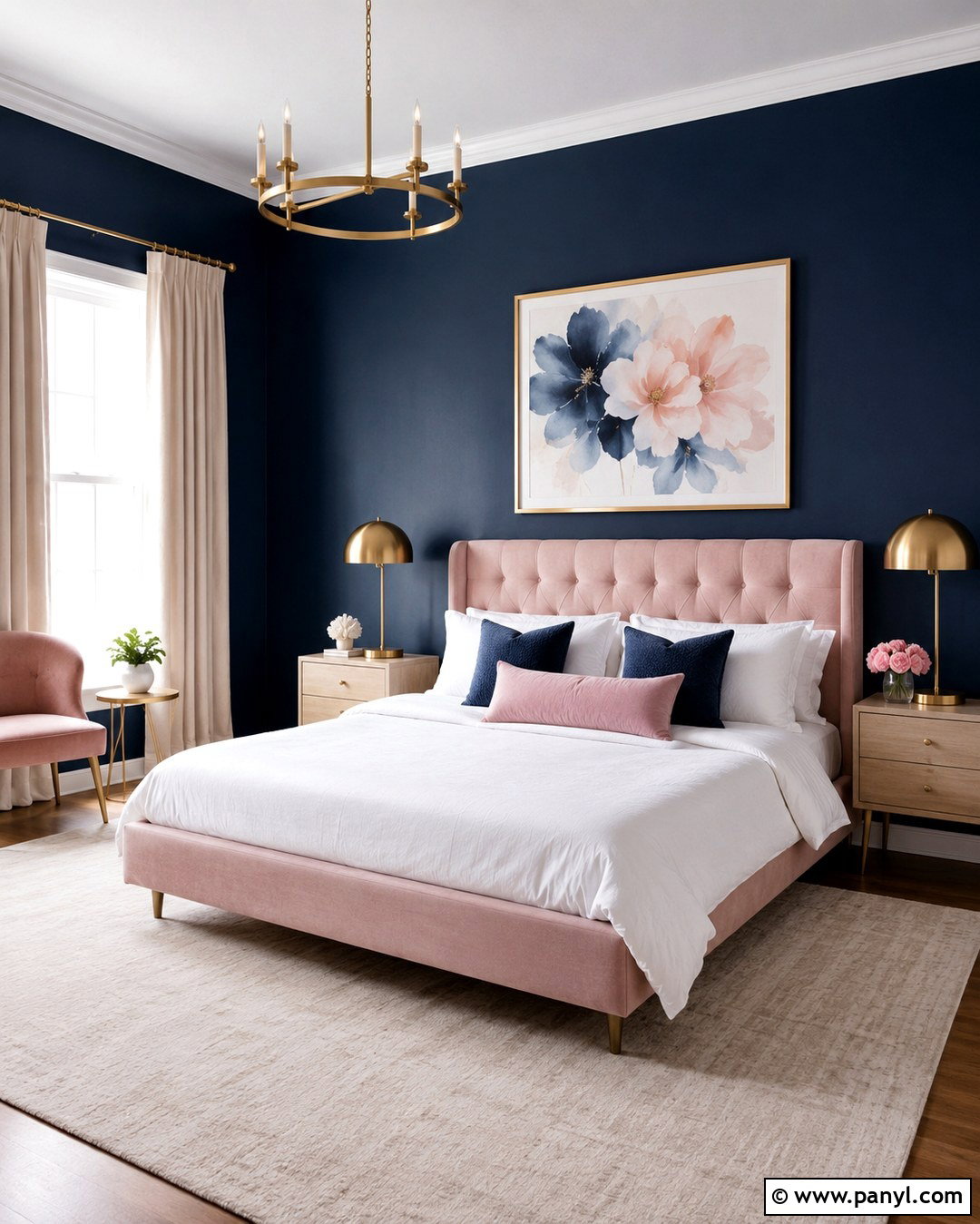
Indigo and blush can create a sophisticated bedroom when both colors are used in restrained amounts. Make indigo the dominant wall color, then introduce dusty blush through an upholstered bed, pillows, and one throw. Choose white bedding and warm beige curtains to give the saturated palette breathing room. Light oak nightstands and a matching dresser keep the furniture casual, while small brass lamps add a refined glow. Place a cream rug beneath the bed and select artwork that combines faded blue, rose, and tan. Avoid bright pink accessories, which can make the pairing feel overly youthful. A simple linen bench at the foot of the bed completes the arrangement. The resulting room has softness and warmth, yet the dark walls maintain an elegant, grounded appearance.
12. Indigo And Mustard Family Room

Could your family room use more color without sacrificing comfort? Paint the walls indigo and introduce mustard yellow through one upholstered chair, several pillows, and a patterned rug. Anchor the layout with a roomy light-gray sectional facing a low oak media console. Add a round wood coffee table to improve movement through the seating area, especially in a busy household. Cream curtains and white trim will reflect light, while black metal floor lamps provide practical reading illumination. Repeat small touches of indigo in the rug and mustard in framed artwork so the palette feels evenly distributed. Include lidded woven baskets for toys, blankets, or electronics. This complete family room is lively and approachable, with enough neutral furniture to keep the strong blue-and-yellow combination under control.
13. Indigo And Terracotta Living Room
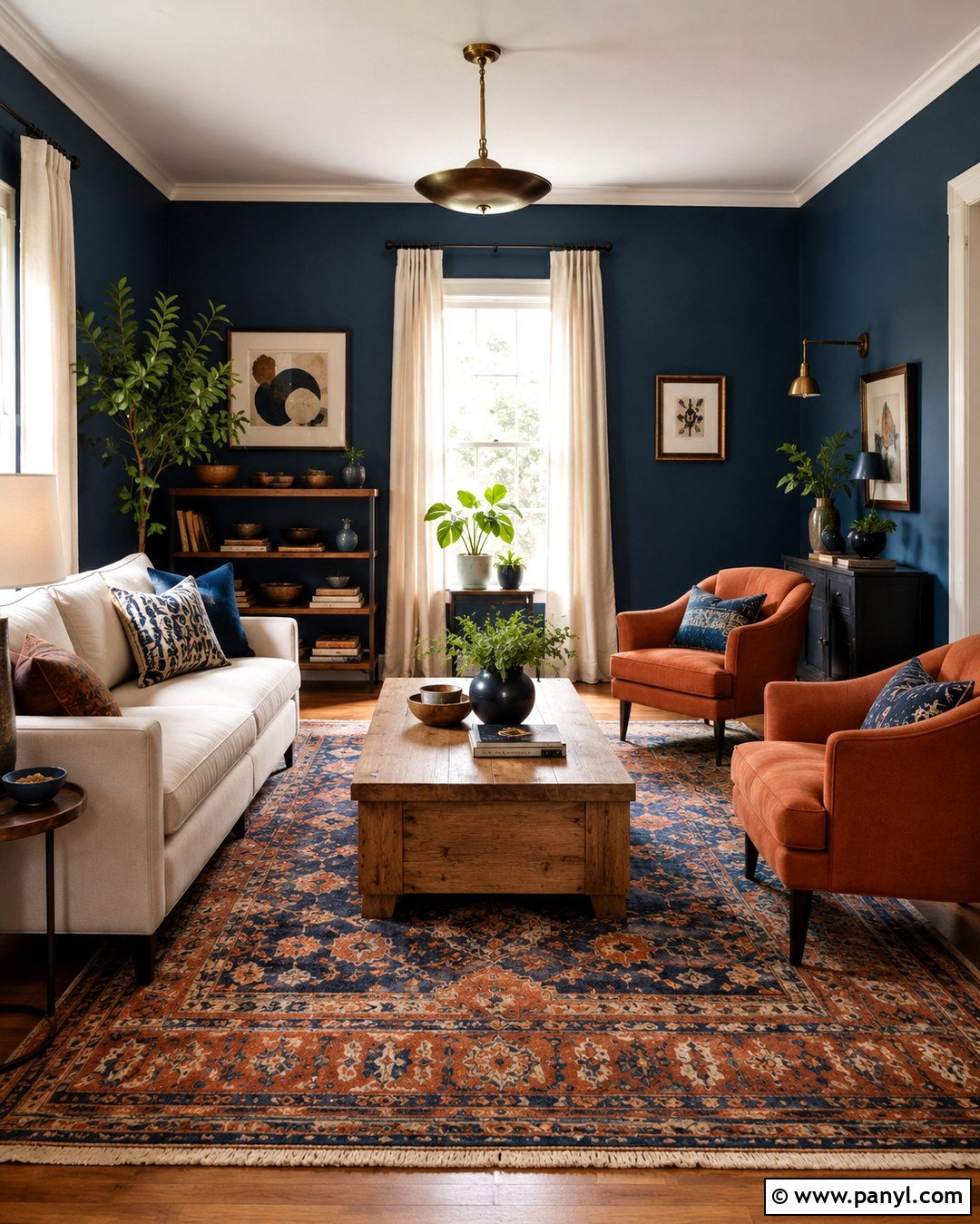
Earthy terracotta brings immediate warmth to an indigo living room. Paint all four walls indigo, then furnish the room with a cream sofa and two rust-colored lounge chairs. Choose a substantial wood coffee table with a natural matte finish rather than polished metal or glass. A vintage-inspired rug containing clay, faded blue, sand, and ivory will connect the main colors. Hang linen curtains in warm off-white and place several leafy plants near the windows. Black-framed artwork and aged brass lighting add definition without making the scheme feel overly decorative. Include pillows in woven cream, muted rust, and blue patterns. This complete palette works especially well in rooms with wood floors because the earthy furniture and textiles visually soften the cool, saturated wall color.
14. Indigo And Sage Guest Bedroom
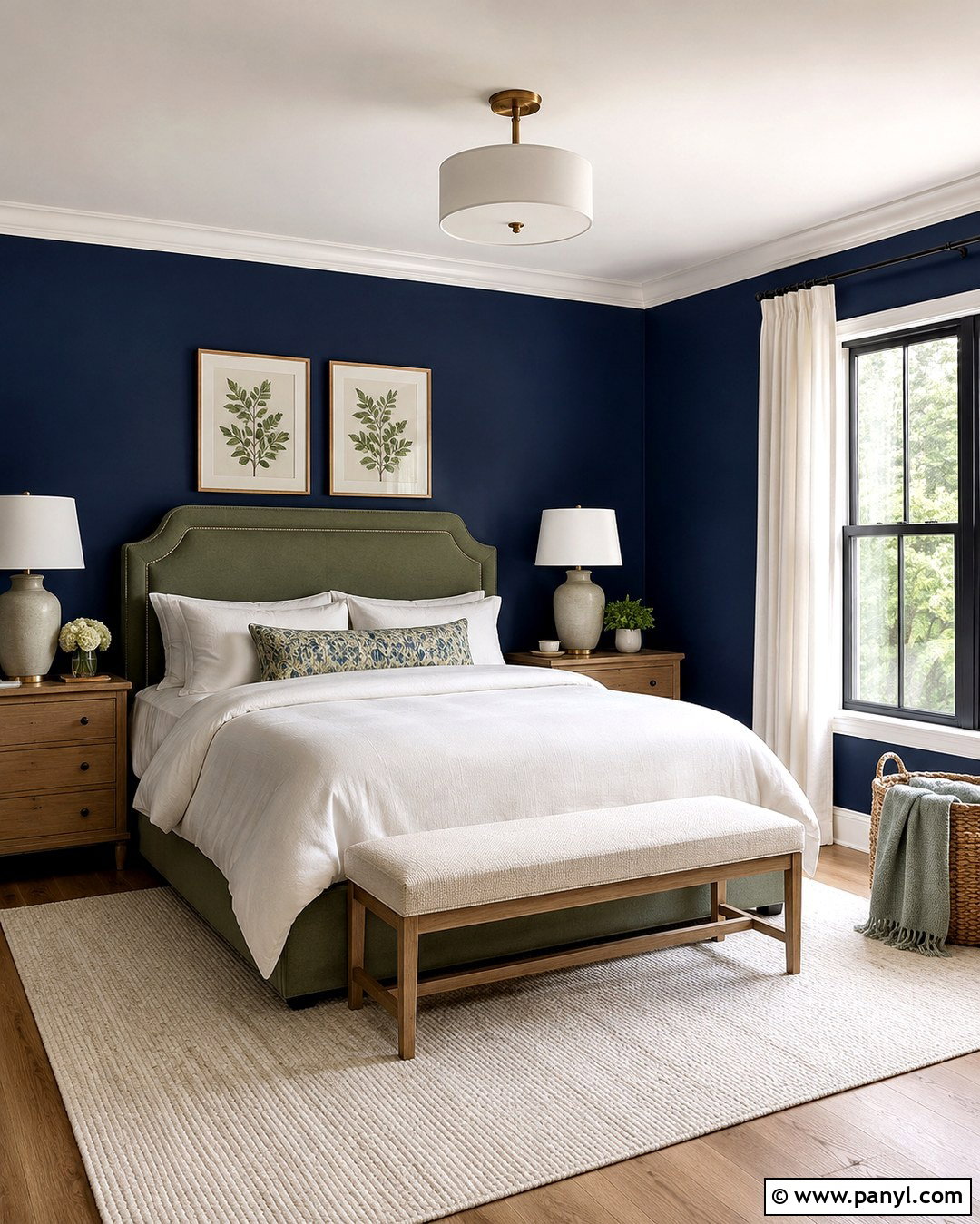
For a guest room that feels restful but not predictable, pair indigo walls with soft sage green. Use indigo behind the bed and on the adjoining walls, then select a sage upholstered headboard or quilt as the secondary color. White sheets, ivory curtains, and light wood furniture will keep the space fresh. Place matching oak nightstands on both sides of the bed, each with a small ceramic lamp for balanced lighting. A cream rug with a faint green border can quietly connect the palette. Add one botanical print, a simple bench, and a woven basket holding extra blankets. Avoid adding more saturated colors. The restrained combination allows guests to settle into a room that feels thoughtfully designed, comfortable, and calm without looking like a generic neutral space.
15. Indigo And Gray Media Room

A media room benefits from indigo’s visual depth, but thoughtful lighting and furniture are essential. Paint the walls and built-in media cabinetry a charcoal-leaning indigo, then keep the ceiling a softer blue-gray. Choose a large medium-gray sectional with washable upholstery and add an oversized black or walnut coffee table. A thick patterned rug in gray, cream, and blue will improve comfort while defining the seating zone. Install dimmable wall sconces with warm-white bulbs rather than relying on one bright ceiling fixture. Use closed cabinets below the television to hide equipment, cords, and games. Include a few rust or camel pillows for warmth. The completed room feels cozy for movie nights while remaining polished, organized, and bright enough for casual daytime use.
16. Indigo Gallery Wall Hallway
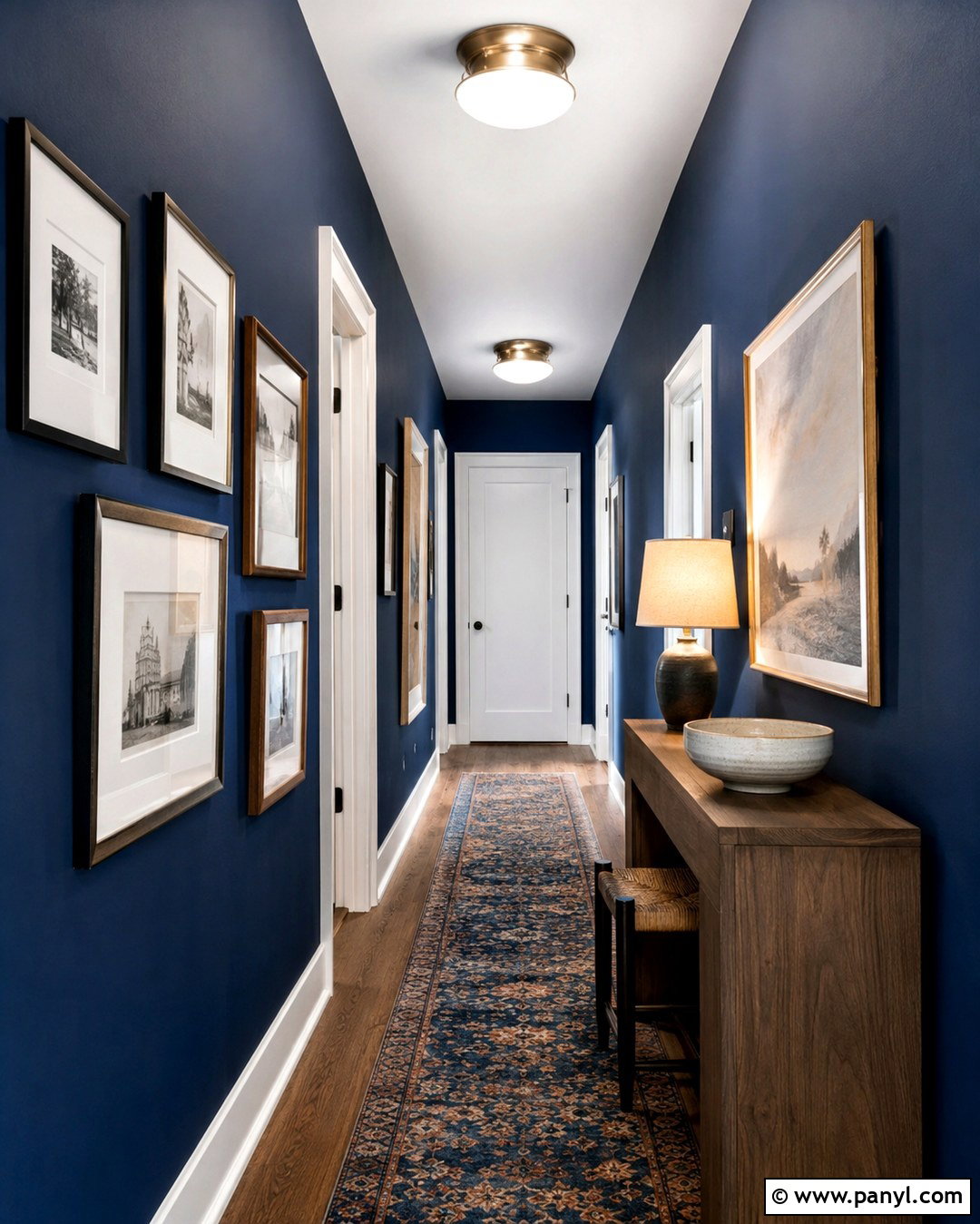
Turn a plain hallway into a complete decorative passage by using indigo as the background for a structured gallery wall. Paint the walls from baseboard to ceiling, then keep doors and trim bright white for clear architectural contrast. Arrange black, brass, and natural wood frames in a balanced grid or an orderly salon layout. Select artwork with generous white matting so each piece remains visible against the dark paint. A slim oak console can fit at the wider end of the hall, paired with a small lamp and a ceramic bowl. Add a washable vintage-style runner containing blue, rust, and cream. Flush-mount ceiling lights should provide even illumination along the full walkway. This approach makes the hallway feel intentional without reducing its practical circulation space.
17. Indigo Reading Nook With Built-In Shelves
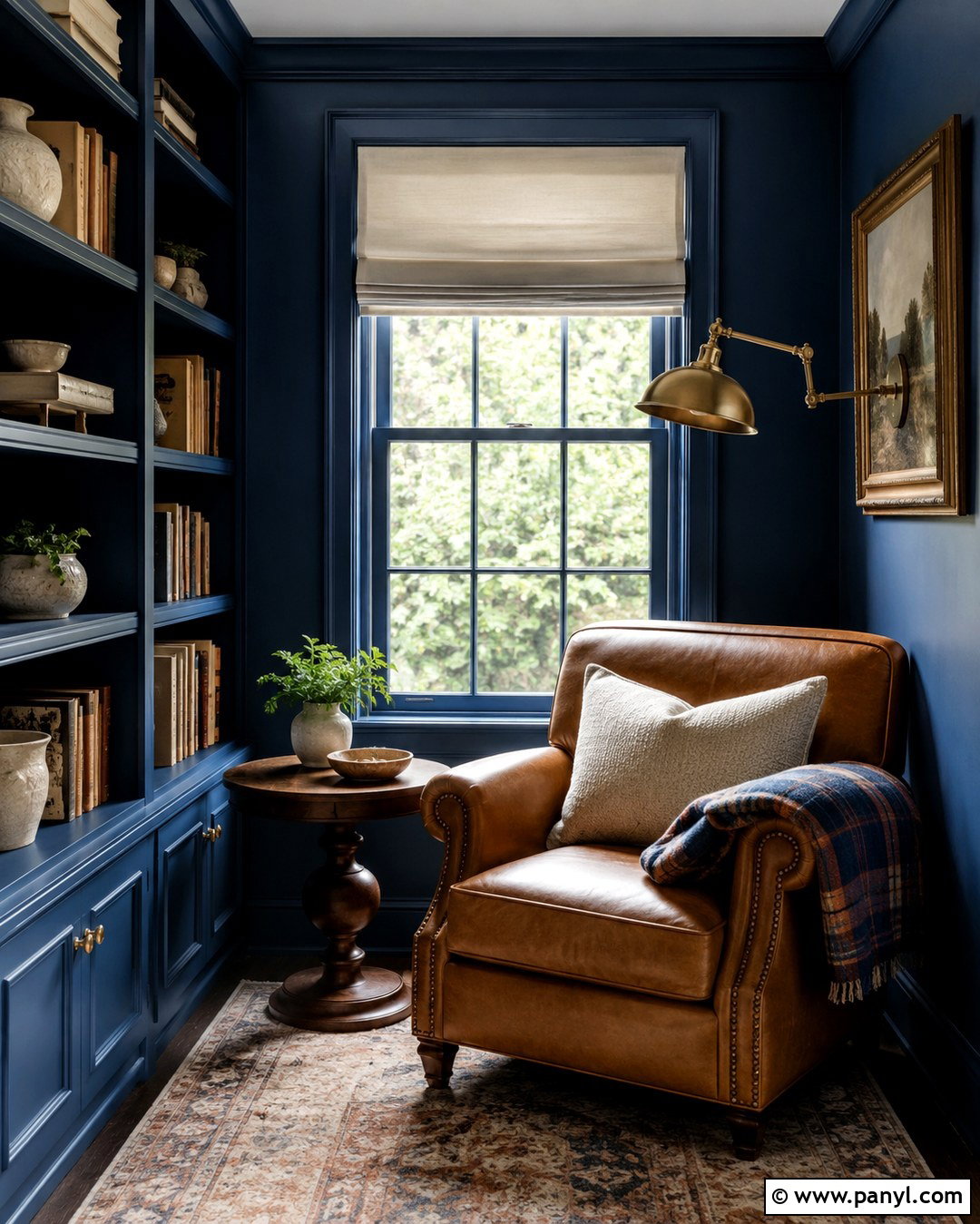
A quiet reading corner becomes more inviting when indigo unifies its walls and built-in shelves. Paint the nook, bookcases, shelf backs, and window trim in one continuous shade for a custom appearance. Place a comfortable camel leather chair near the window and add a small round walnut table for books and drinks. A brass swing-arm lamp provides focused lighting without using floor space. Use a cream cushion, a plaid throw in blue and rust, and a small faded rug to soften the dark surfaces. Arrange books both vertically and horizontally, leaving open areas for white pottery and framed photographs. A tailored ivory Roman shade controls glare during the day. The complete nook feels cozy and collected while still appearing neat enough to remain part of a larger room.
18. Indigo Coastal Sunroom
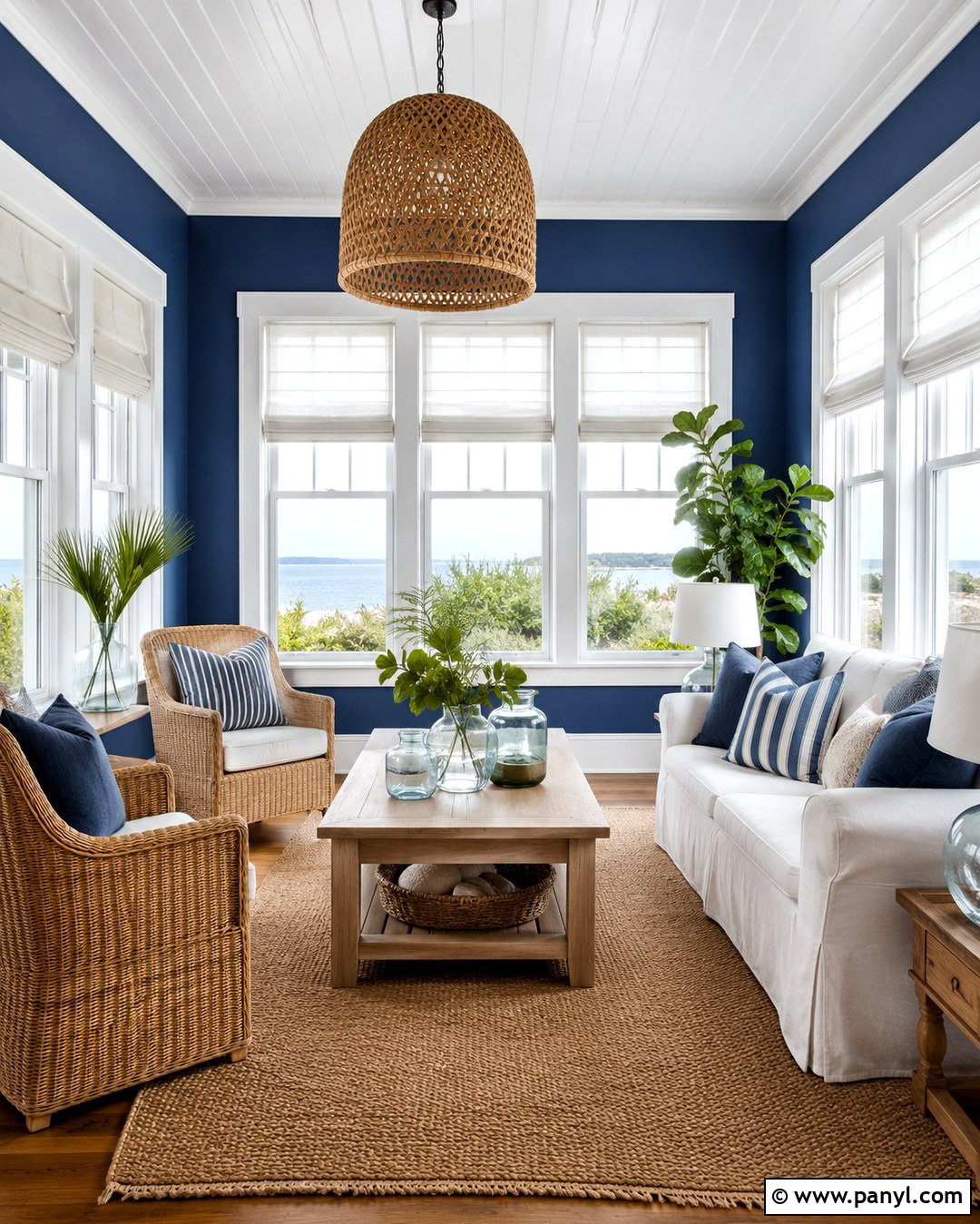
Indigo can support a coastal look without relying on obvious seaside decorations. Paint the main walls a clear indigo blue, then use bright white on window trim, ceiling boards, and interior doors. Arrange a white slipcovered sofa with two woven rattan chairs around a pale oak coffee table. Add striped pillows in indigo and cream, plus a few solid cushions in faded sky blue. A large natural-fiber rug grounds the seating area while maintaining an airy texture. Choose simple white linen shades and woven pendant lighting instead of themed accessories. Display clear glass vessels, pottery, and one large abstract ocean-inspired painting. With abundant daylight and natural materials, the room feels fresh and relaxed, while the indigo walls provide enough weight to prevent the sunroom from looking washed out.
19. Indigo Farmhouse Mudroom
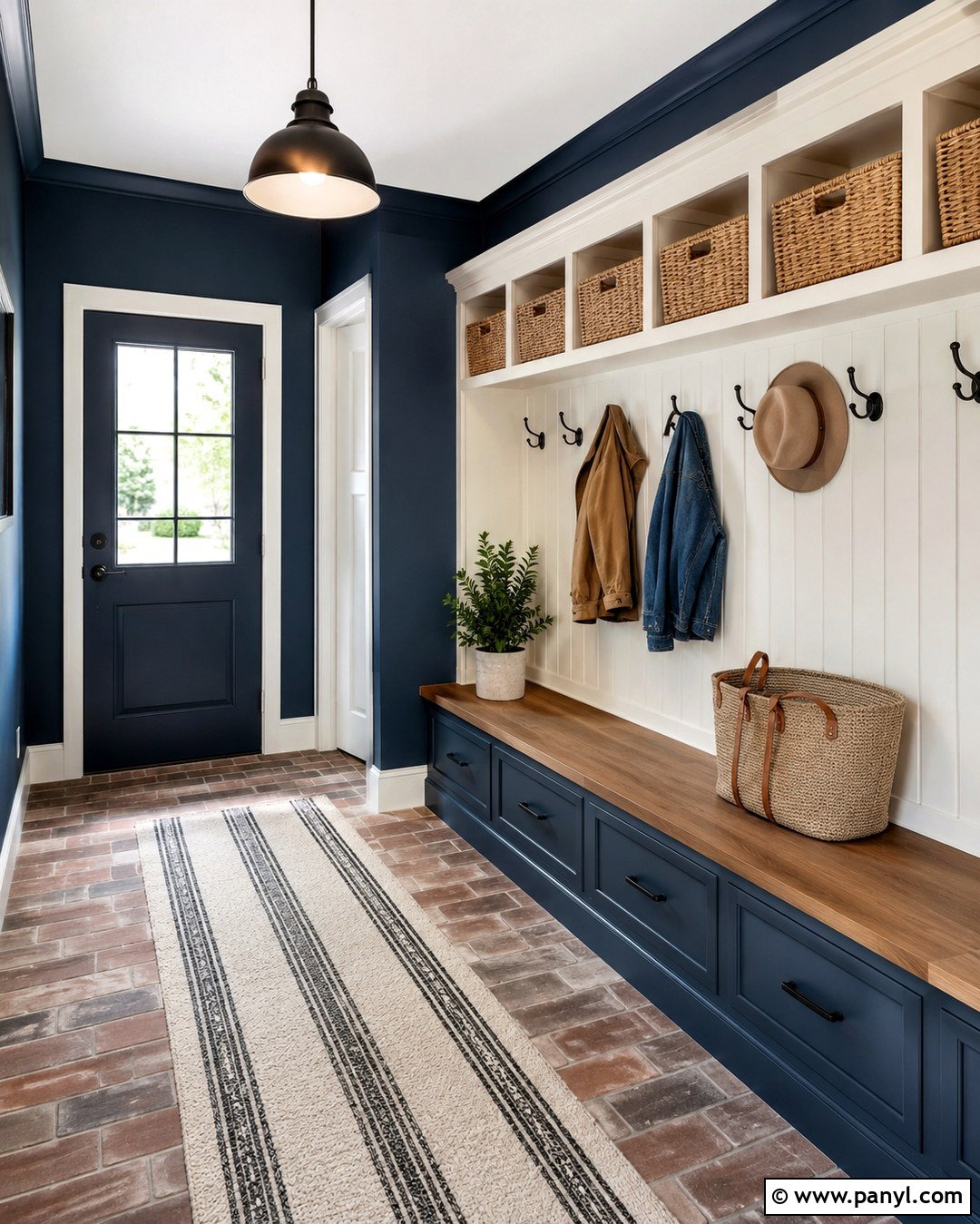
A hardworking mudroom can carry a bold indigo wall color while remaining practical and bright. Paint the walls and lower built-in cabinets indigo, then use warm white on the upper cubbies and ceiling. Install a long natural oak bench with drawers or baskets underneath for concealed storage. Add sturdy black hooks, labeled woven bins, and a narrow shelf for frequently used items. Brick-look porcelain flooring or warm gray slate tile will hide everyday dirt and complement the strong blue. Place a washable cream-and-charcoal runner down the center of the room. A black metal pendant provides durable overhead lighting, while a small window keeps the space naturally bright. This complete mudroom combines farmhouse materials with a cleaner modern layout, making daily routines easier without sacrificing color or personality.
20. Indigo Apartment Accent Wall
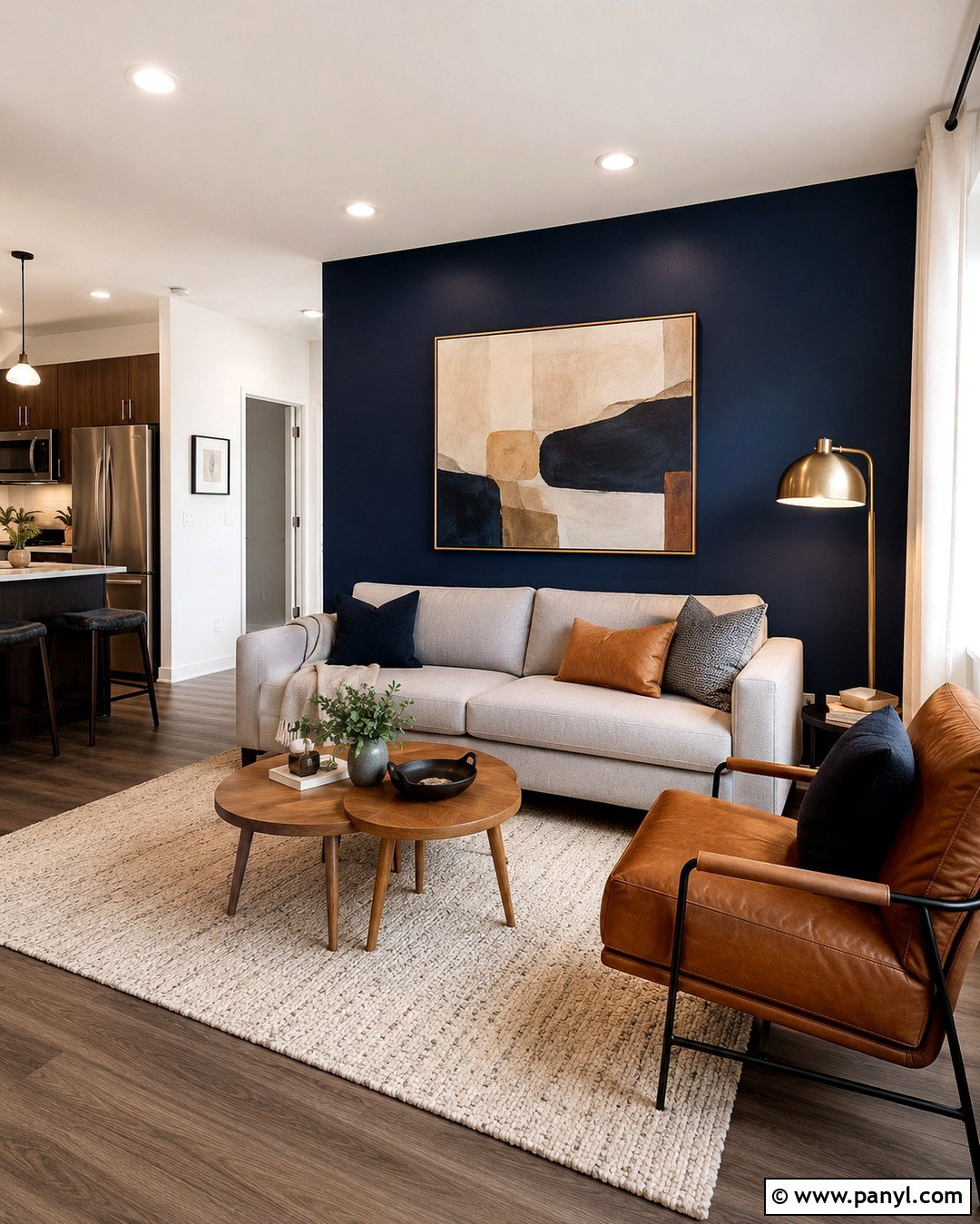
In a compact apartment, one carefully positioned indigo wall can define the living area without visually shrinking the entire space. Paint the wall behind a small sofa indigo and leave the surrounding walls, ceiling, and trim warm white. Choose a light-gray apartment sofa, a nesting wood coffee table, and one compact cognac chair. A cream rug should extend beneath the front legs of every seat to make the layout feel connected. Hang one large artwork instead of several small frames, and use a brass floor lamp to illuminate the dark wall. Add linen curtains close to the ceiling to emphasize height. Keeping furniture legs visible and accessories limited creates an open appearance. The finished design gives the apartment a strong focal point while preserving flexibility and comfortable circulation.
Conclusion:
The most successful **Indigo Wall Color Ideas** balance this bold blue-violet shade with lighter surfaces, warm materials, and purposeful lighting. Warm white offers clean contrast, while oak, walnut, rattan, and cognac leather make indigo feel more comfortable. Brass introduces polish, and earthy shades such as rust, terracotta, mustard, blush, and sage provide controlled color. Before painting, sample the chosen indigo on more than one wall and observe it throughout the day. Consider whether a single accent wall, architectural treatment, or fully color-drenched room best fits the space. With coordinated furniture, textiles, flooring, and lighting, indigo can become a versatile foundation rather than simply a dramatic wall color.

Related Ideas and Inspiration:

Leave a Reply