
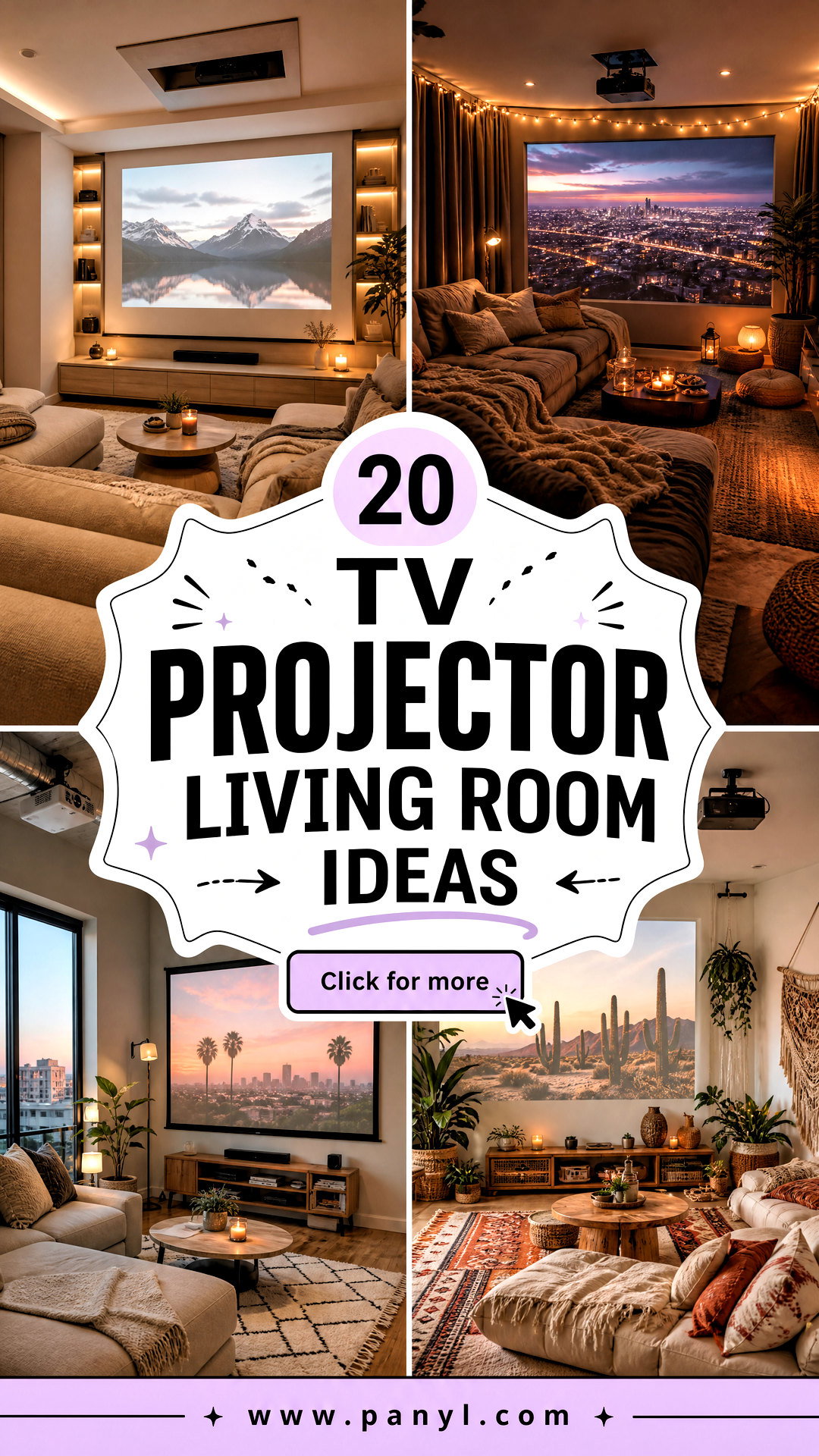
A projector can turn an everyday lounge into a flexible big-screen retreat without making the room feel like a dedicated theater. The best TV projector living room setups balance image quality with comfortable seating, attractive furniture, controlled lighting, and discreet technology. Current designs often use retractable screens, hidden ceiling hardware, ultra-short-throw projectors, or hybrid TV-and-projector arrangements to keep the space practical throughout the day. () Thoughtful window treatments, cable management, and layered lighting also help the system blend into the overall decor. Whether your room is small, open concept, modern, traditional, or renter-friendly, the entire layout should work together. The 20 TV projector living room ideas below offer complete looks you can adapt to your home.
1. Retractable Projector Screen Living Room
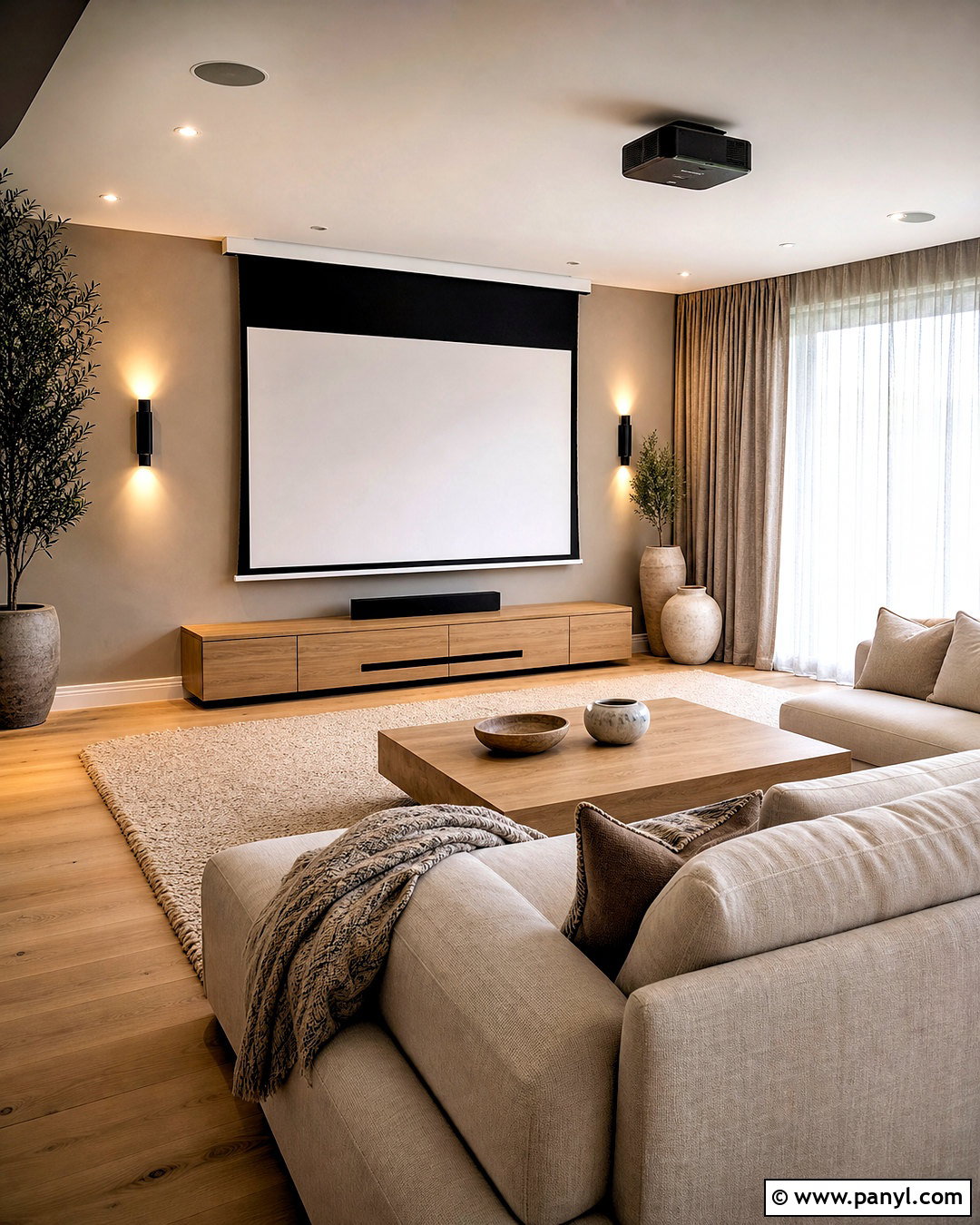
A retractable screen gives you cinematic scale without permanently covering the main wall. Mount a slim motorized screen above a low oak media console, then position a neutral sectional directly opposite it. When the screen is raised, display framed artwork, pottery, and a table lamp on the wall and console below. Use soft greige walls, light oak flooring, and textured ivory curtains to keep the room bright during normal daytime use. Add blackout roller shades behind the curtains for movie nights. A ceiling-mounted projector can sit inside a neat white housing that visually blends with the ceiling. Finish the arrangement with a large wool rug, compact surround speakers, and dimmable wall sconces that do not cast light directly onto the screen.
2. TV And Projector Living Room
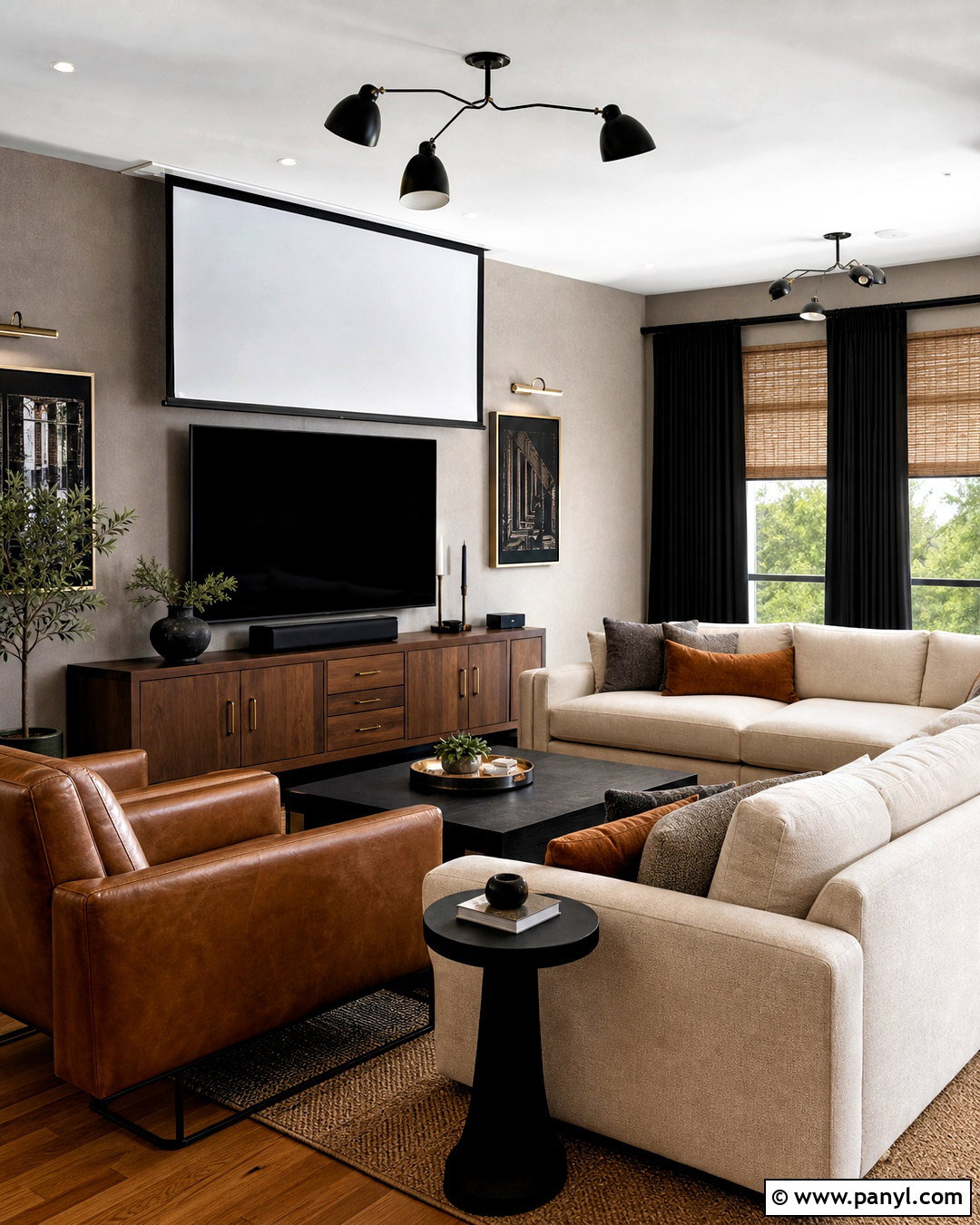
Can’t decide between a television and a projector? A hybrid arrangement provides a practical screen for daytime shows and a much larger display for special viewing. Mount a slim TV above a long walnut console, then conceal a motorized projector screen in the ceiling so it lowers in front of the television. Arrange a deep sectional and two swivel chairs around a large rug, allowing everyone to turn toward the screen comfortably. Use warm white walls, walnut furniture, camel leather accents, and matte black lighting for a polished modern look. Store streaming devices, controllers, and cables inside ventilated cabinets. Blackout drapes improve evening viewing, while woven shades soften sunlight during the day. Keep decorative objects low so they never interfere with the descending screen.
3. Ultra Short Throw Projector Living Room
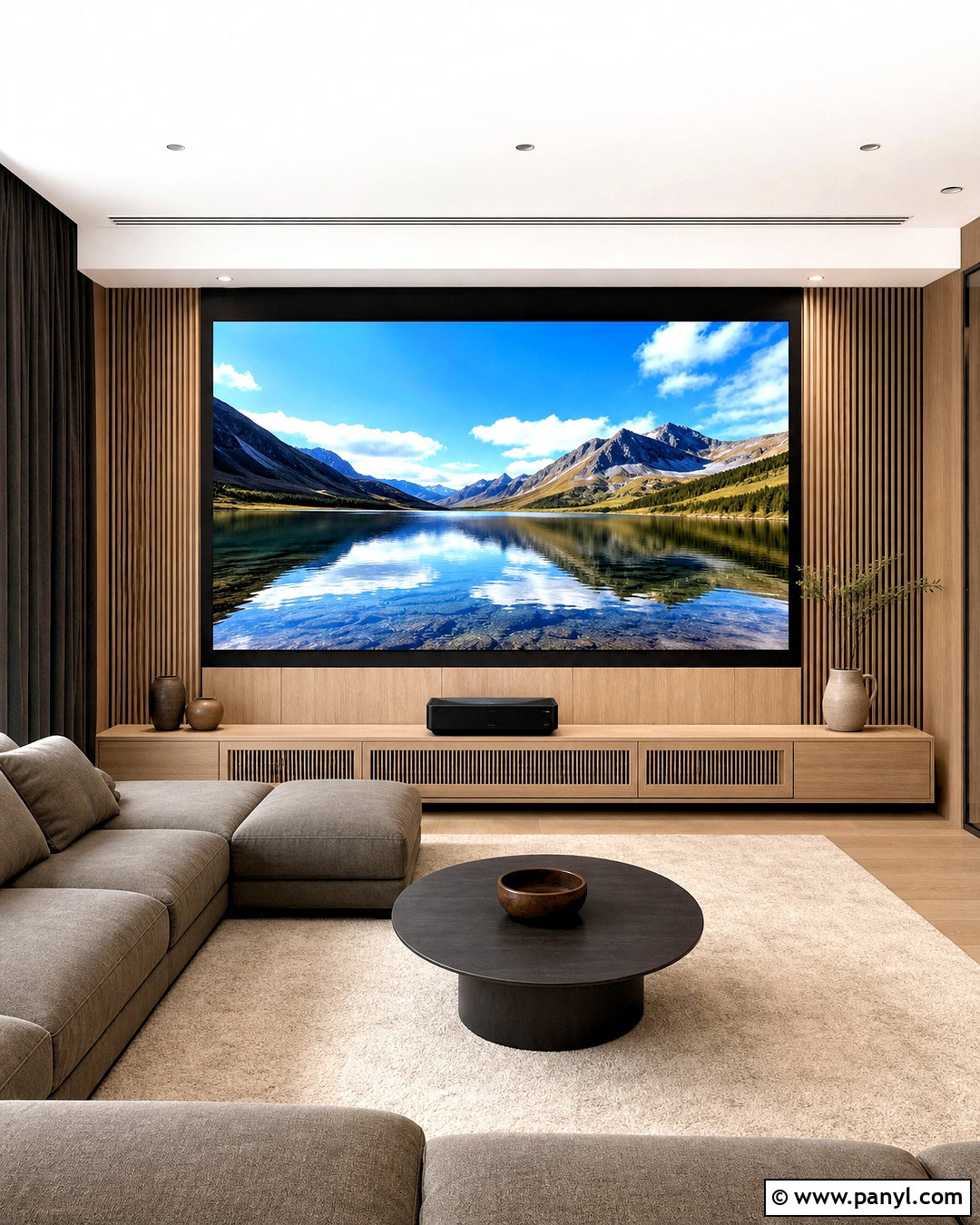
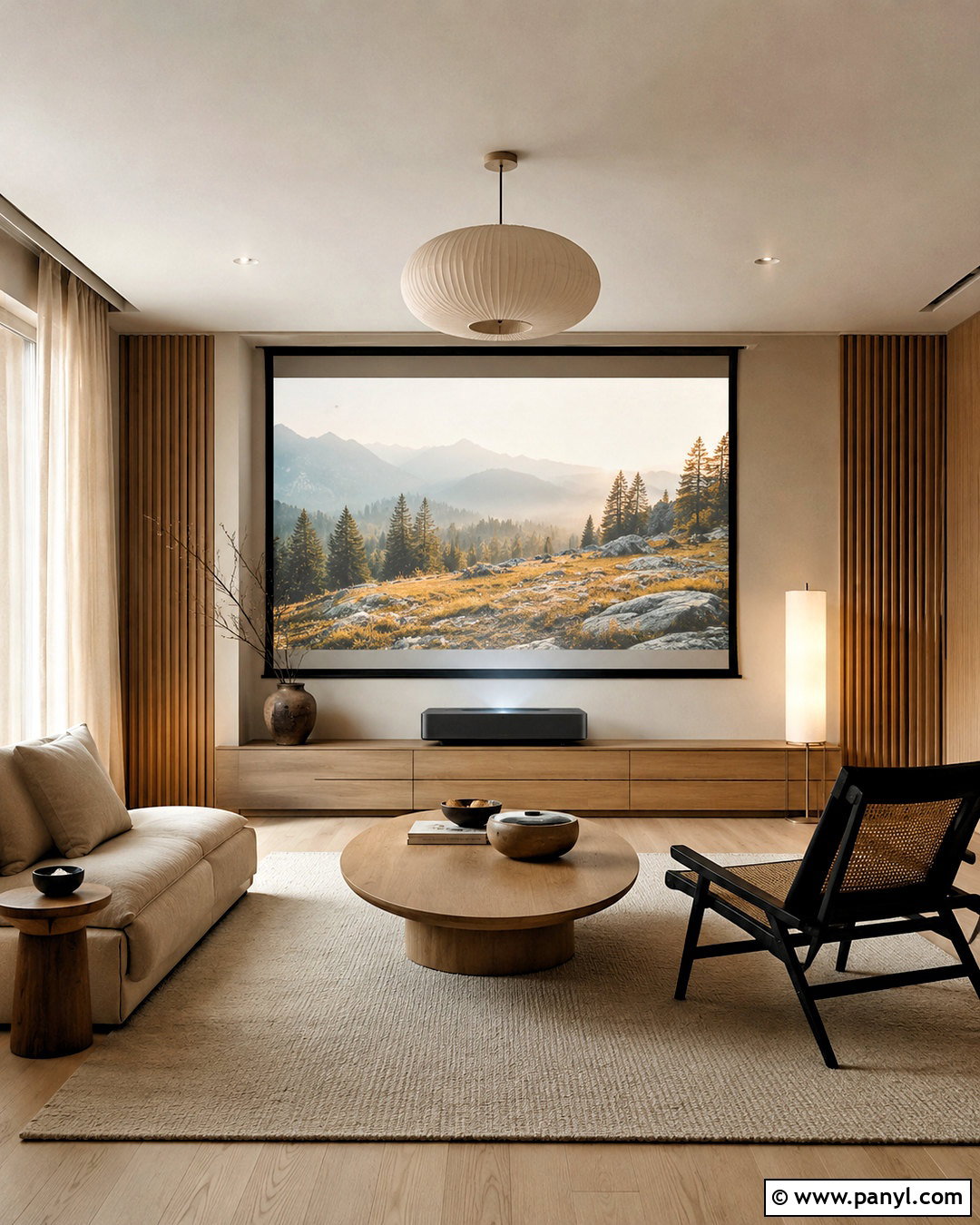
An ultra-short-throw projector creates a clean, TV-like arrangement without requiring equipment behind the sofa. Place the projector on a wide, low media cabinet directly below a fixed ambient-light-rejecting screen. These systems are designed to create a large picture from close to the display, although the required placement varies by model. () Choose a cabinet made for projector ventilation and cable access rather than squeezing the unit into a standard closed console. Build the room around a warm gray sectional, pale oak flooring, and a textured cream rug. Add charcoal curtains, recessed lighting, and slim wall-wash fixtures that can be dimmed independently. Fluted oak panels around the screen give the media wall an architectural finish while keeping the central viewing area simple and uncluttered.
4. Small Projector Living Room
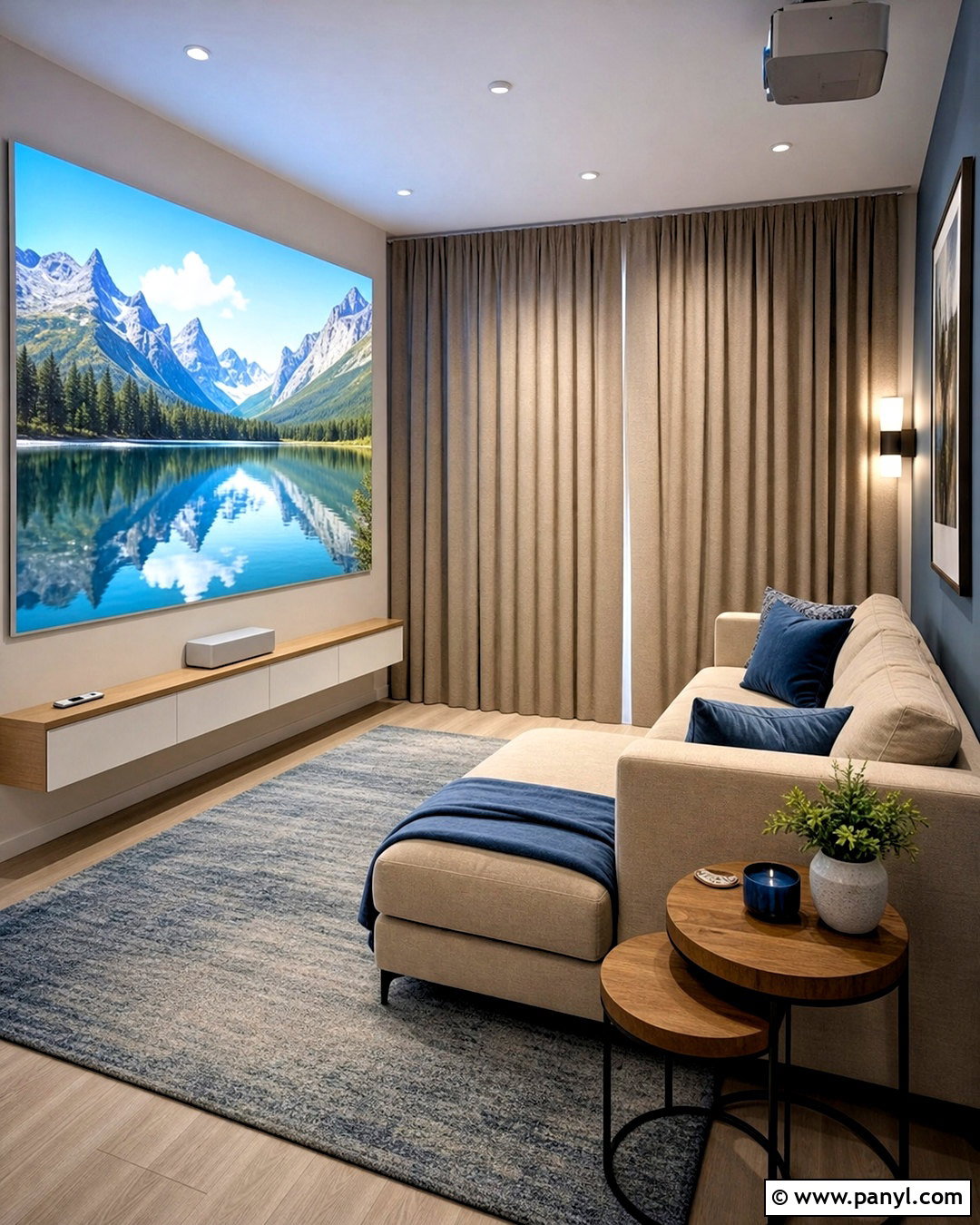
A compact room feels more open when bulky entertainment furniture is replaced with a simple projection wall. Paint one uninterrupted wall warm off-white and keep it free from frames, shelves, and tall decor. Position a short-throw projector on a narrow console or sturdy floating shelf, following the manufacturer’s placement measurements for the desired image size. A loveseat with a chaise provides comfortable viewing without overwhelming the floor plan. Add two lightweight nesting tables instead of a large coffee table, plus wall-mounted sconces that preserve valuable surface space. Full-height curtains make the ceiling appear taller and provide useful light control. Choose pale wood, soft beige upholstery, muted blue accents, and a flat-woven rug. Run cables through a covered wall channel painted to match the wall.
5. Hidden Projector Living Room
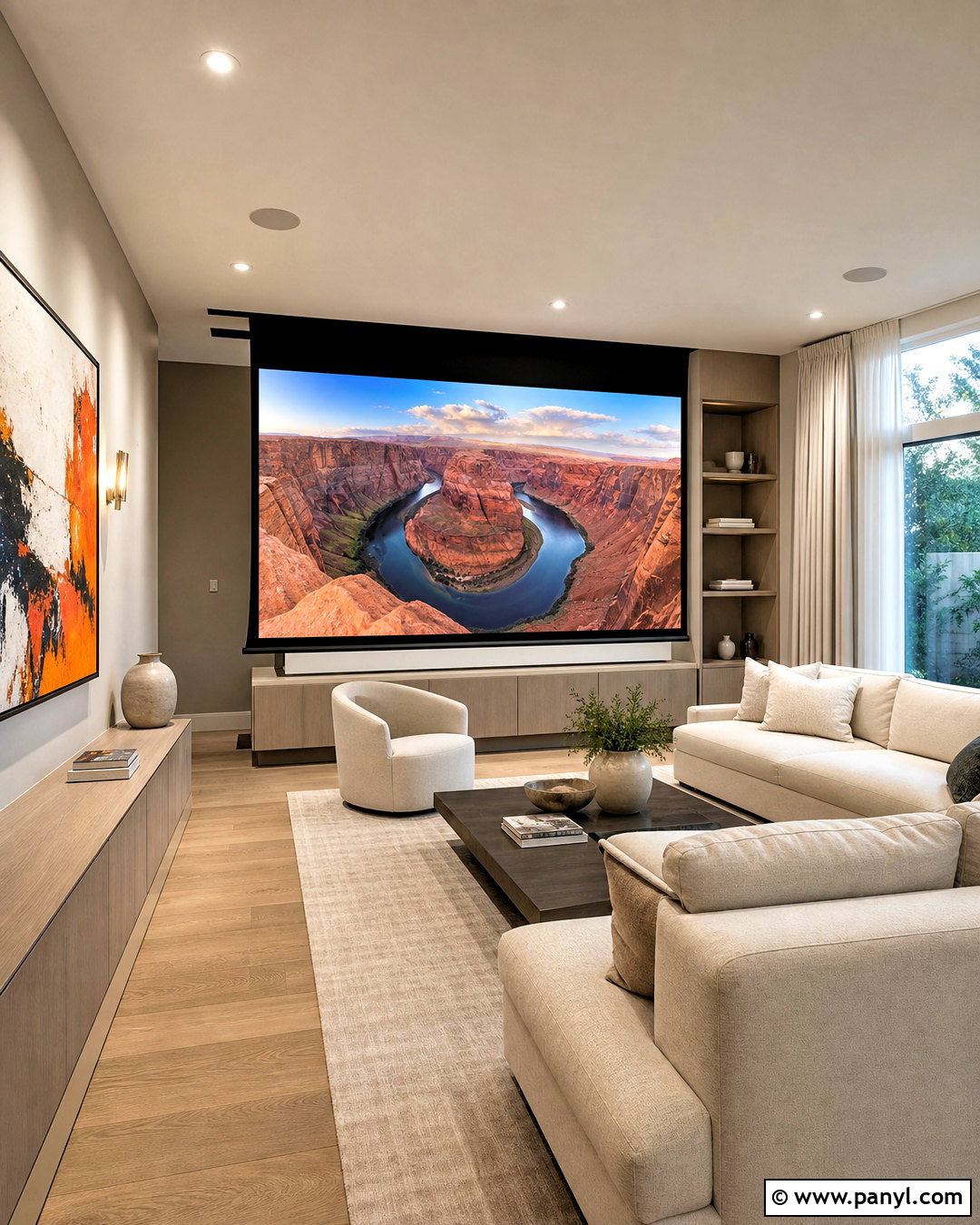
Imagine entering a stylish living room with no visible screen, projector, or tangled wires. Create that effect by recessing a motorized screen into a ceiling pocket and placing the projector inside a ventilated ceiling lift or discreet rear cabinet. Face a tailored cream sofa and two lounge chairs toward a large artwork that disappears behind the screen when it lowers. Built-in cabinetry can hide speakers, media components, and controls behind acoustically suitable panels. Use light taupe walls, medium oak floors, linen curtains, and sculptural ceramic decor to maintain a calm appearance. A flush ceiling track with adjustable spotlights supports everyday activities, while dimmable lamps create softer movie lighting. Plan power, ventilation, throw distance, and access for maintenance before closing walls or installing custom millwork.
6. Projector Wall Living Room
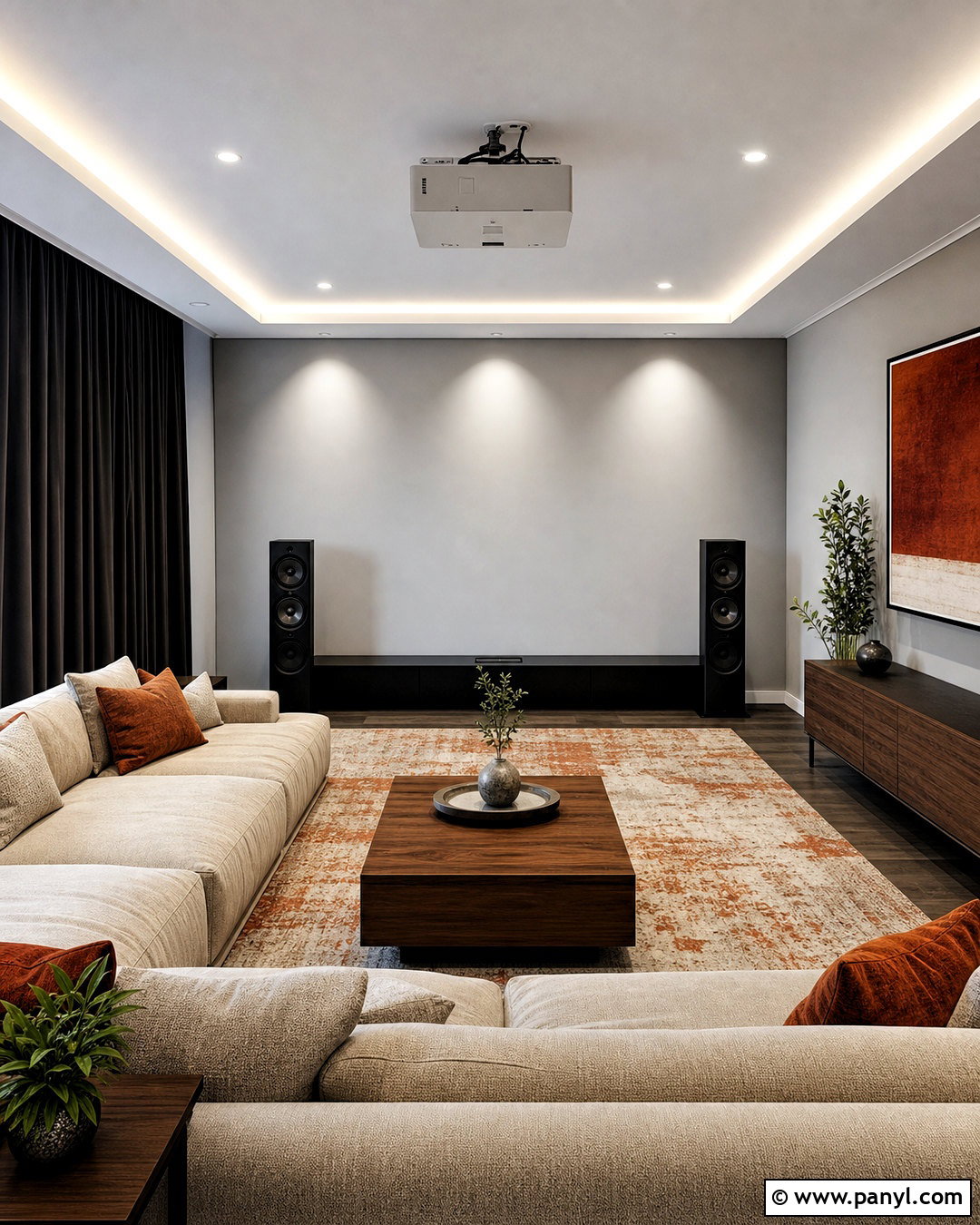
A carefully finished wall can become part of the decor while also serving as the viewing surface. Select a smooth wall with minimal natural light and finish it in a flat, projector-appropriate neutral white or pale gray. Repair dents, sand uneven texture, and keep outlets or switches outside the projected area. Build a relaxed room around the wall using a low-profile oatmeal sectional, walnut side tables, and a muted rust-and-cream rug. A ceiling-mounted projector keeps the furniture layout open, while blackout curtains reduce glare when needed. Install soft perimeter lighting behind a shallow ceiling molding so the room can remain comfortable without washing out the image. Place speakers symmetrically beside the viewing area and conceal their wires. Avoid glossy paint because visible reflections can distract from both the picture and the decor.
7. Projector Fireplace Living Room
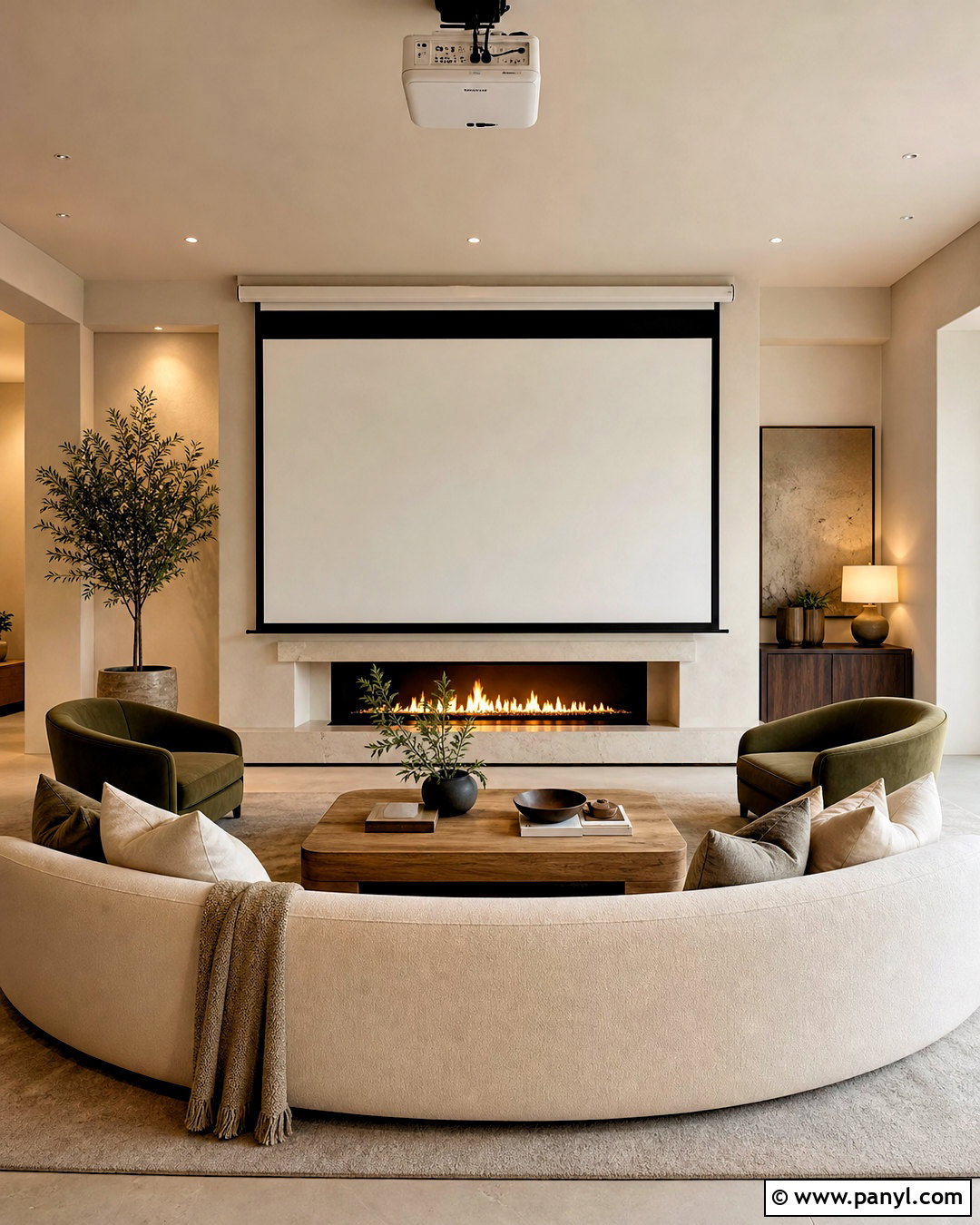
A fireplace and projector can share one focal wall when their placement is planned as a complete composition. Choose a low, modern fireplace with a wide plaster surround, then install a retractable screen in the ceiling several inches in front of it. This allows the screen to disappear when the fireplace becomes the main feature. Place the projector where heat, smoke, and airflow will not affect the equipment, and follow installation requirements for both systems. Arrange a curved sofa and two compact armchairs around a generous coffee table, leaving clear sightlines to the screen. Warm limestone, creamy plaster, natural oak, and muted olive textiles create an inviting palette. Use side lamps and recessed ceiling lights on dimmers rather than bright fixtures positioned above the screen.
8. Built-In Projector Living Room
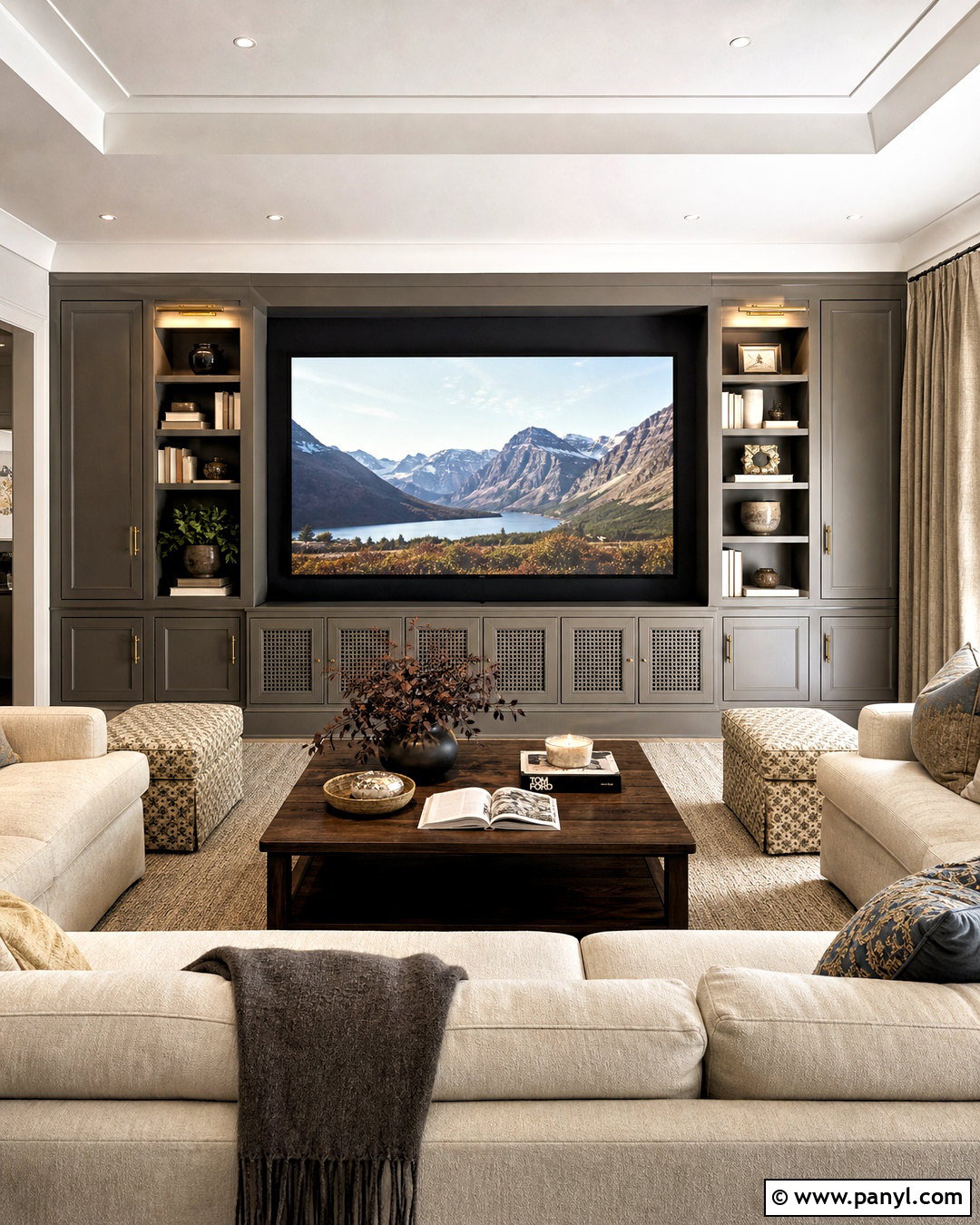
Custom cabinetry makes projector equipment feel intentional rather than added as an afterthought. Frame a fixed screen with floor-to-ceiling built-ins painted soft mushroom gray, leaving a dark recessed section around the image to improve visual definition. Include ventilated base cabinets for media components, drawers for remotes, and open shelves for books and simple pottery. A ceiling-mounted projector can align with the center of the screen while matching ceiling paint keeps its housing discreet. Furnish the room with a large modular sofa, two upholstered ottomans, and a plush geometric rug. Warm brass picture lights over the bookcases provide decorative illumination without shining onto the screen. Add lined drapes, acoustic fabric panels, and concealed speaker grilles. The finished wall should look balanced and attractive even when nothing is playing.
9. Minimalist Projector Living Room
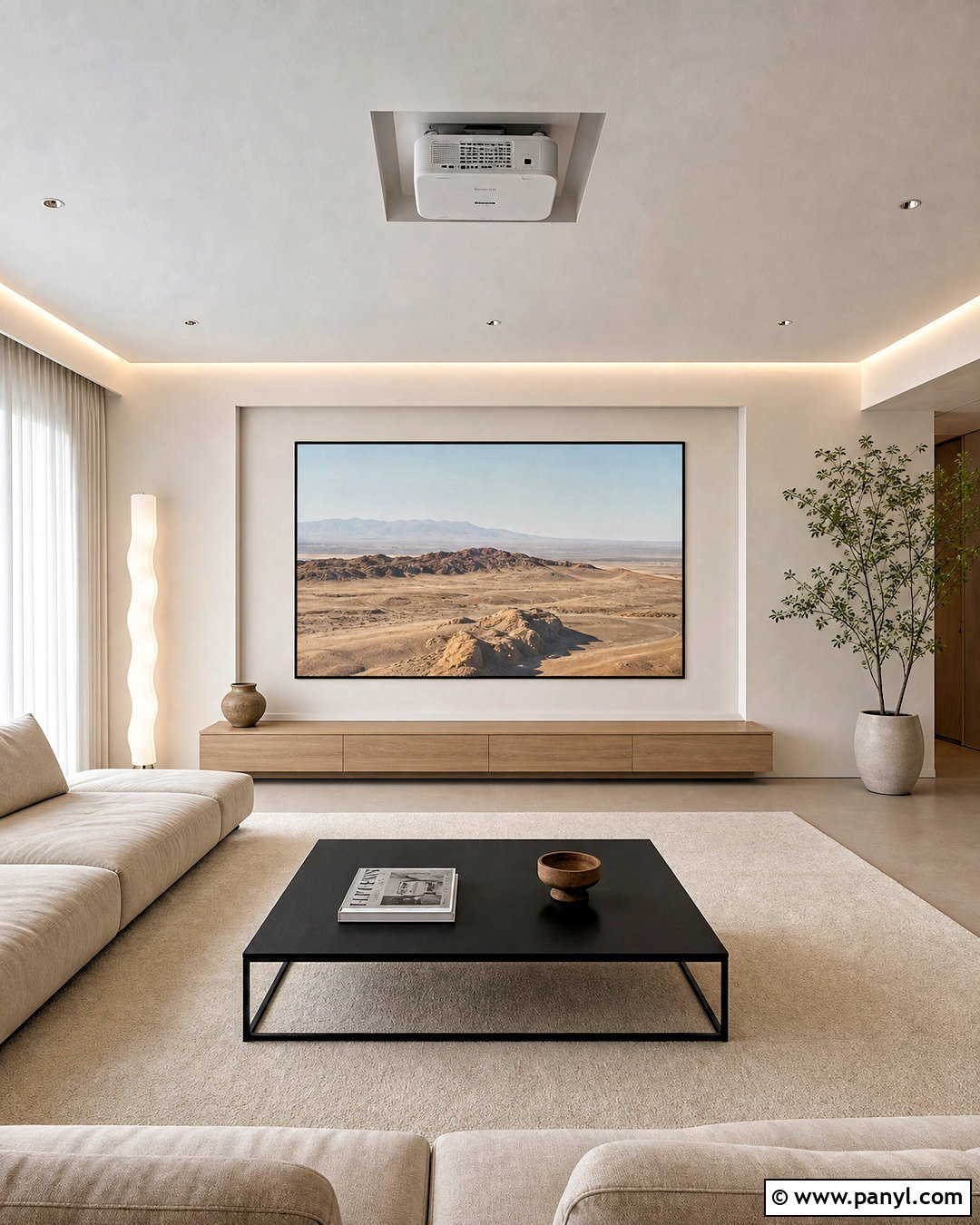
Clean lines allow the projected image to become the focus without making the space feel cold. Use a plain matte white screen wall, a streamlined light oak console, and a ceiling-mounted projector with its wiring concealed inside the ceiling. Choose one low beige sofa with broad arms, a black metal coffee table, and a large solid-color wool rug. Limit decor to a floor lamp, one ceramic vessel, and a tall indoor tree placed safely outside the projected area. Full-height white curtains layered over blackout shades provide flexible light control while maintaining the minimal palette. Integrate small speakers into the walls or select simple models that match the wall color. Soft indirect ceiling lighting creates a comfortable glow. Keep pathways open and storage closed so everyday objects do not interrupt the serene, carefully edited composition.
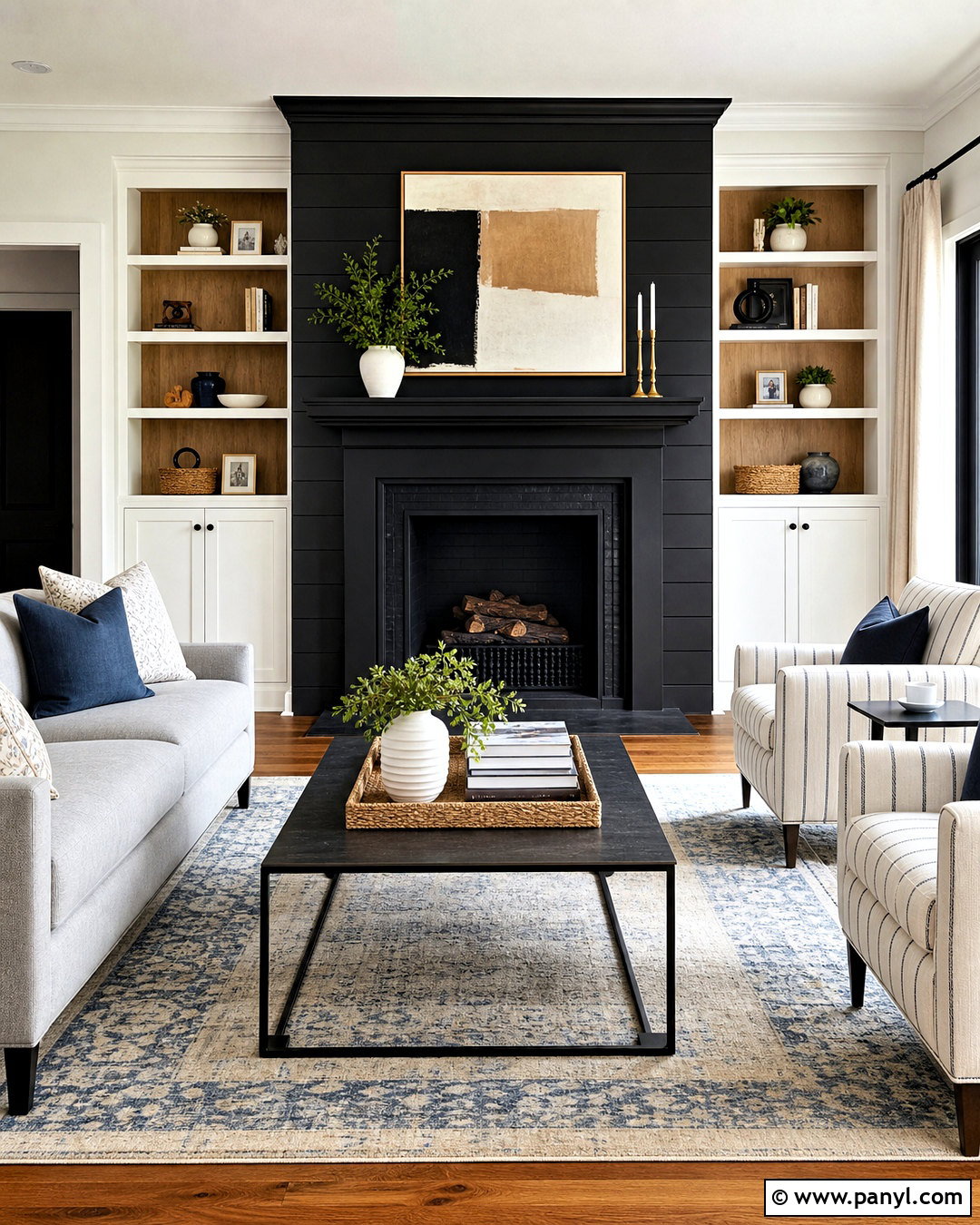
10. Modern Projector Living Room
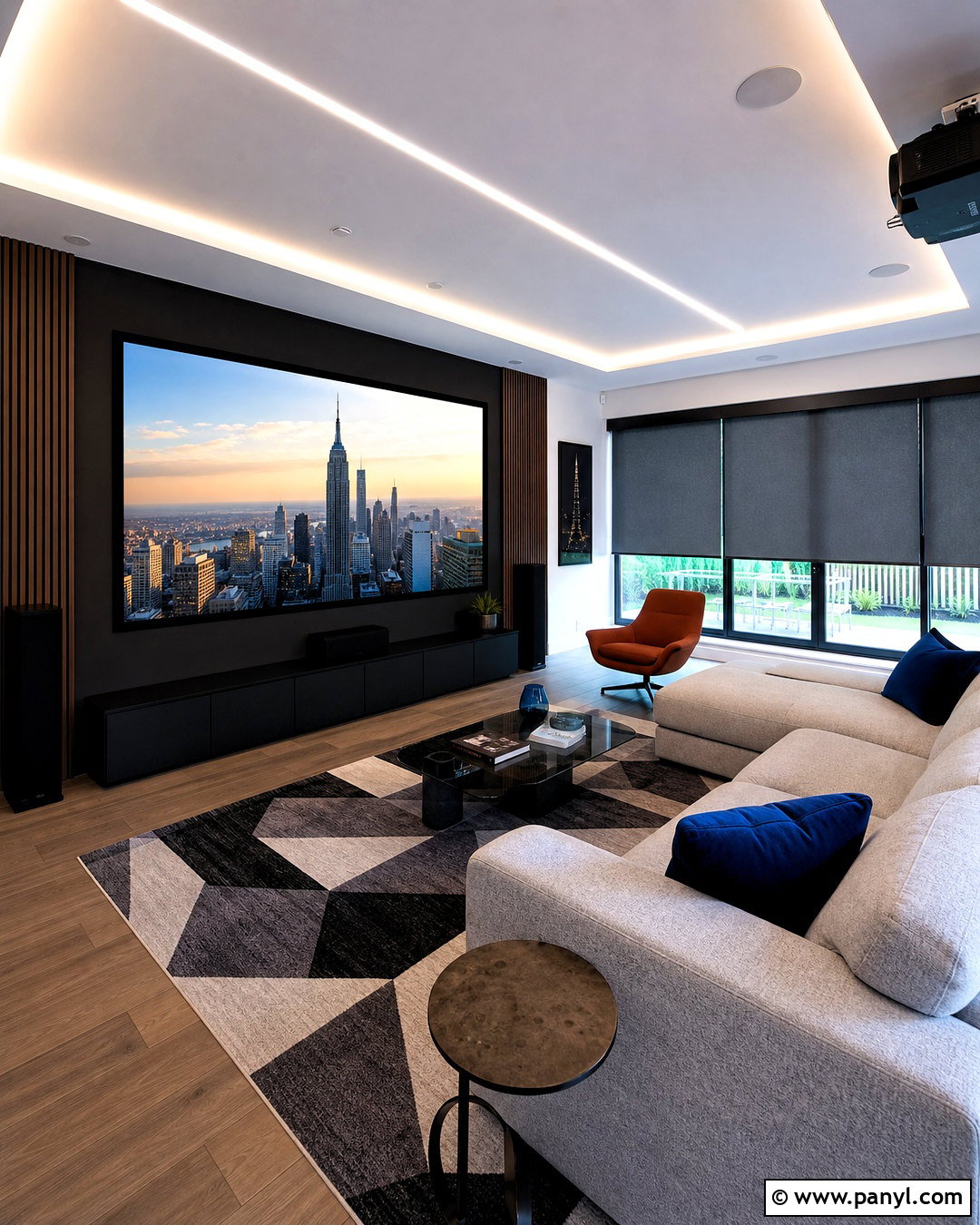
Crisp materials and bold contrast give a projector room a sophisticated contemporary character. Center a large fixed screen on a charcoal feature wall and surround it with narrow walnut slats. Place a matte black media console below for hidden equipment and add compact black speakers that visually merge with the darker background. A pale gray sectional keeps the room from feeling heavy, while cobalt blue pillows and a rust-colored lounge chair introduce confident color. Choose a large abstract rug, smoked-glass coffee table, and brushed metal floor lamp to complete the space. Automated roller shades control sunlight across wide windows, and linear ceiling lights provide even illumination when the projector is off. During viewing, switch to subtle lamps behind the seating so light does not fall across the image.
11. Cozy Projector Living Room
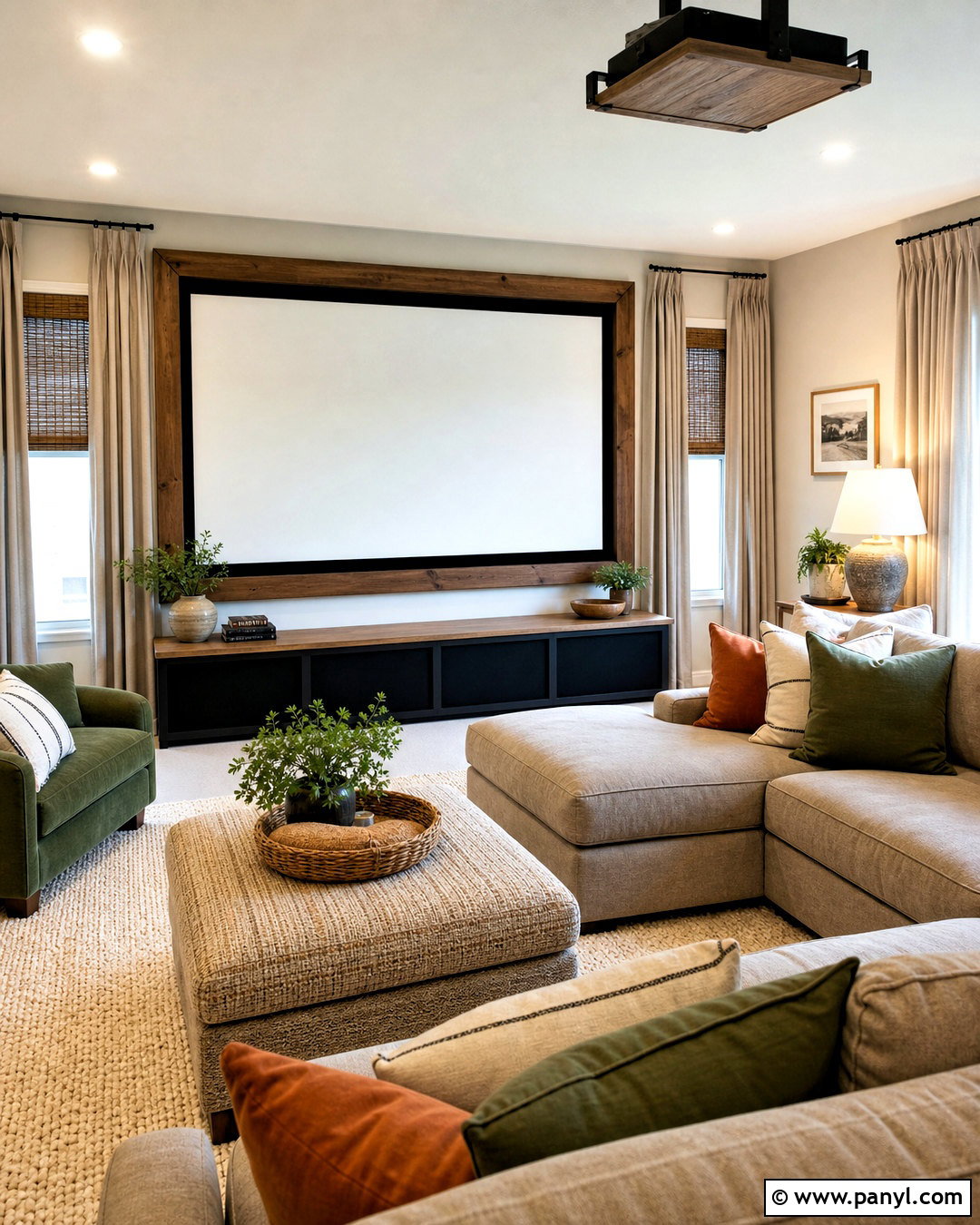
Soft fabrics and warm neutrals can make big-screen viewing feel intimate rather than technical. Start with a plush taupe sectional facing a wall-mounted projection screen framed by simple oak trim. Add an oversized wool rug, upholstered ottoman, knitted throws, and pillows in terracotta, cream, and muted sage. Place the projector on a secure shelf behind the sofa, leaving enough open space around it for ventilation and easy access. Thick lined curtains and woven shades provide strong light control while adding another layer of texture. Use shaded table lamps, dimmable wall sconces, and a warm floor lamp beside the sofa instead of one harsh ceiling fixture. A low oak cabinet can store media equipment, extra blankets, and family games. Keep plants and decorative branches away from the projected beam.
12. Apartment Projector Living Room
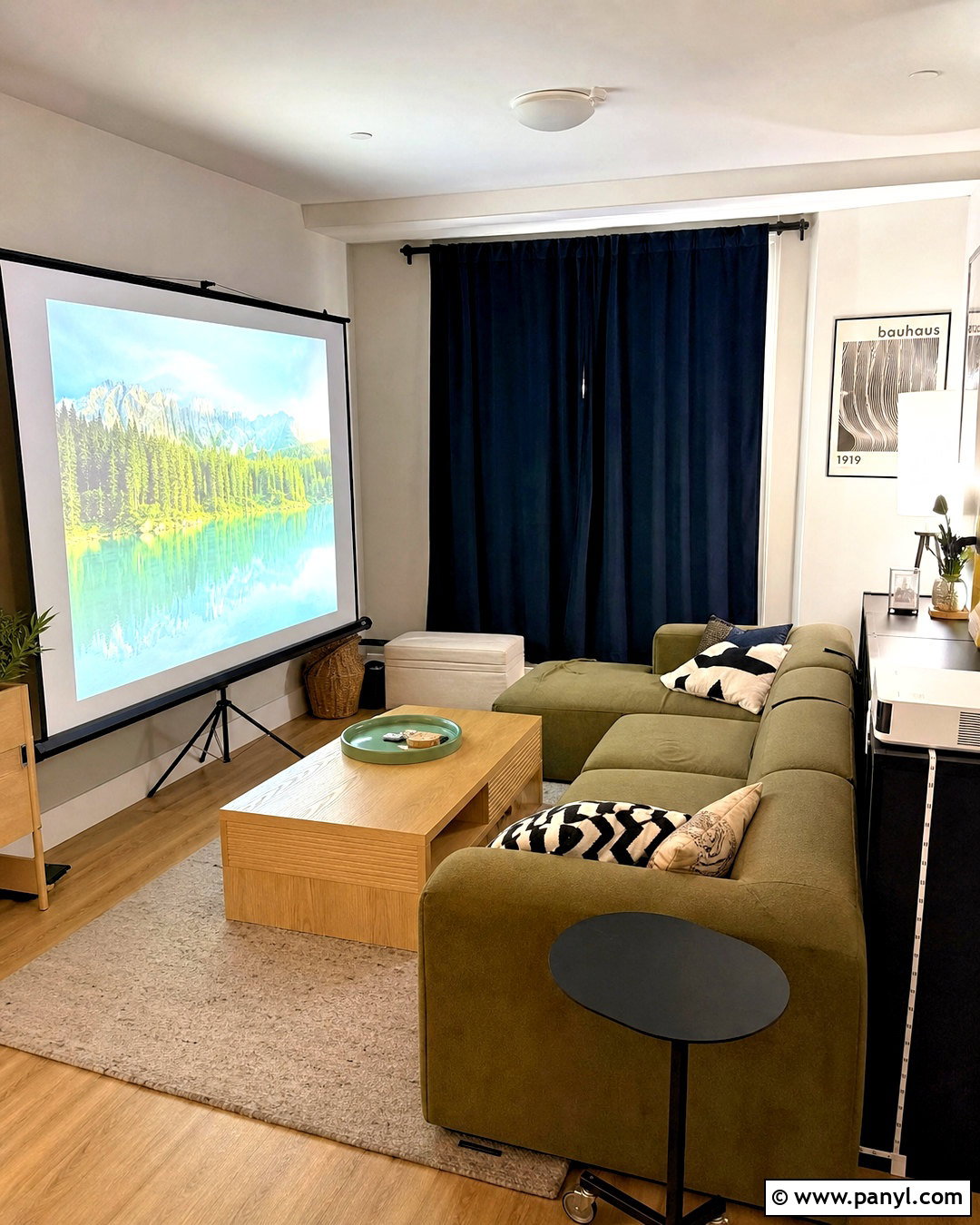
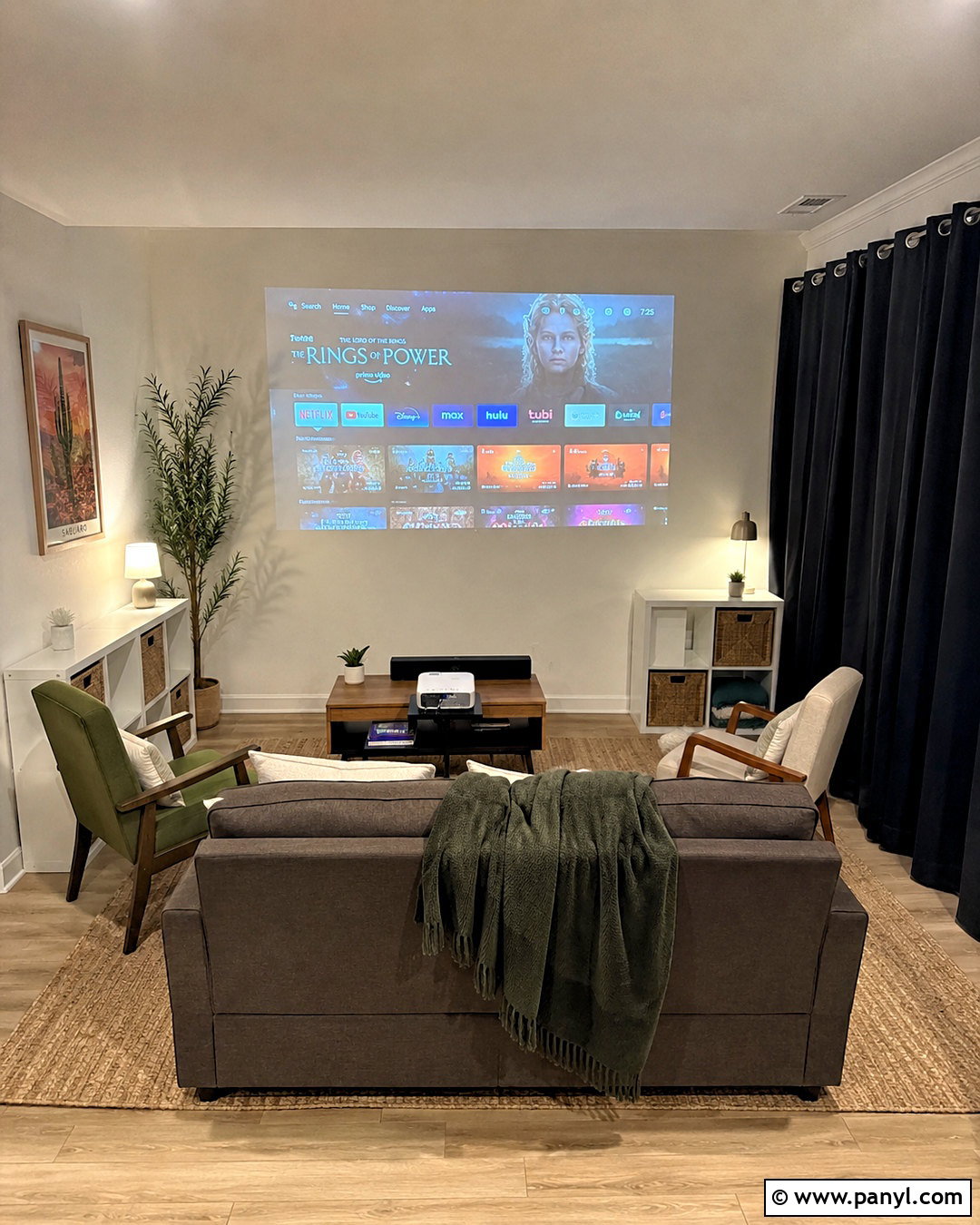
Renters can create an impressive projector setup without permanent construction. Use a freestanding pull-up screen against the main wall and place a portable projector on a stable console behind the seating. A compact modular sofa makes the layout easy to adjust, while a storage ottoman holds cables, remotes, and the projector when it is not being used. Choose removable cord covers that match the wall and tension-mounted blackout curtains that do not require extensive drilling. Warm white walls, pale wood furniture, olive upholstery, and graphic cushions give the apartment a lively but cohesive look. Add a rolling side table for snacks or equipment and select a compact soundbar that can move with the system. Test the image position before buying furniture so doors, windows, and walking paths remain accessible.
13. Open Concept Projector Living Room
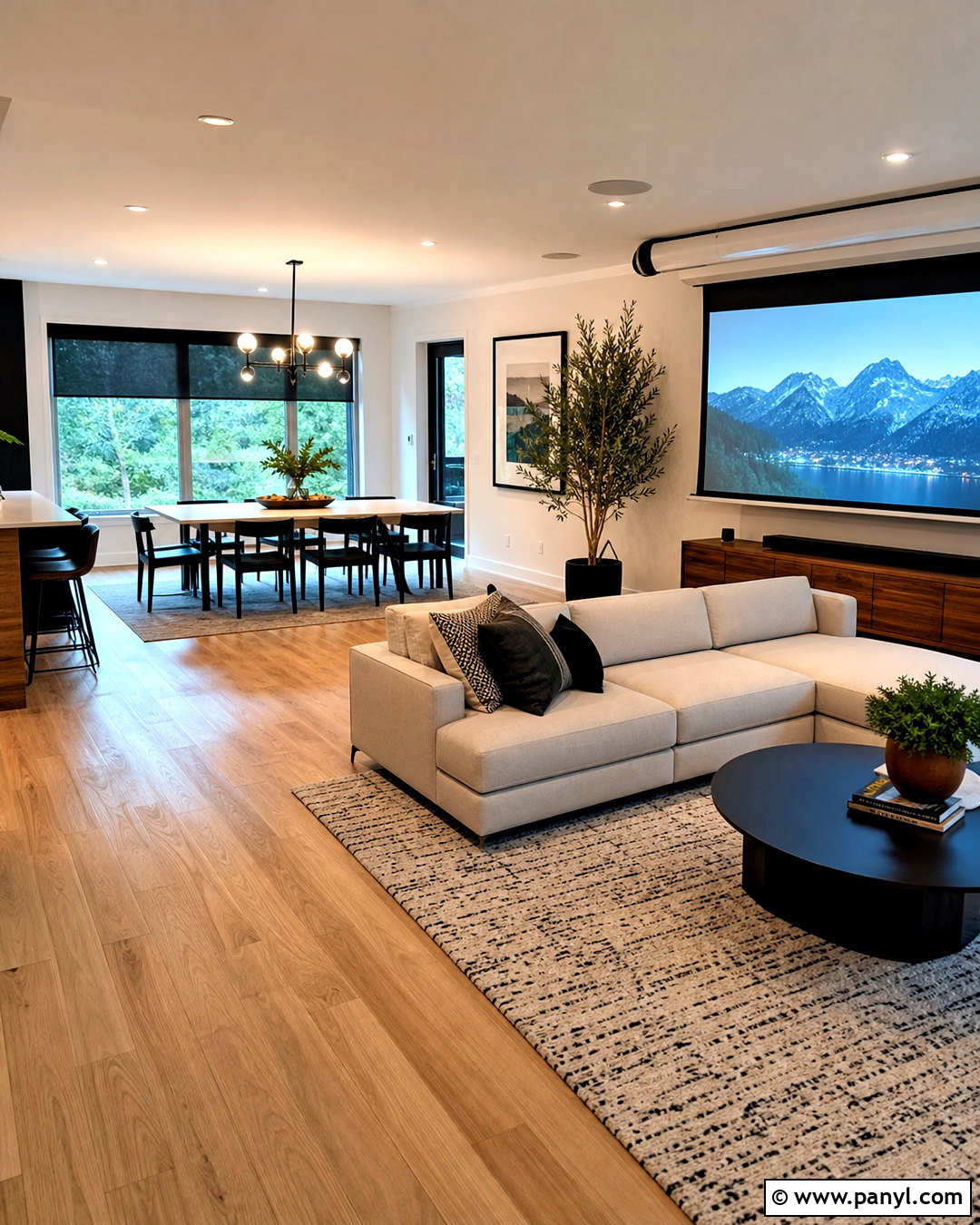
An open living and dining area needs clear visual boundaries to make projector viewing comfortable. Float a large sectional in the center of the room with its back toward the dining table, creating a natural divide between the two zones. Install a retractable screen above a long, low console on the opposite wall and suspend the projector from a ceiling beam or aligned ceiling mount. Ground the seating area with a broad neutral rug, while repeating walnut, black metal, and warm beige across both spaces for continuity. Motorized shades help manage sunlight from multiple windows. Use separate lighting circuits for the kitchen, dining area, and living room so nearby fixtures can be turned off during viewing. A slim console behind the sofa adds storage without blocking circulation or projected light.
14. Basement Projector Living Room
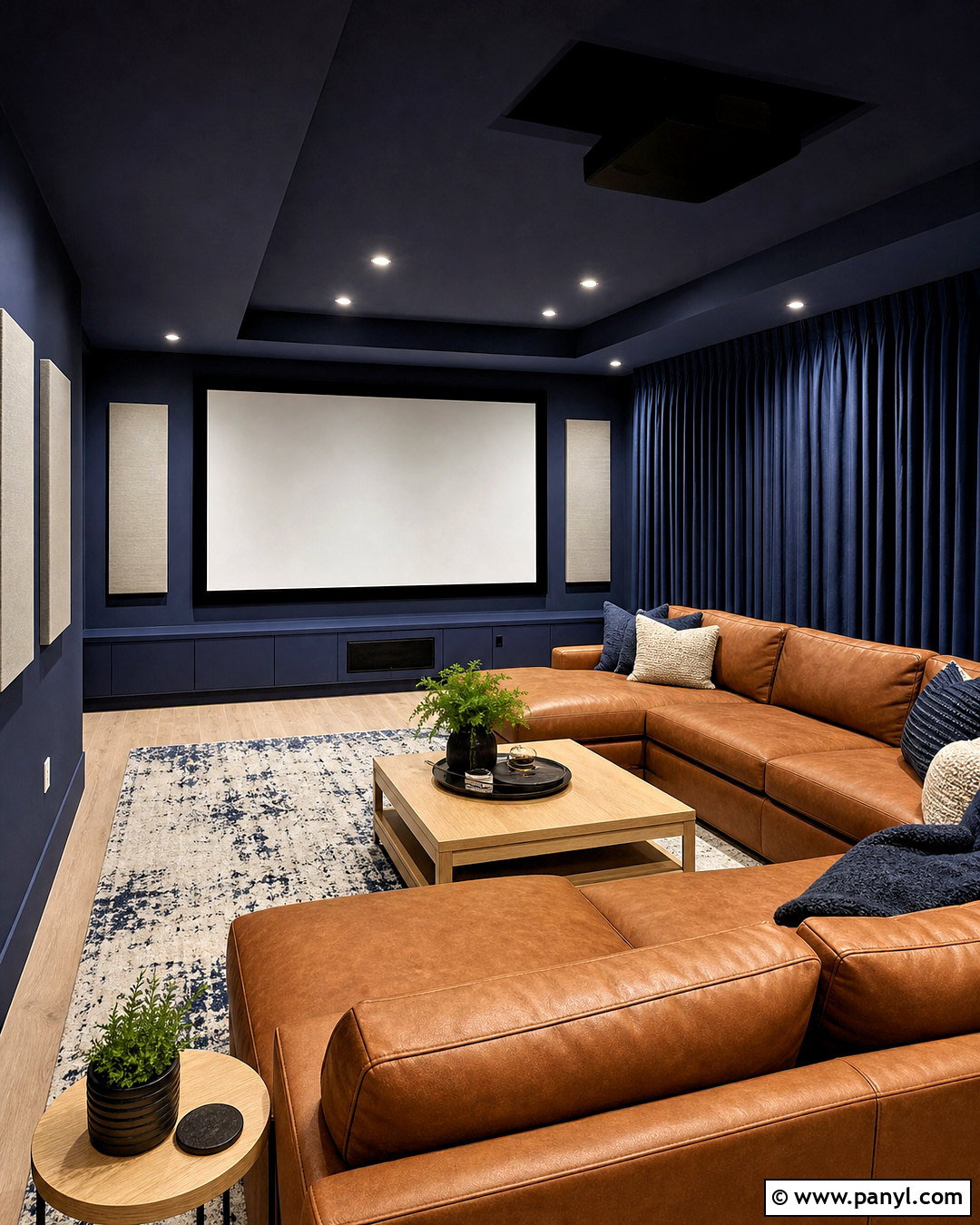
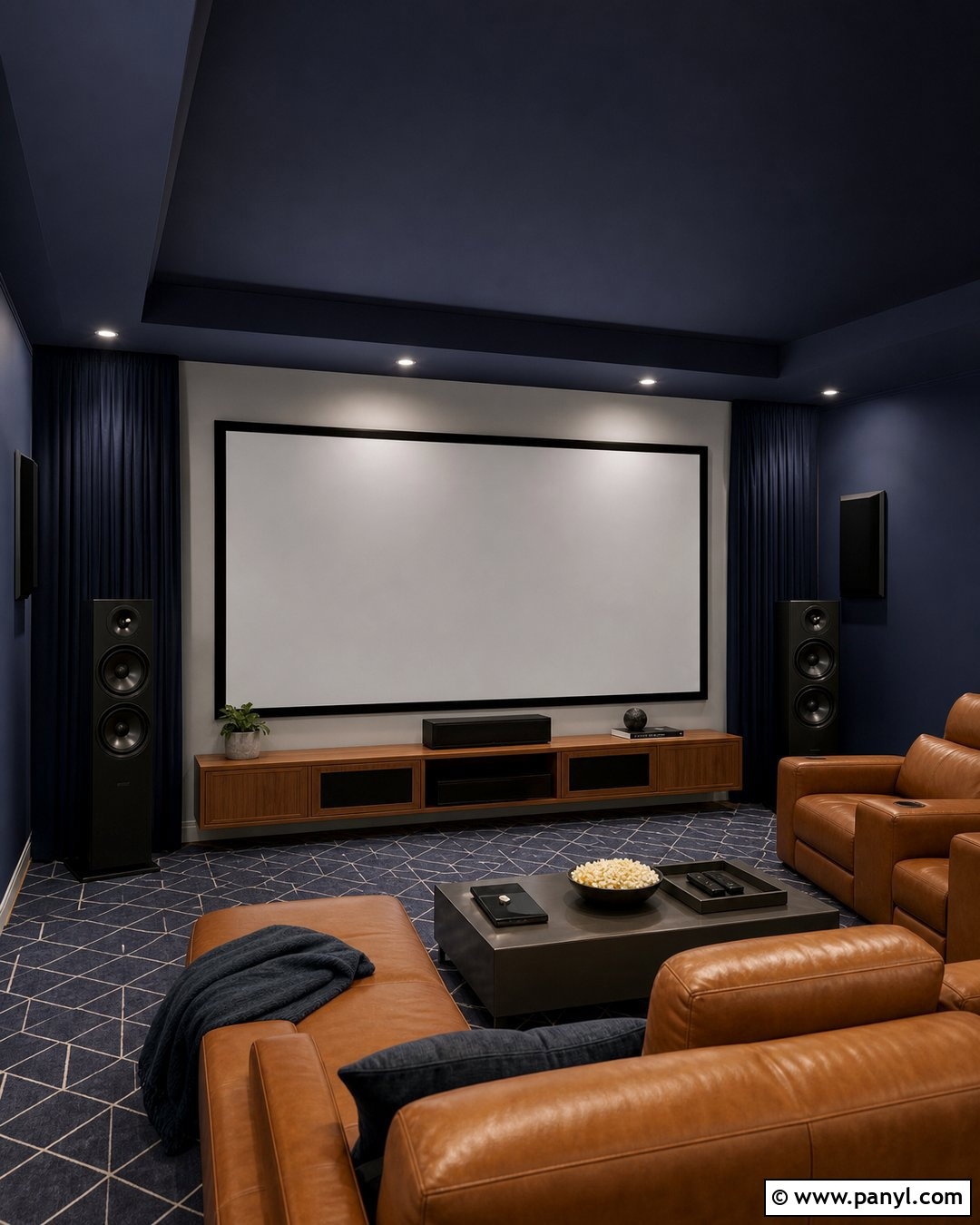
A basement naturally supports a cinema-like atmosphere, but it should still feel like a welcoming living room. Paint the screen wall deep navy and mount a large fixed screen with a narrow black frame. Continue the navy on the ceiling to reduce visual distractions, then balance the darker surfaces with a caramel sectional, pale oak tables, and a cream-and-blue rug. Add wall-to-wall curtains along any small windows and use acoustic panels covered in coordinating fabric as decorative wall features. Recessed lights, stair lighting, and shaded table lamps should operate independently for flexible brightness. Position a ceiling-mounted projector above or behind the main seating row, with cables routed through the ceiling. Include closed storage for electronics and open shelves for books, baskets, and ceramics so the basement remains useful beyond movie nights.
15. Gaming Projector Living Room
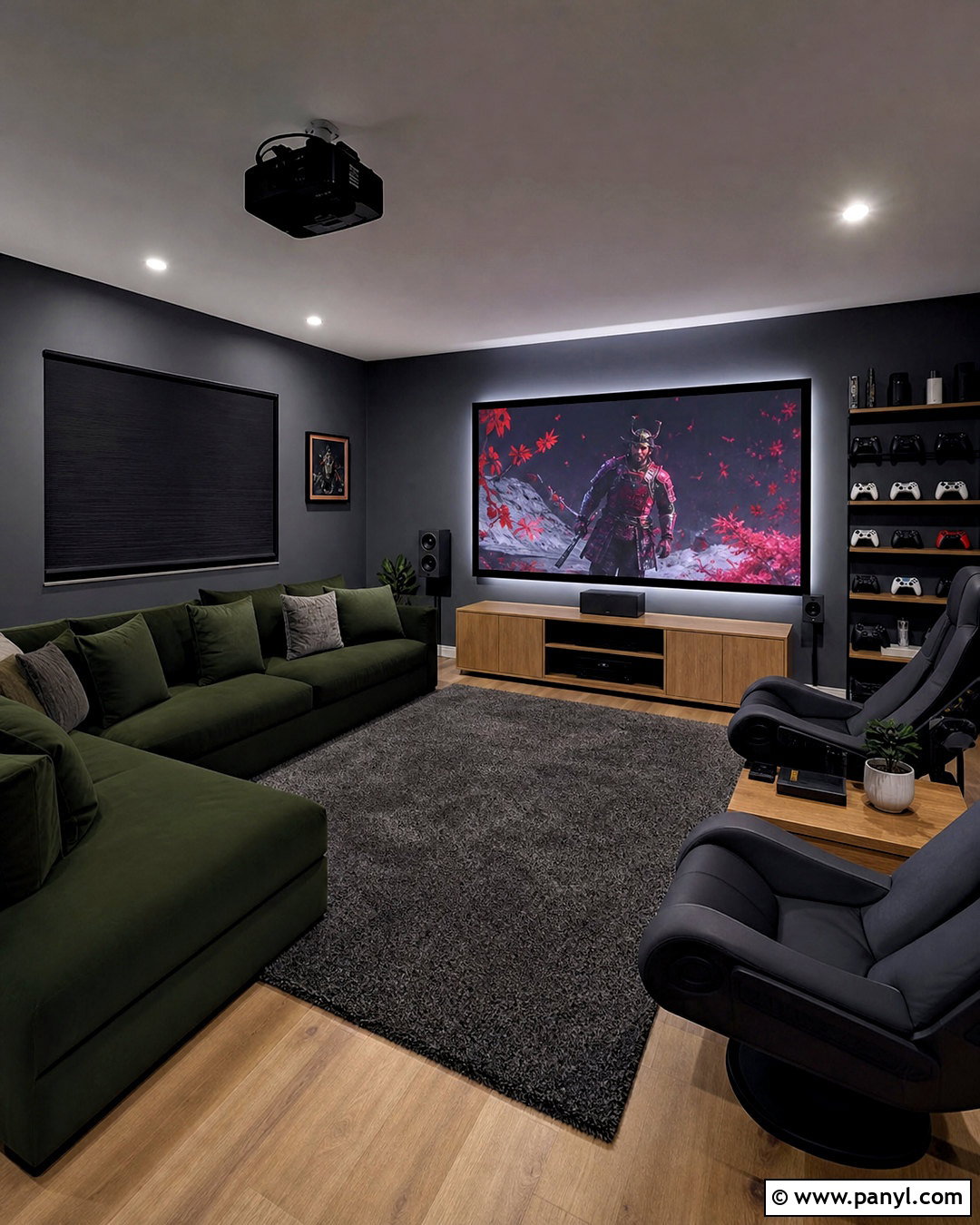
Responsive gaming deserves a layout that supports both immersive play and normal relaxation. Center a fixed screen on a dark gray wall and select a projector with settings suited to your preferred consoles and games. Place the main sectional at a comfortable viewing distance, then add two lightweight gaming chairs that can be pulled closer without blocking permanent pathways. A wide ventilated console stores the console, controllers, charging dock, and sound equipment behind perforated doors. Use charcoal, deep green, and natural oak for a mature palette that avoids an overly themed appearance. Blackout shades control daytime light, while dimmable bias lighting around the screen wall provides soft background illumination. Run wired connections through concealed channels where practical, and keep power strips securely mounted inside the cabinet rather than scattered across the floor.
16. Scandinavian Projector Living Room
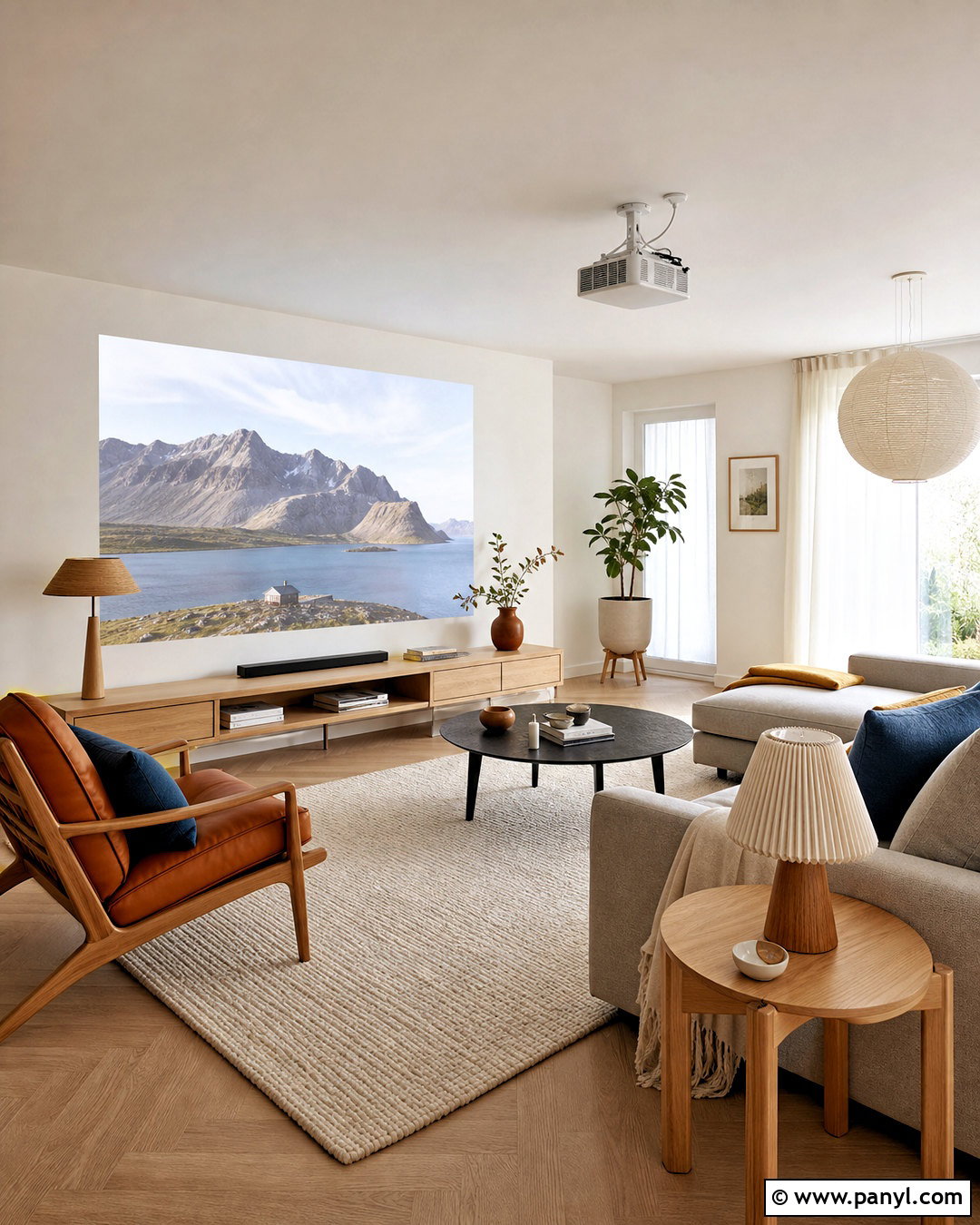
Light woods and simple forms help a projector setup blend into a relaxed Scandinavian-inspired room. Use a smooth warm white projection wall with no permanent screen frame, allowing the area to look open when the projector is off. Place a low birch console below it and mount the projector neatly on the ceiling in a white housing. A pale gray sofa, cognac leather chair, and ivory wool rug create a comfortable seating group without visual clutter. Add linen curtains over hidden blackout shades, along with paper pendant lighting and small oak table lamps. Muted blue and ocher cushions bring gentle color to the neutral foundation. Closed cabinets hide equipment, while one floating shelf displays a few ceramics. Keep the arrangement symmetrical enough for viewing but relaxed enough for everyday conversation and reading.
17. Industrial Projector Living Room
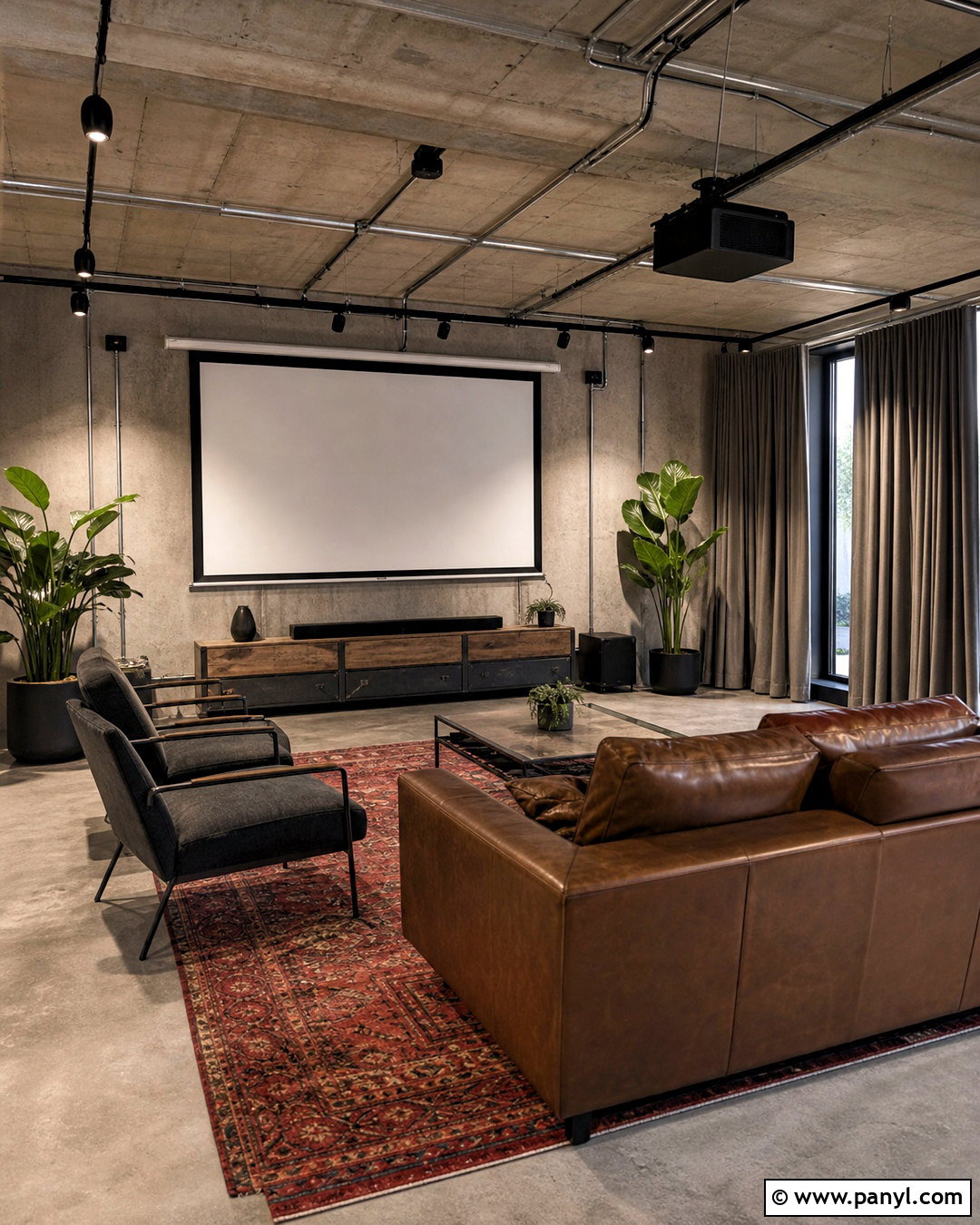
Raw textures create a dramatic background for a clean projection system. Mount a retractable screen against a sealed concrete wall and install the projector beneath an exposed ceiling beam using a matte black bracket. Balance the hard materials with a deep brown leather sofa, two charcoal fabric chairs, and a large faded red rug. A low steel-and-reclaimed-wood console stores electronics and adds warmth beneath the screen. Use black track lighting for daily illumination, but direct each fixture away from the viewing surface. Heavy gray curtains soften acoustics and block window light, while oversized plants introduce natural color. Conceal loose cables inside black metal conduit arranged in straight, purposeful lines. The room should feel like a comfortable converted loft, not a commercial theater filled with technical equipment.
18. Boho Projector Living Room
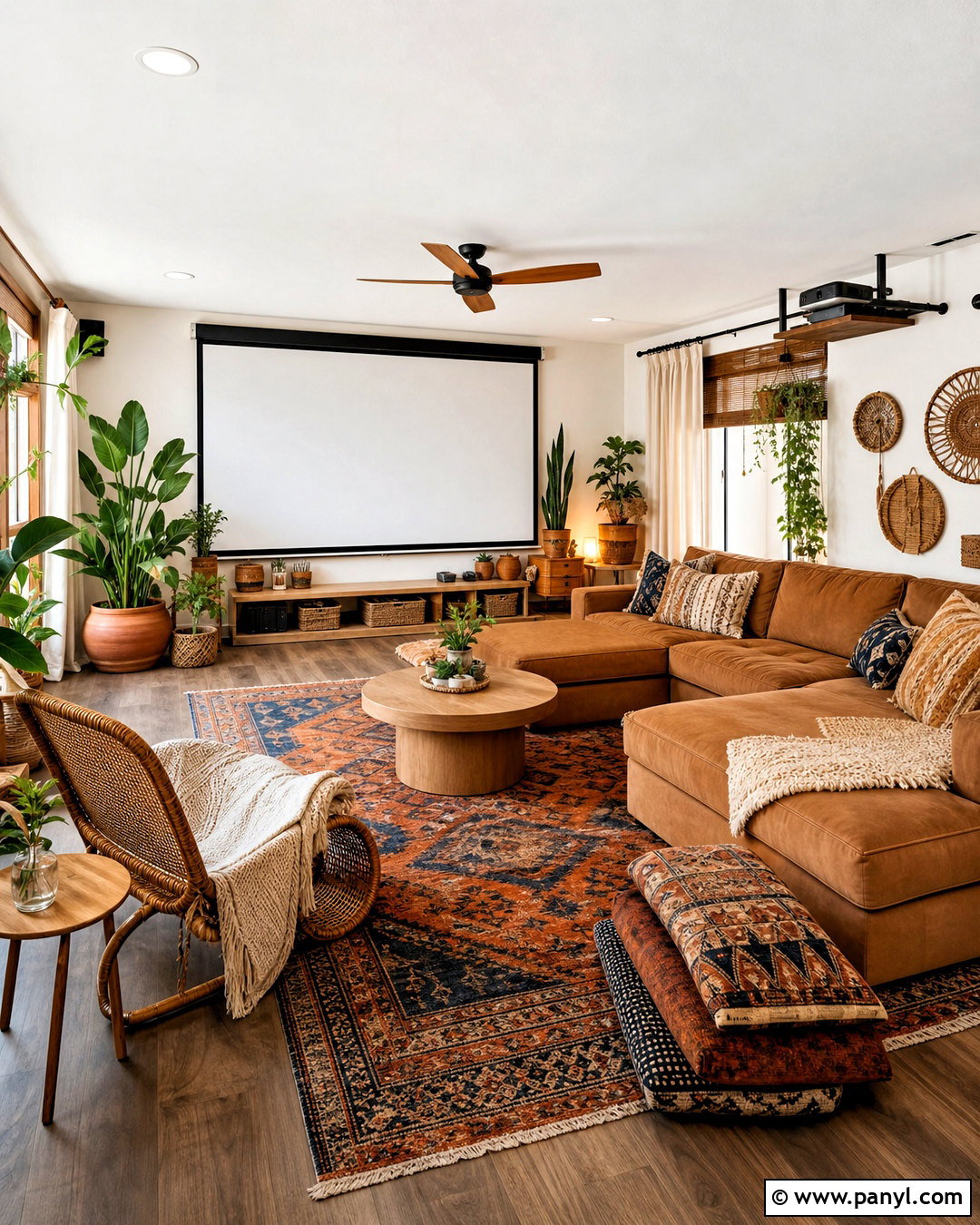
A projector can fit beautifully into a layered bohemian room when the display wall remains thoughtfully edited. Choose a retractable screen so woven art and a small gallery arrangement can remain visible during the day. Position a compact projector on a solid shelf behind a low camel-colored sectional. Build the seating area with a patterned rust-and-indigo rug, round wood coffee table, cane lounge chair, and floor cushions that can be moved for group viewing. Layer sheer curtains over lined blackout panels to combine softness with practical light control. Use warm white walls, terracotta planters, natural rattan, and leafy plants throughout the room, keeping taller foliage outside the projection path. Closed baskets hide accessories and cables. Multiple shaded lamps provide gentle lighting without creating glare across the screen.
19. Traditional Projector Living Room
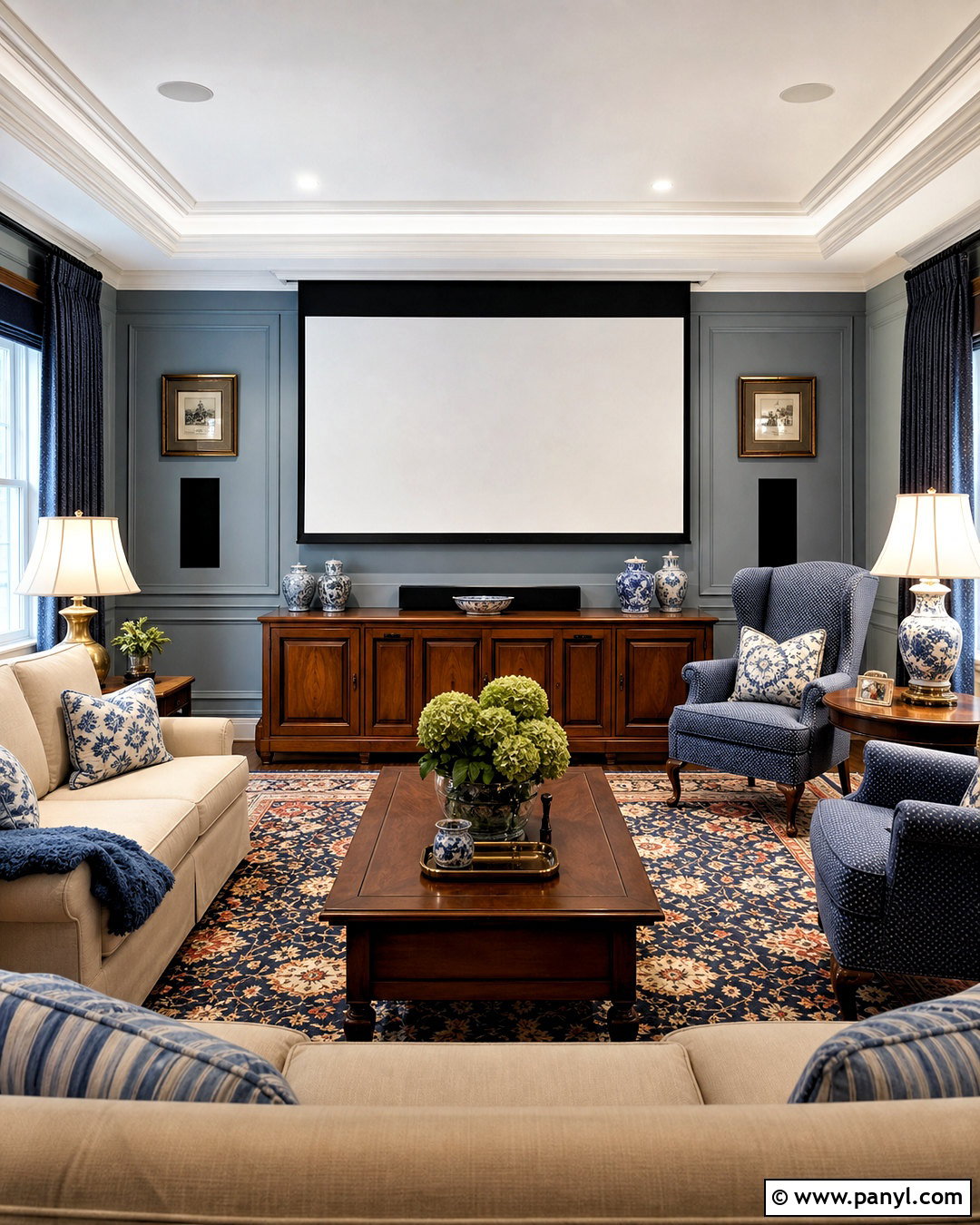
Classic architecture and modern viewing technology can coexist without sacrificing character. Conceal a motorized projector screen inside decorative ceiling molding above a paneled wall painted muted blue-gray. When raised, the wall displays a large landscape painting over an elegant walnut console. Arrange a rolled-arm sofa and two wingback chairs around a traditional patterned rug, ensuring every seat has a clear view when the screen lowers. Hide the projector inside a ventilated cabinet at the back of the room or use a ceiling lift integrated with the millwork. Pleated drapes with blackout lining control daylight, while brass lamps and picture lights provide warm everyday illumination. Speakers can be incorporated into cabinetry or selected in wood finishes. This approach preserves symmetry, craftsmanship, and a formal living-room atmosphere.
20. Budget Projector Living Room
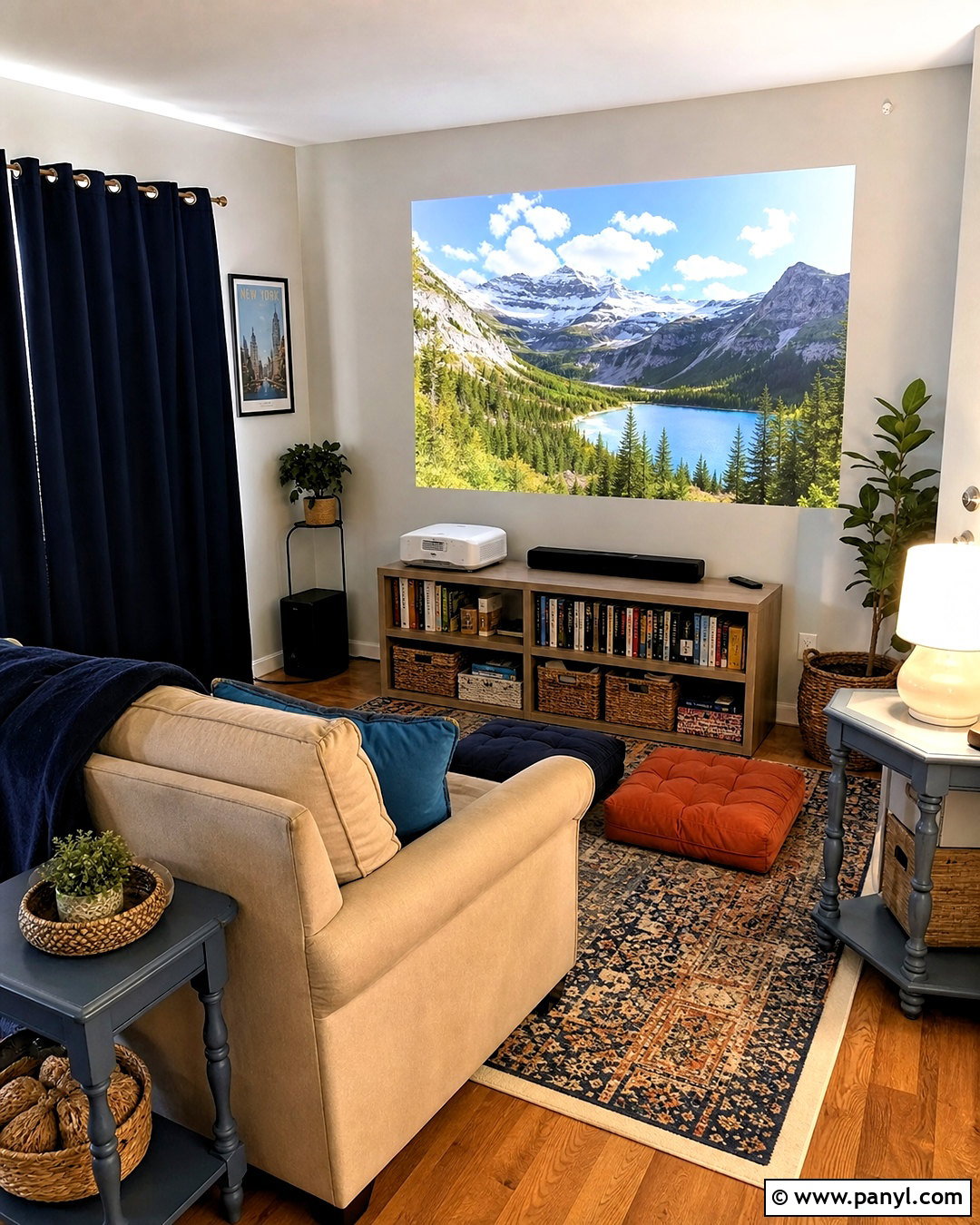
A thoughtful layout matters more than expensive custom construction. Start with a smooth, light neutral wall or an affordable manual pull-down screen. Place the projector on a sturdy bookcase behind the sofa, centered carefully to reduce the need for digital correction. Use paintable cord covers to route power and media cables neatly along the wall. A secondhand neutral sofa, washable area rug, simple side tables, and floor cushions create flexible seating for family viewing. Install basic blackout curtain panels on a wide rod to limit outside light. A compact soundbar improves the arrangement without filling the room with speakers and wires. Paint mismatched furniture in one coordinated color, such as matte black or warm white. The completed room can feel organized, welcoming, and cinematic while staying within a realistic budget.
Conclusion:
The strongest TV projector living room ideas treat technology, furniture, lighting, and decor as one connected plan. Start by measuring the room and deciding whether you need a fixed screen, retractable screen, projection wall, or hybrid television setup. Then arrange seating around clear sightlines and comfortable circulation. Window coverings, dimmable lighting, hidden cables, suitable ventilation, and organized storage will make the system easier to enjoy every day. Choose colors and materials that match the rest of your home rather than copying a commercial movie theater. Whether you prefer a cozy apartment, modern media wall, traditional lounge, or budget-friendly family space, a well-planned projector can provide impressive viewing without dominating the room.

Related Ideas and Inspiration:
Leave a Reply