
Choosing the right projector wall color can make a major difference in brightness, contrast, color balance, and the overall look of your room. White surfaces generally produce the brightest image in light-controlled spaces, while neutral gray can improve perceived black depth where some ambient light is present. Darker surfaces usually need a brighter projector to keep highlights from looking dull. () Paint finish and wall preparation matter too. A smooth, flat surface prevents distracting shadows, glare, and visible texture. The surrounding walls, ceiling, window treatments, furniture, and lighting should also support the screen area rather than compete with it. These complete room schemes offer practical inspiration for choosing among 20 Projector Wall Color Ideas.
1. Matte White Projector Wall
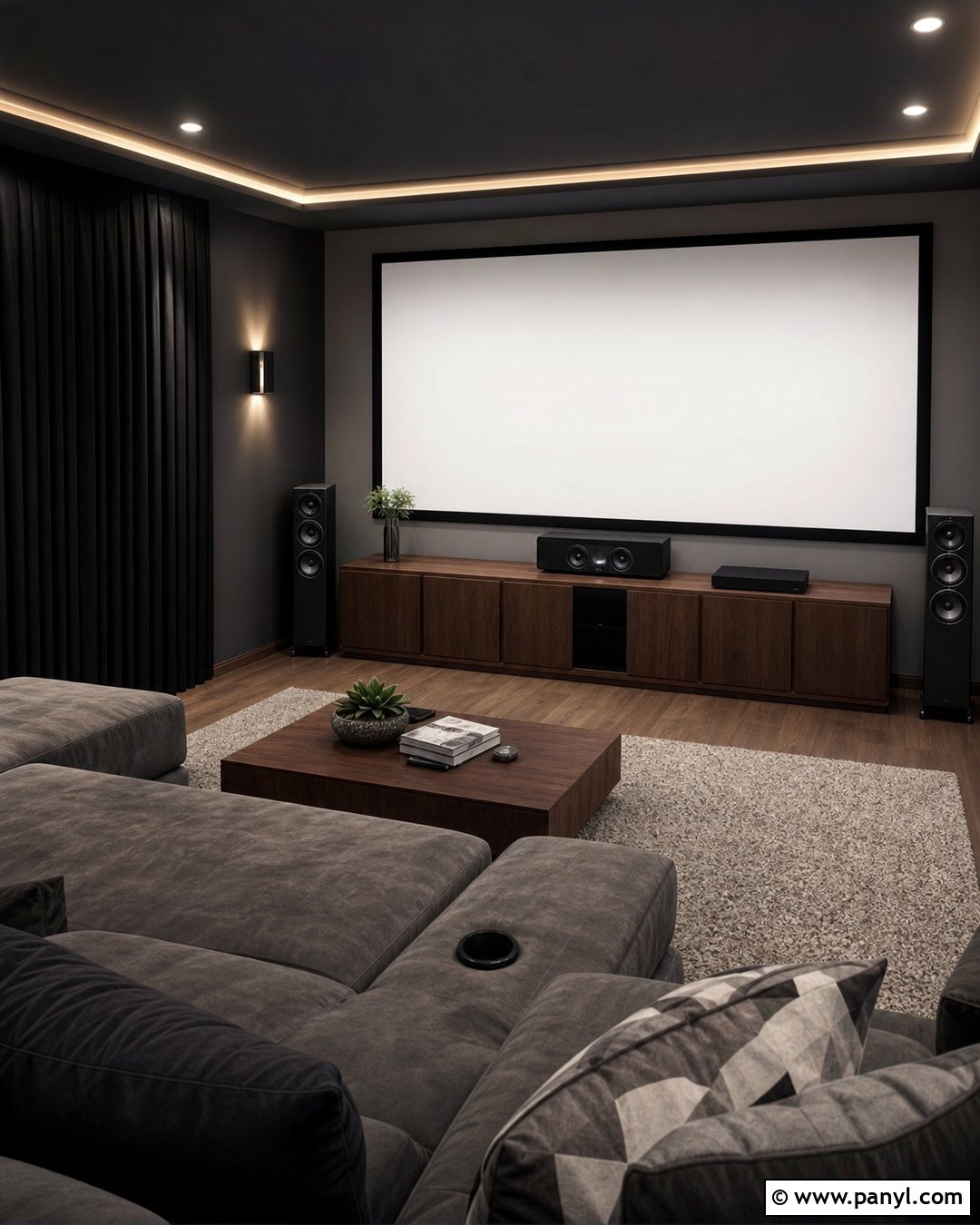
A matte white projector wall is a dependable choice for a dedicated movie room with excellent light control. Paint the projection surface a clean, neutral white without noticeable yellow, blue, or pink undertones. Use a true flat or specialized matte projector coating rather than satin paint, which can produce reflective hot spots. White delivers a bright, balanced image and works particularly well when the projector already provides satisfying contrast. () Surround the screen area with charcoal side walls, a dark ceiling, and black light-blocking curtains. Add a low walnut media console, deep gray sectional seating, and dimmable recessed lighting. The contrast between the white wall and darker room finishes creates a polished home theater appearance while reducing distracting light around the picture.
2. Soft White Projector Wall
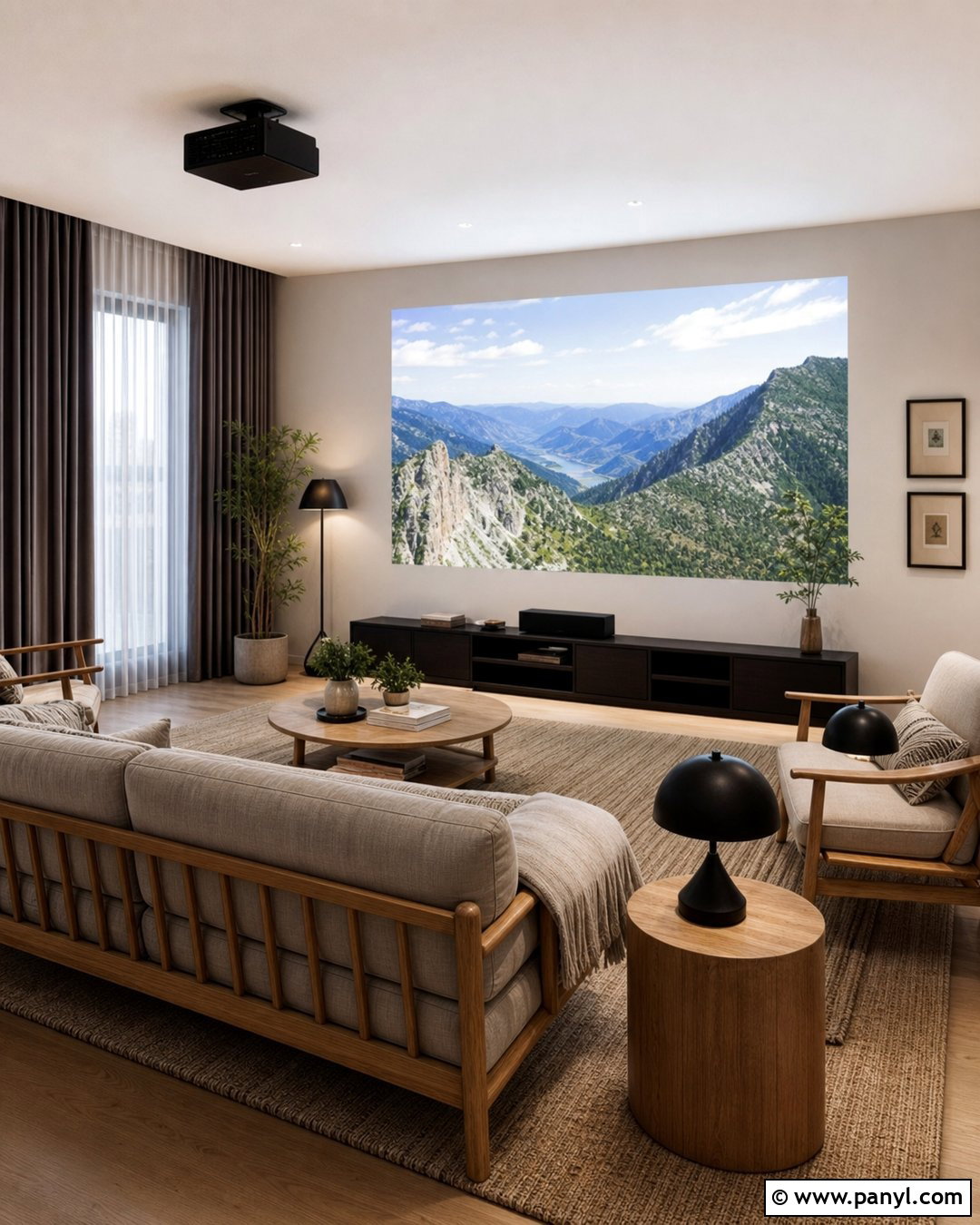
Soft white creates a more relaxed projector wall that blends naturally into a living room when the system is turned off. Choose a gentle off-white with minimal undertones, avoiding creamy shades that could visibly warm the projected colors. Keep the projection area completely smooth and undecorated. Pair it with light oak furniture, oatmeal upholstery, warm gray curtains, and a pale natural-fiber rug. Matte black lamps and a slim black media console add enough contrast to anchor the arrangement. Install room-darkening shades behind the curtains and position dimmable lighting away from the wall. This complete look feels comfortable and residential rather than like a dedicated theater. It suits households that want a large viewing surface without making entertainment equipment the dominant feature during the day.
3. Cool White Projector Wall
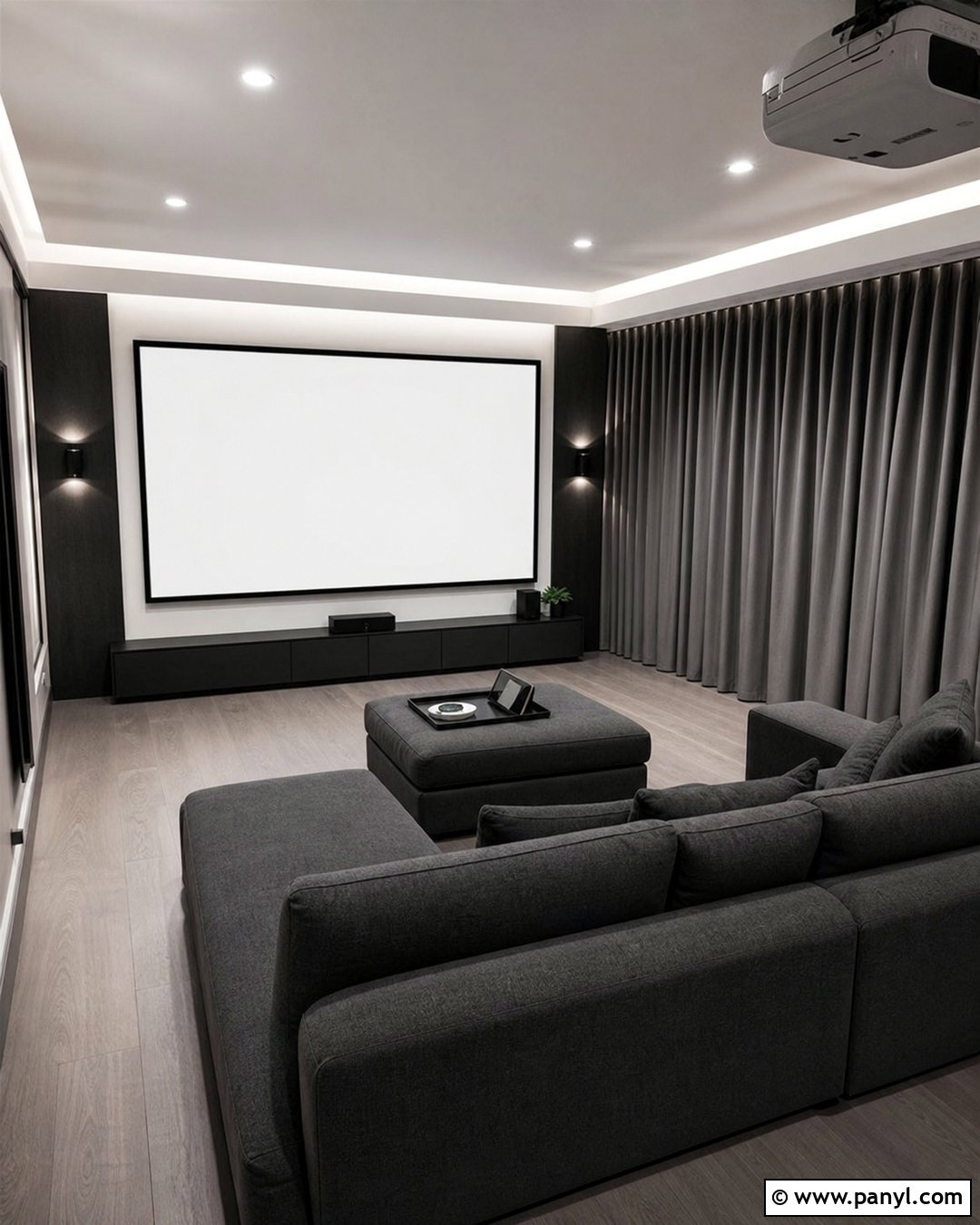
Crisp cool white works well in a contemporary room filled with gray flooring, black furniture, and streamlined architectural details. Select a white that appears clean rather than strongly blue, since a noticeable tint can affect the visual balance of the image. Paint the entire wall in a flat finish for a seamless appearance. Frame the viewing zone visually with low black cabinetry instead of painted borders. A graphite sectional, chrome or brushed-nickel lighting, and cool gray acoustic curtains complete the palette. Keep artwork on adjacent walls so the projector surface remains uninterrupted. Automated blackout shades make the room easier to transform from a bright modern lounge into a controlled viewing space. The final design is simple, sharp, and especially appropriate for minimalist interiors with cooler materials.
4. Warm White Projector Wall
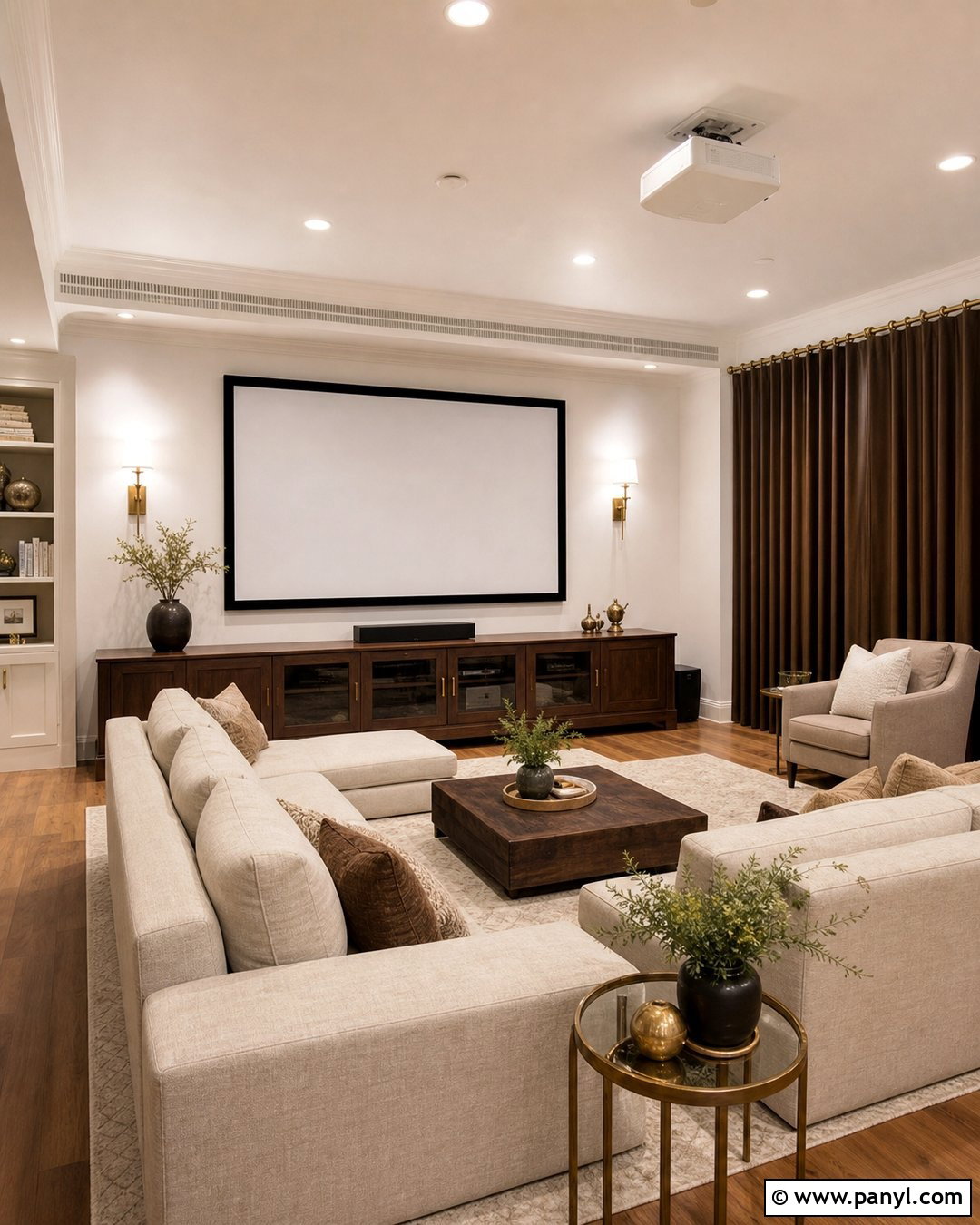
A warm white projector wall can coordinate with traditional, transitional, or organic interiors without looking stark. The key is selecting only a slightly warm white rather than a deep ivory or buttery cream. Test projected skin tones, snowy scenes, and black-and-white content before painting the entire area. Build the room around medium oak flooring, beige linen seating, aged brass accents, and mushroom-colored curtains with blackout lining. A dark brown media cabinet adds visual weight below the projected image. Place table lamps behind or beside the seating instead of near the wall. The result is a comfortable multipurpose room where the projection surface harmonizes with warm finishes during daylight. When the curtains close, the restrained palette still provides a clean background for casual movies and family viewing.
5. Very Light Gray Projector Wall
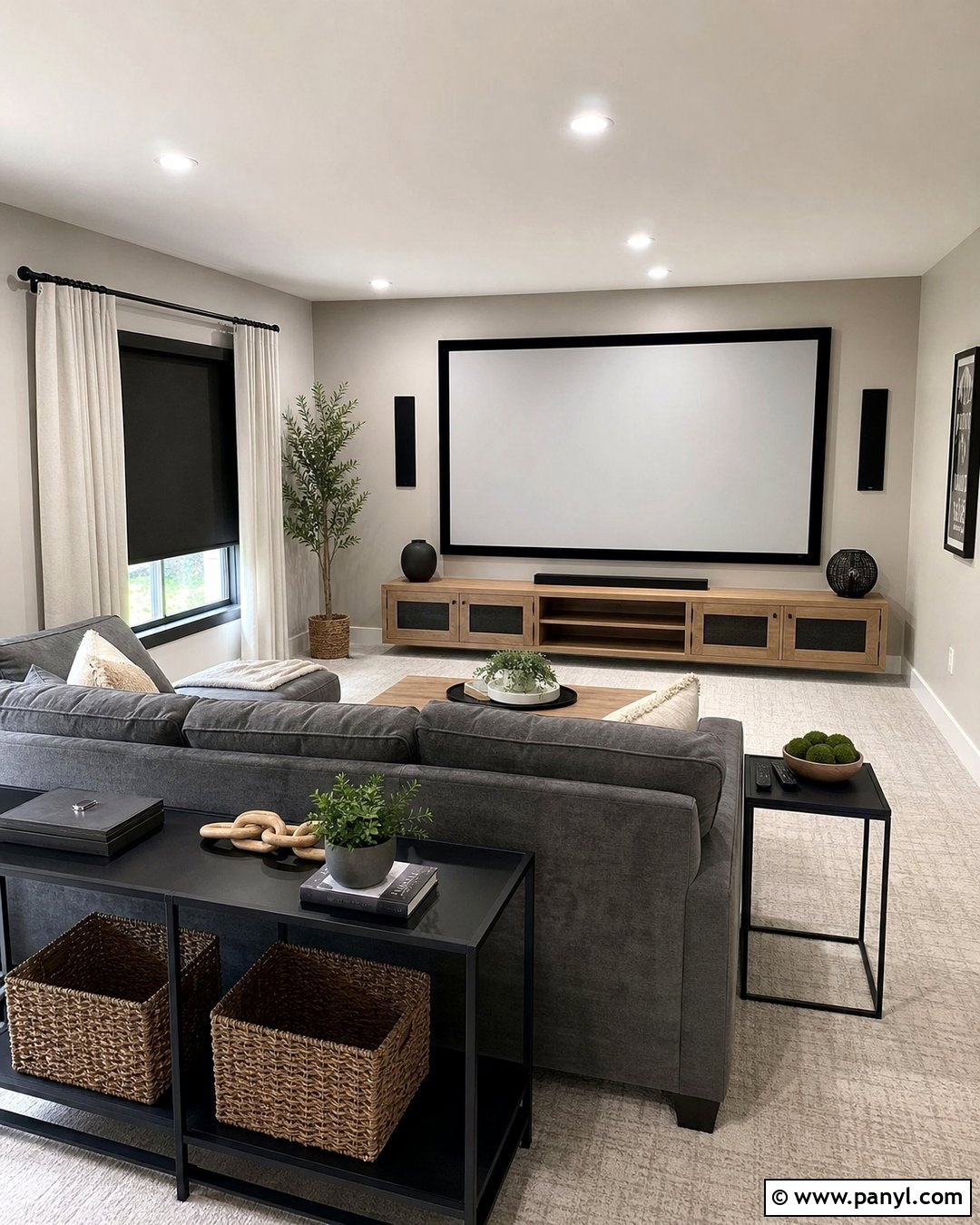
Very light neutral gray offers a useful middle ground between white and a more contrast-focused gray surface. It can make dark portions of an image feel more substantial while retaining much of the brightness expected from a pale wall. Gray screens absorb more light than white ones, so projector output and room lighting should be considered before committing to the color. () Pair the wall with a medium-gray sofa, black metal tables, pale oak accents, and off-white curtains backed by blackout shades. Keep the ceiling white if the room is compact, but paint the remaining walls a quiet gray-beige. The balanced palette is ideal for a flexible family room used for streaming, gaming, and everyday relaxation without creating an overly dark theater environment.
6. Silver Gray Projector Wall
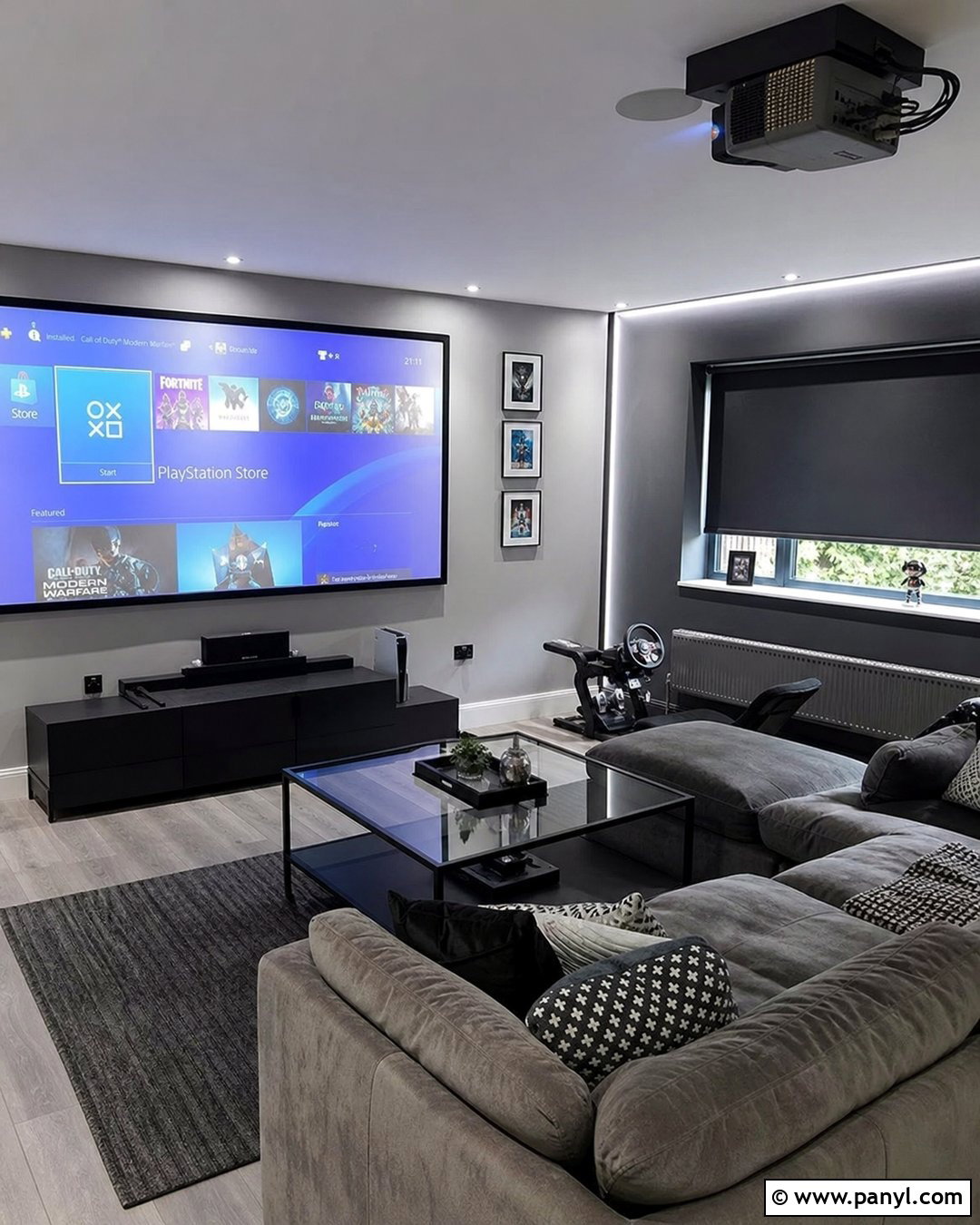
Silver gray brings a sleek, technology-focused look to a media room, but the surface should remain subtle and evenly finished. Avoid ordinary metallic wall paint with visible shimmer because reflective particles can create uneven brightness. Instead, choose a neutral projector coating described as light silver gray and apply it according to its specific instructions. Furnish the room with a low matte-black console, slate seating, smoked-glass tables, and brushed aluminum accents. Dark roller shades and a graphite area rug help control light bouncing around the room. Add linear LED lighting behind the console, keeping it switched off during critical viewing. The complete scheme feels modern without becoming cold. It is especially attractive in a gaming room where silver electronics and black accessories already shape the overall palette.
7. Medium Gray Projector Wall
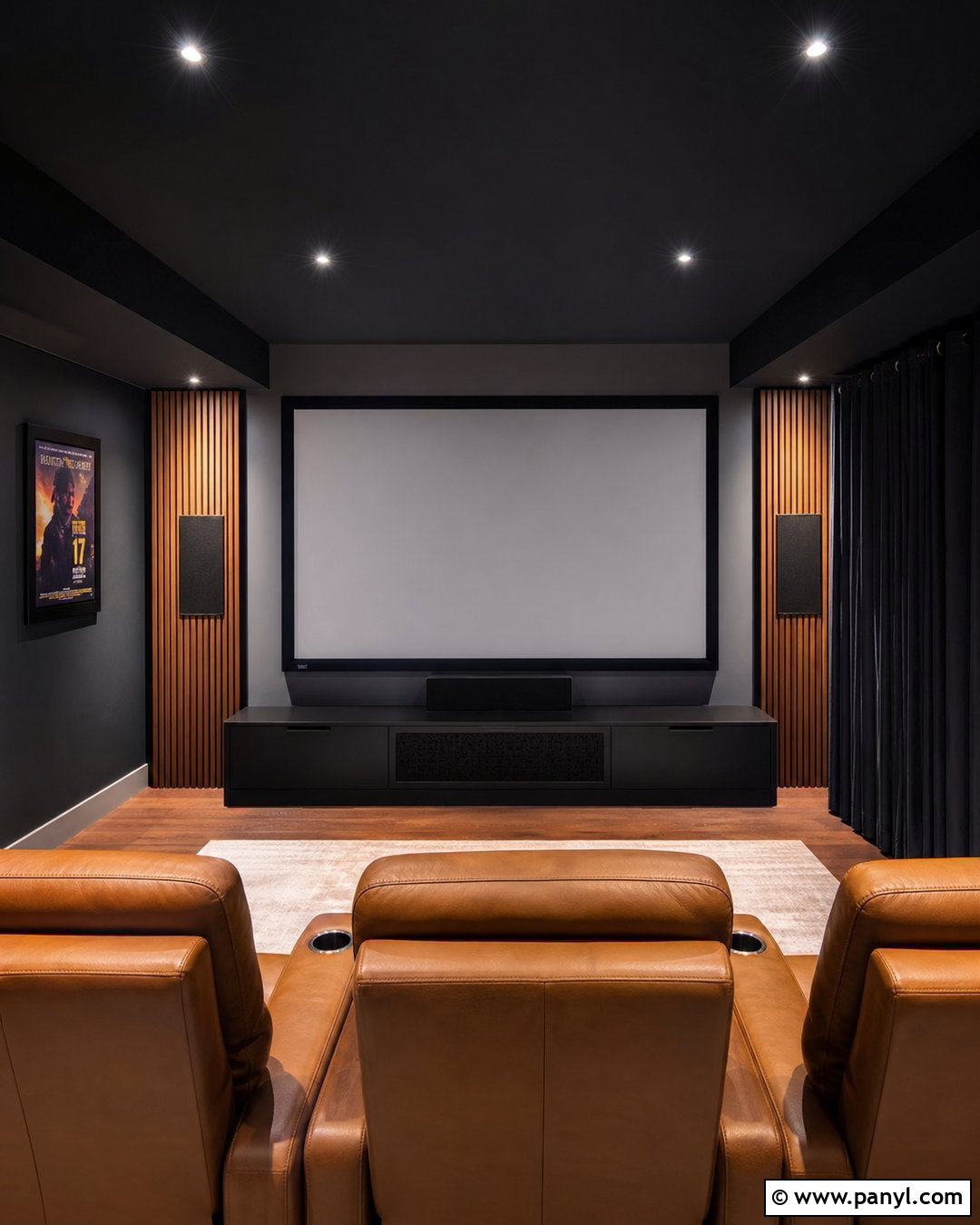
Medium gray creates a bold projection wall for a room equipped with a sufficiently bright projector. Because a deeper gray surface reduces reflected light from both the projector and the room, it can produce darker-looking blacks but may also make bright areas less intense. () Balance the wall with a charcoal ceiling, dark side walls, and full-length blackout drapes. Choose cognac leather seating to add warmth, then include a black media cabinet and walnut acoustic panels along the rear wall. Recessed lighting should be divided into zones so fixtures near the screen can remain off. This cohesive arrangement is well suited to sports, dramatic movies, and gaming. Test a large painted sample first, since projector brightness and image size will determine whether the finished picture remains lively.
8. Charcoal Gray Projector Wall
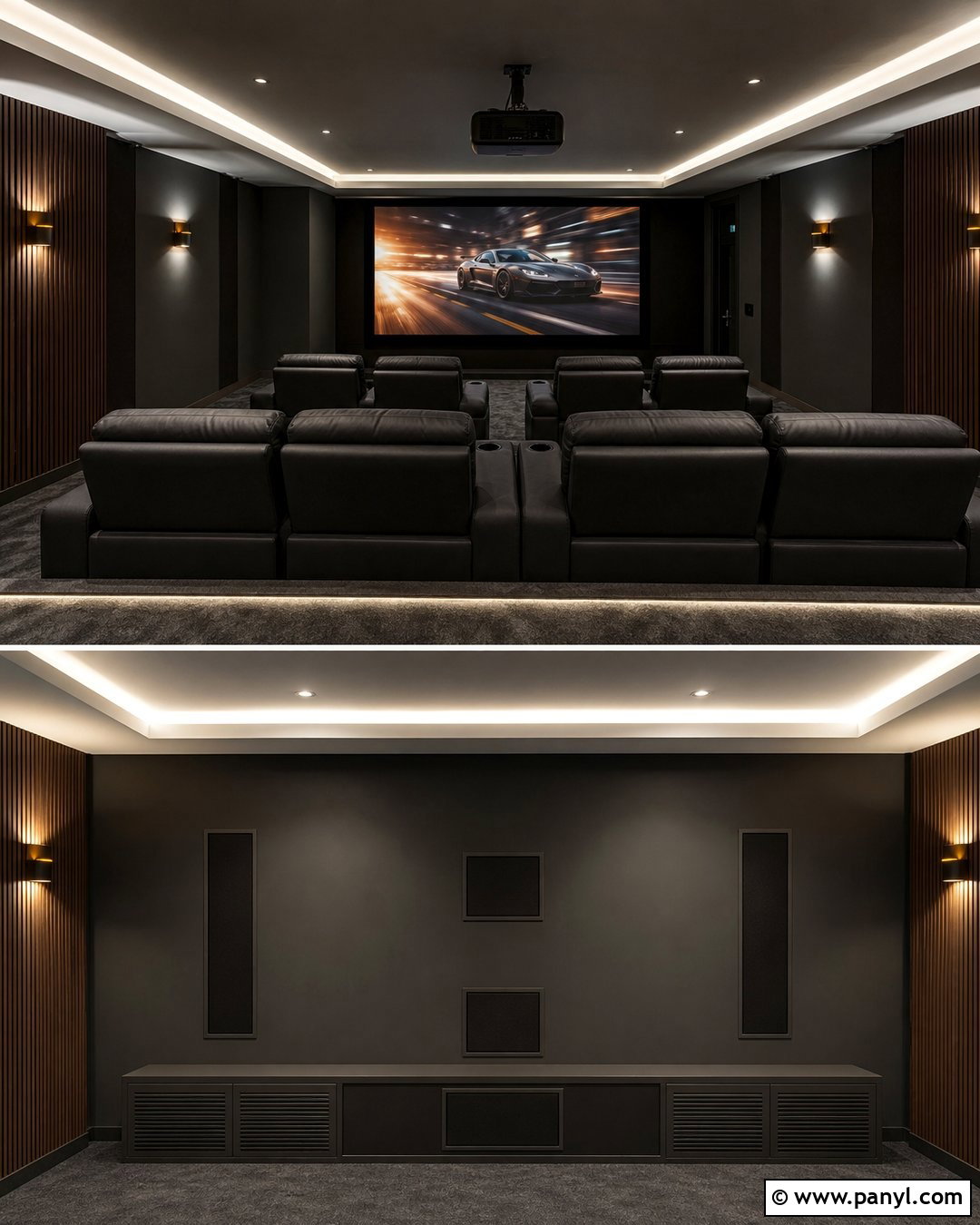
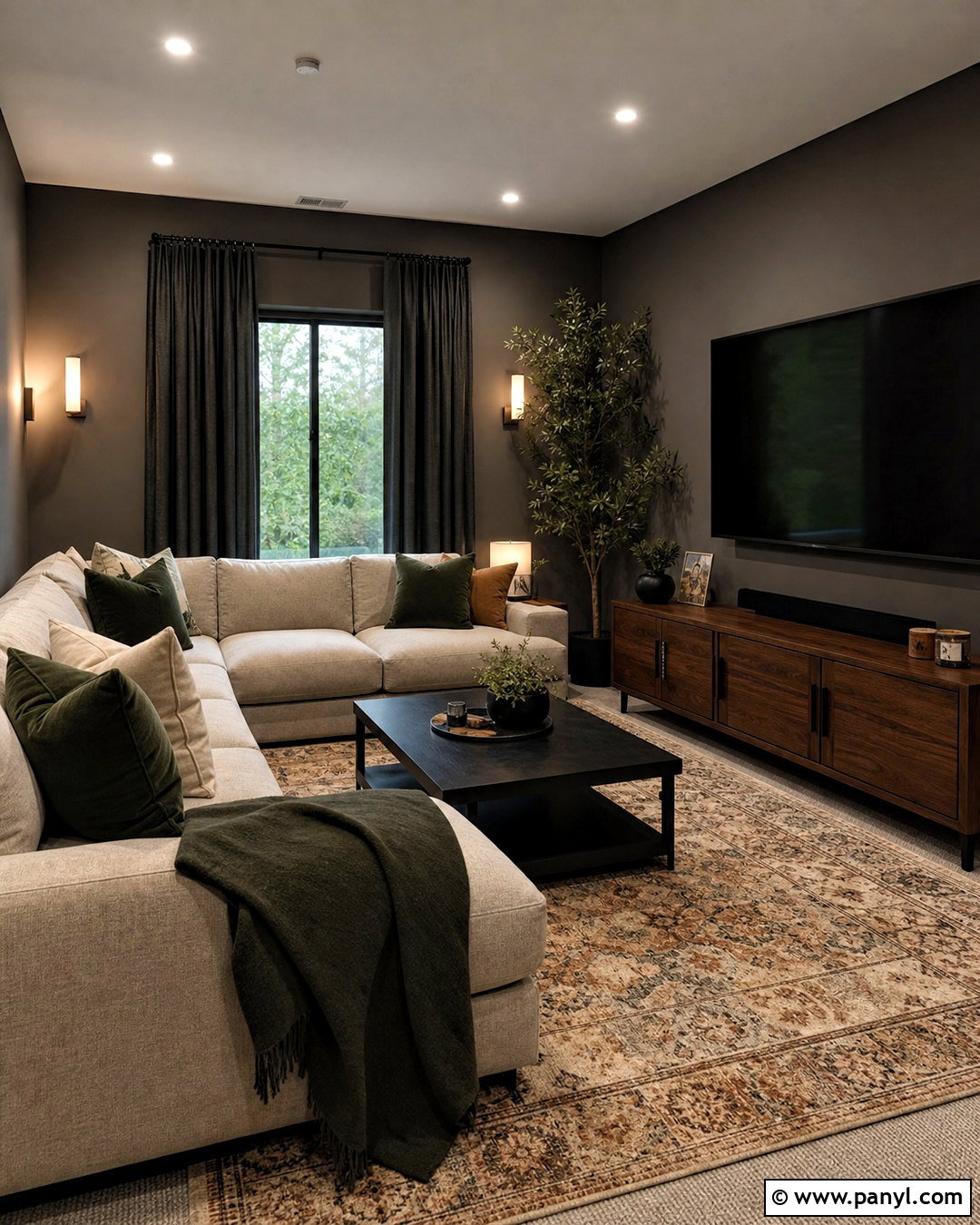
Charcoal gray turns the viewing surface into an intentional architectural feature, even when the projector is not running. This dark option is best paired with a high-output projector and strong control over image size, calibration, and room lighting. Paint the wall in an ultra-matte finish and repair every dent beforehand, since projected light can reveal texture. Continue the charcoal color across the ceiling and side walls for an enveloping theater effect. Add black reclining seats, a dark wool carpet, walnut wall slats, and understated bronze sconces placed behind the viewing position. Keep accessories limited so the screen wall remains visually quiet. The room will feel compact and immersive, making this scheme particularly effective in a basement or converted den where natural daylight can be fully blocked.
9. Near-Black Projector Wall
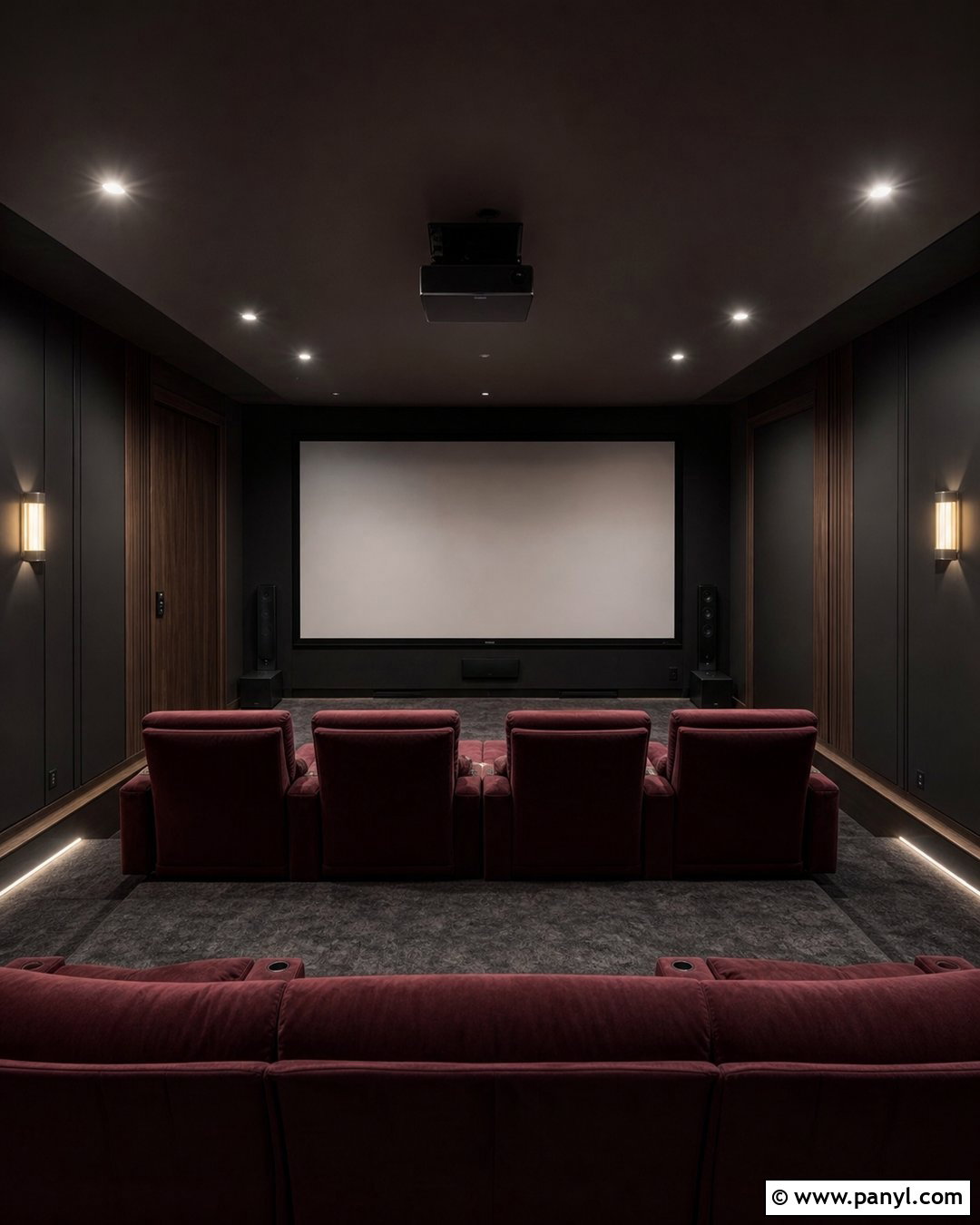
A near-black projector wall produces a dramatic, specialized media space rather than a casual multipurpose room. Choose a deep neutral black with a flat finish, not a blue-black or glossy decorative paint. Very dark projection surfaces can preserve the appearance of black under challenging lighting, but they need substantial projector brightness to keep whites and colors from becoming muted. () Use the same near-black shade on the ceiling and surrounding walls, then introduce dark burgundy seating, black carpeting, and espresso wood details. Conceal speakers behind dark acoustic fabric panels and use step lights near the floor for safe movement. This complete design minimizes visual distractions and puts attention on the picture, making it most appropriate for committed movie watchers with carefully selected equipment.
10. White Projector Wall With Black Border
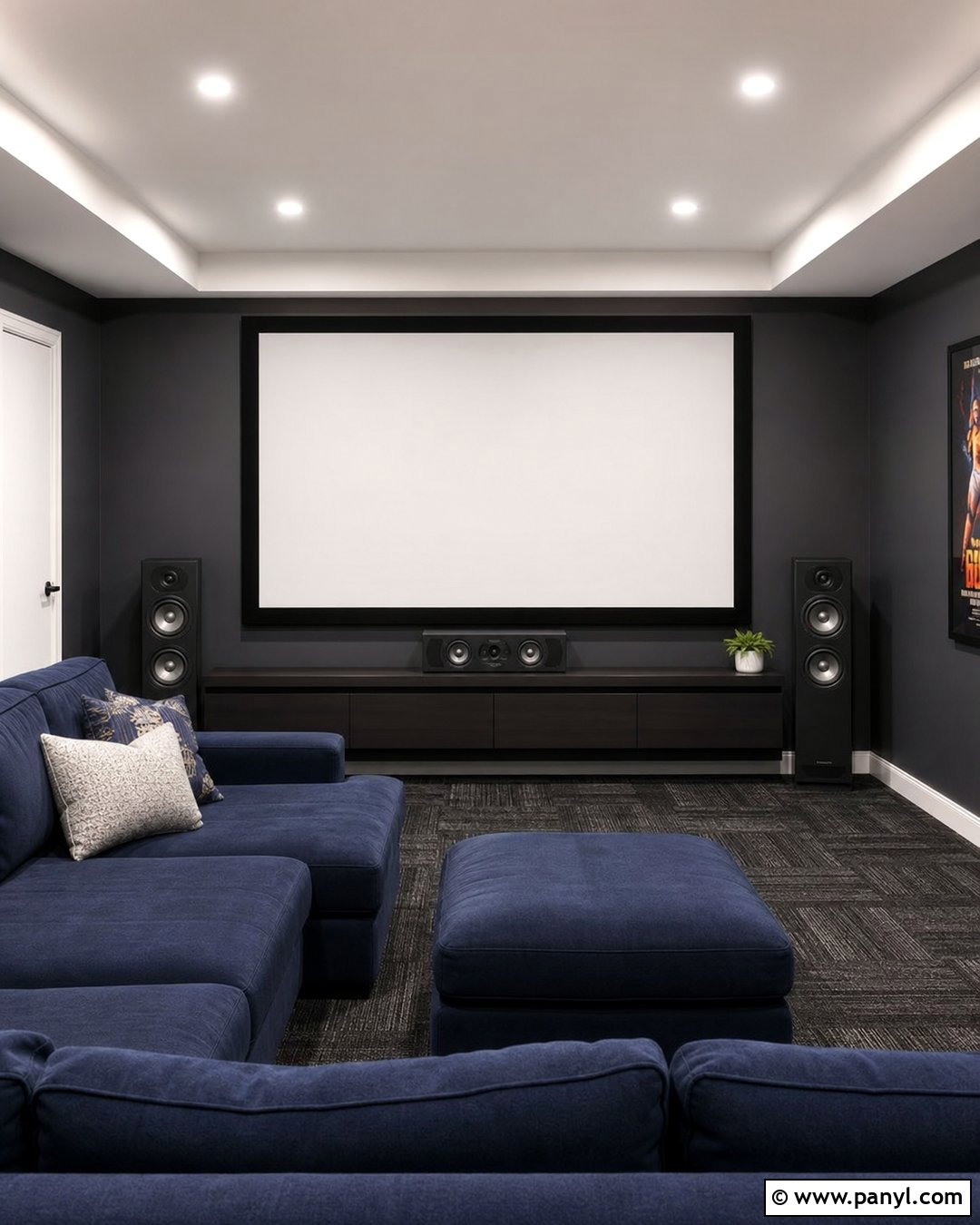
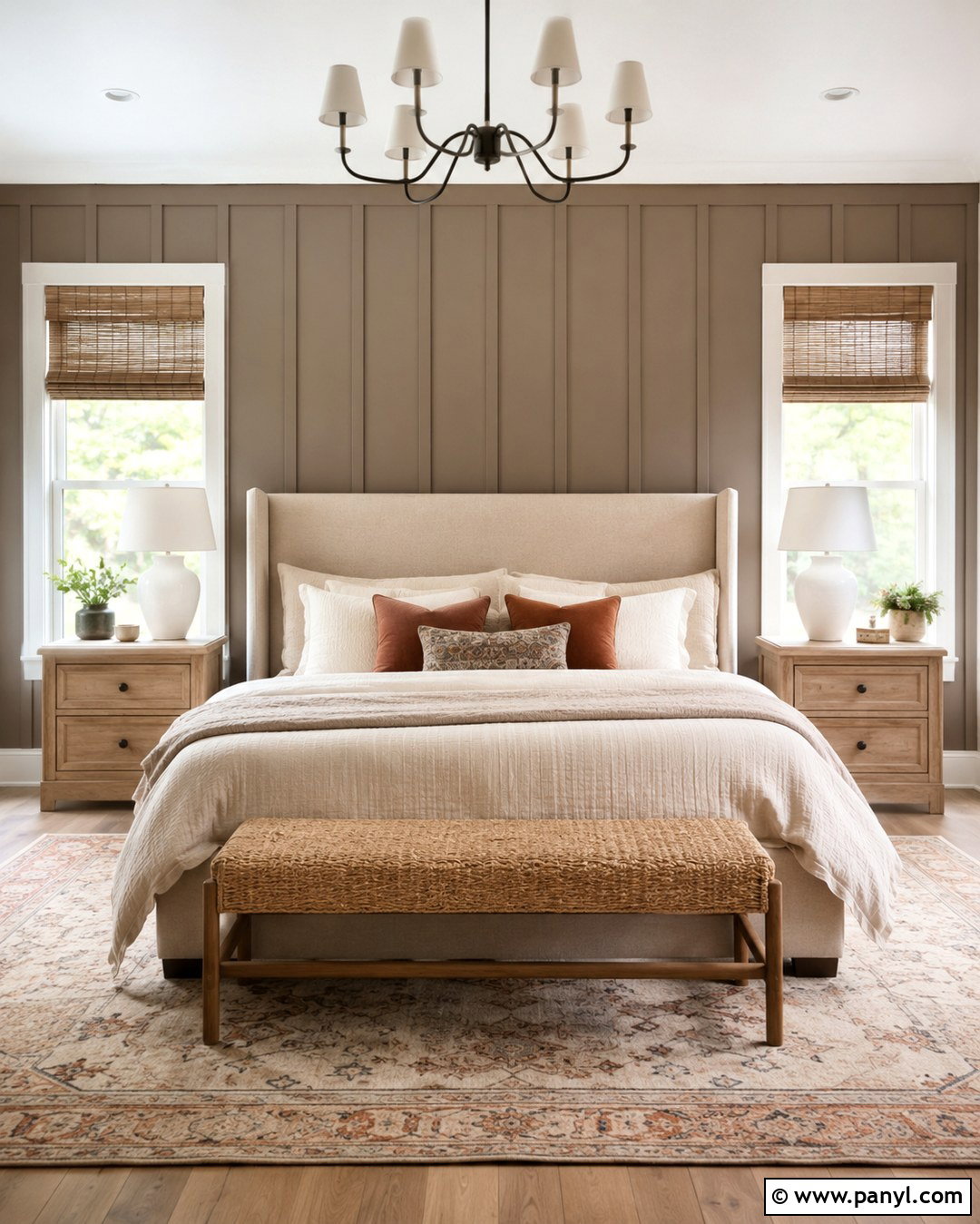
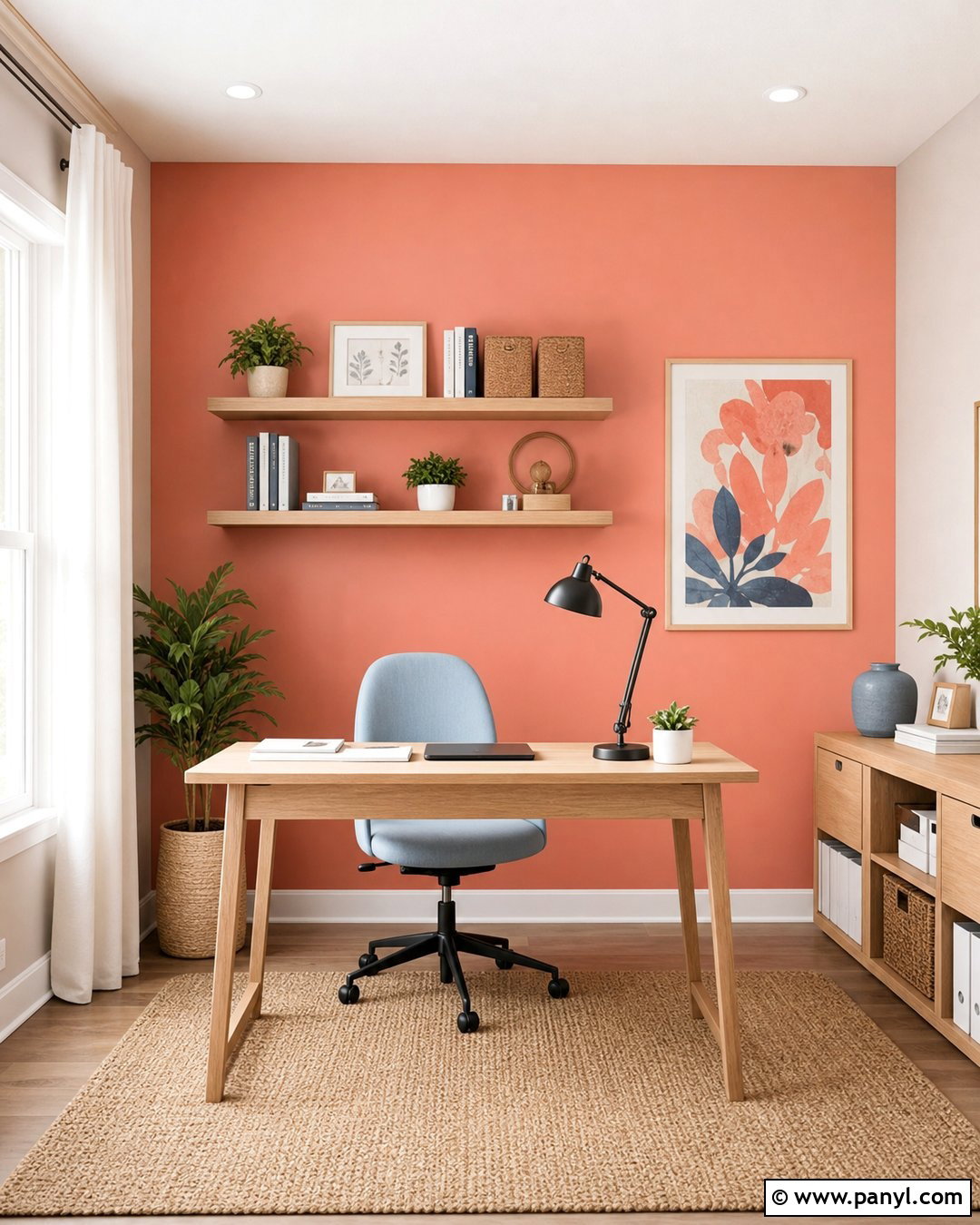
A black border gives a white projector wall a crisp, screen-like shape without installing a traditional fixed frame. Paint a precisely measured white rectangle in a smooth matte finish, then surround it with a wide flat-black border. The border should match the projector’s final image size and aspect ratio, so complete the equipment placement before measuring. Continue a muted charcoal color over the rest of the wall. Add a black floating console, symmetrical speakers, a deep navy sectional, and dark patterned carpet tiles. Blackout curtains should cover nearby windows from ceiling to floor. The clearly defined viewing area looks finished when the projector is off and helps separate the bright image from its surroundings. This is an approachable DIY option for a basement entertainment room with permanent projector placement.
11. Light Gray Projector Wall With Black Border
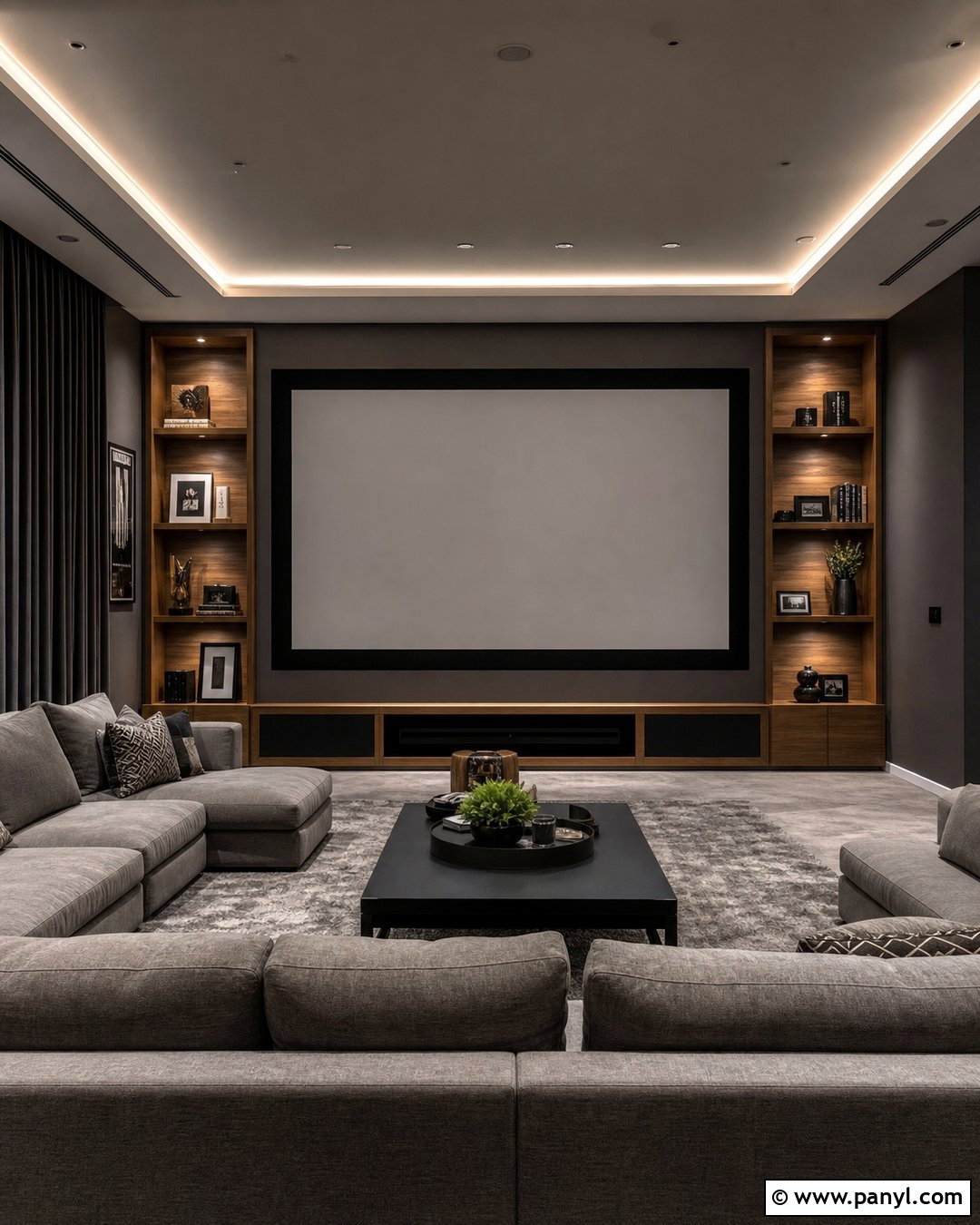
Combining light gray with a black border creates a balanced setup for rooms that cannot stay completely dark. Paint the projection rectangle a flat, color-neutral gray, and use black velvet trim or ultra-matte black paint around its edges. The surrounding wall can be a slightly deeper gray to create a subtle layered effect. Furnish the space with a warm gray modular sofa, black side tables, medium oak shelves, and thick graphite curtains. A low-pile rug prevents the room from feeling echoey while maintaining a streamlined appearance. Place decorative objects only on the side walls, leaving the image area uncluttered. This coordinated design offers stronger visual definition than an all-gray wall while remaining softer and more versatile than a fully black home theater.
12. Greige Projector Wall
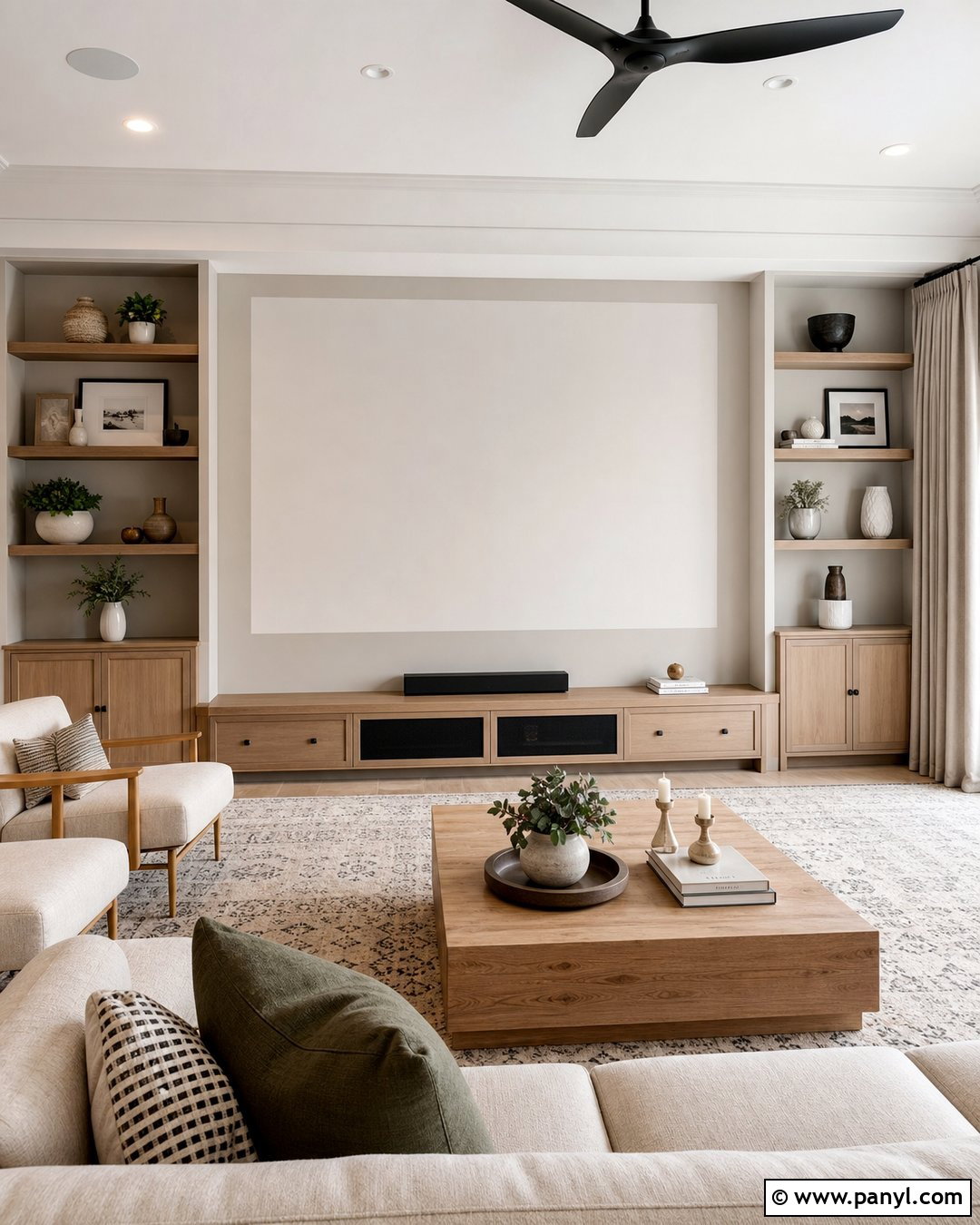
Greige can disguise a projector wall within a warm, neutral living room, provided the paint is extremely light and does not lean strongly brown. Choose a pale gray-beige that appears nearly neutral under both daylight and the projector. Since undertones can influence projected colors, test several large samples with familiar content before making a final selection. Complete the room with cream upholstery, white oak furniture, taupe blackout curtains, and matte-black hardware. Position a slim console below the viewing zone and arrange built-in cabinets at both ends rather than across the projected surface. Soft recessed lights and shaded floor lamps provide daily illumination without washing the wall. This cohesive look is ideal when the projector replaces a television but the room still needs to feel inviting and decorative during ordinary daytime use.
13. Pale Taupe Projector Wall
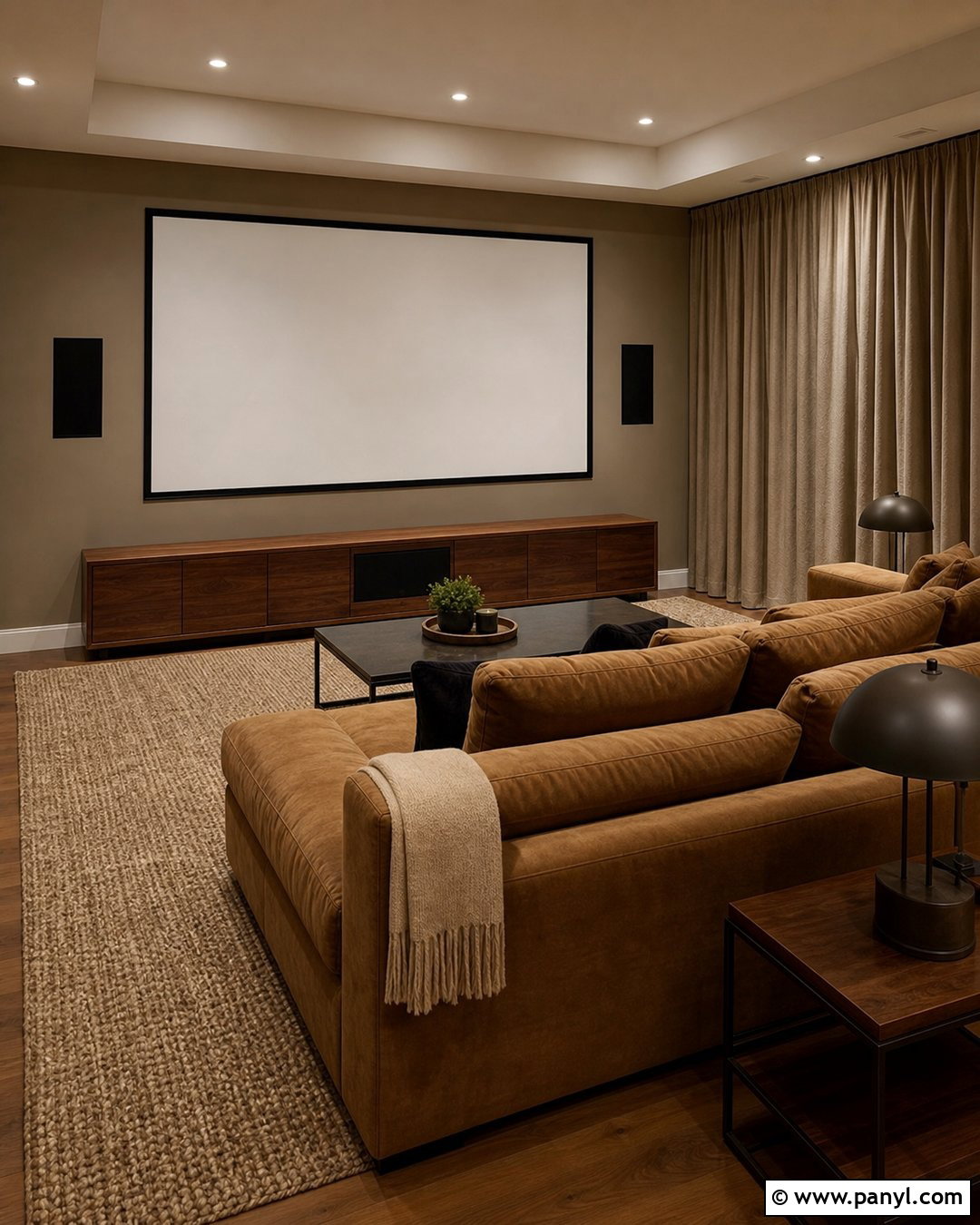
Pale taupe gives a projector wall an earthy appearance that complements beige, brown, and natural wood furnishings. Keep the chosen shade very light, balanced, and low in red undertones. A strongly colored taupe can shift white areas and skin tones, so project test footage directly onto painted sample boards before proceeding. Pair the finished wall with a camel-colored sofa, walnut media cabinet, woven wool rug, and flax curtains with hidden blackout lining. Add dark bronze lamps and black speaker grilles to sharpen the otherwise soft palette. During viewing, switch off every light aimed toward the wall. The resulting room feels warm and sophisticated, offering a practical solution for homeowners who dislike cool gray but still want a quieter projection background than bright, gallery-like white.
14. Blue Gray Projector Wall
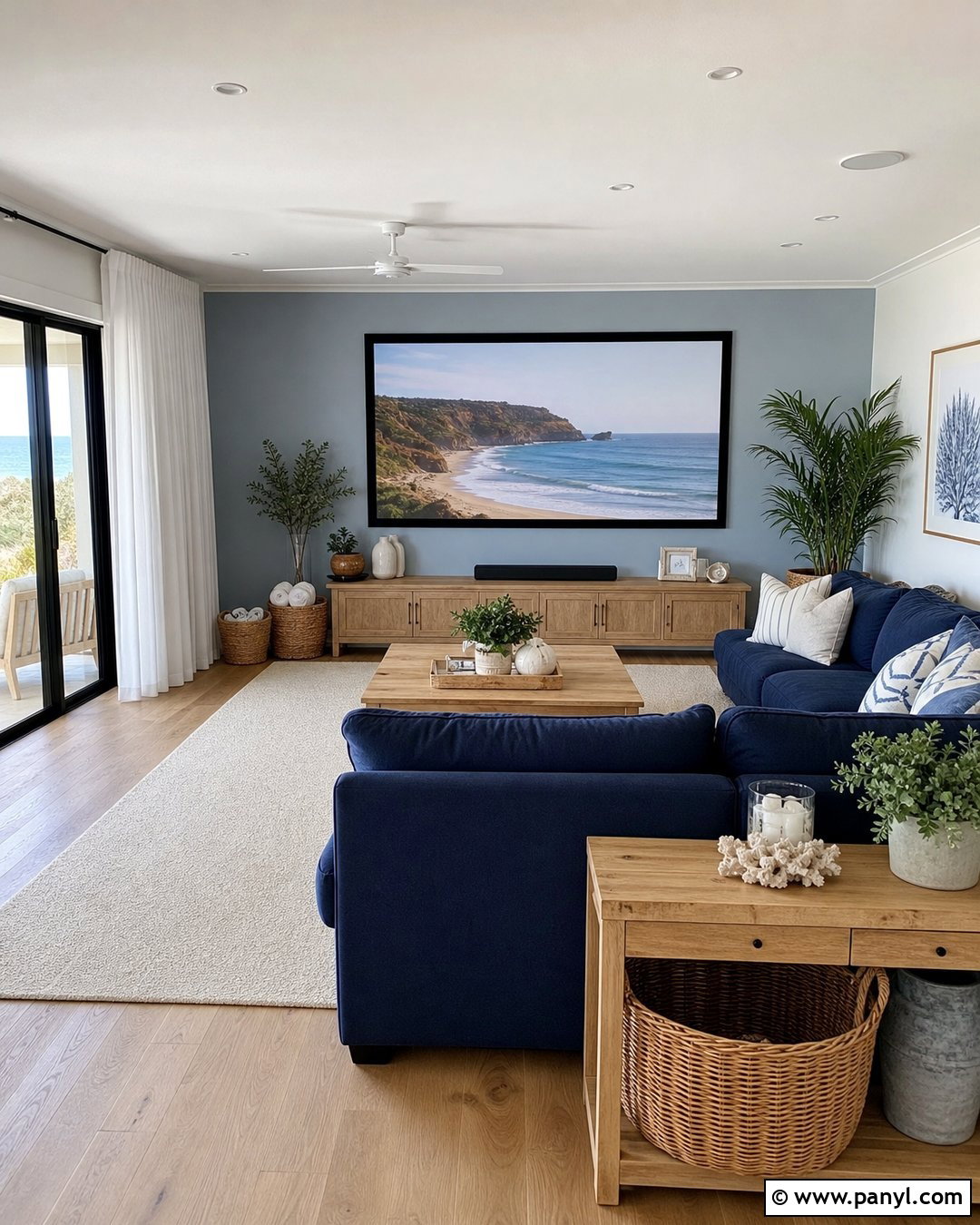
A pale blue-gray projector wall can complement a coastal or cool contemporary room when its blue undertone is barely visible. Select a low-saturation shade that reads mostly as light gray from across the space. Strong blue paint will alter the apparent balance of projected colors, so careful testing and projector calibration are important. Style the room with a navy sectional, natural oak console, cream rug, and white blackout curtains. Use woven baskets and restrained coastal artwork on the side walls rather than placing objects inside the projection zone. Paint the ceiling soft white to keep the room open and airy. This complete design allows the wall to contribute gentle color during the day while still providing a clean, calm viewing area for movies after the windows are fully covered.
15. Green Gray Projector Wall
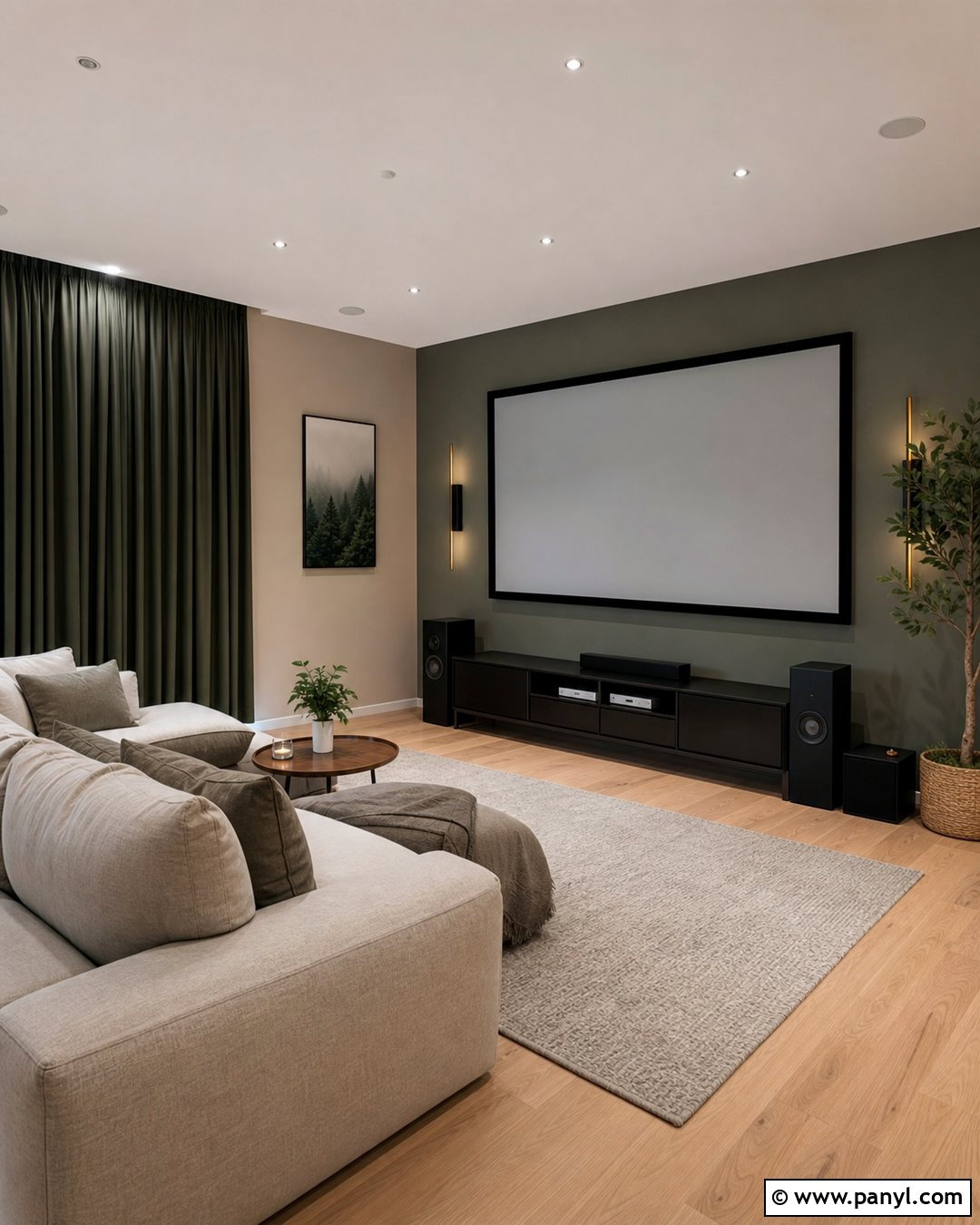
Muted green-gray offers a subtle connection to nature while keeping the projection surface relatively neutral. Look for a very pale mineral or sage-gray shade without strong yellow undertones. Test the paint during daytime and nighttime because green can become more visible as surrounding light changes. Pair the wall with light oak flooring, an oatmeal sofa, dark green blackout drapes, and matte-black media furniture. Natural textures such as wool, linen, and unfinished wood reinforce the organic palette. Install dimmable ceiling fixtures behind the seating and avoid sconces near the image. This projector wall works best in a relaxed den where design integration matters as much as peak technical performance. The finished room feels peaceful and coordinated rather than resembling a conventional electronics-focused home theater.
16. White Projector Area With Dark Gray Walls
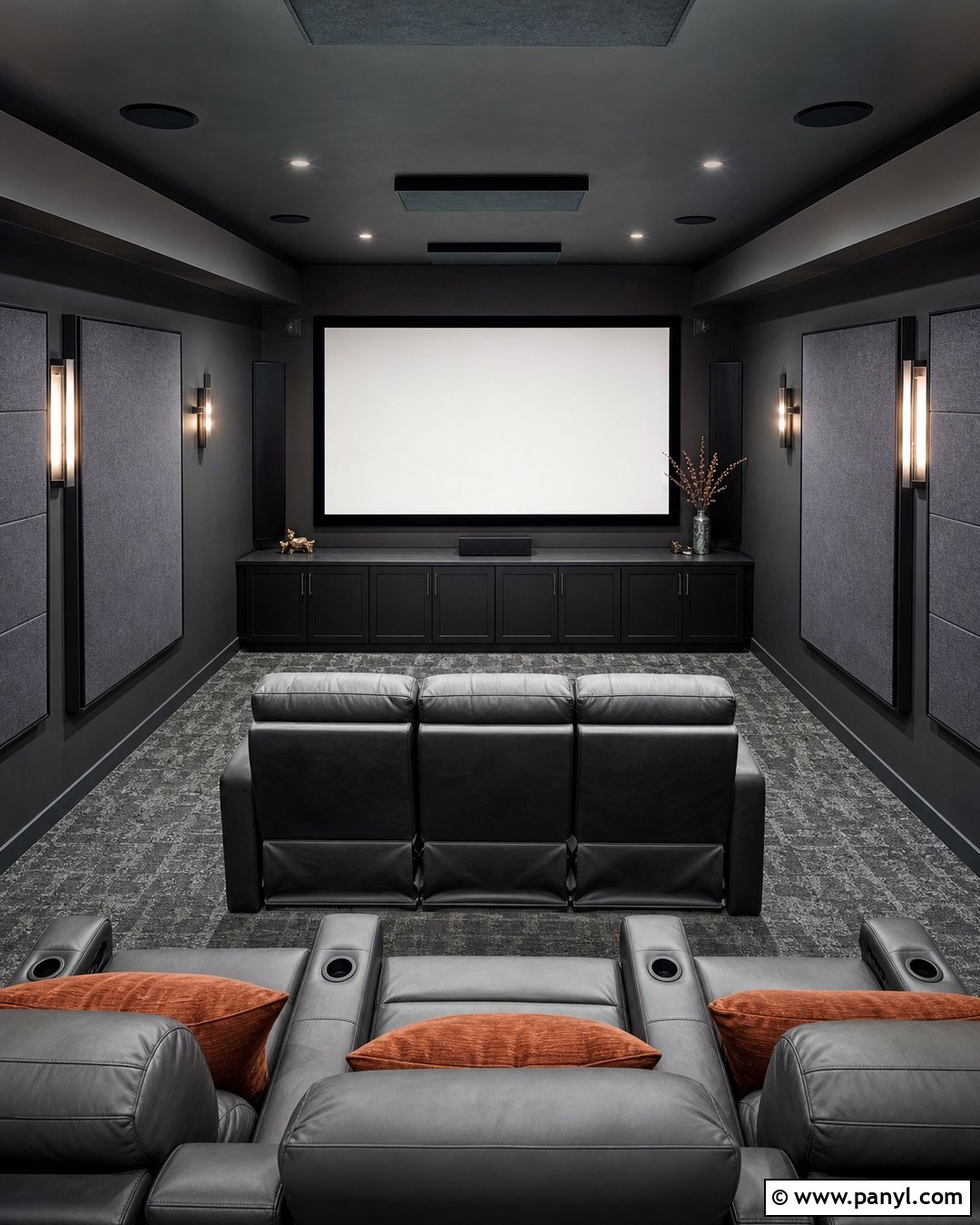
Creating a white projection area within dark gray walls combines brightness with better control of reflected room light. Paint a large, accurately proportioned white rectangle where the image will appear, then cover the remaining wall, side walls, and ceiling in a deep neutral gray. Keep both surfaces flat and sharply edged. Install a low black cabinet beneath the image and select charcoal seating with a few muted rust pillows for warmth. Dark carpeting, blackout shades, and fabric acoustic panels complete the room. This approach provides a visually defined screen while preventing nearby pale surfaces from competing with the picture. It also lets the white area remain bright without making the entire room feel reflective. The result suits a dedicated theater that still needs a slightly softer alternative to all-black walls.
17. Gray Projector Area With Navy Walls
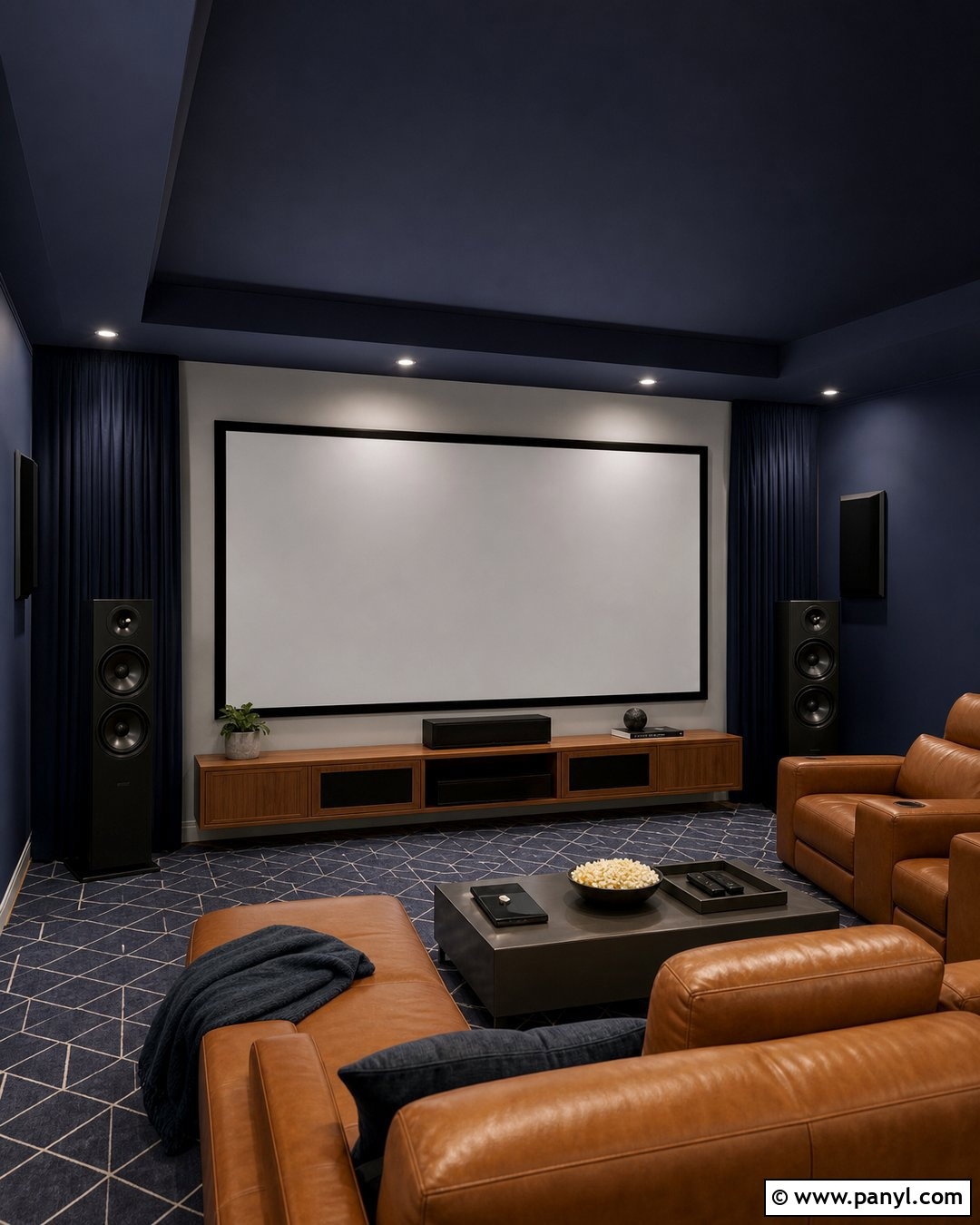
A light gray projection rectangle surrounded by deep navy creates a tailored theater look with more personality than standard black. Use a balanced, flat gray inside the exact image area and a very dark, desaturated navy across the rest of the wall. Extend the navy onto the ceiling and adjacent walls to reduce visual distractions. Add cognac leather seating, a walnut media console, navy acoustic curtains, and a dark geometric rug. Black equipment and speaker covers blend naturally into the scheme. Use small recessed fixtures or wall lights behind the sofa, allowing the screen end of the room to remain dark during viewing. The finished design feels polished and comfortable while giving the projection surface enough separation to read as an intentional focal point.
18. White Projector Wall With Charcoal Ceiling
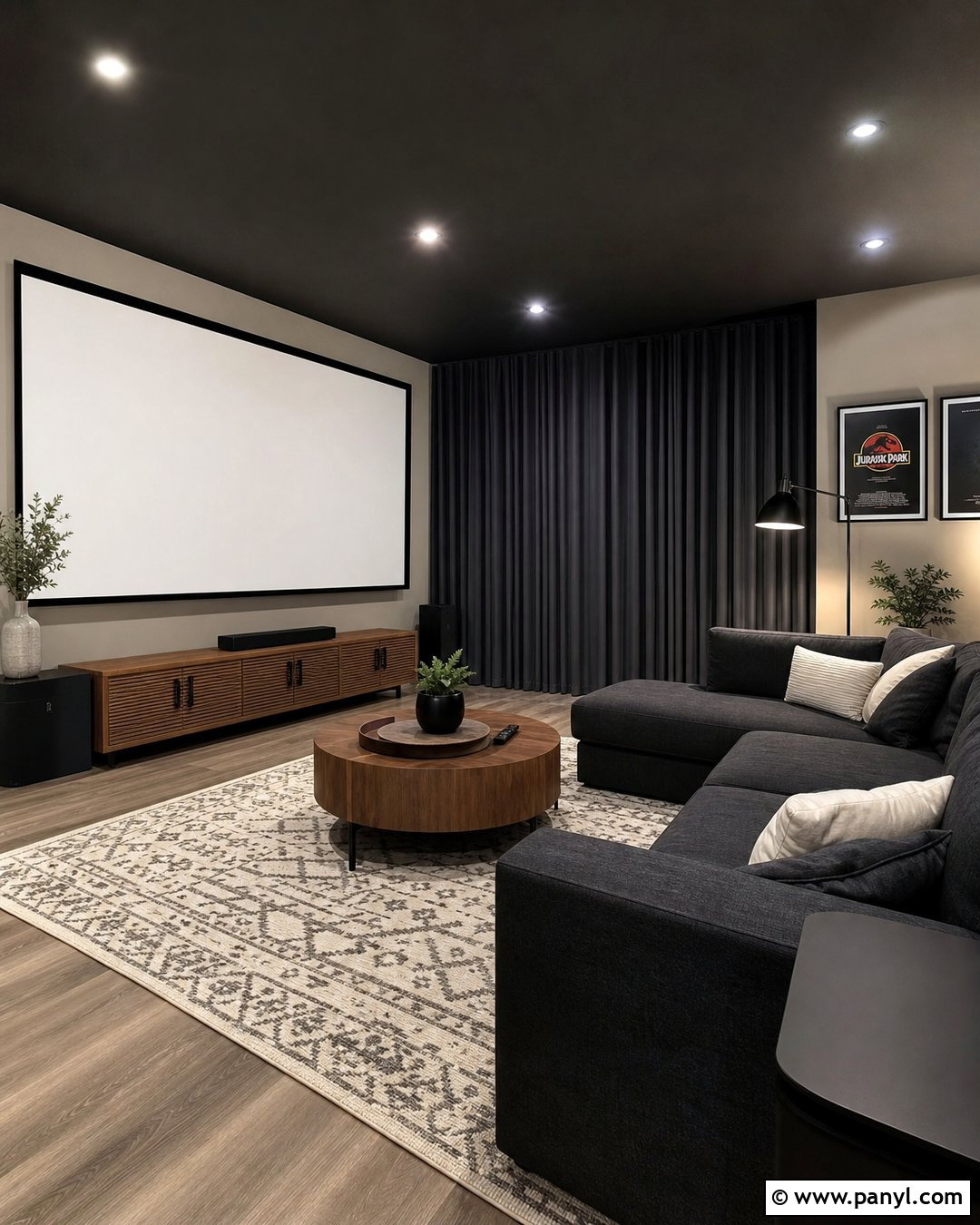
When you want a bright projection surface without darkening the whole room, combine a matte white wall with a charcoal ceiling. The white wall supports a vivid image, while the darker ceiling can reduce noticeable light reflection close to the screen. Paint the side walls a medium warm gray to create a gradual transition between the two colors. Furnish the room with a graphite sectional, walnut console, black floor lamps, and an ivory rug containing a subtle gray pattern. Add full-height blackout curtains in charcoal fabric and keep glossy finishes away from the viewing end. This layered palette works especially well in a low-ceiling basement because the dark overhead color makes the room feel theater-like while the white screen wall preserves an open, clean appearance.
19. Light Gray Projector Wall For A Bright Living Room
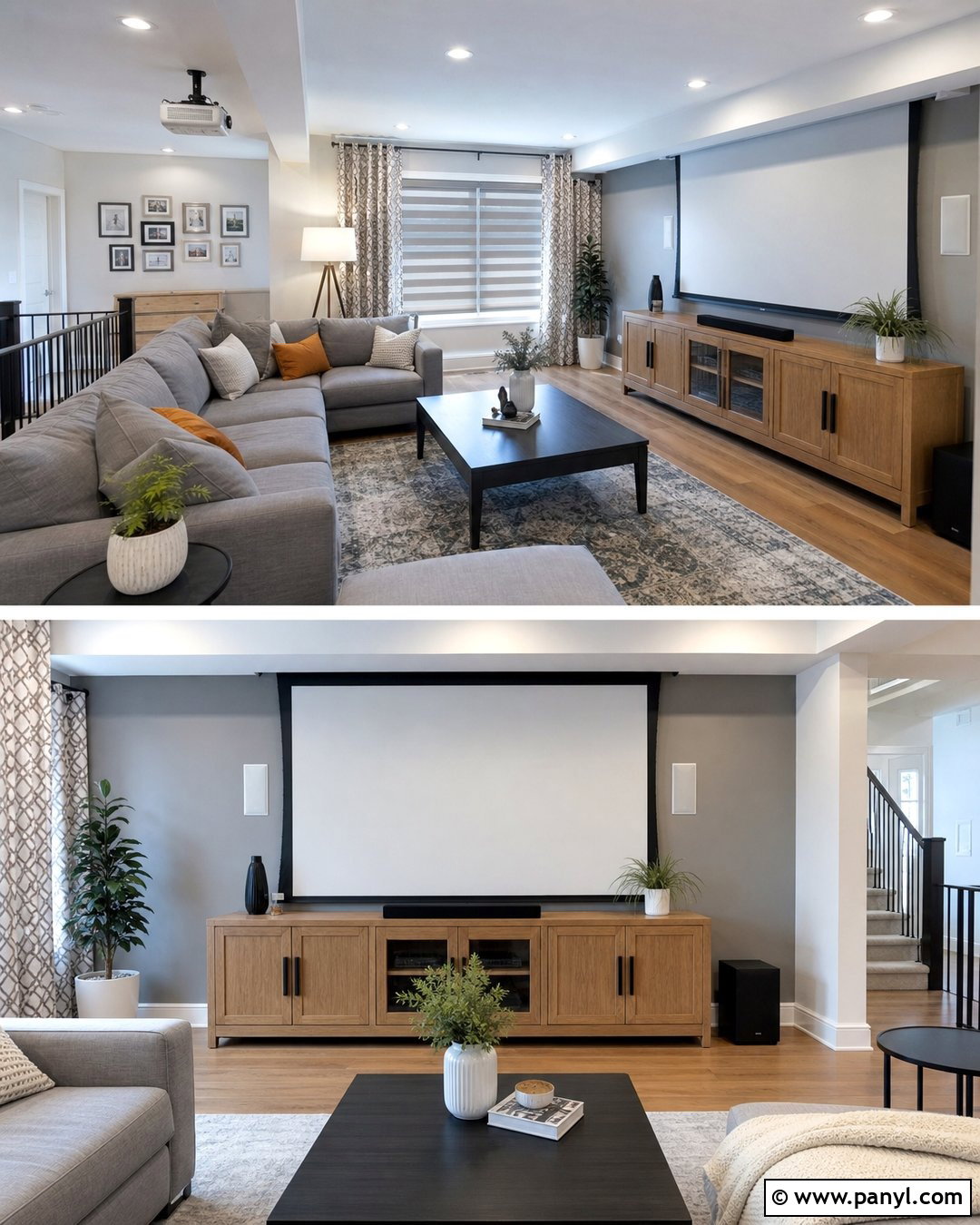
A light gray projector wall is a practical visual choice for a living room where some daylight may remain, although paint cannot duplicate the optical performance of a purpose-built ambient-light-rejecting screen. Specialized screens control incoming light in ways an ordinary painted wall cannot. () Choose a smooth neutral gray and pair it with layered window treatments, including blackout roller shades and decorative curtains. Use a medium-tone sectional, oak storage console, black coffee table, and low-reflectivity textiles. Arrange ceiling lights in separate zones so the rear fixtures can stay on while those near the projection wall are off. This complete setup supports casual daytime sports and evening entertainment while allowing the room to remain comfortable, bright, and functional between viewing sessions.
20. Soft White Projector Wall For A Small Bedroom
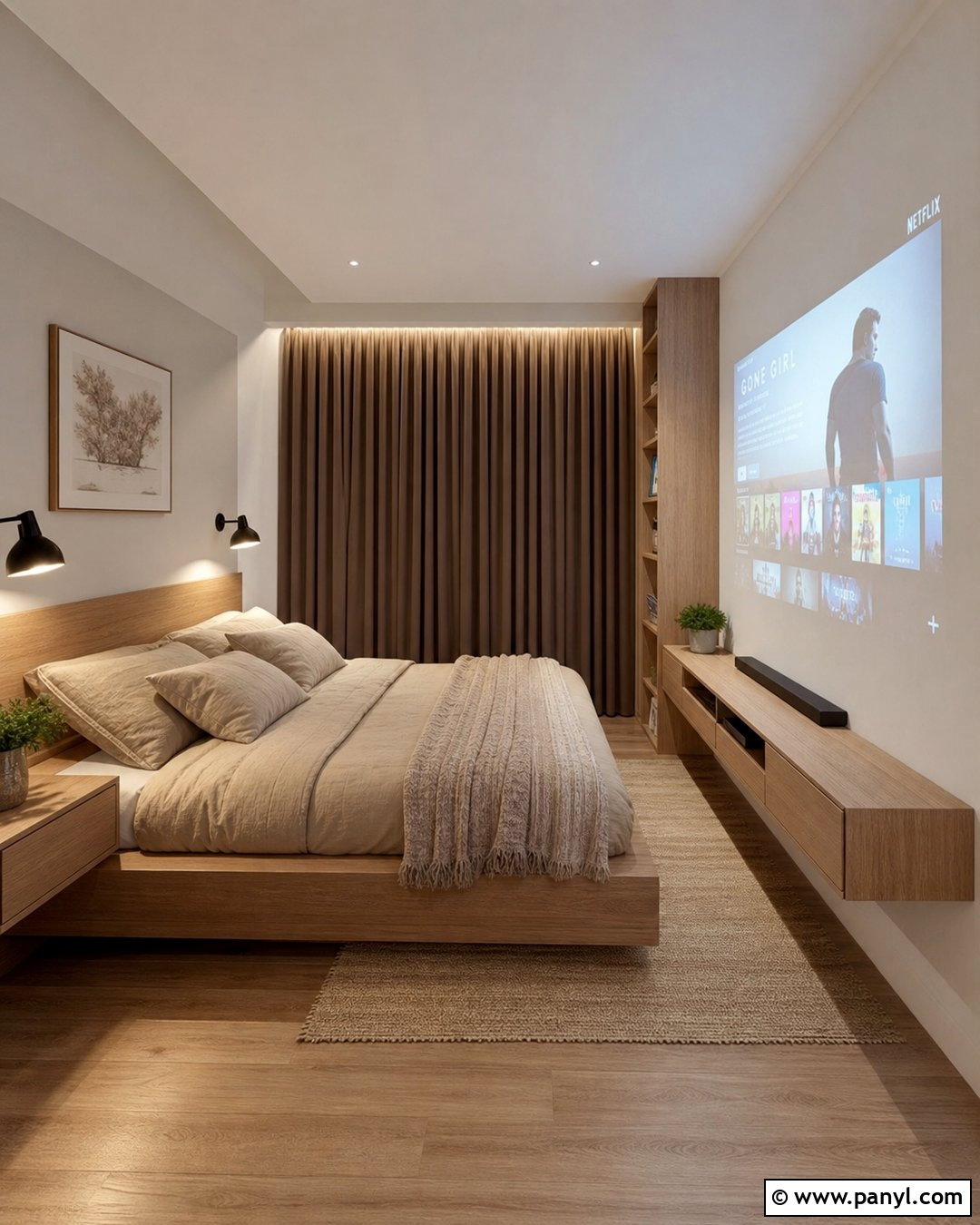
Soft white keeps a compact bedroom projector setup airy and unobtrusive. Use the largest clear wall opposite the bed, remove shelves and artwork, and repair the surface until it is smooth. Paint it a restrained matte white that coordinates with the remaining walls. Choose a low platform bed, light wood nightstands, beige bedding, and full-length mushroom-colored blackout curtains. Mount the projector securely or place it on a stable rear shelf, keeping cables organized in a paintable channel. A narrow floating cabinet below the image can hold small equipment without reducing floor space. Add dimmable bedside sconces that direct light downward and away from the projection area. The result is a calm bedroom that becomes a comfortable personal cinema without feeling crowded or overly technical.
Conclusion:
The most effective projector wall color depends on your projector’s brightness, room lighting, image size, and decorating goals. Matte white remains a strong option for maximum brightness in a dark room, while light neutral gray offers a useful balance for many multipurpose spaces. Medium gray, charcoal, and near-black finishes create deeper-looking dark scenes but demand more light output. Slightly tinted neutrals can blend beautifully with existing decor, though every undertone should be tested with real projected content first. Whatever scheme you select, prepare a smooth wall, avoid glossy paint, control nearby lighting, and coordinate the surrounding surfaces. These 20 Projector Wall Color Ideas make it easier to create a viewing space that looks attractive both on and off screen.

Related Ideas and Inspiration:
Leave a Reply