
A great surround sound living room should feel comfortable, polished, and immersive without looking like an equipment showroom. The best layout starts with seating that faces the screen, clear paths around the furniture, and speakers positioned for balanced coverage. Front speakers belong near the television, the center channel should sit directly above or below it, and surround channels generally work beside or behind the main seating area. Dolby Atmos systems add ceiling-mounted or upward-firing height channels for a more three-dimensional effect. () Rugs, curtains, upholstered furniture, and thoughtful storage can also make the room feel warmer while reducing distracting reflections. Whether you prefer hidden speakers or bold audio equipment, these 20 surround sound living room ideas offer complete, practical looks worth recreating.

1. Modern Surround Sound Living Room
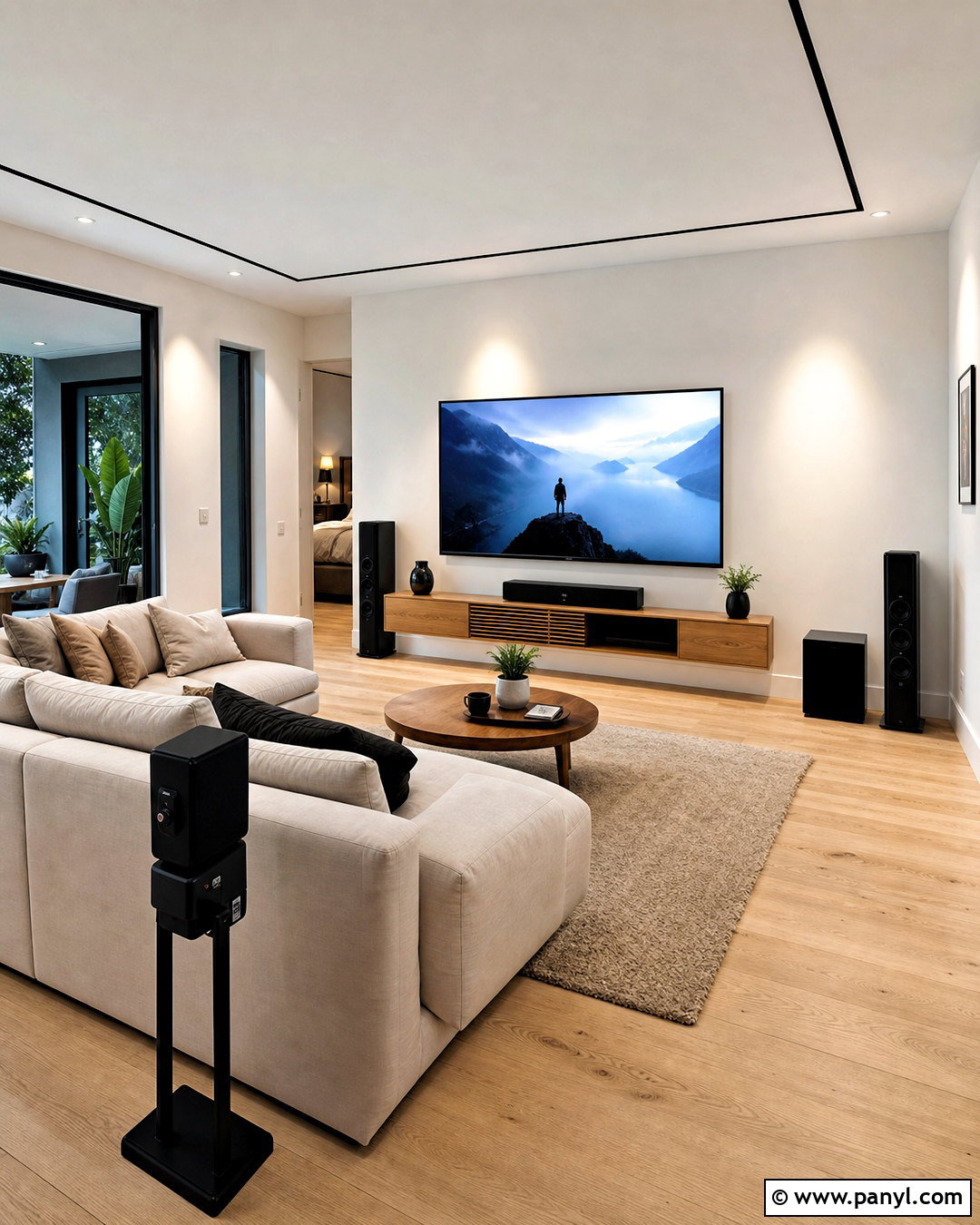
Build a clean modern layout around a low-profile sectional facing a wall-mounted television. Use warm white walls, pale oak flooring, and a long floating media console to keep the room visually open. Place slim black front speakers on both sides of the console, with the center channel directly below the screen. Compact surround speakers can sit on narrow stands slightly behind the sectional. Add two discreet ceiling speakers for height effects if the room supports Dolby Atmos. A large wool rug, lined curtains, and fabric seating help soften hard surfaces without making the space feel crowded. Finish the design with matte black lighting, a round oak coffee table, and a few restrained ceramic accents. Conceal wires inside paintable channels for a polished result.
2. Small Surround Sound Living Room
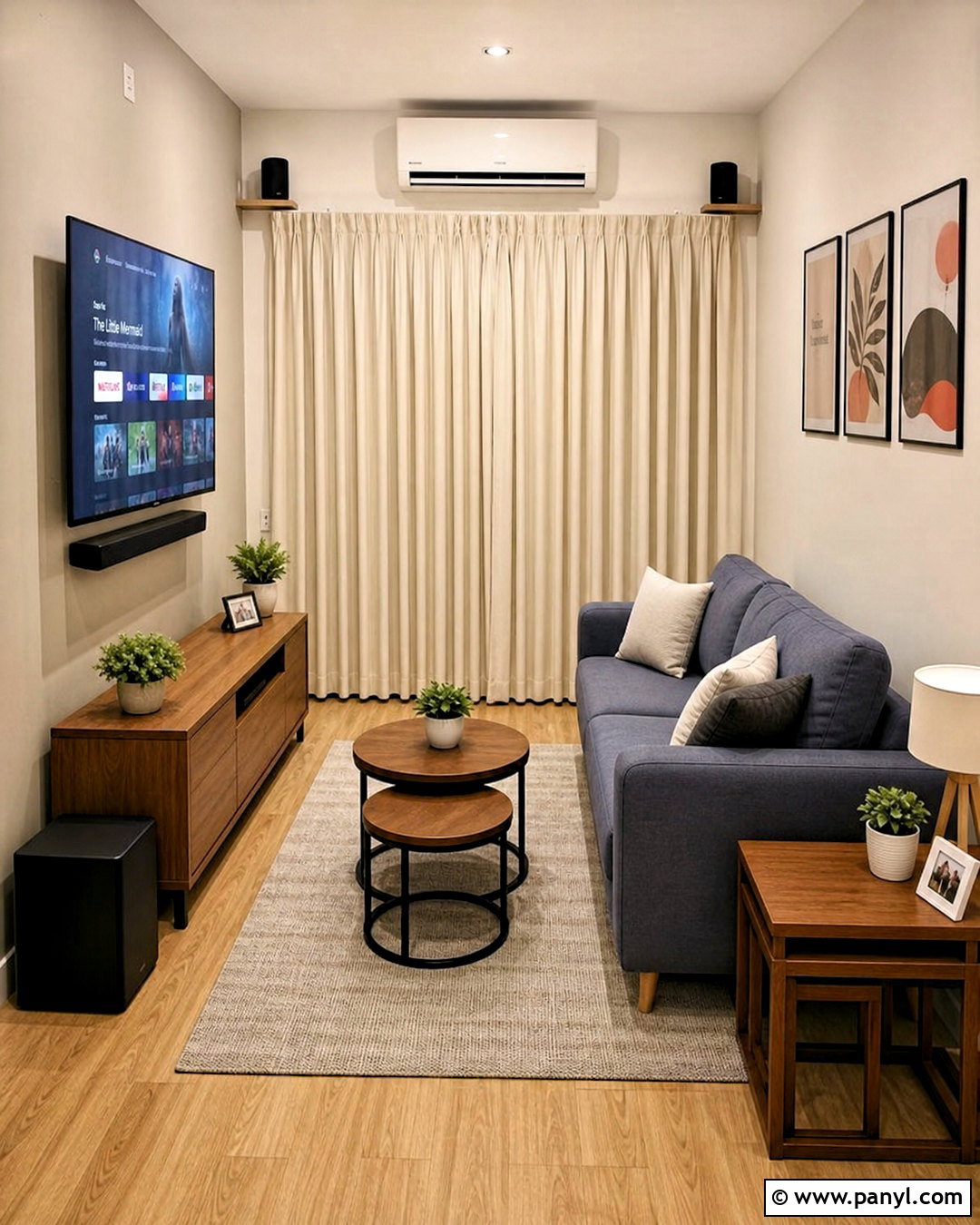
Limited square footage calls for a compact setup that protects floor space and keeps every seat close to the screen. Choose a two-seat sofa with narrow arms, one lightweight accent chair, and a nesting coffee table. Mount the television above a shallow media unit, then use a Dolby Atmos soundbar with a wireless subwoofer and two small rear speakers. A soundbar can provide a practical balance of convenience and room-filling audio in a shared living space. () Mount the rear speakers on the wall or place them on slim corner shelves so they do not interrupt walkways. Soft greige walls, medium oak furniture, and muted blue textiles create a calm look. Add a thick area rug and full-length curtains to make the compact room feel comfortable rather than technical.
3. 5.1 Surround Sound Living Room
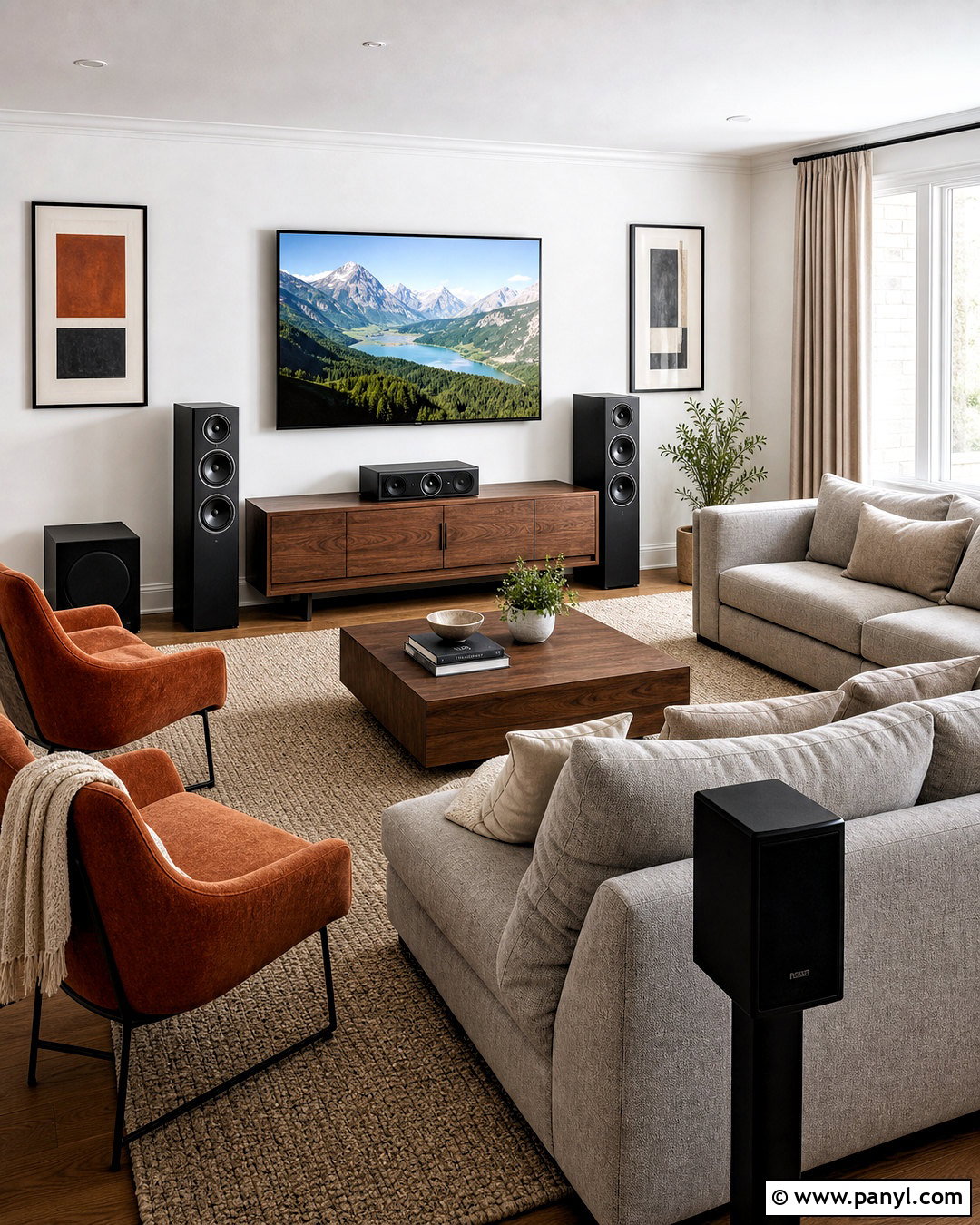
A classic 5.1 arrangement works beautifully in an average rectangular living room. Center the sofa opposite the television and leave enough space behind it for sound to circulate. Position the left and right speakers beside the screen, with the center speaker directly beneath it. Place the two surround channels to the sides or slightly behind the primary listening position, rather than at the front of the room. The subwoofer can begin near the front wall, although testing several positions will reveal where bass sounds most even. () Use a soft gray sectional, walnut media console, oatmeal rug, and rust-colored accent chairs for a balanced transitional look. Framed artwork, linen curtains, and shaded table lamps help the equipment blend into an inviting everyday room.
4. 7.1 Surround Sound Living Room
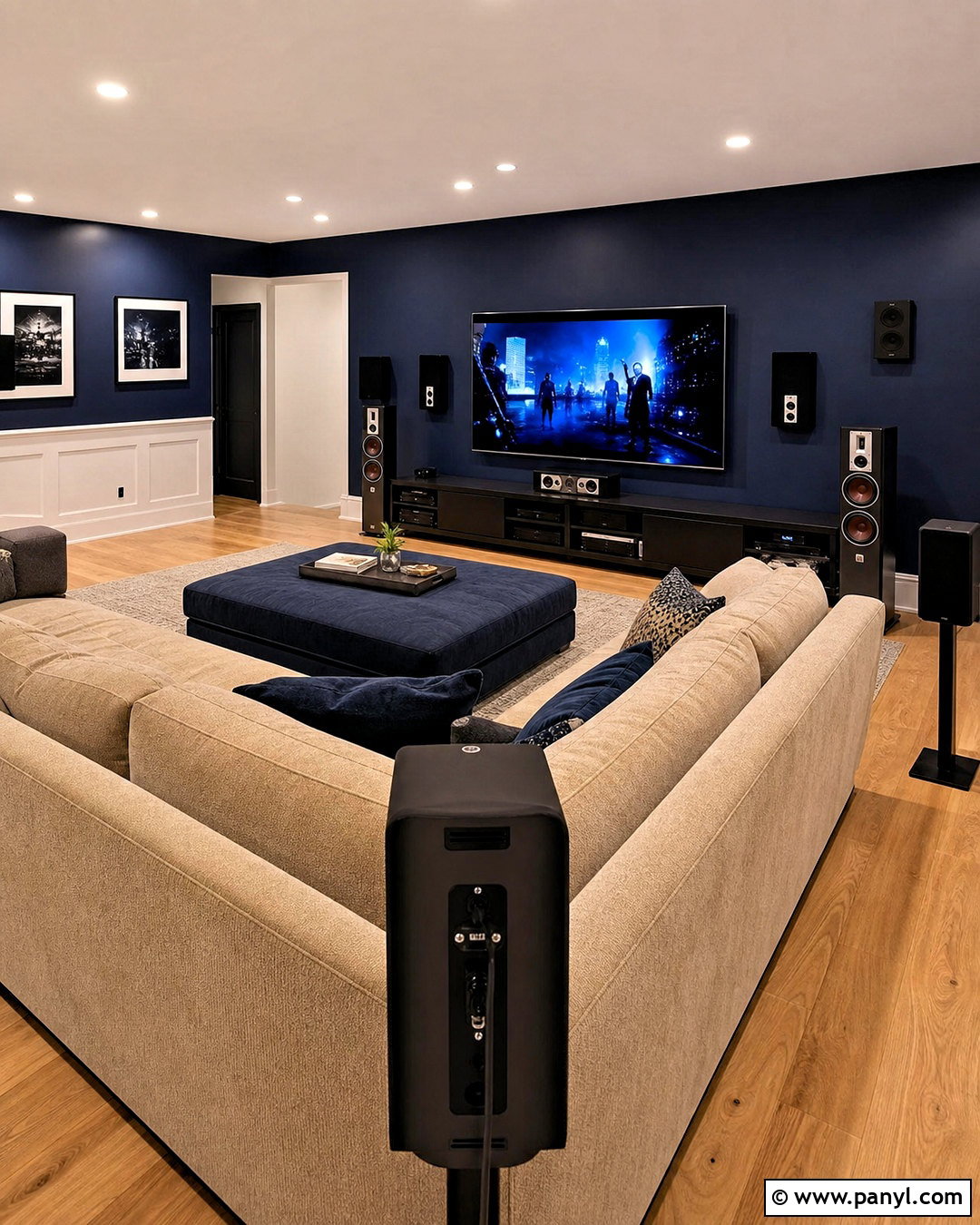
A spacious living room can support a 7.1 system with separate side and rear surround channels. Arrange a large sectional or two parallel sofas around a broad central rug, keeping the main seats aligned with the screen. Use matching tower speakers at the front, a low center channel, side speakers near the seating, and rear speakers along the back wall. Choose slim cabinets or wall mounts so the extra equipment does not overwhelm the decor. Deep navy walls create a cinematic backdrop, while a light beige sectional and natural oak flooring prevent the room from feeling dark. Add an oversized upholstered ottoman instead of a hard coffee table to improve comfort and reduce reflective surfaces. Built-in cabinetry can conceal the receiver, media players, cables, and accessories while leaving ventilation openings.
5. Dolby Atmos Surround Sound Living Room
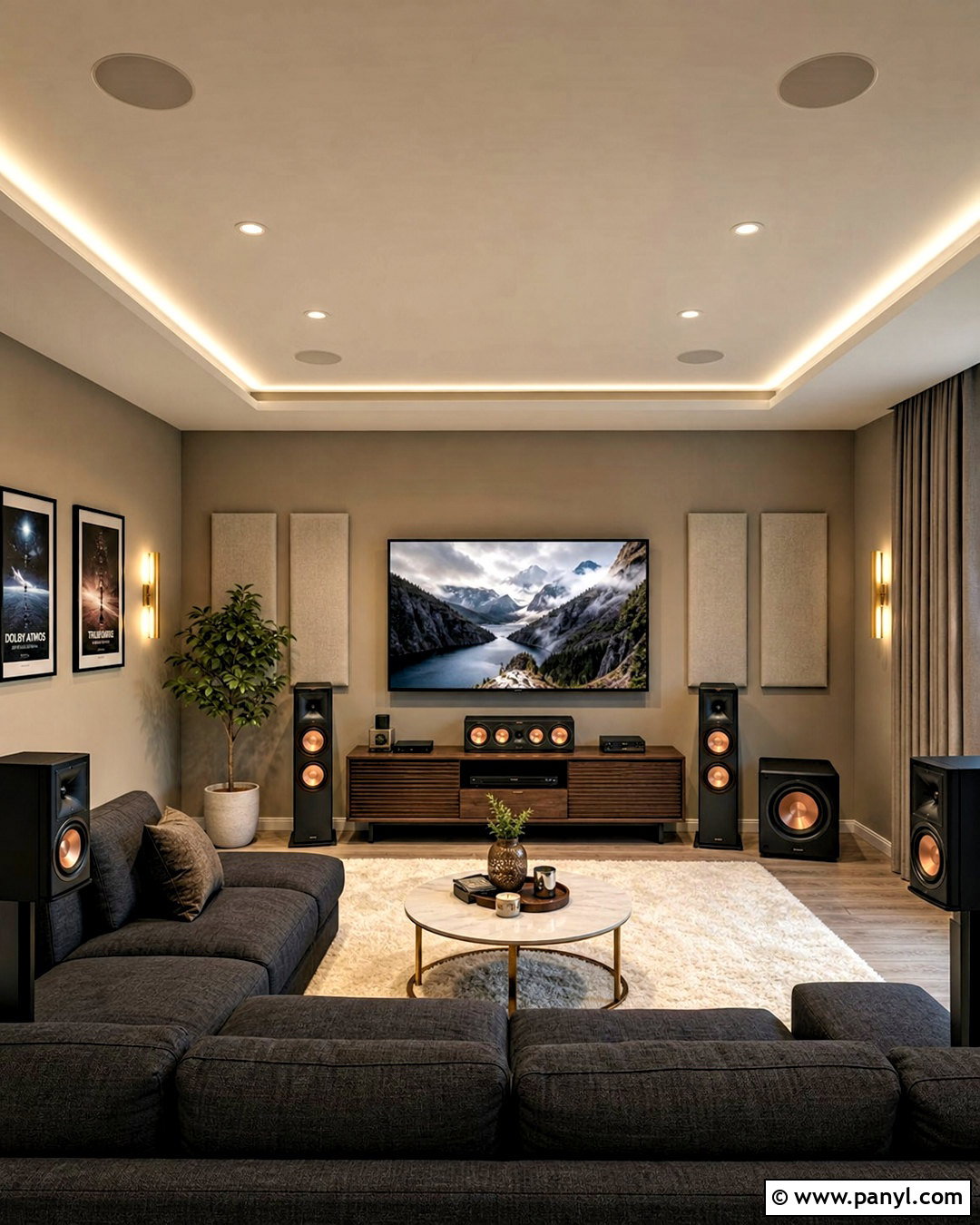
Create an immersive Dolby Atmos room with a 5.1.2 or 5.1.4 layout that adds height channels above the seating area. Start with a centered modular sofa and a large television mounted at a comfortable viewing level. Use three coordinated front speakers, two side surrounds, one subwoofer, and either two or four ceiling speakers. If ceiling installation is not possible, select upward-firing modules and keep the ceiling surface flat and unobstructed. Choose warm taupe walls, a charcoal sofa, medium walnut furniture, and brushed brass lighting for a sophisticated contemporary finish. A plush rug and heavy drapery provide softness, while acoustic panels covered in neutral fabric can resemble decorative wall art. Keep the ceiling speakers symmetrical around the listening area so the entire room looks deliberate and balanced.
6. Hidden Speaker Surround Sound Living Room
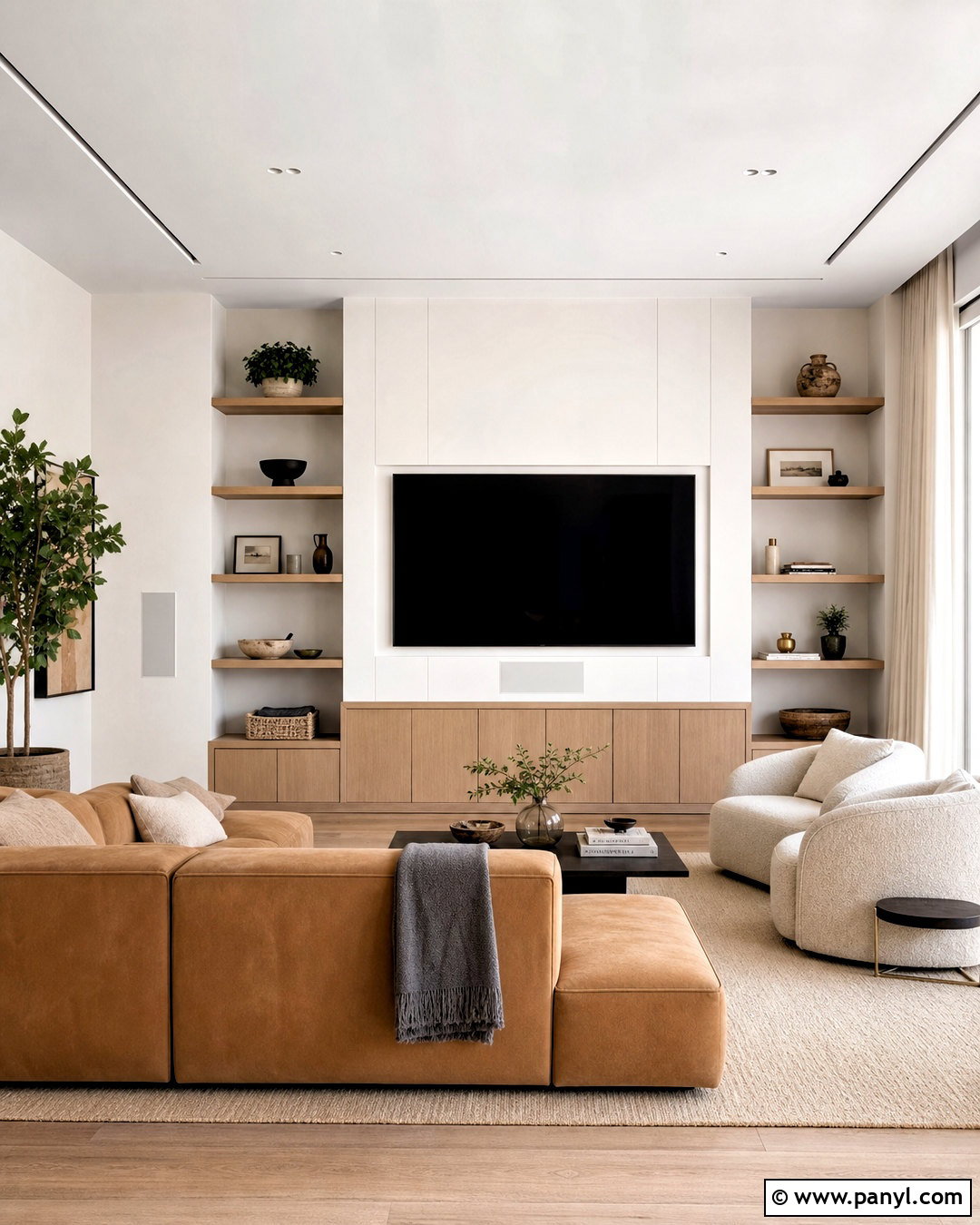
For a nearly invisible audio system, integrate speakers into the architecture instead of displaying freestanding cabinets. Use in-wall front channels around the television, a paintable center speaker below it, and flush-mounted surrounds beside or behind the sofa. Ceiling speakers can supply the height layer without taking up floor space. Design the room with creamy white walls, white oak built-ins, and a soft camel sectional so the speaker grilles blend into the background. Place the television within a paneled media wall and store the receiver inside a ventilated lower cabinet. A woven wool rug, linen curtains, and boucle accent chairs give the room warmth and texture. Keep decorative objects away from speaker openings, and include removable cabinet panels so connections remain accessible when equipment needs servicing or upgrading.
7. Wireless Surround Sound Living Room
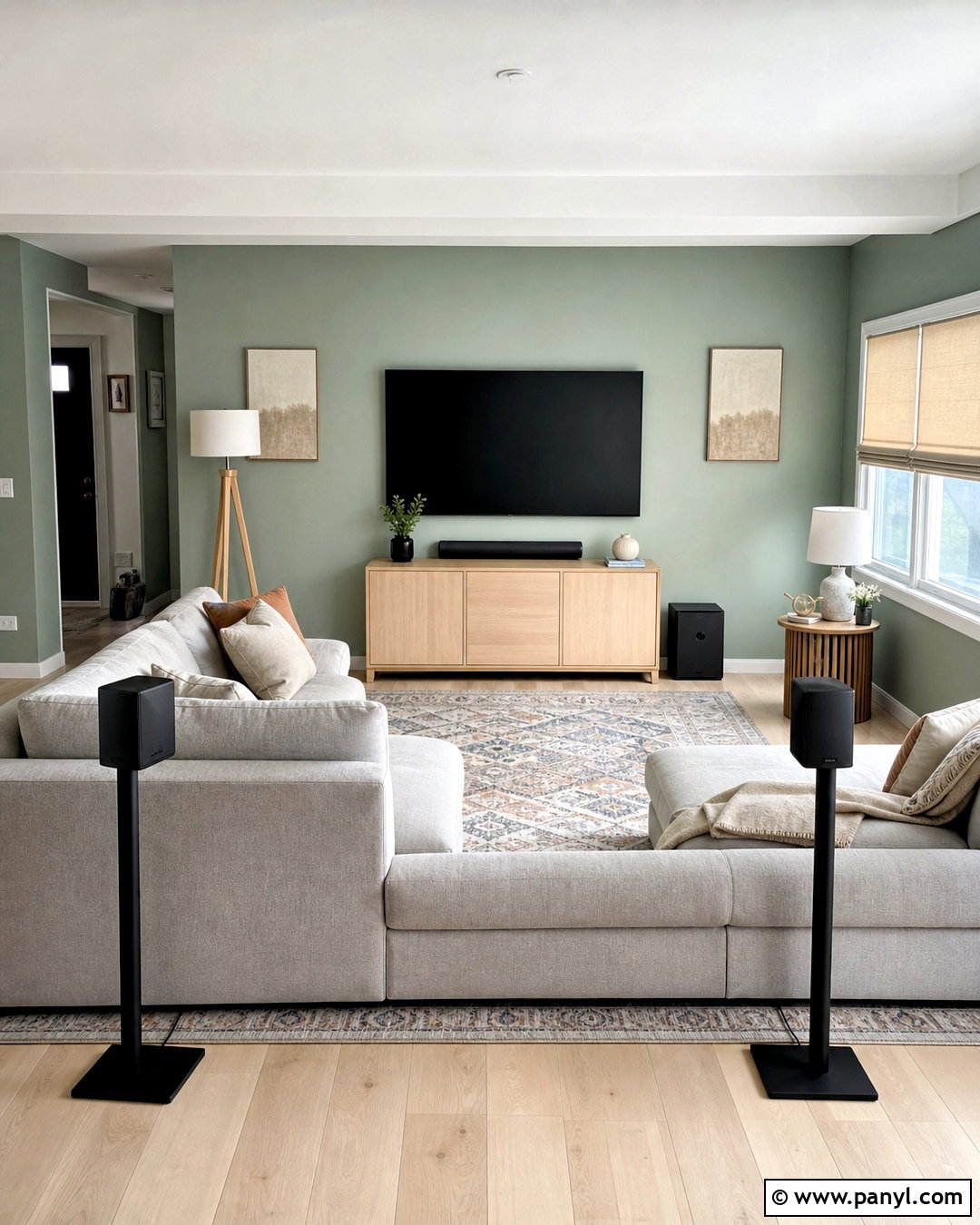
Wireless rear speakers simplify a multipurpose living room where running cables across the floor would be impractical. Anchor the design with a wall-mounted television, a matching soundbar, a compact wireless subwoofer, and two powered surround speakers behind the sofa. Remember that wireless speakers may still need nearby electrical outlets, so plan end tables or discreet wall connections around their positions. Use a light gray sofa, soft sage walls, pale wood furniture, and black metal details for a relaxed modern look. Place each rear speaker on a stable stand at a similar height, then hide power cords along baseboards. A patterned area rug defines the listening zone, while full curtains, upholstered seating, and fabric shades add sound-friendly softness. Keep the central floor area open for daily family use.
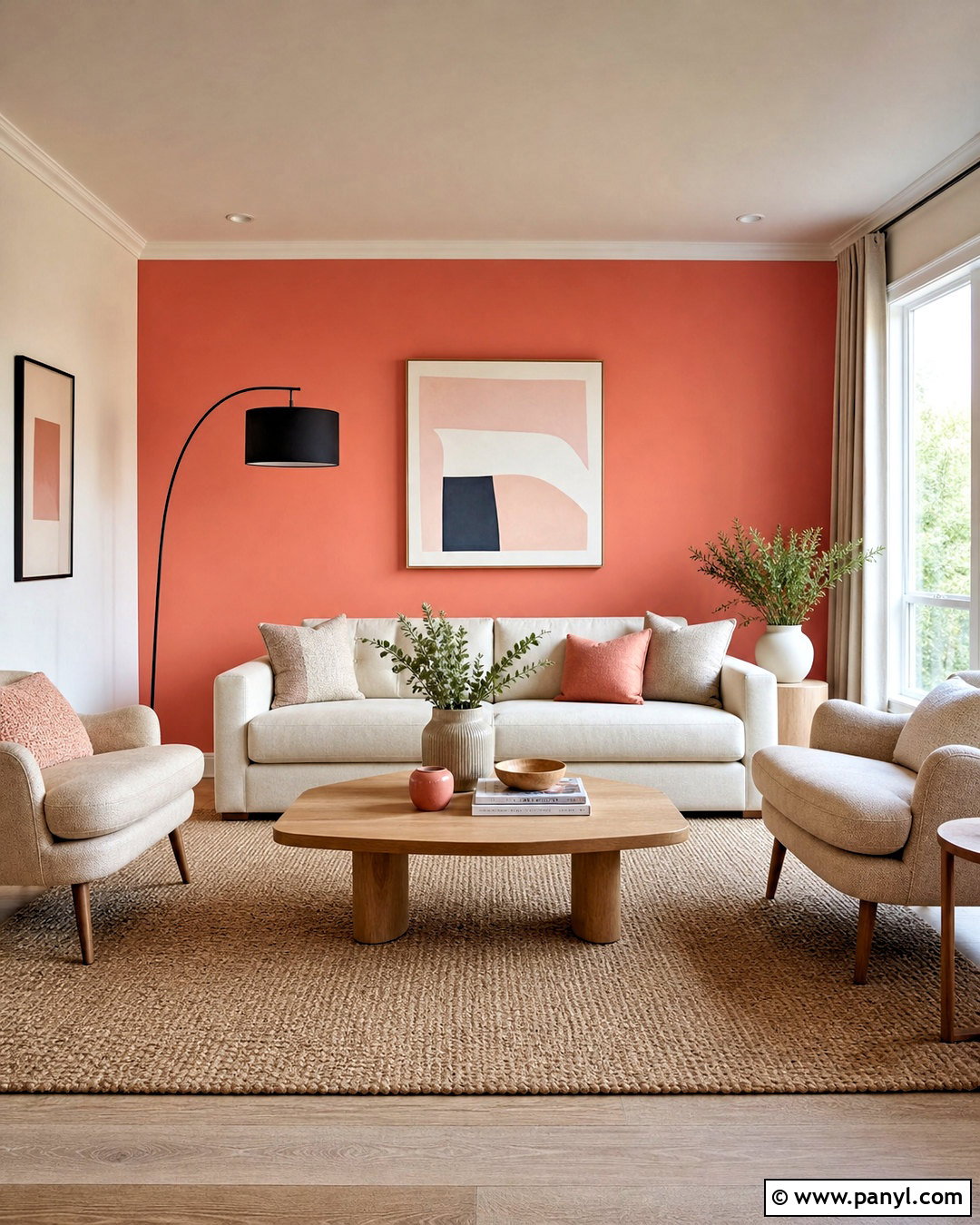
8. Built-In Surround Sound Living Room
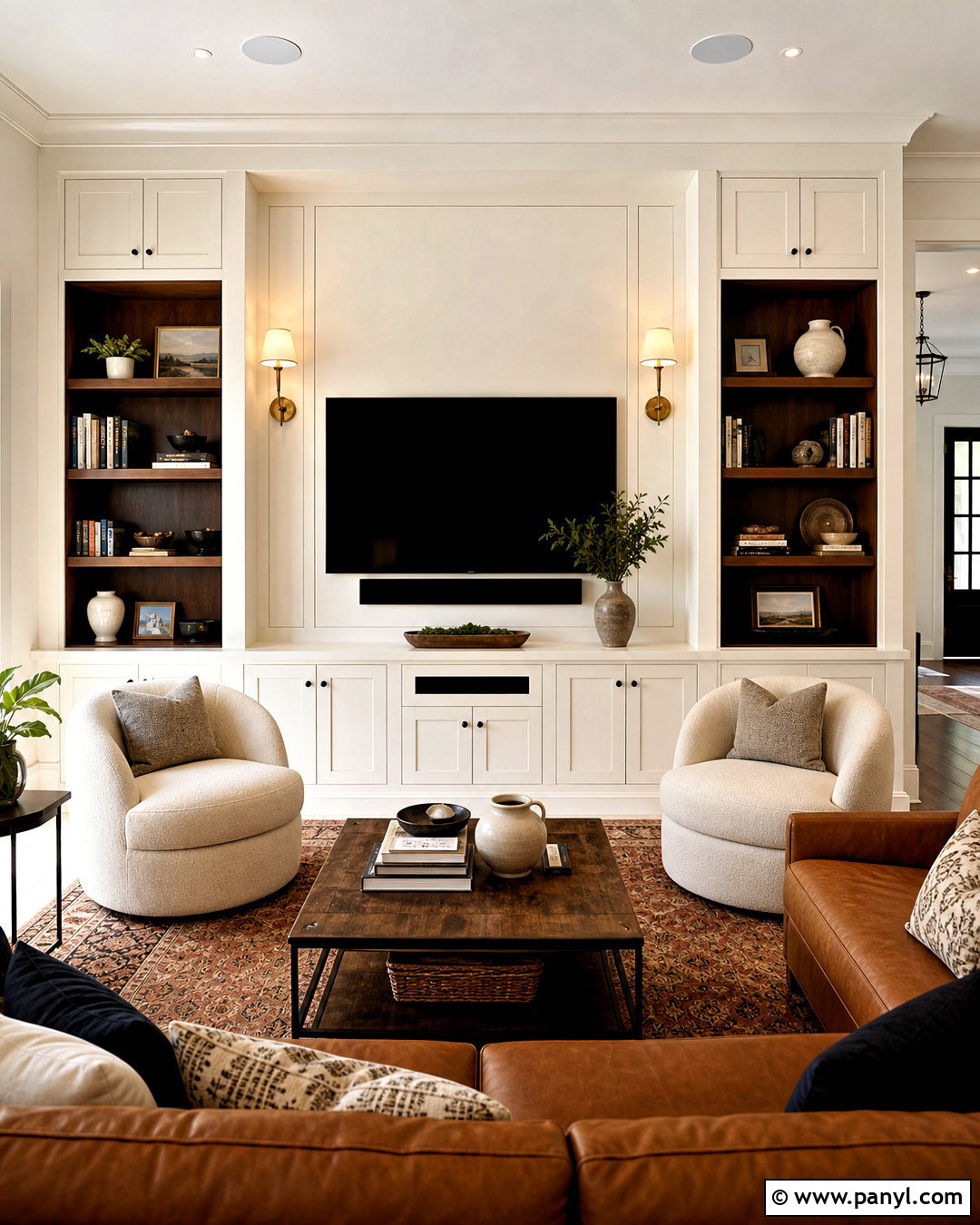
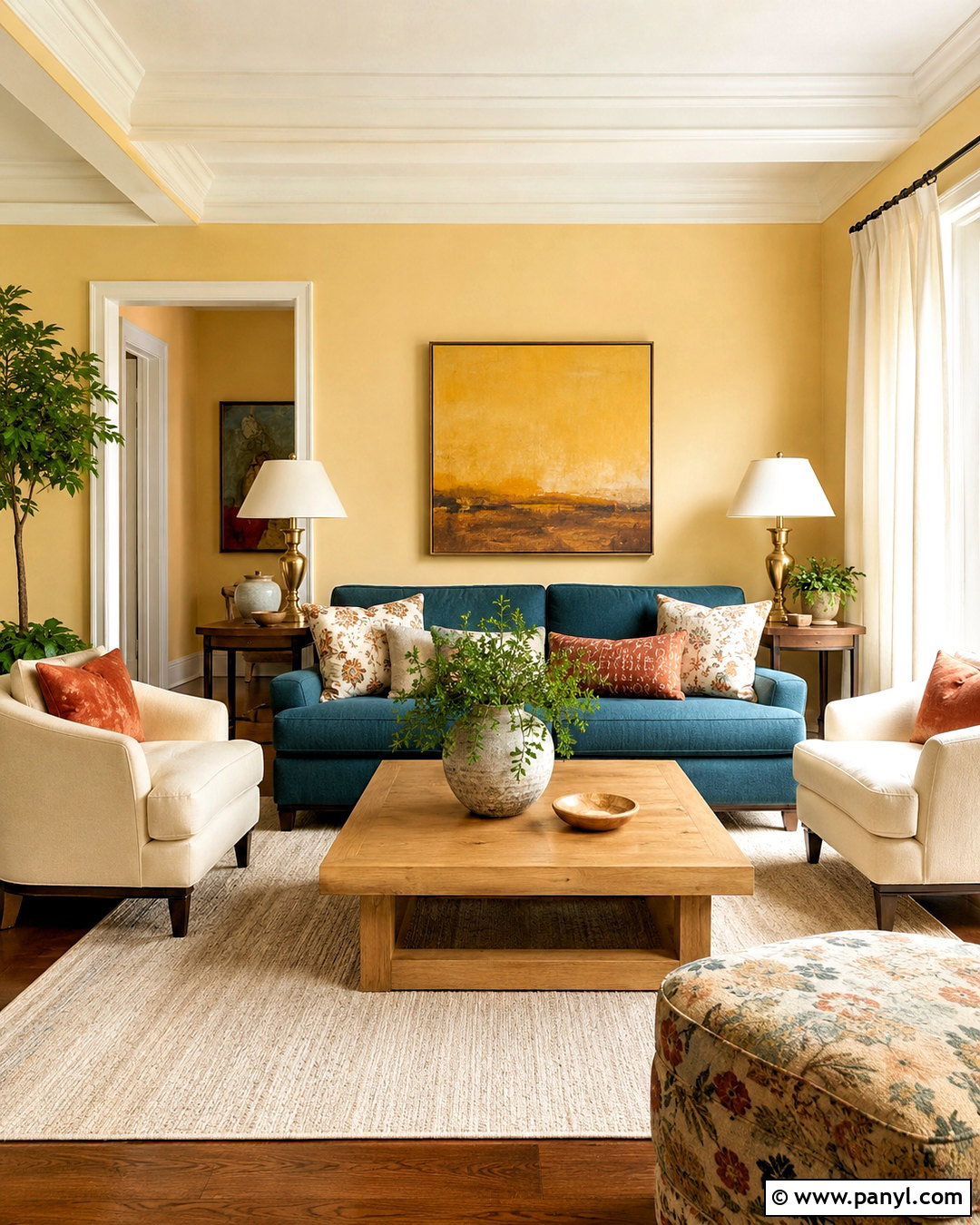
Custom built-ins can turn a full surround system into an organized architectural feature. Frame the television with floor-to-ceiling cabinetry in warm white or soft greige, leaving open niches for the left, center, and right speakers. Lower cabinets should hold the receiver, streaming devices, and game equipment while providing airflow around electronics. Mount compact surround speakers on the side walls or incorporate them into shallow rear shelves. Pair the cabinetry with a caramel leather sofa, two cream swivel chairs, and a large vintage-inspired rug. Walnut shelves and aged brass sconces add warmth against the painted millwork. Arrange books and pottery sparingly so they do not block speaker drivers. The finished room feels like a comfortable library and media space, with technology integrated into the design instead of added afterward.
9. Minimalist Surround Sound Living Room
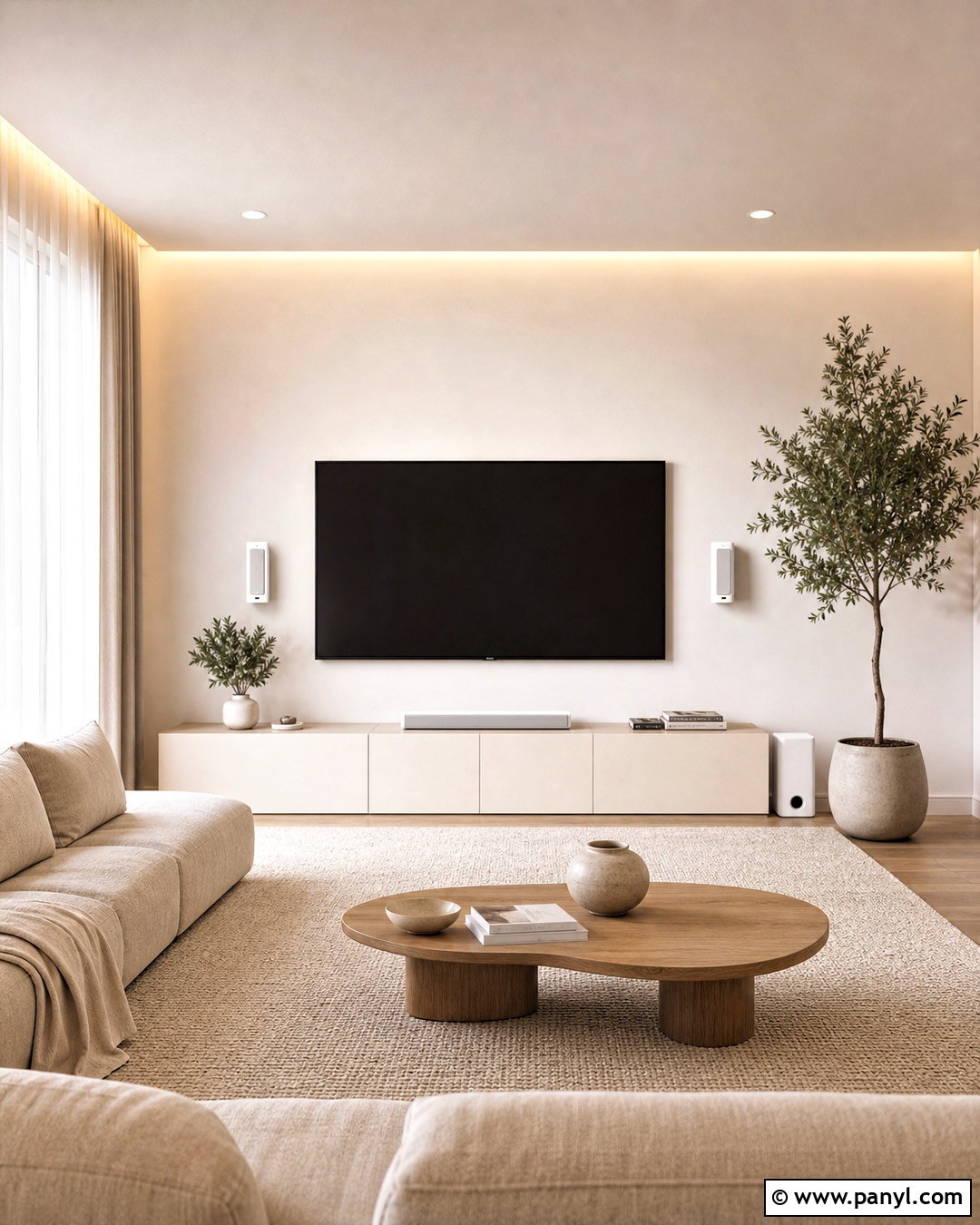
A minimalist surround sound room depends on careful placement, concealed cables, and a restrained material palette. Choose a streamlined oatmeal sofa facing a flush-mounted television and a long handle-free media console. Use compact white speakers against warm white walls, or select black components that repeat the television frame. Keep the center channel aligned neatly below the screen and mount the surrounds at matching positions beside the seating. A slim wireless subwoofer can sit near the media wall without dominating the room. Add one oversized cream rug, a sculptural oak coffee table, and simple linen curtains. Avoid filling shelves with small accessories; one plant and a few ceramic pieces are enough. Soft indirect ceiling lighting completes the calm atmosphere while preserving a clear, distraction-free view of the television.
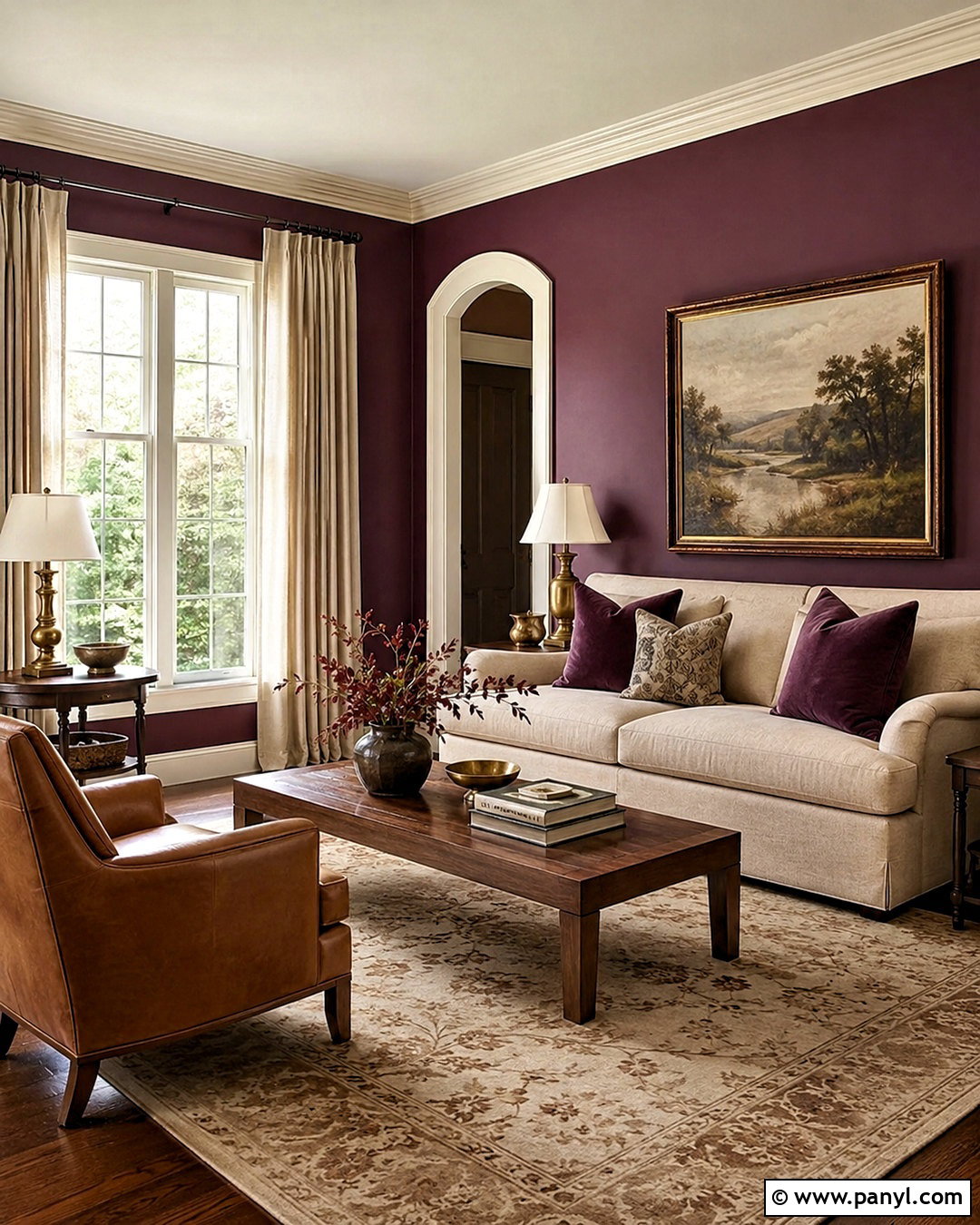
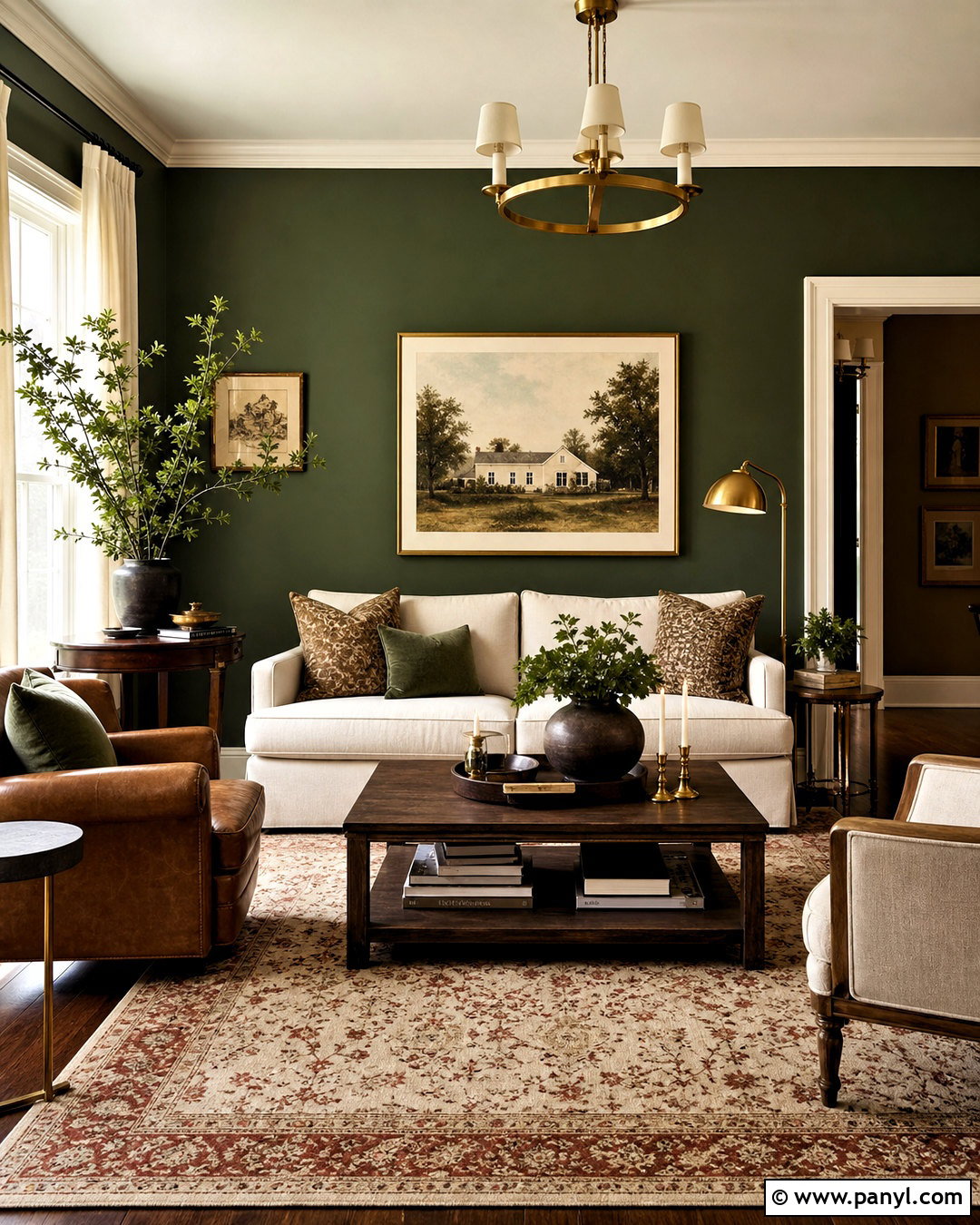
10. Farmhouse Surround Sound Living Room
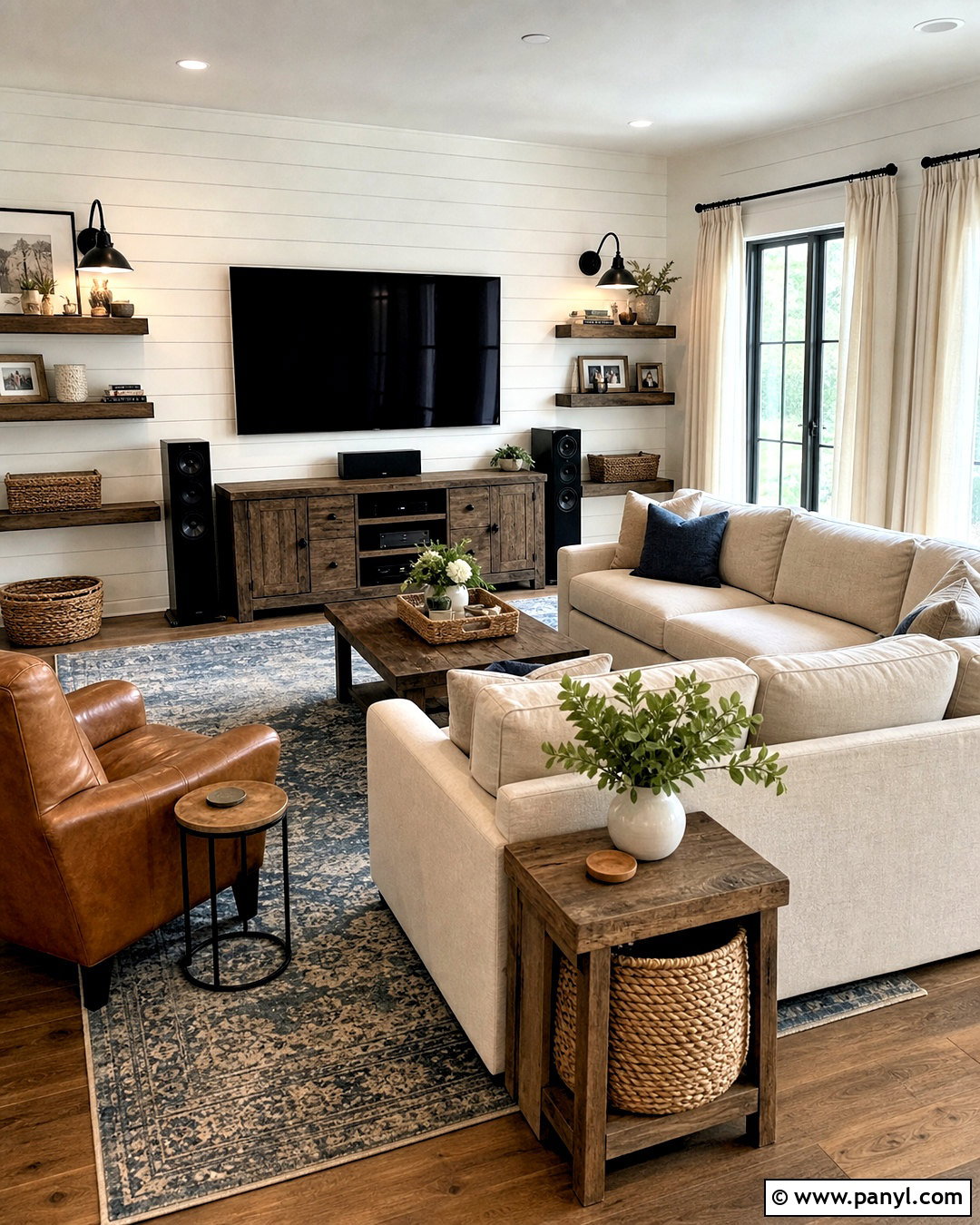
Blend surround sound equipment into a welcoming farmhouse room with natural finishes and substantial furniture. Install the television on a white shiplap or warm plaster media wall above a low reclaimed-wood console. Flank it with black bookshelf speakers, then position compact rear channels on rustic wood side tables behind the sofa. A cream slipcovered sectional, cognac leather chair, and faded blue rug create a comfortable gathering area. Use woven baskets inside the console to organize remotes and accessories, but keep the receiver in a ventilated compartment. Black metal sconces and curtain rods connect visually with the speakers. Linen drapes, upholstered seating, and wool textiles soften the room’s acoustics. Complete the look with simple pottery, olive branches, and an oversized wood coffee table rather than overly themed farmhouse signs.
11. Industrial Surround Sound Living Room
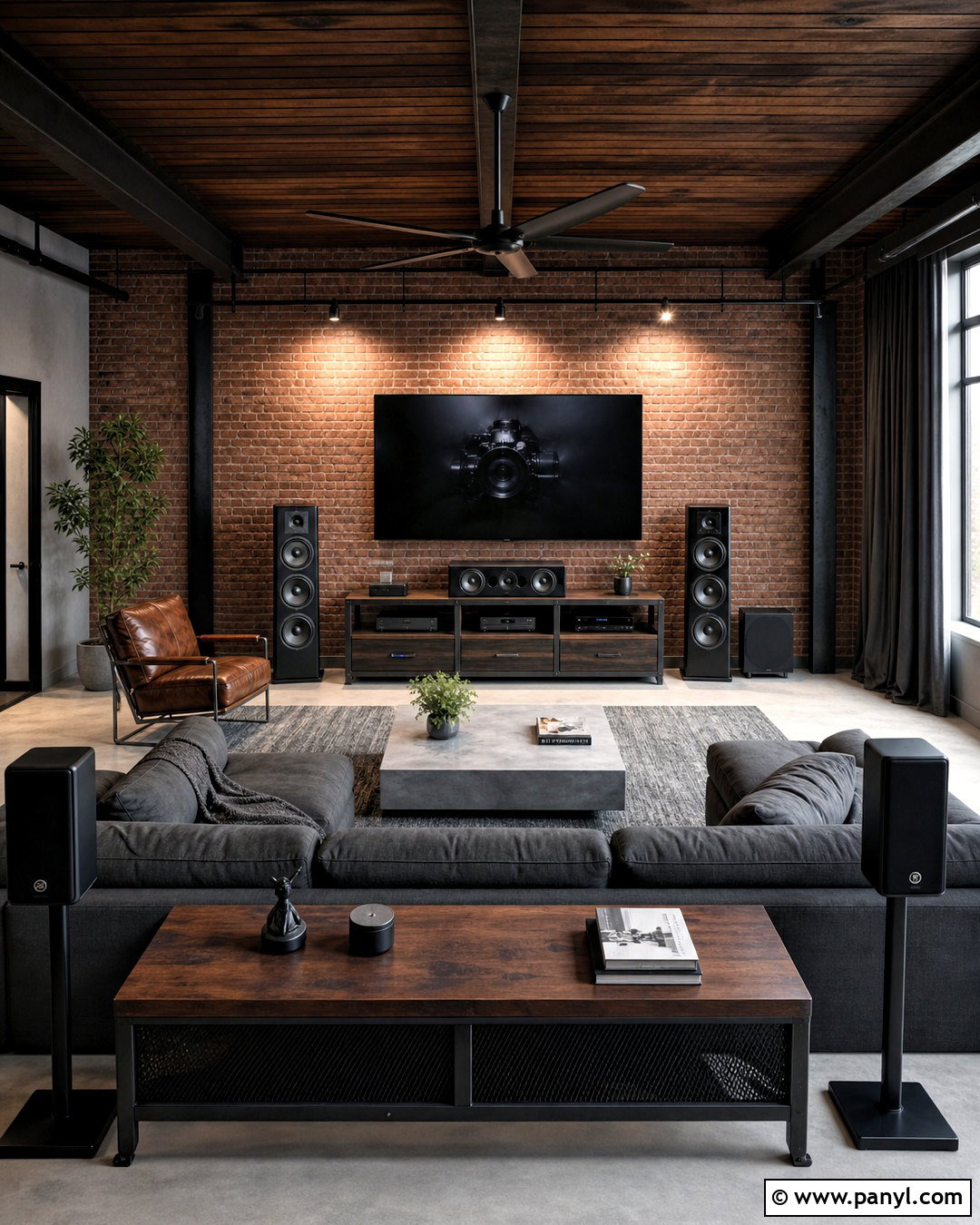
An industrial room can make visible speakers feel like an intentional part of the design. Start with a charcoal sectional, exposed brick media wall, and low black steel console topped with dark walnut. Use substantial black tower speakers at the front and matching bookshelf speakers on metal stands around the seating area. Route cables through matte black surface-mounted conduits that echo the lighting and window frames. Add a brown leather lounge chair, concrete-look coffee table, and large gray wool rug to balance hard and soft materials. Heavy charcoal curtains help control light and temper reflections from brick, glass, and concrete. Warm wood shelves prevent the palette from becoming cold. Keep the room uncluttered, and use adjustable track lighting to illuminate artwork without placing glare directly on the television.
12. Midcentury Modern Surround Sound Living Room
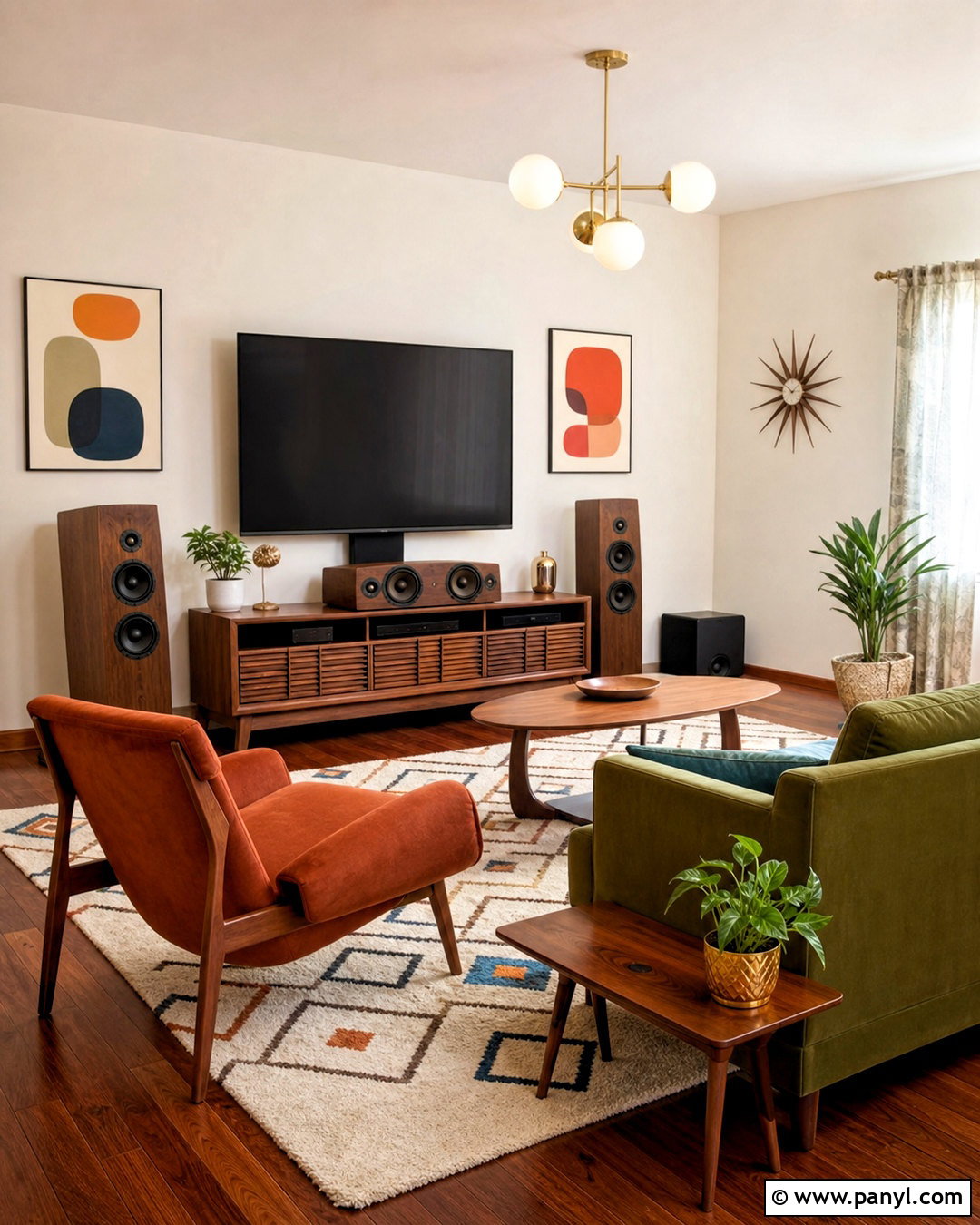
Midcentury furniture pairs naturally with classic wood-finished speakers and a low horizontal media layout. Choose a walnut console with sliding doors, then place the television above it at seated eye level. Add compact speakers in walnut veneer on both sides, with a matching center channel set along the console’s front edge. Position rear speakers on slender black stands behind a tailored olive green sofa. A rust-colored lounge chair, geometric cream rug, and oval wood coffee table complete the period-inspired arrangement. Use warm white walls and brass globe lighting to keep the room bright. Conceal the receiver behind a ventilated slatted door, and run cables under the rug only when they are properly protected. Finish with abstract art and a tall plant that does not obstruct any speaker.
13. Luxury Surround Sound Living Room
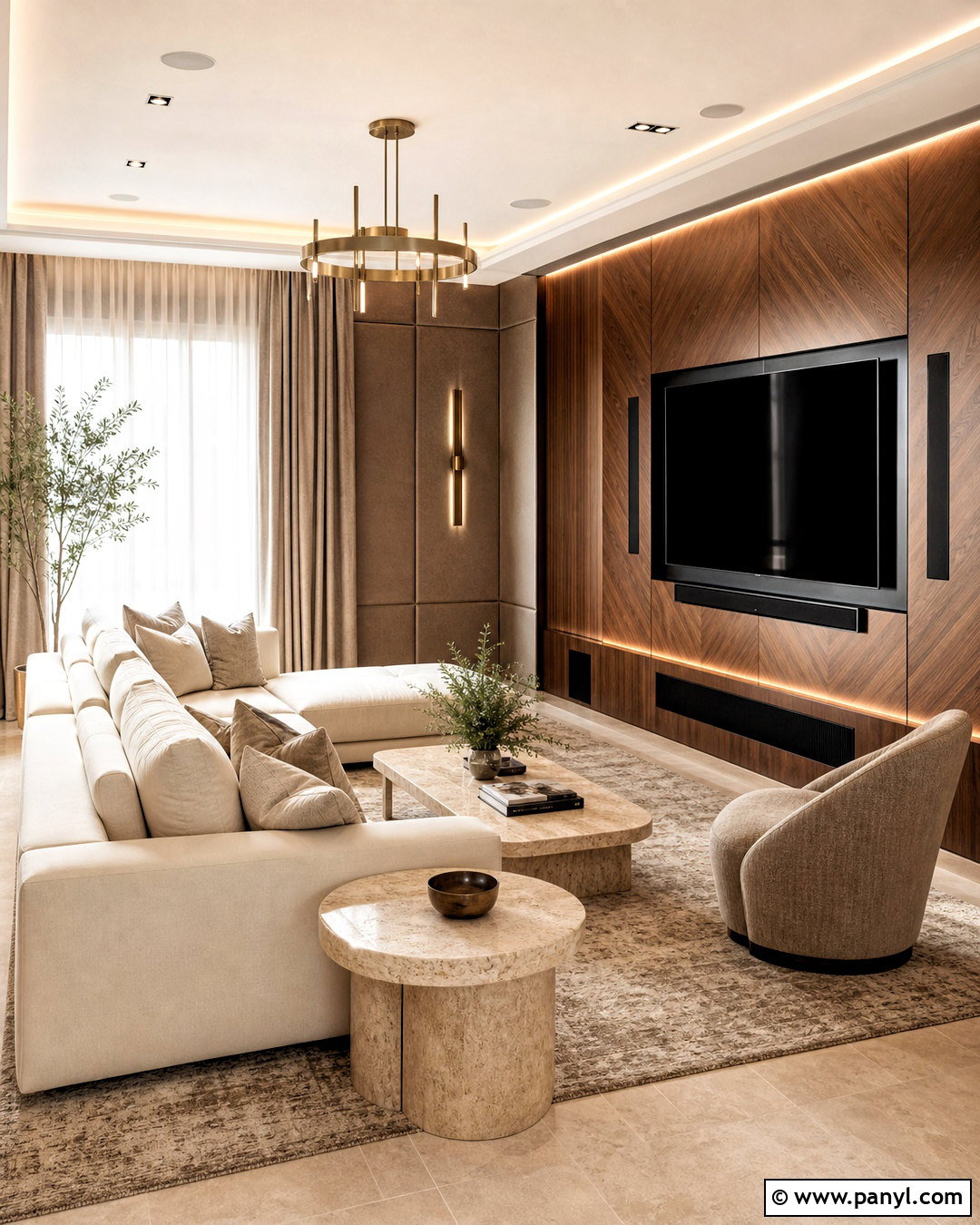
A luxury surround sound room combines refined materials with professionally integrated equipment. Center a generous ivory sectional on a large hand-knotted rug and face it toward a book-matched walnut media wall. Recess the television, center channel, and front speakers into the millwork for a symmetrical finish. Add in-wall side surrounds, rear channels, ceiling height speakers, and two concealed subwoofers for smoother coverage across several seats. Upholstered wall sections in warm taupe can provide decorative texture while supporting a quieter, more controlled environment. Use travertine side tables, brushed bronze lighting, and floor-to-ceiling drapes for understated elegance. Motorized shades help manage daytime glare. Keep electronic components inside a separate ventilated cabinet or equipment closet, allowing the main room to remain serene, uncluttered, and suitable for both entertaining and movie nights.
14. Budget Surround Sound Living Room
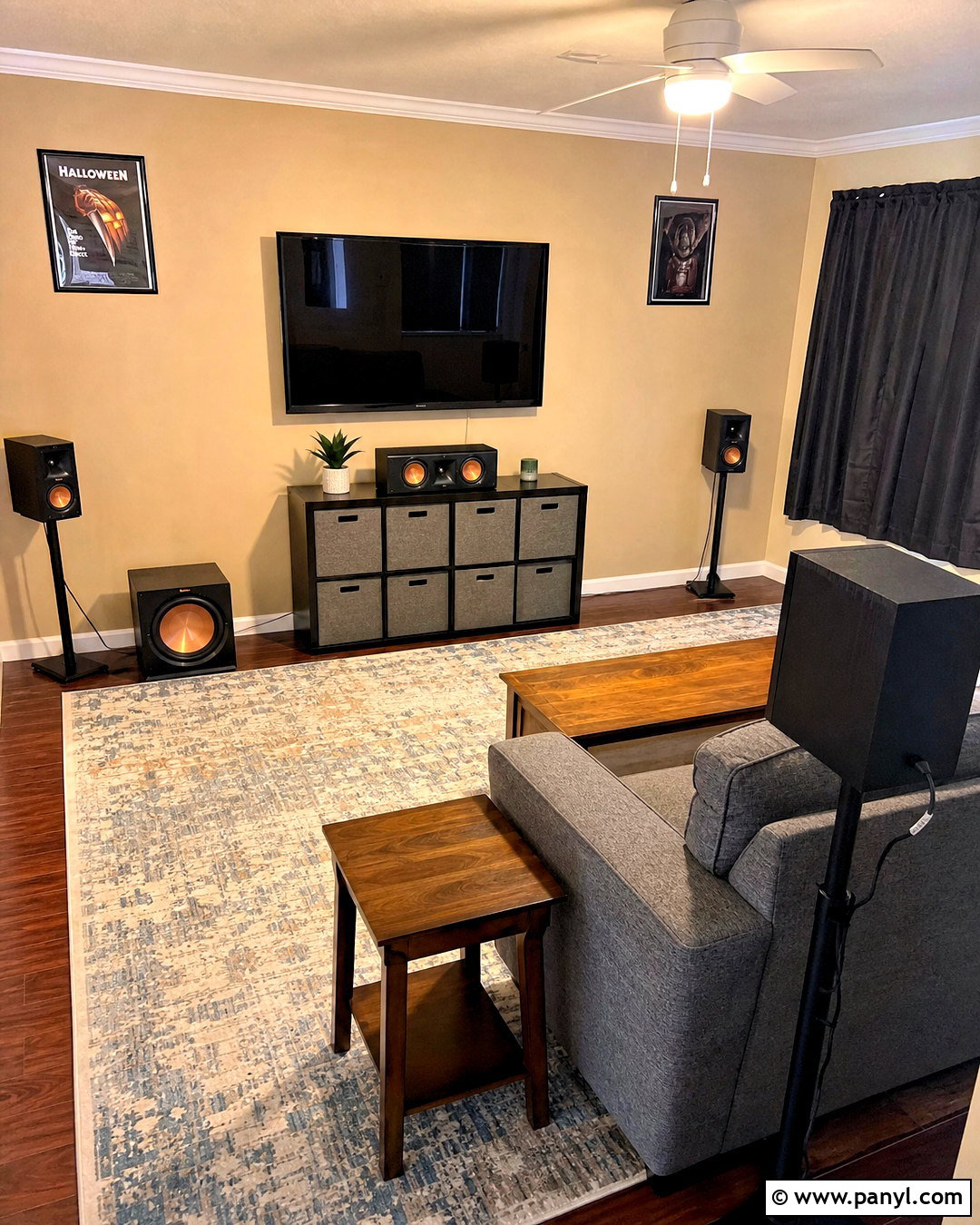
An effective surround sound room does not require custom construction or expensive matching furniture. Begin with an affordable 5.1 speaker package or expandable soundbar system, then improve the layout before spending money on decorative upgrades. Center the existing sofa on the television, move the front speakers away from crowded corners, and place the rear channels on simple adjustable stands. Use paintable cable covers along the baseboards for an orderly finish. Refresh the room with warm beige paint, a washable low-pile rug, budget-friendly blackout curtains, and secondhand wood tables. A basic cube storage console can hide media accessories when fabric bins are used selectively. Add inexpensive LED bias lighting behind the television to reduce harsh contrast. The result feels intentional because the furniture, screen, speakers, and pathways work together.
15. Apartment Surround Sound Living Room
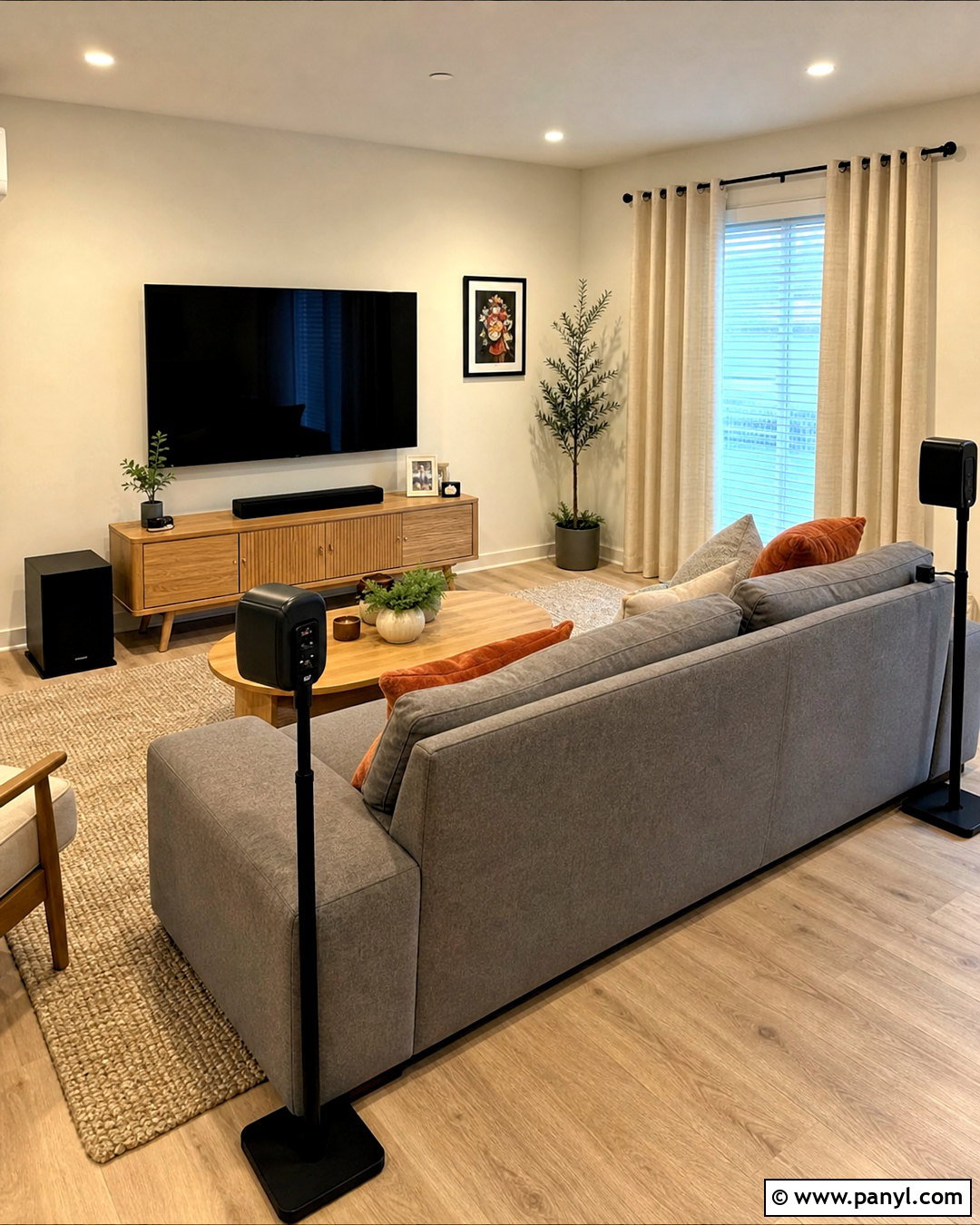
Apartment living requires balanced sound, considerate bass control, and furniture that can move without permanent installation. Choose a high-quality soundbar, compact subwoofer, and two small wireless rear speakers instead of a large floor-standing system. Place the television and soundbar on the wall shared with the fewest neighbors when the layout allows. Set the subwoofer on an isolation platform and avoid pushing it tightly into a corner. Furnish the space with a medium-gray sofa, rounded oak coffee table, thick woven rug, and lined curtains in warm ivory. Rear speakers can sit on narrow stands tucked beside end tables, keeping walkways clear. Use removable adhesive cable channels rather than cutting walls. A slim media cabinet, muted terracotta pillows, and soft table lighting create a finished home rather than a temporary technical setup.
16. Open Concept Surround Sound Living Room
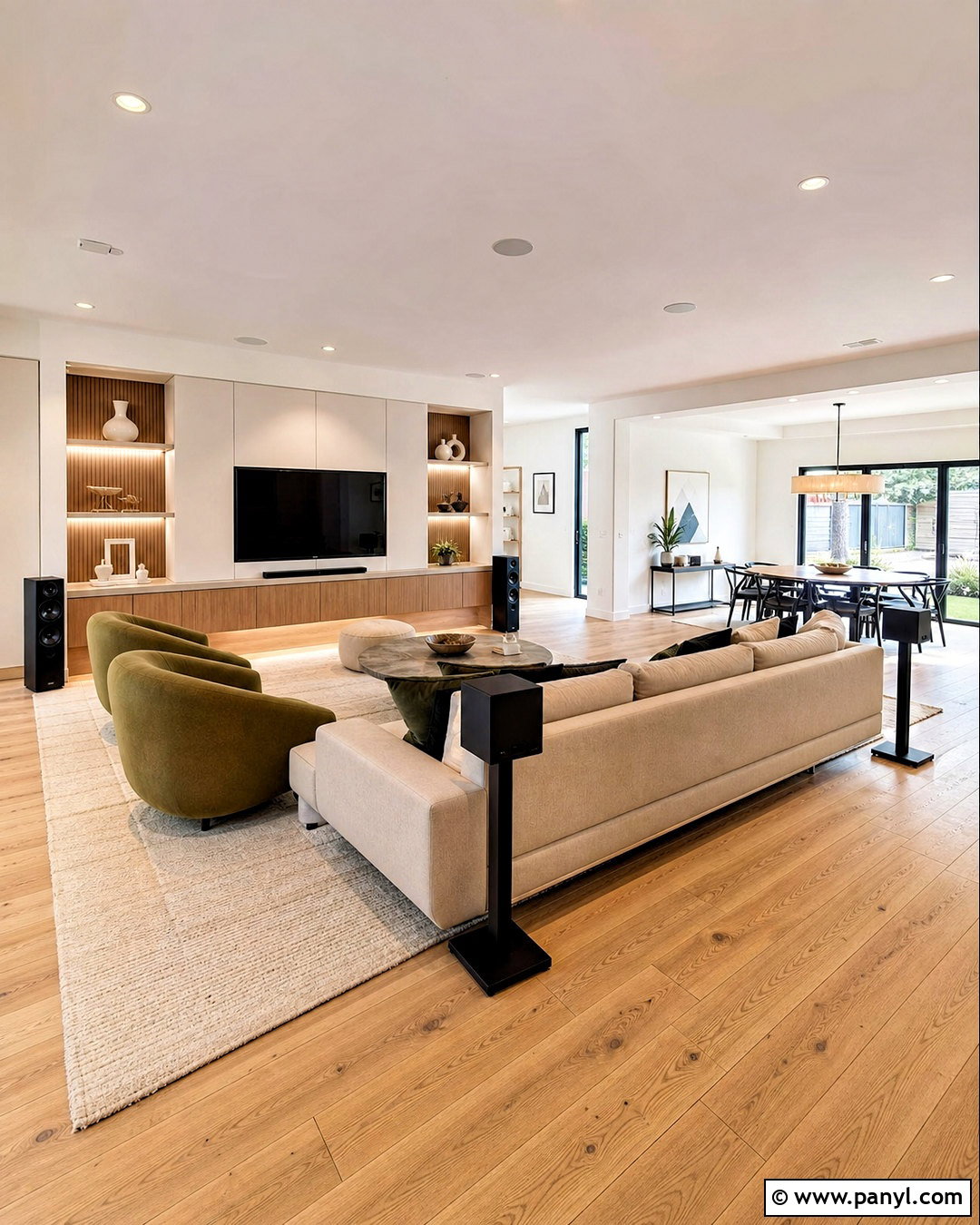
In an open concept home, furniture and speaker placement must define the listening zone without blocking movement toward the kitchen or dining area. Float a sectional in the center of the living room, facing a dedicated media wall. Position the front speakers around the television and mount compact surrounds on columns, nearby walls, or stable stands beside the back corners of the sofa. A large rug visually marks the entertainment area and adds useful softness beneath the seating. Use warm white walls, natural oak flooring, a taupe sectional, and muted green chairs for an airy organic-modern palette. Pendant lights can distinguish the neighboring dining space without competing with the television. Select room correction equipment when available, and avoid placing rear speakers so far away that the dining area becomes the dominant listening position.
17. Corner TV Surround Sound Living Room
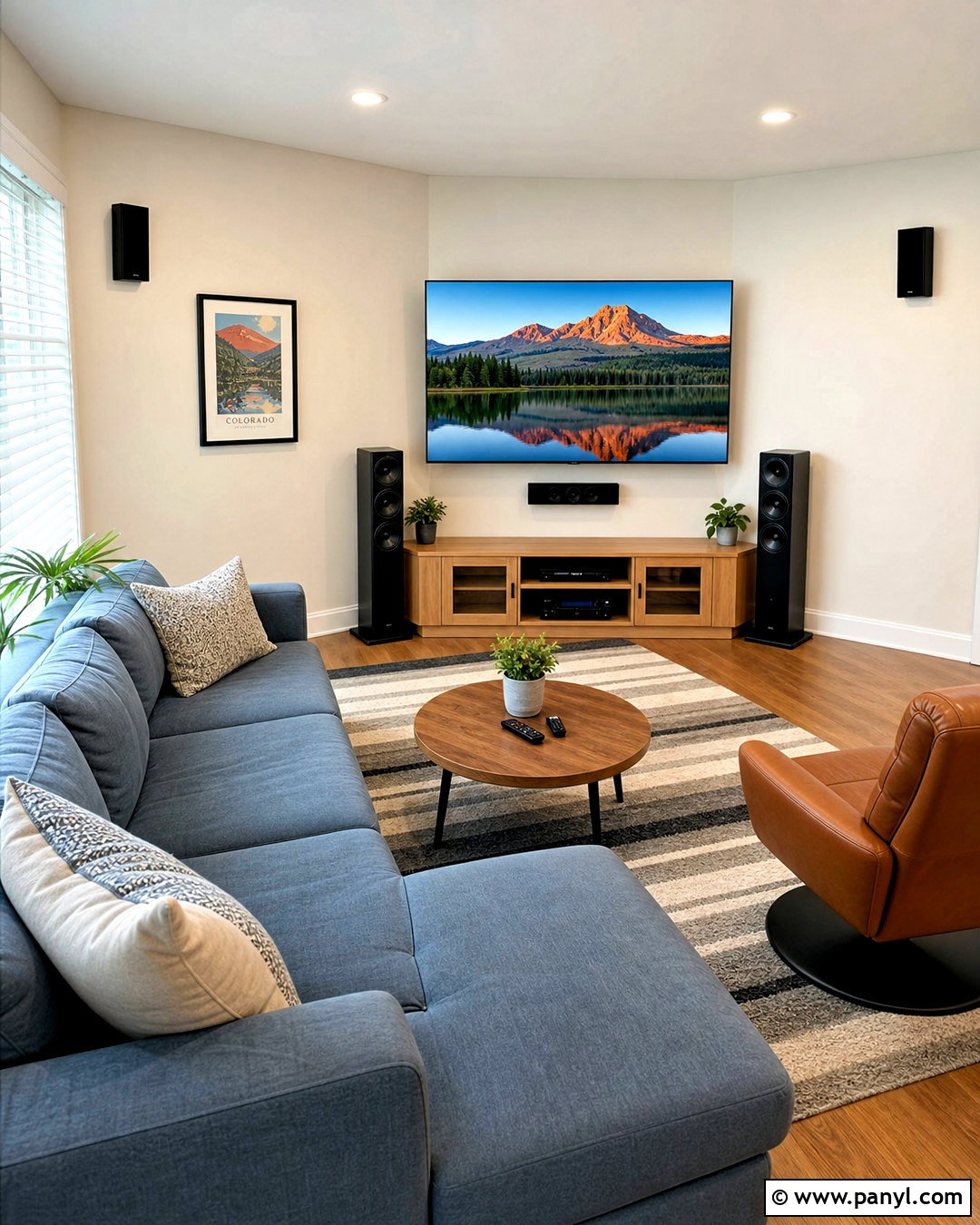
A corner television can support surround sound when the seating and speakers follow the screen’s diagonal orientation. Use an angled media console that fits neatly into the corner, then float a compact sectional so its central seats face the television directly. Place the front left and right speakers at equal distances from the screen whenever possible, using wall brackets to compensate for limited floor space. Set the center channel immediately below the television and position surround speakers beside or behind the sofa. Soft cream walls, a dusty blue sectional, light oak furniture, and a subtle striped rug keep the unusual layout cohesive. Add a swivel chair near the open side of the room for flexible seating. Conceal cables carefully and leave enough clearance around doors, windows, and major traffic paths.
18. Fireplace Surround Sound Living Room
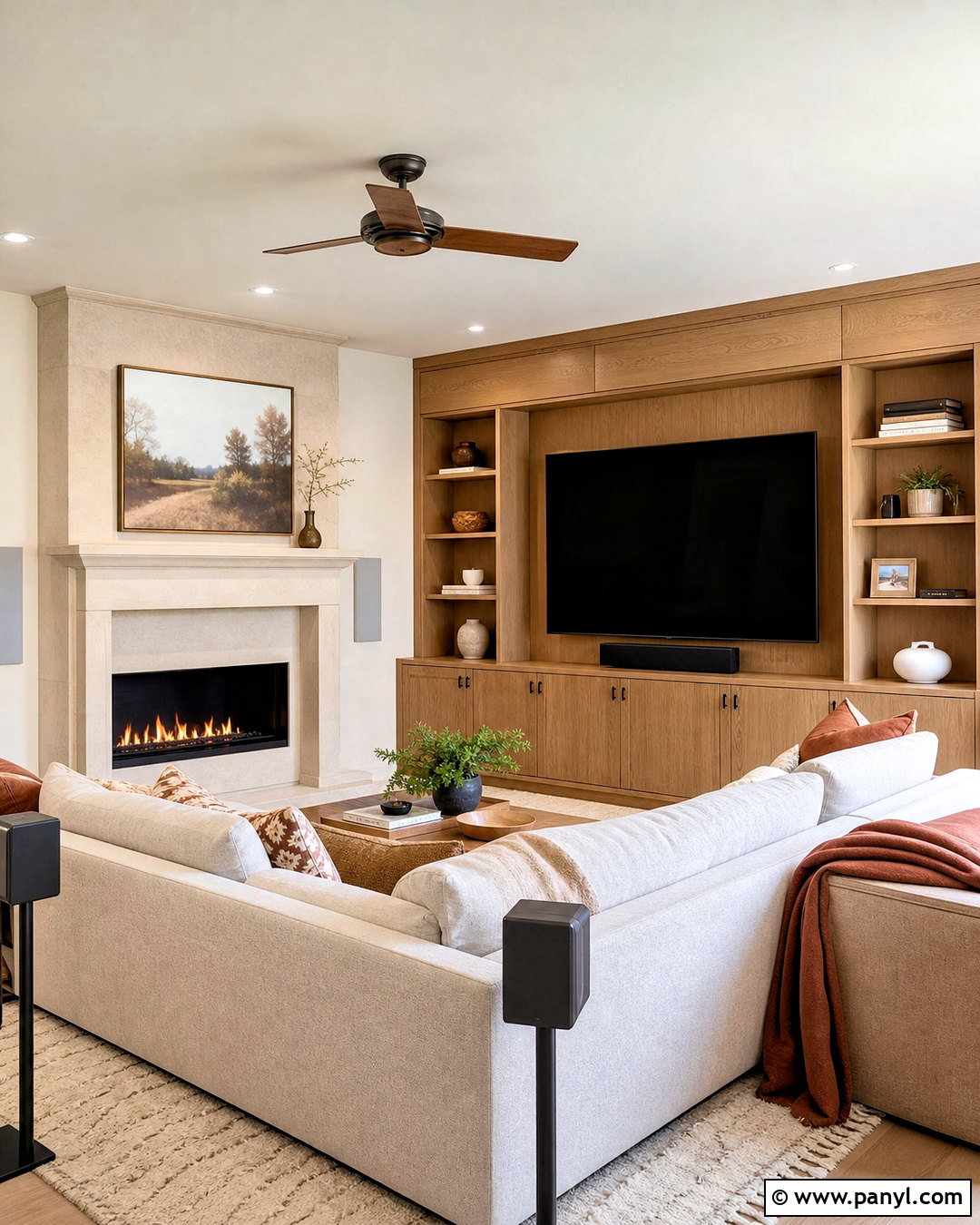
A fireplace and television can share a wall without creating a cluttered focal point. For comfortable viewing, place the television in a side cabinet or adjacent media zone rather than automatically mounting it high above the mantel. Build balanced cabinetry around the fireplace, using one side for the screen and front speakers and the other for shelves or closed storage. Arrange an L-shaped sectional so the primary seats face the television while still enjoying the hearth. Choose warm limestone, white oak cabinets, an oatmeal sofa, and muted rust textiles for a relaxed transitional scheme. Surround speakers can be recessed into side walls or placed on compact stands behind the seating. Keep speakers and electronics away from excessive heat, and use a thick rug, lined drapes, and upholstered chairs to soften the space.
19. Gaming Surround Sound Living Room
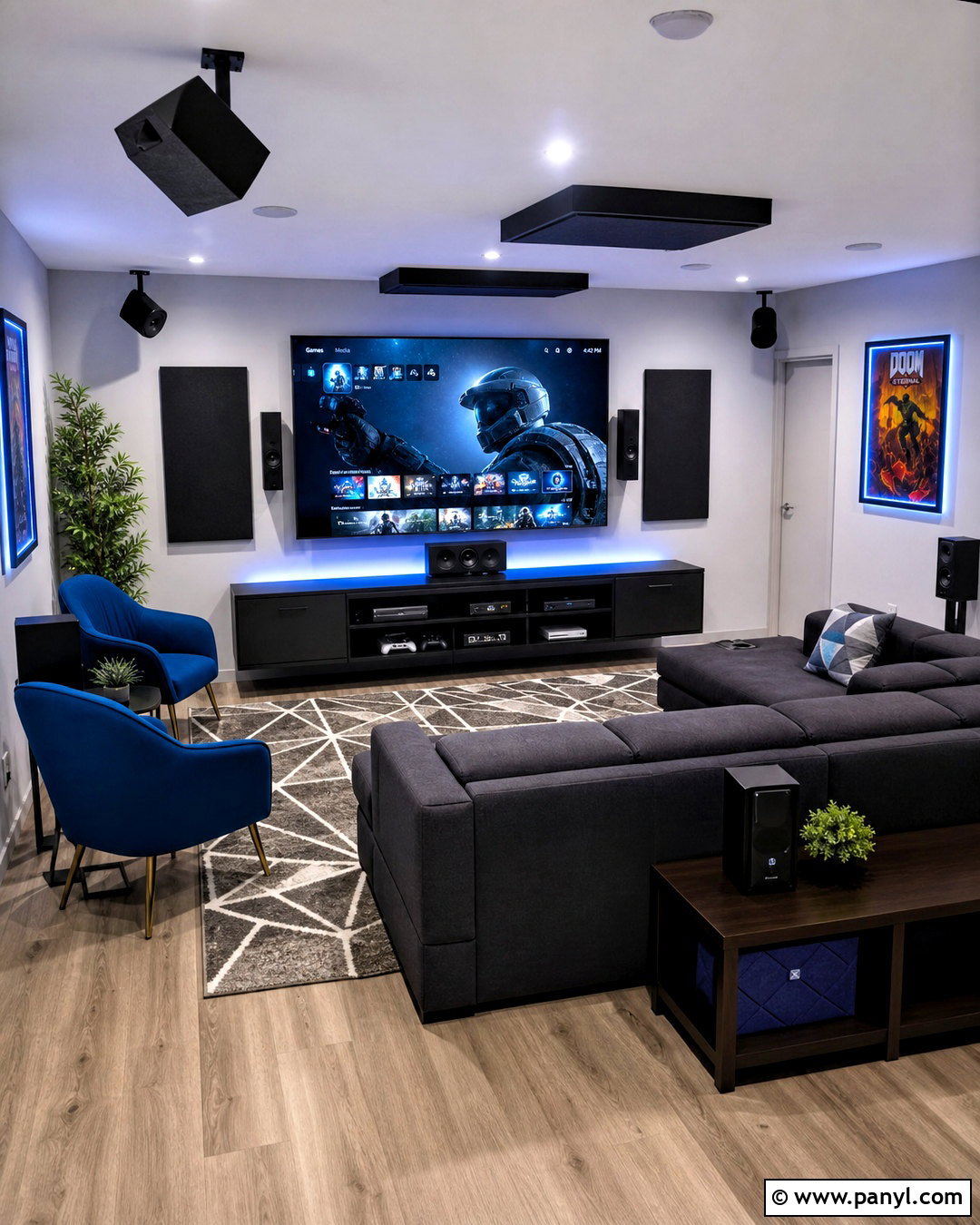
A gaming-focused living room needs immersive audio, responsive equipment, and seating that remains comfortable for everyday use. Mount a large television above a ventilated media console with open access for consoles and controllers. Use a 5.1.2 system with front speakers beside the screen, a clear center channel, side surrounds near the sofa, and two height channels overhead. Choose a deep charcoal modular sofa, electric blue accent chairs, black oak cabinetry, and a graphic gray rug for a modern look that feels energetic without becoming themed. Install bias lighting behind the television and adjustable ceiling lights for comfortable visibility. Store controllers in shallow drawers and add charging access inside an end table. Acoustic fabric panels featuring simple geometric shapes can provide wall decoration while supporting a cleaner, more focused listening environment.
20. Cozy Surround Sound Living Room
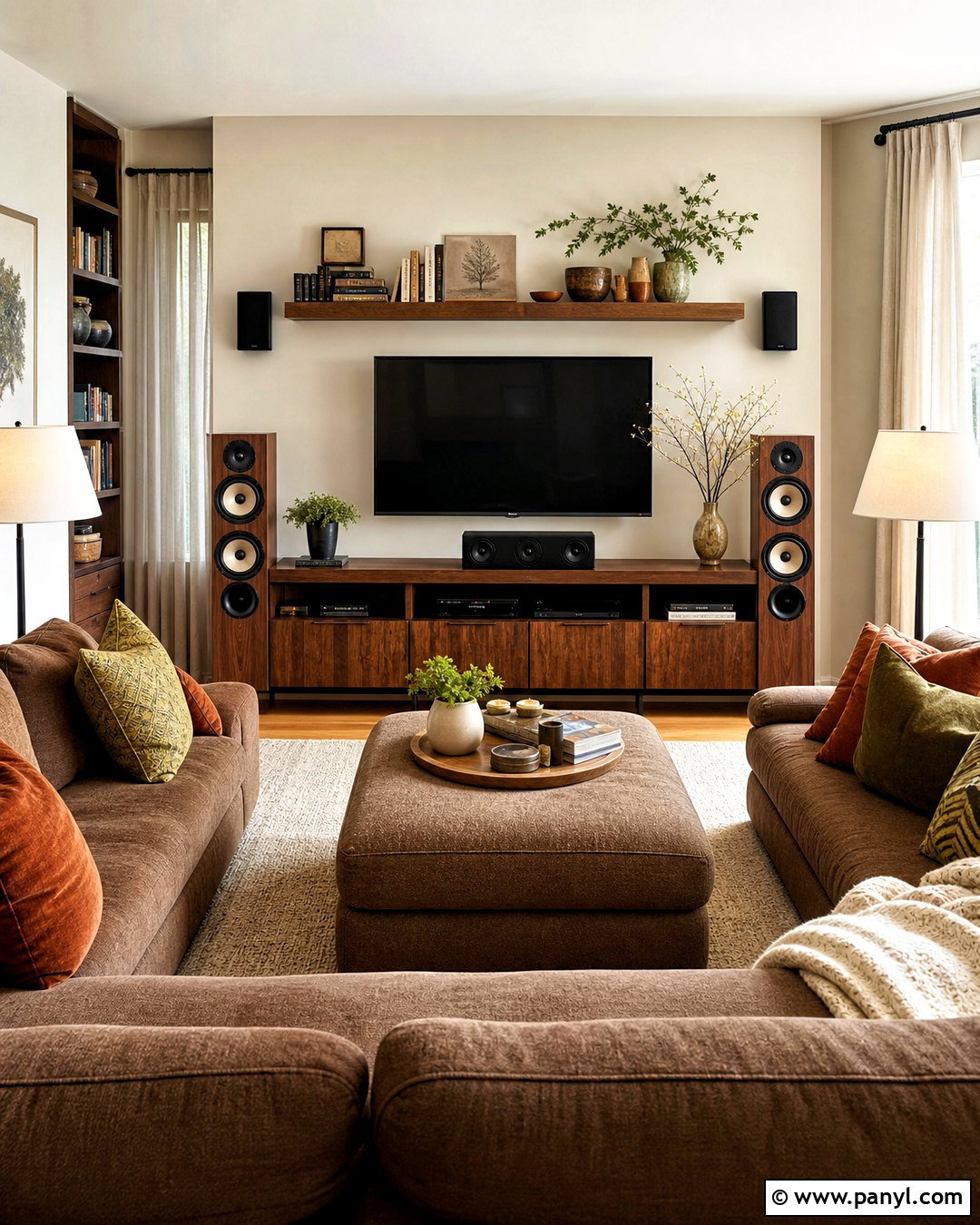
Surround sound can feel warm and relaxed rather than sleek or theatrical. Begin with a deep, comfortable sectional in soft brown or mushroom-colored fabric and place it around a generous wool rug. Face the seating toward a simple walnut media console and wall-mounted television. Choose bookshelf speakers in wood veneer, a fabric-covered center channel, and compact surrounds positioned discreetly on side tables or narrow stands. Layer rust, cream, and muted olive pillows across the sofa, then add lined curtains and a soft upholstered ottoman. Wall sconces and shaded floor lamps provide gentle illumination without reflecting across the screen. Store equipment behind cane or acoustically transparent cabinet doors with proper ventilation. Family photographs, pottery, books, and natural branches make the completed room personal while preserving clear speaker paths.
Conclusion:
The most successful surround sound living room ideas balance accurate speaker placement with comfortable furniture, attractive materials, and practical everyday flow. Start by choosing a system that suits the room’s size instead of forcing extra speakers into unsuitable locations. Keep the main seats aligned with the television, place channels consistently around the listening area, and test the subwoofer before settling on its final position. Rugs, curtains, upholstered pieces, and fabric wall treatments can make the room feel softer and more welcoming. Built-ins and cable channels create a cleaner finish, while wireless components help in rentals and compact homes. With thoughtful planning, surround sound can become a natural part of a stylish living room rather than visible clutter.

Related Ideas and Inspiration:

Leave a Reply