
Accent walls can give a living room more depth, structure, and personality without requiring a complete renovation. The strongest designs go beyond choosing an attractive paint color. They connect the feature wall with the sofa, flooring, window treatments, lighting, artwork, and smaller accents throughout the space. Current color directions favor earthy greens, muted teals, warm browns, rust tones, and other nature-inspired shades that feel expressive yet comfortable. () Before painting, consider which wall naturally attracts attention, then test the color in morning and evening light. Whether your room is modern, traditional, coastal, or eclectic, these complete schemes make bold color easier to use. Explore these practical 20 accent color walls in living room ideas.

1. Navy Blue Living Room Accent Wall
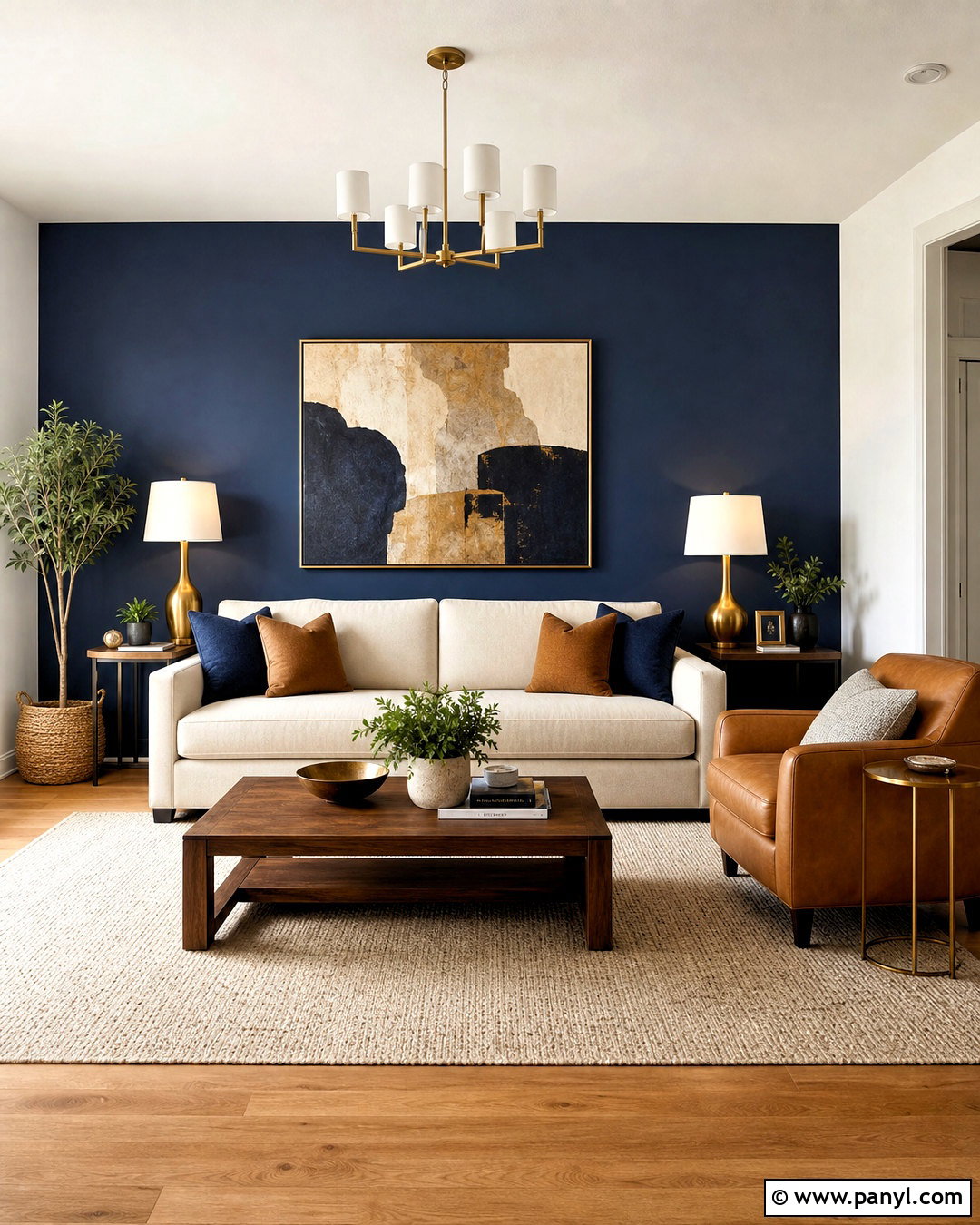
A navy blue accent wall creates a strong focal point while remaining easy to coordinate with everyday furnishings. Place it behind a cream or light gray sofa so the seating stands out against the deep color. Warm white paint on the surrounding walls keeps the room bright, while medium oak flooring prevents the navy from feeling too formal. Add a natural woven rug, camel leather chair, and walnut coffee table for warmth. Brushed brass floor lamps and picture frames provide a subtle glow without overpowering the scheme. Finish the wall with one oversized abstract artwork featuring ivory, rust, and muted blue. Repeat navy through two patterned pillows and a ceramic vase, creating a polished living room that feels connected rather than overly matched.
2. Olive Green Living Room Accent Wall
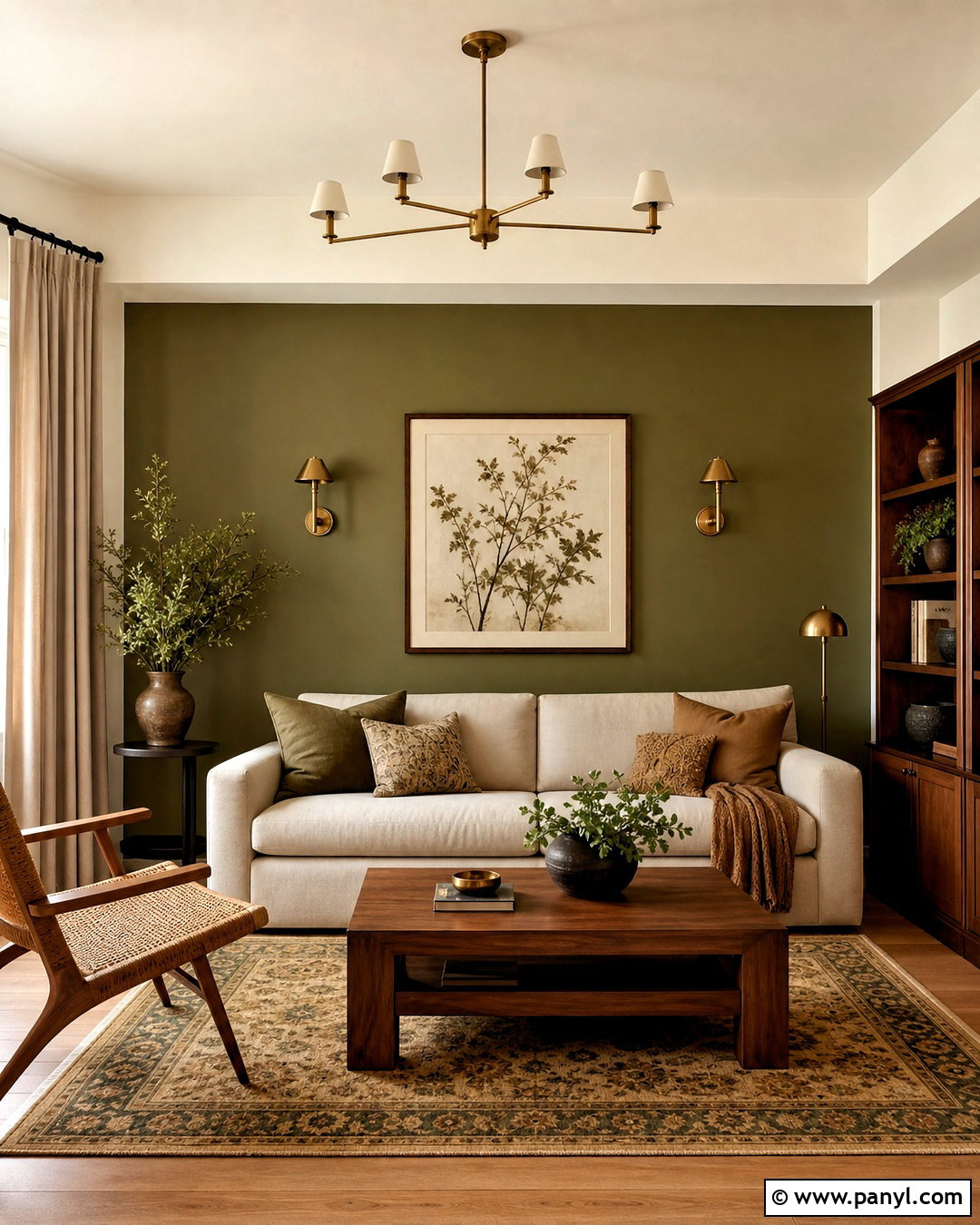
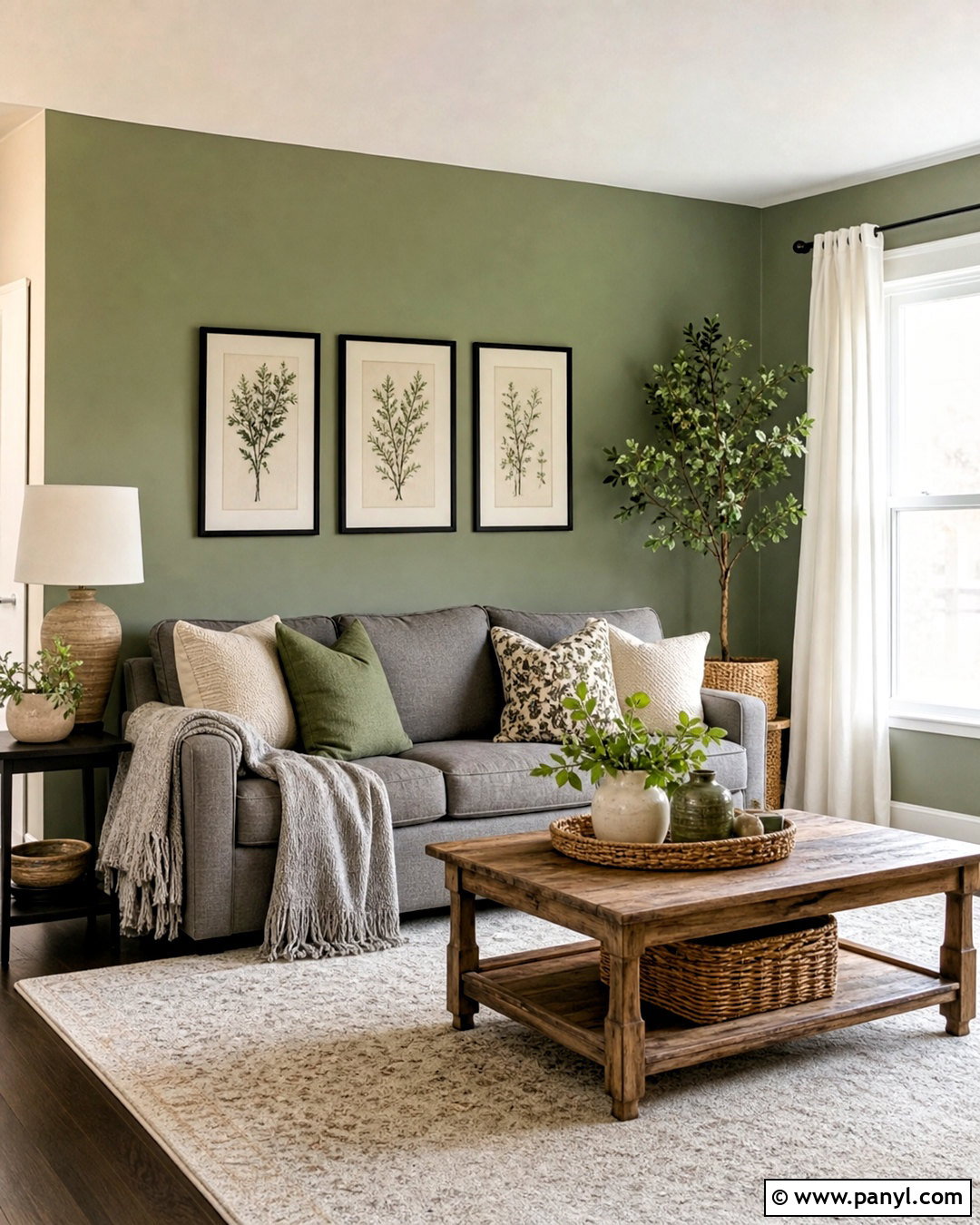
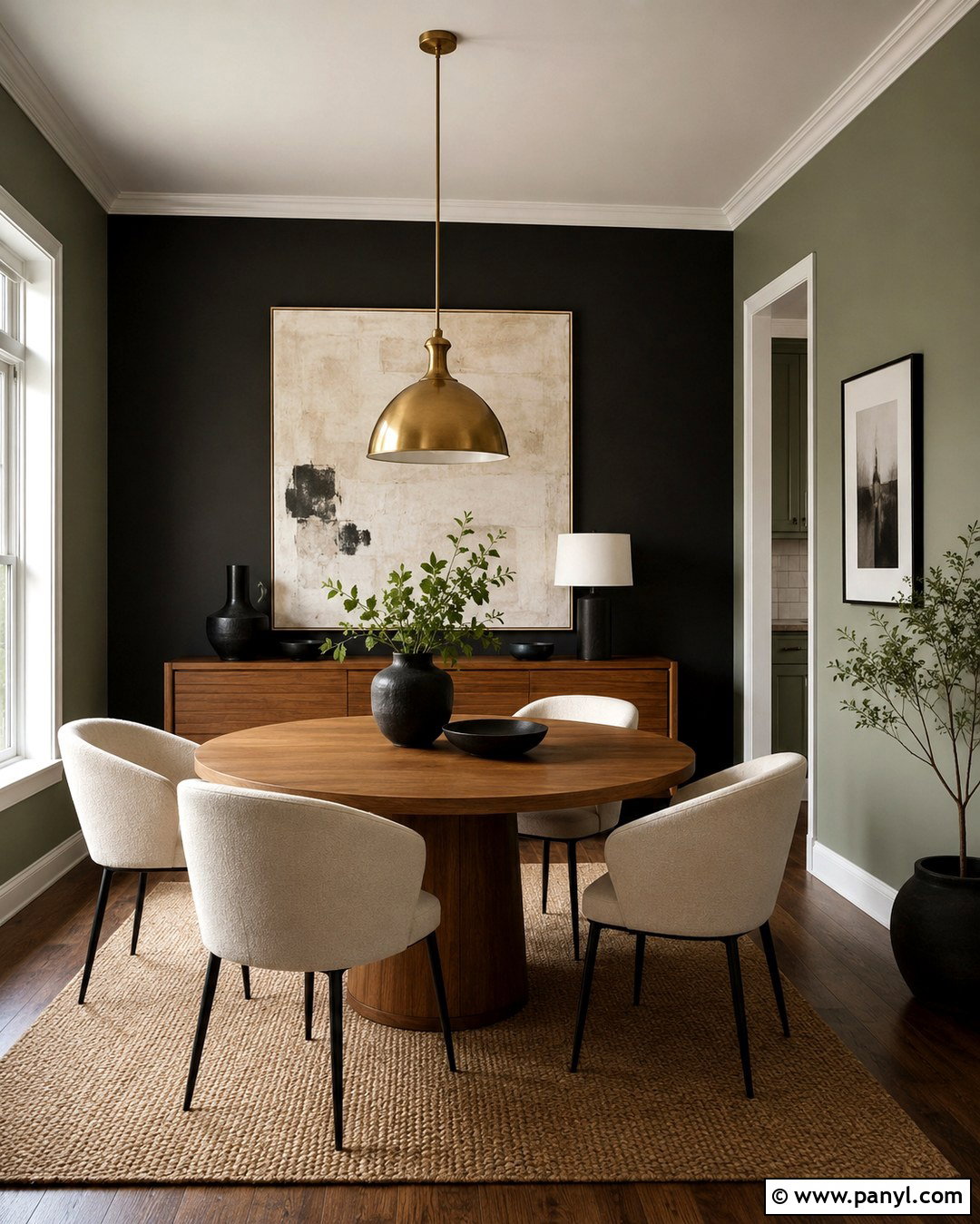
Soft olive green brings an organic, grounded feeling to a living room with warm neutral furniture. Use the color on the main wall behind a beige linen sofa or built-in media unit. Paint the remaining walls creamy white to complement the olive undertones instead of creating a sharp contrast. A vintage-inspired rug with faded brown, green, and ivory details can connect the entire palette. Choose a walnut coffee table, woven accent chair, and textured oatmeal curtains to reinforce the natural look. Black metal lighting adds definition, while aged brass accessories introduce gentle warmth. Display botanical artwork or simple landscape prints on the green wall. Terracotta pottery, brown pillows, and leafy plants complete this relaxed, layered room without making the color scheme feel overly themed.
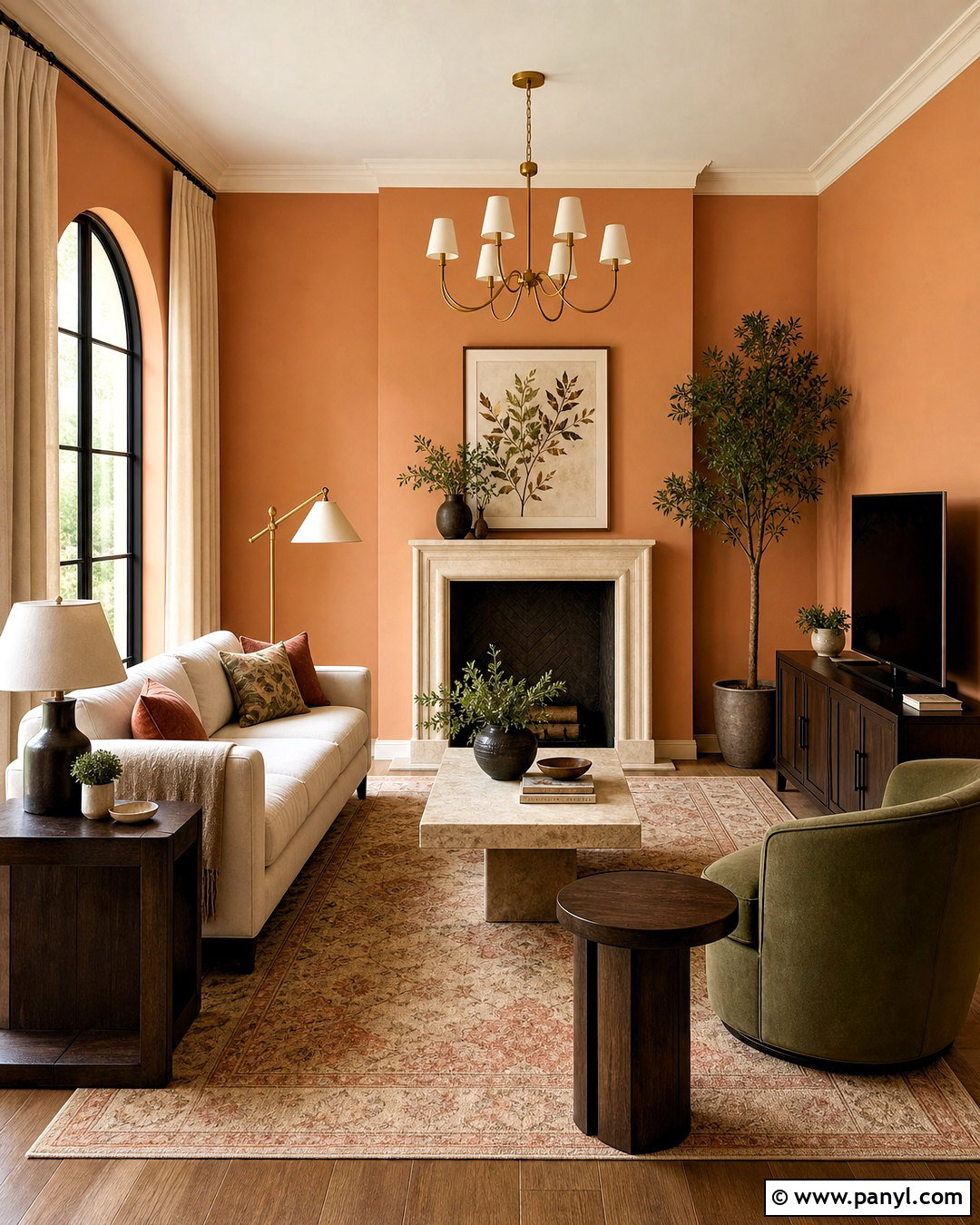
3. Terracotta Living Room Accent Wall
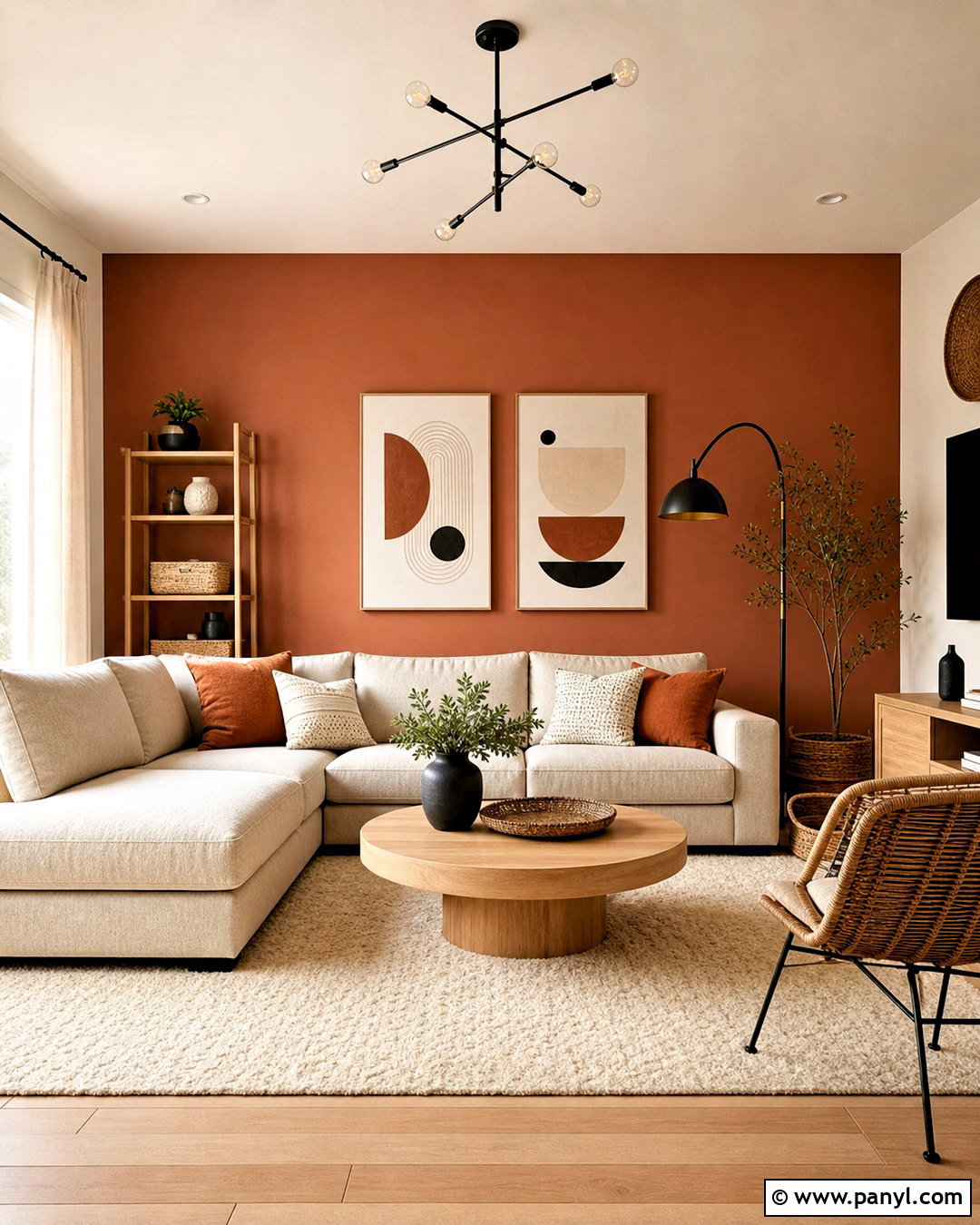
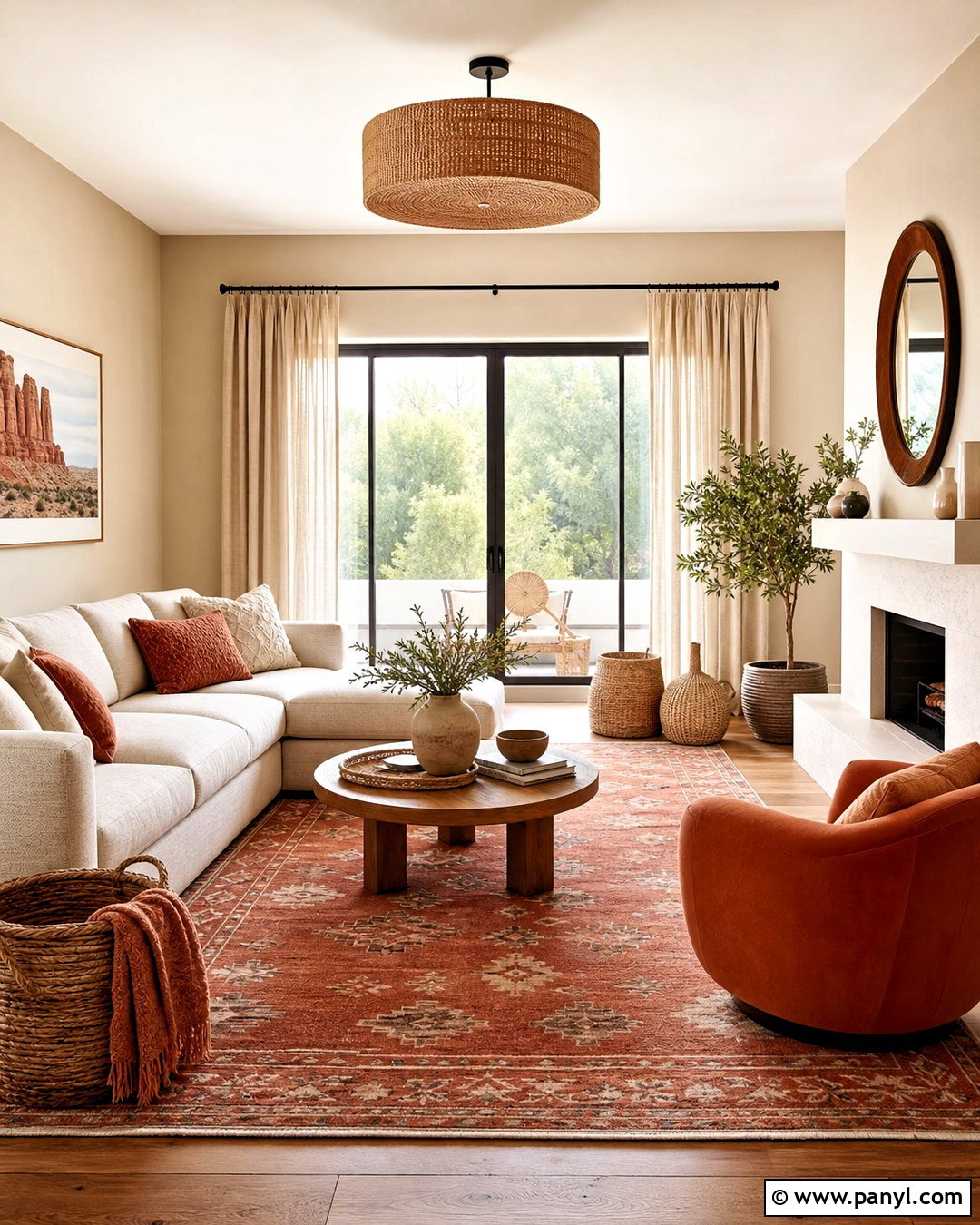
Terracotta can make a plain living room feel warmer and more welcoming, especially when paired with sandy neutrals. Paint the fireplace or sofa wall in a muted clay-orange shade rather than a bright red-orange. Balance its warmth with an oatmeal sectional, light beige walls, and a large cream wool rug. Pale oak furniture keeps the arrangement casual, while black metal details add crisp contrast. Introduce a low-profile coffee table, woven baskets, and linen curtains for natural texture. Artwork containing cream, brown, and small touches of blue will cool the palette slightly. Repeat the terracotta wall color through patterned pillows or pottery, but use those accents sparingly. The finished room should feel sun-washed and comfortable, with every material supporting the rich earthen backdrop.
4. Charcoal Living Room Accent Wall
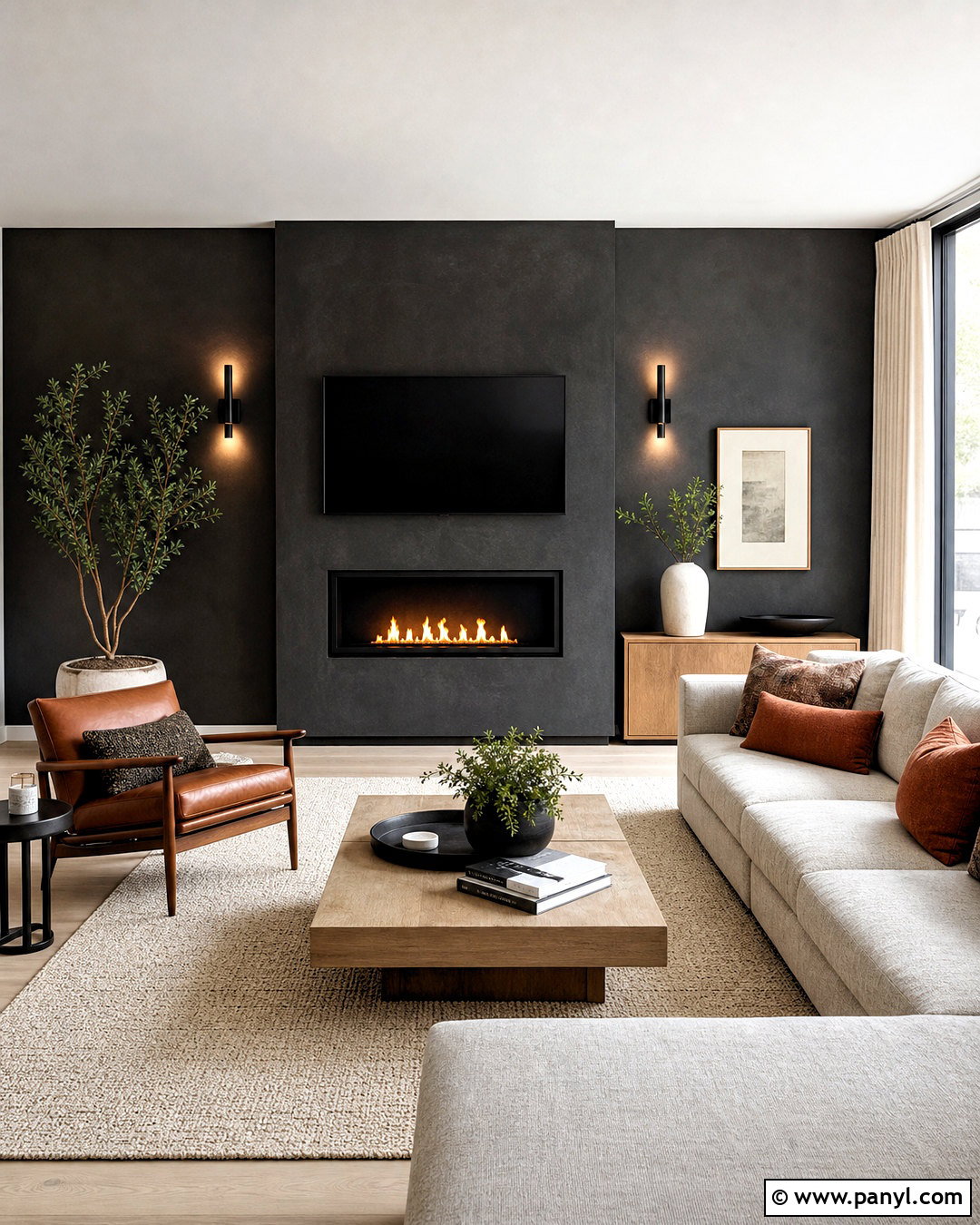
If you want drama without using vivid color, a charcoal accent wall offers a sophisticated solution. Choose the wall behind the television, fireplace, or longest sofa, and paint the surrounding surfaces soft warm white. A light greige sectional will create contrast while keeping the room comfortable and family friendly. Bring in a camel leather chair, pale wood coffee table, and ivory rug to prevent the dark wall from dominating. Matte black sconces can blend into the charcoal surface and provide functional lighting around artwork or shelving. Add cream curtains, warm wood picture frames, and pillows in tan, rust, and charcoal. A few green plants will introduce freshness. This balanced combination works particularly well in modern living rooms with generous daylight and clean architectural lines.
5. Muted Teal Living Room Accent Wall
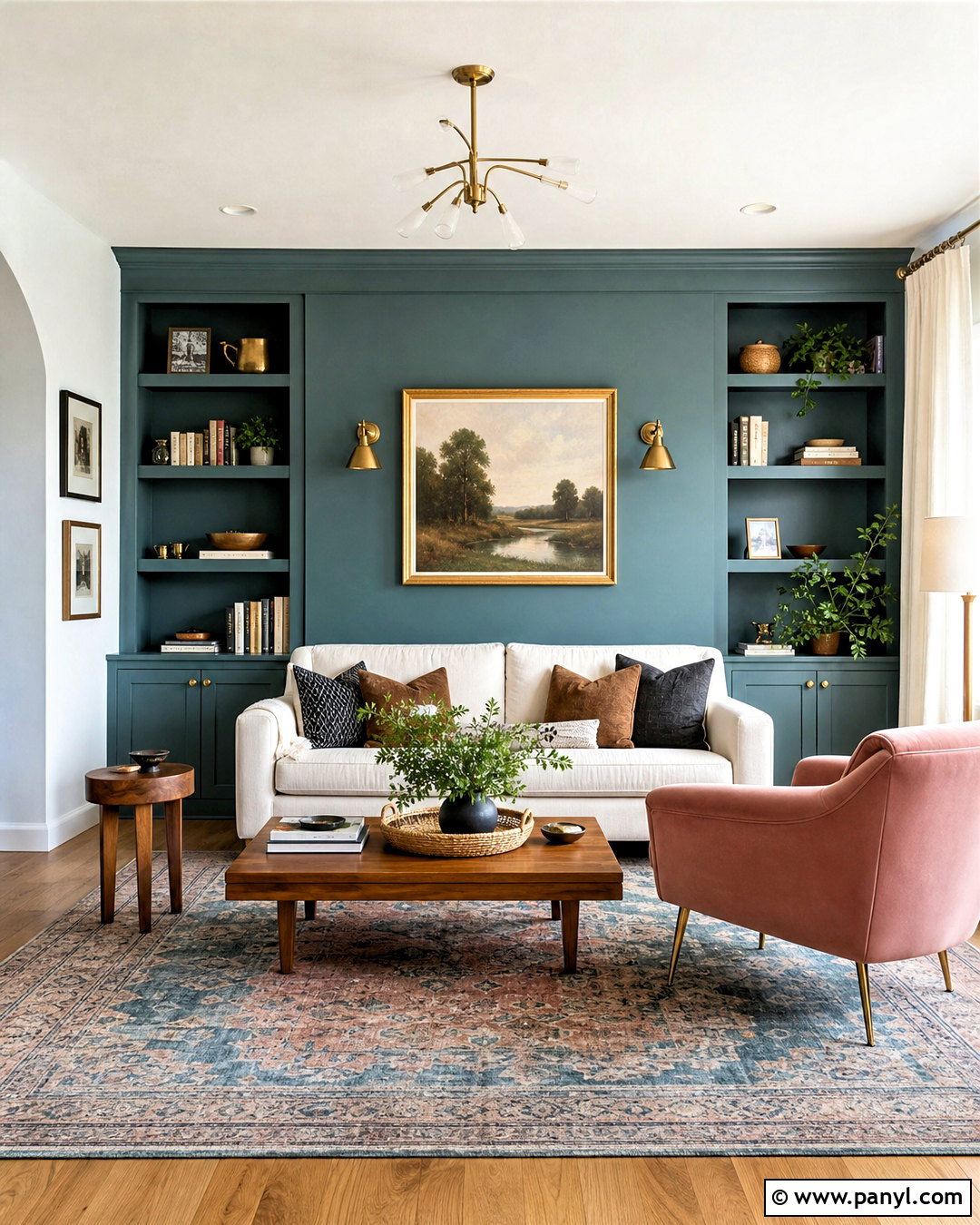
Muted teal delivers noticeable color while feeling calmer than bright turquoise. Use it behind a neutral sofa or across a wall containing simple built-in shelves. Warm white surrounding walls and natural oak flooring will highlight the teal without making the contrast severe. Furnish the room with an ivory sofa, dusty rose accent chair, and medium-tone wood tables for a comfortable mix of warm and cool shades. A patterned rug featuring faded teal, blush, beige, and navy helps distribute color across the floor. Add antique brass lighting, off-white curtains, and abstract artwork with restrained pink details. Keep accessories simple so the painted wall remains the main feature. The complete scheme feels fresh and expressive, yet it is soft enough for a living room used every day.
6. Chocolate Brown Living Room Accent Wall
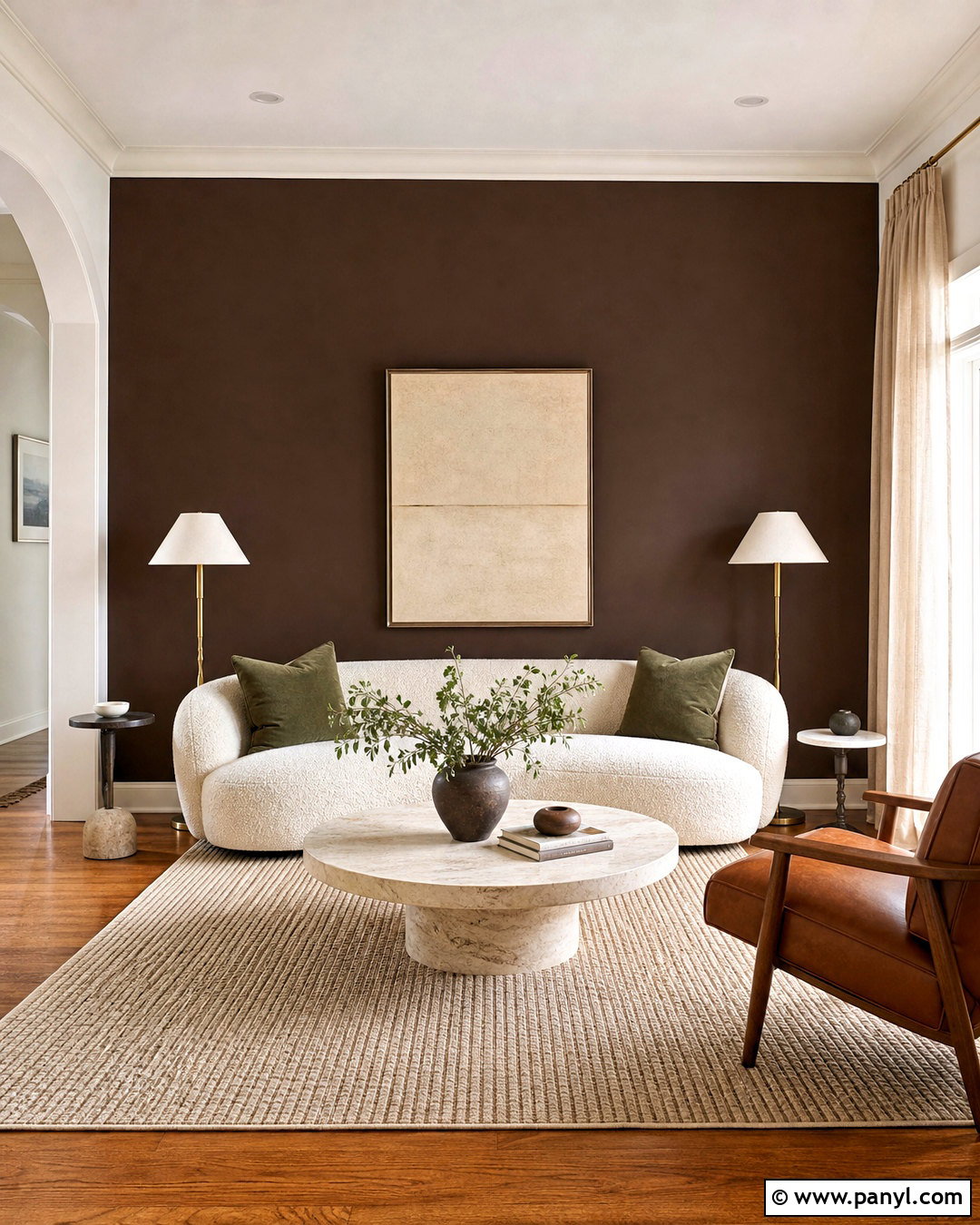
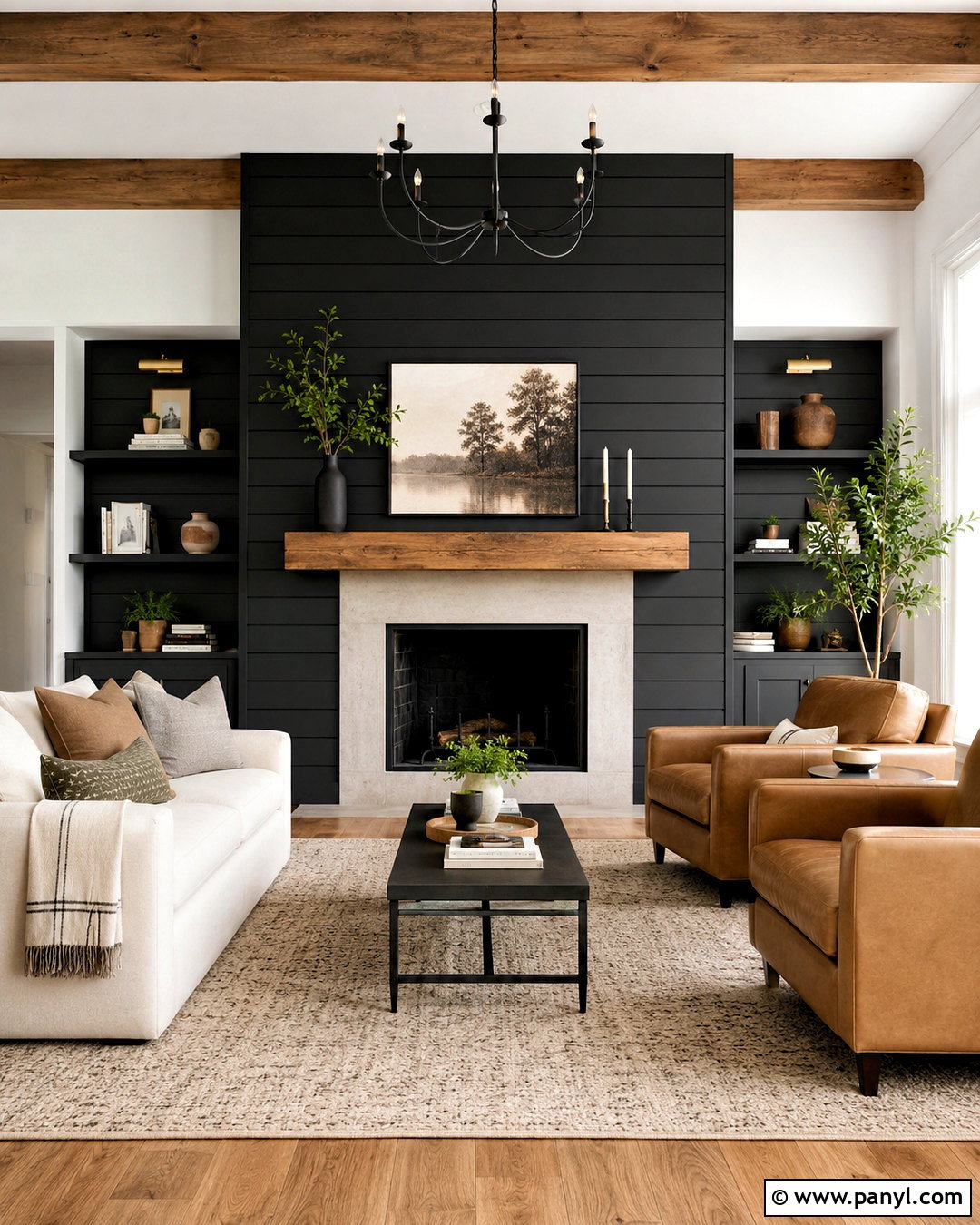
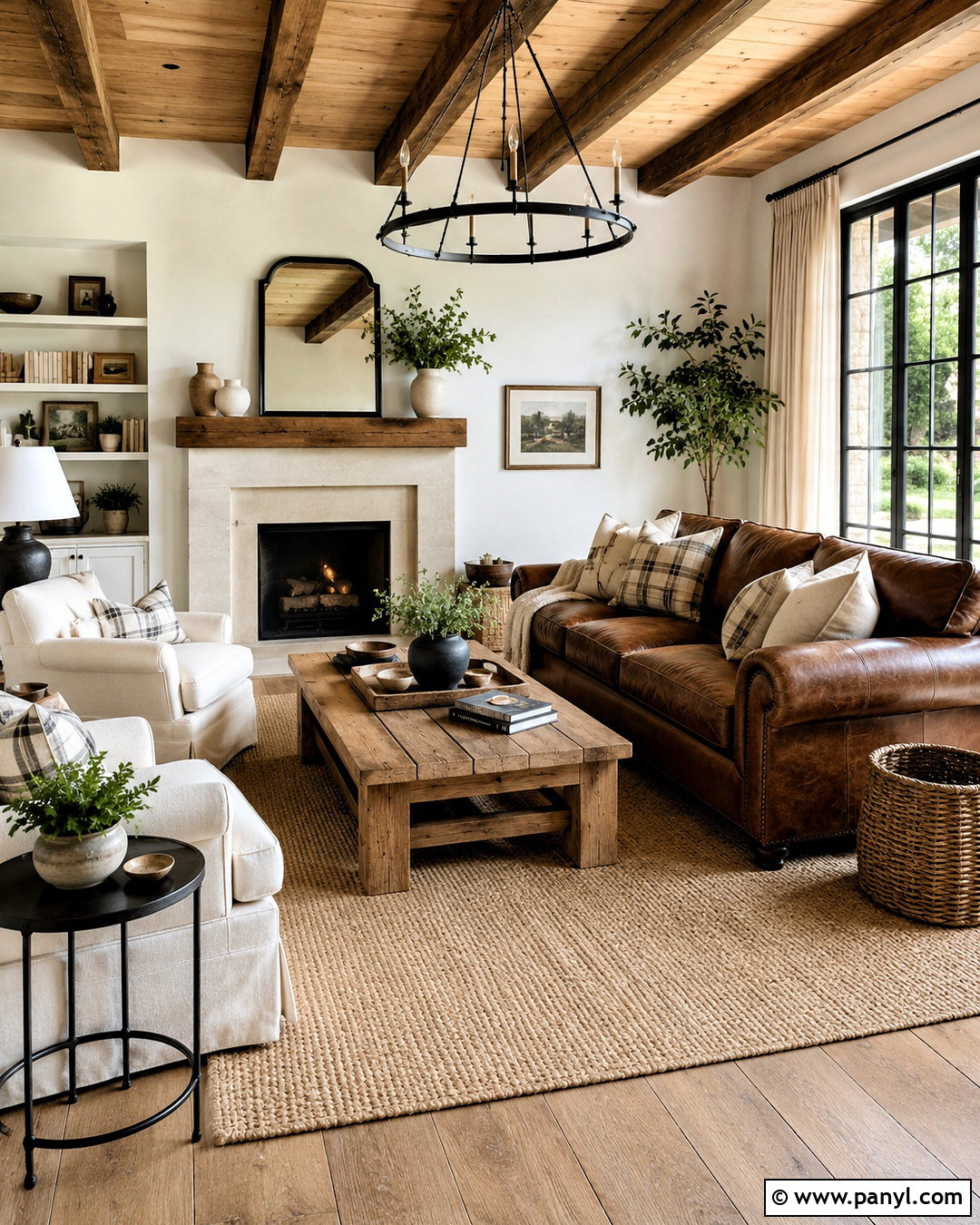
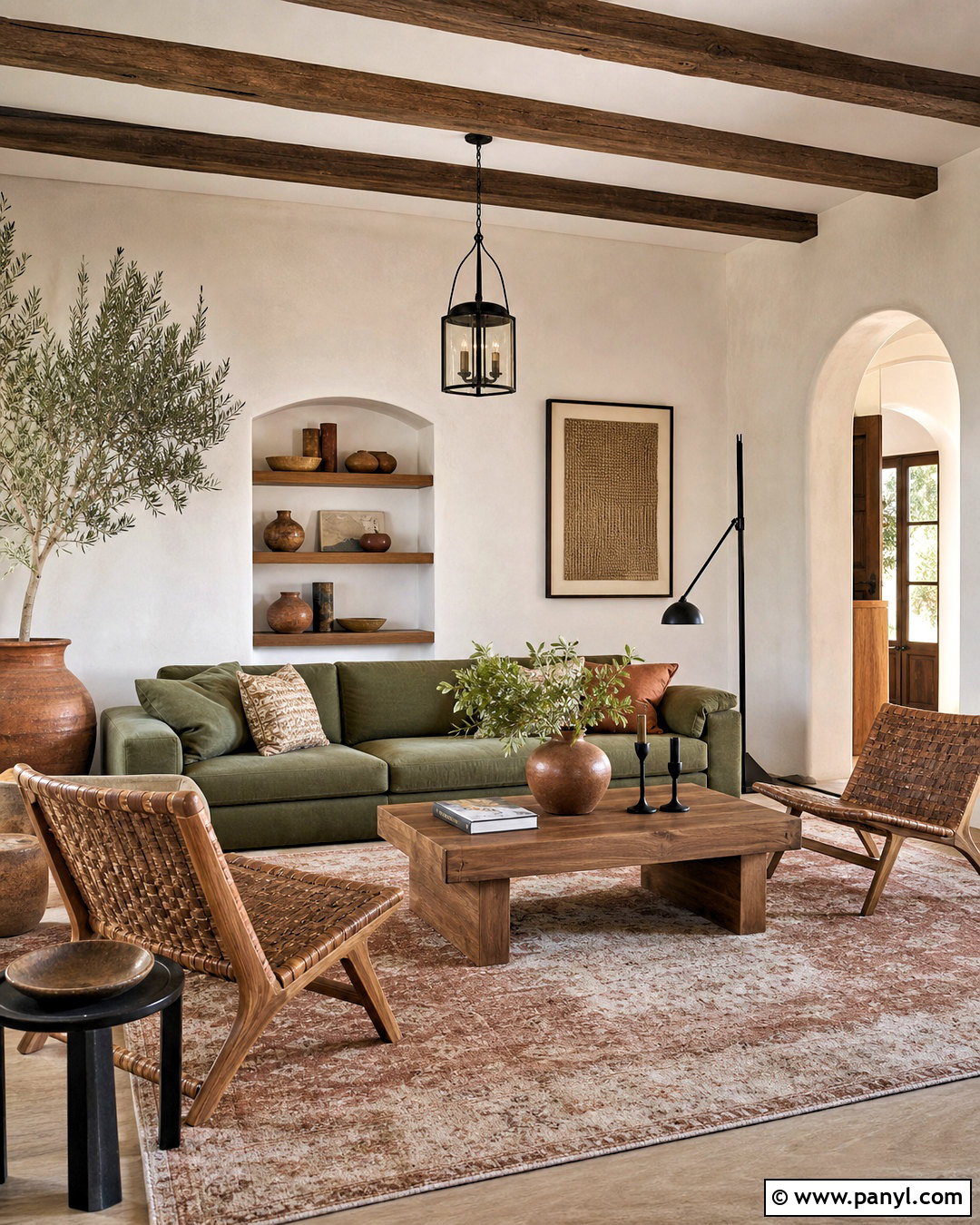
A chocolate brown accent wall can give a living room a cozy, enveloping quality without darkening every surface. Select a warm brown with subtle red undertones and use it behind a cream boucle sofa. Pair it with ivory walls, medium oak flooring, and oatmeal curtains to maintain an airy foundation. A travertine or light stone coffee table introduces contrast and keeps the palette from becoming too wood heavy. Layer in a cognac leather chair, striped beige rug, and walnut side table for tonal variety. Brass lamps and warm white artwork look especially striking against the brown background. Add muted green pillows and one tall plant for a natural accent. The result is a refined, comfortable room built around rich color, tactile fabrics, and warm organic materials.
7. Rust Living Room Accent Wall
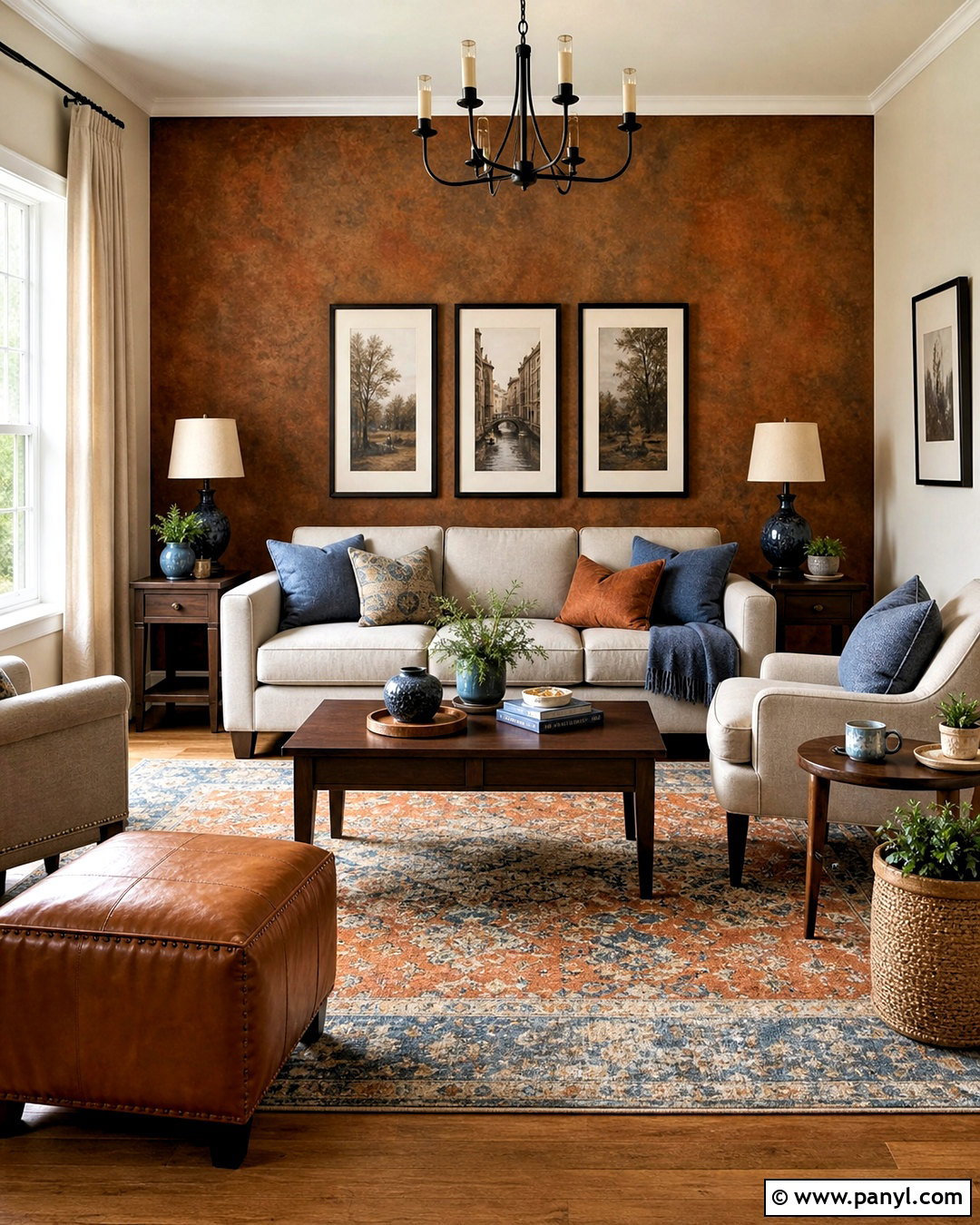
Rust offers the richness of red with a softer, earthier finish that is easier to live with. Paint the wall behind a light taupe sofa, then use warm off-white across the remaining room. Ground the seating area with a vintage rug containing rust, faded blue, tan, and cream. Walnut tables and a caramel leather ottoman deepen the autumnal palette, while linen curtains keep the windows light. Add black-framed artwork to sharpen the arrangement and prevent the room from looking overly rustic. Small blue-gray accessories provide a useful cool contrast against the warm wall. Repeat rust in only one or two textiles, such as a lumbar pillow or throw. This creates a coordinated living room where the accent wall feels intentional but not excessively dominant.
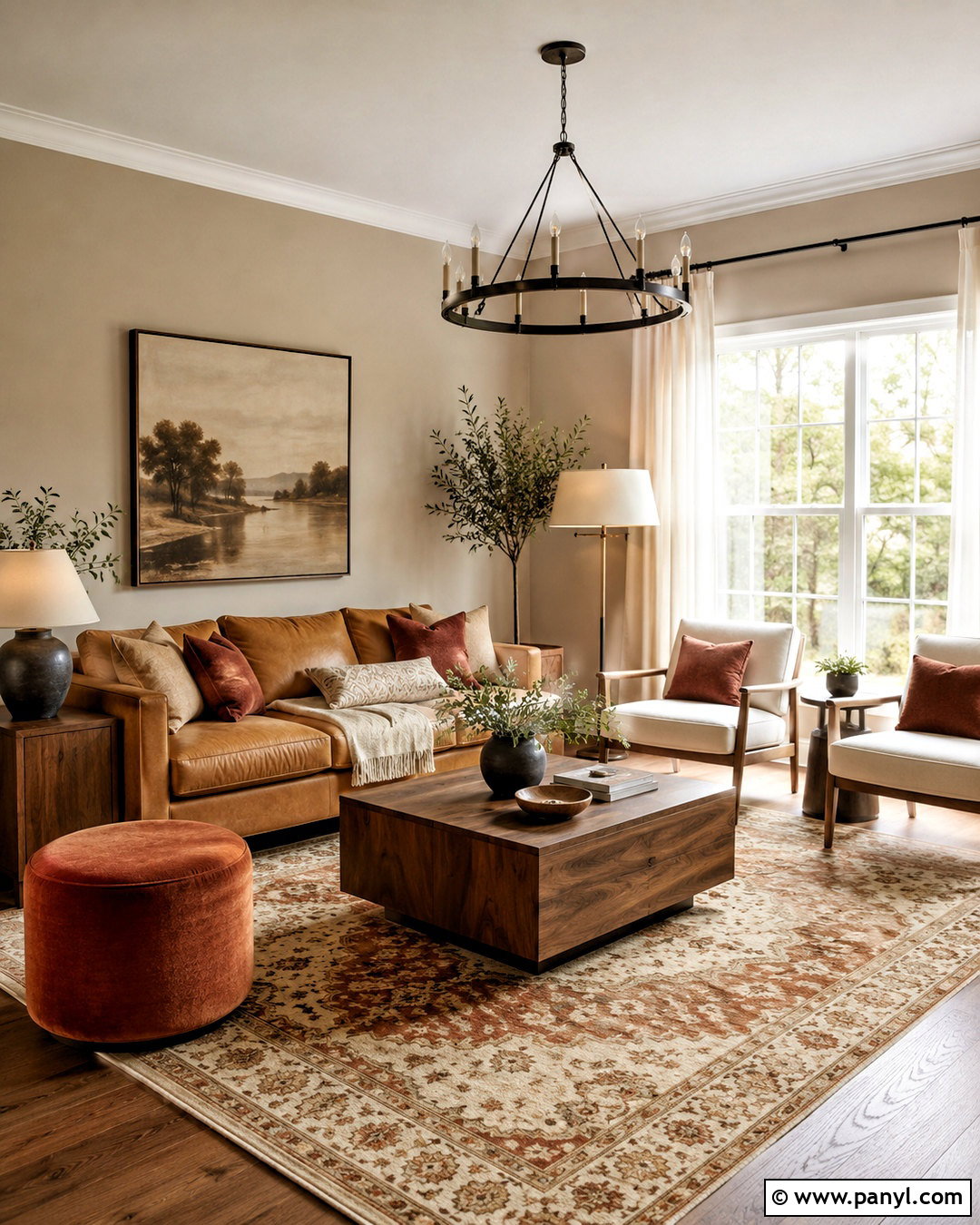
8. Sage Green Living Room Accent Wall
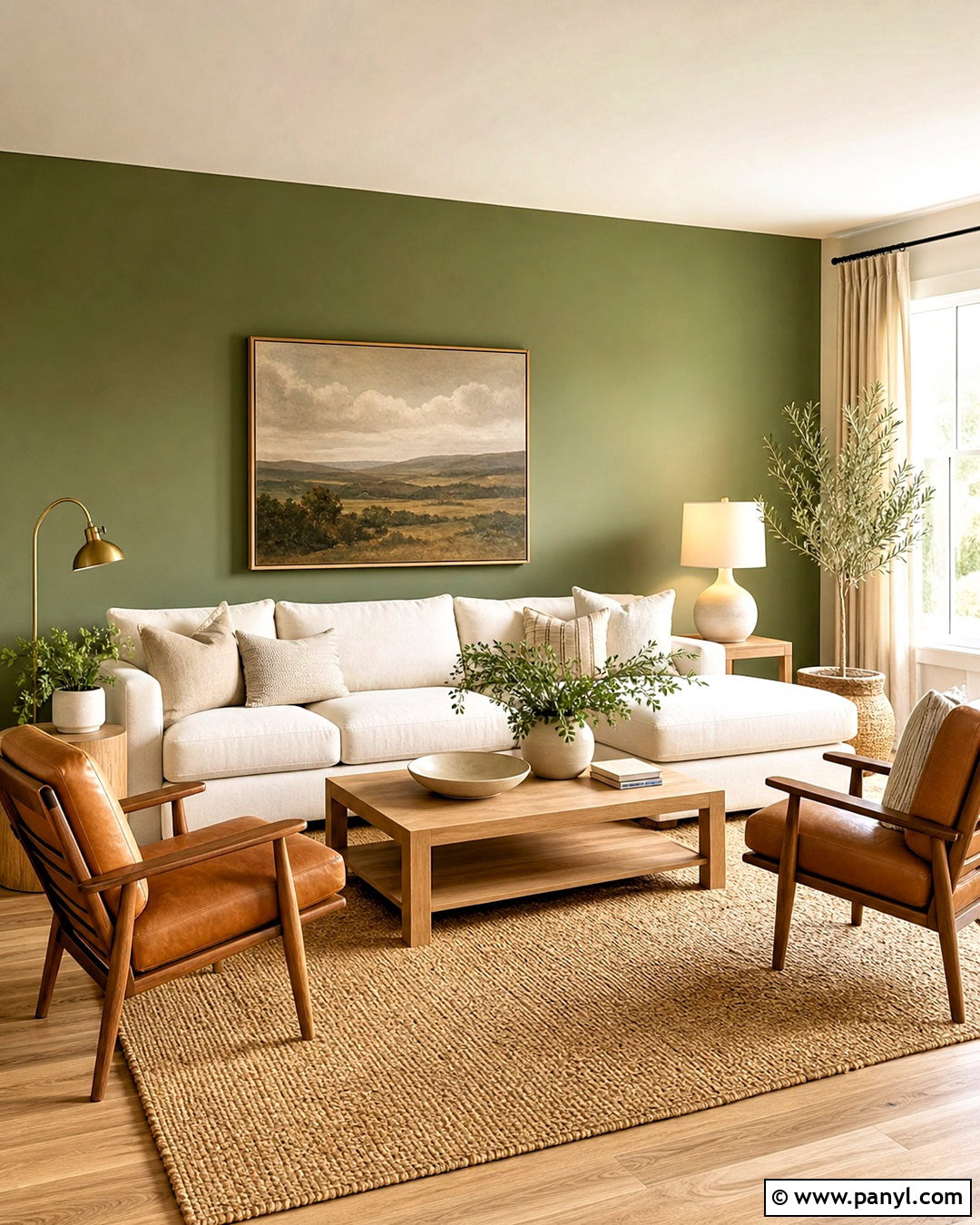
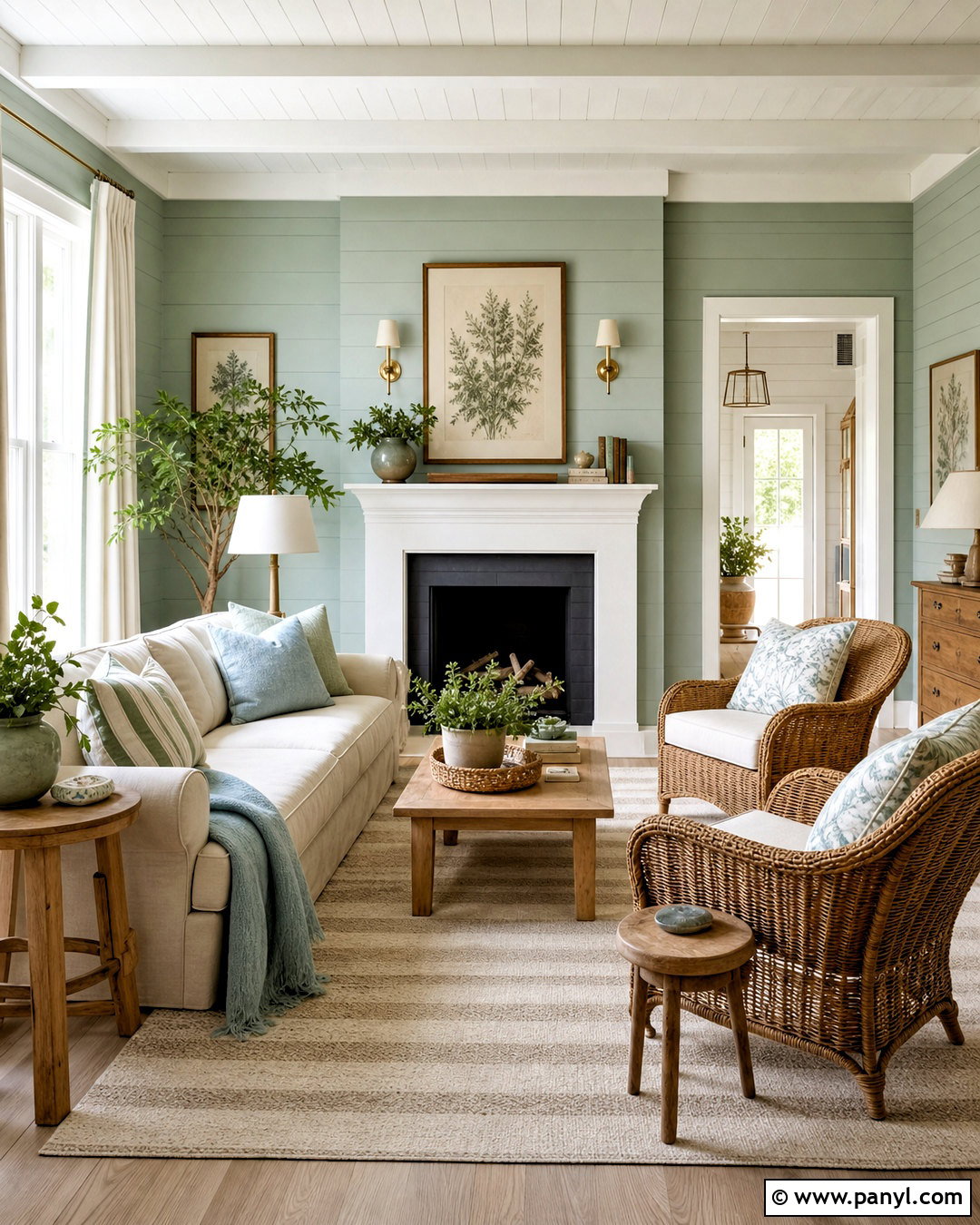
Sage green is a gentle choice for homeowners who want color without a highly dramatic focal point. Apply it to the wall behind a warm white sectional and pair it with creamy surrounding walls. Light oak furniture, a natural jute rug, and oatmeal curtains support the quiet botanical palette. Introduce a pair of tan upholstered chairs to define a conversational layout around a rounded wood coffee table. A large landscape painting with soft green, brown, and cloudy blue tones can add dimension without competing with the wall. Use aged brass lamps for warmth and matte black accents for definition. Finish with linen pillows in sage, ivory, and subtle stripes. The completed living room feels calm and cohesive, making this scheme suitable for both compact rooms and open layouts.
9. Burgundy Living Room Accent Wall
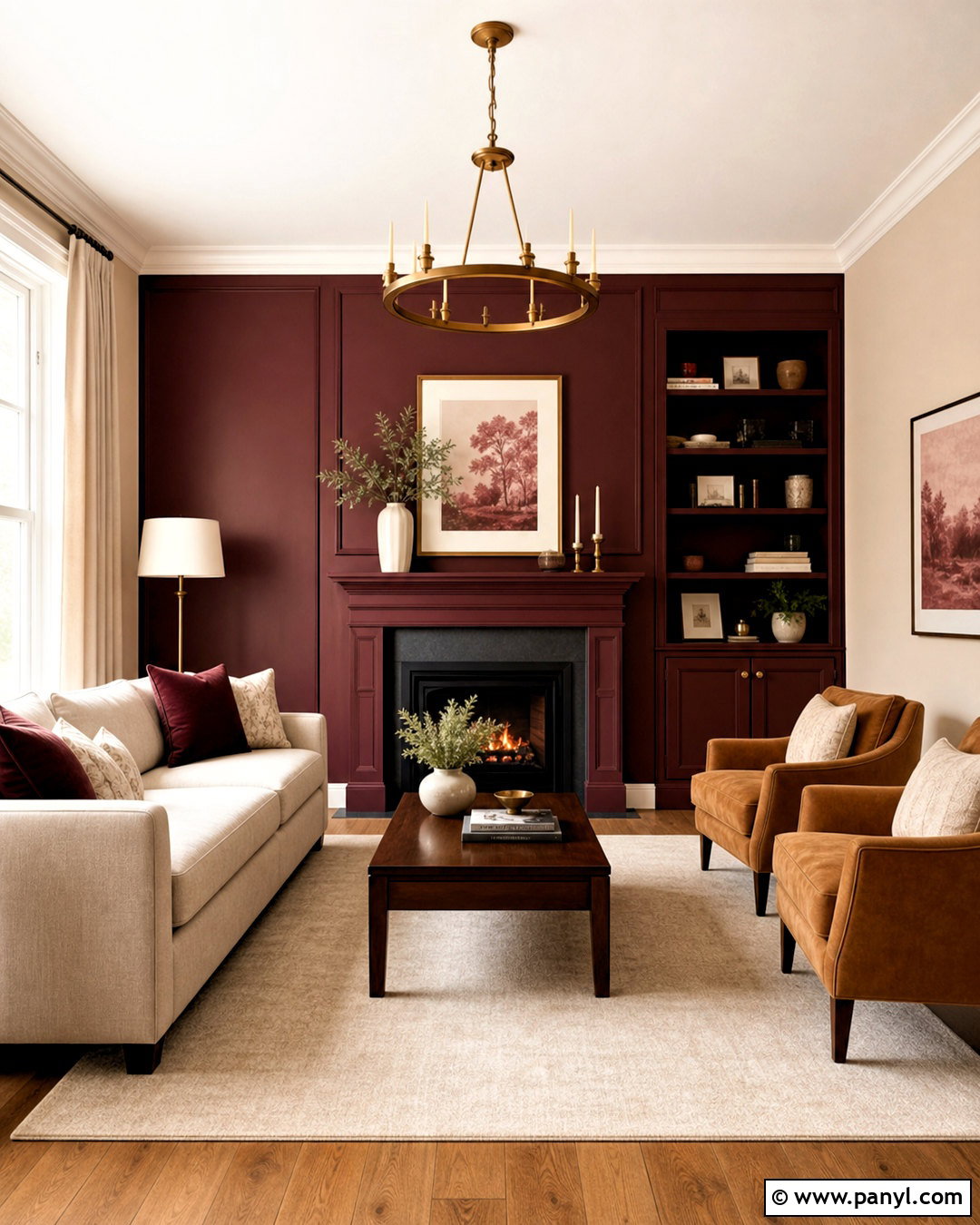
A burgundy accent wall creates a luxurious focal point when it is balanced with pale, understated furnishings. Choose a slightly muted wine-red shade and place it behind a greige sofa or traditional fireplace. Soft beige surrounding walls reduce contrast, while warm oak flooring brings out the brown undertones in the burgundy. Add an ivory rug, walnut coffee table, and two camel-colored chairs to create a layered seating arrangement. Antique brass lamps and frames complement the richness of the wall. Select artwork with cream, dusty pink, brown, and restrained burgundy details rather than repeating solid red everywhere. Textured beige curtains keep the room bright during the day. The finished design feels collected and comfortable, combining classic color with practical furniture and approachable natural materials.
10. Mustard Yellow Living Room Accent Wall
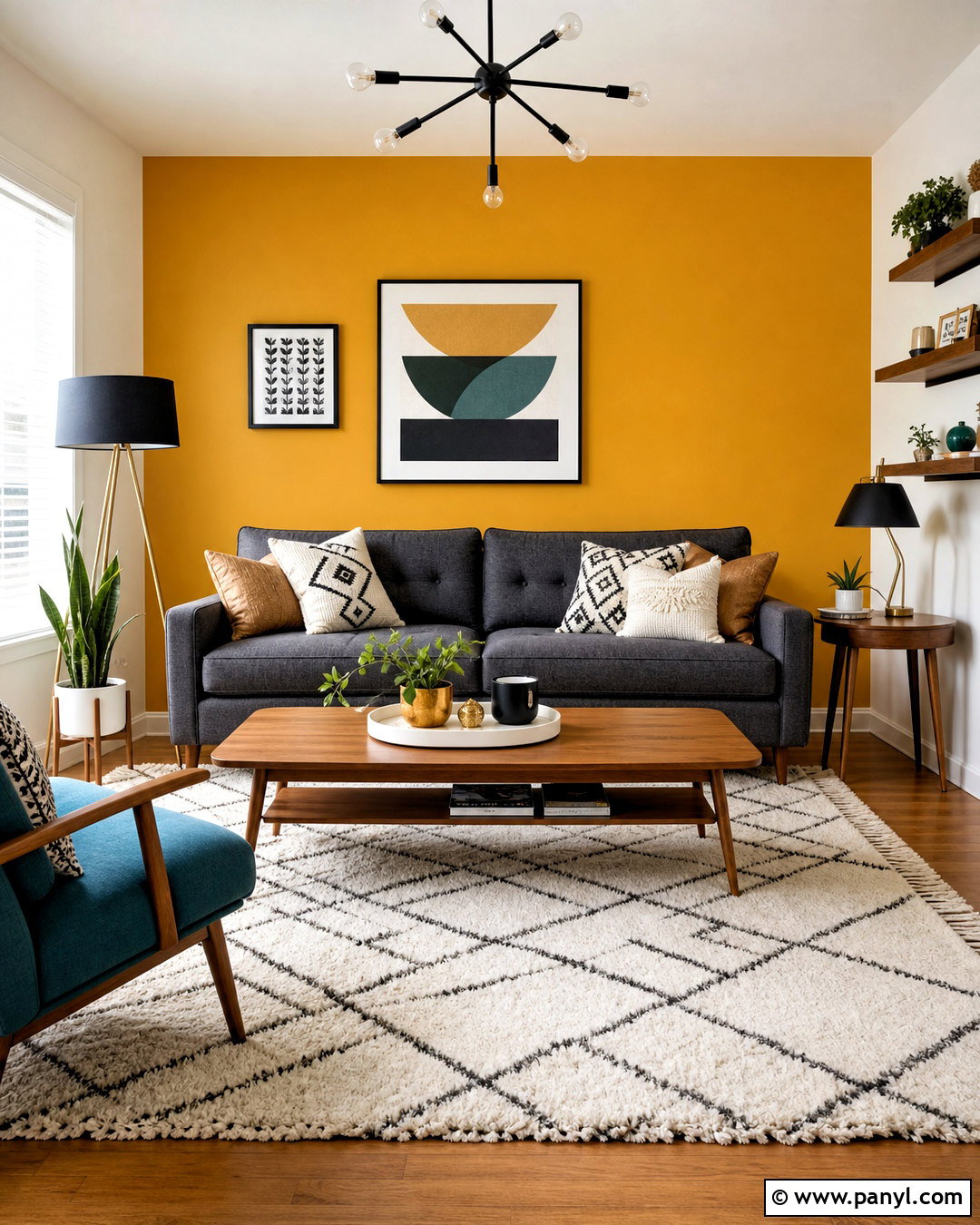
Mustard yellow can brighten a living room while offering more depth than a clear lemon shade. Use it on a wall behind a charcoal or medium gray sofa, allowing the cool upholstery to balance the warm paint. Keep the other walls soft white and choose medium-tone wood flooring or furniture for an inviting foundation. A cream geometric rug can lighten the seating area, while a teal accent chair introduces a complementary color. Add black metal lighting, walnut tables, and framed graphic artwork with restrained yellow details. Pillows in cream, gray, teal, and mustard will connect the furniture to the feature wall. Because this shade already has visual energy, keep shelves and surfaces relatively uncluttered. The resulting room feels cheerful, modern, and thoughtfully coordinated rather than overly colorful.
11. Emerald Green Living Room Accent Wall
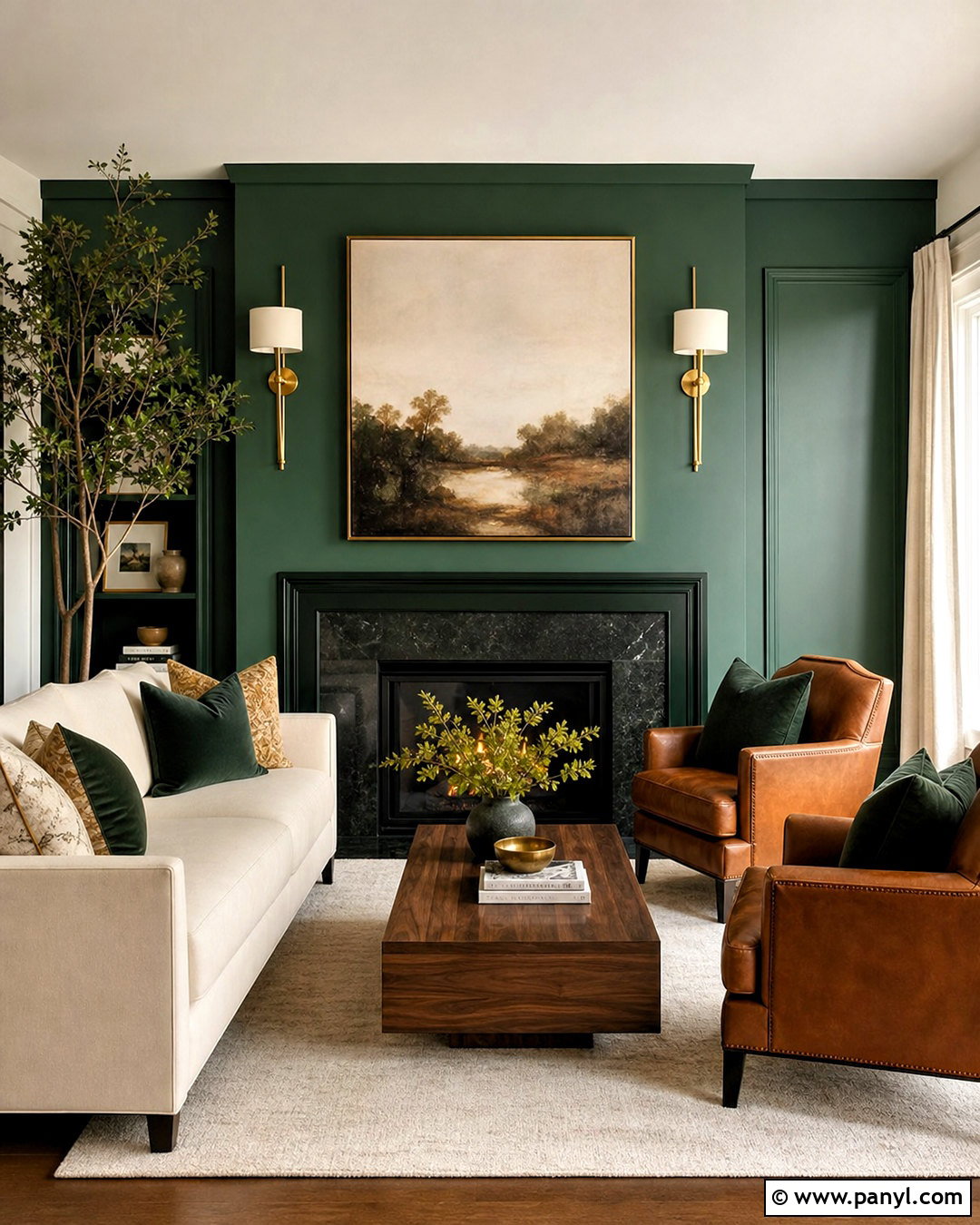
Deep emerald green can turn a simple living room into a dramatic but inviting gathering space. Paint the wall behind a cream sofa or fireplace, then keep adjacent walls warm white to protect the room’s brightness. Introduce a medium walnut coffee table, cognac leather chairs, and a large ivory rug to create a rich mix of contrasting tones. Brass sconces or floor lamps will stand out beautifully against the green surface. Hang one substantial artwork rather than several small pieces, using a frame with a warm metallic or wood finish. Velvet pillows can repeat the emerald color, while beige linen cushions soften its intensity. Add full oatmeal curtains and a leafy indoor tree. Together, these details create an elegant room that still feels comfortable, practical, and suitable for daily use.
12. Dusty Blue Living Room Accent Wall
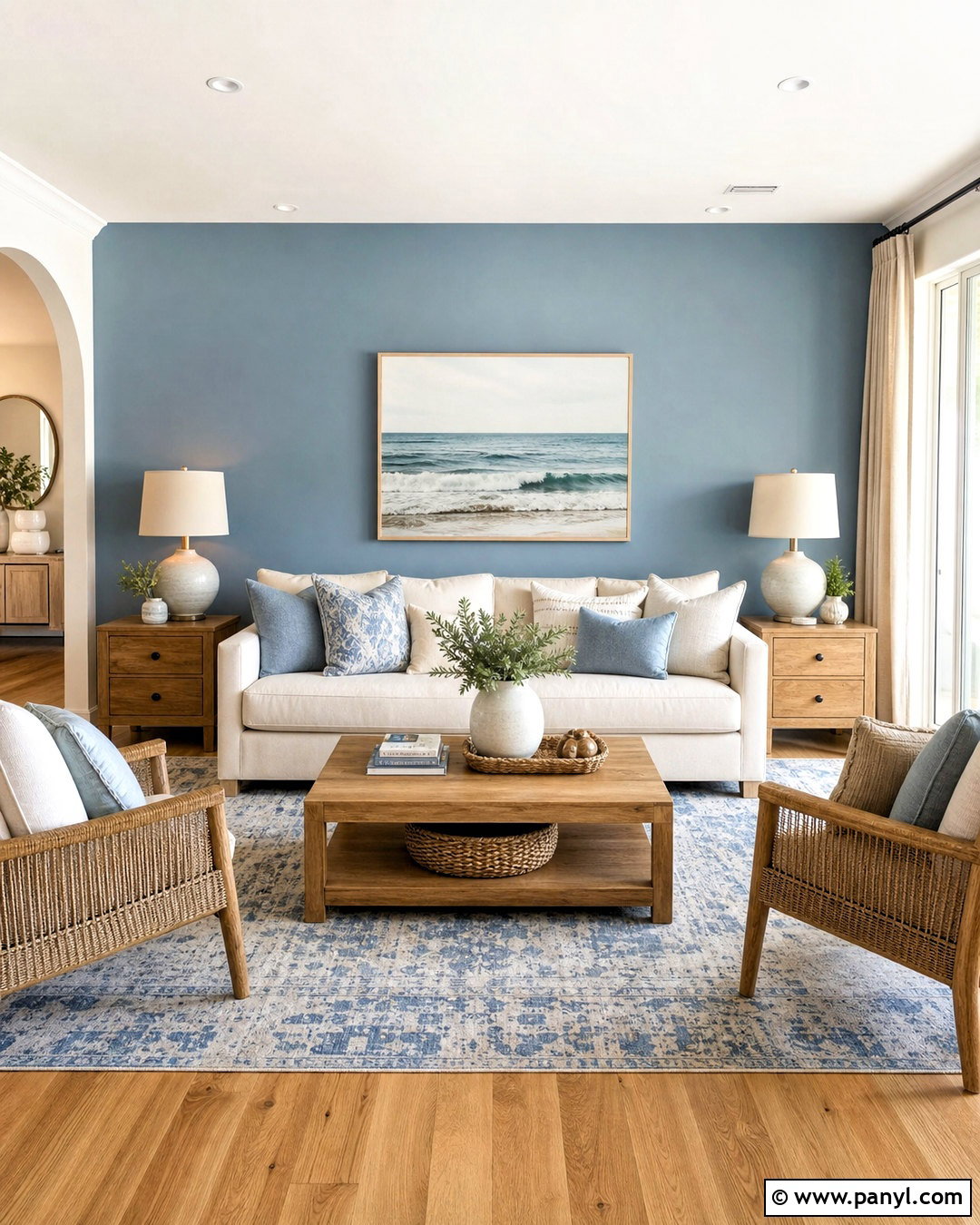
Dusty blue works beautifully in a bright living room where a peaceful, slightly coastal atmosphere is desired. Paint the window wall or sofa wall in a gray-blue shade, then surround it with warm white rather than cool white. Choose a light beige sofa, natural oak coffee table, and woven armchairs to create an easy, relaxed layout. A faded blue and cream rug can carry the wall color into the center of the space. Use sand-colored linen curtains, ceramic table lamps, and simple seascape or abstract artwork for subtle visual movement. Black accents, including curtain rods and picture frames, will stop the pale palette from looking washed out. Complete the room with tan pillows and textured ivory throws for a calm design that feels layered rather than overly nautical.
13. Plum Living Room Accent Wall
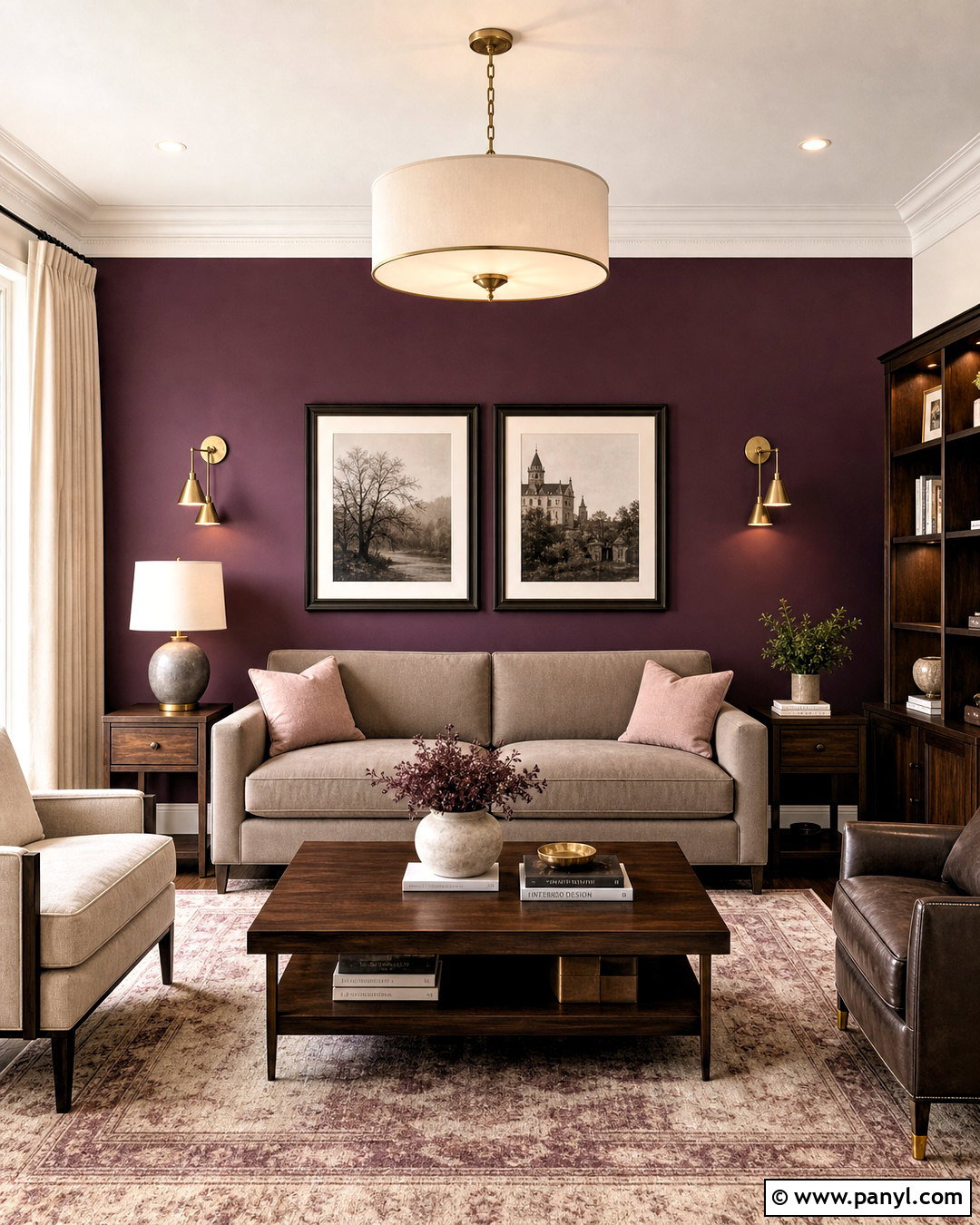
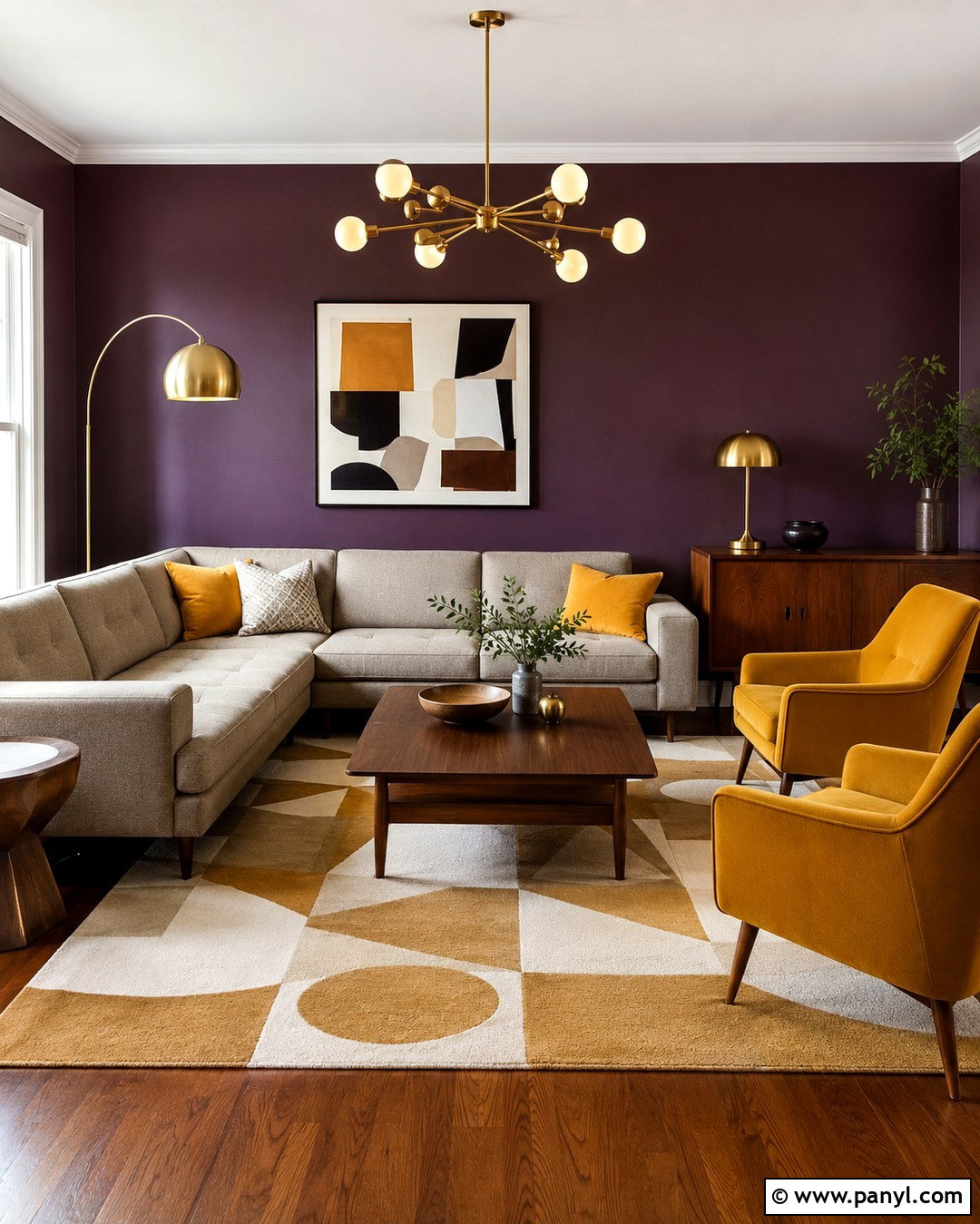
Would you like a colorful living room that still feels grown-up and restful? A muted plum accent wall provides depth while pairing naturally with taupe, beige, and warm wood. Position it behind a light mushroom-colored sofa and paint the surrounding walls a soft creamy neutral. Add a walnut console, rounded coffee table, and faded traditional rug containing plum, dusty rose, brown, and ivory. Champagne-brass lighting brings out the wall’s warmer undertones, while charcoal picture frames add a clean outline. Use oatmeal curtains to soften the windows and maintain balance. Pillows in plum velvet, pale pink linen, and neutral patterns will connect the seating to the background. The completed scheme feels expressive and comfortable, offering an appealing alternative to more common blue or green feature walls.
14. Black Living Room Accent Wall
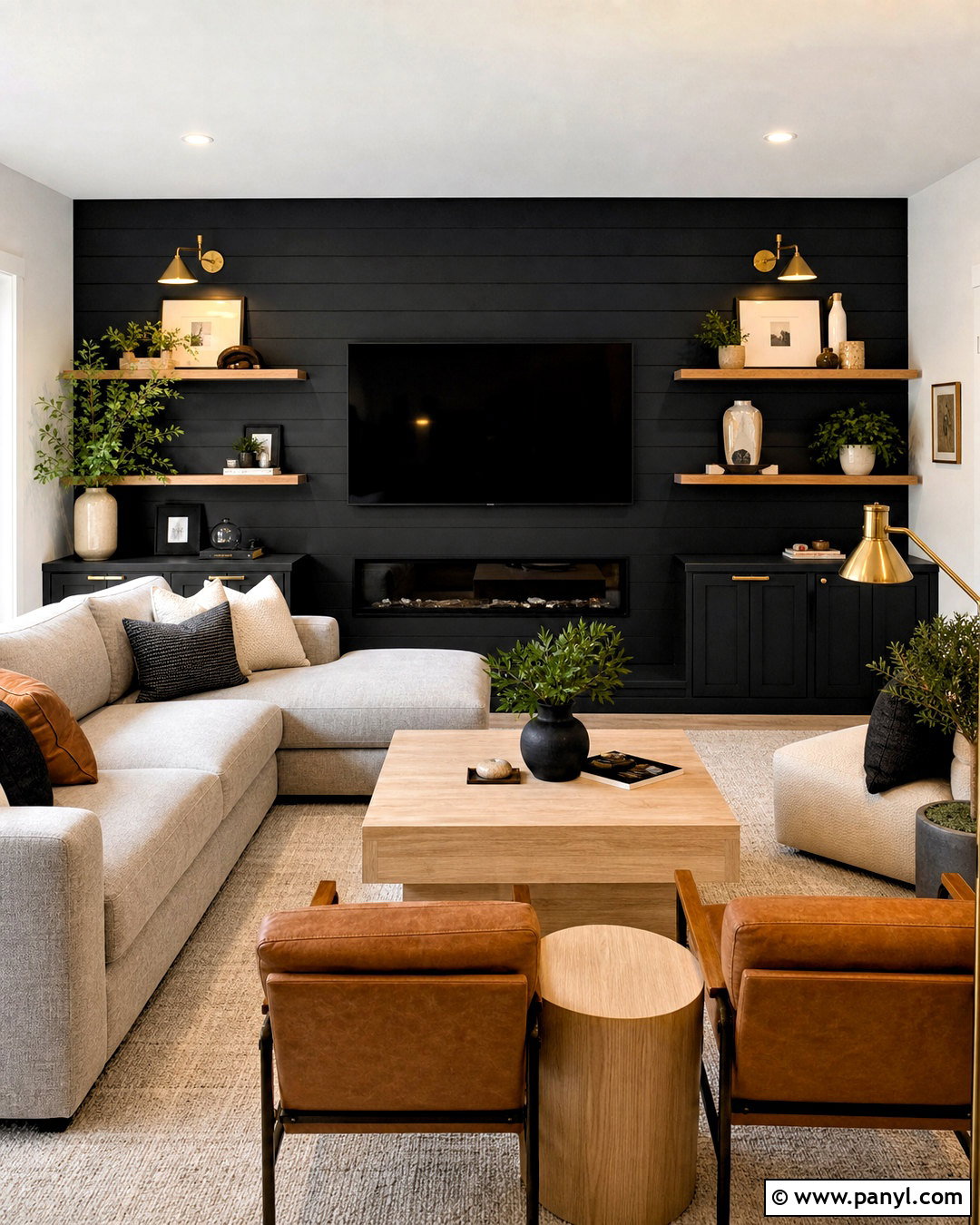
A black accent wall can look crisp and architectural when paired with plenty of light color and natural texture. Use a soft matte black behind the television or fireplace to disguise dark electronics and create a clean focal point. Paint the other walls warm white, then furnish the room with a light gray sectional and pale oak tables. A large ivory rug will brighten the floor, while tan leather chairs introduce warmth. Add floating oak shelves or oversized cream artwork to break up the dark surface. White curtains, brushed brass lamps, and green plants keep the room from feeling stark. Repeat black through narrow furniture legs, frames, and curtain rods. This careful distribution produces a modern living room that feels balanced, welcoming, and visually stronger rather than heavy or severe.
15. Coral Living Room Accent Wall
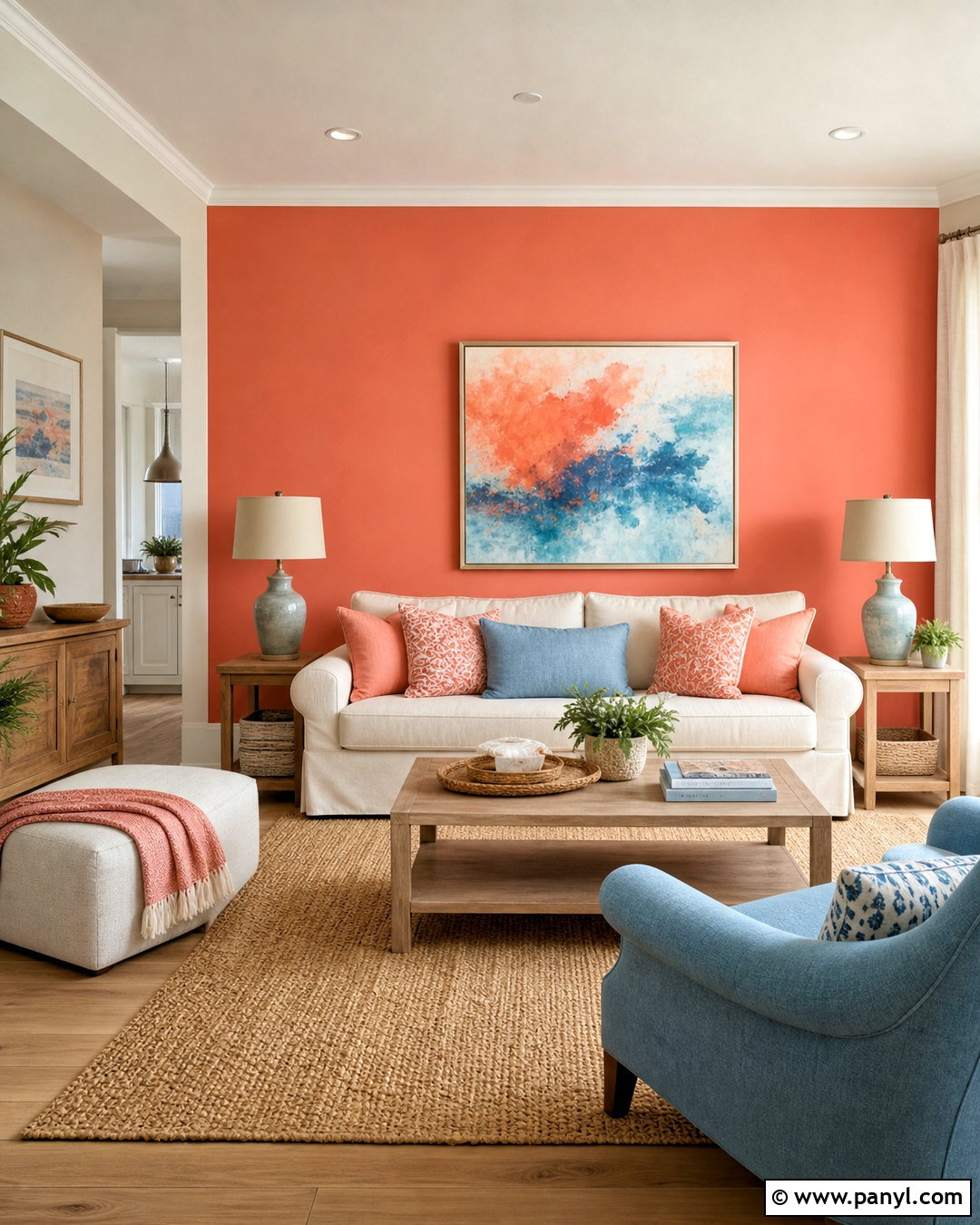
A muted coral wall brings warmth and personality to a casual living room without the intensity of bright orange or pink. Place it behind a cream slipcovered sofa and use pale sand paint on the remaining walls. Light oak furniture and a woven natural-fiber rug will create a relaxed foundation. Add a soft blue accent chair to cool the palette and provide clear color contrast. Linen curtains, ceramic lamps, and abstract artwork in coral, beige, blue, and white can connect the room without looking overly coordinated. Use pillows in small-scale stripes or simple botanical patterns instead of covering the sofa in solid coral. A few terracotta accessories will deepen the warm tones. The complete design feels cheerful and sunlit, making it especially effective in casual contemporary or coastal-inspired homes.
16. Red Clay Living Room Accent Wall
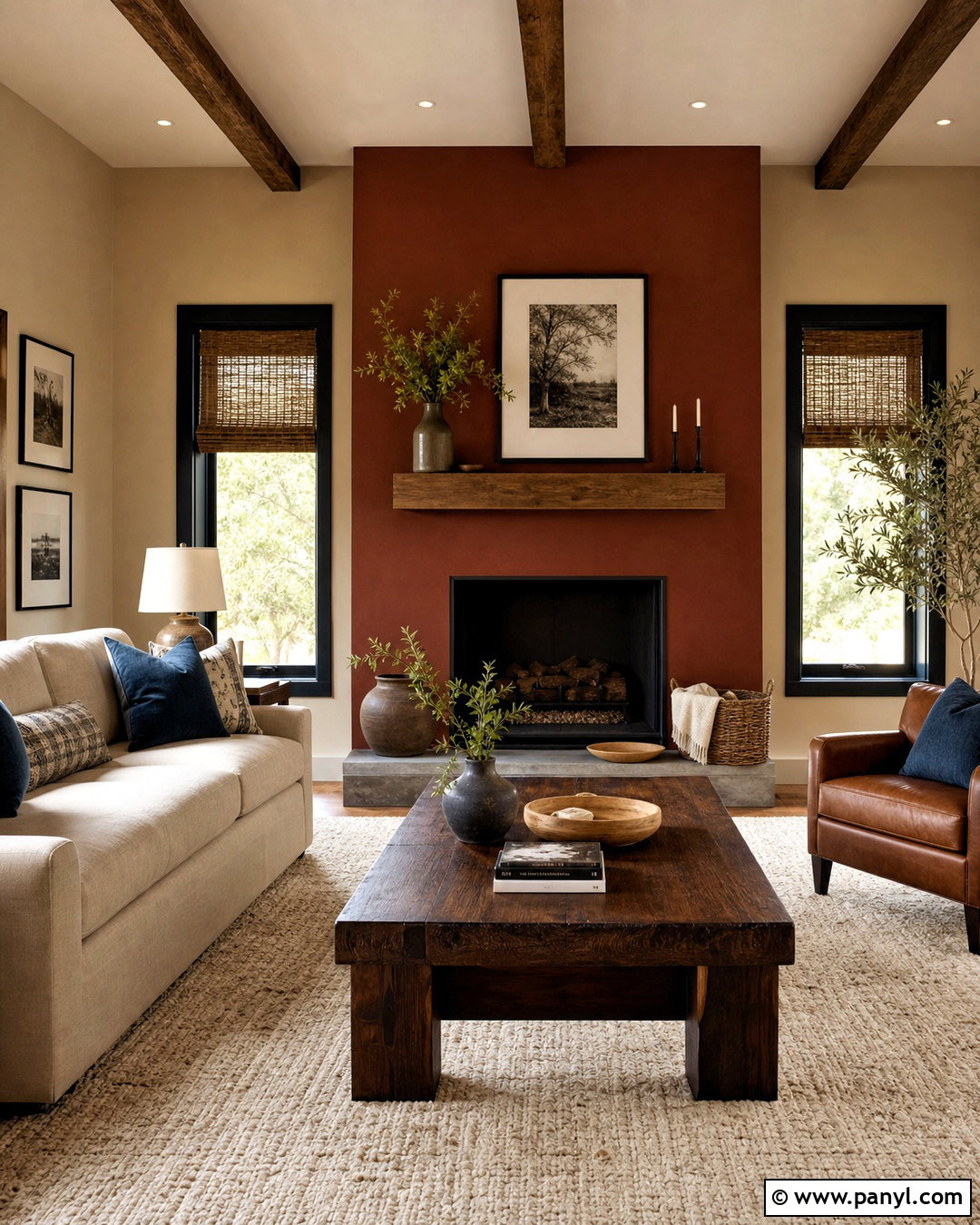
Deep red clay creates a grounded focal point that works especially well with rustic modern furniture. Apply the color to a fireplace wall or the surface behind a substantial sectional. Keep nearby walls warm beige and choose an oatmeal sofa to soften the strong background. A dark walnut coffee table and cognac leather chair reinforce the earthy palette, while a cream rug adds necessary brightness. Hang simple black-framed art or a large neutral textile on the painted wall. Woven shades and linen curtains will introduce layers around the windows without creating visual clutter. Use accents in dusty blue, charcoal, and off-white to balance the clay color. This complete room feels warm and established, with enough contrast to appear fresh rather than overly brown, red, or traditionally rustic.
17. Forest Green Living Room Accent Wall
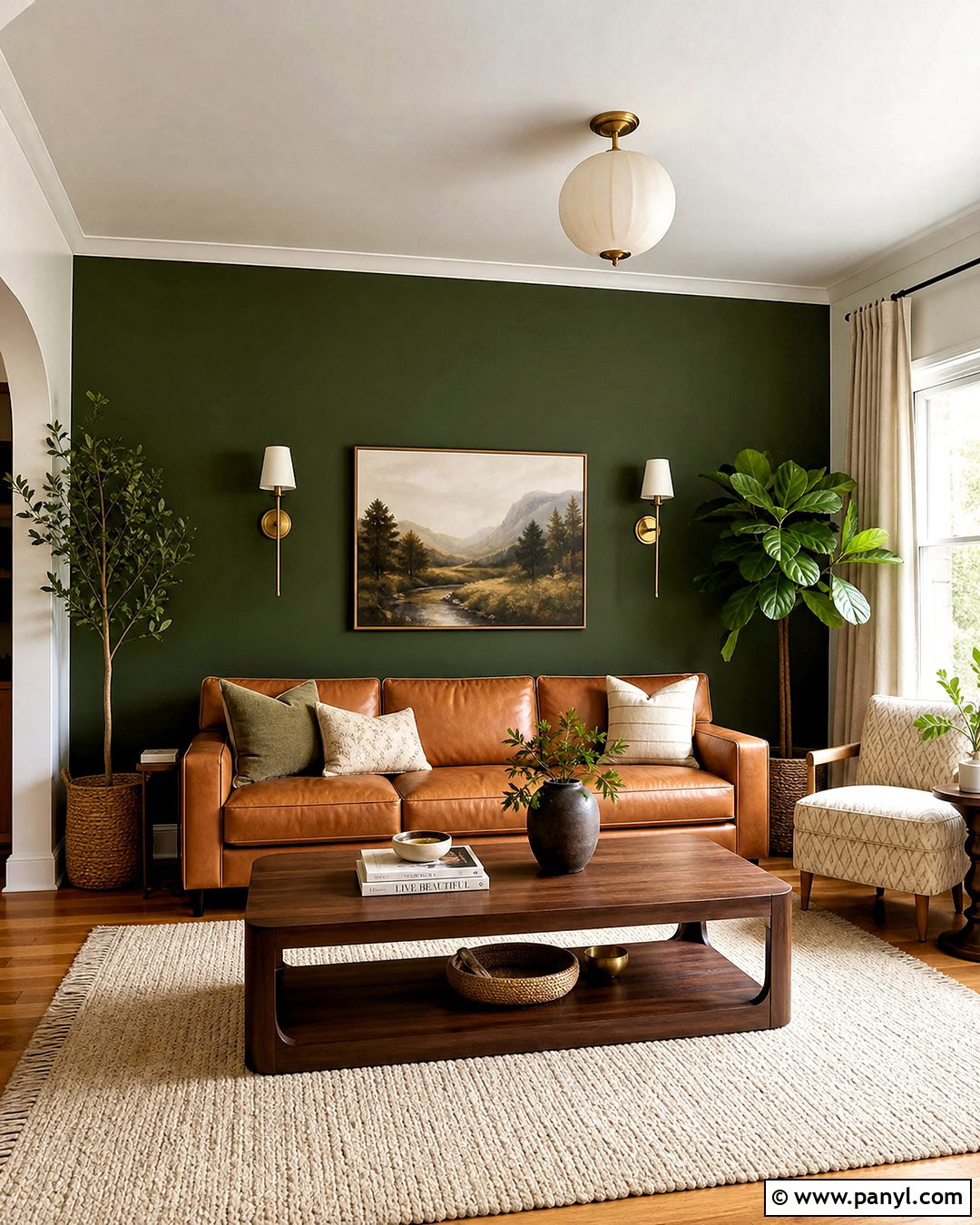
Forest green can anchor a spacious living room and create a comfortable connection with outdoor views. Paint the longest uninterrupted wall in a deep green, then position a camel leather sofa or light beige sectional in front of it. Warm white surrounding walls and oak flooring will keep the room from becoming too dark. Add an ivory wool rug, walnut coffee table, and patterned armchair featuring cream and muted green. Brass lighting provides a warm highlight, while black frames give artwork a defined edge. Hang curtains in natural linen and repeat forest green through only a few cushions. Plants can reinforce the organic palette, but vary their shapes and heights. The finished room feels substantial and relaxed, combining rich wall color with durable materials and familiar neutral furnishings.
18. Cobalt Blue Living Room Accent Wall
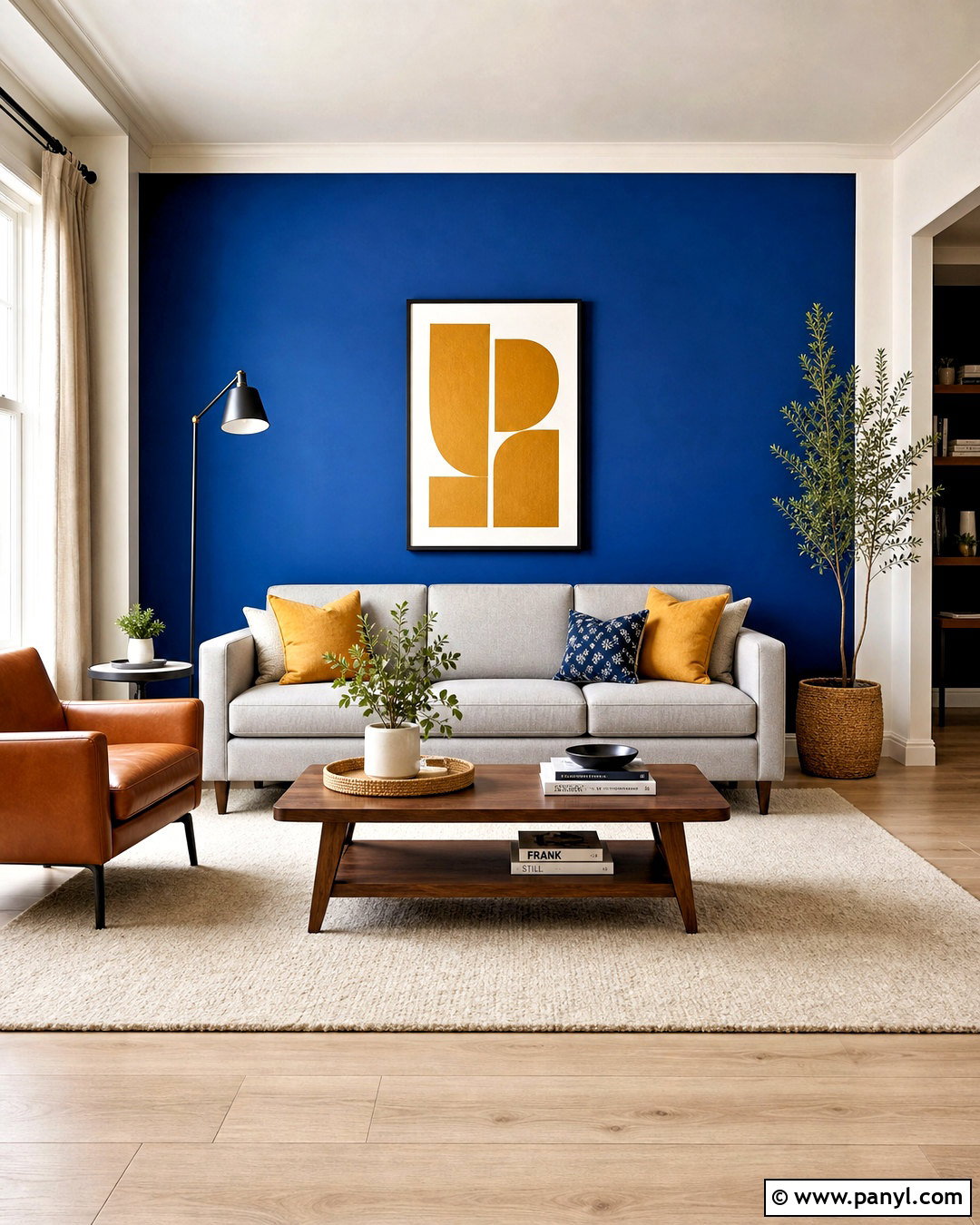
For a more energetic space, cobalt blue creates a clear focal point with a clean, contemporary character. Use it behind a low white or light gray sofa and keep the remaining walls crisp warm white. A pale oak floor and cream area rug will balance the saturated color. Introduce a cognac leather chair, walnut coffee table, and black metal floor lamp to add warmth and structure. Large modern artwork with white, ochre, and limited cobalt details can break up the painted surface. Choose solid neutral curtains rather than another strong pattern. Repeat the blue in small amounts through pottery, books, or one patterned pillow. The final living room feels bold but controlled because the intense wall is surrounded by simple forms, soft neutrals, and grounding natural materials.
19. Warm Taupe Living Room Accent Wall
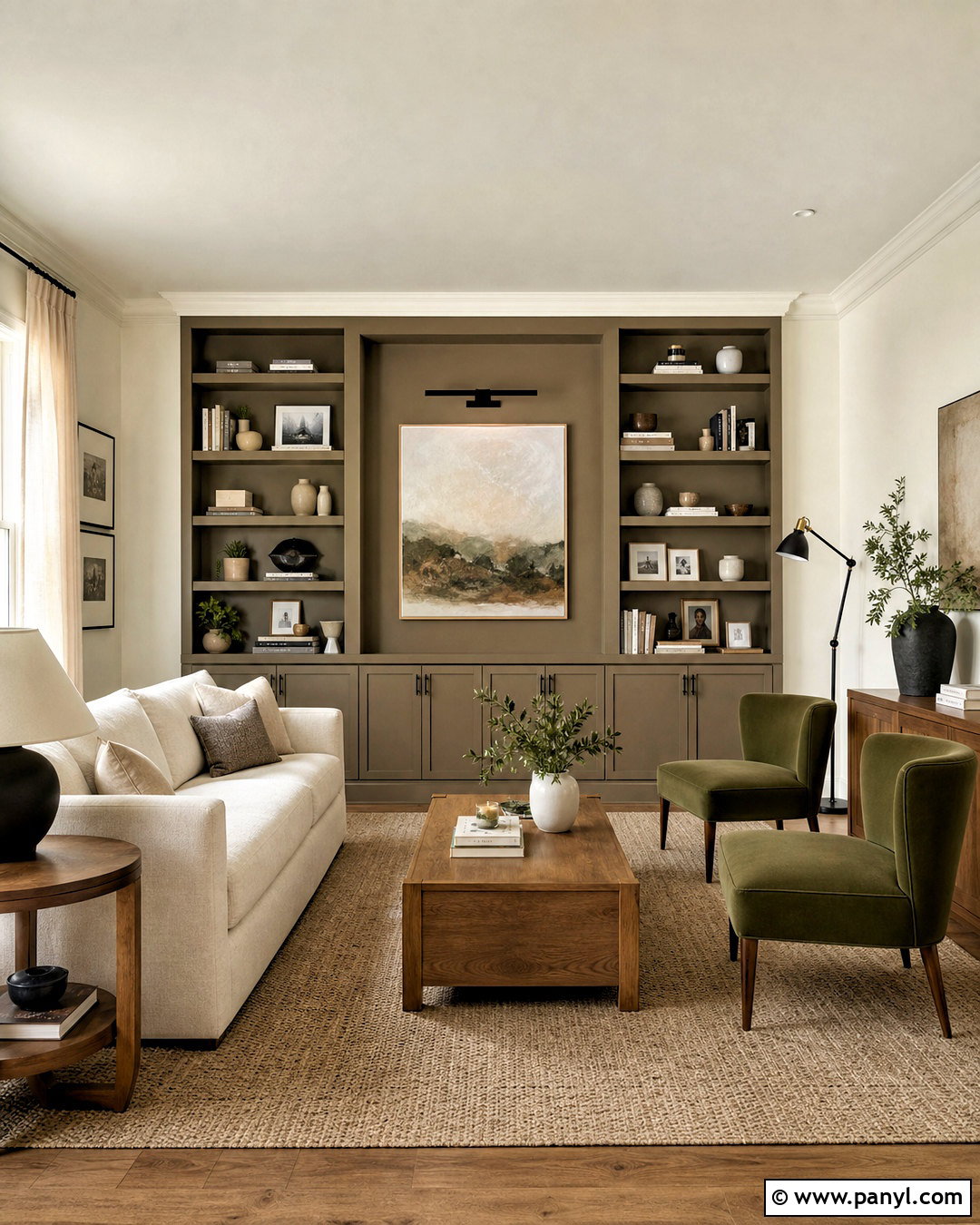
Not every accent wall needs a dark or highly saturated color. Warm taupe can create subtle definition in a light living room, particularly when it frames a fireplace, bookcase, or reading area. Pair the taupe wall with creamy white surroundings and a soft ivory sofa. Use medium oak furniture and a textured beige rug to establish tonal depth. A pair of moss green chairs can introduce gentle color, while black metal lamps and frames provide contrast. Hang layered neutral artwork with hints of brown and soft green on the feature wall. Add full linen curtains and cushions in cream, camel, and narrow stripes. The resulting room feels quiet but thoughtfully designed, proving that an accent wall can improve structure and focus without relying on an intense statement color.
20. Powder Blue Living Room Accent Wall
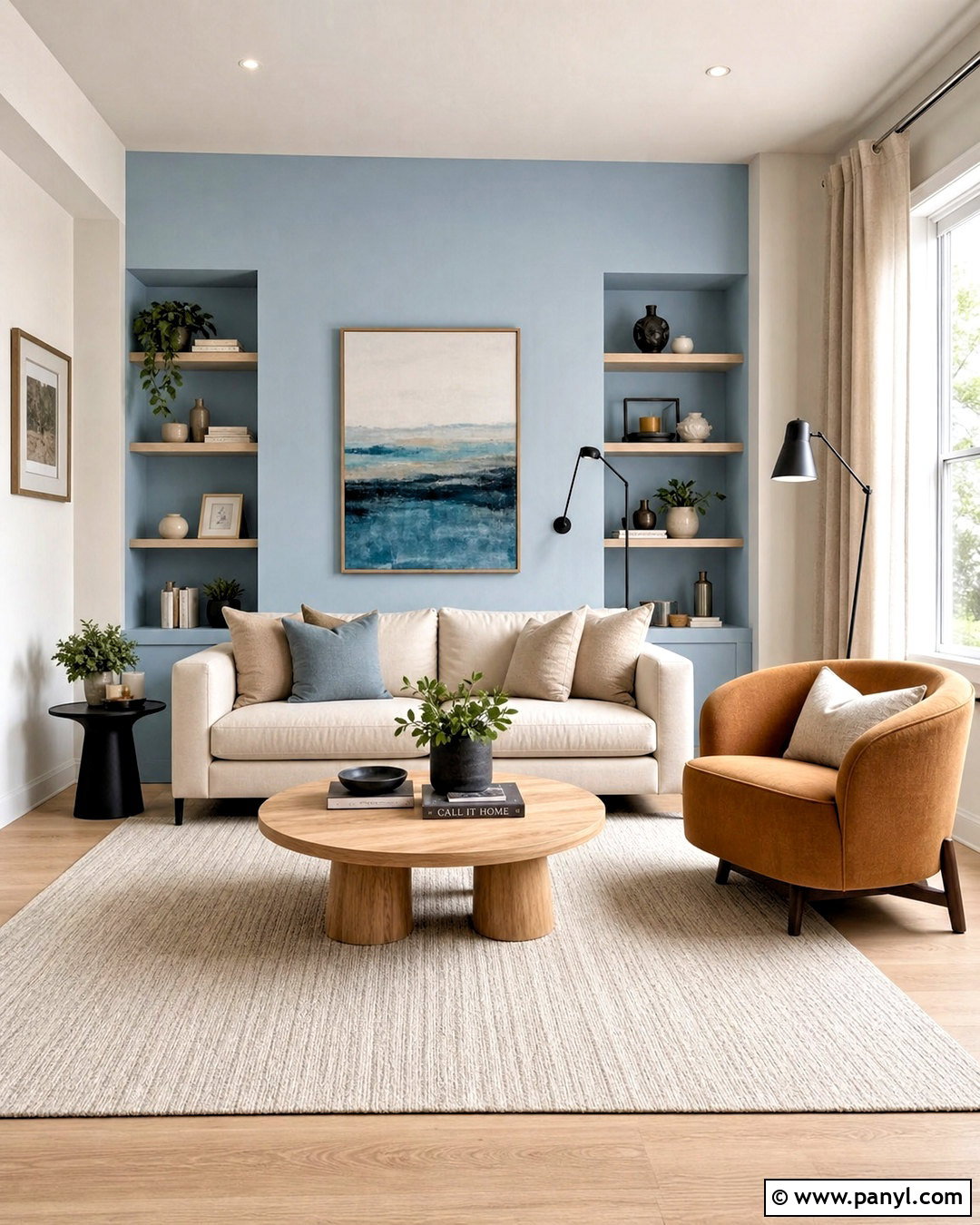
Powder blue offers a light, refreshing accent for small living rooms or spaces with limited natural light. Choose a slightly muted blue and apply it behind a beige sofa, built-in shelves, or a compact fireplace. Warm white walls, pale oak flooring, and an ivory rug will preserve the room’s open feeling. Add a rounded wood coffee table and one caramel-colored chair for warmth. Brushed nickel or matte black lighting can give the pale palette a clean contemporary edge. Display artwork with soft blue, tan, cream, and muted green, then use oatmeal curtains to frame the windows. A few blue-gray pillows will repeat the wall color without creating a themed room. The finished scheme feels calm, spacious, and welcoming, with enough contrast to keep every furnishing visually distinct.
Conclusion:
The best 20 accent color walls in living room ideas treat paint as part of a complete design rather than a separate decorative decision. Start with the wall that naturally deserves attention, such as the fireplace, television area, or surface behind the main sofa. Then connect its color to the room through artwork, rugs, pillows, furniture, and finishes. Deep navy, forest green, burgundy, and charcoal create drama, while sage, powder blue, coral, and taupe offer softer definition. Always test samples in the actual room because daylight, lamps, flooring, and nearby colors can change their appearance. With thoughtful repetition and balanced contrast, one painted wall can make the entire living room feel more finished and intentional.

Related Ideas and Inspiration:

Leave a Reply