
Farmhouse style feels most inviting when every color, texture, and finish works together. These 20 farmhouse color palette living room ideas move beyond basic white walls by pairing timeless neutrals with sage green, dusty blue, terracotta, charcoal, and other livable accents. Current farmhouse interiors still rely on warm whites, greige, natural wood, and tactile materials, but richer heritage colors are bringing more character to the look. () Each palette below includes wall colors, furniture, flooring, textiles, lighting, and decor, so you can picture a complete room instead of disconnected samples. Whether your home feels rustic, modern, traditional, or slightly coastal, you will find a practical combination among these 20 farmhouse color palette living room ideas.

1. Warm White Farmhouse Living Room Palette
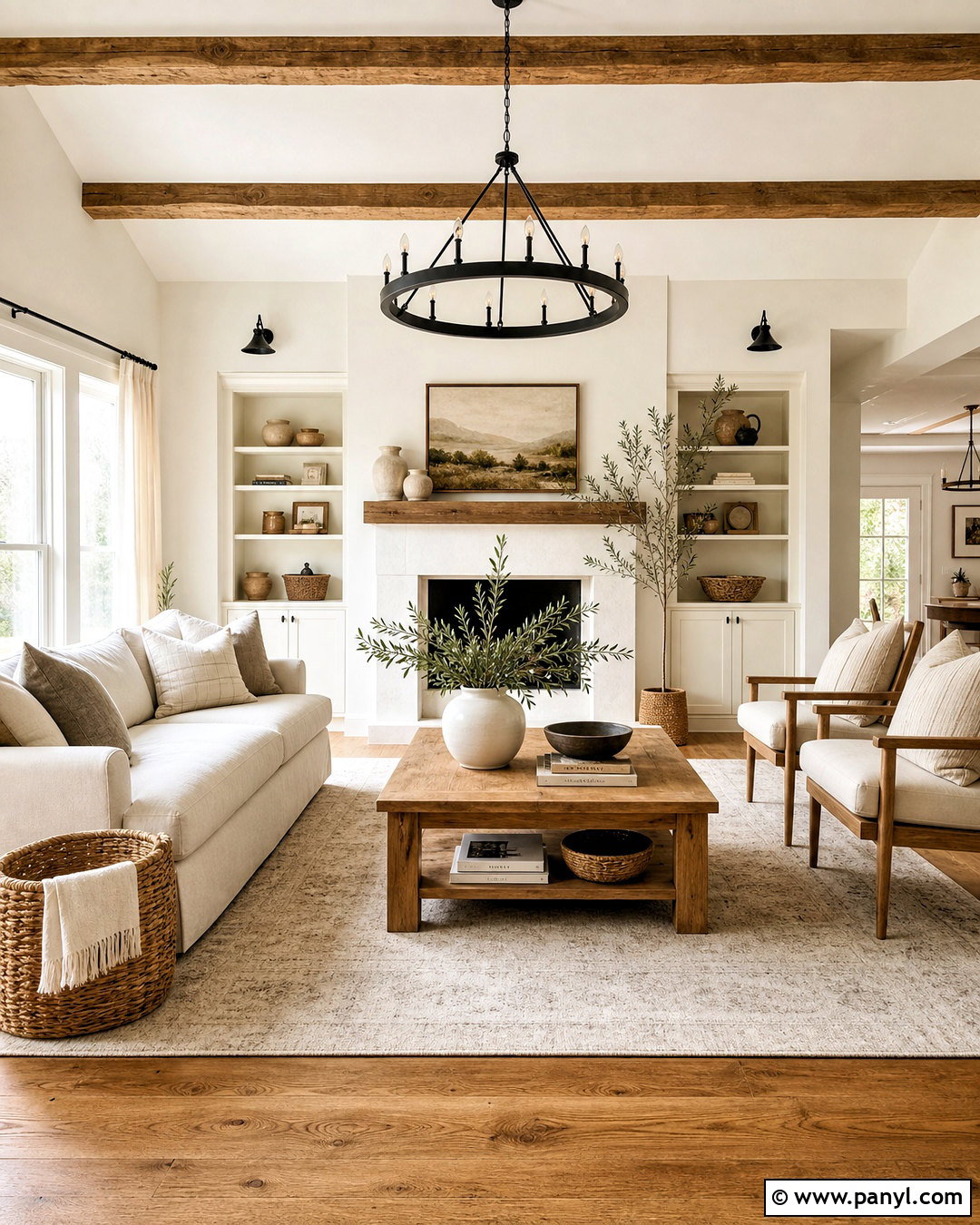
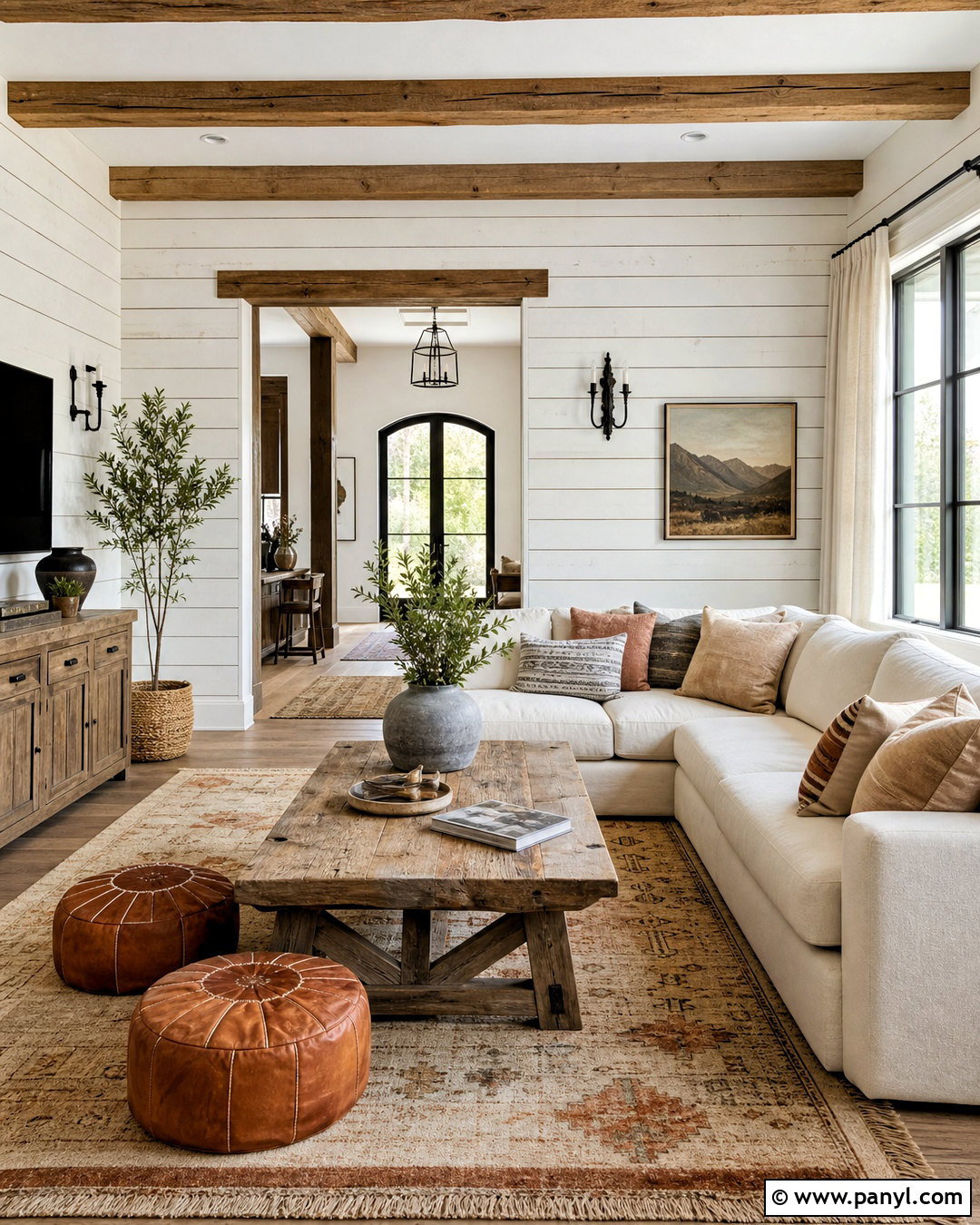
Warm white walls create a bright farmhouse foundation without making the room feel cold or unfinished. Choose a creamy white with subtle beige undertones for the walls, then use a cleaner white on the trim and ceiling. Add a relaxed oatmeal linen sofa facing a chunky natural-oak coffee table. Honey-toned hardwood floors and exposed wood beams deepen the warmth. Ground the seating area with a faded beige and soft gray rug. For contrast, bring in two matte black floor lamps, black curtain rods, and a simple iron chandelier. Stoneware pottery, woven baskets, and olive-green branches add natural texture. Keep accessories limited so the variation between white, linen, oak, and iron becomes the main decorative feature.
2. Cream And Camel Farmhouse Living Room Palette
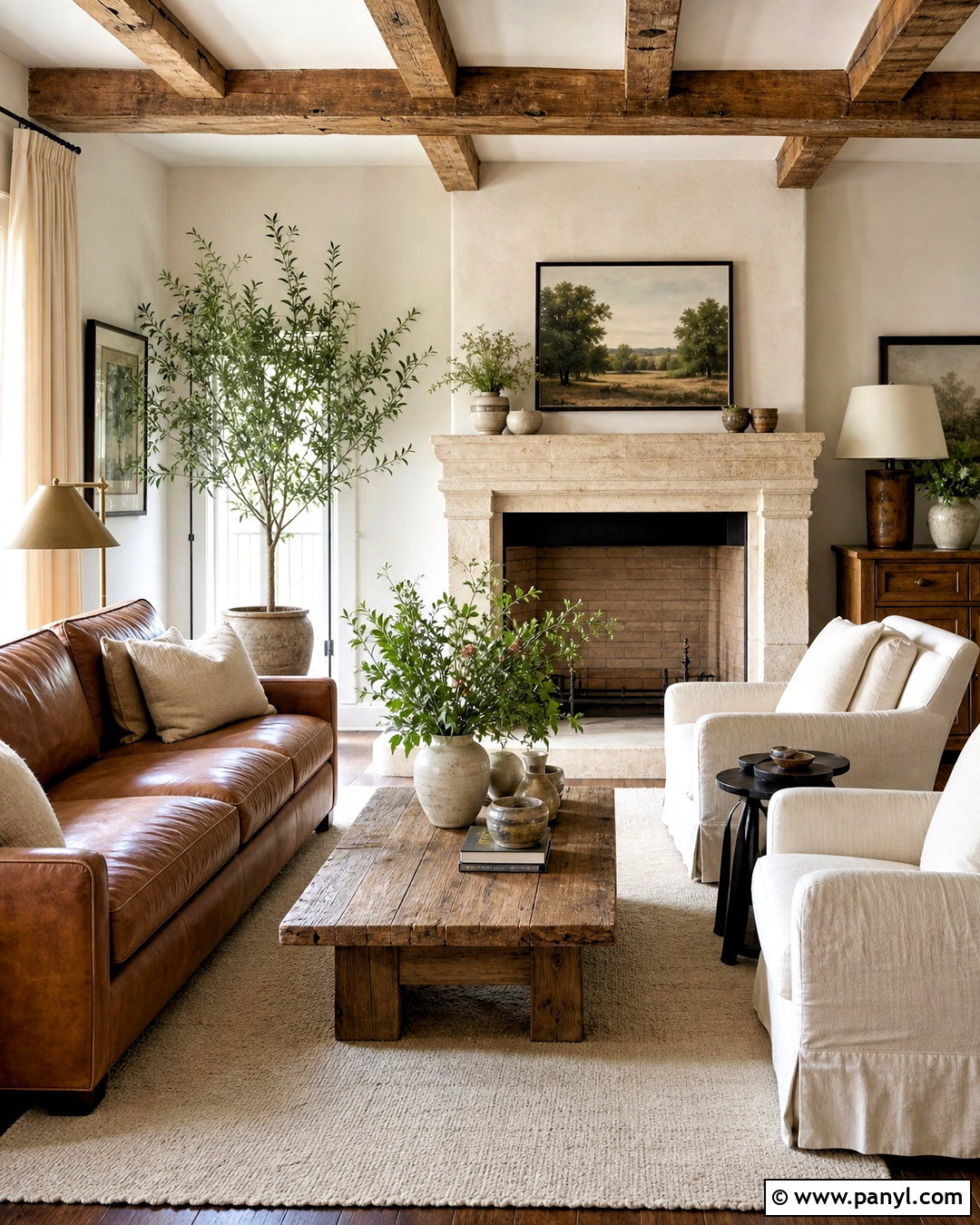
Imagine soft cream walls surrounding a deep camel leather sofa with a beautifully worn finish. This farmhouse living room palette feels comfortable, practical, and collected rather than overly coordinated. Place two ivory slipcovered chairs across from the sofa and center the arrangement around a reclaimed pine coffee table. A cream wool rug with a thin tan stripe keeps the floor light while defining the conversation area. Use medium walnut frames, aged brass lamps, and tobacco-brown pillows to repeat the sofa’s warmth. Simple linen curtains should closely match the walls, helping windows appear larger. Finish the room with a limestone fireplace, stacked neutral books, and a few green plants. The limited range of creamy and caramel tones creates depth through materials instead of busy color changes.
3. Greige And Charcoal Farmhouse Living Room Palette
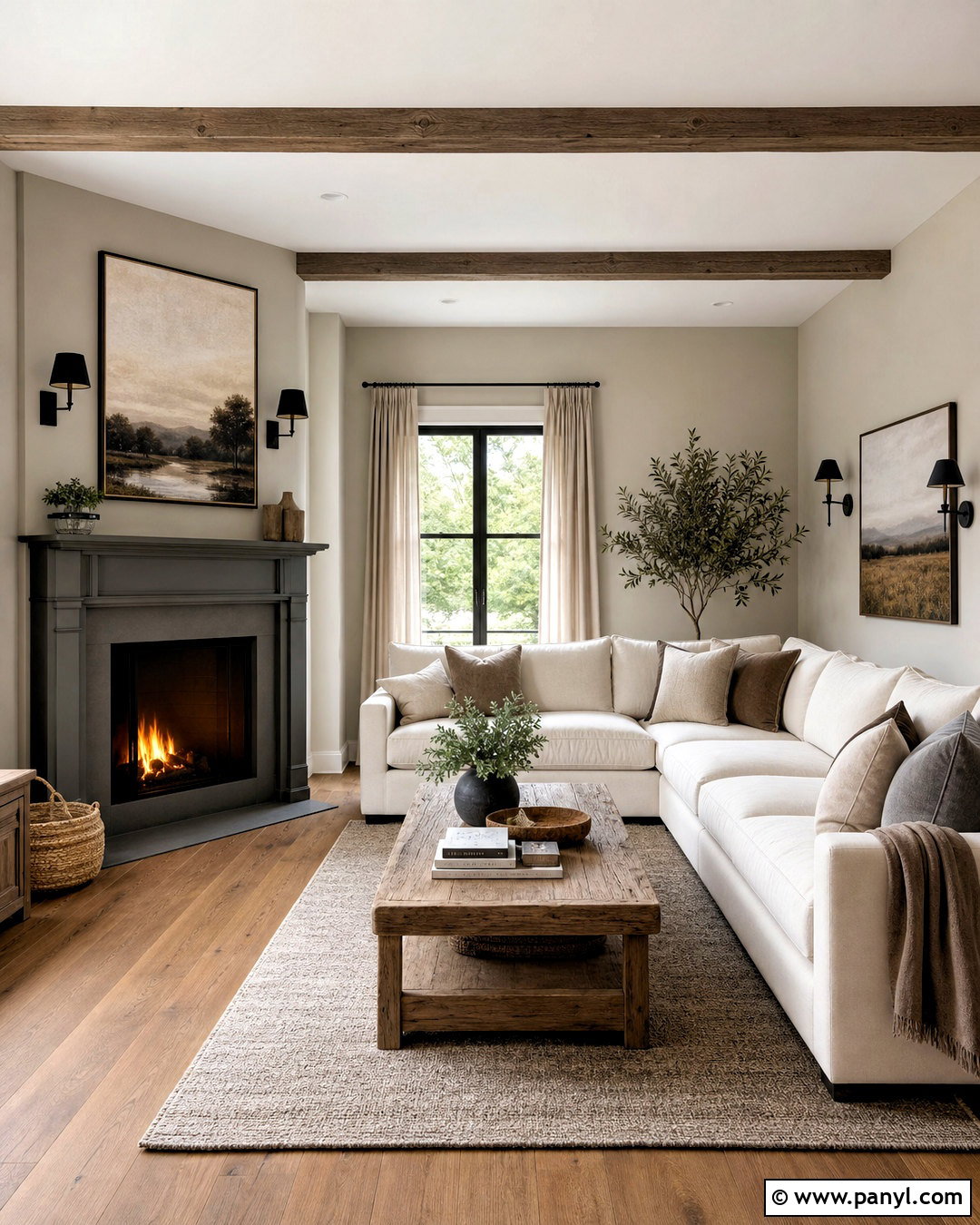
A balanced greige and charcoal scheme gives farmhouse decor a cleaner, more contemporary direction. Paint the walls a warm gray-beige and keep the ceiling soft white. Choose a generously sized ivory sectional with simple square arms, then introduce charcoal through a wool rug, checked pillows, and a painted fireplace surround. A weathered oak coffee table prevents the darker accents from looking severe. Repeat blackened metal on the window hardware, sconces, and narrow console table. Natural linen curtains and a knitted taupe throw soften the straight furniture lines. For artwork, use one oversized pastoral landscape containing muted gray, cream, and brown. This complete palette works especially well in open living rooms because the greige base transitions easily into nearby kitchens and dining spaces.
4. Sage Green Farmhouse Living Room Palette
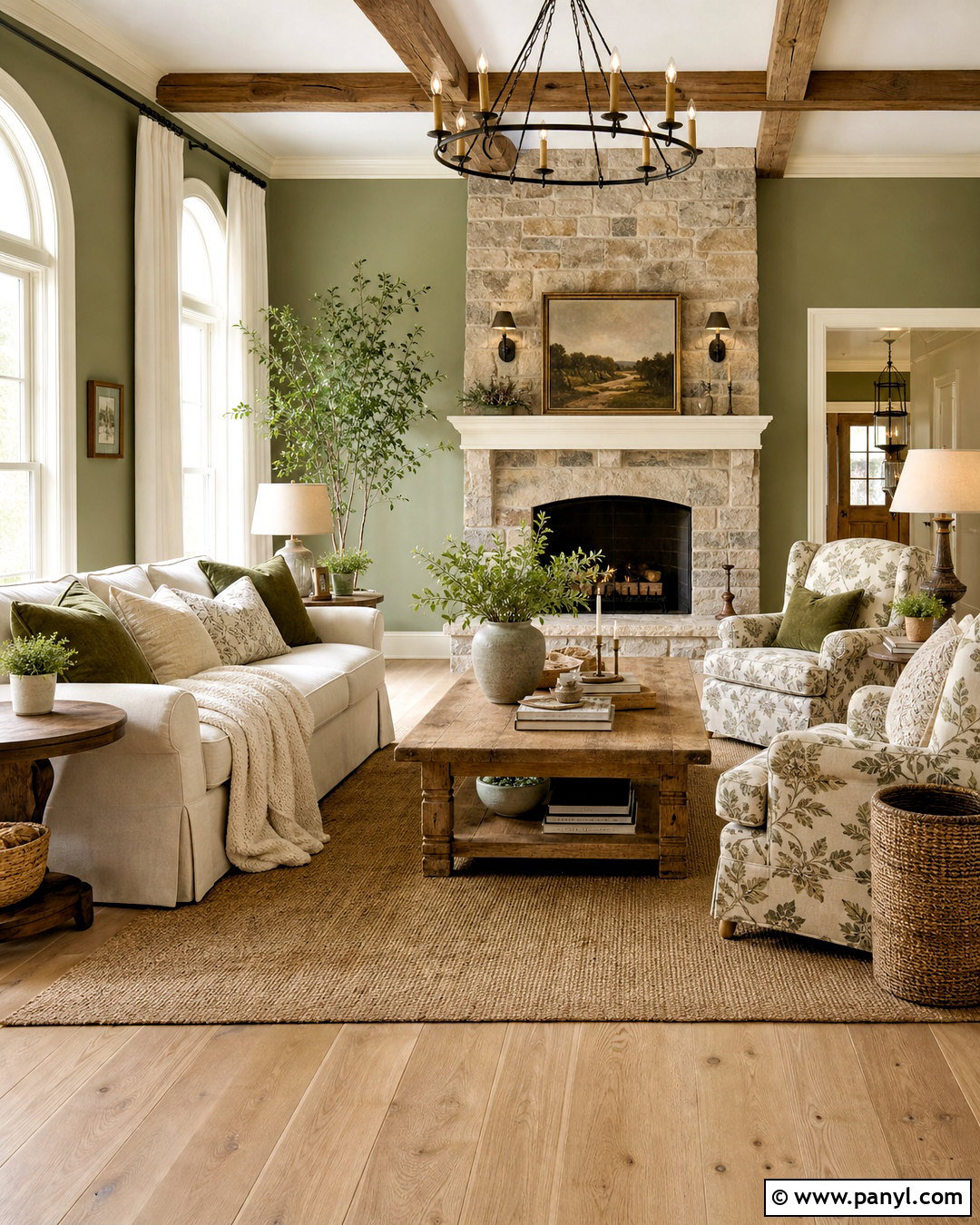
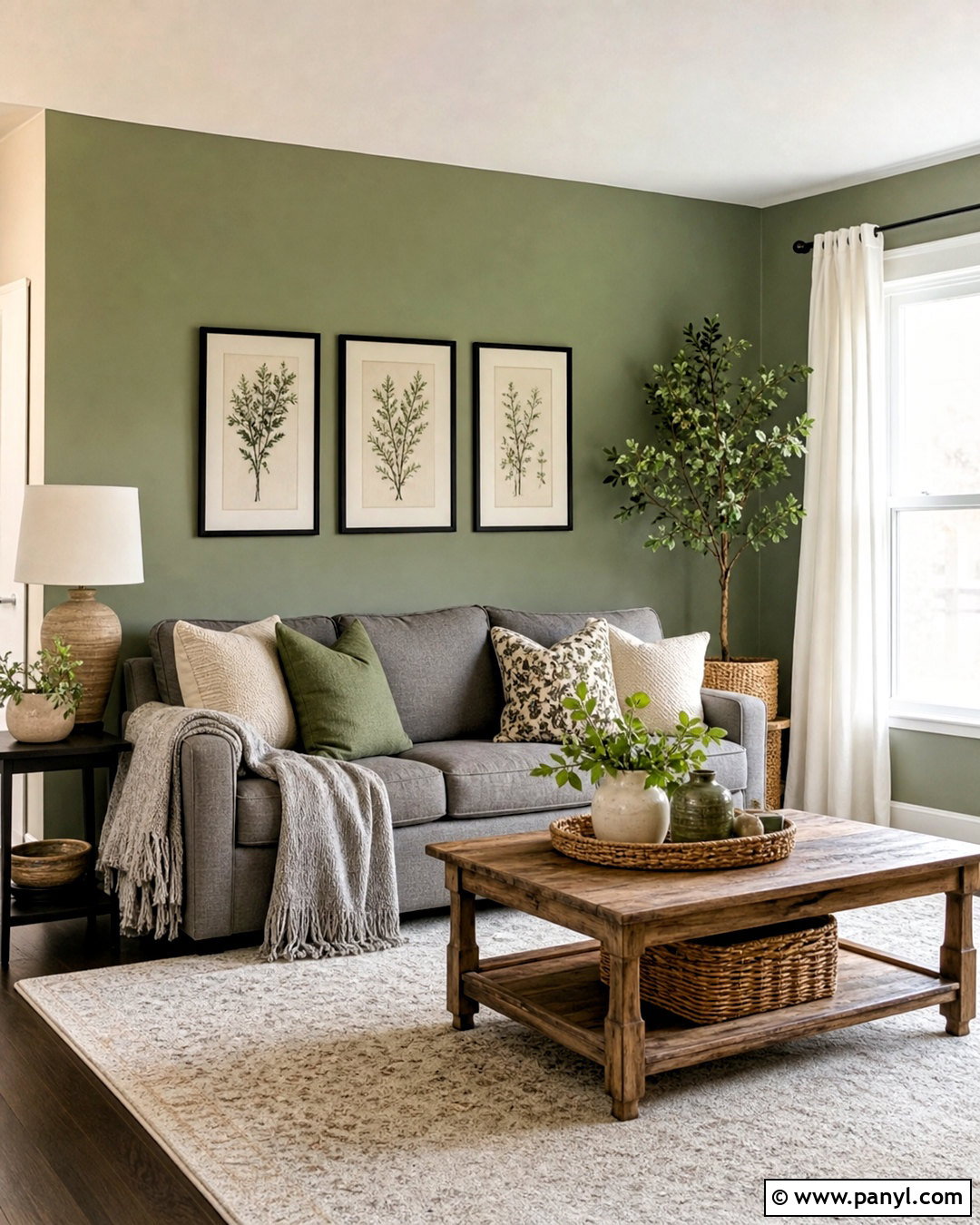
Soft sage green brings outdoor color into a farmhouse living room while remaining calm enough for everyday use. Cover the walls in a warm, muted sage and balance them with ivory trim, a cream ceiling, and pale oak flooring. A flax-colored sofa provides a neutral center, while two vintage-inspired chairs in a small beige botanical print add gentle pattern. Use a distressed oak coffee table and a natural jute rug to reinforce the earthy direction. Dark bronze lighting and curtain rods create definition without the sharpness of solid black. Accent the seating with moss, cream, and faded brown pillows. A stone fireplace, handmade pottery, and leafy branches complete the room. Keep window treatments light so the green walls look fresh instead of heavy.
5. Dusty Blue Farmhouse Living Room Palette
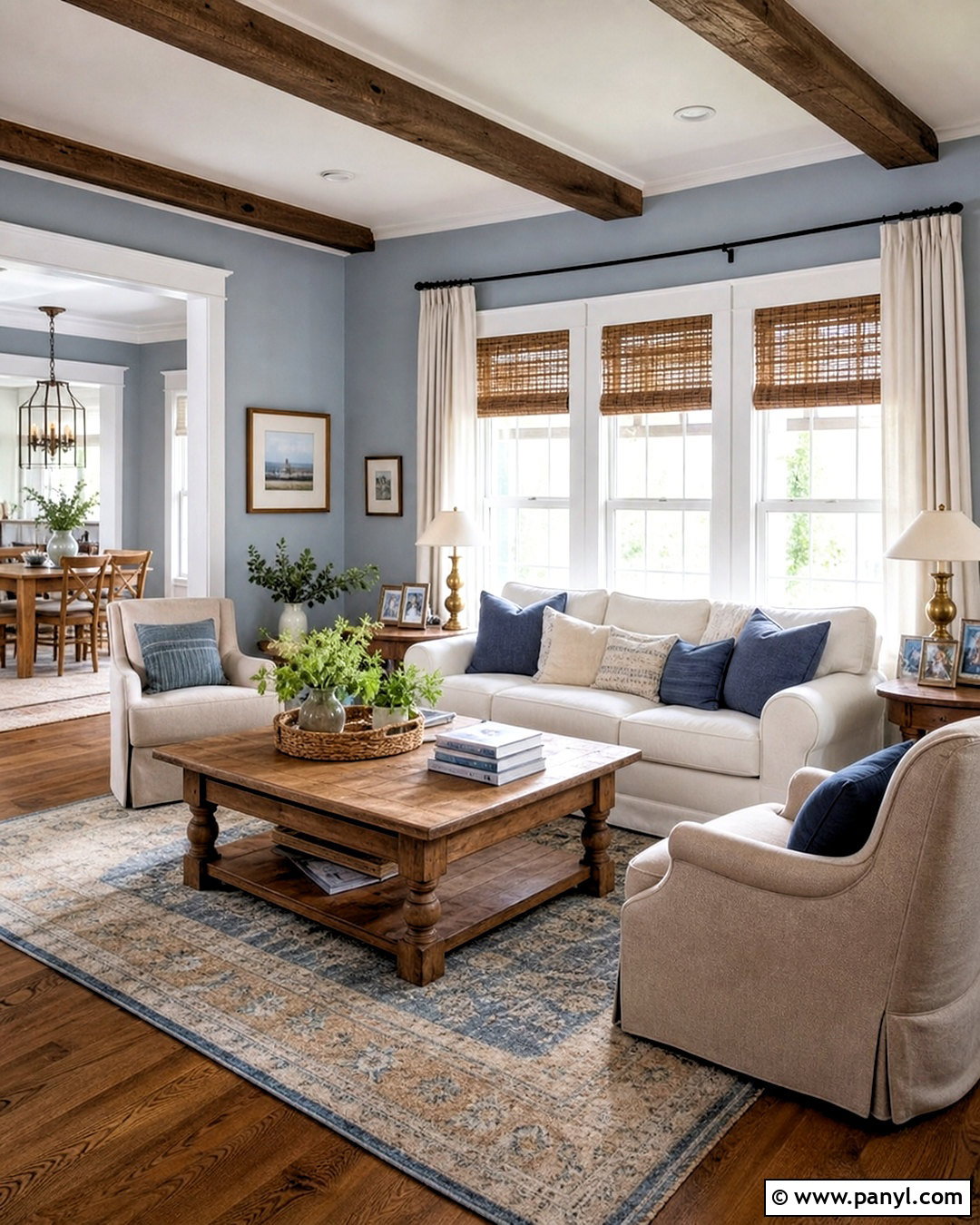
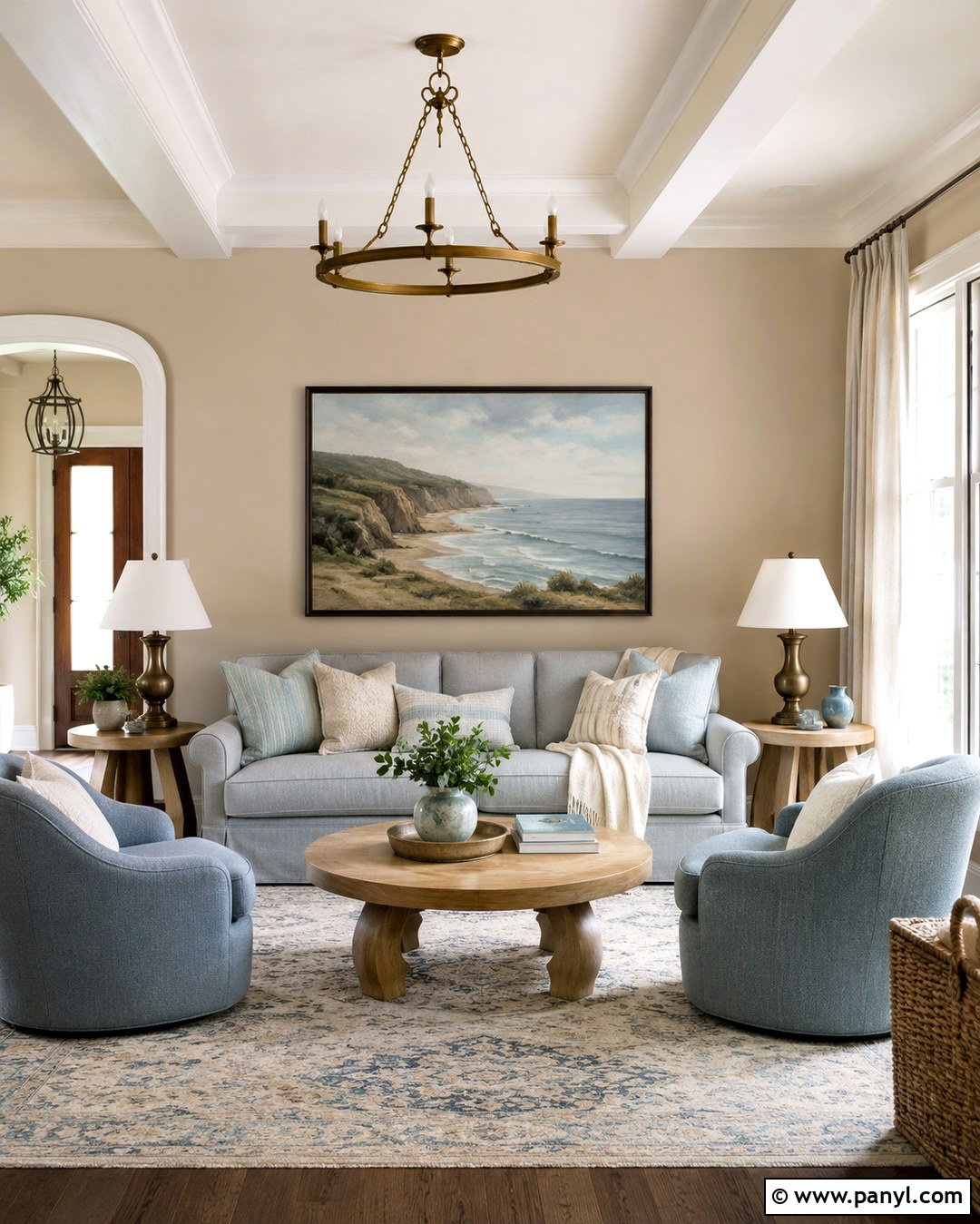
Dusty blue can make a farmhouse living room feel peaceful, familiar, and slightly coastal without turning it into a themed space. Paint the walls a softened blue with noticeable gray undertones, then add warm white trim and medium oak floors. Select a comfortable cream sofa and pair it with two oatmeal armchairs. A blue-and-beige vintage-style rug connects the wall color to the seating area. Bring in a substantial wood coffee table, woven shades, and linen curtains for warmth. A few faded denim pillows, striped textiles, and off-white ceramics strengthen the palette without overusing blue. Finish with antique brass table lamps and framed landscape sketches. The contrast between cool blue, creamy upholstery, and warm wood keeps the finished room balanced throughout changing daylight.
6. Navy And Linen Farmhouse Living Room Palette

Deep navy gives a farmhouse living room structure, especially when it is used on one architectural feature rather than every wall. Paint built-in shelves, the fireplace wall, or lower paneling a rich navy blue. Keep the surrounding walls warm white to maintain an open feeling. A linen-beige sofa, two caramel leather chairs, and a weathered oak coffee table create a comfortable conversation zone. Choose an ivory rug with a faded navy border to distribute the darker color across the room. Brass picture lights and warm metal hardware add a traditional note. Complete the scheme with blue ticking-stripe pillows, clay pottery, woven storage baskets, and simple botanical artwork. This palette feels polished, but the relaxed fabrics and natural finishes preserve the welcoming farmhouse character.
7. Forest Green Farmhouse Living Room Palette
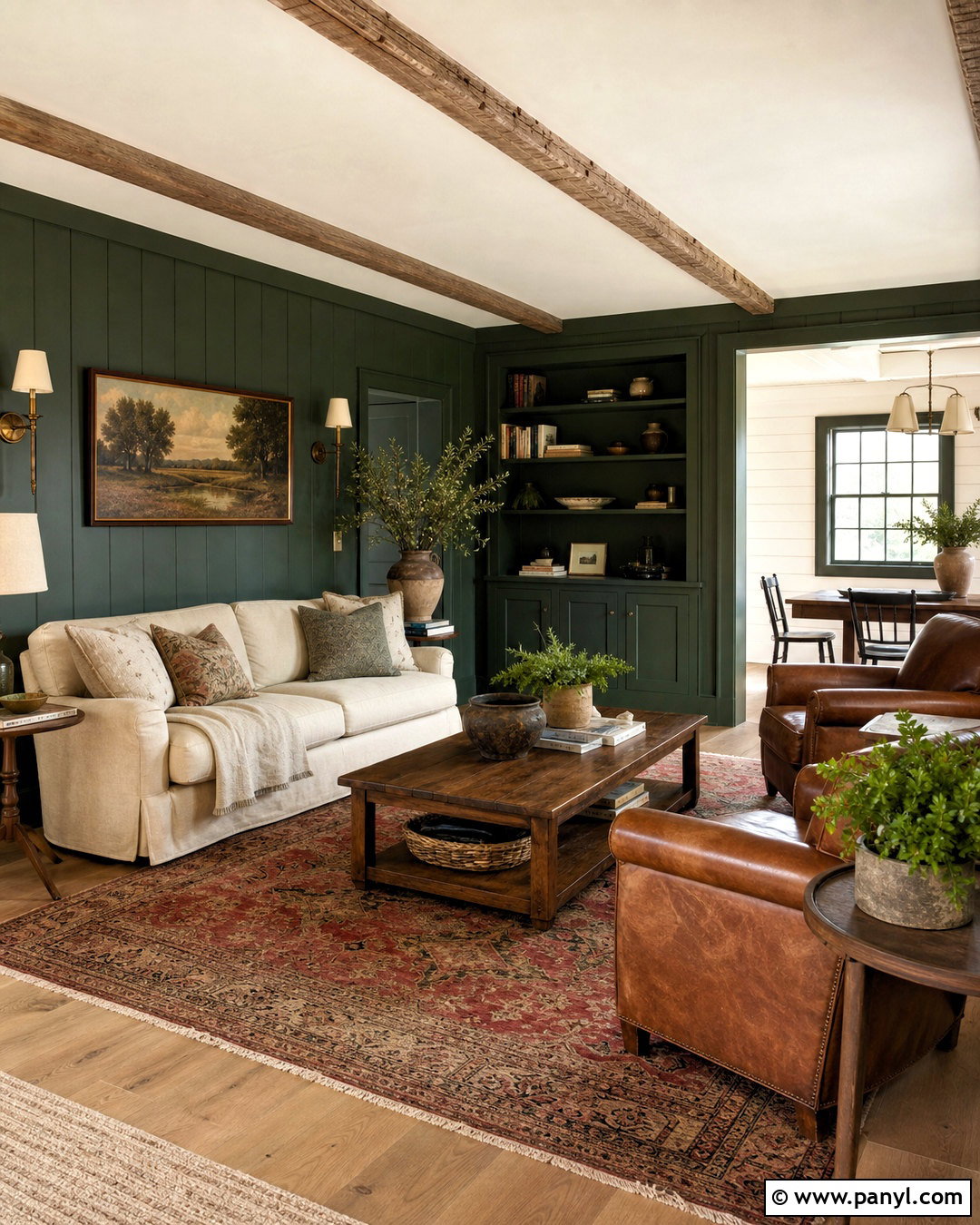
For a richer farmhouse look, cover paneled walls in deep forest green and surround them with warm wood and creamy textiles. This darker palette works best when the room has good natural light, pale flooring, or generous windows. Place a substantial cream linen sofa against the green wall and add cognac leather chairs with rounded arms. A faded red, beige, and olive rug introduces quiet heritage pattern beneath a rustic walnut coffee table. Use antique brass sconces and a warm white ceiling to lift the darker surfaces. Tan curtains, oatmeal pillows, and handmade brown ceramics connect the upholstery to the wood. Instead of filling every wall, hang one traditional landscape above the fireplace. The completed room feels grounded, historic, and comfortable rather than overly rustic.
8. Terracotta And Soft Cream Farmhouse Living Room Palette
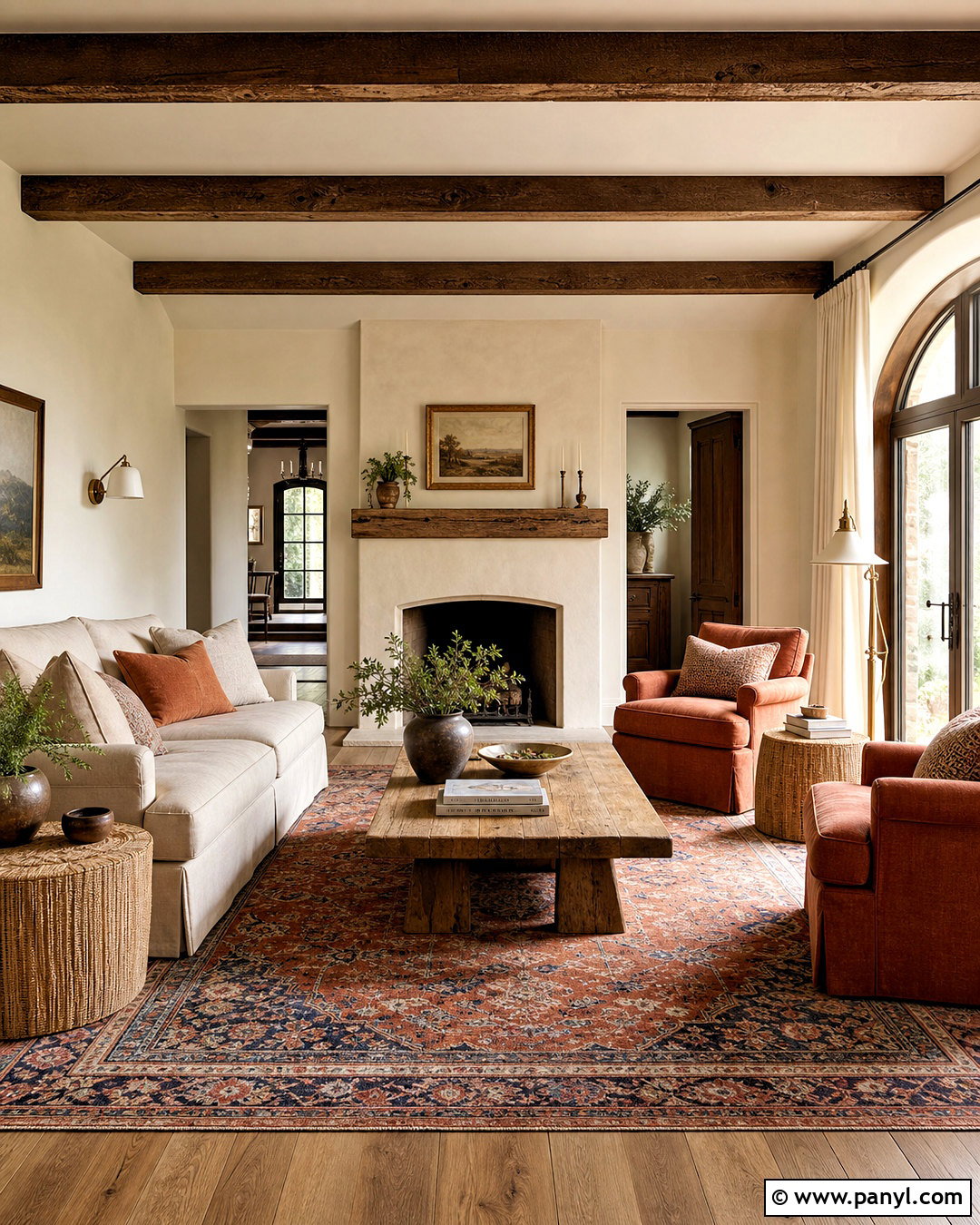
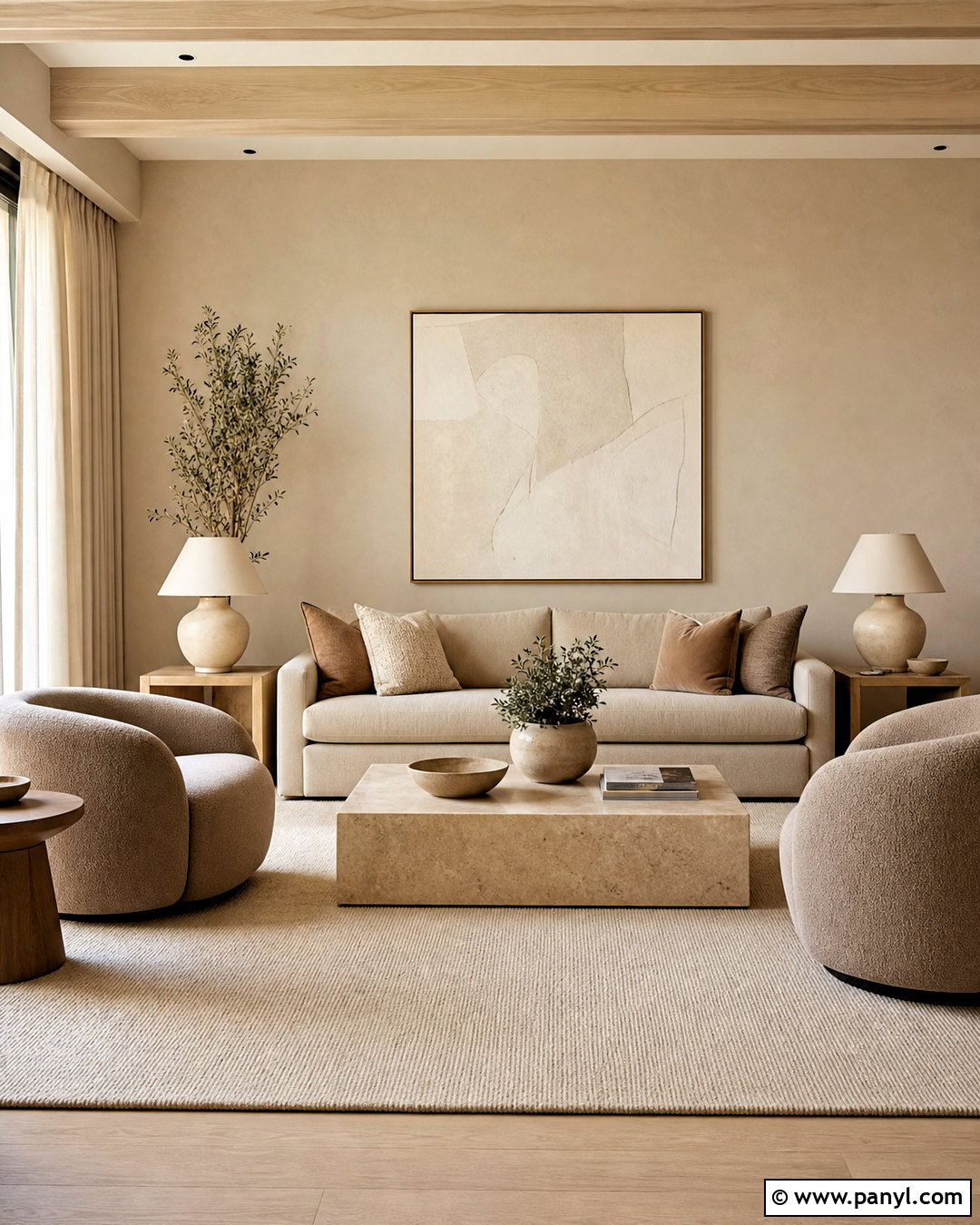
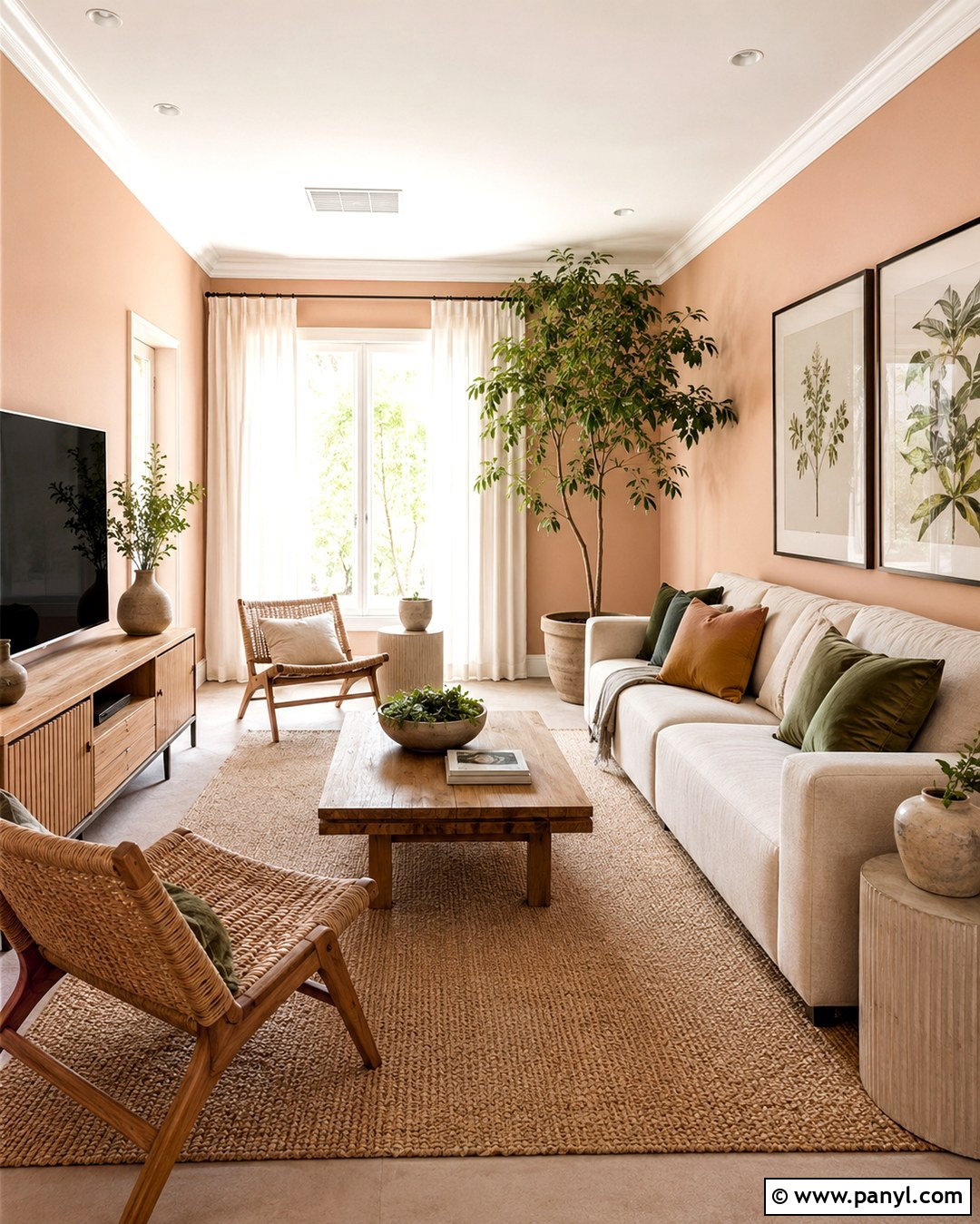
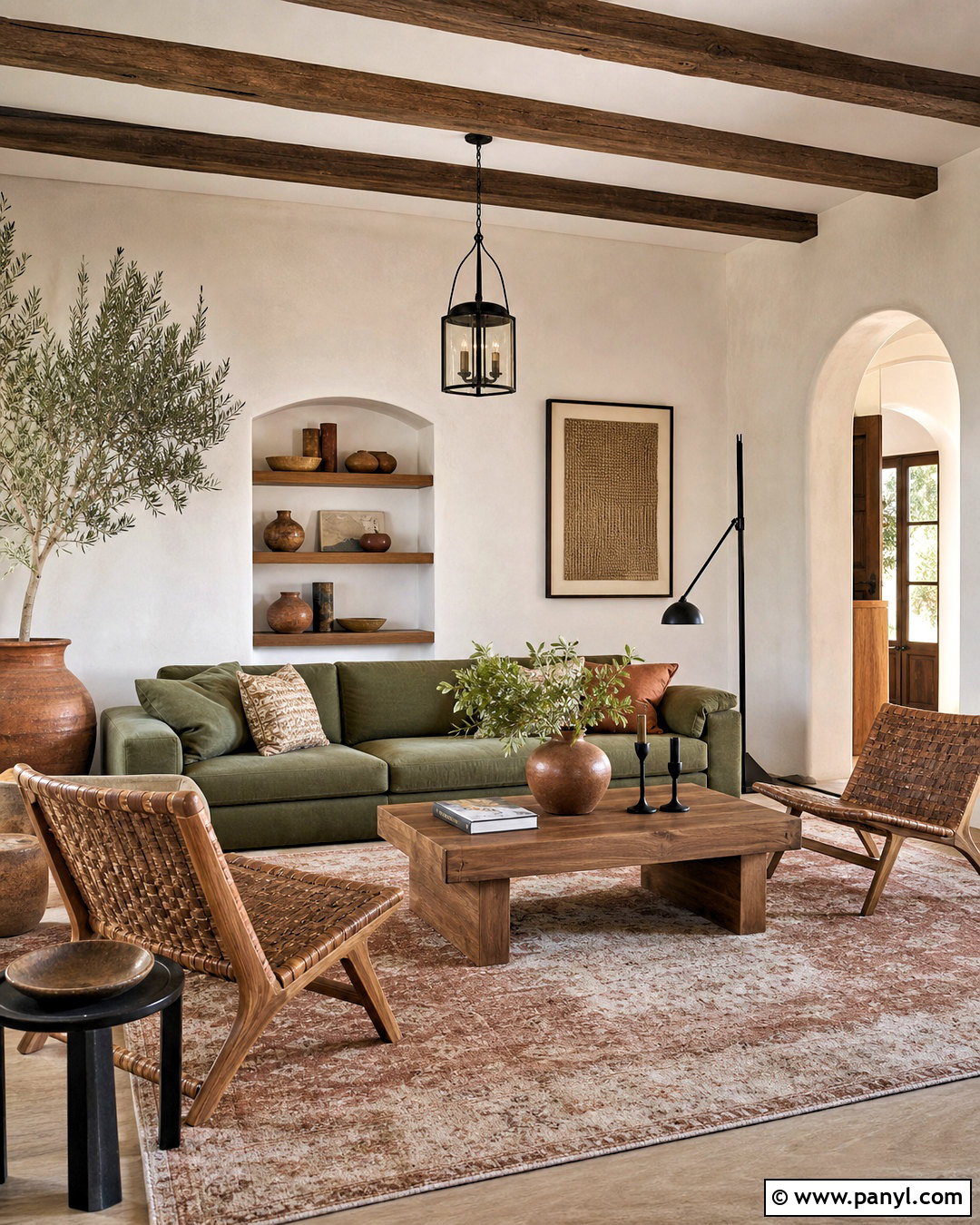
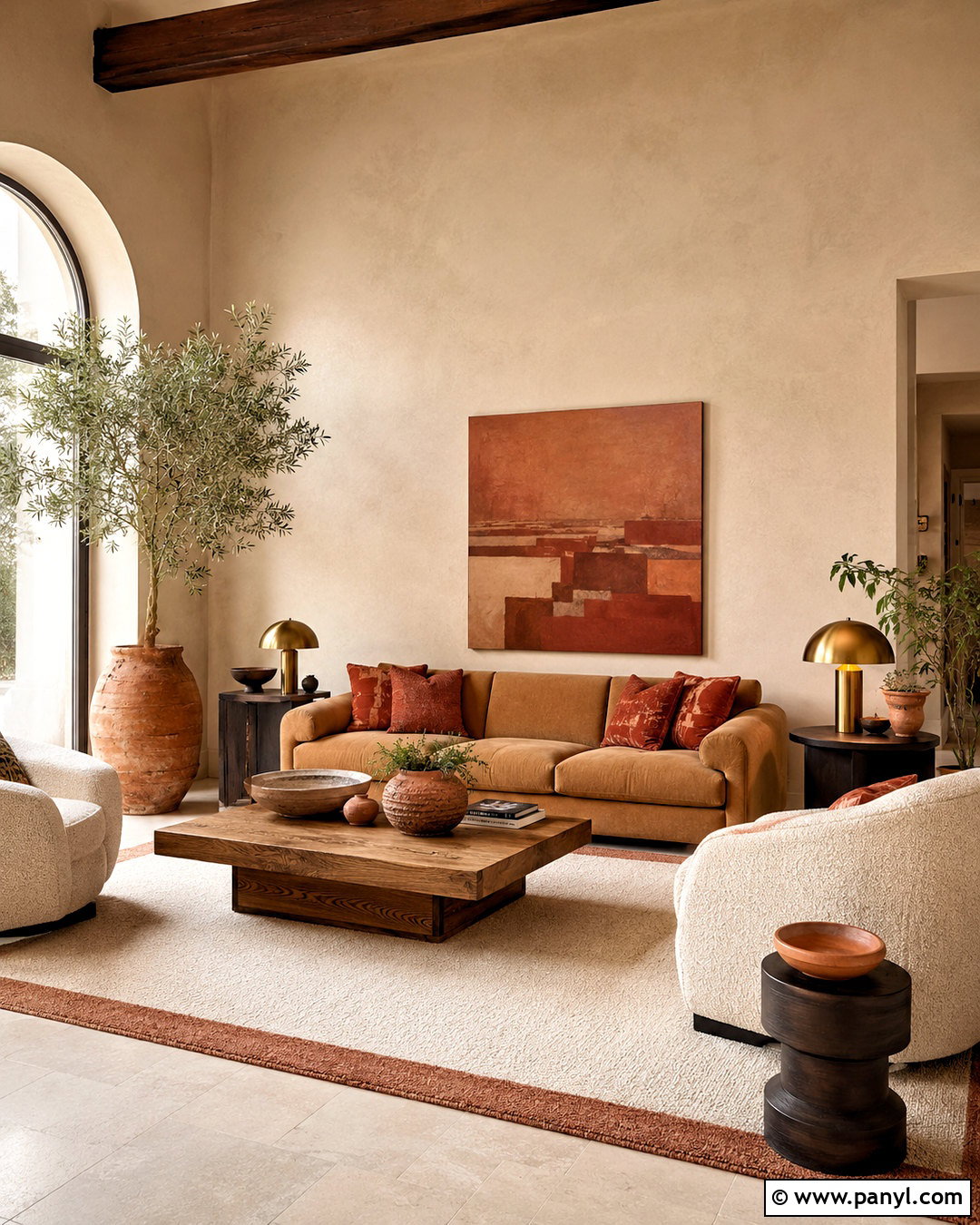
Sun-baked terracotta accents can warm a pale farmhouse living room without overwhelming its neutral base. Begin with soft cream walls, natural oak floors, and a roomy beige slipcovered sofa. Add two low-profile chairs upholstered in muted rust or clay-colored fabric. Center the seating on a vintage-look rug combining terracotta, faded blue, sand, and ivory. A reclaimed wood coffee table and woven side tables support the relaxed, earthy palette. Use off-white linen curtains to keep the windows bright. Repeat the clay color in striped pillows, pottery, and one large abstract landscape, but leave plenty of cream around each accent. A plaster fireplace and aged brass lighting complete the scheme. The room feels sunny and layered, even when the architecture itself is simple.
9. Mushroom Taupe Farmhouse Living Room Palette
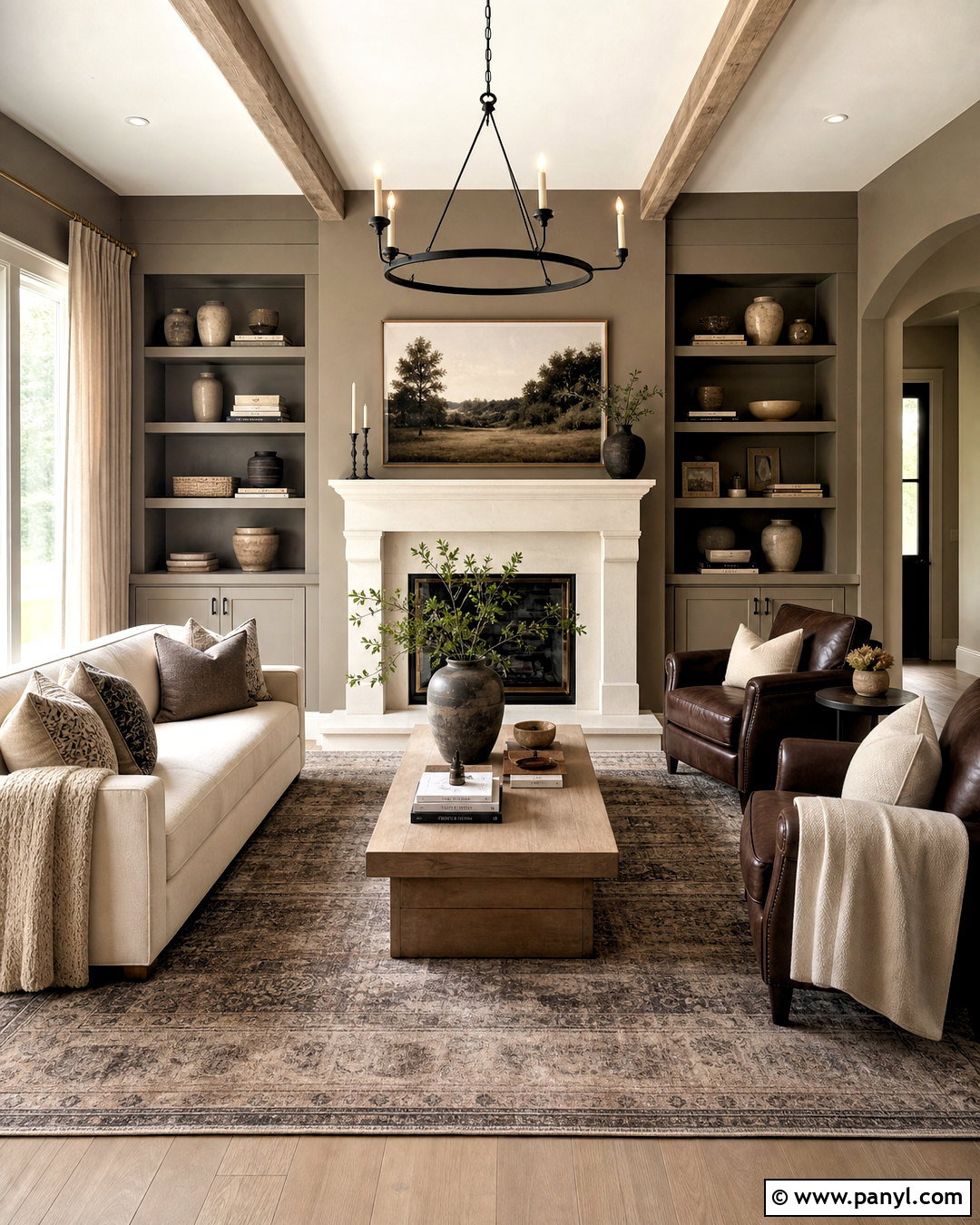
Mushroom taupe sits between brown, gray, and beige, making it a flexible choice for an understated farmhouse living room. Paint the walls this earthy neutral and use creamy white across the trim, ceiling, and fireplace mantel. Choose an ivory sofa with a softly tailored silhouette and pair it with chocolate-brown leather chairs. A pale oak coffee table and medium-toned hardwood flooring prevent the room from becoming too cool. Lay down a patterned rug that blends taupe, charcoal, cream, and faded brown. Matte black lighting, window hardware, and fireplace tools provide crisp accents. Complete the arrangement with oatmeal curtains, nubby wool pillows, and weathered ceramic vessels. The result is neutral but not flat because every surface introduces a slightly different depth and texture.
10. Soft Gray Farmhouse Living Room Palette
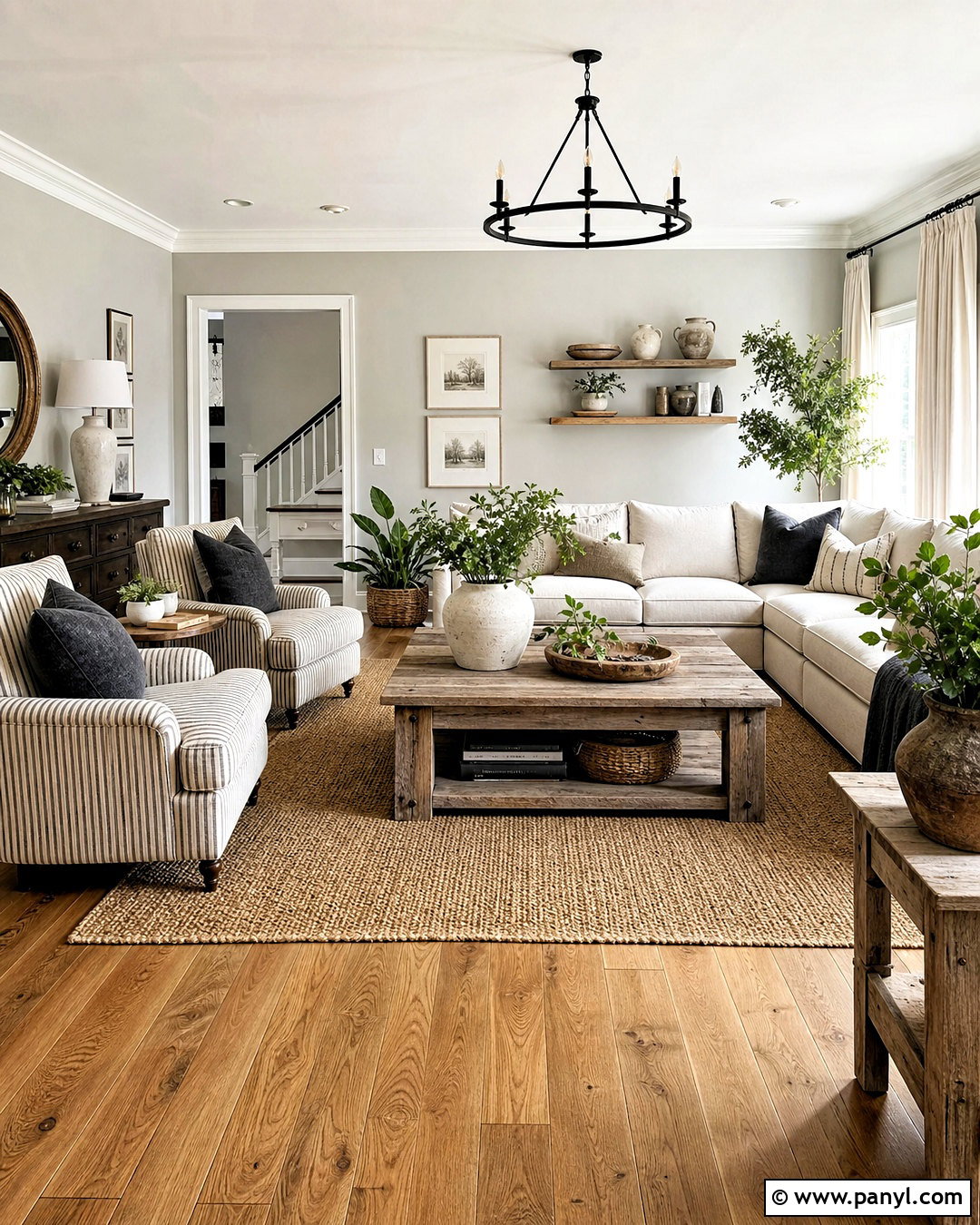
Soft gray can still feel welcoming when it is surrounded by warm whites, weathered wood, and tactile fabrics. Select a light gray wall color with beige rather than blue undertones. Keep the trim creamy white and use wide-plank oak or warm brown flooring. An oatmeal sectional provides generous seating, while a pair of gray-and-cream striped chairs reinforces the palette. Add a weathered pine coffee table, a woven jute rug, and linen drapery in natural flax. Charcoal pillows and a dark metal chandelier create enough contrast to define the lighter pieces. Display vintage wood frames, pale pottery, and restrained greenery on the mantel. Avoid cool silver accessories and blue-gray upholstery, which could make the room feel stark. Warm materials are essential to this complete farmhouse look.
11. Beige And Olive Farmhouse Living Room Palette
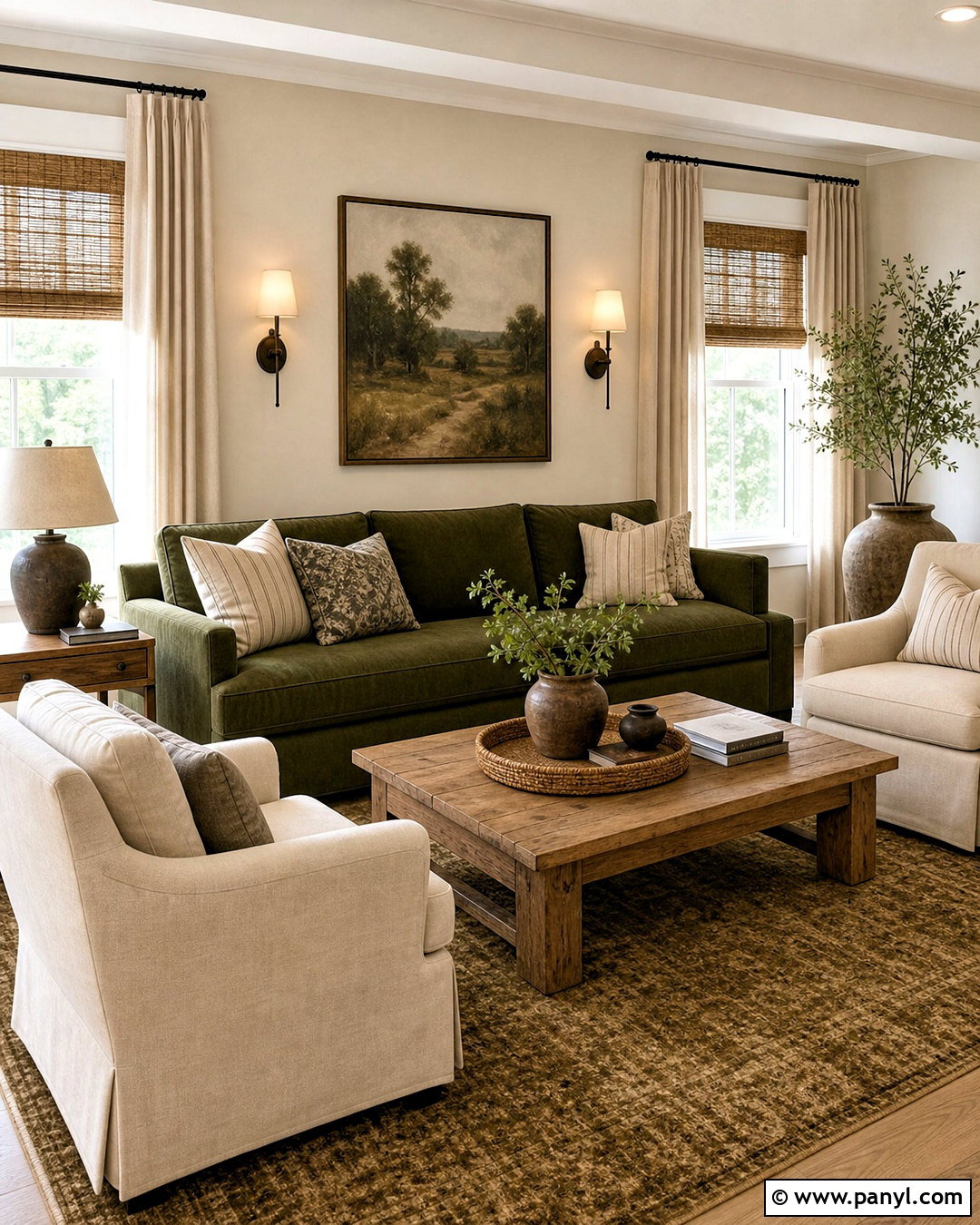
Beige and olive create a relaxed farmhouse palette that feels connected to fields, gardens, and natural landscapes. Use sandy beige on the walls and warm white on the ceiling and trim. Place an olive-green sofa at the center of the room, then soften it with cream pillows and a loosely woven tan throw. Two ivory chairs and a medium-oak coffee table keep the darker upholstery from dominating. Underfoot, choose a faded beige rug with muted olive and brown patterning. Woven shades, linen curtains, and bronze sconces add warmth around the windows. Finish with landscape artwork, aged clay pots, and branches arranged in a large earthenware vase. Keep the woods similar in tone so the green remains the clear accent while the complete room still feels calm.
12. Black And White Farmhouse Living Room Palette
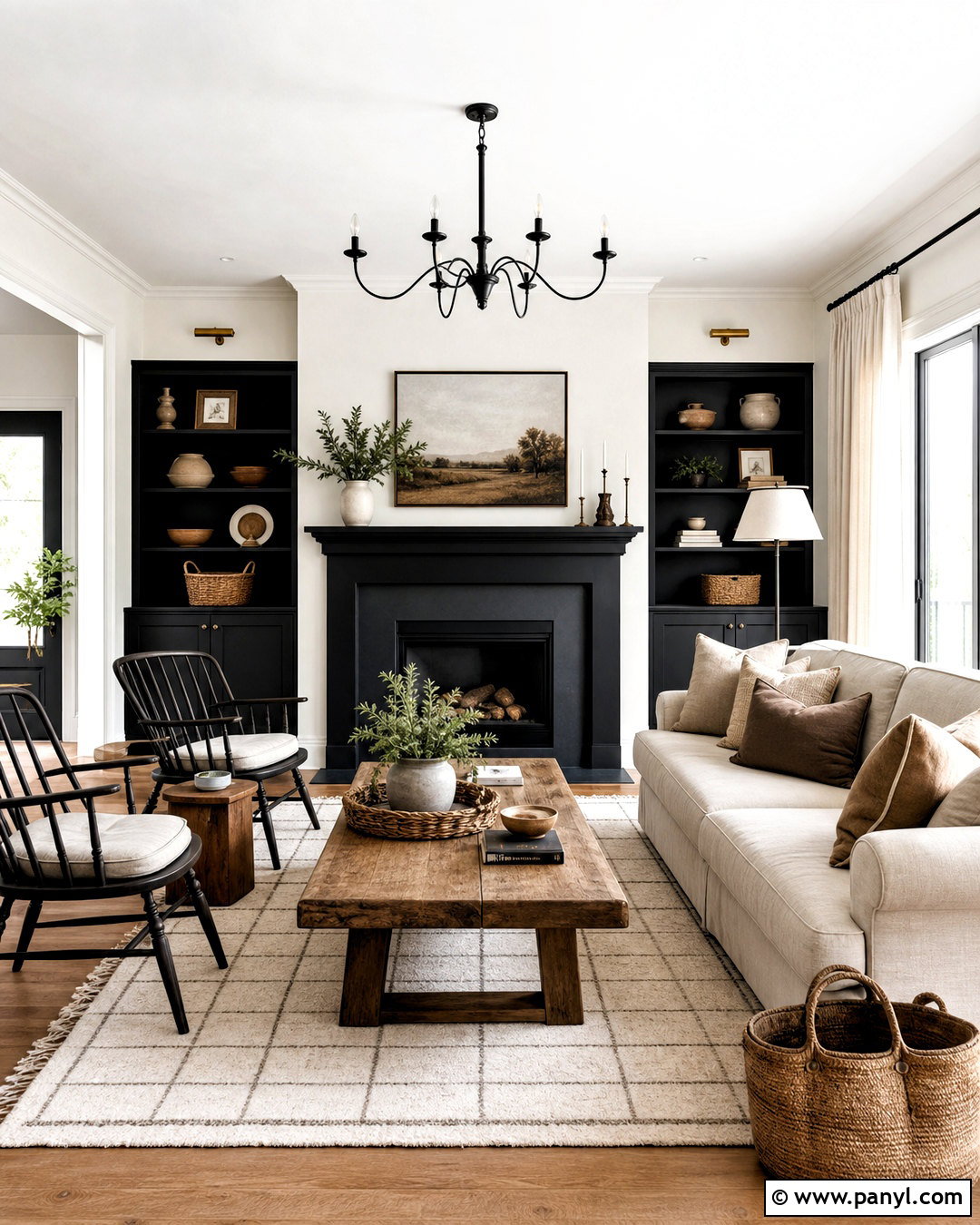
A black-and-white farmhouse living room looks best when the contrast is softened with natural wood, woven materials, and warm upholstery. Paint the walls a gentle off-white rather than a stark gallery white. Use black on the fireplace surround, window frames, built-in cabinets, and iron lighting. Choose a light beige sofa and two black spindle-back chairs with neutral cushions. A reclaimed oak coffee table and honey-toned flooring bring necessary warmth between the opposing colors. Add a cream rug featuring a subtle black grid and repeat the pattern sparingly on pillows. Natural linen curtains, cane baskets, and handmade pottery keep the scheme casual. This approach feels clean and architectural, yet every major element remains comfortable enough for a practical family living room.
13. Buttercream And Muted Blue Farmhouse Living Room Palette
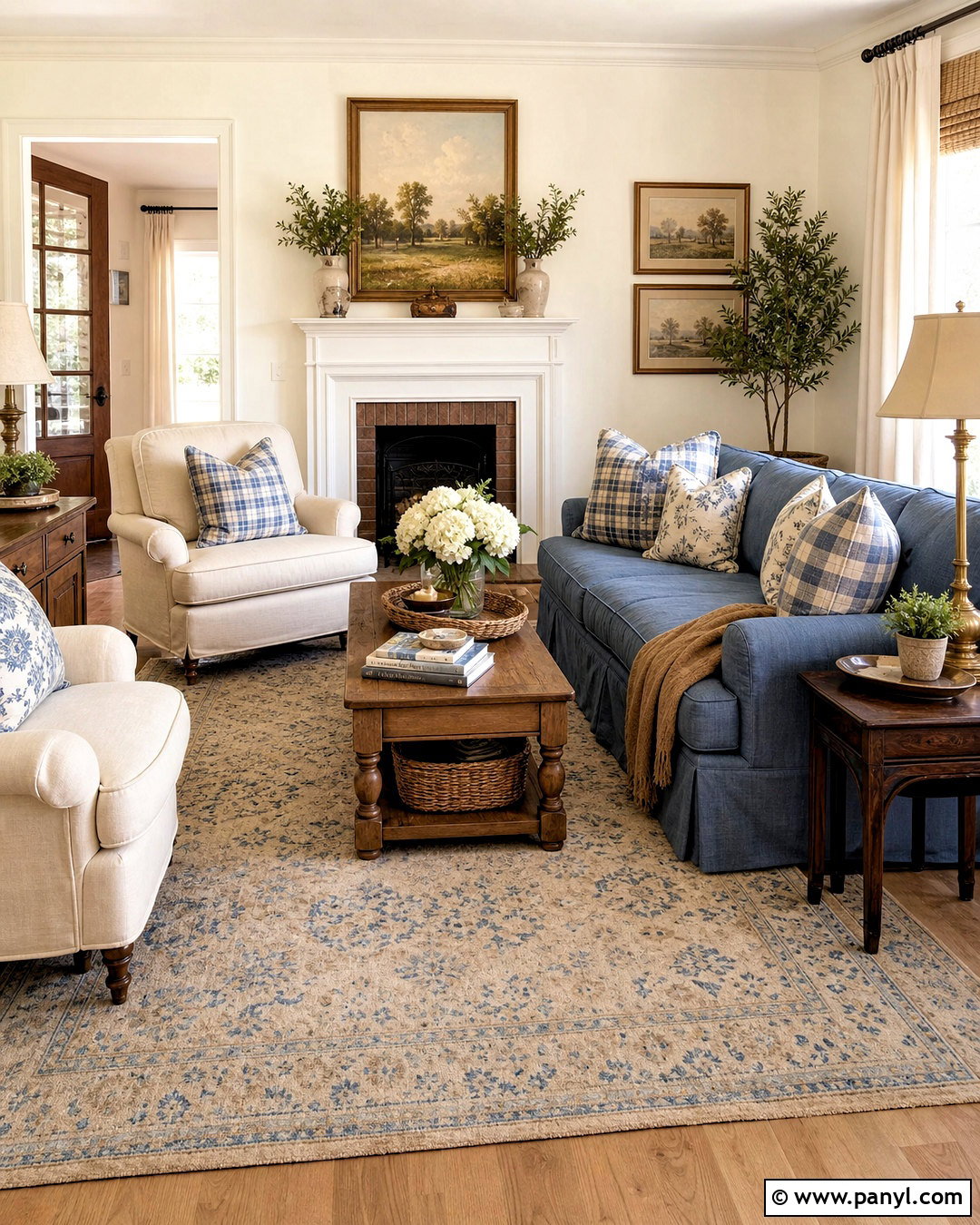
Buttercream walls can give a farmhouse living room gentle warmth without reading as bright yellow. Pair them with creamy trim, faded blue upholstery, and medium-toned wood for a cheerful but settled look. A muted blue sofa becomes the visual anchor, while two ivory linen chairs keep the arrangement airy. Place a warm oak coffee table over a beige rug with small blue and golden details. White linen curtains filter daylight and prevent the wall color from becoming too strong. Accent the seating with checked cream pillows, faded floral textiles, and a camel-colored throw. Antique brass lamps and framed pastoral prints support the traditional farmhouse influence. The finished room feels especially welcoming in older homes with modest windows, wood floors, and original architectural details.
14. Clay Pink Farmhouse Living Room Palette
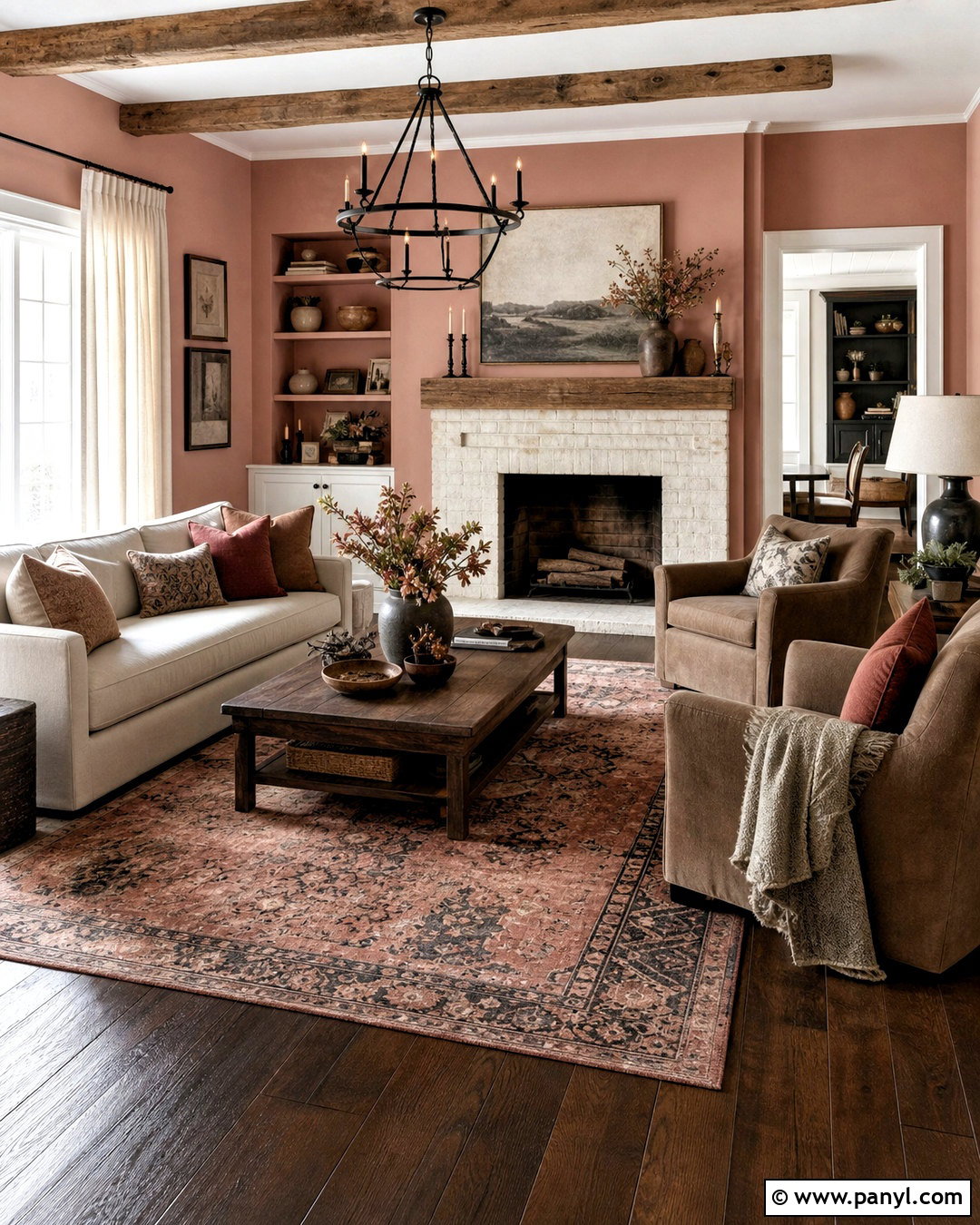
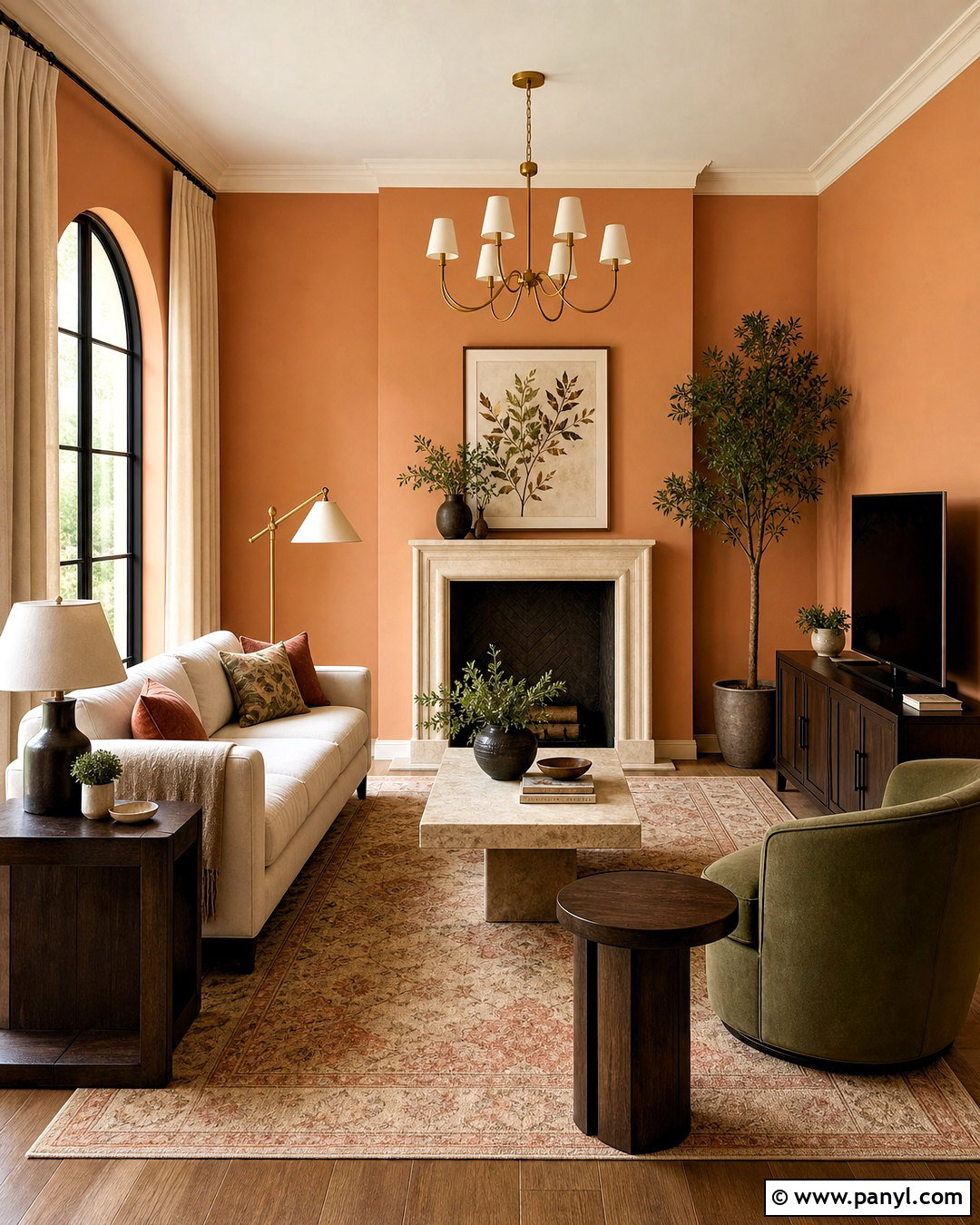
Muted clay pink offers a softer alternative to beige while still working beautifully with weathered farmhouse materials. Choose a dusty pink wall color containing brown or gray undertones, then pair it with ivory trim and walnut flooring. Furnish the room with a cream sofa, two warm taupe armchairs, and a substantial walnut coffee table. A faded Persian-style rug in clay, brown, beige, and charcoal grounds the seating arrangement. Add linen curtains in natural oatmeal and use blackened bronze for the chandelier and curtain rods. Rust-colored pillows, handmade ceramics, and simple charcoal sketches reinforce the palette. Avoid sugary pink accents or glossy finishes. With earthy shades and sturdy furniture, the finished space feels warm, mature, and comfortably connected to farmhouse design.
15. Slate Blue Farmhouse Living Room Palette
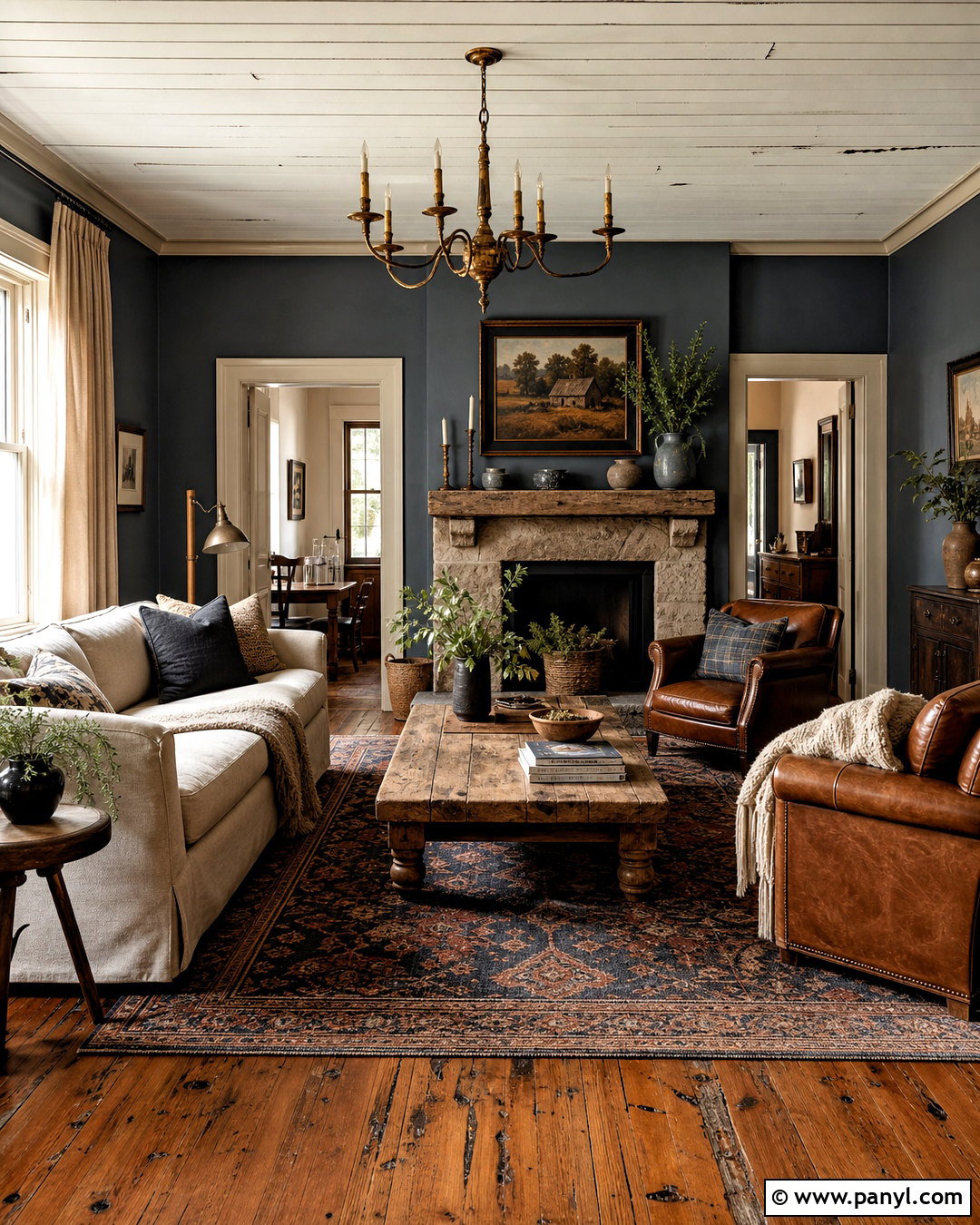
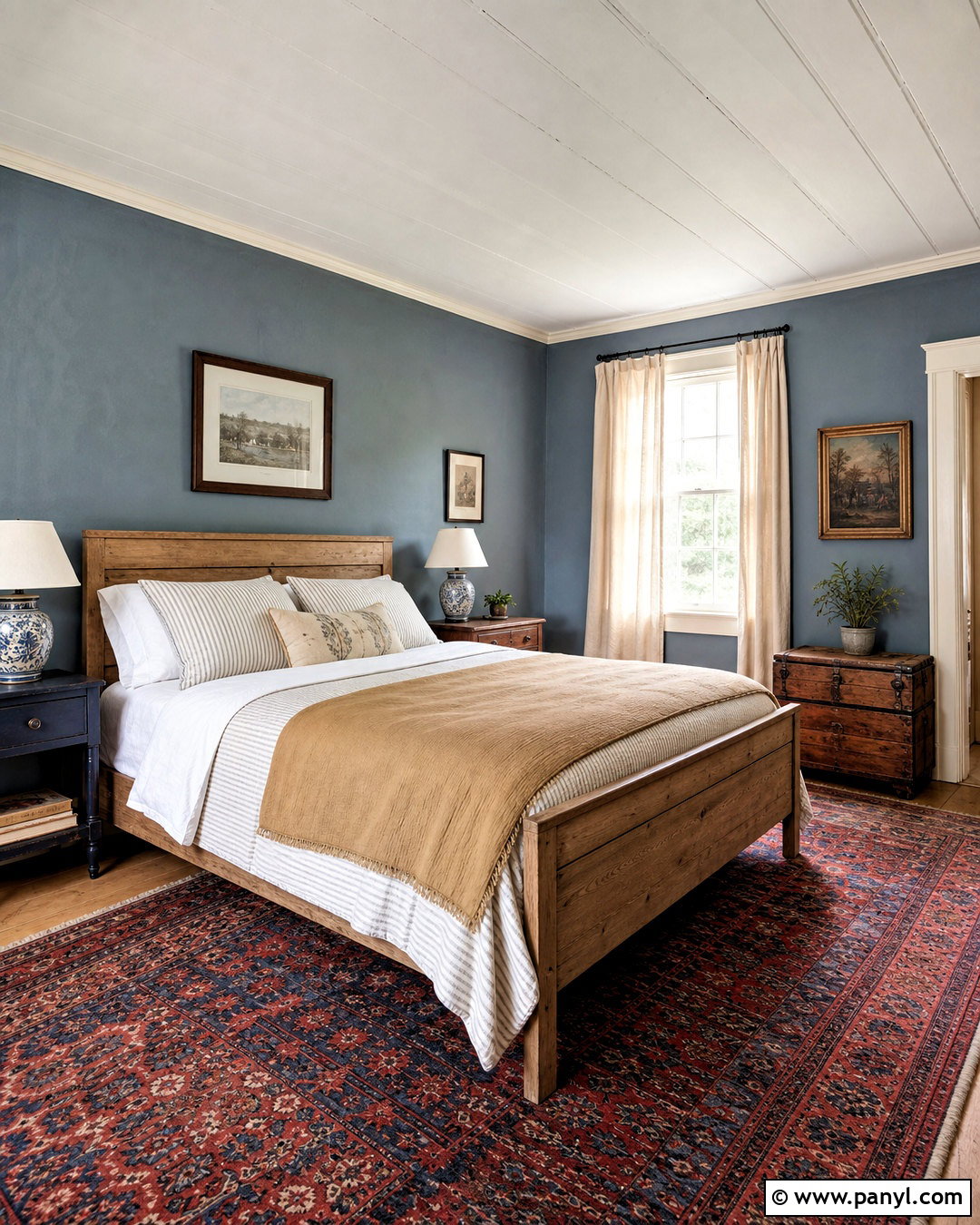
Slate blue brings more depth than pale blue while remaining softer than navy. Use it on all four walls for an enveloping farmhouse living room, then balance it with bright cream trim and a warm white ceiling. An oatmeal sofa, two tan leather chairs, and a large reclaimed pine coffee table introduce enough warmth to offset the cool walls. Choose a distressed rug combining slate, rust, ivory, and muted brown. Natural linen curtains frame the windows without competing with the paint. Add aged brass lighting, dark wood picture frames, and cream stoneware across the mantel. A few striped blue pillows help the sofa relate to the surrounding walls. This full-room approach feels particularly cohesive when the floor is warm oak or antique heart pine.
16. Cocoa Brown Farmhouse Living Room Palette
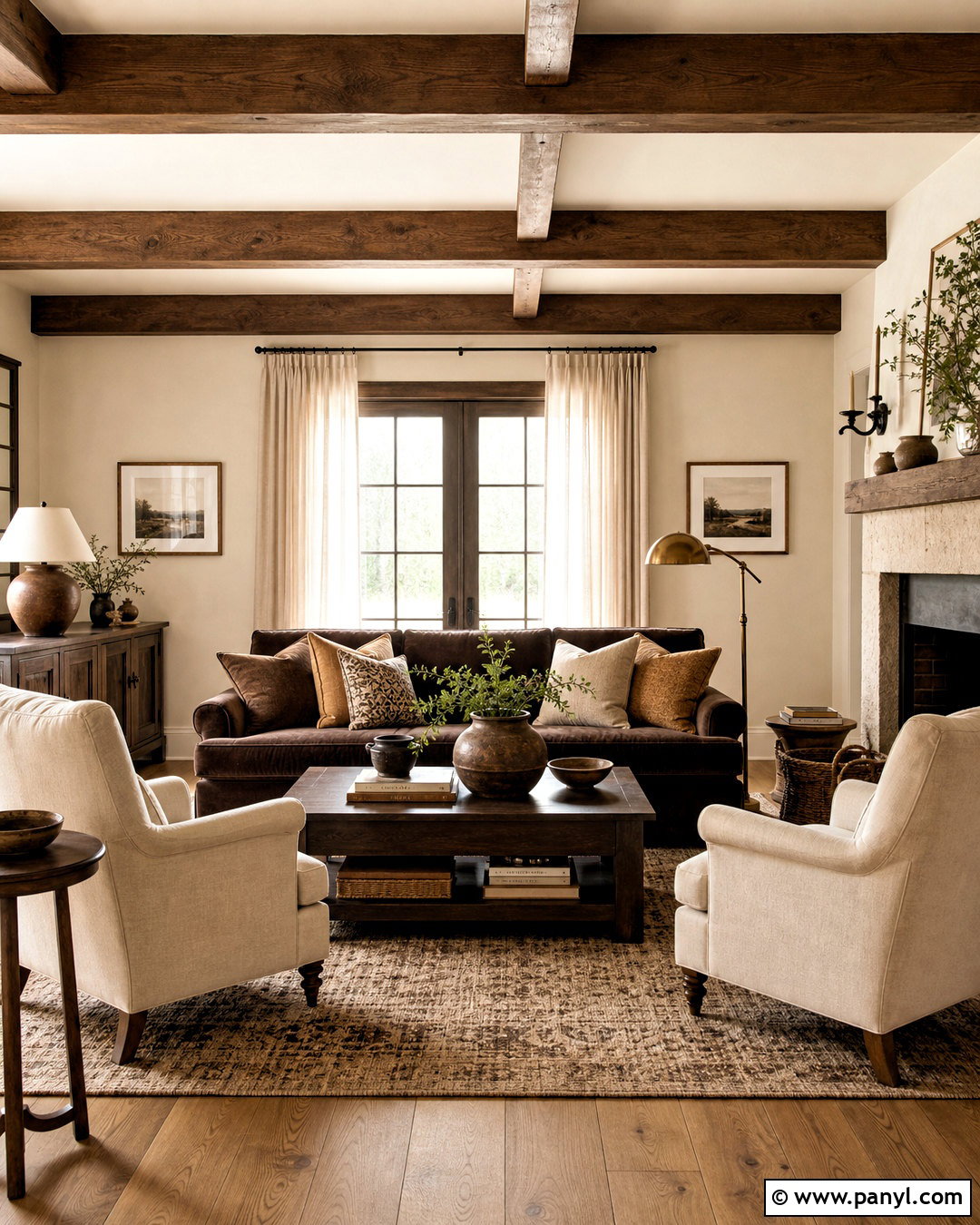
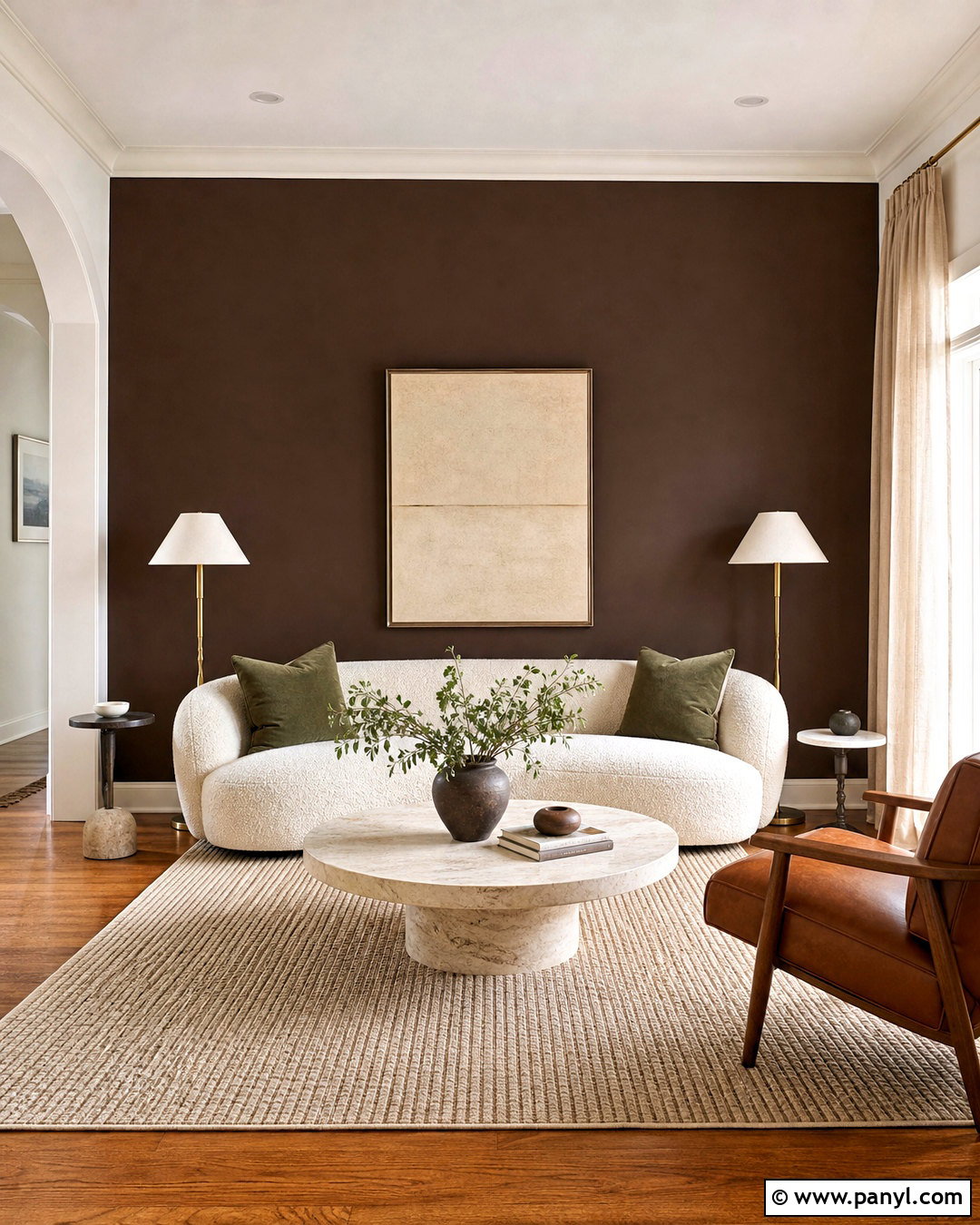
Cocoa brown can make a farmhouse living room feel deeply comfortable when it is balanced with ecru fabrics and pale architectural surfaces. Paint the walls a creamy putty shade, then introduce brown through a velvet sofa, stained ceiling beams, and a dark wood coffee table. Add two ecru armchairs with rounded backs to brighten the central seating group. A woven wool rug in oatmeal and chocolate creates a soft transition between the furniture and oak floor. Use warm brass table lamps and linen curtains rather than black metal, allowing the palette to remain gentle. Accent pillows in caramel, cream, and subtle checks provide controlled pattern. Finish with sepia-toned landscapes and rustic pottery. The completed design feels earthy, layered, and refined without losing farmhouse simplicity.
17. Blue Green Farmhouse Living Room Palette
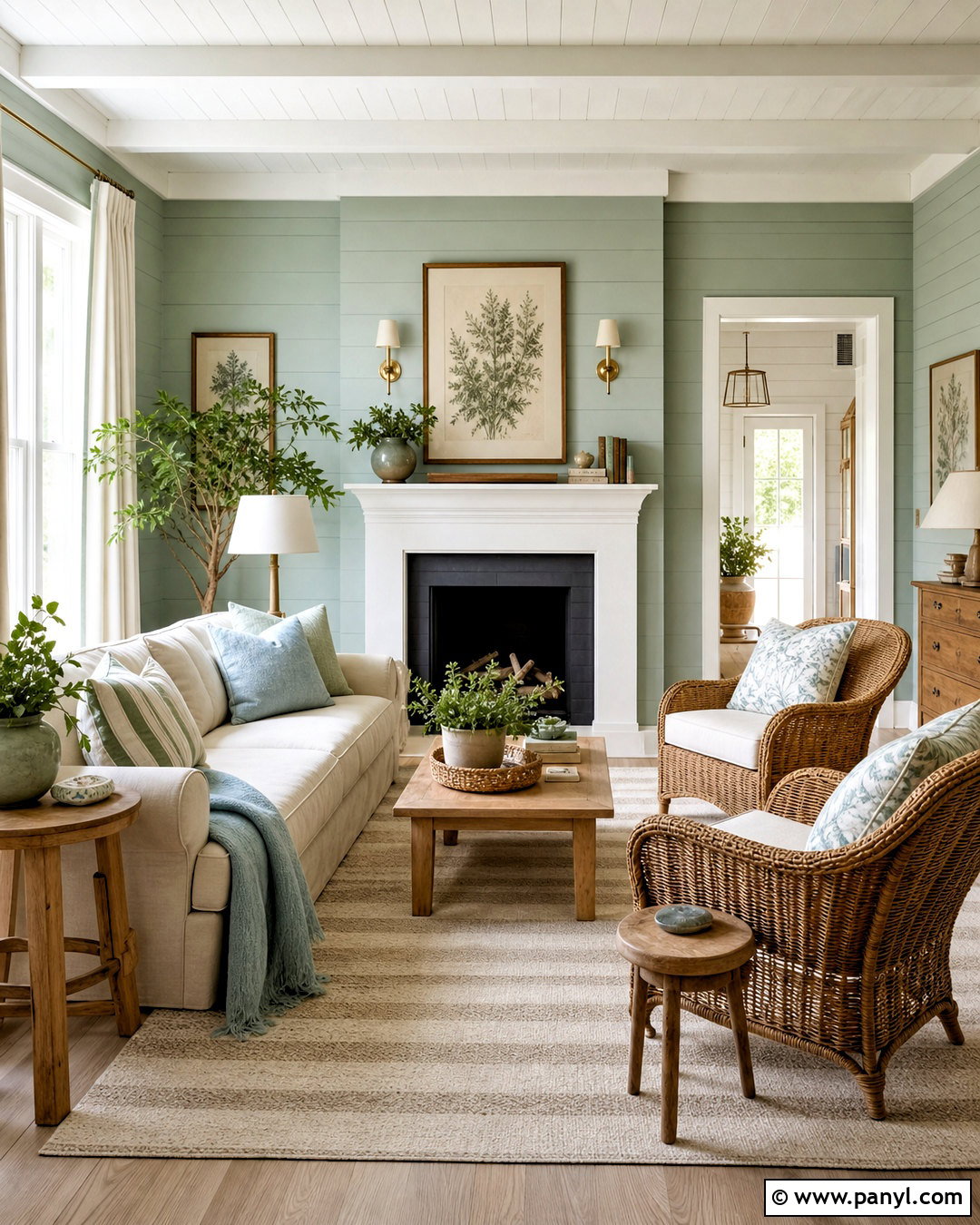
A pale blue-green palette gives farmhouse decor an airy character that works well in smaller or sun-filled living rooms. Select a muted sea-glass shade for the walls and use soft white across the fireplace, trim, and ceiling. Choose a sand-colored sofa, light oak tables, and two woven cane chairs with ivory cushions. A cream rug containing faded blue-green stripes anchors the furniture without making the floor appear busy. Hang flax linen curtains and install warm brass sconces to add contrast. Decorate with pale pottery, a few botanical prints, and pillows in misty blue, sage, and beige. Keep large pieces light and visually simple. This complete scheme feels fresh and natural while maintaining the unfussy materials and comfortable arrangement associated with farmhouse interiors.
18. Rust And Denim Farmhouse Living Room Palette
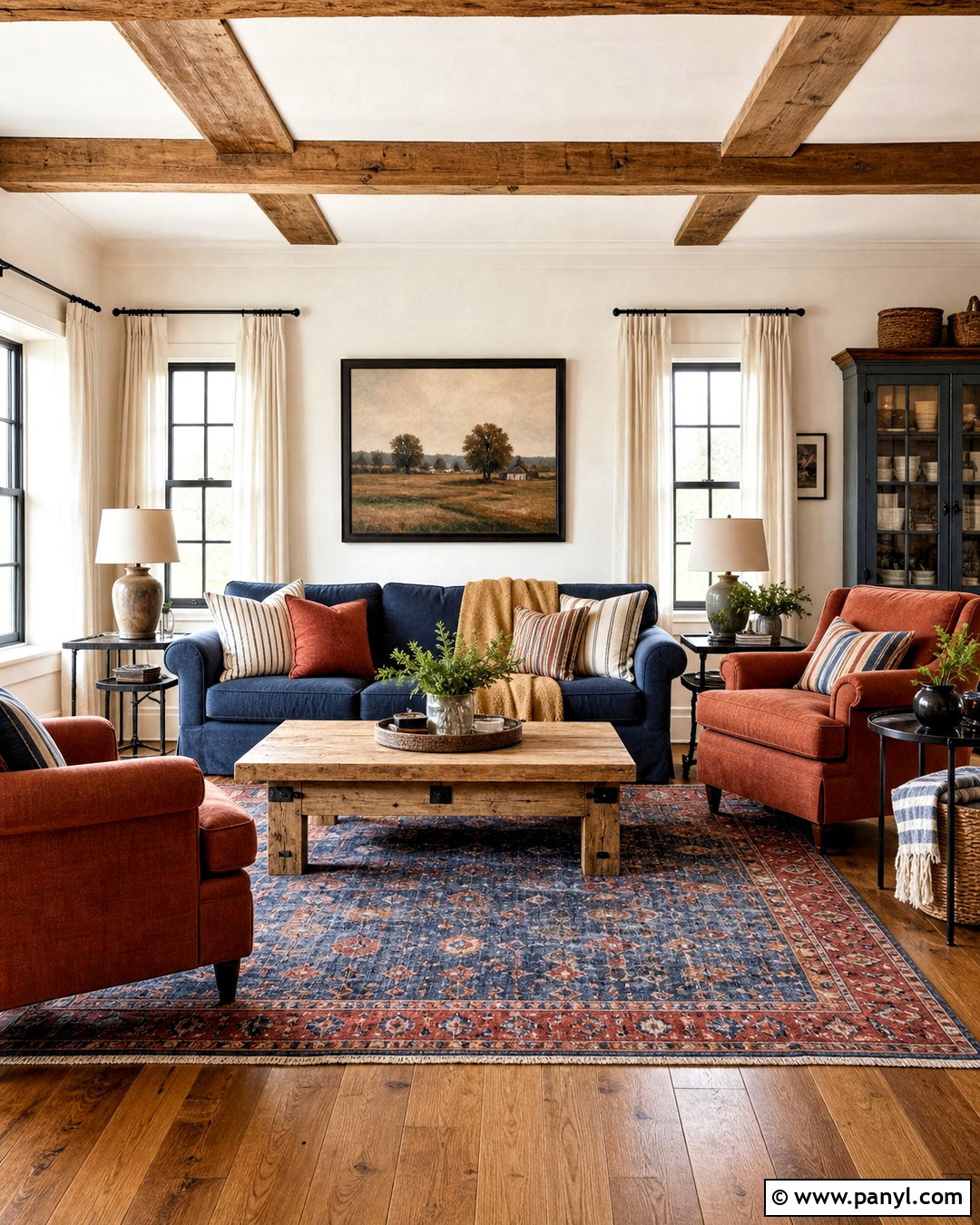
Rust and denim blue produce a colorful farmhouse living room that still feels practical and familiar. Start with warm white walls and medium oak flooring, then anchor the room with a relaxed denim-blue sofa. Place two rust-colored upholstered chairs opposite it, creating an intentional balance across the seating area. A faded rug containing navy, brick red, tan, and cream ties both colors together. Use a reclaimed pine coffee table and black iron side tables for a mix of rustic and streamlined finishes. Natural linen curtains and a cream-painted fireplace keep the background quiet. Add striped pillows, a tan wool throw, and vintage landscape art. Because the bold colors appear on substantial pieces, limit smaller accessories so the final room remains organized rather than overly busy.
19. Charcoal And Warm Tan Farmhouse Living Room Palette
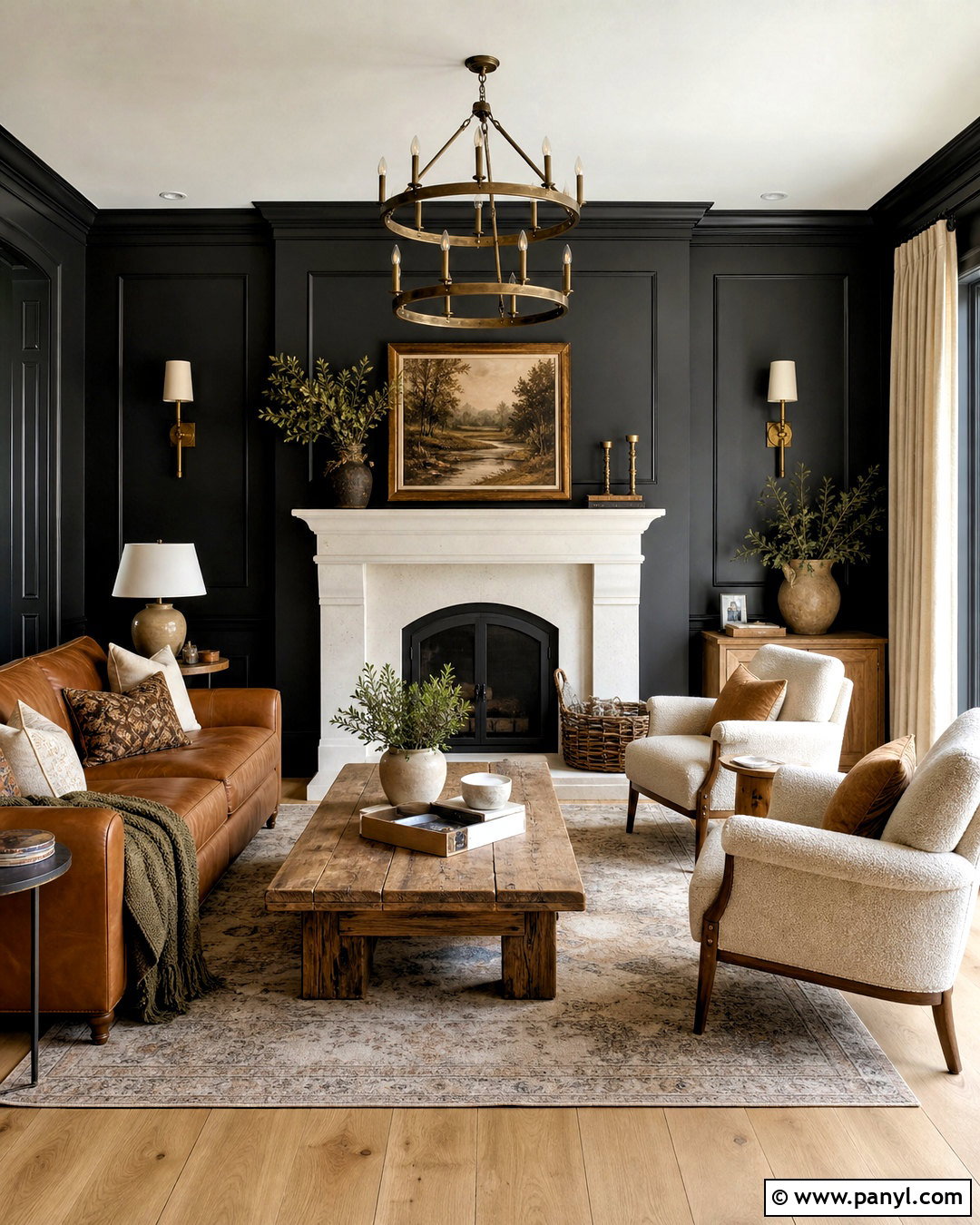
Charcoal walls can create a dramatic farmhouse living room without making it feel gloomy when warm tan and cream occupy most of the furnishings. Use deep charcoal on paneled walls, but keep the ceiling, trim, and fireplace a warm white. Position a large tan leather sofa against the dark backdrop and add two cream bouclé or linen chairs. A pale vintage-look rug and natural oak floor reflect light around the lower half of the room. Choose a heavy reclaimed wood coffee table and aged brass sconces for warmth. Oatmeal curtains, caramel pillows, and woven baskets continue the earthy contrast. Large windows and uncluttered surfaces are important here. The completed palette feels confident and modern while retaining the substantial textures and comfortable layout of farmhouse design.
20. Lavender Gray Farmhouse Living Room Palette
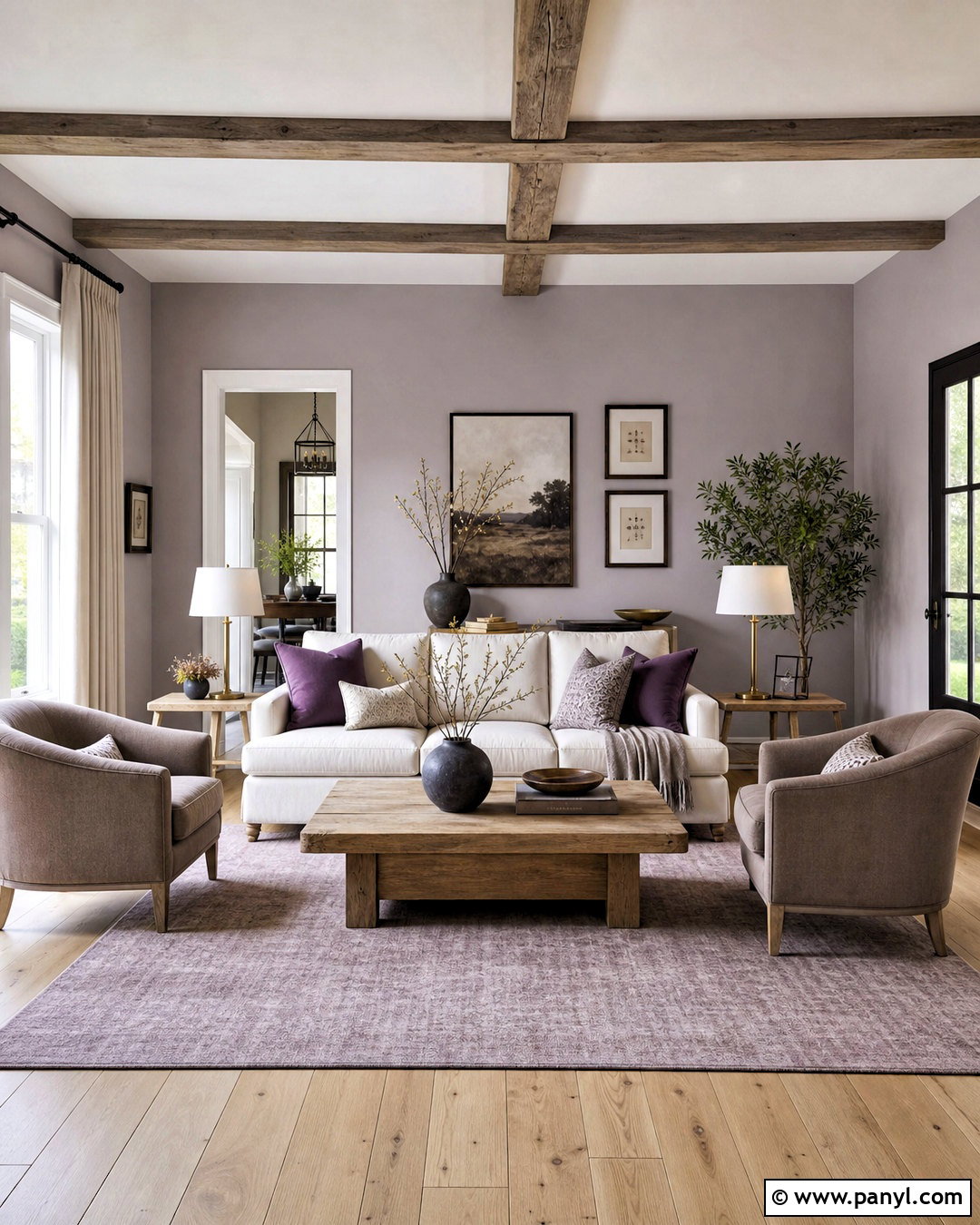
Lavender gray provides a quiet, unexpected farmhouse color that changes gently with natural light. Choose a muted shade with strong gray undertones so it reads as sophisticated rather than sugary. Pair the walls with creamy trim, white oak flooring, and an ivory linen sofa. Add two mushroom-colored chairs and a weathered oak coffee table to ground the pale palette. A faded rug combining lavender, taupe, cream, and soft brown provides subtle pattern underfoot. Use brushed brass lamps, flax curtains, and dark wood frames to keep the room warm. Accent with plum-gray pillows, handmade pottery, and dried neutral branches. This finished space suits homeowners who want a soft farmhouse atmosphere but prefer something more distinctive than the usual white, beige, or sage walls.
Conclusion:
The best farmhouse living room feels coordinated without looking overly decorated. Start with one main wall color, select two supporting neutrals, and introduce contrast through wood, metal, upholstery, and a limited accent shade. Warm whites and natural oak create an easy foundation, while sage, navy, forest green, terracotta, or charcoal can add stronger personality. Always view paint samples beside the room’s flooring and furniture during different times of day before making a final choice. Most importantly, repeat each color in at least two or three places so the room feels connected. These 20 farmhouse color palette living room ideas offer complete starting points that can be adjusted for your home, lighting, furniture, and preferred level of contrast.

Related Ideas and Inspiration:

Leave a Reply