
The right wall color can make a living room feel softer, brighter, and far more inviting. These 20 warm paint colors for living room ideas move beyond basic beige, offering complete palettes built around creamy neutrals, earthy reds, golden yellows, warm greens, and rich browns. Current living room palettes favor nuanced, nature-inspired colors, while established paint guidance recommends choosing a shade according to the atmosphere, furnishings, and natural light in the room. () Before committing, paint large sample areas on several walls and observe them throughout the day. Then coordinate the final shade with your flooring, upholstery, wood tones, trim, and lighting. Explore the complete room looks below with these 20 warm paint colors for living room ideas.

1. Warm White Living Room
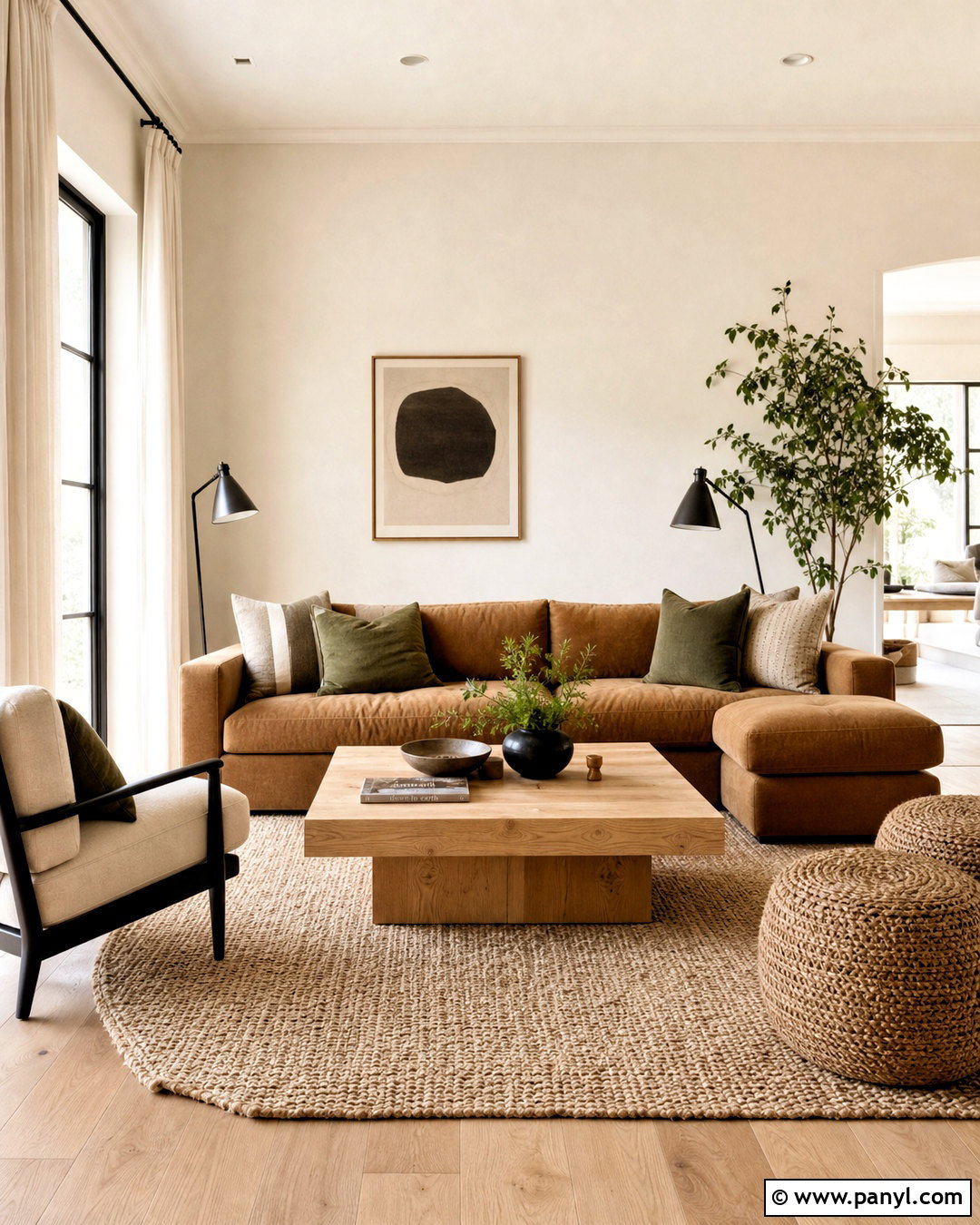
Warm white creates an airy living room without the sharp, clinical effect of a blue-based white. Choose a creamy white with subtle beige or yellow undertones for the walls, then use a slightly cleaner white on the ceiling and trim. Build warmth with a camel sofa, light oak coffee table, woven rug, and linen curtains. Soft black accents, such as a floor lamp or picture frames, provide definition without making the palette feel harsh. Add olive pillows, handmade pottery, and a few leafy plants for natural color. This complete look works especially well in smaller rooms or spaces with limited daylight because it feels open while remaining comfortable, layered, and welcoming.
2. Ivory Cream Living Room
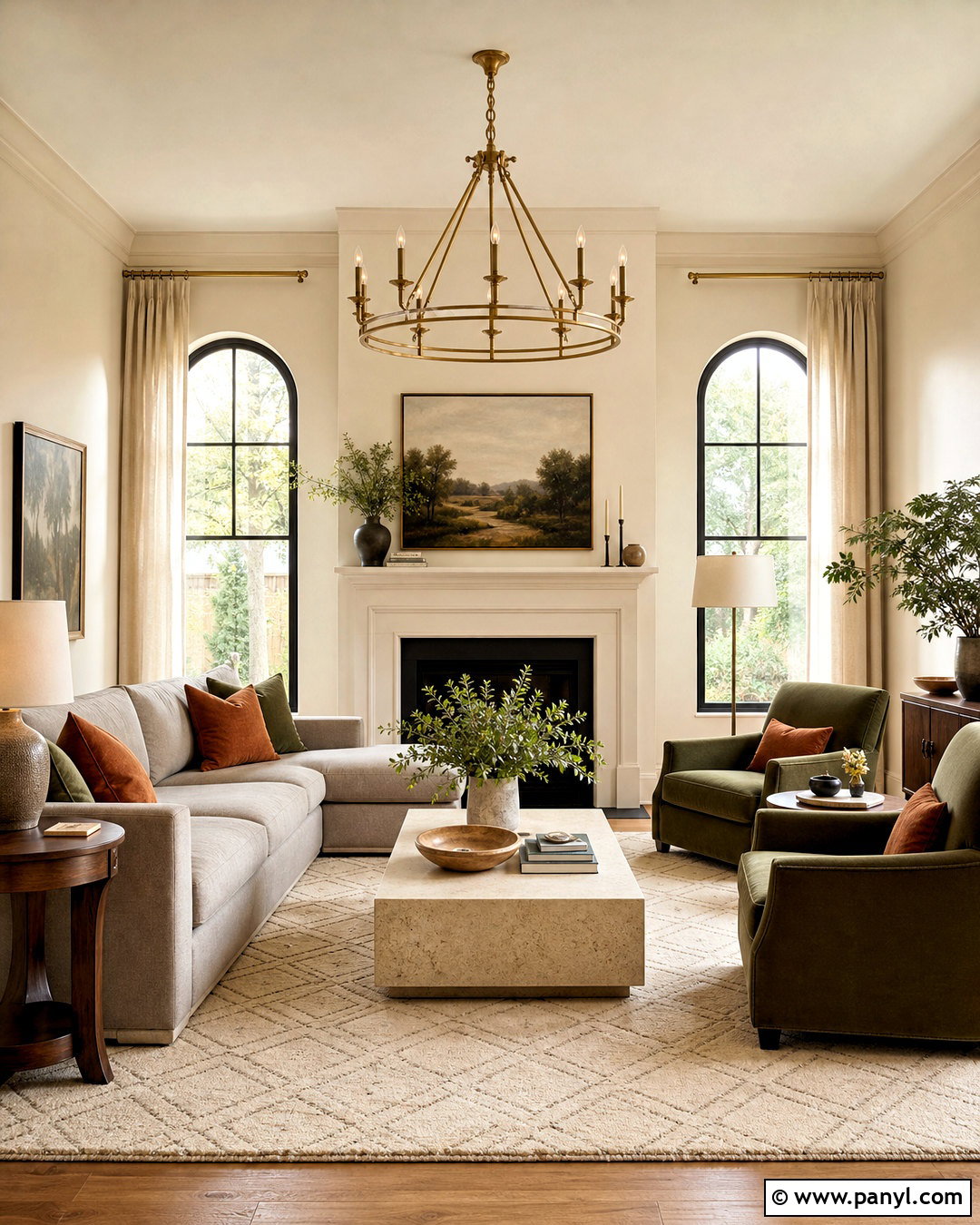
Ivory cream brings gentle color to the walls while keeping the room light and easy to decorate. Pair the creamy paint with a warm gray sectional, walnut side tables, and an ivory rug featuring a subtle geometric pattern. Antique brass lighting adds a soft glow, while rust, moss green, and caramel pillows keep the room from looking too pale. Choose natural linen curtains that closely match the wall color for a seamless effect around the windows. A limestone fireplace or light stone coffee table can introduce texture without cooling the palette. Finish the space with landscape artwork, stacked books, and ceramic lamps. The resulting room feels polished, relaxed, and suitable for both traditional and modern homes.
3. Oatmeal Beige Living Room
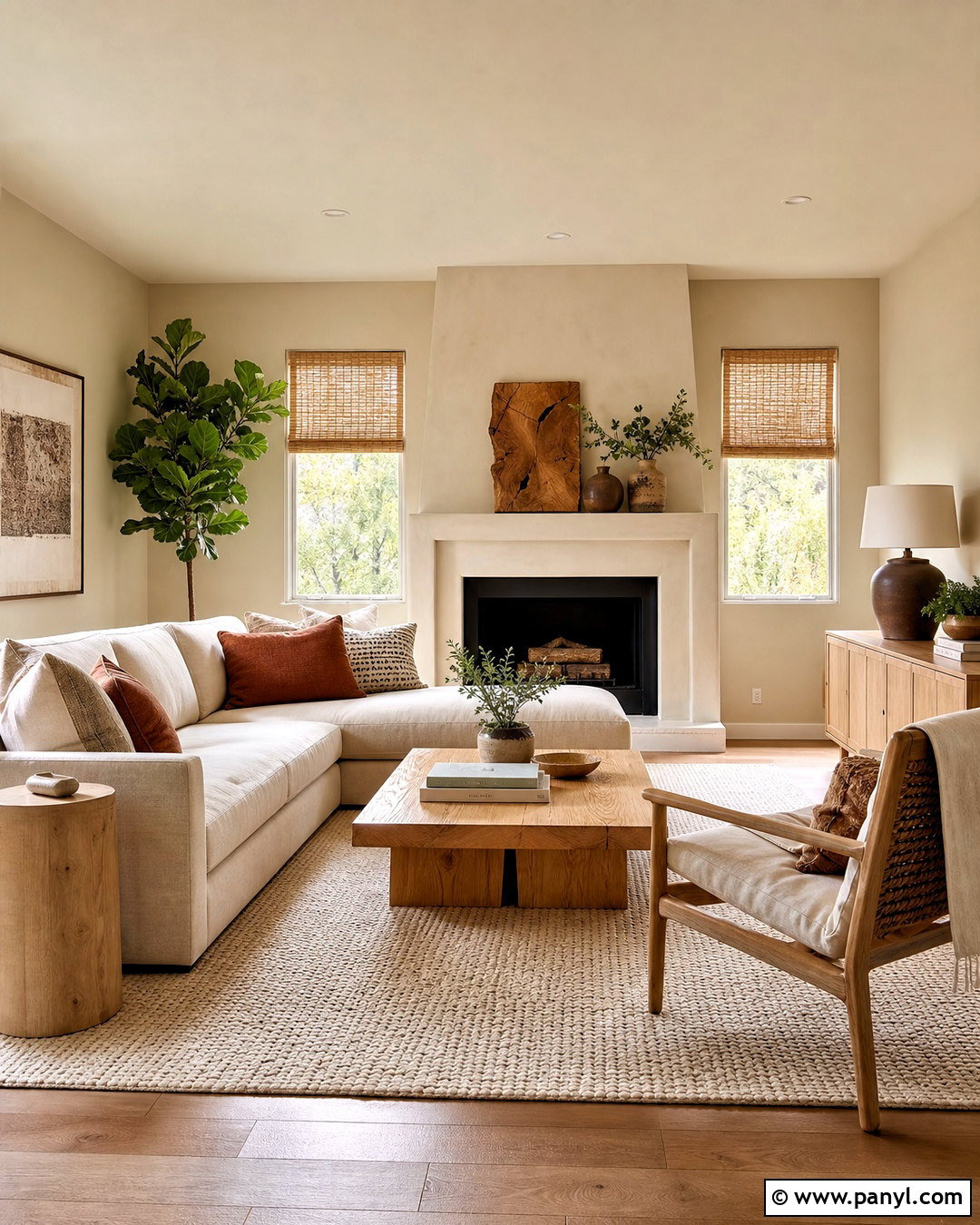
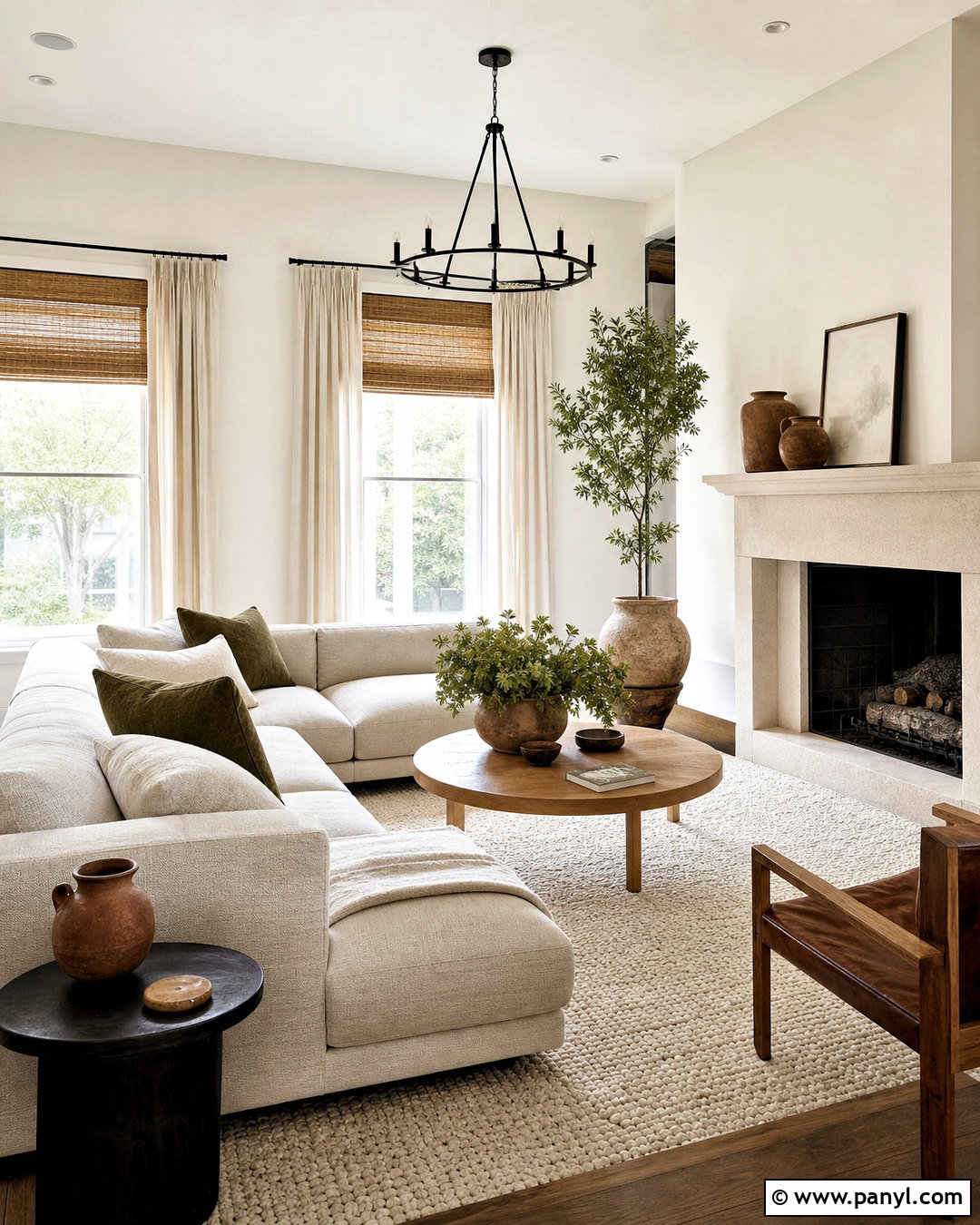
Oatmeal beige is a soft, natural neutral that sits comfortably between cream and tan. It works beautifully in a casual living room with a deep linen sofa, oak furniture, and a textured wool rug. Keep the largest pieces in warm off-white and sandy beige, then introduce muted green, clay red, and dark brown through pillows, artwork, and small accessories. Woven shades filter the daylight and strengthen the organic appearance. For architectural interest, paint the walls oatmeal beige while keeping the trim a creamy white. A plaster-style fireplace, rounded coffee table, and oversized ceramic vase complete the understated scheme. This combination feels calm and current without relying on stark white walls or cool gray furniture.
4. Honey Beige Living Room
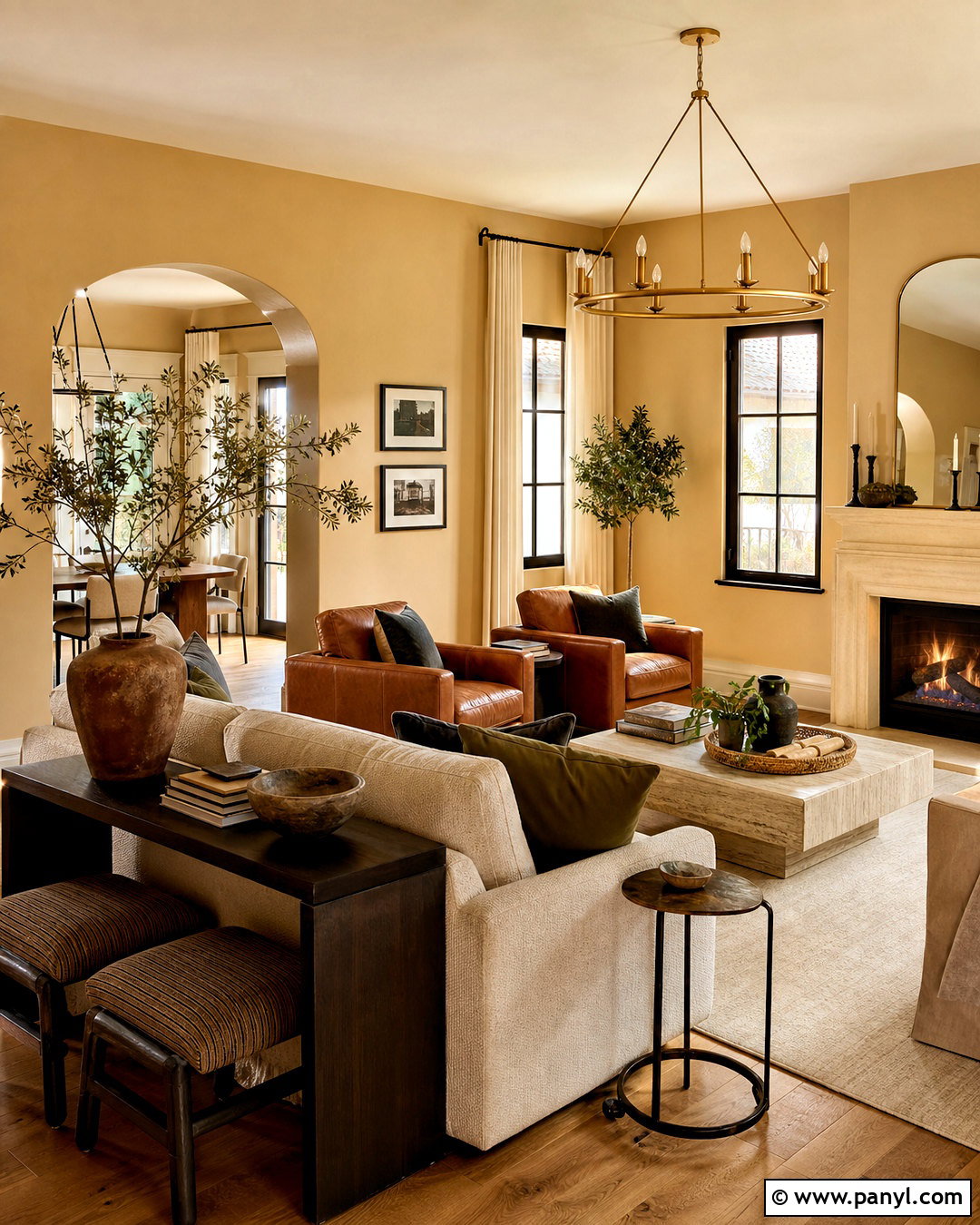
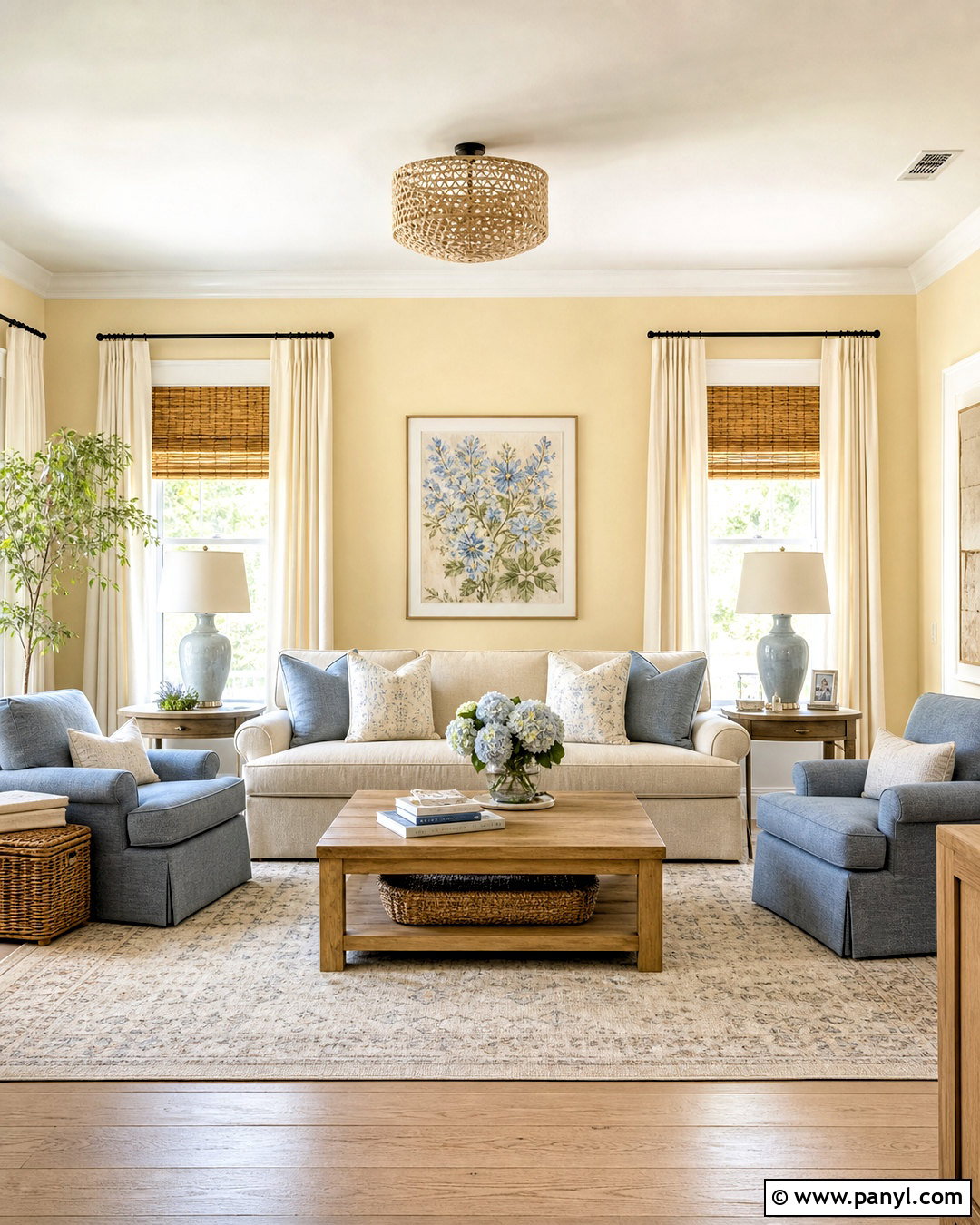
Honey beige gives a living room a subtle golden glow that feels especially appealing in afternoon light. Balance its warmth with a cream sofa, medium-toned oak flooring, and a natural jute or wool rug. Choose furniture with clean shapes so the golden walls look fresh rather than dated. Cognac leather chairs provide a deeper anchor, while olive green pillows and charcoal accents add contrast. Hang simple artwork with cream mats and dark wood frames to connect the light and dark tones. A brushed brass chandelier can reinforce the warmth without overwhelming the space. Complete the room with linen drapes, a travertine coffee table, and leafy greenery for an inviting look that feels sunny, grounded, and comfortable.
5. Warm Greige Living Room
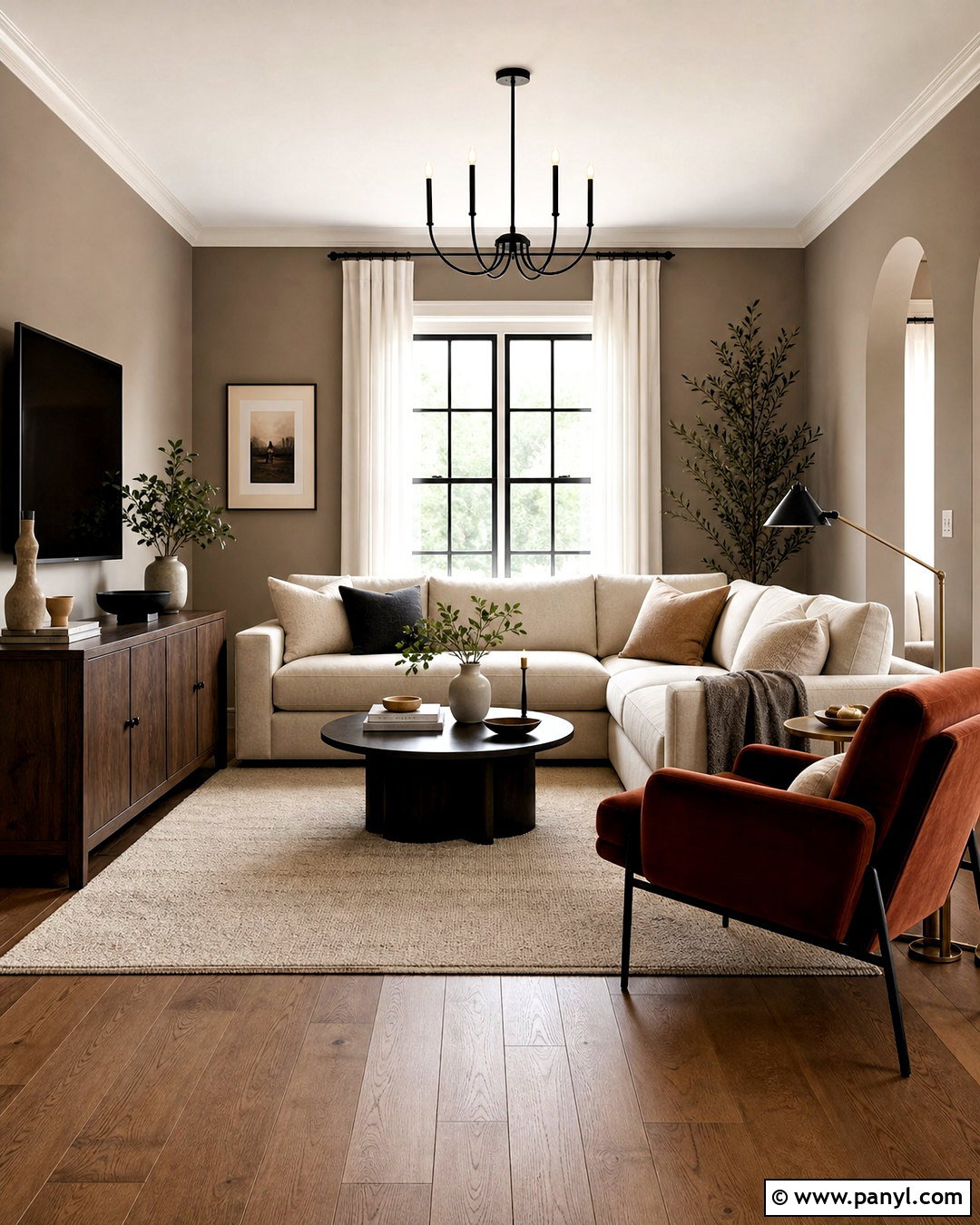
Warm greige combines the flexibility of gray with the comfort of beige, making it useful in open-plan living areas. Select a version with noticeable brown or taupe undertones rather than a cool silver cast. Pair it with an oatmeal sectional, walnut media cabinet, and warm white curtains. A rust-colored lounge chair creates a strong focal point, while black metal lighting gives the room structure. Layer the seating with cream, camel, and patterned pillows, then add a wool rug that repeats the wall color. Natural stone, handmade ceramics, and aged brass accessories complete the palette. This look is practical for households that want a neutral foundation but still prefer a living room that feels warm, layered, and visually interesting.
6. Mushroom Taupe Living Room
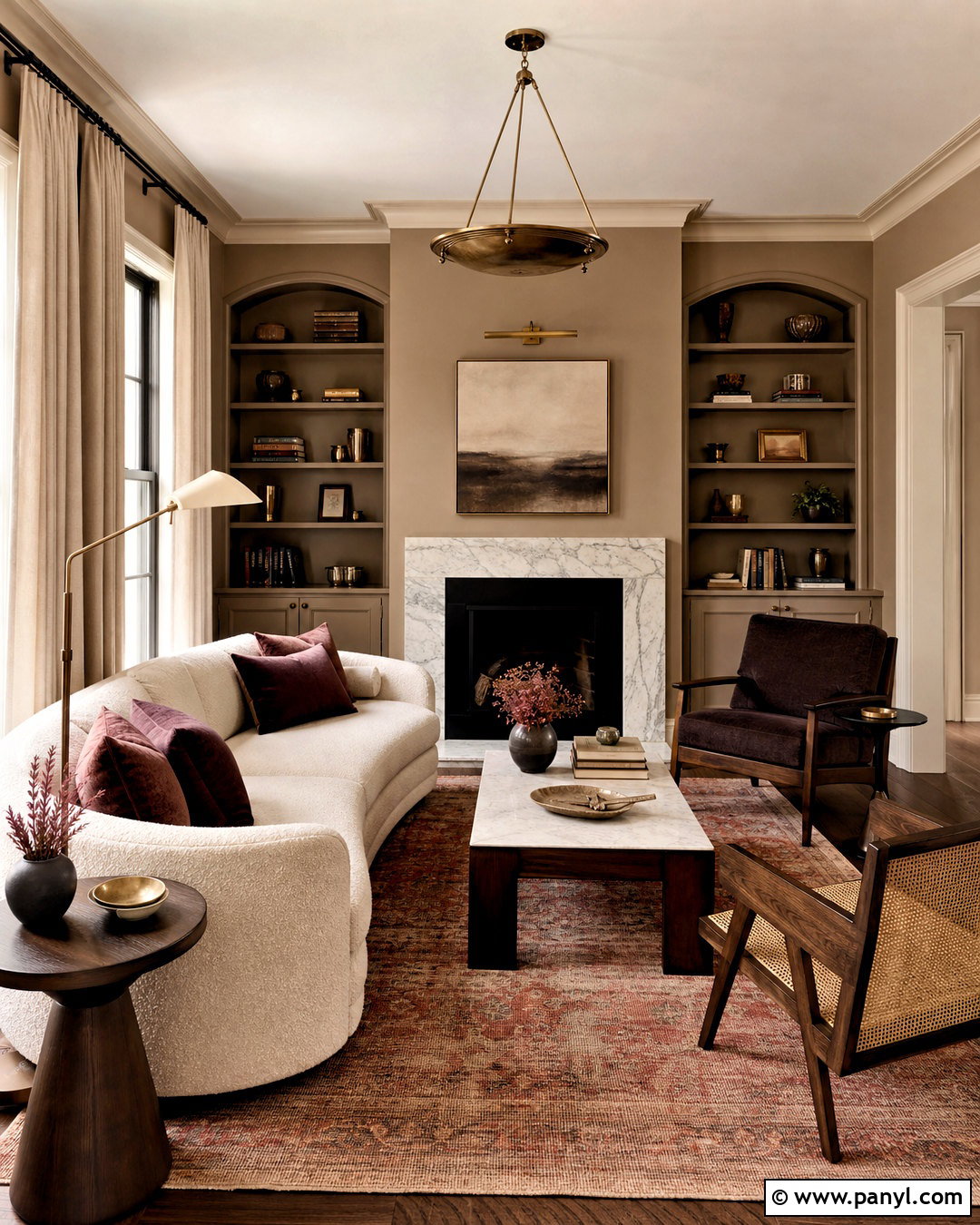
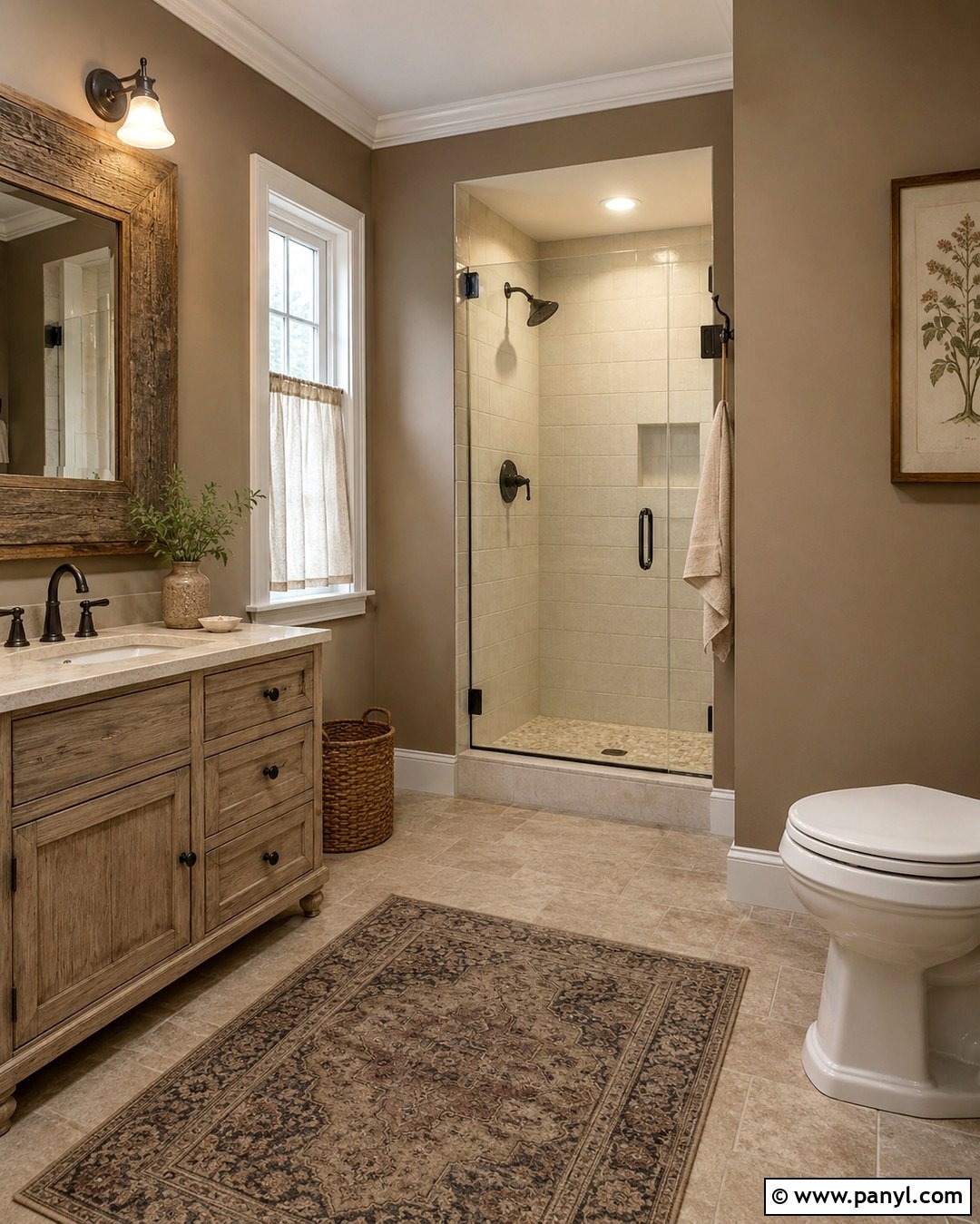
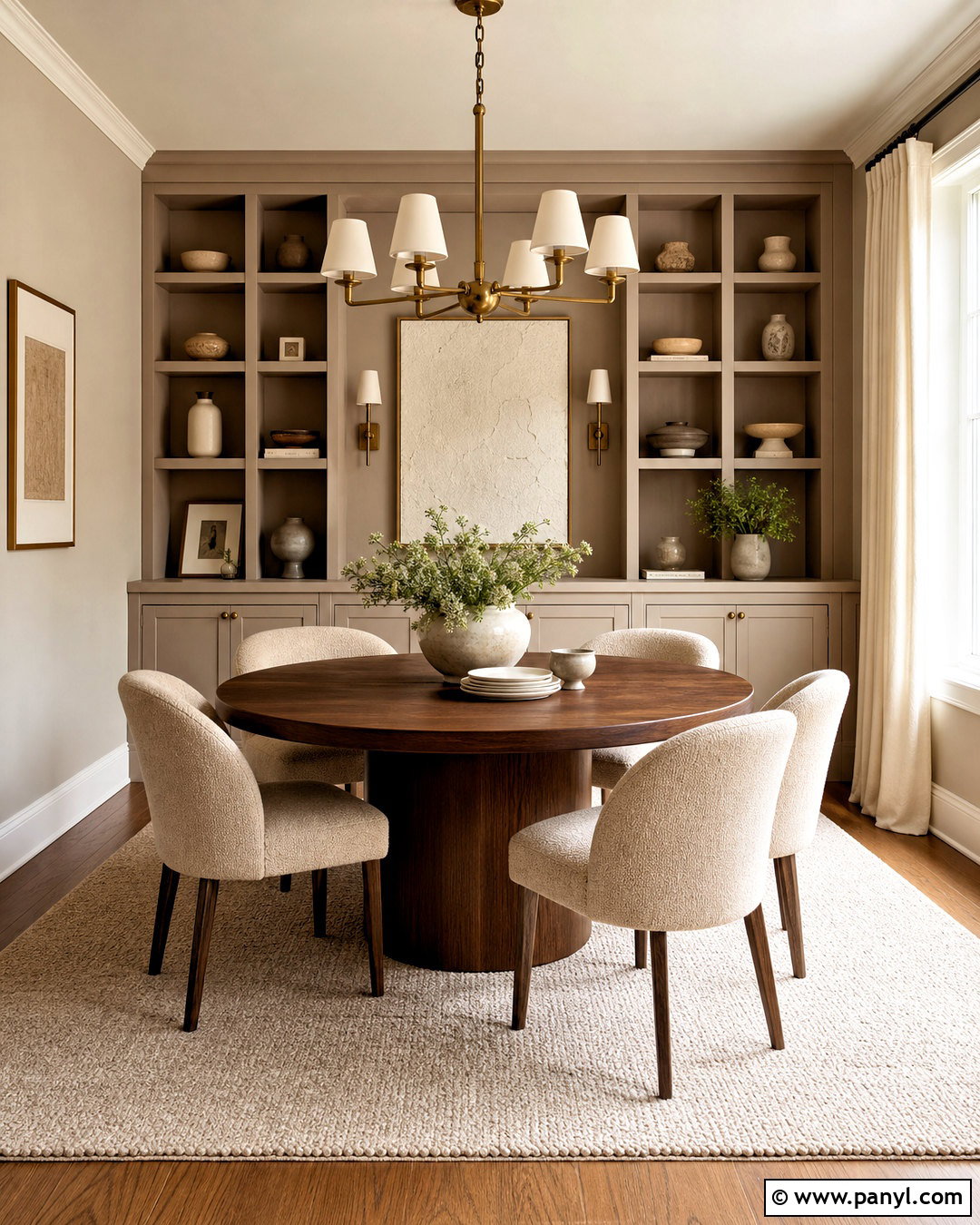
Mushroom taupe gives walls more depth than beige while remaining quiet enough for everyday living. Its balanced brown and gray character works well with cream upholstery, dark walnut furniture, and aged bronze accents. Use the color across the walls and built-in shelving for a cohesive, enveloping effect. A light boucle sofa prevents the room from becoming heavy, while burgundy, muted rose, and camel pillows introduce restrained color. Choose a faded vintage-style rug containing taupe, rust, and ivory to connect the entire scheme. Linen curtains can be one shade lighter than the walls. Add a marble-topped coffee table, sculptural lamp, and traditional artwork for a comfortable room that blends contemporary furniture with classic warmth.
7. Rosy Taupe Living Room
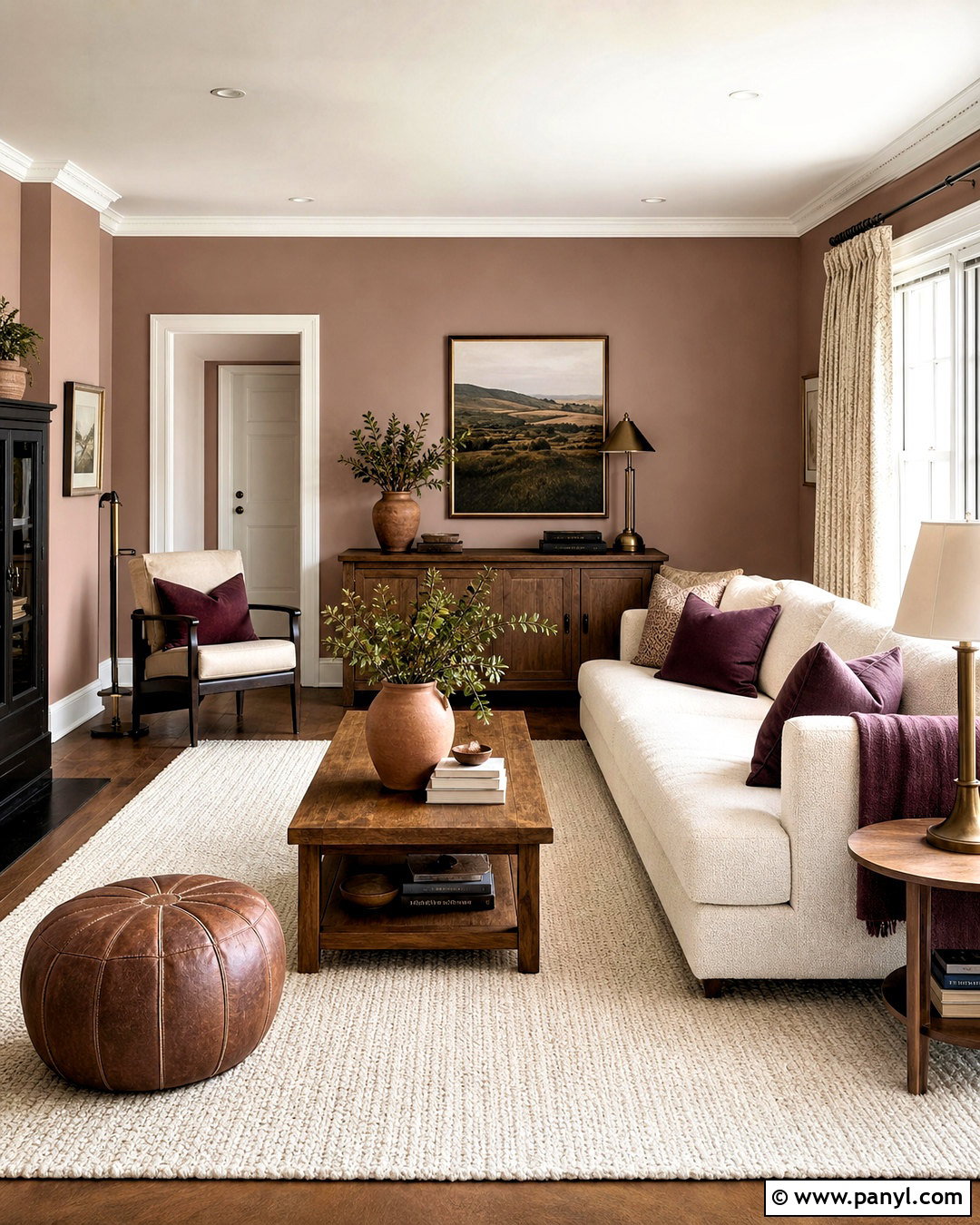
Rosy taupe offers the coziness of brown with a quiet pink undertone that changes gently as daylight moves through the room. Use it with a warm ivory sofa, medium oak tables, and a cream rug to keep the overall design soft. Deep plum pillows, muted terracotta pottery, and antique brass lighting bring out the color’s richer side. For balance, include a dark brown armchair or media console rather than repeating pink across every surface. Full-length oatmeal curtains add texture and frame the windows without introducing another strong hue. A gallery wall featuring landscapes and abstract prints can pull together rose, tan, and olive tones. The finished living room feels warm, distinctive, and pleasantly understated.
8. Clay Beige Living Room
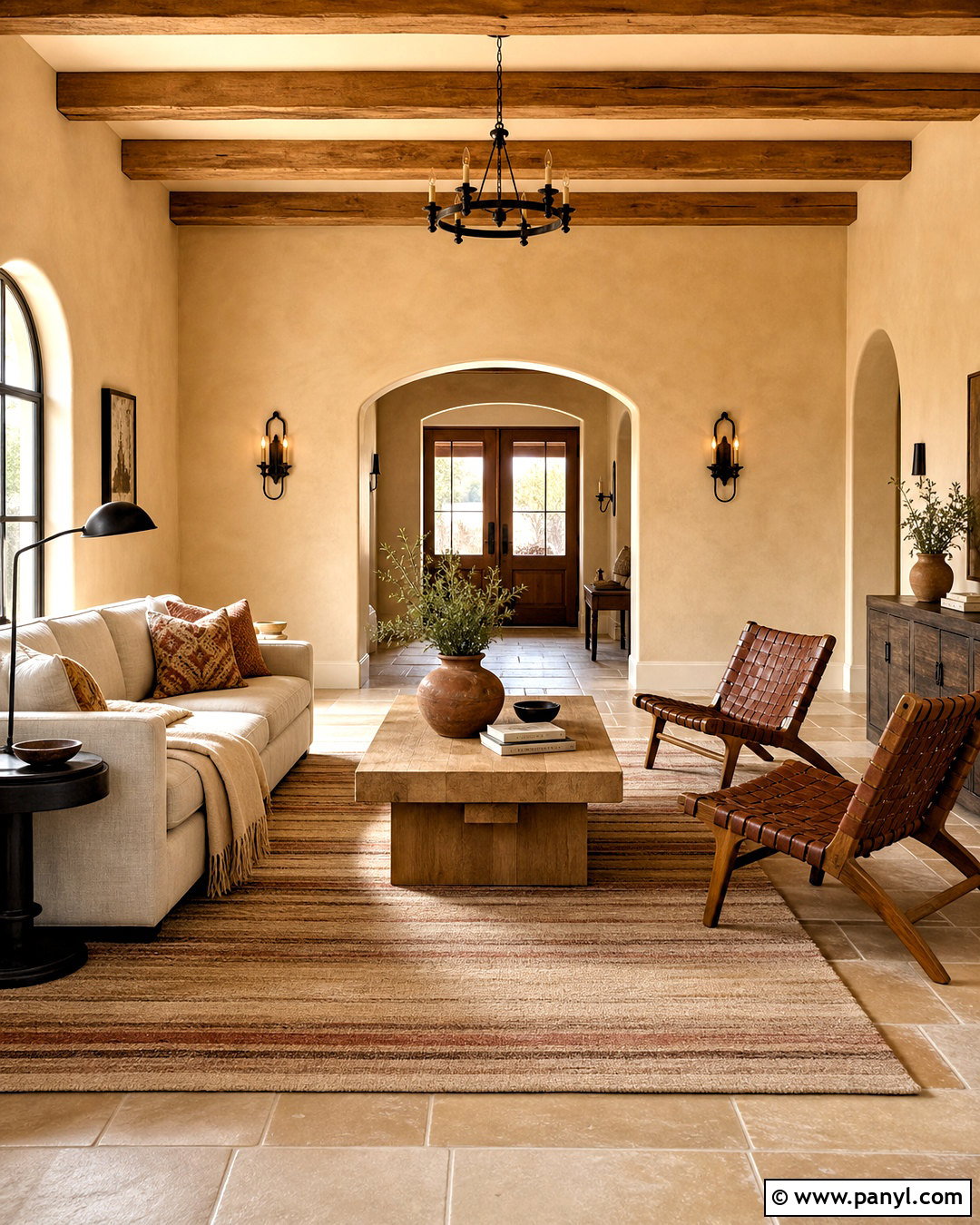
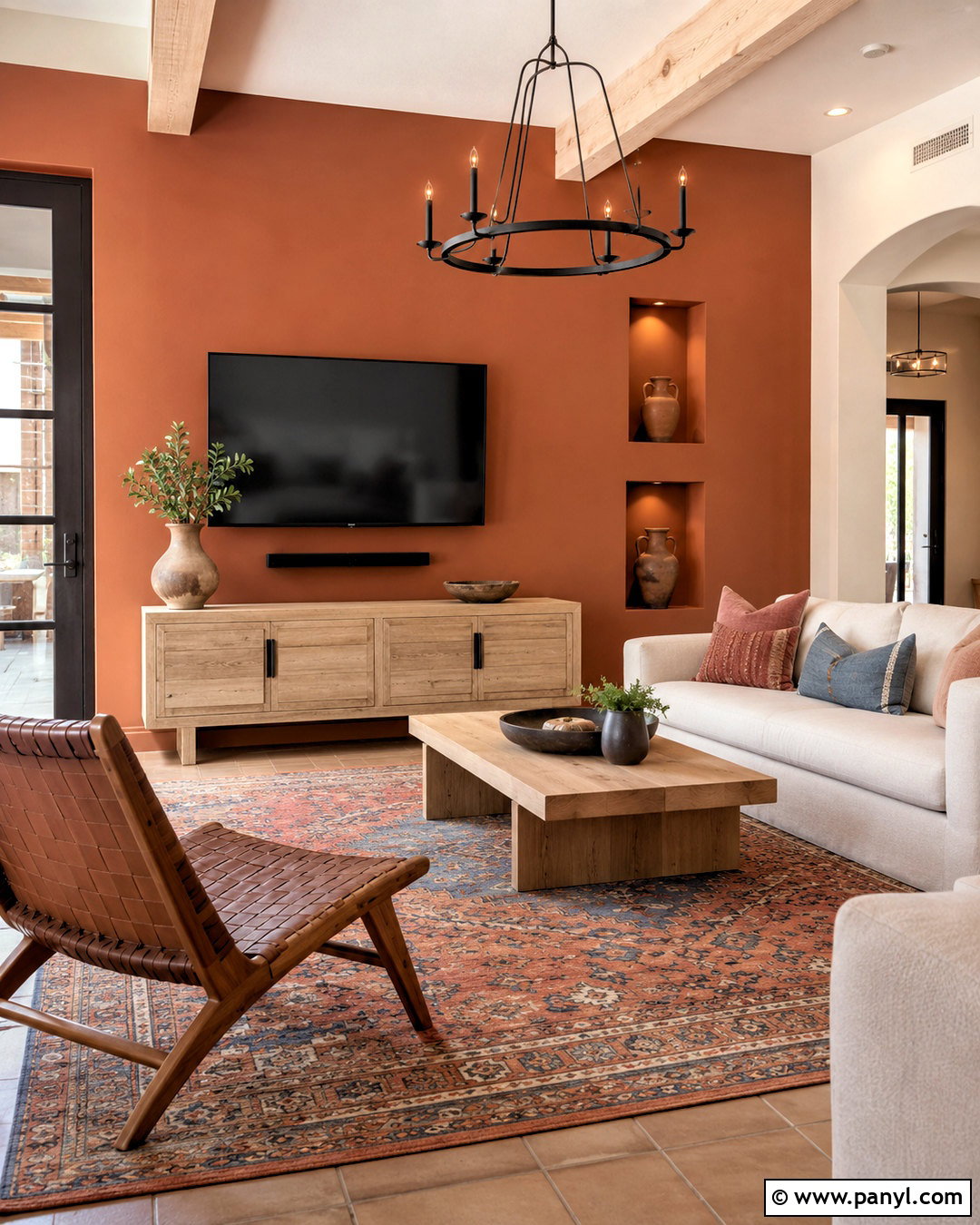
Clay beige has a sun-baked undertone that gives a neutral living room more personality. Paint the walls this earthy shade, then combine them with a flax linen sofa, woven leather chairs, and a pale oak coffee table. Creamy trim keeps the edges crisp without creating a cold contrast. Use a striped wool rug in sand, rust, and muted charcoal to define the seating area. Black iron lamps and window hardware add small points of structure. Complete the look with terracotta vessels, olive branches, and simple framed artwork in natural wood. This full palette suits organic modern, Southwestern, and relaxed transitional rooms. It feels earthy and comfortable but remains light enough for an average-size family living space.
9. Soft Blush Pink Living Room
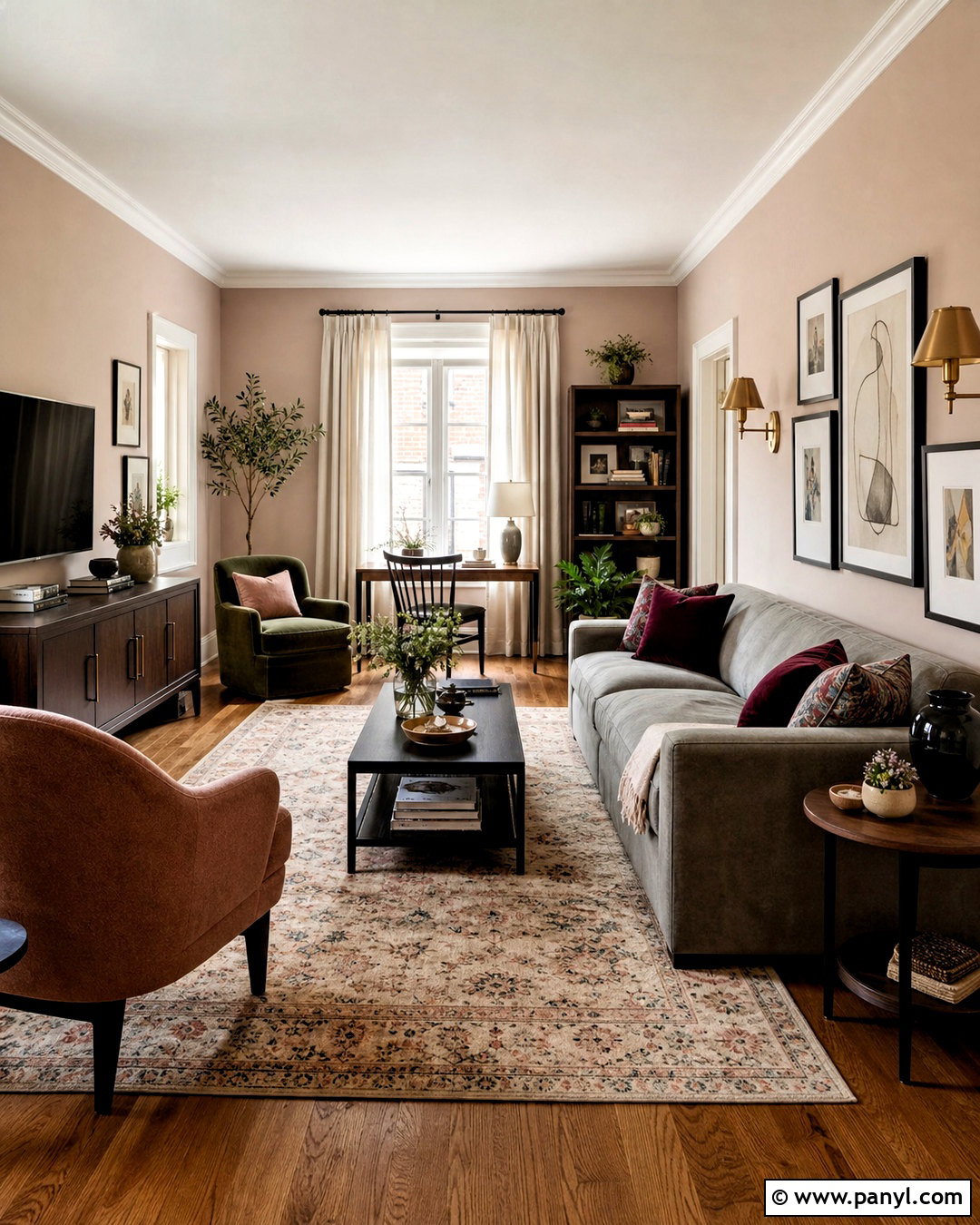
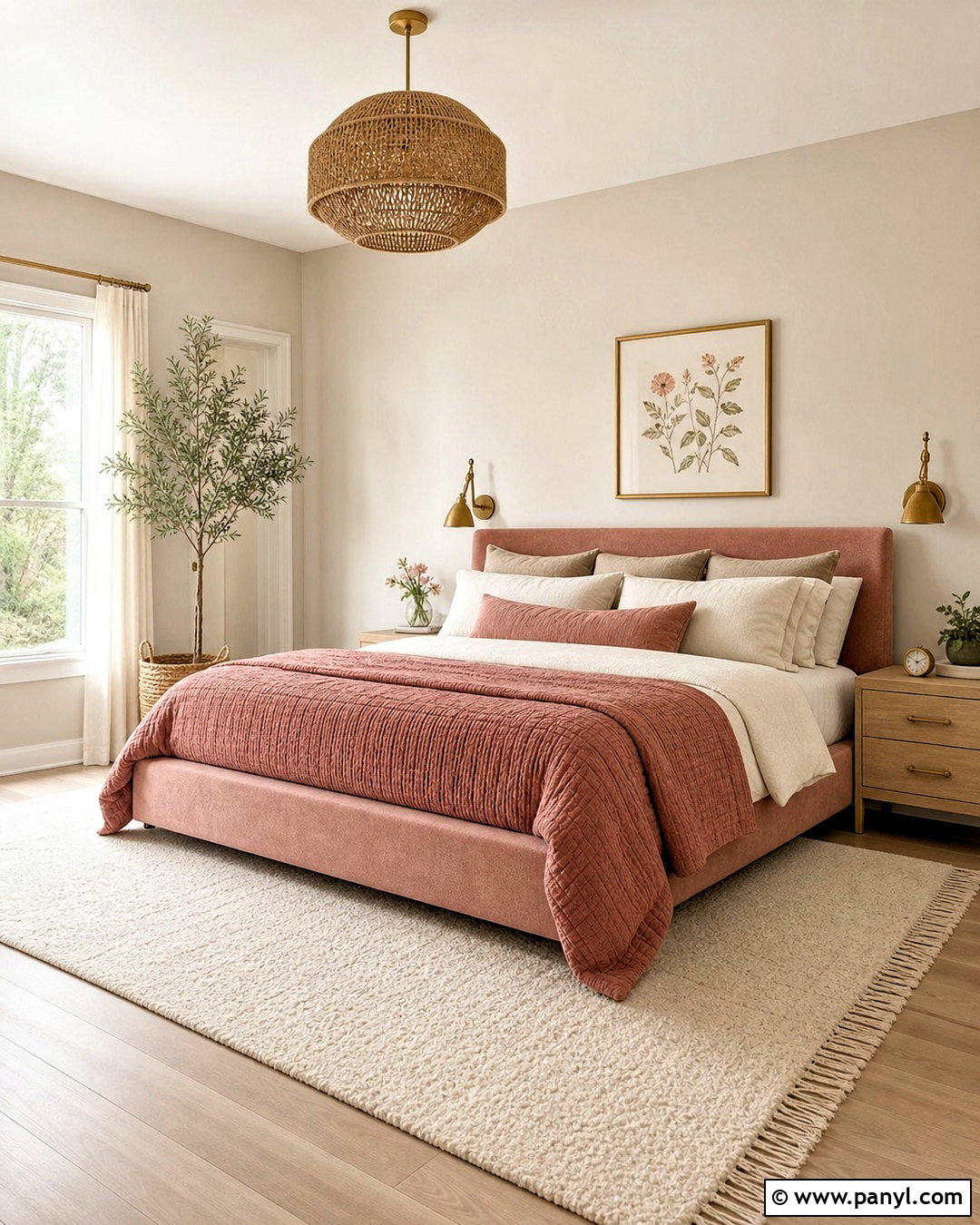
Soft blush pink can function like a warm neutral when it has dusty beige undertones. Cover the walls in a muted blush, then ground the room with a warm gray sofa and dark wood furniture. Cream curtains and a pale patterned rug keep the space open, while burgundy pillows and an olive green chair prevent the palette from feeling overly sweet. Choose aged brass sconces or a sculptural ceiling light for a subtle reflective finish. Black picture frames can sharpen the design in small doses. Add abstract artwork that repeats blush, brown, and cream, along with textured throws and handmade pottery. The complete living room feels grown-up, welcoming, and colorful without becoming bright or difficult to coordinate.
10. Dusty Rose Living Room
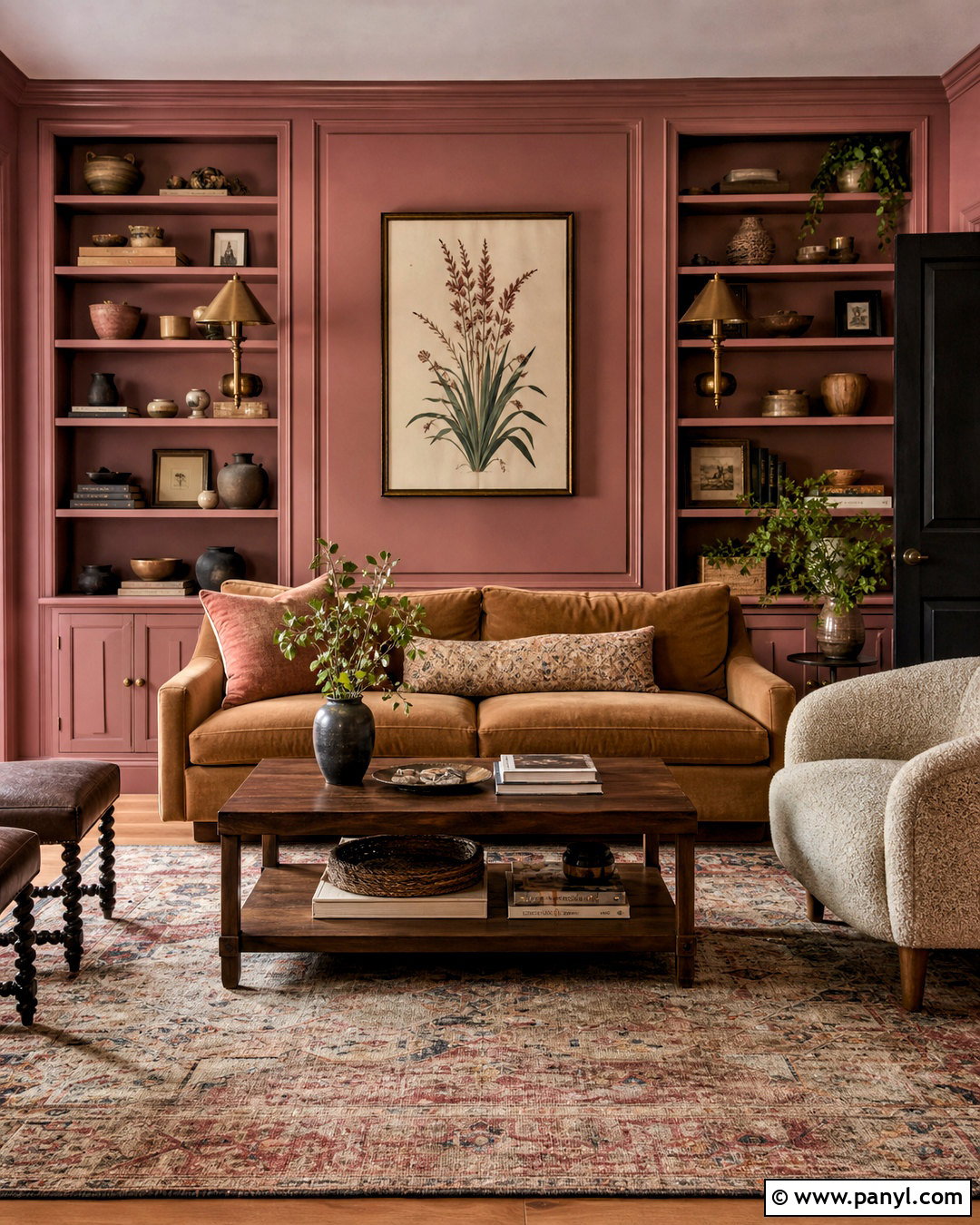
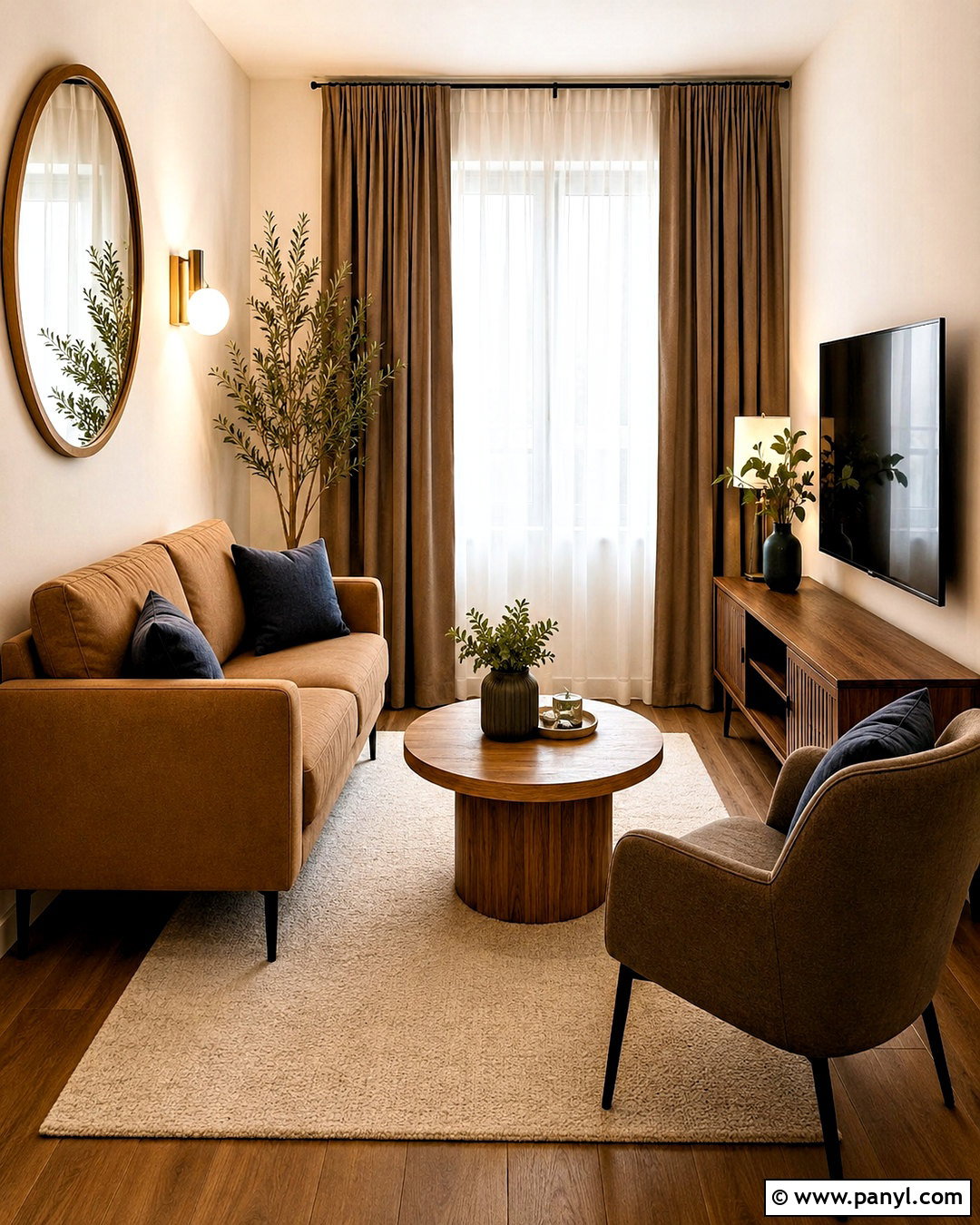
Dusty rose creates a deeper and more cocooning living room than pale blush. It works particularly well on paneled walls, built-in shelves, or throughout a compact sitting room. Pair the paint with a camel velvet sofa, walnut coffee table, and cream boucle chair. A faded rug containing rust, rose, and navy gives the palette age and character. Use warm white on the ceiling to maintain brightness, or continue the rose overhead for a fully color-drenched effect. Antique brass lamps and dark bronze hardware complement the walls naturally. Keep accessories edited, choosing pottery, books, and botanical artwork in earthy colors. This scheme feels intimate and collected while remaining comfortable enough for daily family use.
11. Soft Peach Living Room
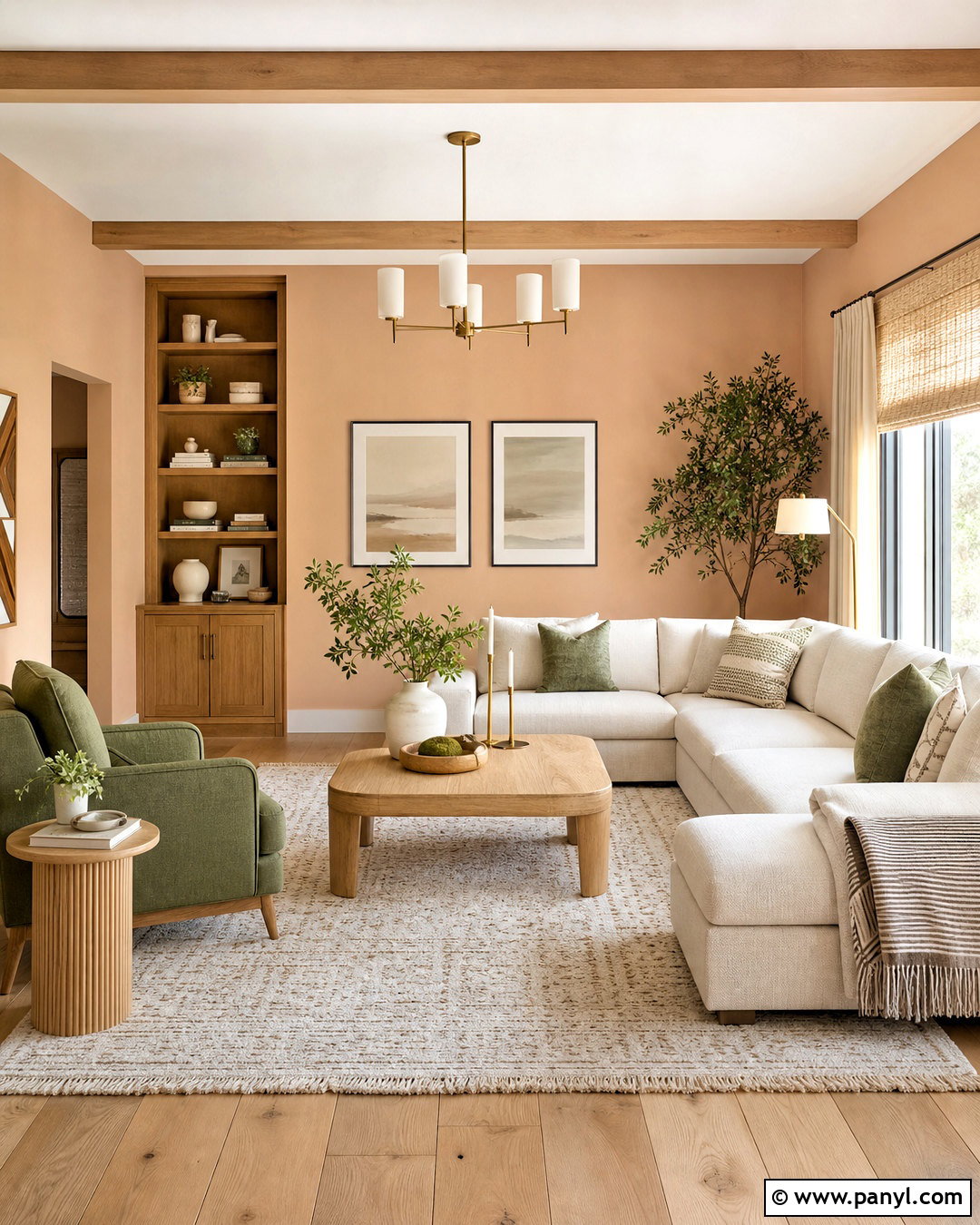
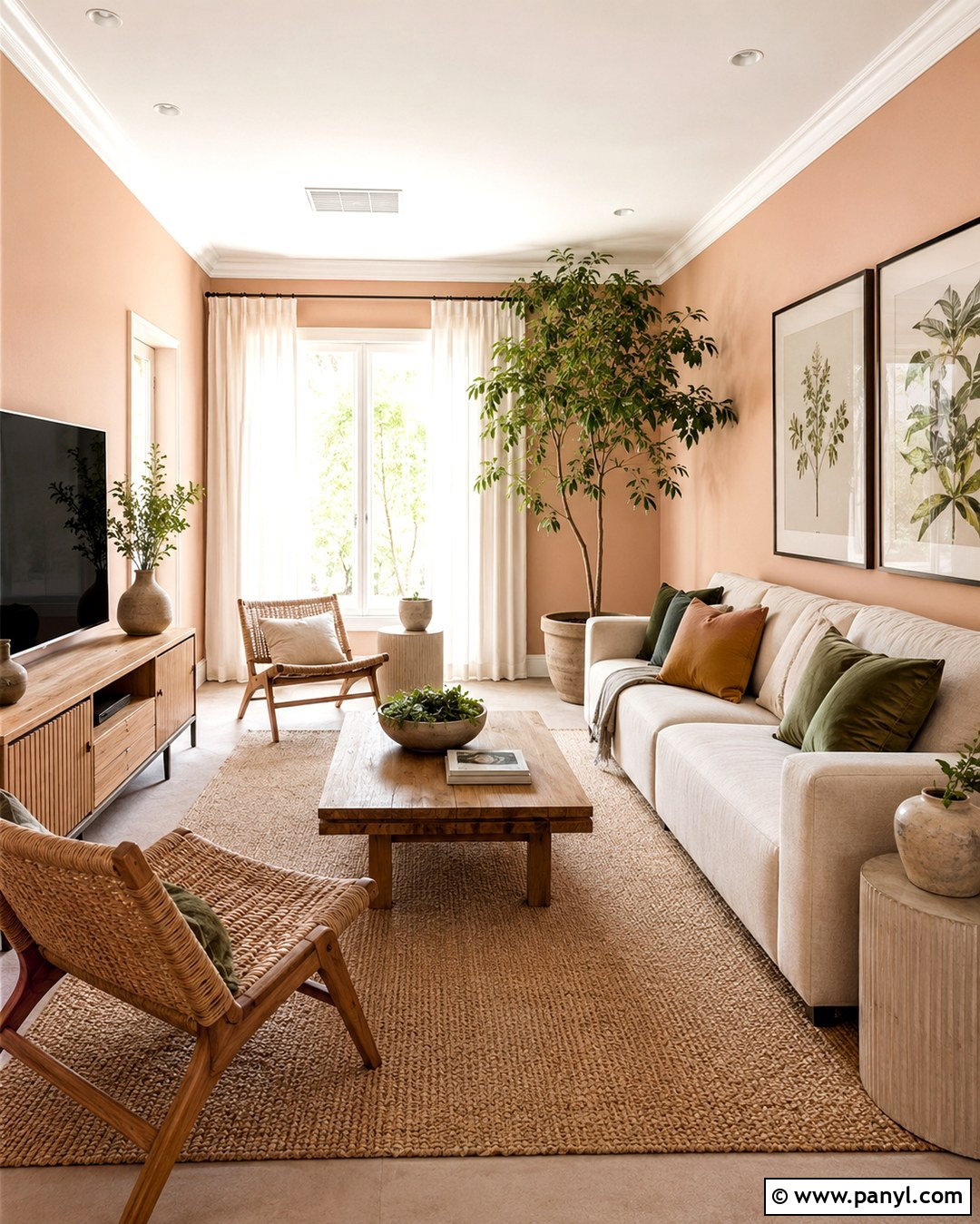
Soft peach adds warmth and brightness without the intensity of orange. Choose a muted shade with beige undertones, especially if the room receives cool northern light. Pair it with an ivory sectional, pale oak furniture, and natural woven window shades. Sage green pillows and a moss-colored armchair create a calm complementary contrast. Keep the rug light, using cream with small touches of peach, tan, and brown. Brushed brass lighting enhances the sunny character, while matte black frames add enough definition to keep the palette modern. Finish with white ceramics, leafy branches, and simple linen curtains. This complete living room looks cheerful and fresh but still feels restful, practical, and easy to live with throughout the year.
12. Warm Apricot Living Room
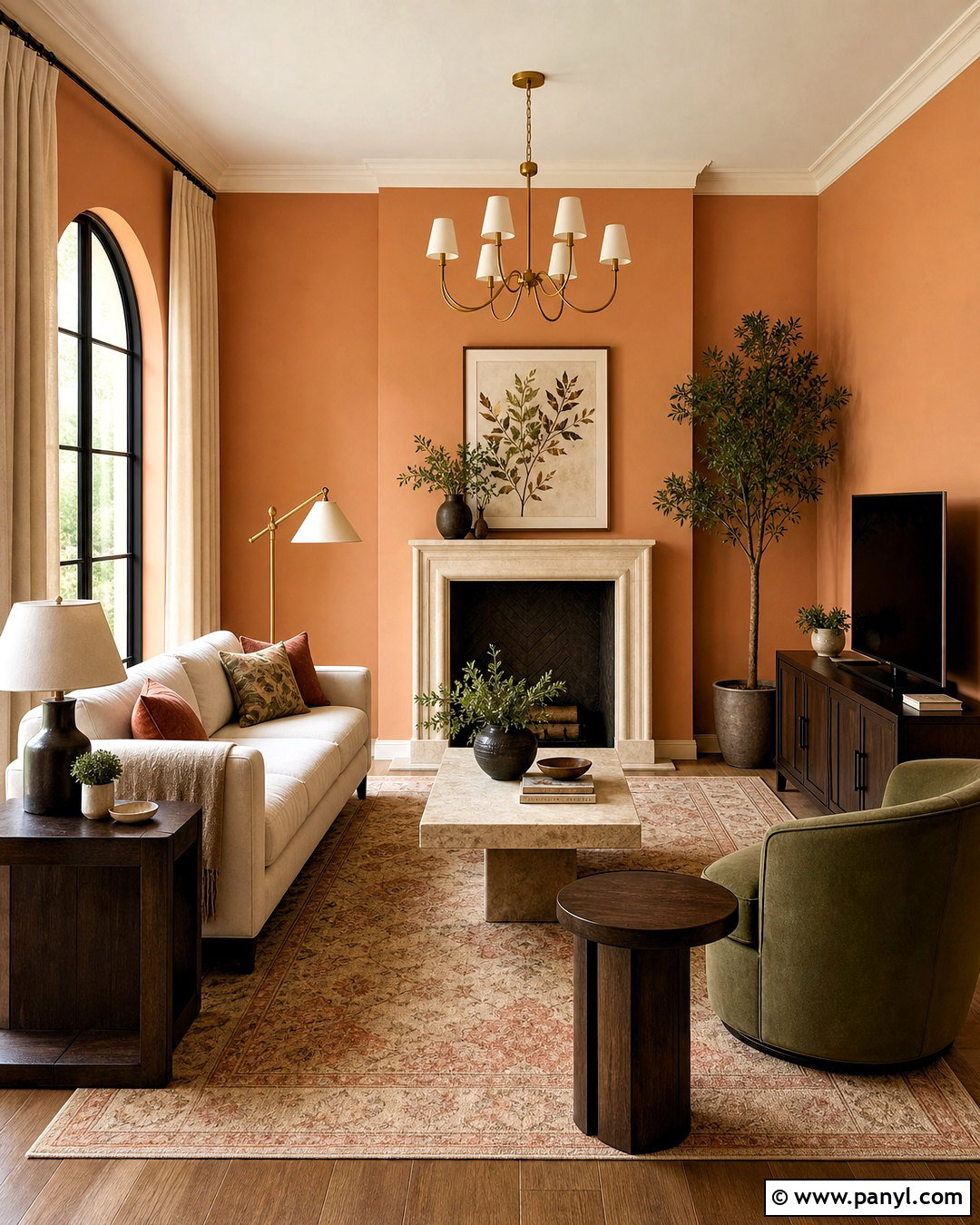
Warm apricot delivers richer color than peach while still feeling soft and approachable. Use it on all four walls in a bright living room, then balance the intensity with a cream sofa and light neutral ceiling. A walnut media console and dark wood side tables provide grounding contrast. Layer the room with olive green chairs, oatmeal curtains, and a patterned rug that blends apricot, beige, and faded red. Choose simple furniture silhouettes to let the wall color remain the main feature. A travertine coffee table and brass floor lamp introduce natural texture and gentle shine. Complete the arrangement with botanical artwork and handmade vessels for a sunny, Mediterranean-influenced living room that feels colorful without becoming overwhelming.
13. Muted Coral Living Room
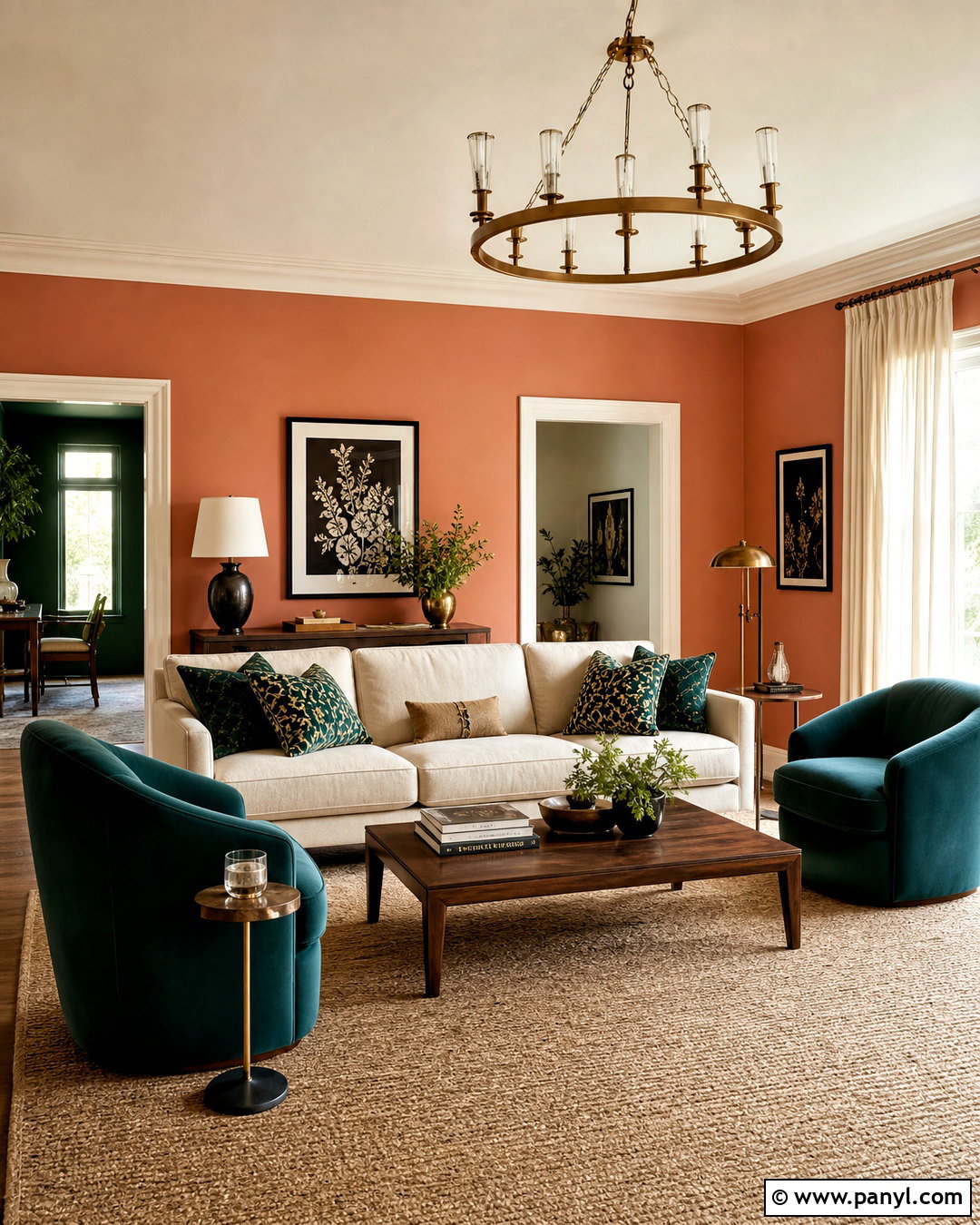
Muted coral brings energy to a living room but feels more sophisticated than a vivid tropical orange. Look for a softened coral containing clay, pink, or brown undertones. Pair it with a flax-colored sofa, creamy trim, and a large natural fiber rug. Deep teal or olive chairs add strong contrast, while walnut furniture gives the scheme visual weight. Keep curtains simple and close to the trim color so the windows do not compete with the walls. Add aged brass lighting, patterned pillows, and artwork featuring coral, sand, and dark green. A few black accents can sharpen the arrangement. The complete palette feels lively and warm, making it particularly effective in social living rooms designed for conversation and casual entertaining.
14. Terracotta Living Room
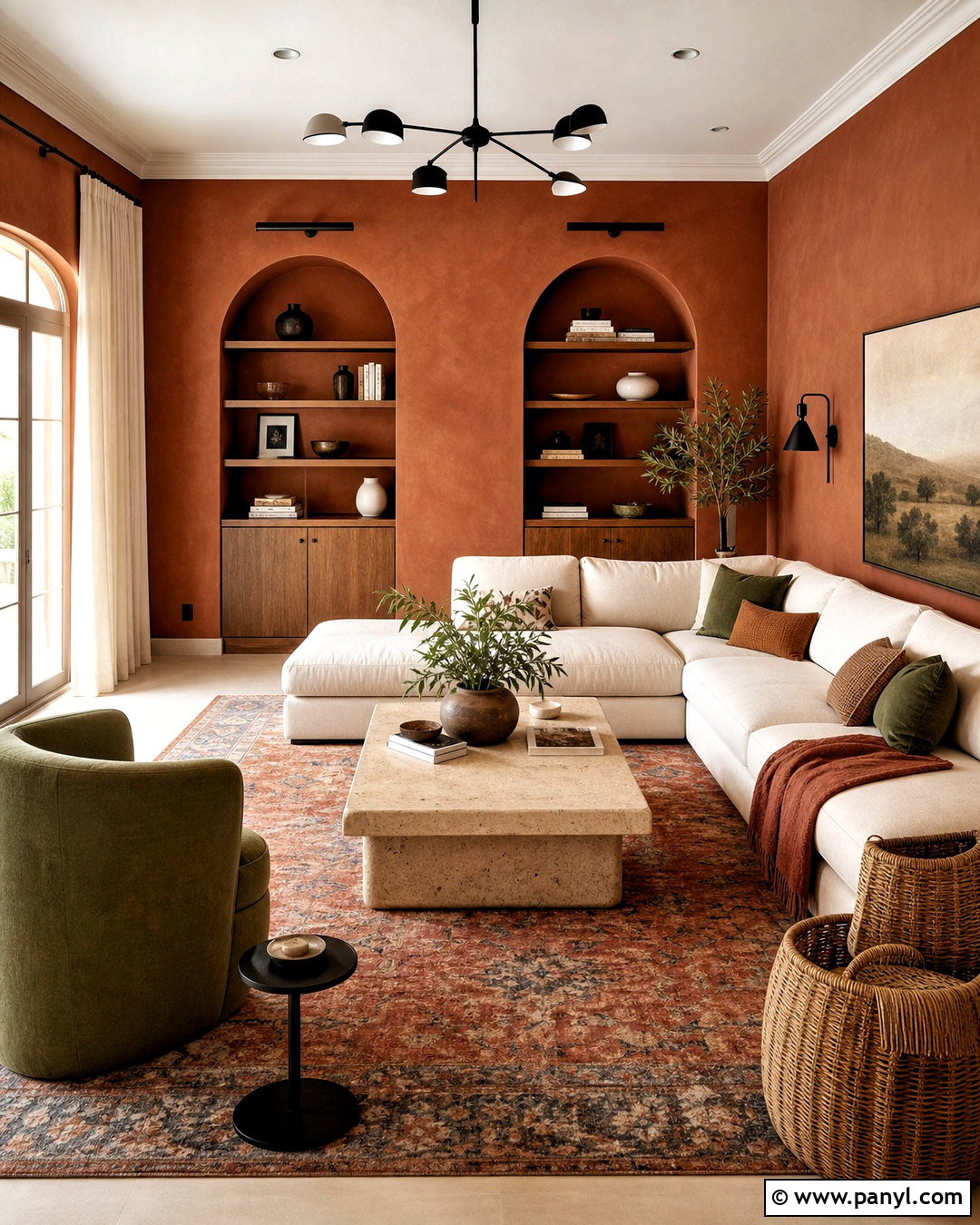
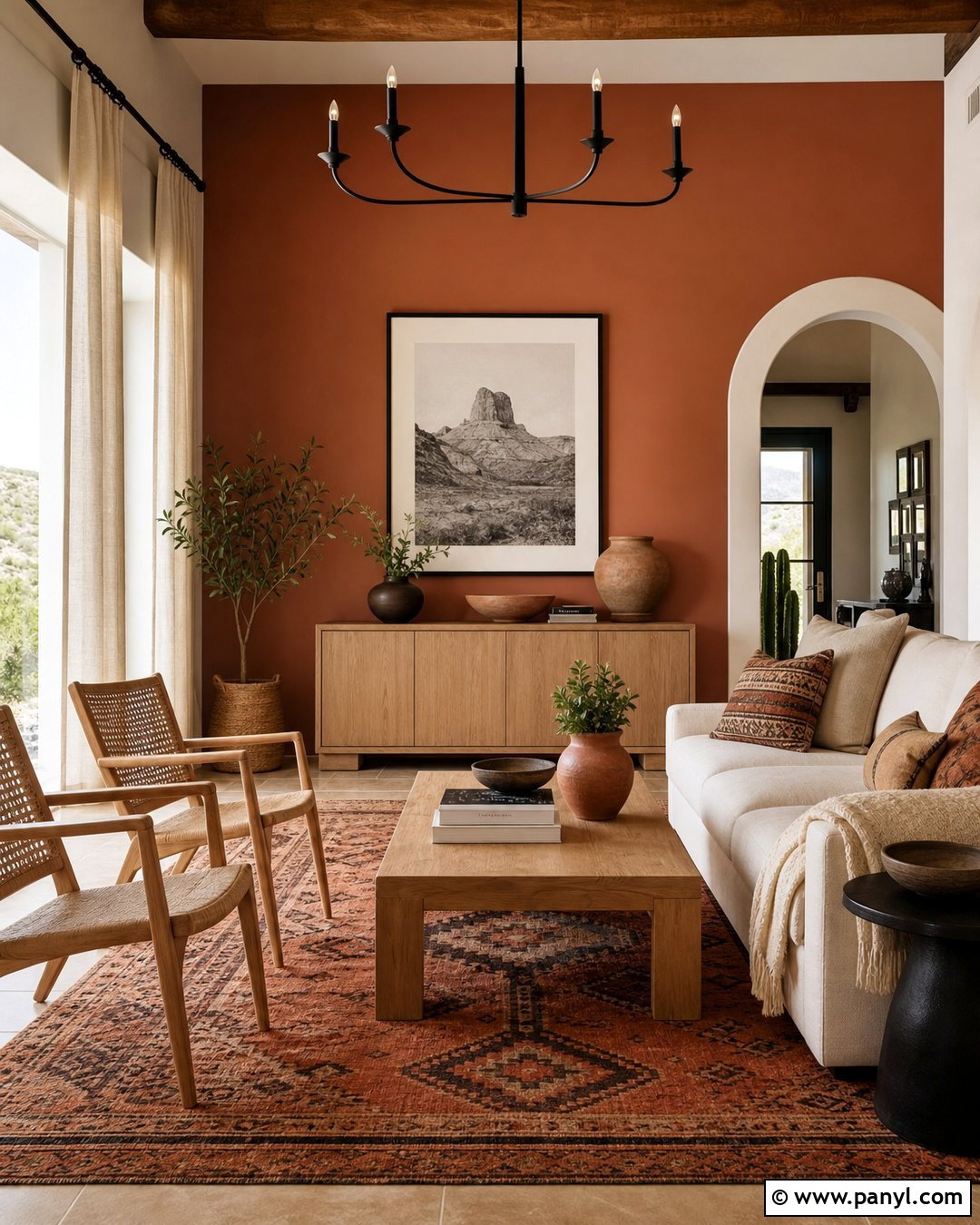
Terracotta walls create an earthy, enveloping backdrop inspired by fired clay. For a balanced room, combine them with a deep cream sofa, walnut shelving, and an olive green lounge chair. Use warm white on the ceiling and trim to prevent the deeper wall color from reducing the sense of space. A patterned rug in rust, tan, ivory, and muted blue adds movement underfoot. Choose linen curtains, woven baskets, and ceramic accessories to reinforce the natural character. Matte black lighting and frames provide clean contrast. A travertine or pale stone coffee table can brighten the center of the room. This complete scheme feels grounded, welcoming, and rich without depending on overly formal furniture or expensive architectural features.
15. Cinnamon Brown Living Room
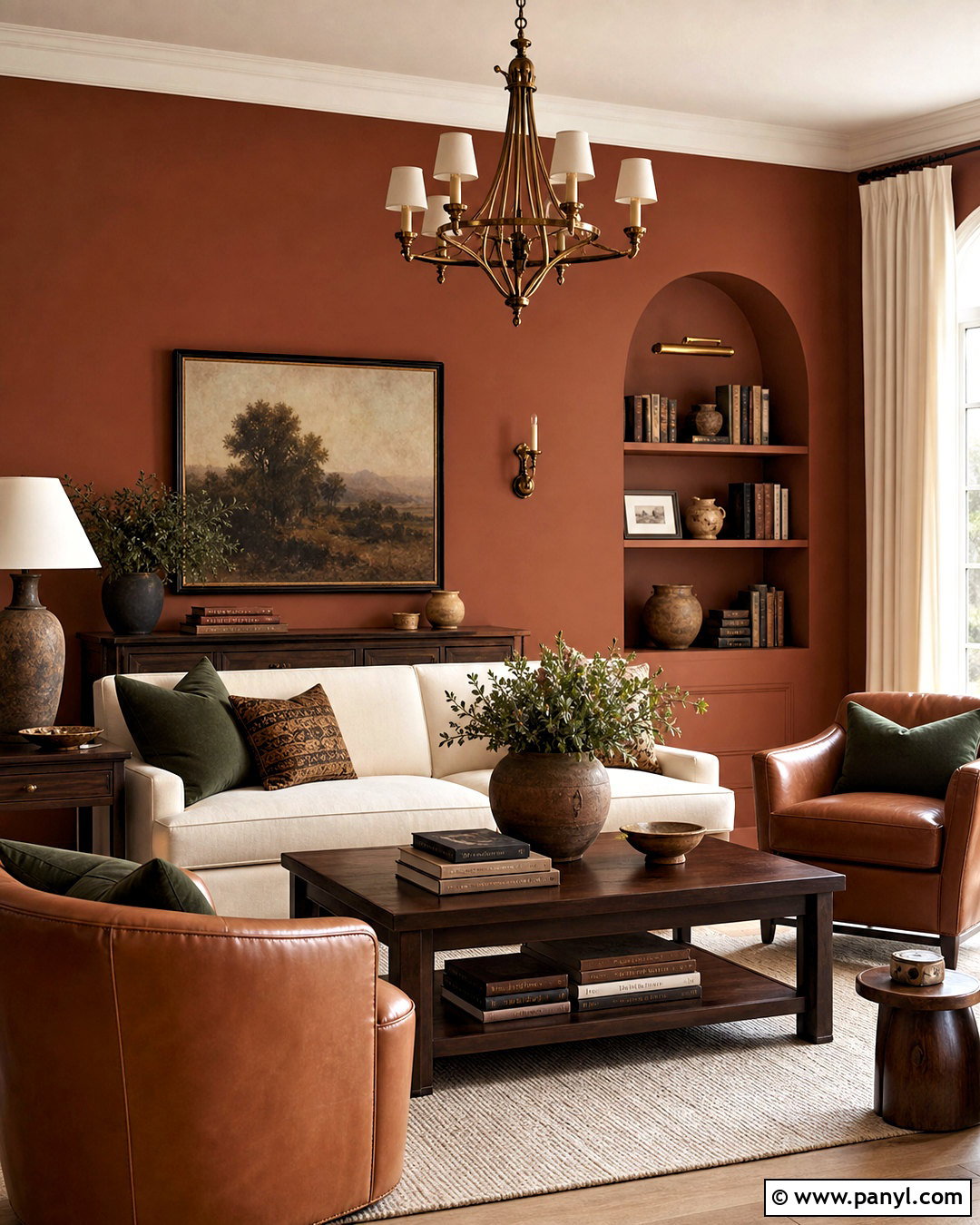
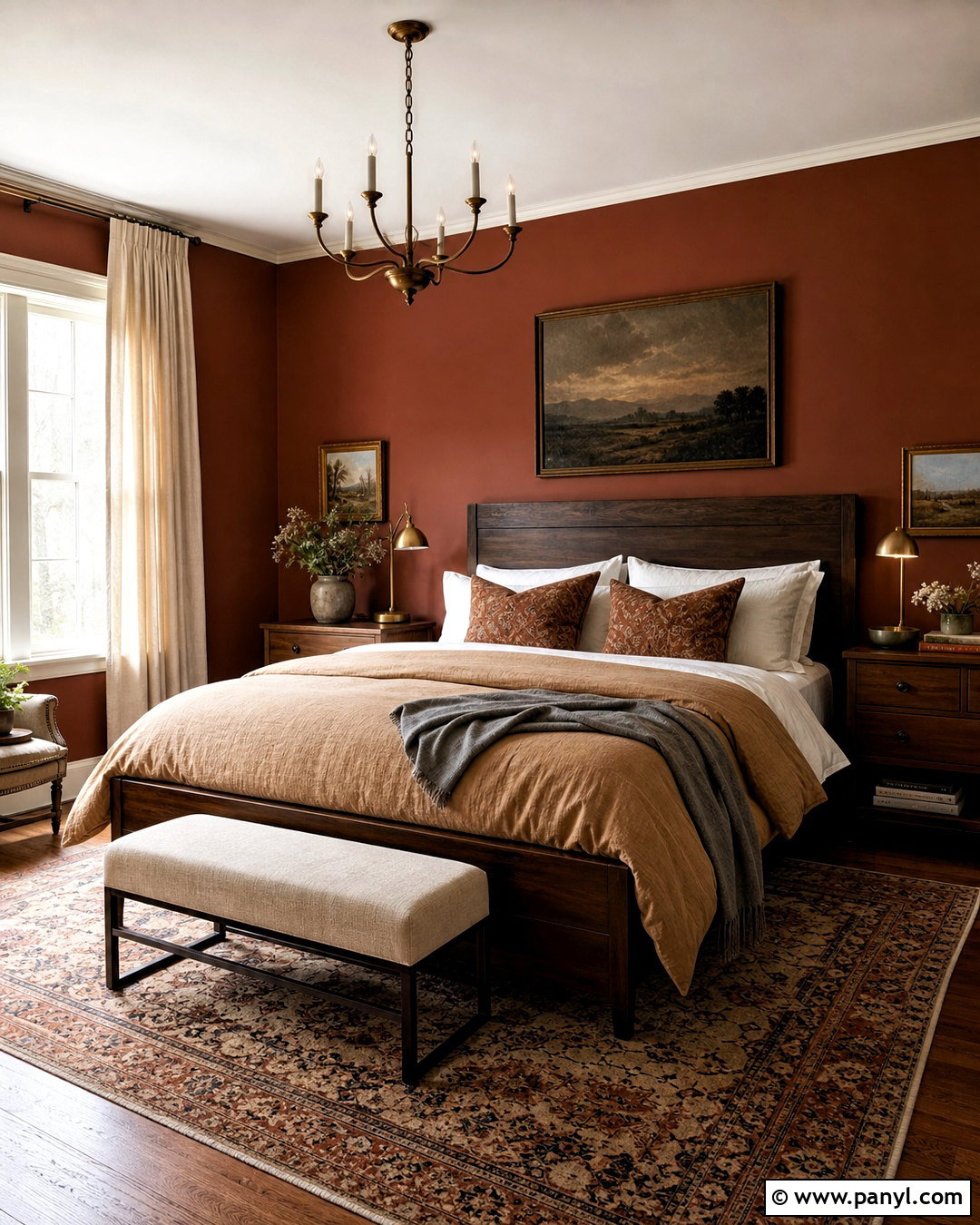
Cinnamon brown is a warm reddish brown that can make a living room feel instantly intimate. Use it on the walls of a room with generous windows, or feature it across built-ins and the fireplace wall in a smaller space. Pair it with a cream sofa, camel leather chairs, and dark walnut tables. A light wool rug keeps the lower half of the room from feeling too heavy. Introduce muted blue or forest green through pillows and artwork for a balanced contrast. Antique brass lighting complements the reddish undertones, while ivory curtains soften the windows. Complete the room with traditional landscape art, stacked books, and pottery for a refined but approachable design with plenty of warmth and visual depth.
16. Caramel Tan Living Room
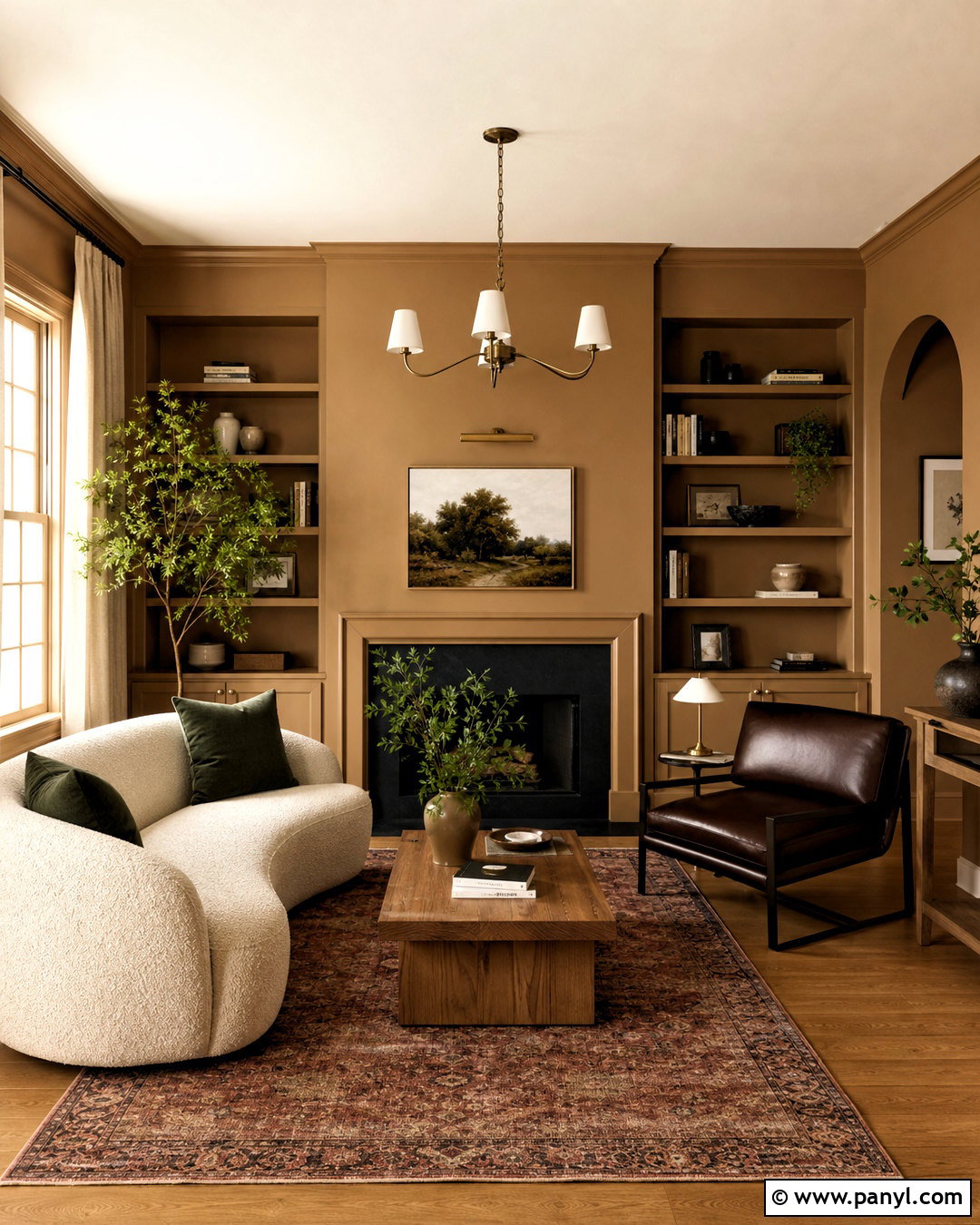
Caramel tan sits between golden beige and light brown, creating a rich neutral background for layered furnishings. Paint the walls and built-in shelving in the same shade for a smooth, contemporary look. Add a cream boucle sofa, chocolate brown leather chair, and warm oak coffee table. A faded rust and ivory rug can define the seating arrangement while connecting the caramel walls to the darker furniture. Use linen curtains in a soft oat color and select aged brass lighting for a gentle metallic accent. Dark green pillows and leafy plants provide a fresh counterpoint. The completed living room feels warmer and more substantial than a pale neutral room, yet the lighter upholstery keeps it open, relaxed, and suitable for everyday use.
17. Camel Tan Living Room
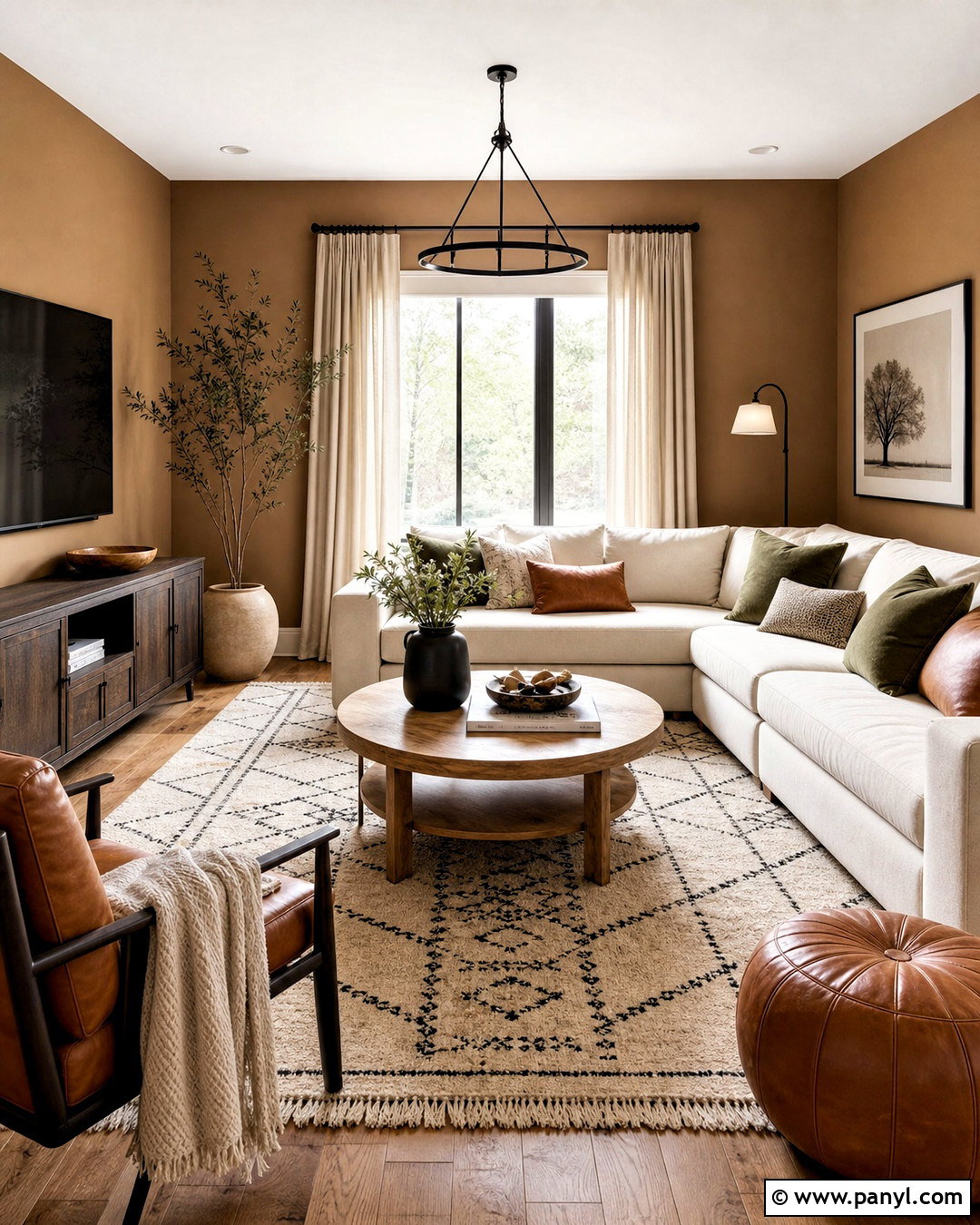
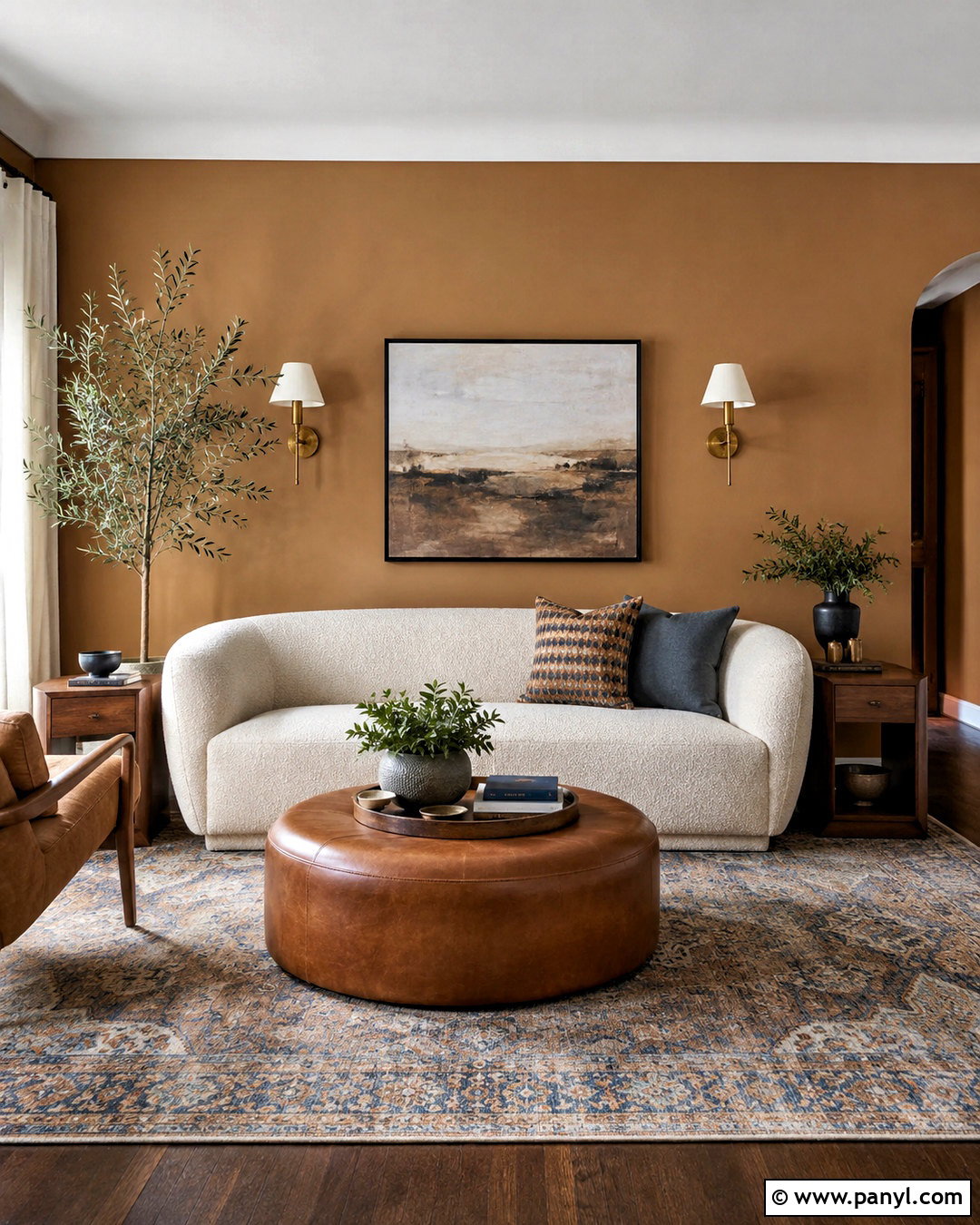
Camel tan gives walls the comfortable appearance of natural leather, woven fibers, and sun-warmed sand. Pair it with a large ivory sectional and a dark brown wooden media cabinet for clear contrast. Use a cream and black geometric rug to add pattern without introducing too many colors. Olive pillows, rust-colored throws, and cognac leather accents deepen the organic palette. Full-length linen curtains should remain slightly lighter than the walls, helping the windows feel soft and generous. Add black metal lighting, framed neutral artwork, and a rounded oak coffee table to complete the layout. This cohesive living room works well with modern, rustic, or transitional furniture and offers enough color to feel distinctive without limiting future decorating changes.
18. Mustard Ochre Living Room
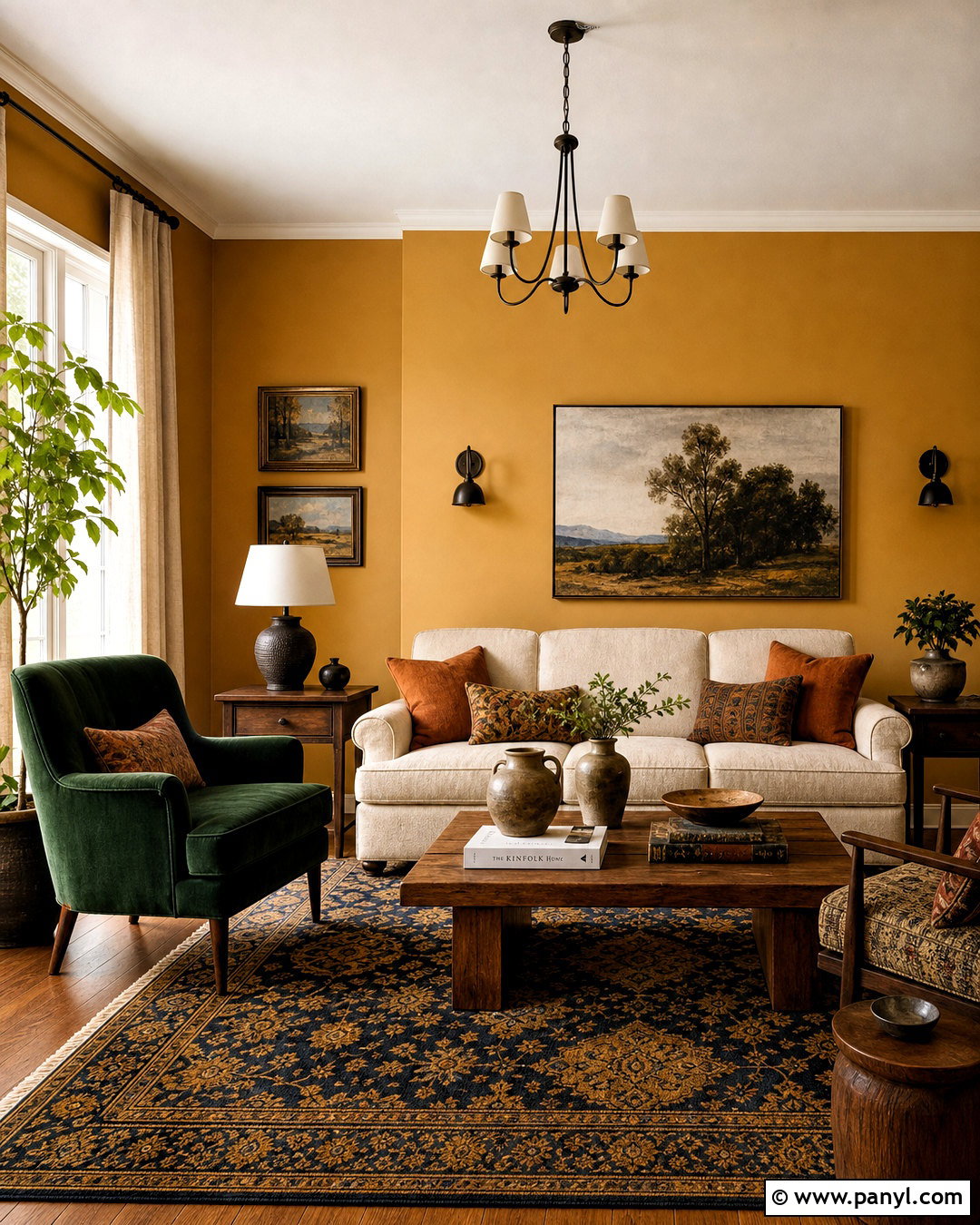
Mustard ochre can transform a plain living room into a sunny, character-filled gathering space. Choose a muted golden shade instead of a bright primary yellow, then balance it with a warm white ceiling and cream upholstery. A deep green velvet chair gives the room a rich complementary accent, while walnut tables and dark bronze lighting add depth. Use a vintage-style rug containing ochre, red, navy, and beige to make the bold walls feel intentional. Natural linen curtains help filter strong daylight and soften the color. Finish with landscape artwork, pottery, and textured pillows in rust and olive. The completed design feels cheerful and collected, with a warmth that remains appealing even during colder months.
19. Warm Olive Green Living Room
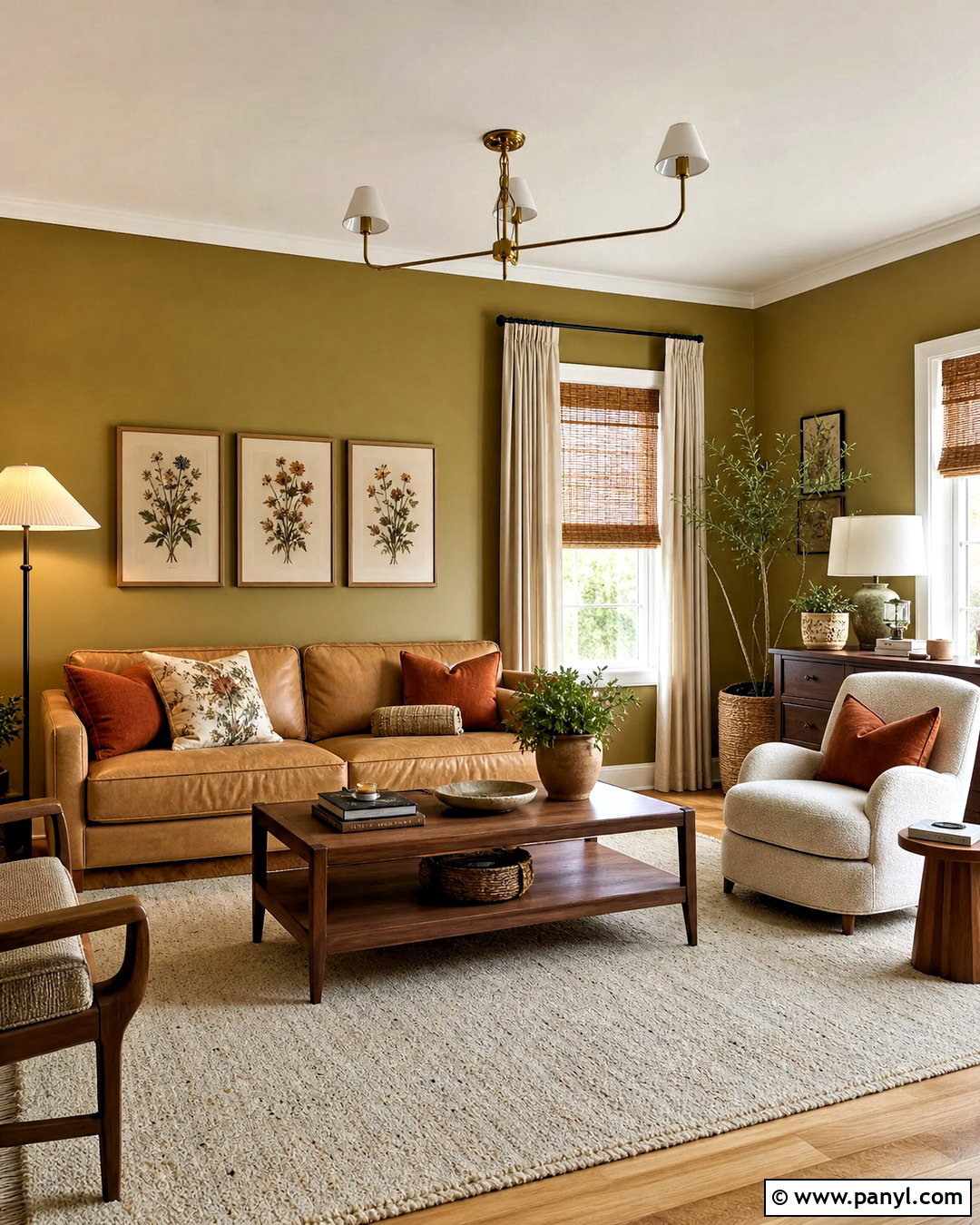
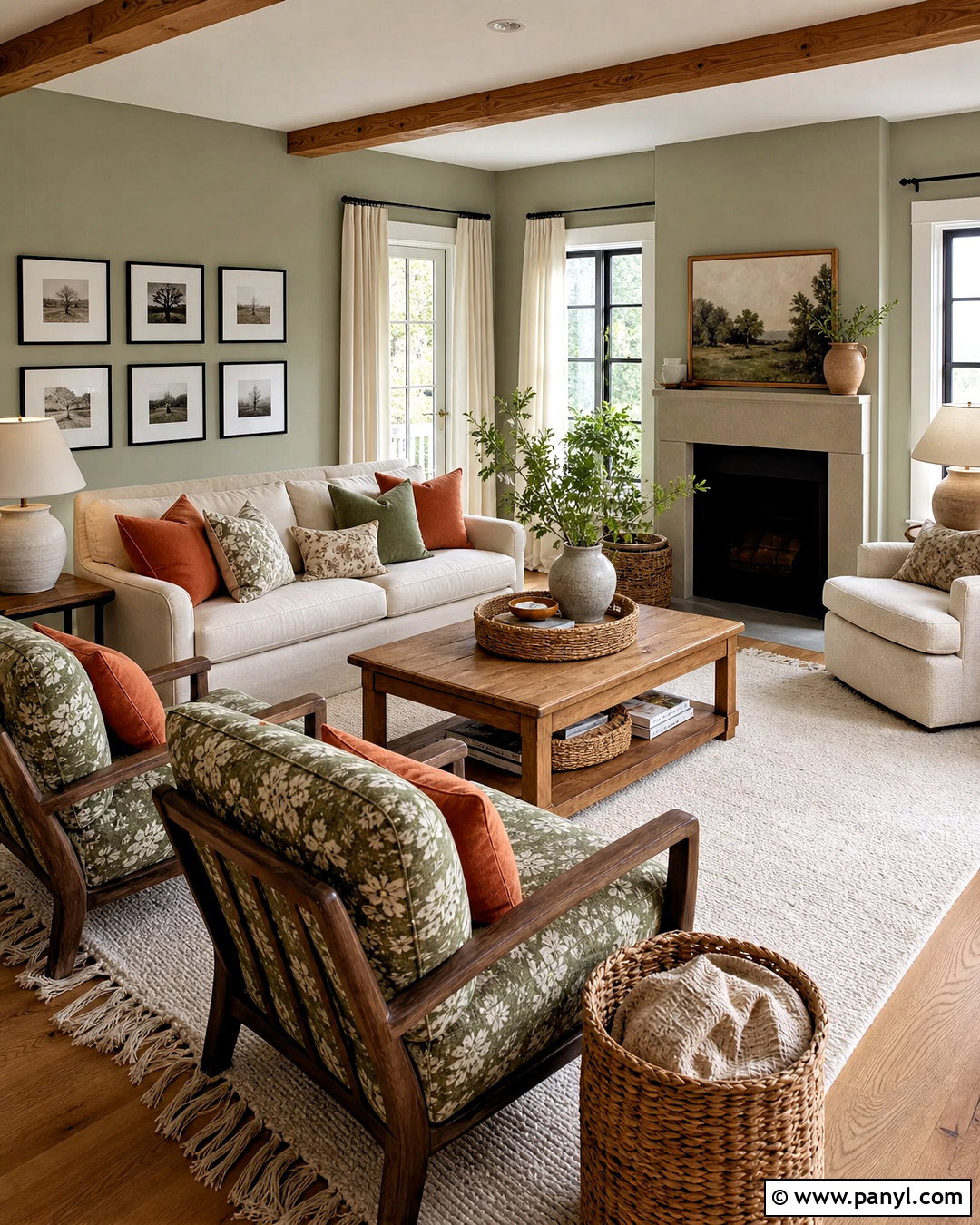
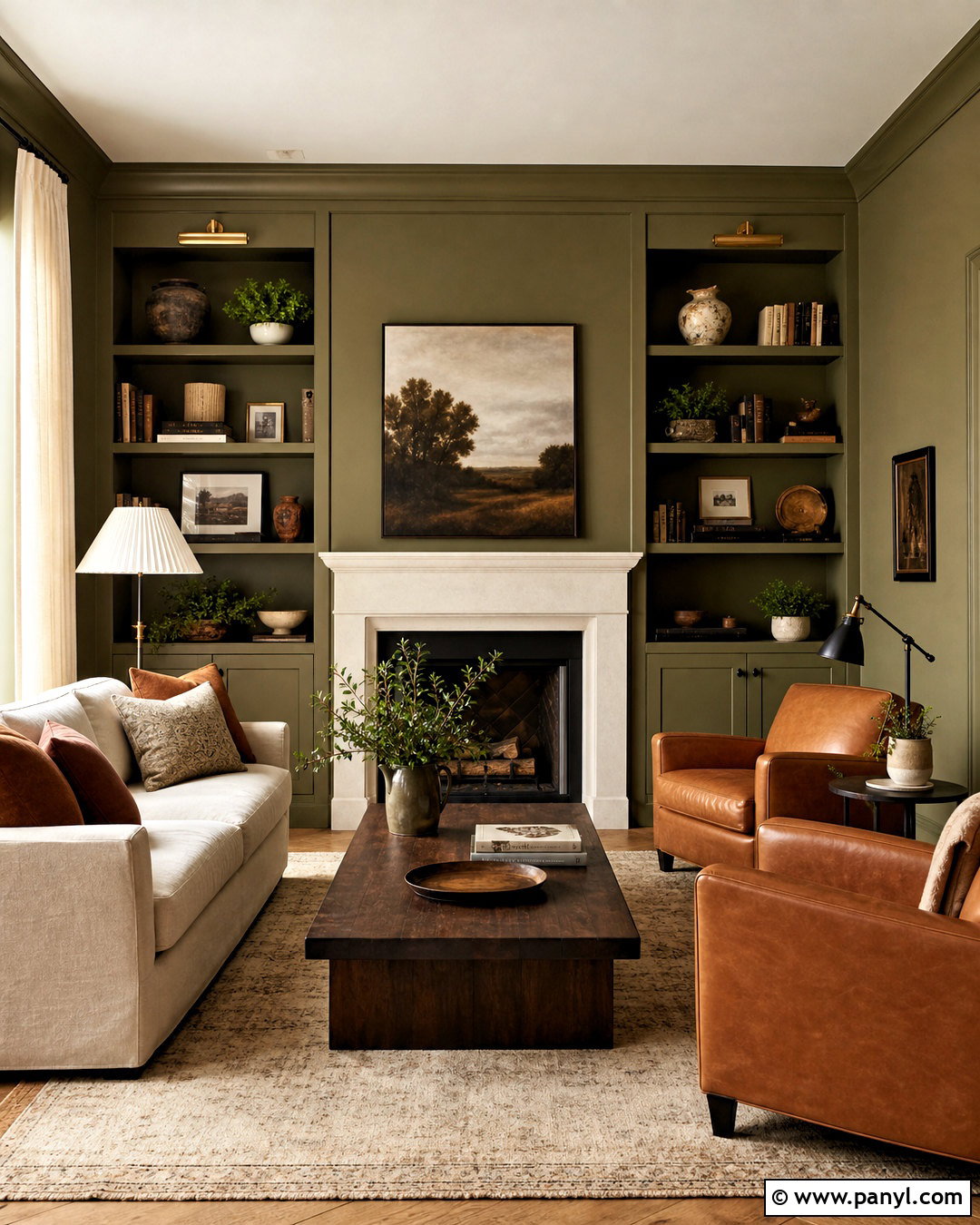
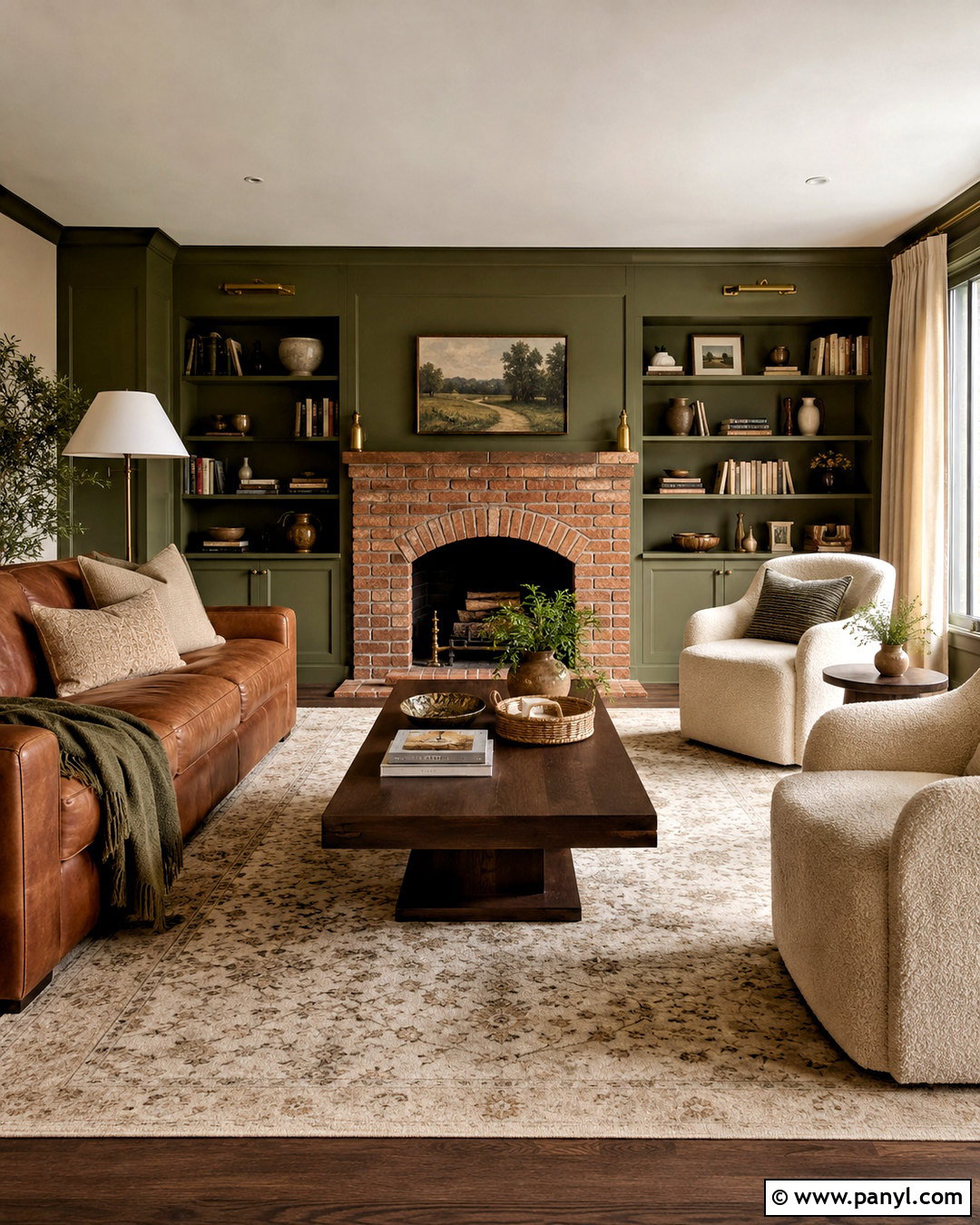
Warm olive green carries noticeable yellow and brown undertones, giving it an earthy character that suits cozy living rooms. Paint the walls olive, then use creamy white across the ceiling and trim for brightness. A camel leather sofa creates a handsome central anchor, while a cream boucle chair and light wool rug prevent the palette from feeling too dark. Choose walnut furniture, aged brass lighting, and rust-colored pillows to emphasize the warmth. Woven shades and oatmeal curtains add softness around the windows. Botanical artwork can reinforce the natural theme without making the room overly green. This complete palette works especially well with houseplants, vintage pieces, and natural materials, producing a grounded room with enduring visual interest.
20. Chocolate Brown Living Room
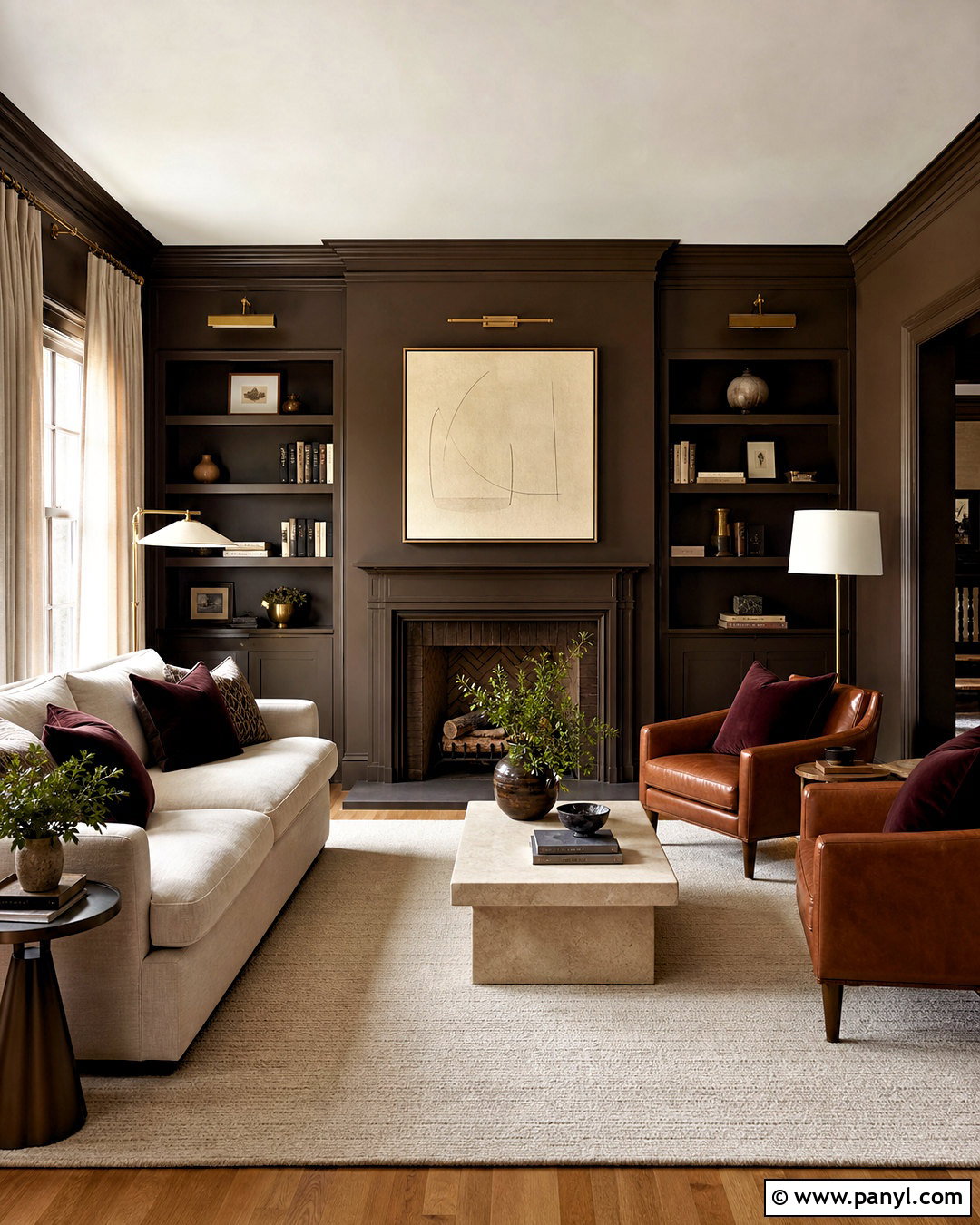
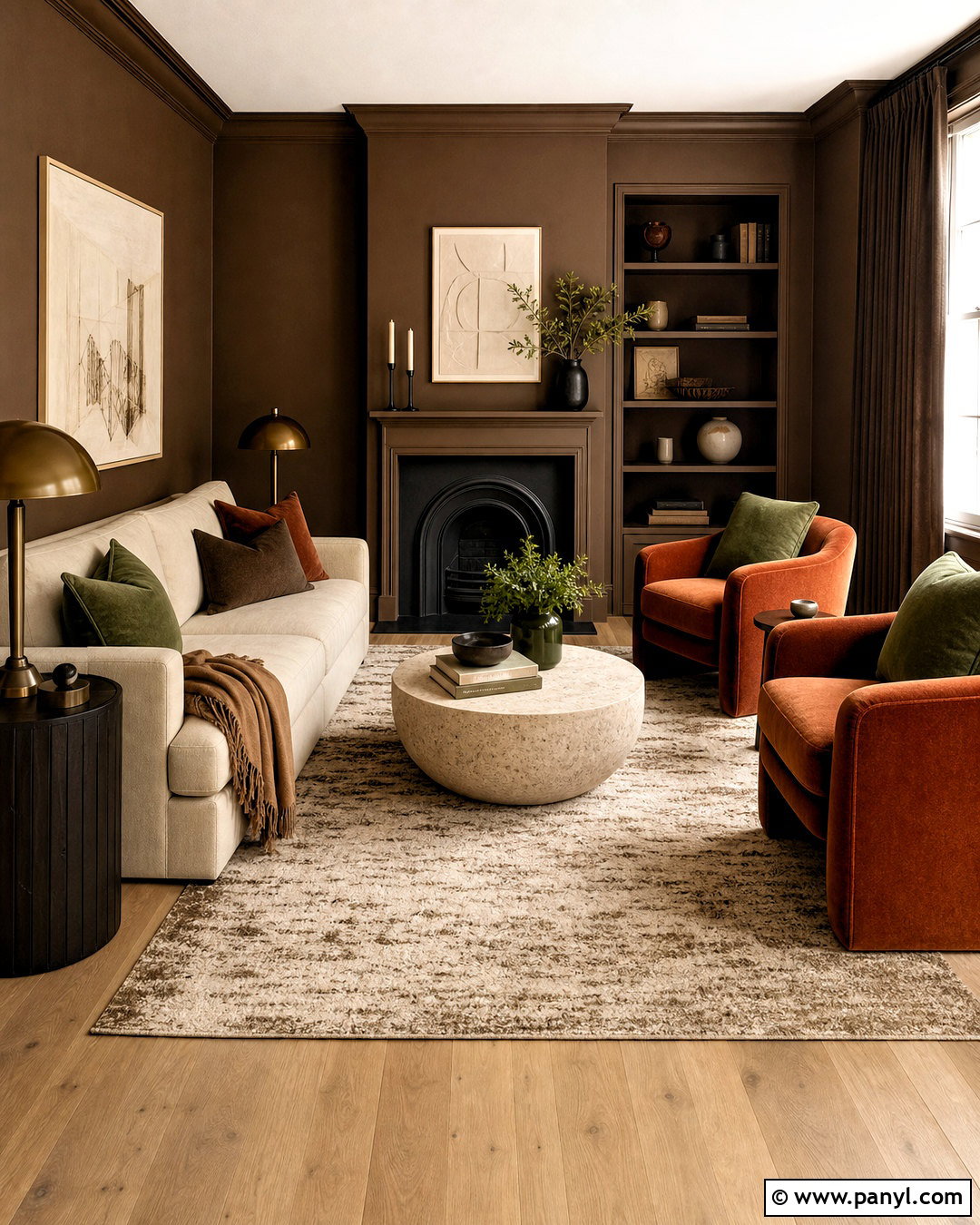
Chocolate brown creates a dramatic living room that feels warm rather than cold or severe. Apply it across the walls, trim, and built-ins for a color-drenched effect, but keep the ceiling creamy white if the room has limited height. Contrast the dark backdrop with an ivory sofa, light wool rug, and pale stone coffee table. Caramel leather chairs, burgundy pillows, and aged brass lamps add further warmth without disappearing against the walls. Hang large artwork with generous cream areas to break up the deeper color. Natural linen curtains and medium oak flooring maintain an approachable balance. The final room feels intimate, sophisticated, and comfortable, proving that a dark paint color can still support a practical, livable family space.
Conclusion:
Choosing among these 20 warm paint colors for living room ideas starts with deciding how light, colorful, or enveloping you want the room to feel. Warm white, cream, and oatmeal keep smaller spaces airy. Taupe, greige, and camel offer a flexible middle ground. Terracotta, ochre, olive, and chocolate create a stronger statement. Whatever shade you prefer, connect it to the entire room through upholstery, wood tones, curtains, rugs, lighting, and artwork. Test a large painted sample beside these permanent finishes and check it during morning, afternoon, and evening light. Thoughtful sampling will help you build a living room that feels balanced, welcoming, and personal instead of simply following a temporary color trend.

Related Ideas and Inspiration:
Leave a Reply