
Choosing the right wall color can completely change how a sitting room looks, feels, and functions. The best palette should respond to the room’s natural light, flooring, furniture, architectural details, and connection to nearby spaces. Warm whites create flexibility, earthy greens bring calm, and deeper shades can make even a small room feel intentional and cozy. Before committing, sample each color on several walls and view it during the morning, afternoon, and evening. Then build a coordinated scheme using trim, upholstery, wood tones, metal finishes, and textiles. Whether your home feels traditional, modern, coastal, rustic, or eclectic, these practical **sitting room paint color ideas** offer complete looks you can confidently recreate.
1. Warm White Sitting Room
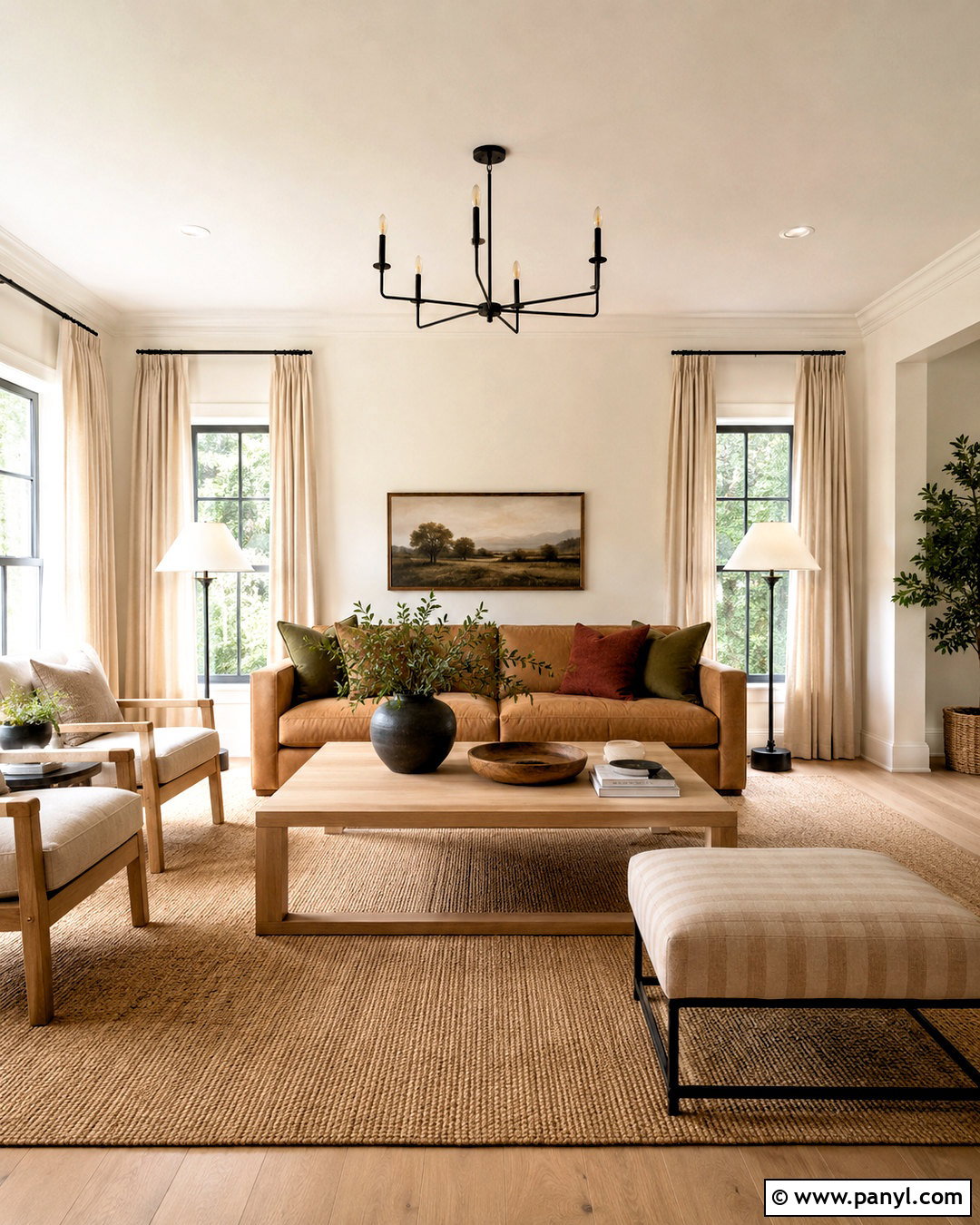
Warm white walls create a bright, comfortable foundation without making the sitting room feel cold or unfinished. Choose an off-white with soft cream or beige undertones, then continue it across the ceiling for a seamless effect. Paint the trim a slightly cleaner white to define windows, doors, and baseboards. A camel sofa, light oak coffee table, and woven jute rug will reinforce the warmth. Add oatmeal linen curtains, black metal lighting, and a few muted rust or olive pillows for contrast. This palette works especially well in rooms with limited sunlight because it reflects available light while maintaining softness. Include pottery, framed landscape art, and textured throws so the pale room looks collected rather than plain.
2. Soft Greige Sitting Room
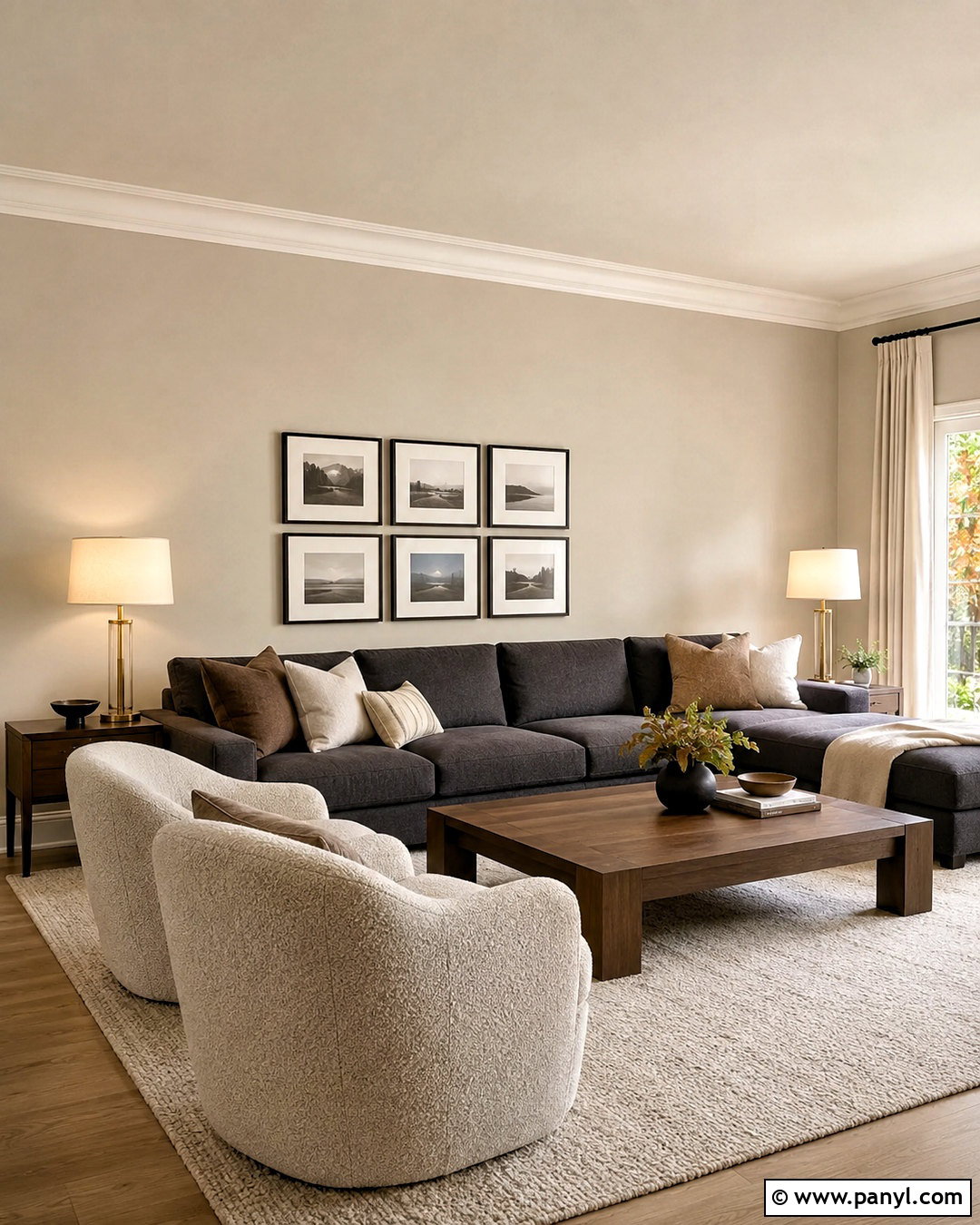
Soft greige provides the calm appearance of gray with enough beige to complement warm furniture and flooring. Use a light-to-medium greige on every wall, paired with creamy white trim and a flat white ceiling. Ground the room with a charcoal sectional or warm beige sofa, then introduce walnut side tables and a simple wool rug containing ivory, taupe, and faded black. Brushed brass lamps prevent the neutral palette from looking too cool. For depth, add espresso picture frames, boucle accent chairs, and linen curtains one shade lighter than the walls. This complete scheme suits open layouts because greige transitions smoothly into kitchens and hallways. Test several samples beside the flooring, since undertones can shift noticeably throughout the day.
3. Cream Sitting Room
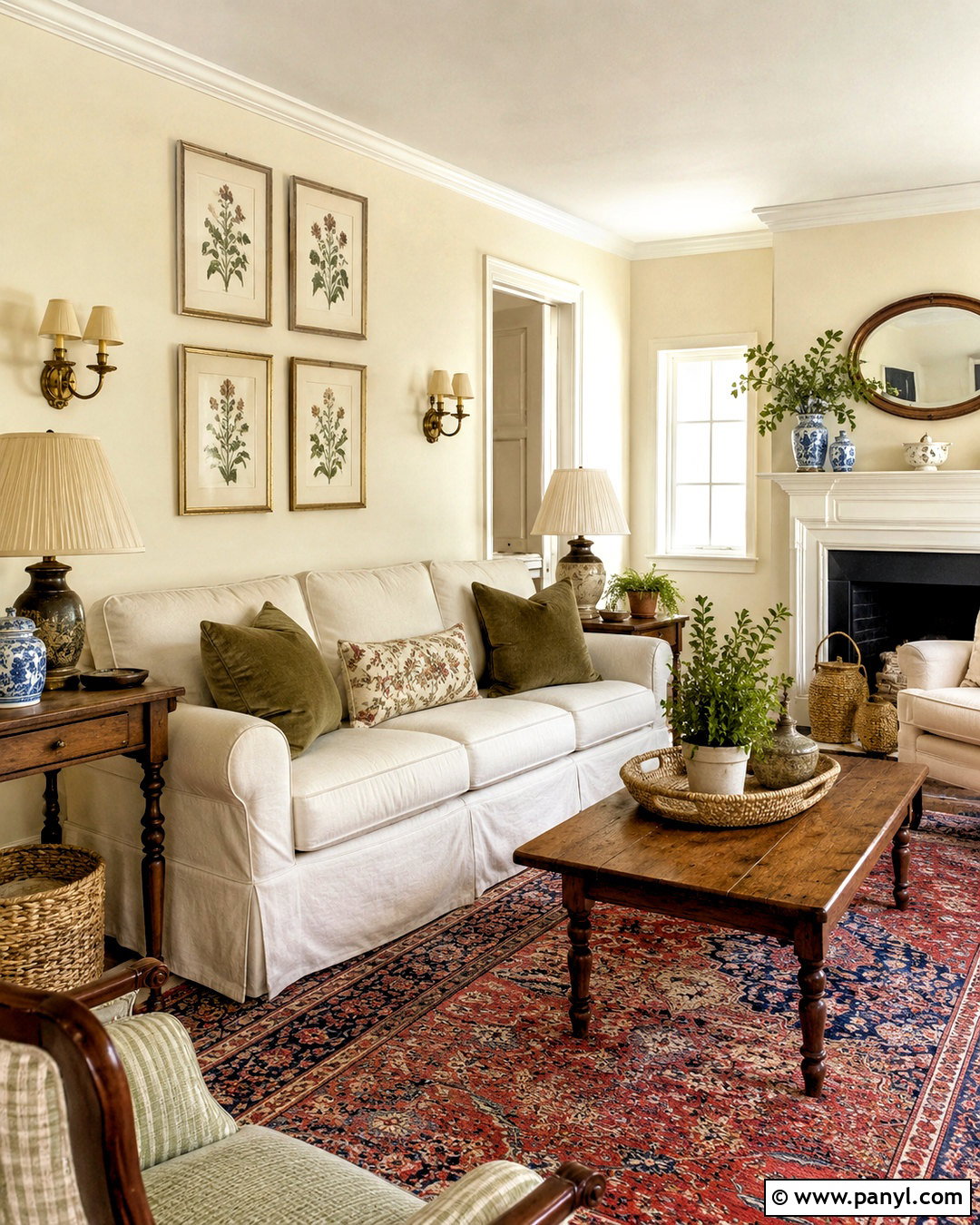
Cream paint gives a sitting room a gentle, sunlit quality that feels welcoming in every season. Select a creamy shade with muted yellow undertones rather than a strong buttery color. Pair it with soft white trim, natural oak flooring, and an ivory sofa with a relaxed silhouette. A faded red-and-blue rug can introduce character without overpowering the walls. Complete the layout with antique wood tables, warm brass sconces, pleated lampshades, and olive green pillows. Use full-length linen curtains in warm white to keep the windows airy. This scheme works beautifully in traditional and cottage-inspired rooms, especially when layered with books, ceramics, botanical artwork, and woven baskets. Avoid icy gray furnishings, which can clash with the warmth of the paint.
4. Mushroom Beige Sitting Room
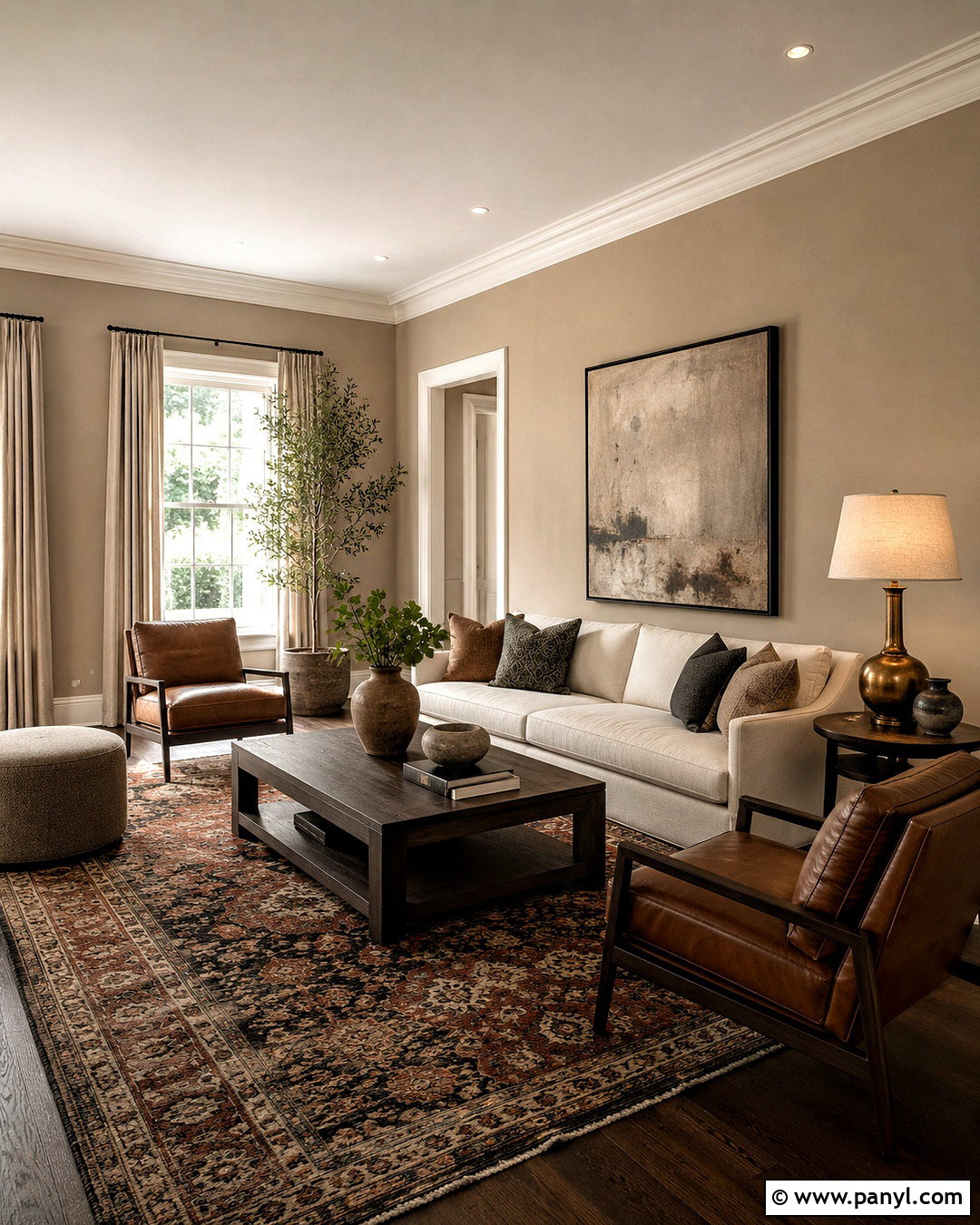
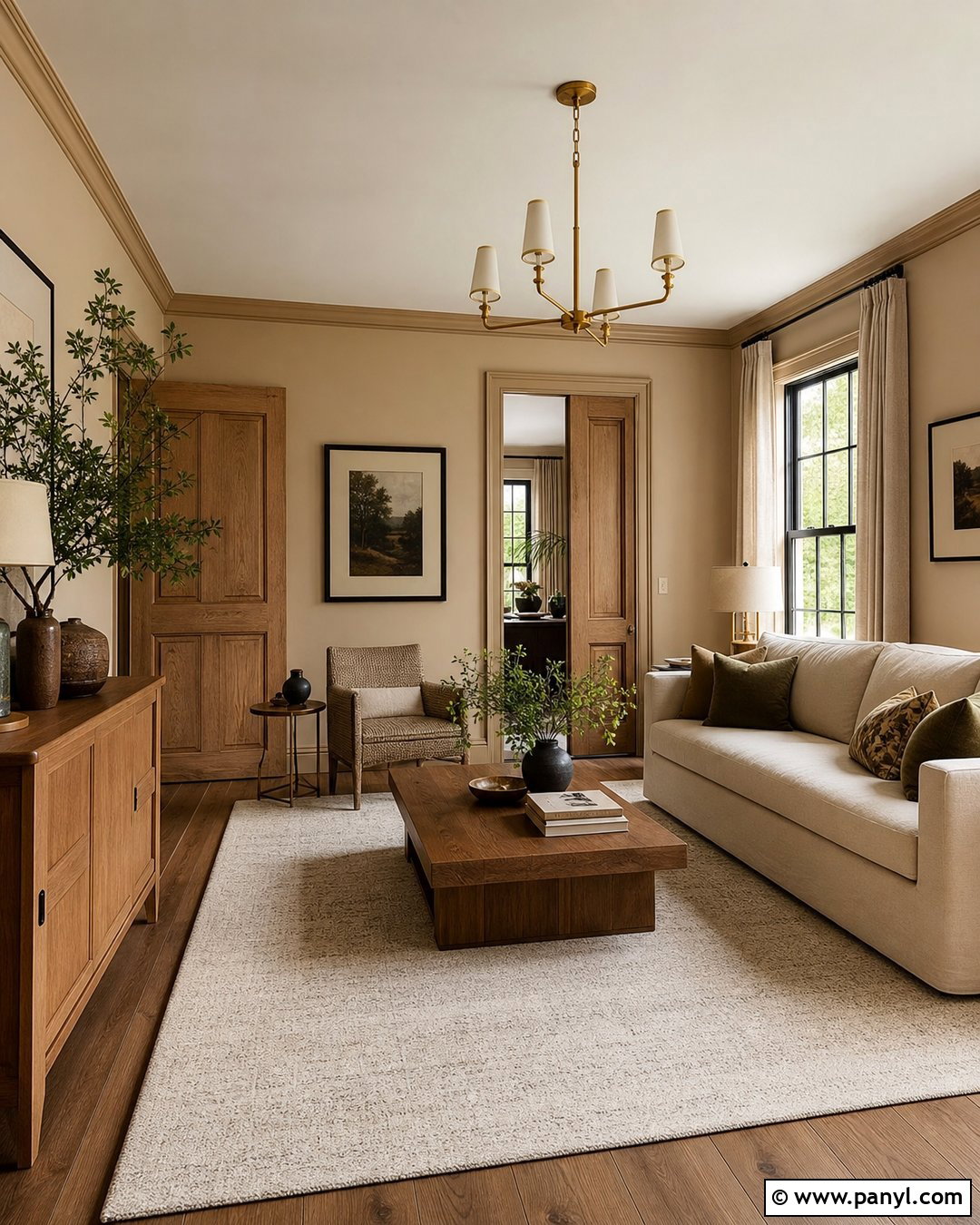
Mushroom beige creates a richer neutral room by blending taupe, brown, and subtle gray undertones. Wrap the walls in a medium mushroom shade and use warm white on the ceiling and detailed trim. Choose a cream sofa, dark walnut coffee table, and cognac leather chairs to build tonal contrast. A patterned rug combining tan, rust, and charcoal will connect the furniture to the wall color. Add bronze floor lamps, flax linen curtains, and earthy ceramic accessories for a grounded finish. This palette is especially effective in sitting rooms with strong afternoon sunlight, which reveals the color’s layered undertones. Keep decorative accents simple and substantial, using oversized artwork, sculptural branches, and textured cushions instead of numerous small objects.
5. Sandy Beige Sitting Room
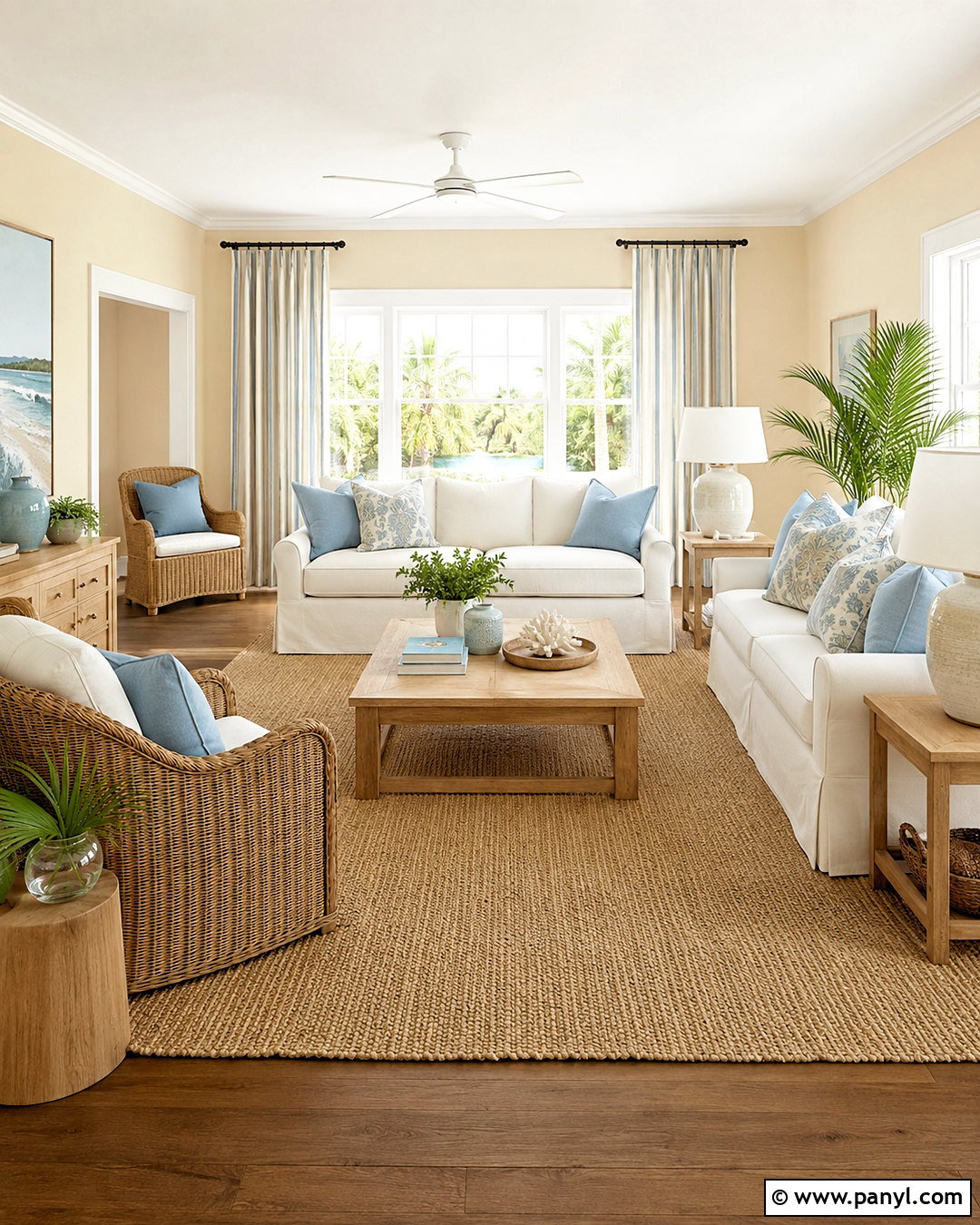
Imagine the relaxed warmth of a sunlit beach translated into a practical sitting room. Sandy beige walls establish that easy atmosphere while remaining neutral enough for everyday decorating. Use crisp warm-white trim and a pale ceiling to maintain definition. Furnish the room with a slipcovered ivory sofa, light oak tables, and woven rattan chairs. A large sisal rug adds natural texture, while dusty blue pillows and striped linen curtains provide restrained coastal color. Finish the arrangement with ceramic lamps, framed seascapes, and a few weathered wood accents. Avoid obvious nautical decorations; the palette should feel subtle and livable. Sandy beige looks particularly balanced beside medium wood flooring and works well in rooms receiving clear, bright natural light.
6. Warm Taupe Sitting Room
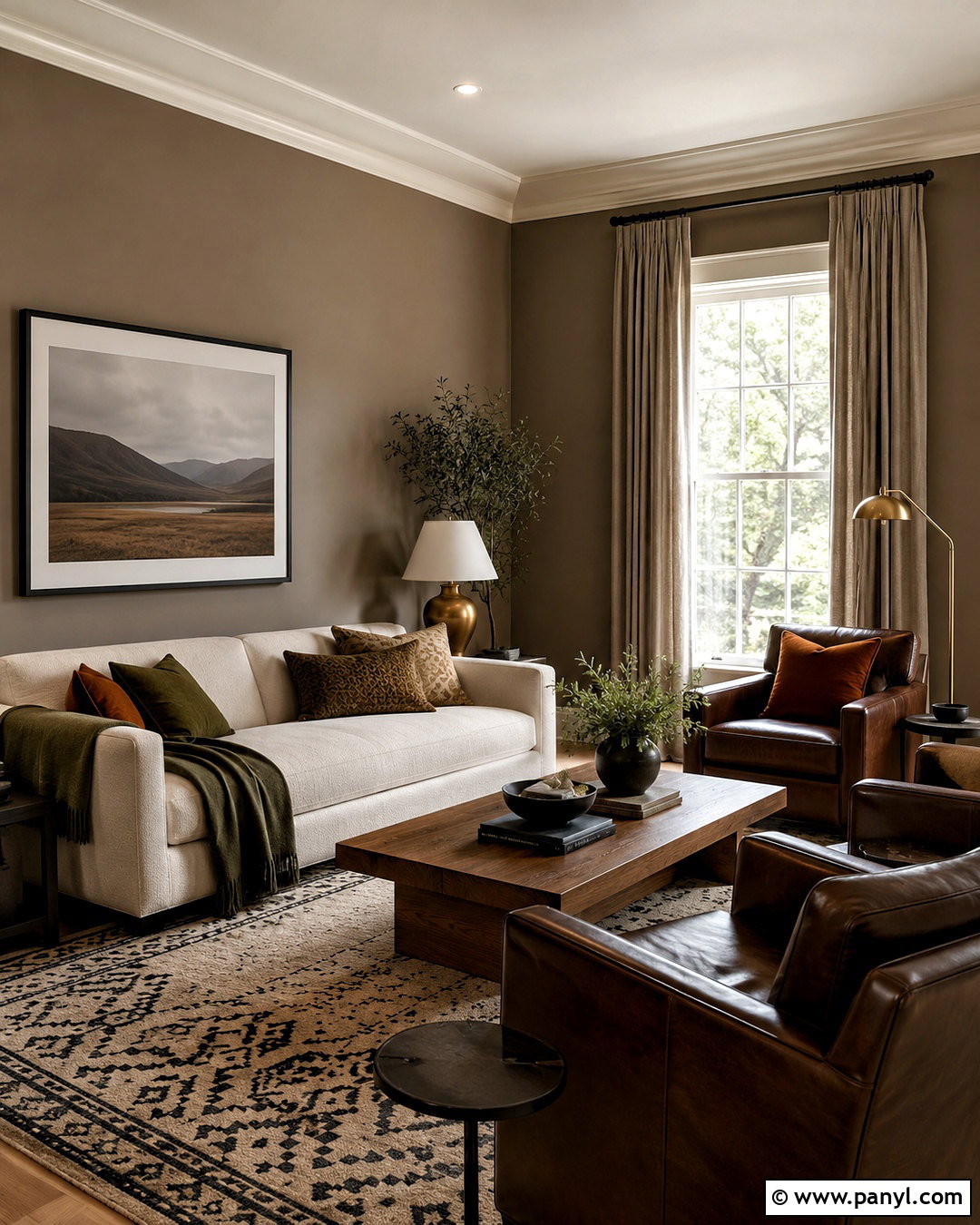
Warm taupe walls make an elegant backdrop for a sitting room filled with natural textures and darker accents. Select a medium shade with brown undertones, then paint the trim and ceiling a soft ivory. Position a cream boucle sofa opposite two deep brown leather chairs to create a comfortable conversation area. Add a walnut coffee table, a beige-and-black geometric rug, and full-length flax curtains. Matte black curtain rods and picture frames provide clean definition, while aged brass lamps introduce warmth. Use olive, rust, and chocolate textiles to prevent the neutral scheme from appearing flat. This palette suits transitional homes because it works with classic molding and streamlined furniture. Layer different fabric textures rather than adding too many competing colors.
7. Pale Gray Sitting Room
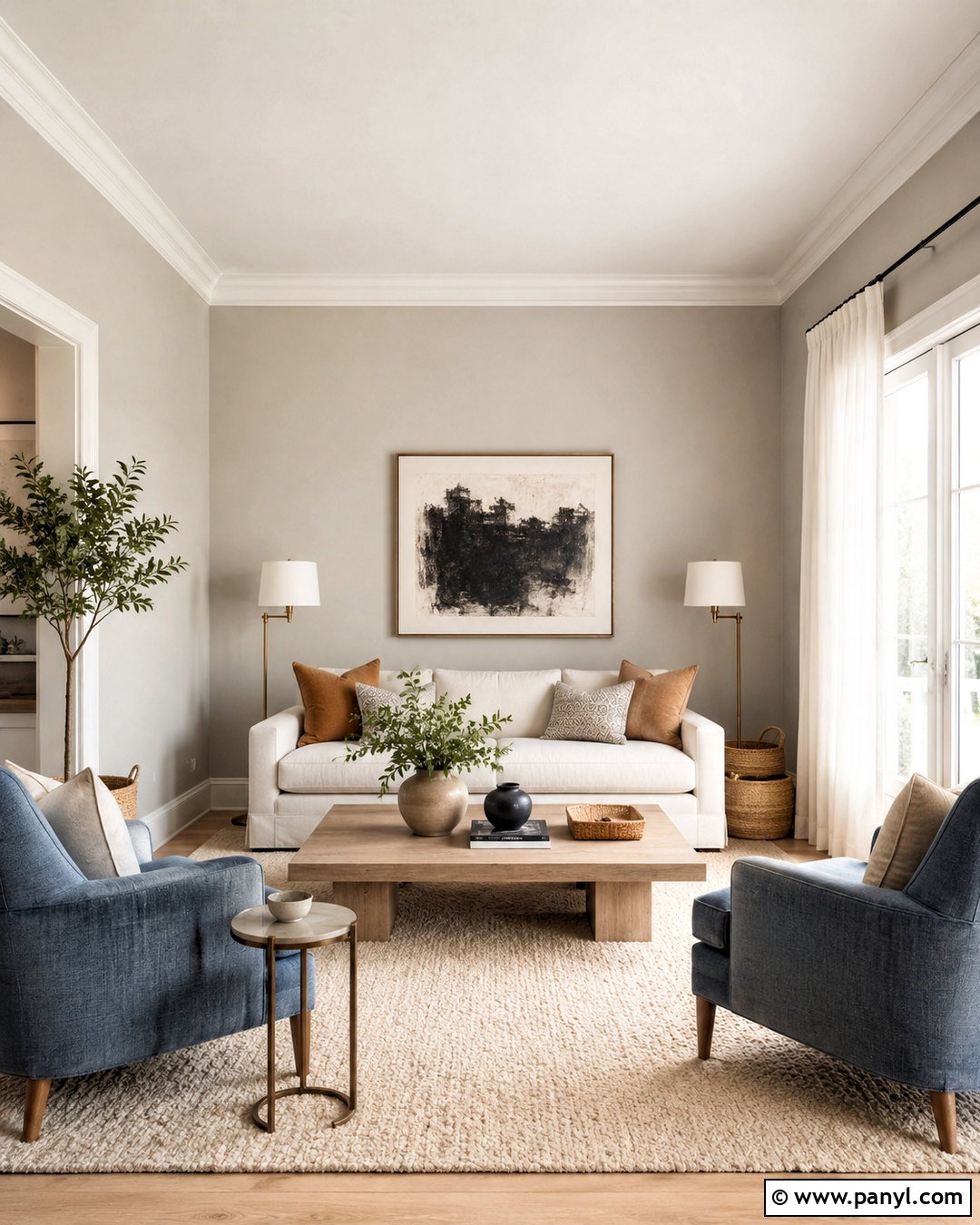
Pale gray can feel bright and refined when it has gentle warm undertones and is supported by natural materials. Paint the sitting room walls a soft dove gray, keeping the trim clean white for a crisp architectural outline. Choose an ivory sofa, pale oak coffee table, and two blue-gray armchairs arranged around a textured wool rug. Warm the scheme with camel pillows, brass lamps, and woven baskets. Sheer white curtains allow daylight to soften the wall color, while charcoal artwork and a black fireplace screen create focal points. Avoid filling the room with matching gray furniture, which can make the design look lifeless. Instead, balance the paint with cream fabrics, warm woods, greenery, and subtle touches of muted blue.
8. Charcoal Gray Sitting Room
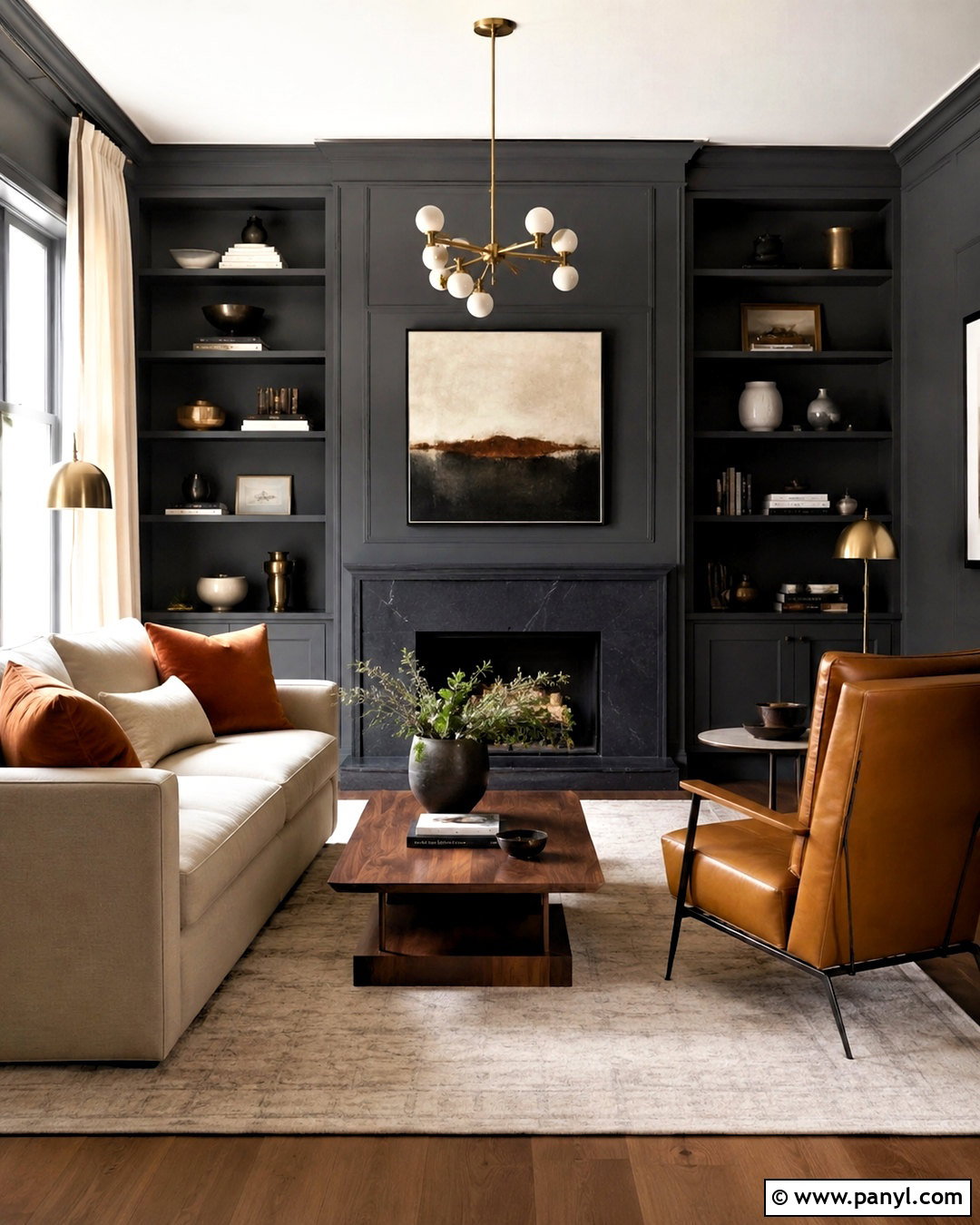
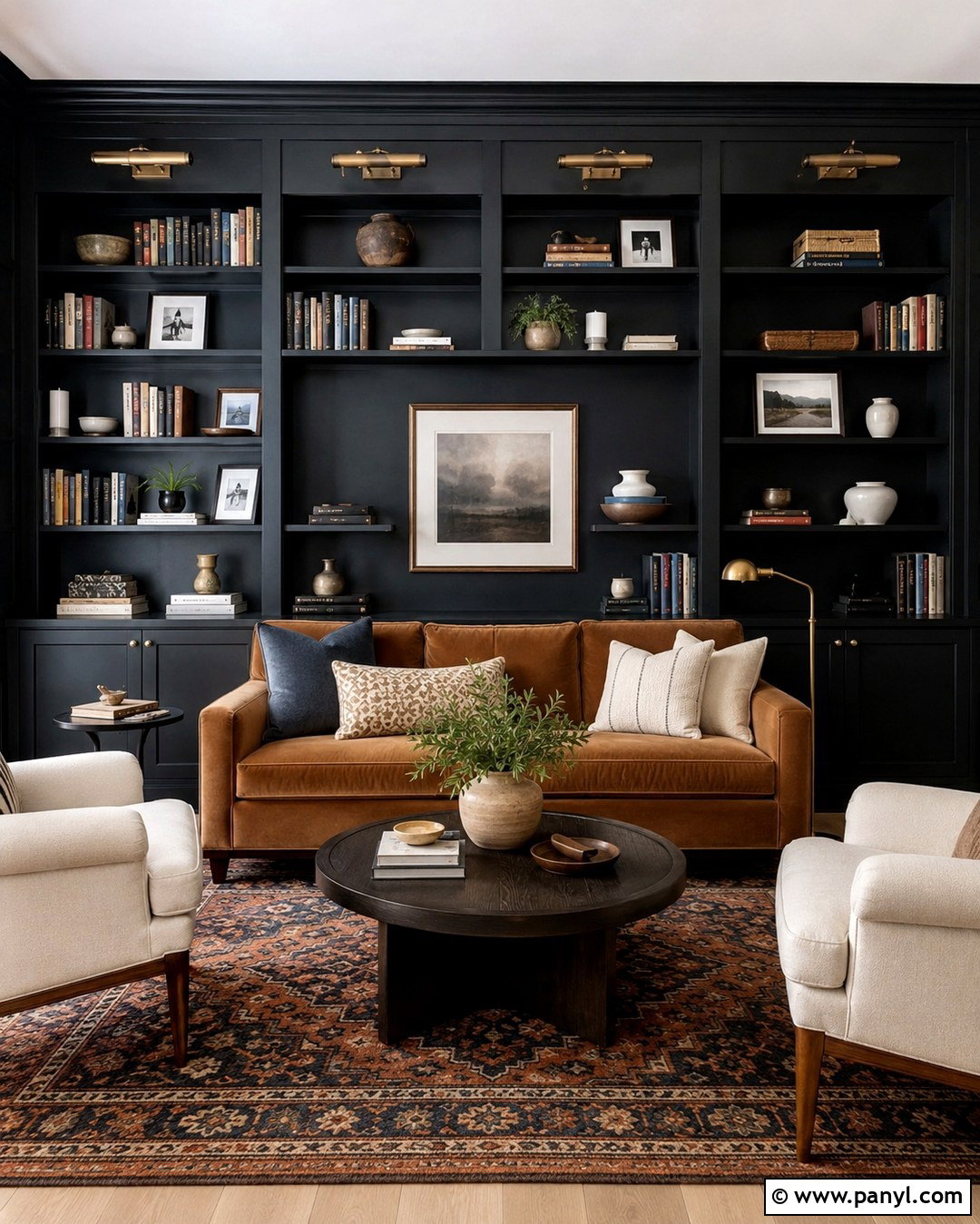
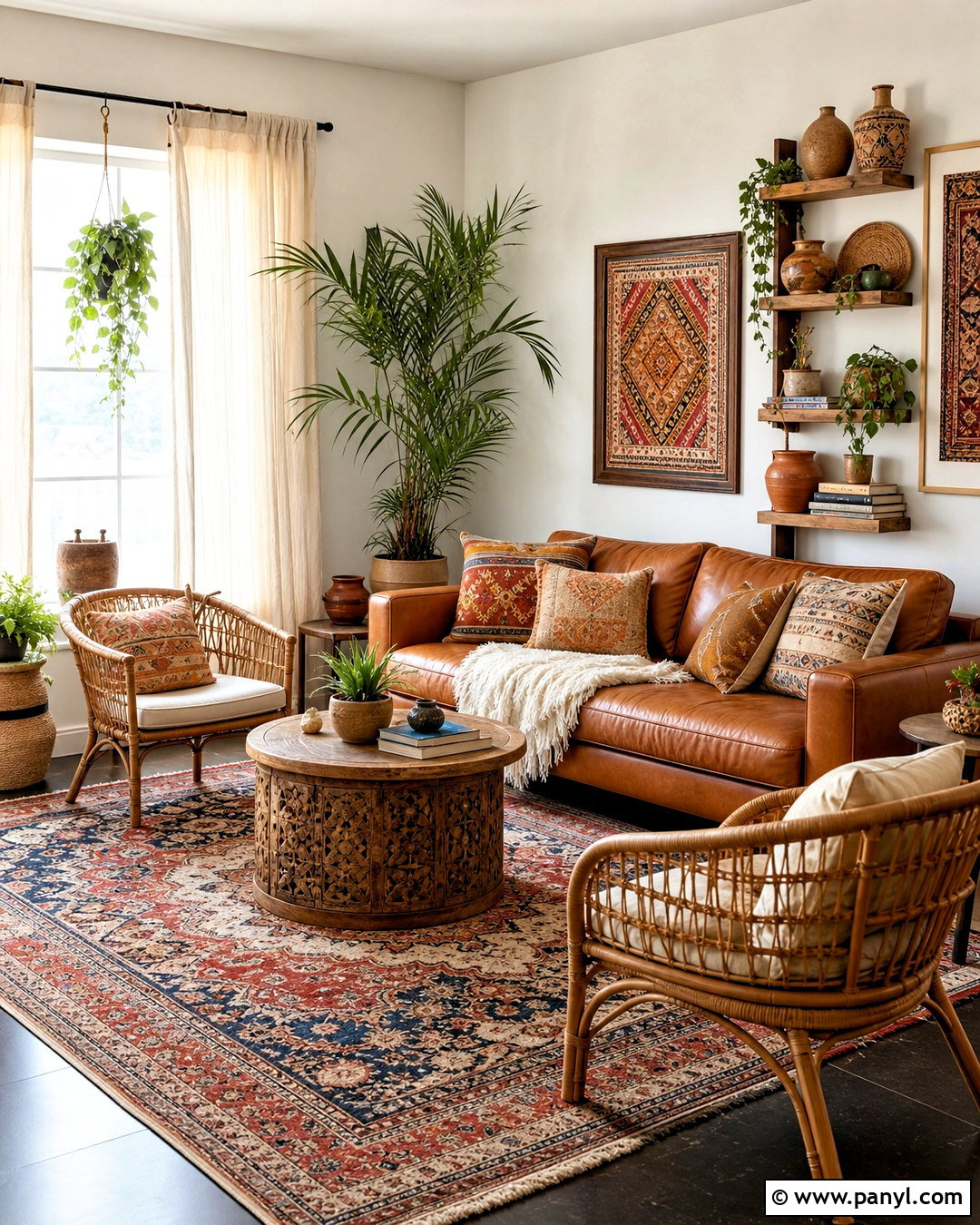
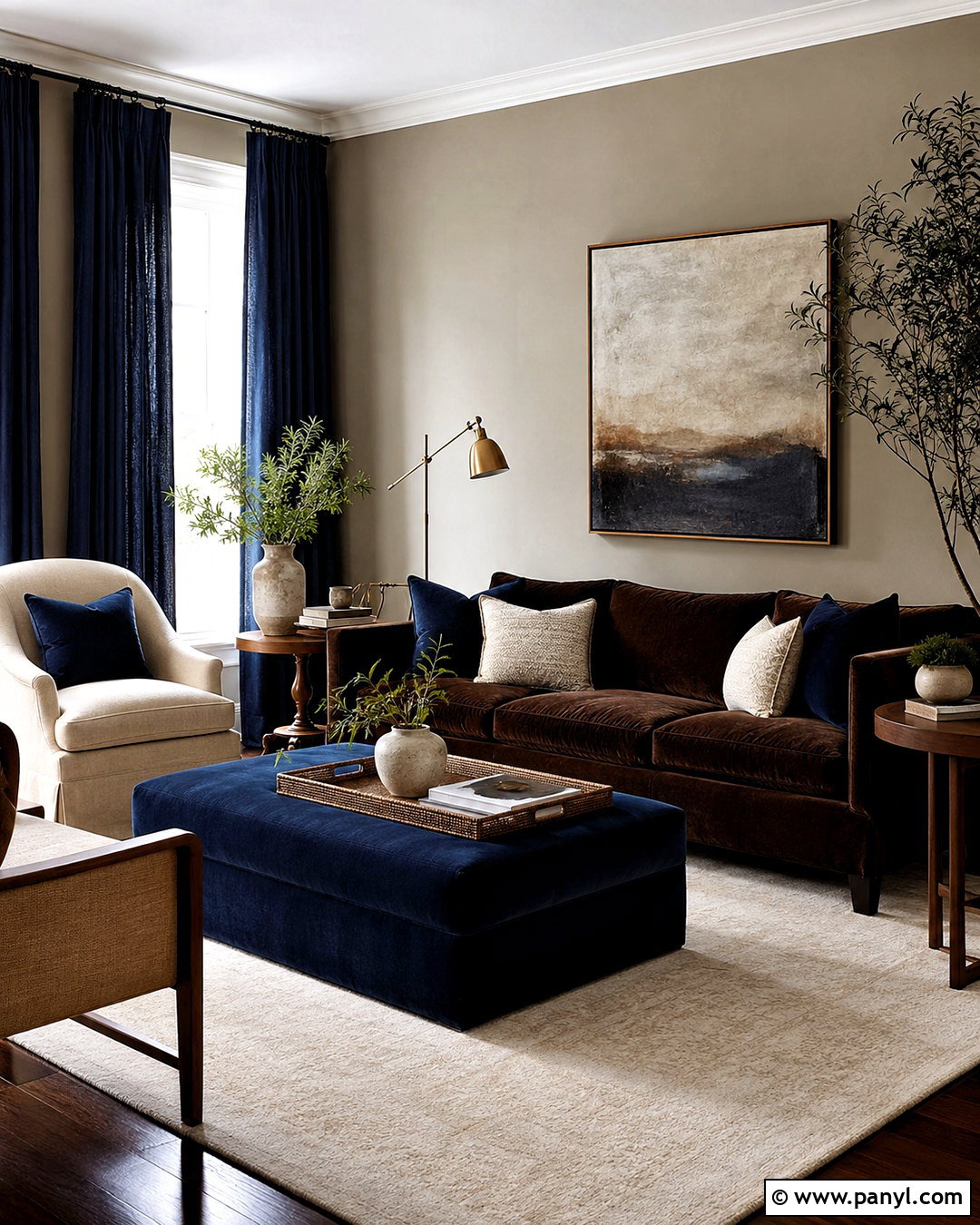
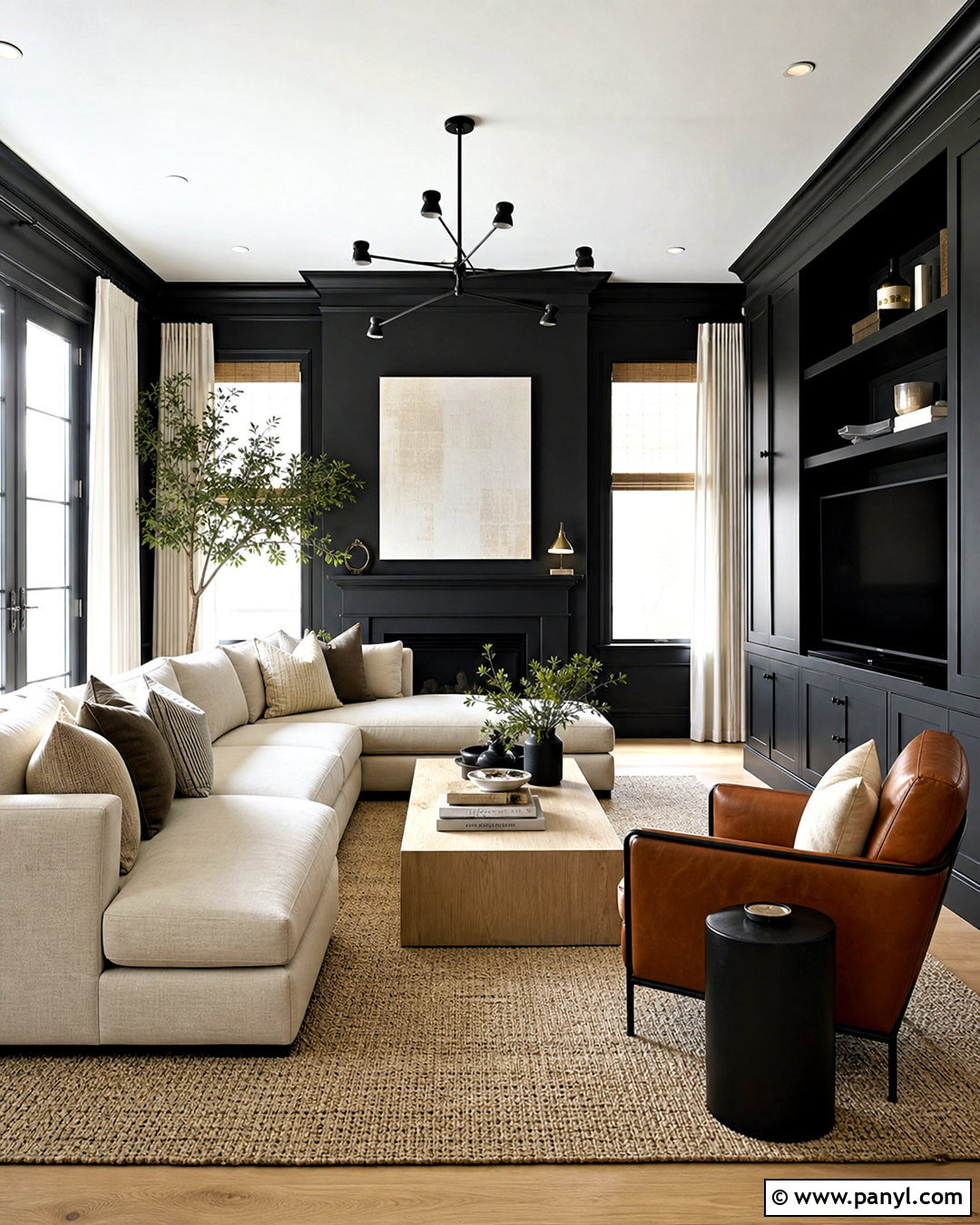
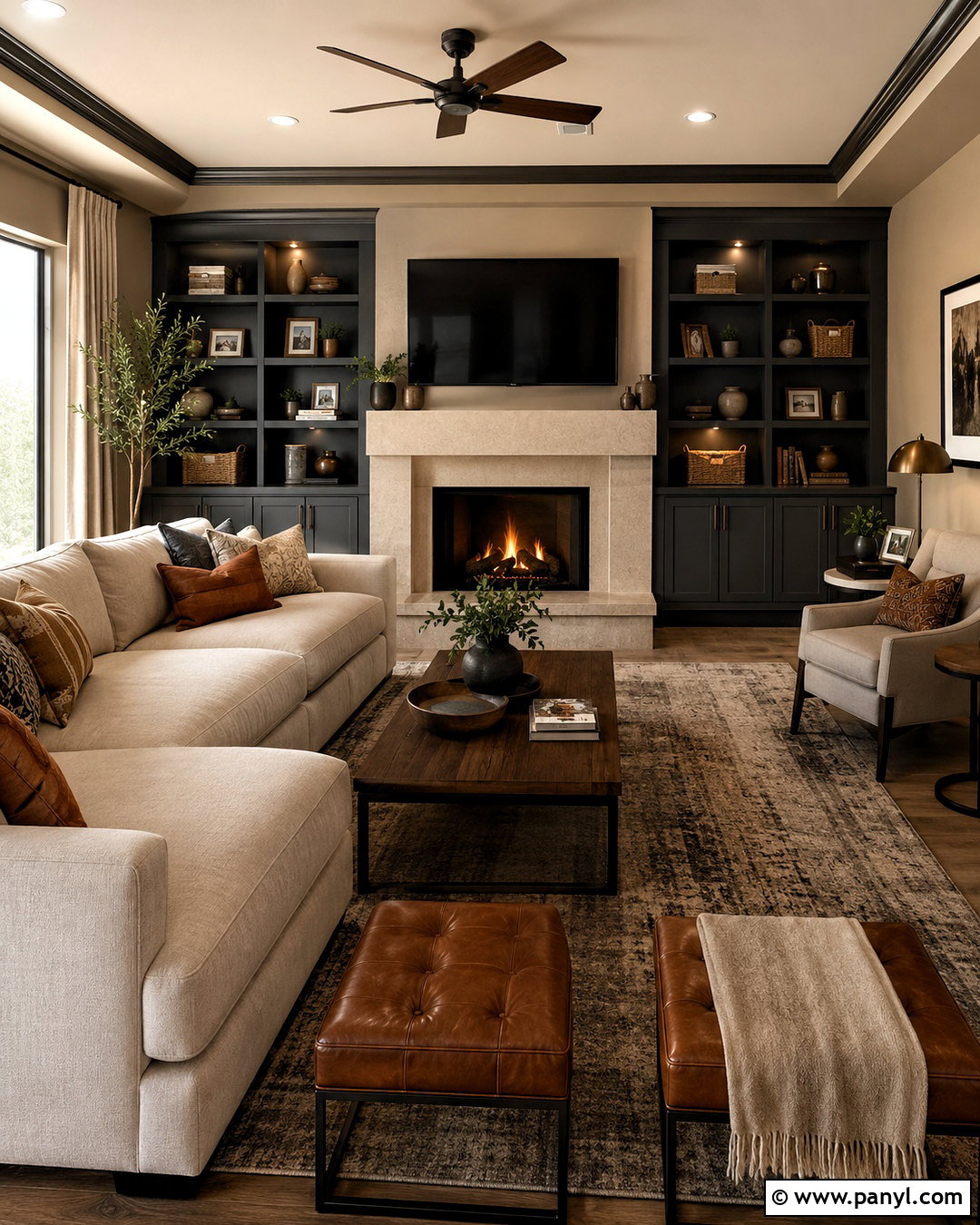
Deep charcoal walls can transform a sitting room into an intimate retreat while still looking polished and contemporary. Paint all four walls charcoal and continue the color onto built-in shelving for a unified backdrop. Use soft white on the ceiling to keep the room visually open. A light oatmeal sofa, cognac leather chair, and pale wool rug will stand out clearly against the dark walls. Add walnut furniture, brushed brass lighting, and cream linen curtains to introduce warmth. Artwork with white mats creates clean contrast, while rust and moss green pillows bring restrained color. This scheme is especially successful when the room has generous windows or layered lighting. Include table lamps, floor lamps, and sconces to brighten corners after sunset.
9. Sage Green Sitting Room
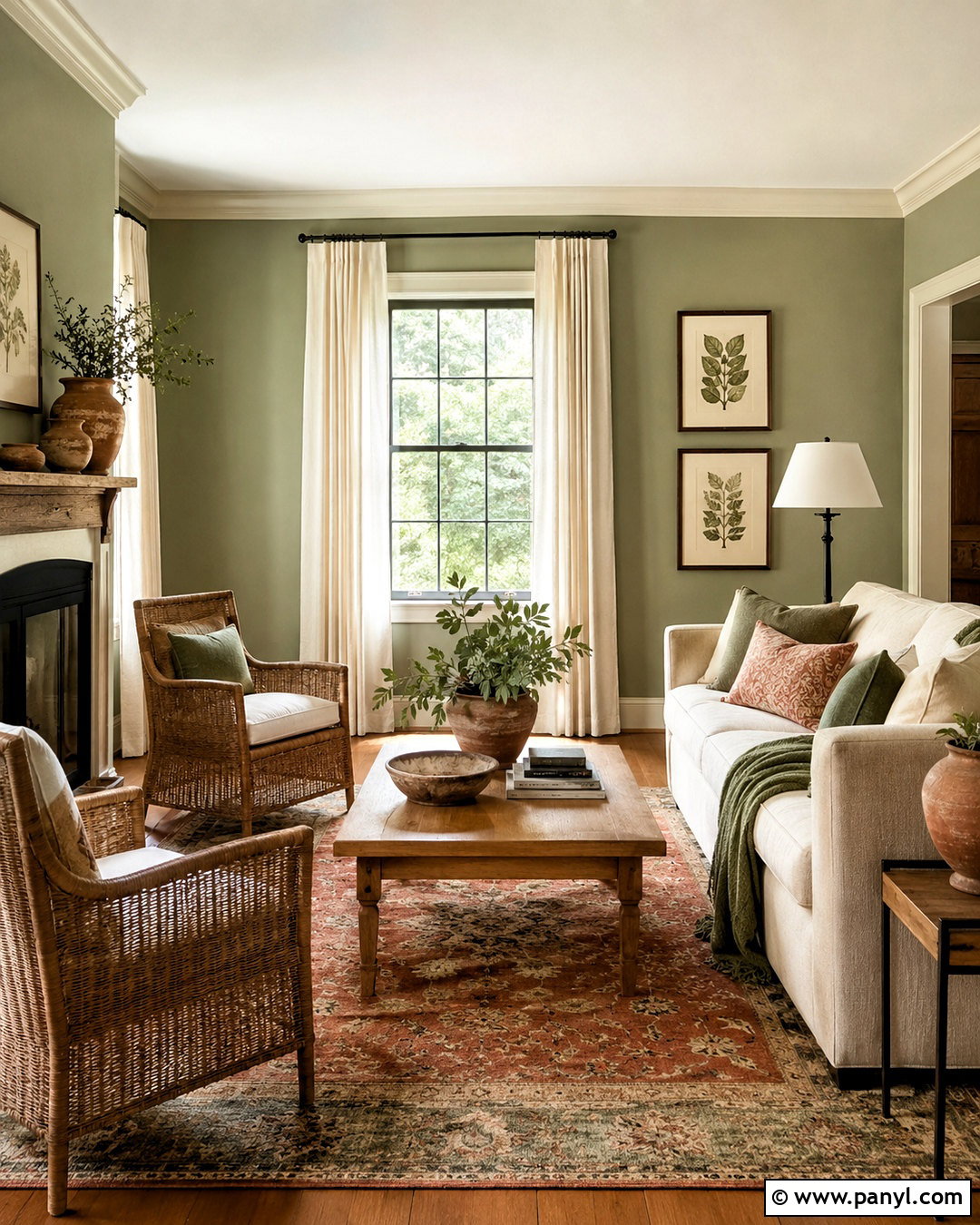
Sage green brings a quiet natural character to the sitting room without demanding attention. Choose a muted sage with warm gray undertones and pair it with creamy trim rather than brilliant white. Build the seating area around a light beige sofa, oak coffee table, and two woven accent chairs. Add linen curtains in warm ivory and a vintage-inspired rug containing faded green, rust, and tan. Black metal lighting gives the gentle palette definition, while terracotta pottery and botanical prints reinforce its organic quality. Keep plants limited so the room does not become overly themed. Sage works beautifully with both pale and medium wood floors, making it a flexible choice for farmhouse, cottage, transitional, and relaxed modern interiors.
10. Olive Green Sitting Room
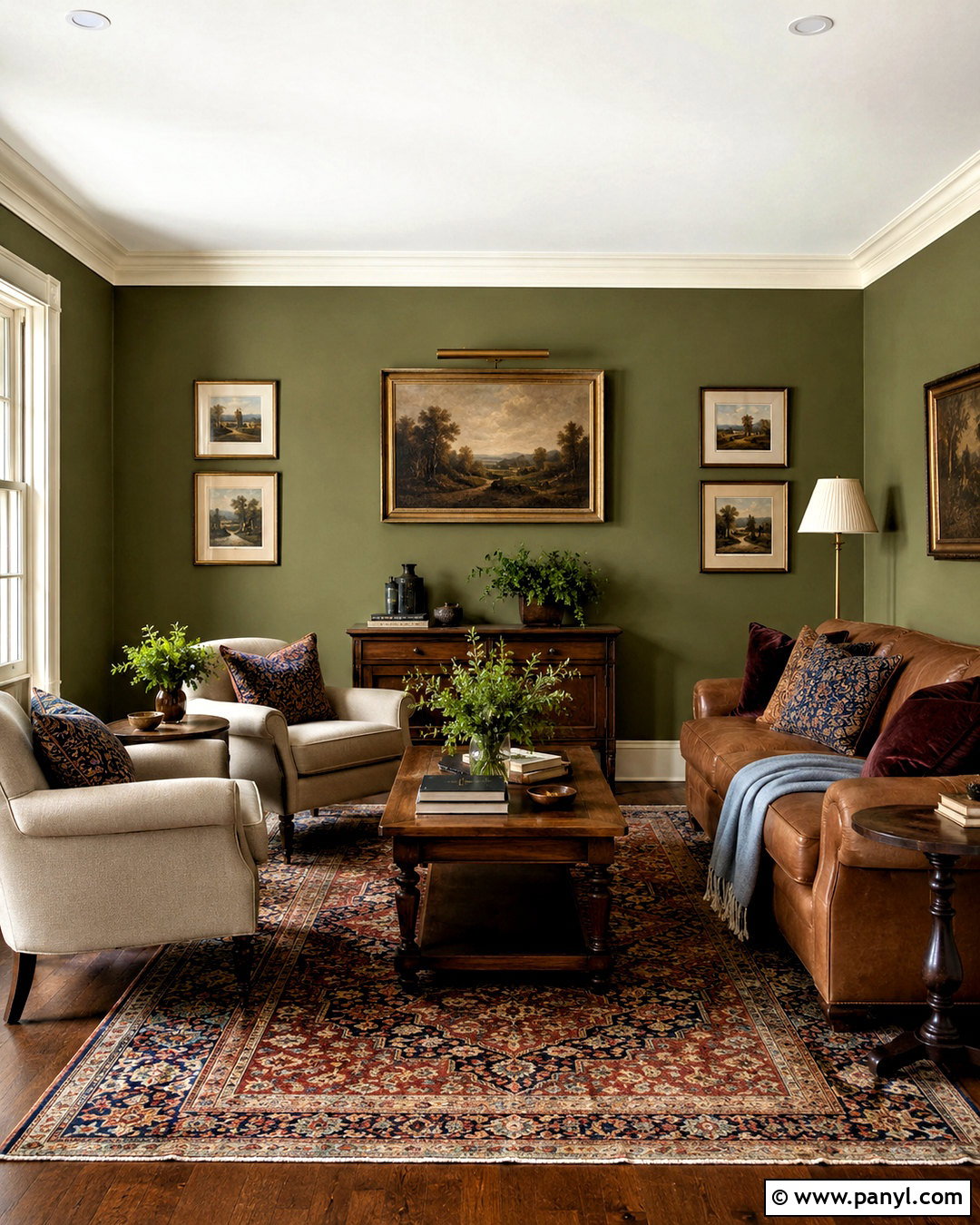
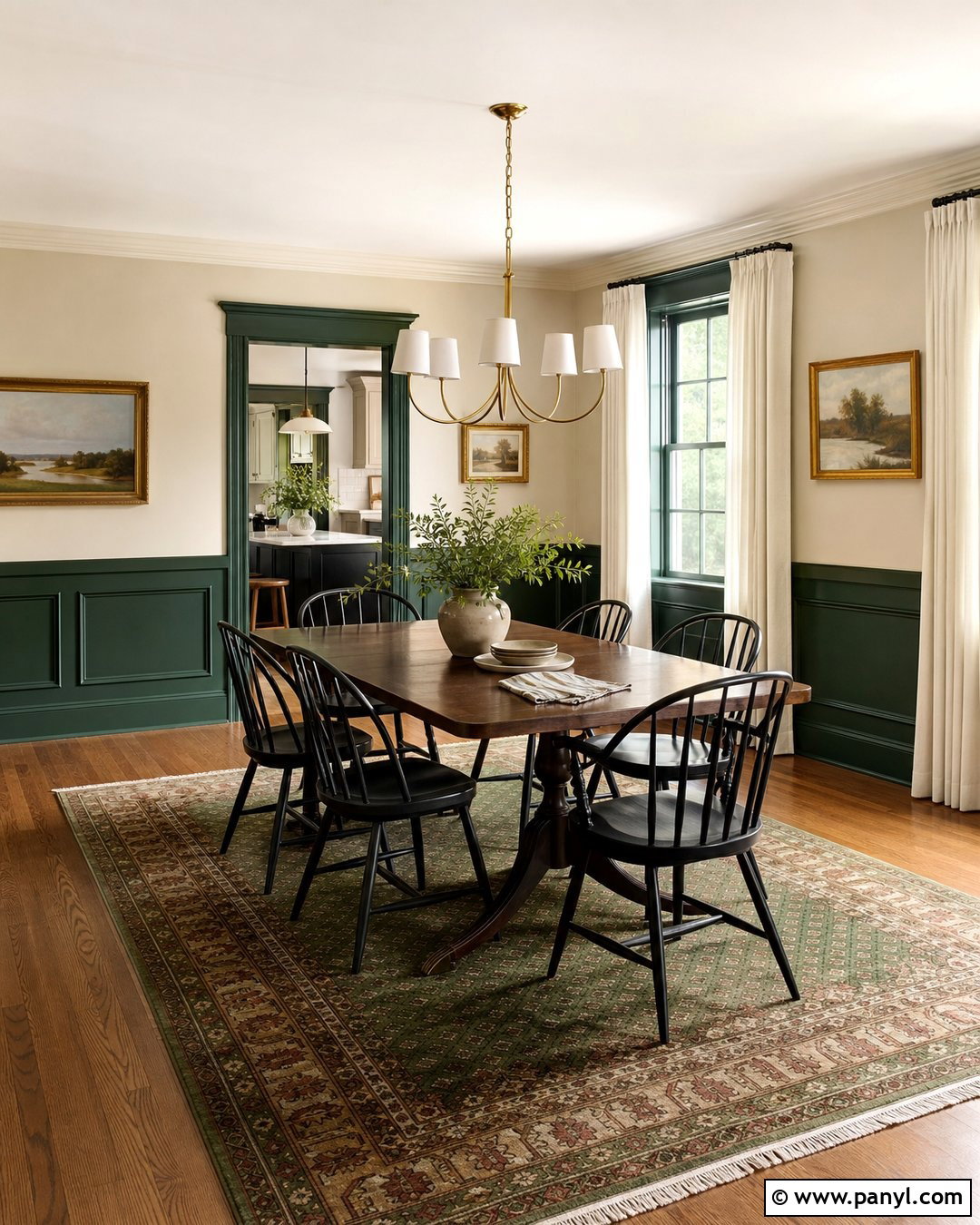
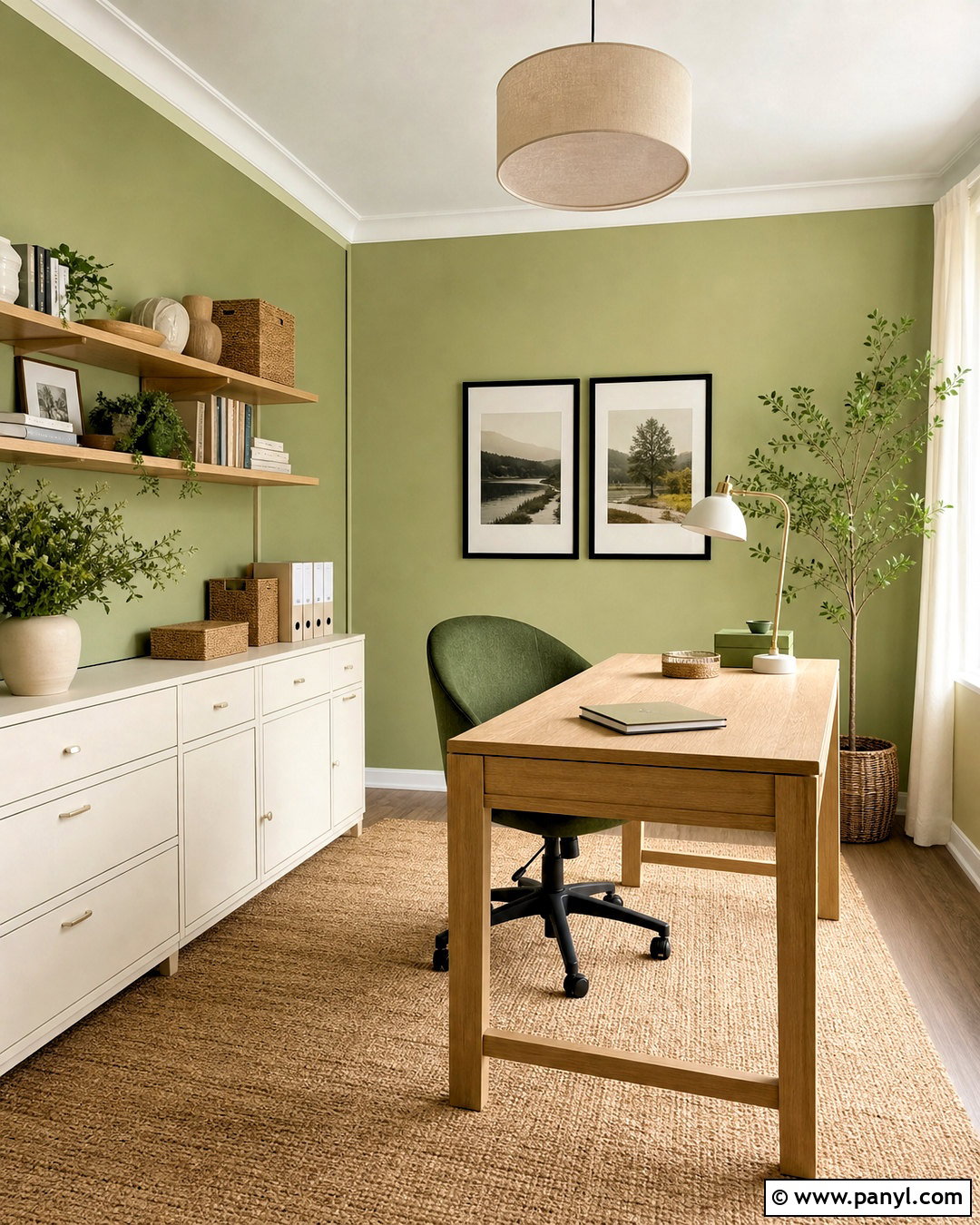
Olive green walls give a sitting room depth, warmth, and an understated historic quality. Select a muted mid-tone olive, then use soft cream on the trim and ceiling to complement its yellow undertones. A tan leather sofa provides a strong anchor, while oatmeal armchairs keep the seating arrangement balanced. Introduce dark oak tables, an antique-style patterned rug, and aged brass picture lights. Burgundy, tobacco brown, and muted blue pillows add controlled richness. Hang traditional landscapes or abstract art in dark wood frames, leaving enough open wall space for the paint to remain visible. This complete palette works particularly well with fireplaces, built-in bookcases, and original woodwork. In darker rooms, use olive on one focal wall instead of every surface.
11. Forest Green Sitting Room
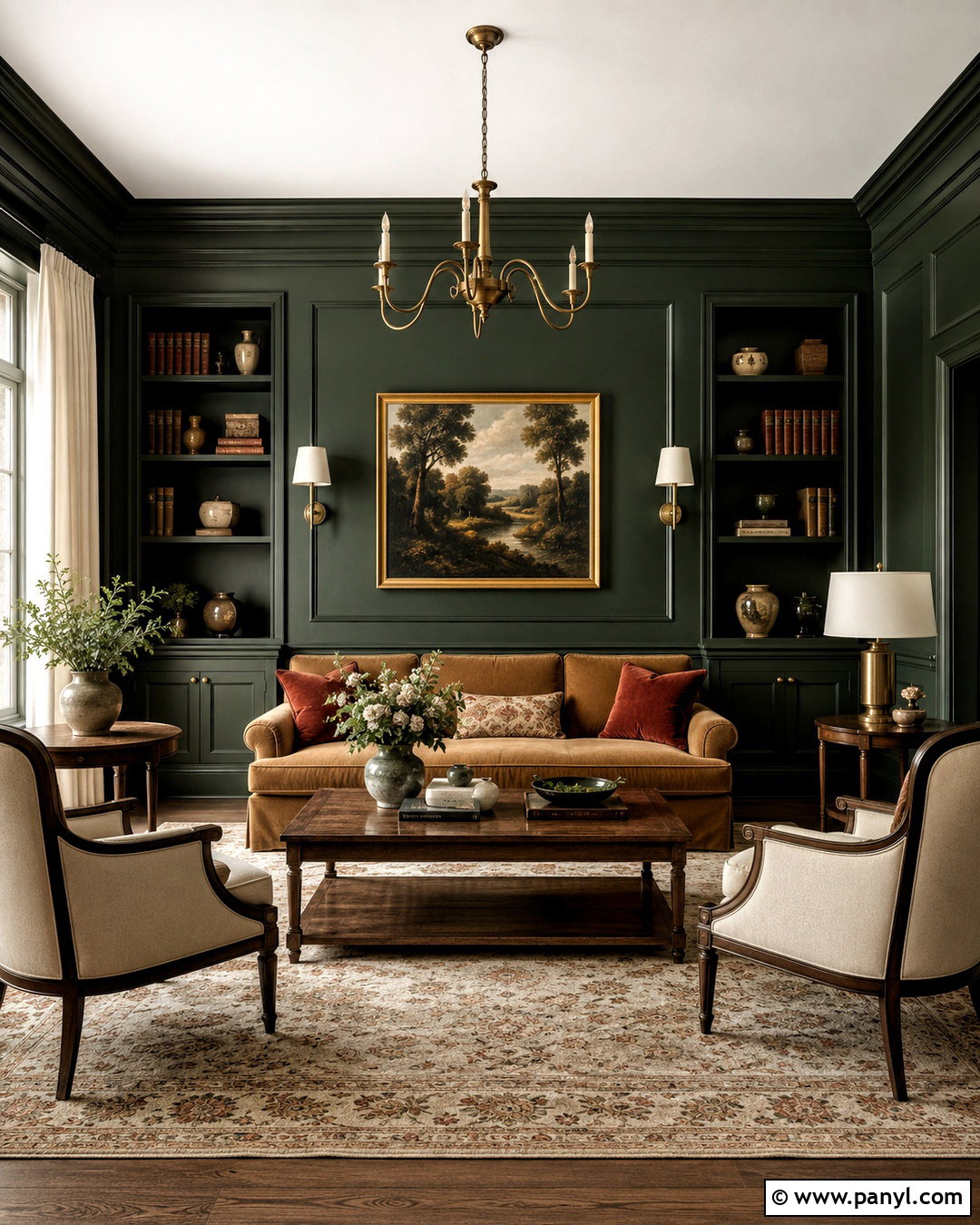
Forest green creates a dramatic sitting room that feels enveloping rather than harsh when balanced with lighter furnishings. Cover the walls and built-in bookcases in a deep, slightly muted green, using a soft ivory ceiling to prevent the space from becoming heavy. Place a camel velvet sofa on a pale patterned rug and add cream upholstered chairs with dark wood frames. Antique brass lamps and picture lights will glow against the saturated background. Introduce walnut tables, linen curtains, and pillows in rust, ocher, and subtle plaid. A large mirror can reflect daylight and visually expand the room. Keep accessories purposeful, choosing books, ceramics, and framed artwork that complement the deep palette without crowding the shelves or seating area.
12. Eucalyptus Green Sitting Room
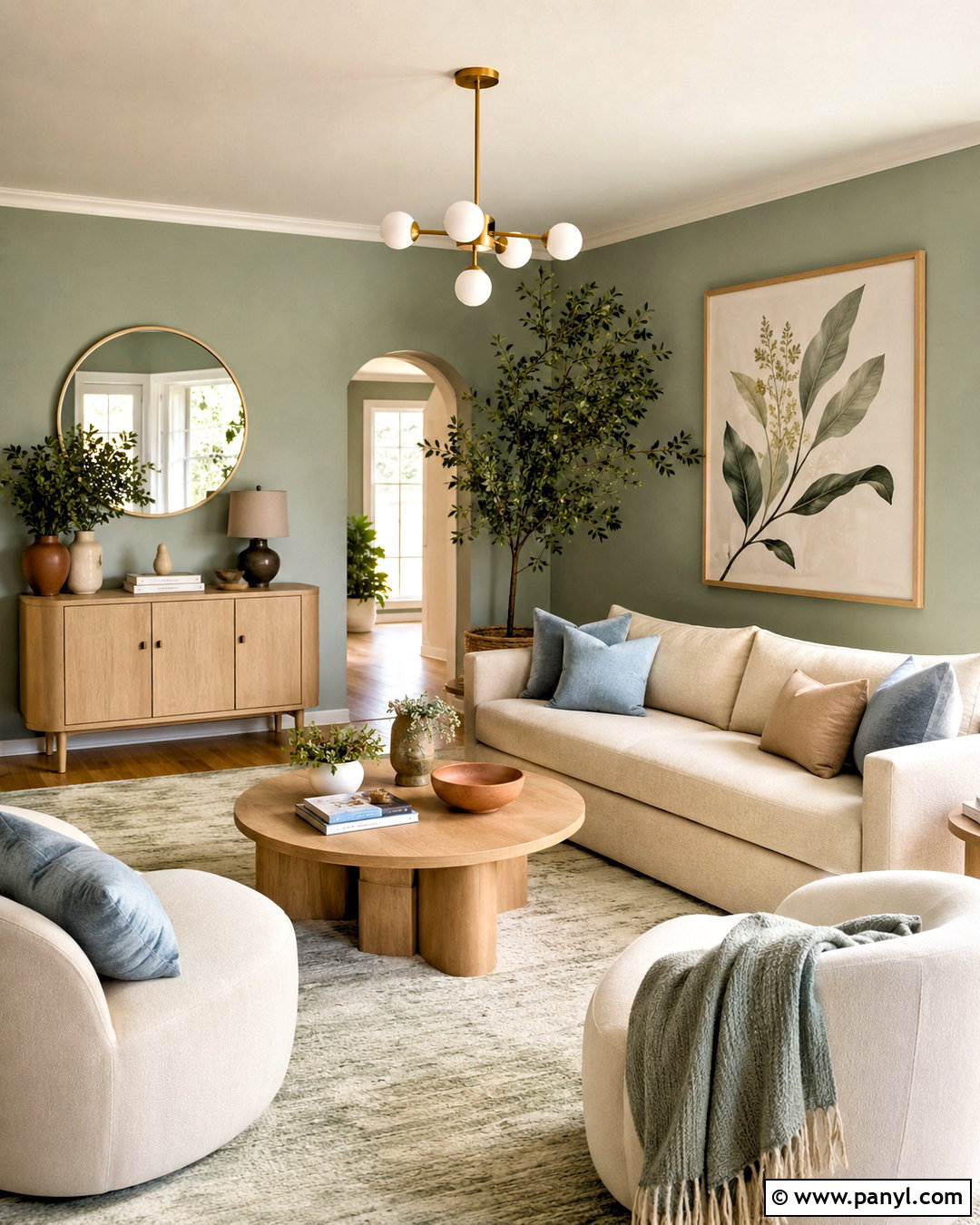
A dusty eucalyptus green gives the sitting room a fresh appearance while remaining soft enough for a relaxing space. Apply the color to the walls and paint the trim a warm white with low contrast. Choose a natural linen sofa, light oak console, and gently curved cream chairs for an airy modern layout. A wool rug with ivory and muted green patterning will tie the room together. Add brushed brass lighting, pale blue cushions, and terracotta accessories for warmth and variety. Simple botanical artwork and one substantial indoor tree complete the natural look. Eucalyptus paint is especially useful when the sitting room overlooks a yard because it creates a visual connection with outdoor greenery. Keep window treatments light and uncomplicated to preserve that connection.
13. Blue Green Sitting Room
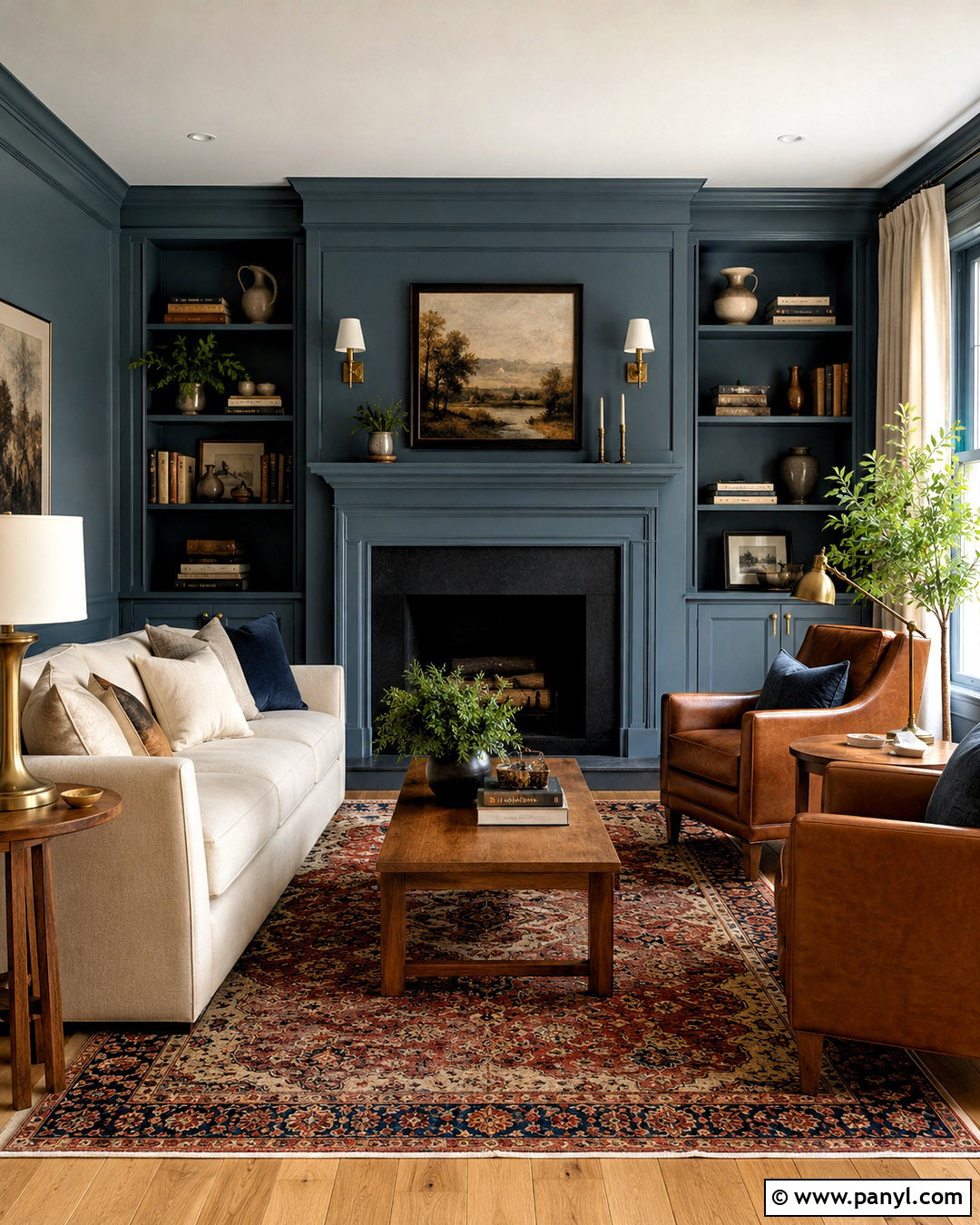
Blue-green paint offers the calm quality of blue and the natural warmth of green in one adaptable color. Choose a muted mid-tone shade and use it across the walls, fireplace surround, and built-in storage for a cohesive result. Balance the color with an oatmeal sofa, warm oak furniture, and cream curtains. A patterned rug containing rust, navy, and pale beige will add movement beneath the seating area. Bring in caramel leather chairs, aged brass lamps, and dark framed artwork for contrast. This scheme feels sophisticated in both traditional and contemporary homes. If the room receives cool northern light, select a blue-green with more green than gray. In sunny rooms, a dustier version will prevent the color from appearing overly bright.
14. Soft Teal Sitting Room
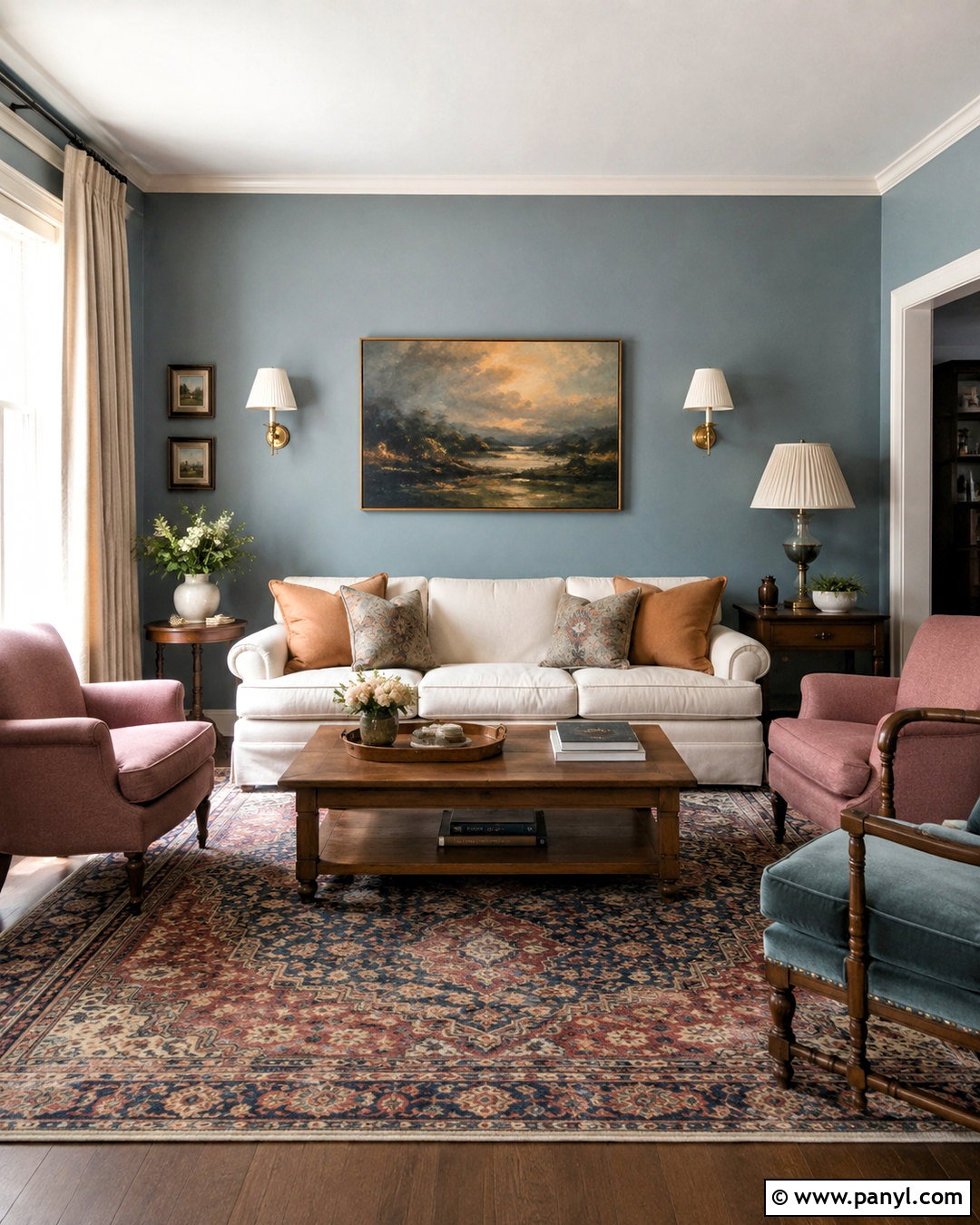
Soft teal walls can add noticeable color while keeping a sitting room composed and comfortable. Look for a muted teal with gray undertones rather than a highly saturated tropical shade. Pair it with warm white trim, a cream sofa, and medium walnut tables. Dusty rose chairs or pillows create an appealing contrast, while caramel accents reinforce the room’s warmth. Use a vintage rug containing teal, faded red, and ivory to connect the entire palette. Brass sconces and pleated fabric lampshades suit the color’s refined character. Finish with linen curtains, expressive artwork, and a few dark green accessories. Soft teal works especially well in sitting rooms used for conversation because it feels distinctive without becoming visually restless or difficult to decorate around.
15. Deep Teal Sitting Room
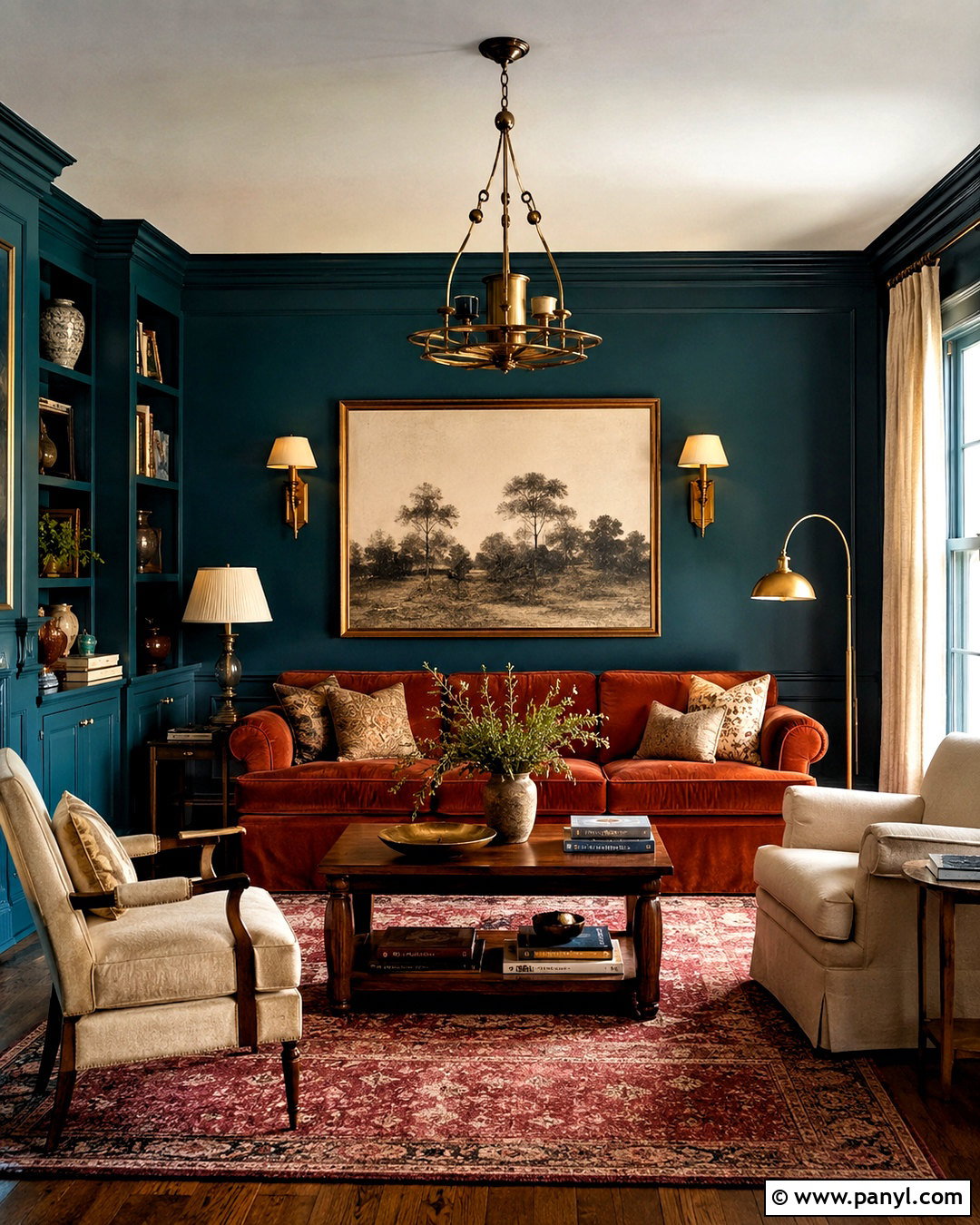
For a bold but livable sitting room, deep teal provides rich color that changes beautifully with the light. Paint the walls and shelving in the same velvety teal, then use a pale cream ceiling to maintain visual height. Furnish the room with a rust velvet sofa, ivory accent chairs, and a dark walnut coffee table. A faded Persian-style rug can combine teal, burgundy, tan, and dusty pink. Add antique brass lighting and long oatmeal curtains to soften the room’s edges. Large artwork with generous cream matting will remain visible against the dark background. Keep the layout open and symmetrical so the strong color feels controlled. This palette works best with multiple light sources, including sconces, table lamps, and focused picture lighting.
16. Pale Blue Sitting Room
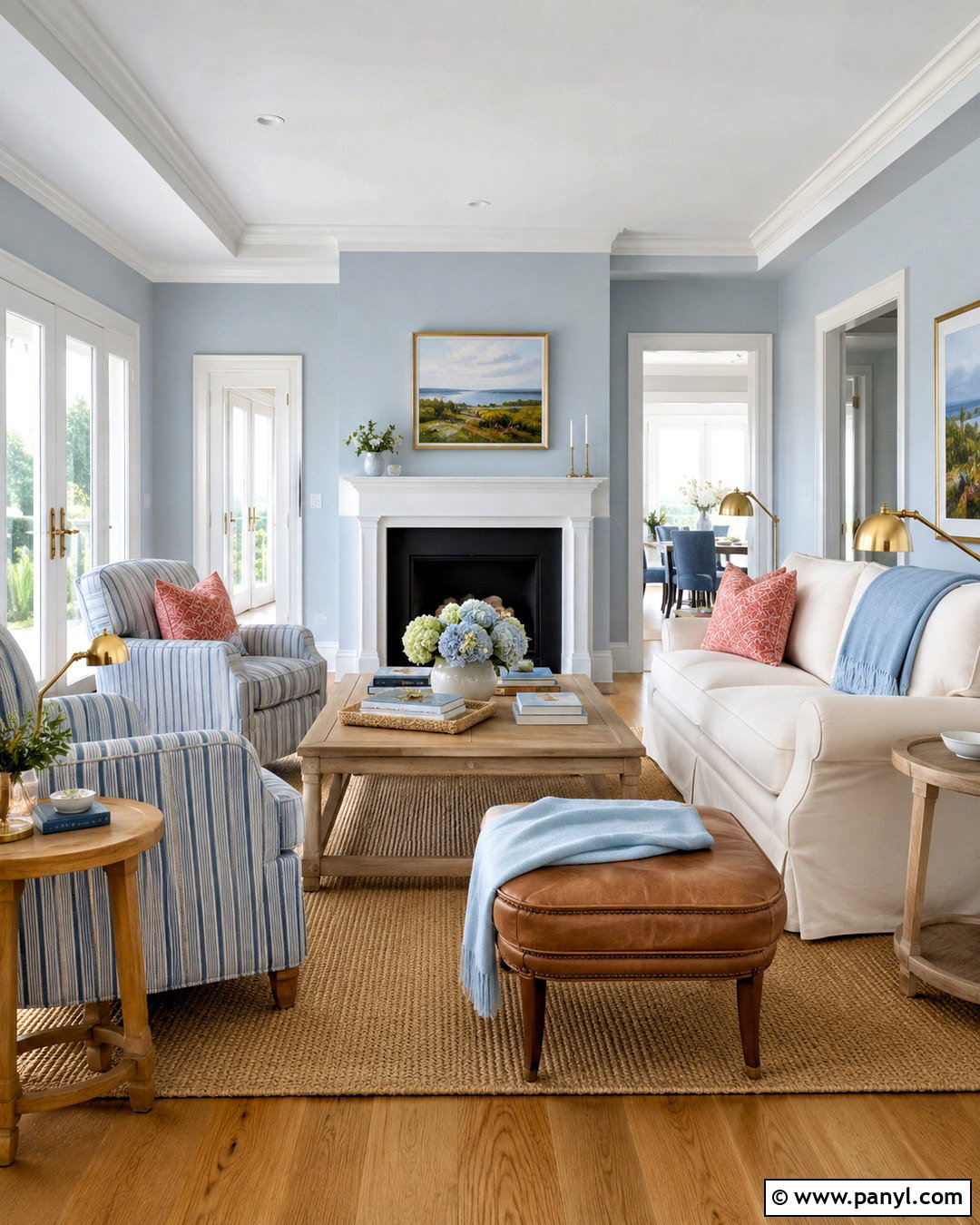
Pale blue walls make a sitting room feel open, gentle, and quietly cheerful. Select a soft blue with a small amount of gray so it reads as refined rather than childlike. Use clean white trim, natural oak flooring, and an ivory sofa to create a bright foundation. Add striped blue-and-cream chairs, a woven rug, and pale wood tables for a relaxed coastal or traditional look. Warm the room with brass lamps, tan leather accessories, and small touches of coral or terracotta. White linen curtains should hang close to the ceiling to emphasize height. Complete the space with landscape paintings, blue-and-white pottery, and simple greenery. The result feels fresh without relying on literal seaside decorations or an overly themed palette.
17. Dusty Blue Sitting Room
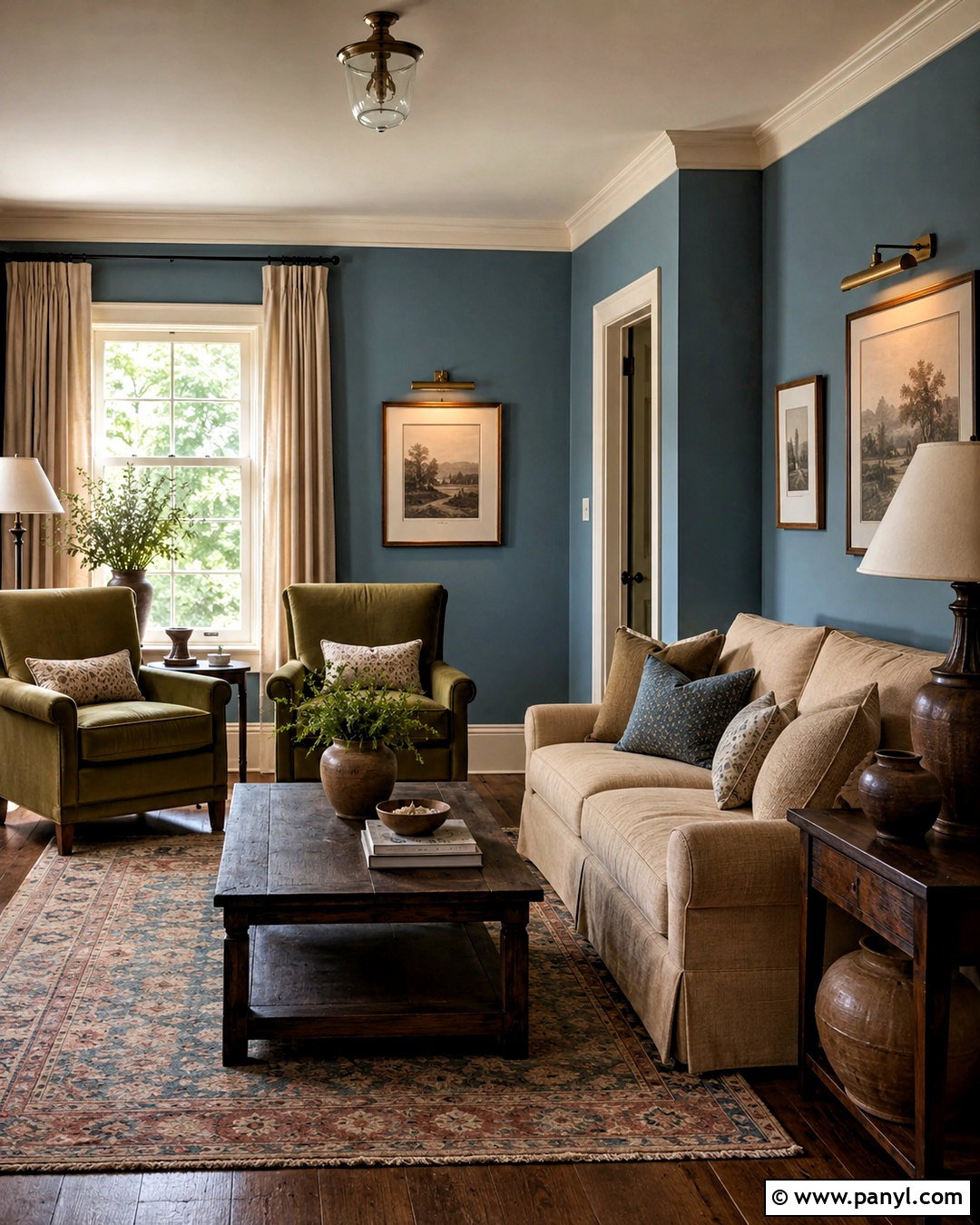
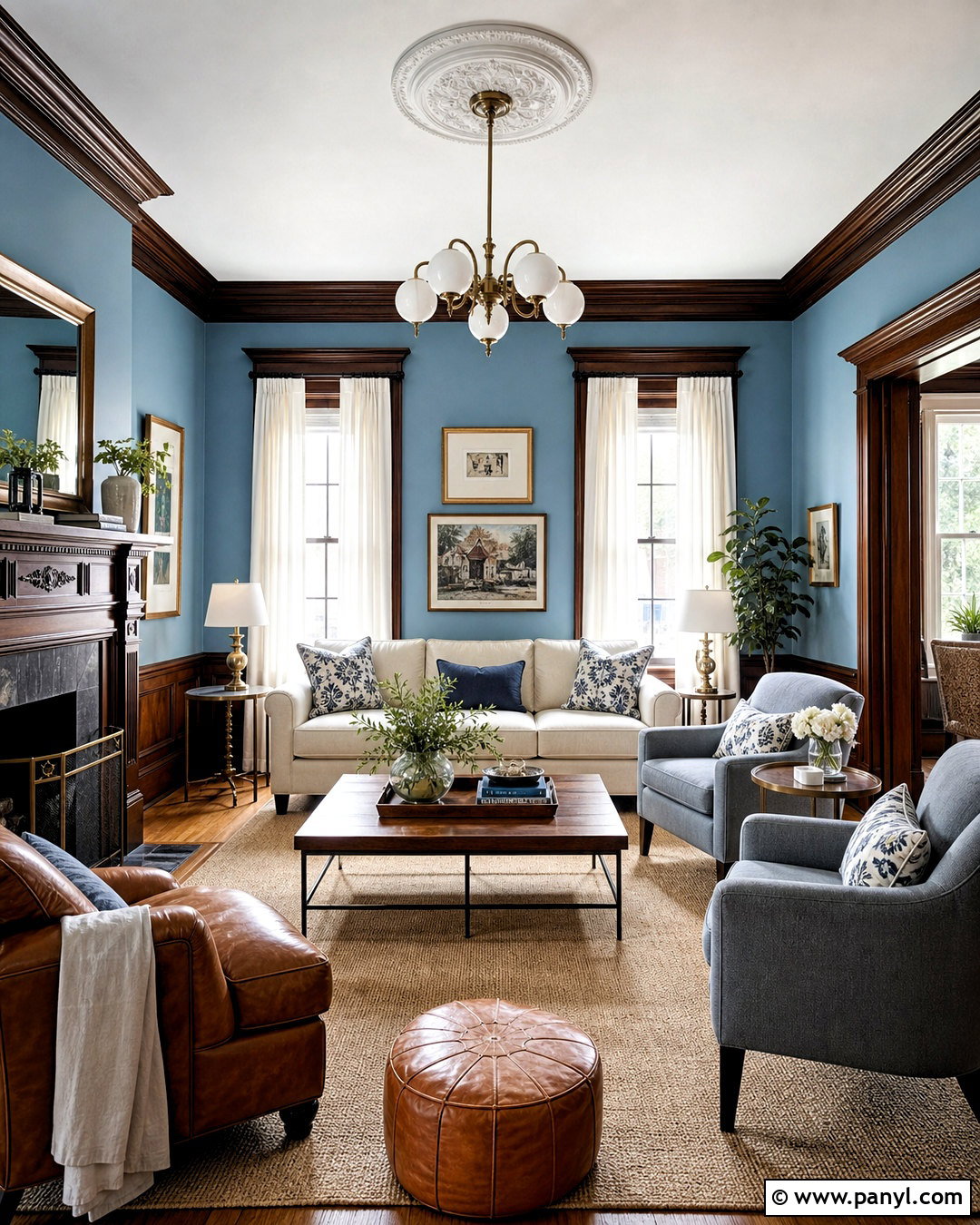
Dusty blue offers more depth than pastel blue while maintaining a restful sitting room atmosphere. Paint the walls a medium blue softened by gray, then frame the room with creamy white trim. Choose a warm beige sofa, dark wood coffee table, and two olive green chairs for an earthy contrast. A patterned rug with faded blue, red, and ivory will unite the furnishings. Add brass picture lights, clay pottery, and linen curtains in a natural flax color. Traditional artwork or vintage prints look especially effective against dusty blue walls. Keep the ceiling light to preserve openness, or paint it a much paler version of the wall color. This balanced combination works in transitional, cottage, and updated traditional sitting rooms.
18. Navy Blue Sitting Room
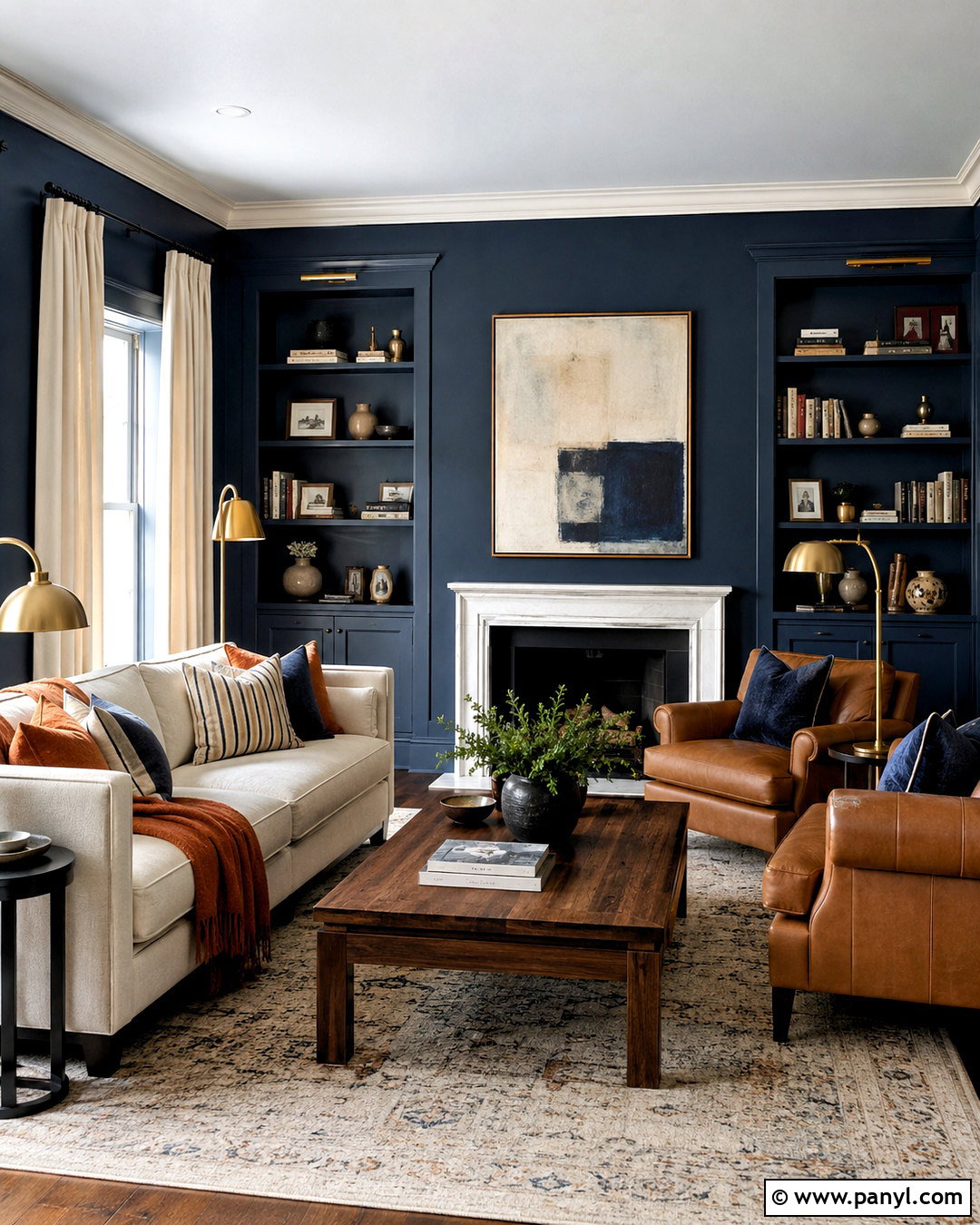
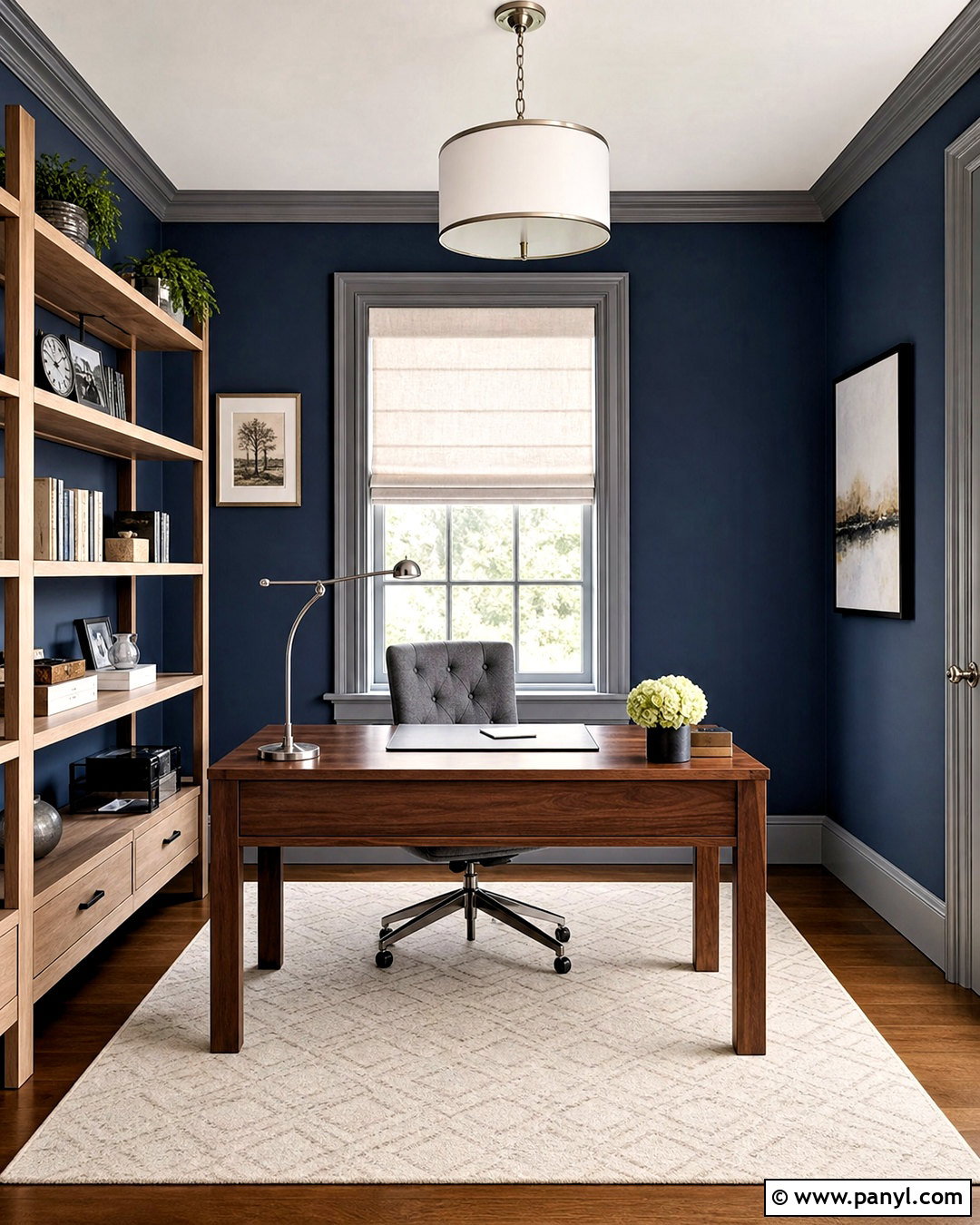
Navy blue turns a sitting room into a confident, tailored space when it is paired with warm materials and pale upholstery. Paint the walls deep navy and use the same color on bookcases for a built-in effect. Keep the ceiling and window trim warm white to create clear contrast. Arrange a cream sofa with two cognac leather chairs around a medium walnut coffee table. A light patterned rug will brighten the floor and visually define the seating area. Add brass floor lamps, striped pillows, and rust-colored throws to break up the blue. Natural linen curtains will soften the architecture. Rather than using nautical accessories, complete the room with abstract art, books, ceramics, and dark wood frames for a more timeless interpretation.
19. Slate Blue Sitting Room
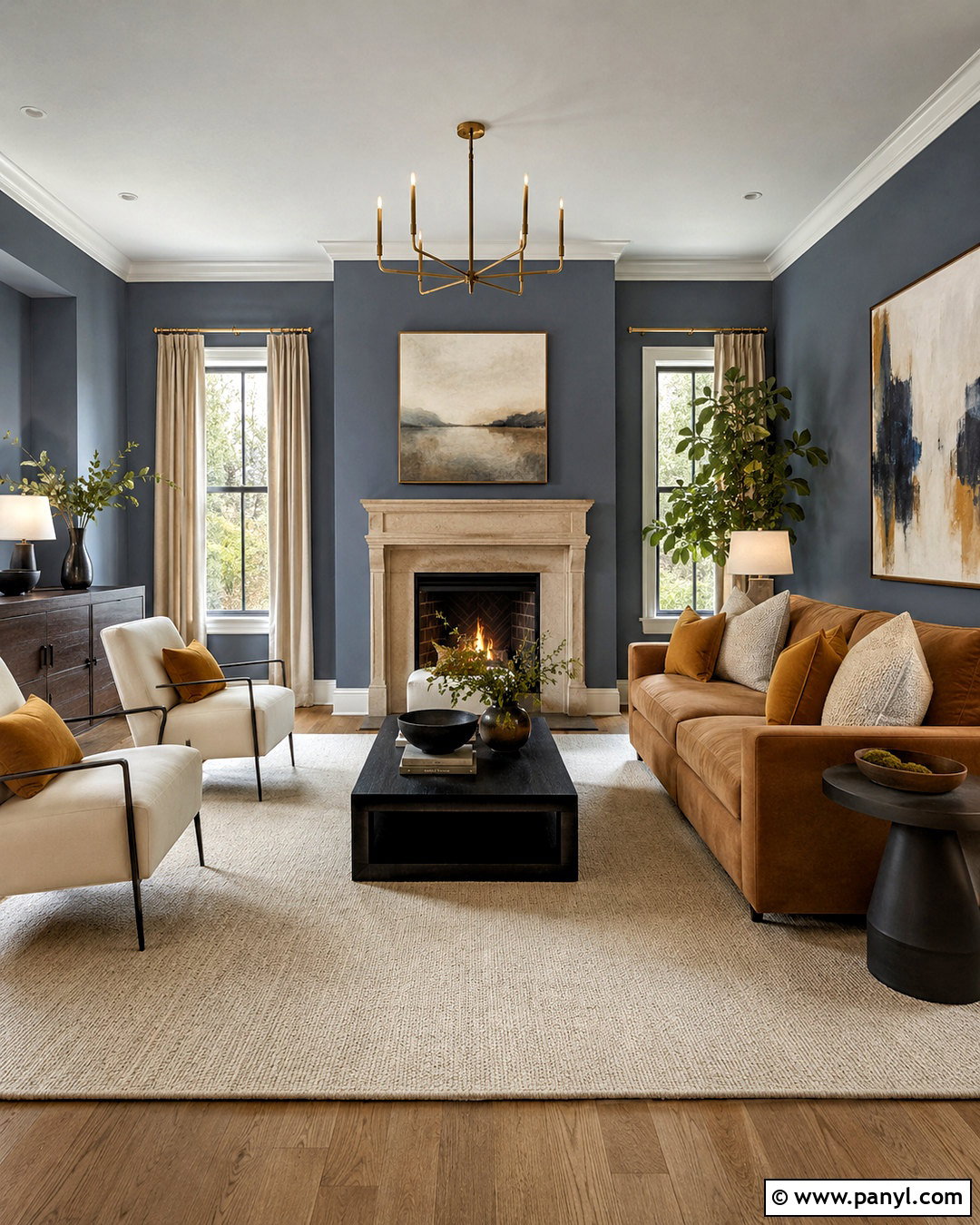
Slate blue creates a sitting room that feels structured and calm, with enough gray to remain versatile. Apply the color to all walls and choose warm white for the ceiling, baseboards, and window frames. A camel sofa adds an immediate warm contrast, while ivory chairs and a cream wool rug prevent the room from feeling dark. Introduce matte black side tables, walnut storage, and brushed brass lighting for a layered mix of finishes. Pillows in muted rust, ocher, and pale blue will connect the furnishings to the walls. Add long beige curtains and large-scale contemporary art with light backgrounds. Slate blue works well in rooms containing stone fireplaces because the cool wall color complements gray stone while warmer textiles maintain comfort.
20. Powder Blue Sitting Room
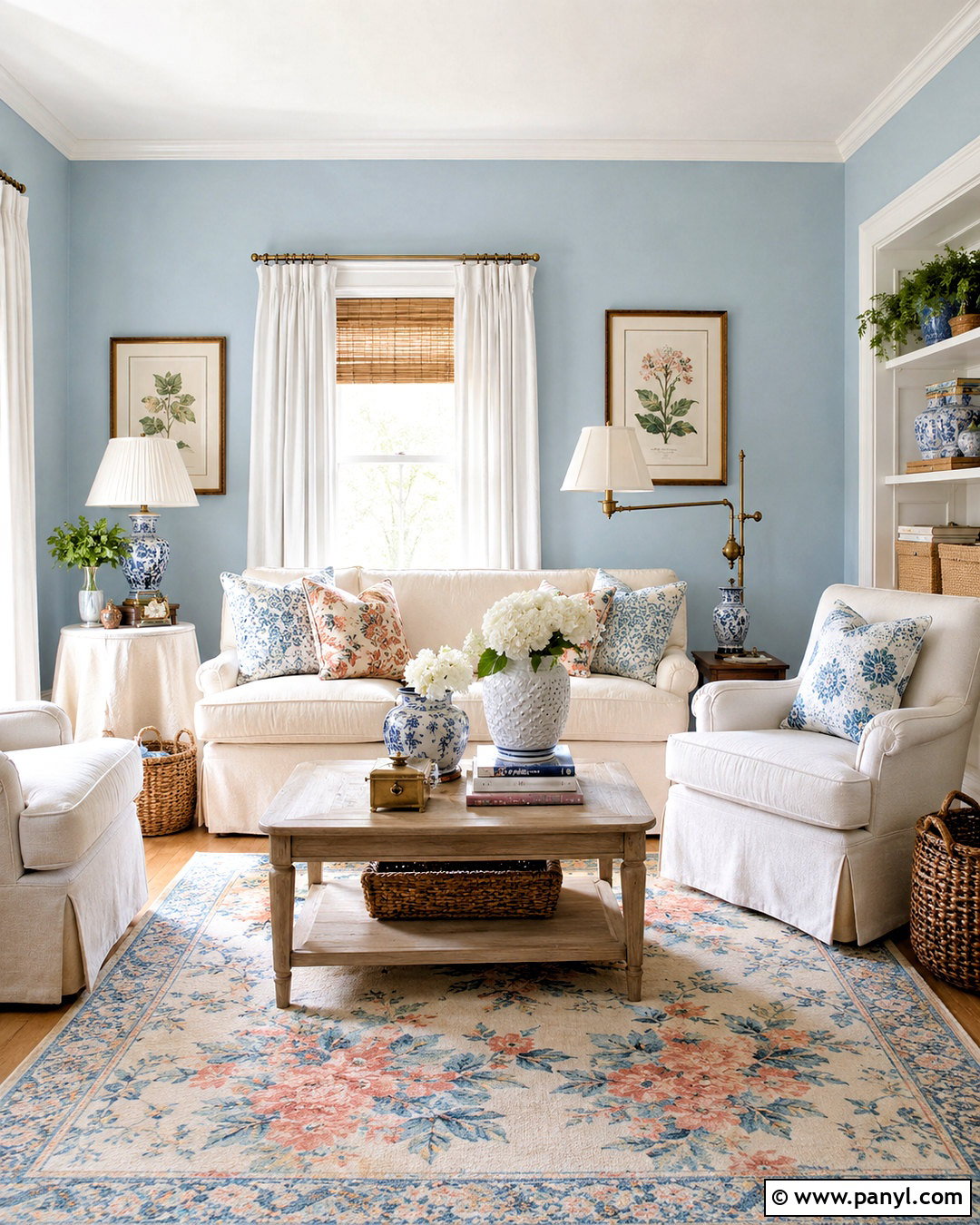
Powder blue paint gives a small sitting room a light, graceful character without sacrificing personality. Use the delicate blue on the walls, paired with bright white trim and a soft white ceiling. Choose a compact cream sofa, skirted accent chairs, and a pale oak coffee table to keep the arrangement visually light. A floral or block-printed rug containing blue, sage, and coral can introduce gentle pattern. Add polished nickel or soft brass lamps, depending on the room’s existing hardware. Full-length white curtains make the windows appear taller and soften the blue walls. Complete the design with framed botanical prints, porcelain accessories, and a few natural woven pieces. Avoid dark, bulky furniture that could overwhelm the subtle palette and compact floor plan.
21. Lavender Gray Sitting Room
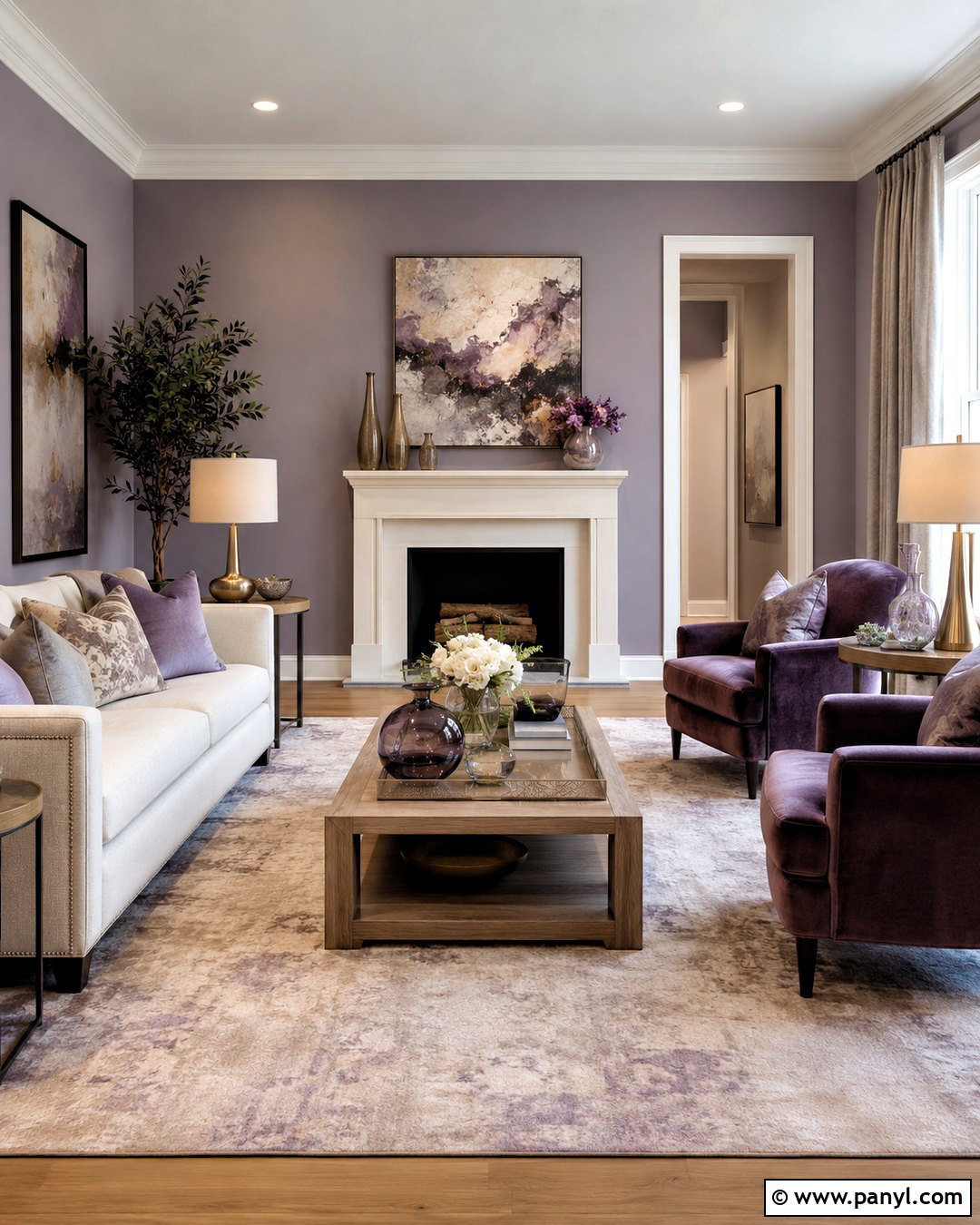
Lavender gray offers a subtle alternative to standard gray, bringing softness and unexpected color to a refined sitting room. Choose a muted shade that appears gray first and violet second. Pair it with warm white trim, an ivory sofa, and pale walnut tables. Two plum or mauve accent chairs can deepen the palette without making it overly sweet. Use a light rug containing beige, lavender, and faded blue, then add brushed brass lamps and charcoal picture frames for contrast. Linen curtains in a warm stone color will balance the cooler walls. Finish with abstract artwork, smoky glass accessories, and cushions in muted rose and cocoa brown. This scheme works best when tested carefully under both natural light and evening lamps.
22. Dusty Rose Sitting Room
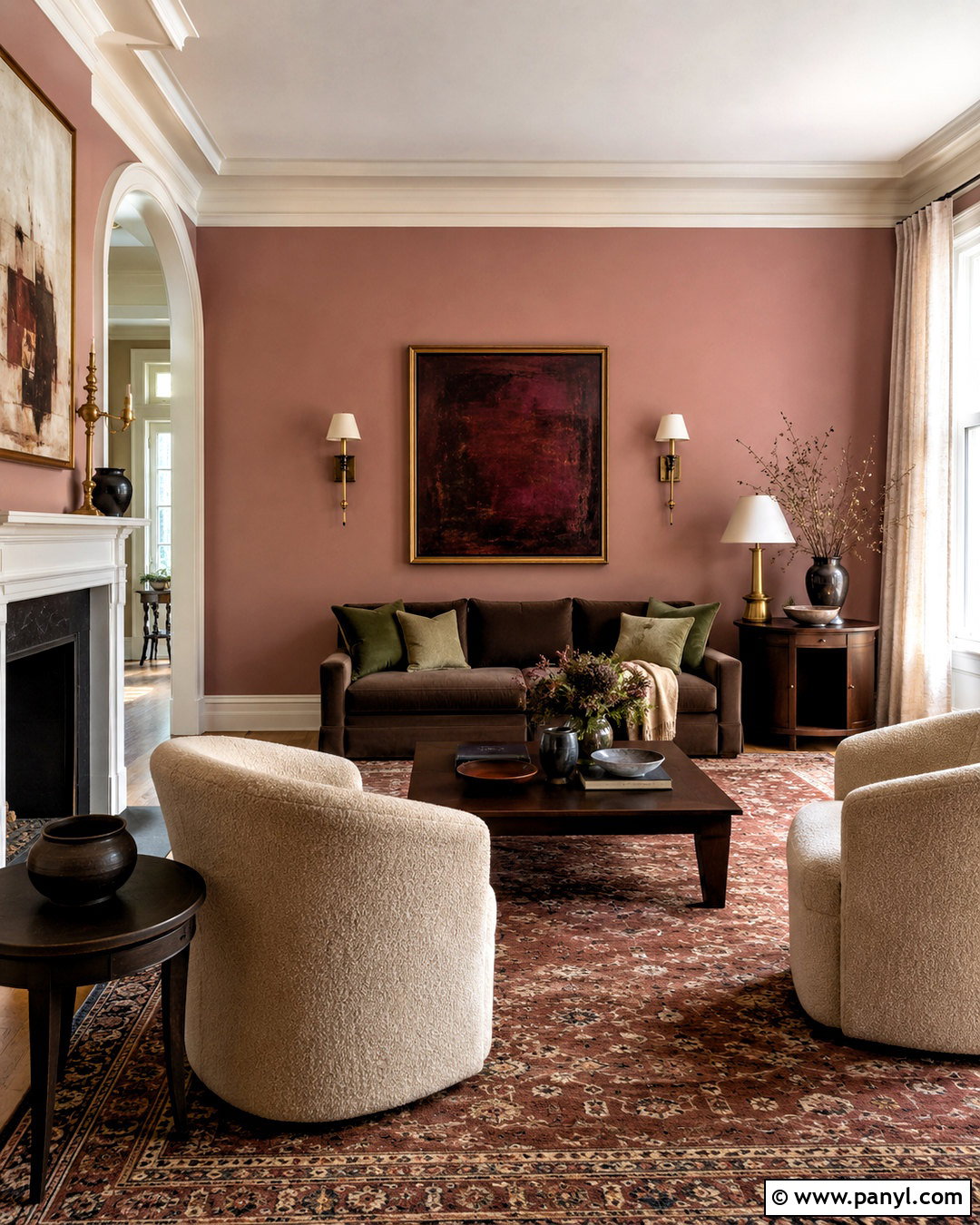
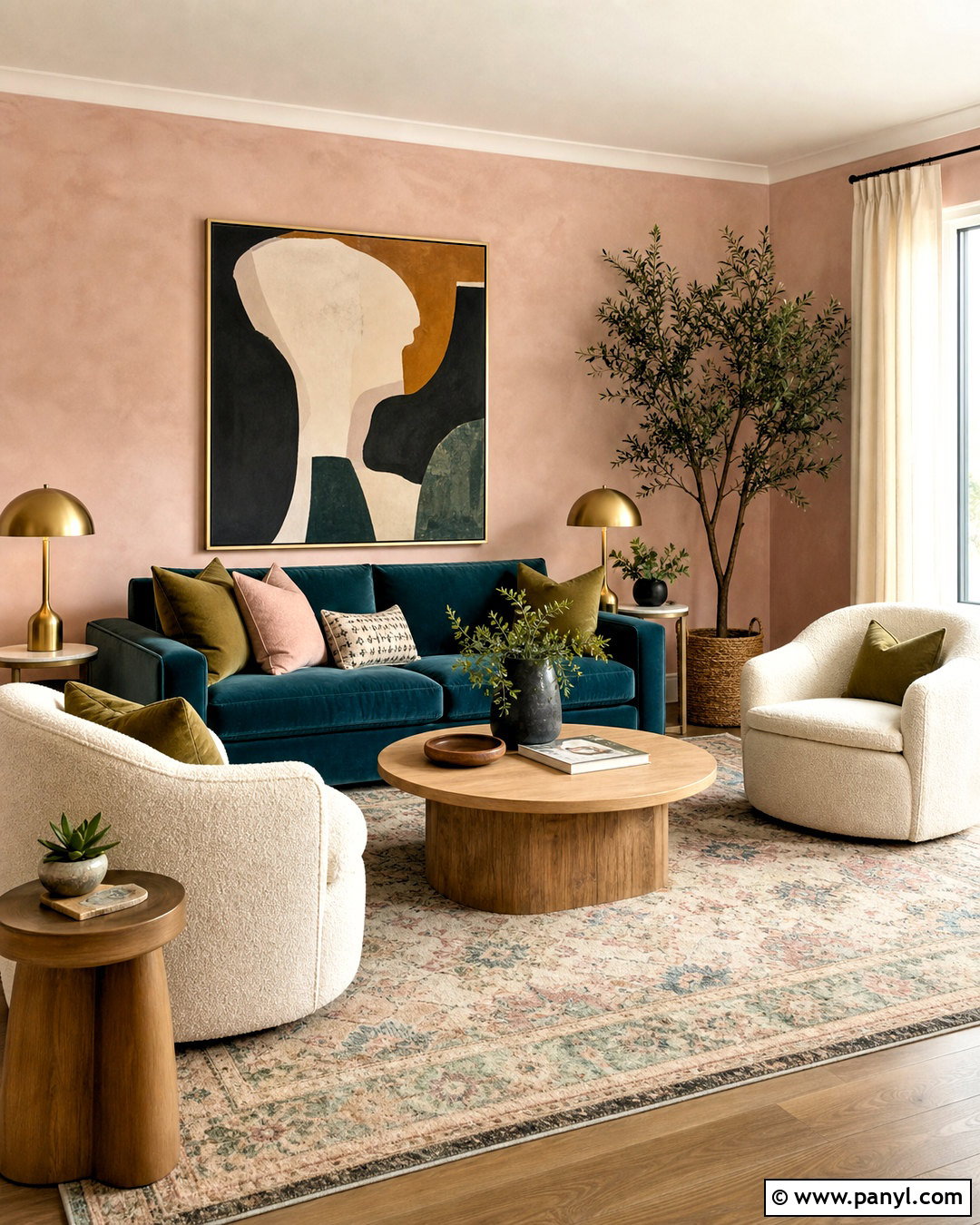
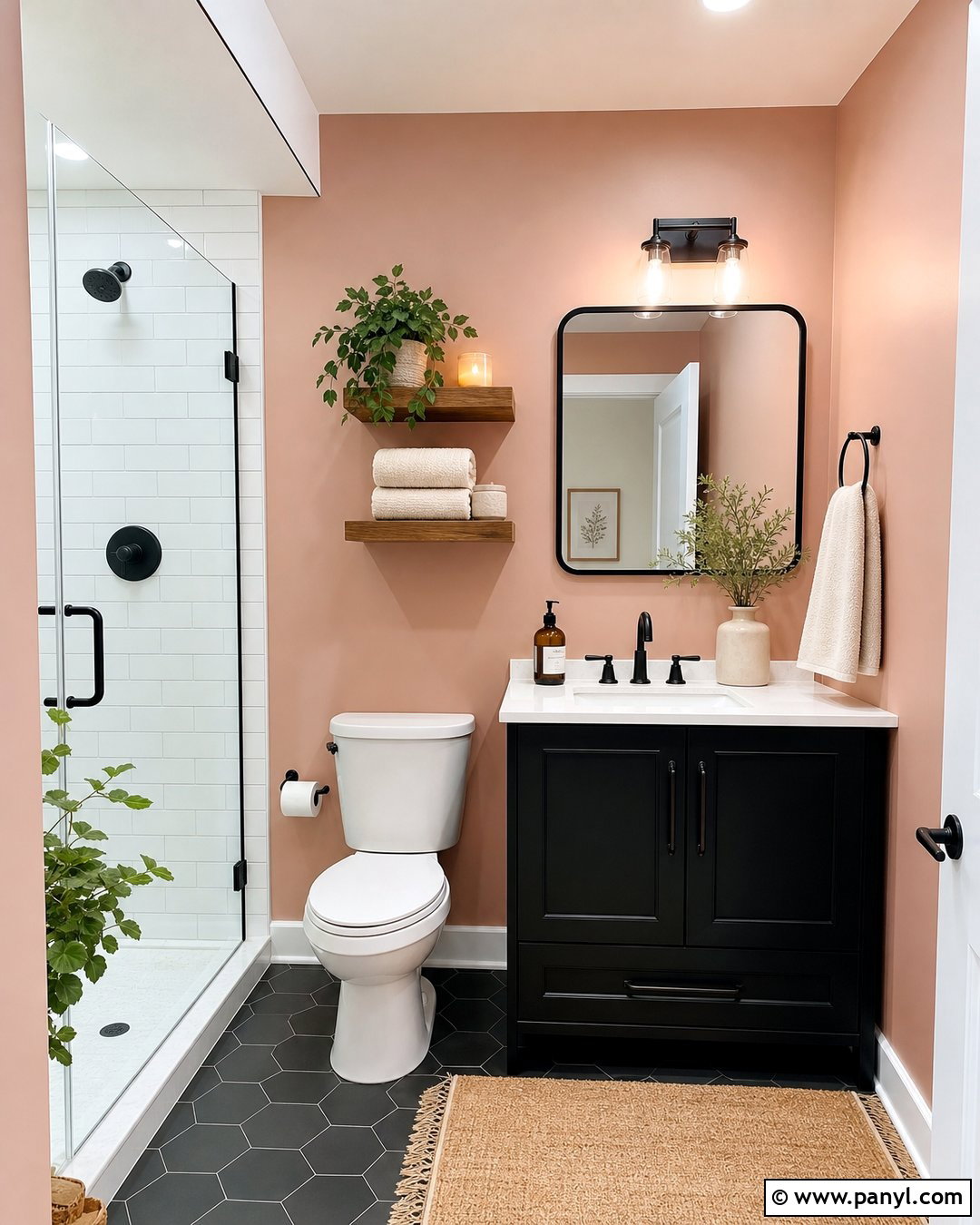
Dusty rose walls create a warm, flattering sitting room that can function much like a sophisticated neutral. Select a muted pink containing brown or gray undertones, avoiding shades that look overly bright. Paint the trim creamy white and keep the ceiling pale. Ground the room with a chocolate brown sofa or dark wood furniture, then add cream boucle chairs and a warm patterned rug. Olive green pillows, brass lamps, and flax curtains provide earthy contrast. Artwork featuring burgundy, rust, and soft blue will make the palette feel layered and intentional. Dusty rose is especially effective in rooms with traditional molding, where the color emphasizes architectural details. Keep furniture shapes clean and substantial to balance the softness of the walls.
23. Plaster Pink Sitting Room
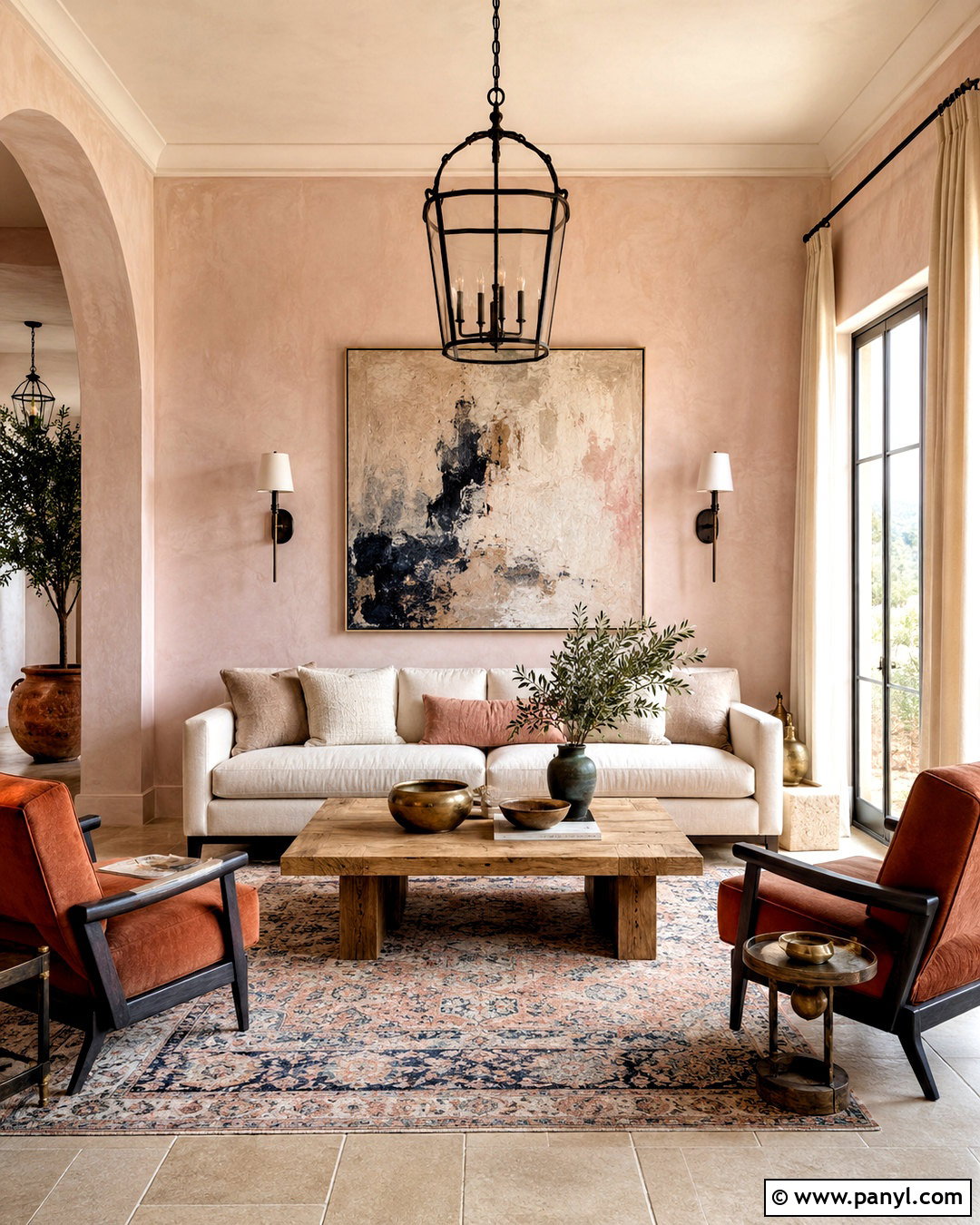
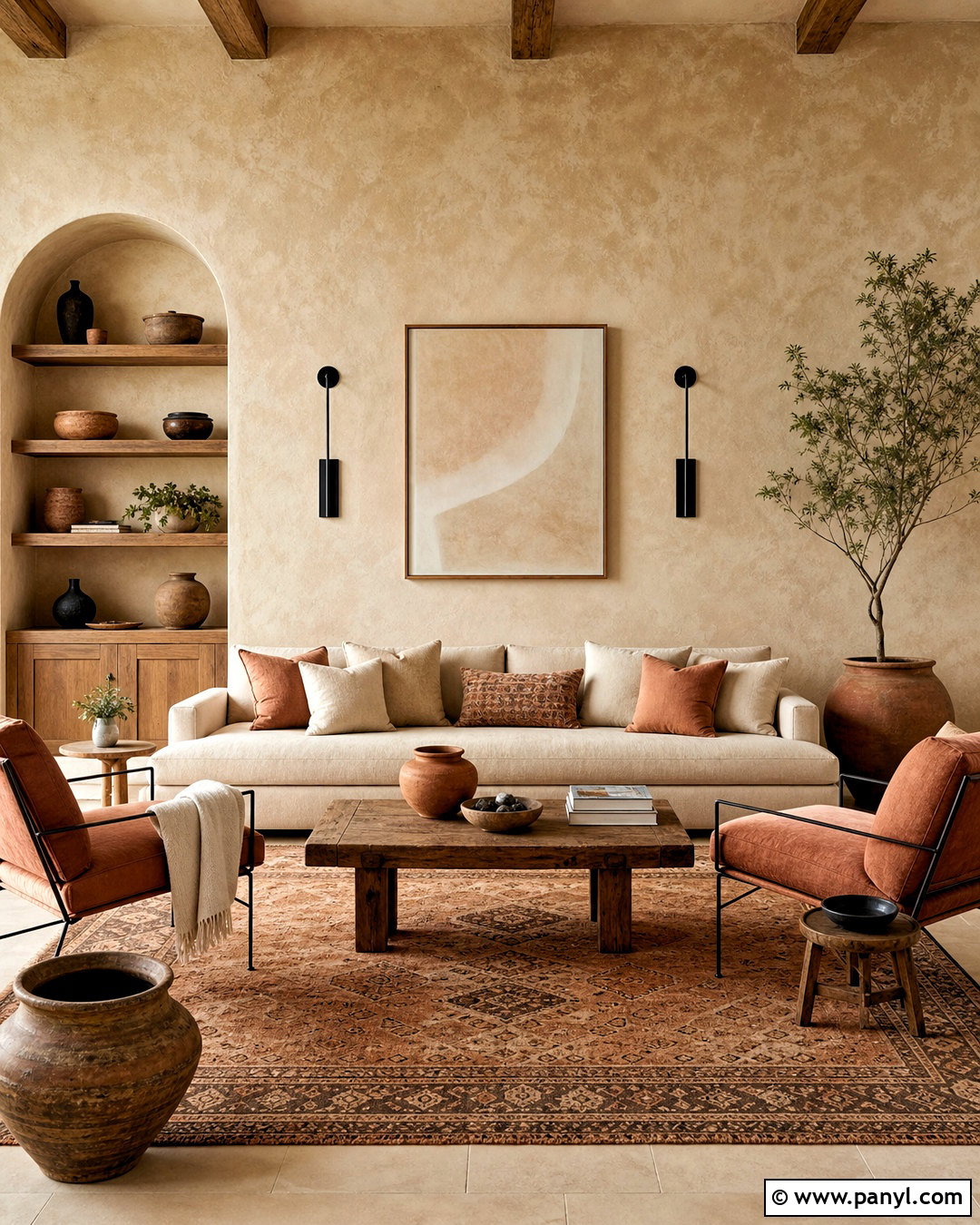
Plaster pink has an earthy, chalky appearance that gives a sitting room warmth without feeling sugary. Wrap the walls in this muted pink-beige shade and choose off-white for the trim and ceiling. Furnish the room with a cream linen sofa, oak coffee table, and two rust-colored lounge chairs. A faded rug in rose, brown, and blue will add quiet pattern beneath the seating. Use black metal lighting for definition and aged brass accessories for warmth. Natural linen curtains and handmade ceramics support the paint’s soft, mineral quality. Add one large abstract artwork rather than many small pieces. This cohesive look suits modern organic and Mediterranean-inspired interiors, especially when paired with pale wood floors, woven textures, and gently curved furniture.
24. Peach Sitting Room
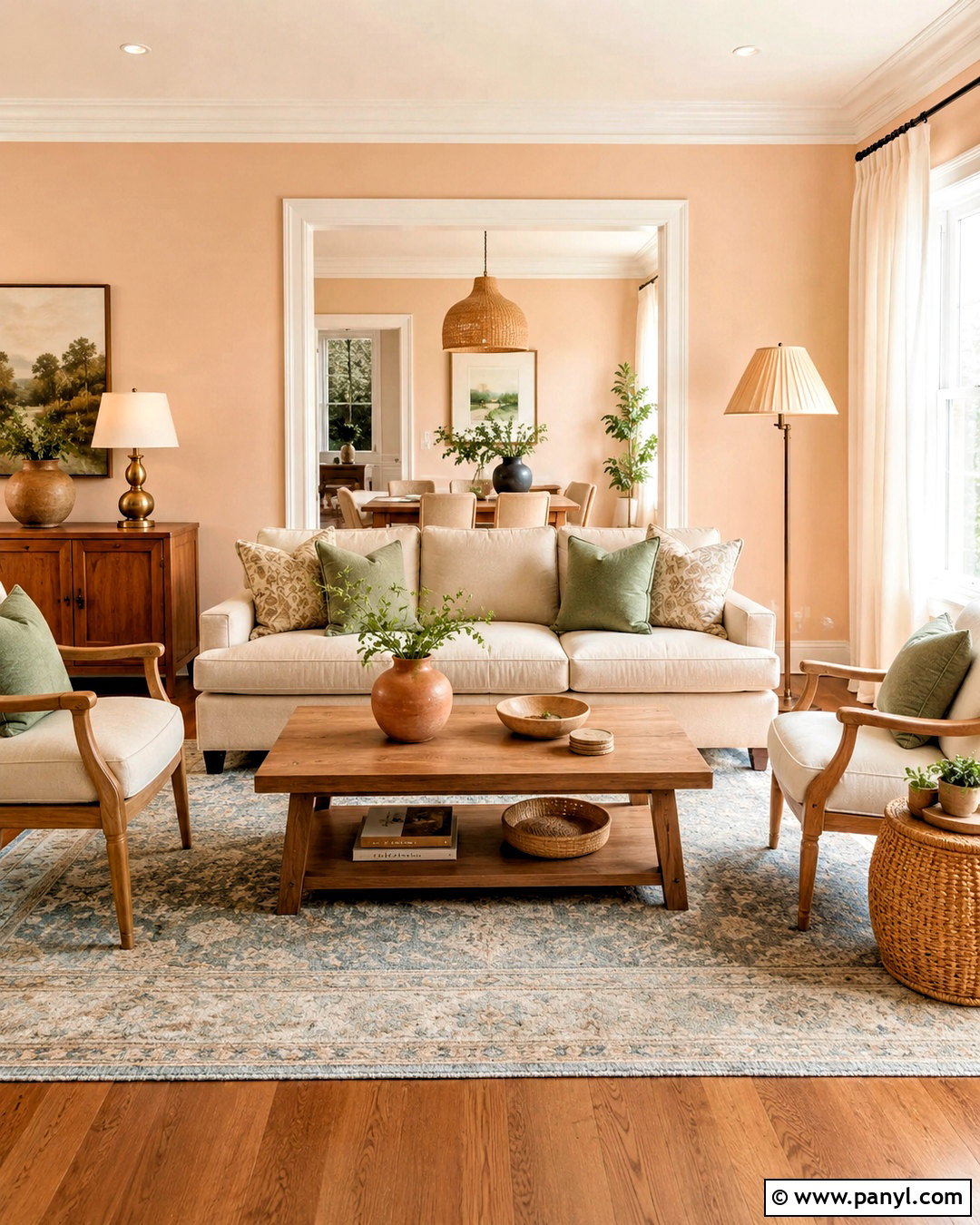
A soft peach sitting room can feel sunny and inviting when the color is muted with beige rather than overly orange. Paint the walls a pale peach and use warm white on the molding, doors, and ceiling. Choose an oatmeal sofa, medium oak furniture, and cream upholstered chairs to establish a balanced neutral base. Introduce sage green pillows, a dusty blue rug, and terracotta pottery for controlled contrast. Brass lamps and woven shades will enhance the room’s warmth, while white linen curtains keep the windows fresh. This palette is useful for spaces that receive limited daylight because it creates a gentle glow. Keep accessories modern and simple so the finished room feels current, calm, and suitable for year-round decorating.
25. Terracotta Sitting Room
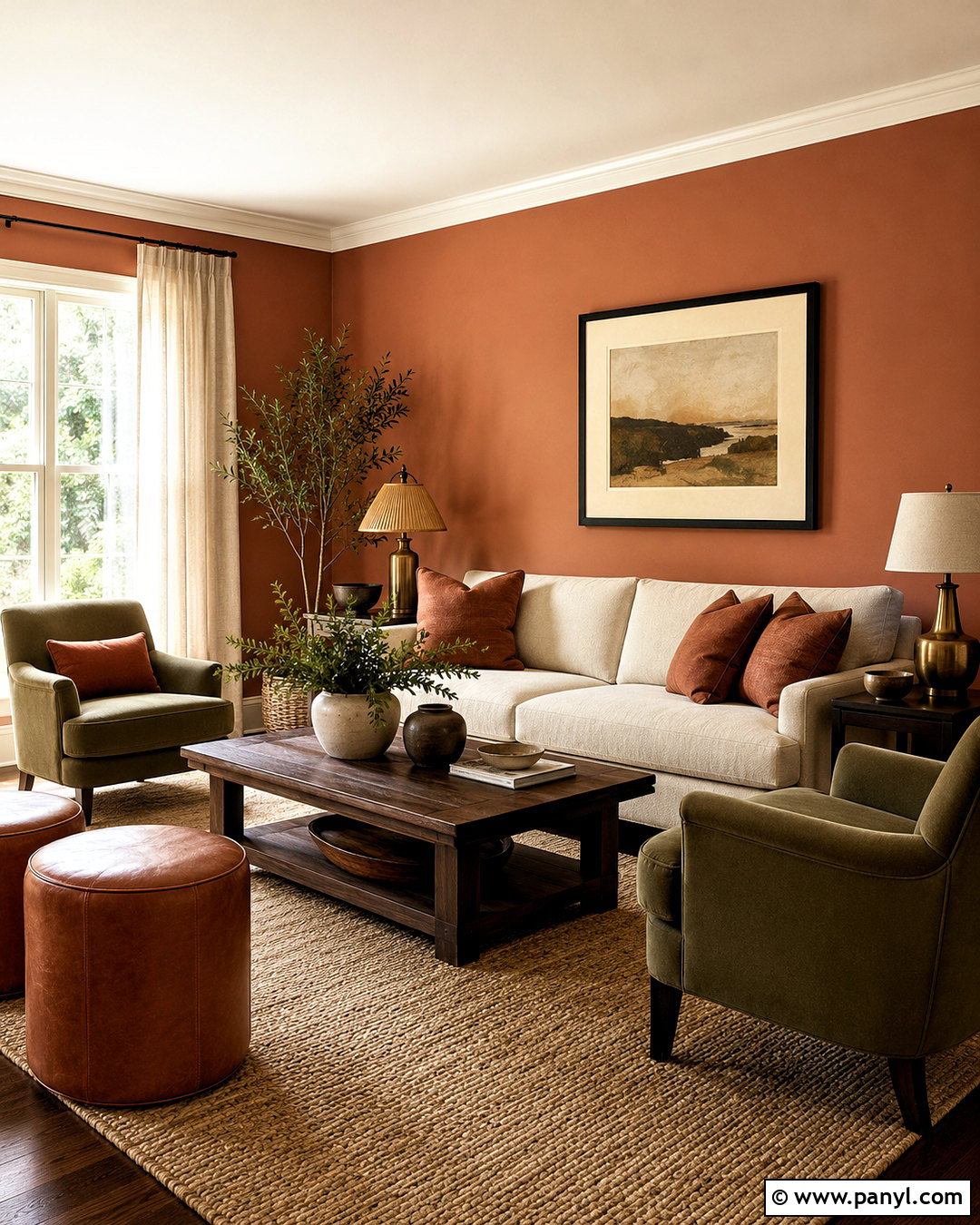
Terracotta walls make a sitting room feel grounded, expressive, and connected to natural materials. Choose a muted clay shade with brown and pink undertones, then pair it with creamy trim rather than stark white. A linen-colored sofa, olive green chairs, and a dark oak coffee table create a balanced conversation area. Use a neutral woven rug to give the saturated walls breathing room. Add aged brass lamps, black framed artwork, and full-length flax curtains. Cushions in cream, rust, and muted blue can subtly expand the palette. If four terracotta walls feel too intense, use the color on the fireplace wall and paint the remaining surfaces warm beige. Natural wood, stone, ceramics, and greenery will complete the earthy, cohesive design.
26. Warm Clay Sitting Room
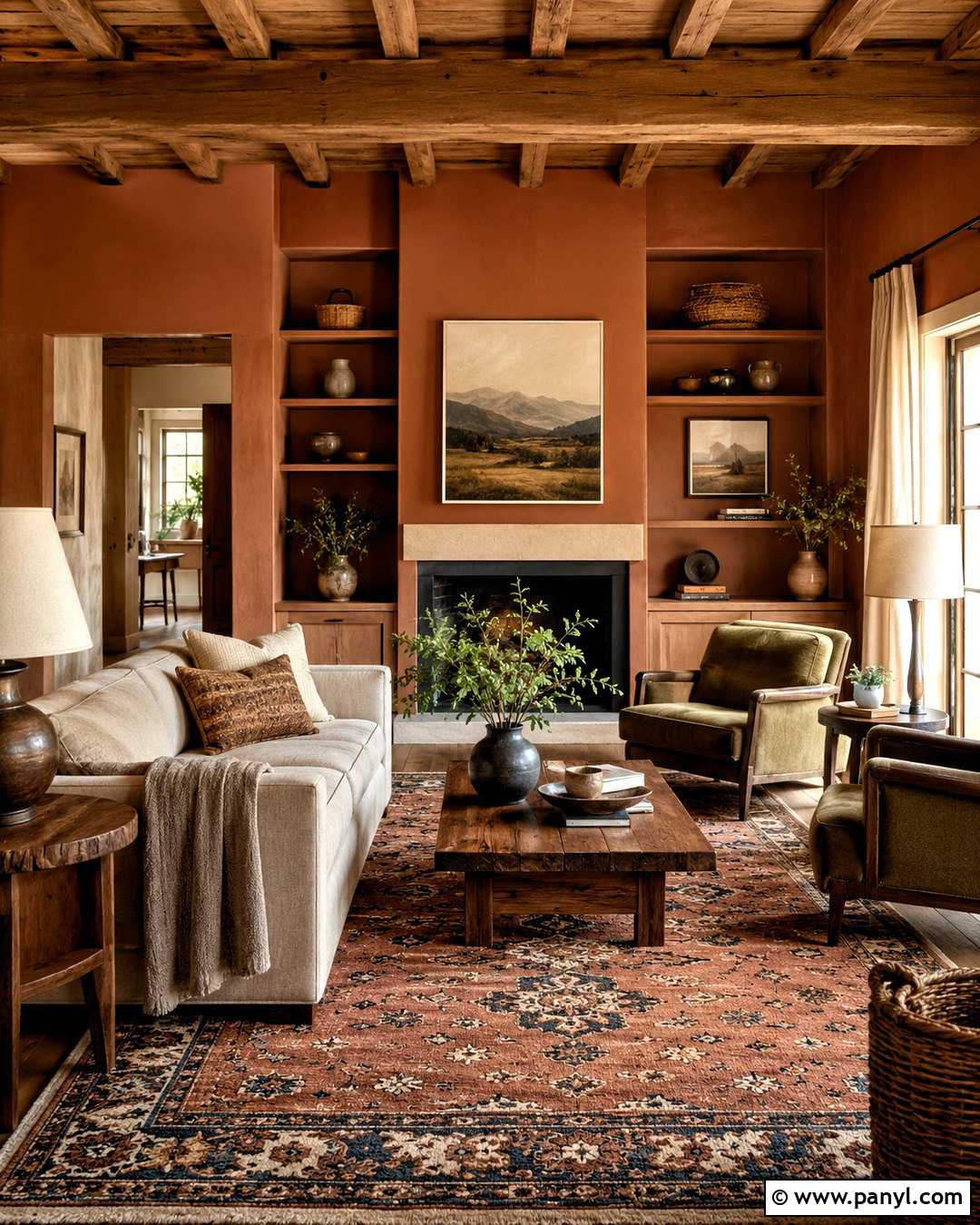
Warm clay paint sits between terracotta, beige, and muted red, making it a flexible choice for a cozy sitting room. Apply it to the walls and continue the shade behind built-in shelving for a smooth, uninterrupted effect. Use cream on the ceiling and trim to brighten the outline of the room. Furnish the space with a natural linen sofa, walnut tables, and olive upholstered chairs. A patterned wool rug containing clay, navy, and tan will hold the layout together. Add dark bronze lamps, woven baskets, and textured curtains in warm ivory. Minimal landscape artwork and handcrafted pottery suit the grounded palette. This scheme works particularly well with exposed beams, brick fireplaces, or medium-toned wood flooring that echoes the paint’s natural warmth.
27. Rust Red Sitting Room
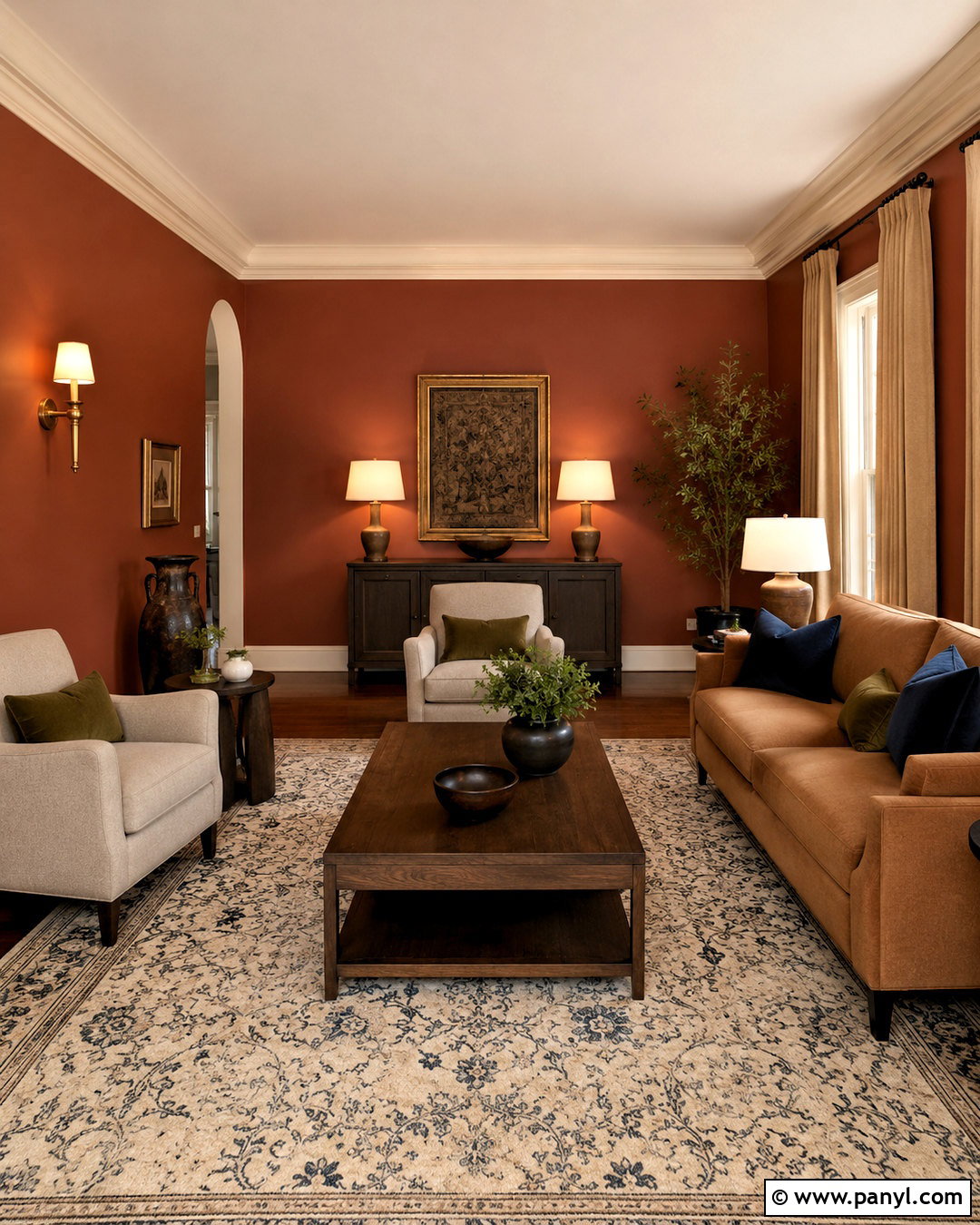
Rust red brings strong character to a sitting room while remaining easier to live with than a bright primary red. Choose a softened, brown-based rust and use it on every wall or around a central fireplace. Pair the color with creamy trim and a pale ceiling. A camel sofa, oatmeal chairs, and a dark walnut table will create a rich but controlled arrangement. Add an ivory-and-charcoal rug, brass sconces, and linen curtains in warm beige. Small amounts of navy, olive, and faded pink can appear in pillows and artwork. Because rust already carries visual weight, keep furniture silhouettes straightforward and accessories limited. The resulting room feels welcoming, established, and especially suited to traditional, rustic, or globally inspired interiors.
28. Muted Mustard Sitting Room
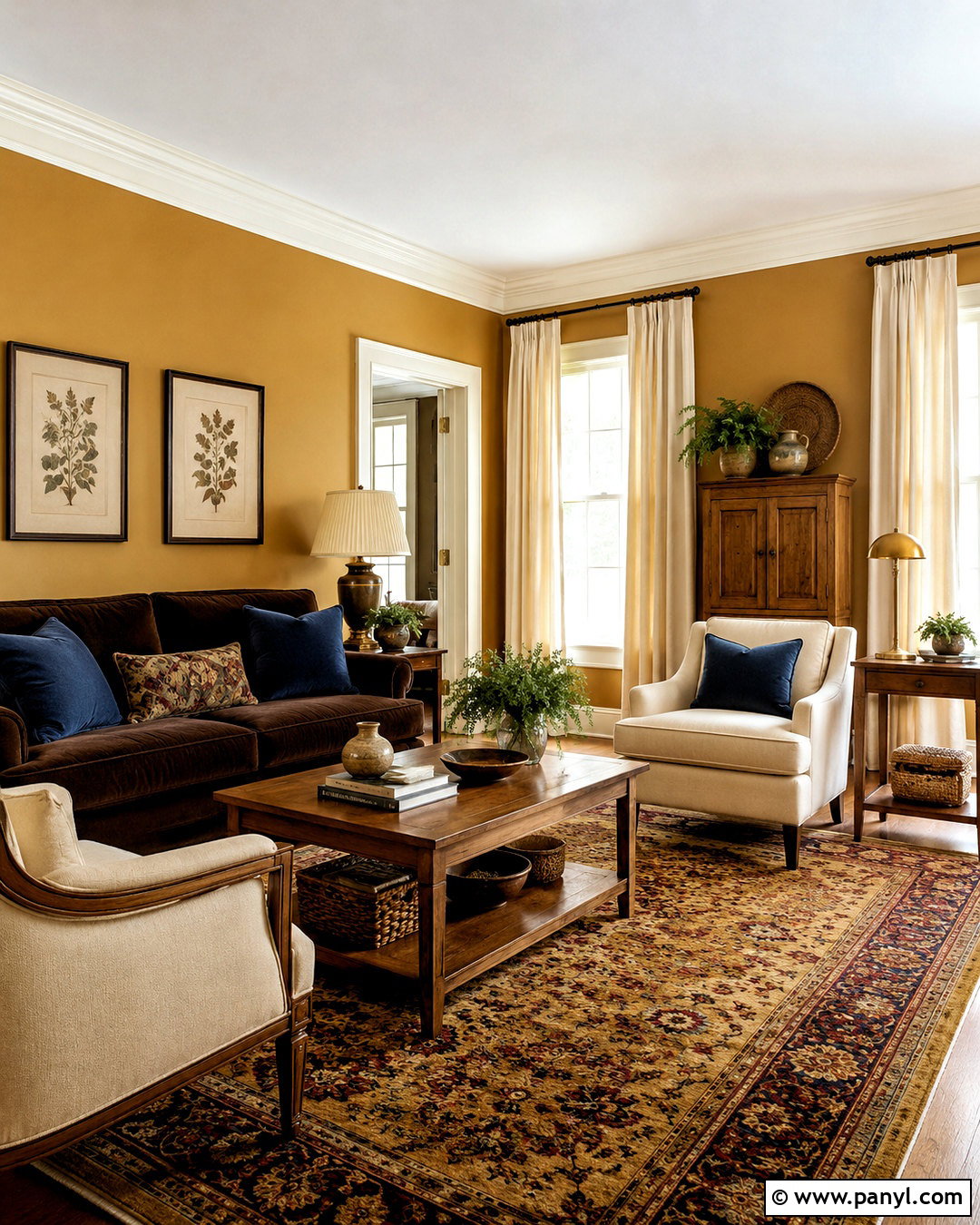
Muted mustard paint fills a sitting room with warmth and energy without the sharpness of bright yellow. Select an ocher-based shade with brown undertones and pair it with creamy white trim. Build the room around a dark brown sofa, light beige chairs, and a medium oak coffee table. A patterned rug containing mustard, burgundy, green, and ivory will make the palette feel deliberate. Add antique brass lighting, botanical prints, and natural linen curtains. Deep blue cushions provide a strong complementary accent, while woven baskets and pottery keep the scheme relaxed. Muted mustard works especially well in rooms with limited direct sunlight because it creates a warm visual glow. Use simple furniture forms to keep the bold wall color from feeling overly nostalgic.
29. Butter Yellow Sitting Room
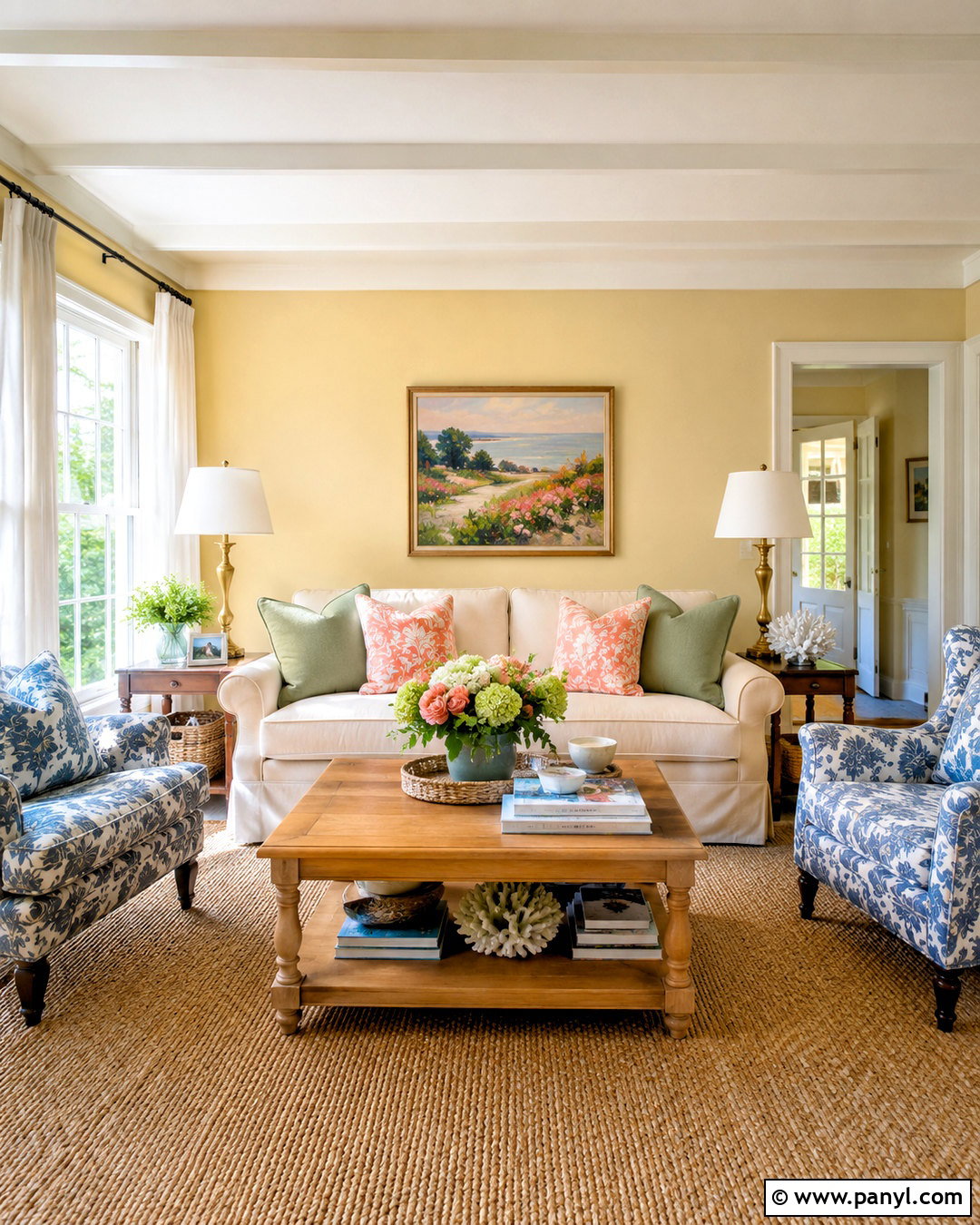
Butter yellow gives a sitting room a lighthearted, sun-washed look when used in a soft, creamy version. Paint the walls pale yellow and highlight the woodwork with warm white. Choose a comfortable ivory sofa, blue patterned chairs, and a natural oak coffee table for a classic color balance. A woven rug and linen curtains will keep the room casual, while brass lamps add subtle shine. Introduce sage green, dusty coral, and medium brown through pillows, books, and framed artwork. Butter yellow pairs particularly well with traditional windows and cottage details, but streamlined furniture can make it feel equally fresh. Keep the ceiling white and avoid excessive yellow accessories; the painted walls should provide the room’s main sense of warmth.
30. Chocolate Brown Sitting Room
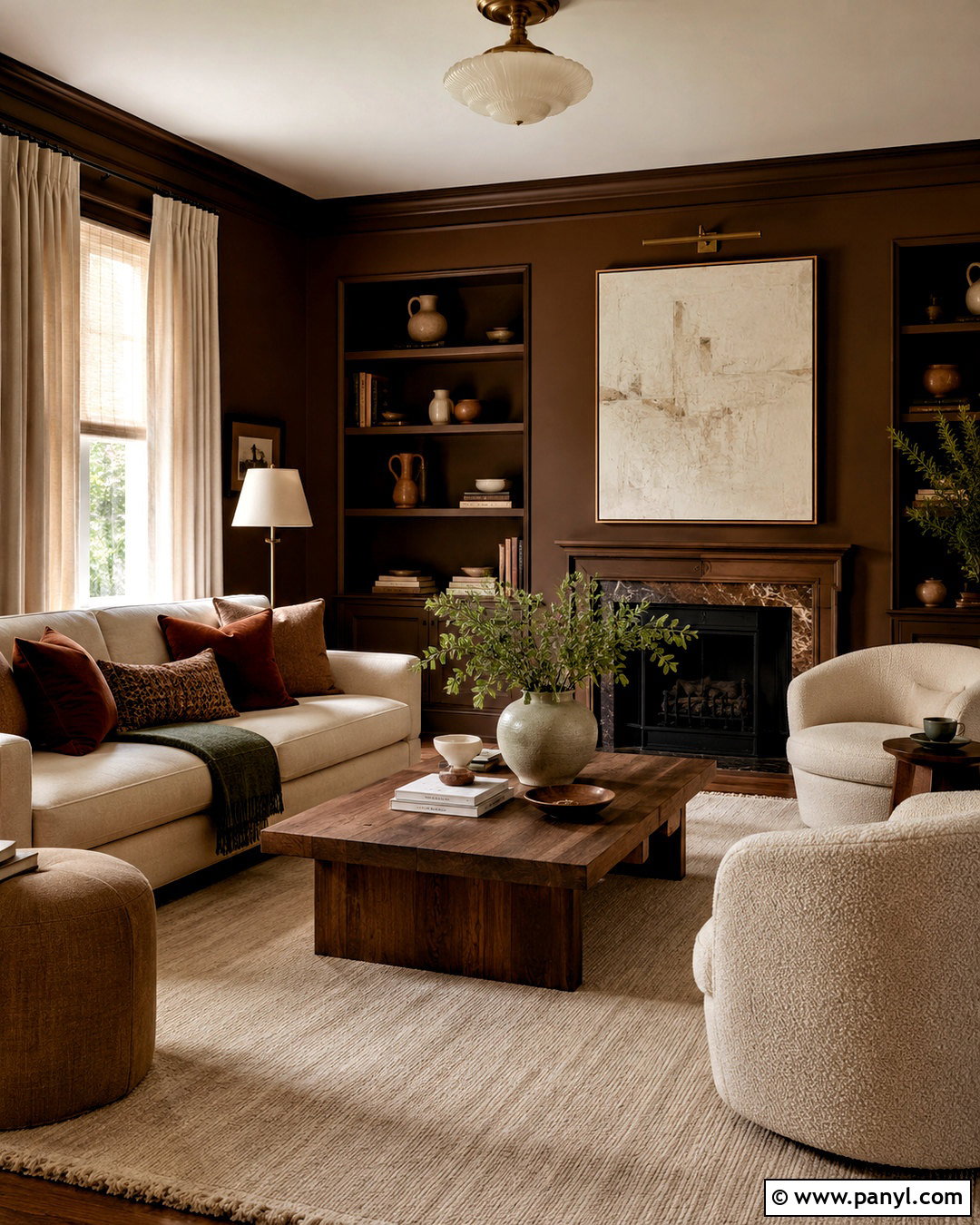
Chocolate brown walls create a deeply comfortable sitting room with a polished, enveloping quality. Use a rich brown with warm undertones on the walls and built-ins, then keep the ceiling soft ivory. A cream sofa and pale boucle chairs will create clear contrast against the dark background. Choose a walnut coffee table with a slightly lighter finish than the walls, plus a large beige wool rug to define the seating area. Add aged brass lighting, rust velvet pillows, and muted green accessories. Linen curtains in warm stone will soften the windows without introducing another strong color. Display light artwork in dark frames and include reflective surfaces sparingly. Layered lighting is essential for keeping this dark palette functional throughout the day.
31. Burgundy Sitting Room
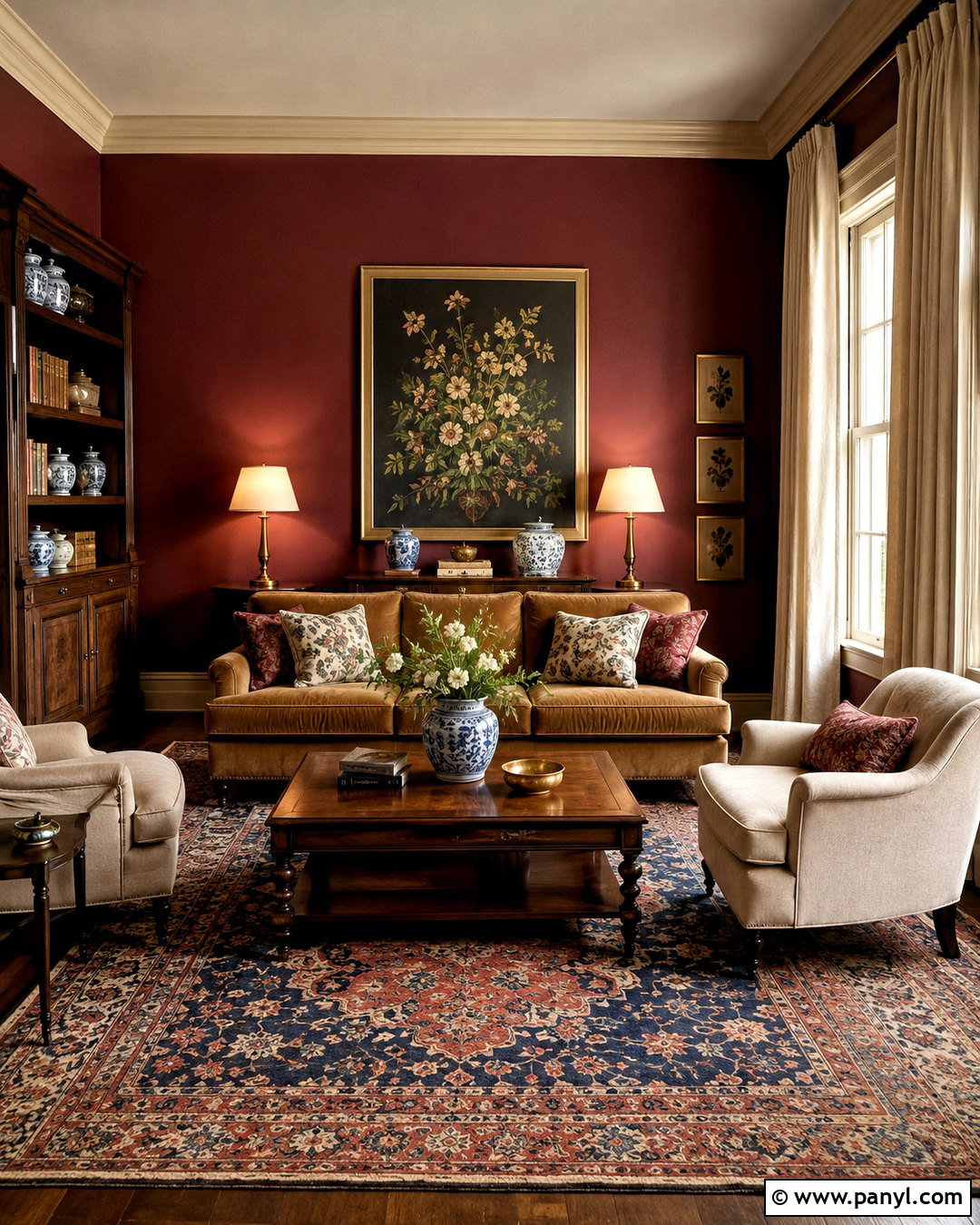
Burgundy paint gives a formal sitting room depth and richness while creating an intimate setting for conversation. Choose a softened wine-red shade with noticeable brown undertones, avoiding anything too bright or purple. Paint the walls burgundy and use warm ivory on the trim and ceiling. Add a camel velvet sofa, cream armchairs, and a dark wood coffee table. A traditional rug containing faded red, navy, and beige will reinforce the classic palette. Brass lamps, walnut bookcases, and botanical or landscape art complete the arrangement. Use natural linen curtains to lighten the edges of the room. Burgundy has a commanding presence, so leave some surfaces uncluttered and repeat the wall color only in small patterned details rather than large upholstery pieces.
32. Plum Sitting Room
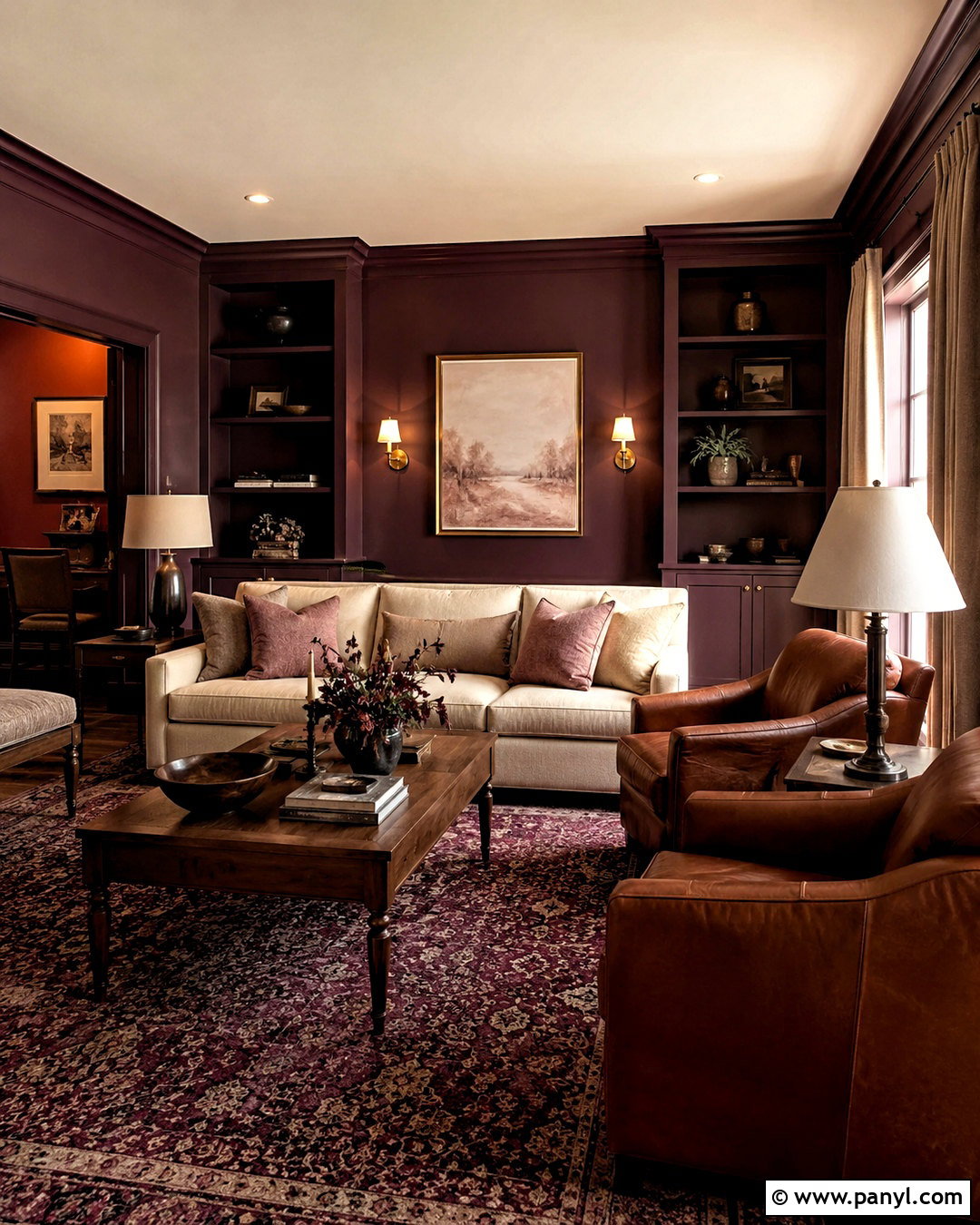
Deep plum offers a creative alternative to navy or charcoal for a dramatic sitting room. Select a muted plum with brown and gray undertones, then apply it across the walls and built-in shelves. Pair it with a pale cream ceiling and matching trim for a softer contrast than pure white. Furnish the room with an oatmeal sofa, caramel leather chairs, and a walnut coffee table. A faded rug with plum, rust, blue, and tan will create a cohesive floor layer. Add antique brass sconces, warm linen curtains, and muted rose pillows. Artwork with light backgrounds will stand out clearly. Include several lamps at different heights, since plum can absorb light. The finished space should feel layered, comfortable, and intentionally colorful rather than theatrical.
33. Black Accent Wall Sitting Room
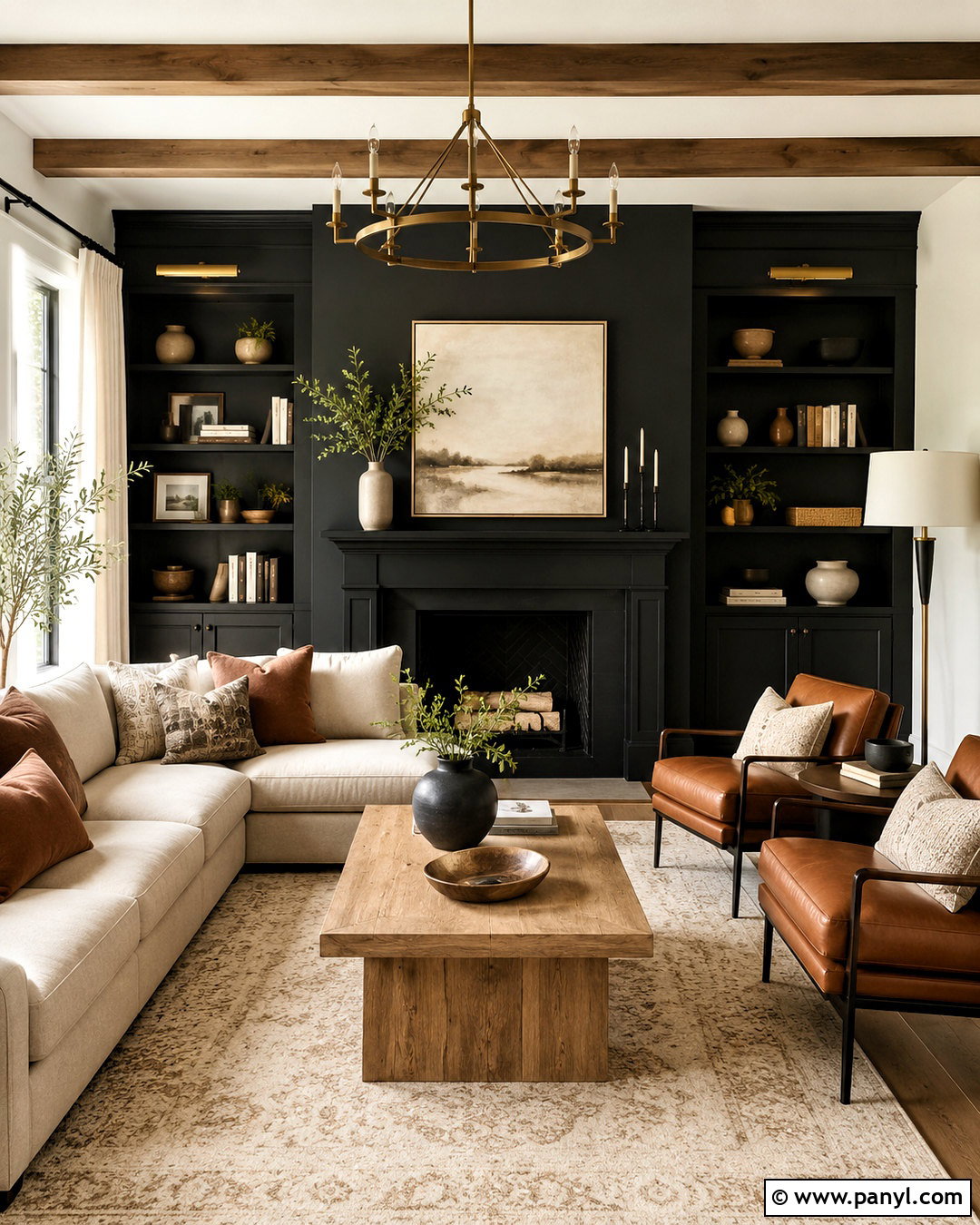
A black accent wall can sharpen a sitting room’s architecture while allowing the rest of the space to remain light. Use soft matte black on the fireplace wall or behind built-in shelving, then paint the remaining walls warm white. Choose an oatmeal sectional, natural oak tables, and cognac leather chairs to balance the strong focal point. A cream rug with a subtle black pattern will connect both wall colors. Add linen curtains, brushed brass lighting, and rust or olive pillows for warmth. Keep the ceiling white so the room retains an open appearance. Display pale artwork, ceramics, and books against the black wall, leaving enough empty space around each piece. This scheme works well in modern, industrial, and updated farmhouse sitting rooms.
34. Two Tone Sitting Room
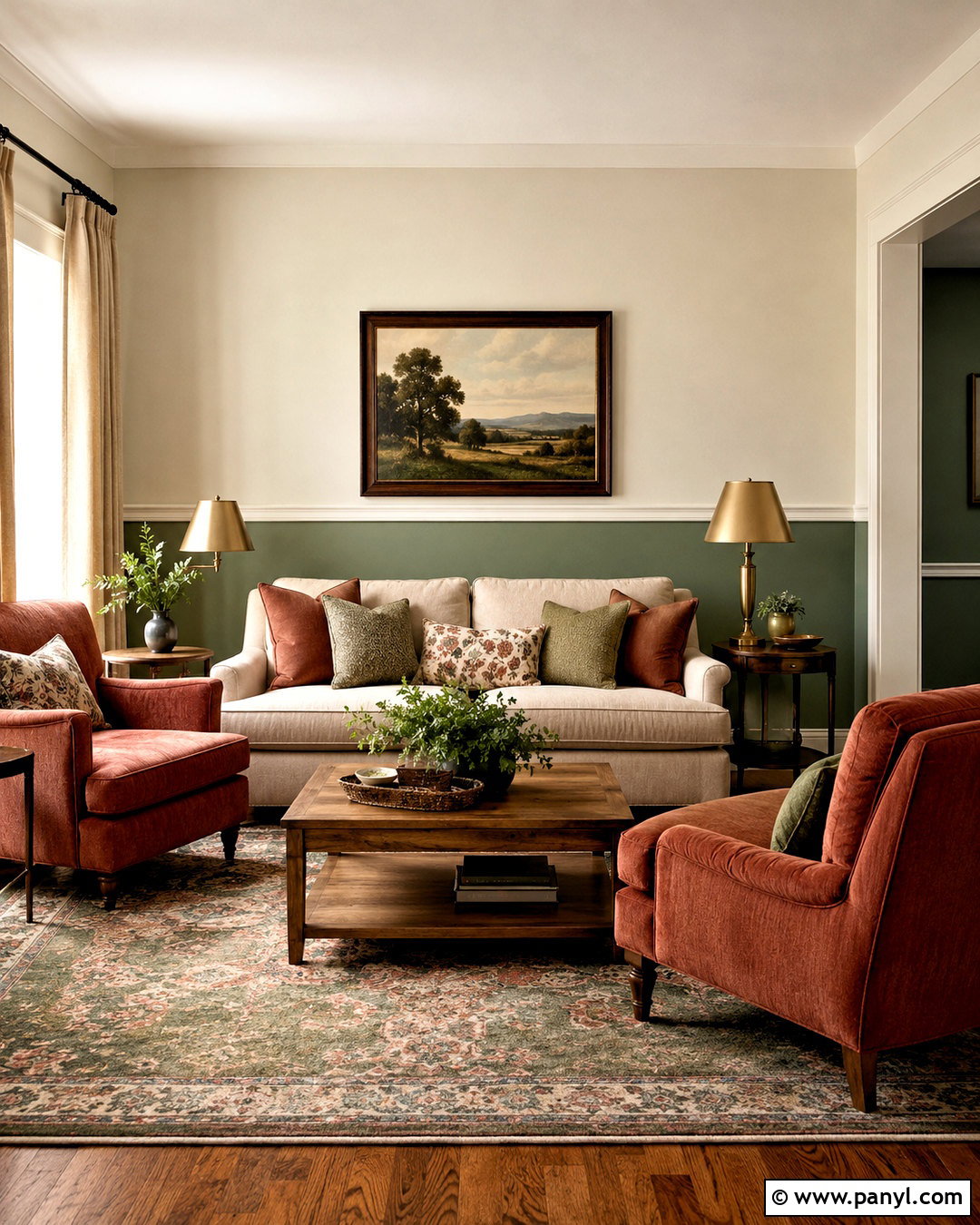
Two-tone walls add architectural interest to a sitting room without relying on wallpaper or elaborate molding. Paint the lower third or lower half a medium sage green, and use warm cream above it. Separate the colors with a slim chair rail painted to match the cream. Choose a beige sofa, oak coffee table, and rust-colored chairs to support the earthy palette. A patterned rug containing green, tan, and faded red will visually connect both wall sections. Add brass lamps, linen curtains, and framed landscapes in dark wood frames. Keep the dividing line consistent around doors and windows for a professional appearance. This treatment can also make tall rooms feel more balanced by grounding the lower walls with the darker color.
35. Color Drenched Sitting Room
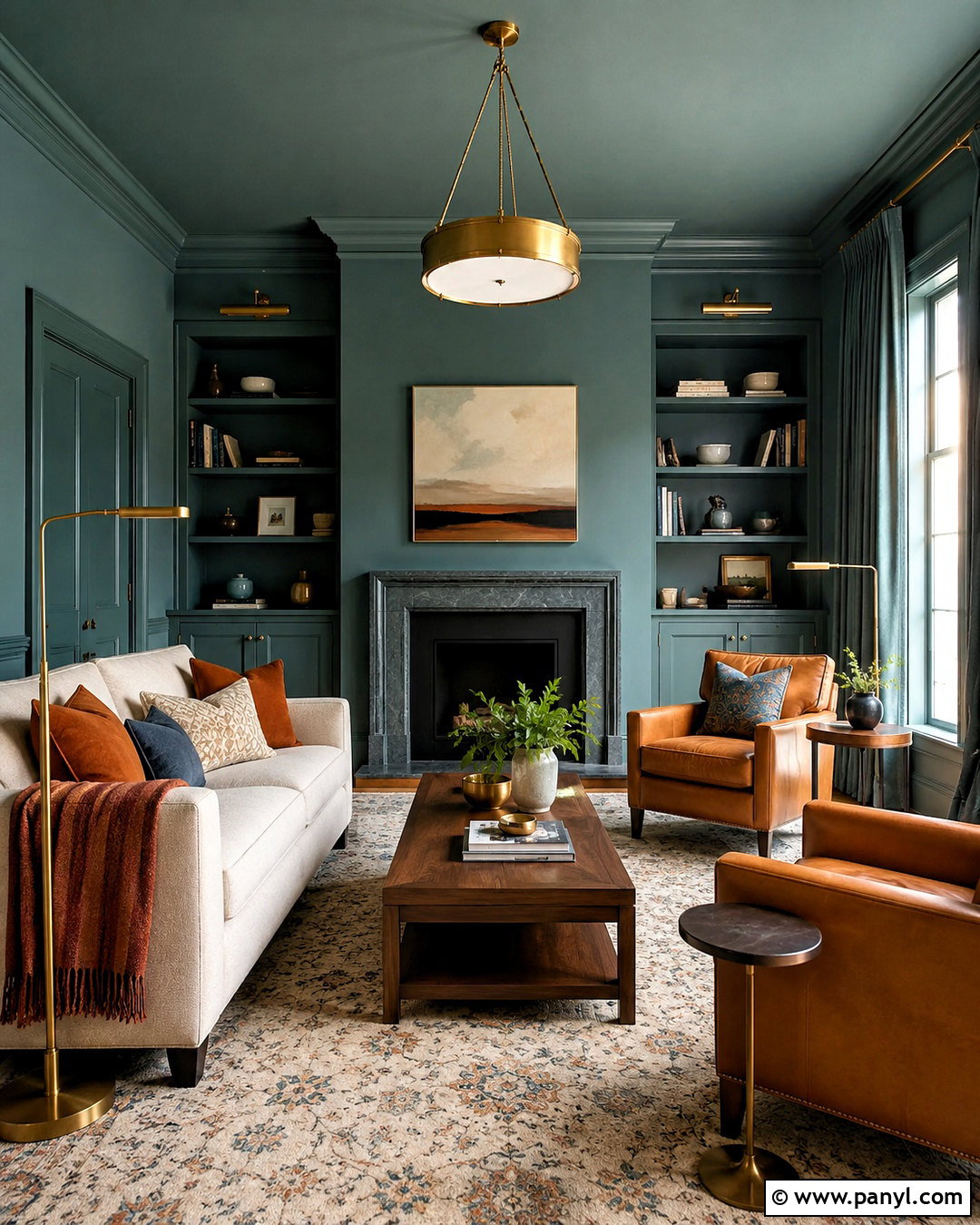
Color drenching creates a unified sitting room by covering walls, trim, doors, built-ins, and sometimes the ceiling in one continuous shade. A muted blue-green works especially well because it provides depth without becoming overpowering. Use the same color in different finishes: matte on walls, flat on the ceiling, and satin on woodwork. Add a cream sofa, camel leather chairs, and a pale patterned rug to contrast with the painted envelope. Walnut tables, brass lighting, and rust textiles bring warmth. Keep curtains close to the wall color so windows blend naturally into the scheme. Simple artwork and carefully arranged books will prevent visual clutter. This complete treatment can make awkward architectural elements feel connected and turn an ordinary sitting room into a deliberate, finished space.
Conclusion:
The most successful **sitting room paint color ideas** consider the entire space rather than treating wall paint as a separate decision. Natural light, flooring, trim, furniture, and connecting rooms all influence how a shade will appear. Warm whites and layered neutrals offer flexibility, while greens, blues, clay tones, and deeper colors provide more personality. Once you have narrowed your choices, paint large sample areas and observe them at several times of day. Build the remaining palette with coordinated upholstery, rugs, curtains, wood finishes, and lighting. Whether you prefer an airy room or a cozy color-drenched retreat, a carefully planned scheme will feel balanced, comfortable, and personal for years.

Related Ideas and Inspiration:
Leave a Reply