
Choosing an elegant paint color is about more than finding a beautiful shade. The right wall color should complement the room’s light, flooring, furniture, and architectural details while creating a clear mood. Current palettes include warm neutrals, nature-inspired greens, powdery blues, delicate pinks, earthy browns, and deeper jewel tones. () These colors can feel timeless when they are supported by thoughtful materials and balanced contrast. Always test a large sample on multiple walls, then view it throughout the day before committing. Whether you prefer airy simplicity, traditional warmth, or rich drama, the complete room matters as much as the paint itself. Explore these practical and sophisticated 25 Elegant Wall Colors.

1. Warm White Living Room Wall Color
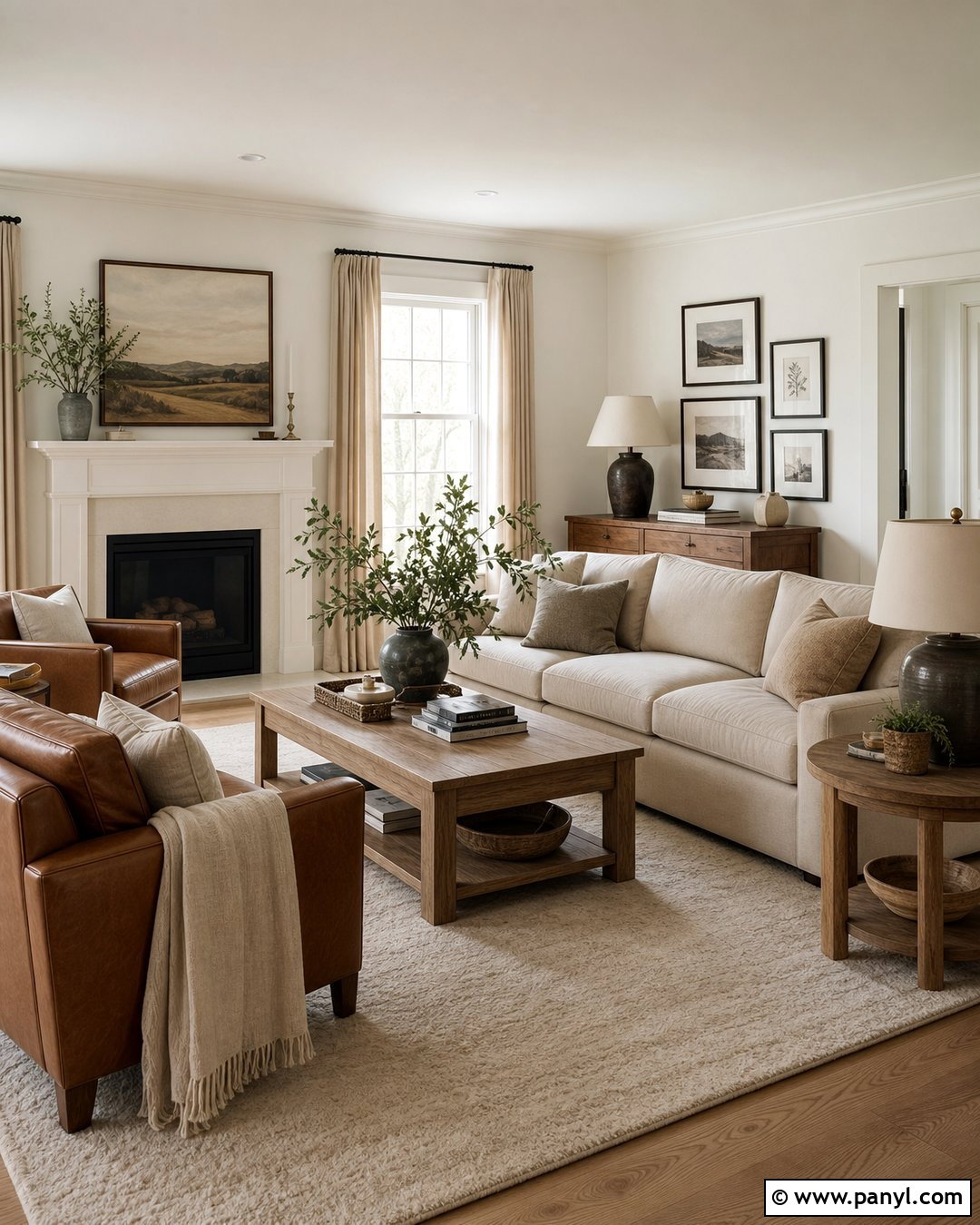
Warm white creates a bright living room without the stark feeling of a cool, blue-based white. Choose a creamy shade with subtle beige or yellow undertones, then repeat that warmth through natural oak furniture and an ivory wool rug. A tailored oatmeal sofa keeps the palette quiet, while camel leather chairs provide gentle contrast. Add full-length linen curtains, aged brass lighting, and a few black picture frames for definition. The ceiling and trim can use a cleaner white in a satin finish, helping the warmer walls remain noticeable. Finish the room with olive branches, textured pillows, and understated landscape artwork. This complete look works especially well in traditional, transitional, Scandinavian, and relaxed modern homes.
2. Soft Greige Bedroom Wall Color
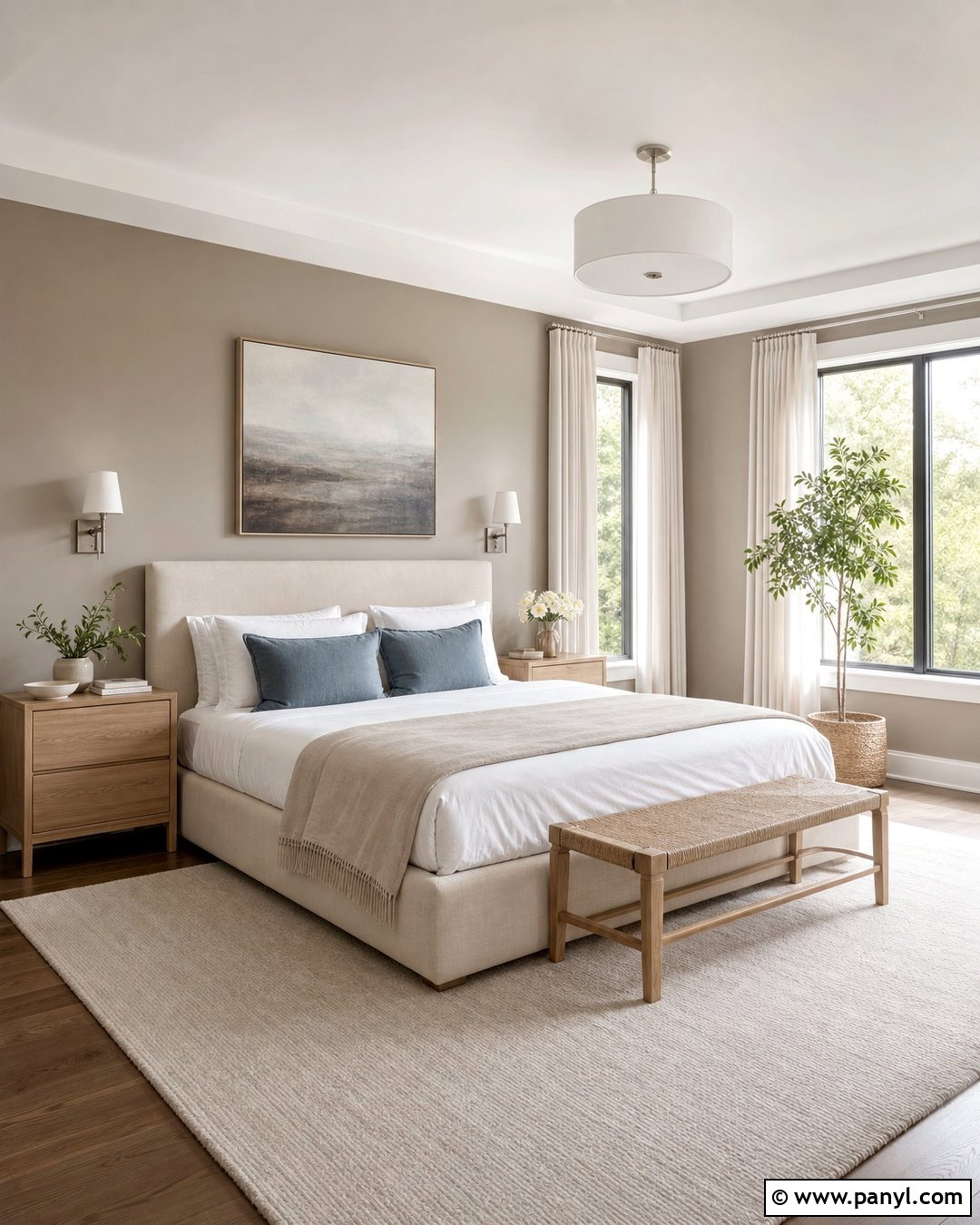
Soft greige offers the balance of gray and beige, making it a flexible bedroom backdrop for both warm and cool furnishings. Paint every wall in a light greige with a noticeable warm undertone, then add an upholstered oatmeal bed and medium-toned oak nightstands. Crisp white sheets keep the design fresh, while taupe blankets and muted blue pillows introduce quiet layers. Use off-white curtains rather than bright white ones so the contrast remains gentle. Brushed nickel sconces can add a cooler note without disturbing the calm palette. A woven bench, understated abstract artwork, and a pale wool rug complete the room. Keep the ceiling warm white and use simple matching trim for a clean, connected finish.
3. Mushroom Beige Dining Room Wall Color
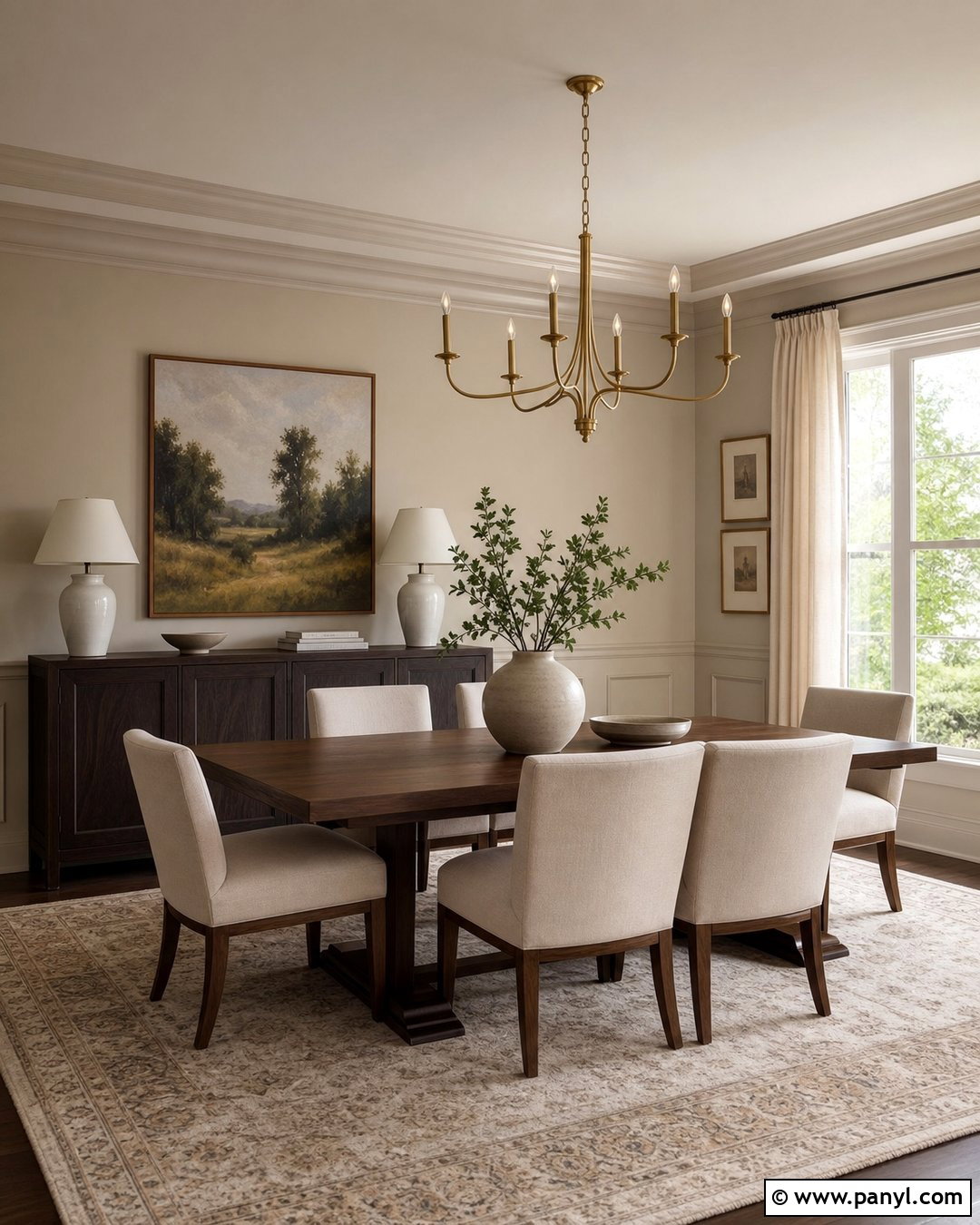
Mushroom beige has more depth than cream but feels softer than a conventional brown. It creates a polished dining room when paired with walnut, ivory, and aged metal. Use the color across the walls and architectural molding to produce a smooth, enveloping background. Center a rectangular walnut table beneath a sculptural aged brass chandelier, then surround it with ivory upholstered chairs. Natural linen curtains and a faded beige rug soften the harder surfaces. Add a dark wood sideboard displaying ceramic lamps, a large landscape painting, and a few simple vessels. Creamy white on the ceiling prevents the room from becoming heavy. The finished space feels intimate enough for dinner while remaining bright, approachable, and suitable for everyday meals.
4. Classic Taupe Entryway Wall Color
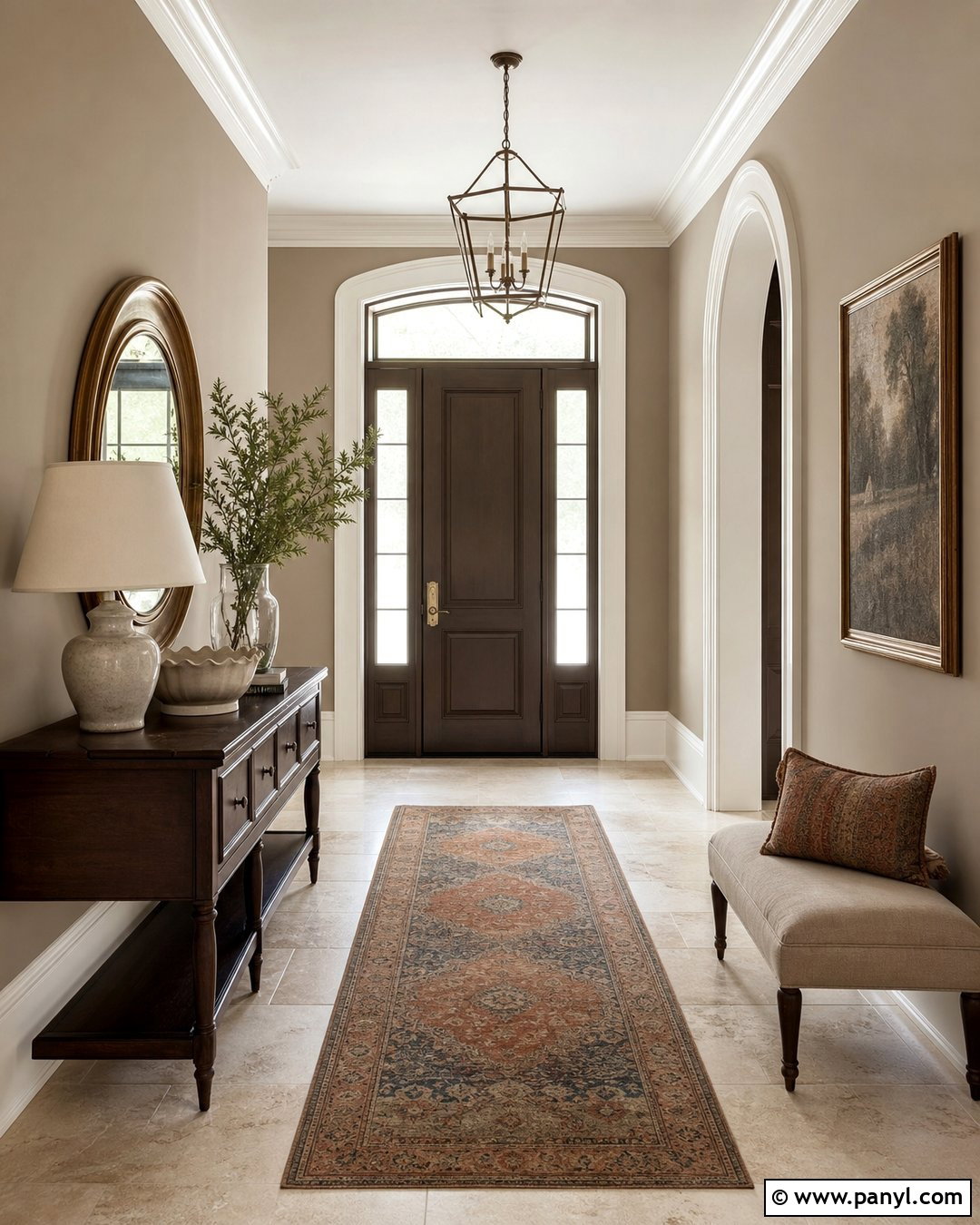
A balanced taupe wall color can make an entryway feel composed from the moment the front door opens. Select a medium-light shade with warm brown undertones rather than a purple or overly gray cast. Pair it with crisp ivory trim, pale limestone flooring, and a narrow dark walnut console. Above the console, hang a large round mirror with a slim antique brass frame. A shaded table lamp, ceramic bowl, and leafy branch create a welcoming arrangement without crowding the surface. Add a muted vintage runner that combines taupe, rust, and faded blue. If space allows, include a small upholstered bench near the door. The contrasting woods and soft textiles give the neutral walls dimension while keeping the entry practical and uncluttered.
5. Linen Beige Family Room Wall Color
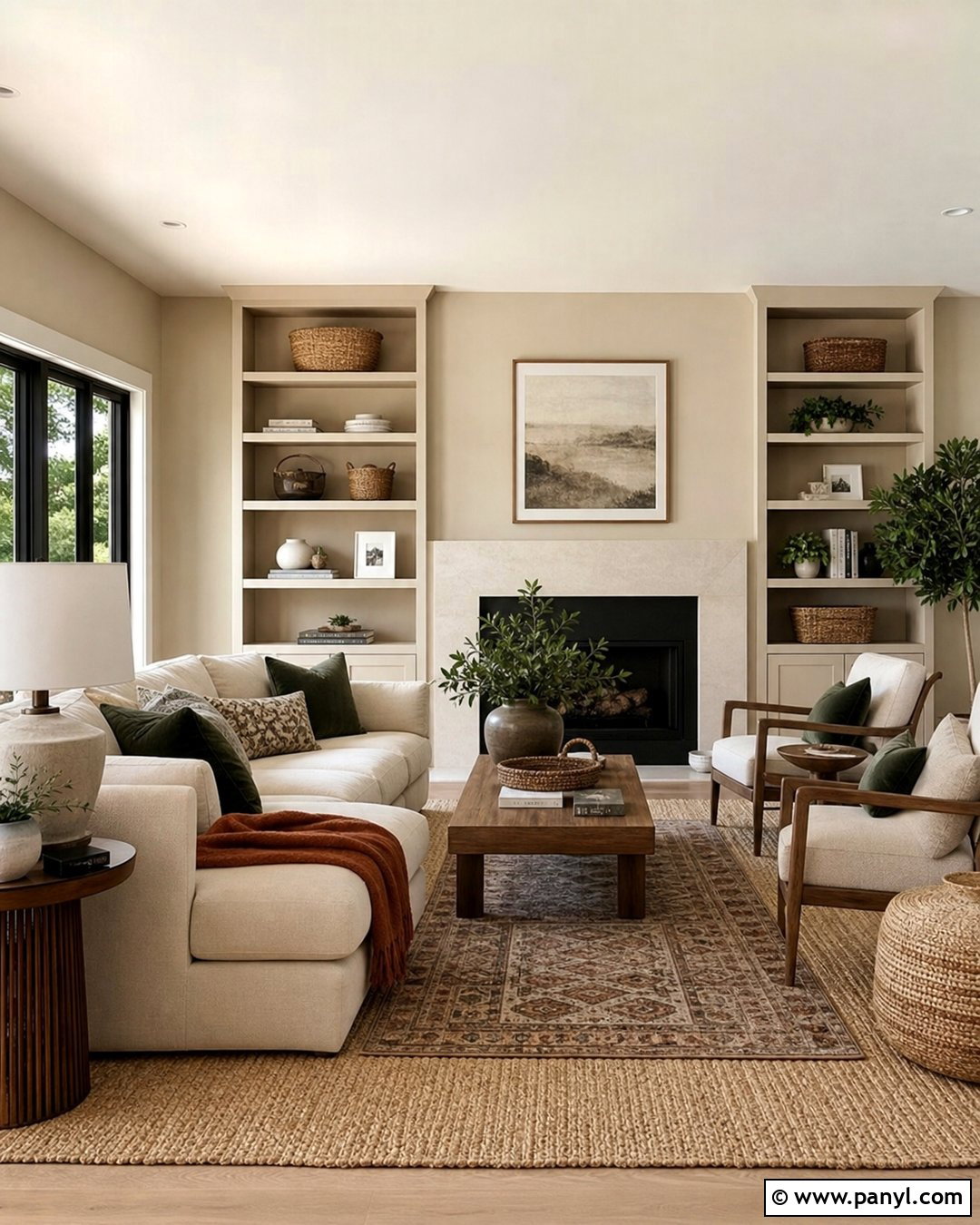
Linen beige brings gentle warmth to a family room and makes everyday furnishings feel more coordinated. Choose a pale beige that resembles natural flax, then combine it with a deep, comfortable sectional in soft ivory or light camel. Use a large sisal rug under the entire seating arrangement and layer a smaller patterned rug on top for softness. Medium oak side tables, woven baskets, and ceramic lamps strengthen the natural palette. Introduce muted forest green and clay through washable pillows and throws. Built-in shelves can be painted in the same linen beige for a seamless appearance, with books and simple pottery providing color. Black-framed windows or curtain rods offer enough contrast to stop the room from looking washed out.
6. Pale Putty Kitchen Wall Color
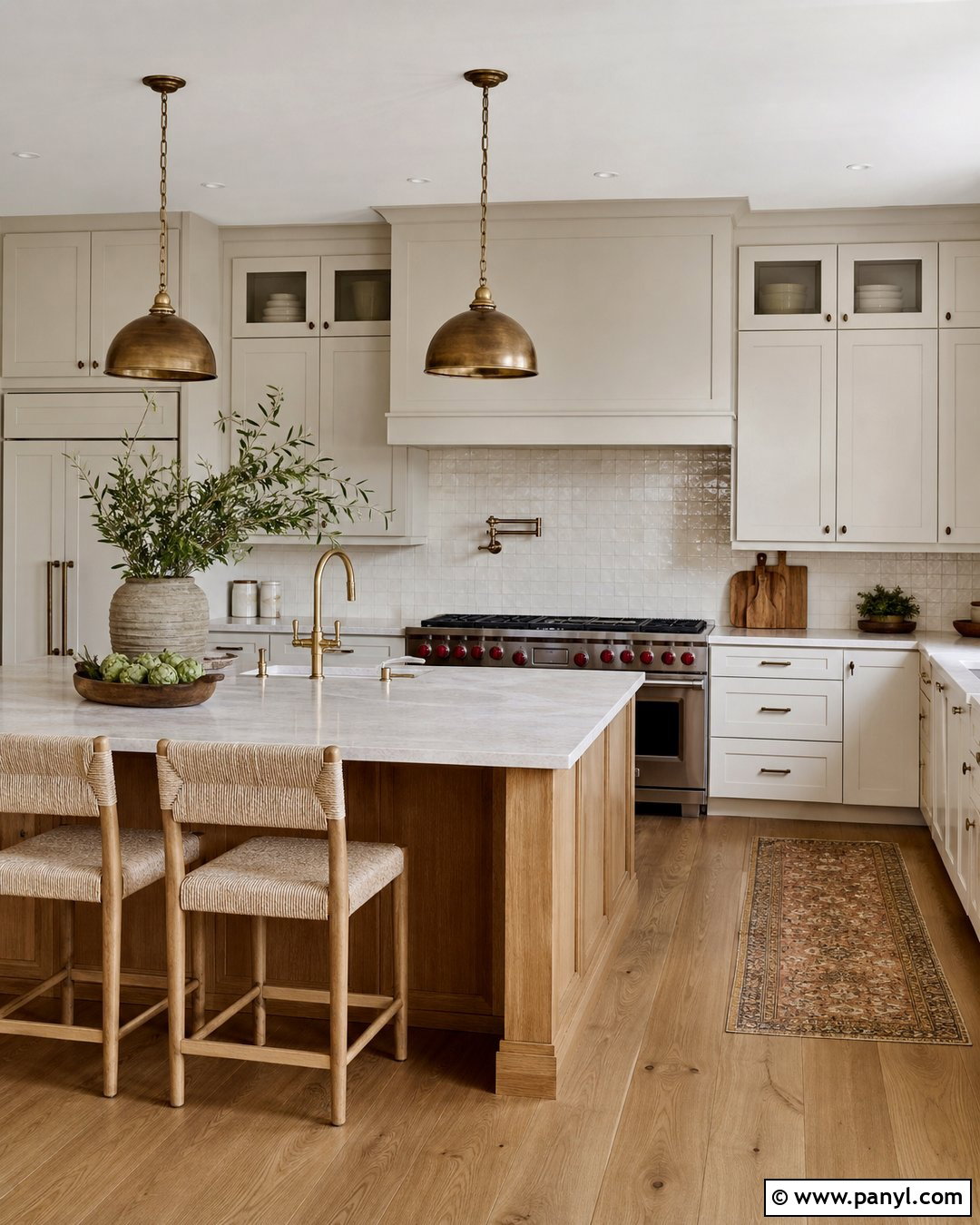
Pale putty is an understated neutral that works beautifully in a kitchen with visible natural materials. Its blend of beige, gray, and soft clay creates more character than plain off-white without overwhelming cabinetry. Pair putty walls with warm white shaker cabinets, honed marble counters, and an unlacquered brass faucet. A medium oak island introduces warmth, while woven counter stools keep the room relaxed. Choose a backsplash in handmade creamy tile so its subtle variation complements the walls. Add aged brass pendants, dark bronze hardware, and a few practical wooden accessories. The ceiling should remain warm white to preserve brightness. This complete scheme suits traditional and modern kitchens, especially when the adjoining rooms use similarly warm, muted colors.
7. Sage Green Bedroom Wall Color
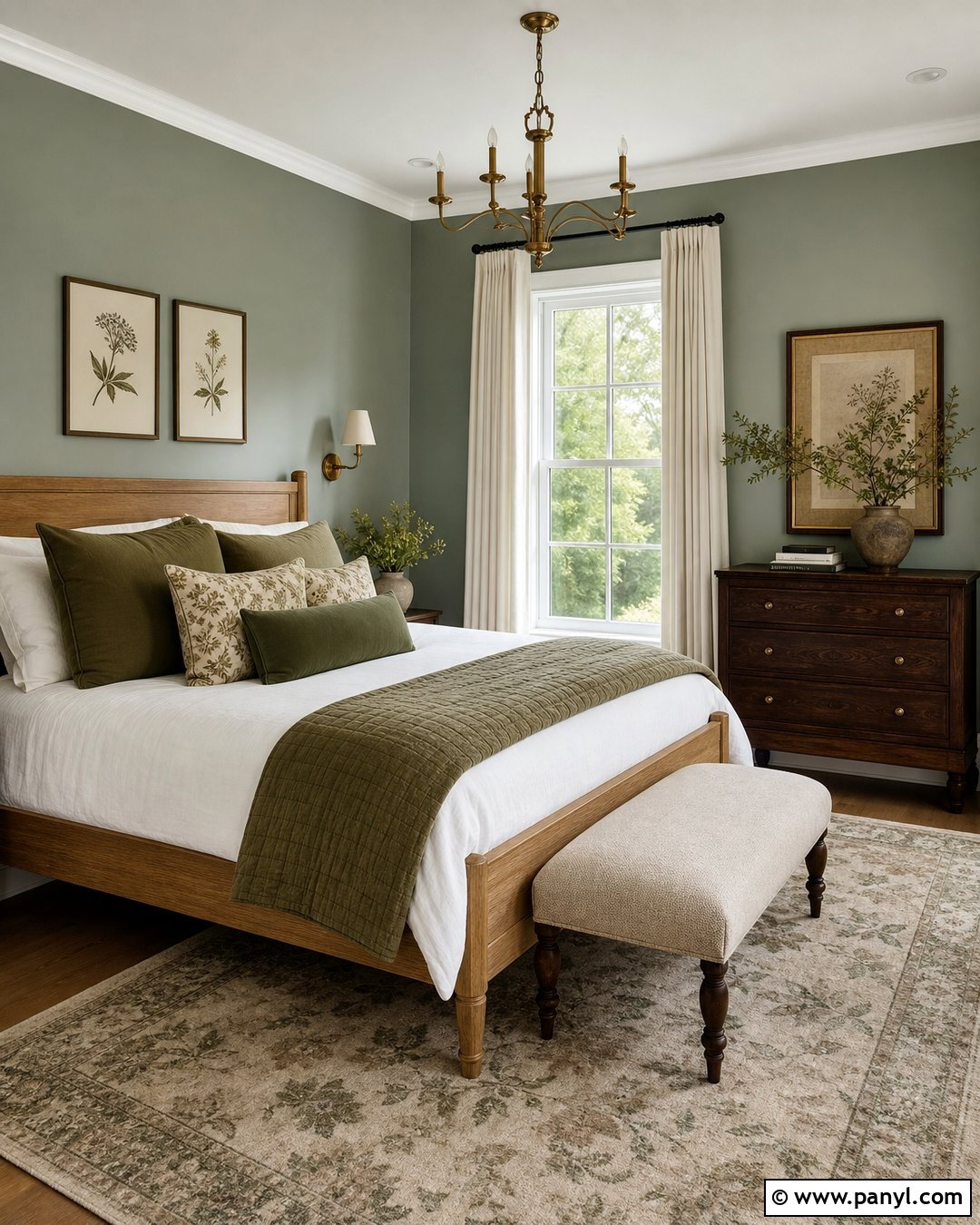
Sage green creates a restful bedroom with enough color to feel memorable. Look for a muted green containing gray and a touch of warmth rather than a bright herbal shade. Use it on all four walls, then add a natural oak bed with a woven or upholstered headboard. Layer white bedding with soft olive, flax, and faded botanical textiles. Cream curtains provide light contrast, while antique brass sconces add warmth near the bed. A vintage-inspired rug in beige, muted green, and dusty rose can connect the entire palette. Keep furniture shapes simple and include one dark wood dresser for depth. Botanical artwork, handmade pottery, and a small upholstered bench complete a calm room that feels collected rather than heavily themed.
8. Eucalyptus Green Bathroom Wall Color
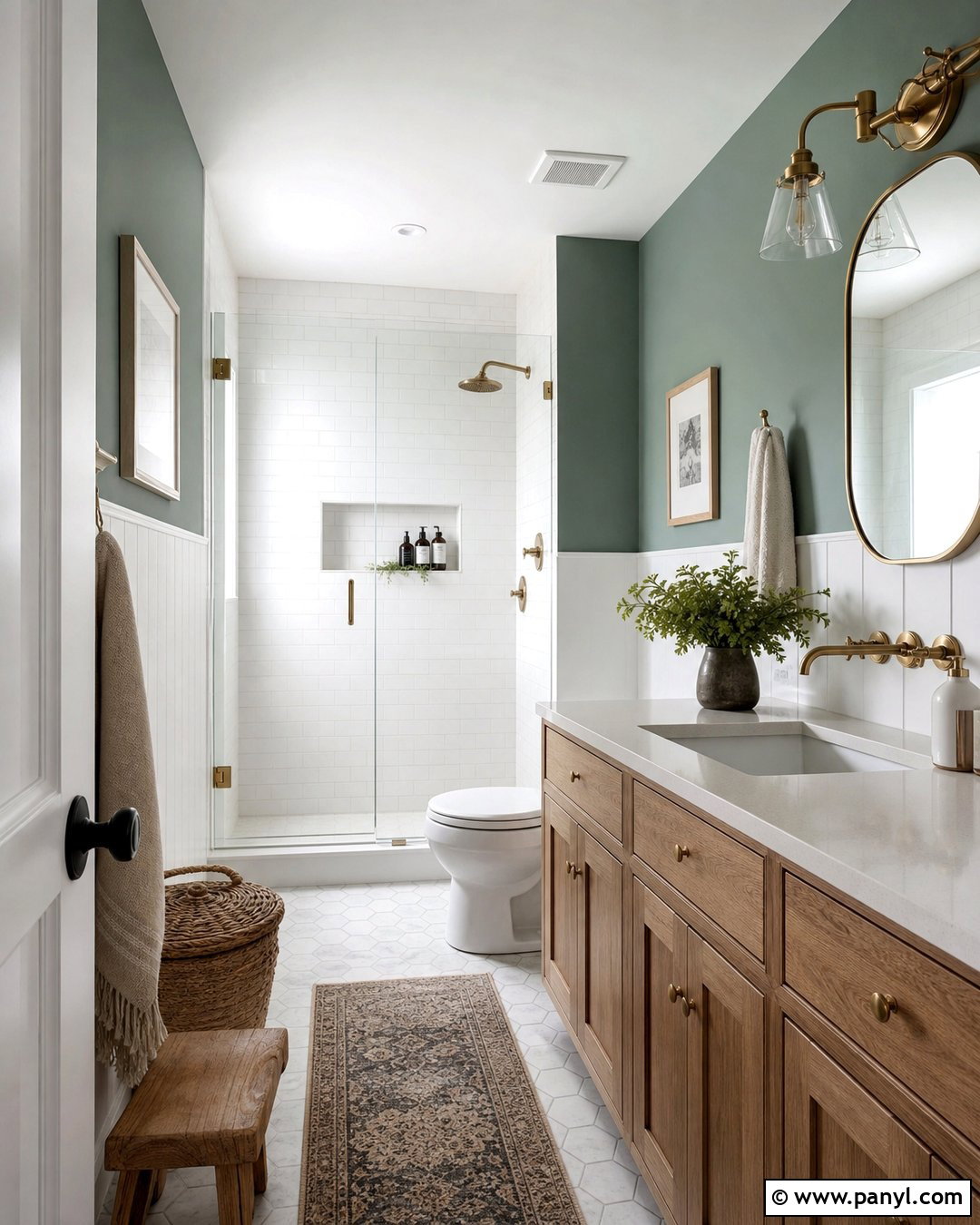
Warm eucalyptus green can transform a basic bathroom into a fresh, refined retreat. Choose a softly muted green that sits between sage and blue-green, then use it above white-painted wall paneling or across the entire upper wall. Pair the color with a natural oak vanity, creamy quartz counter, and brushed brass fixtures. White ceramic tile in the shower keeps the design clean, while pale gray grout adds gentle definition. Install a rounded brass mirror and two simple glass sconces to frame the vanity. Towels in ivory and muted green continue the palette without creating excessive contrast. A woven basket, small wooden stool, and restrained greenery finish the space. Use warm white on the ceiling to maintain a bright, balanced atmosphere.
9. Olive Green Home Office Wall Color
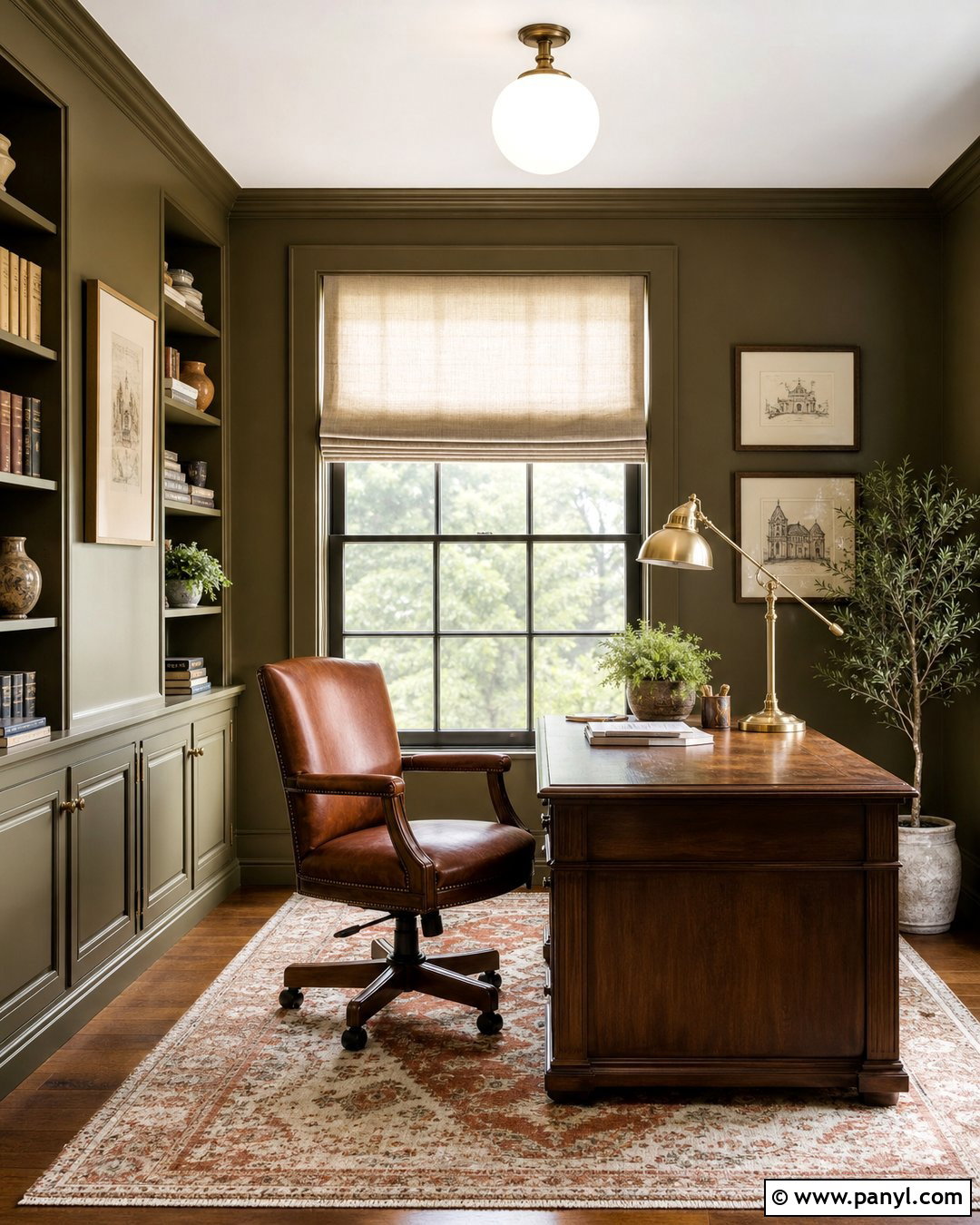
Olive green gives a home office a grounded, tailored appearance, especially when supported by warm wood and leather. Select a medium olive with brown undertones and apply it to the walls, trim, and built-in bookcases for a cohesive effect. Place a walnut desk in the center or facing a window, then add a cognac leather chair and an antique brass task lamp. A patterned rug containing rust, cream, and muted green will soften the floor and connect the palette. Keep window treatments light with natural linen Roman shades. Display books, framed drawings, and pottery in controlled groupings rather than filling every shelf. The finished office feels focused and sophisticated, with enough warmth to remain comfortable during long working sessions.
10. Blue Green Powder Room Wall Color
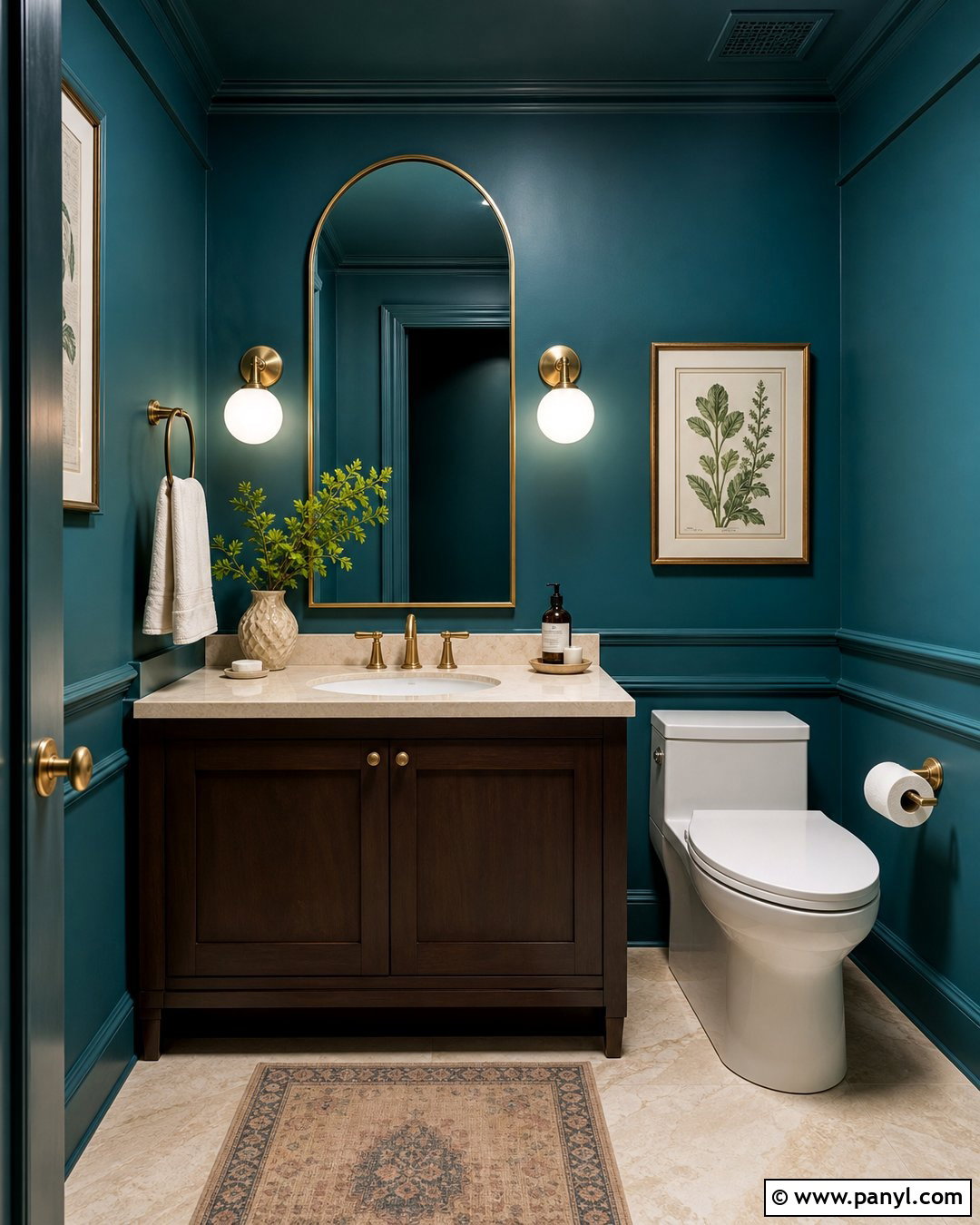
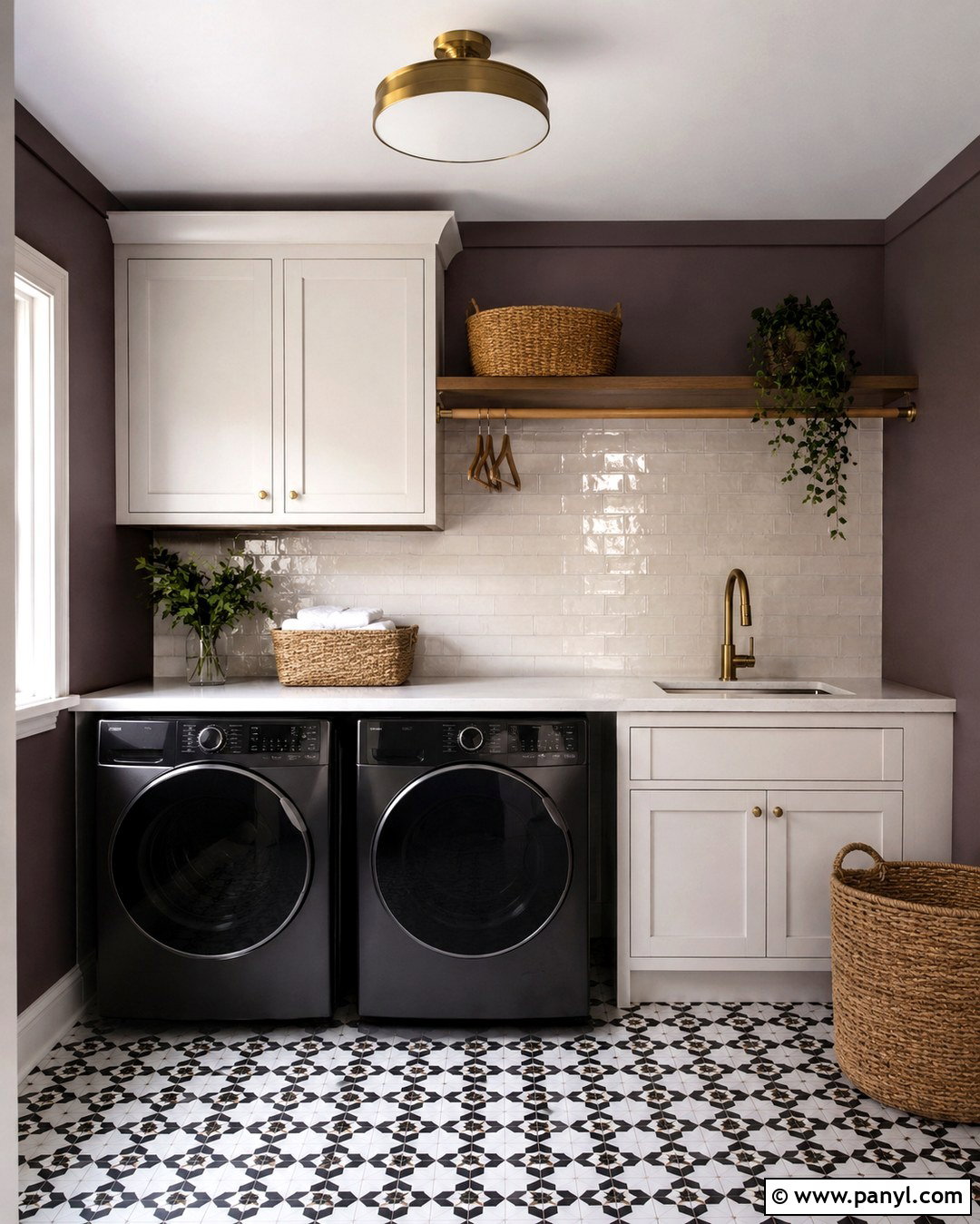
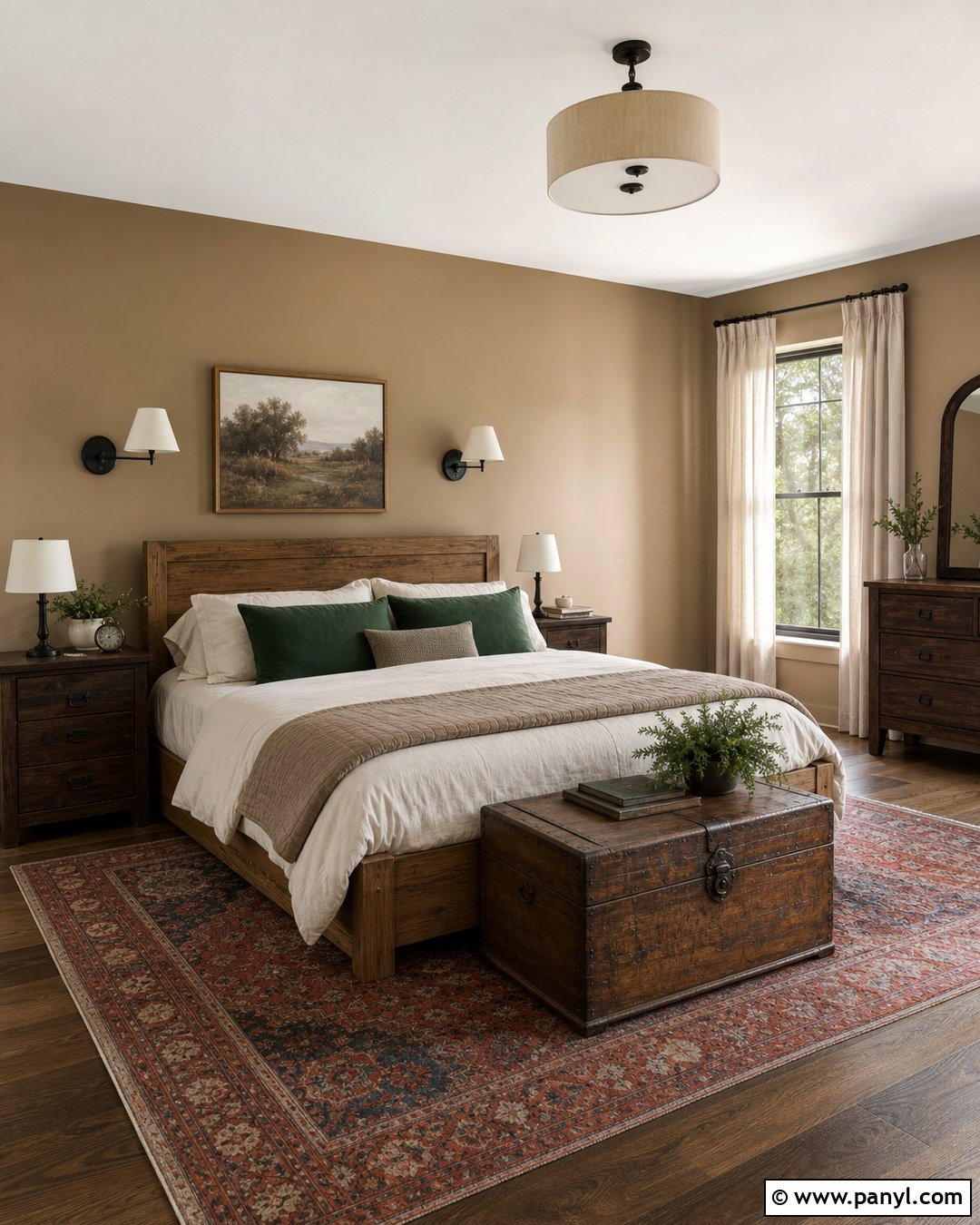
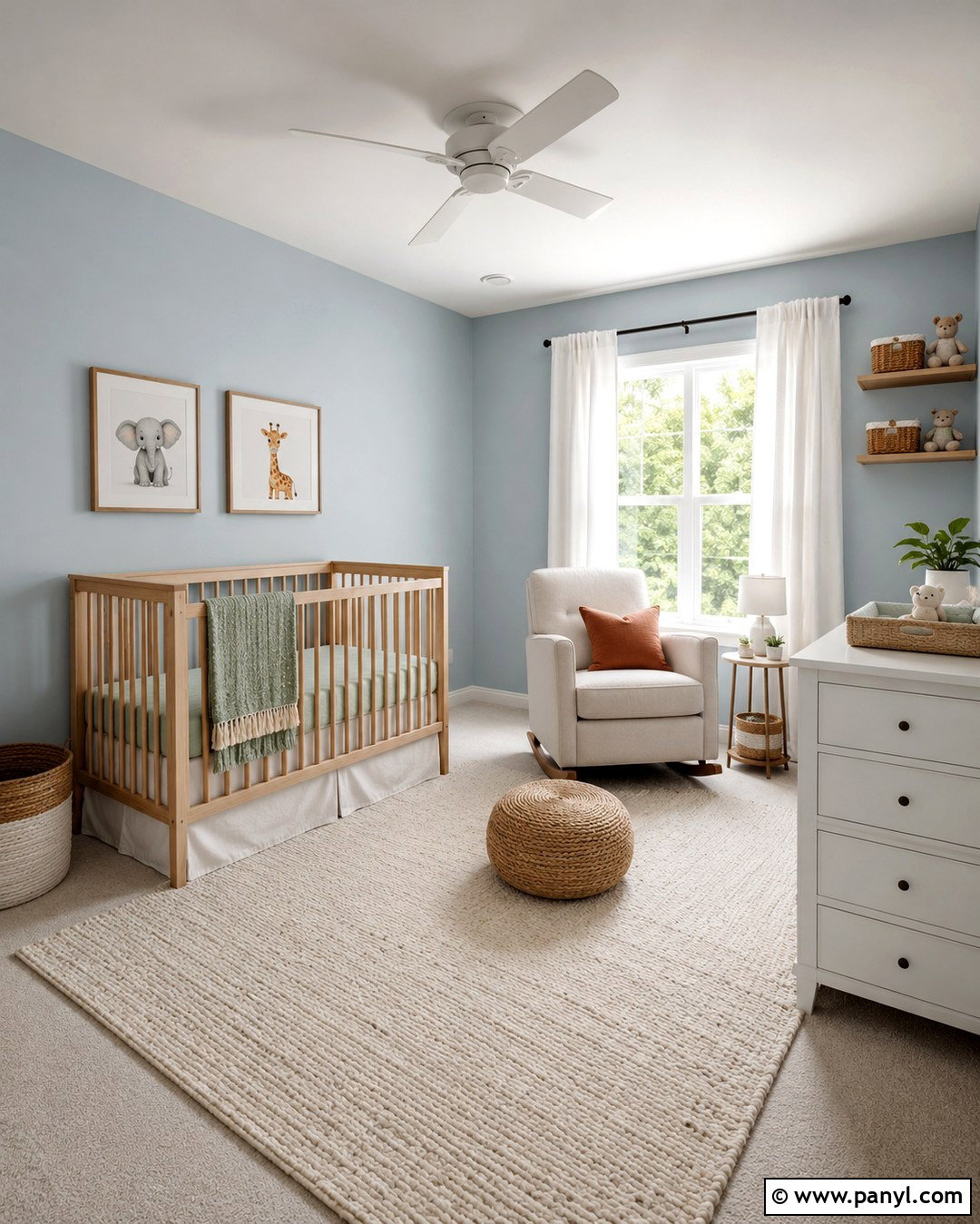
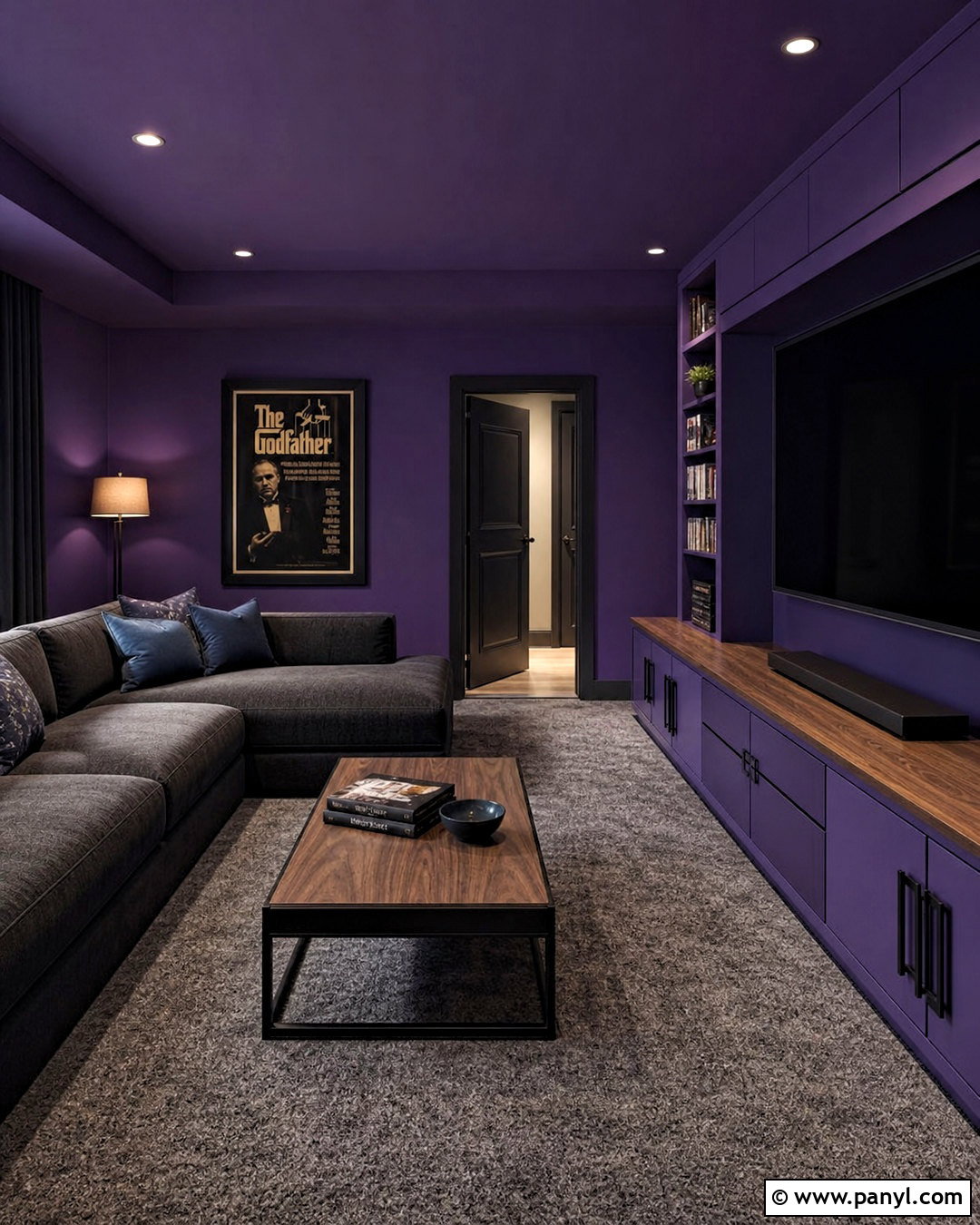
A saturated blue-green wall color gives a small powder room personality while preserving an elegant, nature-inspired mood. Paint the walls, trim, and ceiling in the same rich shade for a seamless color-drenched effect. Balance the bold envelope with a compact dark wood vanity and a creamy stone counter. An arched brass mirror, warm metal faucet, and two opal glass sconces introduce reflective highlights. Choose a simple white sink and polished stone floor so the room does not feel visually crowded. A framed botanical print, neatly folded ivory hand towels, and one sculptural vase are enough decoration. Because the space is small, careful lighting is important. Use clear, bright bulbs that reveal the green and blue undertones accurately.
11. Powder Blue Bedroom Wall Color
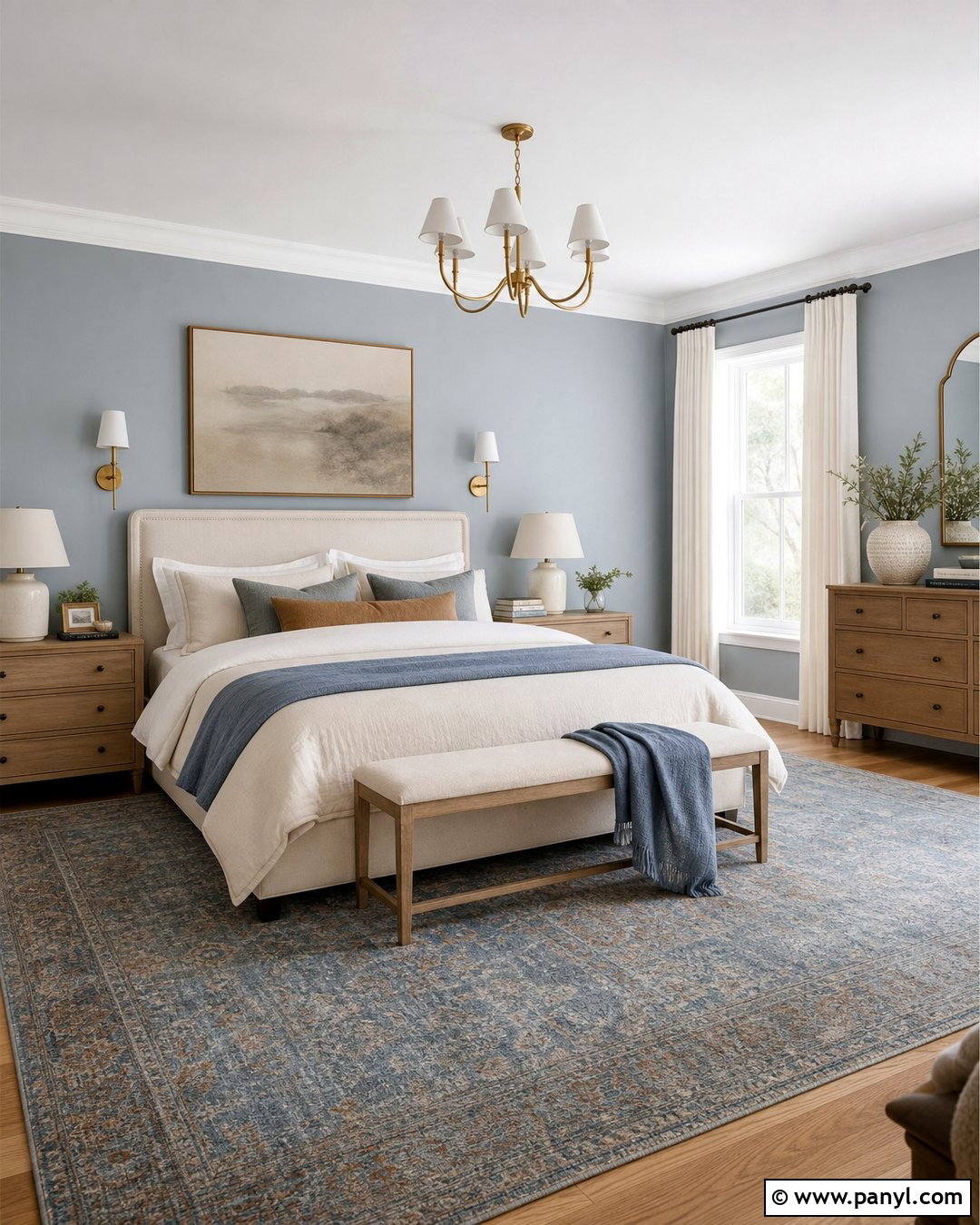
Powder blue walls create an airy bedroom when the shade is softened with gray rather than made overly sweet or bright. Pair the pale blue background with an ivory upholstered bed, warm white bedding, and light oak nightstands. Add a quilt or blanket in faded denim, then introduce small touches of rust or caramel through pillows and a bench. Full-length natural linen curtains prevent the palette from feeling cold. A warm brass chandelier and matching wall sconces provide a polished contrast to the blue. Ground the room with a vintage-style rug containing cream, muted blue, and soft brown. Keep artwork simple and generously scaled. The resulting space feels serene and fresh, yet the warmer materials make it comfortable in every season.
12. Blue Gray Living Room Wall Color
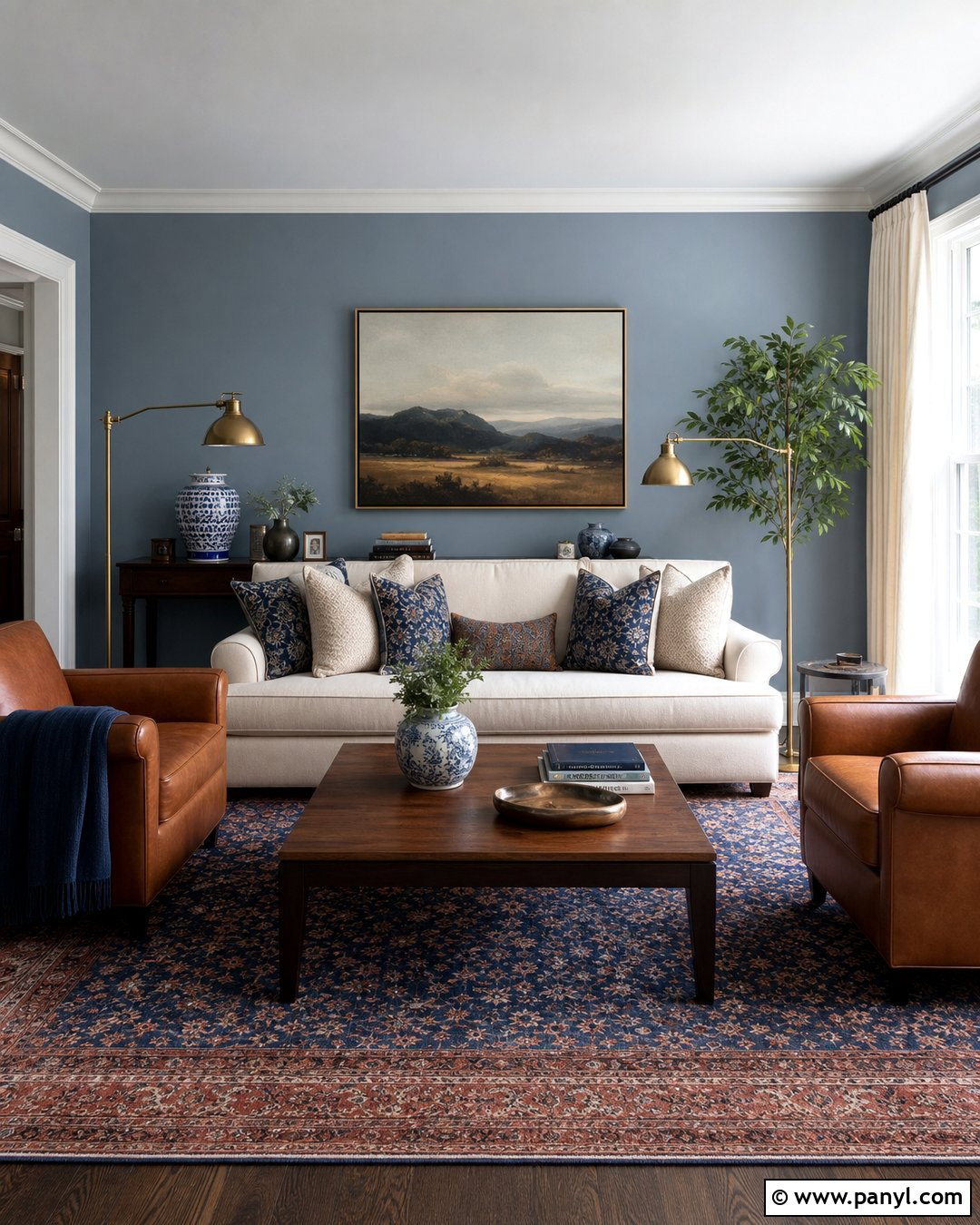
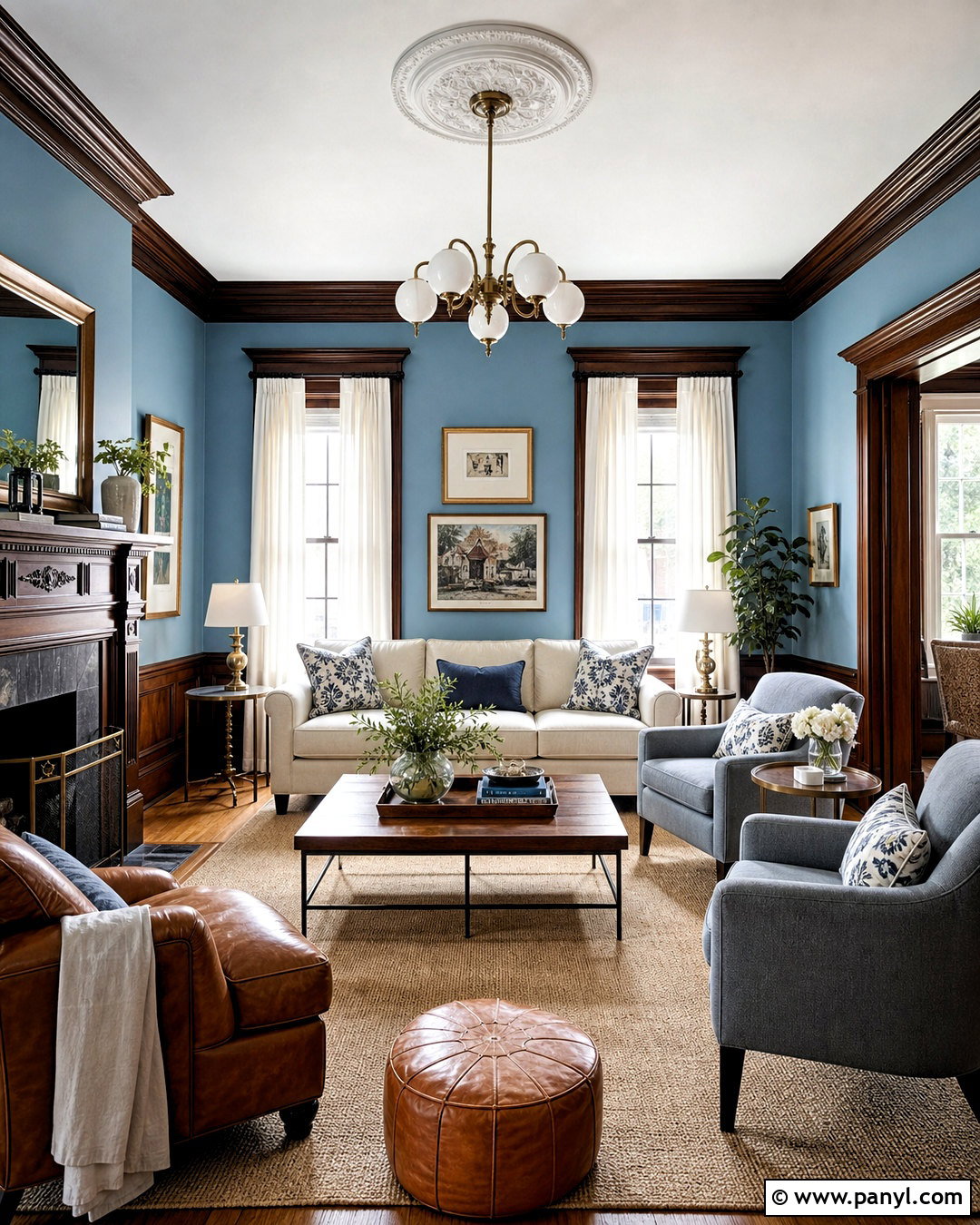
Blue-gray is an excellent living room choice when you want noticeable color with a restrained, classic character. Choose a medium-light shade that reads blue in daylight and softly gray in the evening. Build the room around a cream sofa, walnut coffee table, and two camel leather armchairs. A patterned rug can combine navy, beige, and muted rust to connect the cool walls with the warmer furniture. Use ivory linen curtains, aged brass floor lamps, and dark bronze curtain rods for balanced contrast. White trim will sharpen the architectural edges, while a warm white ceiling keeps the room open. Finish with landscape art, blue ceramic accents, and textured neutral pillows. The complete look feels tailored without becoming formal or unapproachable.
13. Smoky Navy Dining Room Wall Color
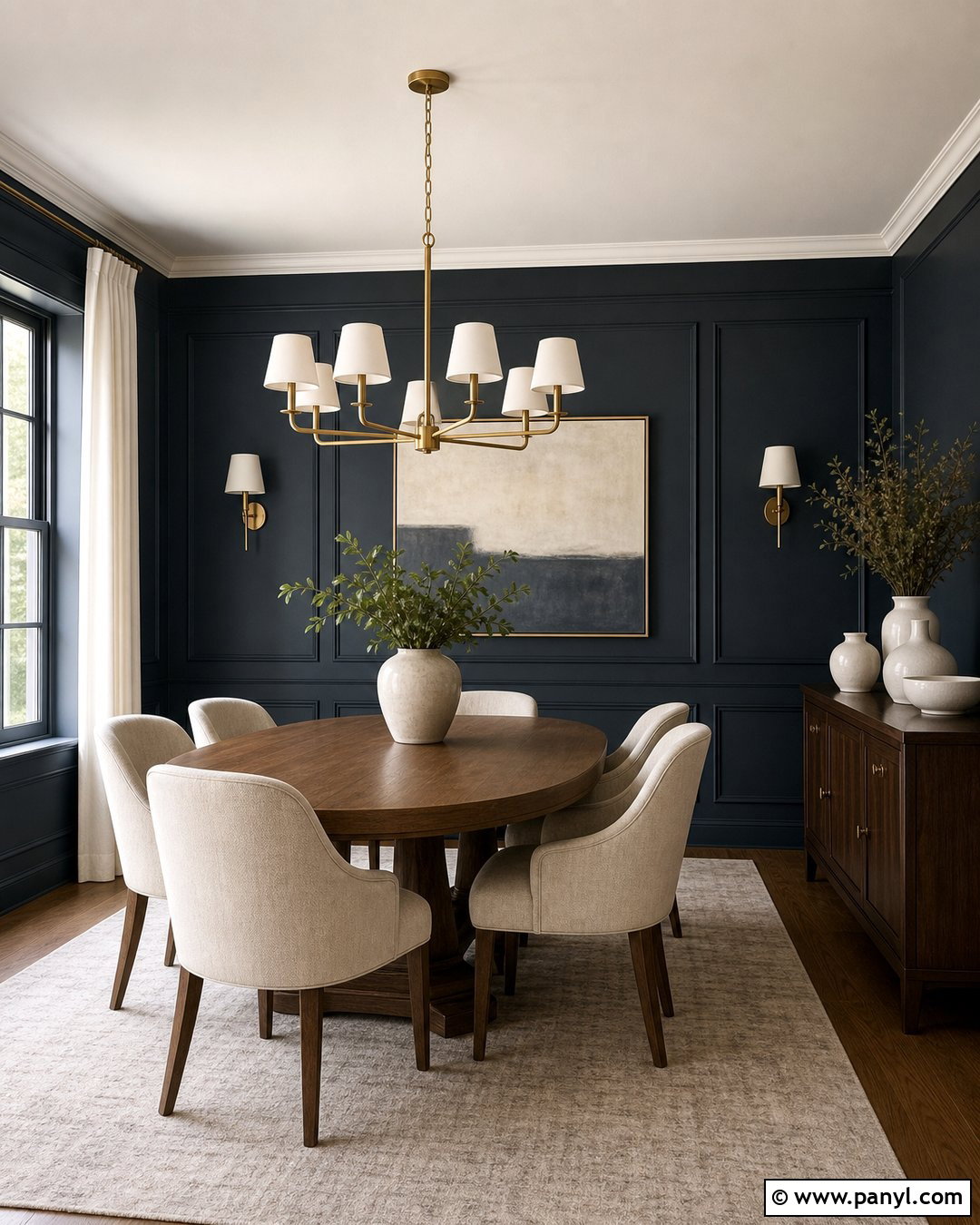
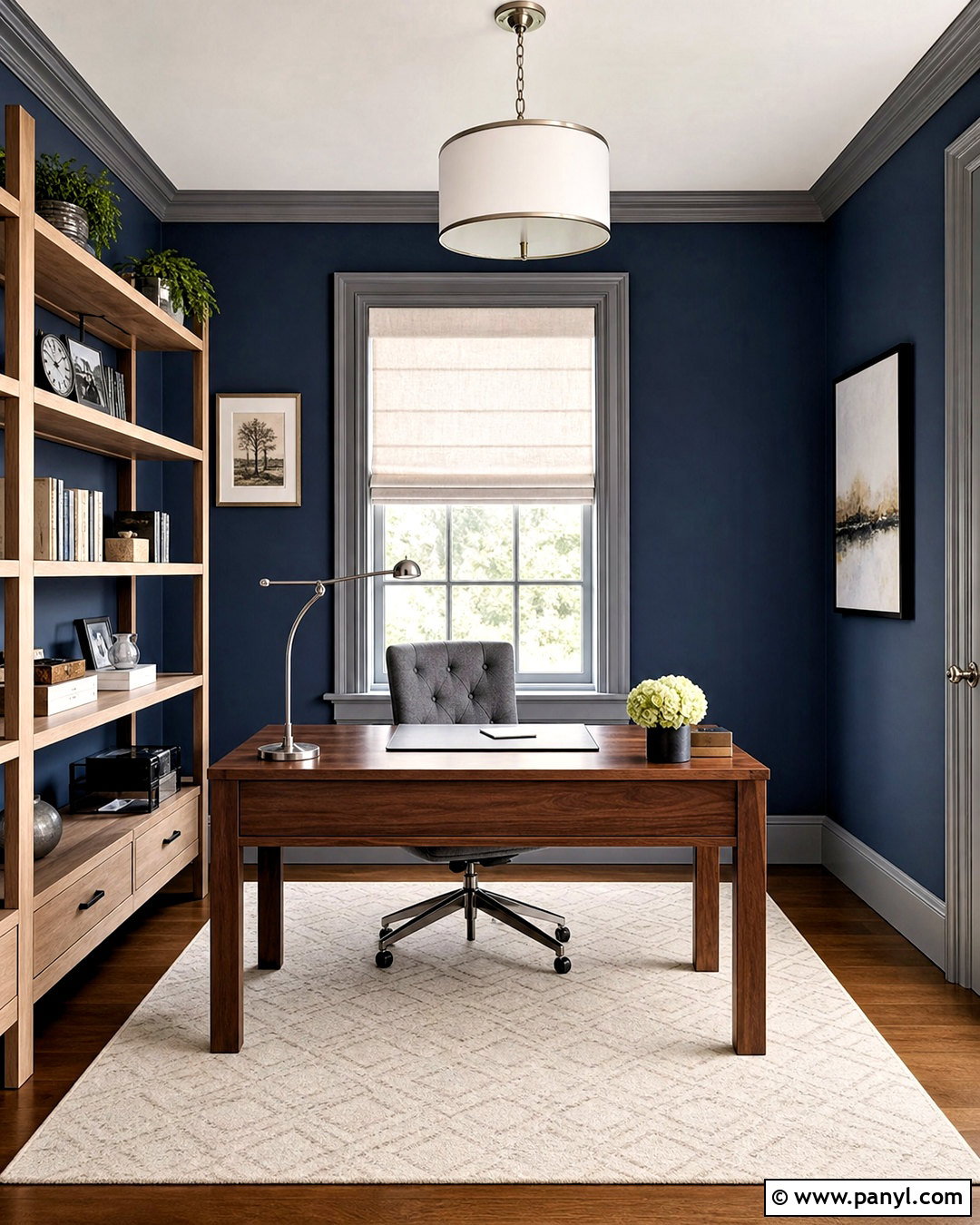
Smoky navy creates a dramatic dining room that feels richer and softer than one painted in a clear primary blue. Look for a deep navy with gray undertones, then carry it across the walls and molding. Contrast the darkness with an oval oak dining table and cream upholstered chairs. A large linen pendant or warm brass chandelier should cast generous light over the center of the room. Use a pale patterned rug to brighten the floor and hang off-white curtains from ceiling height. A walnut sideboard, abstract artwork, and white ceramic vessels provide simple visual breaks. Paint the ceiling a warm ivory instead of pure white. This combination makes the navy feel intentional, comfortable, and suitable for both casual breakfasts and evening gatherings.
14. Dusty Teal Living Room Wall Color
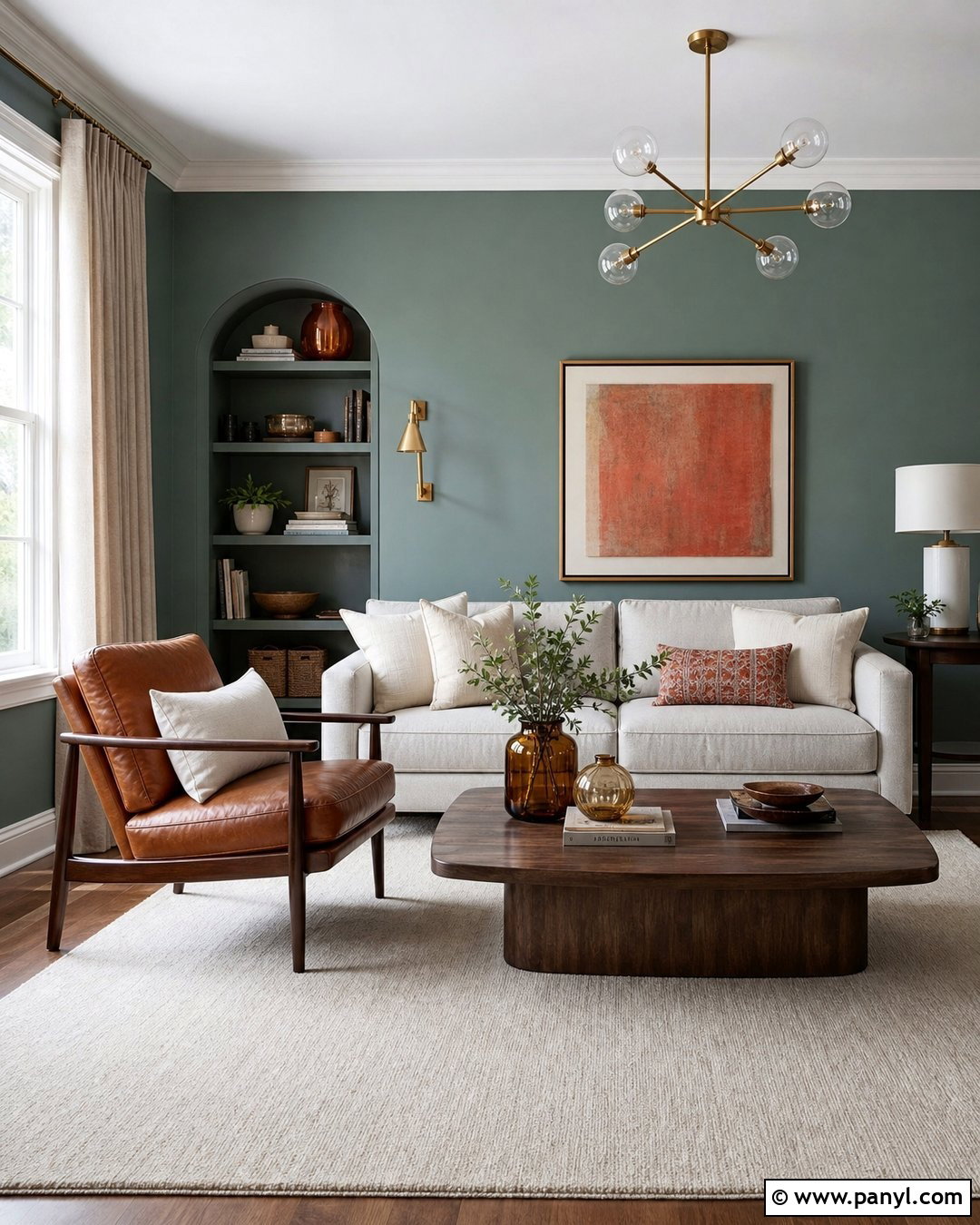
Dusty teal brings depth to a living room without the intensity of a bright turquoise. Choose a softened teal with gray undertones and use it across every wall to create a unified background. An oatmeal sofa, cognac leather chair, and medium walnut coffee table form a warm central arrangement. Add a large ivory rug and curtains in natural linen to balance the stronger wall color. Brushed brass lighting and small amber glass accents highlight the teal’s warmth. Artwork can introduce muted coral, cream, and dark blue in controlled amounts. Keep the ceiling and trim soft white for a crisp architectural outline. With comfortable furniture and simple materials, this colorful room remains elegant, practical, and easy to enjoy every day.
15. Blush Pink Bedroom Wall Color
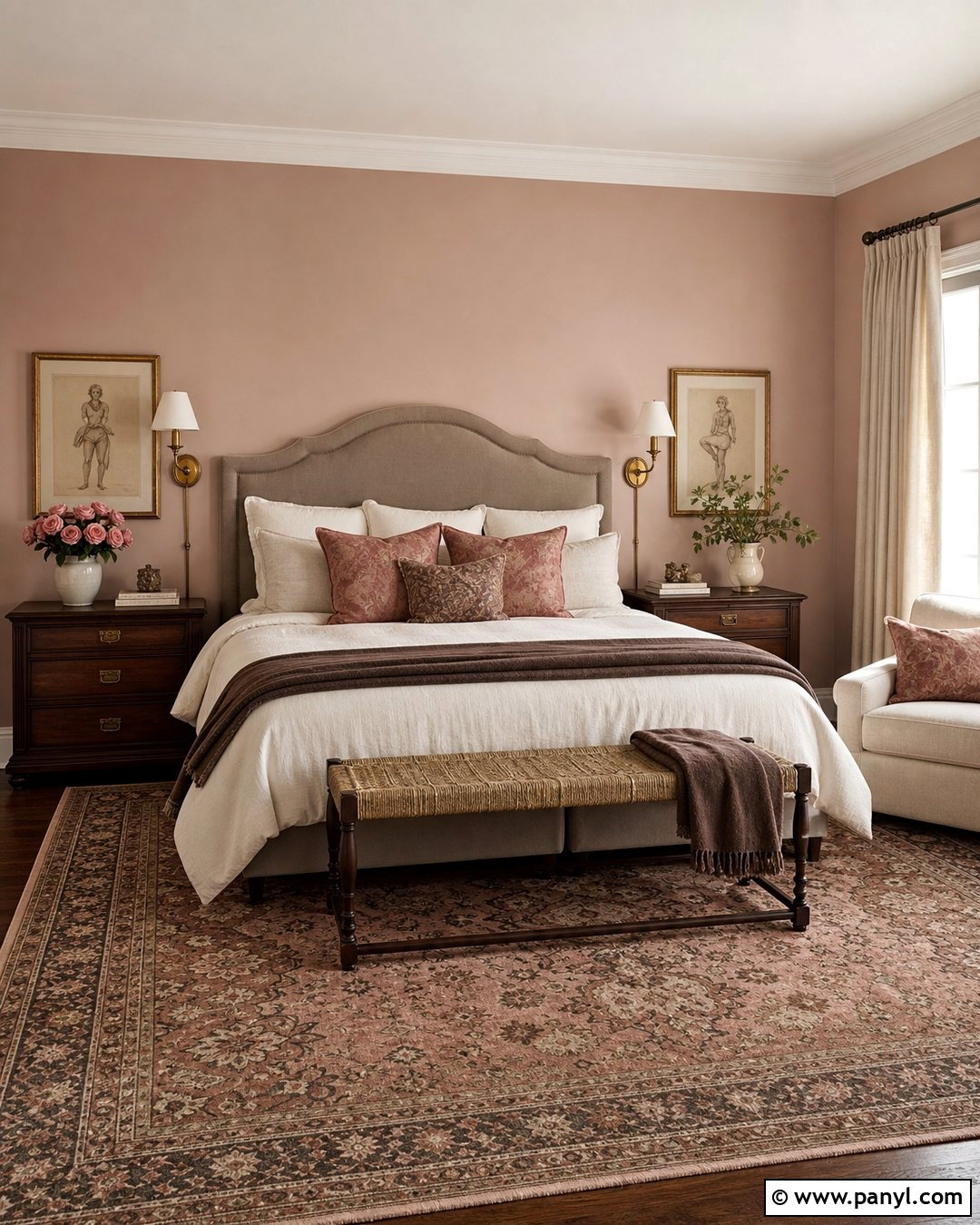
Blush pink can look sophisticated when it carries beige or clay undertones instead of a sugary, bubblegum quality. Use the muted shade on all bedroom walls, then anchor it with a walnut bed or a taupe upholstered headboard. Layer ivory bedding with dusty rose, cocoa, and muted burgundy accents. Dark wood nightstands and aged brass sconces add structure, while long oatmeal curtains soften the windows. Choose an antique-style rug that blends faded pink, beige, and brown without becoming overly floral. A plaster lamp, sculptural vase, and simple charcoal drawings provide quiet decoration. Keep the ceiling warm white and avoid excessive pink accessories. This balanced design allows the wall color to feel warm, grown-up, and comfortably elegant.
16. Dusty Rose Sitting Room Wall Color
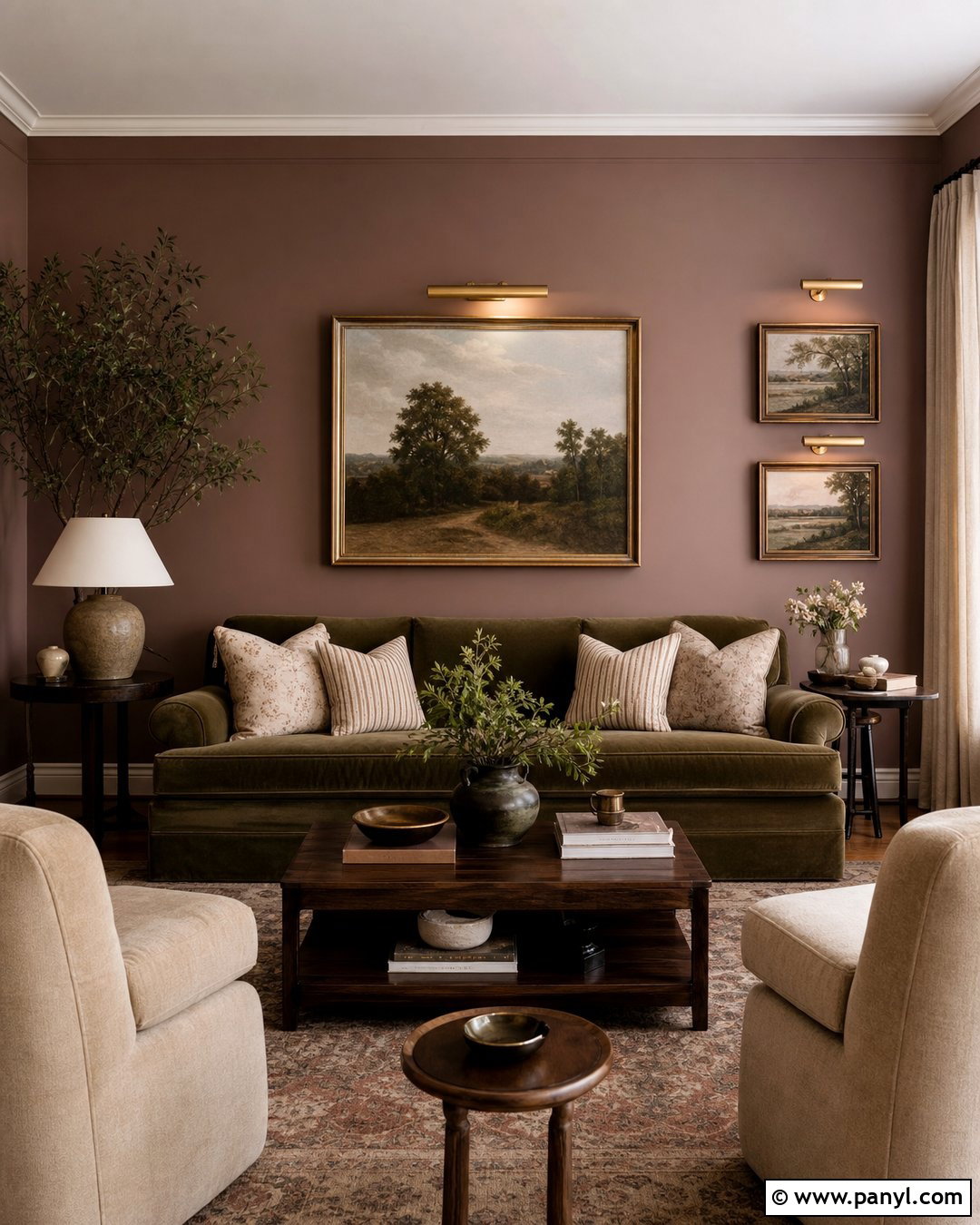
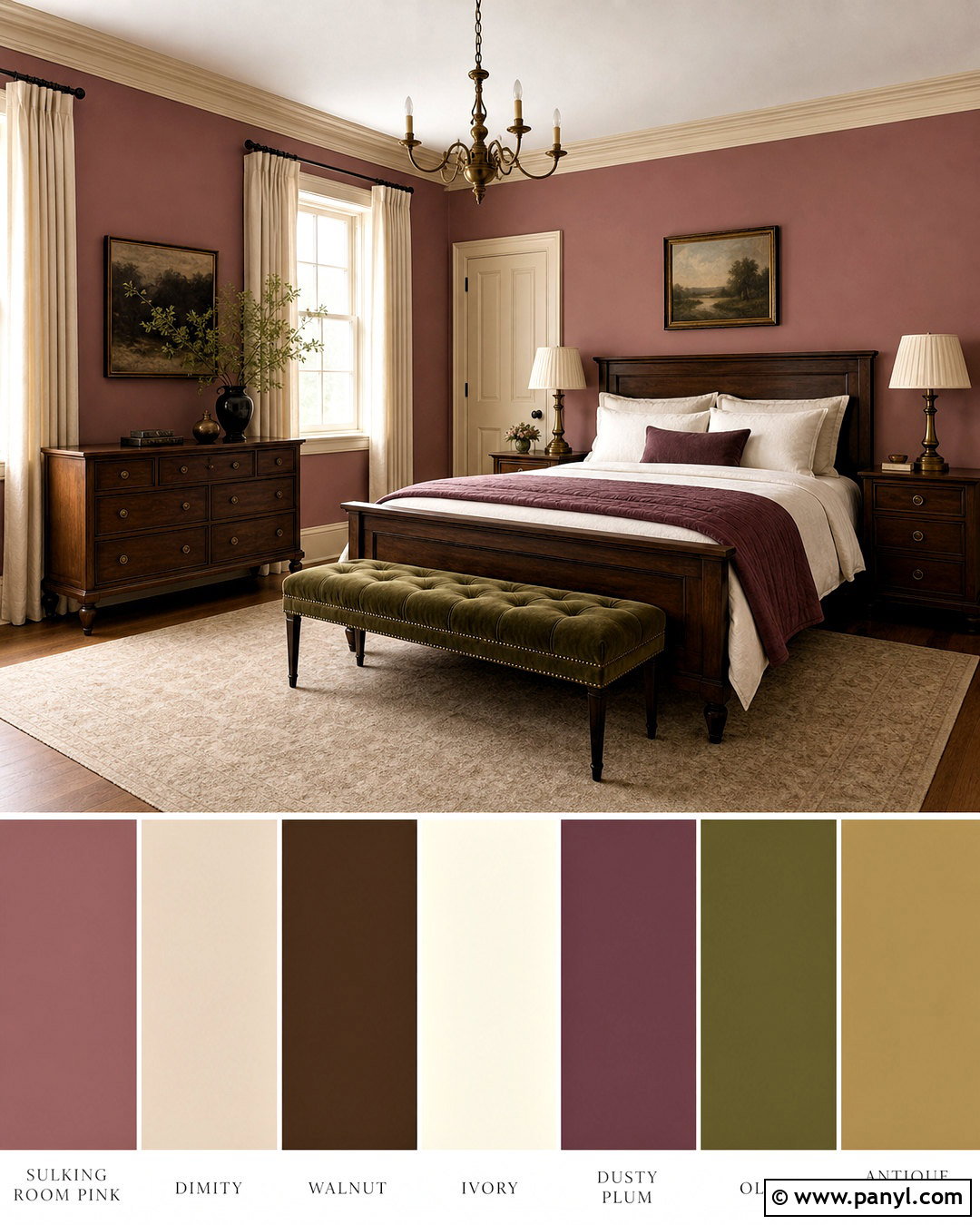
Dusty rose walls can give a small sitting room a warm, collected atmosphere. Select a muted rose mixed with brown and gray, then pair it with a deep olive velvet sofa for sophisticated contrast. Add two oatmeal armchairs, a dark walnut coffee table, and a faded Persian-style rug containing rose, cream, and forest green. Antique brass picture lights and framed landscape paintings support the traditional mood without making the room feel dated. Use natural linen curtains and warm white trim to frame the stronger color. A few striped pillows and handmade ceramic pieces introduce relaxed texture. Keep the furniture arrangement intimate, with seats facing one another. The finished sitting room feels distinctive, welcoming, and suitable for reading or quiet conversation.
17. Earthy Mauve Bedroom Wall Color
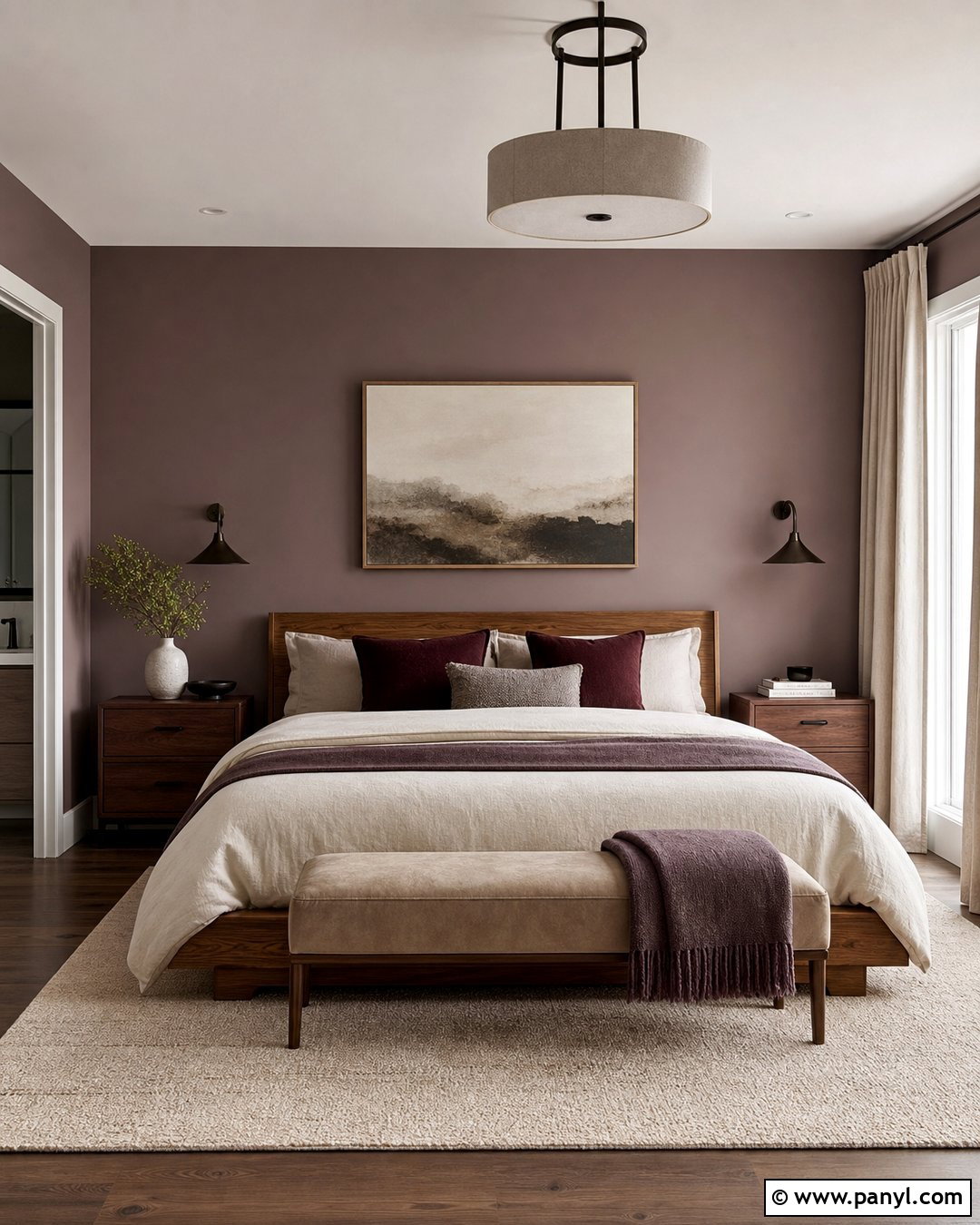
Earthy mauve offers a quieter alternative to purple by blending dusty violet with taupe and soft brown. It works particularly well in a bedroom filled with natural, tactile finishes. Choose a muted mauve for the walls and pair it with a low oak bed, ivory linen bedding, and a padded bench in mushroom beige. Use dark bronze sconces and medium walnut nightstands to add definition. A textured wool rug in cream and taupe keeps the foundation light. Introduce burgundy or plum through one folded blanket and a few small pillows rather than repeating the color everywhere. Simple abstract artwork and oatmeal curtains complete the scheme. The overall room feels restful, mature, and subtly colorful without depending on a passing decorative theme.
18. Lavender Gray Guest Room Wall Color
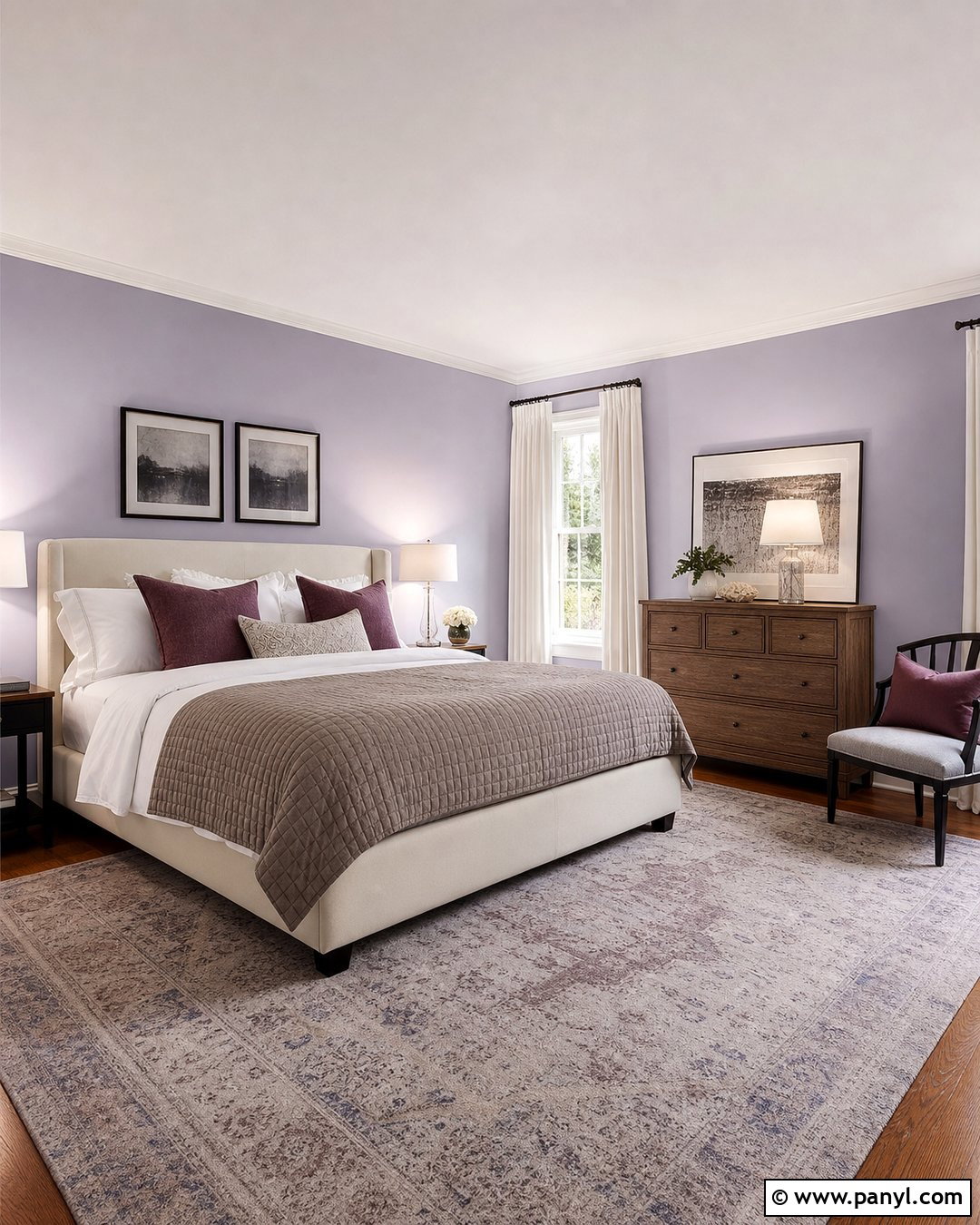
Lavender-gray creates a gentle guest room that feels calm without appearing overly feminine or decorative. Look for a pale gray with a visible violet undertone, especially for a room that receives soft natural light. Pair the walls with an ivory bed, crisp white sheets, and a medium oak dresser. Use a taupe quilt and faded plum pillows to reinforce the undertone in small amounts. Linen curtains in warm white prevent the palette from becoming icy. Add aged silver or brushed nickel lamps, a pale patterned rug, and simple charcoal artwork. One dark wood chair can provide contrast near the window. Keep the trim and ceiling in a soft white. The completed room feels polished, comfortable, and welcoming to guests with different design preferences.
19. Butter Yellow Kitchen Wall Color
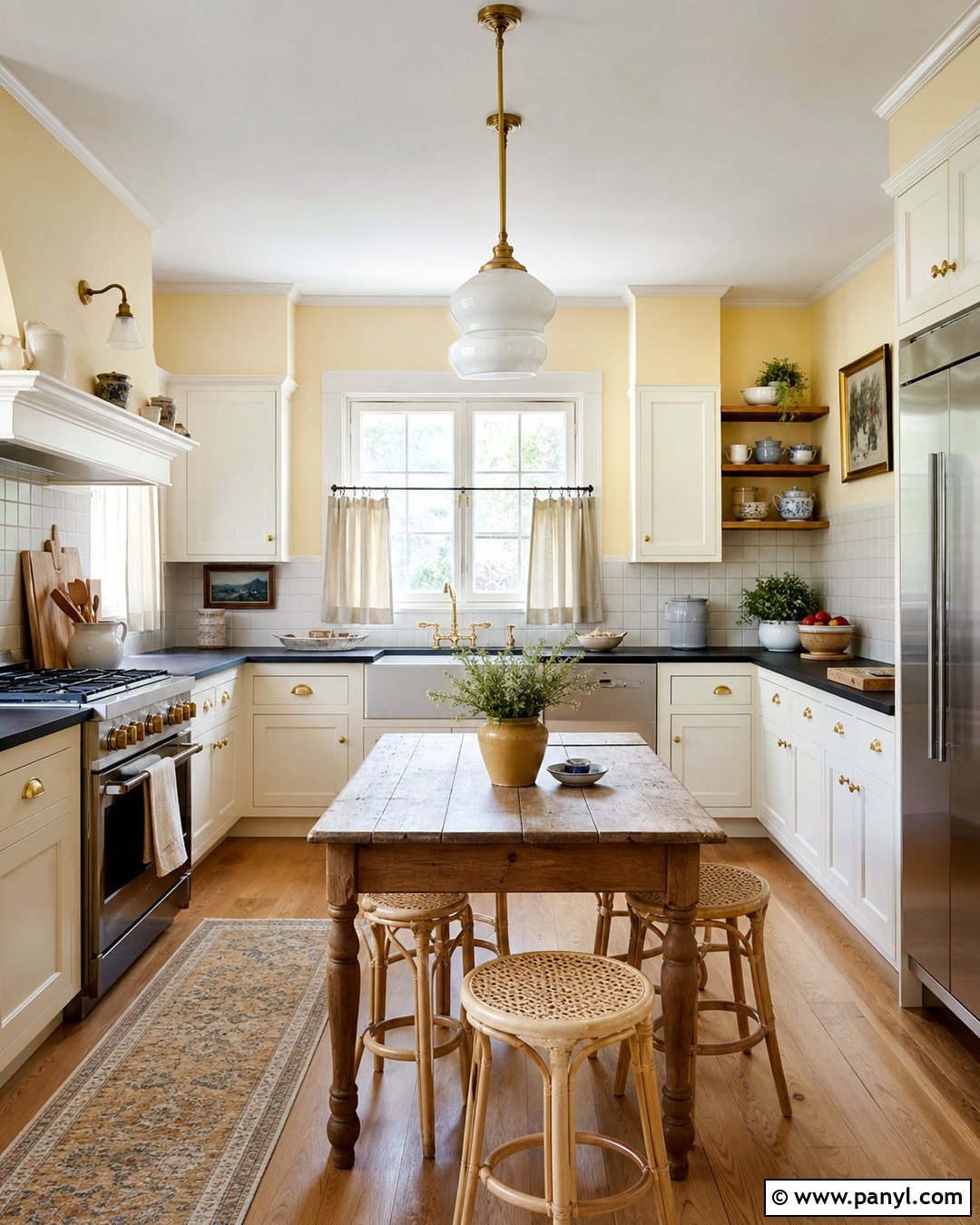
Butter yellow adds cheerful warmth to a kitchen when the shade is pale, creamy, and slightly muted. Use it on the walls around warm white cabinets, then introduce honed soapstone or medium-gray counters for grounding contrast. Natural oak flooring and a farmhouse table give the room an approachable foundation. Choose brass cabinet hardware and milk glass pendants to reinforce the warm palette. A backsplash of handmade ivory tile keeps the space bright without competing with the yellow. Add counter stools in woven cane, linen café curtains, and restrained blue or green ceramics. The ceiling and trim should be creamy white rather than sharp white. This complete kitchen feels sunny and inviting while maintaining enough neutral structure to remain elegant over time.
20. Terracotta Living Room Wall Color
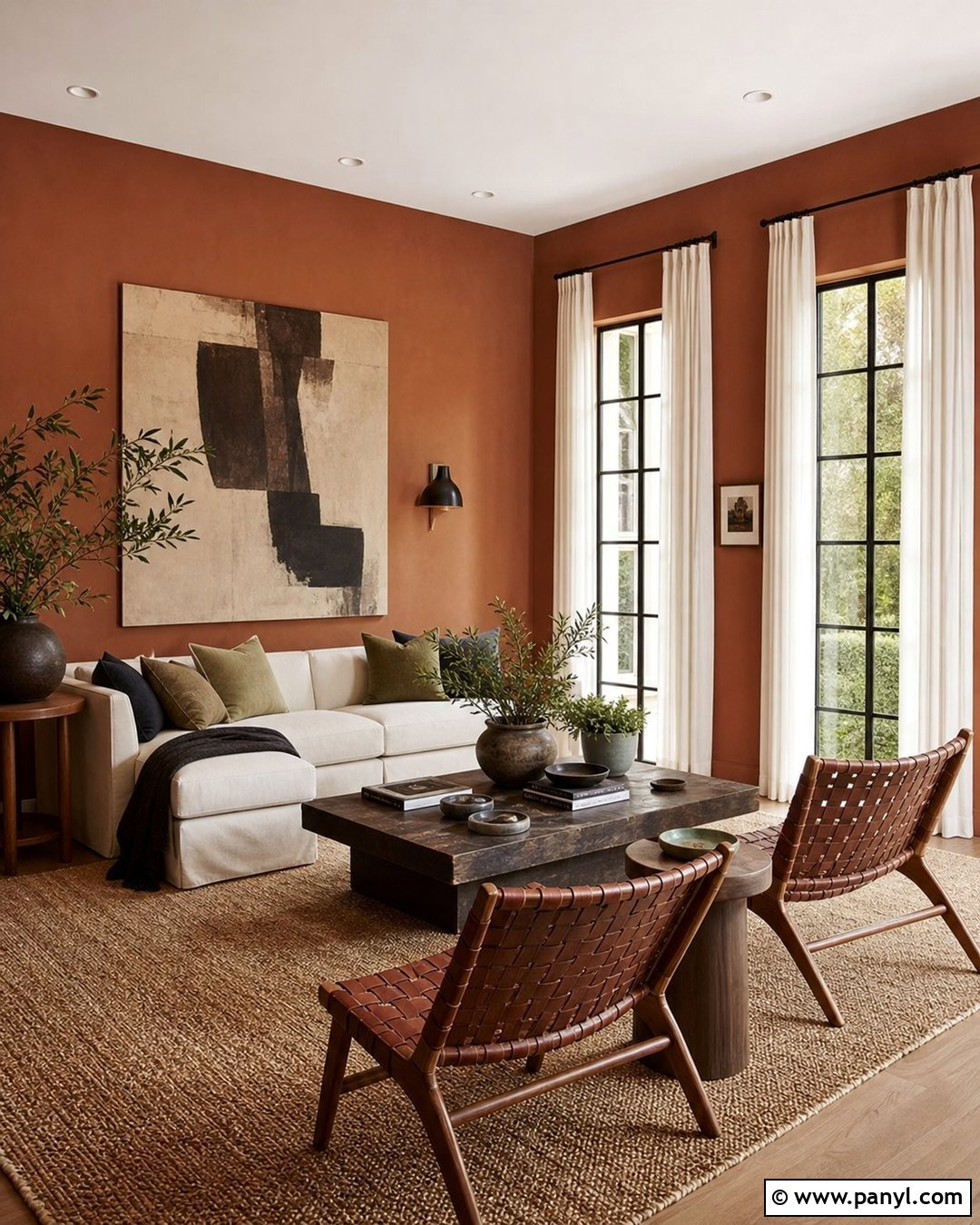
Terracotta walls create an earthy living room that feels warm, expressive, and connected to natural materials. Choose a softened baked-clay shade with brown undertones rather than a vivid orange. Pair it with a cream linen sofa, dark walnut coffee table, and two woven leather chairs. A large beige wool rug will calm the color, while olive and charcoal pillows provide measured contrast. Use off-white curtains and warm white trim to brighten the edges of the room. Blackened bronze lighting, handmade pottery, and oversized abstract art can give the space a clean contemporary direction. Include several medium-toned wood pieces instead of matching every finish. The finished design feels layered and comfortable, with the terracotta serving as a rich but livable background.
21. Clay Red Dining Room Wall Color
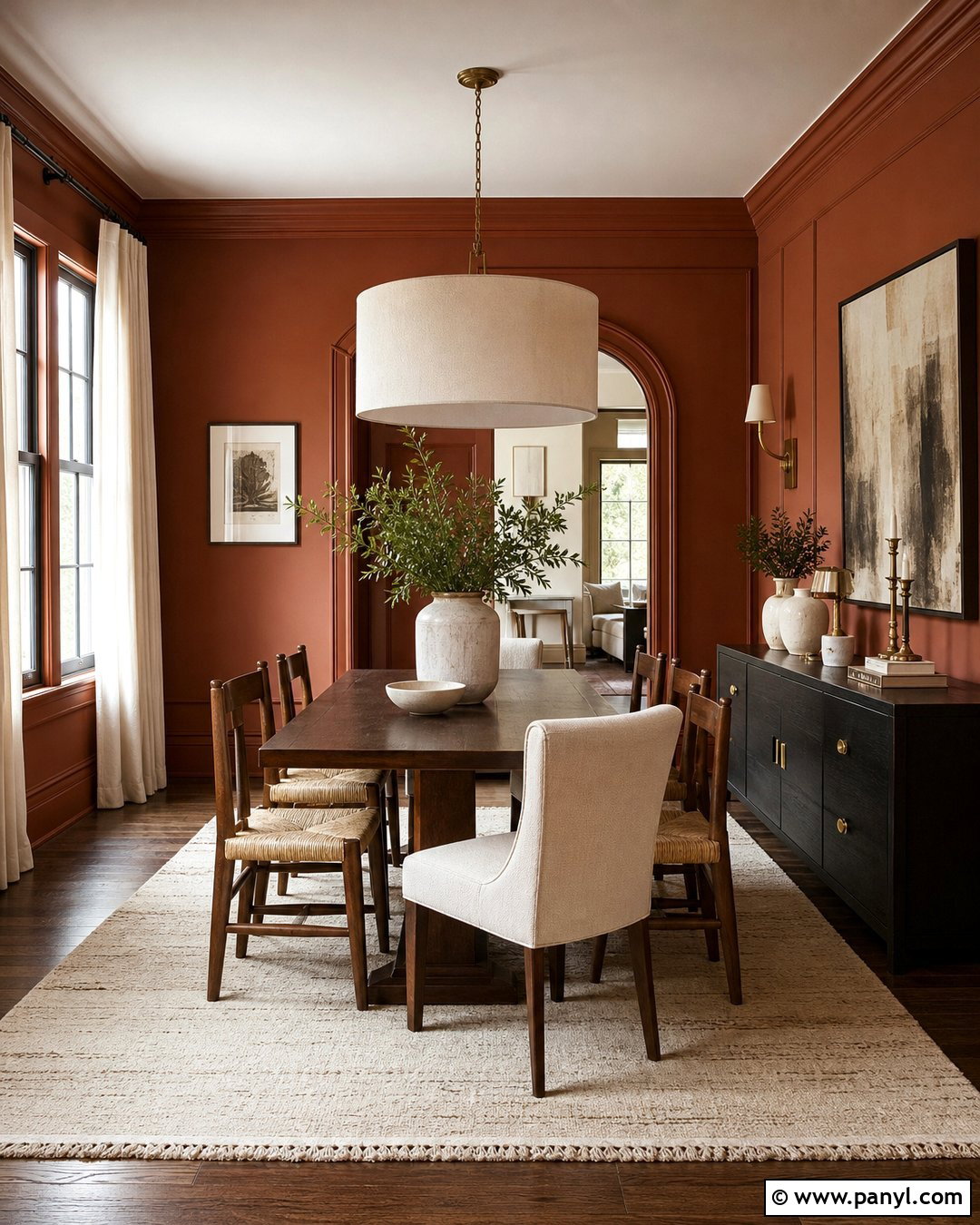
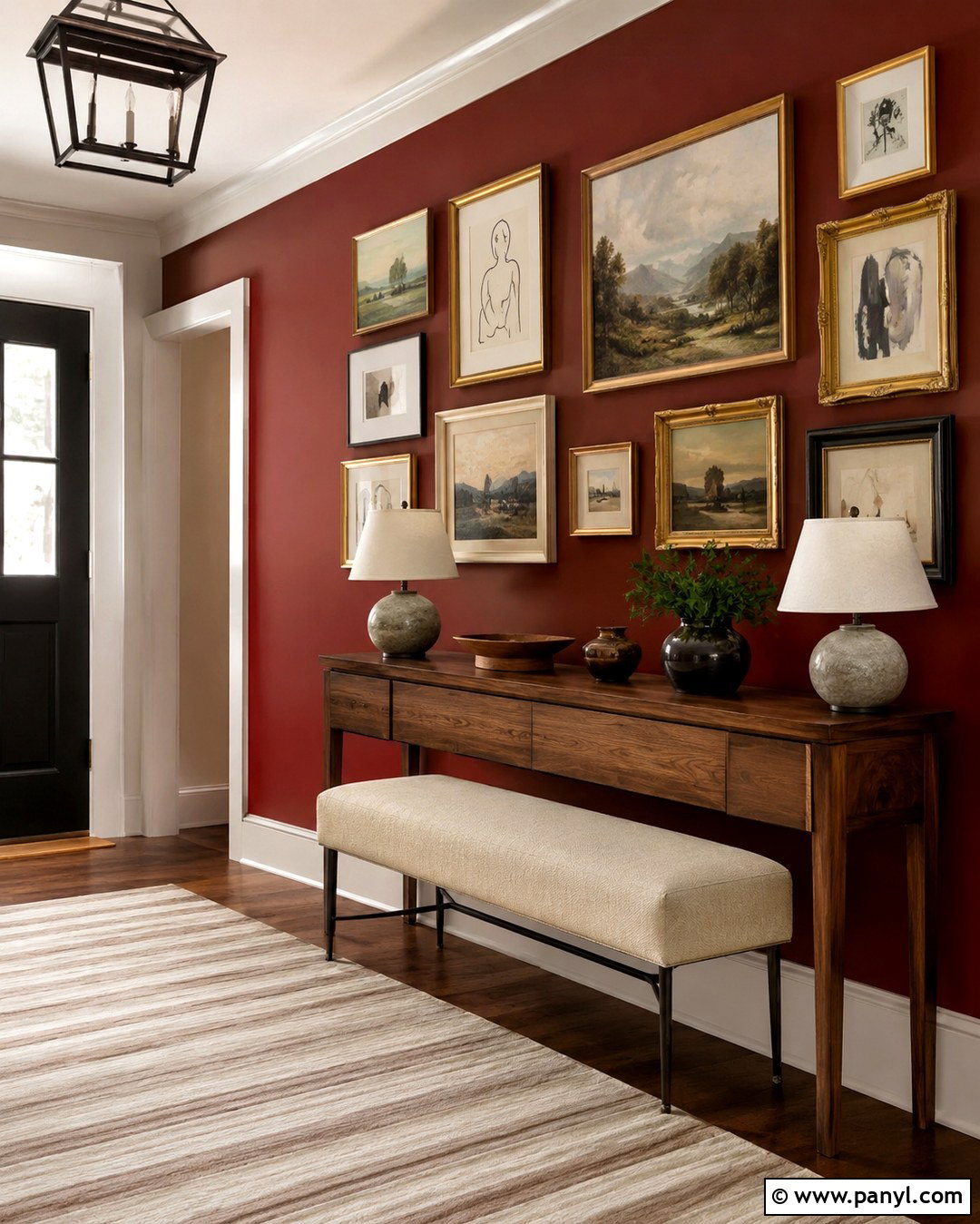
Clay red offers the drama of red in a more muted, architectural form. It works beautifully in a dining room where warm light, wood, and natural textiles can soften its intensity. Select an earthy red containing brown or rust undertones, then use it across the walls and molding. A dark oak dining table and woven-seat chairs create a grounded arrangement. Add a cream rug, oatmeal curtains, and a large paper or linen pendant to introduce lighter surfaces. A black sideboard can provide structure, while brass candlesticks and off-white ceramics add restrained shine. Choose artwork with beige, charcoal, and faded blue details. With warm white overhead and thoughtful contrast, the completed room feels intimate, confident, and welcoming rather than overly bold.
22. Chocolate Brown Bedroom Wall Color
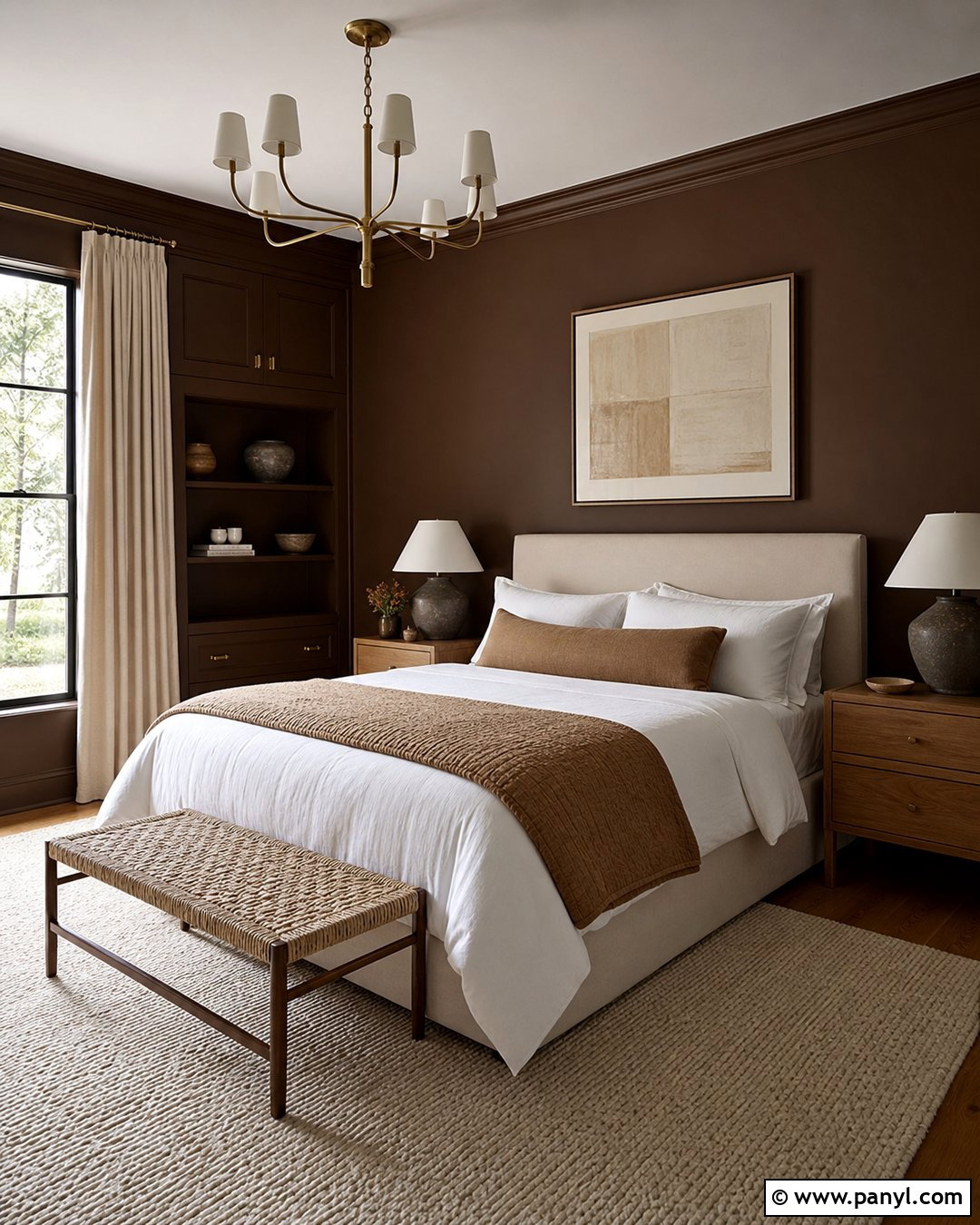
Chocolate brown can make a bedroom feel deeply restful when it is balanced with pale fabrics and reflective details. Choose a rich brown with warm cocoa undertones and apply it to the walls, trim, and built-in cabinetry for an enveloping effect. Contrast the dark background with an ivory upholstered bed and layers of white, oatmeal, and camel bedding. Add medium oak nightstands, antique brass lamps, and a large cream wool rug. Full-length linen curtains soften the windows and prevent the room from feeling severe. Hang one oversized piece of light-toned abstract art above the bed. Minimal pottery and a woven bench provide texture. The finished bedroom feels luxurious and grounded without requiring ornate furniture or an oversized floor plan.
23. Burgundy Library Wall Color
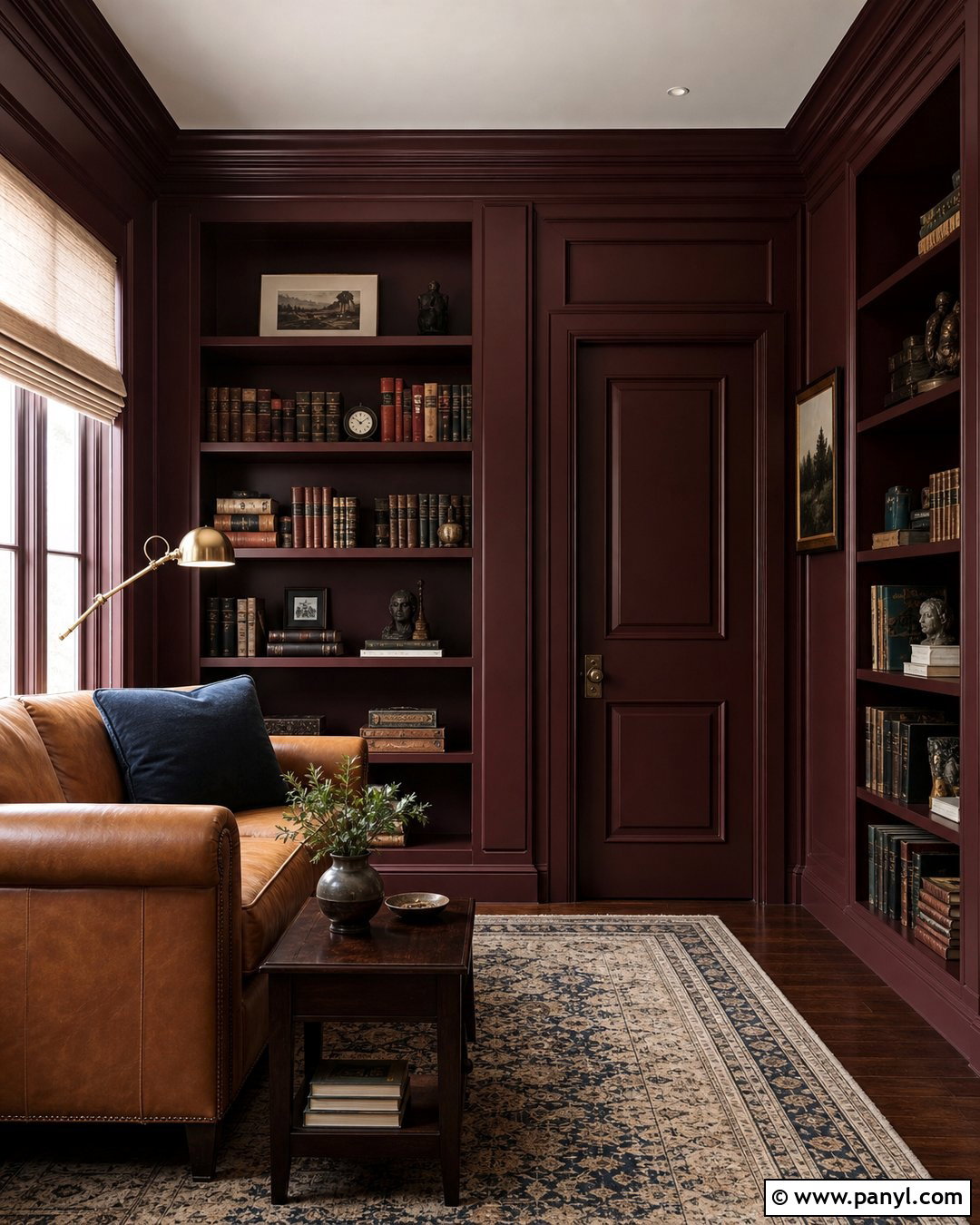
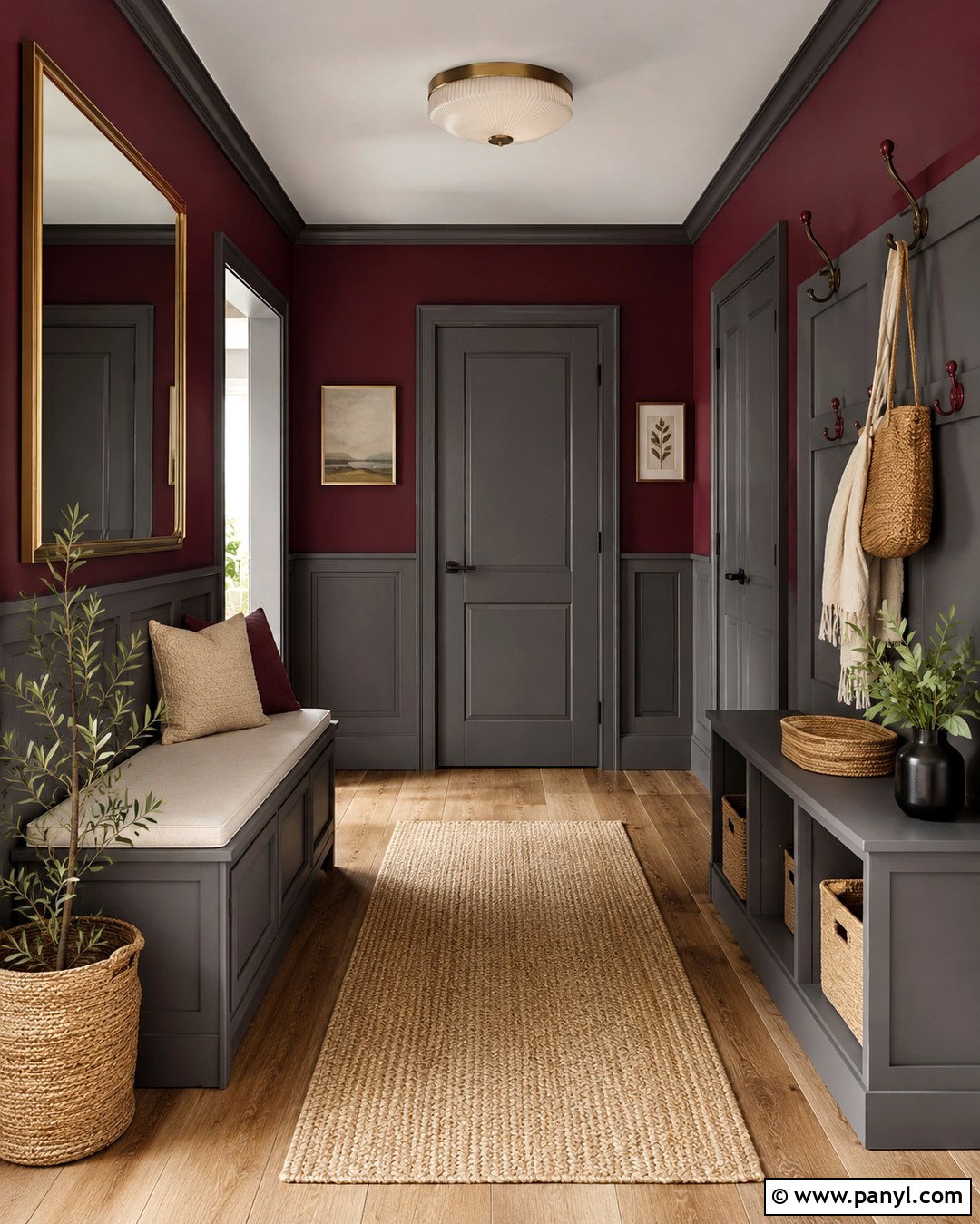
Burgundy brings warmth and formality to a library or reading room, especially when used as a complete architectural color. Select a deep, brown-based burgundy and apply it to the walls, shelving, trim, and interior door. Fill the bookcases thoughtfully, leaving room for framed art and sculptural objects. Place a caramel leather sofa or armchair near a dark wood side table and antique brass reading lamp. A faded rug containing cream, navy, and muted red will soften the floor while supporting the walls. Use natural linen Roman shades to introduce a lighter surface. A warm white ceiling can keep the room from becoming too enclosed. The final look feels intimate and established, making even a compact room appear carefully designed.
24. Charcoal Gray Home Office Wall Color
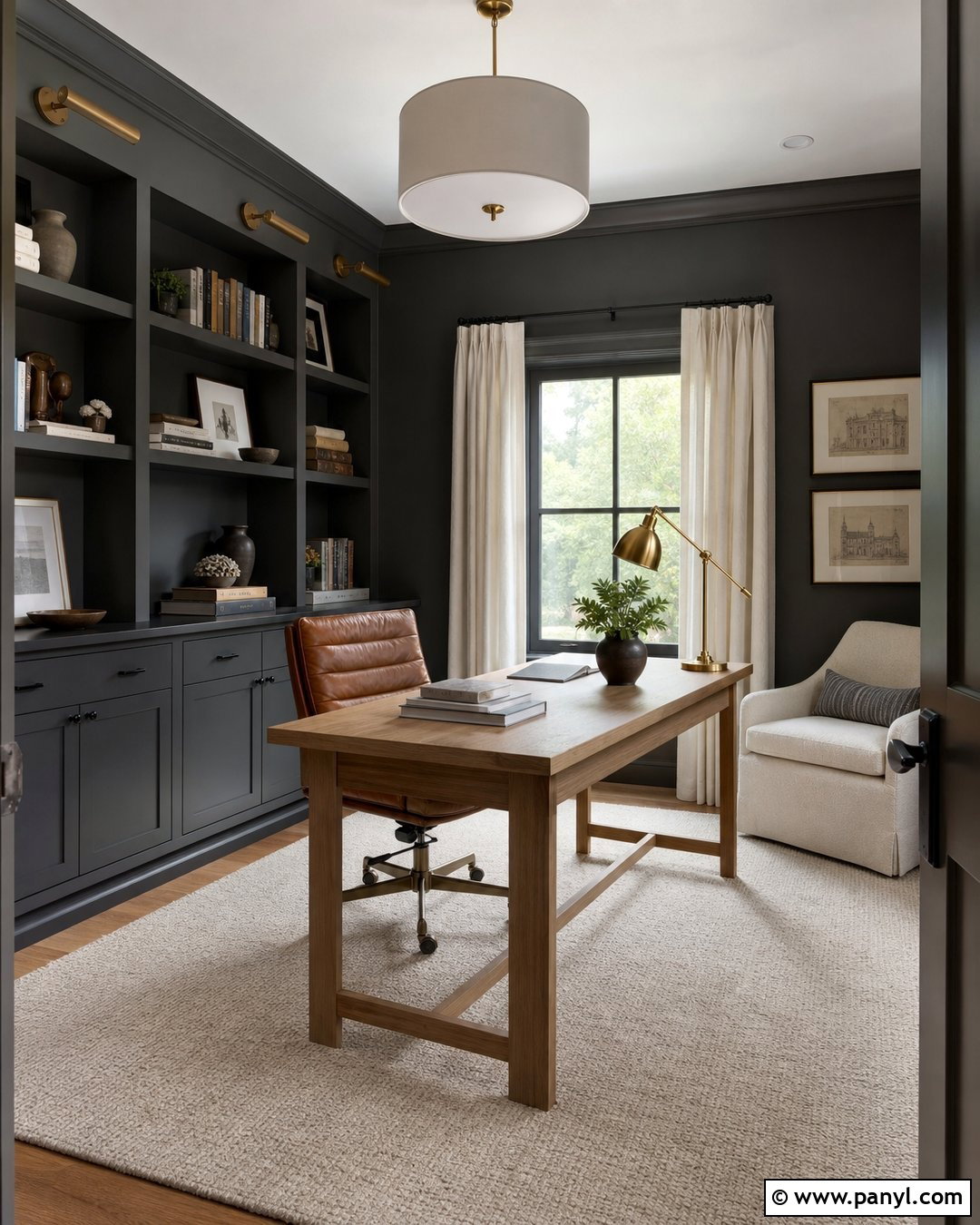
Charcoal gray gives a home office strong definition while providing a neutral background for wood, artwork, and practical storage. Choose a warm charcoal rather than a blue-black gray, then use it on the walls and built-in cabinetry. Position a light oak desk against the darker backdrop and pair it with a cognac leather chair. Cream curtains, a pale wool rug, and warm white upholstery prevent the scheme from feeling cold. Add aged brass desk lighting and matte black hardware for a controlled mix of metals. Display books, ceramic vessels, and framed drawings with generous breathing room. The ceiling can remain soft white for brightness. This balanced workspace feels focused and modern, yet warm enough to use comfortably throughout the day.
25. Soft Black Powder Room Wall Color
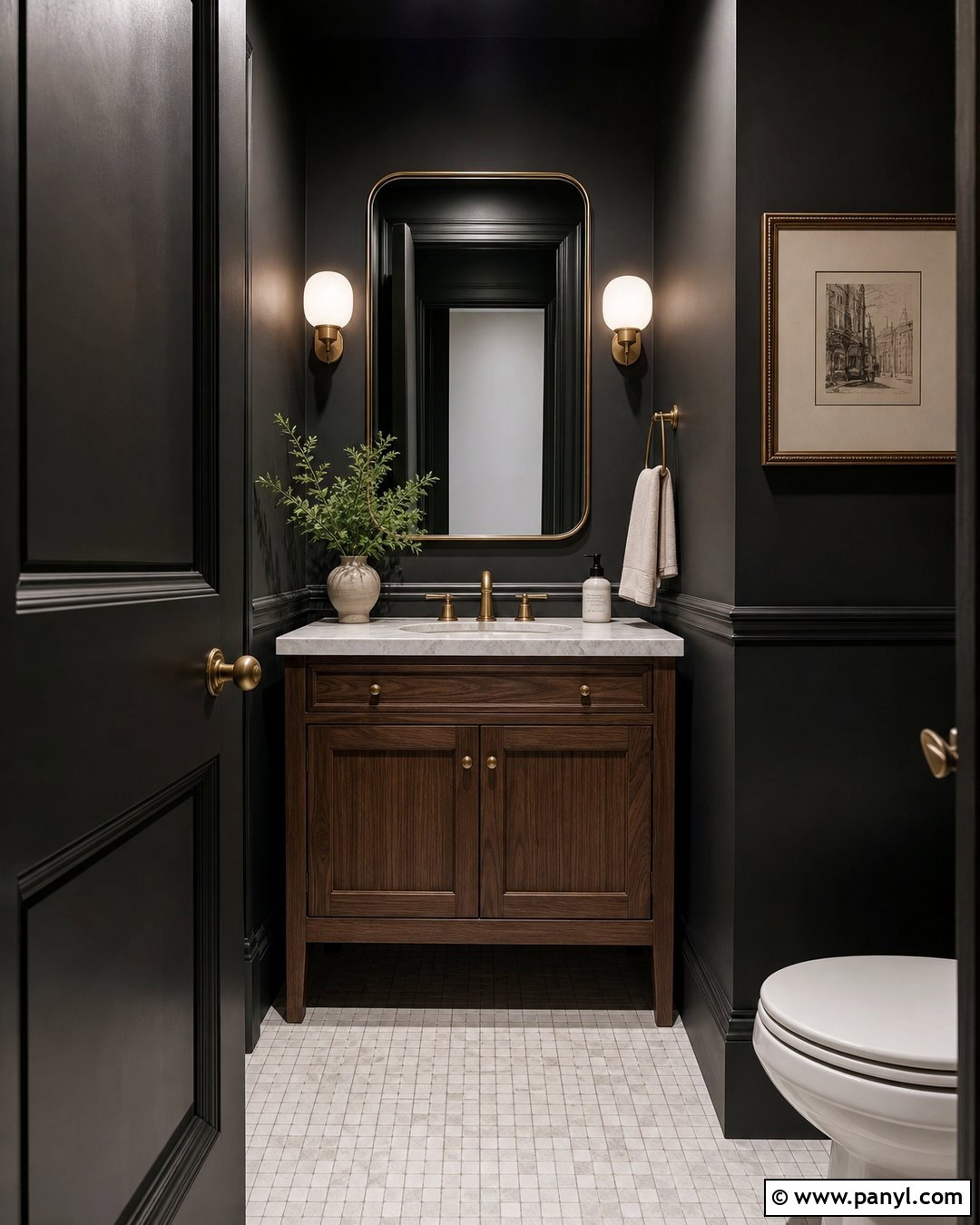
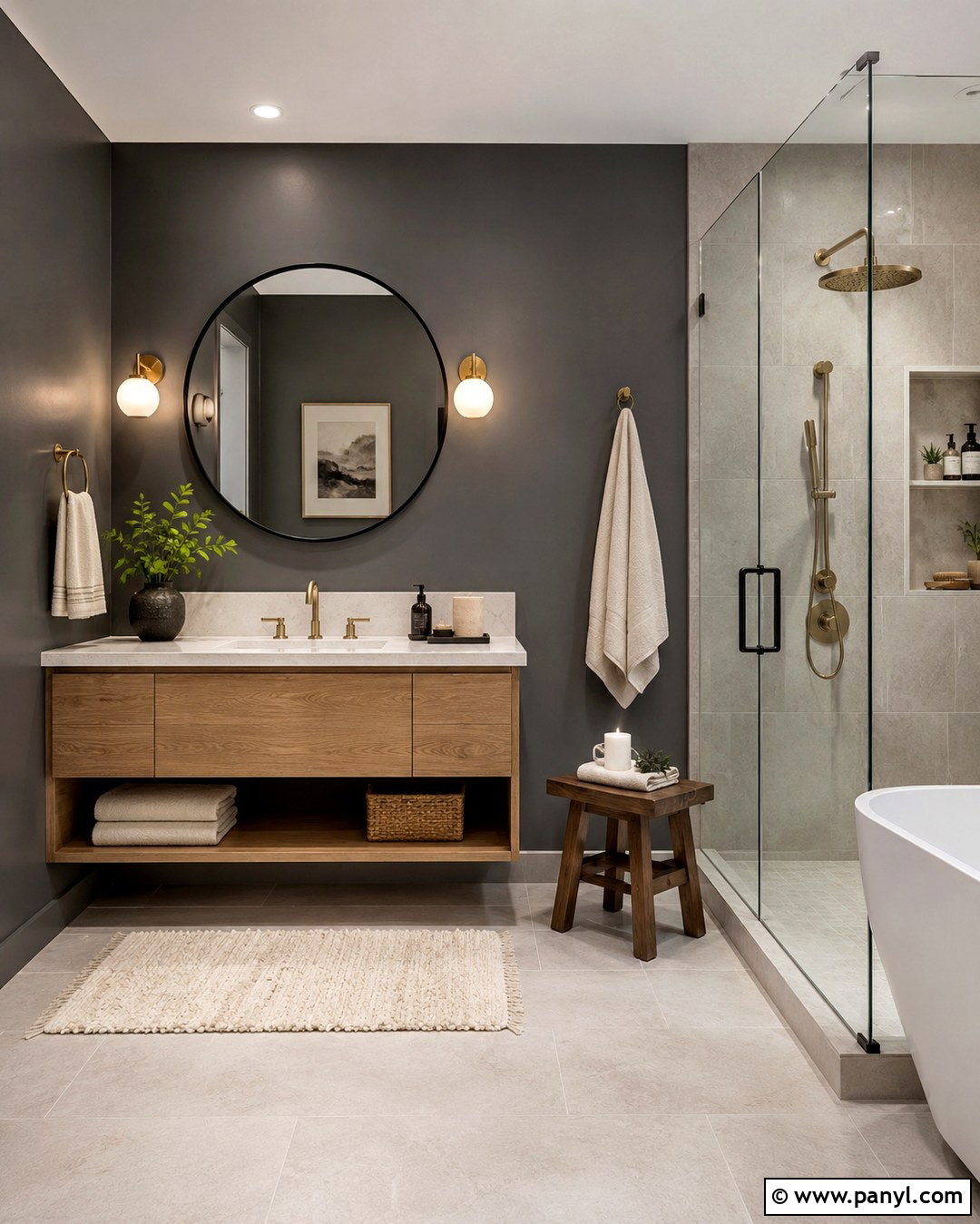
Soft black makes a memorable powder room when it has warm charcoal or brown undertones rather than a harsh, inky appearance. Use the shade on the walls and trim, then introduce a white marble vanity top and warm walnut cabinet for contrast. An unlacquered brass faucet and rounded mirror will stand out clearly against the dark background. Choose a pale stone mosaic floor to reflect light and keep the small space visually balanced. Opal glass sconces should provide bright, flattering illumination on both sides of the mirror. Add an ivory hand towel, one framed sketch, and a small ceramic vessel. The completed room feels dramatic but uncluttered, proving that a dark wall color can remain refined and approachable in an average home.
Conclusion:
The best elegant paint palette is one that supports the room as a complete, functional space. Warm whites and nuanced neutrals create flexible foundations, while muted greens, blues, pinks, and earth tones add personality without overwhelming the design. Deep navy, chocolate, burgundy, charcoal, and soft black can also feel inviting when balanced with light textiles, warm wood, and effective lighting. Before painting, compare large samples beside the flooring, furnishings, trim, and fixed finishes. Observe them in morning, afternoon, and evening light. Then select a sheen that suits the room’s practical needs. With thoughtful coordination, these 25 Elegant Wall Colors can create interiors that feel polished, comfortable, and personal.

Related Ideas and Inspiration:
Leave a Reply