
Burgundy and grey walls create a rich, balanced color palette that can feel dramatic, cozy, modern, or refined. Burgundy brings warmth and depth, while grey keeps the room grounded and visually calm. The key is choosing shades with compatible undertones and distributing them carefully throughout the space. Soft grey can open a smaller room, charcoal can create an intimate atmosphere, and warm greige can soften burgundy’s intensity. Furniture, flooring, lighting, trim, and textiles should connect both colors rather than compete with them. From simple accent walls to color-blocked treatments and decorative paneling, there are many practical ways to make this pairing work. Explore these complete room designs for stylish and approachable burgundy and grey walls.

1. Burgundy Accent Wall With Light Grey Walls
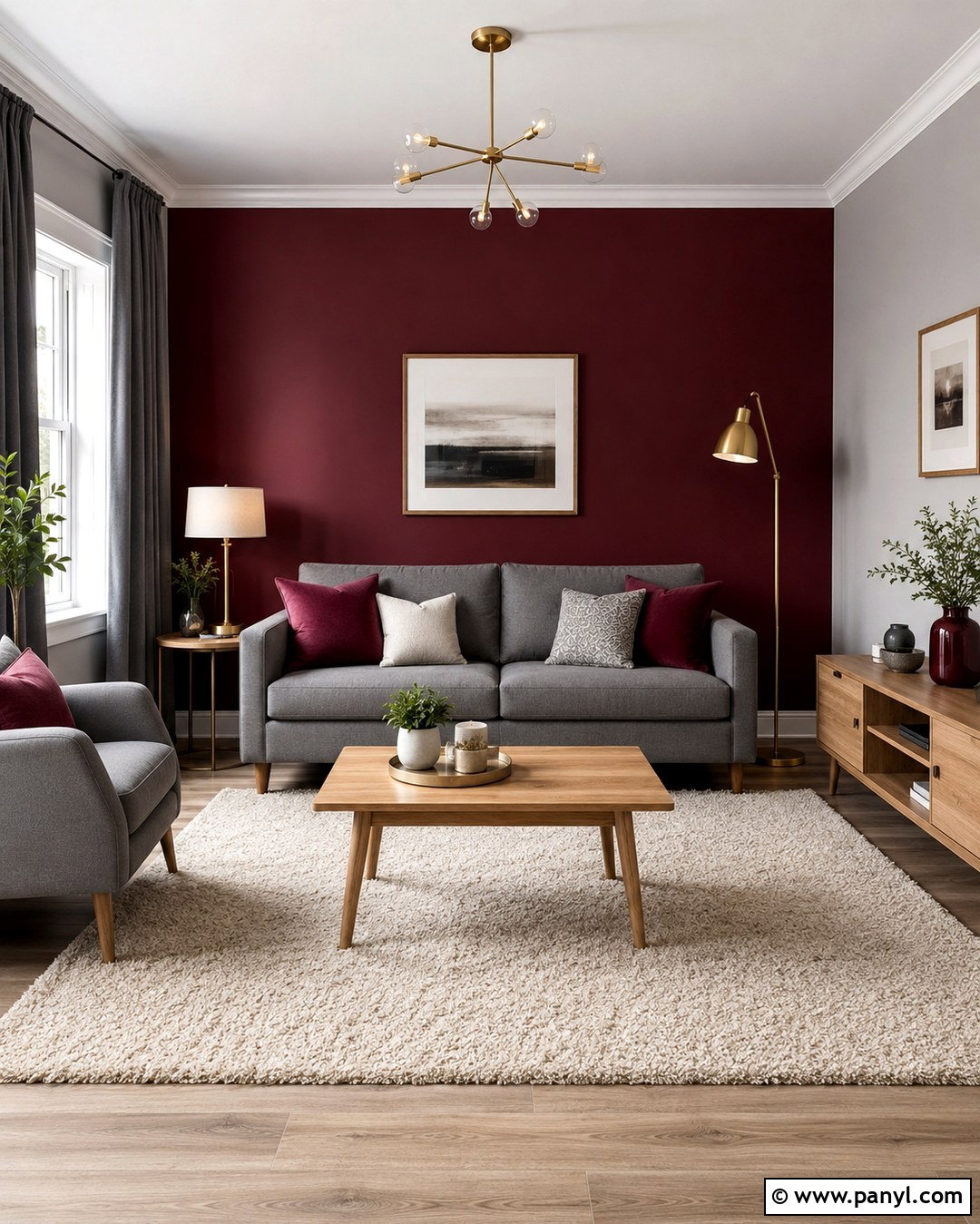
A deep burgundy accent wall gives a living room a clear focal point without making every surface feel heavy. Place the burgundy behind the main sofa or media console, then paint the remaining walls a soft, misty grey. A medium-grey sofa creates a gentle transition between the two shades. Add light oak tables, an ivory rug, and brushed brass lighting to keep the room bright. Burgundy cushions and grey curtains repeat the wall colors without looking overly coordinated. Choose warm white for the ceiling, baseboards, and doors so the contrast remains clean but not stark. This complete arrangement works especially well in an average-size living room with a large window and simple contemporary furniture.
2. Burgundy And Charcoal Grey Living Room Walls
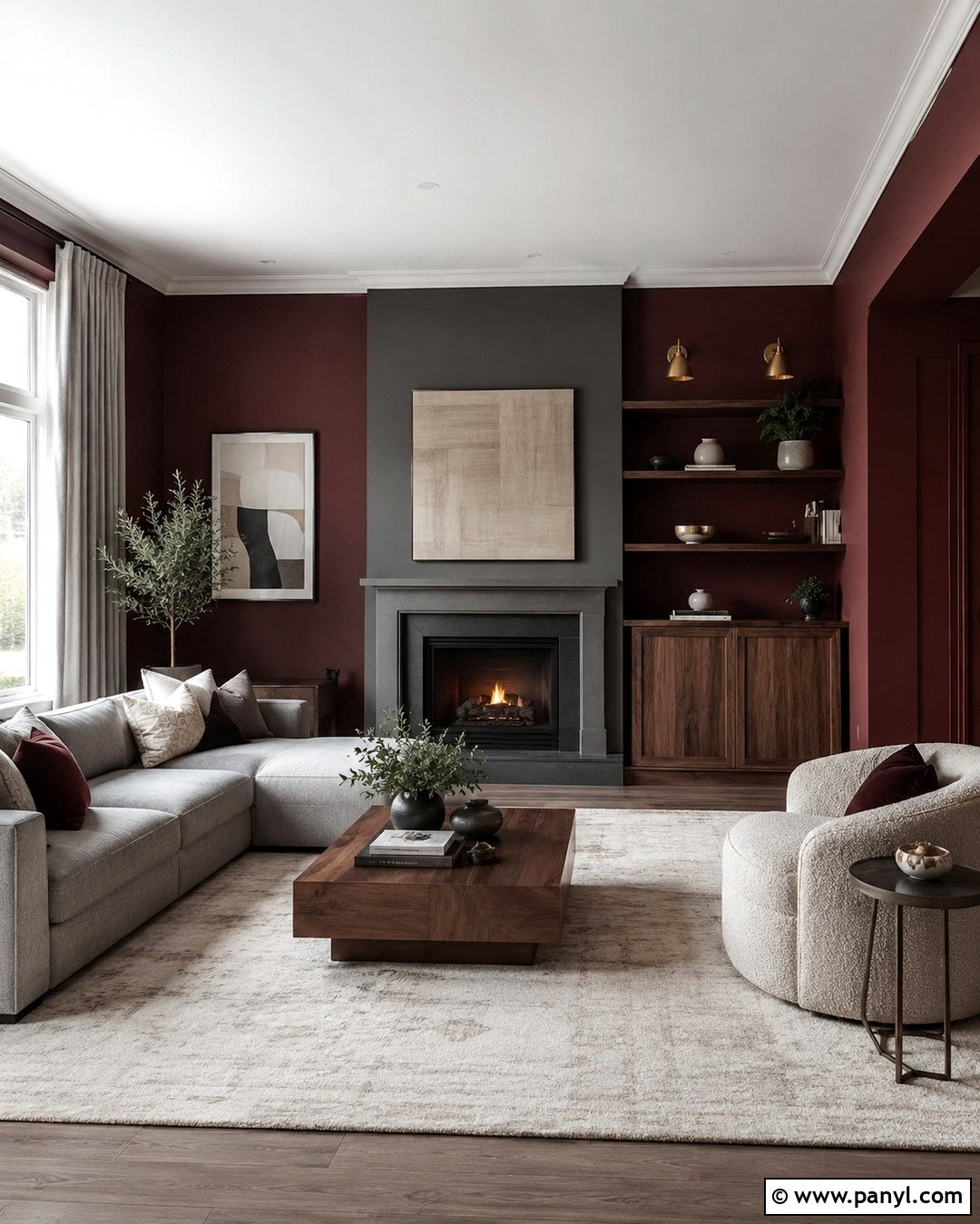
For a more dramatic room, combine muted burgundy walls with one charcoal grey fireplace wall. The burgundy should have a slightly brown undertone, which prevents it from looking too bright beside dark grey. A pale grey sectional, cream boucle chair, and large light-colored rug balance the deeper surfaces. Use black metal tables sparingly because the walls already provide plenty of visual weight. Walnut shelving and warm brass sconces add richness without introducing another strong color. Hang simple ivory artwork on the burgundy walls to create breathing room. Keep curtains soft grey and allow them to extend from ceiling to floor. Bright natural and layered artificial lighting are essential for making this sophisticated living room feel comfortable rather than enclosed.
3. Half Burgundy And Half Grey Walls
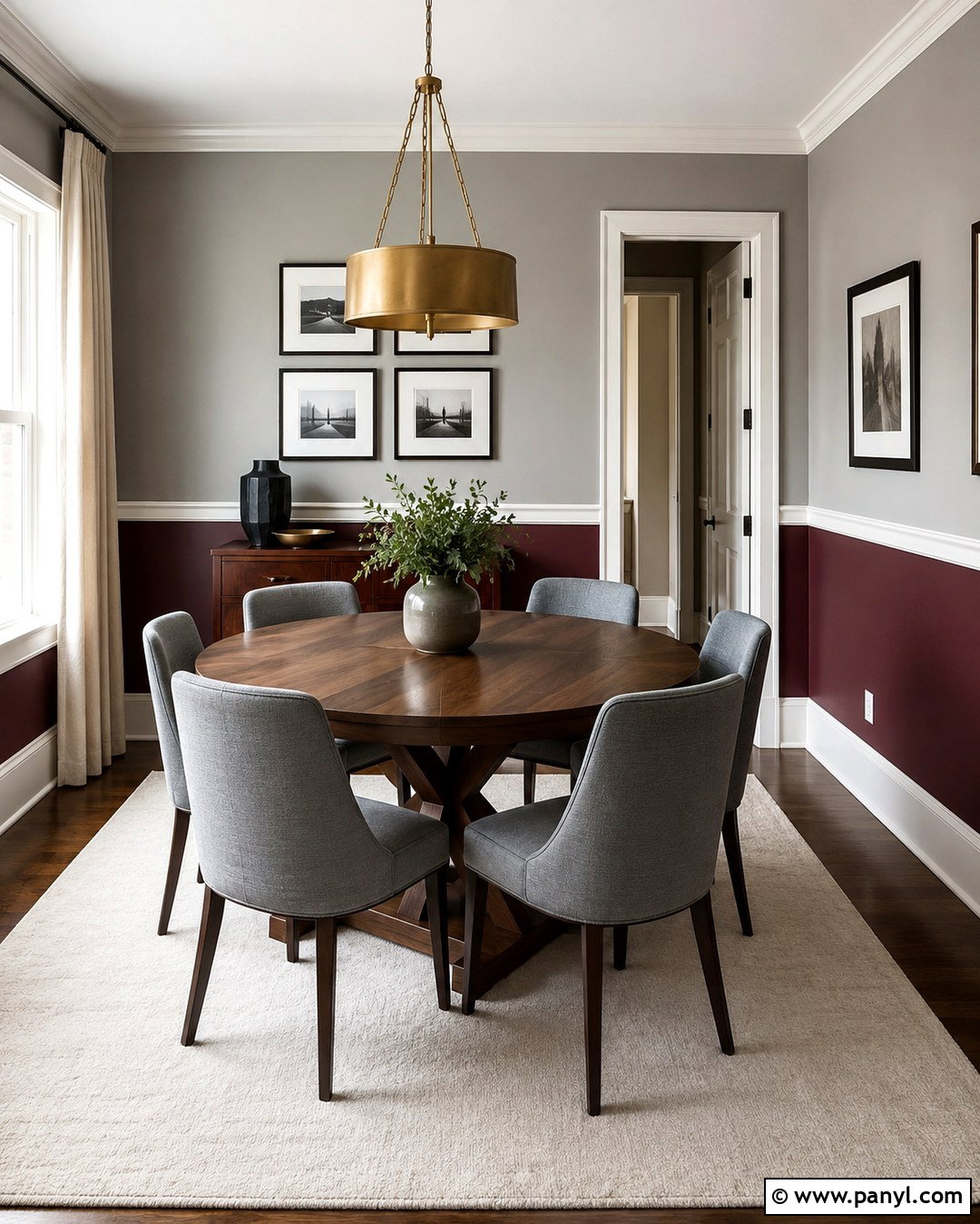
A horizontal two-tone treatment offers a practical way to use both colors evenly. Paint the lower third of the room deep burgundy and the upper portion pale grey, dividing them with a slim white chair rail. This layout grounds the room while keeping the upper walls light. In a dining room, pair the treatment with a round walnut table, grey upholstered chairs, and a cream area rug. A brass pendant light adds warmth above the table, while simple black-framed artwork provides structure. Repeat burgundy in a table runner or seat cushions, but keep accessories limited. White trim and a warm white ceiling sharpen the design. The result feels tailored and welcoming without requiring elaborate architectural features or expensive furniture.
4. Burgundy Wall Paneling With Grey Paint
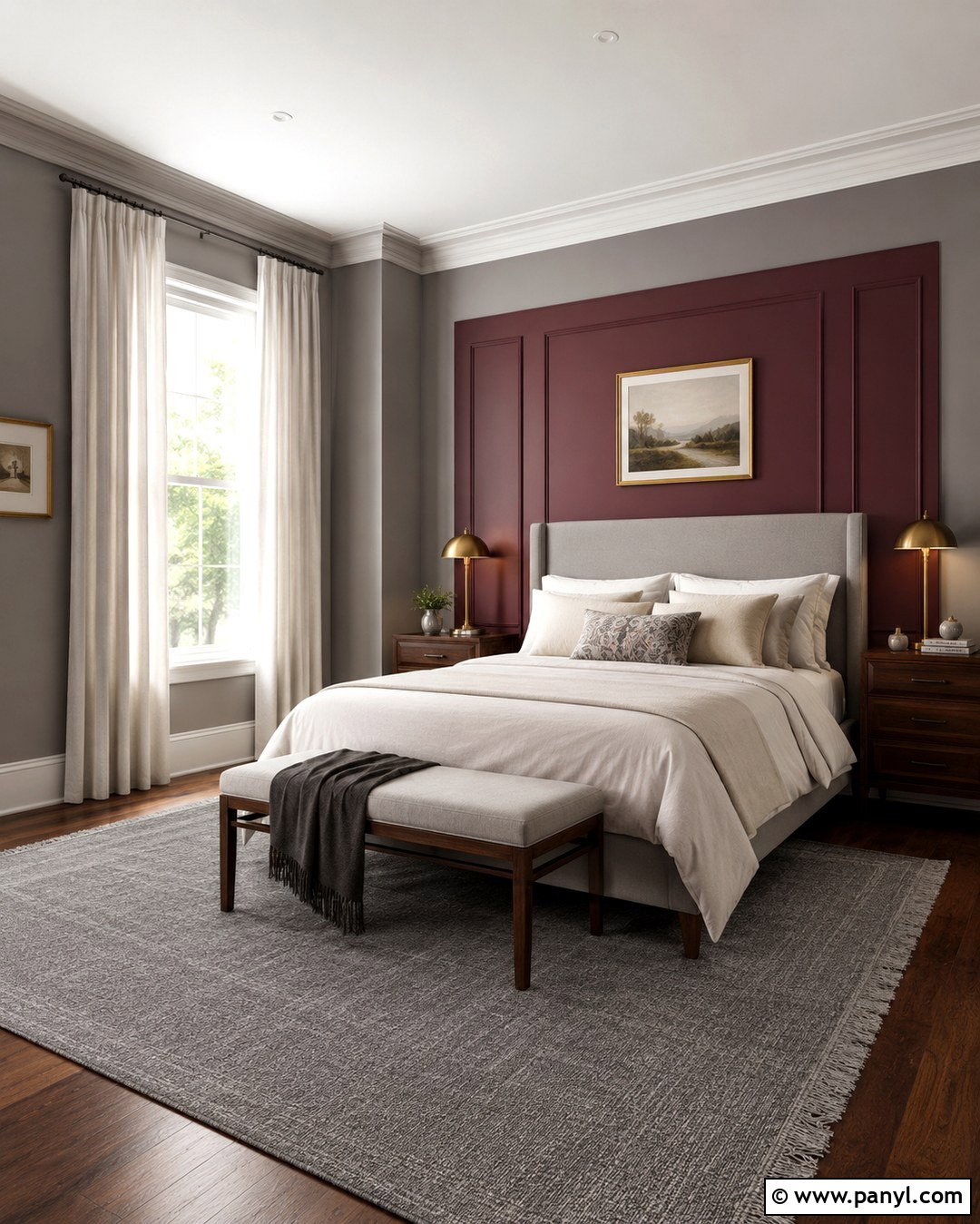
Burgundy-painted wall paneling can transform a plain bedroom into a polished retreat. Install simple rectangular molding across the wall behind the bed, then paint the molding and wall the same matte burgundy. Cover the other walls in a warm dove grey. A light grey upholstered bed softens the strong feature wall, while ivory bedding prevents the palette from becoming too dark. Add walnut nightstands, brushed brass lamps, and a large grey wool rug for warmth and texture. Burgundy piping or a folded throw can connect the bedding to the wall. Choose understated curtains in natural linen and keep the ceiling warm white. The matching paint across the molding creates architectural depth without making the paneling look busy or overly traditional.
5. Grey Walls With Burgundy Painted Arch
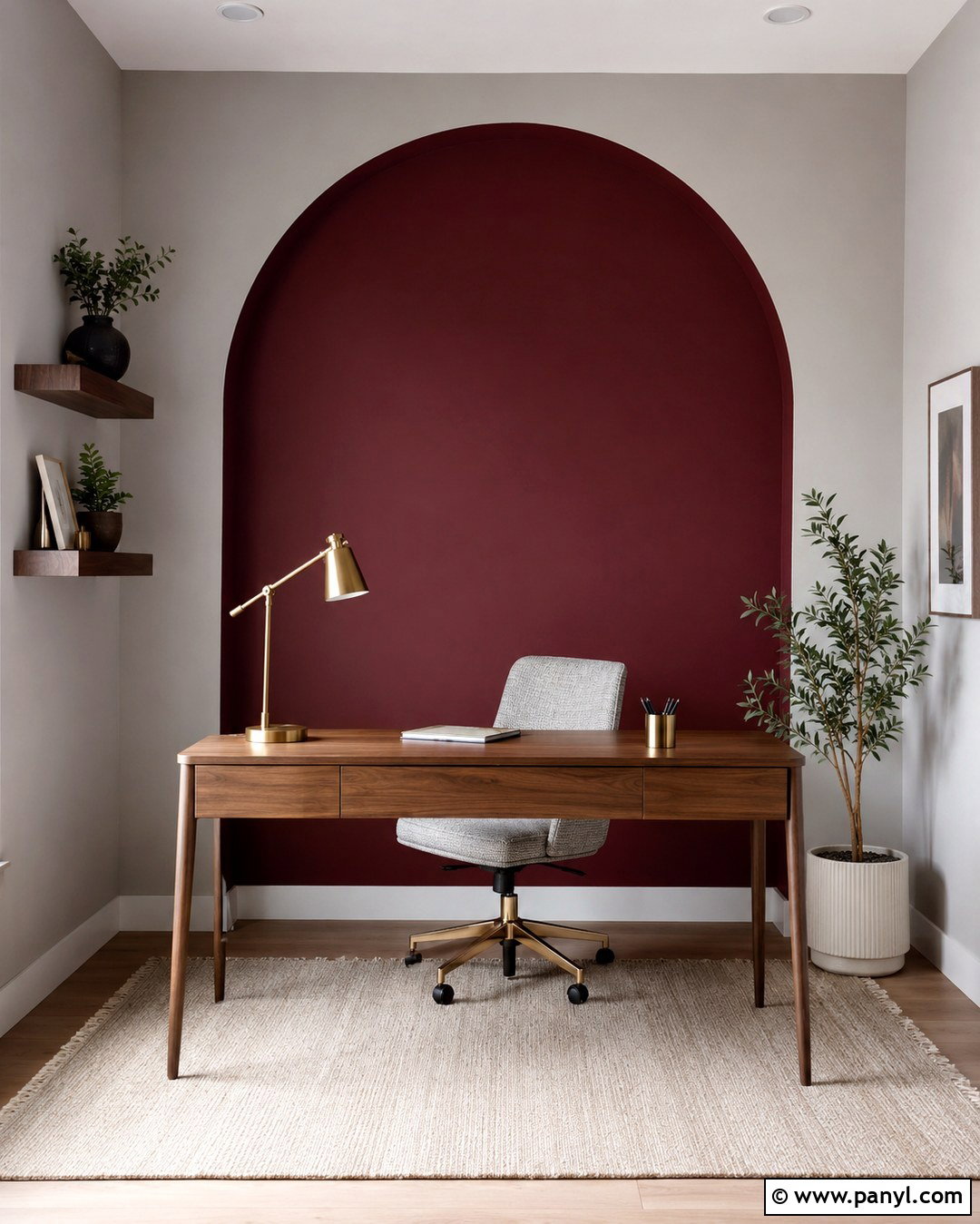
A painted burgundy arch creates a strong focal point while allowing grey to remain the dominant wall color. This treatment works beautifully around a console, reading chair, desk, or open shelving unit. Begin with soft warm-grey walls, then paint a wide, rounded burgundy arch from the floor upward. Place a slim walnut desk inside the shape with a grey upholstered chair and brass task lamp. Light wood flooring and an ivory woven rug keep the workspace relaxed. Use only a few functional accessories so the painted form remains visible. Floating shelves can follow the arch’s center line without covering its outline. The finished home office feels distinctive and intentional, yet the project requires less paint and commitment than a complete burgundy wall.
6. Burgundy And Grey Bedroom Walls
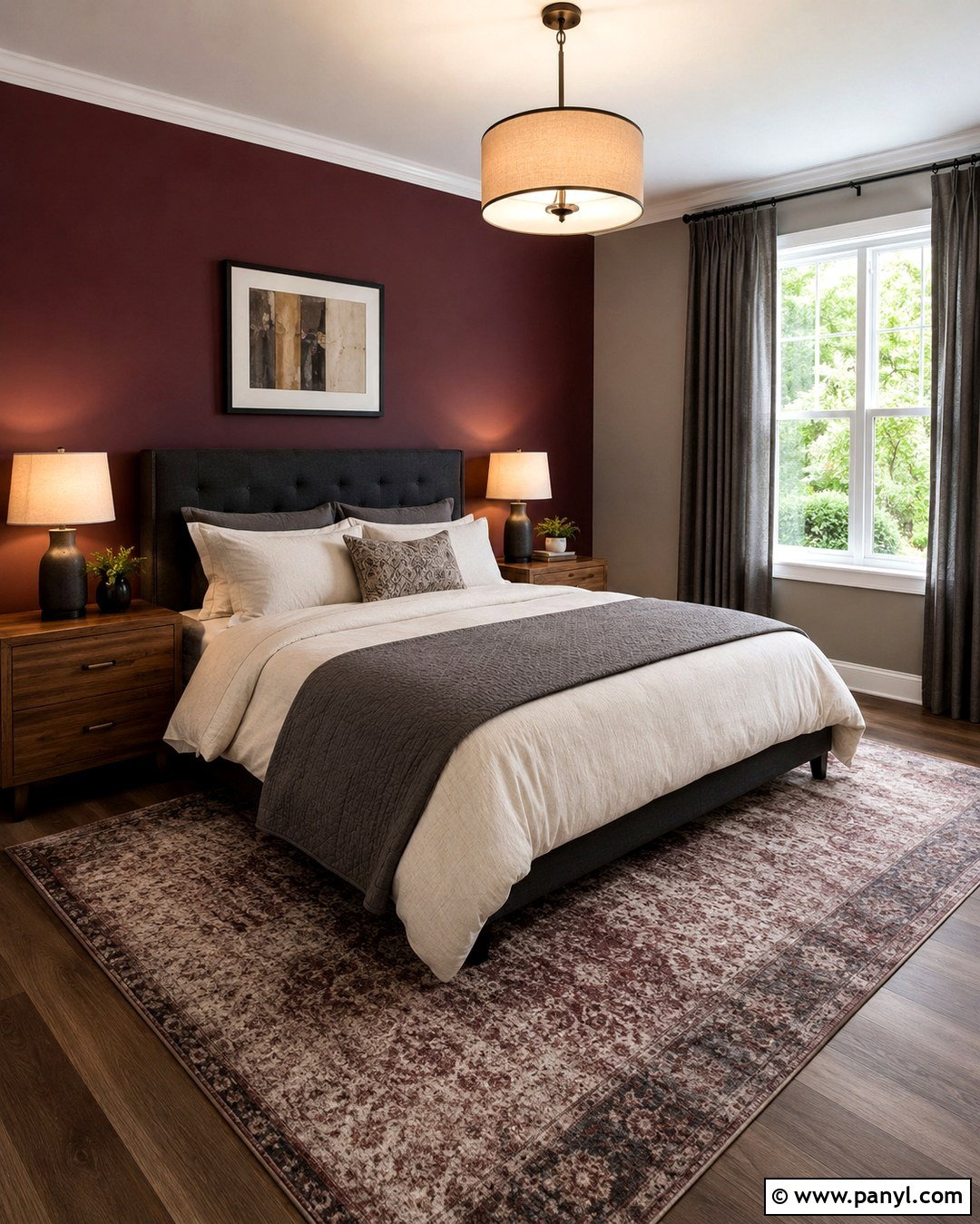
Wrap the wall behind the bed in muted burgundy and use medium warm grey on the surrounding bedroom walls. This balanced arrangement creates a restful sleeping area while making the bed the natural centerpiece. Choose a charcoal upholstered headboard for subtle contrast, then add crisp ivory sheets, a grey quilt, and two burgundy lumbar pillows. Medium oak nightstands keep the palette from becoming formal, while ceramic lamps with cream shades provide soft visual relief. A faded grey and burgundy rug can connect the entire room without introducing a distracting pattern. Hang minimal artwork with pale backgrounds above the bed. Finish with floor-length grey curtains and warm white trim. The room will feel layered, comfortable, and coordinated rather than heavily color matched.
7. Burgundy Ceiling With Grey Walls
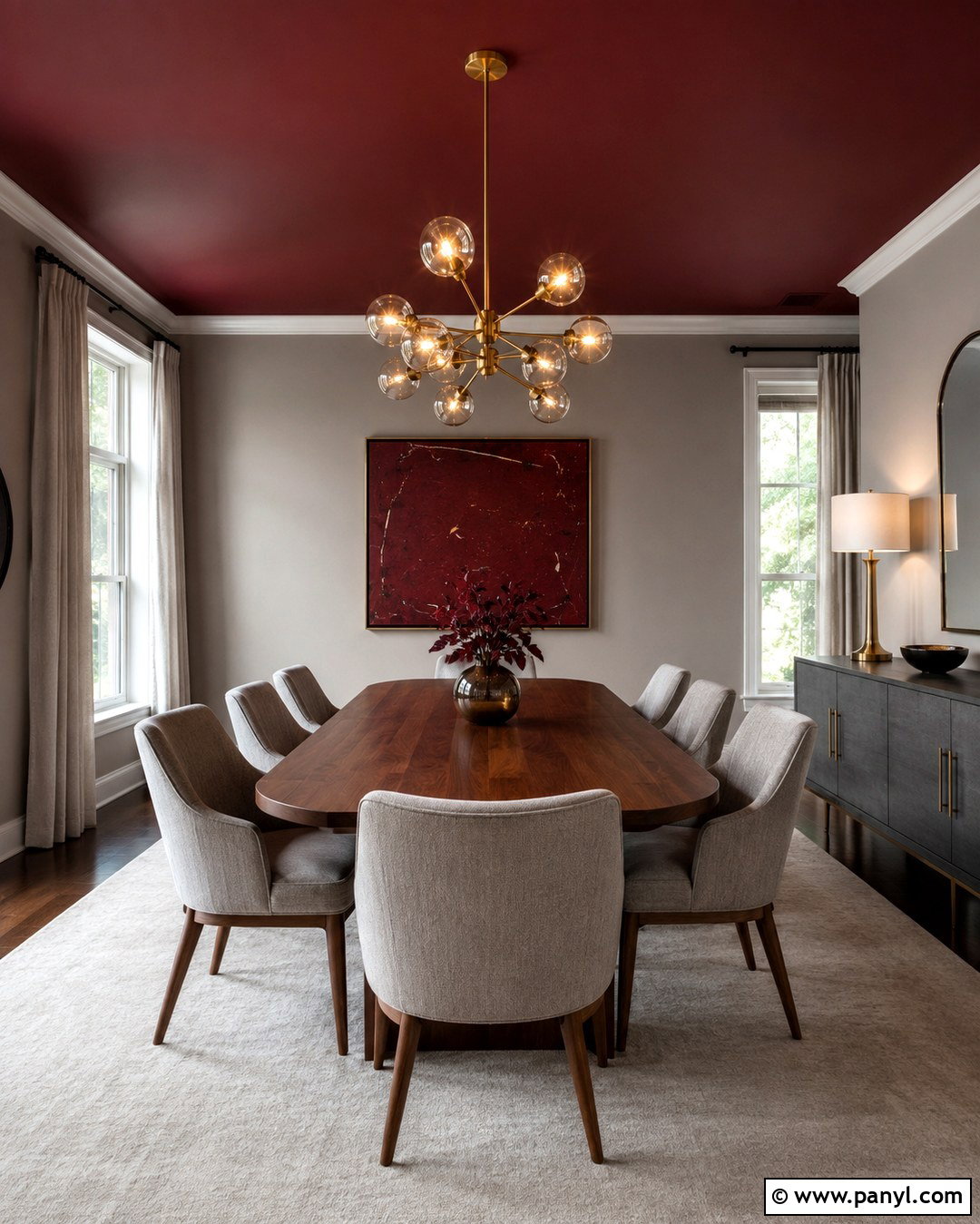
Painting the ceiling burgundy introduces color in an unexpected but controlled way. It works best in a dining room with good natural light and walls painted a soft, warm grey. Carry the burgundy a few inches down the upper wall to create a clean border and make the ceiling treatment look deliberate. A walnut dining table, grey linen chairs, and an ivory rug maintain a balanced foundation. Choose a sculptural brass chandelier that stands out against the colored ceiling without blocking it. Burgundy artwork and a simple grey sideboard can repeat the palette at eye level. Keep baseboards and doors warm white for definition. This complete design creates an intimate dining atmosphere while leaving the main wall surfaces calm, flexible, and easy to decorate.
8. Grey Board And Batten With Burgundy Walls
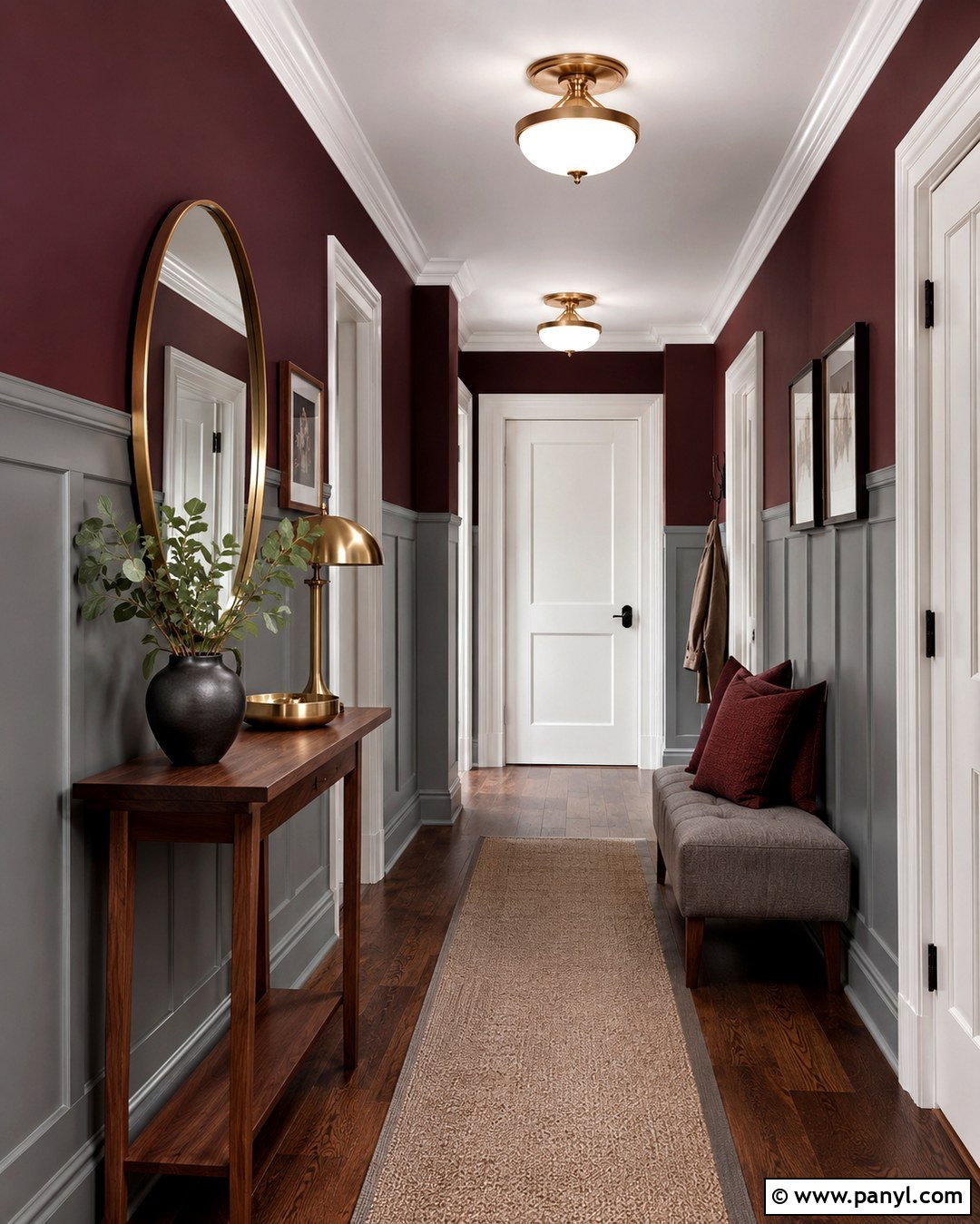
Grey board and batten can add structure to burgundy walls while reducing the amount of saturated color at eye level. Install the trim across the lower half of a hallway or entryway and paint it medium warm grey. Use burgundy above it, finishing the division with a substantial horizontal rail. A narrow walnut console, round brass mirror, and light neutral runner create a welcoming arrangement. Add a grey bench with burgundy cushions if space allows. Warm white doors prevent the corridor from feeling closed in, while bright ceiling fixtures illuminate the darker upper walls. Keep artwork simple and lightly colored. This wall treatment is especially effective in transitional spaces because it adds character, protects the lower wall, and visually connects nearby grey and burgundy rooms.
9. Burgundy Fireplace Wall With Grey Surrounding Walls
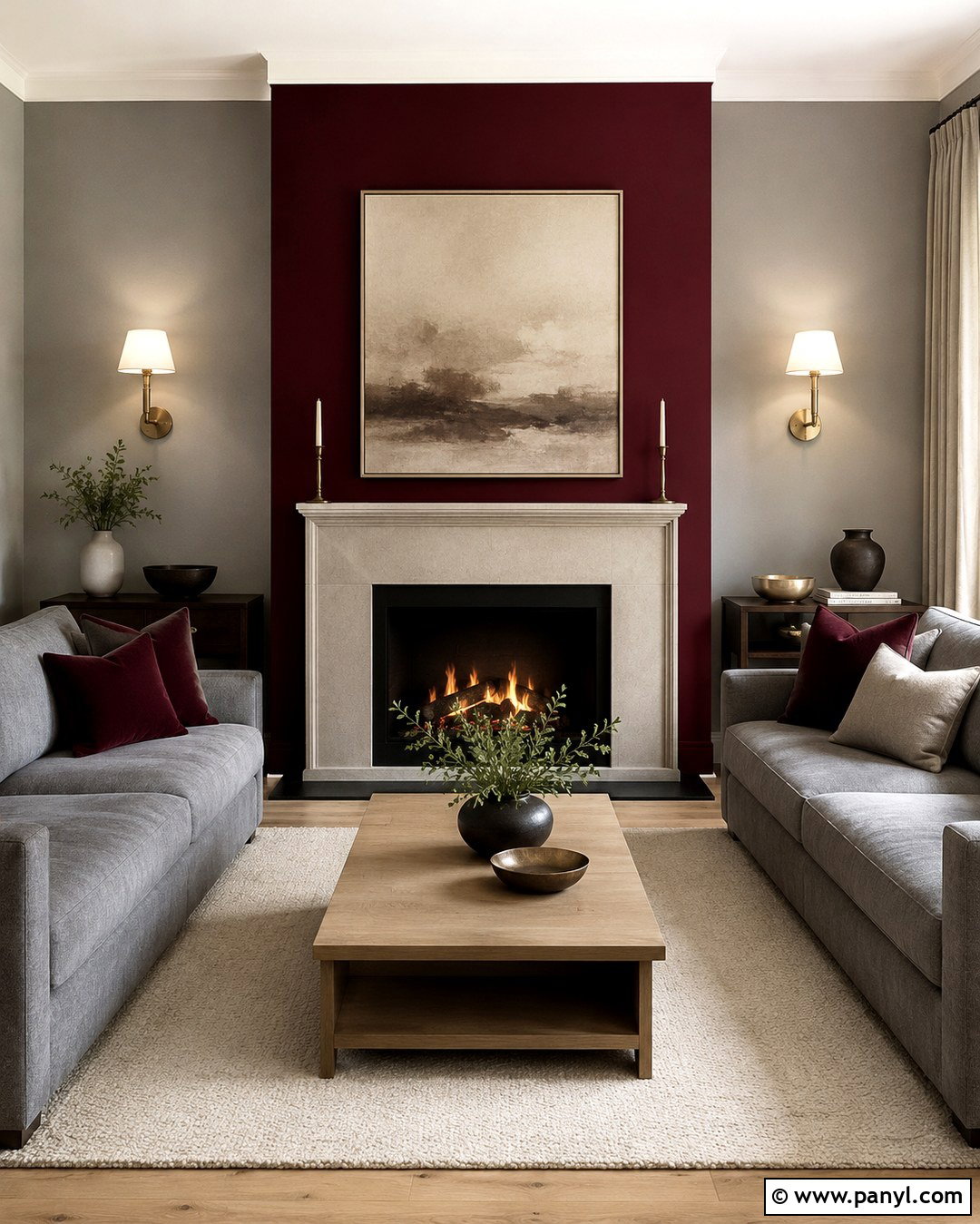
Make the fireplace wall the centerpiece by covering it in a rich burgundy paint from floor to ceiling. Paint the remaining walls light grey, then use a pale stone or warm white fireplace surround to separate the firebox from the deep background. Arrange two grey sofas or a sofa and matching armchairs around a light oak coffee table. An ivory wool rug helps reflect light and keeps the seating area airy. Add brass wall sconces on either side of the fireplace and display one large neutral artwork above the mantel. Burgundy cushions can repeat the feature wall, but avoid filling every seat with them. This complete layout combines strong symmetry, comfortable furniture, and a controlled color ratio that feels inviting throughout the year.

10. Burgundy Color Block Wall With Grey Background
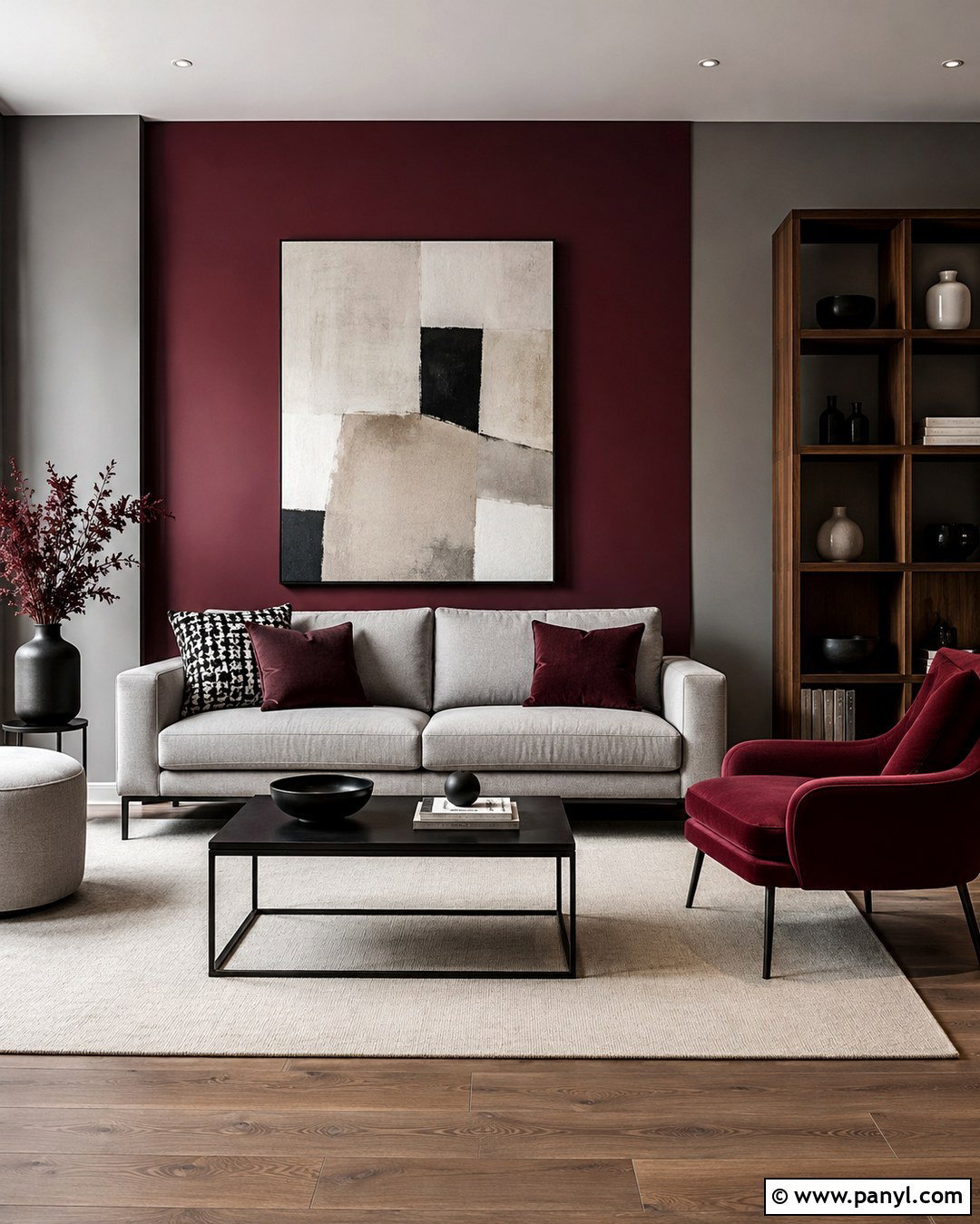
A geometric burgundy color block brings energy to a simple grey room without overwhelming it. Paint all walls soft grey, then add a large burgundy rectangle behind a sofa, bed, or sideboard. Make the painted block slightly wider than the furniture so it visually frames the arrangement. In a modern living room, use a streamlined light grey sofa, black metal coffee table, and cream textured rug. Add walnut shelving and one burgundy accent chair to distribute color beyond the wall. Keep artwork inside the rectangle minimal, such as one oversized abstract print with ivory and grey details. White trim, pale flooring, and bright curtains prevent the design from becoming too intense. The result is graphic, practical, and easy to update later.
11. Burgundy And Grey Striped Walls
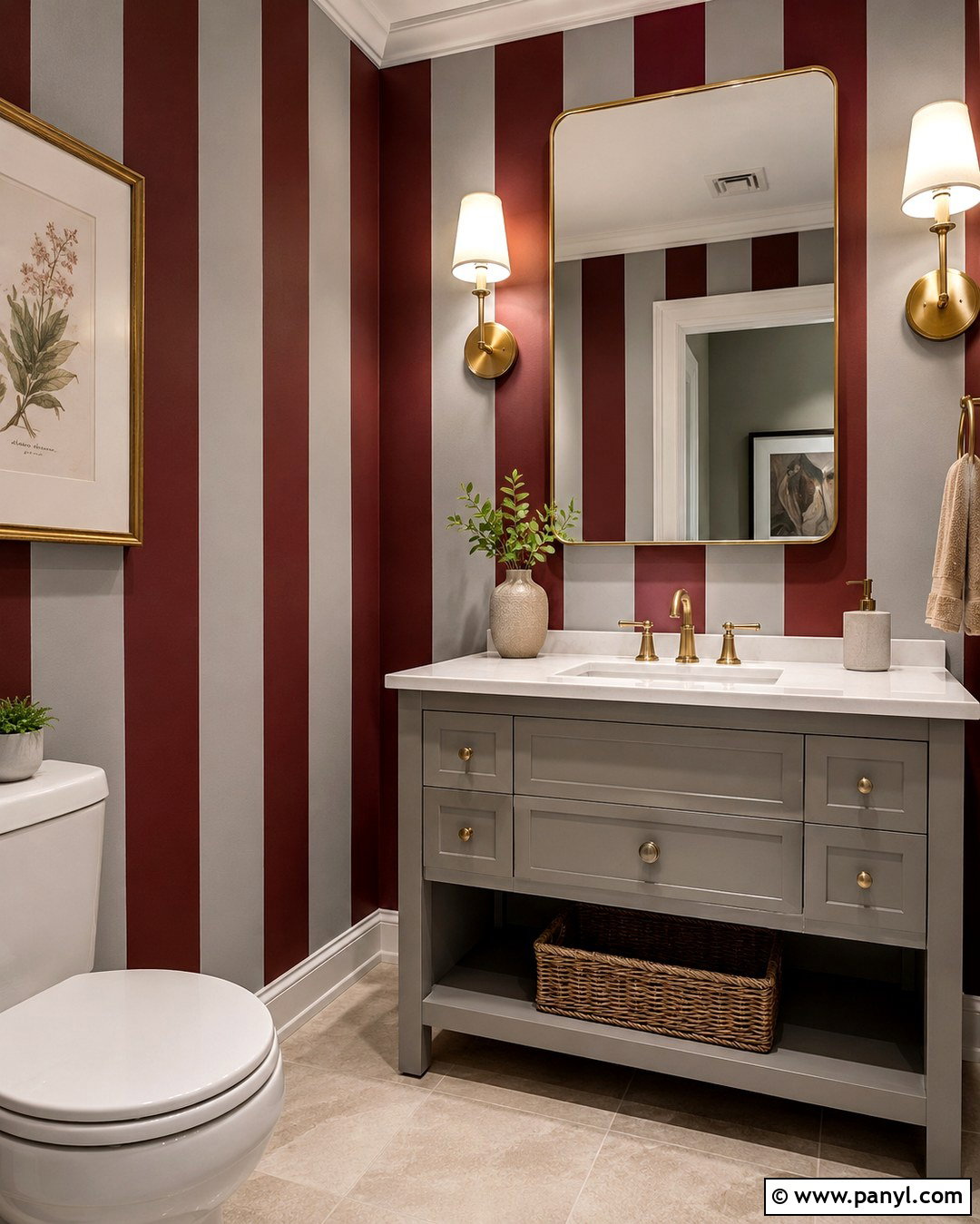
Wide vertical stripes can make burgundy and grey walls feel decorative without relying on wallpaper. Use alternating bands of muted burgundy and warm light grey, keeping each stripe broad enough to avoid a busy appearance. This treatment suits a powder room, reading nook, or compact dressing room where a bold finish feels intentional. Pair the walls with a simple grey vanity, white quartz top, and brass-framed mirror. Light stone flooring keeps the room grounded and easy to maintain. Use warm white on the ceiling and trim to frame the pattern. Choose plain towels and minimal accessories because the walls already provide movement. Accurate measuring and crisp painter’s tape are important for creating clean edges and consistent stripe widths throughout the room.
12. Burgundy Wallpaper With Grey Painted Walls
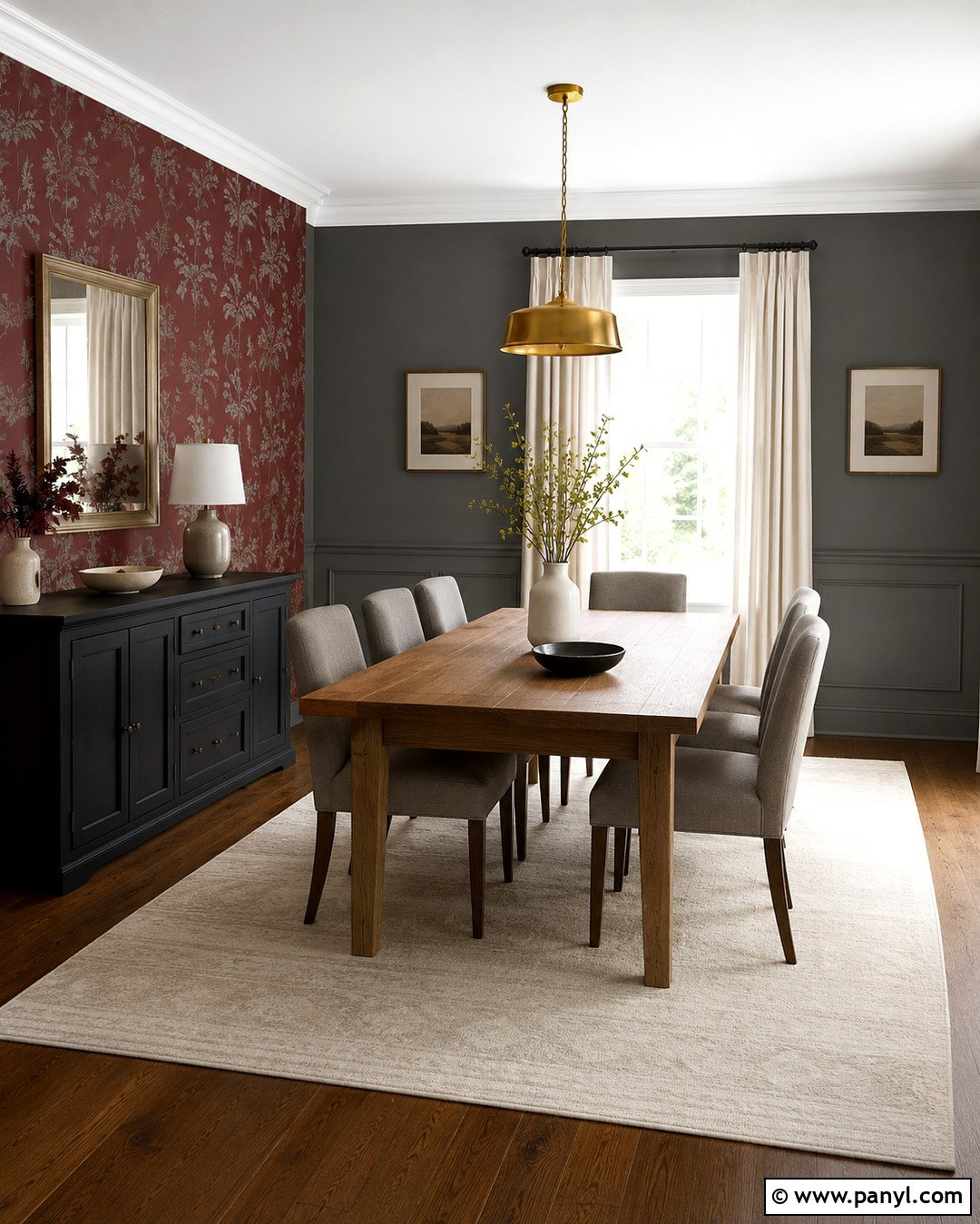
Choose burgundy wallpaper with a restrained grey botanical or geometric pattern for one dining room wall. Paint the other walls in a grey shade pulled directly from the wallpaper so the transition appears seamless. A charcoal sideboard can sit against the patterned surface, while a medium oak table and grey upholstered chairs create a warmer central arrangement. Add an ivory rug, brass pendant, and cream curtains to brighten the palette. Keep table decor simple and avoid competing prints in the upholstery. Burgundy napkins or chair piping can reinforce the wallpaper’s dominant shade without making the entire room feel themed. This approach provides pattern, depth, and visual interest while maintaining enough plain wall space for artwork, storage, and everyday flexibility.
13. Burgundy Limewash With Soft Grey Walls
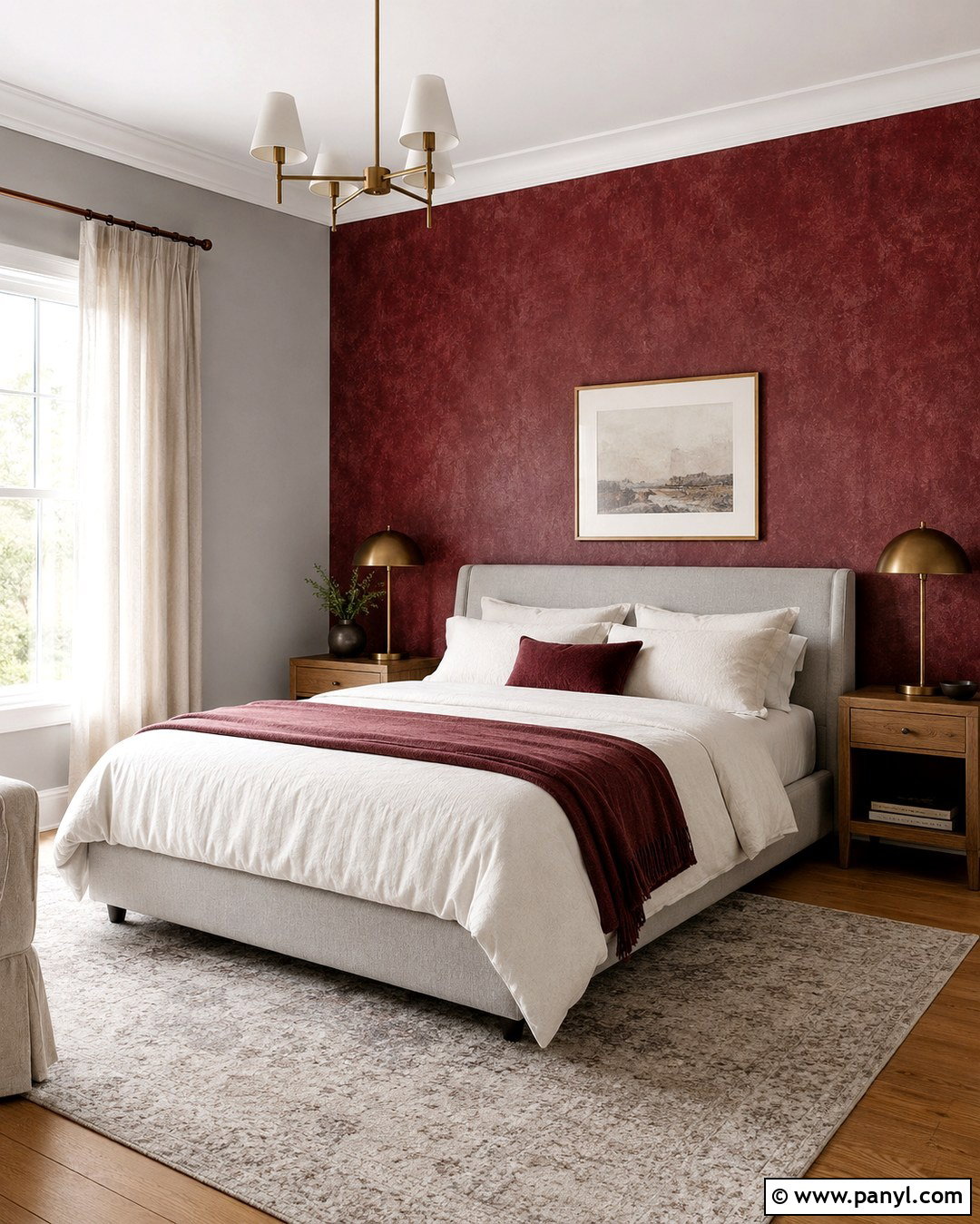
A burgundy limewash-style feature wall gives the color a softer, more dimensional appearance than flat paint. Use it behind a low-profile bed or sofa, then surround it with pale grey walls that have a smooth matte finish. The subtle movement in the burgundy surface becomes the main decorative element, so furniture can remain simple. Select a light grey linen bed, oak nightstands, and ivory bedding for a relaxed bedroom. Layer a faded grey rug, burgundy throw, and natural linen curtains to support the understated finish. Black accents should be limited to small frames or hardware. Warm white trim and gentle brass lighting prevent the room from feeling cold. The final look feels handcrafted, calm, and rich without becoming formal or ornate.
14. Burgundy Walls With Grey Built-In Shelves
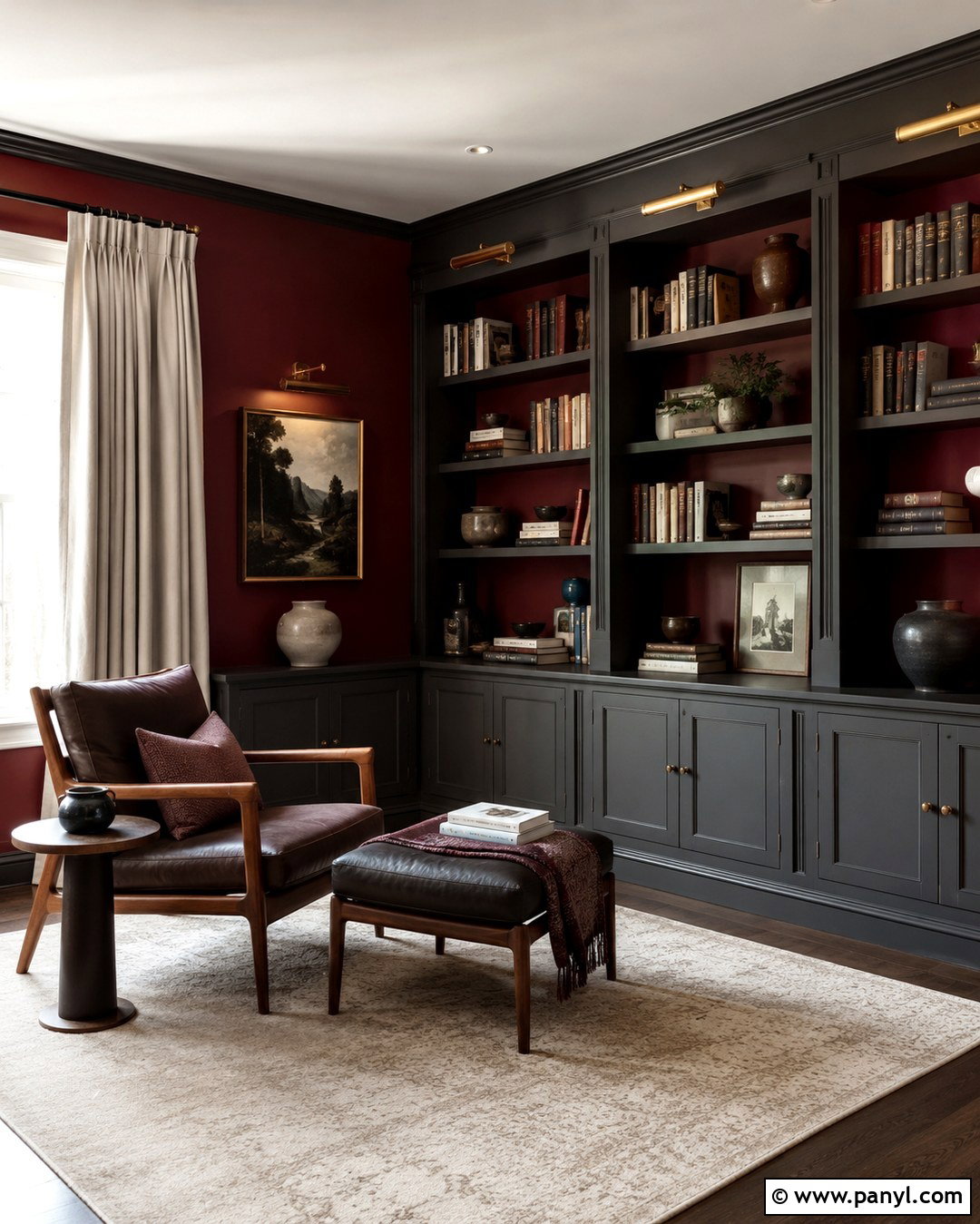
Burgundy walls can form a dramatic backdrop for grey built-in shelving in a home library or den. Paint the main walls a deep, earthy burgundy, then finish the shelves, lower cabinets, and window trim in a medium charcoal grey. Use warm walnut or cognac-colored seating to break up the two painted surfaces. A large cream rug and linen curtains will brighten the floor and windows. Style the shelves with books, ceramics, and a few light-colored objects, leaving open space between groupings. Brass picture lights provide useful illumination and stand out beautifully against grey cabinetry. Include a burgundy and grey patterned cushion on the reading chair. This complete room feels cozy and collected while maintaining clear organization and practical storage.
15. Light Grey Kitchen Walls With Burgundy Backsplash
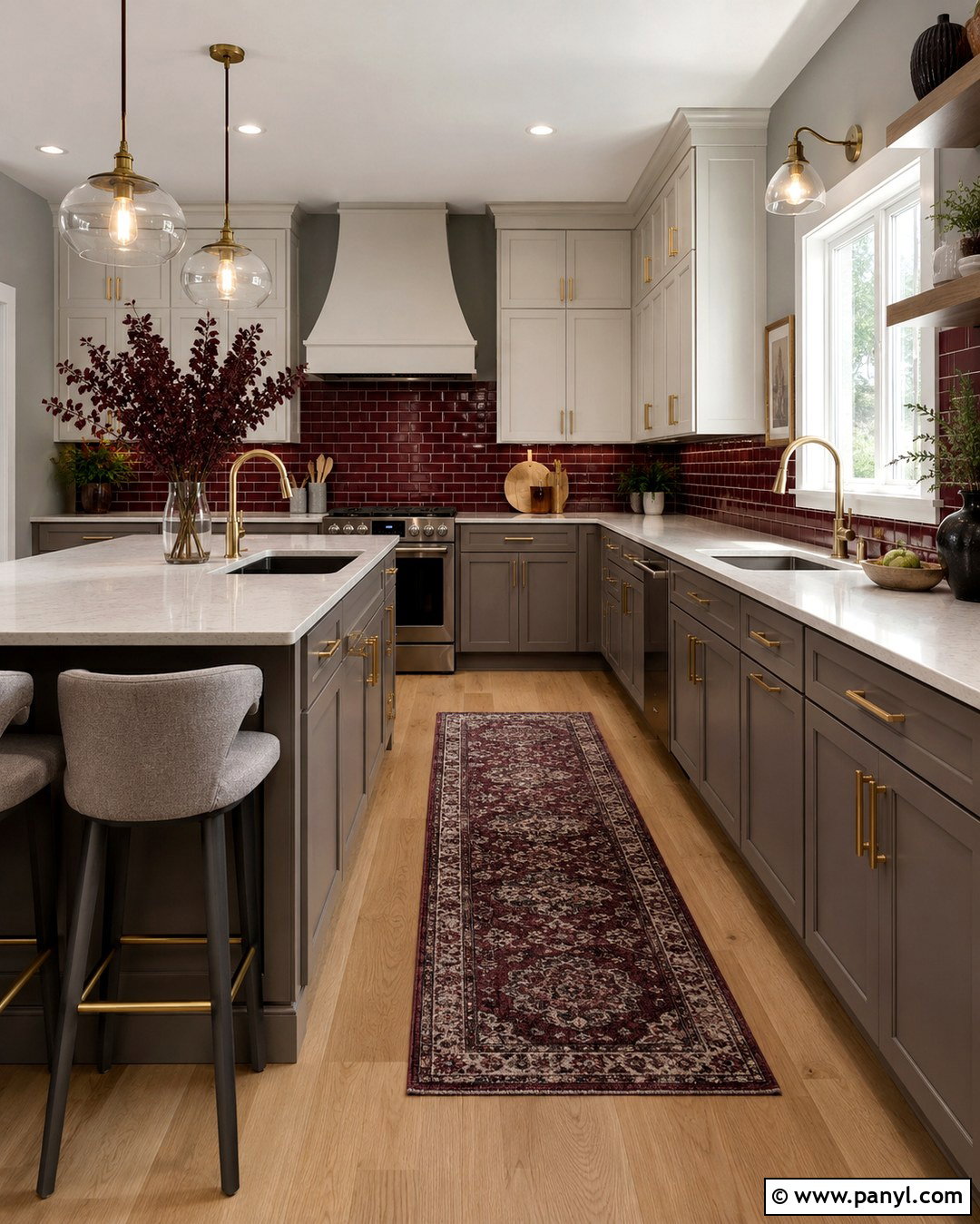
In a kitchen, light grey walls can balance a burgundy tile backsplash without competing with its glossy color. Use burgundy ceramic subway tiles behind the range and along the main countertop wall. Pair them with warm grey lower cabinets, off-white upper cabinets, and pale quartz countertops. Brushed brass hardware adds warmth, while light oak flooring keeps the room approachable. Select a simple white range hood so the burgundy tile remains the focal point. Grey counter stools and a small burgundy runner can carry the palette into an adjoining breakfast area. Keep the ceiling and window trim warm white to maximize brightness. This full kitchen scheme uses burgundy in a durable, easy-to-clean location while letting soft grey create a calm and practical background.
16. Burgundy Bathroom Wall With Grey Tile
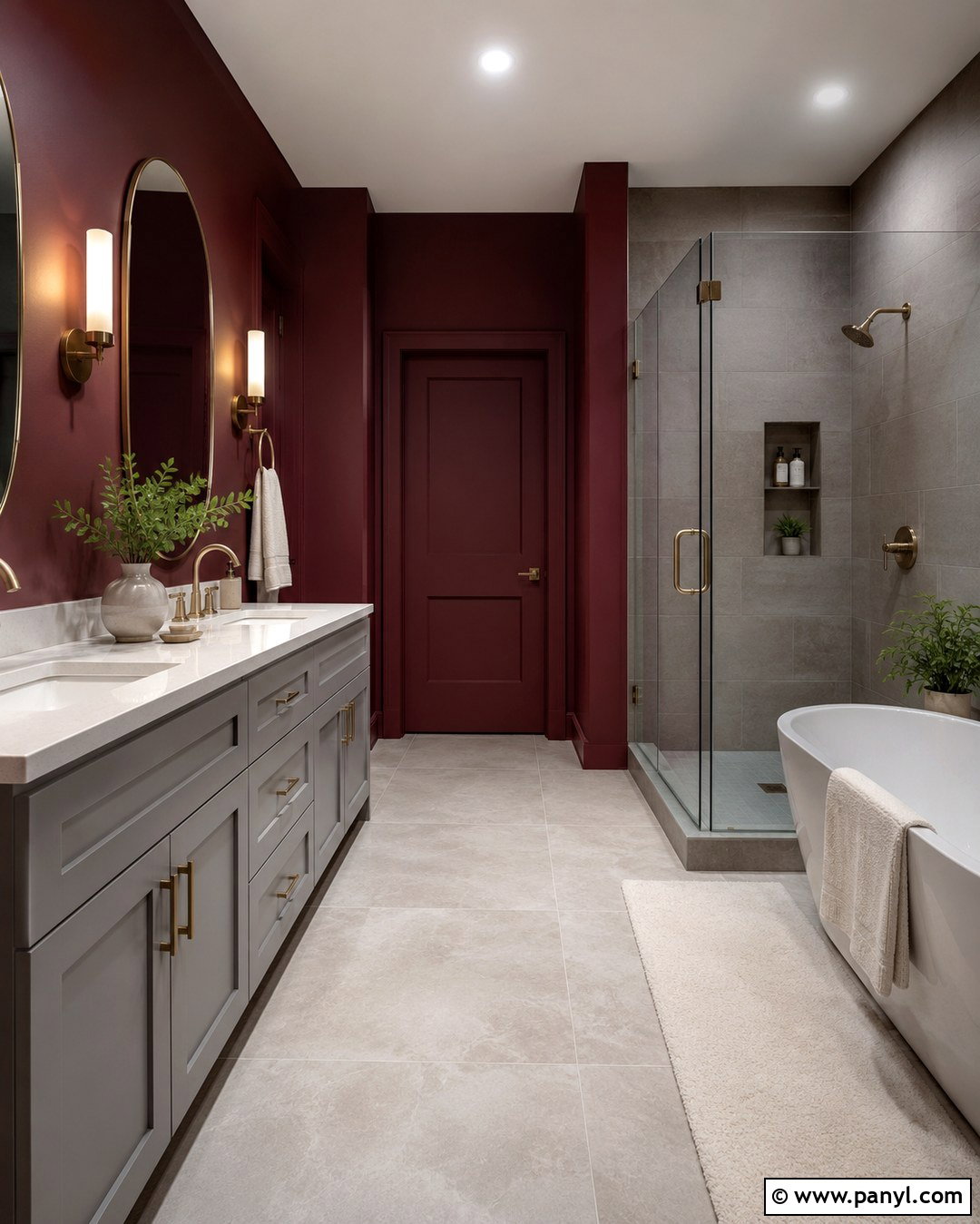
A burgundy vanity wall can bring warmth to a bathroom filled with cool grey tile. Paint the wall behind a freestanding grey vanity in a rich matte burgundy, then use pale grey porcelain tile across the floor and shower walls. A white quartz countertop and white basin provide a clean break between the colors. Add brushed brass faucets, matching sconces, and a thin metal mirror for a polished finish. Use an ivory shower curtain or clear glass enclosure to avoid introducing another strong shade. Grey towels with a small burgundy border subtly repeat the wall color. Bright white trim and ceiling paint keep the bathroom fresh. This arrangement feels distinctive and comfortable while remaining practical for a modest, everyday bathroom.
17. Burgundy Entryway Walls With Grey Doors
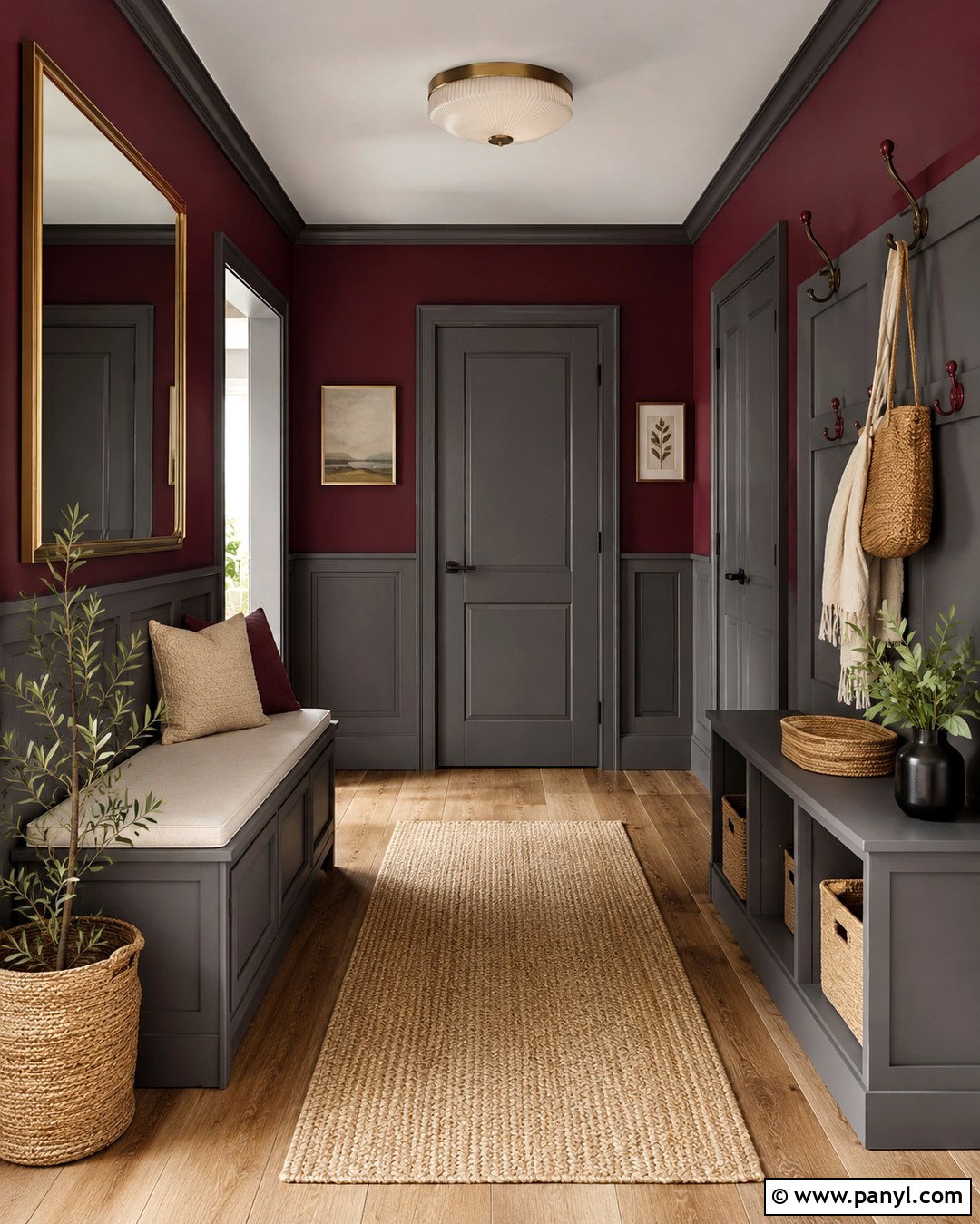
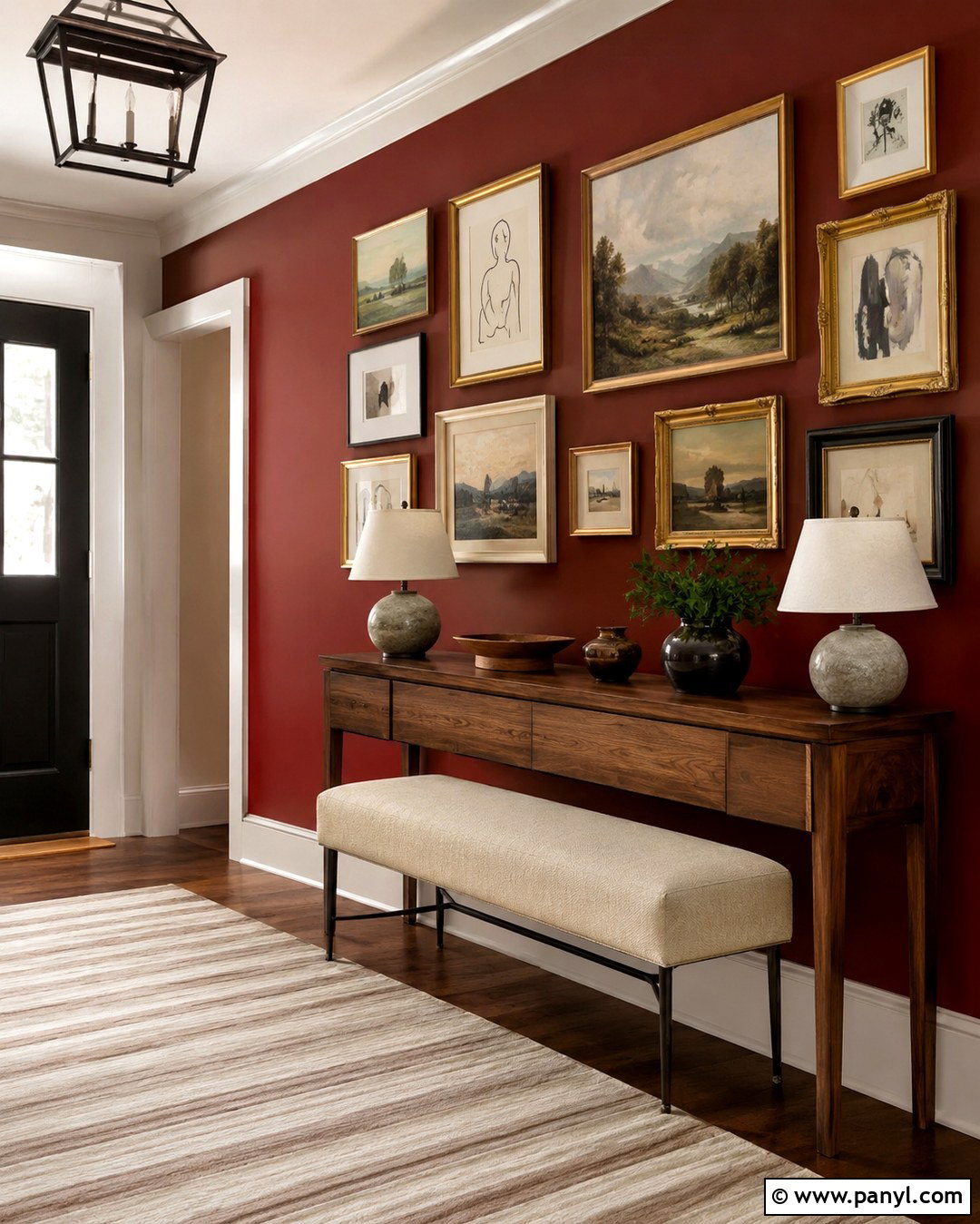
An entryway can handle deeper color because it is a transitional space rather than a room used for long periods. Paint the walls a softened burgundy, then finish the interior doors, trim, and storage bench in medium grey. A warm oak floor and natural jute runner introduce texture and prevent the palette from appearing overly formal. Place cream cushions on the bench and add burgundy and grey hooks above it. A large brass-framed mirror reflects light and gives the narrow area a more open feeling. Choose a bright ceiling fixture with frosted glass instead of a dark shade. Keep baskets and accessories neutral. The completed entry feels welcoming, organized, and connected to adjoining rooms that may use lighter grey walls.
18. Grey Home Office Walls With Burgundy Nook
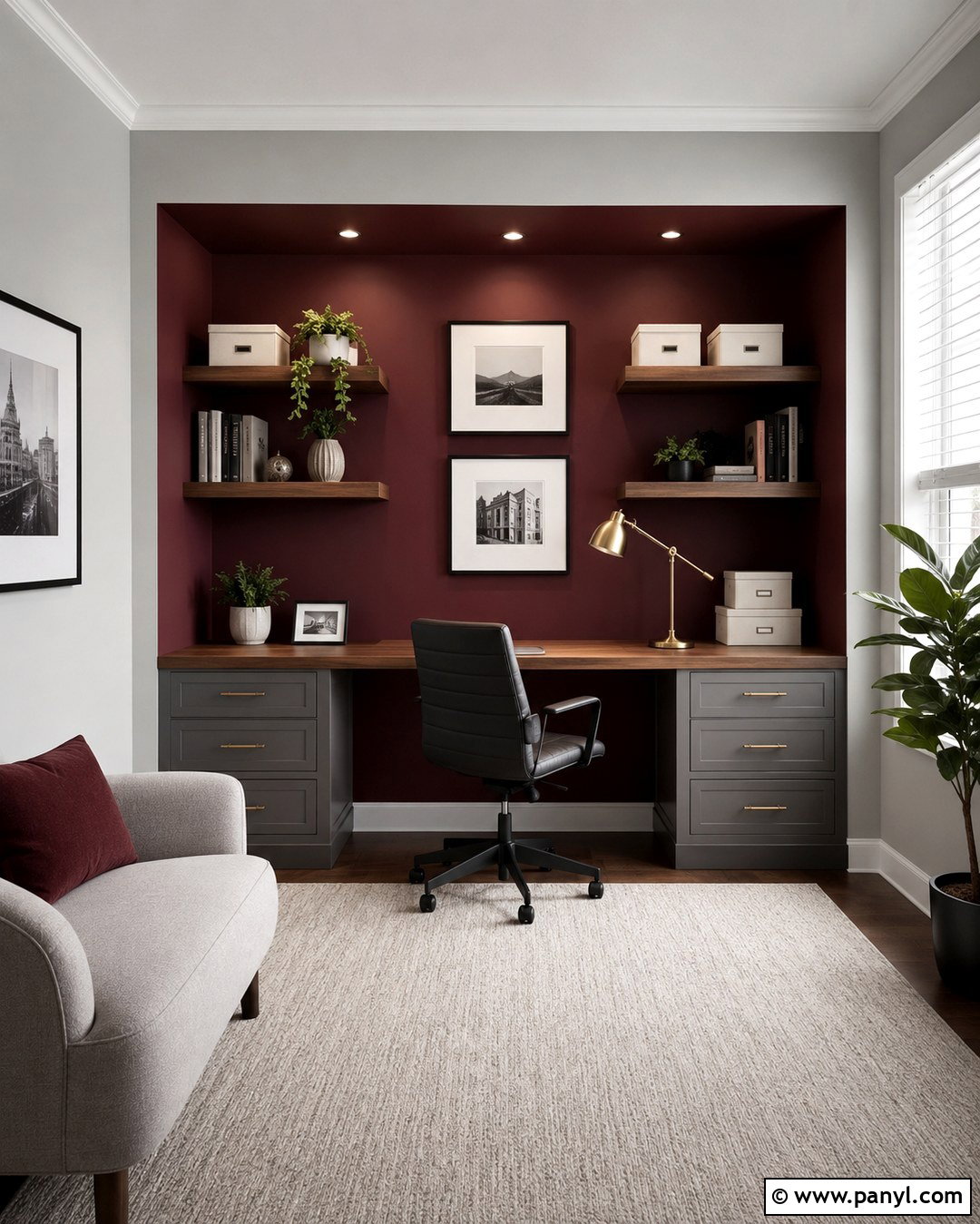
Soft grey walls create a focused background for a burgundy work nook. Paint the recessed desk area, including its back wall and side returns, in deep burgundy. Install a walnut desktop and floating shelves inside the niche, then use grey lower cabinets for concealed storage. A supportive charcoal chair, ivory rug, and brass desk lamp complete the workspace. Add a few cream storage boxes and simple framed prints to brighten the darker recess. Position the desk near a window when possible so daylight reaches the burgundy surface. Keep the rest of the room lightly furnished with a grey lounge chair and small oak table. This full office design separates the work zone visually while maintaining a calm, professional atmosphere throughout the surrounding space.
19. Burgundy Dining Room Walls With Grey Wainscoting
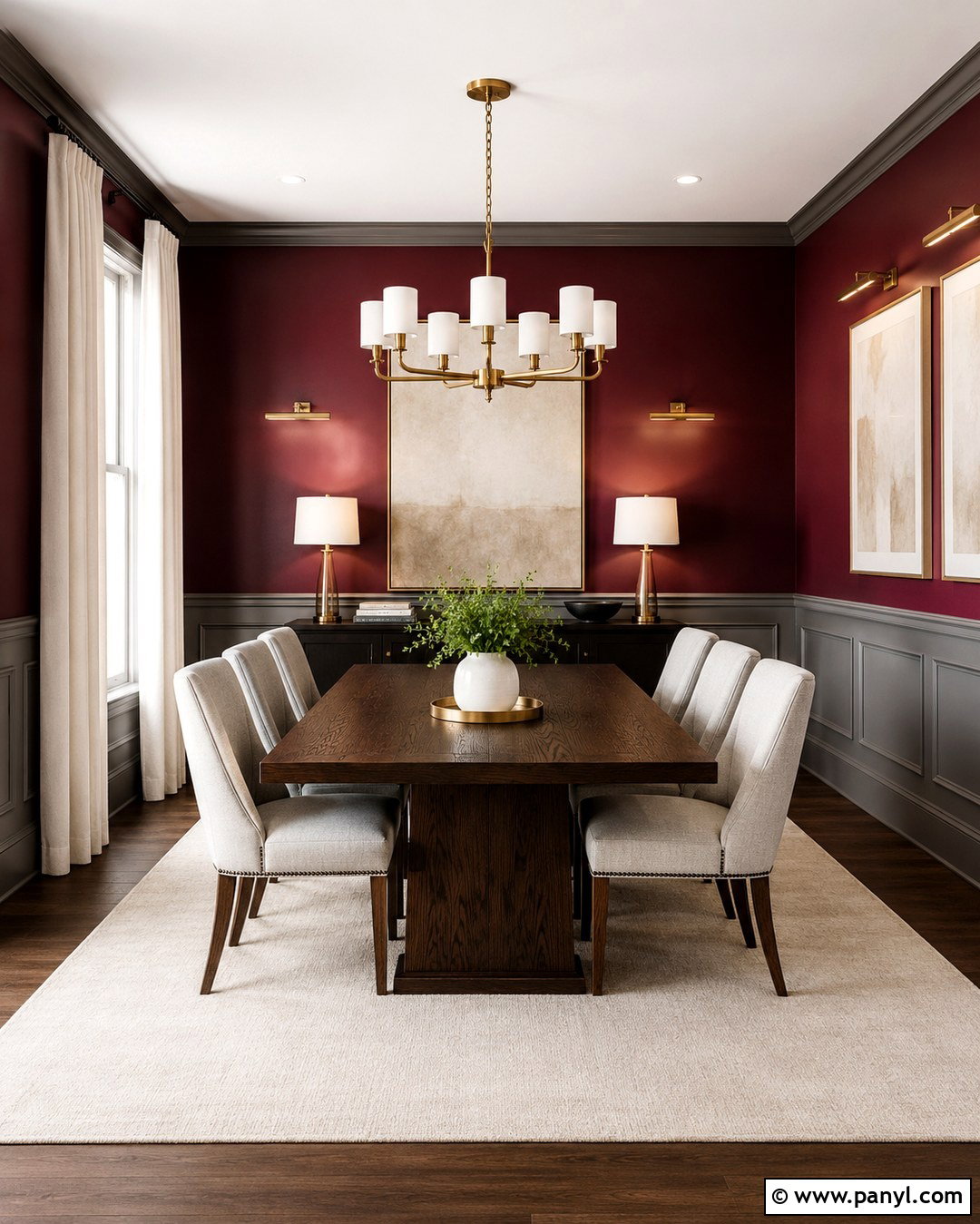
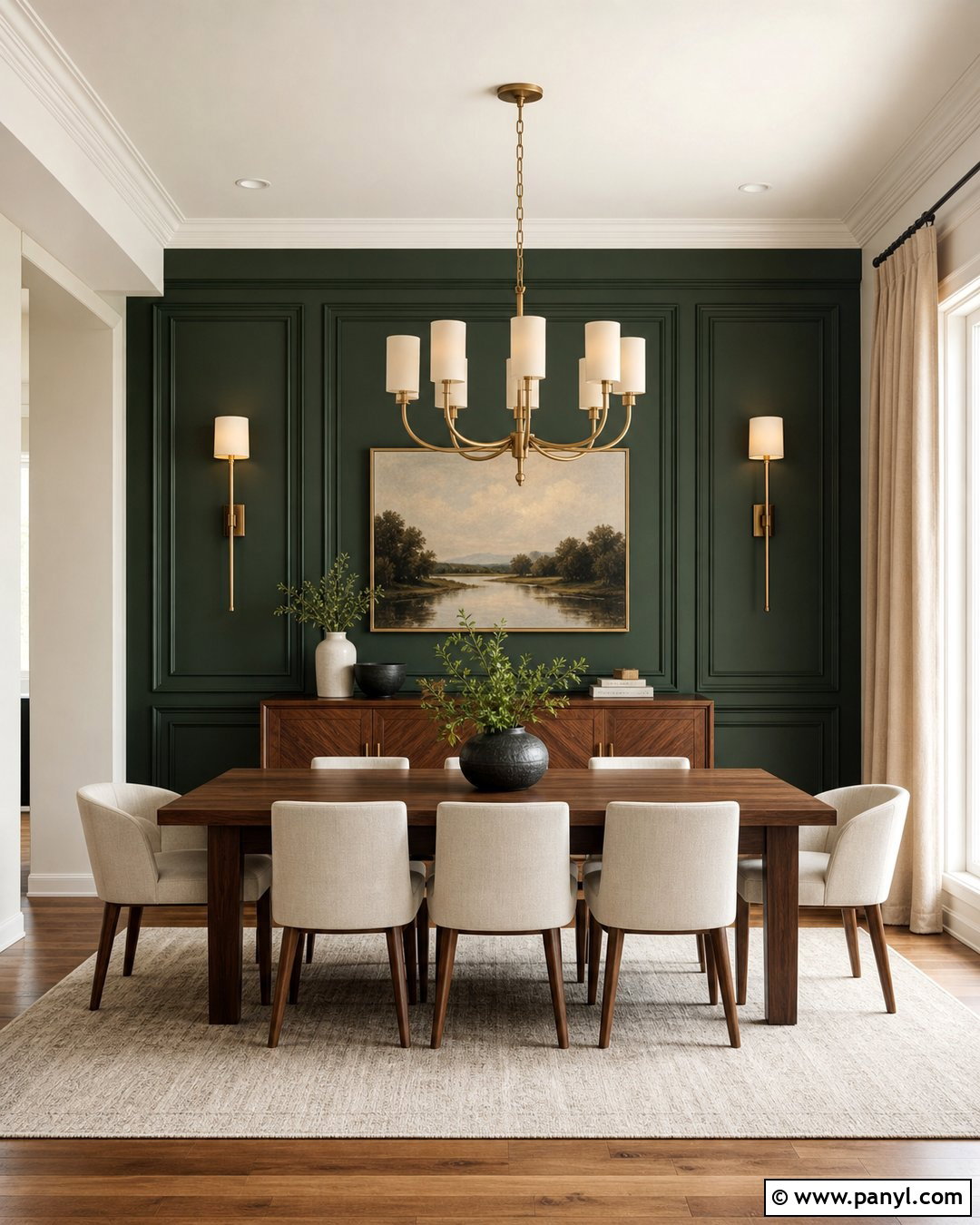
For a traditional dining room with modern restraint, combine burgundy upper walls with medium grey wainscoting. Extend the grey treatment about one-third of the way up the wall and include simple rectangular panels for architectural detail. A dark oak table and light grey upholstered chairs establish a comfortable center. Use a large ivory rug to soften the floor, then add a brass chandelier and matching picture lights. Cream curtains brighten the burgundy and make the windows appear larger. Artwork with pale backgrounds prevents the upper walls from feeling crowded. Keep the ceiling warm white and repeat grey on the interior doors. The finished dining room feels established and elegant, yet the simplified furniture and limited accessories stop it from looking overly formal.
20. Burgundy And Grey Small Bedroom Walls
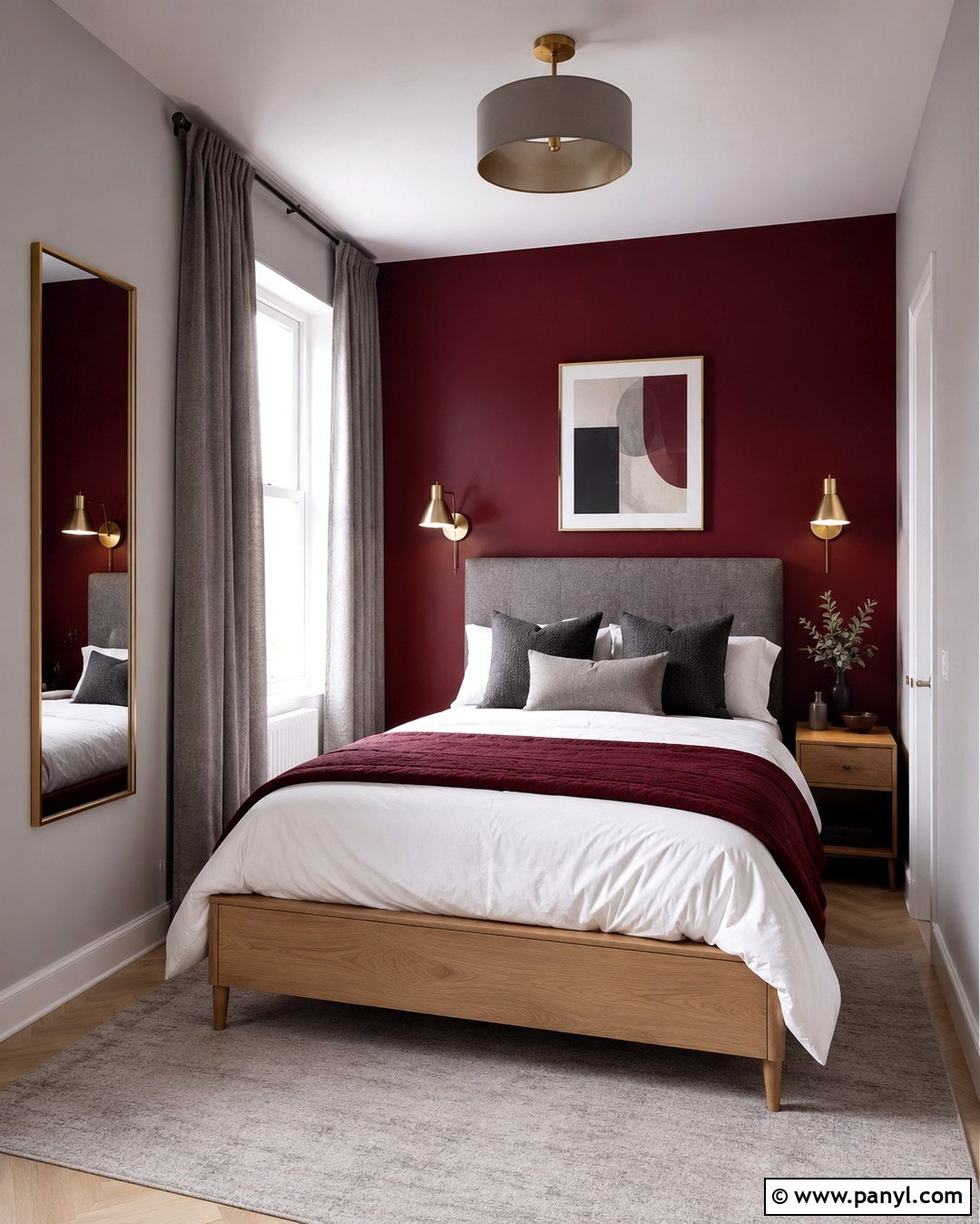
A small bedroom benefits from careful color placement rather than covering every wall in a dark shade. Paint the narrow wall behind the bed burgundy and use very light grey on the other three walls. Select a compact light oak bed with an upholstered grey headboard, then layer white bedding, a burgundy throw, and grey cushions. Wall-mounted brass lights free the nightstands and add warmth beside the feature wall. Choose a pale rug and simple grey curtains that hang close to the ceiling. A large mirror opposite the window helps distribute natural light. Keep furniture low and avoid filling the walls with small decorations. This complete layout makes burgundy feel intentional while preserving the open, comfortable character needed in a limited space.
Conclusion:
Designing with burgundy and grey walls is all about balancing depth with lightness. Burgundy can define a focal wall, ceiling, nook, or architectural feature, while grey creates a calm foundation around it. Pale grey works well in compact spaces, charcoal delivers stronger drama, and warm grey helps earthy burgundy shades feel inviting. Complete the palette with ivory textiles, warm wood, brass details, and bright white or creamy trim. Good lighting is equally important, especially when using burgundy across large surfaces. Before painting, test both colors together under daytime and evening light. With thoughtful proportions and coordinated furniture, burgundy and grey walls can create a cohesive interior that feels warm, practical, and distinctive.

Related Ideas and Inspiration:
Leave a Reply