
Your foyer sets the mood for everything that follows, so the wall color should feel welcoming, practical, and connected to the rest of your home. The best foyer colors can brighten a tight entry, emphasize traditional millwork, or turn an overlooked passage into a memorable room. Before choosing a shade, study the natural light, flooring, front door, staircase, and nearby rooms. Warm undertones usually complement wood, while cooler hues work beautifully with stone, black metal, and crisp white trim. Always sample paint on several walls because entryway lighting can change dramatically throughout the day. Whether your taste is airy, earthy, colorful, or dramatic, the complete looks below make it easier to compare and recreate these 20 Best Foyer Colors.

1. Warm White Foyer
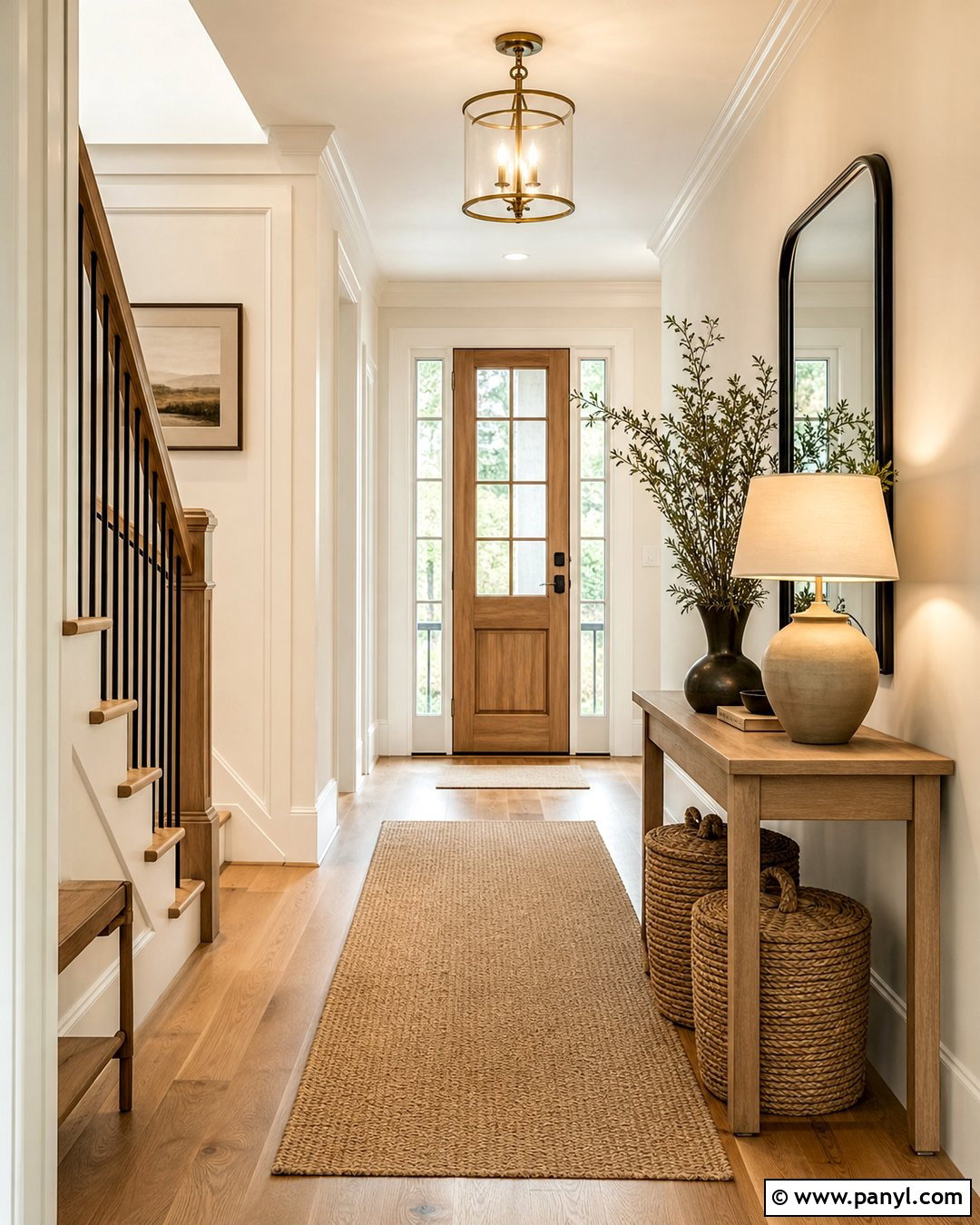
Warm white gives a foyer a clean, open appearance without the stark feeling of a cool, blue-based white. Choose a shade with gentle cream or beige undertones, then repeat that warmth through natural oak flooring, a woven runner, and a slim wood console. Paint the trim in the same color with a slightly glossier finish for subtle depth. A black-framed mirror and aged brass ceiling light provide crisp contrast without overwhelming the quiet palette. Add a ceramic lamp, one large leafy branch, and a lidded basket for practical storage. This complete scheme works especially well in small or windowless foyers because it reflects available light while creating an easy transition into colorful or neutral adjoining rooms.
2. Soft Cream Foyer
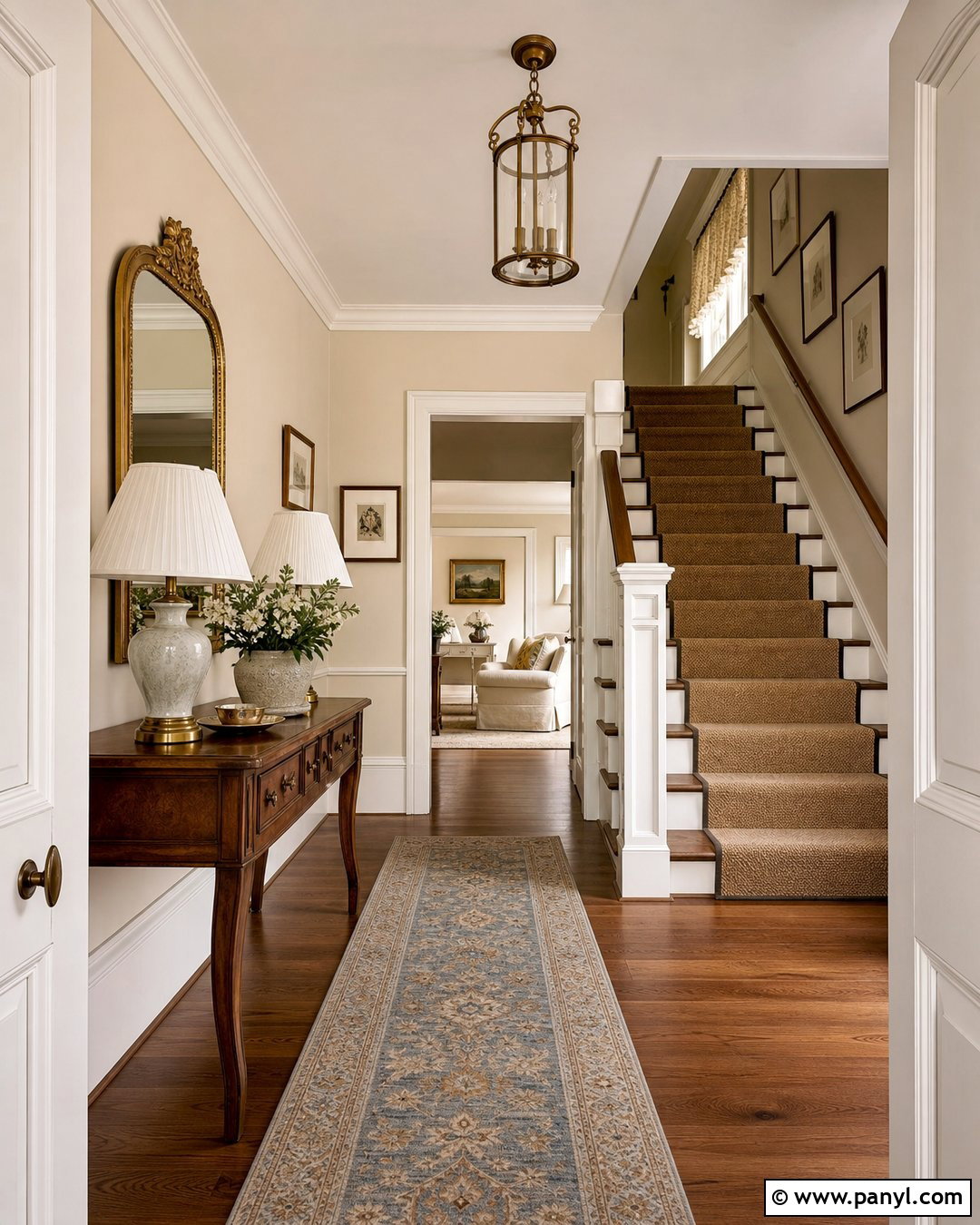
Soft cream creates a sunny welcome, even when the foyer receives limited daylight. Keep the shade muted rather than yellow, especially if the floor has orange or red undertones. Pair the walls with ivory trim, medium-toned walnut furniture, and a faded blue-and-tan runner to balance the warmth. A traditional console with rounded edges makes the entrance feel furnished but not crowded. Complete the setting with an antique brass mirror, pleated white lamp shades, and simple framed artwork. If there is a staircase, a natural sisal runner reinforces the relaxed elegance. This foyer color feels particularly suitable for traditional, cottage, and transitional homes, yet clean-lined furniture can make it look equally comfortable in a modern interior.
3. Light Greige Foyer
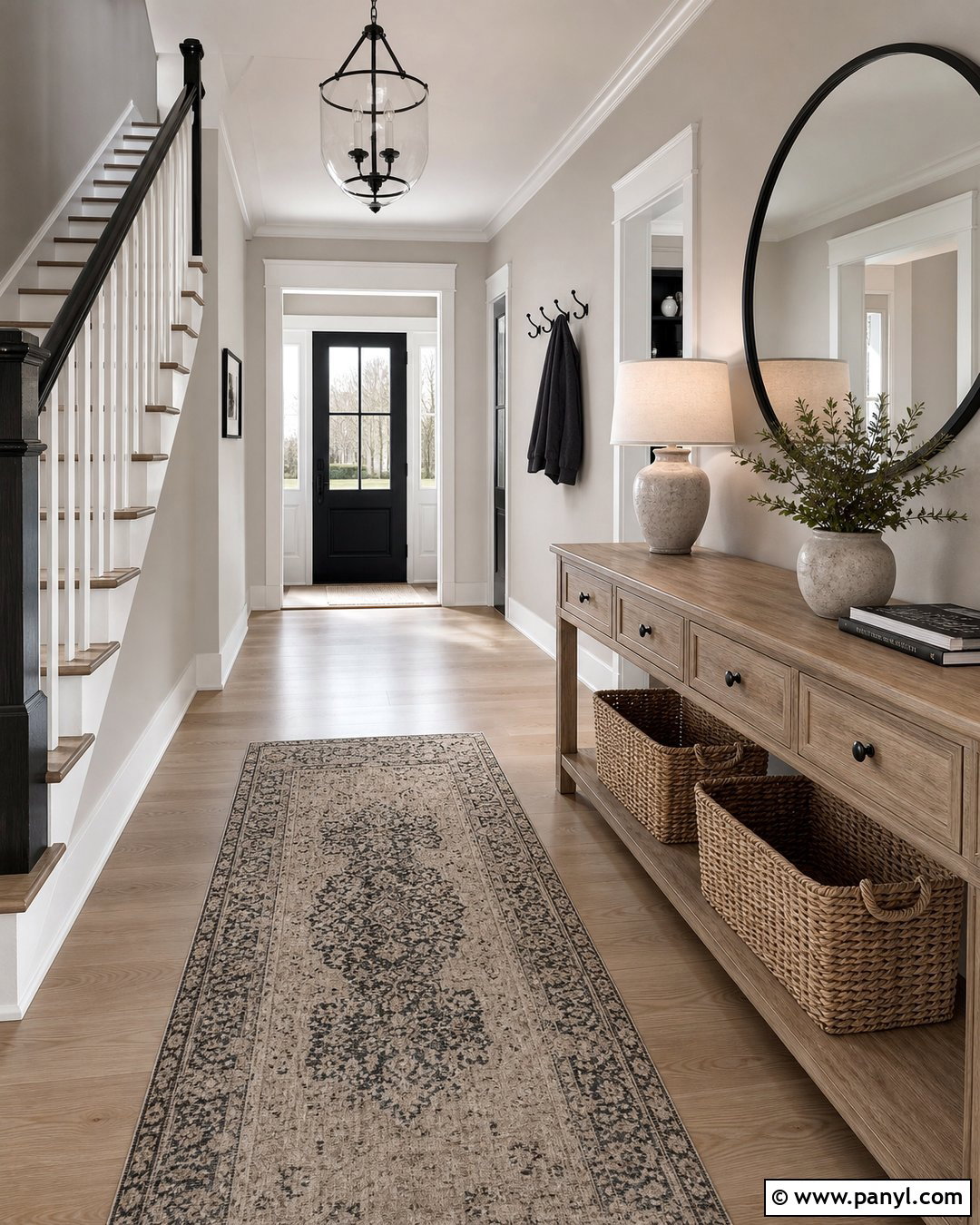
Can’t decide between gray and beige? Light greige offers the softness of beige with enough gray to keep the foyer fresh and balanced. Use it across the walls and upper staircase, then introduce bright white trim to outline doors, baseboards, and architectural details. A pale oak console, matte black hooks, and a round black mirror give the scheme a modern foundation. Choose a patterned runner containing taupe, charcoal, and ivory so daily dirt is less noticeable. A sculptural ceramic lamp and two woven storage baskets add function without visual clutter. Because greige changes with the light, test several undertones beside the flooring. The best version should connect naturally with both warm wood finishes and cooler rooms nearby.
4. Warm Beige Foyer
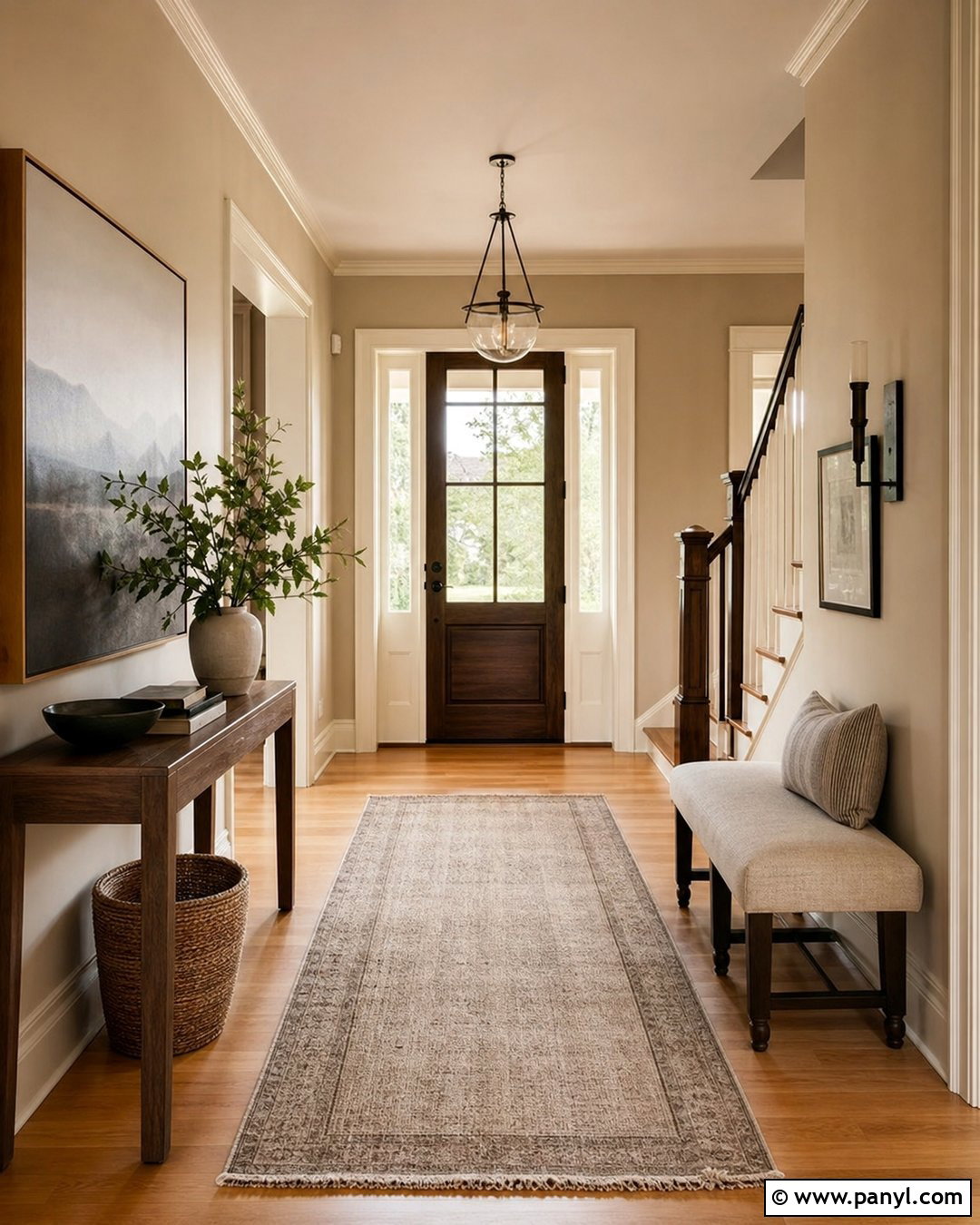
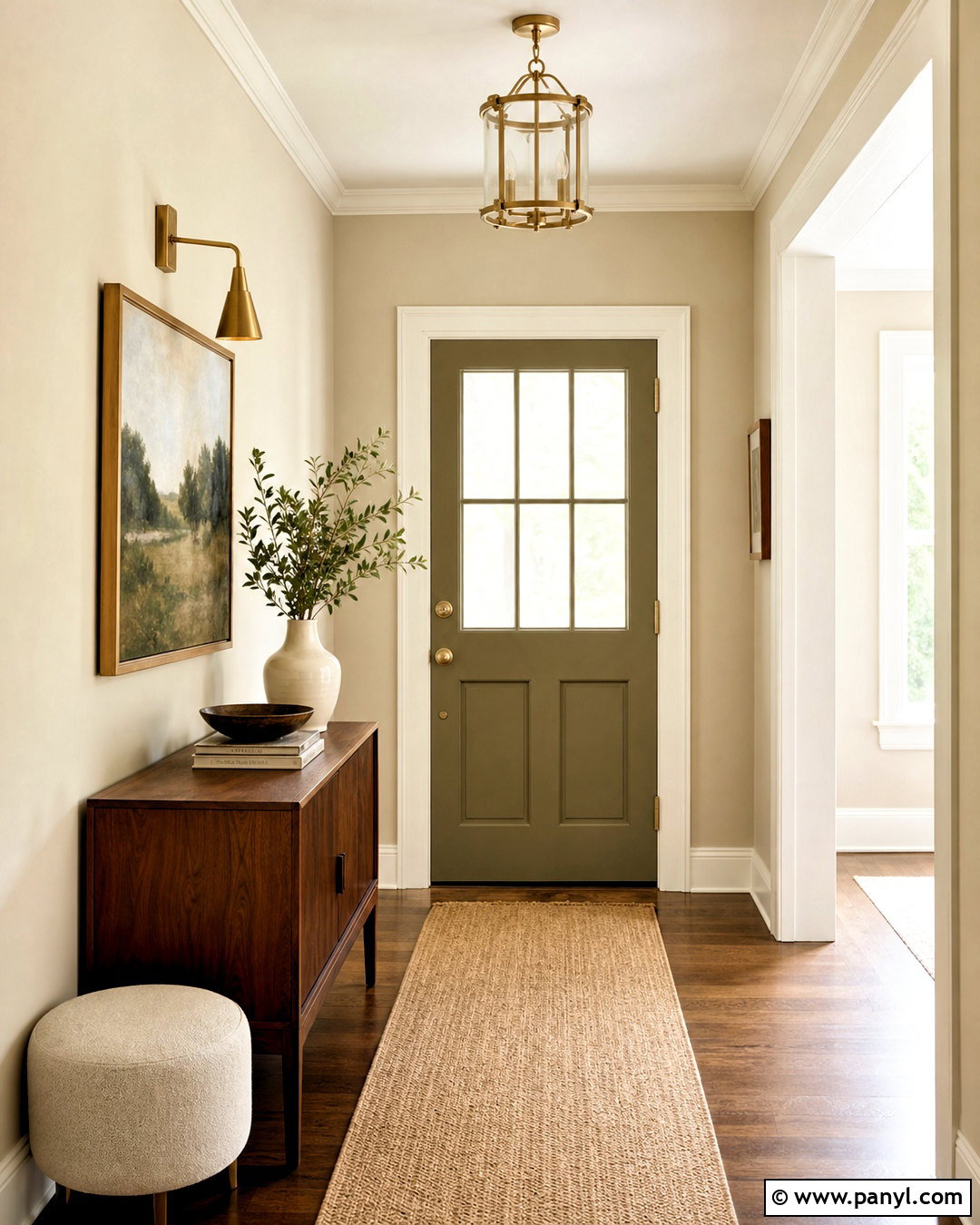
Warm beige can make a busy entrance feel settled, comfortable, and intentionally designed. Select a sandy beige with soft golden undertones rather than a heavy brown shade. Pair it with creamy white trim, honey oak flooring, and a narrow walnut console for a layered neutral look. A large landscape print introduces muted green and blue, while a textured wool runner adds softness beneath muddy shoes. Use bronze or aged brass hardware to continue the warm direction. A bench with oatmeal upholstery can provide a convenient spot for removing footwear if space allows. This approachable foyer palette works particularly well in open-plan homes because it connects easily with living rooms featuring tan leather, wood furniture, natural fabrics, and earthy accent colors.
5. Mushroom Taupe Foyer
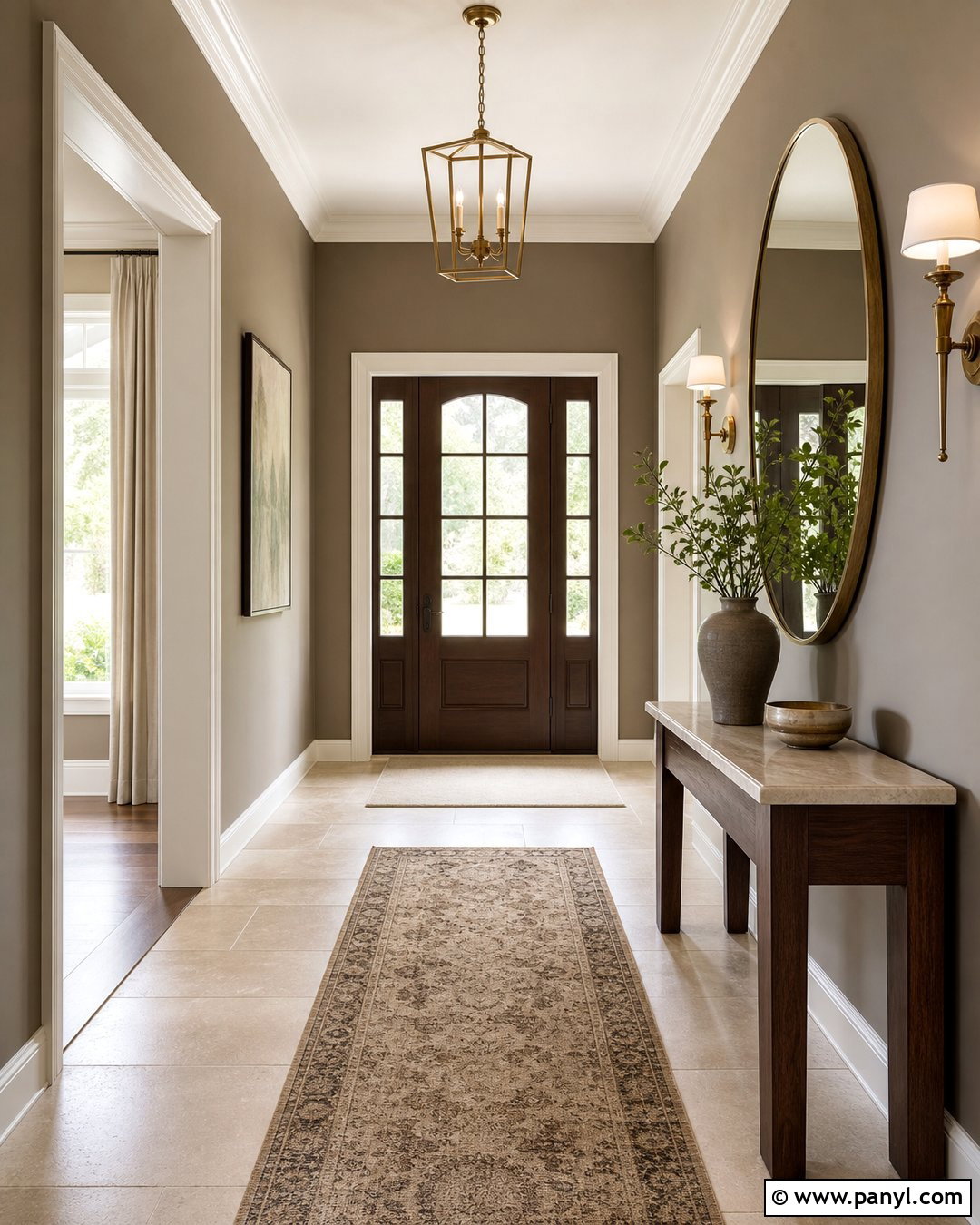
Mushroom taupe brings more character than basic beige while remaining quiet enough for an entry that opens into several rooms. Its balanced gray-brown undertone looks sophisticated beside limestone, travertine, or weathered wood flooring. Paint the walls taupe and keep the doors and trim a soft off-white to prevent harsh contrast. Add a dark walnut console with a stone top, an oversized oval mirror, and a woven runner in cream and cocoa. Brushed brass lighting warms the gray notes in the paint. Finish the look with a sculptural bowl for keys and a tall pottery vase filled with green branches. This complete foyer feels refined and grounded, making it an excellent bridge between traditional architecture and streamlined contemporary furnishings.
6. Pale Gray Foyer
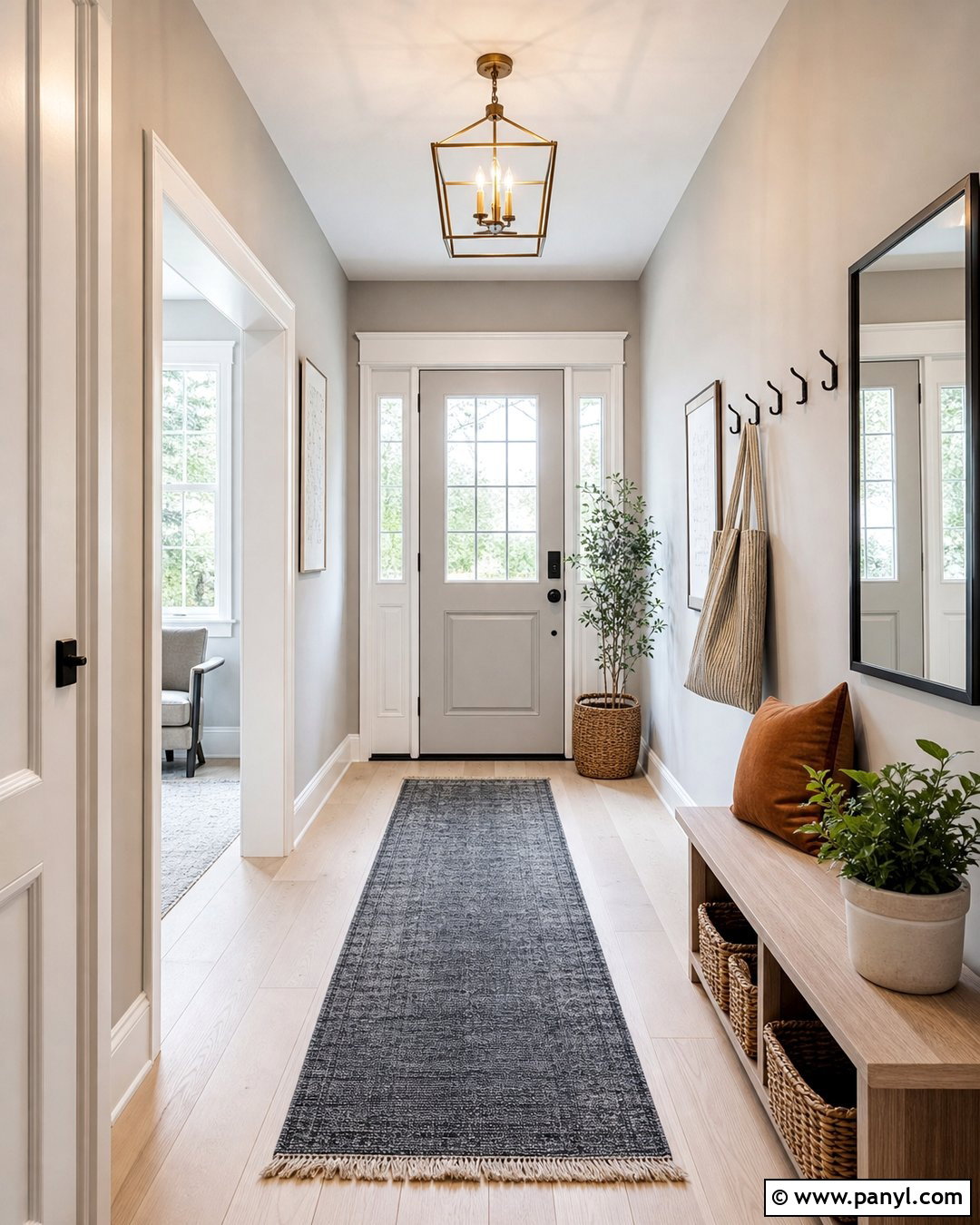
Pale gray suits a foyer where you want a crisp, tailored backdrop without committing to pure white. Look for a soft gray with a balanced or slightly warm undertone, since icy gray may appear blue in limited light. Combine it with bright white trim, pale wood flooring, and a charcoal runner for clear definition. A white oak bench, black metal coat hooks, and a simple framed mirror create practical storage while keeping the space visually light. Introduce warmth through a tan leather cushion, woven baskets, and a brass ceiling fixture. This scheme works particularly well with black-framed doors or modern stair railings. Continue one gray accent into the next room to make the transition feel thoughtful rather than disconnected.
7. Powder Blue Foyer
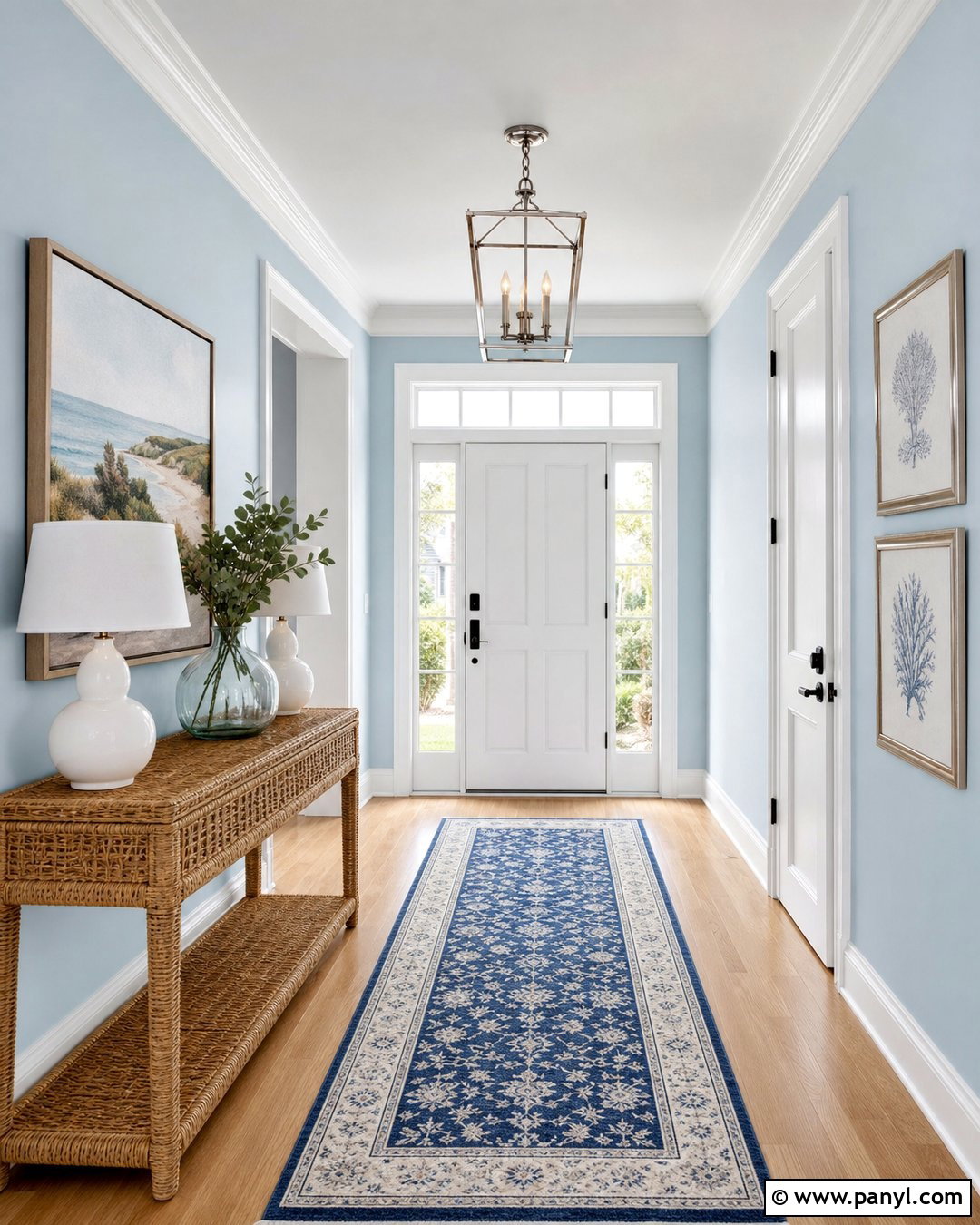
Powder blue gives a foyer an airy, uplifting personality and can visually soften narrow walls. Choose a muted blue with a slight gray undertone so the space feels polished rather than childlike. Pair the walls with crisp white trim, light oak flooring, and a navy-and-ivory runner that grounds the pale color. A natural rattan console or bench contributes texture, while polished nickel lighting keeps the look fresh. Display simple coastal landscapes or abstract prints instead of overly themed accessories. White ceramic lamps and a clear glass vase complete the uncluttered arrangement. This foyer palette is especially effective in coastal, cottage, and classic homes, but matte black details can give it a sharper modern edge. It also complements abundant morning light beautifully.
8. Slate Blue Foyer
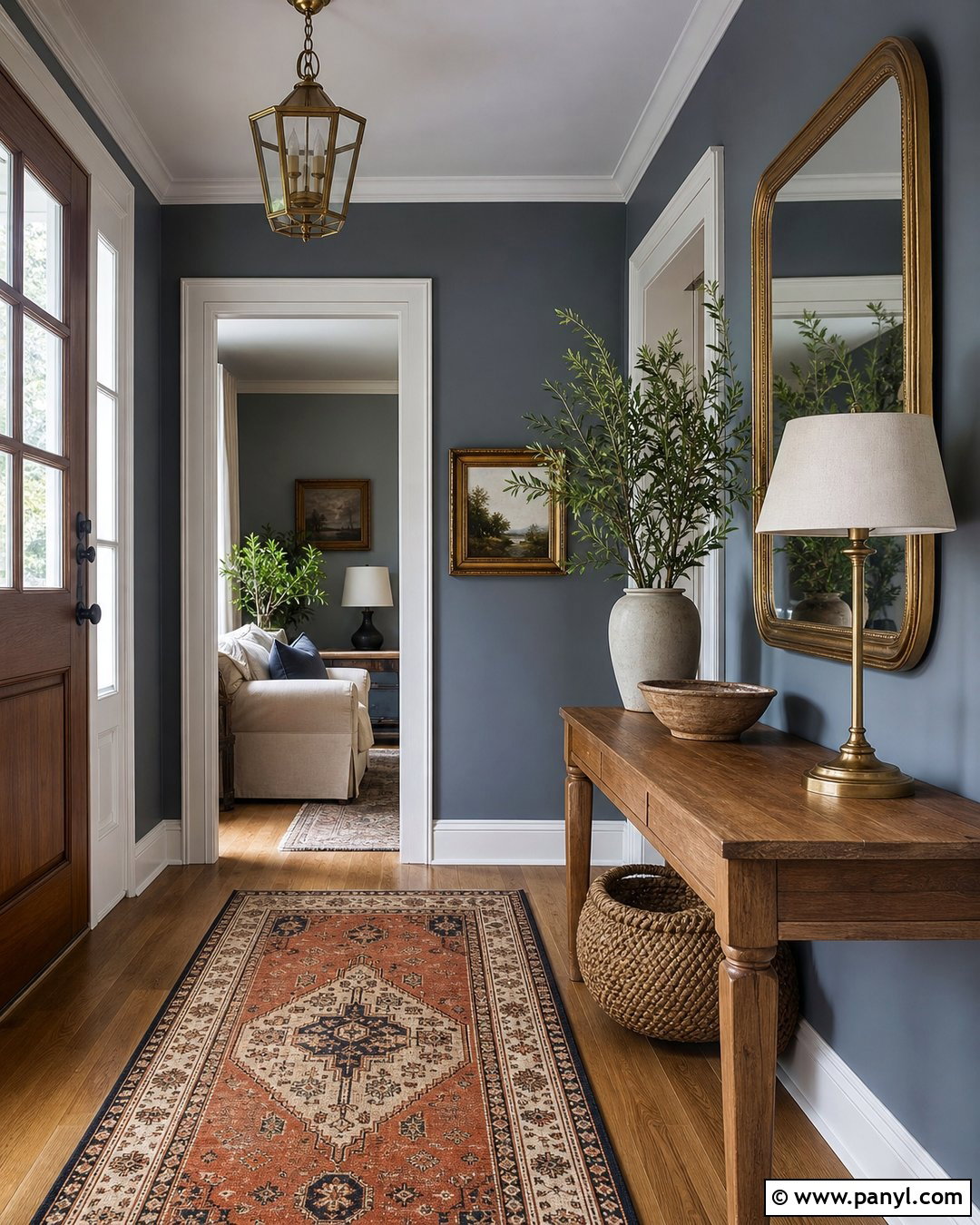
Slate blue creates a calm, substantial entrance that feels colorful without becoming overly bright. Its gray undertone allows it to coordinate with stone tile, medium wood floors, and black metal accents. Use the blue on every wall, then frame the room with warm white trim and doors. A medium oak console prevents the palette from feeling too cool, while an antique brass mirror adds a soft reflective glow. Choose a vintage-style runner containing rust, cream, and faded blue to connect all the finishes. A linen lamp shade, pottery bowl, and a few leafy stems complete the look. This full scheme works particularly well in foyers with good natural light or open doorways that keep the deeper wall color from feeling enclosed.
9. Deep Navy Foyer
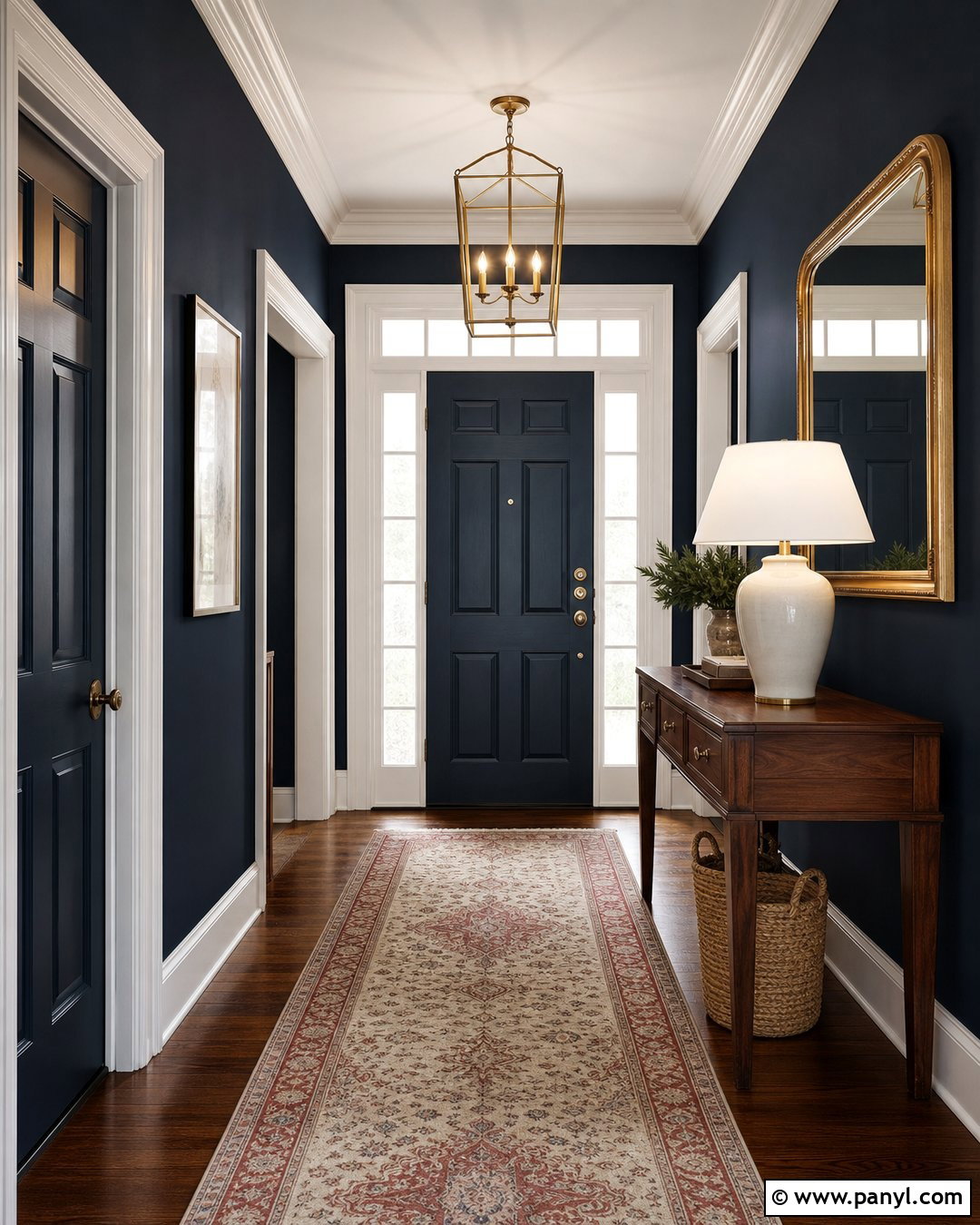
Deep navy can turn a plain foyer into a confident, memorable room. It is most successful when balanced with reflective surfaces, adequate lighting, and lighter architectural details. Paint the walls navy, retain crisp white trim, and use a warm oak or medium walnut console for contrast. An oversized brass-framed mirror helps bounce light around the entrance. Underfoot, choose a durable runner with ivory, denim blue, and muted red accents. A white ceramic lamp and pale artwork prevent the dark walls from dominating. For an enveloping approach, carry navy onto the doors while leaving the ceiling light. This complete color scheme works beautifully with traditional paneling, modern furniture, or coastal details, making navy one of the most adaptable dramatic foyer choices.
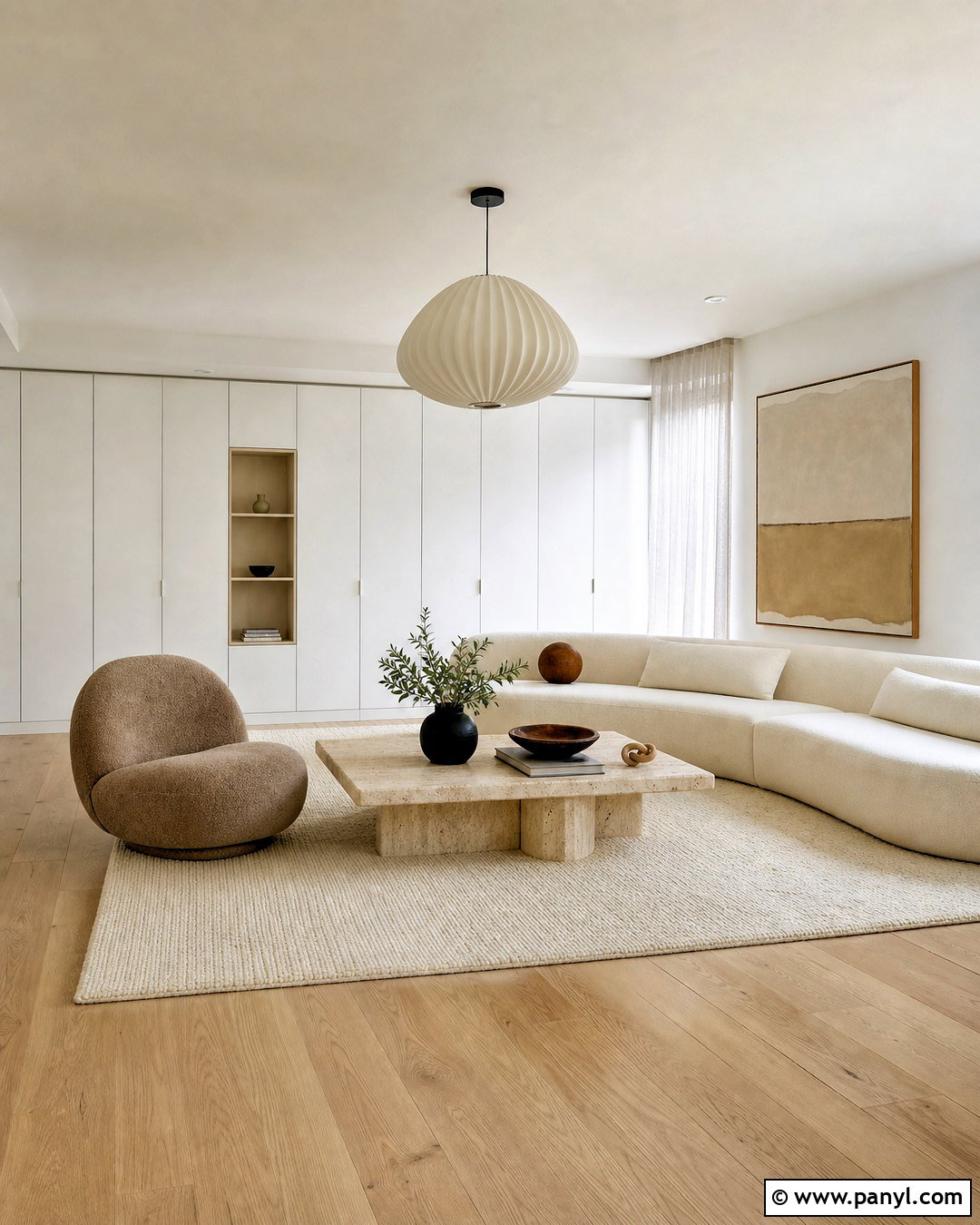
10. Soft Sage Foyer
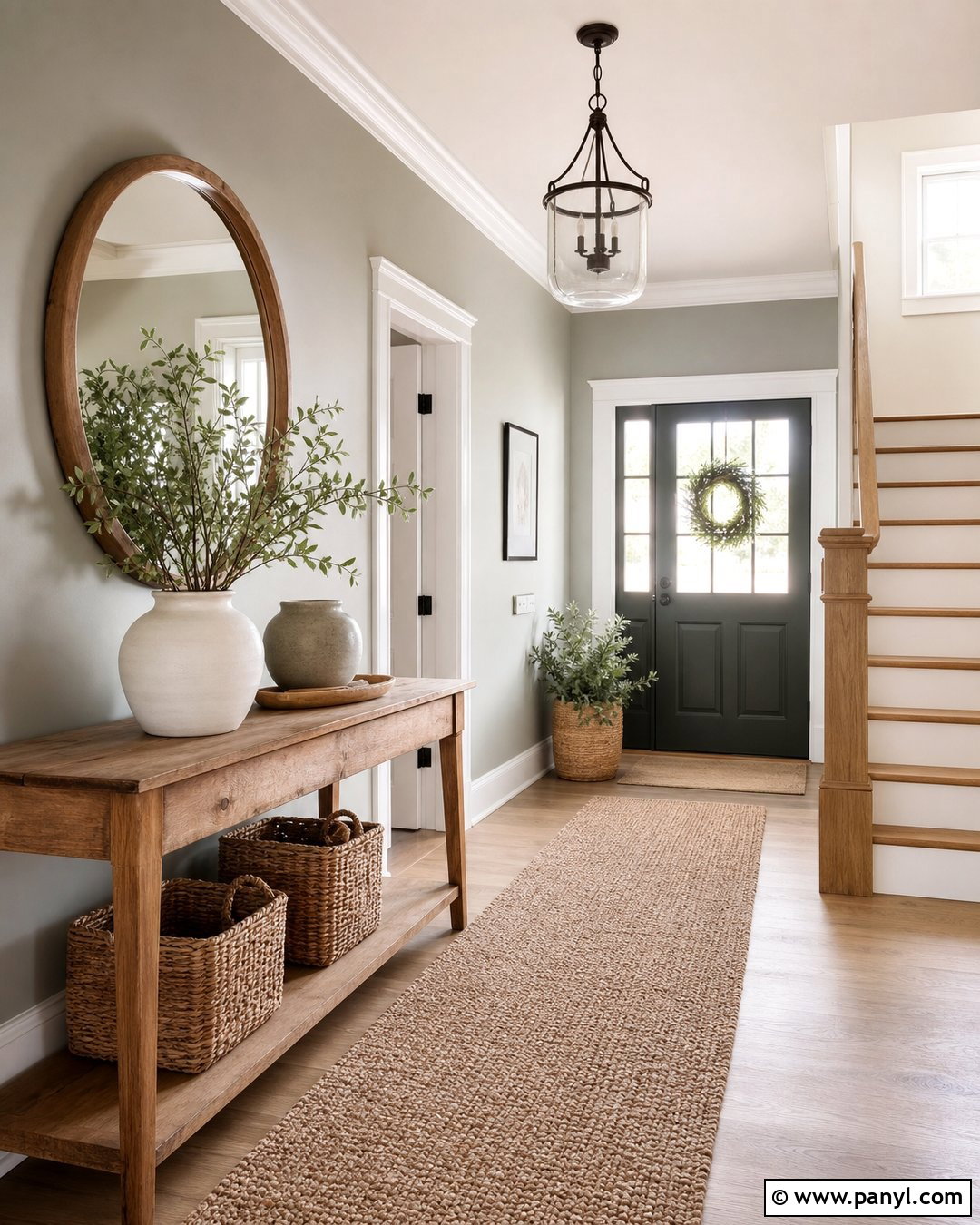
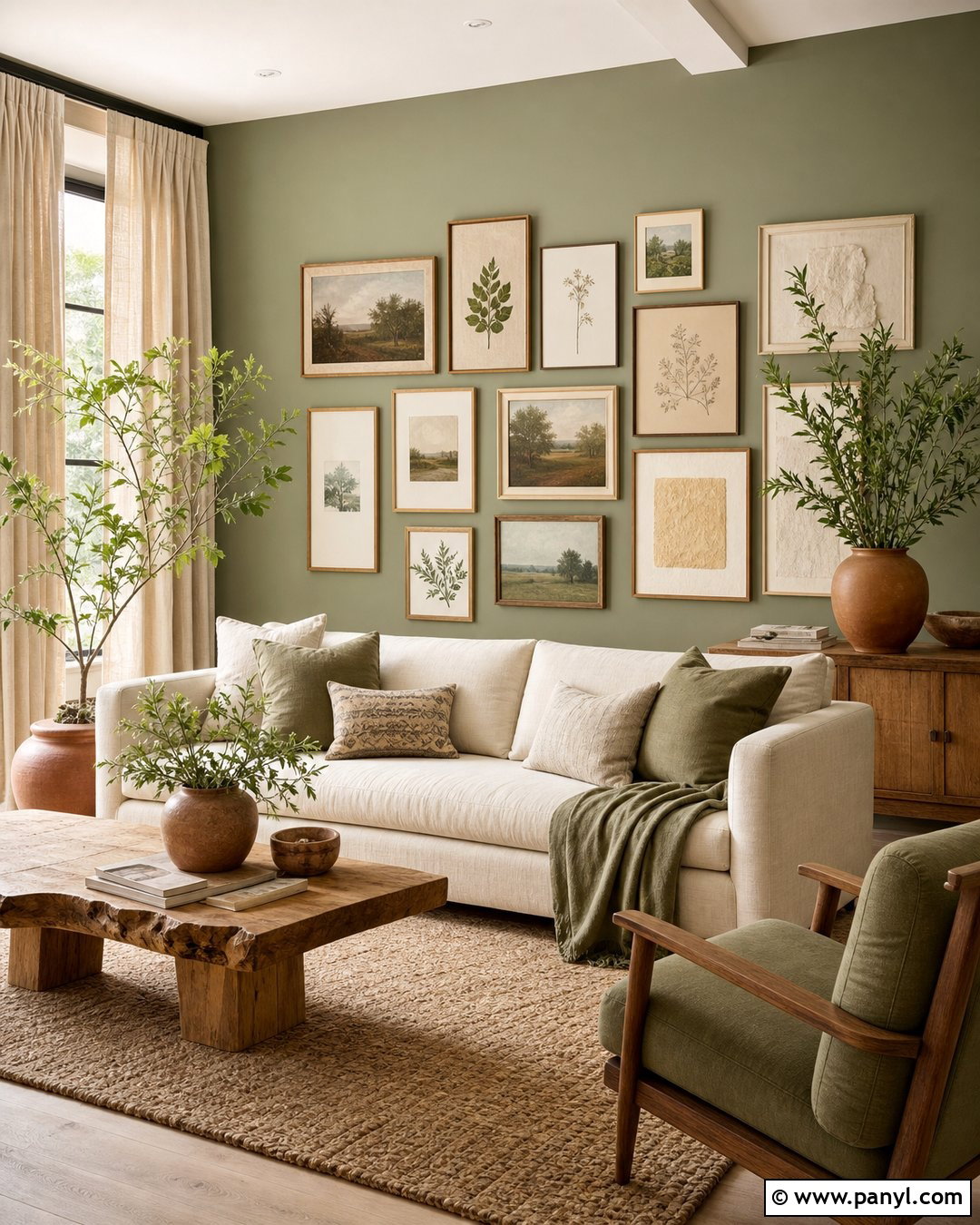
Soft sage brings a restful, nature-inspired quality to the entrance without making the foyer feel dark. Select a muted green with gray undertones and pair it with warm white trim for a gentle contrast. Natural oak furniture, a jute runner, and woven storage baskets reinforce the organic palette. Add a slim console beneath a rounded wood mirror, then style it with cream pottery, a small lamp, and fresh greenery. A black or aged bronze pendant keeps the arrangement from becoming overly pale. If the foyer connects to a staircase, repeat sage in the runner pattern or nearby artwork. This complete look works across farmhouse, cottage, Scandinavian, and transitional interiors because the subdued green behaves almost like a neutral beside wood and natural fabrics.
11. Muted Olive Foyer
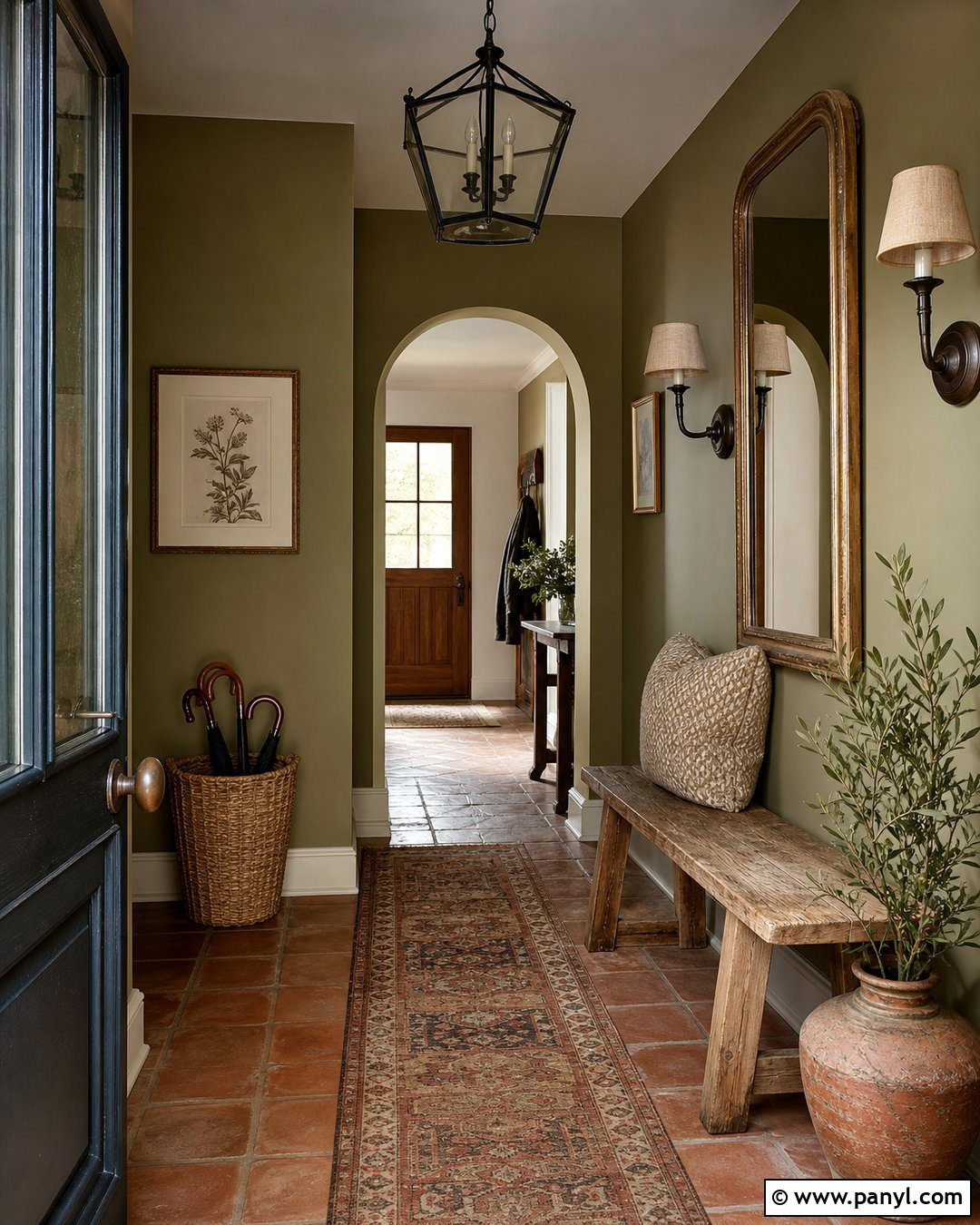
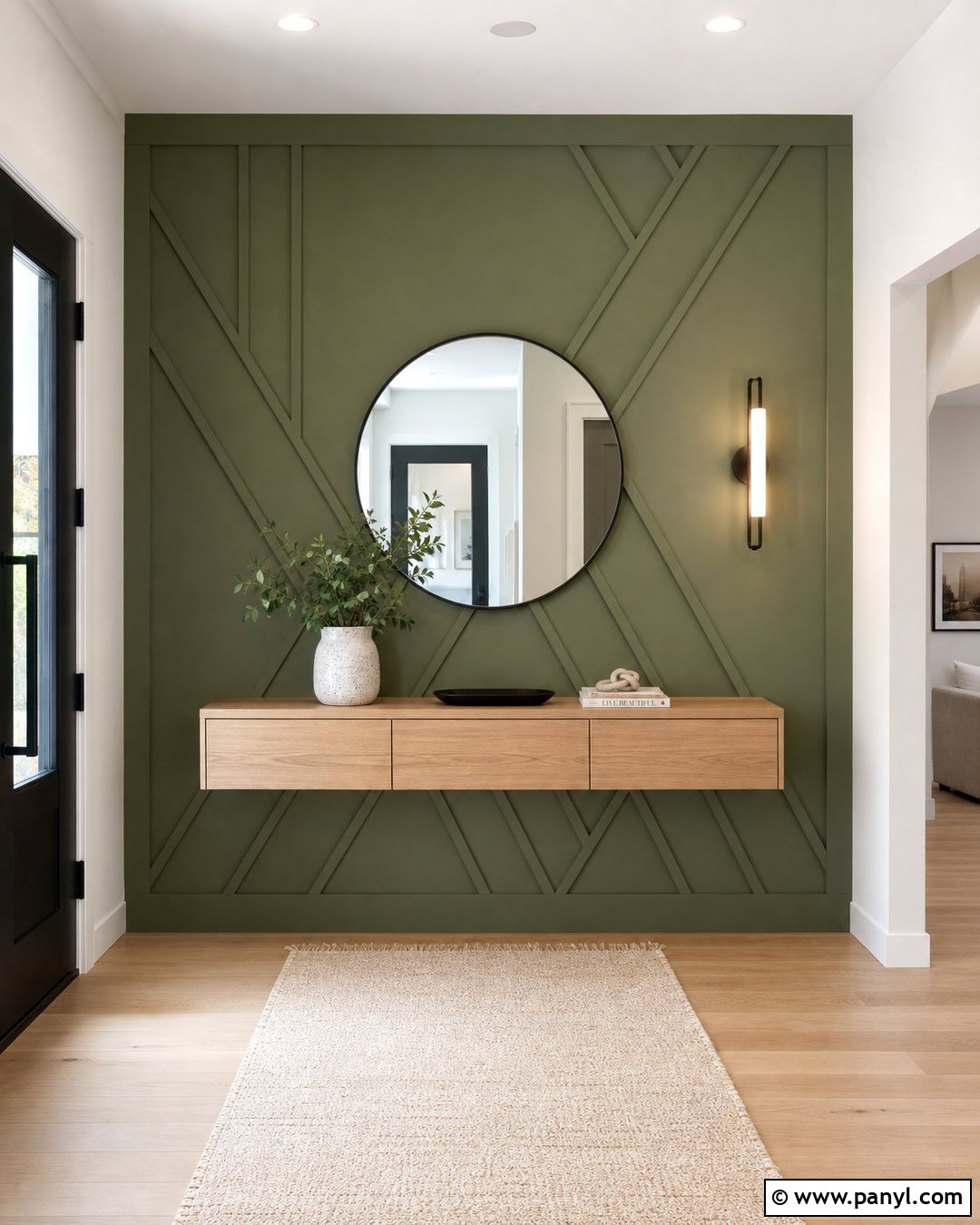
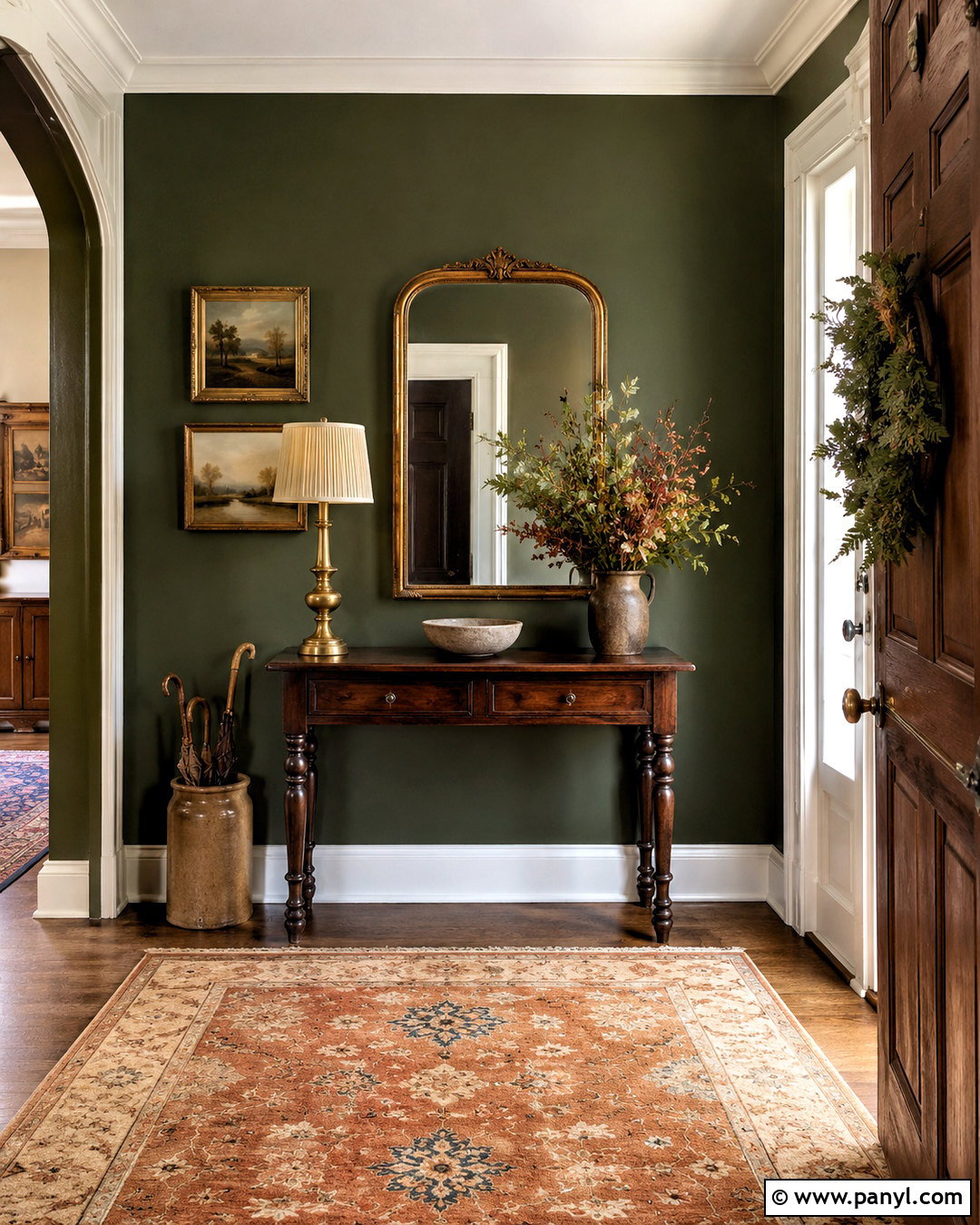
Muted olive gives a foyer earthy depth while remaining softer and more livable than a vivid green. This shade looks especially rich beside terracotta tile, dark oak floors, or warm natural stone. Paint the walls olive and use creamy trim to highlight door frames and molding. Furnish the space with a rustic oak bench or console, then add an aged brass mirror and linen-shaded wall sconces. A patterned runner in tan, rust, and charcoal keeps the scheme practical for heavy traffic. Finish with an umbrella basket, a clay vessel, and restrained botanical artwork. Because olive absorbs more light than sage, use it in a foyer with sidelights, a transom, or layered artificial lighting. The finished room feels grounded, welcoming, and full of character.
12. Forest Green Foyer
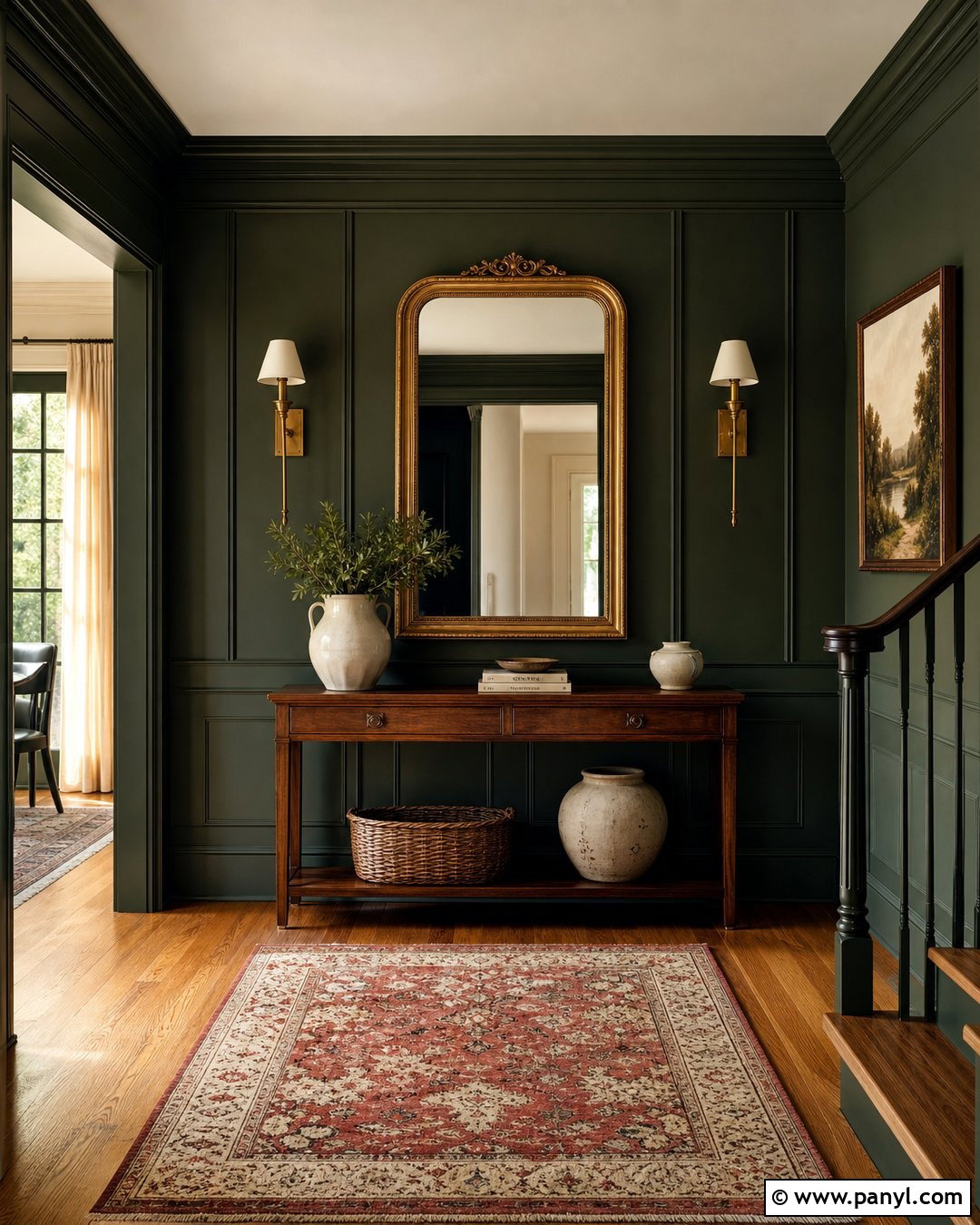
A forest green foyer makes a striking first impression and creates an intimate transition from outdoors to indoors. Apply the color to walls and paneled millwork for a cohesive, color-drenched effect. Balance the richness with a pale ceiling, warm wood flooring, and a large brass or antiqued gold mirror. A walnut console adds another natural layer, while a vintage rug featuring red, cream, and dark green brings pattern underfoot. Use two wall sconces or a bright statement pendant so the deep paint remains dimensional after sunset. Cream pottery and a simple landscape print offer lighter moments. This complete scheme is particularly effective in historic, traditional, and English-inspired homes, though streamlined furniture can make forest green feel fresh and contemporary.
13. Terracotta Foyer
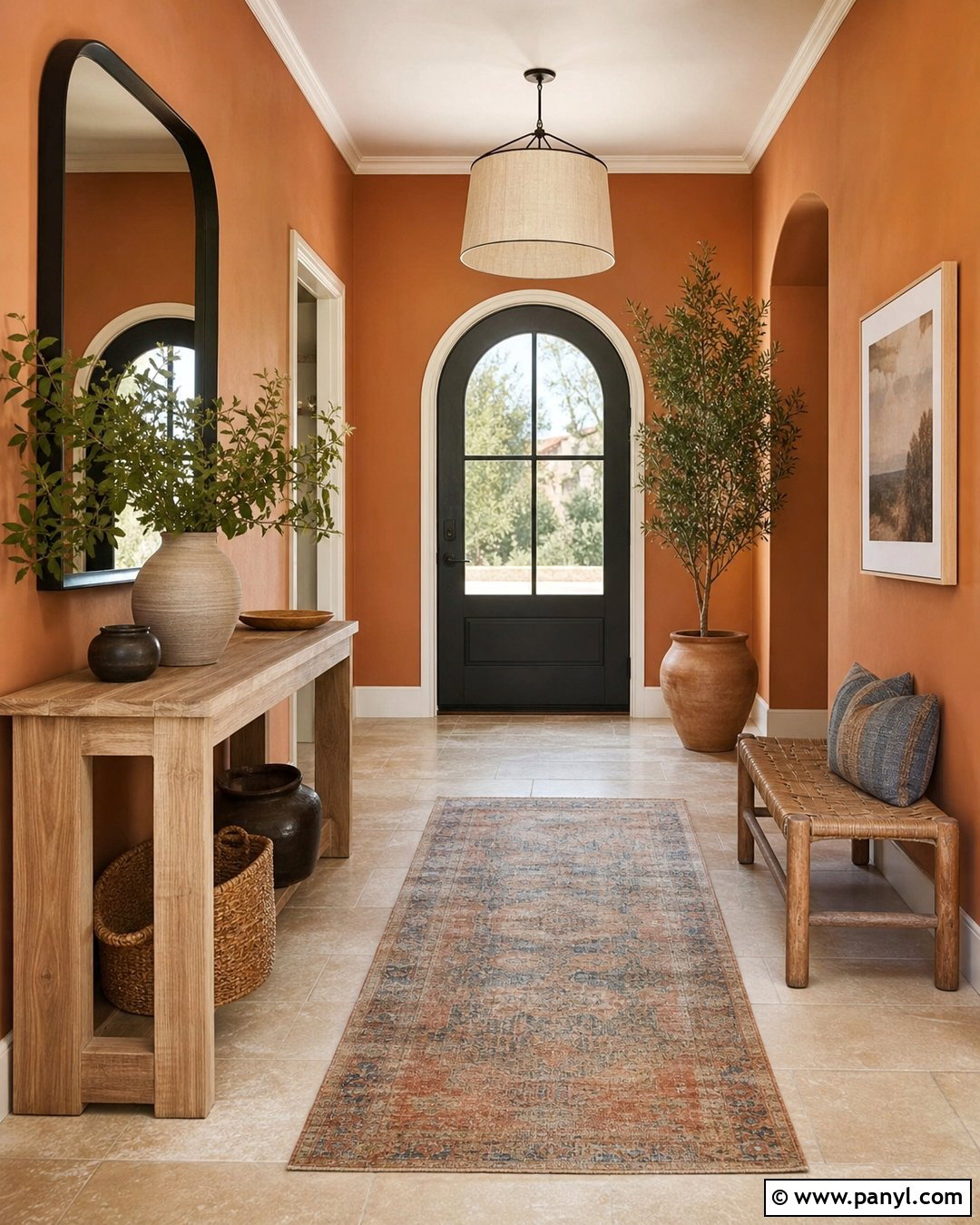
Terracotta surrounds an entrance with warmth and gives the room a sunbaked, collected character. Choose a softened clay-orange shade rather than a highly saturated orange. Pair it with creamy trim, light oak furniture, and limestone or warm beige tile. A woven console or wood bench keeps the atmosphere relaxed, while a black-framed mirror adds definition. Select a runner with faded blue, rust, and ivory details to create contrast and make the palette feel layered. Handmade-looking pottery, linen lighting, and a leafy indoor tree complete the natural arrangement. Terracotta works best when neighboring rooms include related earth tones, warm whites, or muted greens. With thoughtful lighting and restrained accessories, this foyer color feels inviting, stylish, and surprisingly easy to live with.
14. Dusty Rose Foyer
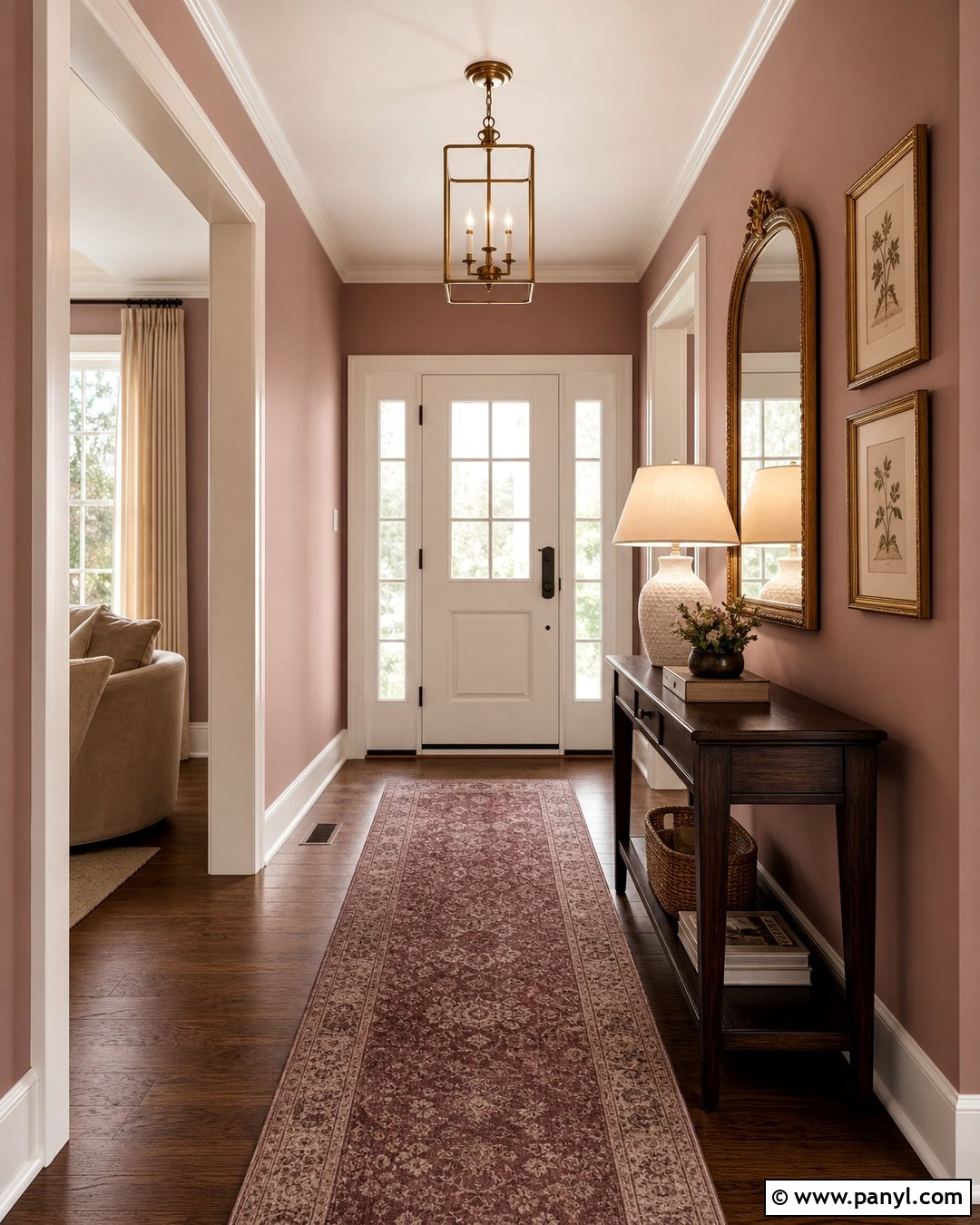
Dusty rose can make a foyer feel warm and distinctive without looking sugary. The most versatile versions contain brown, beige, or gray undertones, giving the pink a softly weathered appearance. Pair the walls with warm white trim, medium walnut flooring, and a slim dark wood console. An antique brass mirror strengthens the vintage character, while black accents add enough structure for a balanced result. Choose an ivory runner with faded burgundy and taupe motifs, then add a cream ceramic lamp and understated botanical artwork. This palette suits traditional homes, romantic cottages, and eclectic interiors, but it can also look modern beside clean furniture. Carrying dusty rose into one piece of nearby artwork helps the foyer connect naturally with the adjoining space.
15. Burgundy Foyer
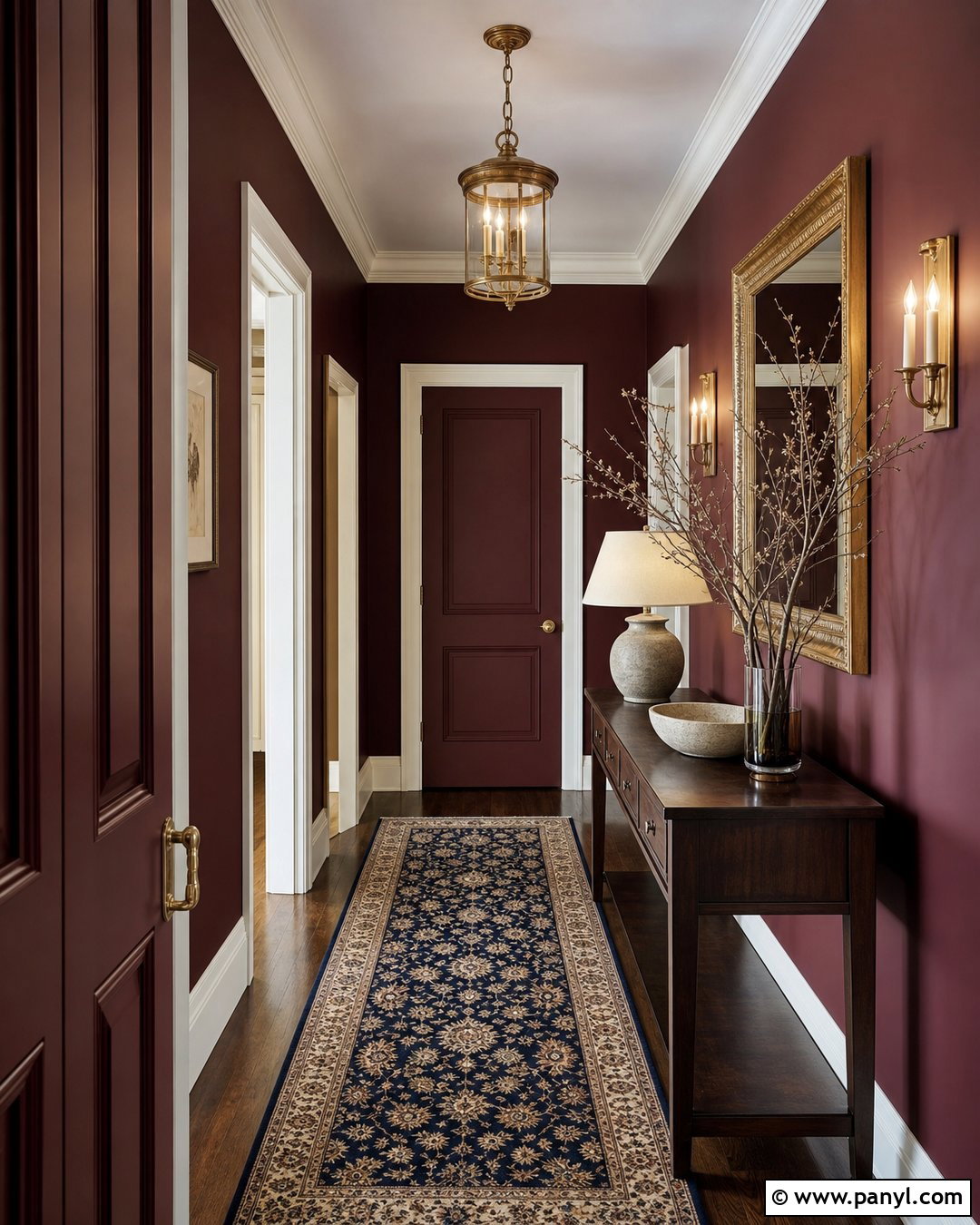
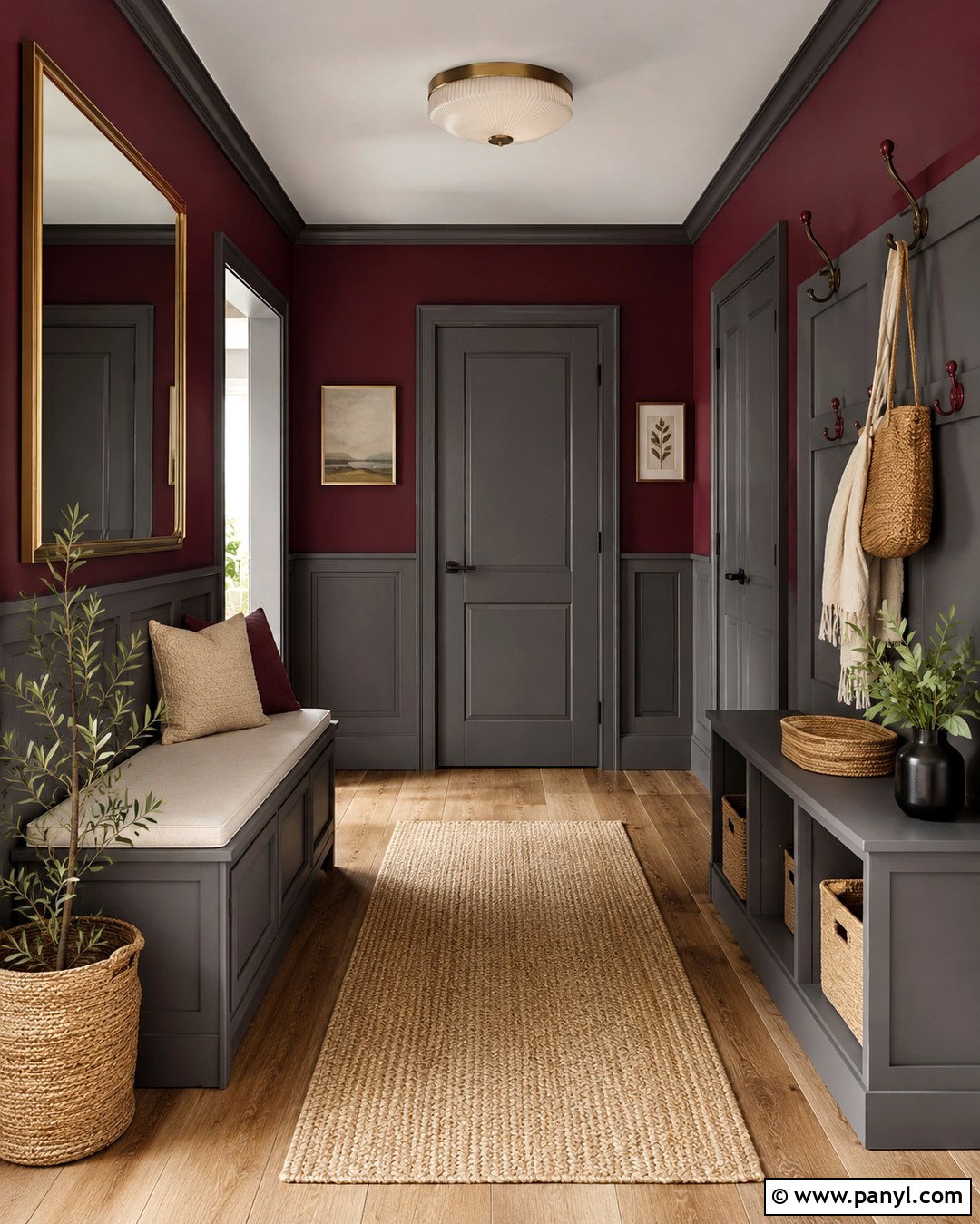
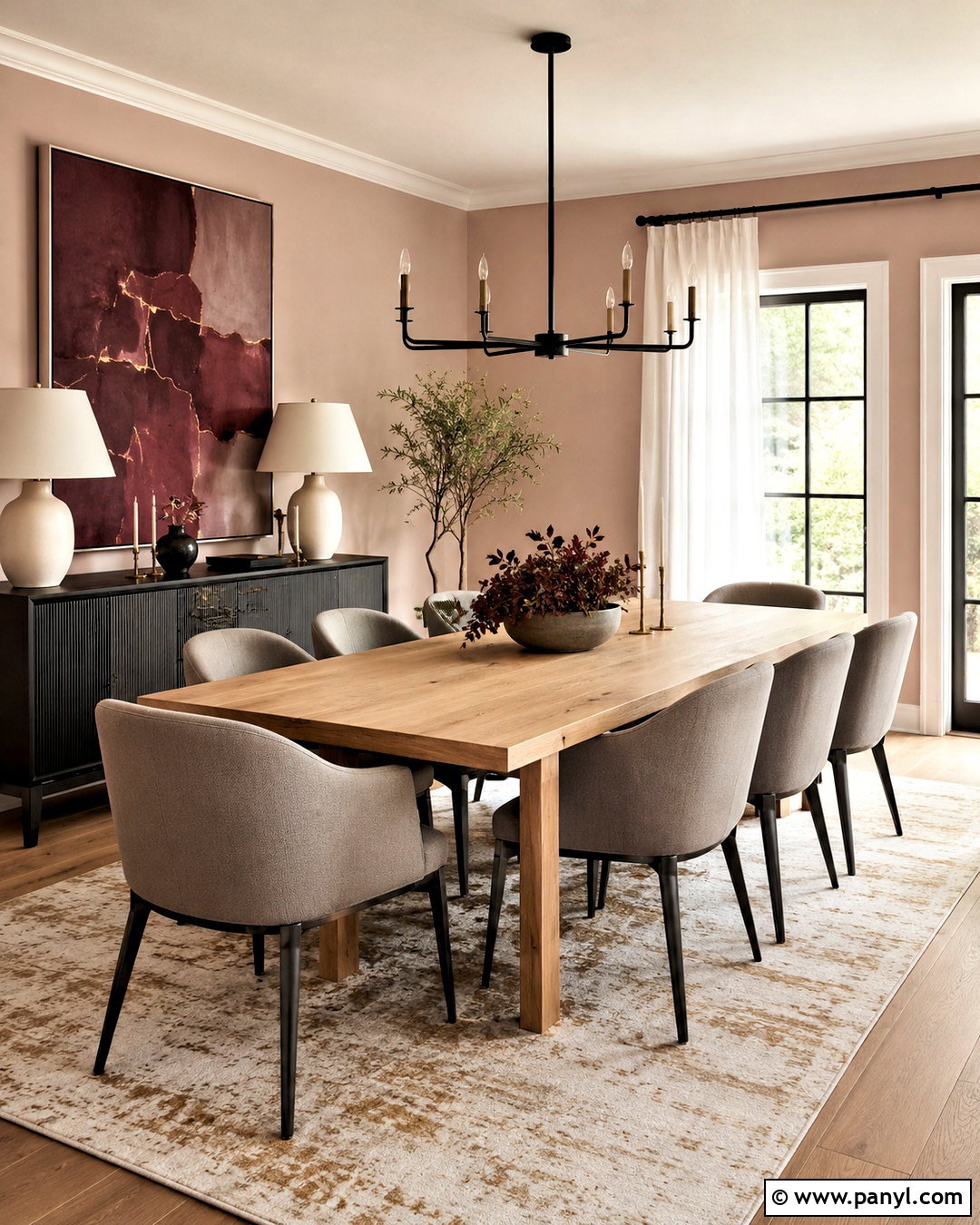
Burgundy creates a rich, tailored foyer that feels dramatic without relying on black or charcoal. Choose a deep red with brown or plum undertones, then use it across the walls and interior doors for a cohesive backdrop. Warm white trim and ceiling paint keep the entrance from becoming too enclosed. Add a dark walnut console, aged brass sconces, and a substantial gold-framed mirror to complement the color’s warmth. A faded Persian-style runner in navy, cream, and muted red provides pattern while disguising everyday wear. Keep accessories simple: one stone bowl, a linen-shaded lamp, and a few branches are enough. This sophisticated scheme works particularly well in traditional foyers with molding, stairs, or architectural details that deserve stronger visual emphasis.
16. Butter Yellow Foyer
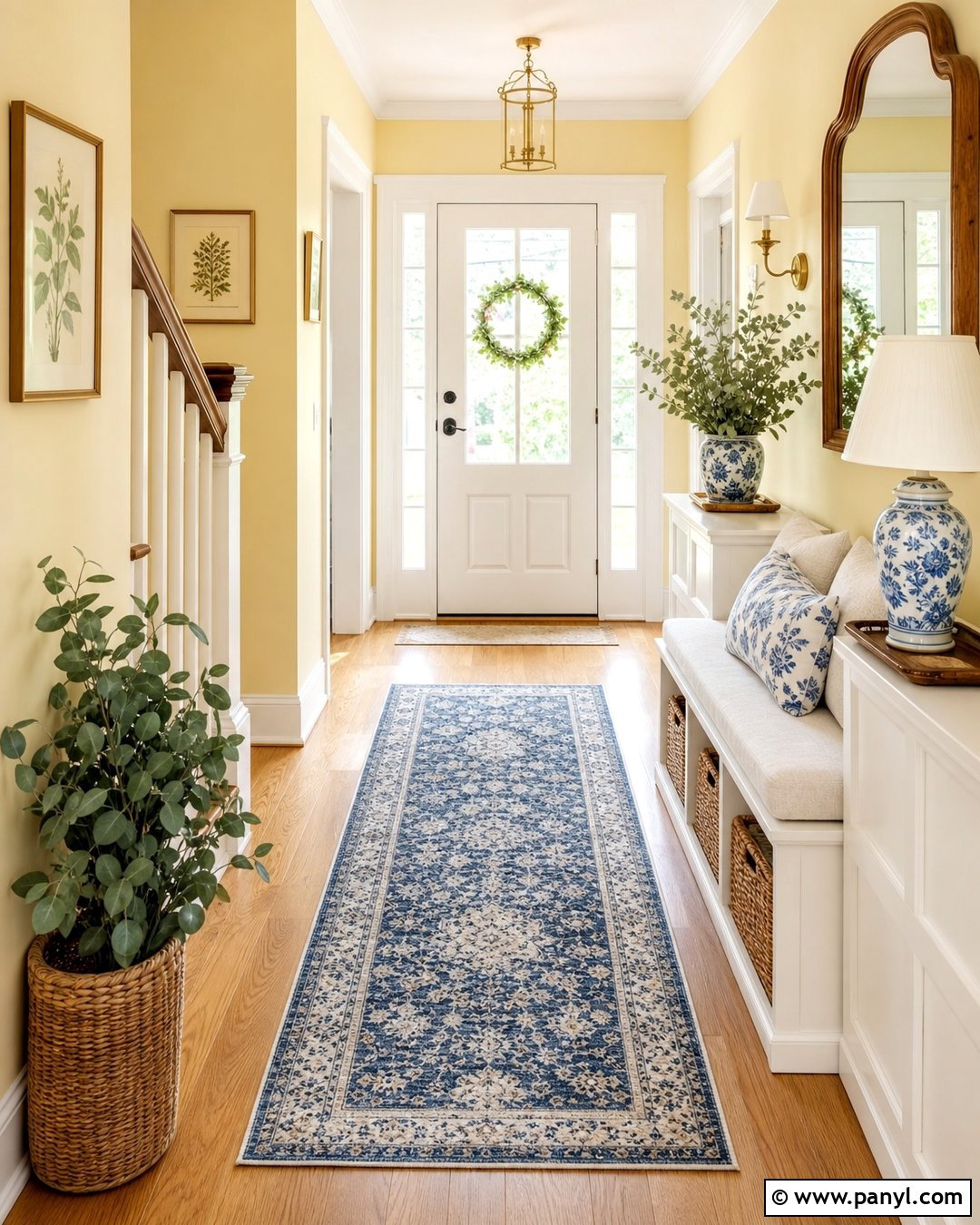
Butter yellow gives the foyer a cheerful glow while remaining gentler than bright lemon or gold. Choose a creamy, softened shade that reads warm in both daylight and artificial light. Combine it with ivory trim, natural pine or oak furniture, and a blue-and-white runner for fresh contrast. A painted white bench with woven baskets creates useful storage, while a simple wood-framed mirror keeps the room casual. Add polished brass hardware, a ceramic table lamp, and botanical prints with green leaves. Avoid too many yellow accessories; the wall color should remain the main source of warmth. This complete foyer works beautifully in cottages, farmhouses, and traditional homes, especially when the entrance needs energy but does not receive strong natural sunlight.
17. Charcoal Gray Foyer
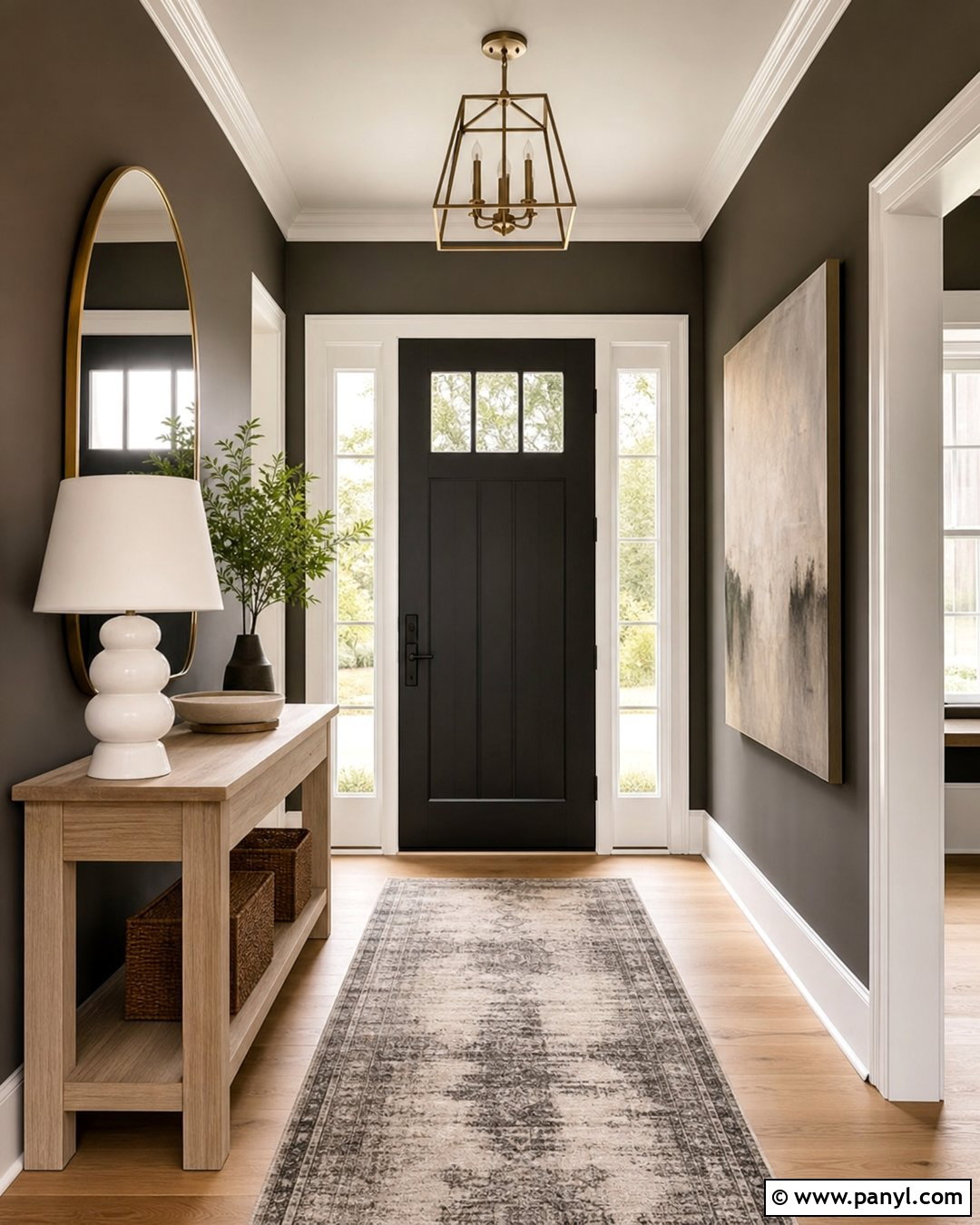
Charcoal gray gives a foyer sharp architectural presence and can make white trim, wood furniture, and artwork stand out. Choose a warm charcoal rather than a blue-black gray if the floor contains brown, beige, or rust. Paint the walls dark, then add a pale ceiling and substantial off-white trim to maintain definition. A light oak console creates contrast, while matte black hardware keeps the design cohesive. Use a large frameless or brass-framed mirror to reflect light from the front door. A cream-and-gray runner, sculptural white lamp, and oversized abstract artwork prevent the scheme from feeling severe. This foyer color is particularly effective in modern and transitional homes with open sightlines, strong lighting, and simple furniture silhouettes.
18. Chocolate Brown Foyer
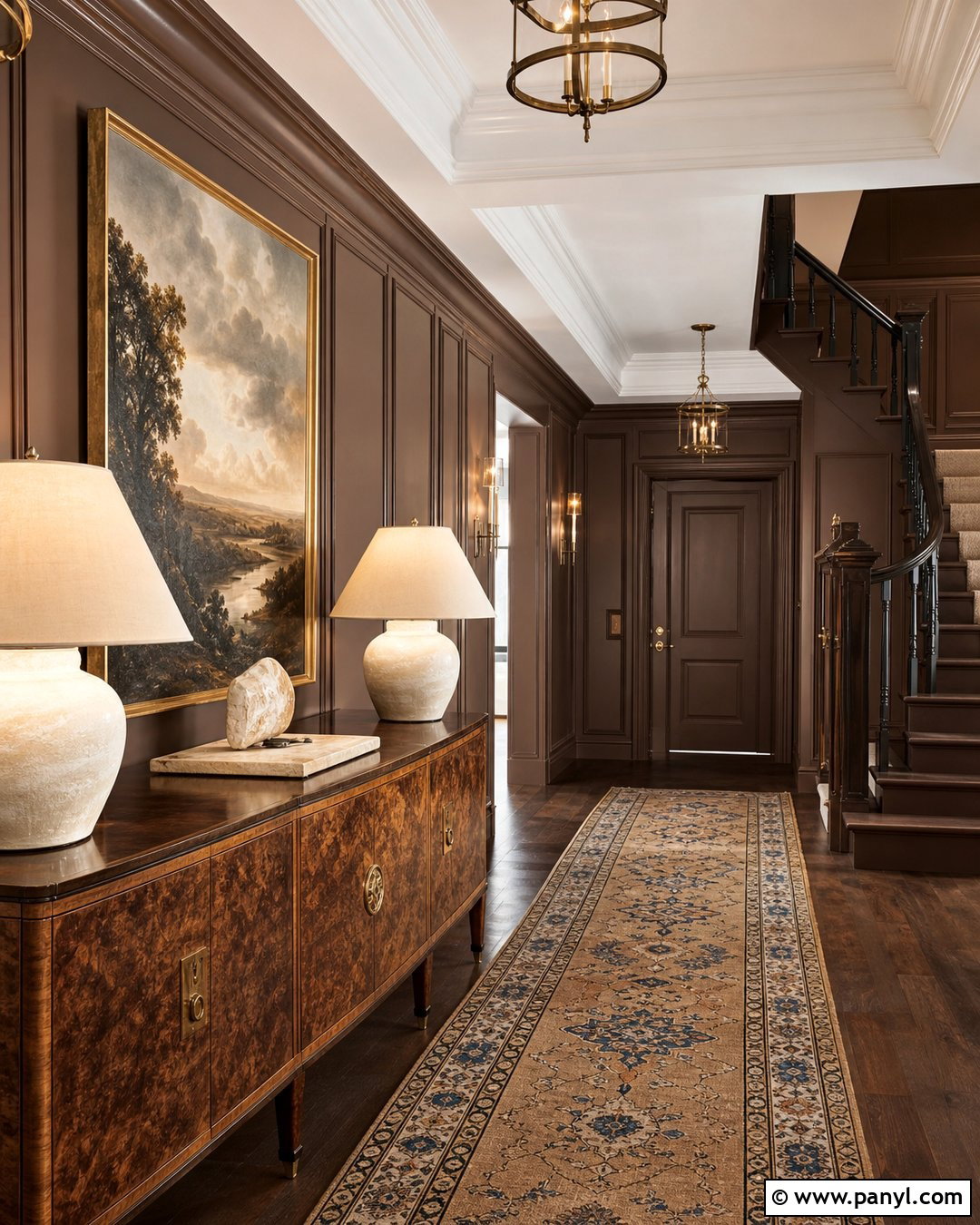
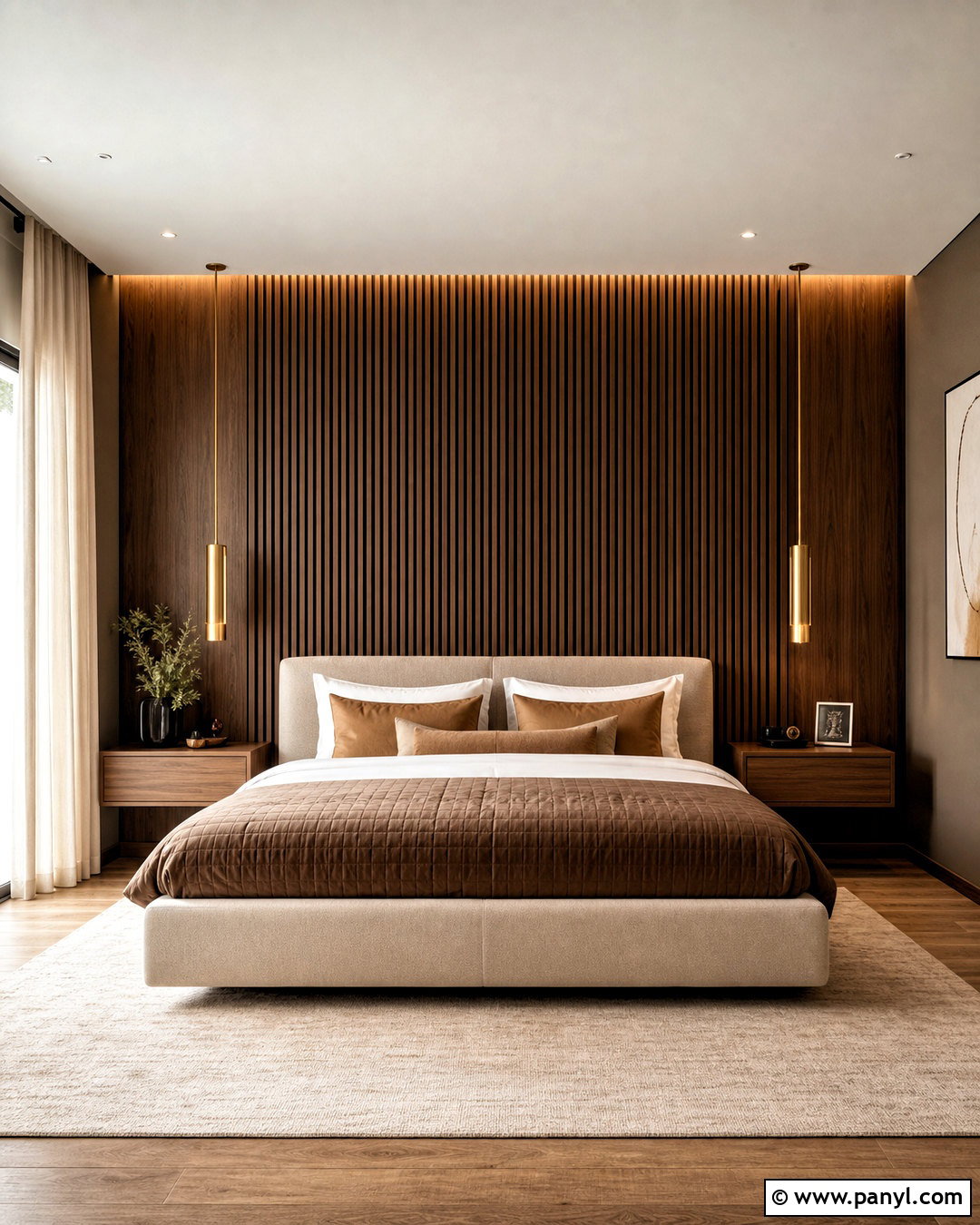
Chocolate brown creates a comforting, cocooning foyer with more warmth than black and more depth than taupe. Select a rich brown with subtle red or gray undertones, depending on the flooring and adjoining rooms. Color-drench the walls and doors for a polished effect, then keep the ceiling creamy white to reflect light. A burl wood or light oak console brings natural contrast, while brass lighting adds a warm gleam. Choose a runner containing camel, ivory, and muted blue to break up the darker surfaces. Pale pottery, linen lamp shades, and a large landscape painting provide visual relief. This complete palette feels especially luxurious with detailed molding, but it can also make a compact modern entry feel intentionally intimate rather than merely small.
19. Dusty Lavender Foyer
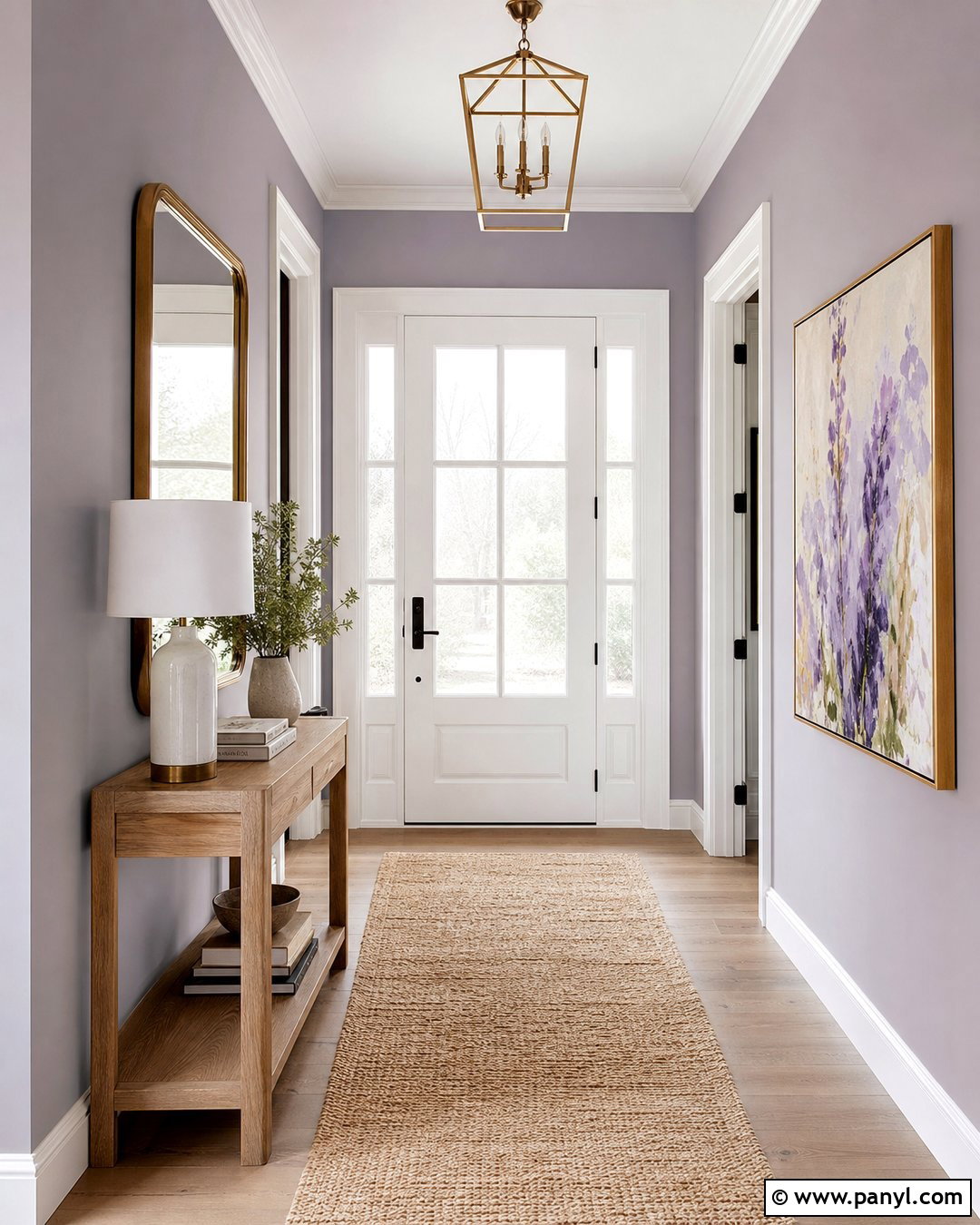
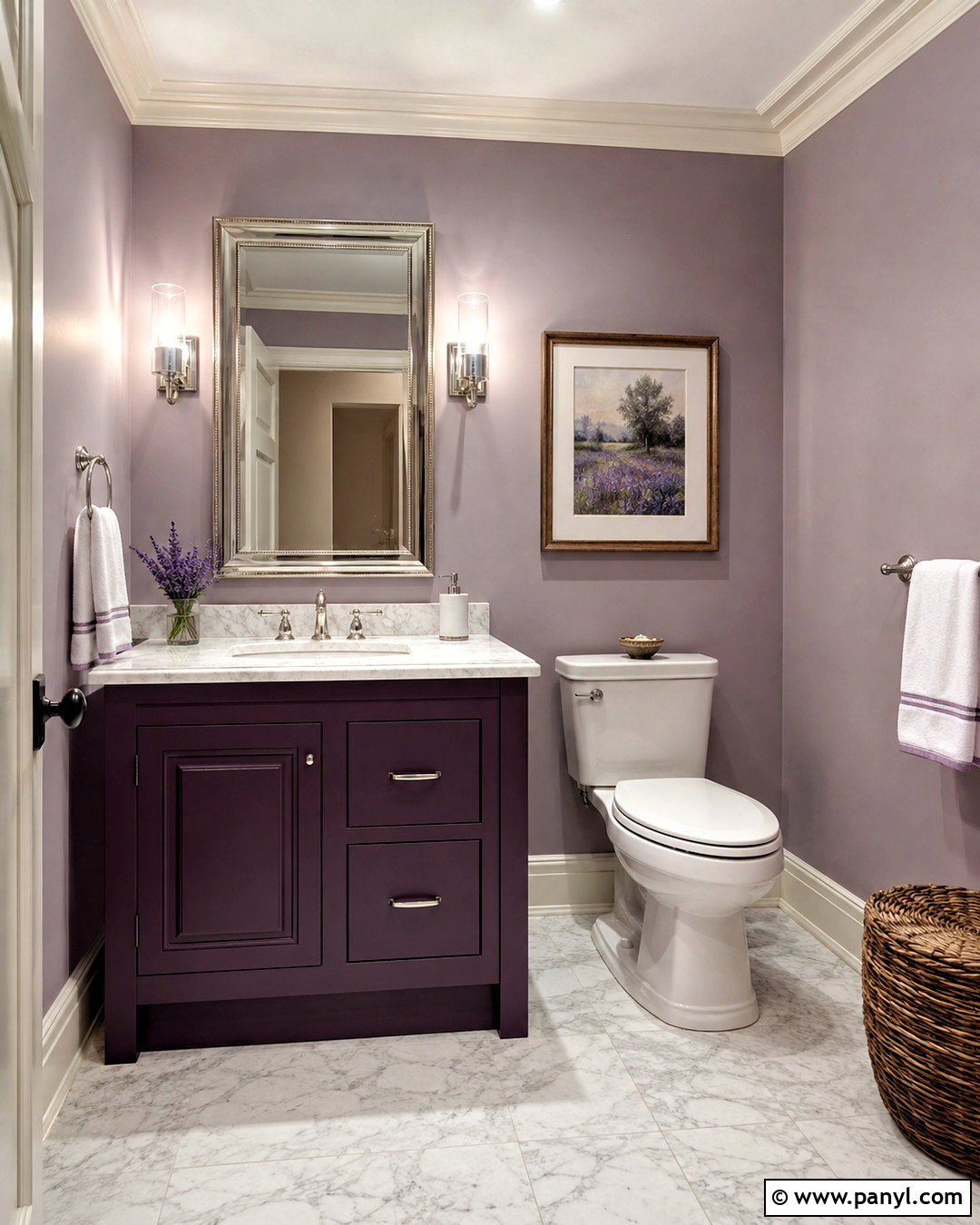
Dusty lavender offers an unexpected foyer color that remains calm when its purple tones are softened with gray. Pair the walls with creamy white trim to bring out their warmth, or use crisp white for a cooler, cleaner effect. A light oak console and natural woven runner prevent the palette from feeling overly formal. Add a brass-framed mirror, a white ceramic lamp, and abstract artwork containing lavender, taupe, and muted green. Black door hardware gives the delicate color a stronger outline. This scheme works well in foyers receiving cool northern light, though sampling is important because lavender can shift dramatically. When balanced with wood, neutral textiles, and restrained accessories, the finished entrance feels sophisticated, individual, and pleasantly serene.
20. Soft Black Foyer
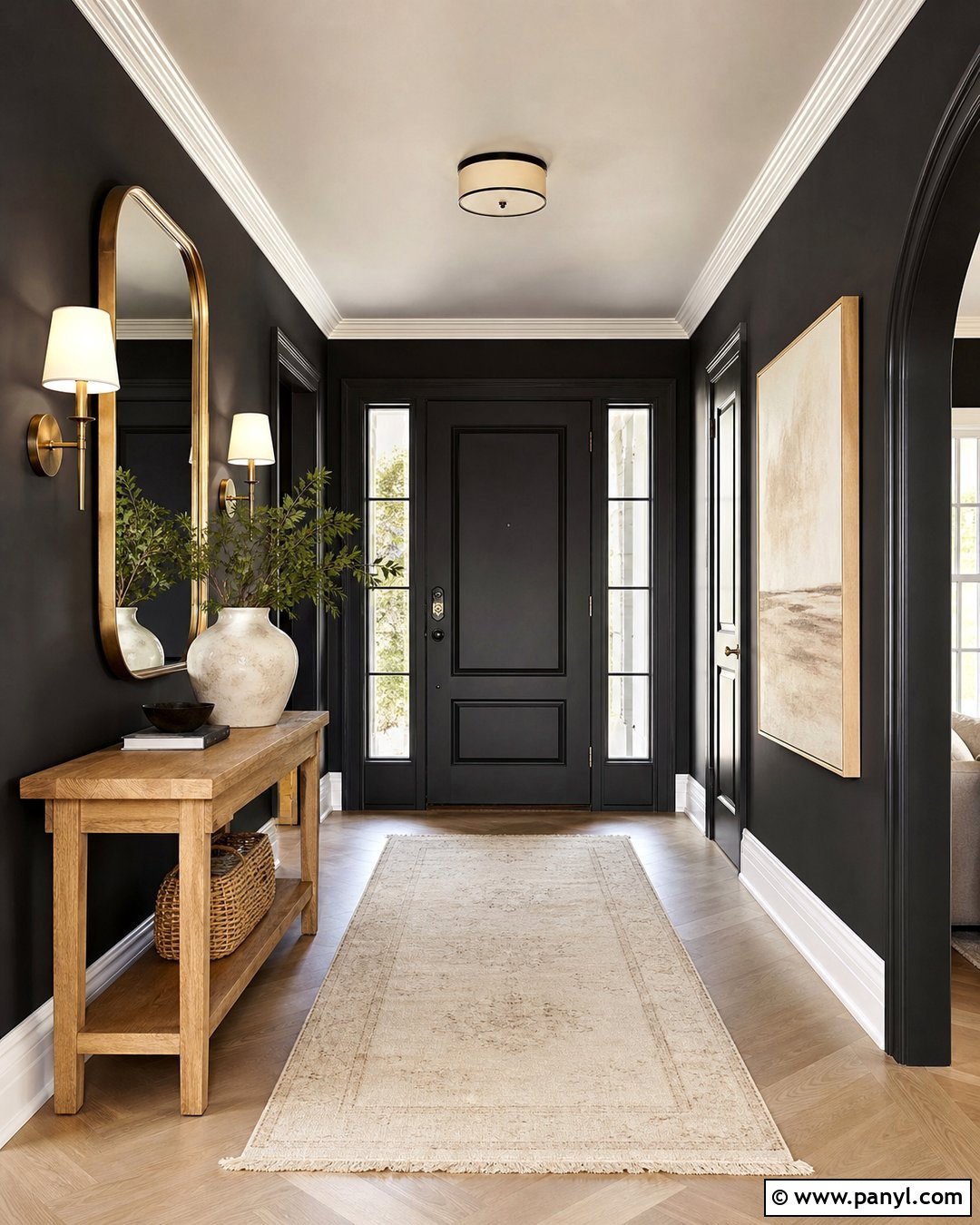
Soft black can make a foyer feel purposeful and elegant, particularly when the room already lacks strong natural light. Instead of fighting the shadows, use a black with warm charcoal or brown undertones to create depth. Paint the walls and interior doors the same shade, then introduce a pale ceiling, bright trim, and layered lighting. A natural oak console, oversized brass mirror, and ivory runner provide essential contrast. Add linen-shaded sconces, cream pottery, and one large piece of light-toned artwork to keep the room balanced. This dramatic look suits modern, traditional, and industrial homes alike. If the foyer is very small, limit accessories and use a mirror opposite the brightest opening to make the finished space feel expansive rather than crowded.
Conclusion:
Choosing among the 20 Best Foyer Colors begins with understanding how the entrance connects to your flooring, front door, staircase, and surrounding rooms. Light neutrals can create an airy transition, while blues and greens bring calm personality. Earth tones feel naturally welcoming, and deep shades transform the foyer into a dramatic destination. Whatever color you prefer, build a complete palette instead of selecting the wall paint alone. Coordinate the trim, furniture, runner, lighting, hardware, and artwork so every element supports the same mood. Test large paint samples throughout the day before making a final decision. A carefully chosen foyer color will make daily arrivals feel more comfortable and give guests a clear first impression of your home.

Related Ideas and Inspiration:
Leave a Reply