
Choosing from these **20 powder room paint colors** is an easy way to give a small half bath more personality without planning a full renovation. Powder rooms can handle rich jewel tones, playful pastels, warm neutrals, and dramatic near-black shades because their compact size creates a naturally contained design moment. Current bathroom inspiration also favors saturated color, coordinated trim, and expressive combinations rather than defaulting to plain beige or white. () The best result comes from treating the room as one complete look. Consider the wall color alongside the vanity, flooring, mirror, lighting, hardware, ceiling, and towels. The complete schemes below make it easier to compare and recreate these **20 powder room paint colors**.
1. Navy Blue Powder Room
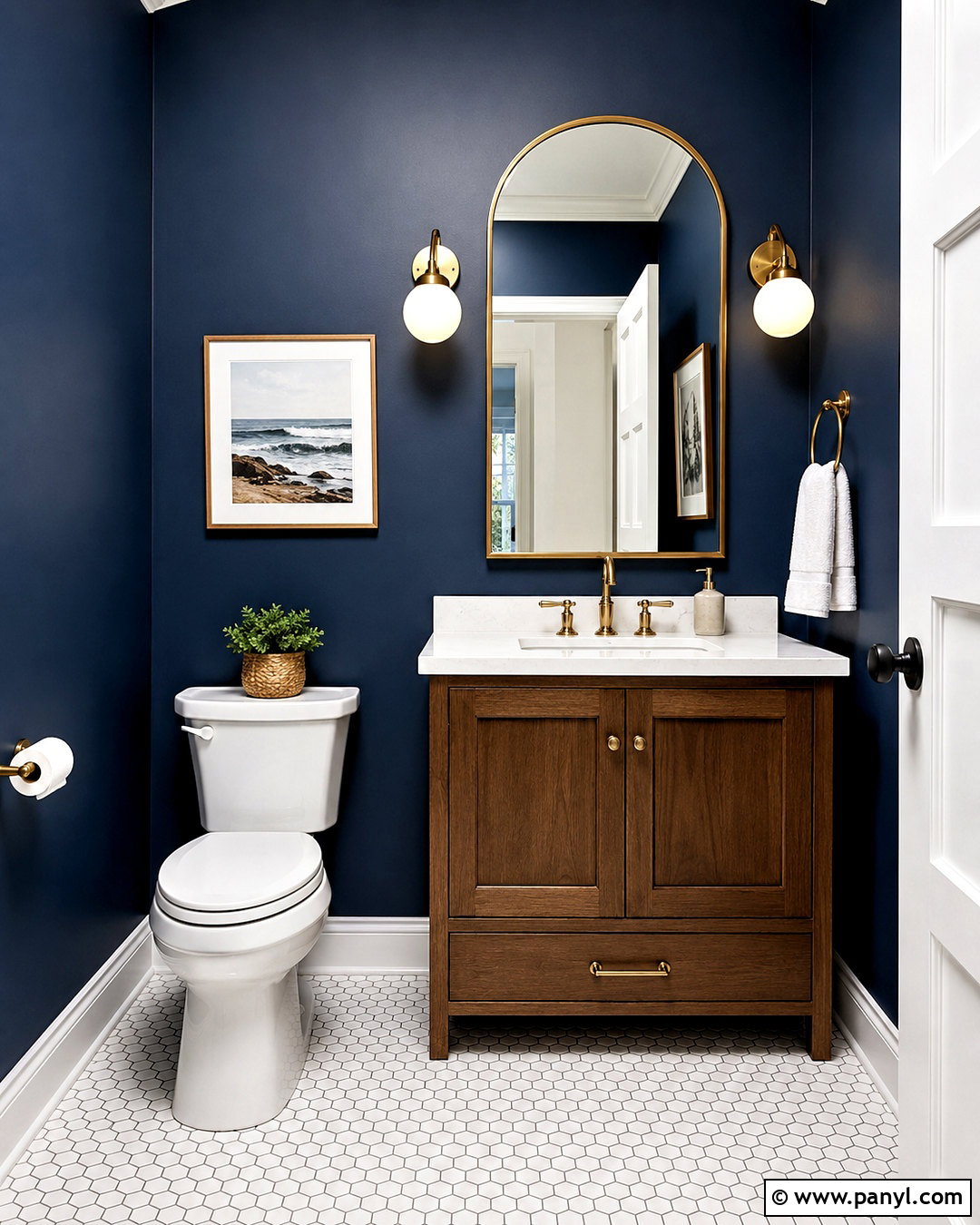
Deep navy blue gives a powder room strong character while remaining surprisingly versatile. Paint every wall navy, then use crisp white on the ceiling and baseboards to create a clean border. A medium-tone walnut vanity warms the cool walls, while a white quartz countertop keeps the sink area bright. Choose polished brass faucets, rounded sconces, and an arched mirror for a classic finishing layer. White hexagon floor tile with dark grout connects the light and dark elements without becoming distracting. Add one framed coastal sketch and a small white hand towel rather than filling the room with accessories. This complete color scheme works especially well in traditional, transitional, and coastal homes where dark blue already appears elsewhere.
2. Forest Green Powder Room
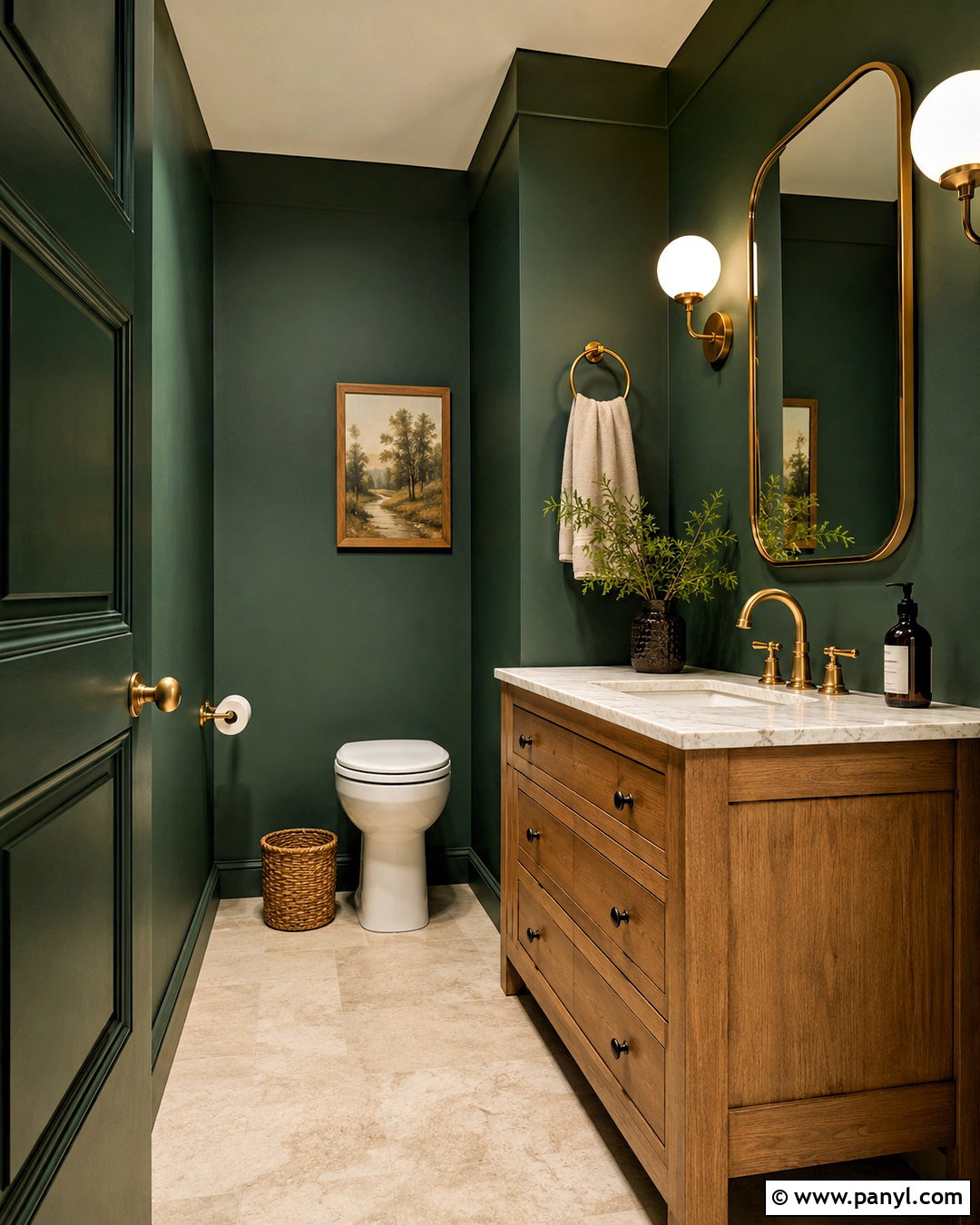
Forest green creates a rich, nature-inspired powder room that feels intimate instead of cramped. For a seamless look, carry the green across the walls, trim, and door using slightly different paint sheens. Pair it with a warm oak vanity featuring simple flat-panel doors and a pale marble countertop. A rectangular brass-framed mirror and two opal glass sconces add enough brightness to balance the saturated walls. Ground the room with warm gray limestone-look floor tile, then introduce a woven wastebasket and cream hand towels for softness. Keep artwork minimal, since the wall color already delivers plenty of visual interest. This scheme feels polished and welcoming, particularly when neighboring rooms contain wood, tan, cream, or muted green accents.
3. Matte Black Powder Room
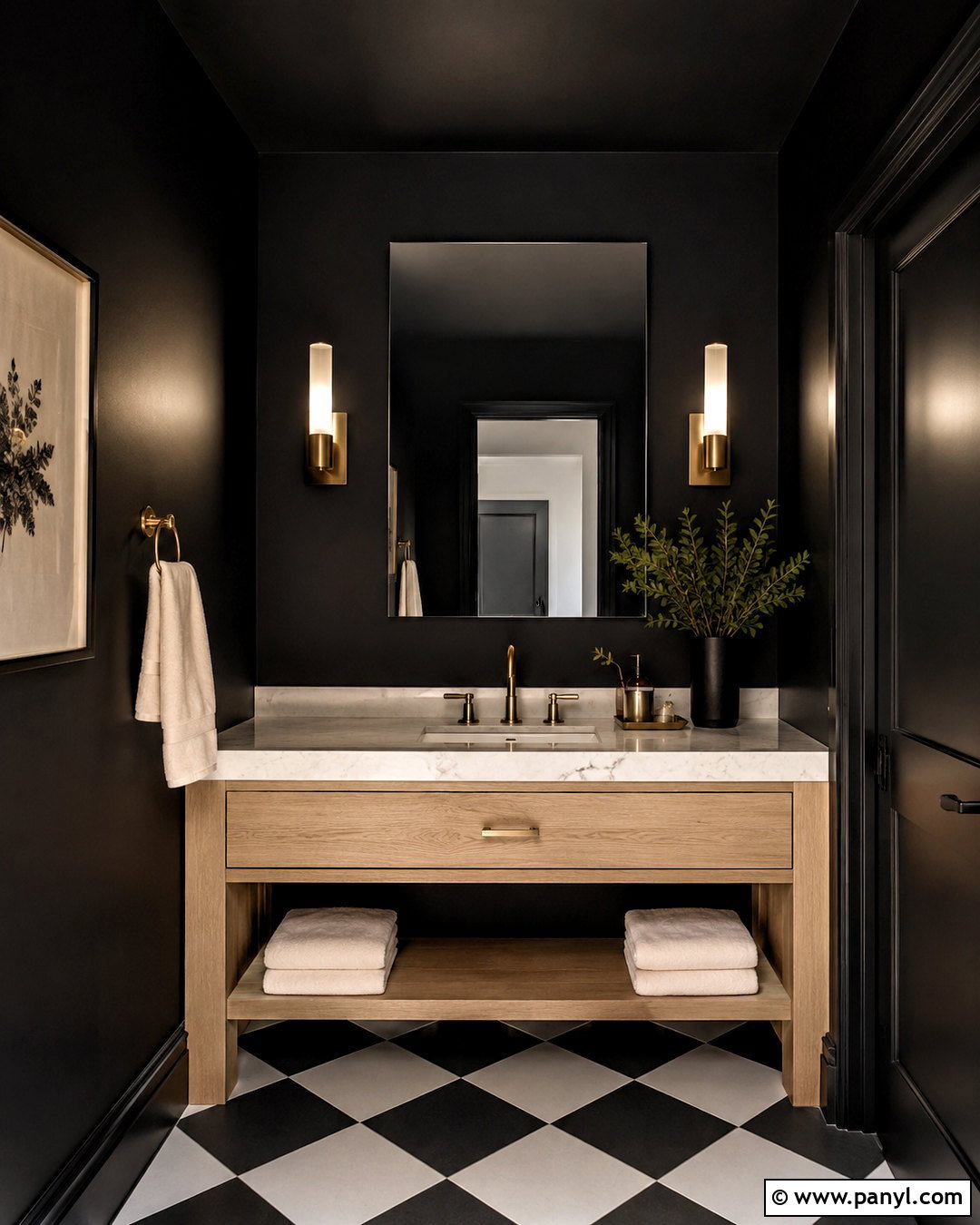
A matte black powder room can feel striking and carefully designed when its lighter surfaces are planned from the start. Use soft black paint on the walls and ceiling to create an enveloping background, but keep the vanity front natural white oak. A thick white marble countertop and matching backsplash will reflect light around the sink. Install a large frameless mirror to increase the sense of depth, then place slim aged-brass sconces on both sides. Black-and-white checkerboard floor tile brings pattern into the room without adding another color. Finish with a white towel, a sculptural ceramic soap dispenser, and one small leafy plant. The result is dramatic yet balanced, with enough contrast to keep every fixture visible and purposeful.
4. Burgundy Powder Room
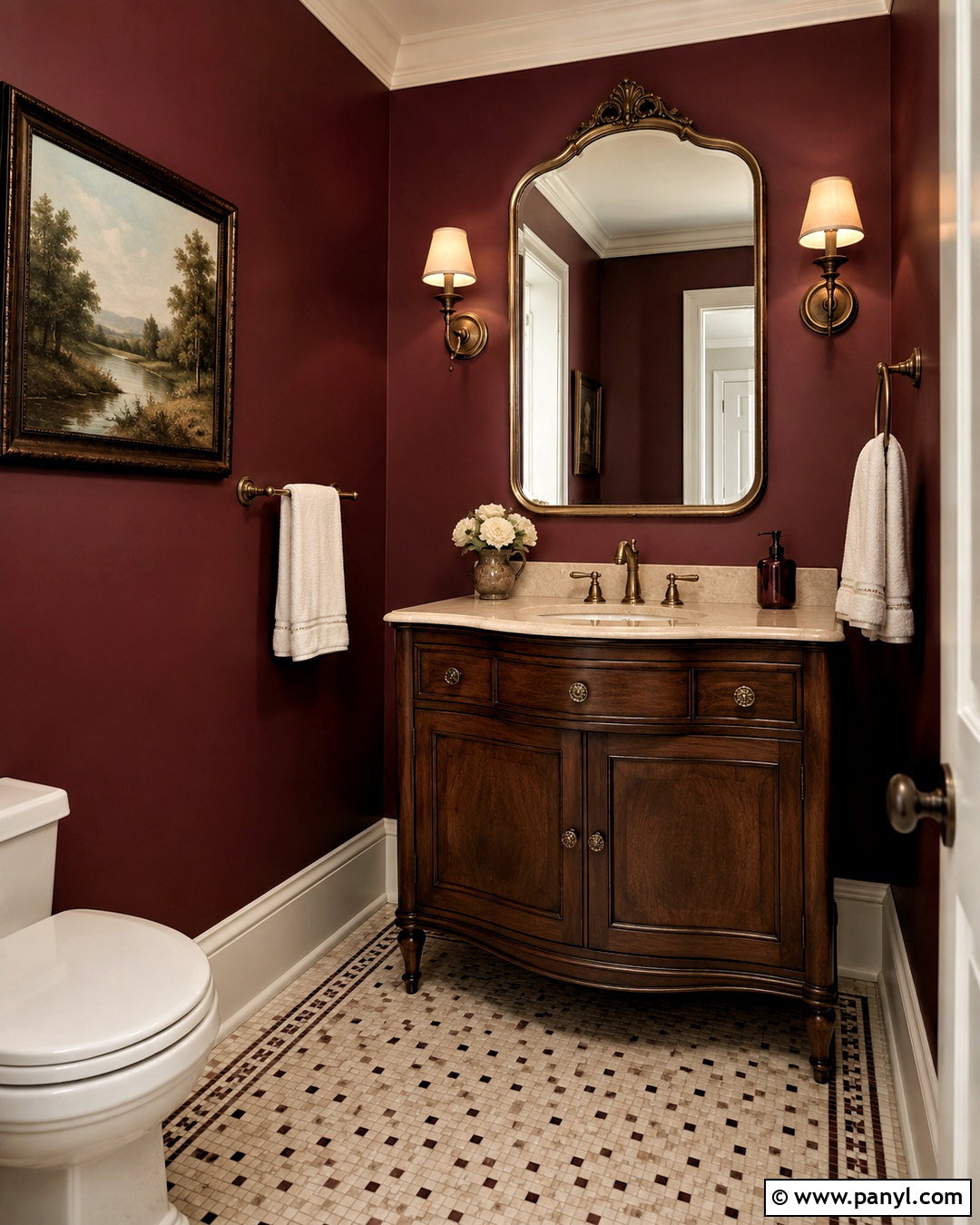
Burgundy walls bring warmth and depth to a powder room while offering a softer alternative to black. Choose a wine-red shade with brown undertones rather than a bright primary red. Pair it with creamy white baseboards, a matching cream ceiling, and an antique-inspired walnut vanity. A lightly veined beige stone countertop will bridge the dark walls and warm wood. Use aged brass for the faucet, cabinet hardware, mirror frame, and shaded sconces so the fixtures feel connected. Small ivory-and-burgundy mosaic floor tiles can add subtle pattern underfoot. Complete the room with muted landscape artwork and thick ivory hand towels. This coordinated approach creates a refined, traditional space that feels especially inviting in fall but works throughout the year.
5. Deep Plum Powder Room
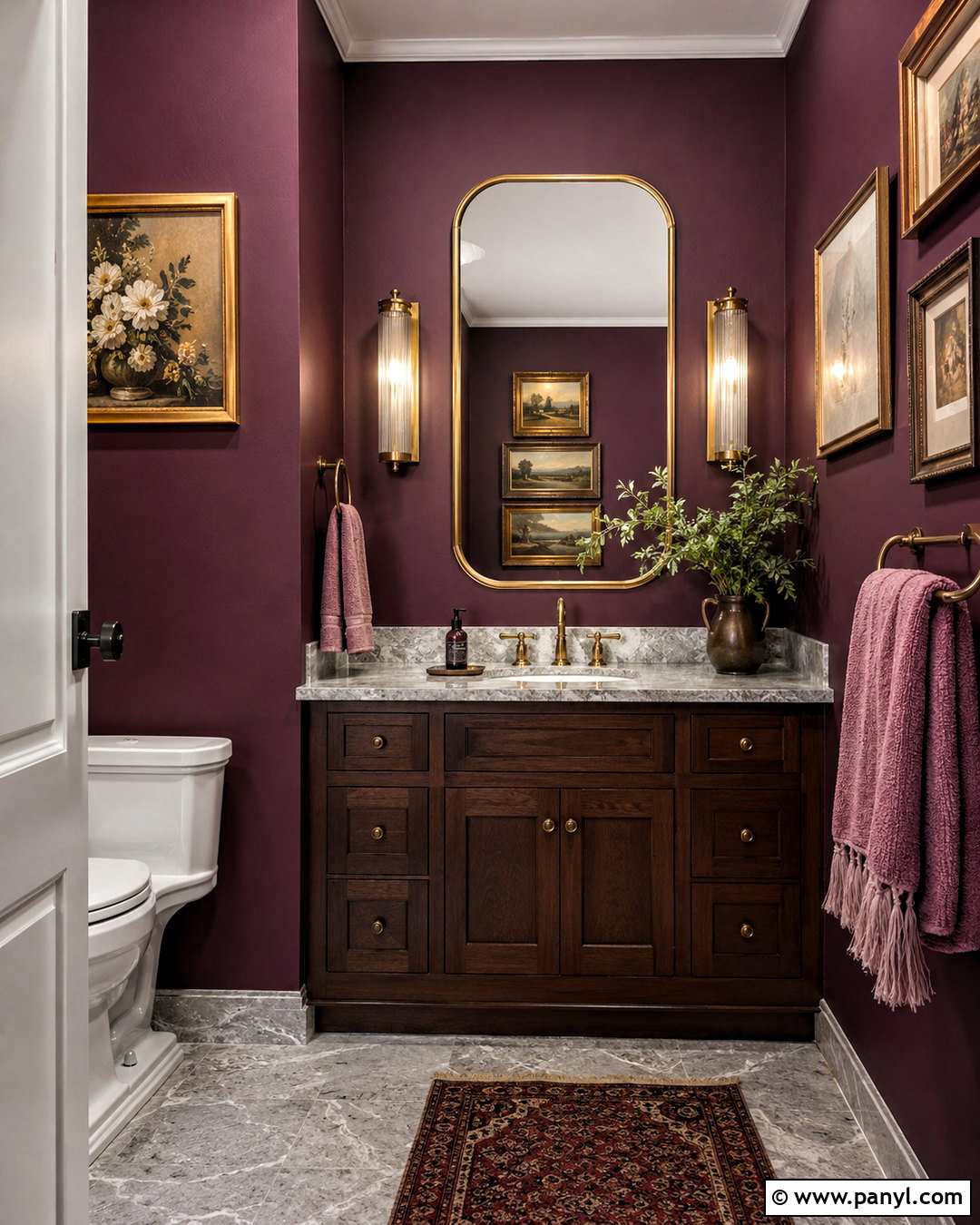
Deep plum offers the moodiness of a dark neutral with a more distinctive purple undertone. Paint the walls in a velvety eggplant shade and leave the ceiling a softened white to prevent the room from feeling visually closed. A dark walnut vanity supports the sophisticated palette, while a pale gray marble top adds welcome brightness. Select unlacquered brass hardware, a curved mirror, and ribbed glass sconces for gentle texture. Gray-and-white marble floor tile keeps the materials connected without competing with the wall color. A small vintage-style print, mauve hand towel, and white ceramic soap bottle provide finishing details. This powder room look suits eclectic and traditional interiors, especially when plum is repeated subtly in nearby rugs, artwork, or upholstery.
6. Chocolate Brown Powder Room
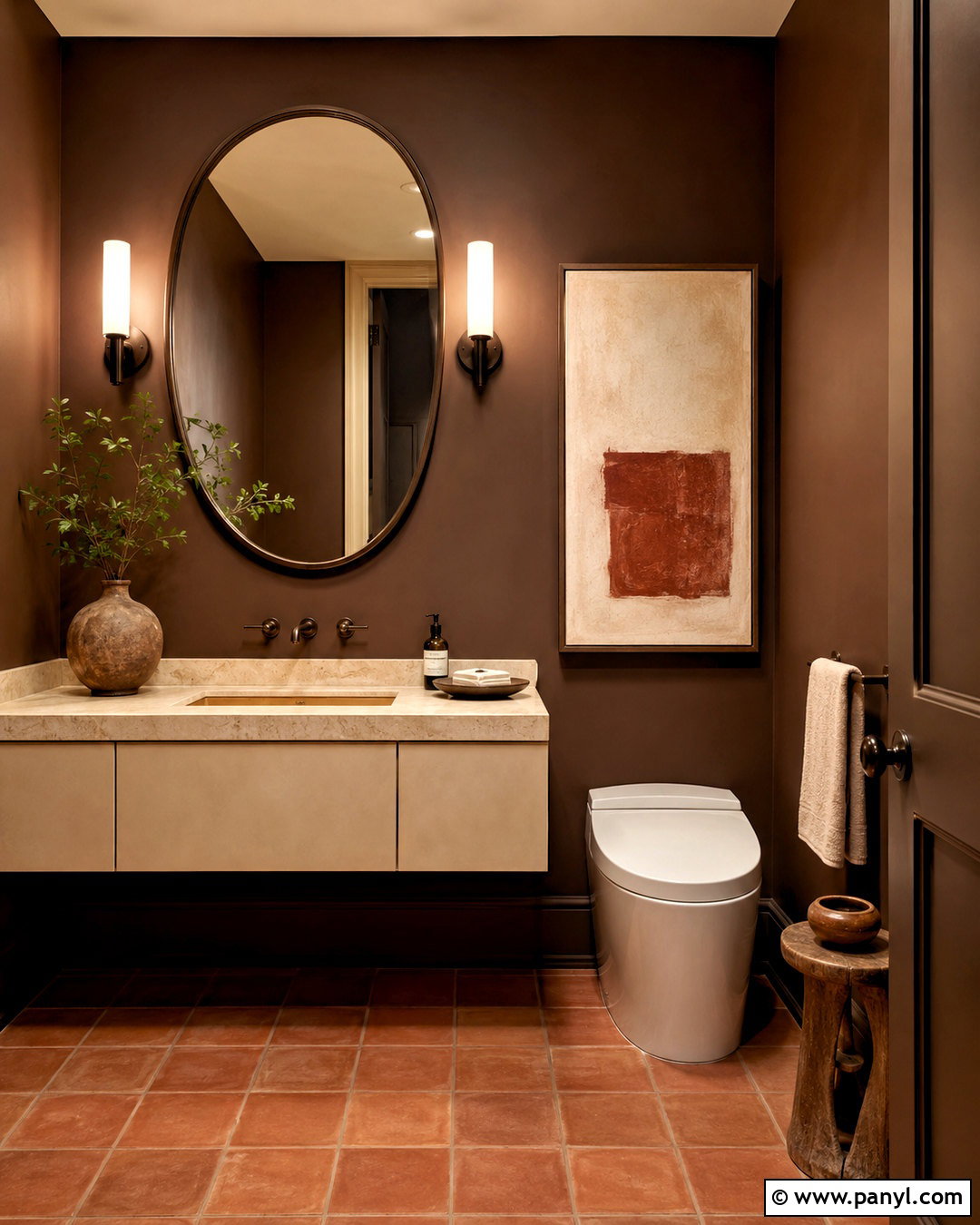
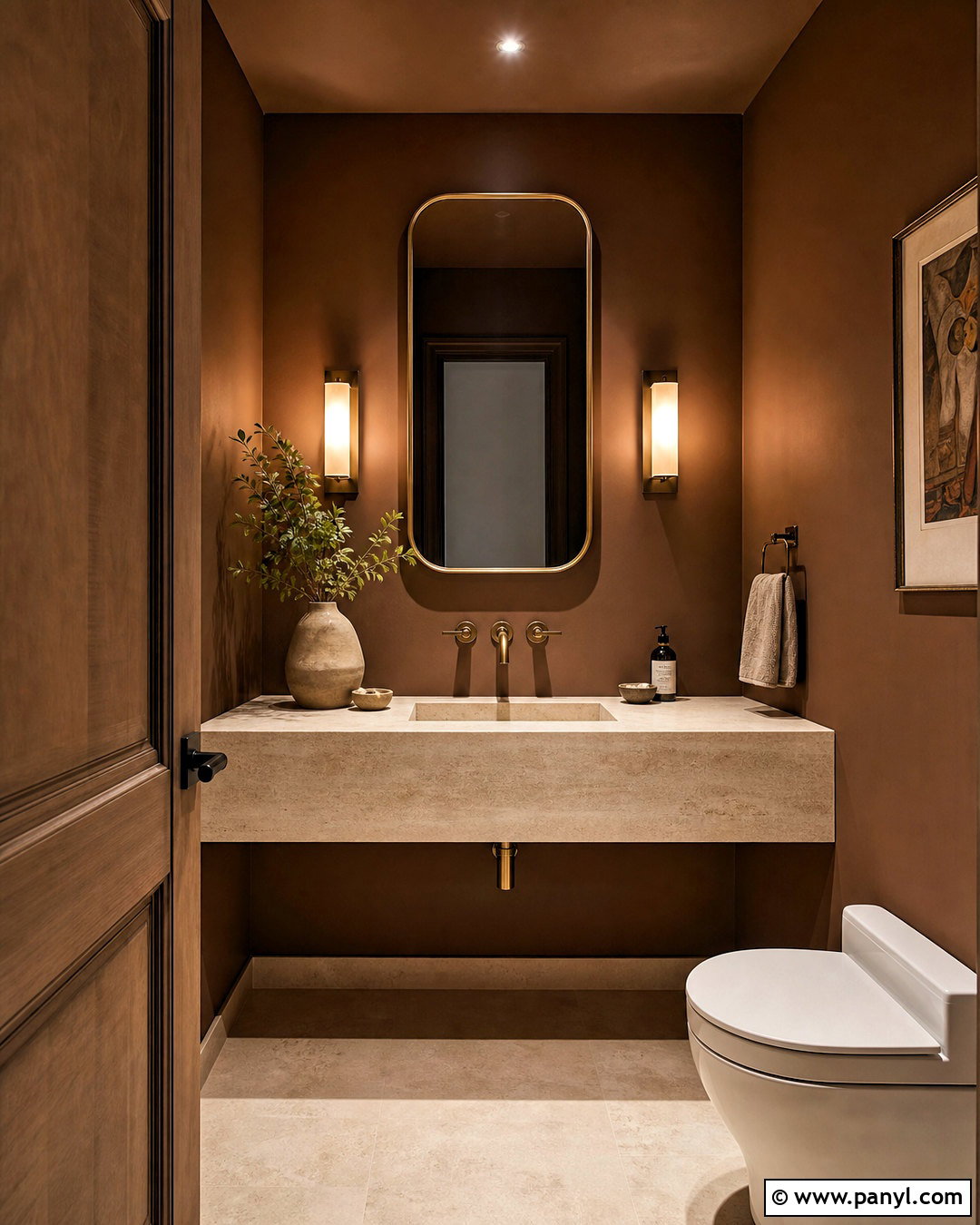
Chocolate brown turns a compact powder room into a warm, grounded retreat. Look for a deep brown with subtle red undertones, which will feel richer than a flat gray-brown shade. Paint the walls and trim together, then keep the ceiling warm white for definition. A floating cream vanity lightens the lower half of the room and makes the floor appear more open. Add a travertine countertop, bronze faucet, and oversized oval mirror with a thin bronze frame. Terracotta floor tiles bring natural variation and reinforce the earthy palette. Use linen hand towels, a small pottery vessel, and simple abstract artwork in cream and rust. The finished room feels layered and comfortable rather than overly dark or heavy.
7. Terracotta Powder Room
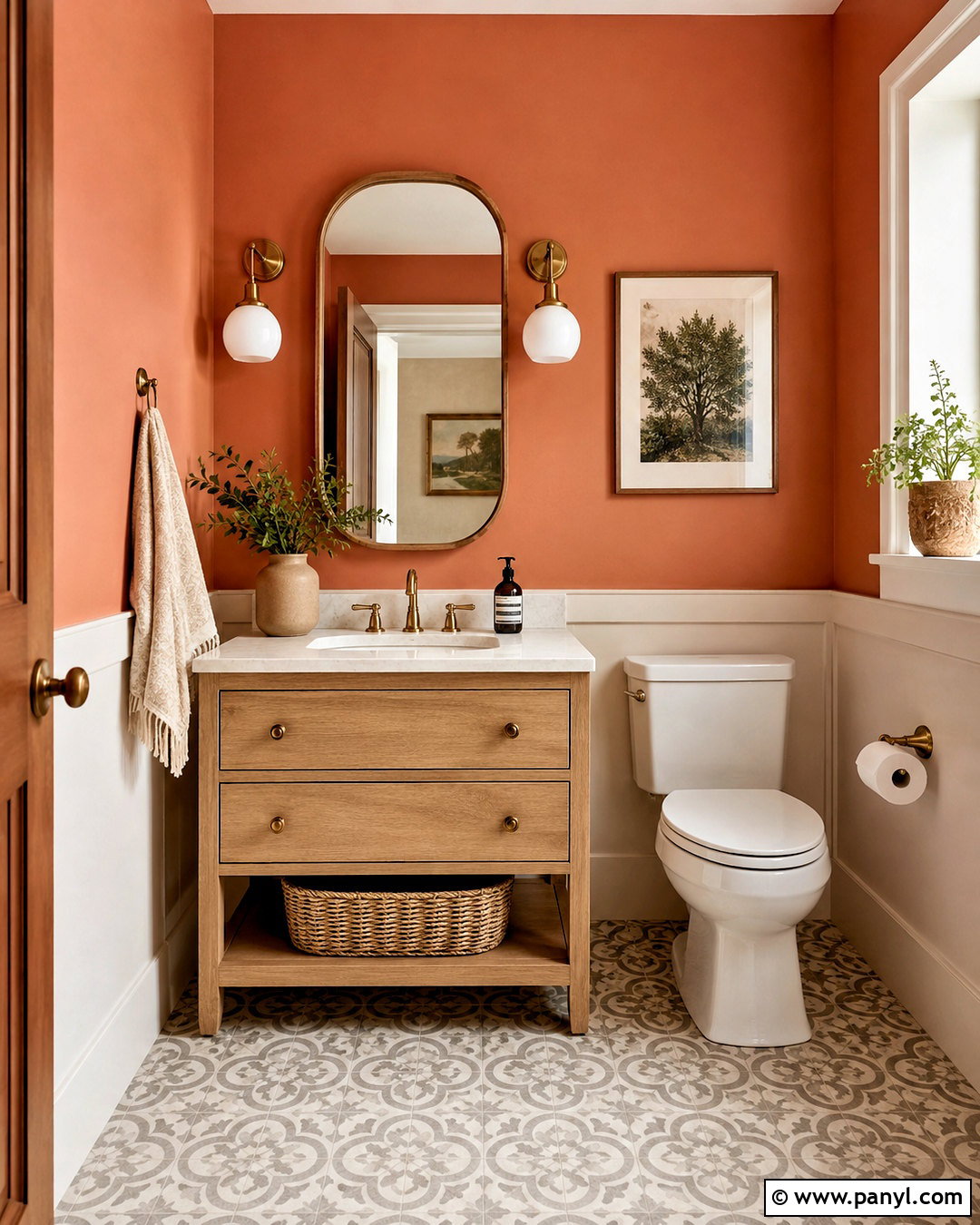
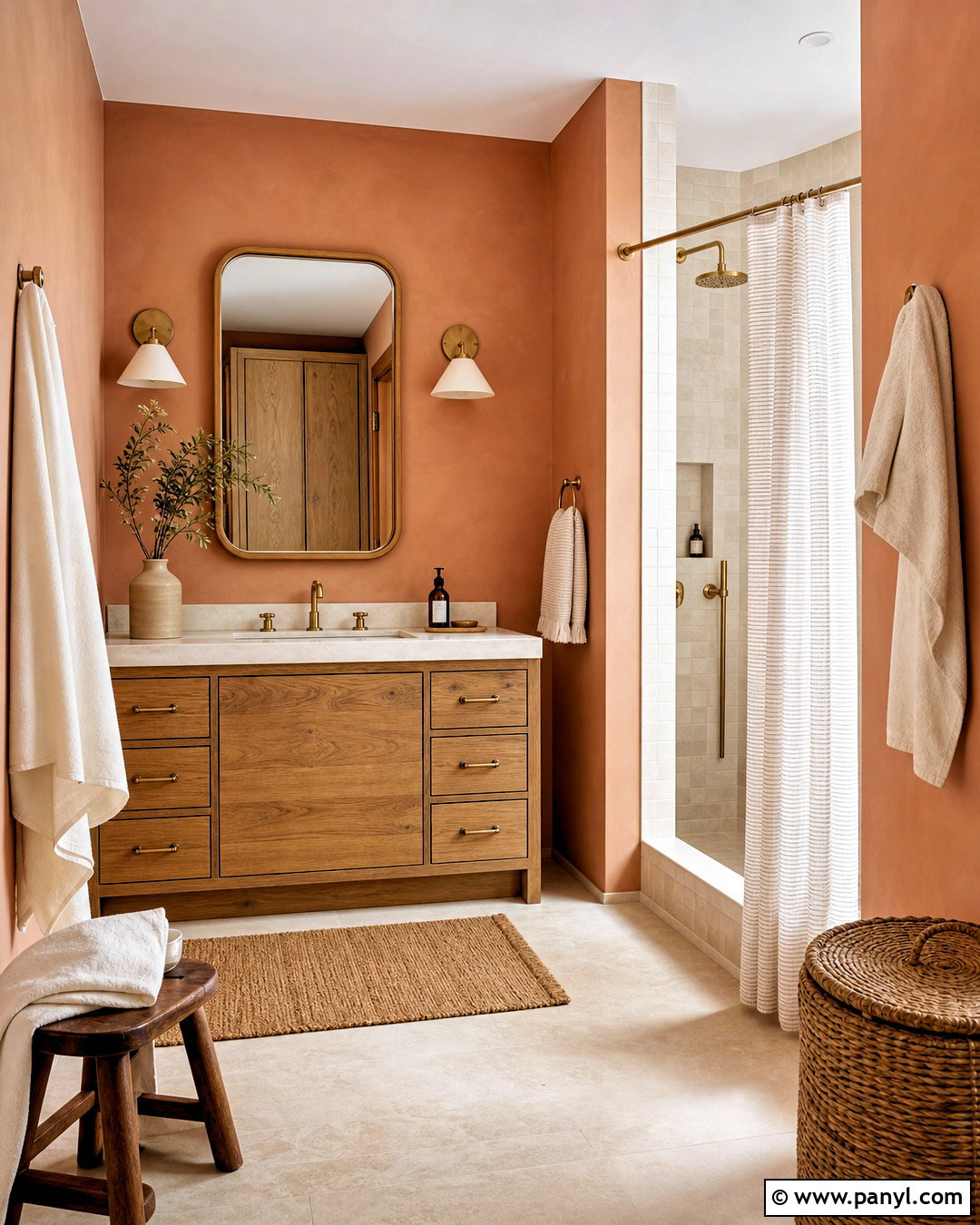
Terracotta paint fills a powder room with sunbaked warmth and works beautifully with natural materials. Choose a muted clay shade rather than vivid orange, then pair it with warm white trim and a pale wood vanity. A cream quartz countertop and short matching backsplash will keep splashes easy to manage while creating a crisp break against the walls. Use brushed brass hardware and globe-shaped milk glass sconces for a soft glow. Patterned cement floor tile in cream, tan, and faded rust introduces movement without overwhelming the compact layout. Complete the design with a rounded wood mirror, woven basket, and oatmeal-colored towel. This approachable scheme suits Mediterranean, Southwestern, organic modern, and relaxed transitional homes.
8. Dusty Rose Powder Room
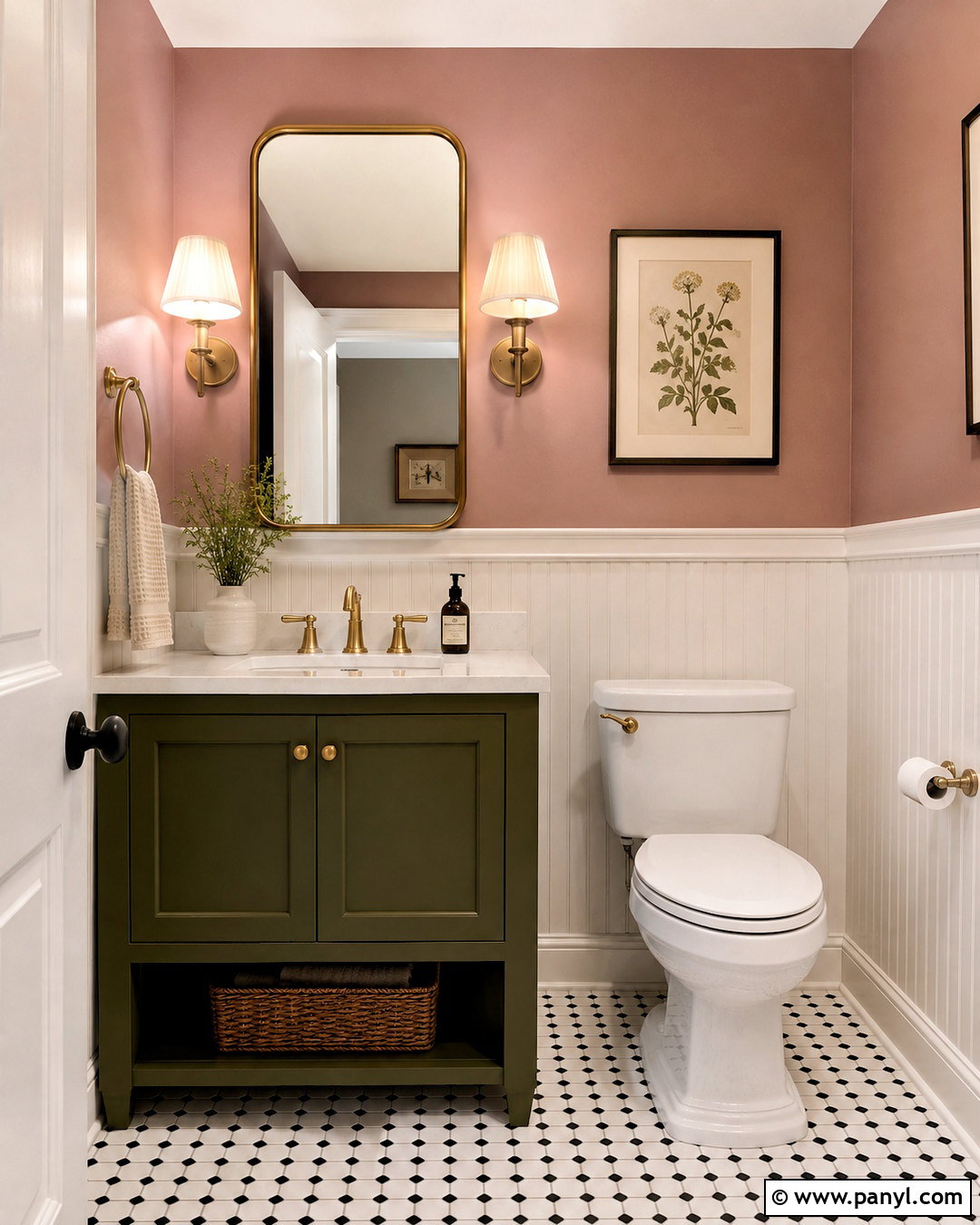
Dusty rose gives a powder room a flattering warmth without making the space look overly sweet. Select a muted pink with beige or gray undertones, and apply it to the walls above simple white beadboard. Paint the vanity a deep olive green to create an earthy contrast, then add a white quartz countertop for balance. Antique brass faucets, cabinet pulls, and mirror framing will complement both colors. Use small black-and-white mosaic floor tile to sharpen the softer palette and connect with black accents elsewhere in the home. A pleated ivory sconce shade and framed botanical print complete the room. The final look feels cheerful and grown-up, with enough contrast to remain interesting long after color trends change.
9. Sage Green Powder Room
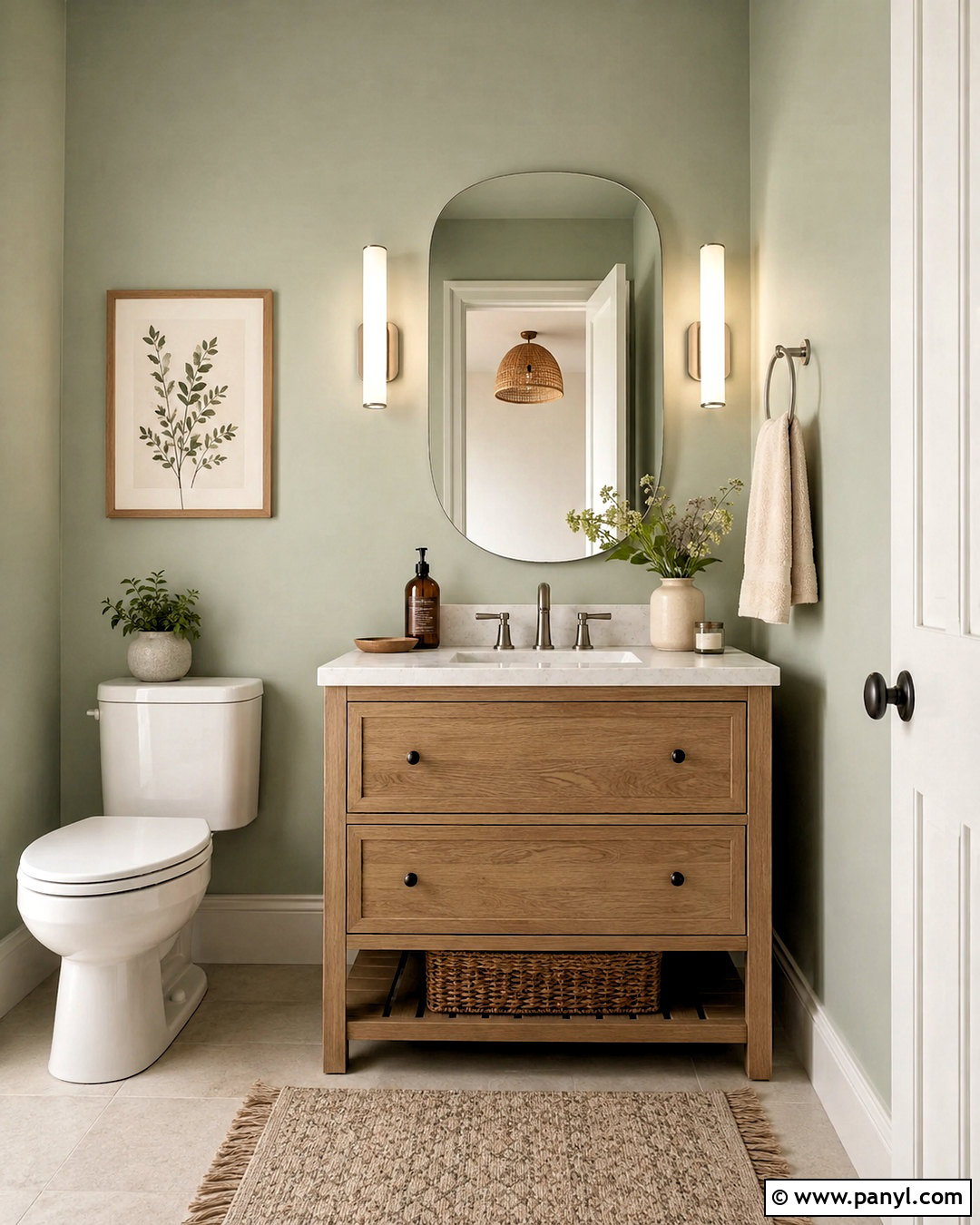
Soft sage green creates a calm powder room that feels fresh, airy, and easy to coordinate. Cover the walls in a gently muted green, then use creamy white on the trim, ceiling, and door. A medium oak vanity provides warmth without creating heavy contrast. Top it with honed white stone and install brushed nickel fixtures for a quieter finish than brass. Pale limestone-look floor tile keeps the room light, while a frameless rounded mirror helps the wall color remain visible. Add one linen towel, a ribbed ceramic soap dispenser, and a small botanical print in a light oak frame. This complete scheme works well for farmhouse, Scandinavian, transitional, and organic interiors because each material has a simple, natural appearance.
10. Seafoam Green Powder Room
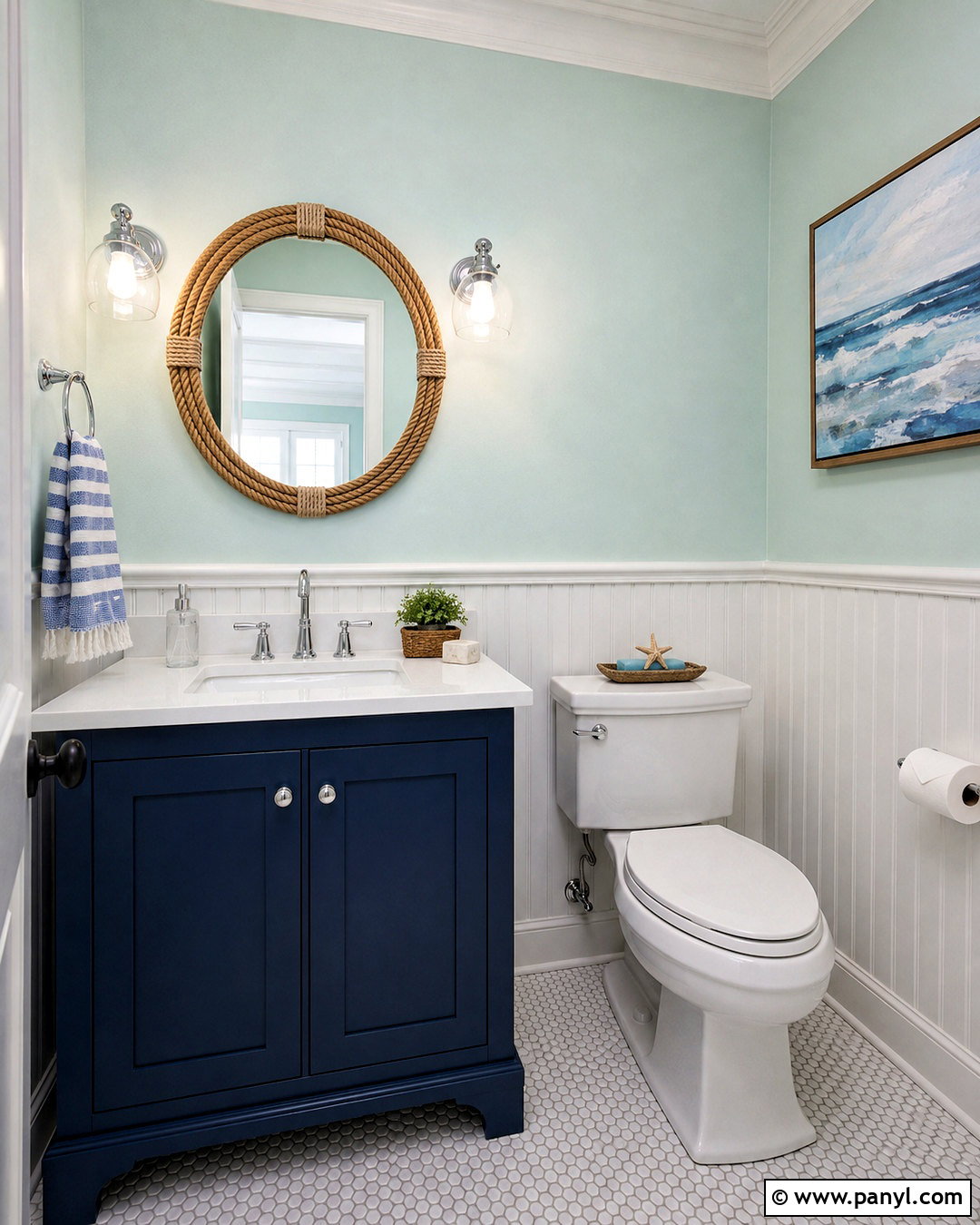
Seafoam green can make a small powder room feel bright and refreshing, especially when paired with clean coastal materials. Paint the upper walls seafoam and install white vertical paneling below for crisp structure. Choose a navy blue vanity with shaker-style doors and a white countertop to give the pastel walls more definition. Polished chrome fixtures and a round rope-framed mirror reinforce the relaxed coastal direction without turning the room into a theme. Use pale gray penny tile on the floor and include a simple striped hand towel in blue and white. One piece of abstract ocean-inspired artwork is enough decoration. This balanced palette feels lighthearted, yet the dark vanity prevents the overall room from appearing washed out.
11. Powder Blue Powder Room
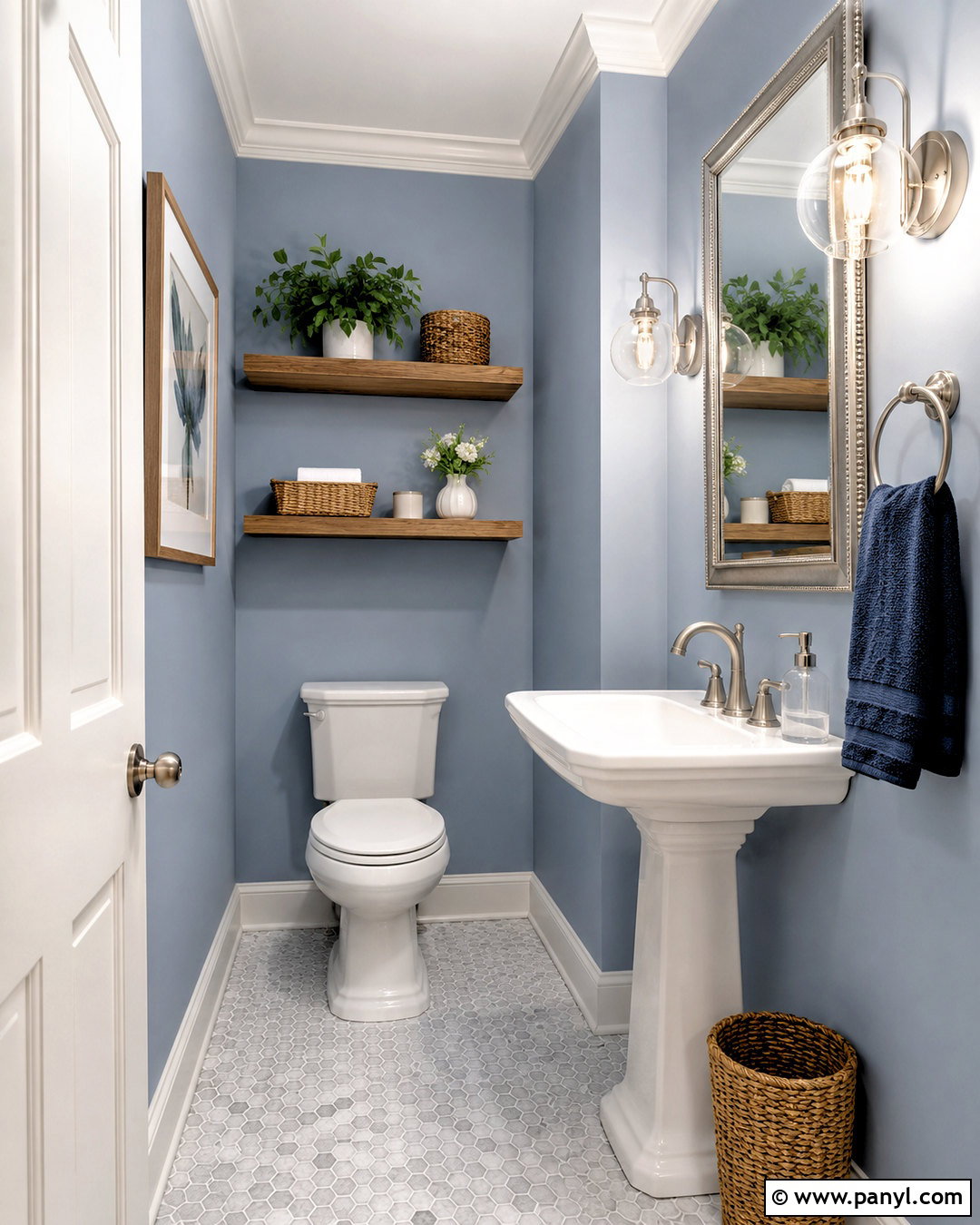
Powder blue walls create a clean, peaceful half bath with more personality than plain white. Choose a blue that has a slightly gray undertone so it stays soft under artificial lighting. Pair it with white crown molding, baseboards, and a classic pedestal sink to preserve open floor space. A polished nickel faucet, silver-framed mirror, and clear glass sconces will keep the scheme cool and luminous. Add warmth through a natural oak shelf above the toilet and a small woven basket beneath it. White-and-gray marble mosaic flooring supplies subtle pattern without making the room busy. Finish with a navy hand towel and one minimal landscape print. The completed powder room feels timeless, tidy, and suited to many home styles.
12. Deep Teal Powder Room
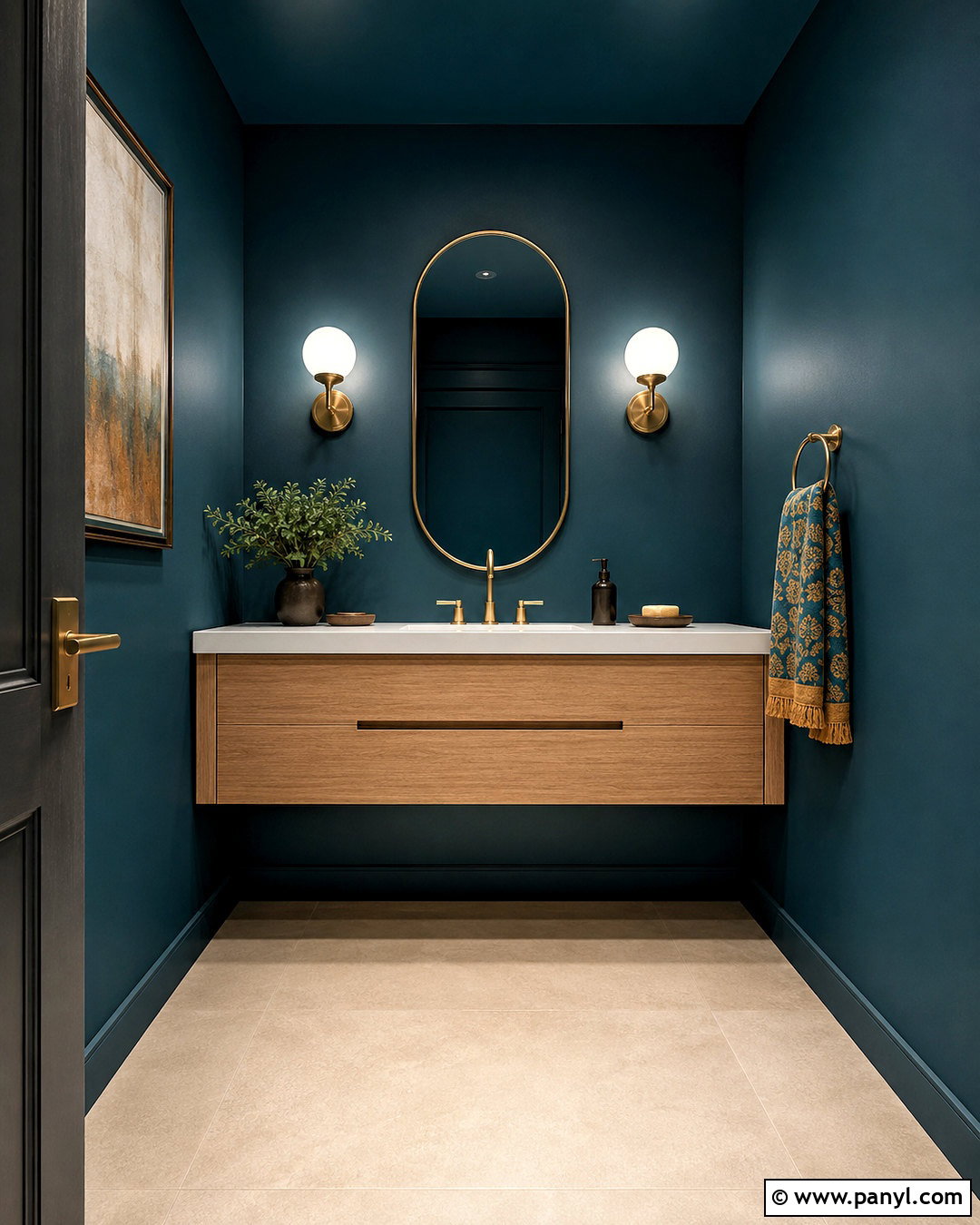
Deep teal combines the richness of navy with the natural quality of green, making it an expressive powder room choice. Paint the walls and ceiling the same saturated color for a cohesive, jewel-box effect. Contrast that envelope with a light oak floating vanity and a bright white quartz top. Brushed brass hardware, a pill-shaped mirror, and modern globe sconces add warm highlights against the cool paint. Use large cream porcelain floor tiles to limit grout lines and keep the foundation quiet. A patterned hand towel containing teal, ivory, and ochre can connect the palette without adding clutter. This complete design feels modern but inviting, and it works especially well in windowless powder rooms with layered overhead and mirror lighting.
13. Warm White Powder Room
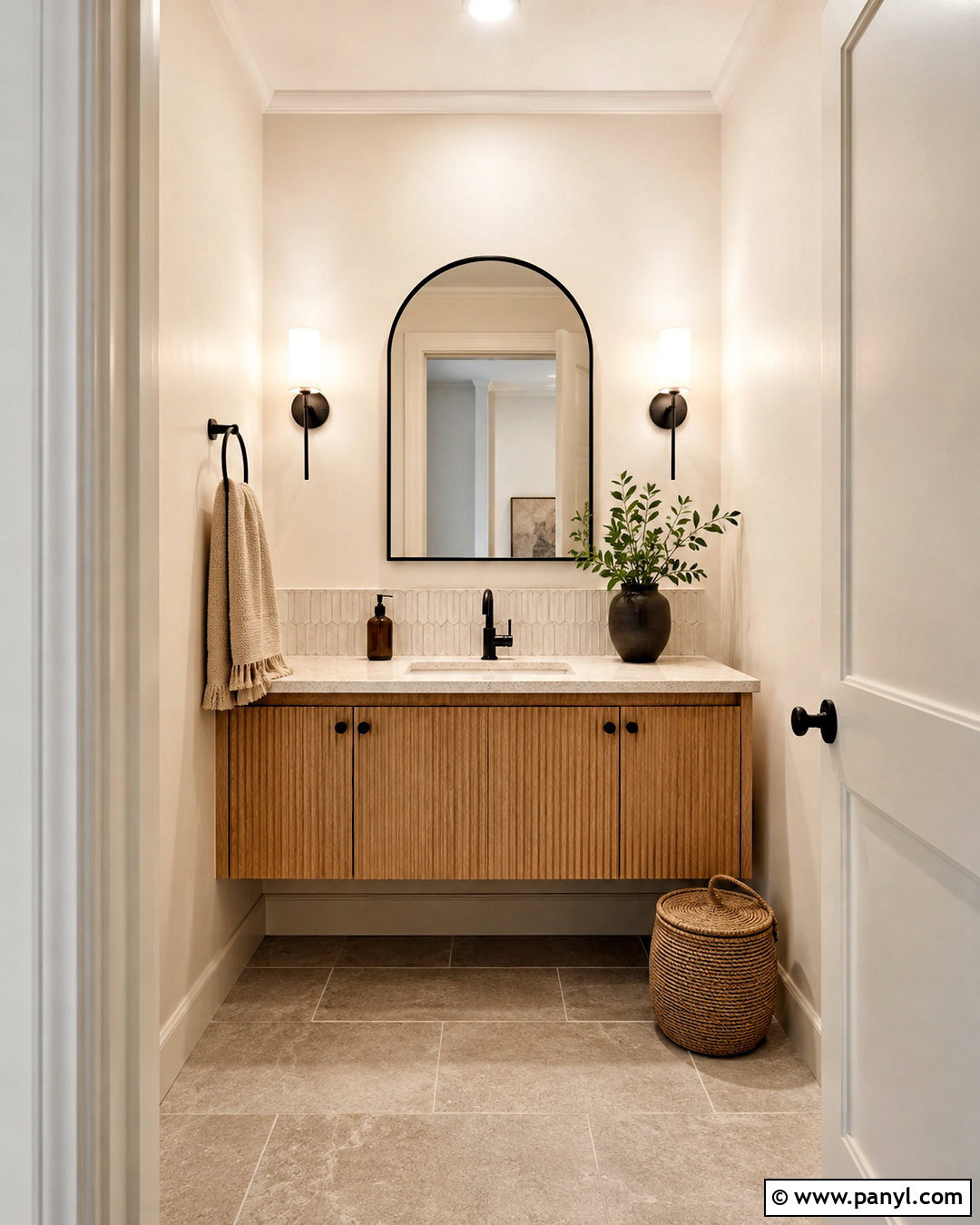
Warm white is an excellent powder room color when texture and materials provide the main visual interest. Select a creamy white with subtle beige undertones, then use it consistently on the walls, trim, and ceiling. Install a reeded oak vanity with a pale limestone countertop to introduce dimension. A large arched mirror with a thin black frame creates contrast, while black faucets and sconces repeat the same sharp detail. Choose handmade-look ivory wall tile behind the sink and warm gray stone flooring underfoot. A textured beige towel, woven basket, and simple ceramic vessel finish the room without disturbing its calm appearance. This layered neutral approach feels much more intentional than pairing plain white paint with basic builder-grade fixtures.
14. Cream Powder Room
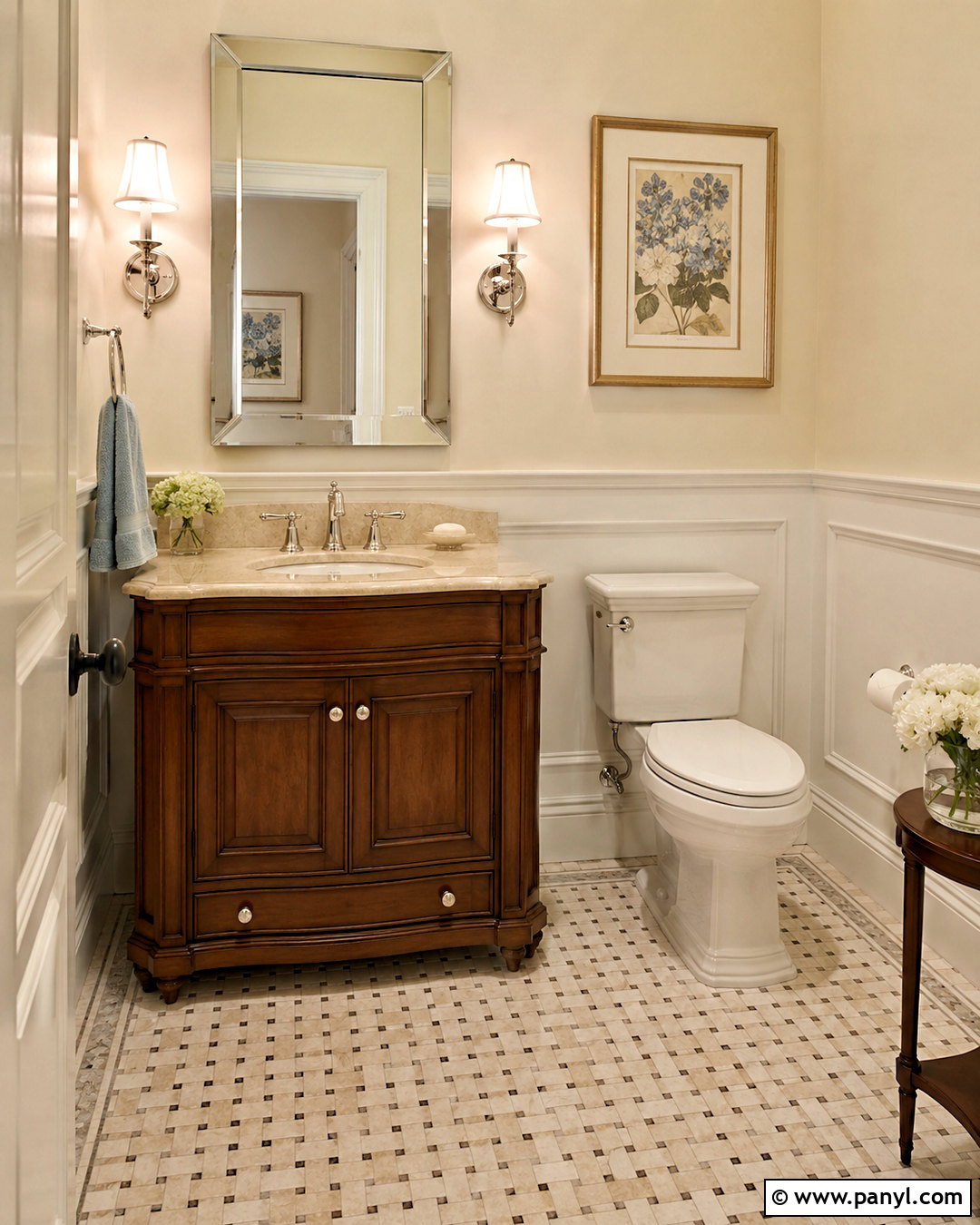
Cream paint brings gentle warmth to a powder room and pairs naturally with traditional architectural details. Use a soft buttery cream on the walls above white-painted wainscoting, keeping the ceiling and trim the same clean white. Select a medium walnut vanity with furniture-style legs and a beige marble top. Polished nickel hardware offers a fresh counterpoint to the warmer surfaces, while shaded sconces and a beveled mirror add classic character. Lay small basketweave floor tile in ivory and taupe to introduce pattern at a manageable scale. Finish with a pale blue hand towel, one framed floral sketch, and a clear soap dispenser. The resulting room feels bright, comfortable, and polished without depending on stark white or trendy statement colors.
15. Greige Powder Room
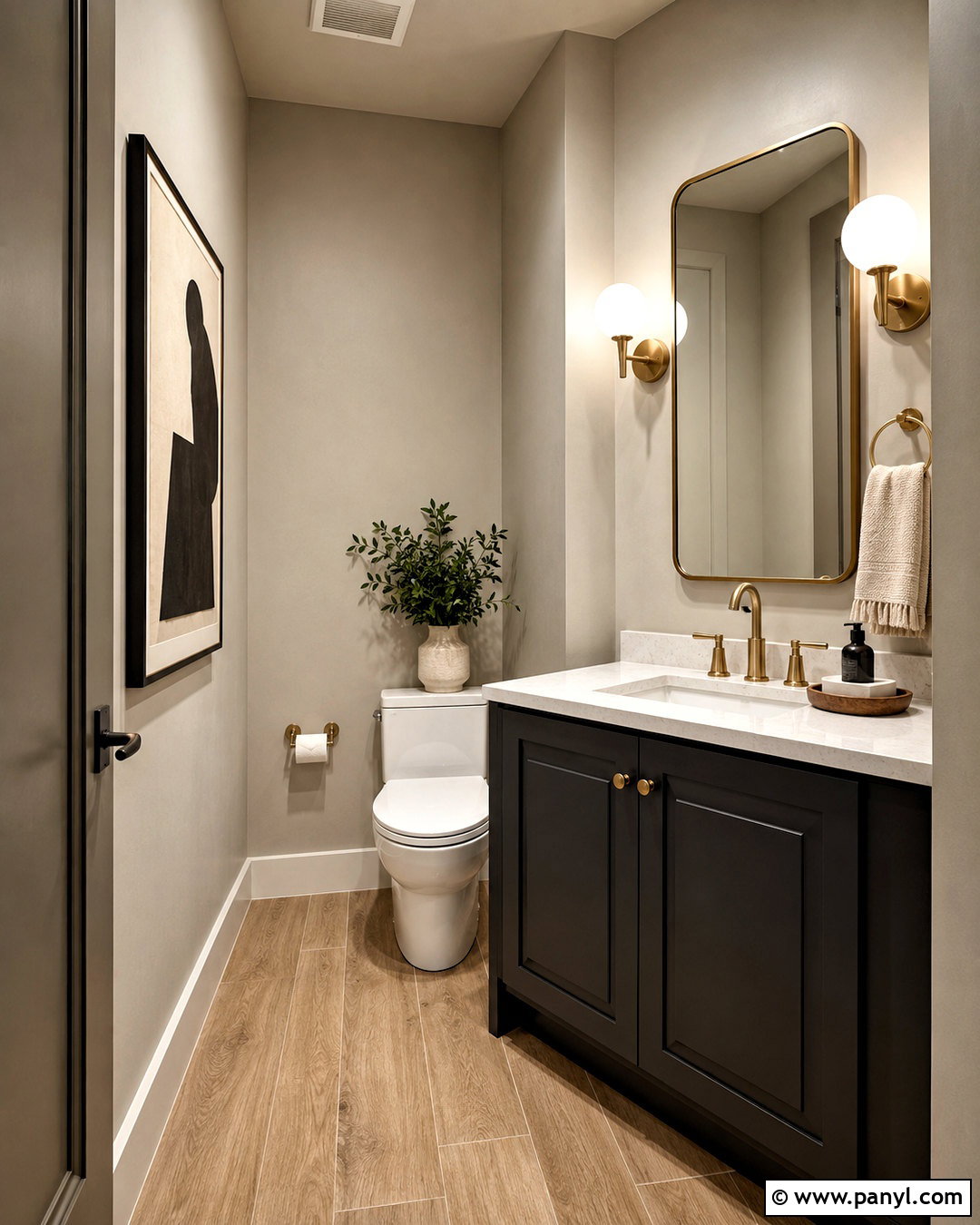
Greige creates a flexible powder room backdrop that blends the softness of beige with the structure of gray. Choose a warm greige that does not turn purple under your sconces, and carry it across the walls and ceiling. Paint the vanity charcoal for contrast, then add a white quartz top and brushed brass fixtures. A rectangular brass mirror and two compact globe sconces create symmetry around the sink. Use light oak-look porcelain flooring to warm the gray notes in the paint. Black-and-cream artwork, an oatmeal hand towel, and a small ceramic tray provide restrained decoration. This complete palette works particularly well in open-plan homes because it can connect comfortably with adjacent white, wood, black, beige, or muted-color finishes.
16. Warm Taupe Powder Room
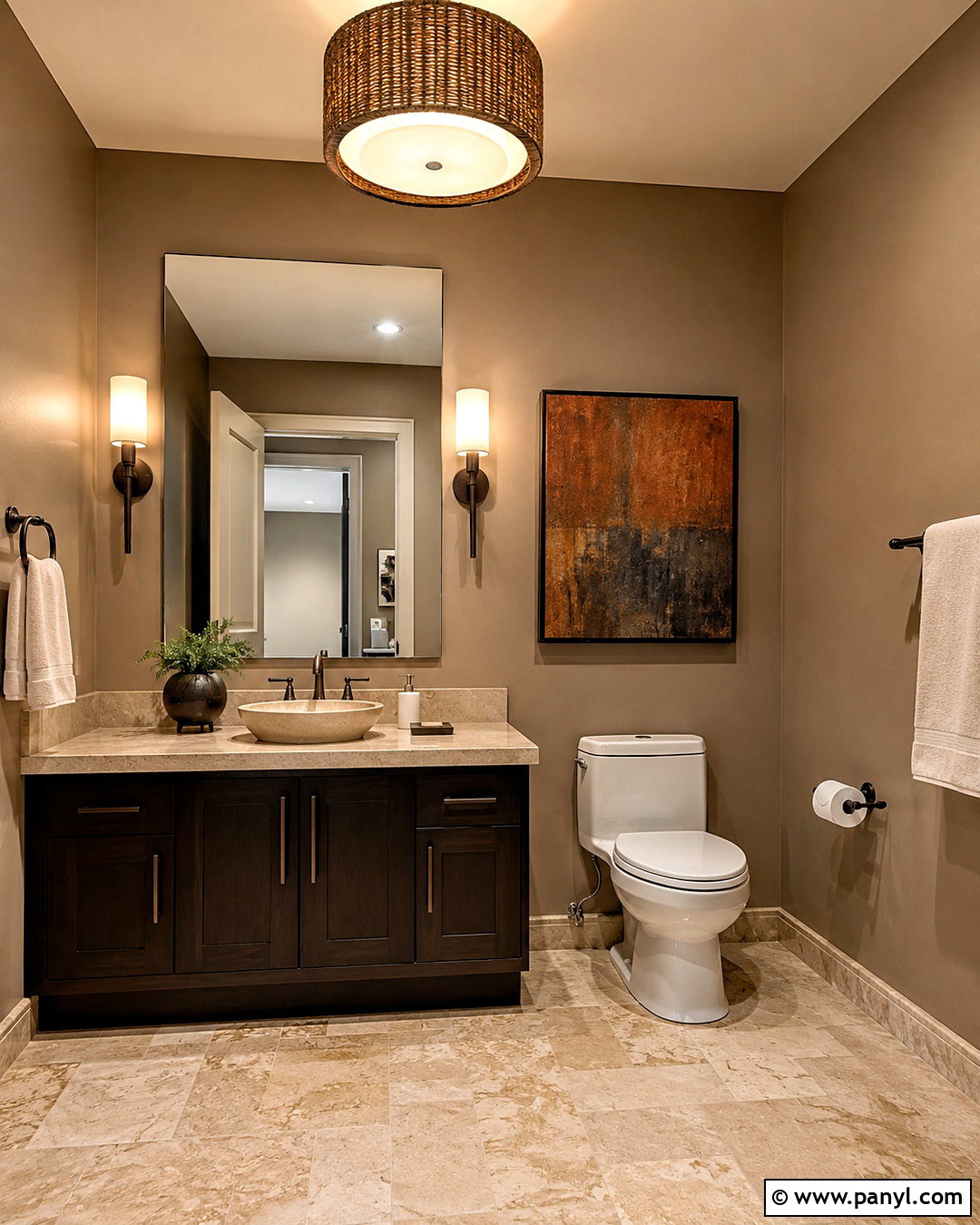
Warm taupe gives a powder room an understated, earthy finish that feels softer than cool gray. Paint the walls a midtone mushroom taupe, then use a slightly lighter version on the ceiling to maintain color continuity. Pair it with a dark espresso vanity and a creamy stone countertop. Brushed bronze hardware will emphasize the paint’s brown undertones, while a large frameless mirror keeps the sink wall from looking heavy. Choose honed limestone floor tile in mixed beige shades for subtle variation. Complete the room with ivory towels, a woven pendant-style ceiling fixture rated for the space, and one abstract print in rust and charcoal. The finished design feels grounded, relaxed, and suitable for both contemporary and traditional homes.
17. Charcoal Gray Powder Room
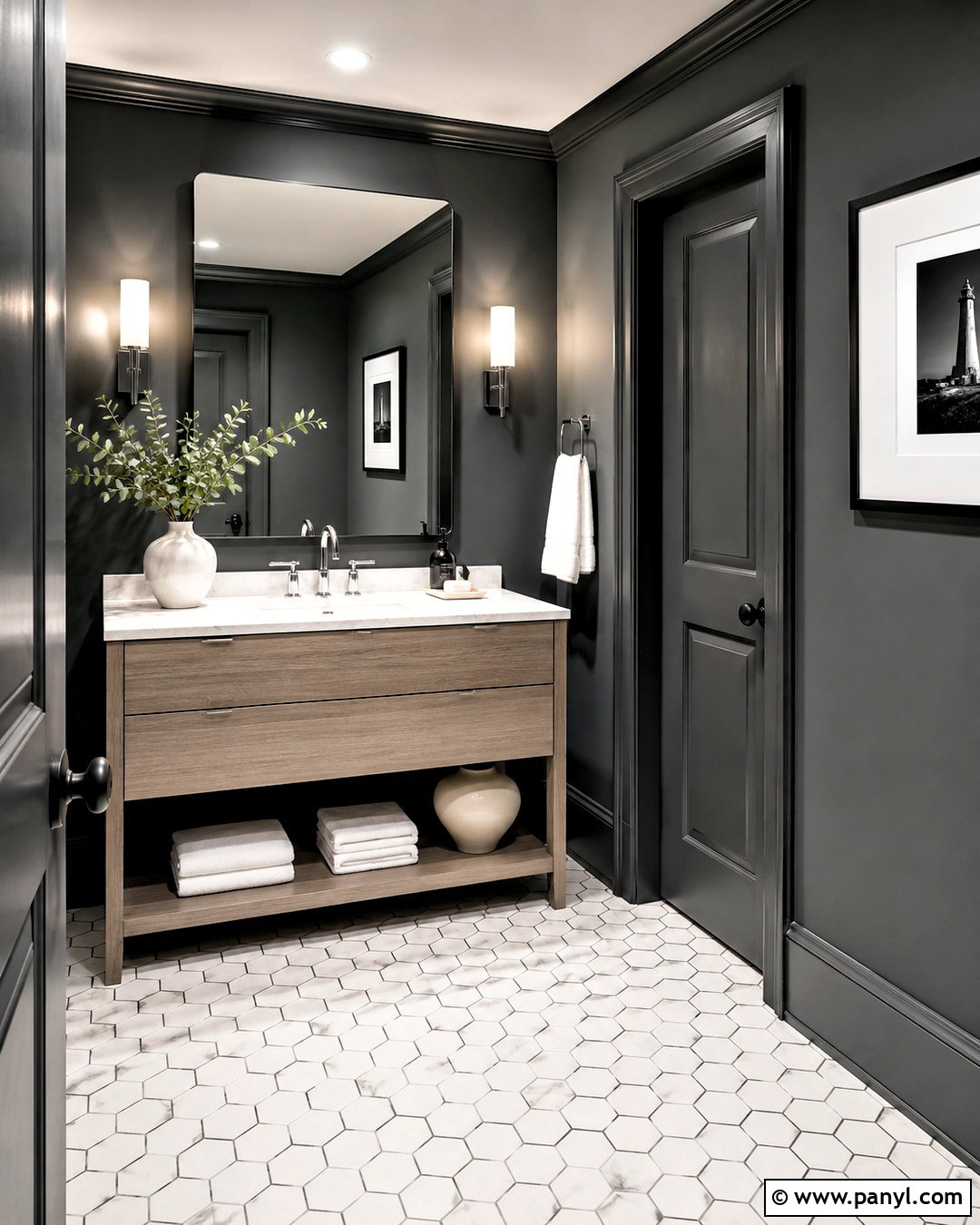
Charcoal gray delivers drama while remaining easier to coordinate than a strongly colored wall. Choose a softened charcoal rather than pure dark gray, then paint the walls, trim, and door for a unified finish. Keep the ceiling white if the room has limited lighting. A pale ash-wood vanity and bright marble countertop will stand out clearly against the deep background. Use polished chrome fixtures and a broad rectangular mirror to bounce light around the sink area. White hexagon floor tile with charcoal grout creates a crisp foundation and disguises everyday marks between tiles. Add a white towel, a small black-and-white photograph, and one green branch in a ceramic vase. The room will feel modern, graphic, and thoughtfully balanced.
18. Butter Yellow Powder Room
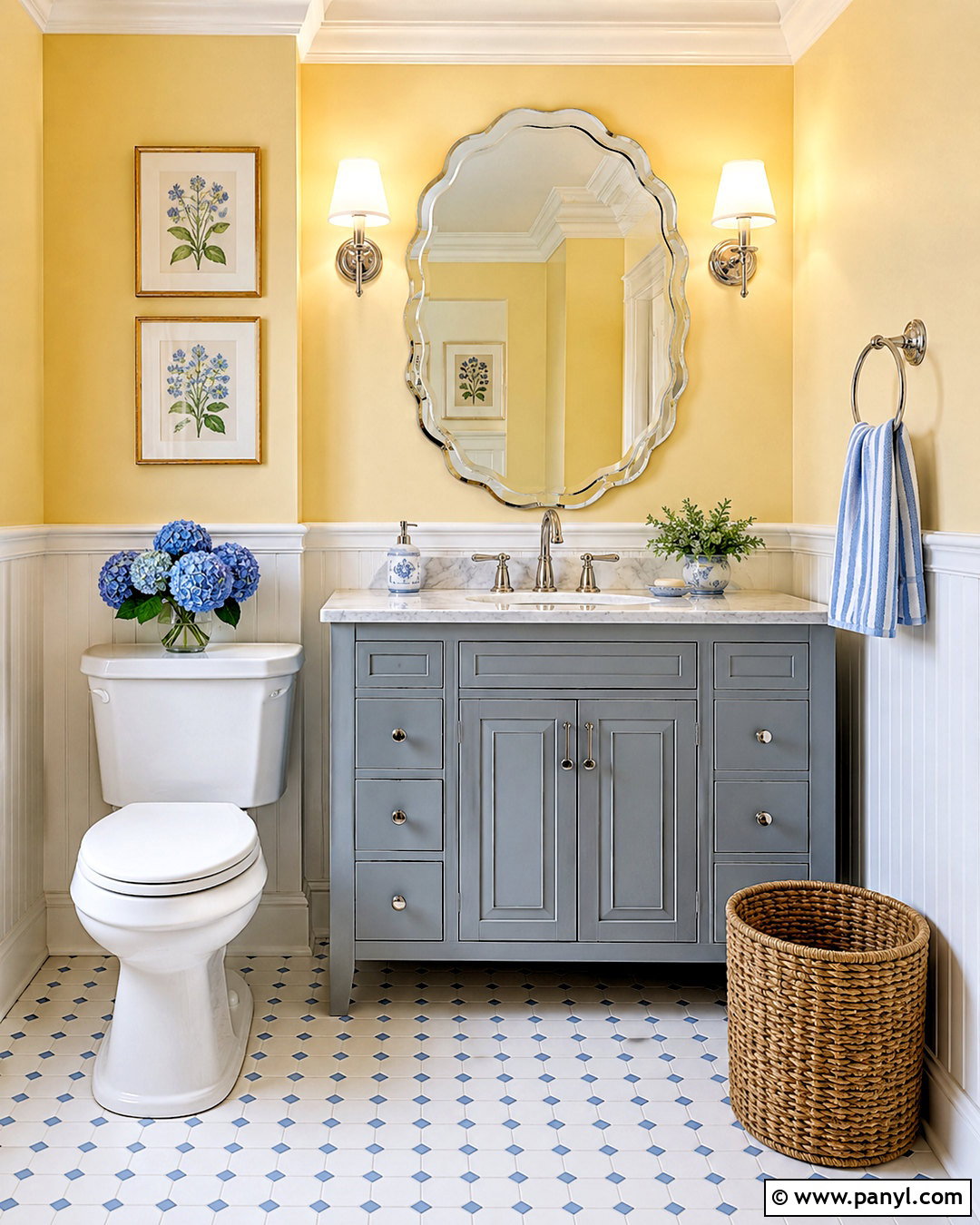
Butter yellow creates a sunny powder room without the intensity of bright lemon paint. Look for a soft yellow with creamy undertones, then pair it with crisp white trim and simple wall molding. A muted blue-gray vanity introduces enough contrast to define the sink area. Use a white marble countertop, polished nickel fixtures, and a scalloped silver mirror for a light, cheerful combination. Small white floor tiles with occasional pale blue accents can repeat the vanity color in a subtle way. Finish with a striped cotton hand towel, one delicate botanical print, and a white ceramic soap dispenser. This complete palette works well in cottage and traditional homes, particularly when the powder room receives little natural light and needs visual warmth.
19. Soft Coral Powder Room
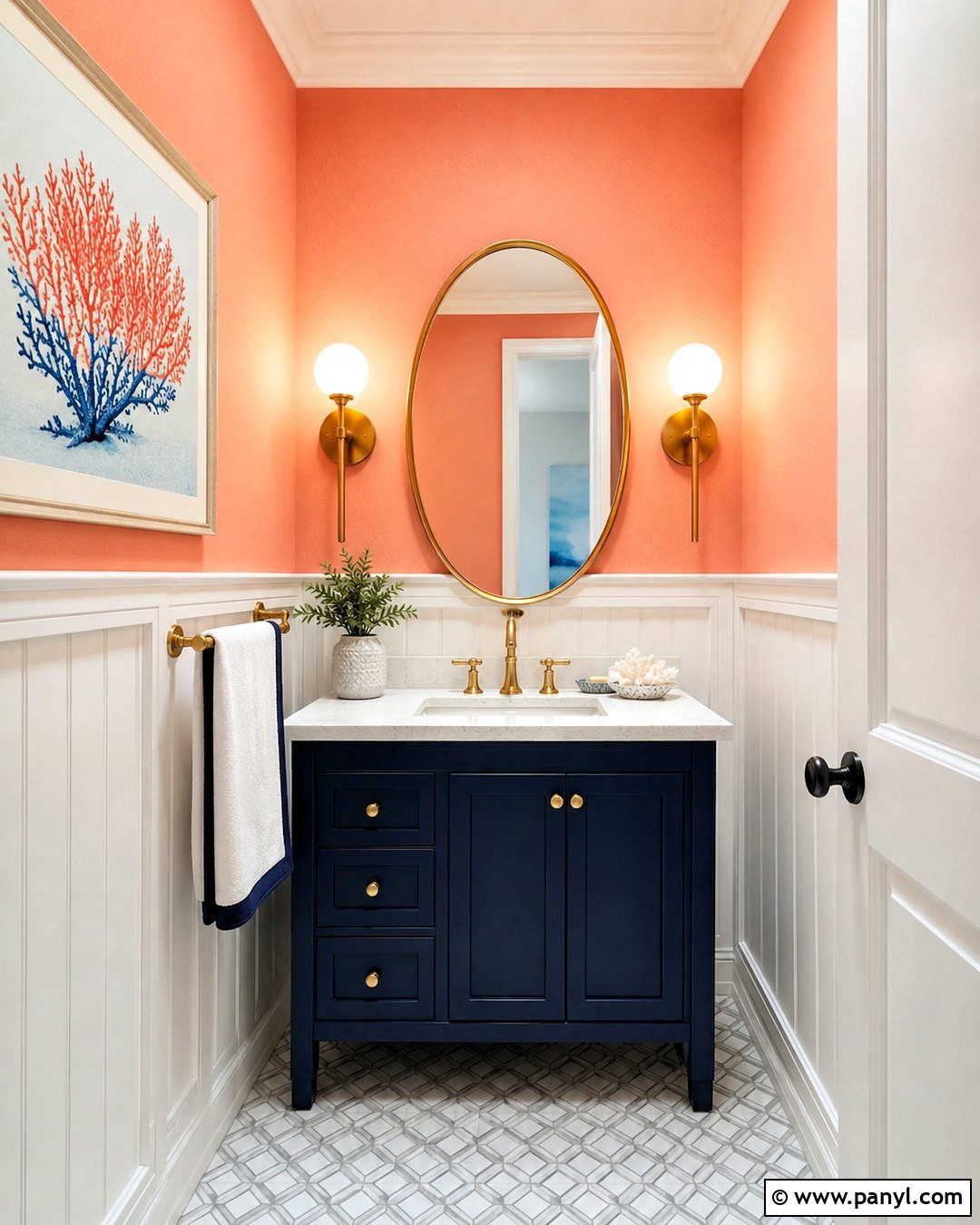
Soft coral gives a powder room lively warmth while feeling more refined than bright orange or bubblegum pink. Choose a muted peach-coral paint and apply it above white board-and-batten paneling. Anchor the room with a dark navy vanity, white quartz countertop, and polished brass hardware. A brass-framed oval mirror and small globe sconces make the sink wall feel finished without taking up excessive space. Use white-and-gray geometric floor tile to cool the warm walls and introduce a clean pattern. Add a navy-edged hand towel, one abstract print containing coral and blue, and a small white tray for soap. The complete color combination feels energetic, balanced, and especially suitable for cheerful coastal or transitional interiors.
20. Muted Lavender Powder Room
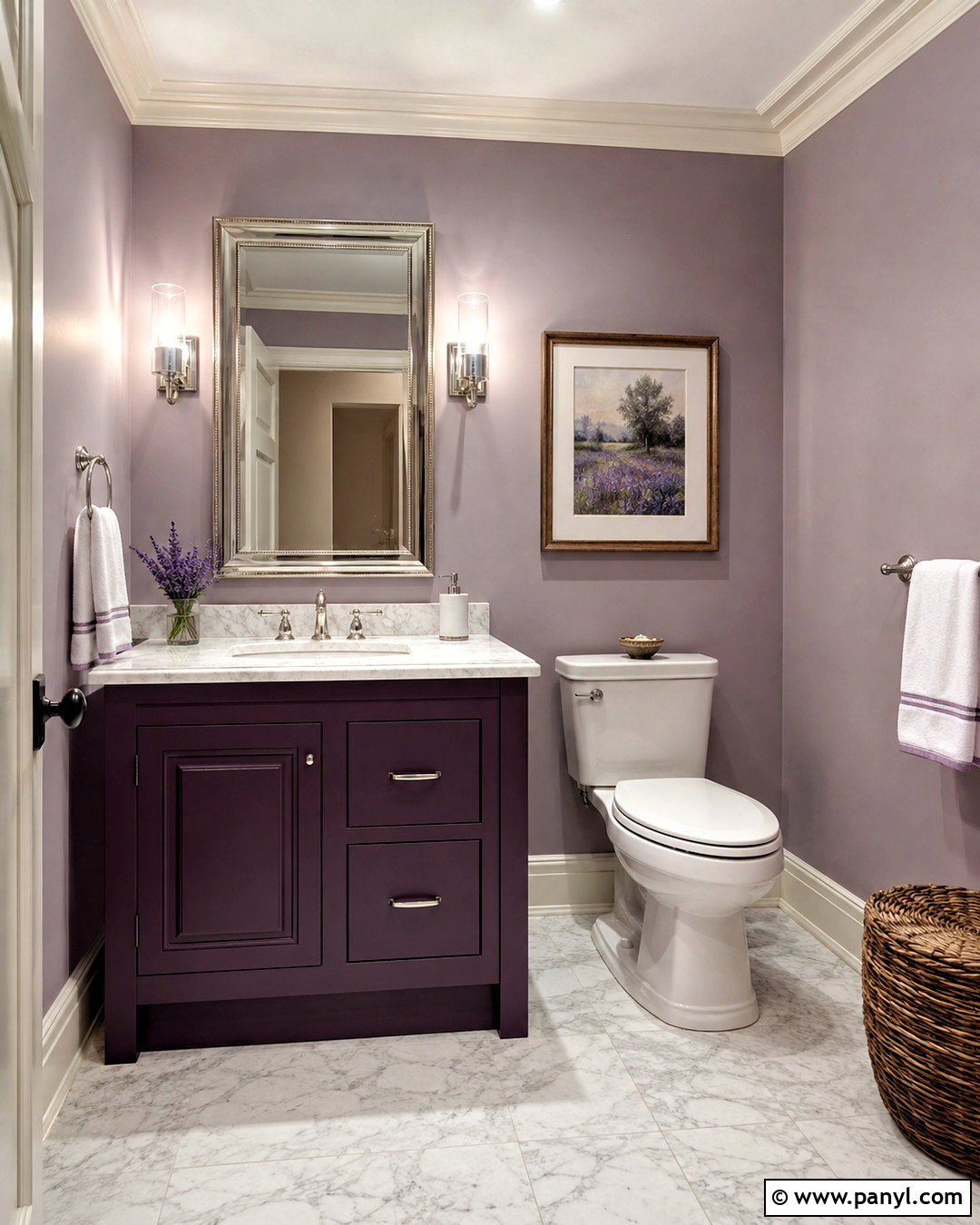
Muted lavender creates a powder room that feels colorful yet calm when the shade contains enough gray. Paint the walls a soft lavender-gray and keep the ceiling, door, and baseboards warm white. Pair the walls with a deep plum vanity for a subtle tonal look rather than a sharp contrast. A white marble top, polished nickel faucet, and silver-framed mirror add brightness around the sink. Choose pale gray stone floor tile to support the cool palette, then introduce warmth through a natural wood picture frame and woven basket. White towels with narrow lavender borders complete the room. This polished scheme offers a fresh alternative to blue or pink while remaining gentle enough for a compact space used by guests.
Conclusion:
The best powder room color should support the lighting, fixed finishes, and overall personality of your home. Dark navy, forest green, black, burgundy, and teal create dramatic rooms, while sage, powder blue, cream, and warm white produce a lighter effect. Earthy shades such as taupe, terracotta, and chocolate brown add natural warmth. Before committing, paint large sample boards and view them beside the vanity, flooring, and fixtures during the day and evening. Remember that lighting can noticeably change undertones. Whether you prefer quiet neutrals or saturated color, these **20 powder room paint colors** provide complete schemes that can turn a basic half bath into a cohesive, welcoming, and memorable space.

Related Ideas and Inspiration:
Leave a Reply