
Mustard yellow brings warmth, depth, and personality to a dining space without feeling as sharp as brighter yellows. It can cover the walls, energize upholstered chairs, soften a window, or appear through carefully repeated accents. The color also works across many decorating directions, including modern, traditional, farmhouse, bohemian, and midcentury rooms. Current design guidance often pairs mustard with navy, sage green, dusty pink, burnt orange, warm wood, and woven natural materials. () The key is creating balance through thoughtful proportions, practical furniture, layered lighting, and quieter supporting colors. Whether you want a dramatic makeover or an affordable refresh, the following complete room designs offer approachable inspiration. Find your perfect gathering space with these 20 mustard dining room ideas.
1. Mustard Yellow Dining Room Walls
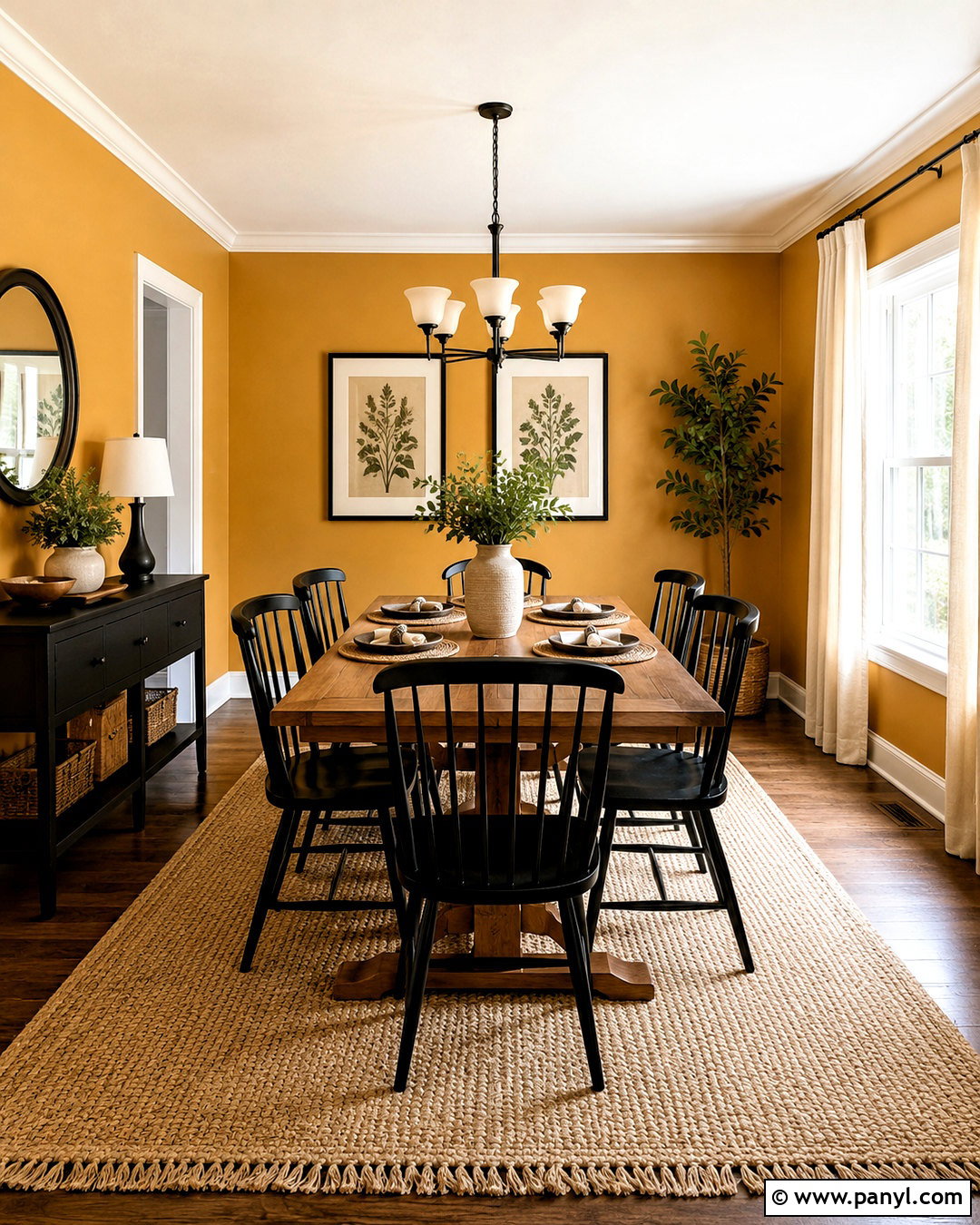
Wrap the dining room in muted mustard walls to create a warm, welcoming backdrop that feels colorful without becoming overwhelming. Choose an earthy shade with ochre or brown undertones rather than a bright lemon yellow. Anchor the room with a medium-toned oak dining table and simple black spindle chairs. A cream wool rug lightens the floor, while off-white ceiling paint keeps the room open. Add a large linen pendant above the table and use framed botanical prints with dark wood frames. Ivory curtains provide a softer break between the walls and windows. Finish the table with handmade ceramic dishes, a low greenery arrangement, and natural woven placemats. This balanced scheme works especially well in rooms with generous daylight and warm wood flooring.
2. Mustard Dining Chairs With Wood Table
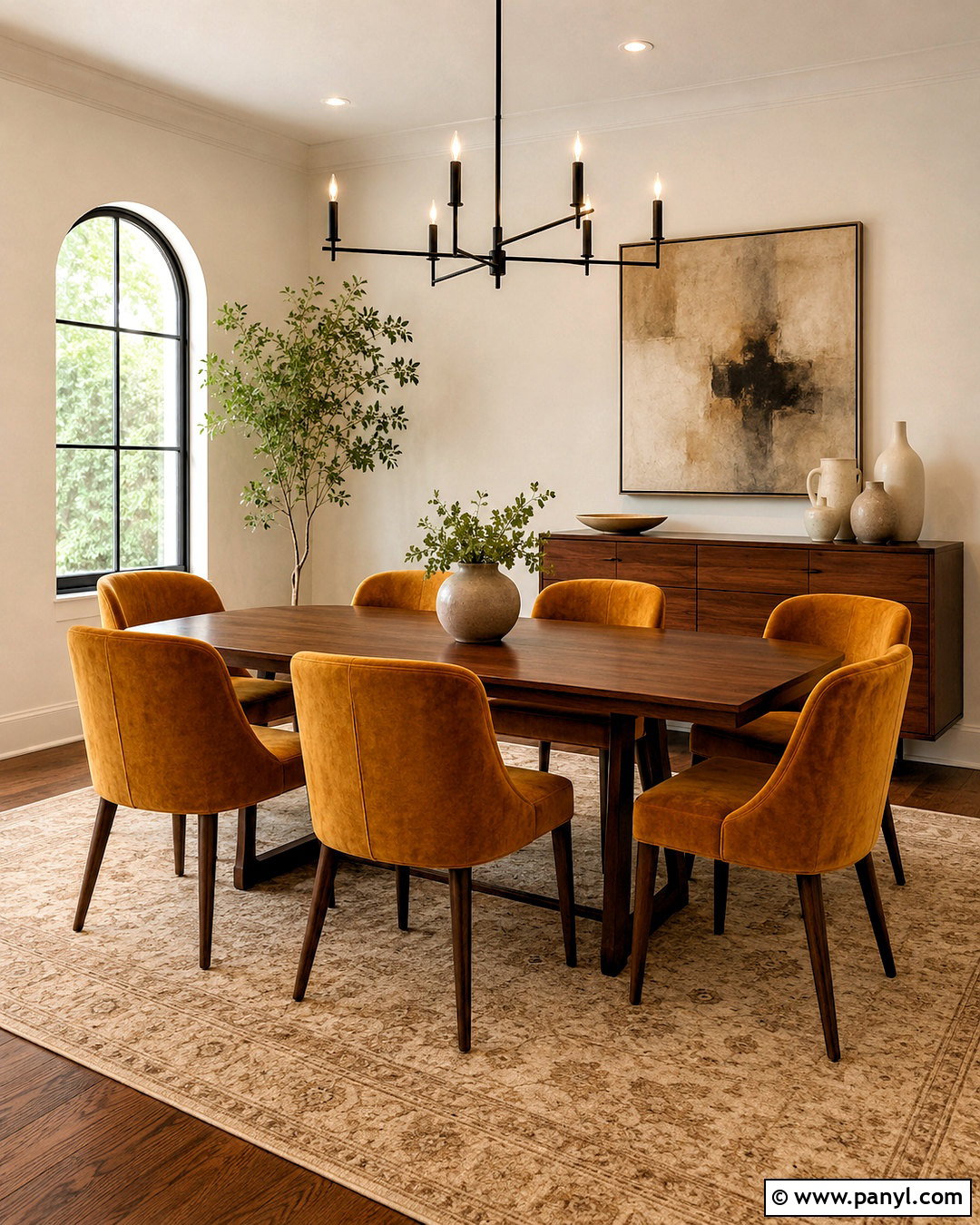
Mustard upholstered dining chairs can become the colorful focal point in an otherwise neutral room. Arrange six streamlined velvet or textured fabric chairs around a solid walnut table for a comfortable, polished look. Keep the walls warm white and place a large beige patterned rug beneath the dining set. A sculptural matte black chandelier adds definition above the table without competing with the chairs. Bring in a low walnut sideboard to repeat the table finish, then style it with cream ceramics, framed abstract art, and a small lamp. Sheer white curtains preserve natural light. Repeating mustard in one or two small details, such as artwork or a table runner, makes the color feel intentional while keeping the overall dining room calm and versatile.
3. Mustard And Navy Dining Room
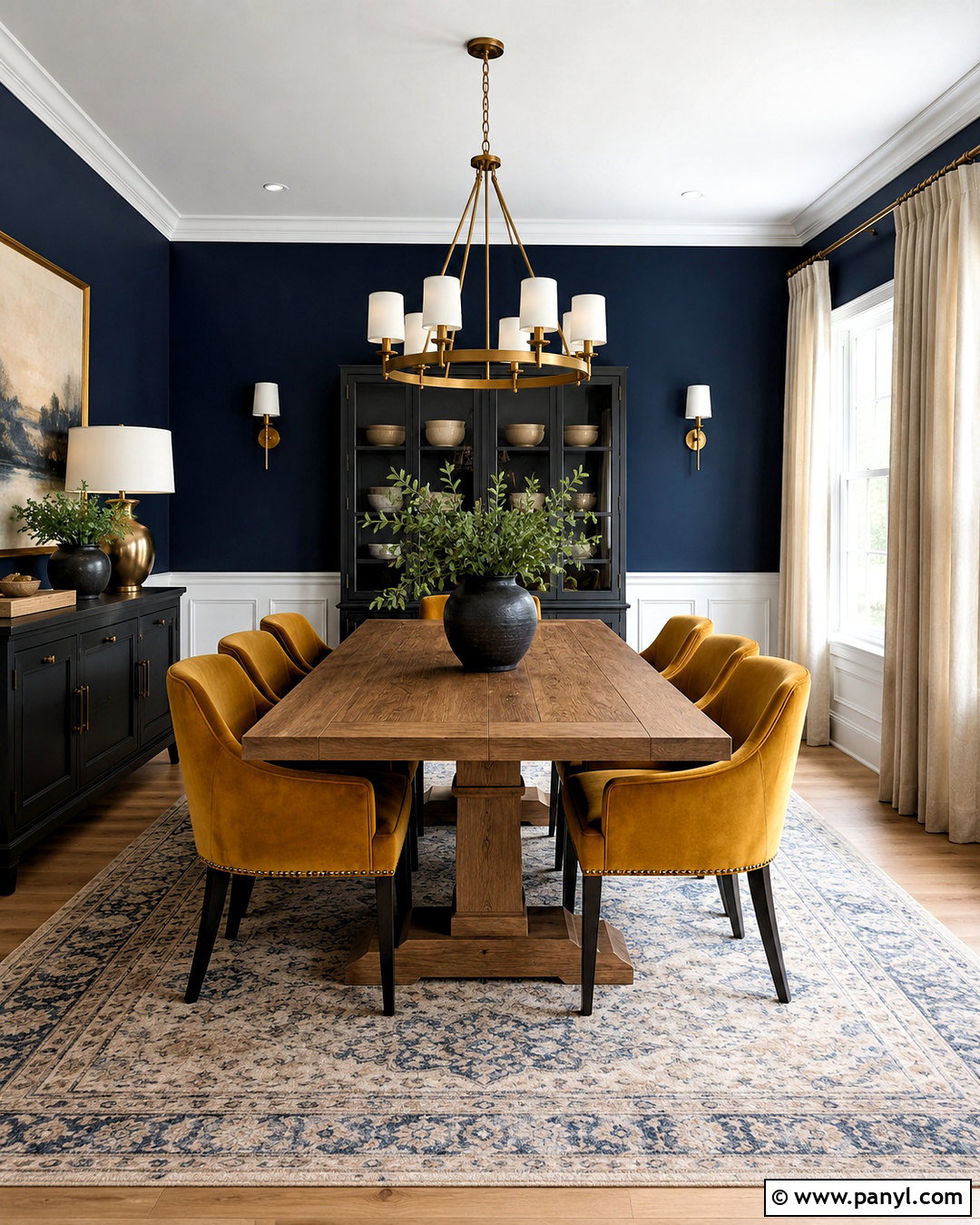
Deep navy and golden mustard create a strong dining room palette that feels balanced and sophisticated. Paint the walls navy blue, then use mustard velvet chairs to introduce contrast around a rectangular oak table. White crown molding and a soft white ceiling prevent the darker walls from closing in the space. Underfoot, choose a faded blue and cream rug that connects both sides of the palette. Brushed brass sconces and a simple brass chandelier add a warmer metallic layer. Complete the room with an oak sideboard, blue-and-white ceramics, and oversized artwork containing touches of mustard. Natural linen curtains soften the windows without adding another bold color. This look works best when navy covers the largest surfaces and mustard appears through several carefully placed focal points.
4. Mustard And Sage Green Dining Room
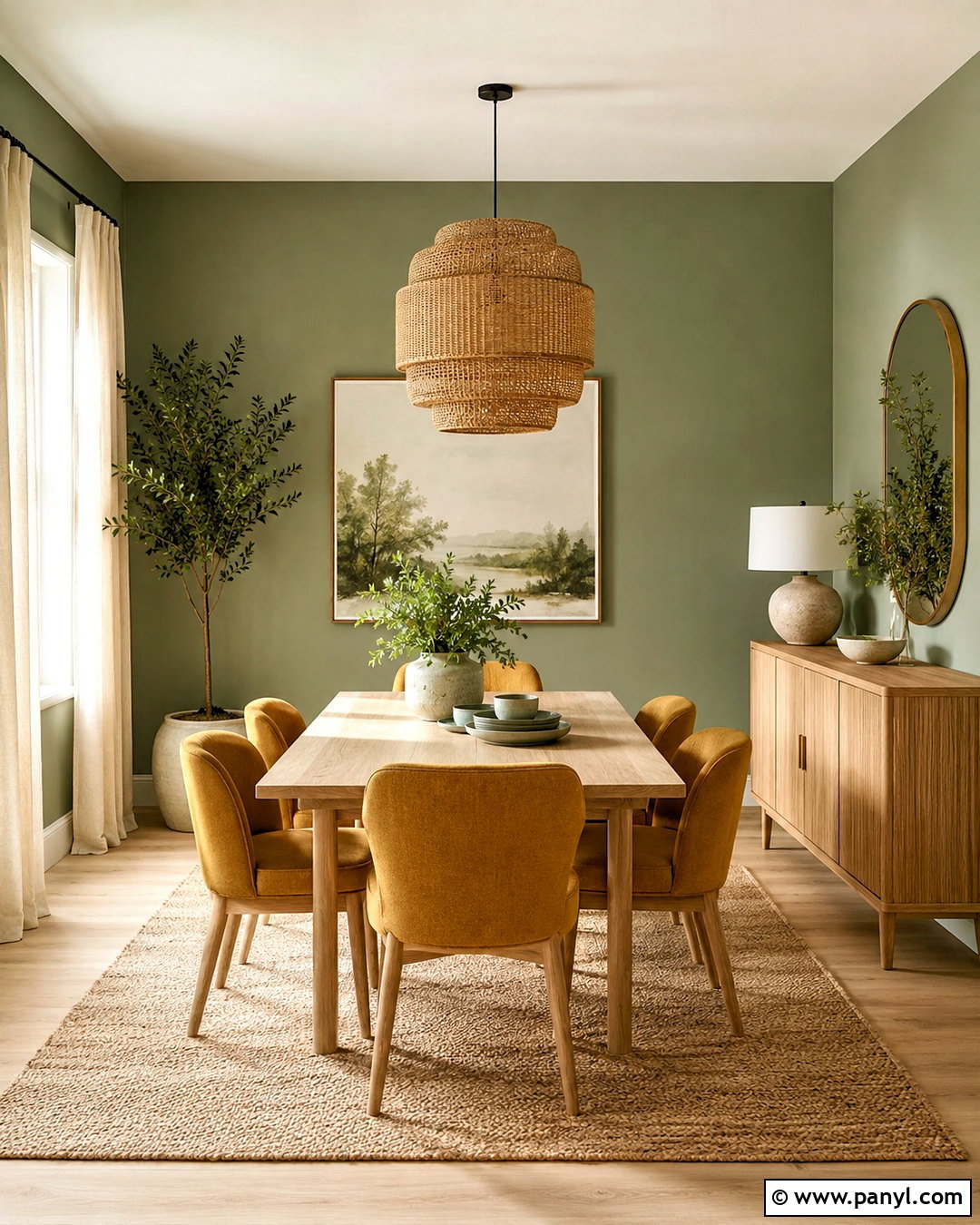
For a relaxed, nature-inspired dining room, combine soft sage green walls with earthy mustard upholstery. Place a pale oak table at the center and surround it with mustard fabric chairs that have light wood legs. A flat-woven jute rug adds texture while supporting the organic palette. Hang a broad rattan pendant above the table and introduce a slim sage or natural oak cabinet along one wall. Linen curtains in warm ivory keep the windows understated. Complete the setting with potted greenery, stoneware dishes, and simple landscape artwork in cream frames. A few black accents, such as candleholders or cabinet hardware, provide necessary definition. The result feels sunny, grounded, and comfortable enough for everyday meals while still looking thoughtfully coordinated for gatherings.
5. Mustard And Gray Dining Room
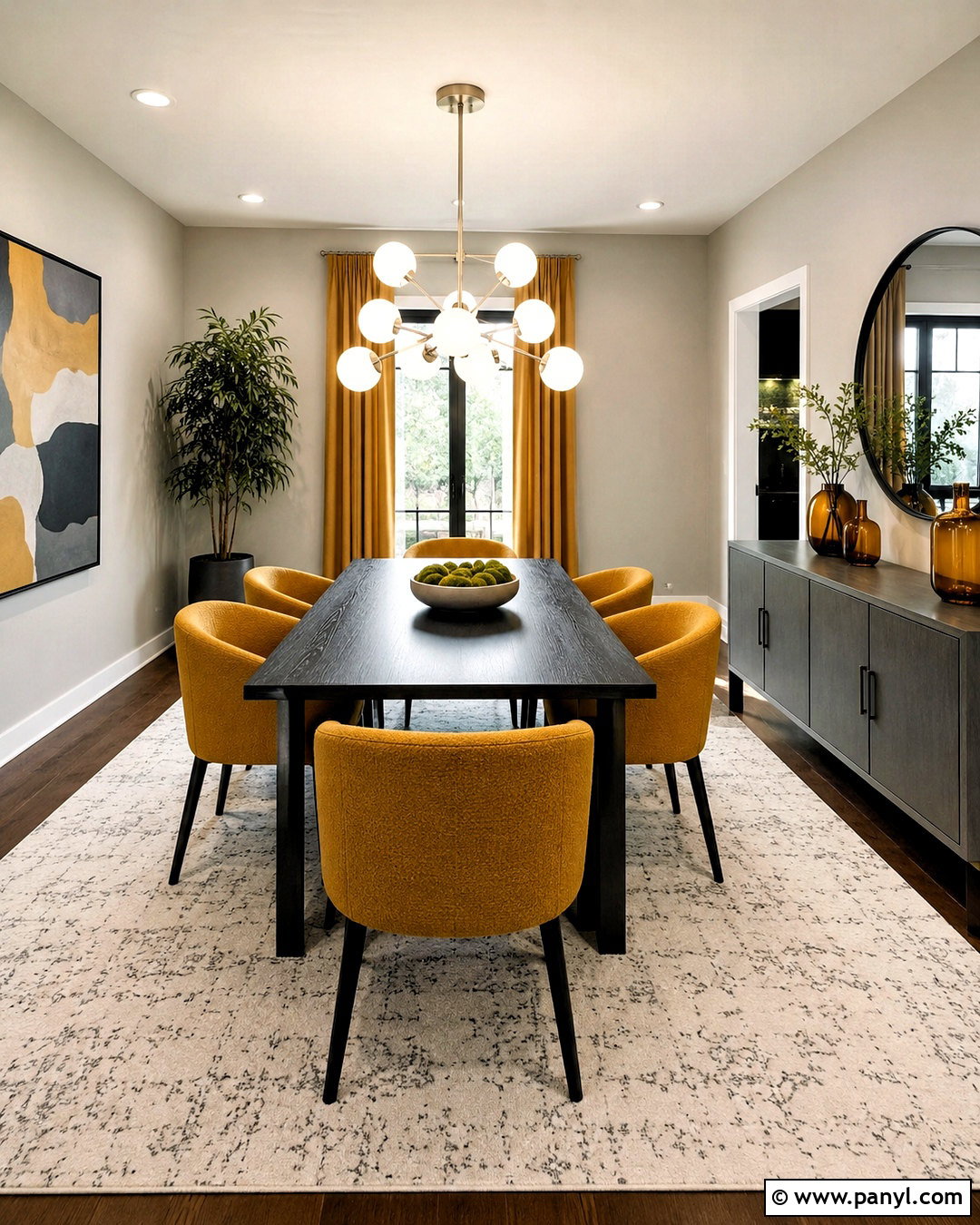
Cool gray becomes far more inviting when it is layered with warm mustard yellow. Start with light greige walls and a charcoal dining table with clean, modern lines. Add mustard boucle or velvet chairs to soften the dark furniture and introduce cheerful color. A large ivory rug with a subtle gray pattern keeps the room bright while defining the dining area. Overhead, install a brushed nickel globe chandelier for a contemporary finish. Choose a gray sideboard with slim black legs, then decorate it with amber glass, white ceramics, and graphic artwork. Pale gray curtains create a polished backdrop without distracting from the seating. Finish with light oak accessories and one leafy plant so the room feels warm and natural rather than overly sleek or industrial.
6. Mustard And Black Dining Room
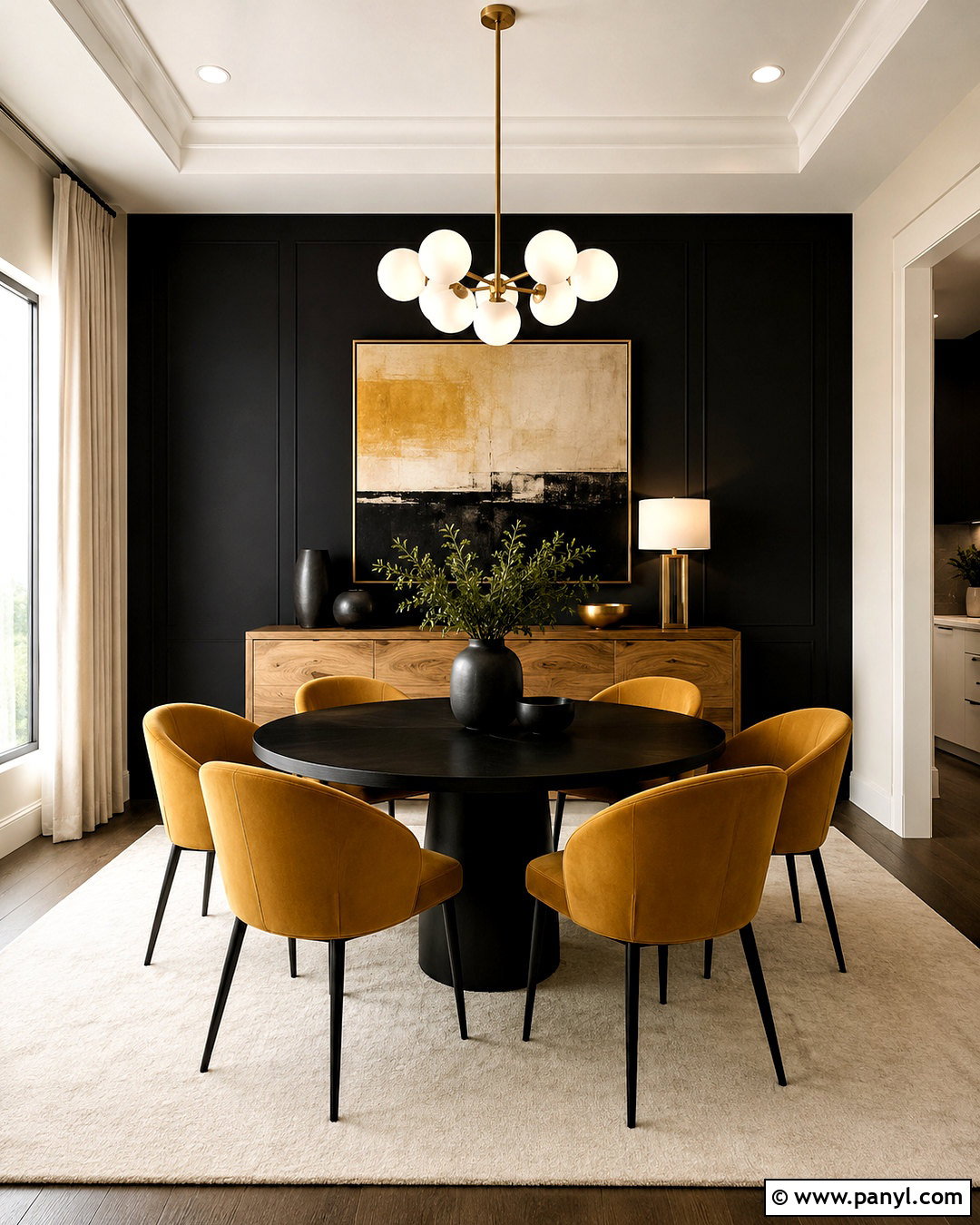
Can a mustard dining room feel dramatic without becoming gloomy? Use a matte black accent wall behind a natural wood sideboard, then paint the remaining walls soft cream. Position a round black dining table in the center and surround it with mustard upholstered chairs featuring slender black legs. A warm ivory rug grounds the furniture and creates separation from dark flooring. Choose a modern chandelier with frosted glass globes and black metal arms. Above the sideboard, display one oversized abstract artwork containing cream, mustard, and muted brown. Light-filtering linen curtains help maintain an airy atmosphere. Warm wood serving pieces and a simple ceramic centerpiece add softness. This controlled balance of light surfaces, rich color, and dark definition creates a striking contemporary room.
7. Mustard And Terracotta Dining Room
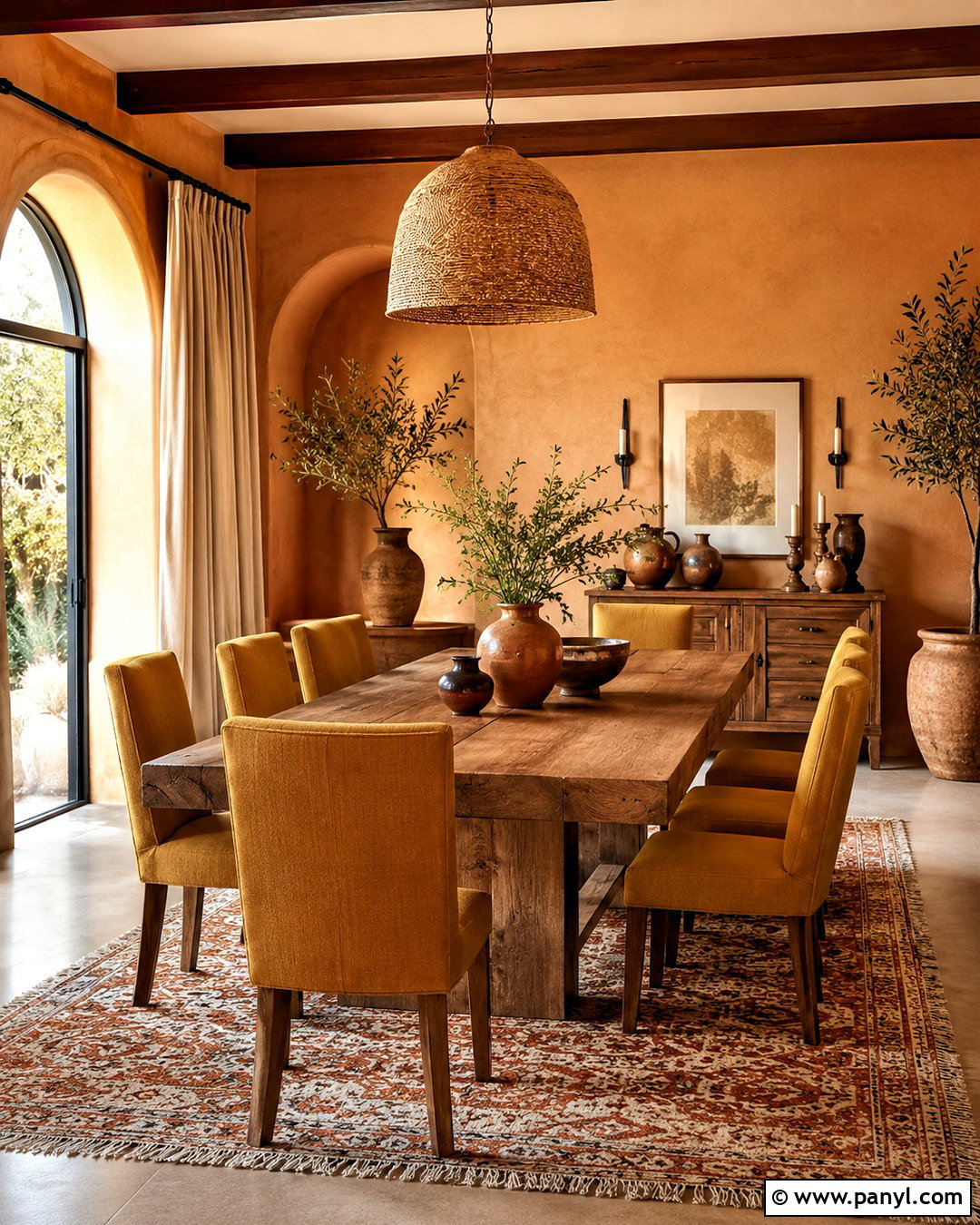
Sunbaked shades give a mustard dining room an earthy, comfortable character. Paint the walls a soft clay or pale terracotta color, then introduce mustard linen chairs around a rustic oak table. Ground the scheme with a patterned rug containing cream, rust, brown, and faded yellow. A woven pendant casts visual warmth above the table, while a low wood cabinet adds practical storage. Use natural cotton curtains in oatmeal rather than matching the wall color. Handmade pottery, dried branches, and muted landscape artwork support the organic atmosphere without making the room feel overly themed. Add small touches of dark bronze through hardware and candleholders. Because both mustard and terracotta are warm, generous areas of cream, pale wood, and natural fibers are essential for maintaining a light, balanced finish.
8. Mustard And Blush Pink Dining Room
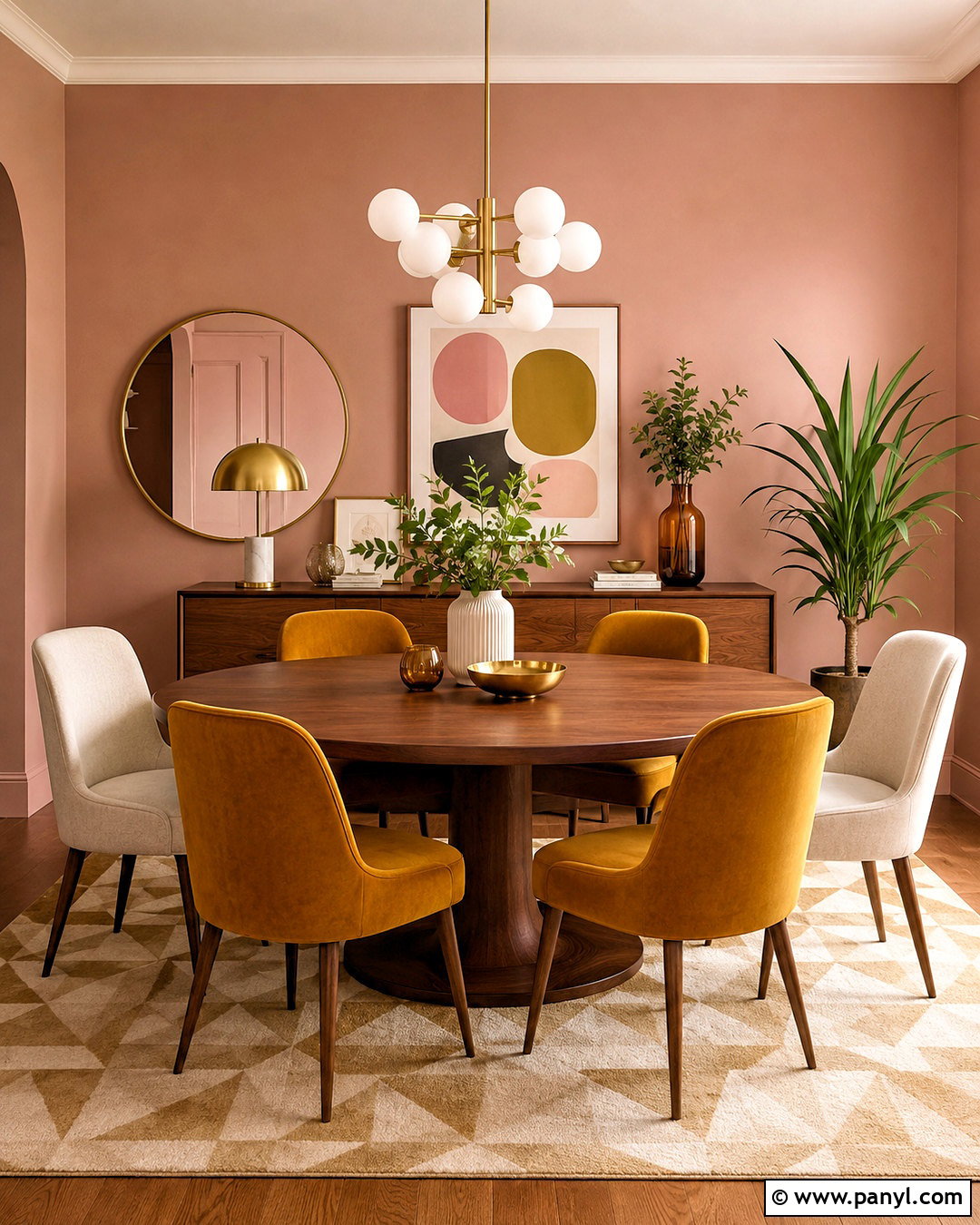
Blush pink gives mustard yellow a softer, playful quality that can still look grown-up. Cover the walls in a dusty pink paint with muted undertones and place a round walnut table at the center. Mix four mustard upholstered chairs with two cream end chairs for a layered, collected arrangement. A light neutral rug with a faded geometric pattern ties the seating together. Choose a white globe chandelier with brushed brass details to brighten the color scheme. A walnut sideboard repeats the table finish and offers space for sculptural ceramics and simple framed prints. Use ivory curtains, not pink ones, to avoid overloading the palette. Touches of burgundy, warm brown, and brass provide depth, creating a dining room that feels cheerful, polished, and surprisingly versatile.
9. Mustard And Teal Dining Room
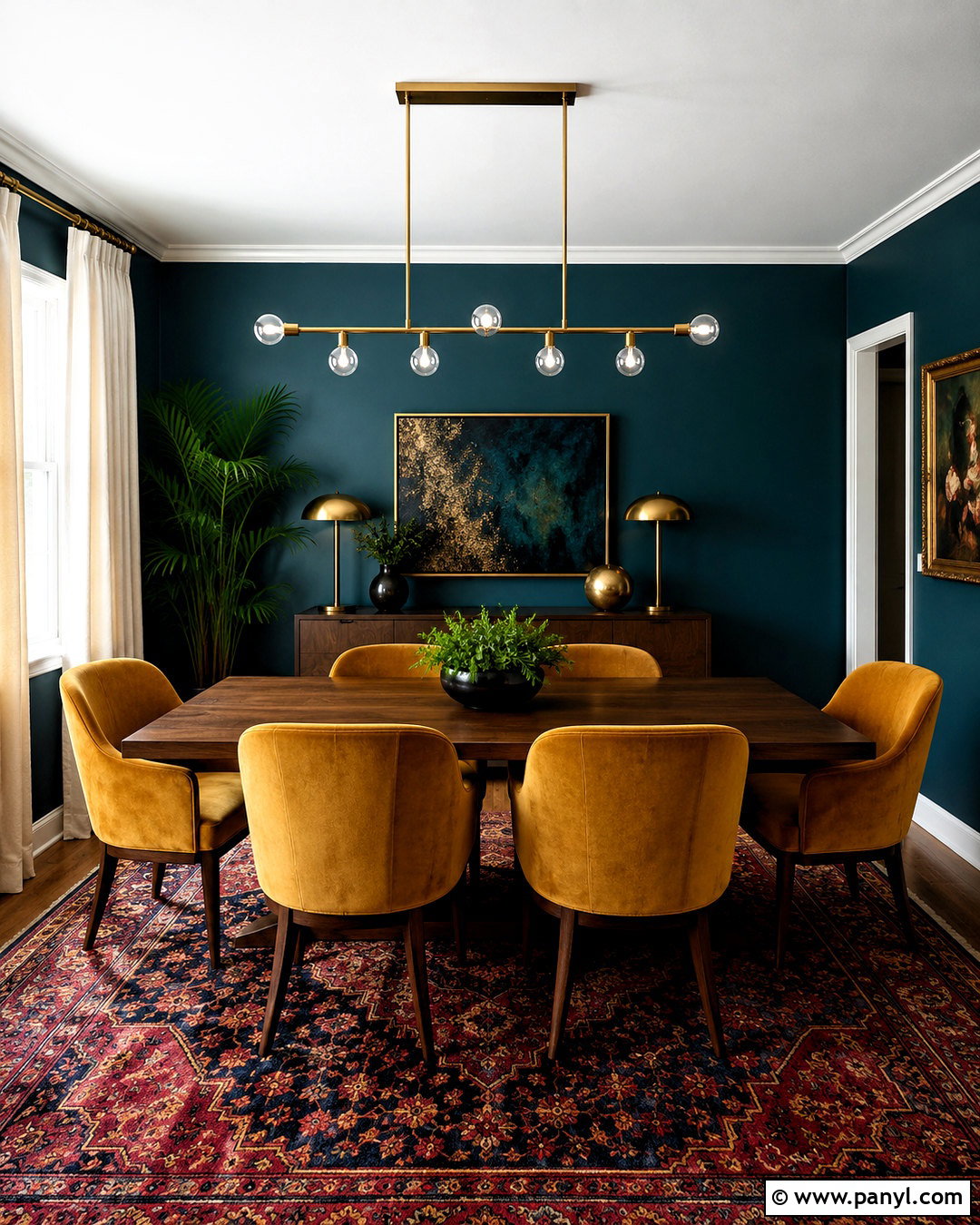
Rich teal walls create a jewel-toned setting where mustard seating can truly stand out. Choose a deep blue-green paint for the walls, then add six mustard velvet chairs around a warm walnut dining table. Keep the ceiling, trim, and curtains creamy white to frame the stronger colors. A vintage-inspired rug containing teal, gold, rust, and beige makes the combination feel cohesive. Install a brass linear chandelier over the table and place a dark wood sideboard beneath colorful abstract artwork. Clear glass accessories and a simple white ceramic centerpiece prevent the space from becoming visually heavy. If the room lacks strong daylight, use multiple warm-white light sources. The finished dining room feels expressive and luxurious but remains comfortable because every saturated color is balanced by lighter neutral surfaces.
10. Mustard And White Dining Room
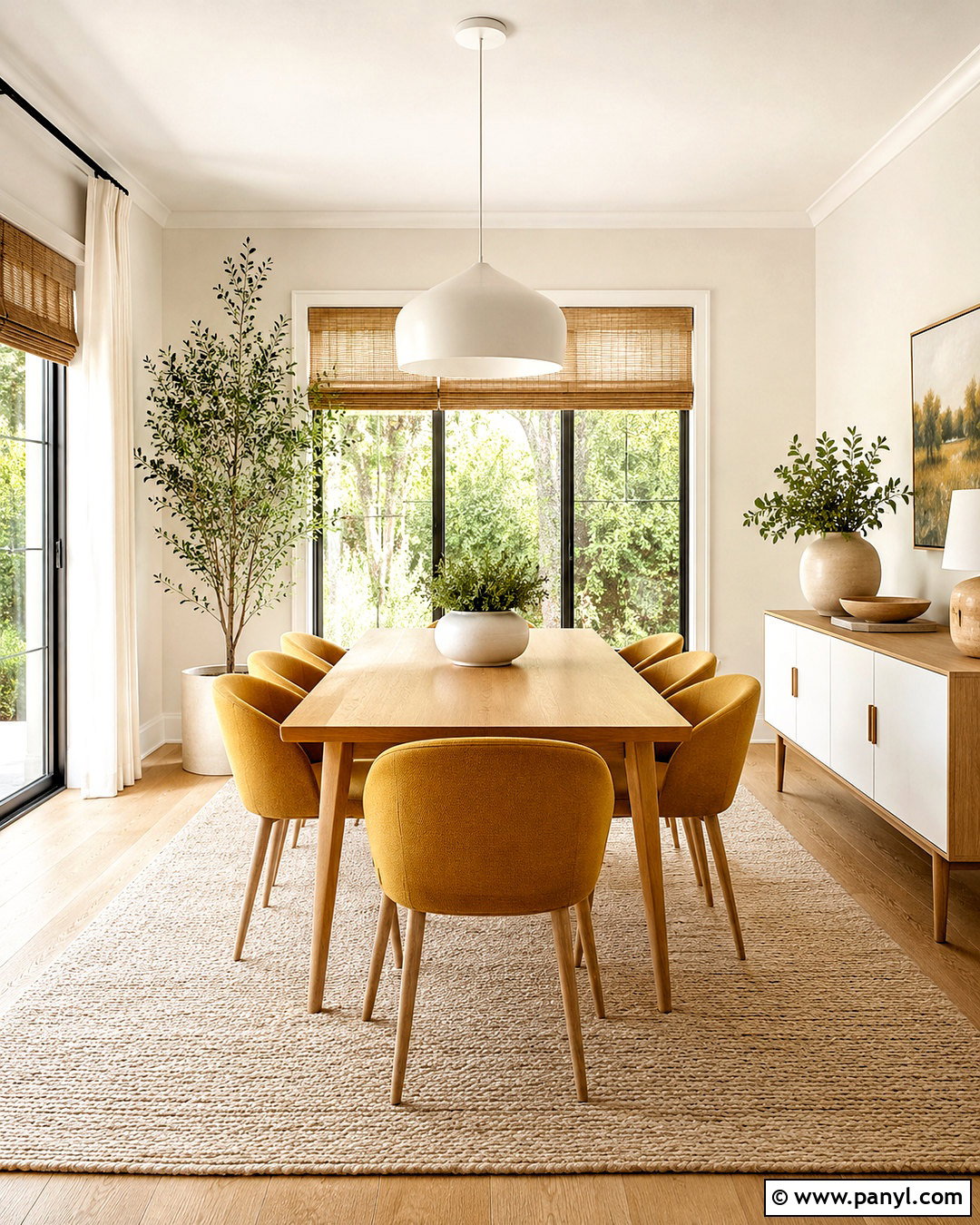
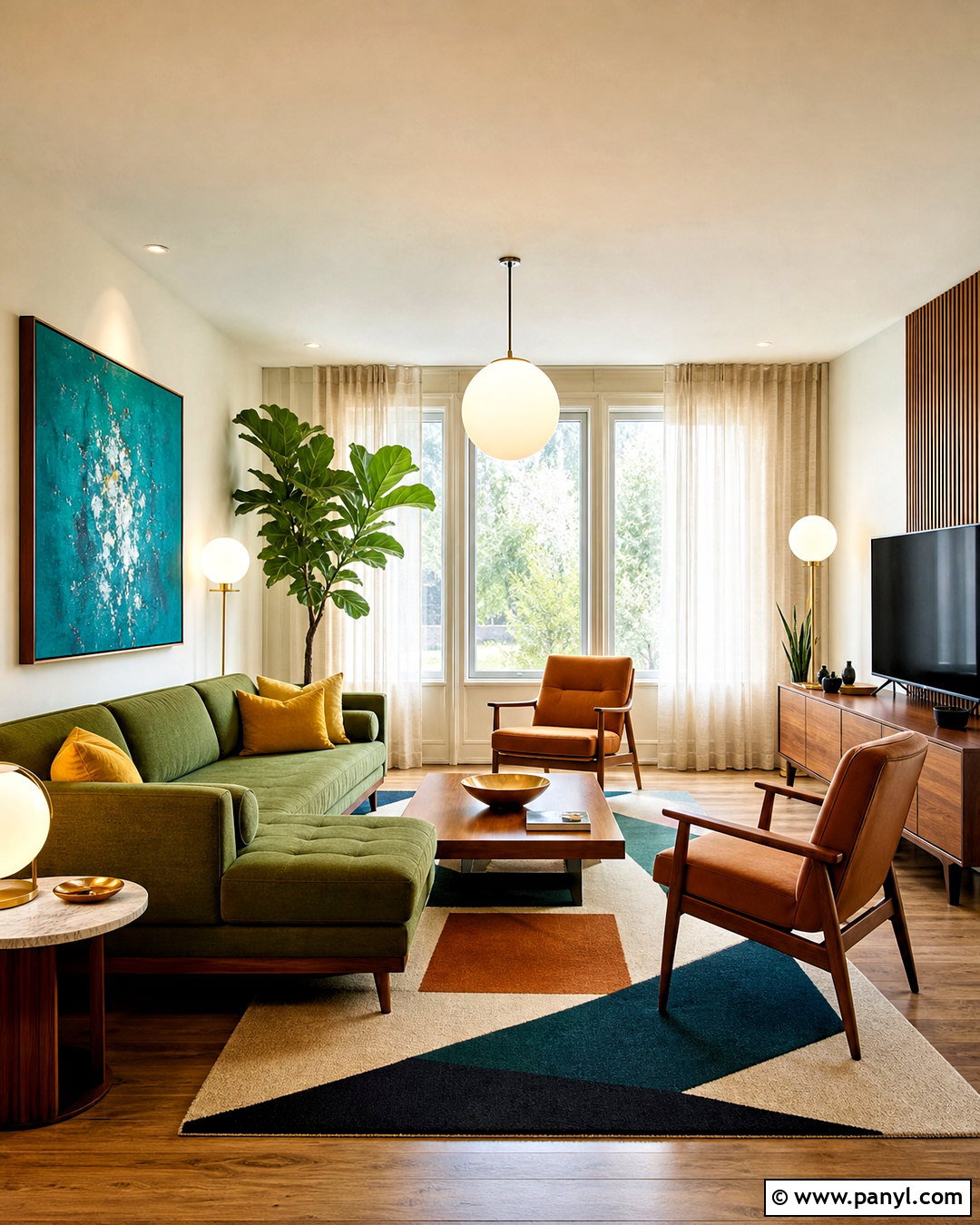
A white dining room offers a clean foundation for mustard without losing brightness. Paint the walls and trim a soft warm white, then place a light oak table on a textured cream rug. Use mustard yellow chairs on all sides to establish one confident focal point. A simple white pendant with a curved shape maintains the airy mood while adding interest above the table. Select a low white sideboard with oak details and style it with neutral ceramics, woven trays, and one mustard-toned print. Natural bamboo shades can warm the windows without blocking daylight. Add a tall leafy plant in a pale clay pot to bring height into the room. This straightforward palette suits apartments, casual homes, and open layouts where visual simplicity helps surrounding areas flow together naturally.
11. Mustard Dining Room Wallpaper
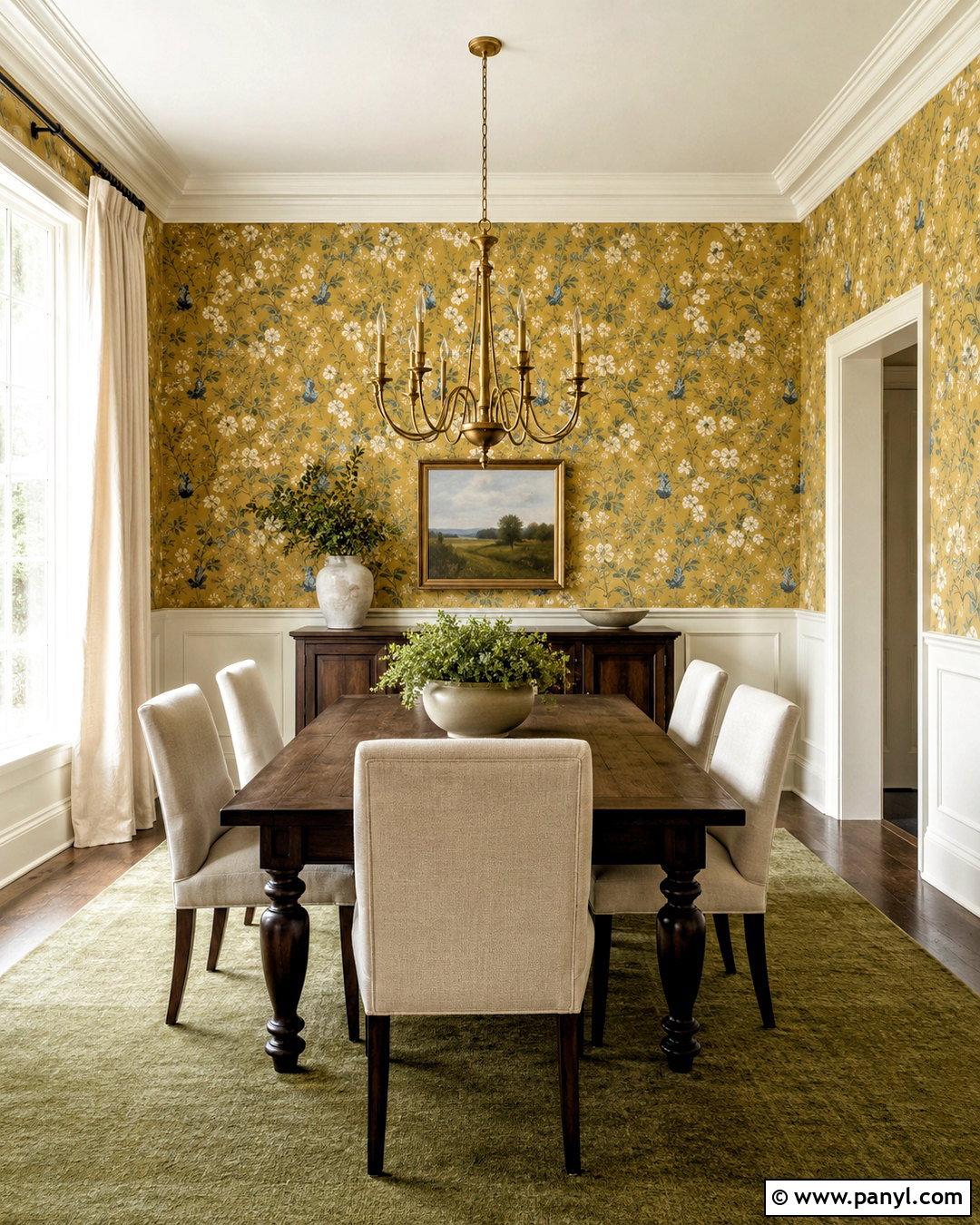
Patterned mustard wallpaper can turn an ordinary dining room into a distinctive, finished space. Select a botanical or geometric print combining mustard, cream, olive, and muted blue. Apply it to every wall for an immersive look, or use it above painted cream wainscoting for more structure. Place a dark oak table in the center and choose simple cream upholstered chairs that allow the wallpaper to remain dominant. A solid olive rug provides contrast without introducing another pattern. Add a classic aged brass chandelier and a narrow dark wood sideboard. Window treatments should stay quiet, so use plain ivory linen panels. Finish with a round mirror, ceramic tableware, and a restrained greenery arrangement. Keeping furniture shapes simple prevents the layered pattern from making the room feel crowded.
12. Mustard Dining Room Curtains
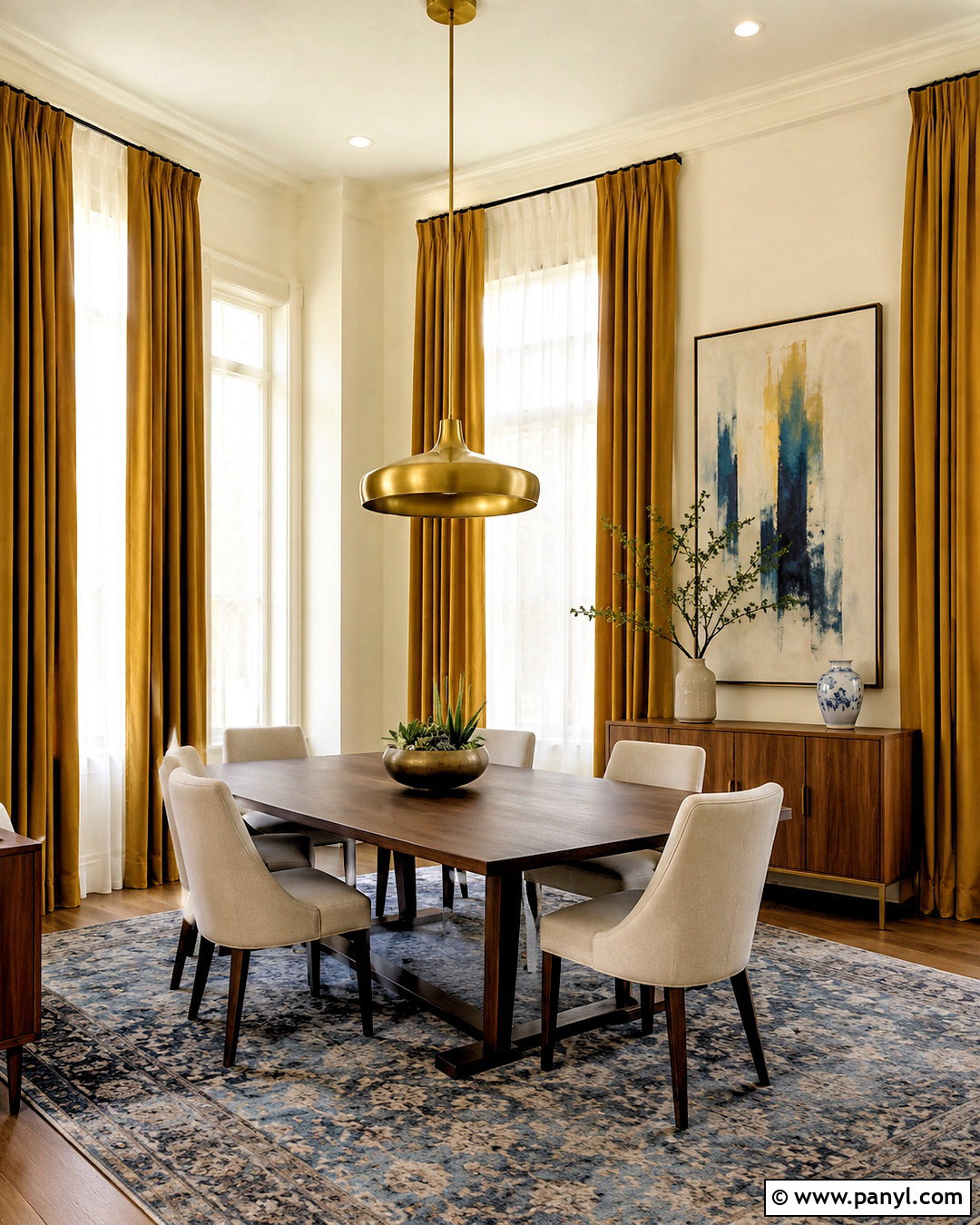
Full-length mustard curtains bring color, softness, and height to a dining room without requiring permanent changes. Hang the panels close to the ceiling and allow them to reach the floor, visually enlarging the windows. Pair them with warm white walls, a walnut dining table, and cream upholstered chairs. A blue-gray patterned rug balances the yellow and creates a calmer foundation. Choose a brass pendant with an uncomplicated shape and add a walnut cabinet against the longest wall. Repeat mustard once through a small artwork detail or narrow table runner, but avoid matching every accessory. White sheers behind the curtains provide daytime privacy while diffusing sunlight. This complete look is particularly practical for renters or anyone who wants a noticeable transformation that can be changed easily later.
13. Mustard Dining Room Banquette
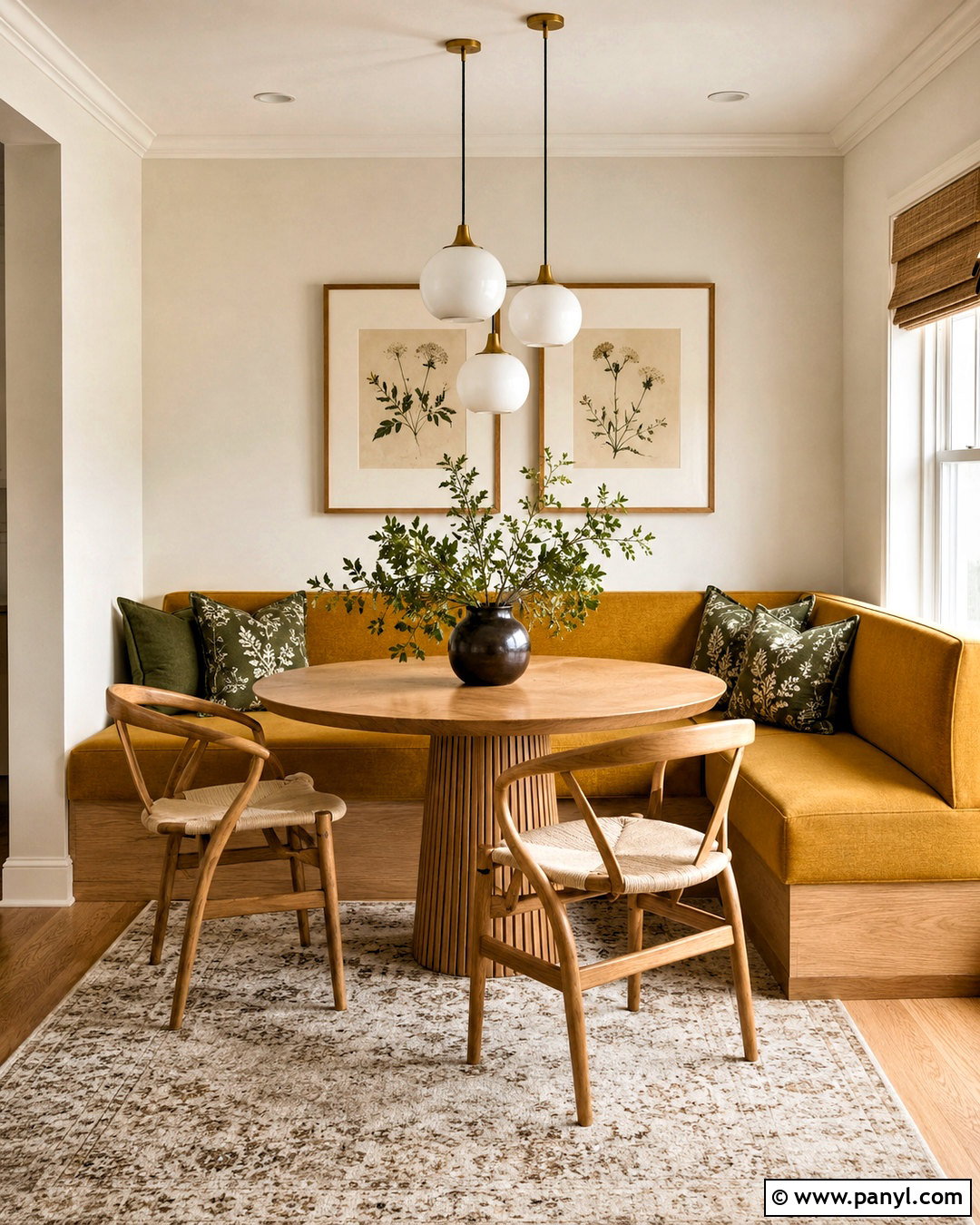
A built-in mustard banquette can make a dining nook feel comfortable, efficient, and custom designed. Upholster the bench in durable mustard performance fabric and install it along two walls around a round pedestal table. Add curved oak chairs on the open side to keep the layout flexible. Paint the walls warm white and use a washable cream-and-tan rug beneath the table. Two small globe pendants or one compact woven fixture provide focused lighting without crowding the nook. Include hidden drawers under the bench for linens and serving pieces. Patterned cushions in olive, rust, and ivory add depth without concealing the mustard upholstery. Finish the corner with framed botanical artwork and a narrow wall shelf, creating an inviting everyday dining space that uses every available inch.
14. Mustard Midcentury Dining Room
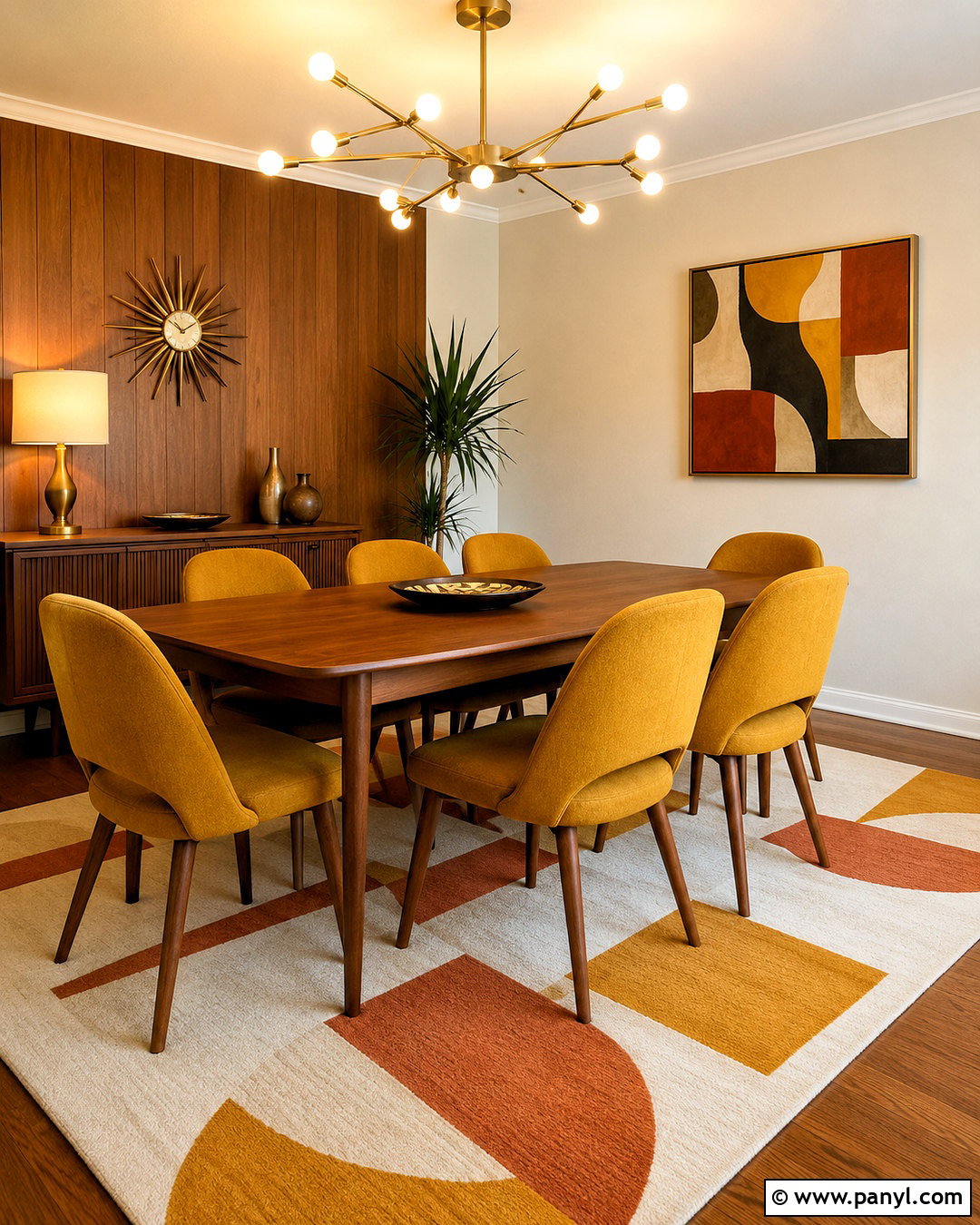
Mustard naturally complements the warm woods and clean silhouettes associated with midcentury design. Start with a rectangular teak dining table and mustard molded or upholstered chairs with tapered wooden legs. Paint the walls soft cream, then introduce a single walnut-paneled accent wall behind a low credenza. A geometric rug in ivory, brown, rust, and mustard reinforces the period influence without looking like a costume. Hang a branching brass or matte black globe chandelier above the table. Decorate the credenza with sculptural pottery, a simple table lamp, and one large abstract print. Keep window coverings streamlined with oatmeal roller shades or plain linen curtains. A tall rubber plant in a ceramic pot adds an organic shape, completing a functional dining room with recognizable retro character.
15. Mustard Farmhouse Dining Room
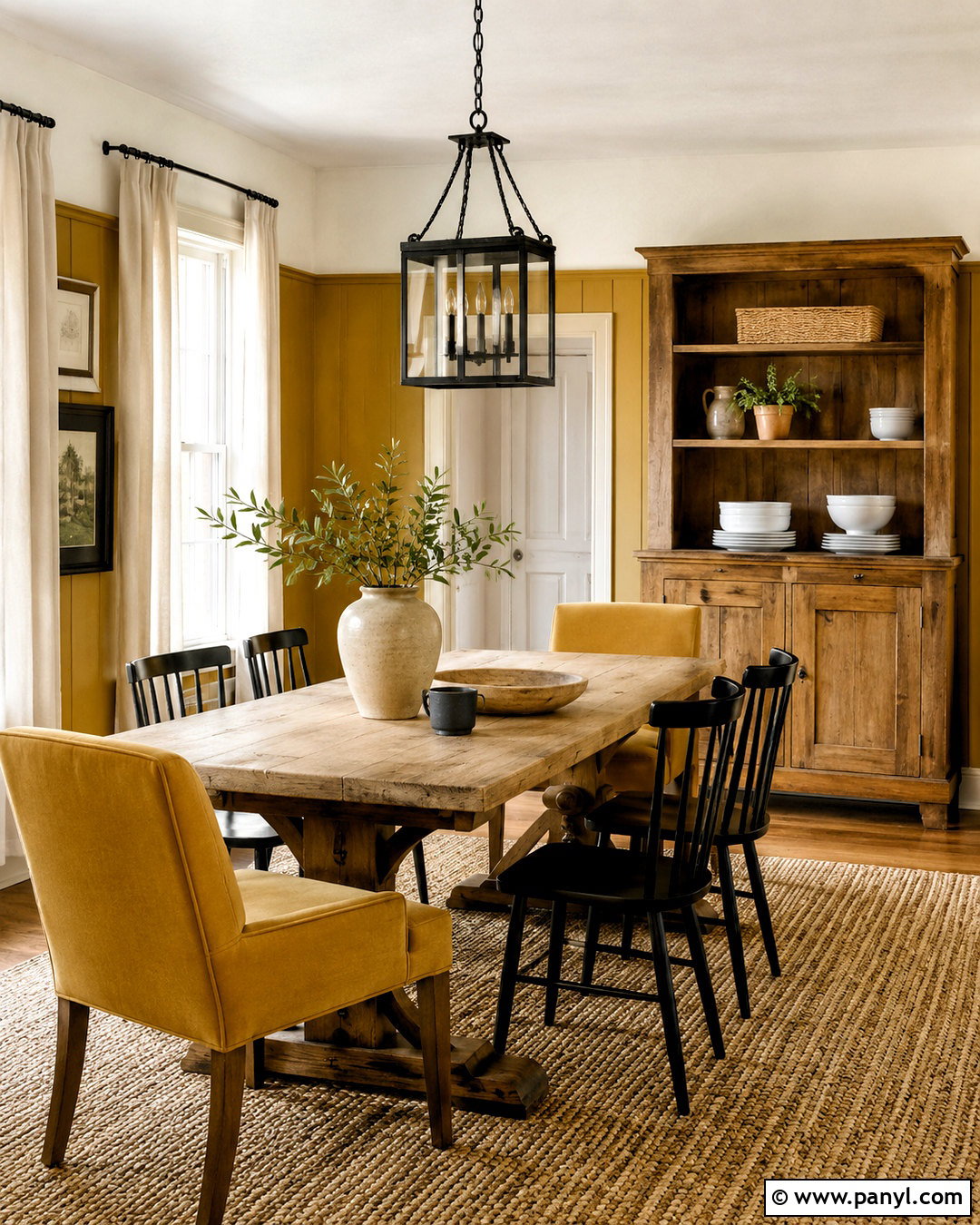
Mustard can refresh farmhouse decor while preserving its familiar warmth and simplicity. Paint the upper walls creamy white and add vertical paneling in a muted mustard shade below chair-rail height. Center a weathered oak trestle table in the room and combine black spindle chairs with two mustard upholstered end chairs. A washable braided rug in tan and ivory grounds the arrangement. Choose a large black metal lantern pendant for contrast and place a natural wood hutch against one wall. Fill the hutch sparingly with white stoneware, woven baskets, and everyday serving dishes. Lightweight linen curtains soften the windows. Fresh branches in a substantial ceramic pitcher make an easy centerpiece. The combination feels casual and collected, but clean lines keep it from looking overly rustic or cluttered.
16. Mustard Boho Dining Room
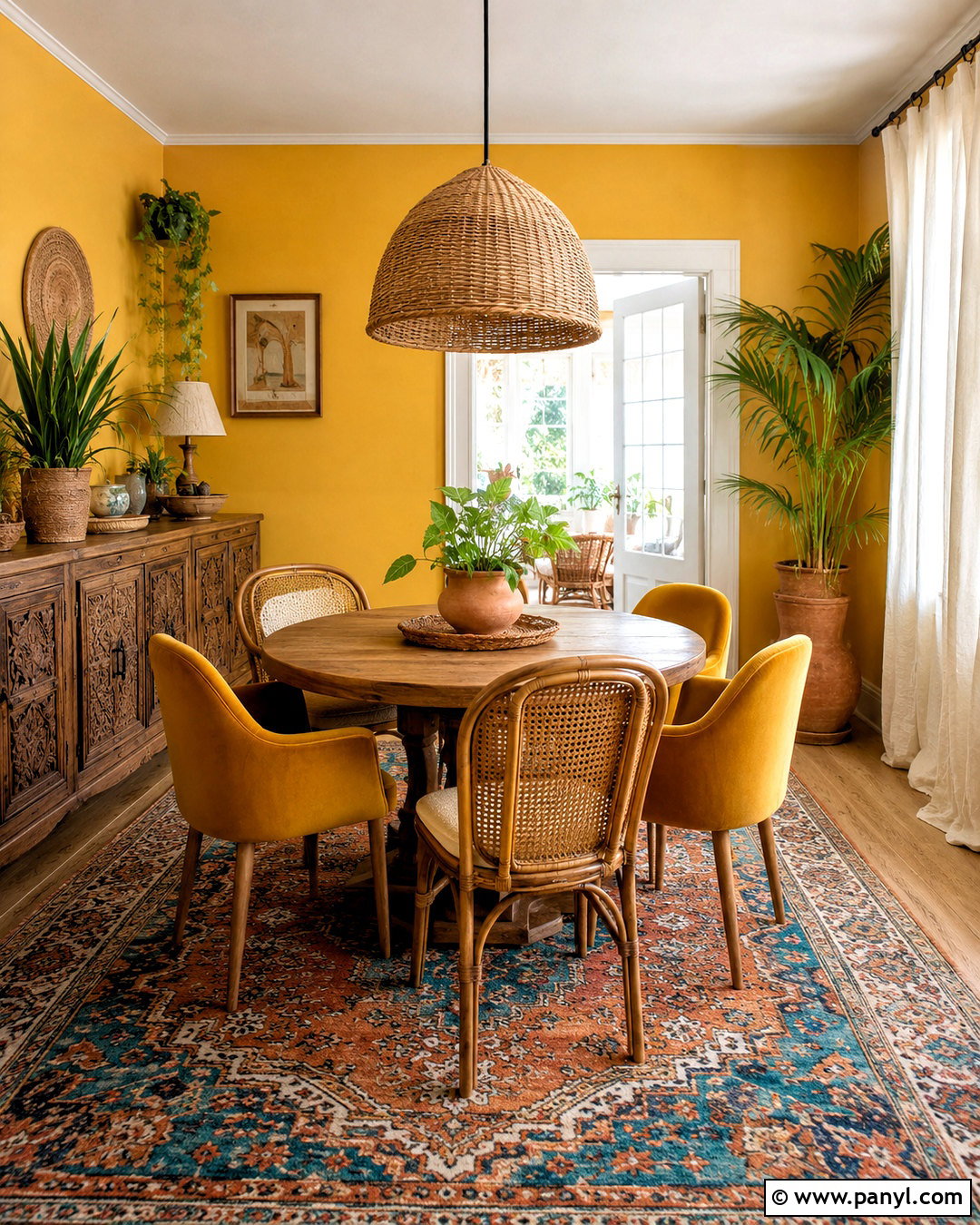
Layer mustard with natural fibers, global patterns, and relaxed furniture for a colorful bohemian dining space. Begin with warm white walls and a round medium-toned wood table. Mix mustard upholstered chairs with woven cane chairs rather than using a perfectly matched set. Place a vintage-style rug underneath in faded rust, teal, cream, and golden yellow. A large rattan pendant becomes the central feature, while linen curtains keep the room light. Add a carved wood sideboard, several healthy plants, and a casual gallery wall featuring earthy abstract prints. Use terracotta pots, woven placemats, and handmade ceramics to strengthen the tactile quality. Maintain enough open wall and floor space so the layers feel intentional. The completed room should look collected and personal, not overcrowded or overly coordinated.
17. Mustard Traditional Dining Room
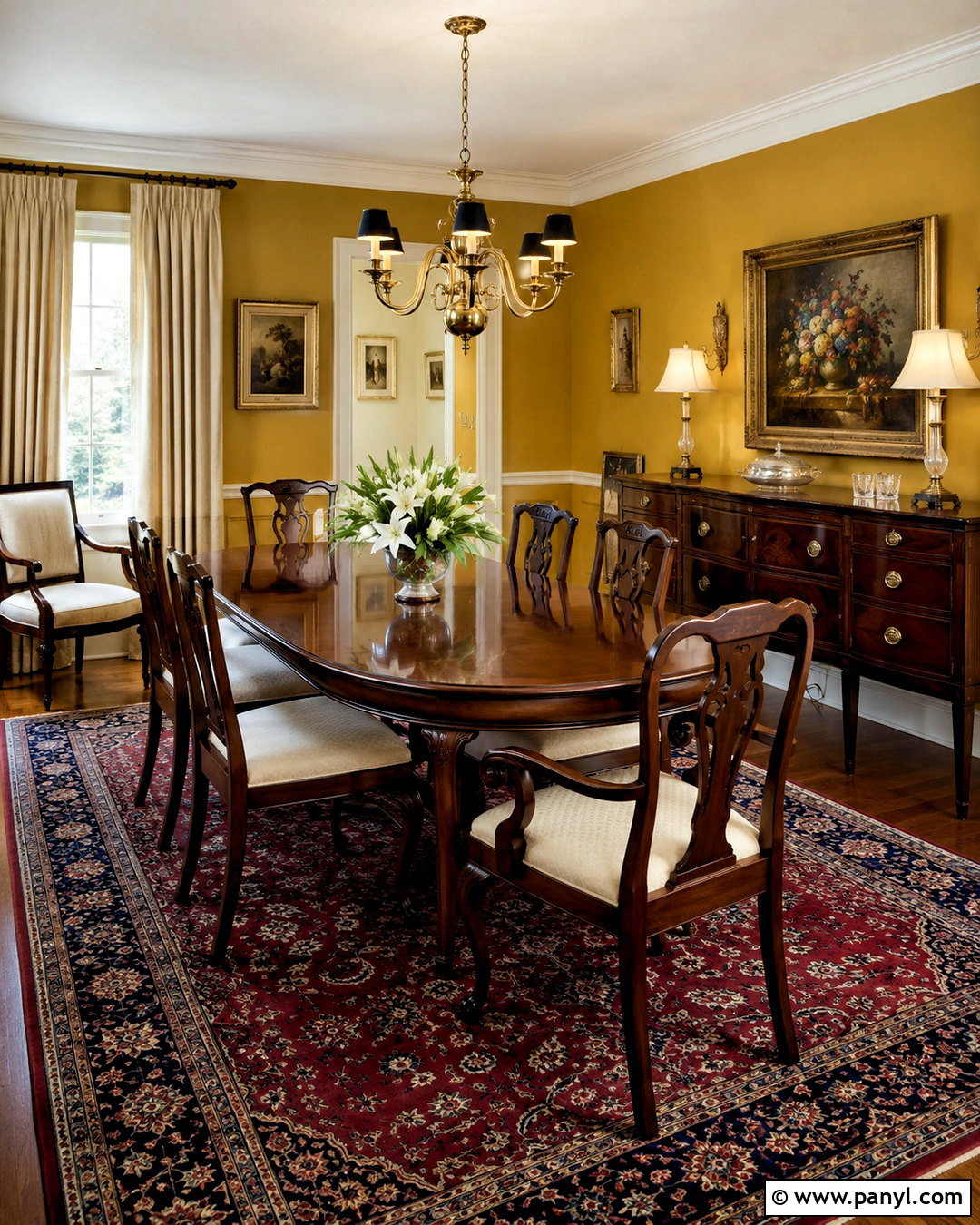
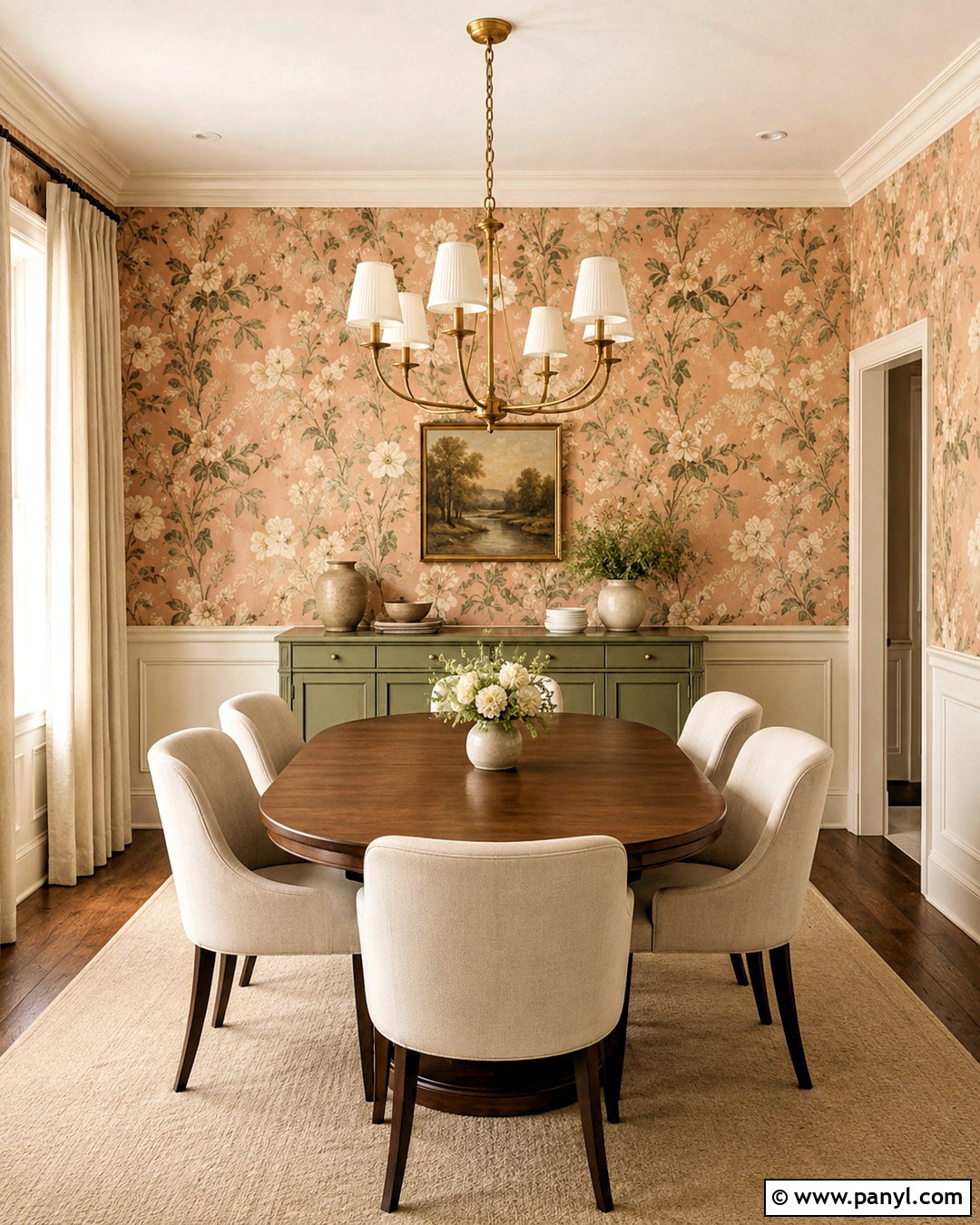
A traditional mustard dining room feels rich and established when classic architecture and dark wood are carefully balanced. Paint the walls a deep, muted mustard and keep crown molding, baseboards, and window trim warm white. Arrange carved mahogany chairs around a polished oval table, using cream upholstery to lighten the dark furniture. Add a traditional rug containing burgundy, navy, beige, and touches of gold. A brass chandelier with simple fabric shades supplies elegant overhead lighting. Hang floor-length cream drapes and place a matching mahogany buffet beneath a formal landscape painting. White porcelain, polished brass accessories, and a leafy centerpiece complete the table. Using mustard across the walls creates drama, while pale textiles and trim ensure the finished room remains welcoming rather than heavy or dated.
18. Mustard Small Dining Room
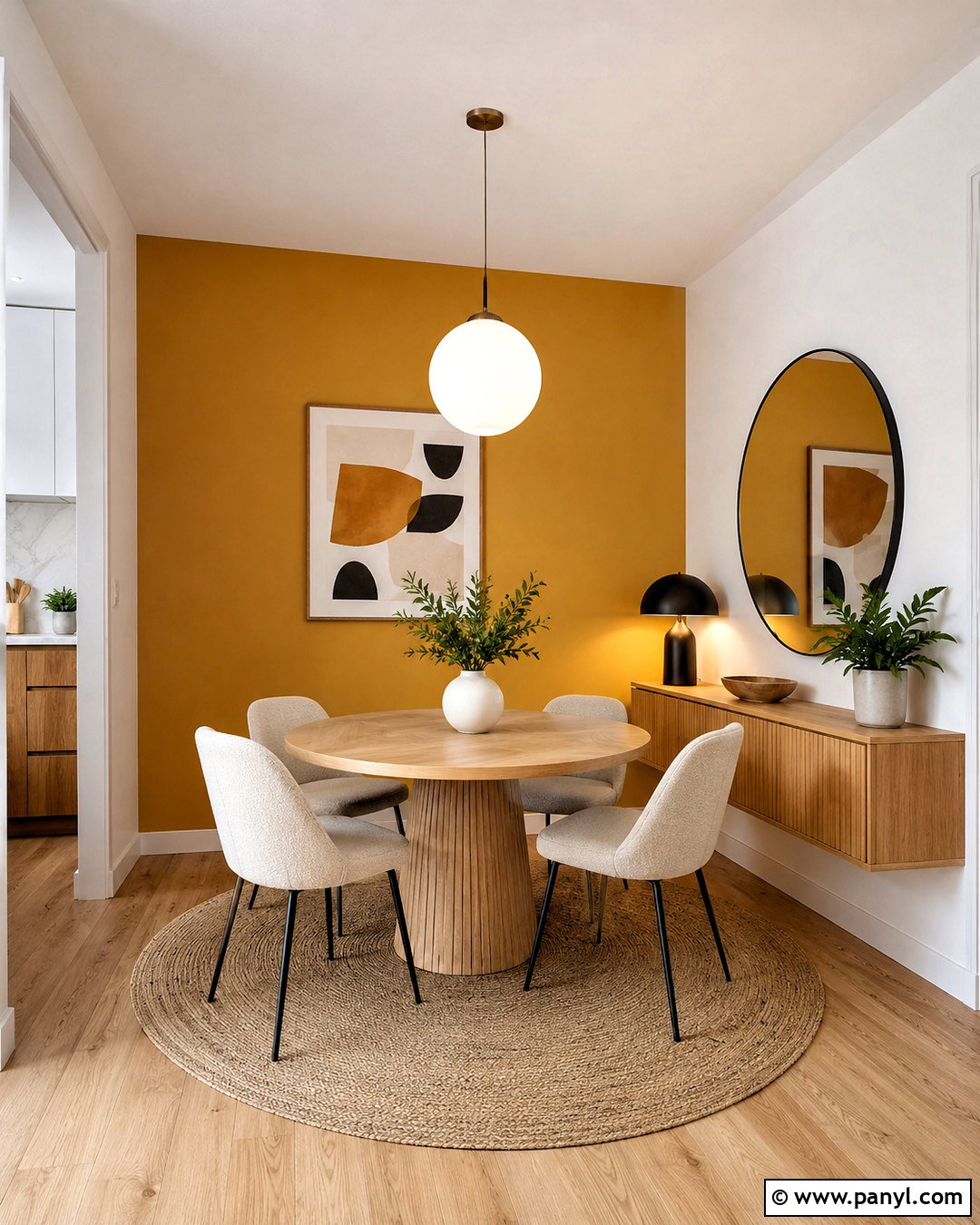
In a compact dining room, one controlled mustard feature can create personality without consuming visual space. Paint the back wall mustard yellow and leave the remaining walls soft white. Place a round light oak pedestal table against the accent wall with four slim cream chairs. A circular natural-fiber rug echoes the table shape and improves visual flow. Choose a small white globe pendant rather than an oversized fixture. A floating oak cabinet provides storage while keeping the floor visible, making the room feel less crowded. Hang one large framed print above it instead of several small pieces. Add a narrow mirror opposite the window to reflect light. Simple roller shades and a low ceramic centerpiece complete this practical arrangement, leaving comfortable pathways around the dining set.
19. Mustard Open Concept Dining Room
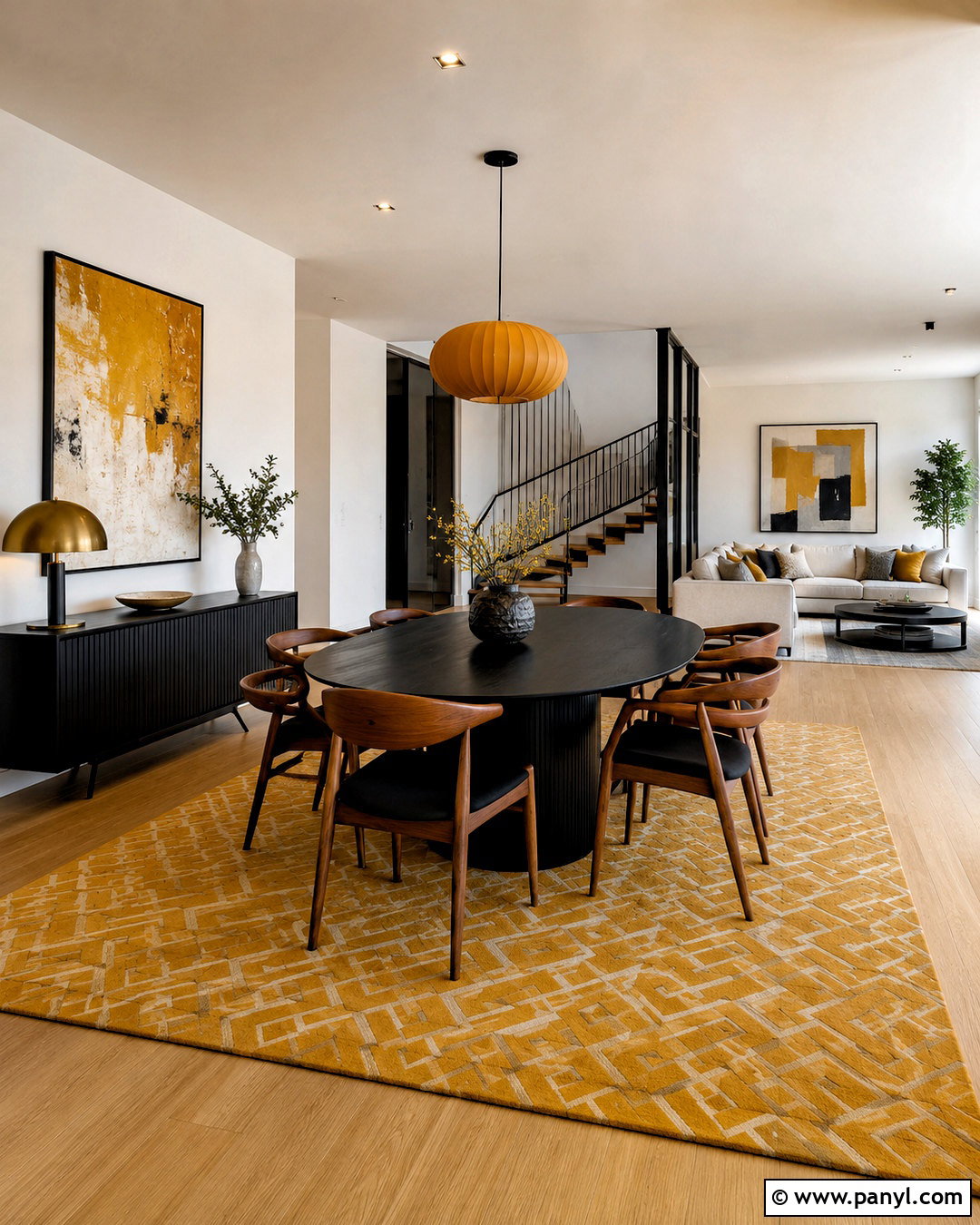
An open-plan dining area needs repeated colors and materials to connect with the neighboring kitchen or living room. Define the dining zone with a mustard patterned rug, then arrange walnut chairs around a black oval table. Use warm white walls throughout the shared space and repeat walnut through shelving or kitchen accents. A large mustard pendant marks the table as a distinct destination without requiring walls. Add a slim black sideboard and hang artwork featuring mustard, cream, and muted blue. Nearby living room textiles can include one or two small yellow details to continue the palette. Keep walkways clear and choose furniture with rounded corners where circulation is tight. The resulting dining area feels individual but still belongs naturally within the broader open-concept interior.
20. Mustard Dining Room Accent Decor
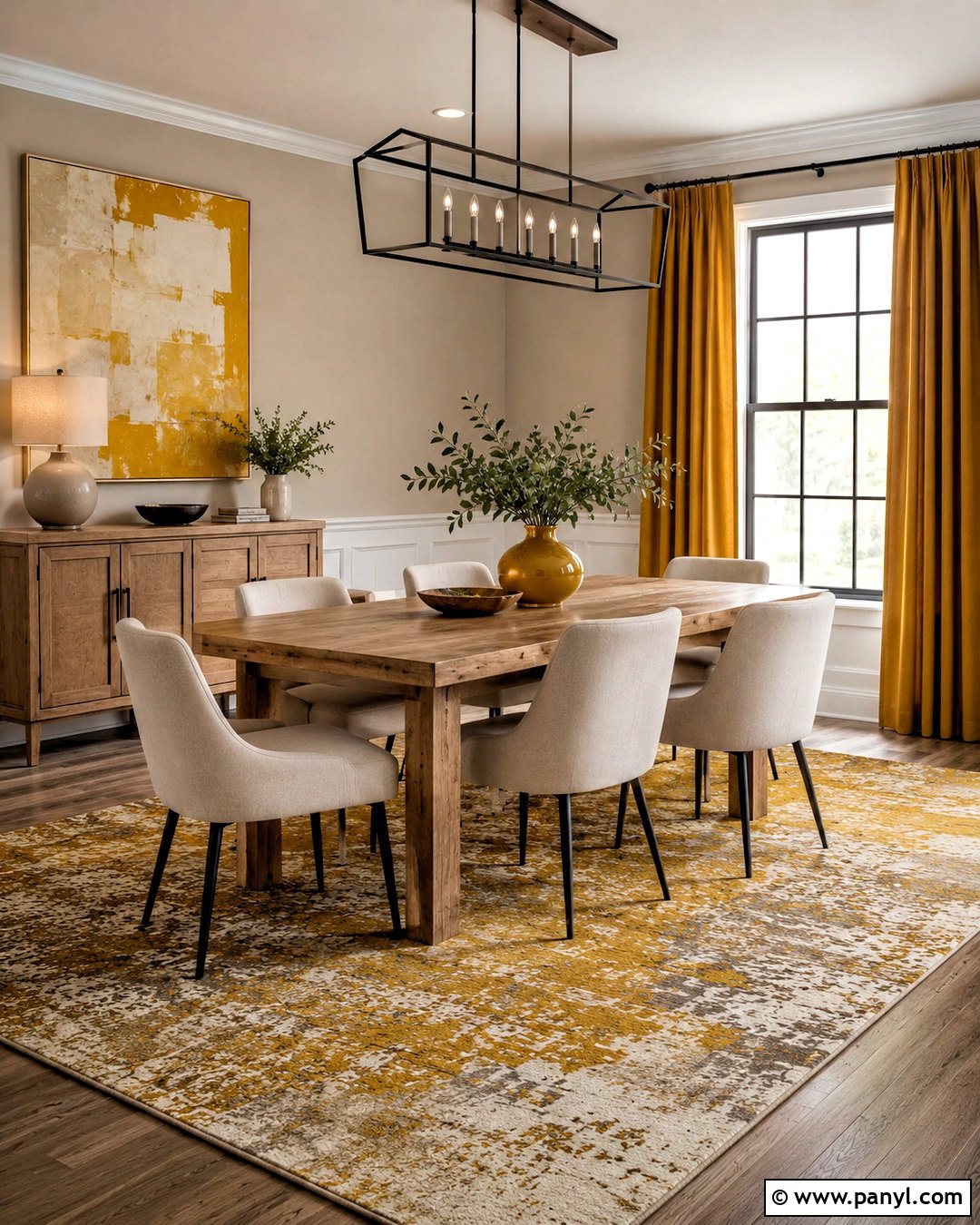
If major furniture or paint changes are not practical, build a complete mustard dining room through coordinated accents. Begin with warm greige walls, a medium oak table, and simple cream chairs. Introduce mustard through a large patterned rug, full-length curtains, and one substantial piece of abstract artwork. These three areas distribute the color around the room instead of concentrating it in a single small object. Add a black linear chandelier, an oak sideboard, and ceramic accessories in ivory and muted brown. A mustard runner and cloth napkins can strengthen the palette during gatherings but remain easy to replace. Keep the centerpiece low and natural. This flexible approach feels finished because the accent color appears at floor, window, wall, and tabletop level in deliberate proportions.
Conclusion:
Mustard yellow can make a dining room feel sunny, grounded, dramatic, or quietly sophisticated, depending on the colors and materials around it. Use it boldly on walls or wallpaper when you want an immersive atmosphere. For greater flexibility, introduce mustard through chairs, curtains, a banquette, rugs, lighting, and artwork. Navy, teal, black, sage, blush, terracotta, cream, and warm wood all offer attractive supporting palettes. Before decorating, consider the room’s natural light, existing flooring, furniture scale, and connection to nearby spaces. Repeating mustard in two or three locations will make the scheme feel intentional. These 20 mustard dining room ideas provide practical starting points for creating a warm, cohesive gathering place that reflects your home and lifestyle.

Related Ideas and Inspiration:
Leave a Reply