
Choosing the right wall color can make a bathroom feel brighter, larger, warmer, or more relaxing without requiring a full remodel. The 20 Best Colors For Bathroom Walls include reliable neutrals, spa-inspired greens and blues, earthy shades, and a few dramatic colors that give powder rooms extra personality. Current bathroom palettes are moving toward warm neutrals, soft greens, gentle blues, clay tones, and deeper nature-inspired shades, while classic white remains widely used. () The key is pairing each color with the right tile, vanity finish, flooring, lighting, and metal accents. Always test large samples beside your permanent surfaces because undertones can shift throughout the day. Use the complete room schemes below to compare the 20 Best Colors For Bathroom Walls.

1. Warm White Bathroom Walls
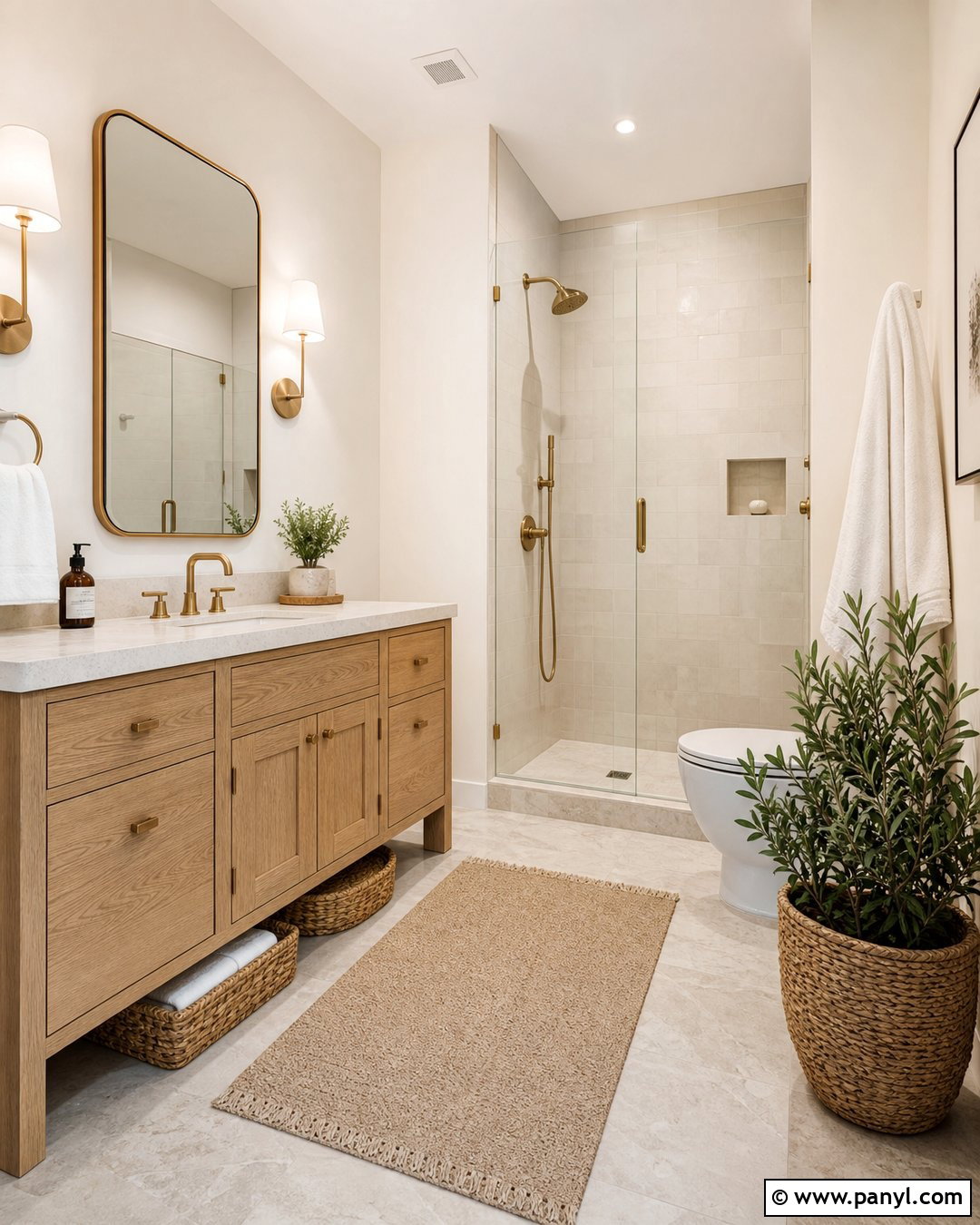
Warm white walls create a clean bathroom without making the space feel cold or clinical. Choose a white with subtle cream or beige undertones, then repeat that warmth through ivory shower tile and lightly veined quartz. A natural oak vanity adds texture, while brushed brass faucets and sconces provide gentle contrast. Keep the floor pale with limestone-look porcelain tile laid in a simple grid. White towels, woven baskets, and one small leafy plant complete the relaxed scheme. This color works especially well in bathrooms with limited daylight because it reflects available light while retaining softness. For a seamless look, paint the ceiling and trim in the same warm white, using slightly different finishes to define each surface.
2. Soft Ivory Bathroom Walls
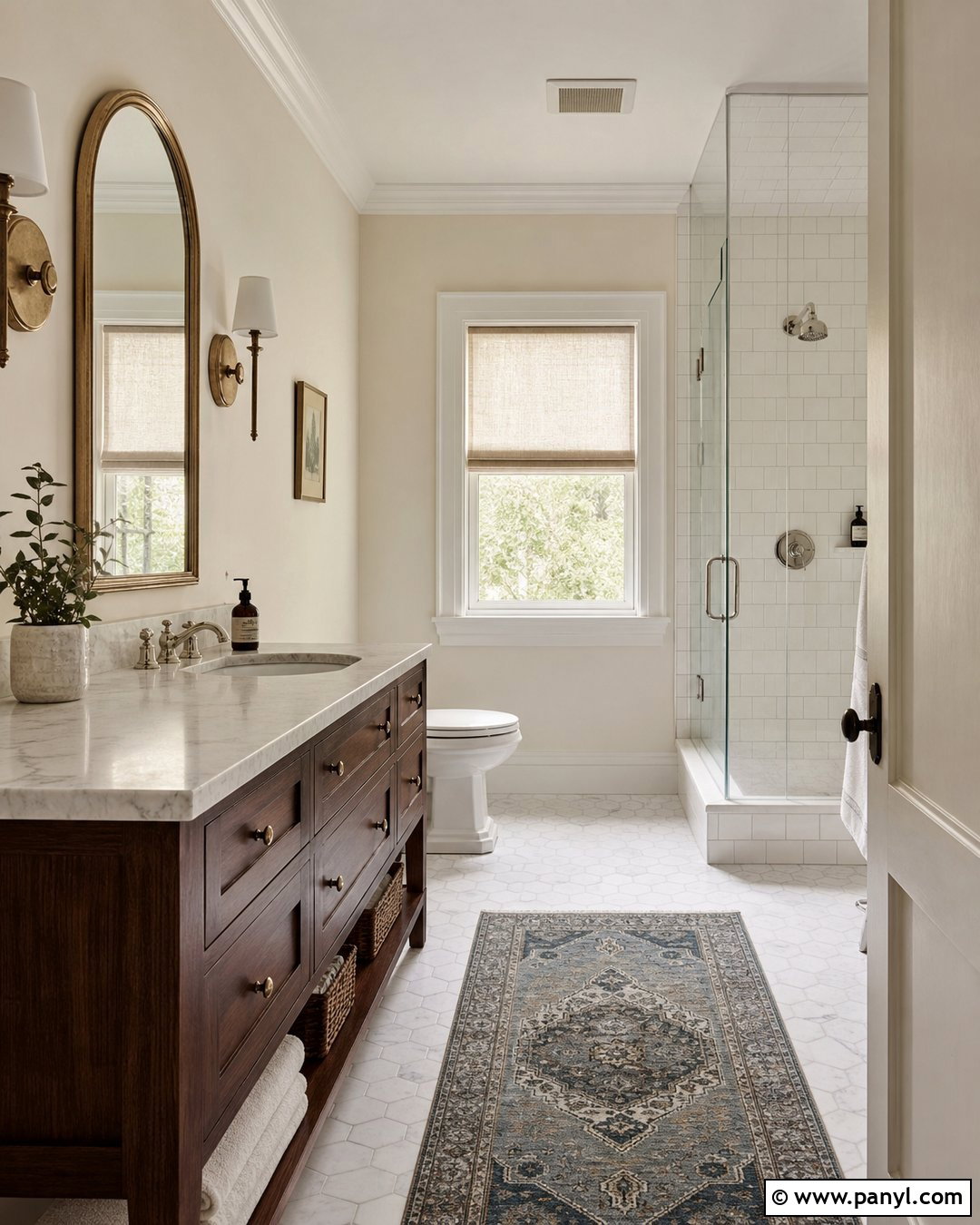
Soft ivory gives bathroom walls a subtle glow that works beautifully with traditional and transitional details. Build the room around a walnut vanity with a cream marble top, an arched brass mirror, and warm white ceramic tile inside the shower. The ivory walls connect these materials without competing with their natural pattern. Add polished nickel faucets if you prefer a cooler metal, or antique brass for an aged appearance. A small vintage-style rug in muted blue and tan can prevent the palette from looking overly beige. This wall color suits bathrooms with north-facing windows because its yellow warmth balances cooler daylight. Finish the design with ivory towels, glass accessories, and simple artwork framed in dark wood for definition.
3. Cream Bathroom Walls
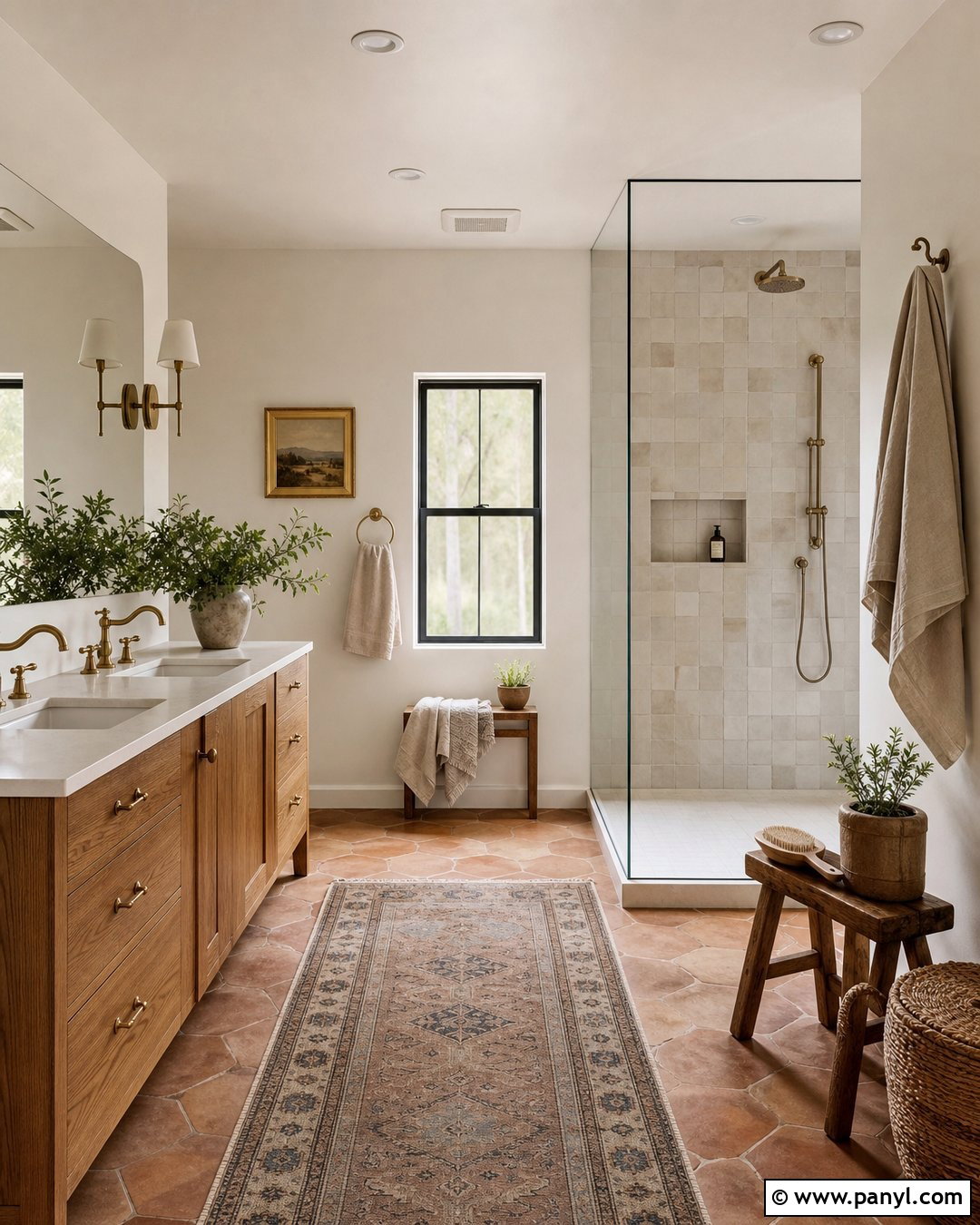
Cream bathroom walls create an inviting backdrop for a comfortable, layered room. Pair them with a medium-tone oak vanity, off-white quartz counters, and handmade beige shower tile that introduces slight color variation. Terracotta floor tile brings an earthy note, while aged brass hardware strengthens the warm palette. To keep the room fresh, use a large frameless mirror and bright white sinks rather than repeating cream on every surface. Linen window shades and cotton towels soften the harder finishes. This scheme is especially useful in older bathrooms where existing tile has warm undertones. Instead of fighting those finishes with cool gray or pure white, cream helps everything look intentional, balanced, and connected while preserving a light overall appearance.
4. Light Greige Bathroom Walls
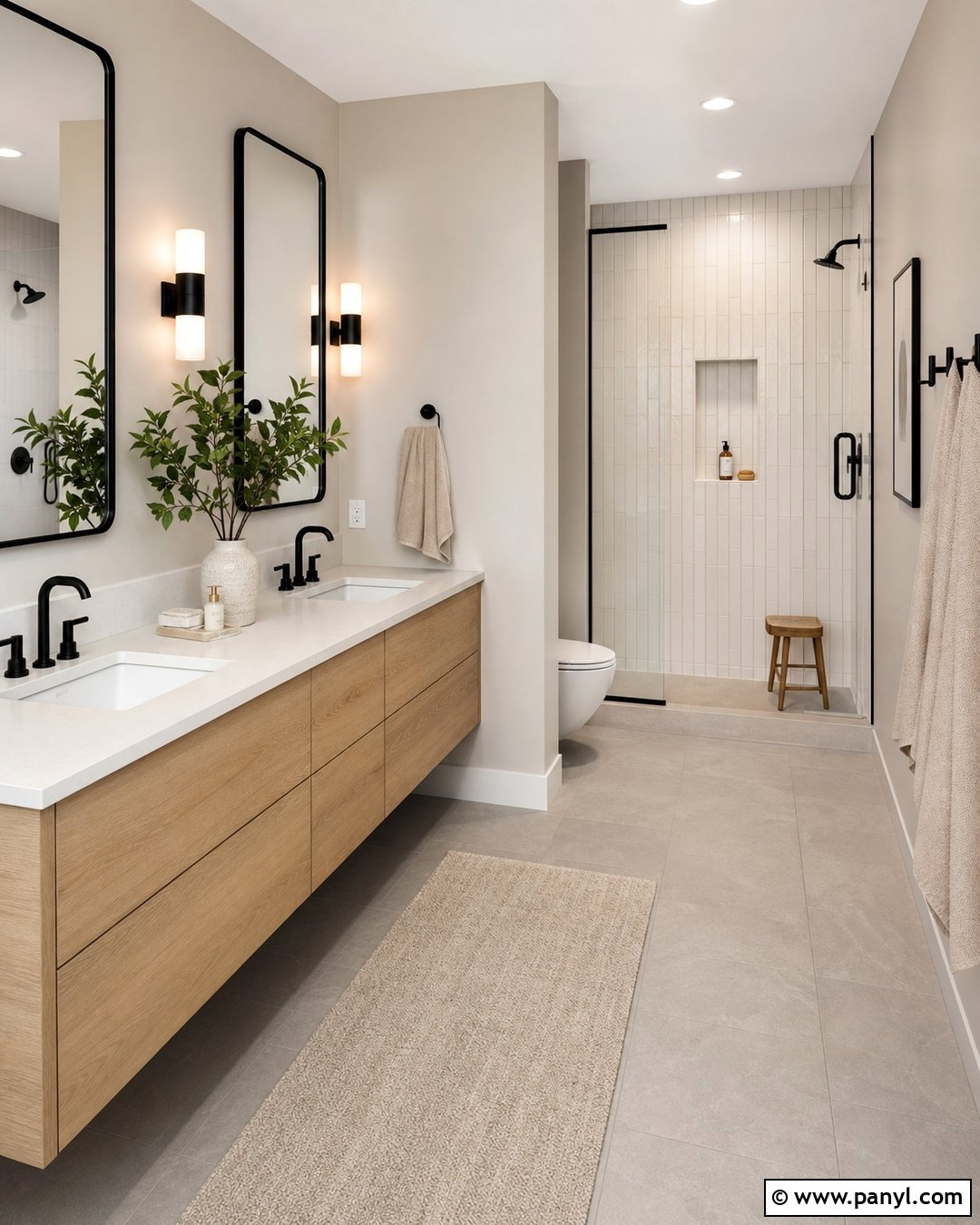
Light greige offers the softness of beige with enough gray to suit modern bathroom fixtures. Use it with a floating white oak vanity, pale quartz countertop, and large-format stone-look floor tile for a streamlined but welcoming room. Matte black faucets and thin-framed mirrors provide crisp outlines without overpowering the neutral walls. Inside the shower, choose warm white vertical tile to create height and prevent the scheme from becoming too gray. Add textured oatmeal towels, a simple ceramic vase, and one black wall sconce above each sink. Greige is particularly helpful when a bathroom contains both warm wood and cool metal because it visually connects the two. Keep the ceiling warm white so the wall color remains clearly visible.
5. Warm Taupe Bathroom Walls
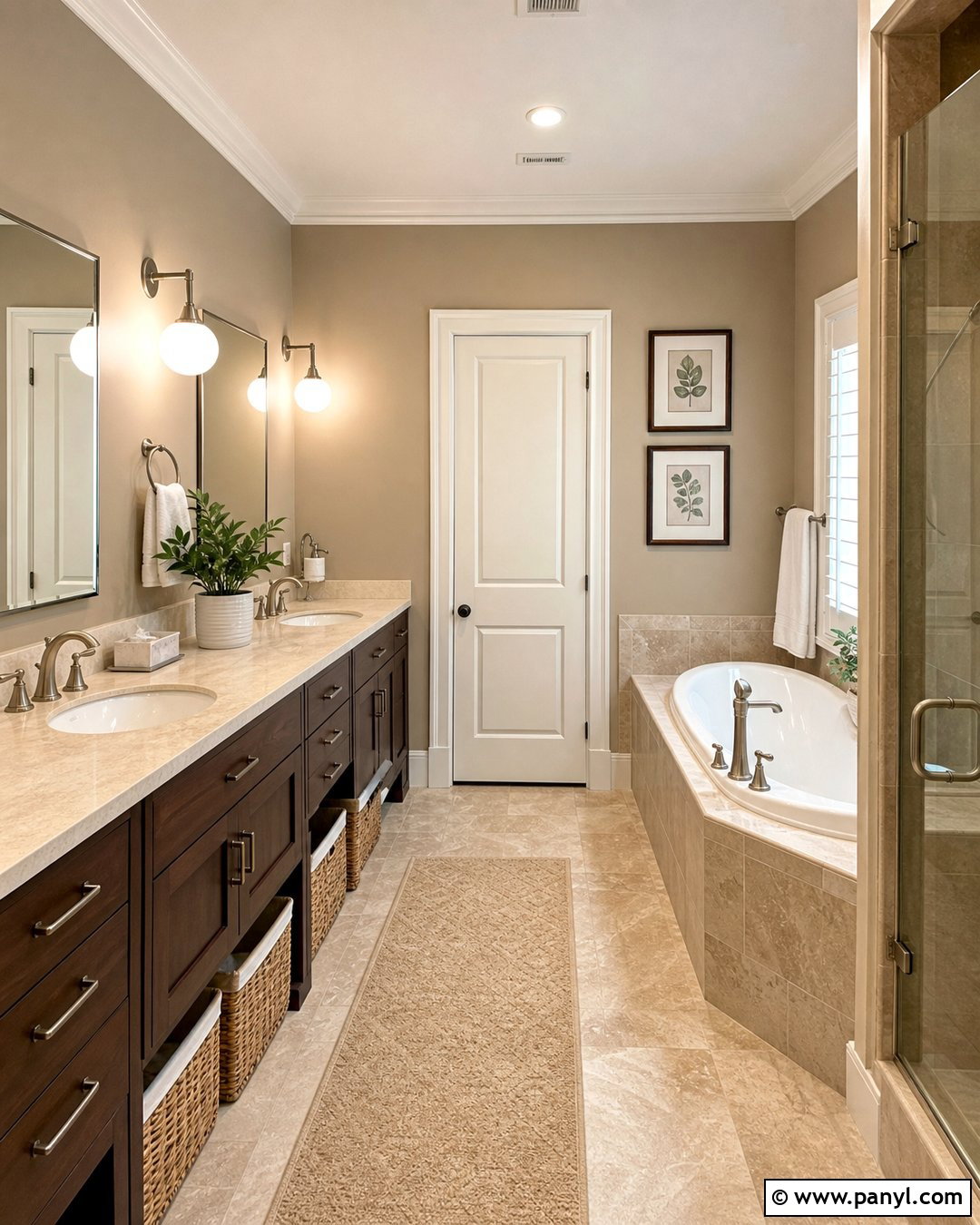
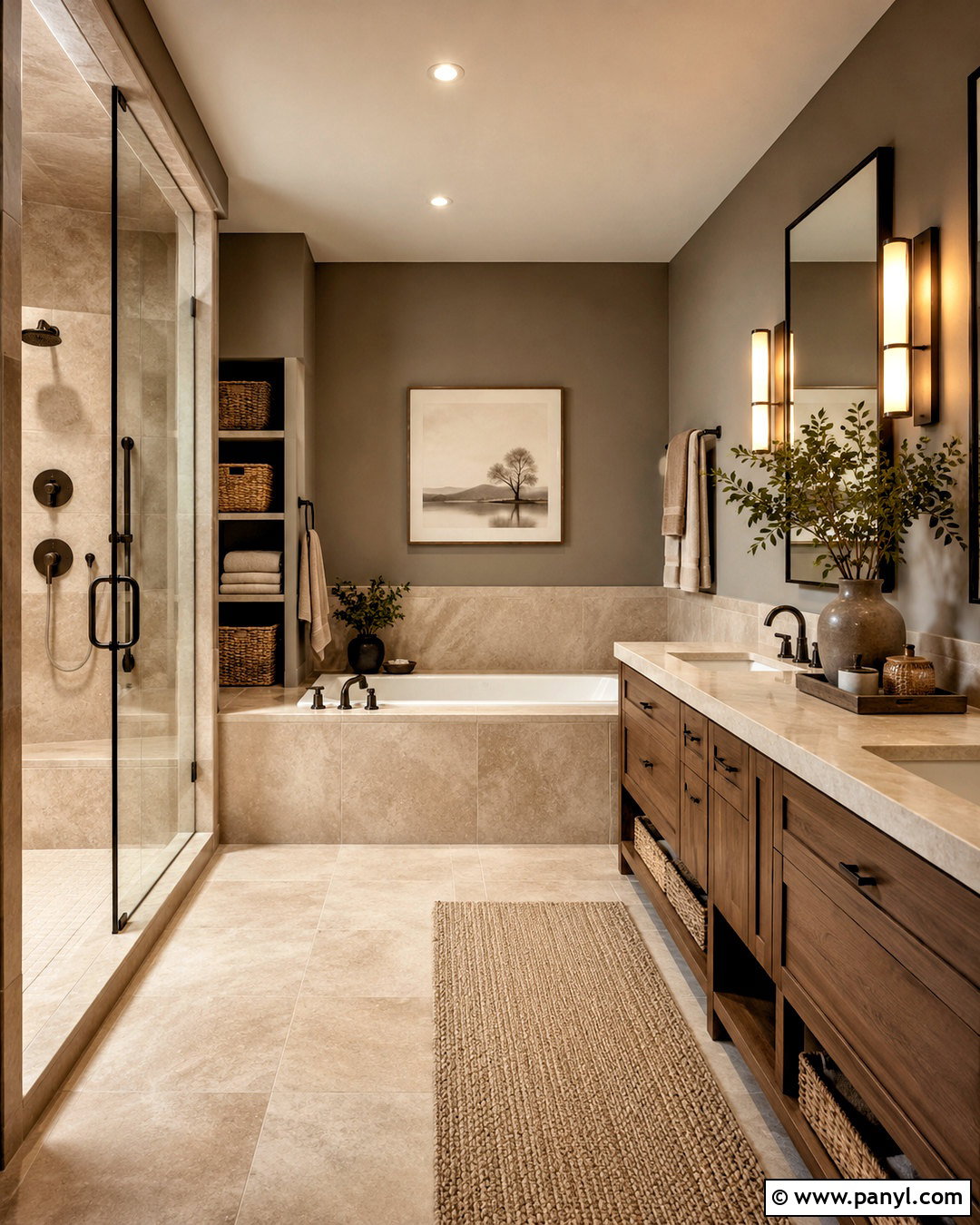
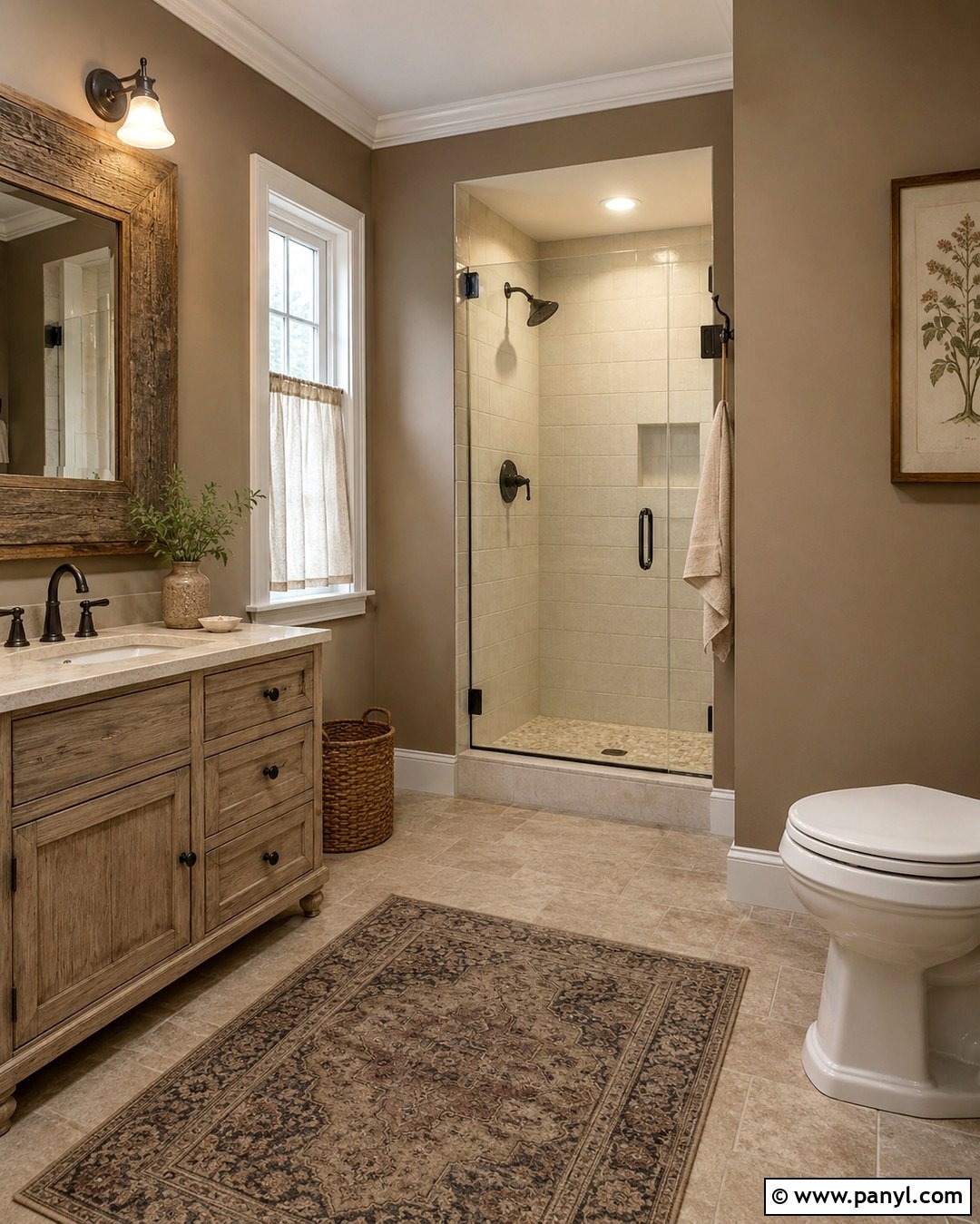
Warm taupe makes a bathroom feel grounded, polished, and more intimate. Combine taupe walls with creamy travertine-look tile, a dark walnut vanity, and an off-white stone countertop. Brushed nickel hardware adds a clean finish that keeps the brown undertones from becoming too heavy. Use a wide mirror to reflect light across the deeper walls, and install globe sconces with bright, neutral-white bulbs for accurate grooming light. White towels and a white bathtub provide necessary contrast, while woven storage and natural linen add quiet texture. This complete palette works particularly well in a primary bathroom where comfort matters more than creating a stark appearance. Paint the trim a soft ivory rather than pure white for a smoother transition.
6. Mushroom Bathroom Walls
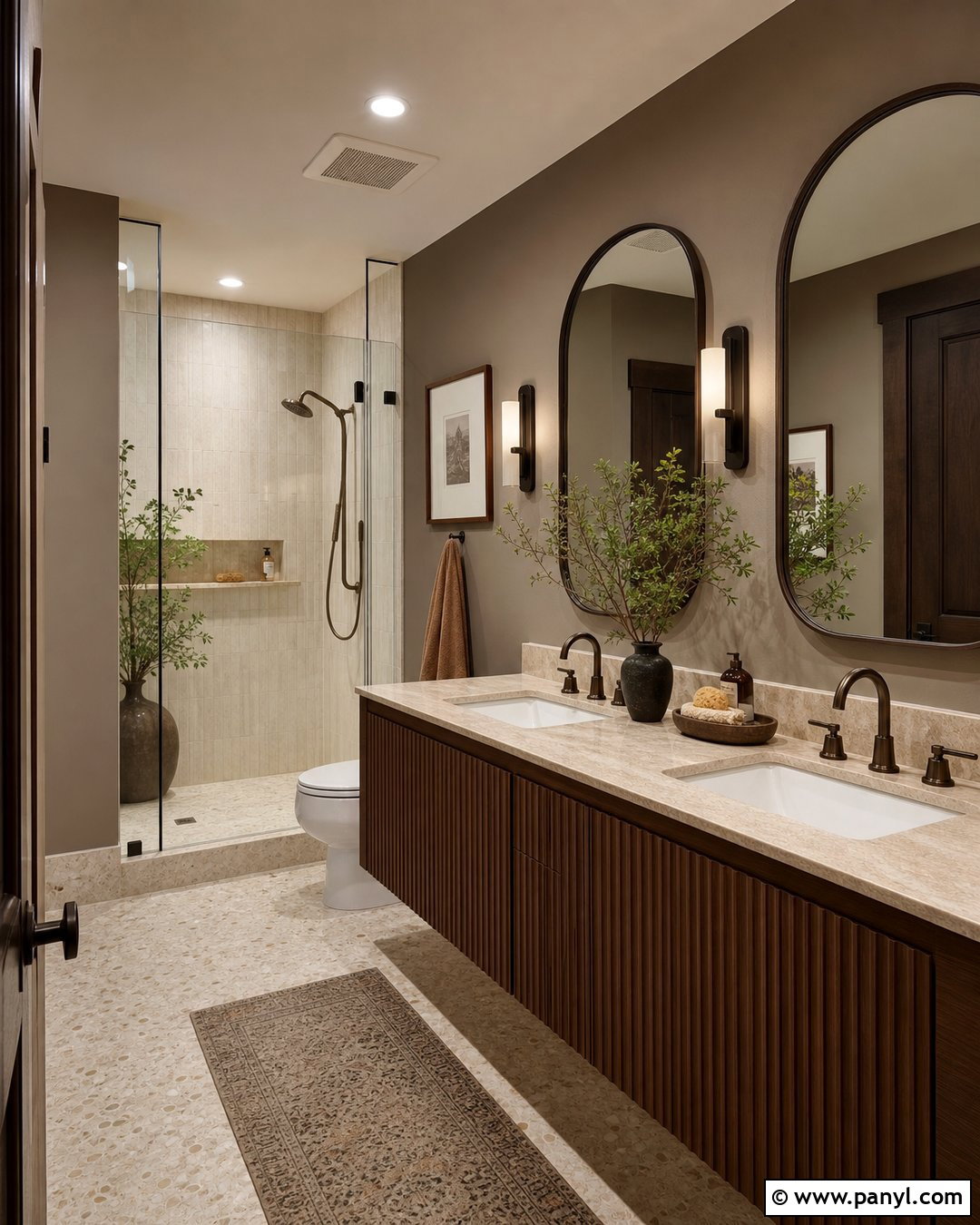
Mushroom is a muted brown-gray that creates a sophisticated bathroom while remaining easy to coordinate. Pair it with a fluted oak vanity, creamy stone counter, and pale beige terrazzo flooring. Use bronze faucets and rounded mirrors to emphasize the shade’s earthy character. A shower lined with ivory zellige-style tile will reflect light and add handcrafted texture without disrupting the restrained palette. Bring in darker accents through espresso-colored frames, a slim cabinet, or a wooden stool beside the tub. Because mushroom can appear deeper in shadow, balance it with generous mirror coverage and layered lighting. The finished bathroom should feel warm and cocooning, with enough light surfaces to keep the room practical, open, and visually comfortable.
7. Pale Gray Bathroom Walls
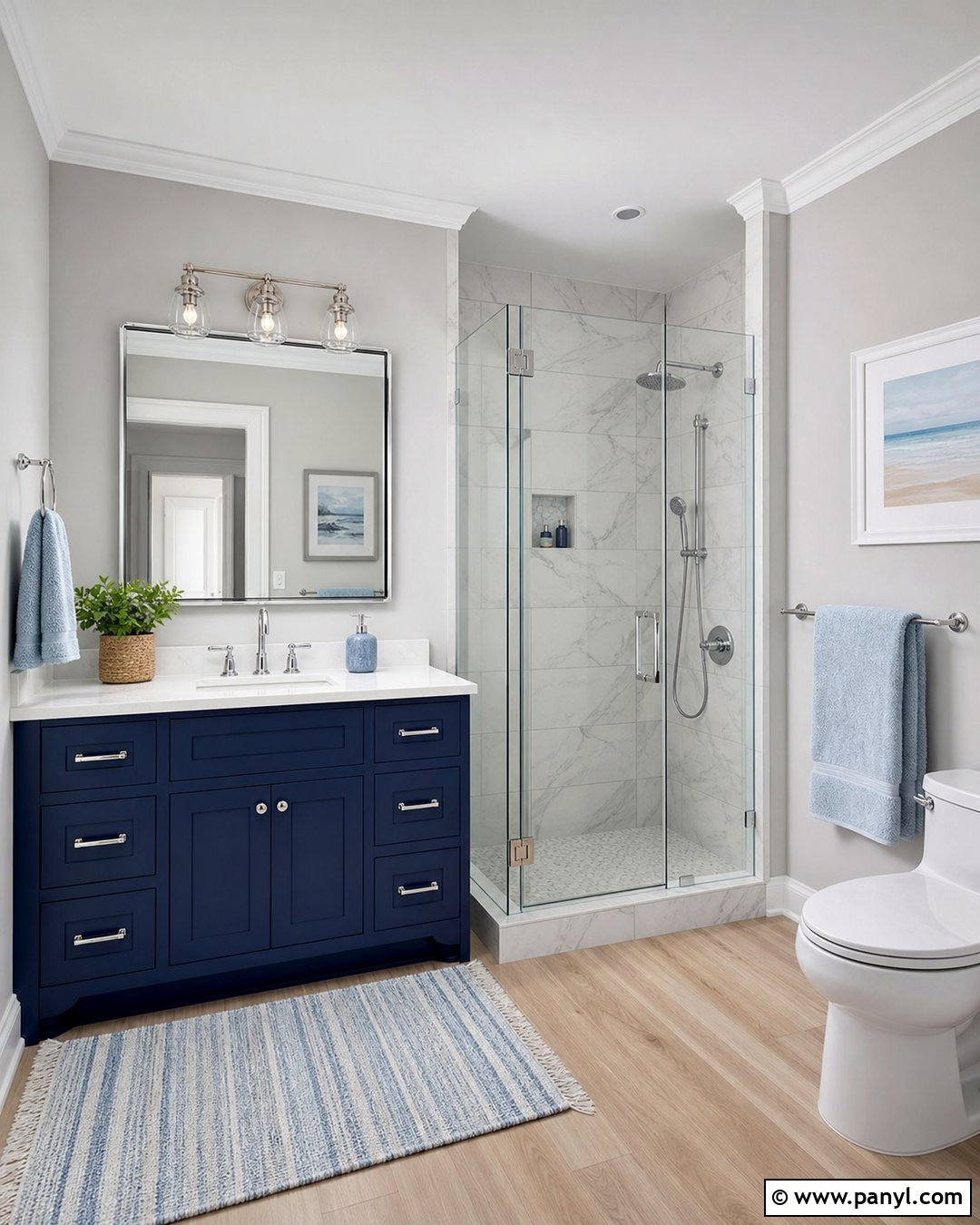
Pale gray bathroom walls provide a quiet backdrop for cool marble, chrome fixtures, and clean architectural lines. Select a gentle gray that does not lean heavily blue, then pair it with a navy vanity to create depth. White marble-look shower tile and a white quartz counter brighten the room, while chrome faucets repeat the cooler undertones. Use a light oak floor or wood-look porcelain tile to add warmth and prevent the bathroom from feeling sterile. Crisp white trim defines the walls, and soft blue towels introduce a subtle layer of color. This balanced scheme works in contemporary and coastal bathrooms alike. Add clear glass shower panels and simple lighting so the limited palette feels open rather than plain.
8. Sage Green Bathroom Walls
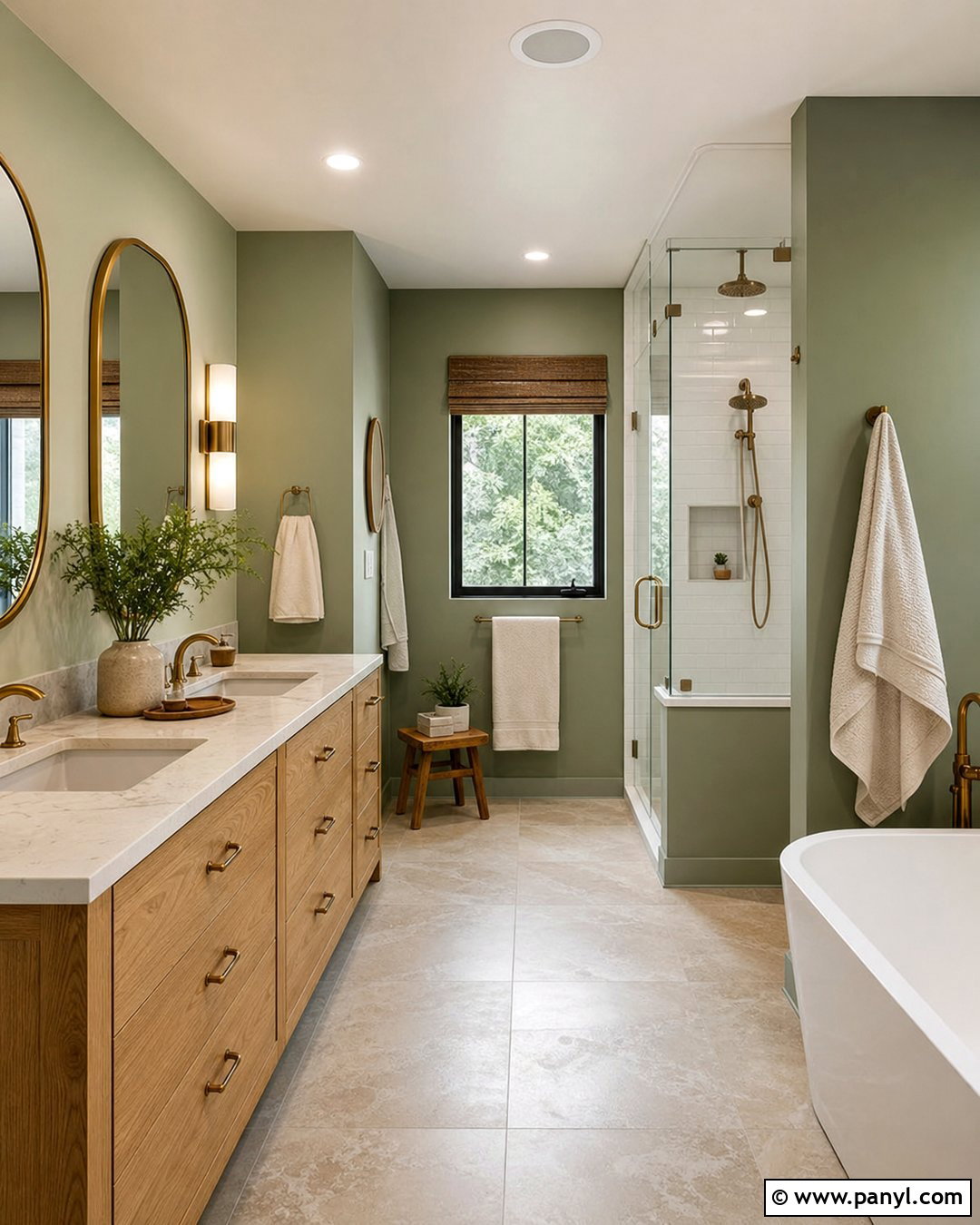
Sage green bathroom walls produce a restful, nature-inspired setting that feels fresh without looking overly colorful. Complete the room with a white oak vanity, warm white quartz, and creamy stone-look flooring. Brushed brass faucets and rounded mirrors complement the green’s earthy undertones, while white shower tile keeps the space bright. Add linen towels in ivory, small wooden accessories, and restrained botanical artwork. Instead of filling the room with plants, use one healthy fern or trailing plant where daylight is adequate. Sage works well across large walls because its gray content softens the color. Continue the wall shade behind open shelving, then repeat it subtly in patterned floor tile or textiles for a coordinated, spa-like bathroom.
9. Olive Green Bathroom Walls
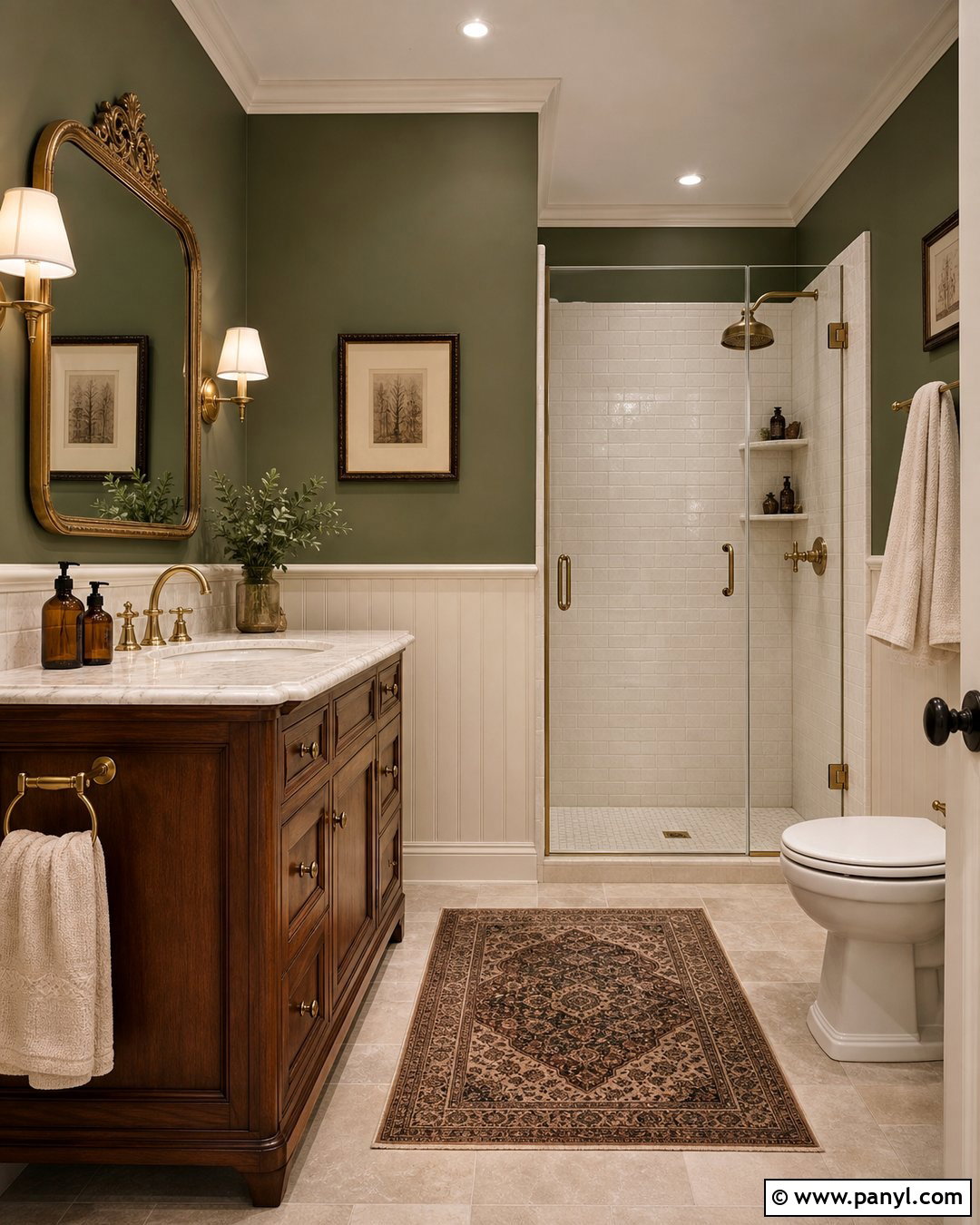
Olive green brings richness to bathroom walls and works especially well with warm, natural materials. Use the color in a powder room or a bathroom with good lighting, then pair it with a walnut vanity and creamy marble countertop. Aged brass hardware reinforces the traditional warmth, while off-white beadboard or shower tile prevents the darker green from enclosing the space. Choose a warm limestone-look floor and add a vintage-inspired mirror with a slim brass frame. Ivory towels and amber-toned glass accessories complete the earthy scheme. For a more immersive result, carry olive onto the trim and door. Keep the ceiling light and use bright sconces on both sides of the mirror to maintain clear, even illumination.
10. Eucalyptus Green Bathroom Walls
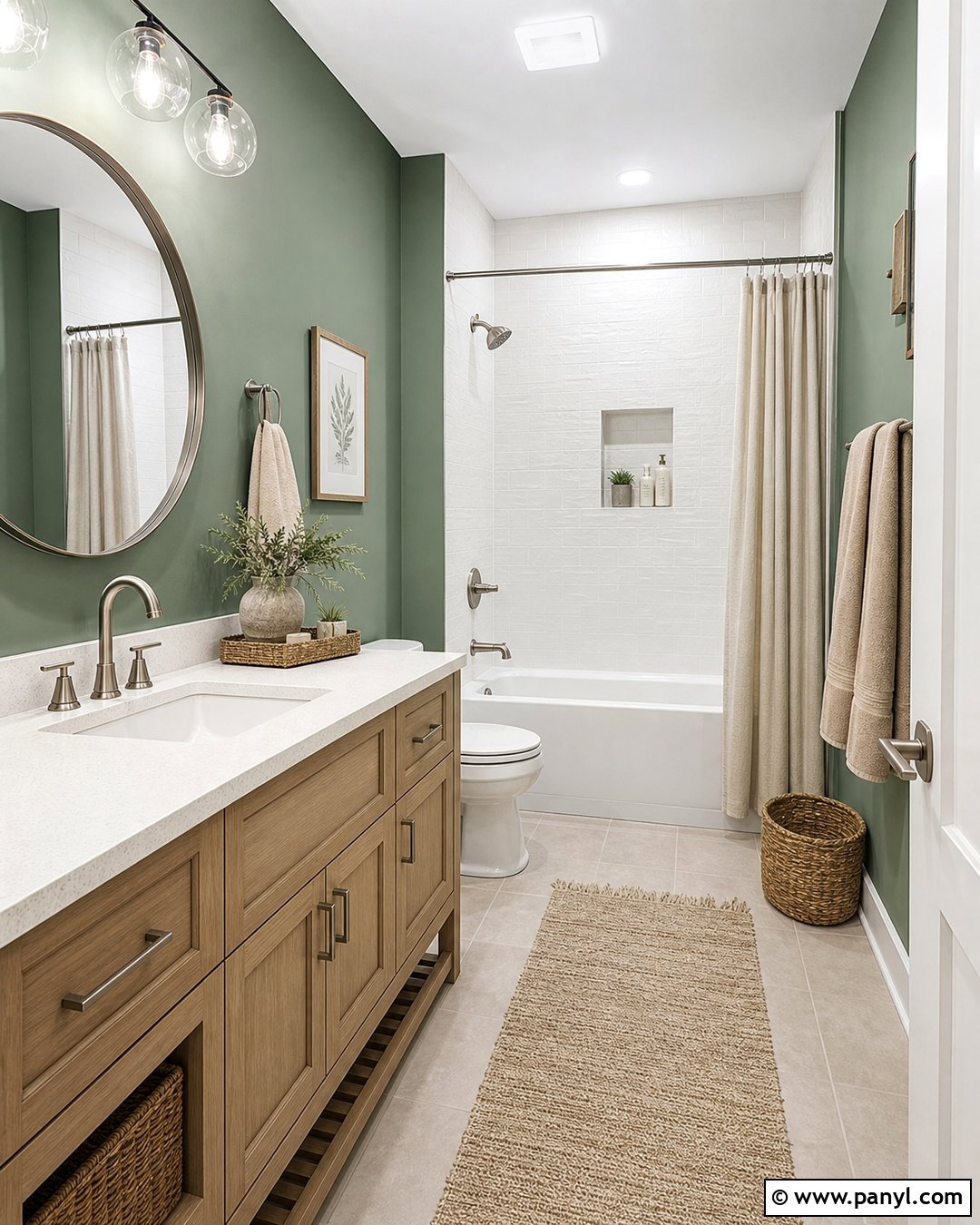
Eucalyptus green sits between sage and blue-green, giving bathroom walls a clean, calming presence. Pair it with a pale wood vanity, white solid-surface counter, and softly textured white shower tile. Brushed nickel fixtures support the cooler side of the color, while woven baskets and tan floor tile bring back natural warmth. Choose a wide mirror with rounded corners and simple frosted-glass sconces to keep the room modern. White bath linens will make the green appear clearer, and muted beige accessories will stop the palette from feeling overly coastal. This scheme is ideal for a family bathroom because it feels colorful yet easy to live with. Keep decorative objects minimal so the distinctive wall color remains the main feature.
11. Powder Blue Bathroom Walls
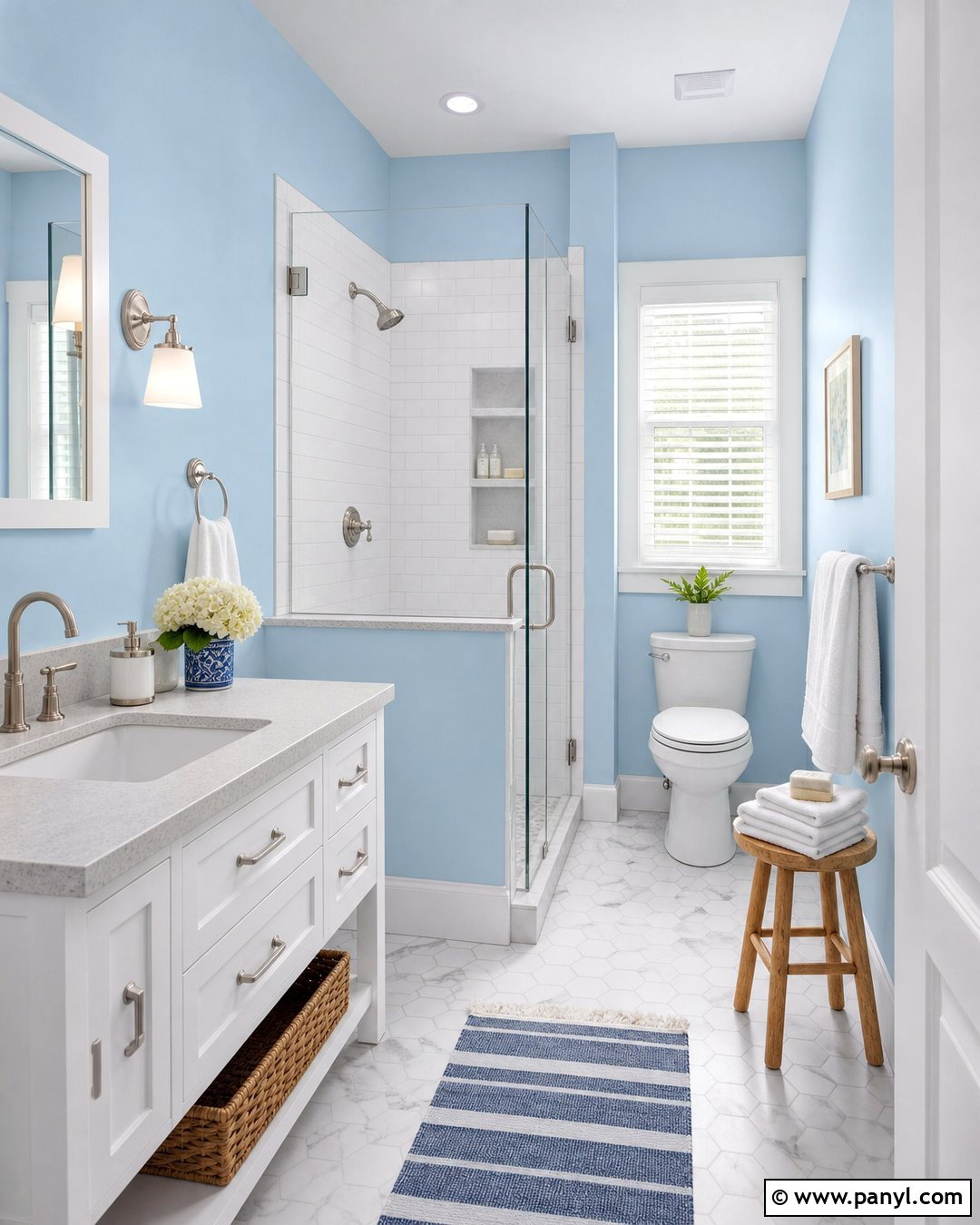
Powder blue walls can make a bathroom feel airy, peaceful, and pleasantly classic. Build a complete scheme with a white vanity, pale gray quartz counter, and glossy white subway tile around the shower. Polished nickel faucets and glass sconces reflect light without introducing harsh contrast. For flooring, use small marble-look hexagonal tile with soft gray grout. Add white towels, a striped blue bath mat, and one light wood stool to warm the cooler palette. Powder blue is especially effective in compact bathrooms because the color remains visible without dominating the room. Paint the trim bright white for a crisp finish, and select simple artwork with cream or sandy tones to keep the design relaxed rather than overly themed.
12. Soft Sky Blue Bathroom Walls
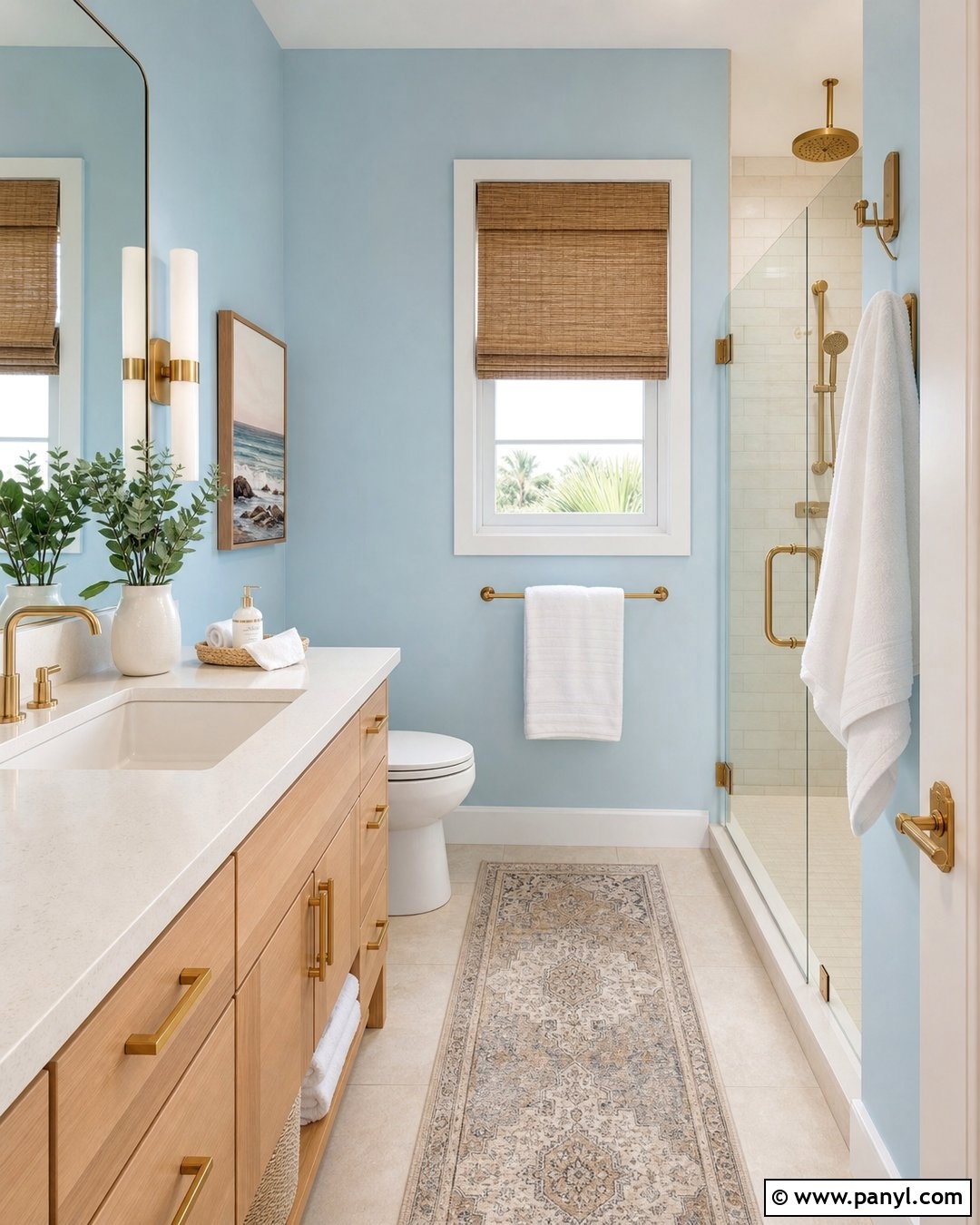
Soft sky blue brings the feeling of clear daylight into a bathroom, even when the room has a small window. Pair the walls with a natural maple vanity, white quartz countertop, and warm white shower tile to create a light but balanced design. Champagne bronze hardware offers a warmer alternative to chrome and prevents the blue from feeling chilly. Use pale beige porcelain flooring, white towels, and a woven window shade for natural texture. A frameless mirror and slim sconces maintain an uncluttered appearance. This shade works particularly well in a guest bathroom because it is welcoming and easy to coordinate. Avoid strong nautical accessories; simple ceramics, light woods, and neutral textiles create a more versatile finished space.
13. Blue Gray Bathroom Walls
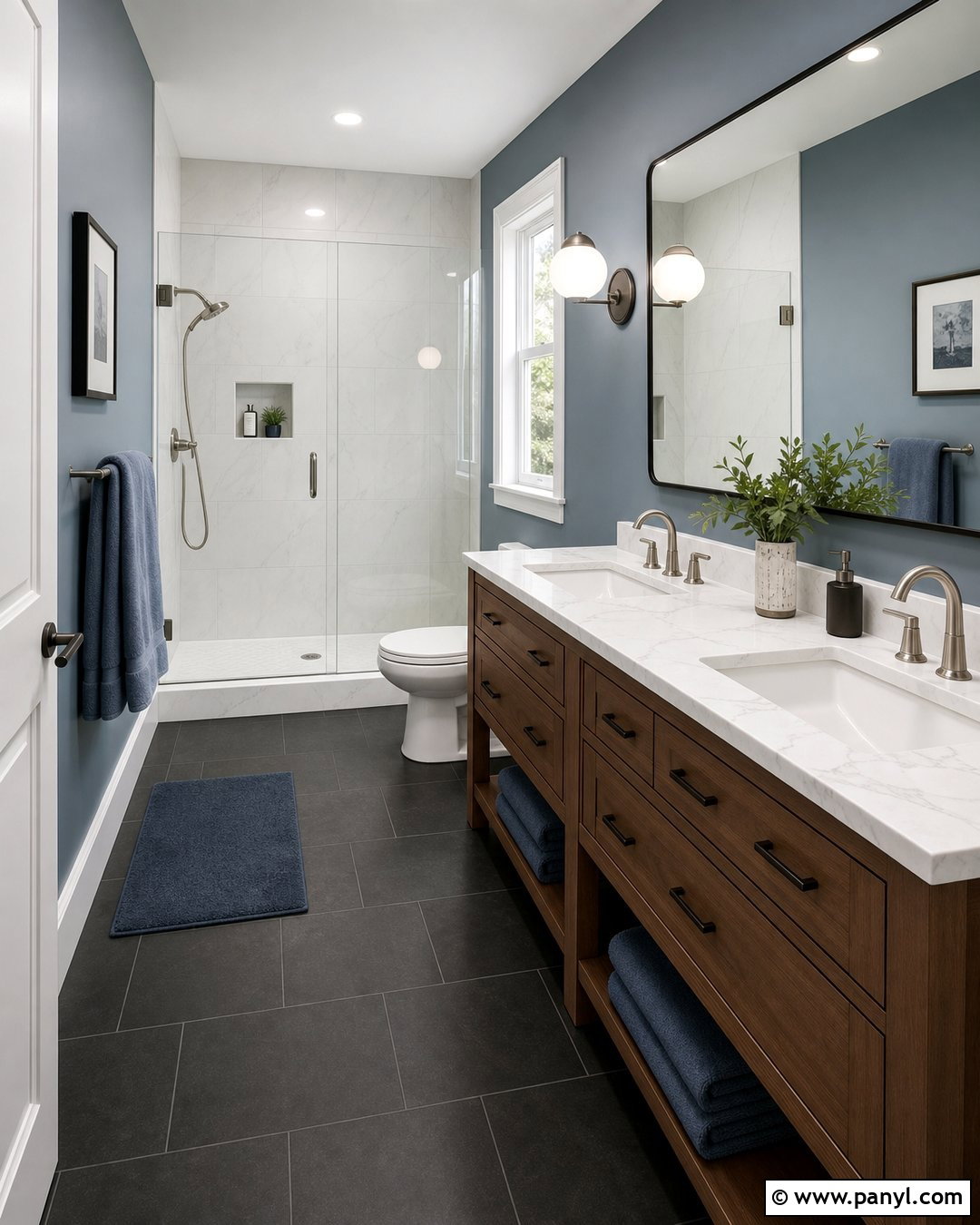
Blue-gray walls create a composed bathroom that bridges cool tile and warm wood. Select a medium-light shade with enough blue to read as color, then pair it with a walnut vanity and white marble-look countertop. Large white shower tiles brighten the design, while charcoal floor tile grounds it. Use brushed nickel faucets, a thin black mirror frame, and simple white globe lighting for a measured mix of finishes. Soft gray towels and a muted blue rug layer the palette without adding visual clutter. This wall color is particularly useful when existing tile has gray veining. Repeat the blue-gray on the door for continuity, but keep the trim and ceiling soft white to preserve definition and an open feeling.
14. Deep Navy Bathroom Walls
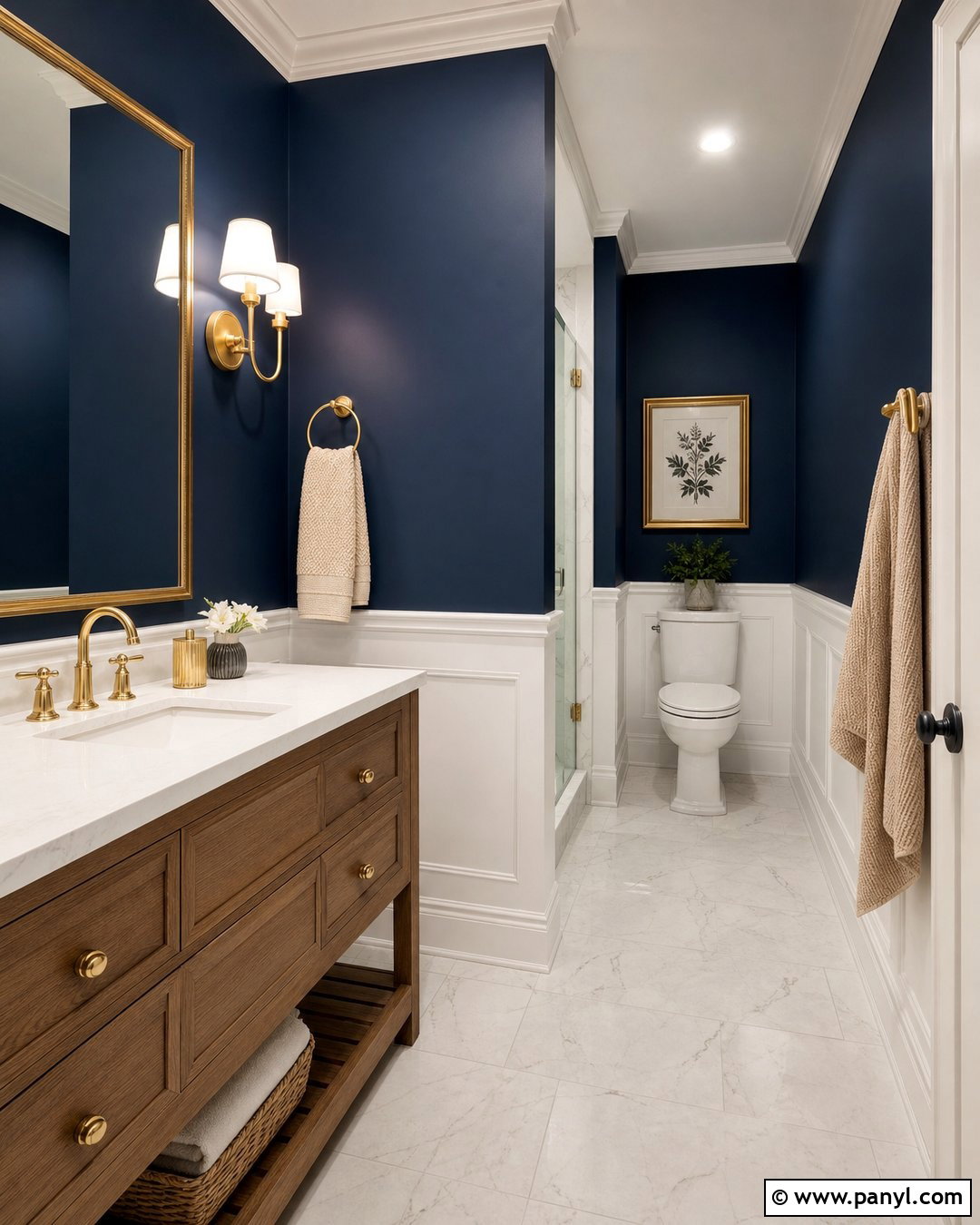
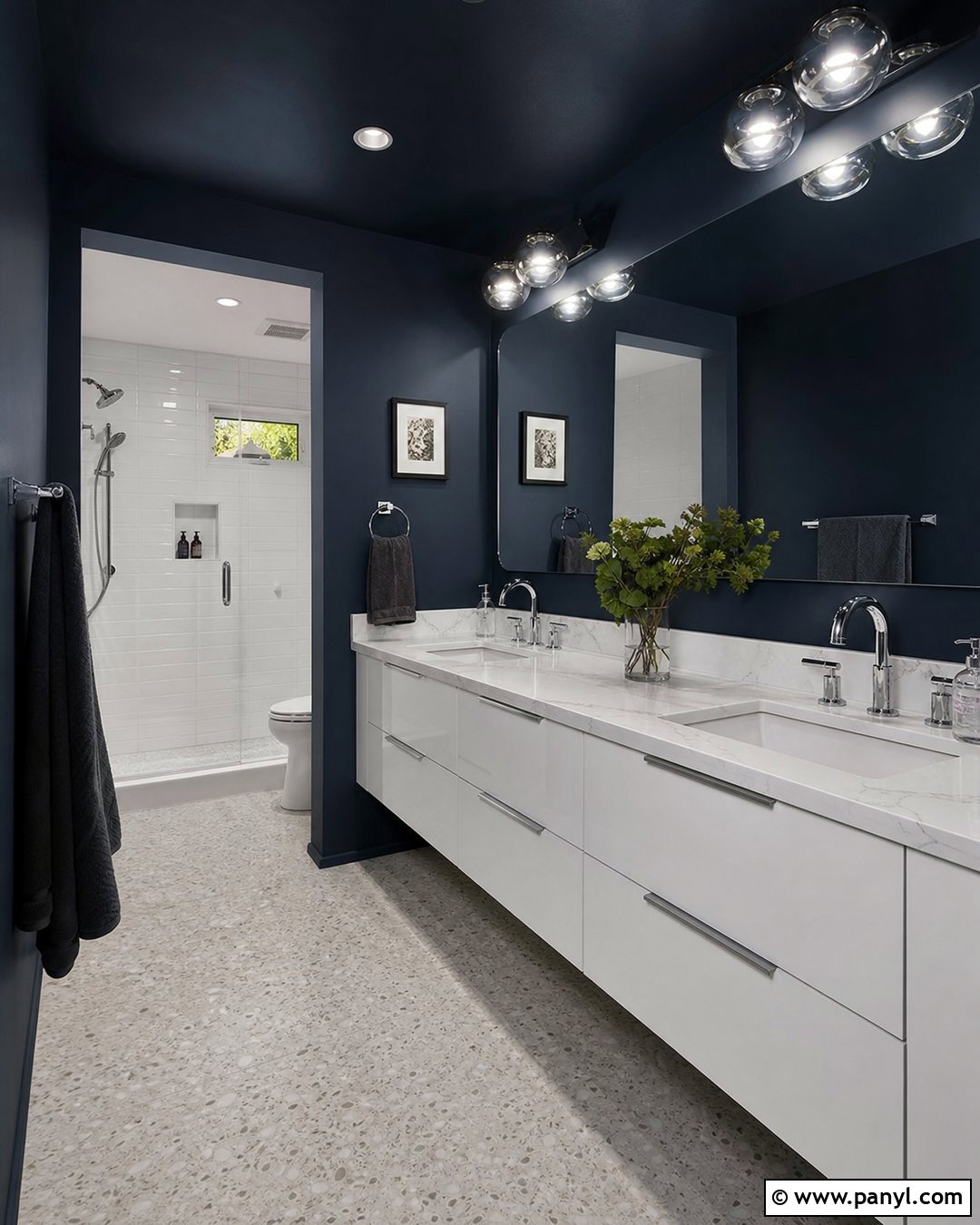
Deep navy turns a bathroom into a dramatic, tailored space when balanced with bright surfaces. Use navy on all walls in a powder room, or above white paneling in a larger bathroom. Pair it with a white vanity or medium oak cabinet, a clean quartz top, and polished brass fixtures. White marble-look flooring reflects light upward, while a large mirror prevents the dark color from feeling flat. Add two bright sconces at face level and keep the ceiling warm white. Towels in white or pale tan soften the contrast. Navy also works with classic details such as framed mirrors and paneled doors. The finished design feels bold and complete, yet the neutral permanent materials keep it adaptable over time.
15. Muted Teal Bathroom Walls
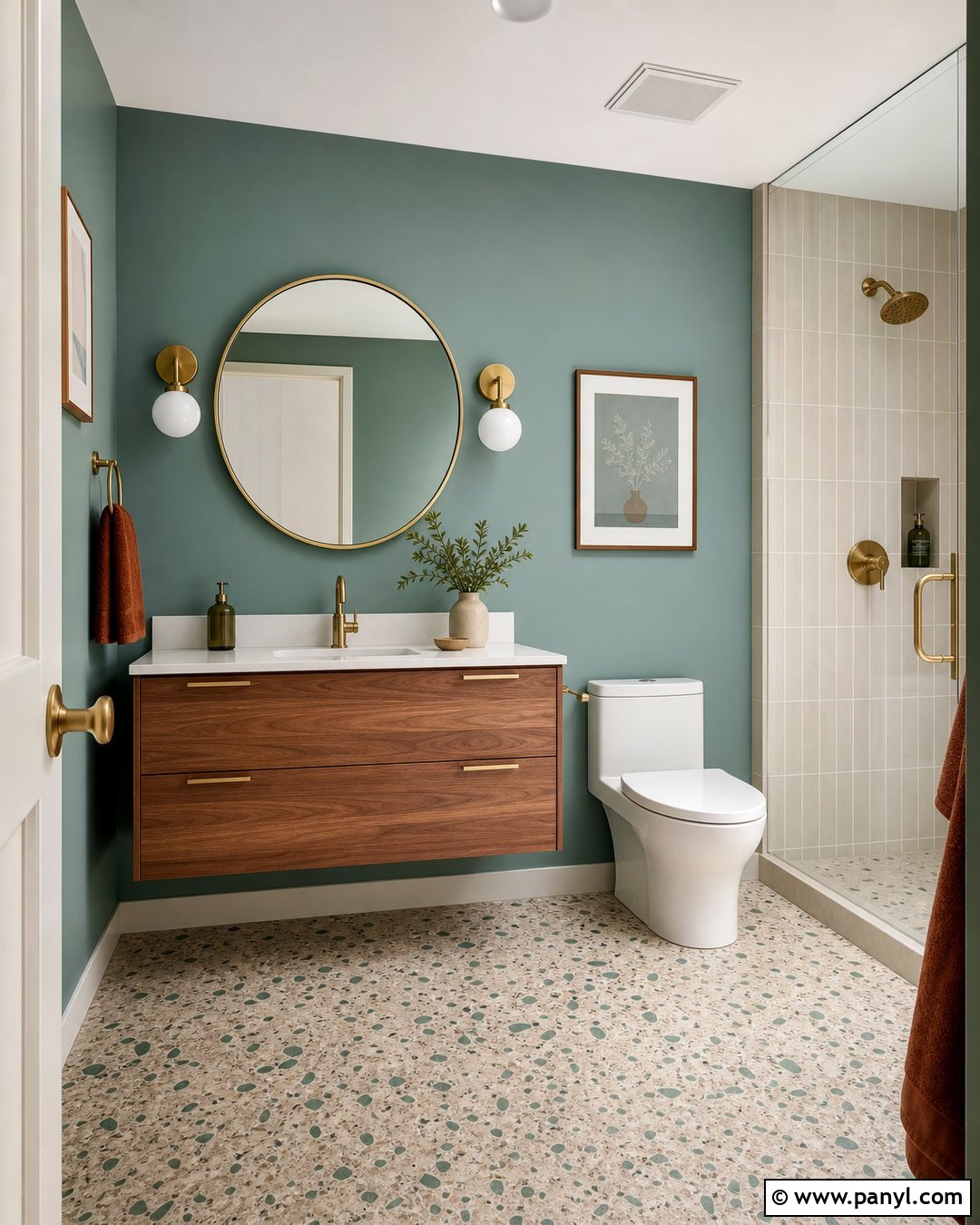
Muted teal combines blue and green to give bathroom walls personality without creating an overly bright room. Pair it with a floating walnut vanity, white counter, and cream vertical shower tile. Brushed brass faucets highlight the warmer side of teal, while terrazzo flooring with beige and green flecks connects the full palette. Use a round mirror and simple globe sconces to soften the vanity area. White towels keep the room crisp, and rust-colored hand towels can add one controlled accent. This color is well suited to a windowed guest bathroom or powder room where a more memorable look is welcome. Keep cabinetry streamlined and decorative pieces limited so the teal remains rich, modern, and visually balanced.
16. Blush Pink Bathroom Walls
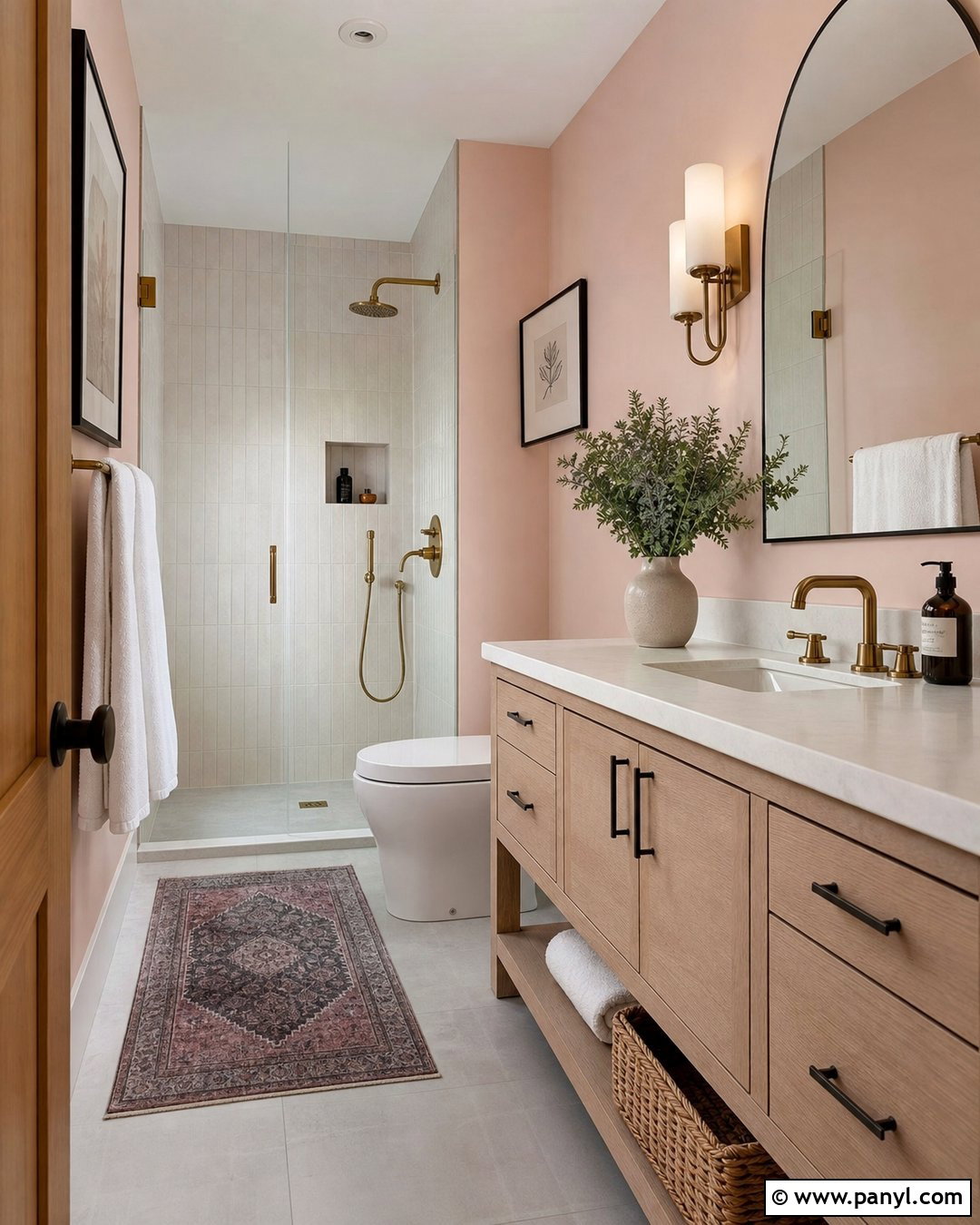
Blush pink walls create a soft bathroom that feels warm, flattering, and surprisingly versatile. Choose a muted pink with beige undertones rather than a sugary pastel. Pair it with a light oak vanity, ivory quartz counter, and creamy white shower tile. Brushed brass fixtures enhance the warmth, while pale gray floor tile provides a quiet counterbalance. Add an arched mirror, white towels, and a small woven basket to complete the room without making it overly decorative. Charcoal accents, such as a narrow picture frame or cabinet knob, can sharpen the palette. Blush works particularly well in bathrooms with limited natural light because it adds gentle warmth. Keep the trim ivory for a smooth, low-contrast finished scheme.
17. Dusty Rose Bathroom Walls
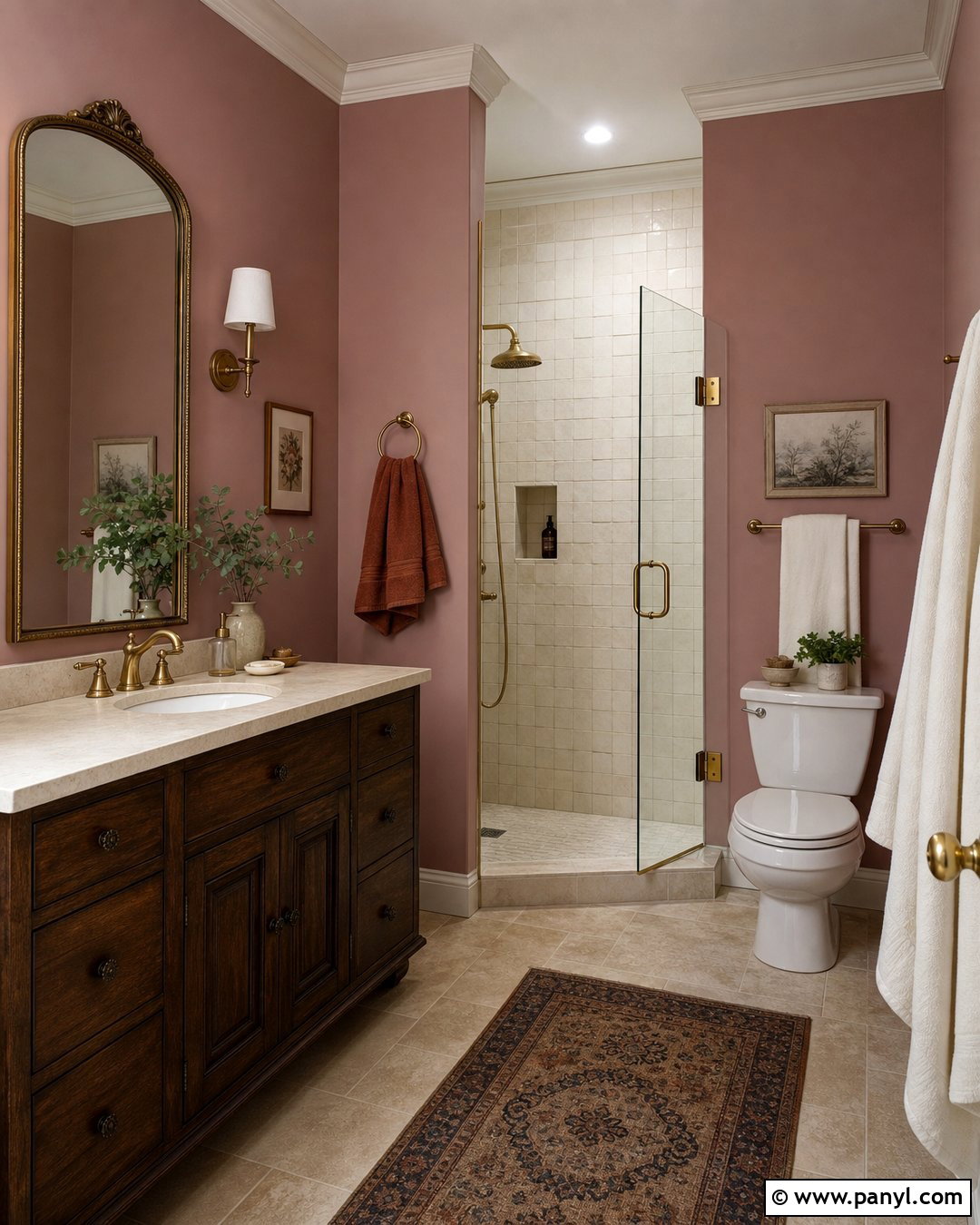
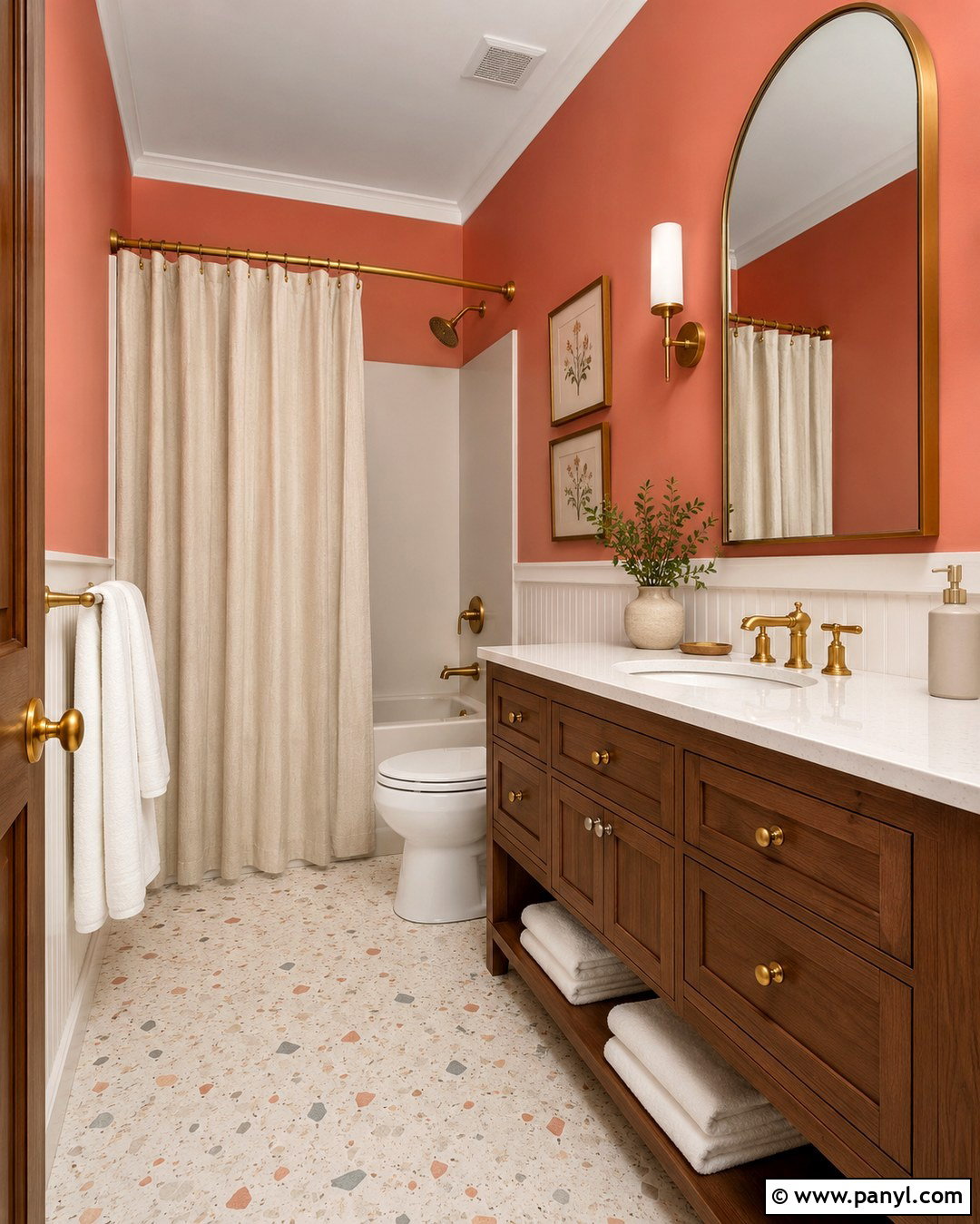
Dusty rose offers more depth than blush, giving bathroom walls a warm, earthy character. Design the room with a dark wood vanity, off-white stone counter, and handmade cream shower tile. Antique brass faucets and an aged brass mirror suit the muted color, while tan stone-look flooring connects the walls to the natural materials. Use ivory bath linens and a single burgundy or rust-colored hand towel for subtle tonal variation. Bright globe sconces are important because dusty rose can look brown in weak light. This complete scheme works especially well in a vintage-inspired powder room or an older home with detailed trim. Paint the trim warm white to frame the color and maintain a clean, updated appearance.
18. Soft Terracotta Bathroom Walls
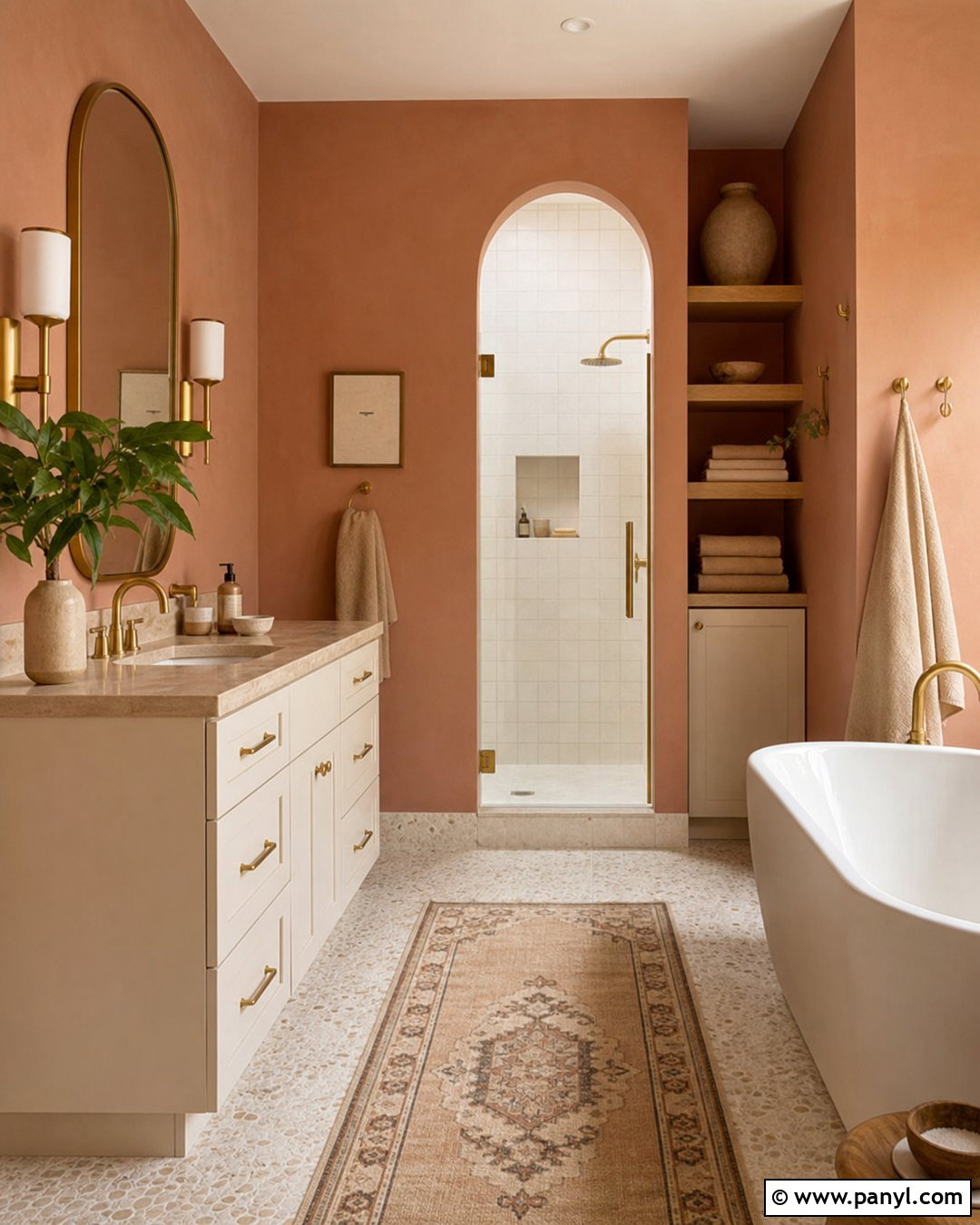
Soft terracotta walls bring sun-warmed character to a bathroom while remaining calmer than strong orange. Pair this clay color with a cream vanity, light travertine counter, and warm white shower tile. Natural oak shelving and brushed brass hardware strengthen the earthy palette. For the floor, choose beige terrazzo or small ivory tile with warm grout. A large frameless mirror and bright white lighting keep the terracotta from visually closing in the room. Add sand-colored towels, handmade ceramic accessories, and one restrained green plant for contrast. This scheme works particularly well in bathrooms with Mediterranean, Southwestern, or organic modern influences. Keep the ceiling and major plumbing fixtures white so the finished space stays balanced, practical, and fresh.
19. Charcoal Bathroom Walls
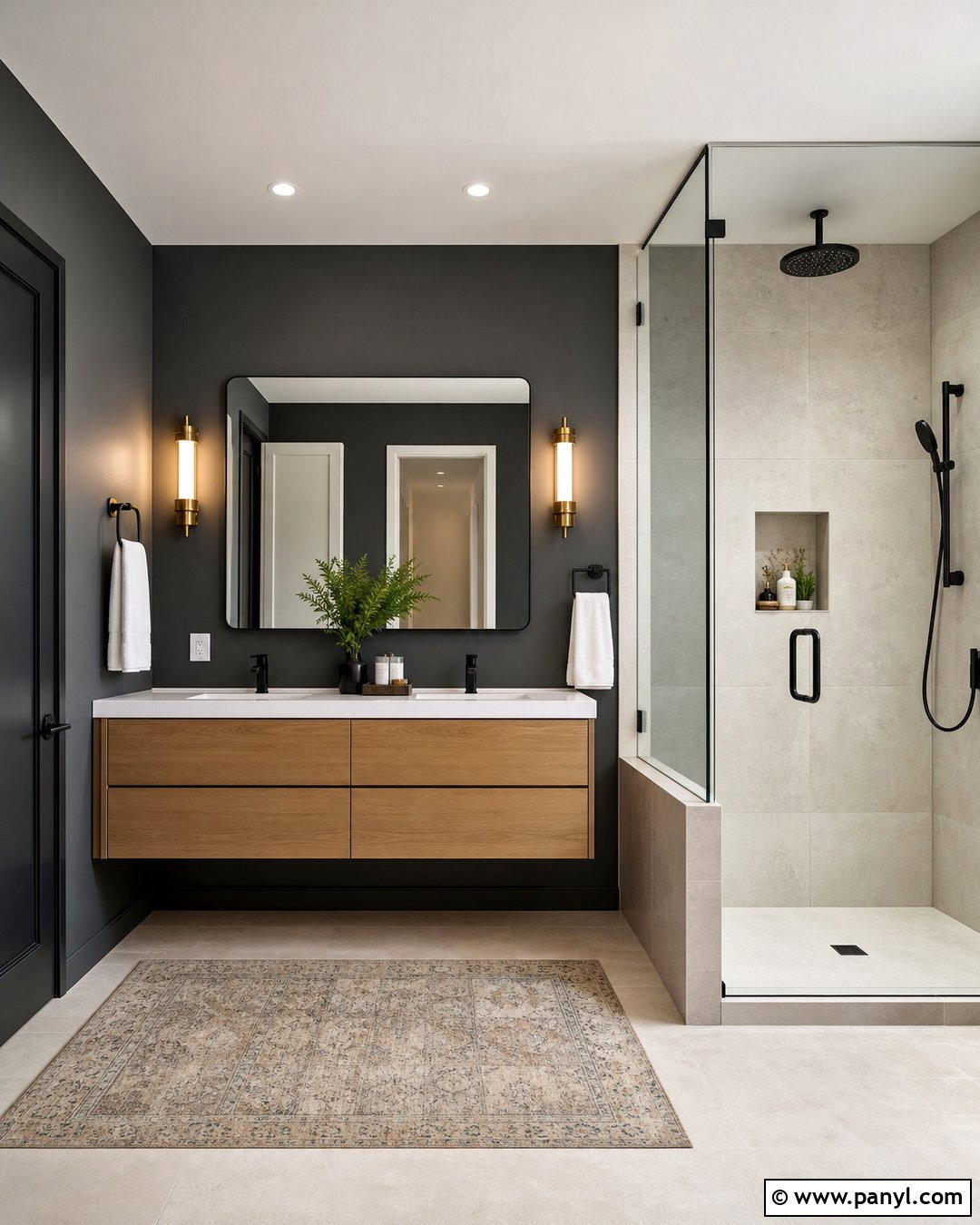
Charcoal bathroom walls create a strong architectural backdrop for pale tile and warm wood. Choose a softened charcoal rather than a pure black, then pair it with a floating oak vanity and bright white quartz counter. Large ivory shower tiles and light stone flooring provide contrast across the room. Matte black hardware blends quietly into the walls, while brushed brass sconces add controlled warmth near the mirror. Use white towels and a generous frameless mirror to break up the darker surfaces. Charcoal is best supported by multiple light sources, including ceiling lights and vanity lighting. In a small powder room, painting the door and trim charcoal can create a cohesive envelope. Keep accessories simple so the contrast remains clean and intentional.
20. Soft Lavender Bathroom Walls
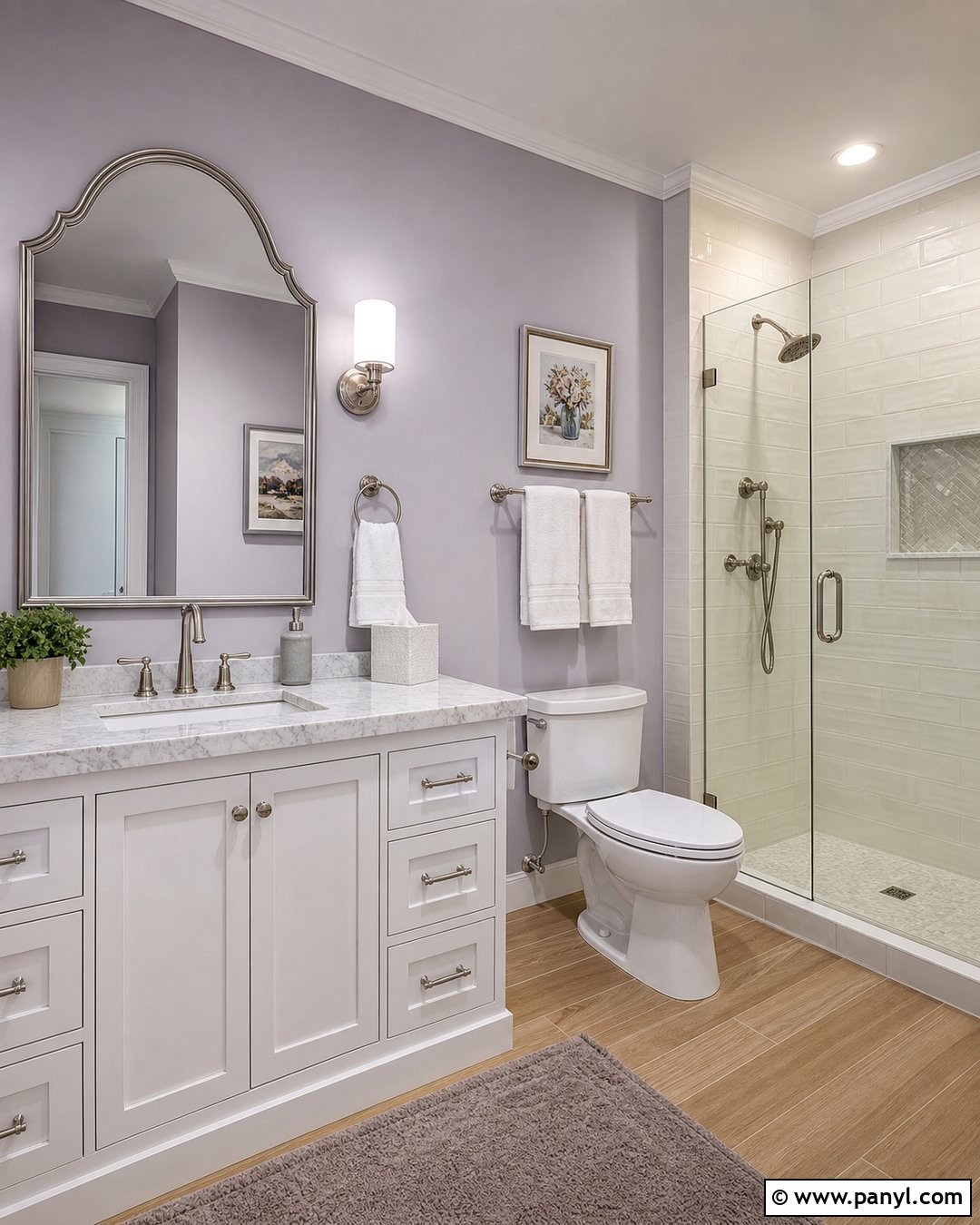
Soft lavender gives bathroom walls an unexpected hint of color while maintaining a light, restful atmosphere. Choose a gray-based lavender rather than a bright purple, then pair it with a white vanity, pale marble-look counter, and glossy ivory shower tile. Polished nickel fixtures complement the cooler undertones, while light oak flooring or cabinetry prevents the room from feeling cold. Add white towels, a warm gray bath mat, and an arched mirror with a slim silver frame. Soft lavender suits traditional bathrooms with paneling as well as simple contemporary spaces. For a balanced result, repeat the color only once through a subtle textile or artwork. Keep the ceiling and trim soft white to make the walls appear clear and refined.
Conclusion:
The 20 Best Colors For Bathroom Walls provide options for every room size, lighting condition, and decorating preference. Warm white, ivory, cream, greige, and taupe offer flexibility when permanent finishes need to remain neutral. Sage, eucalyptus, powder blue, and blue-gray support a calm, spa-like atmosphere. Olive, navy, teal, terracotta, dusty rose, and charcoal create richer bathrooms with more personality. Whichever color you prefer, coordinate it with the vanity, countertops, flooring, tile, lighting, and hardware before painting. Test large samples on several walls and view them in morning, afternoon, and artificial light. A carefully chosen color will connect the entire bathroom and make even a simple update feel complete.

Related Ideas and Inspiration:
Leave a Reply