
Choosing the right wall color can make cabinets, counters, flooring, and lighting feel more connected. These 20 Benjamin Moore Kitchen Colors For Walls include clean whites, warm neutrals, gentle greens, airy blues, and dramatic dark tones. Each palette below creates a complete kitchen look rather than treating paint as an isolated choice. You will find combinations for white, wood, gray, cream, and colorful cabinetry, along with practical suggestions for backsplash tile, hardware, flooring, and finishes. Benjamin Moore recommends eggshell, satin, or semi-gloss finishes for kitchen walls because these surfaces are easier to maintain around moisture, grease, and stains. () Use the following 20 Benjamin Moore Kitchen Colors For Walls to build a polished, cohesive room.

1. Simply White Kitchen Walls
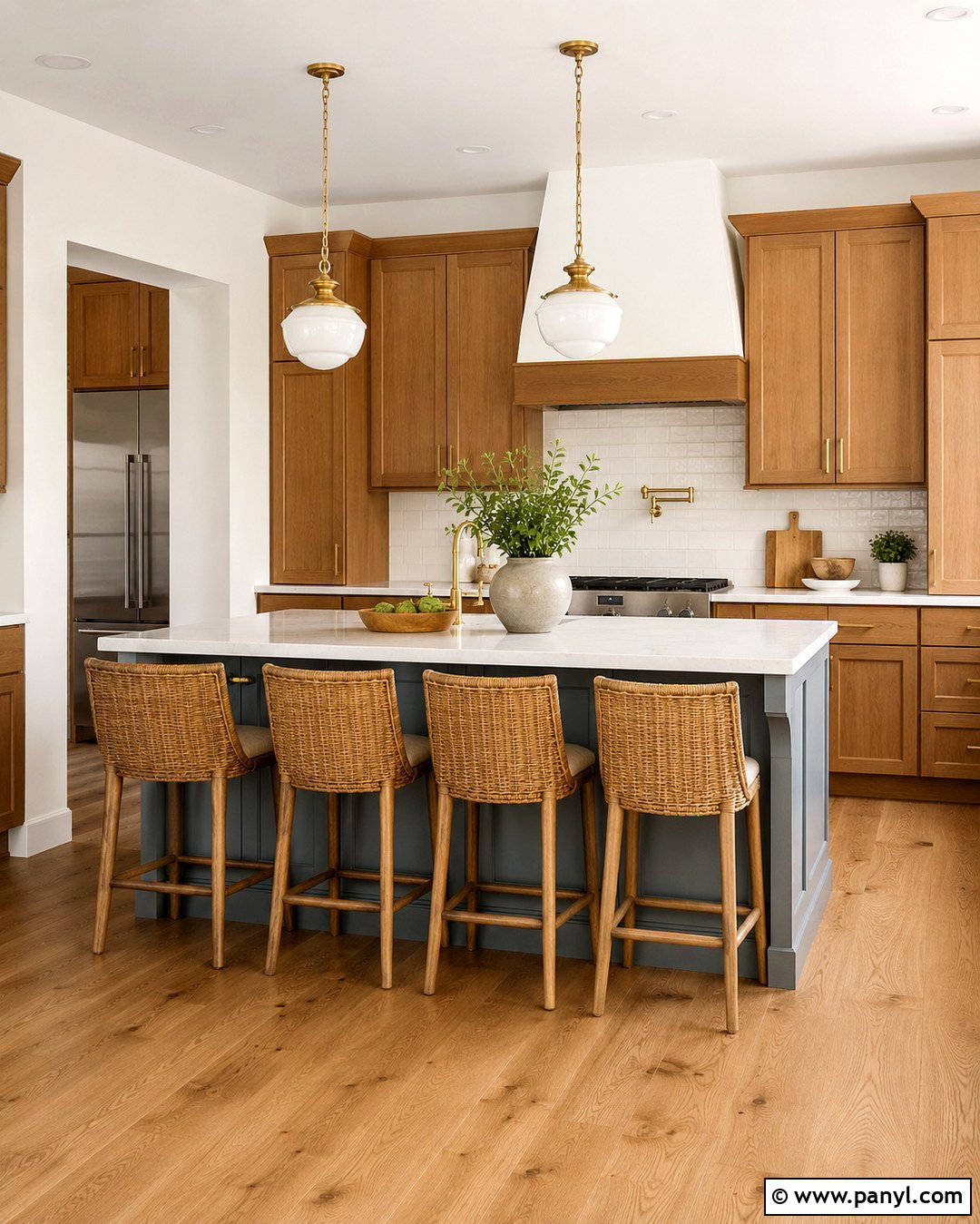
Simply White OC-117 creates a clean backdrop without making a kitchen feel cold or overly clinical. Its gentle warmth works especially well with medium oak cabinets, white quartz counters, and a glossy cream subway tile backsplash. Add brushed brass hardware and milk-glass pendants to continue the warm direction. Light oak flooring keeps the room open, while woven counter stools add natural texture. For contrast, paint the island a muted blue-gray and repeat that shade through small accessories. This complete palette suits transitional kitchens because it balances traditional materials with straightforward modern lines. Use a washable eggshell finish on the walls and a slightly shinier finish on the trim so the architectural details remain crisp and easy to clean. ()
2. White Dove Kitchen Walls
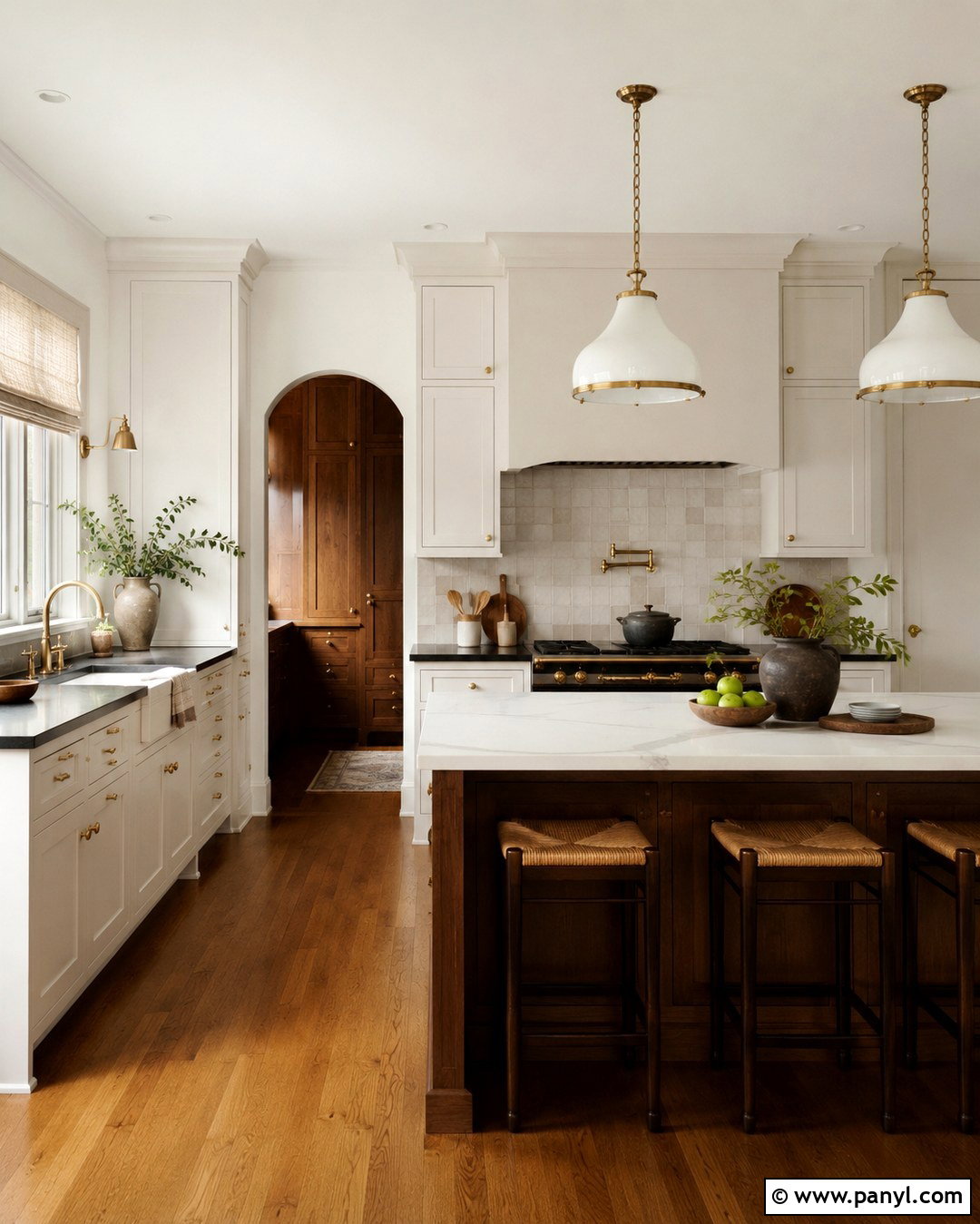
White Dove OC-17 brings a soft, comfortable quality to kitchens with cooler materials. Pair these walls with warm white cabinets so the two surfaces blend without looking completely flat. Honed soapstone counters, a handmade pale gray backsplash, and unlacquered brass hardware create a layered traditional look. Walnut accents on the island, range hood, or open shelves provide enough depth to ground the light palette. Choose medium brown oak flooring rather than gray flooring to support the warmth in the paint. Linen Roman shades and simple ceramic pendants finish the room without adding visual clutter. This scheme is especially useful in kitchens that receive balanced natural light and need a versatile off-white that connects classic cabinetry with darker stone and natural wood. ()
3. Chantilly Lace Kitchen Walls
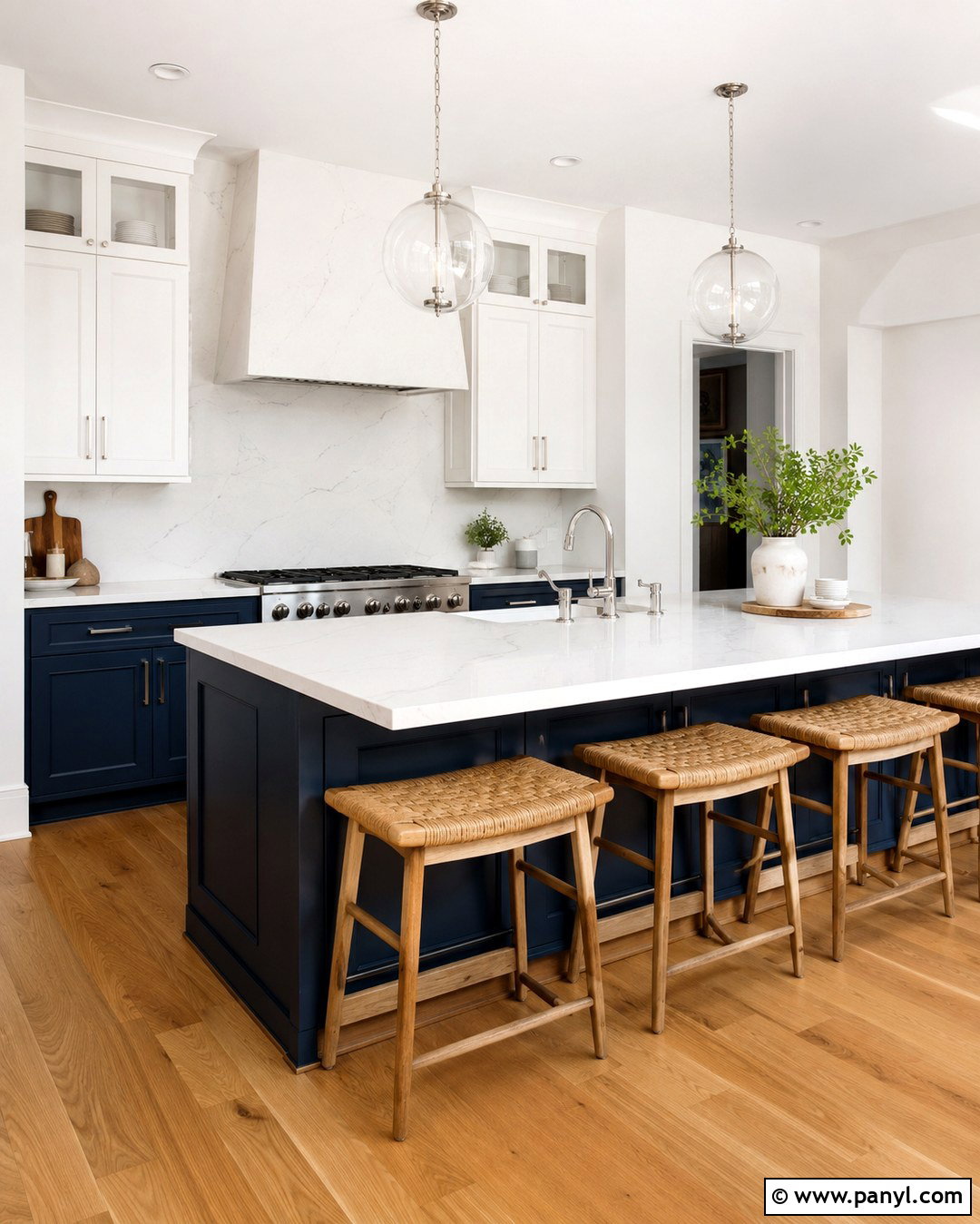
For a crisp, bright kitchen, Chantilly Lace OC-65 gives walls a fresh appearance that works beautifully with bold cabinetry. Use deep navy lower cabinets and matching island cabinetry, then keep the upper cabinets white for visual breathing room. White marble-look quartz counters and a full-height slab backsplash make the space feel seamless. Polished nickel hardware adds shine without introducing another strong color. Warm the scheme with natural oak flooring, woven stools, and a few pale wood cutting boards. Clear glass pendants prevent the darker cabinets from making the room appear heavy. This balanced design is ideal for a sunny kitchen where a clear white wall color can reflect daylight while highlighting the architectural contrast between navy, white, stone, and wood. ()
4. Swiss Coffee Kitchen Walls
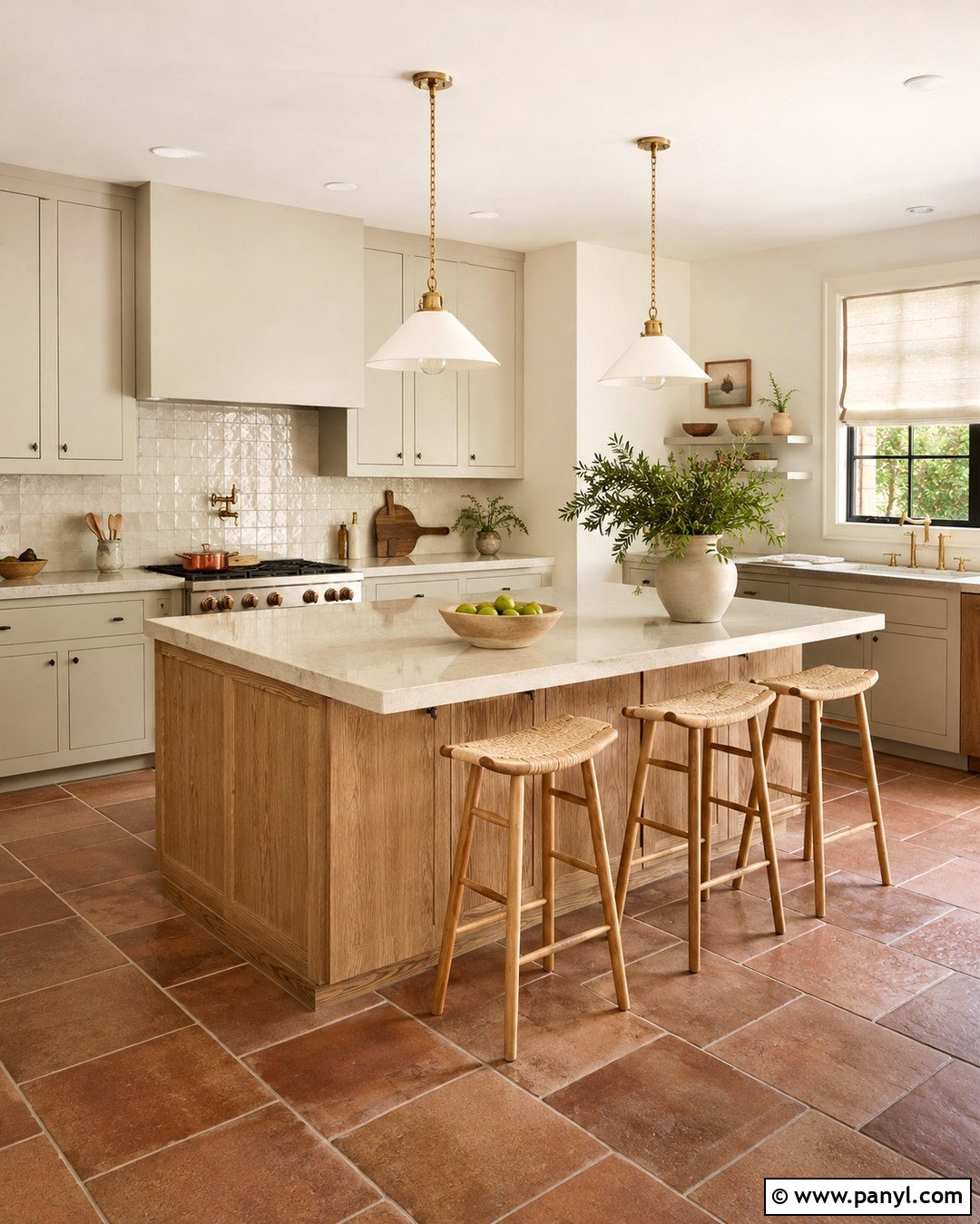
Swiss Coffee OC-45 gives a kitchen a warm, creamy foundation that looks inviting with earthy materials. Combine it with mushroom-colored cabinets, creamy quartzite counters, and a softly textured zellige tile backsplash. A white oak island introduces natural variation, while aged brass knobs and warm metal pendants reinforce the relaxed palette. Terracotta floor tile can bring depth to a Mediterranean-inspired room, although medium oak flooring also works for a quieter result. Keep window treatments light and simple so the creamy walls remain bright during the day. Avoid pairing this scheme with icy whites, which may make the warmth appear more yellow. Instead, repeat soft cream, beige, clay, and brown throughout the room for a cohesive kitchen that feels collected and comfortable.
5. Gray Owl Kitchen Walls
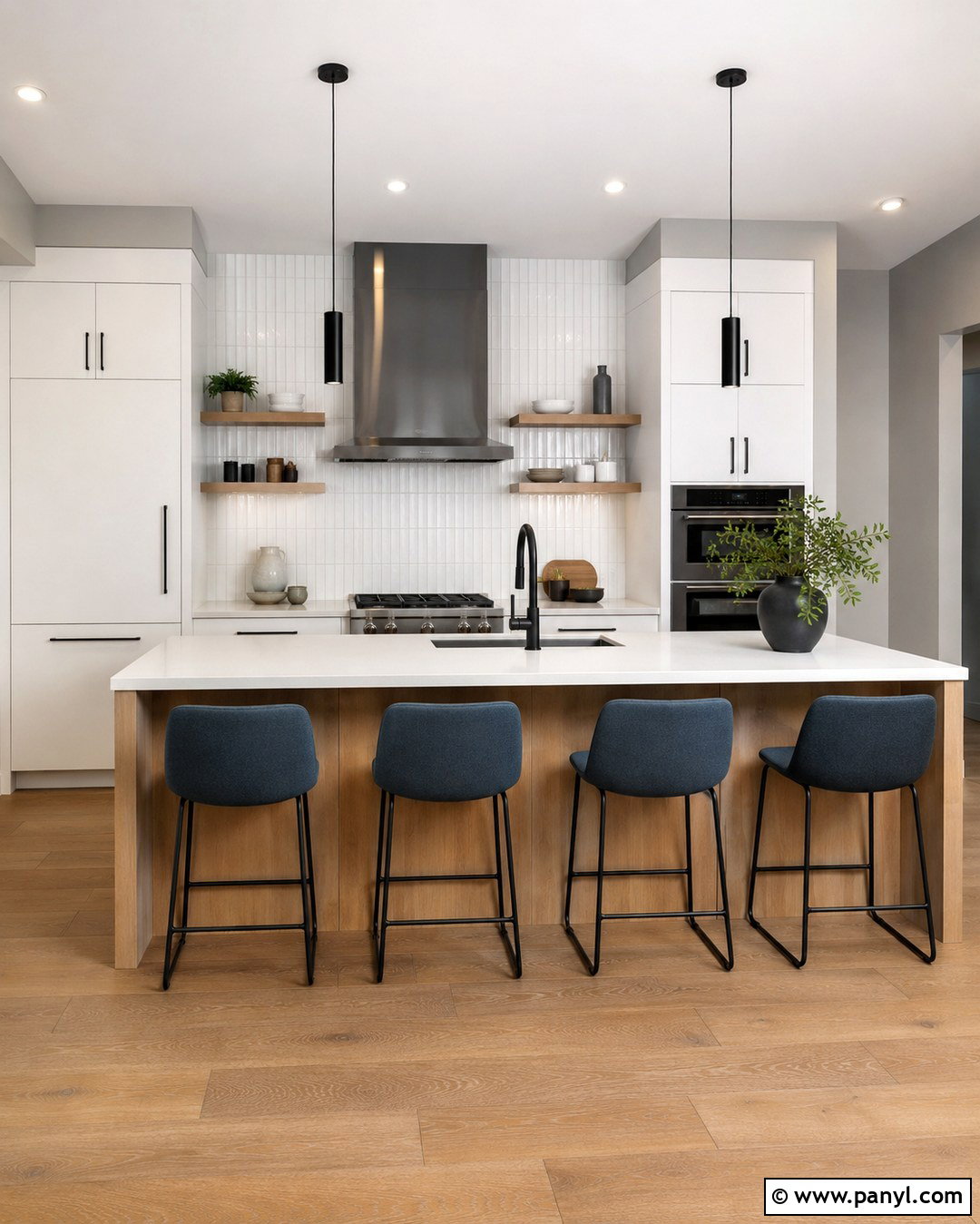
Gray Owl OC-52 offers a light gray background that can feel calm and airy around strong black details. Pair it with flat-panel white cabinets, pale quartz counters, and a white vertical tile backsplash for a clean contemporary layout. Matte black faucets, cabinet pulls, and slim pendant lights define the room without overwhelming it. Add a white oak island and matching floating shelves to soften the cooler surfaces. Medium-toned oak flooring helps the kitchen feel warmer underfoot, while blue-gray counter stools subtly echo the walls. This complete combination works well in open-concept homes because the wall color provides a gentle transition into nearby neutral rooms. Sample the paint beside the cabinets throughout the day, since surrounding light and materials can affect how a neutral appears. ()
6. Revere Pewter Kitchen Walls
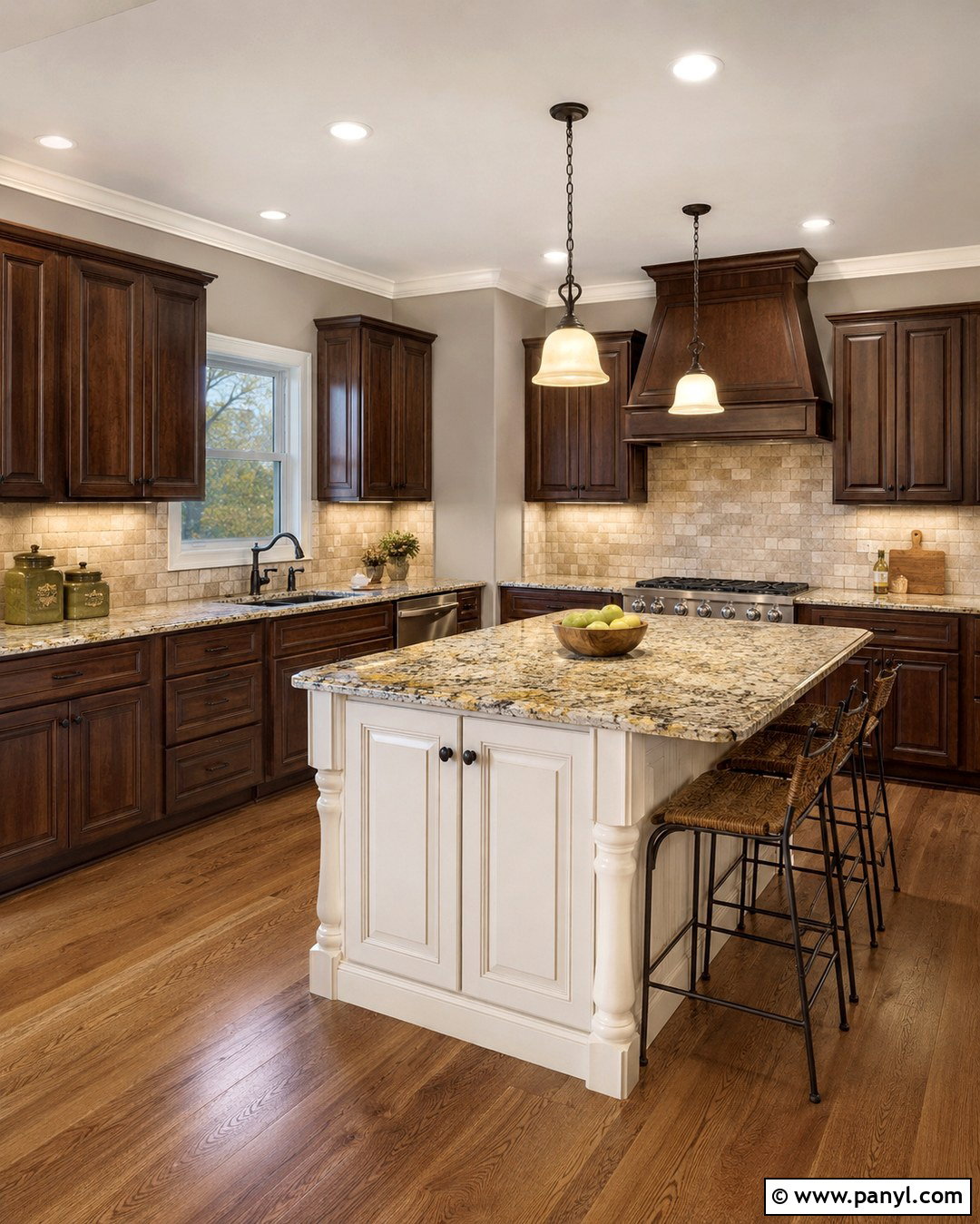
Revere Pewter HC-172 creates a warm greige envelope that suits kitchens with traditional wood cabinetry. Use it beside deep walnut or cherry cabinets, creamy granite counters, and a tumbled limestone backsplash. Oil-rubbed bronze hardware supports the deeper wood tones, while ivory pendant shades prevent the room from feeling too dark. If the kitchen has limited daylight, add undercabinet lighting and keep the ceiling a warm white. Wide-plank oak flooring can connect the cabinets and walls while maintaining natural variation. A painted cream island offers relief from extensive dark wood and creates a brighter center. This design works best when the surrounding finishes share warm undertones, producing a settled, welcoming kitchen rather than a patchwork of cool and warm surfaces. ()
7. Pashmina Kitchen Walls
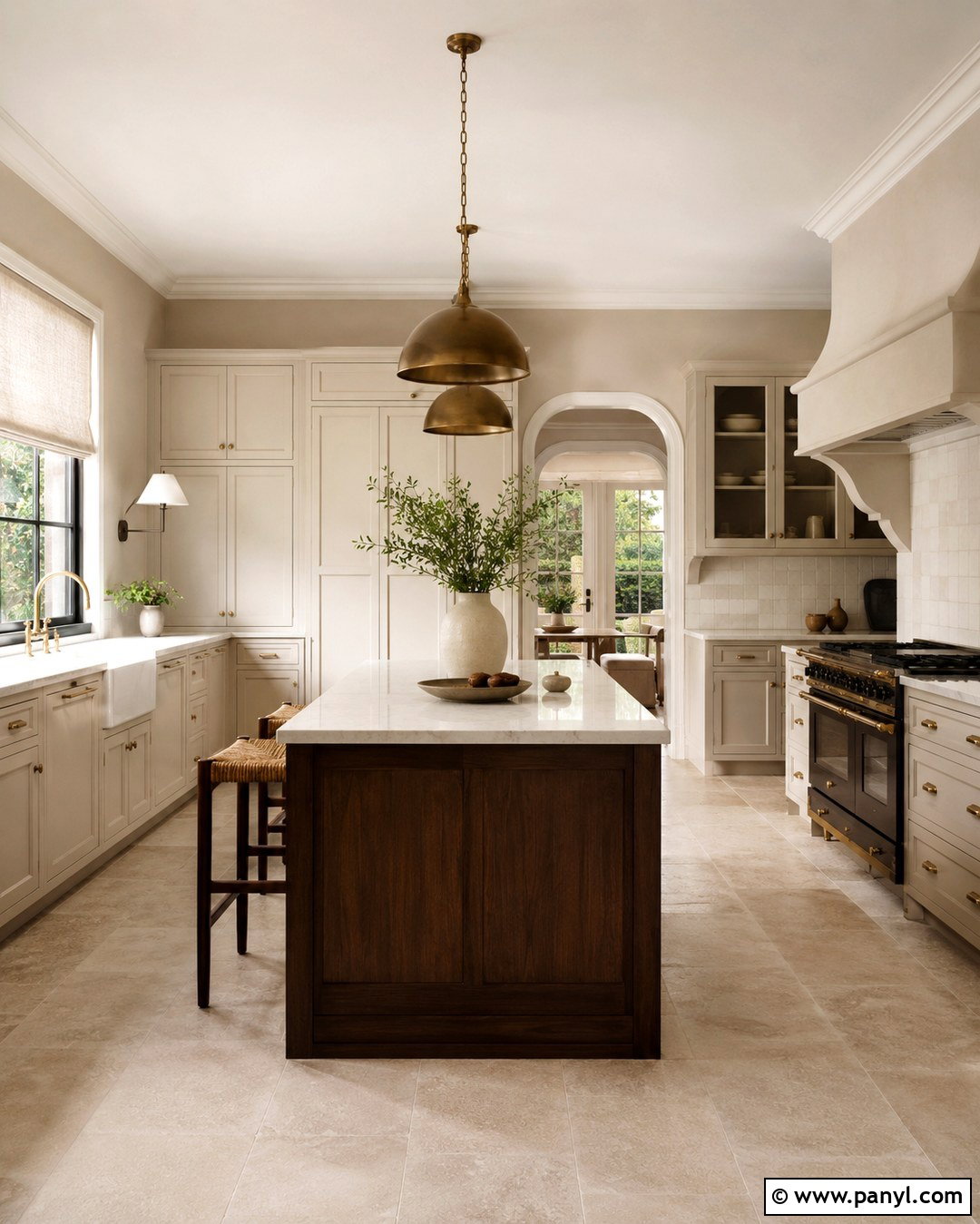
Pashmina AF-100 gives kitchen walls more depth than a pale neutral while remaining easy to coordinate with natural finishes. Build the room around creamy inset cabinets, dark bronze hardware, and warm white quartz counters with subtle veining. Use walnut on the island to create a strong focal point, then repeat it through shelving or counter stools. A backsplash of glossy ivory square tile reflects light against the deeper wall color. Natural limestone flooring creates a quiet European influence, although warm oak planks provide a softer alternative. Finish the space with linen shades, sculptural ceramic lamps, and simple brass pendants. Benjamin Moore highlights Pashmina among its favored kitchen neutrals, making it a practical option for a layered, sophisticated palette. ()
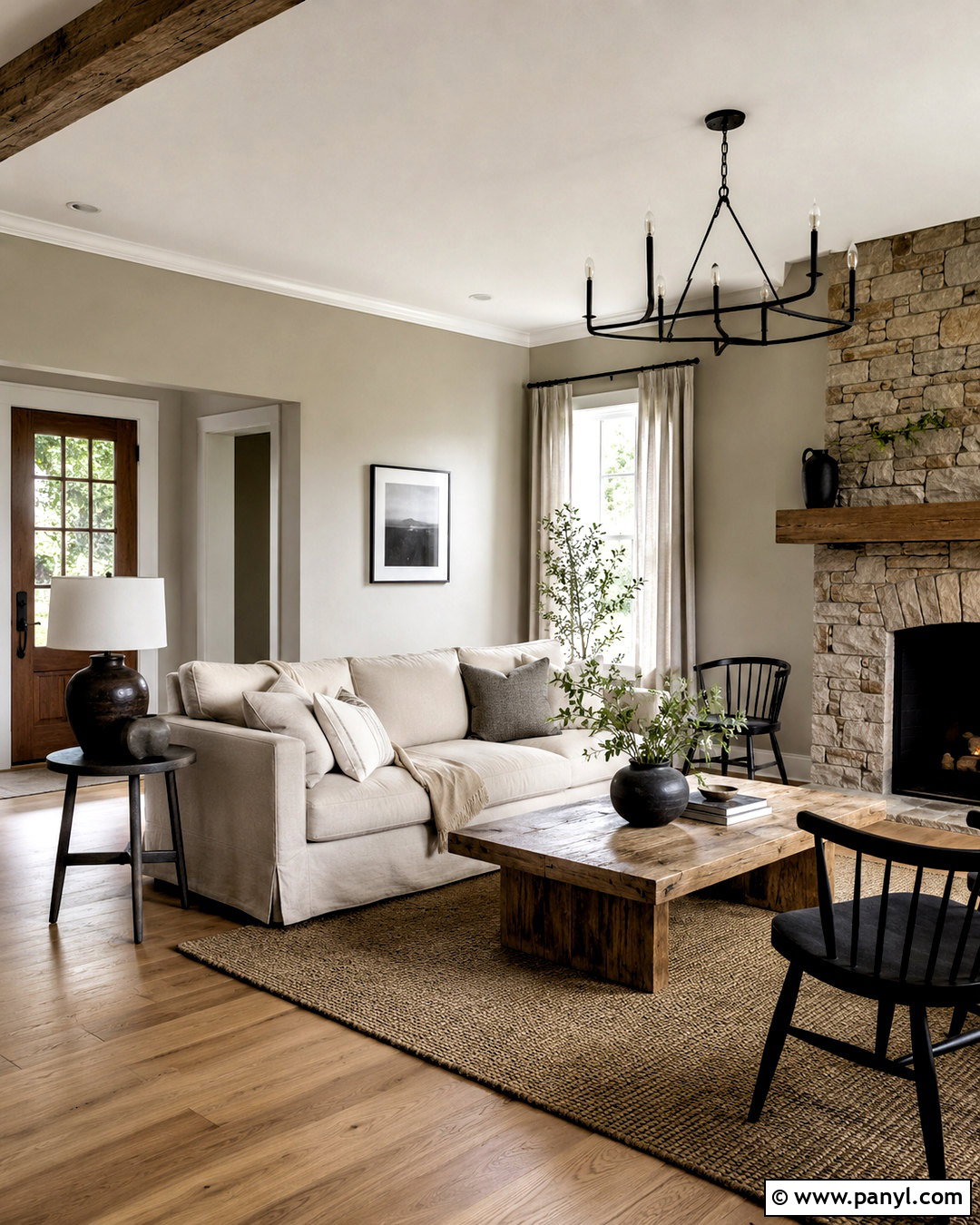
8. Hush Kitchen Walls
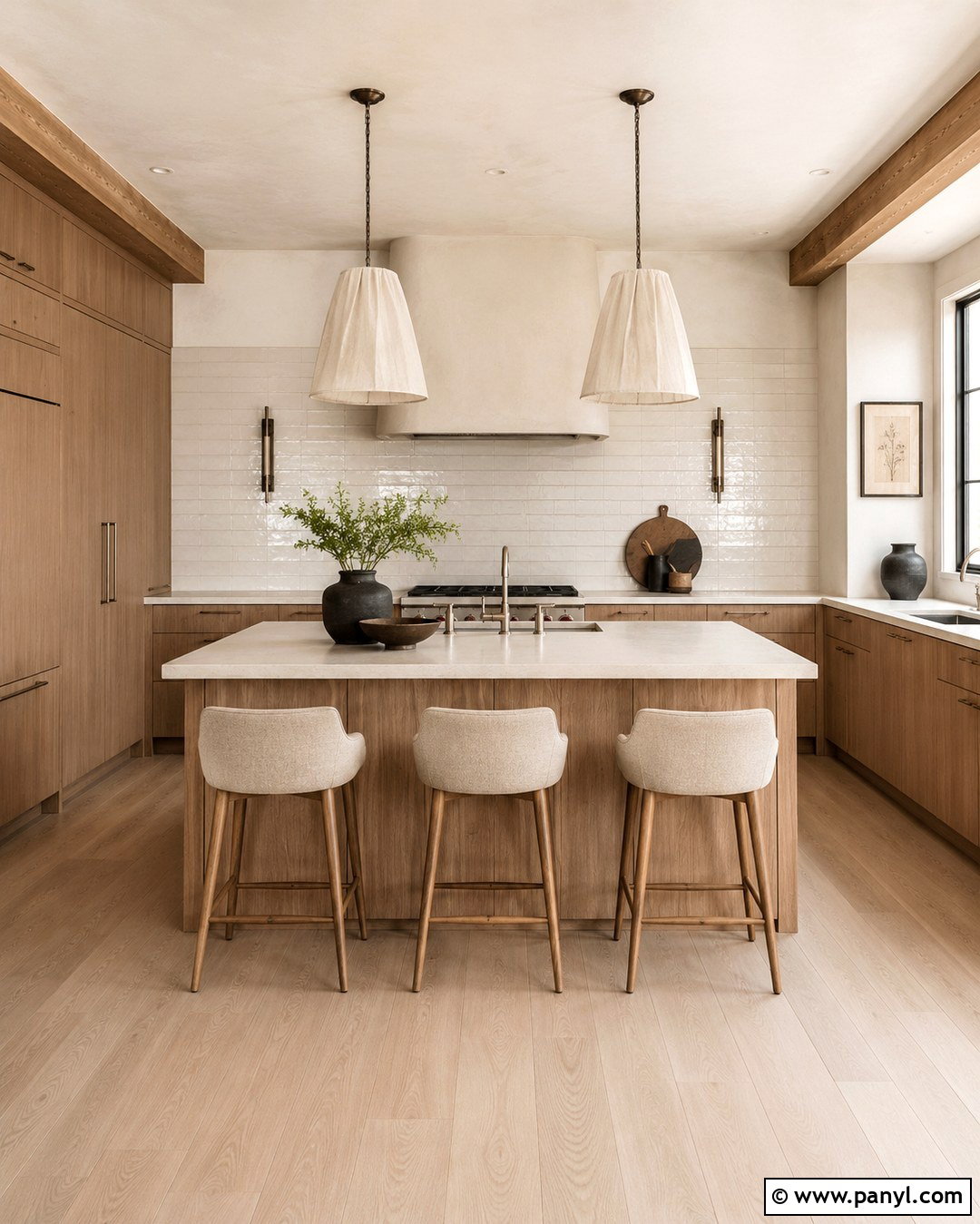
Hush AF-95 creates a subtle neutral background with enough warmth to complement both white cabinetry and pale wood. For a relaxed modern kitchen, pair it with rift-cut white oak cabinets, creamy solid-surface counters, and an off-white stacked tile backsplash. Choose brushed nickel hardware for a quiet finish that does not compete with the wood grain. A plaster-style range hood painted to match the walls makes the architecture feel integrated. Add light beige stools, linen pendants, and a few dark ceramic accessories for contrast. Pale oak flooring keeps the design cohesive from top to bottom. This is a useful palette for an open kitchen where the walls need to connect naturally with adjacent beige, taupe, or warm gray living spaces. ()
9. Monroe Bisque Kitchen Walls
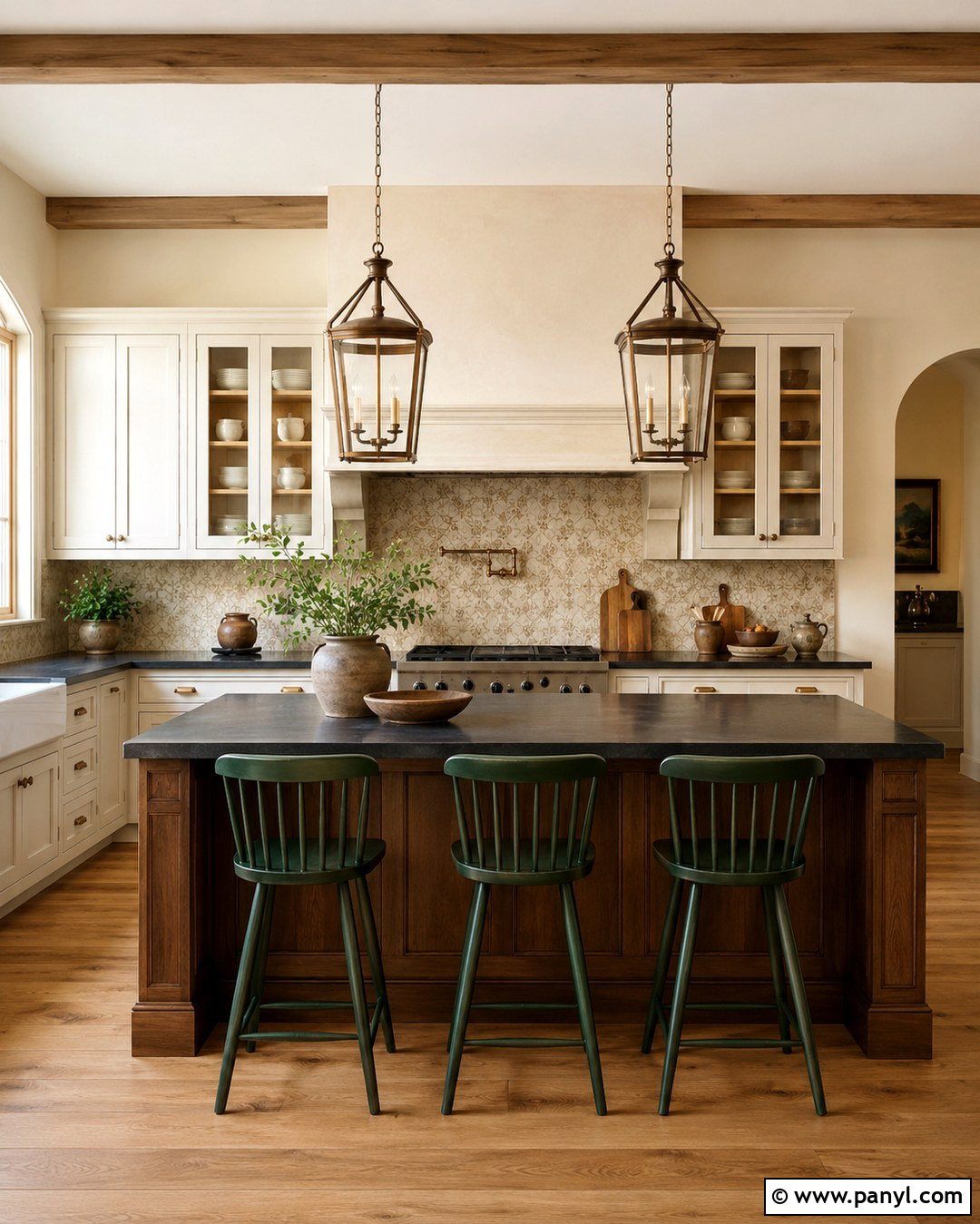
Monroe Bisque HC-26 brings soft golden warmth to a kitchen without requiring a bright yellow statement. Pair it with antique white cabinets, dark soapstone counters, and a cream-and-tan patterned backsplash. A stained walnut island introduces richness, while aged brass cup pulls and traditional lantern pendants give the room a classic character. Use brick-look porcelain or warm oak flooring to strengthen the comfortable farmhouse direction. Display only a few useful pieces, such as stoneware crocks and wood boards, so the warm palette stays organized rather than busy. Dark green accents on stools or window fabric can balance the golden walls. This coordinated scheme works particularly well in north-facing kitchens that need warmer visual energy and a more welcoming everyday atmosphere. ()
10. Philadelphia Cream Kitchen Walls
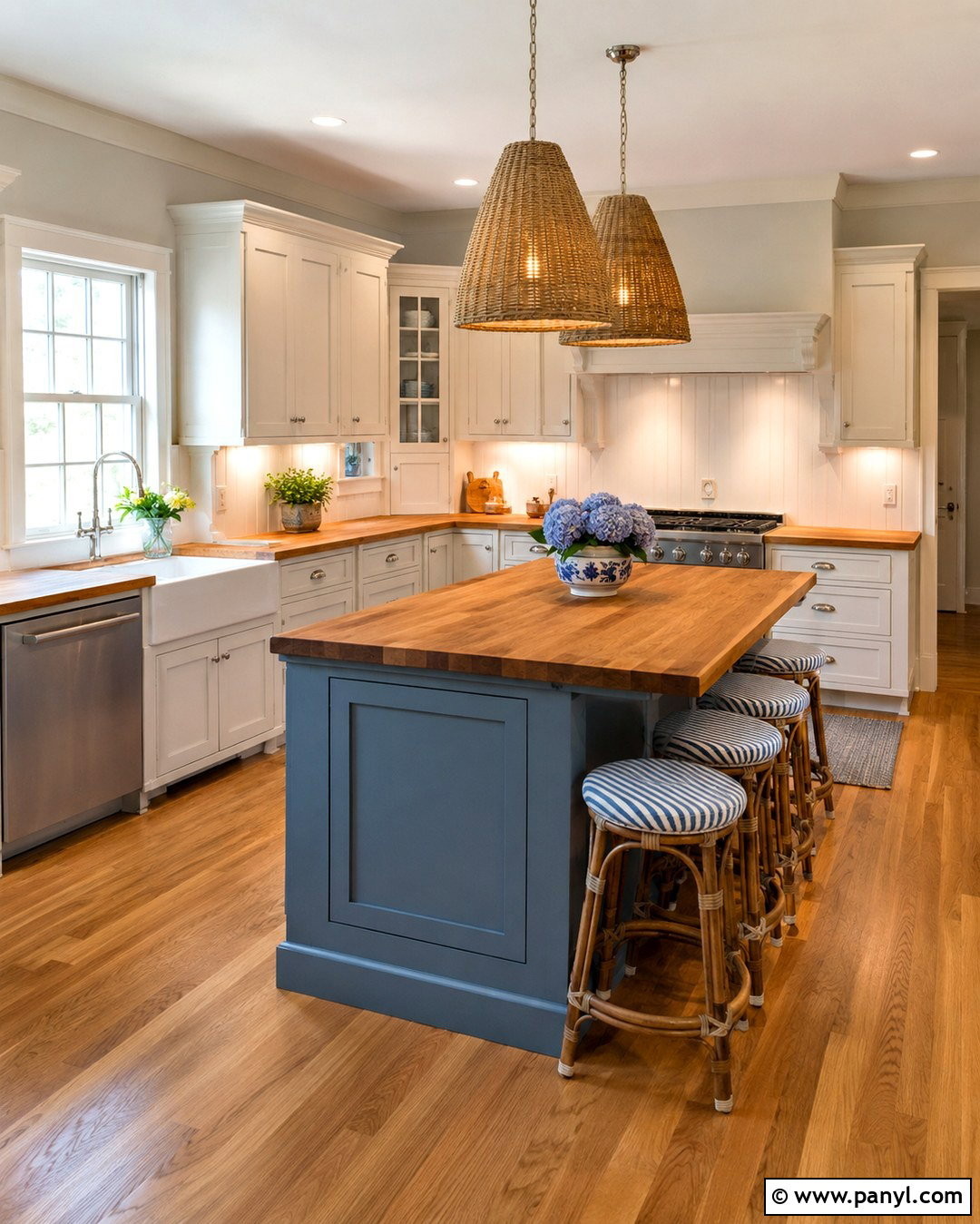
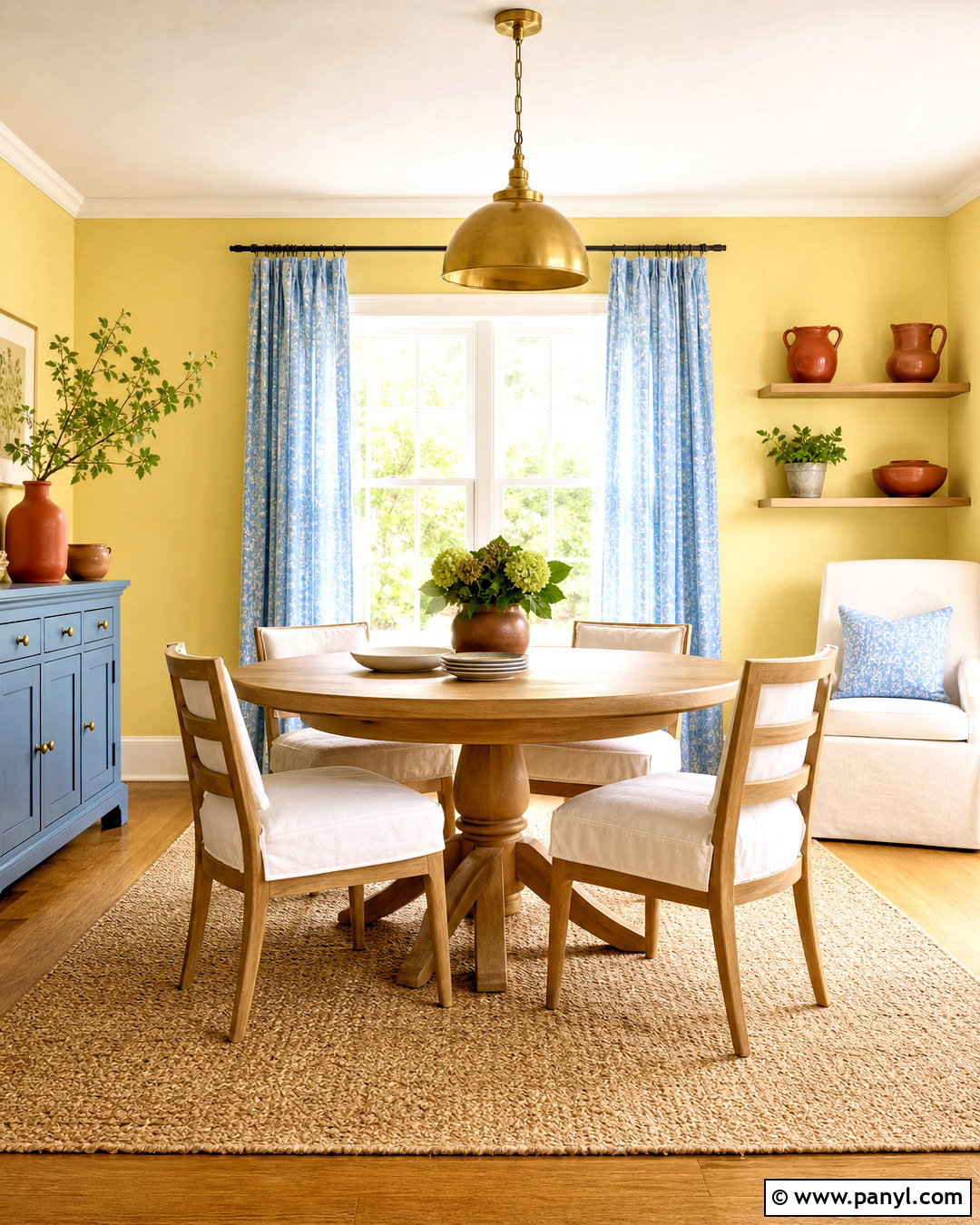
Philadelphia Cream HC-30 adds cheerful color while remaining softer than a vivid lemon yellow. Create a sunny cottage kitchen with warm white Shaker cabinets, butcher-block counters, and a glossy white beadboard backsplash. Use a muted blue island to balance the yellow walls and introduce a relaxed complementary contrast. Polished nickel knobs keep the palette fresh, while woven pendant lights and honey-toned oak flooring add texture. Small touches of blue through striped seat cushions or ceramic dishes will connect the island to the rest of the room. Keep the ceiling and trim a clean warm white so the wall color remains defined. This complete look makes a small breakfast kitchen feel lively, comfortable, and bright without depending on an all-white design. ()
11. Palladian Blue Kitchen Walls
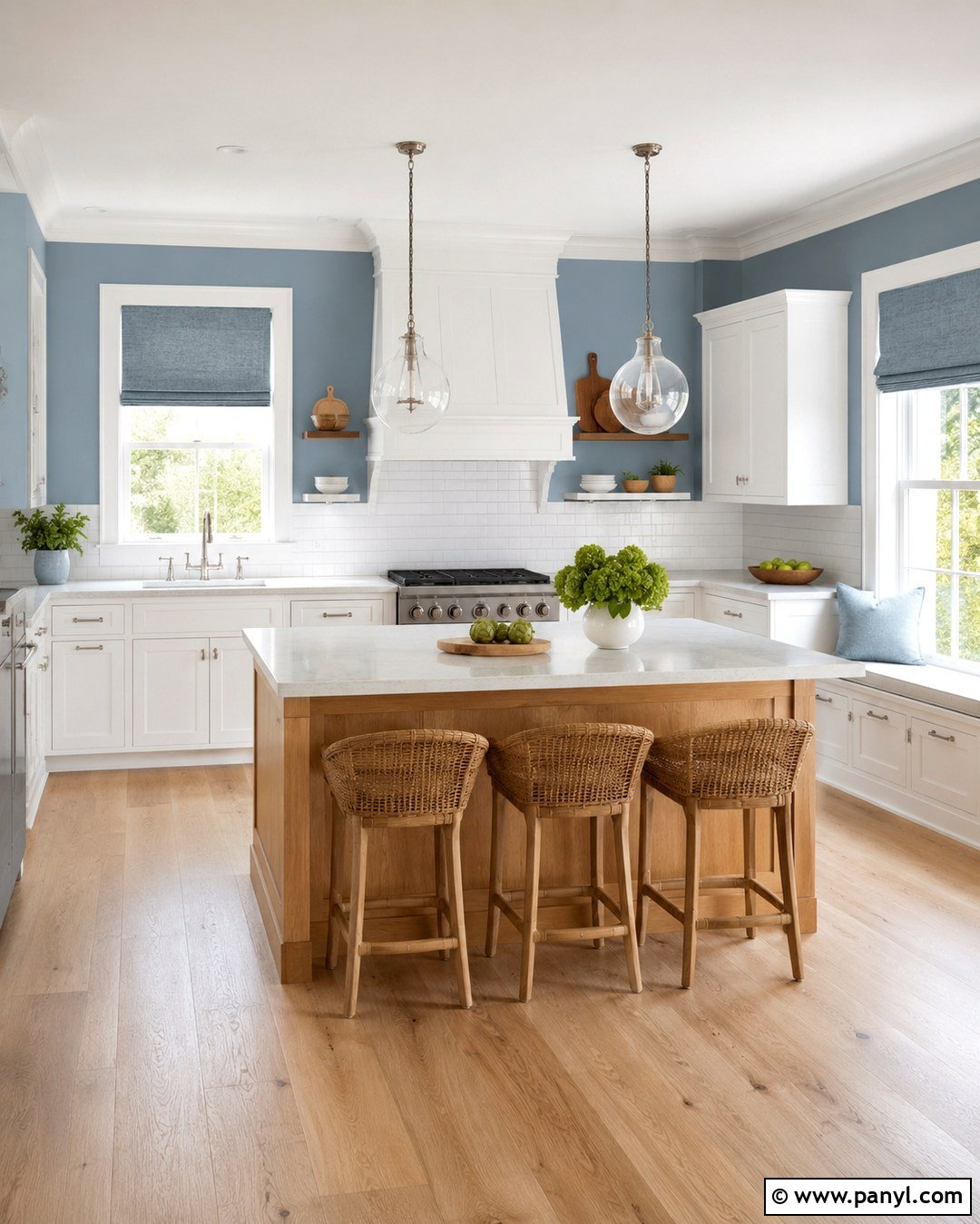
Palladian Blue HC-144 creates an airy blue-green background that feels naturally suited to bright kitchens. Pair it with white inset cabinets, pale marble-look counters, and a simple white subway tile backsplash. A natural maple or white oak island prevents the cool palette from becoming too formal. Choose polished nickel hardware, clear glass pendants, and light oak floors for a clean coastal influence without obvious themed decor. Soft blue-gray Roman shades can repeat the wall color at the windows, while woven stools introduce needed texture. Keep accessories minimal and practical, using white pottery and clear glass containers. Benjamin Moore includes Palladian Blue among its popular kitchen colors, and the shade works especially well when daylight can reveal its gentle blue-green character. ()
12. Woodlawn Blue Kitchen Walls
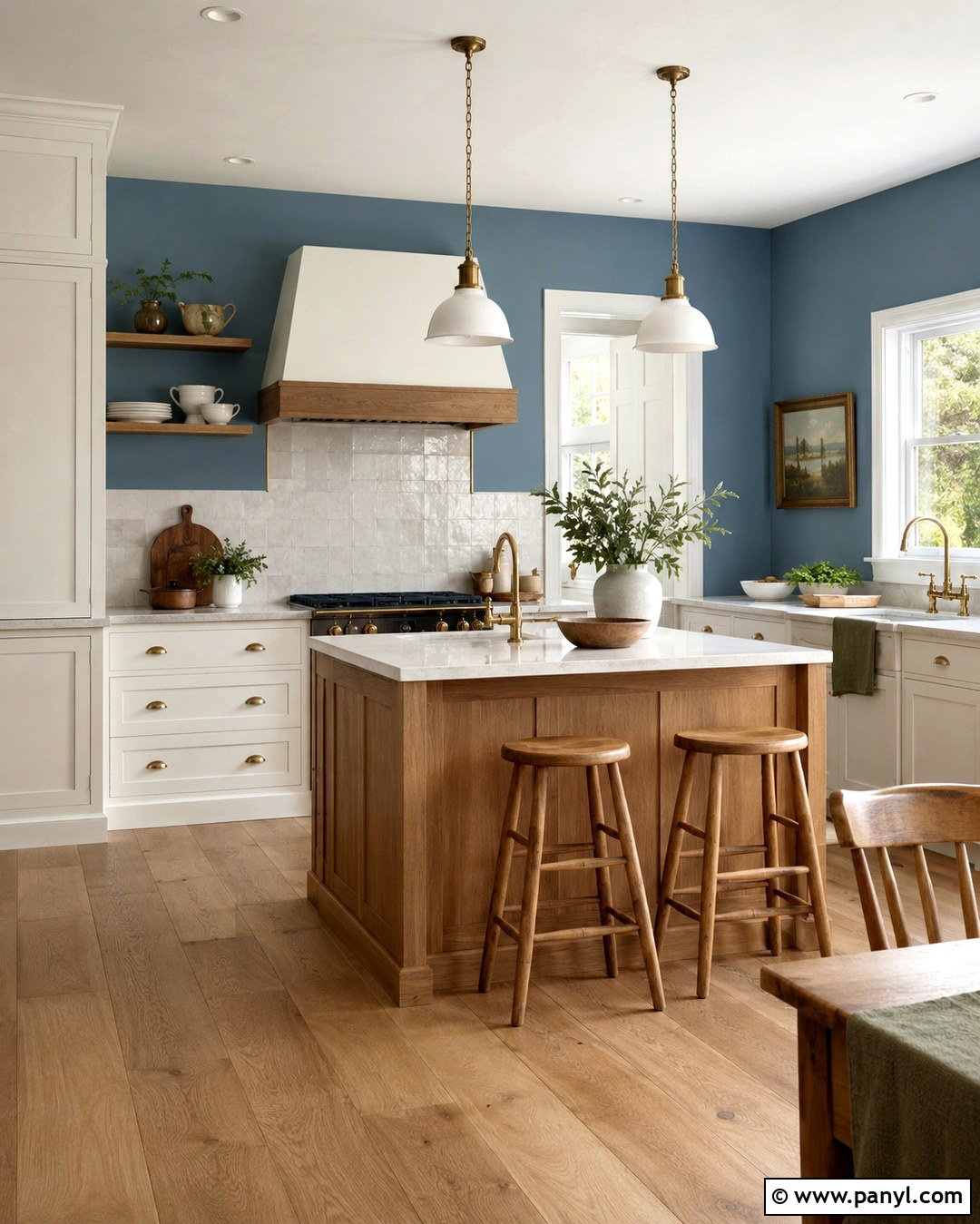
Woodlawn Blue HC-147 gives kitchen walls a soft blue presence that pairs beautifully with warm natural wood. Use creamy white cabinets around the perimeter, then choose a medium oak island with visible grain. White quartz counters and pale gray handmade tile keep the work surfaces bright. Brushed brass hardware brings warmth, while white ceramic pendants maintain a casual, uncomplicated look. Continue the oak tone through wide-plank flooring and a small breakfast table to make the palette feel intentional. A few muted green accents, such as potted herbs or linen towels, complement the blue without creating a themed space. This combination is well suited to a traditional or cottage kitchen that needs gentle color while still feeling bright, familiar, and easy to live with. ()
13. Wythe Blue Kitchen Walls
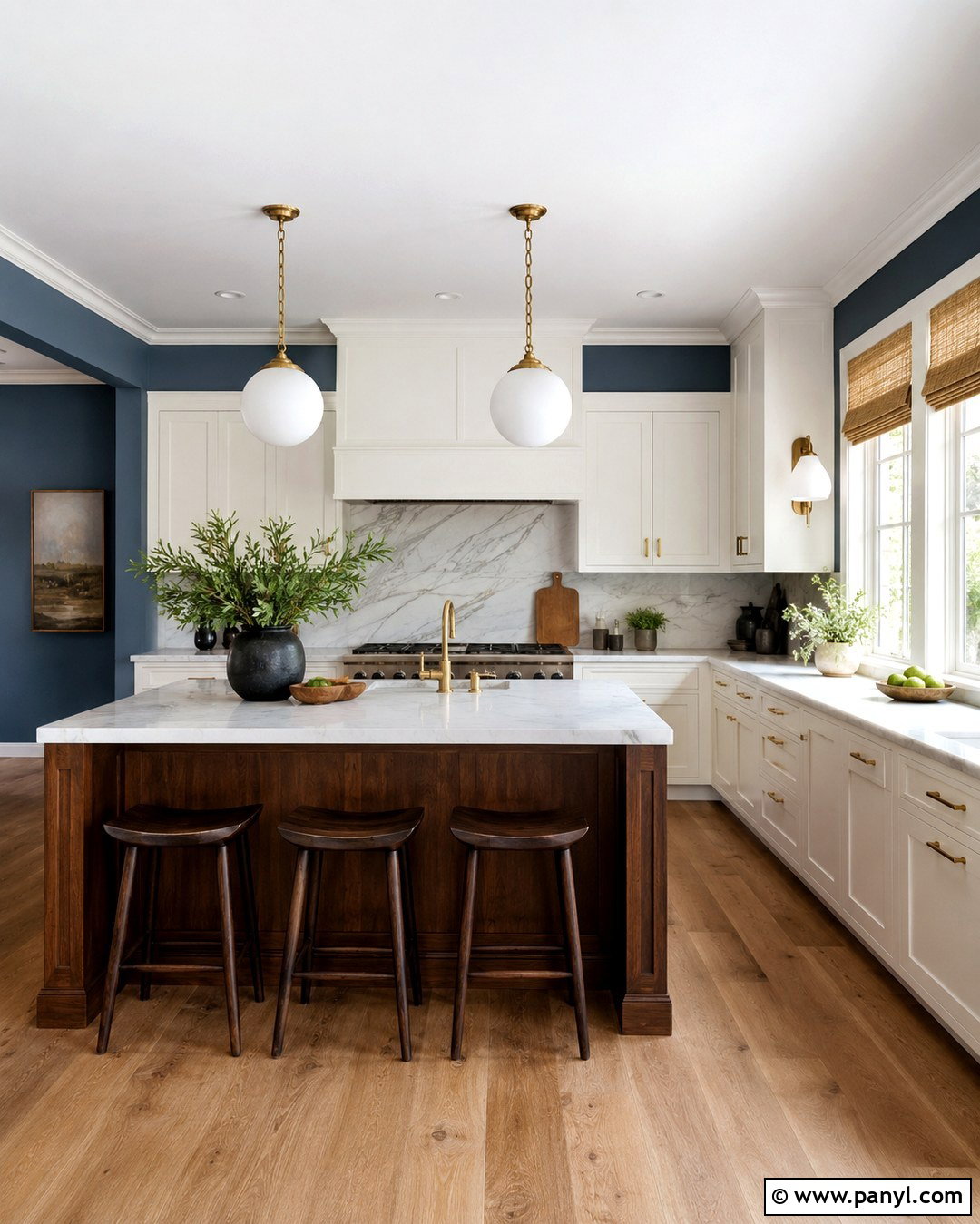
Wythe Blue HC-143 provides more noticeable blue-green color while remaining connected to natural materials. Pair it with warm white cabinetry, honed marble counters, and a matching marble backsplash behind the range. Add a dark walnut island for contrast and repeat that finish on floating shelves or counter stools. Aged brass hardware and simple globe pendants bring warmth to the cooler walls. Medium oak flooring keeps the overall design approachable, while woven shades soften the windows. Paint the trim White Dove OC-17 for a gentle transition rather than using a very sharp white. Benjamin Moore specifically recommends Wythe Blue with White Dove for an airy kitchen palette, making this combination a useful starting point for a colorful yet balanced room. ()
14. October Mist Kitchen Walls
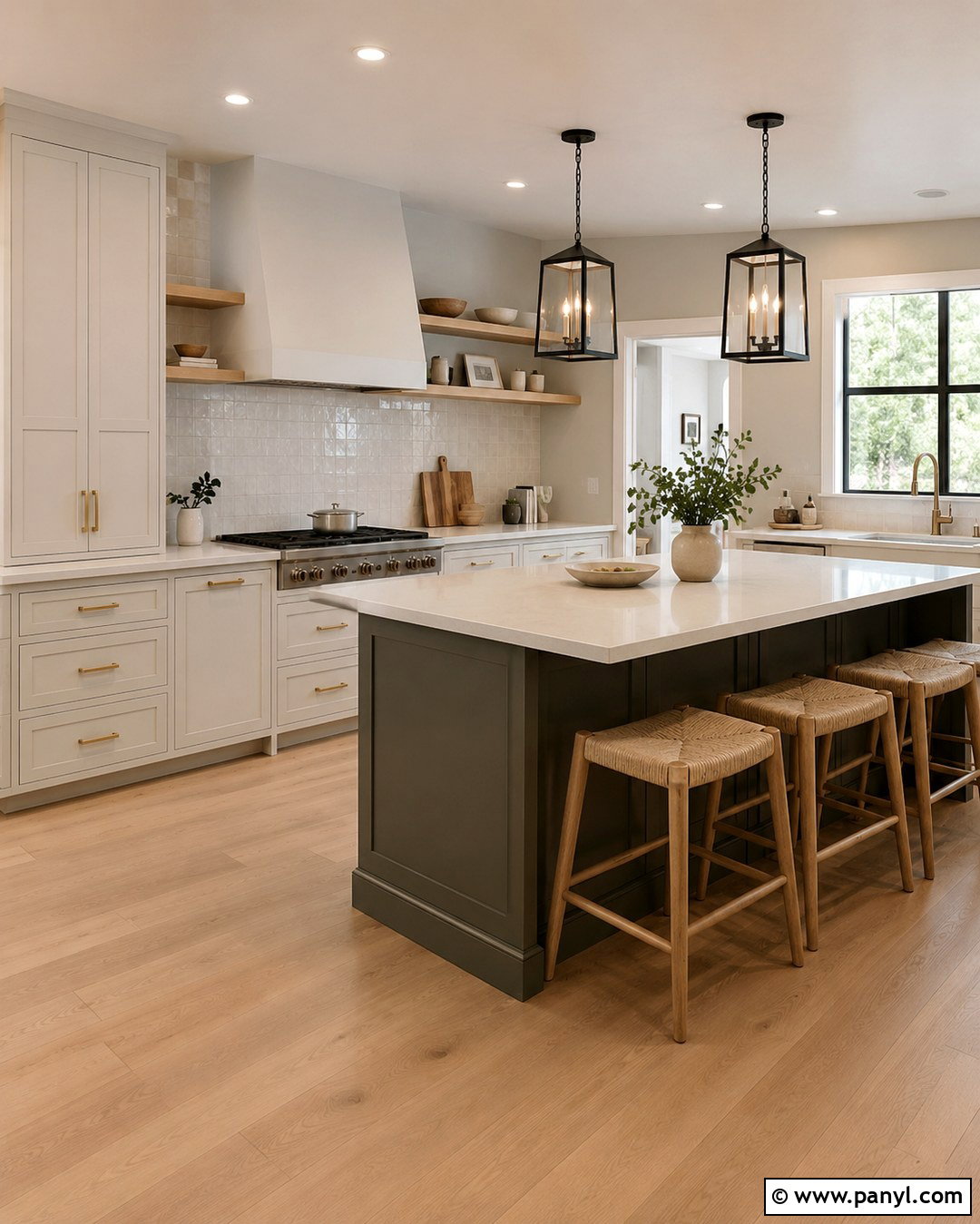
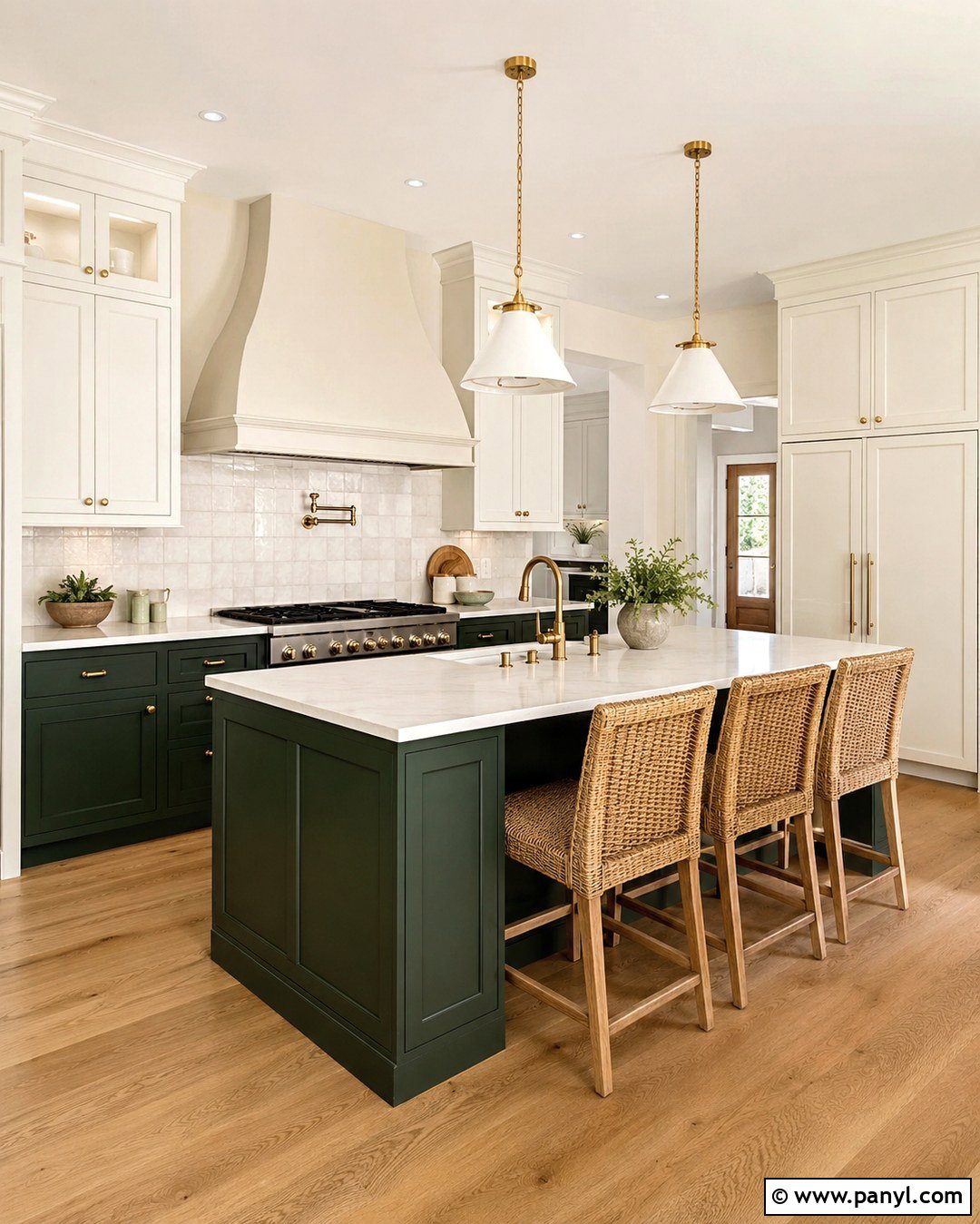
October Mist 1495 introduces a muted sage green that makes a kitchen feel calm and grounded. Build a tonal natural scheme with creamy cabinets, light oak open shelves, and warm white quartz counters. Use a backsplash of handmade ivory tile so the slight surface variation complements the organic wall color. Brushed brass pulls add warmth, while black-framed pendants provide a small amount of definition. Pale oak flooring and woven counter stools continue the nature-inspired palette. For greater depth, paint the island a darker olive green and repeat that shade through small ceramic pieces. This complete look works in farmhouse, transitional, and organic modern kitchens because the restrained green acts almost like a neutral while still giving the walls a distinct identity. ()
15. Fernwood Green Kitchen Walls
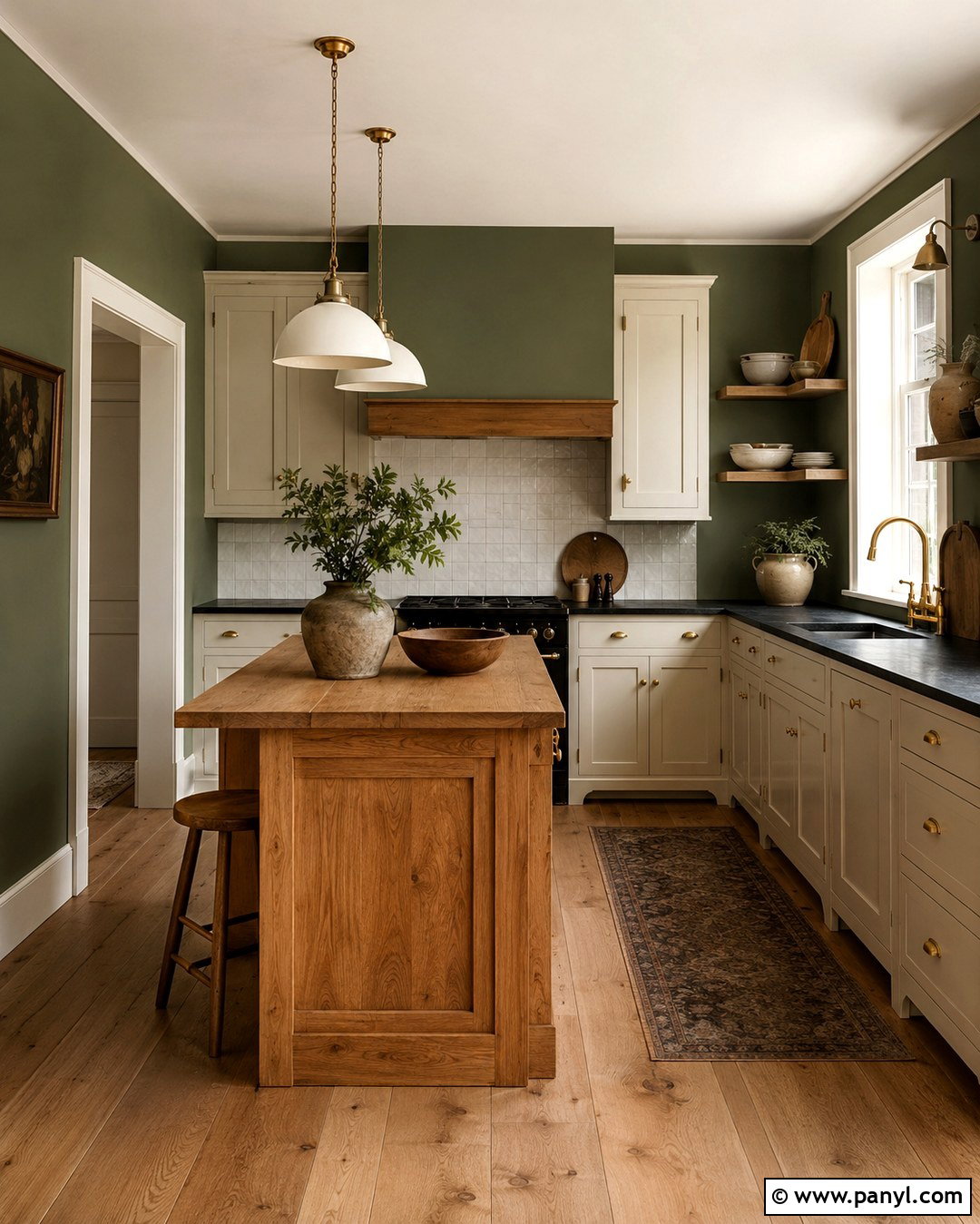
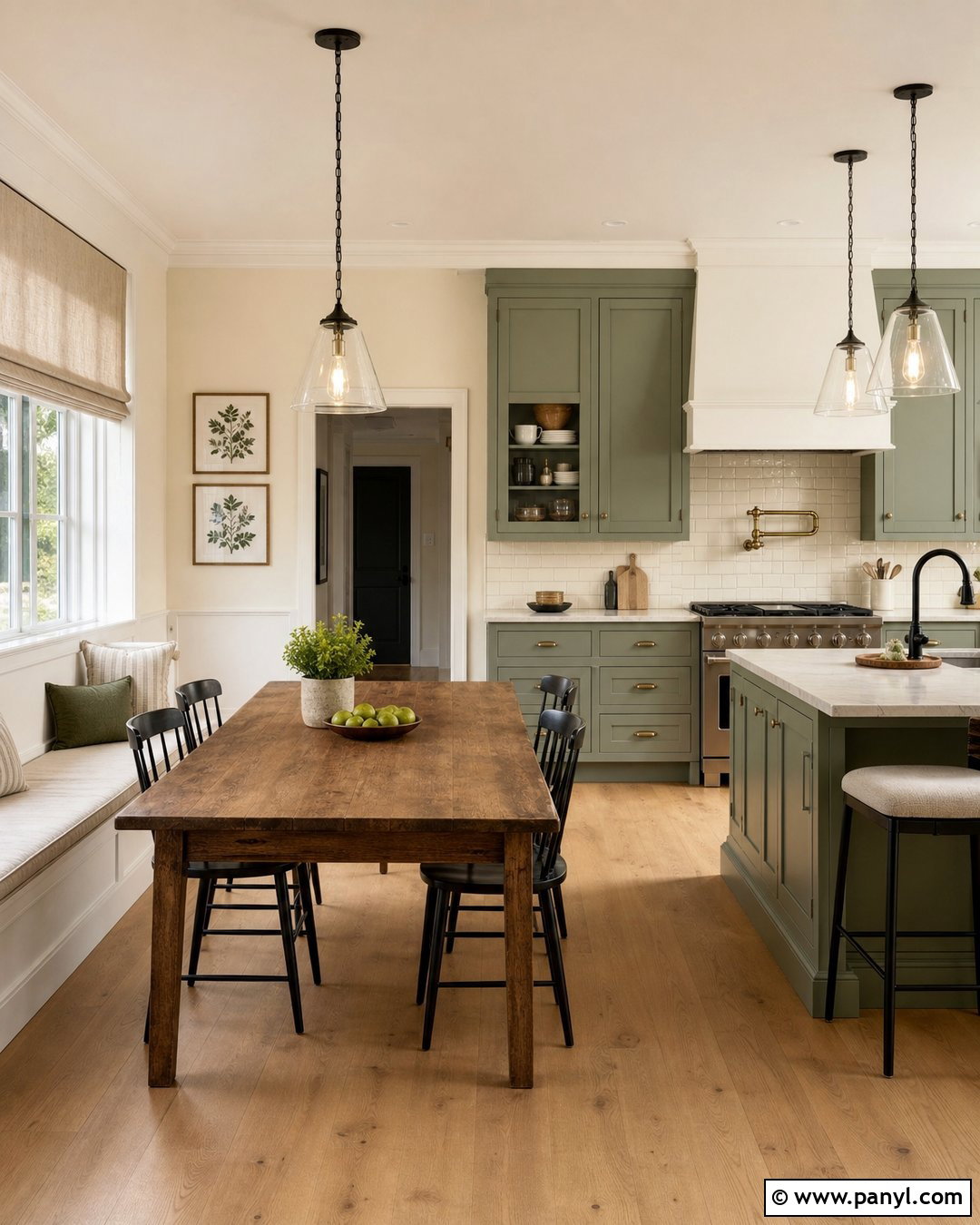
Fernwood Green 2145-40 brings an earthy mid-tone green to kitchens that need more character than a pale sage can provide. Pair it with cream Shaker cabinets, dark soapstone counters, and a warm white backsplash made from square handmade tile. A natural oak island and matching floorboards soften the stronger wall color. Choose aged brass hardware and cream dome pendants to create a welcoming traditional look. Keep the ceiling light, but consider painting the pantry door in the same green for continuity. Botanical artwork, practical wood boards, and off-white stoneware can complete the room without making it overly decorative. Benjamin Moore identifies Fernwood Green as a kitchen-friendly green, particularly for homeowners seeking an earthy, natural atmosphere. ()
16. Dune Grass Kitchen Walls
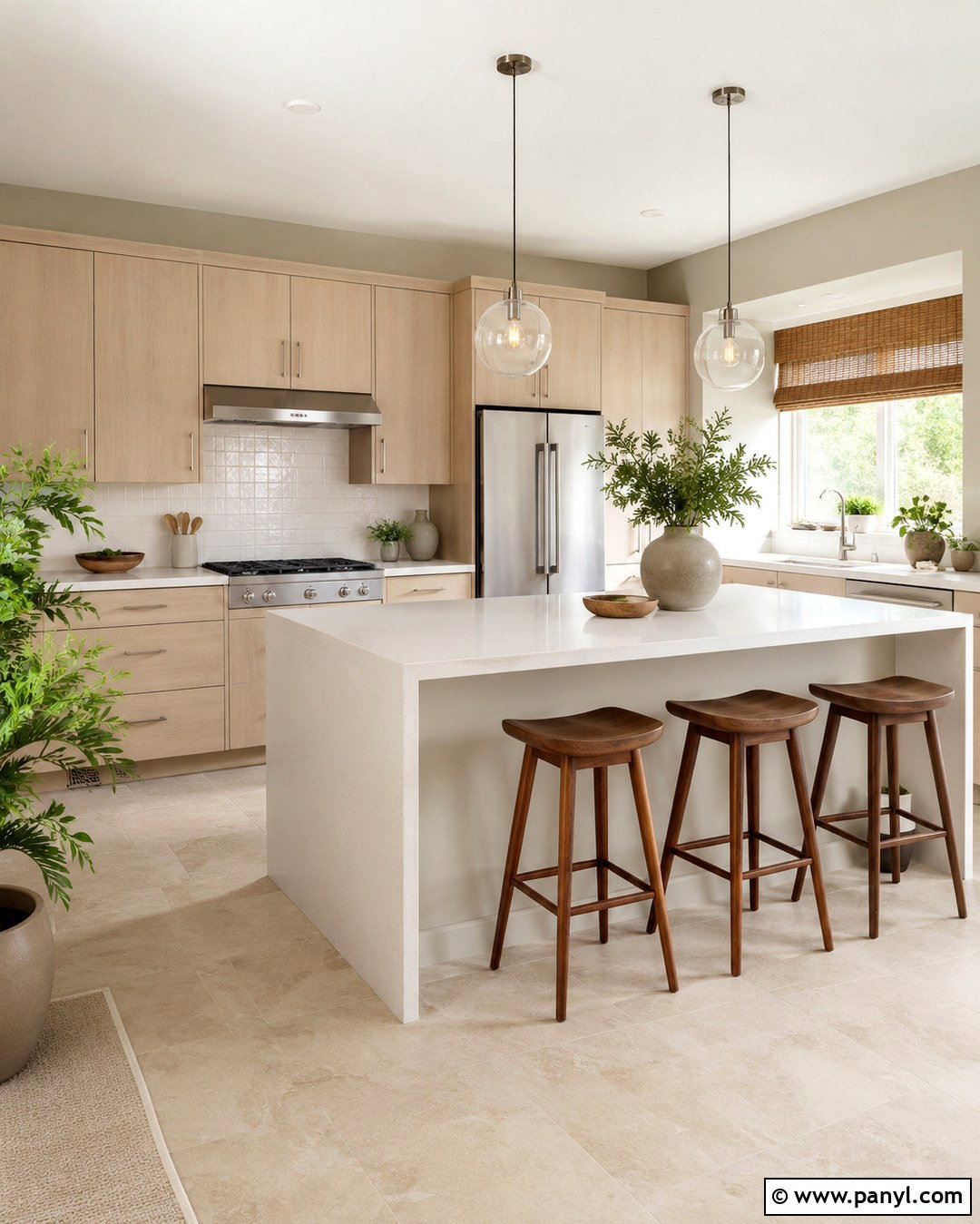
Dune Grass 492 offers a pale, gentle green that can refresh a kitchen while preserving an open feeling. Combine it with light maple cabinets, cream quartz counters, and a glossy off-white backsplash. Brushed nickel pulls provide a simple contemporary finish, while an island painted warm white keeps the center of the room bright. Use pale limestone-look flooring for a clean foundation and introduce walnut stools to give the muted palette some depth. White globe pendants and undercabinet lighting help the soft green remain clear in changing daylight. A few leafy plants and natural woven shades reinforce the organic direction without turning the space into a botanical theme. Benjamin Moore recommends Dune Grass for an earthy kitchen effect, making it a gentle alternative to stronger sage tones. ()
17. Hale Navy Kitchen Walls
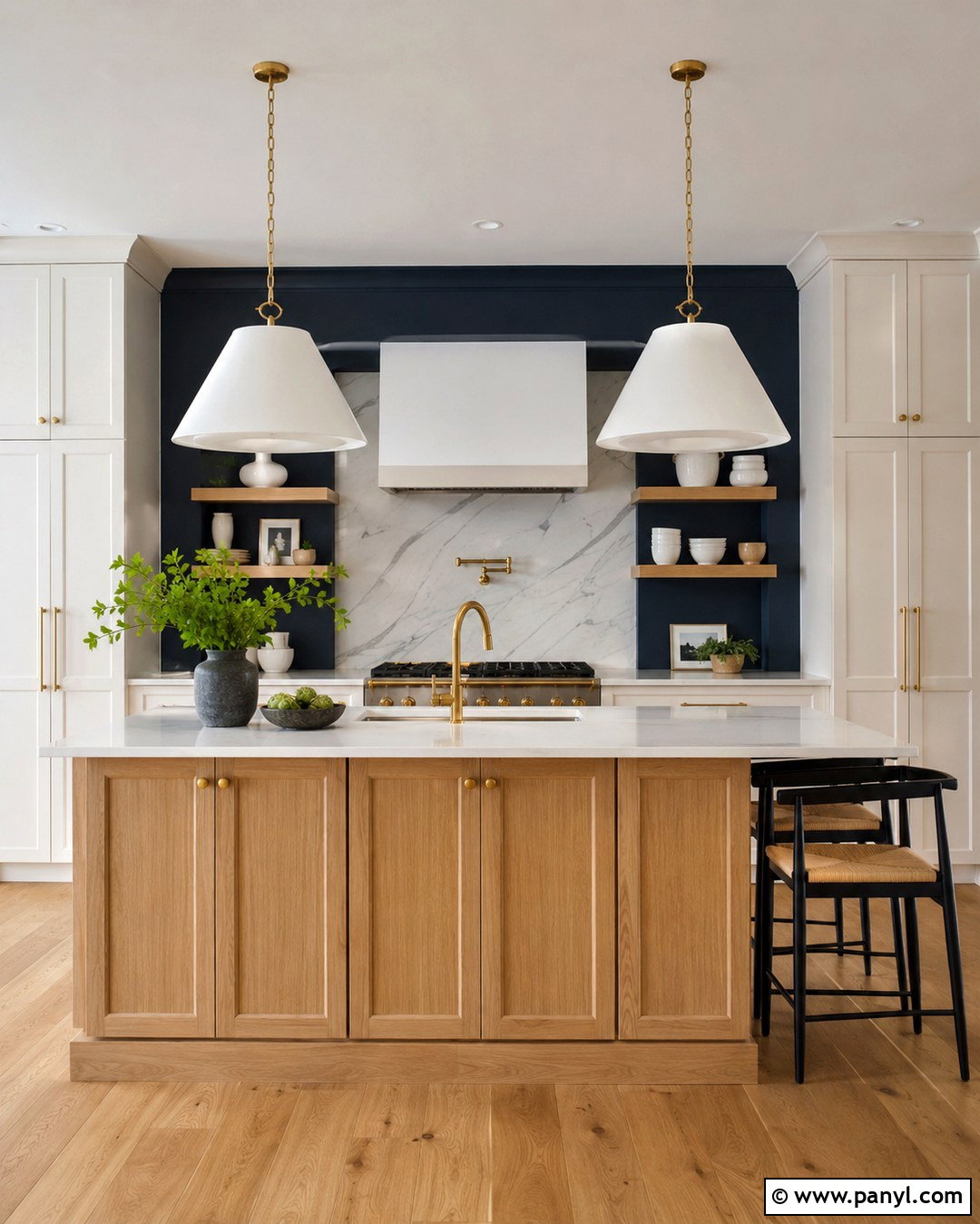
Hale Navy HC-154 can turn kitchen walls into a dramatic background when the rest of the room remains bright and balanced. Use the color on walls around warm white cabinets, white quartz counters, and a full-height marble backsplash. A white oak island and matching flooring introduce enough warmth to offset the deep navy. Choose unlacquered brass pulls and broad white pendants so the details remain visible against the dark background. Open shelving in oak can break up a long navy wall and provide space for white ceramics. This design works best in a kitchen with generous natural or artificial light. Benjamin Moore lists Hale Navy among its popular kitchen blues, and its depth makes it especially effective in larger rooms or defined cooking zones. ()
18. Kendall Charcoal Kitchen Walls
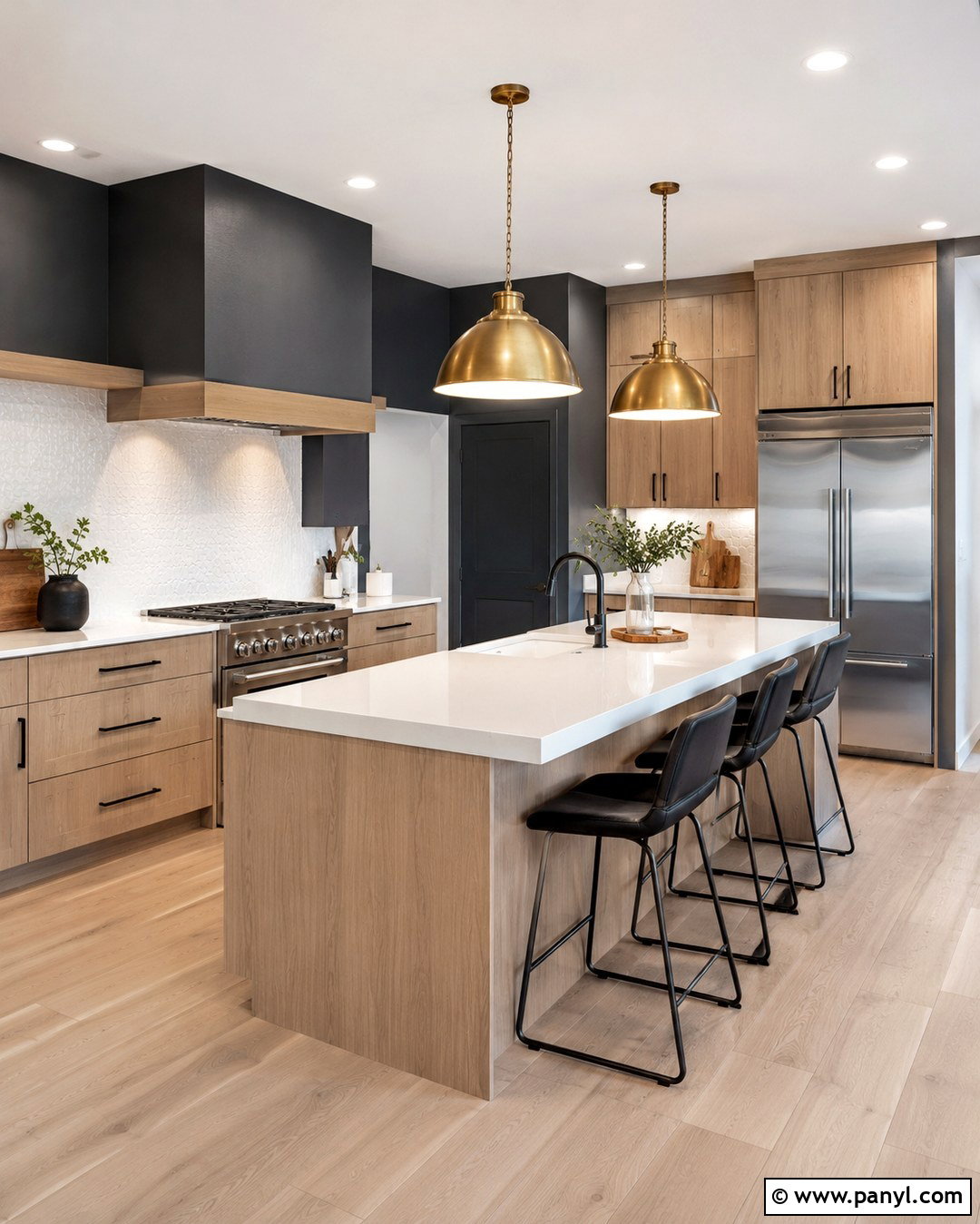
Kendall Charcoal HC-166 creates an enveloping kitchen with a softer effect than solid black. Pair the walls with light oak flat-panel cabinets, thick white quartz counters, and a textured white backsplash to maintain contrast. Matte black hardware blends quietly with the charcoal, while brushed brass pendant lights add a controlled touch of warmth. Use pale oak flooring to connect with the cabinetry and prevent the room from feeling bottom-heavy. A large island with a light stone surface provides a bright central work area. Keep window treatments minimal and install layered lighting under cabinets, over the island, and near dining areas. This complete palette suits modern kitchens where dark walls are used intentionally alongside light wood, reflective tile, and bright work surfaces. ()
19. Aegean Teal Kitchen Walls
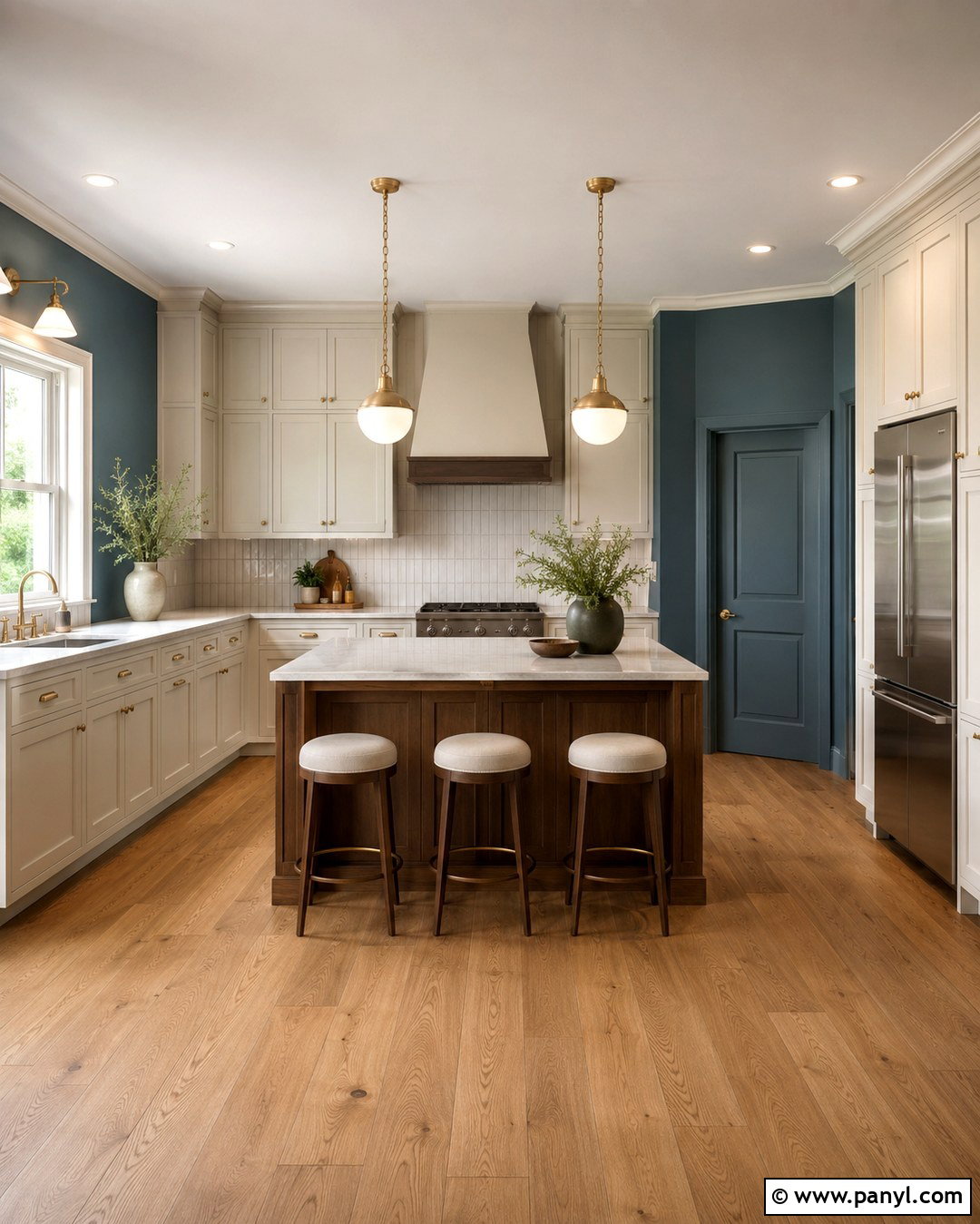
Aegean Teal 2136-40 creates a rich blue-green setting that feels colorful without becoming overly bright. Pair it with creamy white cabinets, pale quartzite counters, and an ivory vertical tile backsplash. A medium walnut island anchors the room and brings out the warmth within the surrounding materials. Choose aged brass hardware and opal glass pendants for a polished transitional finish. Medium oak flooring makes the dark wall color feel more approachable, while linen shades soften strong daylight. Repeat the teal sparingly through a pantry door or built-in display cabinet rather than painting every fixed surface. Benjamin Moore identifies Aegean Teal as a popular kitchen blue, and the shade can create a balanced bridge between blue accessories, green views, warm wood, and neutral cabinetry. ()
20. Silhouette Kitchen Walls
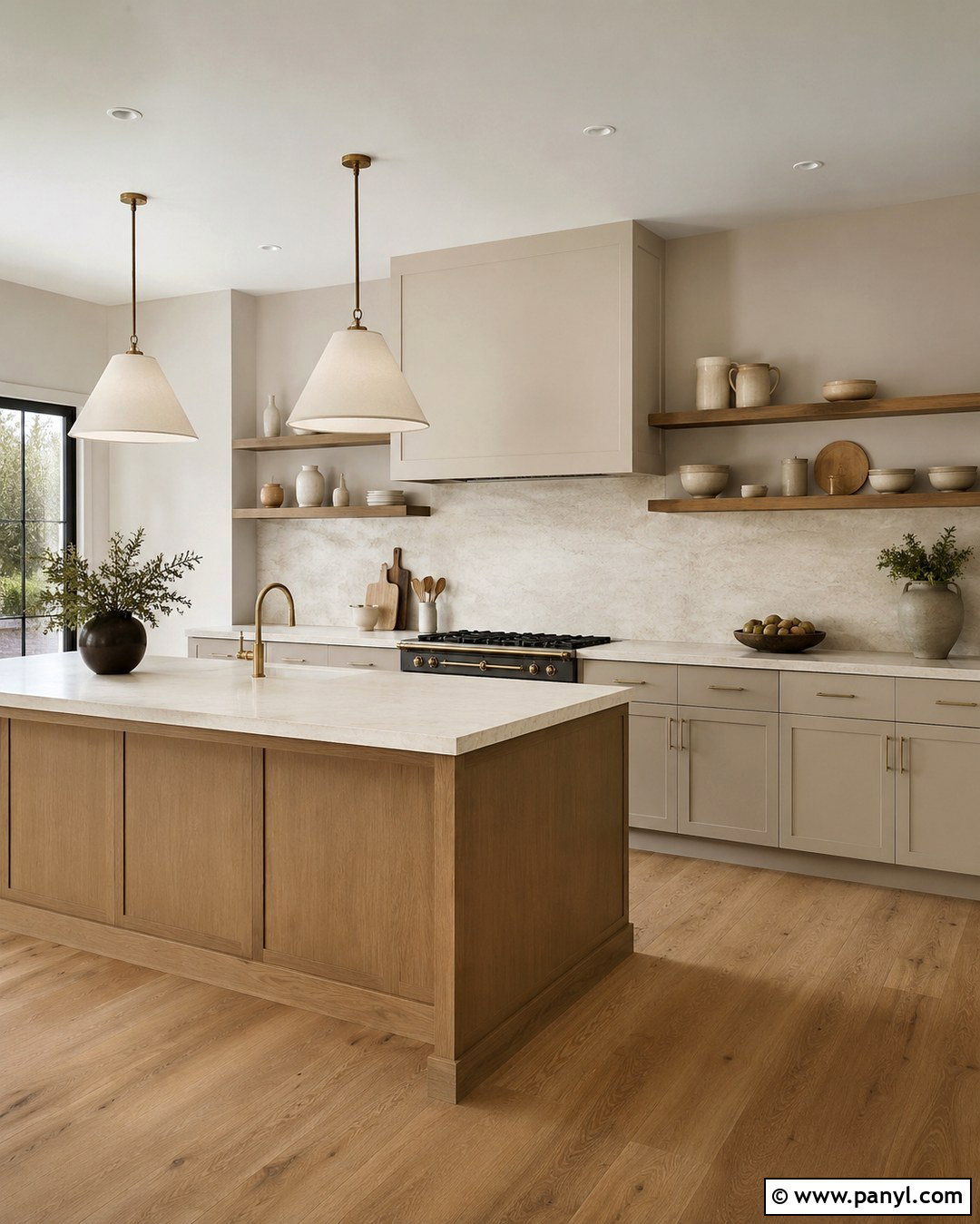
Silhouette AF-655 offers a deep blend of brown, charcoal, and espresso character for a sophisticated kitchen. Use it on the walls with pale mushroom cabinets, creamy marble counters, and a warm ivory slab backsplash. White oak flooring and a matching island add natural brightness, while bronze hardware connects the dark walls to the warm cabinetry. Choose large linen pendants to spread soft illumination across the work surfaces. Open oak shelving can prevent the wall treatment from feeling too solid and provides contrast for cream stoneware. For continuity, repeat Silhouette on an interior pantry door or breakfast nook trim. As Benjamin Moore’s 2026 Color of the Year, it provides a current alternative to ordinary charcoal while remaining grounded in familiar neutral tones. ()
Conclusion:
The best kitchen wall color should support every permanent feature in the room, including cabinets, counters, flooring, and backsplash materials. These 20 Benjamin Moore Kitchen Colors For Walls offer options for bright white kitchens, warm traditional rooms, nature-inspired green spaces, relaxed blue palettes, and dramatic modern designs. Before committing, paint large sample areas on more than one wall. Observe them in morning light, afternoon sun, and evening illumination because surrounding finishes can noticeably influence a color. Keep undertones consistent, repeat key materials, and use contrast with purpose. Whether you select an airy off-white or a deep teal, a complete color plan will make the kitchen feel more comfortable, connected, and thoughtfully finished. ()

Related Ideas and Inspiration:
Leave a Reply