
Neutral kitchen walls do more than create a quiet background. The right shade can connect cabinets, countertops, flooring, hardware, and lighting into one balanced design. These **20 Neutral Paint Colors For Kitchen Walls** include warm whites, soft grays, earthy beiges, muted greens, and deeper neutrals for many kitchen layouts. Although these colors are versatile, undertones matter. Compare each option directly with your cabinet finish, backsplash, and counter material. Then view large samples in morning light, afternoon sun, and evening lighting before deciding. Warm taupes, creams, greiges, and nature-inspired neutrals are especially useful for creating comfortable kitchens that do not feel stark. () Explore the complete kitchen looks below with **20 Neutral Paint Colors For Kitchen Walls**.

1. Warm White Kitchen Walls
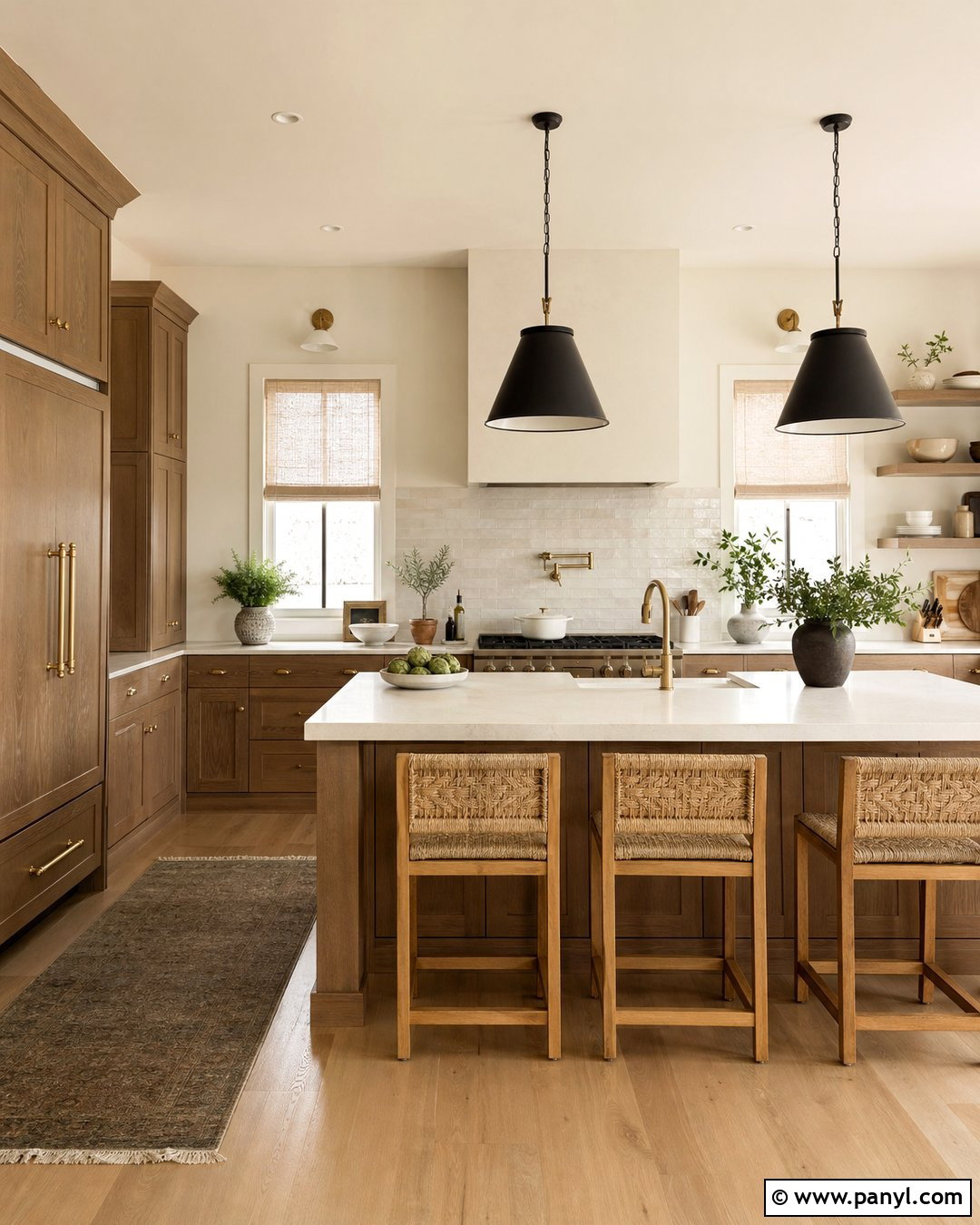
Warm white walls create a clean kitchen without the sharp feeling of a bright, blue-based white. Build a welcoming look by pairing them with medium oak cabinets, creamy quartz countertops, and handmade off-white backsplash tile. A warm white with subtle beige undertones will connect these materials while allowing the natural wood grain to stand out. Add brushed brass handles, woven counter stools, and light oak flooring to reinforce the warmth. Matte black pendant lights can provide definition without making the room look busy. This palette works particularly well in kitchens with limited daylight because it reflects available light while maintaining softness. Finish the space with simple ceramic accessories, linen window shades, and a small collection of green herbs for natural color.
2. Soft White Kitchen Walls
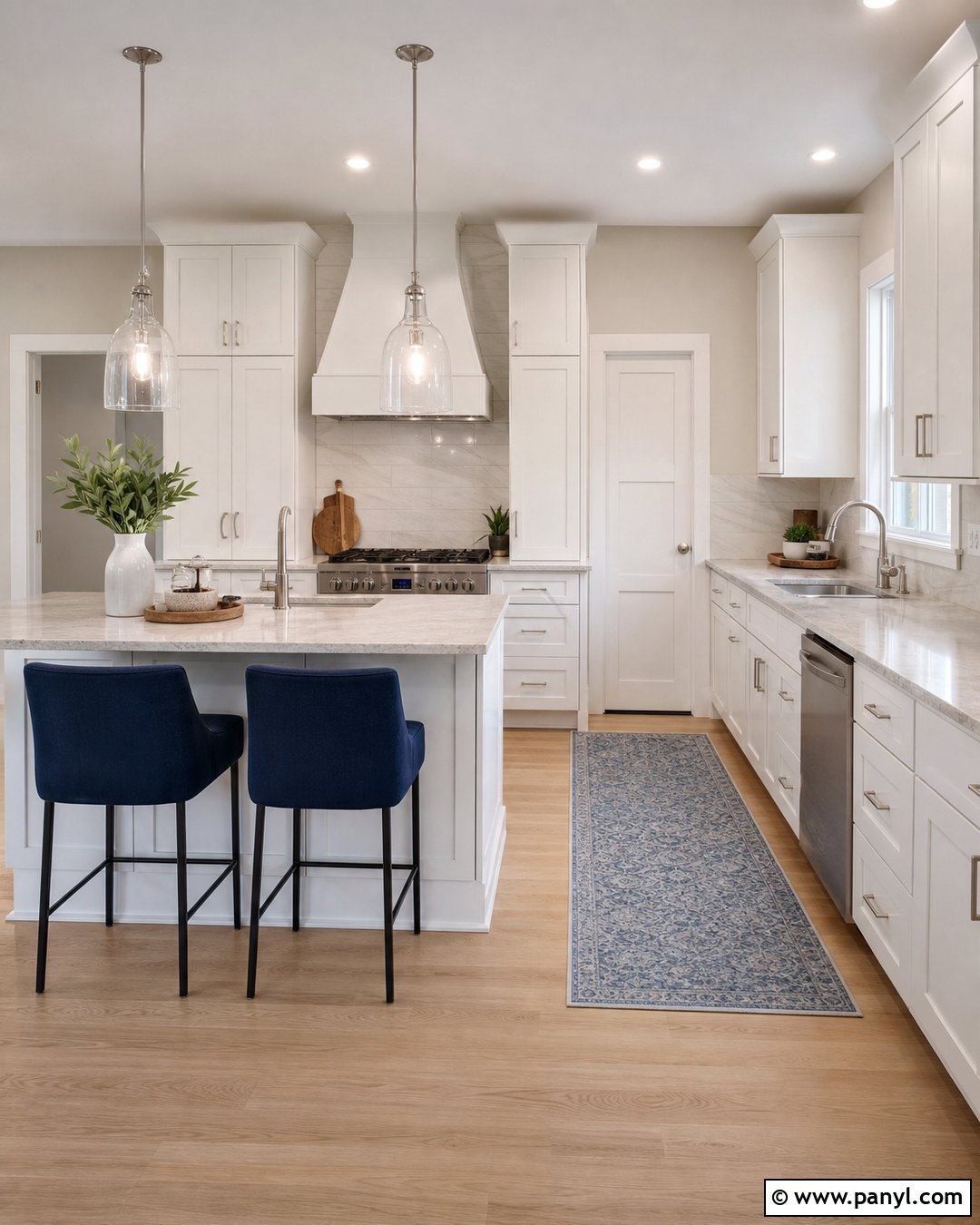
Soft white is a flexible choice for kitchens that combine warm and cool finishes. Unlike pure white, it has enough depth to separate the walls from bright white cabinets and trim. Pair soft white walls with white Shaker cabinets, pale gray quartz counters, and a backsplash containing subtle beige veining. Light maple flooring and satin nickel hardware will keep the design balanced. Add navy counter stools or a muted blue runner for controlled contrast. Clear glass pendants help the room feel open, while wood cutting boards prevent the white surfaces from appearing flat. This complete scheme suits transitional kitchens because it feels fresh but not overly modern. Use washable eggshell or satin wall paint around cooking and preparation areas for easier everyday maintenance.
3. Cream Kitchen Walls
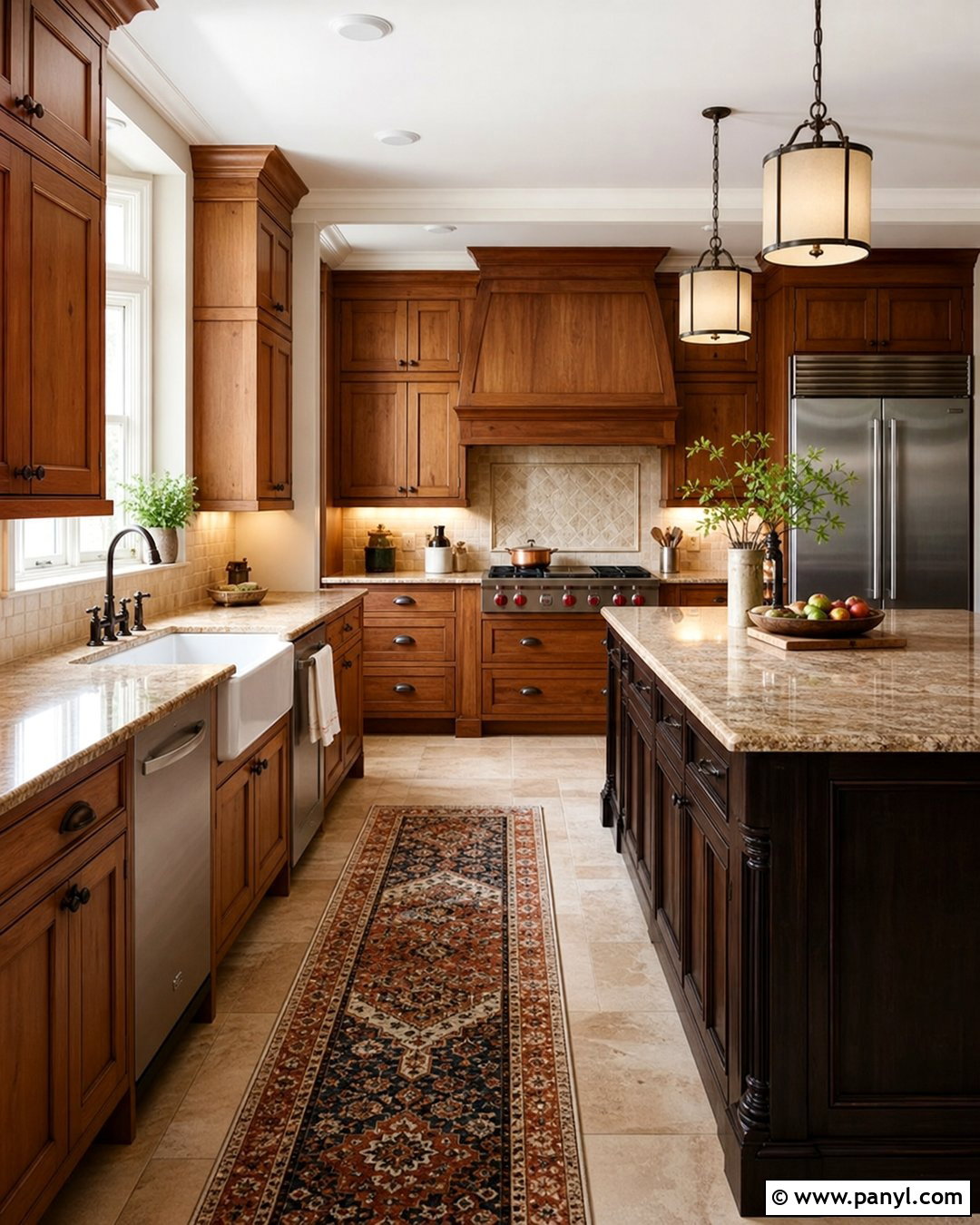
Cream walls bring gentle warmth to a kitchen filled with classic materials. They work beautifully with natural cherry cabinets, warm granite countertops, and beige stone flooring because the shared golden undertones create a connected palette. Choose a light cream rather than a strongly yellow shade to keep the room current and airy. Antique brass hardware, an off-white farmhouse sink, and linen drum pendants can complete the traditional look. Introduce contrast through a deep brown island or dark bronze faucet. A patterned runner containing cream, rust, and faded blue adds color without interrupting the neutral foundation. Cream is also helpful in north-facing kitchens where colder daylight can make plain white feel gray. Test it beside every fixed finish before painting all the walls.
4. Ivory Kitchen Walls
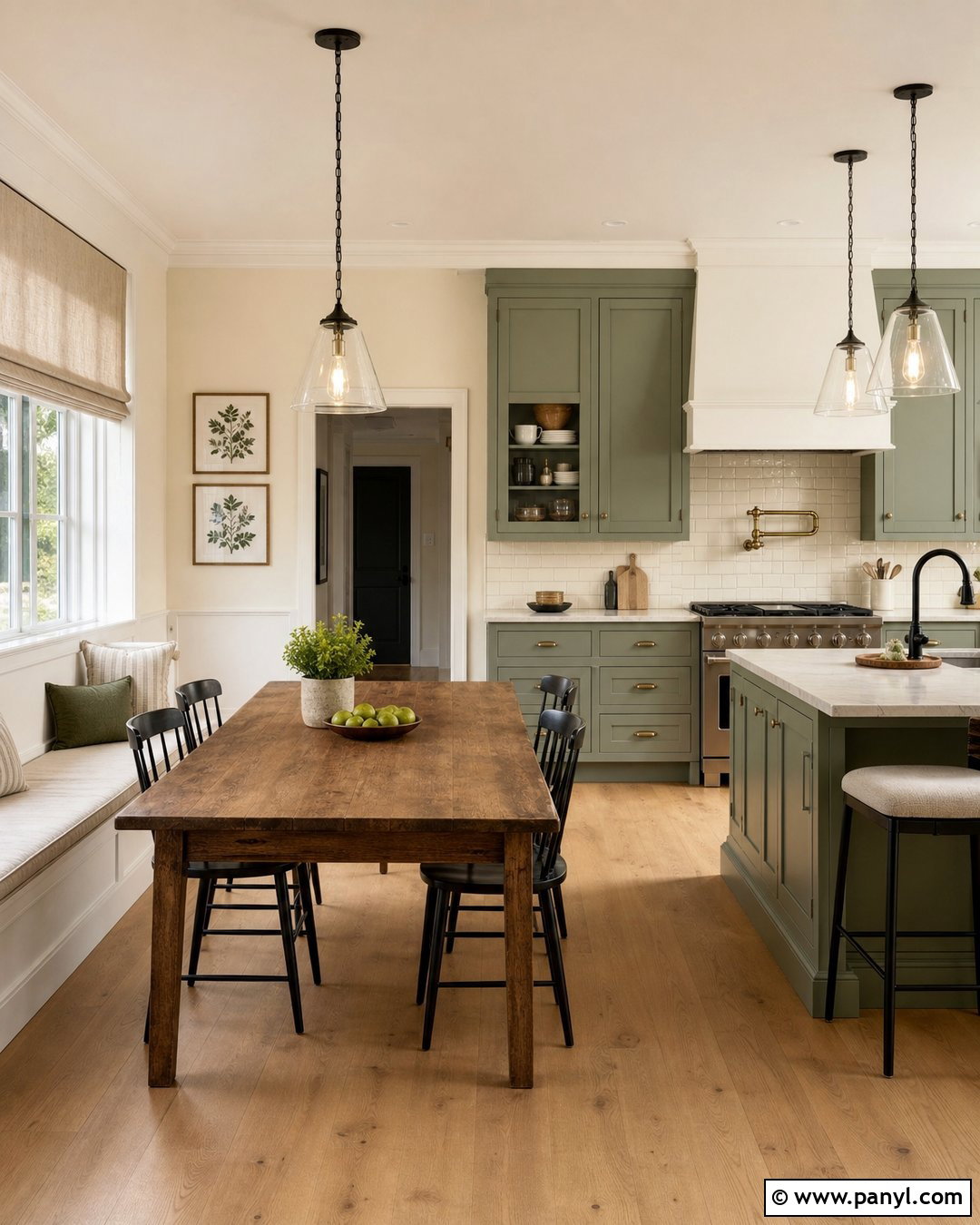
Ivory provides the brightness of white with a softer, more polished appearance. Create a relaxed traditional kitchen by combining ivory walls with muted sage cabinets, honed marble-look counters, and warm oak flooring. The slightly creamy wall color supports green cabinetry without introducing a competing hue. Use aged brass pulls, simple glass pendants, and an ivory subway tile backsplash with matching grout. A freestanding wood table can replace a formal island and make the kitchen feel collected rather than highly coordinated. Keep window coverings light with natural linen or woven bamboo shades. Small black accents, such as a faucet and framed artwork, will sharpen the pale palette. This color also works well across an adjoining breakfast area, creating smooth visual flow between both spaces.
5. Light Greige Kitchen Walls
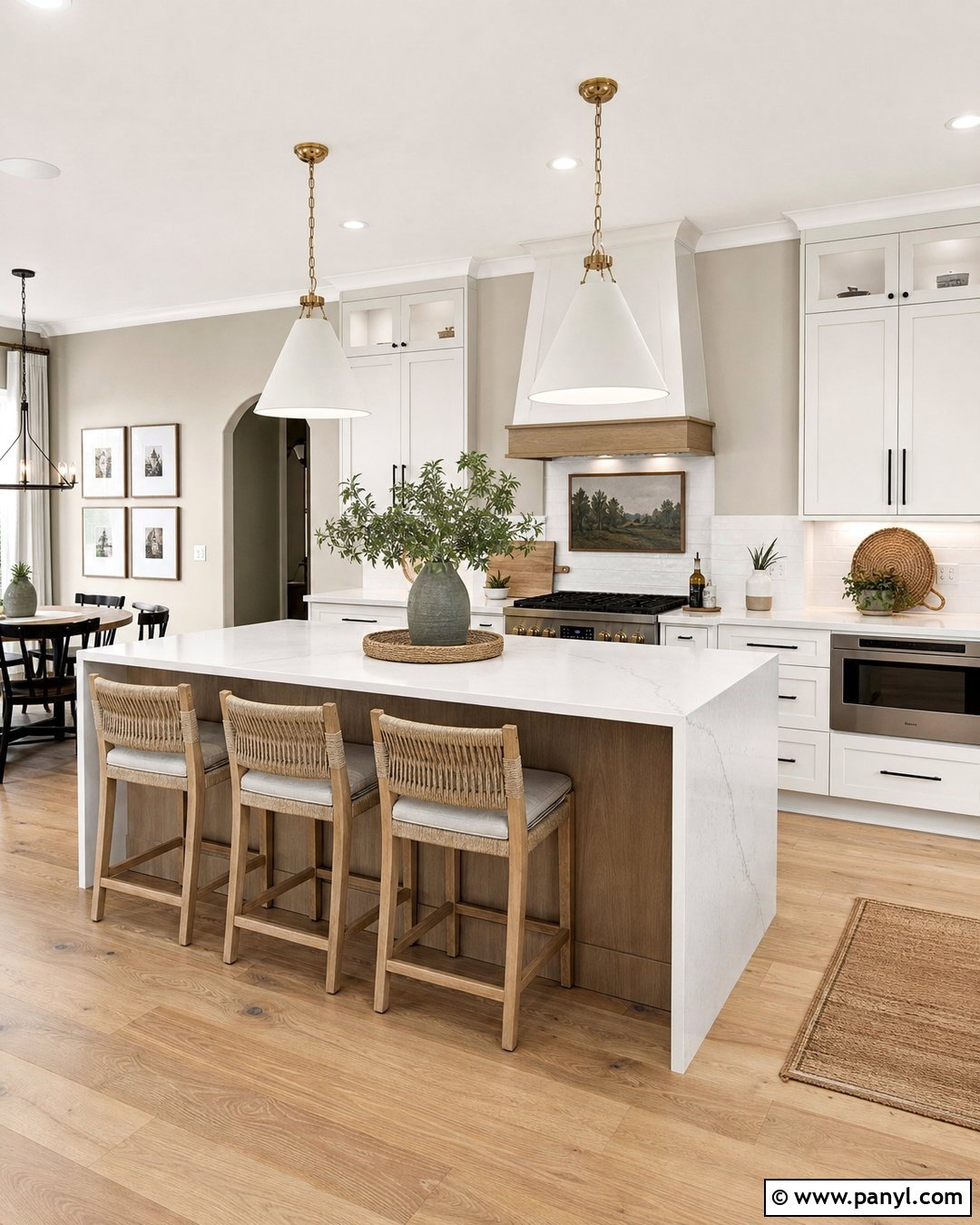
Light greige blends soft gray with gentle beige, making it useful when a kitchen contains several different undertones. Pair light greige walls with crisp white cabinets, marble-look quartz counters, and wide-plank white oak flooring. The beige influence connects with the wood, while the gray complements stainless steel appliances and cool countertop veining. Choose matte black hardware and simple cone pendants for a clean modern farmhouse finish. A medium wood island adds weight to the center of the room, and woven stools provide texture. Keep the backsplash quiet with warm white tile and pale gray grout. Light greige is especially effective in open layouts because it transitions naturally into nearby living spaces. Add muted green accessories and linen textiles for understated color.
6. Warm Greige Kitchen Walls
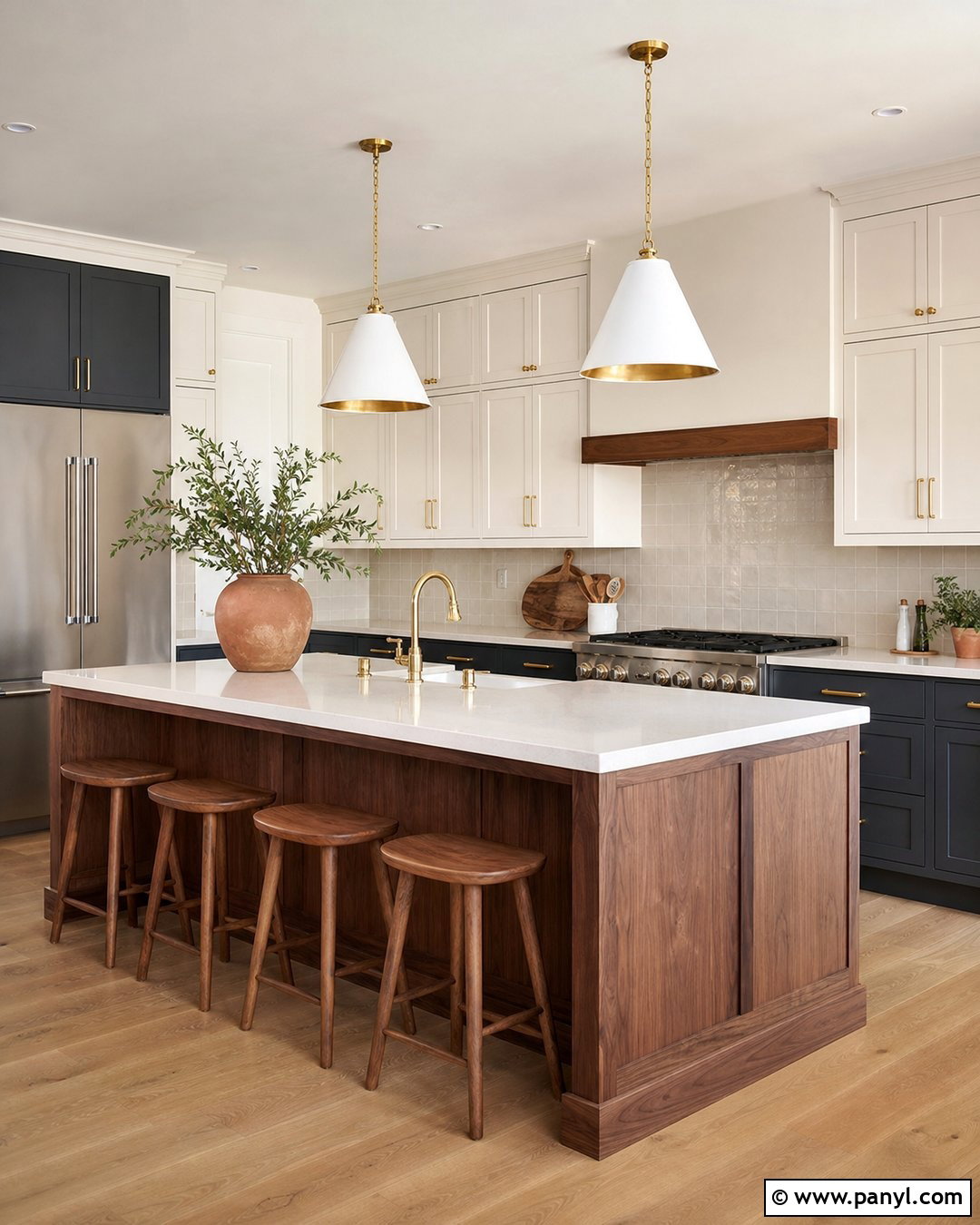
Does your kitchen feel cold despite having plenty of natural light? Warm greige walls can soften cool surfaces while preserving a clean, neutral appearance. Use them with charcoal lower cabinets, warm white upper cabinets, and creamy quartz counters for a layered two-tone design. A light taupe backsplash will bridge the wall and cabinet colors. Complete the room with brushed brass hardware, walnut stools, and medium oak flooring. Warm greige also provides a calm background for stainless steel appliances, which might otherwise look overly industrial. Select pendant lights with white shades and brass details to repeat the palette above the island. Terracotta planters and wooden serving pieces can supply earthy accents. This look feels contemporary, comfortable, and practical for an active family kitchen.
7. Light Taupe Kitchen Walls
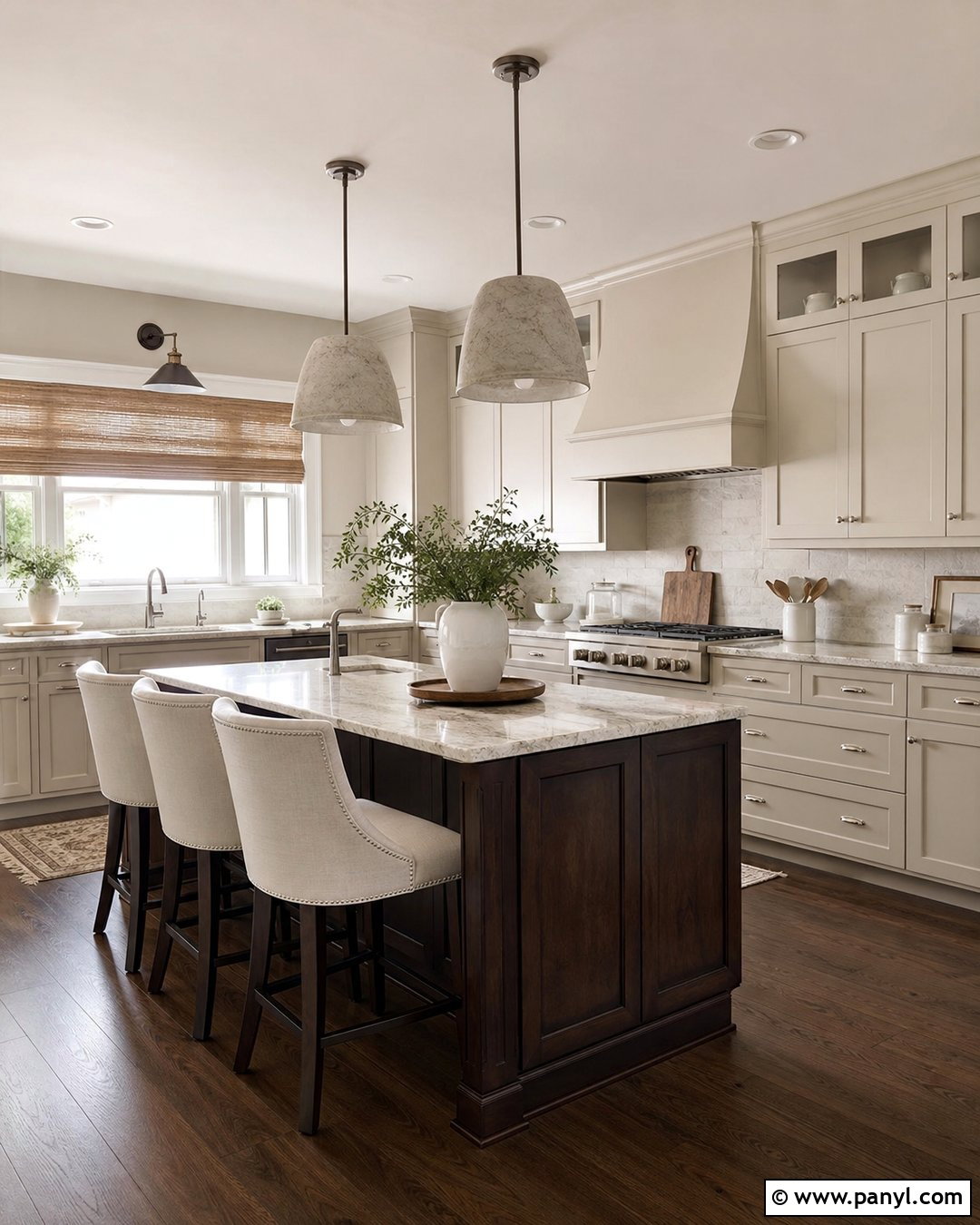
Light taupe walls introduce quiet brown-gray depth without making a kitchen feel enclosed. They pair particularly well with creamy cabinets, natural stone counters, and dark wood flooring. For a cohesive design, select a taupe that repeats one of the softer veins found in the countertop. Add an espresso-stained island to create contrast, then lighten it with cream upholstered stools and pale stone pendants. Brushed nickel hardware keeps the palette from becoming too golden, while woven shades add natural texture. The finished kitchen feels grounded but still bright enough for daily use. Light taupe can also disguise minor wall marks better than white, making it useful near dining areas. Keep decorative accents simple with white ceramics, clear glass, and a few muted botanical elements.
8. Mushroom Kitchen Walls
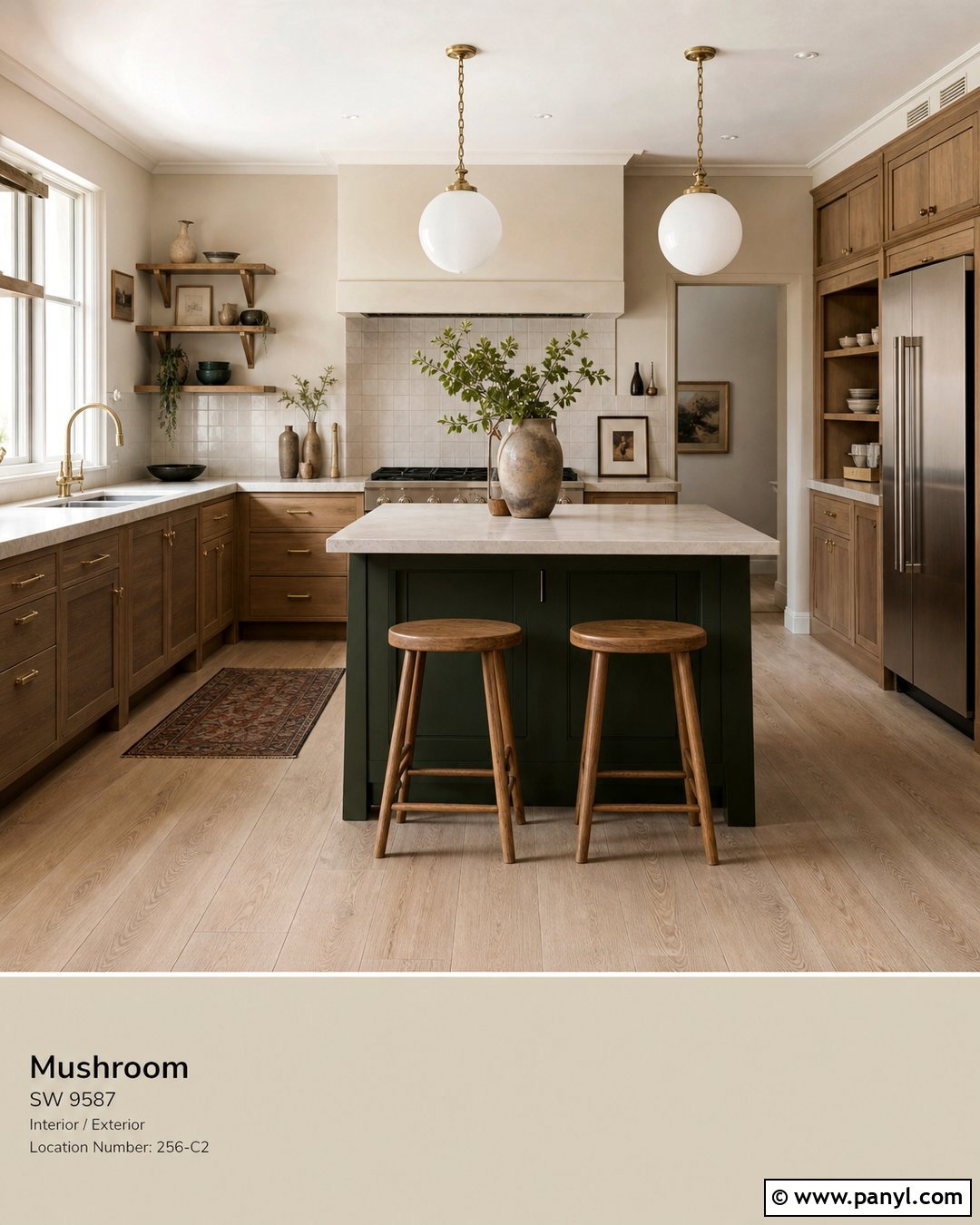
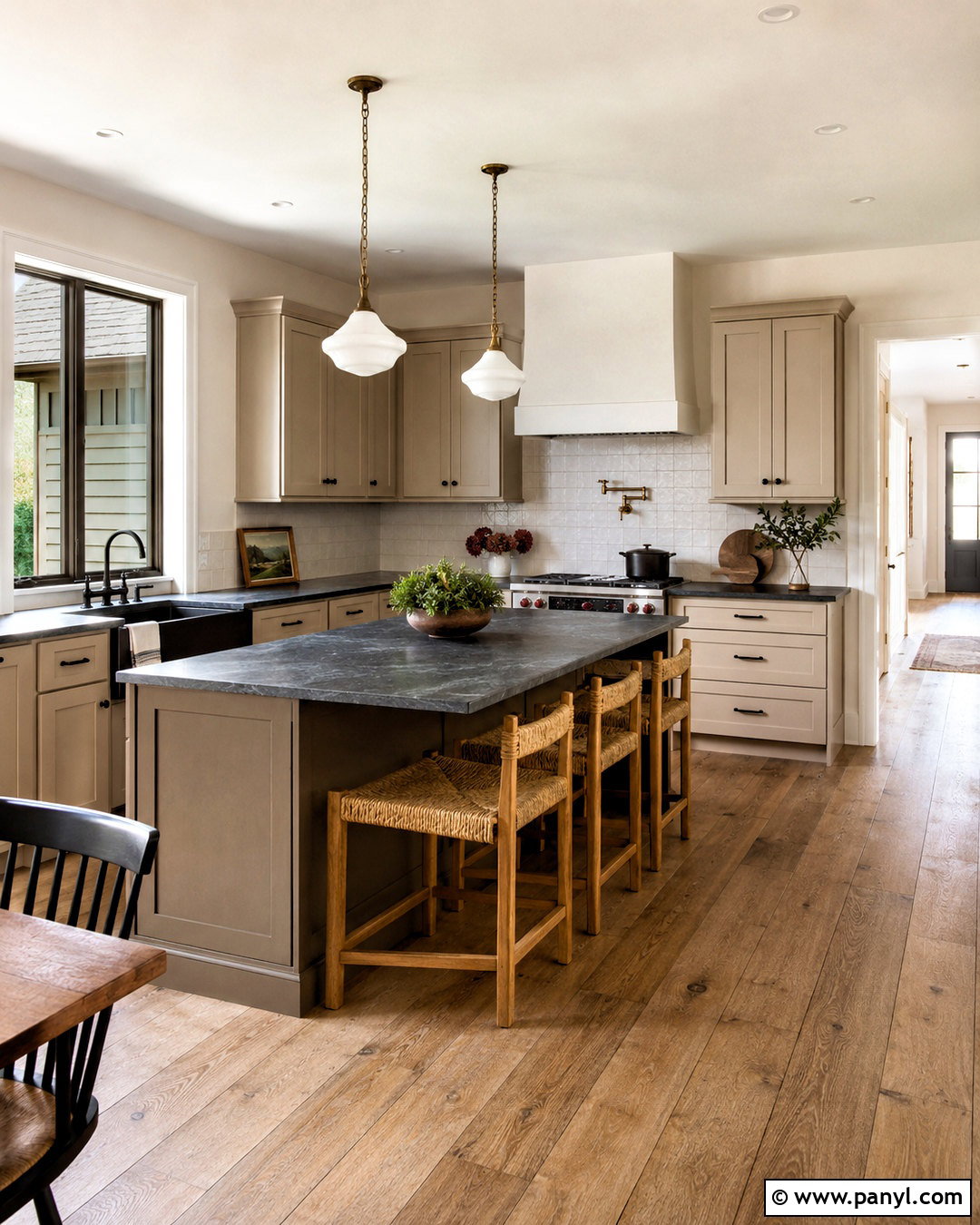
Mushroom is an earthy neutral positioned between taupe, beige, and soft gray. It creates a rich background for kitchens with natural materials and understated colors. Pair mushroom walls with flat-panel oak cabinets, creamy limestone counters, and a warm white backsplash. Use unlacquered brass handles and globe pendants to bring a gentle glow to the brown-gray palette. A dark green island can add restrained color while still feeling connected to nature. Choose pale oak flooring to keep the room from becoming visually heavy. Open shelving with handmade pottery will reinforce the organic character, but limit displays to a few practical objects. Mushroom walls are particularly appealing in kitchens with generous daylight, where their complex undertones can shift subtly while maintaining a calm, cohesive appearance.
9. Sand Beige Kitchen Walls
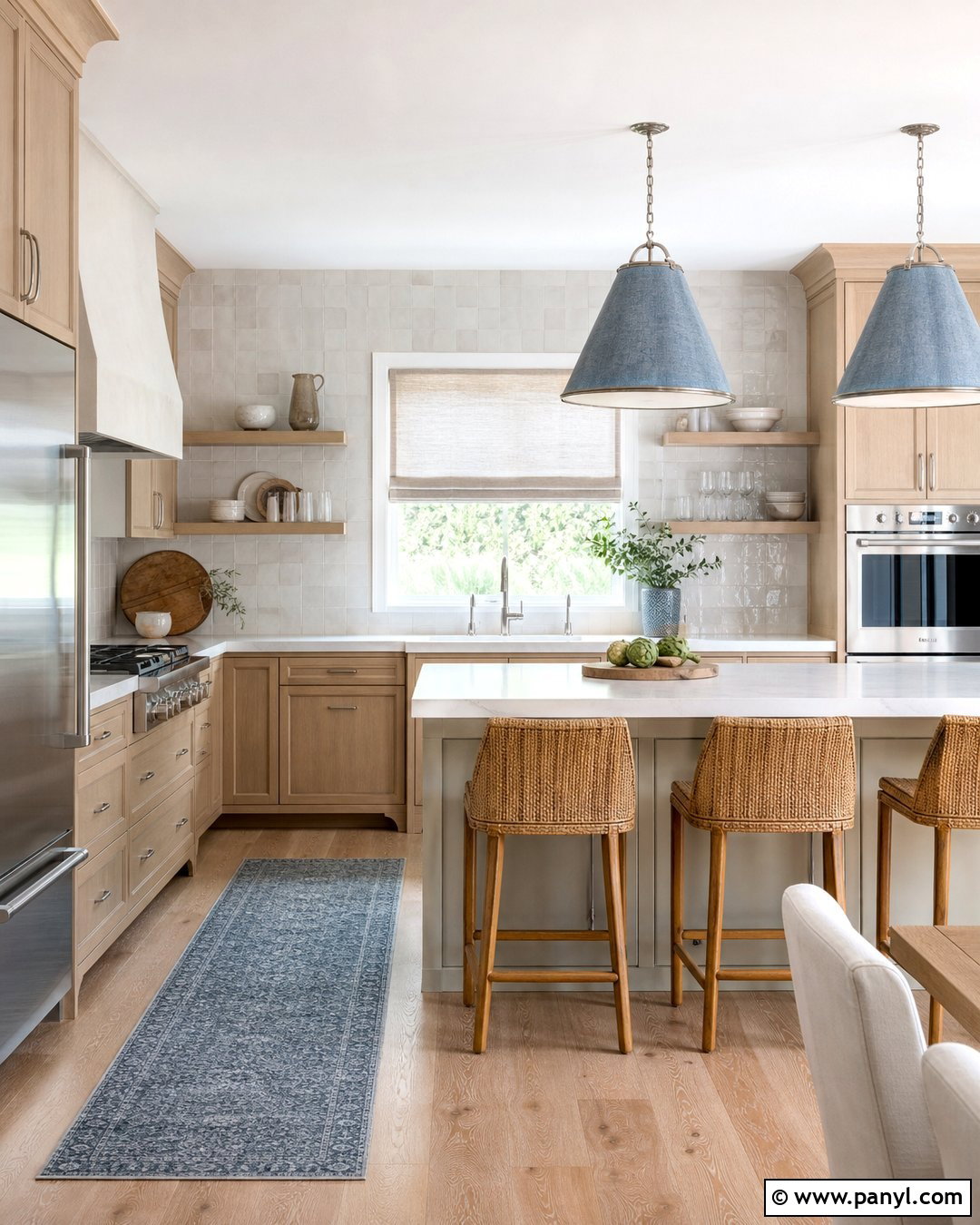
Sand beige gives kitchen walls a light, sun-washed quality that works naturally with casual coastal and contemporary interiors. Build the full design with pale wood cabinets, white quartz counters, and a softly textured zellige-style backsplash. The sandy walls should have muted tan undertones rather than strong yellow notes. Add brushed nickel hardware, woven rattan counter stools, and light oak flooring for an easygoing finish. Soft blue-gray pendants can introduce coastal color without turning the room into a themed space. Use natural linen shades and a faded blue runner to continue the relaxed palette. Sand beige is also a practical bridge between white cabinets and warmer flooring. The result feels bright, comfortable, and finished, even when the kitchen uses simple materials and an uncomplicated layout.
10. Oatmeal Kitchen Walls
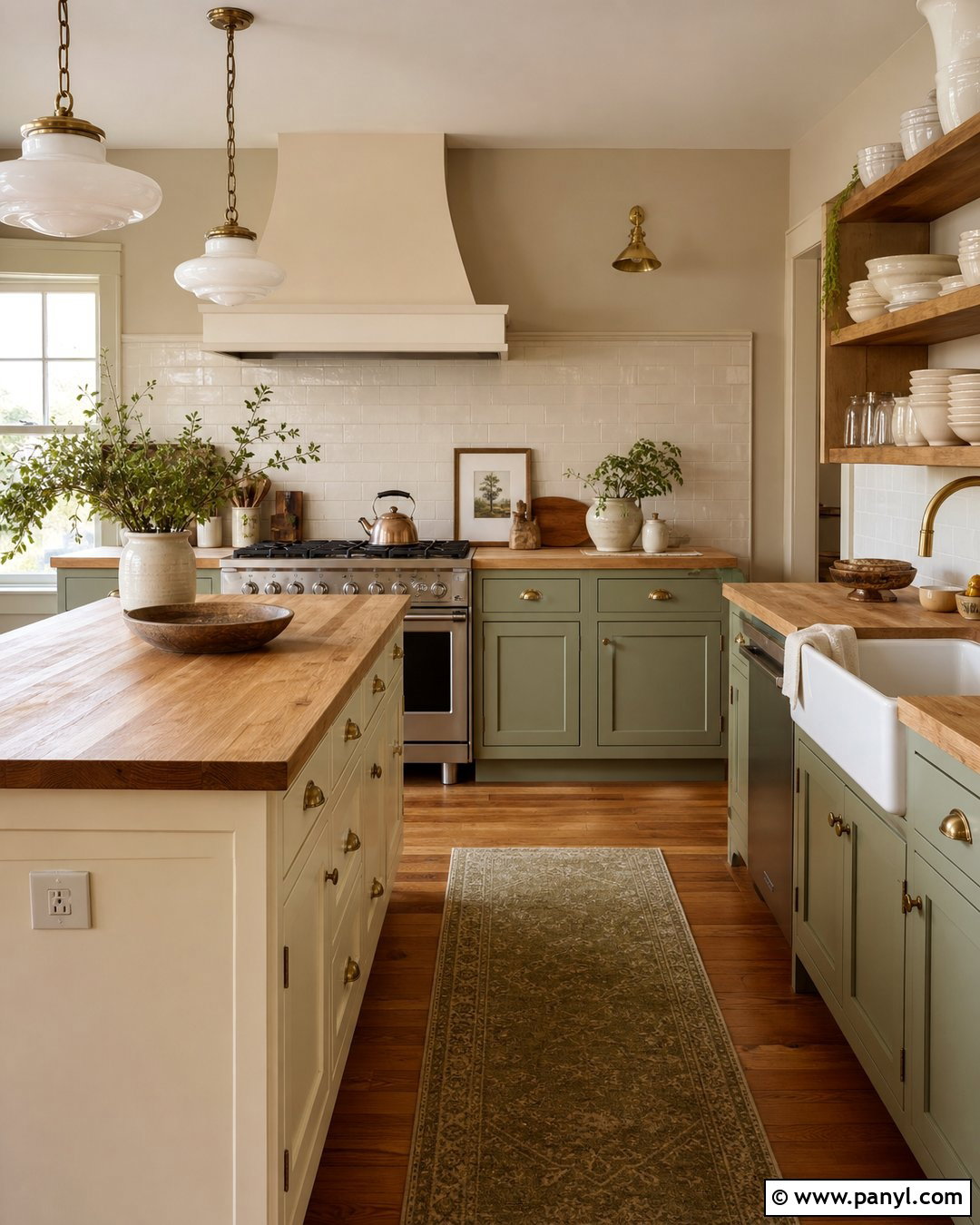
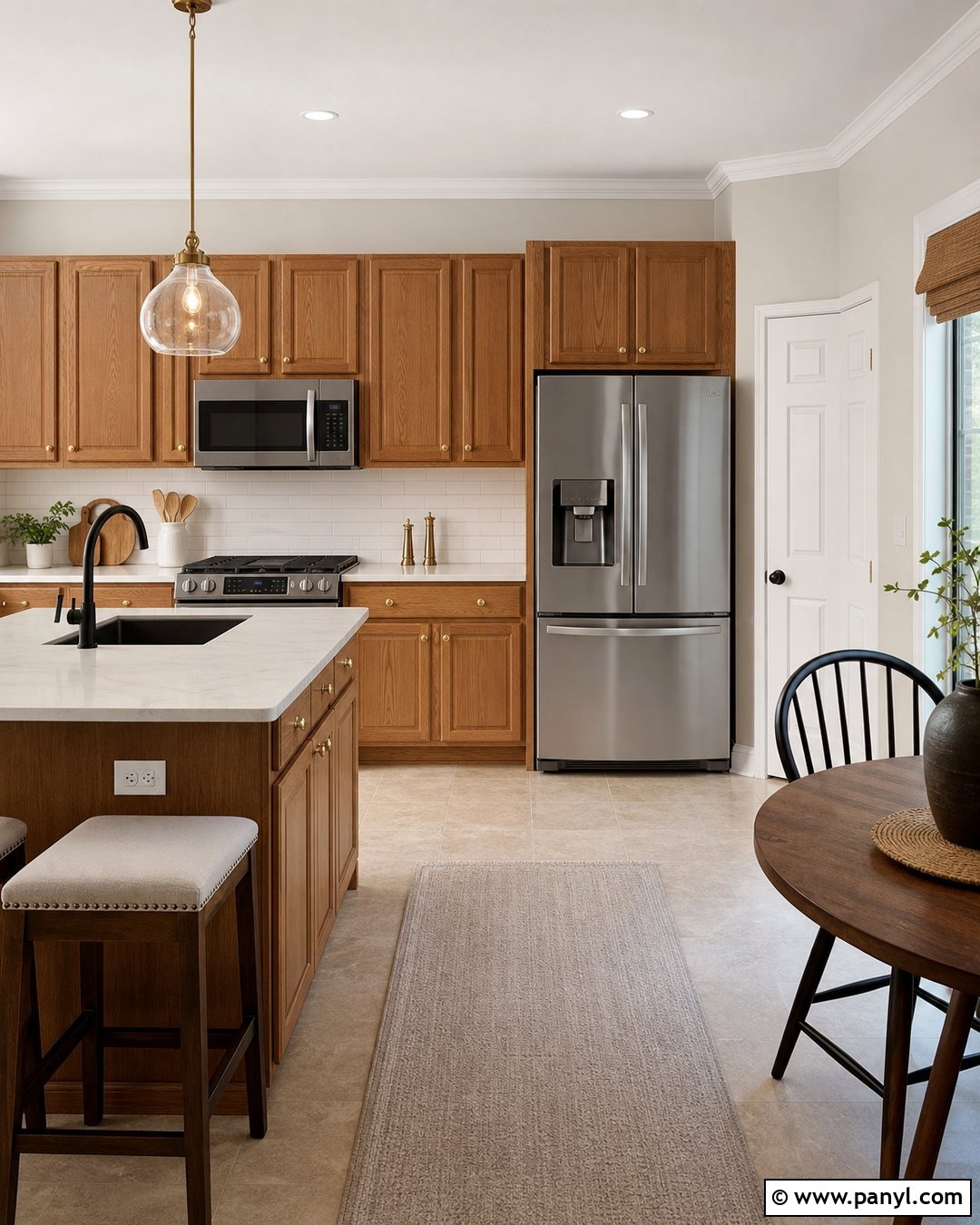
Oatmeal walls provide more warmth and body than off-white while remaining light enough for compact kitchens. Pair them with pale sage cabinets, butcher-block counters, and an ivory tile backsplash to create a soft cottage-inspired space. A small cream island with an oak top can provide extra preparation space without overwhelming the room. Choose aged brass cup pulls, milk-glass pendants, and medium-tone wood flooring to support the warm palette. Open shelves displaying cream dishes and clear jars will keep the kitchen practical and visually quiet. Add a washable runner with faded green and tan details for pattern. Oatmeal paint works best when its beige undertone relates to surrounding wood and tile. Avoid pairing it with extremely cool white trim, which may make the walls look unexpectedly yellow.
11. Putty Kitchen Walls
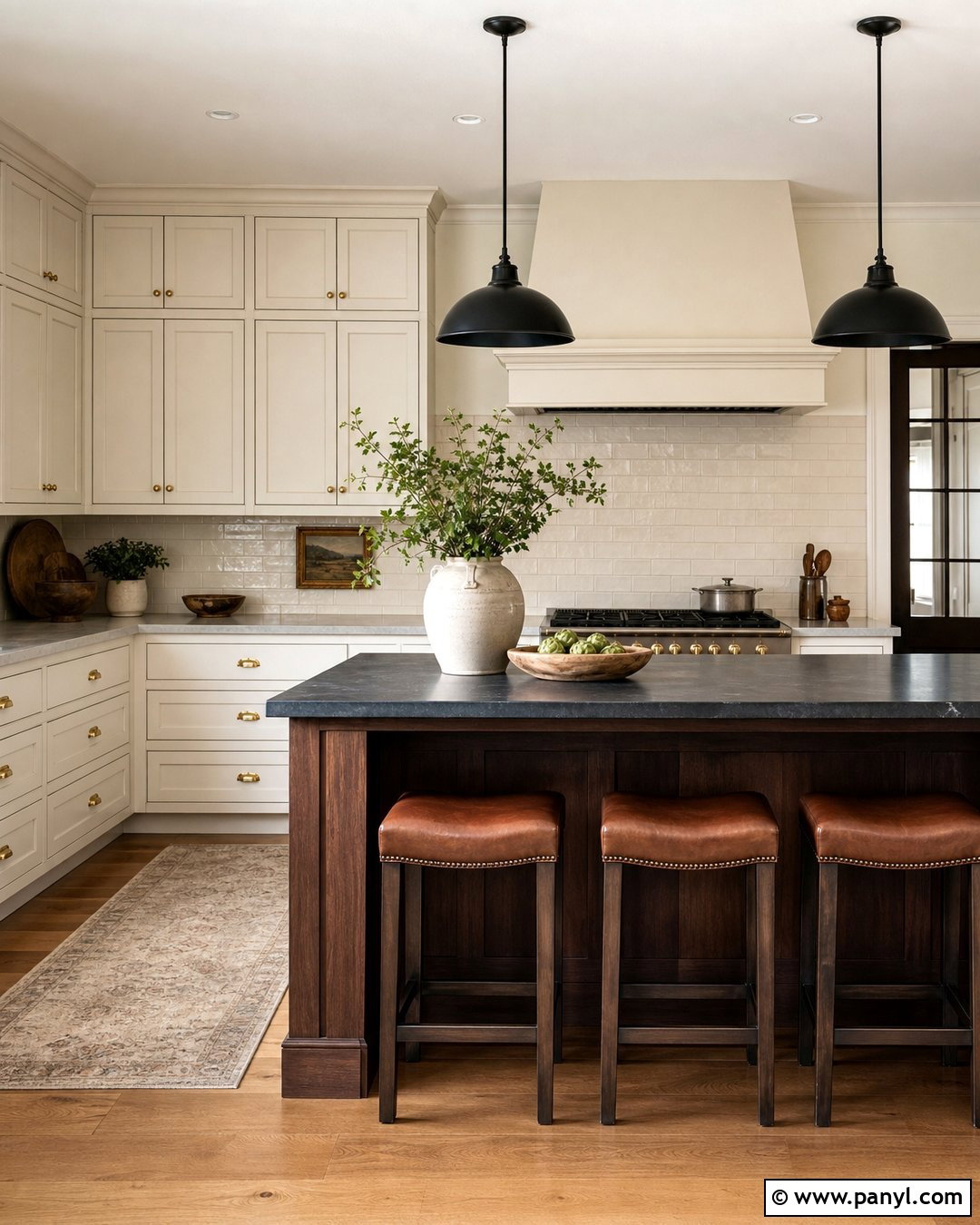
Putty is a subdued beige-gray that creates more definition than cream without the coolness of standard gray. Use putty walls in a transitional kitchen with warm white cabinets, soapstone-look counters, and a glossy ivory backsplash. A dark walnut island provides a strong centerpiece, while leather counter stools repeat the earthy wall undertone. Mix aged brass cabinet hardware with black pendant lights for a balanced combination of warm and dark accents. Medium oak flooring will connect every finish and keep the room approachable. Because putty has noticeable depth, bright white ceilings and trim can create clean edges around the space. Add neutral ceramics, wooden bowls, and one or two muted landscape prints. The completed kitchen feels established and layered rather than newly matched from a single collection.
12. Stone Gray Kitchen Walls
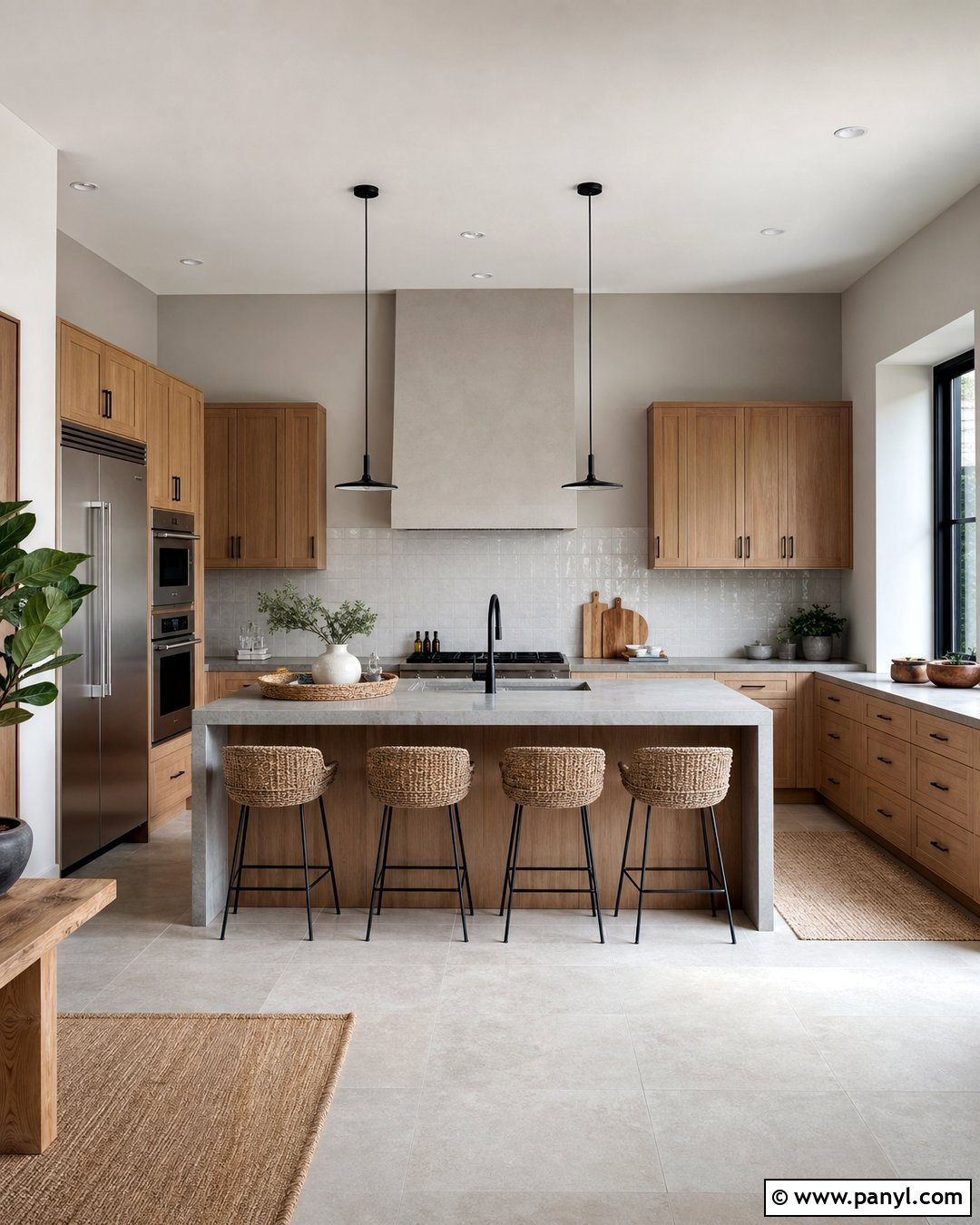
Stone gray walls offer a balanced, mineral-inspired backdrop for kitchens that need subtle contrast. Choose a light stone gray with a warm undertone, then pair it with white oak cabinets, concrete-look quartz counters, and matte white tile. Black cabinet pulls and slim black pendants will outline the pale surfaces and give the room modern structure. Continue the natural feeling with limestone-look flooring and woven counter stools. To prevent the gray from appearing cold, include warm wood accessories and soft beige textiles. A plaster-style range hood painted to match the walls can create a smooth, architectural focal point. Stone gray works especially well in bright kitchens where abundant daylight reveals its depth. The complete palette feels calm, contemporary, and durable without depending on dramatic color or decorative clutter.
13. Dove Gray Kitchen Walls
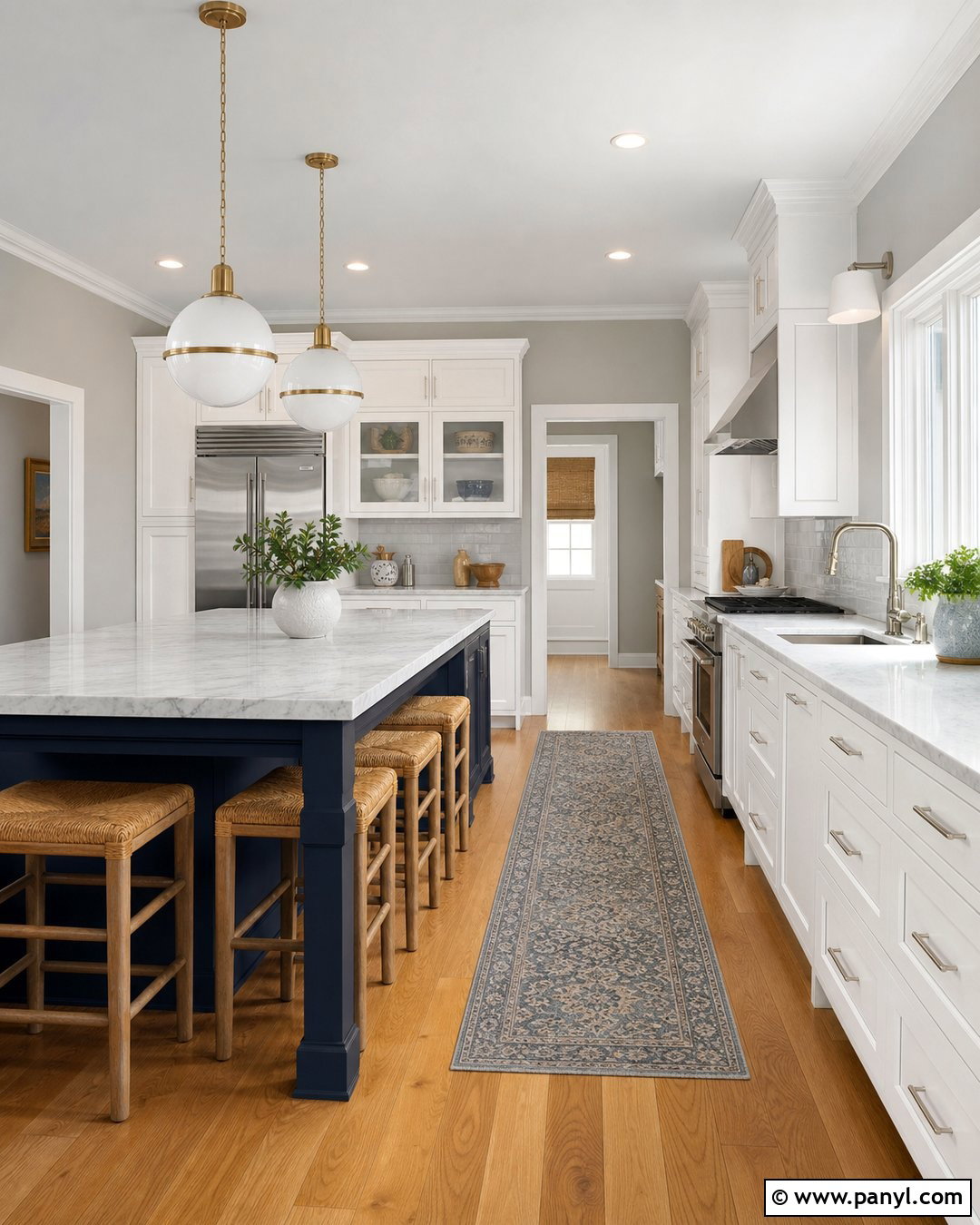
A whisper of dove gray can give white kitchens clearer dimension while preserving an open, airy feeling. Combine dove gray walls with bright white cabinets, polished marble-look counters, and pale gray backsplash tile. Use satin nickel hardware to repeat the cool notes, then balance them with honey-toned oak flooring and natural wood stools. A navy island creates a practical focal point and prevents the pale palette from looking unfinished. Choose white globe pendants with dark fittings for a crisp transition between light and deep colors. Soft linen shades and a blue-gray runner can make the kitchen feel comfortable rather than formal. Dove gray is best in rooms with good natural light. In darker spaces, select a version with a slight beige undertone to avoid an icy or shadowed result.
14. Blue Gray Kitchen Walls
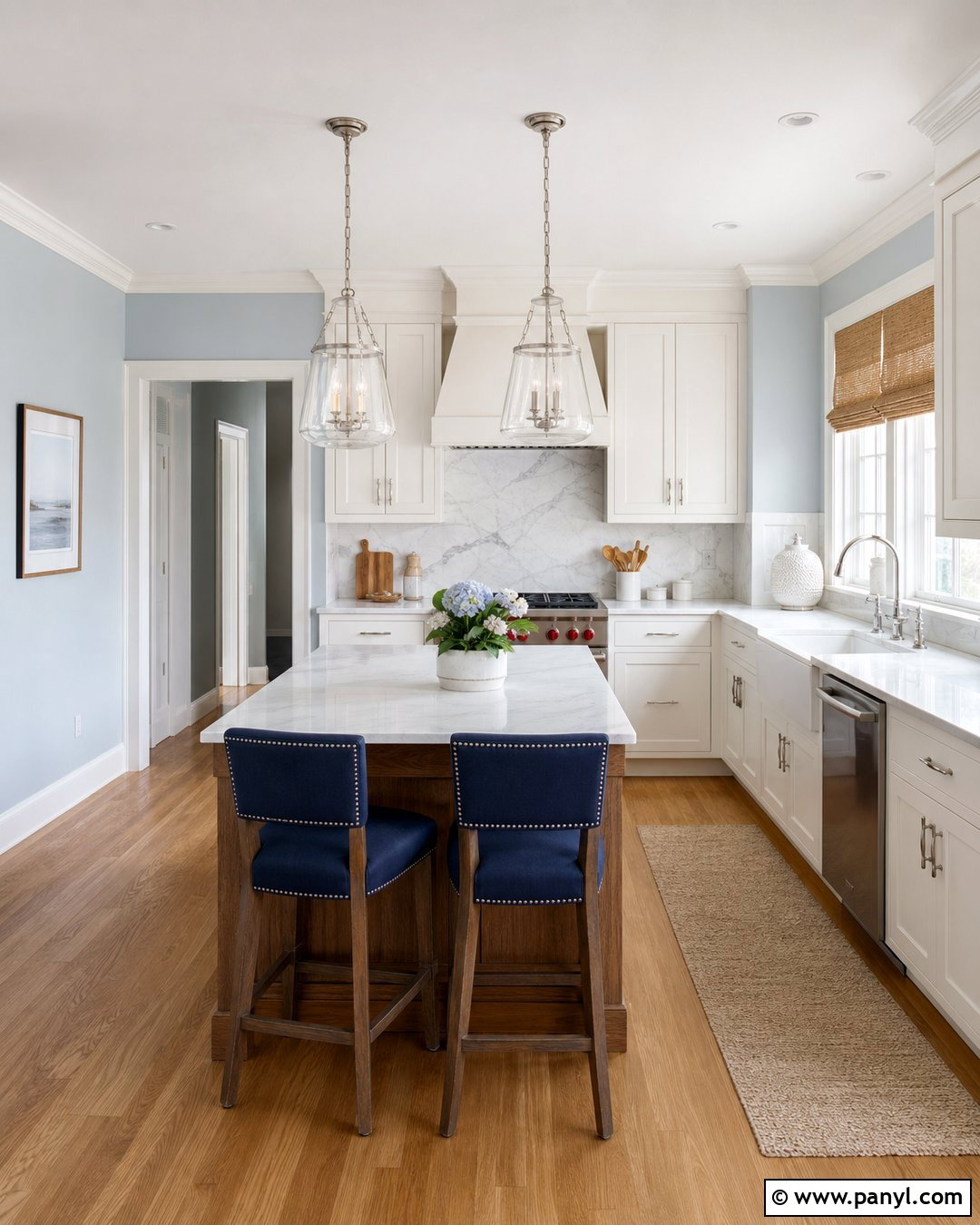
Blue-gray walls bring quiet color to a kitchen while behaving much like a traditional neutral. Pair a pale, muted blue-gray with warm white cabinets, light quartz counters, and a backsplash that combines white with subtle gray veining. Natural oak flooring and a medium wood island will counterbalance the cooler wall color. Add polished nickel pulls, clear glass pendants, and navy upholstered stools for a layered blue palette. Keep the ceiling and trim warm white so the transition does not appear harsh. This complete look works beautifully in sunny kitchens because direct light helps the blue undertone appear fresh rather than dull. Use a beige runner and woven shades to soften the design. Limit additional blue accessories so the walls remain an understated background instead of becoming a strong theme.
15. Green Gray Kitchen Walls
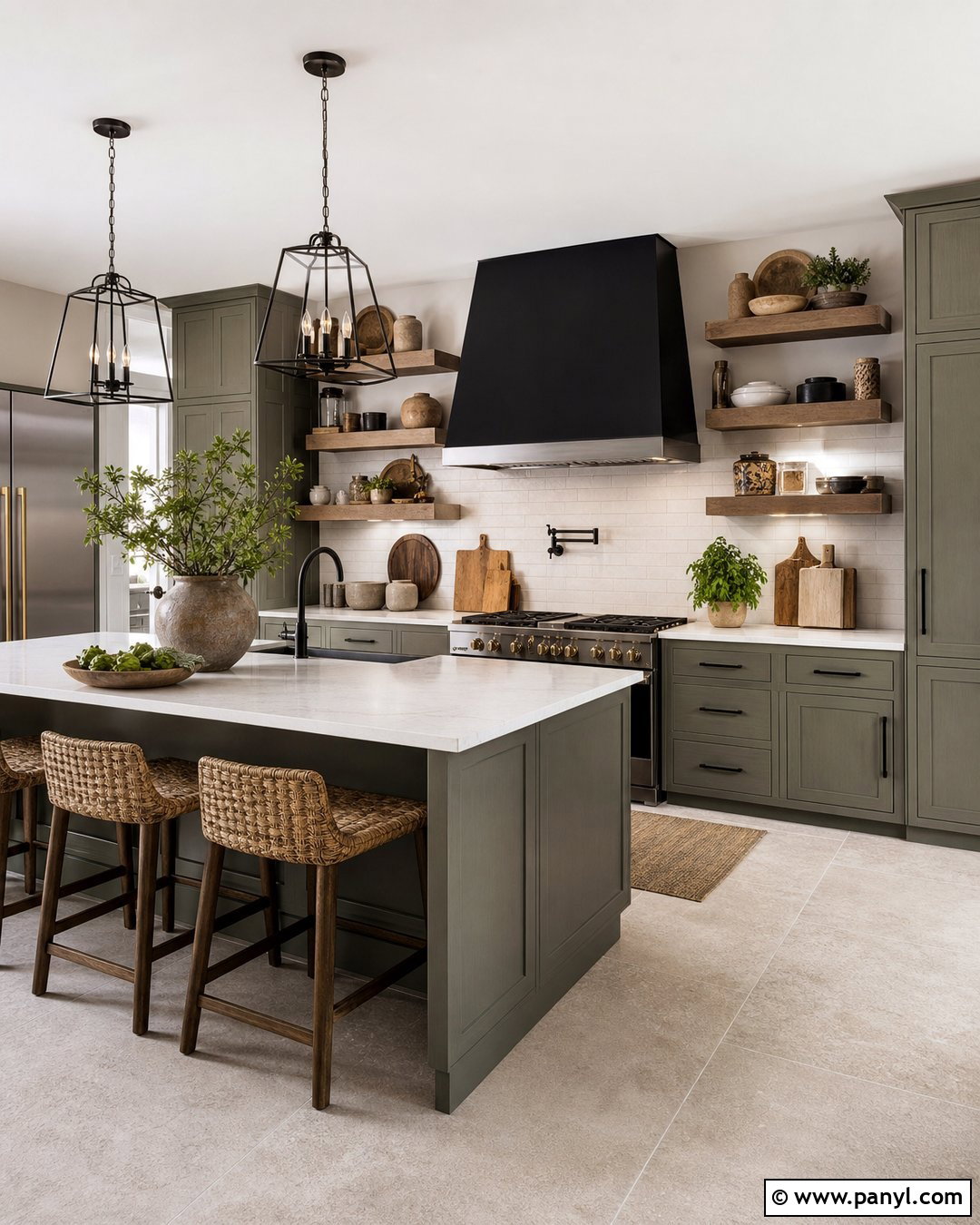
Green-gray offers a natural, restful background that complements wood, stone, white, and black finishes. Design the room with green-gray walls, rift-cut oak cabinets, creamy quartz counters, and a warm white tile backsplash. A matte black range hood can become the main focal point, supported by black cabinet pulls and simple iron pendants. Add light limestone flooring and woven stools to maintain an earthy character. The green undertone should be muted enough to read as neutral from across the room. Display a small amount of pottery, wood boards, and fresh herbs on open shelves to reinforce the organic palette. Green-gray is an effective option for kitchens overlooking a garden because it creates a gentle connection between indoor finishes and outdoor greenery without requiring a bold wall color.
16. Pale Sage Kitchen Walls
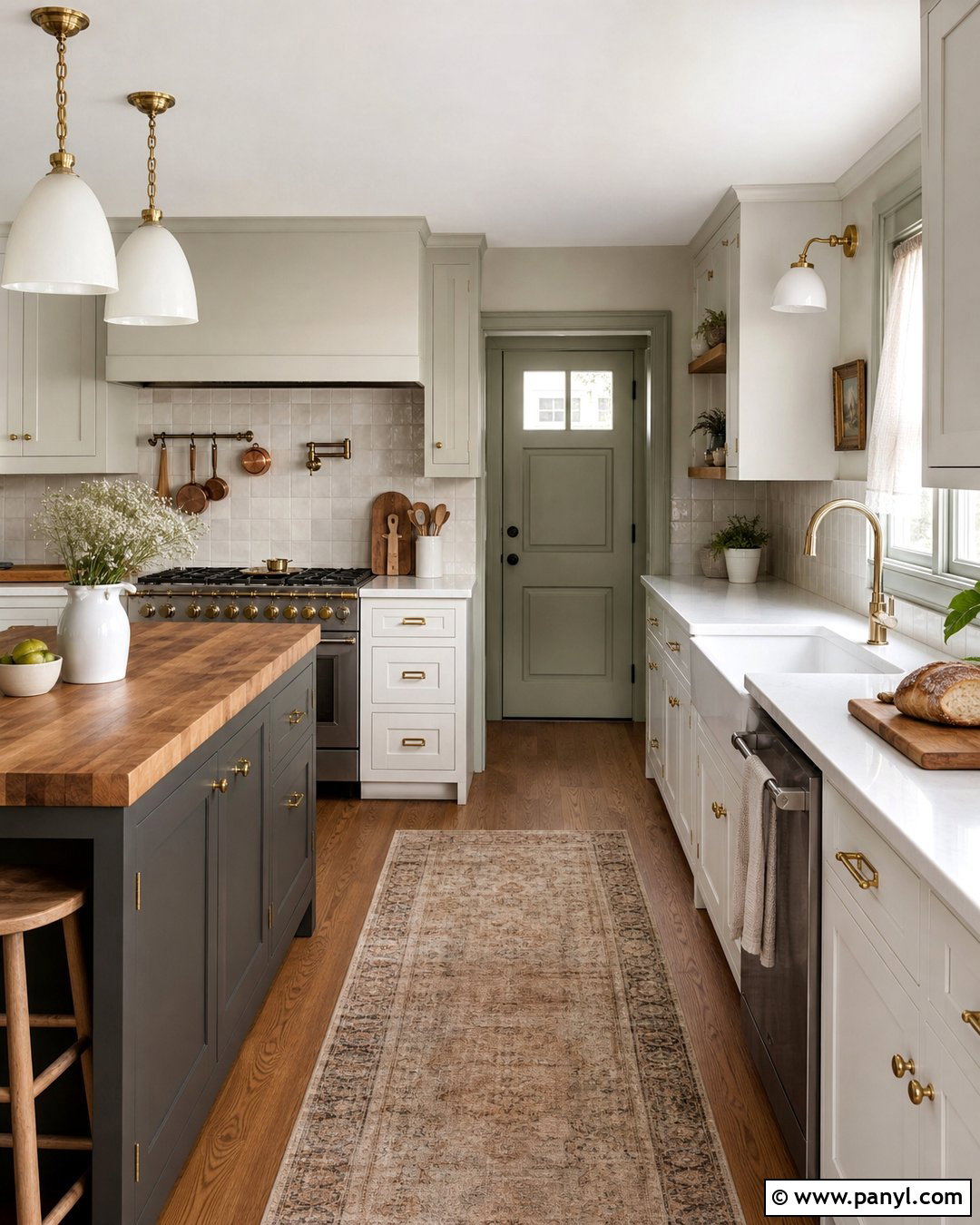
Pale sage can function as a neutral when it contains enough gray and very little bright yellow. Pair pale sage walls with creamy white cabinets, butcher-block accents, and honed white quartz countertops. Use warm brass hardware and ivory pendant lights to emphasize the welcoming side of the green. A medium oak floor provides richness underfoot, while a narrow island painted soft charcoal adds contrast. Choose a backsplash of simple cream tile with slightly irregular surfaces for depth. Linen café curtains and a muted vintage-style runner can complete the cottage-inspired kitchen. Keep countertop decor minimal so the subtle wall color remains noticeable. Pale sage looks different as daylight changes, so sample it beside cabinets and counters before making a final selection for the entire kitchen.
17. Linen Beige Kitchen Walls
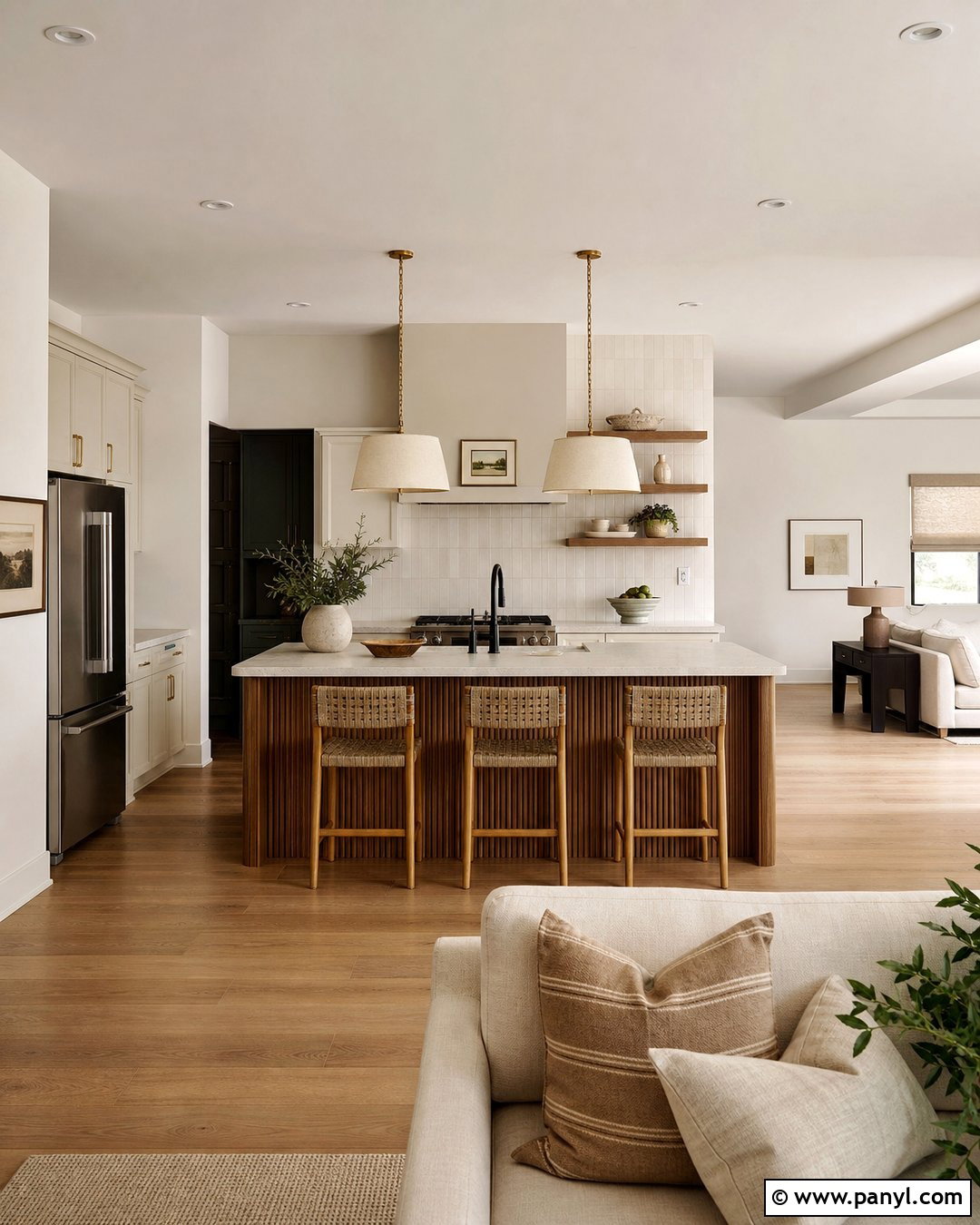
Linen beige has the softness of natural fabric, making it a comfortable choice for kitchens connected to dining or family rooms. Use linen beige walls with warm white cabinets, beige-veined quartz counters, and light oak flooring for a seamless neutral base. Add a medium brown island with fluted wood detailing to create depth in the center of the room. Brushed brass pulls and white fabric-shade pendants will maintain the gentle warmth. A backsplash of elongated ivory tile adds subtle texture without introducing another competing color. Complete the space with woven counter stools, natural linen window shades, and black accents on the faucet or range. The kitchen will feel light but not empty. Linen beige also supports colorful dishes, artwork, and seasonal textiles without requiring the walls to change.
18. Almond Kitchen Walls
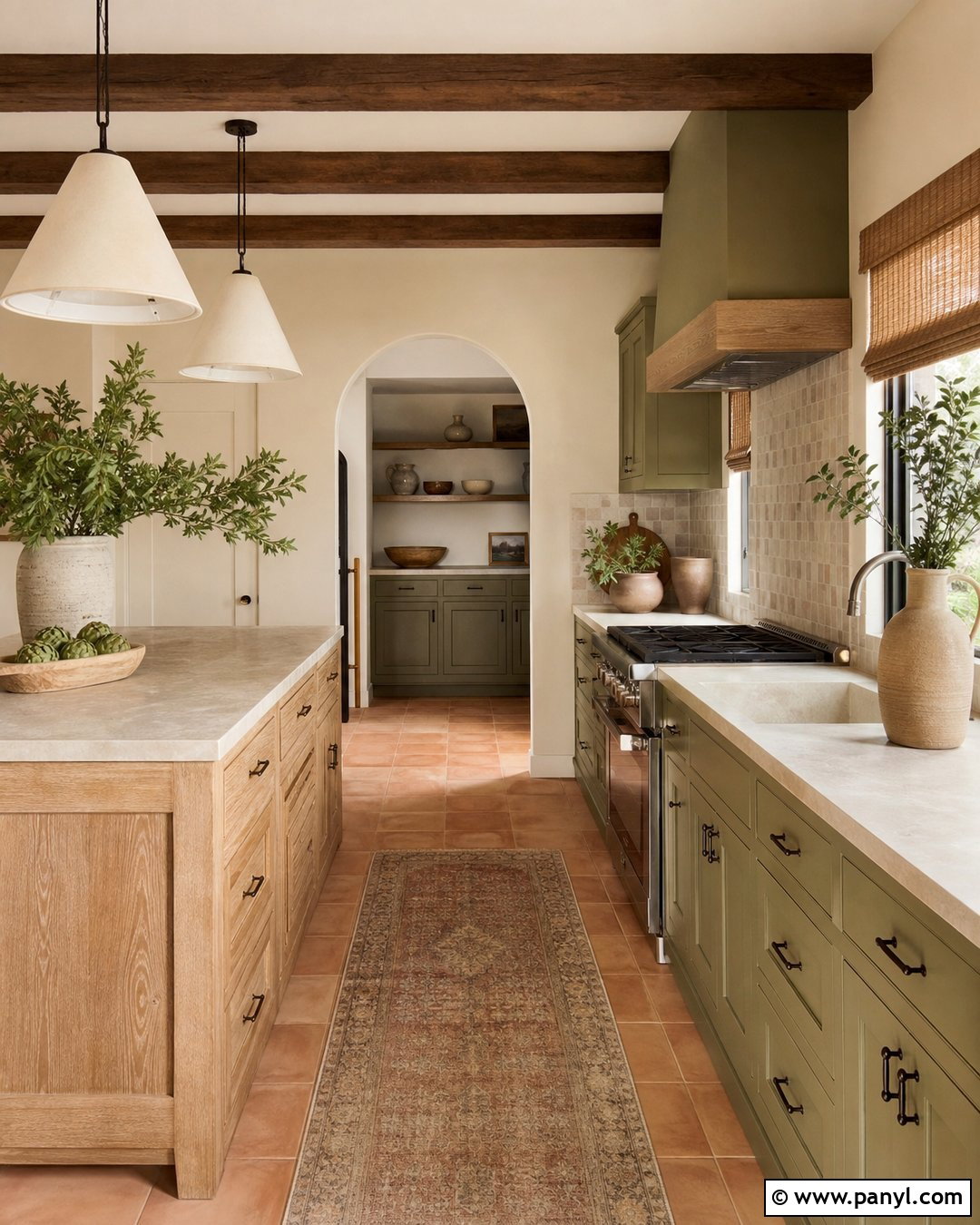
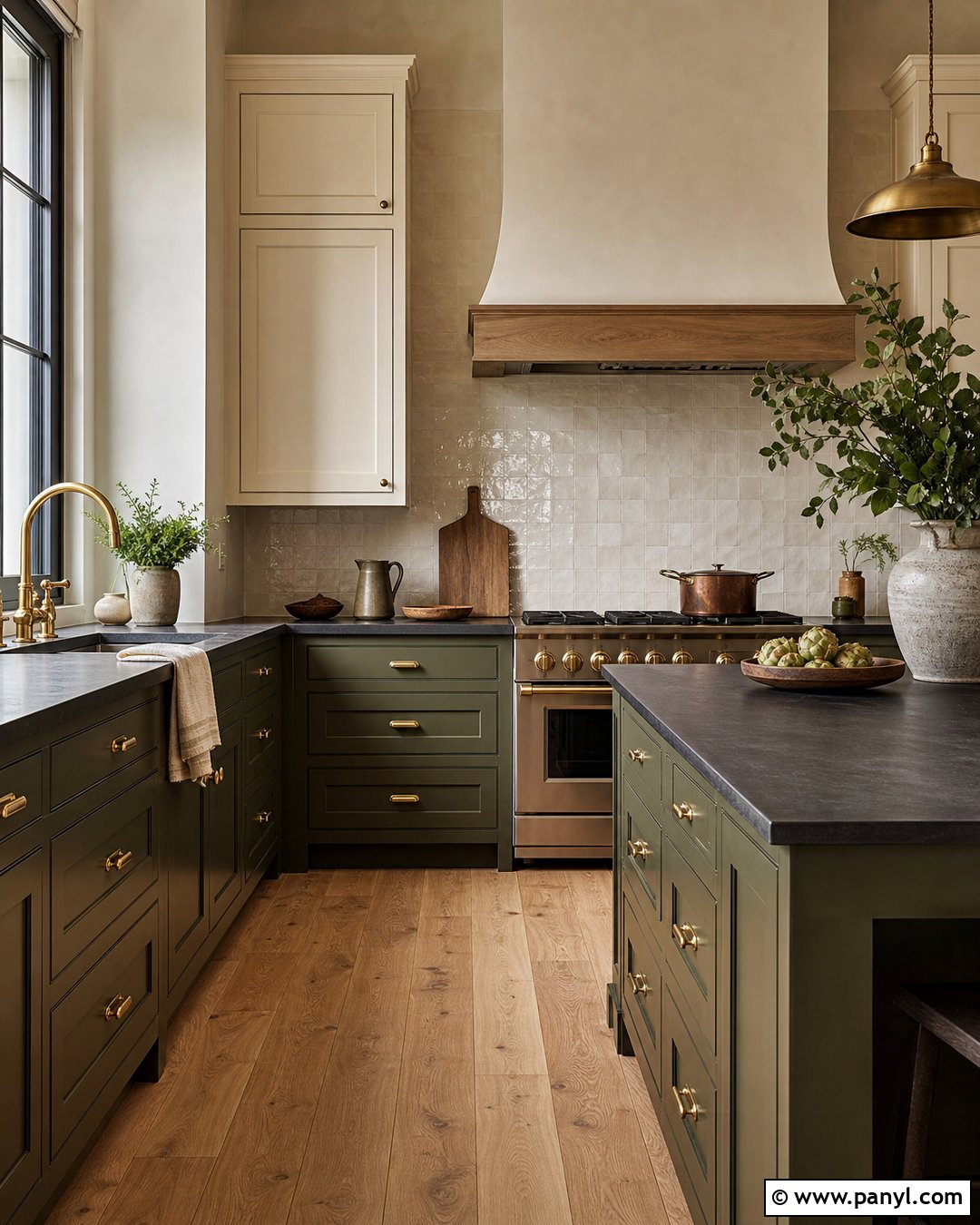
Almond walls create a mellow, creamy beige background that suits kitchens with warm woods and traditional details. Pair them with painted olive cabinets, ivory quartz counters, and a tumbled stone backsplash for an earthy Mediterranean-influenced palette. Use aged bronze hardware, a dark metal faucet, and warm wood ceiling beams to give the room character. Terracotta-look flooring can reinforce the warmth, while a pale oak island prevents the design from becoming too dark. Choose large cream pendants that provide strong task lighting over the work surface. Simple woven shades and neutral pottery will finish the kitchen without unnecessary ornament. Almond should look softly beige rather than noticeably yellow. Compare samples with the countertop and backsplash because warm surfaces can intensify hidden gold undertones once the walls are fully painted.
19. Clay Beige Kitchen Walls
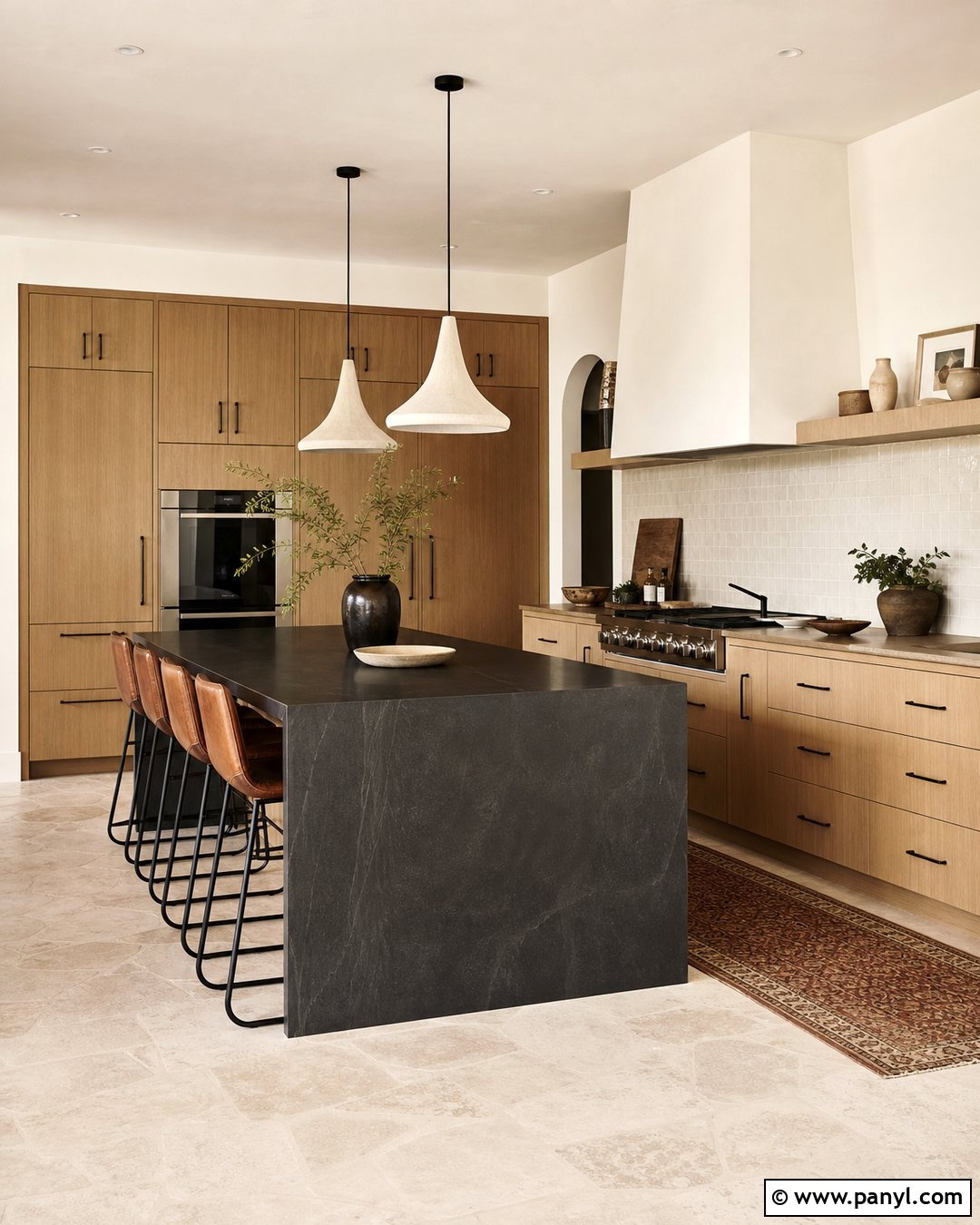
Clay beige carries muted earthy undertones that give a neutral kitchen more personality. Build a complete Southwestern-modern look with clay beige walls, light oak cabinets, creamy stone counters, and a handmade off-white backsplash. Add a charcoal island with a waterfall countertop to provide contemporary contrast. Matte black pulls, sculptural white pendants, and saddle-brown counter stools will create definition across the warm surfaces. Use pale limestone-look flooring to keep the room bright. A woven runner containing rust, tan, and black can connect the palette without introducing a loud pattern. Clay beige works especially well in kitchens receiving strong sunlight because it maintains warmth without appearing washed out. Complete the room with a few simple ceramic vessels and natural branches, leaving preparation surfaces open and uncluttered.
20. Soft Mocha Kitchen Walls
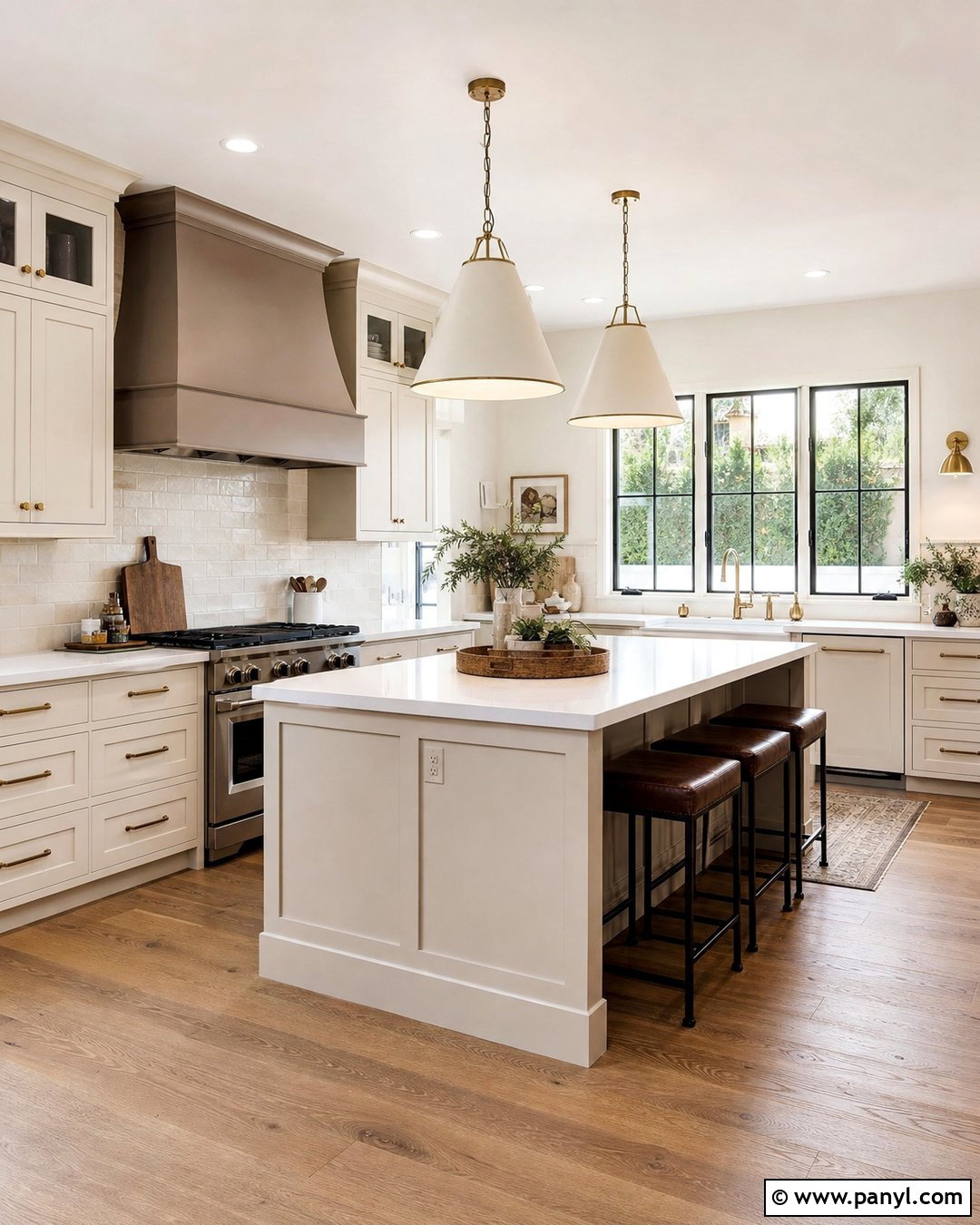
Soft mocha is the deepest option in this neutral collection, offering cozy brown-gray color without the heaviness of dark chocolate. Use it in a spacious kitchen with creamy cabinets, white quartz counters, and medium oak flooring. Paint the walls and a simple plaster range hood in the same mocha tone to create a unified focal area. Add antique brass hardware, large ivory pendants, and dark brown leather stools for a sophisticated layered palette. A cream backsplash will reflect light between the counters and upper cabinets. Keep ceilings and trim warm white to frame the richer walls. Soft mocha works particularly well in kitchens with large windows and strong artificial lighting. Limit additional dark finishes so the room remains inviting, balanced, and practical throughout the day.
Conclusion:
The best neutral kitchen wall color should connect every permanent finish rather than simply look attractive on a sample card. Consider cabinet undertones, countertop veining, flooring, backsplash material, natural daylight, and evening bulbs together. Warm white, cream, greige, taupe, sage, and earthy beige can each create a very different finished kitchen. Paint large movable sample boards and view them beside every major surface at several times of day before choosing. This simple step makes undertone conflicts easier to identify. Whether your kitchen is modern, farmhouse, traditional, coastal, or transitional, these **20 Neutral Paint Colors For Kitchen Walls** offer complete palettes that feel balanced, practical, and easy to personalize.

Related Ideas and Inspiration:
Leave a Reply