
A dedicated plant room should feel lush, balanced, and connected to the rest of your home. The best **20 Wall Colors For Plant Room Ideas** include more than obvious greens. Warm whites brighten crowded displays, earthy neutrals complement terracotta, and rich blues create striking contrast behind tropical foliage. Soft pink, muted yellow, and clay tones can also highlight variegated leaves without making the space feel overly busy. Current color guidance favors nature-inspired greens, sandy neutrals, blue-greens, and carefully chosen contrasting shades for plant-filled interiors. () Before painting, compare samples beside your plants during morning, afternoon, and evening light. The complete room looks below offer practical layouts, finishes, furniture, and decorating details for recreating these **20 Wall Colors For Plant Room Ideas**.
1. Warm White Plant Room
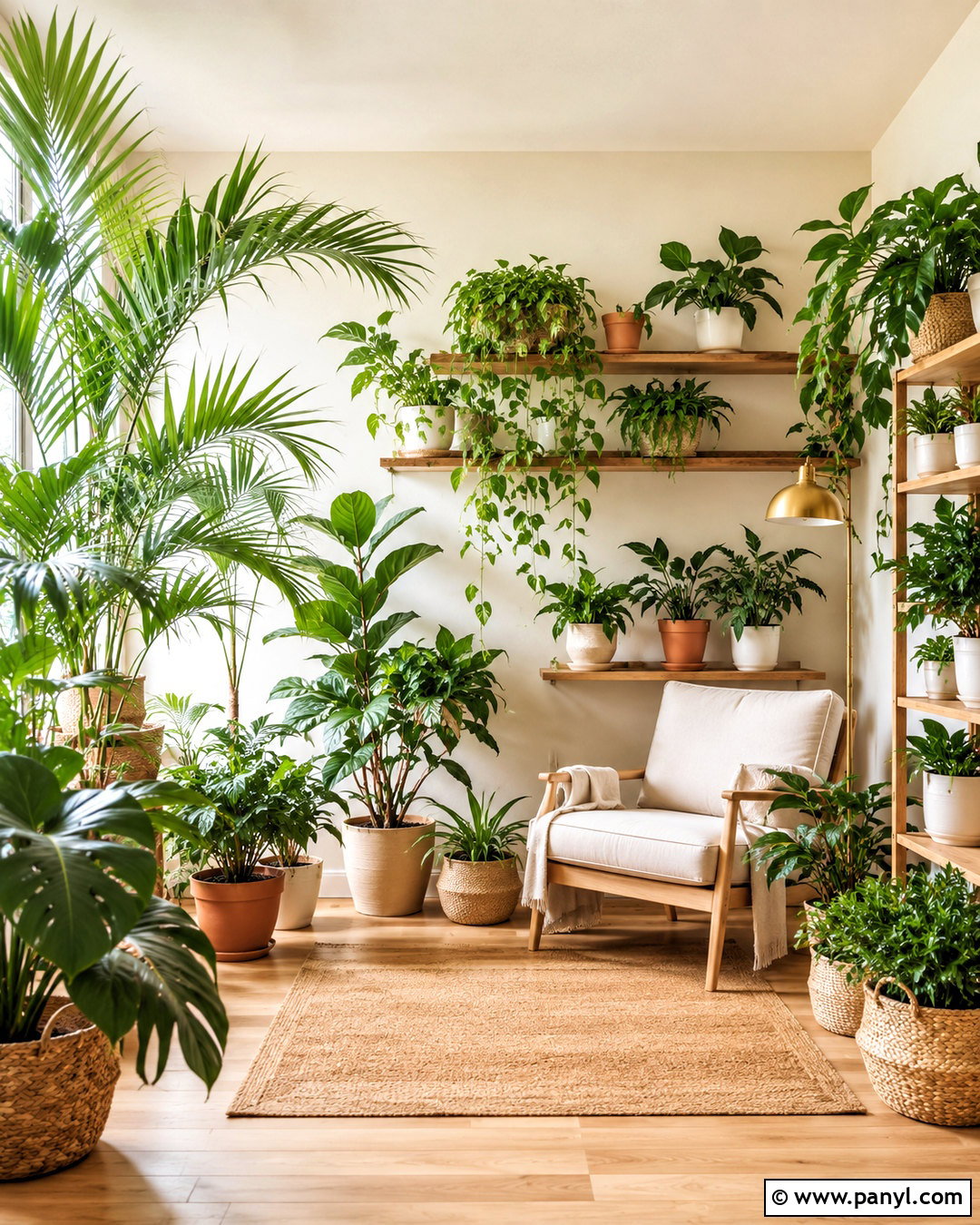
Warm white walls create a clean, flexible background for a plant collection with many leaf colors and shapes. Choose a creamy white rather than a cold, blue-based shade. Pair it with light oak flooring, simple wood shelves, and a slim potting table beneath the largest window. Terracotta, sand, and matte white planters add warmth without competing with the foliage. Arrange tall palms and fiddle-leaf figs in the corners, then place smaller pothos and peperomia on open shelving. A natural jute rug helps define a central reading chair without covering too much easy-clean flooring. Finish the room with white linen curtains, woven baskets, and a brass floor lamp. This palette works especially well in compact plant rooms where visual brightness matters.
2. Soft Sage Green Plant Room
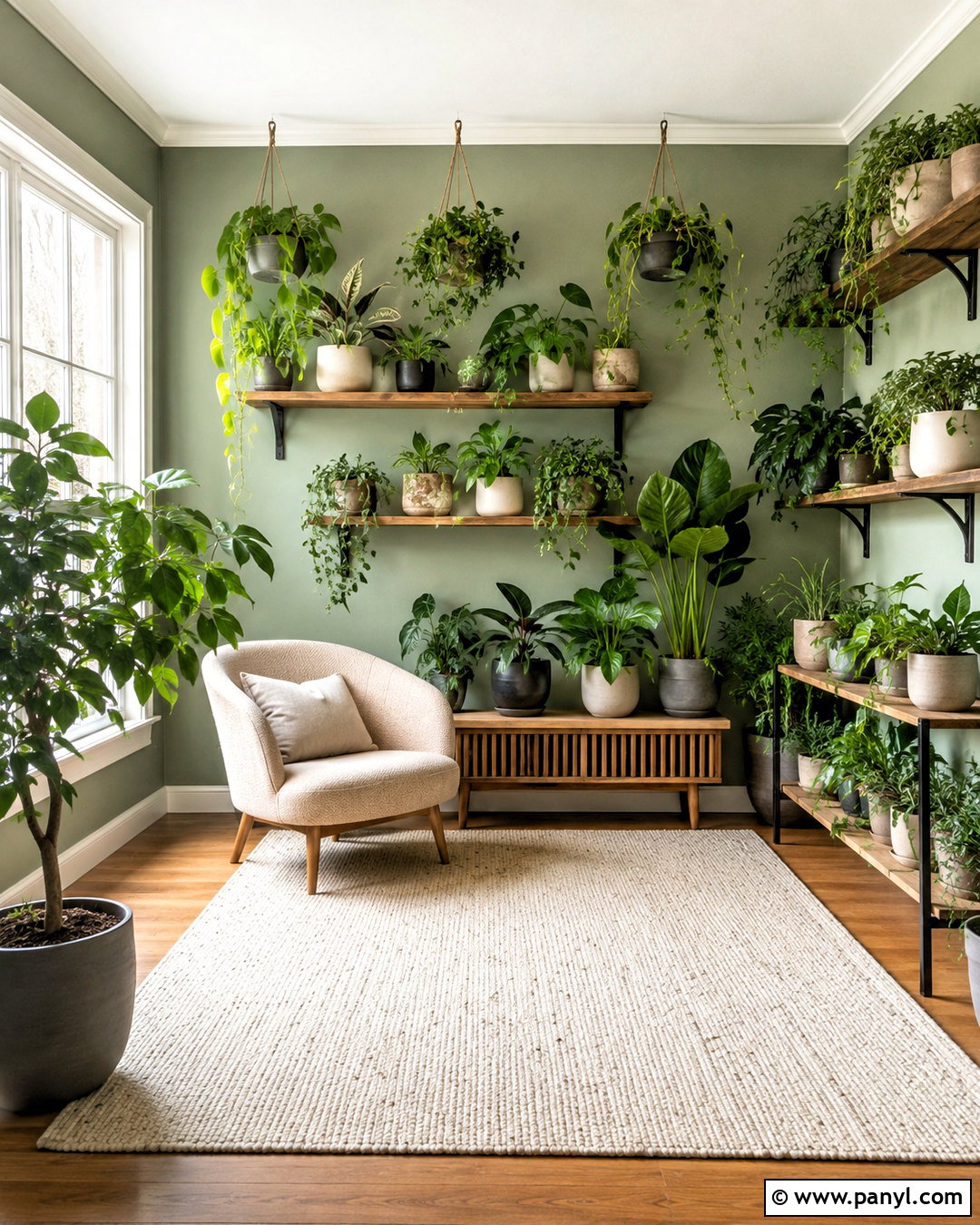
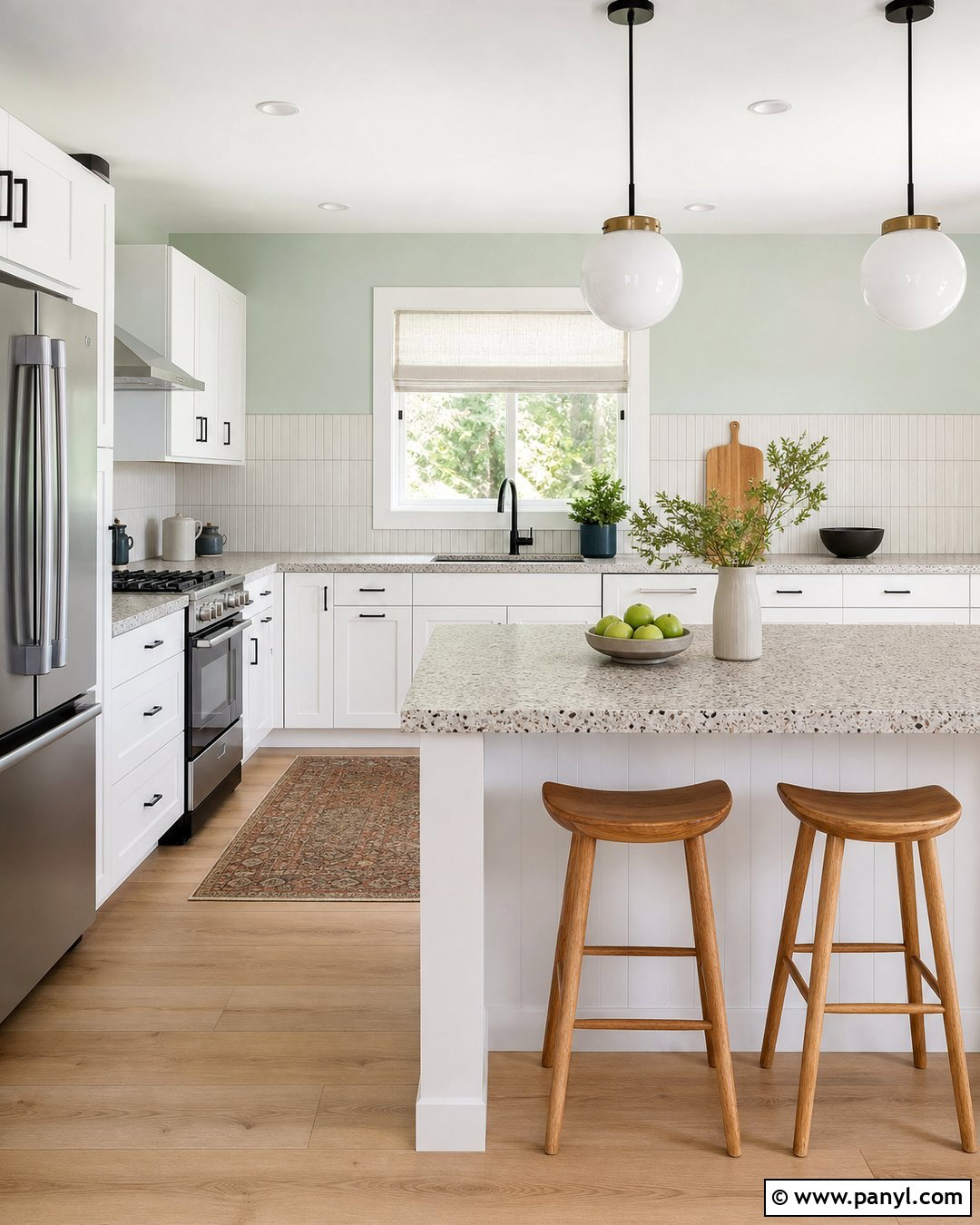
Soft sage green provides a gentle botanical backdrop without causing individual plants to disappear. Select a muted shade with gray undertones, then add crisp warm-white trim to keep the room fresh. Medium oak shelves and a matching slatted bench introduce natural texture. Display trailing plants near the ceiling while grouping broad-leaf varieties in cream, charcoal, and aged terracotta pots below. A pale oatmeal rug and linen-covered lounge chair create a comfortable place for reading or plant care. Use black metal brackets and a simple black pendant to sharpen the softer colors. Leave open space around unusual plants so their silhouettes remain easy to see. The finished plant room feels calm, organized, and layered rather than completely covered in green.
3. Deep Forest Green Plant Room
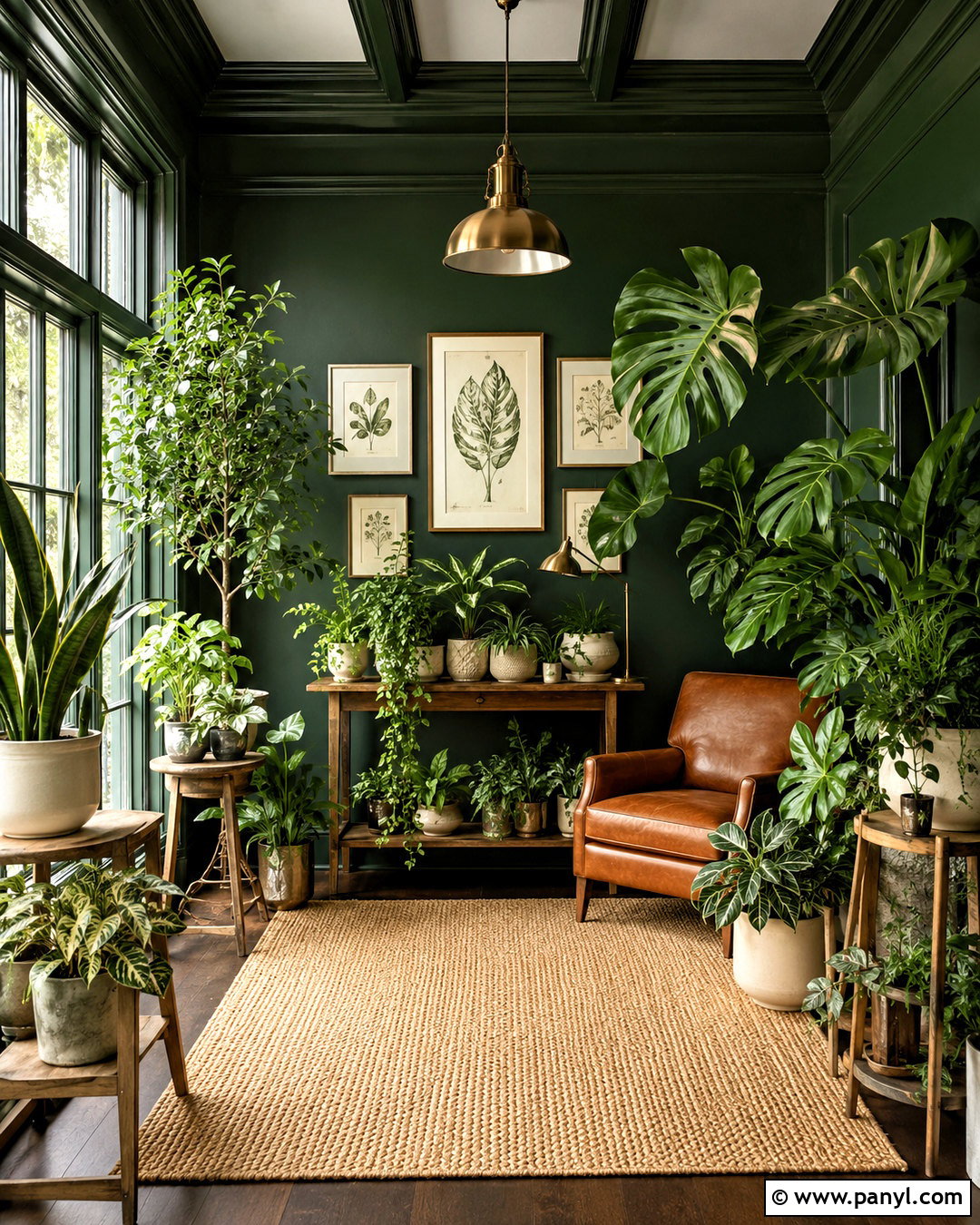
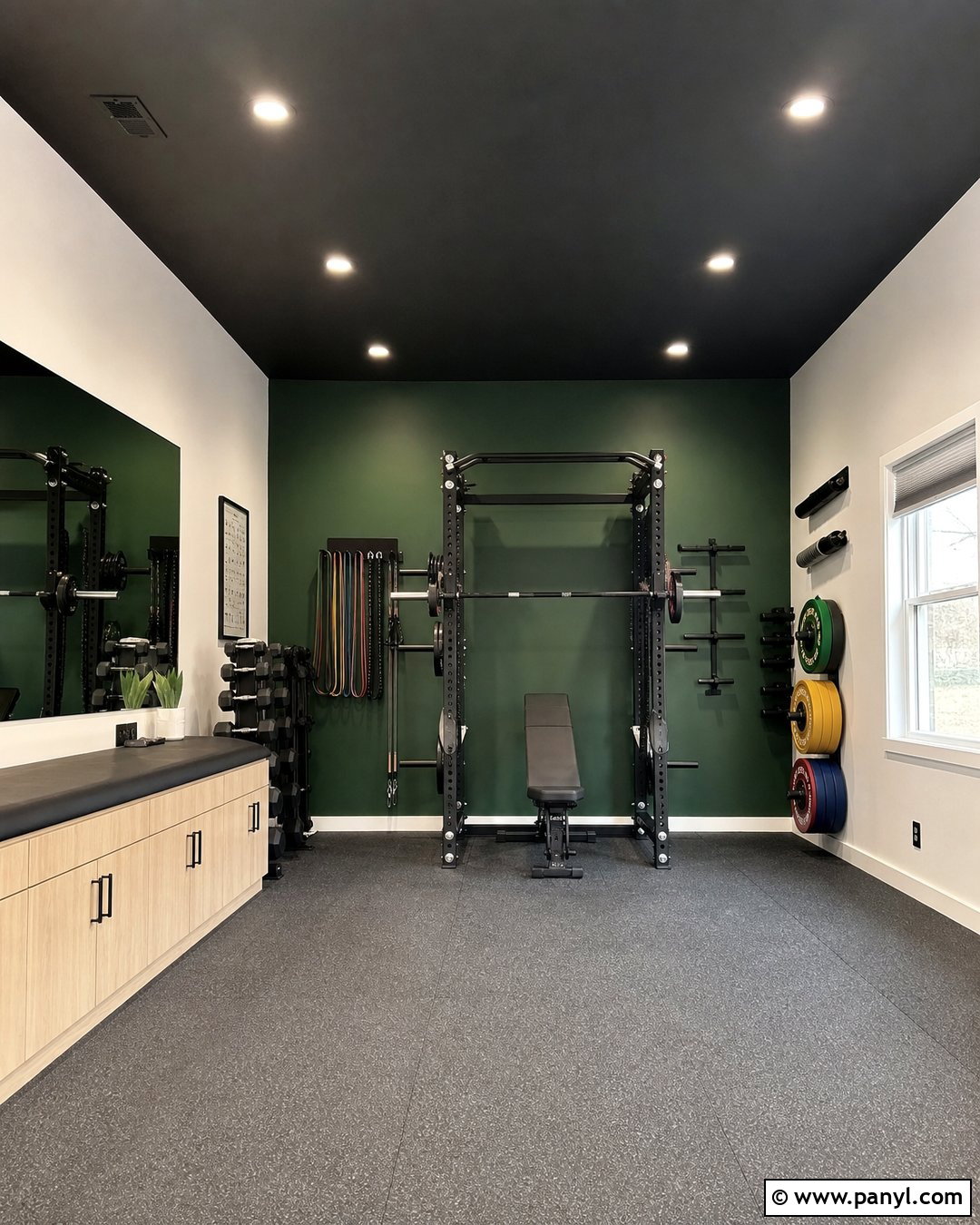
Deep forest green walls can turn a bright plant room into an immersive indoor garden. This dramatic color works best when large windows, pale flooring, or a white ceiling prevent the space from feeling closed in. Choose light wood plant stands and ivory ceramic pots to separate the foliage from the dark background. A camel leather chair, natural fiber rug, and antique brass lighting introduce warmth. Place variegated plants where their cream markings can stand out, then use dark-leaf specimens near brighter windows. Keep shelving narrow and open so the wall color remains visible between plants. Painting the door and baseboards in the same forest green creates a seamless envelope, while a few pale botanical prints provide quiet contrast without distracting from the living collection.
4. Dusty Blue Plant Room
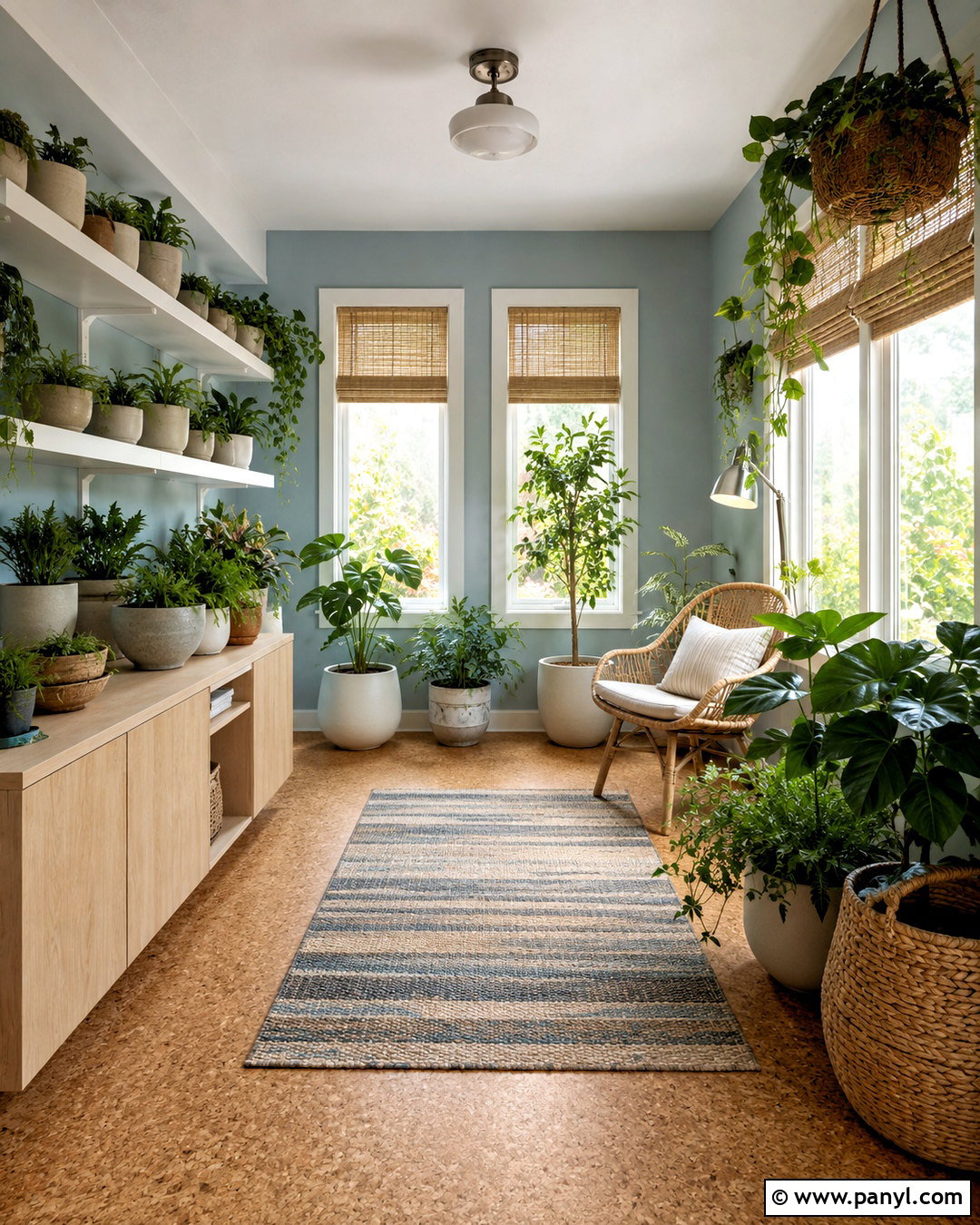
Dusty blue walls bring a relaxed, airy quality to a plant room filled with medium and dark green foliage. Look for a softened blue with gray undertones rather than a bright nursery shade. Combine it with white-painted shelves, pale maple furniture, and light cork or oak flooring. Use creamy stoneware pots for larger plants and faded blue-gray planters for small succulents. A woven rattan chair beside the window adds warmth and prevents the cool palette from feeling flat. Hang trailing plants at staggered heights, leaving enough space for vines to grow naturally. Add a washable striped rug, brushed nickel watering cans, and simple linen blinds. This complete scheme suits a sunroom, spare bedroom, or home office that doubles as a carefully maintained plant retreat.
5. Terracotta Plant Room
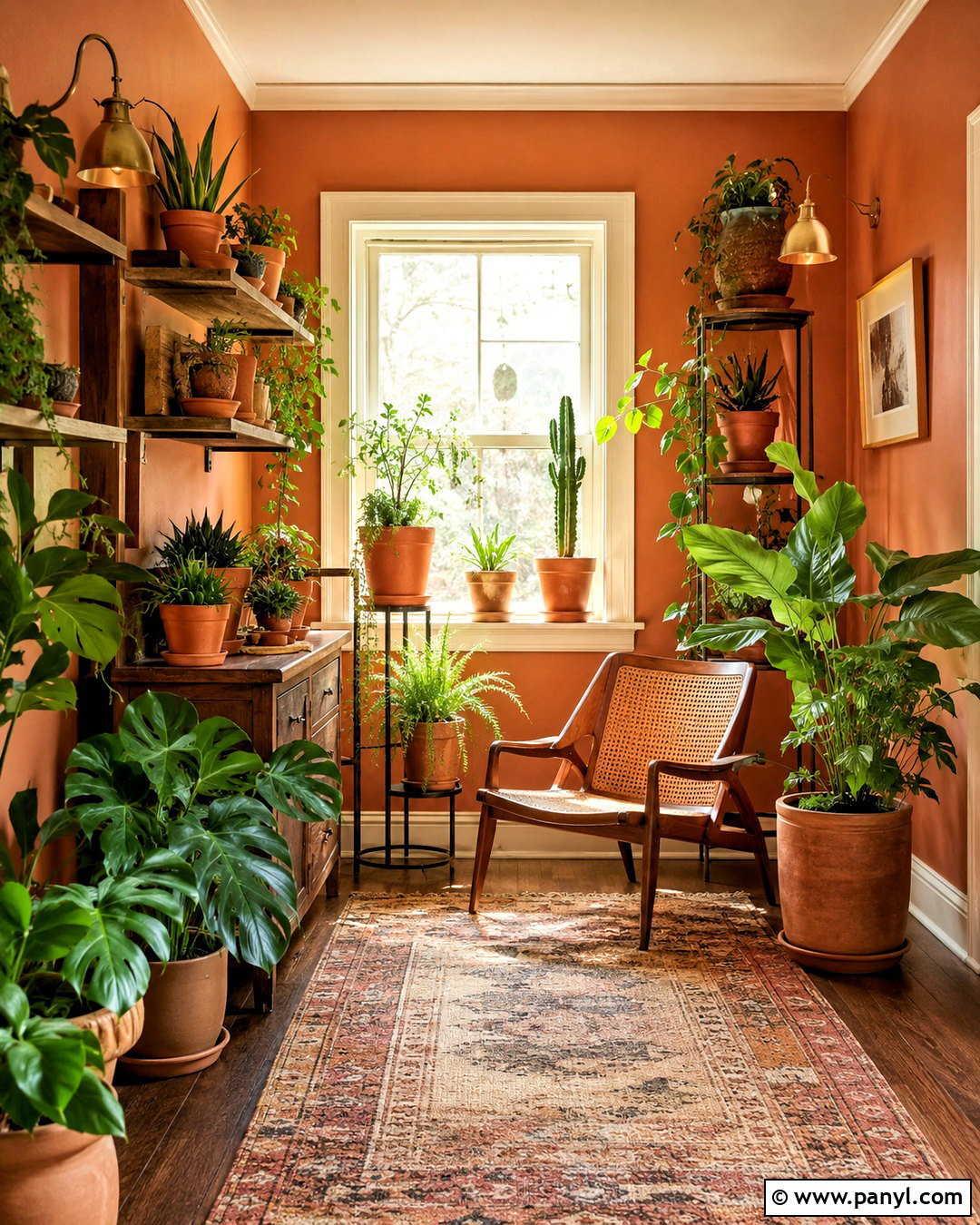
Terracotta walls create an earthy contrast that makes green foliage look especially rich and lively. Choose a softened clay shade instead of a highly saturated orange, then balance it with creamy trim and a pale ceiling. Dark walnut shelves and black metal plant stands give the room definition, while natural terracotta pots create a tonal, collected appearance. Mix these containers with a few glazed cream vessels to avoid too much orange. Place large tropical plants against the widest wall and reserve a sunny window ledge for cacti and succulents. A vintage-inspired flat-weave rug, cane chair, and linen cushion complete the warm palette. Add aged brass sconces for gentle task lighting. The result feels grounded, welcoming, and suitable for both modern and rustic interiors.
6. Pale Blush Pink Plant Room
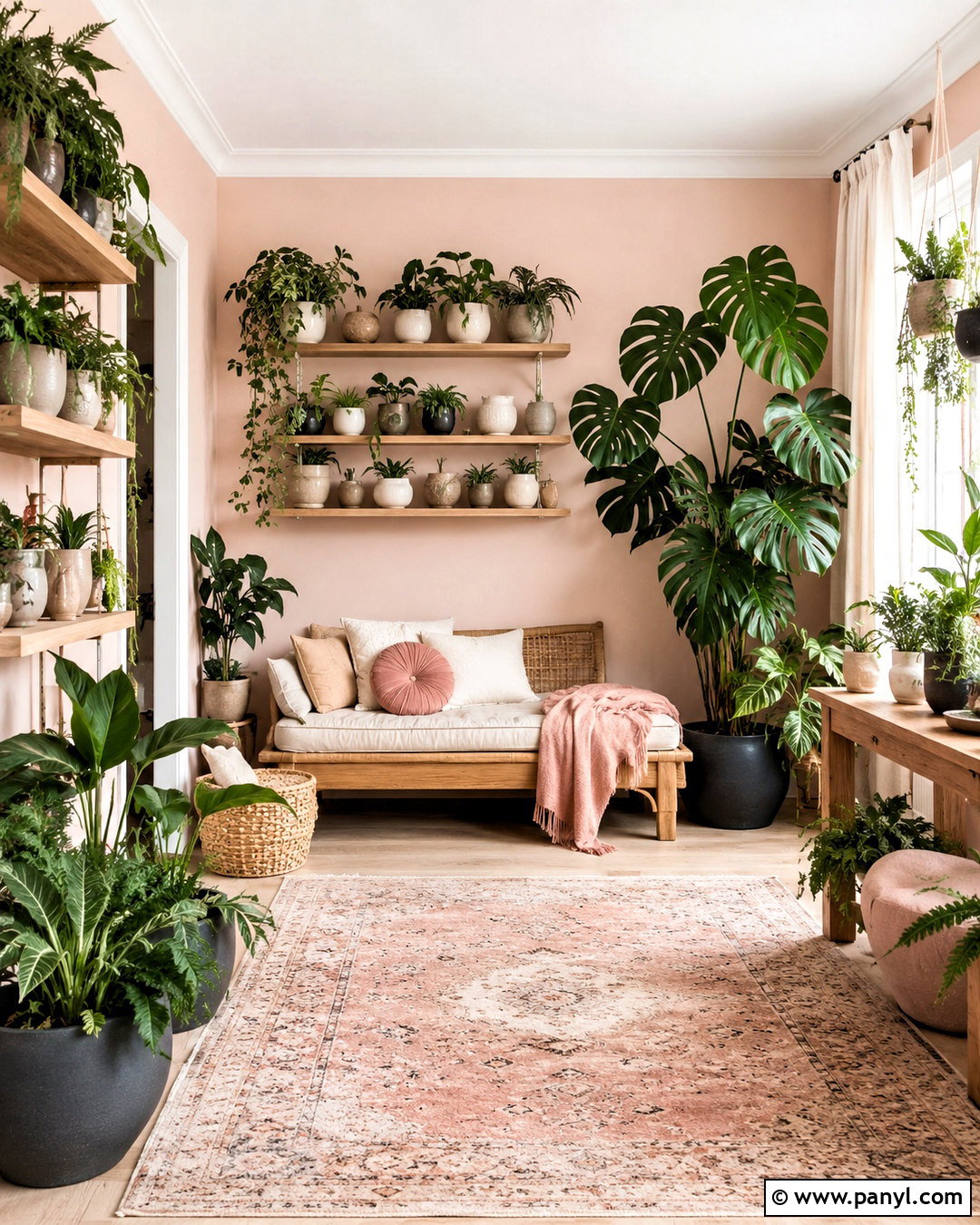
Pale blush pink walls offer a soft counterpoint to green leaves without making the plant room feel overly sweet. Pick a chalky pink with beige or gray undertones and pair it with warm-white trim. Light oak shelving, a cane daybed, and woven planters support the relaxed palette. Introduce charcoal pots around deep-green plants for contrast, then use cream ceramics for variegated varieties. Position a tall monstera beside the daybed and arrange smaller plants on floating shelves with generous breathing room. A muted rose-and-tan rug can anchor the furniture while remaining easy to clean. Finish with linen curtains, a white ceiling fan, and a few simple botanical illustrations. This room feels cheerful and comfortable while allowing every layer of foliage to remain visually distinct.
7. Charcoal Gray Plant Room
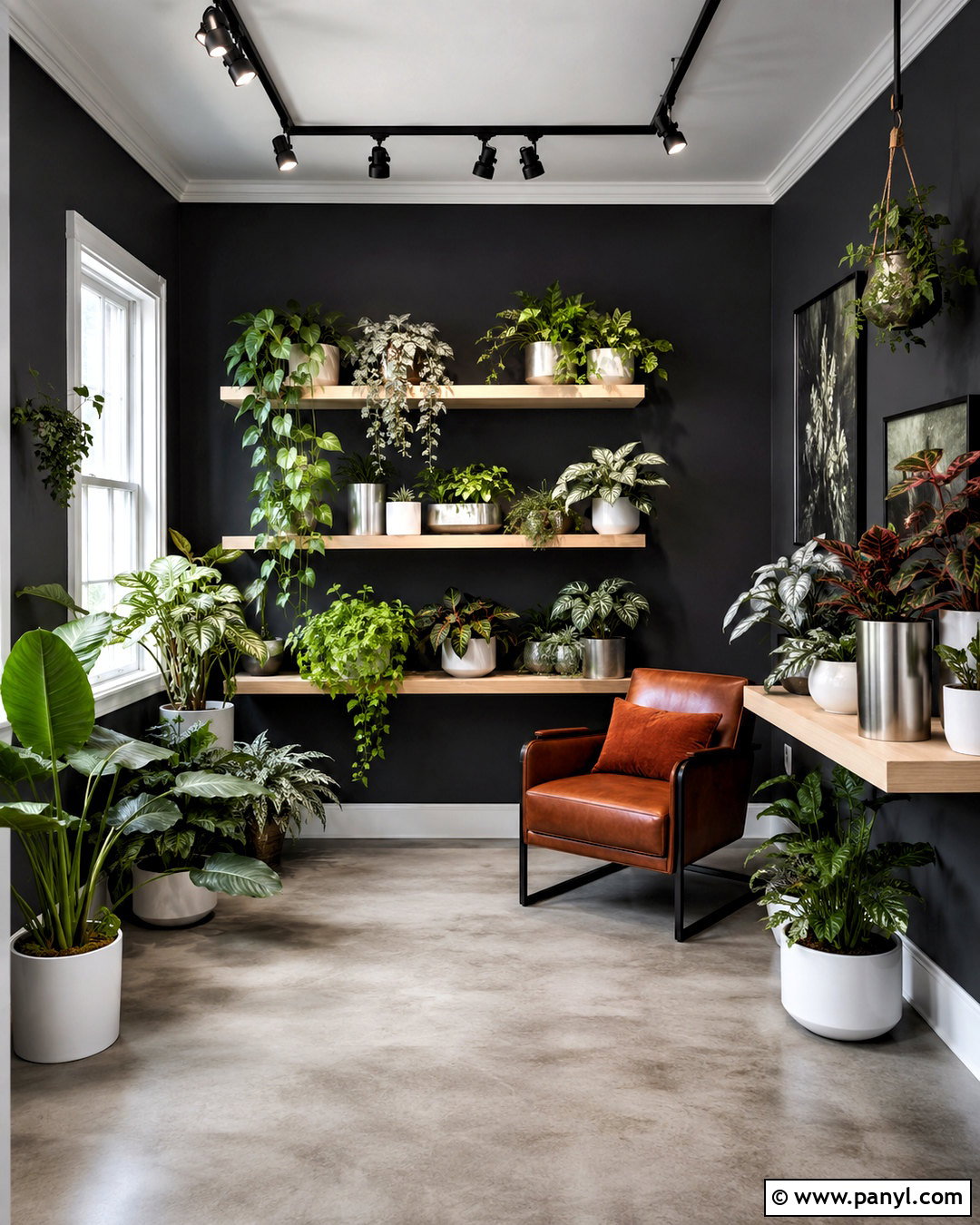
Charcoal gray walls provide a sophisticated background for bright green, silver, and variegated foliage. Use the color in a room with strong daylight, then keep the ceiling, window trim, and doors soft white. Pale birch shelves and light concrete-look flooring will prevent the design from becoming too heavy. Arrange lime-green pothos, silver satin plants, and cream-patterned calatheas against the darkest wall. Choose white, stone, and brushed metal planters to emphasize their shapes. A low cognac leather chair and rust-colored cushion add a warm focal point near the window. Include a narrow workbench with concealed storage for soil and tools. Matte black track lighting can supplement natural light while matching the walls. The final room feels modern, gallery-like, and intentionally composed.
8. Light Greige Plant Room
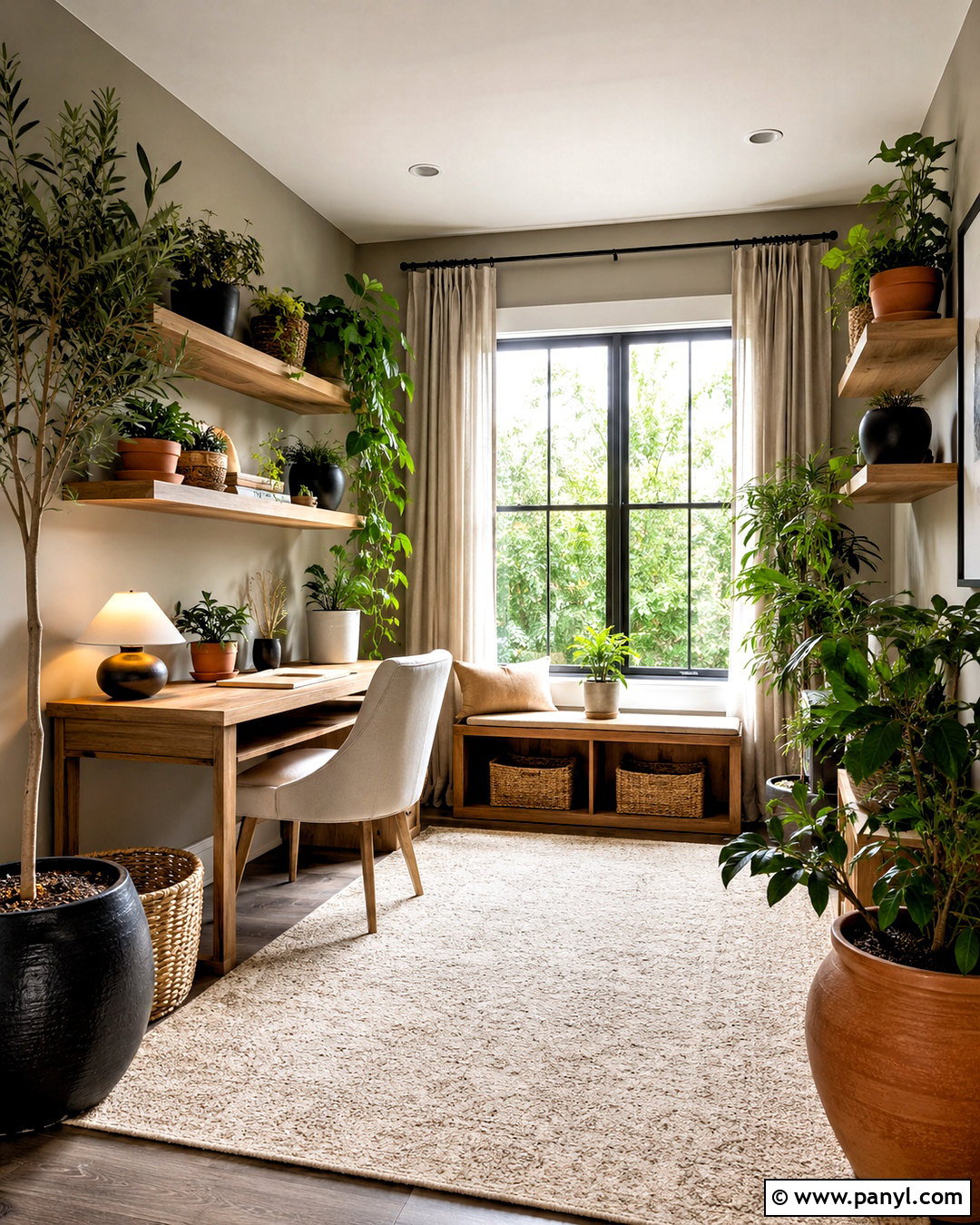
Light greige walls create an adaptable foundation for a plant room that also serves as a reading nook or workspace. Select a warm gray-beige shade that coordinates with soil-toned pots and natural wood. Install white oak shelving along one wall, leaving the opposite side open for a small desk and comfortable upholstered chair. Use a balanced mix of terracotta, matte black, and cream planters to add depth. Place tall plants near the corners and use low benches beneath the windows for sun-loving varieties. A textured ivory rug softens the flooring, while taupe linen curtains filter bright light. Add woven storage baskets beneath the benches and a simple black task lamp. This restrained backdrop keeps a large collection looking unified, tidy, and suitable for an open-plan home.
9. Muted Olive Green Plant Room
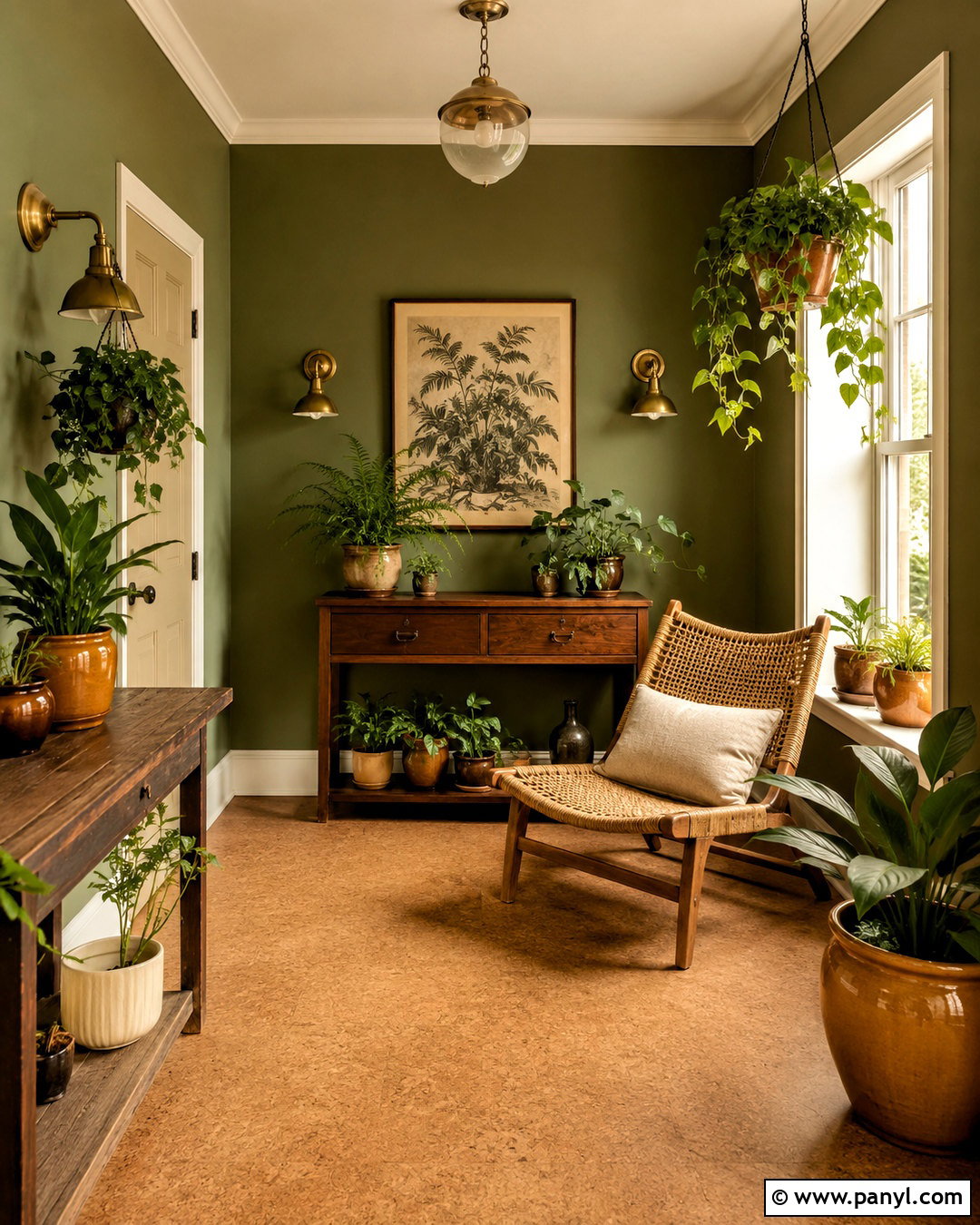
Muted olive green brings warmth and botanical character to a plant room without copying the brighter color of fresh leaves. Select an earthy shade with brown undertones and combine it with ivory trim, medium walnut furniture, and warm cork flooring. Brass wall lights and amber-toned ceramics strengthen the vintage influence. Use cream planters for dark foliage and unglazed clay pots for lighter plants. A long wooden console can hold grouped specimens at different heights, while ceiling hooks support trailing vines above. Add a woven lounge chair with a neutral cushion and a small round side table for gardening supplies. Keep decorative objects limited to preserve growing space. The overall room feels established and cozy, making olive especially suitable for traditional homes or rooms with mature woodwork.
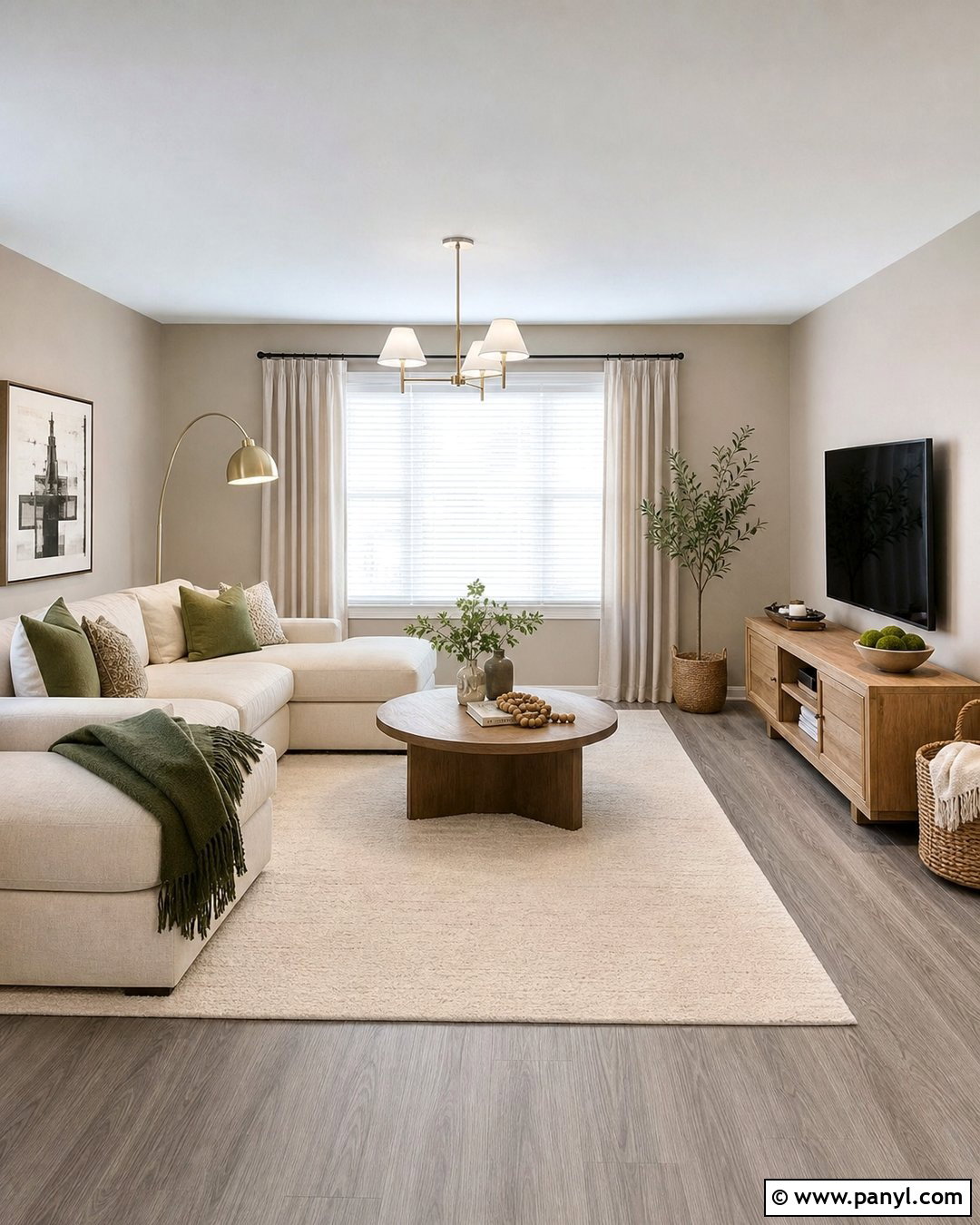
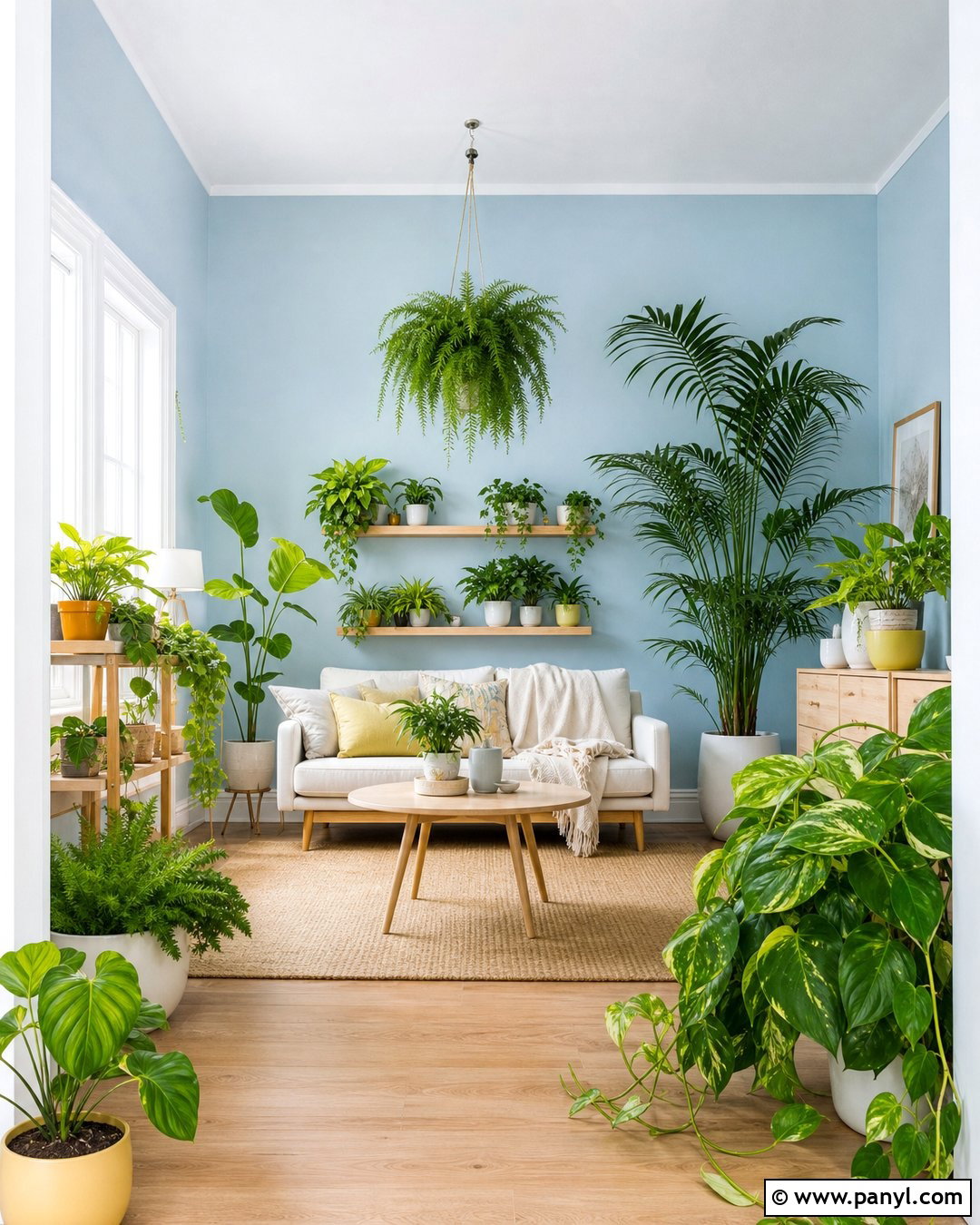
10. Buttery Yellow Plant Room
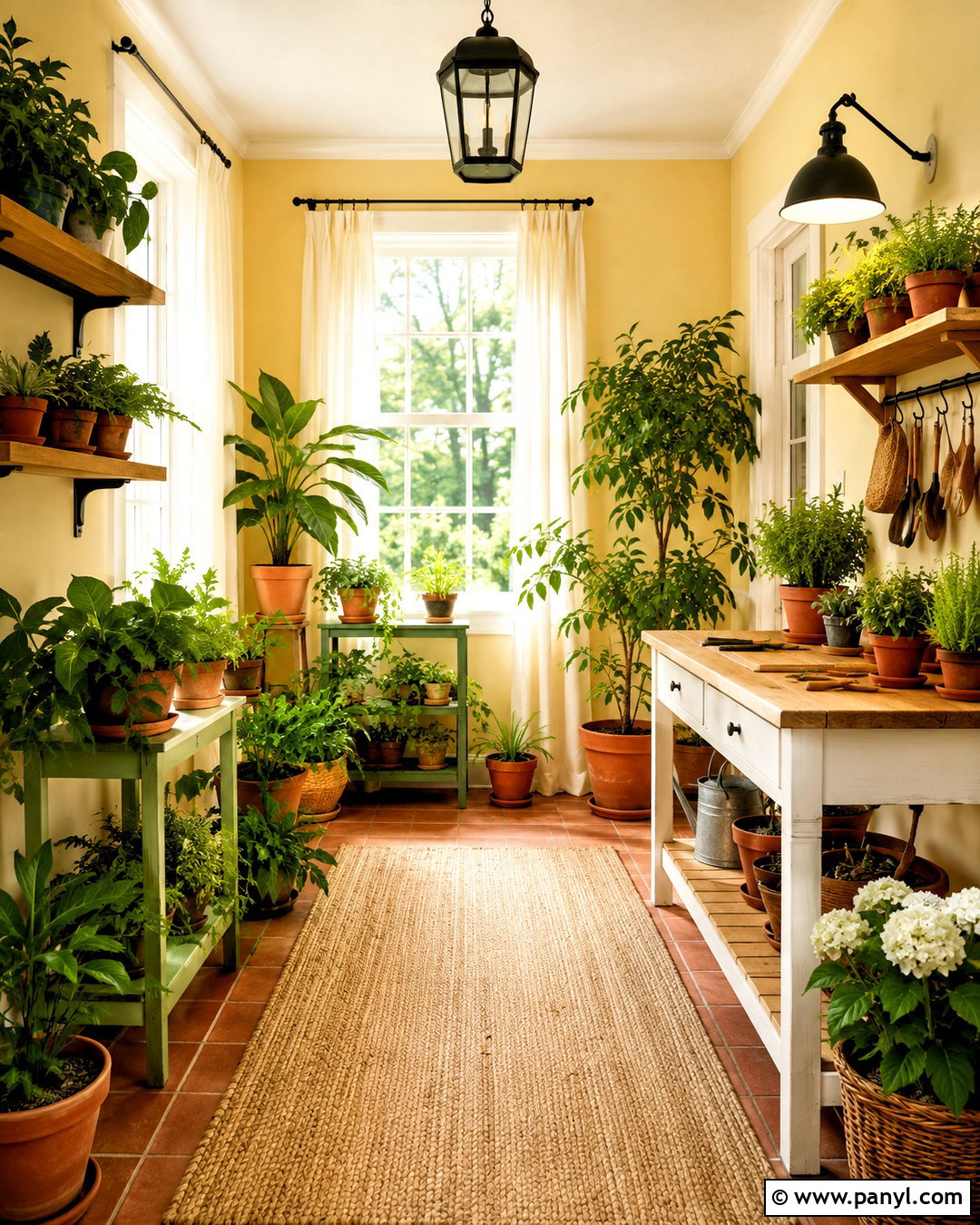
Buttery yellow walls make a plant room feel bright and cheerful, even when the windows are modest. Choose a pale, creamy yellow rather than a sharp lemon tone. White trim, honey-colored wood shelves, and a light natural rug will maintain the sunny effect. Add green-painted plant stands in a muted moss shade to connect the walls with the foliage. Terracotta and white ceramic pots provide practical contrast. Place leafy floor plants near the windows, then use wall-mounted shelves for herbs, succulents, and compact trailing varieties. A small farmhouse-style table can function as both a potting station and display surface. Complete the room with ivory curtains and simple black lighting. The finished look feels warm, energetic, and approachable without overwhelming the plants or surrounding furniture.
11. Deep Navy Plant Room
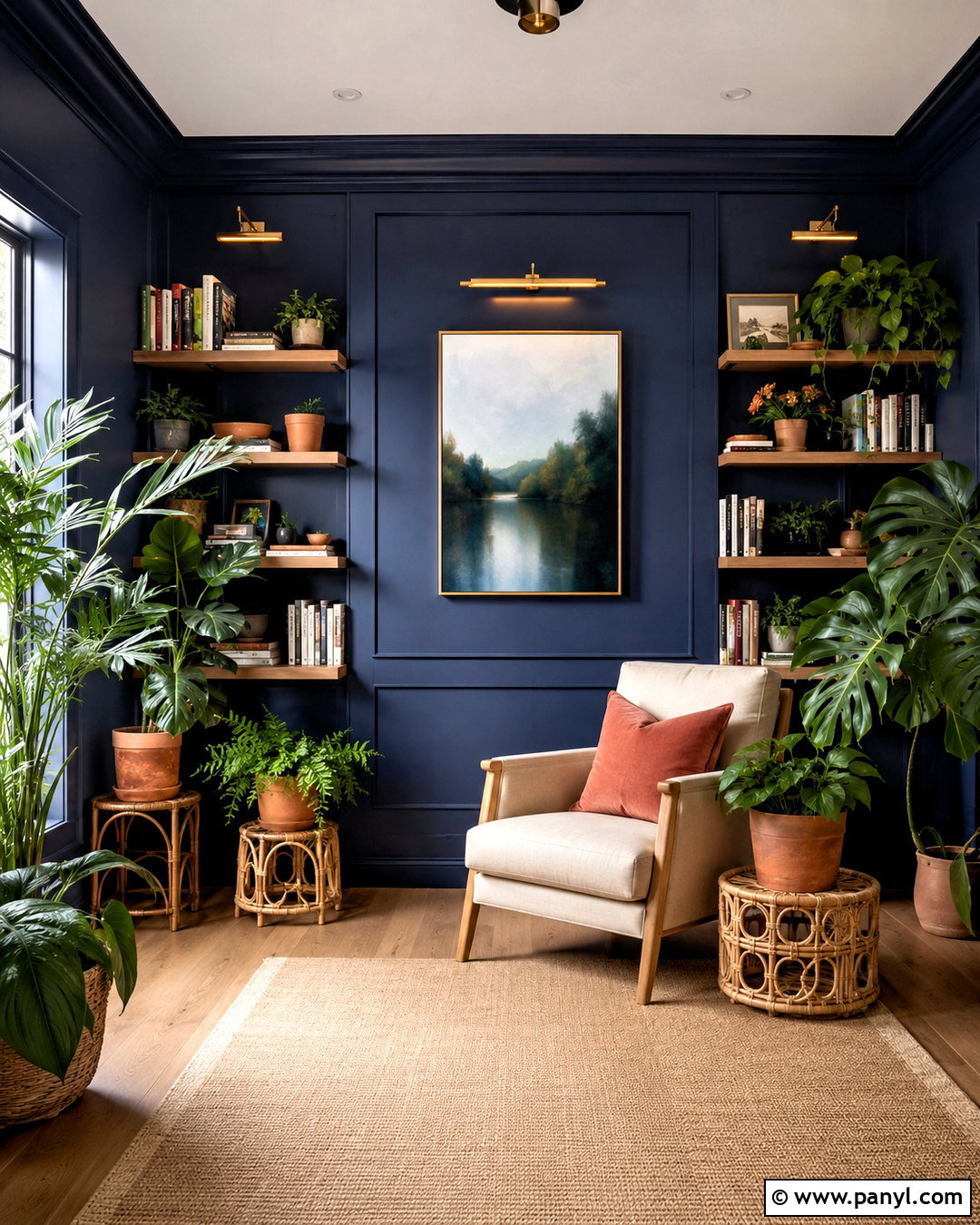
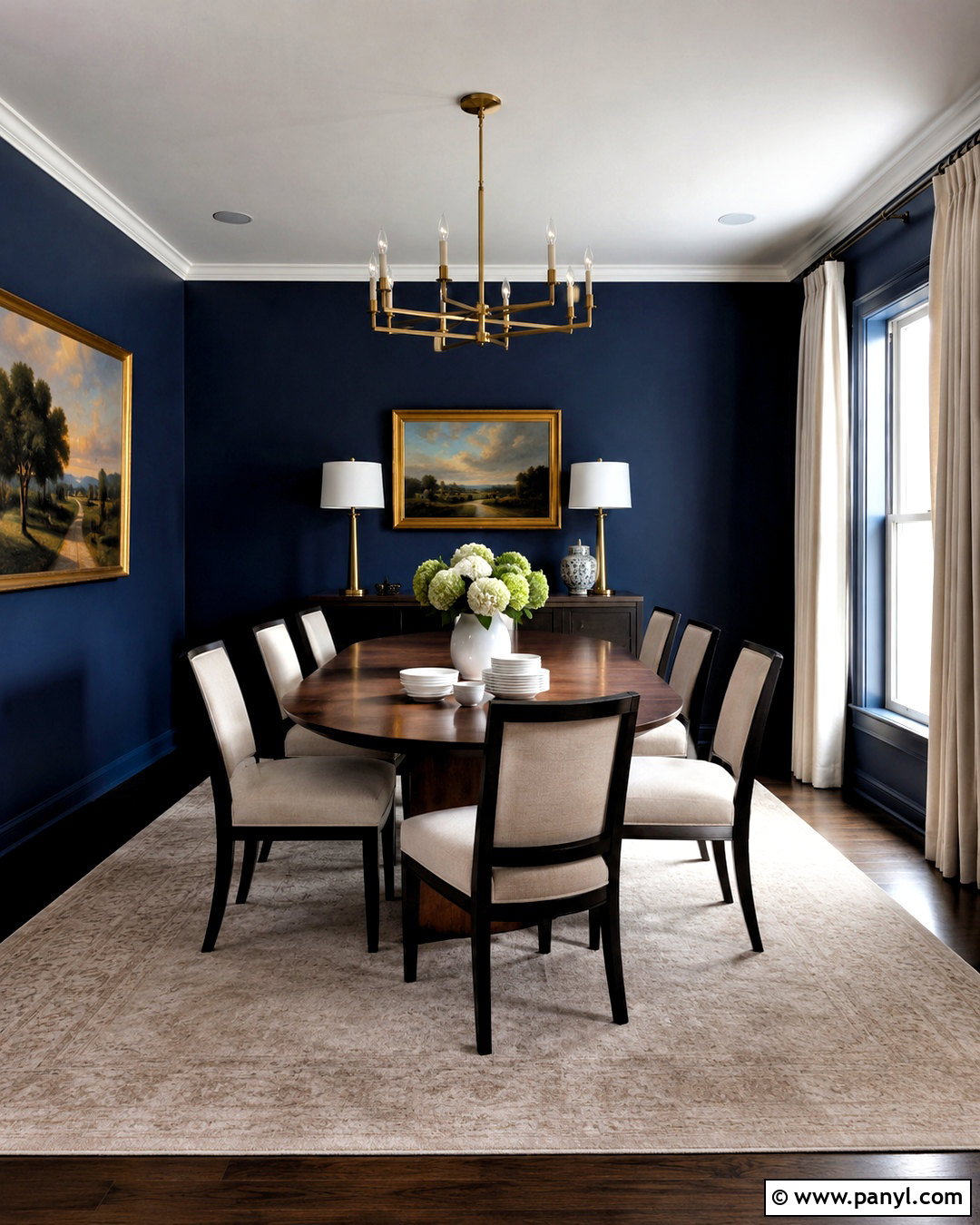
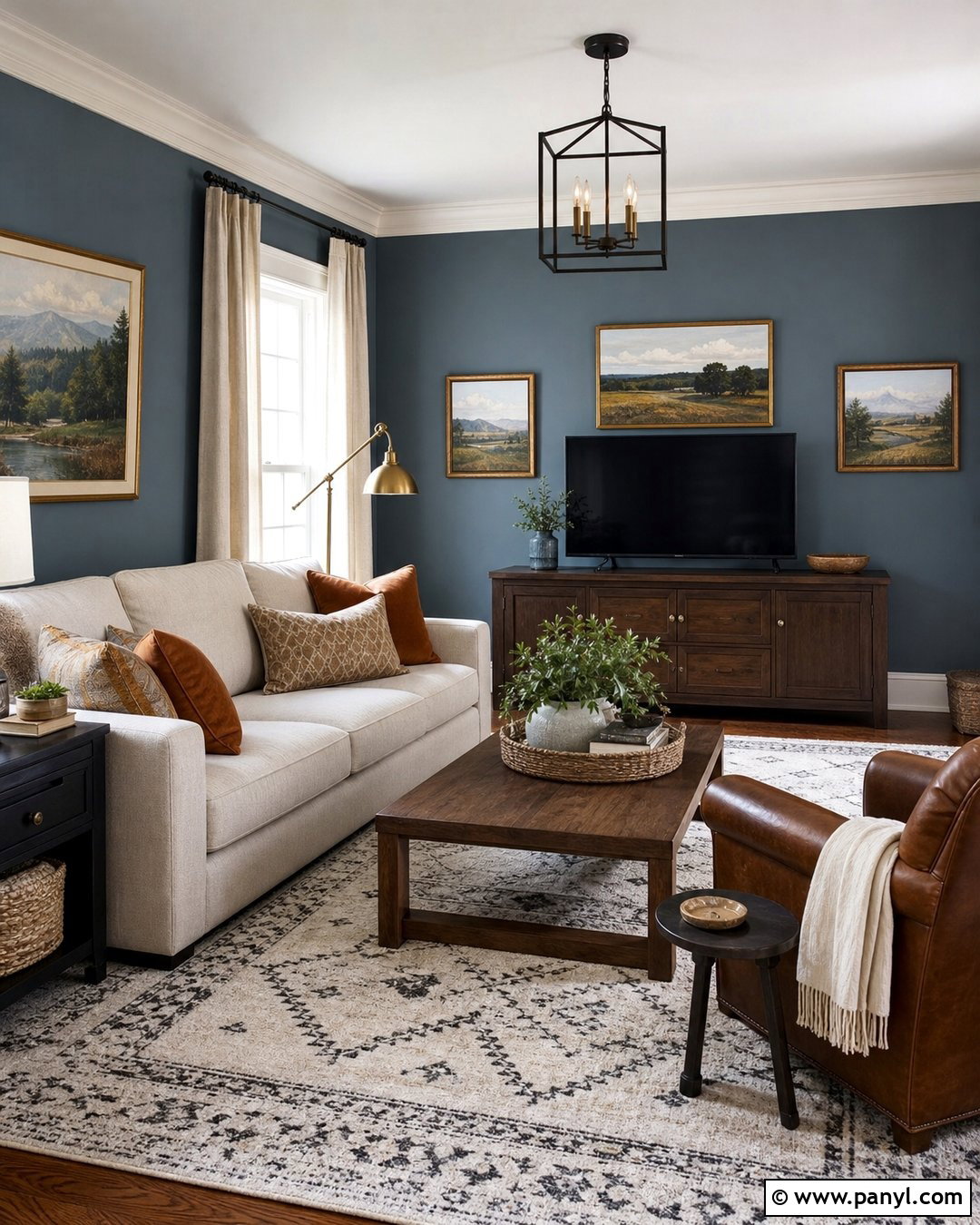
Deep navy walls form a bold backdrop for tropical foliage, particularly plants with glossy or lime-green leaves. Balance the saturated paint with a bright white ceiling, white window casings, and light oak flooring. Choose natural rattan plant stands and warm terracotta pots to soften the blue. Large plants can frame a central linen sofa or reading chair, while smaller specimens sit on staggered wood shelves. Add a cream washable rug and cushions in rust, tan, and faded blue. Brass picture lights above the shelves bring warmth and help showcase the collection after daylight fades. Avoid overcrowding every wall because visible navy sections create needed contrast. This complete plant room has a polished, comfortable appearance that works especially well in a den, library, or converted dining area.
12. Soft Peach Plant Room
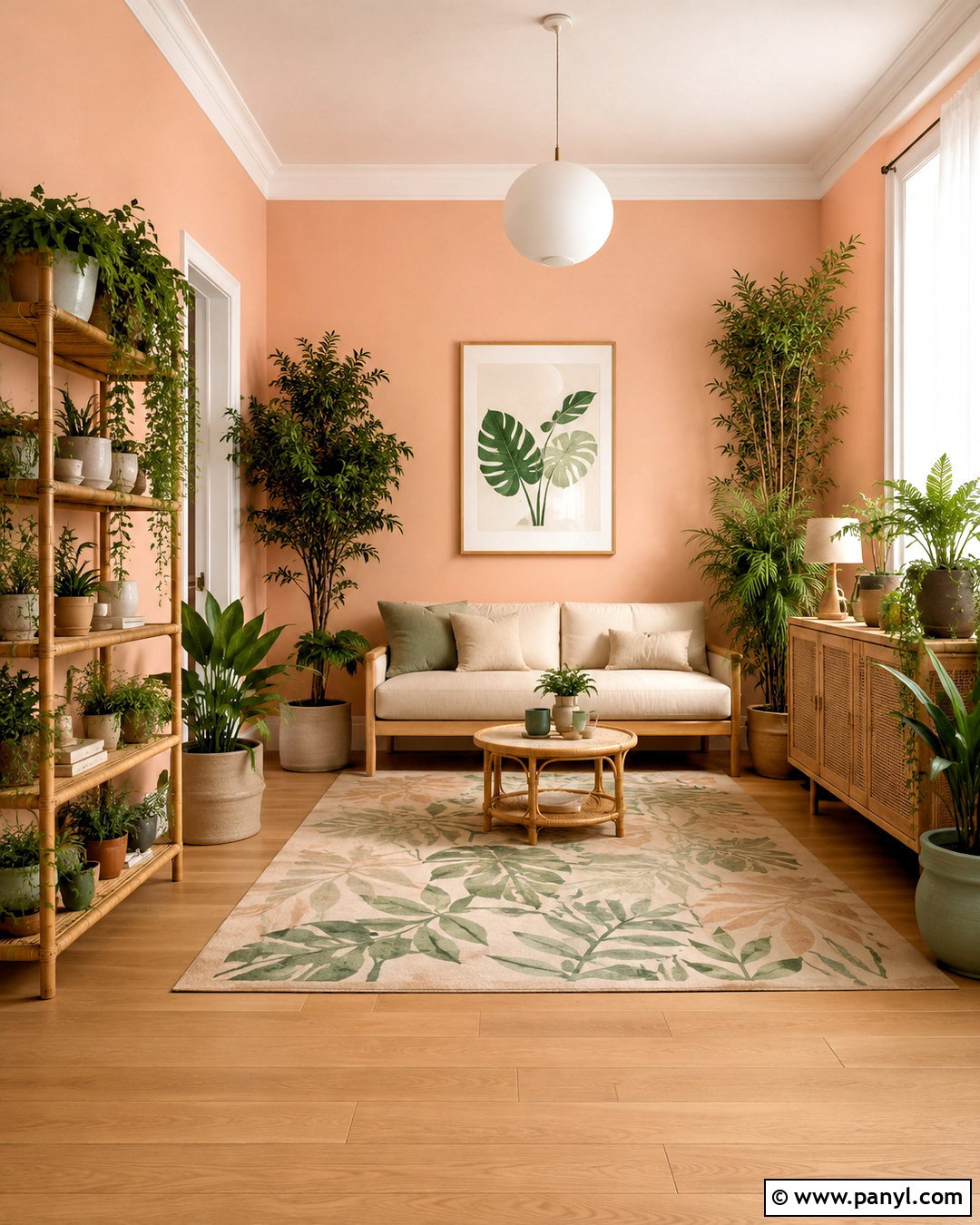
Soft peach walls produce a warm, flattering glow around houseplants while remaining lighter than traditional terracotta. Look for a muted peach with beige undertones, then use warm white on the ceiling and trim. Pale oak flooring and bamboo shelves continue the natural palette. Mix cream, tan, and dusty green planters rather than matching every container. A low linen loveseat beneath the window provides seating without blocking sunlight, while tall plants placed at each end create a balanced frame. Add a slim potting cabinet with cane-front doors to conceal tools and spare containers. A faded botanical rug introduces subtle pattern, and a white globe pendant keeps the room feeling modern. The final setting is relaxed, bright, and well suited to light-green or variegated plants.
13. Eucalyptus Green Plant Room
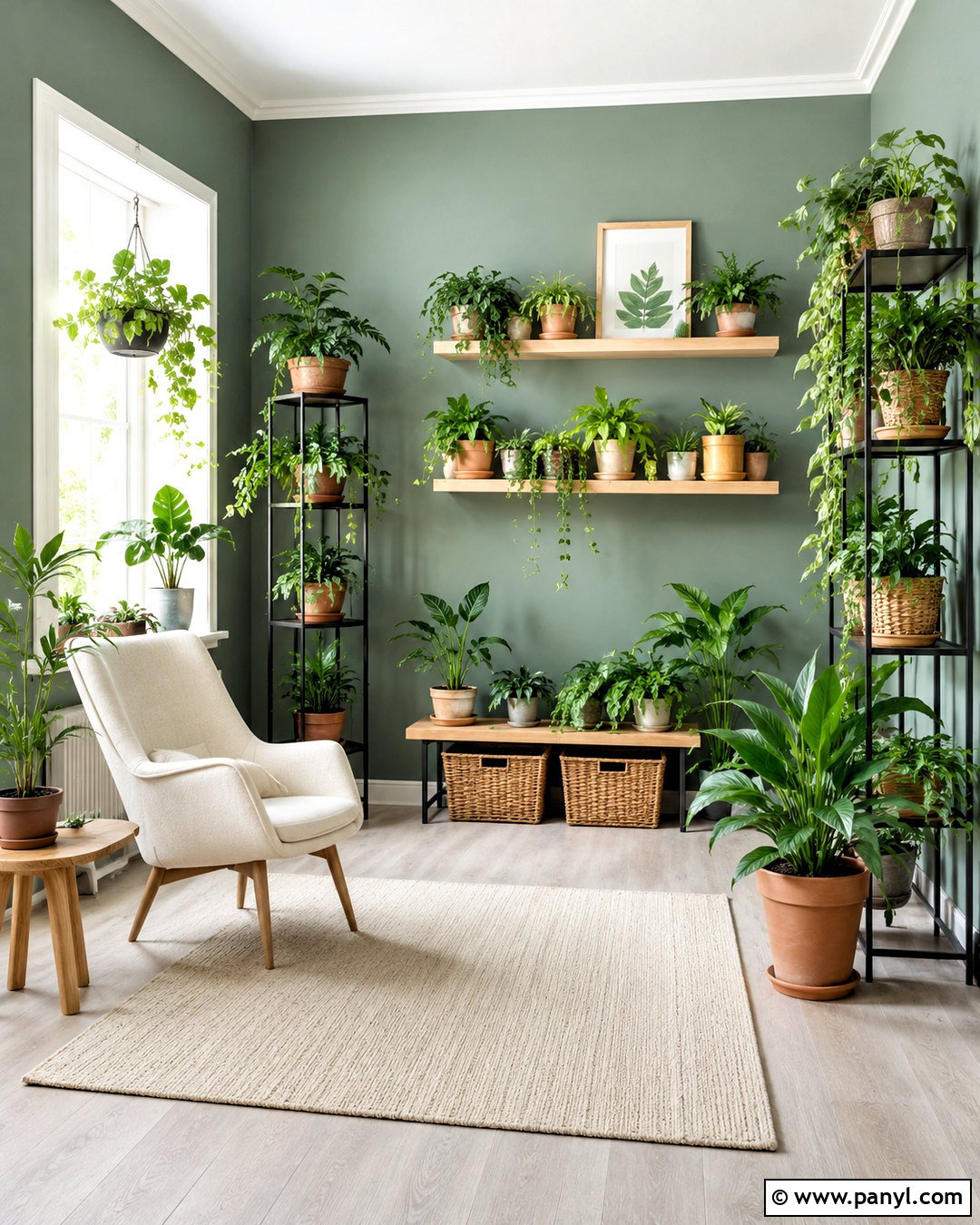
Eucalyptus green walls offer more freshness than sage while remaining soft enough for a full-room application. Pair the blue-green paint with crisp ivory trim and pale ash wood flooring. Floating birch shelves keep the architecture light, while black metal plant stands create contrast near the floor. Use warm clay pots to offset the cool wall color and add a few white ribbed planters for variety. A streamlined oatmeal chair, small oak stool, and textured cream rug establish a calm seating area. Hang trailing plants near the window but keep them clear of curtains and walkways. Store plant-care supplies in matching woven baskets beneath a low console. The finished room has a clean Scandinavian influence, with enough warmth and texture to prevent the green palette from feeling clinical.
14. Warm Taupe Plant Room
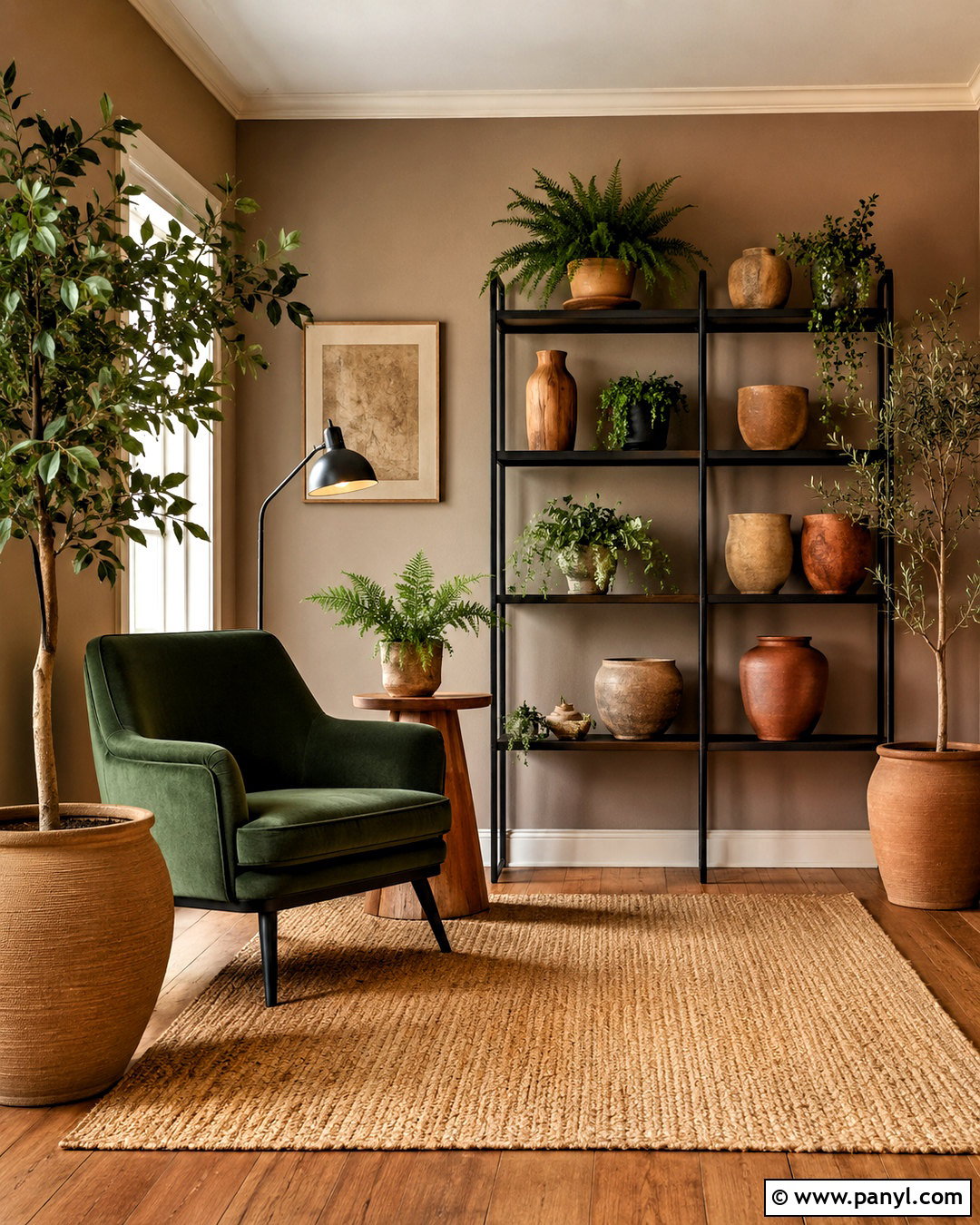
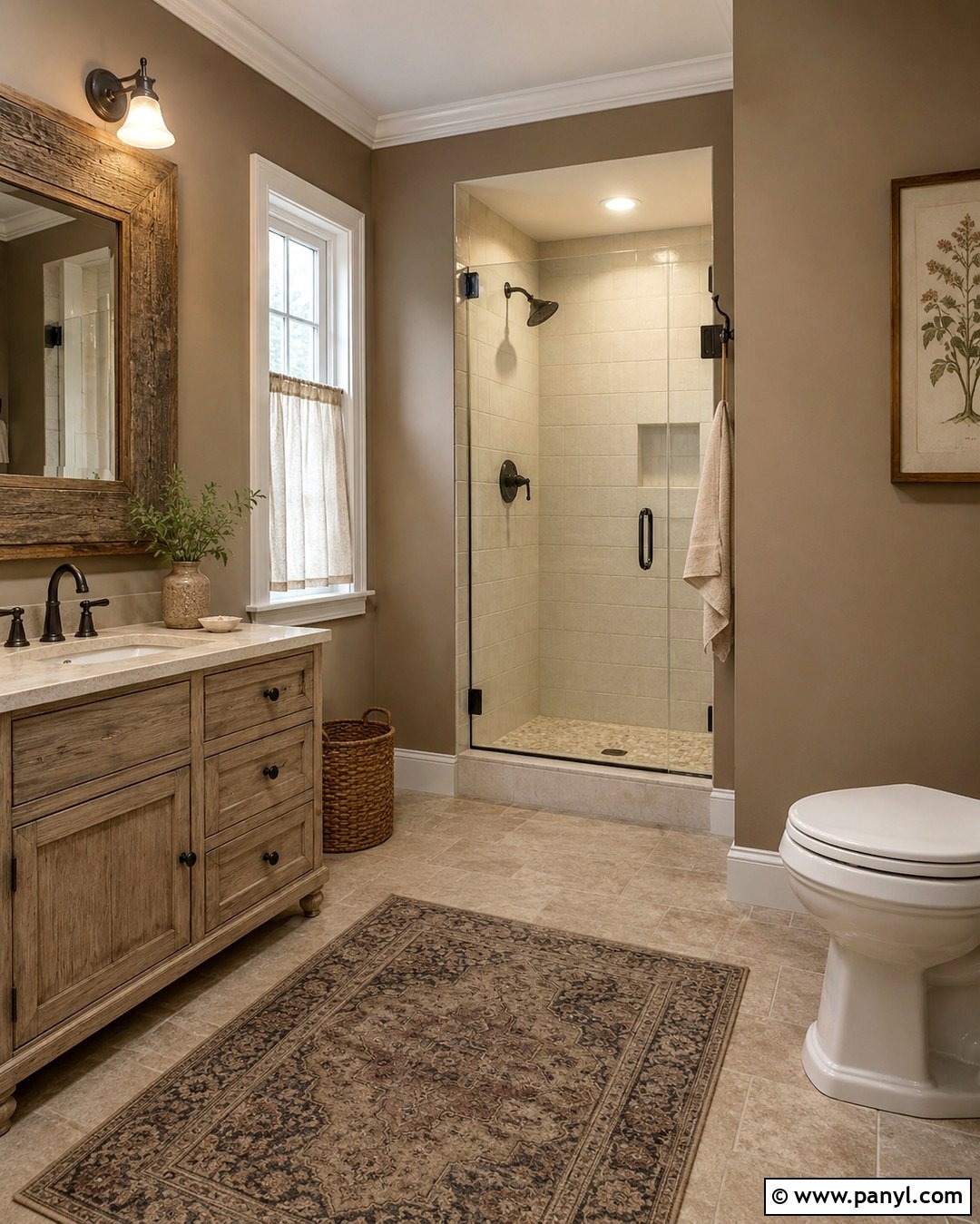
Warm taupe walls give a plant room depth while maintaining the versatility of a neutral color scheme. Choose a mushroom-like shade with soft brown undertones and combine it with cream trim and medium oak floors. Black-framed shelves will stand out clearly, making them ideal for displaying sculptural plants and simple ceramic pots. Use sand, rust, and ivory containers to repeat the earthy wall palette. Position a deep green velvet chair beside a tall palm, then add a small wood side table and focused reading lamp. A large natural jute rug can visually connect the seating and plant displays. Keep the window treatments light and uncomplicated. This room feels comfortable and polished, and its understated background allows colorful planters, unusual leaves, and decorative plant stands to receive more attention.
15. Plum Purple Plant Room
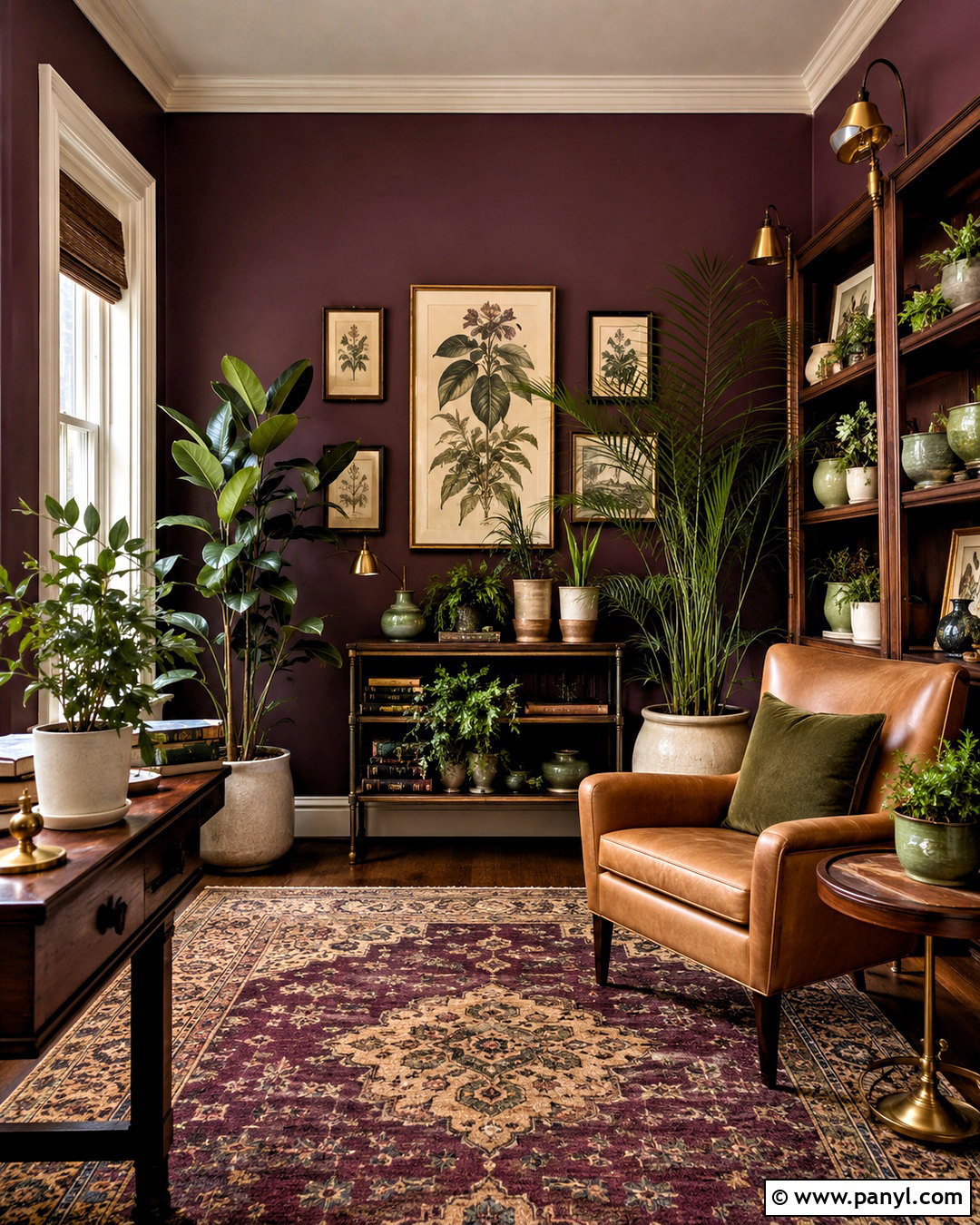
Plum purple walls create a rich, unexpected setting for green plants, especially in a bright room with traditional details. Select a dusty aubergine shade rather than vivid violet, and balance it with warm-white trim and a pale ceiling. Walnut shelves, aged brass hardware, and a camel-colored chair give the design a scholarly character. Choose cream planters for dark foliage and muted green ceramics for plants with pale leaves. A patterned rug containing plum, tan, and olive will tie the colors together. Place a substantial rubber plant or palm near the window, with smaller specimens organized by height along the shelves. Simple framed botanical drawings can fill empty spaces without adding visual clutter. The complete look feels dramatic but livable, with plants providing a crisp natural contrast.
16. Sky Blue Plant Room
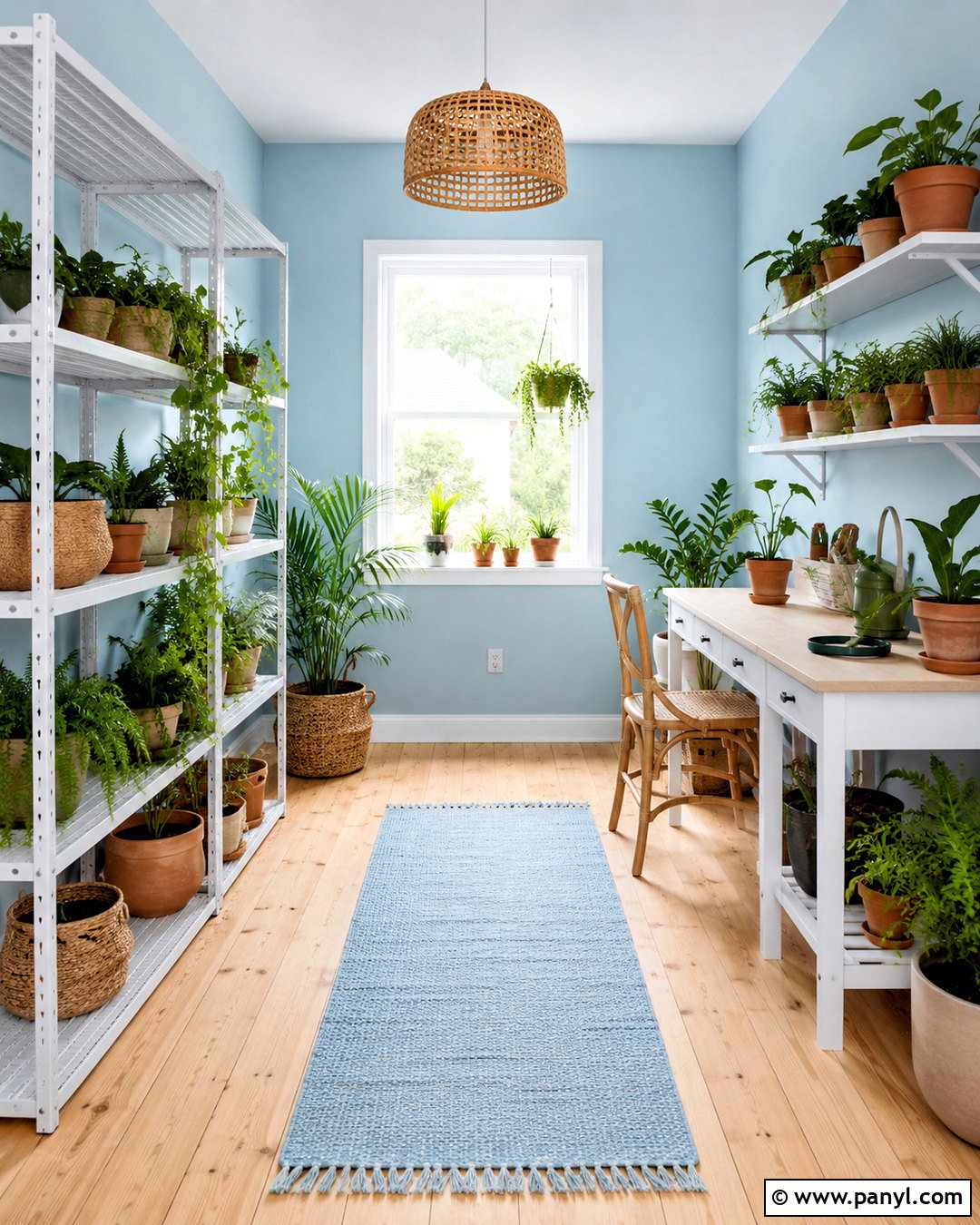
Sky blue walls can make a small plant room feel open, breezy, and connected to the outdoors. Choose a softened blue rather than an intensely bright shade, then add clean white trim and light pine flooring. White metal shelves maintain the airy appearance and resist visual heaviness around dense foliage. Use natural baskets, pale terracotta pots, and blue-and-white ceramics for an informal mix. Place a compact white desk near the window for repotting and record keeping, then add a washable runner along the main walkway. A slender bamboo chair and woven pendant bring in warmer materials. Arrange the plants in loose groups instead of lining every surface. This creates clear focal points and allows the blue walls to show between leaves, making the room appear larger and more organized.
17. Creamy Beige Plant Room
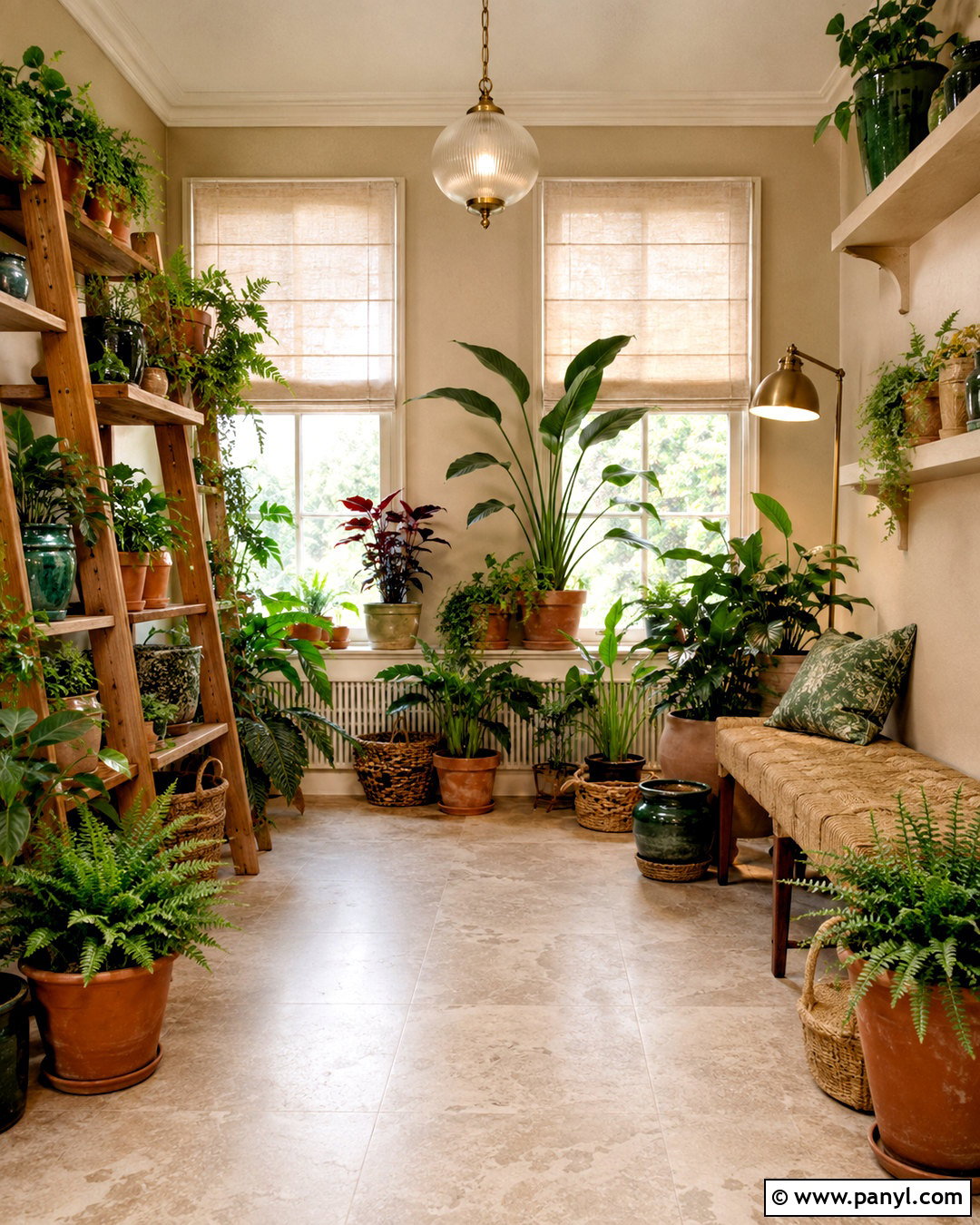
Creamy beige walls create a sunny, natural background that works with nearly every shade of green. Choose a light sand color with warm undertones and pair it with ivory trim for gentle contrast. Add oak plant ladders, a woven bench, and limestone-look flooring to build a relaxed organic scheme. Terracotta pots should form the base of the collection, with occasional black and glazed green containers providing definition. Place tall plants at different depths rather than directly against one wall to create a layered indoor-garden effect. Linen Roman shades soften window light, while an adjustable brass floor lamp supports the reading corner. Include closed basket storage for soil and tools. The finished plant room feels cohesive and uncluttered, even when it contains a large and varied collection.
18. Teal Plant Room
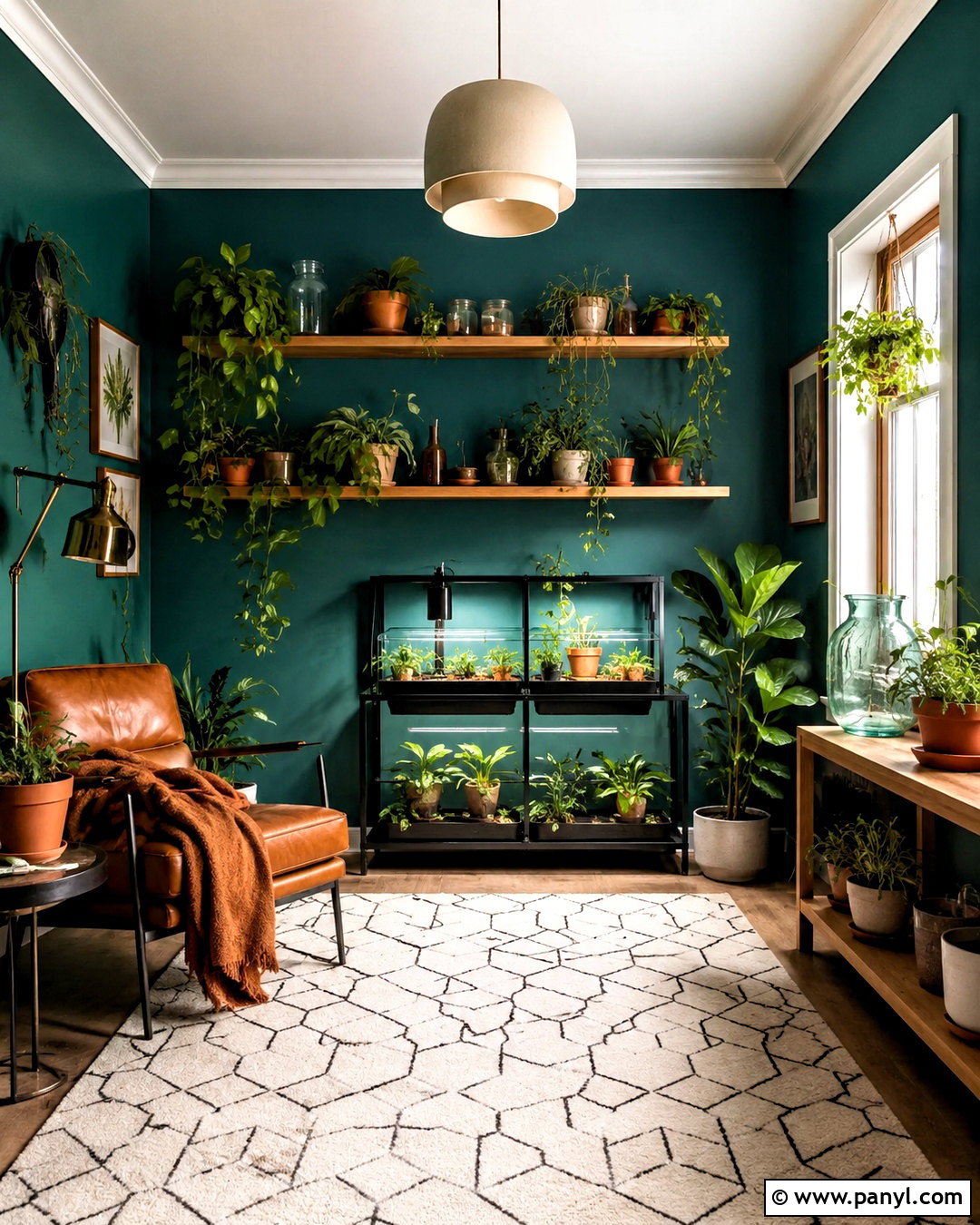
Teal walls deliver strong color while creating a natural relationship with blue-green foliage. Choose a medium or deep teal and reserve it for the walls, keeping the ceiling and trim a clear warm white. Light oak shelves, cognac leather seating, and rust-colored textiles provide warmth against the cooler paint. Use cream pots for ordinary green plants and terracotta containers for silver or patterned leaves. A narrow black console can serve as a propagation station beneath the window, with glass vessels arranged neatly on top. Place large plants in corners to soften the room’s edges and suspend trailing varieties from simple ceiling hooks. A geometric cream-and-tan rug adds structure. This plant room feels bold, contemporary, and carefully balanced rather than dark or excessively tropical.
19. Pale Pistachio Plant Room
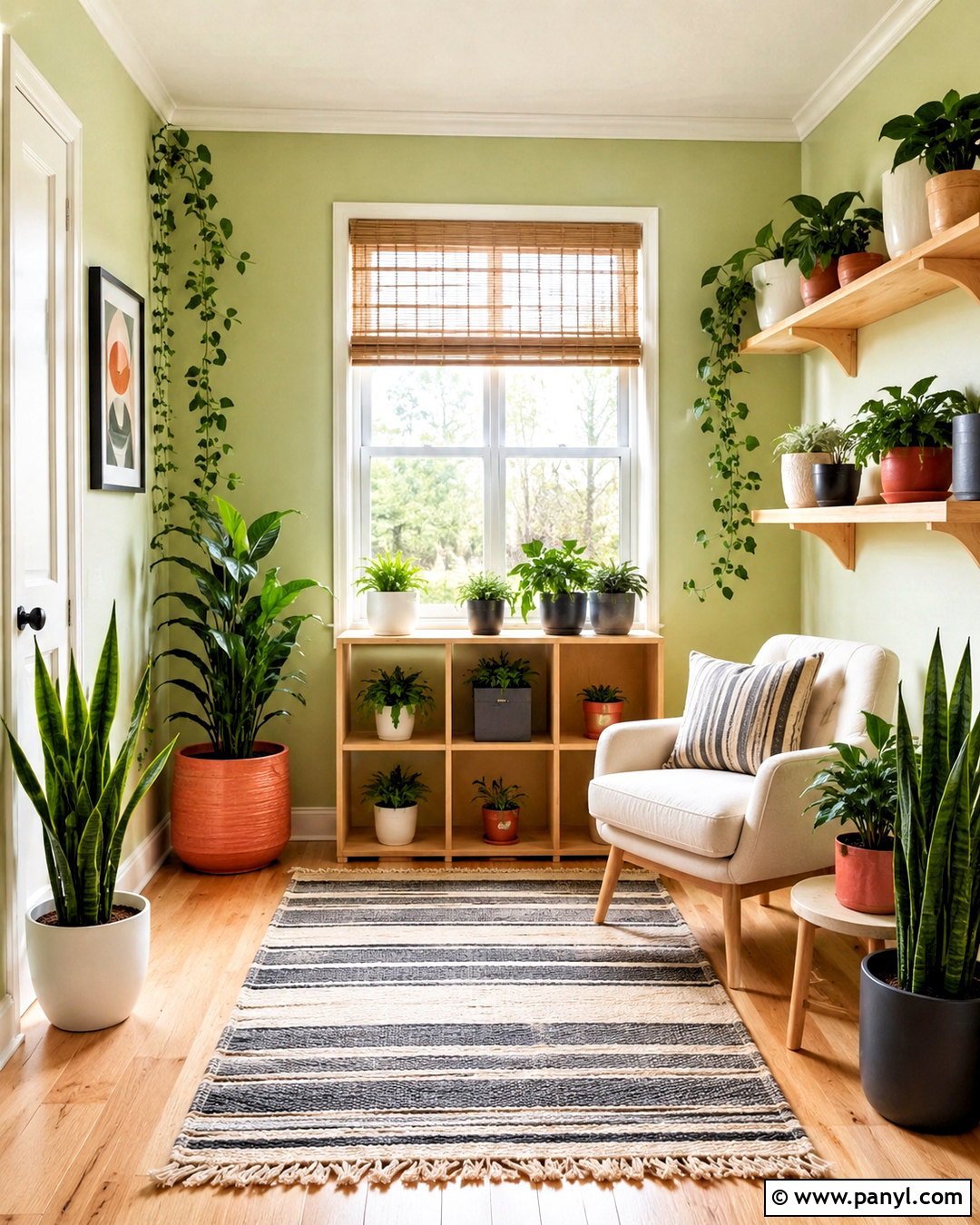
Pale pistachio walls create a light, playful version of the monochromatic plant room. Select a soft yellow-green paint and balance it with creamy white trim, pale wood floors, and simple maple shelves. To prevent the plants from blending into the walls, display them in coral, terracotta, white, and charcoal planters. Choose specimens with varied leaf shapes, including upright snake plants, rounded peperomia, and trailing vines. A natural linen chair and small white table provide a restful corner without adding heavy color. Hang woven blinds for texture and place a striped washable rug through the center of the room. Keep shelves loosely arranged with visible wall space between pots. The completed design feels fresh and modern while retaining enough contrast to showcase individual plants clearly.
20. Burnt Orange Plant Room
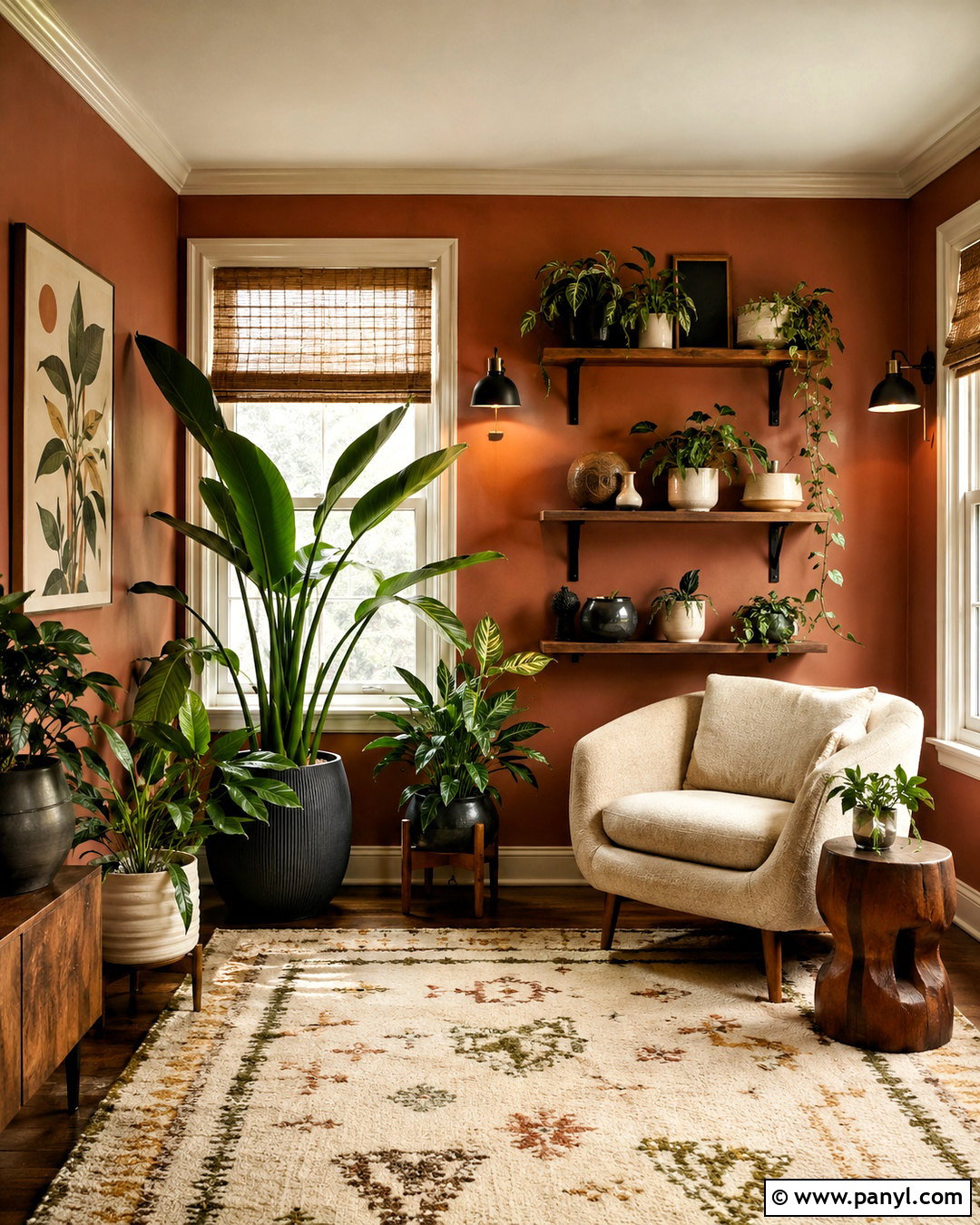
Burnt orange walls establish a warm, energetic plant room with bold contrast between the background and green foliage. Use a muted, brown-based orange to keep the space sophisticated. Cream trim and a white ceiling will brighten the room, while dark wood shelves and matte black brackets provide structure. Choose planters in ivory, sand, charcoal, and unglazed terracotta, varying their heights to avoid a flat display. A light oatmeal sofa or deep armchair can sit opposite the main plant wall, grounded by a patterned rug in cream, olive, and rust. Add woven window shades and black adjustable sconces for practical lighting. Large glossy plants make effective focal points against this color. The finished room feels warm, expressive, and suitable for eclectic or midcentury-inspired interiors.
Conclusion:
Choosing among these **20 Wall Colors For Plant Room Ideas** depends on your natural light, plant varieties, flooring, and preferred decorating style. Warm whites, beige, and greige provide flexible backgrounds for large collections. Sage, olive, eucalyptus, and pistachio create a layered botanical effect. Navy, charcoal, plum, and teal deliver stronger contrast, while blush, peach, yellow, terracotta, and burnt orange bring warmth. Always test large painted samples beside your actual plants, pots, and furniture before committing. View each option throughout the day because changing light can affect how the undertones appear. Most importantly, design the entire room as one connected space. Coordinated shelving, seating, flooring, storage, and planters will make the chosen wall color feel deliberate.

Related Ideas and Inspiration:
Leave a Reply