
Choosing the right **light wall colors** can make every room feel fresher, more comfortable, and easier to decorate. Today’s best pale shades go beyond basic white. Warm ivory, quiet greige, misty blue, soft sage, blush, and gentle clay create personality without overpowering a space. White paint can carry warm yellow-red or cool blue-green-violet undertones, while pale blue often creates an especially airy backdrop. Natural and artificial light also change how every color appears throughout the day. () Before painting, test large samples beside your flooring, trim, furniture, and fixed finishes. The complete room should feel balanced rather than simply bright. Explore these practical, coordinated looks to find your favorite **35 light wall colors**.

1. Warm White Walls
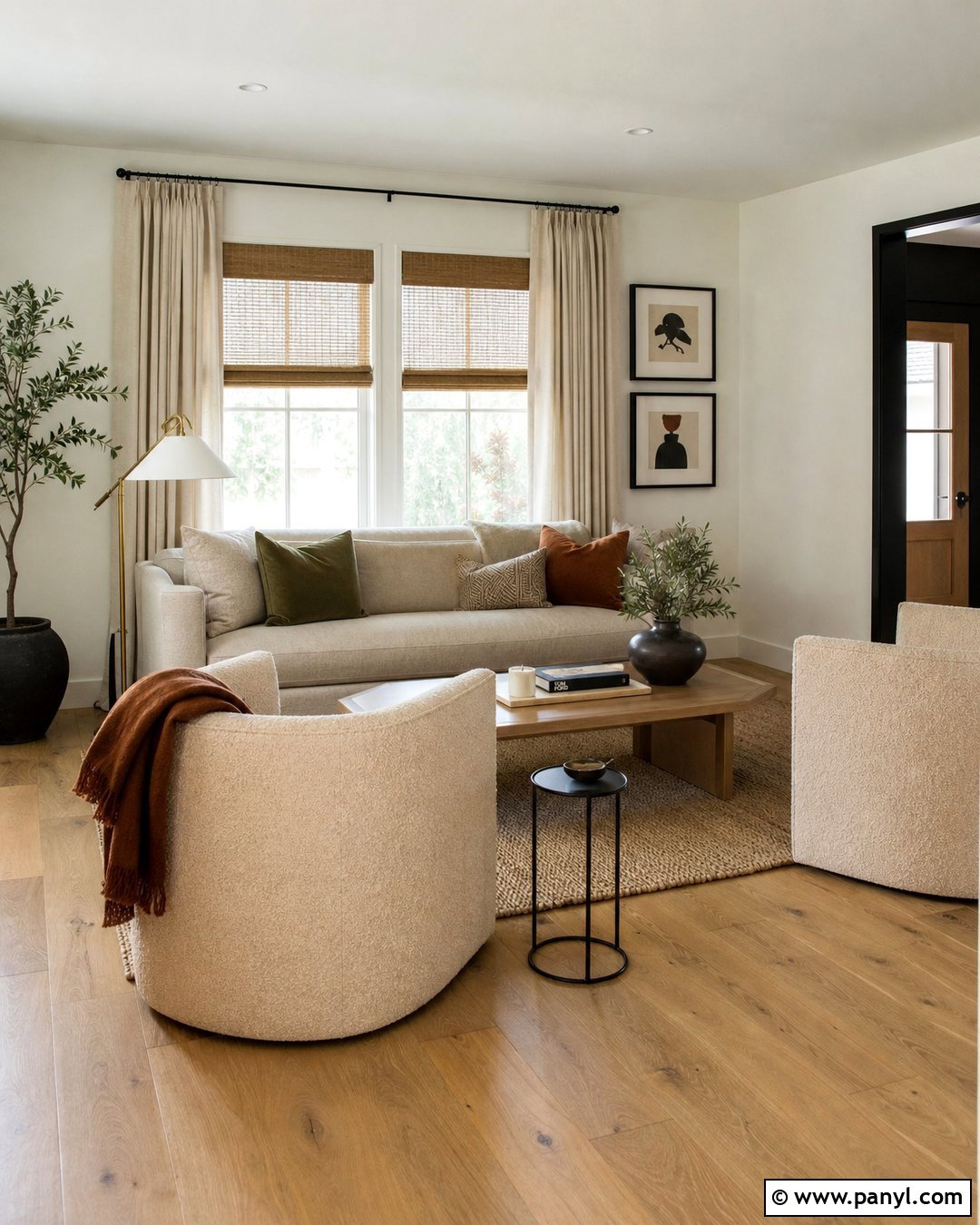
Warm white walls create a comfortable foundation without looking yellow or overly traditional. Use this color in a living room with natural oak flooring, a soft oatmeal sofa, and two cream boucle chairs. Choose slightly brighter white for the ceiling and trim so the room retains gentle definition. Add a light wood coffee table, woven window shades, and textured linen curtains. Muted rust, olive, and caramel accents provide earthy contrast without making the palette heavy. Black picture frames and a slim floor lamp add a few crisp lines. This complete look works especially well in rooms with northern exposure because the warm undertone helps counter cooler daylight. Finish with layered table lamps so the walls remain inviting after sunset.
2. Soft Ivory Walls
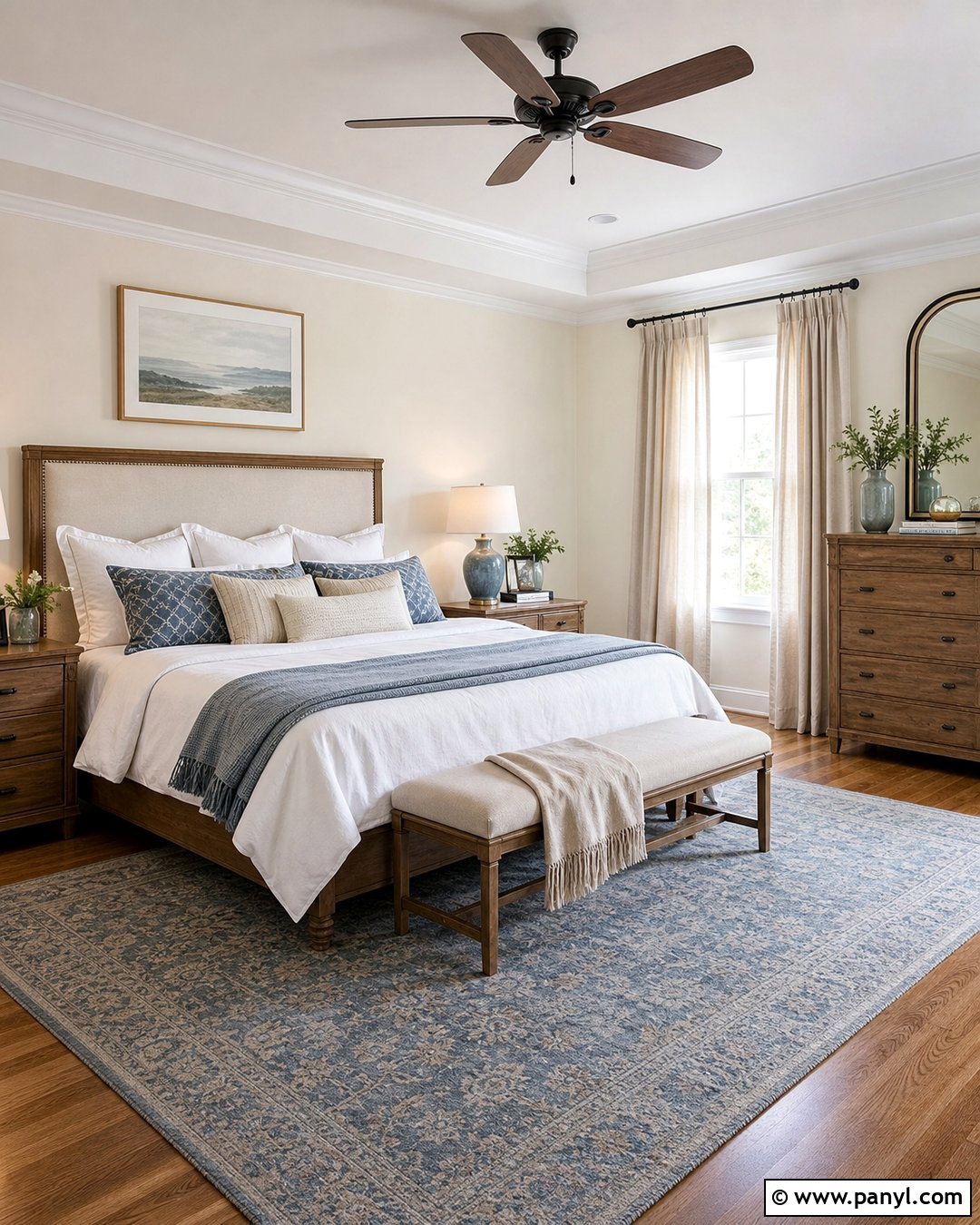
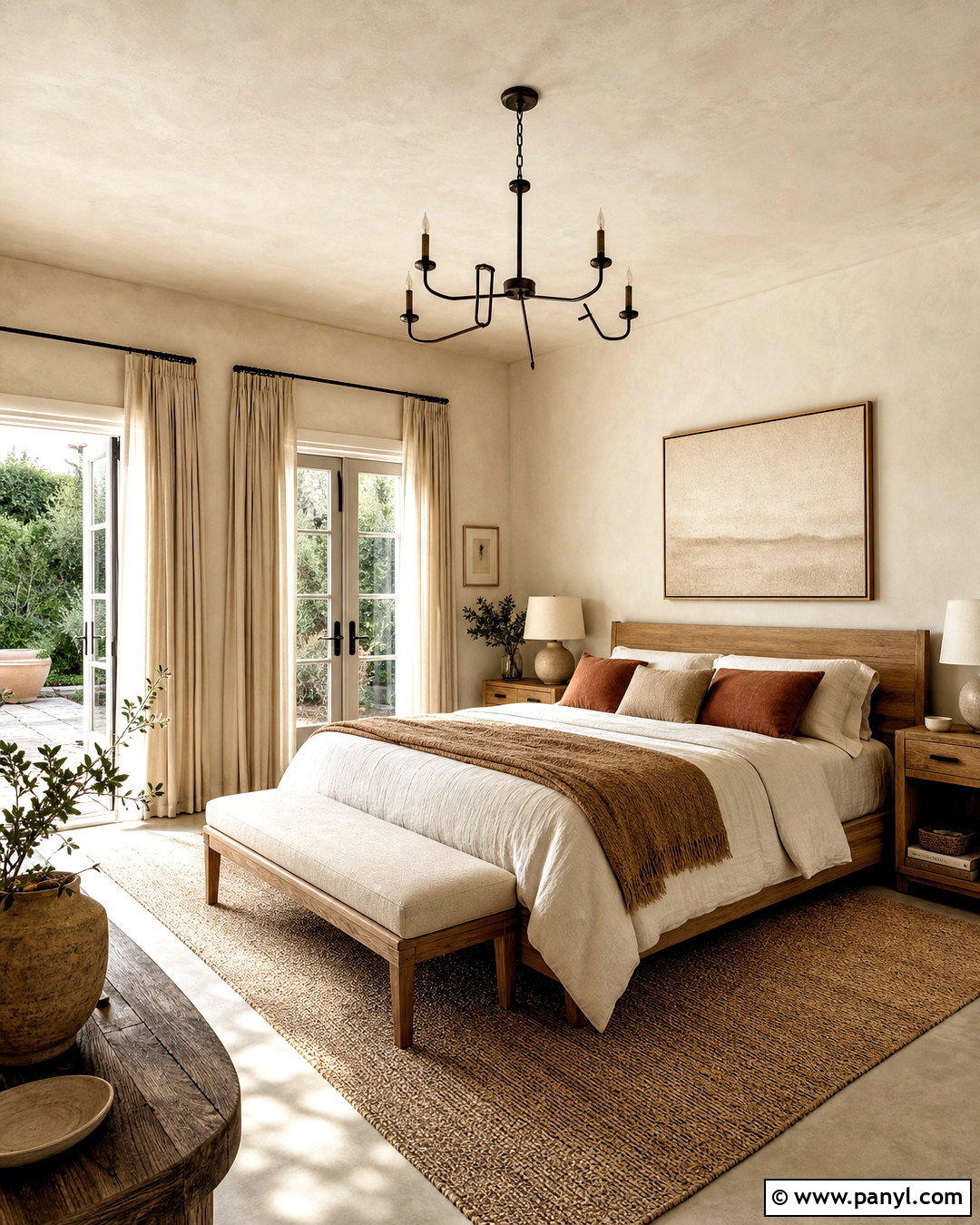
Soft ivory walls bring subtle warmth to a bedroom while preserving a clean, restful appearance. Build the room around a medium oak bed with an upholstered cream headboard and white bedding layered with beige and muted blue textiles. Paint the ceiling a gentle white and keep baseboards close to the ivory wall color for a smooth transition. Add matching oak nightstands, ceramic lamps, and full-length natural linen curtains. A faded blue-and-tan rug grounds the arrangement and introduces quiet pattern. Brushed brass hardware adds warmth without becoming flashy. Avoid strongly yellow accessories, which can exaggerate the wall undertone. Instead, use balanced natural materials, simple botanical artwork, and one leafy plant to create a polished bedroom that feels bright, soft, and welcoming.
3. Creamy White Walls
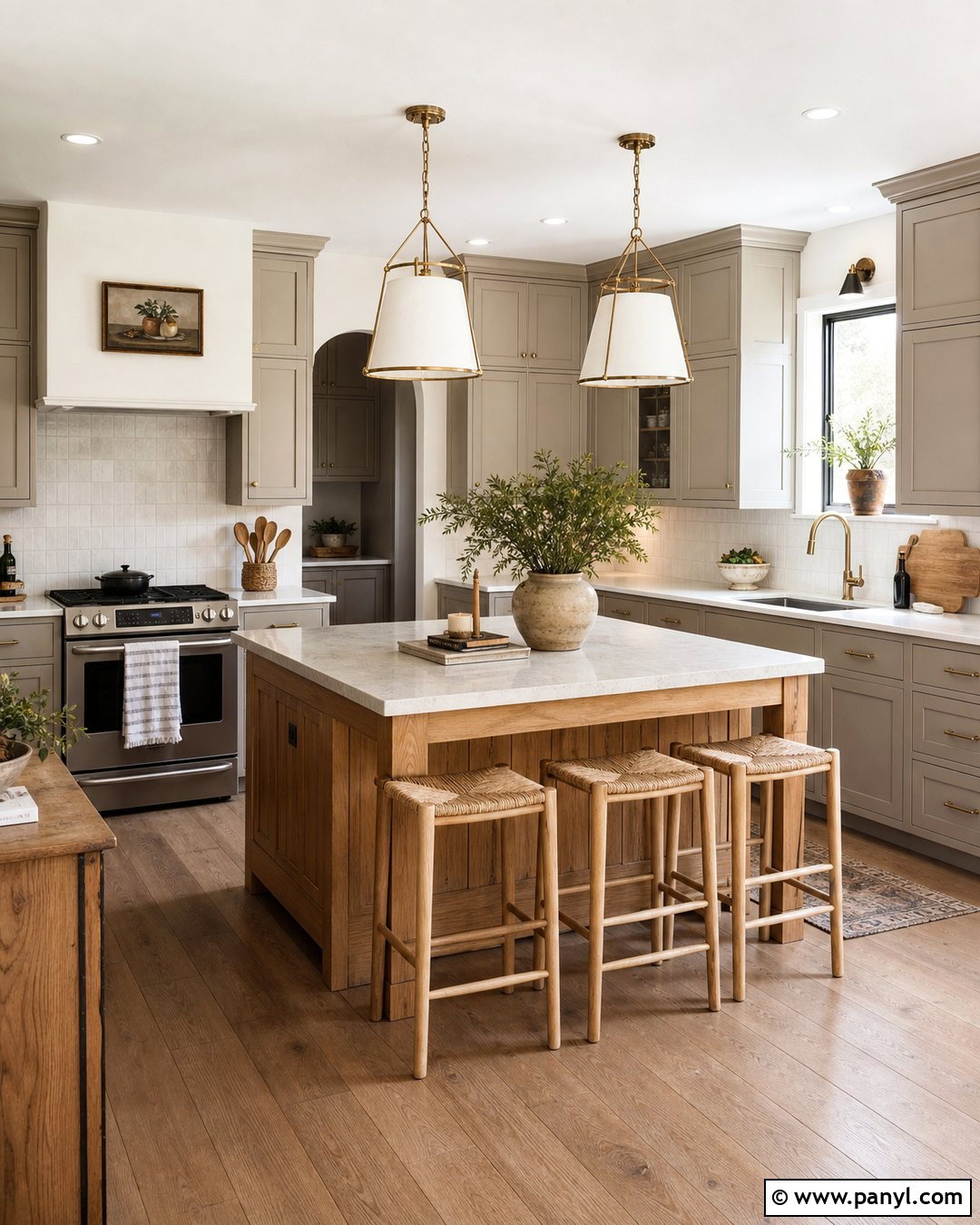
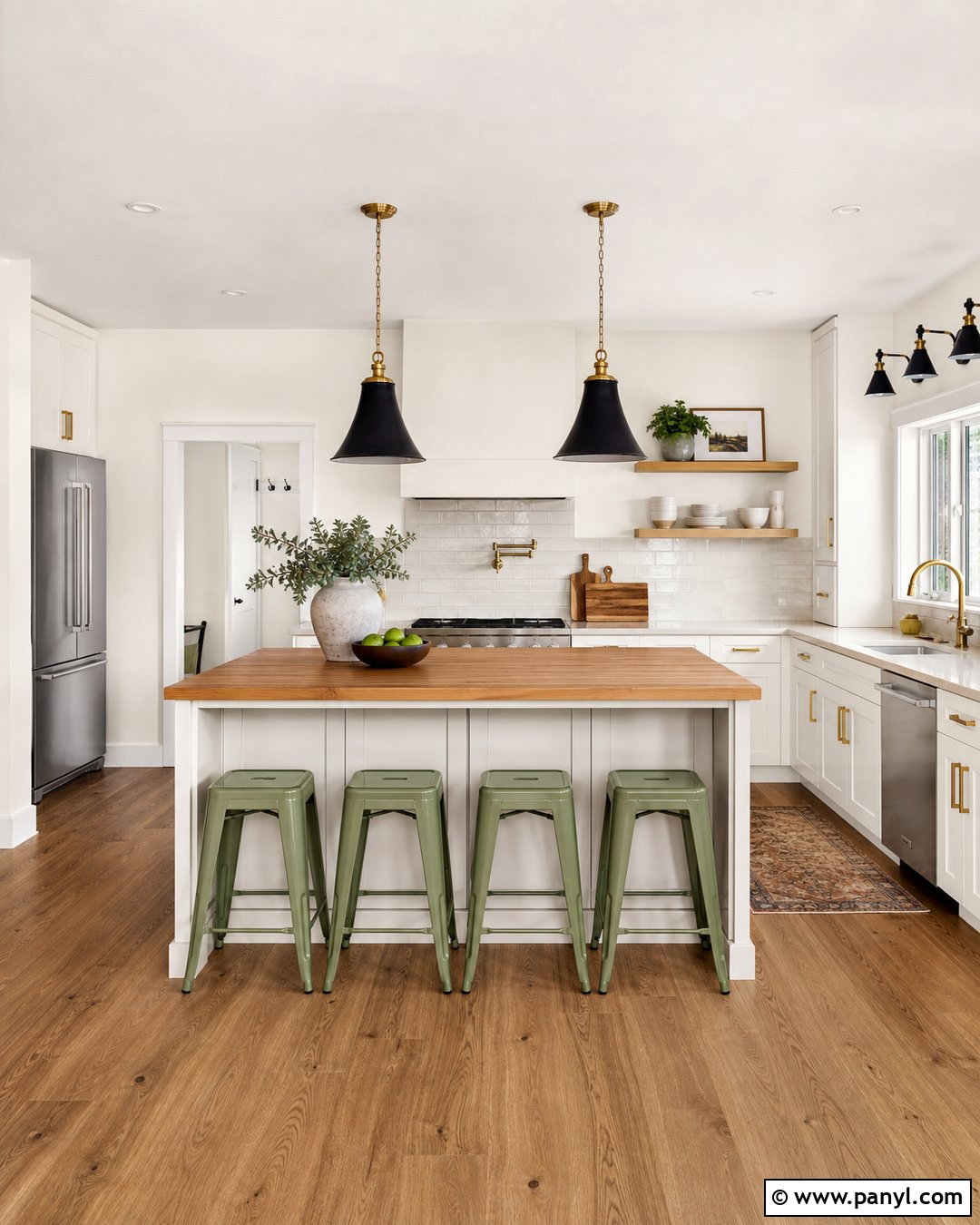
Creamy white walls can make a kitchen feel warm, established, and cheerful without relying on bold color. Pair them with soft taupe lower cabinets, creamy upper cabinets, and lightly veined quartz counters. A handmade off-white tile backsplash adds depth through texture rather than contrast. Use unlacquered brass pulls, a warm oak island, and woven counter stools to complete the relaxed scheme. Medium-tone wood flooring keeps the room from appearing washed out. Over the island, install simple milk-glass pendants with warm metal details. Keep the ceiling and trim a cleaner white to sharpen the architectural edges. Finish with wood cutting boards, neutral pottery, and a small washable runner. The result is a practical kitchen with layered warmth and plenty of visual light.
4. Alabaster Walls
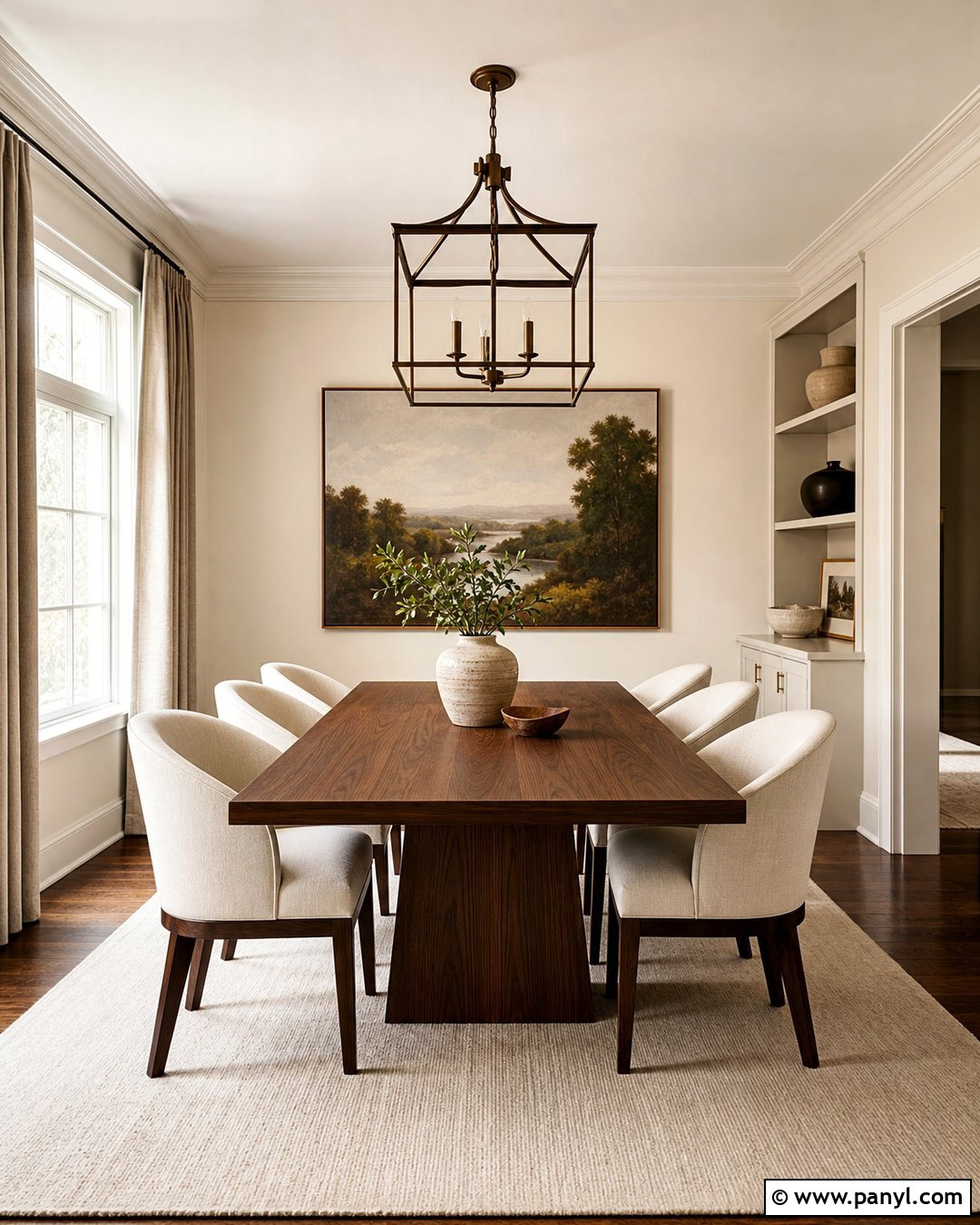
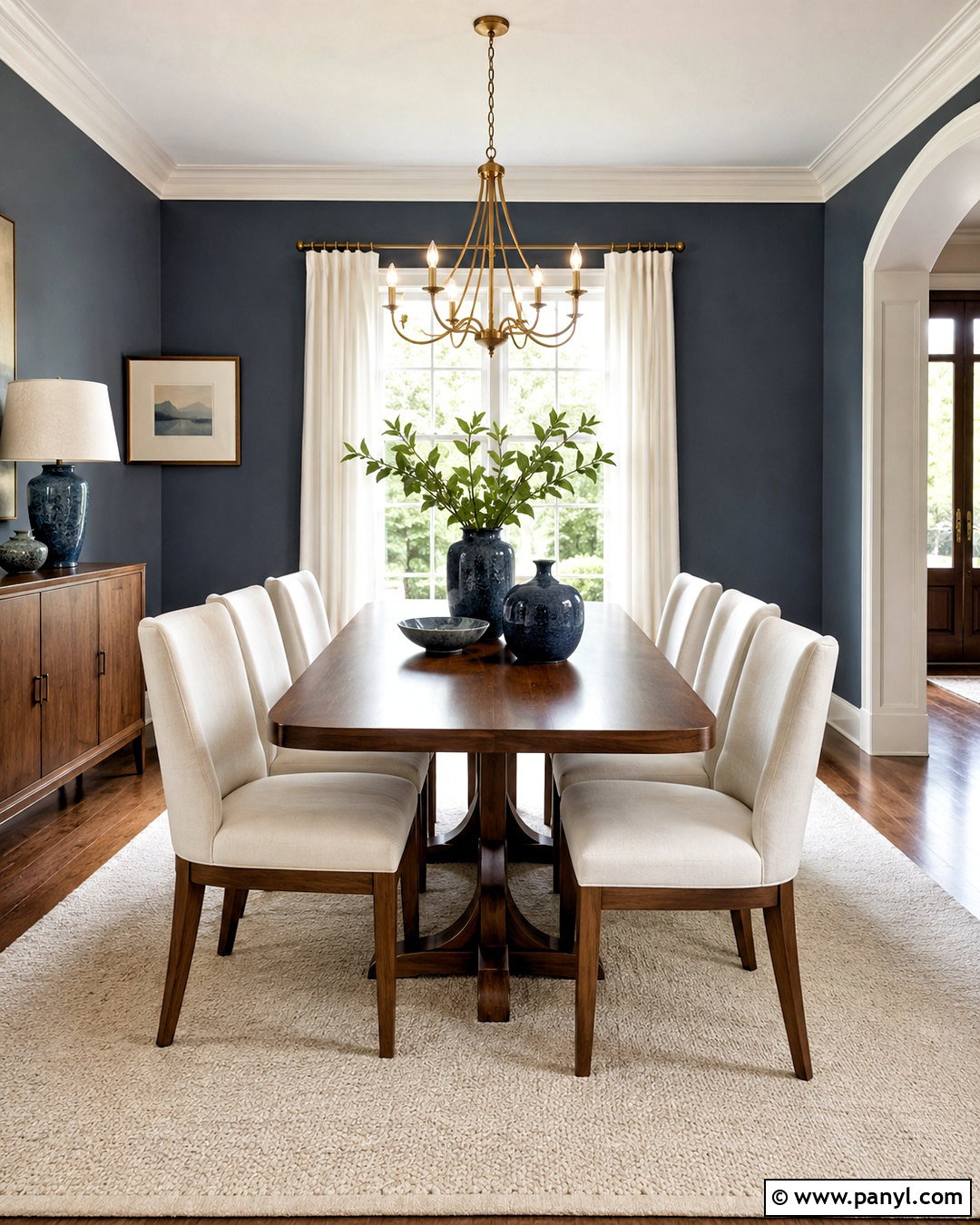
Alabaster walls offer a soft neutral background for a calm, transitional dining room. Choose a medium walnut dining table with curved-back chairs upholstered in pale beige fabric. A light wool rug should extend beyond the chairs and add quiet texture beneath the arrangement. Use clean white on the crown molding and ceiling, then repeat the wall color on a simple built-in cabinet for a seamless finish. A bronze lantern chandelier provides structure overhead, while linen drapes soften the windows. Decorate with oversized landscape artwork, a ceramic centerpiece, and a few dark wood accessories. The warm, chalky wall color balances both cool daylight and rich brown furniture. This coordinated room feels elegant enough for gatherings but relaxed enough for everyday meals and homework.
5. Pearl White Walls
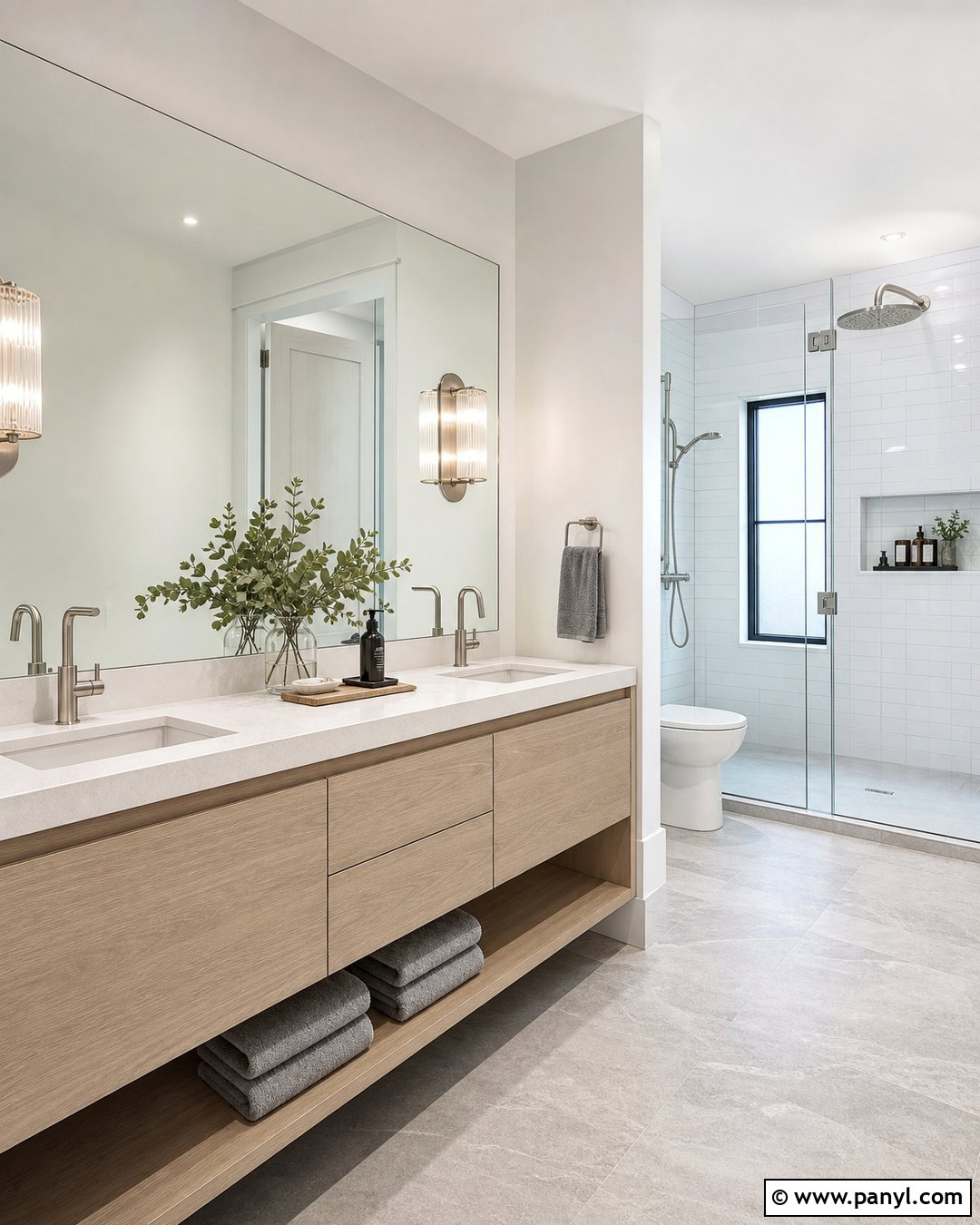
Pearl white walls have a delicate cool undertone that suits a clean, modern bathroom. Combine them with a floating light oak vanity, white quartz counter, and large frameless mirror. Use pale gray porcelain flooring and white shower tile with soft gray grout to maintain an open, uninterrupted look. Brushed nickel faucets complement the cooler wall tone better than strongly aged metals. Add ribbed glass sconces on both sides of the mirror for even lighting. A white shower curtain, light gray towels, and one pale blue bath mat introduce softness. Keep storage streamlined with oak shelves and matching baskets. Because cool whites can shift under artificial light, select neutral-white bulbs rather than very blue lighting. The finished bathroom feels crisp, spacious, and comfortable instead of sterile.
6. Pale Greige Walls
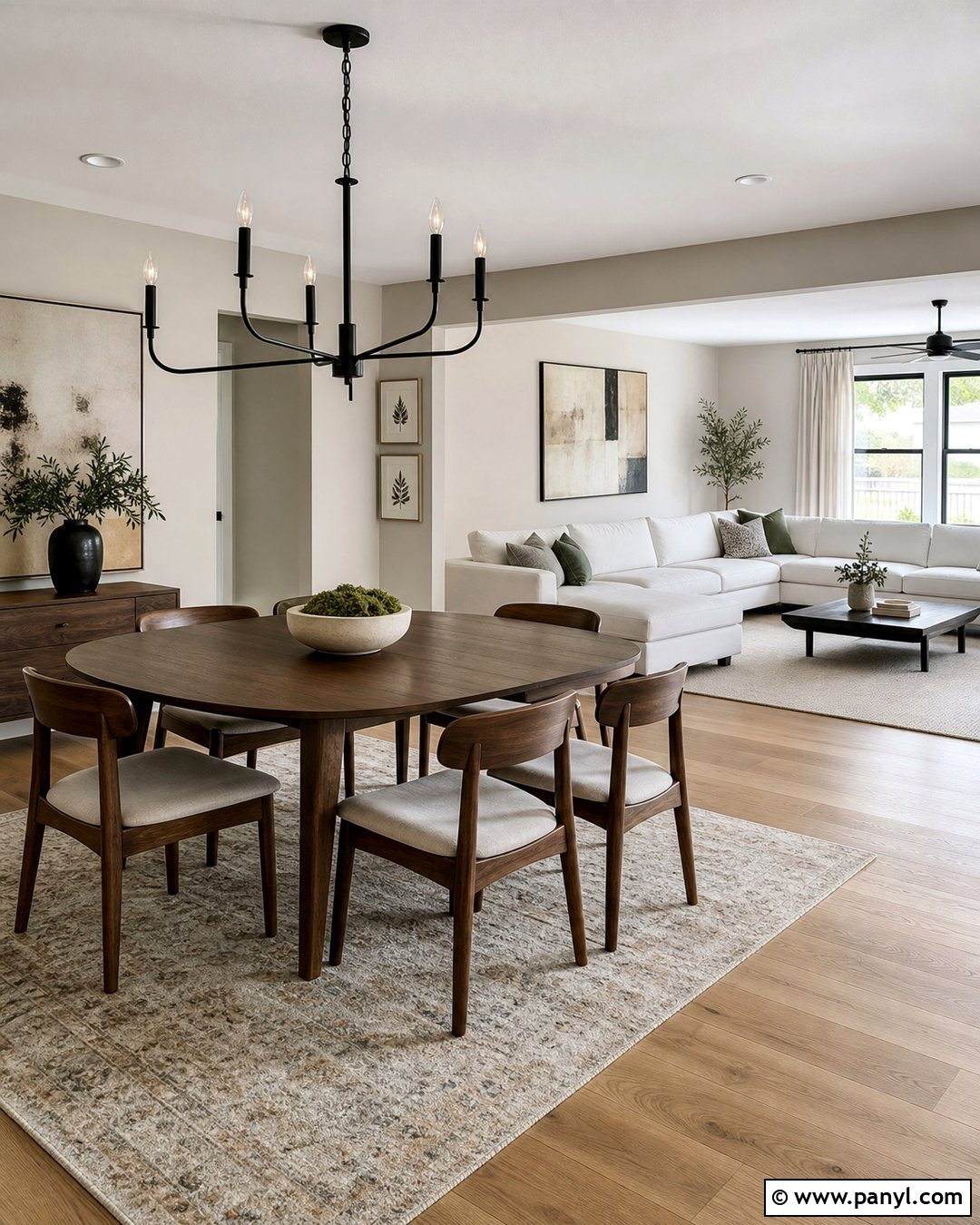
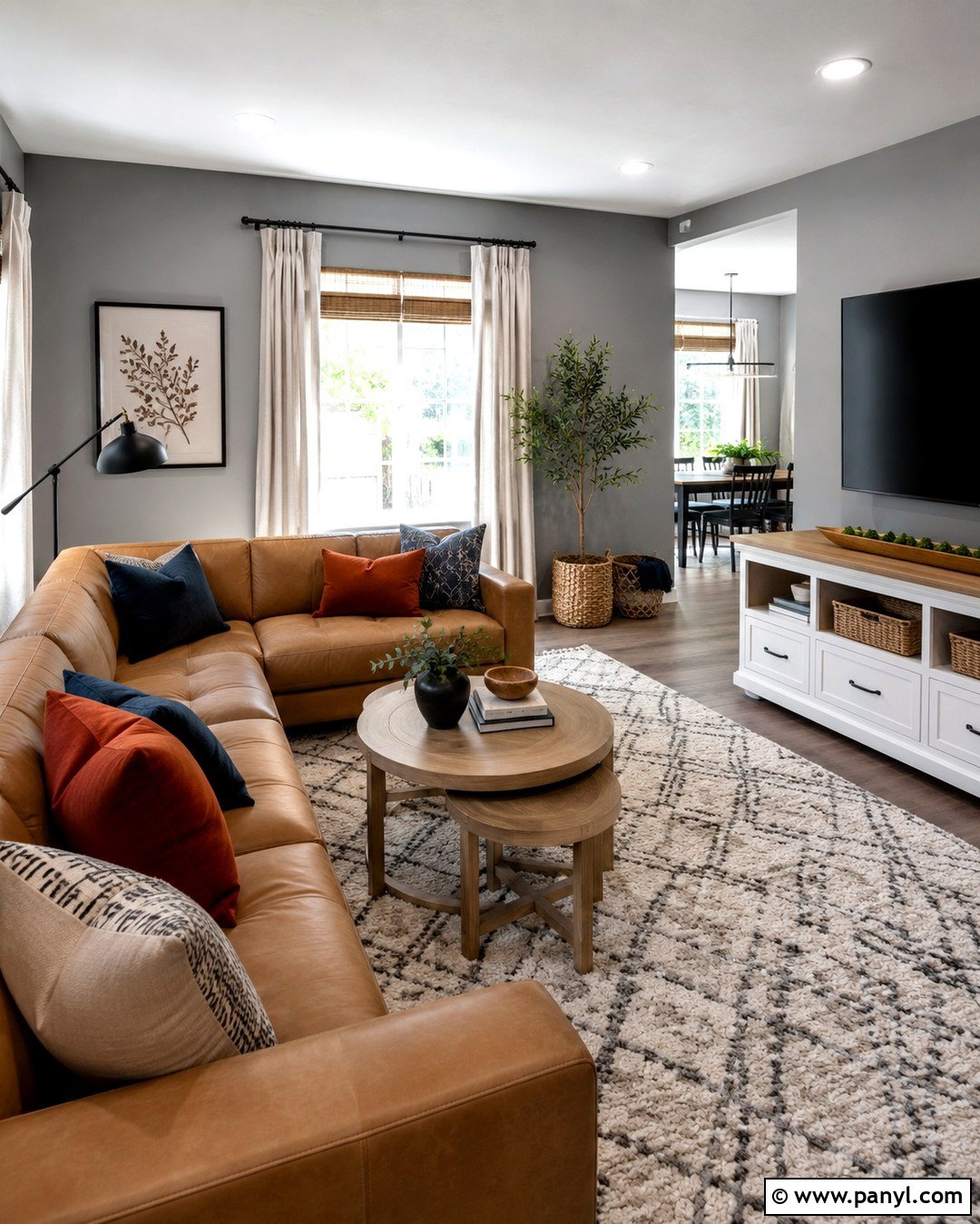
Pale greige walls balance gray and beige, making them useful in an open living and dining area with mixed finishes. Pair the color with light oak flooring, an ivory sectional, and a walnut dining set. Repeat black sparingly through window frames, dining chairs, and one sculptural floor lamp. Cream curtains and a textured beige rug keep the darker details from dominating. Add muted green pillows, warm ceramic pieces, and abstract artwork containing beige, charcoal, and off-white. Paint the ceiling a soft white and use the same white on trim throughout connected spaces. This complete palette connects warm wood with cooler stone or metal surfaces. The result feels cohesive and contemporary, especially when the greige is light enough to remain gentle during cloudy weather.
7. Light Taupe Walls
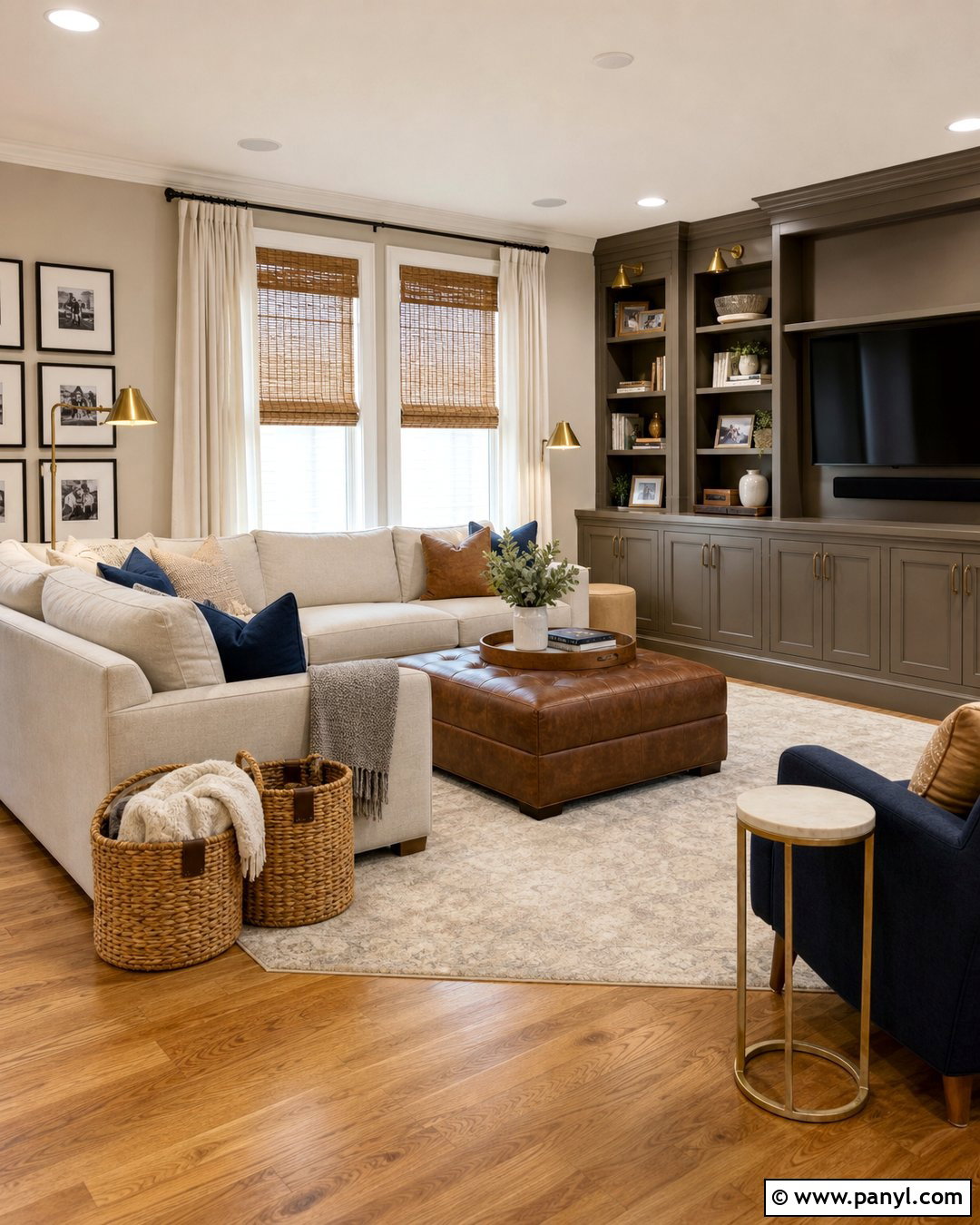
Light taupe walls give a family room more depth than white while remaining easy to coordinate. Use a comfortable cream sectional, a medium brown leather ottoman, and built-in shelves painted in a slightly deeper taupe. Warm oak flooring and a large ivory-and-gray rug create a durable foundation. Add navy, camel, and muted green pillows for controlled color. Hang simple black-framed photographs above a low wood console, leaving enough open wall space to keep the room relaxed. Woven shades provide privacy, while white curtains brighten the windows. Finish with aged brass lamps and baskets for blankets and games. The entire space feels polished but practical, and the taupe walls help everyday furniture, natural fibers, and darker accents blend into one inviting design.
8. Oatmeal Beige Walls
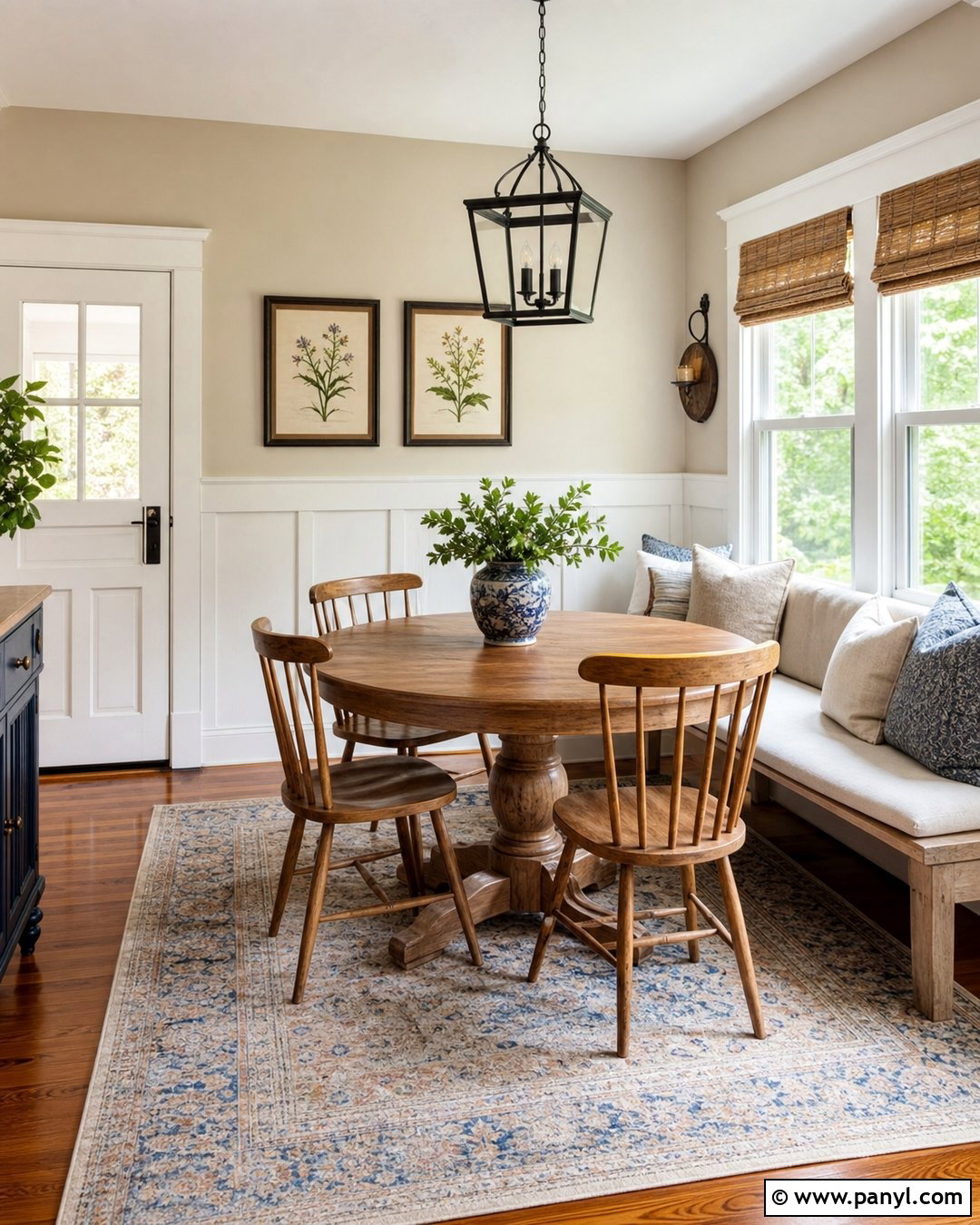
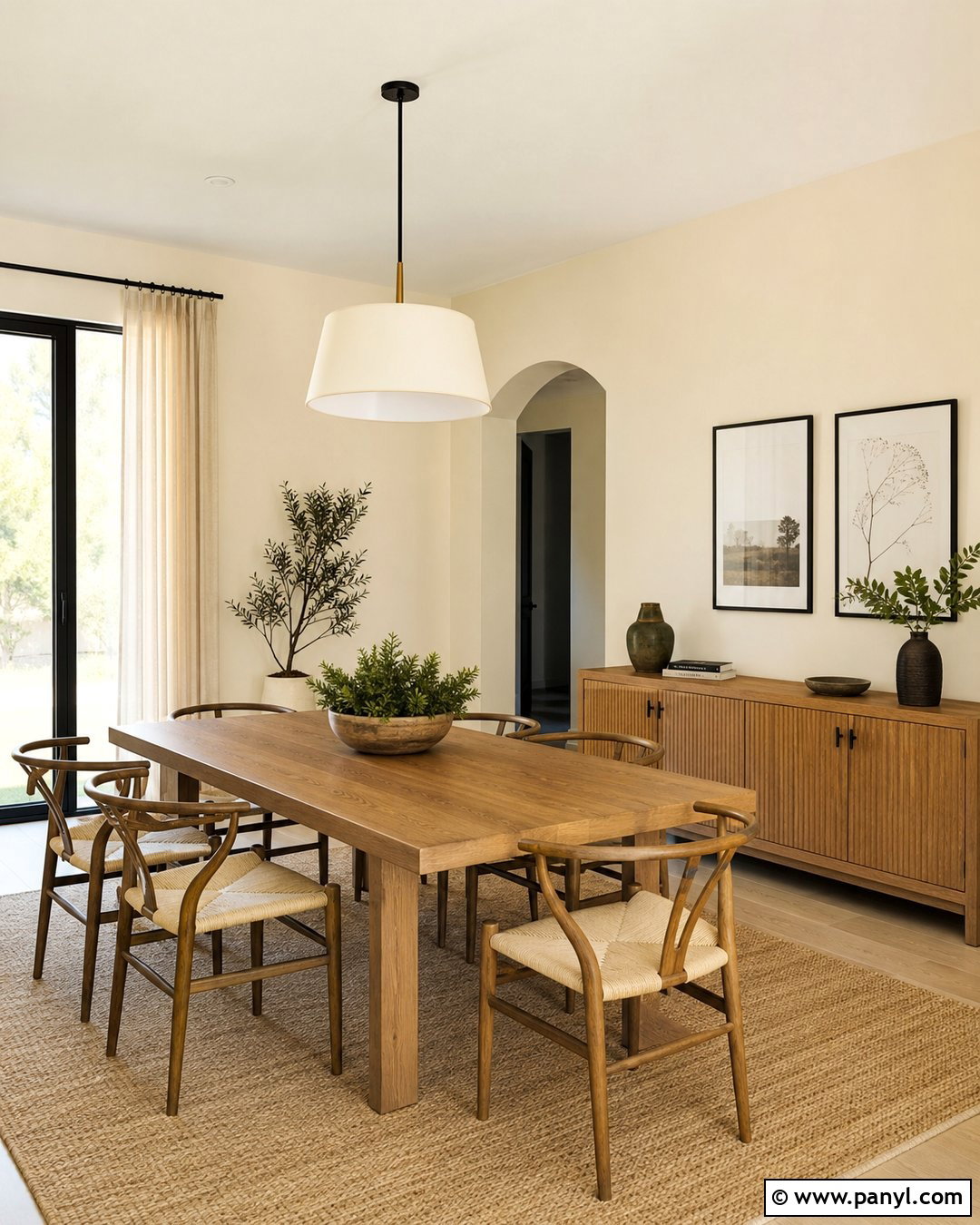
Oatmeal beige walls create an especially cozy backdrop for a relaxed farmhouse breakfast room. Pair them with a round pedestal table in natural oak and mixed seating that includes spindle-back chairs and a cushioned bench. Use creamy white on the trim, ceiling, and simple wall paneling below chair-rail height. A small patterned rug in faded blue and tan adds color without disrupting the light palette. Hang a black iron pendant over the table and soften nearby windows with woven shades. Display white pottery, wooden bowls, and framed botanical prints rather than crowded farmhouse signs. Warm wood flooring completes the grounded look. Oatmeal beige provides enough pigment to distinguish the walls from the white millwork while keeping this everyday dining space sunny, casual, and welcoming.
9. Sand Beige Walls
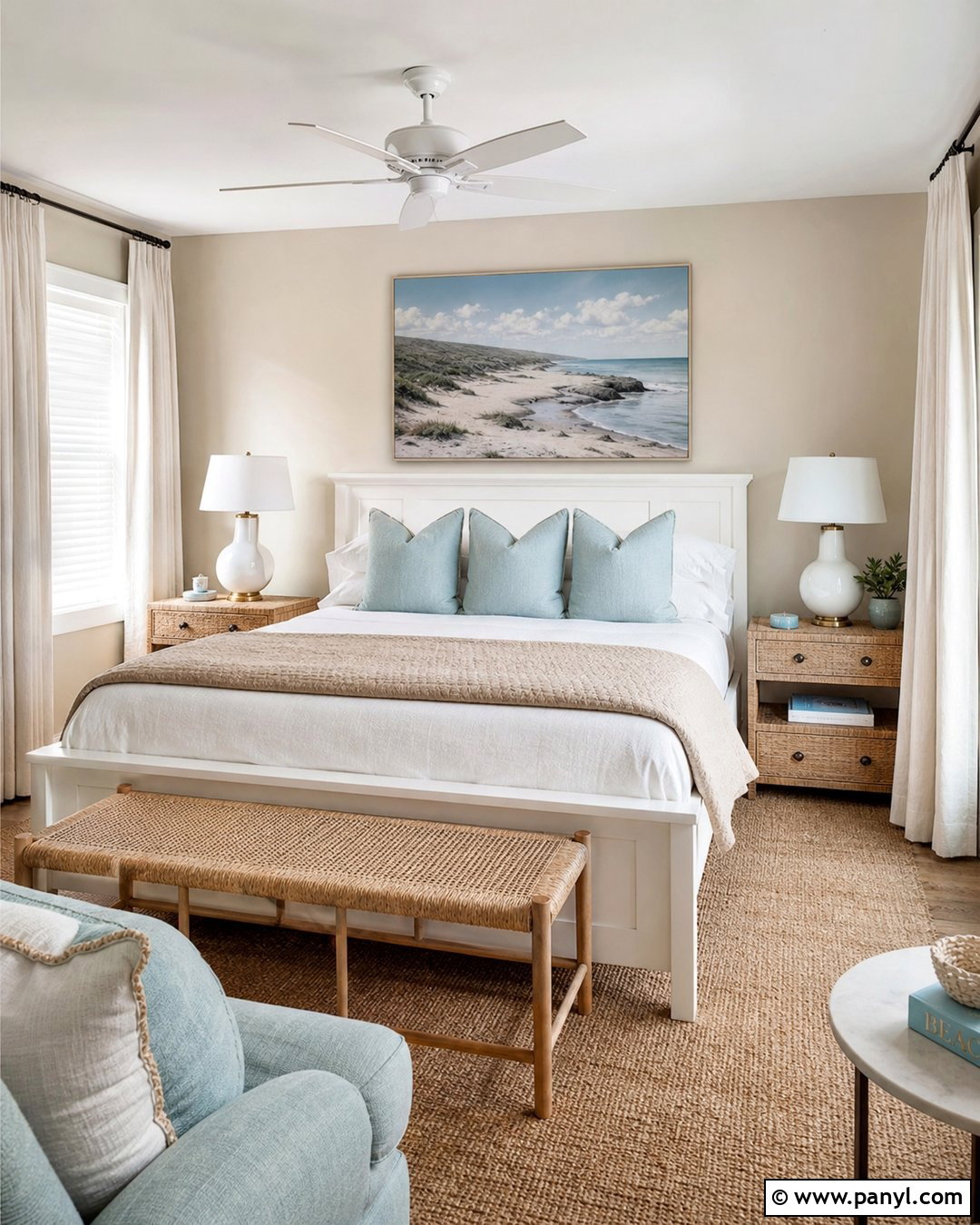
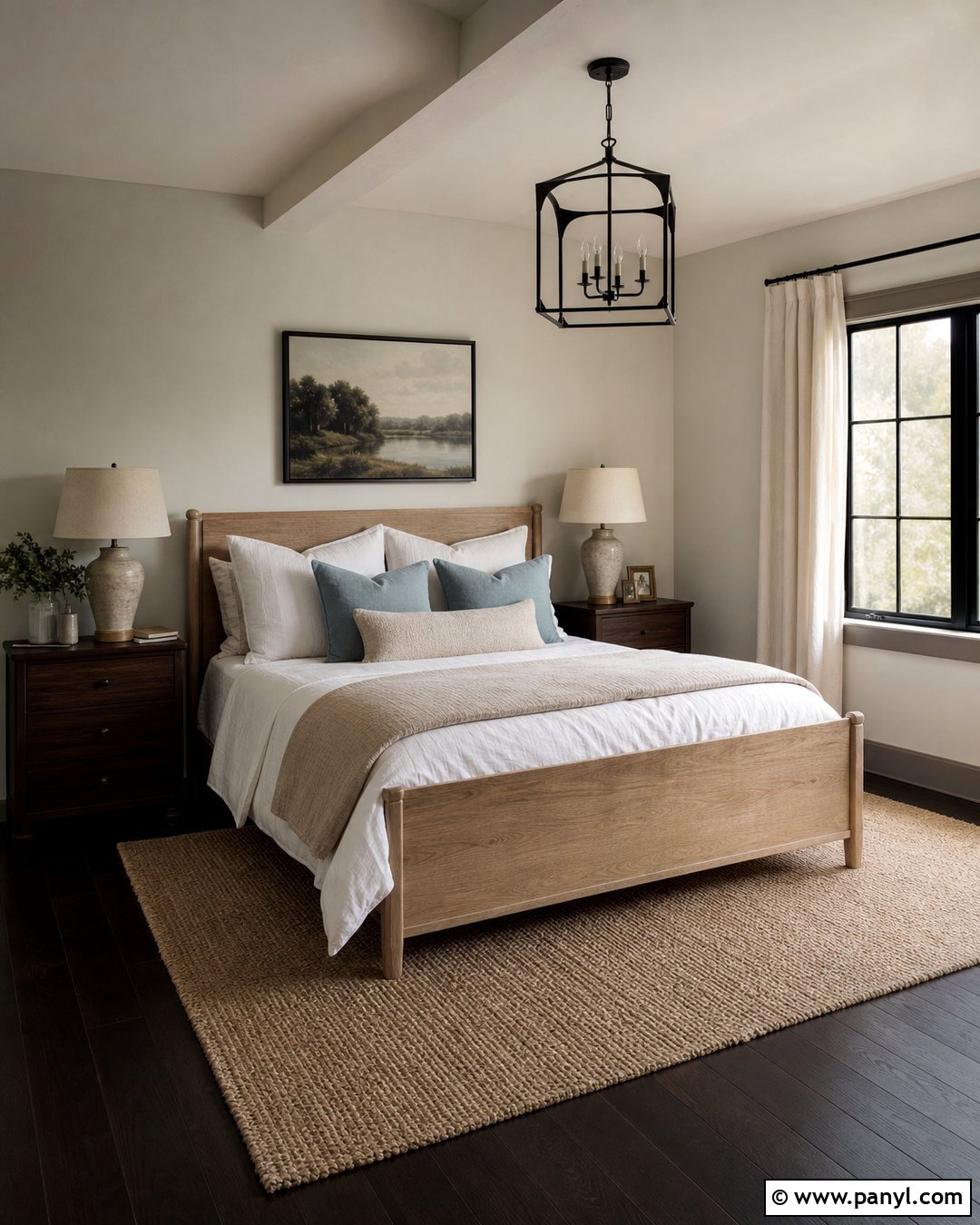
Sand beige walls can turn a plain guest bedroom into a soothing, coastal-inspired retreat. Choose a white oak bed, crisp white bedding, and a light tan quilt with subtle woven texture. Place pale blue pillows at the head of the bed and repeat the blue in simple shoreline artwork. Natural jute or wool flooring creates an understated base, while off-white linen curtains filter strong daylight. Use ceramic lamps, woven nightstands, and a small cane bench to reinforce the breezy materials. Keep the trim warm white rather than stark white, which may make sandy walls look darker. Avoid obvious nautical decorations and rely on color, texture, and organic shapes instead. The complete room feels peaceful, timeless, and appropriate for a home far beyond the coast.
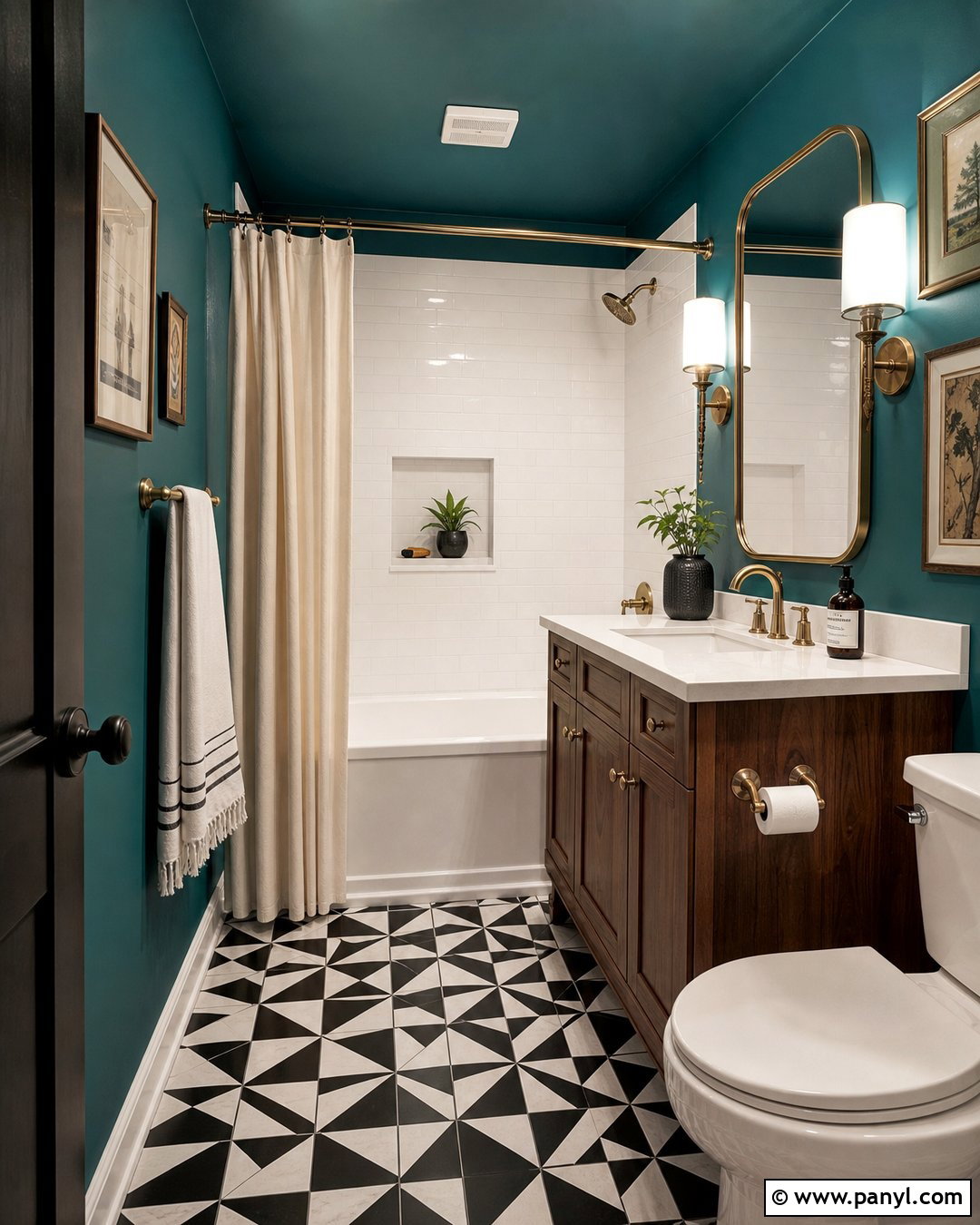
10. Mushroom Beige Walls
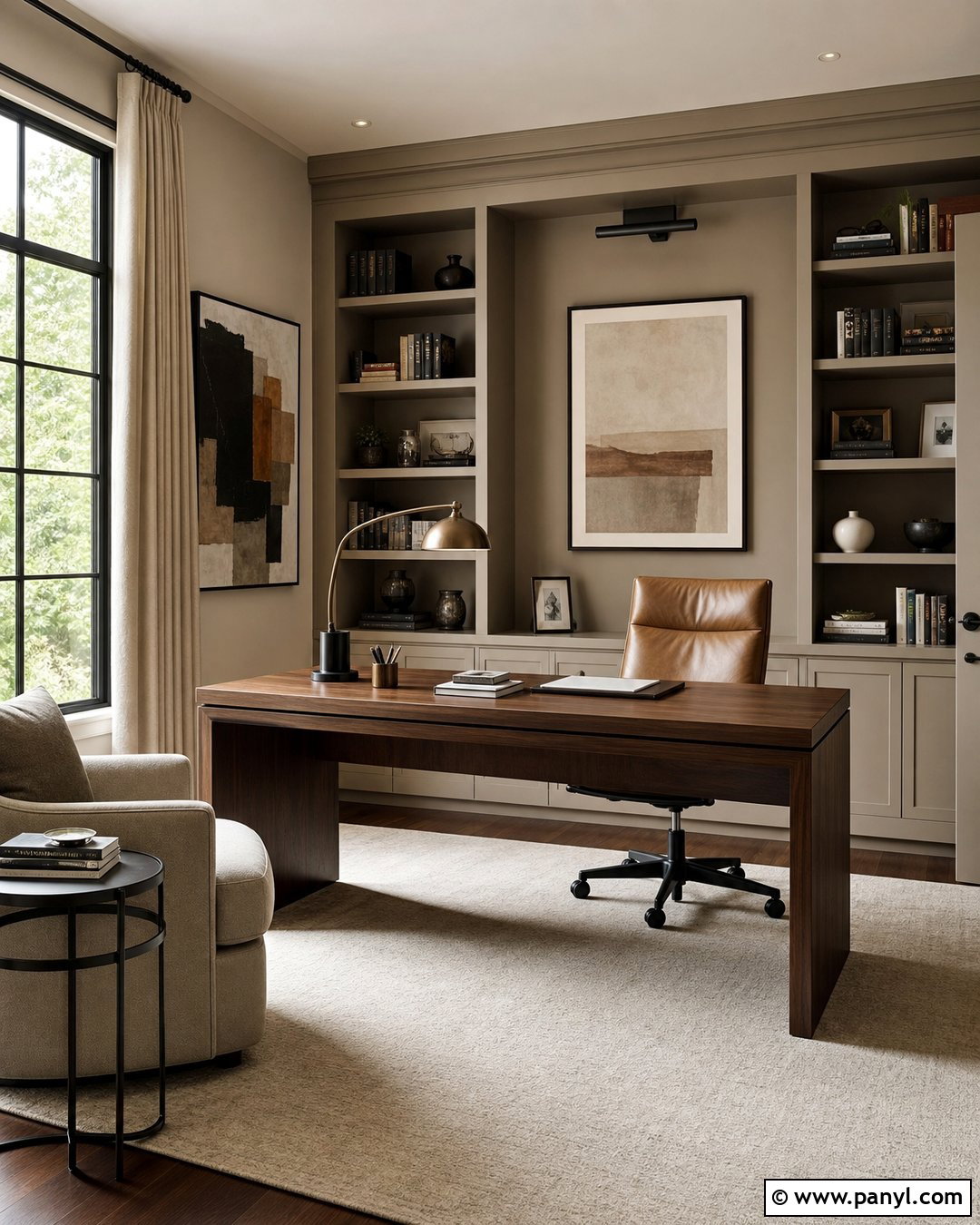
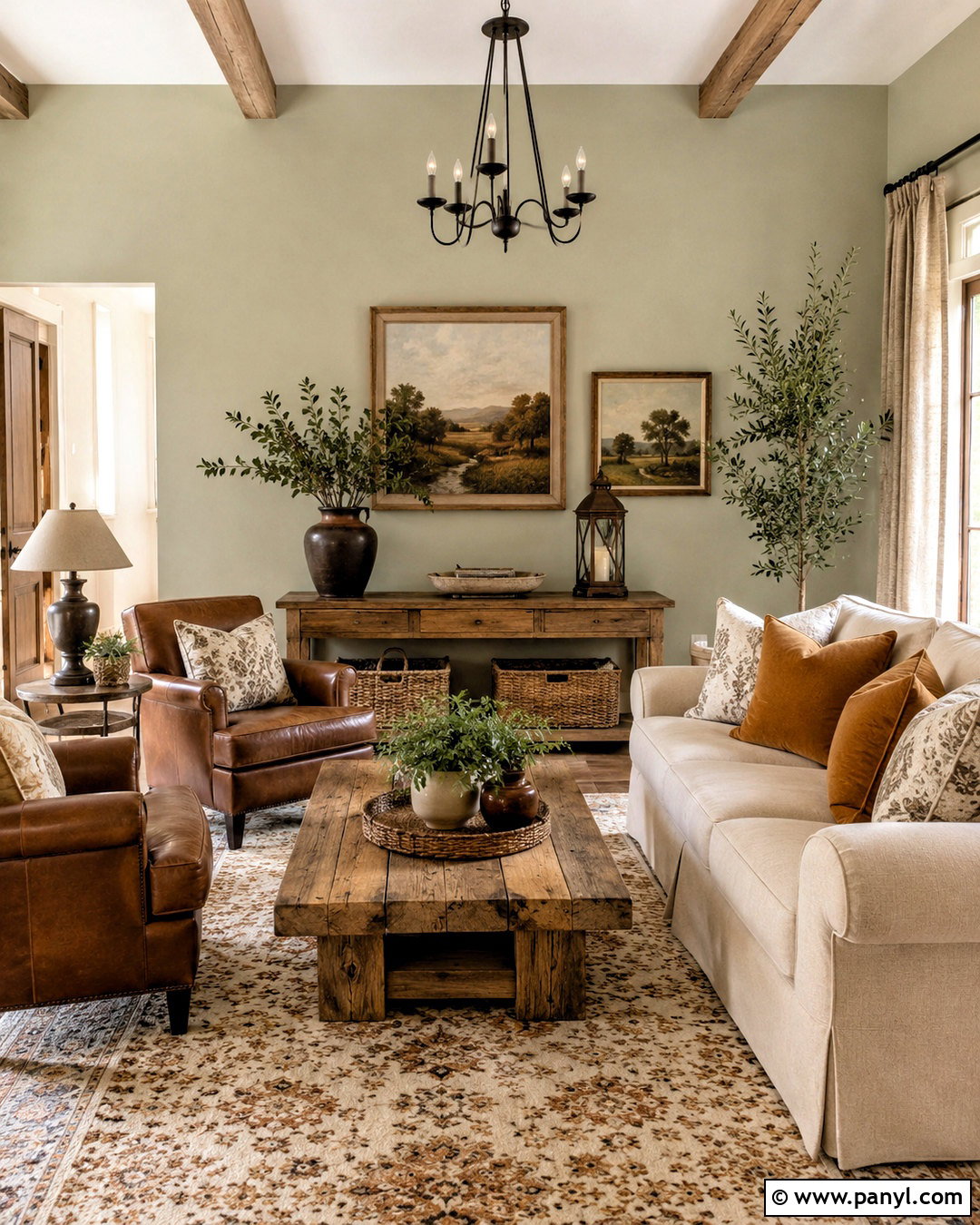
Mushroom beige walls provide a sophisticated neutral for a home office that needs warmth and focus. Combine them with a walnut desk, a comfortable camel leather chair, and built-in bookcases painted to match the walls. An ivory rug brightens the floor, while black metal shelving brackets and a dark bronze desk lamp add definition. Hang one large abstract print containing cream, brown, and muted burgundy rather than covering every wall. Use natural linen curtains and a woven shade to manage glare without darkening the room. A small upholstered reading chair can fill one corner beside a floor lamp. The earthy mushroom undertone supports wood, leather, and aged metal beautifully, resulting in a professional workspace that feels collected, calm, and distinctly more welcoming than a gray office.
11. Dove Gray Walls
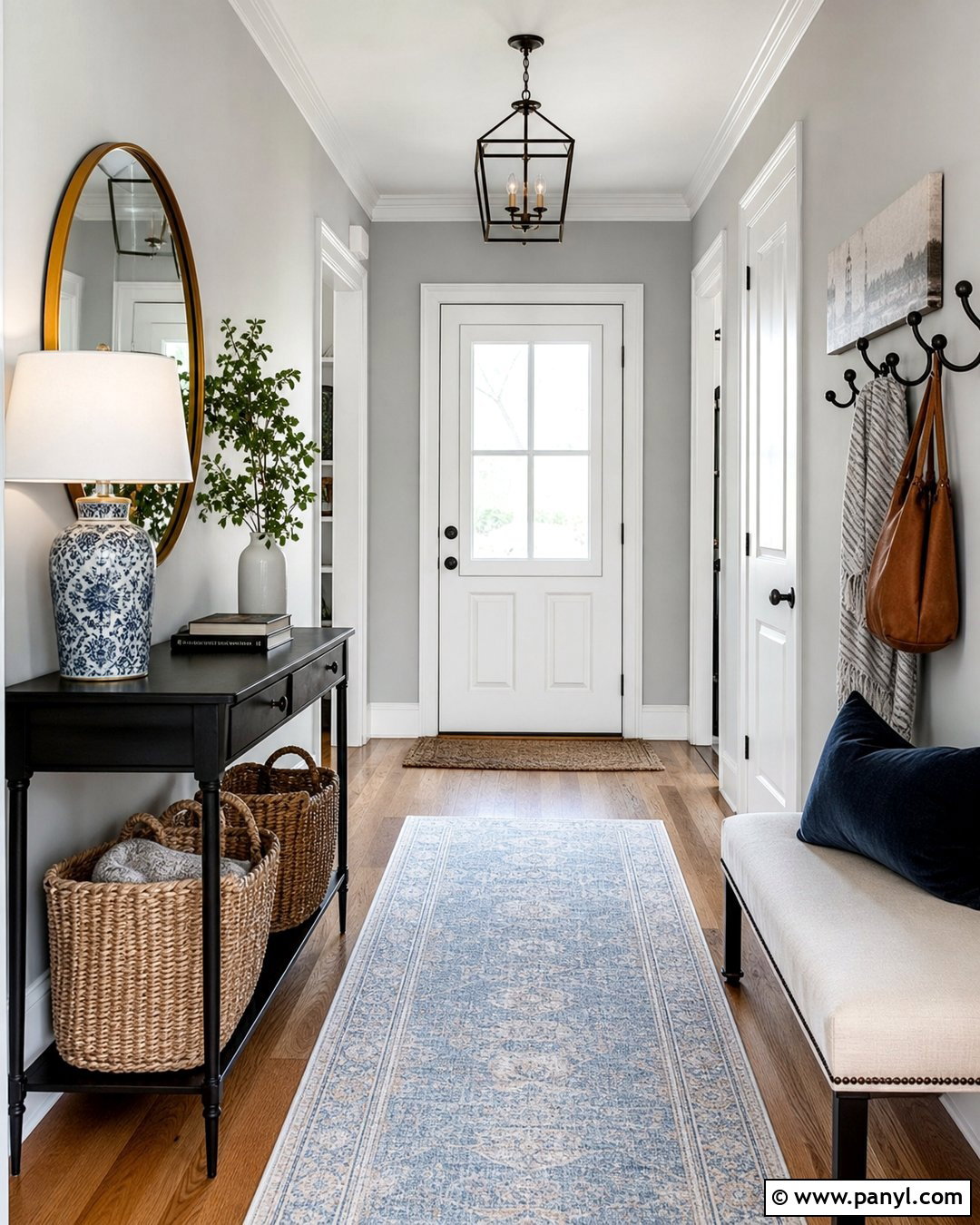
Dove gray walls suit a polished entryway where a clean, quiet background is more useful than strong color. Pair them with medium oak flooring, a slim black console, and a large round mirror with a brushed brass frame. Paint interior doors and trim a crisp soft white for gentle contrast. A narrow vintage-style runner in faded blue, ivory, and charcoal leads the eye through the hall. Add a ceramic table lamp, one shallow decorative bowl, and a simple branch arrangement. If space permits, place an upholstered bench beneath wall hooks for practical storage. Dove gray can feel cool, so balance it with wood, woven baskets, and warm lighting. The completed entry feels bright and orderly while still connecting easily to nearby rooms painted in white, blue, or neutral tones.
12. Mist Gray Walls
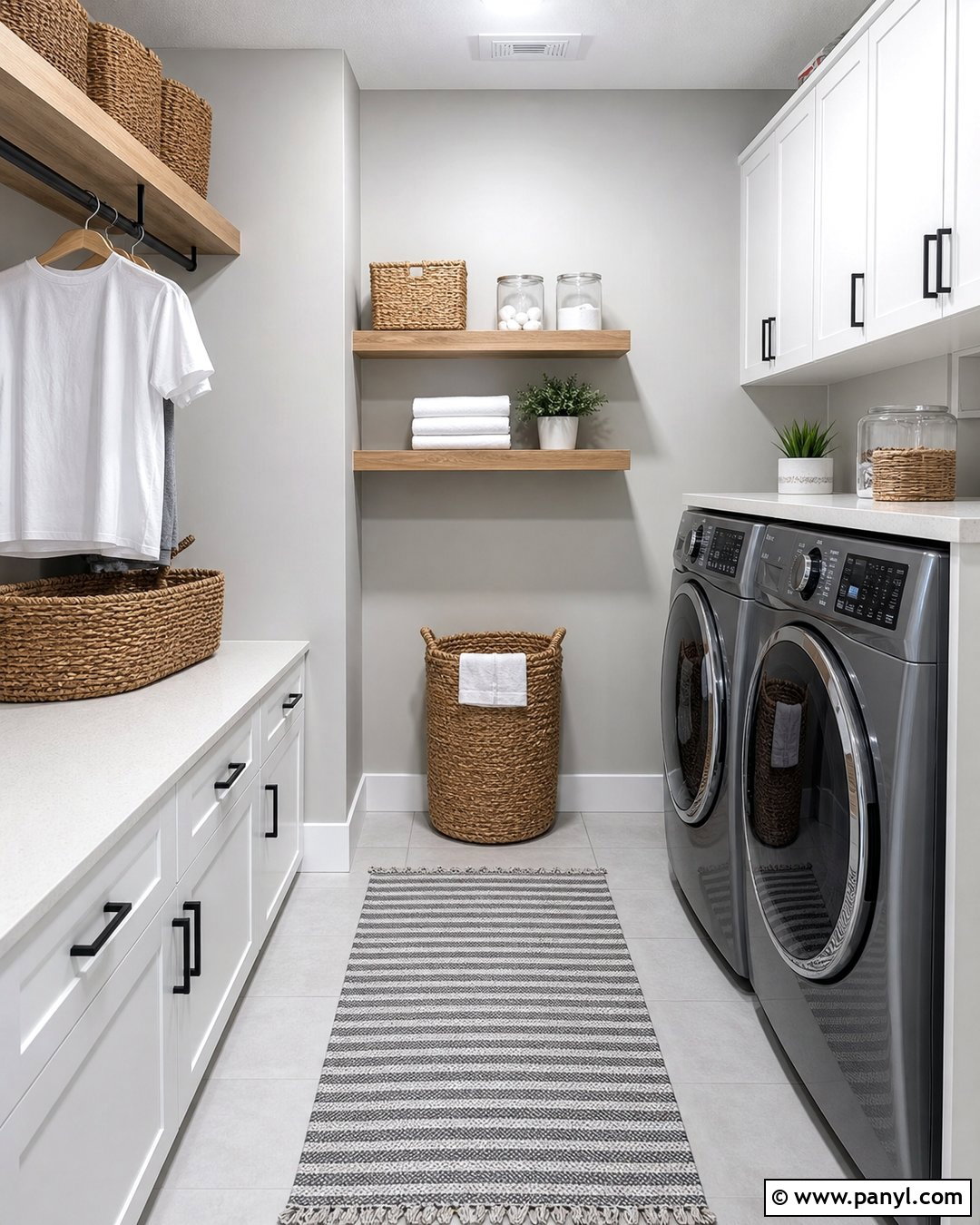
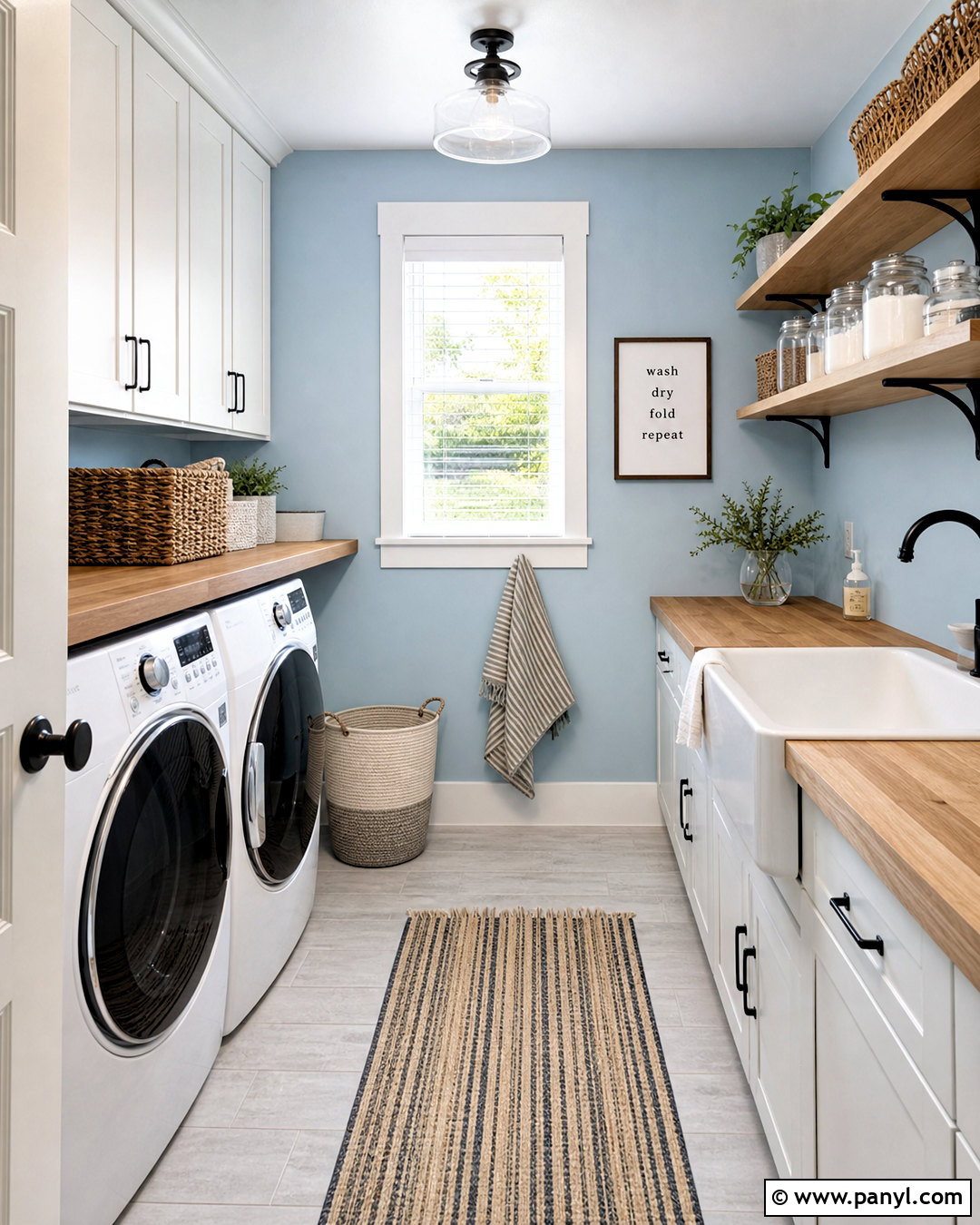
Mist gray walls bring a quiet, airy quality to a compact laundry room. Install white Shaker cabinets, a pale quartz folding counter, and light oak open shelves above the machines. Use small white floor tiles with soft gray grout so dirt is less noticeable than it would be on a seamless white floor. Matte black cabinet pulls and a black hanging rail provide clean contrast. Add woven baskets, clear storage containers, and a washable striped runner in gray and cream. Paint the ceiling bright white and keep the trim simple. Under-cabinet lighting prevents the soft gray walls from appearing dull in a windowless space. This coordinated utility room feels organized and finished, proving that practical areas can still benefit from a carefully layered light color palette.
13. Blue Gray Walls
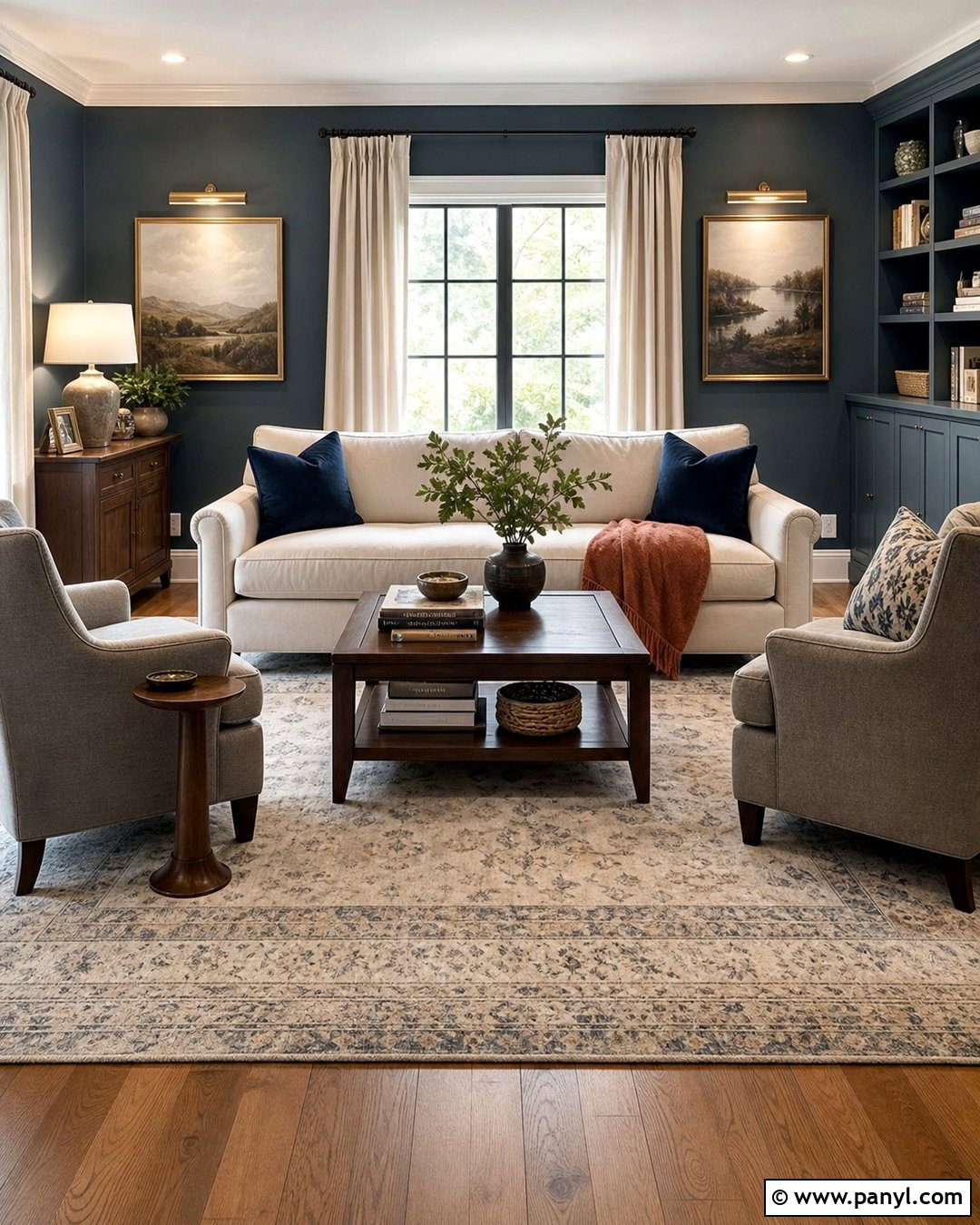
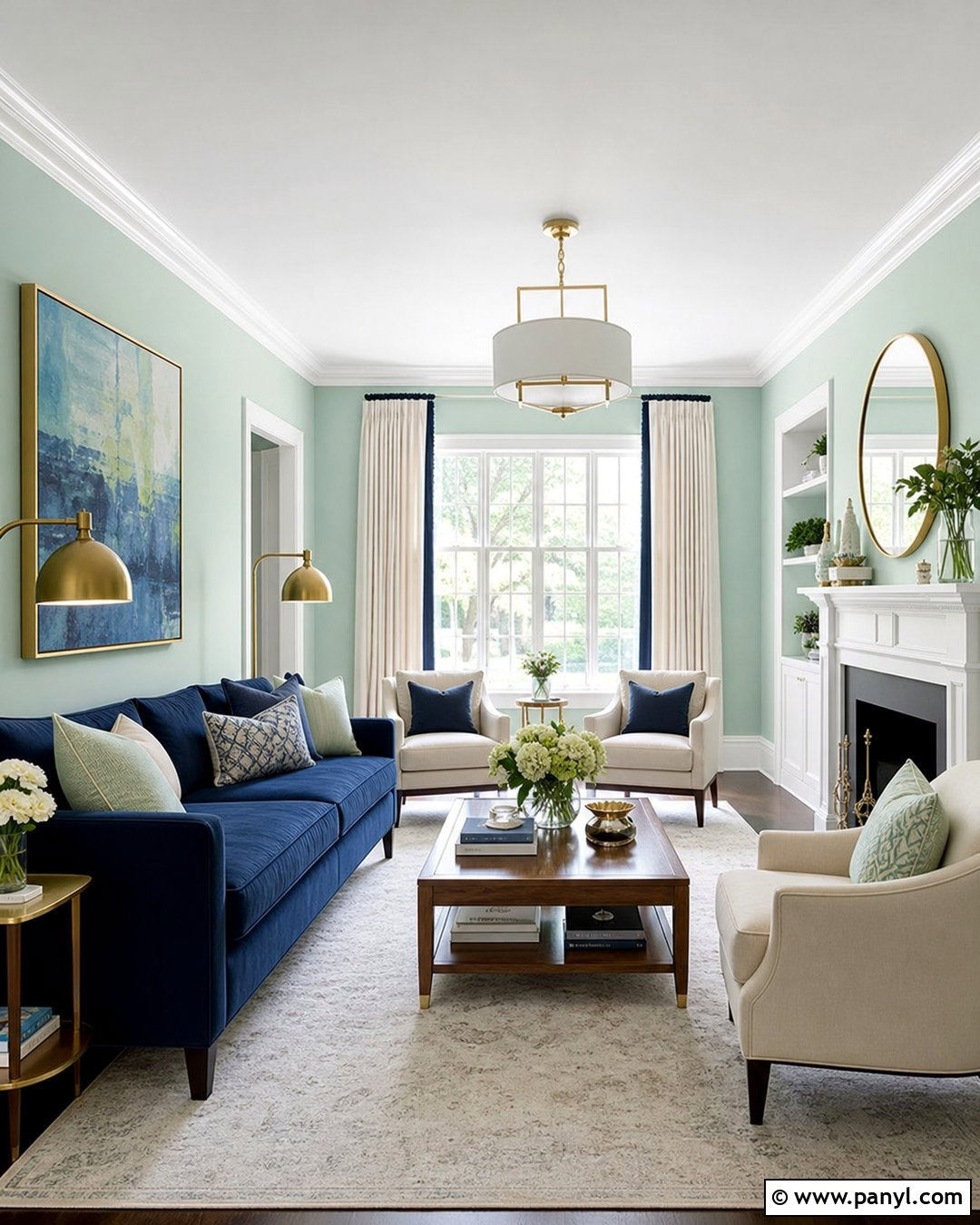
Blue gray walls create a restful living room that changes gently with the daylight. Pair them with an ivory sofa, light gray armchairs, and a warm walnut coffee table to balance the cool wall color. Use natural oak flooring and a cream rug with a subtle blue pattern. White trim keeps the room fresh, while full-length oatmeal curtains add warmth around the windows. Introduce deeper navy through pillows and a ceramic lamp, then add muted rust in one throw for a complementary accent. Brass picture lights can illuminate simple landscape artwork in the evening. Avoid filling the room with additional cool gray furniture. The complete combination of blue gray, warm wood, cream upholstery, and measured darker accents feels calm, layered, and comfortable in every season.
14. Pale Sky Blue Walls
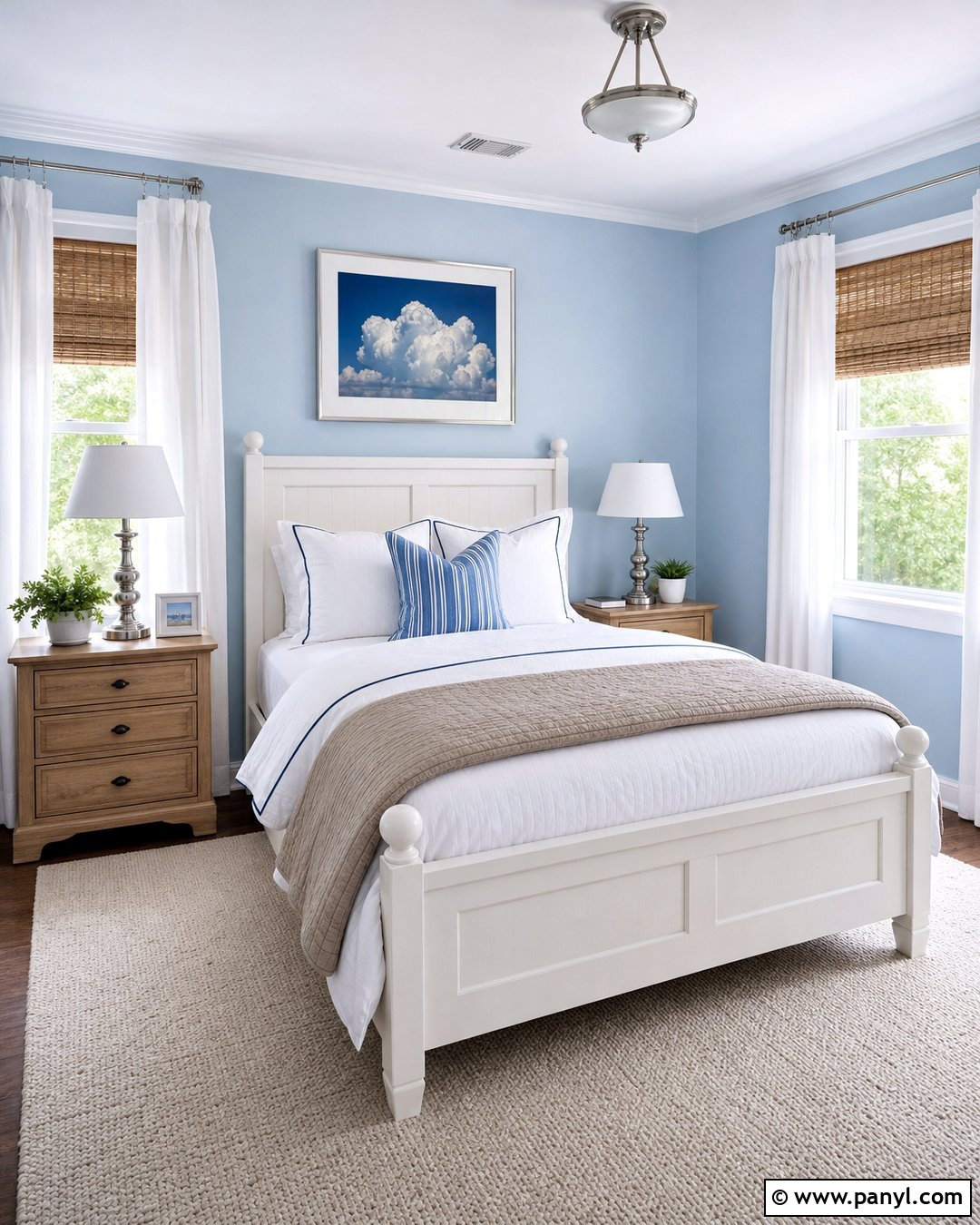
Pale sky blue walls can make a small bedroom feel open and optimistic. Build the design around a white painted bed, pale oak nightstands, and white cotton bedding edged with navy piping. Add a striped blue-and-cream lumbar pillow and a lightweight tan coverlet for warmth. Natural woven shades and sheer white curtains keep the windows soft and bright. A small wool rug in cream and faded blue grounds the bed without making the floor busy. Use simple brushed nickel lamps and framed cloud or landscape photography. Continue the wall color onto the closet doors if the room has many visual breaks, but keep the ceiling white. This full scheme feels fresh and youthful without appearing themed, making it suitable for a child, teenager, guest, or adult bedroom.
15. Powder Blue Walls
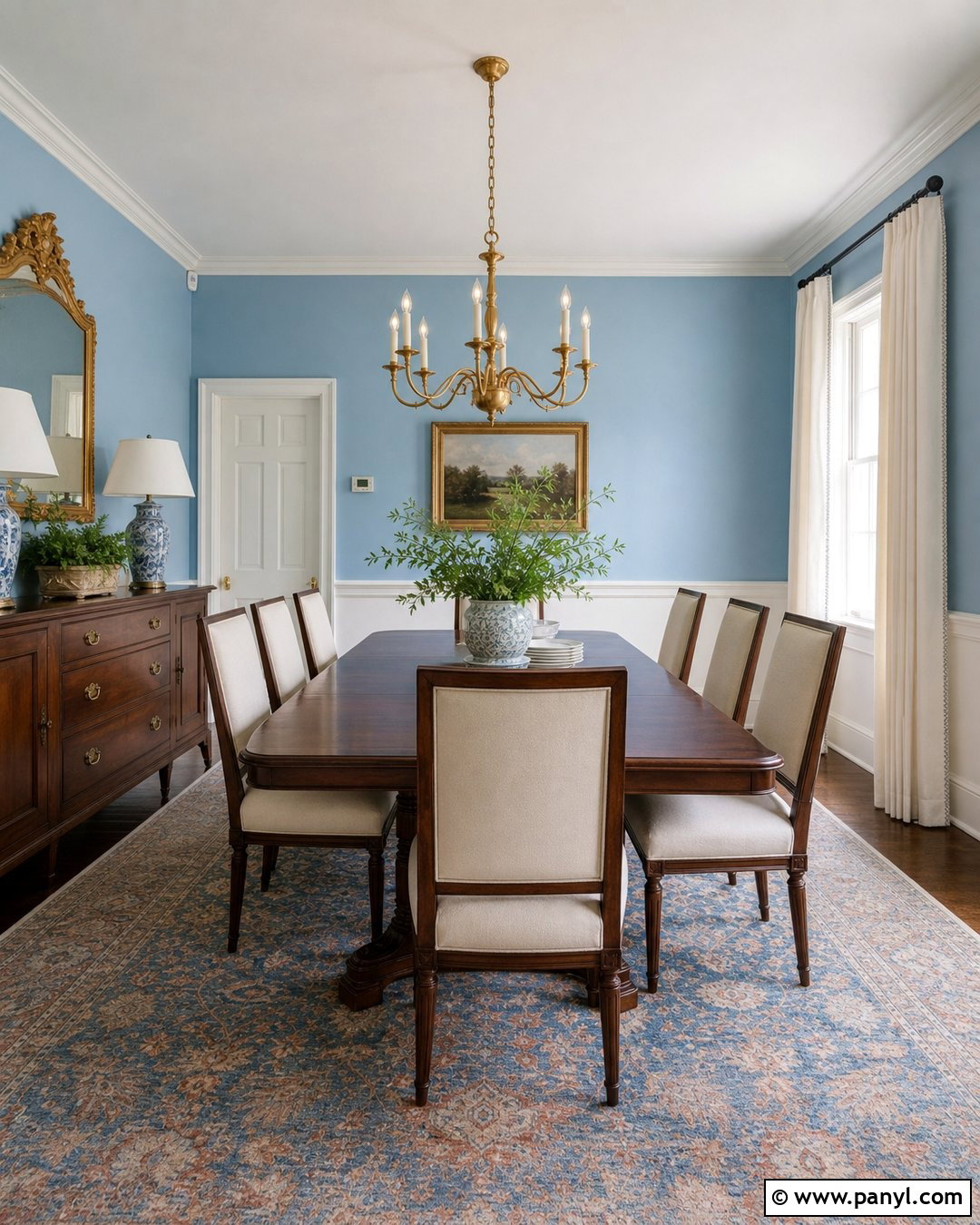
Powder blue walls give a traditional dining room color while maintaining an airy atmosphere. Pair them with a dark walnut table, cream upholstered chairs, and a patterned rug containing blue, beige, and faded red. Bright white crown molding and wall trim sharpen the gentle blue and highlight classic architecture. Hang a brass chandelier with simple linen shades above the table. At the windows, use full-length ivory curtains rather than more blue fabric. A wood sideboard, large gilt mirror, and white ceramic lamps complete the balanced arrangement. Fresh greenery adds an organic note without introducing another dominant color. Powder blue works best here as the room’s calm background, allowing substantial furniture and traditional details to feel lighter, cleaner, and more approachable for everyday dining.
16. Coastal Blue Walls
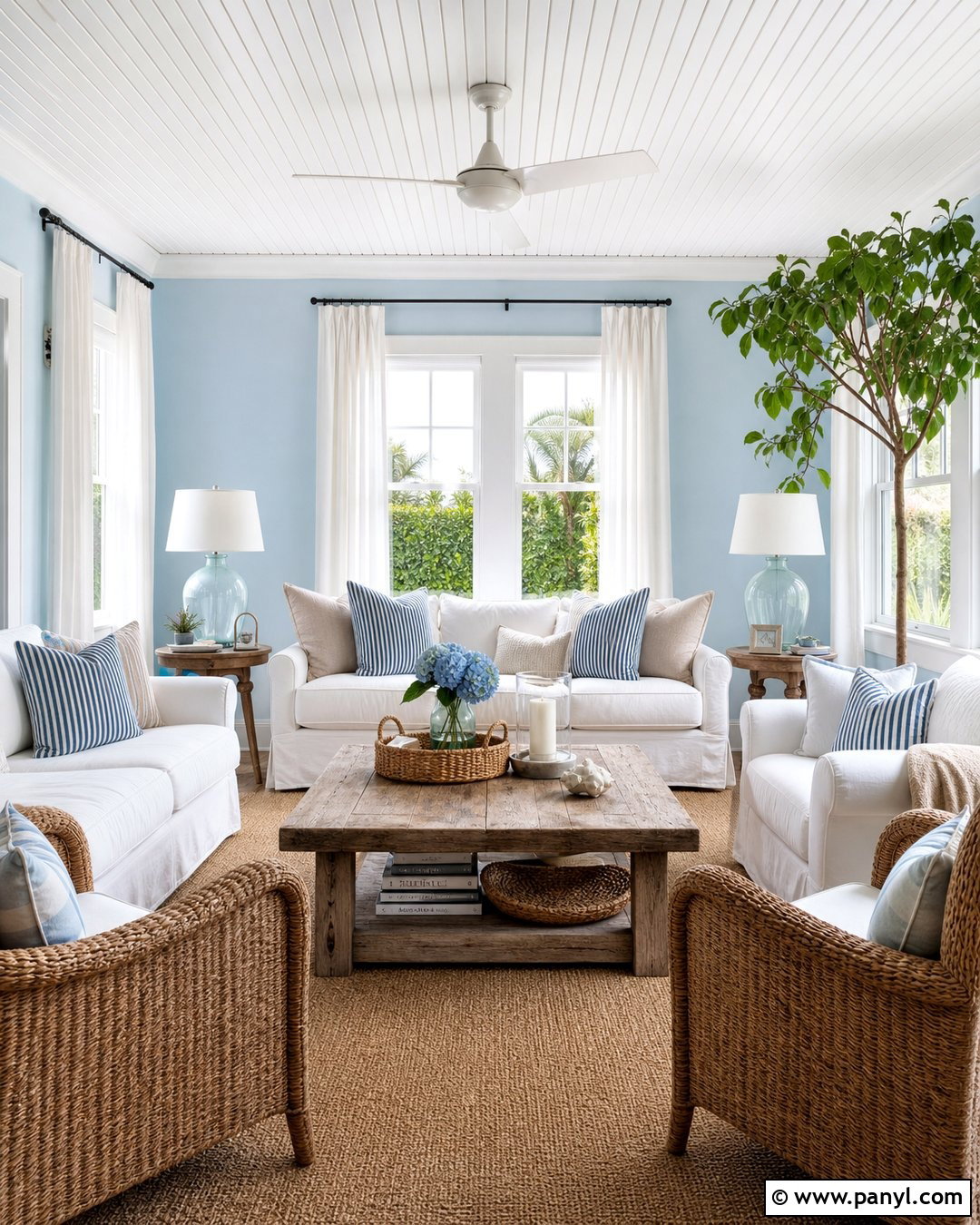
Light coastal blue walls bring a casual, breezy character to a sunroom. Choose white slipcovered seating, two woven rattan chairs, and a weathered oak coffee table. A natural sisal rug defines the conversation area while handling frequent foot traffic. Keep window treatments minimal with white linen panels or woven shades, allowing the outdoor view to remain prominent. Add striped pillows in navy and cream, plus a few sandy beige cushions for warmth. White-painted ceiling boards and trim reinforce the fresh architecture. Instead of literal beach decorations, use glass lamps, ceramic bowls, botanical artwork, and one large indoor tree. The entire space feels coastal through color and material rather than novelty accessories, creating a light room that remains comfortable and stylish throughout the year.
17. Pale Aqua Walls
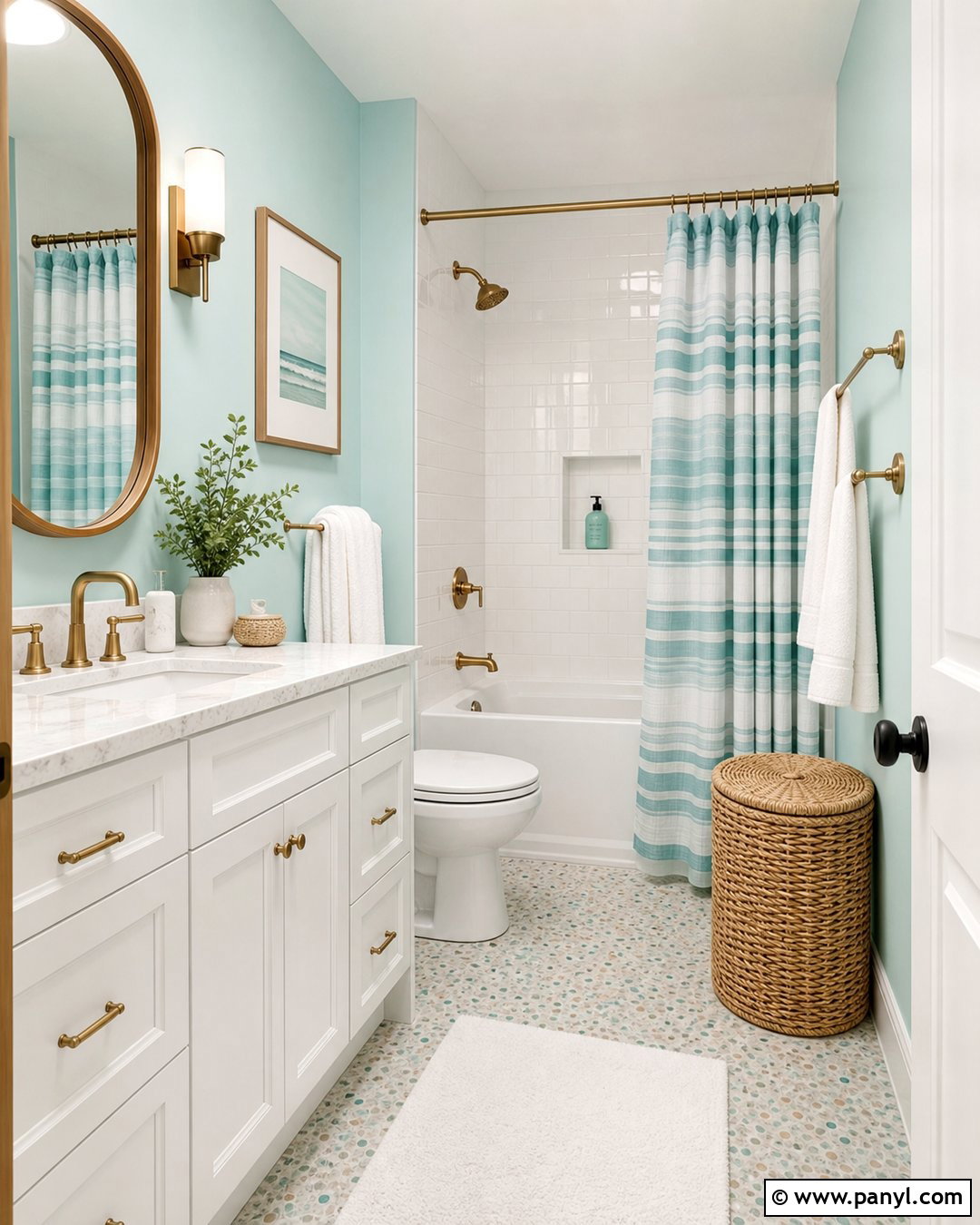
Pale aqua walls can refresh a bathroom with more energy than blue or gray alone. Pair them with a white vanity, pale marble-look counter, and glossy white rectangular shower tile. Use warm brass faucets and sconces to balance the cool green-blue background. Light terrazzo or porcelain flooring introduces small flecks of beige, gray, and aqua without creating visual clutter. Add a rounded wood-framed mirror, white towels, and a natural woven hamper. A simple shower curtain with a narrow aqua stripe connects the scheme. Keep trim and ceiling clean white, and use clear glass accessories instead of heavy storage pieces. This complete bathroom feels bright, clean, and playful while remaining sophisticated enough for a primary suite, guest bathroom, or busy family space.
18. Sea Glass Walls
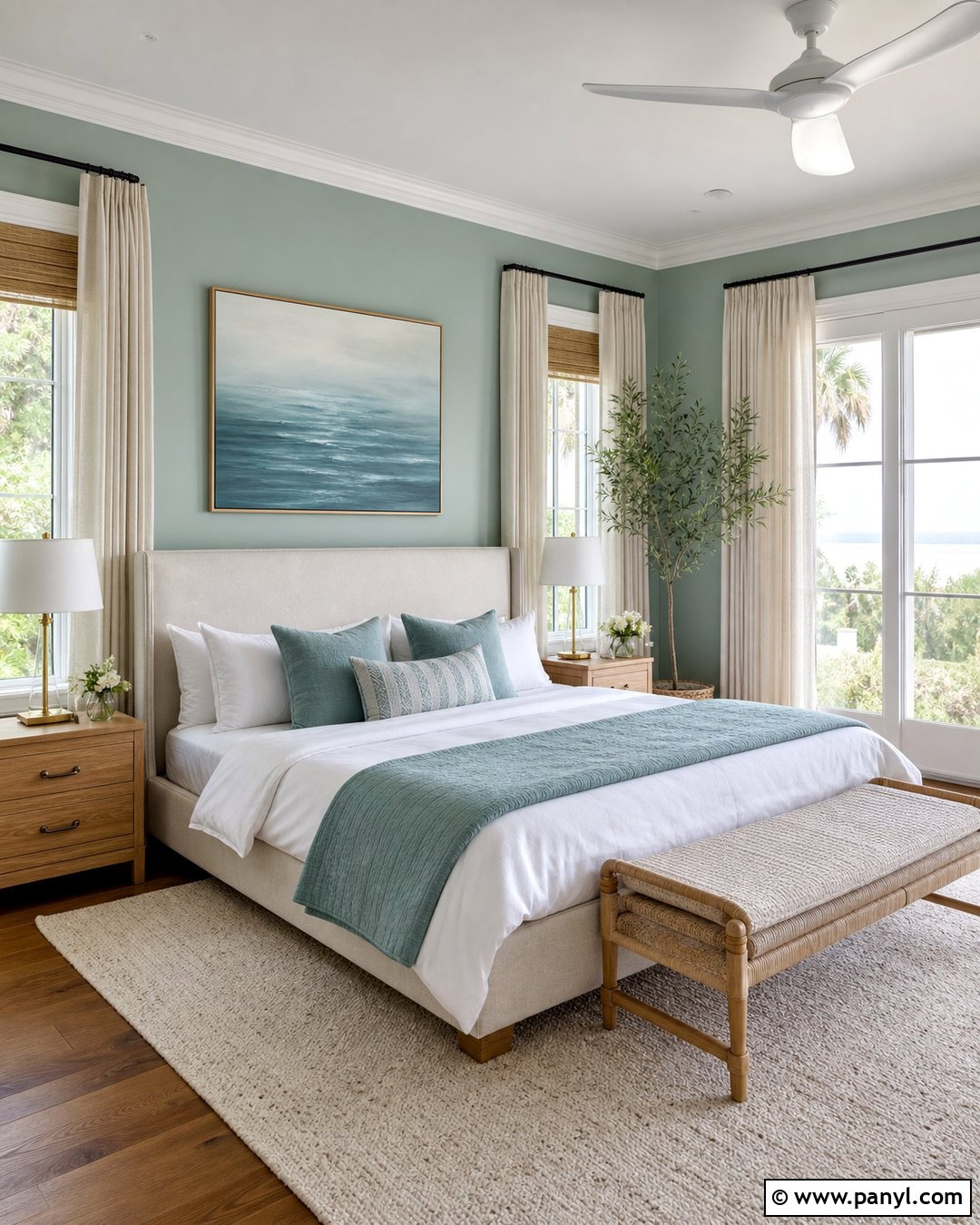
Sea glass walls combine muted blue and green for a peaceful primary bedroom. Center the room on an upholstered oatmeal bed with layered white, pale gray, and dusty teal bedding. Use warm oak nightstands and brushed brass lamps to prevent the palette from becoming too cool. A cream wool rug softens the floor, while natural linen curtains frame the windows. Paint the ceiling warm white and repeat that shade on trim and doors. Hang large abstract artwork containing watery blue, soft green, sand, and ivory. A slim bench in light wood or woven cane completes the foot of the bed. The hazy wall color should remain the only large blue-green surface, giving the room a tranquil identity without overwhelming its comfortable neutral furnishings.
19. Soft Sage Walls
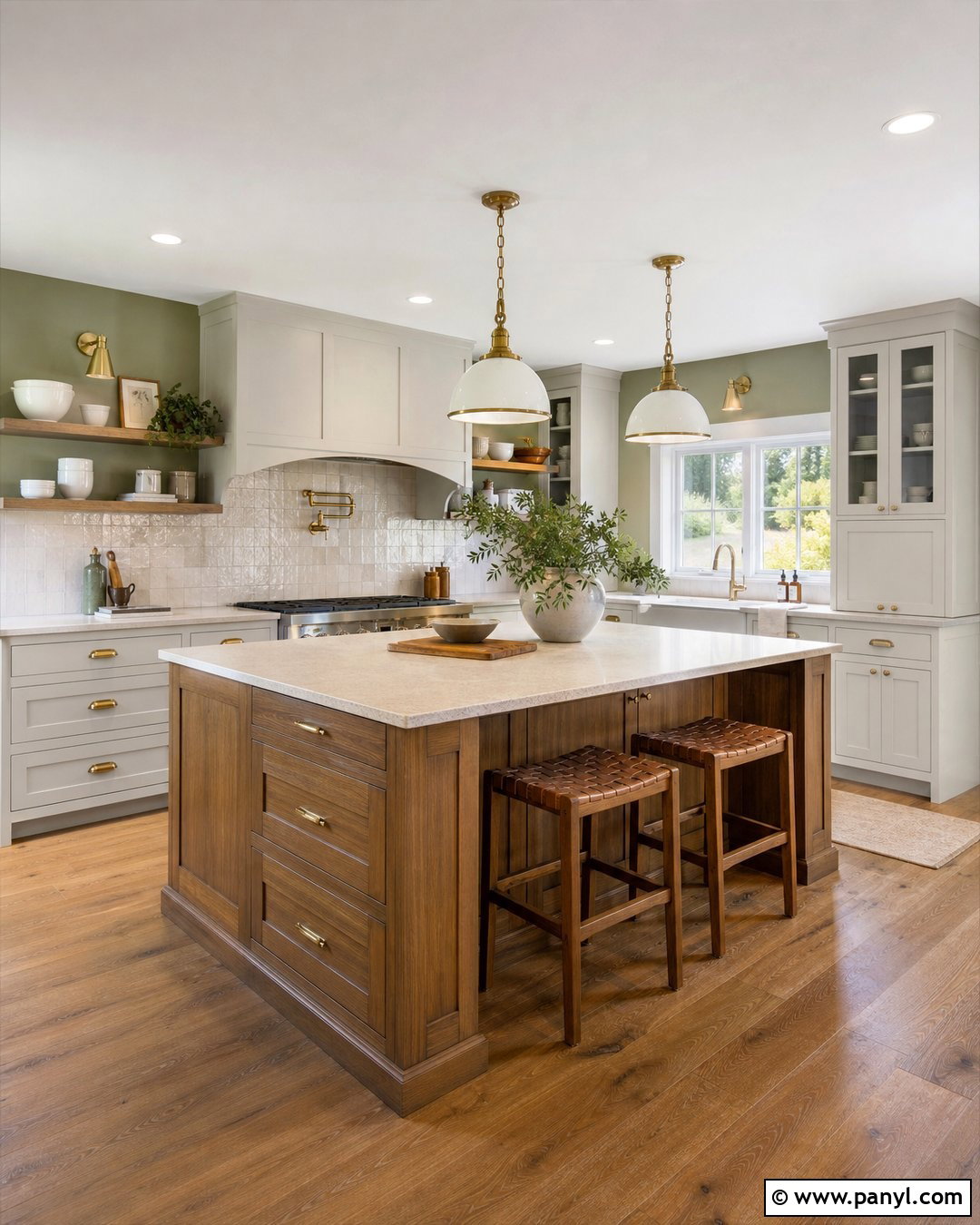
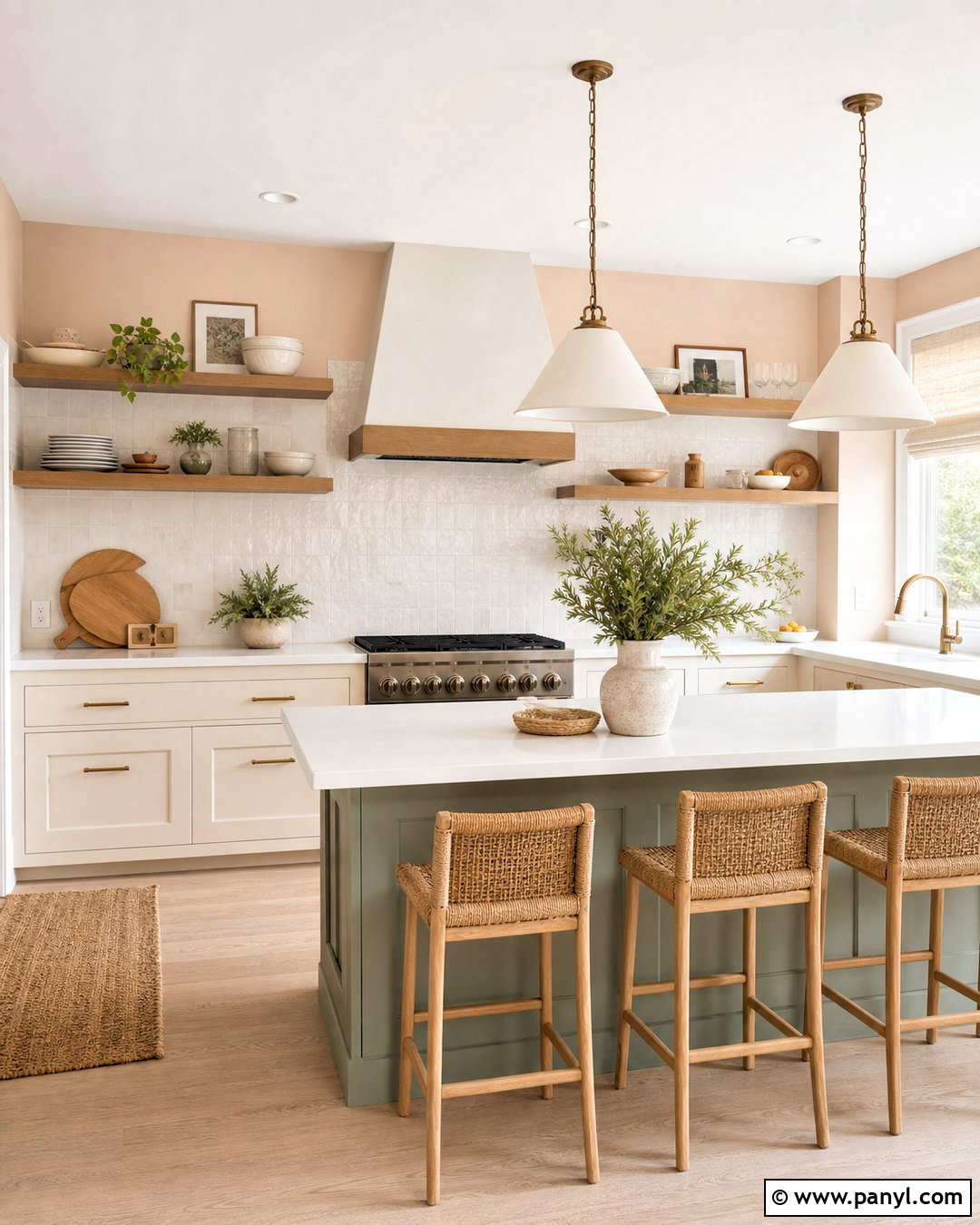
Soft sage walls create a natural, welcoming kitchen that feels colorful but not busy. Pair the walls with warm white cabinets, creamy quartz counters, and a handmade beige backsplash. Choose medium oak flooring and a matching wood island to bring out the sage’s earthy undertone. Aged brass cabinet pulls and simple dome pendants add warmth. Use dark green only in tiny details, such as a striped runner or ceramic planter, so the light walls remain distinct. Open shelves can display white dishes, wood boards, and neutral pottery. Paint the ceiling and trim a gentle warm white rather than a blue-white. The finished kitchen feels fresh, grounded, and highly livable, with enough color to provide character while still supporting changing accessories and everyday household items.
20. Light Eucalyptus Walls
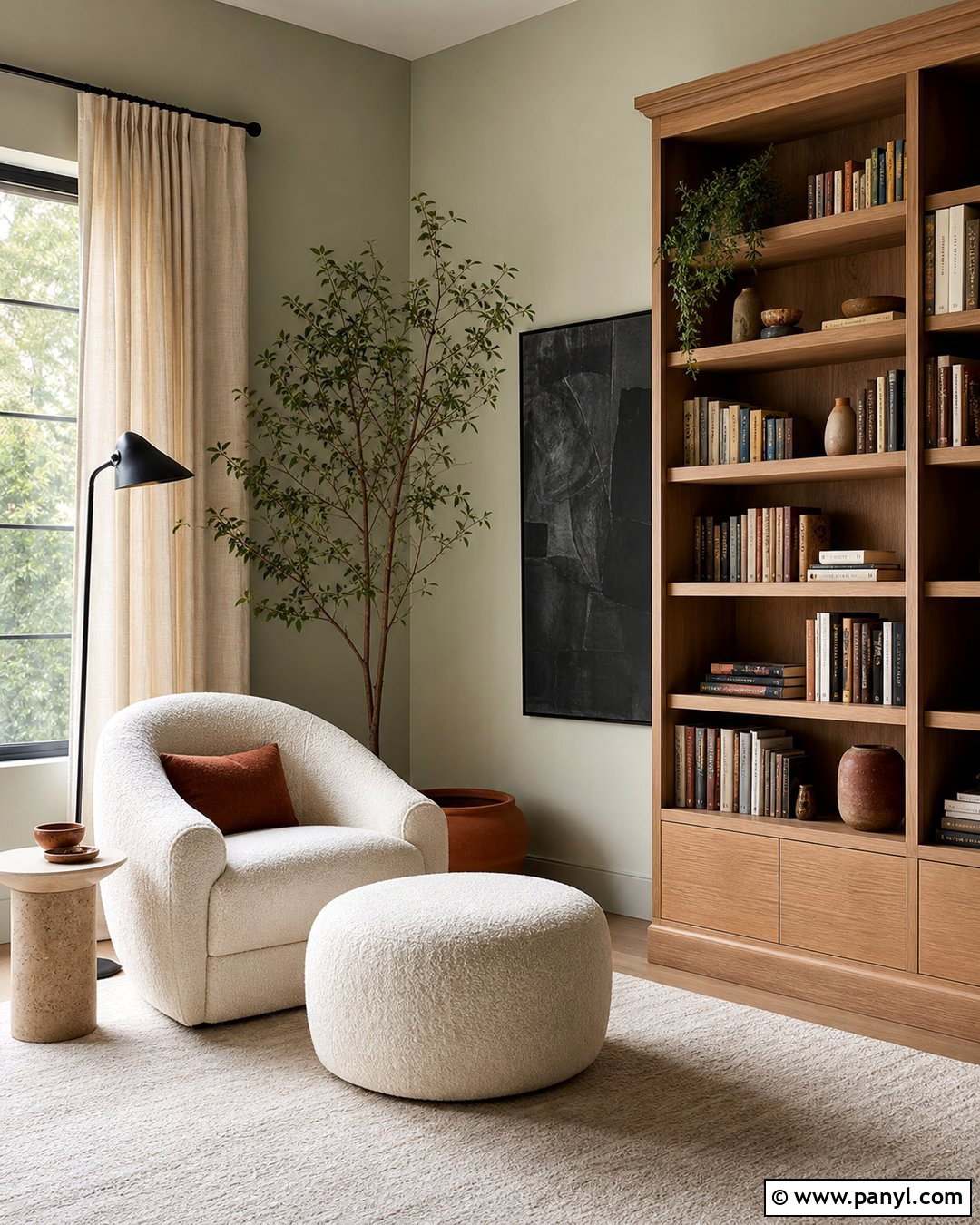
Light eucalyptus walls work beautifully in a calm reading room with modern organic character. Place a cream boucle chair and matching ottoman beside a tall oak bookcase. Add a slim black floor lamp and a small travertine side table to create a practical reading corner. Natural linen curtains, medium oak flooring, and a textured ivory rug keep the room warm. Use muted terracotta and charcoal in pillows, book covers, and abstract artwork for controlled contrast. Paint the ceiling warm white, but consider matching the baseboards to the eucalyptus walls for a smooth, contemporary finish. One large plant can reinforce the nature-inspired palette without turning the room into a greenhouse. The complete design feels quiet and restorative while still containing enough structure and contrast to look intentional.
21. Pale Mint Walls
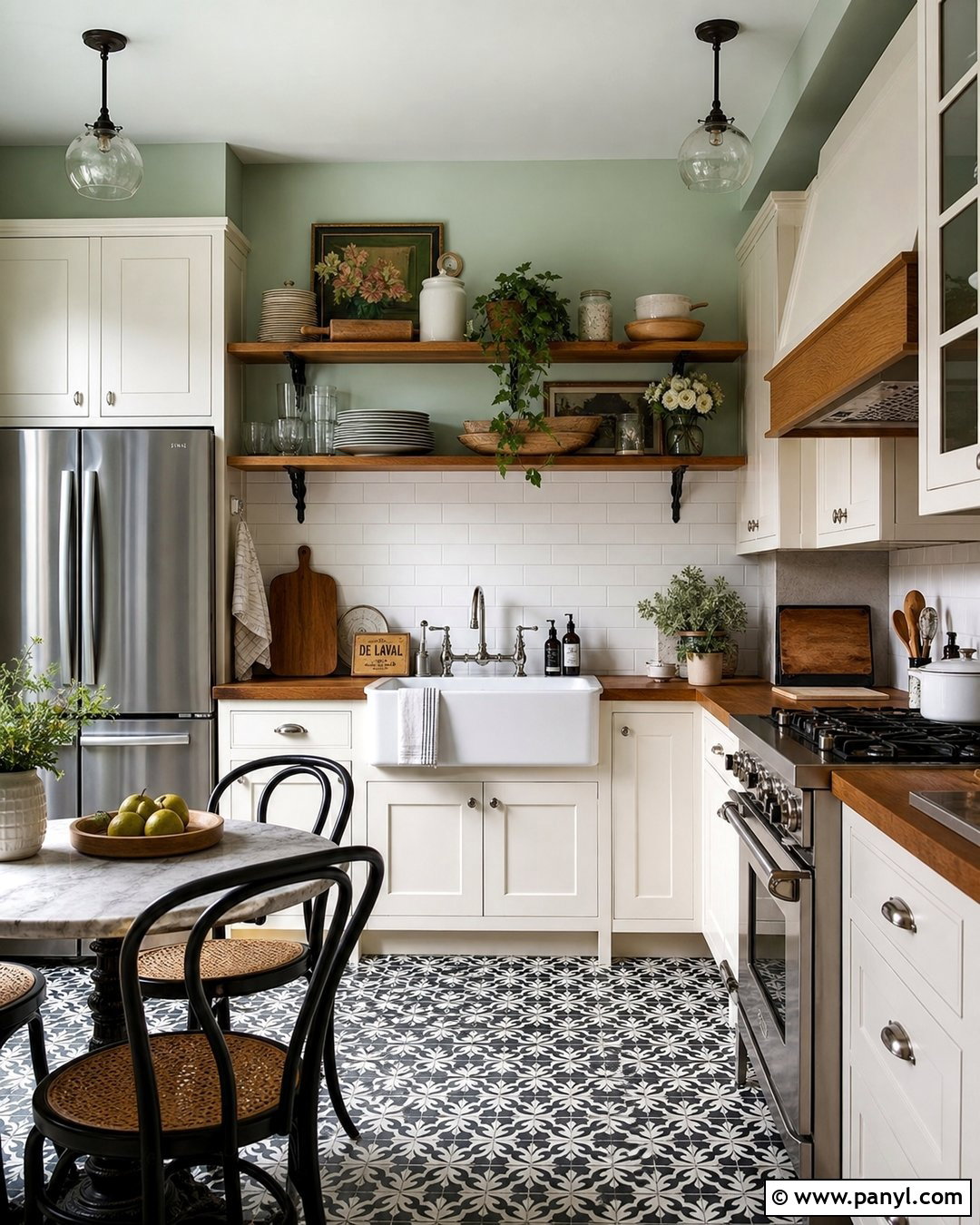
Pale mint walls give a compact kitchen a fresh retro influence without making it feel dated. Combine them with creamy white cabinets, butcher-block counters, and a simple white tile backsplash. Choose black-and-white patterned flooring in a small-scale design that supports the nostalgic mood. Brushed chrome hardware, a white farmhouse sink, and clear glass pendants keep the room crisp. Add a small breakfast table with bentwood chairs and a washable cream runner. Limit extra pastels, using natural wood, black details, and white accessories instead. Open shelves can hold everyday dishes and pale green glassware in small amounts. With plenty of warm lighting, the complete kitchen feels upbeat, practical, and distinctive, while the light mint remains gentle enough for walls throughout the entire space.
22. Celery Green Walls
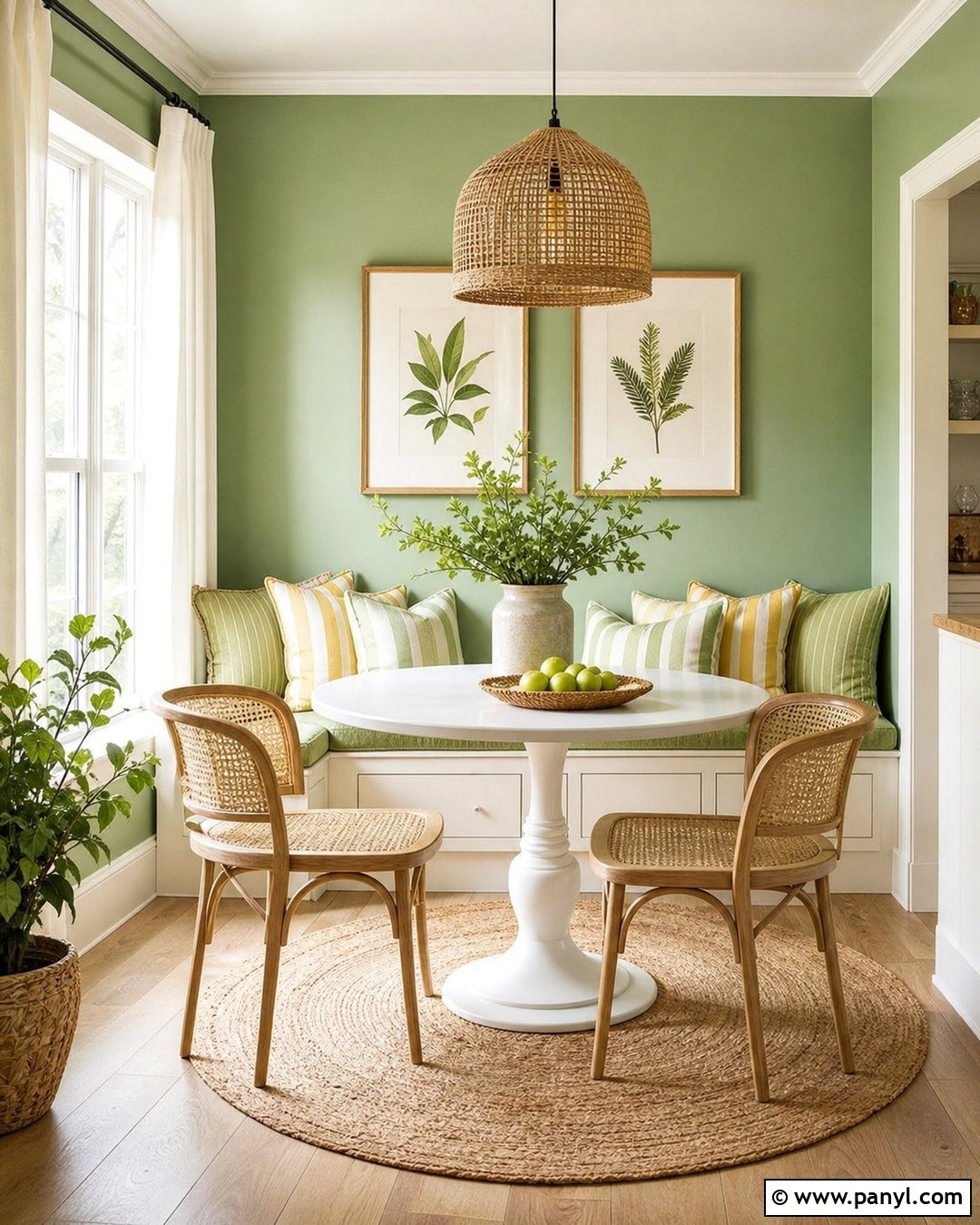
Celery green walls create a cheerful breakfast nook with a soft garden-inspired palette. Pair them with a white pedestal table, natural cane chairs, and a built-in bench upholstered in cream performance fabric. Add striped cushions in green, yellow, and warm white, keeping the pattern small and relaxed. Light oak flooring and a round jute rug add warmth underfoot. Frame the windows with simple white curtains and install a woven pendant above the table. Botanical prints in pale wood frames reinforce the organic look without covering too much wall space. Use crisp white on the trim and ceiling to clarify the fresh green. This completed nook feels sunny even on overcast mornings and provides a comfortable setting for meals, reading, schoolwork, or casual conversation.
23. Pale Olive Walls
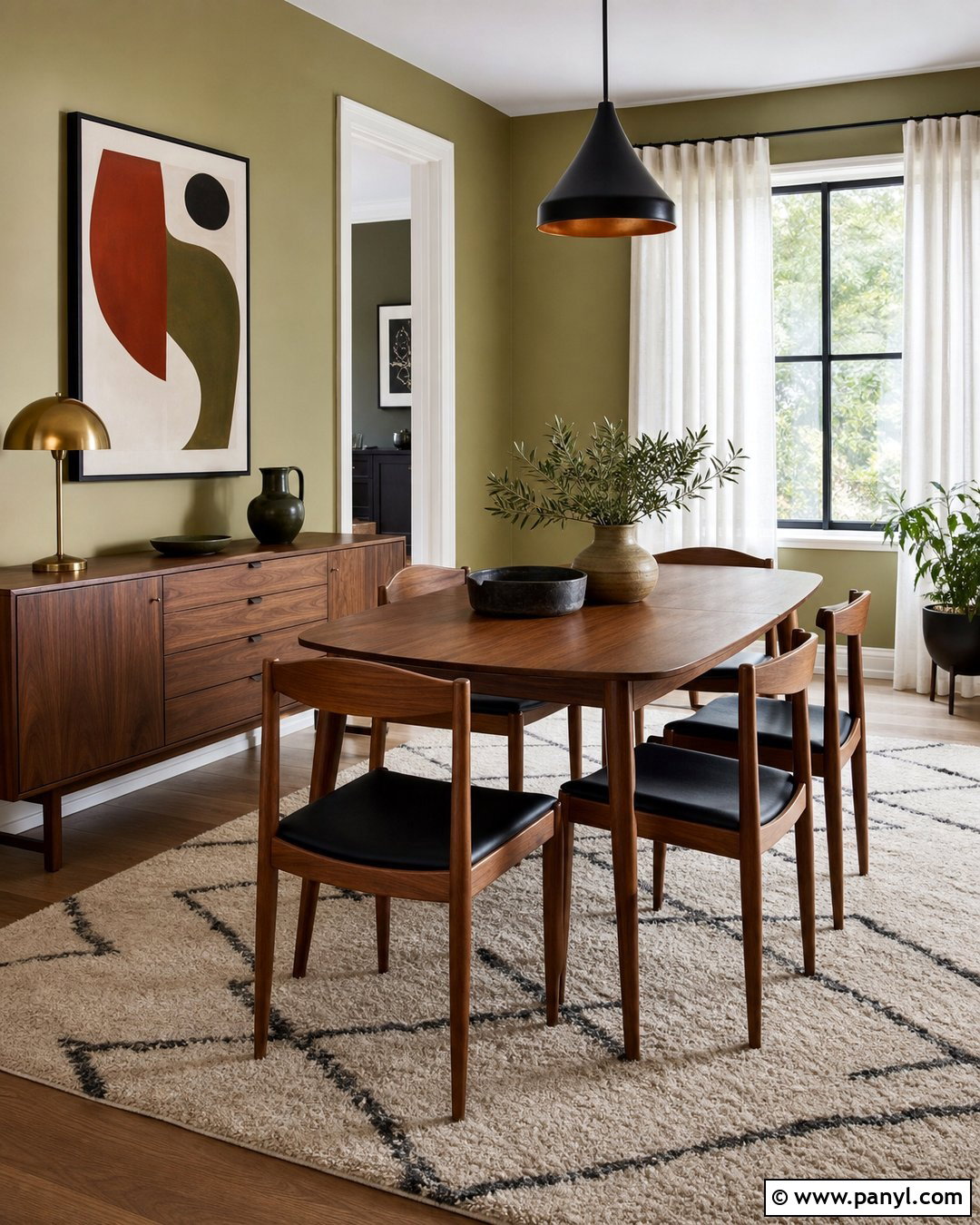
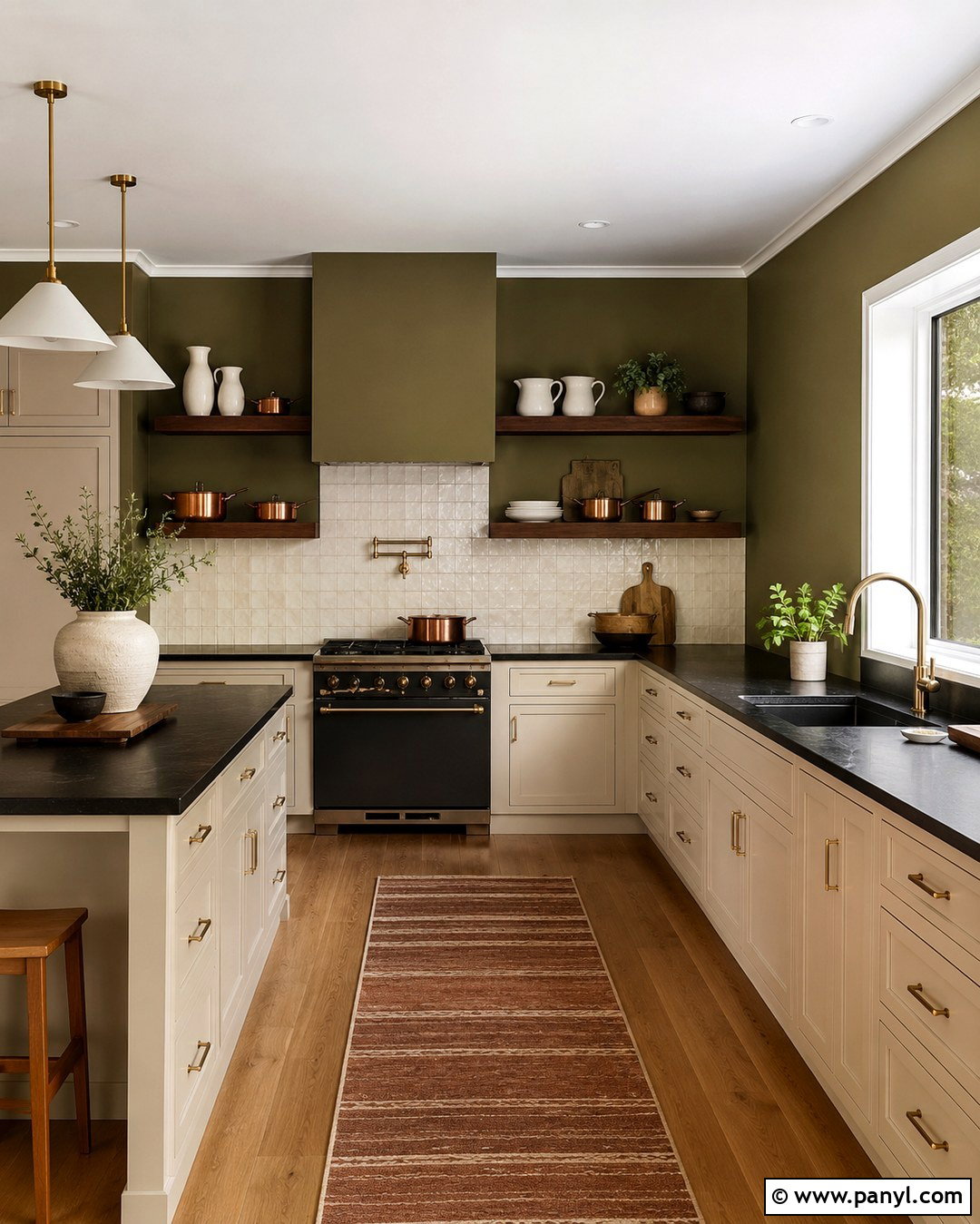
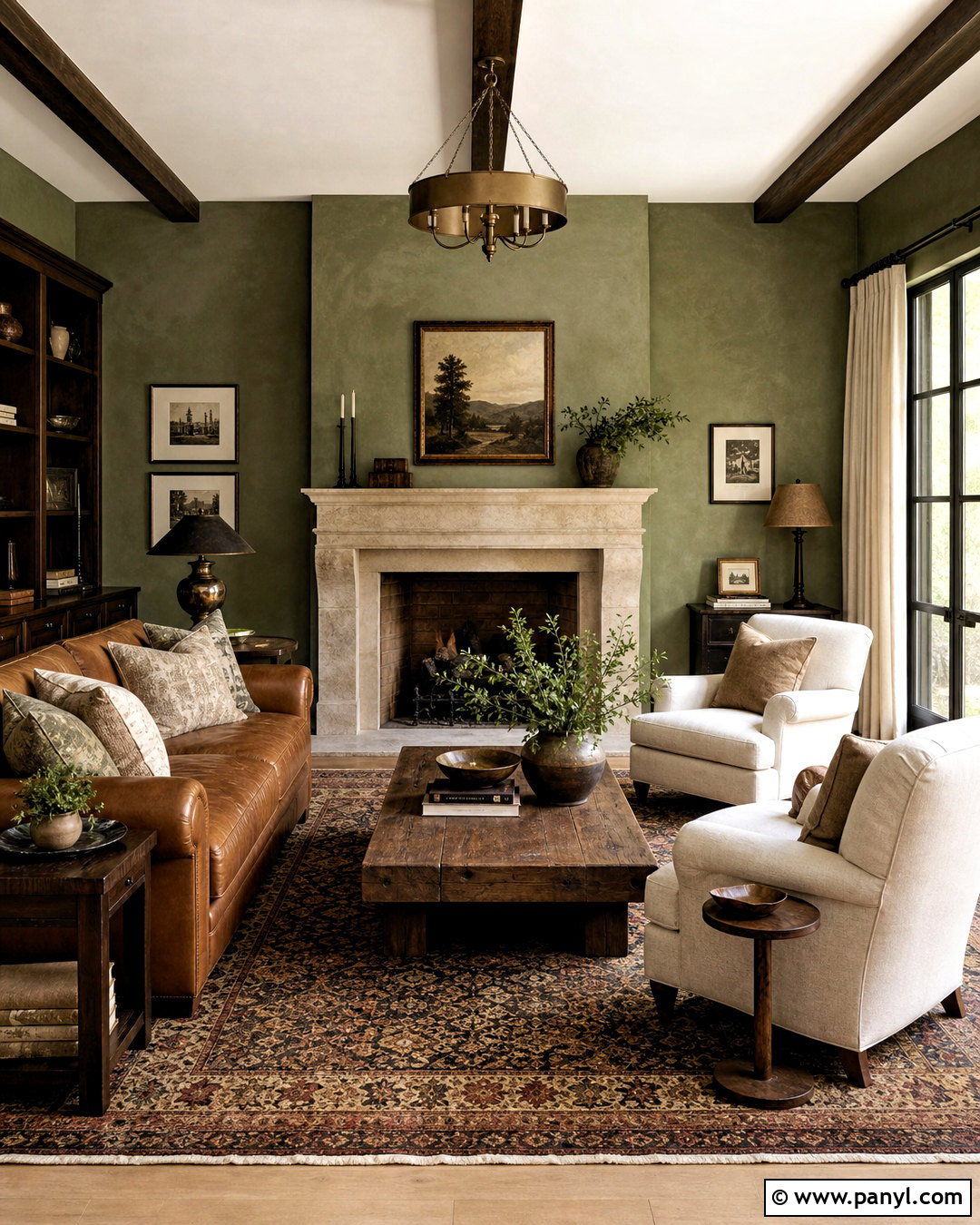
Pale olive walls bring subtle earthiness to a dining room with midcentury furniture. Choose a streamlined walnut table, curved wood chairs, and a low matching sideboard. Ground the arrangement with a cream rug featuring a small geometric pattern in olive and rust. Off-white linen curtains soften the windows, while a black metal pendant adds a strong focal point above the table. Decorate the sideboard with sculptural pottery, a brass lamp, and one large abstract print. Keep the ceiling warm white and use simple baseboards painted to match. Because pale olive contains more yellow than sage, it works especially well with walnut, cognac leather, and warm metal. The finished room feels distinctive and grounded without sacrificing the brightness expected from a light wall color.
24. Pale Lavender Walls
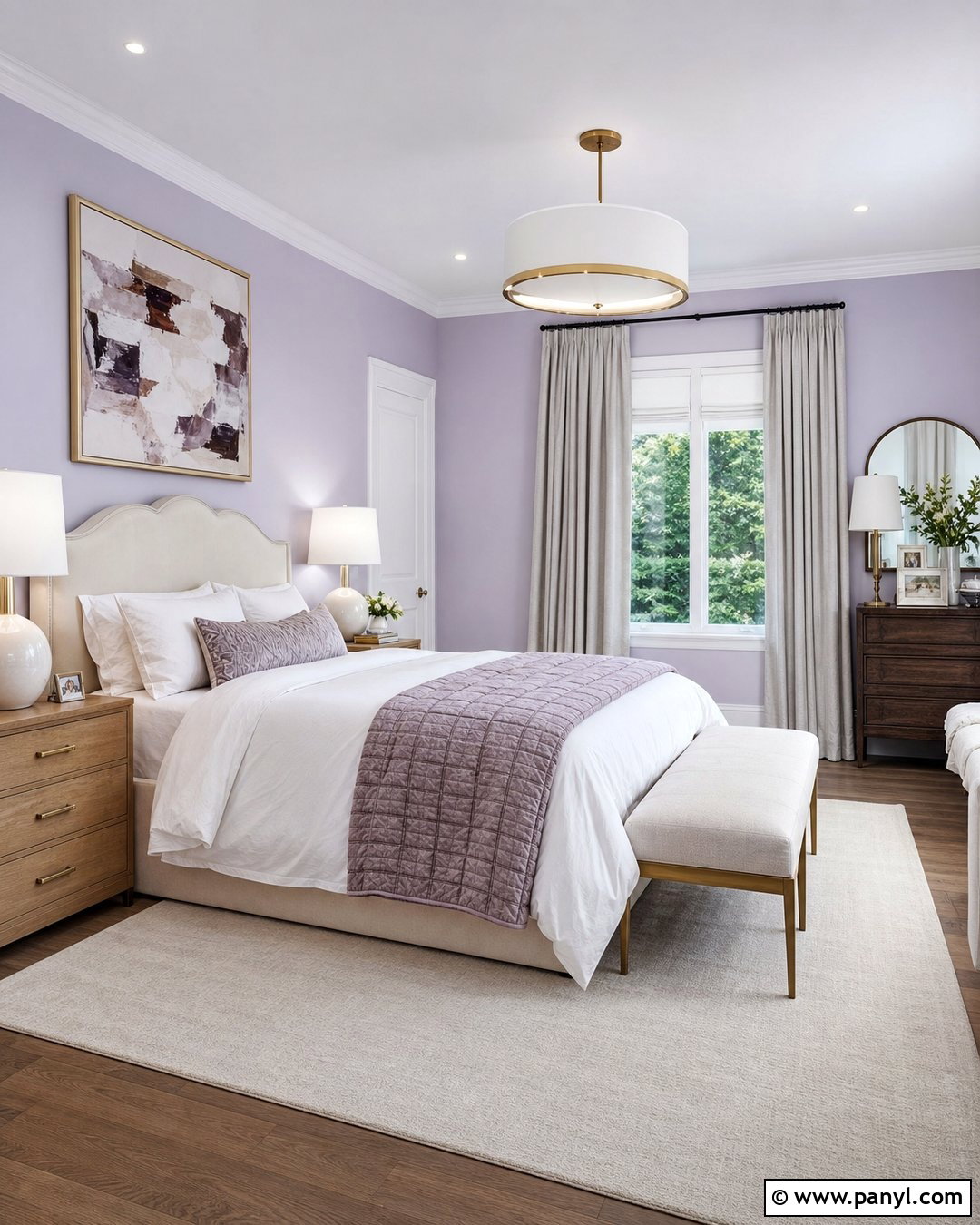
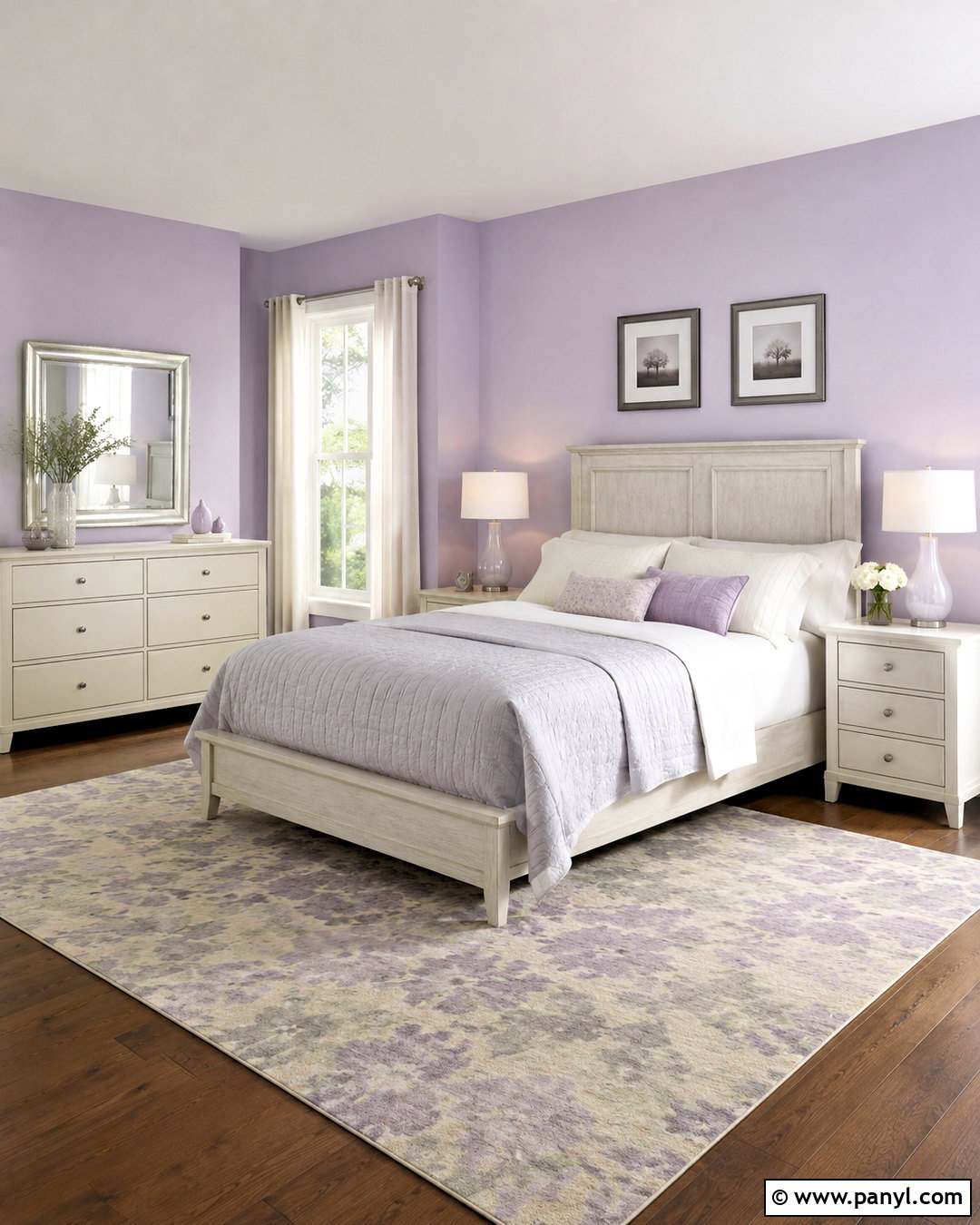
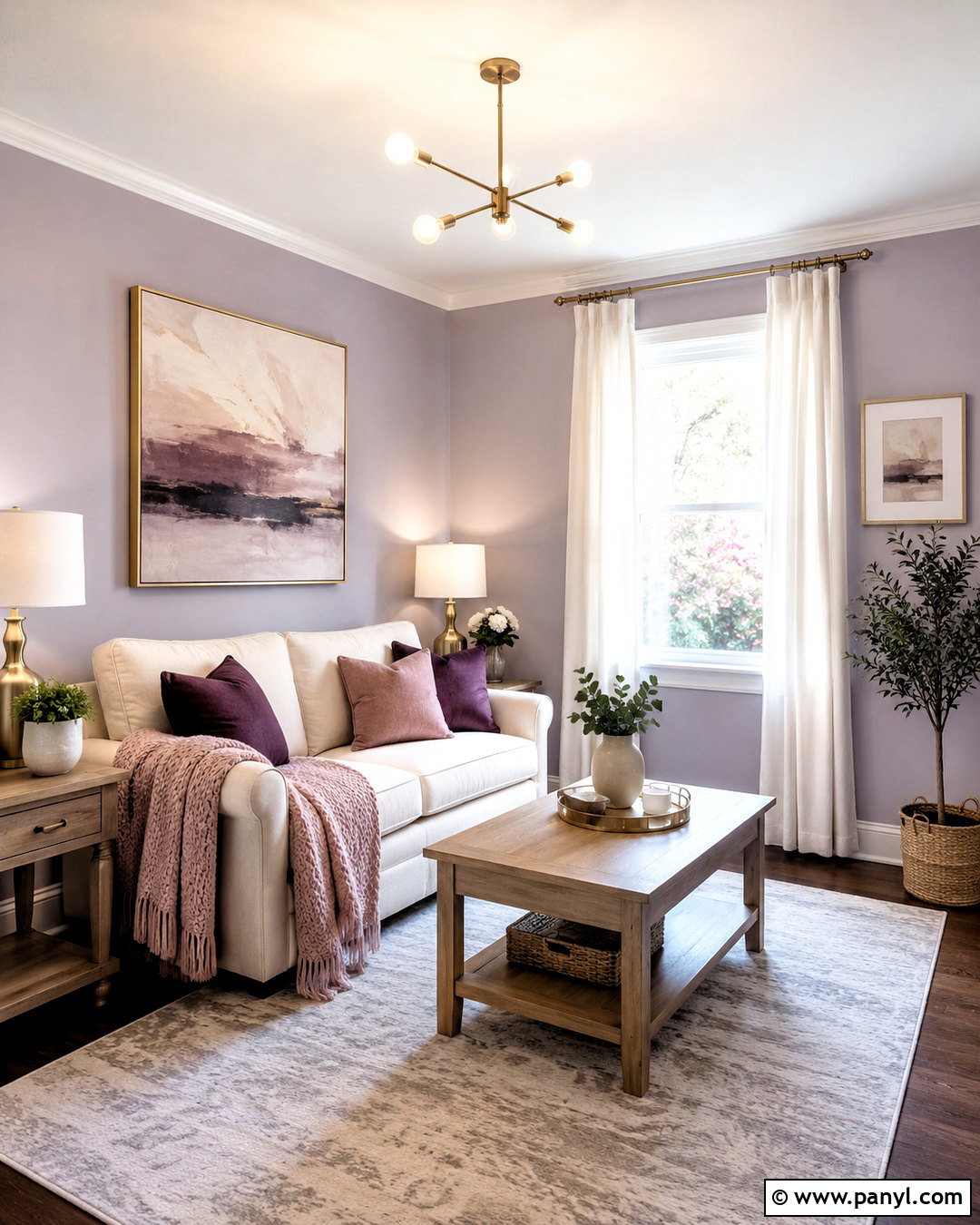
Pale lavender walls can create a sophisticated bedroom when paired with quiet neutrals rather than multiple pastels. Use a curved ivory headboard, white bedding, and a soft gray-lilac quilt. Light oak nightstands and brushed brass lamps bring warmth to the delicate wall color. A large cream rug grounds the furniture, while gray linen curtains add slightly deeper contrast around the windows. Choose abstract artwork containing lavender, taupe, charcoal, and ivory instead of floral prints. Paint the trim a clean but gentle white. A small upholstered bench and one dark wood dresser give the room enough visual weight. The complete result feels calm and grown-up, proving that lavender can function as a livable background rather than a decorative color reserved only for children’s rooms.
25. Lilac Gray Walls
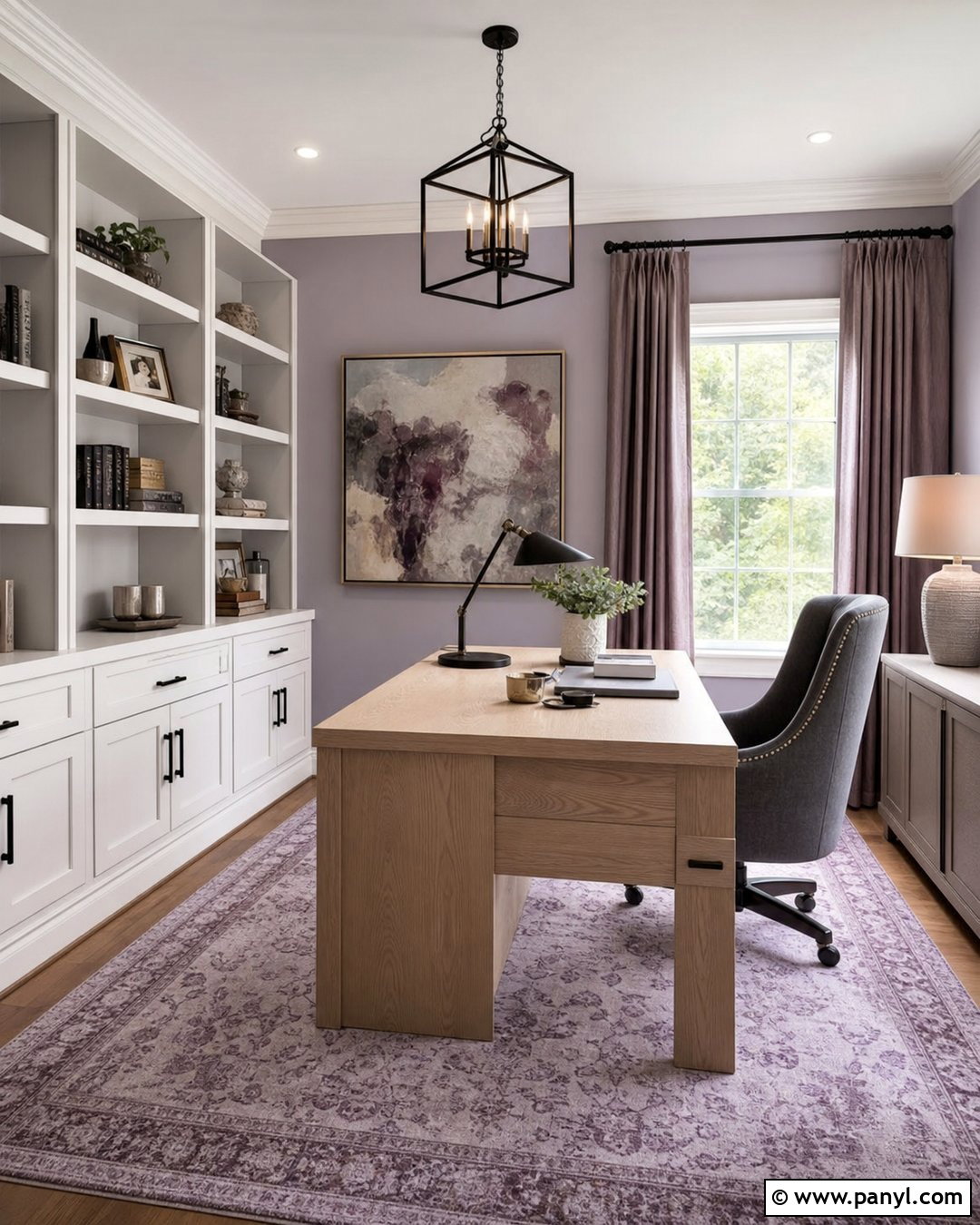
Lilac gray walls offer a subtle alternative to standard gray in a polished home office. Pair them with a white oak desk, a gray upholstered chair, and built-in storage painted soft white. Use a pale patterned rug containing charcoal, lavender, and cream to connect the wall color with the furnishings. Matte black hardware and a black task lamp bring necessary definition. Add full-length taupe curtains to warm the windows and reduce screen glare. Keep artwork minimal, selecting one oversized abstract piece and two smaller black-and-white photographs. A ceramic lamp and a muted plum pillow can strengthen the purple undertone without making it obvious. This complete workspace feels professional, composed, and interesting, while the light walls remain versatile enough for video calls and changing decor.
26. Blush Pink Walls
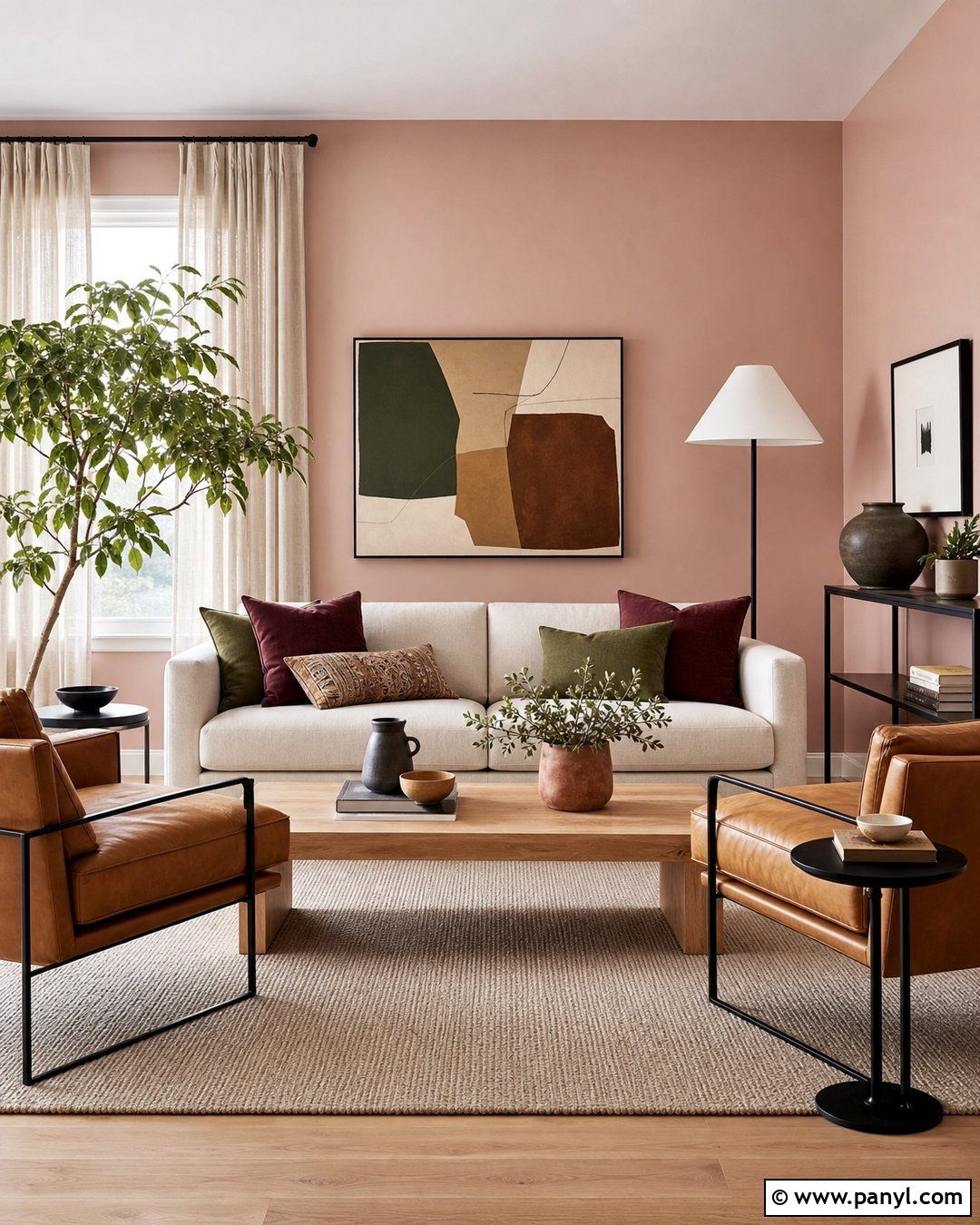
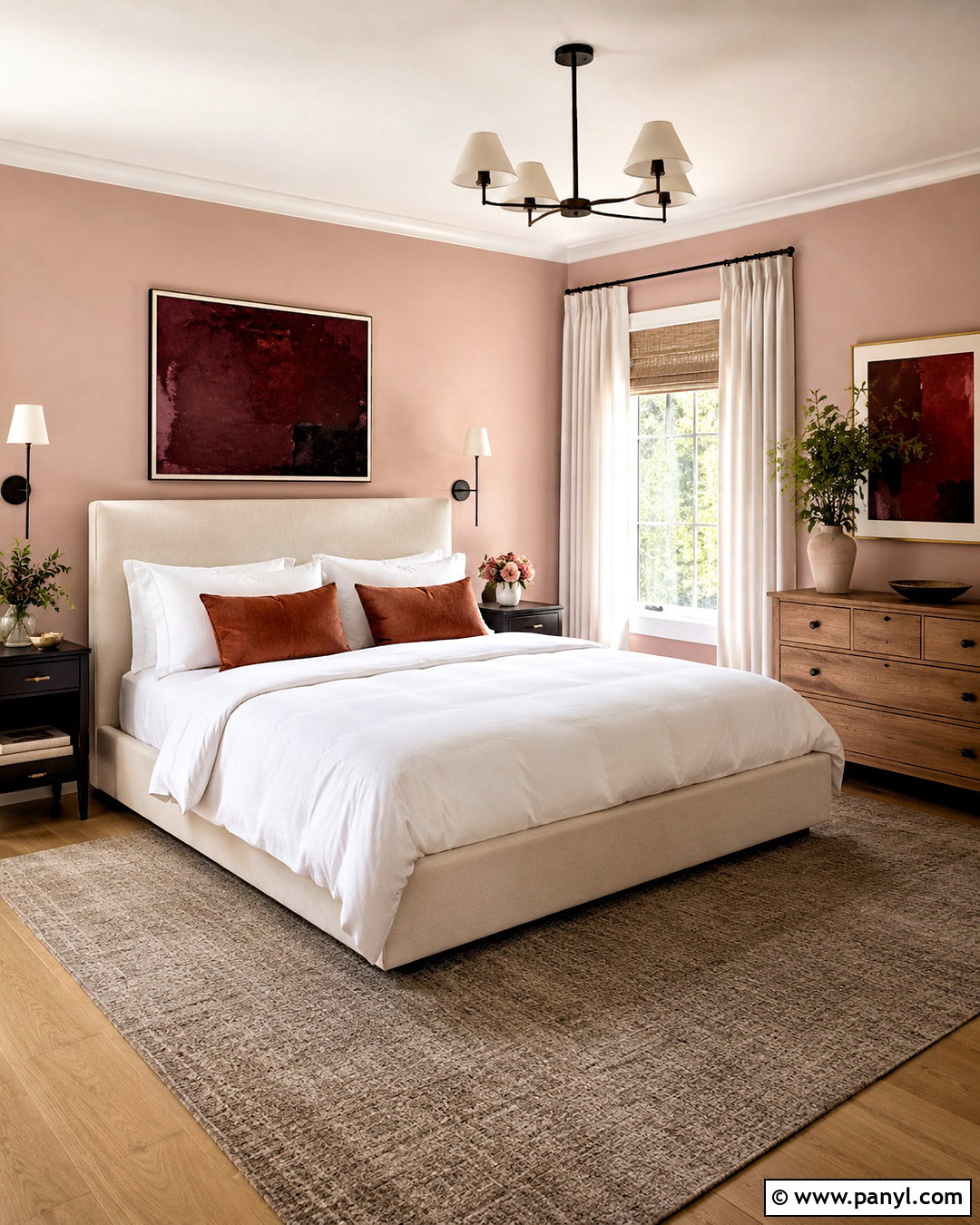
Blush pink walls can warm a living room without creating an overly sweet appearance. Pair them with a cream sofa, two camel leather chairs, and a light oak coffee table. A beige wool rug and natural linen curtains provide a neutral base. Add muted burgundy, terracotta, and olive through pillows, artwork, and ceramics to give the pale pink more maturity. Black metal side tables and a slim floor lamp sharpen the room’s softer elements. Use warm white on the ceiling and trim, avoiding brilliant blue-white that may exaggerate the pink. Hang one large contemporary artwork rather than several small decorative pieces. The finished room feels welcoming, modern, and gently colorful, with a balanced mix of soft upholstery, substantial wood, dark accents, and earthy supporting tones.
27. Dusty Rose Walls
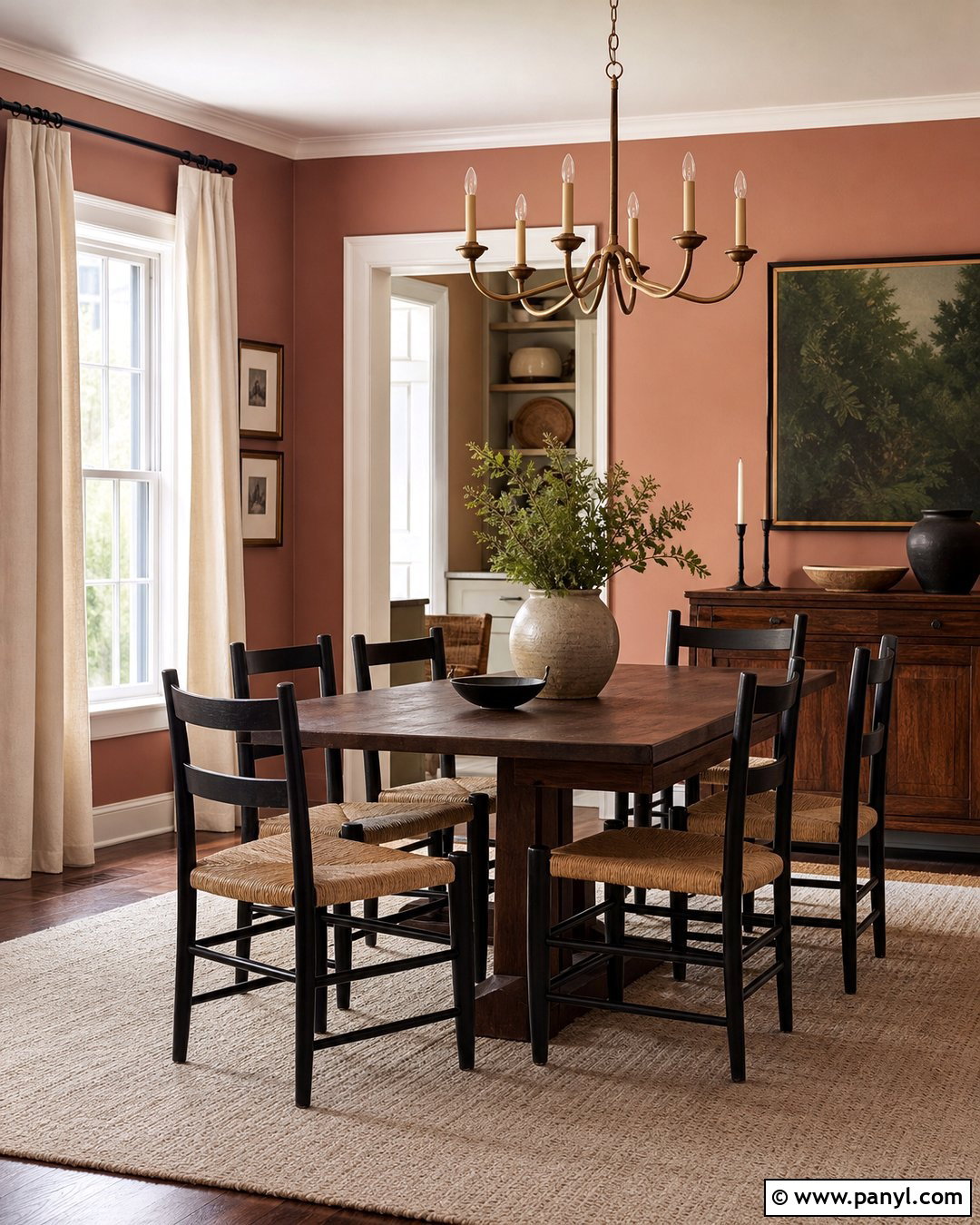
Dusty rose walls give a dining room warmth and character while remaining softer than terracotta or red. Combine them with a dark oak table, woven-seat chairs, and a cream flat-weave rug. Choose ivory linen curtains and warm white trim to frame the rosy walls without harsh contrast. A simple aged brass chandelier adds an elegant focal point. On a low wood sideboard, arrange neutral pottery, a small lamp, and an abstract print featuring rose, brown, and muted green. Use black sparingly in candleholders or frames to provide definition. Dusty rose looks especially balanced beside natural wood and aged metal, so avoid filling the room with more pink furnishings. The completed space feels intimate and welcoming for meals while remaining light enough for daytime use.
28. Pale Peach Walls
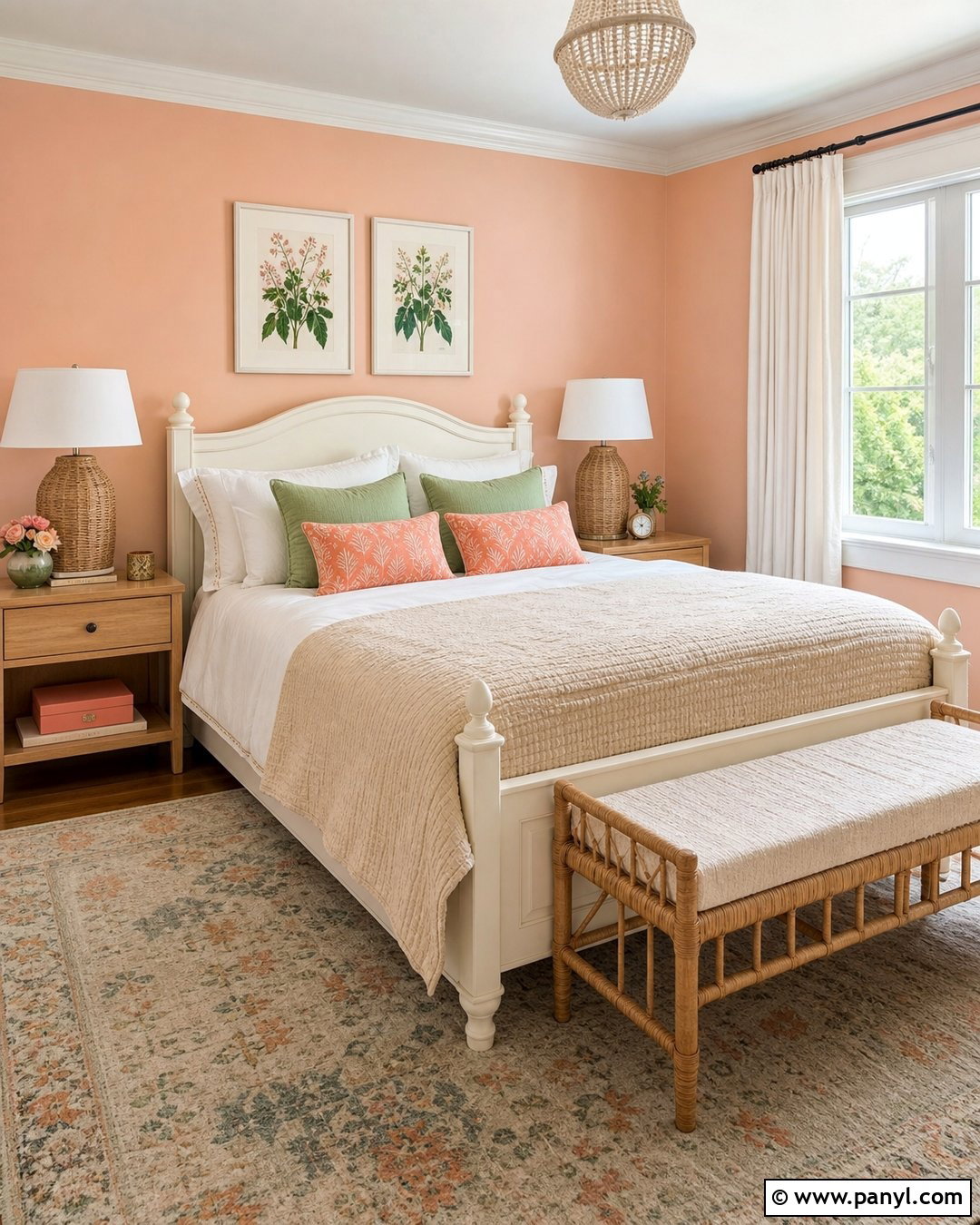
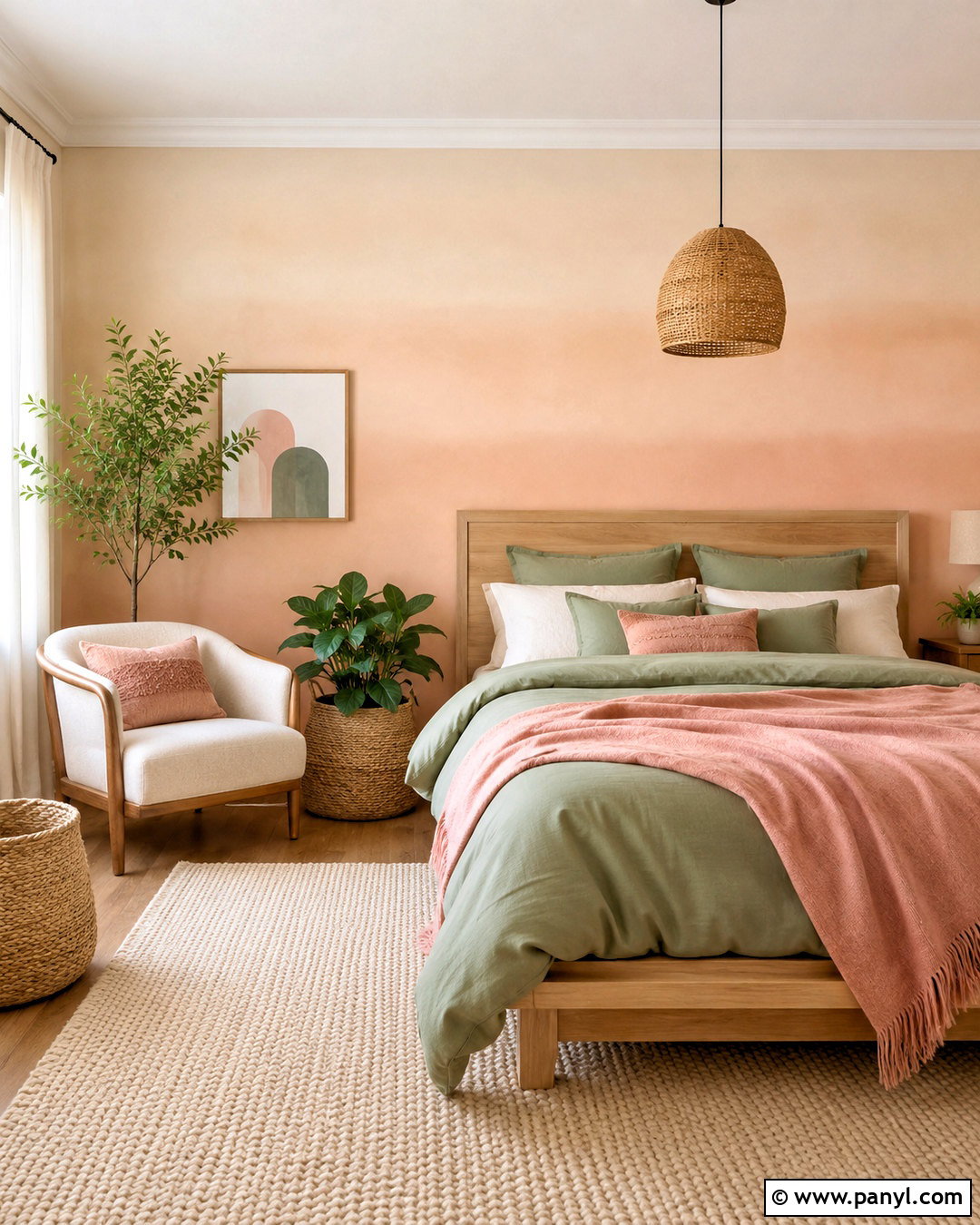
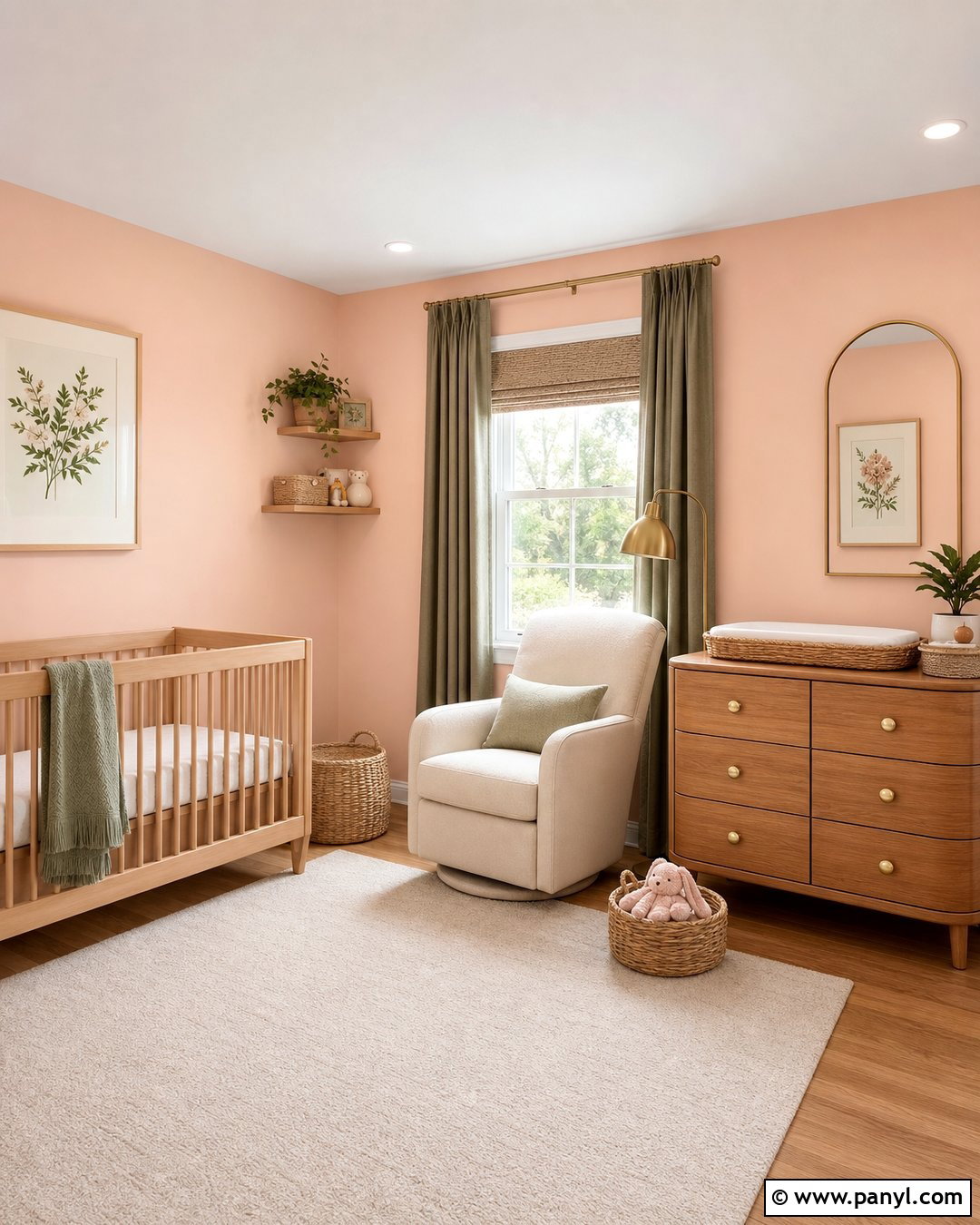
Pale peach walls create a flattering, sunny atmosphere in a guest bedroom. Pair them with a white painted bed, crisp white sheets, and a tan linen coverlet. Add sage green and muted coral pillows for a gentle complementary palette. Natural wood nightstands, woven lamps, and a cane bench bring relaxed texture to the room. Use cream curtains instead of pure white to support the peach undertone. A faded floral or geometric rug in beige, green, and peach grounds the design without becoming overly decorative. Keep the ceiling warm white and choose simple botanical artwork in light oak frames. The complete bedroom feels cheerful but restful, offering visitors a warm welcome while avoiding the bright orange cast that can occur when peach is paired with strongly yellow accessories.
29. Apricot Cream Walls
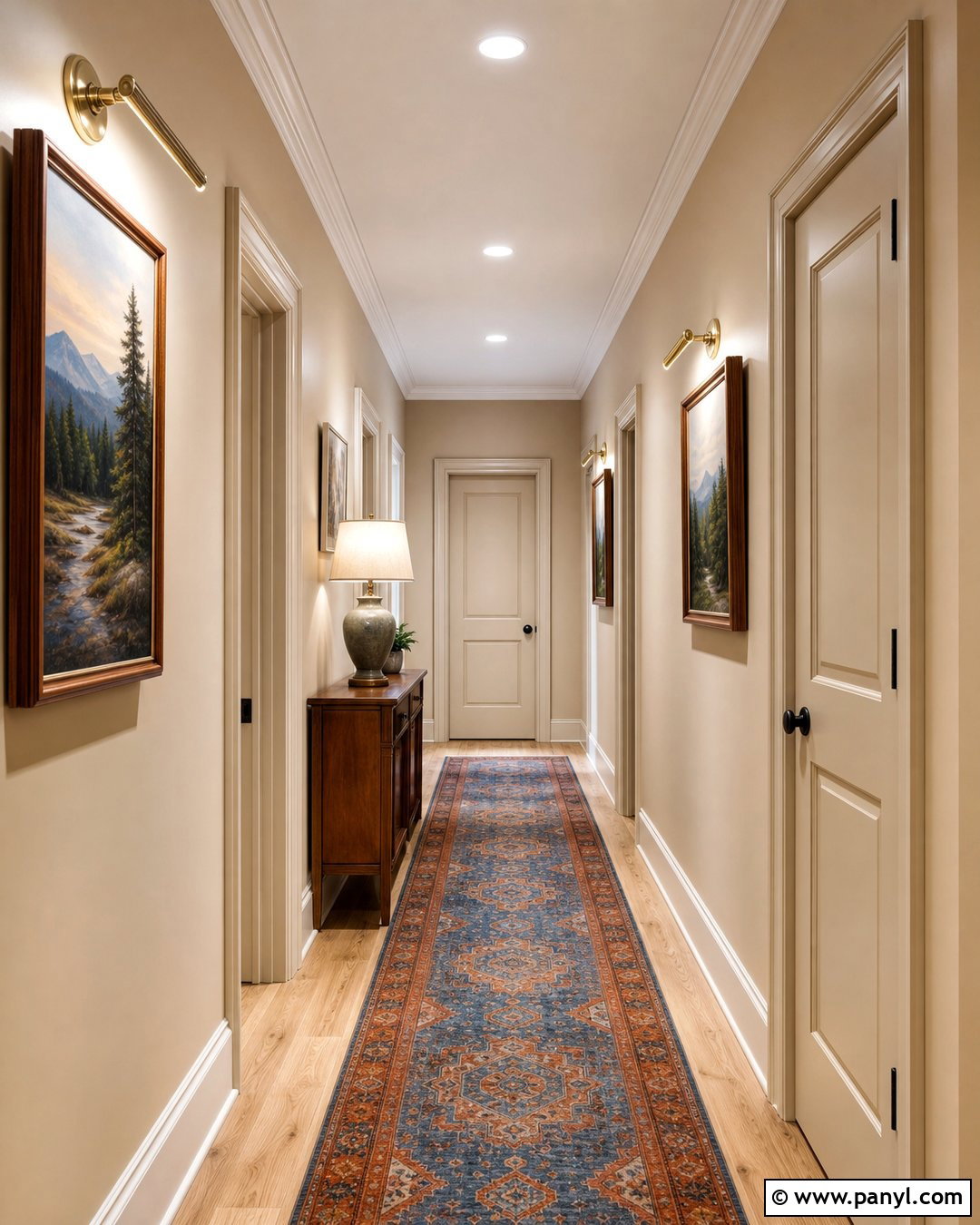
Apricot cream walls can transform a windowless hallway into a warm, luminous passage. Use creamy white trim, light oak flooring, and matching interior doors for a seamless foundation. Install evenly spaced brass picture lights over a small collection of framed landscape prints. A narrow washable runner in rust, beige, and muted blue introduces pattern and directs movement through the space. If the hallway is wide enough, add a shallow wood console with one ceramic lamp and a simple bowl. Keep accessories minimal so the lighter wall color remains visible. Warm, high-quality bulbs will enhance the apricot undertone, while overly cool bulbs may make it look dull. This complete scheme turns a forgotten circulation area into a comfortable transition between surrounding rooms.
30. Butter Yellow Walls
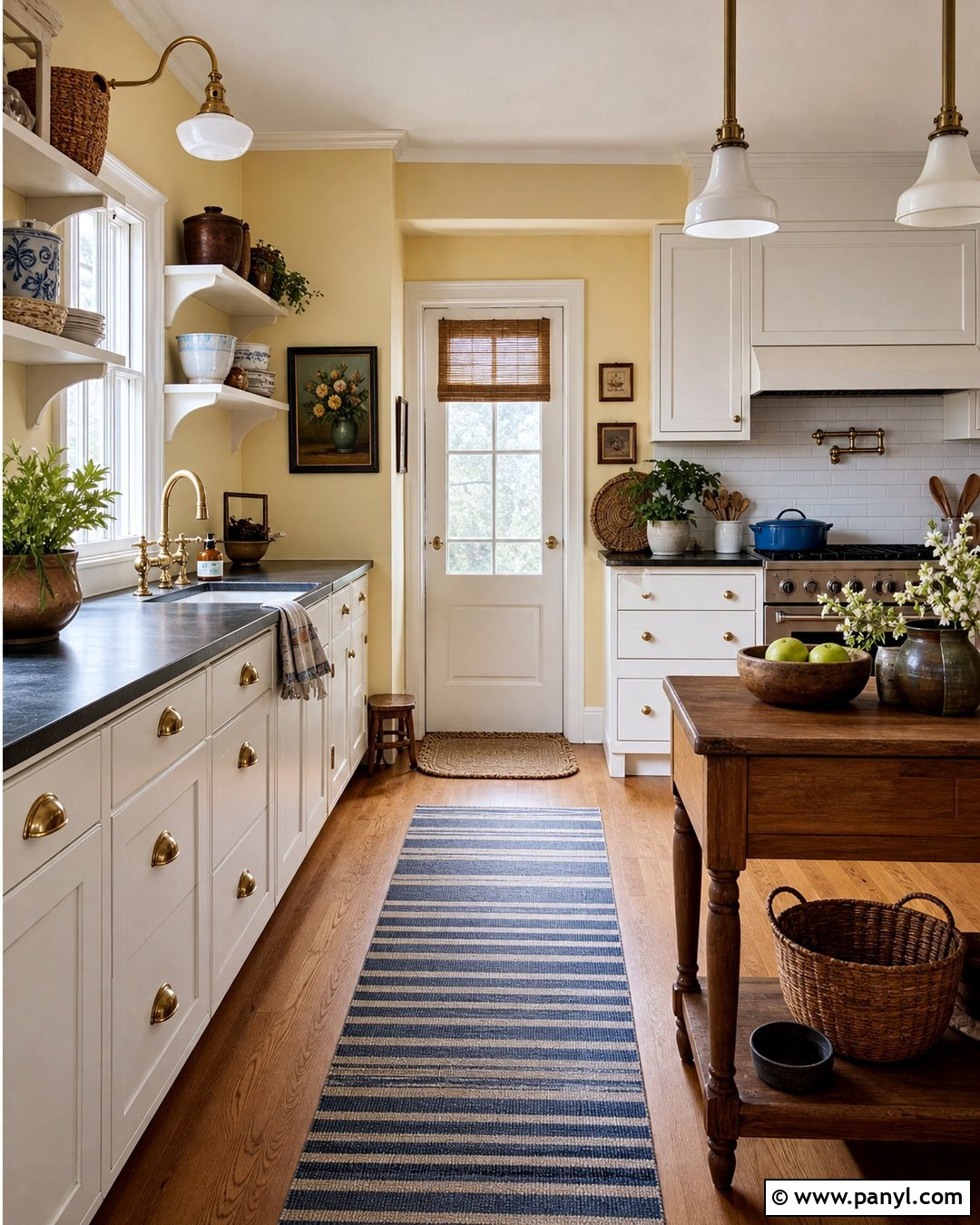
Butter yellow walls bring gentle brightness to a cottage kitchen without looking loud. Pair them with creamy white cabinets, soapstone-look counters, and warm oak flooring. A small-scale white tile backsplash keeps the workspace clean and simple. Use aged brass pulls, a bridge-style faucet, and milk-glass pendant lights to complement the wall’s warmth. A freestanding wood table or compact island adds practical prep space and relaxed character. Introduce muted blue through a washable runner, striped dish towels, and one painted stool. Keep decorative items useful, including wood boards, white pottery, and woven baskets. The finished kitchen feels sunny throughout the day, yet the soft yellow remains restrained enough to support classic cabinetry, natural materials, and changing seasonal greenery.
31. Pale Lemon Walls
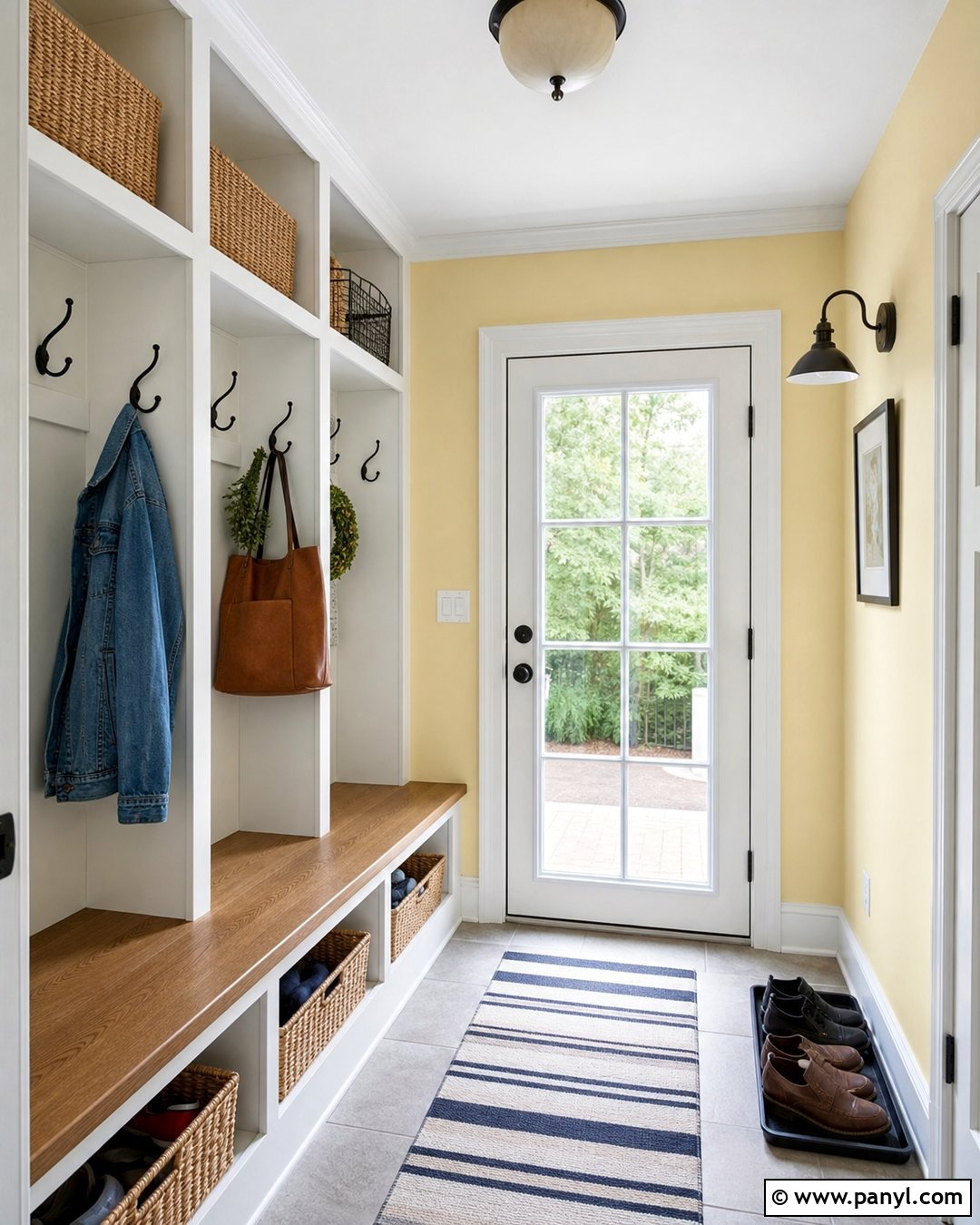
Pale lemon walls can energize a small mudroom while keeping it light and orderly. Install white built-in cubbies with oak bench seats and black hooks. Use durable gray-beige tile flooring and a washable striped runner to handle wet shoes and daily traffic. Woven baskets above the cubbies conceal accessories while adding natural texture. Paint the ceiling and trim a clean white to sharpen the yellow walls. A glass door or simple window shade allows available daylight to spread through the compact area. Add one pinboard, a narrow shoe tray, and a small wall-mounted light rather than unnecessary decor. The completed mudroom feels cheerful and practical, with pale lemon providing enough personality to distinguish this hardworking transition space from the neutral rooms around it.
32. Light Clay Walls
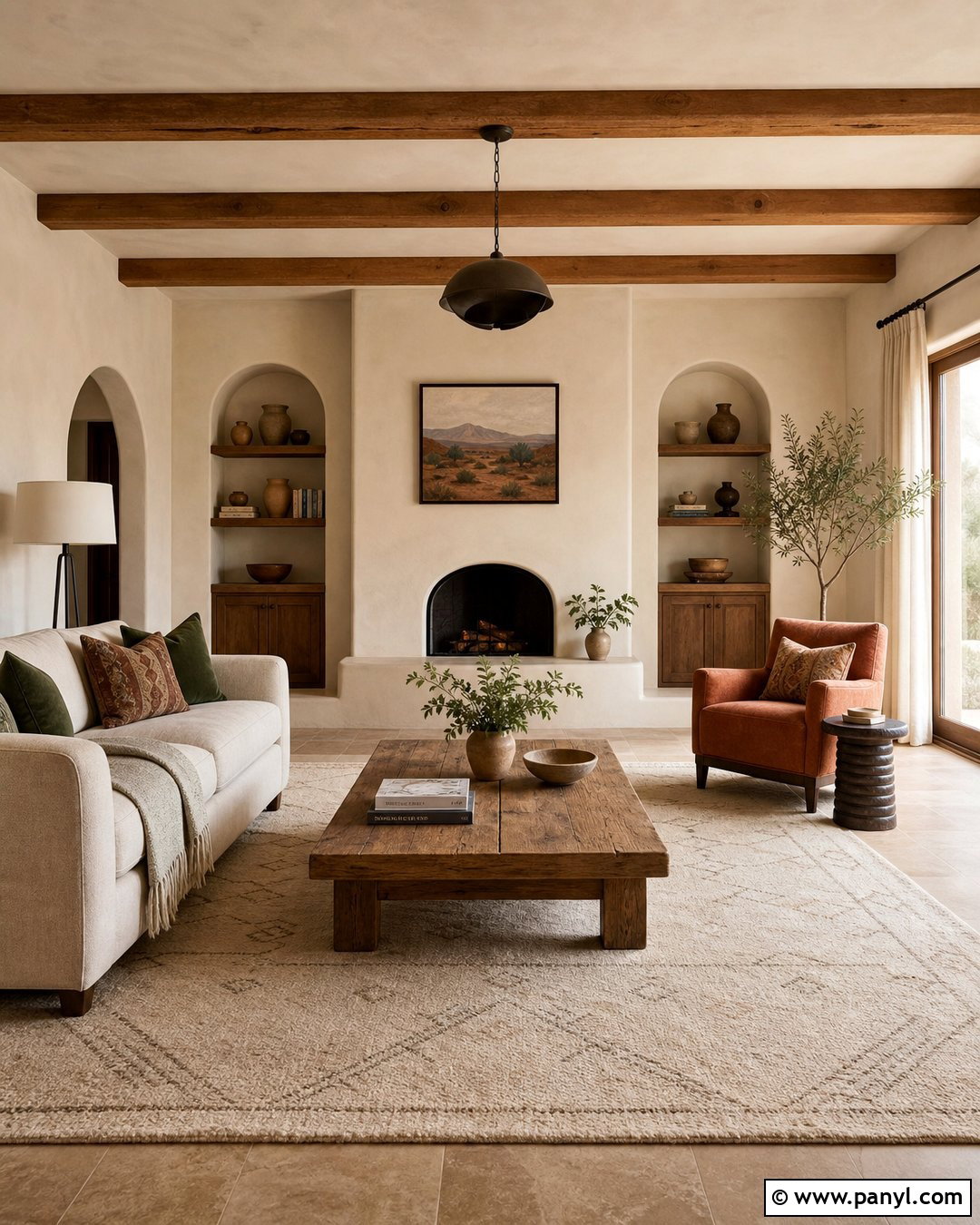
Light clay walls add earthy softness to a living room while remaining paler and easier to use than full terracotta. Pair them with an oatmeal sofa, rust-colored accent chair, and warm oak coffee table. A cream rug with a faded geometric pattern keeps the room bright. Use off-white linen curtains and warm white trim to support the clay undertone. Add olive green pillows, dark bronze lighting, and hand-thrown ceramic accessories for depth. One large landscape painting can connect the room’s peach, brown, green, and cream tones. Avoid using orange on every surface; allow neutral upholstery and open wall space to balance the palette. The complete design feels sun-warmed, natural, and comfortable, making it suitable for both modern Southwestern and relaxed contemporary homes.
33. Pale Coral Walls
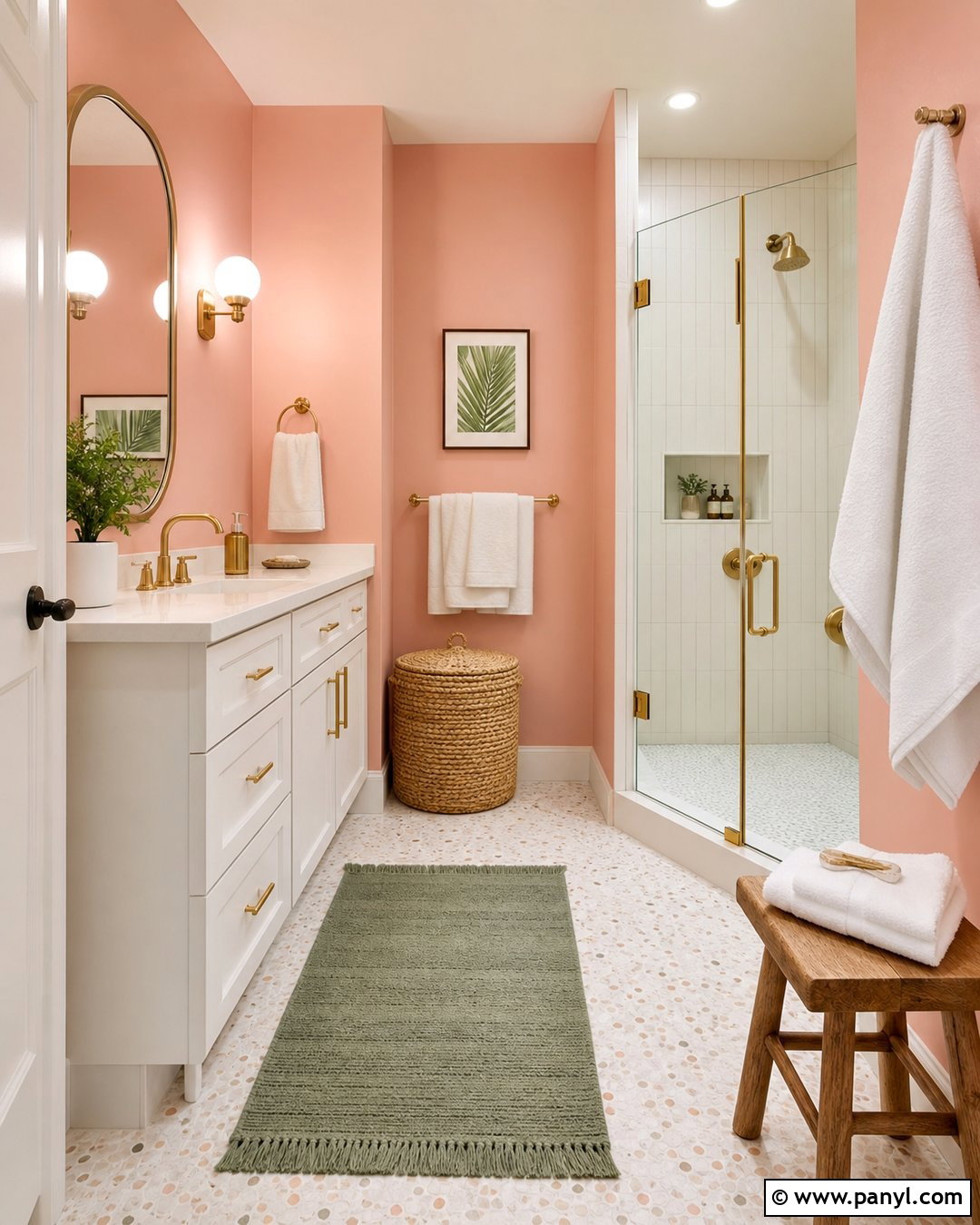
Pale coral walls create a playful but polished bathroom when supported by clean white fixtures. Pair the color with a white vanity, pale quartz counter, and white vertically stacked shower tile. Choose light terrazzo flooring with tiny coral, beige, and gray flecks to connect the surfaces. Brushed brass faucets, rounded mirrors, and globe sconces provide warm modern details. Use crisp white towels, a natural woven hamper, and one muted green bath mat for contrast. Keep the ceiling white and avoid additional bright coral accessories, which could make the room feel themed. A small wood stool or oak shelf introduces natural texture. This finished bathroom feels fresh, energetic, and flattering while maintaining the bright, uncluttered appearance needed in a compact everyday space.
34. Soft Mauve Walls
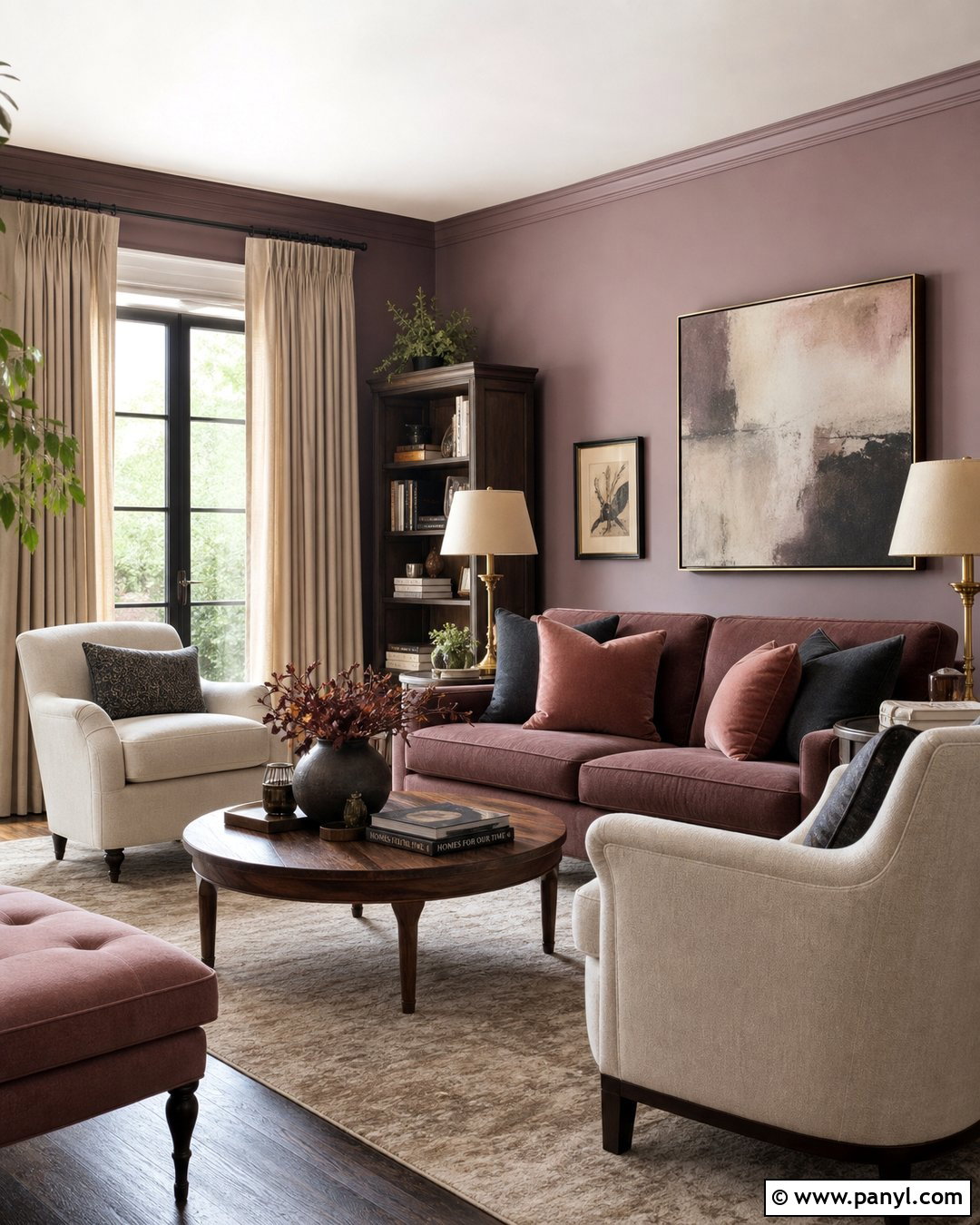
Soft mauve walls provide a refined backdrop for a cozy sitting room. Arrange two cream upholstered chairs opposite a muted plum sofa, with a round walnut coffee table between them. Use a large taupe rug to soften the floor and keep the stronger upholstery color grounded. Warm white trim, beige linen curtains, and aged brass lamps balance the mauve’s cooler undertones. Add cushions in dusty rose, charcoal, and ivory, then hang abstract artwork featuring mauve, brown, and soft blue. A dark wood bookcase brings weight to one wall without overpowering the room. This complete palette feels intimate and elegant rather than feminine or formal. Layered table and floor lighting ensures the light mauve walls retain their depth and warmth during evening use.
35. Light Mocha Walls
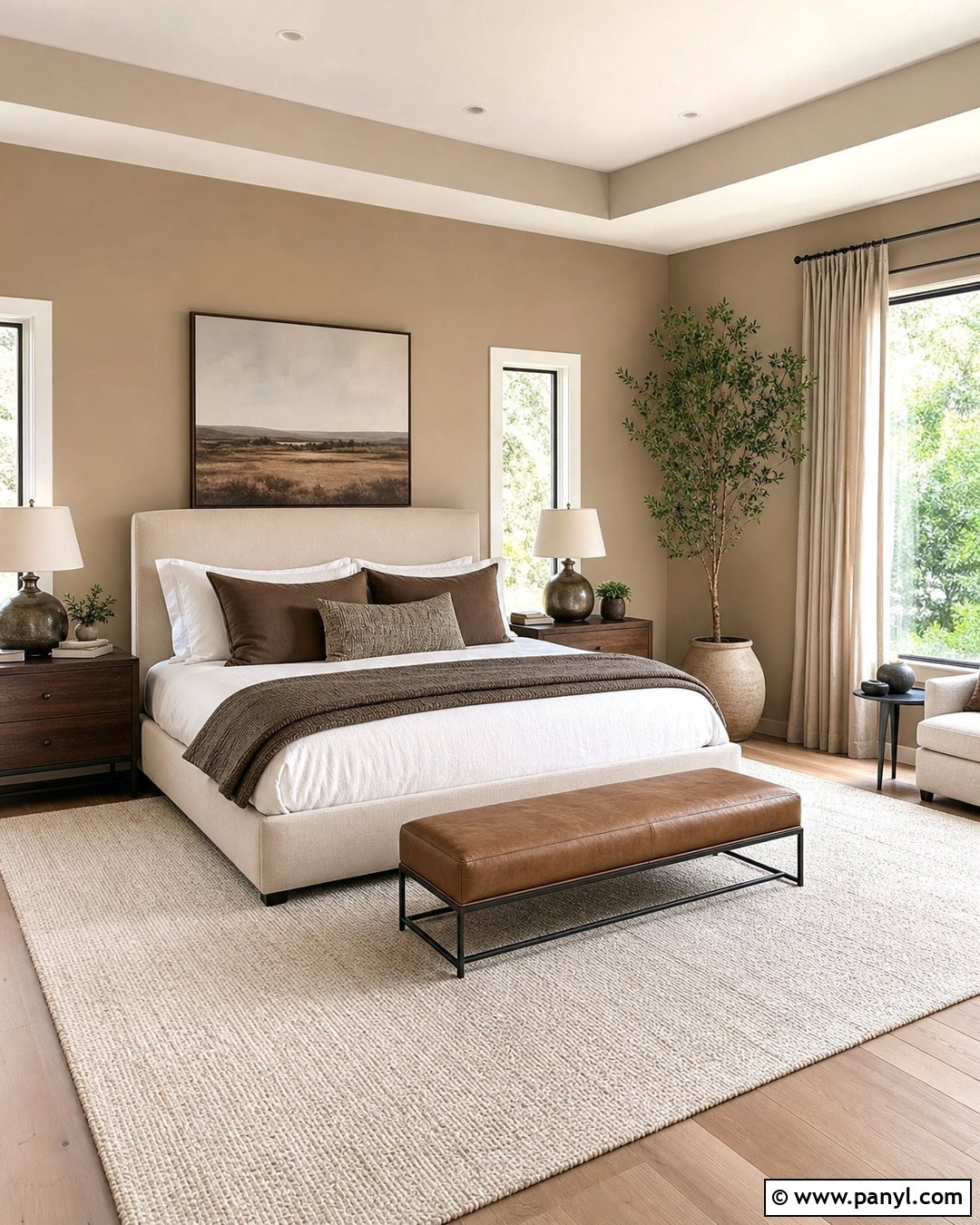
Light mocha walls create a rich neutral foundation for a relaxed primary bedroom. Pair them with a cream upholstered bed, crisp white sheets, and layered taupe and chocolate bedding. Medium walnut nightstands and bronze lamps reinforce the warm brown undertone. Choose a large ivory rug to prevent the room from becoming visually heavy, then frame the windows with natural linen curtains. A camel leather bench at the foot of the bed adds another durable texture. Keep the ceiling creamy white and paint the trim either the same white or a slightly lighter mocha for a softer transition. Minimal landscape artwork, pottery, and one indoor tree complete the arrangement. The finished bedroom feels grounded, cocooning, and timeless while still reflecting plenty of available light.
Conclusion:
The best **35 light wall colors** offer much more variety than plain white. Warm neutrals create comfort, pale blues and greens add freshness, and softened pinks, yellows, and clay tones introduce personality without overwhelming a room. For the most successful result, treat the wall color as part of a complete design. Coordinate it with flooring, trim, furniture, lighting, textiles, and fixed finishes. Always test samples on several walls and view them in morning, afternoon, and evening light before committing. Undertones can shift dramatically from room to room. When every element supports the chosen shade, a light wall color can make your home feel brighter, more cohesive, and thoughtfully designed.

Related Ideas and Inspiration:
Leave a Reply