
Choosing kitchen wall color is about more than finding a pretty shade. The right palette should work with your cabinets, countertops, flooring, lighting, and the overall mood you want to create. These 20 kitchen paint colors for walls include airy neutrals, gentle earth tones, refreshing greens, relaxed blues, and deeper shades with plenty of personality. Each selection below is presented as a complete kitchen look, so you can see how the wall color connects with finishes, fixtures, furniture, and decor. Before committing, test large samples beside fixed surfaces and view them throughout the day. Whether your kitchen is compact, open-plan, modern, farmhouse, or traditional, you will find a practical starting point among these 20 kitchen paint colors for walls.

1. Warm White Kitchen Walls
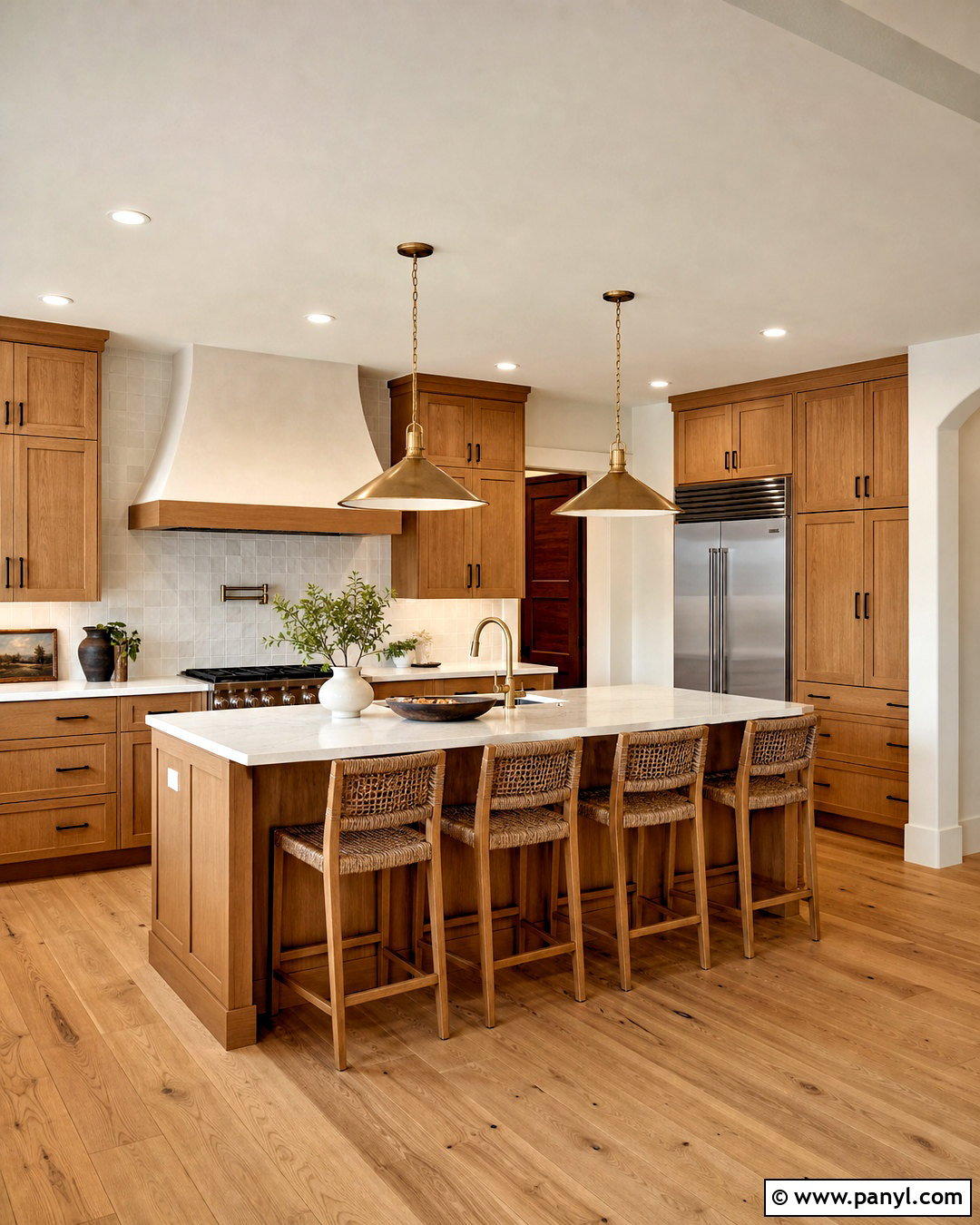
Warm white walls create a clean kitchen without the sharp, clinical effect of pure white. Choose a creamy white with subtle yellow or beige undertones, then pair it with medium oak cabinets and lightly veined quartz countertops. A handmade ivory tile backsplash adds texture while keeping the palette bright. Ground the room with warm wood flooring, woven counter stools, and brushed brass pendants. Matte black cabinet pulls can provide just enough contrast without taking over the design. This color combination works especially well in kitchens with limited daylight because reflective surfaces help distribute available light. Finish the room with linen café curtains, simple stoneware, and a few green herbs for a comfortable, naturally layered look.
2. Soft Cream Kitchen Walls
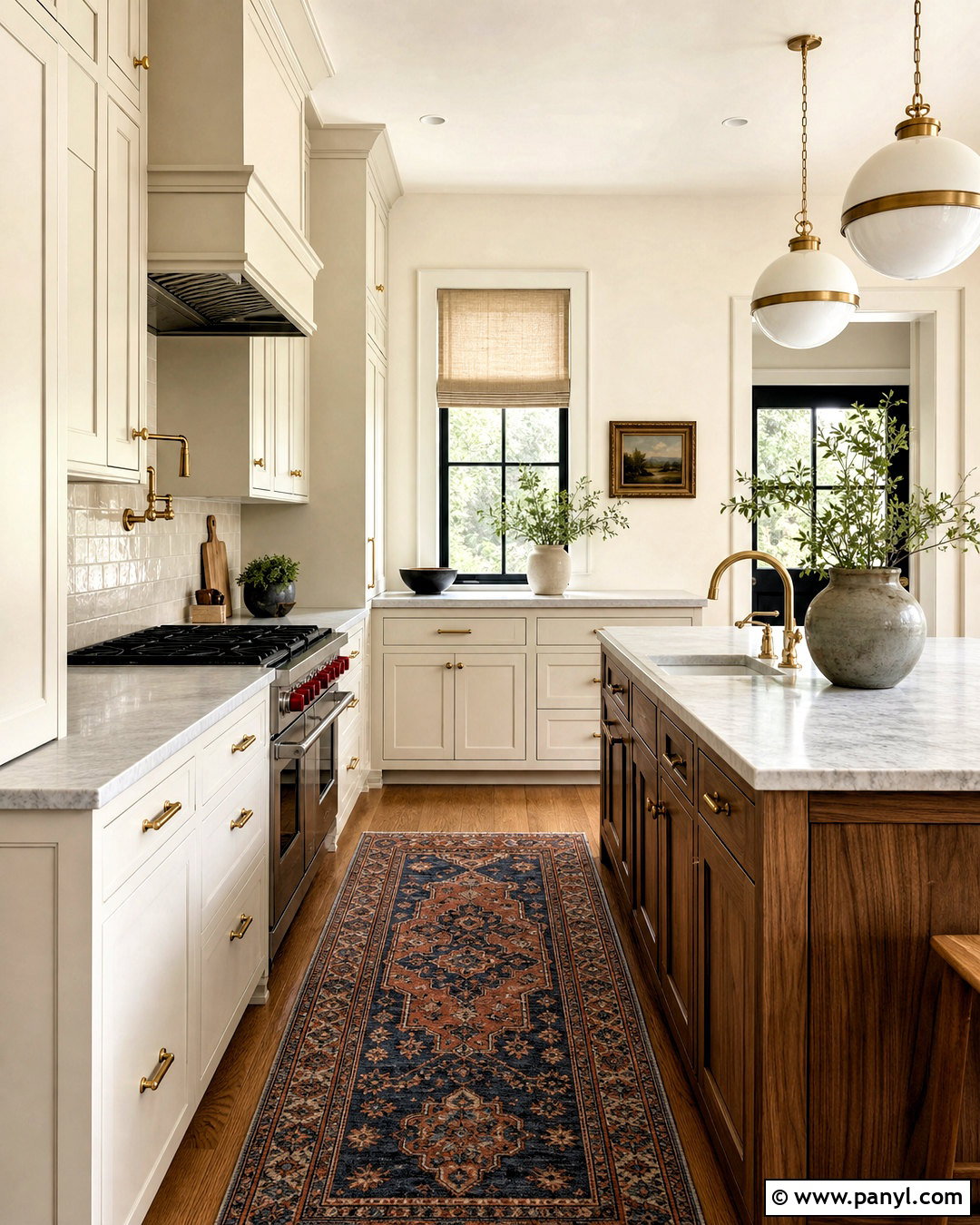
Soft cream kitchen walls bring warmth to spaces with cool stone, stainless steel appliances, or north-facing windows. Create a balanced look with off-white Shaker cabinets, honed gray marble counters, and a backsplash in glossy cream subway tile. Walnut shelves and a matching island add depth, while antique brass hardware supports the cozy undertone of the walls. Keep the ceiling and trim slightly lighter so the cream color looks intentional rather than yellow. Natural linen shades soften the windows without blocking too much daylight. A vintage-inspired runner containing muted blue, tan, and rust can connect the neutral surfaces. This complete palette feels inviting, classic, and easy to update as your kitchen accessories change over time.
3. Oatmeal Beige Kitchen Walls
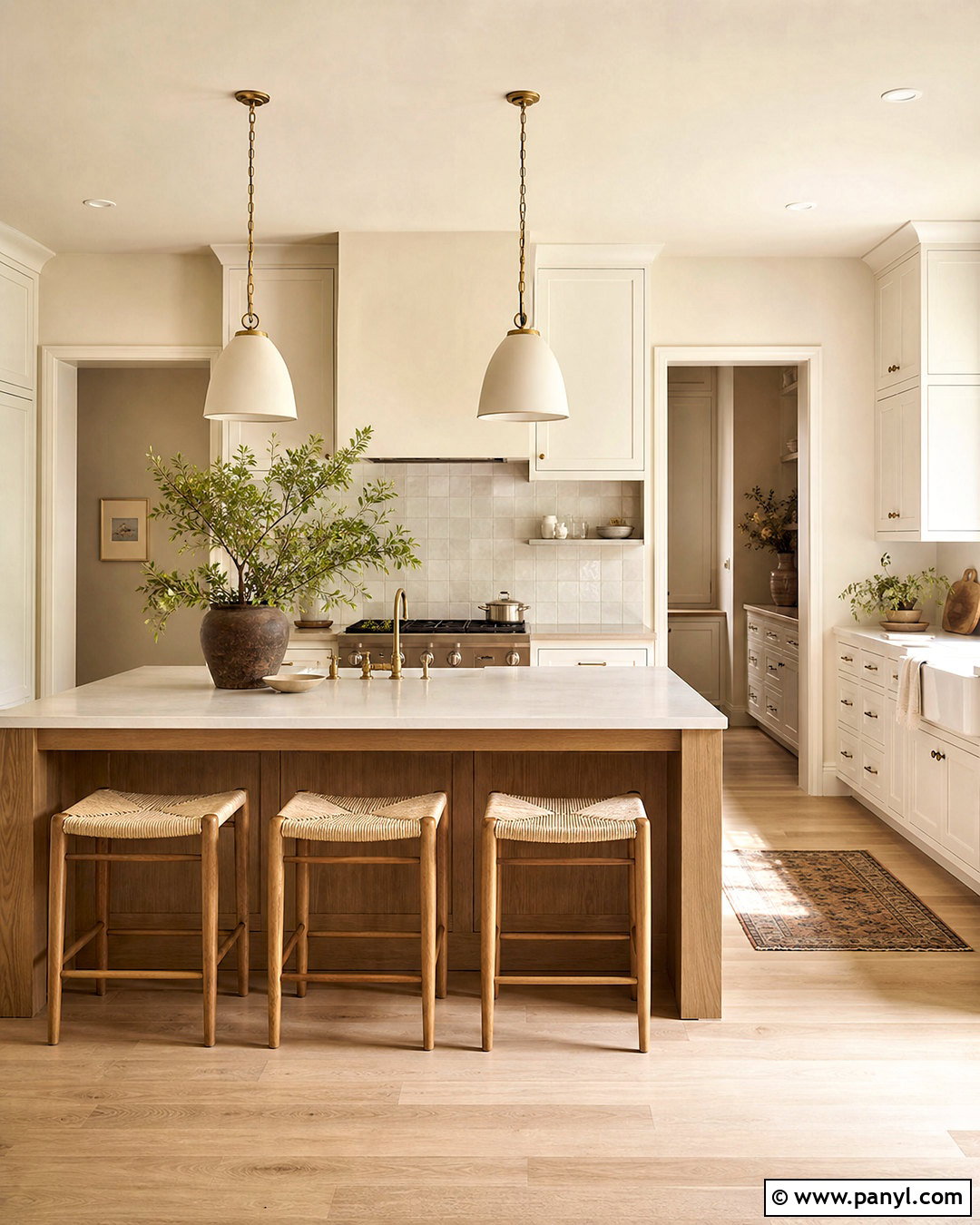
Oatmeal beige sits comfortably between cream, tan, and pale taupe, making it a flexible choice for a welcoming kitchen. Pair the walls with warm white cabinets, beige quartz counters, and a backsplash made from softly varied zellige tile. White oak flooring and a natural oak island reinforce the organic palette without making everything look identical. Use aged brass lighting, creamy ceramic pendants, and simple bronze hardware for gentle contrast. Black accents should be limited to small details, such as a faucet or framed artwork. Add woven stools and textured linen window treatments to keep the room relaxed. The finished kitchen feels calm and substantial, with enough tonal variation to prevent the neutral scheme from appearing flat.
4. Light Greige Kitchen Walls
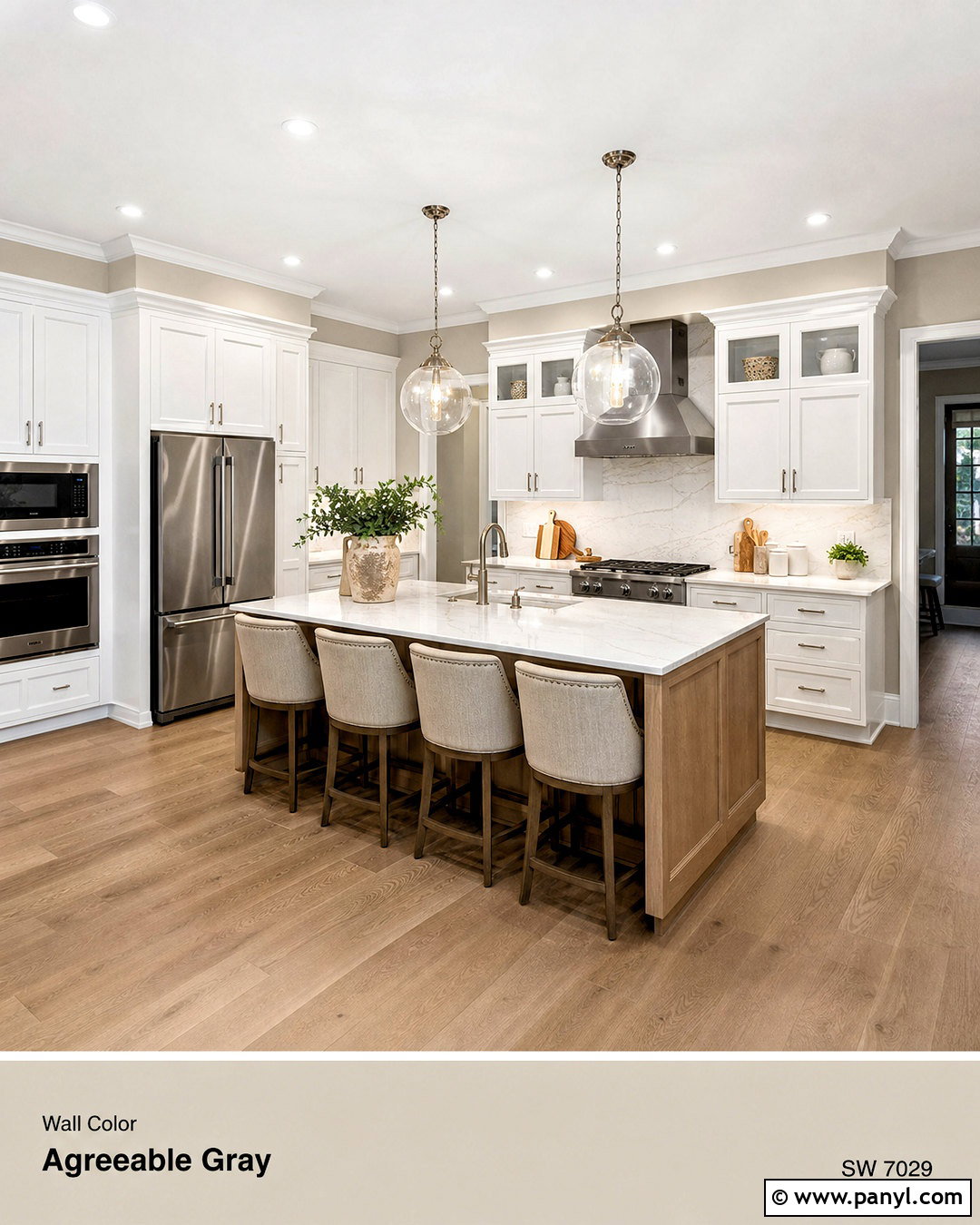
Do you want a neutral wall color that works with both warm and cool kitchen finishes? Light greige combines soft gray with enough beige to create a balanced backdrop. Use it alongside crisp white cabinets, stainless steel appliances, and pale quartz countertops for a bright transitional kitchen. A light oak island prevents the gray notes from feeling cold, while brushed nickel hardware connects naturally with the appliances. Choose an off-white backsplash with subtle gray veining rather than a busy pattern. Warm the floor with wide oak planks and add taupe upholstered stools beneath clear glass pendants. Small accents in muted green or dusty blue can bring personality to the finished room without disrupting its calm, versatile foundation.
5. Mushroom Taupe Kitchen Walls
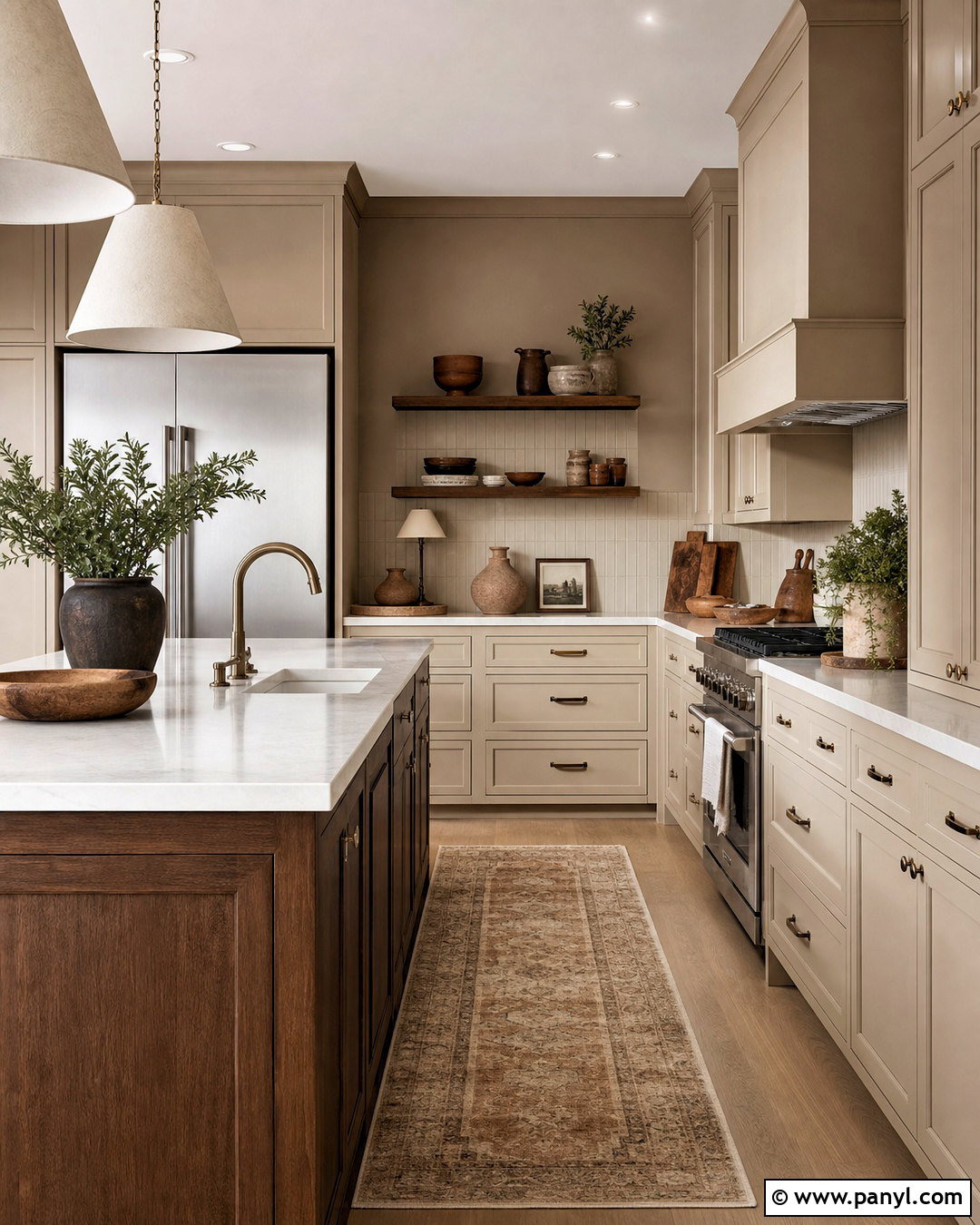
Mushroom taupe kitchen walls provide richer color than beige while remaining quiet enough for everyday living. This earthy neutral looks especially polished beside creamy cabinetry and dark walnut accents. Use warm white quartz for the counters and a backsplash of vertical ivory tiles to make the room feel taller. An island stained in deep walnut can anchor the layout and coordinate with open shelves or ceiling beams. Select aged bronze hardware and sculptural plaster pendants instead of bright polished metals. Terracotta pottery, woven baskets, and a faded neutral runner complete the organic character. Because mushroom contains both gray and brown undertones, it can connect mixed materials and help an older kitchen feel more cohesive without requiring a full renovation.
6. Warm Putty Kitchen Walls
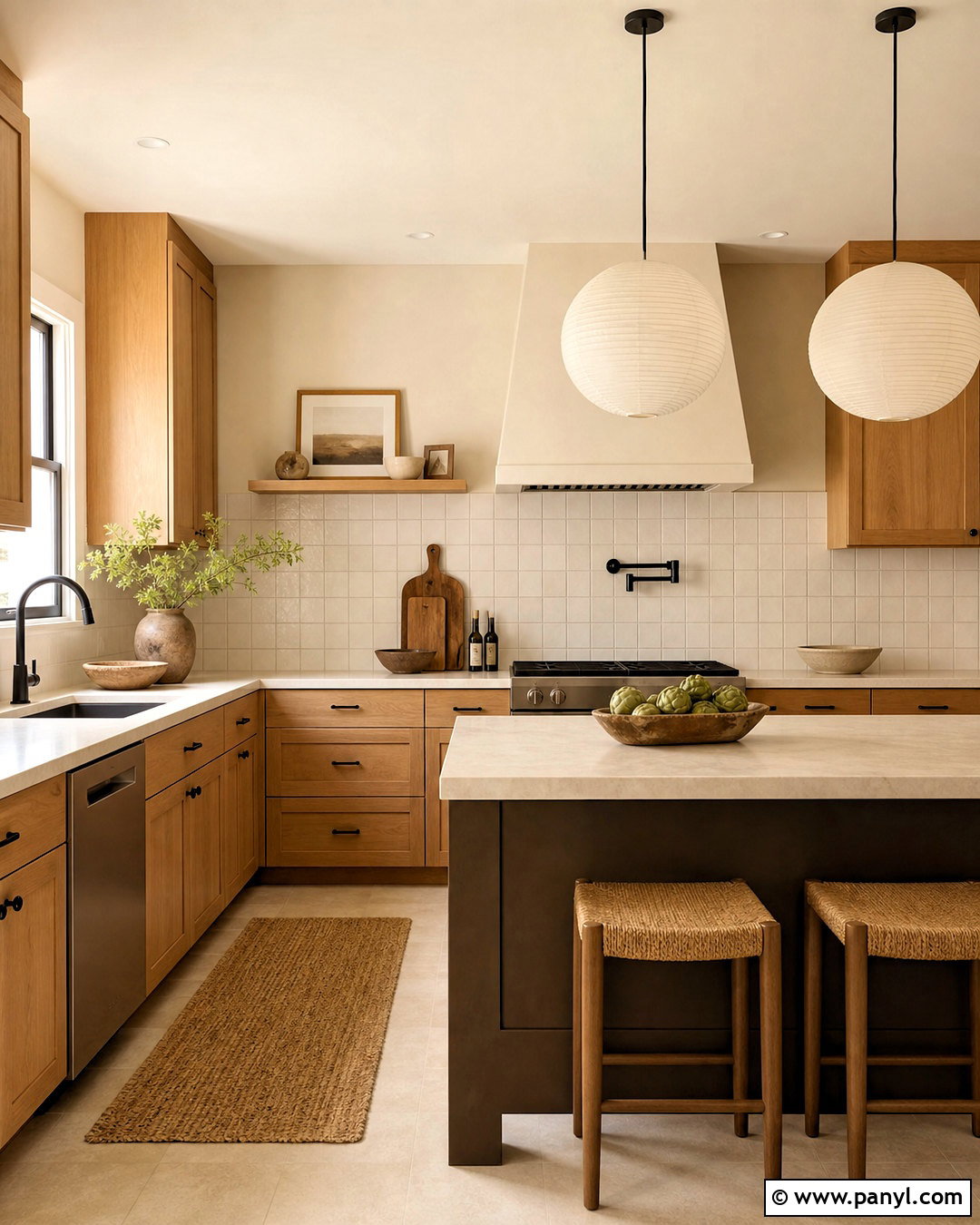
Warm putty walls create an understated kitchen that feels softer than gray and more grounded than white. Build the room around natural maple cabinets, creamy solid-surface counters, and a backsplash of matte off-white square tiles. Putty paint complements the wood grain while providing enough contrast to define the walls. Add a compact island in muted black or dark bronze for visual weight, then repeat that finish on the faucet and cabinet pulls. A pale limestone-look floor keeps the palette light and practical. Paper or linen pendants introduce texture above the island. For decor, use wooden boards, earthenware bowls, and small framed prints. The complete result is warm, modern, and comfortably minimal rather than plain.
7. Pale Sage Green Kitchen Walls
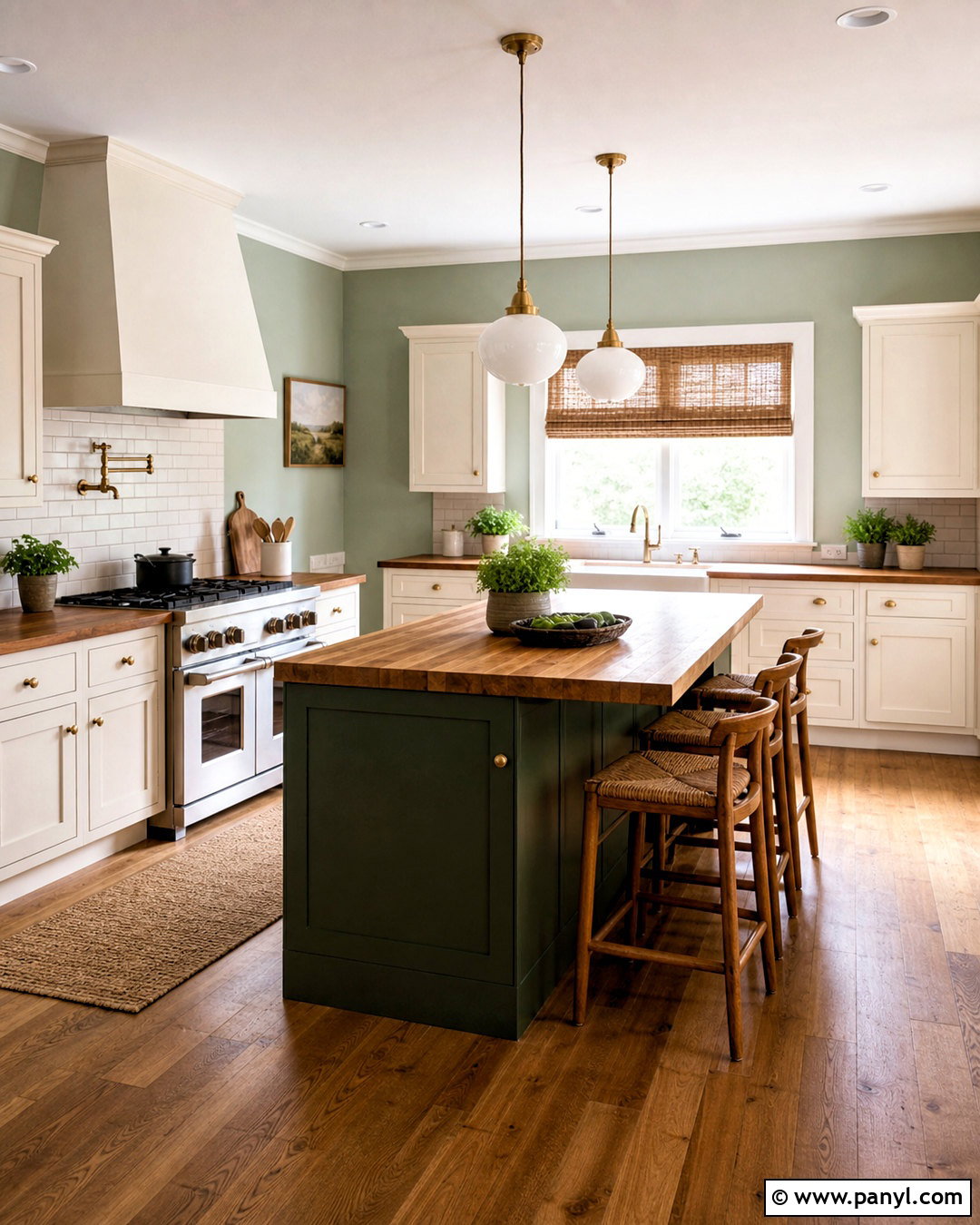
Pale sage green walls bring a gentle connection to nature without overwhelming a busy kitchen. Pair the color with warm white cabinets, butcher-block counters, and a simple cream tile backsplash for an approachable farmhouse-inspired design. A small island painted deep forest green gives the pale walls more definition. Use unlacquered brass knobs, a bridge-style faucet, and opal glass pendants to add traditional character. Medium-tone oak flooring keeps the palette warm, while woven Roman shades filter bright daylight. Display a limited collection of cream dishes, wooden utensils, and potted herbs on open shelves. This full scheme works because every element shares soft, earthy undertones, creating a kitchen that looks fresh, settled, and easy to live with.
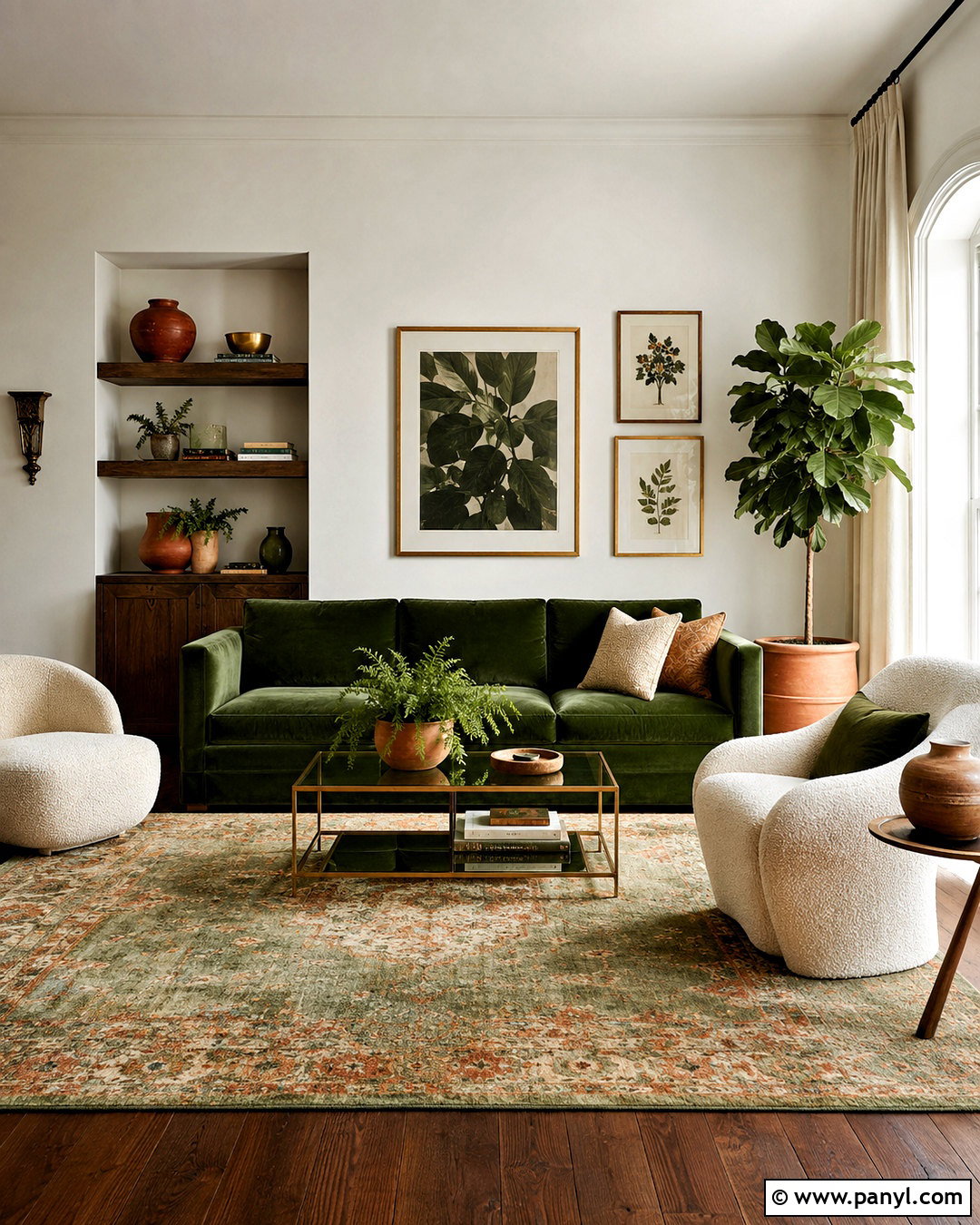
8. Muted Olive Green Kitchen Walls
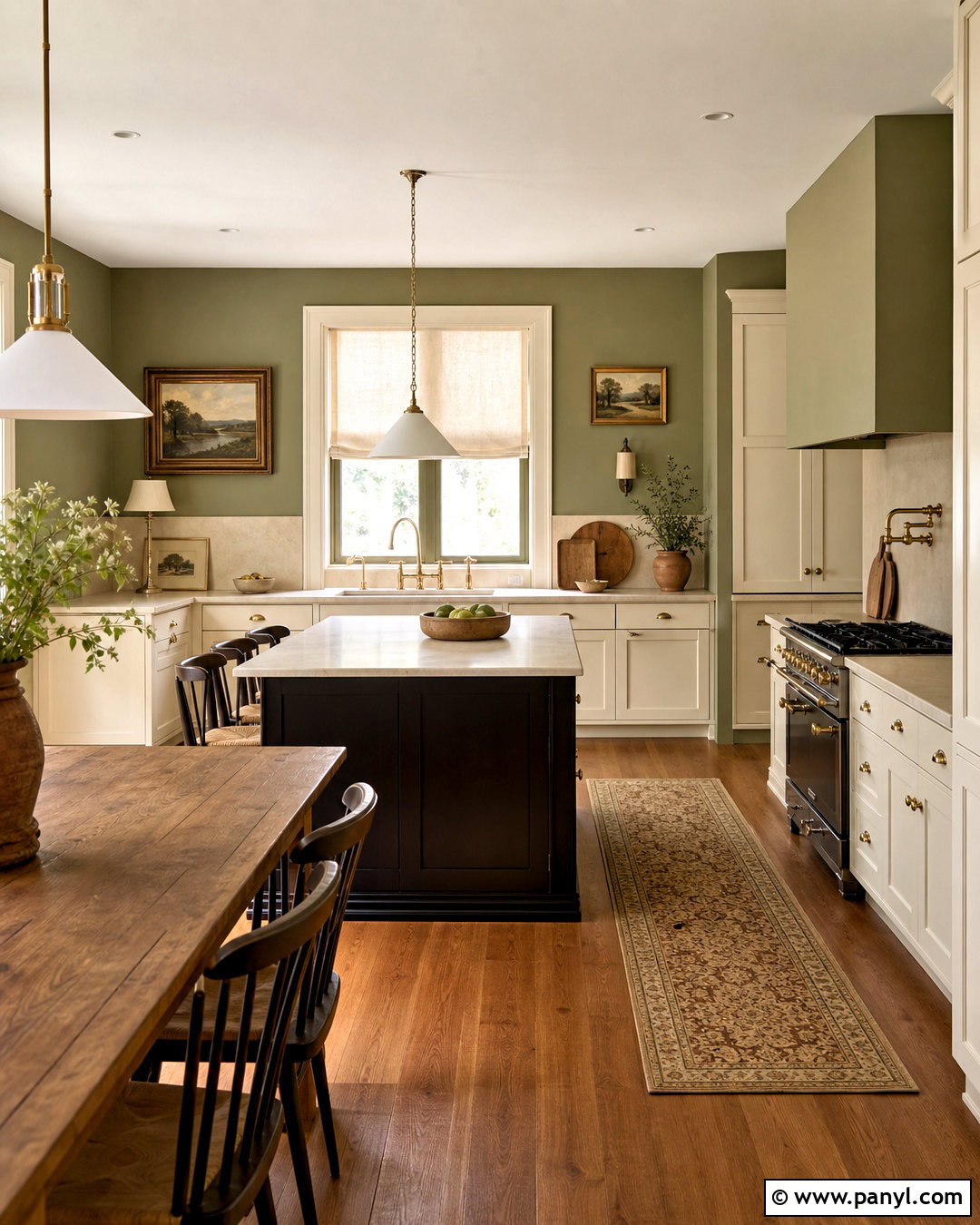
Muted olive walls can make a kitchen feel established and cozy, particularly when the room receives generous natural light. Balance this deeper green with creamy cabinets, honed limestone counters, and a warm ivory backsplash. Rich walnut flooring and a freestanding oak table enhance the earthy character. Choose antique brass fixtures because their golden finish brings out olive’s warmer undertones. If the kitchen has an island, paint it a soft black-brown to create depth without introducing an unrelated color. Keep window treatments light and simple, such as natural linen panels or woven shades. Terracotta pots, vintage landscapes, and off-white ceramics complete the design. The result is an enveloping kitchen that remains practical, welcoming, and visually balanced.
9. Dusty Blue Kitchen Walls
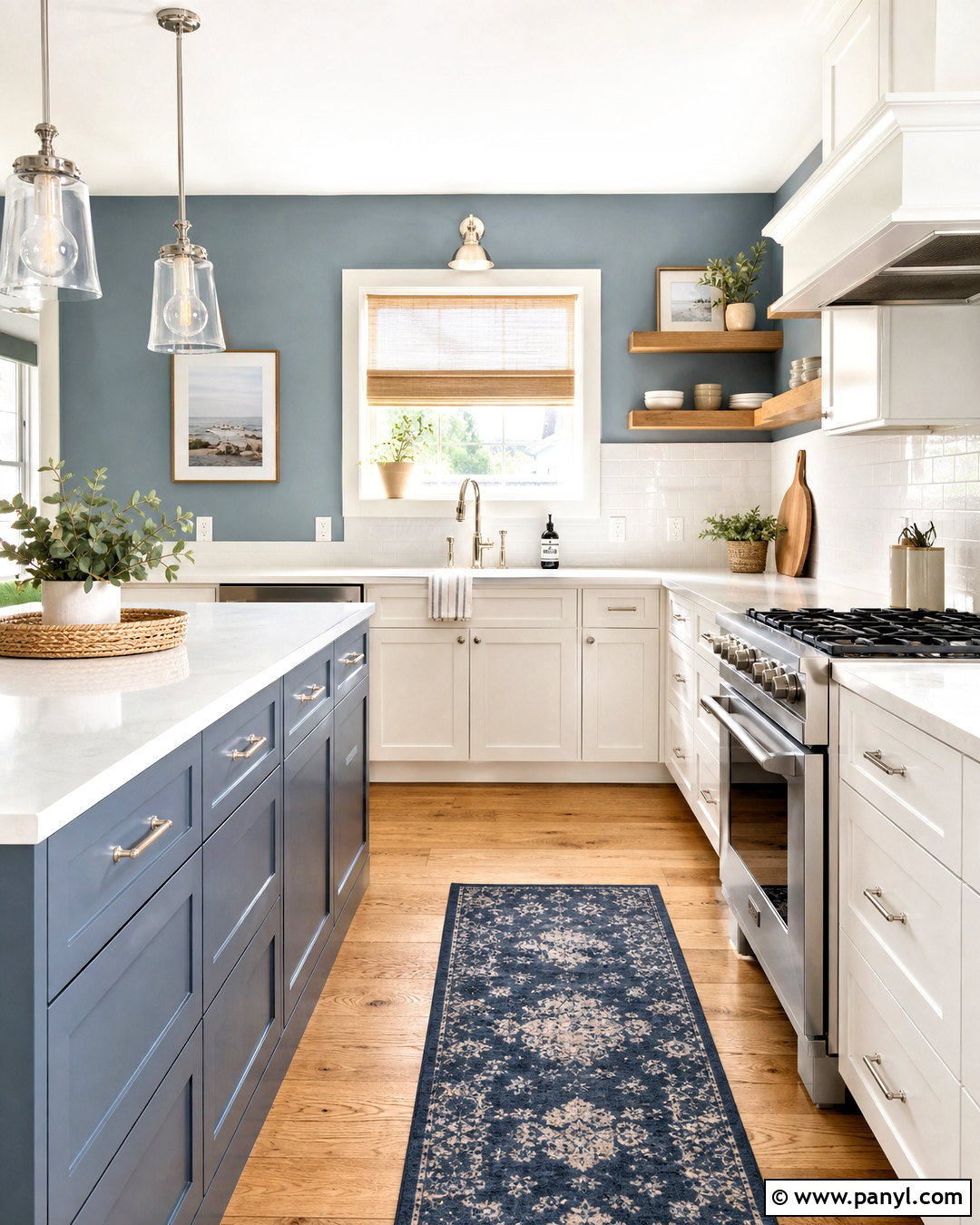
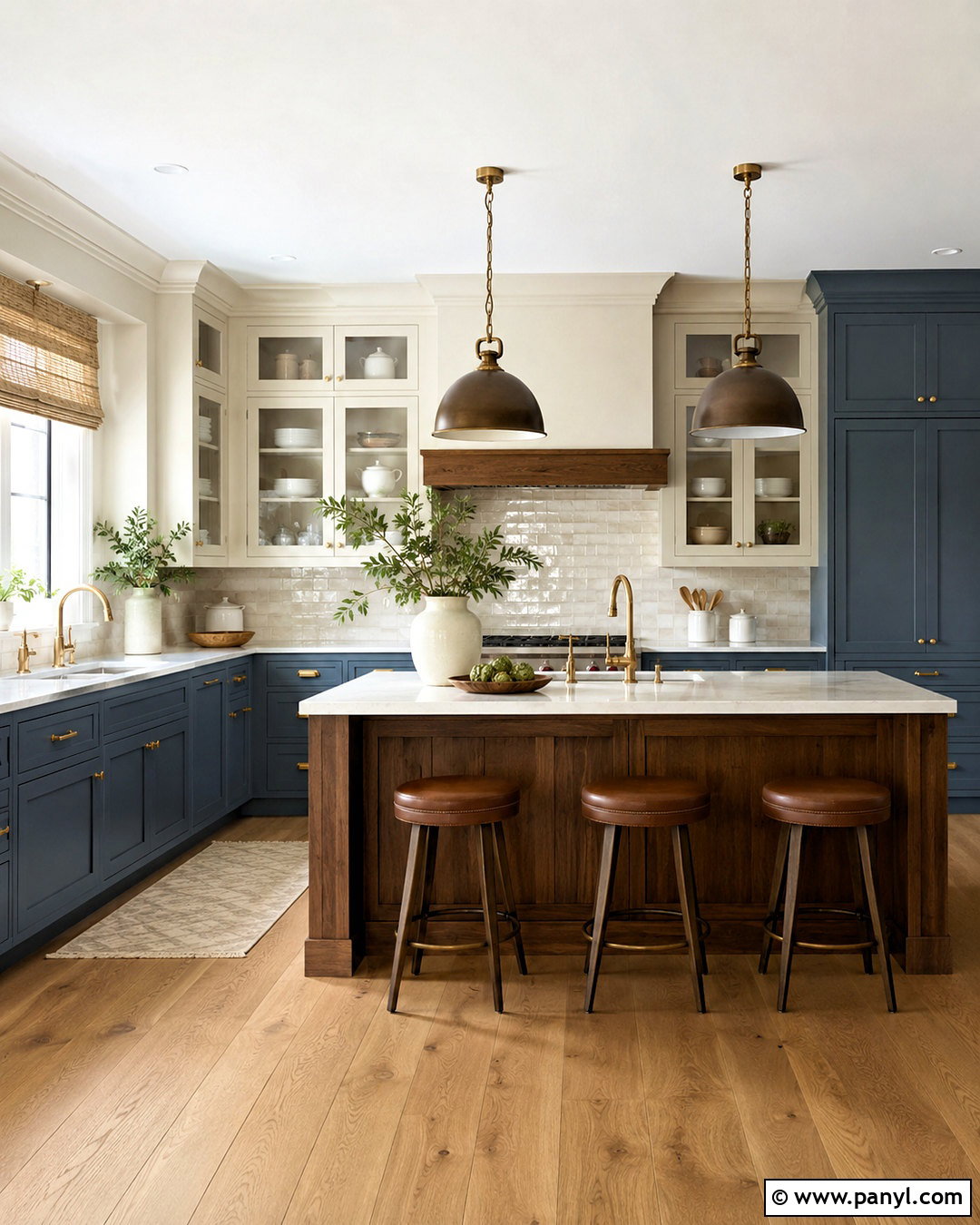
Dusty blue kitchen walls deliver gentle color while retaining the flexibility of a neutral. Combine them with white inset cabinets, pale marble-look quartz, and a glossy white tile backsplash for a bright coastal-influenced kitchen. Introduce natural oak through the flooring, stools, and a few open shelves so the blue does not feel chilly. Polished nickel hardware offers a crisp finish, while clear glass pendants preserve an airy view across the room. A navy-and-cream runner can deepen the palette near the sink or island. Keep accessories simple with white stoneware, blue-striped linens, and clear glass containers. This coordinated design feels fresh and relaxed, yet it avoids obvious beach-themed decorations that can quickly make a kitchen look overly themed.
10. Soft Blue Gray Kitchen Walls
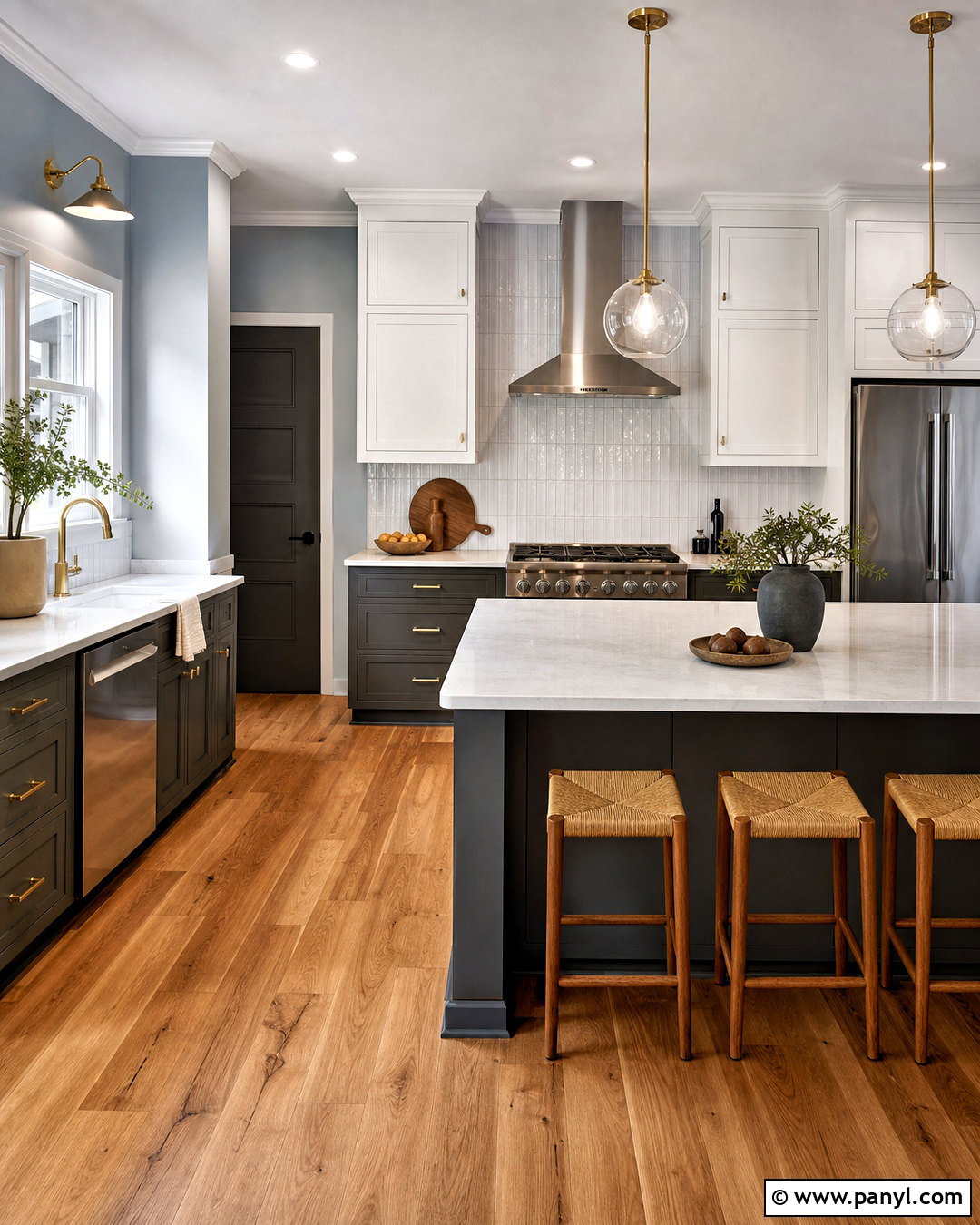
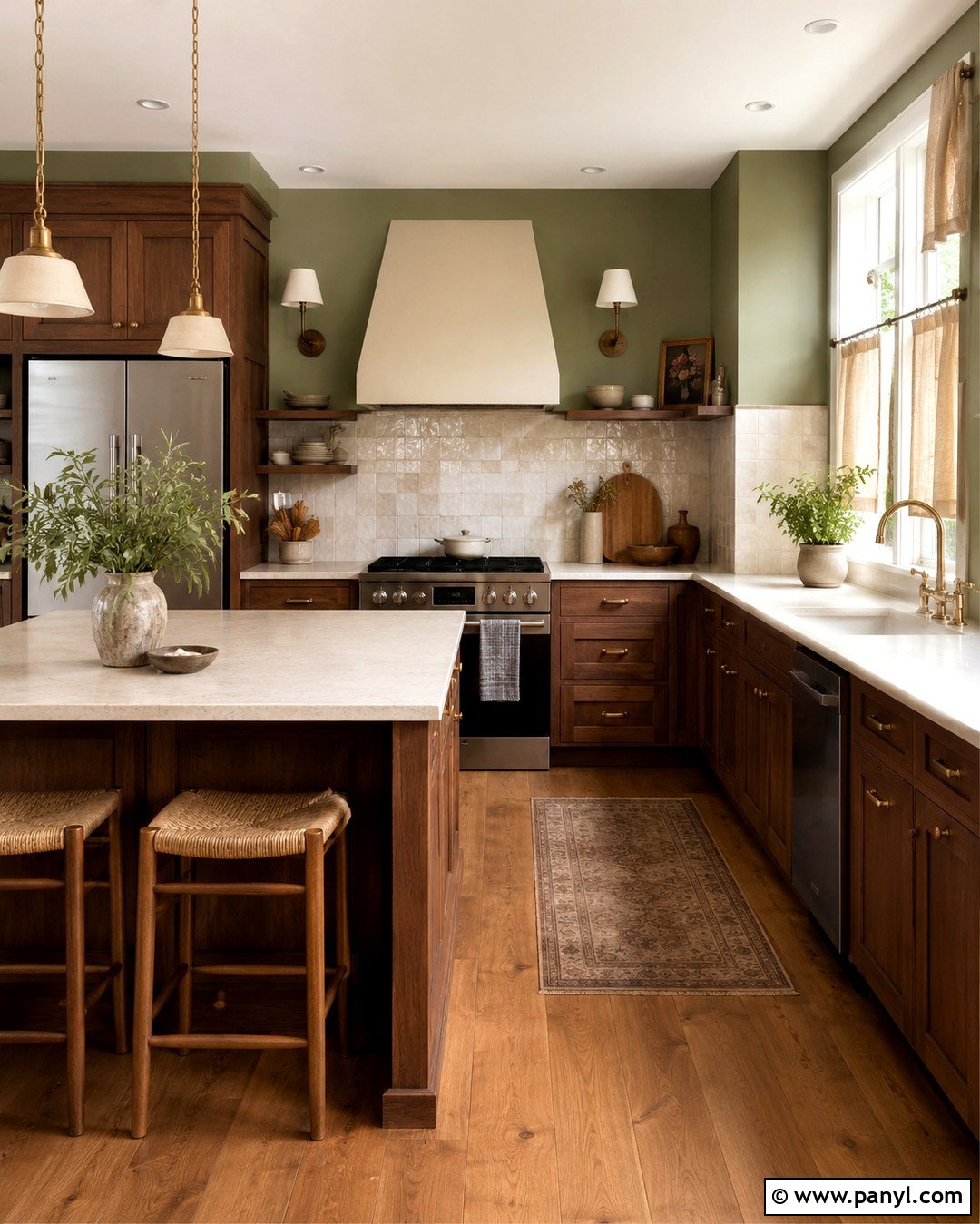
Soft blue-gray walls are useful when you want a cool, peaceful kitchen with more character than standard gray. Pair the walls with charcoal lower cabinets and white upper cabinets to create a two-tone layout that does not feel heavy. Use pale quartz counters and a backsplash of elongated white tiles to reflect light around the room. Brushed nickel hardware and stainless steel appliances continue the cool palette, but warm oak flooring keeps it comfortable. Add counter stools with woven seats and simple globe pendants for texture. A few clay vessels or wooden cutting boards can prevent the space from looking overly polished. The finished kitchen feels organized and spacious, making this color especially effective in open layouts with modern or transitional furnishings.
11. Deep Navy Kitchen Walls
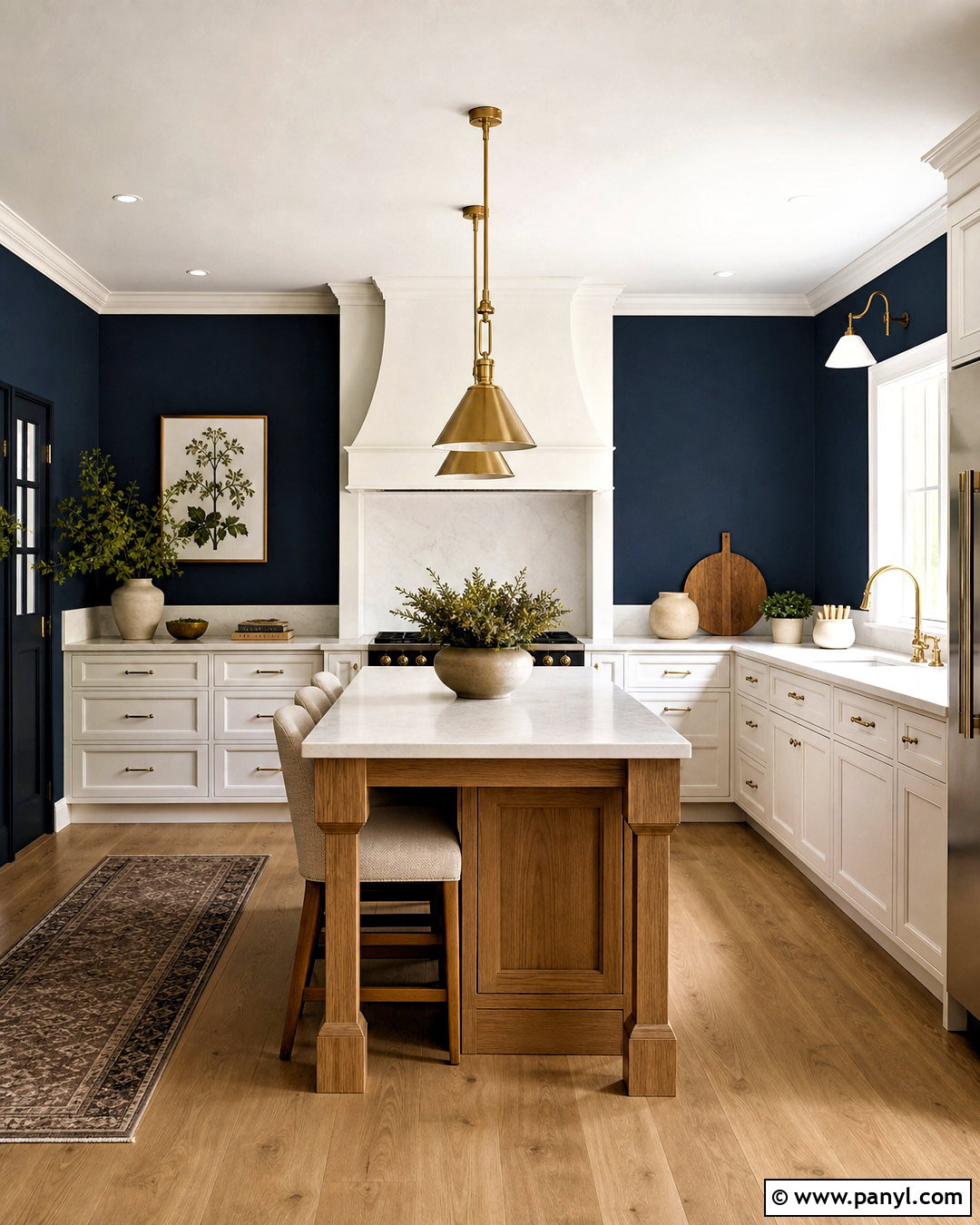
Deep navy walls create a dramatic kitchen, but the remaining finishes should keep the room bright and clearly defined. Use white cabinets, pale quartz countertops, and a full-height white backsplash to offset the saturated wall color. Light oak flooring adds warmth, while brass hardware and pendant lights stand out beautifully against the navy background. Choose a white or natural oak island instead of another dark finish, especially in a small kitchen. Keep window coverings minimal so daylight reaches every corner. Decorative elements can include framed botanical prints, cream pottery, and blue-patterned textiles used in moderation. This complete design feels bold yet classic because the navy is supported by familiar materials, strong contrast, and a practical distribution of lighter surfaces.
12. Butter Yellow Kitchen Walls
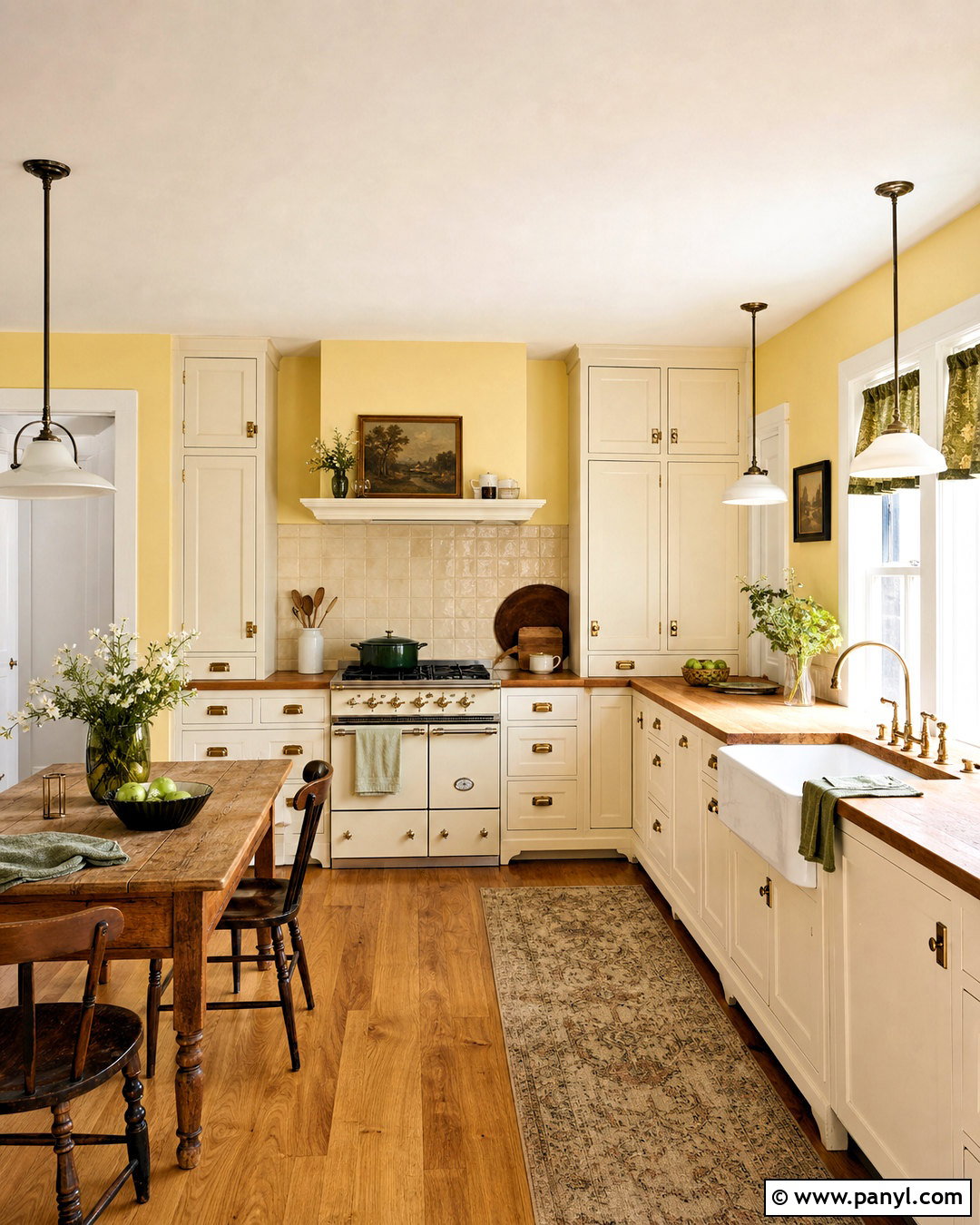
A soft butter yellow can fill a kitchen with warmth without looking loud or overly bright. Pair the walls with creamy white cabinets, butcher-block counters, and a backsplash of handmade ivory tiles. Medium oak flooring and a freestanding wood table reinforce the sunny, welcoming effect. Use aged brass cabinet latches, simple schoolhouse pendants, and a white farmhouse sink to create a relaxed cottage look. Muted green accents on a runner, Roman shade, or small painted stool provide natural contrast. Avoid pairing butter yellow with brilliant white, which may make the walls look harsher. Instead, repeat warm off-whites throughout the room. The finished space feels cheerful in the morning, cozy in the evening, and comfortably timeless throughout the year.
13. Muted Terracotta Kitchen Walls
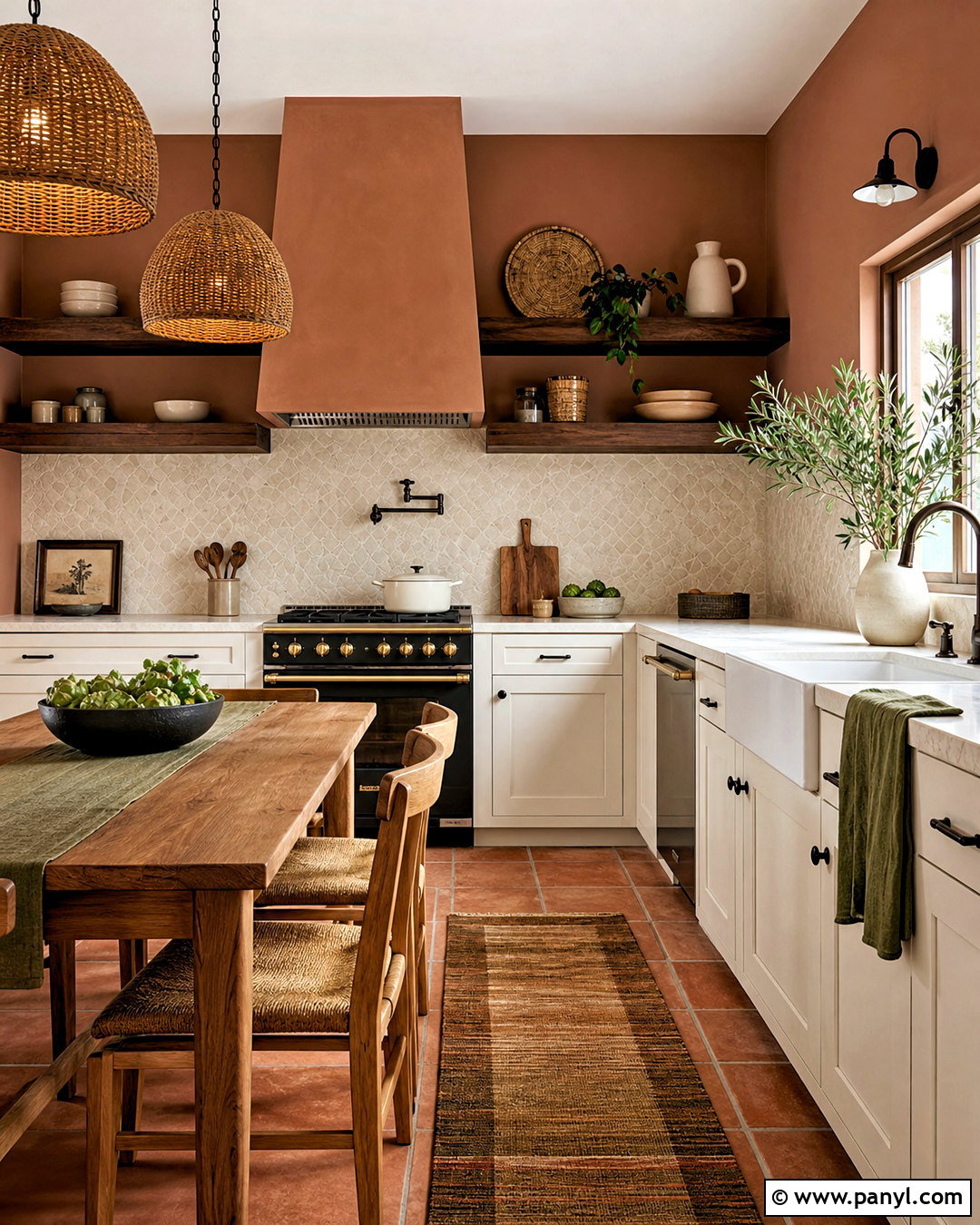
Muted terracotta walls surround a kitchen with earthy warmth while feeling softer than bright orange. Create a grounded Mediterranean-inspired look with warm white cabinets, creamy stone counters, and a backsplash of irregular ivory tile. Dark walnut shelves and a matching dining table add richness, while terracotta floor tile builds a cohesive foundation. Select blackened bronze hardware and simple woven pendants to complement the natural materials. Keep the ceiling and trim warm white to frame the stronger wall color. Olive green textiles, handmade ceramics, and a few leafy plants add contrast without competing for attention. This palette works best when the terracotta has dusty brown or clay undertones, giving the complete kitchen depth while preserving a comfortable, lived-in atmosphere.
14. Soft Clay Kitchen Walls
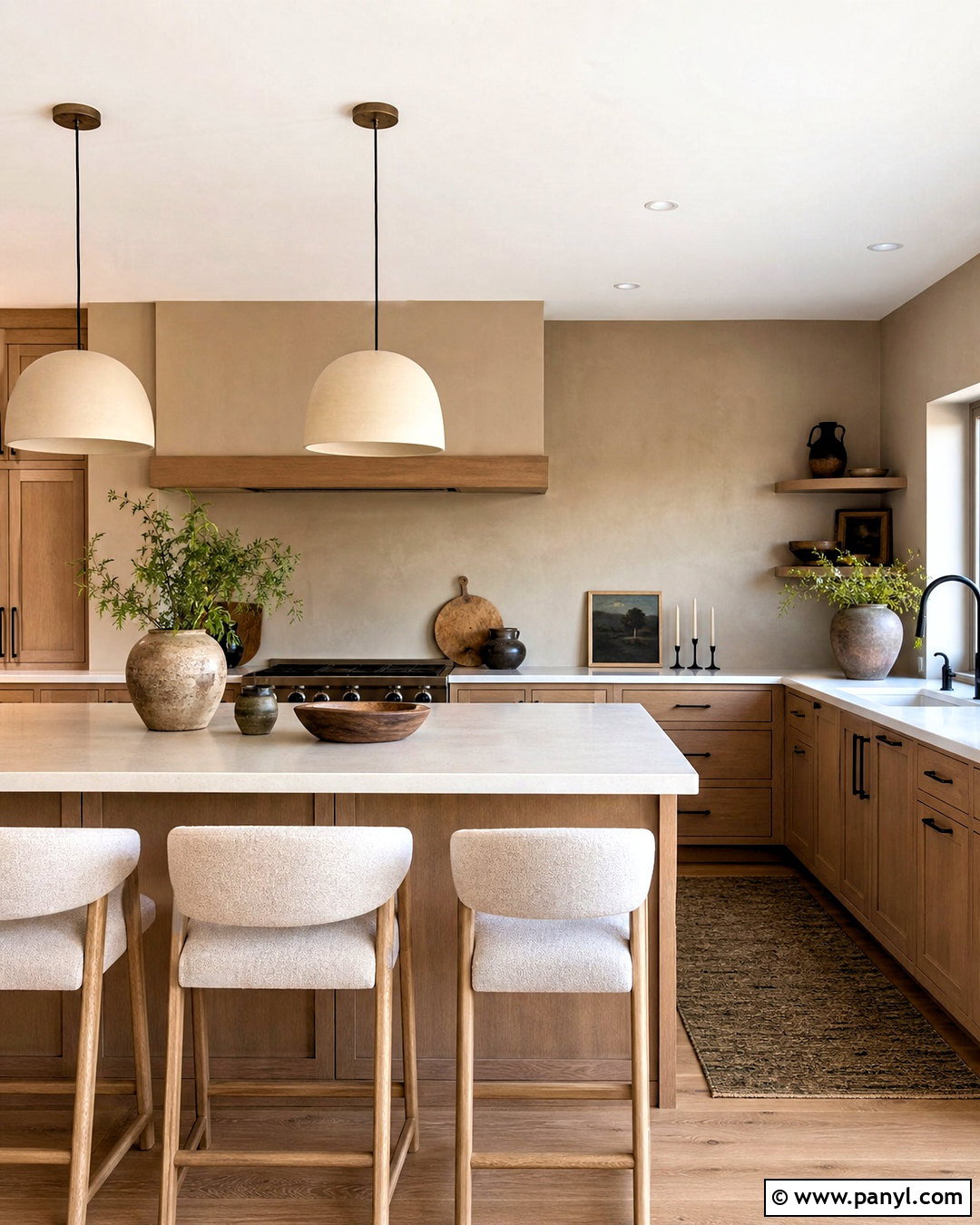
Soft clay paint introduces warmth with a quieter, more neutral appearance than terracotta. Combine it with flat-panel oak cabinets, pale cream quartz, and a sand-colored backsplash for a streamlined organic-modern kitchen. Black hardware and a matte black faucet provide crisp definition, while rounded cream pendants soften the straight cabinet lines. Continue the natural look with light oak flooring and stools upholstered in textured oatmeal fabric. Keep decor minimal but tactile, using carved wood bowls, ceramic vases, and linen towels. Soft clay works particularly well in open-plan homes because it can connect naturally with beige, brown, cream, and muted green furnishings nearby. The finished kitchen feels current and warm without relying on an overly bold or complicated color scheme.
15. Dusty Blush Kitchen Walls
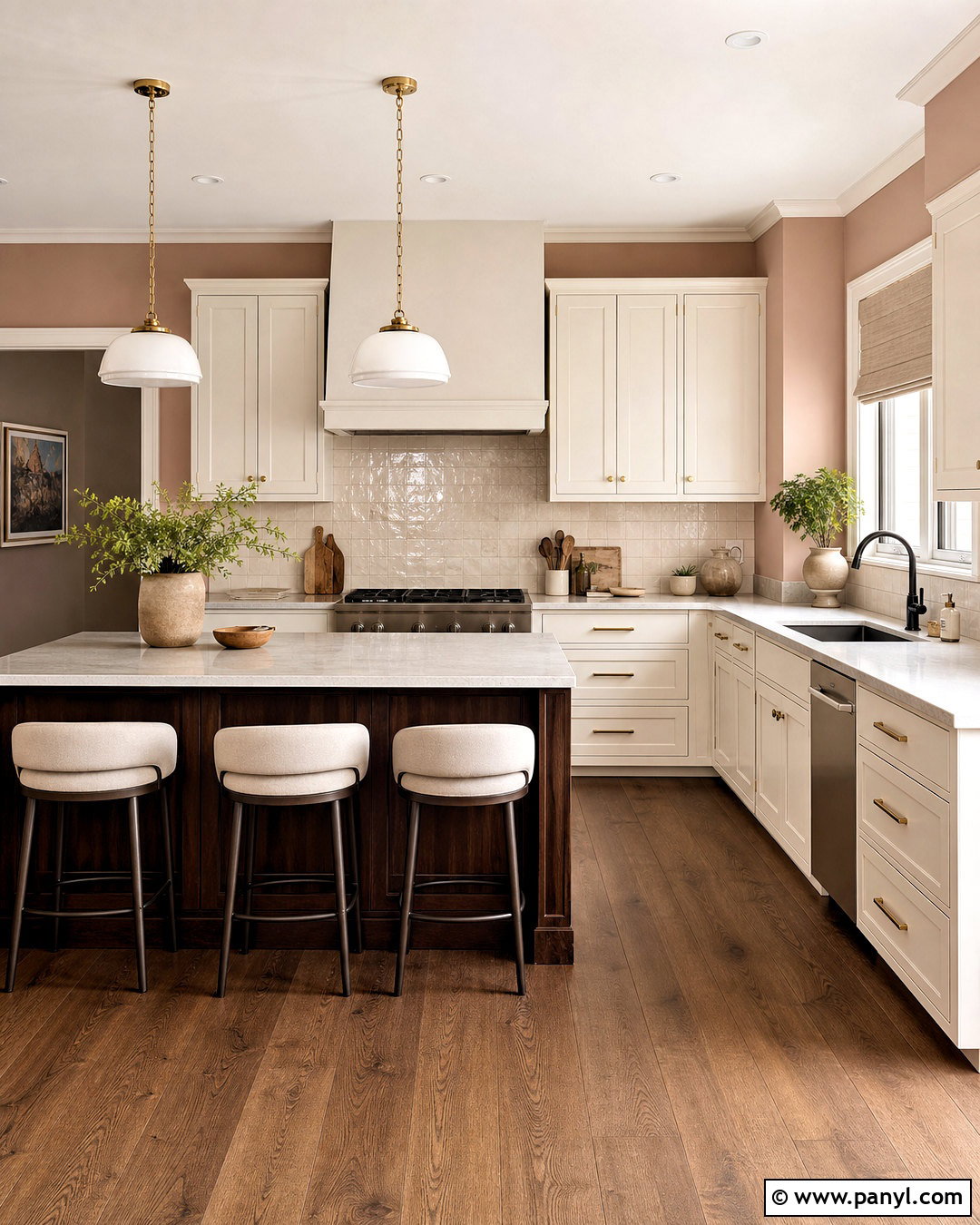
Dusty blush kitchen walls can look surprisingly sophisticated when the pink is muted with beige or brown undertones. Pair the color with warm white cabinets, pale gray quartz counters, and a backsplash of glossy cream rectangular tiles. Walnut flooring and a dark wood island keep the palette grounded, preventing the blush from feeling overly sweet. Add brushed brass pulls and milk-glass pendants for a soft glow. A charcoal faucet, black-framed artwork, and dark woven stools provide small points of contrast. Keep accessories neutral with stoneware, linen, and clear glass rather than adding more pink. This complete kitchen design feels warm, distinctive, and polished, offering a subtle alternative to conventional cream, beige, or greige walls.
16. Smoky Teal Kitchen Walls
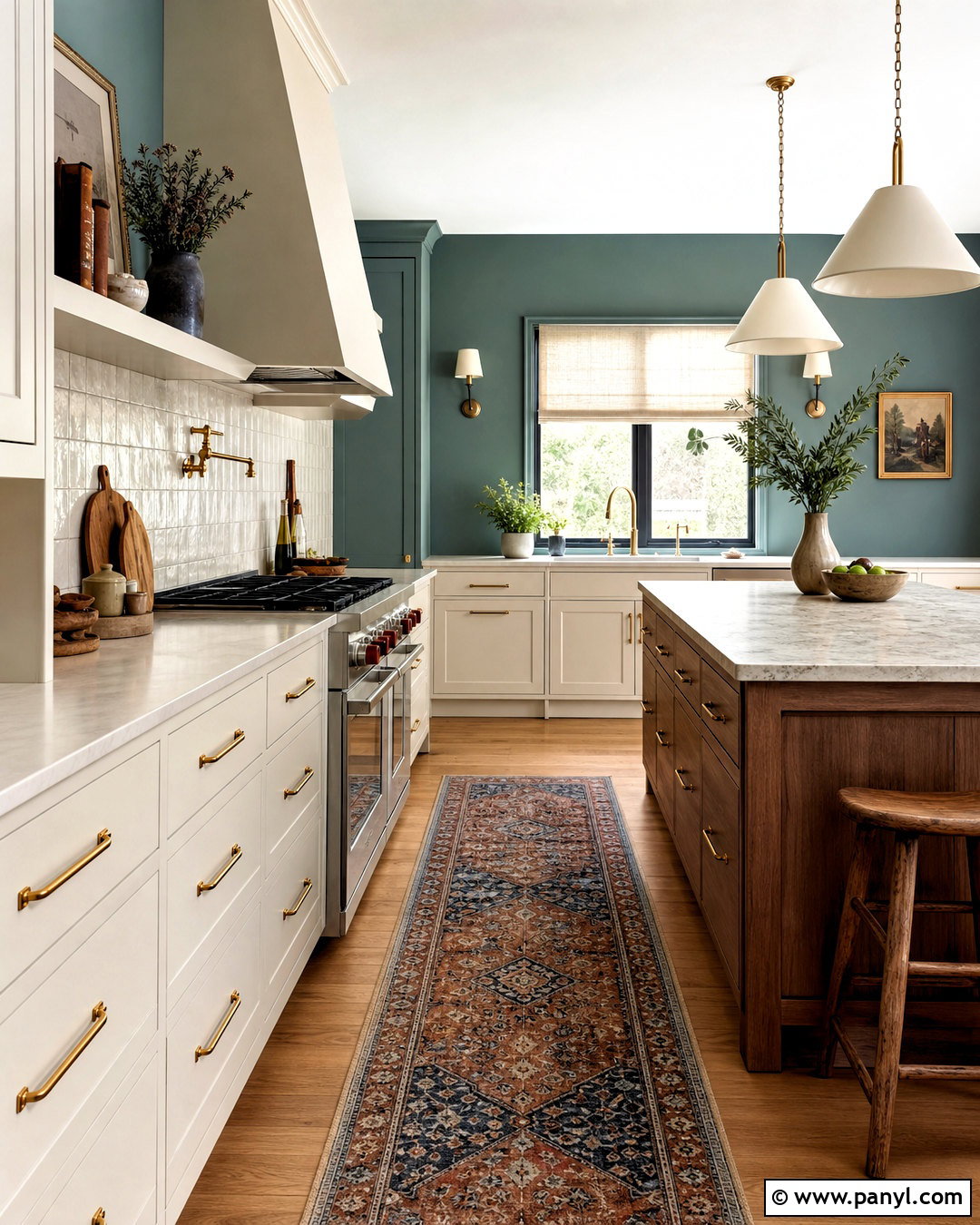
Smoky teal walls combine the calm quality of blue with the natural depth of green. To keep the kitchen balanced, use warm white cabinets, lightly veined quartz countertops, and a backsplash in creamy handmade tile. A walnut island and medium oak flooring bring out the warmer side of the teal. Choose antique brass pulls and cone-shaped pendants for a refined contrast against the wall color. Linen Roman shades should remain light so the windows do not disappear into the deeper walls. Add a patterned runner with rust, cream, and muted blue details to connect the palette. The completed room feels colorful and confident, yet the softened teal remains easier to coordinate than a highly saturated turquoise or emerald shade.
17. Charcoal Gray Kitchen Walls
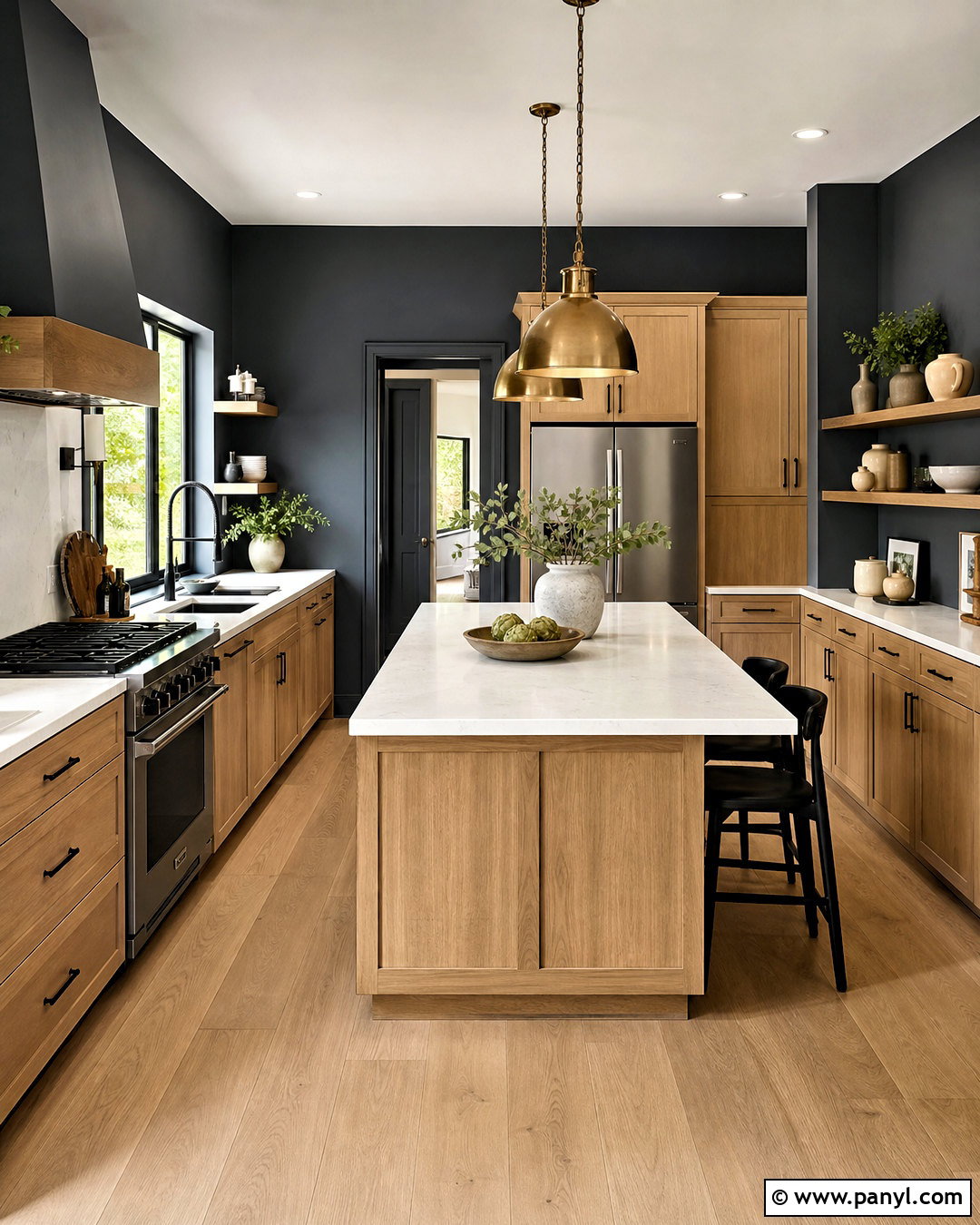
Charcoal gray walls can give a large, bright kitchen architectural depth and a clean contemporary character. Pair them with white oak cabinets, bright white quartz counters, and a simple white backsplash to prevent the overall design from becoming too dark. Use matte black hardware for a streamlined look, but introduce brushed brass pendants to add warmth and visual interest. Pale oak flooring and a large natural wood island will balance the deep wall color. Keep curtains or shades off-white, allowing daylight to remain the dominant light source. A few green plants and cream ceramic pieces soften the hard surfaces. This high-contrast kitchen looks strongest when the charcoal has warm undertones that coordinate with the wood rather than appearing cold or blue.
18. Pale Peach Kitchen Walls
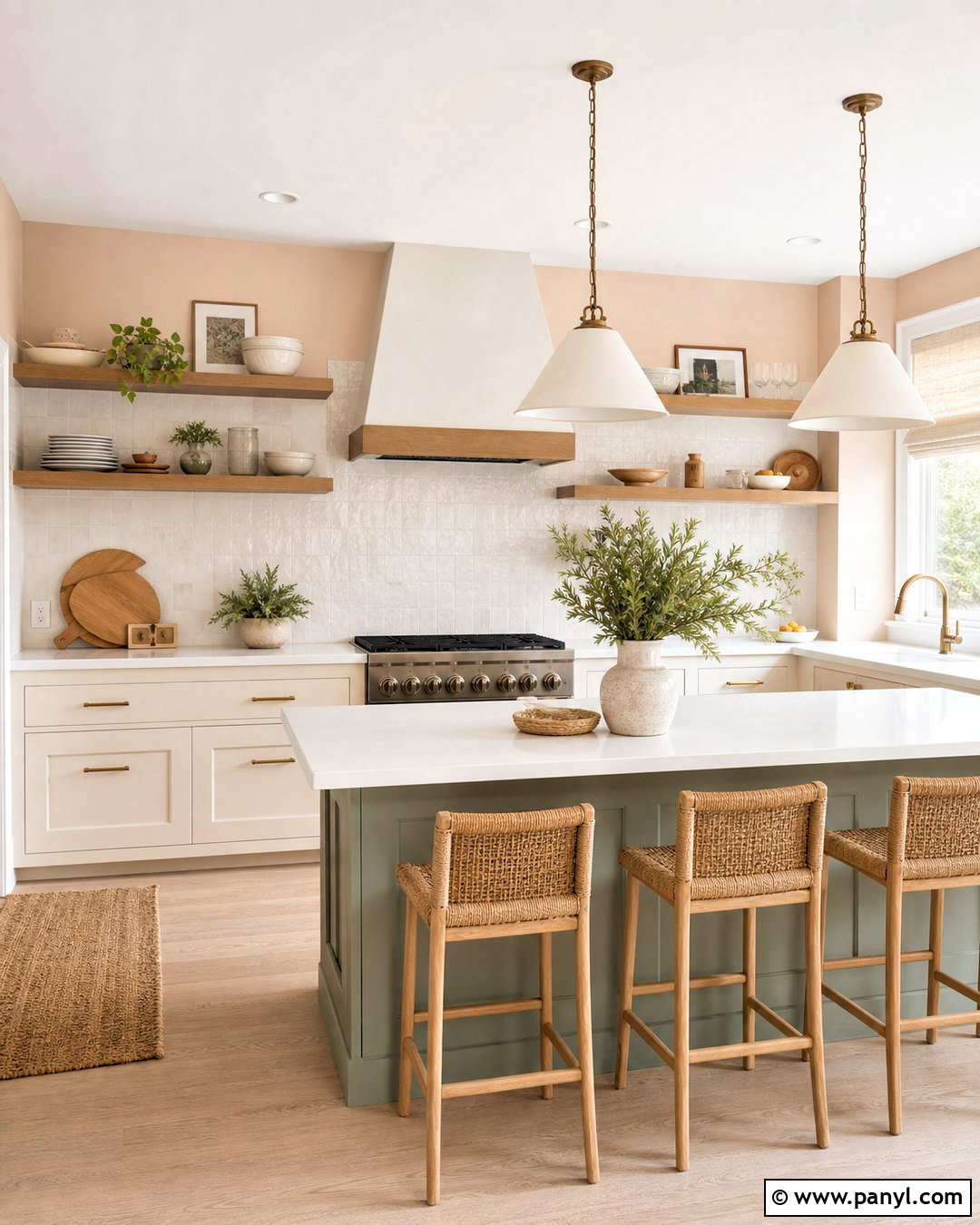
Pale peach walls cast a subtle, flattering warmth across a kitchen and work beautifully with light natural materials. Build the design around cream cabinets, white quartz counters, and a softly textured off-white backsplash. White oak flooring, open shelves, and woven stools maintain the fresh atmosphere. Choose champagne bronze hardware instead of bright yellow brass for a gentler metallic accent. A light sage island or small breakfast table introduces a complementary color while keeping the room relaxed. Use sheer linen shades and simple ceramic pendants to preserve brightness. Pale peach should be softly muted rather than candy-colored. When coordinated with warm neutrals and restrained green accents, it creates a complete kitchen that feels cheerful, airy, and pleasantly different from standard beige.
19. Cocoa Brown Kitchen Walls
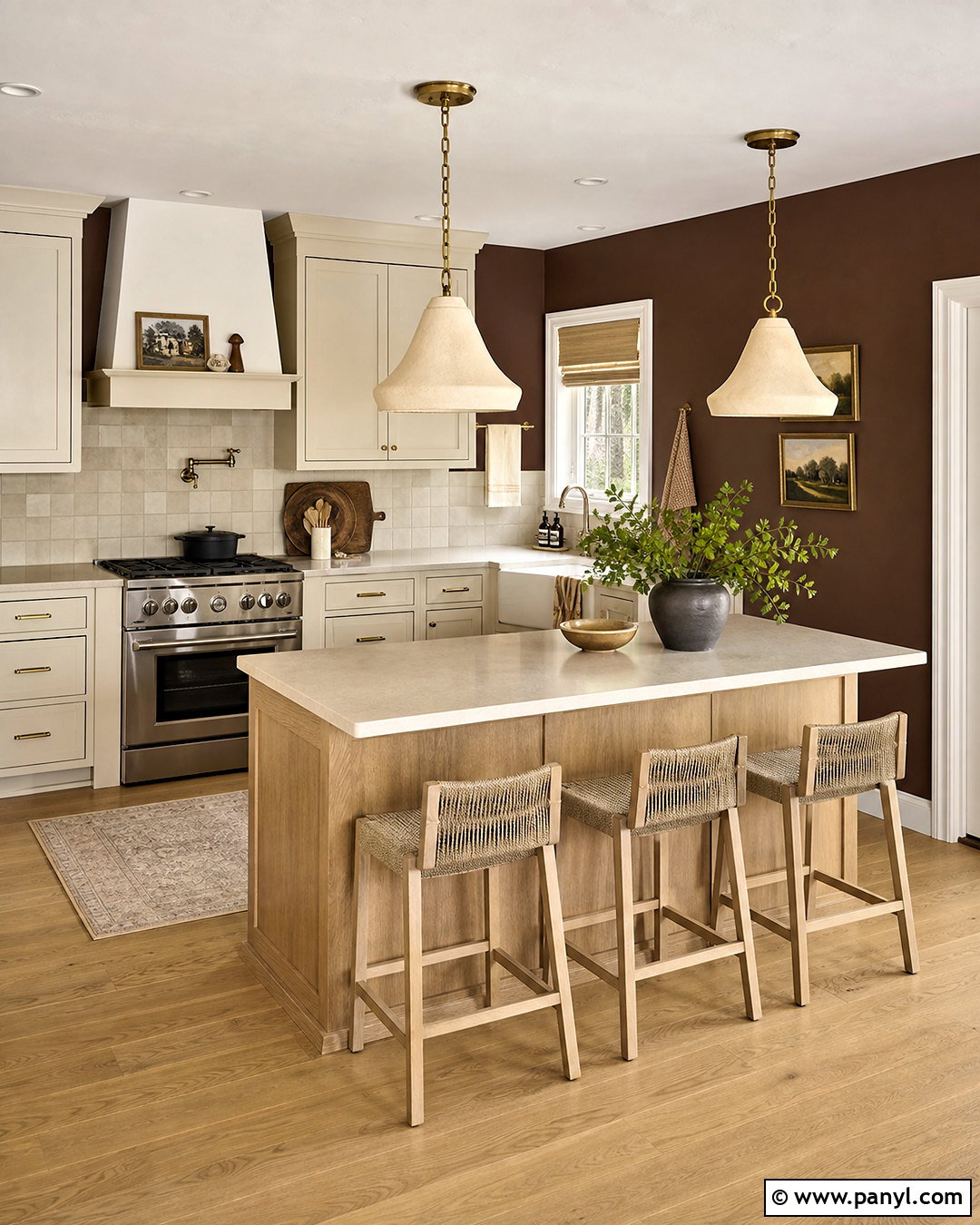
Cocoa brown walls create a rich, cocooning kitchen that still feels welcoming when balanced with lighter cabinetry and stone. Choose a medium brown with subtle gray undertones, then pair it with creamy white cabinets, beige quartz counters, and a backsplash of warm ivory tile. A light oak island and matching flooring will lift the darker walls and preserve visual contrast. Add aged brass hardware, plaster pendants, and woven counter stools to emphasize the layered earth-tone palette. Keep the ceiling bright but warm, and use large linen shades that allow plenty of filtered daylight. Cream ceramics, wooden serving boards, and muted green accents finish the room. This sophisticated scheme suits traditional, transitional, and organic-modern kitchens with strong natural light.
20. Soft Lavender Kitchen Walls
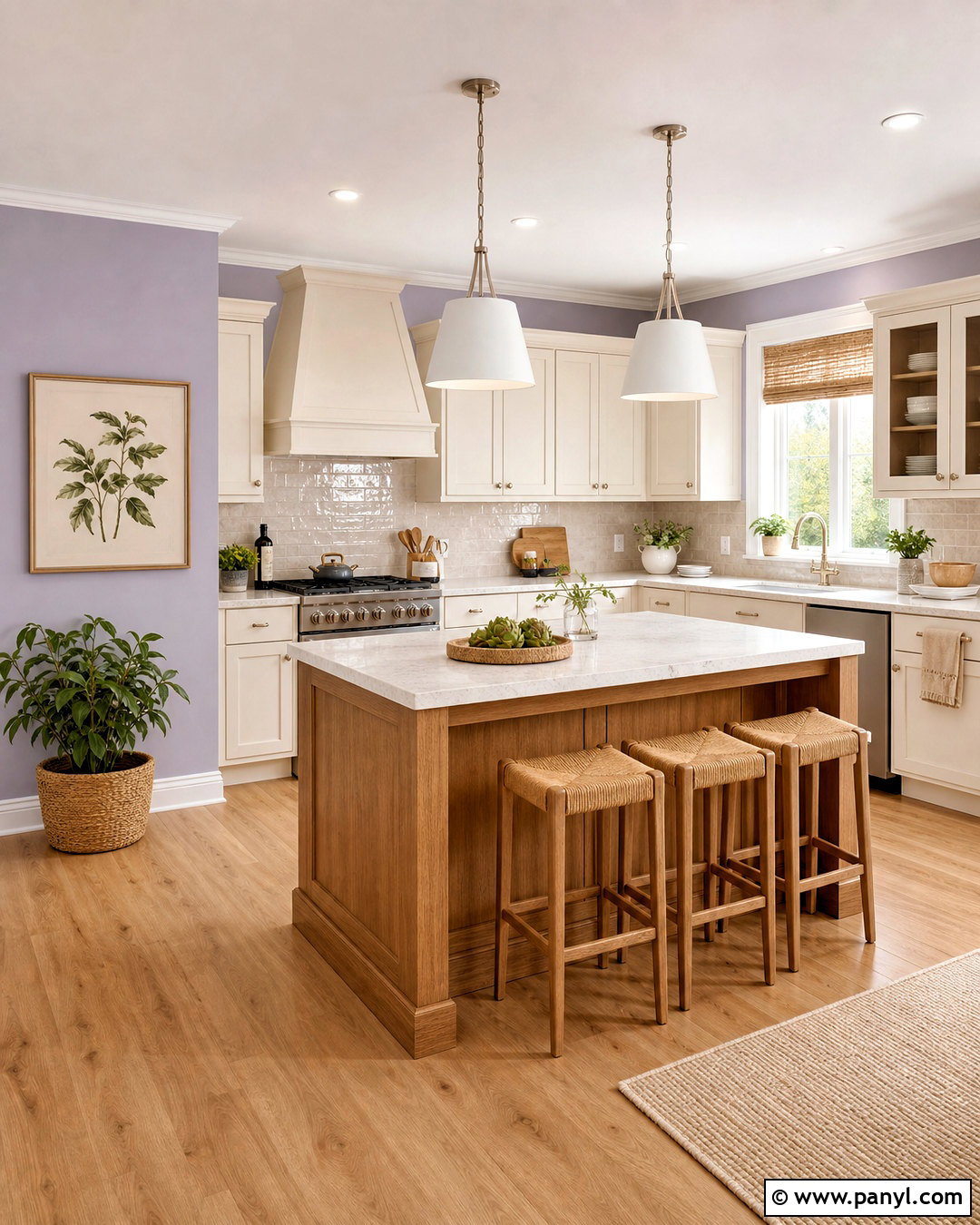
Soft lavender walls offer an unexpected kitchen color that can remain calm and highly livable when gray undertones soften the purple. Pair the walls with warm white Shaker cabinets, pale quartz counters, and a backsplash of creamy glazed tile. Natural oak flooring and a matching island add essential warmth, while polished nickel pulls keep the room looking fresh. Choose simple white pendants and light linen window treatments to support an airy design. Muted sage accessories, botanical artwork, and neutral stoneware subtly balance the lavender. Avoid highly saturated purple decor or cool blue-white trim. With restrained materials and thoughtful contrast, the complete kitchen feels gentle, bright, and personal without looking childish, overly decorative, or disconnected from the rest of the home.
Conclusion:
These 20 kitchen paint colors for walls demonstrate how a single shade can guide an entire room while still working with practical finishes and everyday needs. Warm whites, oatmeal tones, greige, and mushroom offer dependable neutral foundations. Sage, olive, dusty blue, and teal bring nature-inspired color, while terracotta, blush, peach, and butter yellow create welcoming warmth. Deeper navy, charcoal, cocoa, and olive work best when balanced with pale counters, warm wood, and generous light. Always compare samples beside your cabinets, flooring, backsplash, and countertops before painting. Observe each option during morning, afternoon, and evening light. With that simple preparation, you can choose a kitchen wall color that feels cohesive, comfortable, and genuinely suited to your home.

Related Ideas and Inspiration:

Leave a Reply