
A hallway may be narrow or purely practical, but its ceiling offers valuable space for color, pattern, and personality. These painted ceiling hallway ideas turn the often-forgotten fifth wall into an intentional part of the home. A pale ceiling can brighten a windowless corridor, while a saturated shade creates depth and drama. Patterns can also correct awkward proportions or connect rooms with different color schemes. For a finished result, coordinate the ceiling with the walls, doors, lighting, flooring, and artwork rather than treating it as a separate feature. Always test paint under the hallway’s actual lighting before committing. From quiet blue and soft sage to graphic stripes and high-gloss navy, the complete looks below offer practical inspiration through 20 painted ceiling hallway ideas.

1. Light Blue Painted Hallway Ceiling
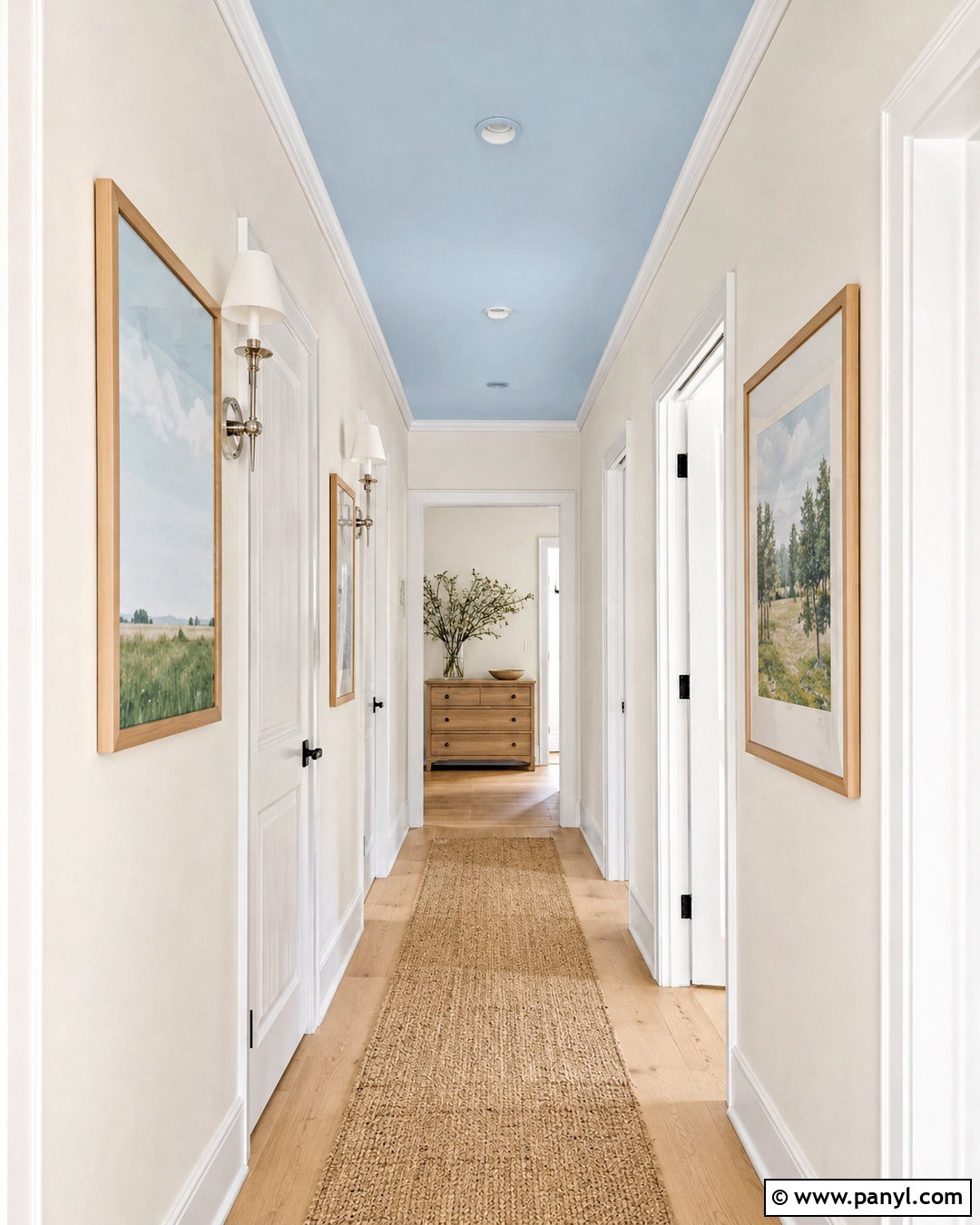
A light blue ceiling gives a narrow hallway an open, airy feeling without making the space look cold. Choose a soft powder blue with a slightly gray undertone, then pair it with warm white walls and crisp white doors. Pale oak flooring and a natural woven runner will bring warmth to the cooler ceiling color. Add polished nickel wall sconces or a simple frosted glass pendant for clean illumination. A row of light wood frames can continue the relaxed palette without overcrowding the walls. For continuity, repeat the blue in small details, such as artwork, a ceramic bowl, or the runner’s border. Keep the baseboards white so the hallway maintains a bright, structured appearance from floor to ceiling.
2. Sage Green Painted Hallway Ceiling
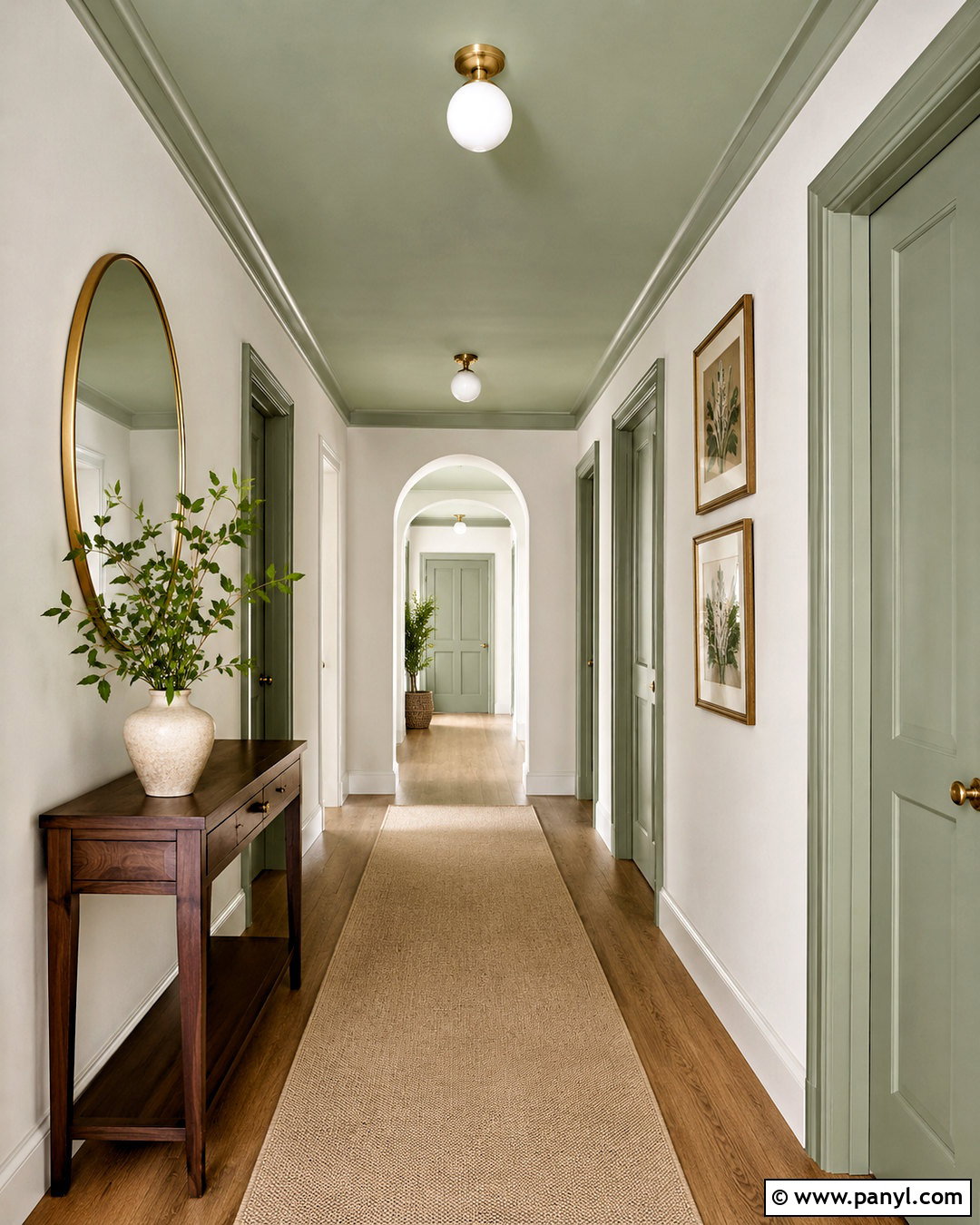
Soft sage green brings a natural, restful quality to a busy hallway. It works especially well with creamy white walls, medium oak flooring, and doors painted in a slightly deeper olive green. Use a flat finish on the ceiling to soften surface imperfections, while choosing satin paint for the doors and trim. A slim walnut console, a rounded brass mirror, and botanical artwork complete the earthy design. Install simple opal glass ceiling lights so the green remains clear rather than shadowy. A beige runner with subtle green lines will connect the floor and ceiling. This complete hallway look feels calm and welcoming, yet it has enough contrast to make the painted ceiling noticeable as soon as someone enters the space.
3. Blush Pink Painted Hallway Ceiling
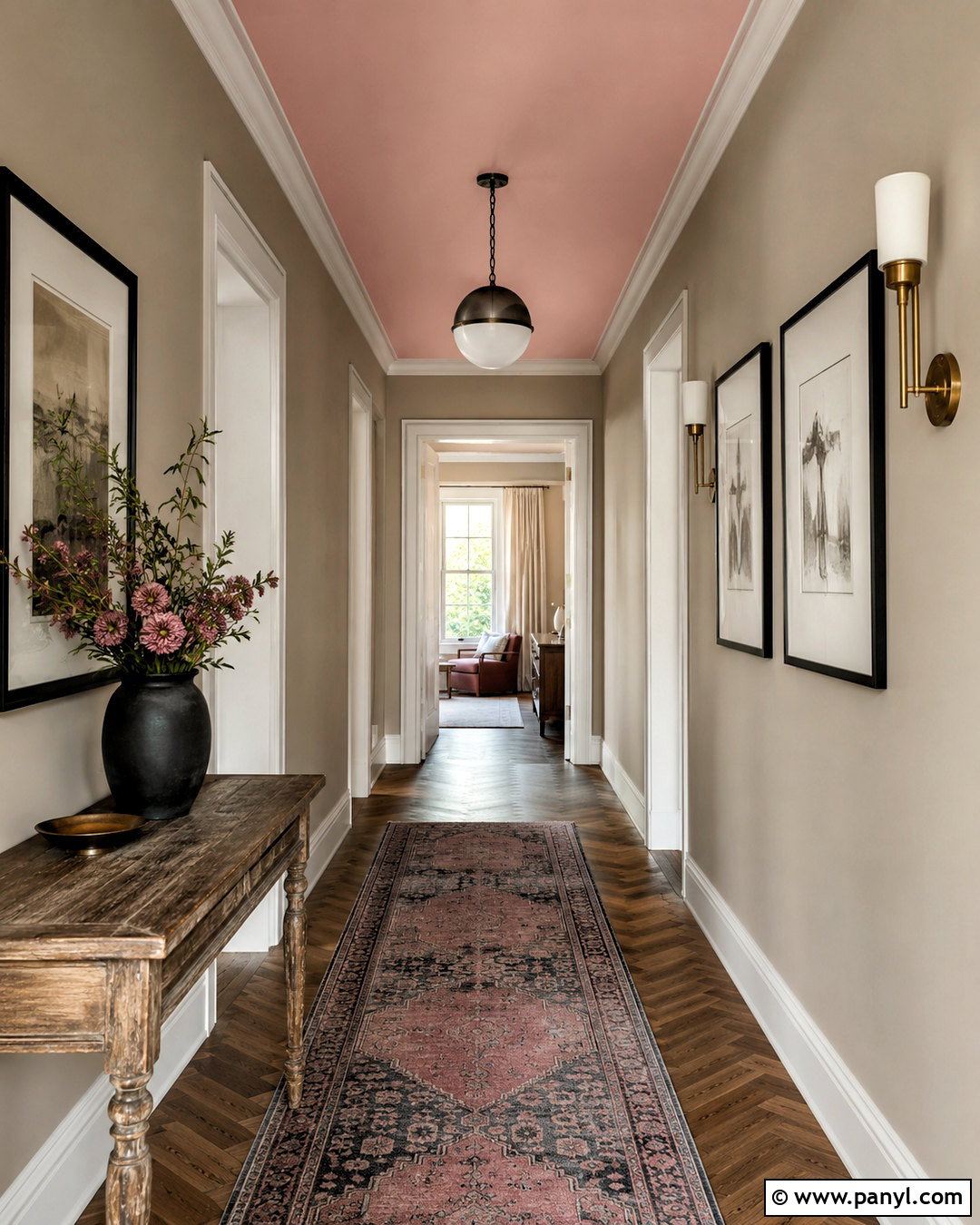
Could a subtle pink ceiling make a hallway feel warmer? A muted blush shade can cast a gentle glow over a space while remaining easy to decorate. Balance it with soft greige walls, white trim, and warm herringbone wood flooring. Black-framed artwork gives the pale palette definition, while a narrow antique-style wood table adds character. Choose a runner containing dusty rose, cream, and charcoal so the ceiling color feels connected to the lower half of the hallway. Brushed brass sconces or a small milk glass pendant will enhance the warmth. Avoid overly sugary pinks and select a dusty tone with beige or gray undertones. The result is polished, comfortable, and suitable for both traditional and contemporary homes.
4. Yellow Painted Hallway Ceiling
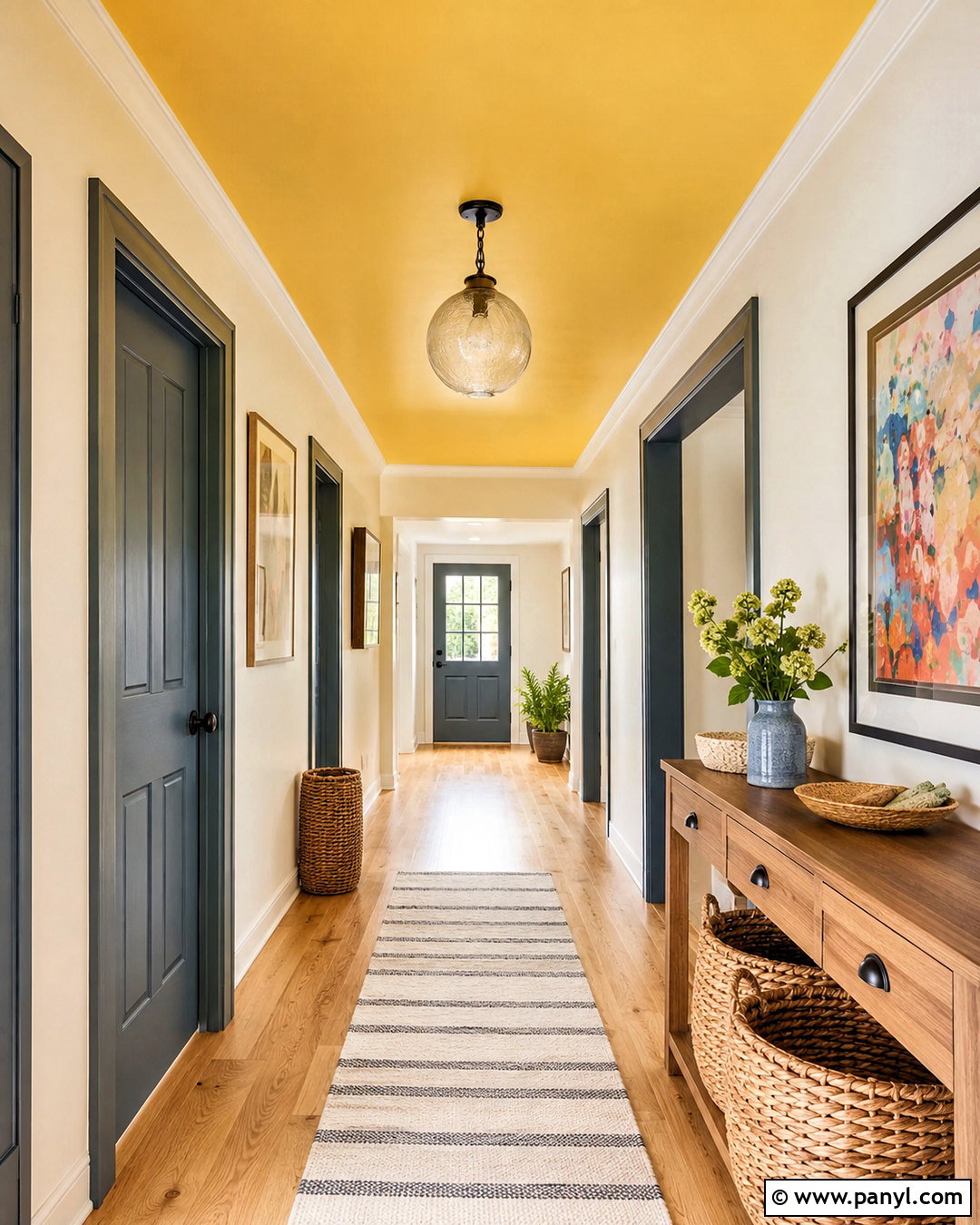
A cheerful yellow ceiling can energize a hallway that receives little natural light. Choose a softened butter yellow rather than a highly saturated primary shade, then surround it with warm white walls and matching trim. Light oak flooring, a striped cream runner, and woven baskets will keep the design casual and grounded. Paint the interior doors a muted blue-gray to create a gentle complementary contrast. A simple globe pendant provides even illumination and allows the ceiling to remain the focal point. Decorate the walls with colorful but restrained prints featuring yellow, blue, and neutral accents. This scheme is particularly effective for a family hallway because it feels bright and approachable. Keep furnishings minimal so the yellow remains uplifting rather than visually overwhelming.
5. Terracotta Painted Hallway Ceiling
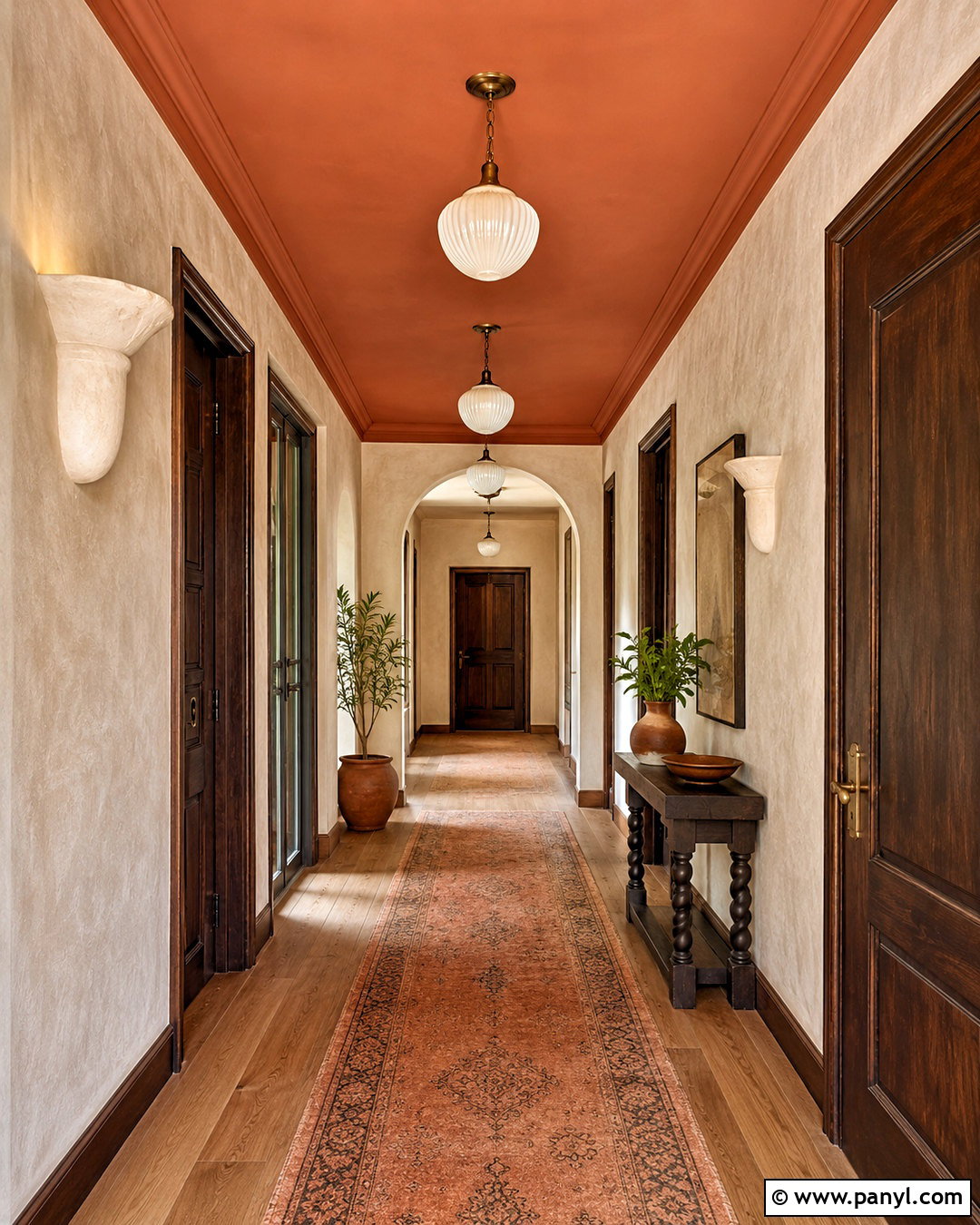
Warm terracotta overhead creates an earthy hallway with depth and Mediterranean character. Pair the ceiling with creamy limewash-style walls, dark walnut doors, and aged brass hardware. Natural stone-look tile or warm oak flooring provides a durable base, while a faded rust and beige runner links the ceiling to the floor. Choose wall sconces with white plaster shades for a softly sculptural touch. A slim console in dark wood can hold a ceramic lamp and a simple bowl, while framed landscape artwork adds muted greens and blues. Extend the terracotta paint onto the crown molding to give the ceiling a stronger architectural outline. This full design works best when the remaining colors are quiet, allowing the rich ceiling to feel intentional, warm, and balanced.
6. Navy Blue Painted Hallway Ceiling
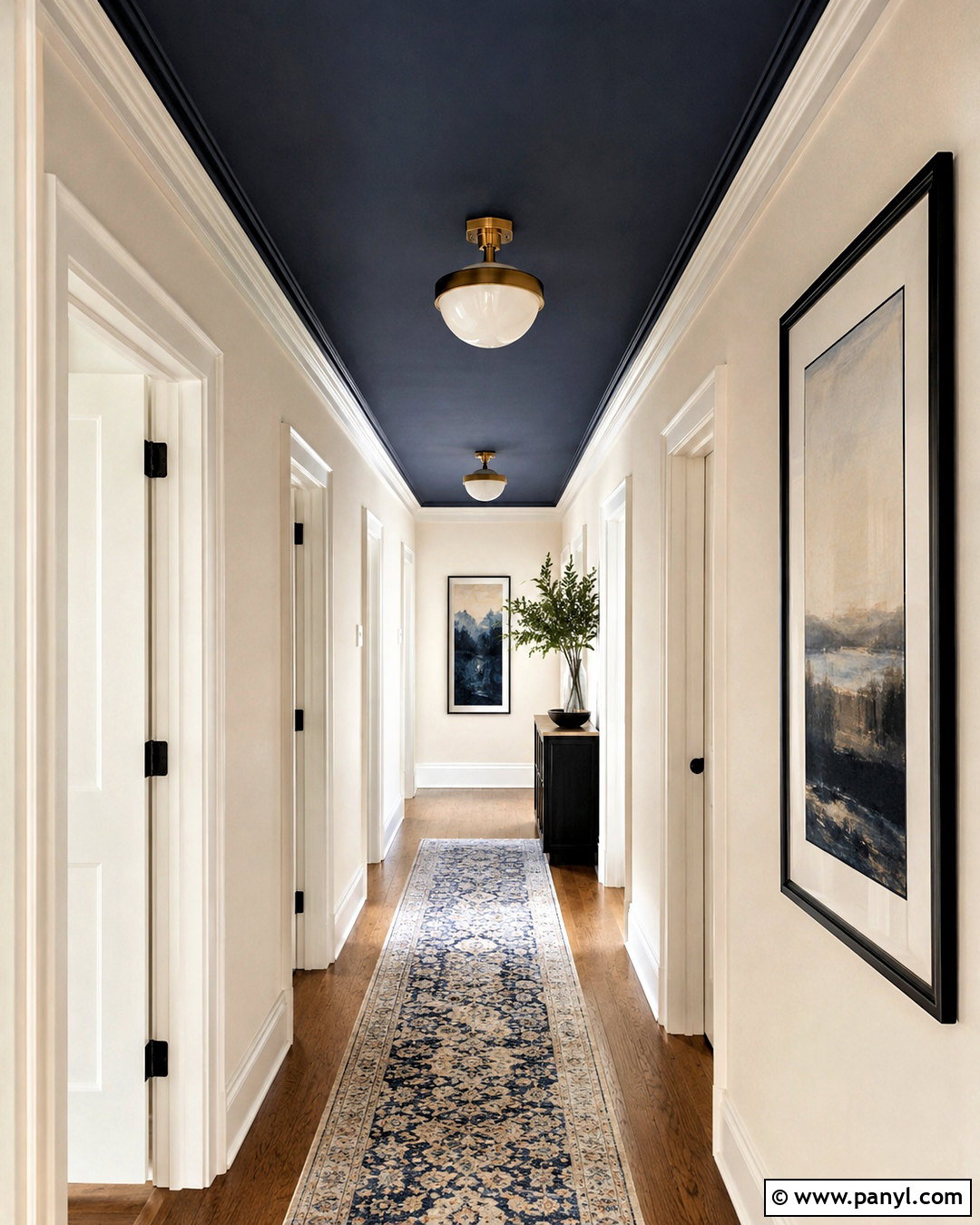
Deep navy paint turns a tall hallway ceiling into a dramatic architectural feature. Keep the walls a clean warm white and paint the doors, baseboards, and crown molding the same white for sharp contrast. Medium-toned wood flooring prevents the scheme from feeling too formal, while a navy and ivory runner connects the colors. Install two or three semi-flush brass lights along a long corridor to create rhythm and illuminate the dark surface evenly. Large artwork in black or brass frames can make the white walls feel finished without adding competing colors. If the hallway has a window, repeat navy on the window frame or a nearby bench cushion. The complete look feels tailored, structured, and bold while remaining practical for an average home.
7. Charcoal Painted Hallway Ceiling
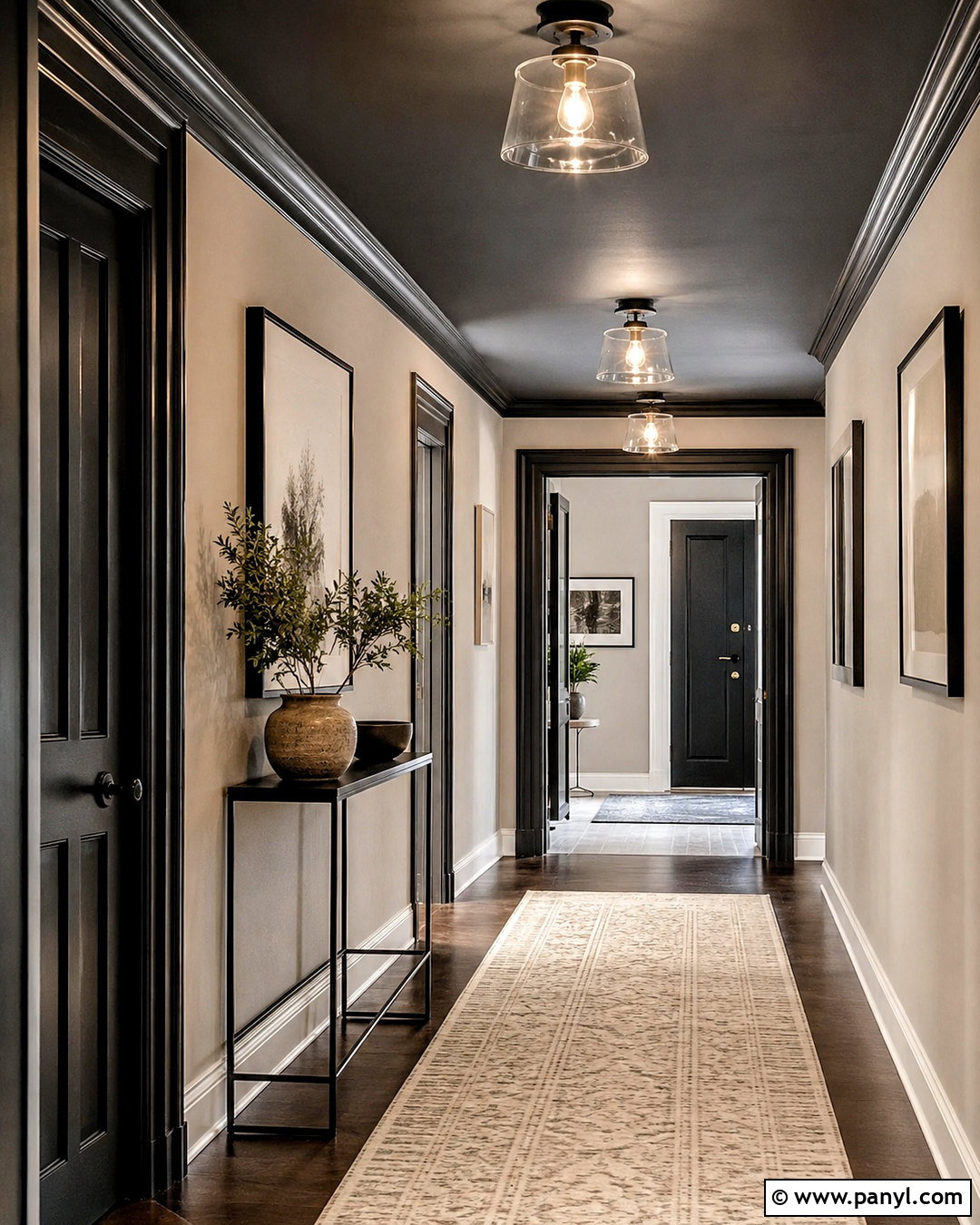
A charcoal ceiling can make a long corridor feel more intimate and visually balanced. Select a deep gray with warm undertones, especially if the hallway has brown wood flooring or beige finishes. Pair it with pale mushroom walls, charcoal-painted doors, and bright white baseboards for a clean three-color scheme. Matte black picture frames and a black metal console reinforce the ceiling without making every surface dark. Add a cream runner with a small geometric pattern to brighten the floor. Several clear glass ceiling fixtures will distribute light while keeping sightlines open. For a cohesive finish, use charcoal on the crown molding as well. This design creates drama through contrast, yet the warm neutral walls ensure the hallway still feels comfortable and connected to adjoining rooms.
8. Black Painted Hallway Ceiling
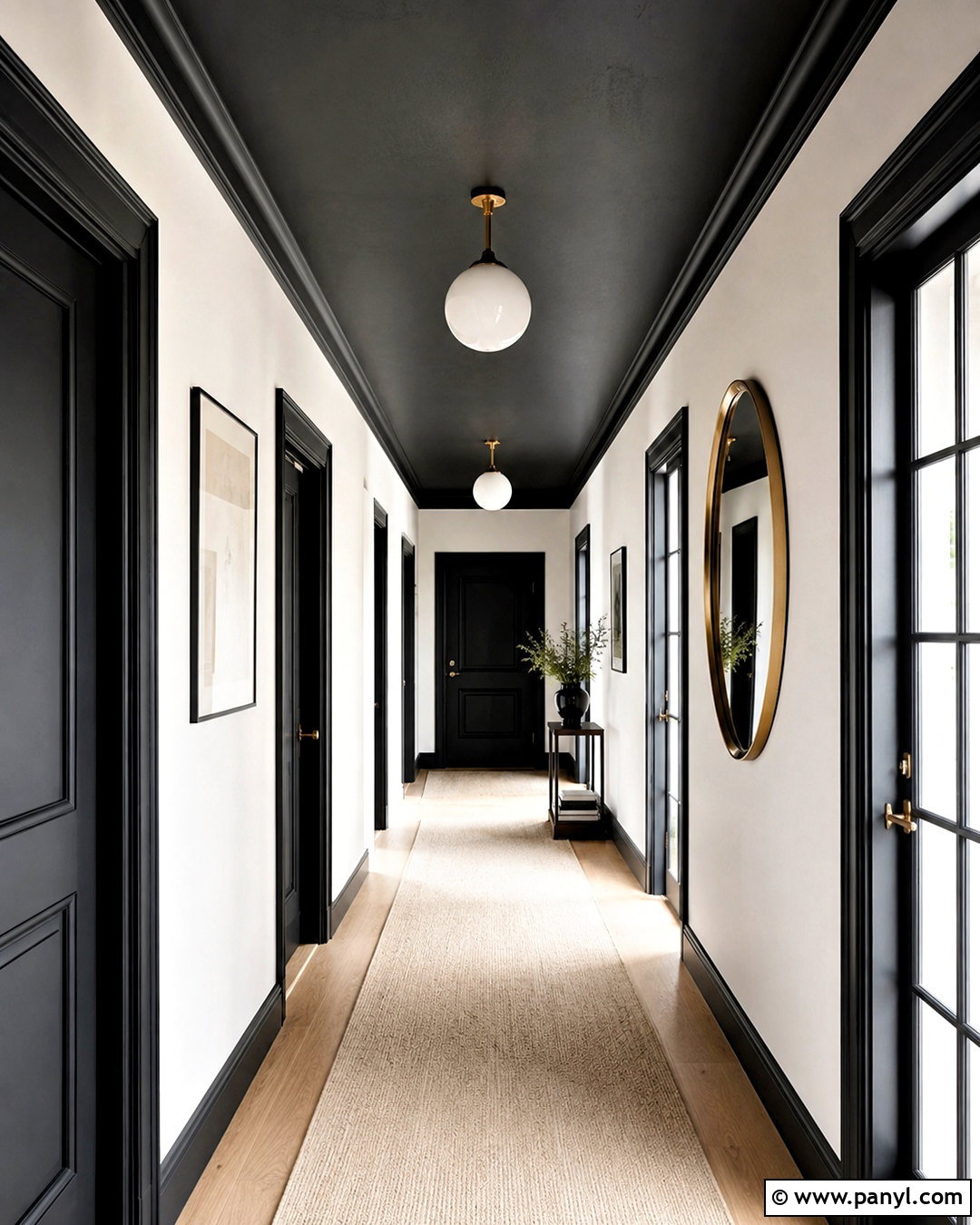
For a sharp modern look, place a matte black ceiling above bright white hallway walls. The dark ceiling visually defines the corridor and highlights clean architectural lines. Continue black onto narrow crown molding, interior doors, and window frames, but keep the baseboards white to avoid a heavy lower edge. Pale oak flooring and a light beige runner add warmth beneath the graphic palette. Select sculptural white or frosted globe fixtures that stand out clearly against the ceiling. Minimal black-framed photography can decorate one wall, while a full-length rounded mirror opens the opposite side. This complete black-and-white hallway works best with strong, evenly spaced lighting. Natural wood and textured textiles soften the contrast, creating a space that feels bold, livable, and thoughtfully composed.
9. Burgundy Painted Hallway Ceiling
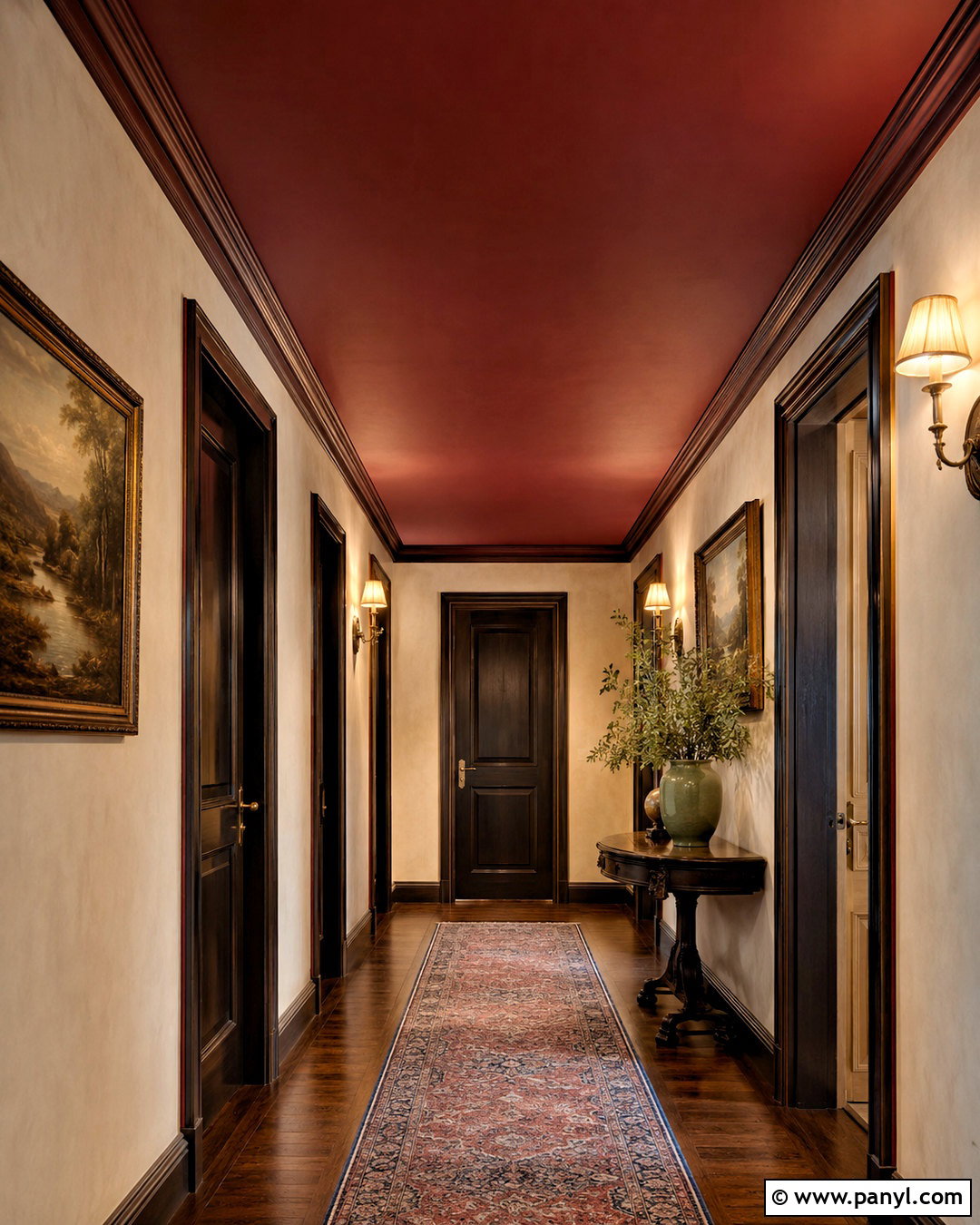
Rich burgundy brings warmth and sophistication to a hallway, especially when paired with traditional details. Paint the ceiling and crown molding in a deep red with brown undertones, then use warm putty on the walls. Dark stained wood doors, antique brass handles, and walnut flooring support the classic palette. Lay down a patterned runner containing burgundy, faded blue, and cream to distribute color throughout the space. Small shaded wall sconces and a decorative flush-mount fixture can add elegance without overwhelming a narrow corridor. Choose landscape paintings or vintage-inspired prints in dark wood frames for the walls. A slim pedestal table at the hallway’s end provides a strong focal point. The finished scheme feels collected and welcoming rather than excessively dark or formal.
10. Lavender Painted Hallway Ceiling
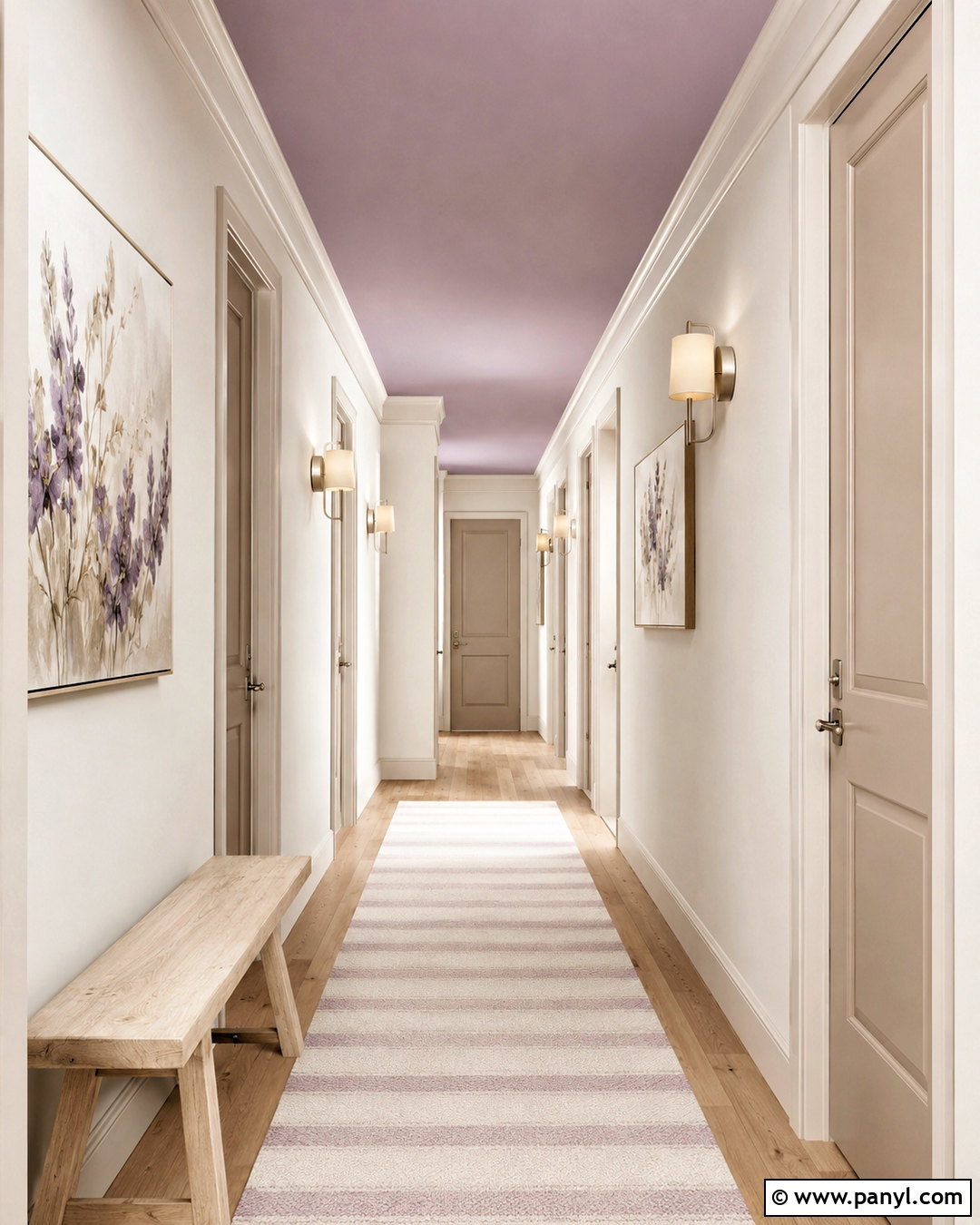
A pale lavender ceiling introduces color in a quiet, unexpected way. Look for a dusty purple with gray undertones and combine it with soft white walls, white trim, and light maple flooring. Paint the interior doors a muted mushroom shade to add warmth and prevent the palette from feeling overly cool. A cream runner with thin lavender and taupe stripes will repeat the ceiling color subtly. Add brushed nickel sconces, a simple white pendant, and artwork featuring muted purple, green, and beige. Keep furniture light and compact, such as a bleached wood bench or narrow console. This complete hallway feels fresh and gentle, making it suitable for bedrooms, upstairs corridors, or transitional areas where a stronger ceiling color might compete with nearby rooms.
11. Greige Painted Hallway Ceiling
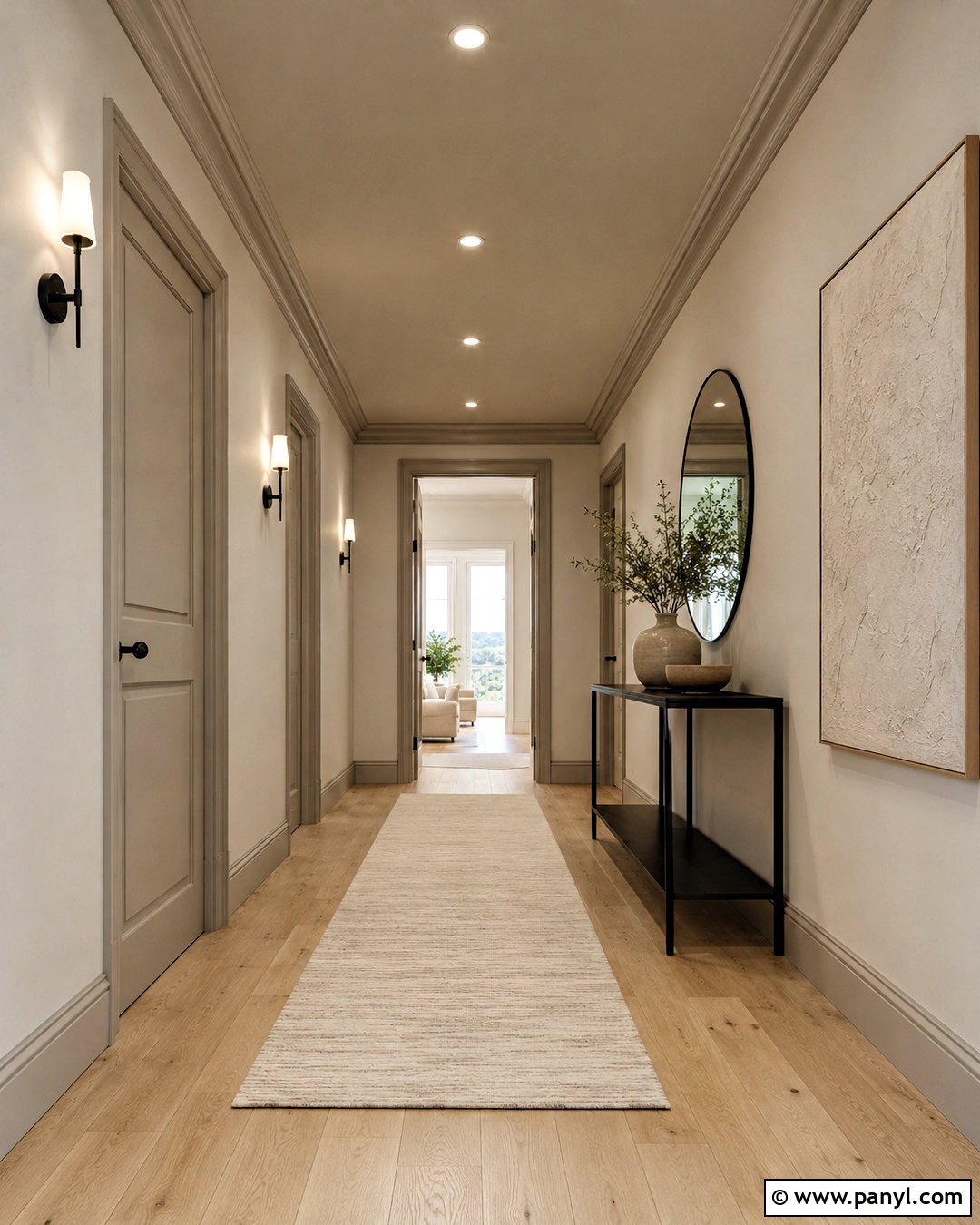
Soft greige creates a polished ceiling without the starkness of standard white. Use the same warm greige on the ceiling, crown molding, and doors, then choose walls two shades lighter for subtle tonal depth. White oak flooring and an ivory wool runner will maintain the light, neutral atmosphere. Bring in contrast through black metal sconces, dark picture frames, and a slim black console. A large round mirror can reflect light from nearby rooms and help widen the corridor visually. Select warm LED bulbs so the greige does not appear flat or overly gray. Textured artwork, pottery, and woven storage baskets can add interest without introducing strong color. This understated hallway design works across modern, farmhouse, transitional, and minimalist interiors while still making the ceiling feel considered.
12. Color-Drenched Painted Hallway Ceiling
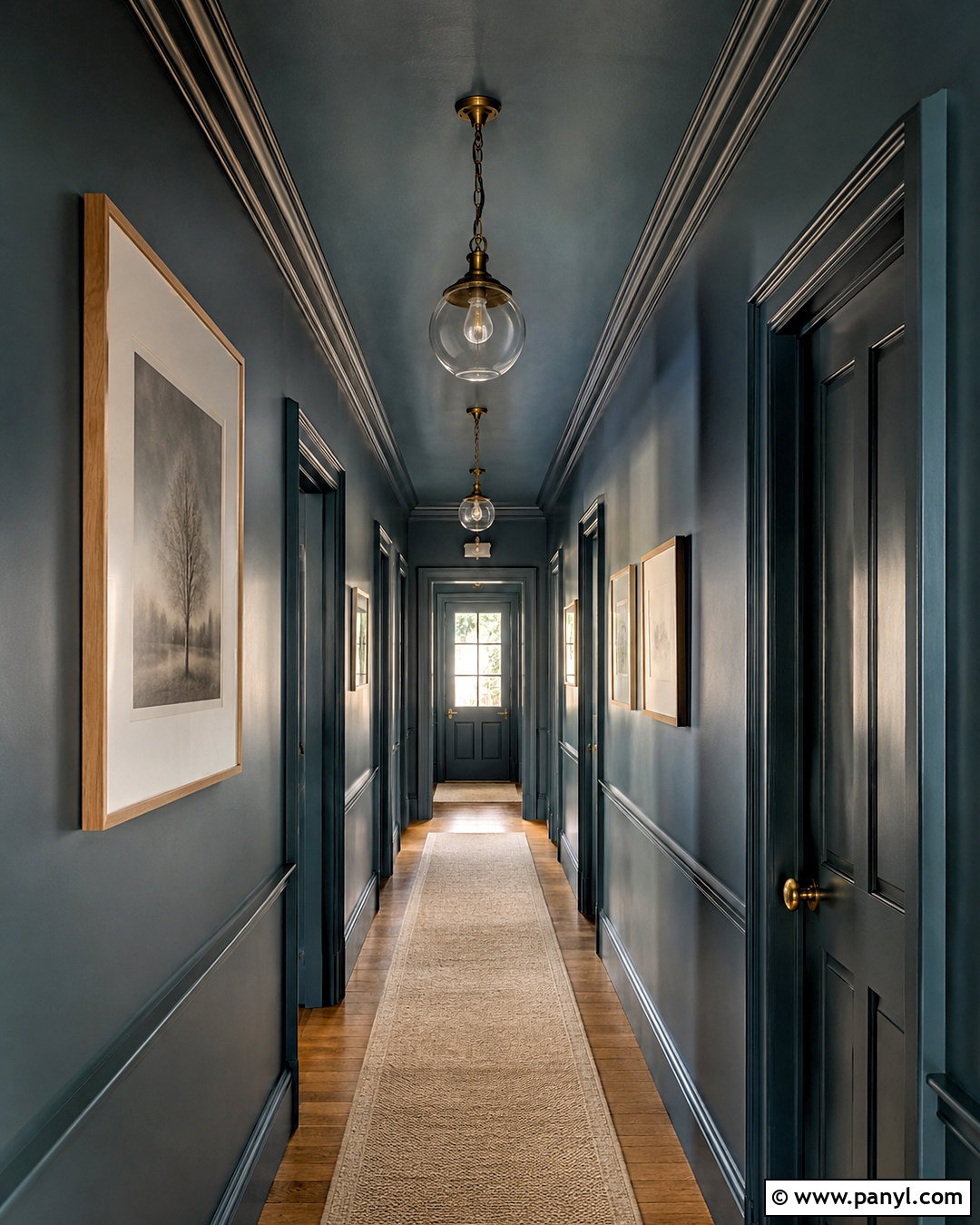
Color drenching creates a seamless hallway by covering the ceiling, walls, doors, and trim in one consistent shade. A muted blue-green is a versatile choice because it feels expressive while remaining restful. Use flat paint overhead, matte or eggshell paint on the walls, and satin on the doors and trim. These finish changes provide gentle definition even though the color stays the same. Add warm oak flooring, an oatmeal runner, and aged brass lighting to balance the cool paint. Artwork in cream mats and light wood frames will stand out without interrupting the enveloping effect. Keep the hallway uncluttered and use several light sources to reveal corners clearly. The result is a cohesive passage that feels intentional, immersive, and connected from end to end.
13. Contrasting Painted Hallway Ceiling
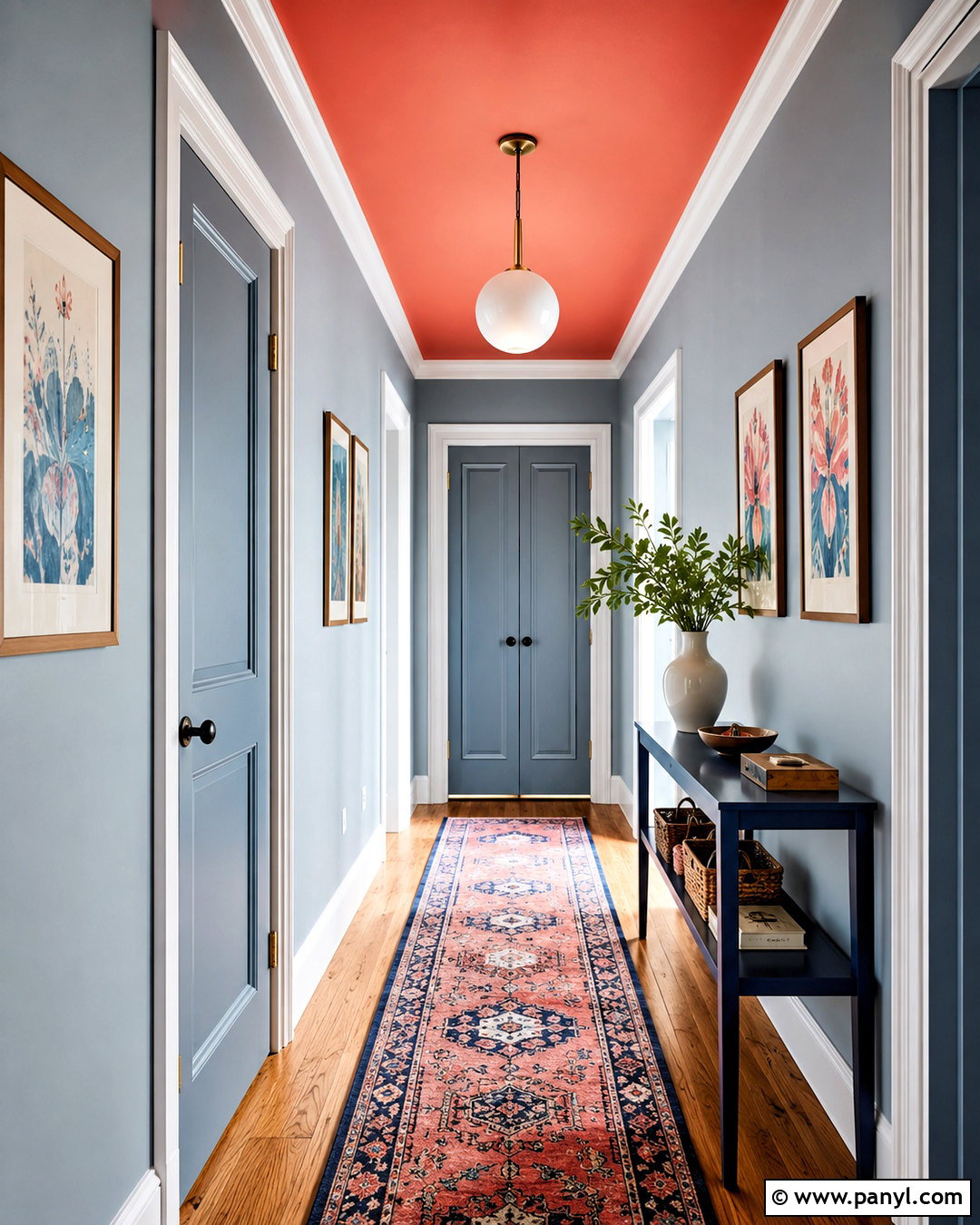
A contrasting ceiling can bring clear structure to a simple hallway. Try a muted coral ceiling with pale blue-gray walls, crisp white trim, and doors painted the same blue-gray as the walls. Warm oak flooring helps unite the cool and warm tones, while a patterned runner containing coral, navy, and cream ties the entire palette together. Choose a white globe pendant or flush light so the fixture remains visible against the colorful ceiling. Decorate the walls with a balanced series of framed prints rather than a crowded gallery arrangement. A slim navy console at the far end can reinforce the wall color and create a destination. This full design feels colorful but controlled because every major shade appears at least twice throughout the hallway.
14. Two-Tone Painted Hallway Ceiling
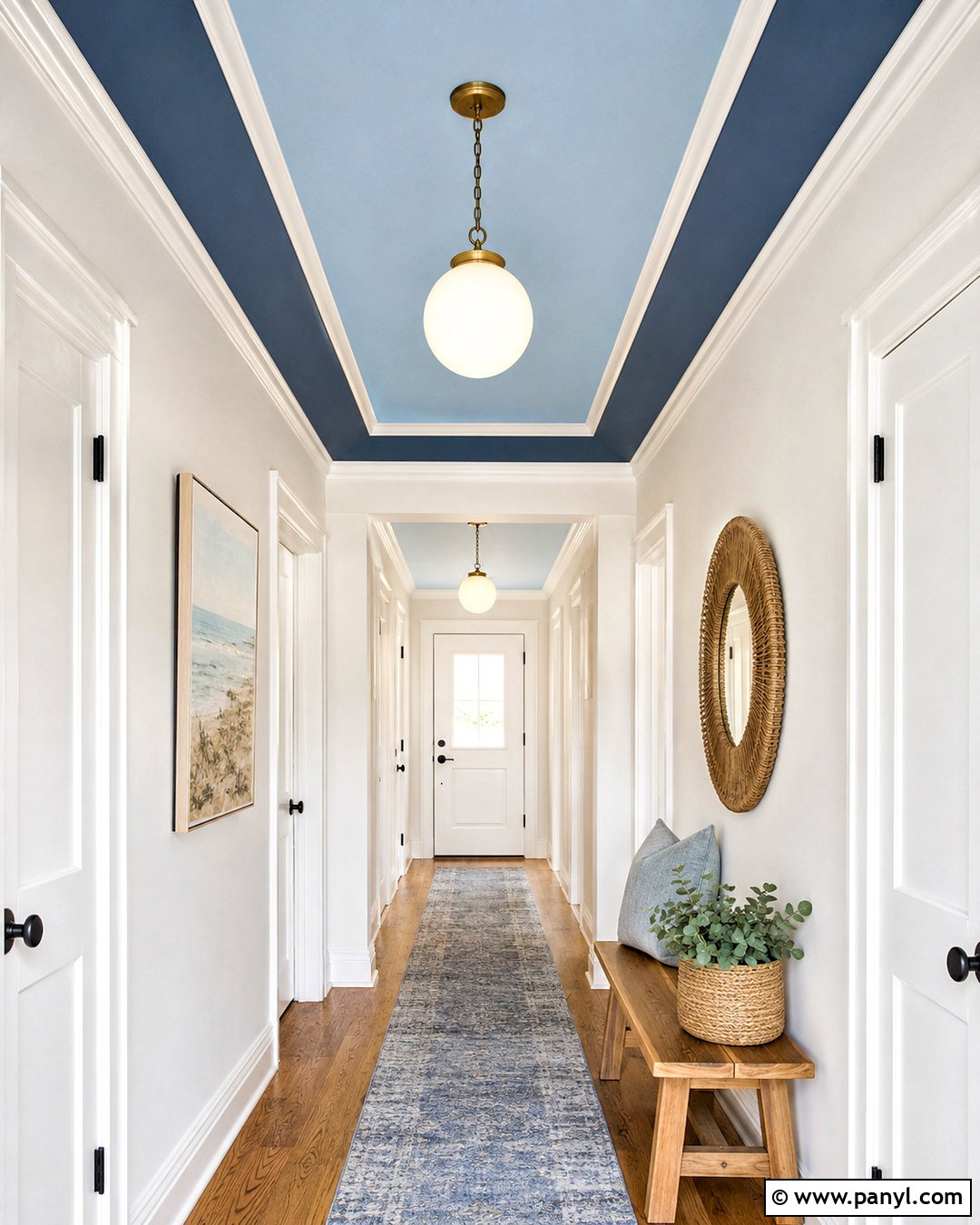
A two-tone ceiling adds detail without requiring an elaborate painted pattern. Cover the center in soft sky blue, then paint a wide perimeter border in deeper slate blue. Use white crown molding to separate the ceiling from warm white walls and keep the design crisp. White doors, medium oak flooring, and a blue-gray runner create a balanced foundation. Center simple opal globe lights within the pale portion so the fixtures strengthen the ceiling’s orderly layout. Add a narrow bench in natural oak and a few coastal-inspired prints with restrained blue accents. Measure and tape the border carefully so it follows the hallway evenly, including around corners. The darker outer band frames the ceiling and gives a plain rectangular corridor a more finished, architectural appearance.
15. Striped Painted Hallway Ceiling
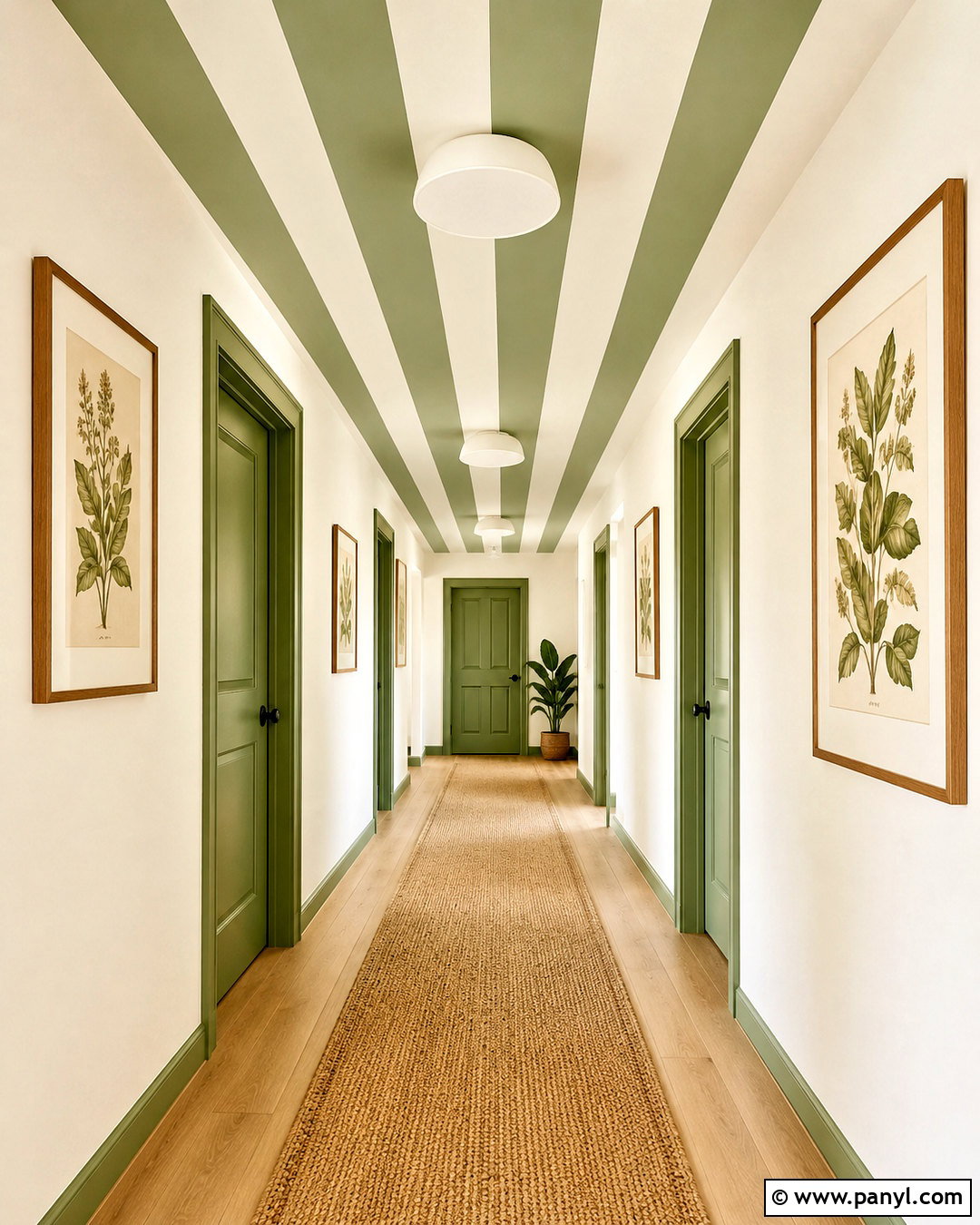
Long painted stripes can emphasize the direction of a hallway and introduce playful movement overhead. Alternate wide bands of warm white and muted sage green, running them from one end of the corridor to the other. Keep the walls warm white and paint the doors in solid sage to support the ceiling pattern. Light wood flooring and a simple tan runner prevent the design from becoming overly busy. Choose small white flush-mount lights that blend into the lighter stripes. On the walls, use a limited collection of botanical prints in matching wood frames. Accurate measuring and clean painter’s tape are essential for straight edges. The finished hallway feels lively and organized, with a complete palette that allows the stripes to stand out without dominating every surface.
16. Geometric Painted Hallway Ceiling
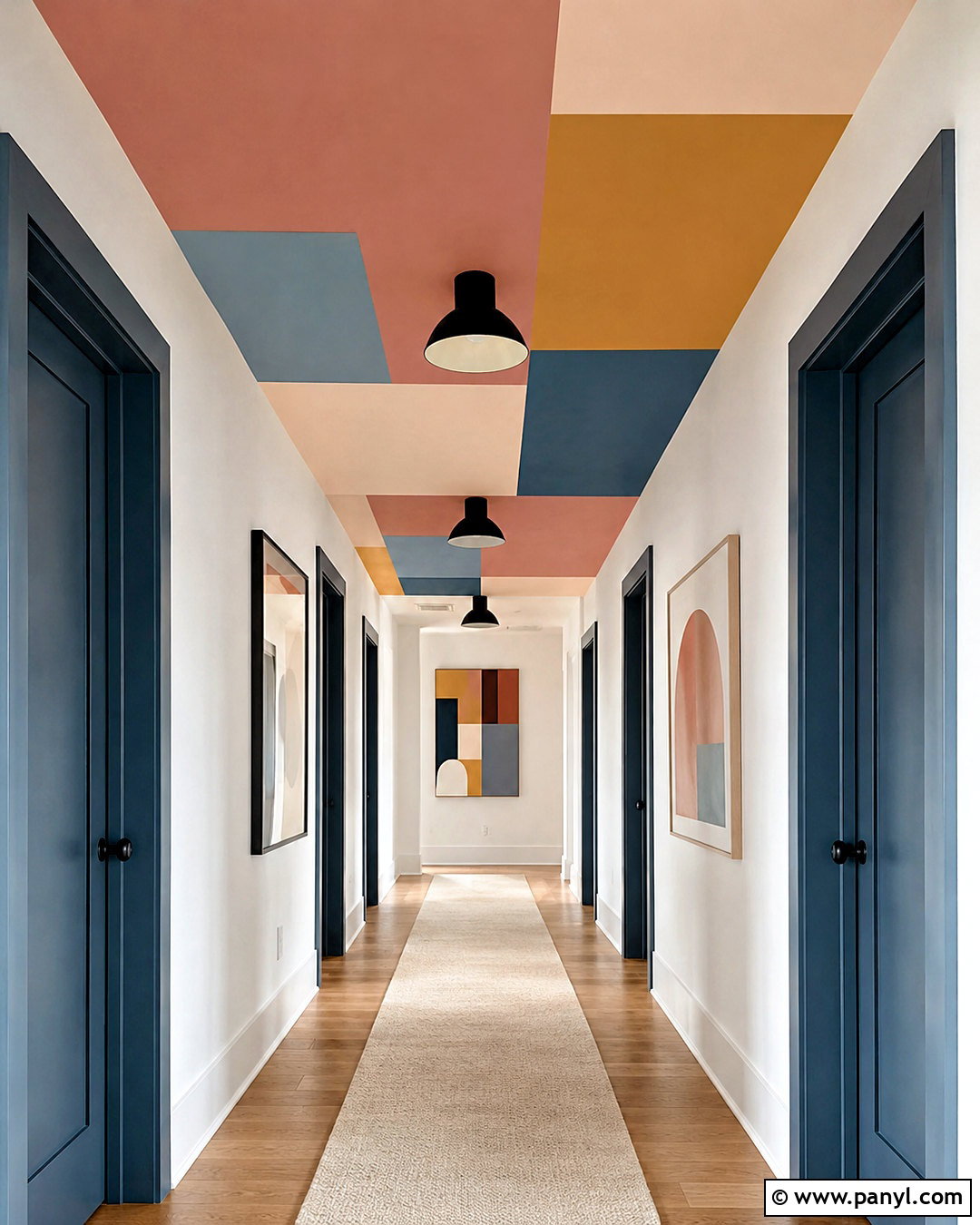
Geometric color blocking transforms a plain hallway ceiling into a modern focal point. Use large rectangles in clay pink, muted mustard, cream, and dusty blue rather than many small shapes. Keep the walls soft white and paint the doors dusty blue to repeat one ceiling color at eye level. Natural oak flooring, a solid cream runner, and matte black lighting provide a calm framework around the pattern. Select one large abstract artwork for the end wall instead of filling both sides with competing designs. The ceiling shapes should follow the hallway’s length and align with doorways or light fixtures whenever possible. This creates visual order and makes the pattern look planned. The complete design is energetic, contemporary, and suitable for a creative family home.
17. Arched Painted Hallway Ceiling
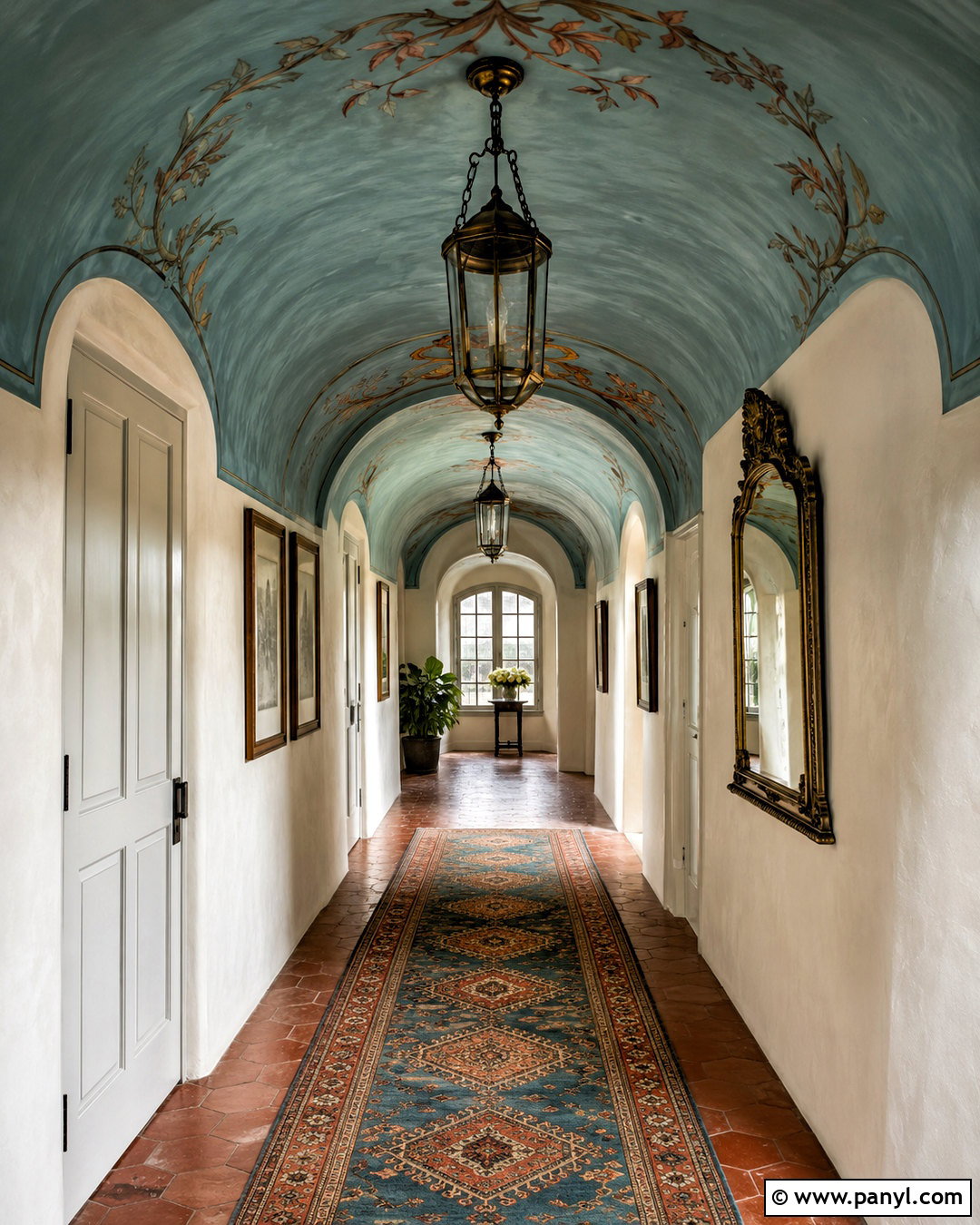
An arched or barrel-vaulted hallway ceiling deserves color that emphasizes its shape. Paint the entire curve in a muted teal, extending the color down to the point where the ceiling meets the vertical walls. Use warm white below that line, along with white doors and understated trim. Terracotta tile flooring or medium walnut boards provide rich warmth against the teal. Install small aged brass lanterns along the center of the arch to highlight its depth. A vintage-inspired runner with teal, rust, and cream will connect the architectural surfaces. Keep wall decor simple, using a few framed drawings or a narrow antique mirror. This approach celebrates the hallway’s curve as one continuous feature and creates a distinctive passage without requiring additional molding or decorative construction.
18. High-Gloss Painted Hallway Ceiling
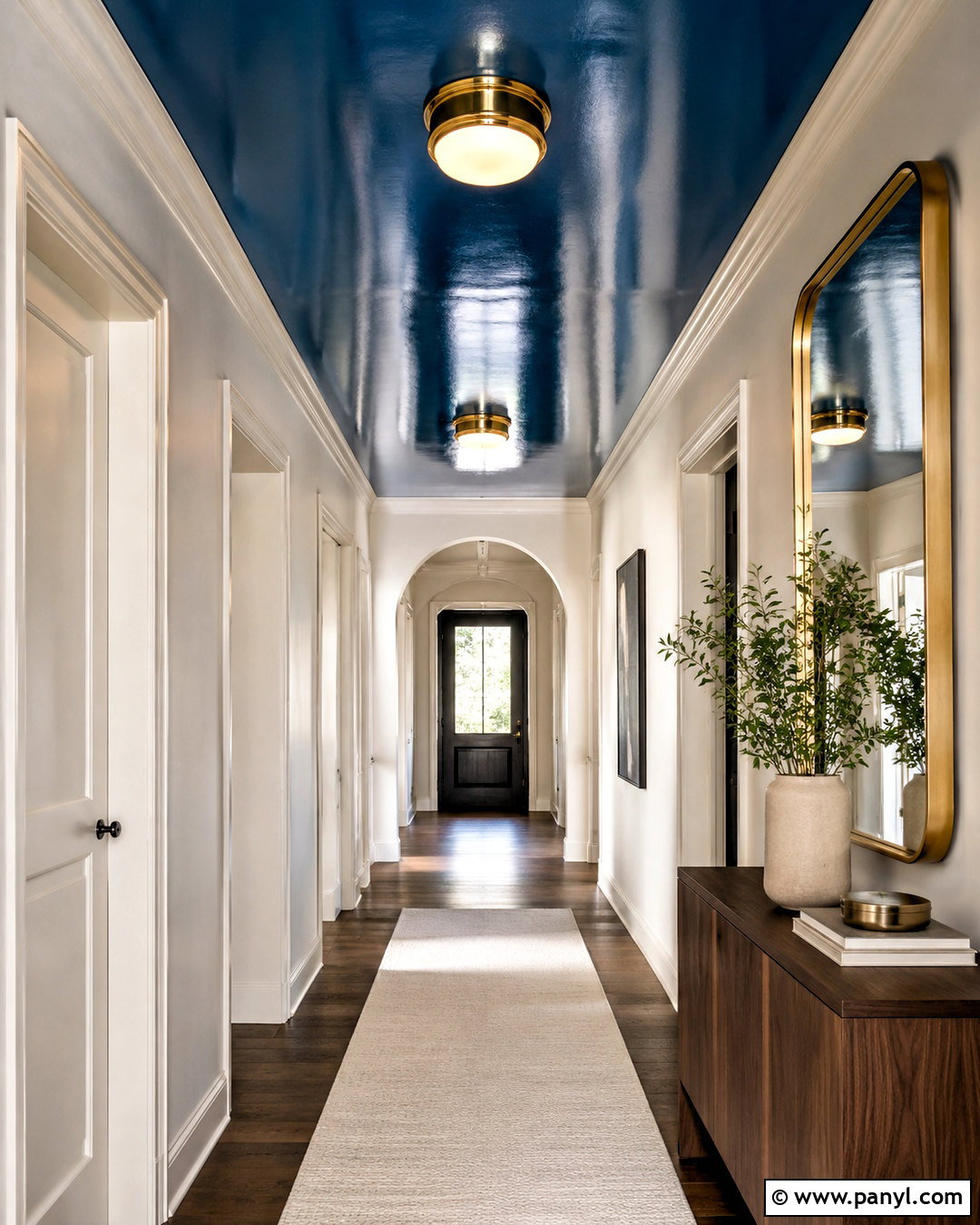
A high-gloss ceiling reflects lighting and gives a hallway a polished, jewel-like finish. Deep peacock blue makes an especially strong statement when paired with matte warm white walls and matching white doors. Because glossy paint highlights surface flaws, carefully patch, sand, and prime the ceiling before applying color. Add dark walnut flooring, a cream runner, and brass flush-mount fixtures that produce attractive reflections overhead. A narrow walnut console and a large brass-framed mirror will continue the refined material palette. Keep artwork limited and use solid-colored textiles so the reflective ceiling remains the main feature. This complete hallway design feels glamorous but still practical when used in a compact space. Consistent lighting is important for avoiding harsh glare and uneven dark areas.
19. Painted Hallway Ceiling Border
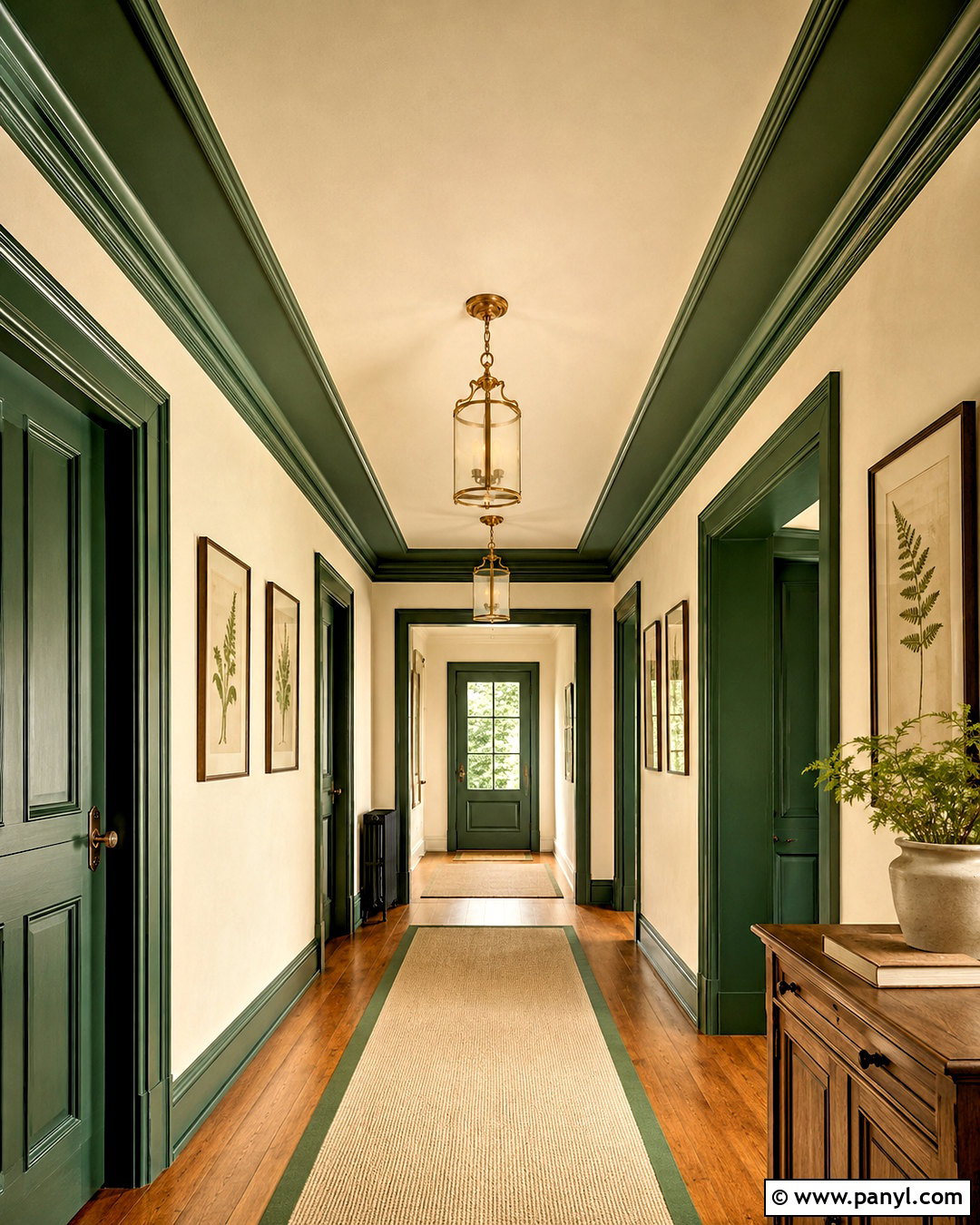
A painted border offers a restrained alternative to covering the entire ceiling with strong color. Start with a soft cream center, then add a broad forest green band around the edges. Continue the green onto the crown molding for a crisp, framed effect. Pair the design with pale beige walls, forest green doors, and warm oak flooring. A cream runner with a narrow green border will mirror the ceiling treatment and make the scheme feel deliberate. Choose antique brass lights with simple glass shades and place them evenly along the corridor. Botanical prints in dark wood frames can reinforce the natural palette. This full hallway look introduces rich color while preserving a bright center overhead, making it useful in narrow spaces with limited daylight.
20. Painted Hallway Ceiling Mural
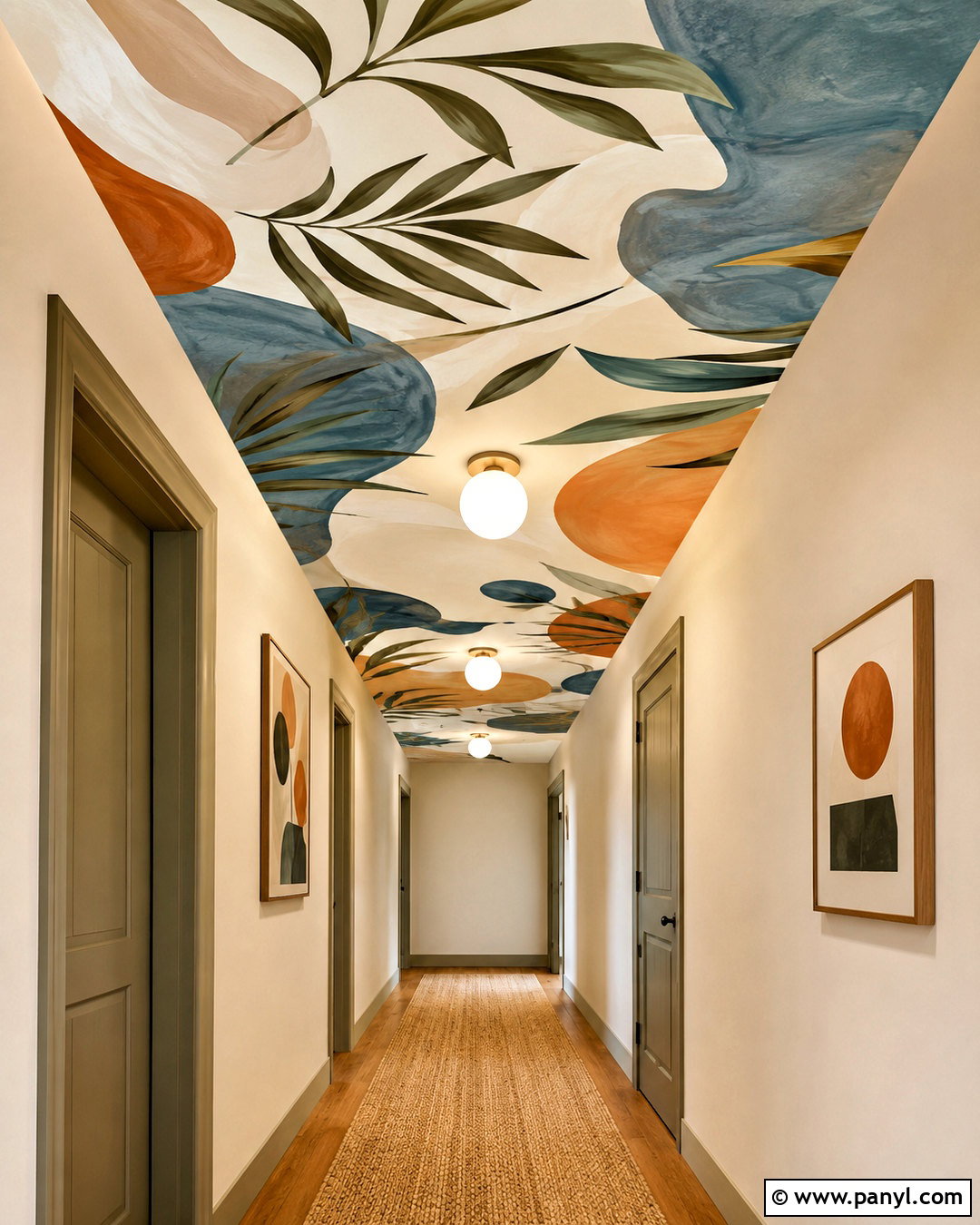
A simple painted mural can turn an ordinary hallway into a memorable transition between rooms. Create an abstract botanical ceiling using broad olive green leaves, soft blue shapes, and small terracotta accents over a warm white background. Keep the walls pale beige and paint the doors muted olive so the mural connects with the rest of the space. Use natural oak flooring, a plain jute runner, and understated white ceiling lights that do not cover important details. Hang only a few neutral artworks on the walls to avoid visual competition. The mural should use large, clean forms that remain readable from floor level. Repeating its colors in the doors, textiles, and small accessories creates a coordinated hallway rather than an isolated decorative ceiling.
Conclusion:
The best painted ceiling hallway ideas consider the complete corridor, including its proportions, lighting, walls, doors, flooring, and connecting rooms. Pale blue, sage, greige, and lavender offer subtle color, while navy, burgundy, black, and terracotta deliver stronger impact. Patterns such as stripes, borders, geometric blocks, and murals can give a basic ceiling more structure and personality. Before painting, repair imperfections, test colors under artificial and natural light, and select an appropriate finish for the ceiling’s condition. Repeat the chosen shade in a runner, door, artwork, or accessory to create visual continuity. With thoughtful coordination, these 20 painted ceiling hallway ideas can transform an overlooked passage into a polished part of your home.

Related Ideas and Inspiration:

Leave a Reply