
Mixing wood finishes gives a home more depth, warmth, and personality than matching every surface. The best **20 wood tones that go together ideas** begin with a dominant finish, then layer in one or two clearly lighter or darker tones. Shared undertones help create harmony, while visible contrast makes every choice appear intentional. Flooring, cabinetry, and large furniture usually establish the main wood tone. Smaller tables, chairs, frames, and decorative pieces can repeat supporting finishes across the room. Rugs, upholstery, stone, and metal provide breathing room between different grains. Whether your home feels modern, rustic, traditional, or relaxed, these complete room combinations show how to coordinate furniture, colors, materials, and decor. Use these **20 wood tones that go together ideas** to create a collected look without making your space feel mismatched.

1. White Oak And Walnut Living Room
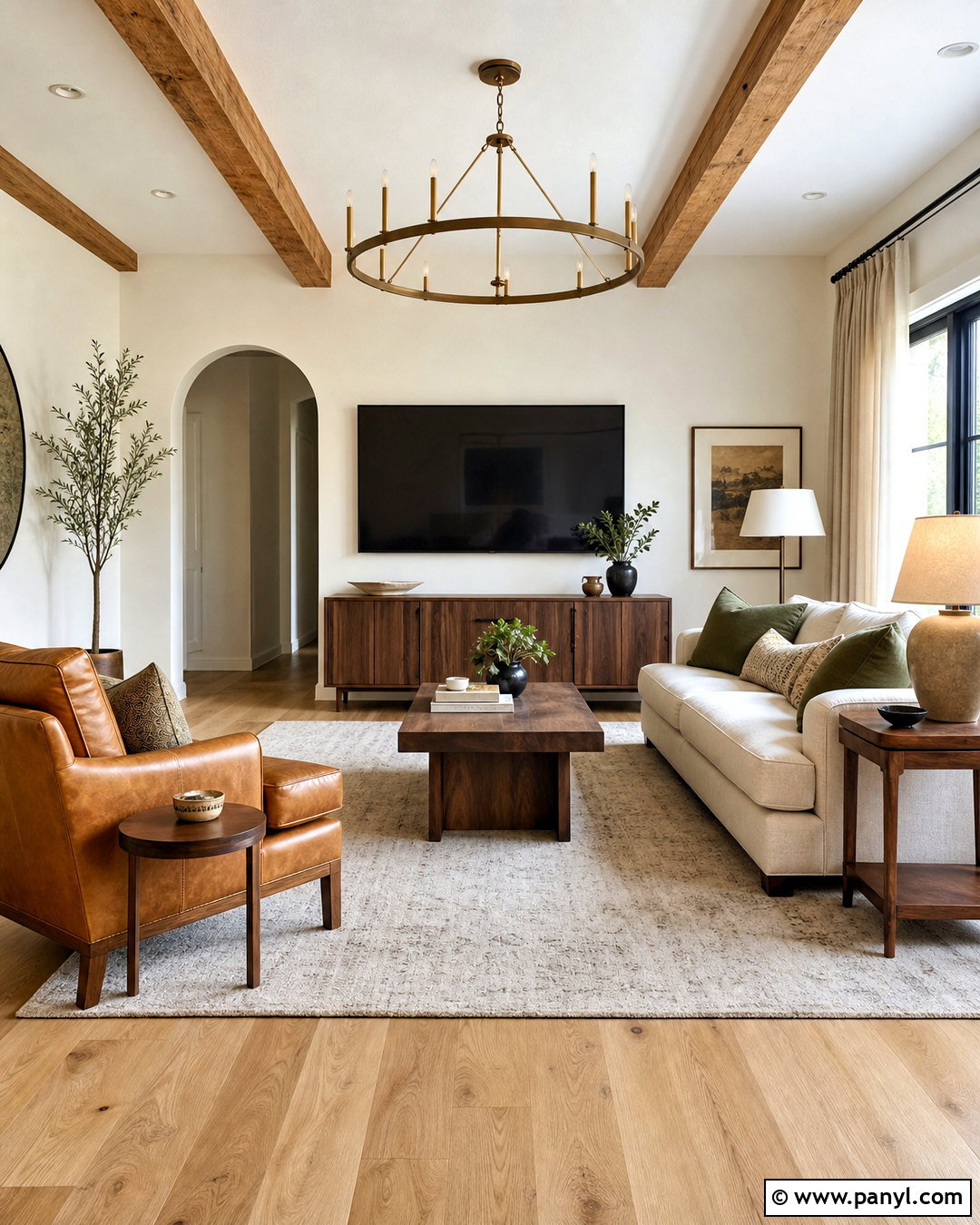
White oak and walnut create an inviting living room with clear contrast and balanced warmth. Let natural white oak flooring establish the light foundation, then add a streamlined walnut media console and matching side tables. A cream sofa keeps the center of the room airy, while a caramel leather chair connects the pale floor to the deeper brown furniture. Choose a textured oatmeal rug so the walnut pieces do not sit directly against the oak. Repeat walnut through slim picture frames or a floor lamp base. Soft beige walls, olive green pillows, linen curtains, and aged brass lighting complete the palette. Keep the furniture shapes simple and modern so the beautiful color difference between these two woods remains the room’s most noticeable feature.
2. Maple And White Oak Kitchen
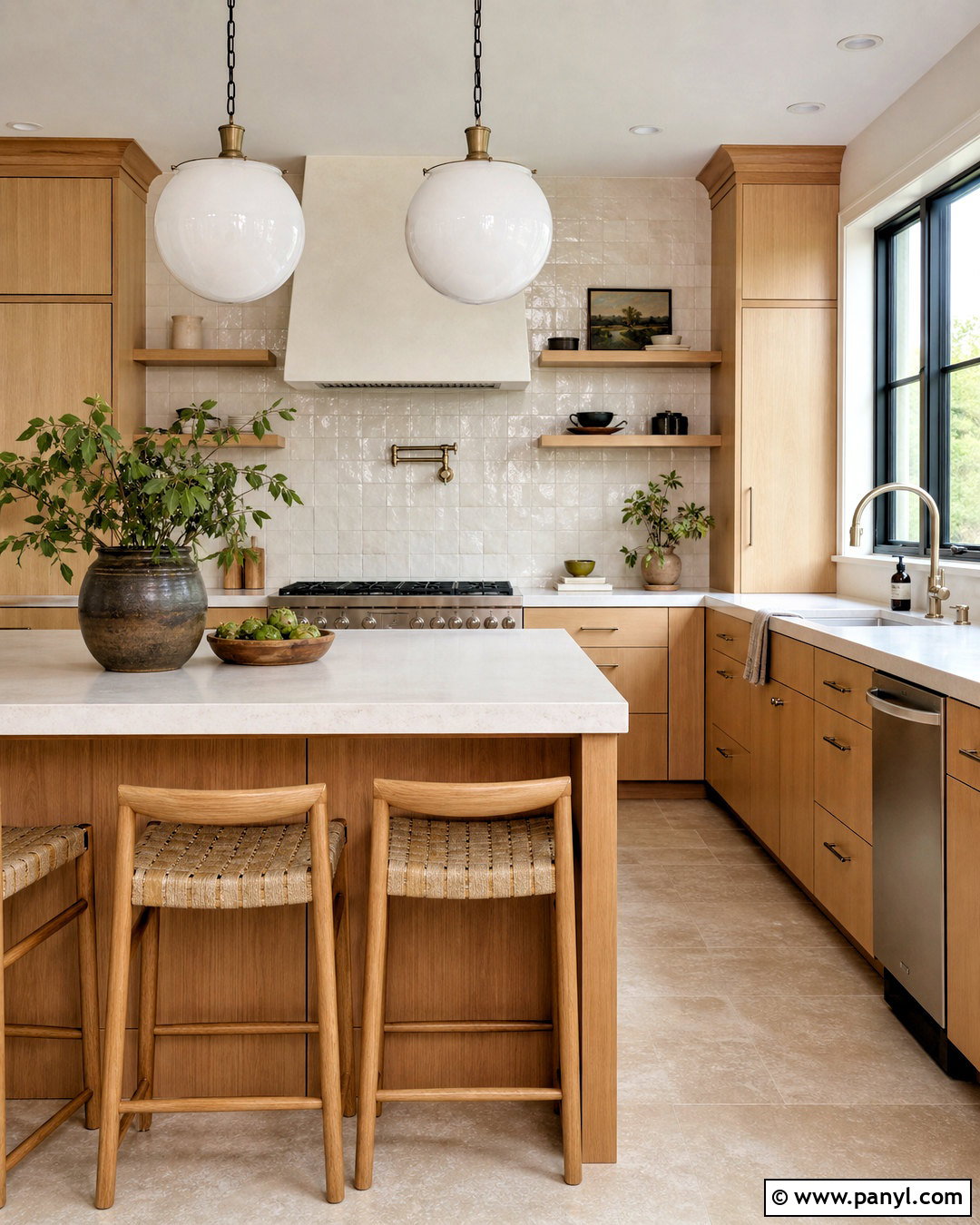
A maple and white oak kitchen feels bright, natural, and quietly layered. Use pale maple cabinetry with a clear matte finish as the dominant surface. Add a white oak island in a slightly deeper wheat tone to create definition without introducing harsh contrast. Warm white quartz counters and a creamy handmade tile backsplash keep the wood combination fresh. White oak stools can repeat the island finish, while maple floating shelves connect visually with the surrounding cabinets. Finish the room with brushed nickel hardware, globe pendants, and light limestone-look flooring. A washable runner with beige and muted blue details brings softness to the workspace. Because both woods are light, vary their grain direction and depth enough that the island looks intentionally different rather than incorrectly matched.
3. Red Oak And Walnut Dining Room
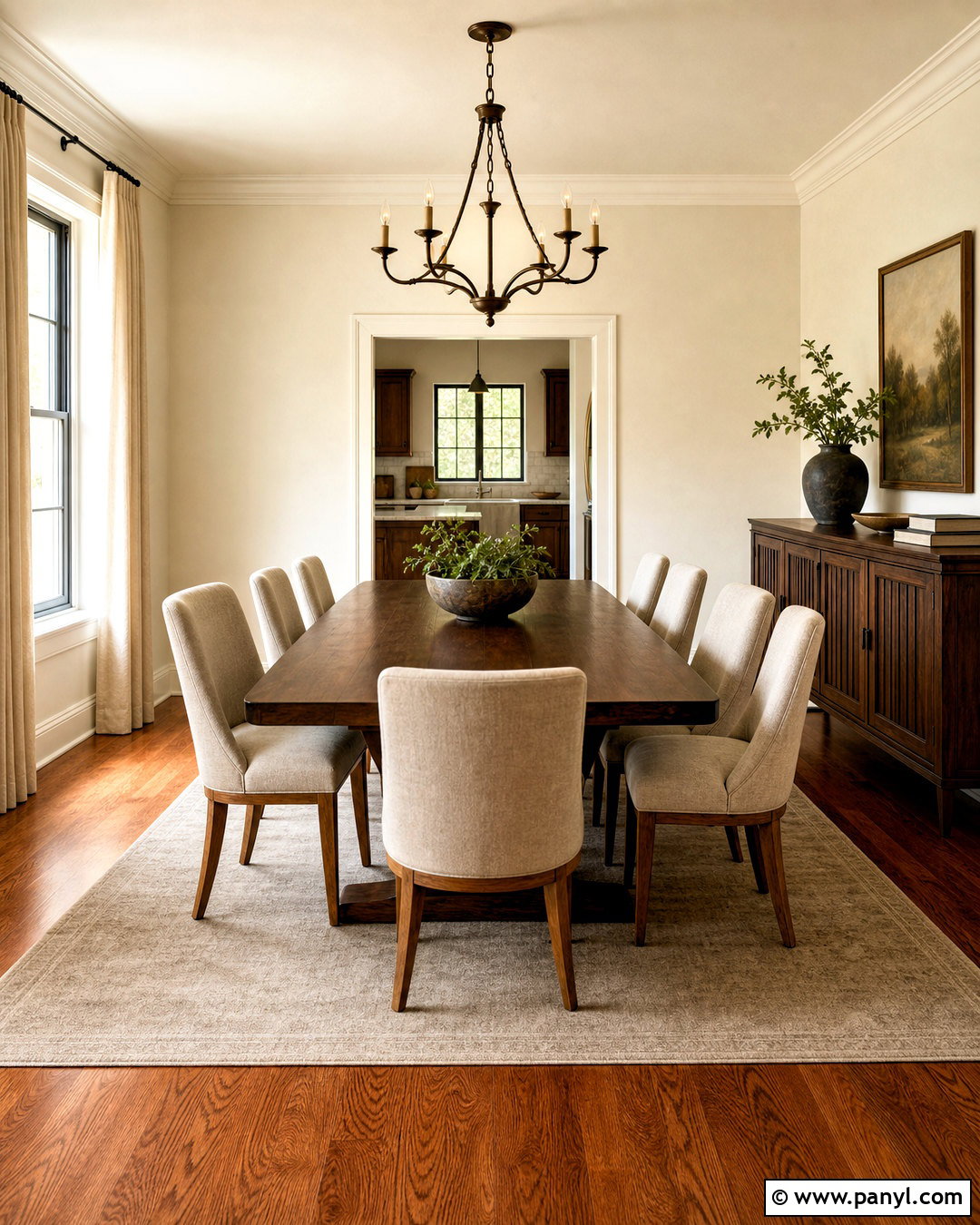
Rich red oak flooring makes a welcoming foundation for dark walnut dining furniture. Choose a walnut table with clean edges and pair it with upholstered chairs that have red oak legs. This small repetition helps connect the two finishes across the room. Warm ivory walls soften the reddish and chocolate undertones, while a large neutral rug separates the table from the flooring. Add a walnut sideboard against one wall, then display ceramic lamps, simple artwork, and a few red oak bowls or frames. Bronze lighting suits the depth of both woods without adding another competing finish. For a polished result, select rust, cream, olive, and charcoal textiles. The completed dining room will feel warm and established, yet the lighter floor will prevent the walnut furniture from appearing heavy.
4. Ash And Pine Bedroom
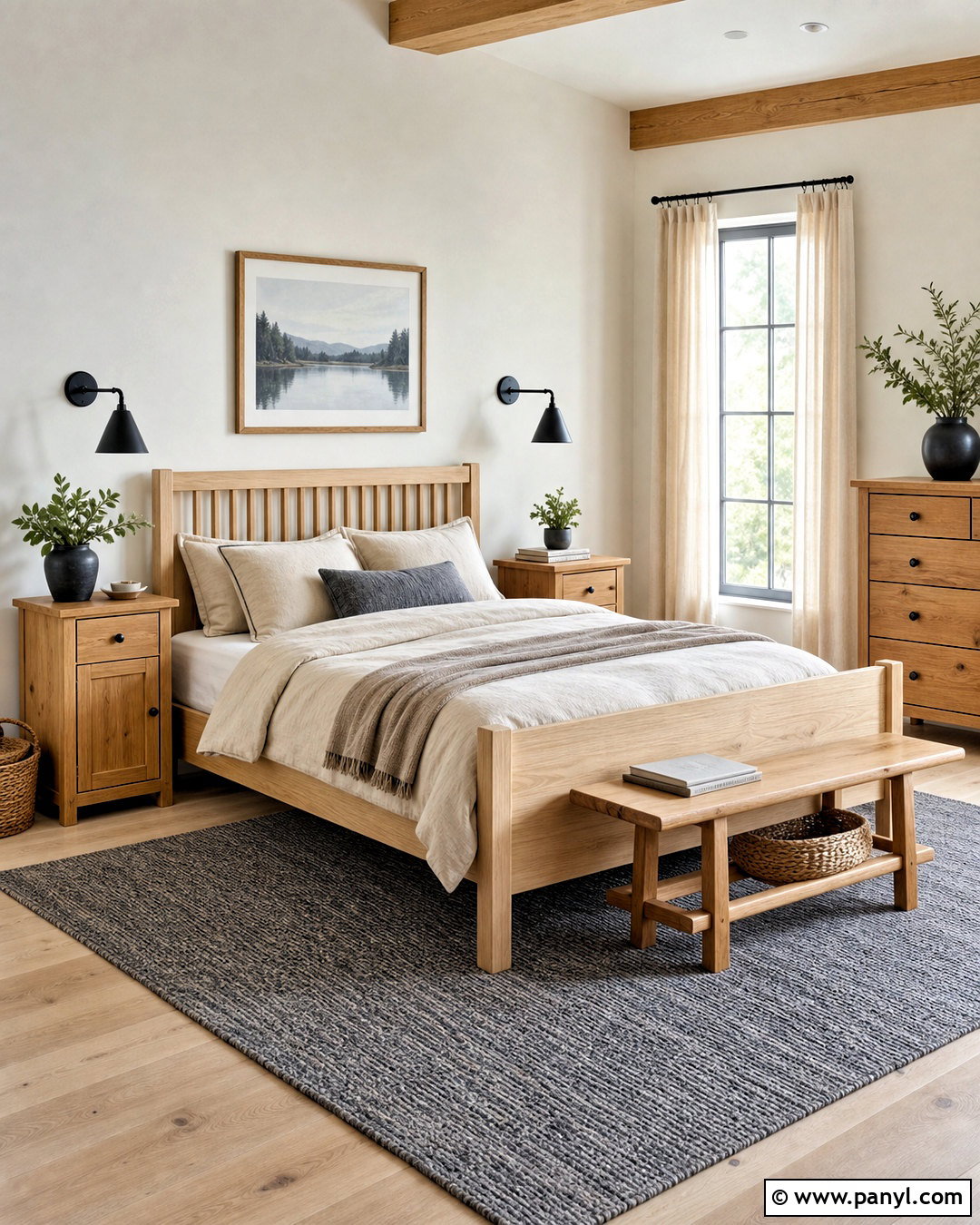
Ash and pine can produce a relaxed bedroom that feels light, casual, and comfortable. Begin with a pale ash bed featuring a simple slatted headboard. Place honey-toned pine nightstands on either side to introduce a warmer, more noticeable grain. A pine bench at the foot of the bed repeats that secondary finish and keeps it from looking isolated. Use soft white walls, oatmeal bedding, and a light gray wool rug to calm the natural variation in the wood. Black reading sconces add crisp definition, while woven baskets and linen curtains strengthen the organic look. Avoid glossy stains, which may make the pine appear overly orange beside the ash. Clear matte finishes allow both woods to retain their natural texture while creating a cohesive Scandinavian-inspired bedroom.
5. Teak And Walnut Home Office
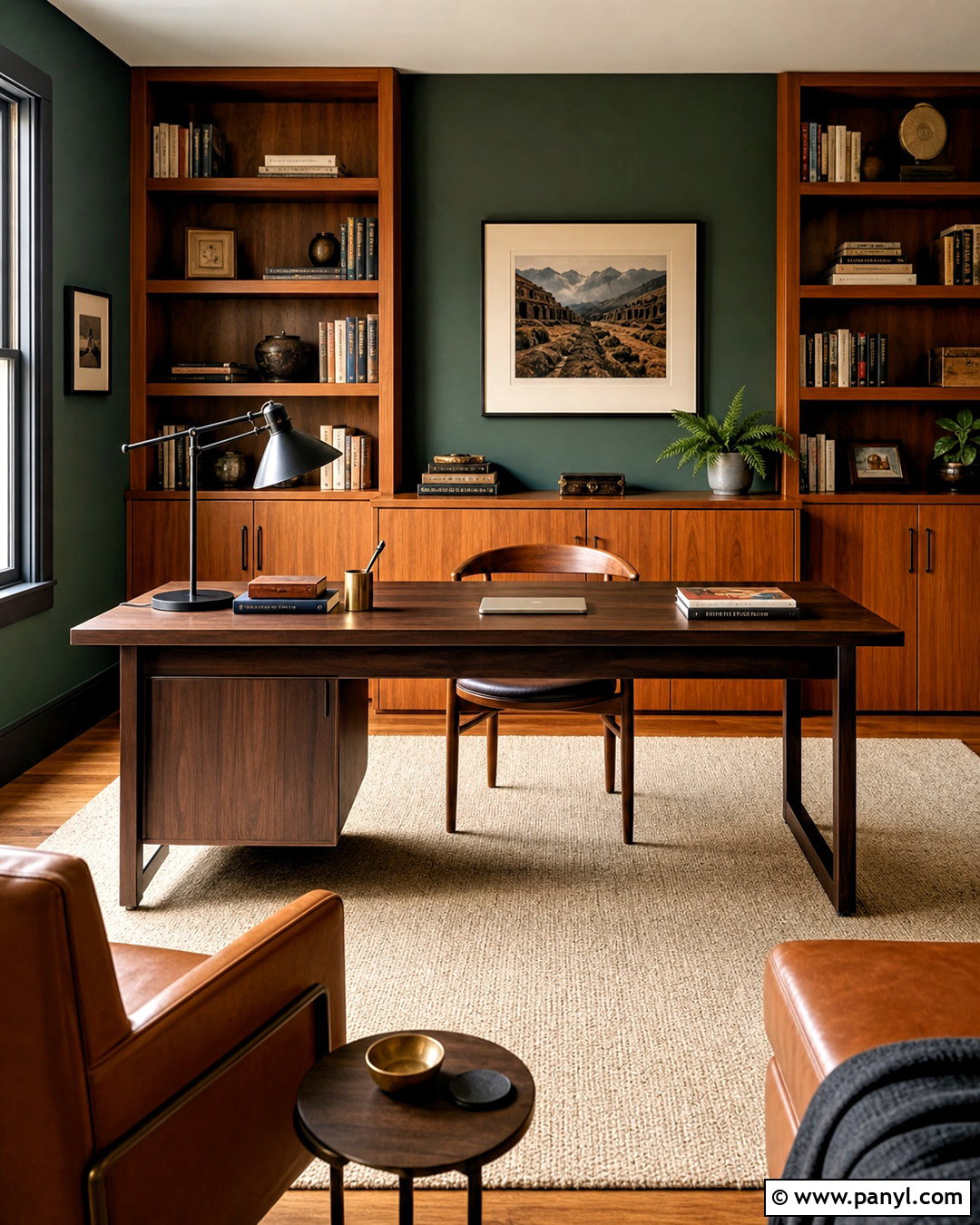
Teak and walnut bring warmth and sophistication to a practical home office. Make a streamlined walnut desk the central feature, then place a teak bookcase or storage cabinet against the opposite wall. Teak usually reads slightly more golden, so repeat it through a desk chair frame and a small planter stand. Deep green walls create a strong backdrop for both brown tones, while a cream flat-weave rug prevents the space from feeling too dark. Choose a cognac leather chair, matte black task lighting, and antique brass desk accessories to complete the arrangement. Keep paper storage concealed inside the cabinetry for a calm, uncluttered finish. The difference between golden teak and chocolate walnut should be easy to see, giving the office a layered appearance instead of an almost-matching furniture set.
6. Cherry And Red Oak Family Room
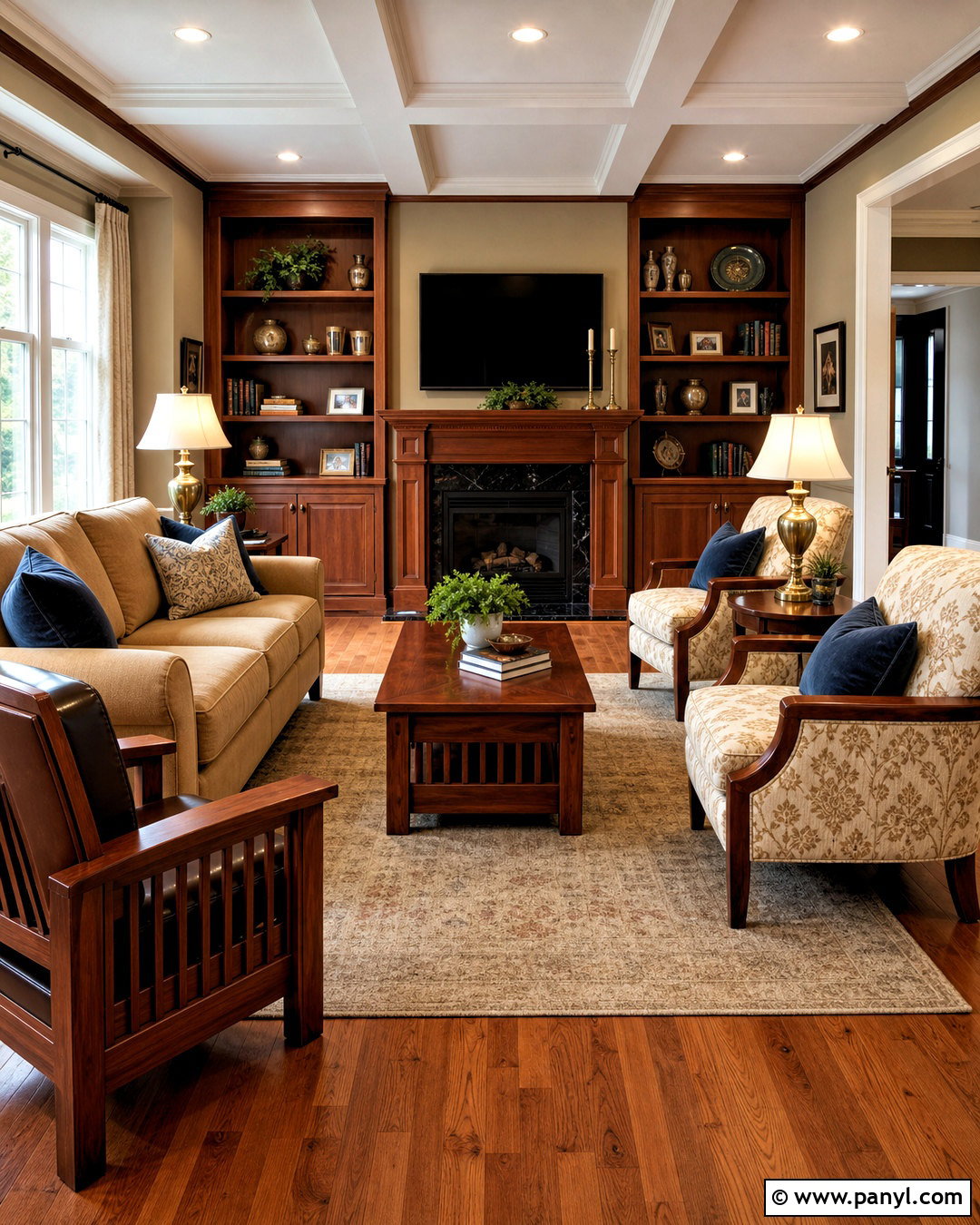
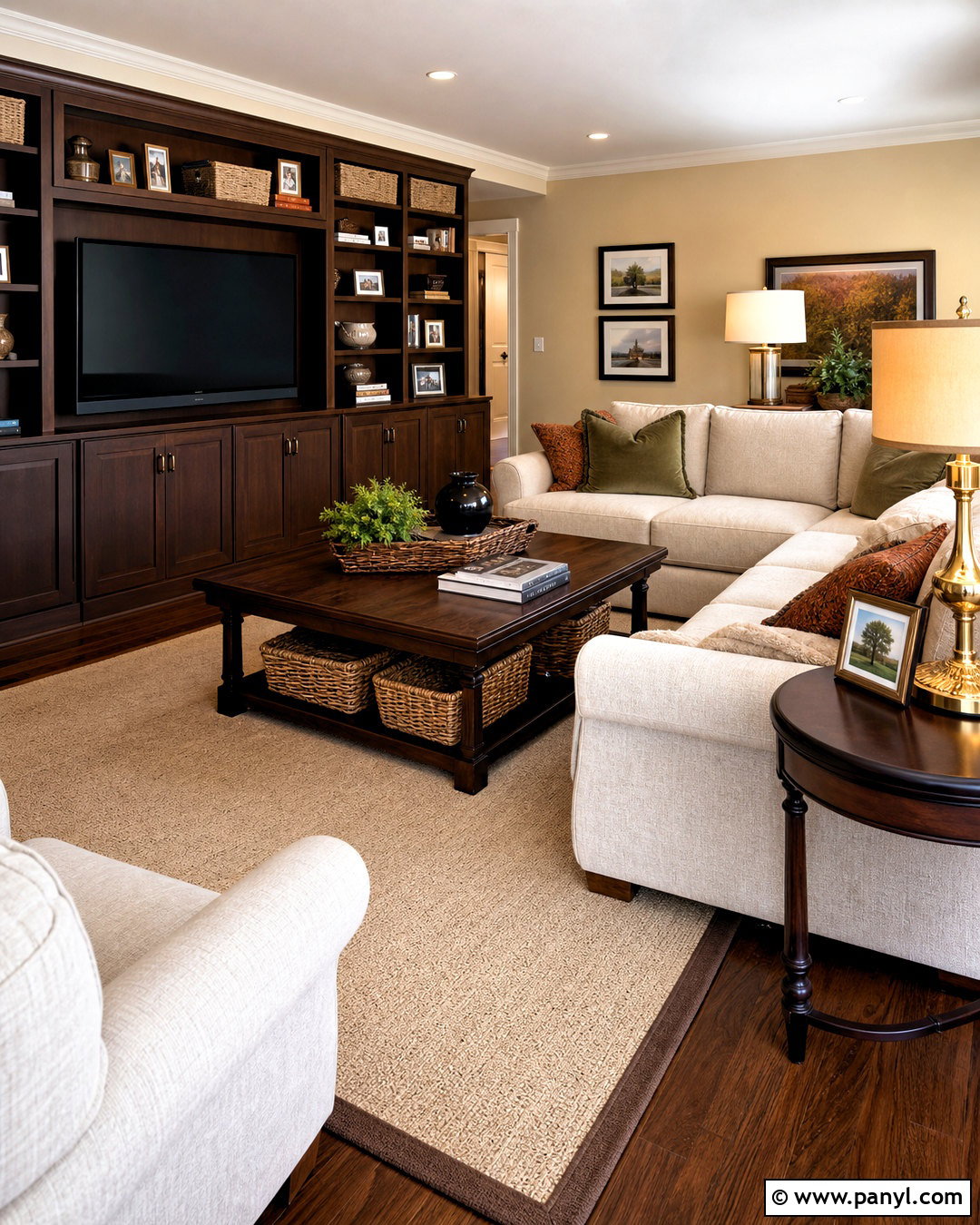
Cherry furniture and red oak flooring work naturally in a warm, traditional family room. Allow the medium red oak floor to cover most of the visible wood, then introduce cherry through a substantial coffee table, built-in shelving, and occasional chair frames. Choose cherry pieces with a mellow reddish-brown finish rather than an extremely glossy red stain. A large taupe rug creates separation between the floor and coffee table. Add a soft camel sofa, patterned cream armchairs, warm beige walls, and navy blue pillows for balanced color. Antique brass lamps and framed landscape art reinforce the classic character without making the room feel formal. Repeating cherry on both sides of the seating area distributes its deeper tone, while the oak floor keeps the complete arrangement approachable and bright.
7. Bleached Oak And Black Wood Bedroom
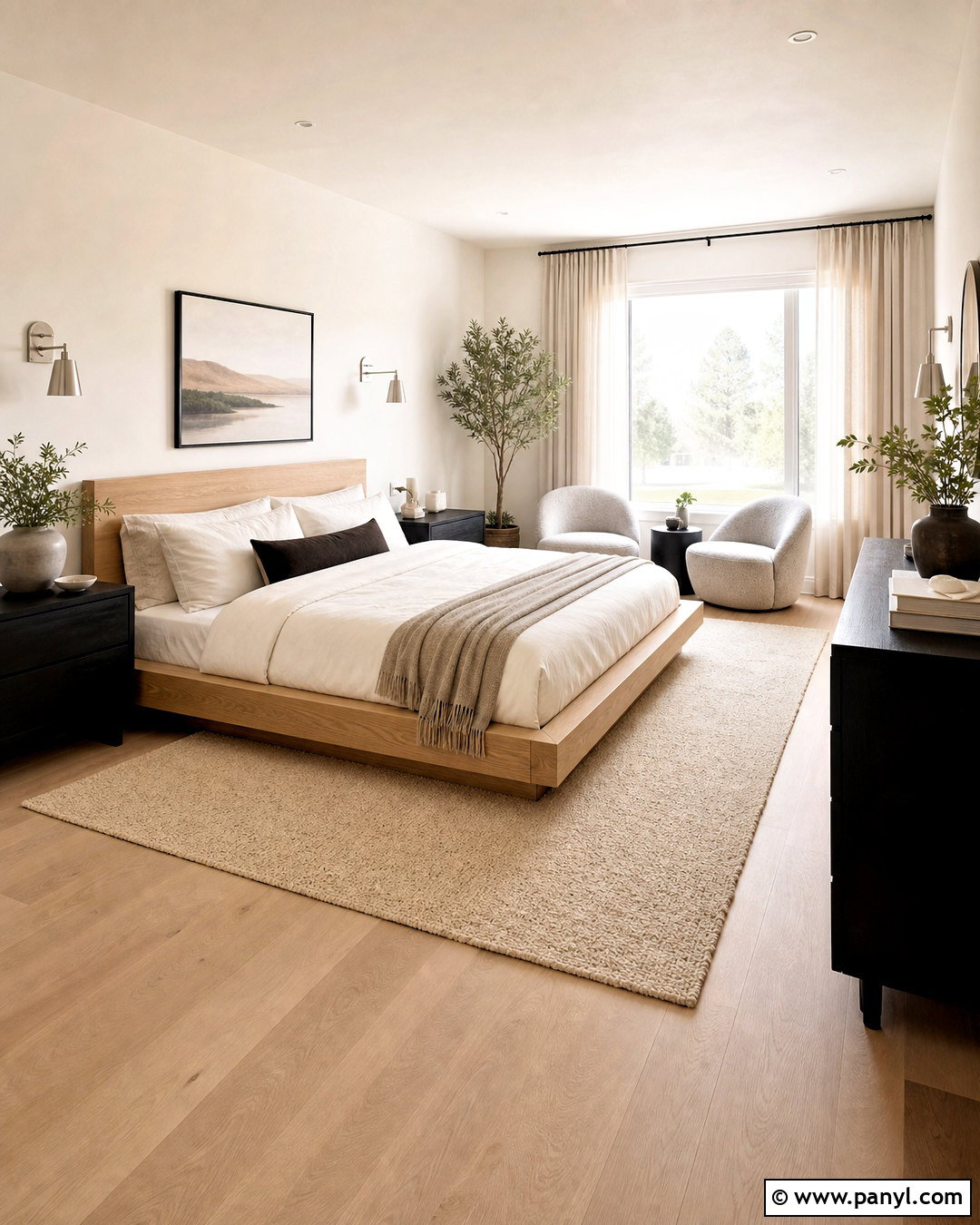
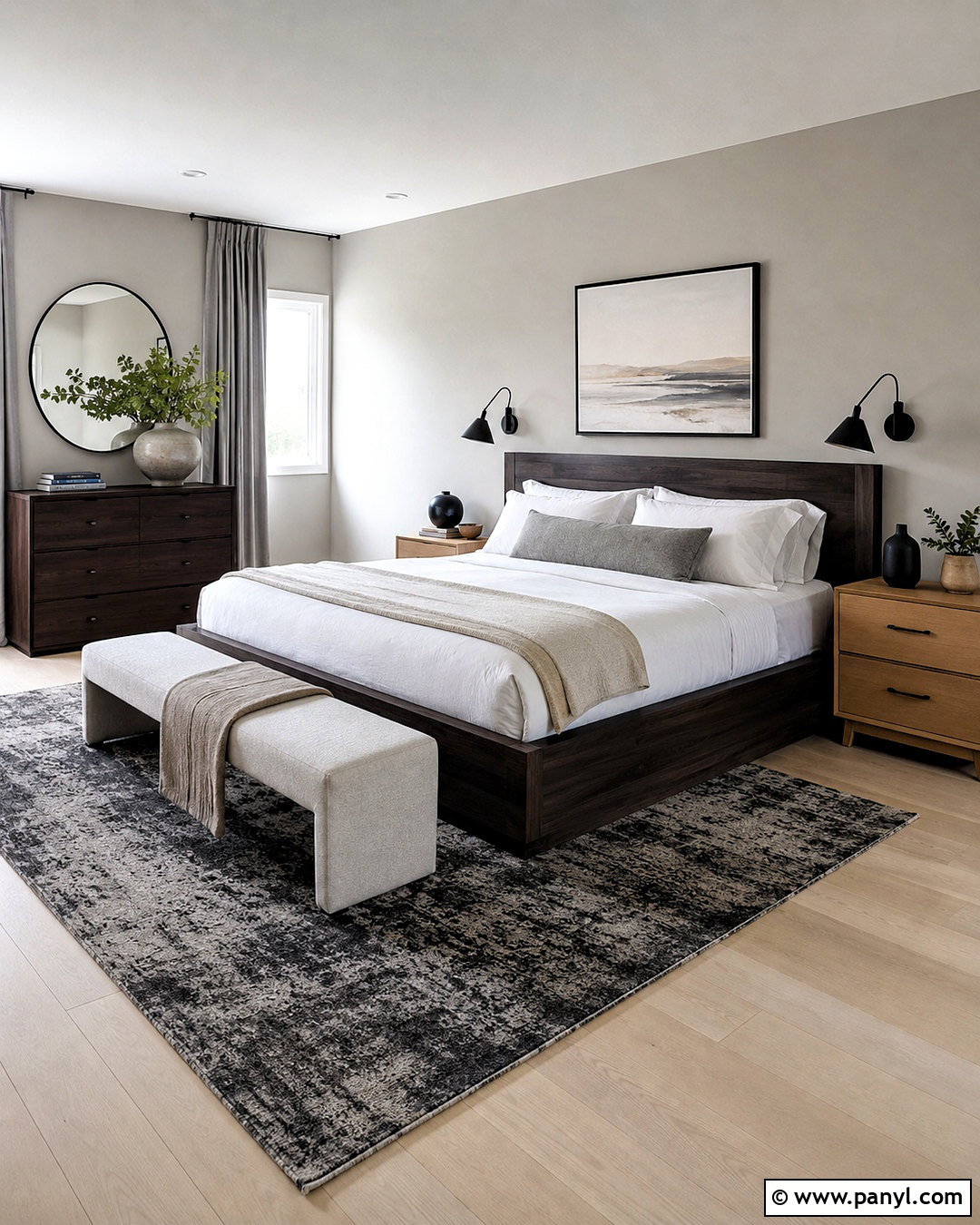
Do you want strong contrast without sacrificing a calm atmosphere? Pair bleached oak with black-stained wood in a modern bedroom. Use bleached oak flooring and a matching platform bed as the light foundation. Add black wood nightstands, a low dresser, and narrow picture frames to create a clear visual outline. White bedding, a soft gray upholstered bench, and a large ivory rug prevent the black accents from overpowering the space. Introduce texture through boucle pillows, linen curtains, and a woven oak chair. Brushed steel sconces and simple abstract artwork keep the finished room contemporary. Repeat each wood tone several times, but let the pale oak remain dominant. The result feels deliberate because the difference between the two finishes is bold, clean, and immediately recognizable.
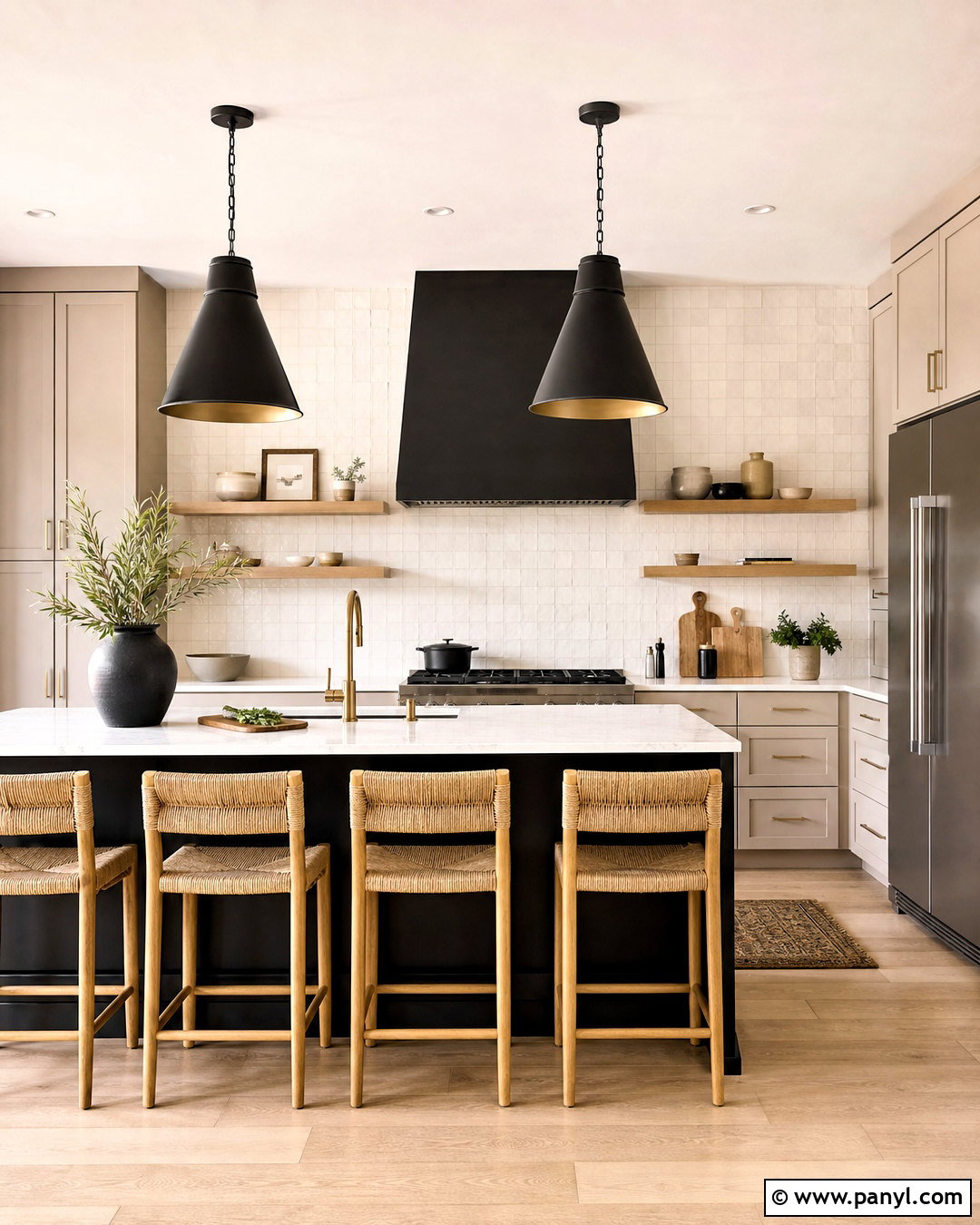
8. Natural Oak And Espresso Living Room
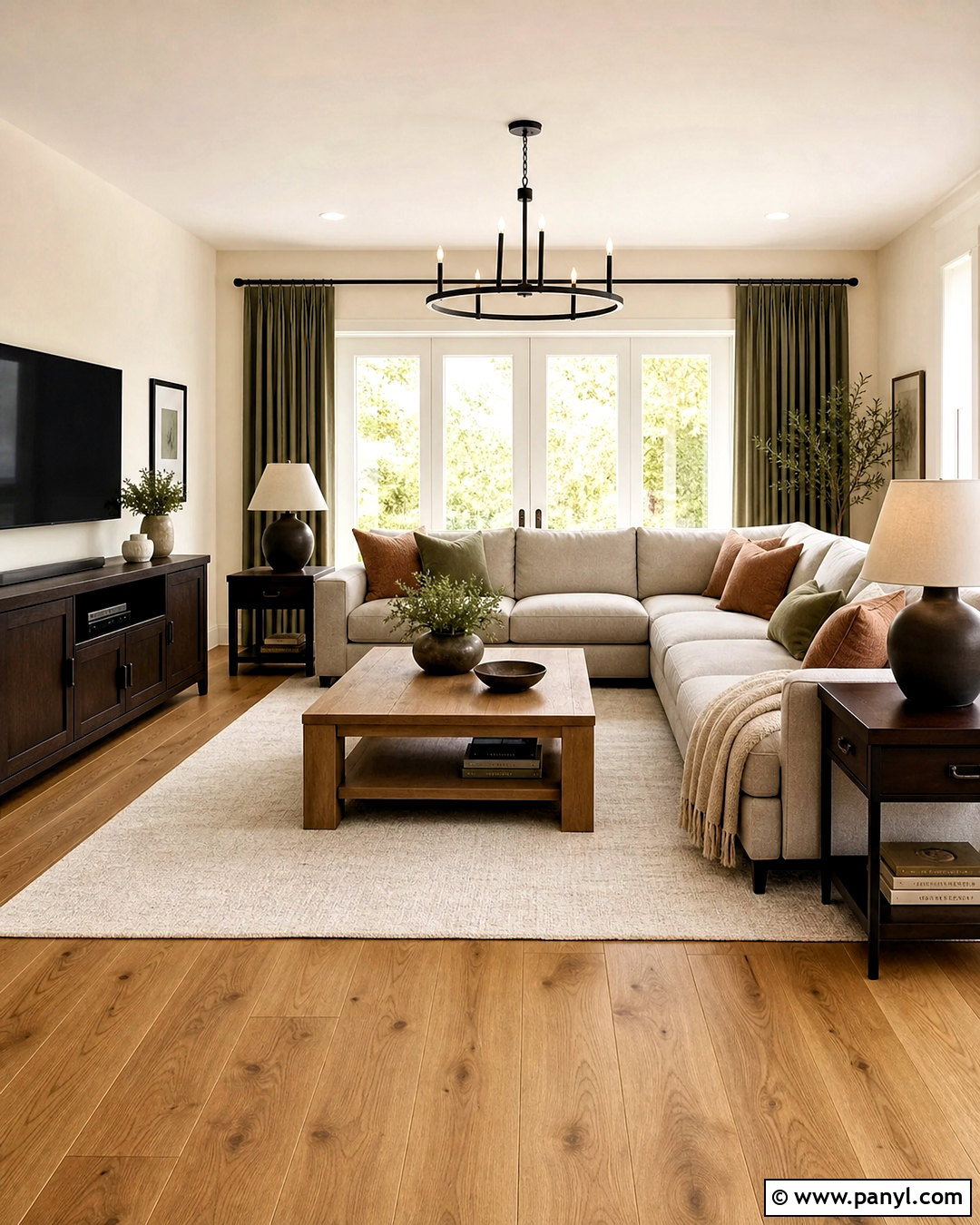
Natural oak and espresso wood can make an open living room feel grounded without becoming overly dark. Start with natural oak flooring, then place an espresso media cabinet along the main wall. Choose a light greige sectional and an oak coffee table so the center of the room connects with the floor. Repeat espresso on two slim end tables and a shelving unit. A cream rug should extend beneath the entire seating group, separating every furniture finish from the flooring. Use clay-colored pillows, warm white walls, and muted green curtains to complement the brown palette. Matte black lighting adds definition, while large ceramic pieces break up the amount of visible wood. This layout gives espresso furniture a purposeful supporting role instead of allowing it to dominate the lighter room.
9. Honey Oak And Dark Walnut Kitchen
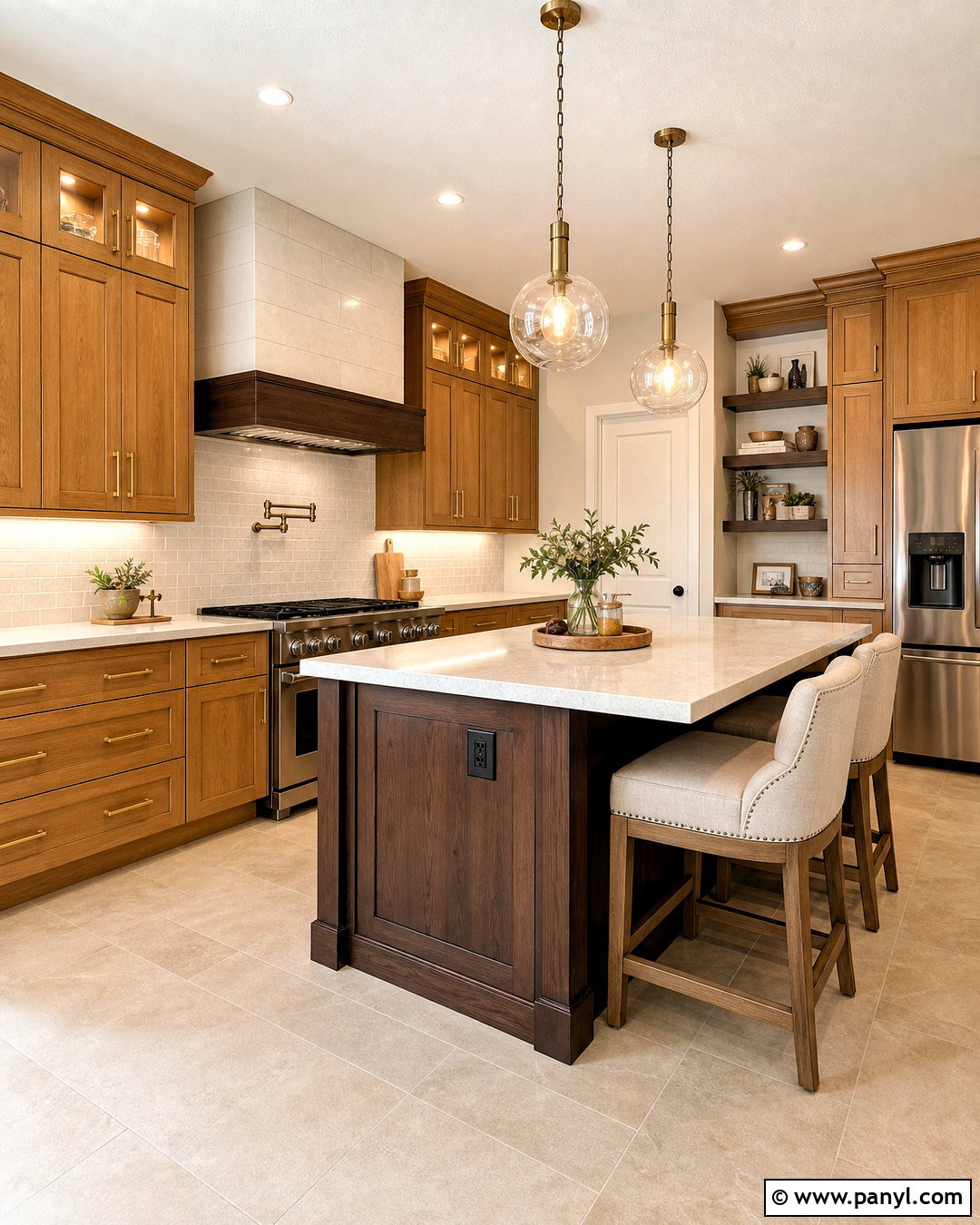
A honey oak and dark walnut kitchen offers a comfortable mix of golden warmth and deep contrast. Use honey oak for the perimeter cabinets, selecting a simple door profile and a low-sheen finish. Make dark walnut the focal point on the island, range hood trim, and two open display shelves. Cream quartz counters and an off-white backsplash provide visual space between the woods. Choose counter stools with walnut frames and oatmeal upholstery to repeat the island color without adding bulk. Light beige porcelain flooring keeps the kitchen bright, while brushed brass hardware complements the golden oak. Finish the room with warm white walls, clear glass pendants, and a narrow vintage-pattern runner. The complete scheme feels coordinated because the walnut is dark enough to look intentionally distinct from the oak.
10. Light Maple And Ebony Dining Room
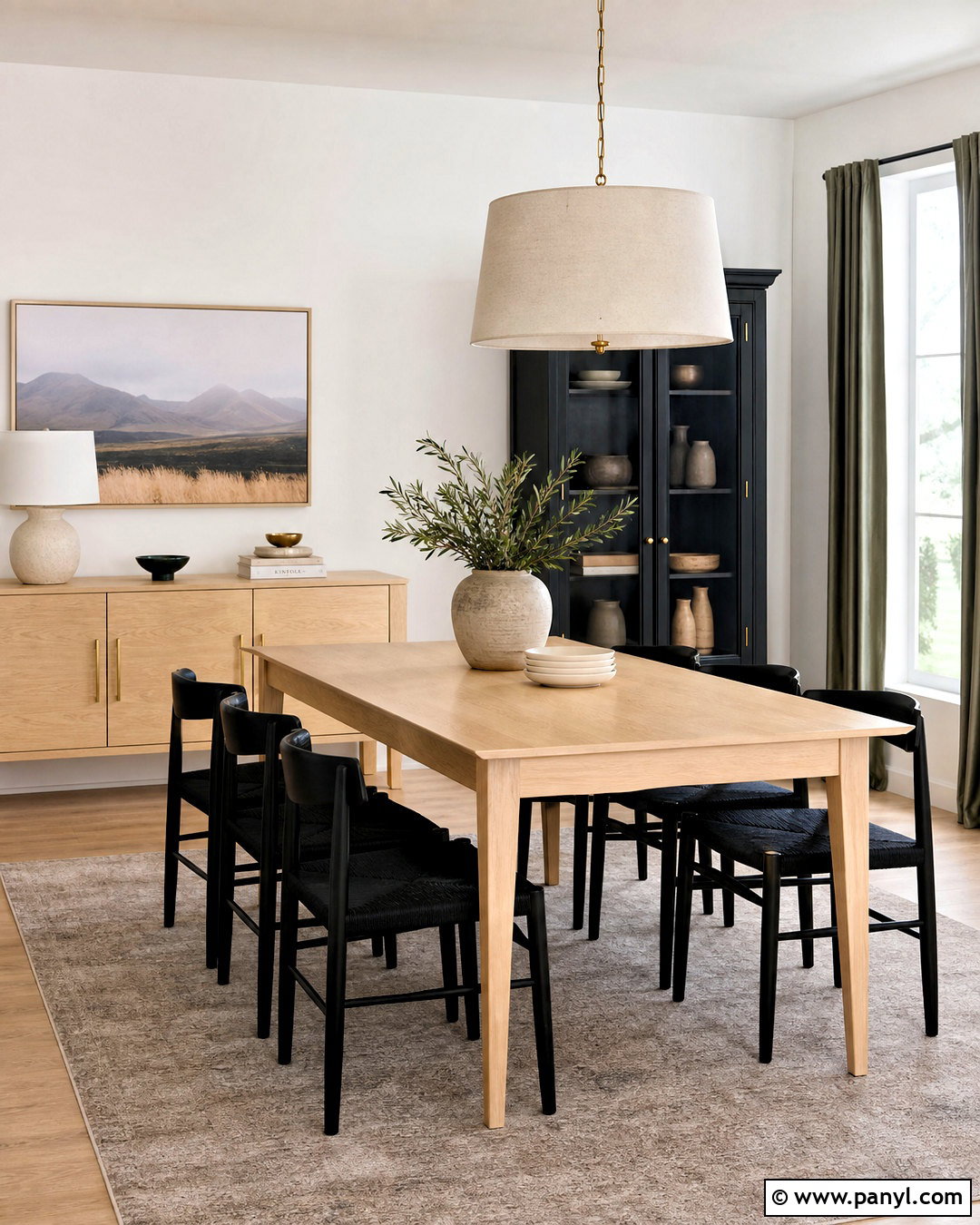
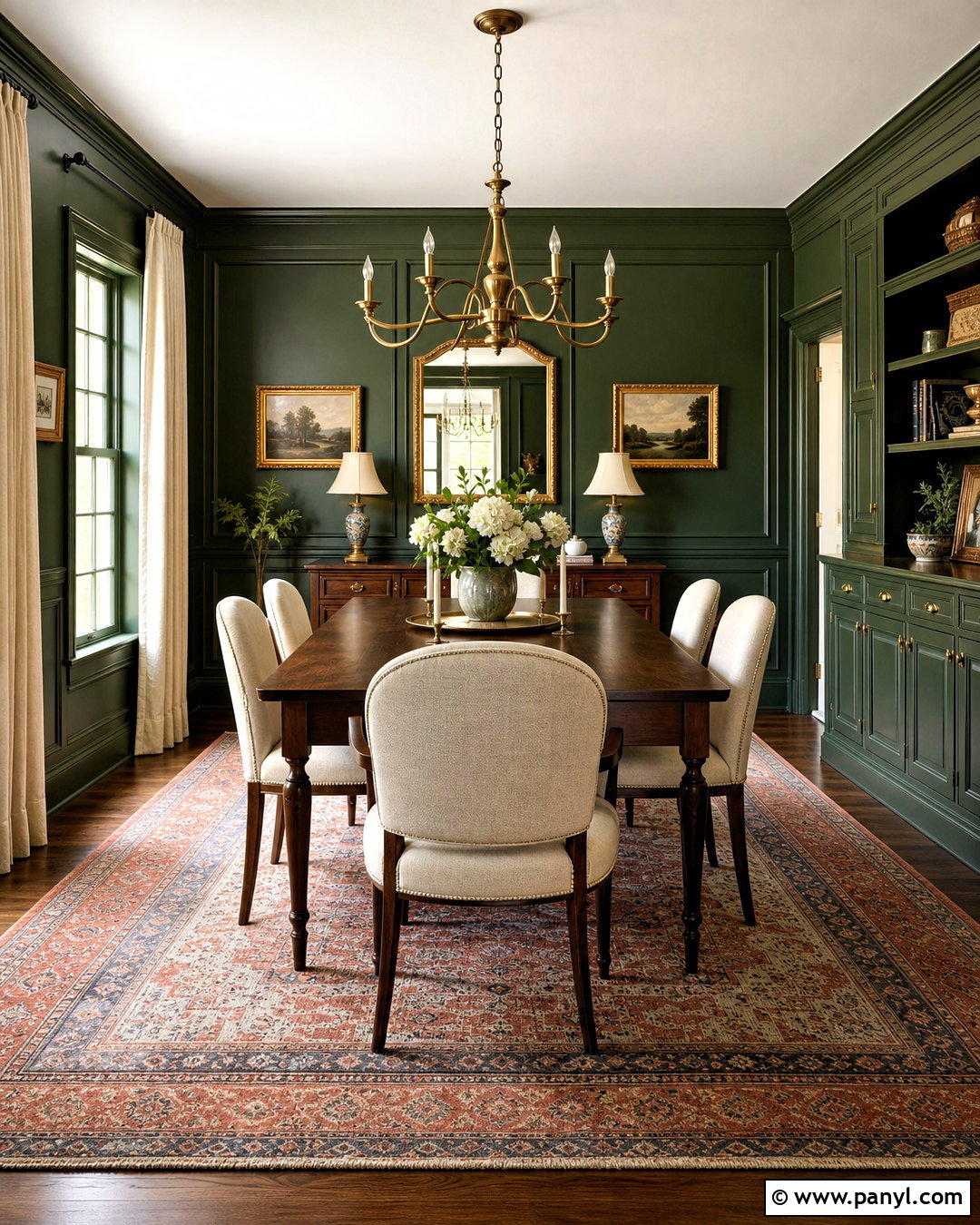
Light maple and ebony wood create a crisp dining room suited to a modern home. Begin with a pale maple table and matching sideboard, allowing the fine grain to establish a clean, quiet foundation. Surround the table with ebony-stained chairs for bold definition. Repeat the dark finish through a slender display cabinet and the frame of a large wall mirror. Soft white walls and a warm gray rug keep the contrast from feeling severe. Add an oversized linen pendant, stoneware table decor, and muted sage curtains for softness. A few brushed brass accents can warm the mostly neutral palette. Keep the ebony pieces visually light, with open backs or slim legs, so they frame the maple furniture rather than overwhelming it. This balanced arrangement feels graphic, airy, and carefully edited.
11. White Oak And Reclaimed Wood Dining Room
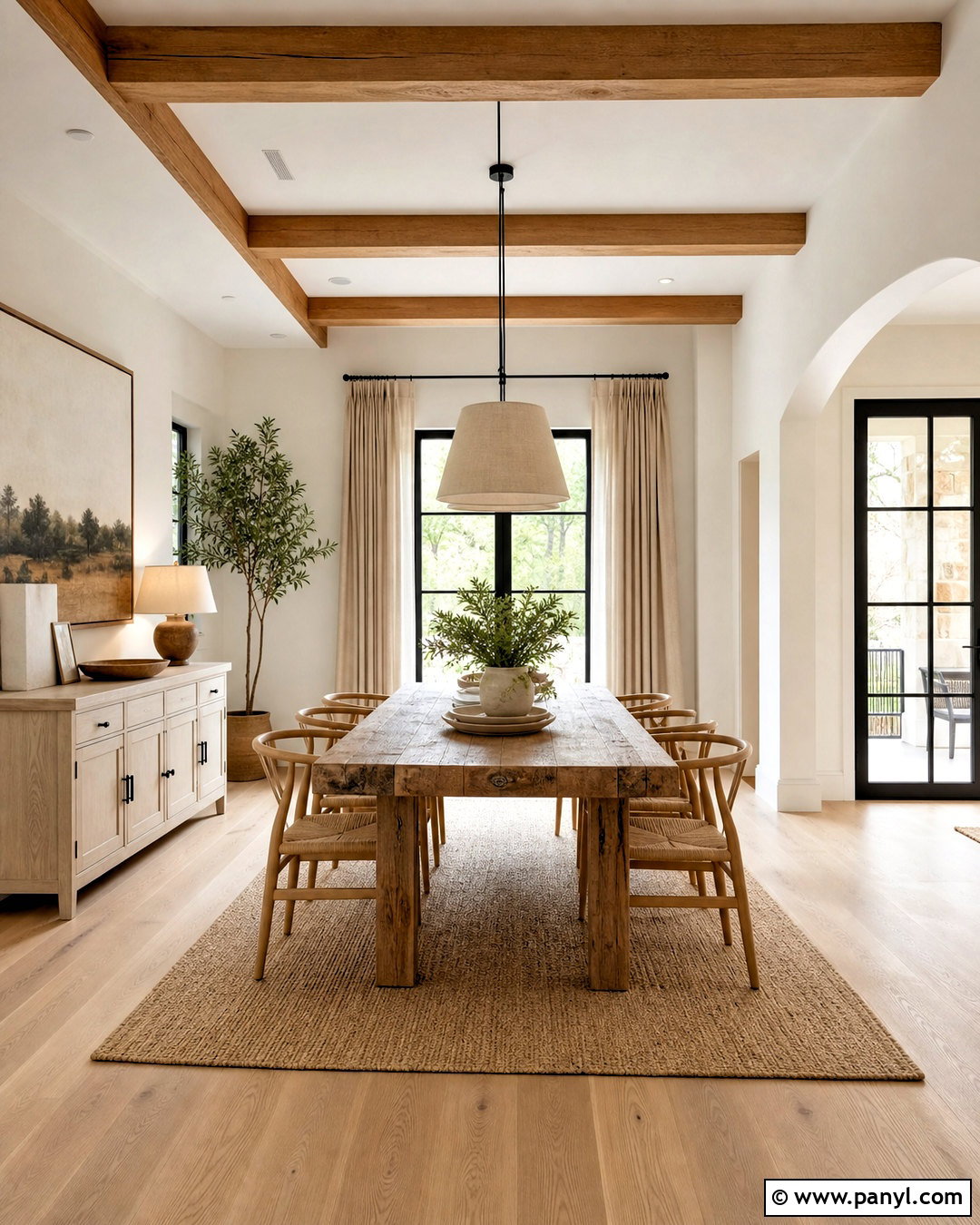
White oak and reclaimed wood make a dining room feel fresh while preserving rustic character. Install white oak flooring as the smooth, consistent base. Add a reclaimed wood dining table with visible knots, weathered brown variation, and a sturdy natural finish. White oak chairs introduce a cleaner shape and connect the table to the floor. Place a painted warm white sideboard against the wall to limit the total amount of competing grain. An oversized jute rug, linen pendant, and oatmeal curtains support the relaxed materials. Use matte black hardware and candlesticks for a modern edge. Simple cream dishware and leafy branches complete the table. By combining refined oak with one substantial reclaimed feature, the finished room looks collected and textural without resembling an overly themed farmhouse interior.
12. Birch And Walnut Nursery
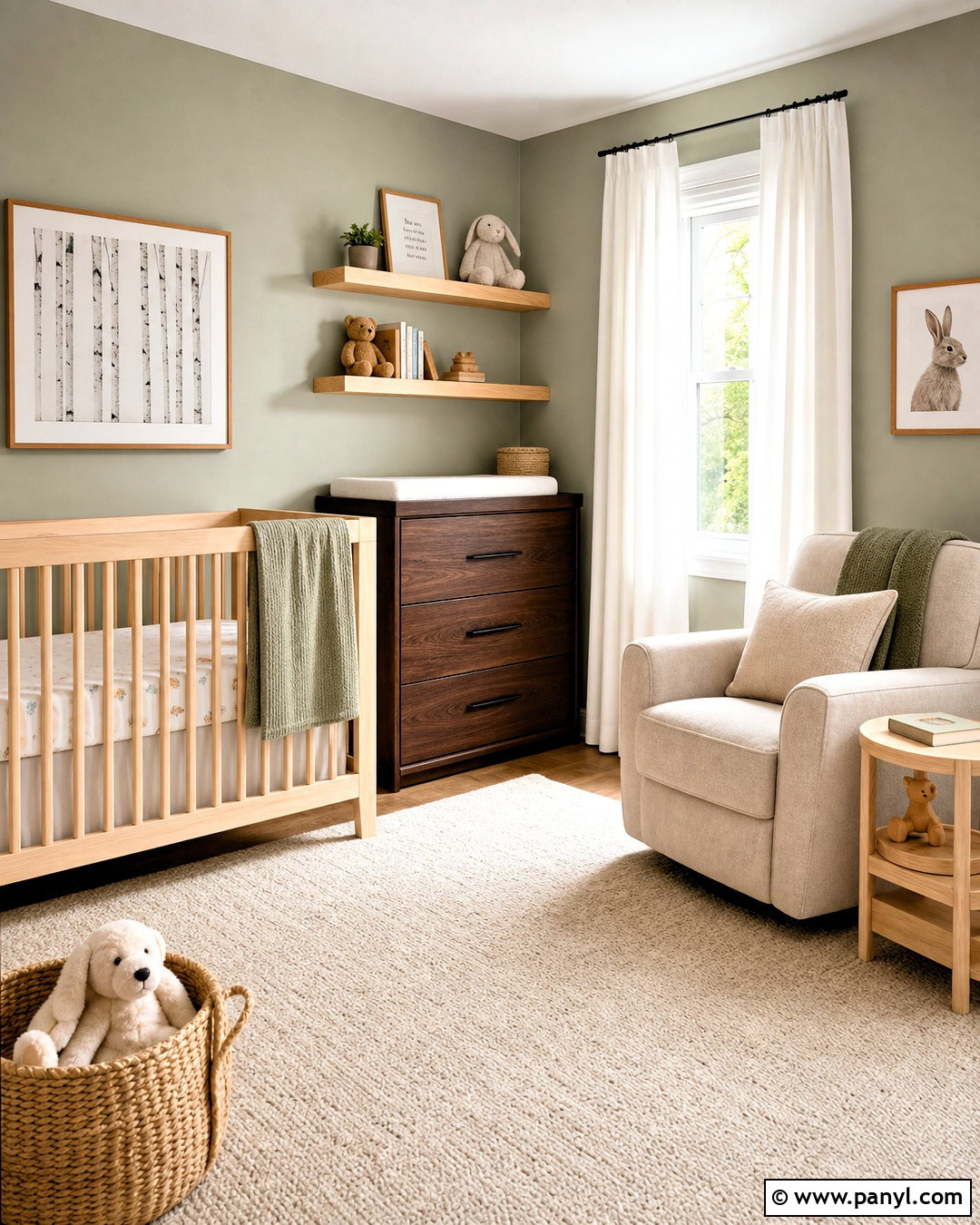
Birch and walnut create a nursery that feels gentle, warm, and easy to update as a child grows. Choose a pale birch crib and matching wall shelves to keep the main furniture visually light. Add a walnut dresser that can double as a changing station, then repeat its dark brown finish through small picture frames and a floor lamp base. A cream washable rug separates the dresser from light wood flooring. Soft sage walls, white curtains, and natural linen storage bins introduce soothing color and texture. Include an upholstered oatmeal glider beside a birch side table for comfortable feeding and reading. Rounded furniture edges and uncluttered storage keep the room practical. The walnut anchors the pale scheme, while repeated birch elements maintain an open, cheerful atmosphere throughout the complete nursery.
13. Acacia And Oak Living Room
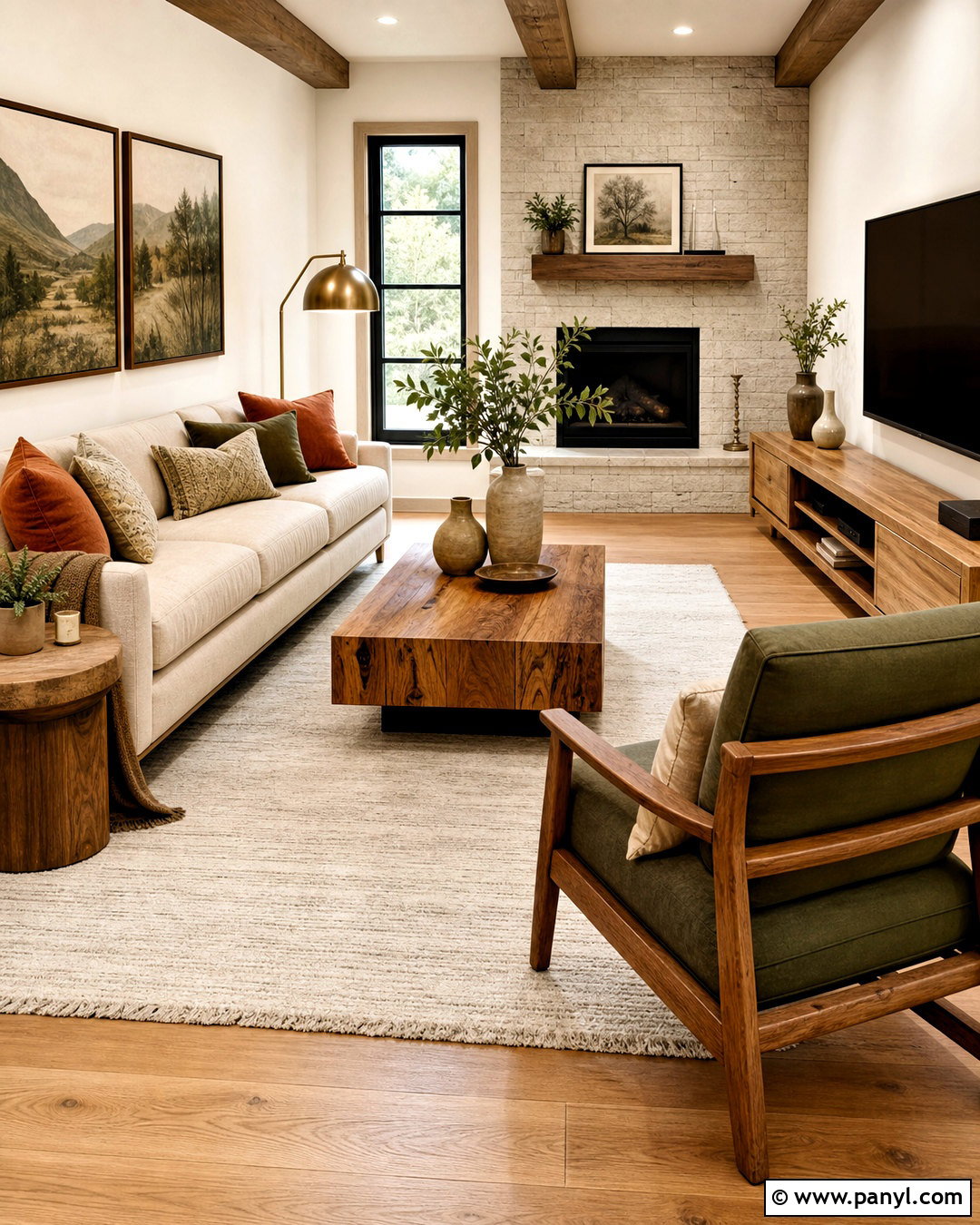
Acacia and oak produce a lively living room because their grains offer different levels of movement. Let medium natural oak flooring serve as the steady backdrop. Add an acacia coffee table with noticeable brown and golden variation as the central statement piece. Choose an oak media console and oak-framed lounge chair to repeat the quieter dominant wood. A beige sofa, ivory area rug, and warm white walls provide enough neutral space for the acacia grain to stand out. Use dark bronze lamps, rust-colored pillows, and olive green upholstery for a grounded earth-tone palette. Keep additional decor simple, including solid ceramic vases and linen curtains rather than busy patterns. Limiting highly figured acacia to one large piece and one small accent creates a balanced, realistic room instead of visual competition.
14. Mahogany And Cherry Library
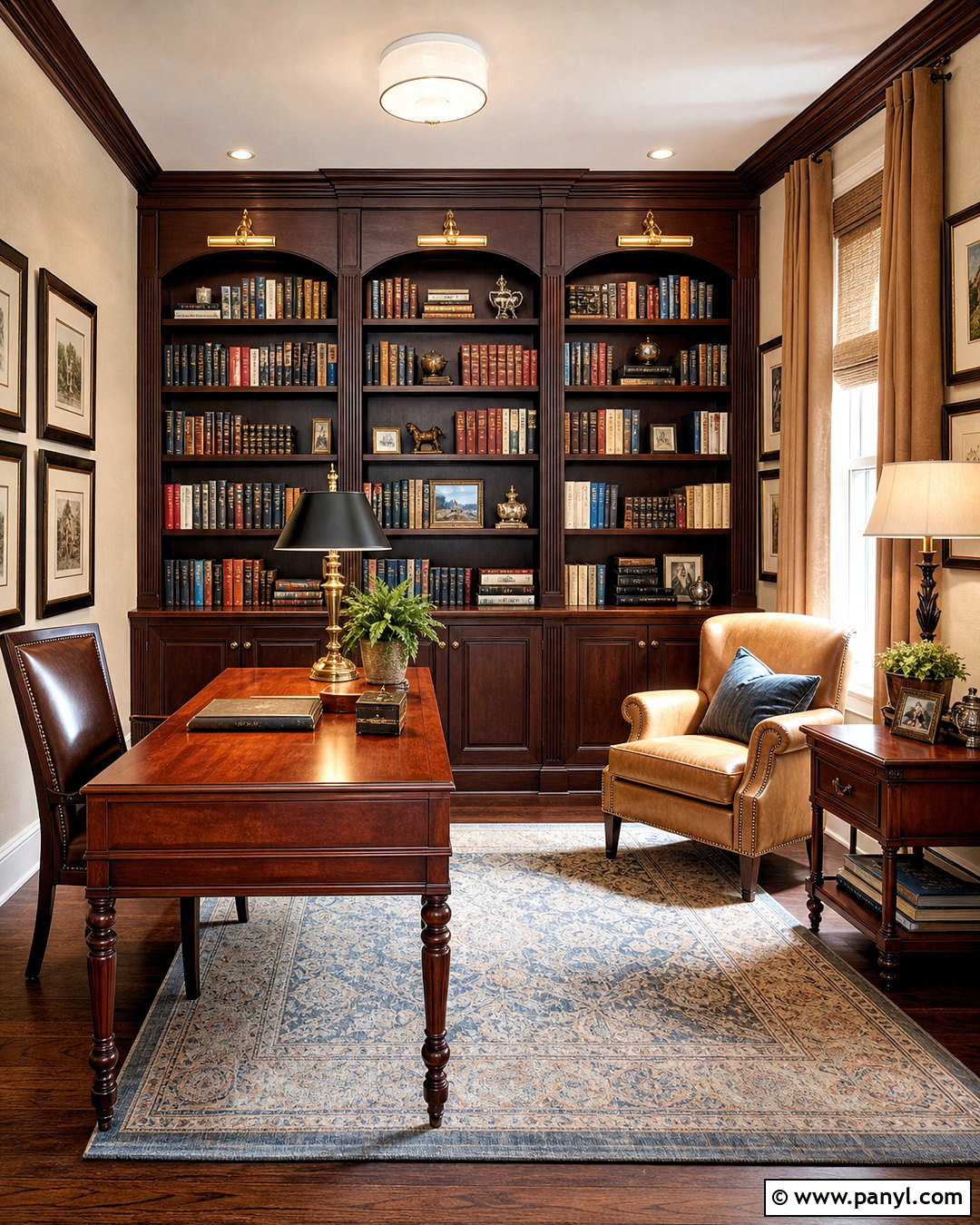
Mahogany and cherry can create a polished home library with substantial warmth. Use deep mahogany built-in bookcases as the architectural anchor, then place a cherry writing desk near a window where its lighter red-brown finish can be clearly seen. A matching cherry side table repeats the secondary tone beside a tufted camel leather chair. Choose warm cream walls above the shelving and a large faded blue rug to cool the abundance of reddish wood. Antique brass picture lights, linen drapes, and traditional artwork complete the room. Keep the ceiling and window trim soft white to maintain brightness. Both woods have strong visual presence, so avoid adding another brown finish. The completed library feels layered and established because the darker bookcases frame the slightly lighter furniture throughout the space.
15. Gray Oak And Charcoal Wood Living Room
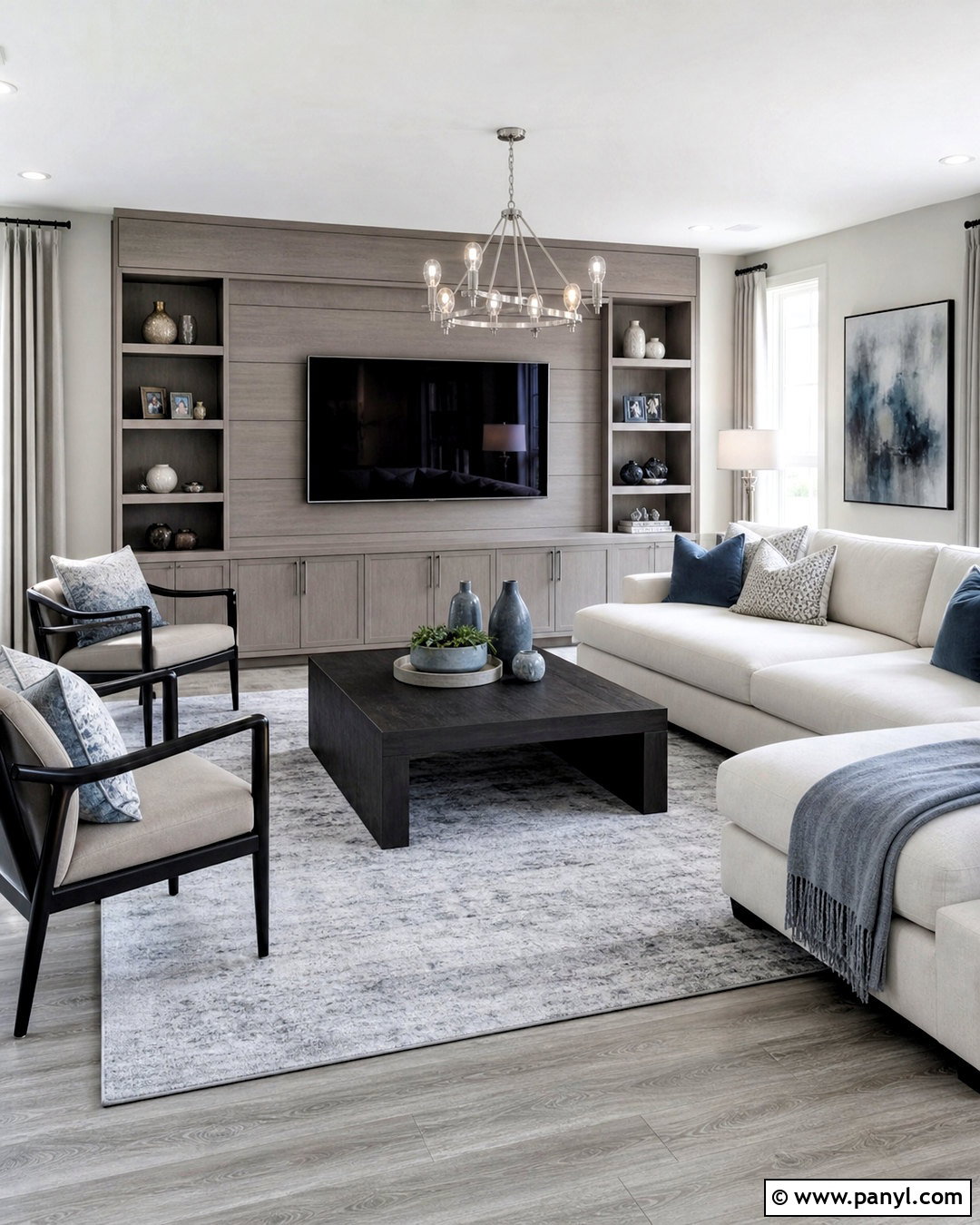
Gray oak and charcoal-stained wood create a cool, streamlined living room with subtle natural texture. Begin with gray oak flooring or a large gray oak media wall. Add a charcoal wood coffee table, narrow console, and side chair frames for darker contrast. A soft ivory sectional warms the cool wood palette without introducing yellow undertones. Layer a silver-gray rug underneath the seating and use dusty blue pillows, slate ceramics, and pale gray curtains throughout the room. Brushed nickel lighting works better here than strongly golden metal. Include one or two green plants to prevent the scheme from feeling flat. Keep the grain visible on both wood finishes so the room retains an organic quality. This complete design is especially effective in bright spaces with large windows and simple architectural lines.
16. Rift-Sawn Oak And Walnut Kitchen
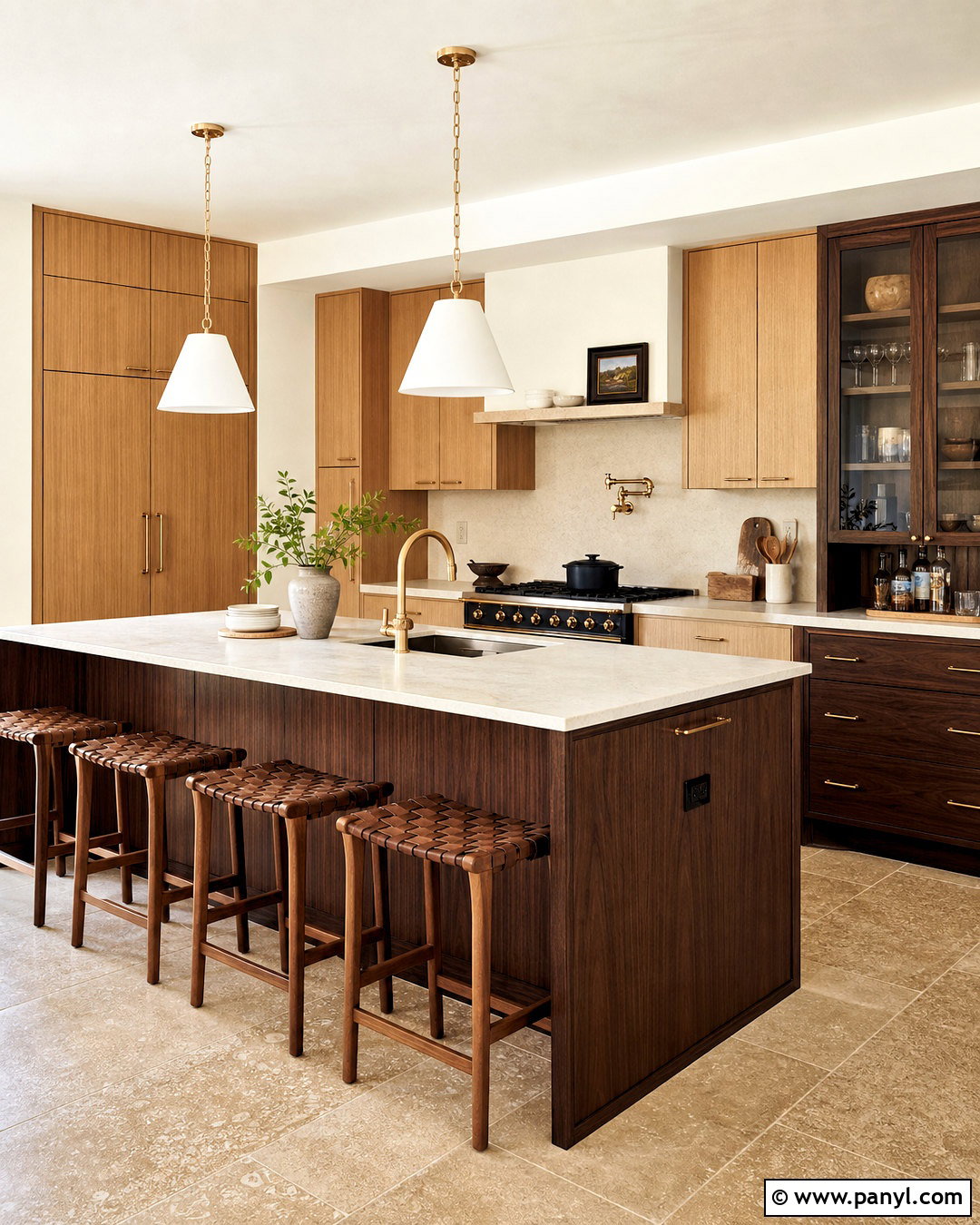
Rift-sawn oak and walnut bring refined grain and controlled contrast to a contemporary kitchen. Use light rift-sawn oak on full-height perimeter cabinetry, keeping the vertical grain aligned for a calm appearance. Cover the island in medium-dark walnut and repeat that finish inside a glass-front beverage cabinet. Creamy stone counters with restrained veining provide a clean transition between both woods. Add walnut counter stools with woven seats, brushed brass hardware, and simple white pendant lights. Pale limestone flooring keeps the overall room light, while warm white walls complement the natural finishes. Avoid excessive decorative accessories that would compete with the cabinetry. The final kitchen feels cohesive because the oak dominates the layout, the walnut marks key gathering points, and both woods share a warm, natural appearance.
17. Pine And Cedar Sunroom
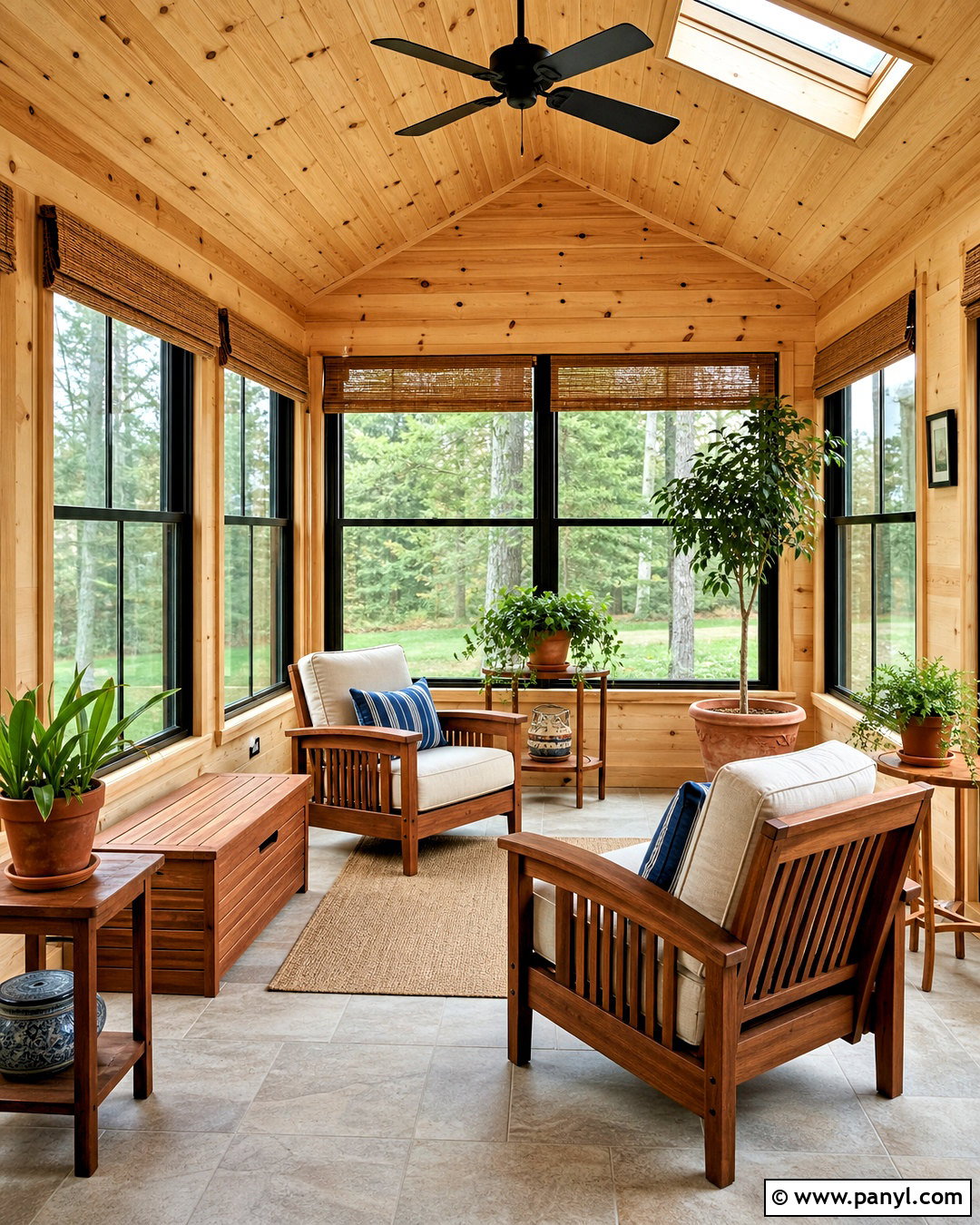
The scent and texture of natural wood can make a sunroom feel closely connected to the outdoors. Use pale pine plank walls or a pine ceiling as the dominant finish. Add cedar-framed lounge chairs, a cedar storage bench, and two compact plant stands in a richer reddish-brown tone. Light stone tile flooring balances the large amount of wood and handles frequent foot traffic. Choose cream cushions, striped blue pillows, woven shades, and an indoor-outdoor rug to create a relaxed seating area. Black window frames and ceiling fans provide clean contrast. Fill the room with leafy plants in simple clay pots, but keep pathways open. The cedar furnishings add enough color variation to enliven the pine envelope while maintaining the sunroom’s casual, nature-inspired character.
18. Bamboo And Teak Bathroom
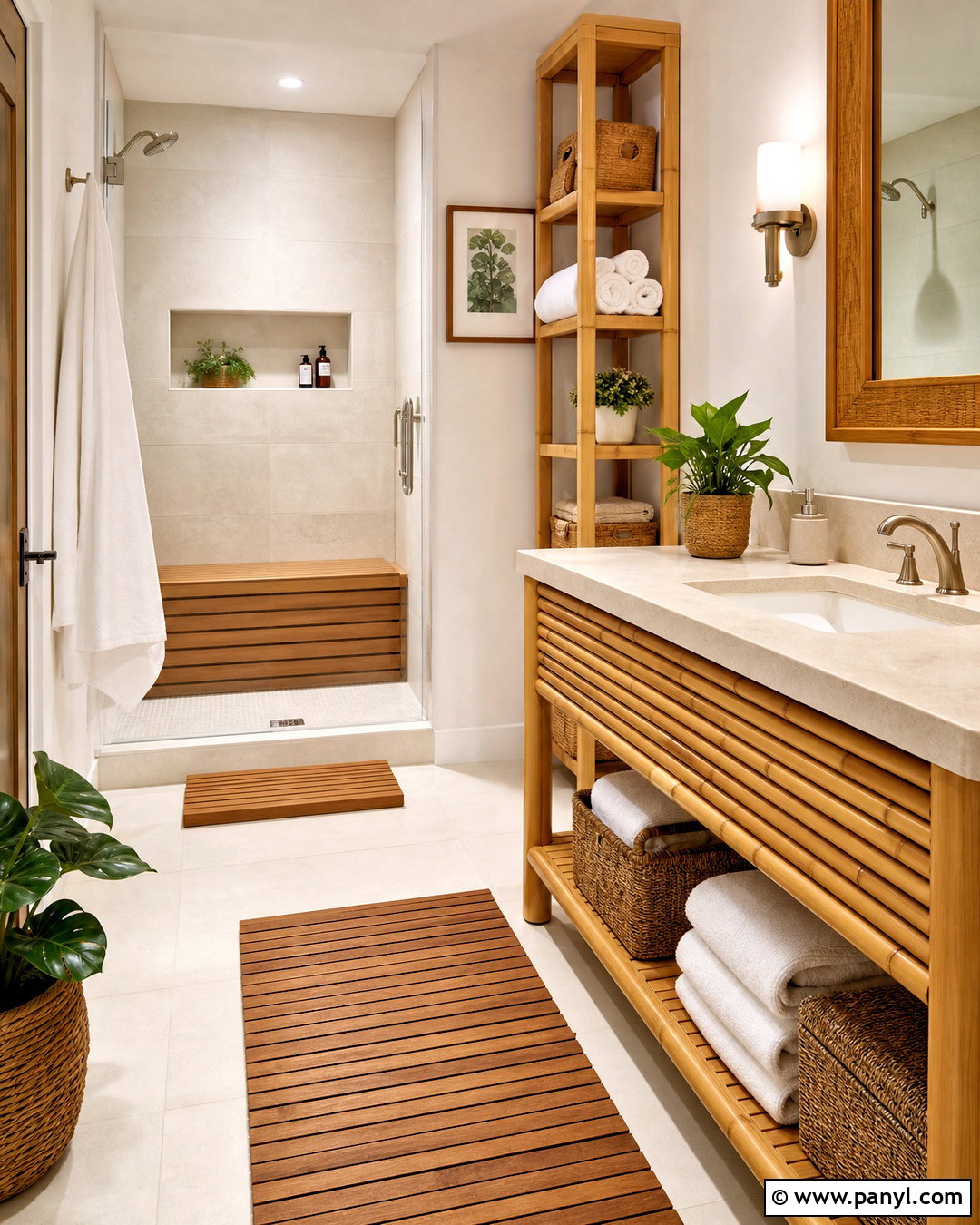
Bamboo and teak create a warm, spa-like bathroom that still feels practical and bright. Use a bamboo vanity with a simple flat-front design as the main wood feature. Add a slatted teak shower bench, teak bath mat, and narrow teak wall shelf to introduce a slightly darker golden-brown tone. Large warm white tiles provide a quiet background and protect the room from looking too wood-heavy. Choose a pale stone counter, an undermount sink, and brushed nickel fixtures for a clean finish. White towels, woven baskets, and one leafy plant soften the harder surfaces. Maintain generous space around each wood feature so its grain remains visible. This completed bathroom pairs streamlined storage with moisture-friendly accessories while preserving an airy, uncluttered appearance.
19. Pecan And Walnut Bedroom
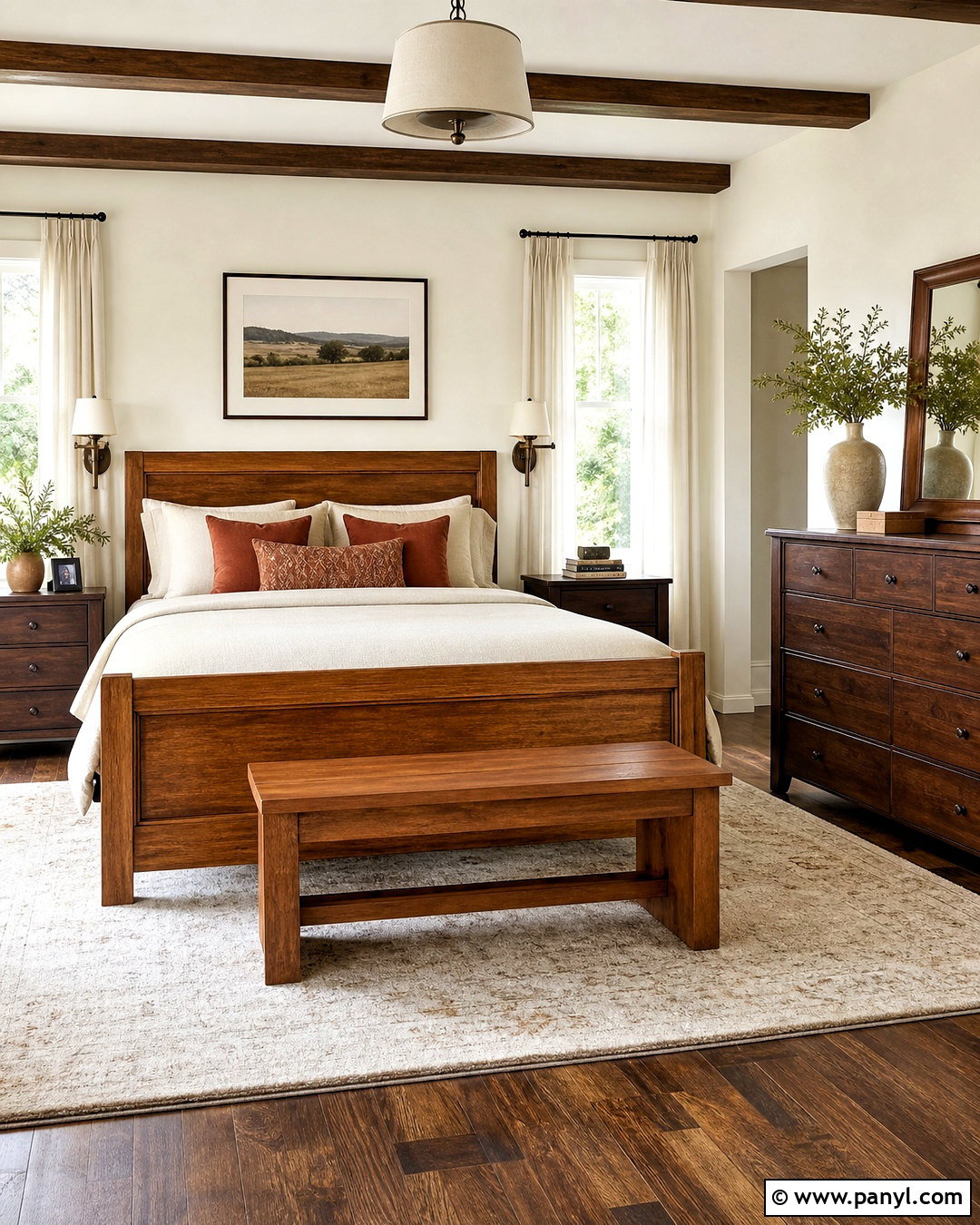
Pecan and walnut give a bedroom a rich, comforting look without requiring dark finishes everywhere. Choose a medium pecan bed with warm amber variation as the focal point. Add dark walnut nightstands and a matching low dresser to ground the room. A large cream rug separates the furniture from neutral oak or carpeted flooring, ensuring the two main wood tones remain easy to distinguish. Use warm white walls, flax linen bedding, and muted terracotta pillows to complement the pecan. Walnut picture frames and a pecan bench repeat both finishes in smaller amounts. Soft bronze sconces add warmth without competing with the grain. Keep curtains light and furniture profiles uncomplicated. The balanced combination feels cozy and collected, with pecan bringing movement and walnut providing steady visual weight.
20. Oak Walnut And Black Wood Great Room
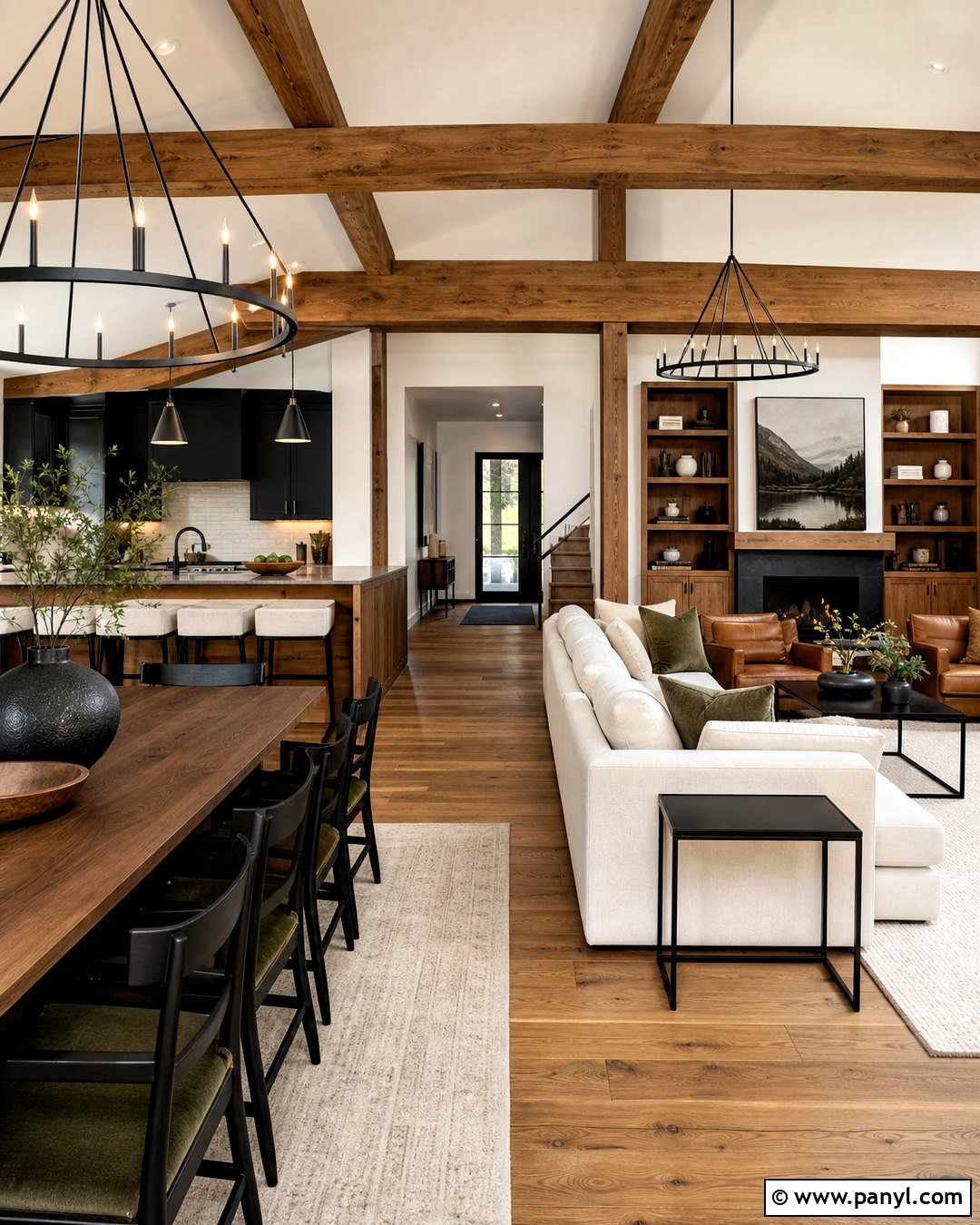
An open great room can comfortably handle three wood tones when each one has a clear role. Use natural oak flooring and ceiling beams as the dominant finish. Introduce walnut through the dining table, media cabinet, and kitchen island panels. Reserve black-stained wood for dining chairs, barstools, and slim occasional tables. A large ivory sectional and two pale area rugs create separation between these finishes. Warm white walls, tan leather seating, olive textiles, and matte black lighting unite the living, dining, and kitchen zones. Repeat every wood tone in more than one location so the scheme carries naturally across the open layout. The resulting room feels connected rather than matched, with oak providing brightness, walnut supplying warmth, and black wood adding a crisp visual framework.
Conclusion:
Successful mixed-wood rooms rely on contrast, repetition, and a clear visual hierarchy. Choose one dominant finish for the flooring, cabinetry, or largest furniture pieces. Then layer in supporting woods that share similar warmth or provide an unmistakable light-to-dark difference. Rugs, upholstery, painted surfaces, stone, and metal can separate neighboring grains and give the composition space to breathe. Repeating each secondary finish in at least two locations also helps the room feel planned. Most importantly, avoid forcing two nearly identical stains to match. A confident contrast usually looks more natural. These **20 wood tones that go together ideas** offer complete, practical palettes that can make every room feel warmer, more dimensional, and thoughtfully collected.

Related Ideas and Inspiration:
Leave a Reply