
Brick brings warmth, texture, and history into a room, but its strong red, brown, or orange undertones can make paint selection feel challenging. The best Brick Wall Paint Matching Ideas create balance rather than forcing the brick to compete with surrounding walls. Warm neutrals soften rustic masonry, greens provide earthy contrast, and deep blues or charcoal shades create a more dramatic finish. Before choosing, study the brick’s dominant color, mortar tone, flooring, and natural light. Test large paint samples beside the masonry at different times of day because undertones can shift noticeably. The complete room should feel connected through furniture, textiles, lighting, and finishes. Use these Brick Wall Paint Matching Ideas to build a polished, practical look around exposed brick. ()

1. Warm White Paint With Red Brick Wall
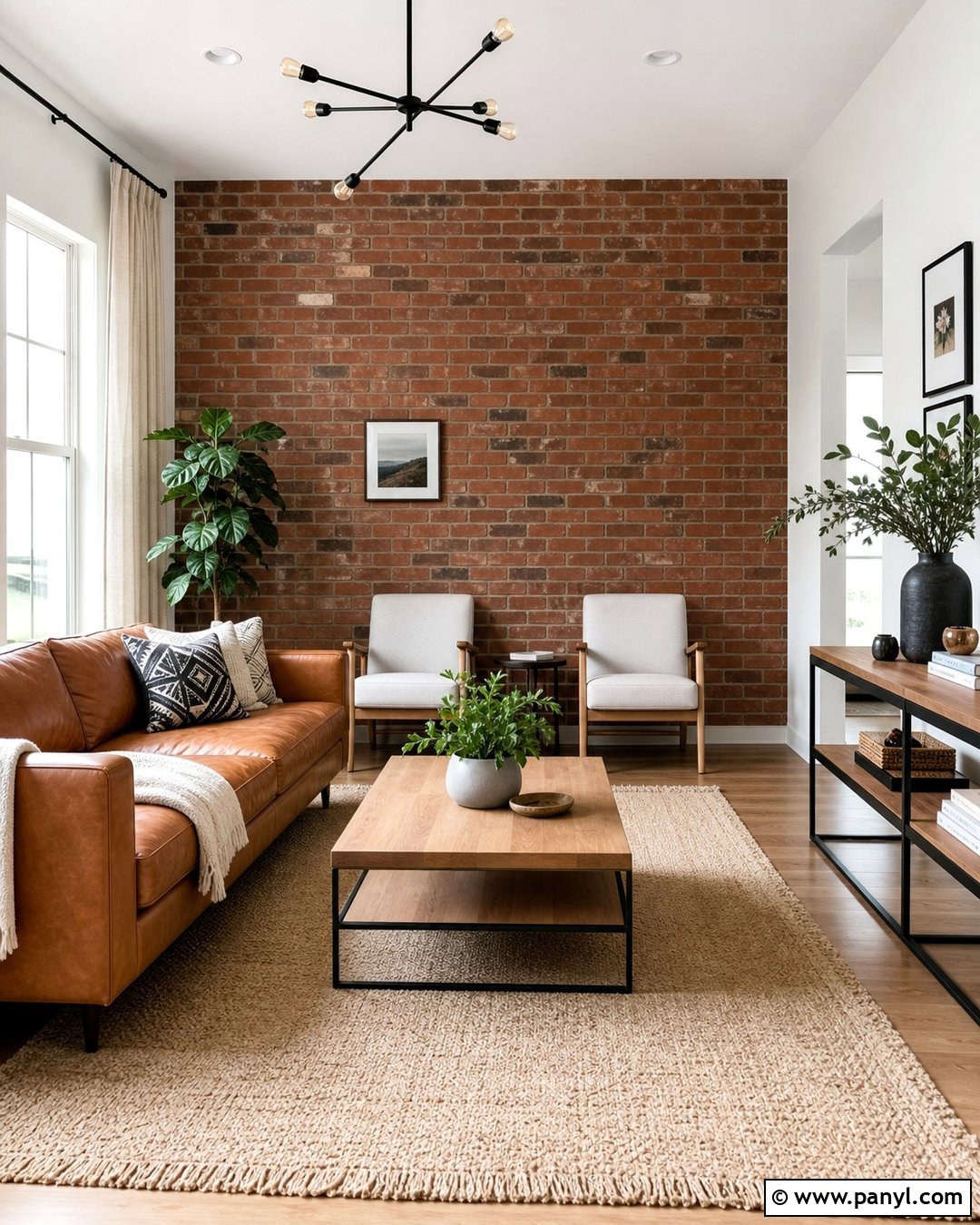
Warm white paint gives a red brick wall room to stand out without making the space feel busy. Choose a creamy white with subtle beige or yellow undertones rather than a cold, blue-based white. Continue the color across adjoining walls and trim for a clean backdrop. A camel leather sofa, pale oak coffee table, and natural woven rug reinforce the brick’s warmth. Add black metal lighting and slim black picture frames for definition. Linen curtains in soft ivory filter daylight without introducing another competing color. Keep accessories simple, using pottery, books, and leafy plants. This complete living room scheme feels bright and relaxed while allowing the brick’s natural texture and color variation to remain the main architectural feature.
2. Soft Greige Paint With Brick Wall
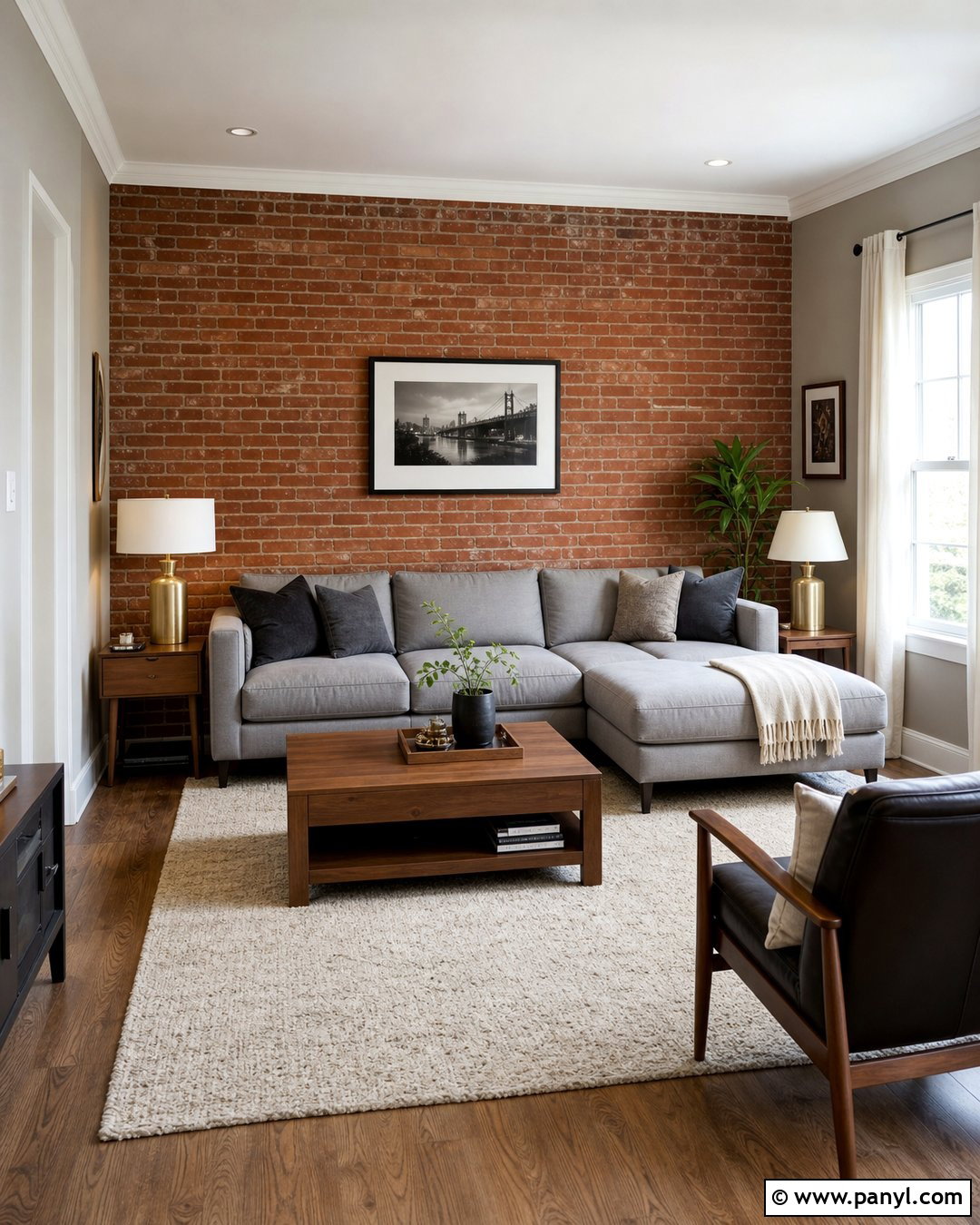
Soft greige creates an easy transition between warm red brick and cooler modern furnishings. Look for a balanced shade that sits between beige and gray without appearing purple. Paint the surrounding walls and baseboards in the same color, using a satin finish on trim for gentle contrast. Pair the scheme with a light gray sectional, walnut side tables, and an oatmeal wool rug. Brushed brass lamps echo the warmer flecks in the masonry, while charcoal pillows connect with darker brick and mortar marks. Add off-white curtains and one large neutral artwork rather than several small pieces. The result is a comfortable contemporary room where every surface feels coordinated. Greige is especially helpful when the space includes both warm wood flooring and cool gray upholstery.
3. Light Gray Paint With Red Brick Wall
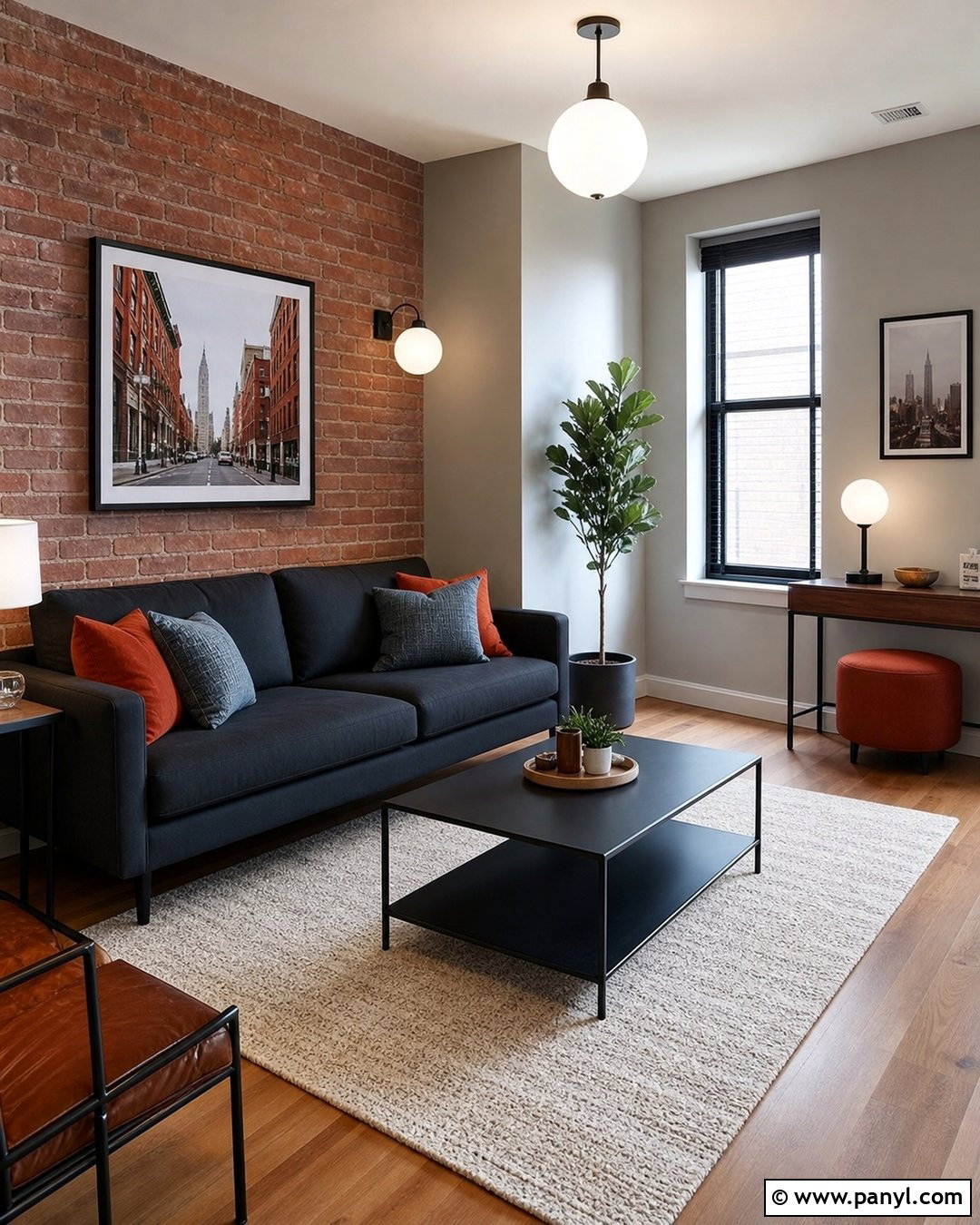
A pale, slightly warm gray can make exposed red brick feel cleaner and more contemporary. Avoid icy silver shades, which may exaggerate orange tones in the brick. Use the gray on the surrounding walls, then choose soft white for the ceiling and trim. Ground the room with a charcoal sofa, medium-toned oak flooring, and a black metal coffee table. Rust, cream, and muted blue pillows bring the wall color into the seating area without creating an overly matched look. A large ivory rug keeps the floor bright, while simple globe lights add a modern finish. This palette works well in apartments and open lofts because it respects the brick’s industrial character while introducing enough softness for everyday living.
4. Charcoal Paint With Brick Wall

For a dramatic room, surround a red brick feature wall with deep charcoal paint. Select a charcoal that has warm brown undertones so it relates naturally to the masonry. Use the same color on doors, trim, and built-in shelving to create an immersive background. Balance the dark walls with a cream sofa, pale wood tables, and a large light-colored rug. Cognac leather chairs repeat the brick’s warmth, while matte black lighting supports the moody palette. Keep window treatments light and uncomplicated to preserve natural brightness. Mirrors and brushed metal accents can also prevent the room from feeling enclosed. This complete scheme gives the brick wall a sophisticated, gallery-like presence and works especially well in a den, media room, or spacious living area.
5. Sage Green Paint With Red Brick Wall
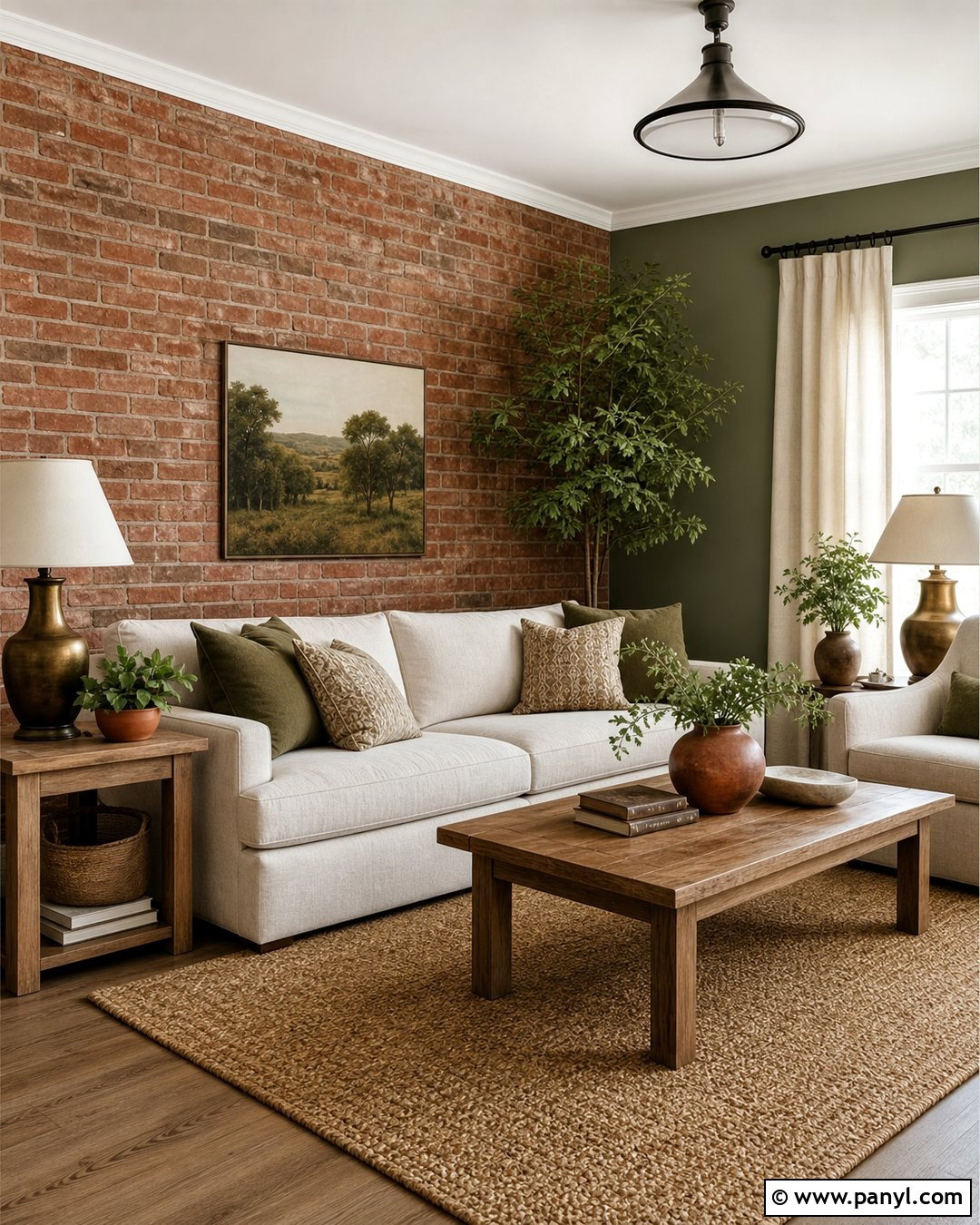
Soft sage green provides gentle contrast to red brick while preserving an earthy, natural atmosphere. Choose a muted sage with gray undertones rather than a bright pastel green. Paint the surrounding walls sage and keep the ceiling, trim, and doors warm white. Furnish the room with an oatmeal sofa, medium oak tables, and a woven jute rug. Add cream curtains, olive pillows, and small touches of aged brass. Plants look especially cohesive in this setting, but use a few substantial varieties instead of filling every surface. Terracotta pottery can repeat the brick color in a controlled way. The finished room feels calm and collected, making this pairing an appealing option for living rooms, bedrooms, dining spaces, and home offices with exposed masonry.
6. Olive Green Paint With Brick Wall
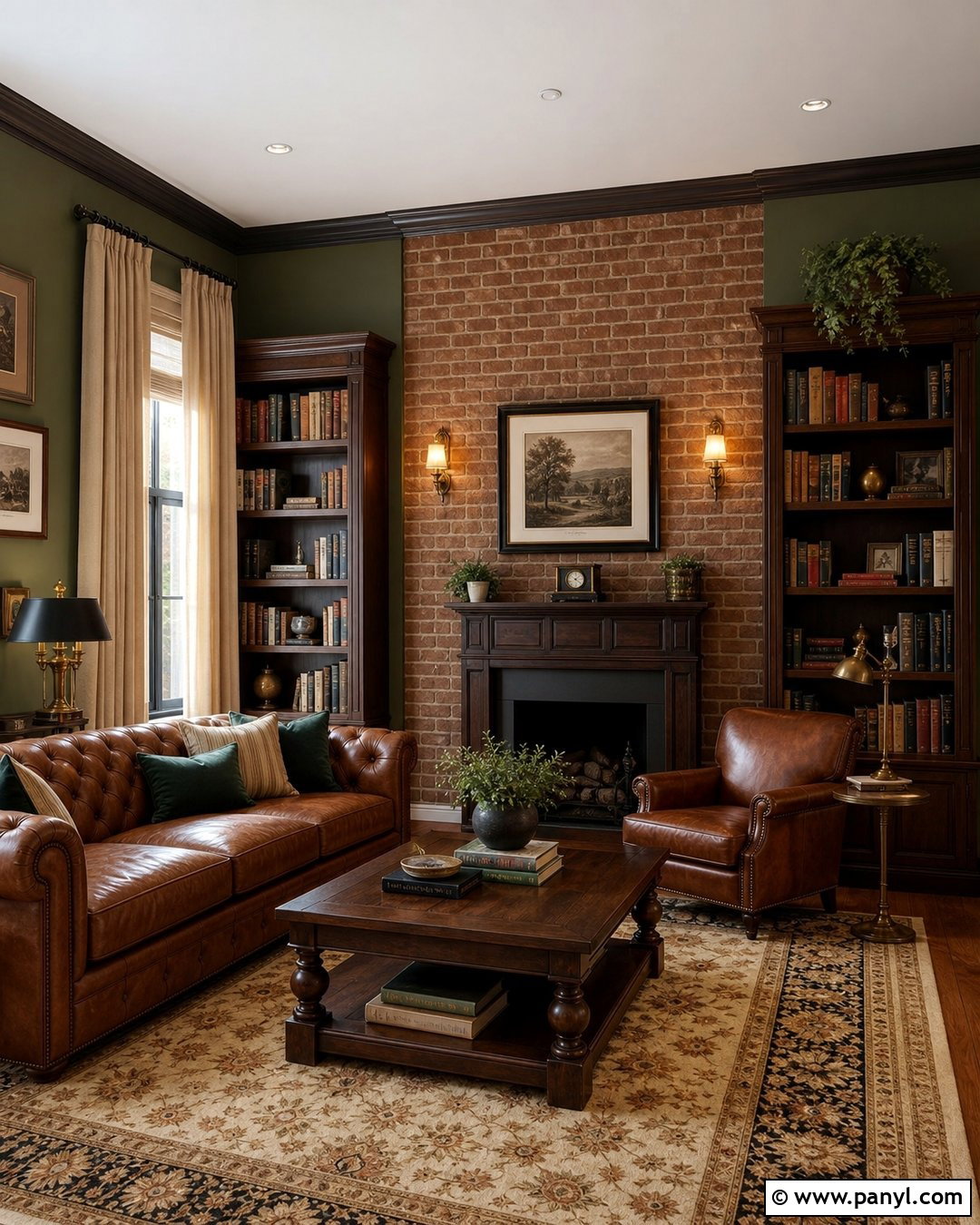
Olive green creates a richer, more grounded pairing with weathered red or brown brick. Choose a medium olive shade with warm, muddy undertones and carry it across the adjacent walls. Warm white on the ceiling prevents the room from becoming too dark. Build the design around a tan leather sofa, walnut furniture, and a vintage-inspired cream rug with muted rust details. Antique brass sconces and dark wood frames give the room an established character. Use linen curtains in natural flax and add black accents sparingly through a floor lamp or side table. This complete palette suits libraries, dining rooms, and cozy living spaces. The olive paint complements the brick without copying it, producing depth, warmth, and a subtle traditional feeling.
7. Forest Green Paint With Brick Wall
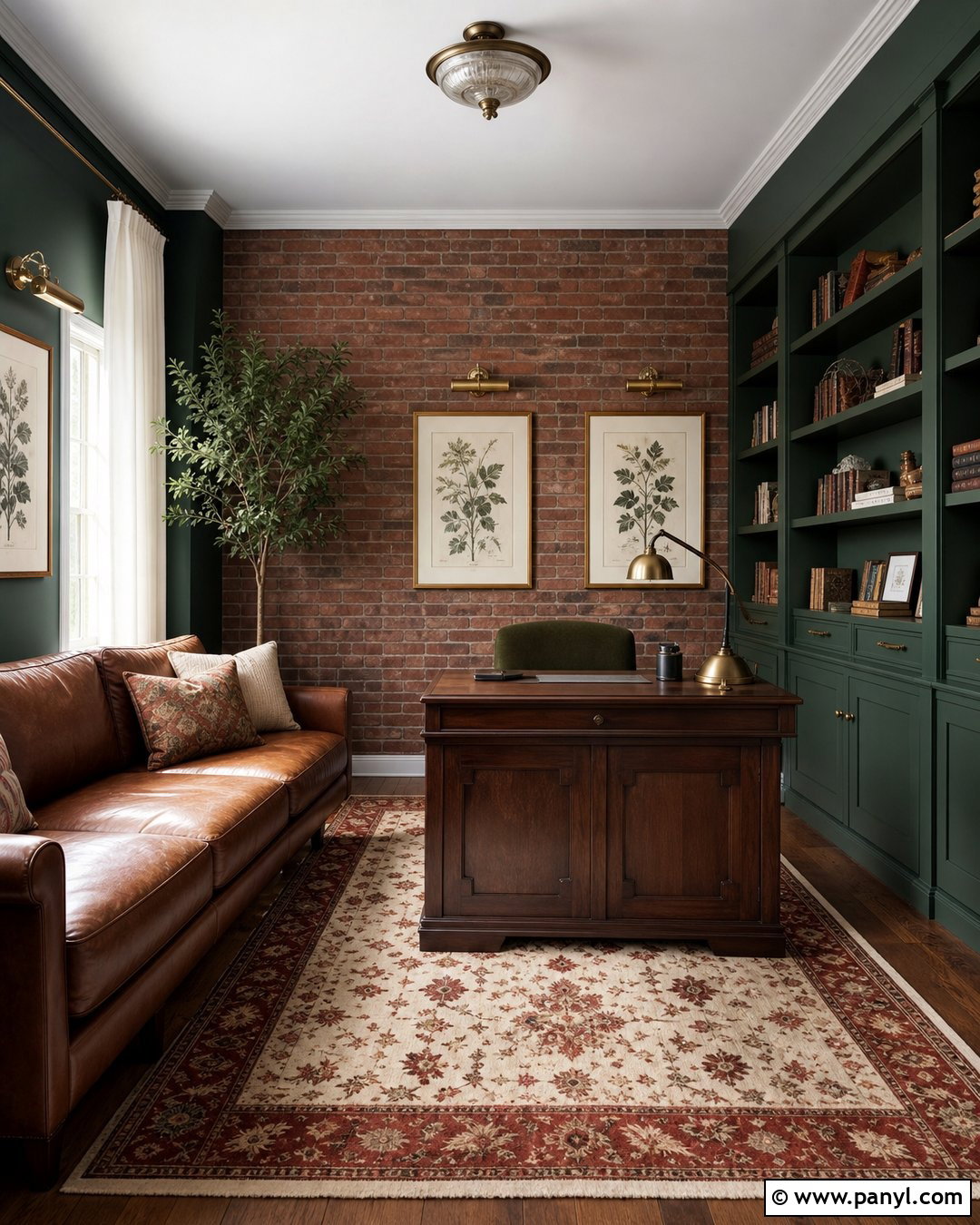
Deep forest green can turn an ordinary exposed brick room into a bold, intimate retreat. Paint the non-brick walls, trim, and shelving in one saturated green for a smooth color-drenched effect. Keep the ceiling a soft cream if the room has limited natural light. A caramel leather sofa and dark oak furniture strengthen the warm, established palette. Add a patterned rug containing cream, faded green, and brick red to unite every major color. Brass picture lights and table lamps provide a polished contrast against the green. Ivory curtains soften the windows, while simple botanical artwork connects with the organic color scheme. This look feels especially complete in a study or formal sitting room where deeper colors and layered textures can be appreciated.


8. Navy Blue Paint With Red Brick Wall
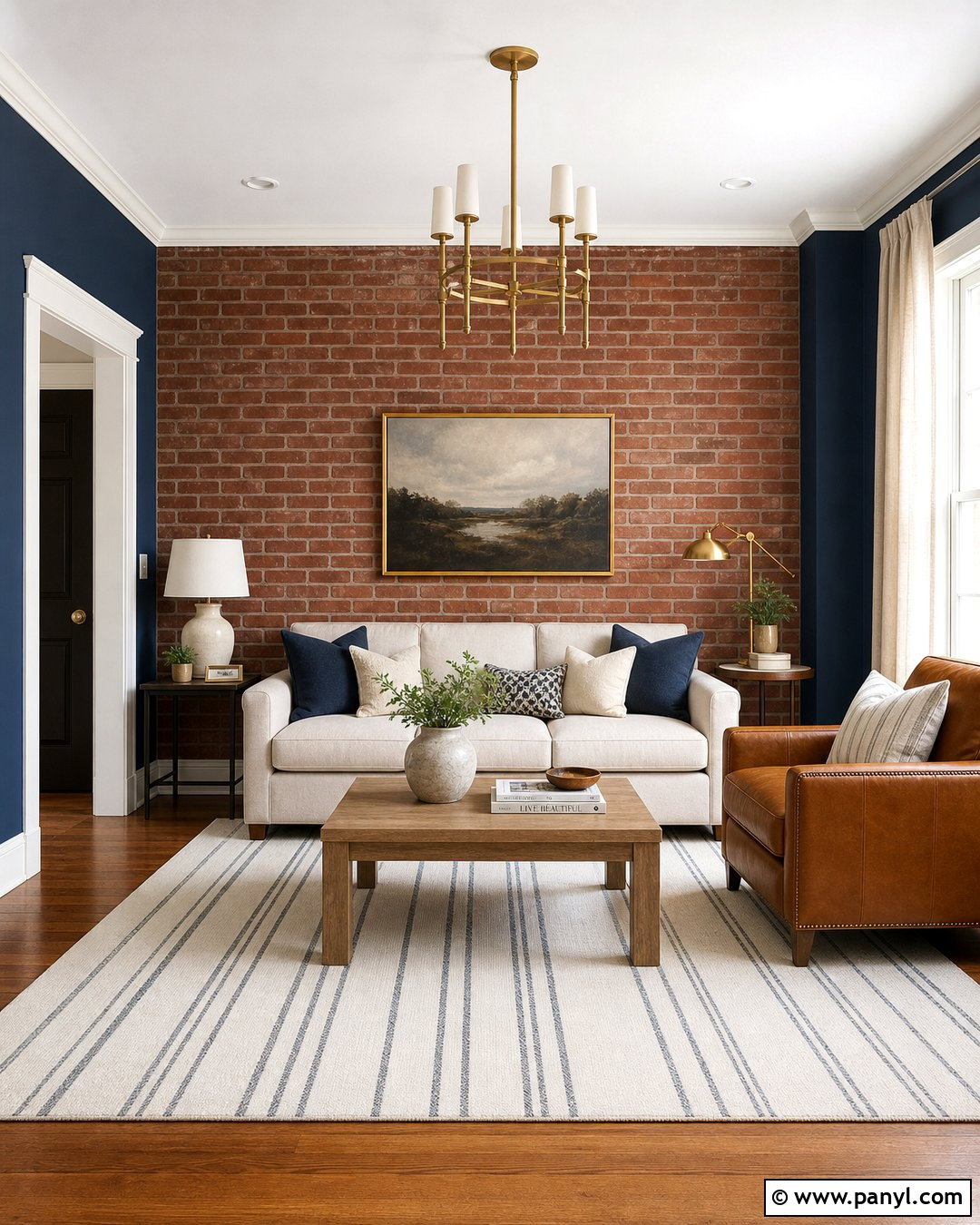
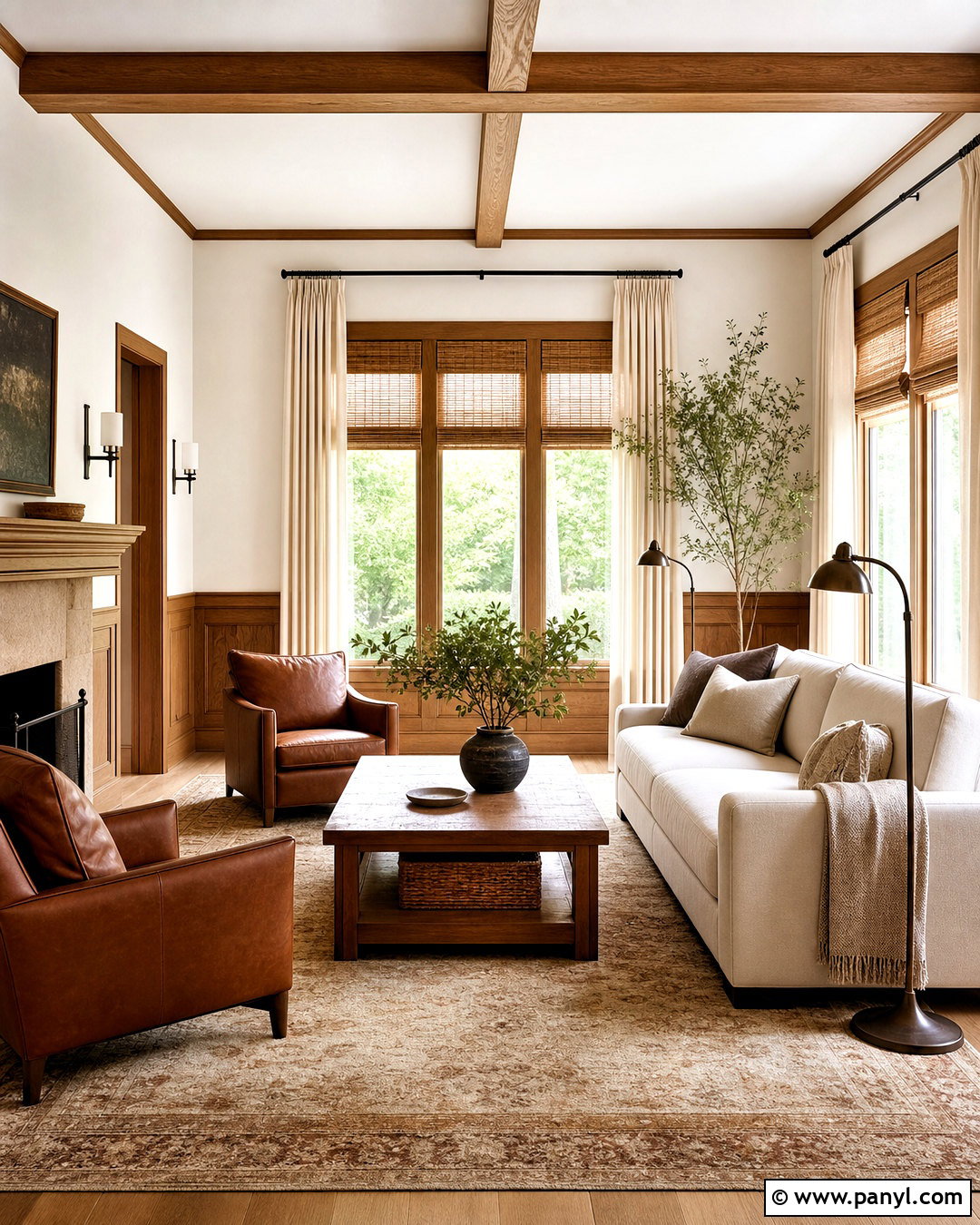
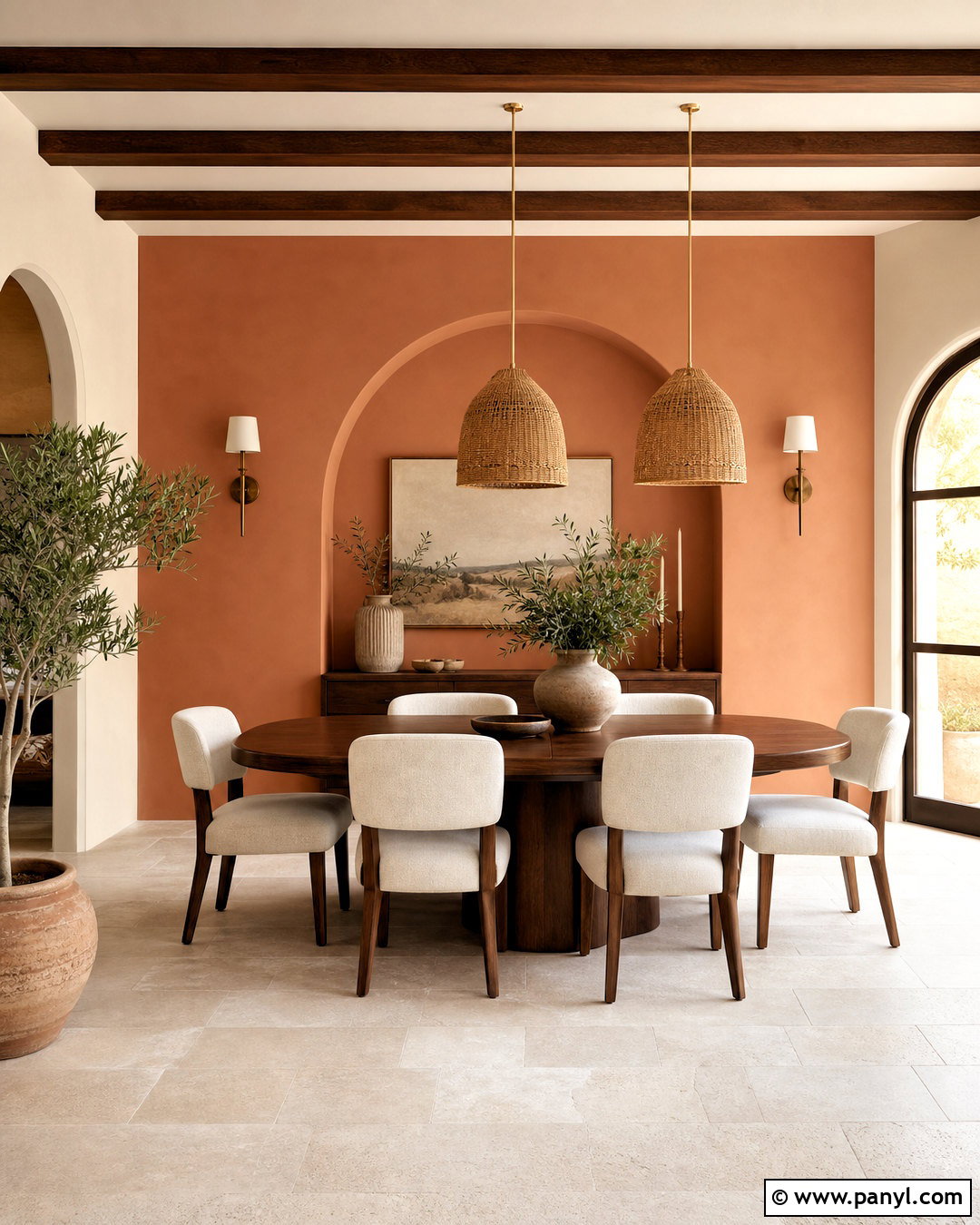
Navy blue provides a strong, classic contrast that makes red brick appear warmer and more defined. Select a navy with slightly muted or gray undertones so the room feels refined rather than overly bright. Use warm white trim to frame both the navy walls and the masonry. A light beige sofa, cognac leather chair, and medium oak coffee table balance the darker surfaces. Bring in navy again through patterned pillows or a striped rug, but leave plenty of cream between stronger colors. Brushed brass lighting adds warmth and visual polish. For windows, choose natural linen curtains mounted close to the ceiling. The finished room combines traditional color with industrial texture, making it suitable for living rooms, dining rooms, and comfortable home libraries.
9. Dusty Blue Paint With Brick Wall

Dusty blue softens an exposed brick wall and gives the surrounding room an airy, casual character. Choose a subdued blue with gray undertones rather than a clear sky blue. Paint the adjacent walls dusty blue, then use soft cream on trim and ceilings. Furnish the room with a natural linen sofa, weathered oak tables, and a flat-weave rug in ivory and faded denim. Rust-colored pillows subtly repeat the masonry, while matte black lamps provide crisp definition. Add woven baskets and simple ceramic pieces to create texture without clutter. This balanced scheme works particularly well in bedrooms and family rooms because it feels relaxed and approachable. The cool blue paint also helps visually separate the brick from similarly warm wood flooring or cabinetry.



10. Deep Teal Paint With Brick Wall
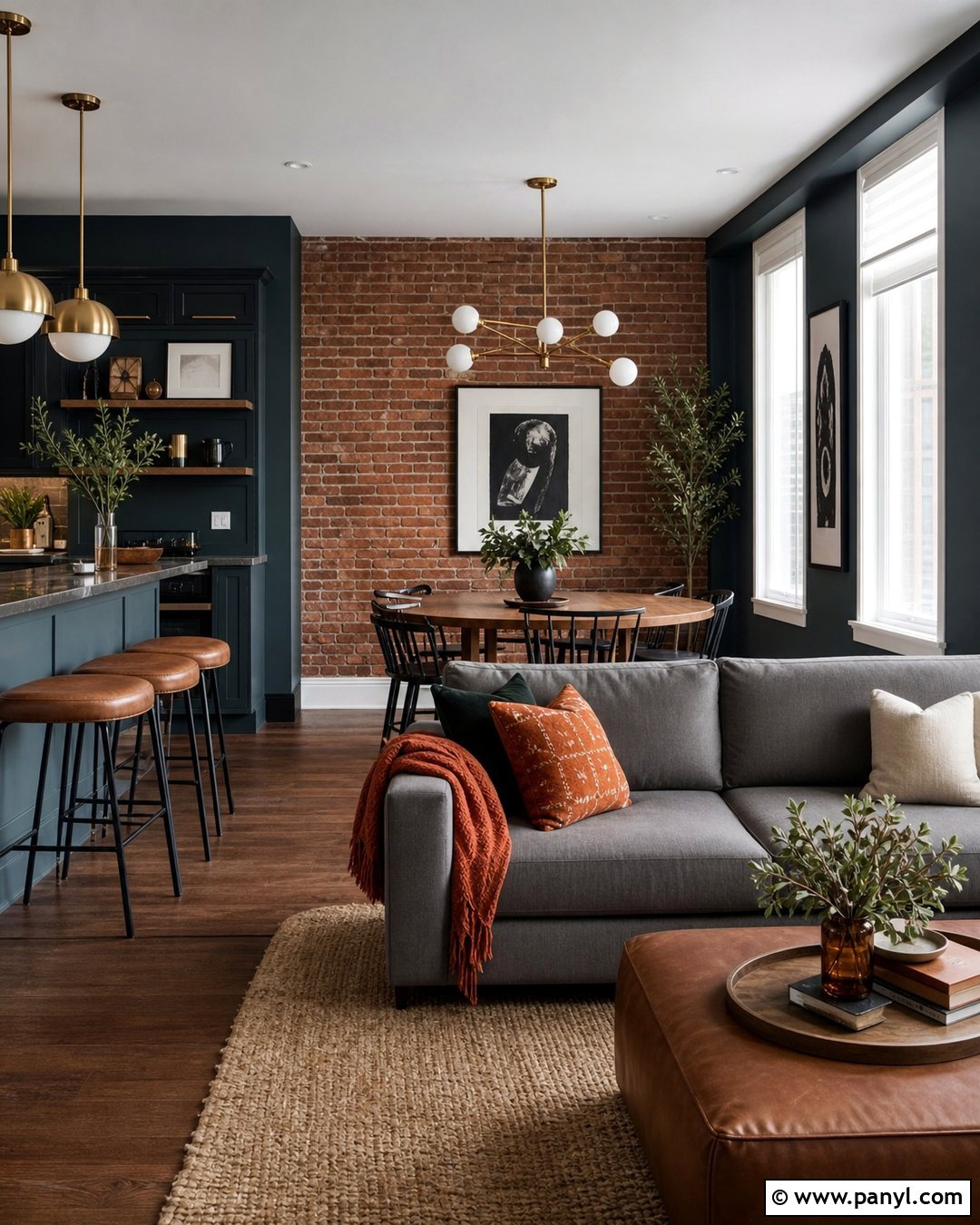
Deep teal creates an energetic contrast with red and orange brick while retaining enough depth to feel sophisticated. Choose a blue-green shade with a muted finish and apply it to the surrounding walls or built-in cabinetry. Keep ceilings and window trim creamy white for brightness. A warm gray sofa, walnut coffee table, and camel leather ottoman provide a balanced foundation. Repeat teal in only one or two textiles, then use rust, cream, and charcoal for the remaining accents. A large neutral rug keeps the palette from becoming overwhelming. Add brushed brass lighting and dark framed artwork for a polished finish. This full-room combination is ideal for a dining room, creative studio, or modern living space that benefits from confident color.
11. Cream Paint With Brick Wall
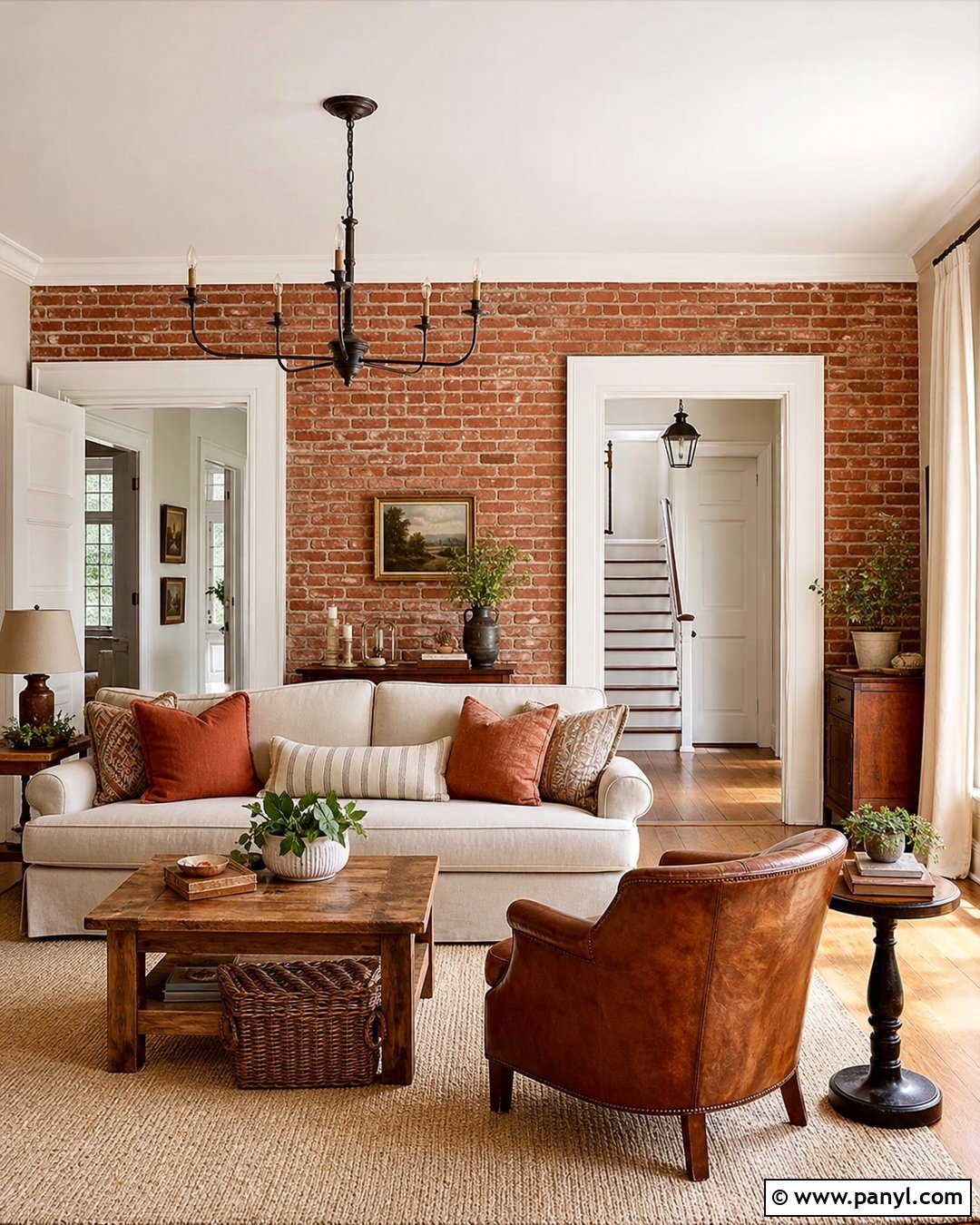
Cream paint highlights the warmth of an aged brick wall and creates a softer appearance than standard white. Pick a light cream with restrained yellow undertones so it feels fresh rather than dated. Continue the shade across walls, trim, and interior doors for a simple, seamless envelope. Use a beige slipcovered sofa, warm oak tables, and an ivory rug to establish a quiet neutral base. Rust-colored cushions and a brown leather chair connect the seating directly to the brick. Layer the windows with natural linen panels, and choose antique brass or bronze lighting instead of bright chrome. This complete room has an inviting farmhouse influence without relying on themed decorations. It is also flexible enough to support seasonal textiles and changing artwork.
12. Sand Beige Paint With Brick Wall
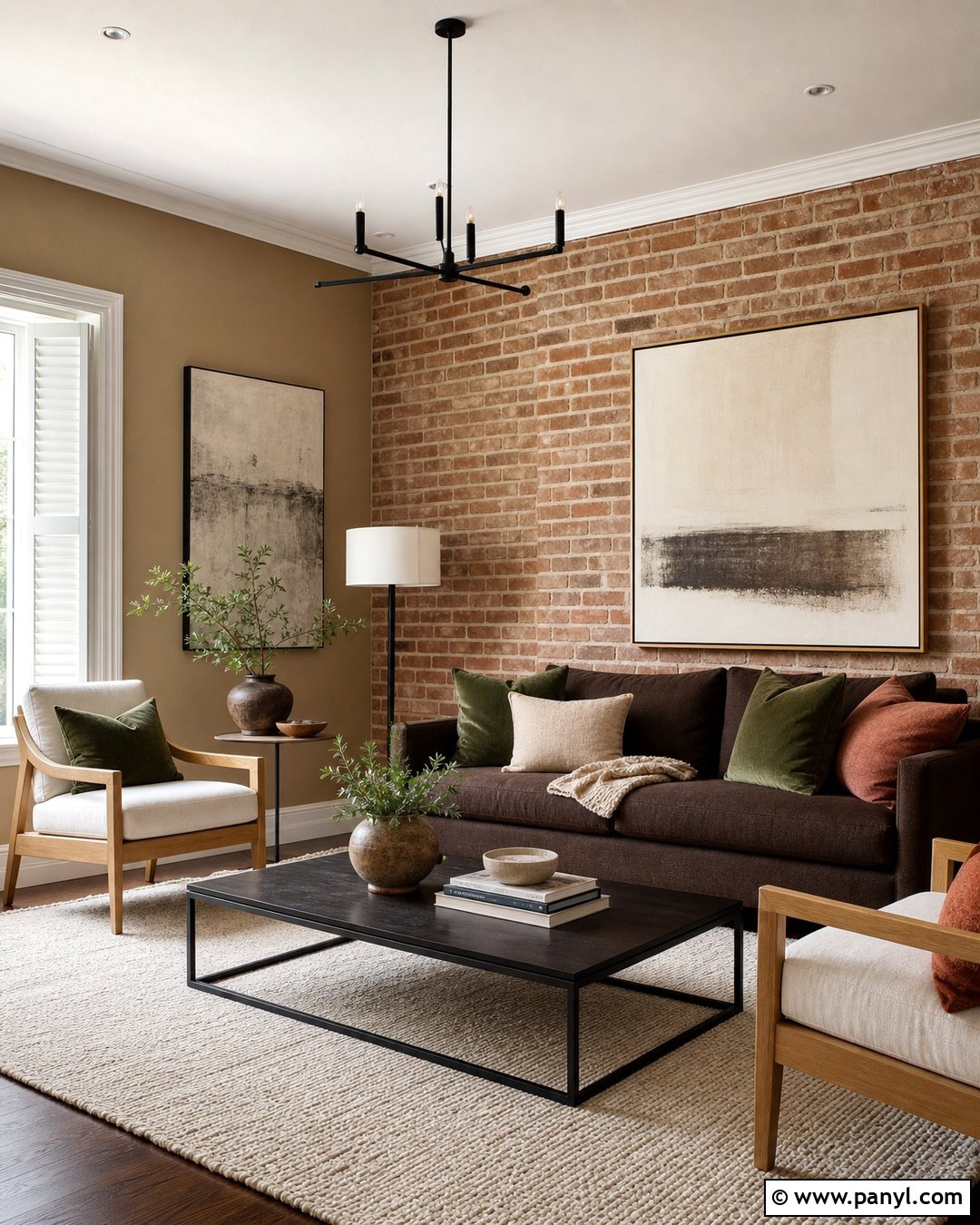
Sand beige creates a warm tonal scheme that works beautifully with brick containing tan, buff, or soft brown variations. Choose a natural beige that does not lean strongly pink or yellow. Paint the adjoining walls sand beige and use creamy white for the ceiling and architectural trim. A chocolate brown sofa, pale oak chairs, and a textured ivory rug give the space clear visual layers. Introduce black through slender lighting, curtain rods, and furniture legs to prevent the neutral colors from blending together. Cushions in clay, cream, and muted olive reinforce the earthy palette. Add large-scale abstract artwork with plenty of light background space. The finished room feels comfortable and cohesive, with enough contrast to keep the masonry visible and interesting.
13. Warm Taupe Paint With Brick Wall

Warm taupe can bridge the gap between brown flooring, red brick, and gray furniture. Choose a medium-light taupe with both gray and earthy brown undertones. Use it across the surrounding walls, while painting the trim a slightly lighter version for subtle definition. Furnish the space with a cream sectional, dark walnut media console, and a soft rug in oatmeal and charcoal. Add muted rust cushions to reference the brick and black metal fixtures to sharpen the scheme. Drapes in a flax-colored linen should blend quietly into the walls rather than create a hard boundary. This complete living room feels polished without looking formal. Taupe also offers enough depth to hide everyday marks, making it a practical choice for busy family spaces.
14. Terracotta Paint With Brick Wall
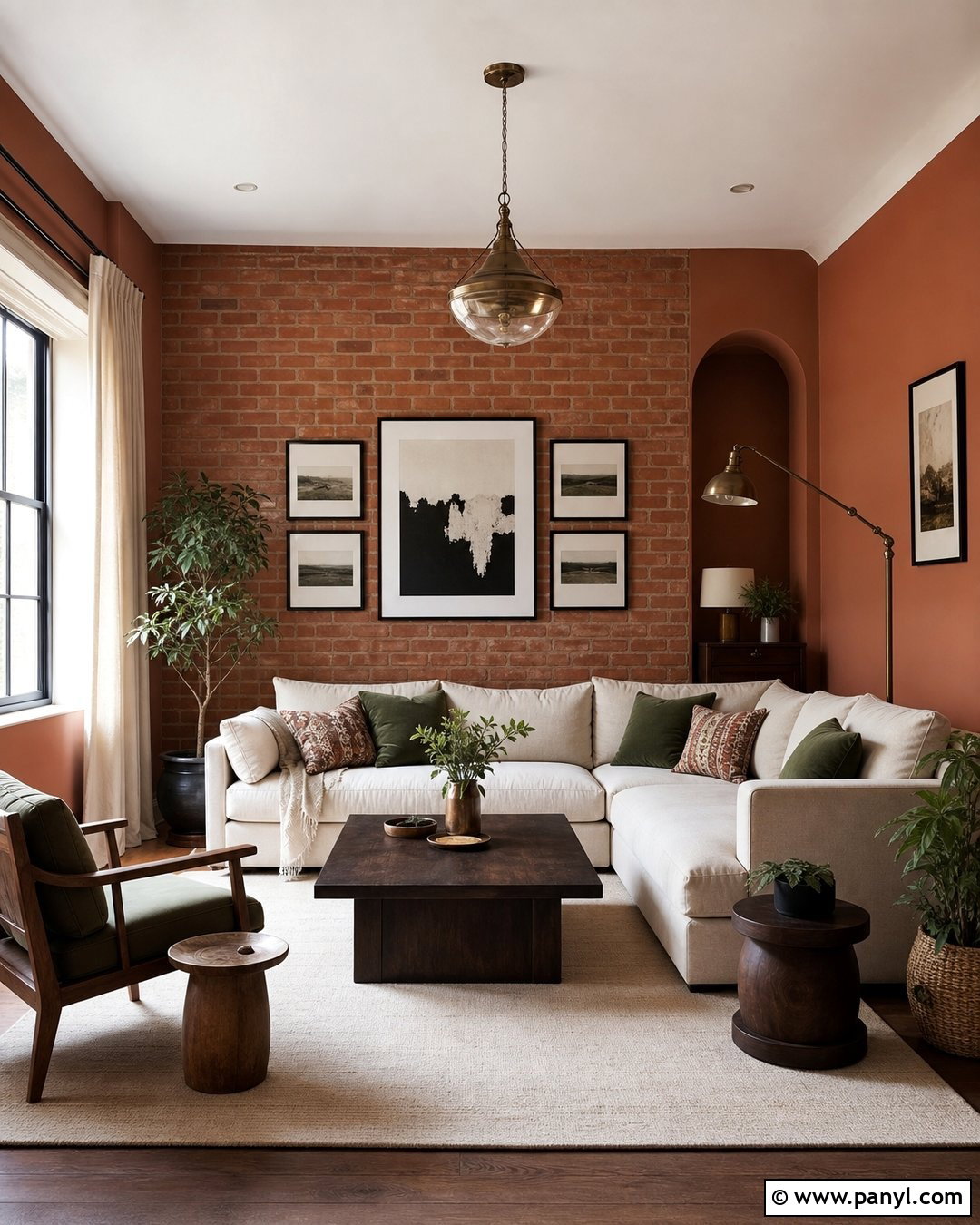
Terracotta paint can produce a warm monochromatic room when its tone is carefully separated from the exposed brick. Choose a muted clay shade that is either lighter or deeper than the masonry so both surfaces remain visible. Paint the adjacent walls terracotta and keep the ceiling creamy white. Introduce a beige sofa, dark wood tables, and a large ivory rug to break up the red-orange palette. Olive green pillows and plants provide natural contrast, while aged brass lighting enhances the warmth. Use linen curtains in soft oatmeal and limit wall decor to a few dark-framed pieces. The completed room feels enveloping and earthy rather than overly red. This pairing works best where generous daylight can reveal the subtle differences between paint and brick.
15. Muted Blush Paint With Brick Wall
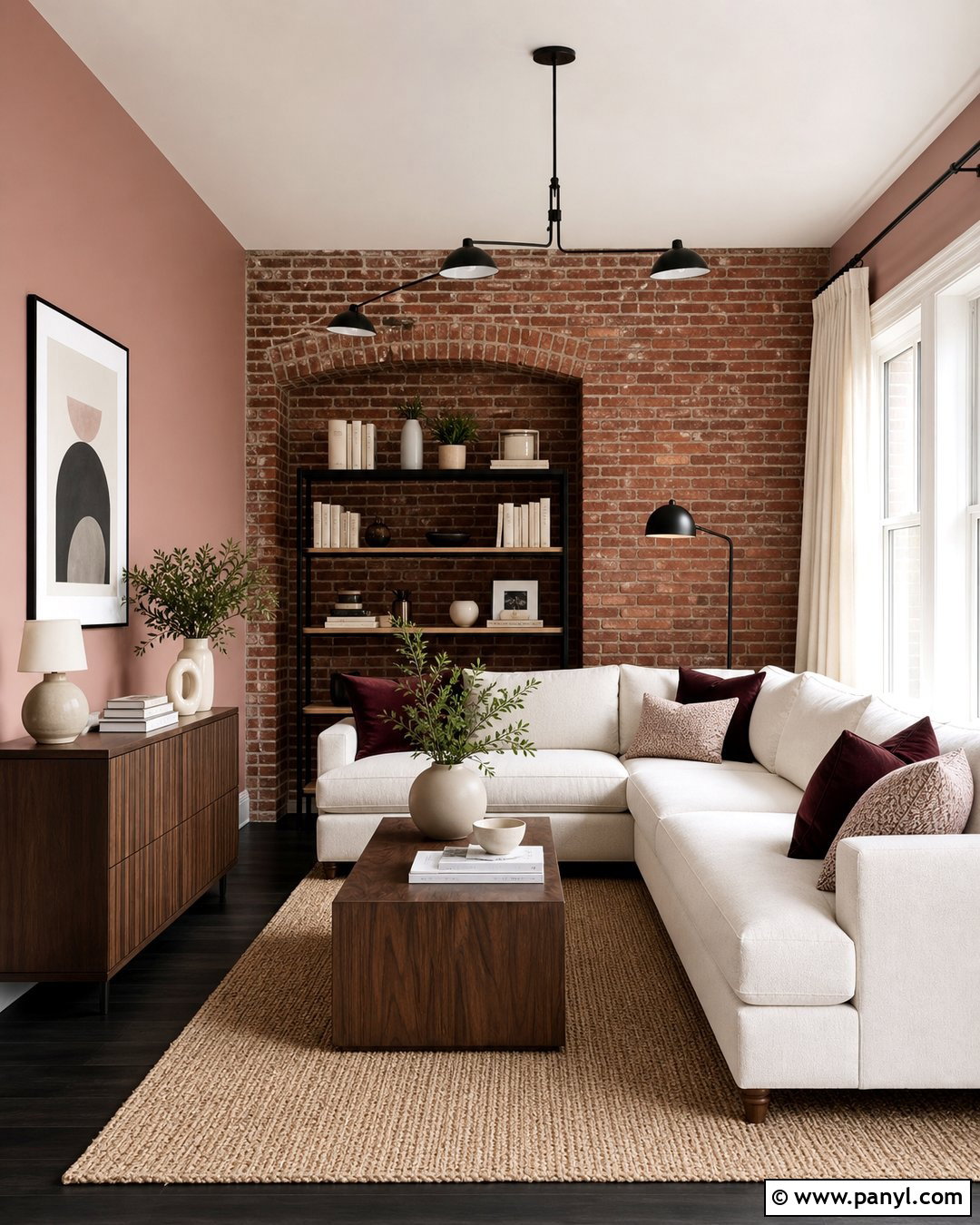
Muted blush brings softness to rugged exposed brick without creating an overly sweet room. Look for a dusty pink with beige, clay, or gray undertones. Apply it to the surrounding walls and use warm white on trim, doors, and the ceiling. Choose a cream sofa with clean lines, a walnut coffee table, and a textured beige rug. Dark burgundy pillows can connect the blush paint to deeper red marks in the masonry, while black metal lighting gives the palette structure. Add linen curtains and simple ceramic accessories in cream and brown. This complete scheme is especially effective in bedrooms, reading rooms, and relaxed living spaces. The blush should feel like a warm neutral, allowing the brick texture to remain strong and architectural.
16. Mustard Ochre Paint With Brick Wall

Mustard ochre paint creates a warm, expressive room inspired by the golden undertones often found in aged brick and mortar. Select a softened ochre rather than a bright primary yellow. Use it on one or two surrounding walls and keep the ceiling and remaining trim creamy white. A deep brown sofa, dark oak furniture, and an ivory rug ground the stronger paint color. Add cushions in charcoal, rust, and muted blue for a balanced mix. Matte black lighting and curtain hardware provide clean outlines, while natural linen panels keep the windows light. This finished room feels collected and cheerful, particularly when paired with vintage furniture and handmade pottery. It works best in spaces with abundant daylight and simple architectural details.
17. Matte Black Paint With Brick Wall

Matte black paint creates striking contrast and can make a warm brick wall look exceptionally crisp. Use black on an adjoining accent wall, built-in shelves, or lower cabinetry rather than covering every surface in a small room. Keep the other walls and ceiling warm white to control the darkness. Furnish the space with a camel leather sofa, pale oak table, and a large cream rug. Black window frames and lighting repeat the paint color, while rust and beige textiles connect the furniture to the masonry. Add one large mirror to reflect daylight and visually open the room. This complete industrial-modern scheme feels intentional because the black appears in several carefully distributed locations rather than as one isolated, heavy block.
18. Soft Black Paint With Whitewashed Brick Wall
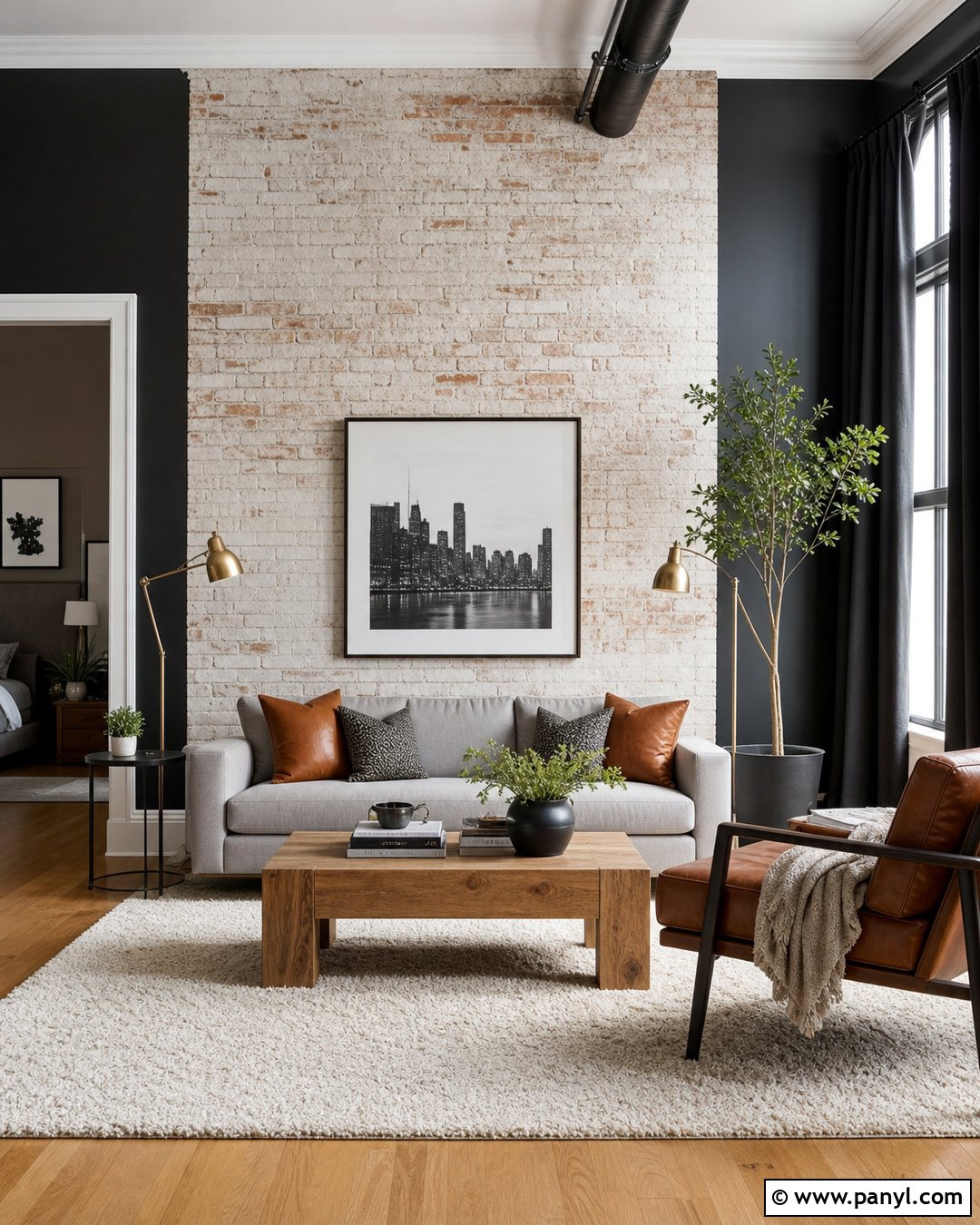
A whitewashed brick wall pairs beautifully with soft black paint because both finishes provide depth without looking overly sharp. Choose an off-black with charcoal or brown undertones for the surrounding walls. Keep the ceiling bright white and use the same white on window trim for clear framing. A light gray sofa, natural oak coffee table, and thick ivory rug brighten the seating area. Add black linen curtains, cognac leather cushions, and brushed brass lamps for contrast and warmth. The whitewashed brick should remain lightly textured, allowing traces of red and brown to show through. This completed room combines rustic surfaces with contemporary furniture, making it suitable for lofts, modern farmhouses, and updated older homes with strong architectural character.
19. Pale Blue Gray Paint With Brick Wall
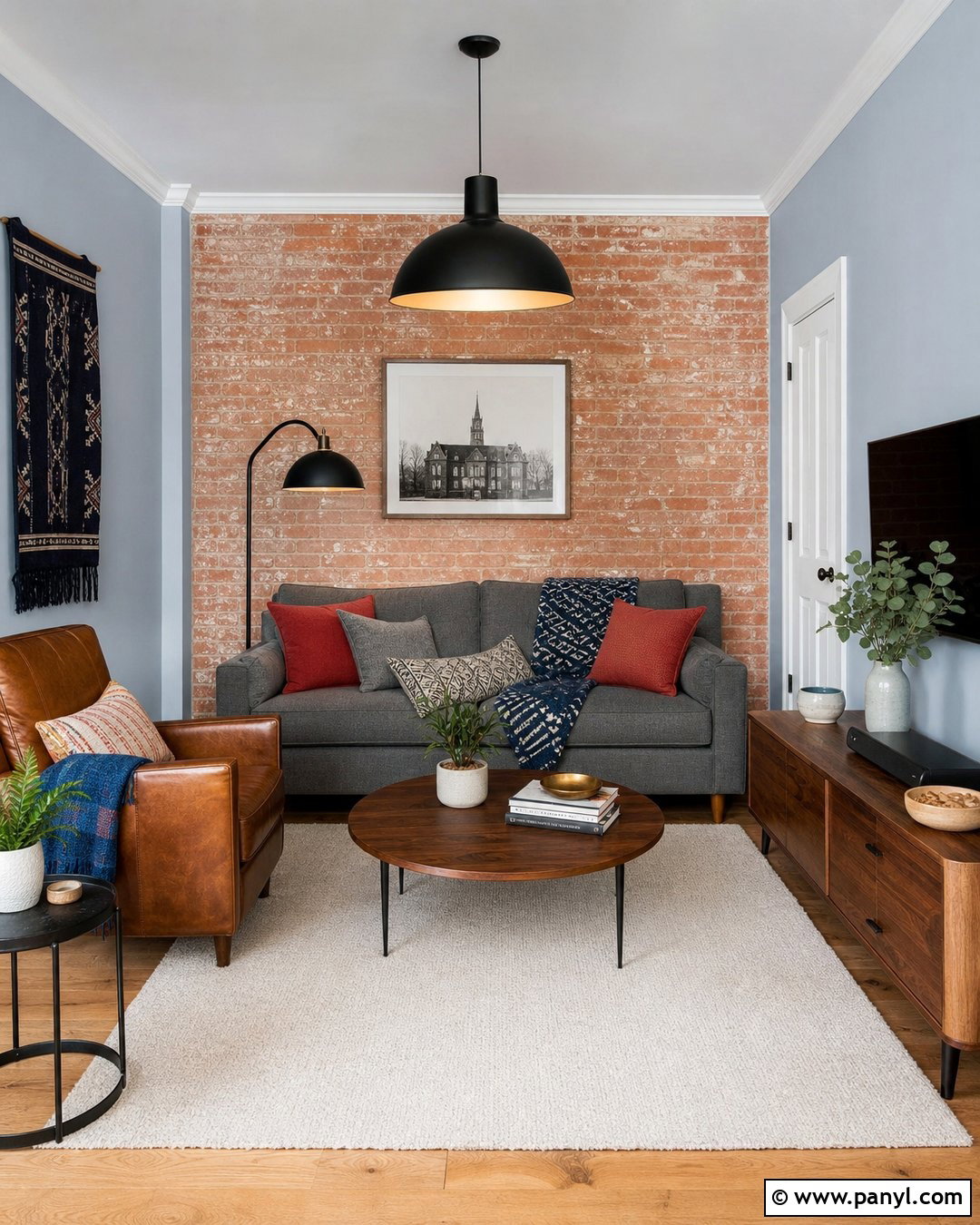
Pale blue-gray paint can refresh faded or weathered brick without overpowering its irregular texture. Choose a balanced shade that looks softly blue in daylight and neutral gray in shadow. Apply it to the surrounding walls, then use ivory for the ceiling, baseboards, and window trim. A medium gray sofa, warm wood console, and cream rug create a comfortable foundation. Add brick-red cushions, blue patterned textiles, and one aged leather chair to connect cool and warm elements. Simple nickel or matte black lighting keeps the design updated. Use sheer white curtains if privacy allows so the room receives plenty of daylight. This complete palette feels calm and spacious, making it especially useful for compact living rooms and bedrooms.
20. Mushroom Paint With Brown Brick Wall
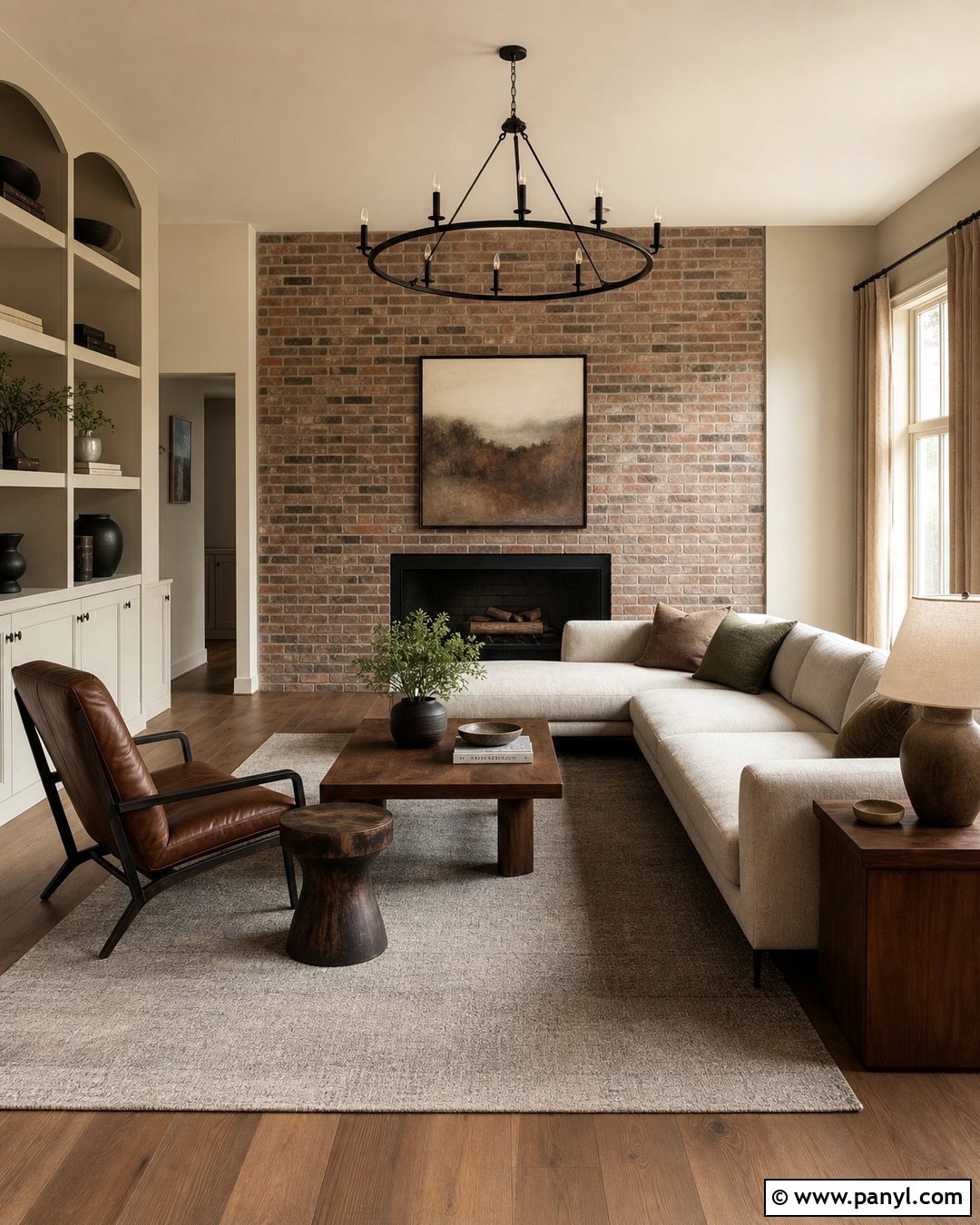
Mushroom paint is an effective partner for brown brick because its gray-beige undertones coordinate without disappearing into the masonry. Select a medium-light mushroom shade and use it across the walls and built-in storage. Paint the ceiling a soft cream to maintain brightness. Furnish the room with an ivory sectional, walnut tables, and a warm gray rug with subtle texture. Add dark brown leather, black metal lighting, and muted green pillows to give the neutral palette stronger definition. Curtains in natural linen can closely match the wall color for a calm, uninterrupted backdrop. This finished design feels earthy, modern, and easy to live with. It works particularly well when the brick includes a mixture of brown, tan, gray, and faded red tones.
Conclusion:
Successful Brick Wall Paint Matching Ideas begin with the colors already visible in the masonry, mortar, flooring, and fixed finishes. Warm white, cream, greige, and mushroom provide flexible backgrounds, while sage, navy, teal, and charcoal create stronger contrast. The paint color should be repeated thoughtfully through textiles, furniture, lighting, or artwork so the finished room feels intentional. Always compare large samples directly beside the brick and observe them in daylight and artificial light. More importantly, plan the entire room rather than selecting paint in isolation. When walls, furniture, finishes, and accessories share related undertones, exposed brick becomes a natural part of the design instead of a difficult feature that needs to be disguised. ()

Related Ideas and Inspiration:


Leave a Reply