
Choosing an interior paint color becomes easier when you picture the whole room instead of focusing on a tiny color sample. The right shade should complement the flooring, furniture, lighting, textiles, and adjoining spaces. Warm neutrals can create an easy backdrop, while earthy greens, softened blues, and rich browns add personality without overwhelming a home. Before committing, paint large test areas and view them during the morning, afternoon, and evening. Also compare the color beside permanent materials such as countertops, cabinets, tile, and woodwork. The complete room schemes below combine practical palettes with furniture, finishes, and decorative details, making it easier to explore 20 best paint colors for interior ideas.

1. Warm White Living Room
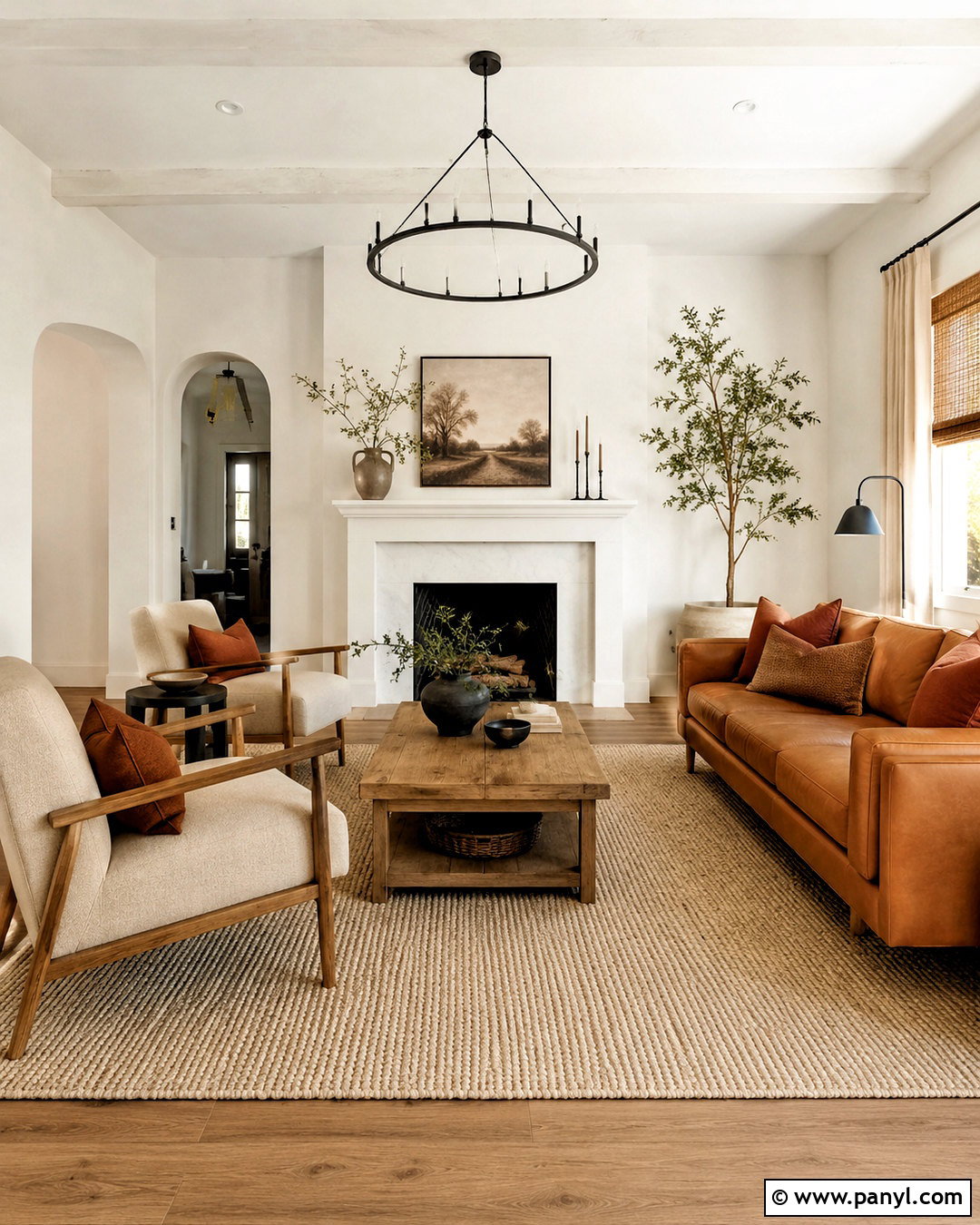
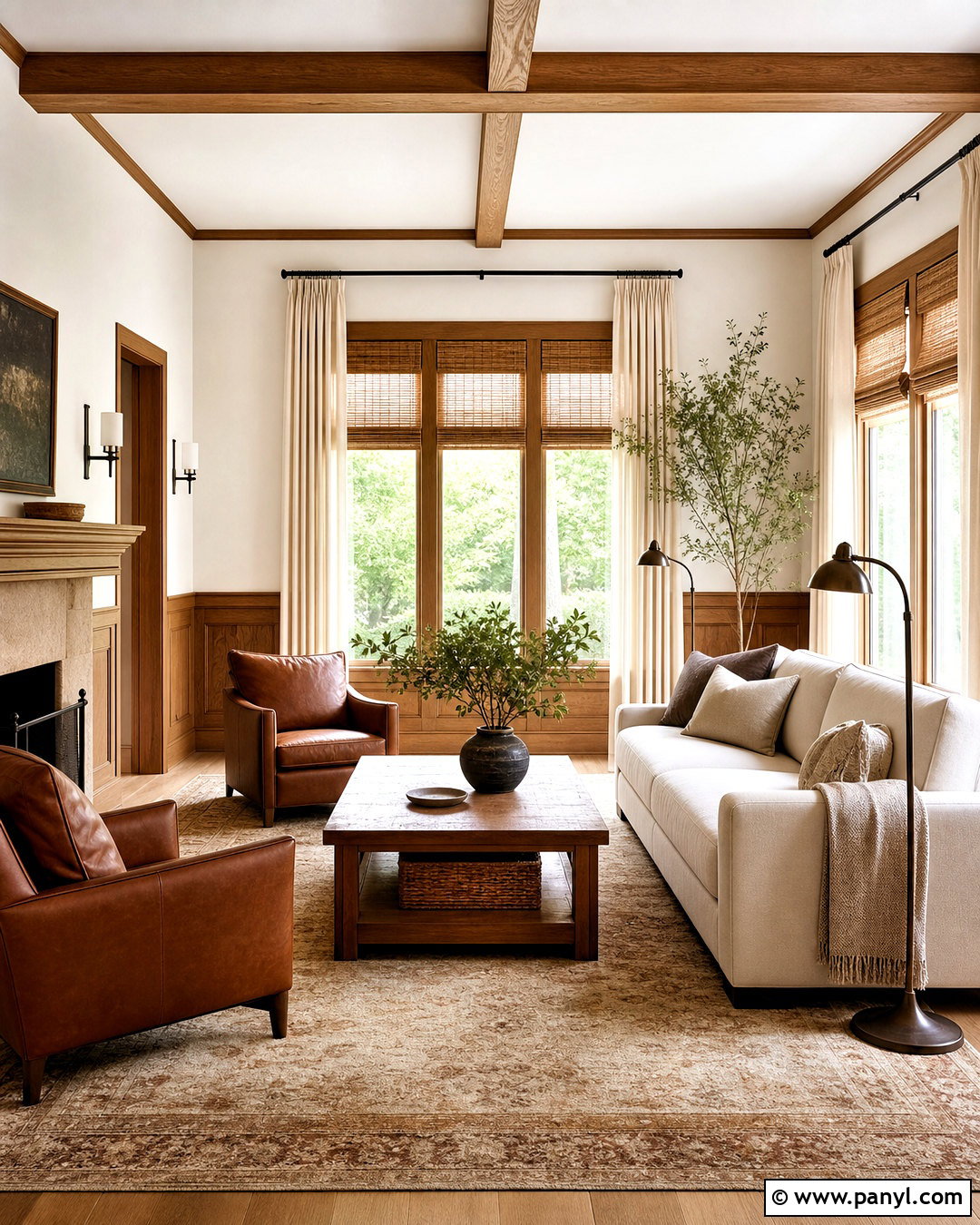
Warm white walls create a bright living room without the sharp feeling of a pure, blue-based white. Choose a shade with subtle cream or beige undertones, then continue it across the walls and ceiling for a smooth, spacious effect. Add a camel leather sofa, oatmeal linen chairs, and a light oak coffee table to reinforce the warmth. Natural woven shades soften the windows, while ivory curtains add height and texture. Use matte black lighting and a few dark picture frames for definition. A sand-colored wool rug grounds the seating area. Finish the room with olive branches, handmade pottery, and muted rust pillows. This complete palette works especially well with oak flooring, warm stone, brick, and other earthy architectural materials.
2. Cream Kitchen
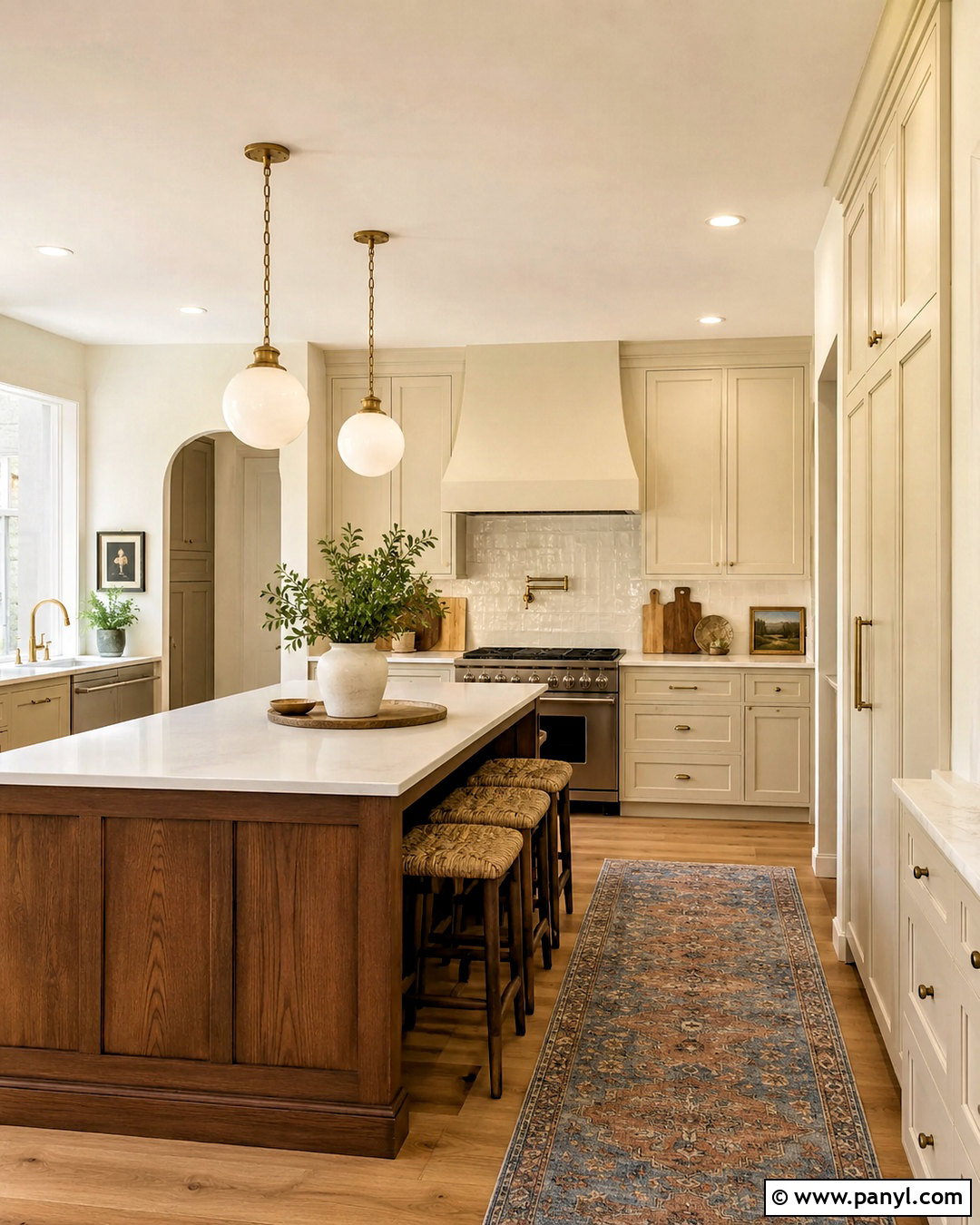
Cream paint gives a kitchen a softer and more welcoming appearance than crisp white. Apply a buttery cream to the cabinets and use a slightly lighter version on the walls to create gentle contrast. Warm white quartz countertops and a handmade ivory tile backsplash keep the room fresh without disrupting the cozy palette. Ground the space with medium-tone oak flooring and a walnut island. Aged brass cabinet pulls, traditional bridge faucets, and simple globe pendants add warmth and character. Bring in counter stools with woven seats and a vintage-style runner featuring faded blue and terracotta. Keep small appliances and countertop accessories restrained. The finished kitchen feels light, practical, and comfortable while supporting both traditional and transitional furniture throughout nearby living areas.
3. Light Greige Open Floor Plan
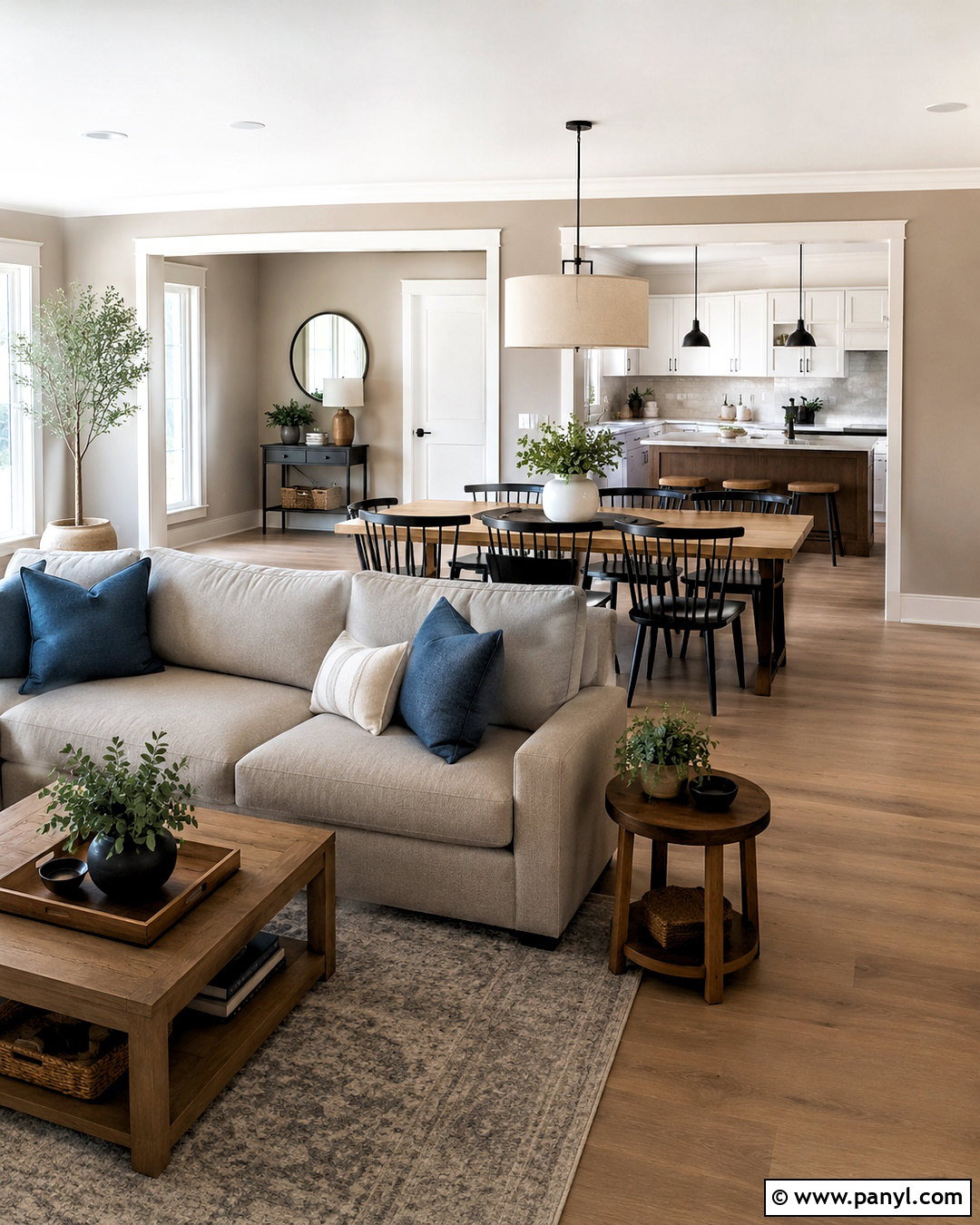
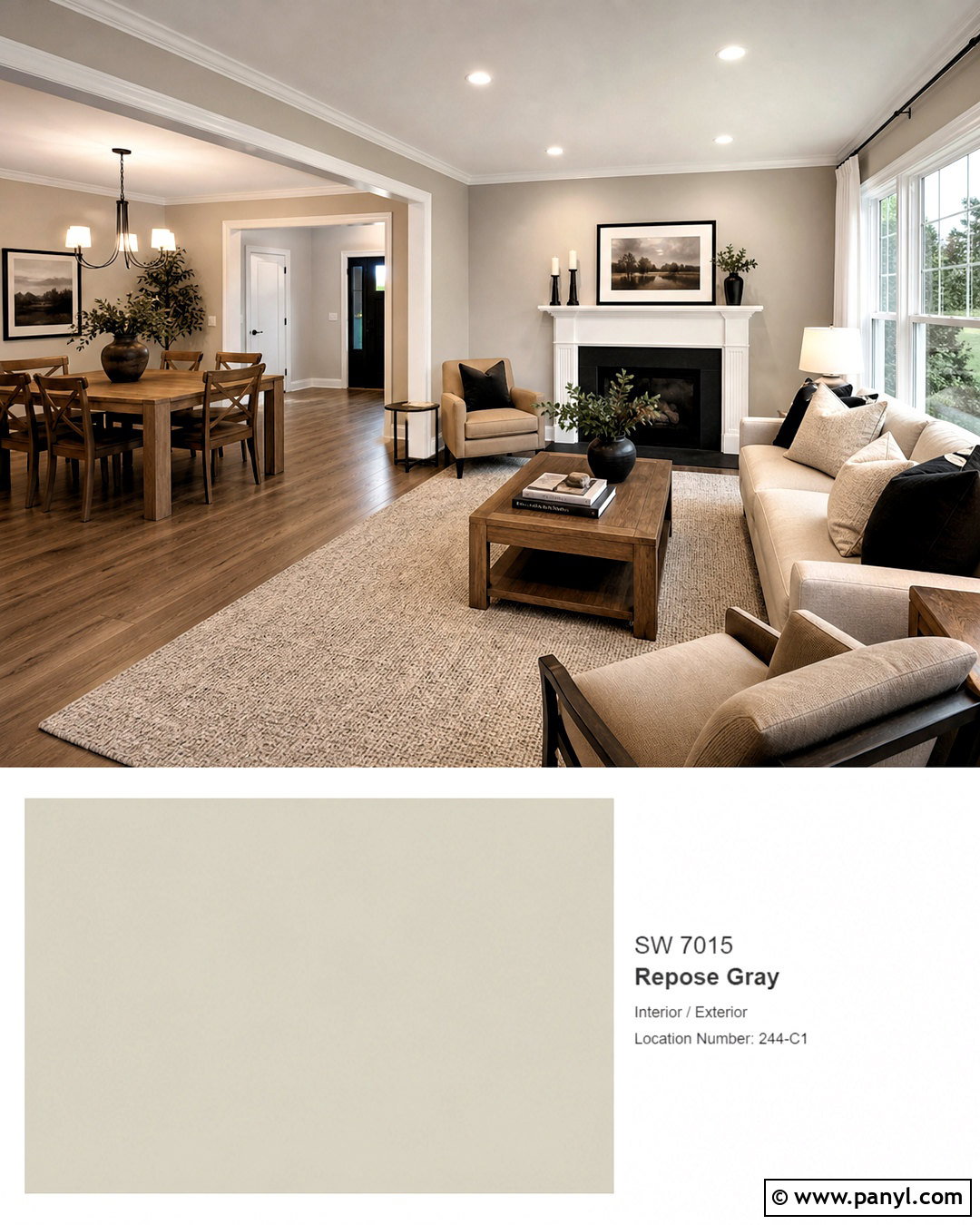
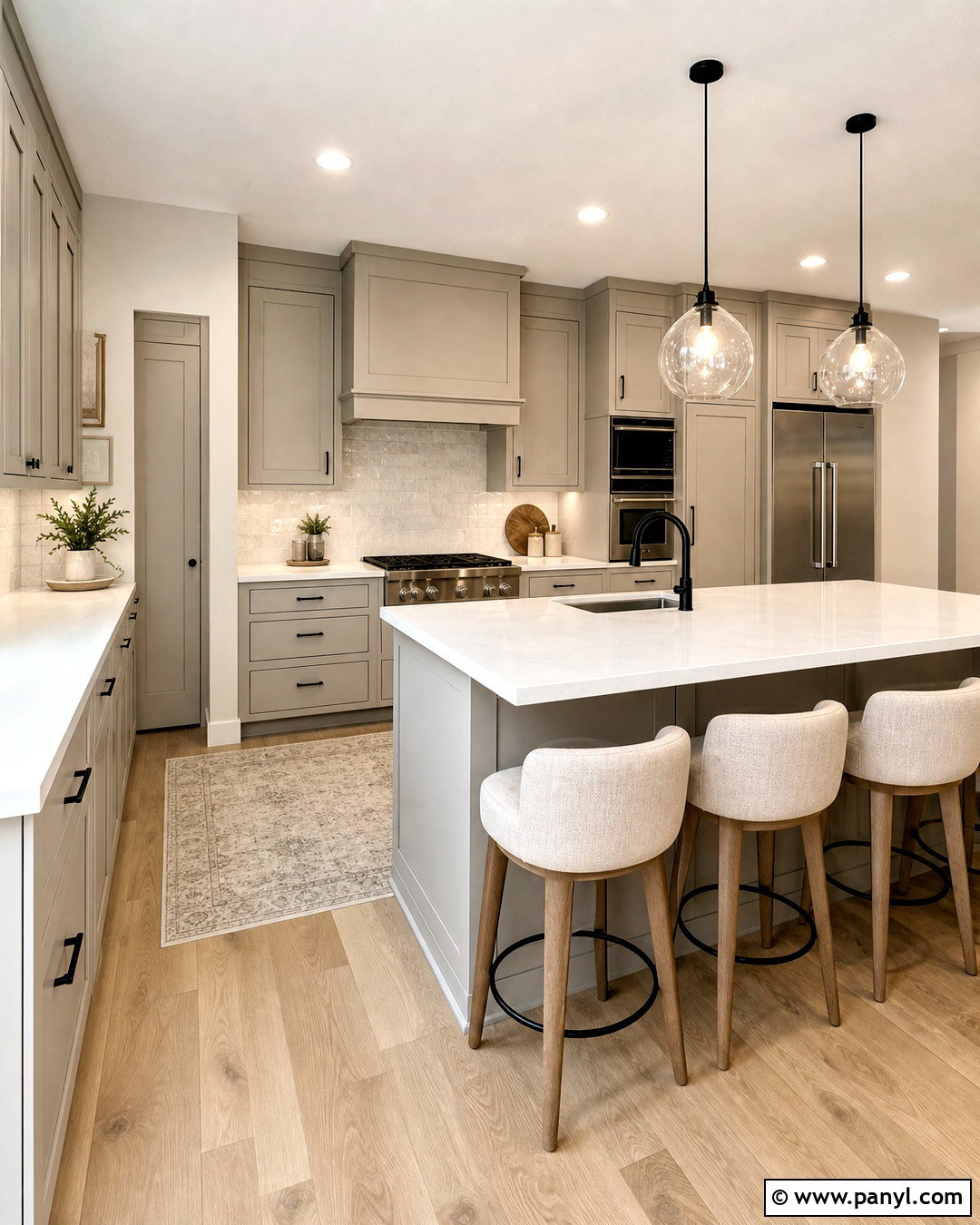
Light greige is a practical choice when a living room, dining area, and kitchen share one open space. Select a balanced shade that reads warm beige in sunlight but develops a gentle gray cast in shaded areas. Paint the connected walls the same color to improve visual flow, then use creamy white on the trim and ceiling. Anchor the living area with a flax-colored sectional, a warm gray rug, and walnut tables. In the dining zone, combine an oak table with black spindle chairs and a linen pendant. Repeat black accents through cabinet hardware and lighting so every area feels related. Soft blue pillows, textured ceramics, and leafy plants add controlled color. The overall scheme remains neutral, layered, and easy to update over time.
4. Warm Taupe Bedroom
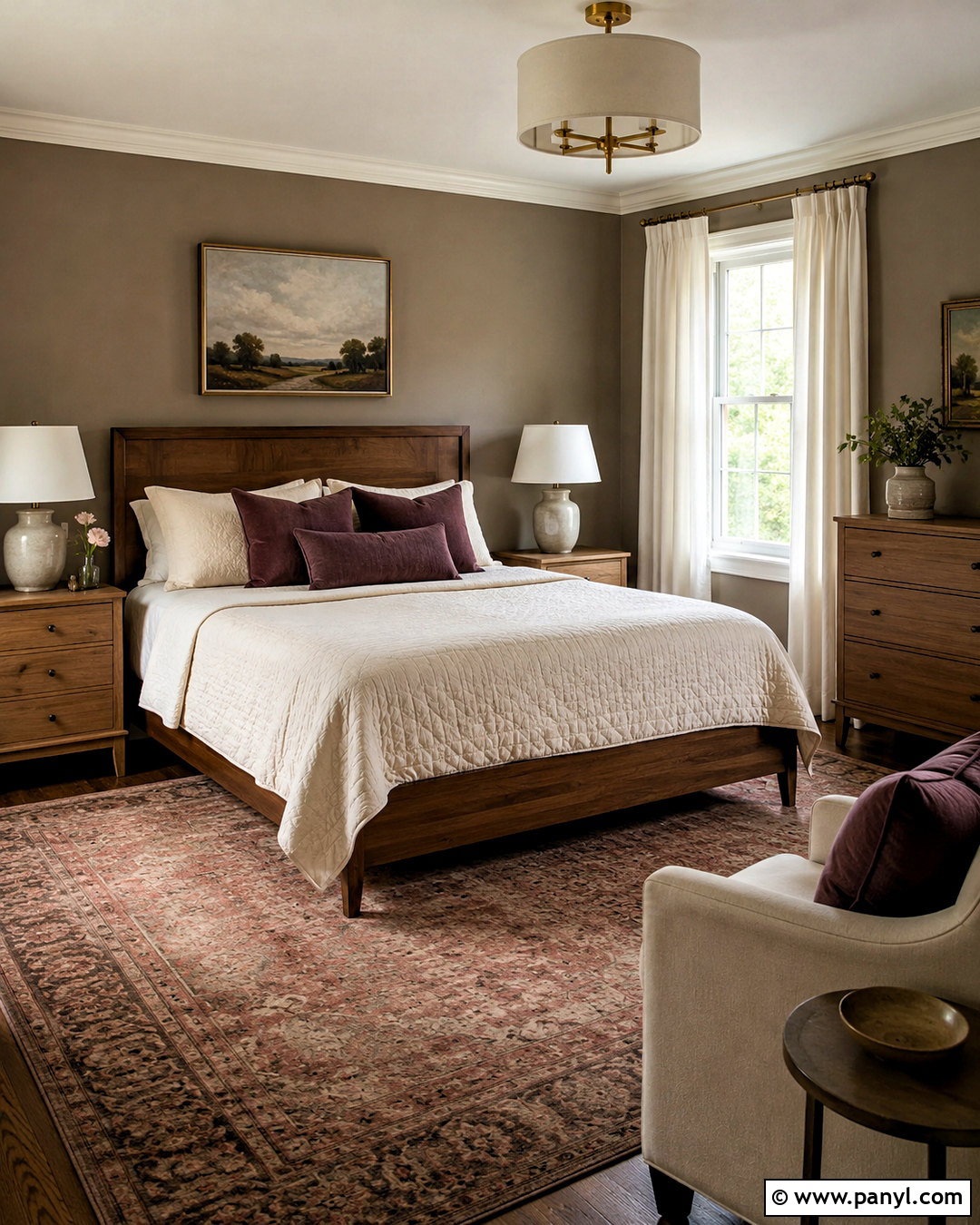
A warm taupe bedroom feels calm and enveloping while remaining lighter than chocolate brown. Cover the walls in a medium taupe with soft rosy or mushroom undertones, then paint the trim a warm ivory rather than bright white. Place a walnut bed against the longest wall and layer it with cream bedding, a quilted beige coverlet, and muted plum pillows. Matching oak nightstands and ceramic lamps establish symmetry without making the room formal. Choose natural linen curtains that closely match the walls, allowing the windows to blend into the palette. A faded patterned rug can introduce rust, brown, and dusty rose underfoot. Finish with aged brass hardware and simple landscape artwork. The result is restful, polished, and comfortably grounded.
5. Mushroom Dining Room
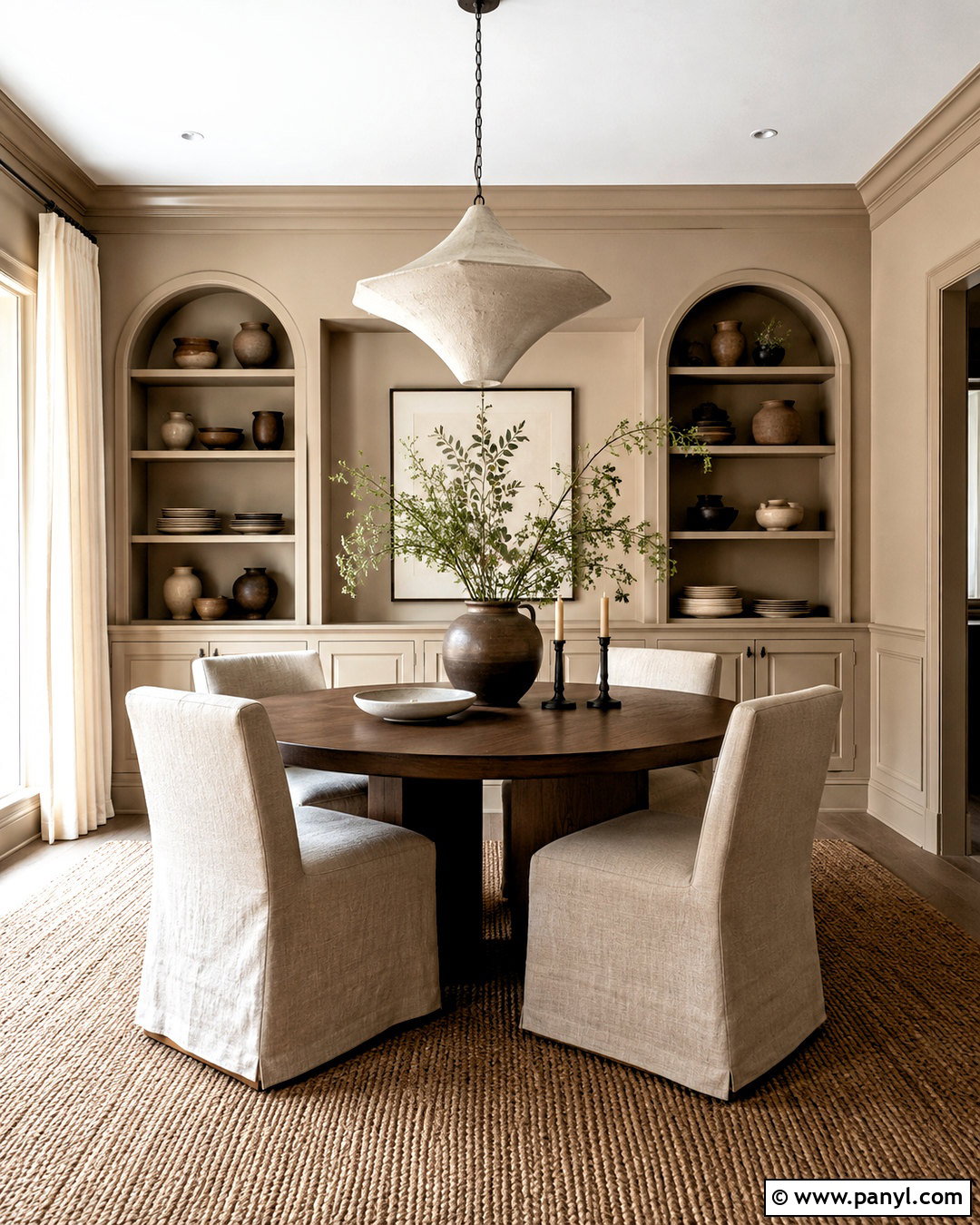
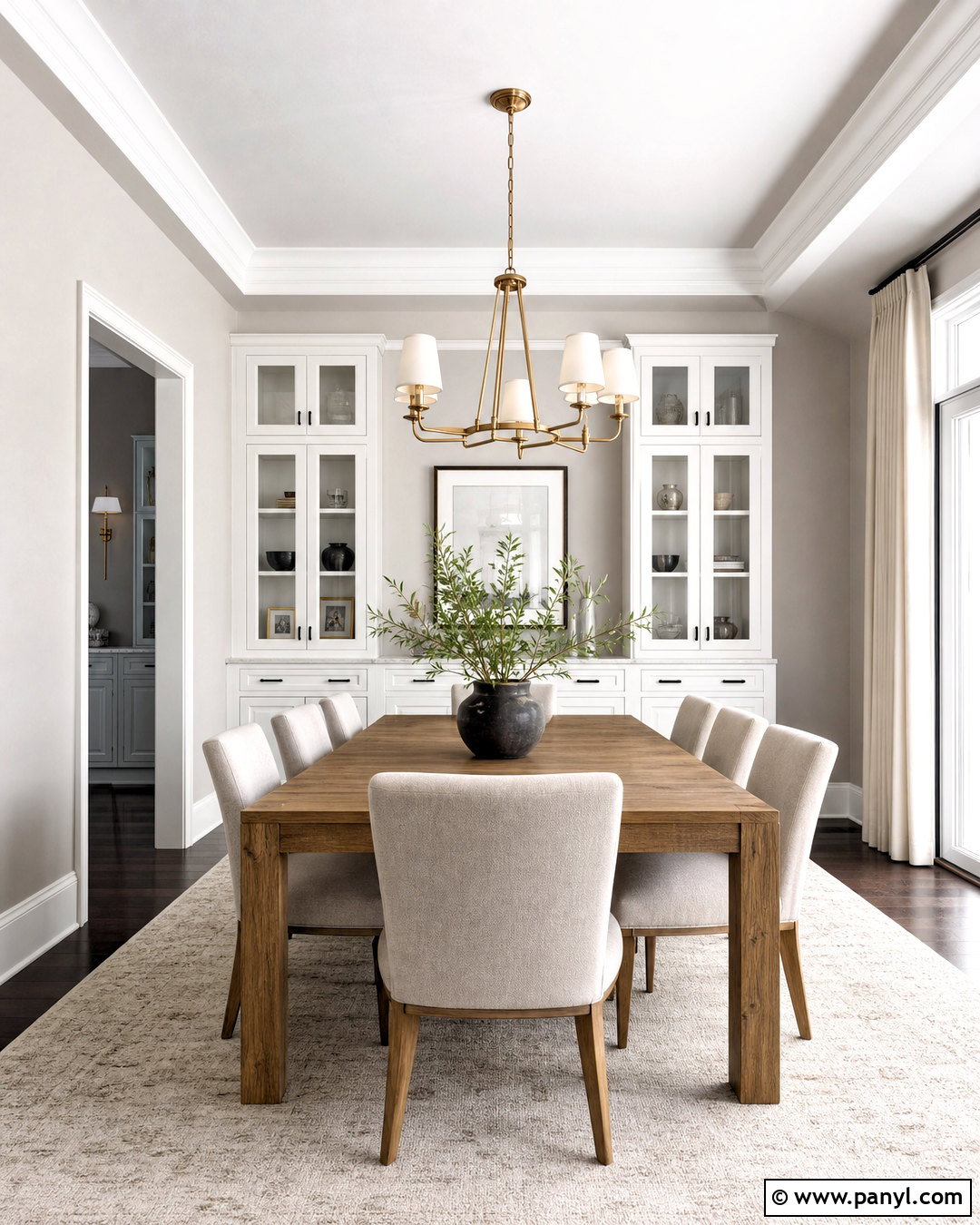
Mushroom paint sits between beige, gray, and brown, making it an adaptable backdrop for a relaxed dining room. Use it across the walls, trim, and built-in cabinetry for a softly color-drenched appearance. A round dark oak table creates contrast and encourages comfortable conversation, while upholstered dining chairs in natural linen keep the center of the room light. Hang a large paper or plaster pendant above the table to introduce sculptural texture. Cream curtains, a jute-blend rug, and stoneware dishes continue the organic palette. Add interest with dark bronze hardware and framed botanical prints. Because mushroom changes noticeably with the light, test several undertones beside the flooring. The completed room should feel warm and dimensional rather than flat, cool, or overly gray.
6. Sage Green Kitchen
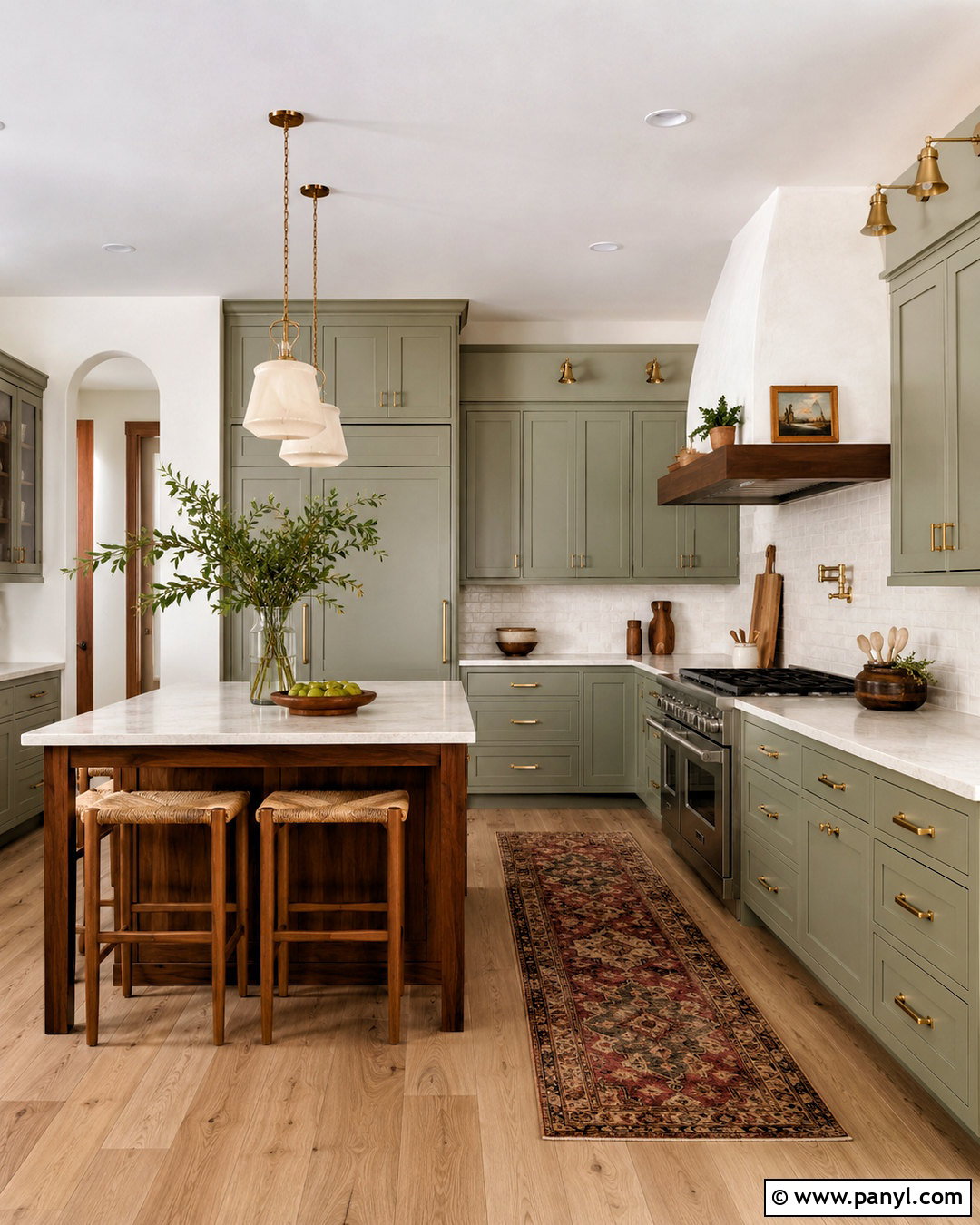
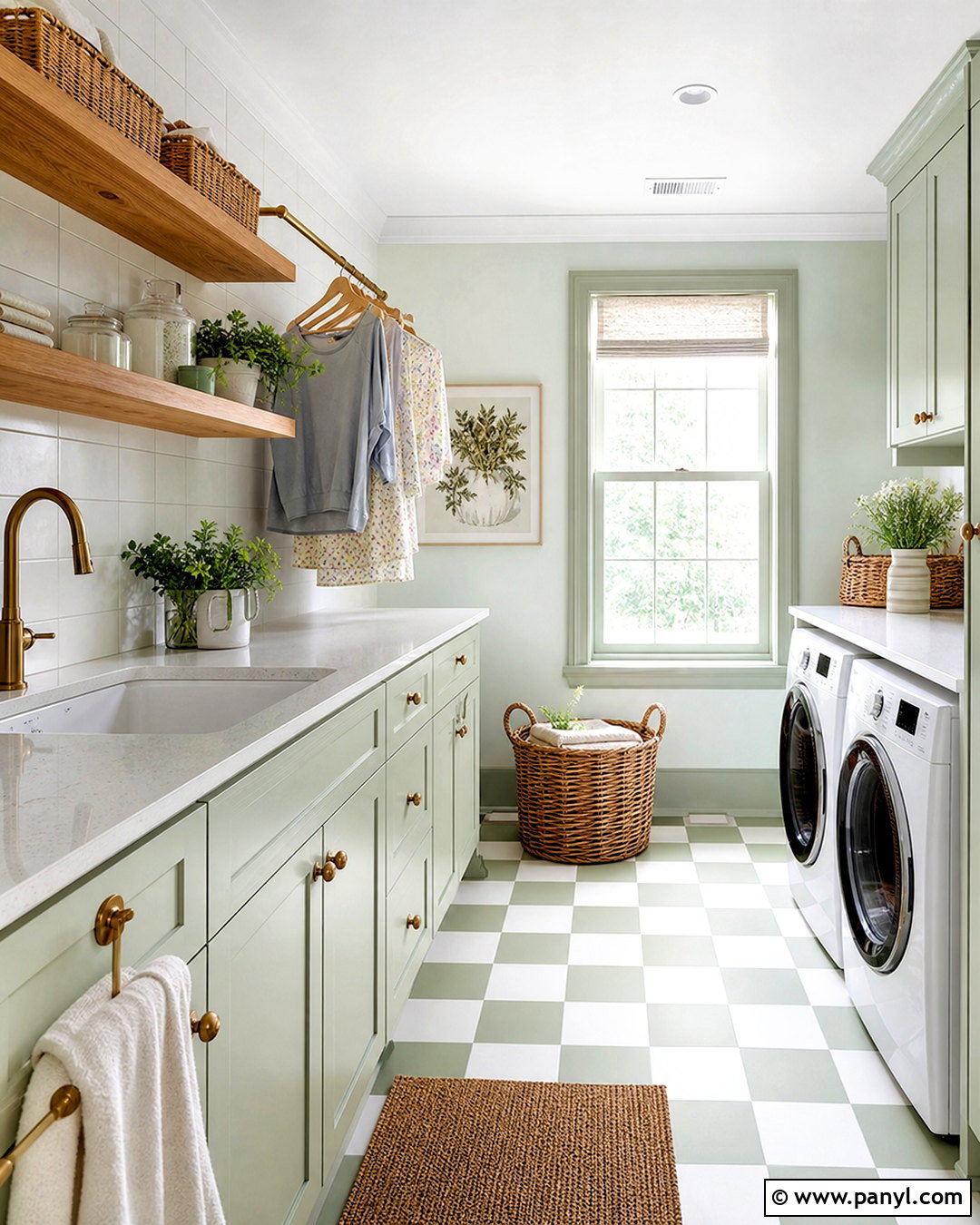
Sage green brings gentle color into a kitchen while pairing naturally with familiar materials. Paint the cabinets a muted sage with gray undertones and keep the walls warm white for a clean, balanced backdrop. Choose honed cream quartz countertops and a backsplash of softly irregular white tile. White oak flooring and open shelves add warmth, while brushed brass hardware prevents the green from feeling too cool. A compact island in stained oak introduces useful contrast and makes the kitchen feel collected rather than matched. Complete the look with woven counter stools, ceramic pendant lights, and a washable runner in olive, tan, and faded red. Display only a few wood boards and neutral containers. This full scheme feels fresh, calm, and suitable for everyday family use.
7. Olive Green Home Office
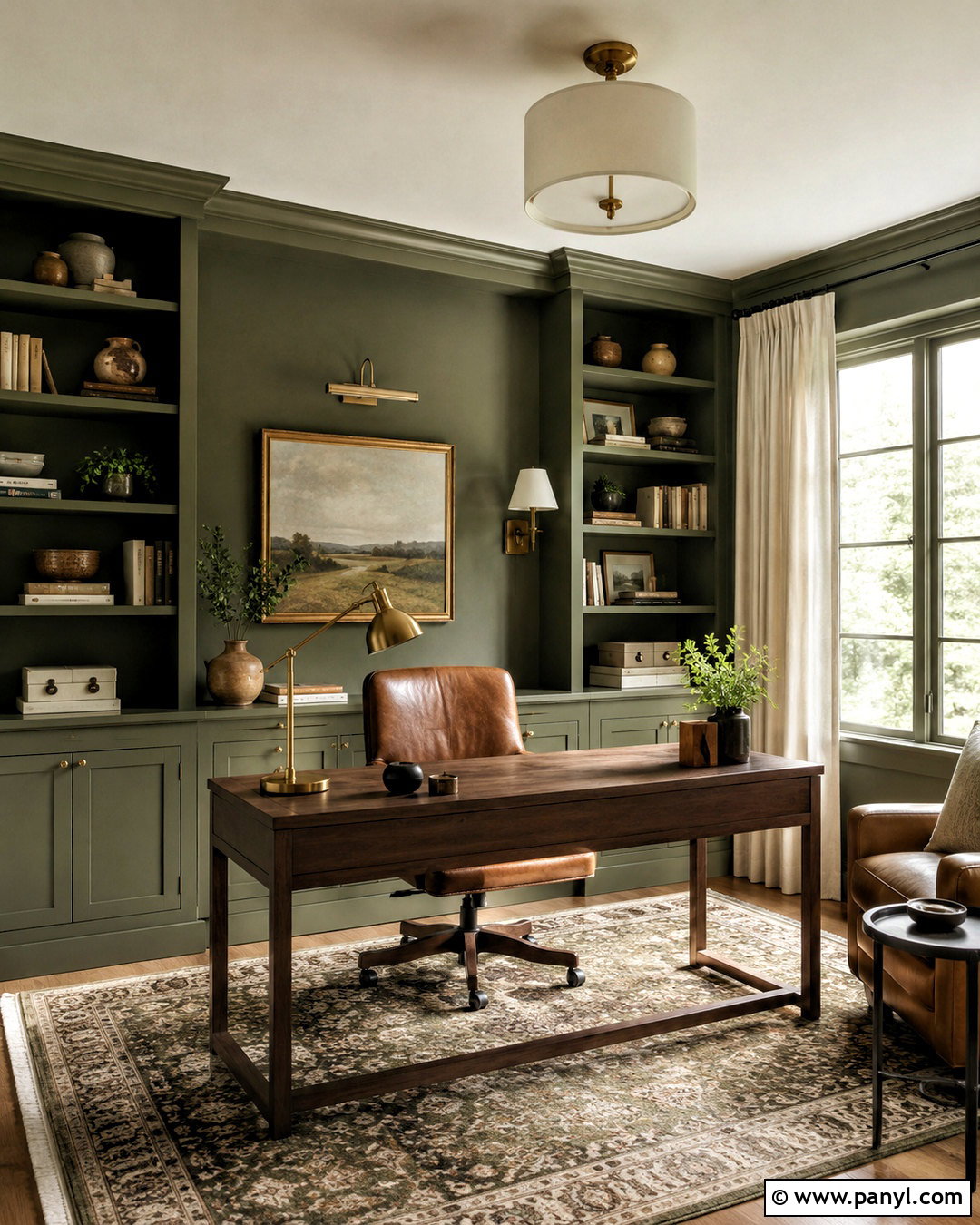
An olive green home office can feel focused and sophisticated without becoming severe. Choose an earthy, mid-depth olive and apply it to the walls, trim, shelving, and cabinet fronts. The continuous color reduces visual interruptions and gives even a compact room a finished appearance. Position a substantial walnut desk near the window and add a cognac leather chair for warmth. Use cream linen curtains, a patterned wool rug, and an antique brass desk lamp to soften the darker envelope. Shelves should combine books, neutral storage boxes, pottery, and a few framed photographs rather than excessive accessories. A warm white ceiling can preserve brightness if natural light is limited. The completed workspace feels grounded, organized, and comfortable enough for long periods of concentration.
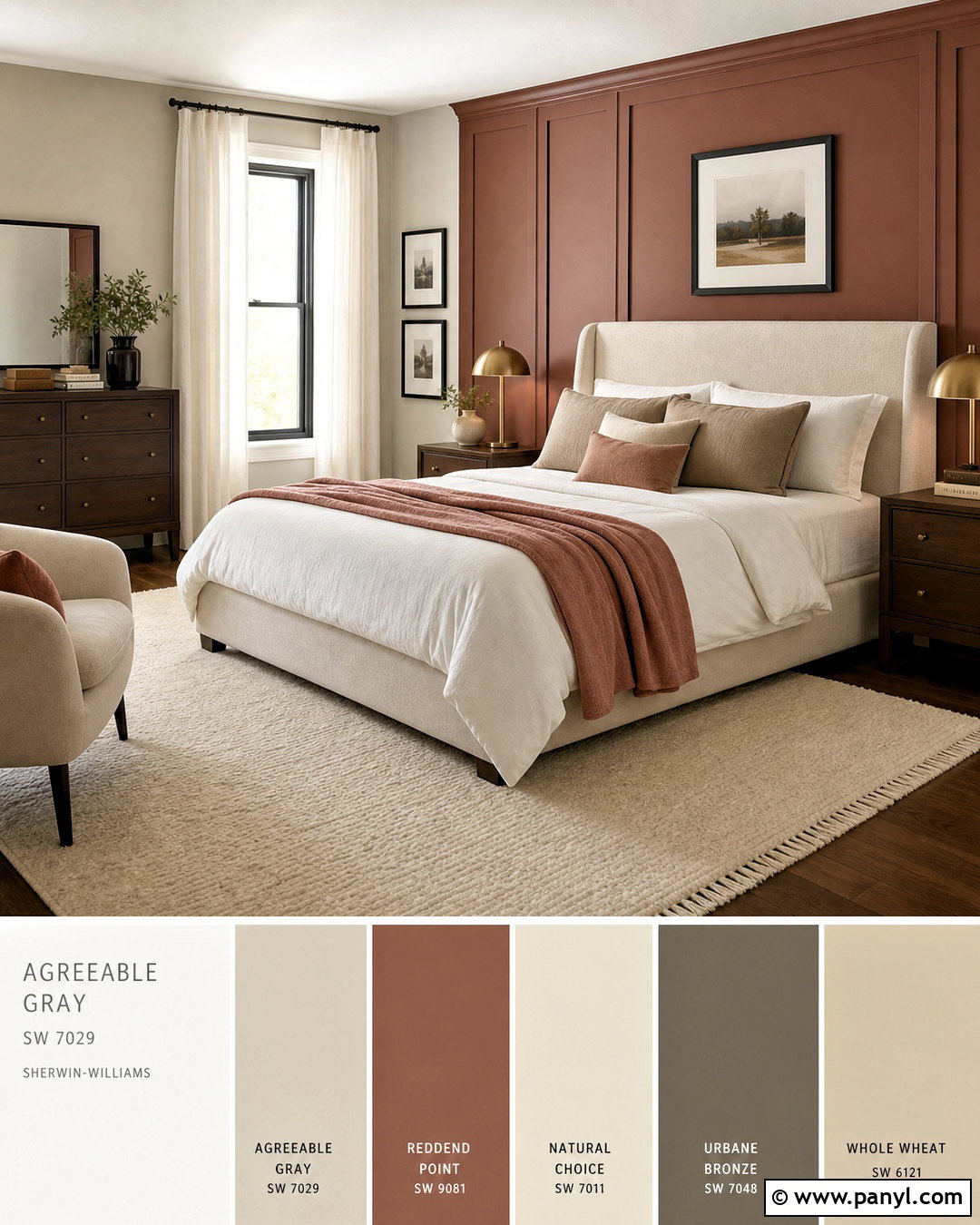
8. Eucalyptus Green Bathroom
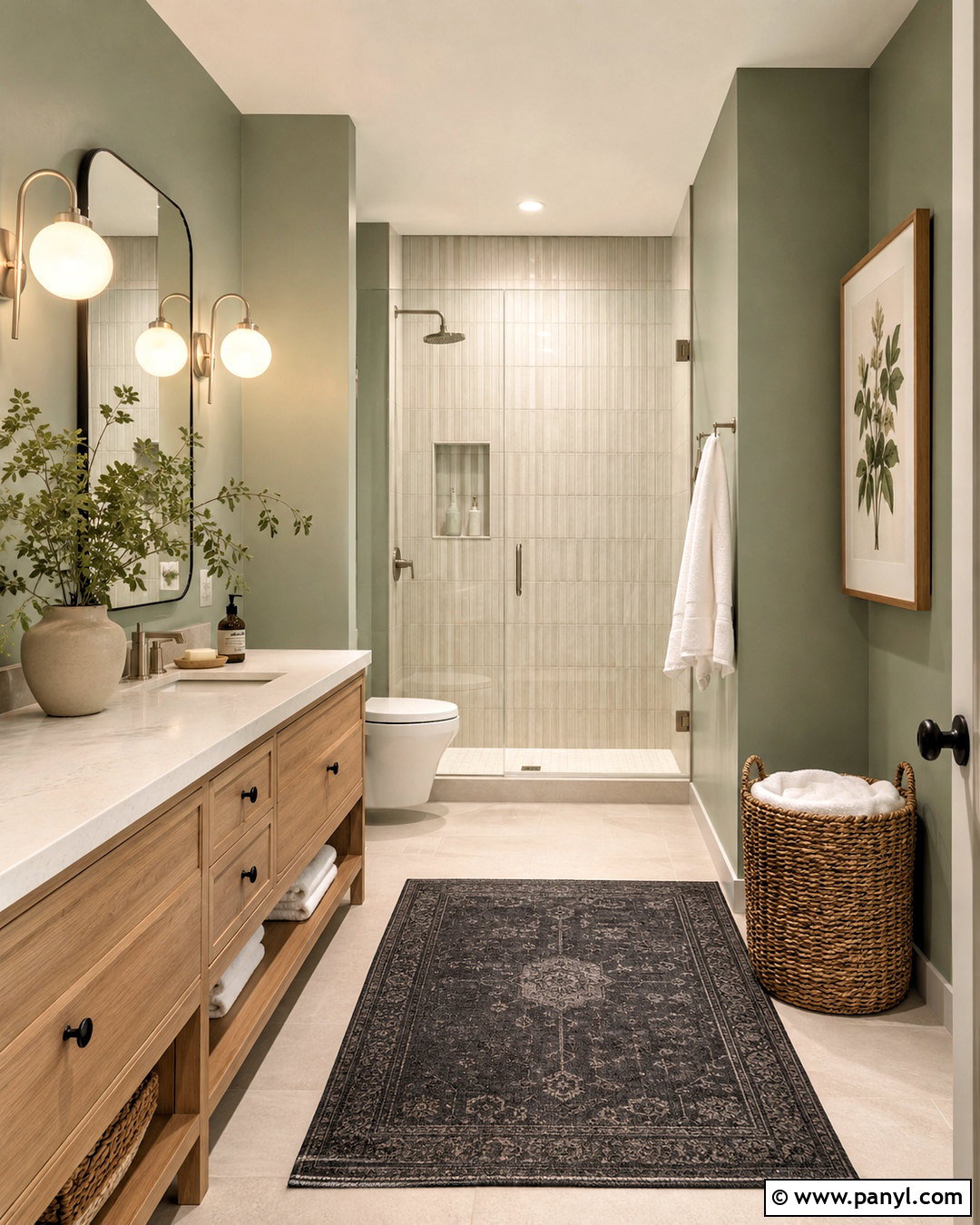
Soft eucalyptus green creates a refreshing bathroom palette with more warmth than mint and less gray than traditional sage. Paint the upper walls this muted green, then use creamy vertical tile around the tub or shower. A white oak vanity with a pale stone countertop adds natural warmth, while brushed nickel fixtures keep the room clean and understated. Choose a rounded mirror, simple globe sconces, and woven baskets for practical storage. White towels brighten the scheme, and a small patterned rug can introduce charcoal and muted green. If the bathroom is compact, keep the ceiling and door in warm white to maintain openness. The finished room should combine smooth tile, natural wood, soft textiles, and restrained greenery, creating a balanced retreat that still feels easy to maintain.
9. Powder Blue Bedroom
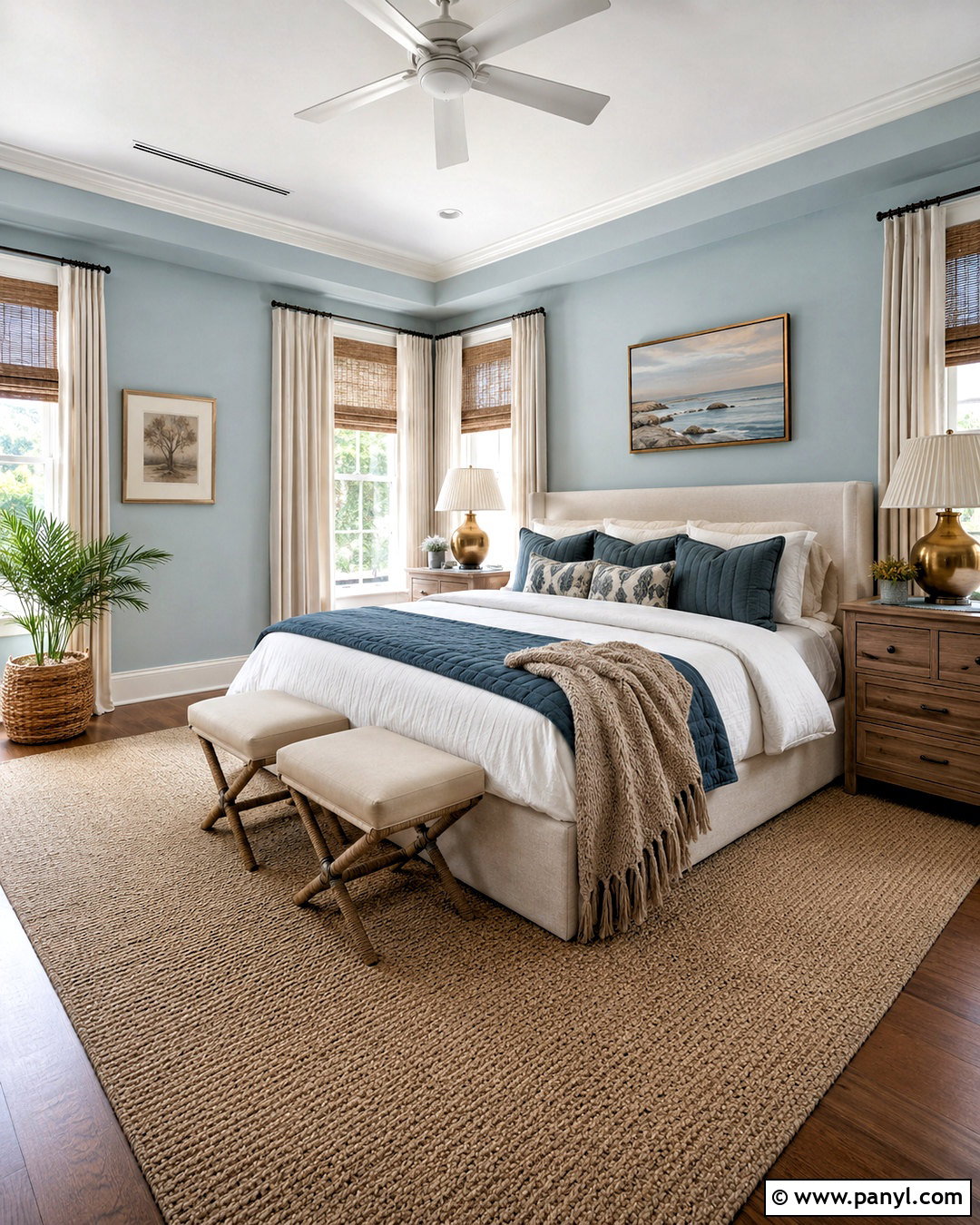
Powder blue walls can make a bedroom feel airy when the shade has a soft gray or green undertone. Use the blue on every wall and pair it with warm white trim to maintain a crisp outline. An upholstered bed in oatmeal linen balances the cool wall color, while medium oak nightstands prevent the room from looking overly delicate. Layer white sheets with a denim-blue quilt, taupe blanket, and subtle striped pillows. Natural woven blinds and full-length ivory curtains create depth around the windows. Add aged brass lamps and a warm beige rug to complete the palette. Avoid filling the room with additional pastel colors. The most cohesive result comes from combining powder blue with textured neutrals, warm wood, and a few deeper blue accents.
10. Blue Gray Living Room
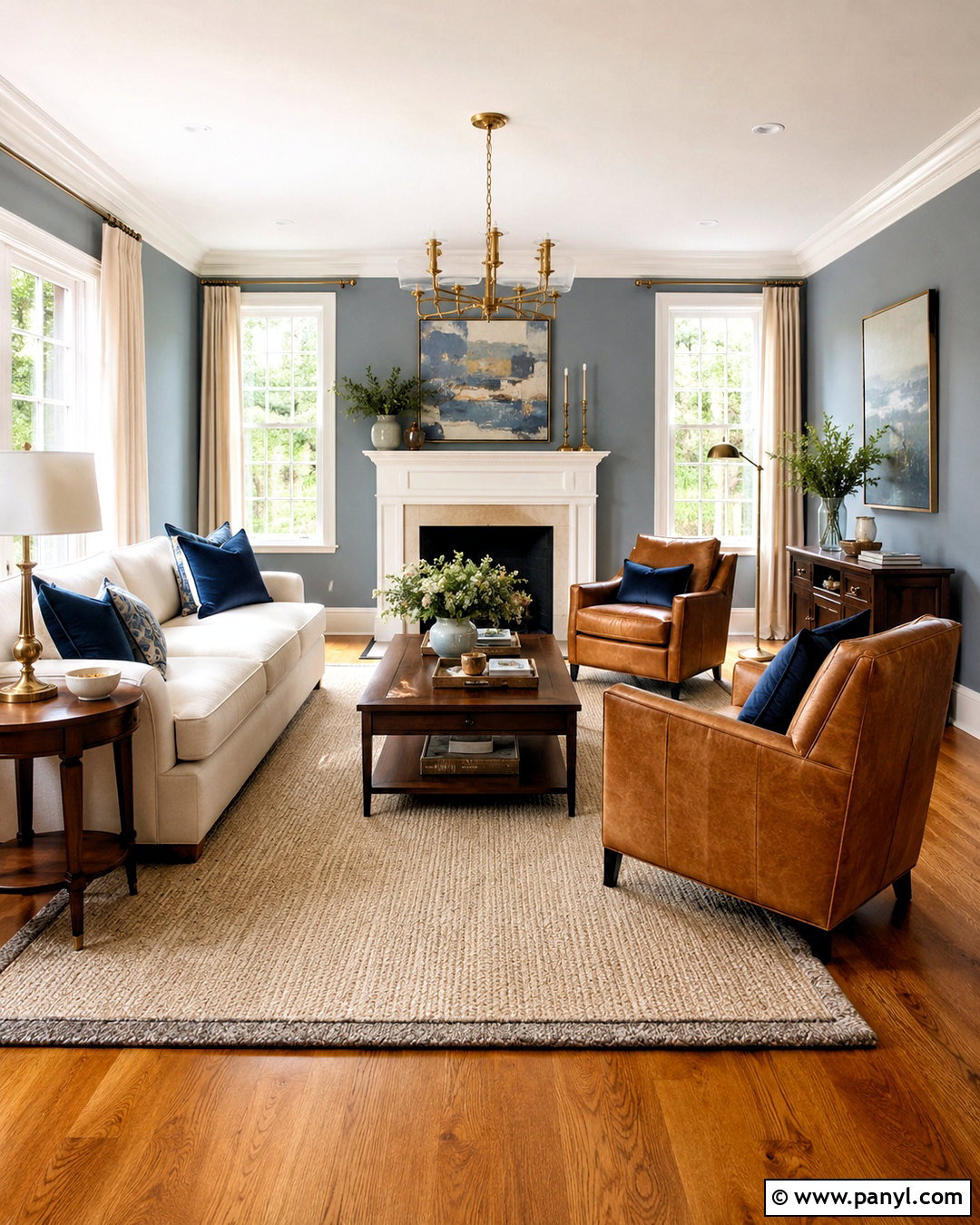
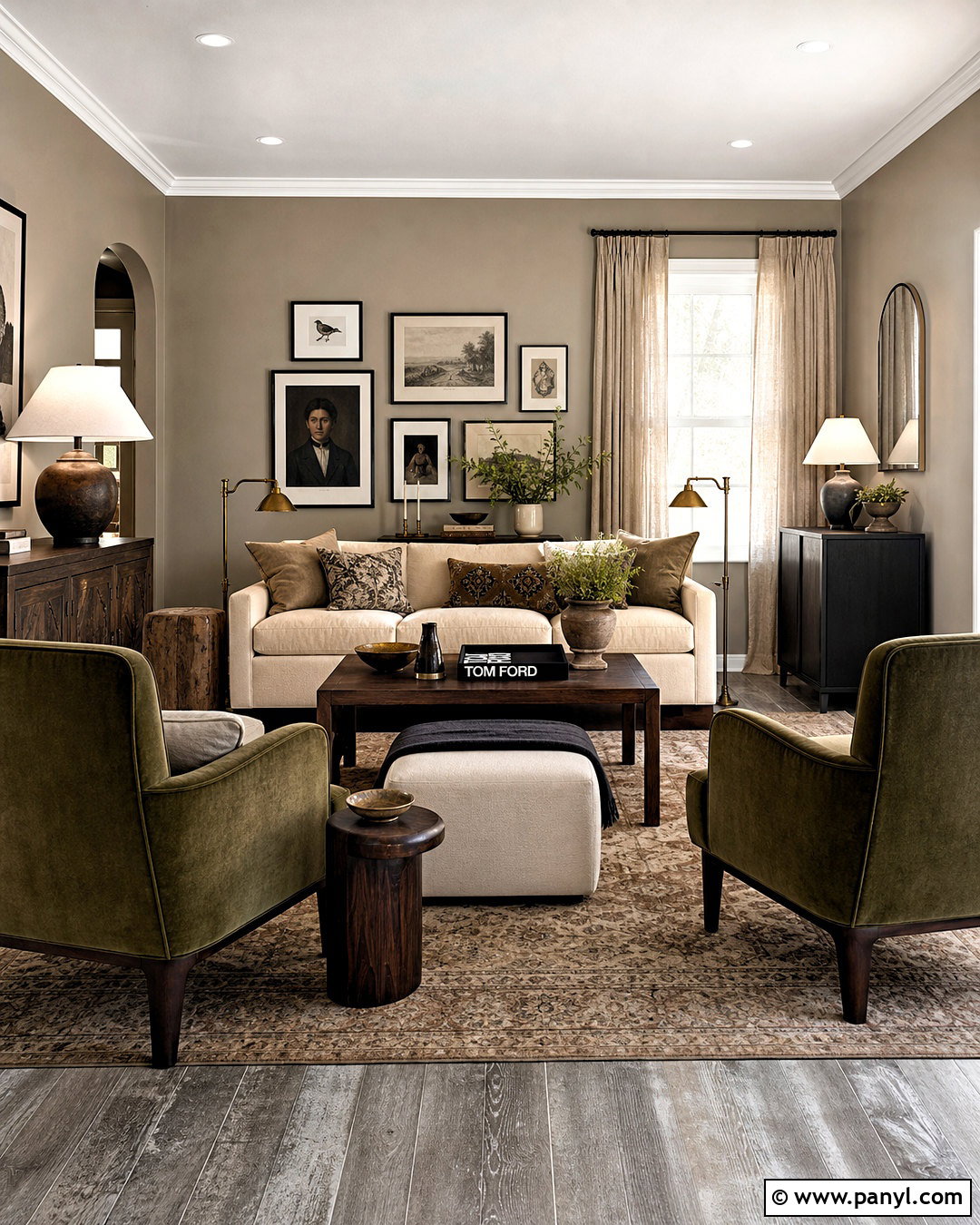
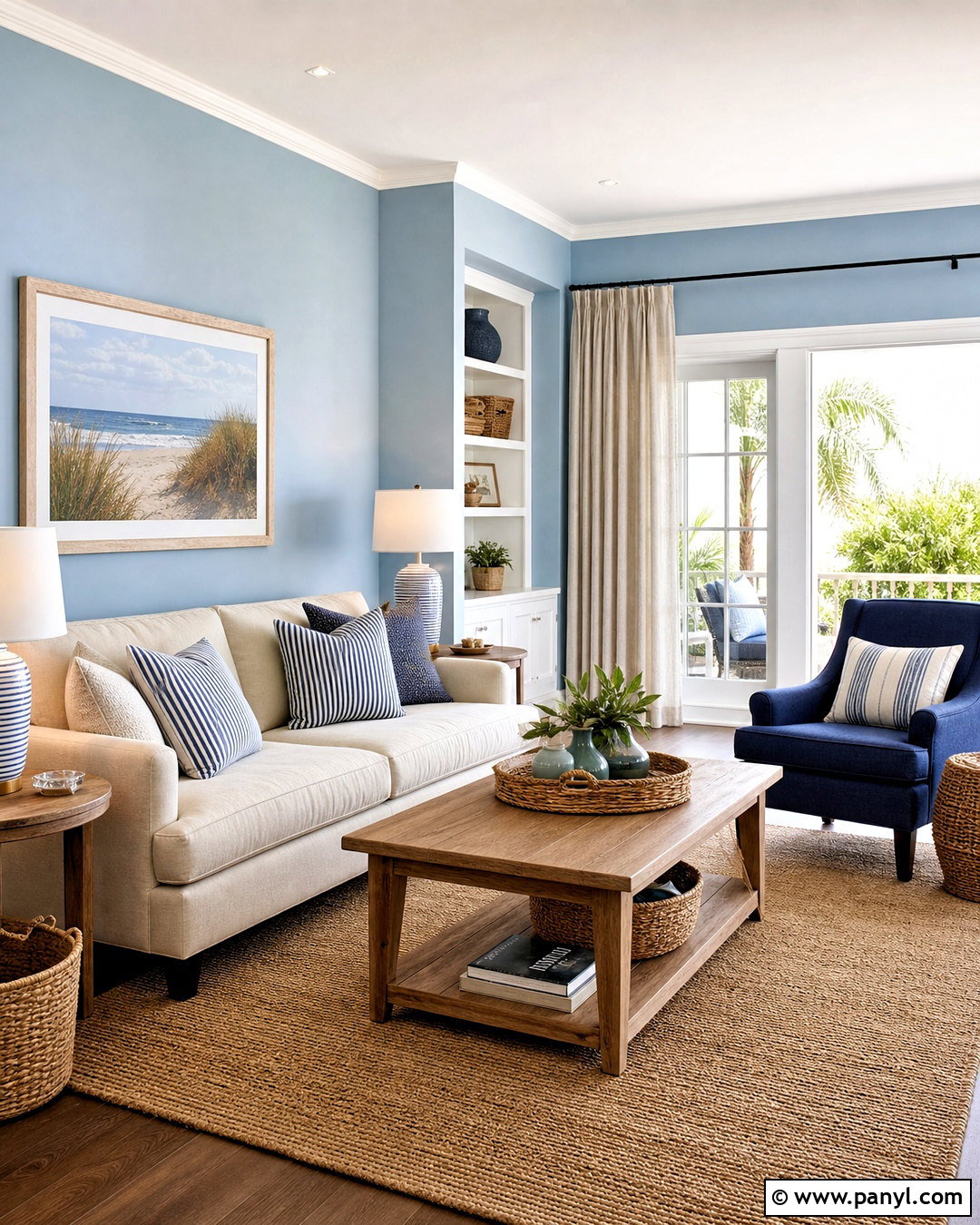
Blue-gray paint offers enough color to define a living room while functioning much like a neutral. Select a softened medium shade and test it carefully, since cool daylight can make blue undertones appear stronger. Pair the walls with warm white trim, honey oak flooring, and a large cream sofa. Add walnut side tables, a beige wool rug, and caramel leather chairs to warm the overall composition. Navy pillows and faded blue artwork reinforce the wall color without creating a perfectly matched scheme. Use antique brass floor lamps for a subtle glow and black accents for structure. Curtains in natural flax should hang close to the ceiling. Together, these materials create an inviting living room that feels colorful, balanced, and comfortable in changing light.
11. Deep Navy Library
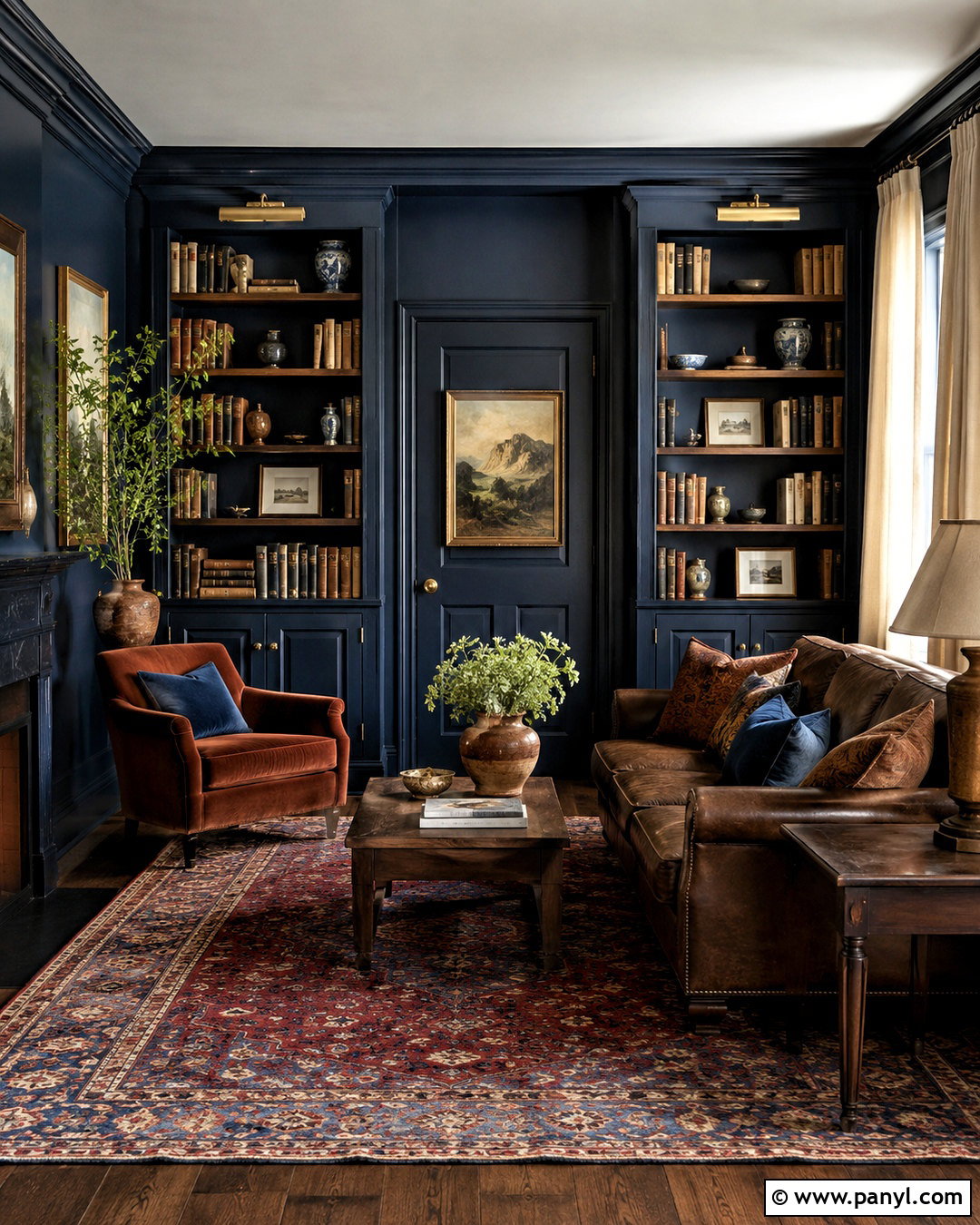
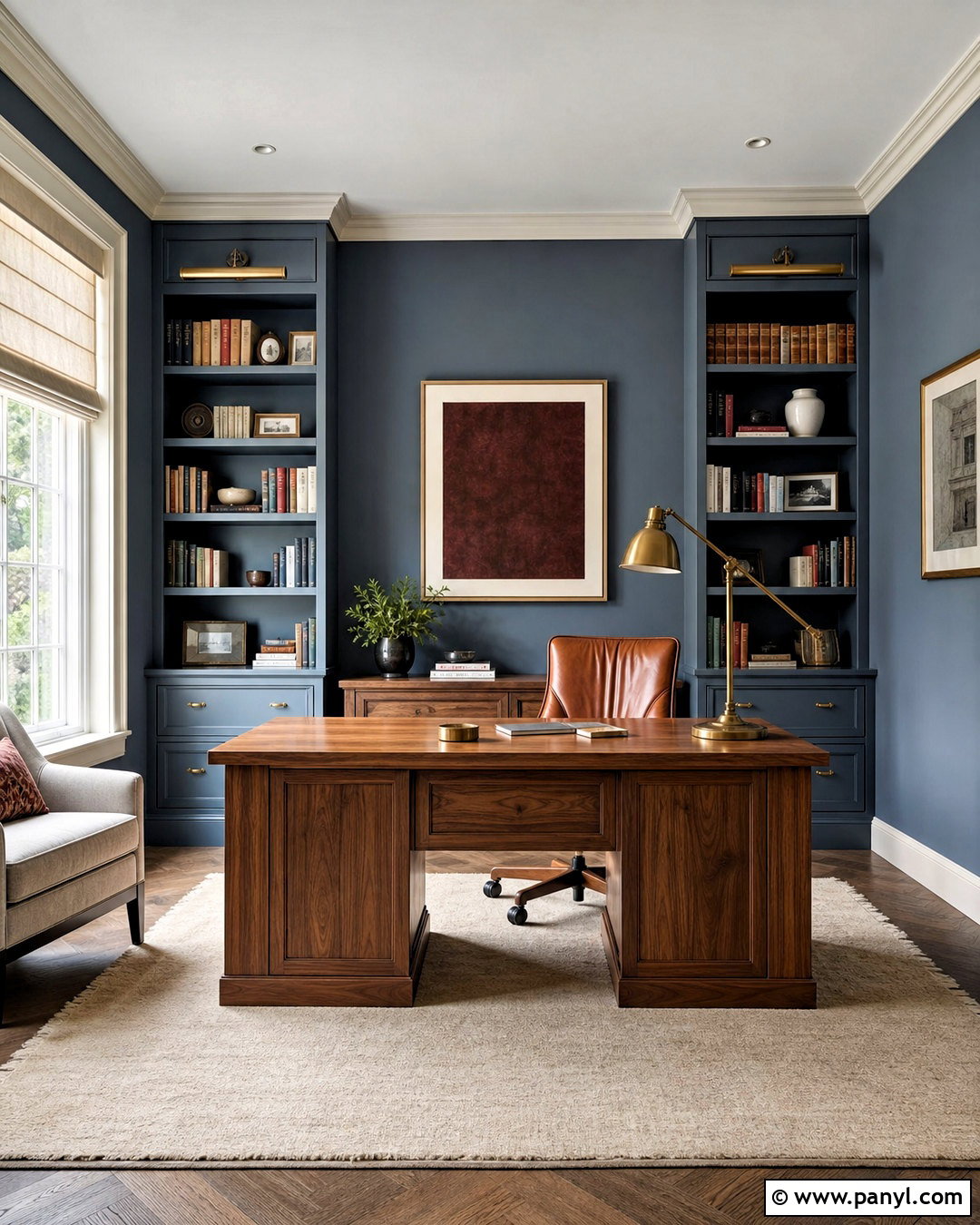
Deep navy creates a cocooning library that feels intentional when the furniture and lighting are carefully layered. Color-drench the walls, bookcases, trim, and interior door in the same matte or low-sheen navy. A warm white ceiling can provide relief, although continuing the navy overhead creates a more immersive result in a well-lit room. Furnish the space with a brown leather sofa, a rust velvet reading chair, and a vintage-style rug containing blue, cream, and red. Walnut shelves and brass picture lights bring warmth to the dark background. Place a round wood table beside the chair and add cream curtains to frame the window. Books, pottery, and framed art complete the room, but leaving some shelf space open prevents visual clutter.
12. Smoky Teal Dining Room
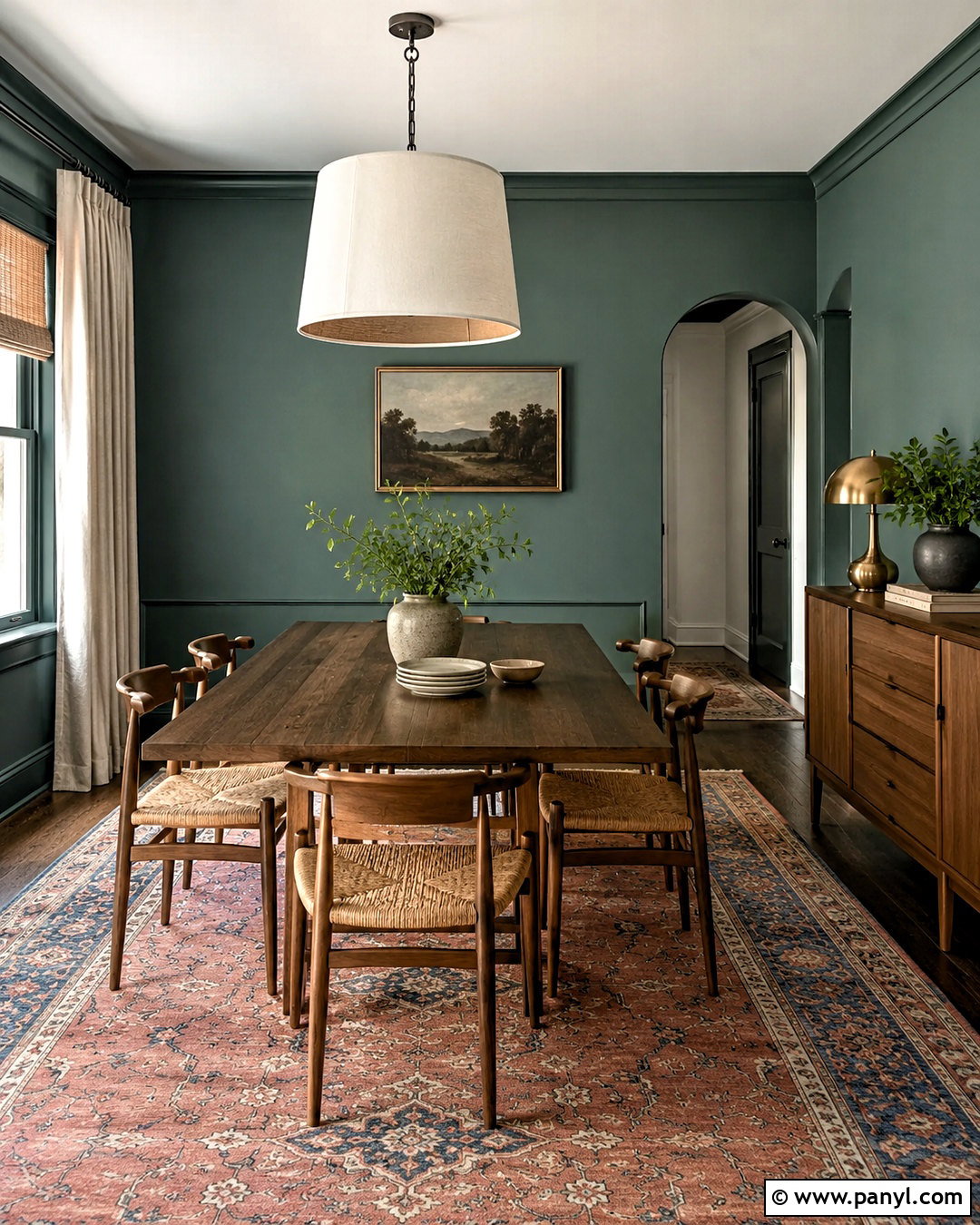
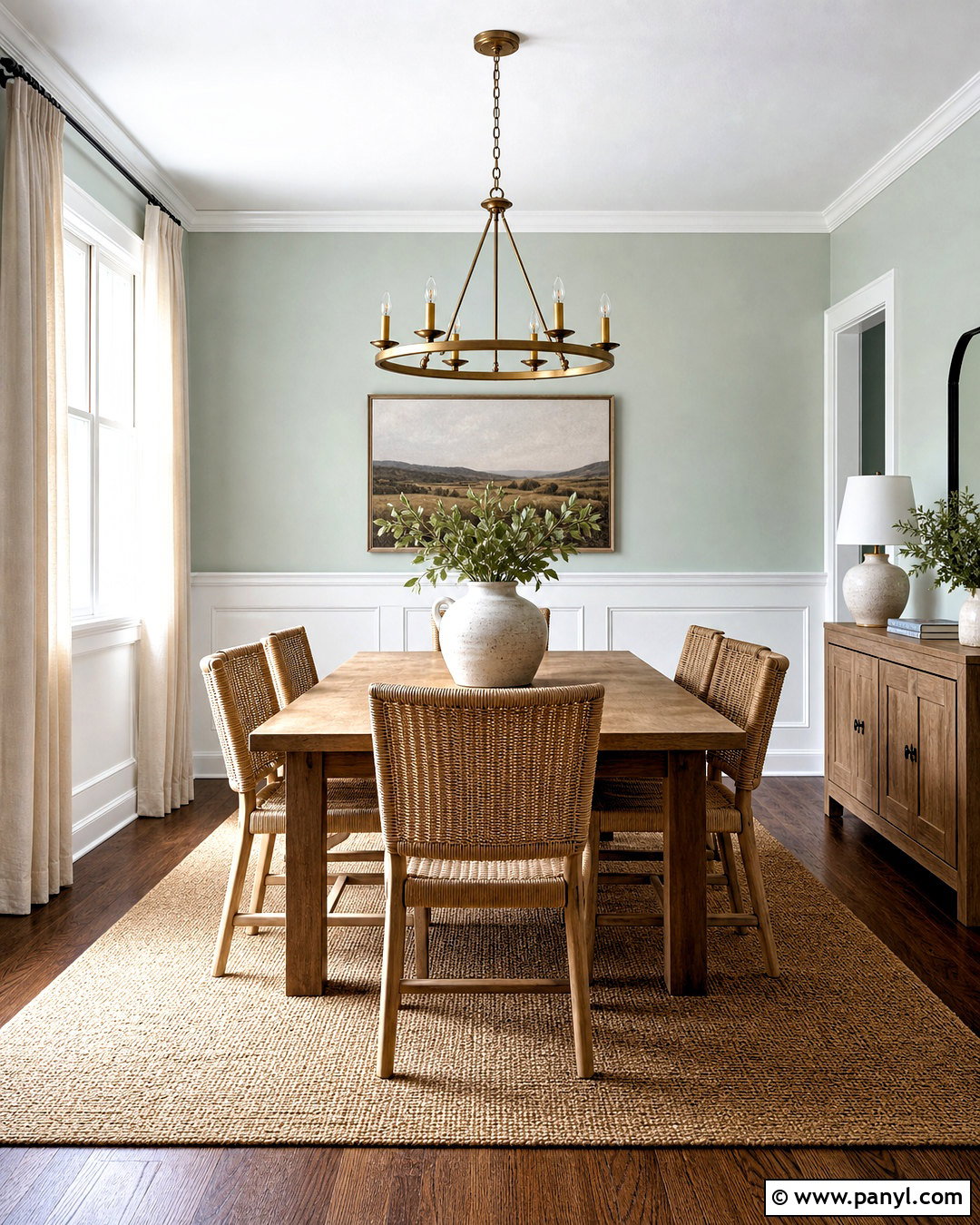
Smoky teal gives a dining room depth by combining blue and green with a muted gray cast. Paint the walls and baseboards in the same shade, then use soft cream on the ceiling to balance the saturation. Center a rectangular walnut table beneath an oversized linen pendant and surround it with woven-seat chairs. A vintage rug with faded coral, tan, and dark blue adds warmth below. Choose a slim wood sideboard, aged brass candlesticks, and simple ceramic serving pieces for the finishing details. Full-length oatmeal curtains soften the windows and improve the room’s acoustics. Because teal is already expressive, keep upholstery and large furniture restrained. The complete dining space feels intimate and distinctive while remaining practical for casual meals, gatherings, and everyday family routines.
13. Forest Green Living Room
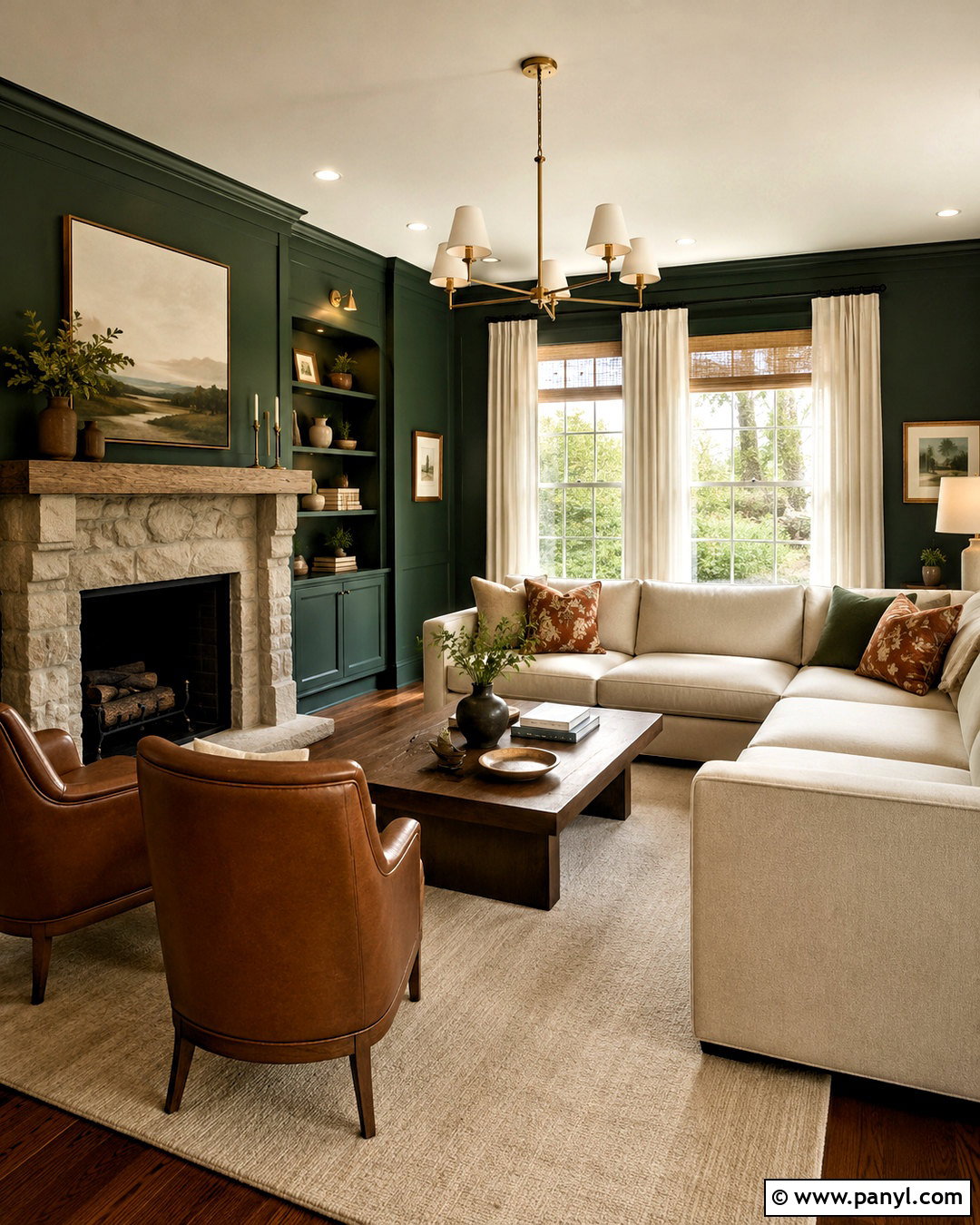
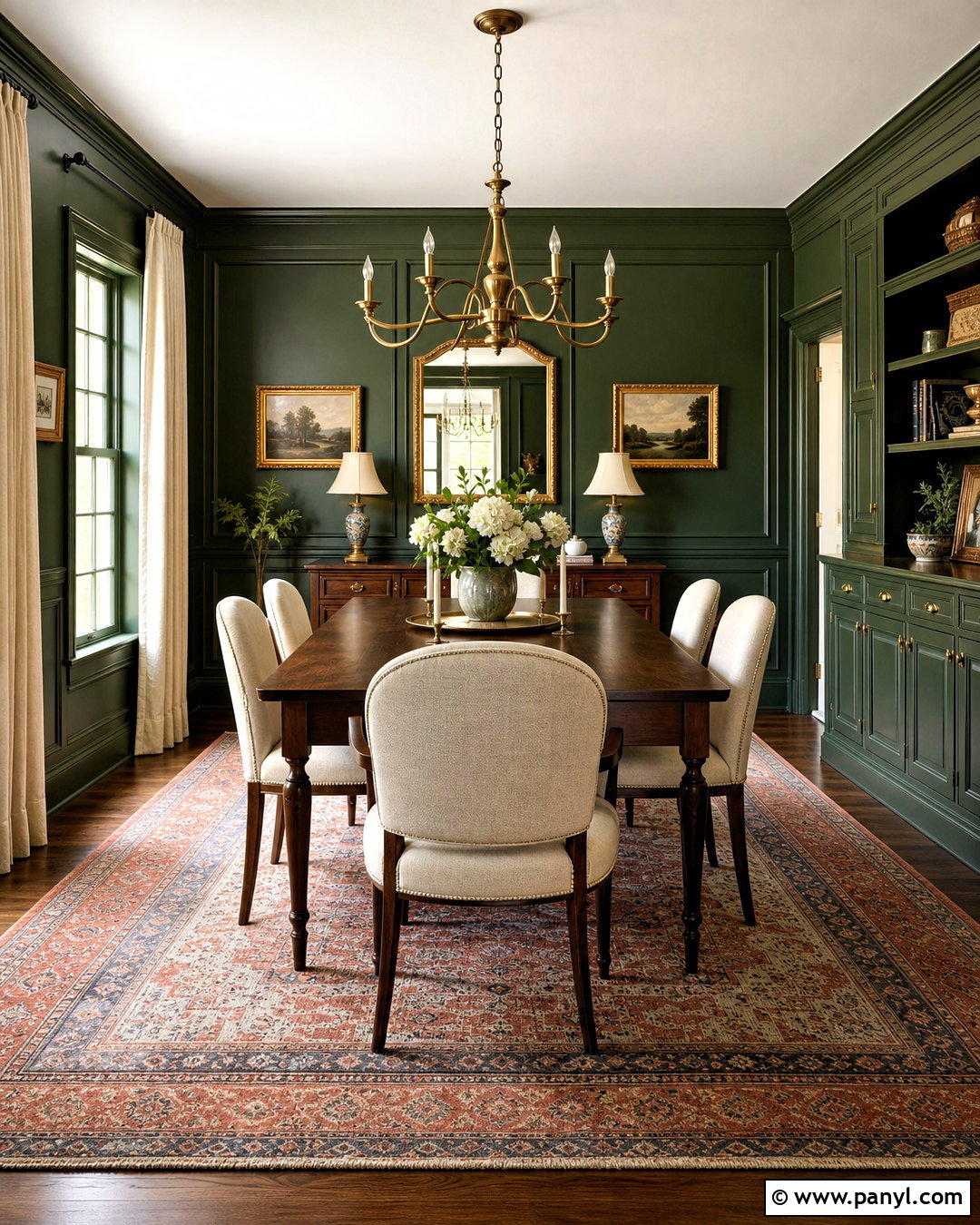
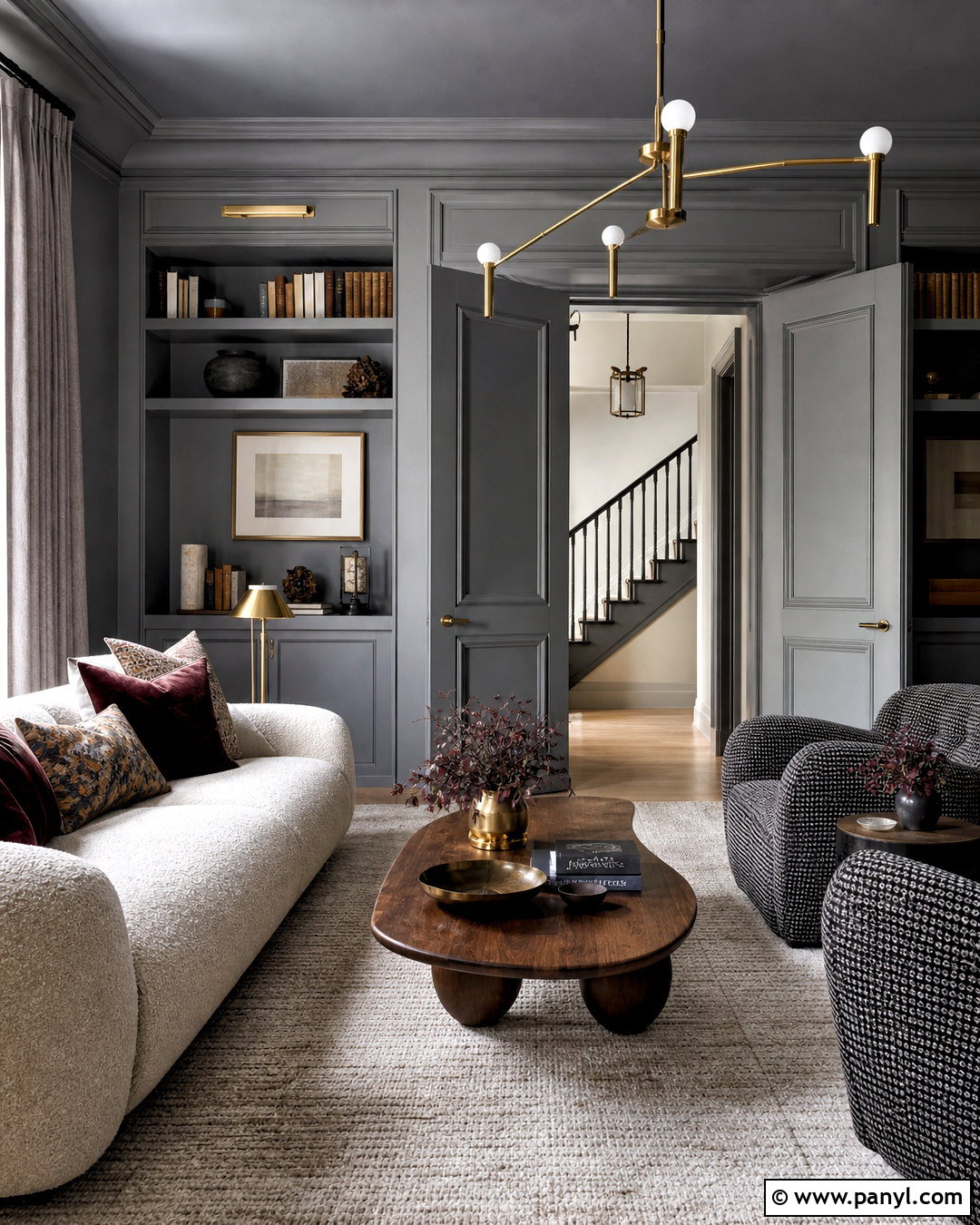
Forest green walls can turn a spacious living room into a cozy retreat, especially when balanced by pale upholstery and warm natural finishes. Use the green across the main walls and built-in shelves, then keep the ceiling and window trim creamy white. Place a large oatmeal sectional opposite a stone or painted brick fireplace. Add cognac leather chairs, a walnut coffee table, and a generously sized beige rug to create a defined conversation area. Brass sconces and table lamps bring reflective warmth to the darker walls. Introduce pattern through plaid, botanical, or striped pillows in rust, cream, and olive. Linen curtains prevent the scheme from feeling heavy. The finished room combines rich color with familiar textures, creating depth without sacrificing comfort or everyday livability.
14. Terracotta Dining Room
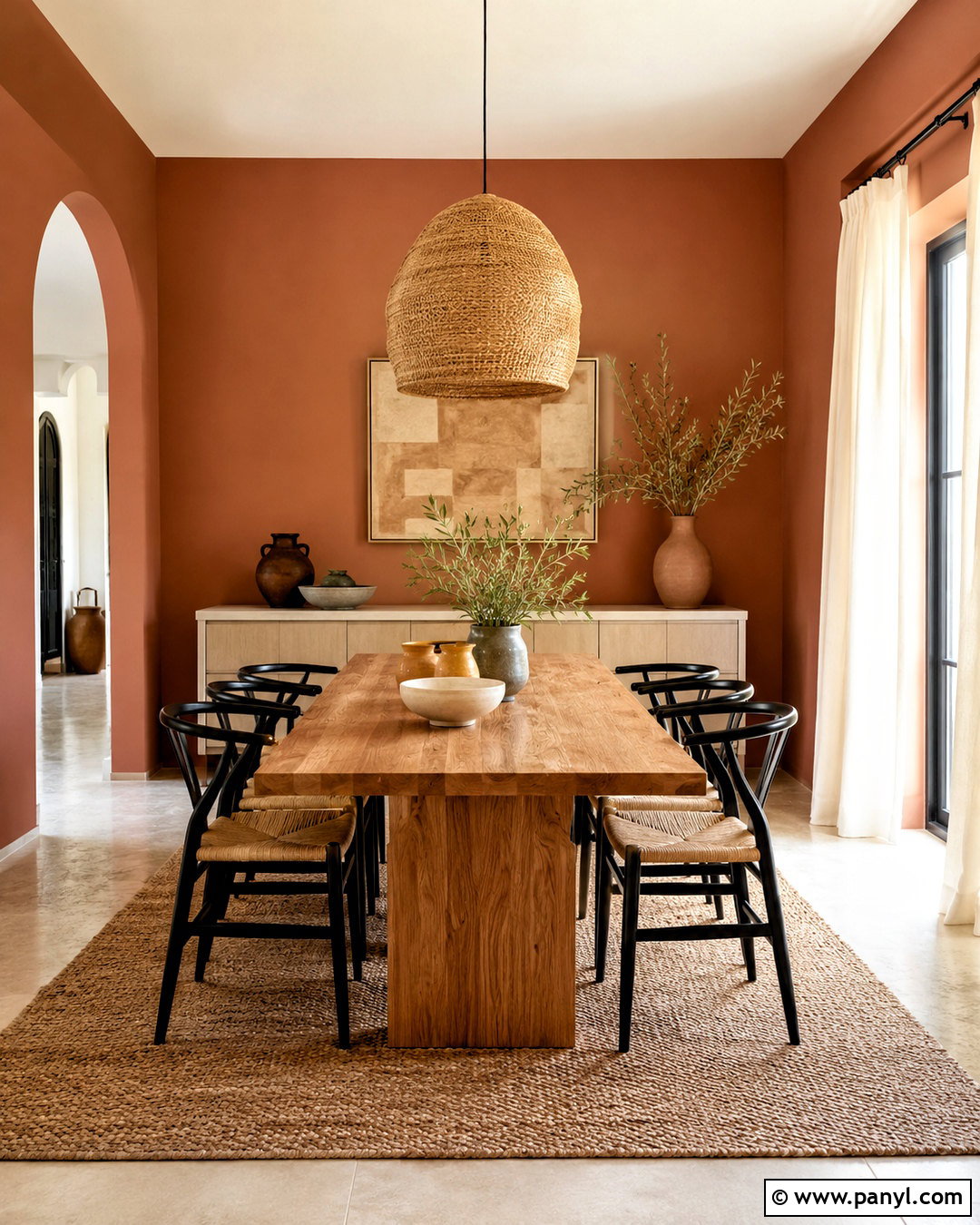
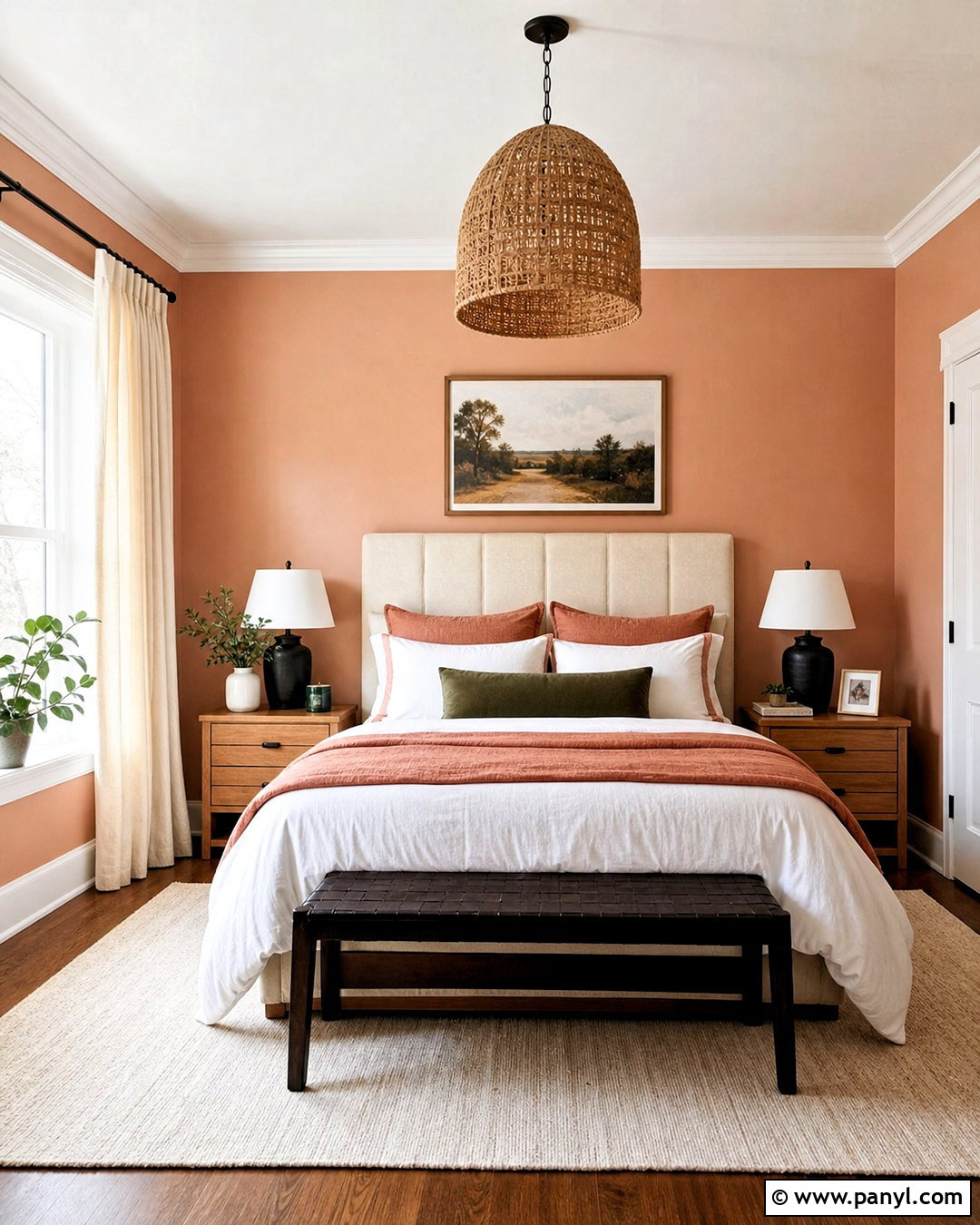
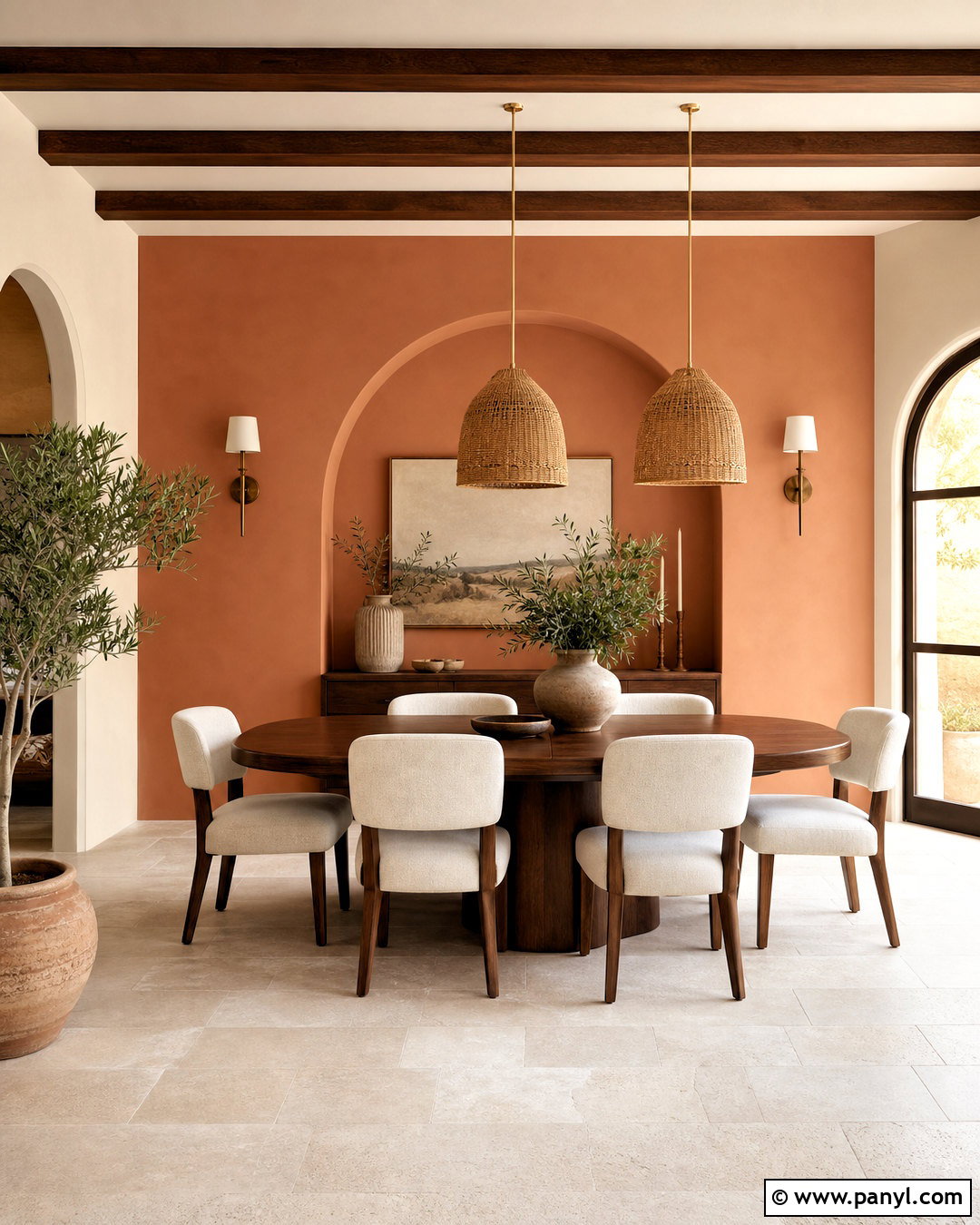
Terracotta paint wraps a dining room in earthy warmth and pairs beautifully with wood, cream, and black accents. Choose a softened clay shade rather than a bright orange, then apply it to the walls while keeping the ceiling warm white. A substantial oak dining table and black wood chairs create a grounded, casual arrangement. Hang a woven pendant above the table and use a low cream sideboard along one wall. Ivory linen curtains and a natural fiber rug lighten the room, while pottery and framed abstract artwork echo the wall color in varied tones. Add small touches of olive green through branches or seat cushions. This complete palette works best when the finishes are matte and tactile, giving the dining space a relaxed, sun-warmed character.
15. Dusty Rose Bedroom
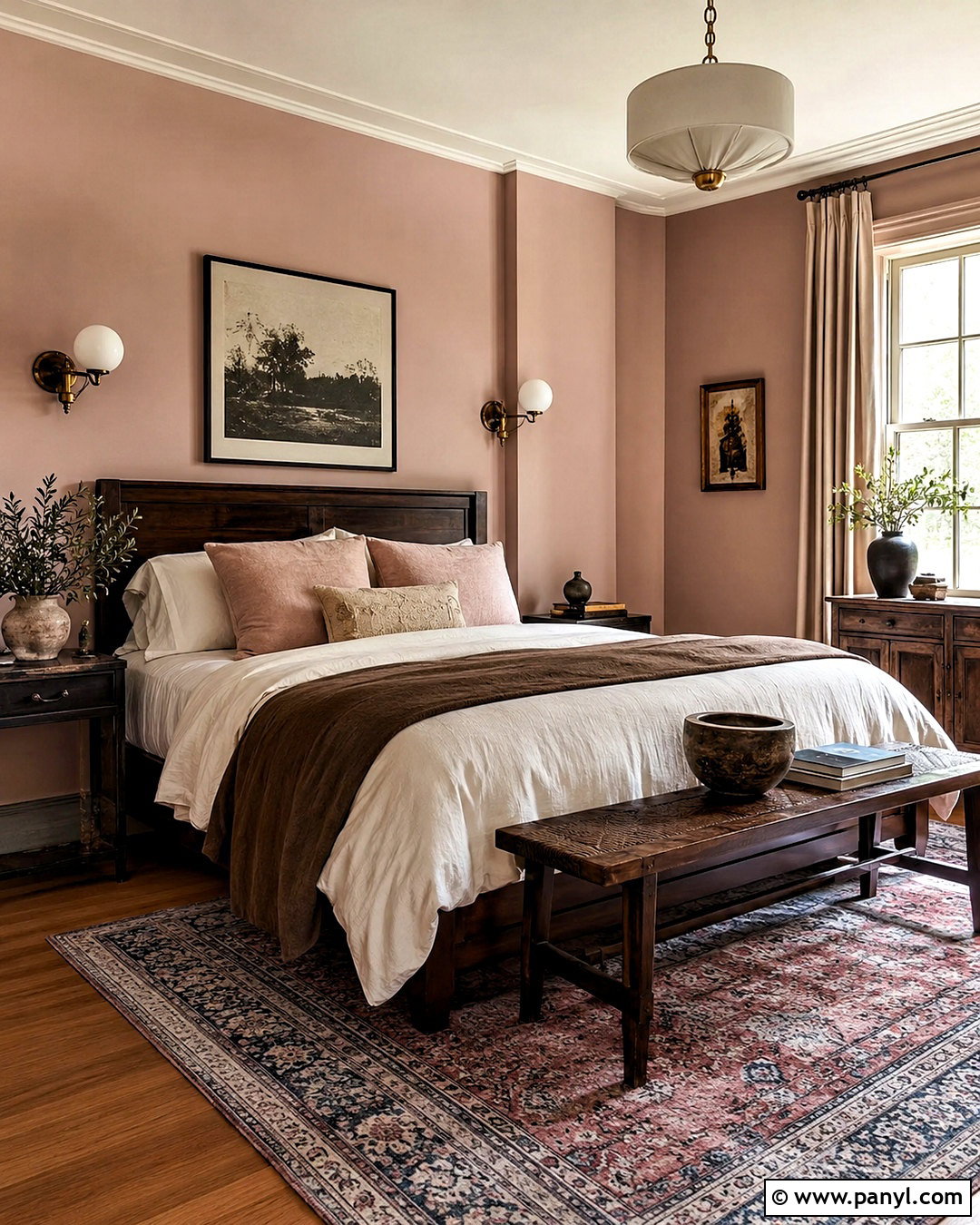
Dusty rose can create a sophisticated bedroom when it is balanced with brown, cream, and natural wood. Select a muted shade with beige or clay undertones and paint all four walls for a cohesive backdrop. Introduce a dark walnut bed or dresser to keep the palette grounded. Bedding in ivory, cocoa, and soft rose creates tonal depth without making the room overly sweet. Use linen curtains in warm beige and place a vintage-inspired rug under the bed with touches of faded red and blue. Bronze wall sconces and black-framed artwork add sharper lines. Keep decorative objects simple, using pottery, books, and one leafy plant. The completed bedroom feels warm, restful, and suitable for traditional, modern, or gently eclectic furnishings.
16. Butter Yellow Breakfast Nook
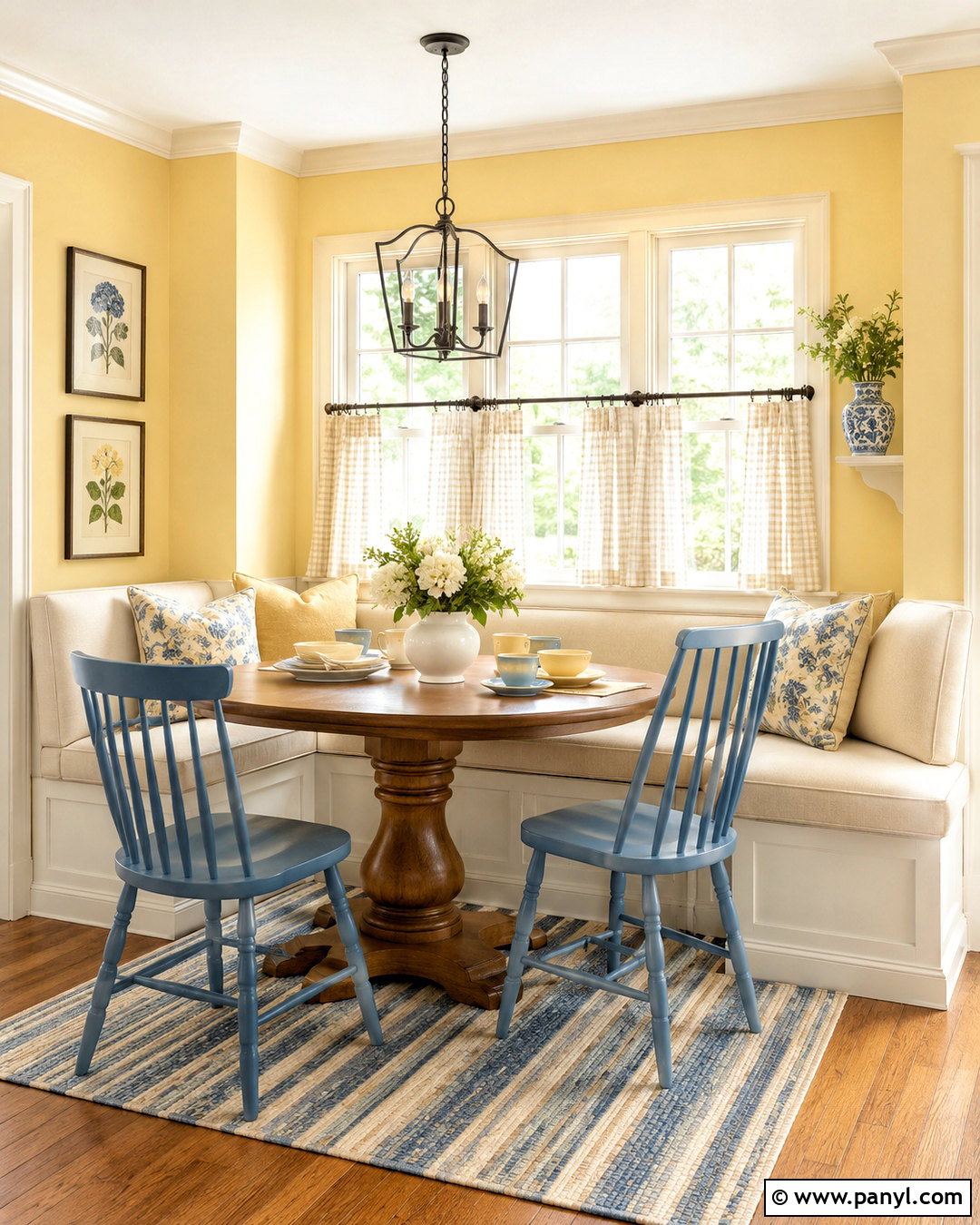
Soft butter yellow brings cheerful warmth to a breakfast nook without the intensity of bright primary yellow. Choose a pale, creamy shade and use it on the walls, keeping the trim and ceiling warm white. Build the seating arrangement around an oak pedestal table and a cushioned banquette upholstered in an ivory performance fabric. Add spindle-back chairs in muted blue or natural wood for relaxed contrast. A small striped rug, café curtains, and simple ceramic dishes help the nook feel casual and complete. Black metal lighting and hardware provide definition against the light palette. Include a framed landscape or botanical print rather than numerous small decorations. The finished eating area feels sunny and welcoming, even when the room receives modest natural light.
17. Chocolate Brown Bedroom
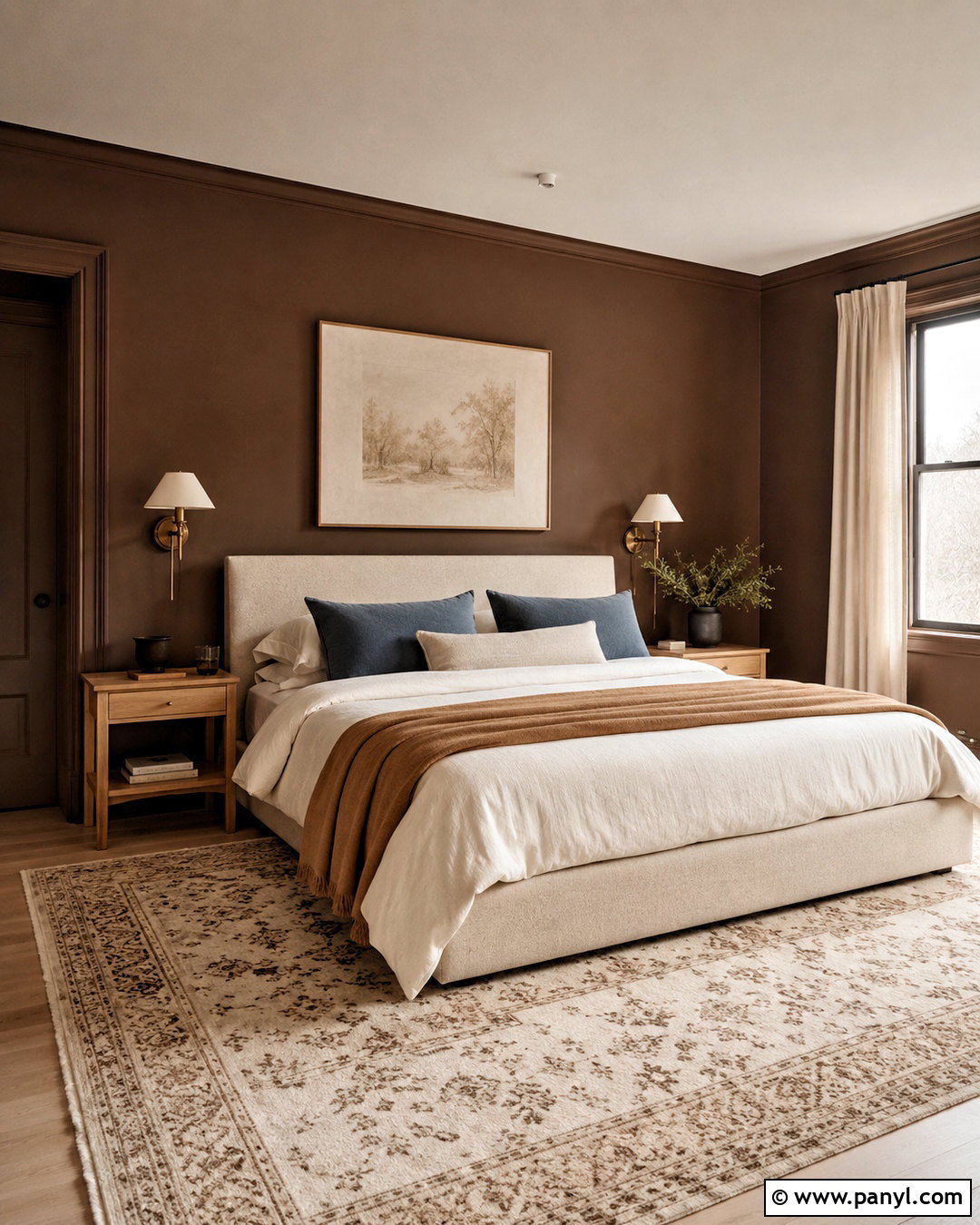
Chocolate brown creates a deeply restful bedroom when its richness is balanced with lighter fabrics and warm wood. Paint the walls, trim, and doors in a medium-dark cocoa shade with a soft matte finish. Keep the ceiling creamy white if the room is small, or continue the brown overhead for a fully enveloping effect. Use an upholstered bed in oatmeal linen and layer it with ivory sheets, camel blankets, and muted blue pillows. Light oak nightstands offer contrast without looking stark. Add antique brass sconces, natural linen curtains, and a patterned rug containing cream, brown, and dusty blue. Minimal artwork in pale mats breaks up the walls. This cohesive scheme feels intimate and luxurious while relying on practical, approachable materials.
18. Charcoal Gray Kitchen
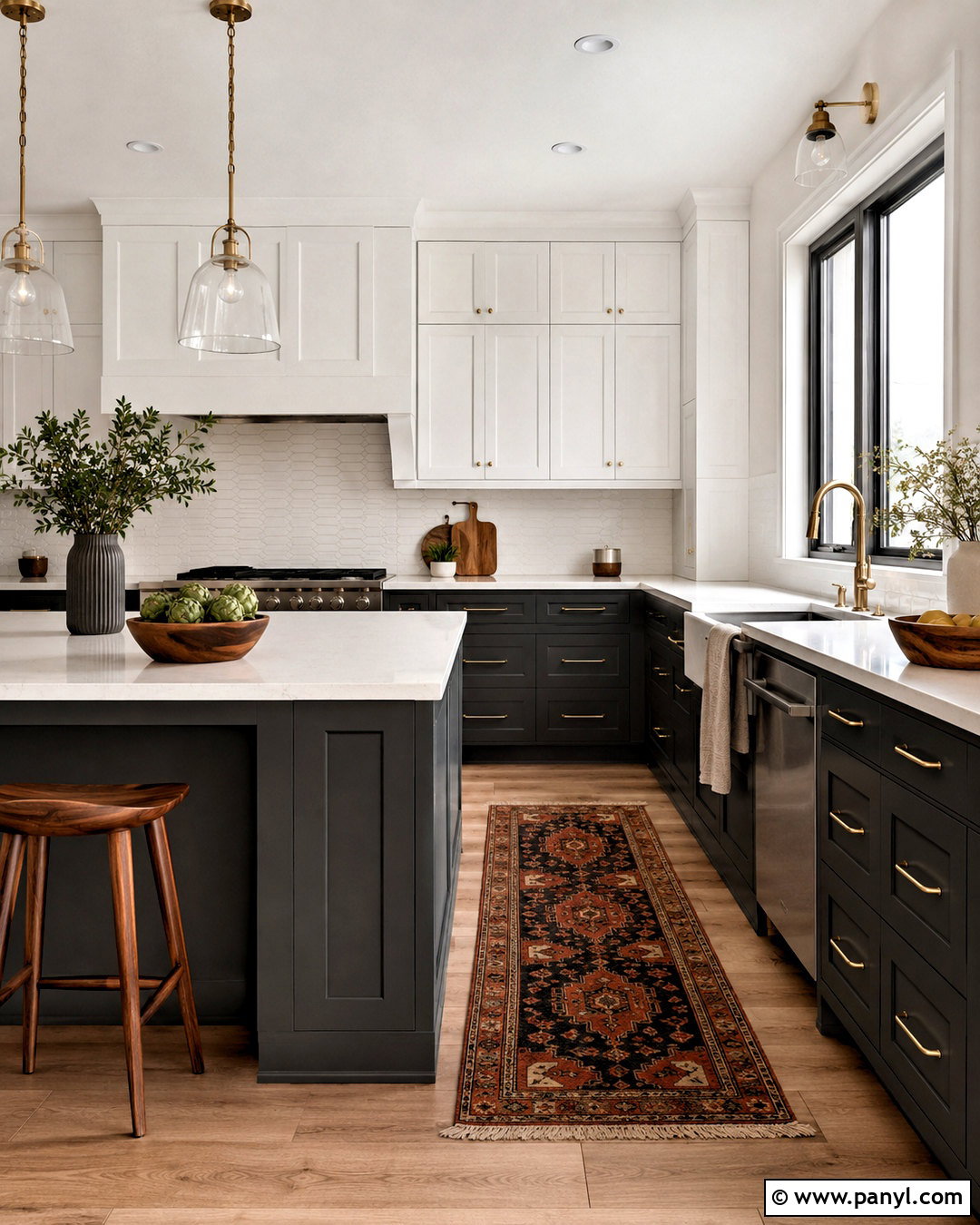
Charcoal gray can give a kitchen architectural definition when paired with bright surfaces and warm wood. Paint lower cabinets and the island in a deep, softened charcoal, while using warm white on the upper cabinets and walls. Select creamy quartz countertops and a lightly textured white tile backsplash to reflect light. Oak flooring, wood counter stools, and a walnut cutting board prevent the monochrome elements from feeling cold. Use brushed brass hardware for warmth or matte black hardware for a quieter, contemporary result. Clear glass pendants keep sightlines open above the island. A vintage runner with rust and beige introduces subtle color. The finished kitchen feels crisp and grounded, with enough contrast to showcase cabinetry without making the entire space appear dark.
19. Dusty Plum Powder Room
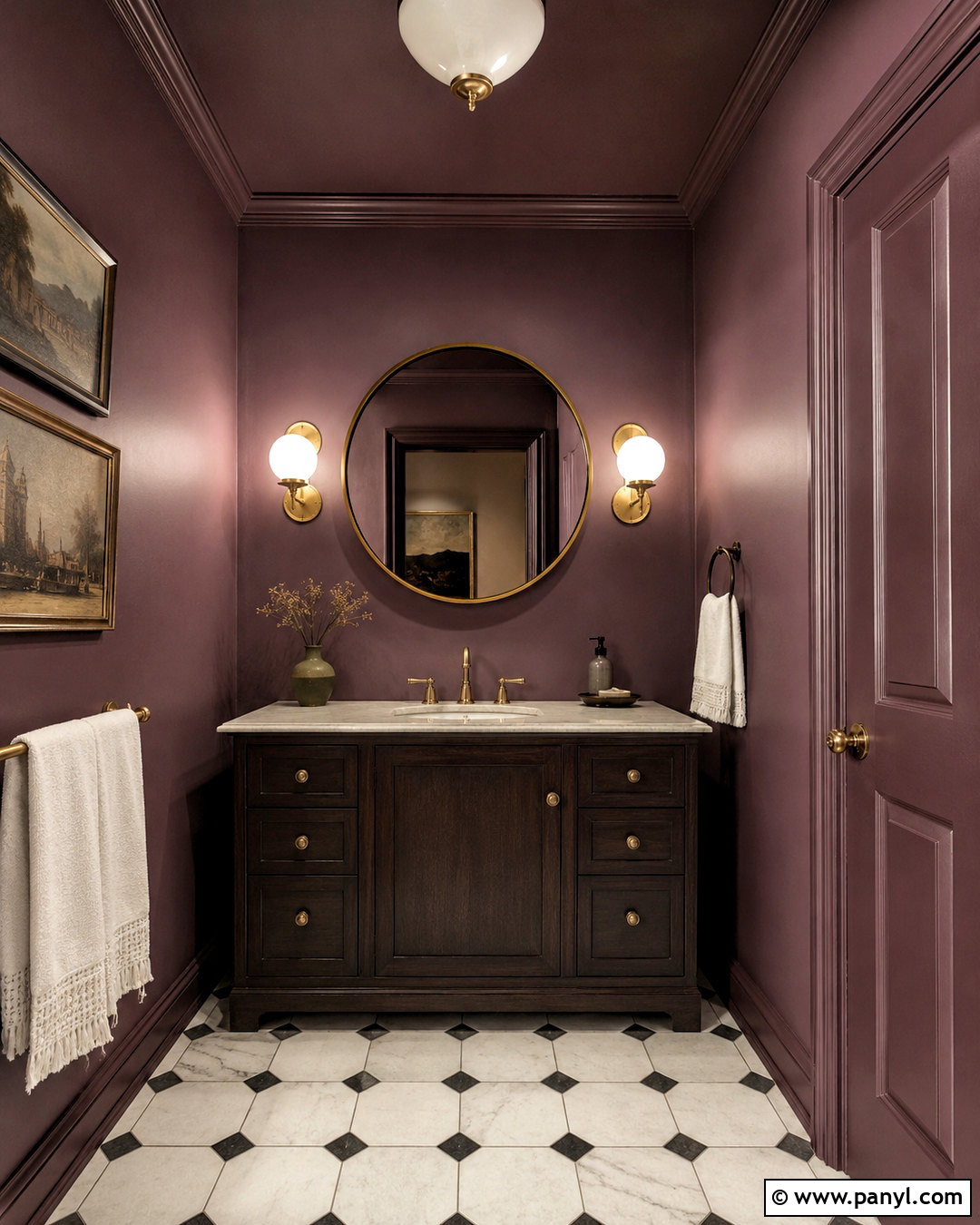
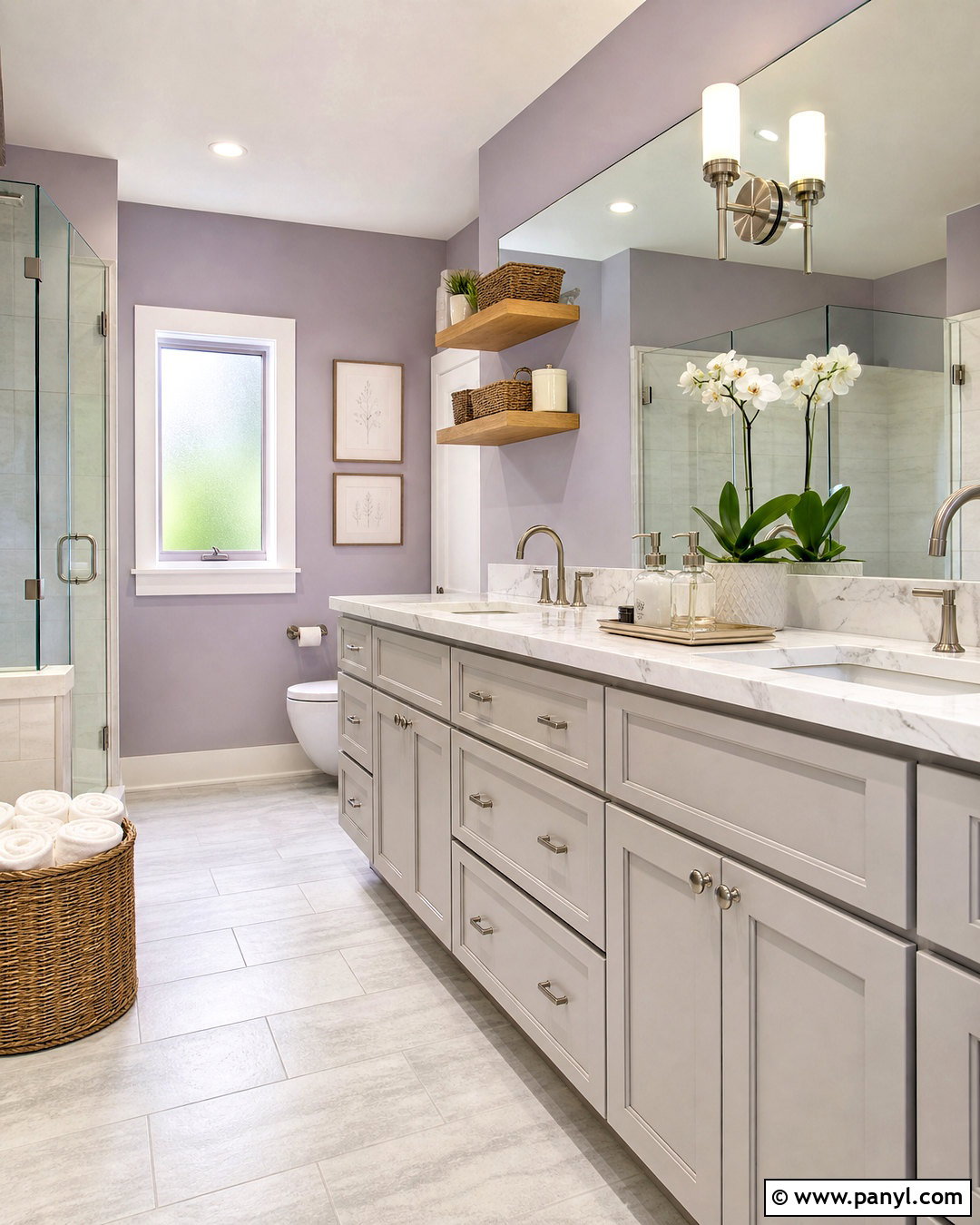
A powder room offers an ideal setting for dusty plum because the compact space can support richer color. Choose a muted purple with brown or gray undertones and apply it to the walls, trim, door, and ceiling. Install a dark wood vanity with a creamy marble top, then add an aged brass faucet and a rounded brass mirror. Small wall sconces with white glass shades provide clean, even illumination. Use a compact patterned floor tile in ivory and charcoal to ground the scheme. A framed vintage print, folded white hand towels, and one ceramic vase are enough decoration. Avoid cool chrome or bright purple accessories. The finished room should feel layered and dramatic, yet polished enough to complement the neutral spaces surrounding it.
20. Soft Black Entryway
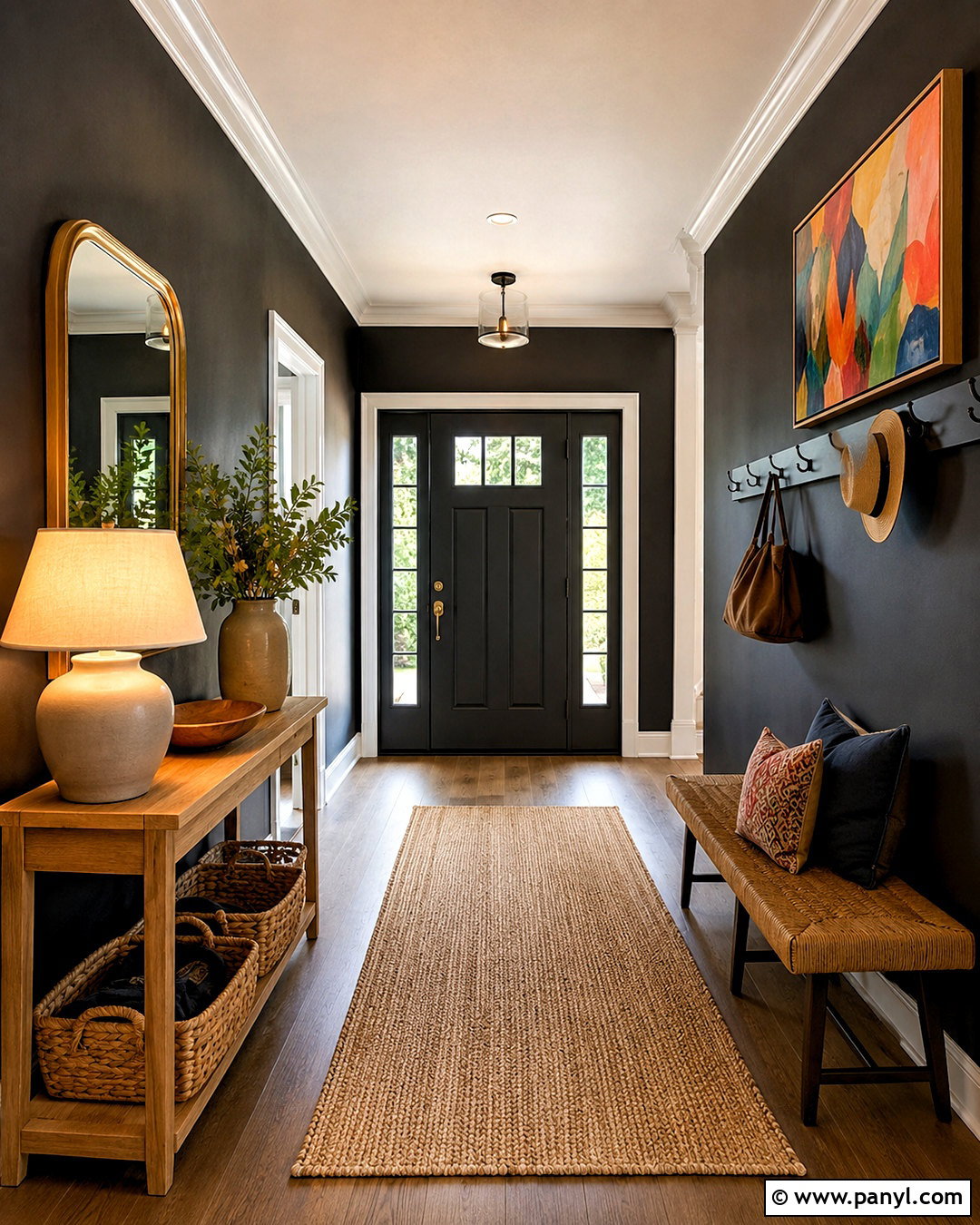
Soft black paint can make an entryway feel defined and memorable without appearing harsh. Select a near-black shade with warm charcoal or brown undertones, then apply it to the walls and interior side of the front door. Keep the ceiling and detailed trim in creamy white for contrast. A narrow oak console, woven bench, and light natural runner balance the dark surfaces. Add a large brass-framed mirror to reflect light and provide a convenient final checkpoint before leaving home. Black hooks can blend into the wall, while baskets organize shoes and everyday accessories. Finish with a ceramic lamp, one piece of colorful artwork, and a leafy branch. The completed entry feels practical, welcoming, and visually connected to lighter rooms beyond it.
Conclusion:
The best interior color is one that supports the room’s lighting, permanent finishes, furniture, and daily purpose. Warm white, cream, greige, and mushroom offer adaptable foundations, while sage, blue-gray, and eucalyptus introduce gentle color. Deeper shades such as navy, forest green, chocolate brown, and soft black can create remarkable depth when balanced with light textiles and natural materials. Always sample paint on more than one wall because undertones can shift throughout the day. Consider the complete palette instead of choosing the wall color alone. With thoughtful testing and coordinated finishes, these 20 best paint colors for interior ideas can help you build rooms that feel comfortable, cohesive, personal, and beautifully finished.

Related Ideas and Inspiration:

Leave a Reply