
If you are searching for **20 Brown Kitchen Ideas Paint Wall Colors**, the right palette can make wood cabinets, brown painted cabinetry, and earthy finishes feel fresh rather than heavy. Current kitchen color trends favor warm, nuanced combinations, including timber with plaster neutrals, brown with veined stone, and rich wood beside warm metals. () Light cream, greige, sage, muted blue, and soft beige remain especially useful because they balance brown without stripping away its natural warmth. () The best result also considers countertops, flooring, backsplash materials, hardware, and natural light. Whether your kitchen has honey oak, walnut, espresso, cherry, or painted brown cabinets, these complete color schemes offer practical inspiration. Explore these **20 Brown Kitchen Ideas Paint Wall Colors** to find a coordinated look you can recreate.
1. Warm White Walls With Brown Cabinets
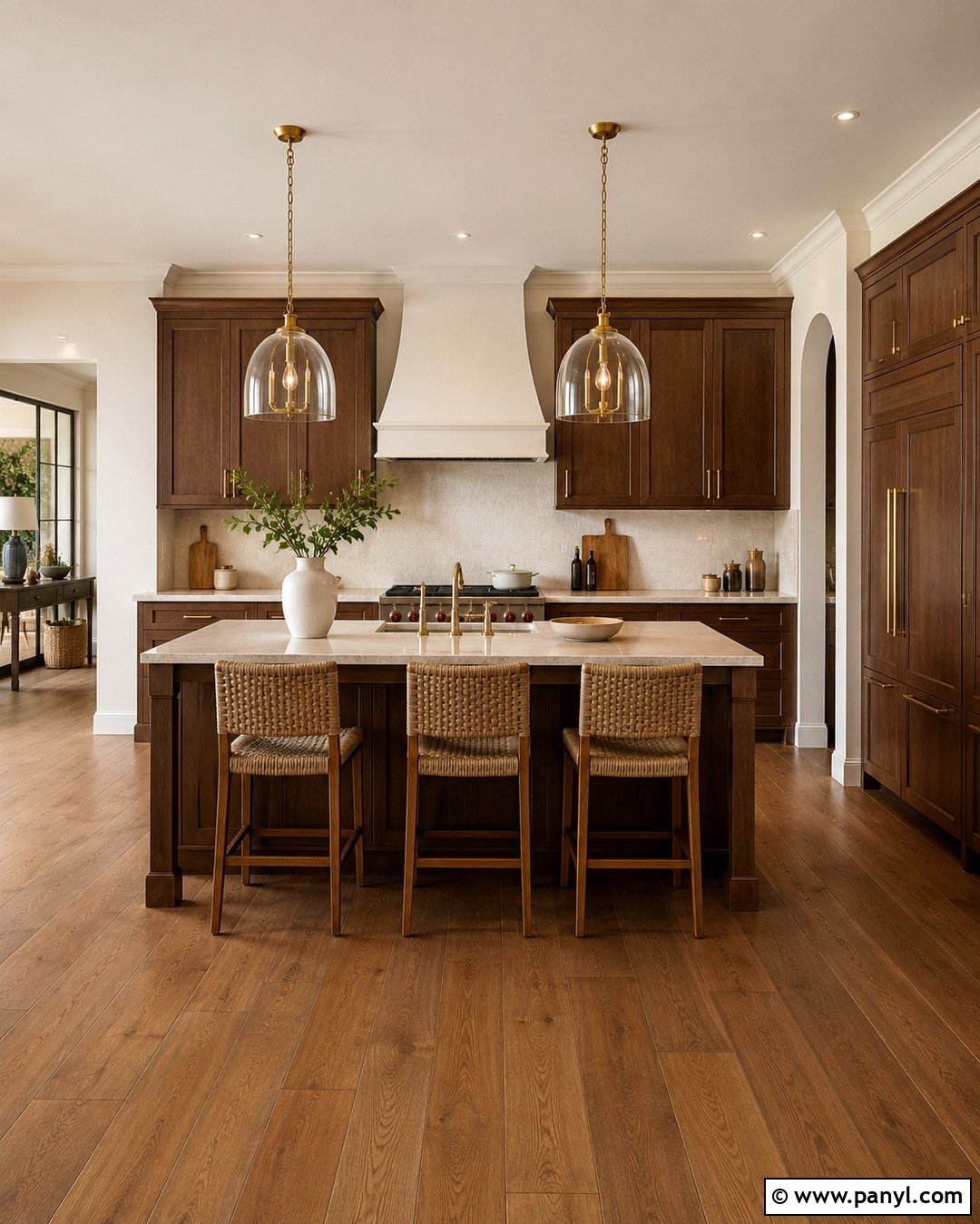
Warm white walls create an airy background while preserving the welcoming character of brown cabinetry. Choose an ivory-based white rather than a sharp blue-white, especially when the cabinets have golden, red, or caramel undertones. Complete the room with creamy quartz countertops, an off-white handmade tile backsplash, and medium oak flooring. Brushed brass hardware reinforces the warmth without making the space look overly traditional. Add woven counter stools, simple ceramic accessories, and clear glass pendants to keep the arrangement light. In a small kitchen, continue the wall color onto the ceiling and surrounding trim for fewer visual breaks. This balanced scheme works particularly well with walnut, chestnut, honey oak, or warm medium-brown cabinets.
2. Cream Walls With Dark Brown Cabinets
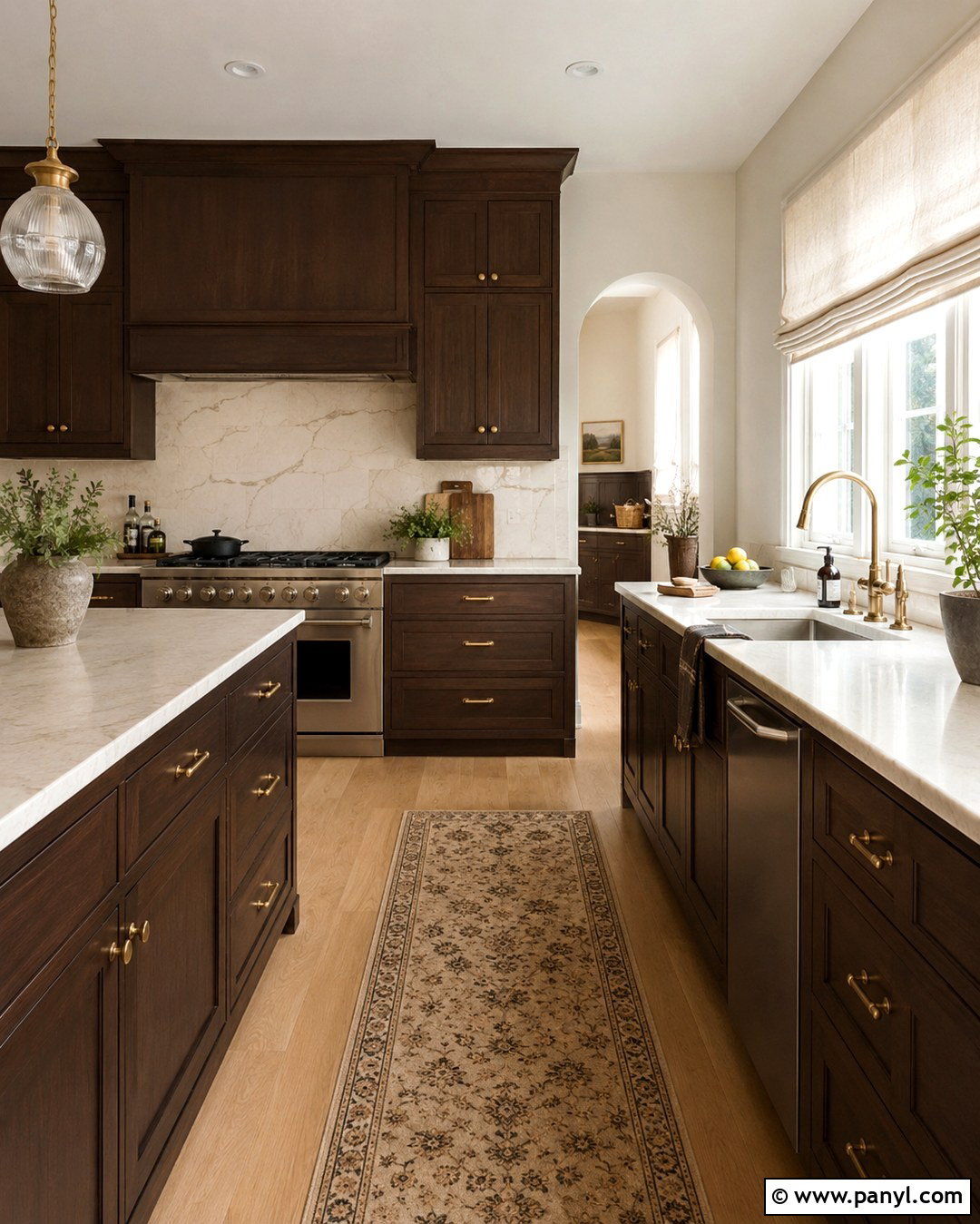
A soft cream wall color gently lifts espresso or dark chocolate cabinets without producing severe contrast. Look for a shade with a subtle beige or yellow base, then repeat that warmth through limestone-look countertops and lightly veined backsplash tile. Pale natural oak flooring prevents the darker cabinetry from dominating the room. For hardware, aged brass or soft bronze feels more connected than polished chrome. Install under-cabinet lighting so the work surfaces remain bright and usable. A cream linen Roman shade, a washable patterned runner, and a few wooden cutting boards complete the relaxed design. Keep appliances and large fixtures simple, preferably stainless steel or panel-ready, so the dark cabinets remain the room’s grounded focal point.
3. Soft Greige Walls With Walnut Cabinets
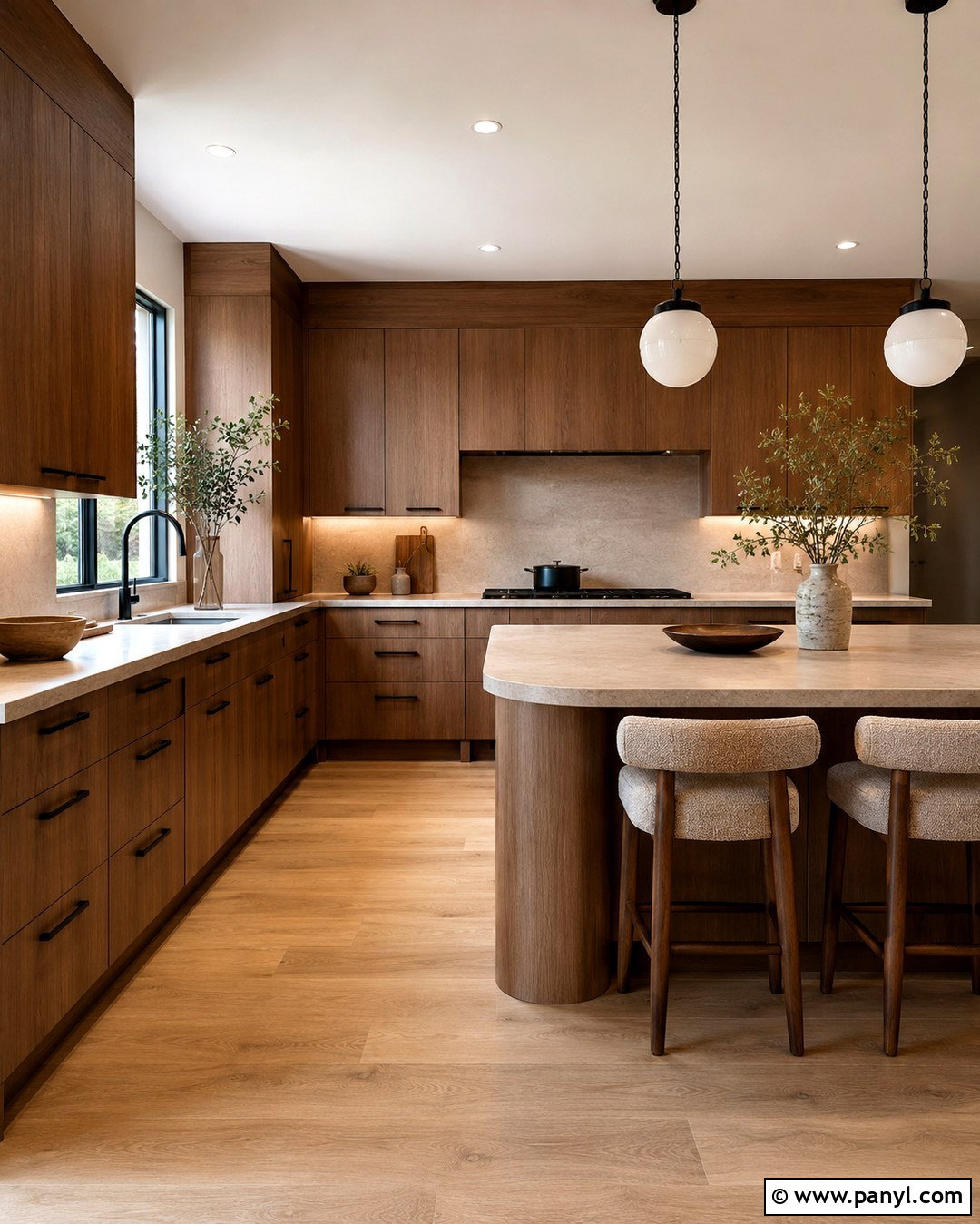
Soft greige walls give walnut cabinets a clean, contemporary setting while still respecting their natural grain. Select a warm greige with more beige than gray, since cool gray can look disconnected beside reddish or golden wood. Pair the combination with pale quartz countertops, a slab backsplash, and wide-plank light oak flooring. Matte black hardware adds definition, while globe-shaped milk glass pendants soften the sharper lines. If the kitchen includes an island, use a slightly deeper mushroom finish to create quiet contrast without introducing an unrelated color. Finish the room with oatmeal counter stools, black-framed artwork, and restrained greenery. The resulting kitchen feels modern, calm, and layered rather than flat or overly brown.
4. Light Beige Walls With Honey Oak Cabinets
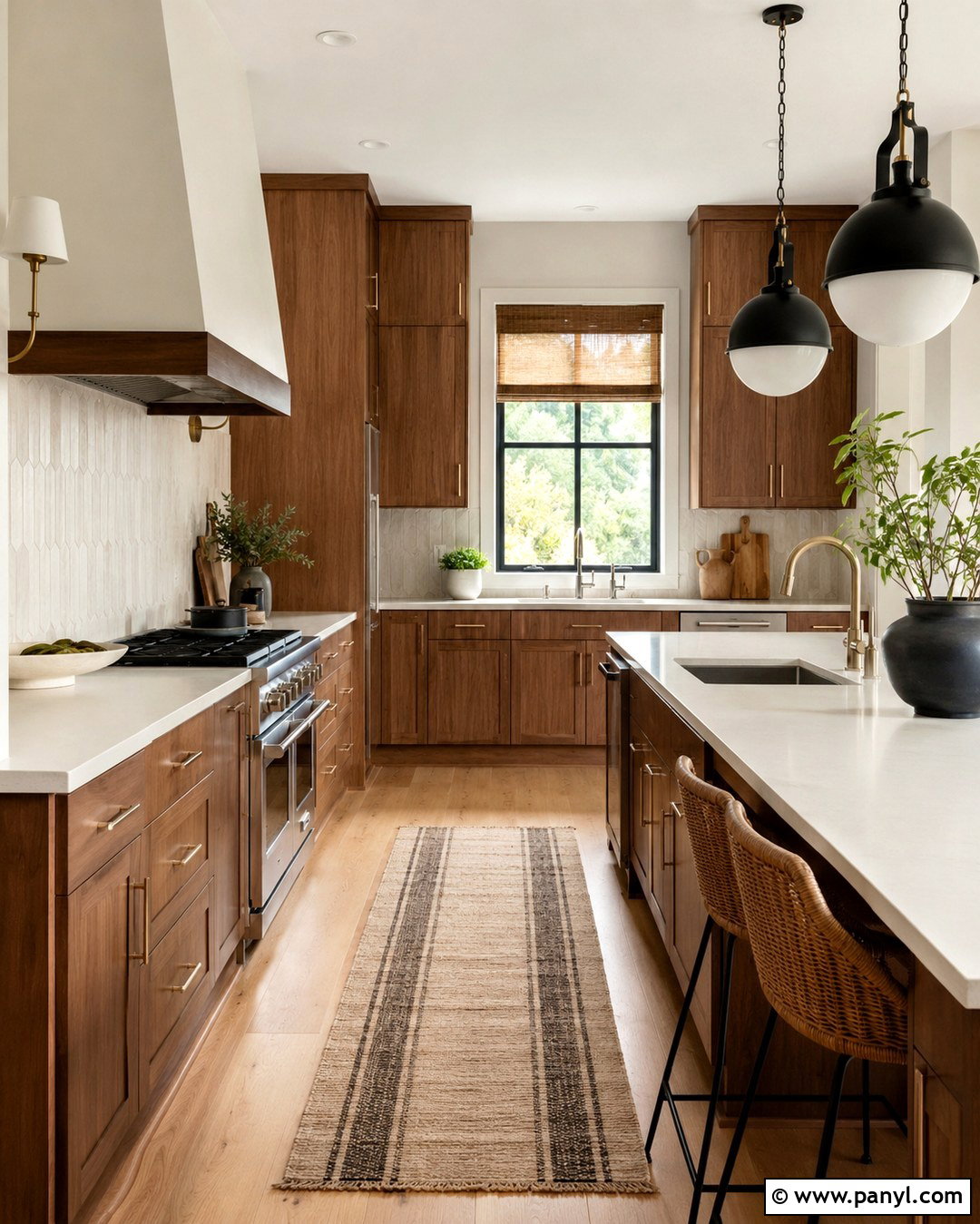
Honey oak cabinets become easier to appreciate when surrounded by a light beige that shares their warmth without matching them exactly. Choose a creamy sand color with minimal pink undertones. Add warm white quartz countertops and an ivory backsplash with subtle texture to brighten the main work area. Medium-toned stone-look flooring can ground the room, although pale oak flooring also works when its grain remains quiet. Replace dated hardware with simple antique brass pulls, and use black accents sparingly through pendant lights or window frames. A striped beige runner and natural woven shades introduce softness. This full palette updates honey oak without painting over it, making it an approachable choice for a budget-conscious kitchen refresh.
5. Taupe Walls With Espresso Cabinets
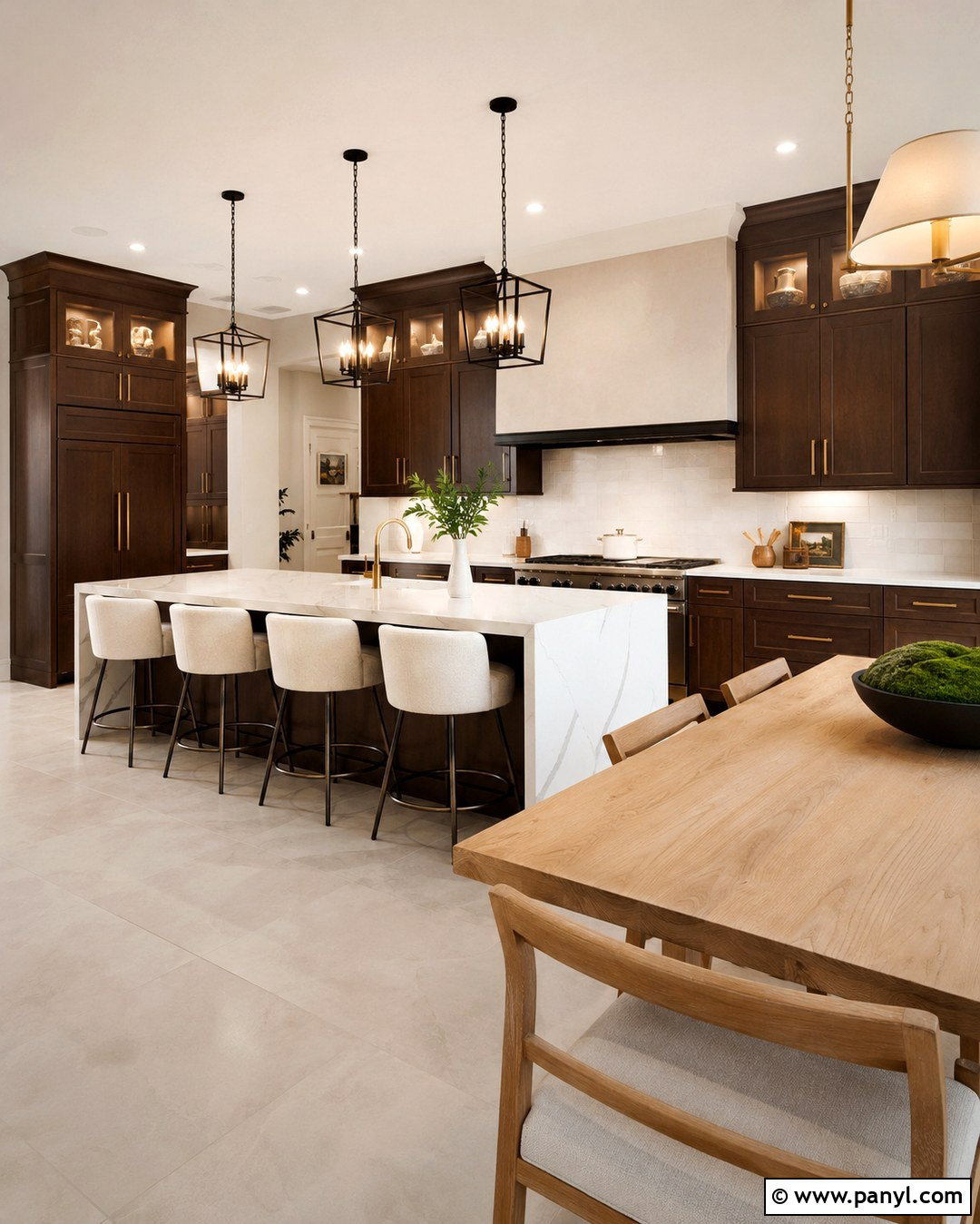
Taupe walls can bridge the gap between espresso cabinetry and lighter kitchen finishes. Choose a medium-light taupe with warm brown undertones, avoiding shades that lean noticeably purple. Balance the dark cabinets with white marble-look quartz, a warm white backsplash, and pale porcelain floor tile. Satin brass pulls bring a polished detail, while black-framed pendants connect visually with the deepest cabinet tones. Introduce cream upholstered stools and a light wood dining table if the kitchen opens into an eating area. Keep decorative pieces limited to stoneware, clear glass, and one or two leafy plants. This tonal but contrasted arrangement gives espresso cabinets a sophisticated foundation while ensuring the entire room still feels open and comfortable.
6. Sage Green Walls With Brown Cabinets
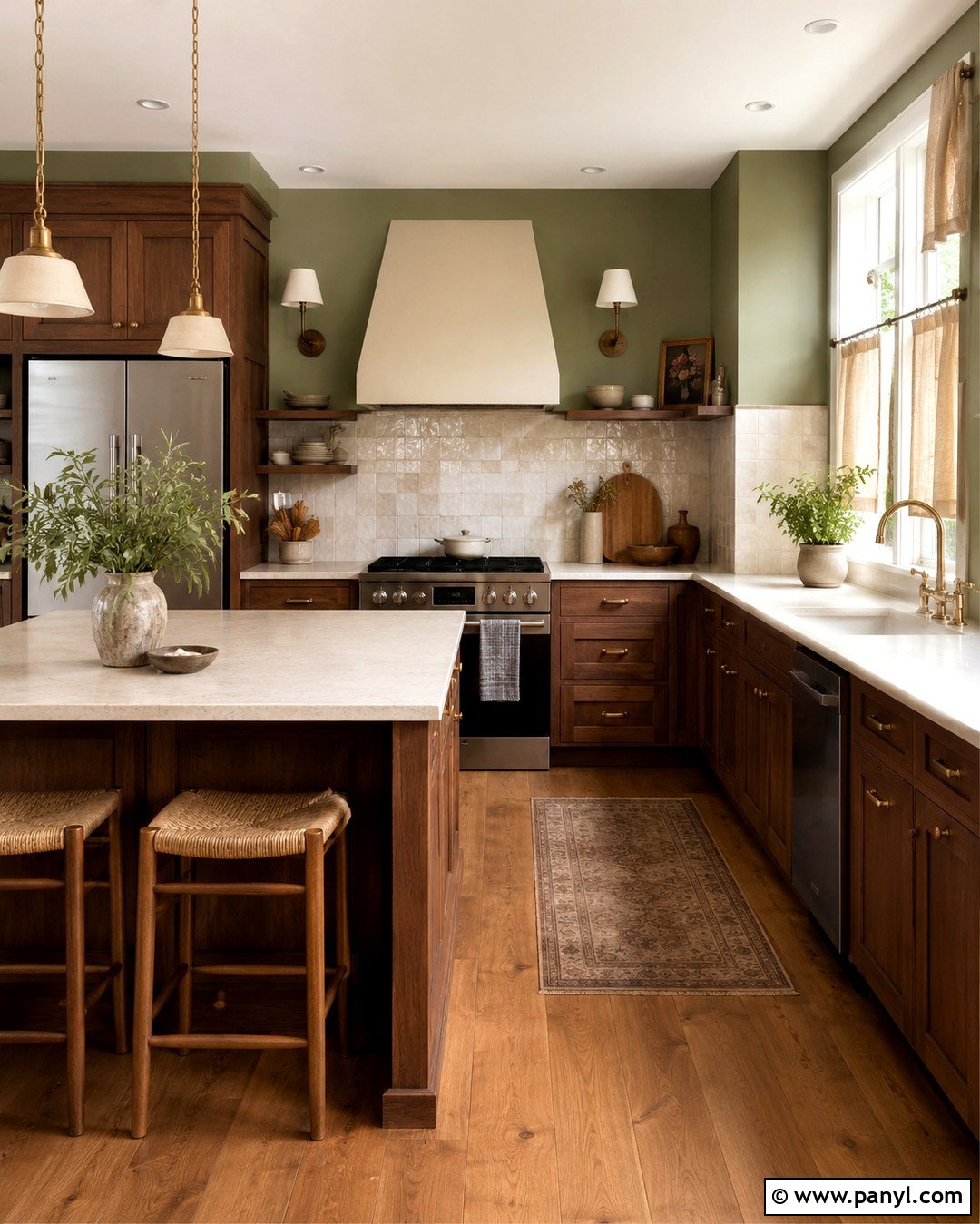
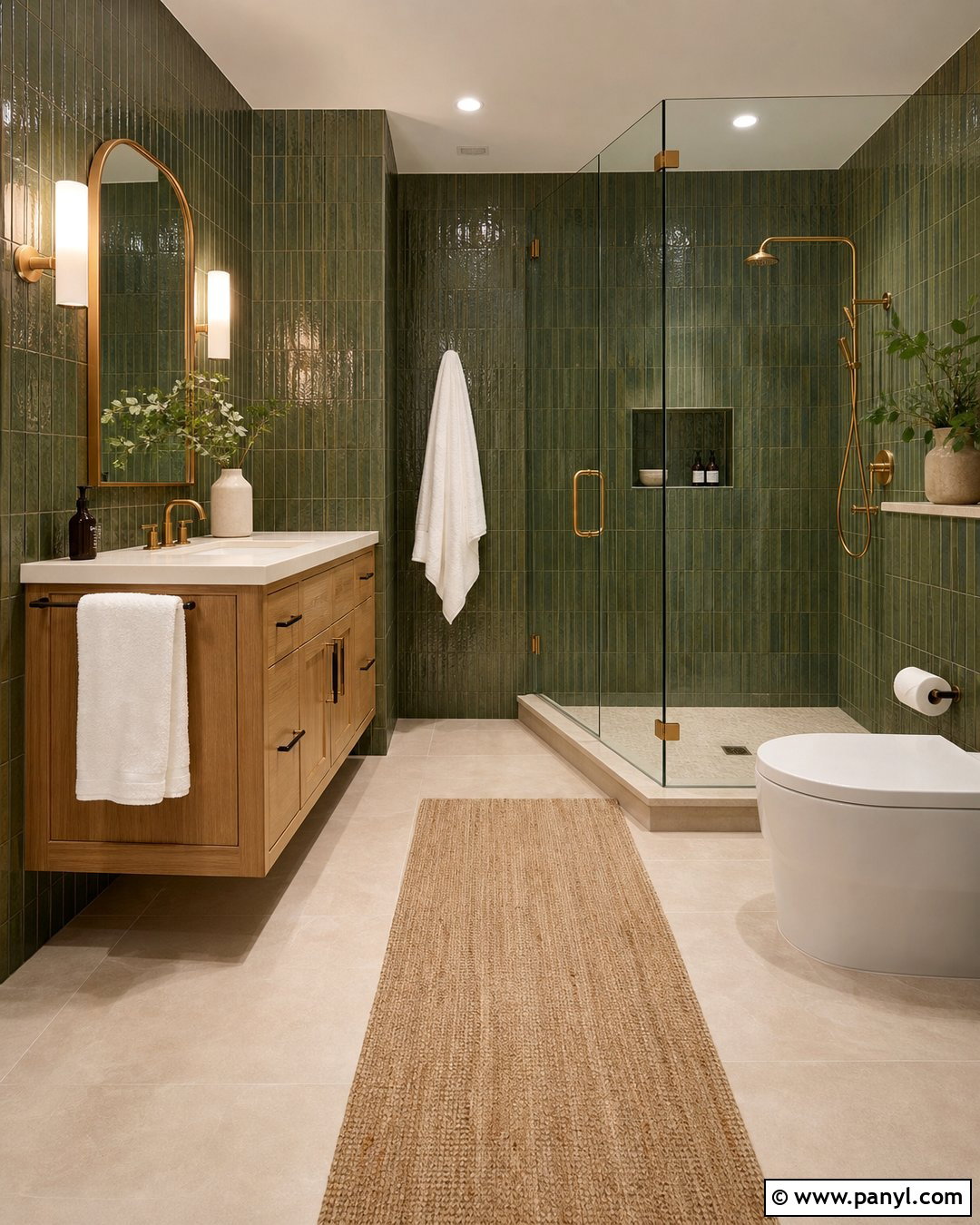
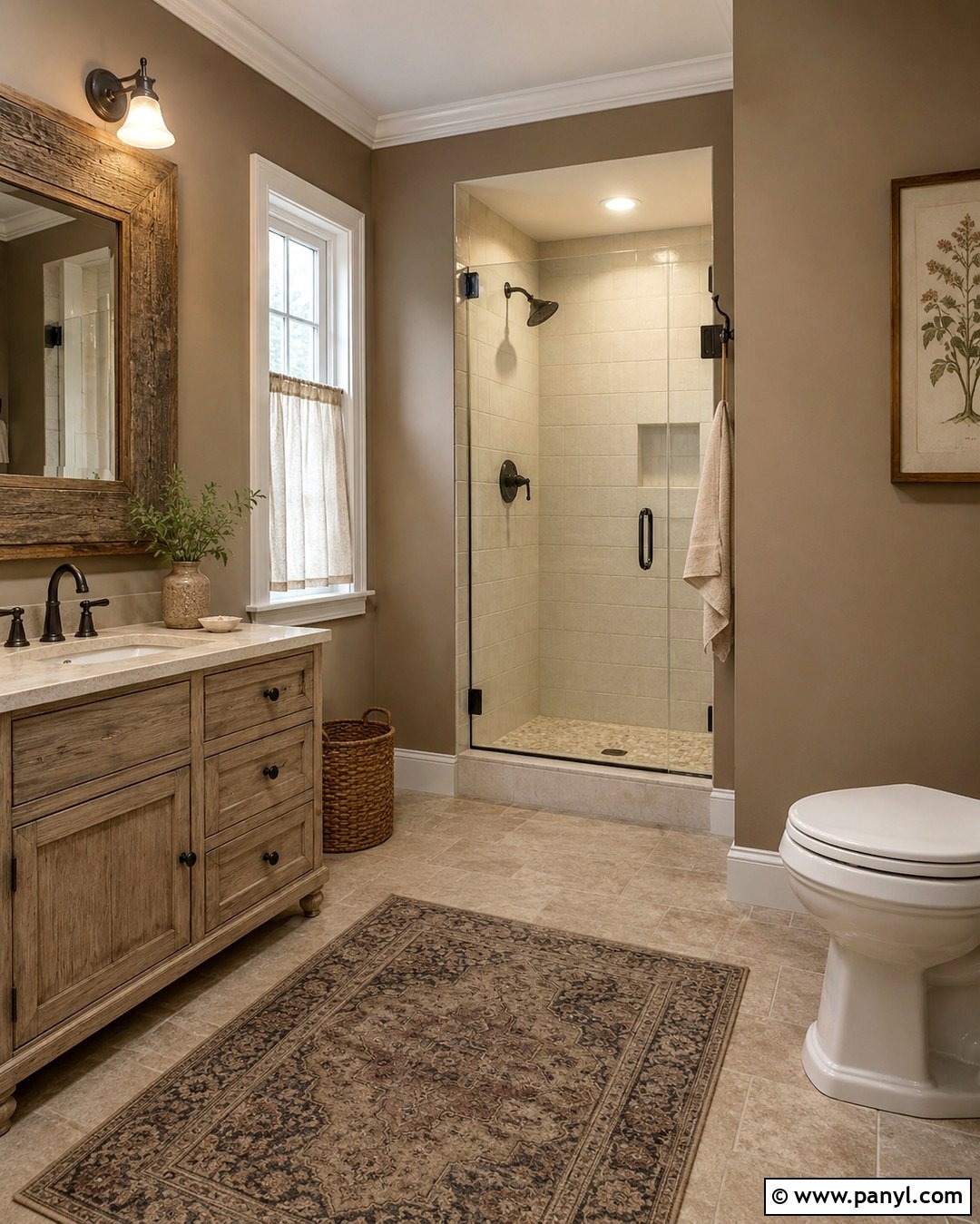
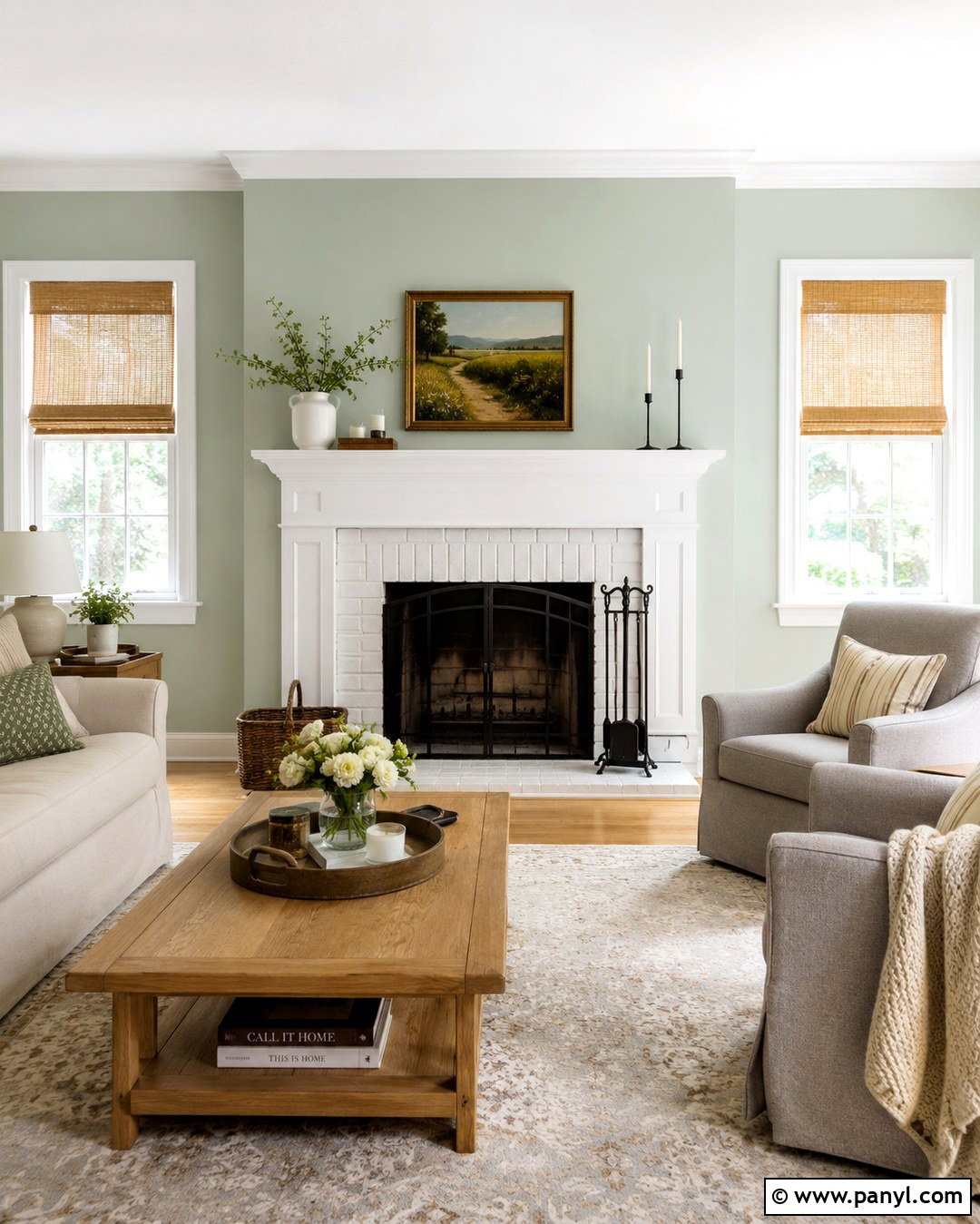
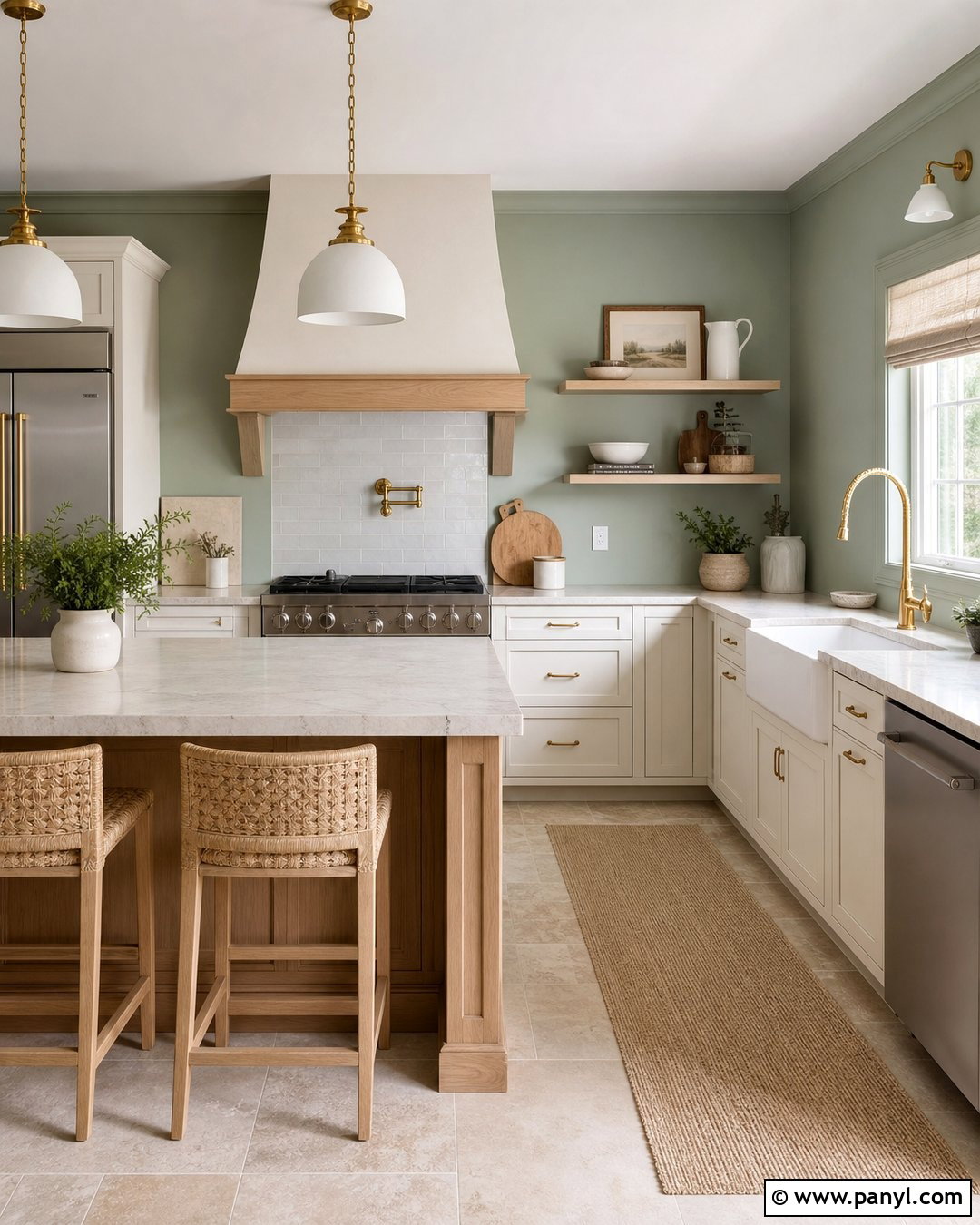
Muted sage green walls bring a natural, garden-inspired quality to brown kitchen cabinets. A gray-green sage looks especially balanced with medium walnut or chestnut wood because it offers color without overwhelming the grain. Complete the look with creamy stone countertops, an ivory zellige-style backsplash, and warm oak flooring. Aged brass hardware and traditional shaded sconces add character, while a simple white ceiling keeps the upper half of the room bright. Use woven stools, linen café curtains, and botanical artwork to reinforce the organic palette. Avoid highly saturated green accessories; instead, layer olive pottery and soft cream textiles. The finished kitchen feels grounded, relaxed, and appropriate for farmhouse, cottage, transitional, or traditional homes.
7. Olive Green Walls With Walnut Cabinets
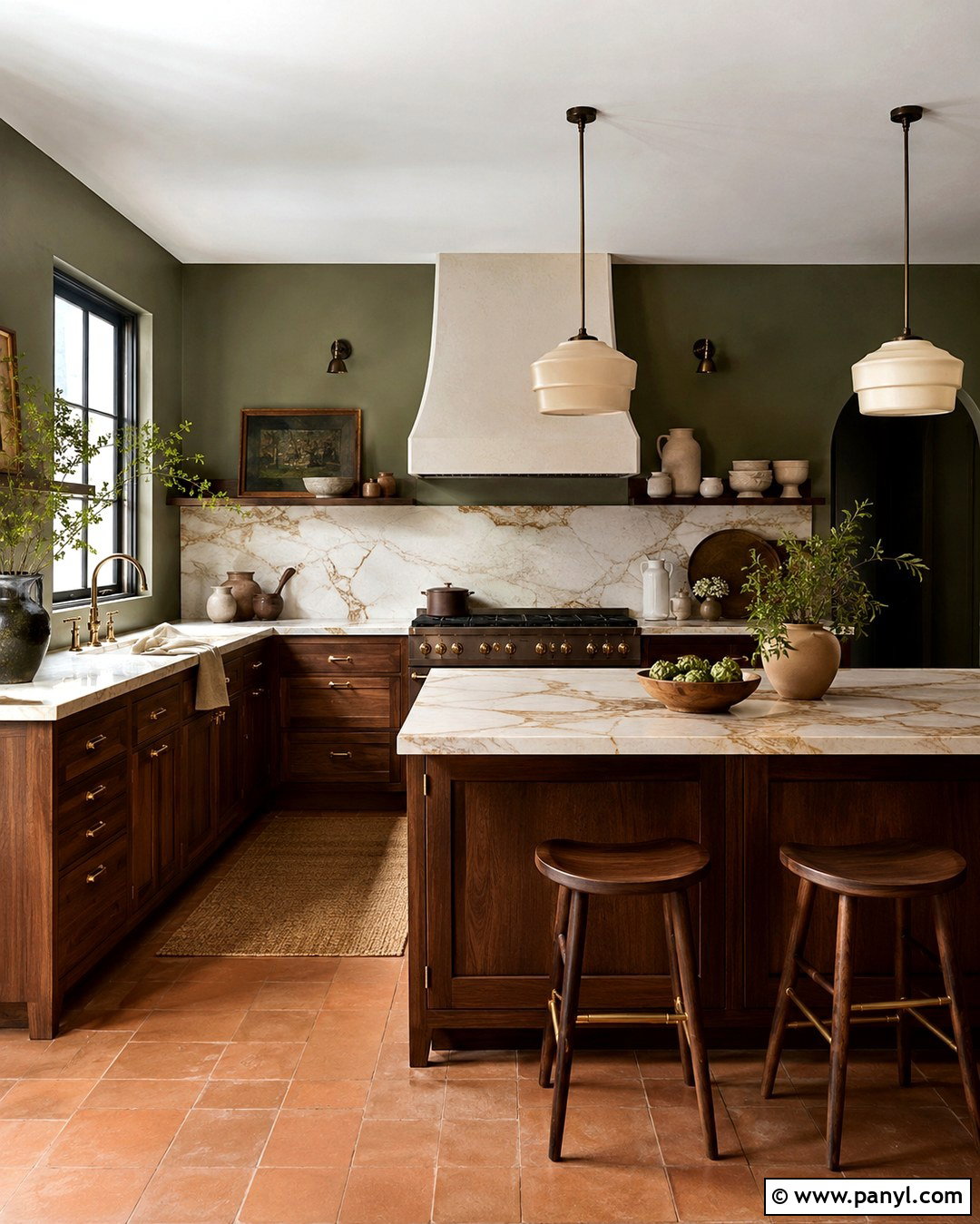
Deep olive walls create a richer, more enveloping background for walnut cabinets. This combination works best in kitchens with generous windows, strong overhead lighting, or open connections to lighter rooms. Use creamy marble countertops with warm veining to break up the darker surfaces. A matching marble backsplash makes the walls and cabinetry feel more intentional rather than crowded. Add unlacquered brass hardware, a plaster range hood, and terracotta or reclaimed brick flooring for an earthy European influence. Cream pendant shades and pale linen window treatments prevent the scheme from becoming gloomy. Keep the styling understated with copper cookware, neutral pottery, and wooden bowls. Together, these elements form a warm, collected kitchen with substantial depth and personality.
8. Dusty Blue Walls With Brown Cabinets
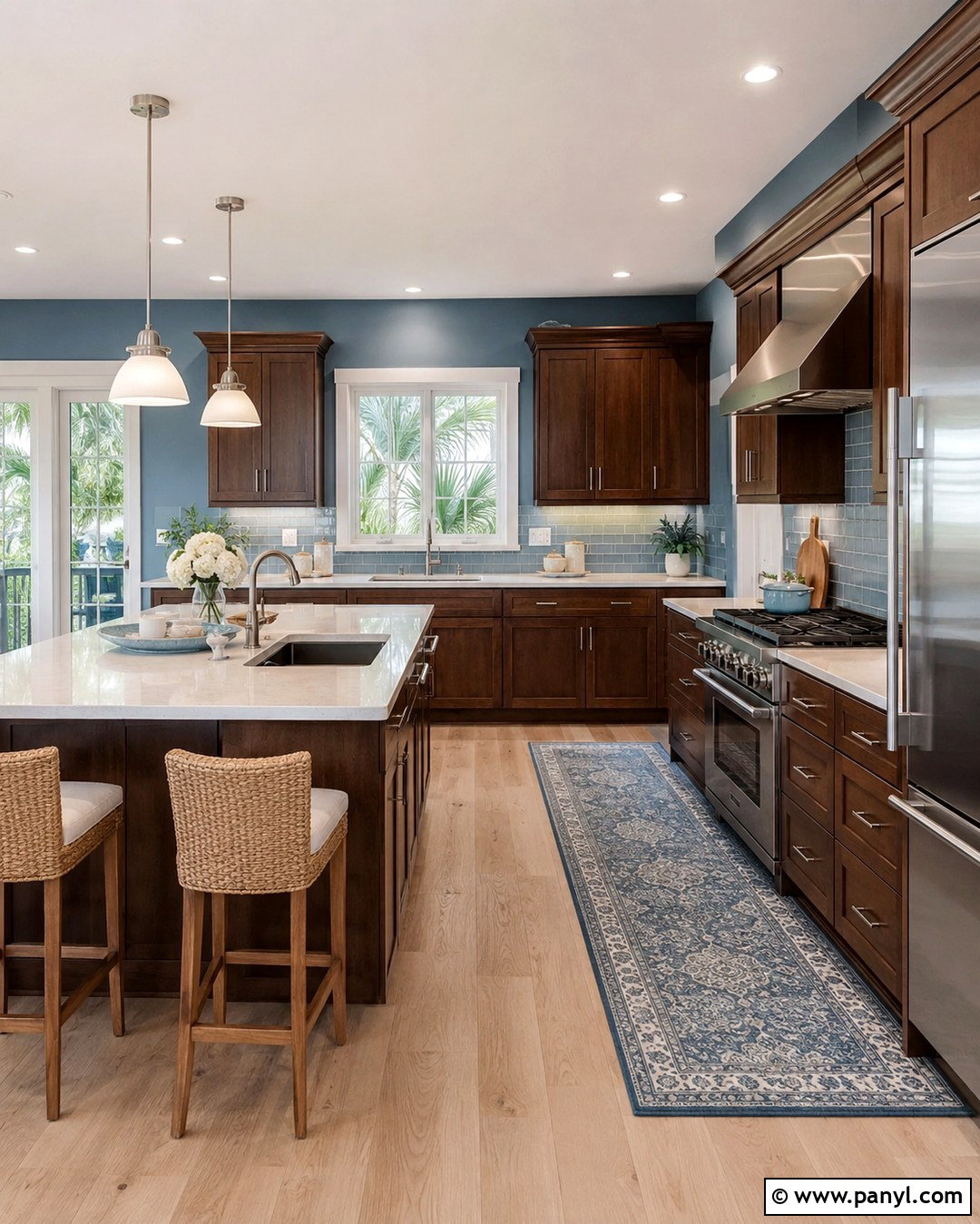
Dusty blue walls introduce a gentle cool note that can balance the orange or red undertones found in cherry and medium-brown cabinets. Select a muted blue with enough gray to keep it calm and livable. White quartz countertops and a pale blue-gray tile backsplash connect the painted walls to the work surfaces. Brushed nickel hardware provides a clean transition between the cool wall color and warm wood. Add light oak flooring, woven counter stools, and simple white pendants for an easy coastal influence that does not feel themed. A blue patterned runner can repeat the wall color near the floor. This complete scheme is particularly effective in sunny kitchens, where natural light reveals the softness of the blue.
9. Slate Blue Walls With Chocolate Cabinets
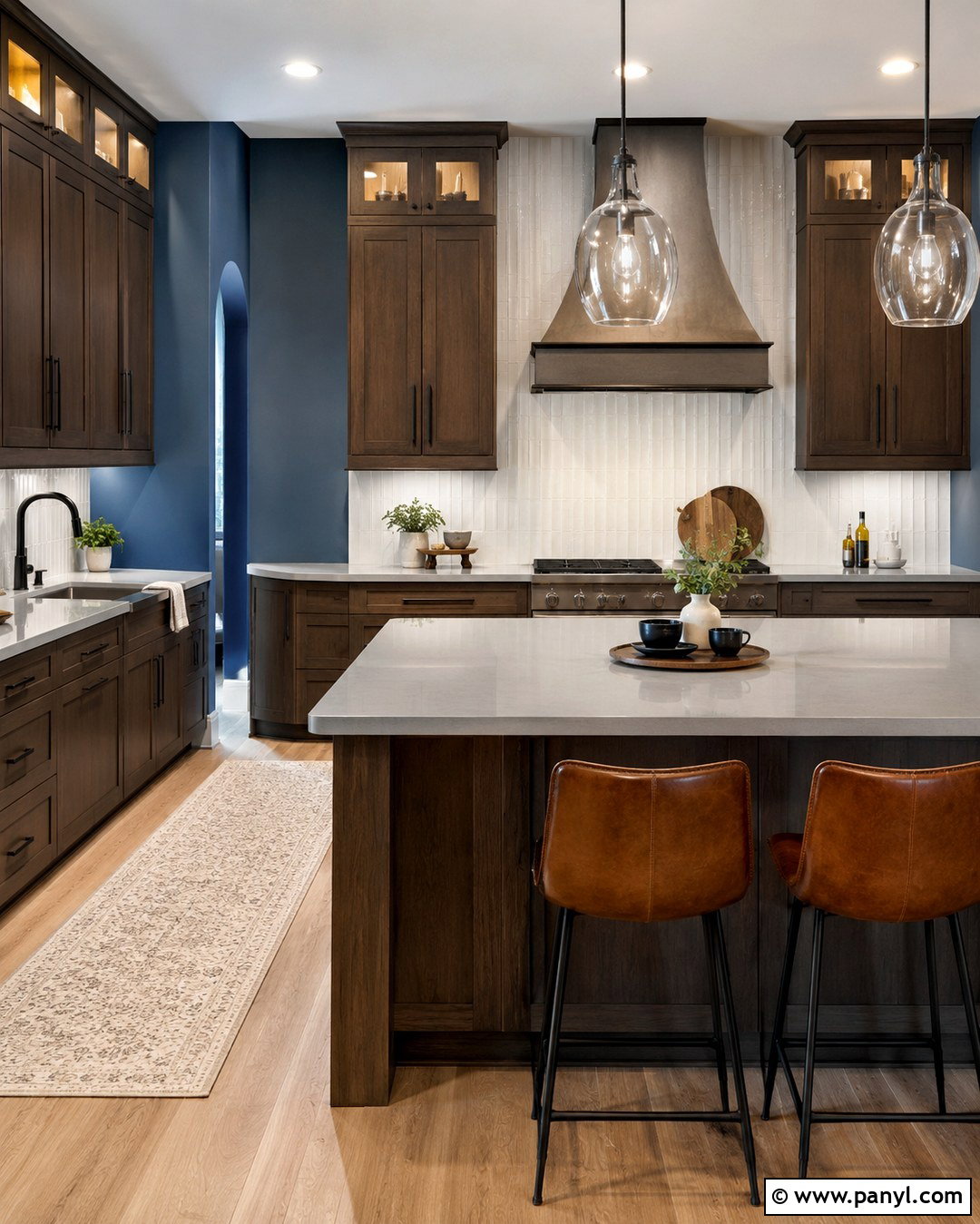
Slate blue creates noticeable contrast against chocolate-brown cabinets while remaining more subdued than a vivid primary blue. Use it on the main walls and keep the ceiling, trim, and window casing warm white. Light gray quartz countertops and white elongated subway tile brighten the cabinet area. Dark bronze hardware connects with the deep cabinetry, while brushed steel appliances prevent the palette from feeling too traditional. For flooring, choose pale wood or warm gray stone with limited pattern. Complete the room with cognac leather stools, a cream runner, and oversized glass pendants. The finished kitchen feels tailored and balanced, combining cool architectural color with warm furniture-like cabinetry. It works especially well in transitional kitchens with simple Shaker doors.
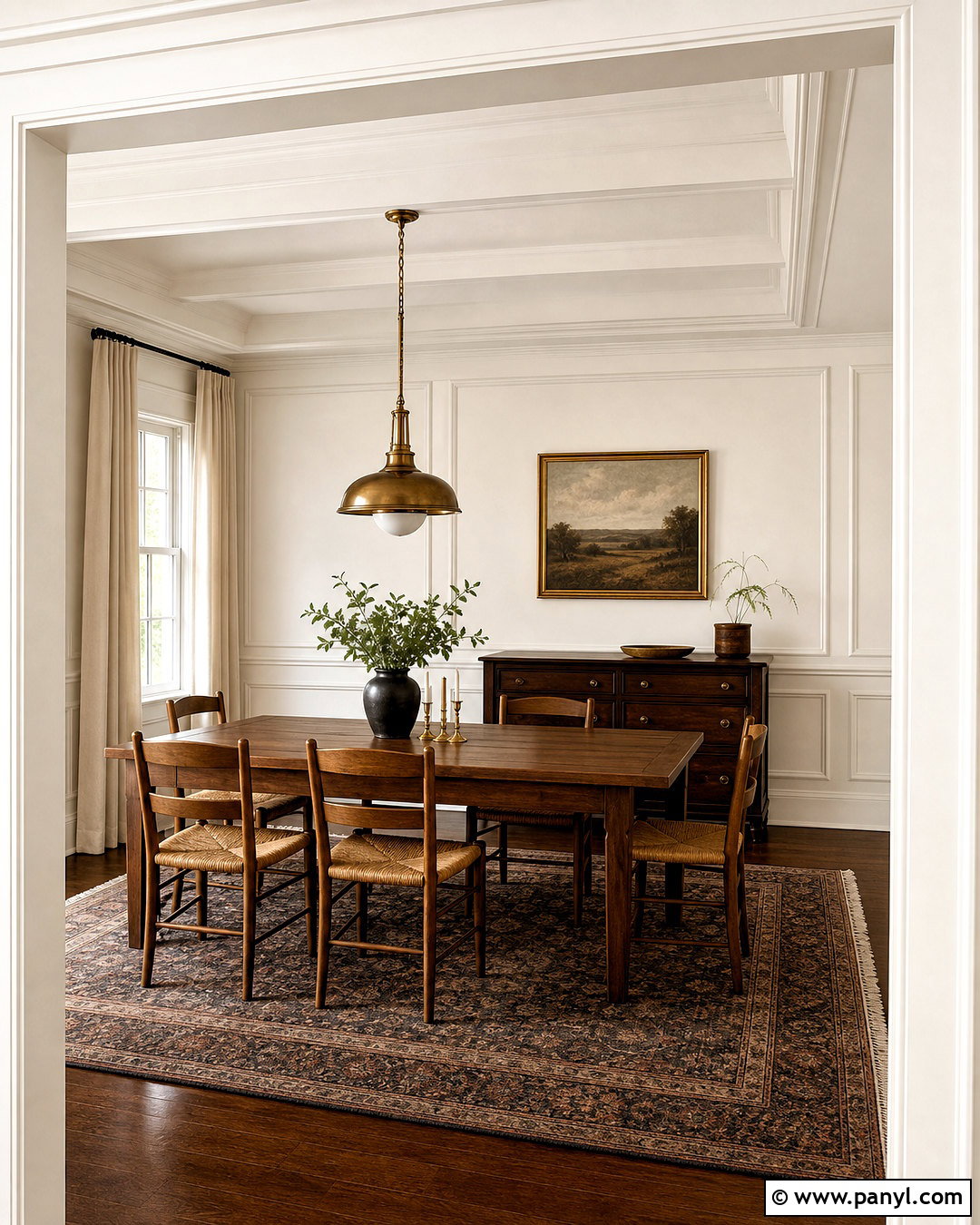
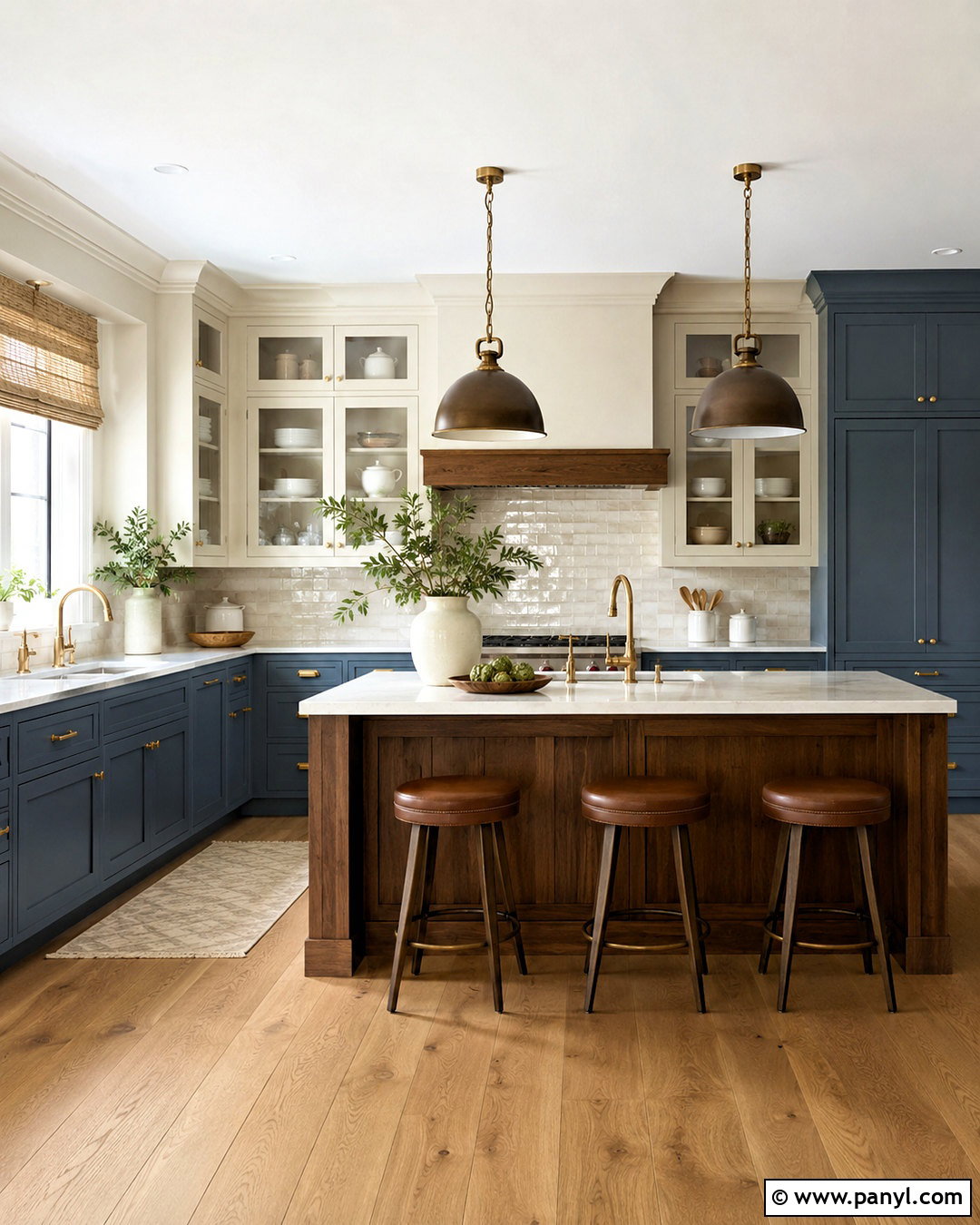
10. Navy Accent Wall With Brown Cabinets
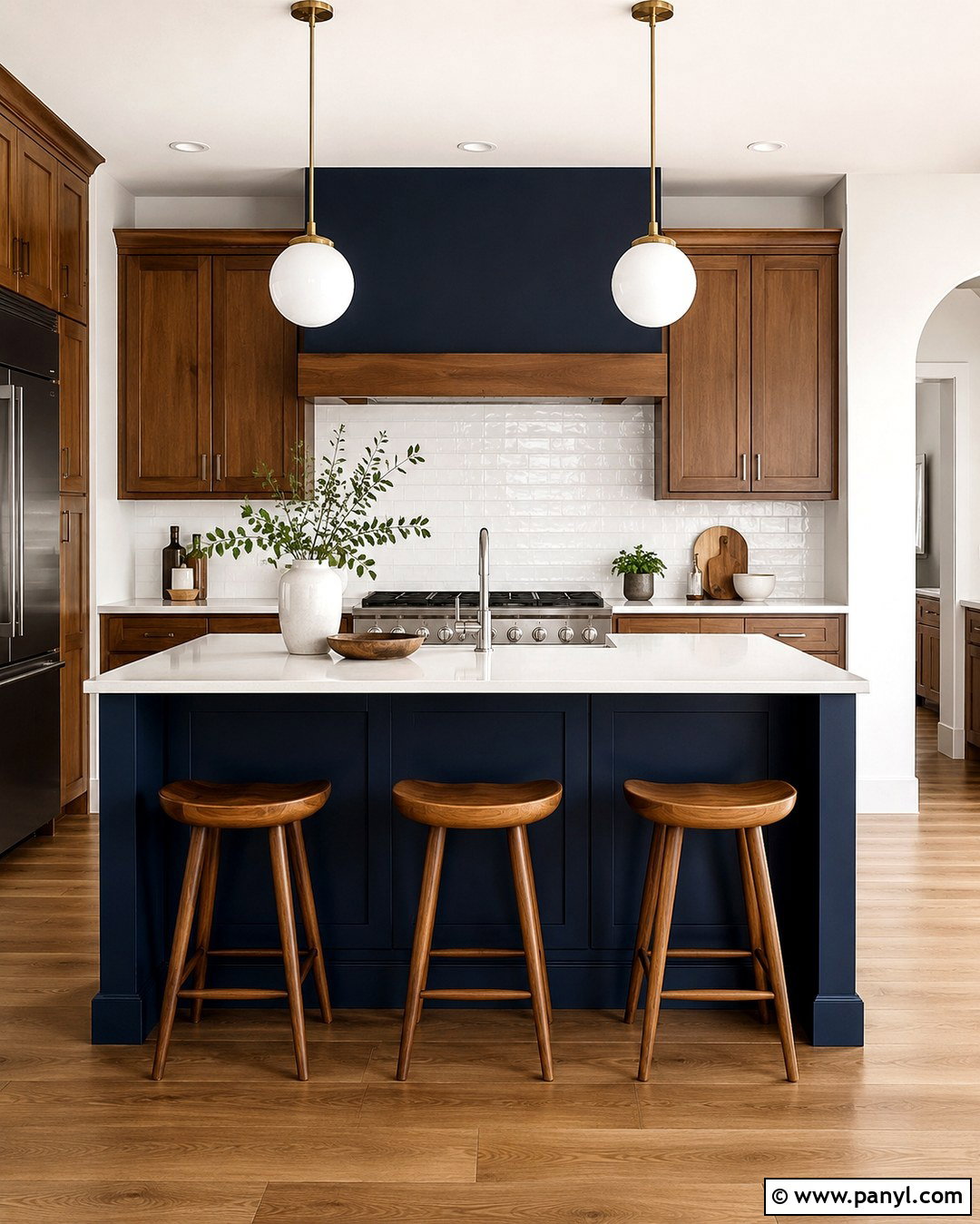
A navy accent wall can add depth to a spacious brown kitchen without placing dark color on every surface. Apply navy to a breakfast nook, range wall, or open wall with minimal upper cabinetry. Keep the remaining walls warm white to preserve brightness. Medium walnut cabinets, white quartz countertops, and a clean white backsplash provide a practical foundation. Repeat the navy through an island base or washable runner so the accent looks deliberate. Polished nickel or antique brass hardware can both work, depending on whether you want a cooler or warmer finish. Add natural wood stools and simple globe pendants. This high-contrast scheme feels structured and modern while allowing the richness of the brown cabinets to remain clearly visible.
11. Terracotta Walls With Dark Walnut Cabinets
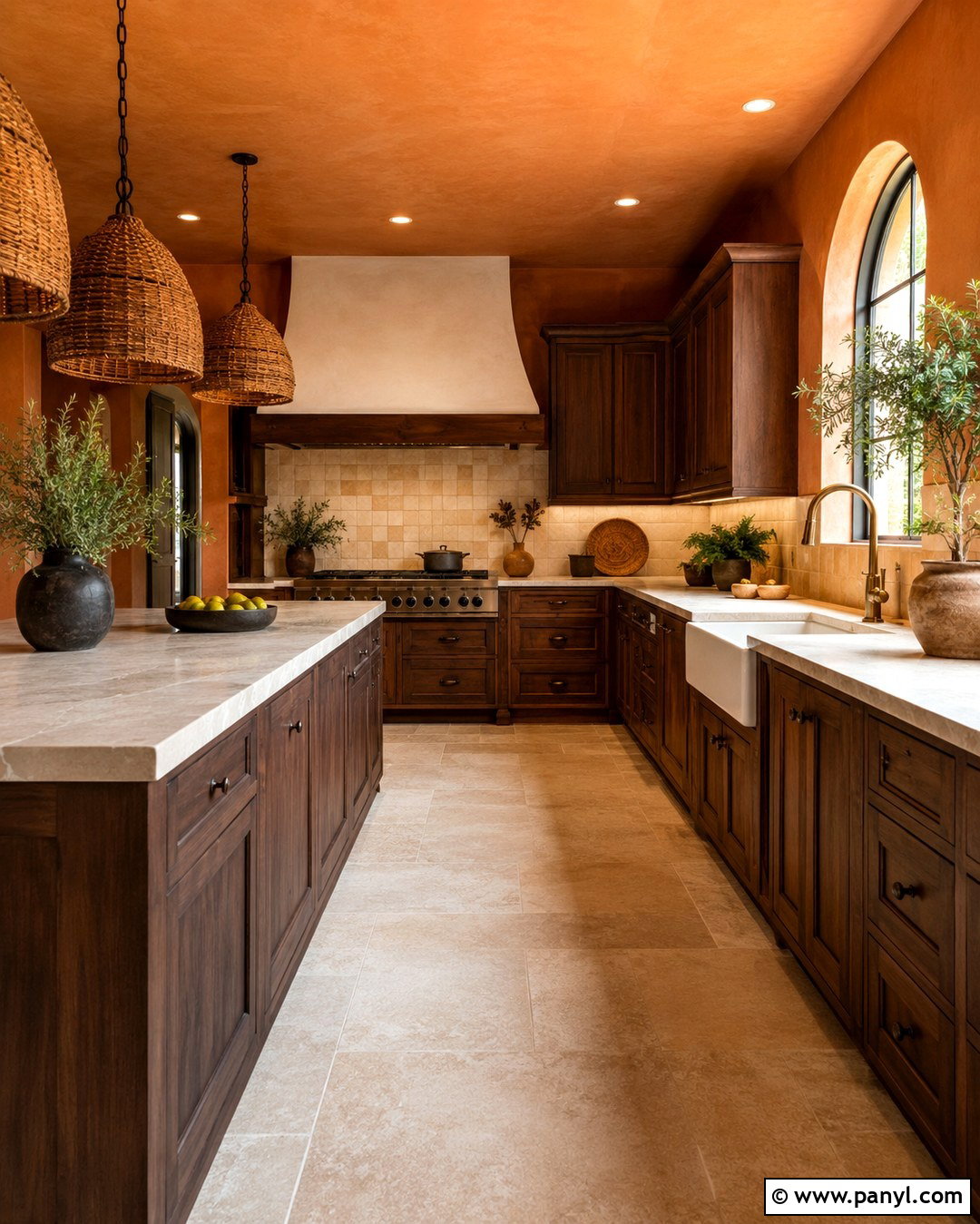
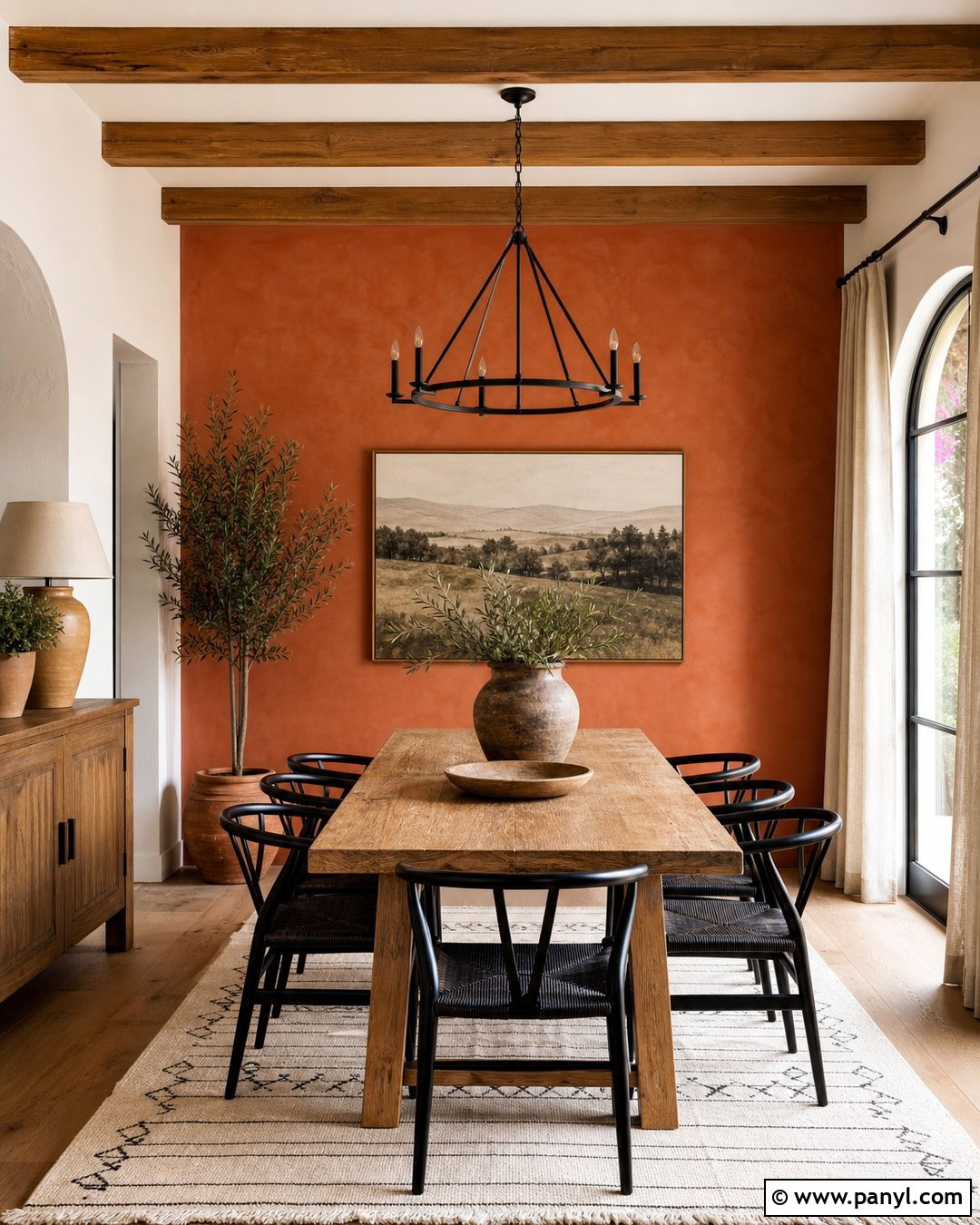
Terracotta walls produce a warm, sunbaked kitchen when paired with dark walnut cabinetry. Choose a softened clay shade rather than a bright orange so the walls complement the wood without blending into it. Cream limestone countertops and an off-white backsplash provide necessary breathing room between the darker elements. Use light beige stone flooring, aged brass hardware, and woven pendant lights to continue the earthy direction. A plaster range hood painted warm white becomes a useful visual break. Add rust-patterned textiles, handmade cream pottery, and a few olive-green accents for contrast. This palette suits kitchens with Mediterranean, Southwestern, rustic, or eclectic character. Strong natural or layered artificial lighting will help every warm surface retain definition.
12. Soft Clay Walls With Brown Cabinets
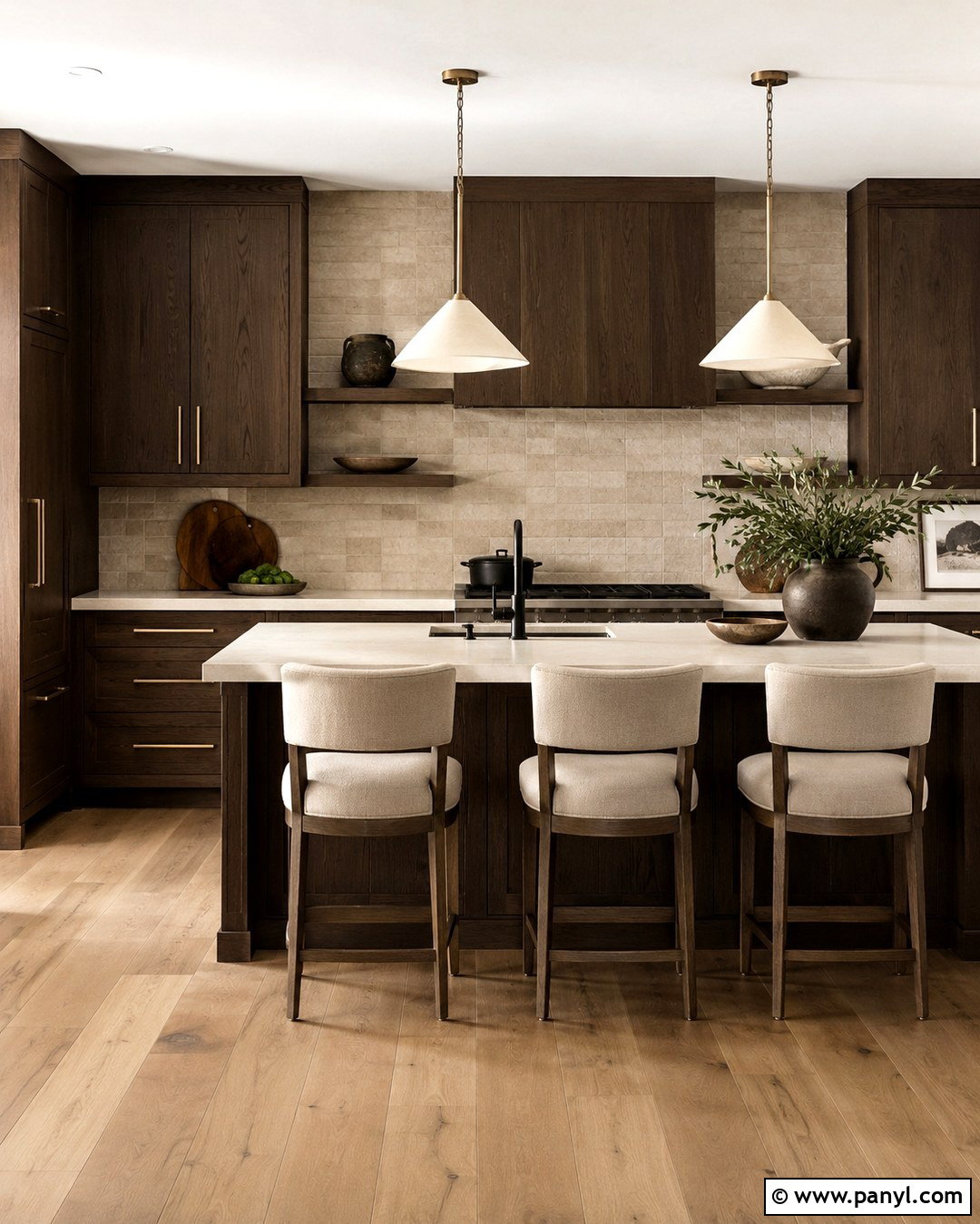
Soft clay walls offer a quieter alternative to terracotta, combining beige, brown, and a restrained hint of pink. The color works beautifully with medium-brown oak cabinets and can soften kitchens containing black granite countertops. Introduce a creamy tile backsplash to lighten the space between the upper and lower cabinetry. Warm oak flooring, bronze pulls, and linen-covered counter stools complete the comfortable palette. If the black counters feel visually heavy, repeat black only in slim pendant frames and a narrow window frame. Use cream dishware, muted green plants, and pale wood accessories to create gentle contrast. This coordinated look feels warmer than standard greige yet remains neutral enough for an open kitchen connected to beige or off-white living spaces.
13. Muted Blush Walls With Walnut Cabinets
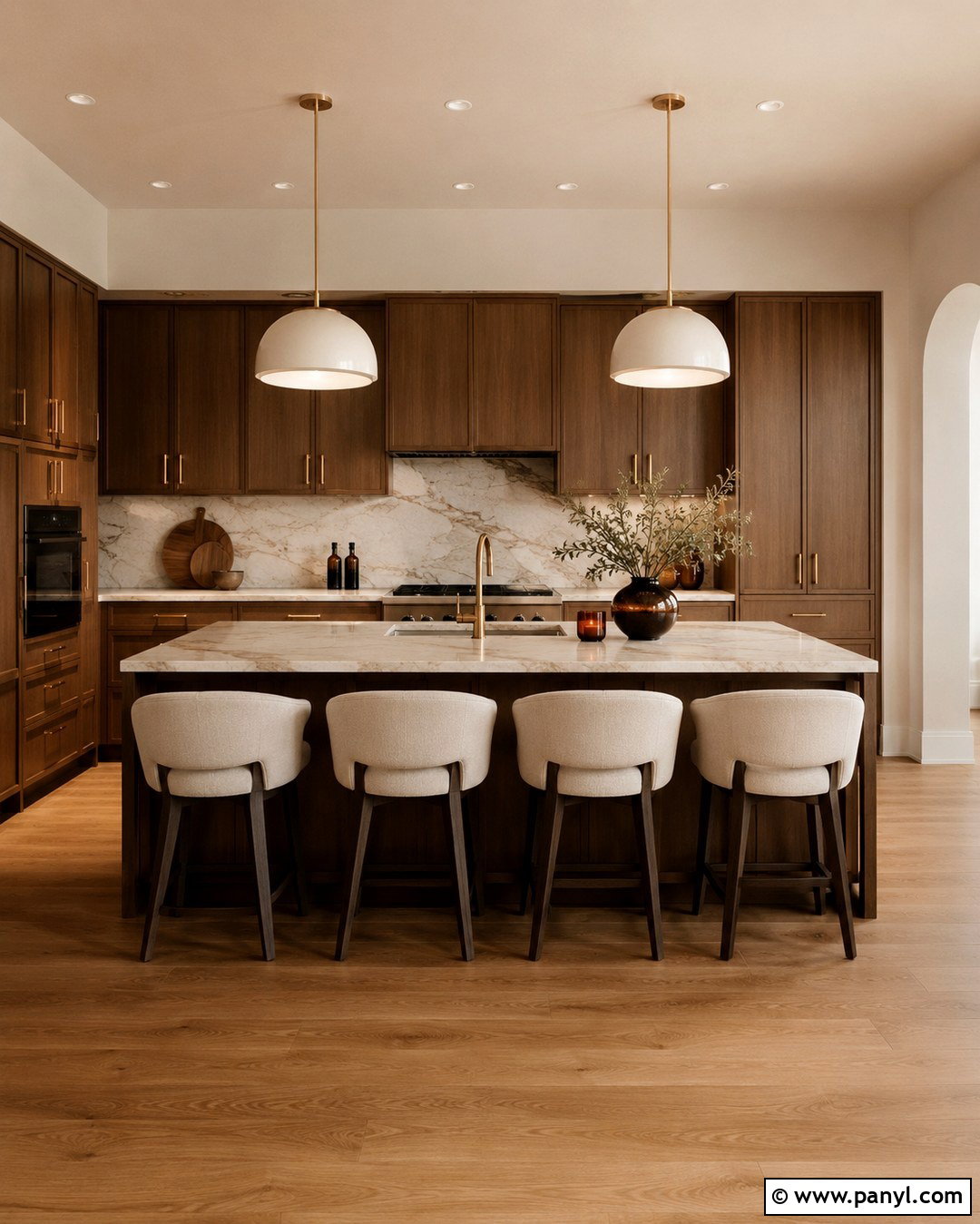
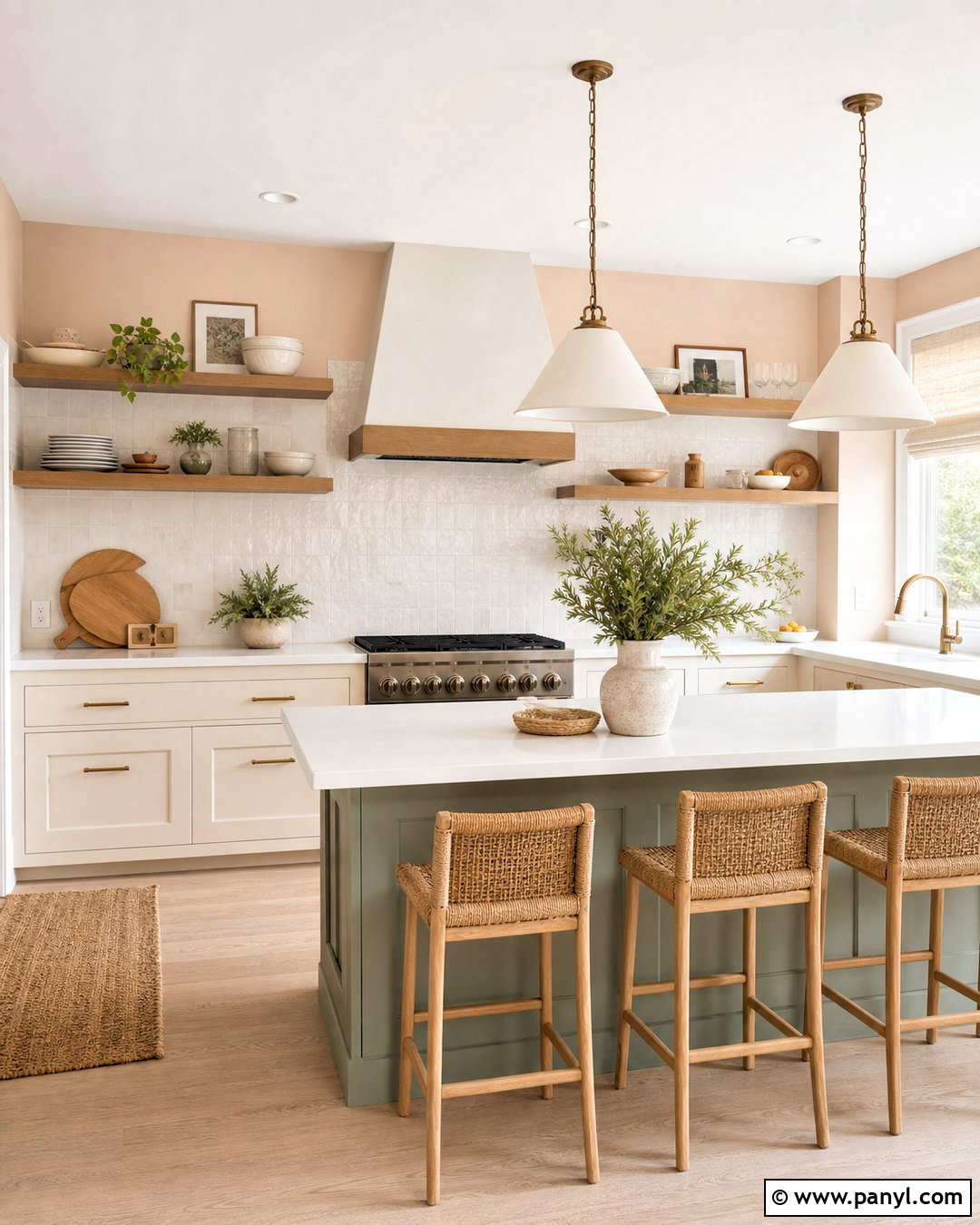
Muted blush walls can give walnut cabinetry a subtle, sophisticated softness. The key is choosing a dusty pink with brown or beige undertones rather than a sugary pastel. Pair it with creamy marble countertops, a matching full-height backsplash, and medium oak flooring. Brushed brass cabinet pulls echo the warmth of both the wood and wall color. Add rounded cream pendants and curved upholstered stools to reinforce the gentle visual rhythm. A dark brown island can anchor the center of the room if additional contrast is needed. Keep accessories practical and restrained, using amber glass, pale ceramics, and natural linen. This complete palette creates a fresh brown kitchen that feels distinctive without relying on bright or highly trendy color.
14. Butter Yellow Walls With Brown Cabinets
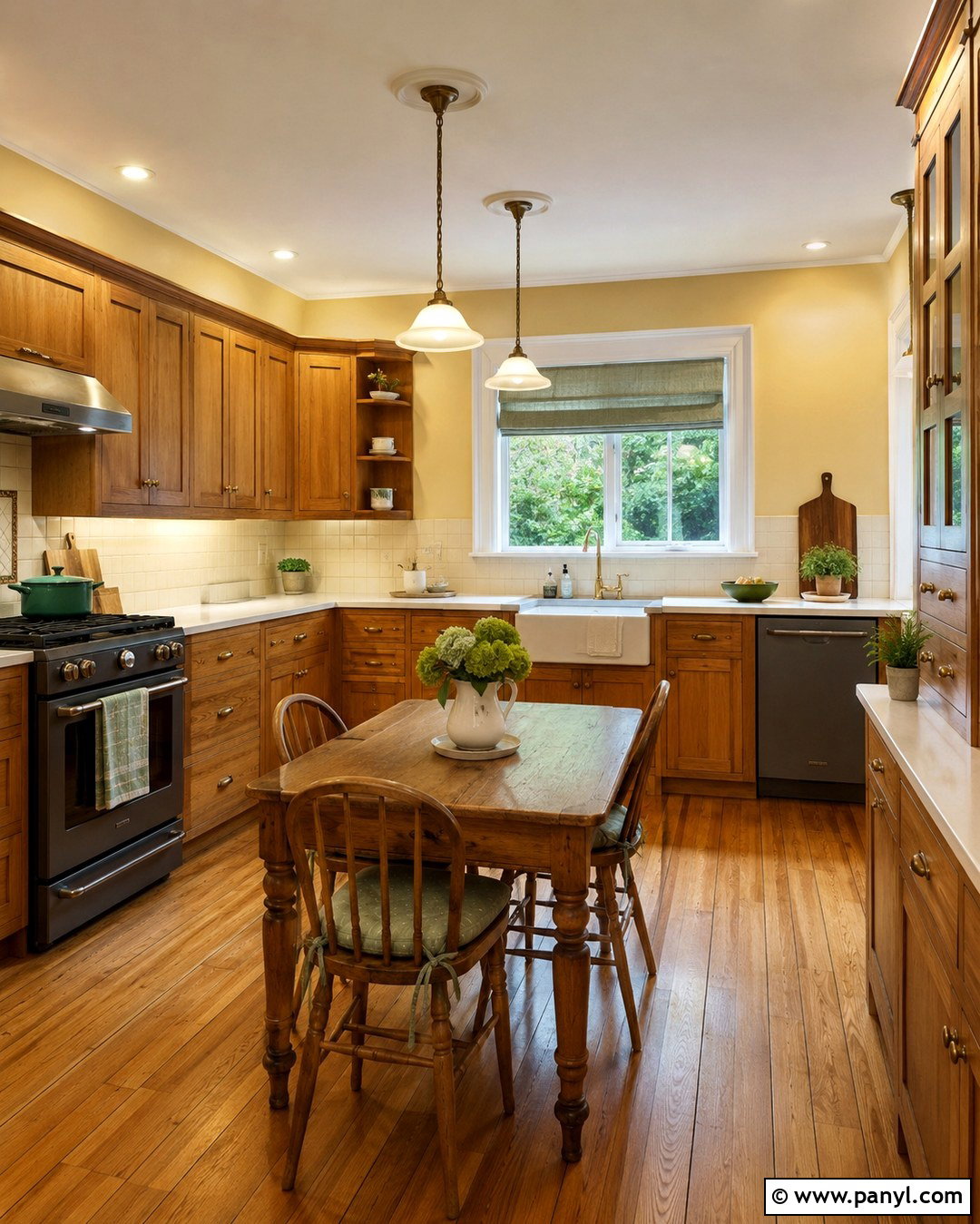
Butter yellow walls can brighten brown cabinets while giving the kitchen a cheerful, traditional character. Select a muted yellow with cream and brown undertones rather than a sharp lemon shade. Medium oak or walnut cabinets look especially comfortable against this softer color. Finish the room with warm white quartz, a cream square-tile backsplash, and honey-toned wood flooring. Antique brass hardware, milk glass pendants, and a farmhouse-style table strengthen the welcoming atmosphere. Introduce a small amount of sage green through seat cushions, pottery, or a washable runner to keep the yellow from feeling overly sweet. This palette works particularly well in kitchens with limited direct sunlight because the wall color creates a naturally warm and inviting appearance.
15. Mustard Ochre Walls With Espresso Cabinets
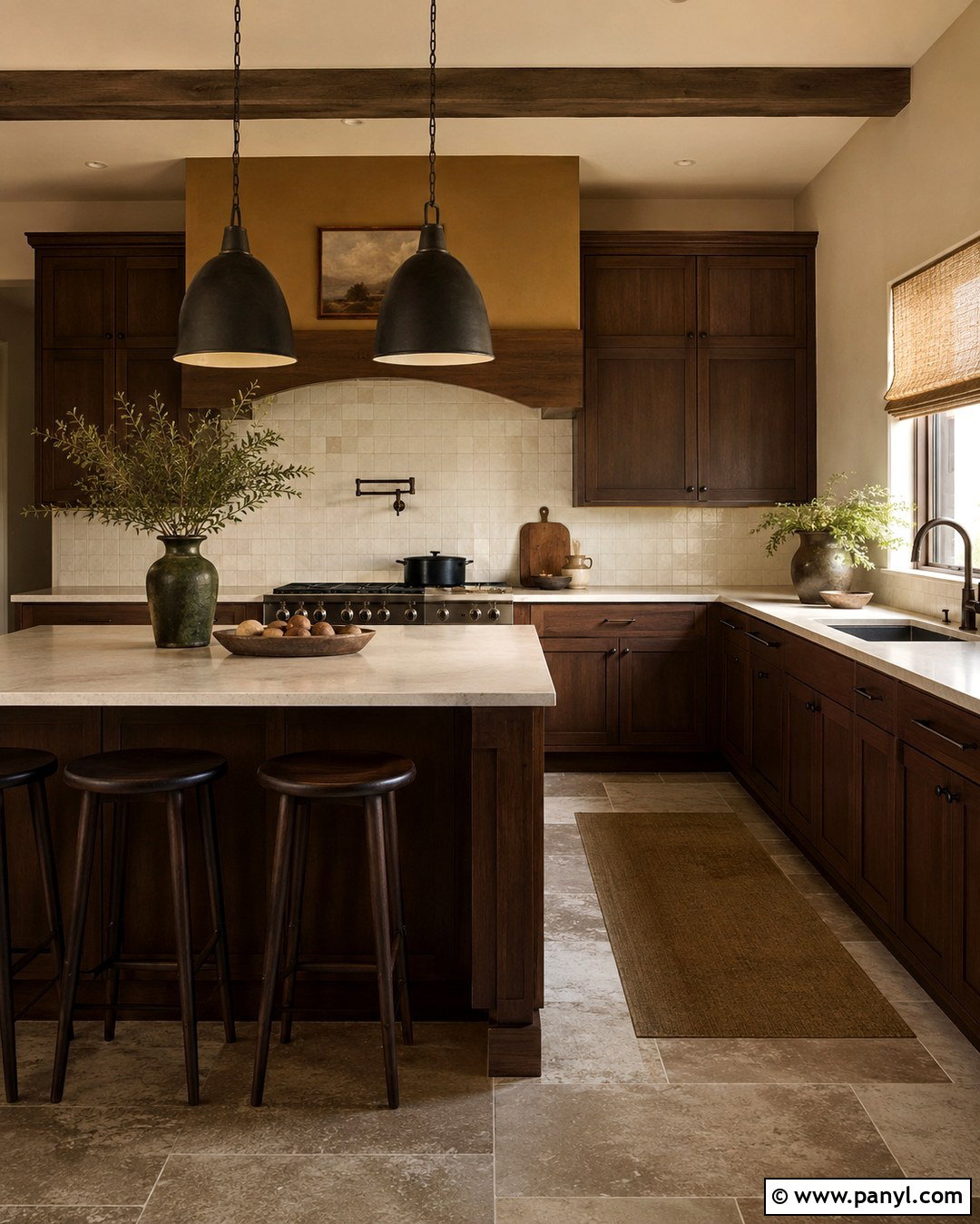
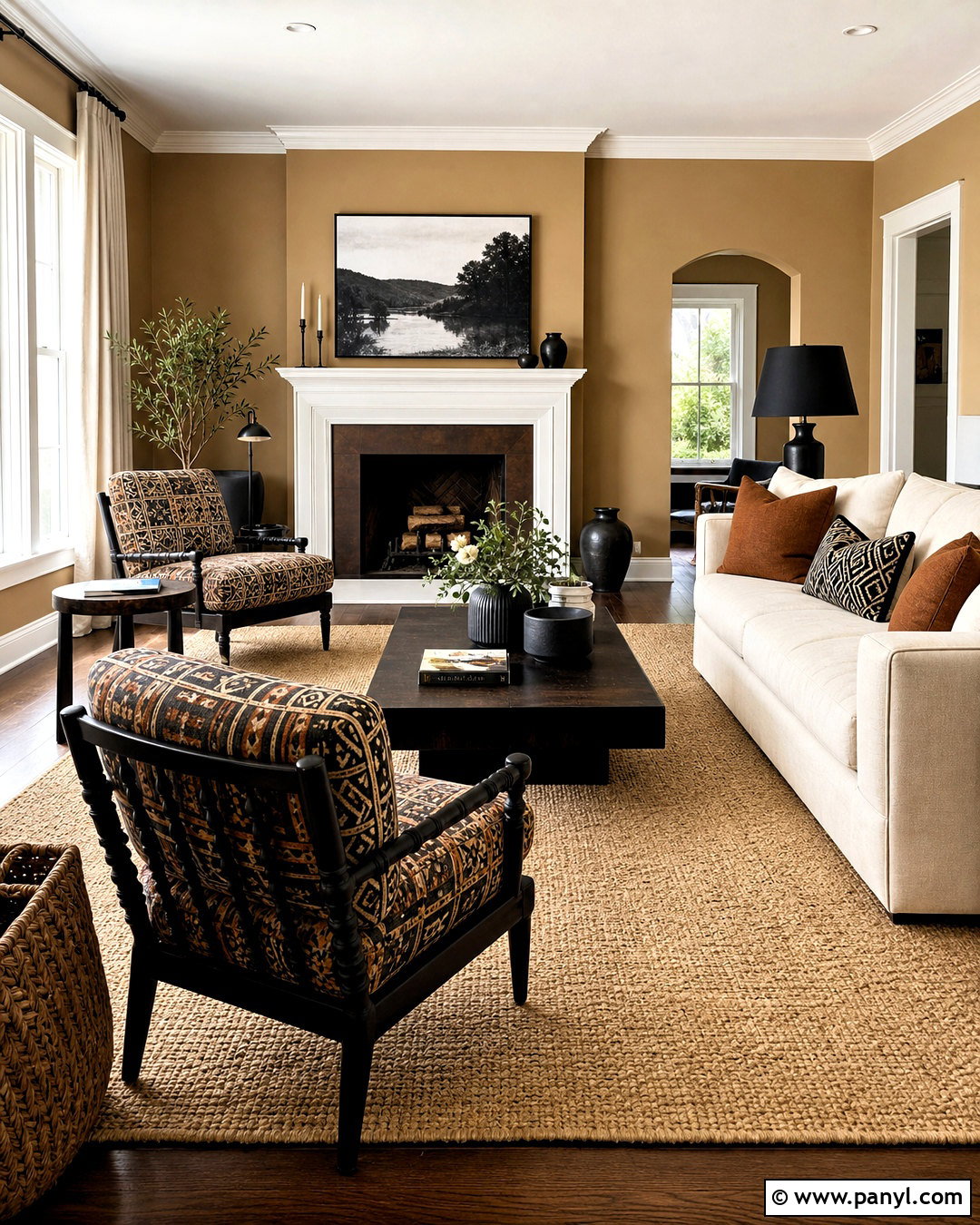
Mustard ochre walls make a bold partner for espresso cabinets, creating a kitchen with depth and an artistic, collected quality. Use the color in a well-lit room or limit it to walls without upper cabinetry. Pale cream counters and a simple off-white backsplash are essential for separating the strong wall and cabinet colors. Choose warm gray stone flooring to ground the scheme without introducing more brown. Aged bronze hardware, black metal pendants, and dark wood stools support the deeper tones. Add linen window treatments and a few olive or rust accessories for an earthy layered palette. Keeping the countertops mostly clear allows the wall color to remain intentional. The final space feels confident, warm, and visually balanced.
16. Charcoal Gray Walls With Walnut Cabinets
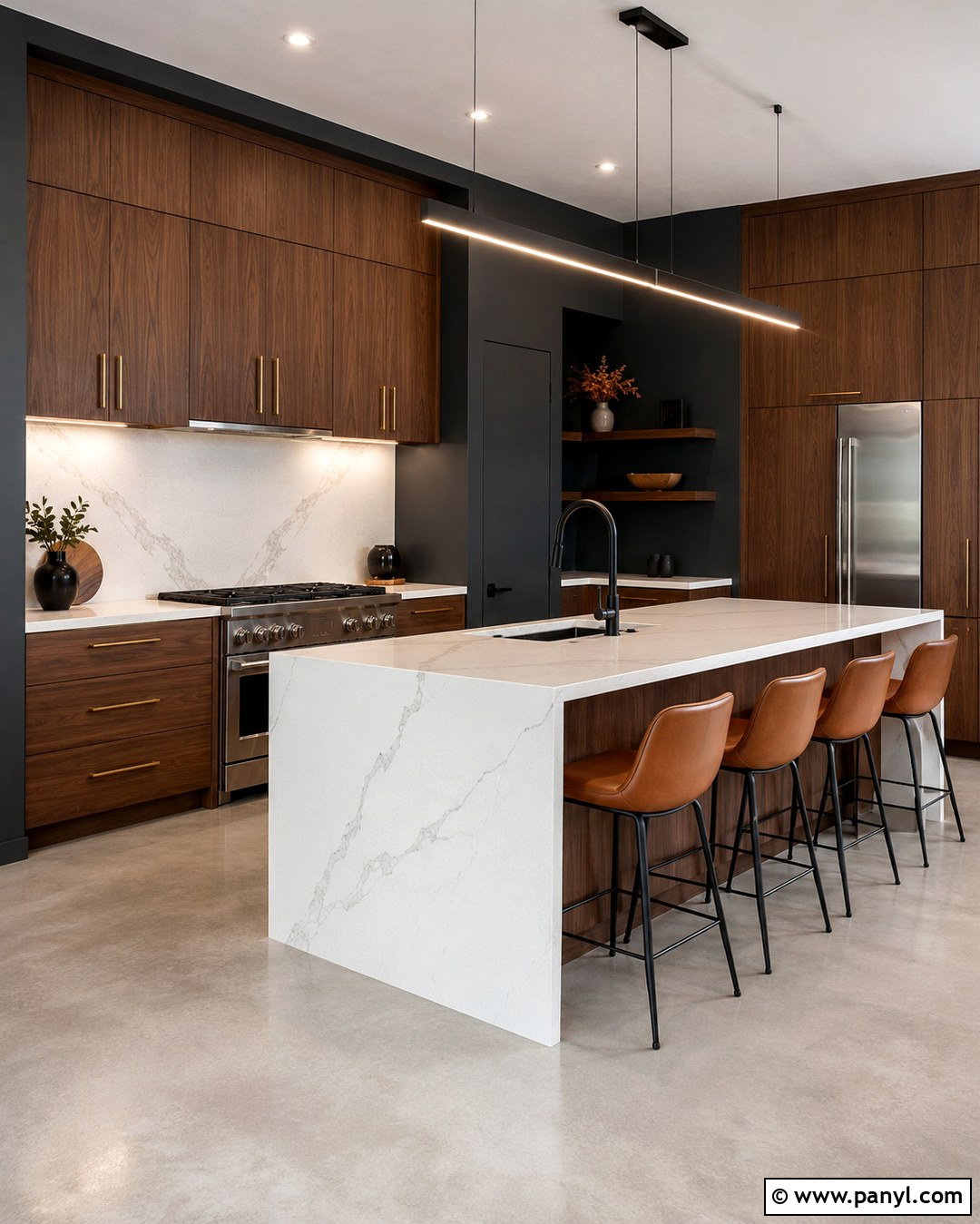
Charcoal gray walls give walnut cabinets a dramatic architectural backdrop, especially in a modern kitchen with large windows. Choose charcoal with a warm undertone so it relates naturally to the wood. Use the paint on one or two open walls, while keeping the ceiling and cabinetry wall warm white. White waterfall countertops, a matching slab backsplash, and pale concrete-look flooring create strong visual balance. Matte black fixtures blend neatly into the darker wall, while brushed brass hardware introduces warmth and definition. Add camel leather stools, linear pendant lighting, and a restrained arrangement of white ceramics. This design works best with flat-panel walnut cabinetry and simple lines. Bright task lighting ensures the dark wall remains striking rather than oppressive.
17. Soft Black Walls With Medium Brown Cabinets
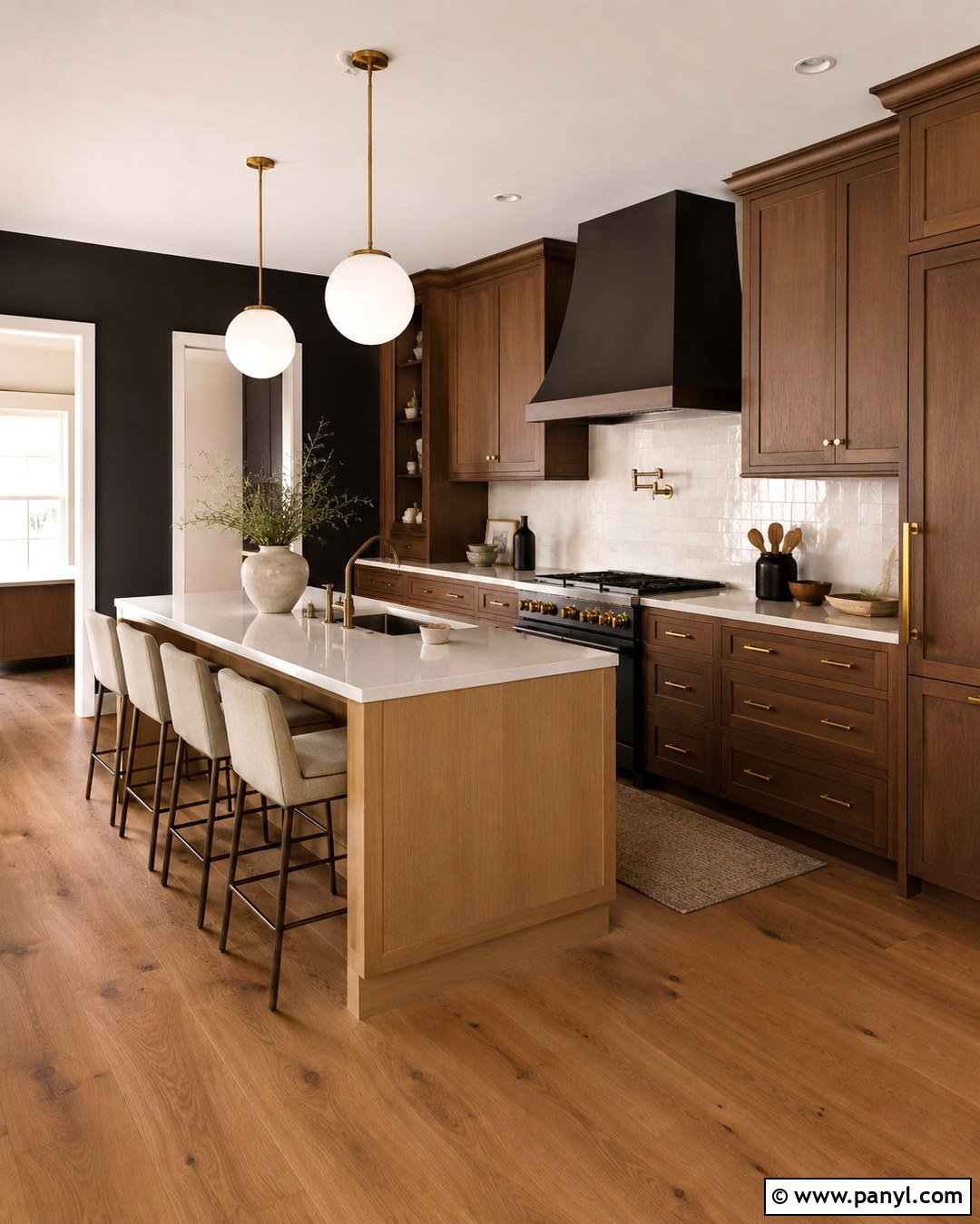
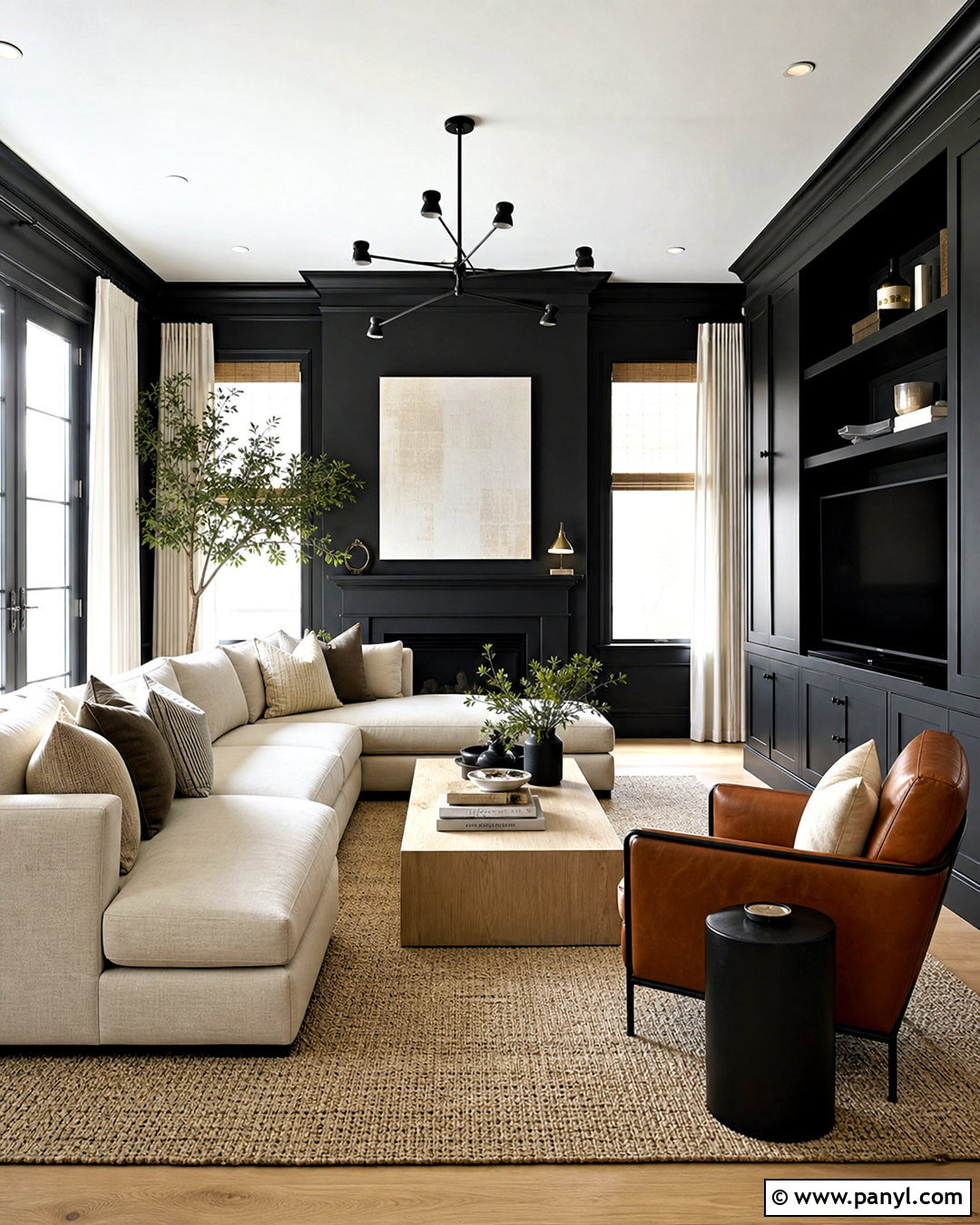
Soft black walls can make medium-brown cabinetry appear richer and more furniture-like. Look for an off-black with warm brown or charcoal undertones, then use it in a kitchen with dependable natural and artificial light. Cream quartz counters and a glossy ivory backsplash reflect brightness around the work zone. Medium oak flooring prevents the lower half of the room from feeling too dark. Choose aged brass hardware and warm white globe lights for clear contrast against the black. A light wood island or dining table can provide another practical visual break. Finish with beige stools, linen shades, and pale stoneware. The completed kitchen feels modern and dramatic, yet the warm materials keep it approachable enough for an everyday family home.
18. Mushroom Brown Walls With Brown Cabinets
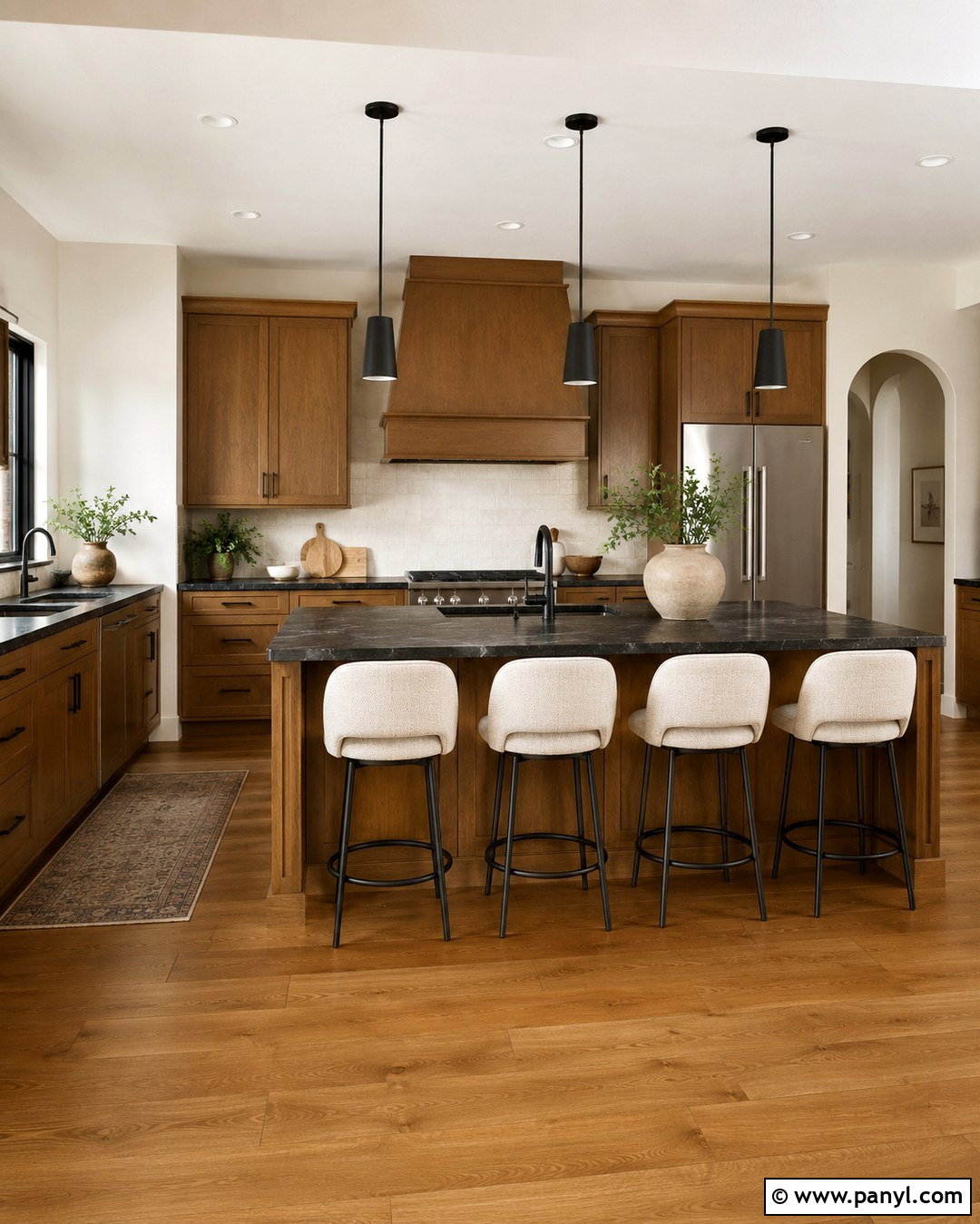
Mushroom brown walls create a calm tonal kitchen when paired with cabinetry in a deeper shade of brown. Select a wall color that is two or three levels lighter than the cabinet finish so the room retains visible dimension. Taupe-painted walls, mocha cabinets, and cream quartz countertops form a smooth progression from light to dark. Add a travertine backsplash, natural oak flooring, and soft bronze hardware for additional warmth and texture. A plaster pendant or cream fabric shade can brighten the center of the room without disturbing the neutral palette. Use black only in small details, such as a faucet or thin window frame. This layered approach feels cohesive, quiet, and refined while still highlighting every material.
19. Pale Aqua Walls With Cherry Cabinets
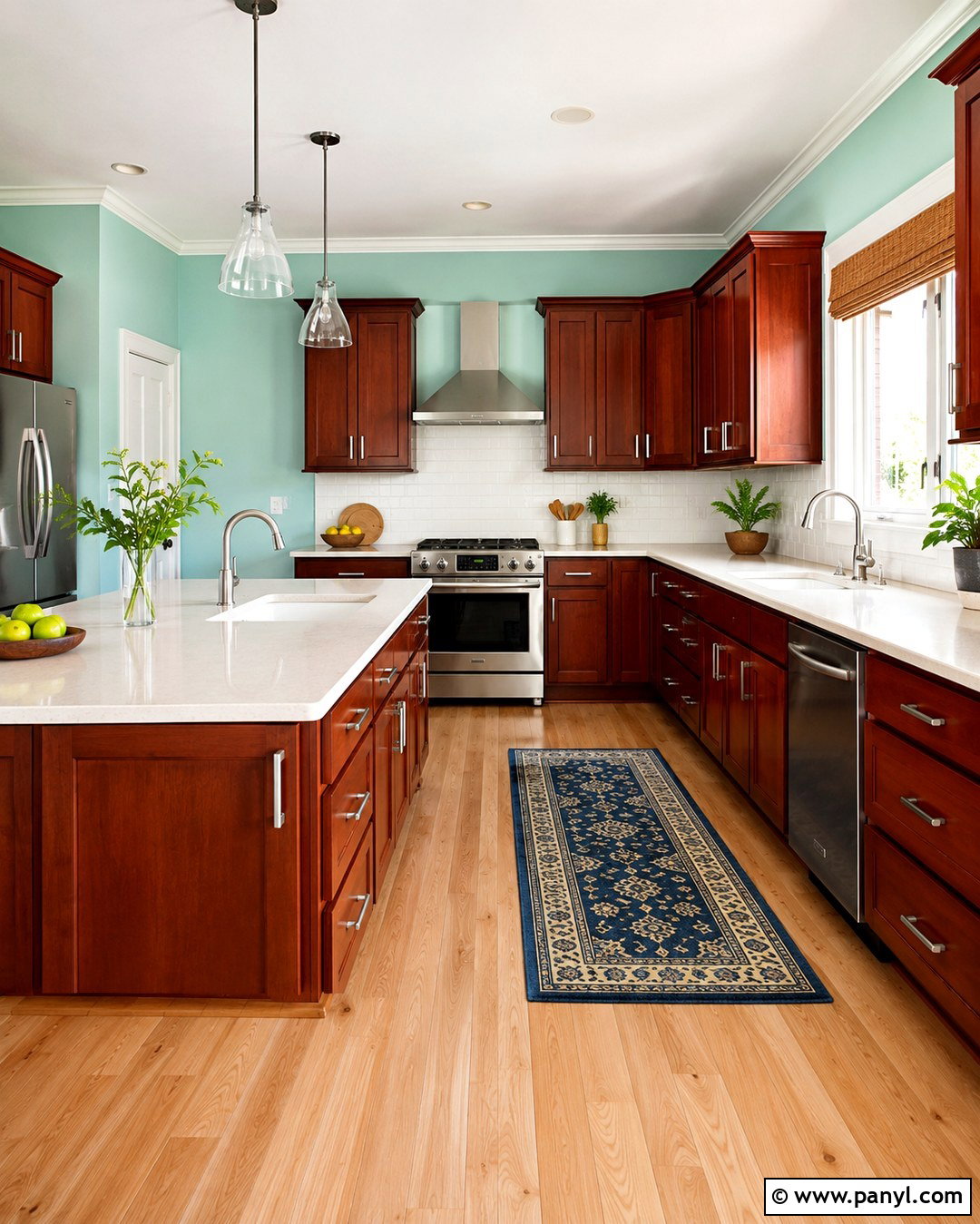
Pale aqua walls can cool the strong red undertones of cherry cabinets and give an older kitchen a lighter personality. Choose a soft blue-green with a muted gray base instead of a bright tropical aqua. Pair the cabinetry with creamy quartz countertops and a simple white backsplash to reduce competing patterns. Brushed nickel pulls connect with stainless steel appliances, while light oak flooring keeps the kitchen warm. Add white glass pendants, natural woven shades, and a navy-and-cream runner for gentle color layering. Avoid reddish tile, orange accessories, and yellow-beige walls, which can intensify the cherry finish. This fresh scheme updates existing cabinets without hiding their wood grain, making it suitable for a practical, lower-cost kitchen makeover.
20. Plum Brown Walls With Brown Cabinets
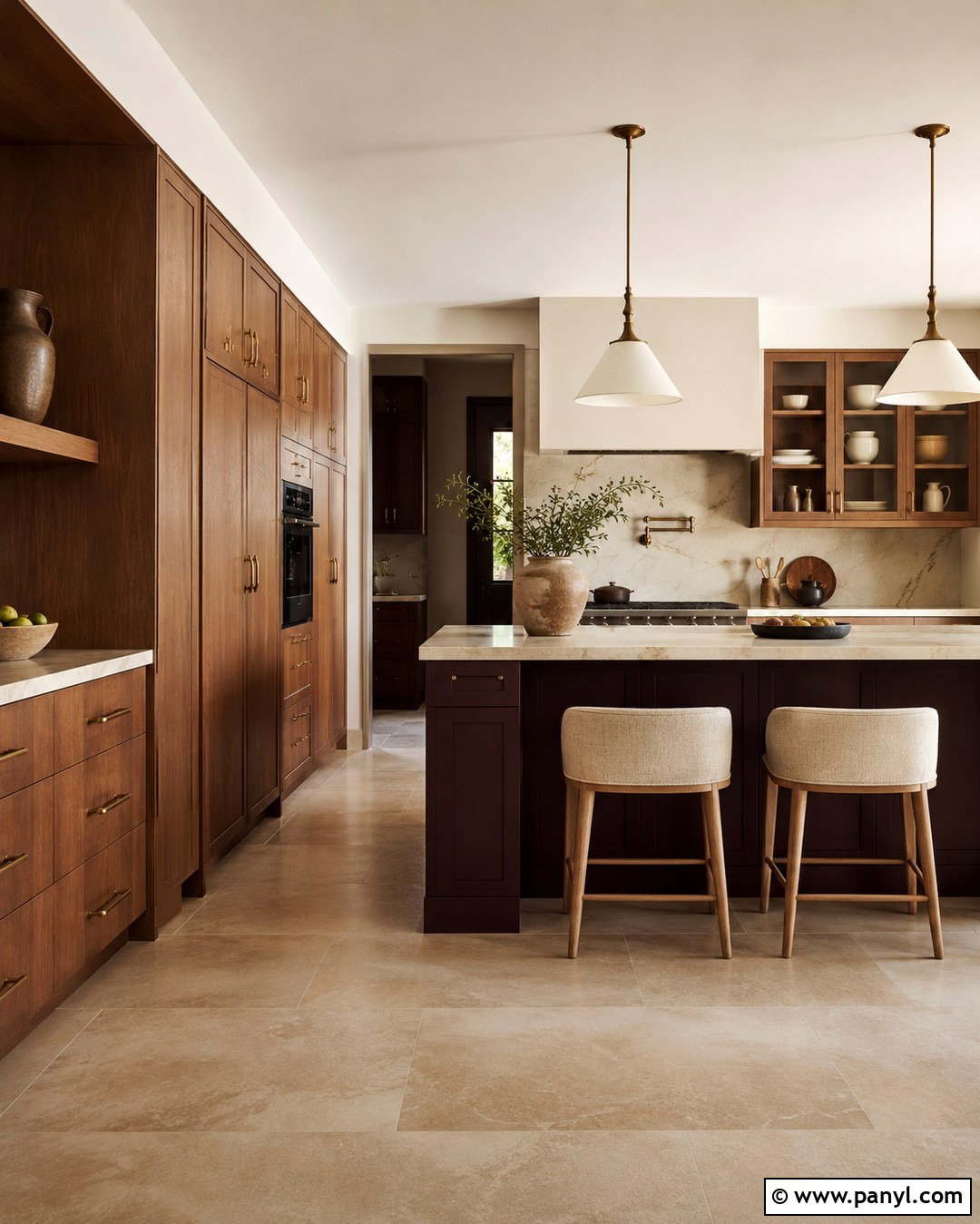
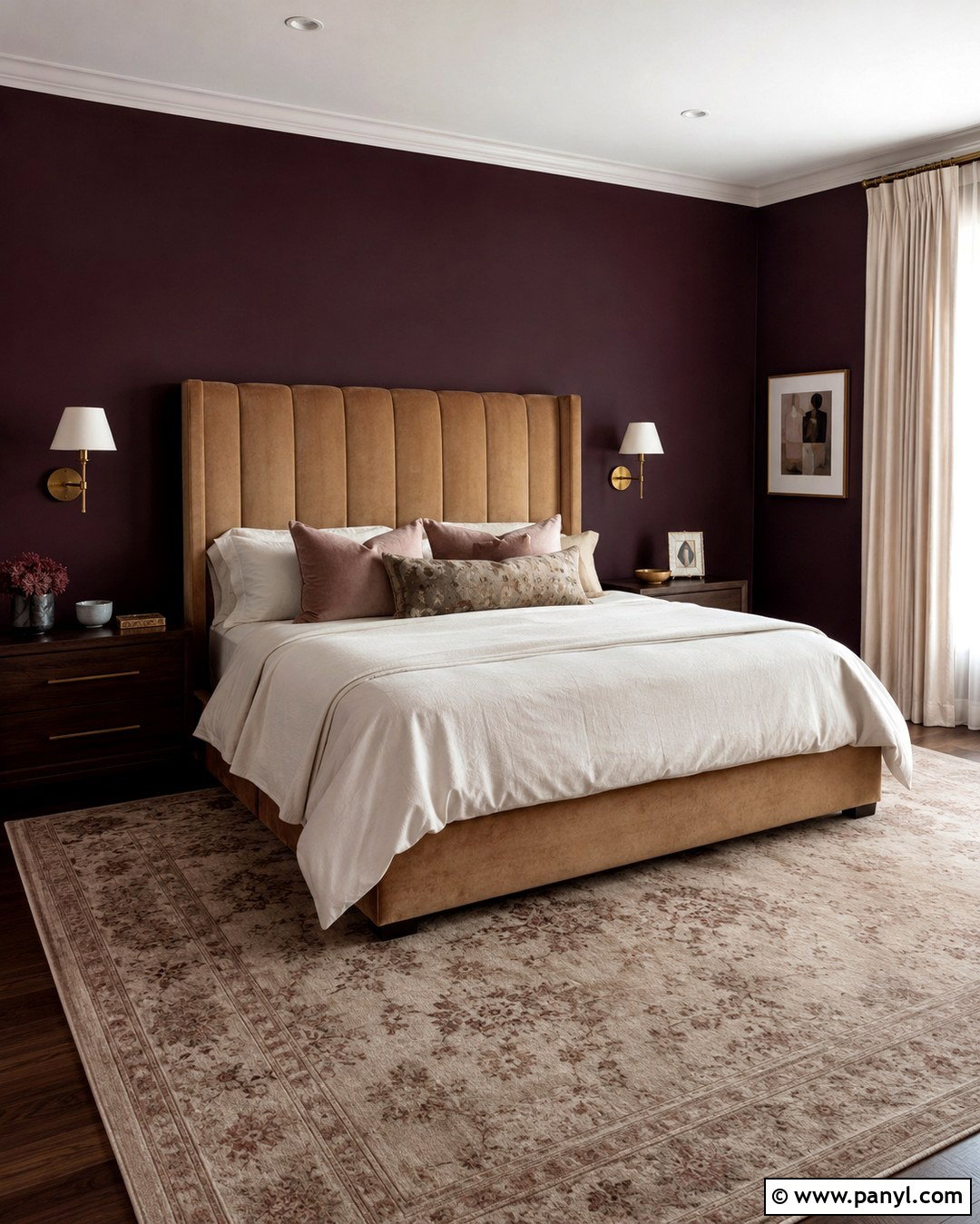
Plum-brown walls create a sophisticated tonal kitchen with more complexity than standard chocolate paint. Choose a shade that combines deep brown with a restrained red-purple undertone. Pair it with rift-cut oak or medium walnut cabinets so the grain remains visible against the saturated background. Cream marble countertops and a full-height backsplash add light and movement. Use antique brass hardware, warm white pendant shades, and pale limestone flooring to balance the deeper color. A dark plum island can repeat the walls, while oatmeal stools introduce softness. Keep decorative items minimal, focusing on clear glass, natural wood, and cream ceramics. The resulting kitchen feels enveloping and polished, with enough material contrast to prevent the brown palette from appearing flat.
Conclusion:
The most successful brown kitchen balances warmth, contrast, and light across every surface. Warm white, cream, beige, and greige provide easy brightness, while sage, dusty blue, and pale aqua add gentle color. Terracotta, ochre, olive, charcoal, and plum-brown create bolder rooms with richer atmosphere. Before making a final choice, compare paint samples beside your cabinets, countertops, backsplash, flooring, and trim at different times of day. Then repeat the selected wall color through small textiles or accessories to create a connected design. These **20 Brown Kitchen Ideas Paint Wall Colors** show that existing brown cabinets can become the foundation for a warm, modern, and carefully coordinated kitchen rather than a feature that needs to be replaced.

Related Ideas and Inspiration:
Leave a Reply