

1. Powder Blue Kitchen Walls With Walnut Cabinets
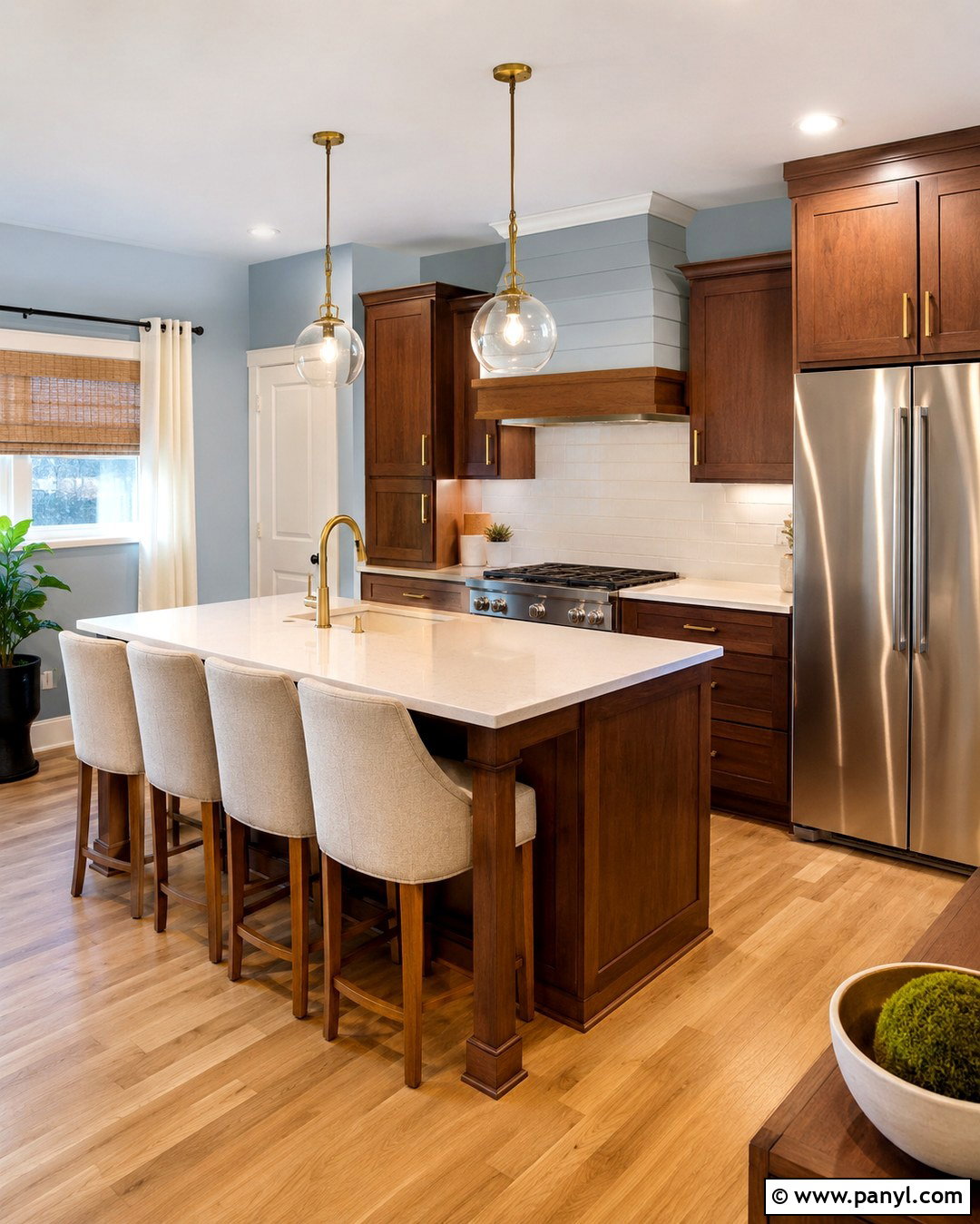
Powder blue walls give walnut cabinets a softer, more relaxed appearance without hiding their beautiful grain. Choose a slightly muted blue instead of a sugary pastel so the room feels polished and grown-up. Add creamy white quartz countertops and a simple white subway tile backsplash to brighten the work areas. Warm brass pulls will echo the golden notes in the walnut, while globe pendants provide a clean finishing touch. A light oak or natural stone floor prevents the deeper cabinetry from making the kitchen feel bottom-heavy. Complete the room with oatmeal-colored counter stools, pale linen window shades, and a few white ceramic accessories. This combination works especially well in a medium-sized kitchen with plenty of daylight and an open, comfortable layout.
2. Dusty Blue Kitchen Walls With Espresso Cabinets
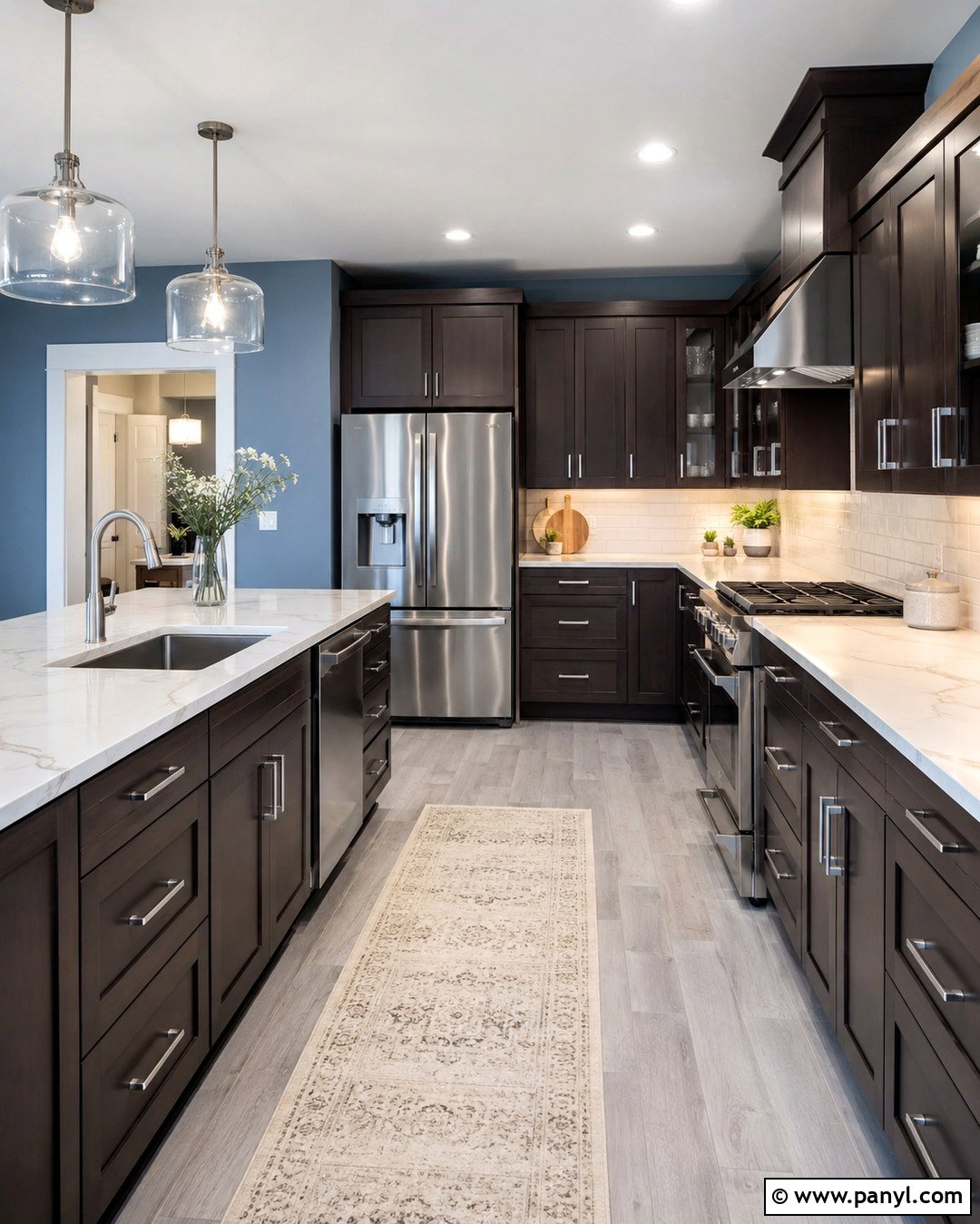
Can dark espresso cabinets work with blue walls without making a kitchen feel heavy? Yes, provided the blue is dusty, restrained, and supported by plenty of lighter finishes. Select a soft blue with gray undertones for the walls, then introduce white quartz counters with delicate warm veining. Use an off-white backsplash rather than stark white to create a smoother transition between the cool paint and dark wood. Brushed nickel hardware and stainless steel appliances add brightness without becoming too decorative. Under-cabinet lighting is important because it illuminates the worktops and defines the cabinet edges. Finish the room with pale gray floor tile, a washable cream runner, and clear glass pendants. The result feels calm, balanced, and contemporary rather than dark or dated.
3. Sky Blue Kitchen Walls With Honey Oak Cabinets
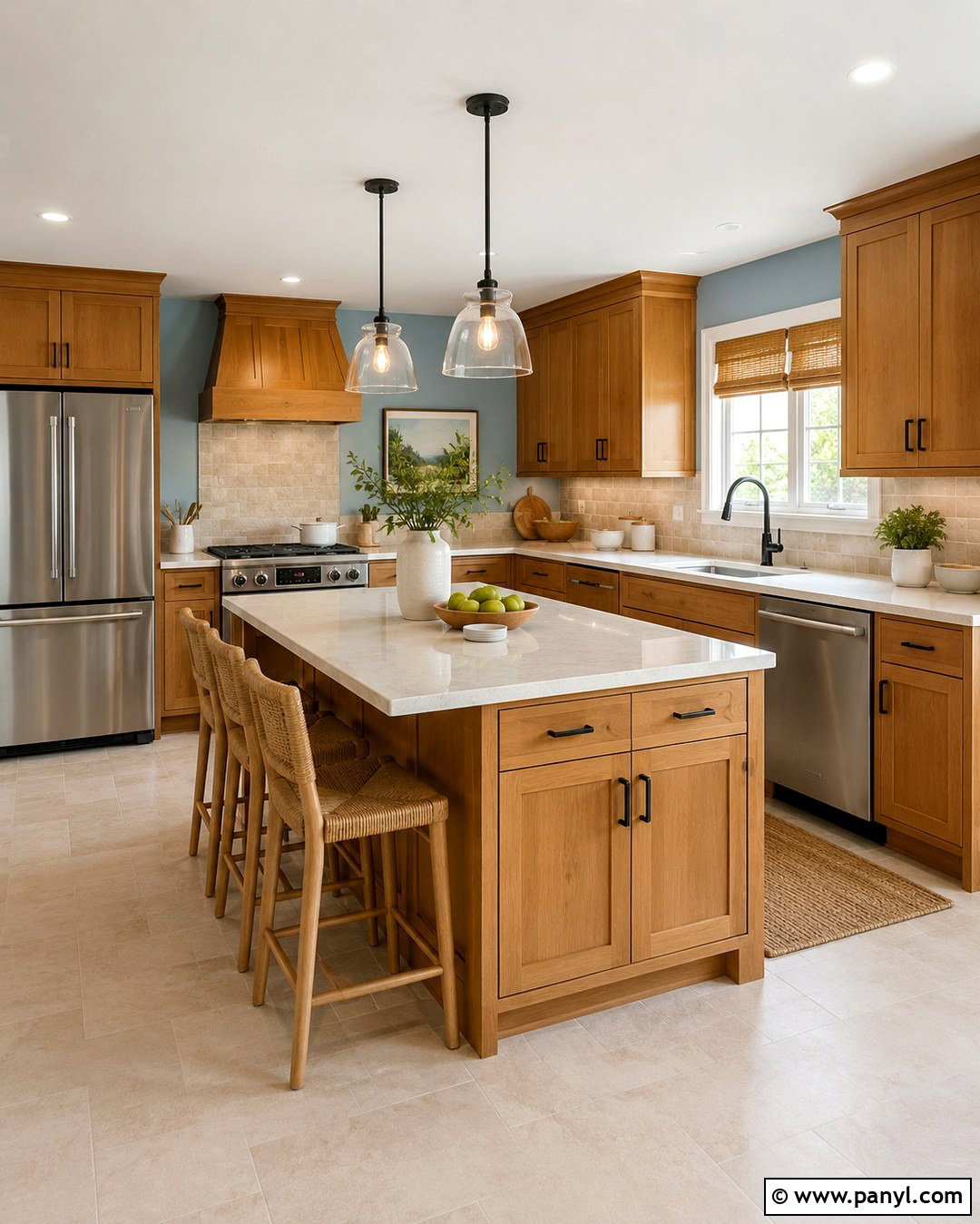
Sunlight makes sky blue walls and honey oak cabinets feel cheerful, warm, and welcoming. The clear blue paint cools the yellow undertones in the wood, creating a fresher update without requiring cabinet refinishing. Choose warm white countertops and a handmade cream tile backsplash to preserve the kitchen’s comfortable character. Matte black pulls provide definition, but use them sparingly so they do not overwhelm the light palette. Natural woven shades, light tan stools, and a small washable rug can repeat the cabinet color around the room. Keep the floor neutral with pale beige tile or lightly toned oak. This complete look is ideal for a casual family kitchen where durability matters. Simple pendant lights and uncluttered counters help the blue and natural wood remain the main visual features.
4. Navy Blue Kitchen Walls With Medium Brown Cabinets
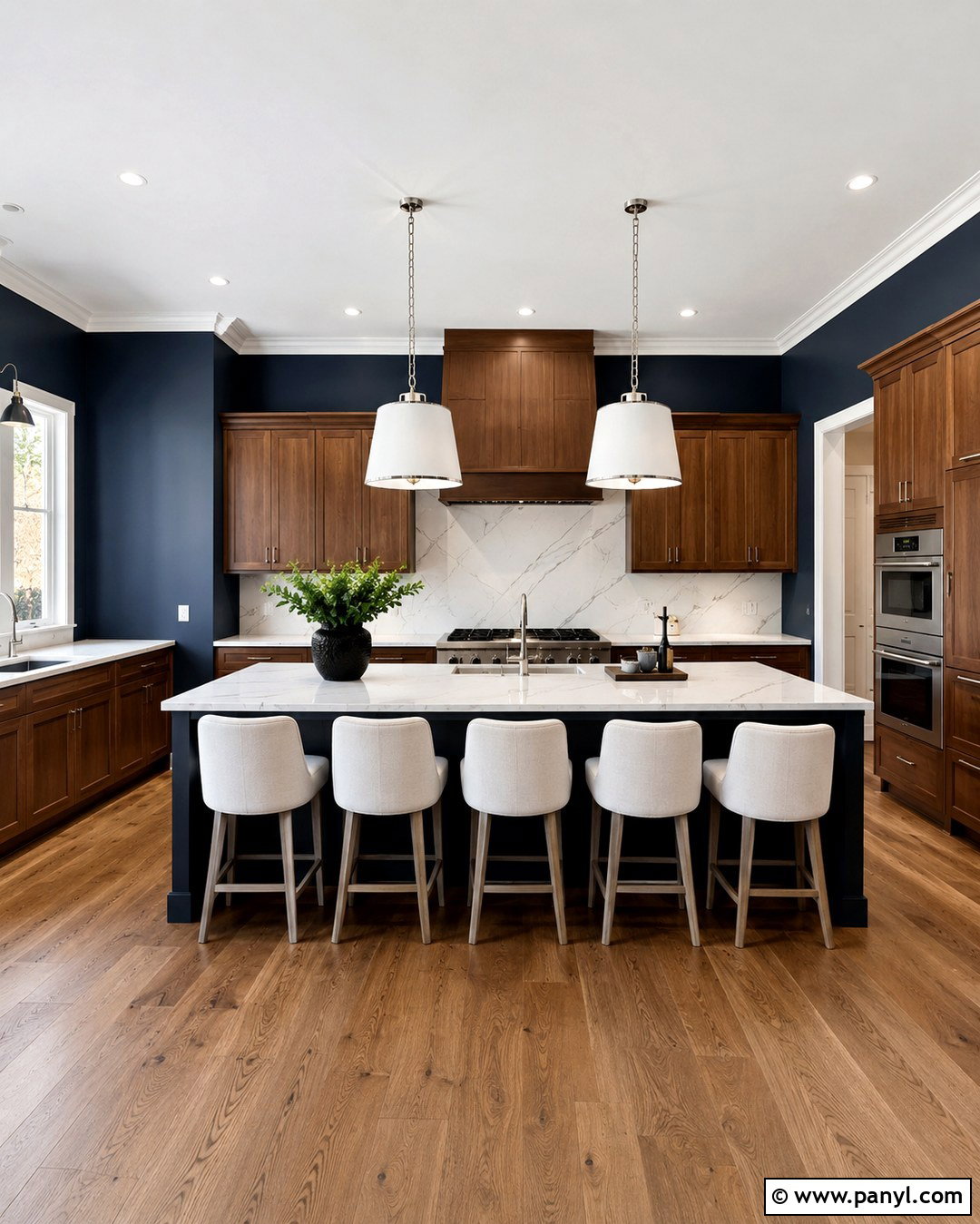
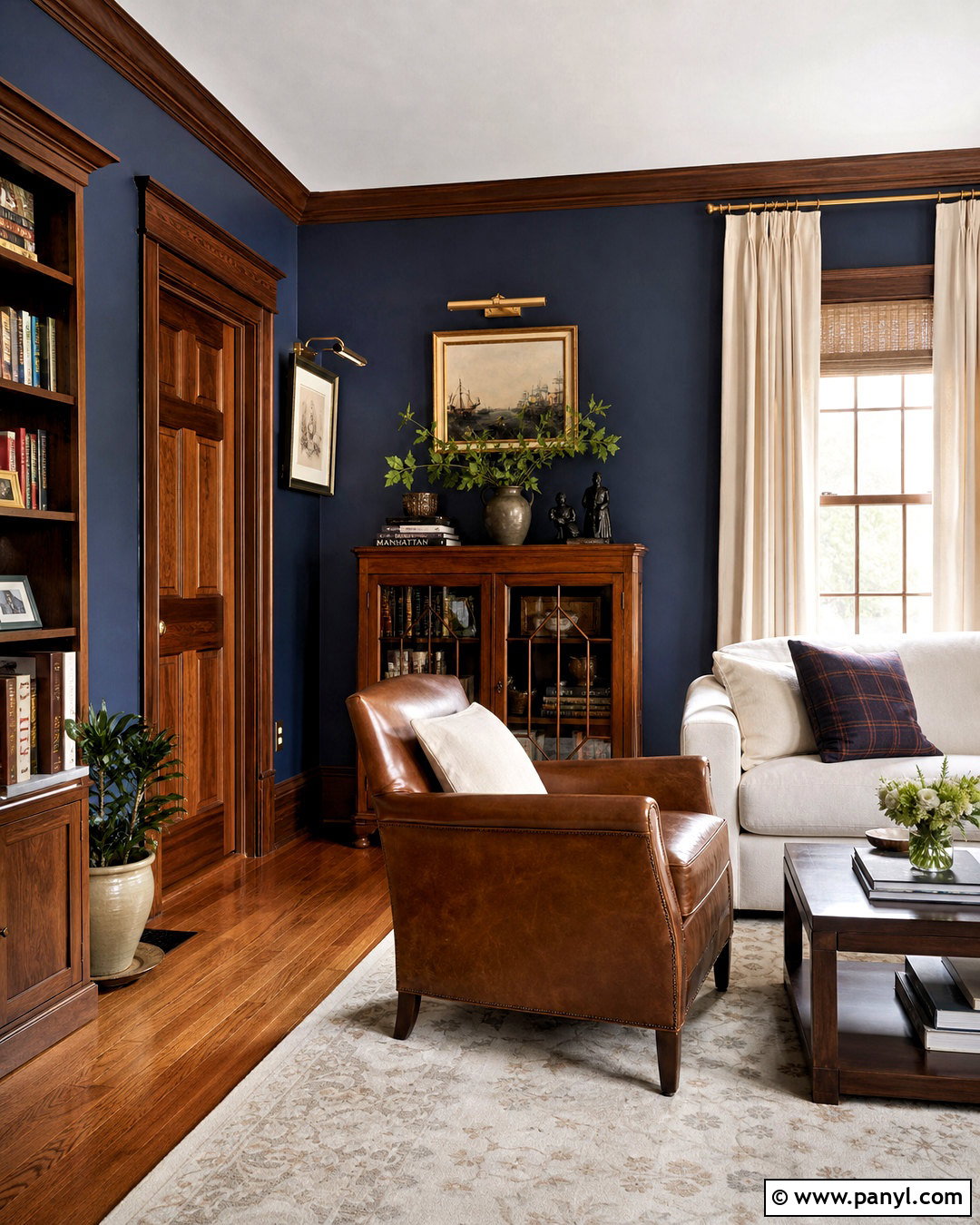
Deep navy walls can make medium brown cabinets look richer and more intentional, especially in a kitchen with large windows. Use navy on the main walls, but keep the ceiling, trim, and window casings crisp white to frame the darker color. White marble-look quartz counters and a full-height white backsplash will reflect light across the room. Choose polished nickel or brushed brass hardware depending on whether the cabinet stain leans cool or golden. A medium oak floor creates a continuous foundation, while pale upholstered stools soften the strong contrast. Install oversized white pendants above the island and bright under-cabinet lighting along the perimeter. This dramatic look works best in an open kitchen where the navy walls can also connect visually with a nearby dining or living area.
5. Blue Gray Kitchen Walls With Cherry Brown Cabinets
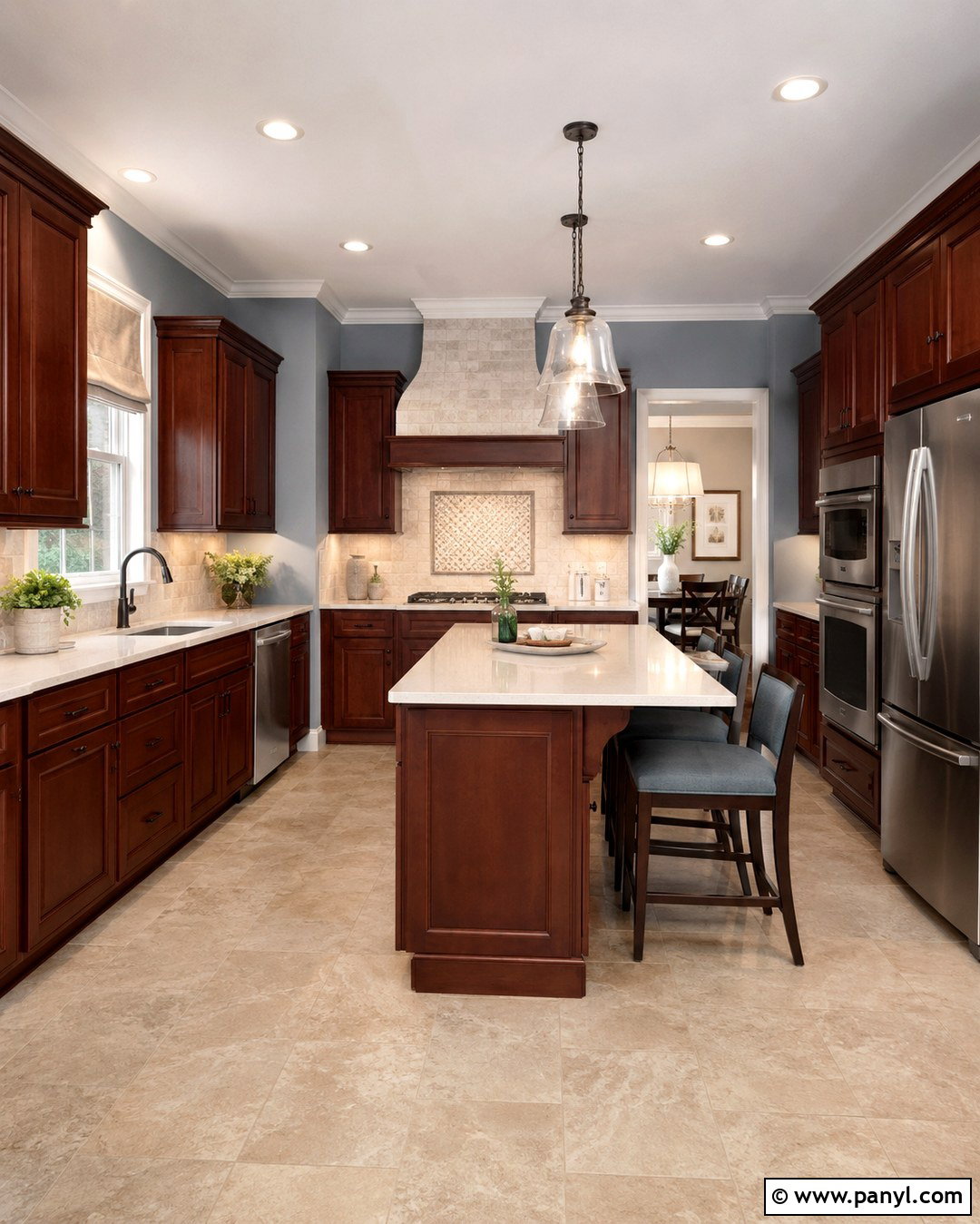
Cherry cabinets often have visible red undertones, so blue-gray walls provide a useful cooling contrast. Look for a medium-light blue with enough gray to prevent the combination from appearing overly colorful. Cream quartz or light beige granite countertops will bridge the warm cabinetry and cool walls more naturally than icy white surfaces. Consider a backsplash made from soft ivory tiles with subtle variations in tone. Oil-rubbed bronze hardware reinforces the traditional richness of the wood, while simple pendant lights keep the overall room from feeling ornate. Use neutral stone flooring, cream window treatments, and muted blue seat cushions to distribute the wall color throughout the kitchen. This scheme refreshes older cherry cabinets while preserving their solid, classic character, making it practical for an affordable kitchen update.
6. Teal Blue Kitchen Walls With Rustic Brown Cabinets
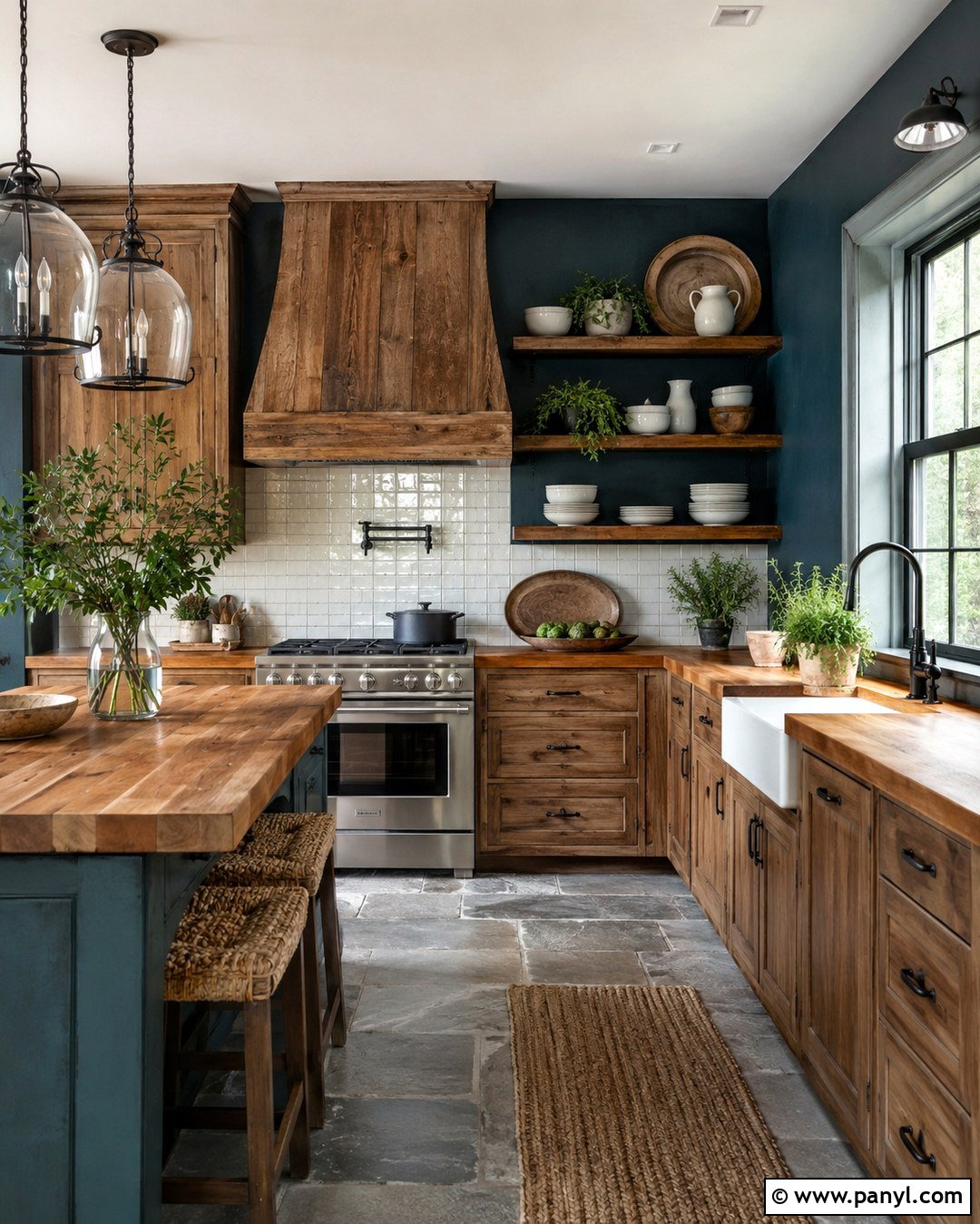
Rich teal walls can bring energy to rustic brown cabinets while highlighting knots, grain, and handmade details. Select a deep teal with more blue than green to maintain a clear connection to the kitchen’s brown foundation. Butcher block or creamy quartz counters will keep the palette warm and approachable. For the backsplash, use uneven white zellige-style tiles that reflect light and complement the natural imperfections of rustic wood. Black iron cabinet pulls, open wood shelves, and simple metal pendants strengthen the farmhouse influence. A warm gray stone floor adds texture without introducing another strong color. Complete the room with woven counter stools, white stoneware, and small potted herbs. The finished kitchen feels layered and characterful, yet the consistent materials keep it from becoming cluttered or overly themed.
7. Coastal Blue Kitchen Walls With Light Brown Cabinets
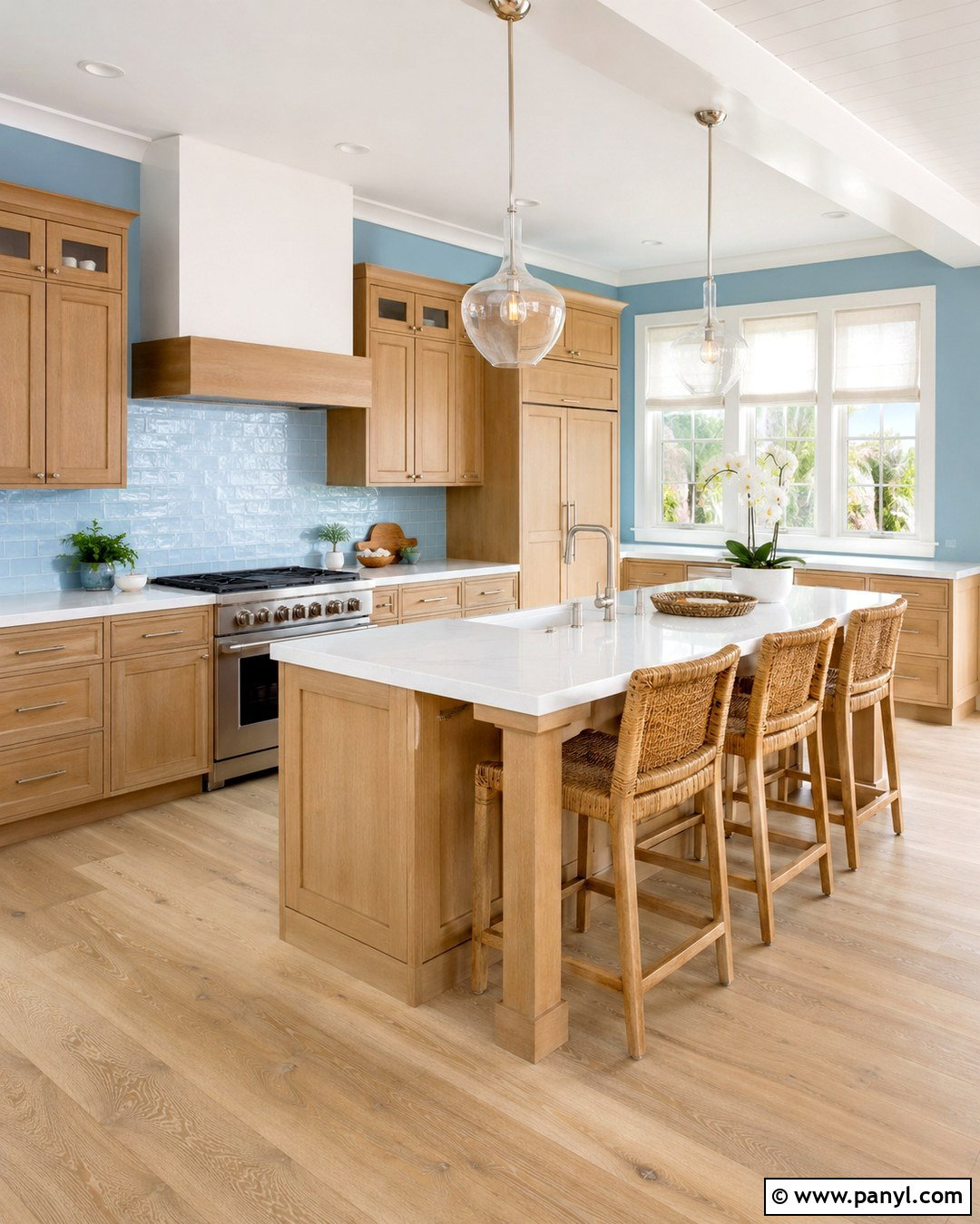
Imagine a breezy coastal kitchen that feels relaxed without relying on obvious seaside decorations. Start with soft coastal blue walls and light brown cabinets in a natural oak or maple finish. Add clean white quartz countertops, pale blue glass backsplash tile, and brushed nickel hardware for a bright, reflective surface. Wide-plank light oak flooring reinforces the airy appearance and creates a smooth transition between the cabinets and the rest of the room. Choose woven rattan stools and white linen shades for subtle texture. Clear glass pendants above the island allow the blue walls to remain visible. Decorate sparingly with white dishes, light wood boards, and simple greenery. This look is especially effective in small kitchens because the gentle wall color and reflective finishes visually open the space.
8. Denim Blue Kitchen Walls With Chestnut Cabinets
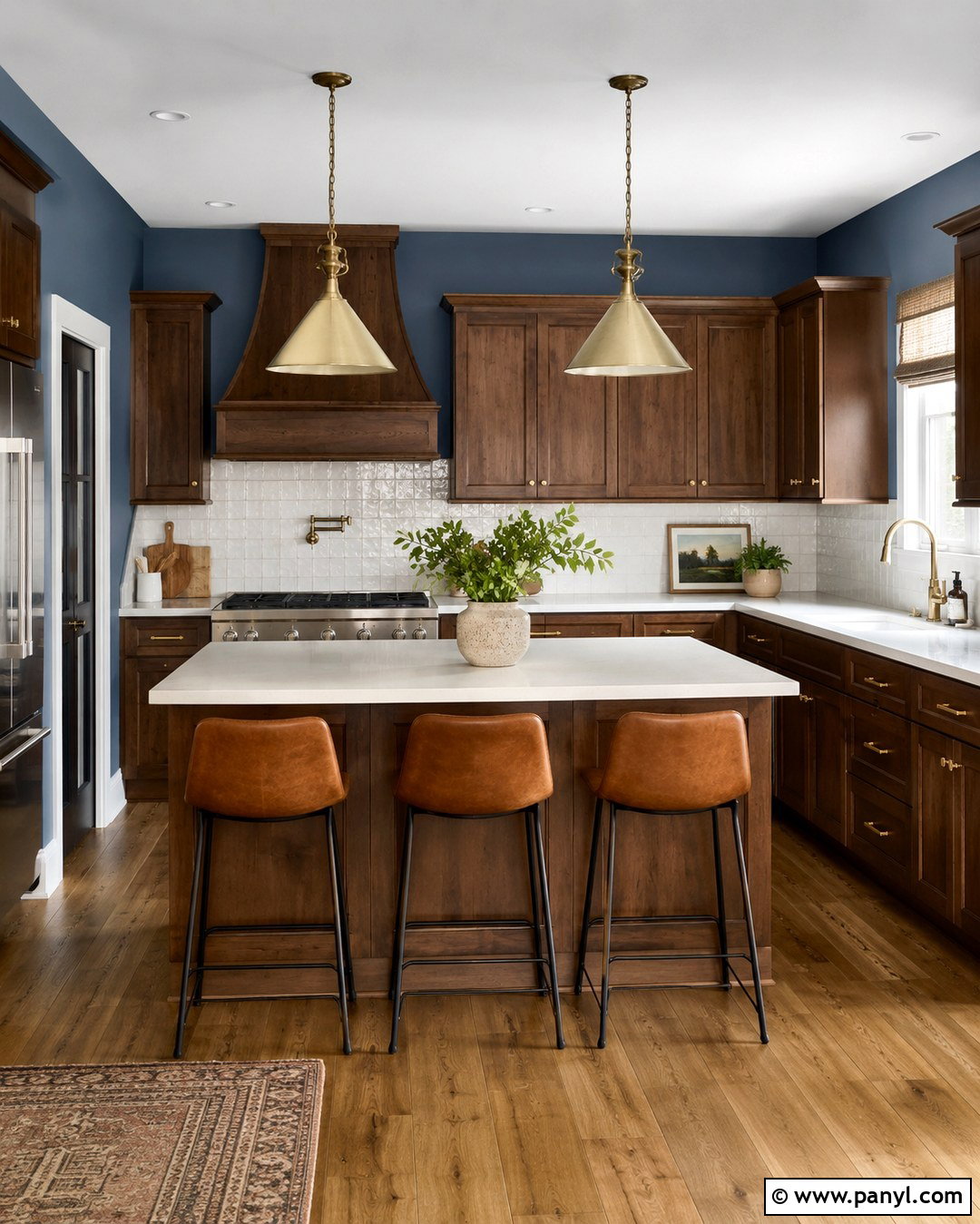
Denim blue offers more depth than pale blue but feels less formal than navy, making it a versatile partner for chestnut brown cabinets. Paint all visible kitchen walls in a muted denim shade, then lighten the room with creamy white counters and a warm white backsplash. A few tiles with subtle blue-gray variation can create movement without forming a busy pattern. Choose aged brass pulls to complement the reddish-golden notes in chestnut wood. Medium-tone oak flooring will support both colors and create a grounded, connected palette. Over the island, install simple cone pendants with white interiors for brighter task lighting. Add tan leather stools, natural linen shades, and a restrained collection of wood and ceramic accessories. The complete room feels casual, familiar, and comfortably updated.
9. Robin Egg Blue Kitchen Walls With Vintage Oak Cabinets
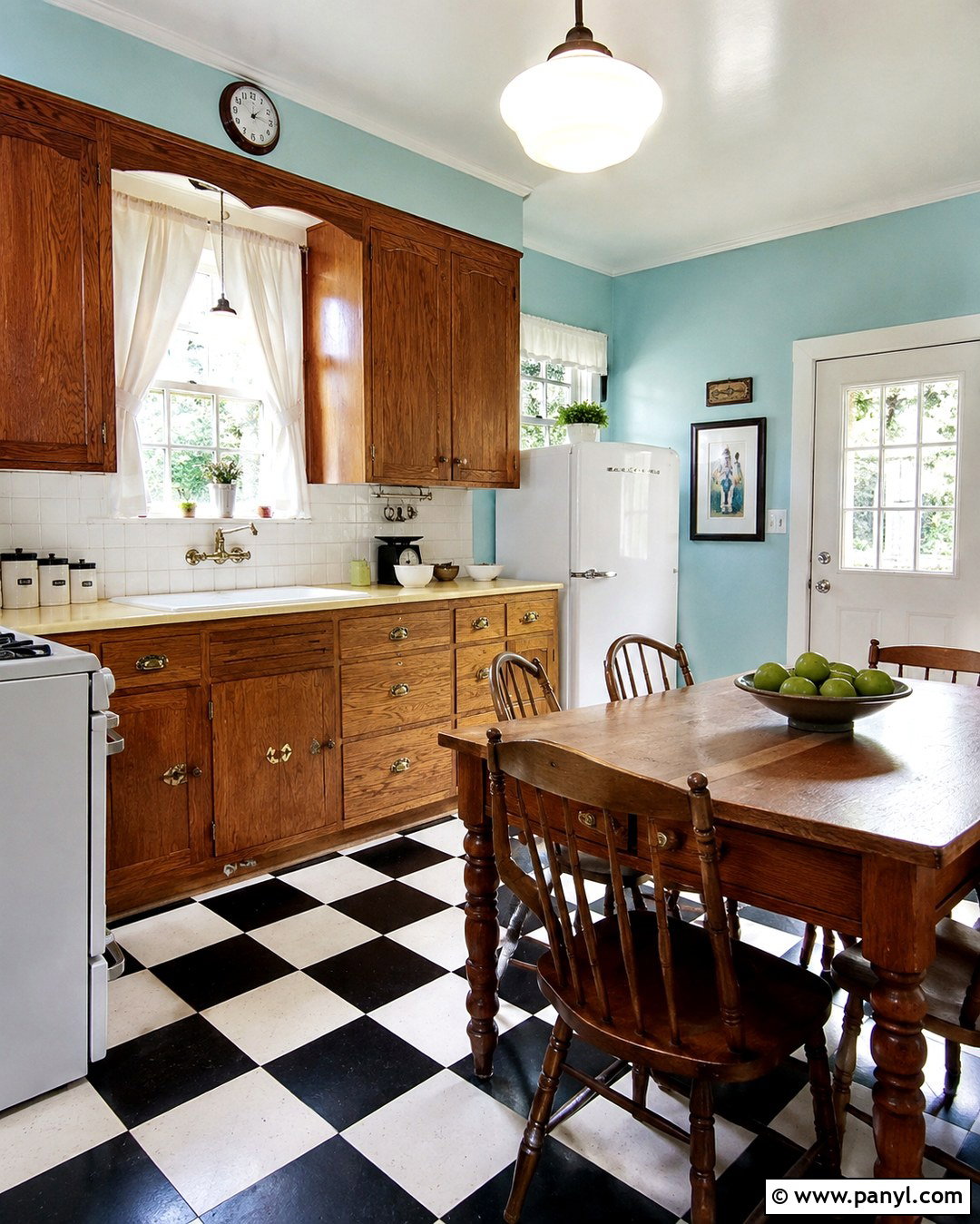
Robin egg blue walls can revive vintage oak cabinets and give an older kitchen a charming, optimistic personality. Keep the shade slightly muted so it complements the aged wood instead of looking too bright. Cream laminate or quartz counters are practical options, while a white square-tile backsplash reinforces the kitchen’s retro character. Replace dated hardware with antique brass knobs and cup pulls that suit the cabinet age. A black-and-white checkerboard floor can add nostalgic contrast, or choose warm beige tile for a quieter result. Include a compact wood table, simple spindle-back chairs, and a schoolhouse-style ceiling light to complete the look. White curtains and open shelving make the space feel lighter. This design celebrates original cabinets rather than trying to disguise their period details.
10. Slate Blue Kitchen Walls With Modern Walnut Cabinets
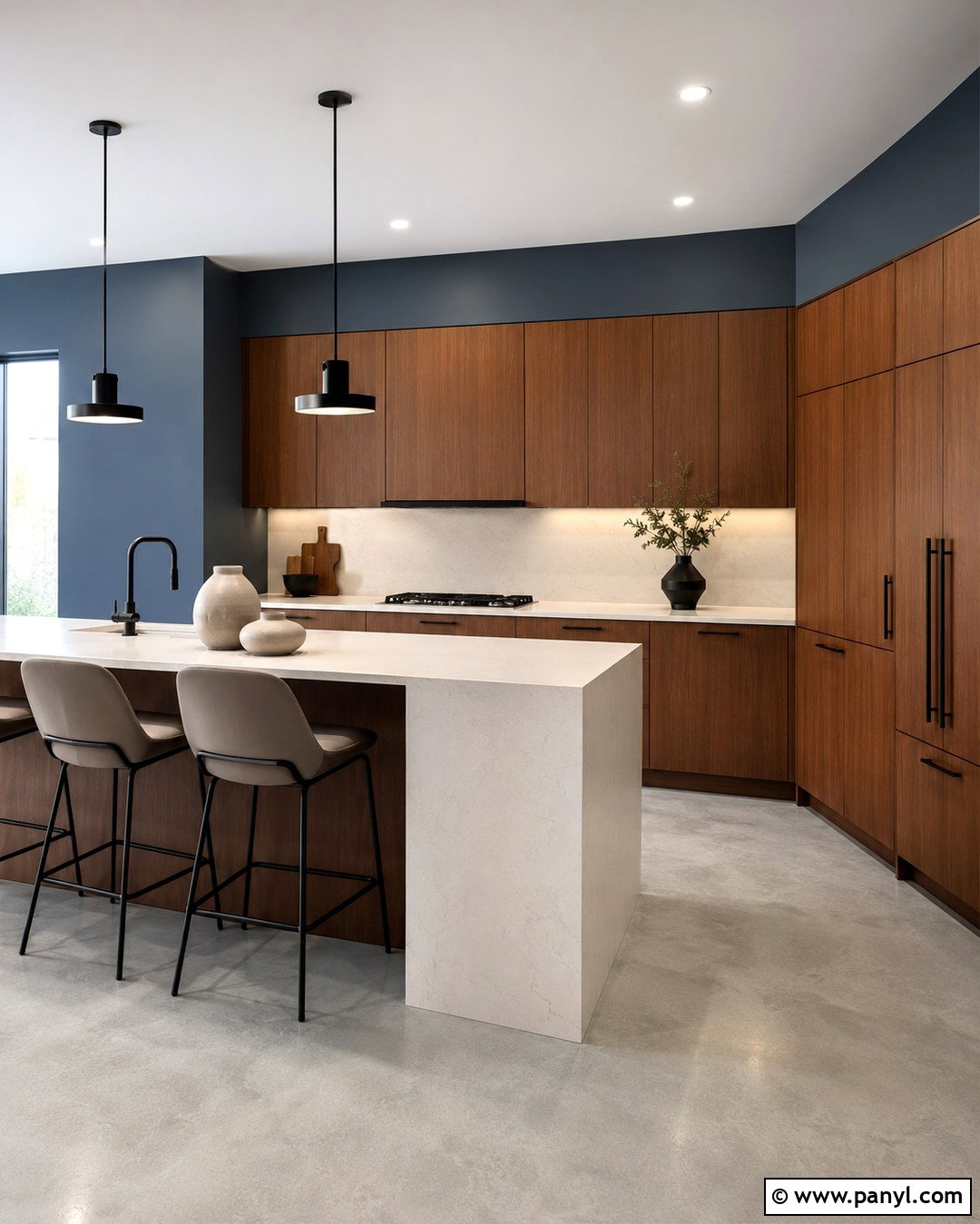
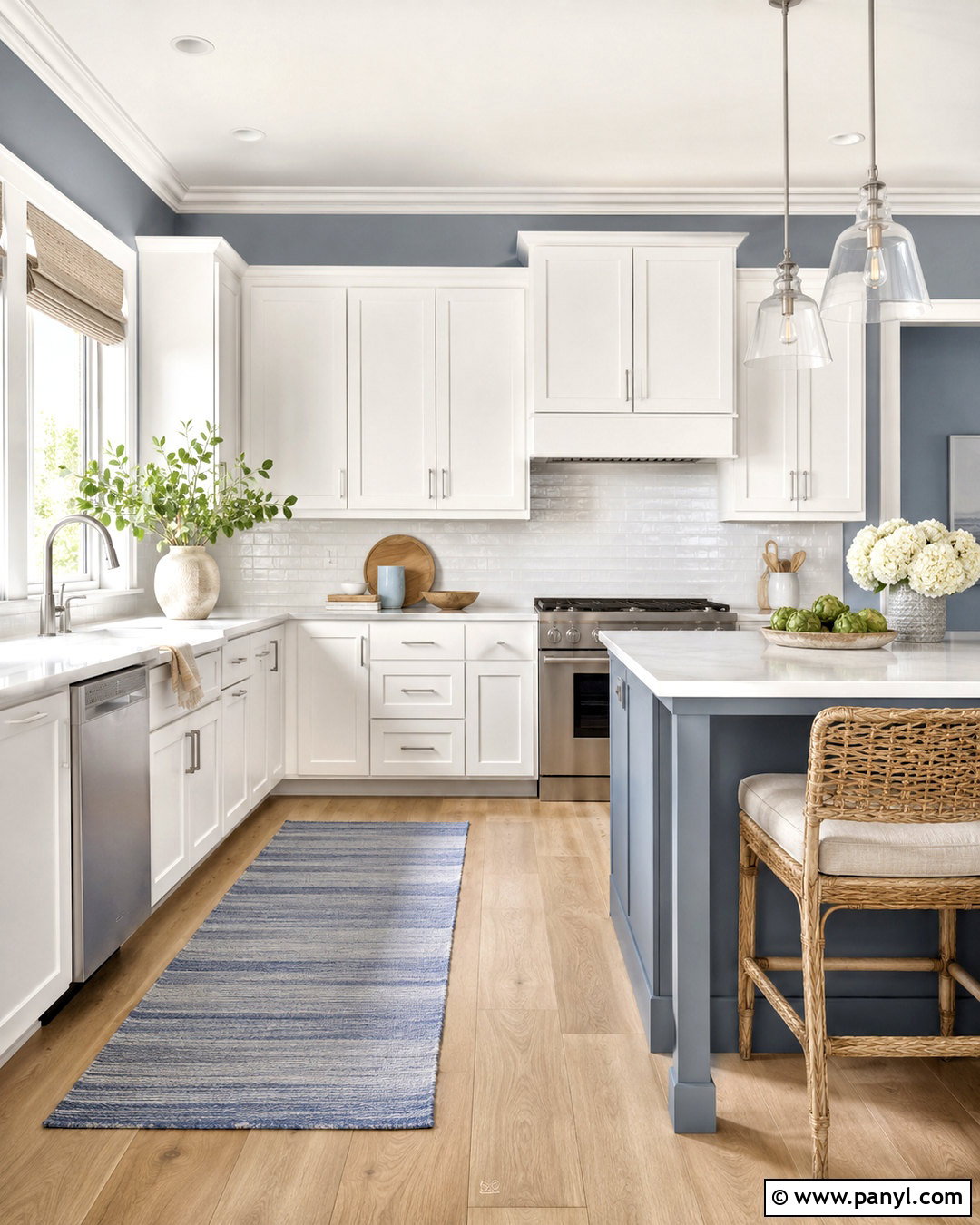
Clean lines and cool slate blue walls create a sophisticated setting for flat-panel walnut cabinets. The blue should contain noticeable gray undertones, allowing the wood grain to provide the room’s strongest natural pattern. Pair the cabinets with waterfall-edge white quartz countertops and a plain off-white slab backsplash. Minimal black bar pulls, an undermount sink, and a streamlined faucet maintain the modern direction. Use light concrete-look porcelain tile on the floor to contrast with the warm wood without making the kitchen appear cold. Slim black pendants can define the island, while concealed under-cabinet lighting keeps the perimeter bright. Complete the design with low-profile taupe stools and only a few sculptural ceramic pieces. This balanced palette feels modern and refined but remains warm enough for everyday family use.
11. Cobalt Blue Kitchen Walls With Chocolate Cabinets
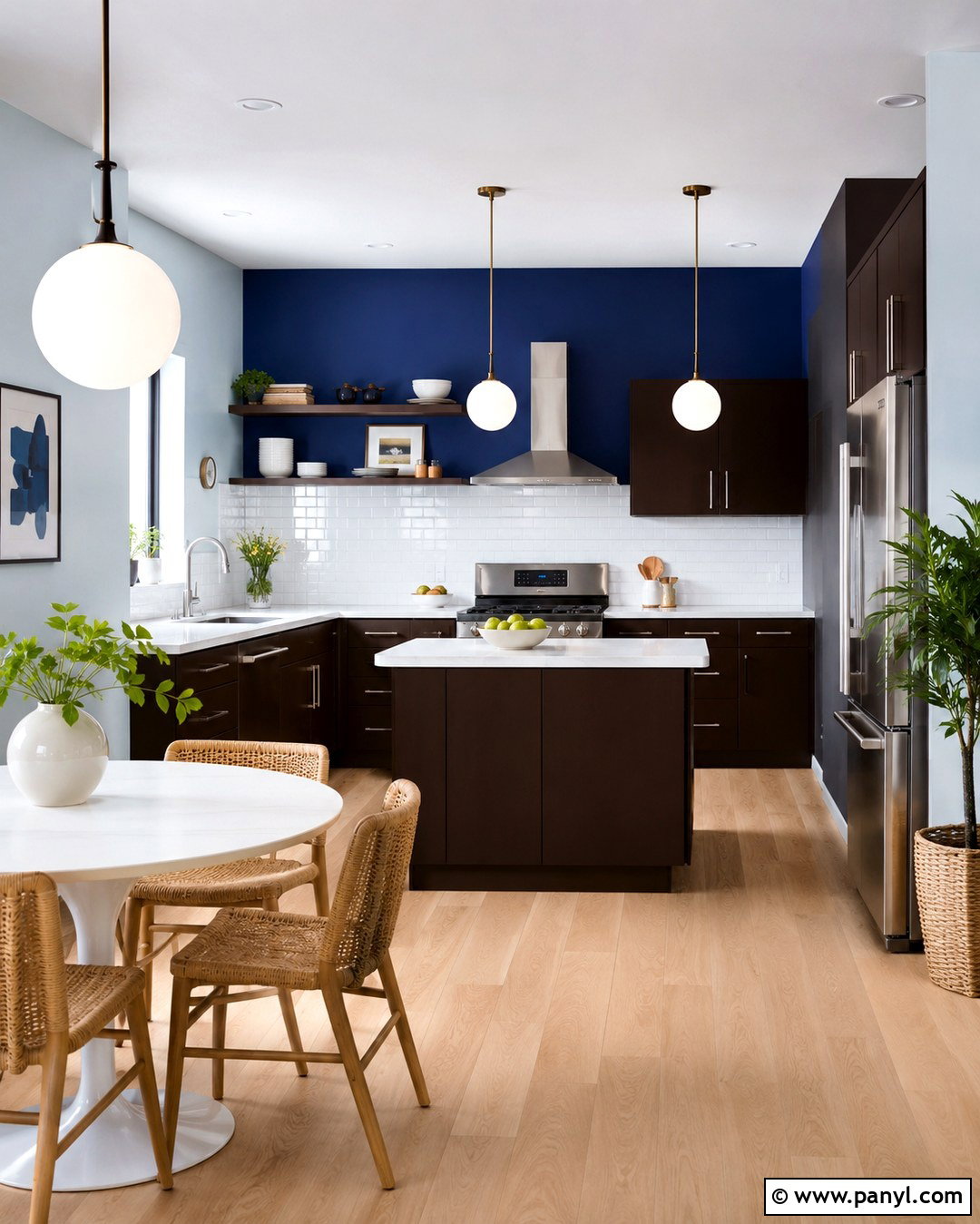
A cobalt blue feature wall can transform chocolate brown cabinets into part of a bold, energetic kitchen. Keep the strongest blue behind a breakfast table or along an open wall so it does not compete with every cabinet surface. Paint the remaining walls a pale blue-white to maintain continuity and brightness. Add white quartz countertops, glossy white backsplash tiles, and chrome hardware to sharpen the contrast. A light wood floor balances the dark cabinetry and keeps the room from looking closed in. Choose a round white dining table, natural wood chairs, and a modern globe pendant for the eating area. Small cobalt accents can repeat the feature wall near the cooking zone. This approach offers noticeable color while remaining practical for kitchens with limited natural light or lower ceilings.
12. Blue Beadboard Walls With Farmhouse Brown Cabinets
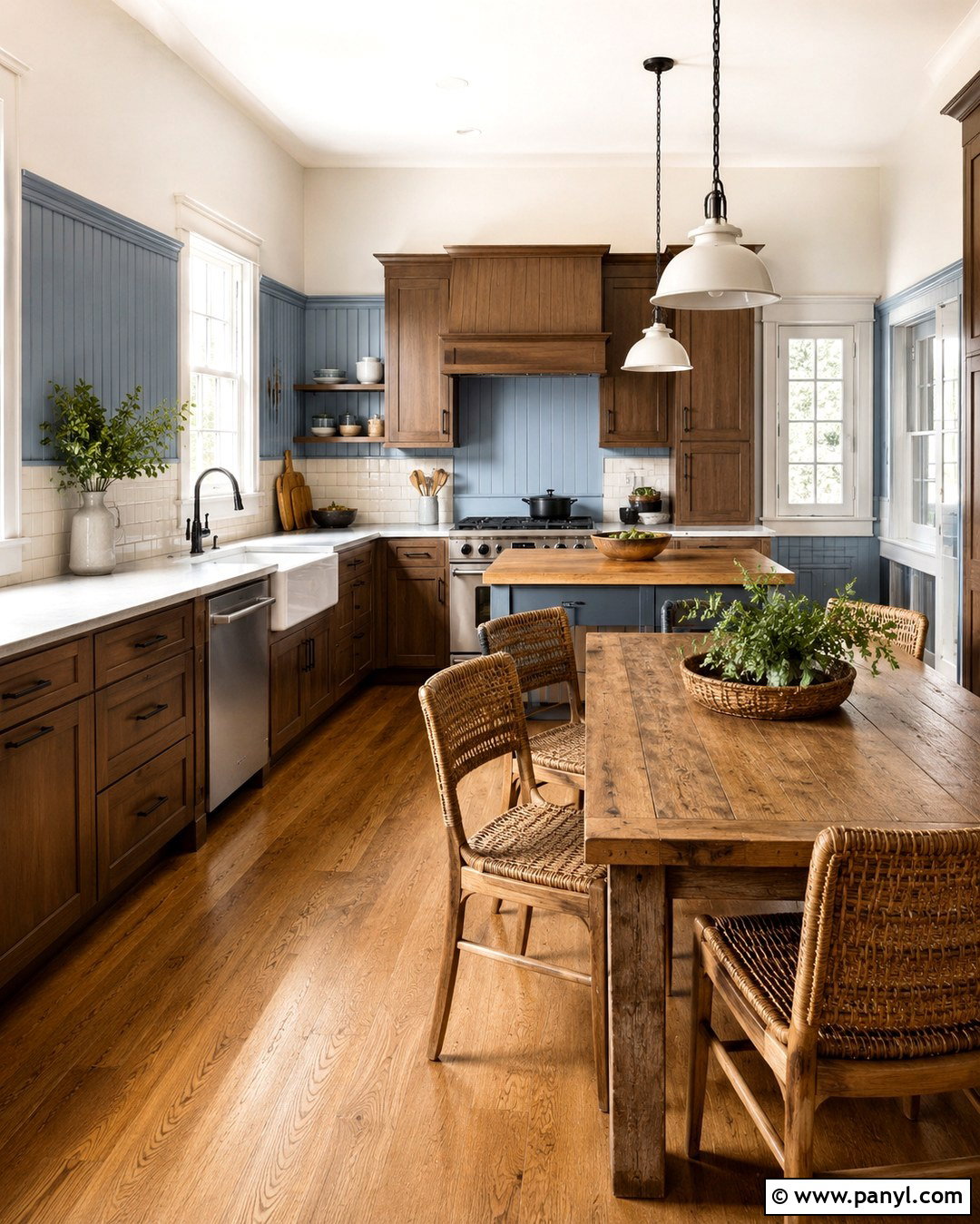
Blue-painted beadboard gives farmhouse brown cabinets extra texture and a more finished architectural setting. Use muted cornflower blue beadboard on the breakfast nook walls or above a simple chair rail, with warm white paint on the upper portion. Brown shaker cabinets, light quartz counters, and a white apron-front sink create a sturdy farmhouse foundation. Install creamy subway tile behind the range and use aged brass or black iron hardware throughout. Wide-plank oak flooring supports the rustic character, while a vintage-inspired runner introduces a gentle mix of blue, tan, and ivory. Finish the room with a wood dining table, woven-seat chairs, and white metal pendants. The combination feels welcoming and detailed, but the limited color palette prevents the beadboard and wood surfaces from making the kitchen look busy.
13. Blue Wallpaper Kitchen Walls With Dark Brown Cabinets
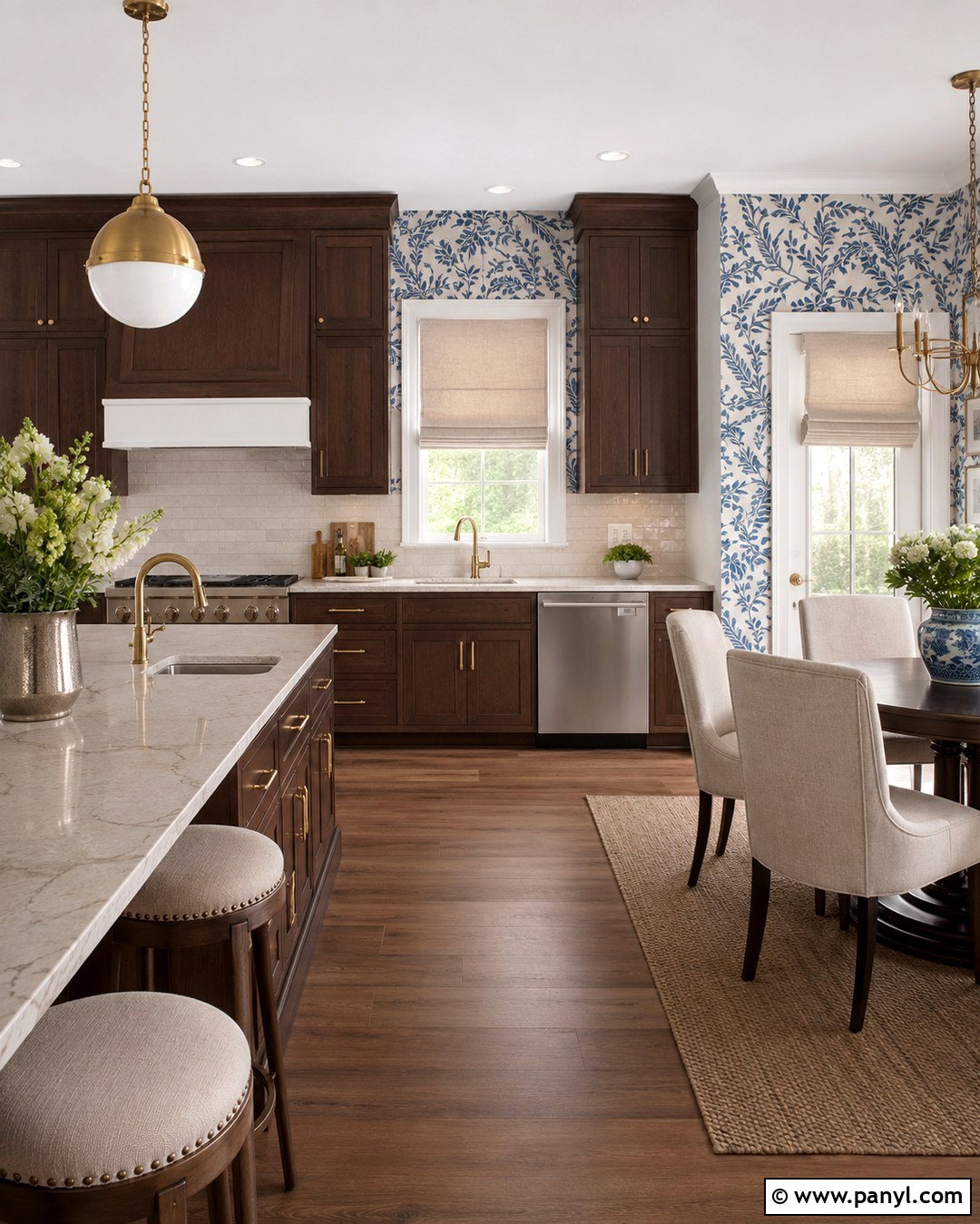
Patterned blue wallpaper can make dark brown cabinets feel elegant rather than visually heavy. Choose a small-scale botanical or geometric print with a soft blue background, ivory details, and touches of warm tan. Use the wallpaper in a dining nook or on walls away from the sink and cooking areas, where moisture and grease are less likely to cause damage. Continue with light marble-look quartz countertops, ivory backsplash tile, and brushed brass cabinet pulls. Medium brown flooring keeps the cabinets connected to the room, while cream dining chairs brighten the eating area. A brass pendant and simple linen Roman shade provide a polished finish. Because the walls already have pattern, keep countertop accessories minimal. The resulting kitchen feels decorative, coordinated, and complete without requiring changes to existing cabinetry.
14. Pale Blue Kitchen Walls With Dark Brown Cabinets
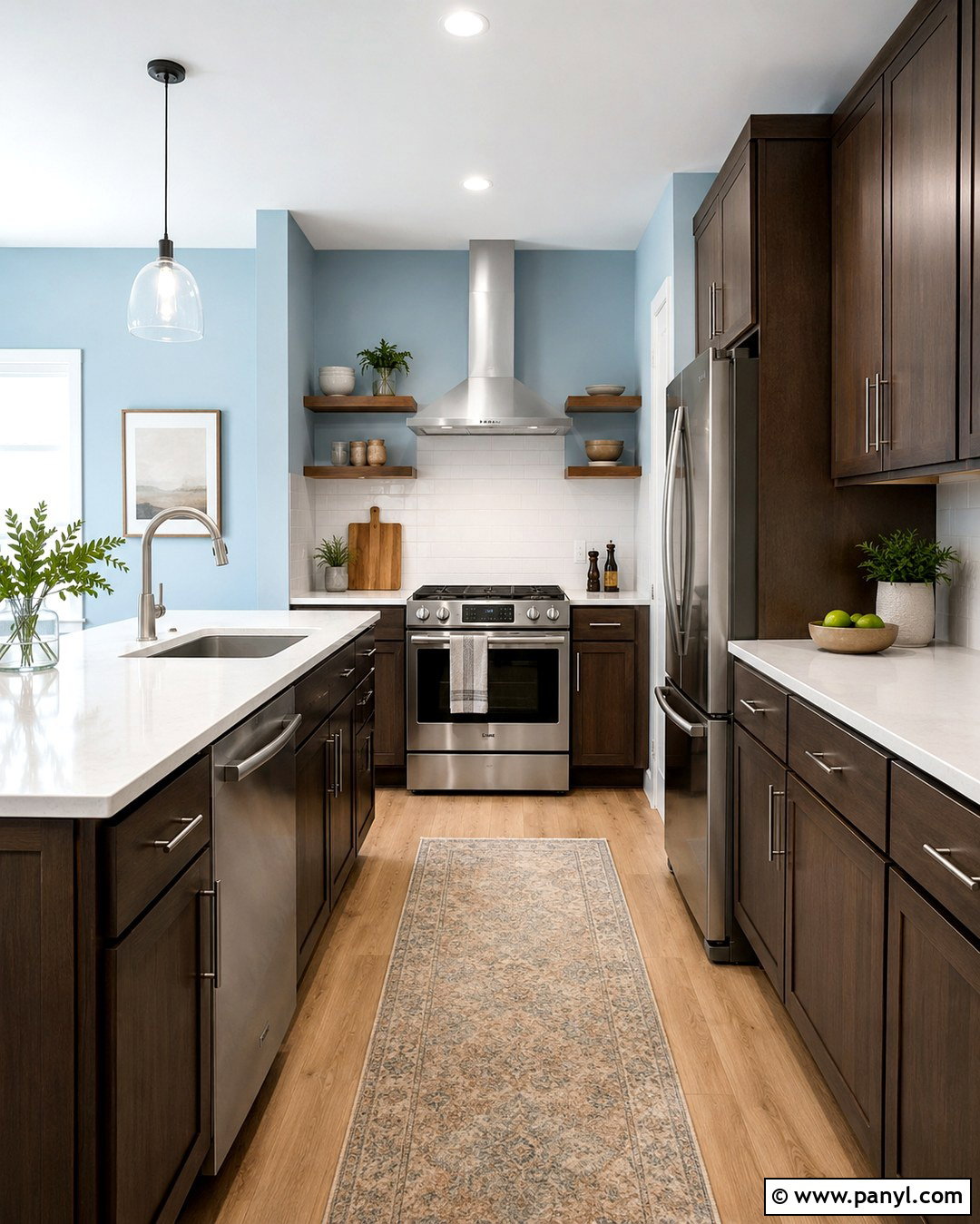
Small kitchens benefit from pale blue walls because the color introduces personality without absorbing too much light. Pair the airy paint with dark brown cabinets, bright white quartz counters, and a glossy white backsplash. Keeping the upper walls, ceiling, and trim closely related in value will make the room appear taller and less divided. Use satin nickel hardware and stainless steel appliances to reflect light around the narrow layout. A pale oak or warm ivory floor prevents the dark cabinets from dominating the lower half of the room. Add one compact pendant, under-cabinet lighting, and a slim washable runner for comfort. Open shelves can replace one upper cabinet if additional visual space is needed. This simple combination makes a compact kitchen feel brighter while preserving useful storage and strong contrast.
15. Blue Kitchen Walls And Ceiling With Brown Cabinets
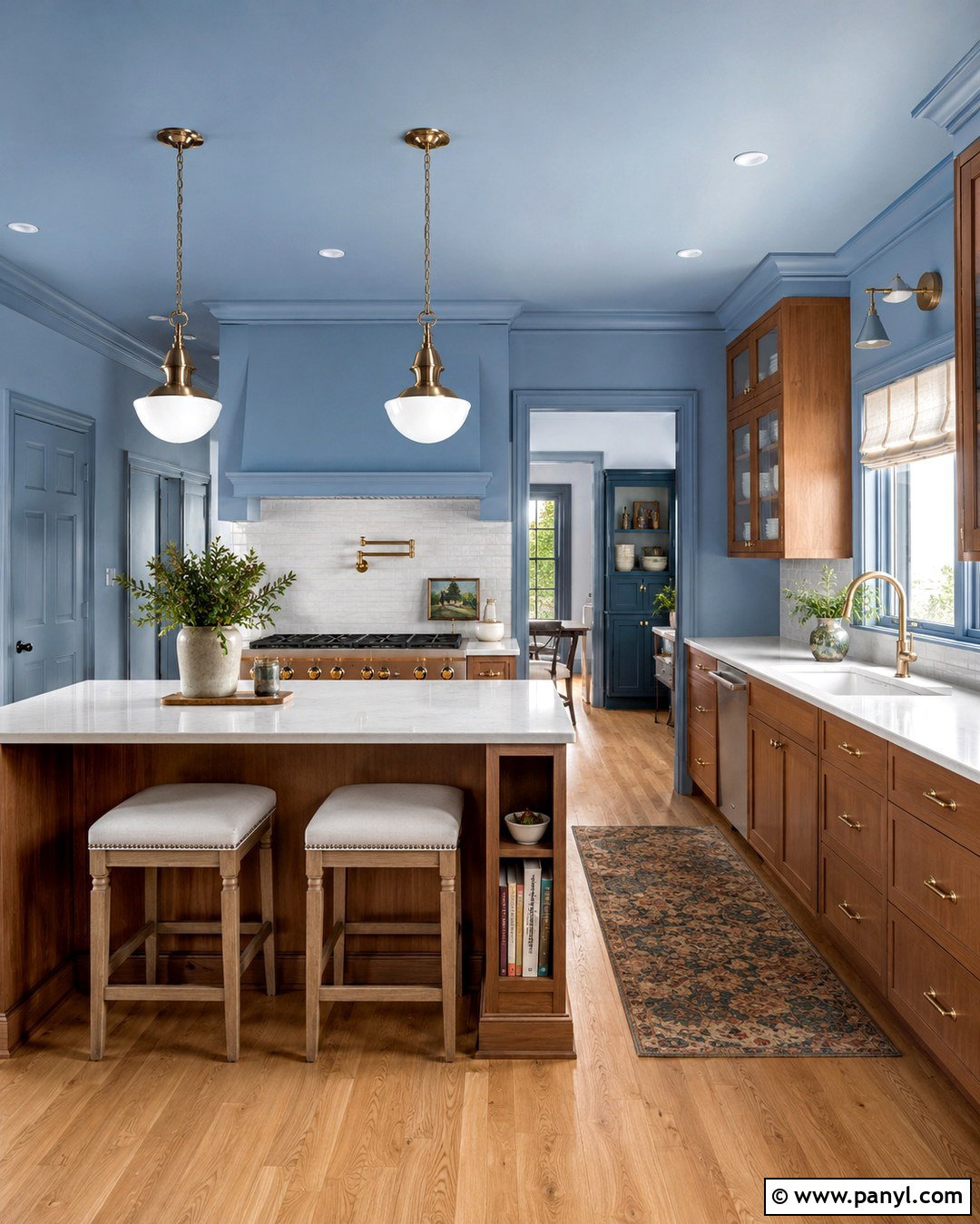
Wrapping the walls and ceiling in the same soft blue can produce a calm, enveloping kitchen with brown cabinetry. Choose a light, desaturated blue so the color reads as atmospheric rather than dark. Paint the trim in the same shade with a slightly glossier finish to simplify the visual lines. Medium brown cabinets, creamy quartz countertops, and warm white backsplash tiles will create a natural contrast. Add antique brass hardware and matching pendants to bring warmth upward and break up the blue surfaces. Light oak flooring and ivory counter stools keep the lower portion of the kitchen comfortable and bright. This color-drenching approach works particularly well in rooms with angled ceilings or awkward wall divisions. The consistent blue paint turns those architectural details into one cohesive, intentional background.
16. Aqua Blue Kitchen Walls With Reddish Brown Cabinets
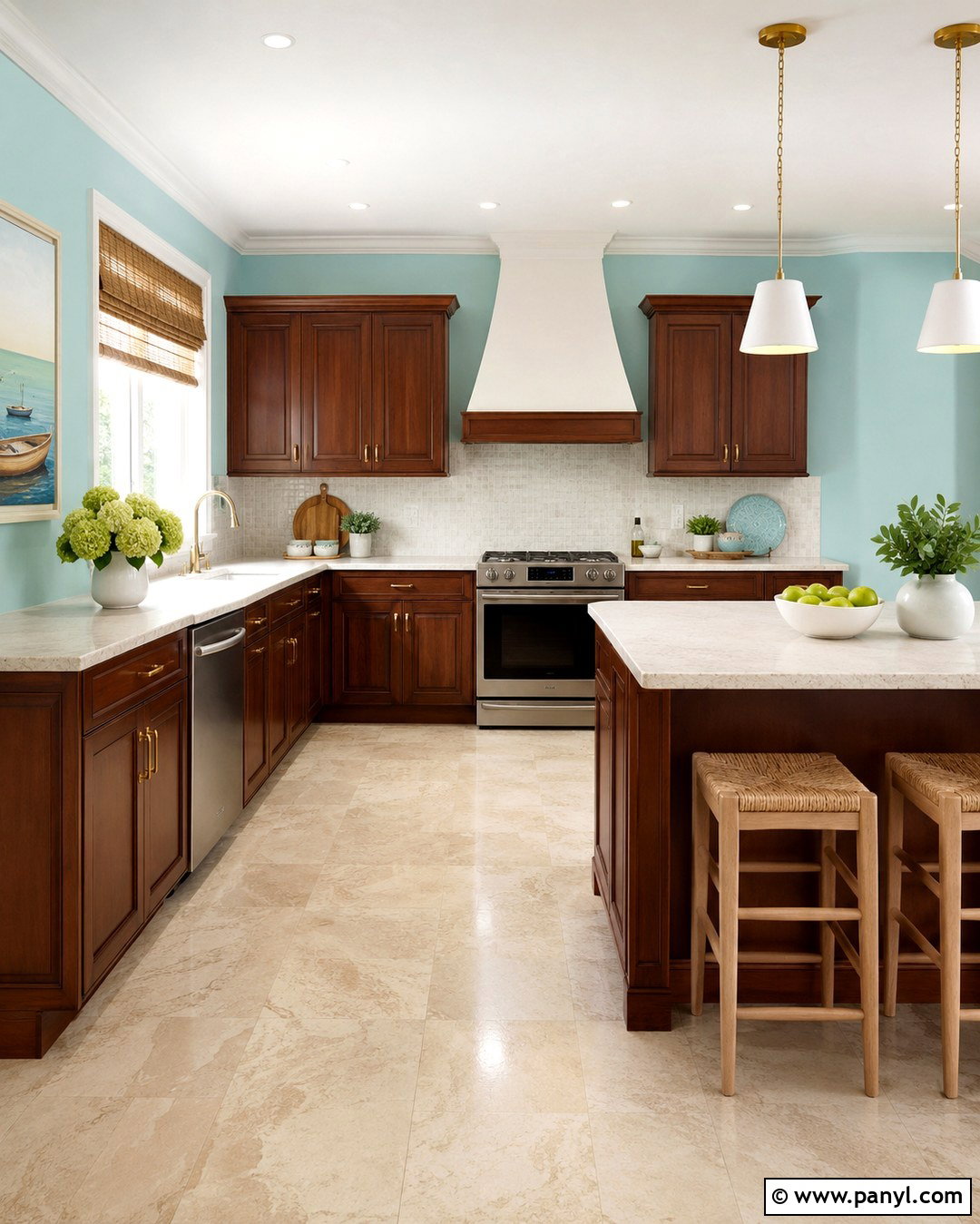
Fresh aqua walls can balance reddish brown cabinets when the color is softened with a hint of gray. Avoid extremely bright turquoise, which may make the cabinet undertones look stronger. Instead, use a gentle blue-green aqua with cream quartz countertops and a backsplash of warm white mosaic tile. Brushed brass pulls connect nicely with the warmer wood, while white pendants and a white ceiling keep the room looking crisp. Choose pale beige porcelain tile or light oak flooring for a neutral foundation. Natural woven shades and tan stools add texture without creating another bold color statement. Include a few aqua accessories near the cabinets to make the wall choice feel intentional. The complete scheme has a cheerful, refreshed quality that suits sunny kitchens, breakfast rooms, and casual open-plan homes.
17. Muted Indigo Kitchen Walls With Brown Shaker Cabinets
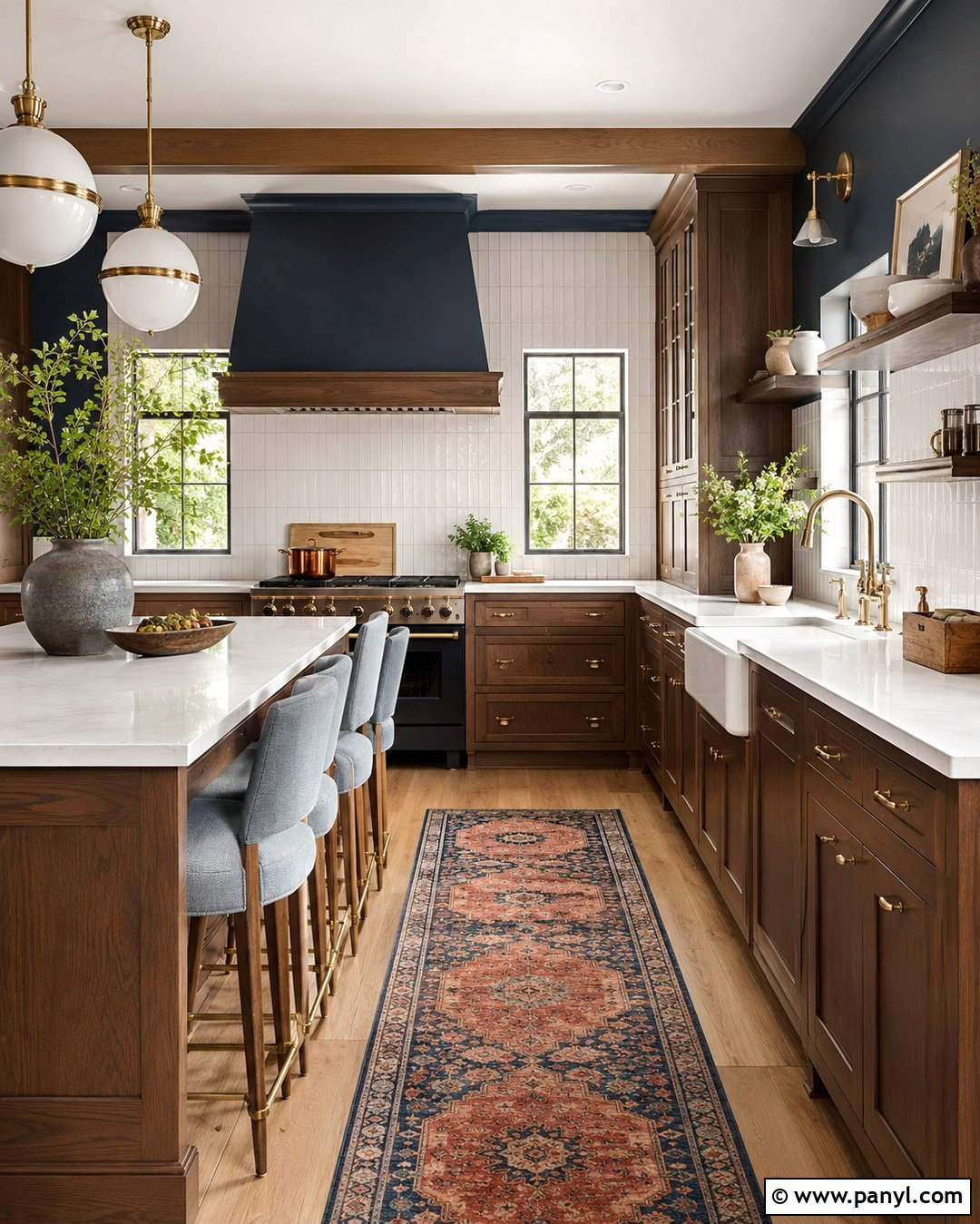
Muted indigo walls provide a rich backdrop for brown shaker cabinets while remaining softer than pure navy. This color works best when the room includes generous white surfaces, such as quartz counters, a farmhouse sink, and a full-height tile backsplash. Select warm white tile rather than cool gray to preserve the welcoming character of the wood. Brass knobs and bridge-style faucets add traditional detail, while streamlined pendants prevent the design from looking overly formal. Use natural oak flooring and light upholstered stools to lift the lower half of the room. A patterned runner containing indigo, cream, and faded rust can connect the complete palette. Keep windows uncovered or use simple linen shades to maximize daylight. The finished kitchen feels established, comfortable, and appropriately dramatic without losing everyday practicality.
18. French Blue Kitchen Walls With Traditional Brown Cabinets
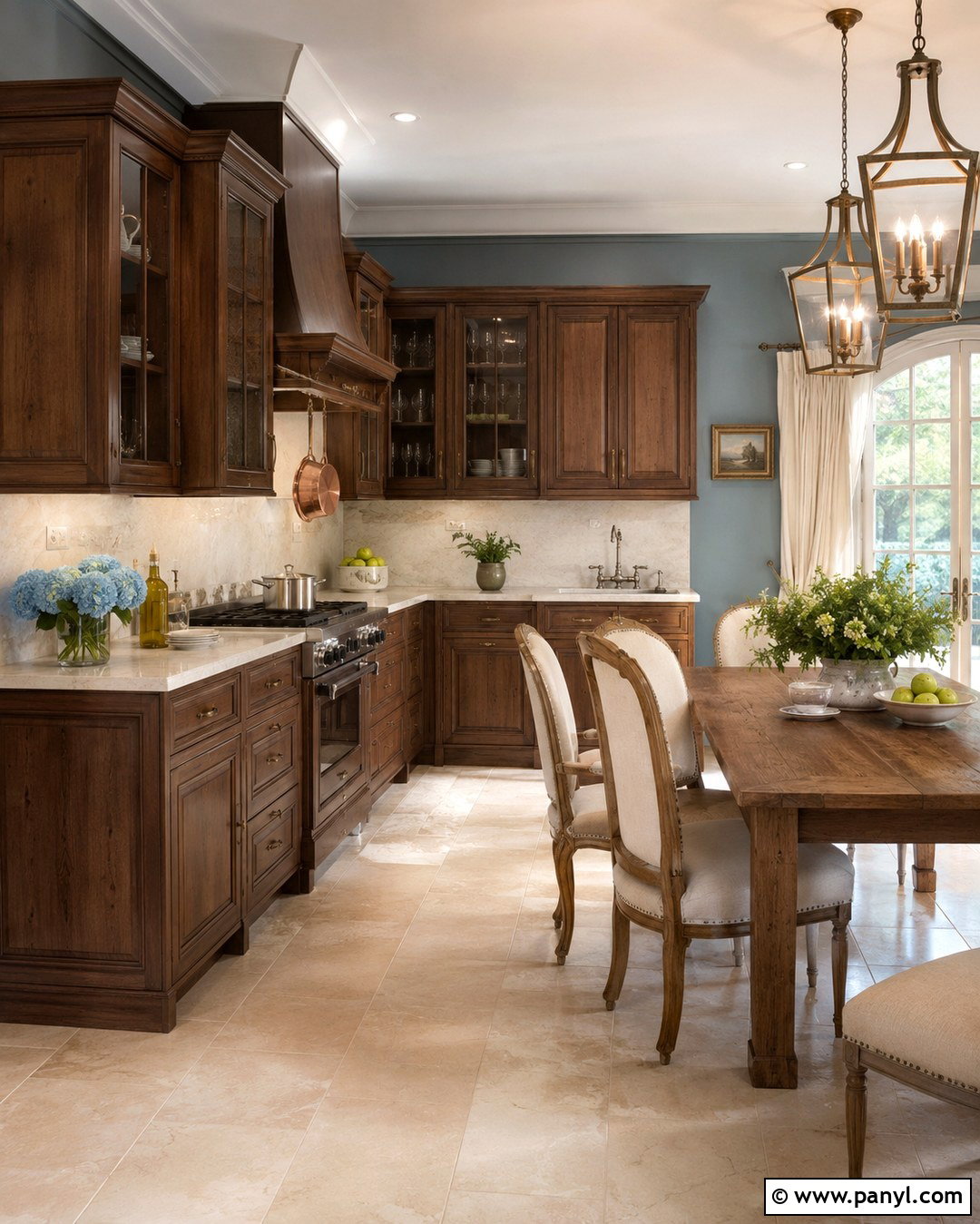
French blue walls create an elegant but approachable setting for traditional brown cabinets with raised-panel doors. Choose a medium blue with a slightly gray, chalky quality instead of a bright primary shade. Cream marble-look counters and warm ivory backsplash tile soften the contrast and complement carved cabinet details. Use antique brass knobs, glass-front upper cabinets, and traditional lantern pendants to reinforce the classic design. A limestone-look floor adds an aged European character while keeping the room lighter than dark wood flooring would. Complete the kitchen with a wood table, upholstered dining chairs, linen curtains, and simple ceramic serving pieces. Avoid excessive decorative accessories because the cabinetry and lighting already provide detail. This coordinated look gives an older kitchen distinction while allowing the original brown woodwork to remain central.
19. Blue Green Kitchen Walls With Midcentury Brown Cabinets
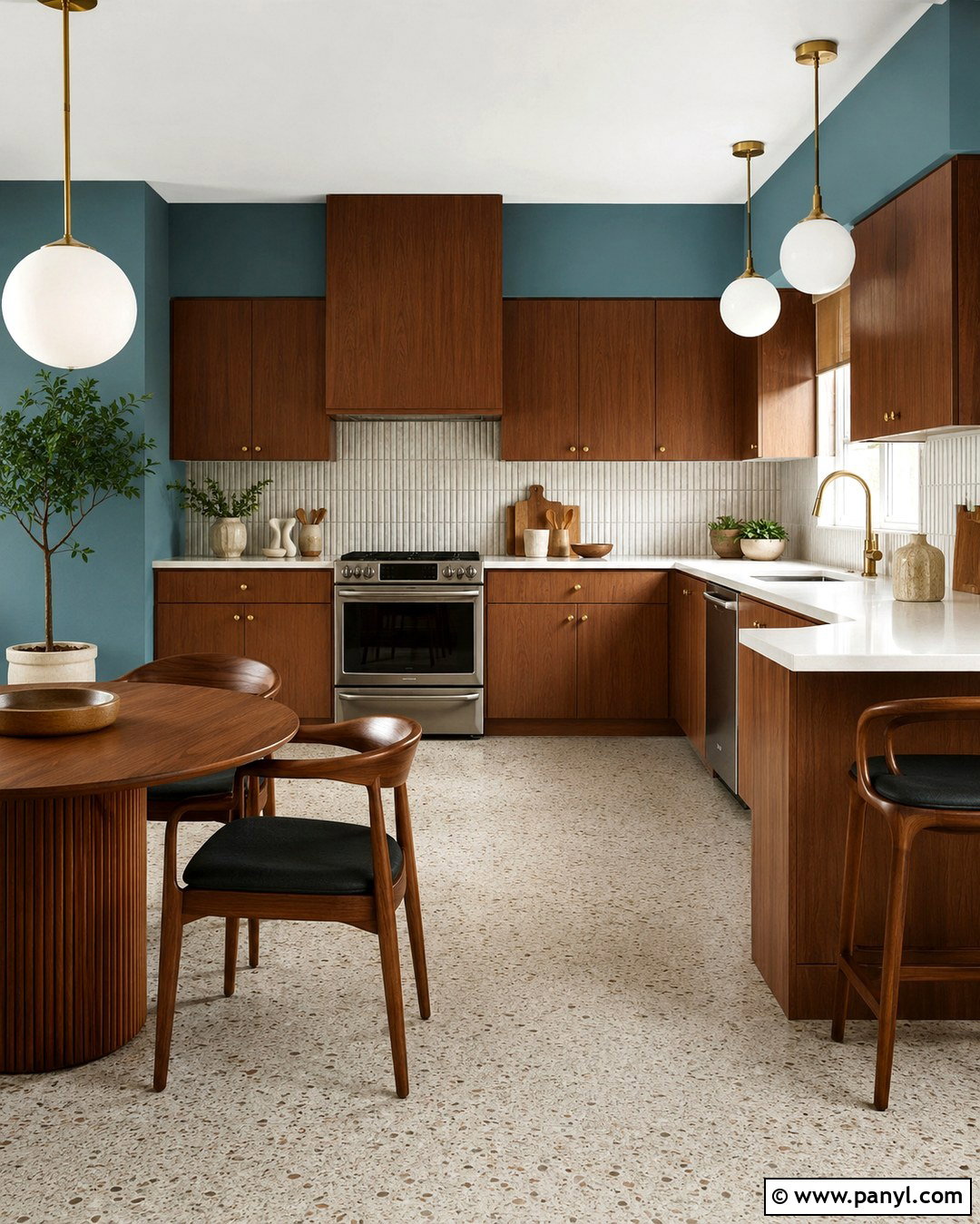
Blue-green walls pair beautifully with streamlined midcentury brown cabinets, especially when the cabinetry has flat fronts and visible walnut grain. Select a muted shade that sits between teal and dusty blue for an authentic, relaxed appearance. Add off-white quartz countertops and a simple vertical tile backsplash to update the room without erasing its retro personality. Small brass knobs, globe lighting, and counter stools with curved wood backs support the midcentury direction. Use warm terrazzo-look flooring or pale oak planks to introduce subtle pattern and brightness. A compact round dining table can fit beside the kitchen without interrupting circulation. Finish with restrained ceramics and one sculptural plant. The completed space feels nostalgic yet current, with strong shapes, useful surfaces, and a carefully controlled color palette.
20. Soft Blue Kitchen Walls With Brown Cabinets And Black Accents
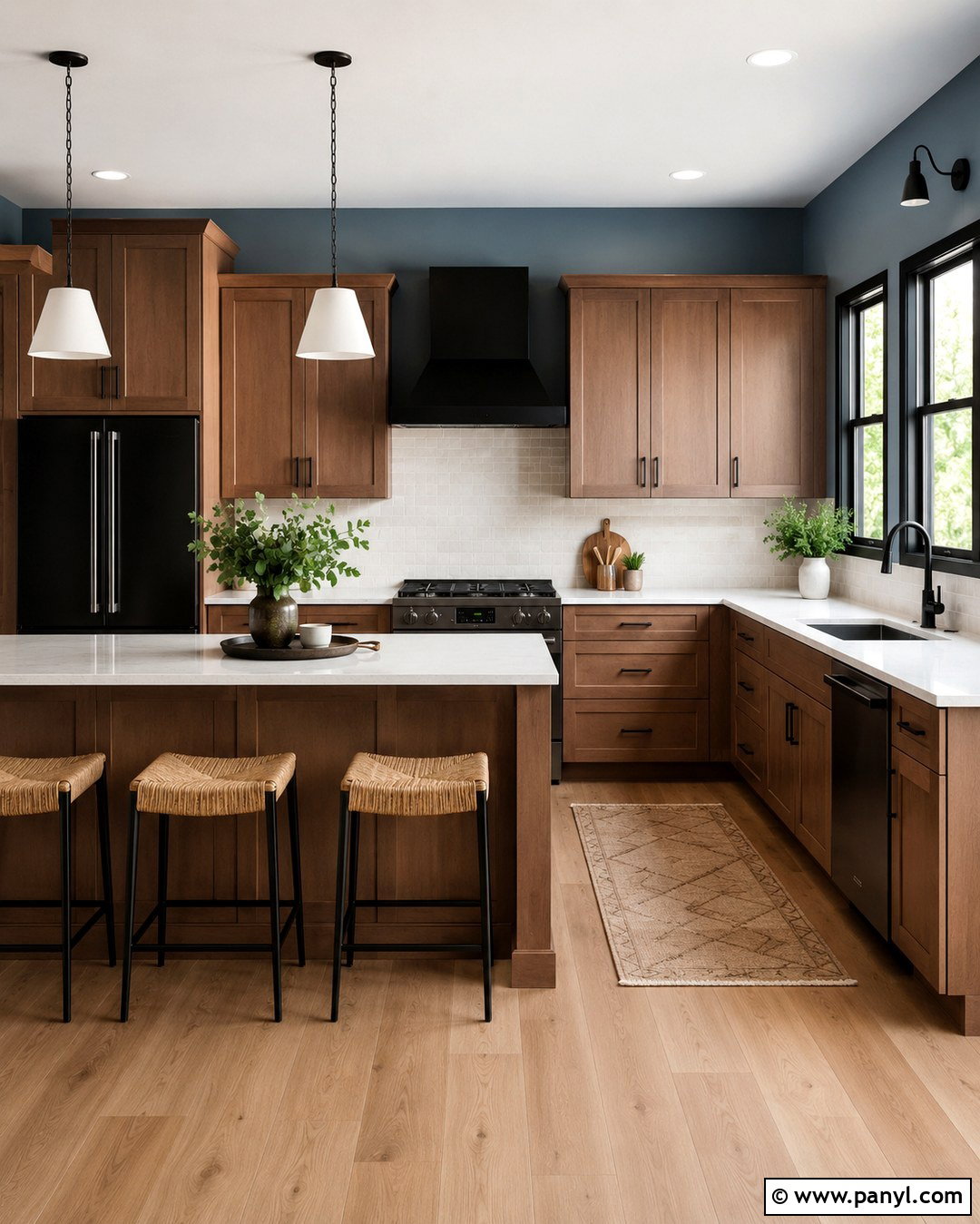
Black accents give soft blue walls and brown cabinets a sharper, more contemporary outline. Begin with a calm light blue that has subtle gray undertones, then introduce black through cabinet pulls, window frames, faucets, and pendant lights. Use warm white quartz counters and an ivory backsplash to keep the contrast from becoming harsh. Medium brown shaker cabinets provide texture and warmth, while wide-plank light oak flooring prevents the black details from visually weighing down the room. Choose stools with black frames and woven tan seats to connect every part of the palette. A slim black range hood can become a controlled focal point above the cooking area. With bright task lighting and uncluttered counters, this complete kitchen feels modern, grounded, and highly adaptable to changing accessories.
Conclusion:
Choosing blue kitchen walls with brown cabinets is less about following one fixed formula and more about balancing temperature, depth, and light. Pale blues can refresh honey oak or brighten compact rooms, while denim, indigo, and navy create stronger contrast with walnut and espresso finishes. White or cream countertops usually provide breathing room between the two main colors. Meanwhile, brass, nickel, or black hardware can reinforce the intended style. Always test blue paint beside the actual cabinets, flooring, and countertops at different times of day before committing. These 20 Blue Kitchen Walls With Brown Cabinets show how thoughtful color choices and coordinated finishes can preserve warm wood cabinetry while giving the entire kitchen a fresh, complete identity.

Related Ideas and Inspiration:
Leave a Reply