
Choosing paint for golden wood can feel tricky, but the right palette can make existing cabinetry look intentional, warm, and updated. These 35 honey oak kitchen cabinets wall color ideas explore balanced neutrals, nature-inspired greens, soothing blues, rich accent colors, and softly warmed pastels. Current design guidance favors warm whites, greiges, mushroom tones, and muted greens because they complement oak without creating a harsh contrast. () Each section also builds a complete kitchen look with countertops, flooring, hardware, lighting, and backsplash choices. Before painting, place large samples beside the cabinets and observe them throughout the day. Artificial and natural light can noticeably change how a color reads. Use the complete schemes below to discover practical, cohesive 35 honey oak kitchen cabinets wall color ideas.
1. Warm White Walls With Honey Oak Cabinets
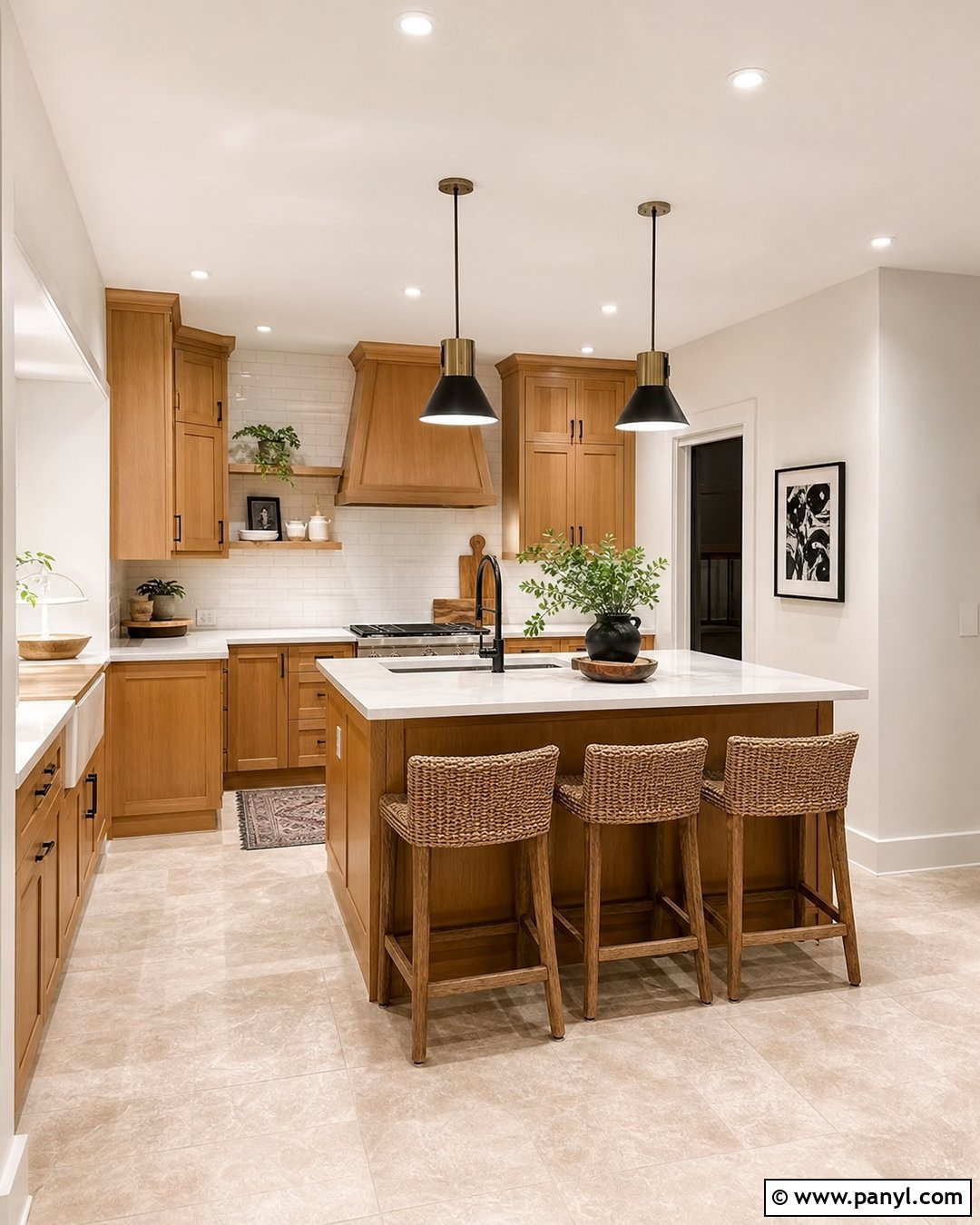
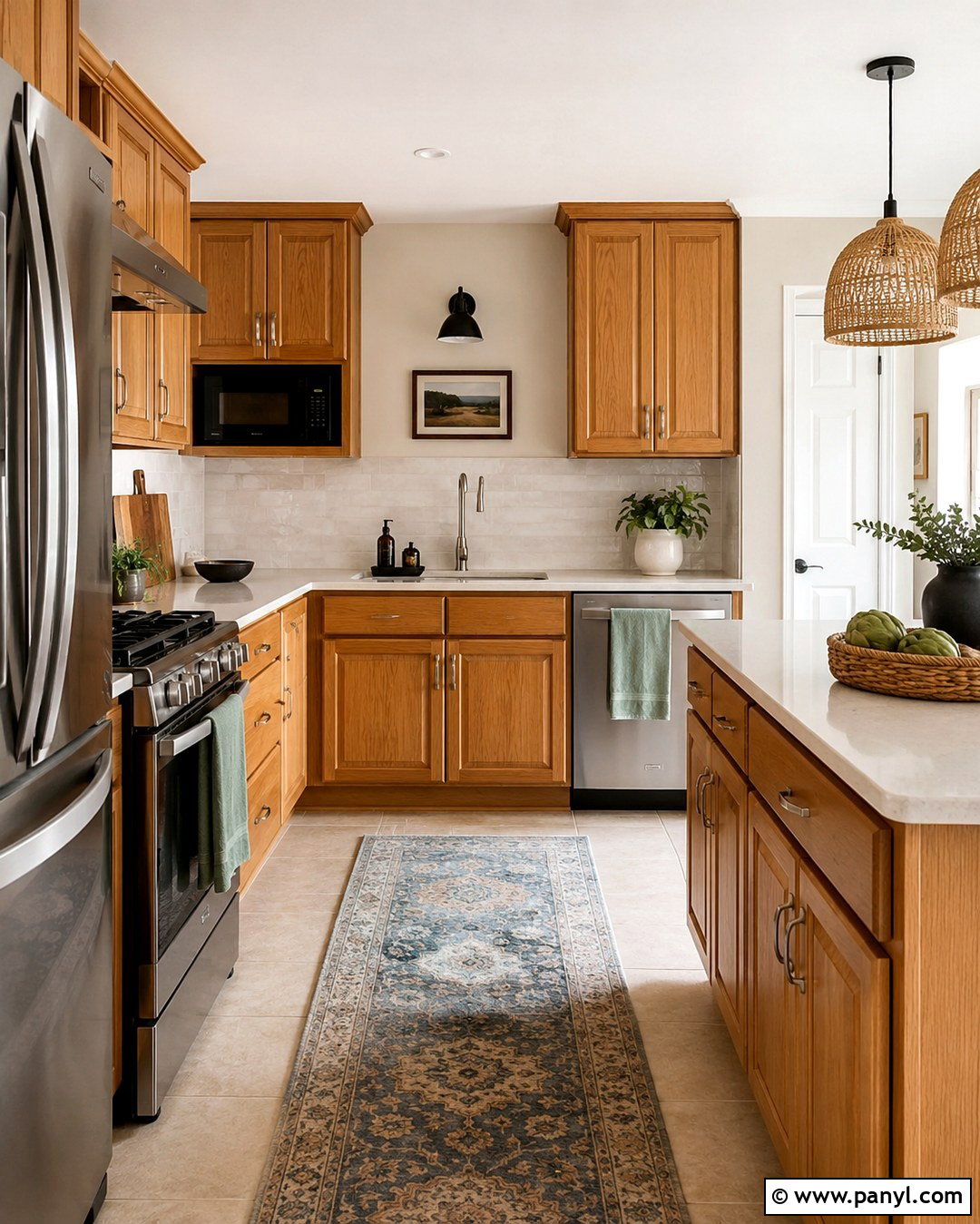
Warm white walls create a clean background without making honey oak cabinets appear overly orange. Choose an off-white with soft cream or beige undertones rather than a sharp, blue-based white. Pair the cabinets with creamy quartz countertops and a simple white subway tile backsplash using warm gray grout. Brushed nickel hardware keeps the room fresh, while woven counter stools and natural linen shades support the oak’s relaxed character. Light beige porcelain flooring can brighten the kitchen without competing with the wood grain. Add clear glass pendants and a few matte black accents for definition. This complete palette works especially well in smaller kitchens because it reflects light while preserving a welcoming, comfortable atmosphere.
2. Creamy White Walls With Honey Oak Cabinets
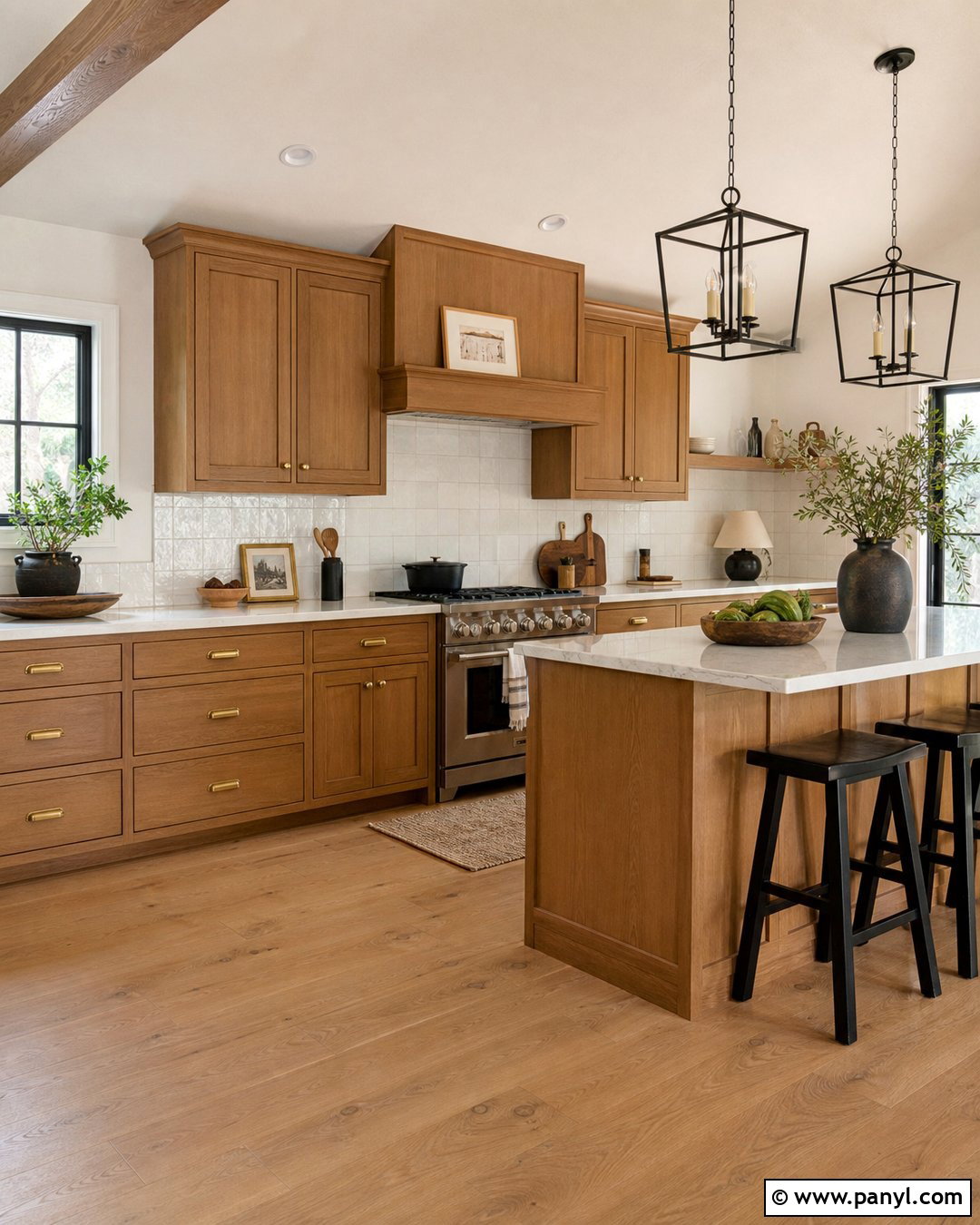
Creamy white walls lean slightly warmer than ordinary off-white, creating a soft and inviting kitchen. This look is especially effective when the honey oak cabinets have strong yellow or golden tones. Balance that warmth with pale stone countertops containing gentle taupe veining. Use an ivory handmade tile backsplash for subtle texture and install aged brass pulls that blend naturally with the cabinet finish. Medium-toned oak flooring can work when a neutral runner separates it visually from the cabinetry. For contrast, introduce black-framed pendant lights, a dark bronze faucet, and charcoal accessories. The finished room feels bright but not sterile, making this wall color a comfortable choice for traditional, farmhouse, and transitional kitchens.
3. Soft Ivory Walls With Honey Oak Cabinets
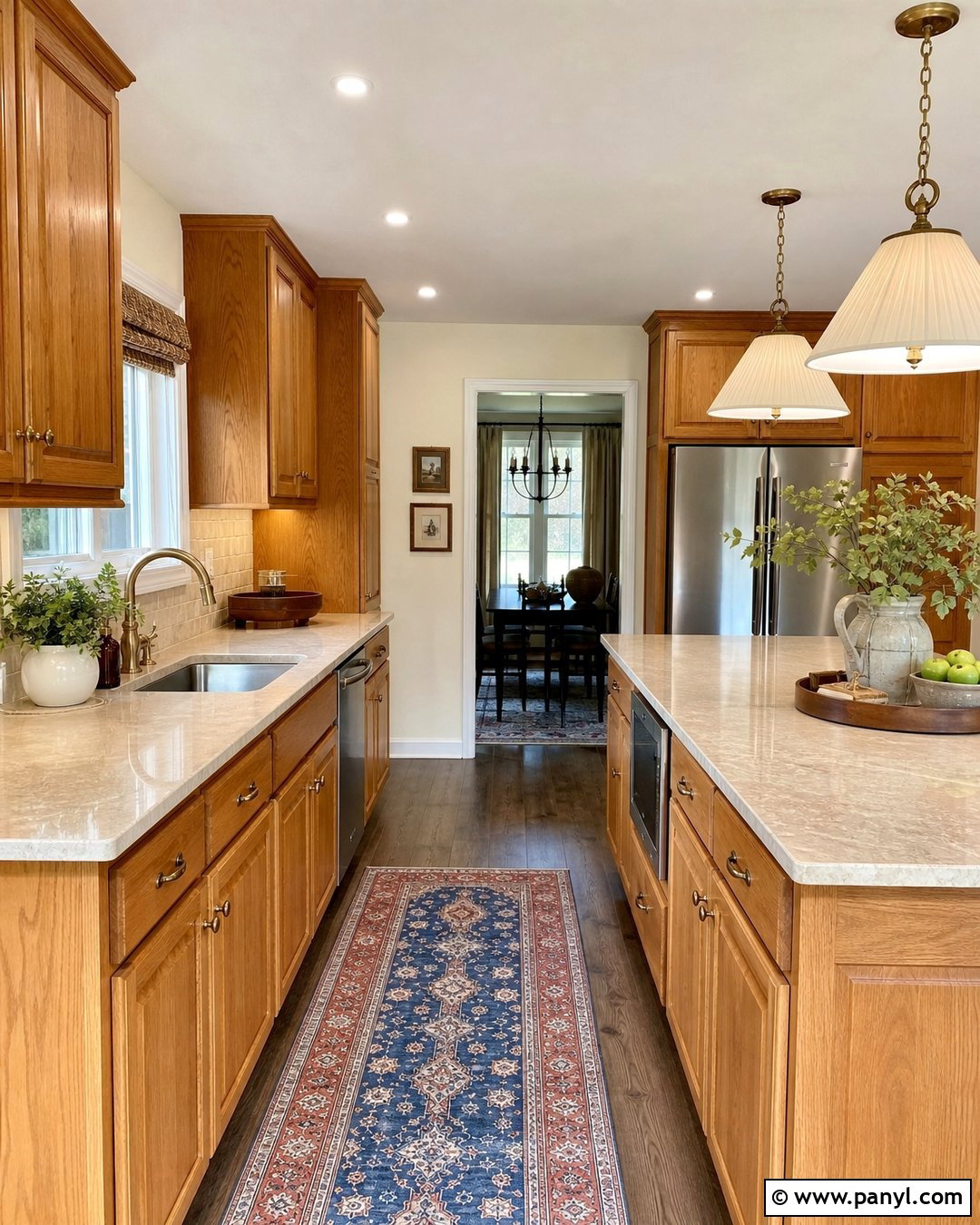
Soft ivory walls give honey oak cabinetry an elegant, gently layered appearance. Unlike bright white, ivory shares some of the wood’s warmth, so the transition between the cabinets and walls feels smooth. Choose light quartz counters with fine beige movement and a tumbled limestone backsplash for an understated traditional look. Antique brass knobs, an aged bronze faucet, and warm white ceramic accessories add character without overcrowding the room. Ground the palette with medium brown wood-look flooring or soft taupe tile. A patterned runner containing ivory, muted blue, and rust can connect the entire scheme. Finish with shaded pendant lights that provide clear illumination while maintaining the kitchen’s calm, established personality.
4. Light Greige Walls With Honey Oak Cabinets
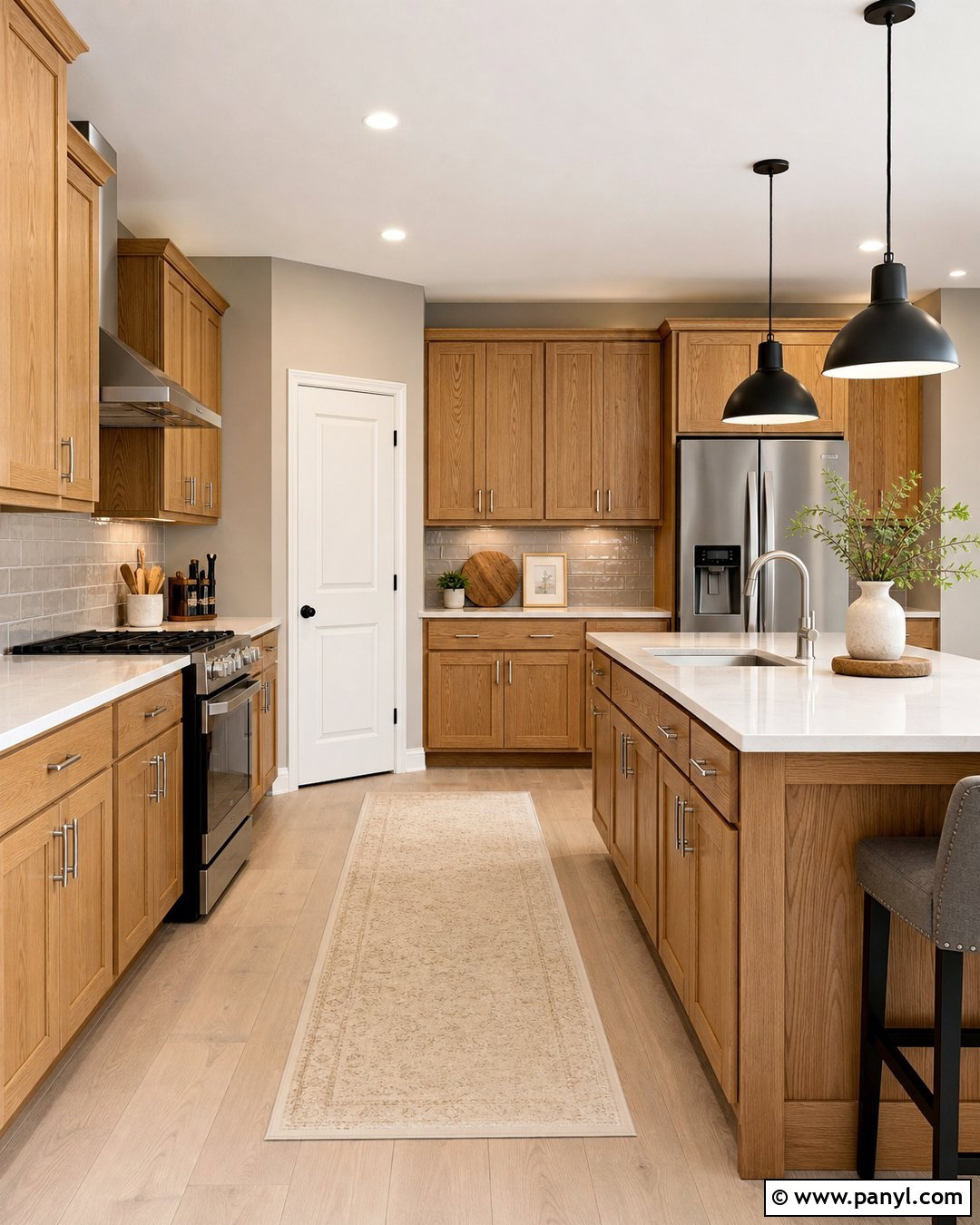
Light greige walls offer an easy way to balance the golden character of honey oak. The gray component softens the wood’s orange undertone, while the beige component prevents the room from feeling cold. Pair this wall color with off-white quartz counters, warm gray backsplash tile, and simple satin nickel hardware. Pale oak-look flooring creates a lighter foundation, although neutral porcelain tile works equally well. Add black metal pendants and a black faucet to sharpen the palette. Keep textiles soft with oatmeal Roman shades and a cream runner. This complete design feels current yet comfortable, making light greige particularly useful in open kitchens where the wall color must also coordinate with nearby living and dining areas.
5. Warm Greige Walls With Honey Oak Cabinets
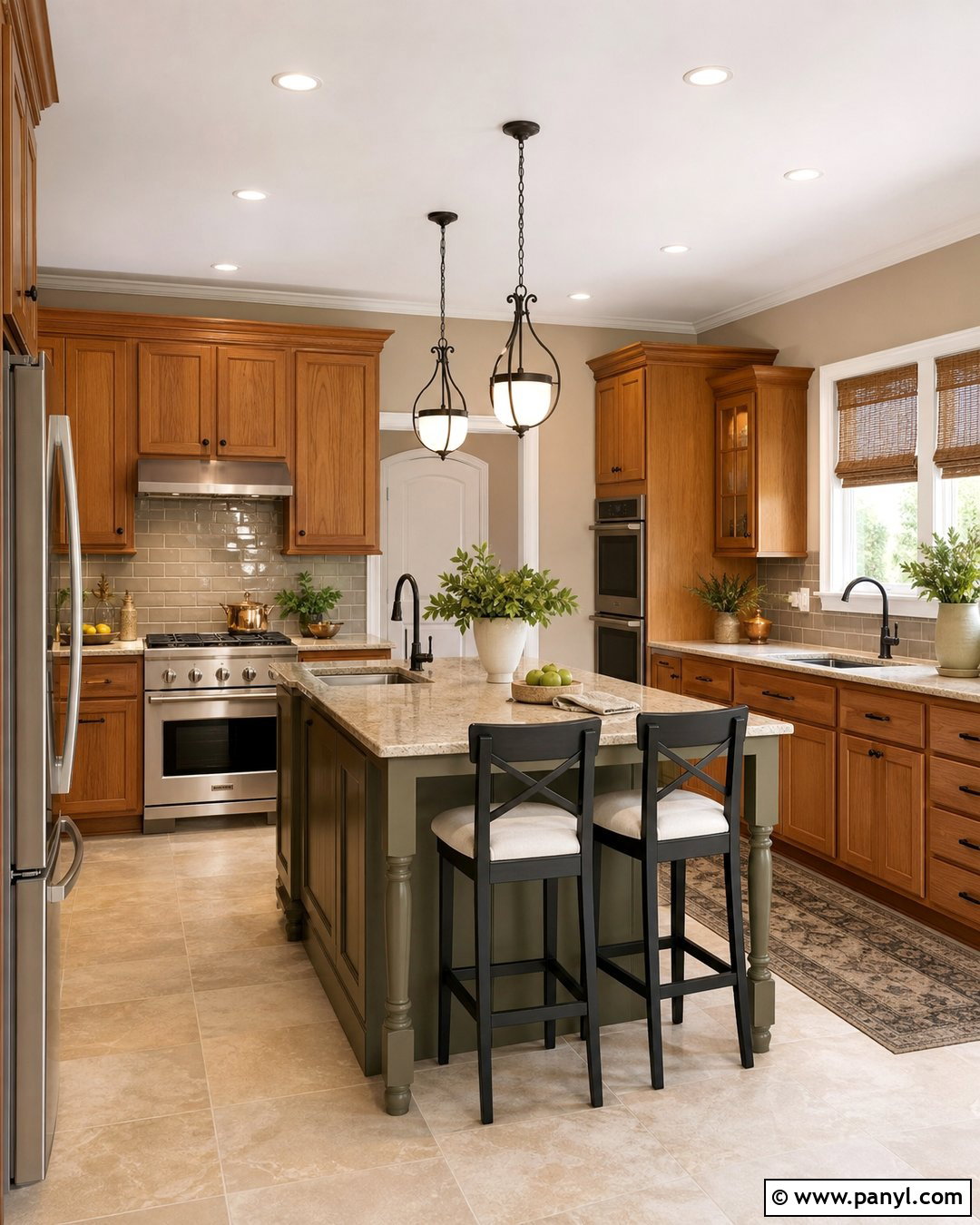
A warmer greige creates more depth than light greige while still calming honey oak’s golden finish. Look for a balanced shade with brown or beige undertones instead of noticeable blue or purple. Build the kitchen around creamy granite or quartz countertops and a matte taupe subway tile backsplash. Oil-rubbed bronze hardware adds definition without introducing a severe contrast. Use warm stone flooring, natural woven shades, and a simple beige runner to maintain an earthy appearance. If the kitchen has an island, paint it deep charcoal or muted olive for a grounded focal point. Warm greige works particularly well in medium and large kitchens where stronger wall color can make the cabinetry feel richer and more intentional.
6. Mushroom Walls With Honey Oak Cabinets
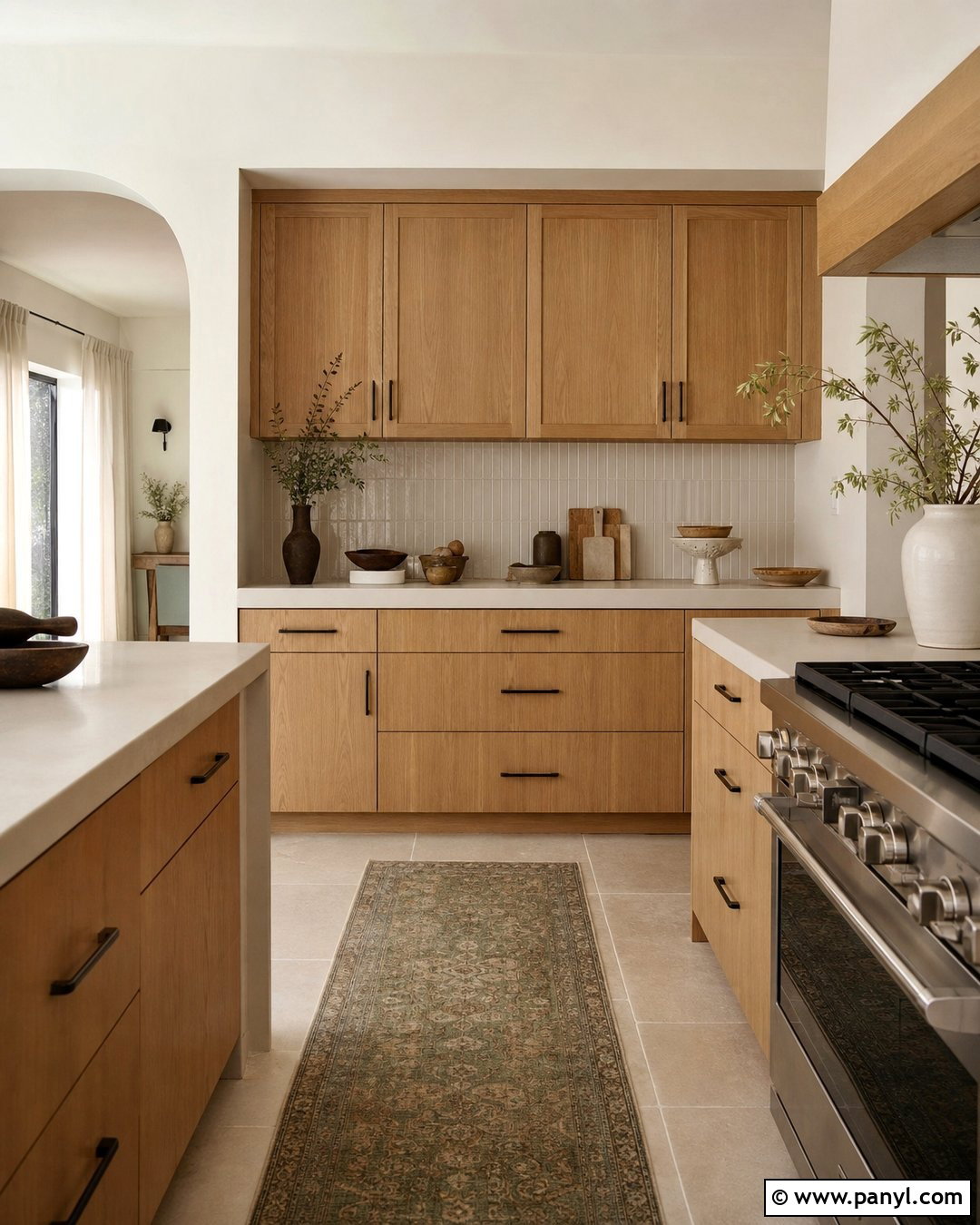
Mushroom walls combine beige, gray, and brown in a beautifully understated color that looks natural beside honey oak. This earthy neutral reduces the visual intensity of orange wood without trying to hide it. Pair the cabinets with creamy white countertops and elongated ivory backsplash tile for a cleaner, more modern surface. Matte black pulls, a black bridge faucet, and slim black pendants create crisp structure. Choose pale limestone-look flooring or wide-plank neutral oak to keep the room open. Add linen café curtains, handmade pottery, and a small vintage-style runner with brown and faded green details. The finished kitchen feels warm, grounded, and refined without relying on an all-white palette or a costly cabinet update.
7. Soft Taupe Walls With Honey Oak Cabinets
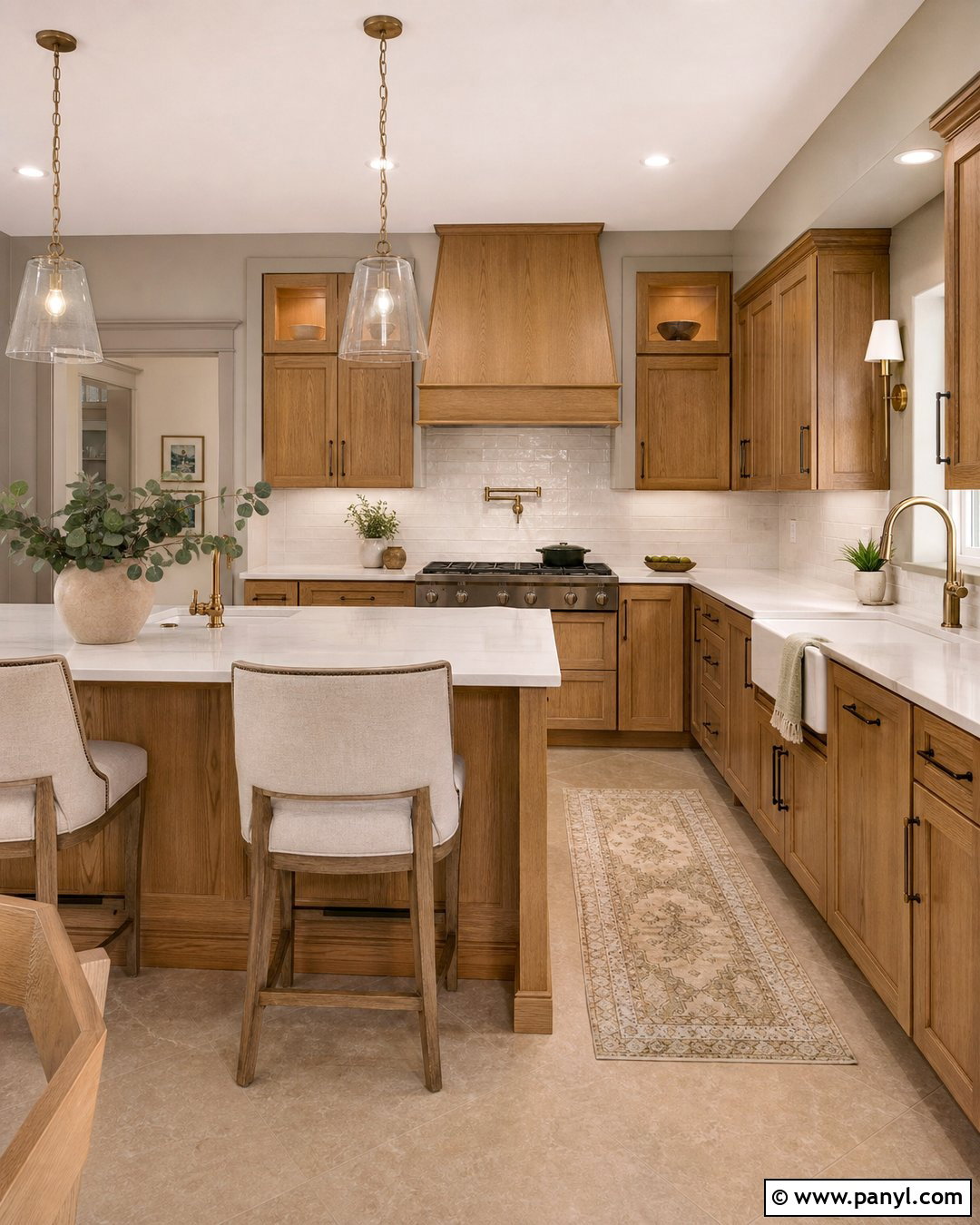
Soft taupe walls bring quiet sophistication to a kitchen with honey oak cabinetry. The color’s brown-gray base relates to the wood while reducing the prominence of its golden undertones. Choose a pale taupe that stays noticeably lighter than the cabinet finish. Complete the room with white quartz counters, creamy zellige-style backsplash tile, and champagne bronze hardware. A natural stone floor in soft beige adds gentle variation underfoot. For lighting, select clear glass pendants with dark bronze fittings so the room remains visually open. Incorporate ivory textiles and small accents in muted sage green. Taupe is an excellent choice when you want an updated neutral kitchen that still feels warm, layered, and connected to natural materials.
8. Warm Beige Walls With Honey Oak Cabinets
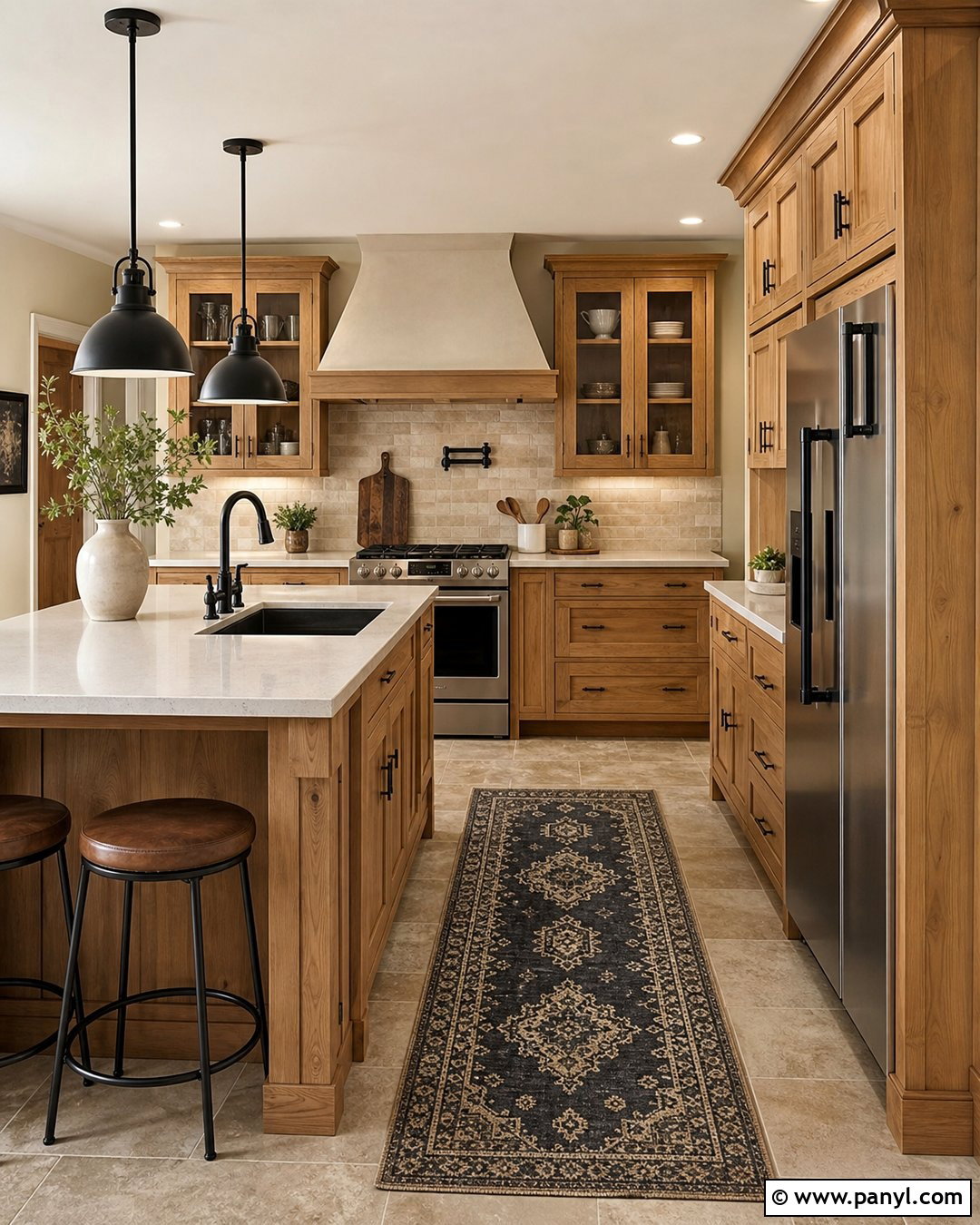
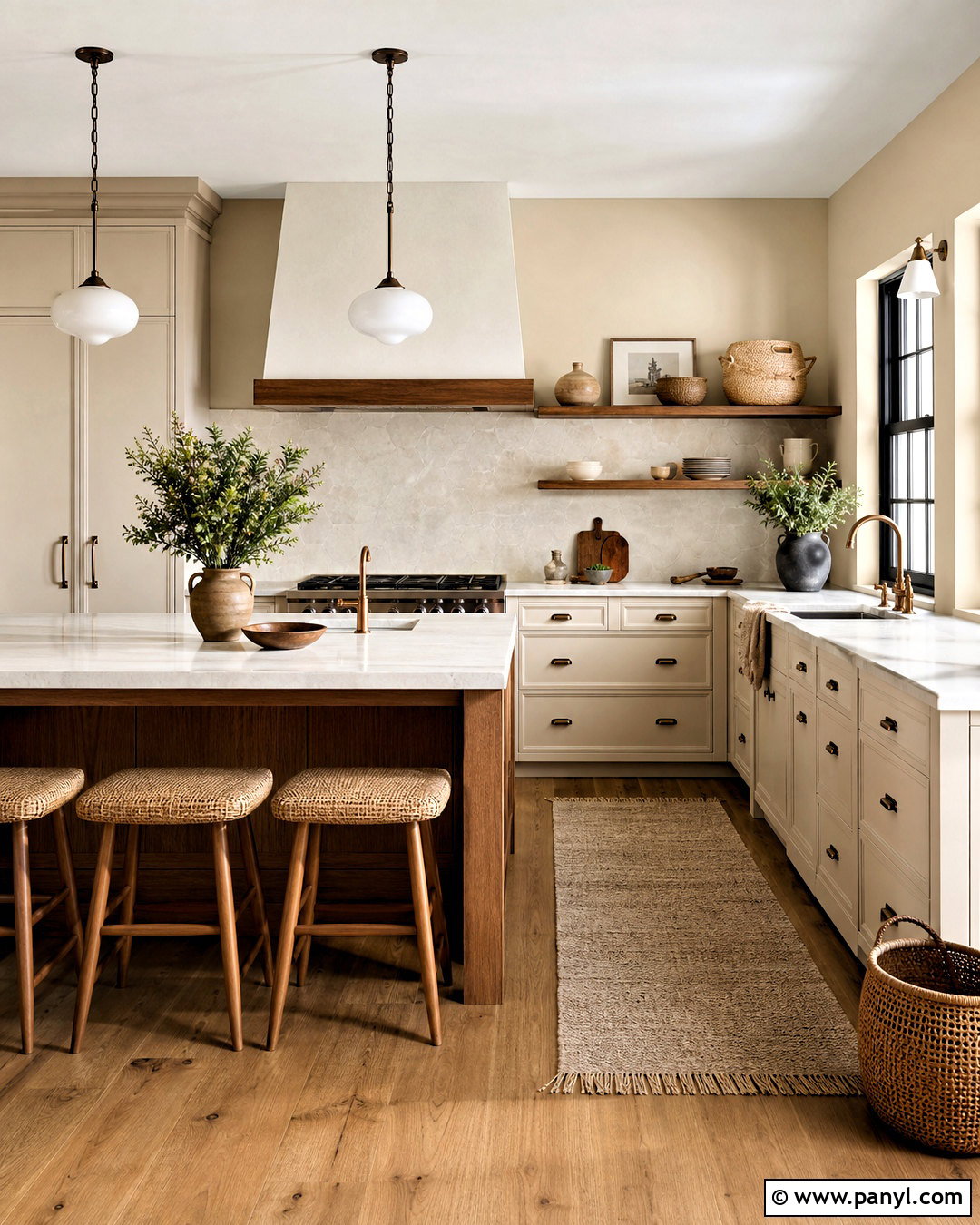
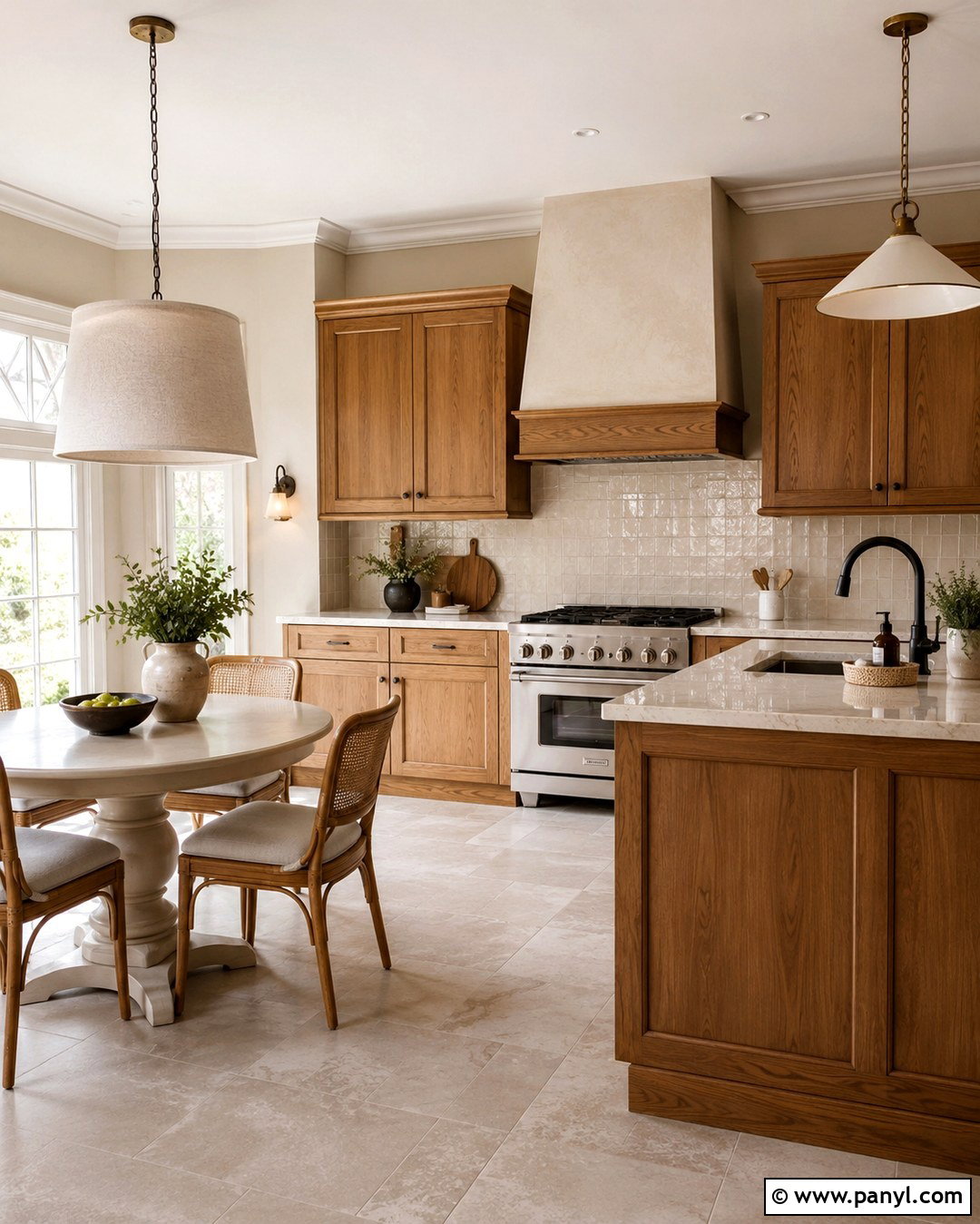
Warm beige walls create a seamless, tonal kitchen when you prefer to embrace honey oak rather than visually cool it down. Select a quiet beige that is lighter and less yellow than the cabinetry. Pair it with creamy quartz counters, travertine-look backsplash tile, and antique brass hardware for a cohesive traditional scheme. To prevent the room from becoming too golden, introduce matte black pendant lights, a dark faucet, and off-white ceramic accessories. Neutral stone flooring with subtle gray movement can provide further balance. Add a washable runner containing charcoal, tan, and cream. The completed kitchen feels welcoming and coordinated, particularly in north-facing rooms where cool natural light can make stronger gray paint appear flat or slightly blue.
9. Oatmeal Walls With Honey Oak Cabinets
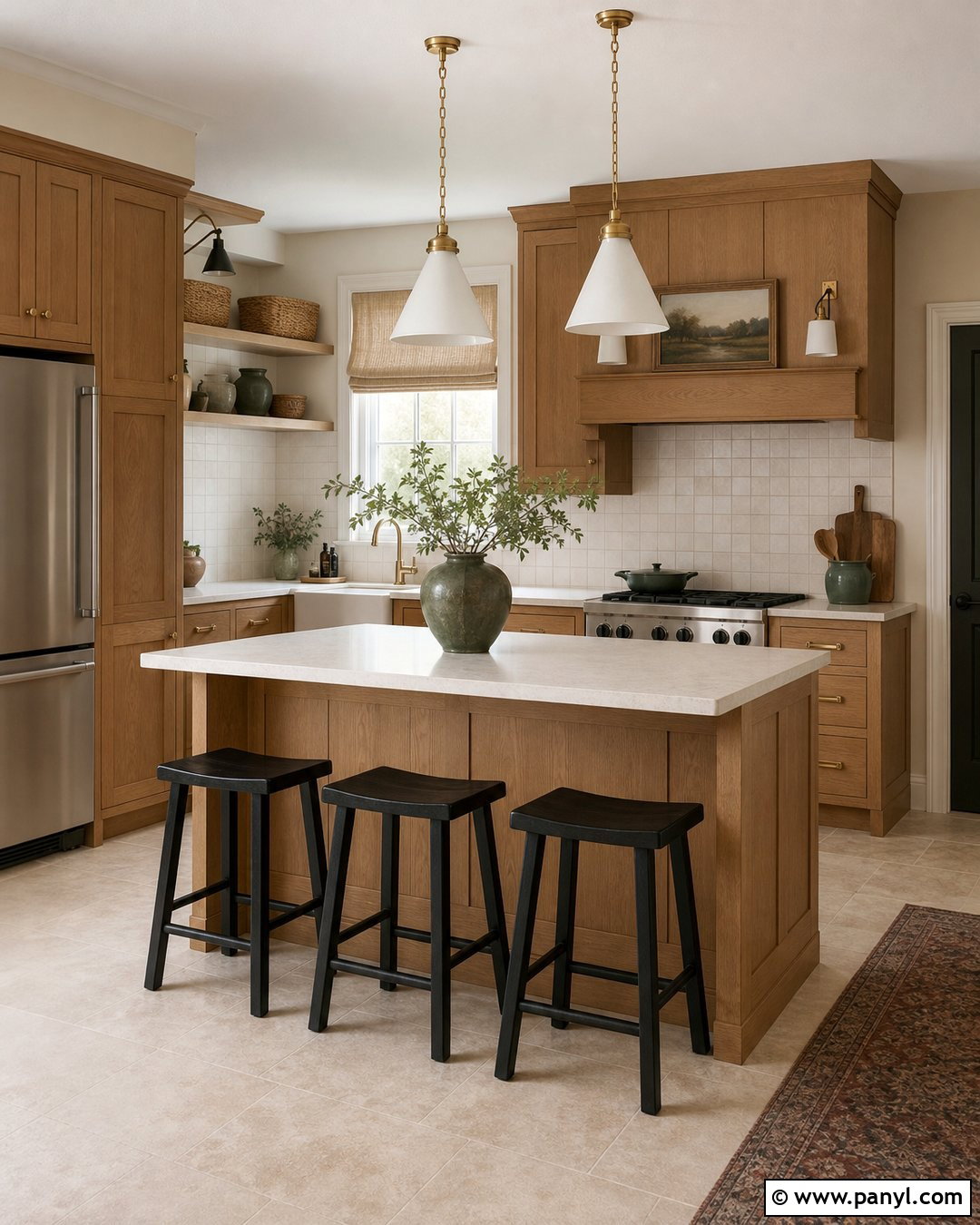
Oatmeal walls offer a light, natural neutral with enough warmth to connect beautifully with honey oak. The shade is softer than beige and more substantial than plain off-white, giving the kitchen a comfortable, lived-in quality. Pair it with pale quartz countertops, an ivory square-tile backsplash, and brushed brass cabinet hardware. Use light limestone flooring or neutral wood-look planks to create an airy base. Black counter stools and dark bronze lighting can supply necessary contrast. Add woven baskets, linen shades, and understated green pottery to reinforce the organic palette. This wall color works particularly well in casual family kitchens because it feels forgiving and relaxed while allowing the cabinet grain to remain a meaningful part of the design.
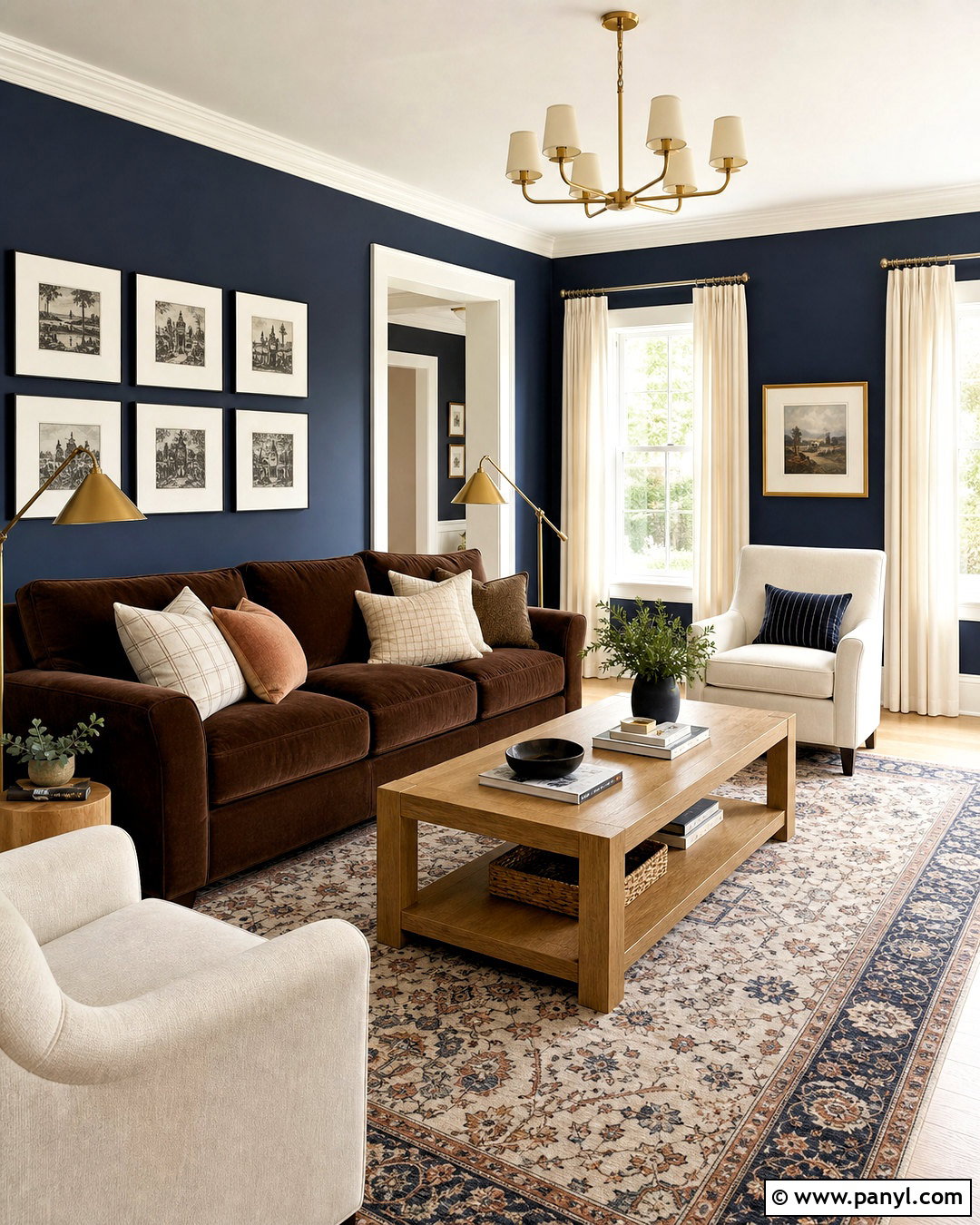
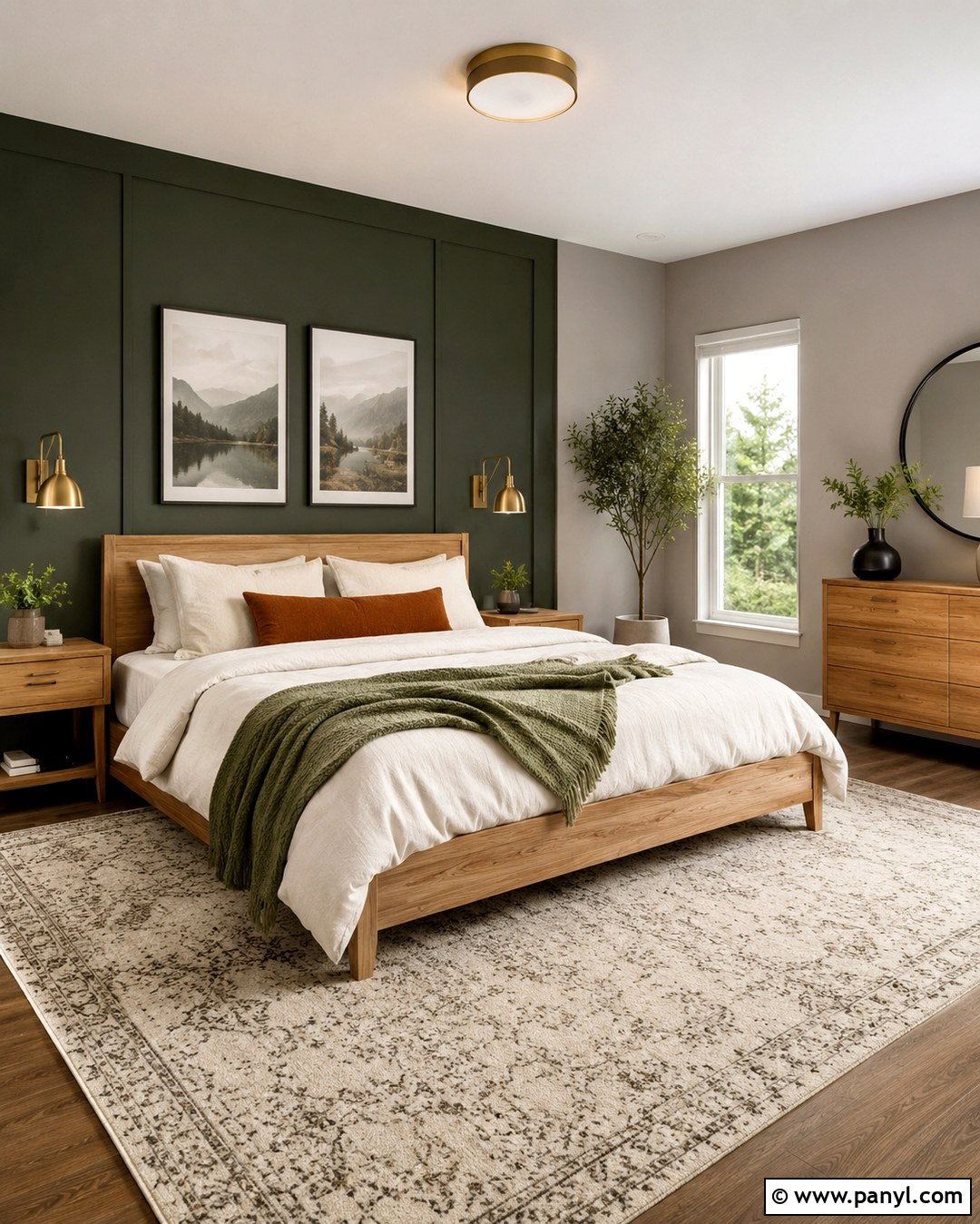
10. Natural Linen Walls With Honey Oak Cabinets
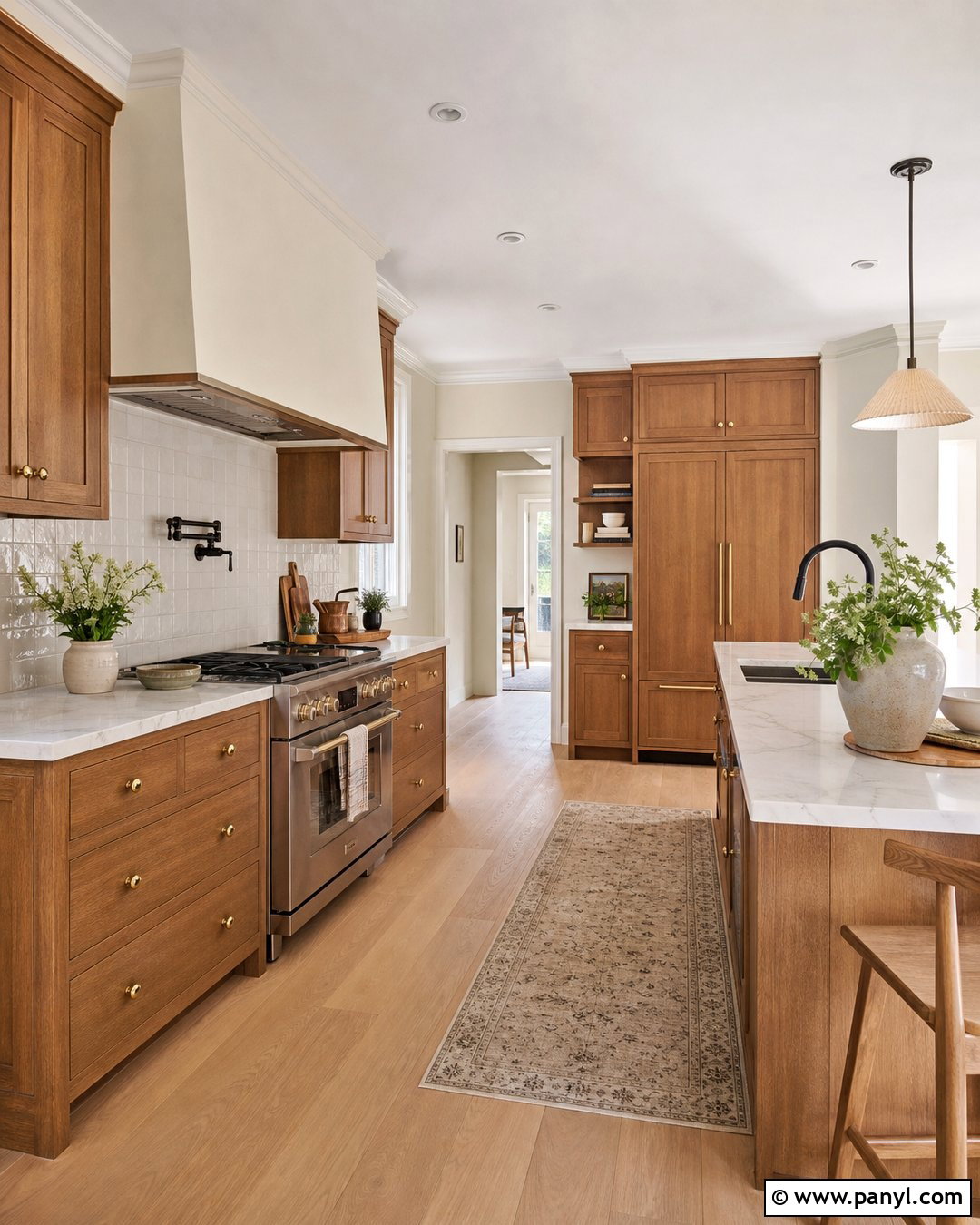
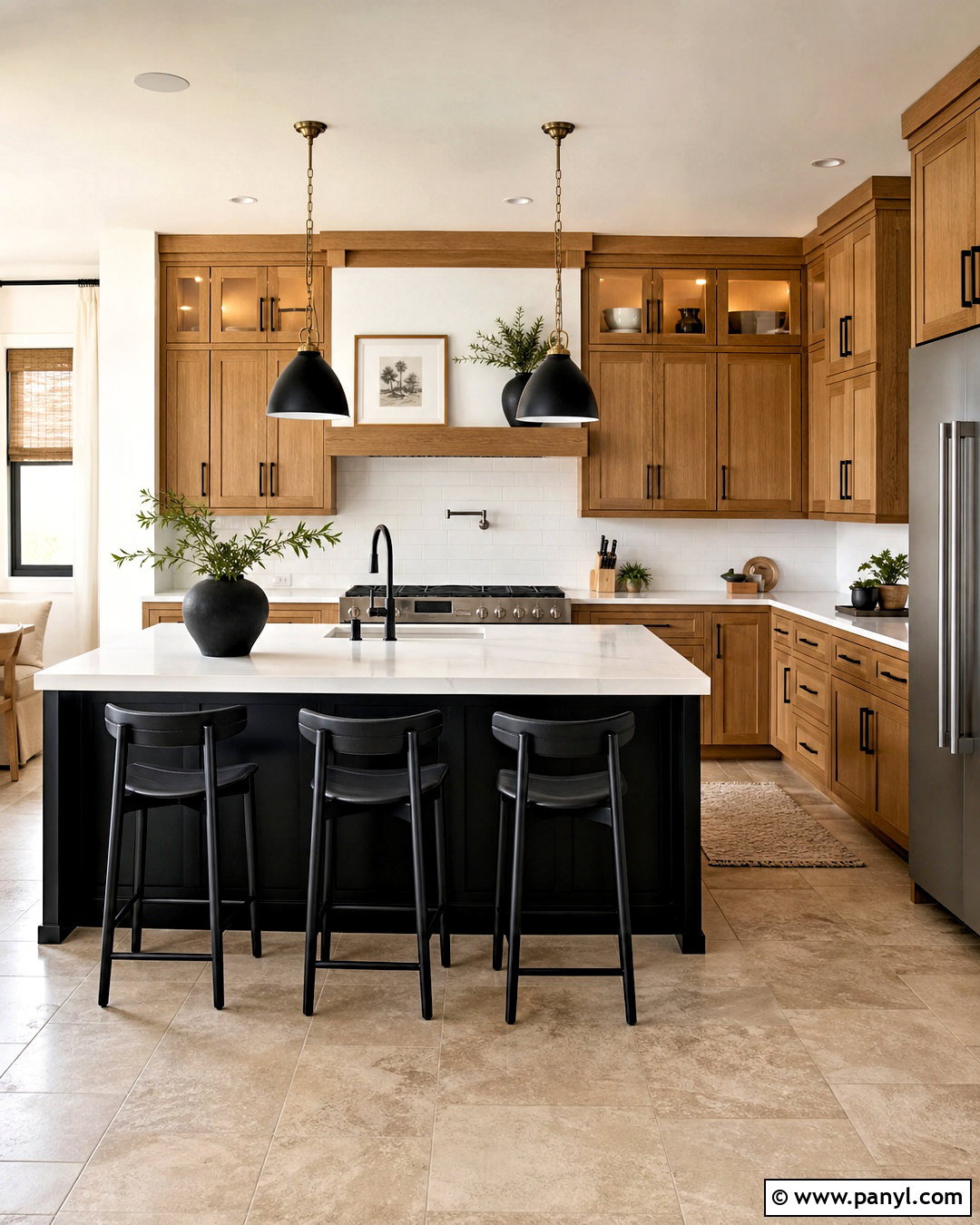
Natural linen walls have a muted beige base that complements honey oak without repeating its brighter golden notes. This color creates a calm envelope around the cabinets and works well in kitchens connected to neutral living spaces. Combine it with creamy marble-look quartz counters and an off-white backsplash featuring subtle handmade texture. Choose aged brass knobs, a dark bronze faucet, and warm metal pendant lights for a layered finish. Wide-plank flooring in a pale neutral oak can lighten the lower half of the room. Add an ivory runner, simple wood stools, and soft green accessories. The final look feels timeless and relaxed, with enough variation between the walls, cabinets, and flooring to prevent the palette from appearing overly matched.
11. Pale Sage Green Walls With Honey Oak Cabinets
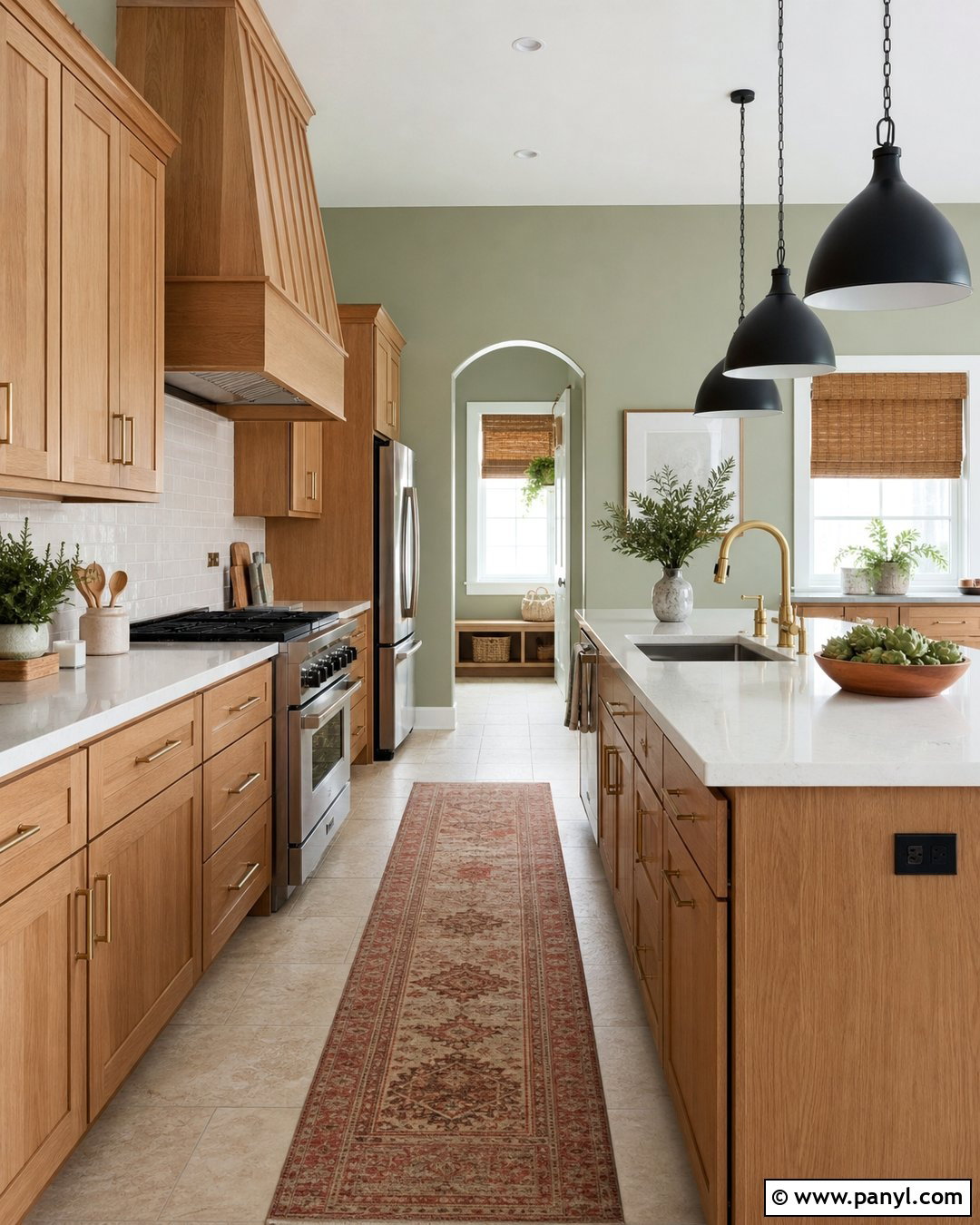
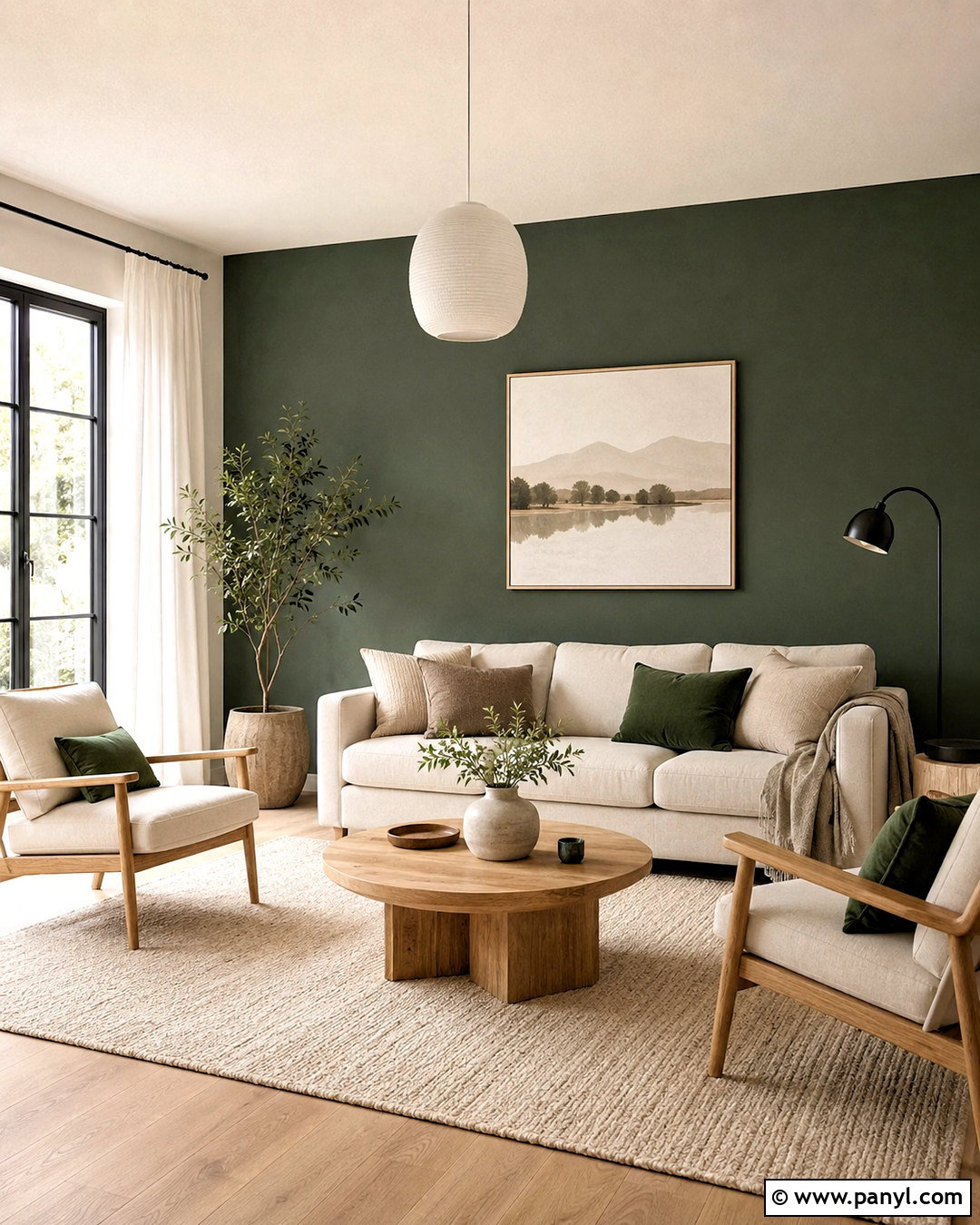
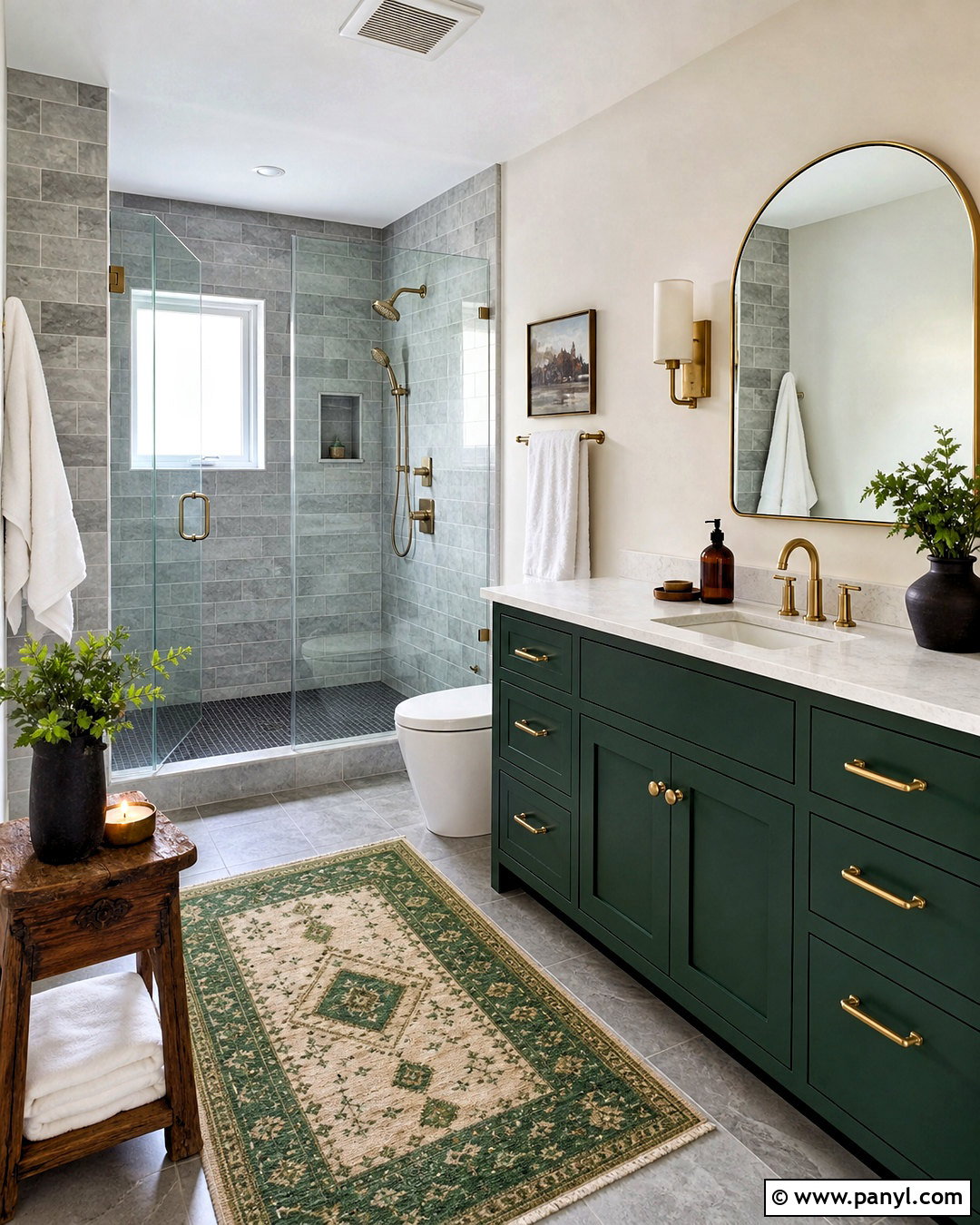
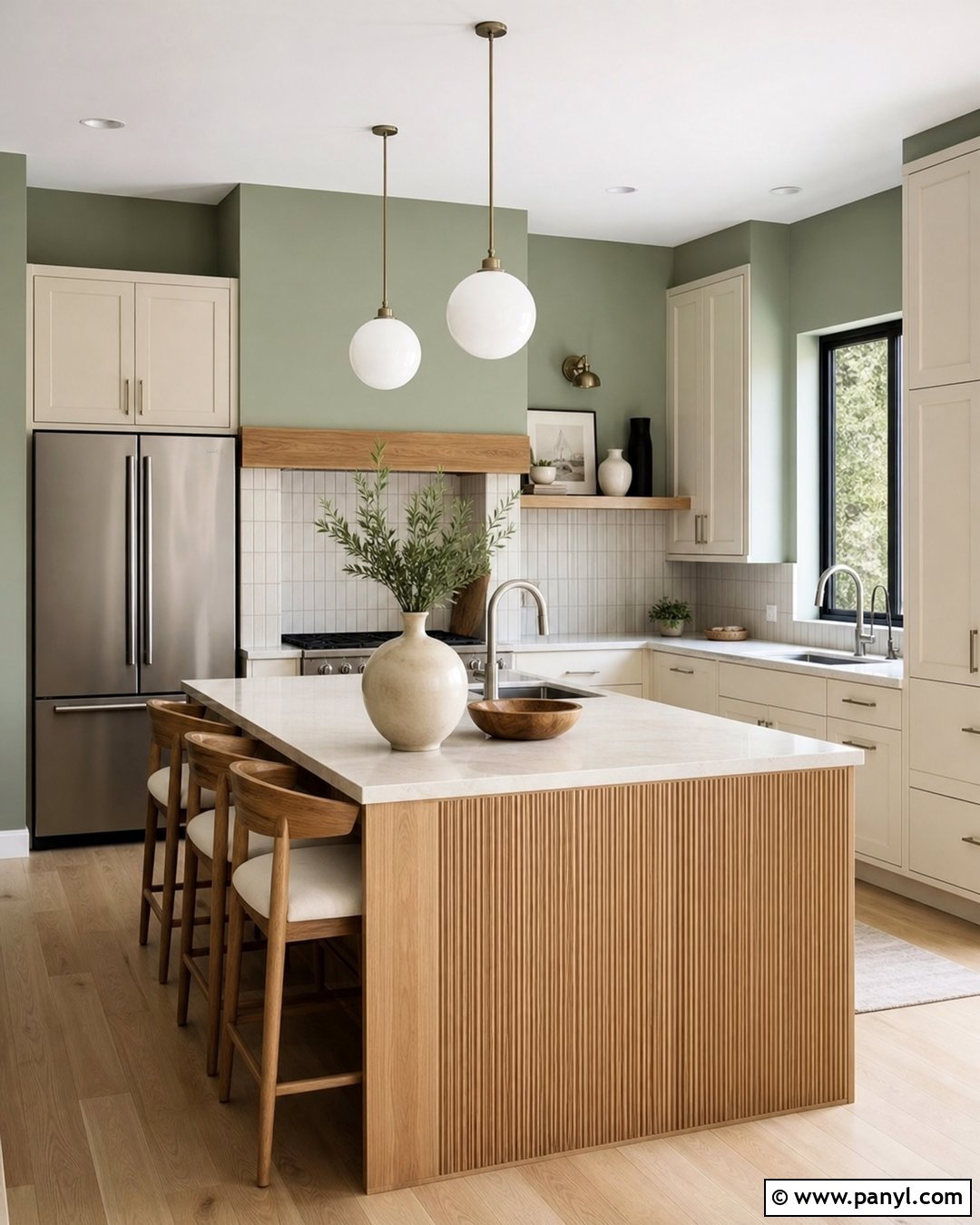
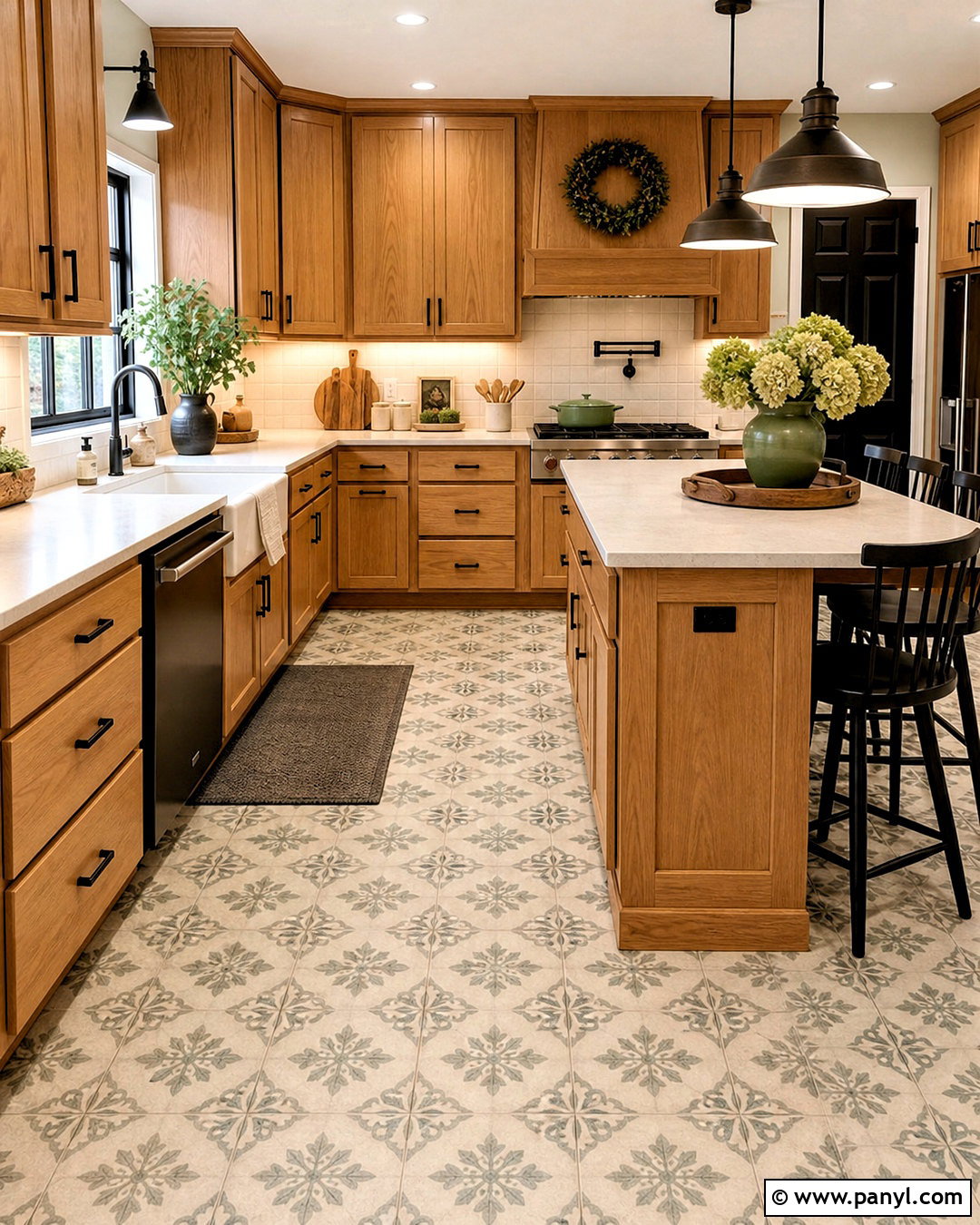
Pale sage green creates soft contrast against honey oak while keeping the kitchen connected to nature. Choose a muted sage with gray undertones rather than a bright yellow-green. The cooler base gently balances the cabinet color, while the green highlights the beauty of the oak grain. Pair it with warm white quartz counters, creamy backsplash tile, and brushed brass pulls. Light stone flooring and natural woven shades maintain the organic look. Add black-framed pendant lights or a matte black faucet for definition. A washable rug featuring cream, faded green, and terracotta can bring the palette together. This complete kitchen feels fresh and peaceful, fitting farmhouse, cottage, transitional, and nature-inspired interiors without making the cabinets look outdated.
12. Muted Olive Walls With Honey Oak Cabinets
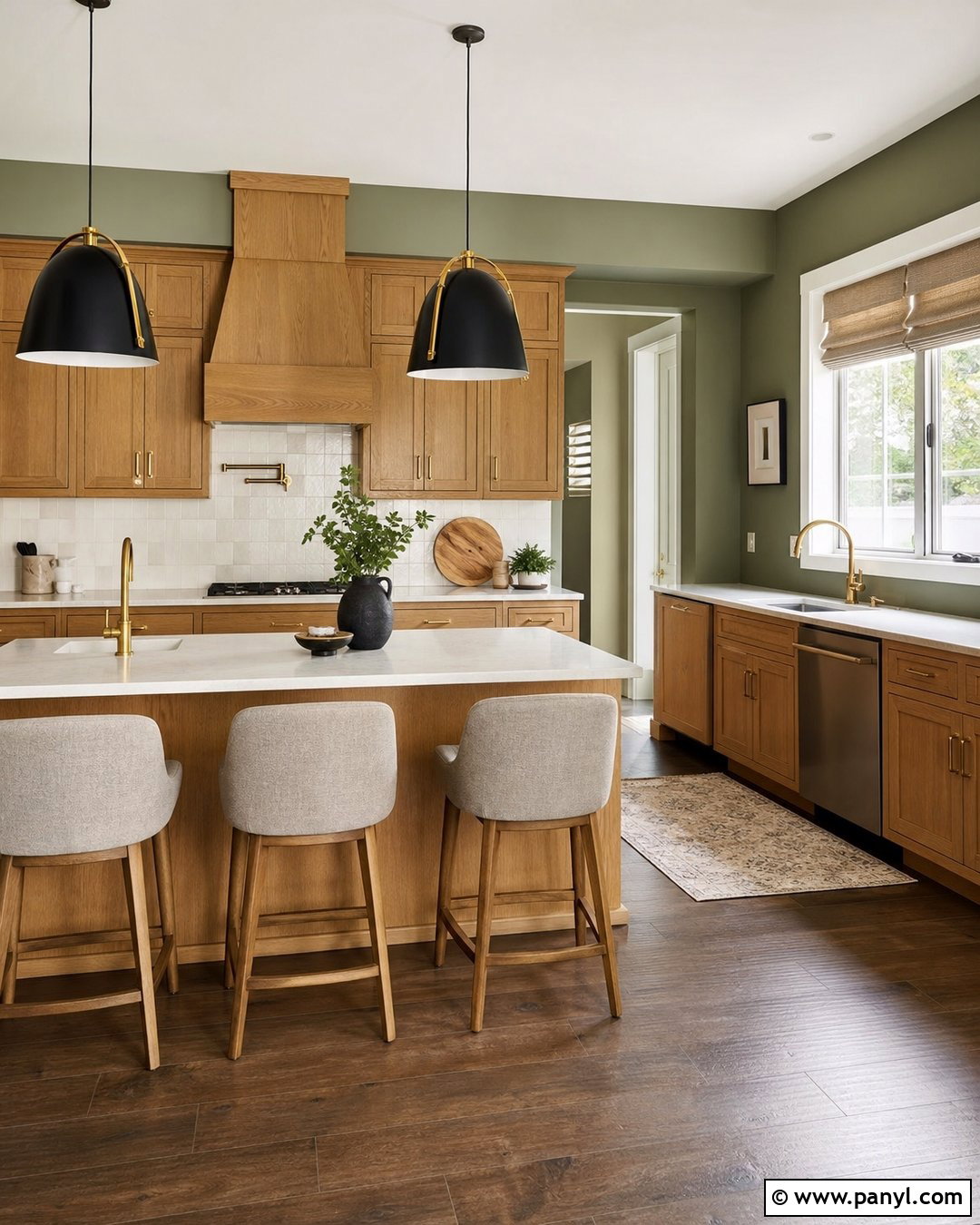
Muted olive walls create a rich, earthy kitchen where honey oak feels purposeful rather than leftover from another decade. Select an olive with gray or brown undertones to avoid an overly bright result. Pair it with creamy quartz counters and a warm white backsplash so the room retains plenty of visual light. Antique brass hardware enhances the natural warmth, while black pendants and a black faucet provide a modern edge. Use medium brown wood flooring or textured beige tile for a grounded foundation. Keep window treatments and seating light with flax linen and oatmeal upholstery. Olive works best in kitchens with good natural or layered artificial lighting, producing a cozy, sophisticated atmosphere that celebrates wood grain and organic color.
13. Eucalyptus Green Walls With Honey Oak Cabinets
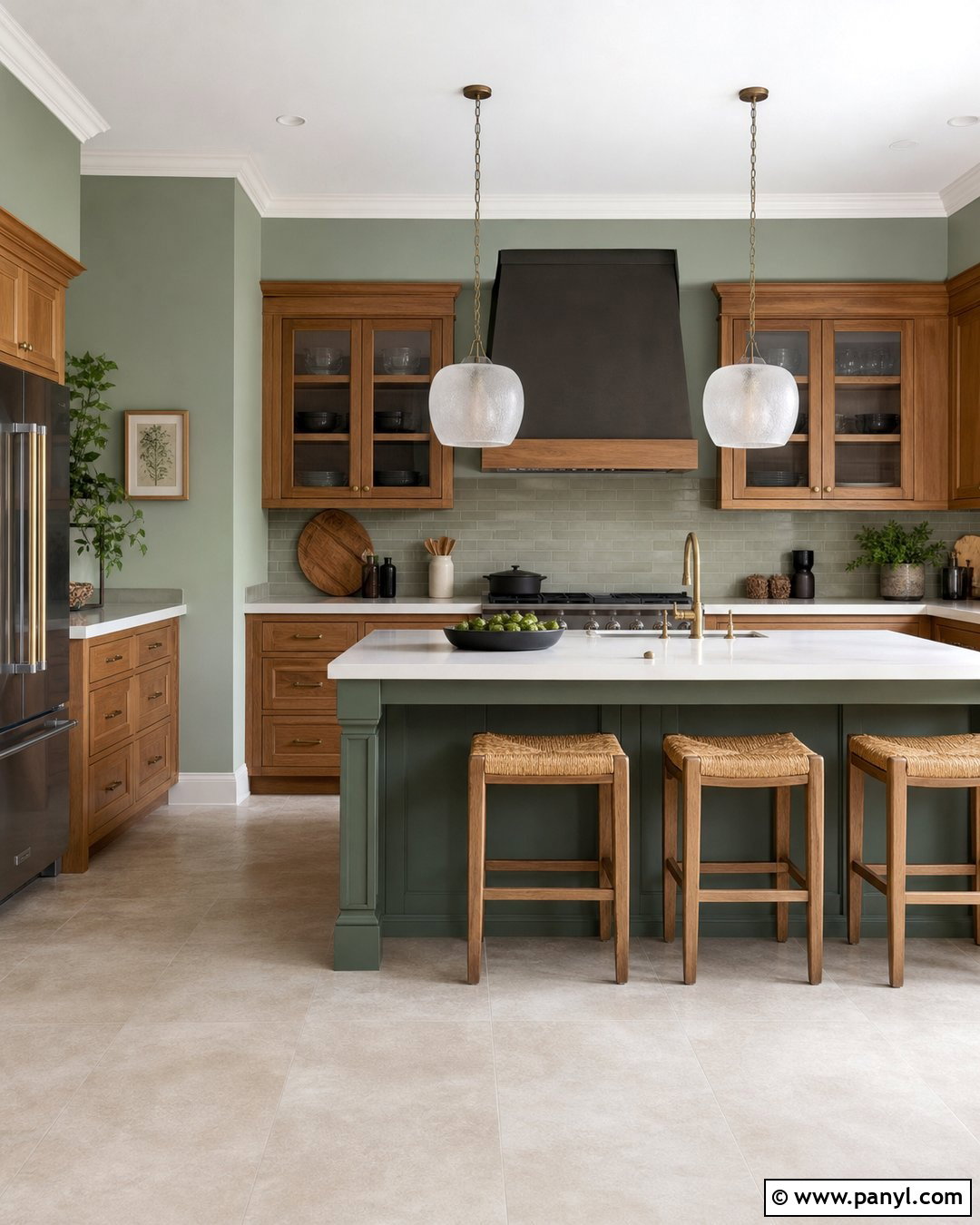
Eucalyptus green is softer and slightly cooler than sage, giving honey oak cabinets a clean, botanical background. Its subdued blue-gray base controls the cabinetry’s orange notes while maintaining a welcoming mood. Complete the kitchen with warm white counters, pale gray-green backsplash tile, and satin brass hardware. A light neutral floor prevents the green walls and wood cabinets from feeling too heavy together. Use frosted glass pendants, woven counter stools, and simple off-white dishes for a relaxed modern finish. Dark charcoal accents can appear through the faucet, window frame, or runner. This combination is ideal for homeowners who want noticeable color that remains versatile, calming, and easy to coordinate with adjoining neutral rooms.
14. Gray Green Walls With Honey Oak Cabinets
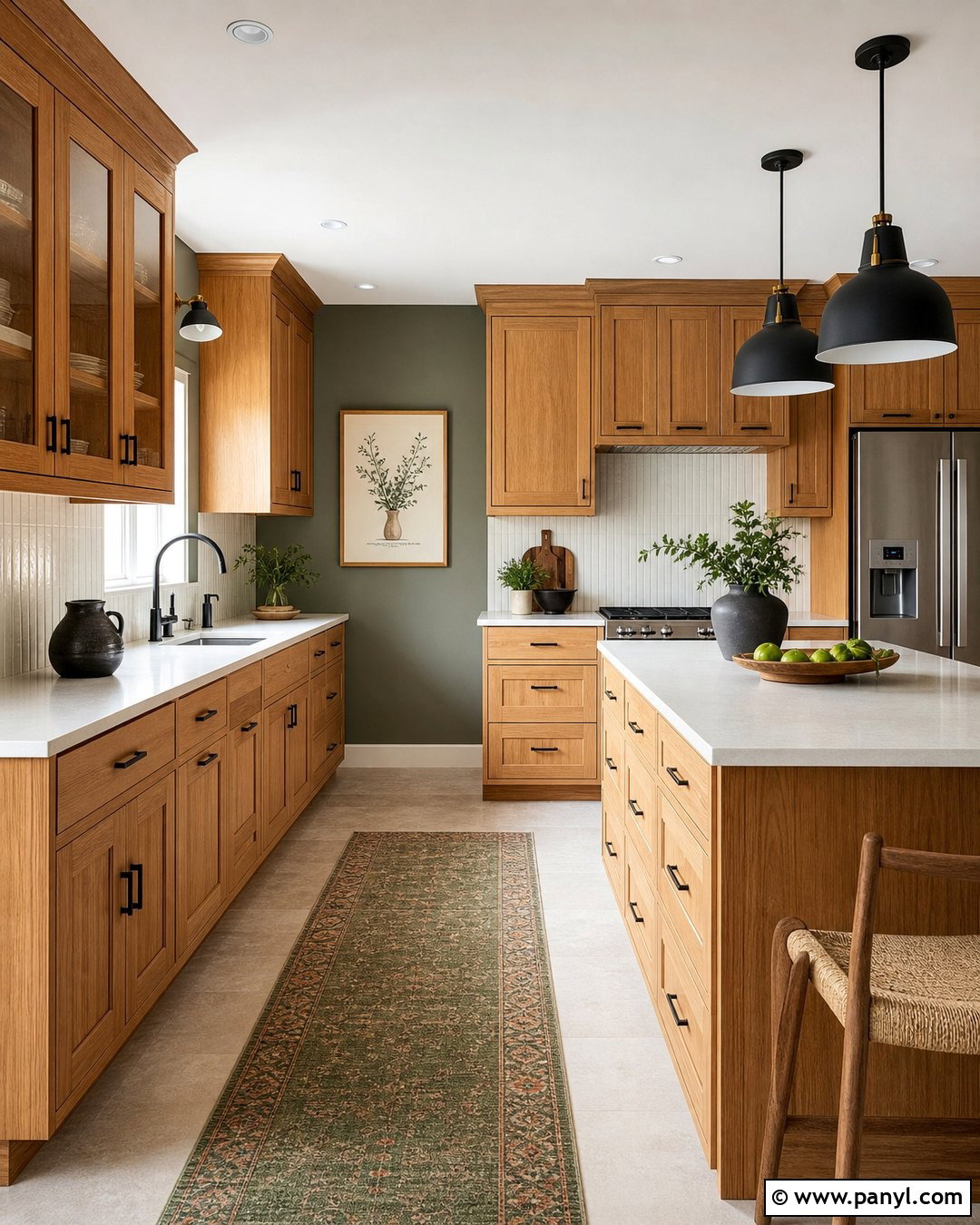
Gray-green walls bring a balanced, modern character to honey oak kitchens. The gray helps neutralize some of the wood’s intensity, while green creates a natural connection to the grain. Select a medium-light shade that stays soft in both daylight and evening illumination. Pair the cabinets with creamy white countertops and vertical off-white backsplash tile to make the kitchen feel taller. Black hardware, black pendants, and a dark faucet give the traditional oak doors a sharper outline. Choose light stone flooring and a patterned runner in cream, green, and warm brown. Add small wood cutting boards and simple pottery. The resulting space feels composed and current without forcing the existing cabinets to imitate a cooler contemporary wood finish.
15. Soft Mint Walls With Honey Oak Cabinets
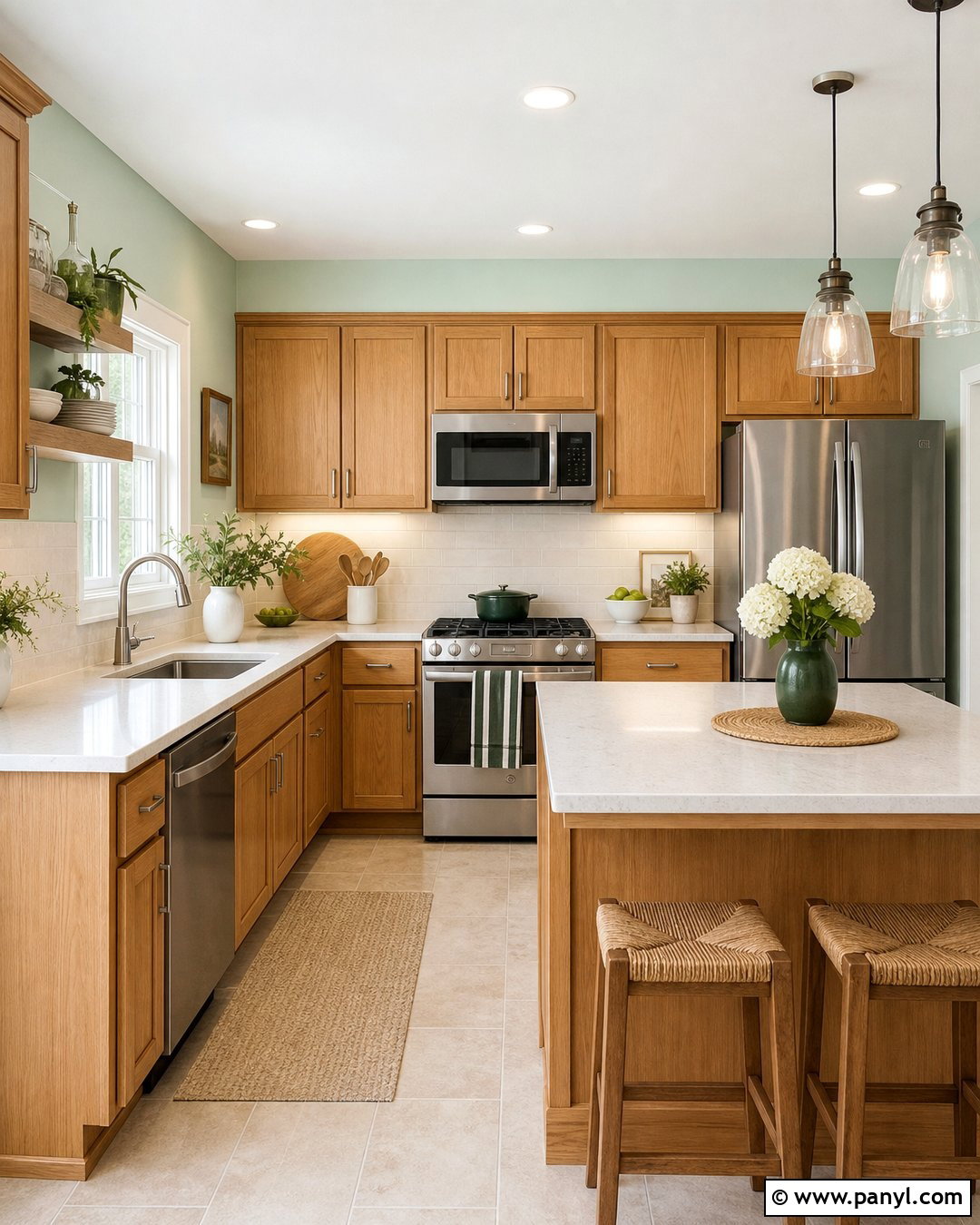
Soft mint walls can brighten a honey oak kitchen when the color is muted rather than sugary. Look for a pale mint with gray undertones, which provides refreshing contrast without making the cabinets appear intensely orange. Use warm white quartz counters and a simple ivory backsplash to keep the palette calm. Brushed nickel pulls, a stainless steel faucet, and clear glass pendants reinforce the light, clean feeling. Ground the room with pale beige flooring and a natural jute-style runner. White ceramic accessories and a few darker green accents add dimension. This combination is particularly effective in small kitchens, breakfast areas, and cottage interiors where a cheerful wall color can make the room feel open, friendly, and distinctive.
16. Pale Blue Walls With Honey Oak Cabinets
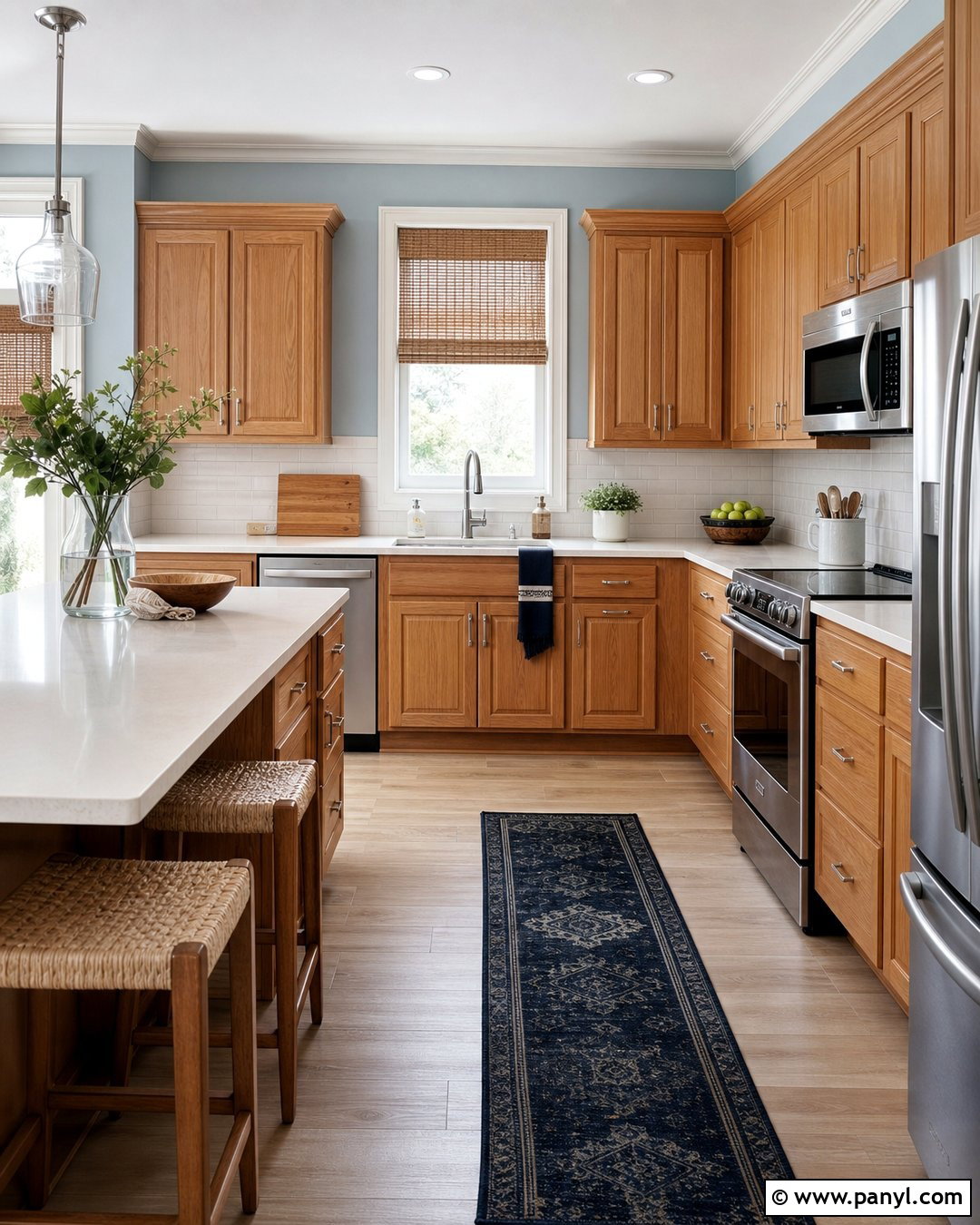
Pale blue walls provide gentle complementary contrast to honey oak’s warm orange-gold character. Choose a subdued blue with a touch of gray so the kitchen feels sophisticated rather than childlike. Pair the walls and cabinets with creamy quartz counters, an off-white subway tile backsplash, and satin nickel hardware. Light oak-look flooring can keep the room casual, while gray stone tile produces a slightly more tailored finish. Use woven shades and natural counter stools to reconnect the blue walls to the wood cabinetry. Navy accessories or a dark blue runner can deepen the palette. This complete look feels airy and welcoming, especially in sunny kitchens where natural light helps the pale blue remain clear and balanced throughout the day.
17. Blue Gray Walls With Honey Oak Cabinets
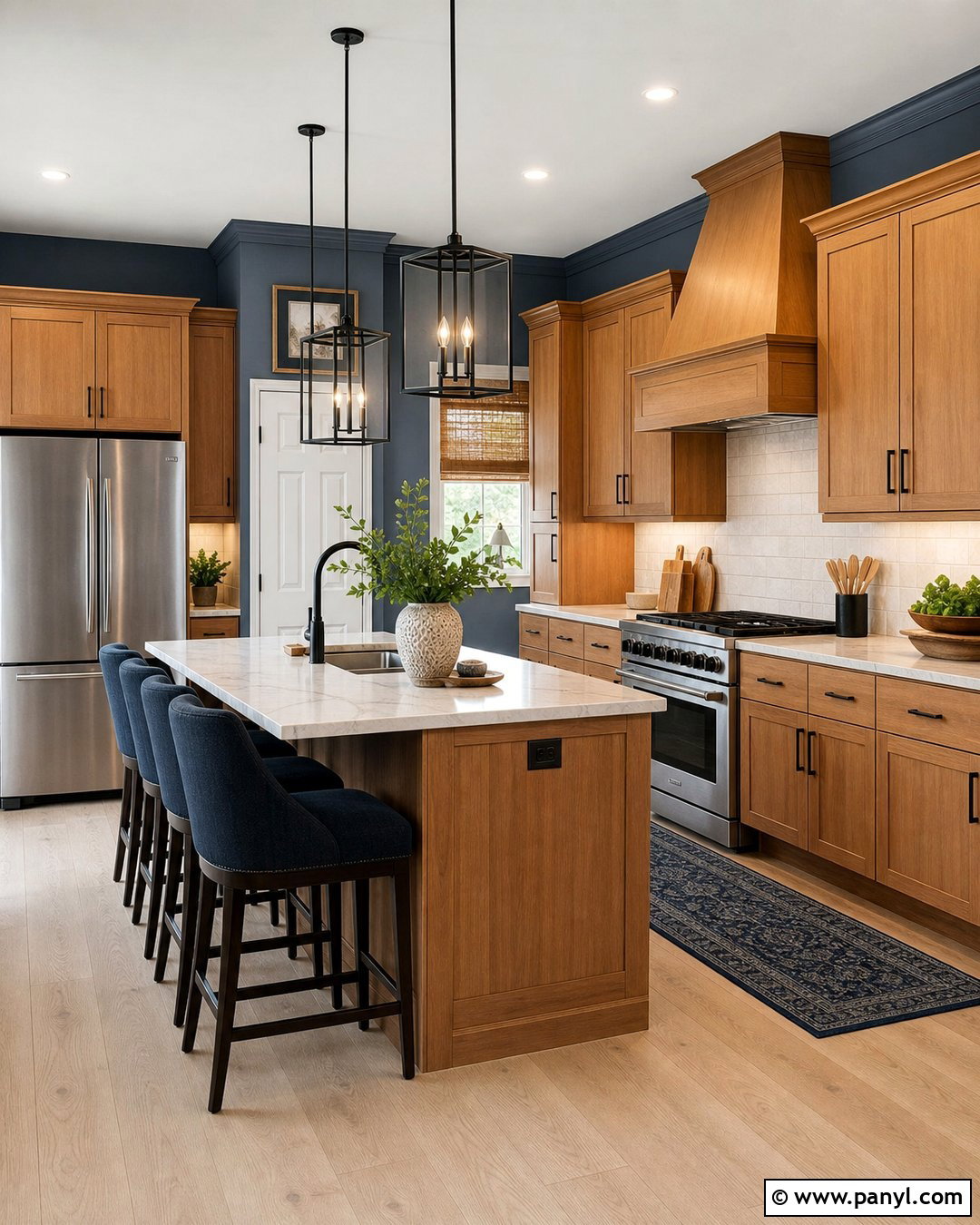
Blue-gray walls add a cooler, more structured backdrop to honey oak cabinetry. The key is choosing a softened shade that includes enough gray to remain restrained and enough warmth to avoid looking icy. Pair it with white quartz countertops featuring subtle taupe veining. Install a warm white backsplash and use matte black hardware to create a cleaner outline around the cabinet doors. Medium gray flooring can work if it has beige movement, while pale wood flooring creates a softer transition. Complete the kitchen with dark blue textiles, natural woven shades, and black-framed glass pendants. The finished scheme has a tailored transitional appearance, balancing the oak without stripping the kitchen of its familiar warmth and character.
18. Dusty Denim Walls With Honey Oak Cabinets
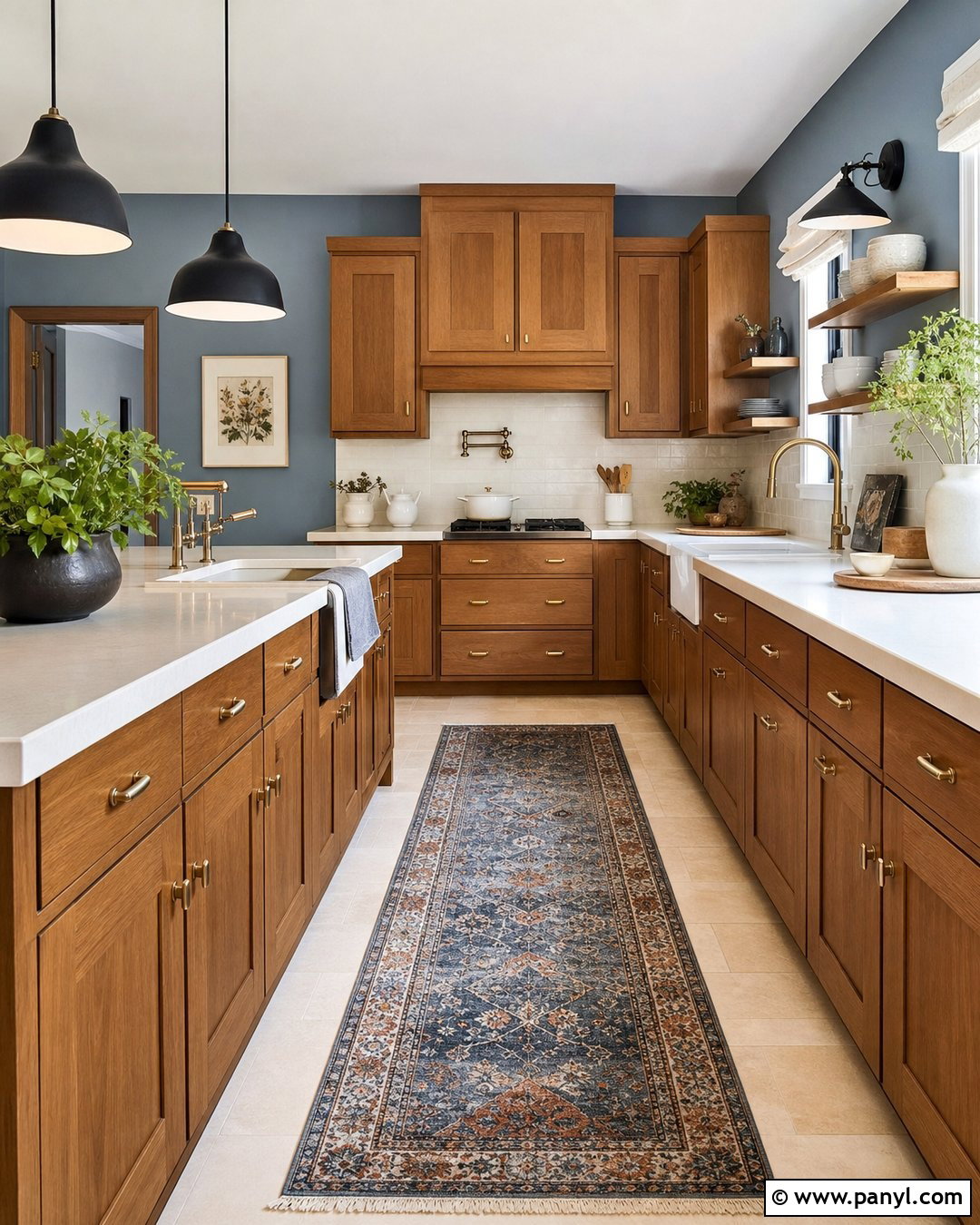
Dusty denim blue gives honey oak cabinets a relaxed, collected appearance. This medium blue should contain gray undertones, creating noticeable contrast without becoming loud. Keep the counters light with creamy quartz or pale stone, then install an ivory backsplash to reflect light around the room. Aged brass pulls connect the blue walls to the golden cabinets, while black metal pendants add sharper definition. Choose neutral beige flooring and introduce a vintage-inspired runner with denim blue, rust, and cream. Open areas can include white pottery and natural cutting boards. This design works particularly well in casual farmhouse and transitional kitchens, creating enough color to feel memorable while remaining practical and comfortable for daily family use.
19. Slate Blue Walls With Honey Oak Cabinets
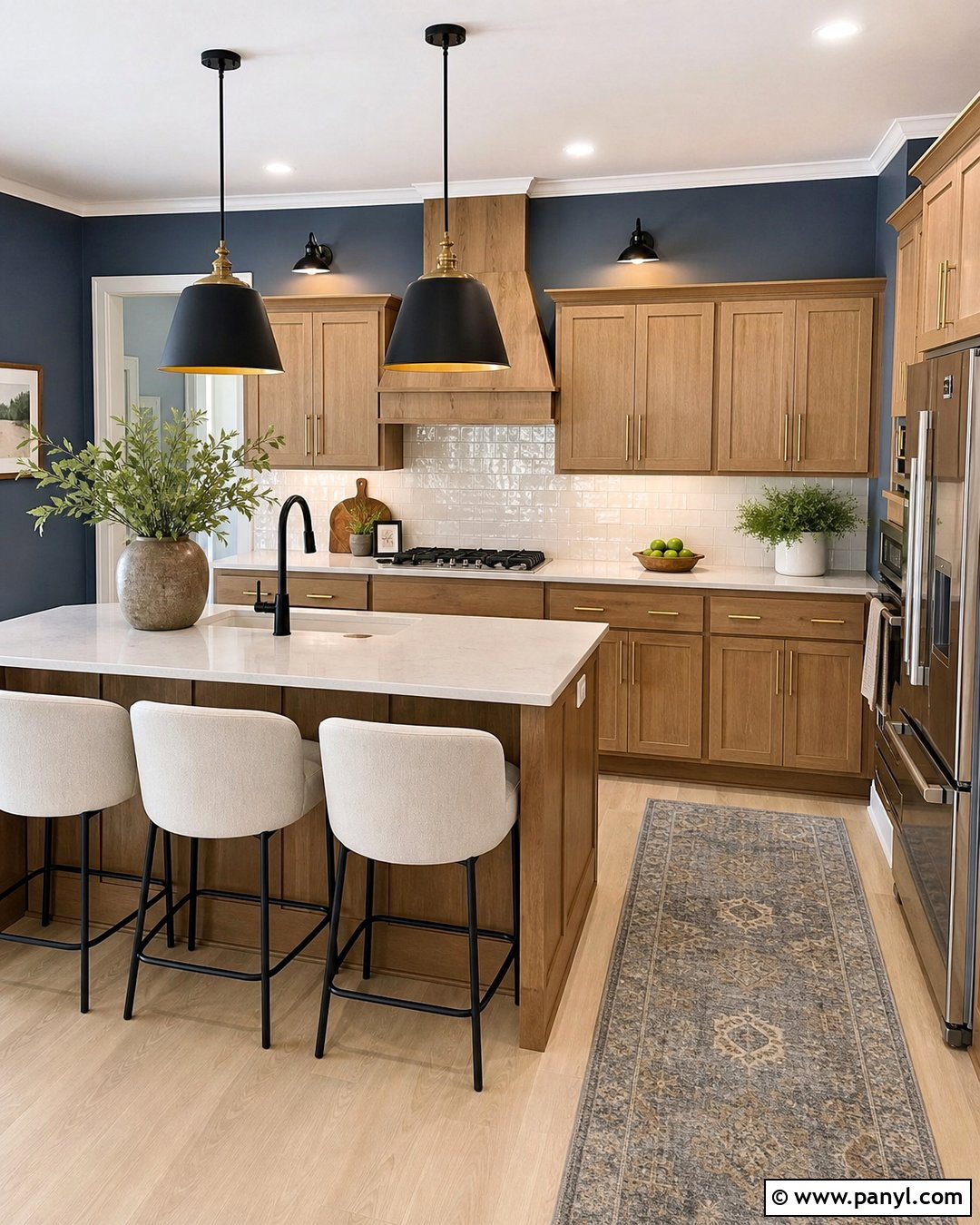
Slate blue walls create a deeper, more dramatic contrast that can make honey oak cabinetry look richer. Select a medium slate rather than an extremely dark blue, especially if the kitchen has limited windows. Balance the walls with warm white quartz counters, glossy ivory backsplash tile, and pale flooring. Brass cabinet hardware connects visually to the cabinets, while matte black lighting keeps the scheme from feeling overly traditional. Add oatmeal Roman shades, cream counter stools, and a faded blue runner to soften the stronger wall color. Under-cabinet lighting is useful for keeping work surfaces bright. The completed kitchen feels confident and tailored, making slate blue a strong choice for medium or large spaces that need greater visual depth.
20. Deep Navy Walls With Honey Oak Cabinets
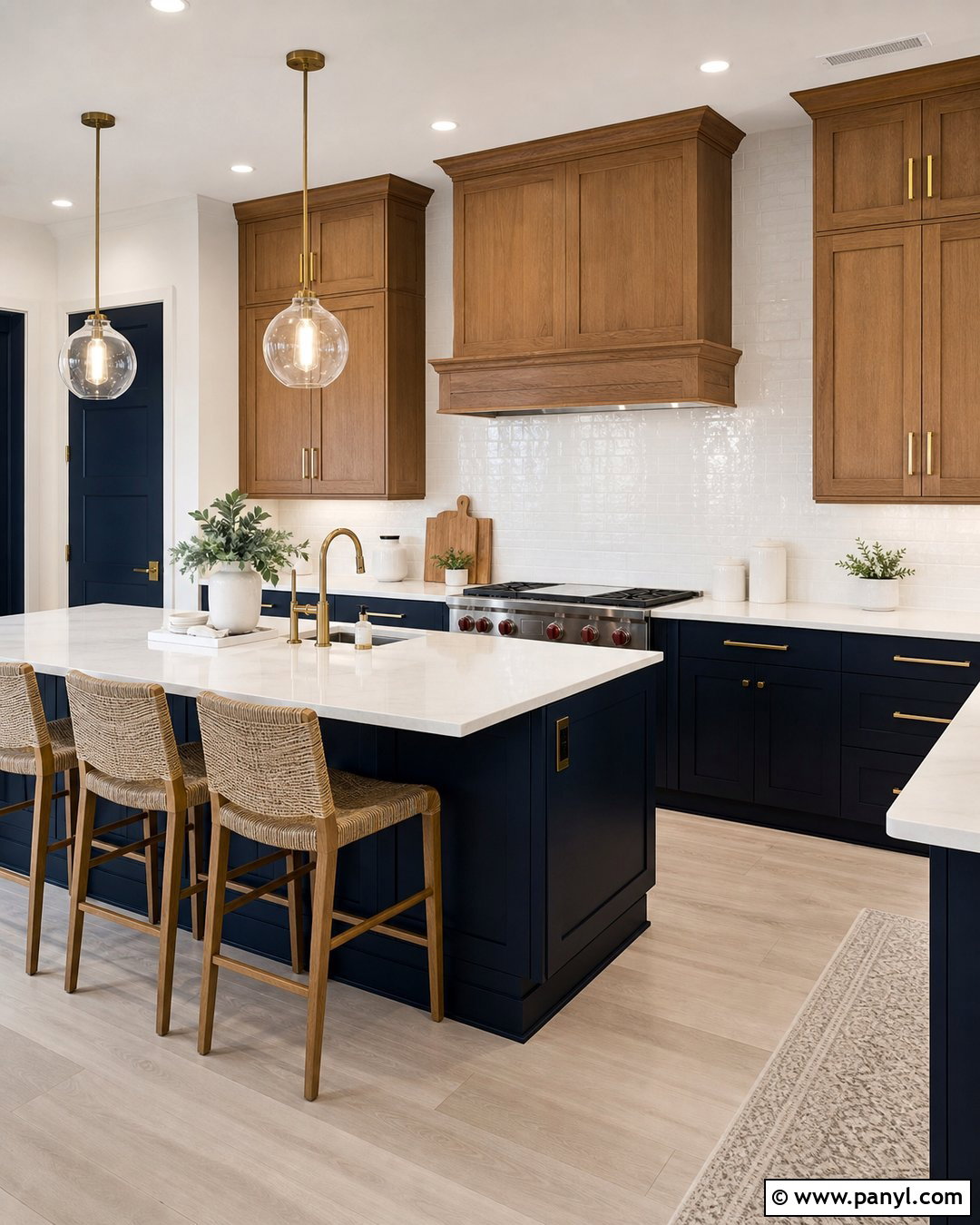
Deep navy walls can transform honey oak into a bold, sophisticated feature. Use navy selectively in a kitchen with abundant daylight, or place it on the main open wall while keeping the backsplash and ceiling light. Creamy quartz countertops, white tile, and pale neutral flooring prevent the dark color from overwhelming the room. Choose unlacquered brass hardware to connect the navy and golden oak, then add clear glass pendants for visual openness. A light wood table or natural woven stools continue the warm material story. Keep accessories simple in white, tan, and muted blue. This high-contrast scheme works beautifully when homeowners want a dramatic update while preserving the durability and recognizable grain of existing wood cabinets.
21. Muted Teal Walls With Honey Oak Cabinets
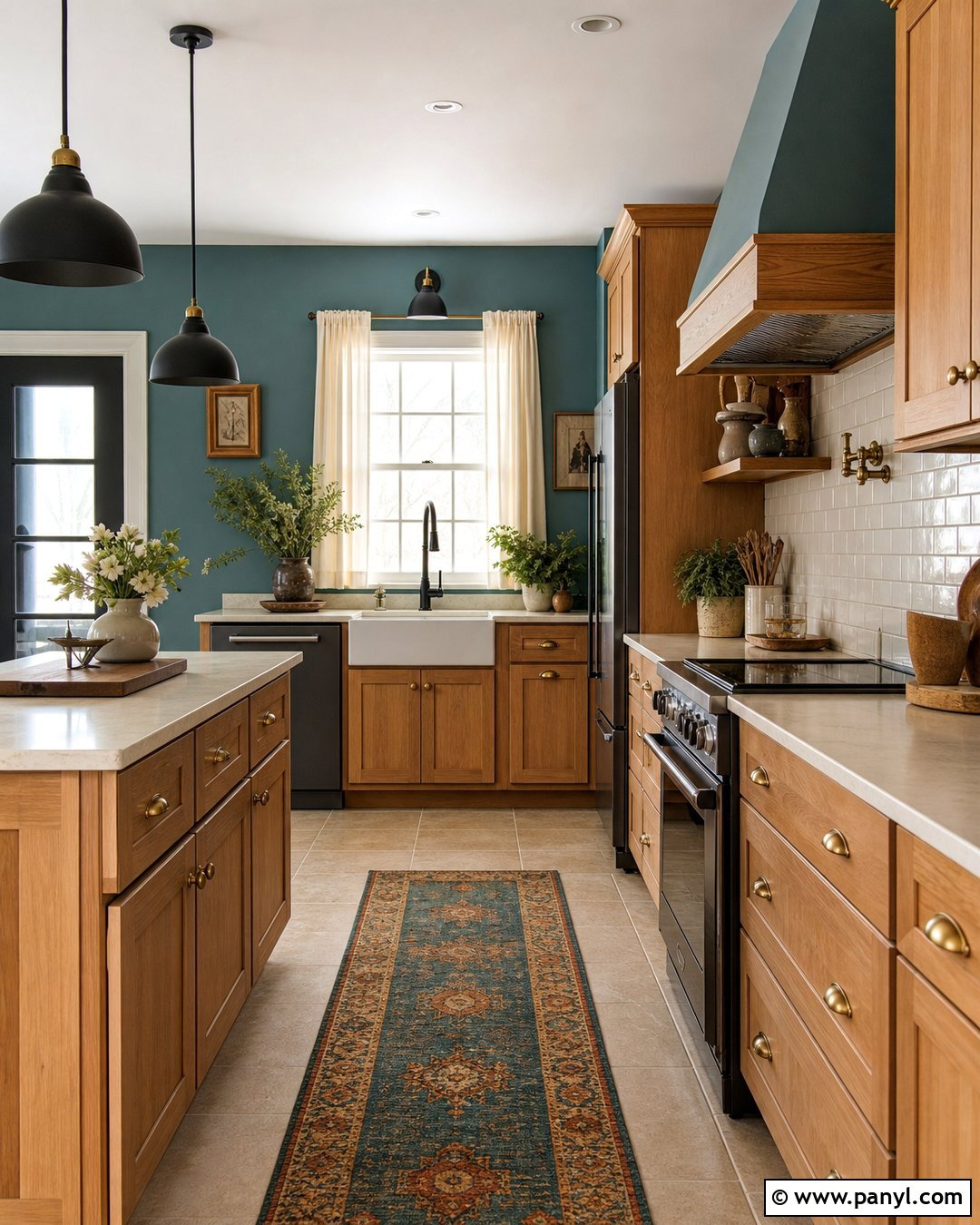
Muted teal walls combine blue and green, offering a balanced contrast to golden honey oak. Choose a grayed teal that feels earthy rather than tropical. Pair it with pale cream counters and warm white backsplash tile to provide a bright resting point between the cabinets and walls. Antique brass hardware enhances the wood’s warmth, while black metal lighting brings in a modern line. Use light beige stone flooring or neutral wood-look planks to keep the overall palette grounded. Add ivory café curtains and a patterned runner containing teal, tan, and rust. The finished kitchen feels colorful but controlled, making this wall choice particularly suitable for eclectic, craftsman, cottage, and updated traditional homes with plenty of natural texture.
22. Soft Turquoise Walls With Honey Oak Cabinets
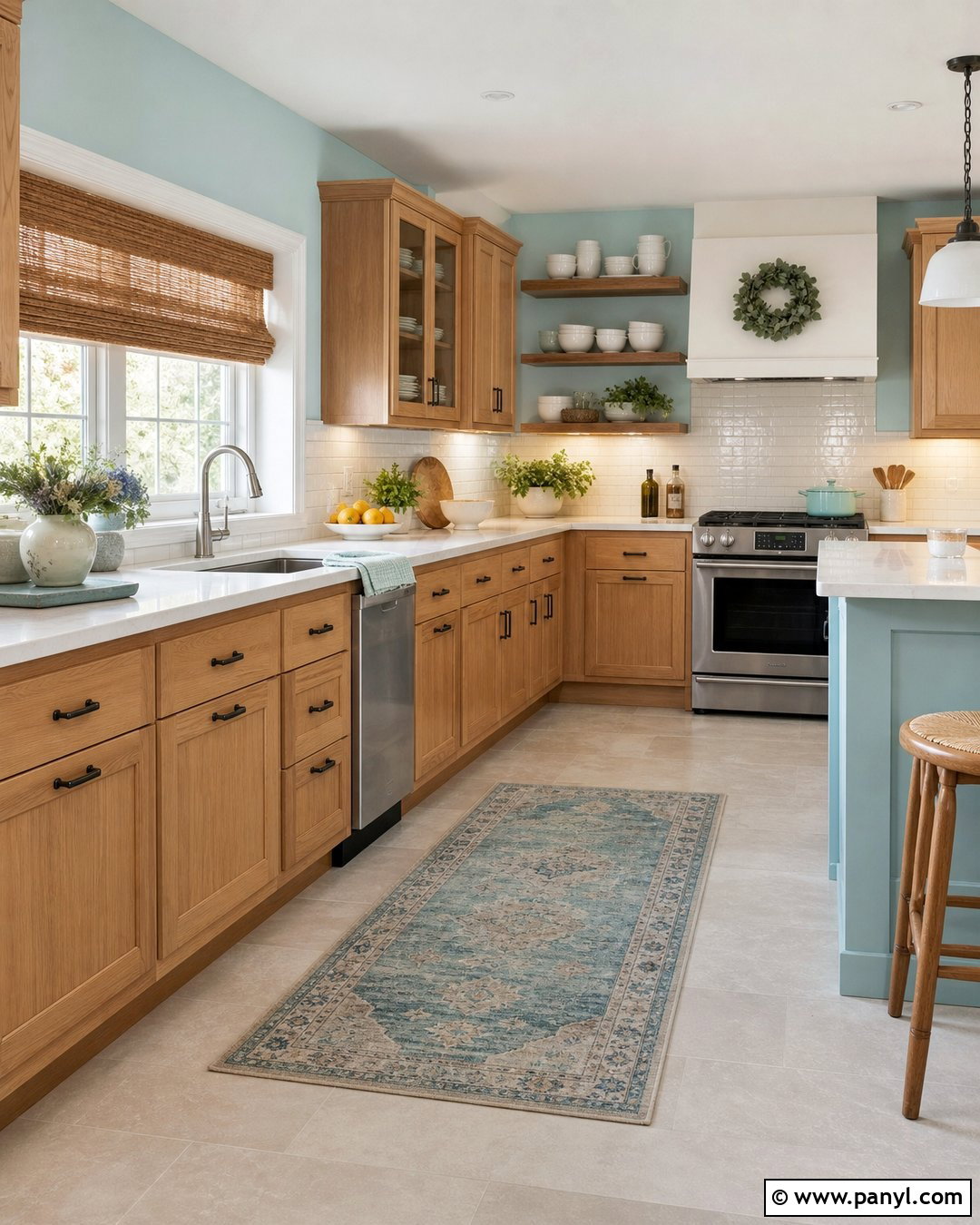
Soft turquoise gives a honey oak kitchen a cheerful character while providing cool contrast to the cabinetry. Avoid saturated aqua and select a dusty turquoise with noticeable gray undertones. Keep the rest of the room restrained with creamy white countertops, simple ivory backsplash tile, and pale neutral flooring. Brushed nickel hardware can make the combination feel crisp, while aged brass produces a warmer cottage appearance. Use natural woven shades, light counter stools, and white ceramic accessories to keep the room approachable. A narrow runner with faded turquoise, rust, and beige connects the walls to the wood. This complete design works well in bright kitchens where the lively wall color can remain soft instead of becoming visually intense.
23. Warm Gray Walls With Honey Oak Cabinets
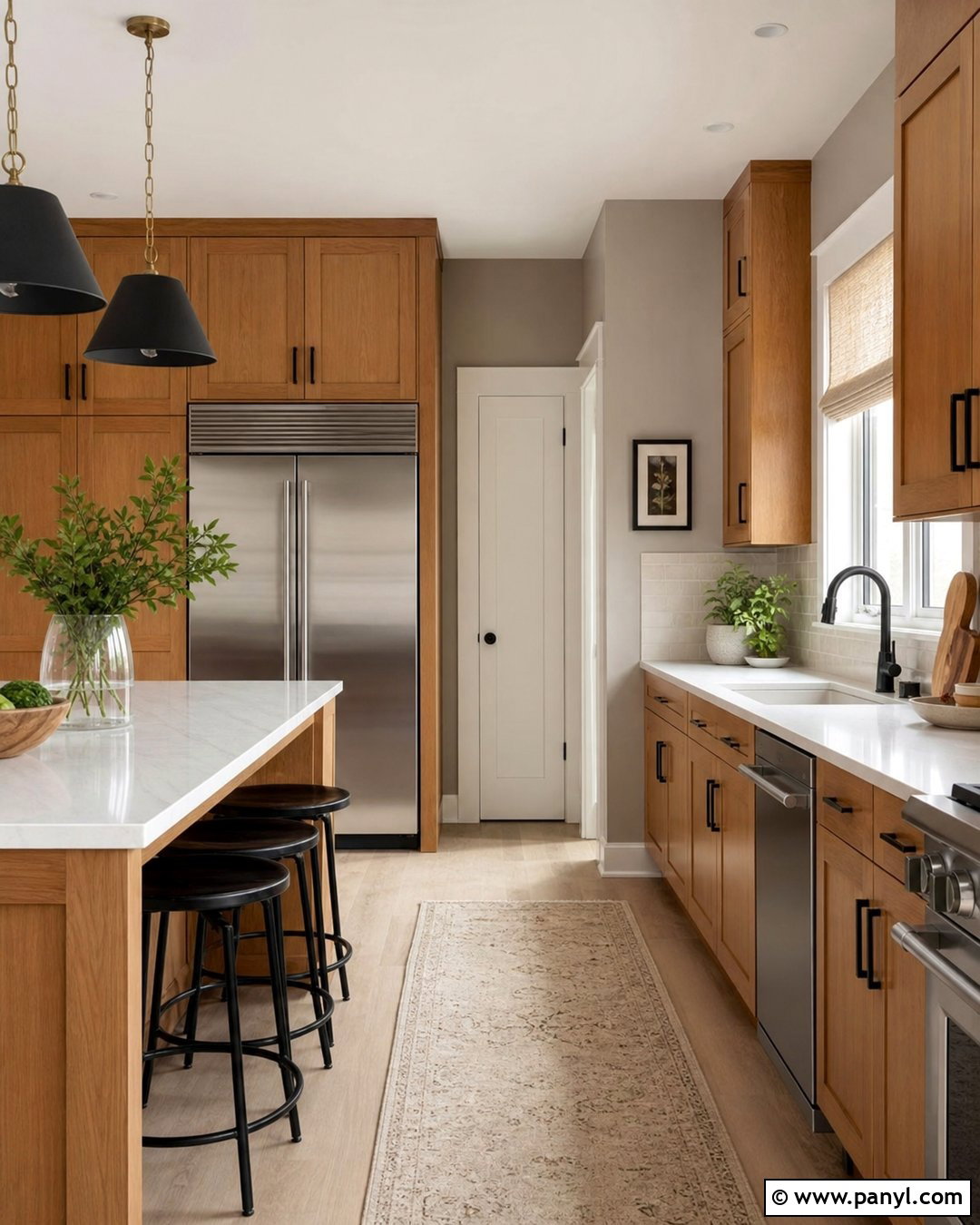
Warm gray walls can modernize honey oak when the paint contains beige or brown undertones. Avoid steely gray, which may create an uncomfortable contrast with golden wood. Pair the walls with warm white quartz counters and a creamy backsplash that bridges the gray and oak. Matte black hardware, a black faucet, and simple black pendants add definition. Choose pale oak flooring or taupe porcelain tile instead of cool charcoal flooring. Natural linen shades and a cream runner keep the kitchen from becoming too industrial. Add small accents in muted green or deep blue for controlled color. The finished room feels clean and contemporary while retaining enough warmth to make the cabinets, counters, walls, and flooring look intentionally coordinated.
24. Charcoal Walls With Honey Oak Cabinets
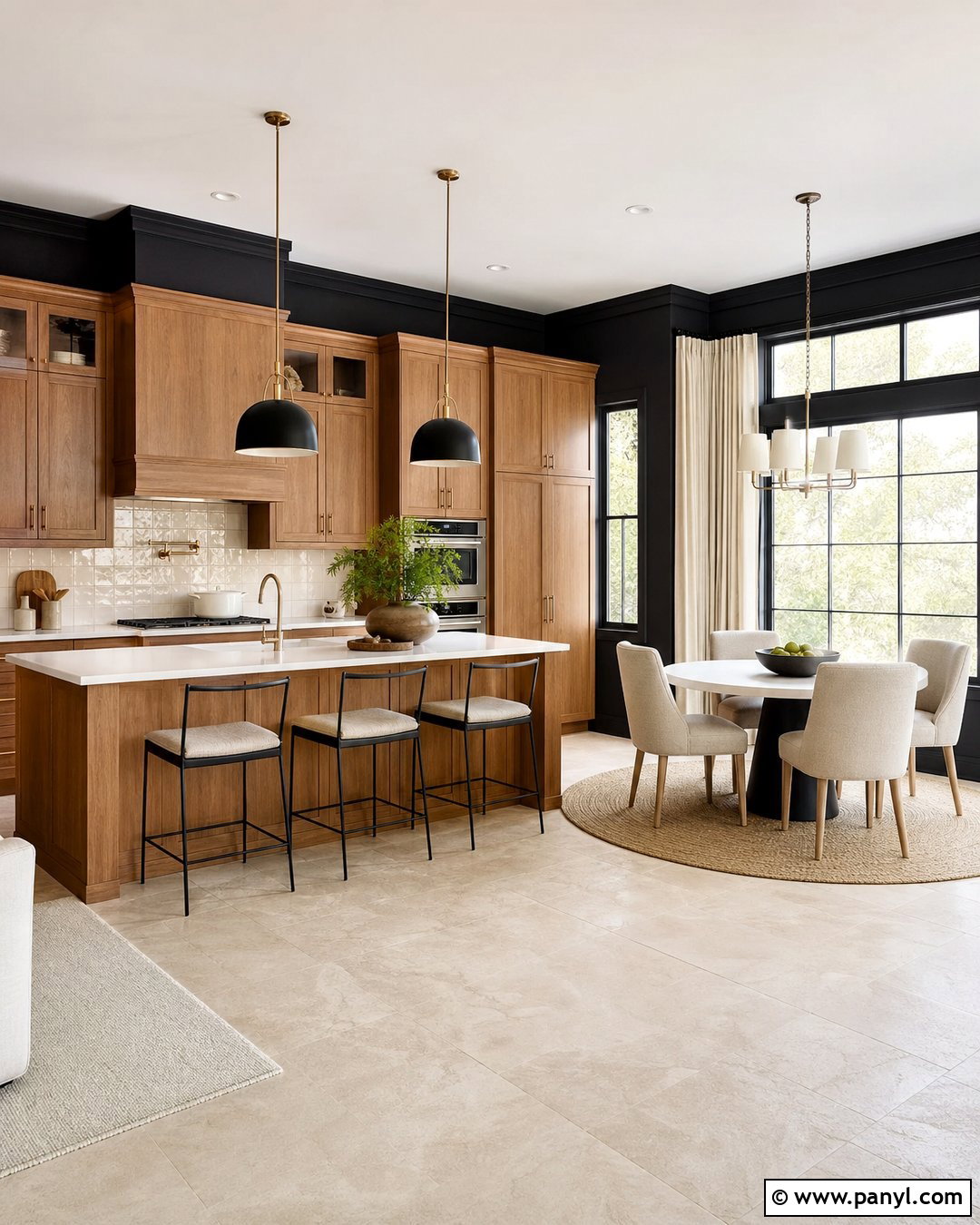
Charcoal walls produce bold contrast and can make honey oak cabinetry feel architectural. This look is best for a spacious kitchen with strong natural light, although charcoal can also work on one open wall in a smaller room. Choose a warm charcoal with brown undertones rather than a blue-black gray. Add white quartz counters and a glossy cream backsplash to reflect light. Brass hardware highlights the cabinetry, while black pendants connect to the walls. Pale stone flooring and oatmeal textiles prevent the palette from feeling severe. Consider a natural wood table and off-white seating in an adjoining breakfast area. The resulting kitchen feels dramatic, grounded, and modern without requiring the original cabinets to be painted or replaced.
25. Putty Walls With Honey Oak Cabinets
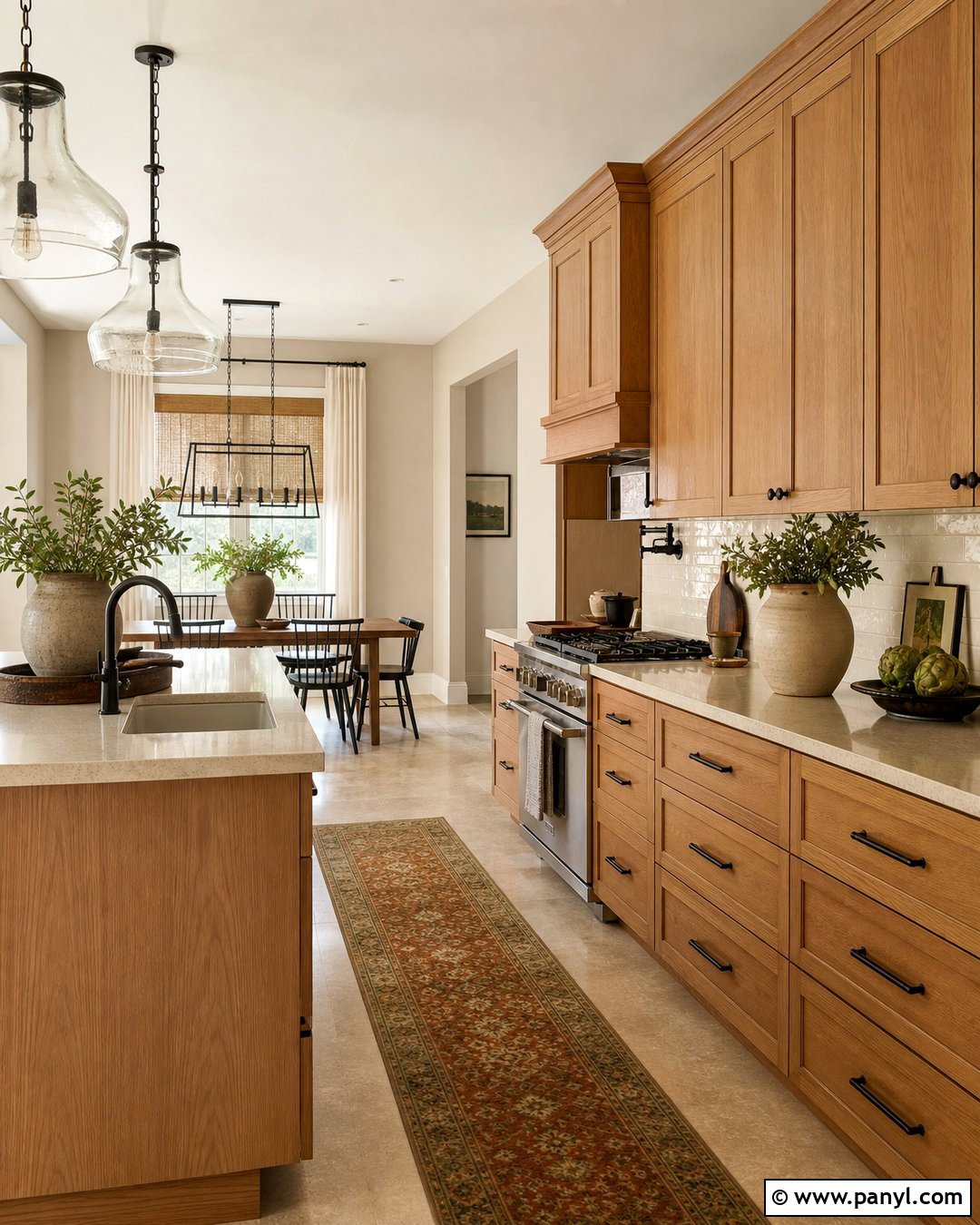
Putty walls create a muted neutral background that sits comfortably between beige, gray, and taupe. This adaptable shade reduces the visual contrast between honey oak cabinetry and lighter surfaces. Pair it with creamy stone counters, warm white backsplash tile, and bronze hardware for a relaxed transitional kitchen. Use neutral porcelain flooring with subtle limestone movement to introduce texture without another strong color. Clear glass pendants help maintain brightness, while a dark bronze faucet gives the sink area definition. Add woven shades, off-white pottery, and a faded runner in putty, olive, and rust. The complete scheme feels soft and balanced, making it useful in kitchens where countertops or flooring already contain several warm neutral tones that must work together.
26. Clay Beige Walls With Honey Oak Cabinets
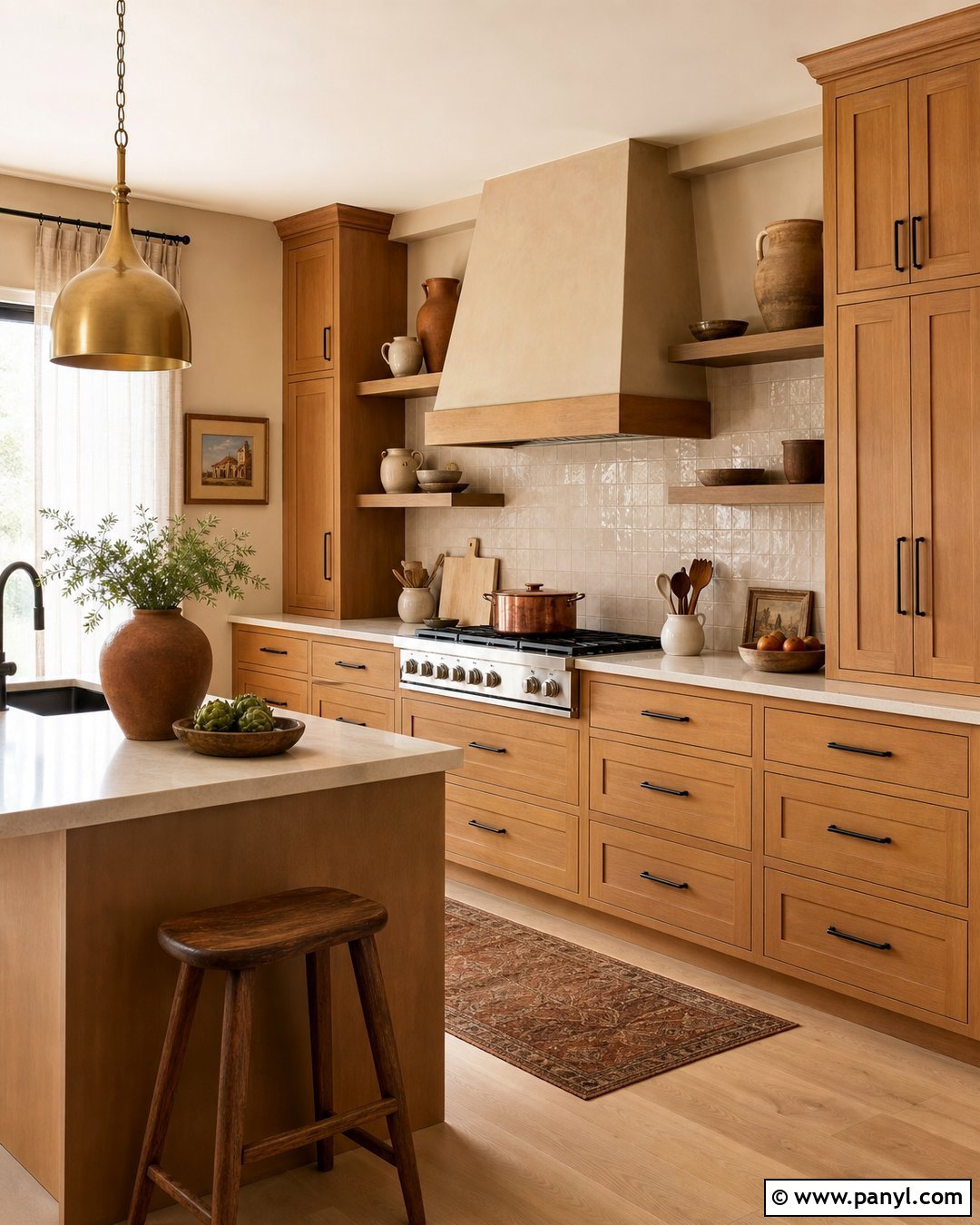
Clay beige has a muted mineral warmth that can make honey oak cabinets feel earthy and handcrafted. Choose a pale clay shade with brown and gray undertones rather than obvious orange. Combine it with warm white quartz counters and creamy handmade backsplash tile. Matte black hardware creates a contemporary edge, while aged brass lighting adds a softer glow to the material palette. Natural stone flooring or pale oak-look planks support the organic appearance. Introduce linen curtains, terracotta pottery, and a neutral woven runner in moderation. The color works especially well in kitchens with southwestern, Mediterranean, organic modern, or rustic influences. Every element contributes warmth, but the light counters and backsplash keep the finished design visually balanced.
27. Pale Terracotta Walls With Honey Oak Cabinets
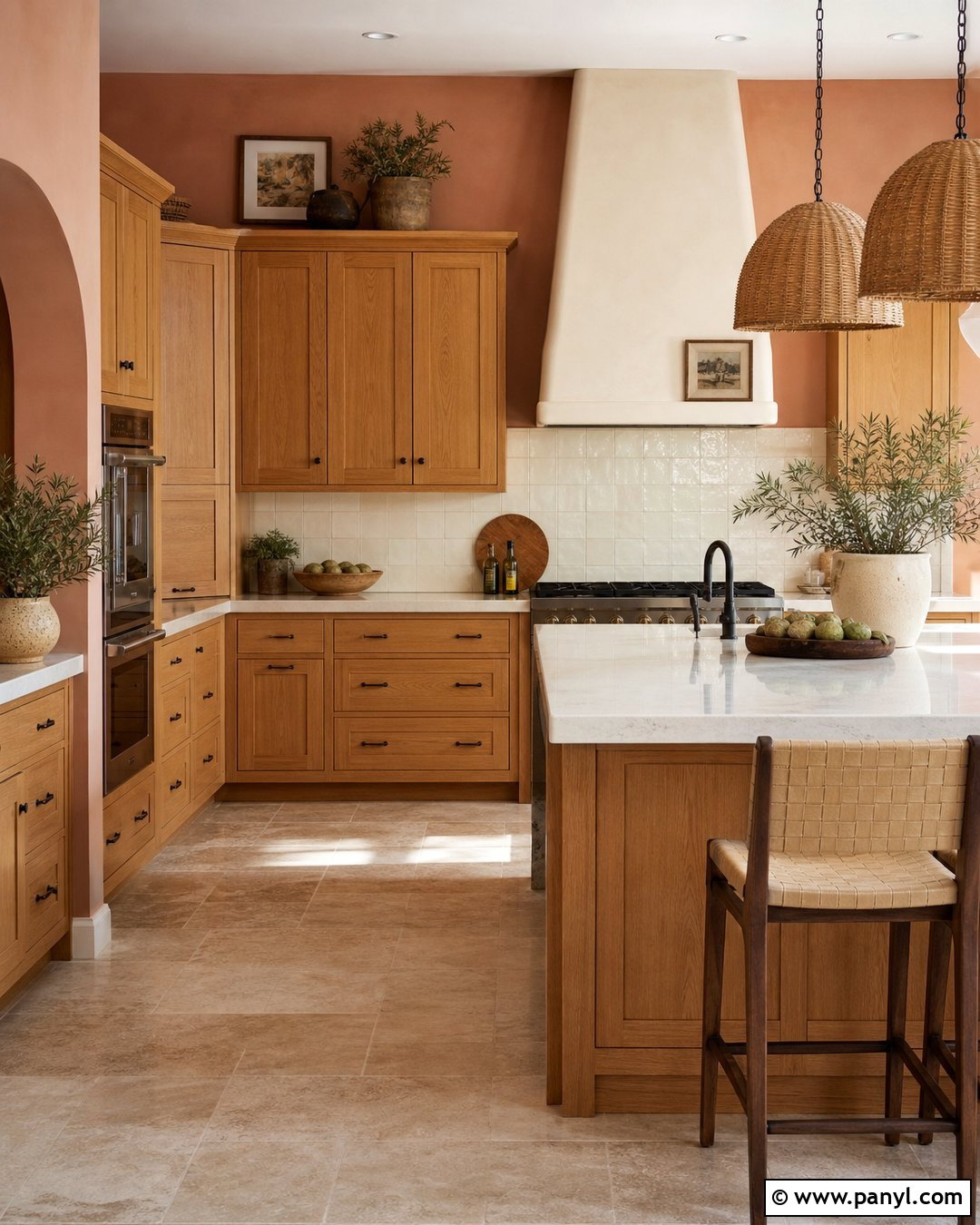
Pale terracotta walls embrace the warm side of honey oak while adding an earthy, sun-washed character. Select a soft, dusty version with pink-brown undertones instead of bright orange. Balance the warmth using creamy white counters, ivory tile, and pale limestone flooring. Dark bronze cabinet hardware and a matte black faucet provide enough contrast to separate the surfaces. Natural woven pendants, oatmeal window treatments, and simple ceramic accessories complete the relaxed palette. Introduce muted olive green through a runner or small decorative pieces for additional balance. This complete scheme suits a sunny kitchen where warm colors feel natural. It creates a welcoming Mediterranean-inspired atmosphere without allowing the walls and cabinets to merge into one undifferentiated golden tone.
28. Dusty Rose Walls With Honey Oak Cabinets
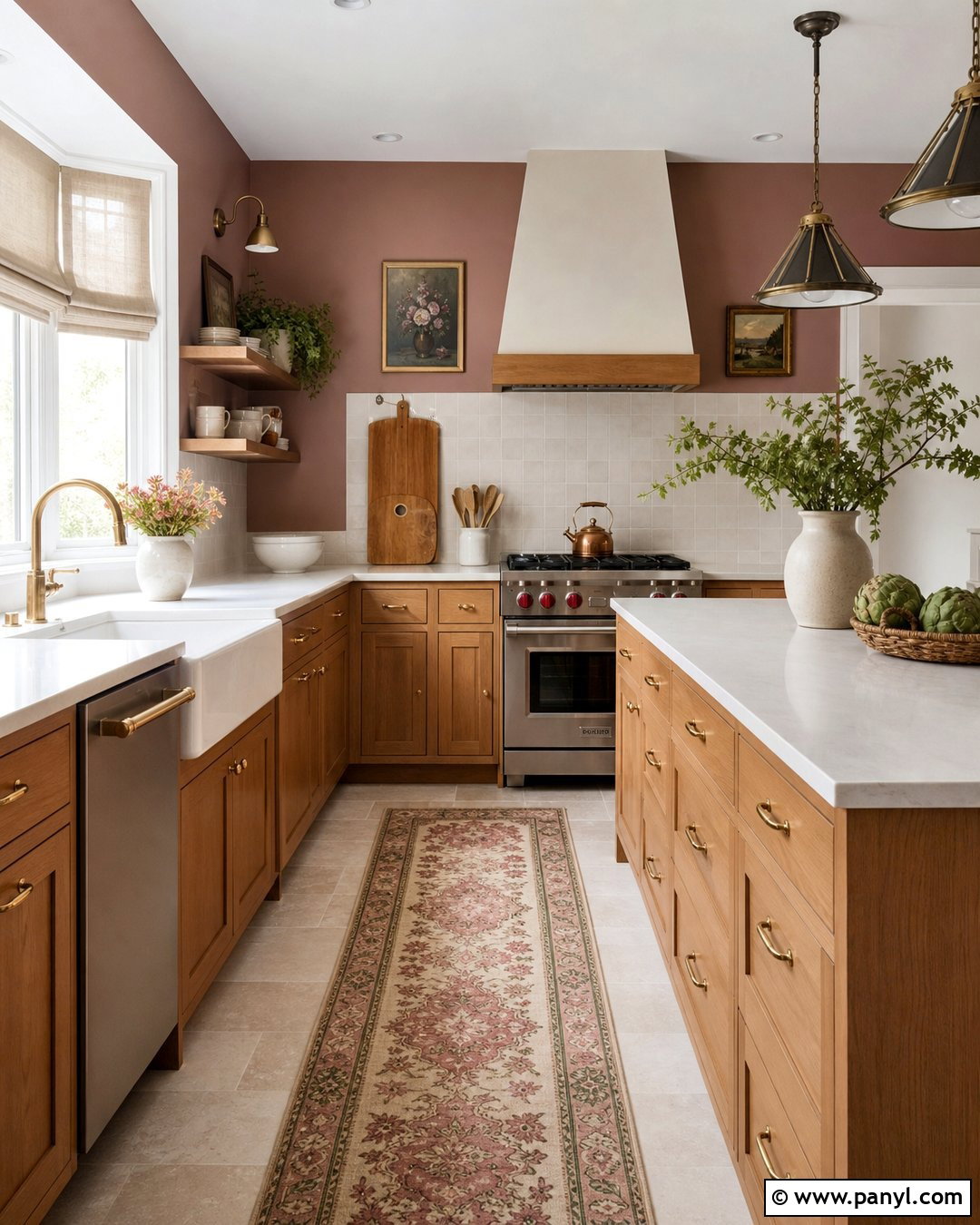
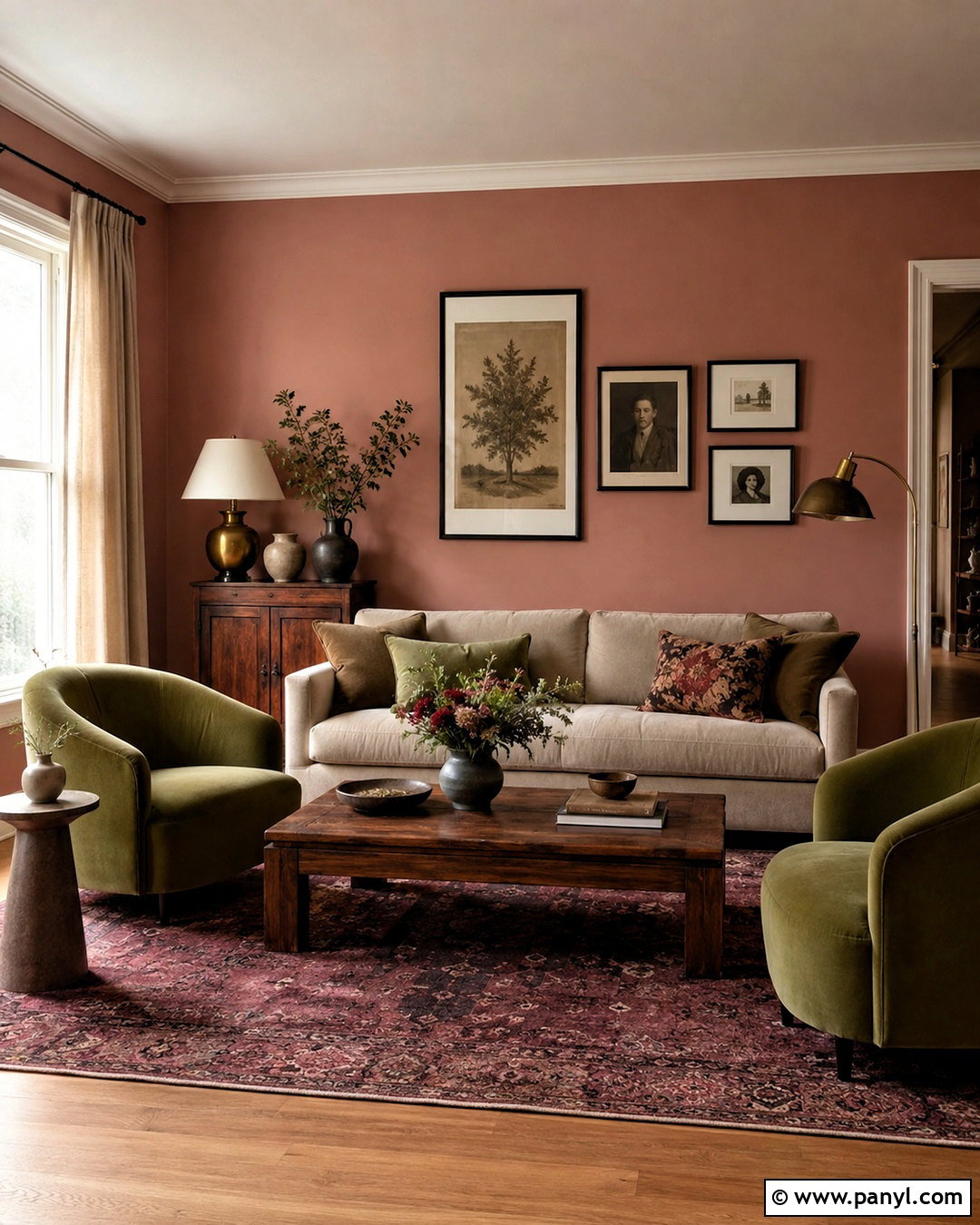
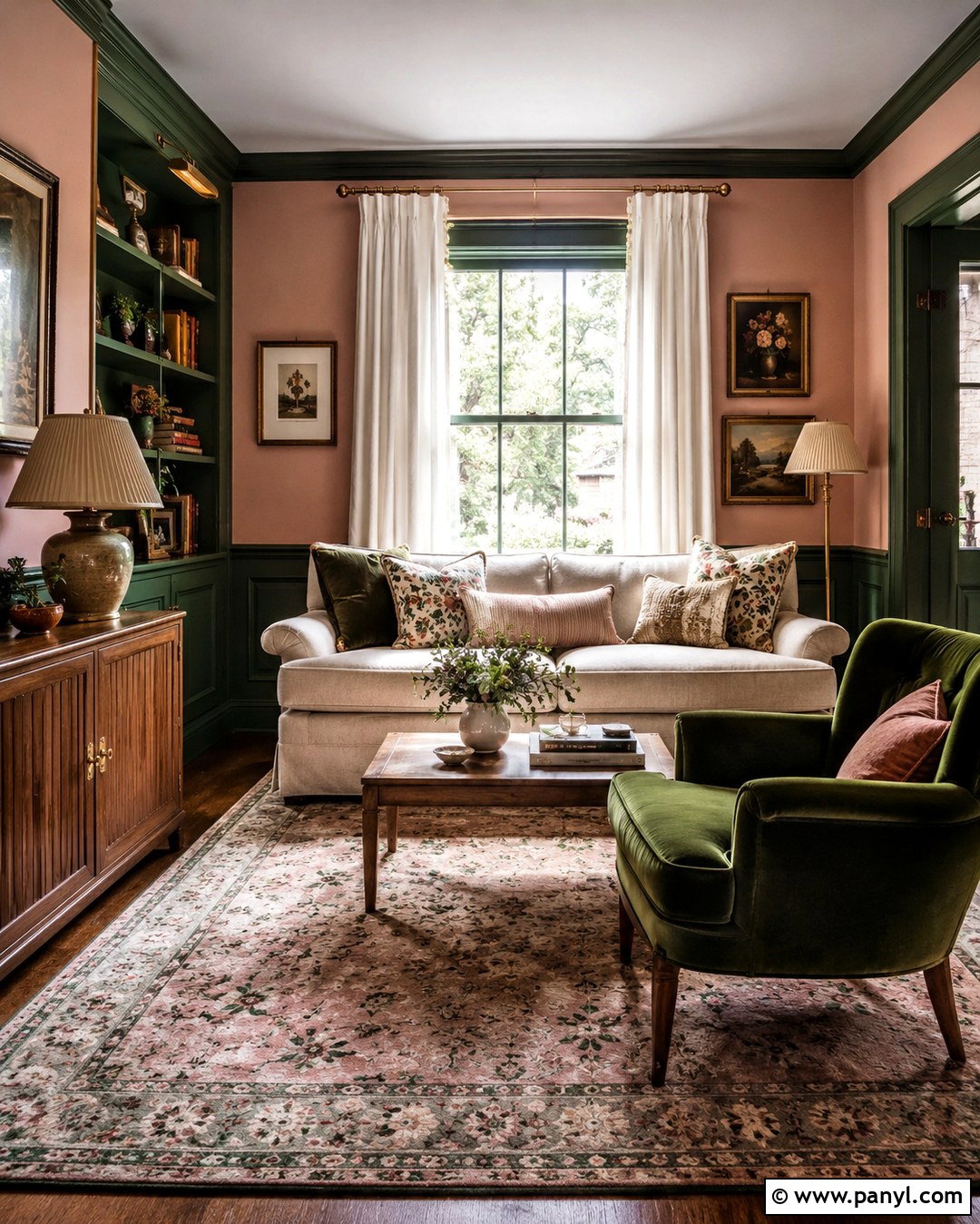
Dusty rose walls can bring surprising softness to honey oak cabinetry. Choose a muted pink with taupe or gray undertones so it reads as an earthy neutral rather than a sweet pastel. Pair it with creamy quartz countertops and an ivory backsplash for a light, cohesive foundation. Antique brass pulls echo the cabinet warmth, while dark bronze pendants add structure. Use pale stone flooring and natural linen shades to keep the room grounded. A vintage-inspired runner containing rose, brown, cream, and muted green can connect the entire palette. This look works well in cottage and eclectic kitchens, offering subtle personality while preserving the wood cabinets as a warm, practical feature rather than treating them as a design problem.
29. Peach Beige Walls With Honey Oak Cabinets
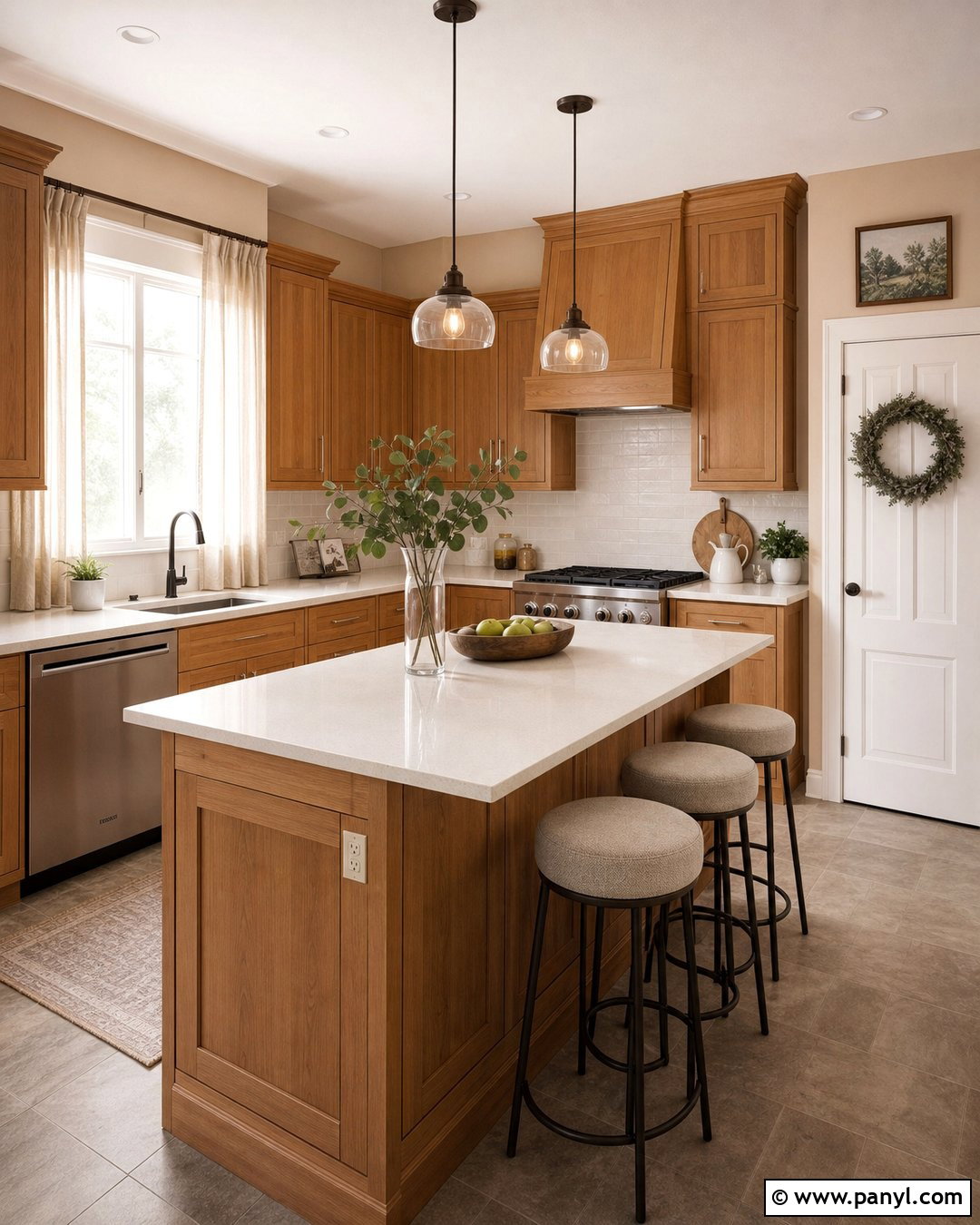
Peach beige walls offer gentle warmth without matching the cabinets too closely. Look for a pale, muted shade with enough beige to soften the peach. Keep countertops bright with creamy quartz and install a simple off-white tile backsplash. Satin nickel hardware can cool the palette slightly, while dark bronze lighting adds needed visual weight. Choose neutral stone flooring with gray-beige movement to balance the golden cabinetry. White ceramics, natural linen curtains, and small sage green accents prevent the finished kitchen from becoming overly warm. This combination is cheerful and approachable, particularly in rooms with limited natural light. The peach undertone creates a healthy glow, while the restrained supporting materials keep the complete design clean and practical.
30. Buttercream Walls With Honey Oak Cabinets
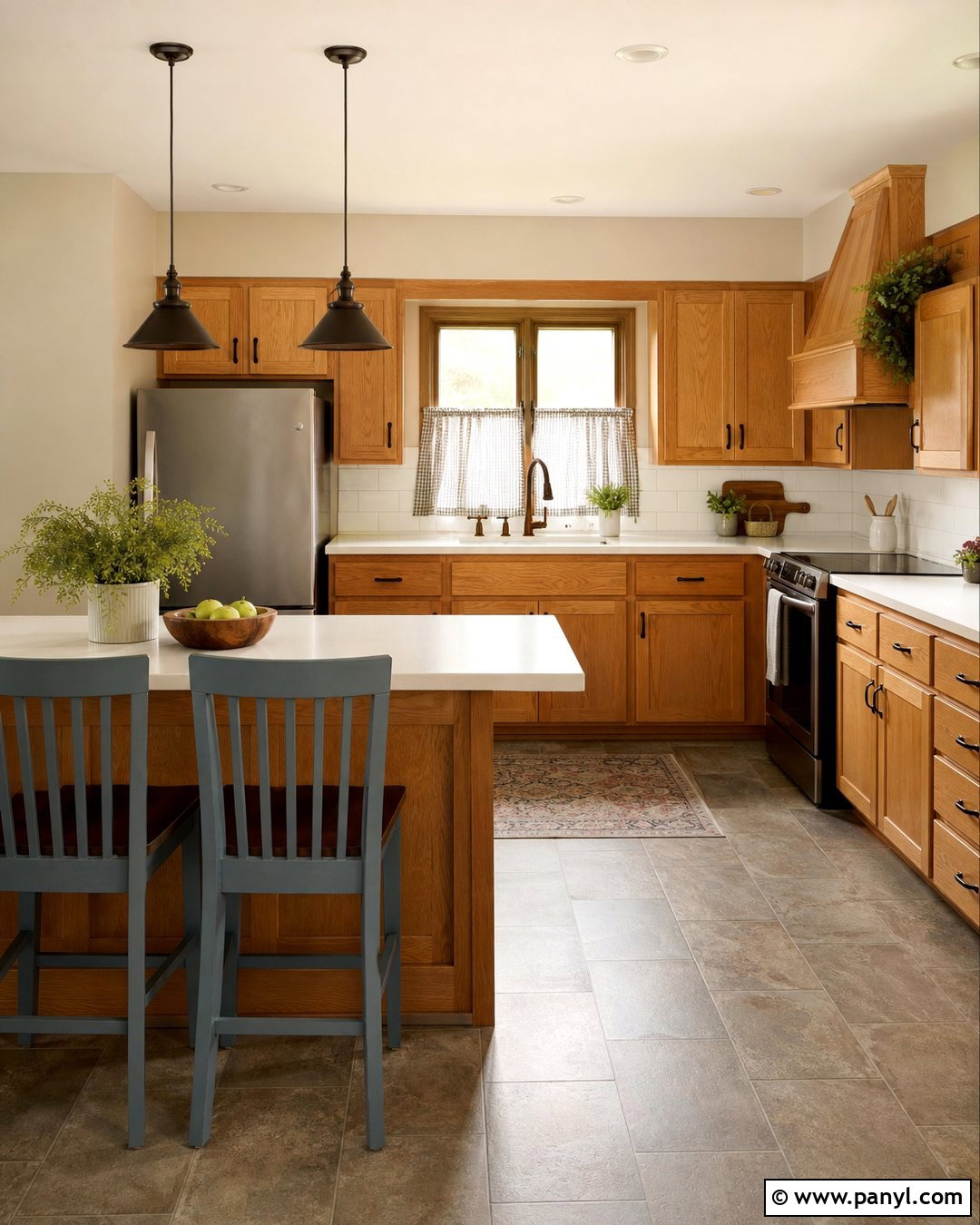
Buttercream walls create a sunny, traditional kitchen that fully embraces the warmth of honey oak. Choose a pale cream-yellow rather than a bright primary shade. Pair the cabinets with creamy white countertops and a white backsplash to establish clear separation between the golden surfaces. Oil-rubbed bronze hardware and dark bronze pendant lights add depth. A warm gray stone floor can cool the lower half of the room and prevent the palette from becoming too yellow. Introduce blue-gray textiles through a runner, café curtains, or upholstered stools. This balanced use of warm and cool colors gives the kitchen a comfortable country character. Buttercream works best when the room receives soft or northern light that naturally tones down yellow paint.
31. Soft Yellow Walls With Honey Oak Cabinets
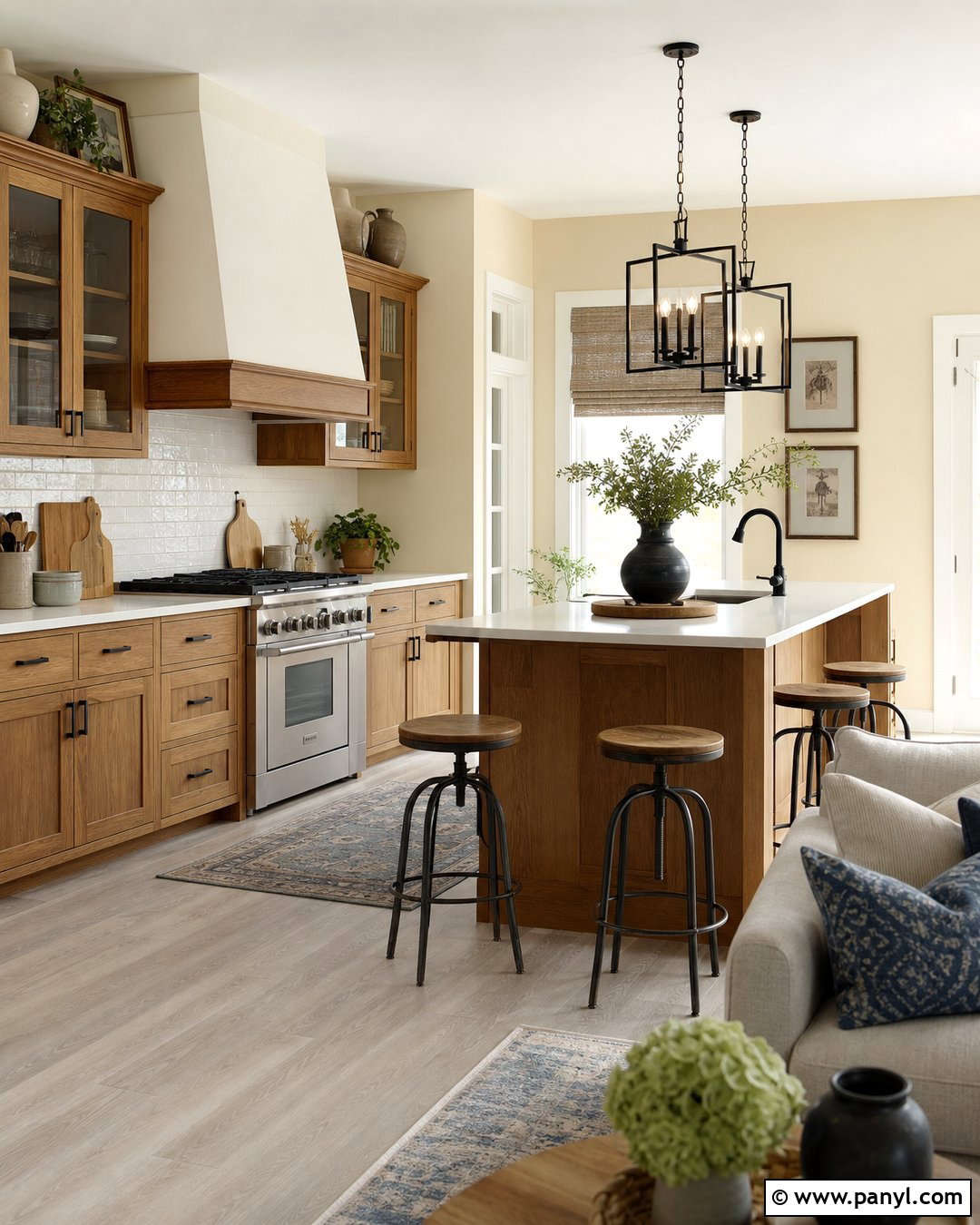
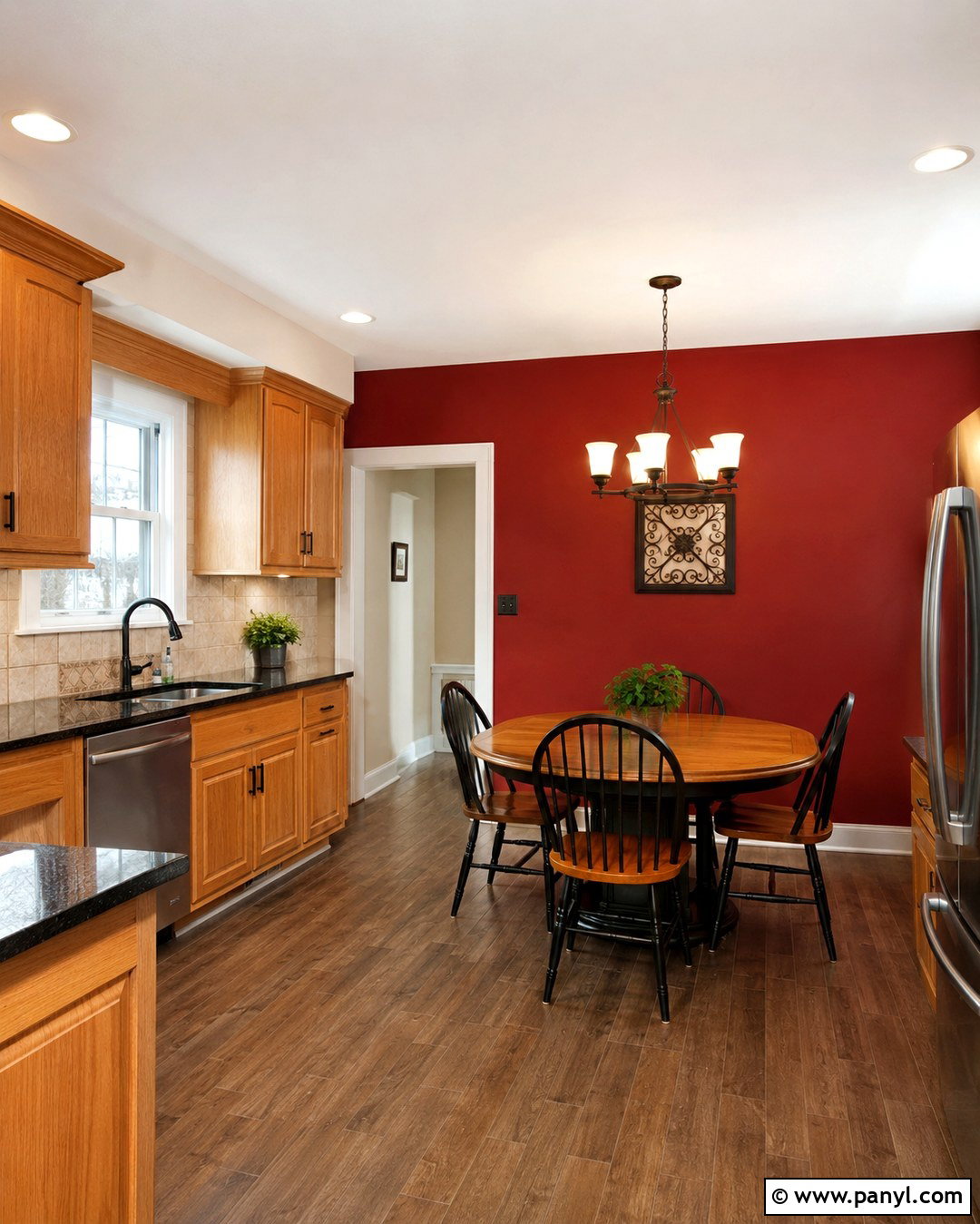
Soft yellow walls can work with honey oak when the shade is light, muted, and slightly creamy. This is a warm-on-warm palette, so contrasting surfaces are essential. Use white quartz counters, ivory backsplash tile, and neutral gray-beige flooring to create visual breathing room. Matte black cabinet pulls and black-framed pendant lights sharpen the look. Introduce dusty blue accessories and a patterned blue runner to balance the yellow and orange undertones. Keep window treatments white or natural linen rather than another golden shade. The completed kitchen feels sunny and familiar without looking dated. This wall color is particularly effective in farmhouse and traditional rooms where cheerful warmth is more important than creating a cool, minimalist appearance.
32. Light Mocha Walls With Honey Oak Cabinets
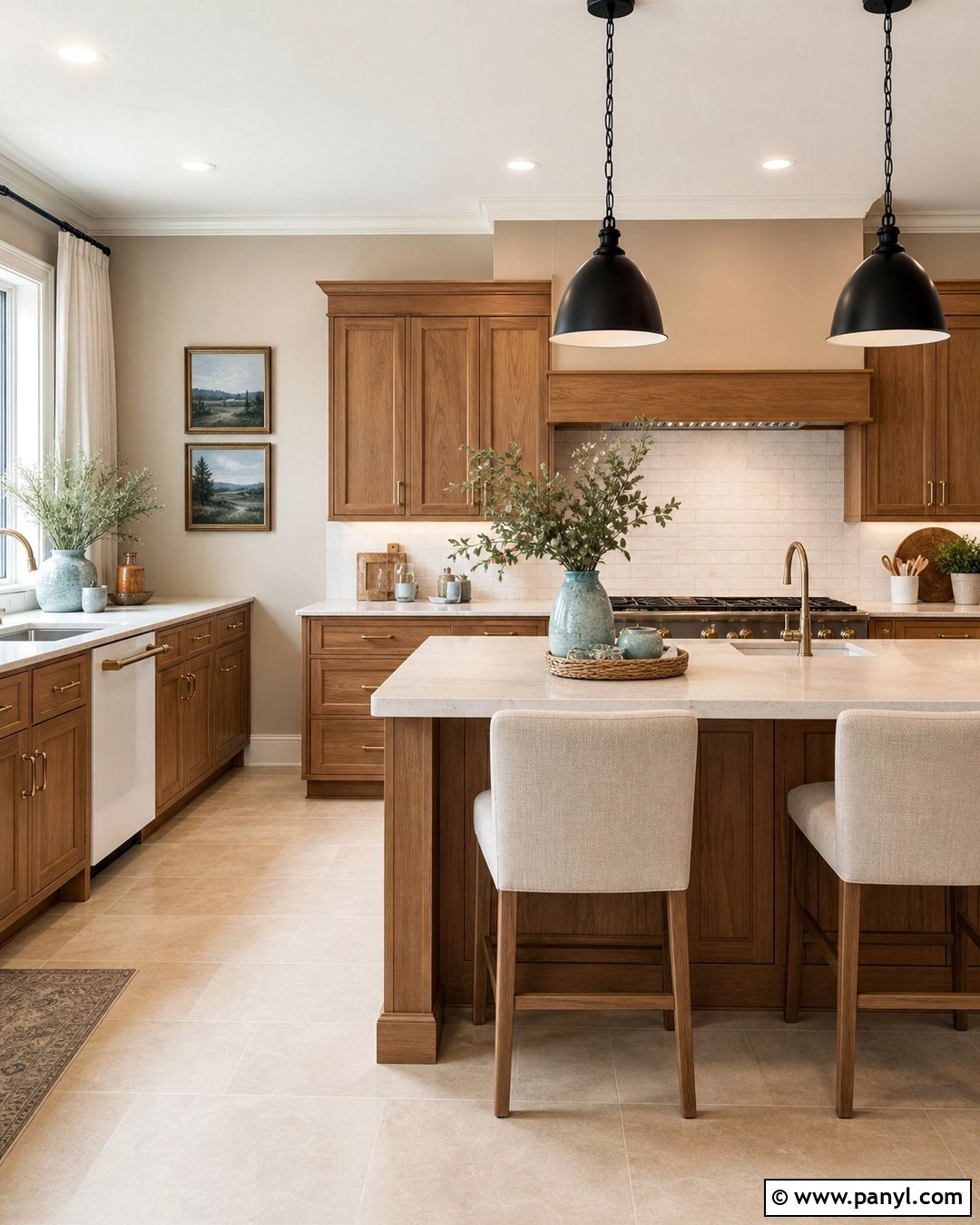
Light mocha walls bring a comfortable brown-based neutral to honey oak cabinetry. Choose a shade lighter than the cabinets with enough gray to avoid a heavy or overly coordinated effect. Pair it with creamy quartz counters and warm white backsplash tile for contrast. Champagne bronze hardware maintains a gentle, tonal quality, while matte black pendants provide sharper lines. Pale stone flooring keeps the brown palette from becoming visually dense. Add oatmeal stools, ivory curtains, and muted blue-green accessories for freshness. This combination works particularly well in open kitchens containing brown leather, wood furniture, or beige upholstery. The finished room feels connected to the surrounding spaces while giving the honey oak a calm, sophisticated background that does not compete with its grain.
33. Chocolate Brown Walls With Honey Oak Cabinets
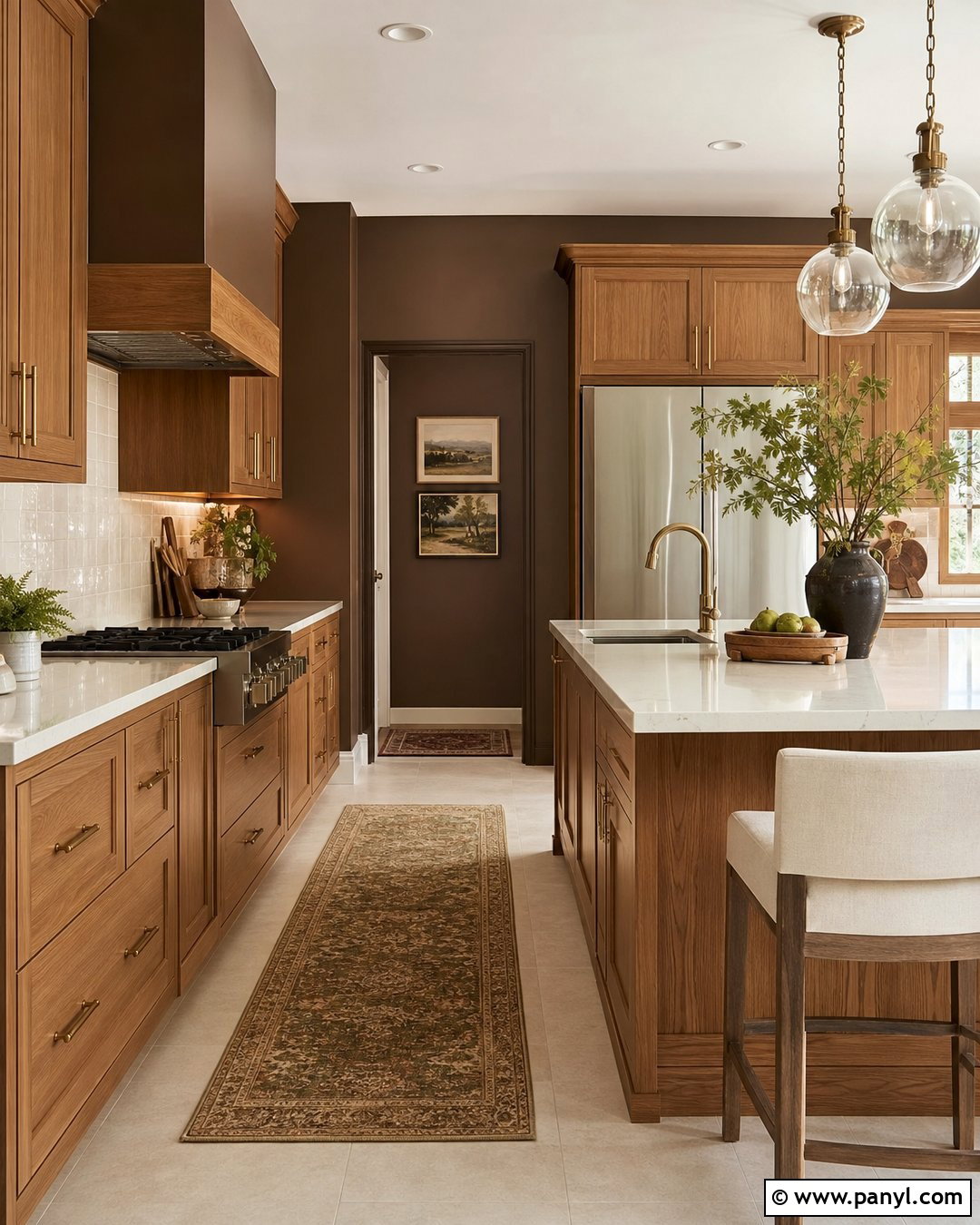
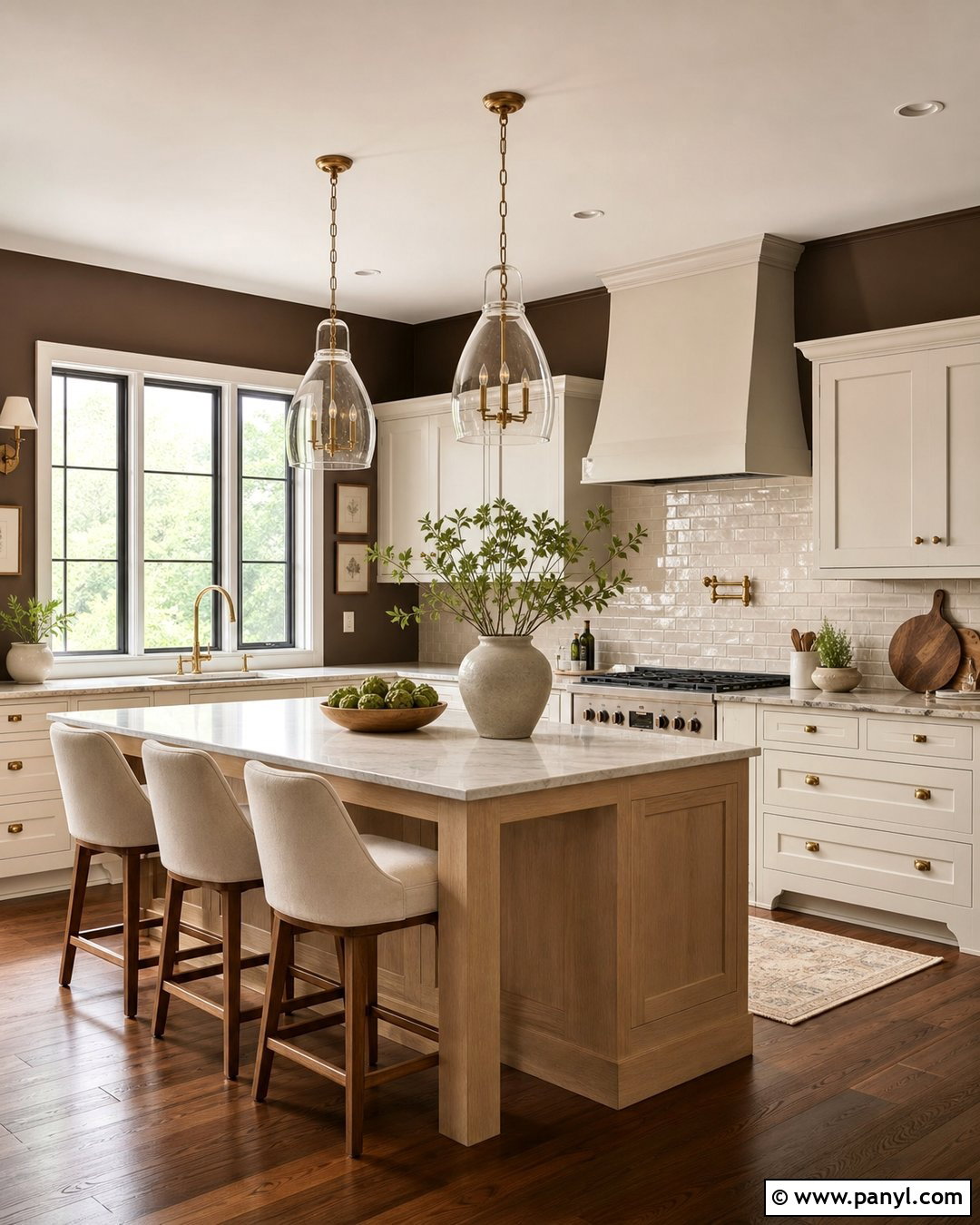
Chocolate brown walls create a cozy, high-contrast kitchen when used thoughtfully. Apply the color to a breakfast nook or one uninterrupted wall, while keeping the backsplash, ceiling, and remaining surfaces light. Pair honey oak cabinets with creamy quartz counters and glossy ivory tile for maximum reflection. Aged brass hardware connects the cabinets to the dark walls, while clear glass pendants preserve an open feeling. Choose pale beige flooring and off-white upholstery to prevent visual heaviness. Add a runner containing brown, cream, muted rust, and green. This complete scheme works best in large or naturally bright kitchens. The rich wall color makes the oak appear lighter and more golden, producing a warm, enveloping room with substantial depth.
34. Soft Black Walls With Honey Oak Cabinets
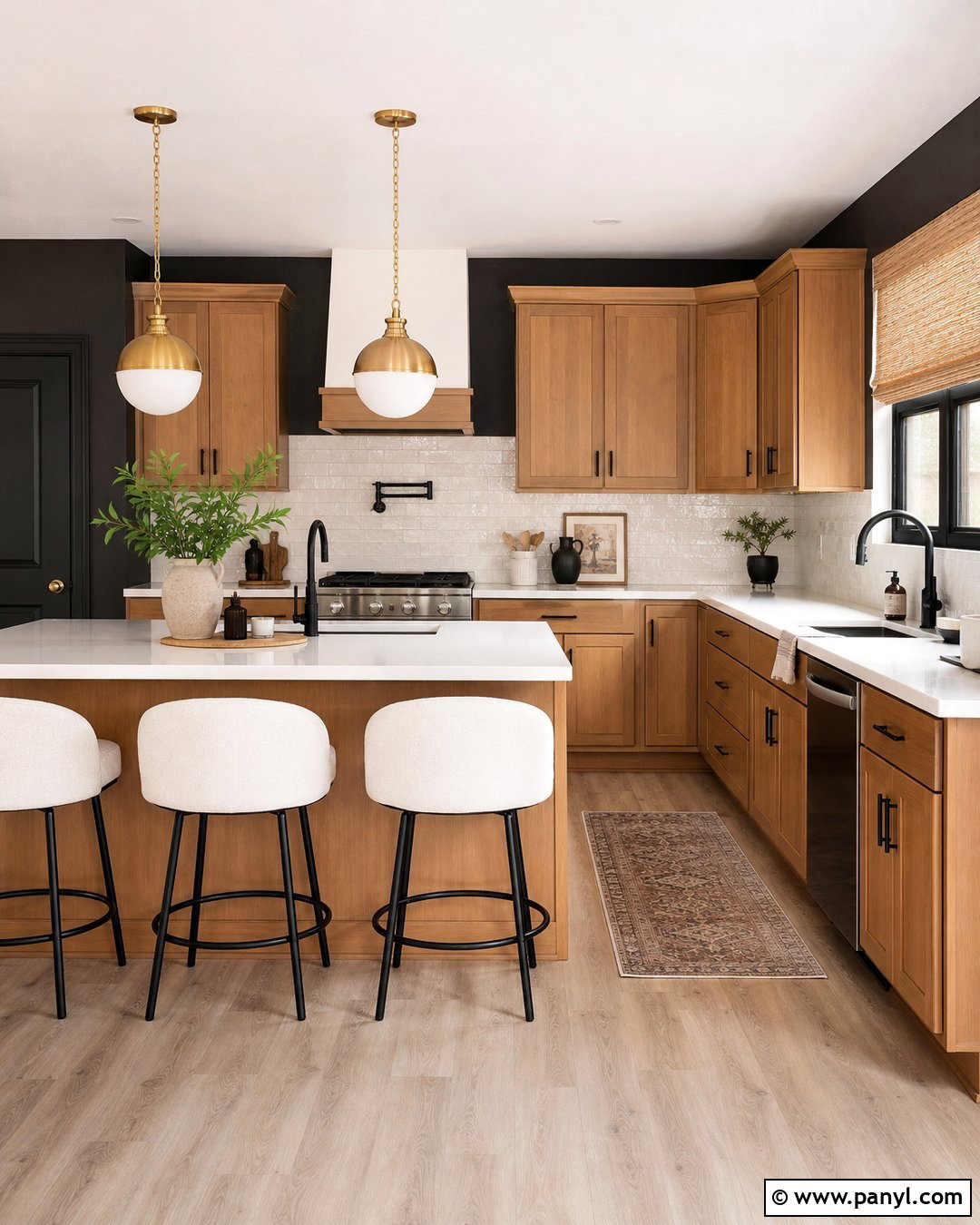
Soft black walls give honey oak cabinetry a striking contemporary frame. Choose a charcoal-black with warm undertones, and use it on one or two walls rather than every surface unless the kitchen is exceptionally bright. White quartz counters and a glossy warm white backsplash provide strong contrast and reflect task lighting. Matte black hardware blends with the walls, helping the cabinet grain become the main decorative feature. Use pale oak-look flooring, cream counter stools, and natural woven shades to soften the bold palette. Simple brass pendants can add warmth overhead. This finished design feels graphic and modern, yet the natural oak keeps it from becoming cold. It is an effective approach for updating traditional cabinet doors without altering their finish.
35. Warm White And Sage Walls With Honey Oak Cabinets
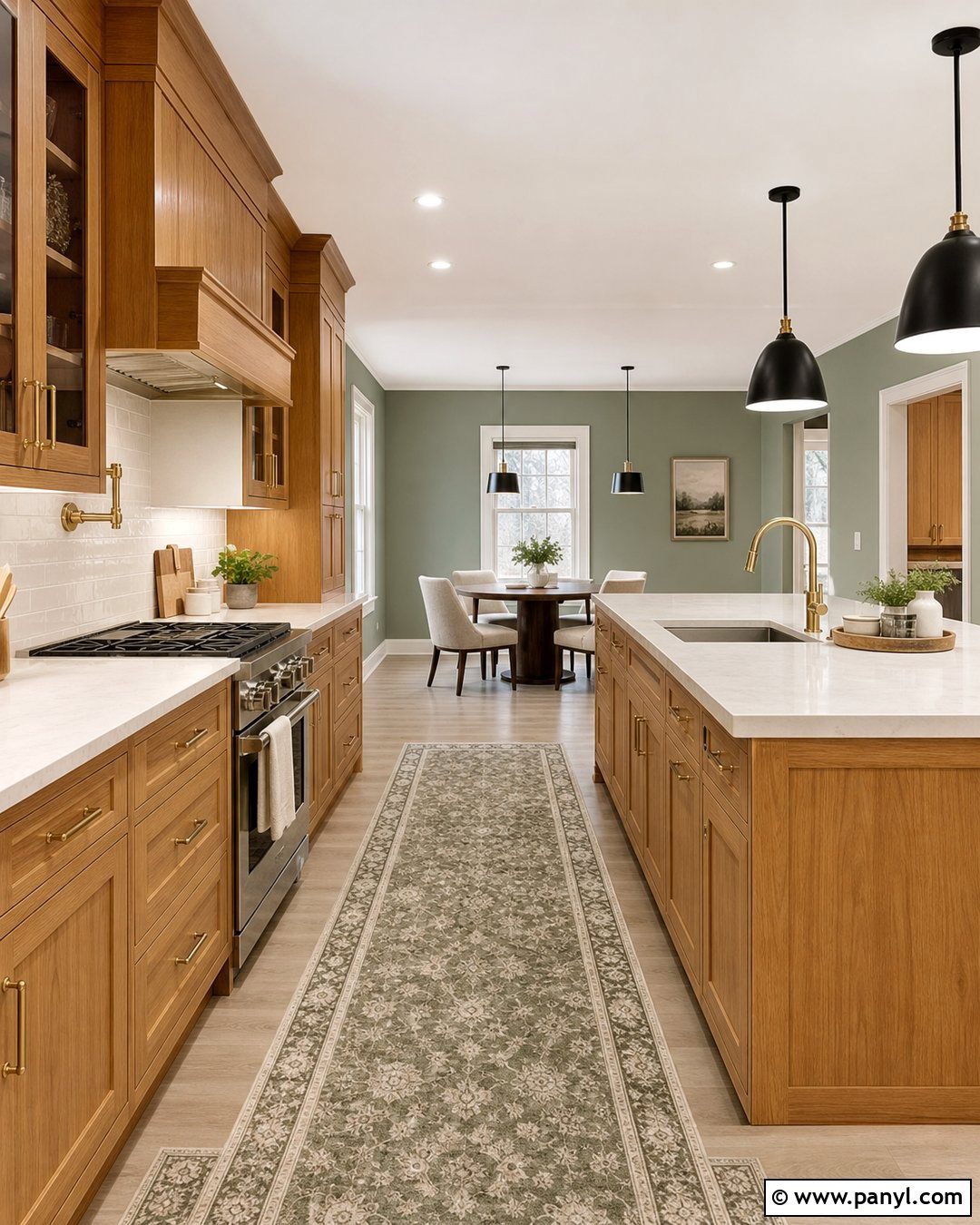
A two-color wall scheme can define zones while keeping honey oak cabinetry visually balanced. Use warm white around the main cooking area to maximize brightness, then apply muted sage green in the breakfast nook or on an adjoining feature wall. Connect both colors with creamy quartz counters and an ivory backsplash. Brushed brass hardware complements the wood, while black pendants and a black faucet add modern structure. Choose pale neutral flooring that continues throughout the entire room for cohesion. A patterned runner containing sage, cream, tan, and charcoal ties the areas together. This flexible approach is especially useful in open kitchens because it introduces personality without covering every wall in color or making the cabinetry compete with a single dominant shade.
Conclusion:
The best wall color should balance your cabinets while coordinating with the kitchen’s fixed countertops, backsplash, flooring, and light exposure. Warm whites and soft greiges provide an easy, flexible foundation. Sage, eucalyptus, and blue-gray introduce calming contrast, while navy, charcoal, and soft black create a bolder transformation. Warm clay, rose, and cream tones can also succeed when lighter surfaces and cooler accents prevent the room from becoming too golden. Always test several large samples directly beside the cabinetry before making a final decision. Observe each option during morning, afternoon, and evening light. With thoughtful color placement and coordinated finishes, these 35 honey oak kitchen cabinets wall color ideas can make existing woodwork feel warm, useful, and beautifully updated.

Related Ideas and Inspiration:
Leave a Reply