
Farmhouse wall colors create a warm, relaxed backdrop for natural wood, comfortable furniture, vintage accents, and practical everyday living. Today’s farmhouse palette reaches far beyond plain white. Soft greiges, earthy greens, weathered blues, warm clays, and deep accent colors can all support the style when their undertones work with the room’s flooring, light, and fixed finishes. () The best approach is to build a complete palette rather than choosing wall paint by itself. Consider trim, ceilings, cabinetry, textiles, metal finishes, and nearby rooms before making a final decision. Always test large samples during morning and evening light. The complete room combinations below offer 35 practical ways to decorate with **farmhouse wall colors**.

1. Warm White Farmhouse Walls
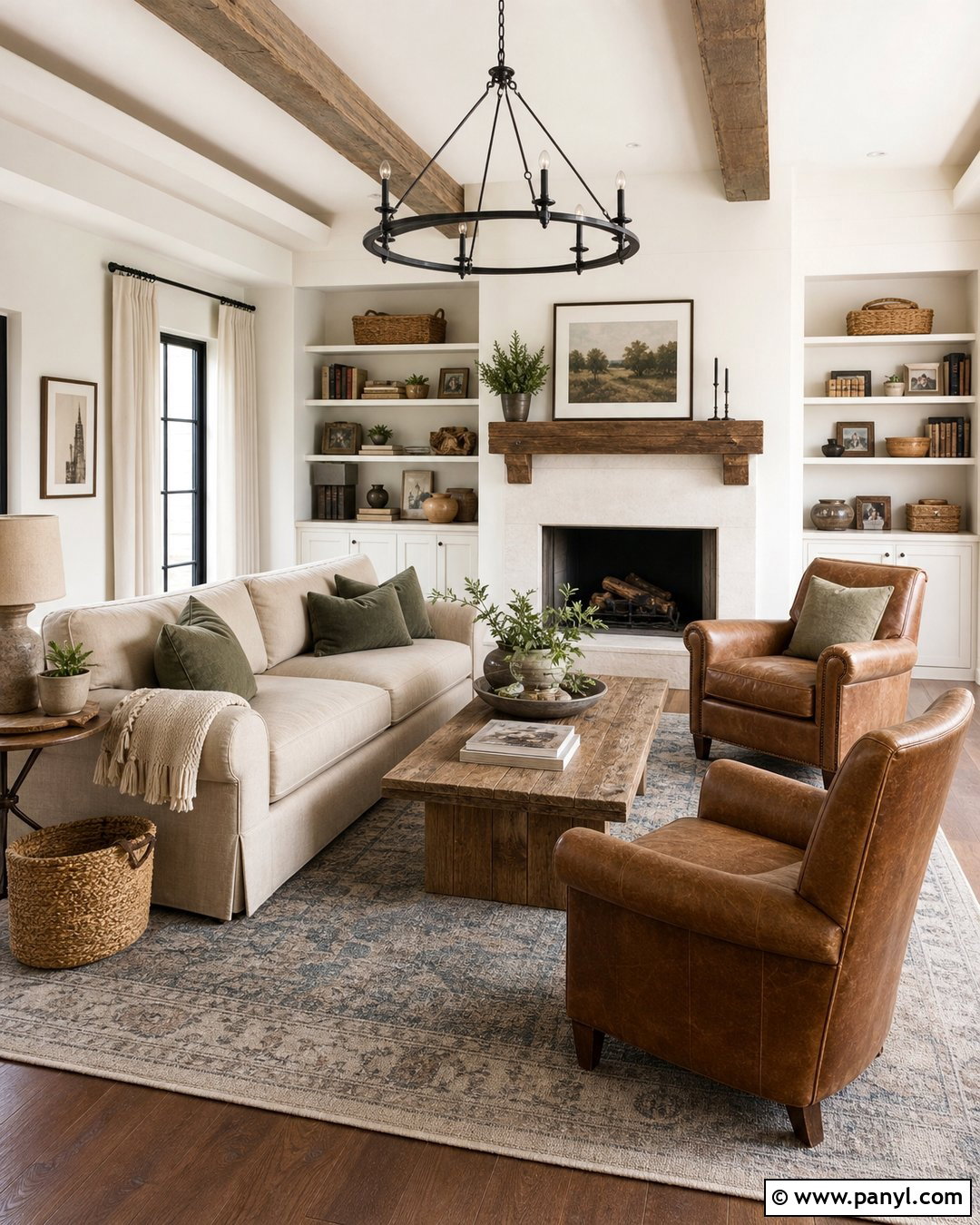
Warm white walls provide a bright farmhouse backdrop without making the room feel cold or clinical. Use this color throughout a living room with natural oak flooring, an oatmeal linen sofa, and two worn leather chairs. Paint the trim a slightly cleaner white to create gentle definition around doors and windows. A reclaimed wood coffee table, black iron lighting, and woven baskets add familiar farmhouse texture. Keep the window treatments light with ivory cotton or linen panels. For contrast, bring in muted sage pillows and a faded blue area rug. This combination works especially well in rooms with limited daylight because the walls reflect light while their creamy undertone complements wood, jute, stone, and aged metal.
2. Creamy White Farmhouse Walls
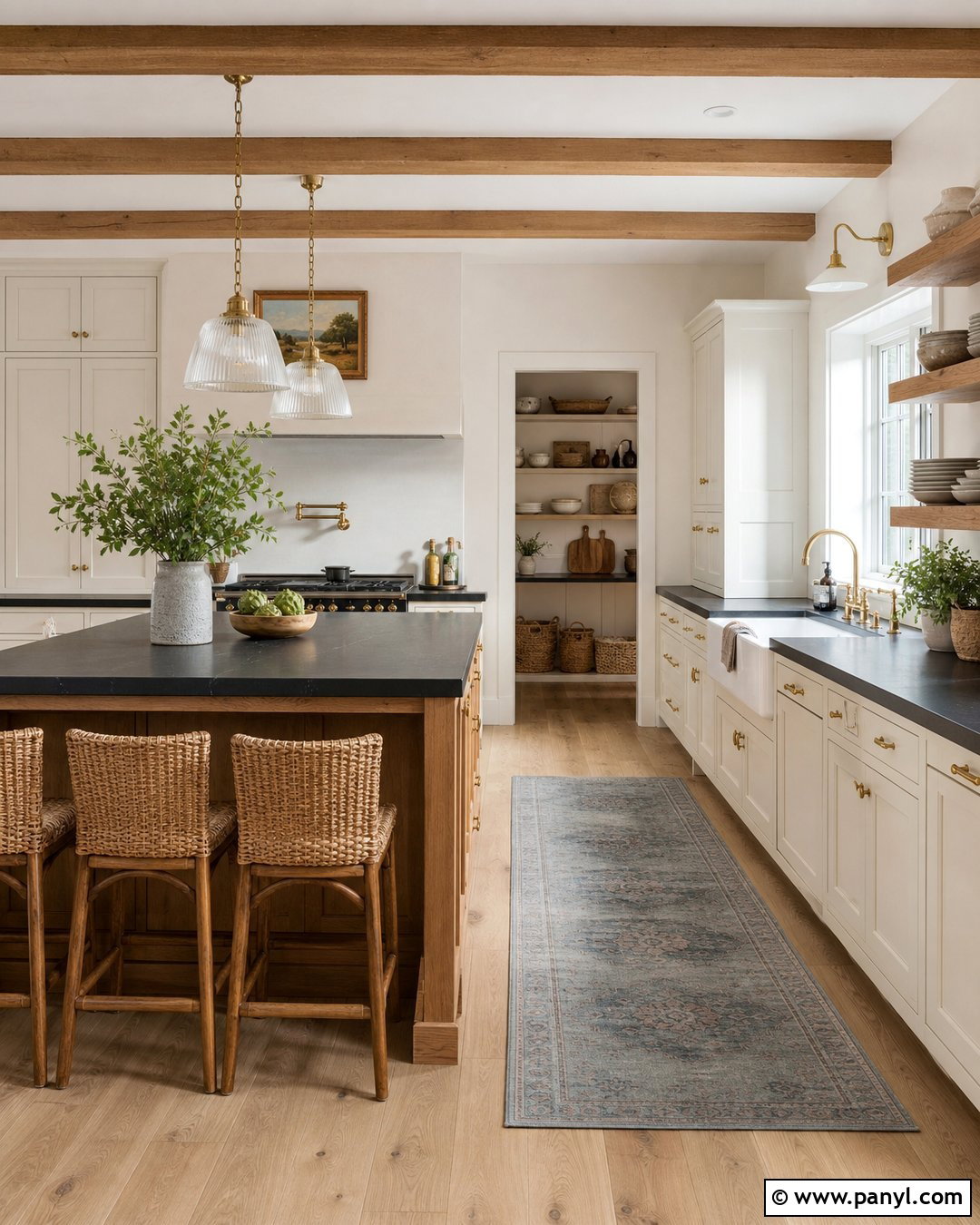
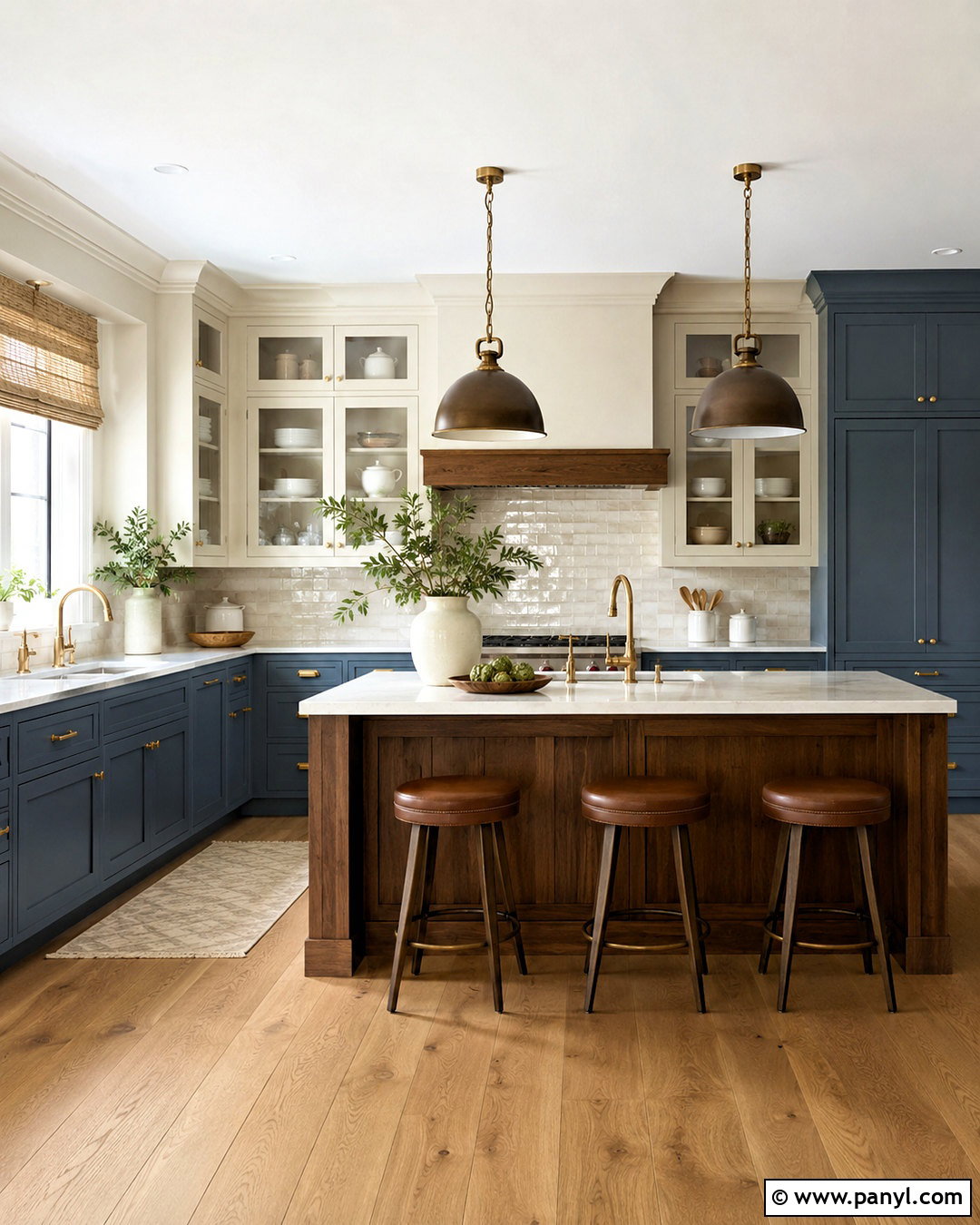
Creamy white makes a farmhouse kitchen feel comfortable, sunny, and welcoming. Pair the walls with warm white cabinets so the room looks layered rather than perfectly matched. A medium-tone oak island, honed black countertops, and simple brass hardware give the pale palette enough visual weight. Continue the farmhouse character with a white apron-front sink, woven counter stools, and open shelves displaying stoneware. Creamy white looks particularly attractive beside red oak, pine, or brick because its soft yellow undertone supports their natural warmth. Use a muted blue-gray runner to balance the warmer surfaces. Finish with clear glass pendants and off-white ceiling paint. The completed kitchen feels bright and traditional without relying on stark white everywhere.
3. Antique White Farmhouse Walls
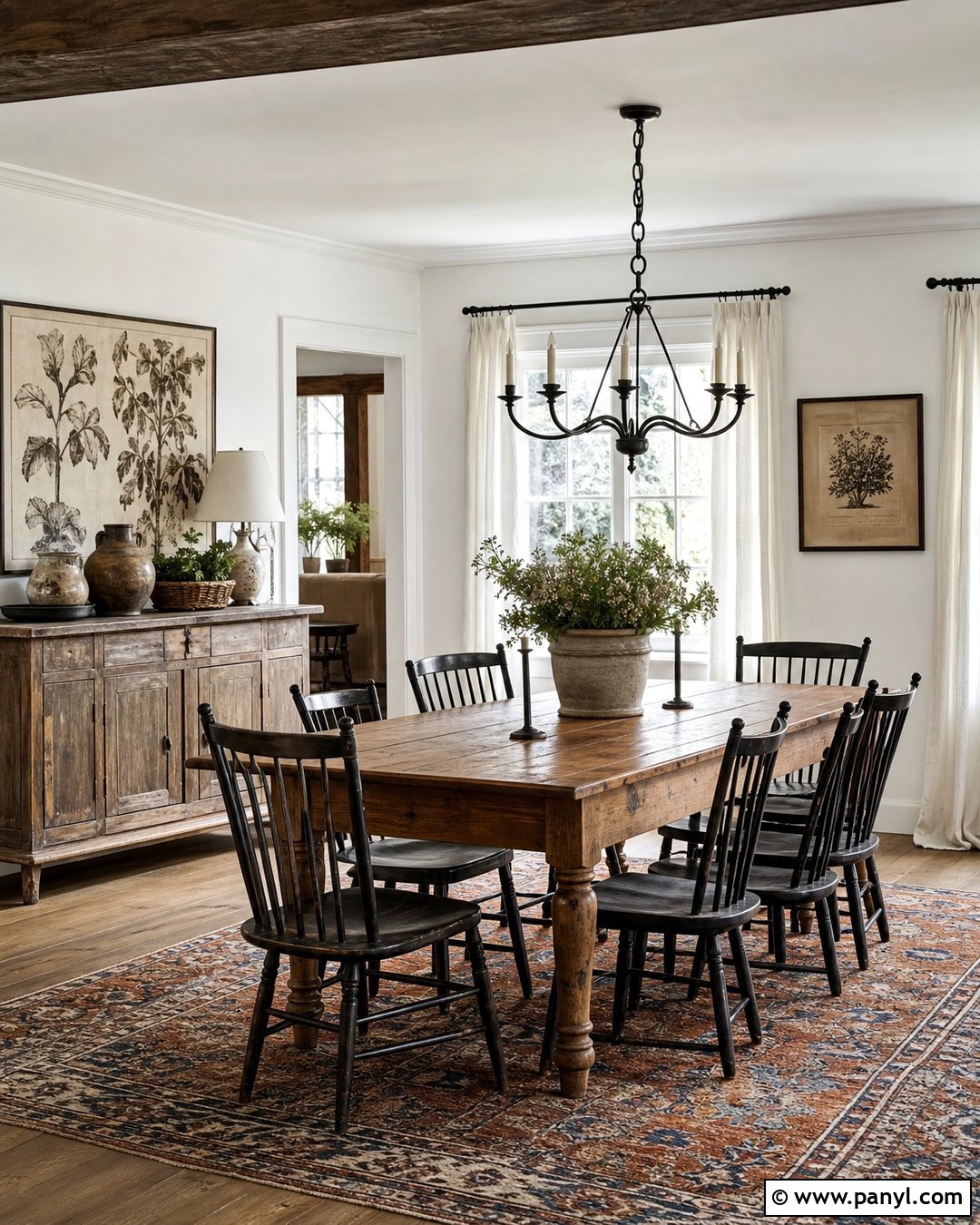
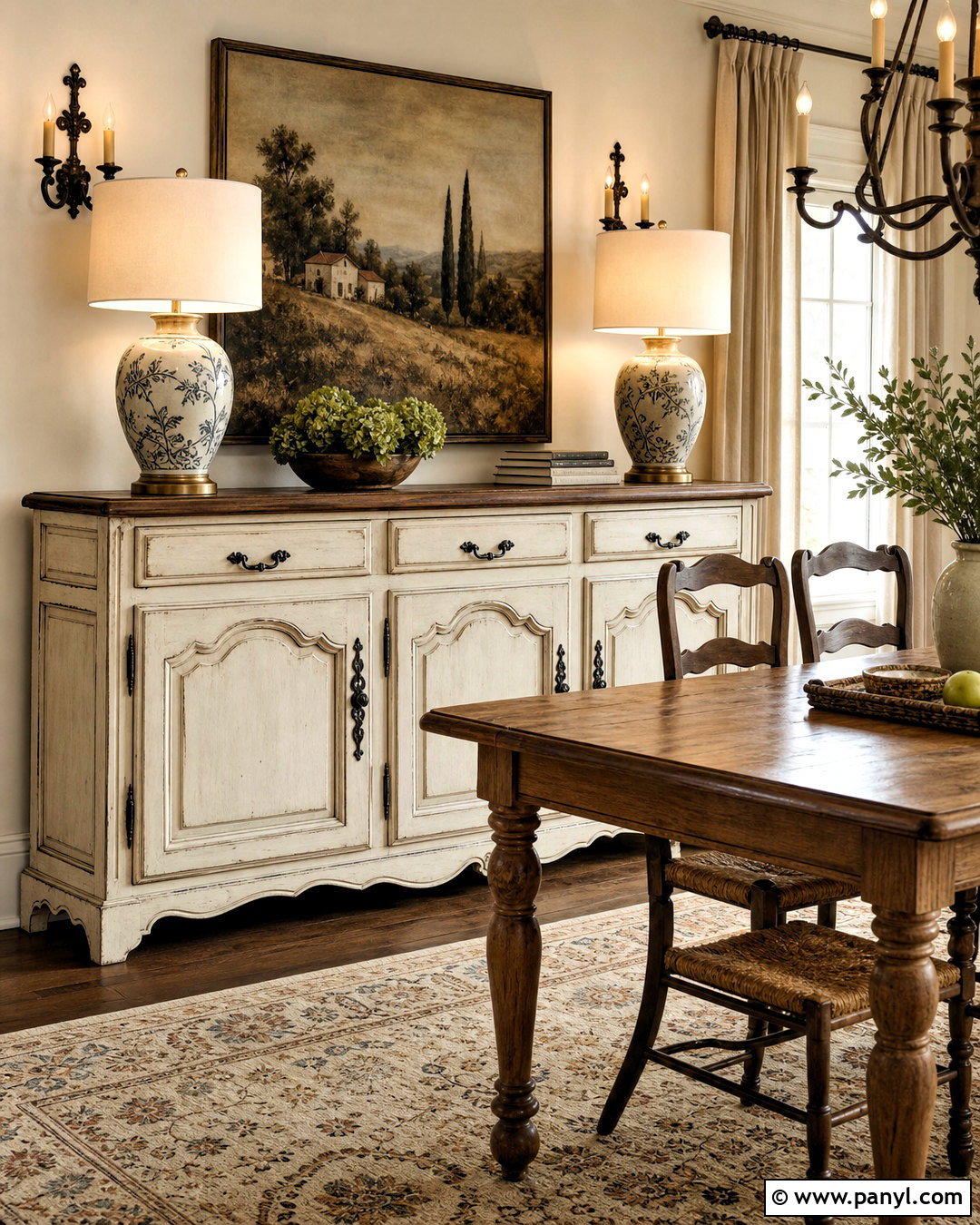
Antique white walls bring a softly aged character to a farmhouse dining room. This shade is deeper and more mellow than ordinary white, making it a natural companion for vintage furniture. Center the room around a long pine table with mixed black spindle-back chairs. Add an iron chandelier, an old wood sideboard, and cream linen curtains that nearly match the walls. A faded rug in rust, blue, and beige can connect every finish without overpowering the room. Keep the trim warm white rather than brilliant white, which may make antique white look overly yellow. Simple botanical prints and handmade pottery complete the setting. The result feels collected over time, yet the restrained color palette keeps the dining room clean and cohesive.
4. Soft Ivory Farmhouse Walls
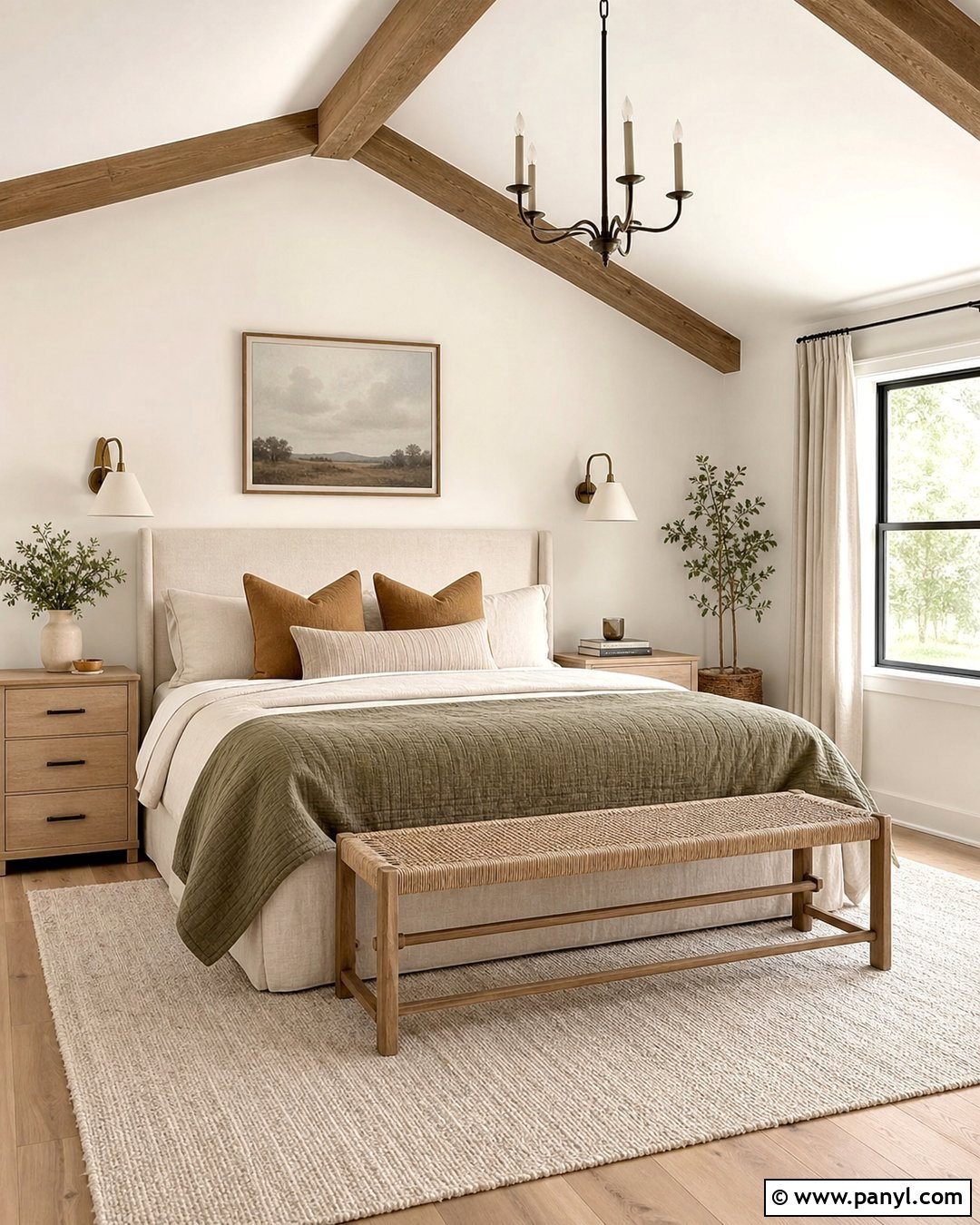
Soft ivory is a useful farmhouse wall color when a room needs warmth but still has to feel open. Try it in a bedroom with a natural linen upholstered bed, bleached oak nightstands, and a woven bench. Use ivory bedding as the base, then add muted green quilts and caramel-colored pillows for depth. Warm white trim keeps the transition subtle, while aged brass sconces bring a gentle glow around the bed. A light jute or wool rug supports the quiet palette and softens wood floors. Avoid combining ivory with icy grays, which can make its undertone appear more yellow. Instead, repeat warm neutrals through ceramic lamps, baskets, and framed landscape art. The finished bedroom feels peaceful, airy, and comfortably rustic.
5. Oatmeal Farmhouse Walls
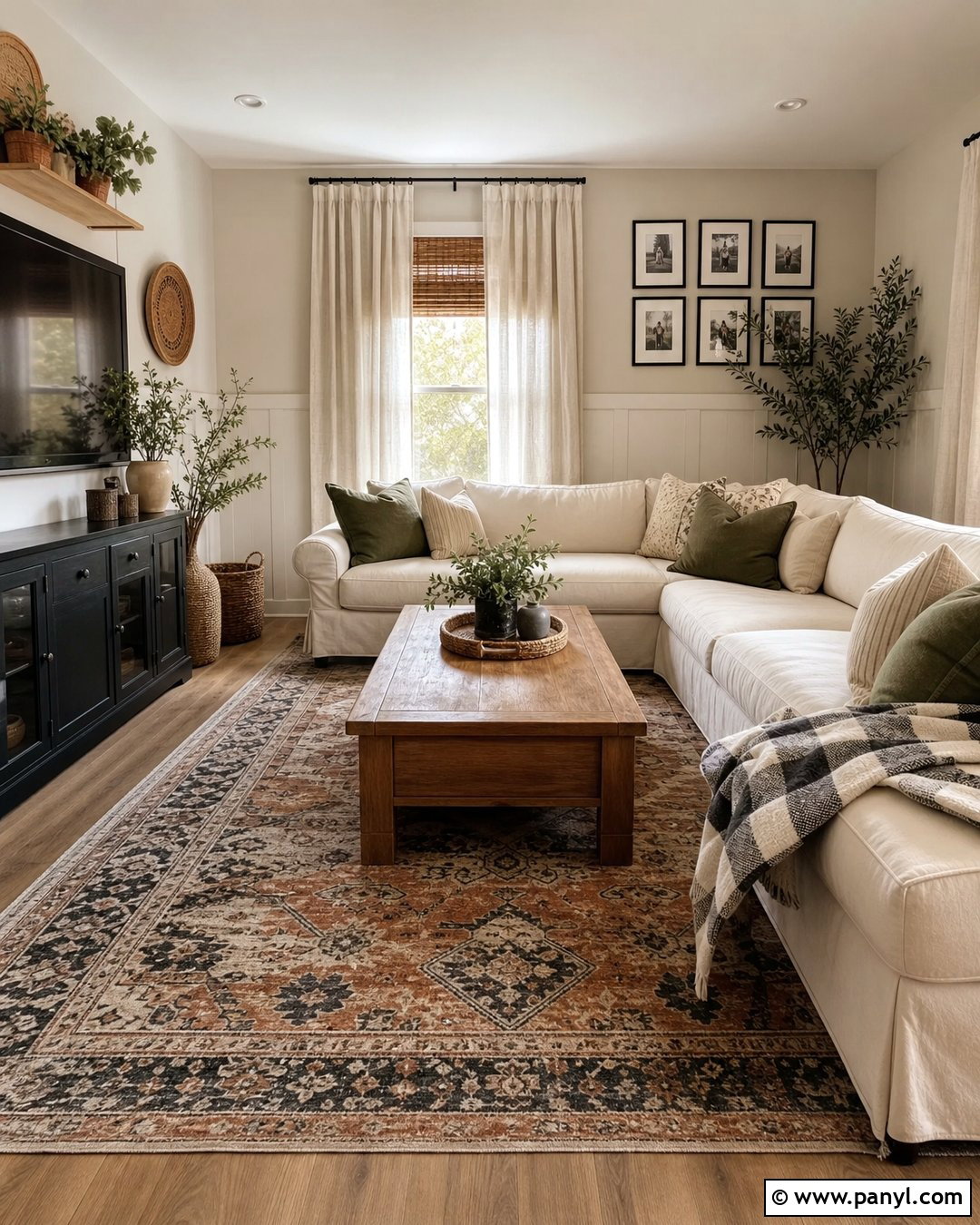
Oatmeal walls create a grounded neutral room with more substance than off-white. This warm beige works beautifully in a farmhouse family room where durability and comfort matter. Pair it with a slipcovered cream sectional, a sturdy oak coffee table, and a low media cabinet painted muted black. Layer a patterned wool rug in tan, faded rust, and charcoal over medium wood flooring. Use soft white on the ceiling and trim to keep the oatmeal walls fresh. Linen curtains, woven shades, and large pottery lamps reinforce the natural palette. Add olive green pillows and a simple checked throw for quiet contrast. Because oatmeal sits between cream and tan, it supports both pale upholstery and darker vintage furniture without making the space feel overly brown.
6. Light Beige Farmhouse Walls
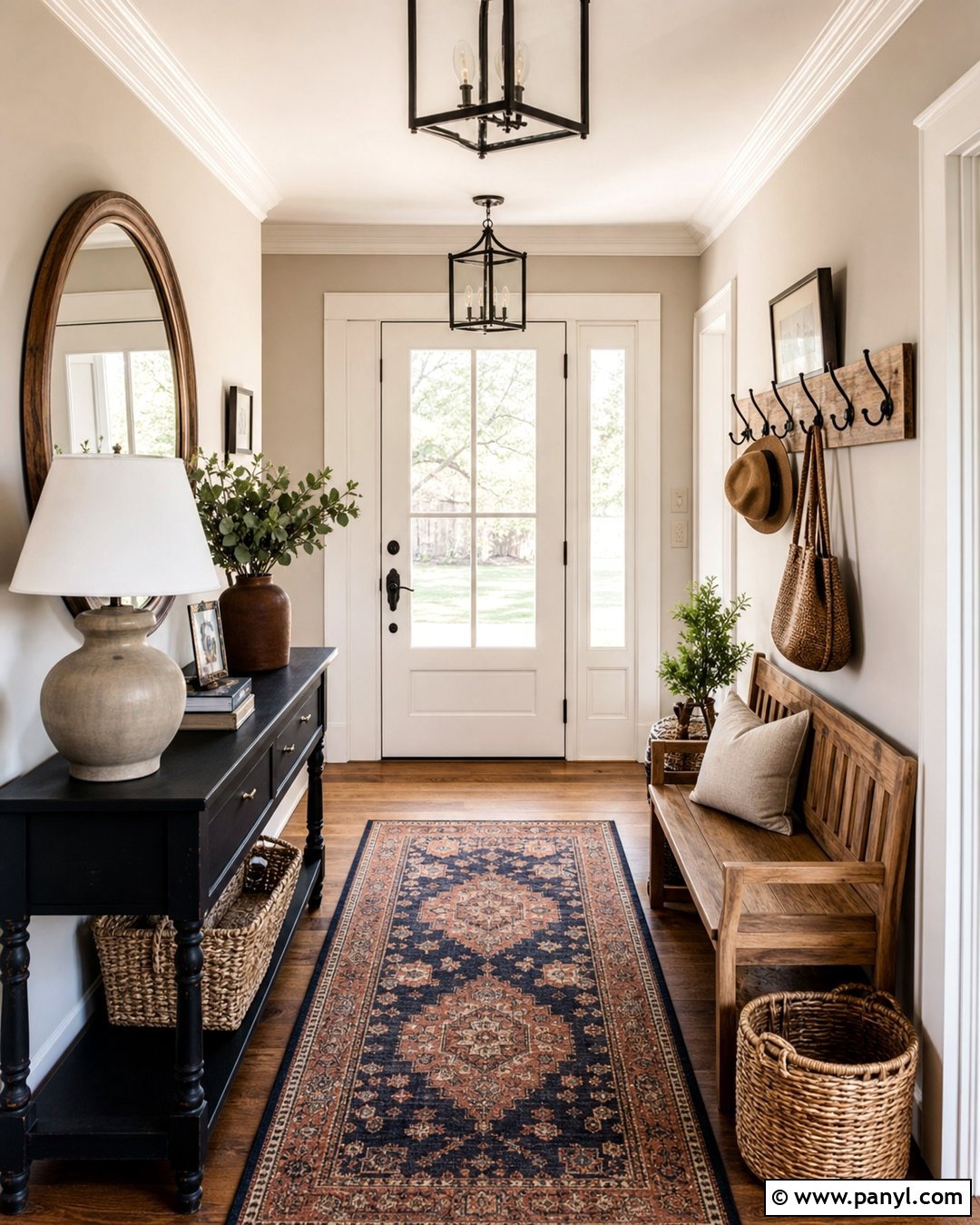
Light beige gives a farmhouse entryway an inviting look while hiding everyday marks better than bright white. Pair the walls with crisp cream trim, warm oak flooring, and a black-painted console table. A large round mirror can reflect daylight and keep the neutral color from feeling flat. Under the table, place two woven baskets for shoes, scarves, or pet supplies. A washable runner with muted navy and rust details provides pattern while maintaining the practical farmhouse mood. Complete the entry with iron hooks, a simple wood bench, and a ceramic table lamp. Choose a beige that looks softly warm rather than peach or yellow. Repeating black, wood, and cream throughout the space produces a balanced arrival area that feels organized, durable, and welcoming.
7. Putty Farmhouse Walls
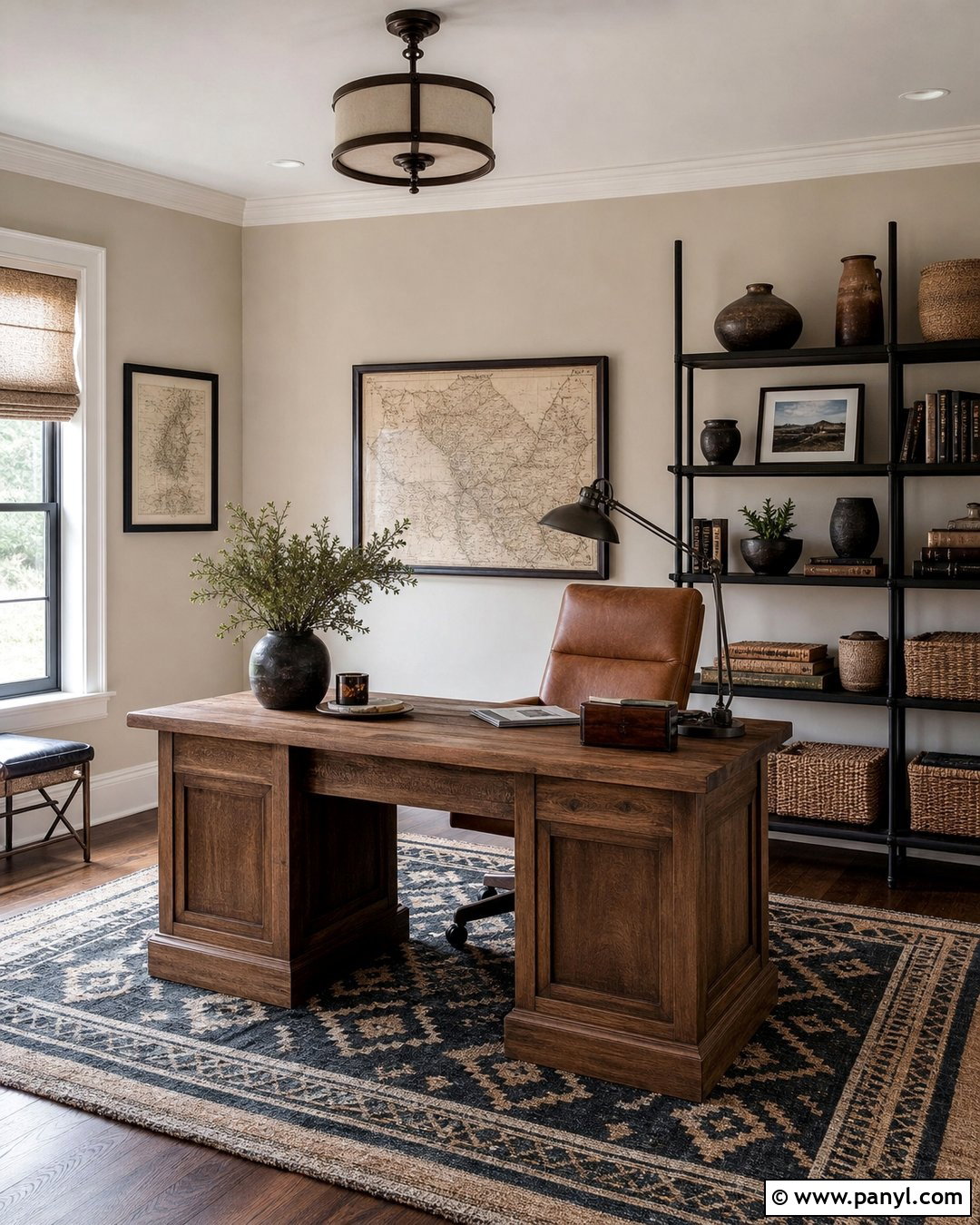
Putty walls offer a deeper neutral option for a farmhouse home office. The color combines beige, gray, and a hint of brown, creating a calm background that works with traditional wood furniture. Place a substantial oak desk near the window and use black metal shelving for books, baskets, and pottery. Cream trim and a pale ceiling keep the room from feeling enclosed. A faded geometric rug in charcoal and tan grounds the workspace, while a cognac leather chair adds warmth. Include linen Roman shades to filter glare without removing natural light. Putty also looks attractive behind framed maps, botanical studies, or landscape paintings. The complete office feels focused and established, yet its soft natural materials prevent it from becoming formal or heavy.

8. Mushroom Farmhouse Walls
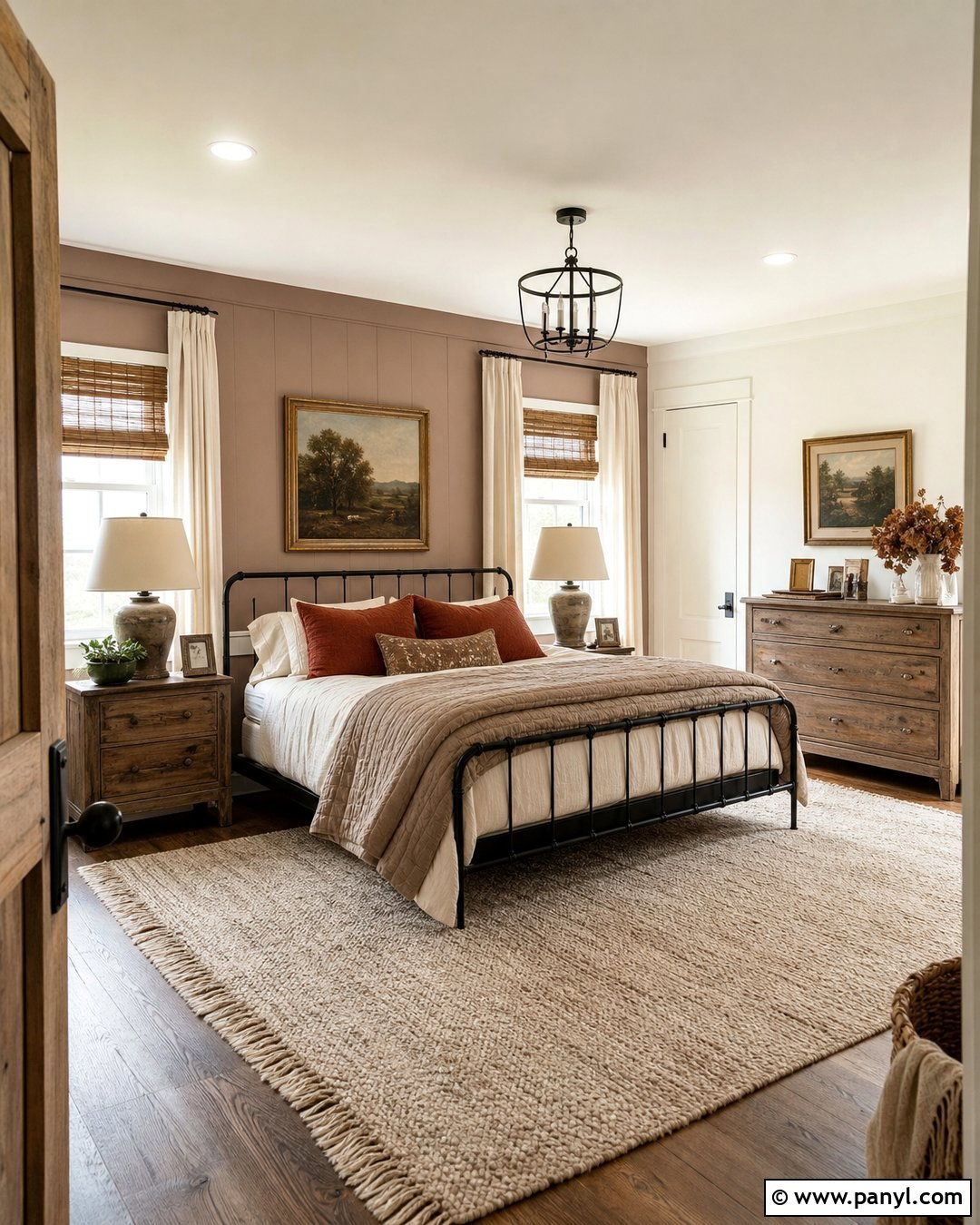
Mushroom walls create a cozy farmhouse bedroom that feels sophisticated without losing its rustic ease. This medium neutral usually blends taupe, gray, and brown, so it pairs naturally with weathered wood. Use a black iron bed as the focal point, dressed with cream bedding, a taupe quilt, and rust-colored accent pillows. Flank it with reclaimed oak nightstands and simple ceramic lamps. Warm white trim gives the walls a clean edge, while a pale wool rug prevents the room from becoming too dark. Add woven shades and unbleached linen curtains for layered texture. A vintage dresser and understated landscape art complete the design. Mushroom is particularly helpful in rooms with abundant daylight, where lighter neutrals might appear washed out or lacking in depth.
9. Warm Greige Farmhouse Walls
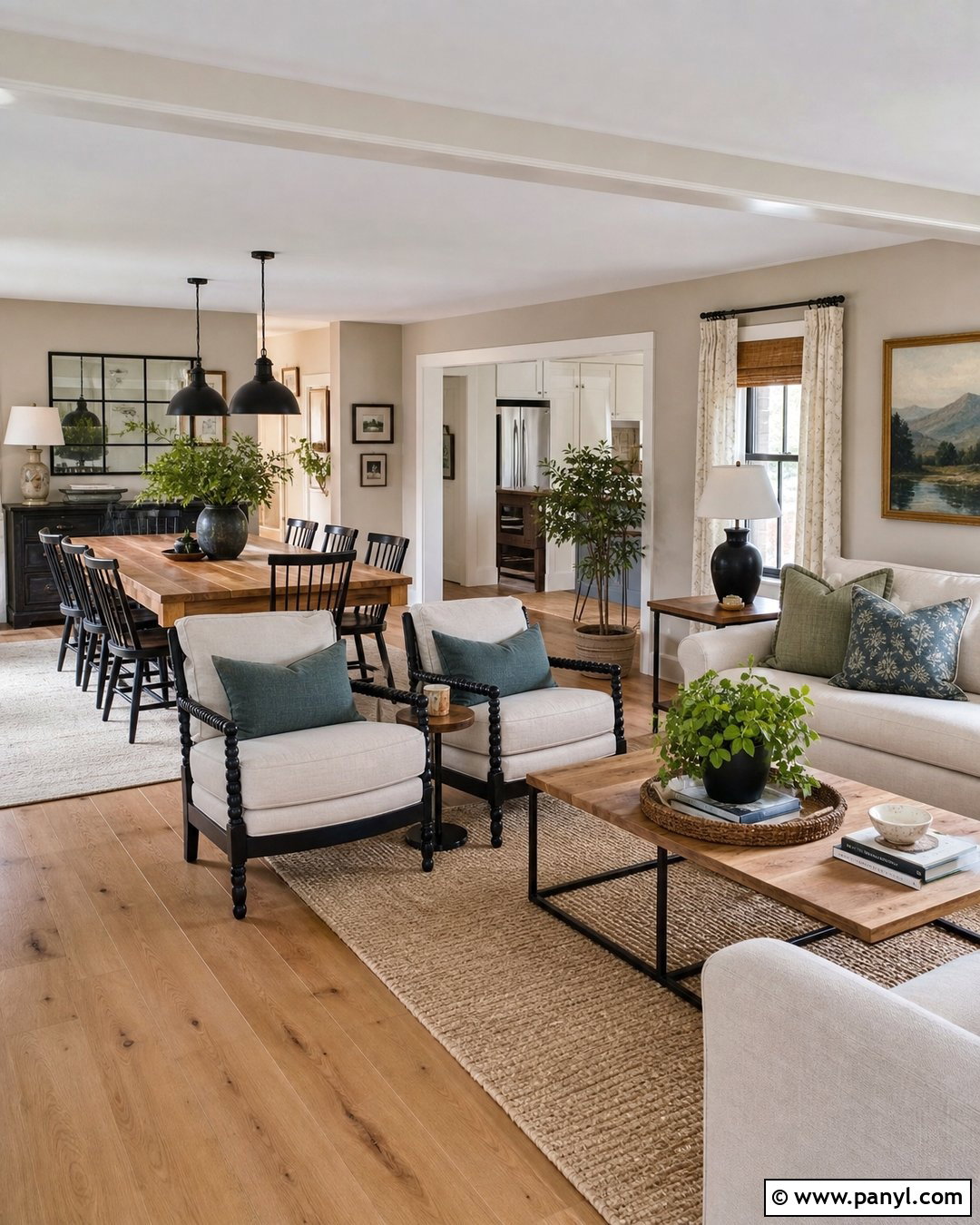
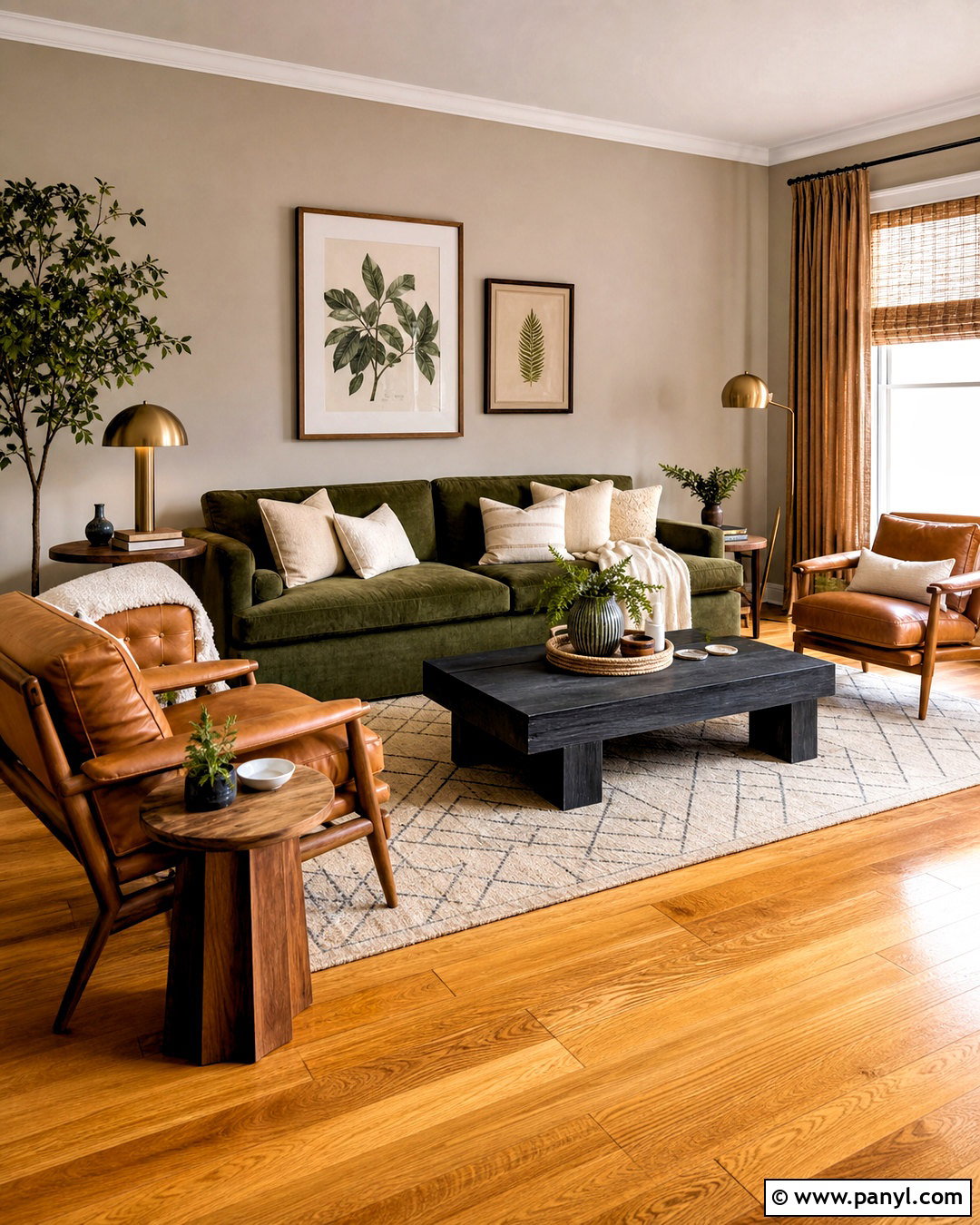
Warm greige is one of the most flexible farmhouse wall colors because it balances the comfort of beige with the restraint of gray. Use it in an open living and dining area to create continuity between different zones. Pair the walls with soft white trim, medium oak floors, and a mix of cream upholstery and black wood furniture. A natural wood dining table can connect visually with a reclaimed coffee table across the room. Introduce sage, faded blue, and warm tan through rugs and textiles. Matte black pendants and curtain rods provide structure without dominating the palette. Choose a greige that remains warm beside your flooring. This complete scheme feels updated and cohesive while leaving room for seasonal decor changes and collected vintage pieces.
10. Pale Taupe Farmhouse Walls
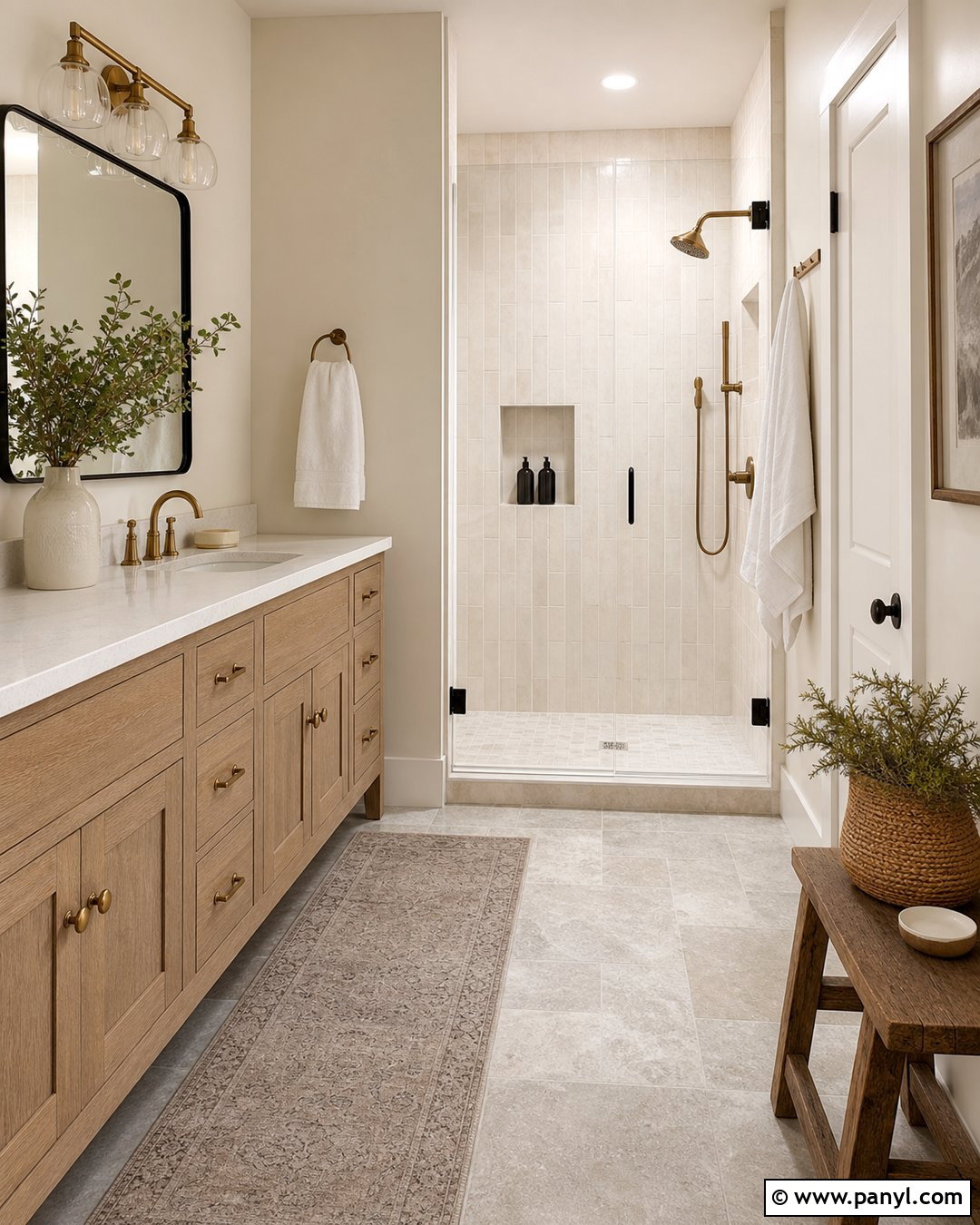
Pale taupe walls give a farmhouse bathroom warmth while maintaining a clean, quiet appearance. Combine them with an oak vanity, white quartz countertop, and rectangular cream tile around the shower. Use warm white on the trim and ceiling so the wall color reads as softly contrasting rather than muddy. Brushed brass faucets and sconces add warmth, while a thin black mirror frame introduces definition. Choose stone-look floor tile with subtle beige and gray variation to connect the different neutrals. White towels, a small wooden stool, and woven storage baskets keep the room practical and relaxed. Pale taupe is especially successful in bathrooms that contain both warm wood and cool stone because it can visually bridge the two without calling too much attention to itself.
11. Dove Gray Farmhouse Walls

Dove gray can make a farmhouse laundry room feel fresh and orderly when it has a warm, gentle undertone. Use it on the walls around white shaker cabinets, a butcher-block counter, and a deep white utility sink. Add a simple cream tile backsplash to brighten the work area. Natural woven baskets, wood shelves, and an antique-style runner prevent the gray from looking industrial. Paint the trim and ceiling a soft white rather than a sharp blue-white. Black cabinet pulls and a black hanging rail create useful contrast, while clear glass containers keep supplies organized. If the room lacks windows, use bright neutral lighting that shows the wall color accurately. The finished laundry space feels functional, calm, and connected to the farmhouse character of nearby rooms.
12. Warm Gray Farmhouse Walls
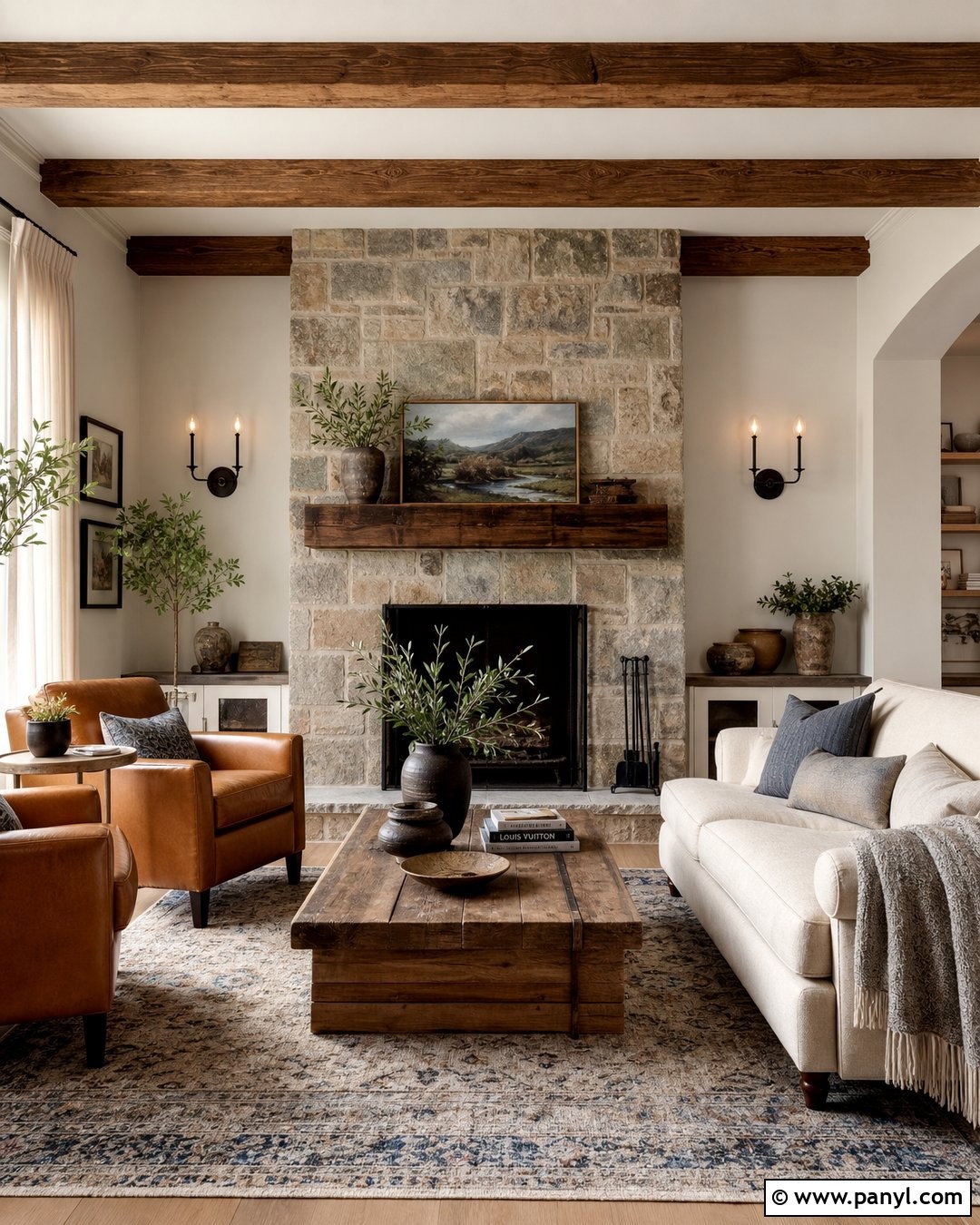
Warm gray walls can update a farmhouse living room while preserving its comfortable, traditional character. Build the room around a stone fireplace with a thick reclaimed wood mantel. Add a cream sofa, two camel leather chairs, and a substantial coffee table made from aged oak. Soft white trim keeps the gray from feeling heavy, especially around tall windows. Use a large rug that mixes beige, gray, and faded blue to connect the cool and warm elements. Black iron sconces, pottery, and simple linen curtains complete the arrangement. Select a gray with beige or brown undertones instead of blue ones. The finished space has enough contrast to feel current, but the natural stone, warm leather, and imperfect wood surfaces maintain an approachable farmhouse atmosphere.
13. Stone Gray Farmhouse Walls
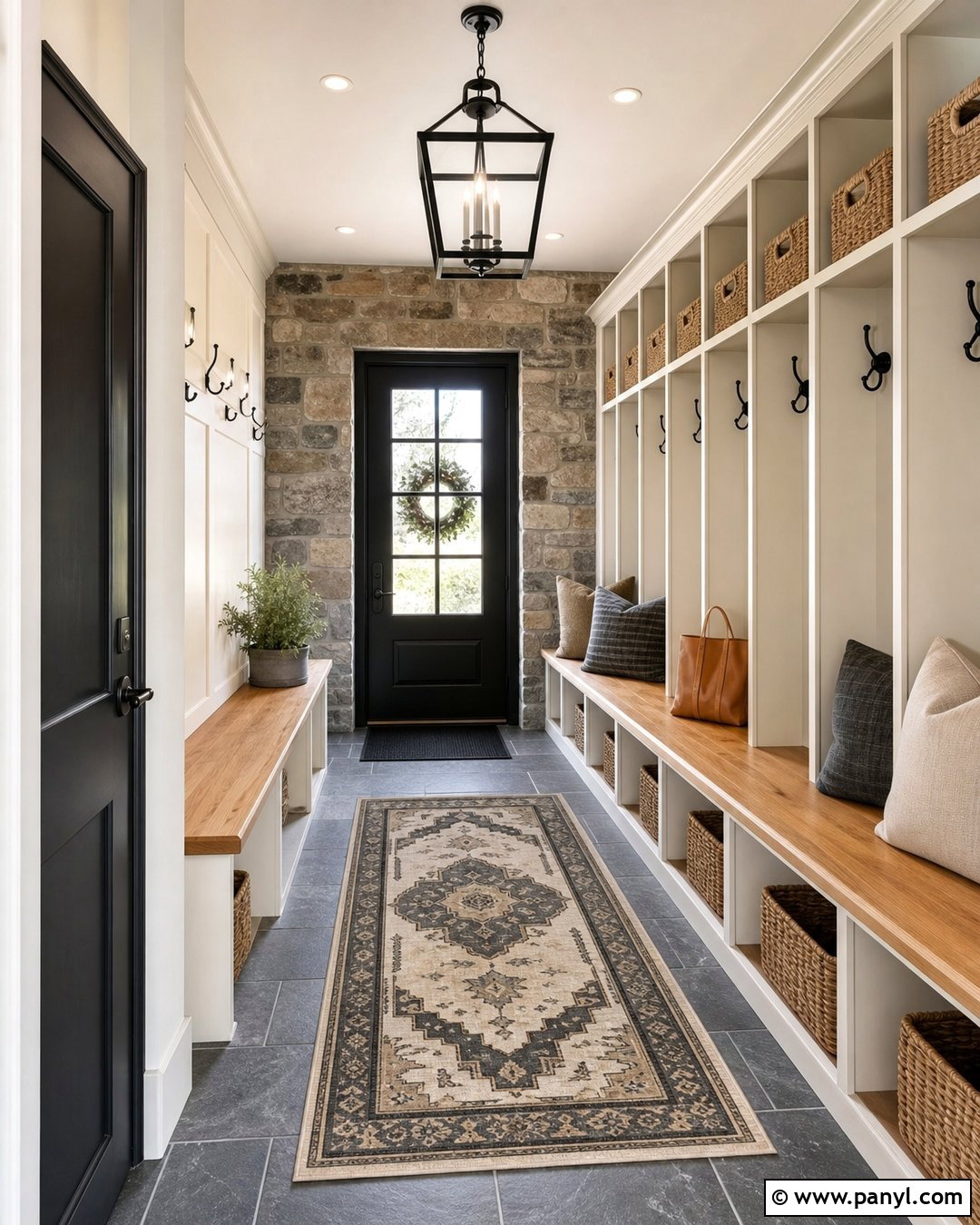
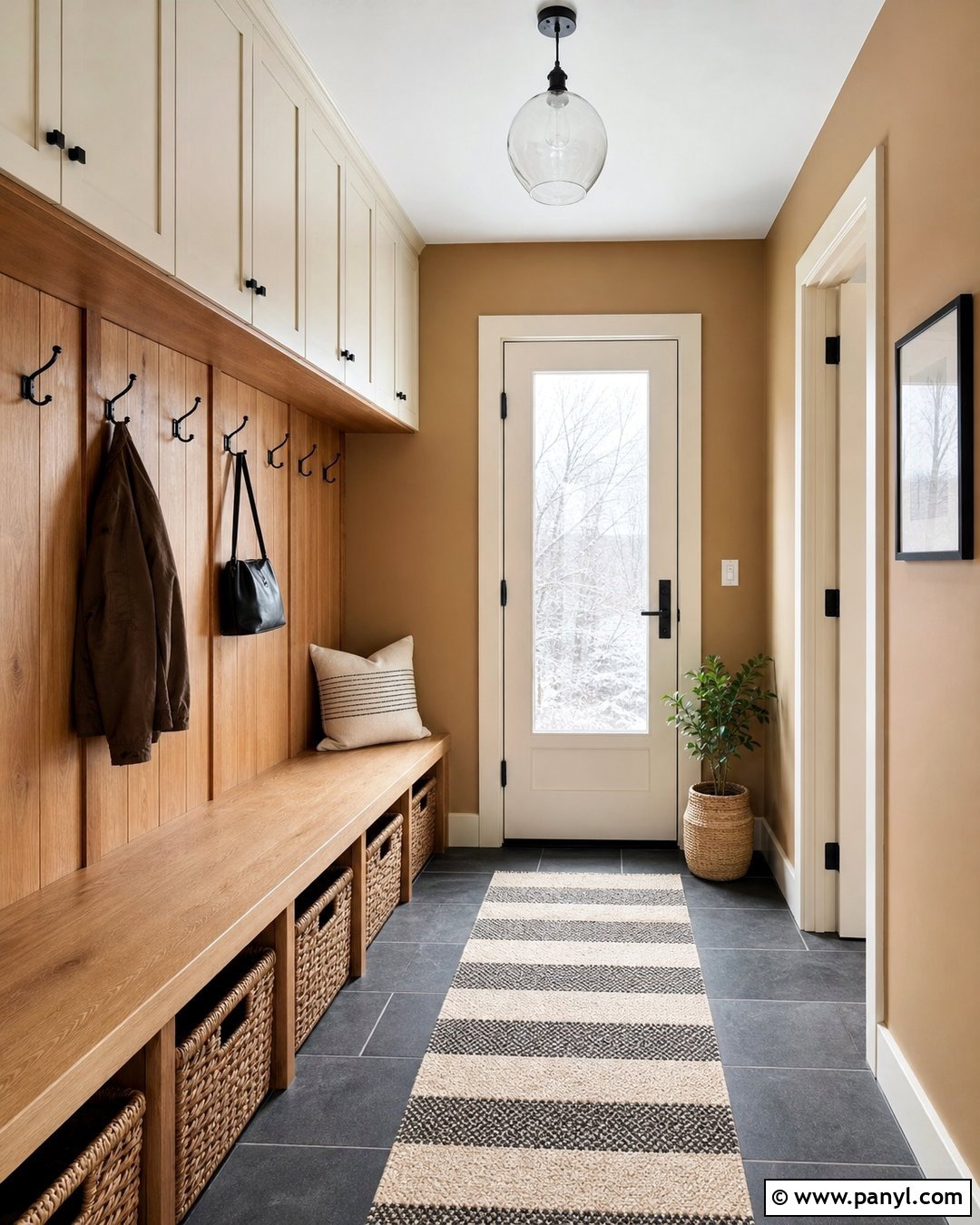
Stone gray walls suit a farmhouse mudroom where rugged materials and practical storage define the design. Pair the color with built-in cream lockers, oak bench seats, and black iron hooks. Use slate-look porcelain tile on the floor for an easy-care surface that reinforces the earthy palette. Woven baskets above the lockers provide storage and introduce warm texture. A durable striped runner in tan, charcoal, and ivory softens the darker flooring. Keep the ceiling pale and add a simple black lantern fixture for focused contrast. Stone gray should have a natural, slightly warm cast so it coordinates with wood and beige textiles. This complete mudroom feels hardworking and organized, while its restrained colors help coats, bags, and boots look less visually cluttered.
14. Charcoal Farmhouse Walls
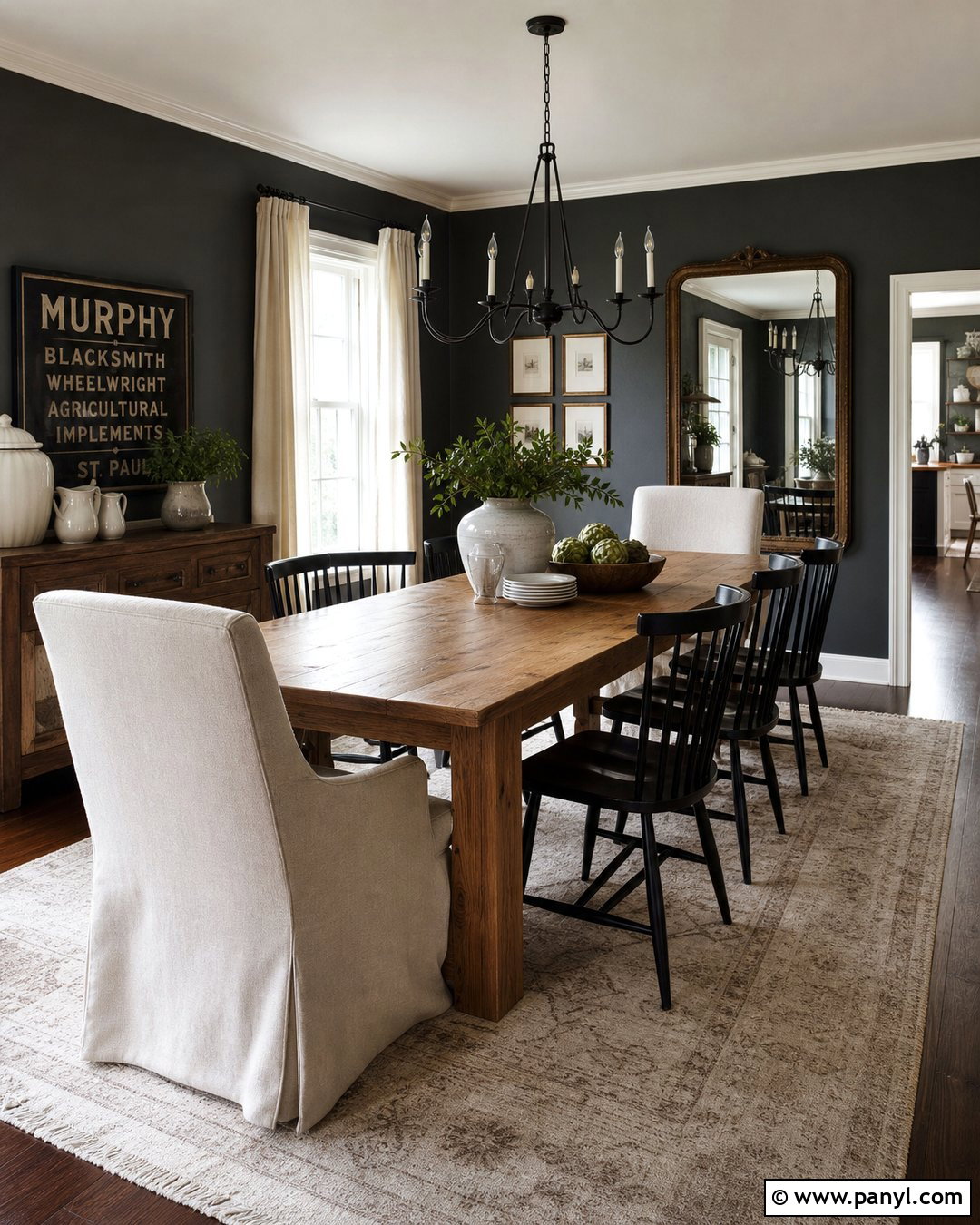
Charcoal walls can create a dramatic farmhouse dining room when balanced with lighter furnishings and strong natural light. Paint all four walls charcoal for an enveloping look, then use warm white on the ceiling, trim, and interior doors. A long natural oak table becomes the visual center, surrounded by cream upholstered end chairs and black spindle-back side chairs. Hang a substantial iron chandelier above the table and place a pale patterned rug underneath. Linen curtains, white stoneware, and a large vintage mirror brighten the darker background. Keep artwork simple so the walls remain calm rather than busy. Charcoal works best here as part of a complete high-contrast palette, giving the farmhouse room depth while wood, fabric, and ceramics preserve its welcoming character.
15. Sage Green Farmhouse Walls
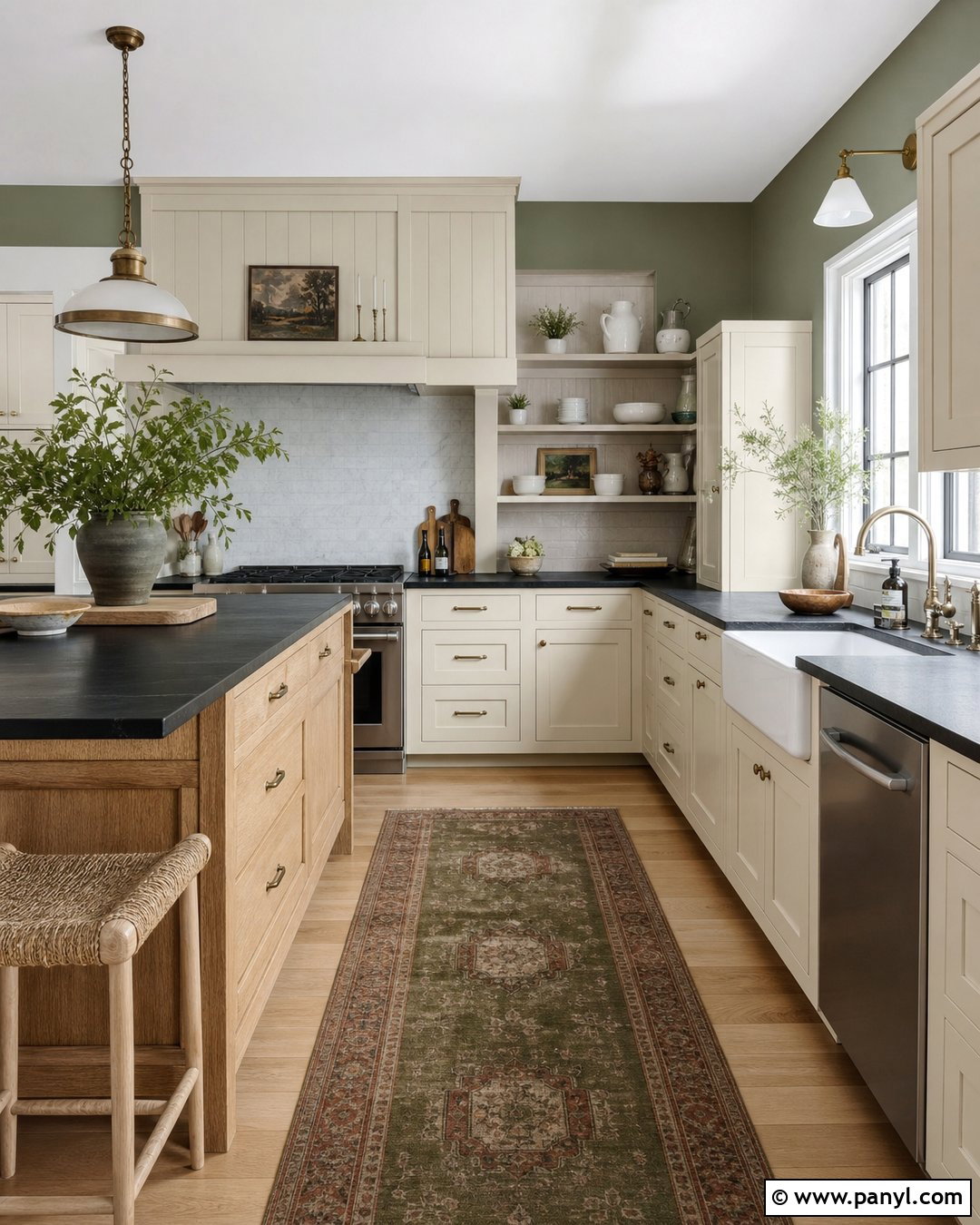
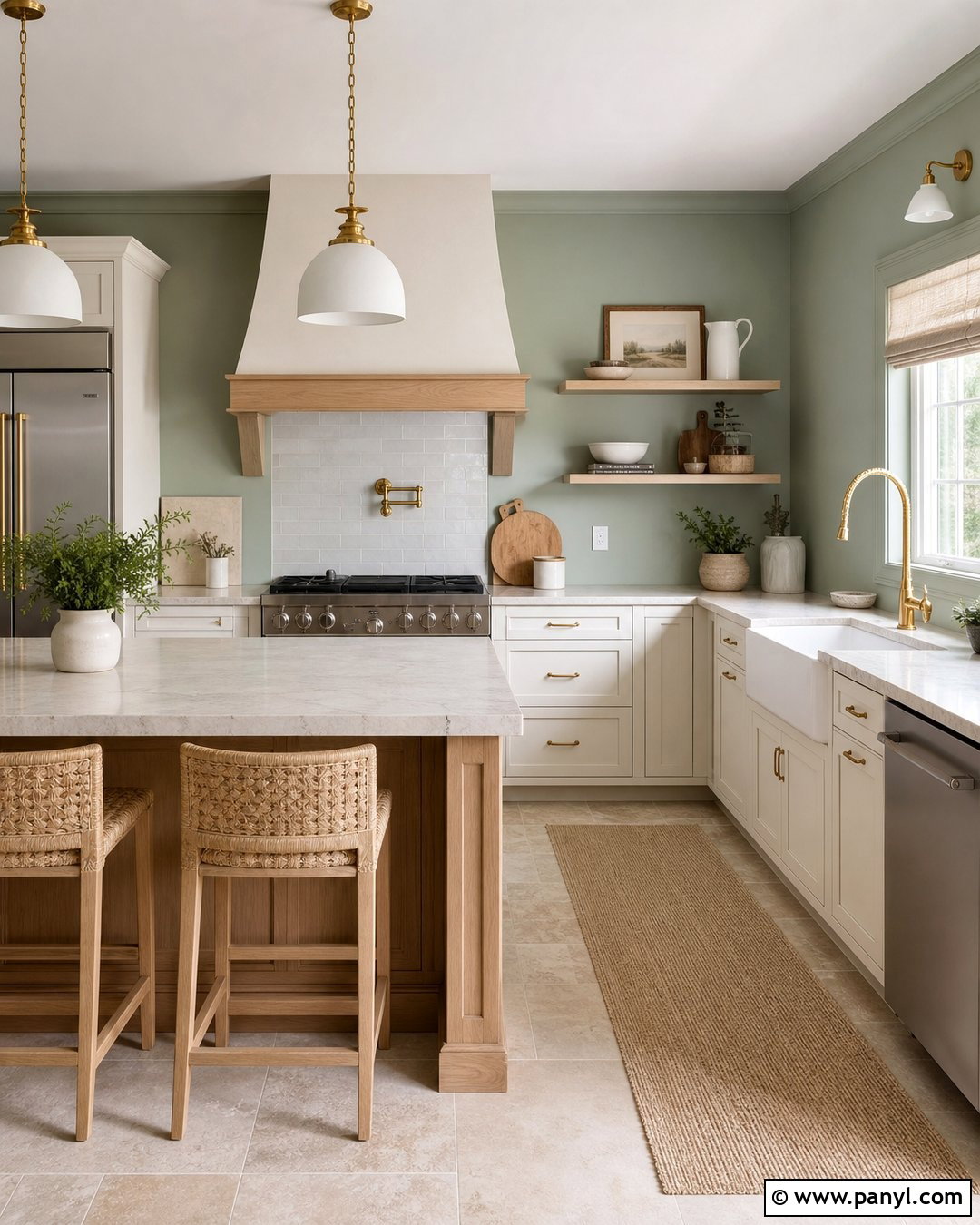
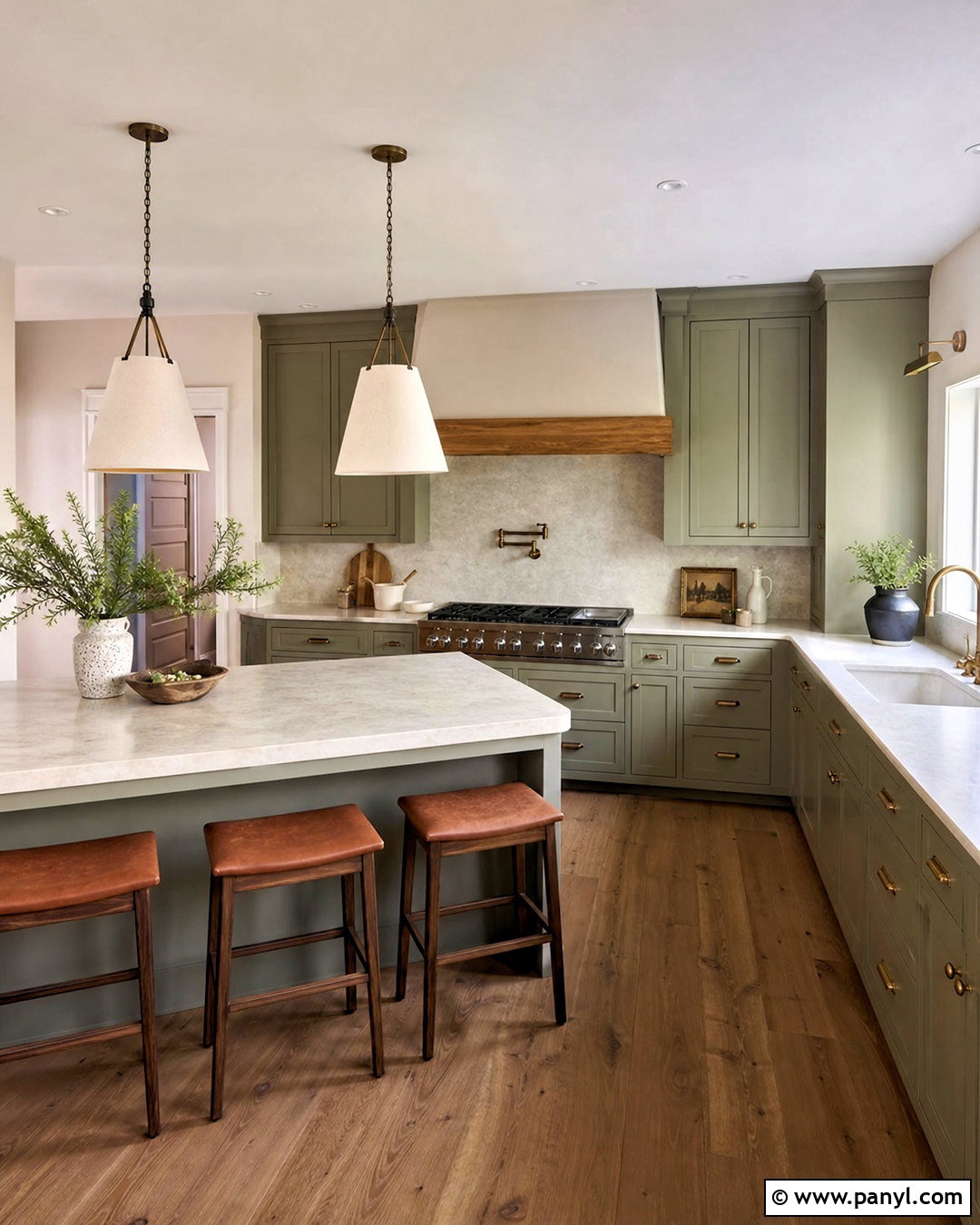
Sage green walls give a farmhouse kitchen a natural connection to wood, stone, and garden views. Use a light, muted sage with cream cabinets, honed soapstone counters, and warm oak flooring. A natural wood island can add character without introducing another painted color. Choose aged brass hardware and simple cream pendant lights for a soft, traditional finish. Open shelves displaying white pottery keep the room casual and useful. Add woven counter stools and a washable runner featuring olive, tan, and faded red. Paint the trim a warm white that supports the green’s earthy undertone. The completed kitchen feels fresh but not trendy because sage behaves much like a neutral. It provides color while allowing practical farmhouse materials to remain the main focus.
16. Eucalyptus Green Farmhouse Walls
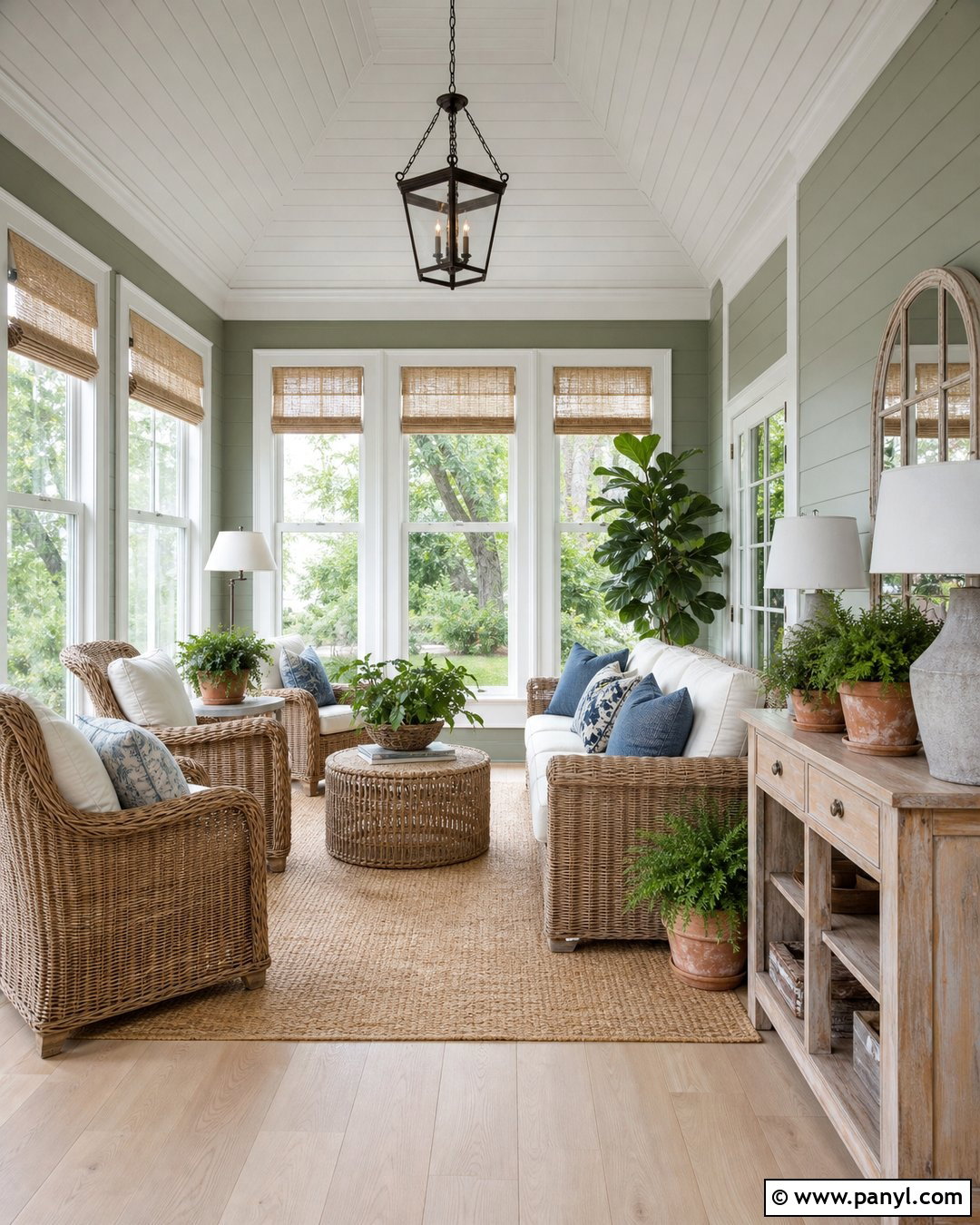
Eucalyptus green offers a slightly cooler farmhouse color scheme that works well in a bright sunroom. Pair the muted green walls with warm white window trim, pale oak flooring, and comfortable wicker seating. Use cream cushions, blue-gray pillows, and a woven jute rug to create a light, garden-inspired palette. A distressed wood console can hold terracotta pots and simple leafy plants without turning the space into a greenhouse. Add linen Roman shades for light control and a black ceiling fan for contrast. Eucalyptus looks especially balanced when repeated subtly in patterned textiles rather than matched exactly. The full room should feel airy and restful, with enough warm wood and tan fiber to keep the cooler green walls from appearing minty or overly modern.
17. Olive Green Farmhouse Walls
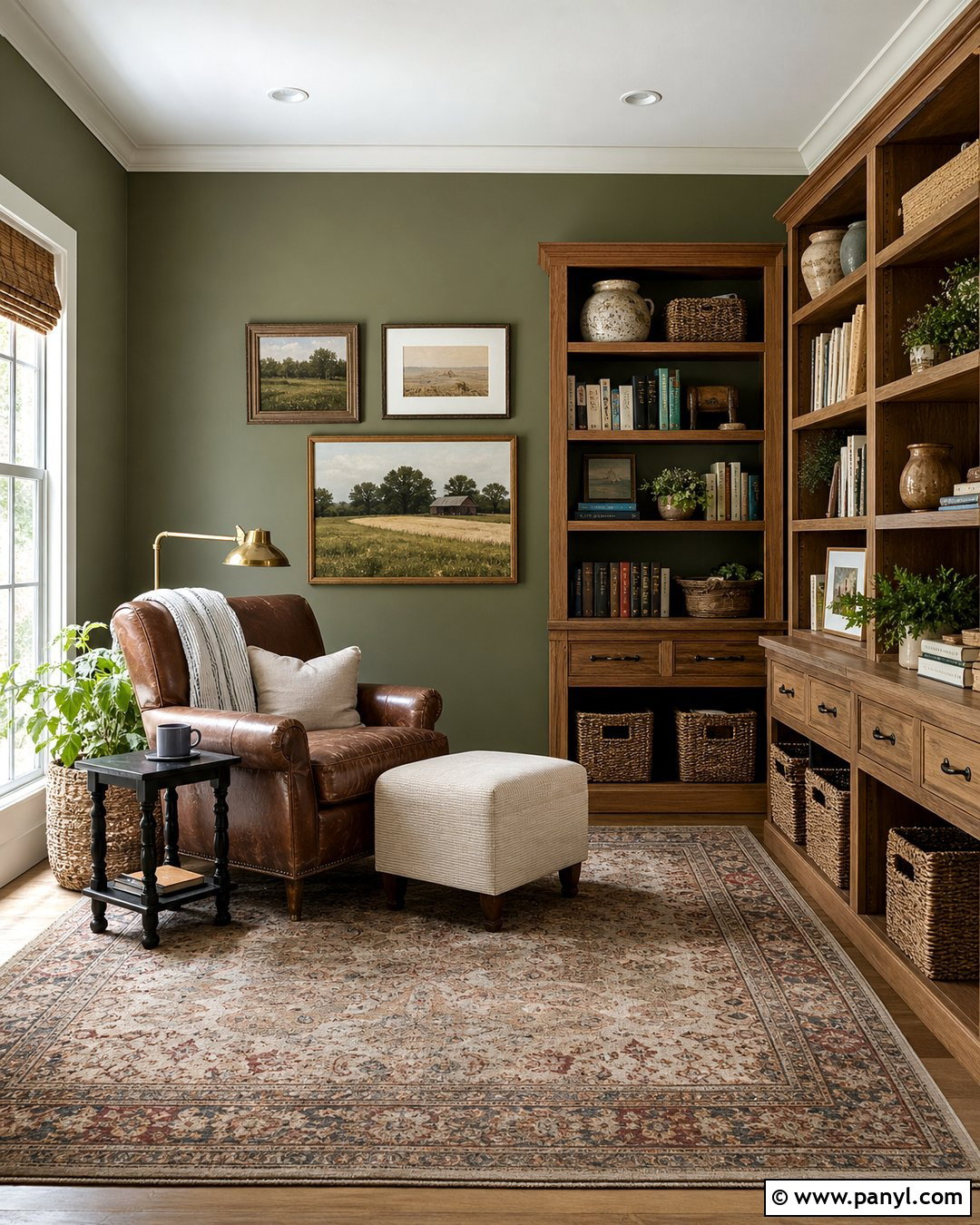
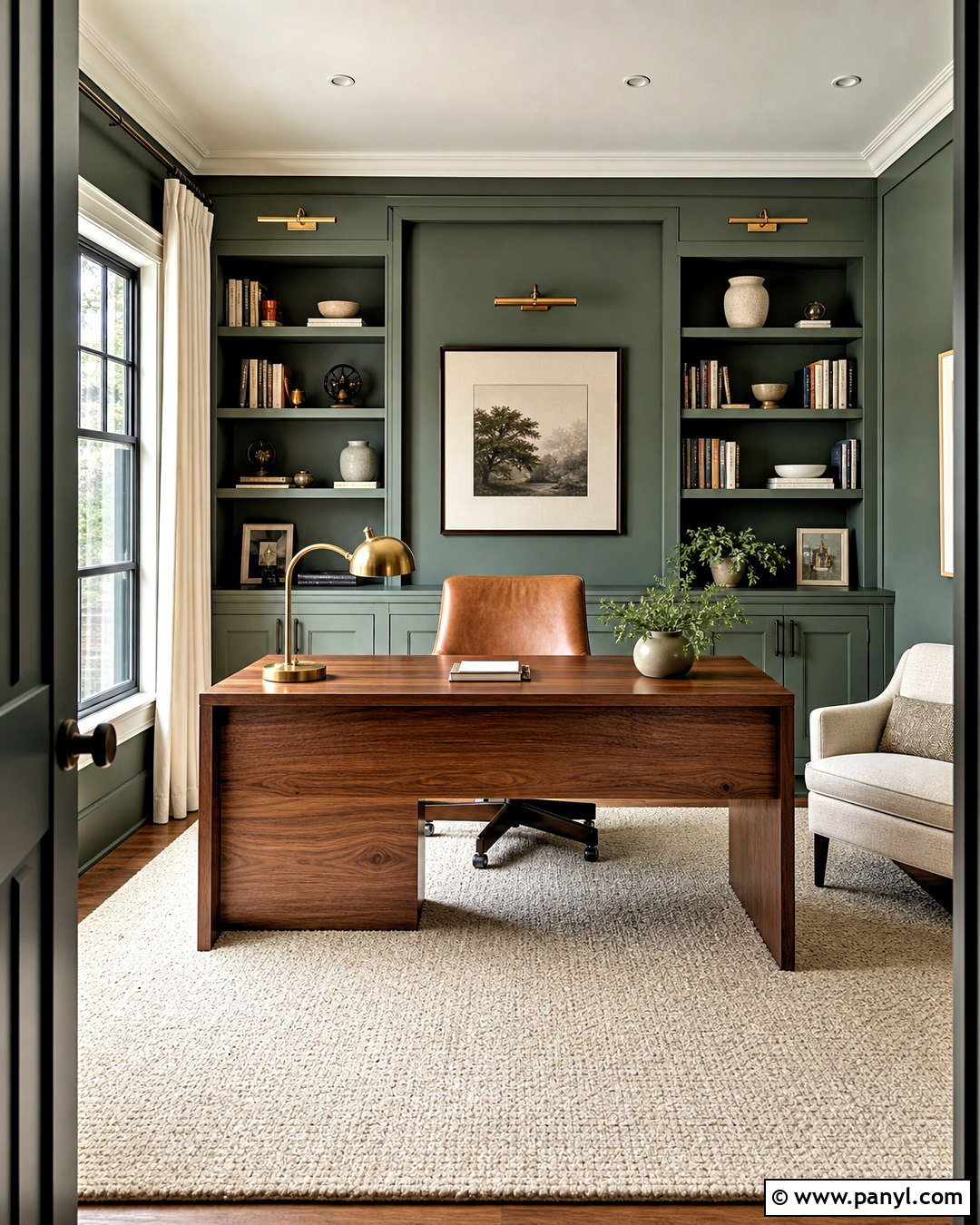
Olive green walls produce a rich, earthy farmhouse library or reading room. Use the color with floor-to-ceiling oak bookcases or a substantial vintage cabinet to create a layered, collected appearance. A worn brown leather chair, cream ottoman, and traditional wool rug make the room comfortable for everyday use. Keep the ceiling and trim warm white to prevent the darker walls from closing in. A brass floor lamp and framed pastoral artwork add quiet warmth without becoming decorative clutter. Include a small black side table for contrast and practical storage baskets on lower shelves. Olive works best beside golden or medium-tone wood because those surfaces emphasize its natural warmth. The completed room feels cozy, established, and connected to classic rural interiors.
18. Moss Green Farmhouse Walls
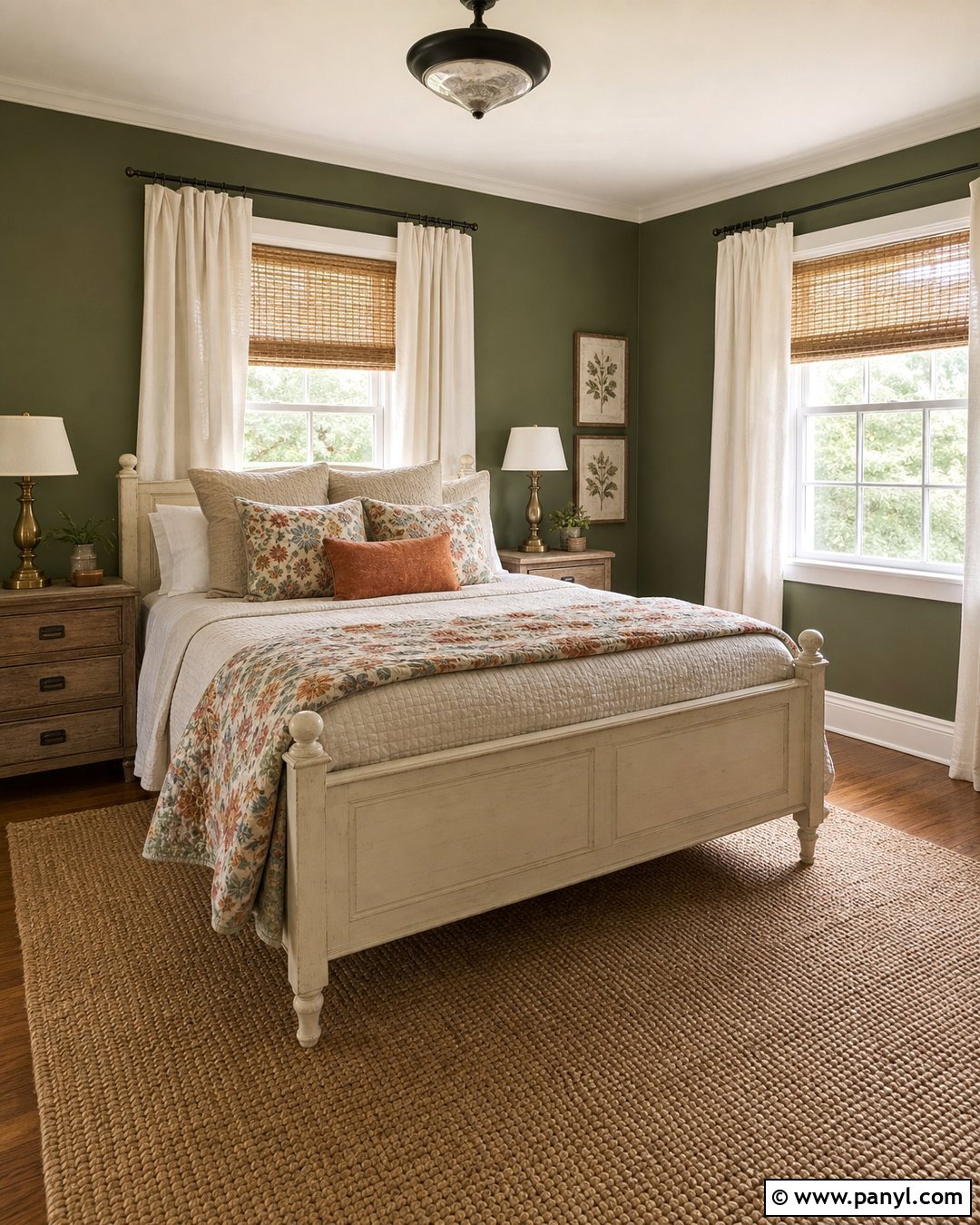
Moss green can transform a farmhouse guest room into a restful retreat with a strong connection to nature. Choose a medium, muted moss for the walls and balance it with a cream-painted wood bed. Layer white sheets, an oatmeal coverlet, and a small-scale floral quilt in rust, green, and faded blue. Weathered oak nightstands and antique brass lamps reinforce the warm undertones. Use natural woven shades with simple ivory curtains, then ground the room with a tan wool rug. Keep the artwork modest, such as pressed botanicals or a single landscape painting. Moss is deeper than sage but softer than forest green, so it adds personality without overwhelming the room. The complete arrangement feels intimate, welcoming, and appropriately relaxed for farmhouse style.
19. Dusty Blue Farmhouse Walls
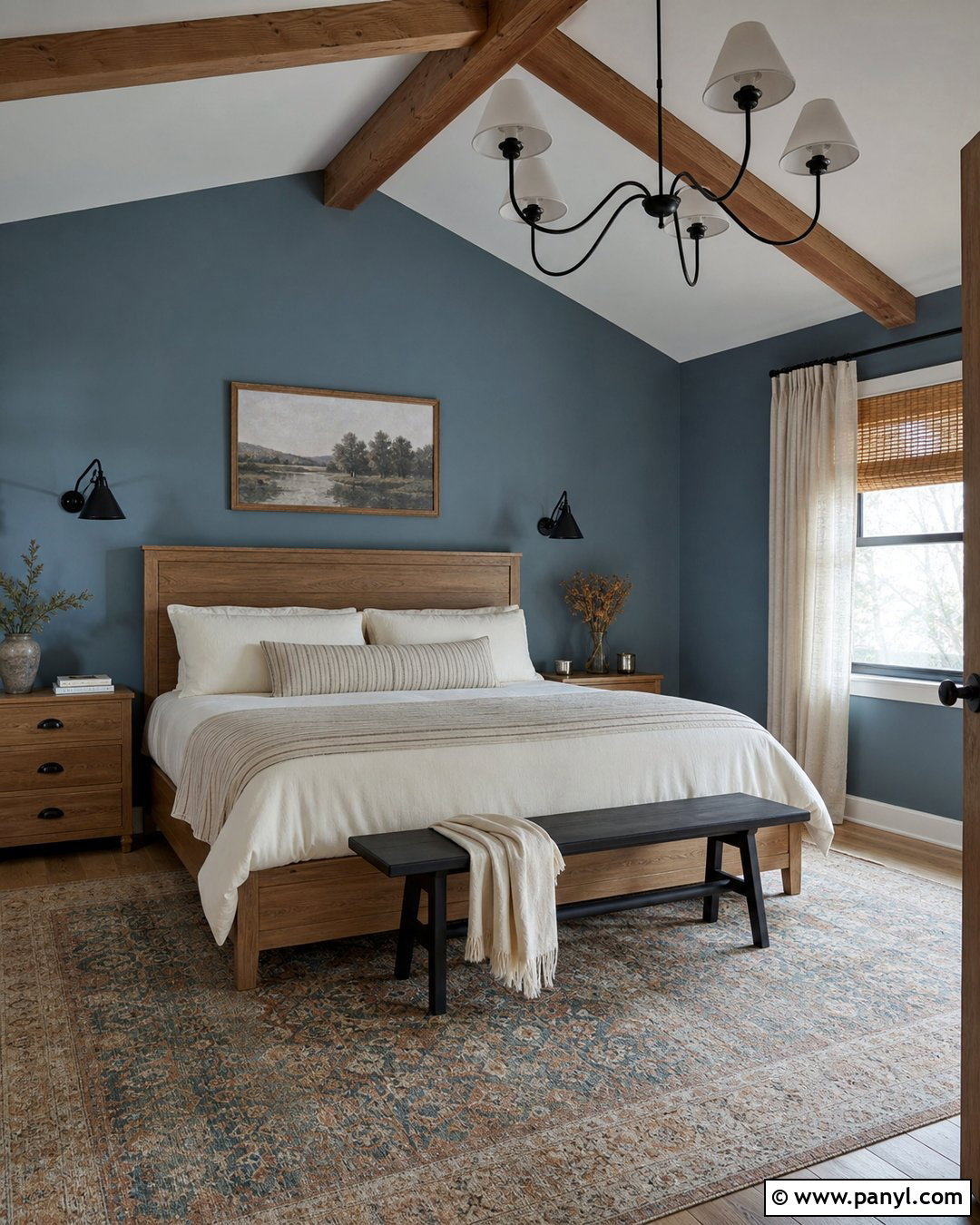
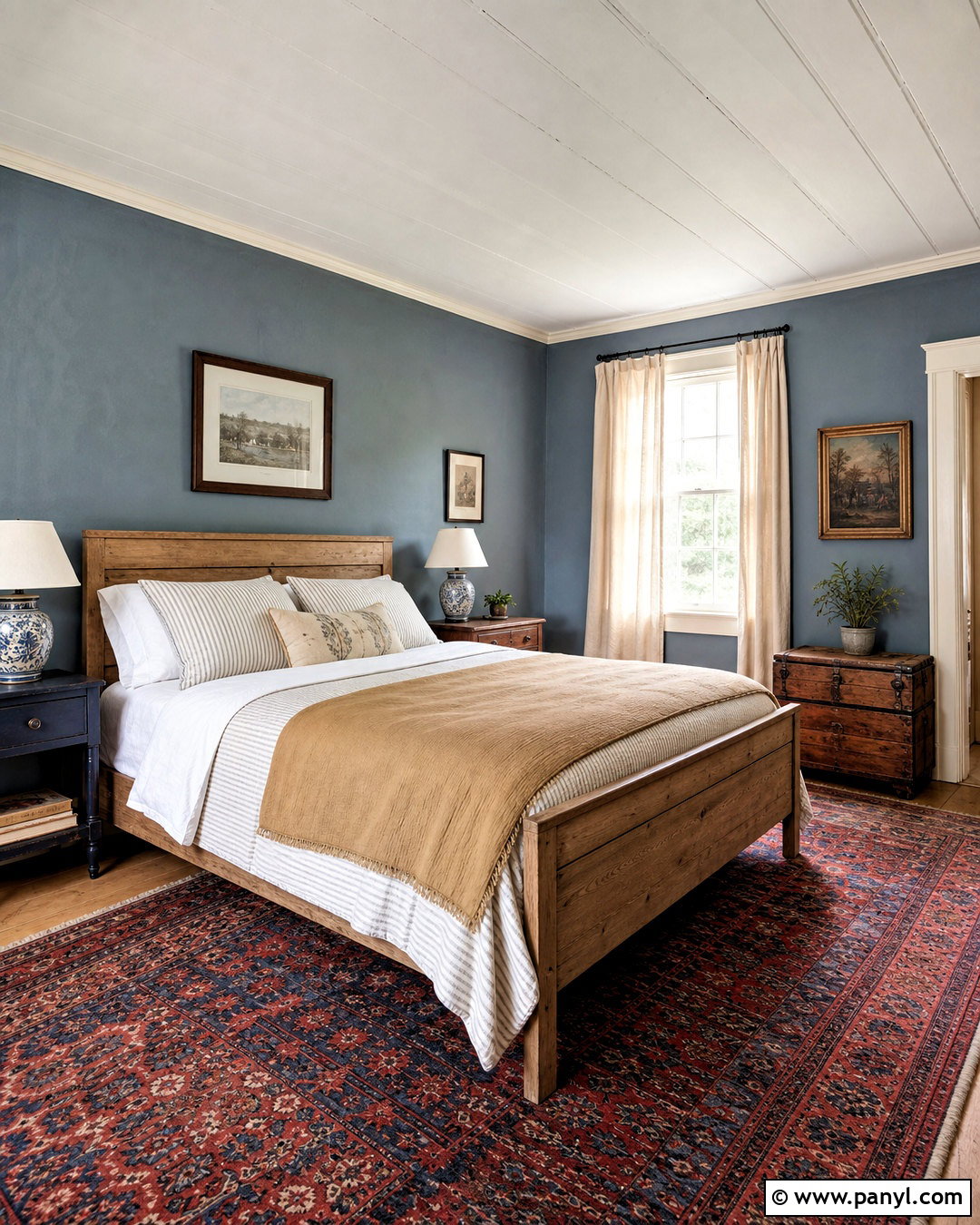
Dusty blue walls create a calm farmhouse bedroom without feeling overly coastal or themed. Choose a muted blue with enough gray to keep it soft, then pair it with warm white trim and medium oak floors. A natural wood bed, cream bedding, and a striped beige quilt provide warmth against the cooler backdrop. Use black metal sconces and a small black bench to introduce definition. Woven shades, ivory curtains, and a faded rug in blue, tan, and rust complete the layered palette. Dusty blue works particularly well when the room includes southern or western light, which can warm the color during the day. The finished bedroom feels clean and peaceful, while rustic wood and traditional textiles maintain an unmistakably farmhouse character.
20. Slate Blue Farmhouse Walls
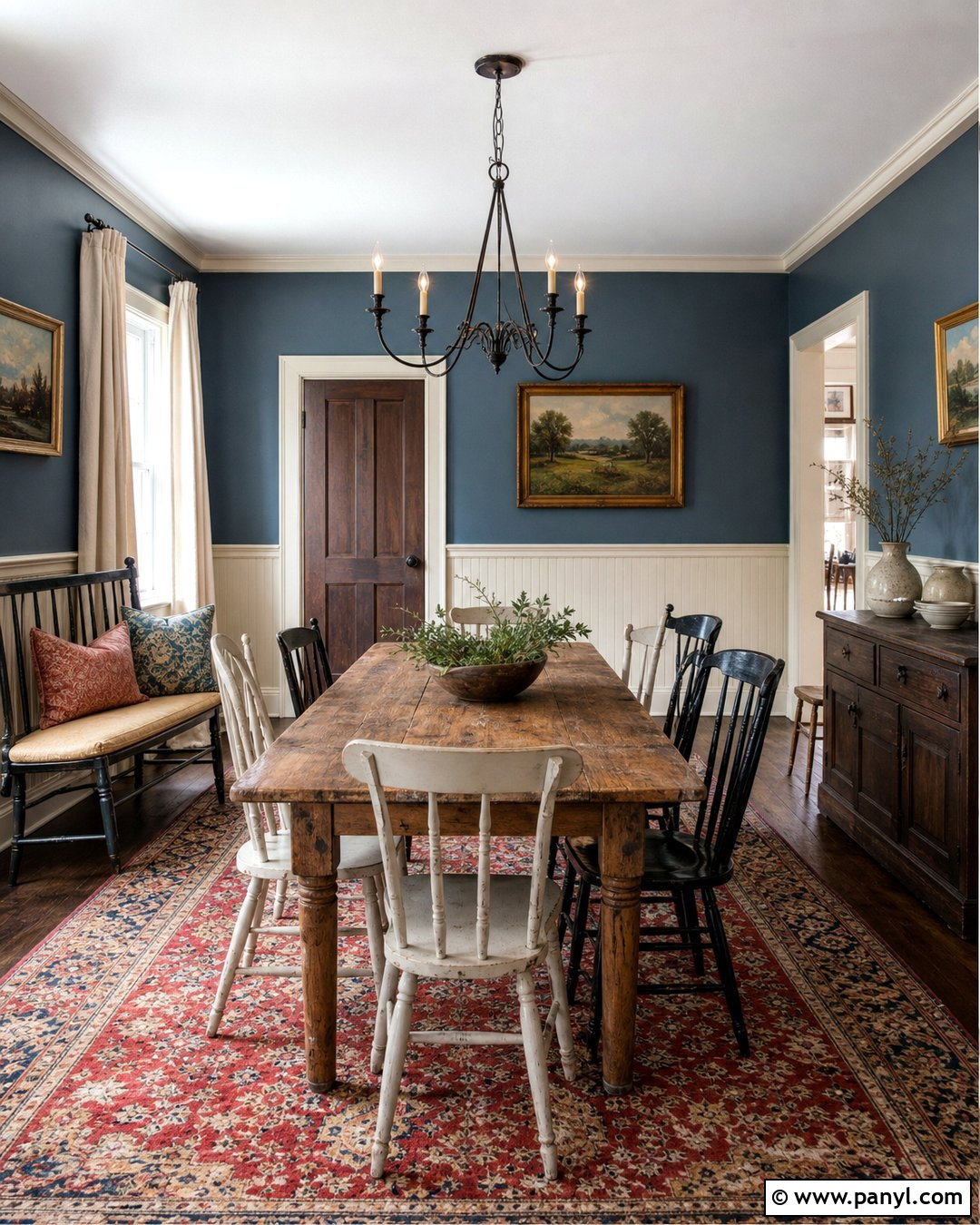
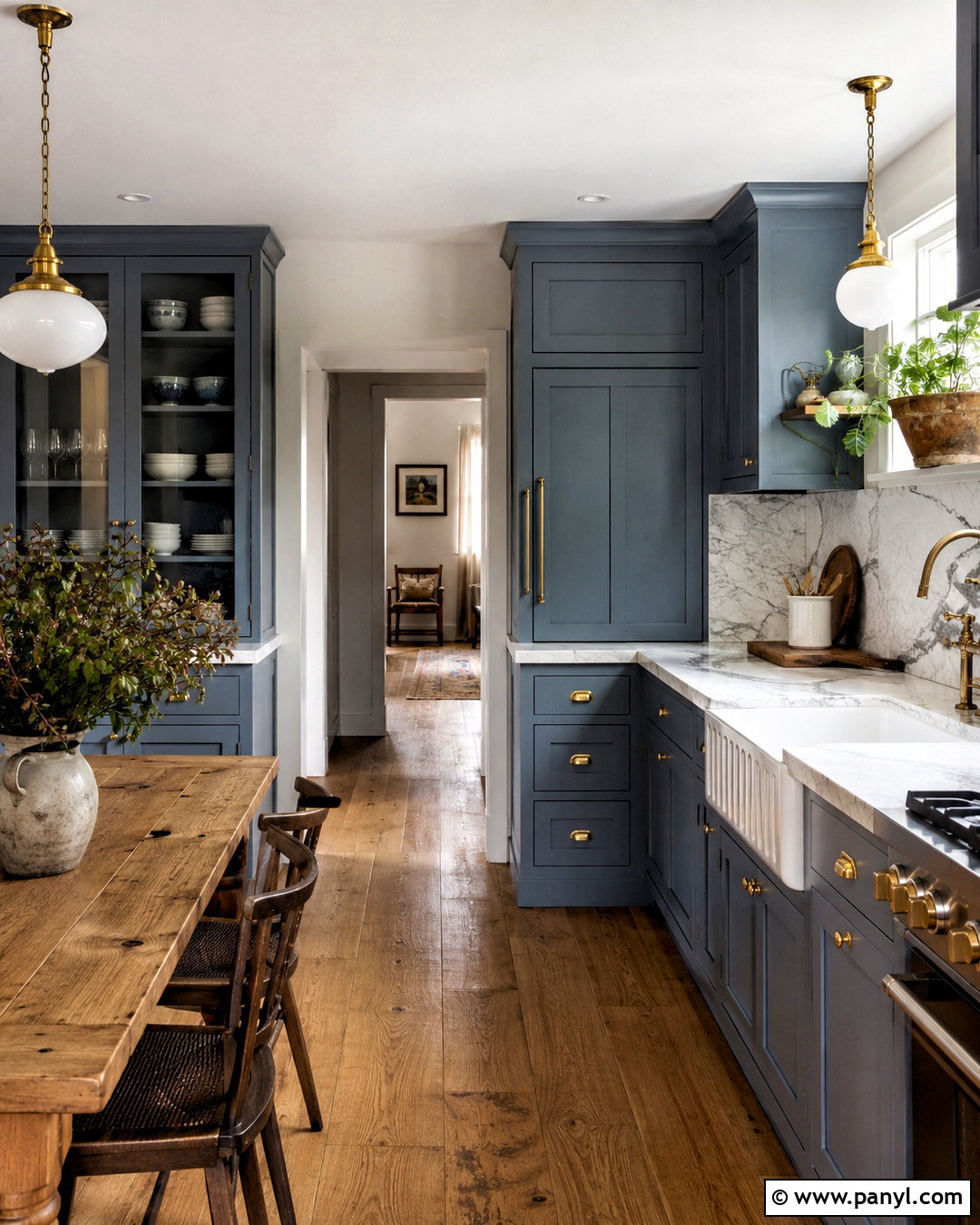
Slate blue walls lend a substantial, historic quality to a farmhouse dining room. Pair the medium-dark color with cream wainscoting to keep the lower half of the room bright and architectural. A long walnut or reclaimed oak table adds natural warmth, while mixed cream and black dining chairs create relaxed contrast. Use an iron chandelier with simple candle-style bulbs and a vintage rug containing muted red, beige, and blue. Hang traditional landscape paintings in aged wood frames rather than filling every wall. Linen curtains soften the windows without hiding the slate color. The finished dining room feels grounded and memorable, yet every element remains practical. Warm woods and creamy whites are essential because they stop the blue from looking cold or overly formal.
21. Blue Gray Farmhouse Walls
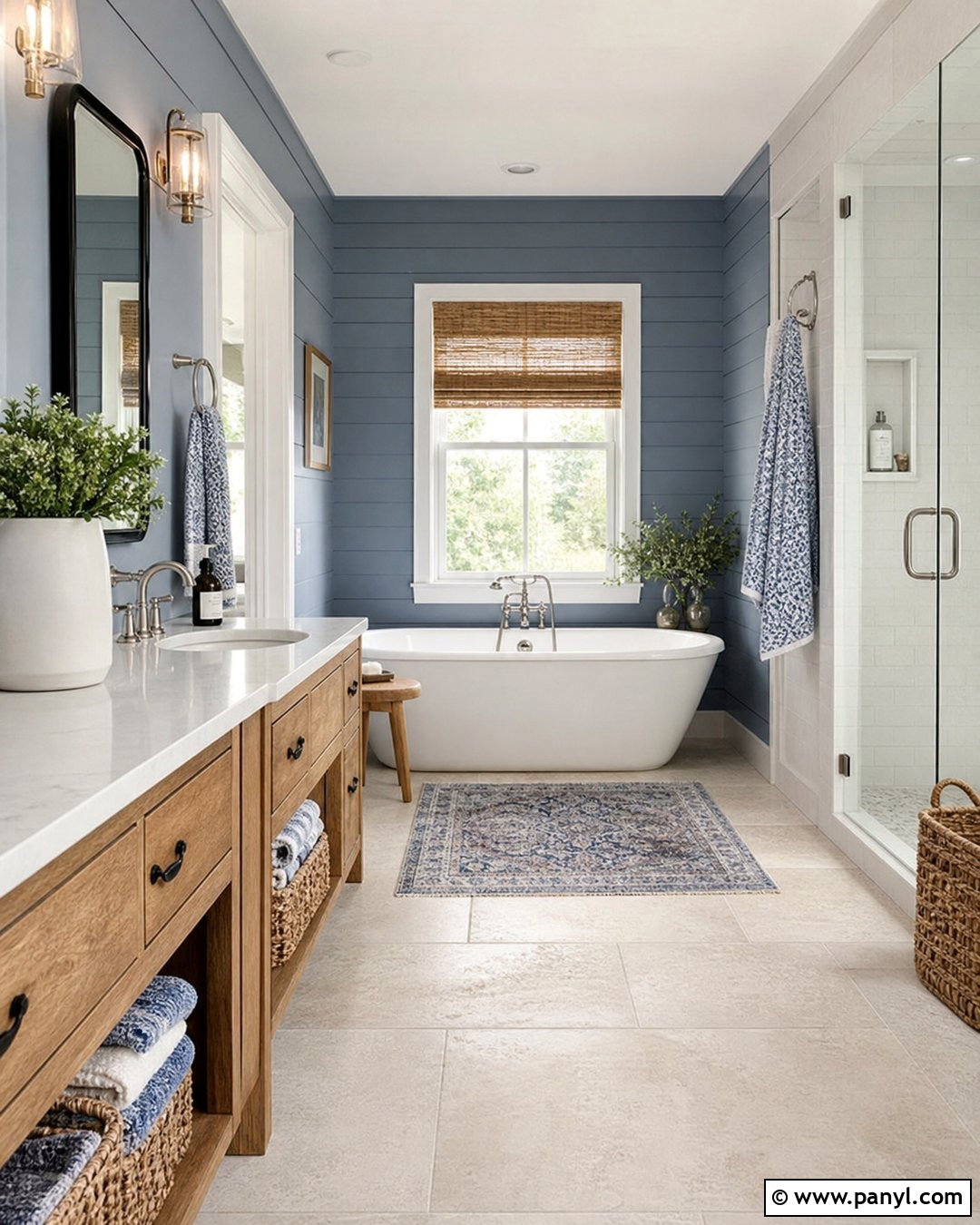
Blue-gray walls bring a gentle sense of color to a farmhouse bathroom while supporting white fixtures and natural materials. Use them with a white freestanding tub, an oak vanity, and pale limestone-look floor tile. Paint the trim and ceiling soft white for a clean transition. Brushed nickel or aged pewter fixtures reinforce the cool side of the palette, while woven baskets and a wooden bath stool restore warmth. Hang a simple black-framed mirror above the vanity and add striped cream-and-blue towels. If the bathroom receives limited daylight, select a lighter blue-gray so it does not turn dull. The entire scheme should balance cool paint with warm wood and tactile textiles, creating a bathroom that feels fresh, comfortable, and suited to an understated farmhouse home.
22. Navy Farmhouse Walls
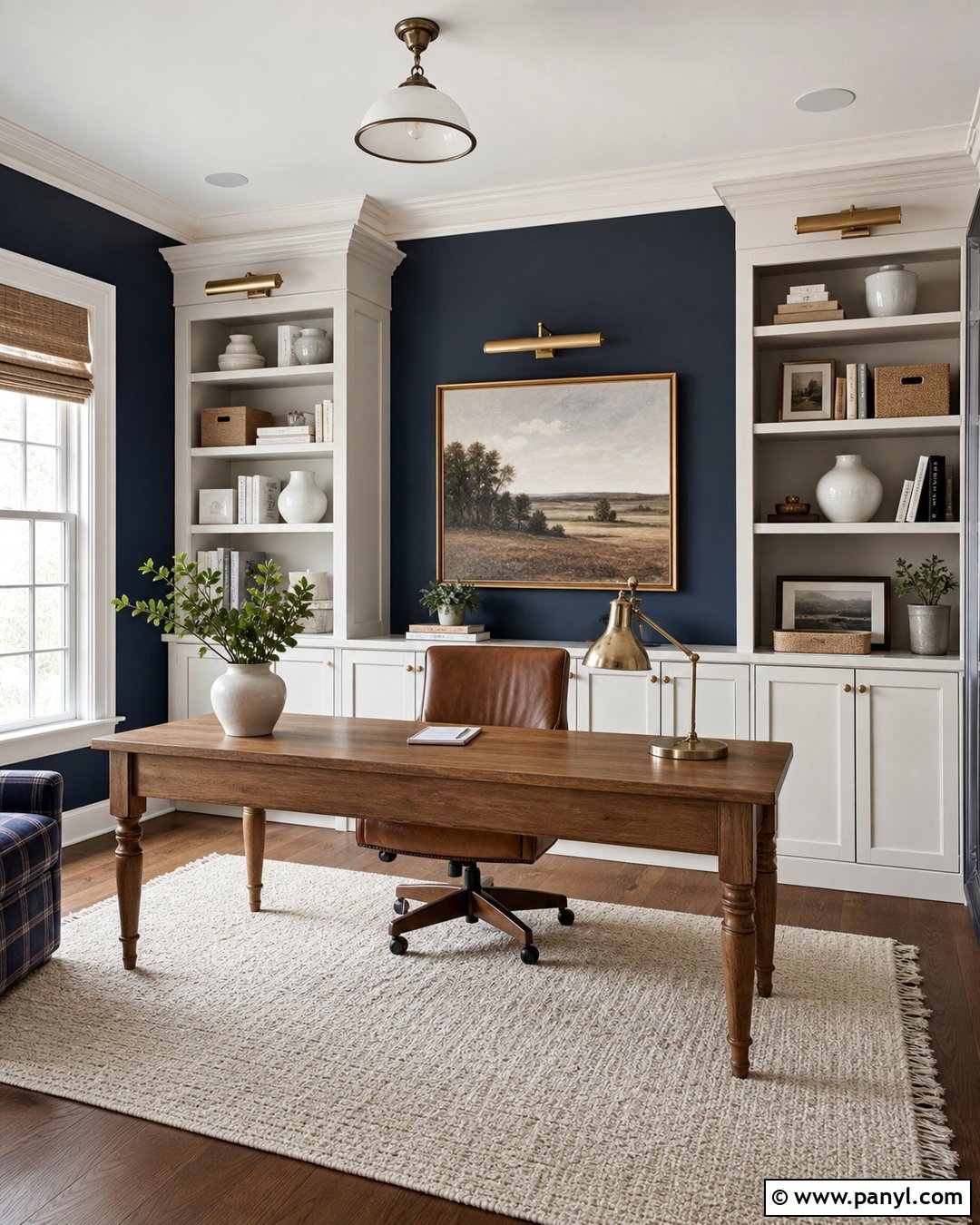
Navy walls make a bold farmhouse home office feel focused and tailored. Use the dark blue on all walls, then brighten the room with a warm white ceiling, trim, and built-in shelving. Place a medium oak desk in the center or near the window, paired with a caramel leather chair. A cream wool rug will lighten the floor and define the workspace. Add aged brass picture lights, simple landscape artwork, and natural woven shades. White pottery and tan storage boxes provide useful contrast on the shelves. Navy looks especially effective in a room with good daylight, but warm task lighting is still important. The finished office feels distinctive and professional while its wood, leather, and handcrafted accessories preserve the relaxed farmhouse foundation.
23. Pale Aqua Farmhouse Walls
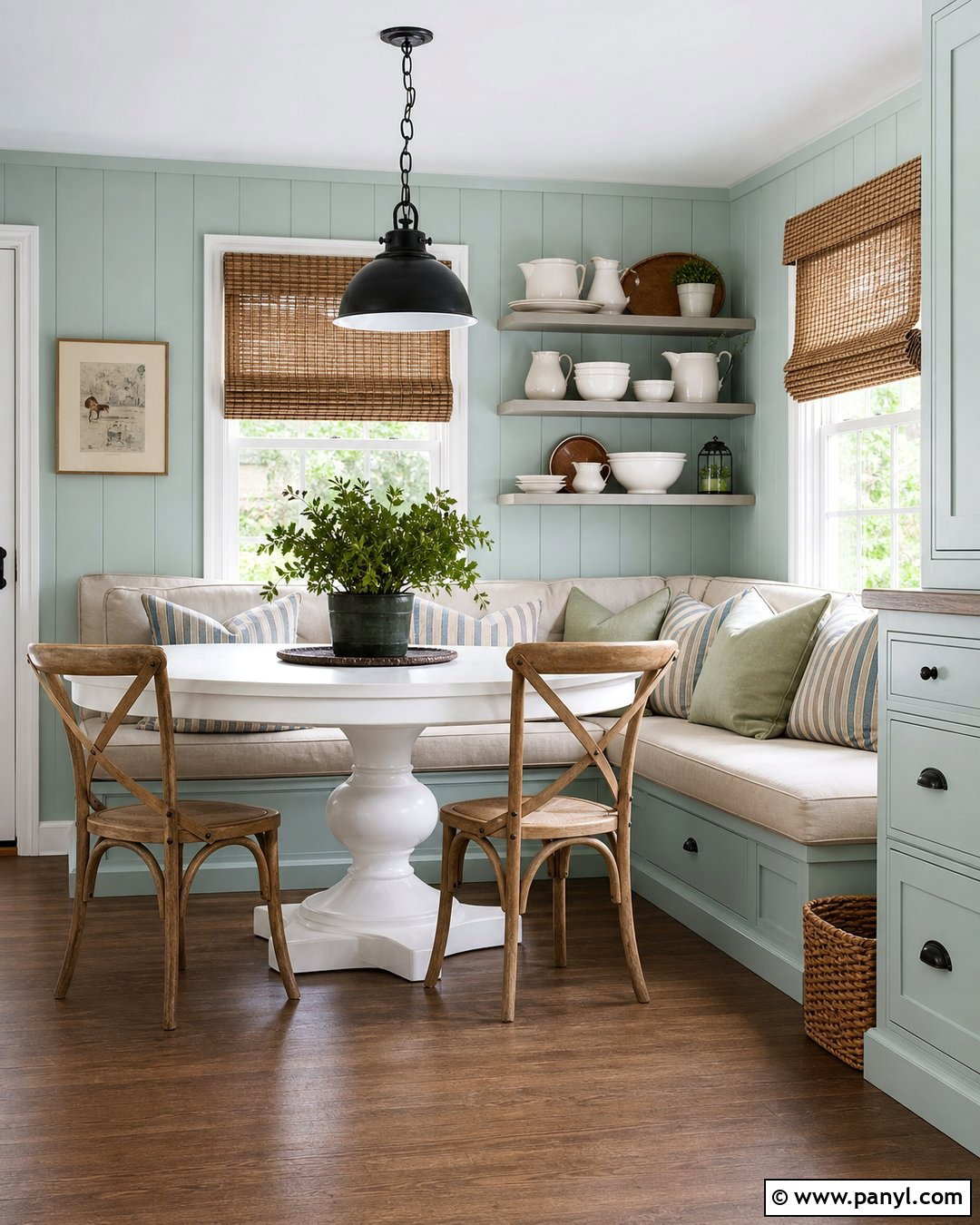
Pale aqua walls can make a farmhouse breakfast nook feel cheerful, light, and slightly vintage. Choose a subdued aqua that leans gray rather than bright turquoise. Pair it with a white pedestal table, natural wood chairs, and a built-in bench covered in cream linen. Add striped pillows in faded blue, soft green, and beige for a casual layered look. Warm white trim keeps the room crisp, while woven Roman shades connect the color to nearby natural finishes. A small black pendant creates definition above the table. Display white stoneware and a few simple plants on open shelves. The completed nook feels fresh in morning light, but its weathered wood, practical seating, and restrained accessories prevent the pastel walls from looking childish.
24. Muted Teal Farmhouse Walls
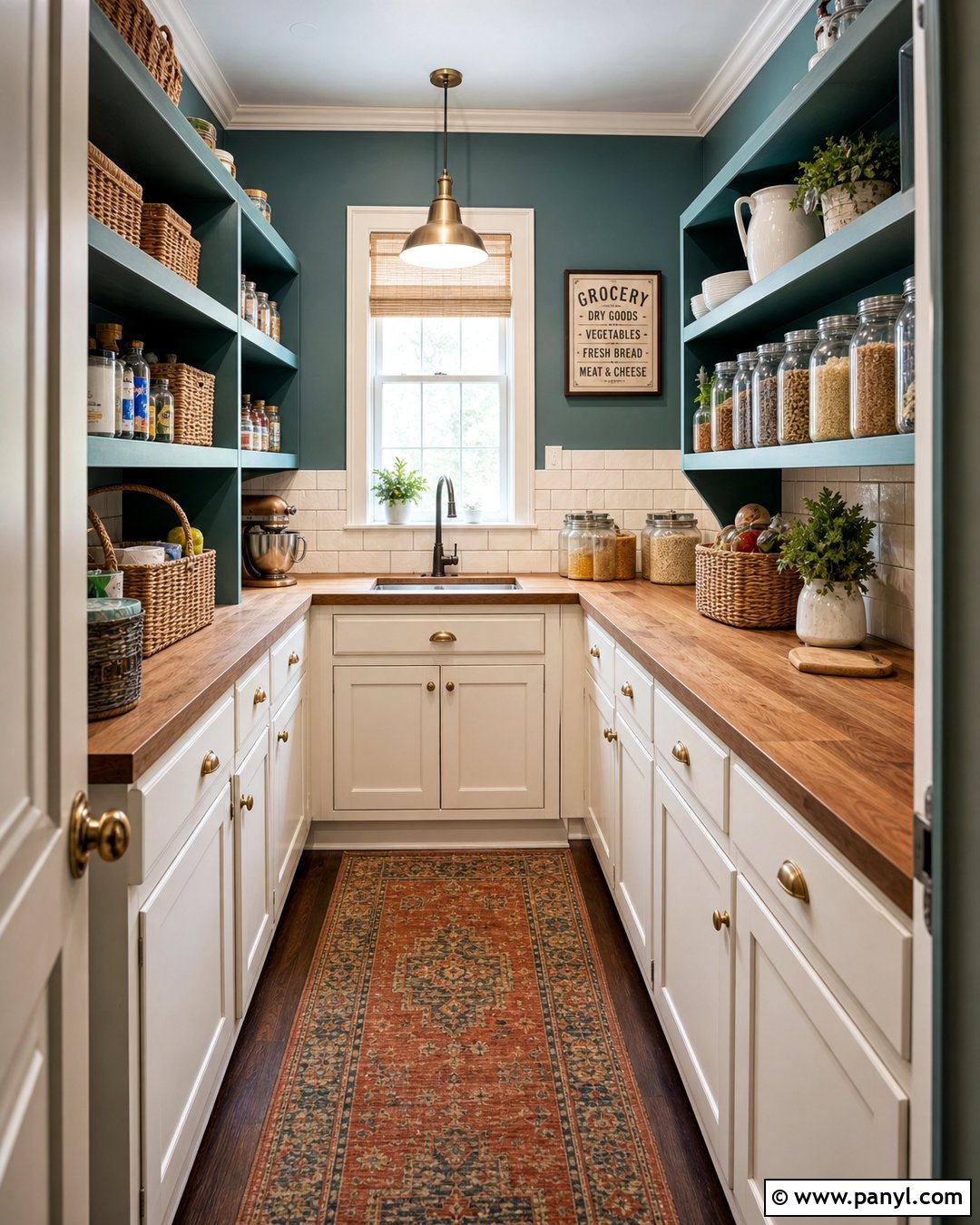
Muted teal offers a colorful farmhouse wall treatment for a pantry or compact serving area. Use the shade across the walls and open shelving to create a unified, built-in appearance. Balance it with warm white lower cabinets, butcher-block counters, and aged brass hardware. Natural baskets and clear storage jars make the pantry functional while breaking up the deeper color. Install cream tile behind the counter and use a small vintage-inspired runner in rust, blue, and tan. A simple opal glass ceiling light keeps the space bright. Teal should appear smoky and slightly gray rather than vivid. The final pantry feels like a special room instead of leftover storage, yet its practical organization and durable farmhouse materials keep the design useful for everyday routines.
25. Buttercream Farmhouse Walls
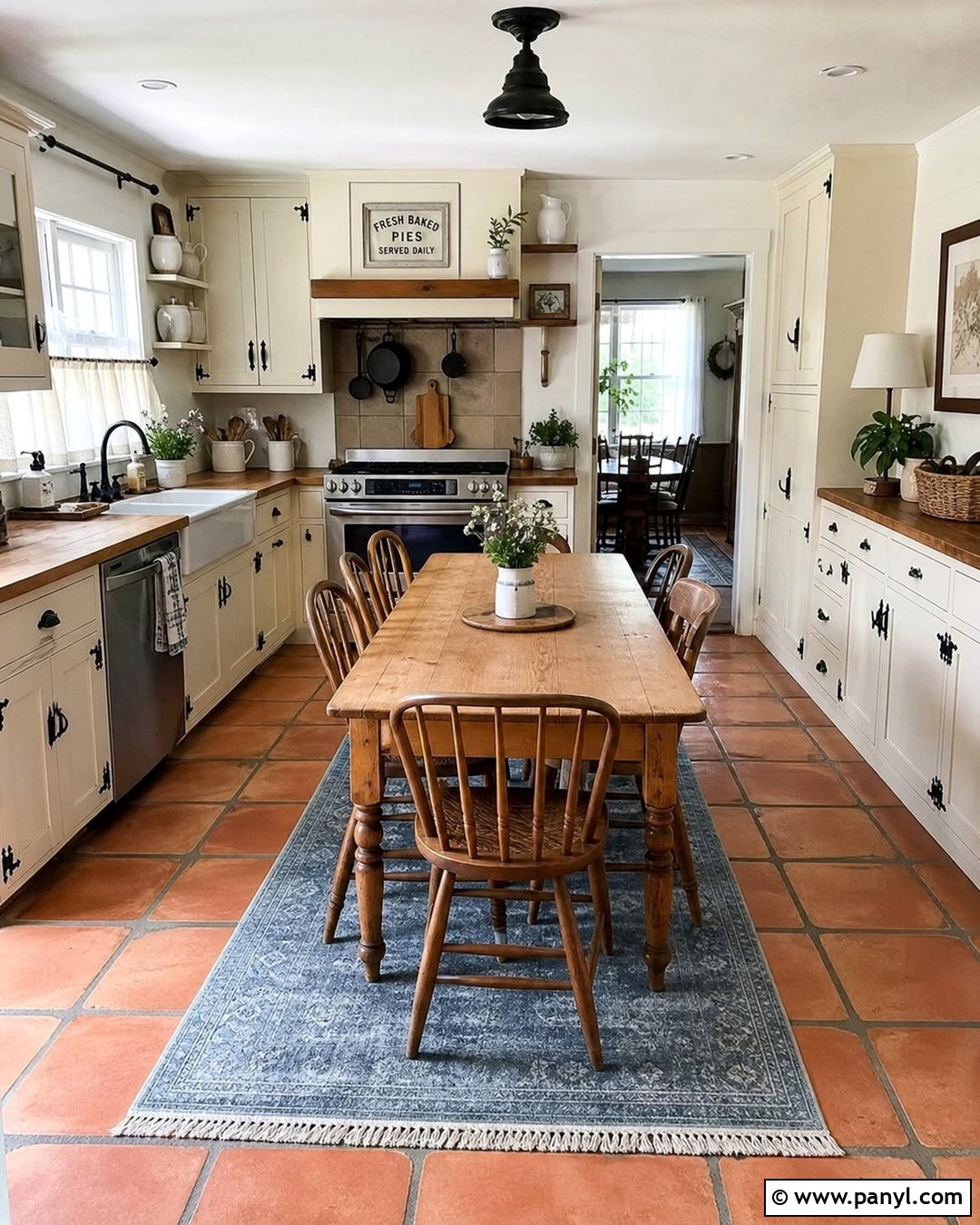
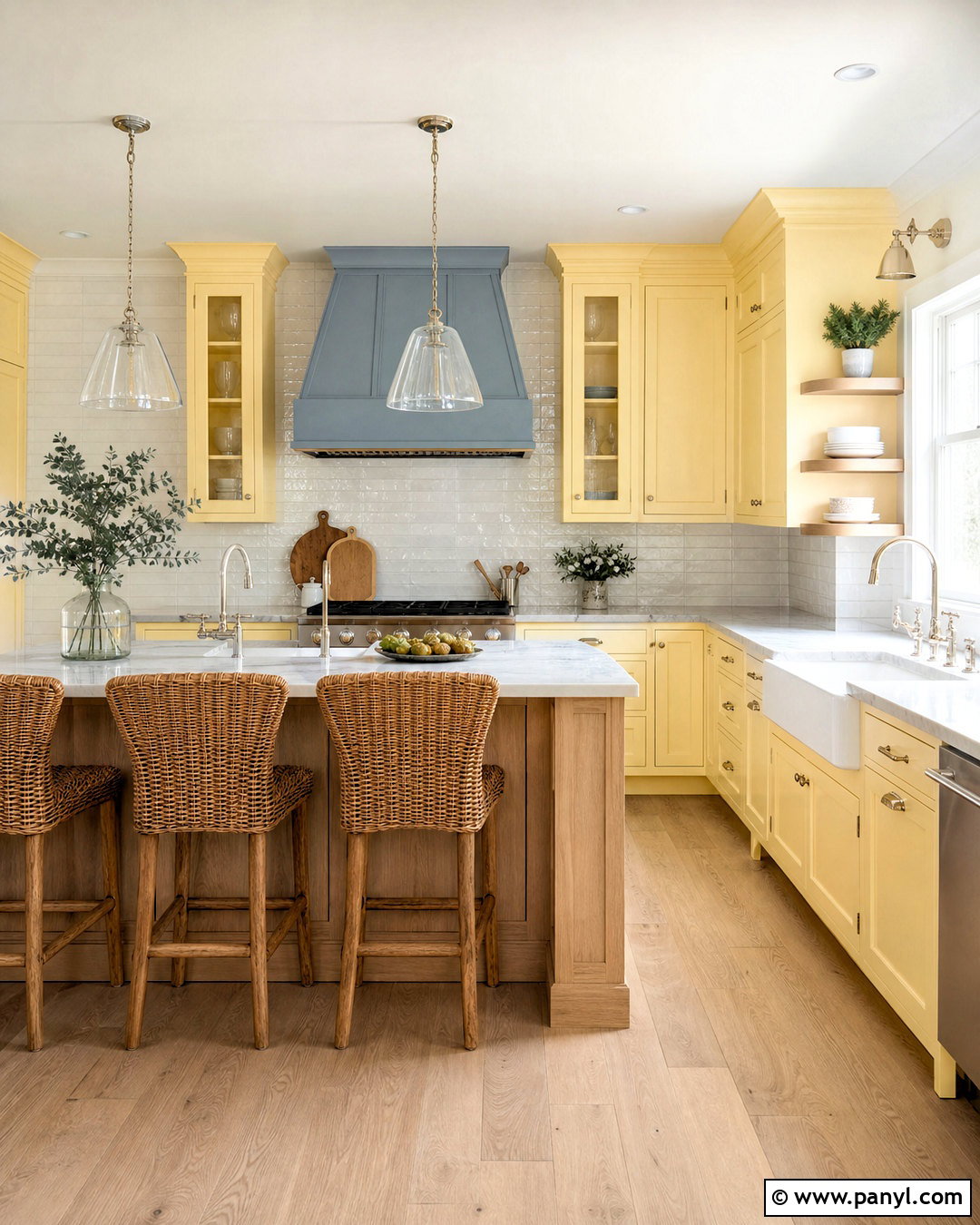
Buttercream walls bring gentle warmth to a farmhouse kitchen or breakfast room without becoming bright yellow. Pair the soft color with cream cabinetry, oak counters, and warm terracotta floor tile. Use black iron cabinet hardware and lighting to sharpen the pale palette. A rustic pine table with mixed wood chairs gives the room an informal, gathered-over-time feeling. Add simple café curtains, white pottery, and a faded blue runner for balance. The trim can remain warm white, but avoid an icy white that exaggerates the yellow undertone. Buttercream is most successful in north-facing or shaded spaces that need visual warmth. The completed room feels sunny throughout the day, while the natural materials and quiet contrasting colors keep it grounded and suitable for farmhouse interiors.
26. Wheat Farmhouse Walls
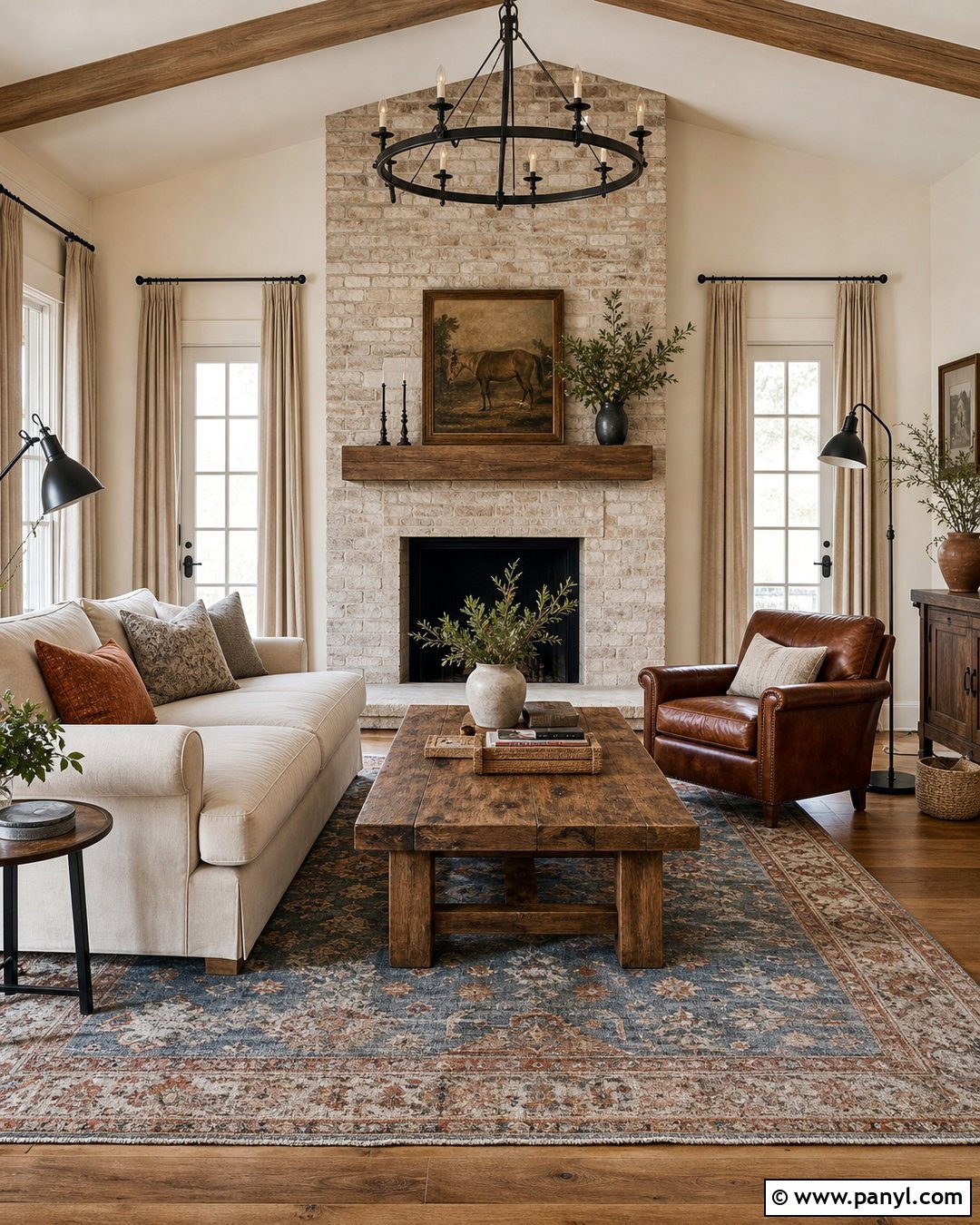
Wheat-colored walls create an inviting farmhouse living room with a warm, sunbaked quality. Use the golden beige shade with a cream sofa, medium brown leather chair, and reclaimed oak coffee table. A faded rug containing dusty blue, rust, and tan can cool the palette slightly while connecting every furnishing. Paint the trim soft ivory for a subtle transition, and choose unbleached linen curtains instead of bright white ones. Black iron lamps and curtain rods provide clean structure. Add a stone fireplace or limewashed brick focal point if the room has one, then keep mantel decor simple. Wheat works well with darker woods that might look severe against white. The overall room feels comfortable, established, and full of natural warmth without becoming orange or overly rustic.
27. Terracotta Farmhouse Walls
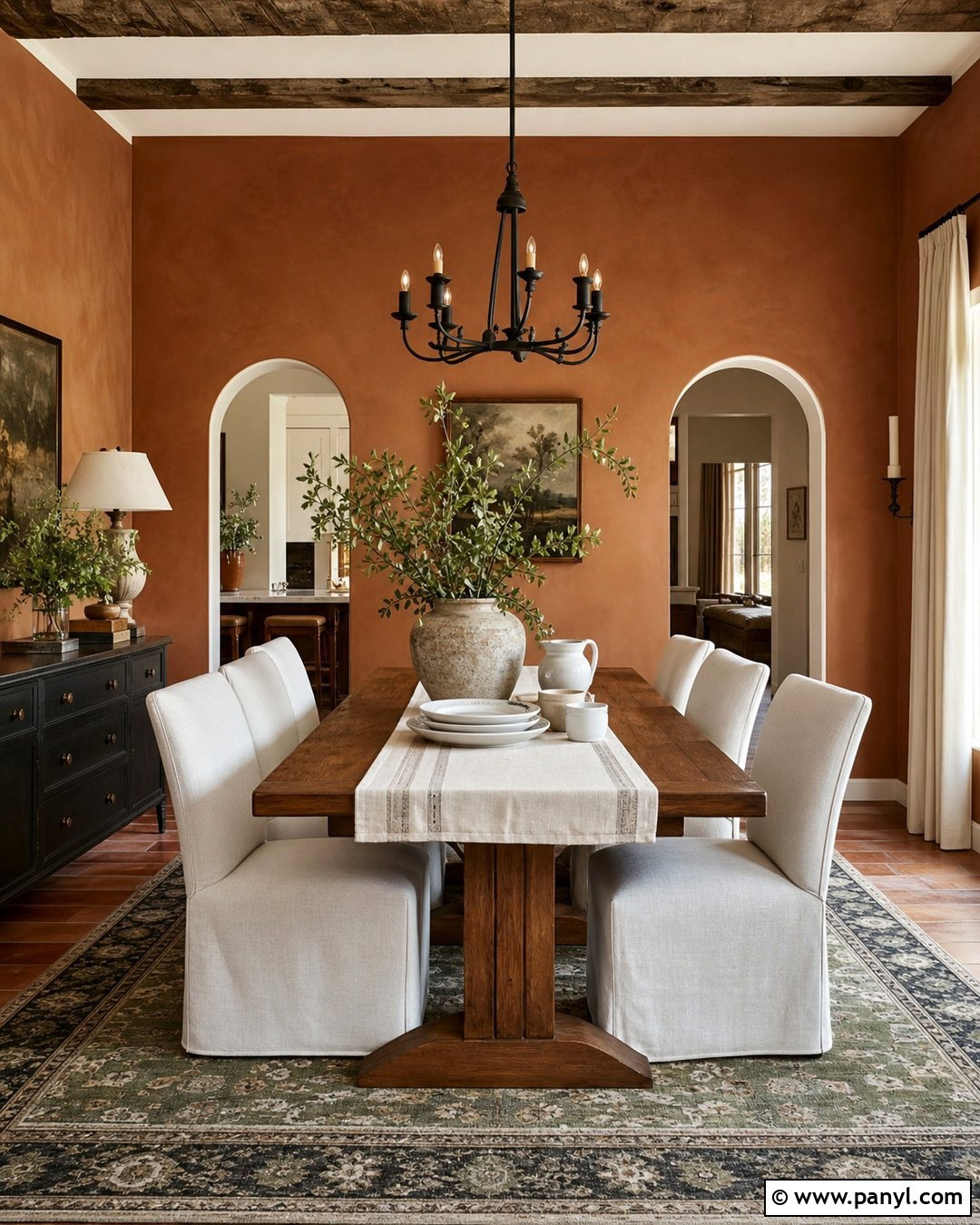
Terracotta walls make a farmhouse dining room feel earthy and distinctive. Choose a muted clay-based shade rather than a vivid orange. Pair it with a sturdy oak table, cream upholstered chairs, and a dark bronze chandelier. Warm white trim and ceiling paint keep the room from becoming visually heavy. Use a natural jute rug or a faded patterned rug with olive, beige, and charcoal details. A black sideboard adds contrast and provides practical storage for serving pieces. Decorate with white ceramics, linen napkins, and simple branches in a stone vase. Terracotta works especially well near brick, aged wood, and warm stone. The finished dining room has personality and depth, but the straightforward furniture and restrained accessories maintain the familiar ease of farmhouse design.
28. Soft Clay Farmhouse Walls
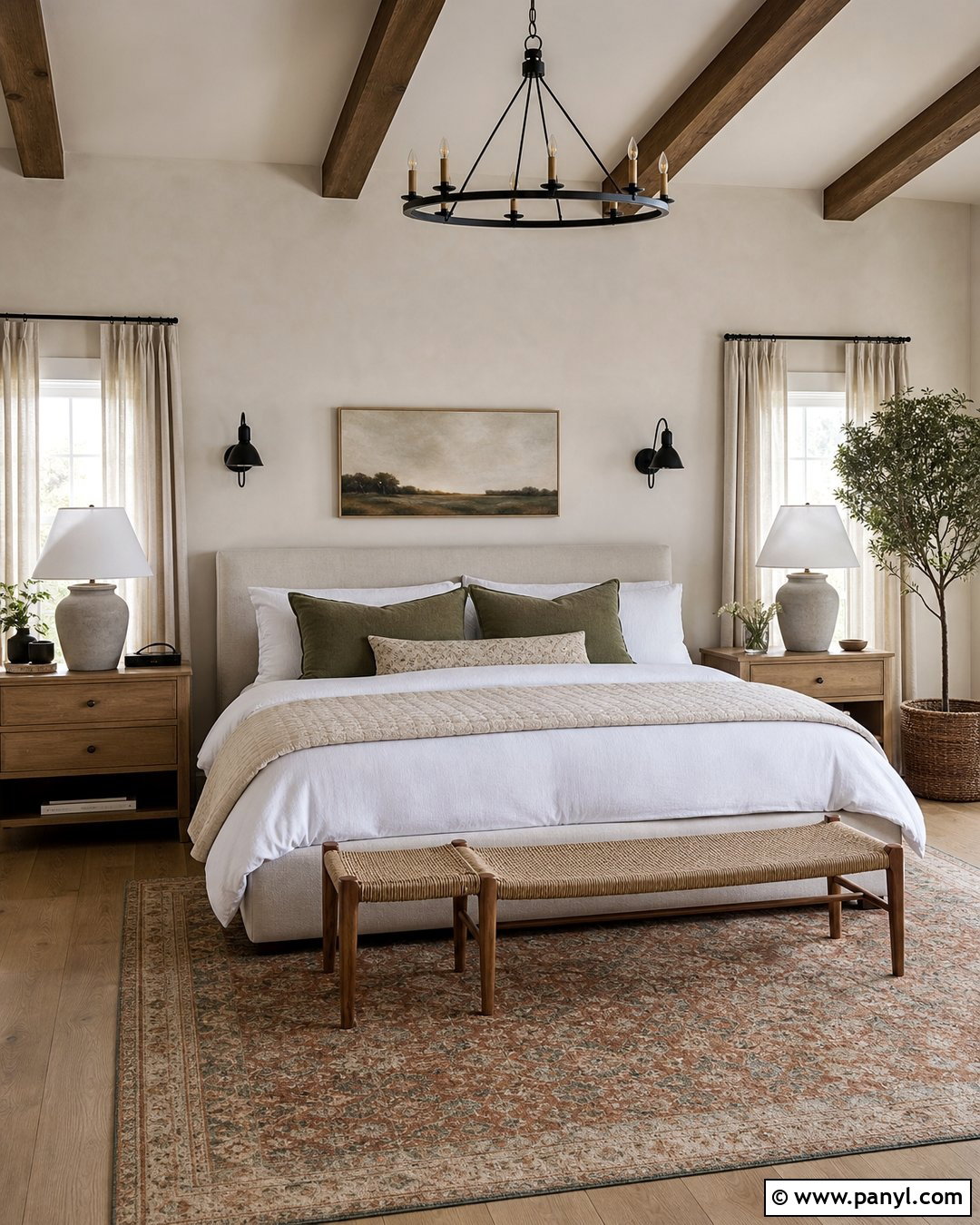
Soft clay walls offer a quieter alternative to terracotta for a farmhouse bedroom. This muted peach-beige color creates warmth without reading as distinctly pink or orange. Use it behind a cream upholstered bed with white linen, an oatmeal quilt, and olive green pillows. Light oak nightstands, ceramic lamps, and a woven bench continue the natural palette. Keep the trim warm white and use simple flax-colored curtains around the windows. A vintage wool rug with faded rust, sage, and beige can ground the lighter furnishings. Black picture frames or sconces provide small points of contrast. The completed bedroom feels softly sunlit even on cloudy days. Its balanced mix of clay, cream, green, and wood creates a farmhouse look that is fresh, welcoming, and easy to live with.
29. Dusty Rose Farmhouse Walls
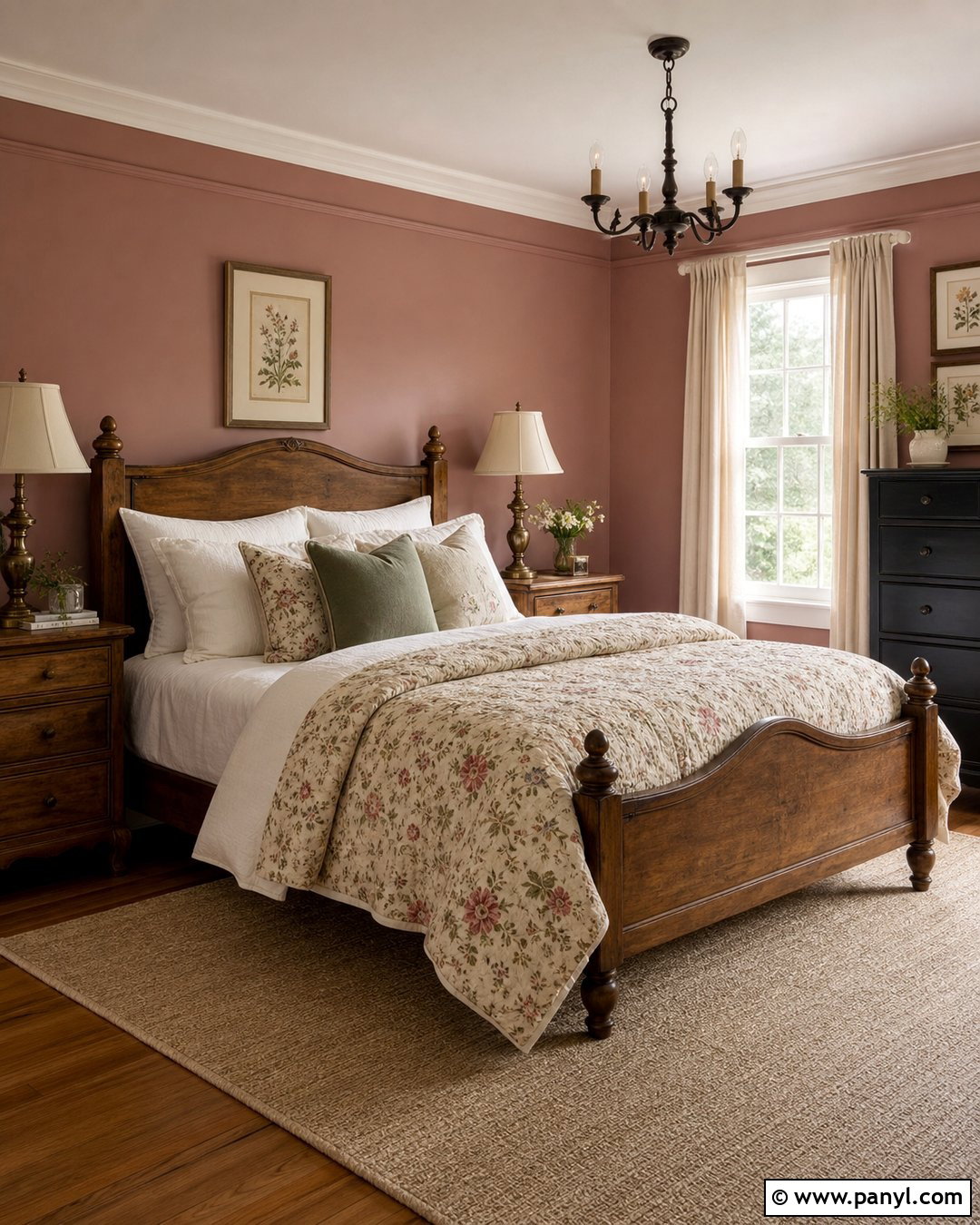
Dusty rose walls can feel surprisingly natural in a farmhouse guest bedroom when the color is muted with brown or gray. Pair the walls with an antique wood bed, warm white bedding, and a small floral quilt in cream, sage, and faded red. Use weathered oak nightstands and aged brass lamps to enhance the room’s collected character. Warm ivory trim works better than brilliant white against this softened pink. A neutral wool rug and linen curtains keep the overall palette calm. Add a painted black dresser for contrast and hang simple botanical prints above it. Avoid overly delicate accessories or shiny finishes. The complete room should feel earthy and historical rather than sweet, with dusty rose functioning as a warm backdrop for practical farmhouse materials.
30. Barn Red Farmhouse Walls
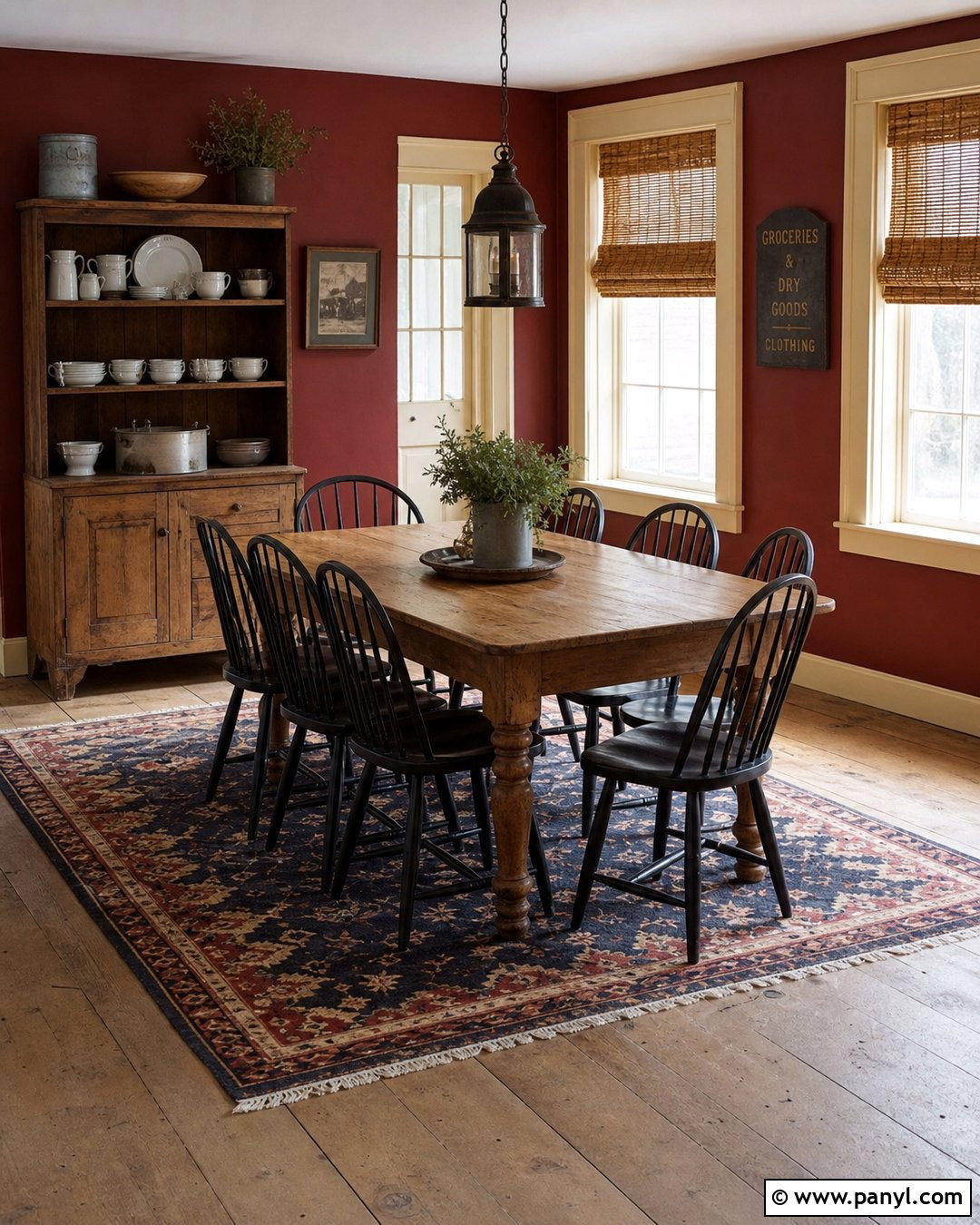
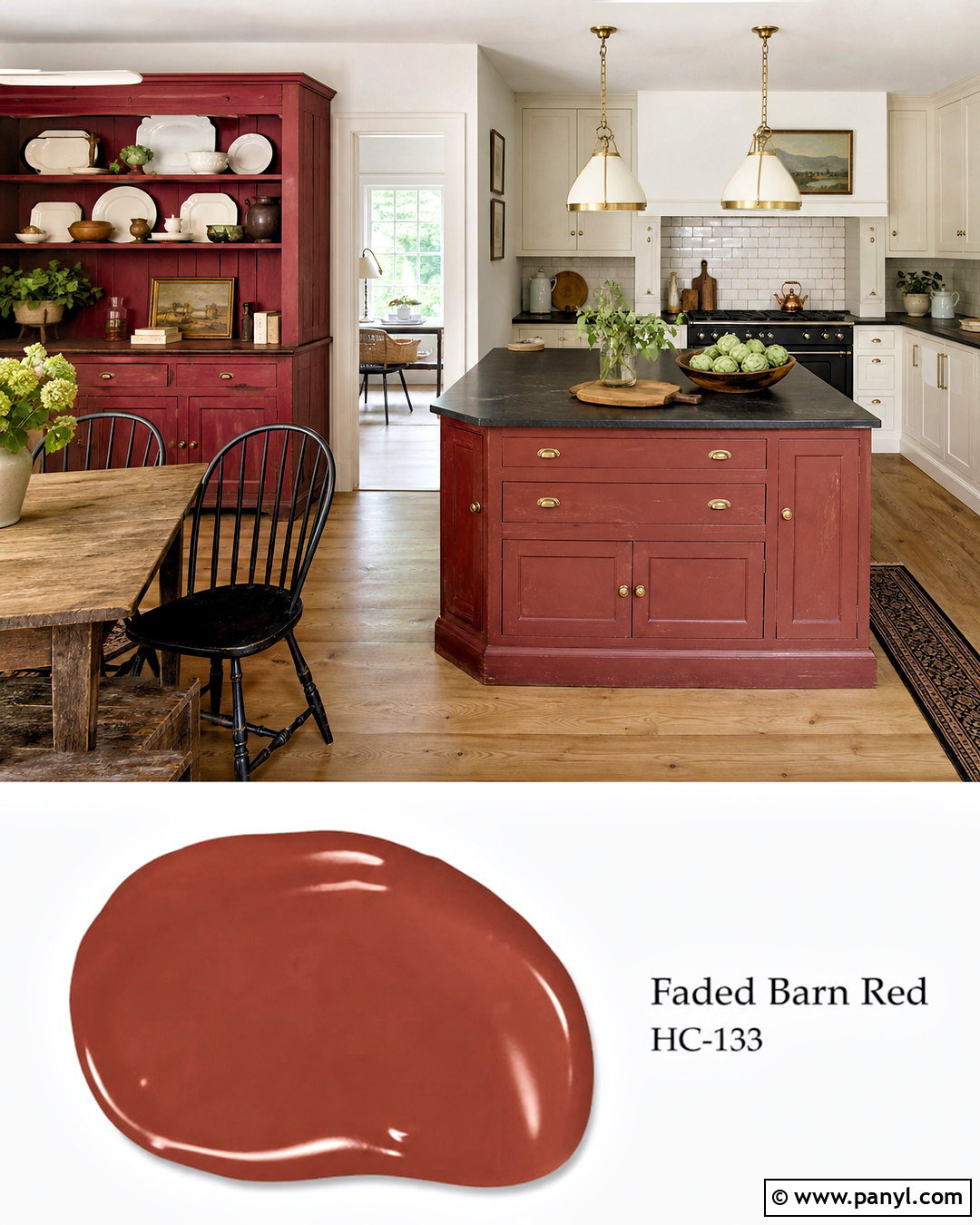
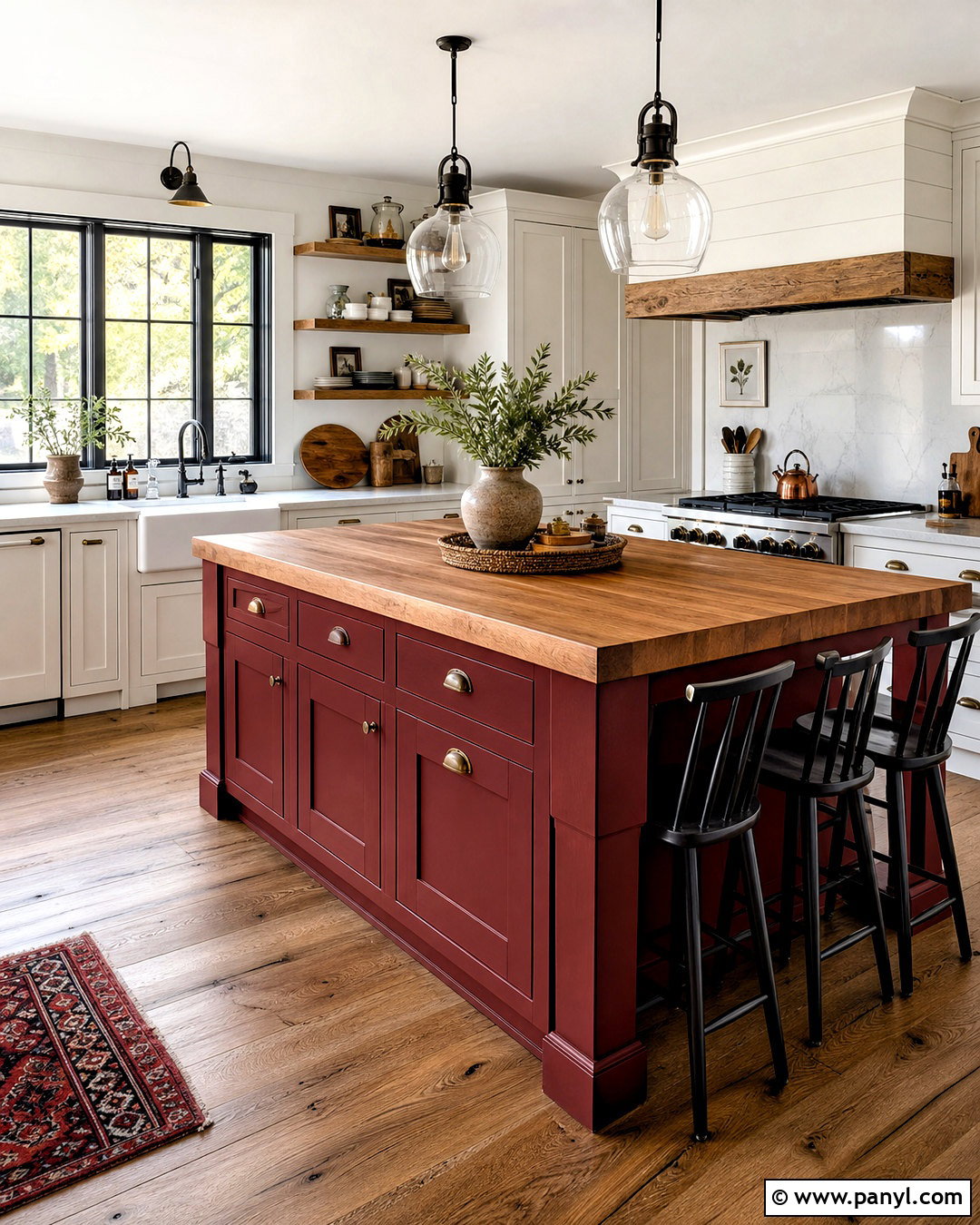
Barn red creates a memorable farmhouse accent when used in a dining nook, enclosed pantry, or compact keeping room. Select a deep, weathered red with brown undertones rather than a bright primary shade. Pair it with cream trim, a natural pine table, and black Windsor chairs. A vintage rug featuring navy, tan, and muted red helps the strong wall color feel intentional. Add a simple iron pendant and woven window shades for practical texture. White stoneware displayed on a small hutch will stand out clearly against the rich backdrop. Keep nearby rooms lighter so the red space feels like a purposeful destination. The completed look references traditional barns without becoming themed, relying on honest wood, classic furniture, and restrained decoration.
31. Cocoa Brown Farmhouse Walls
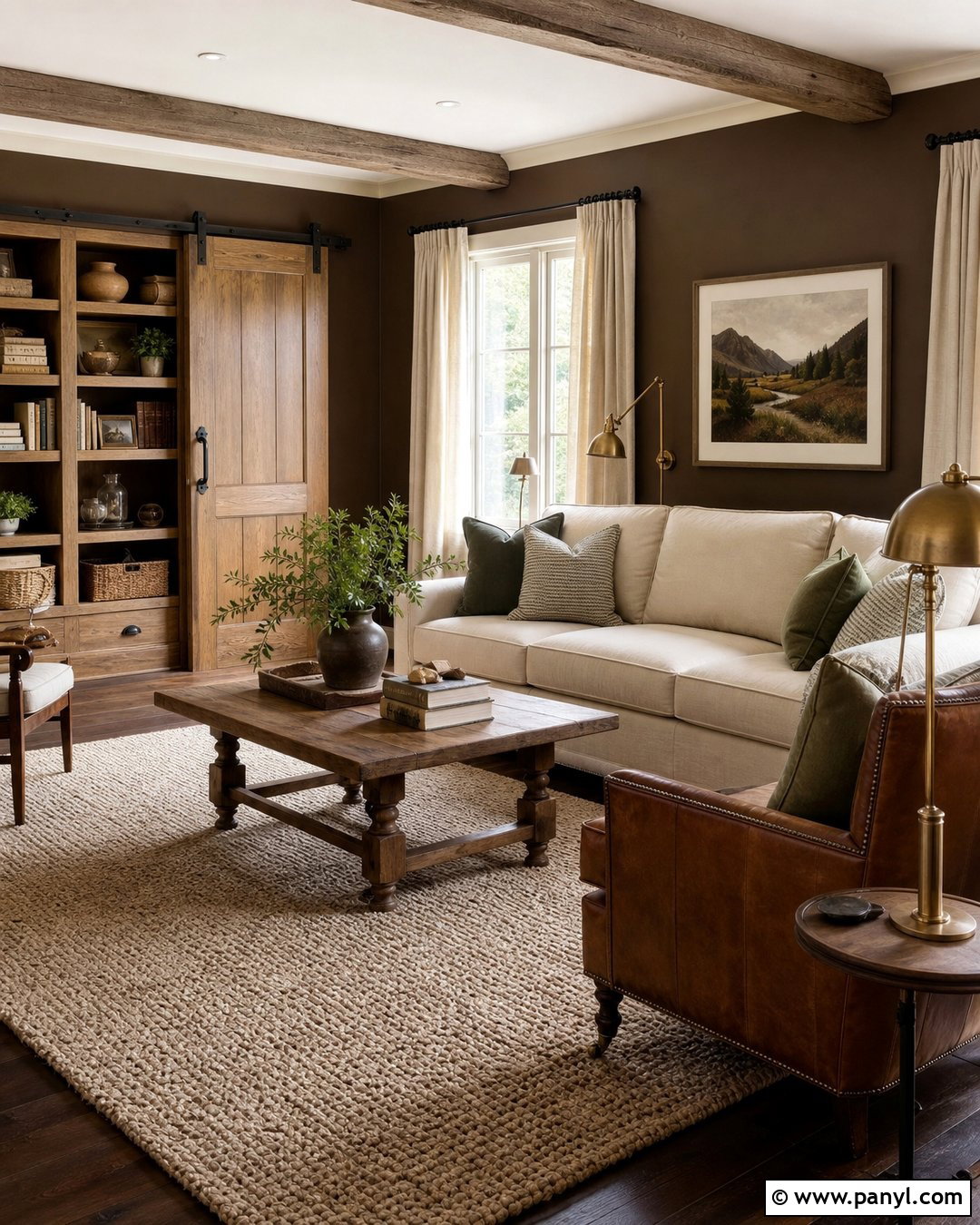
Cocoa brown walls can turn a farmhouse den into a deeply comfortable retreat. Choose a medium brown with a softened, earthy finish rather than an almost-black espresso shade. Pair it with a cream sofa, cognac leather armchair, and oak shelving. A large beige wool rug will brighten the lower part of the room, while warm white trim creates crisp boundaries. Use brass reading lamps, linen curtains, and black iron hardware to add varied finishes. Introduce muted green through pillows, pottery, or landscape art. Cocoa walls are particularly effective in a room used mainly for reading and relaxing because they create visual warmth. The complete space feels rich and grounded, yet pale upholstery and abundant natural texture prevent it from looking dated or overly dark.
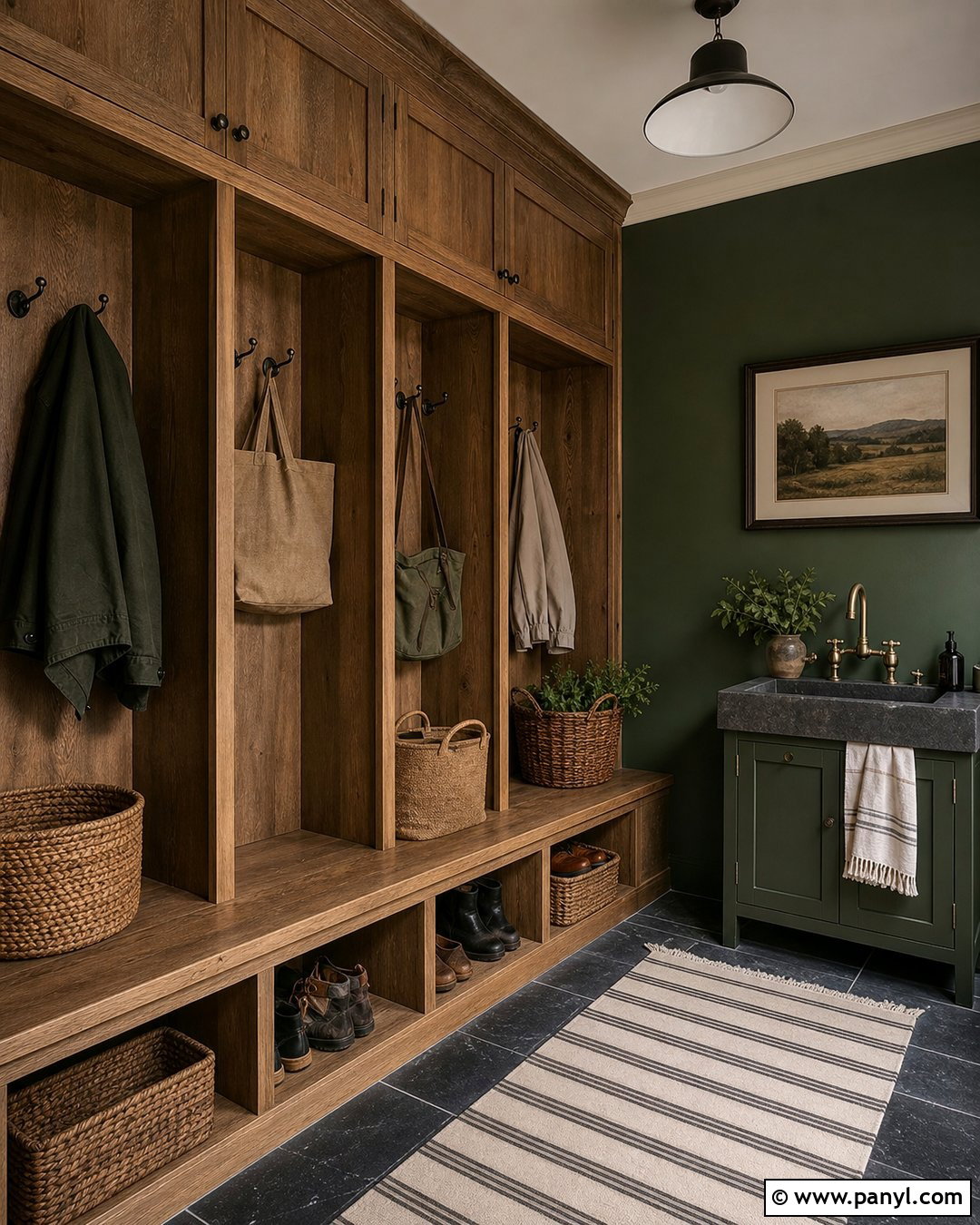
32. Deep Green Farmhouse Walls
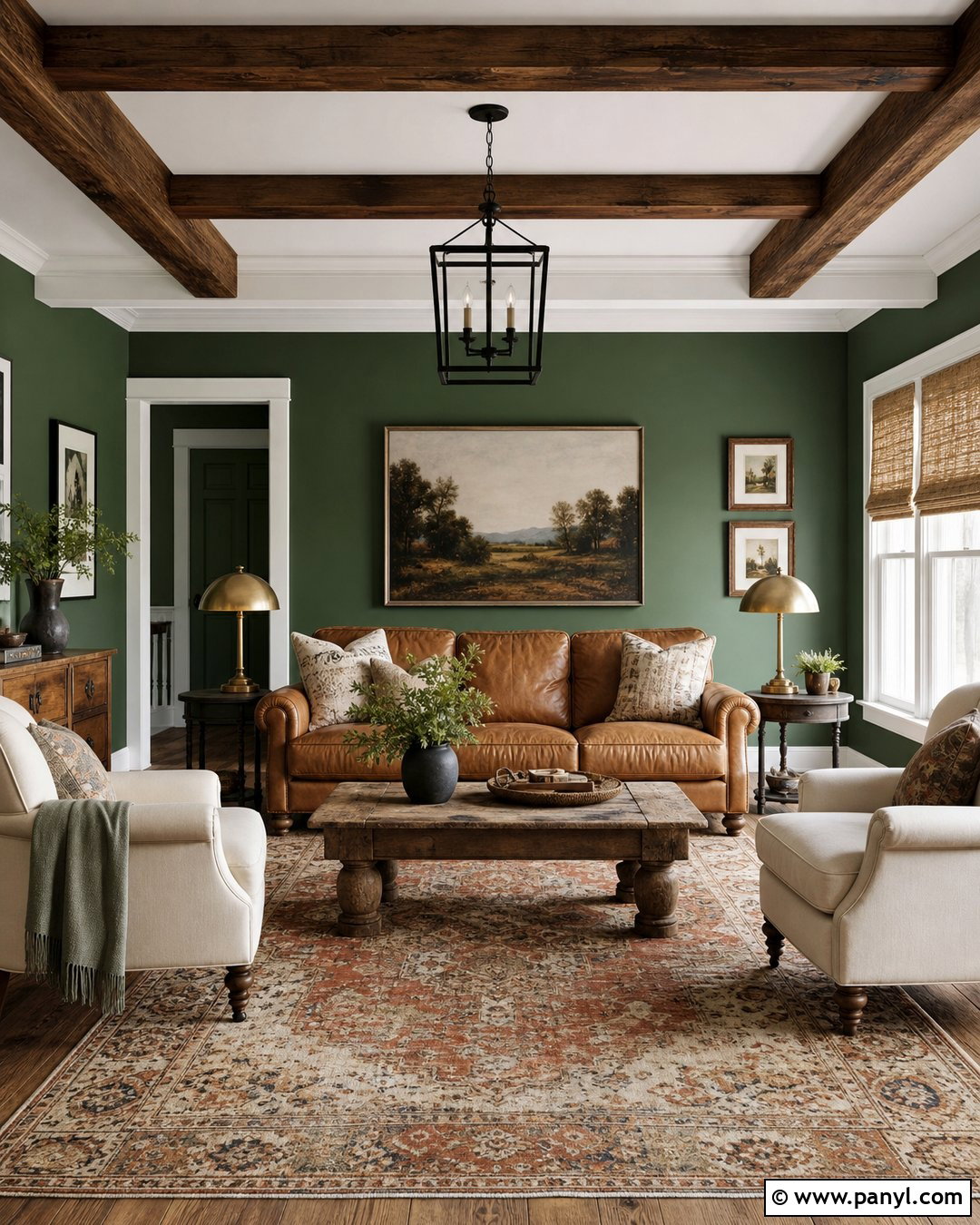
Deep green walls bring confident color to a farmhouse living room or library. Use a forest-inspired green with slightly muted undertones, then pair it with warm white trim and a pale ceiling. A camel leather sofa, cream armchairs, and an aged oak coffee table will stand out against the darker background. Add a vintage rug with rust, tan, and faded blue details to create a layered palette. Brass lamps and simple framed landscapes contribute warmth, while woven shades maintain an informal tone. Keep larger upholstery pieces light so the room retains balance. The finished space feels dramatic but still connected to nature. Deep green works as part of a full farmhouse design when it is softened by worn wood, comfortable textiles, and practical furniture arrangements.
33. Soft Black Farmhouse Walls
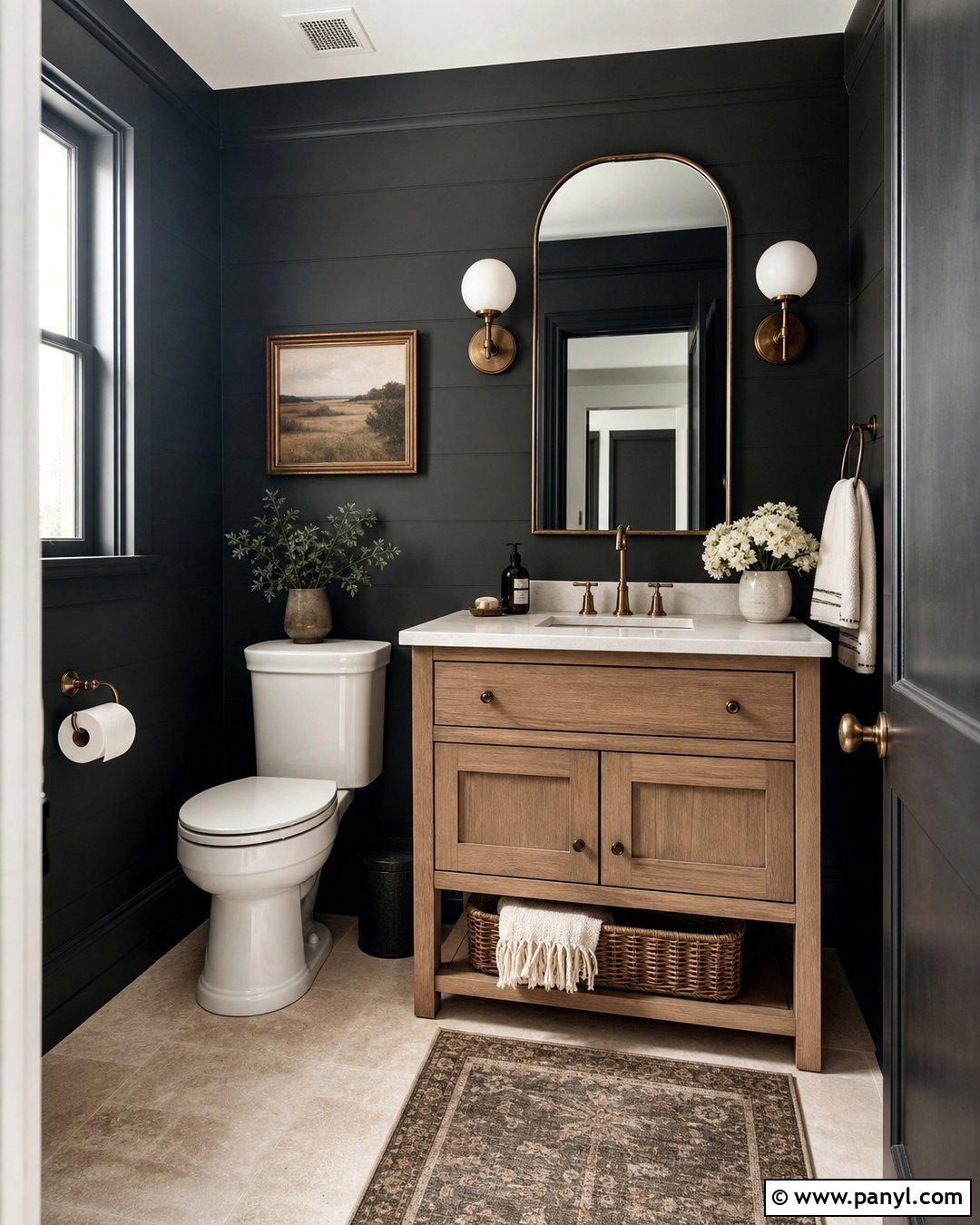
Soft black walls produce a striking modern farmhouse room without the harshness of a true jet black. Use the color in a small powder room with a natural oak vanity, white stone countertop, and warm white ceiling. A large brass-framed mirror reflects light and breaks up the dark wall surface. Choose cream floor tile with subtle gray veining, then add aged brass faucets and simple globe sconces. White towels, a woven basket, and one small piece of landscape art complete the design. Painting the baseboards soft black can create a seamless look, while leaving the door warm white introduces contrast. The complete powder room feels bold and polished, but wood grain, woven texture, and uncomplicated fixtures keep it grounded in farmhouse style.
34. Lavender Gray Farmhouse Walls
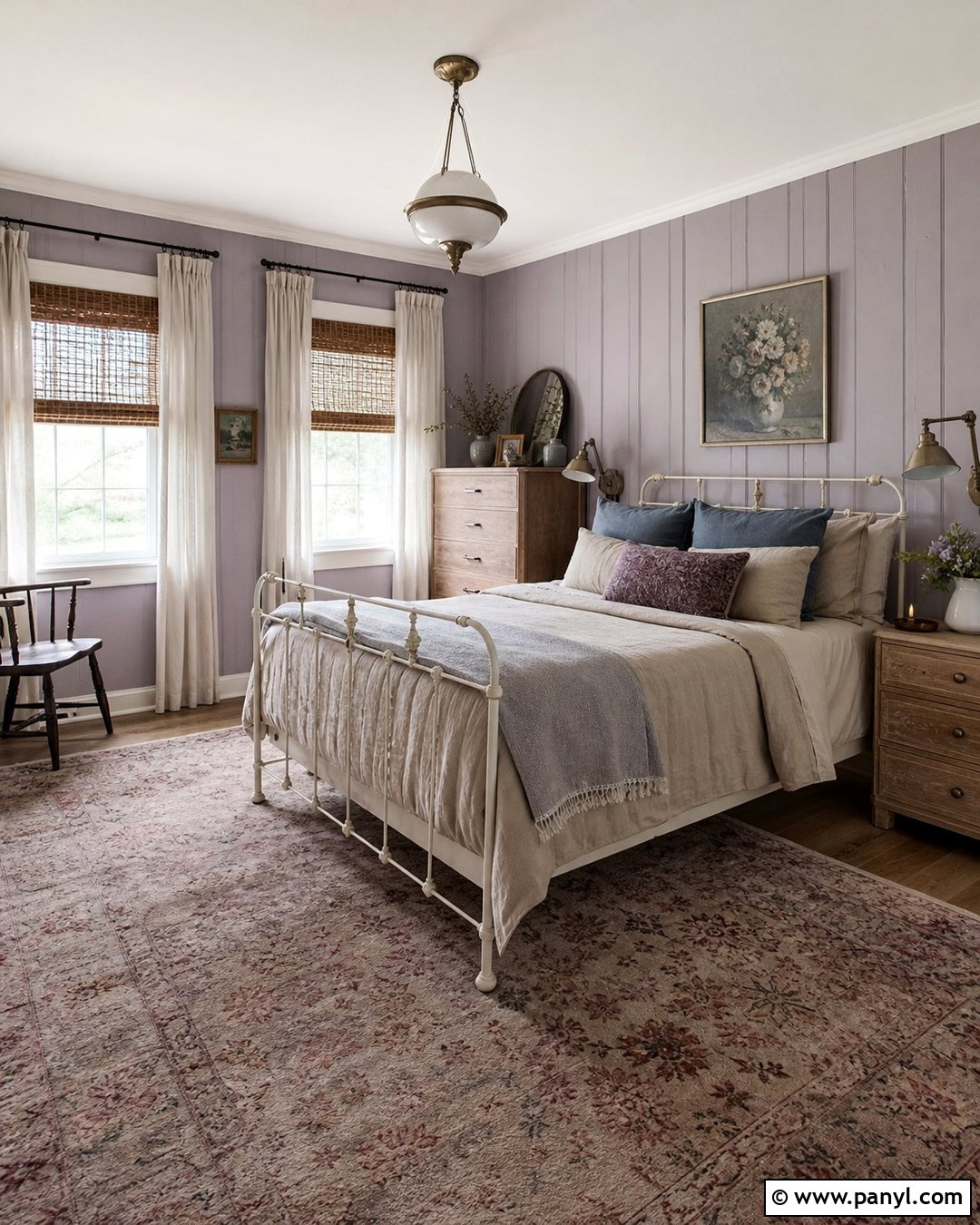
Lavender-gray walls add a quiet, unexpected color to a farmhouse bedroom or sewing room. Choose a dusty shade that reads mostly gray, with only a restrained violet undertone. Pair it with warm white trim, pale oak furniture, and a cream iron bed. Use natural linen bedding with muted blue, plum, and beige accents. A faded floral rug can repeat the wall color subtly without making the room overly coordinated. Add aged brass lighting and woven shades to introduce warmth. Lavender-gray changes noticeably throughout the day, so test it beside the room’s flooring and textiles before painting. The finished space feels calm and personal, while traditional furniture, natural materials, and softened colors prevent the look from becoming too formal or overly feminine.
35. Muted Mustard Farmhouse Walls
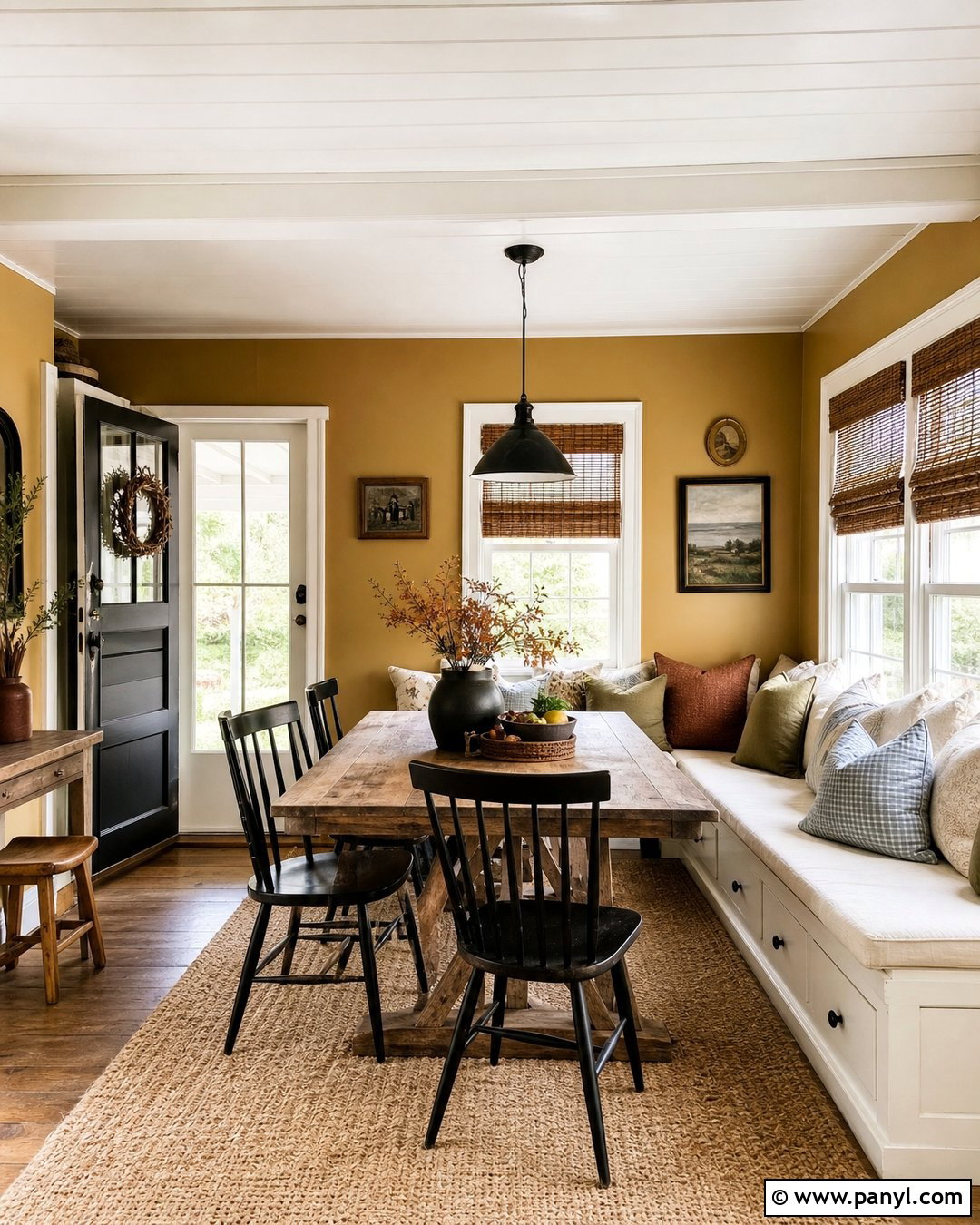
Muted mustard walls create a warm farmhouse breakfast room with vintage character and plenty of personality. Choose an earthy golden shade softened by brown rather than a clear, bright yellow. Pair it with warm white trim, a weathered oak table, and black spindle-back chairs. Add a built-in bench with cream cushions and pillows in olive, rust, and faded blue. A simple black pendant anchors the eating area, while woven shades filter strong morning light. Use a neutral jute rug and white stoneware to keep the golden walls from dominating. Muted mustard works best in a room with straightforward architecture and limited decorative clutter. The completed space feels sunny, comfortable, and collected, with enough contrast to remain fresh rather than nostalgic.
Conclusion:
The best farmhouse wall colors support the entire room rather than competing with its furniture and architectural details. Warm whites, greiges, and earthy beiges provide versatile foundations, while sage, dusty blue, clay, and deeper accent colors add personality. Before committing, compare each option with the flooring, trim, cabinetry, stone, and natural wood already in the space. Paint large sample boards and move them around the room during different times of day. This reveals undertones more accurately than a small paint chip. Whether you prefer a bright modern room or a richer traditional setting, these **farmhouse wall colors** can help you create a home that feels coordinated, practical, warm, and comfortably lived in.

Related Ideas and Inspiration:
Leave a Reply