
The right wall palette can make a living room feel larger, warmer, calmer, or more expressive without changing its basic layout. Recent color trends favor warmer whites, grounded earth tones, deep browns, burgundy, gentle blues, and confident color drenching rather than flat, cool-gray schemes. () The key is choosing two shades with compatible undertones, then repeating them through furniture, textiles, artwork, and natural materials. You can divide the colors with paneling, highlight built-ins, frame a fireplace, or create a focused TV wall. Always test samples beside your flooring and sofa in daylight and lamplight. The complete room looks below make it easier to recreate these 20 Living Room Color Combination Wall Ideas.

1. Warm White And Sage Green Living Room Walls
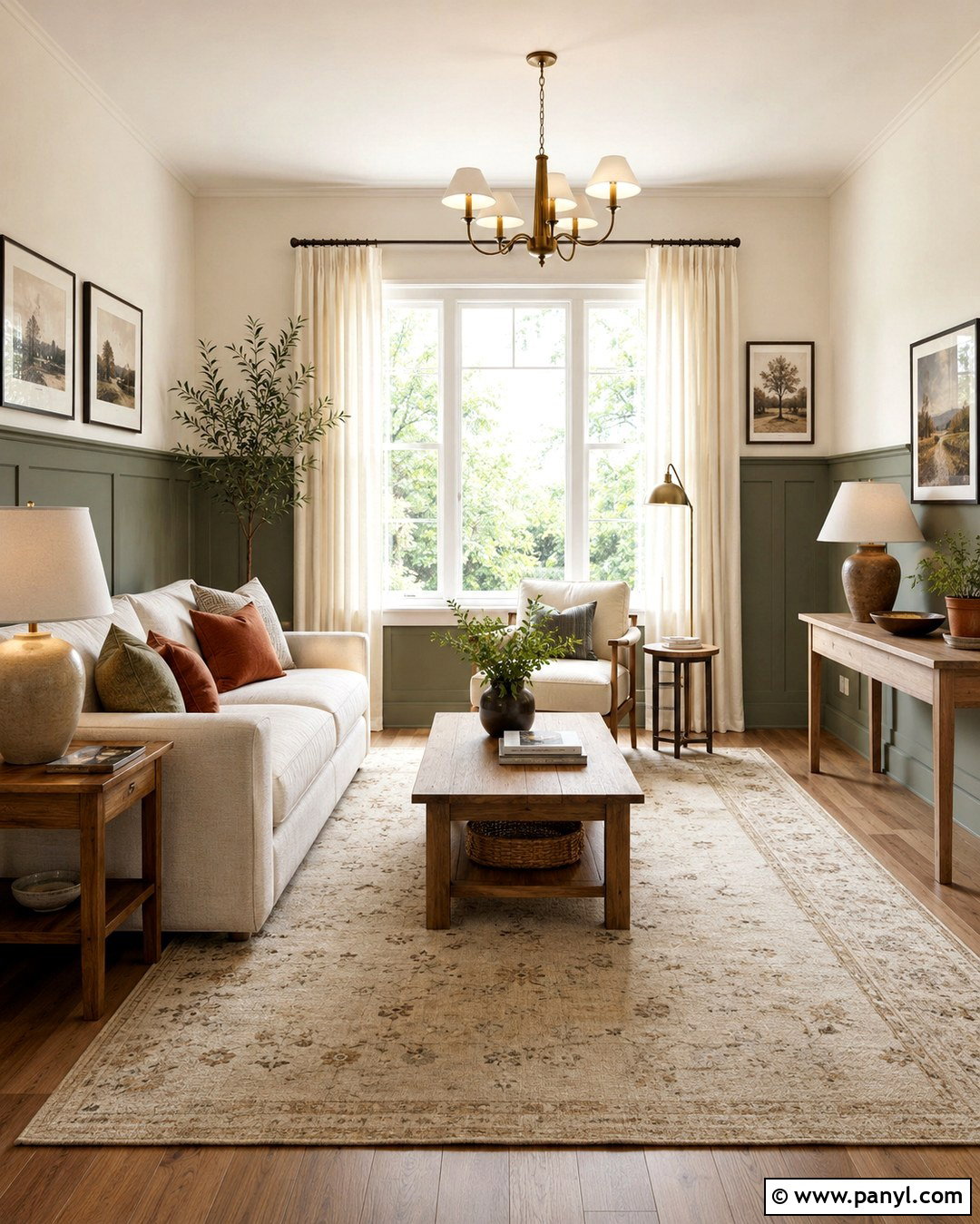
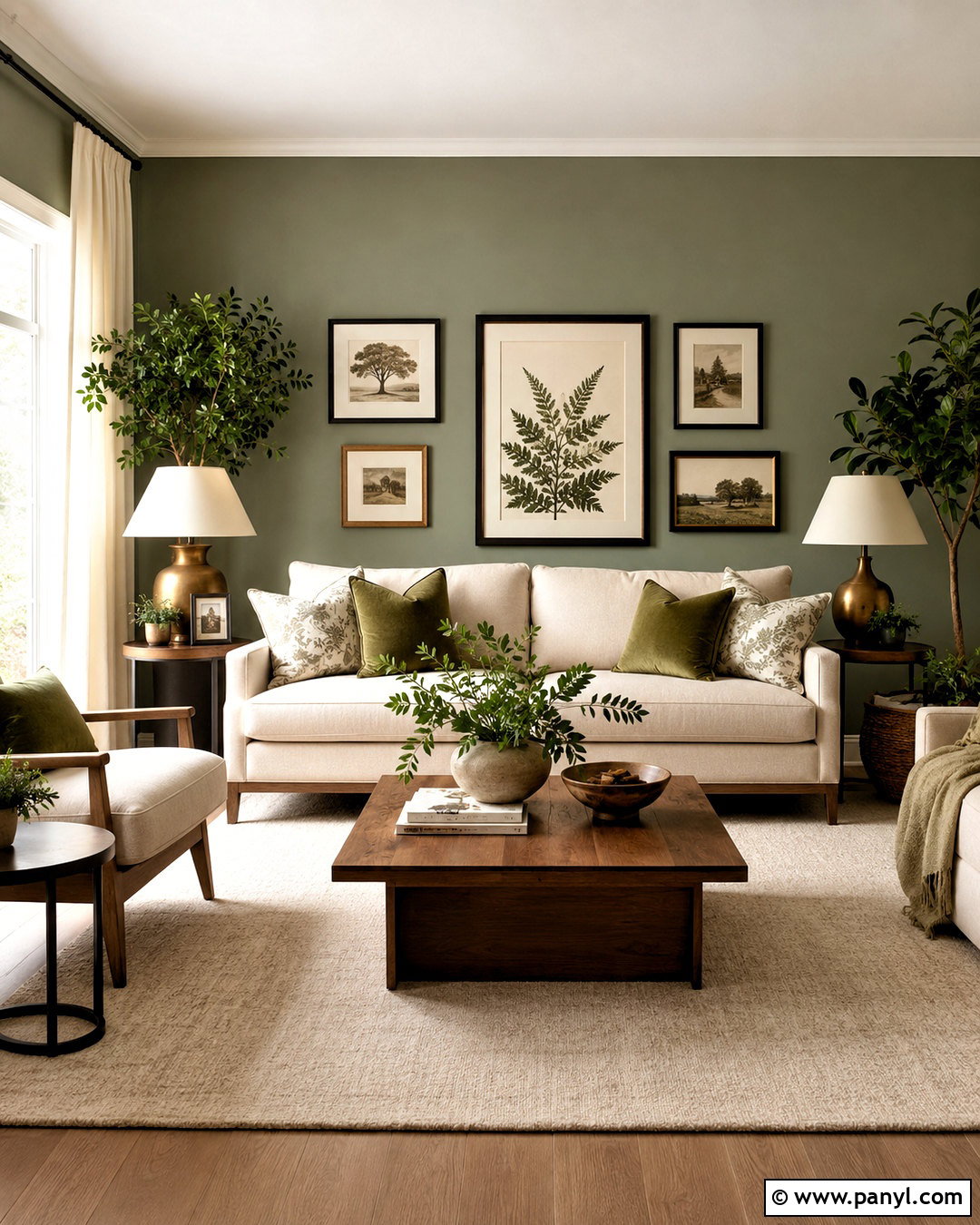
Warm white and sage green create a bright living room that still feels soft and grounded. Paint the upper walls warm white, then use muted sage on paneled wainscoting, built-in shelves, or the fireplace wall. This division adds architectural interest without making the room feel busy. Choose a light oatmeal sofa, natural oak tables, and a cream rug with a subtle green pattern. Linen curtains should closely match the upper walls so the windows appear wider. Black picture frames and an aged brass floor lamp provide definition. Add rust or clay-colored pillows in small amounts for warmth. This complete palette works especially well in casual modern, farmhouse, cottage, and transitional living rooms with plenty of natural texture.
2. Cream And Terracotta Living Room Walls
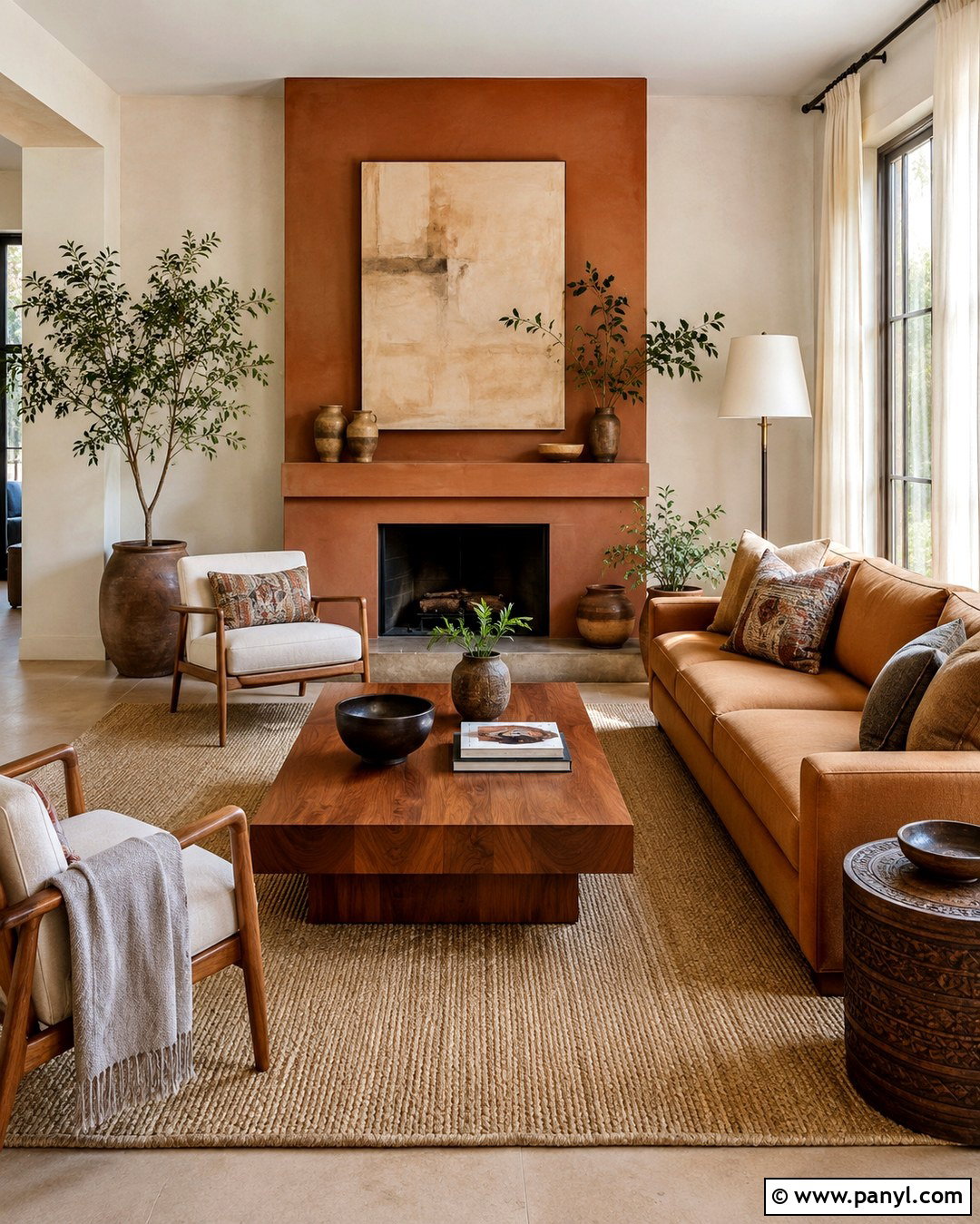
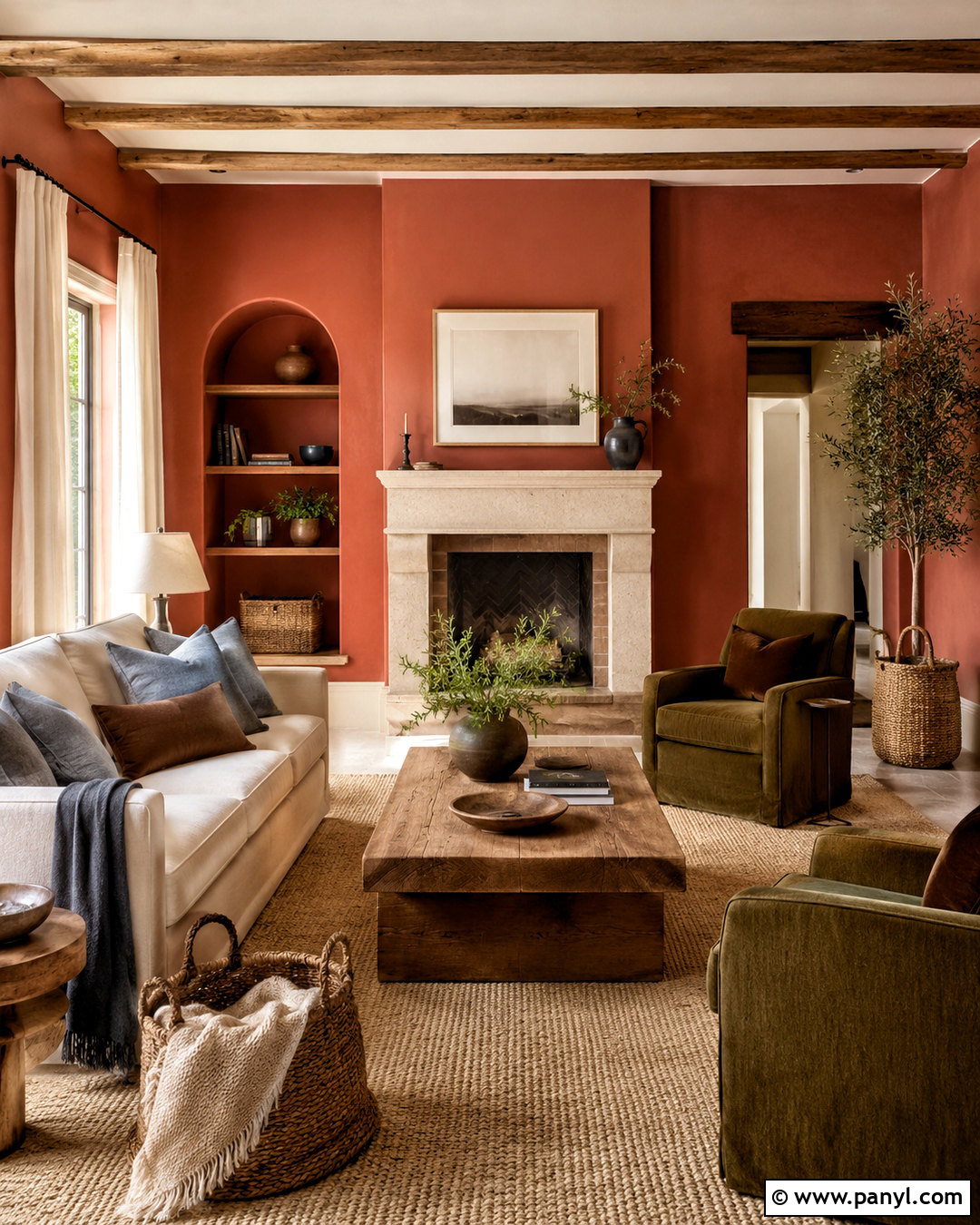
Imagine a sunny, welcoming room where the walls carry the warmth of natural clay. Use creamy off-white across most surfaces and place muted terracotta on the fireplace wall or the wall behind the sofa. Choose an earthy terracotta rather than a bright orange shade so the combination remains comfortable throughout the year. A camel-colored sofa, walnut coffee table, woven jute rug, and ivory curtains will connect the two wall colors. Repeat terracotta through patterned pillows and handmade ceramic decor. Dark bronze lighting gives the space a clean outline, while leafy plants add fresh contrast. If the room is small, keep the terracotta wall free from heavy furniture and display one oversized neutral artwork instead of many little pieces.
3. Greige And Charcoal Living Room Walls
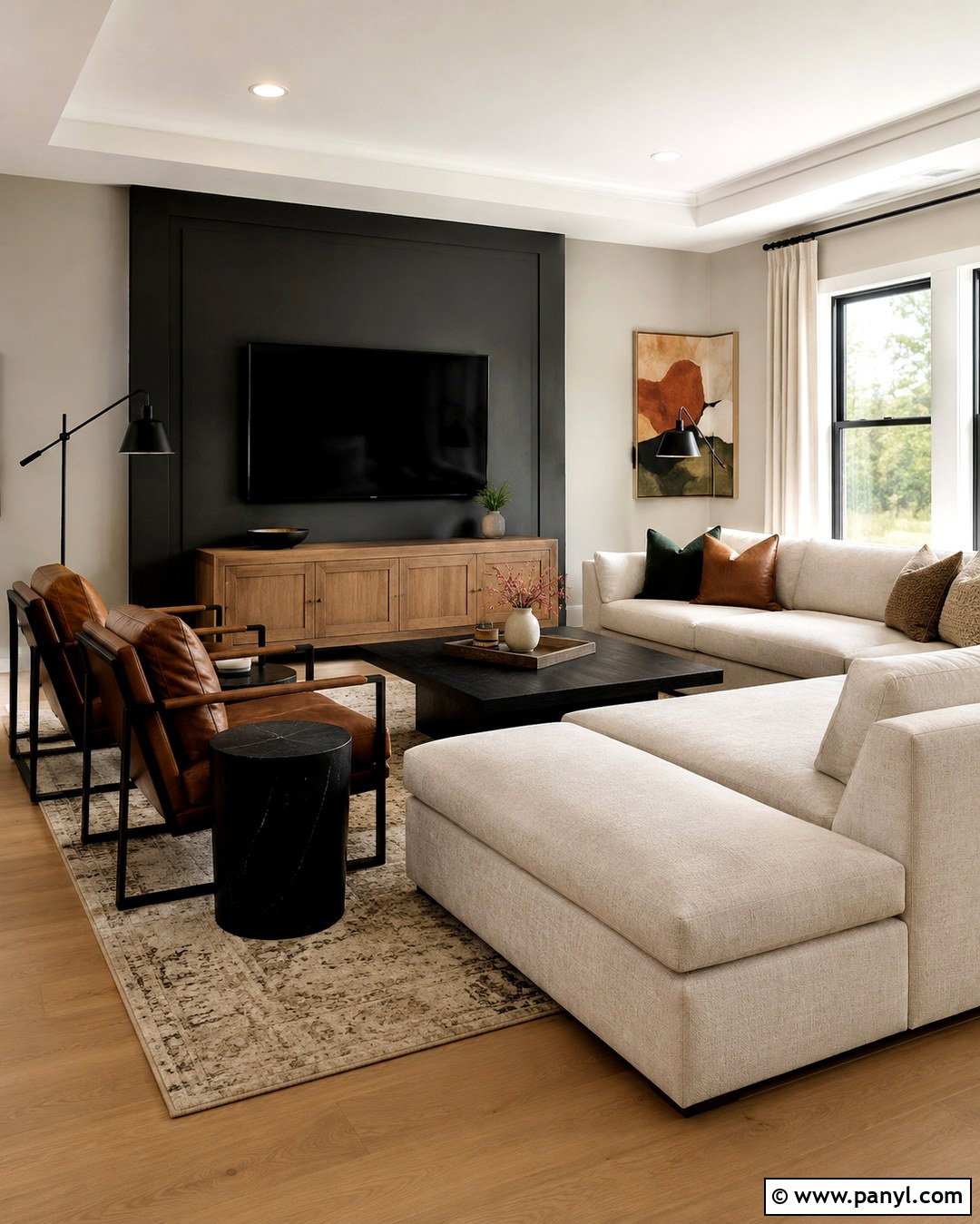
Need a polished wall combination that works with a television and everyday family furniture? Cover the main walls in light greige, then paint the TV wall deep charcoal. The darker background helps the screen and media console blend into the design instead of dominating it. Select a warm charcoal with brown undertones so it relates naturally to the greige. Build the room around a cream sectional, medium-toned oak media cabinet, textured beige rug, and black metal lighting. Add cognac leather chairs for warmth and use ivory curtains to preserve brightness. Simple abstract artwork can introduce muted rust and olive accents. Keep the ceiling and trim soft white, creating a clear transition that prevents the charcoal section from making the entire living room feel enclosed.
4. Navy Blue And Crisp White Living Room Walls
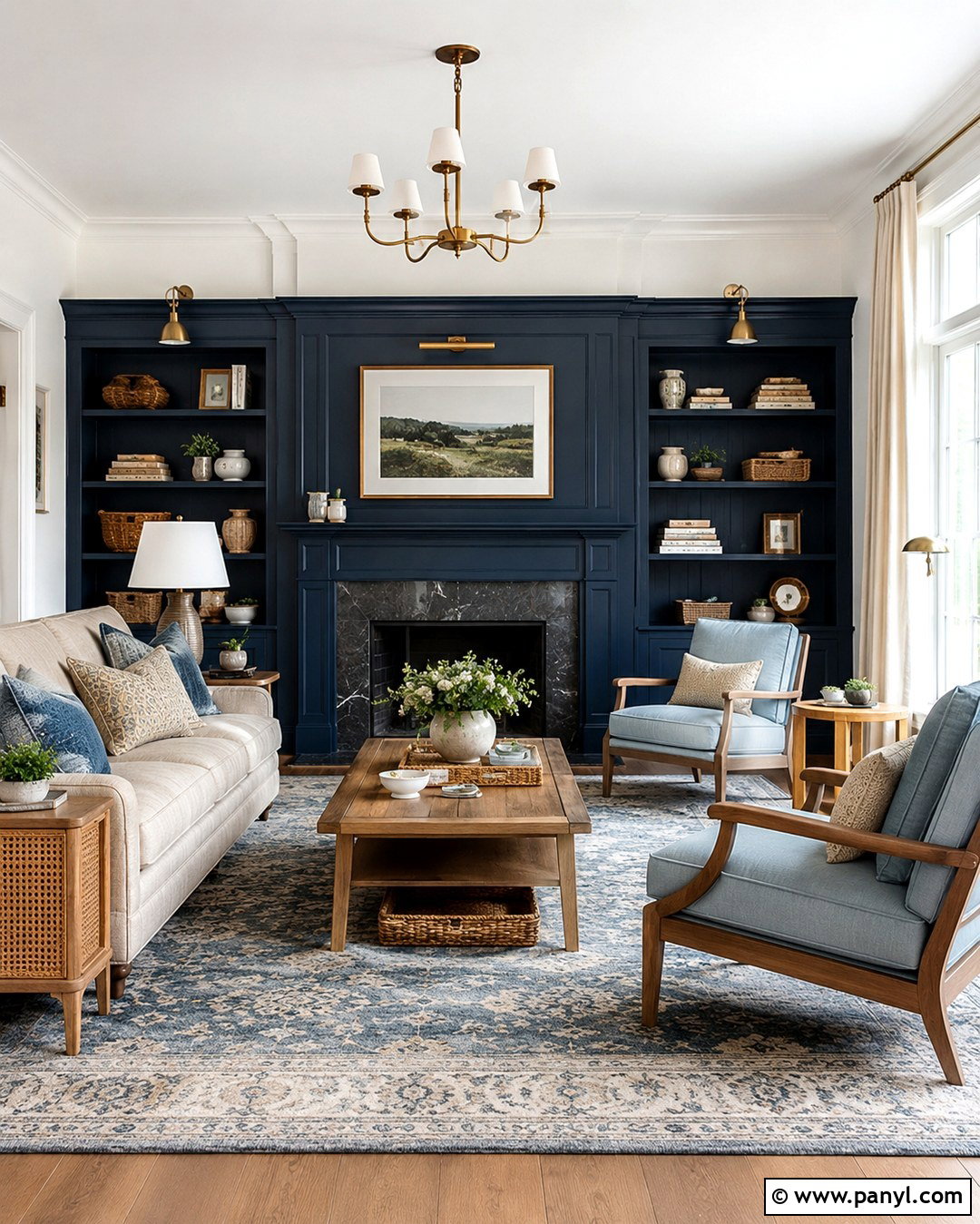
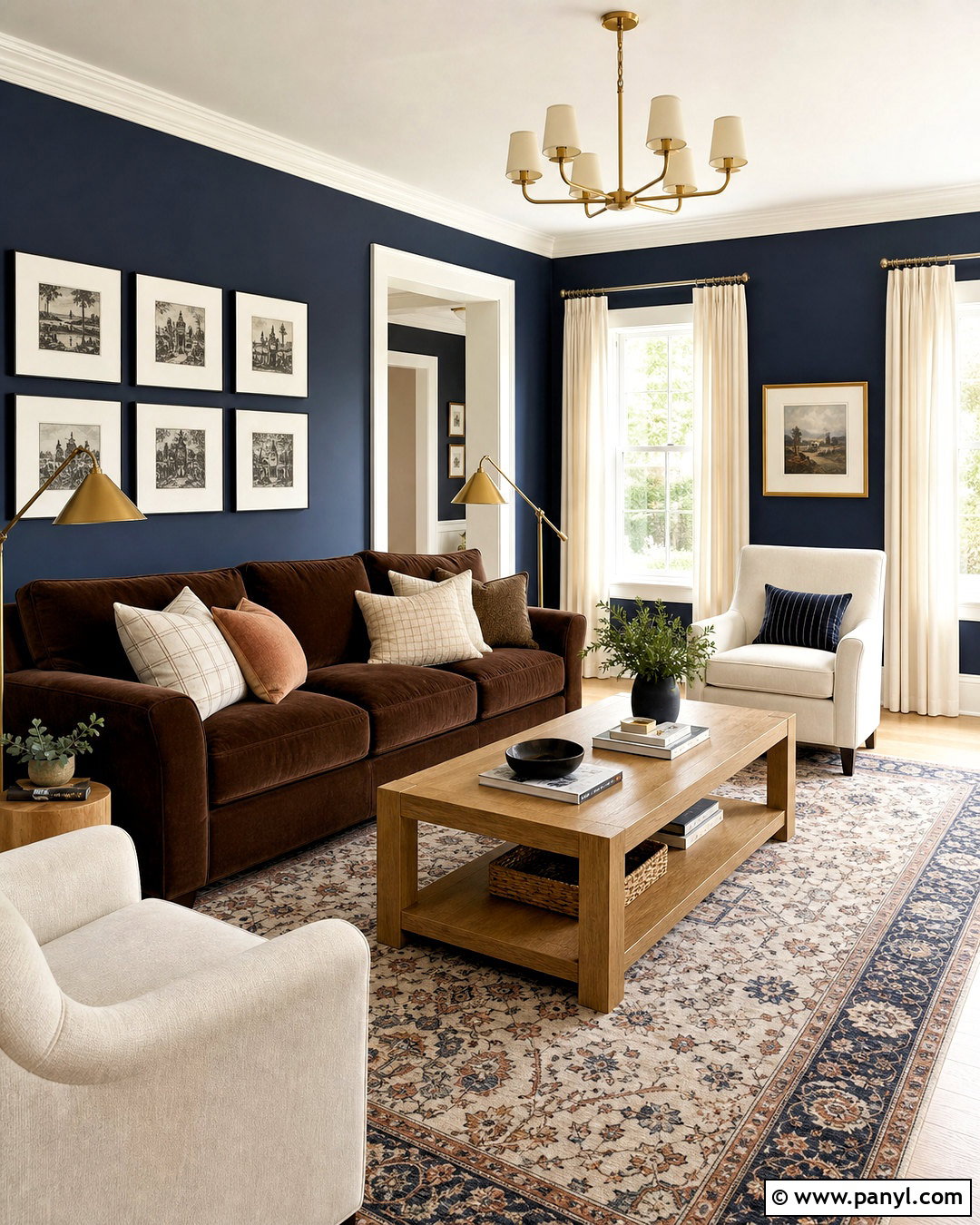
Navy blue and crisp white deliver strong contrast while keeping a living room fresh and tailored. Paint built-in bookcases, lower wall paneling, and the fireplace surround in deep navy. Use clean white on the upper walls, ceiling, and trim to balance the saturation. A flax-colored sofa and two light blue armchairs will soften the sharp division. Bring in medium oak, brushed brass, and woven cane so the room does not feel overly formal. A blue-and-cream patterned rug can unite the wall colors without appearing perfectly matched. For the windows, choose white cotton curtains with a subtle navy border. Arrange books, ceramics, and framed art carefully inside the built-ins, leaving open space around objects so the navy background remains visible.
5. Dusty Blue And Warm Beige Living Room Walls
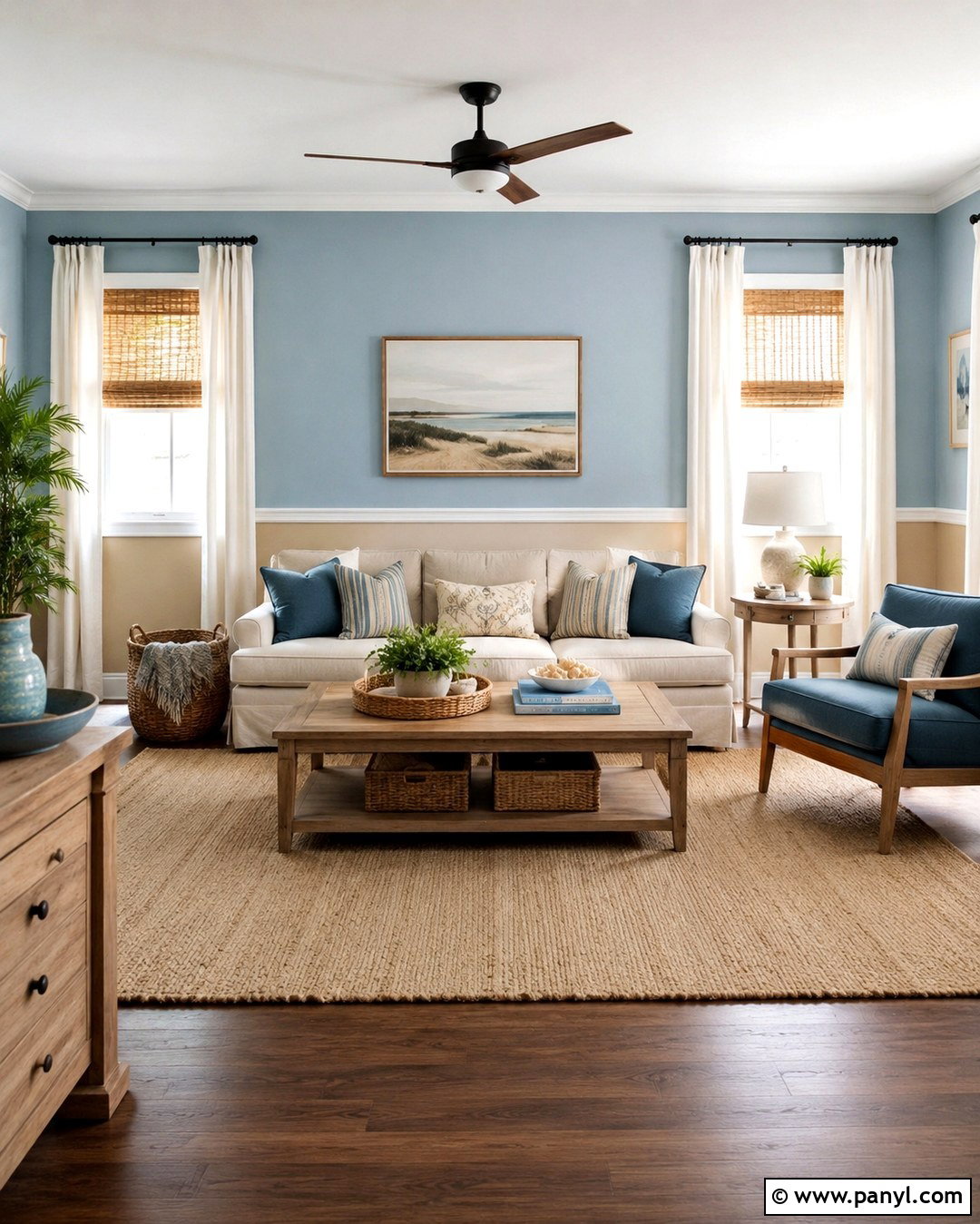
Dusty blue and warm beige can turn a plain living room into a restful space with gentle coastal character. Paint the walls dusty blue above a chair rail and use sandy beige below it. This arrangement keeps the cooler color near the natural light while grounding the lower half of the room. Choose a soft beige sofa, pale oak tables, and a cream wool rug with faded blue details. Warm white curtains and woven shades add privacy without competing with the walls. Include a few walnut accents to give the pale palette greater depth. Avoid obvious beach decorations. Instead, use linen, glazed ceramics, seagrass baskets, and simple landscape artwork. The finished room will feel relaxed, layered, and suitable for everyday living in any season.
6. Olive Green And Soft Taupe Living Room Walls
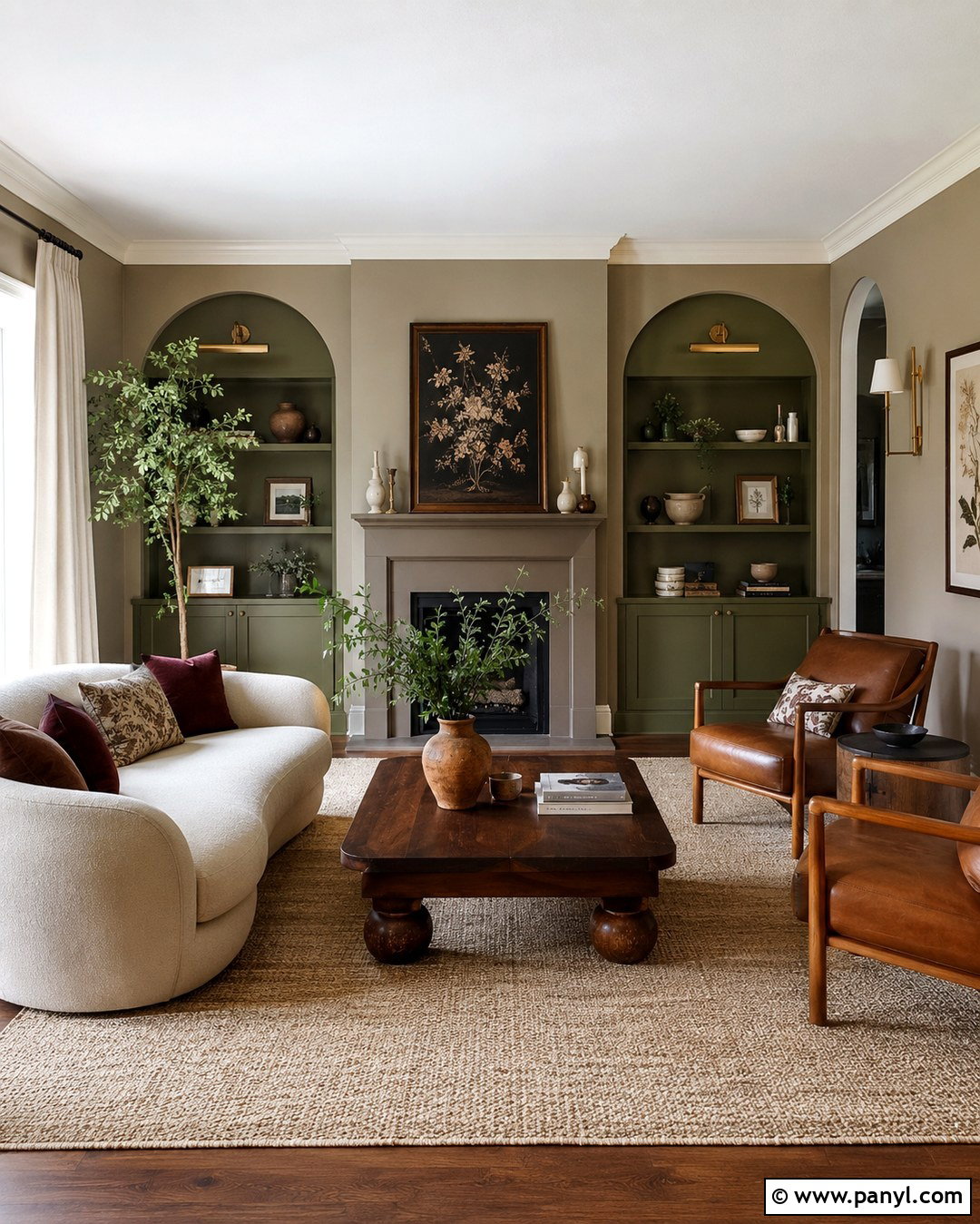
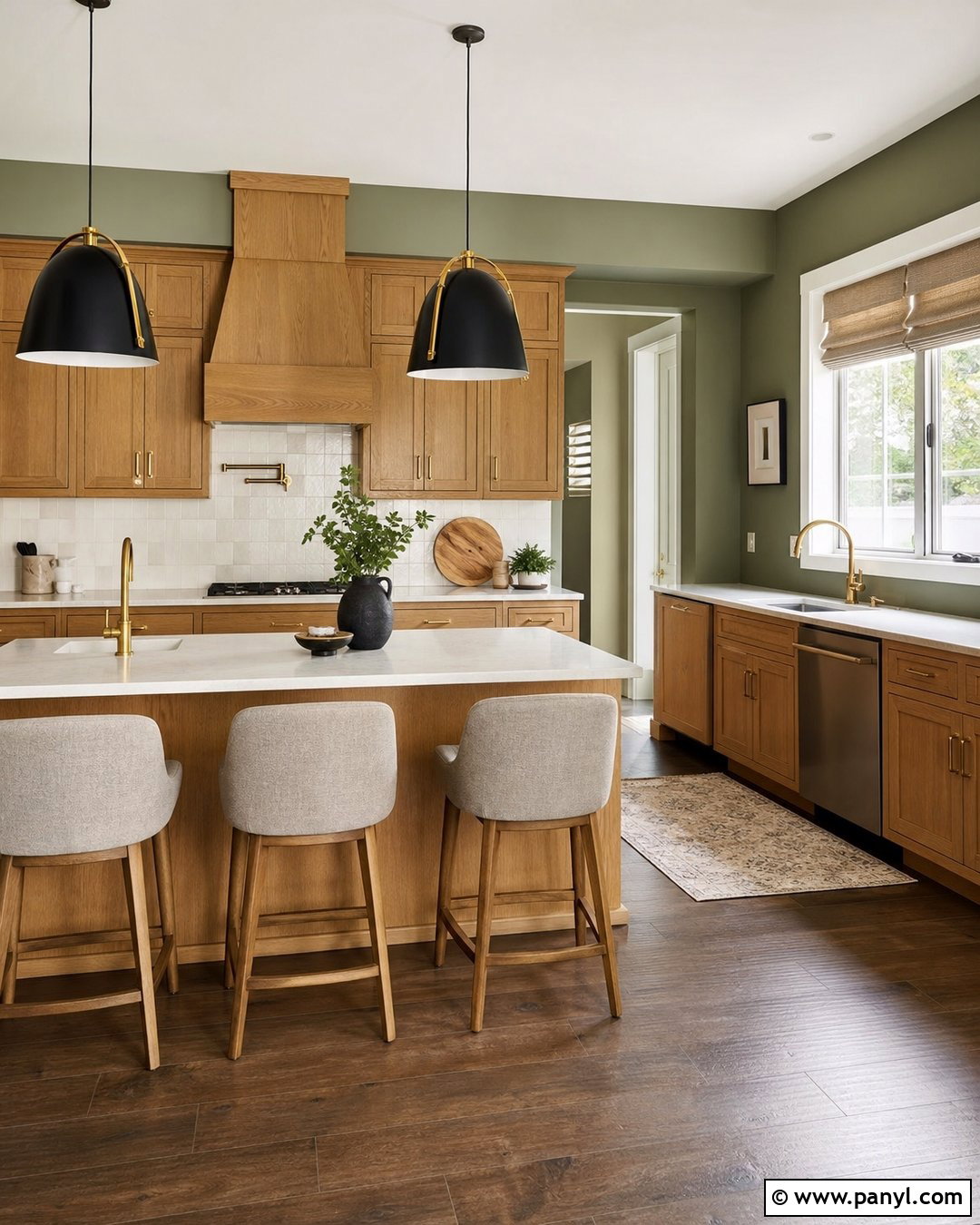
Olive green and soft taupe create a mature, nature-inspired living room that feels cozy without becoming dark. Use taupe on the larger walls, then wrap the fireplace, adjacent alcoves, and built-in storage in olive green. Painting these connected features one color gives them the appearance of custom millwork. Furnish the room with a light mushroom sofa, dark oak coffee table, and warm beige rug. A pair of leather or olive-patterned chairs can anchor the seating arrangement. Add antique brass sconces, cream lampshades, and linen curtains for soft illumination. Botanical artwork reinforces the palette, but limit additional green accessories to avoid repetition. A few accents in muted burgundy or burnt orange will make the combination feel richer and more collected.
7. Blush Pink And Deep Green Living Room Walls
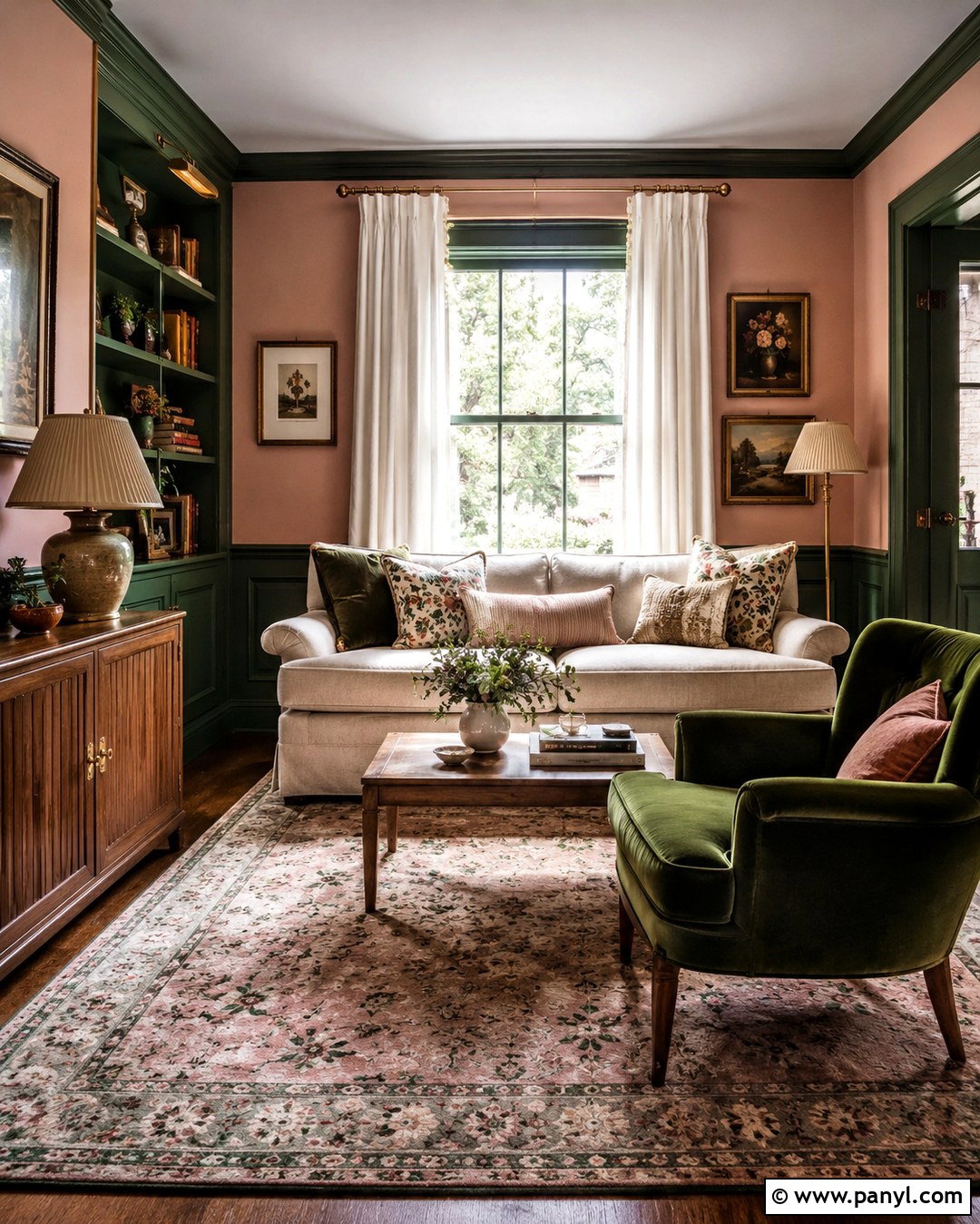
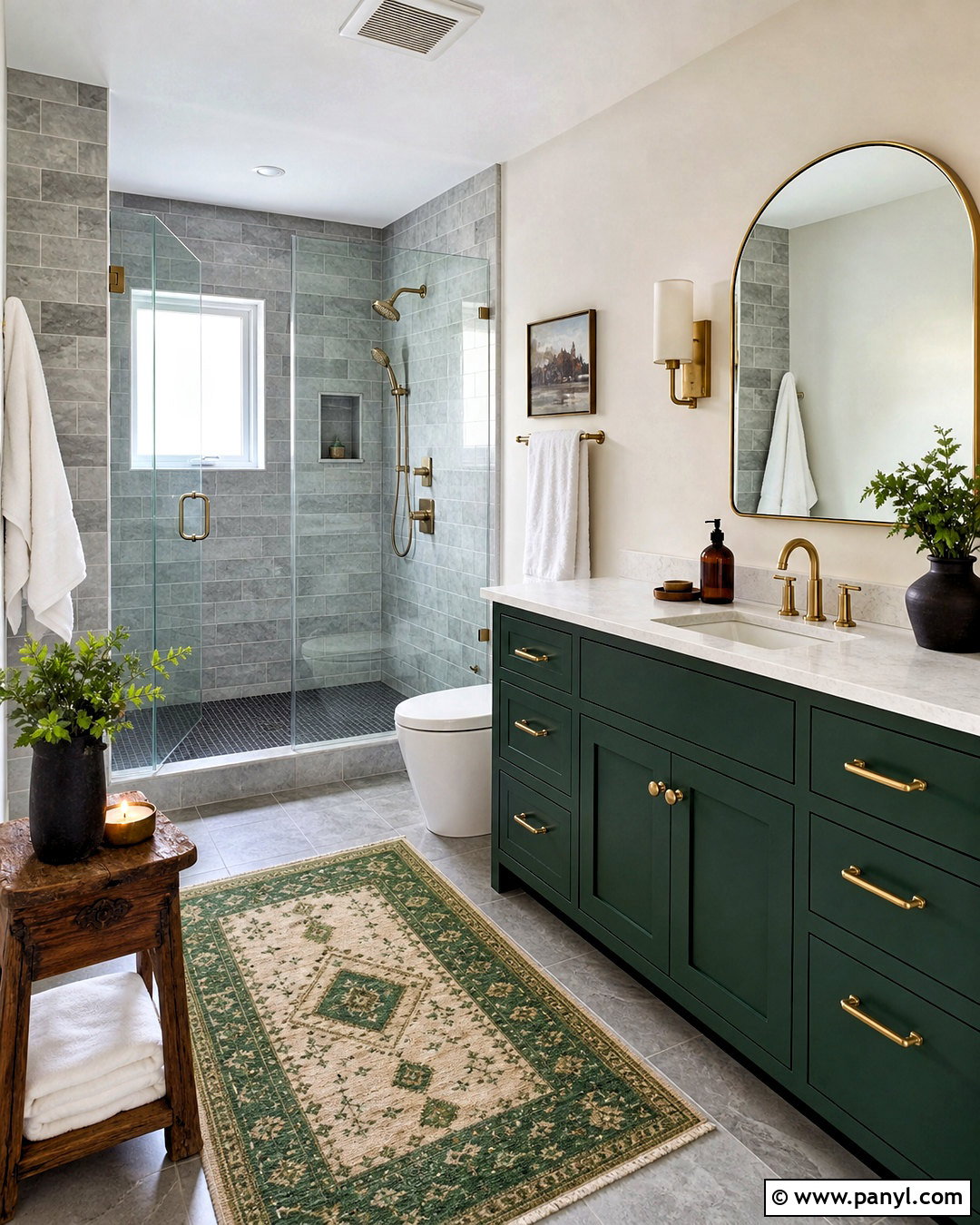
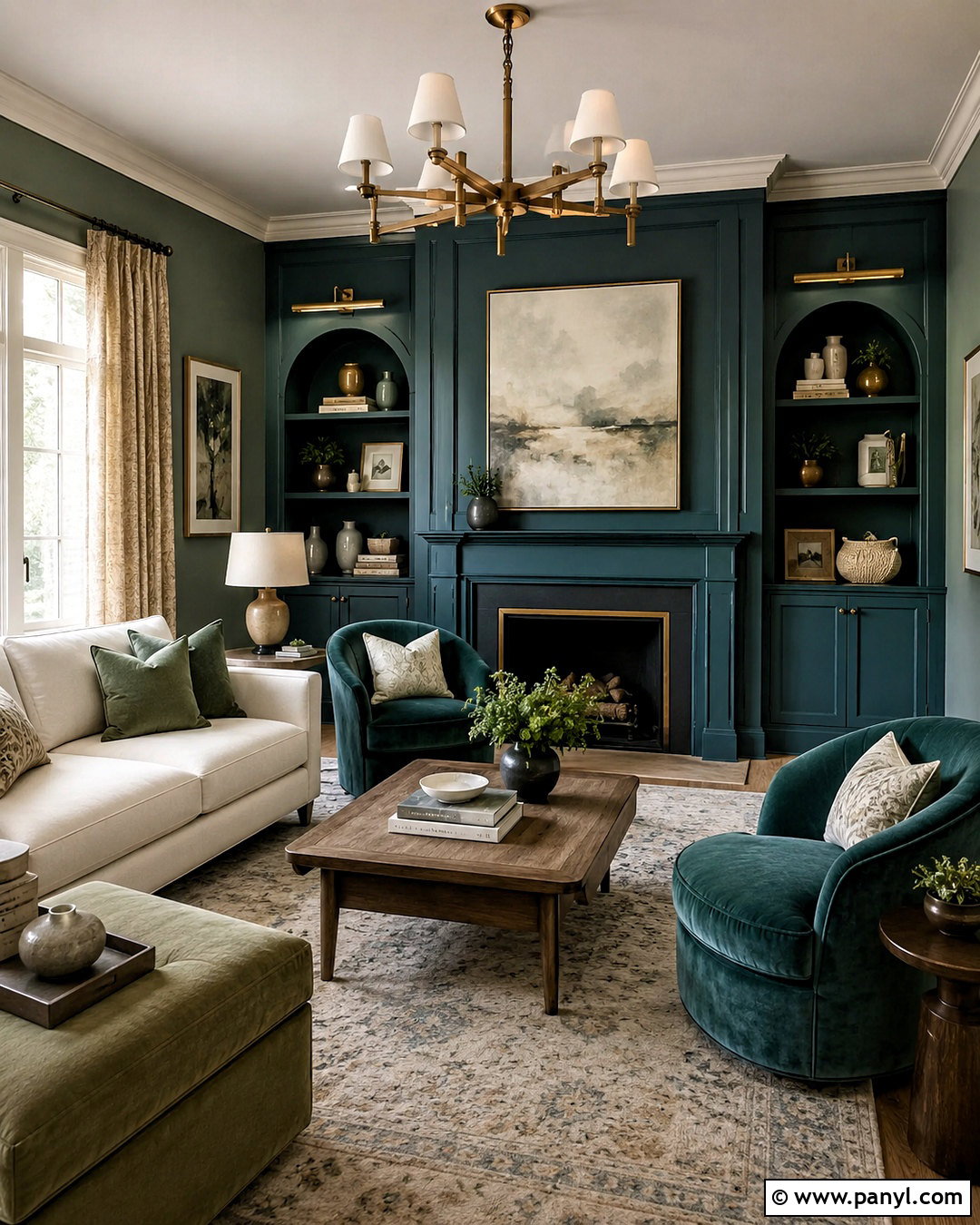
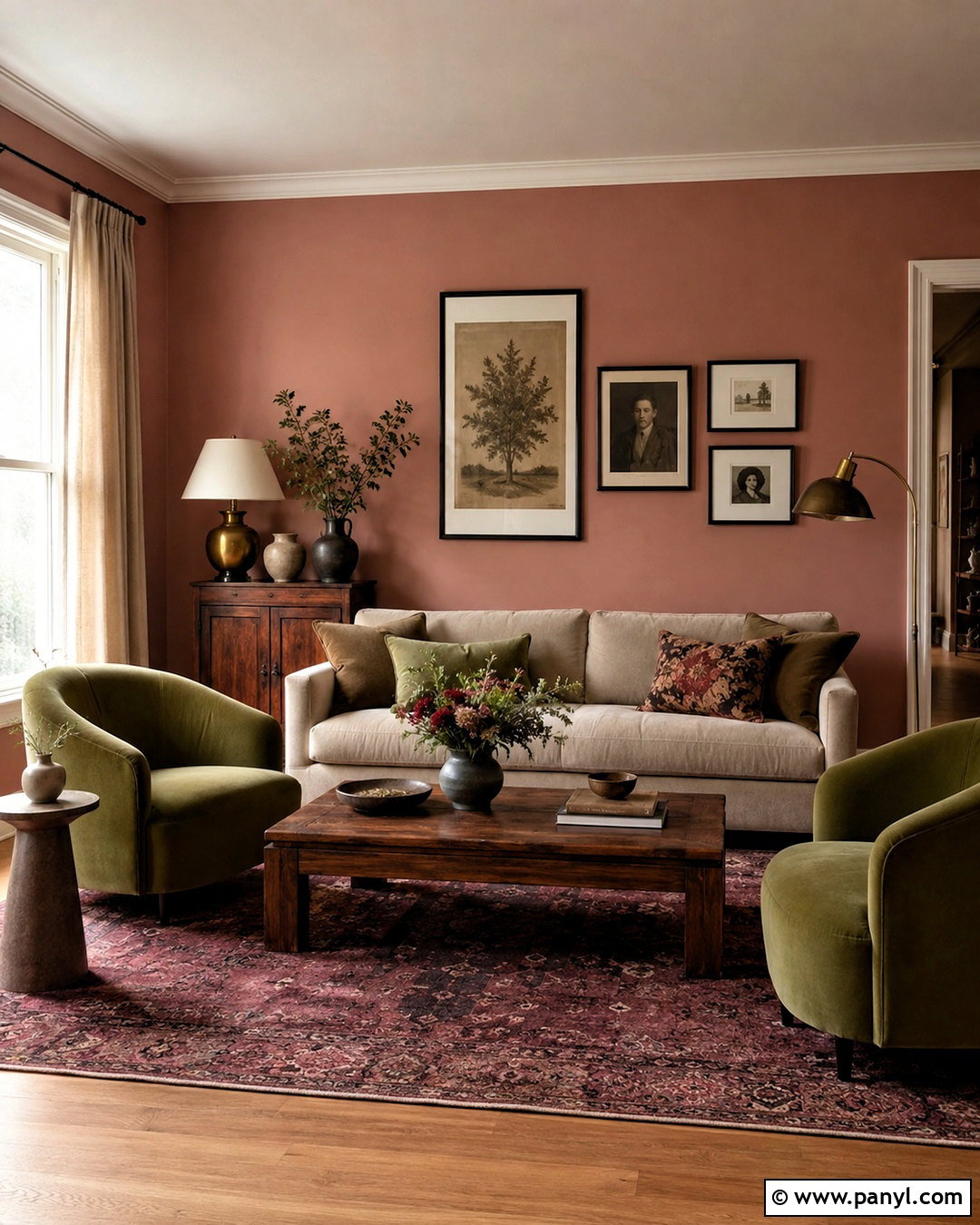
Blush pink and deep green feel sophisticated when both shades have earthy, muted undertones. Paint the main walls a plaster-like blush, then use forest or deep olive green on wall paneling, window trim, or a full bookcase. The dark details will sharpen the pink and keep it from looking overly sweet. A neutral oatmeal sofa, vintage-style walnut cabinet, and green velvet accent chair complete the seating area. Choose a faded floral rug that contains pink, cream, green, and brown to connect every surface. Warm brass lighting and off-white curtains add brightness. Artwork should include darker frames for contrast. This combination suits traditional, eclectic, and modern cottage rooms, especially when layered with checks, subtle florals, aged wood, and tactile natural fabrics.
8. Chocolate Brown And Warm White Living Room Walls
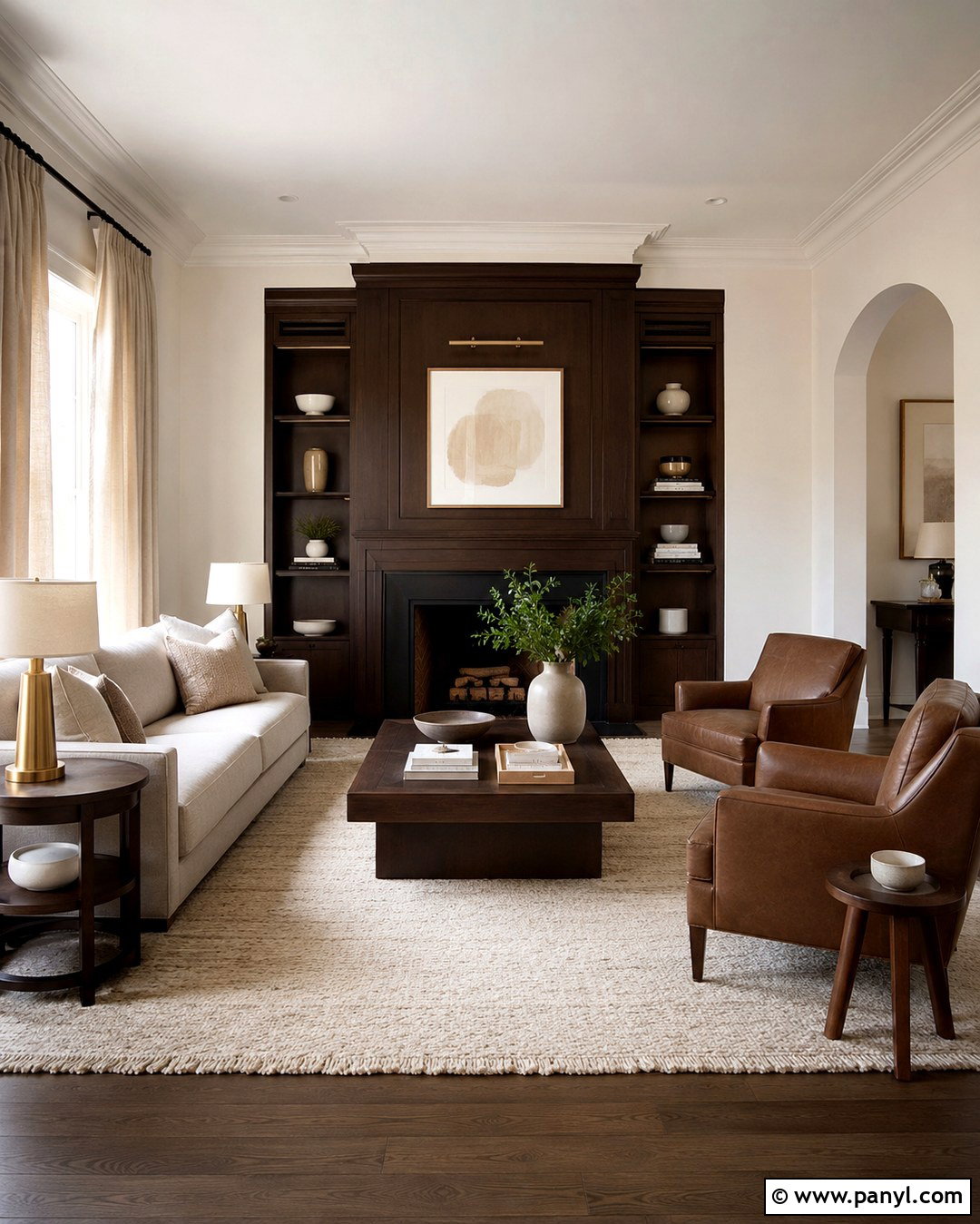
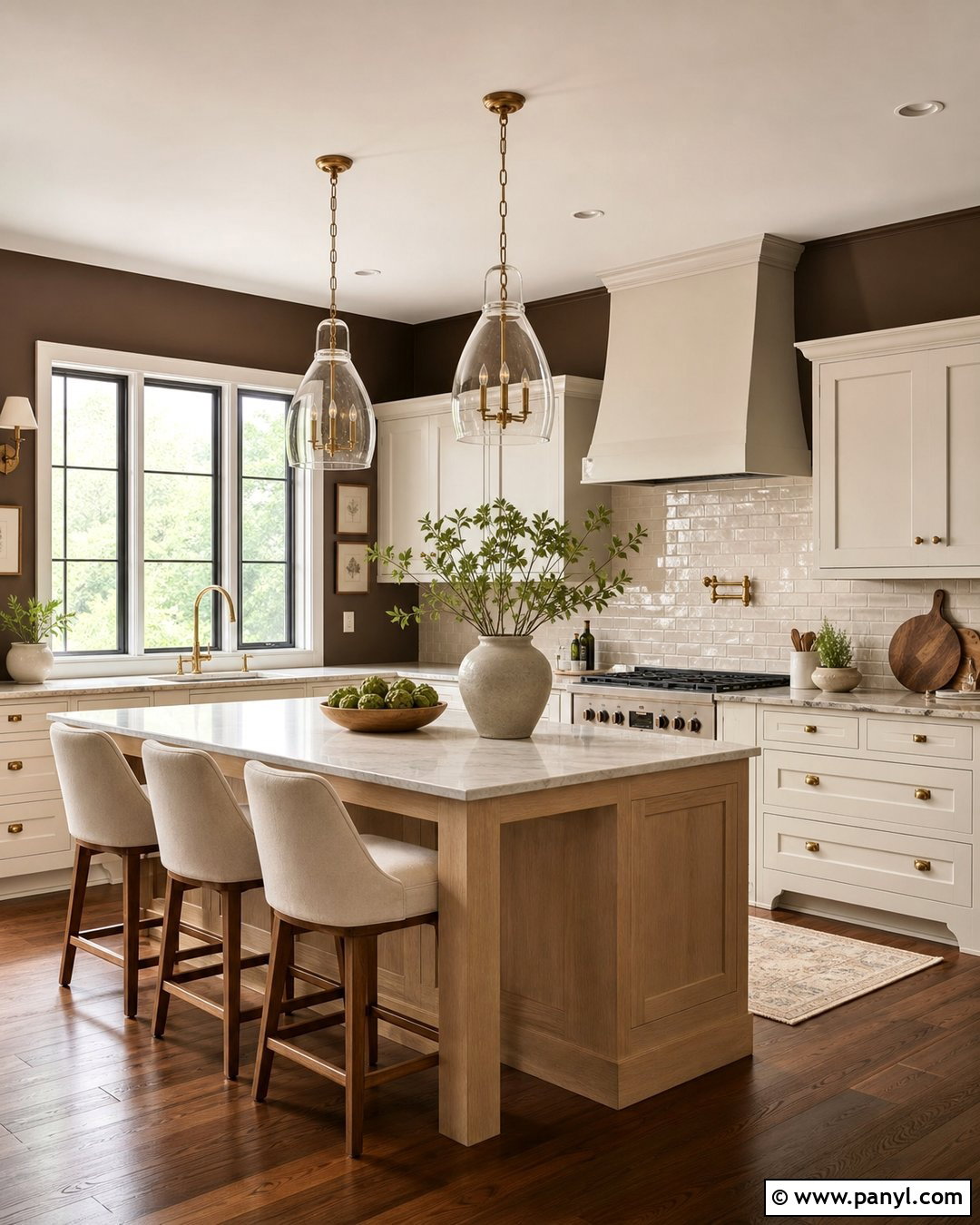
Rich chocolate brown gives a living room remarkable depth, but warm white keeps the finished space approachable. Apply brown to the fireplace wall and continue it across built-ins or shallow display niches. Paint the remaining walls, ceiling, and trim a creamy white. Position a light greige or oatmeal sofa against the brown area so its silhouette stands out clearly. Add a caramel leather chair, dark walnut tables, and a large ivory rug to build a tonal, layered room. Curtains in warm white linen will prevent the windows from looking heavy. Use pale artwork, travertine accessories, and brushed brass lamps to reflect light around the darker section. This scheme works best when several lamps brighten corners and create an even, comfortable glow after sunset.
9. Pale Blue And Butter Yellow Living Room Walls
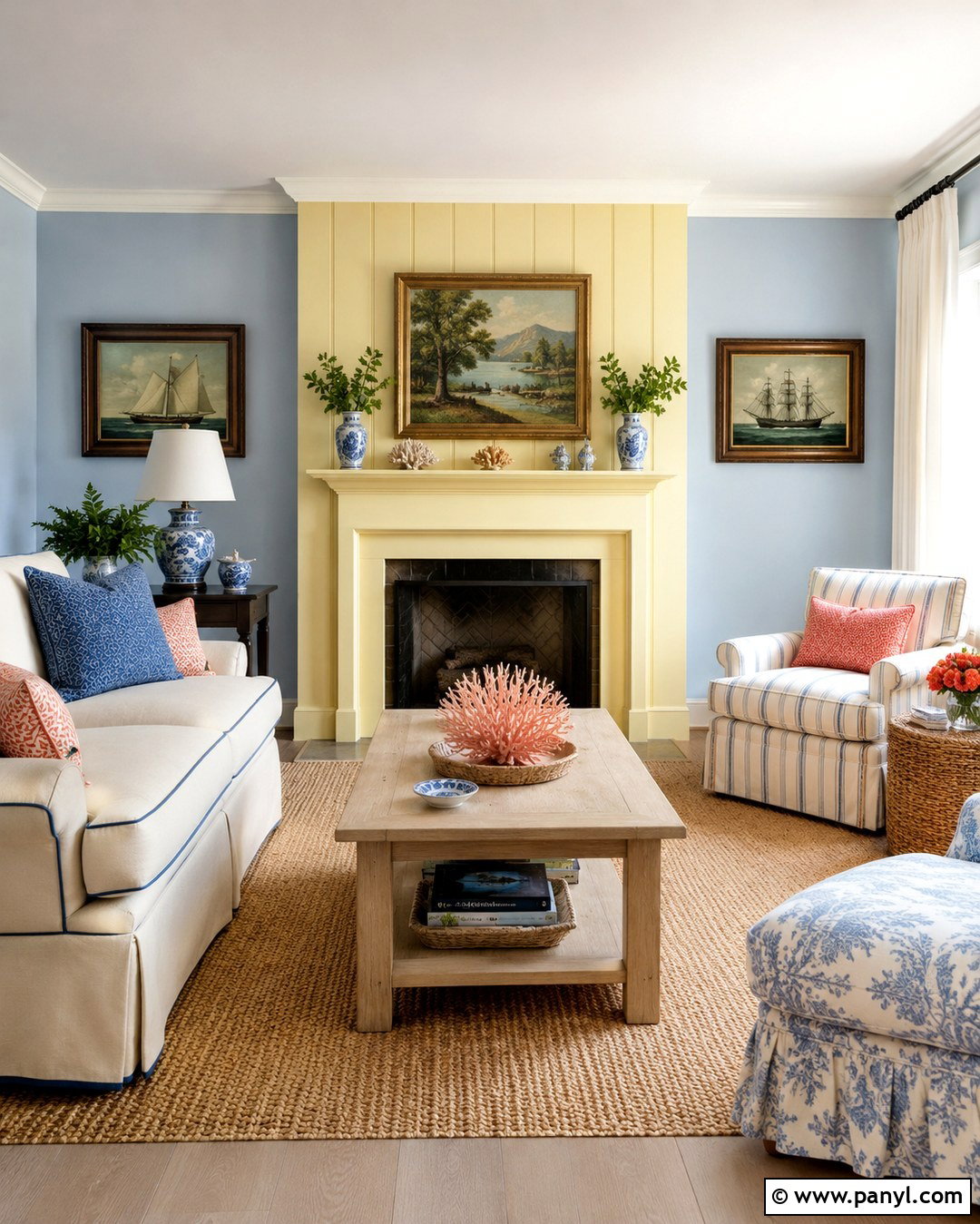
A pale blue and butter yellow palette brings cheerful color into the living room without becoming loud. Cover most walls in an airy blue, then paint a reading nook, window wall, or paneled fireplace section soft butter yellow. Both colors should appear slightly muted rather than bright or primary. Choose a cream sofa with blue piping, a light wood coffee table, and a woven natural rug. A striped armchair can repeat both wall colors while adding a friendly pattern. Keep curtains off-white and lightweight so daylight strengthens the freshness of the palette. Small red or coral accessories will provide a lively finishing accent. This complete look is especially effective in family rooms, cottages, and older homes with simple molding or charming architectural details.
10. Deep Teal And Sand Living Room Walls
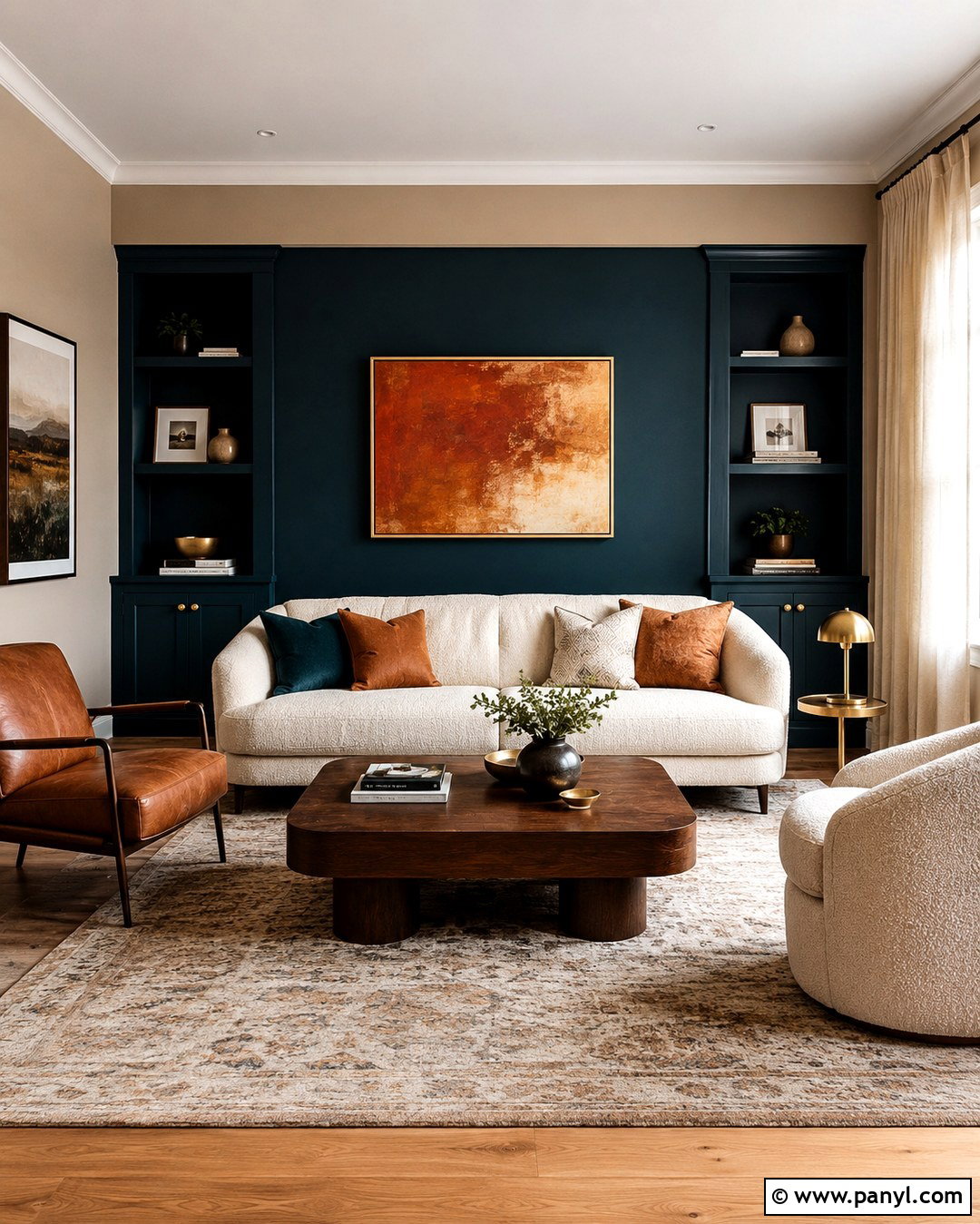
Deep teal and warm sand balance bold color with an easy neutral foundation. Paint the main seating wall teal and use sandy beige on the remaining walls. If the room has built-ins, carry the teal across their shelves and cabinet fronts for a seamless focal point. Place a cream boucle sofa in front of the darker surface and add a tan leather chair at an angle. A walnut coffee table, beige patterned rug, and natural linen curtains will strengthen the warm side of the palette. Introduce teal again through one or two pillows, not every accessory. Matte black lighting provides definition, while brass details add warmth. Choose oversized abstract artwork containing cream, rust, and blue-green to connect the room without creating a predictable matching scheme.
11. Burgundy And Mushroom Living Room Walls
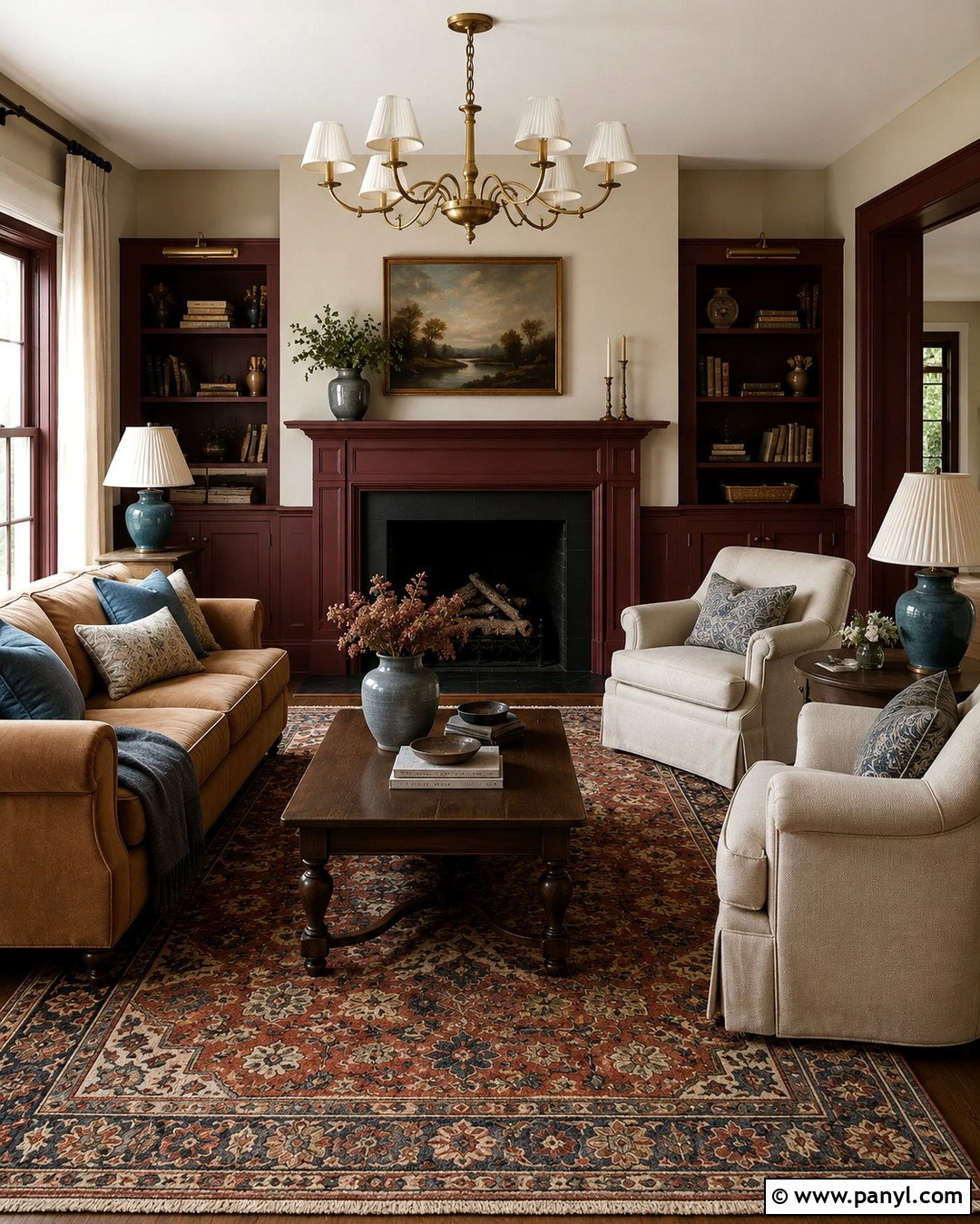
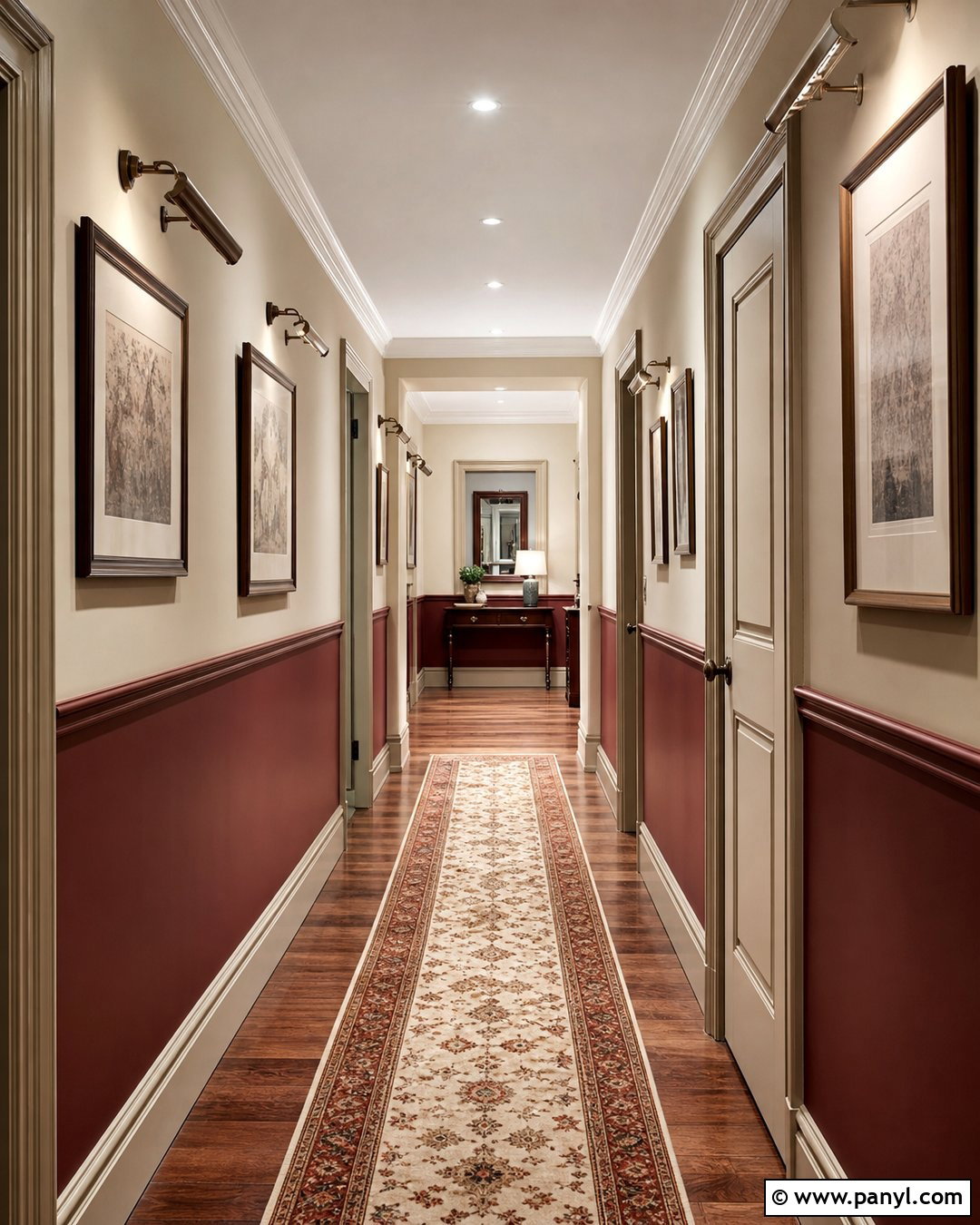
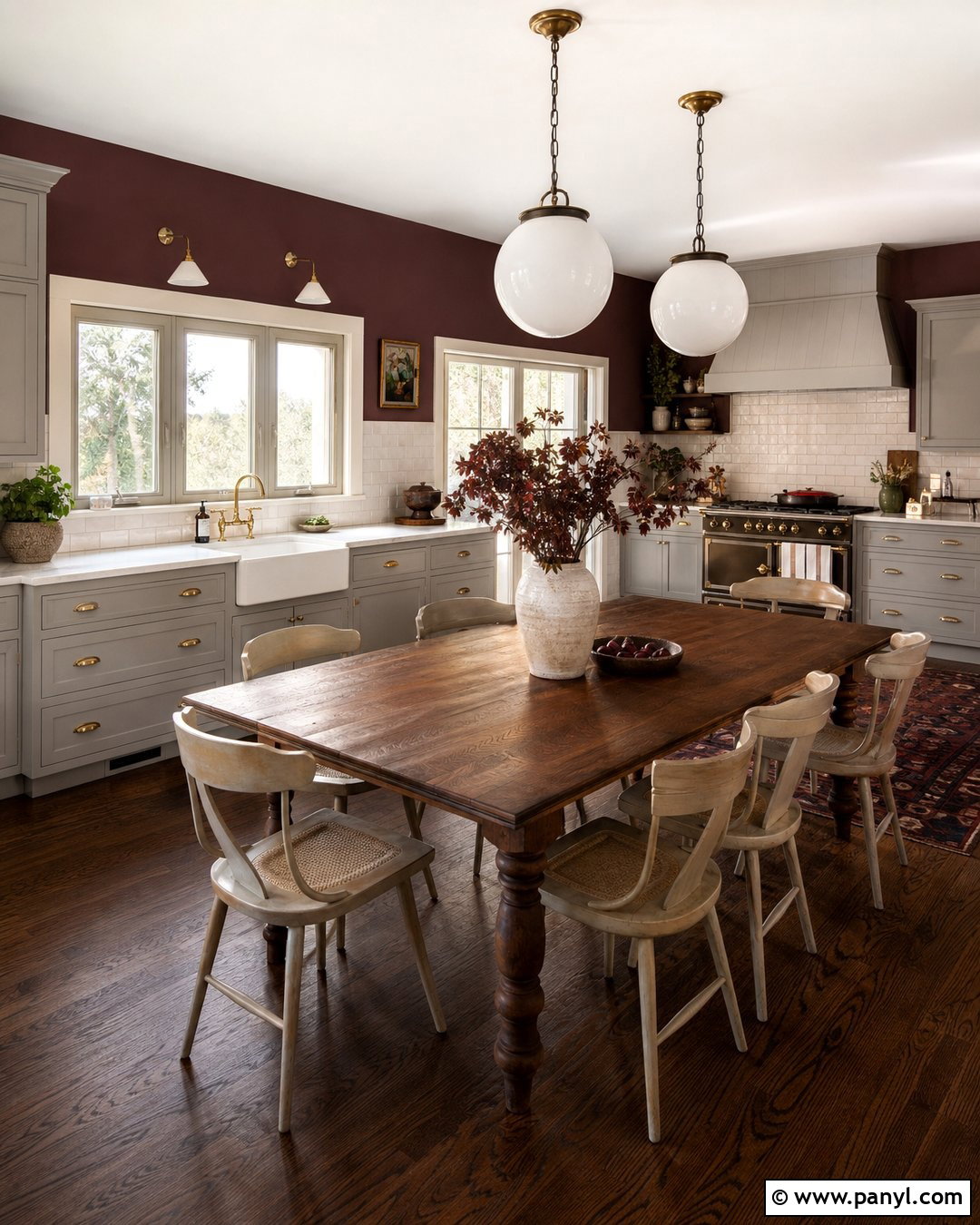
For a living room with warmth and character, pair earthy burgundy with light mushroom beige. Use burgundy on lower paneling, built-in cabinetry, and the fireplace surround. Apply mushroom to the upper walls and ceiling for a softer envelope than plain white would provide. A camel sofa, cream armchairs, and dark wood furniture will complement the red-brown undertones. Add an aged brass chandelier and pleated fabric lampshades to make the space feel inviting rather than dramatic. A traditional rug featuring burgundy, muted blue, tan, and ivory can organize the seating area. Keep window treatments close to the mushroom wall color. Decorative accents in dusty blue or olive will prevent the scheme from becoming too warm while supporting a collected, comfortable look.
12. Black And Soft White Living Room Walls
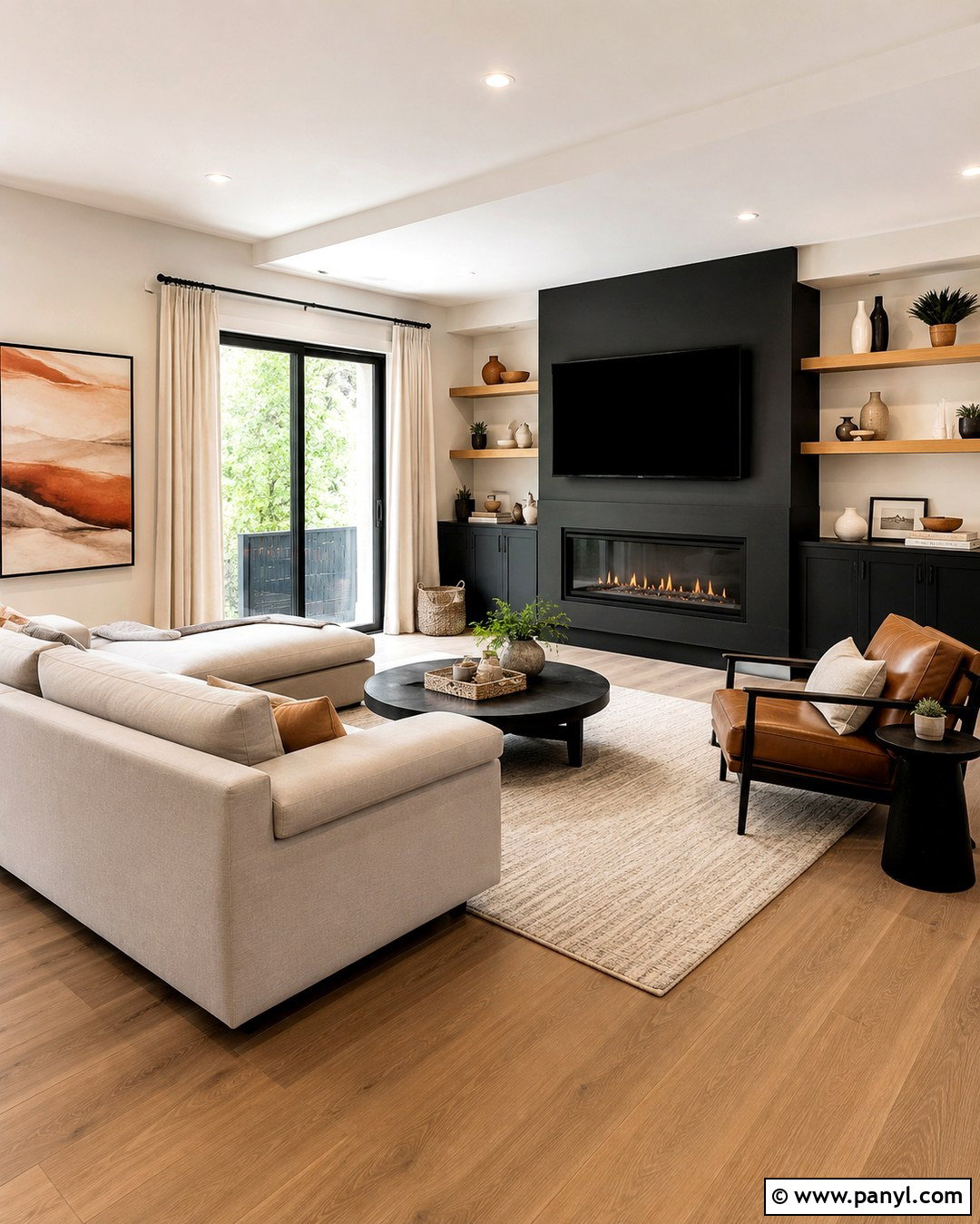
Can black walls work in a normal living room without swallowing the space? Yes, when the dark paint is carefully contained. Use matte black on a fireplace wall, media wall, or set of built-ins, then paint the other surfaces a warm soft white. Keep the ceiling white to reflect light, and choose medium oak flooring or furniture to bridge the contrast. A pale gray sectional, cognac leather chair, and cream rug create a practical, balanced foundation. Add black again through slim curtain rods, lamp bases, and picture frames. Curtains should be full-length and ivory rather than stark white. Finish with large artwork containing tan, rust, and muted green. The result is graphic and modern, yet warm enough for daily family use.
13. Lavender And Warm Gray Living Room Walls
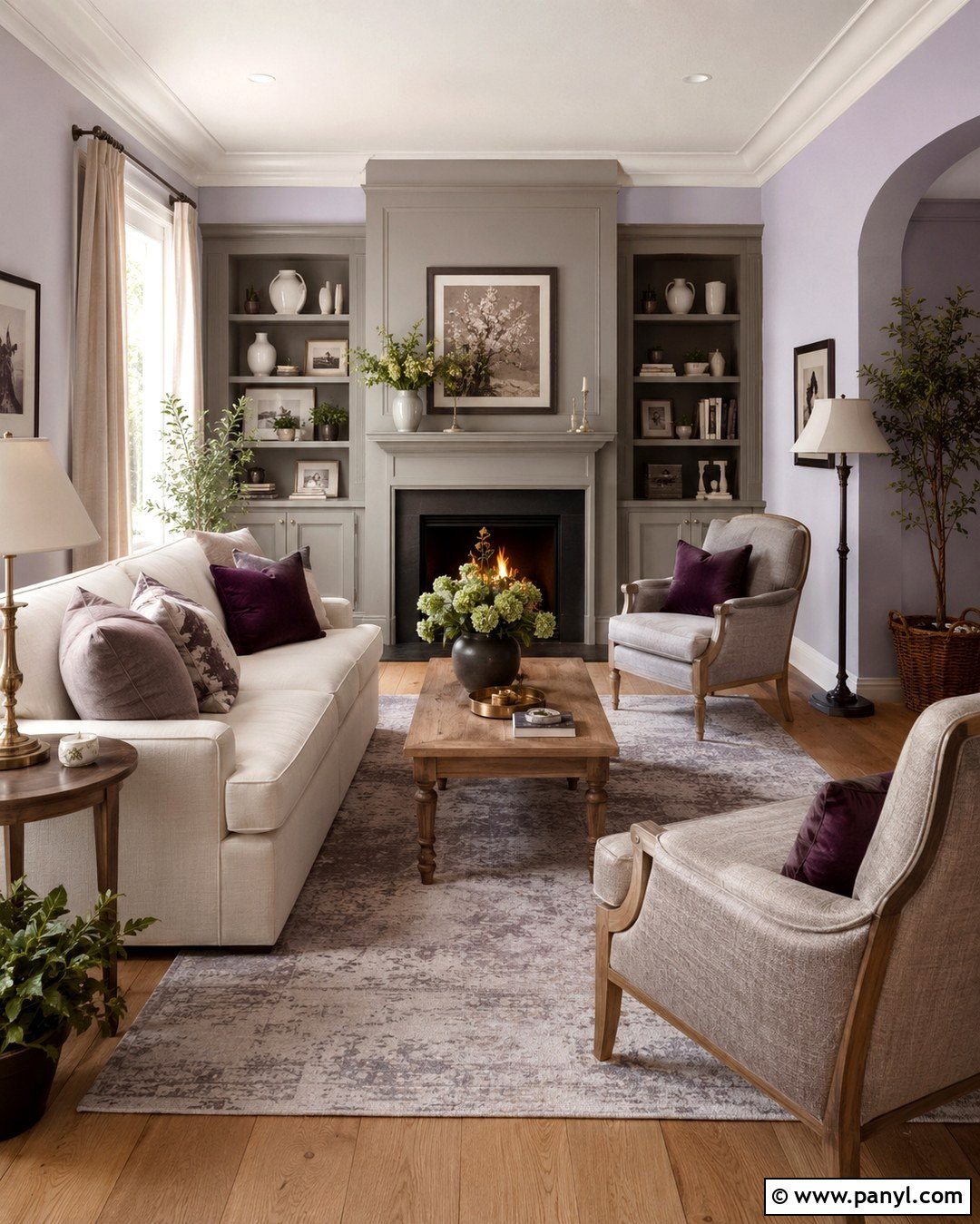
Lavender becomes surprisingly versatile when paired with a warm, slightly brown gray. Paint most walls pale lavender and use warm gray on paneled sections, built-in storage, or the wall around a fireplace. Avoid blue-gray, which may make the lavender appear cold. Furnish the room with a cream sofa, gray-beige chairs, and light oak tables. A soft rug with lavender, taupe, and ivory details will make the combination feel intentional. Add brushed nickel or antique brass lighting, depending on whether you prefer a cleaner or more traditional finish. Natural linen curtains help neutralize the pastel walls. Finish the room with plum pillows, charcoal picture frames, and a few green plants. These darker touches give the delicate color scheme structure and visual weight.
14. Forest Green And Cream Living Room Walls
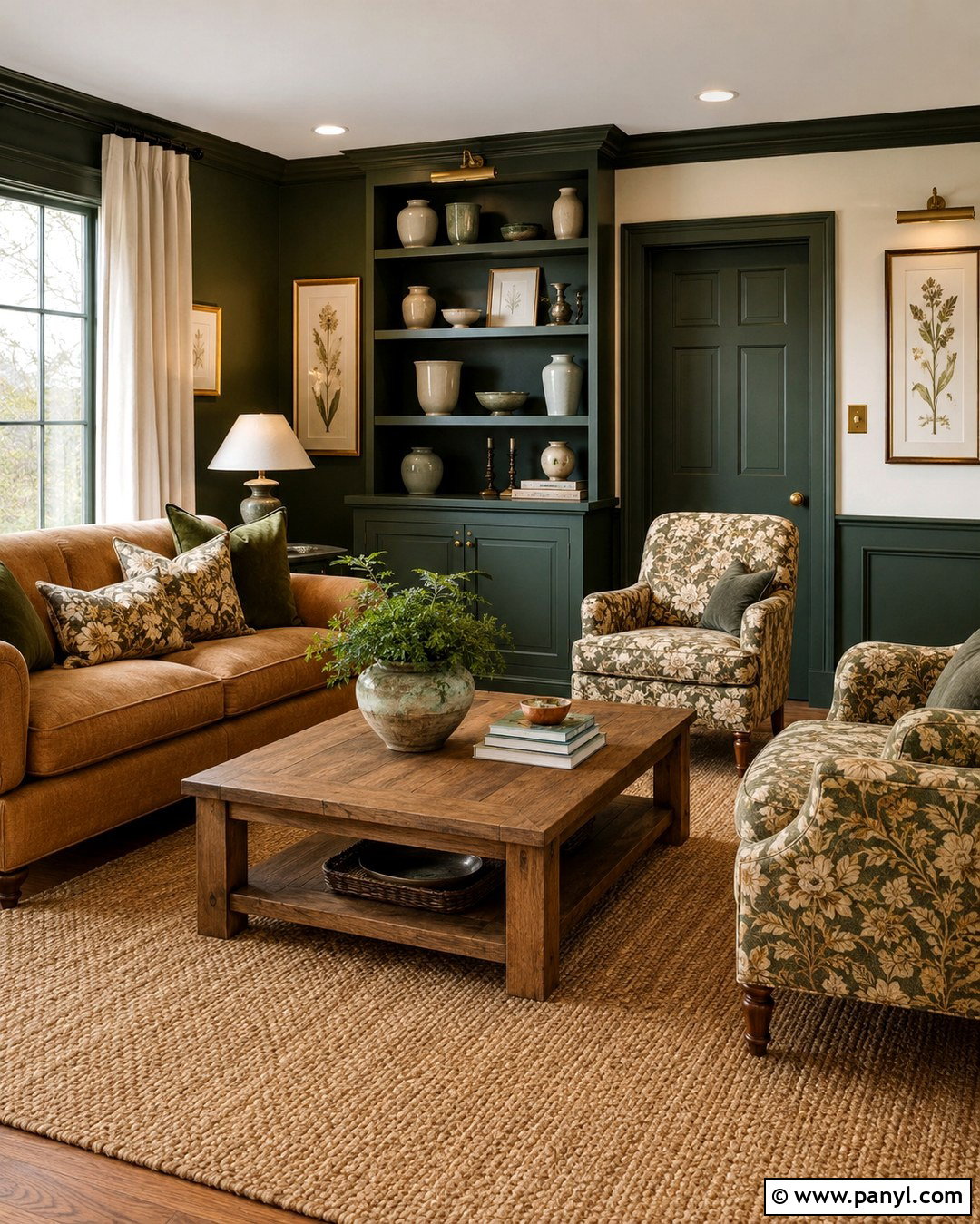
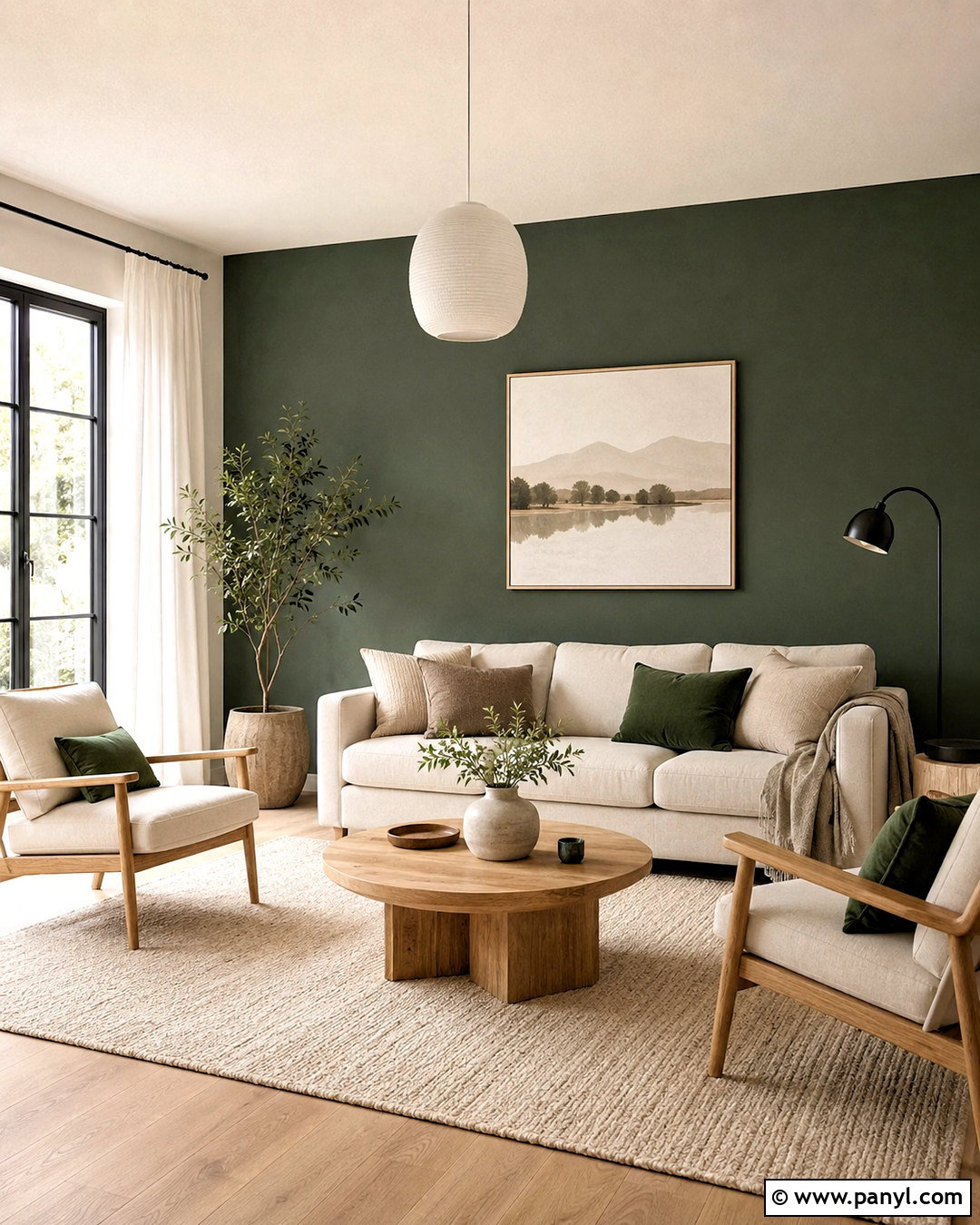
Forest green and cream can create a cozy living room that still feels bright and connected to the outdoors. Paint one continuous wall, including its door and built-in shelving, in deep forest green. Use warm cream on the remaining walls, trim, and ceiling. Arrange a camel or oatmeal sofa opposite the focal wall, then add two patterned chairs with green, tan, and cream fabric. A medium oak coffee table and natural fiber rug keep the room relaxed. Choose cream curtains with a discreet green stripe or border. Brass picture lights and ceramic table lamps will brighten the deeper paint. Display light-colored books, pottery, and framed botanical prints on the shelves, allowing plenty of green to show between accessories for a calmer presentation.
15. Mustard Yellow And Dusty Blue Living Room Walls
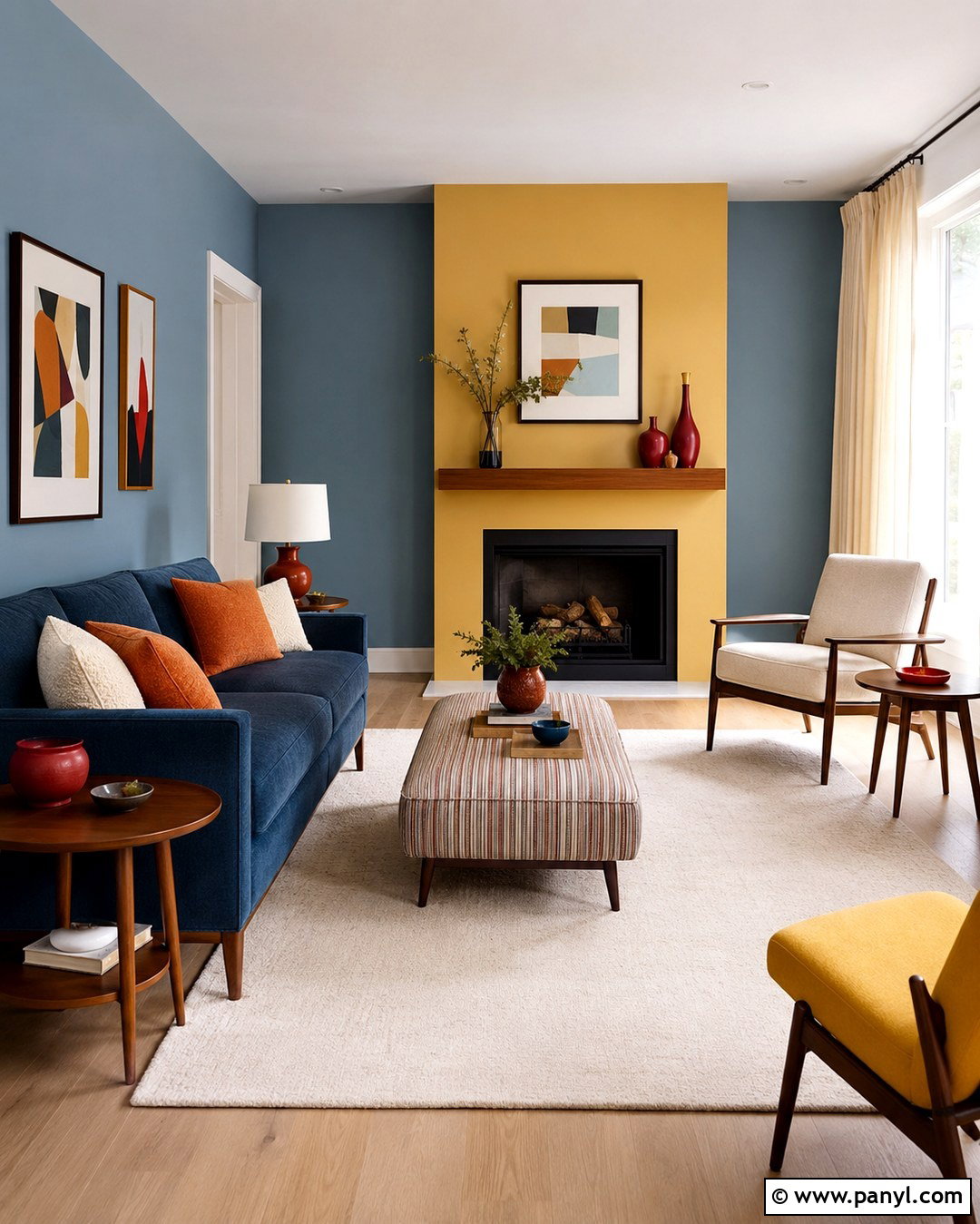
Mustard yellow and dusty blue bring personality to a living room while remaining softer than primary blue and yellow. Use dusty blue across the main walls, then highlight a fireplace, recessed nook, or wall behind a console in muted mustard. A dark blue sofa can anchor the scheme, while an ivory armchair keeps it from feeling overly saturated. Select a striped ottoman, walnut side tables, and a cream rug with small ochre details. Curtains in natural linen will balance the colorful walls. Introduce brick red through a pillow or ceramic lamp for an additional warm note. Keep wall art simple and graphic, using black or dark wood frames. This coordinated room feels playful, lived-in, and suitable for both traditional and midcentury furniture.
16. Coral And Pale Peach Living Room Walls
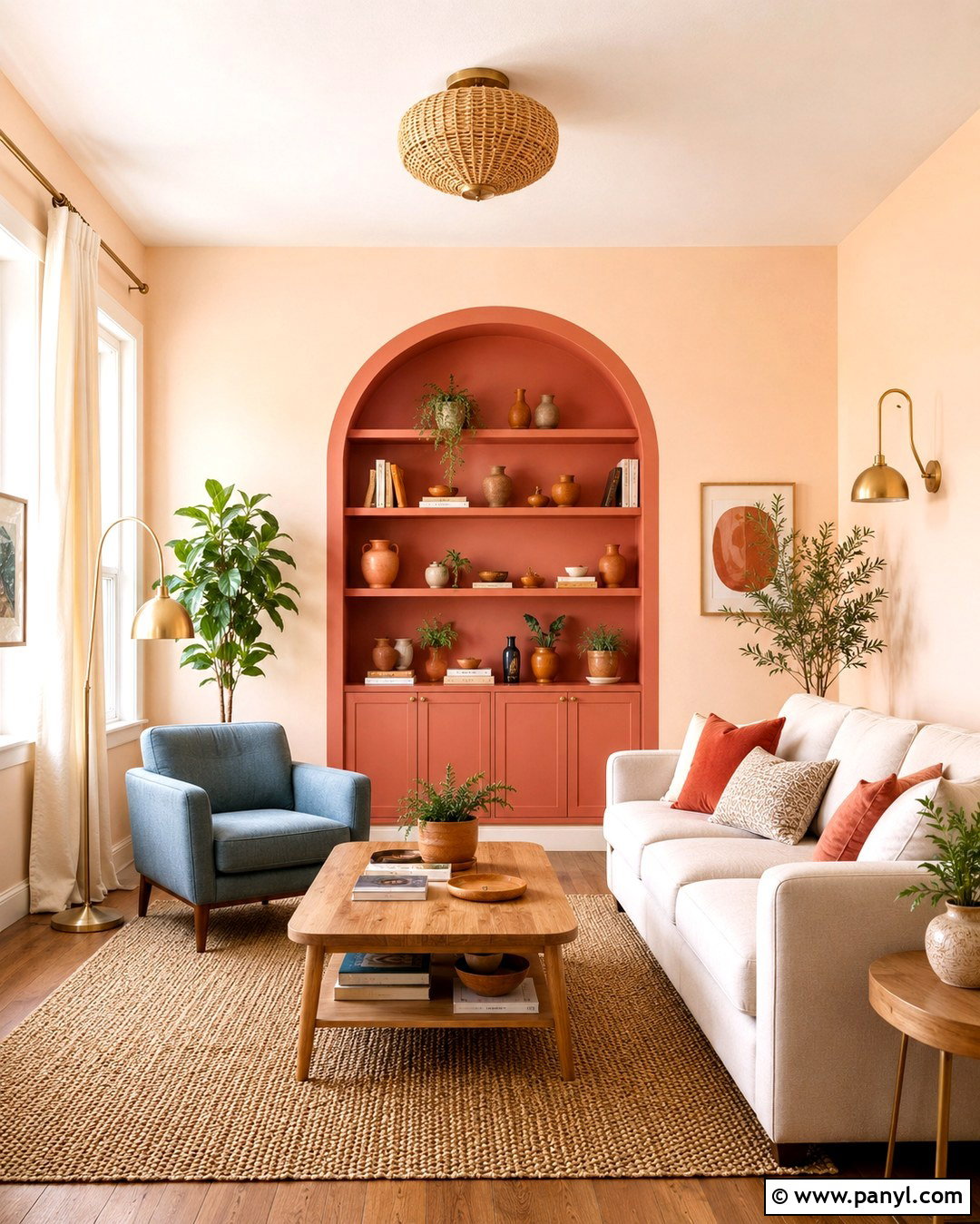
Coral and pale peach create a warm, uplifting living room when their intensity is carefully controlled. Use light peach across the room and reserve muted coral for a broad arch, fireplace wall, or painted frame around built-in shelving. The small tonal difference gives the architecture dimension without creating harsh contrast. Choose a cream sofa, light oak coffee table, and sandy woven rug to calm the warm walls. Add a pale blue chair or blue-patterned pillows as a cool counterpoint. Off-white curtains and simple brass lighting maintain a sunny atmosphere. Terracotta pottery and green plants can complete the palette, but avoid adding many other orange shades. The finished design feels fresh, cohesive, and particularly effective in rooms with strong daylight and casual furniture.
17. Mocha And Powder Blue Living Room Walls
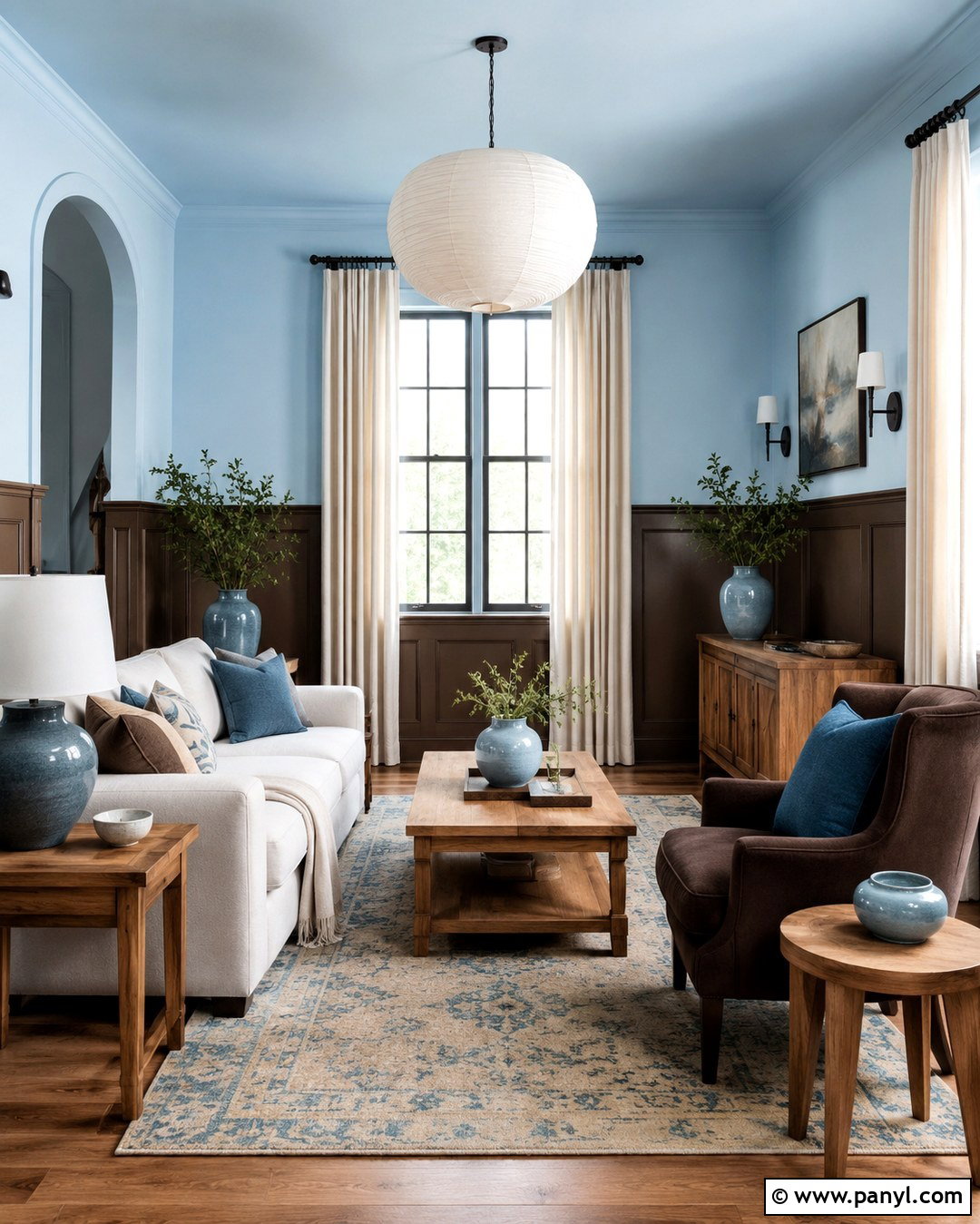
Mocha brown and powder blue make an unexpected combination that feels both grounded and airy. Paint the lower third of the walls mocha, including baseboards and simple panel molding. Use powder blue above the dividing line and continue it onto the ceiling for a soft, enveloping effect. A cream sofa, chocolate-colored accent chair, and warm oak tables will connect the darker base to the furniture. Choose a beige rug with fine blue patterning and add full-length ivory curtains. Dark bronze sconces and a sculptural paper pendant can provide layered lighting. Repeat powder blue through only a few cushions or pieces of pottery. This room works beautifully with transitional furniture because the wall treatment combines traditional proportions with a fresh, less predictable palette.
18. Soft Gray And Muted Mint Living Room Walls
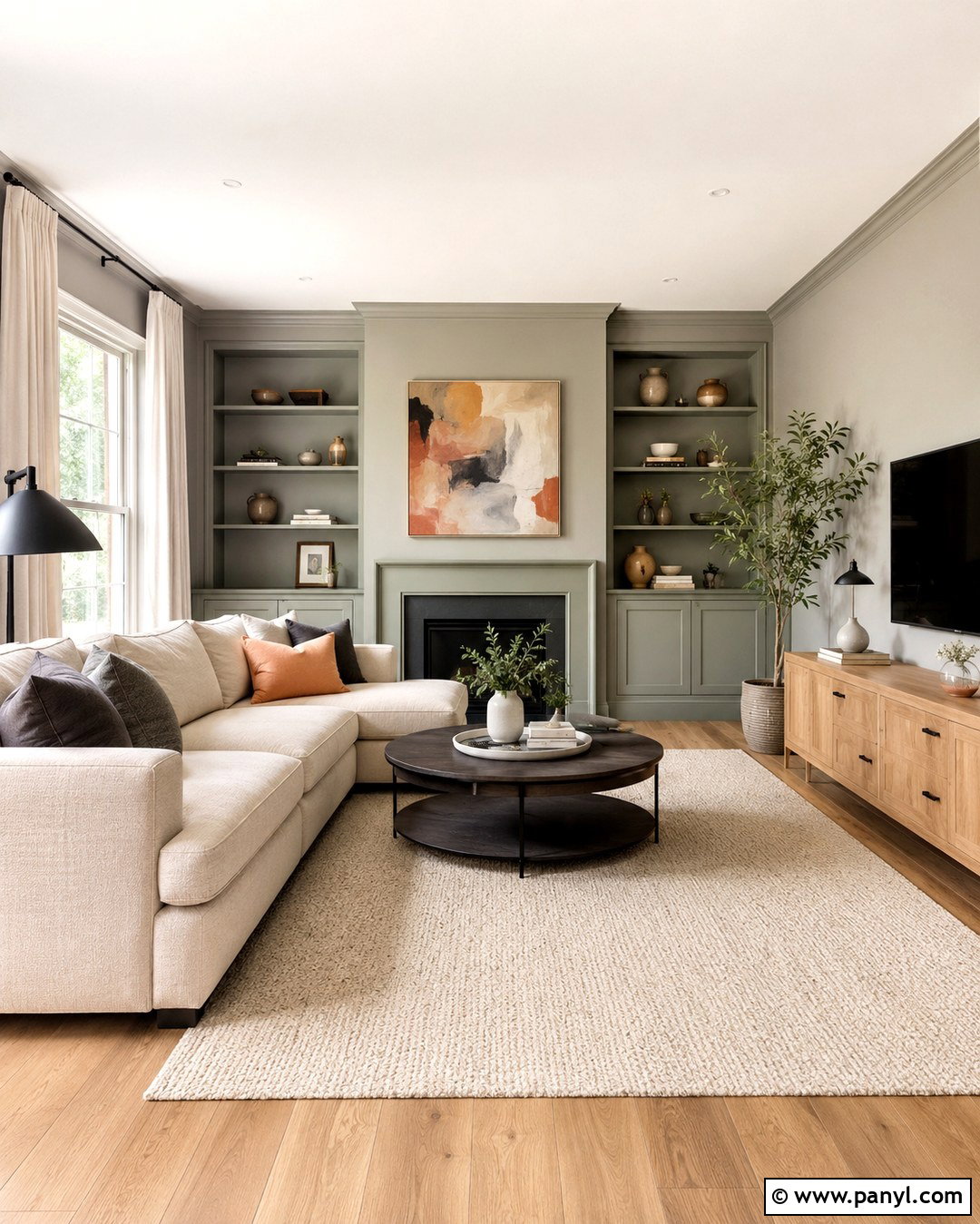
Soft gray and muted mint offer a clean wall combination for homeowners who want gentle color rather than a bold focal wall. Paint the larger wall surfaces a warm light gray and use mint on built-in cabinetry, lower paneling, or a compact reading corner. Look for mint with a gray undertone so it appears calm instead of sugary. Furnish the room with a light beige sectional, pale oak media console, and textured cream rug. Black metal lamps and curtain hardware will provide crisp definition. Add cushions in mint, charcoal, and dusty apricot to distribute color around the seating area. White linen curtains preserve natural light. A few abstract prints and simple ceramic objects complete a modern living room that feels organized, comfortable, and easy to update.
19. Cobalt Blue And Warm White Living Room Walls
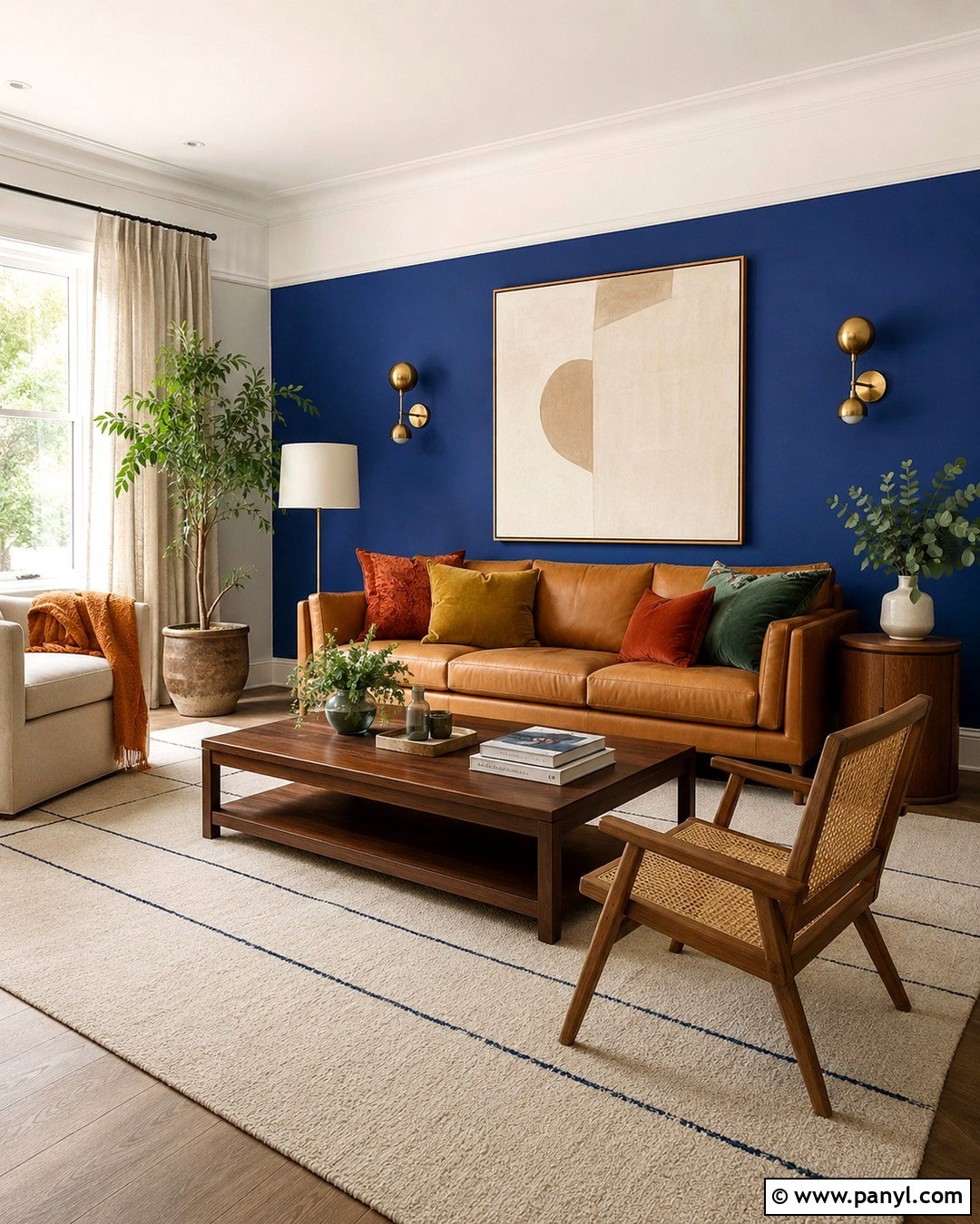
Cobalt blue can energize a living room when warm white surrounds it and natural materials soften its intensity. Paint a large wall behind the sofa cobalt, including any shallow niches or picture ledges. Keep the remaining walls and ceiling creamy white rather than brilliant white. Select a tan leather sofa or warm beige sectional so it stands clearly against the blue. Add a walnut coffee table, woven cane chair, and ivory rug with thin blue lines. Rust, ochre, and green pillows will make the palette feel layered rather than strictly blue and white. Hang one oversized artwork with broad neutral areas above the sofa. Warm brass sconces and linen curtains complete the design, producing a vibrant but practical room with a strong, organized focal point.
20. Plum And Camel Living Room Walls
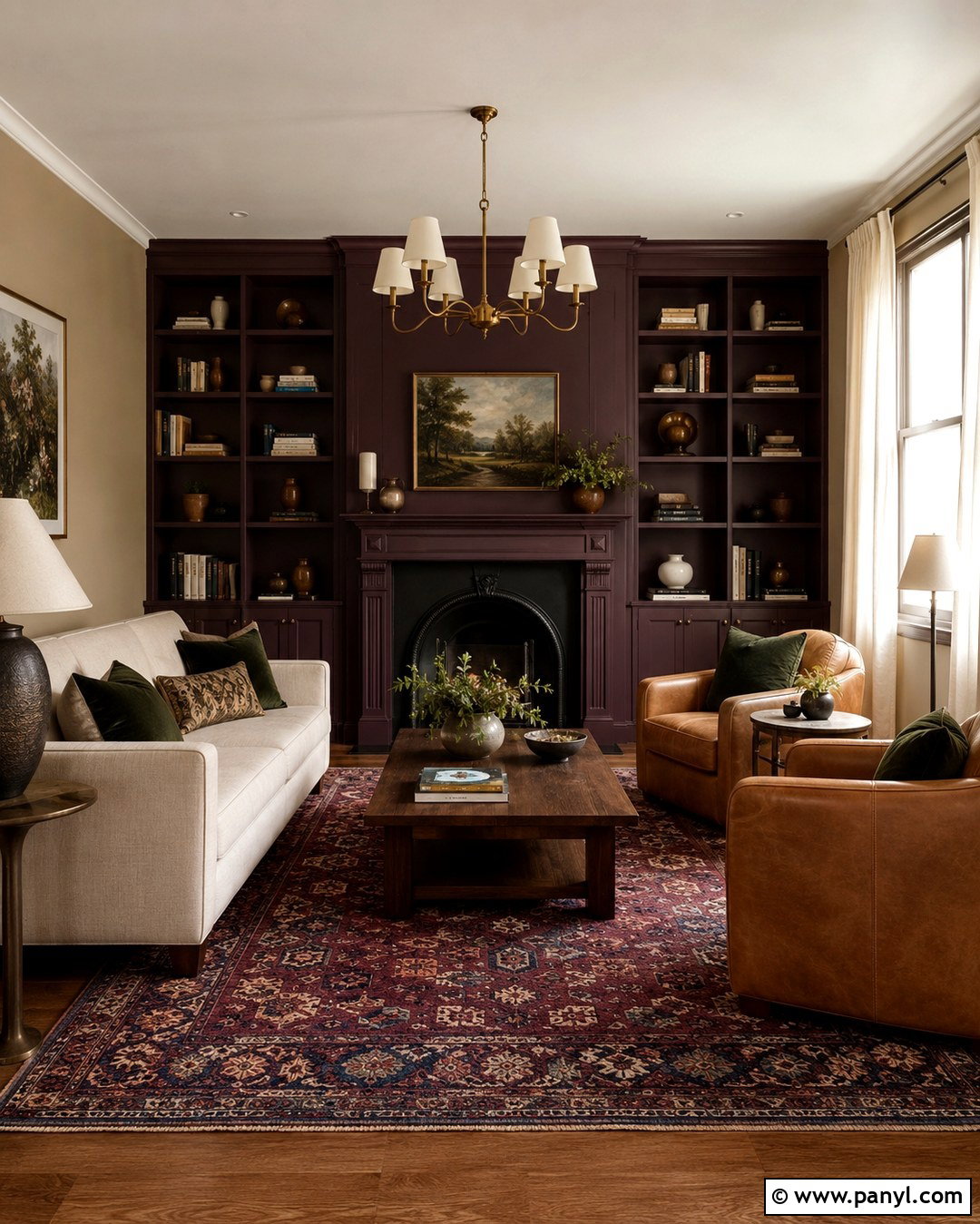
Plum and camel create a rich, inviting palette suited to a living room used for relaxing and entertaining. Apply deep muted plum to the fireplace wall and adjoining bookcases, then use light camel beige across the remaining walls. The golden undertone of camel balances the cooler red-purple paint. Choose an oatmeal sofa, camel leather armchairs, and a dark walnut coffee table for a comfortable conversation layout. A vintage-inspired rug containing plum, faded rose, blue, and cream will unify the colors. Use warm white curtains and antique brass lighting to keep the room luminous. Add moss green pillows or plants for contrast. Restrained artwork and lightly arranged shelving help the distinctive walls remain the focus without making the overall design feel excessively formal.
Conclusion:
Successful living room color schemes consider more than two attractive paint samples. The wall colors should connect naturally with the flooring, furniture, trim, lighting, and adjoining rooms. Start by identifying your fixed finishes, then choose shades with undertones that complement them. Use the darker color to define a fireplace, built-ins, paneling, media area, or architectural nook. Let the lighter shade preserve openness and visual balance. Before painting, test large samples on multiple walls and observe them throughout the day. Repeat each wall color sparingly through rugs, pillows, artwork, and accessories. With thoughtful placement and a complete-room approach, these 20 Living Room Color Combination Wall Ideas can create a space that feels personal, cohesive, and comfortable.

Related Ideas and Inspiration:
Leave a Reply