
Choosing a palette becomes easier when you see how wall color, furniture, flooring, and accents work together. These **20 living room color combination ideas** offer complete, practical looks for modern, traditional, coastal, minimalist, and eclectic homes. Current palettes lean toward warm whites, muted blues, earthy greens, softened pinks, and layered browns that feel expressive without sacrificing comfort. () Before committing, test paint samples in morning and evening light. Then build the room around one dominant shade, a supporting color, and a smaller accent. Natural wood, metals, rugs, artwork, and greenery can add depth without introducing too many competing tones. Whether you want something timeless or more colorful, the following sections explore **20 living room color combination ideas**.

1. Warm White And Camel Living Room
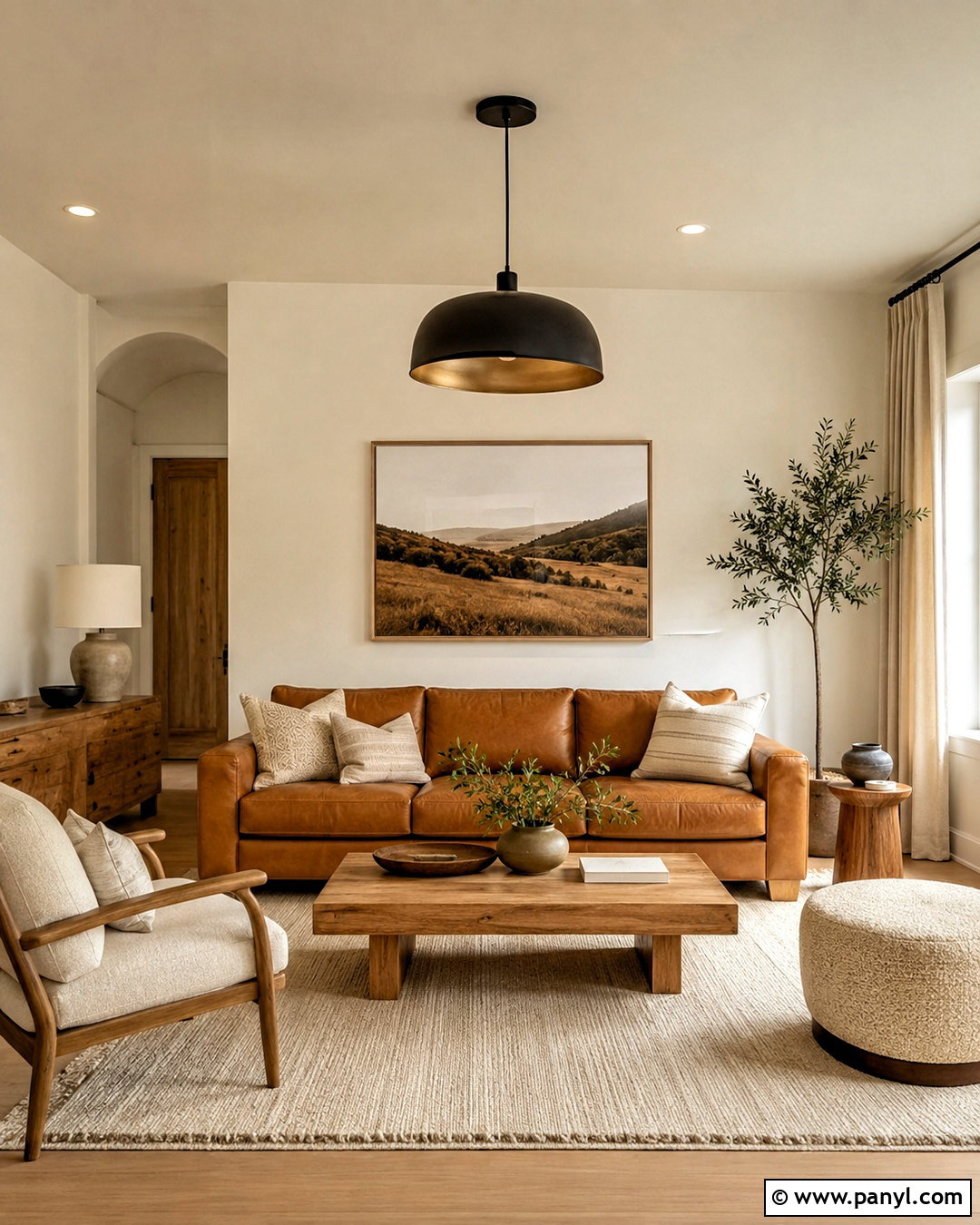
Warm white walls create a bright foundation without making the room feel cold or clinical. Choose a camel leather sofa as the main anchor, then soften its clean lines with oatmeal pillows and a textured cream throw. A medium-toned oak coffee table and matching shelving continue the warmth across the room. Use matte black sparingly on curtain rods, picture frames, and a slim floor lamp to create definition. An ivory wool rug keeps the floor light while connecting the seating area. Complete the palette with linen curtains, simple pottery, and one large landscape print containing tan, black, and muted green. This combination works especially well in open living rooms because it looks polished from nearby spaces while remaining relaxed and easy to maintain.
2. Sage Green And Cream Living Room
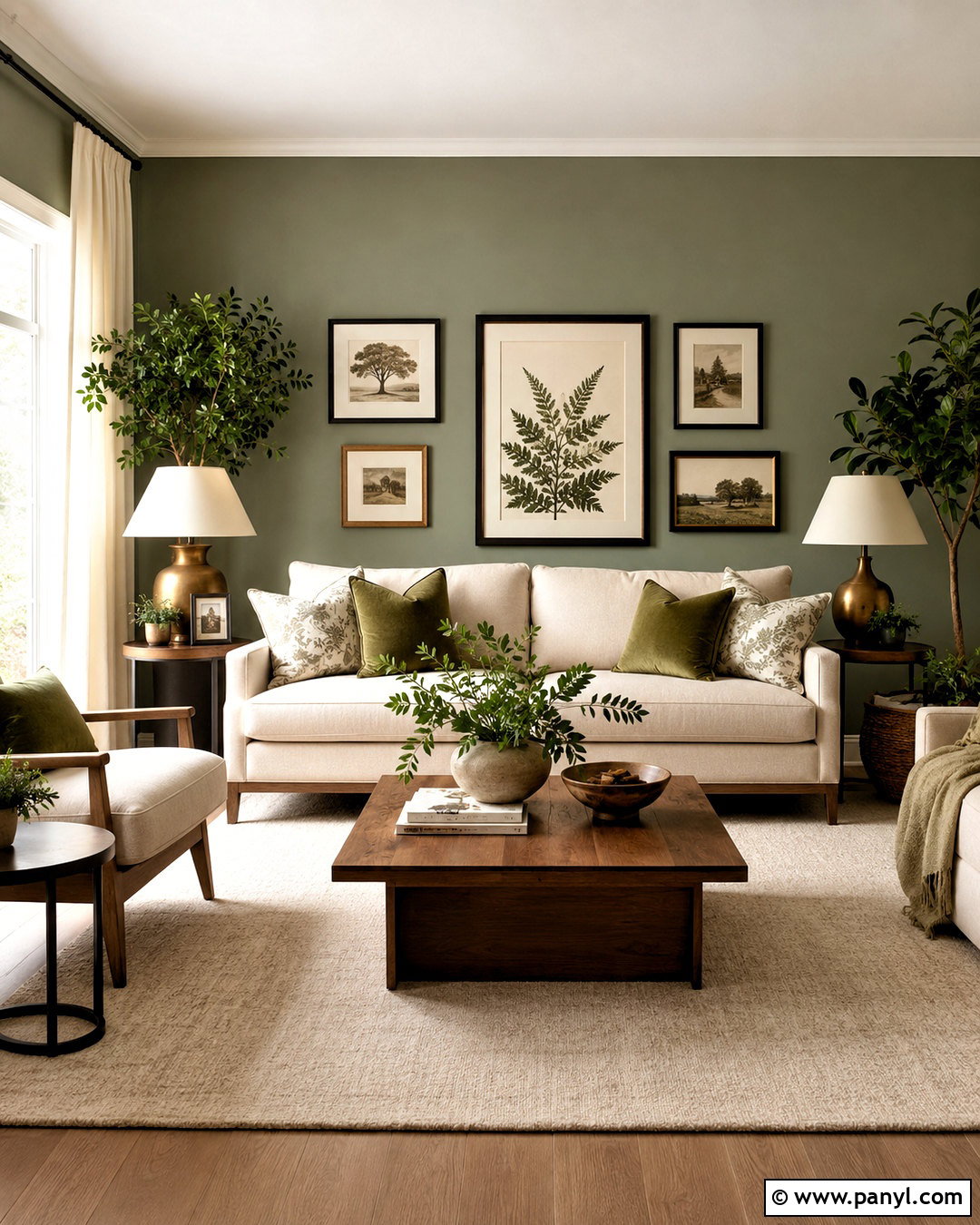
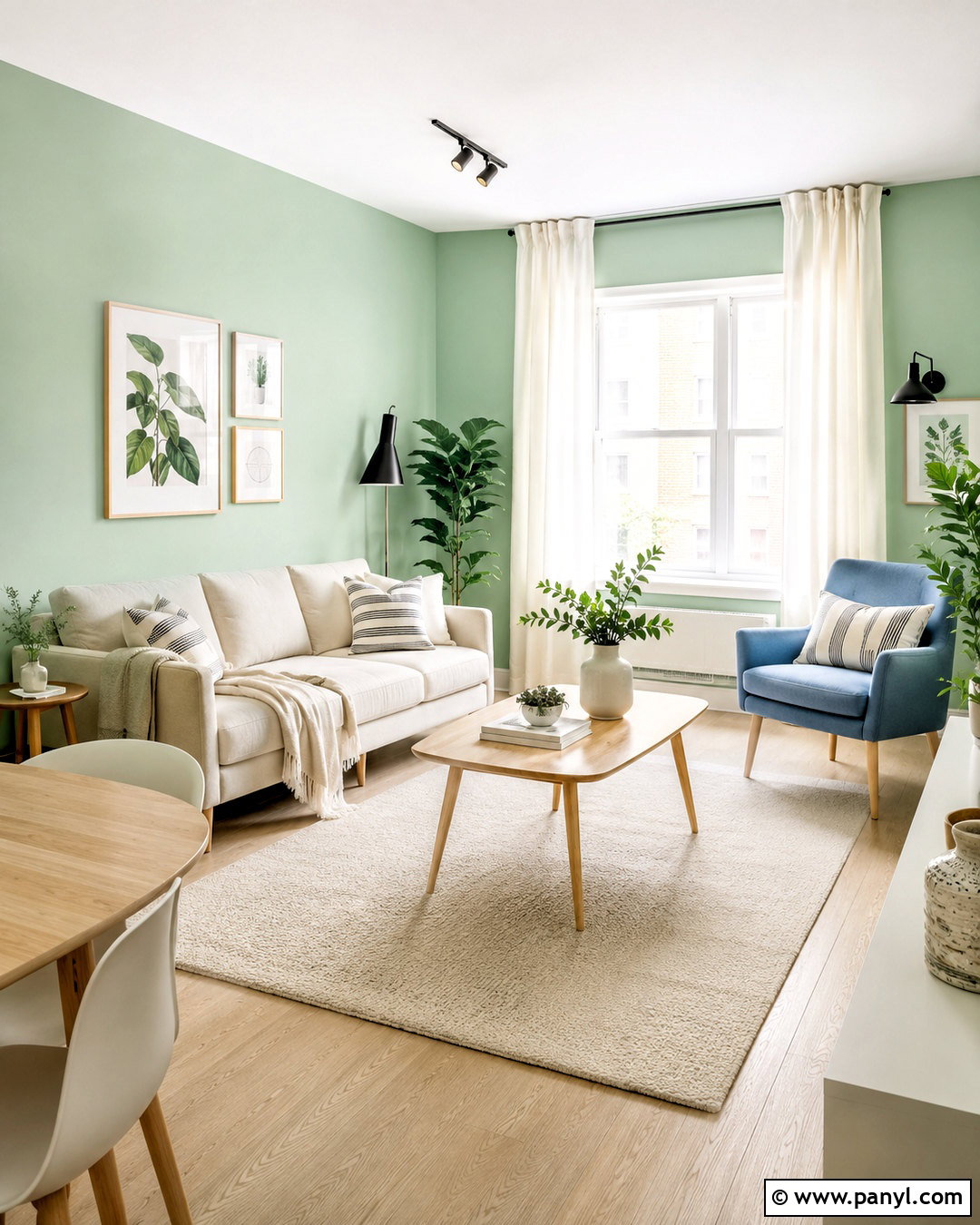
Imagine soft sage green walls surrounding a comfortable cream sofa and warm walnut furniture. The green should have gray undertones, which keep it calm and adaptable rather than overly bright. Position a walnut coffee table in the center and repeat the wood tone through side tables or a low media console. Add an ivory rug, natural linen curtains, and pillows in moss, beige, and subtle botanical patterns. Aged brass lamps bring warmth without overpowering the gentle palette. Black accents can appear in thin frames or small decorative objects for contrast. Several leafy plants will strengthen the connection to nature, but choose simple planters so the room stays composed. The finished space feels fresh, grounded, and suitable for both traditional and contemporary homes.
3. Navy Blue And Cognac Living Room
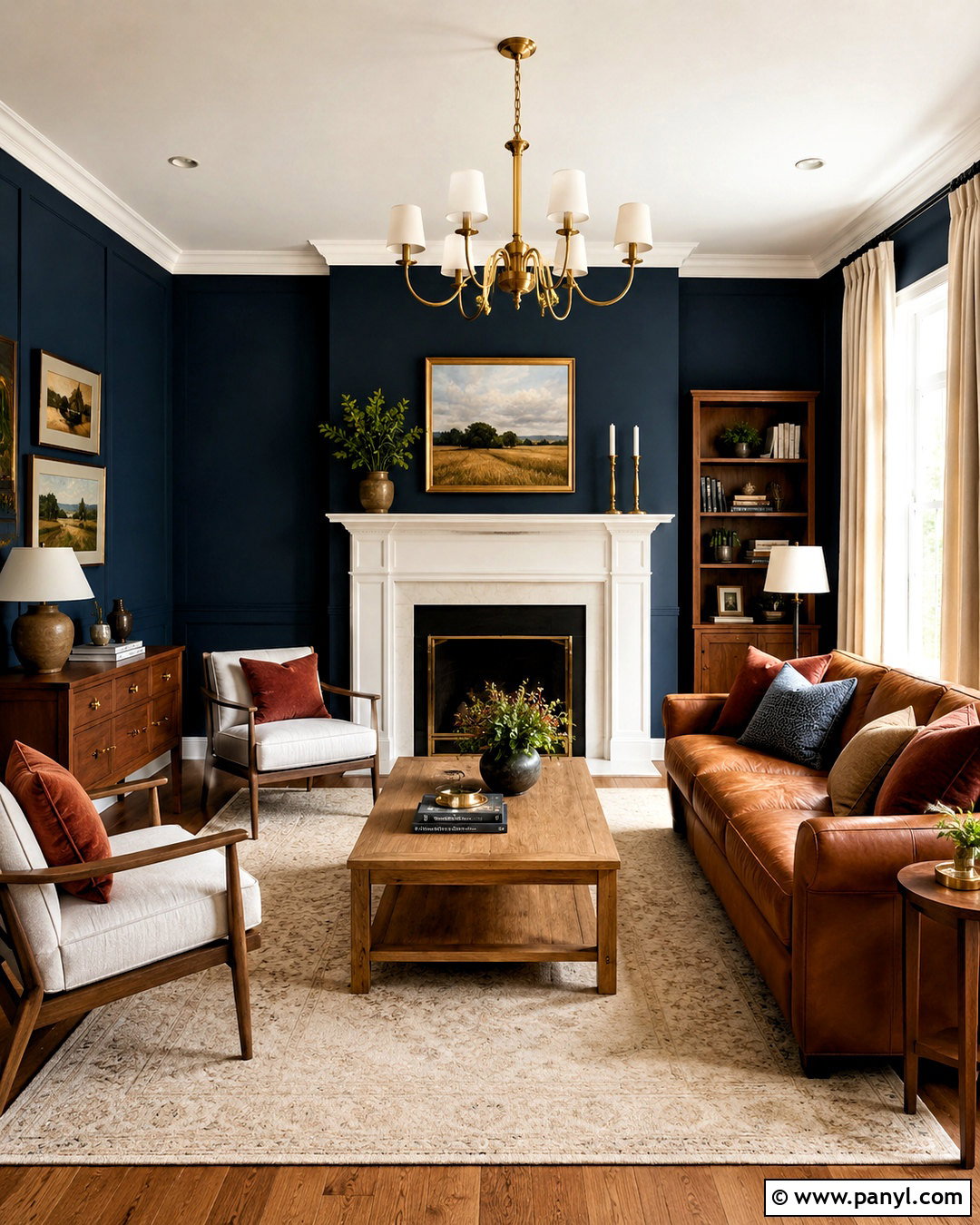
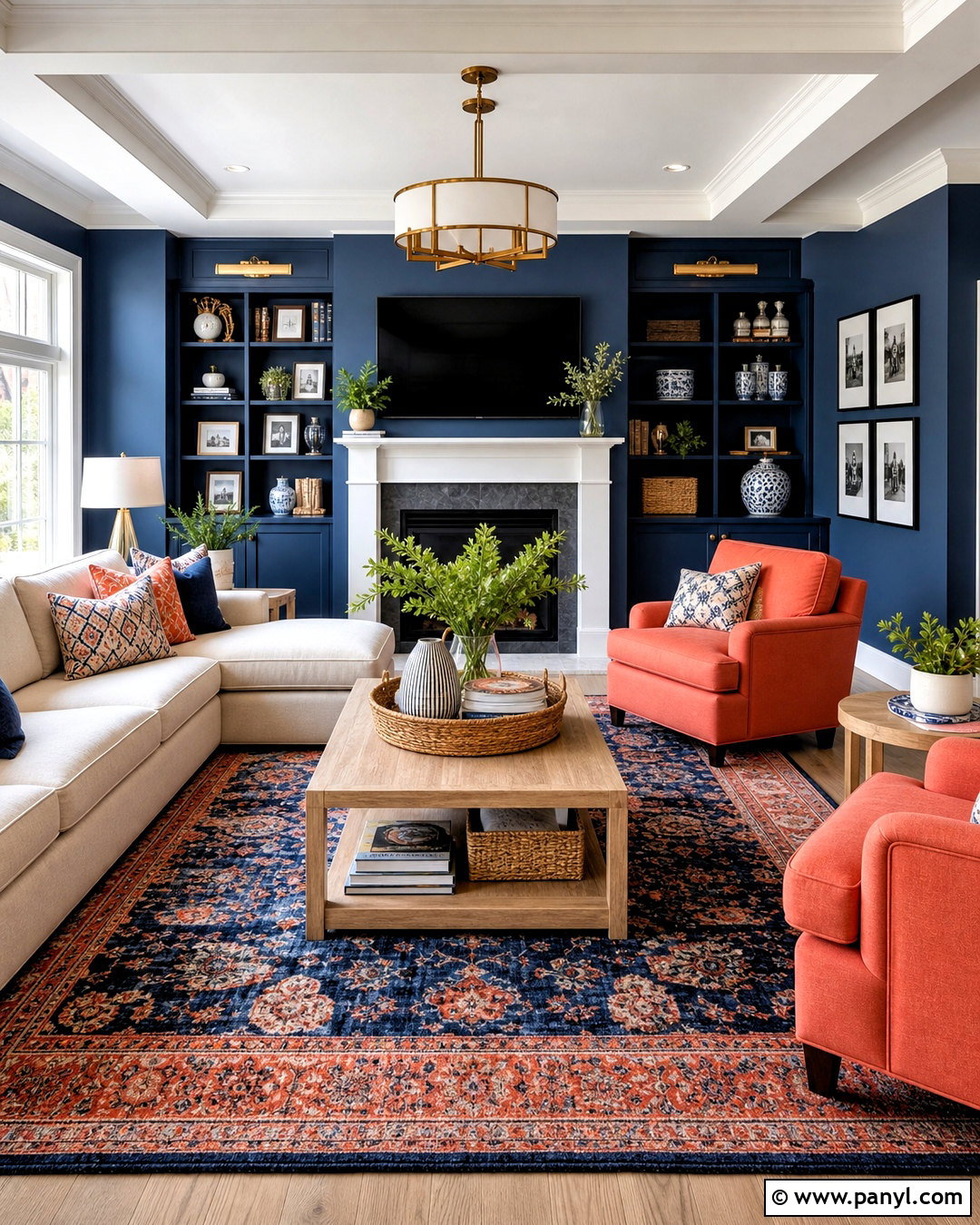
Deep navy walls can make a living room feel intimate, especially when balanced with rich cognac leather and crisp ivory accents. Use a streamlined cognac sofa or a pair of leather armchairs as the warm center of the scheme. An off-white rug and light linen curtains prevent the dark walls from closing in the space. Choose medium oak furniture to bridge the blue and brown tones naturally. Antique brass sconces or a brass floor lamp introduce a subtle glow, while white matting around artwork creates clean visual breaks. Add pillows in denim blue, rust, and cream, but keep patterns restrained. This palette looks particularly effective around a white or stone fireplace, where the lighter architectural feature becomes a strong focal point against the navy background.
4. Muted Teal And Blush Living Room
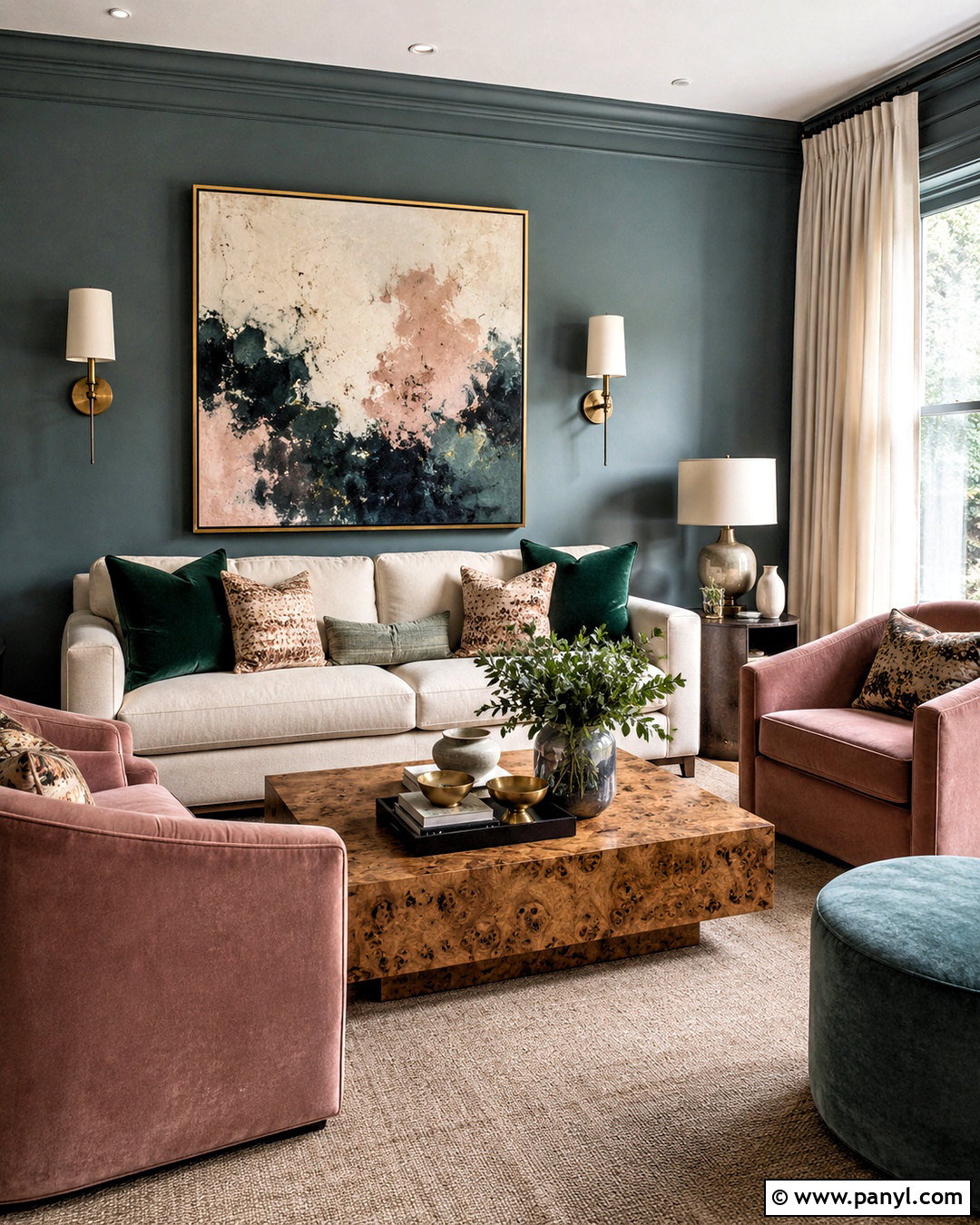
Muted teal walls provide more personality than a neutral while remaining soothing enough for an everyday living room. Pair them with a dusty blush sofa or two blush upholstered chairs rather than bright pink furniture. A warm beige rug will calm the contrast and connect the seating to natural oak or burl wood tables. Bring in aged brass through lamps, cabinet hardware, or a sculptural side table. Cream curtains, ivory pillows, and pale ceramic accessories keep the overall scheme airy. Darker emerald accents can appear in one patterned pillow or a small piece of artwork for extra dimension. Because teal blends blue and green, it works beautifully with both warm and cool colors. The result feels colorful, sophisticated, and carefully layered instead of overly themed.
5. Terracotta And Beige Living Room
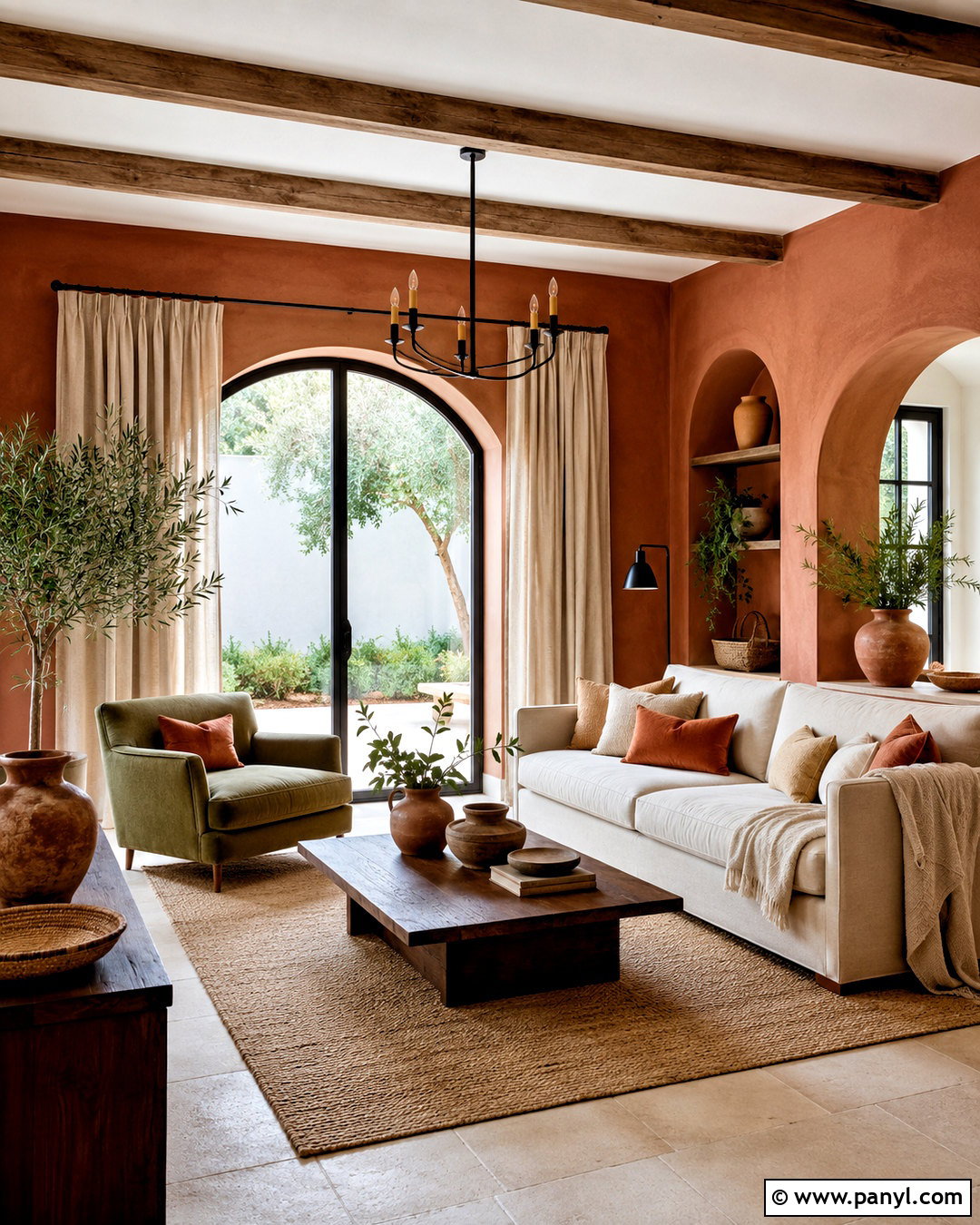
Earthy terracotta walls can give a living room the warmth of late afternoon sunlight. Balance their strength with a large beige linen sofa, oatmeal curtains, and a natural jute or wool rug. Olive green works as a quiet supporting color on an armchair, pillows, or leafy plants. Select walnut or dark oak tables to add depth, then introduce handmade ceramics and woven baskets for texture. Black metal lighting gives the organic palette a more modern edge. If painting every wall feels overwhelming, use terracotta on the fireplace wall and choose warm cream for the remaining surfaces. Repeat the wall color in small rug details or artwork to distribute it throughout the space. This complete palette suits Southwestern, Mediterranean, bohemian, and relaxed contemporary interiors.
6. Powder Blue And Coral Living Room
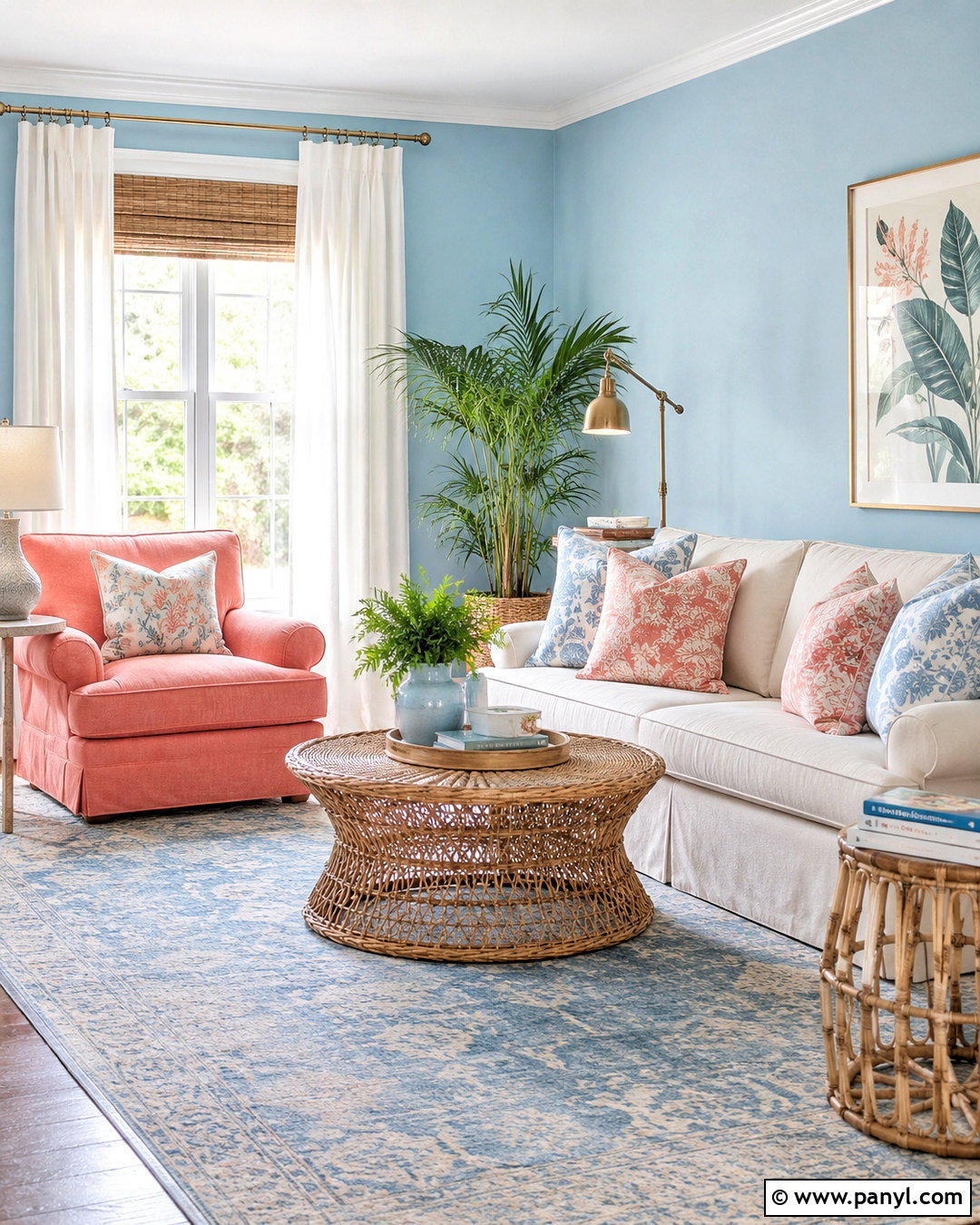
Powder blue walls make a living room feel open and peaceful, while coral accents prevent the palette from looking chilly. Start with a cream or pale beige sofa, then add coral through two pillows, a patterned ottoman, or a single upholstered chair. Warm green can appear in botanical artwork and a few indoor plants, creating a balanced connection between the blue and coral. Choose a natural rattan coffee table or light oak furniture to keep the room informal. White curtains help reflect daylight, while a faded blue-and-cream rug defines the seating area. Use brushed brass lighting for a refined finish. Keep the coral slightly muted rather than tropical orange. This combination delivers a cheerful, welcoming room that works in coastal, cottage, and transitional homes.
7. Greige And Rust Living Room
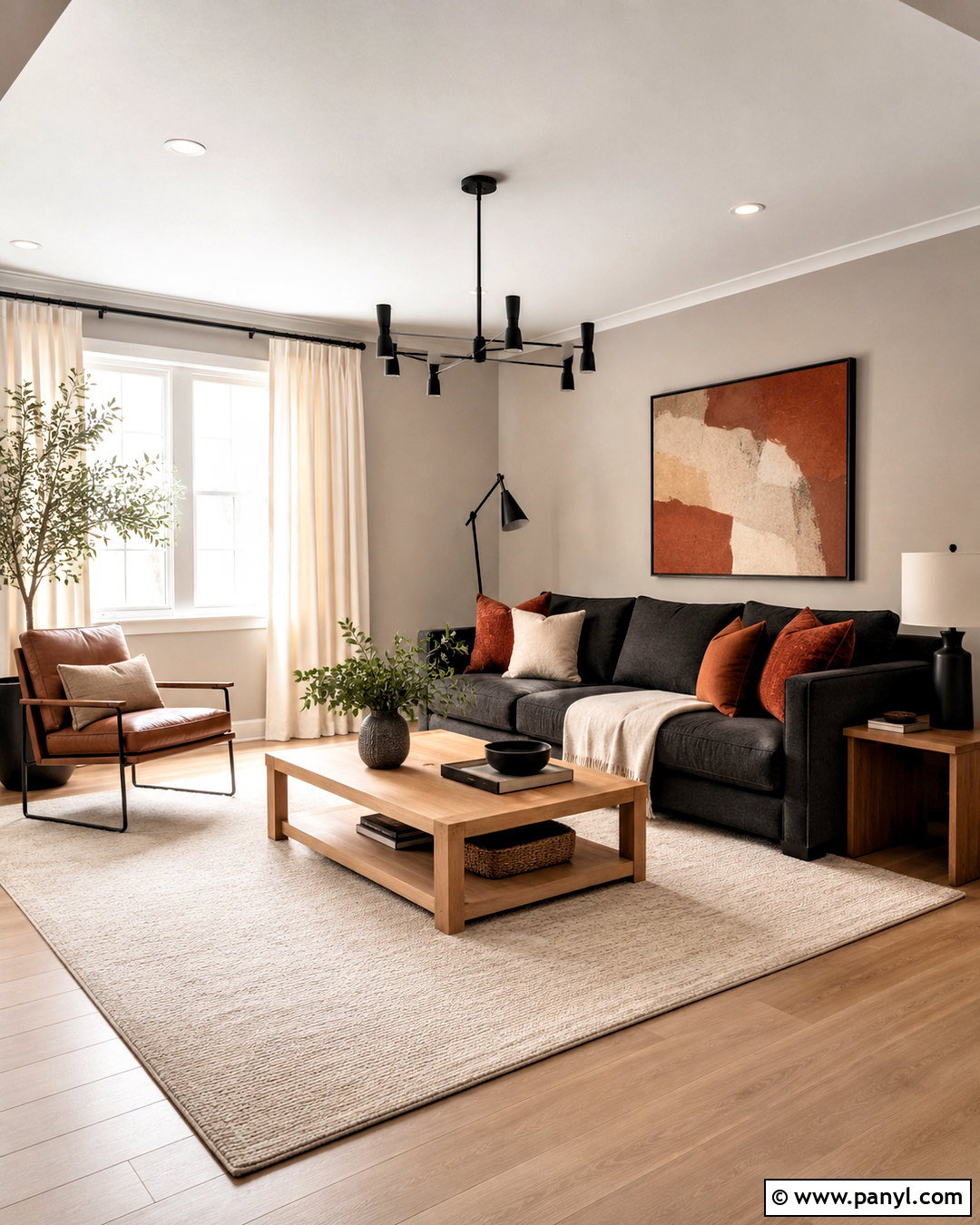
Soft greige walls offer a flexible base for charcoal furniture and warm rust accents. Choose a charcoal sofa with a simple silhouette, then add rust-colored pillows, a woven throw, and artwork containing burnt orange or clay tones. A pale oak coffee table will lighten the heavier upholstery, while an ivory textured rug makes the seating arrangement feel comfortable. Use warm white curtains rather than gray ones so the room receives a gentle lift. Matte black lighting and frames can sharpen the neutral architecture without introducing another major color. For more depth, include one medium-brown leather chair or walnut side table. The finished palette is practical for busy households because the darker sofa hides wear, while the rust accessories can be changed easily when you want a seasonal refresh.
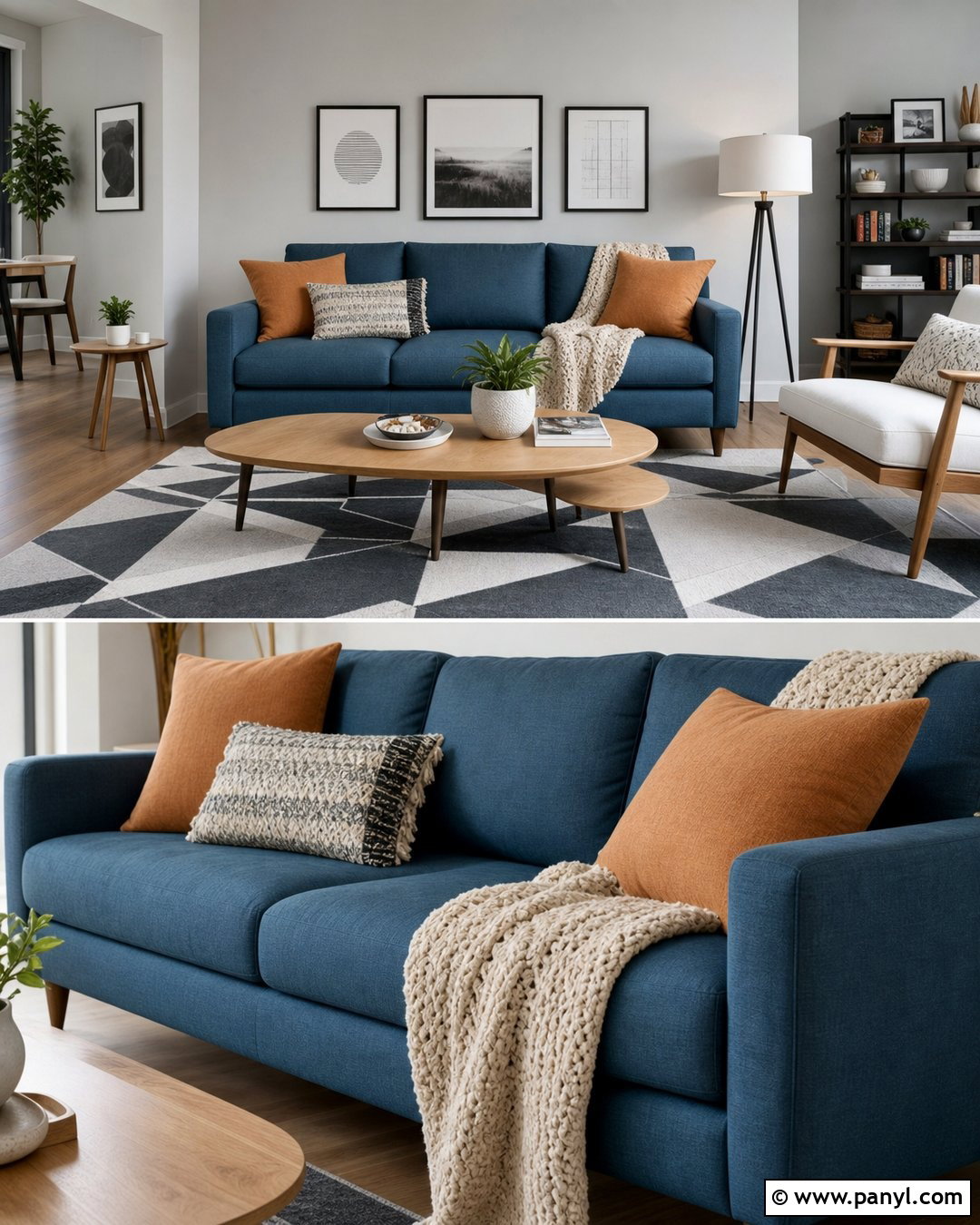
8. Chocolate Brown And Pale Blue Living Room
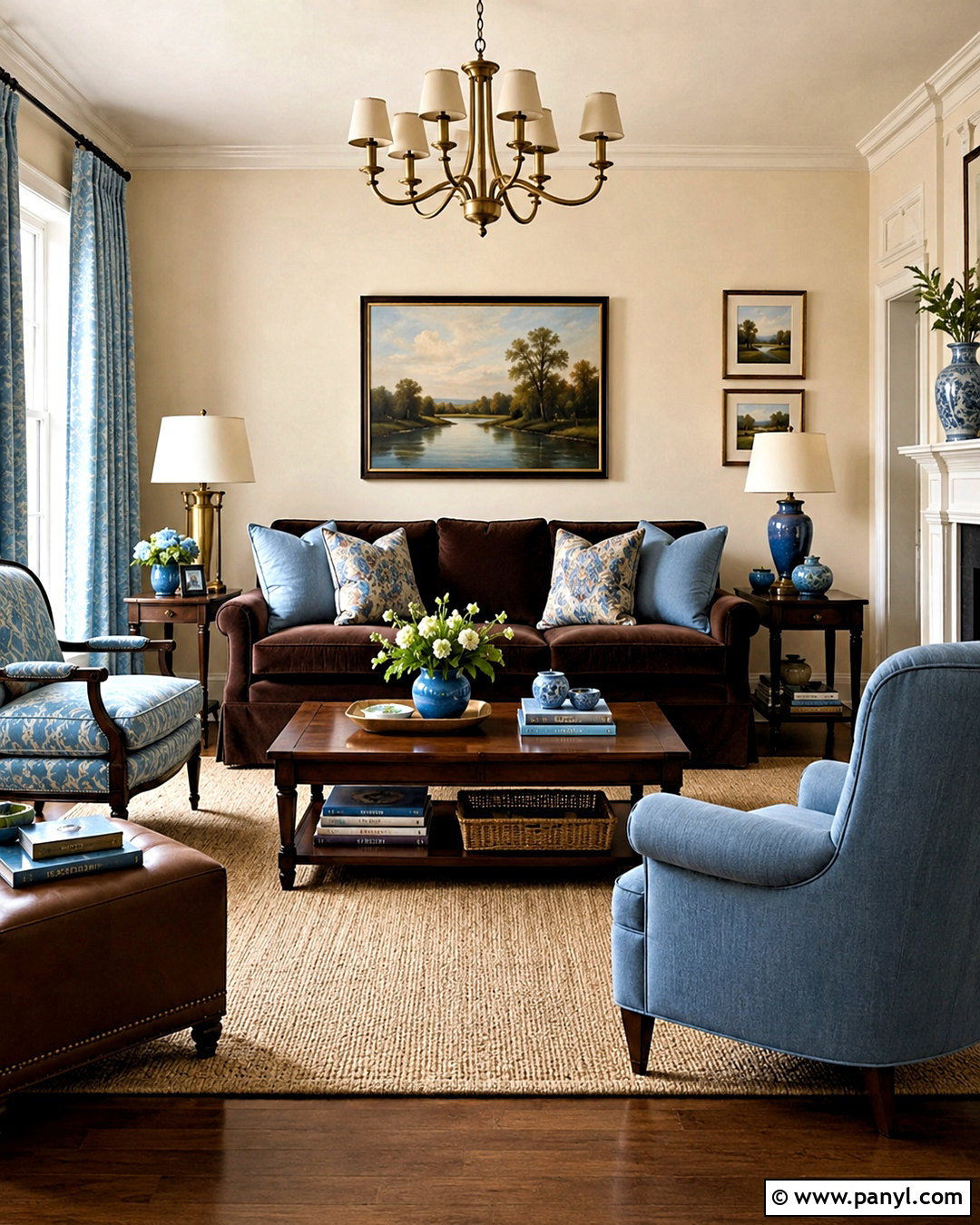
Rich chocolate brown feels inviting when it is surrounded by creamy neutrals and touches of pale blue. Use brown on a velvet sofa, paneled fireplace wall, or substantial pair of armchairs rather than filling every surface with the shade. Paint the remaining walls warm cream and add pale blue through curtains, pillows, and glazed ceramic lamps. A beige wool rug creates breathing room around the darker furniture. Choose walnut tables for continuity, then include small brushed brass accents to reflect light. Artwork featuring cloudy blues, brown landscapes, and parchment tones will connect the full palette. This design works best with layered textures such as velvet, linen, wool, and wood. Together, they prevent the brown from feeling flat and give the room a comfortable, established character.
9. Olive Green And Ochre Living Room
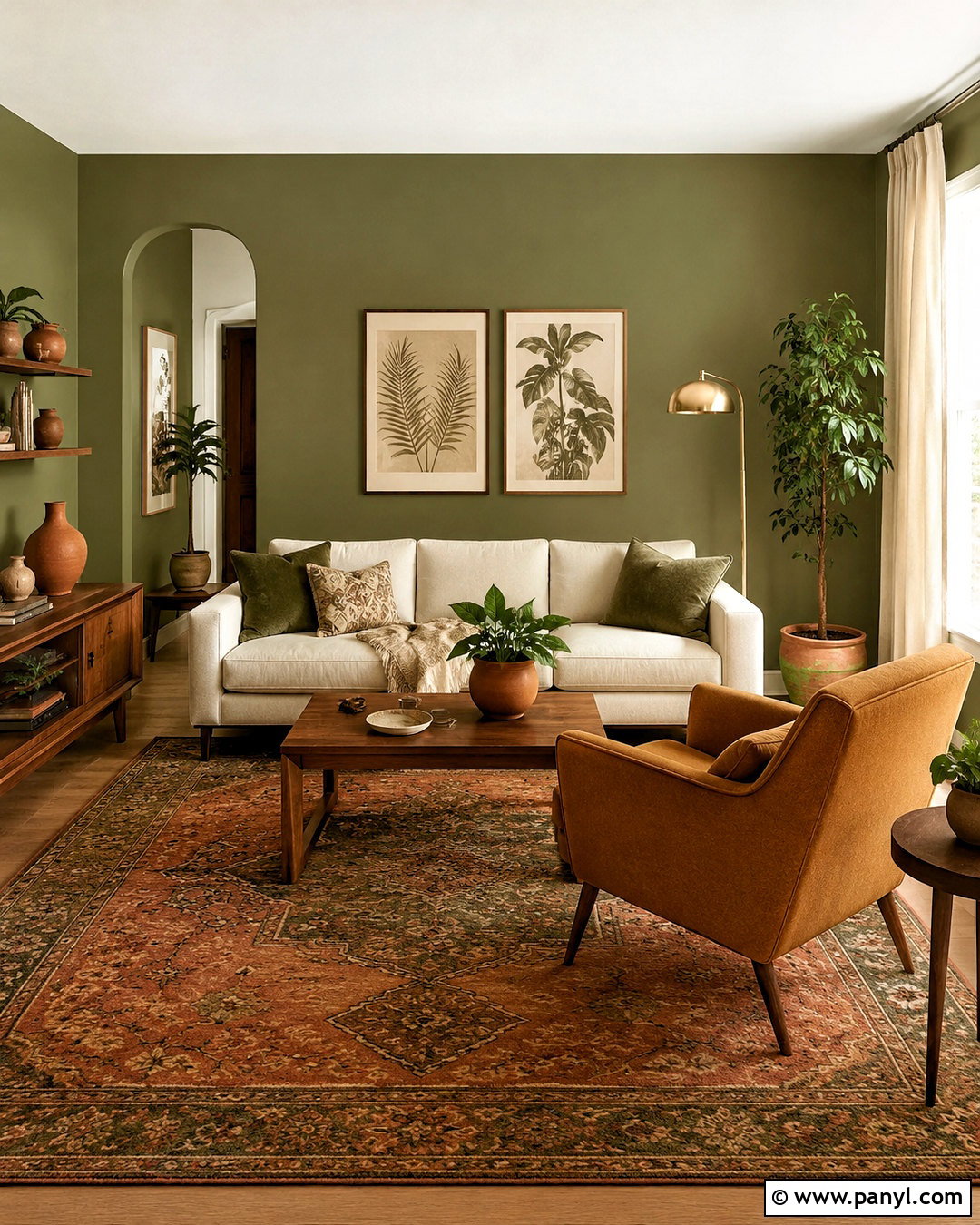
Olive green walls create a grounded background that pairs naturally with ochre upholstery and warm white trim. Place an ochre accent chair beside a cream sofa, or choose a neutral sectional and distribute ochre through pillows and a large patterned rug. Medium walnut furniture complements the earth tones without disappearing against the green. Add ivory curtains to brighten the windows and use aged brass lamps for a soft metallic detail. Small accents in reddish brown or terracotta can make the palette feel richer, but avoid using too many saturated colors at once. Botanical prints and simple pottery are natural decorative choices. This living room combination feels warm in winter and connected to the outdoors in summer, making it a versatile option for traditional, midcentury, and eclectic spaces.
10. Dusty Rose And Burgundy Living Room
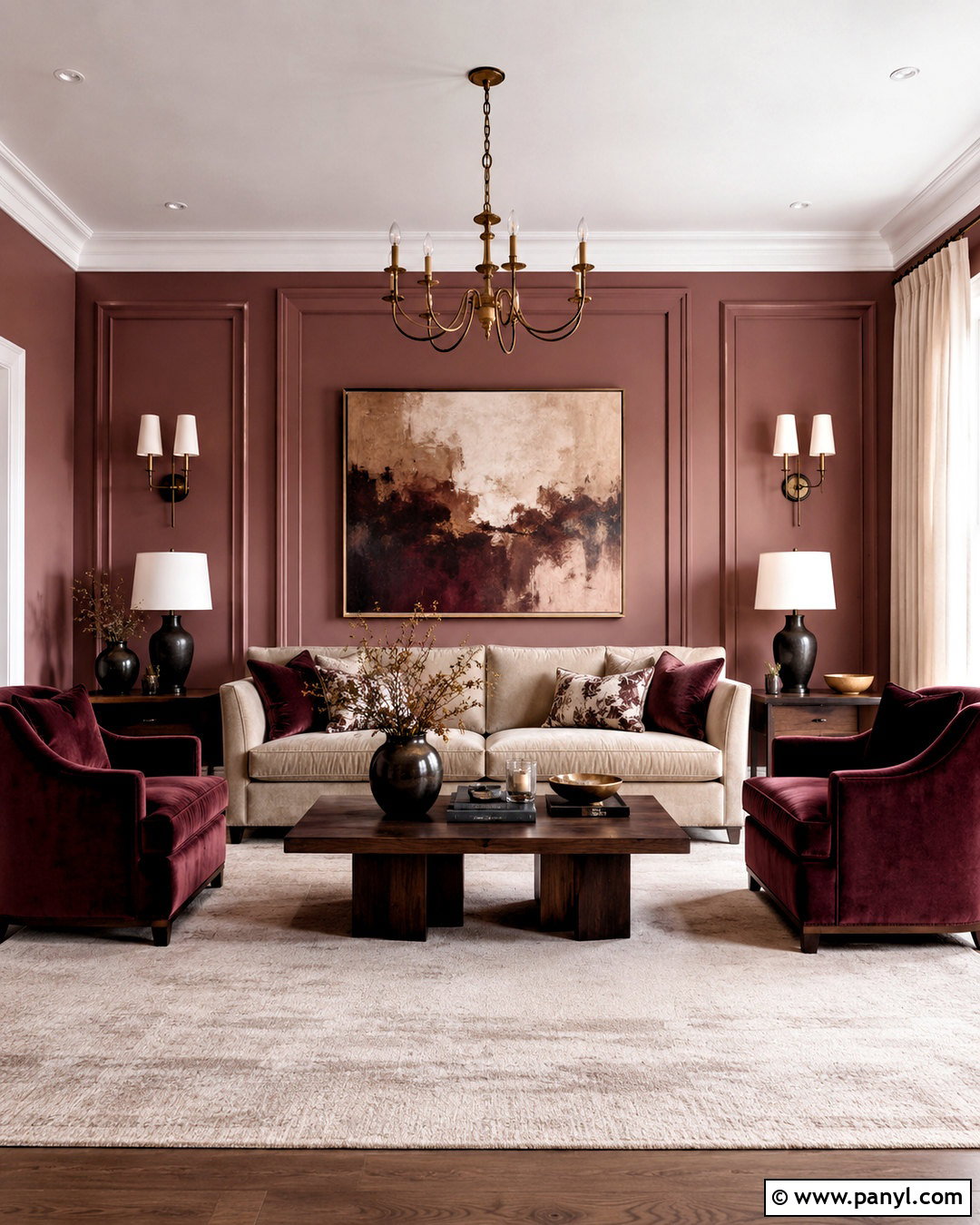
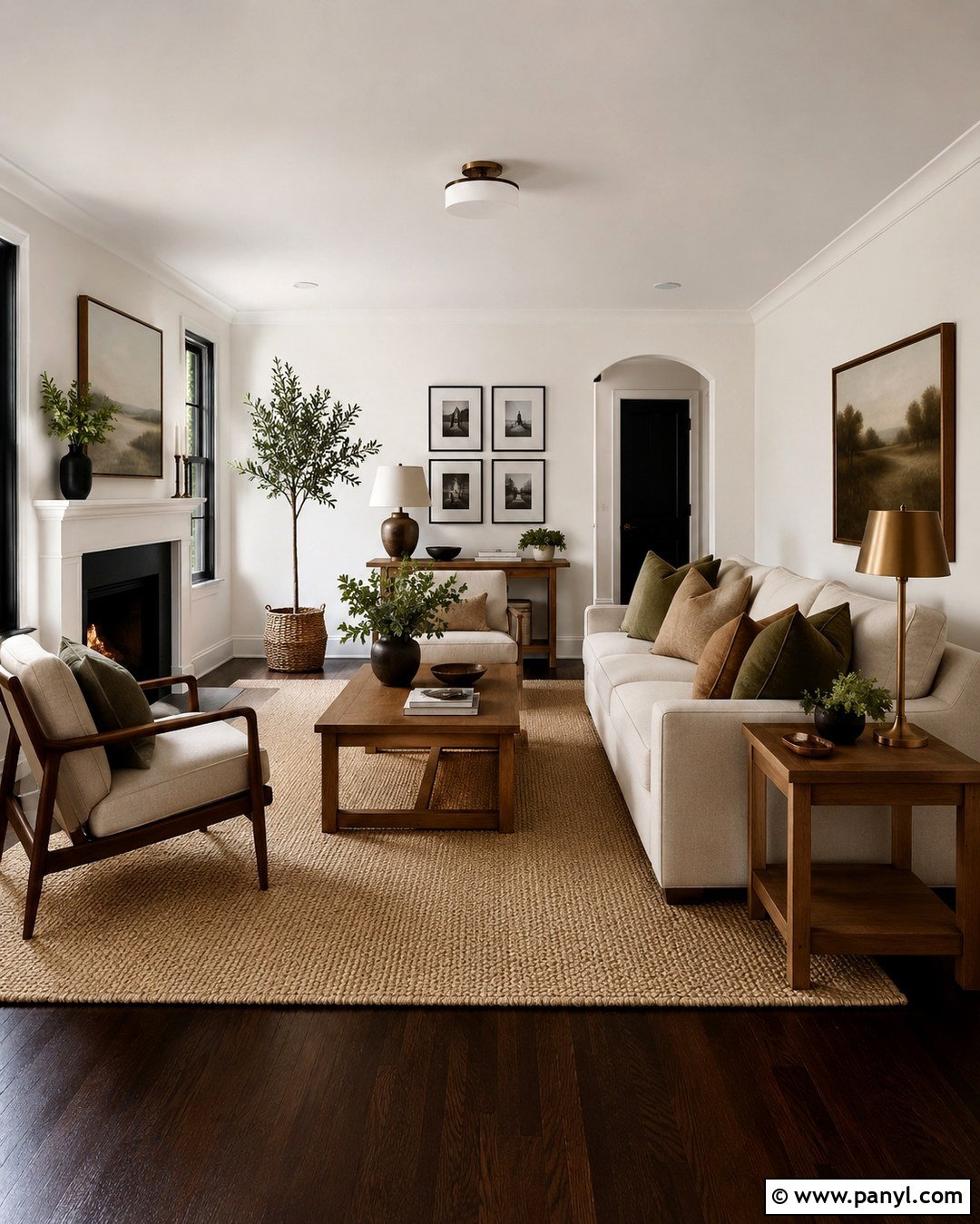
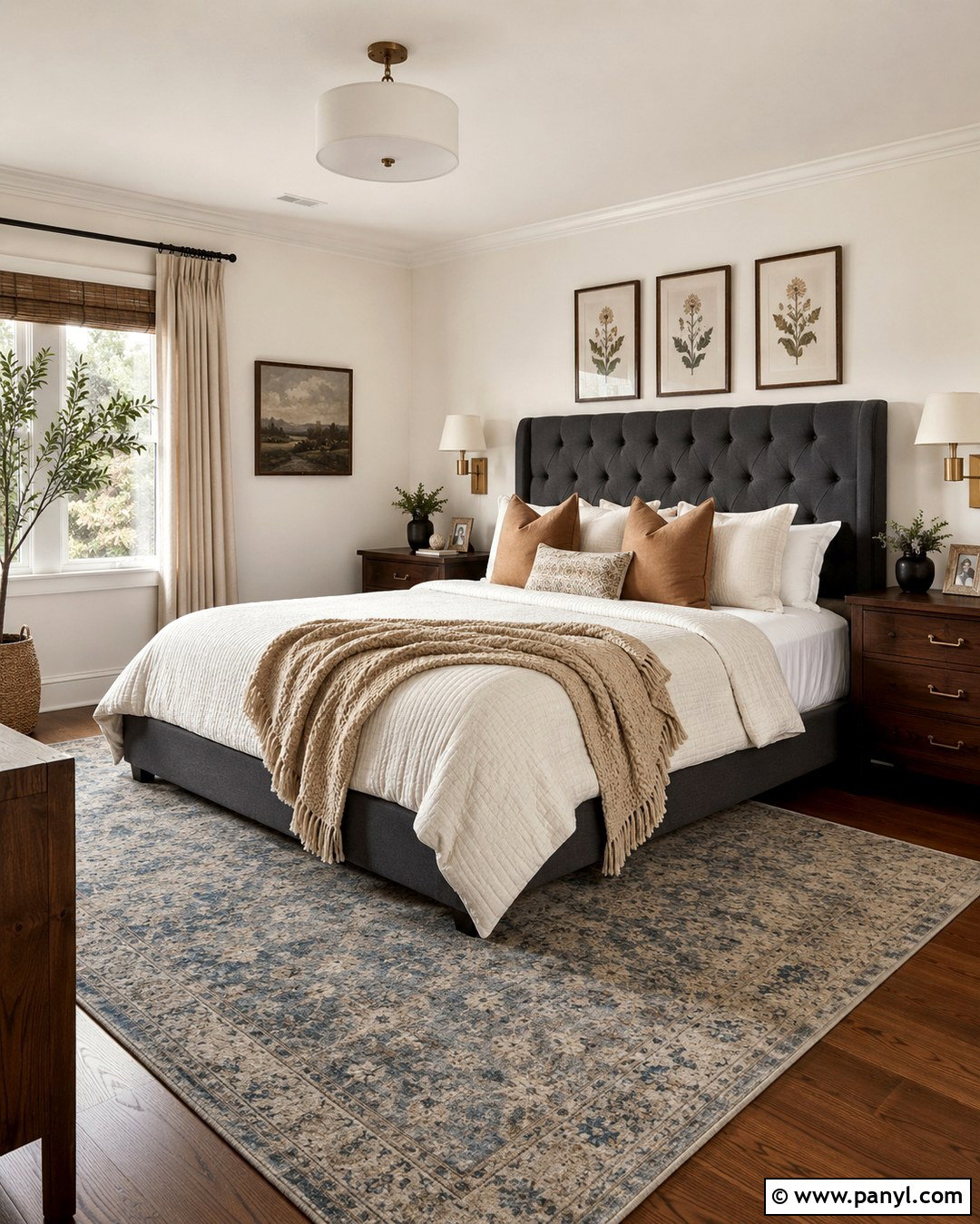
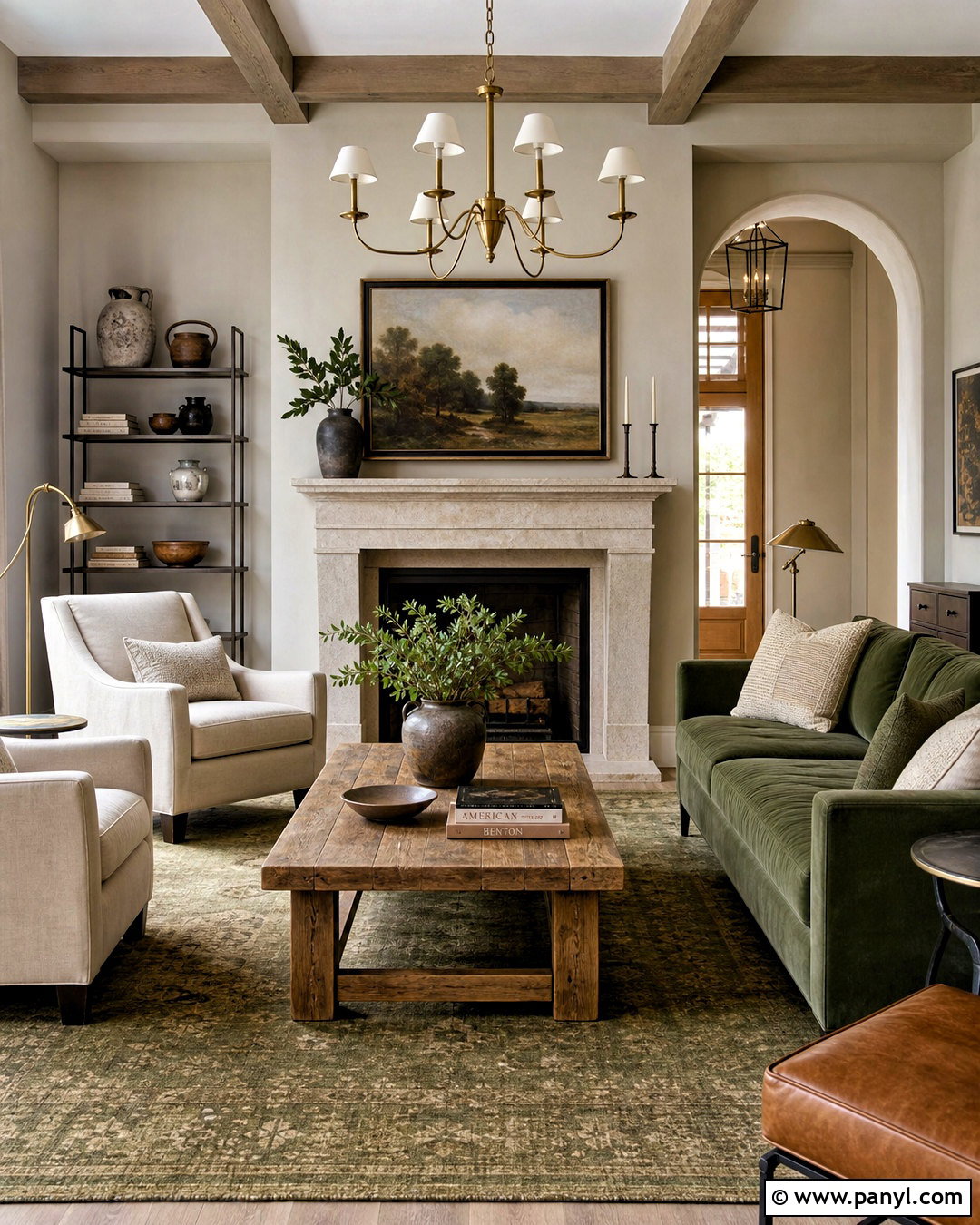
Dusty rose walls offer a gentle alternative to beige, especially when paired with deeper burgundy and balanced by taupe. Choose a taupe sofa as the practical anchor, then introduce burgundy through velvet chairs, curtains, or a large abstract print. A cream rug and light ceiling keep the darker red from becoming too heavy. Walnut furniture gives the room warmth, while aged brass lighting adds a subtle traditional note. Include pillows in dusty pink, parchment, and small-scale burgundy patterns to connect the major elements. For a calmer result, limit burgundy to approximately one-fifth of the visible palette. The completed design feels cozy and grown-up rather than overly feminine. It works particularly well in living rooms with vintage furniture, decorative molding, or a classic fireplace.
11. Forest Green And Tan Living Room
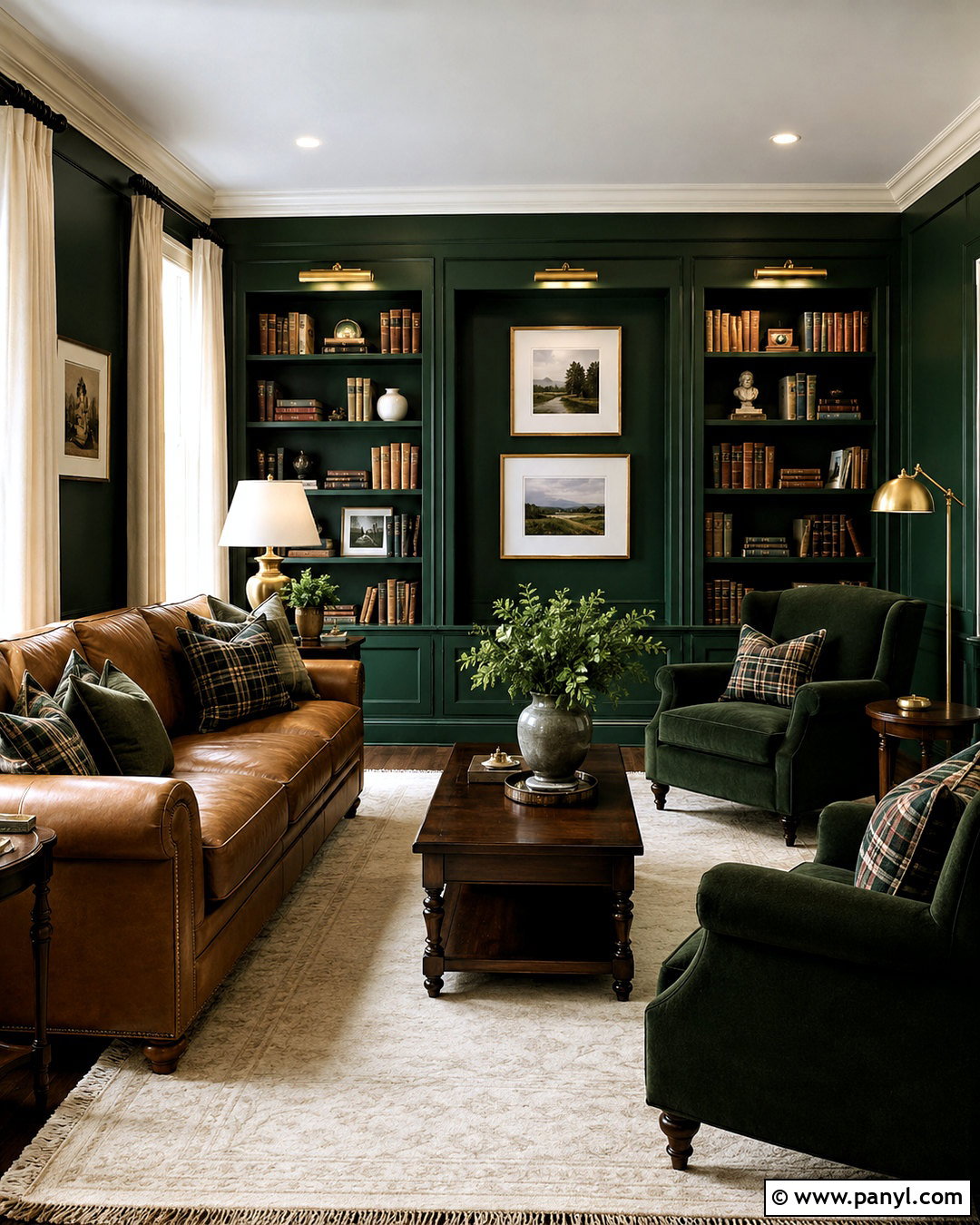
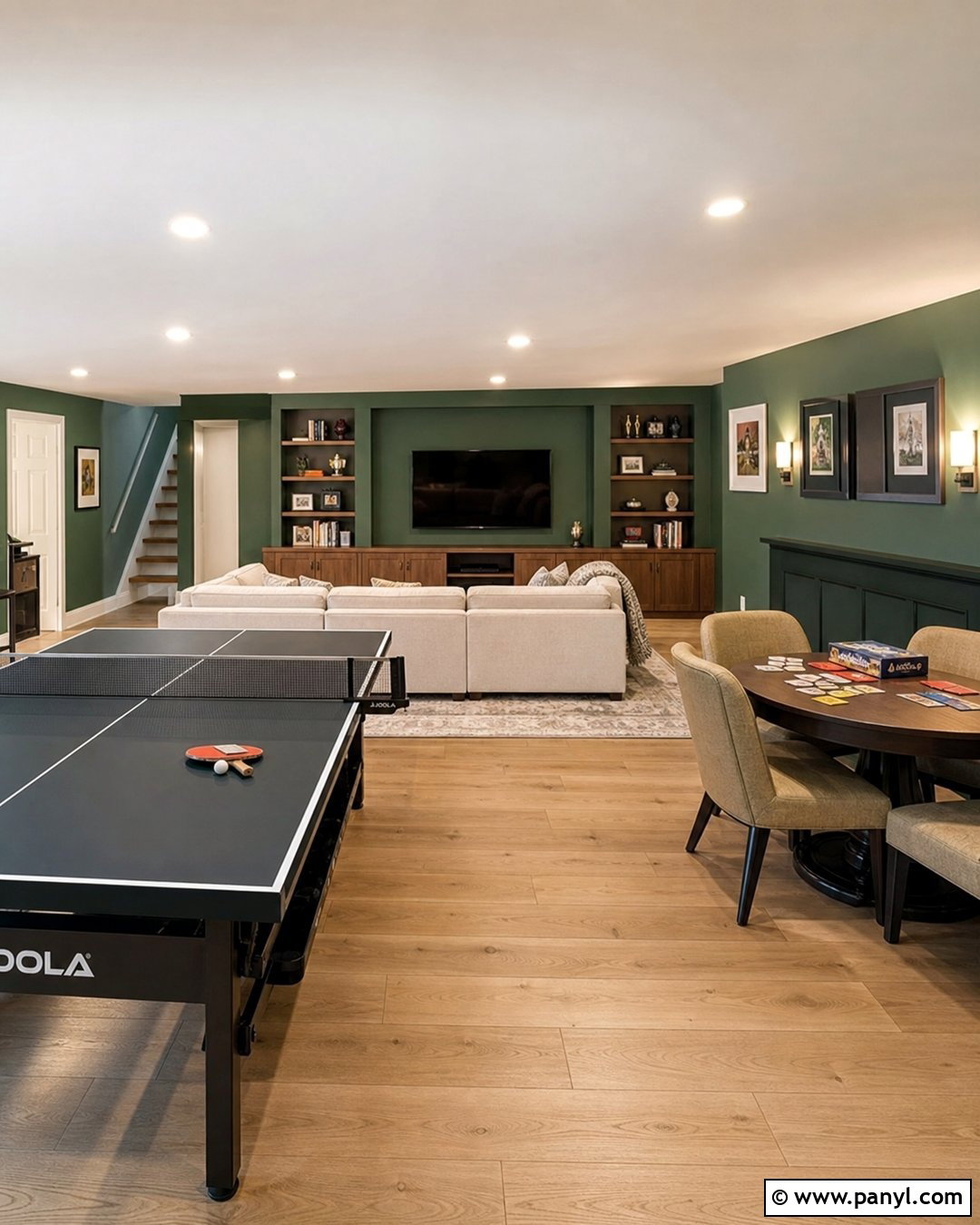
Forest green creates a bold, restful living room when paired with tan leather and plenty of warm white. Paint the walls green, but leave the ceiling, trim, and built-in interiors creamy white to maintain architectural contrast. A tan leather sofa becomes the main warm element, supported by an ivory rug and natural linen curtains. Add dark wood tables that can stand up visually to the saturated walls. Brass picture lights, sconces, or cabinet hardware introduce brightness and a timeless finish. Pillows in cream, moss, and understated plaid help the room feel layered. Display artwork with generous white mats so it remains visible against the green. This full scheme is ideal for a library-like living room where bookshelves, comfortable seating, and focused lighting create an inviting place to gather or read.
12. Lavender And Plum Living Room
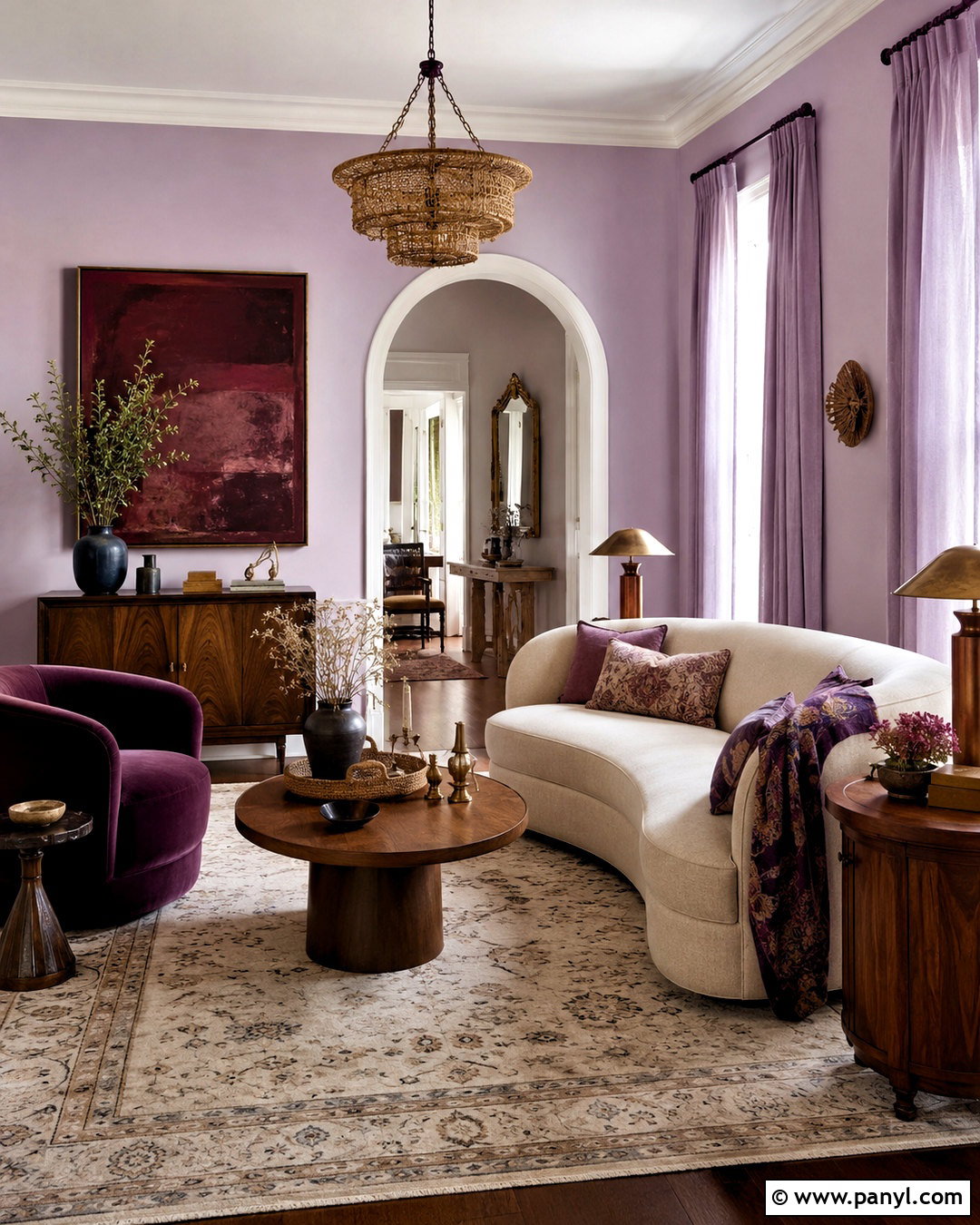
Soft lavender walls can feel surprisingly sophisticated when surrounded by oatmeal, plum, and dark wood. Select a neutral oatmeal sofa to ground the lighter wall color, then add one plum velvet chair or an upholstered ottoman as the deeper focal point. Walnut tables and bronze lighting keep the purple tones warm rather than sugary. Choose a cream rug containing small traces of lavender, taupe, or faded blue. Simple linen curtains should closely match the wall color so the windows blend into the room. Add artwork with burgundy, navy, and muted violet details for controlled contrast. A few brown or natural woven accessories will make the palette more approachable. This living room looks especially elegant with curved furniture, vintage-inspired lighting, and traditional architectural details used in a clean, uncluttered way.
13. Butter Yellow And Sky Blue Living Room
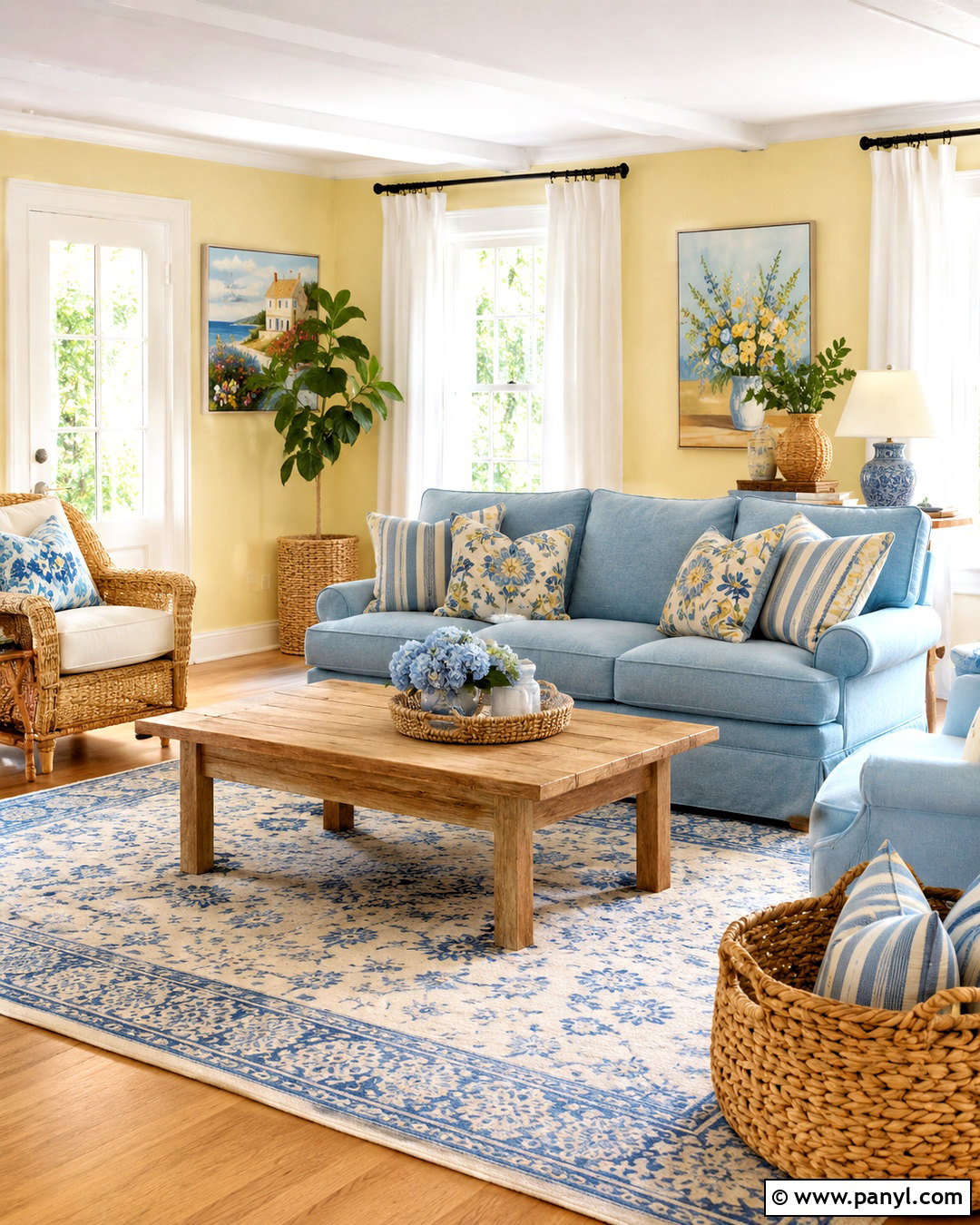
Butter yellow walls bring a soft glow to the living room without the intensity of bright lemon. Pair them with a sky blue sofa or two light blue armchairs, then add generous amounts of white through trim, curtains, and lampshades. A natural oak coffee table and woven baskets create a relaxed link between the two colors. Use a blue-and-cream patterned rug to anchor the furniture and repeat small touches of yellow in pillows or artwork. Fresh green from plants can serve as the final accent. Keep all major shades slightly muted so the design feels comfortable rather than childlike. This cheerful combination works beautifully in rooms with limited winter sunlight, as well as cottage and coastal spaces where casual furniture and natural materials support the lighthearted palette.
14. Charcoal And Mustard Living Room
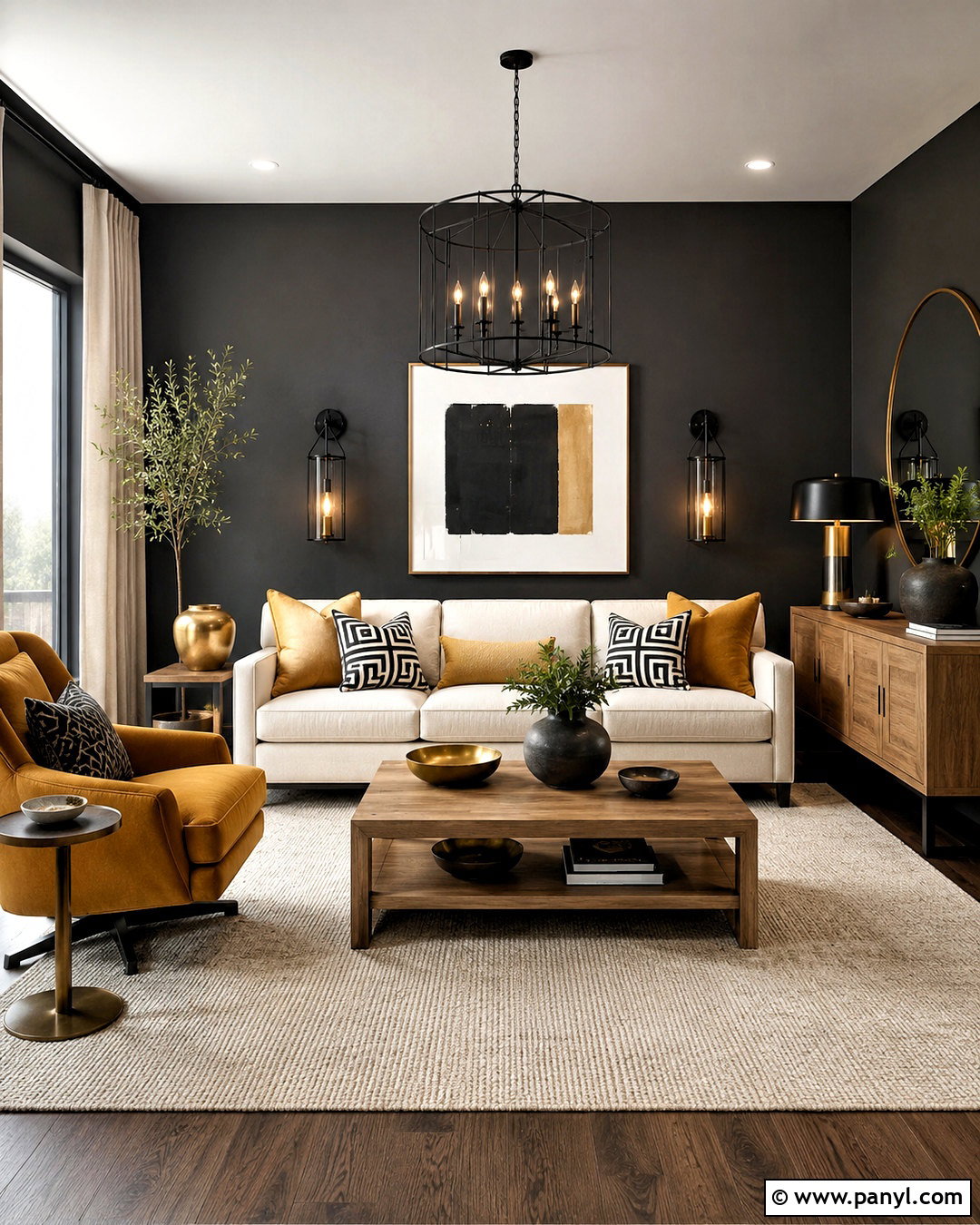
Charcoal walls create a dramatic envelope, while ivory furniture and mustard accents keep the space welcoming. Choose an ivory sofa with clean lines and place it on a light gray or cream rug. Introduce mustard through a lounge chair, throw blanket, or two substantial pillows instead of scattering many small yellow objects around the room. Medium oak furniture softens the charcoal and brings natural warmth to the arrangement. Use black metal lighting for continuity, then add brass or bronze in small amounts for reflection. White artwork mats and pale curtains will provide necessary visual relief. This palette benefits from strong daylight, but layered table and floor lamps also make it practical after sunset. The finished living room feels modern, confident, and balanced rather than dark or severe.
15. Clay Pink And Deep Teal Living Room
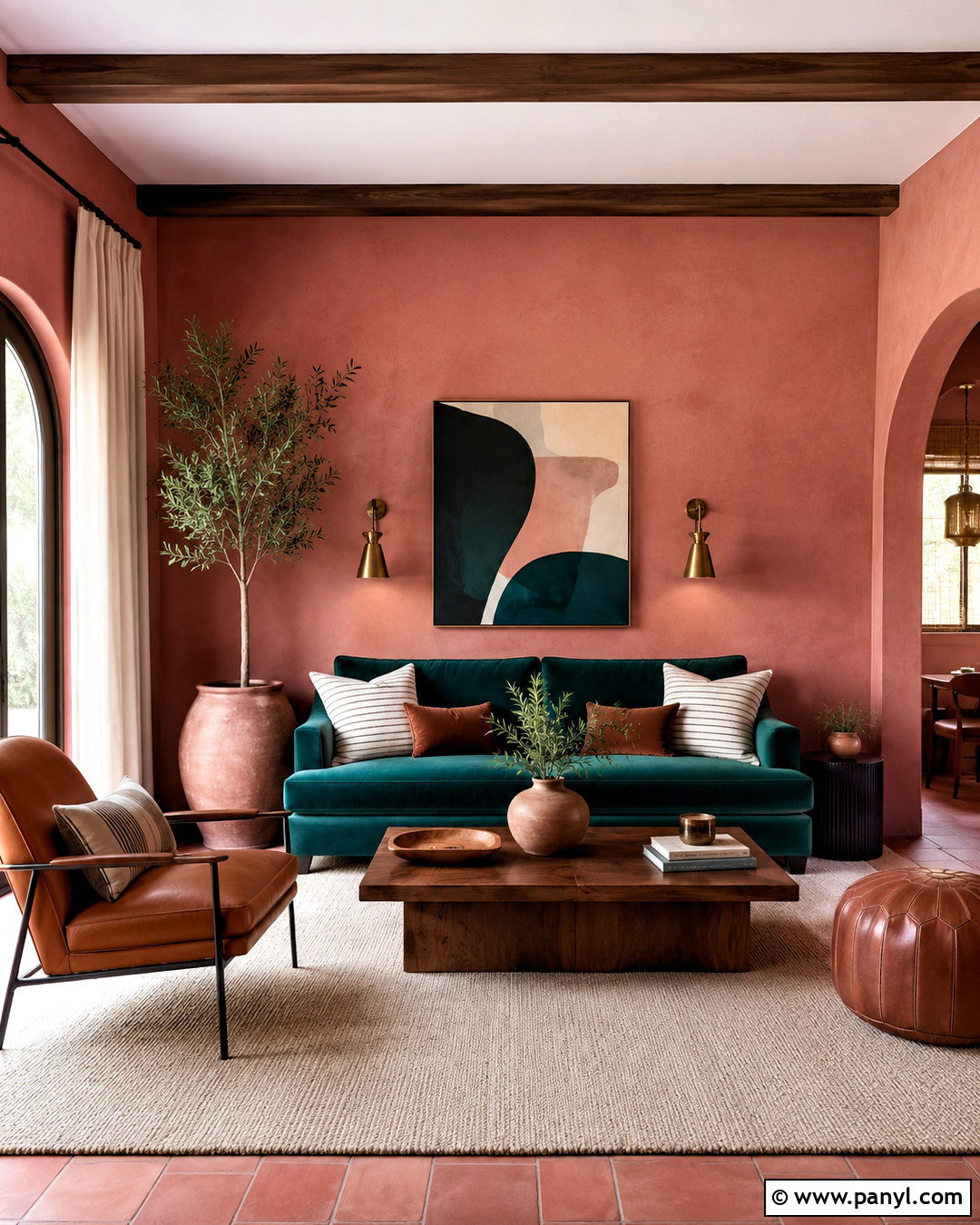
Clay pink walls combine the warmth of terracotta with the softness of muted rose. Deep teal provides an effective contrast because its cool blue-green base balances the pink’s earthy undertone. Use teal on a velvet sofa or a pair of substantial chairs, then add a cream rug and off-white curtains to create open space between the colors. Walnut tables, woven shades, and caramel leather accessories reinforce the room’s warmth. Choose brass lighting for a polished detail and use pillows that mix clay, teal, and neutral stripes. A large abstract painting can repeat the palette without looking overly coordinated. This complete design has plenty of personality, yet the muted colors keep it livable. It suits eclectic, modern Mediterranean, and updated midcentury interiors especially well.
16. Emerald Green And Navy Living Room
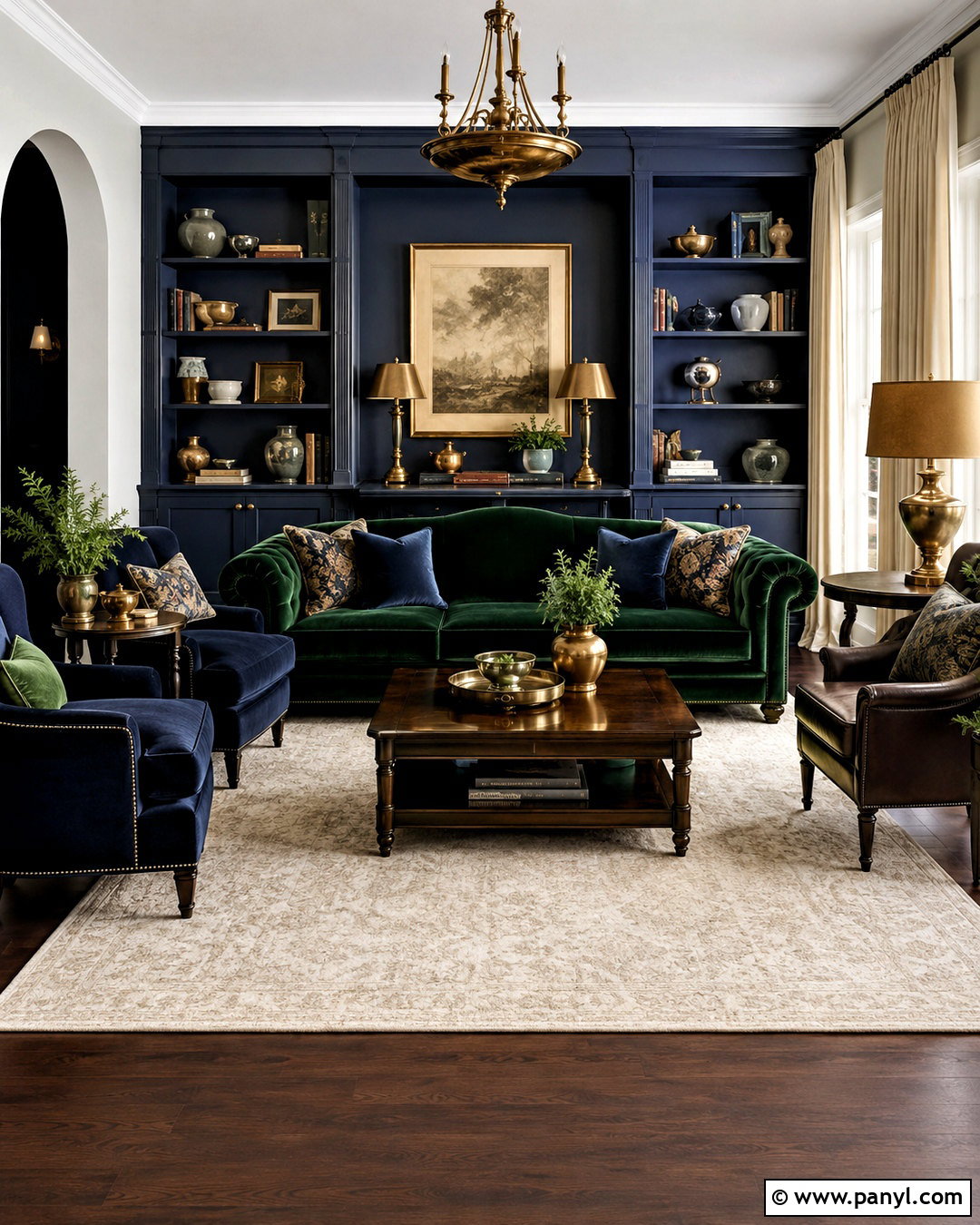
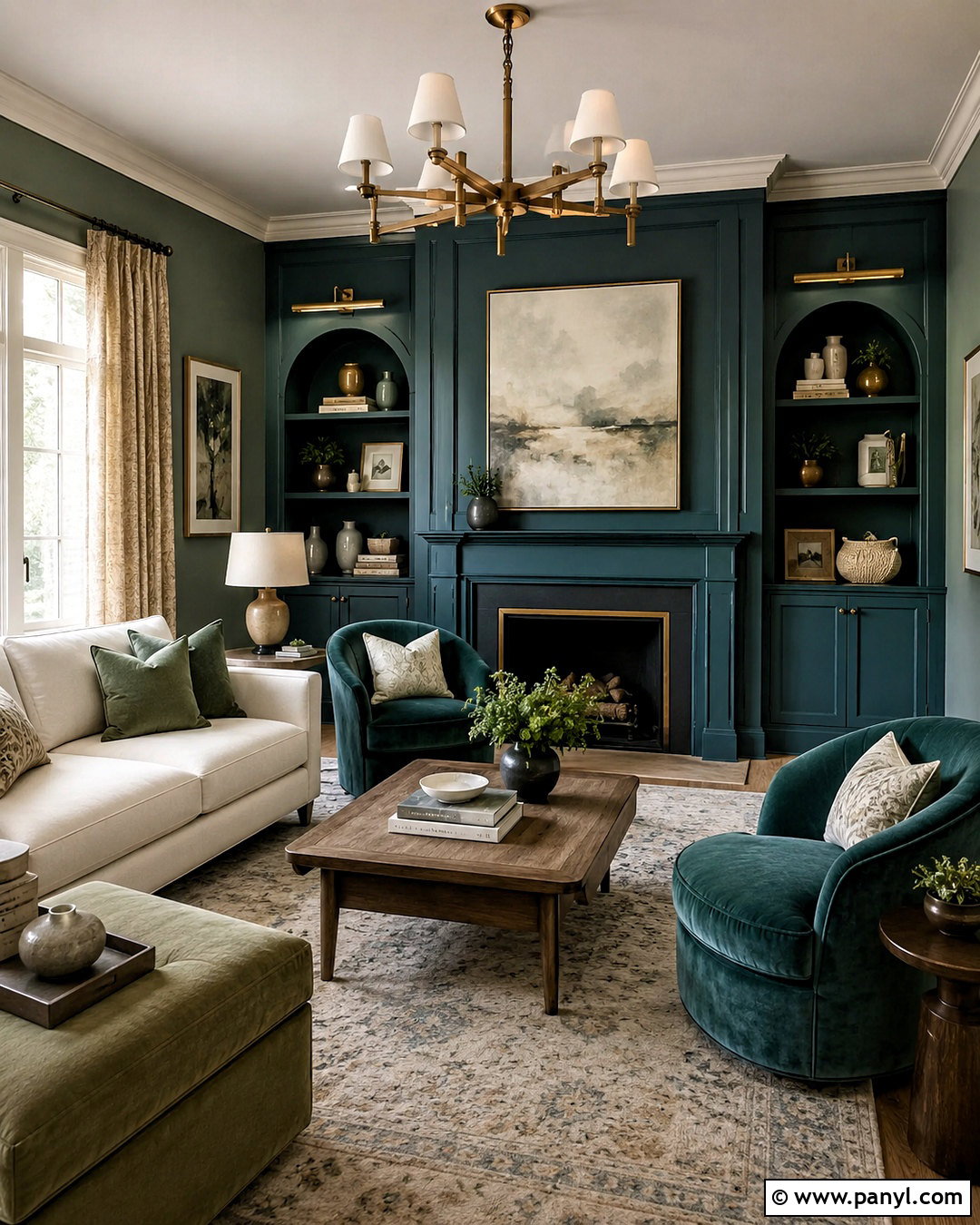
Jewel tones can look refined rather than overwhelming when they are surrounded by cream and warm wood. Start with navy walls or built-in shelving, then place an emerald green velvet sofa in front as the central feature. Use a large cream rug, ivory curtains, and pale lampshades to balance the two saturated colors. A dark walnut coffee table adds warmth, while aged brass lighting introduces a soft shine. Include pillows in navy, emerald, cream, and one restrained geometric pattern. Artwork with parchment backgrounds will remain visible against the darker walls. Keep decorative objects limited and substantial instead of filling every surface. The resulting living room feels rich and comfortable, making this combination a strong choice for formal spaces, traditional homes, or rooms designed for evening entertaining.
17. Black White And Natural Wood Living Room
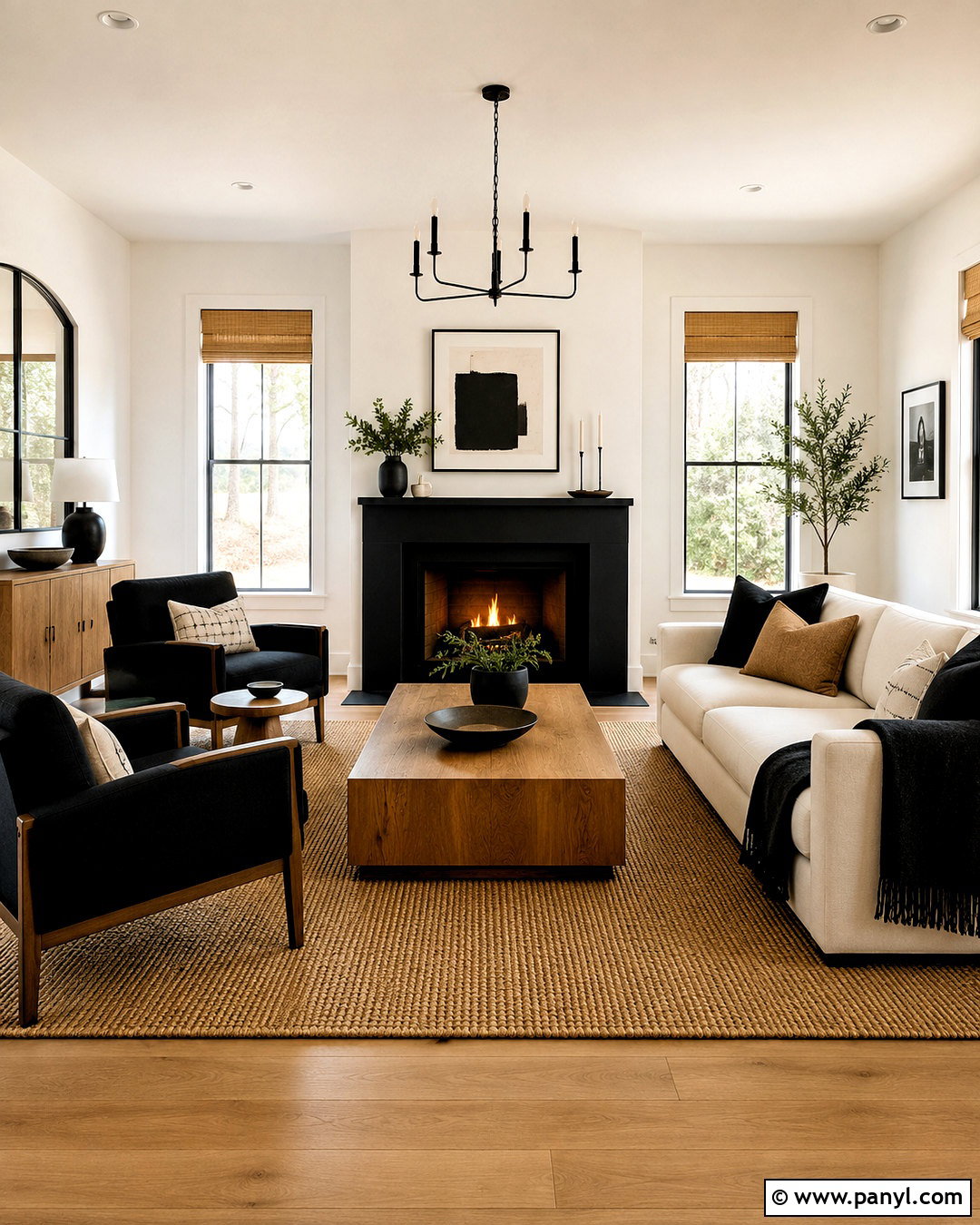
A black-and-white living room becomes more comfortable when natural wood and woven textures soften the contrast. Paint the walls warm white and use black on the fireplace surround, window frames, shelving, or a media cabinet. Choose a cream sofa instead of stark white upholstery, then add black chairs or patterned pillows for balance. A medium oak coffee table, jute rug, and woven shades introduce warmth throughout the room. Use simple black-and-white artwork with generous spacing so the walls remain calm. Green plants can provide one organic accent without changing the main palette. Avoid placing every black element on one side of the room. Distribute the darker color across lighting, frames, furniture, and textiles to create a complete, visually balanced contemporary space.
18. Peach And Moss Green Living Room
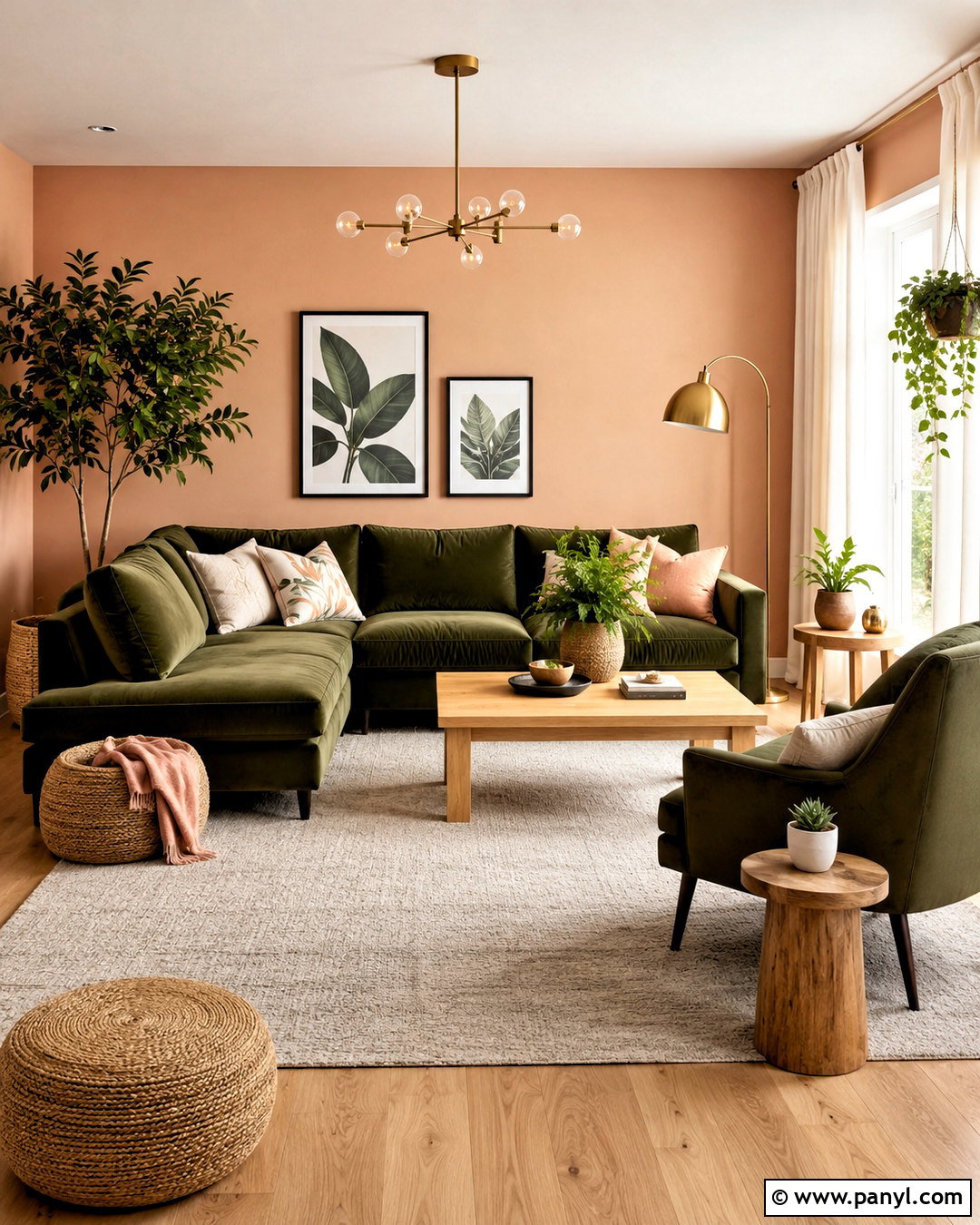
Muted peach walls cast a warm, flattering glow, while moss green furniture gives the room an earthy foundation. Select a moss velvet sofa or two green armchairs and pair them with a pale gray rug to quiet the warmer tones. Light oak tables, cream curtains, and woven baskets make the space feel casual and natural. Add pillows in peach, olive, beige, and subtle botanical patterns. Brushed brass or warm bronze lighting complements both main colors without drawing too much attention. White trim keeps the architecture clean, while charcoal picture frames provide a small amount of definition. This palette works well in compact living rooms because the peach brightens the walls and the cooler green creates depth. The final design feels fresh, friendly, and noticeably different from standard neutral schemes.
19. Burgundy And Camel Living Room
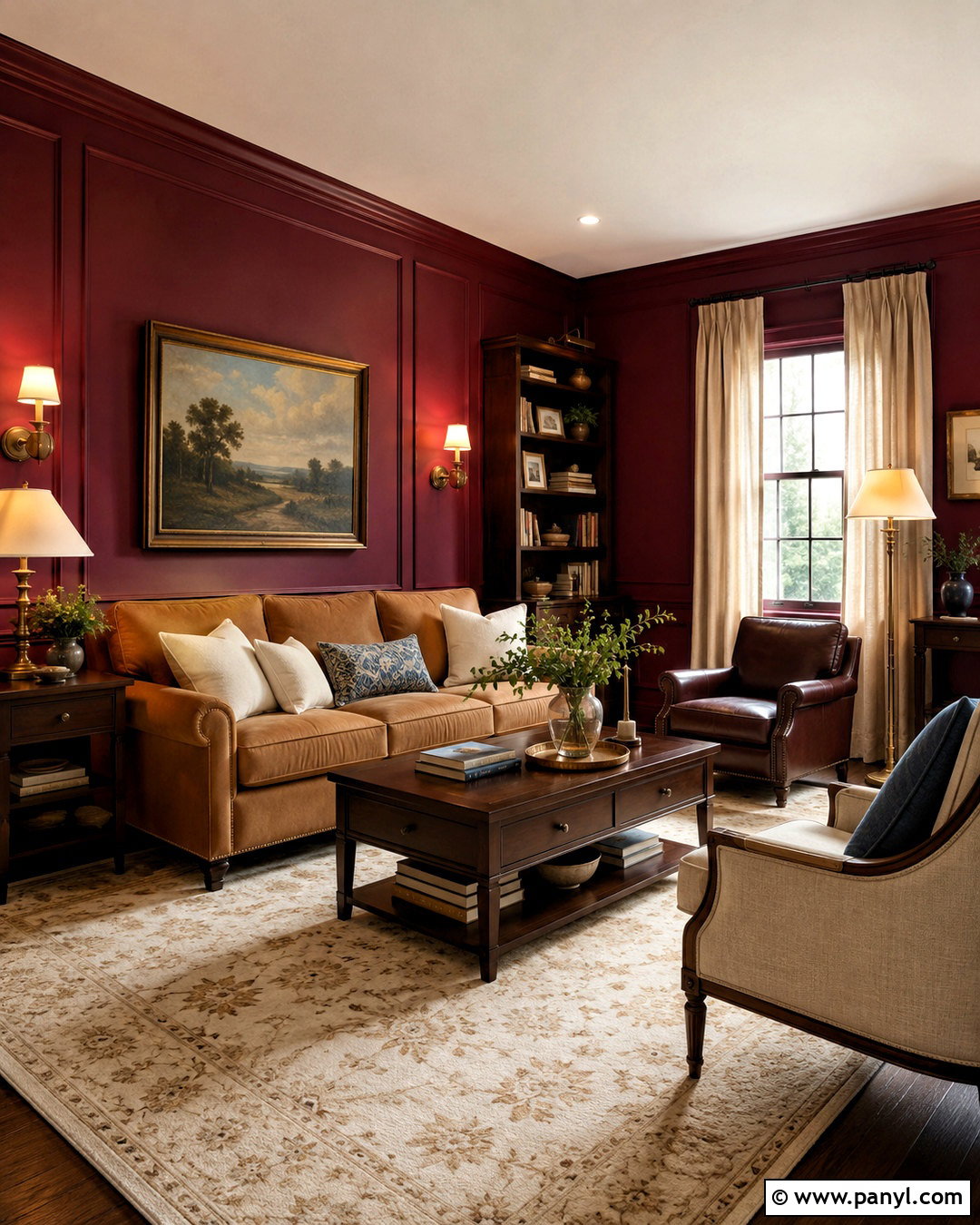
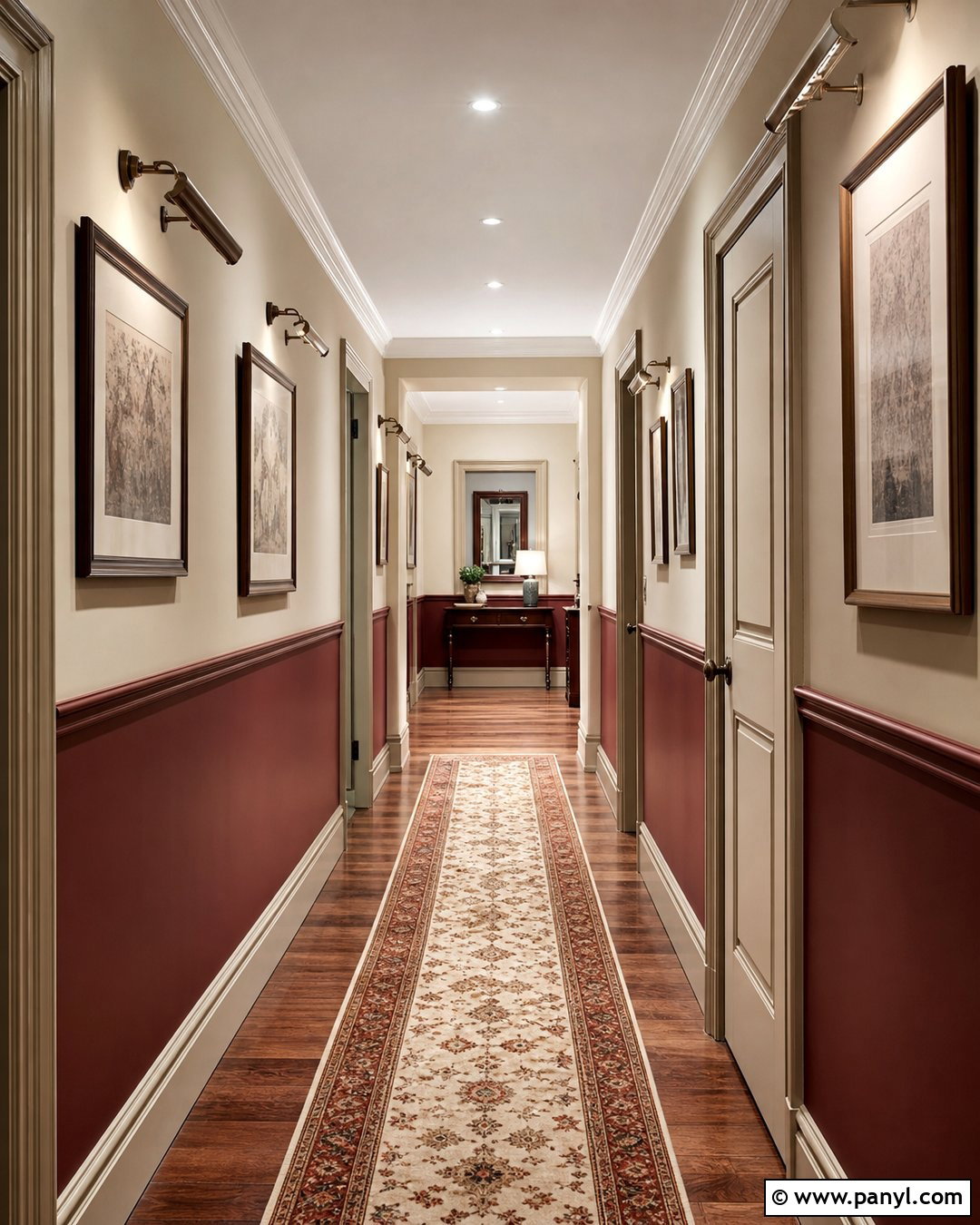
Burgundy brings depth and character to a living room, while camel and parchment prevent it from becoming overly formal. Use burgundy on paneled walls, built-in shelves, or a large area rug. A camel sofa supplies warmth and visual contrast, especially when paired with parchment curtains and cream pillows. Choose dark oak or walnut furniture that can hold its own beside the rich wall color. Antique brass lamps and small framed artworks enhance the traditional feeling, but simple furniture shapes keep the room current. Add one muted blue or olive accent to provide quiet variation. Good lighting is essential, so combine ceiling fixtures, table lamps, and wall sconces. This layered scheme creates a cozy, collected space that feels especially appropriate in living rooms with fireplaces or architectural molding.
20. Aqua And Sand Living Room
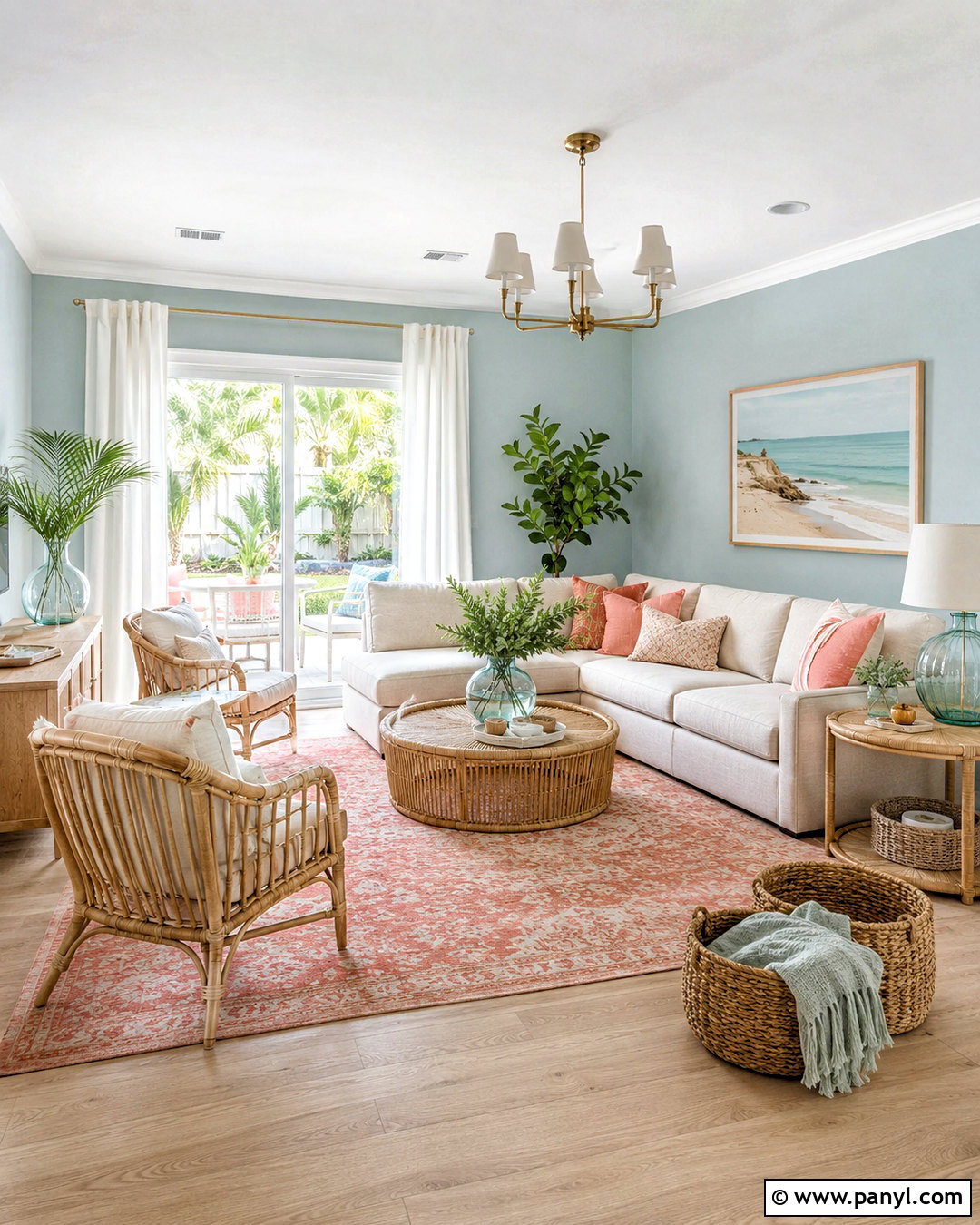
Aqua, sand, and soft coral create a relaxed coastal palette without relying on obvious beach-themed decorations. Paint the walls a pale, slightly gray aqua and choose a sand-colored linen sectional as the room’s comfortable anchor. Add coral through a pair of pillows, a small upholstered bench, or details in a faded rug. Light oak or rattan furniture strengthens the airy feeling, while white curtains filter sunlight without adding weight. Use brushed nickel or pale brass lighting for a clean finish. Natural woven baskets, clear glass accessories, and a few leafy plants provide supporting texture. Avoid shells, signs, and literal nautical objects. By focusing on color, material, and an open furniture arrangement, the completed living room feels fresh, relaxed, and suitable for coastal or inland homes.
Conclusion:
The best living room palette is one that supports the mood you want while working with your home’s lighting, flooring, and existing furniture. These **20 living room color combination ideas** range from warm, flexible neutrals to expressive jewel tones and cheerful coastal colors. Before painting, compare samples beside upholstery, rugs, and wood finishes at different times of day. Let one shade dominate, use a second color on furniture or textiles, and reserve the boldest accent for smaller details. Repetition also matters. Carry each important color across at least two or three areas so the room feels connected. With thoughtful balance, even an adventurous combination can produce a comfortable, cohesive living space that feels personal and easy to enjoy.

Related Ideas and Inspiration:
Leave a Reply