
A blue sofa can anchor almost any living room, but the surrounding paint determines whether it feels crisp, cozy, dramatic, or relaxed. The best **blue couch wall color ideas** consider the sofa’s undertone, available daylight, flooring, and overall decorating style. Warm whites and creamy neutrals soften cool upholstery, while greens create a natural connection. Charcoal, navy, and terracotta produce stronger contrast and a more expressive look. Current design guidance also supports everything from quiet neutral backdrops to warm complementary shades and layered blue-on-blue palettes. () Always test large paint samples behind the couch and observe them throughout the day before committing. The complete room schemes below make it easier to choose and recreate your favorite **20 Blue Couch Wall Color Ideas**.

1. Warm White Walls With a Blue Couch
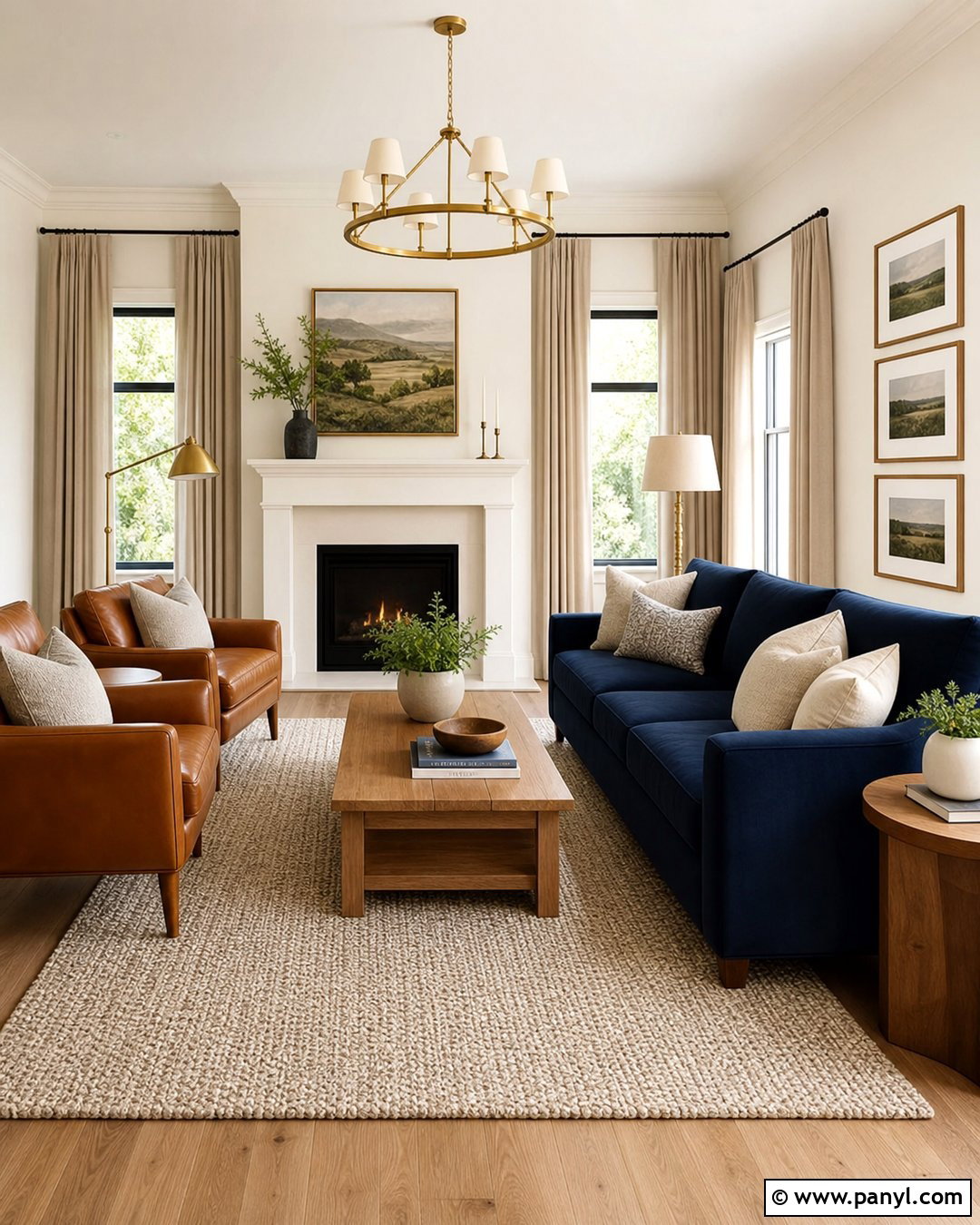
Warm white walls give a blue couch a clean backdrop without making the living room feel cold. Choose an ivory-leaning white rather than a sharp, blue-based shade, especially when the sofa is navy or royal blue. Add a natural oak coffee table, cream wool rug, and oatmeal curtains to continue the warmth. A pair of cognac leather chairs can balance the cool upholstery while improving conversation-friendly seating. Use brushed brass lamps and simple landscape prints for polished finishing touches. This palette works particularly well in smaller living rooms because the pale walls reflect light and keep visual weight around the floor. Repeat the couch color through one patterned pillow or ceramic accessory instead of filling the entire room with blue.
2. Cream Walls With a Blue Couch
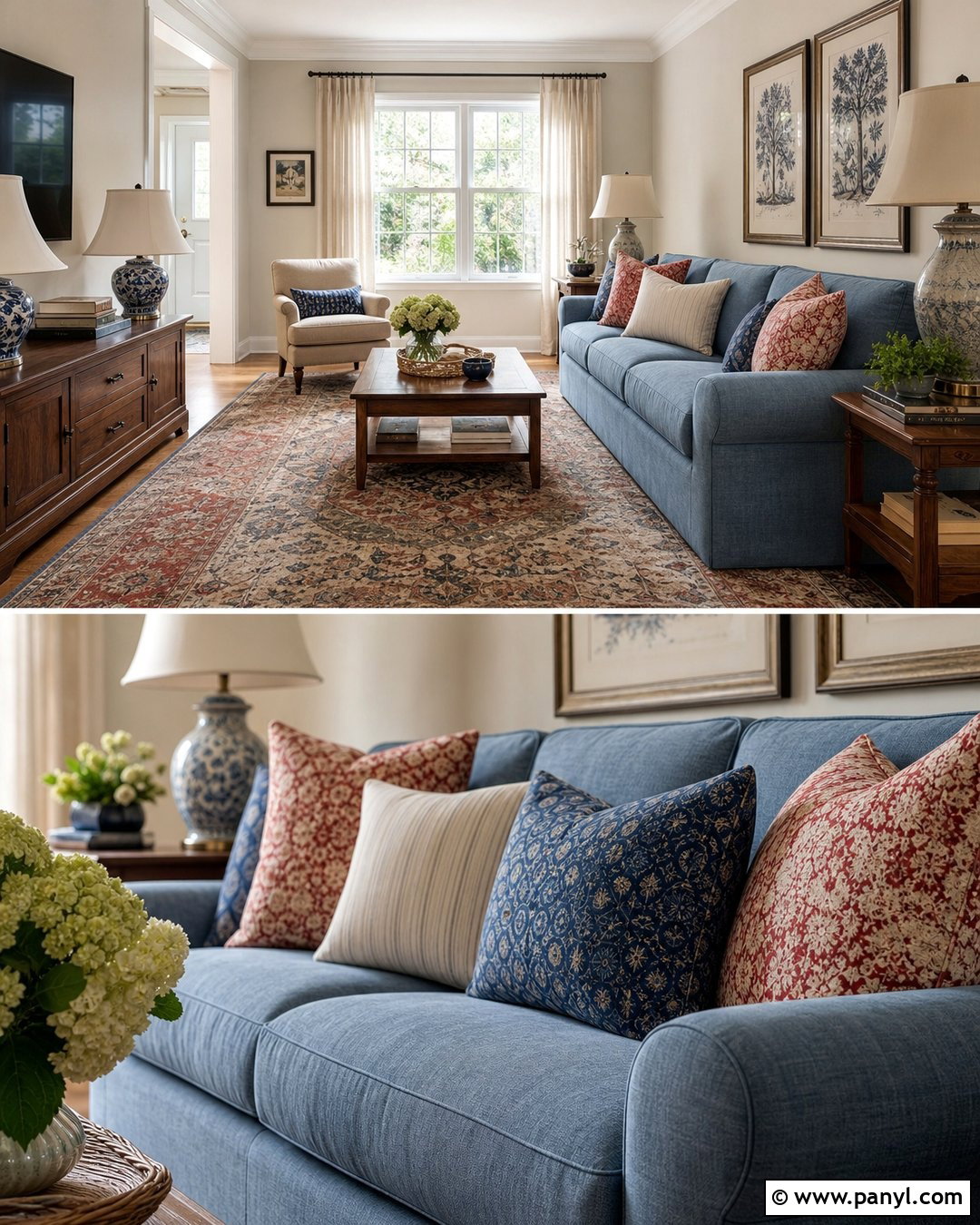
Imagine a soft blue sofa surrounded by buttery cream walls, woven textures, and comfortable furniture. This combination feels warmer and more traditional than bright white, yet it still gives the couch plenty of visual definition. Place a medium-toned wood console behind the sofa and anchor the seating area with a faded Persian-style rug containing blue, tan, and muted red. Linen curtains, a ceramic table lamp, and an upholstered accent chair can make the room feel layered without becoming formal. Cream works with light, medium, and dark blue upholstery, although richer creams are especially flattering beside navy velvet. Keep the ceiling and trim a lighter warm white. The slight contrast will highlight architectural details while maintaining a calm, connected color scheme.
3. Beige Walls With a Blue Couch
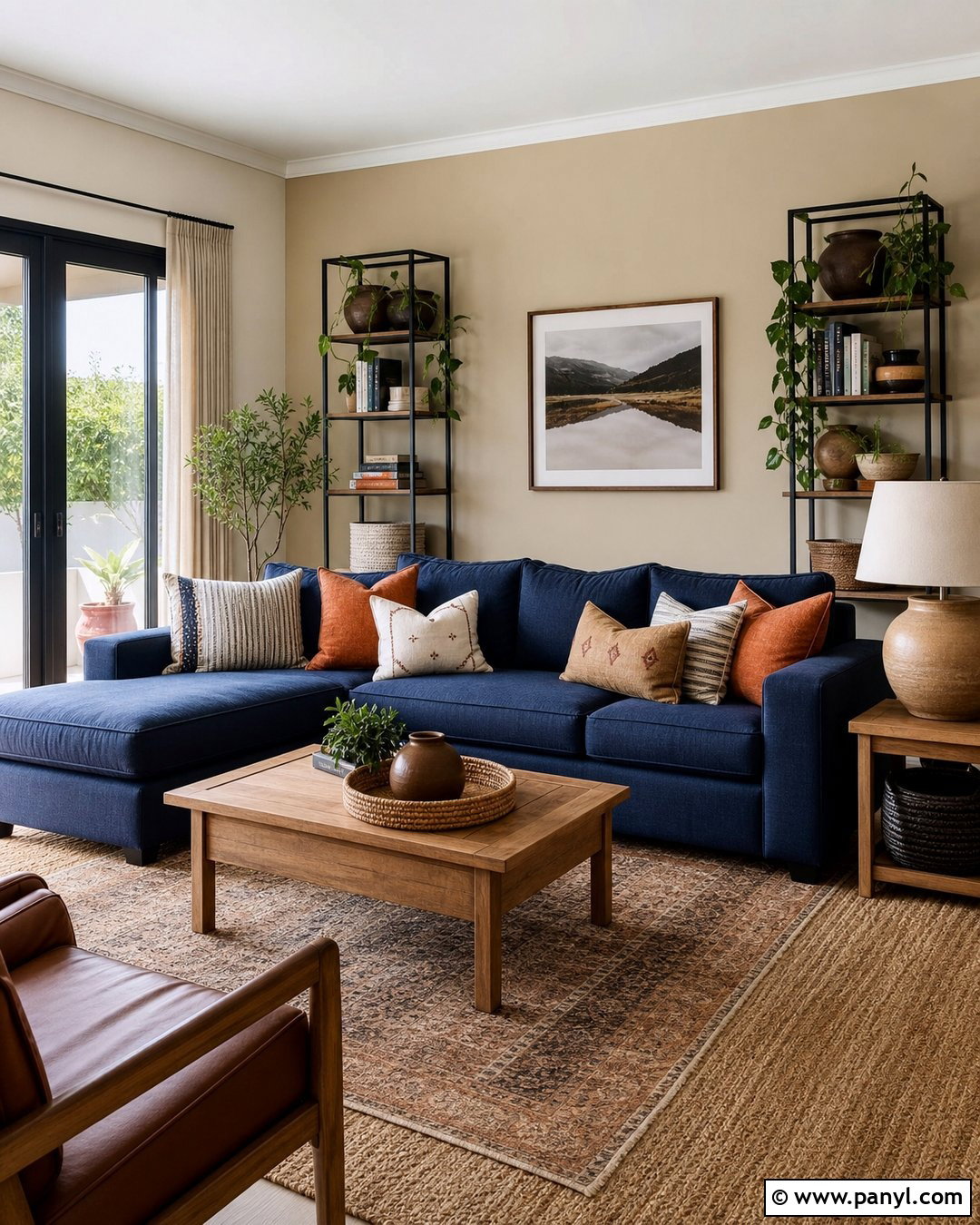
Beige walls can turn a cool blue couch into the welcoming center of an easygoing living room. Look for a balanced beige with subtle golden or sandy undertones instead of a shade that appears overly yellow. Pair the walls with a navy linen sofa, medium oak furniture, and a large natural-fiber rug layered beneath a smaller patterned rug. Add black metal accents through curtain rods and picture frames to give the soft palette definition. Terracotta pillows, warm brown pottery, and leafy plants introduce earthy color without competing with the couch. This combination suits transitional, coastal, and casual contemporary homes. For a cohesive finish, choose artwork that includes beige, blue, rust, and small touches of cream, connecting the major surfaces without making everything match exactly.
4. Greige Walls With a Blue Couch
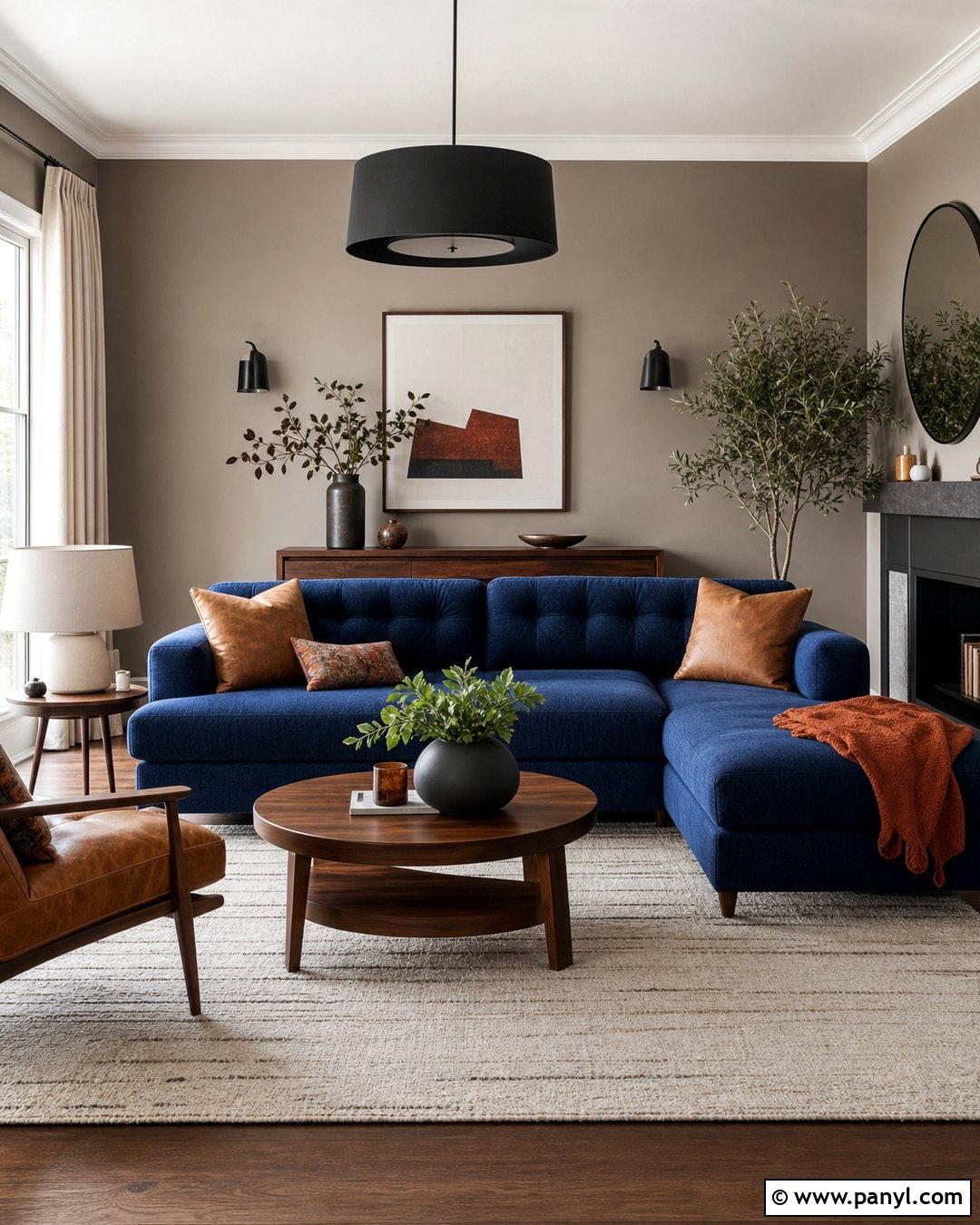
Greige offers the softness of beige and the modern appearance of gray, making it a flexible partner for blue upholstery. Select a warm greige if your couch is navy, cobalt, or another cool blue. Build the room around clean-lined walnut furniture, a textured ivory rug, and off-white window panels. Matte black lighting adds contrast, while muted caramel and rust pillows prevent the neutral backdrop from feeling flat. A round coffee table can soften the straight edges of a sectional or tailored sofa. Keep larger accessories restrained, but introduce texture with boucle, linen, wool, and woven baskets. Because greige changes noticeably under different lighting, compare samples beside the actual upholstery. A balanced shade should look gently warm during the day without turning brown under evening lamps.
5. Light Gray Walls With a Blue Couch
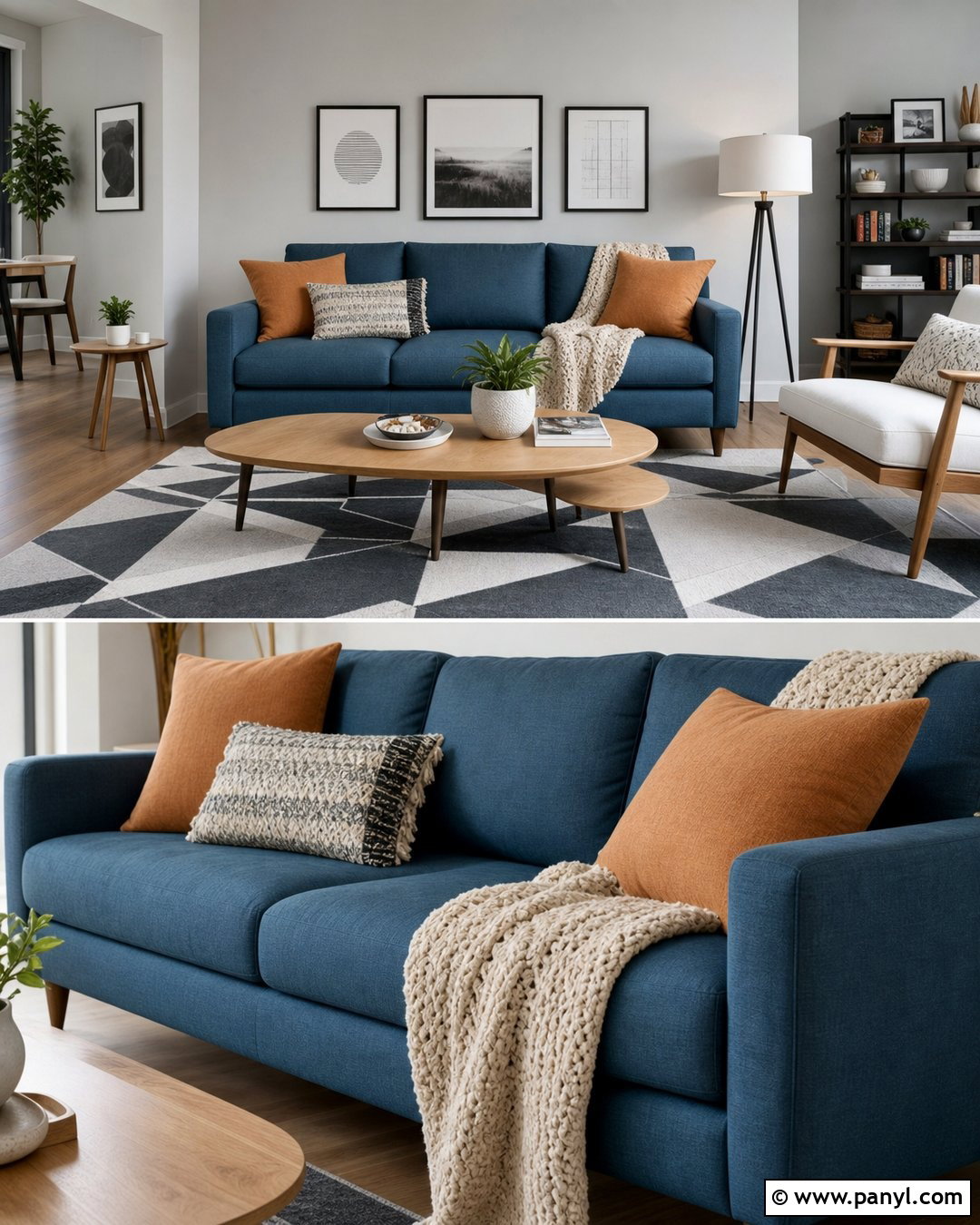
Light gray walls create a streamlined setting for a blue couch, especially in modern apartments and living rooms with dark flooring. Choose a soft gray with neutral or slightly warm undertones so the combination does not become overly cool. Ground the arrangement with a charcoal-and-cream geometric rug, then add pale oak tables and a comfortable white accent chair. Black-framed artwork and a slender floor lamp will sharpen the scheme. Introduce warmth through camel-colored pillows, a knitted throw, and natural wood accessories. If the room receives limited daylight, use a very pale gray and bright white trim to maintain an open feeling. Avoid filling every surface with silver or blue-gray decor. A few warm elements are essential for creating a balanced room that still feels inviting.
6. Charcoal Walls With a Blue Couch
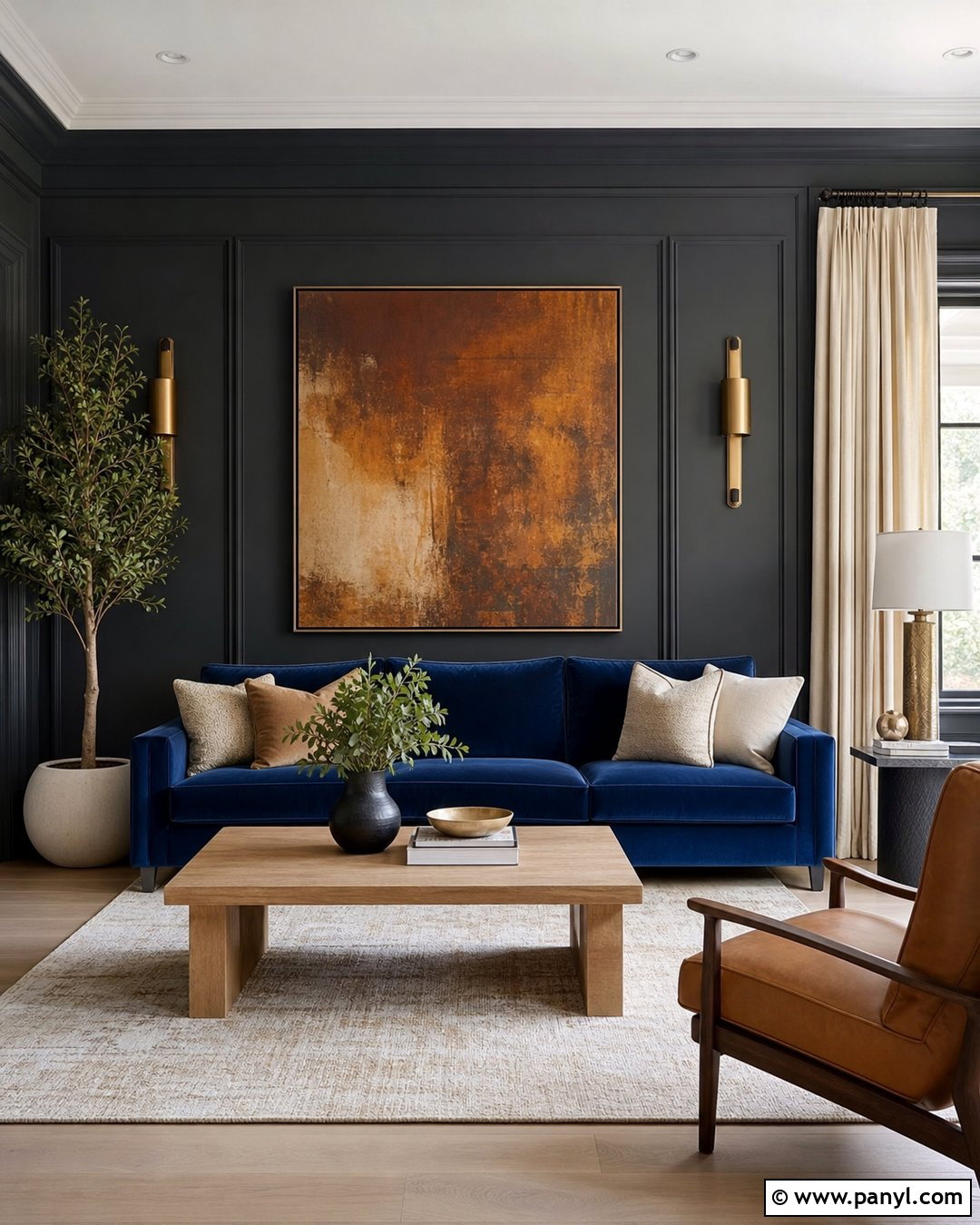
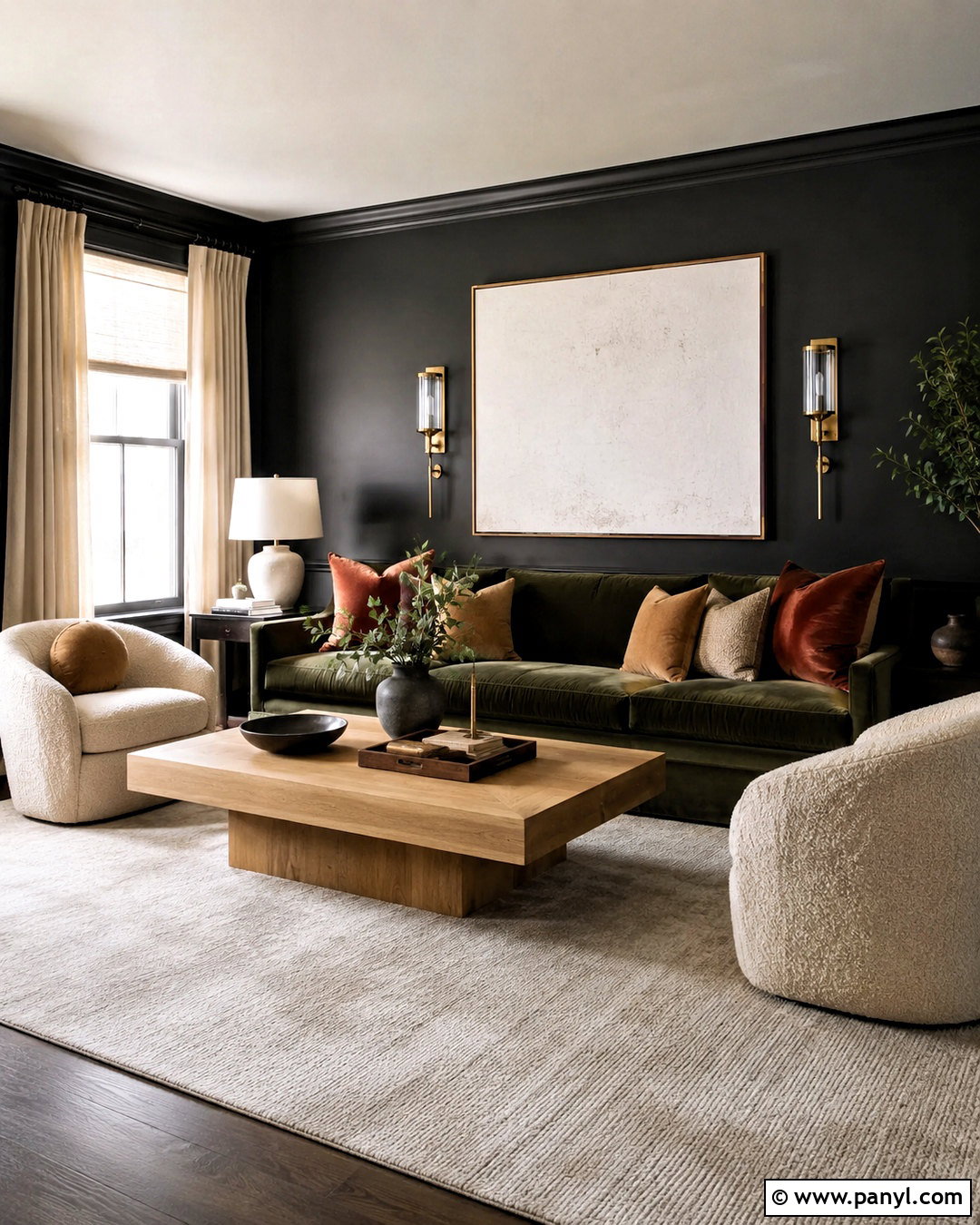
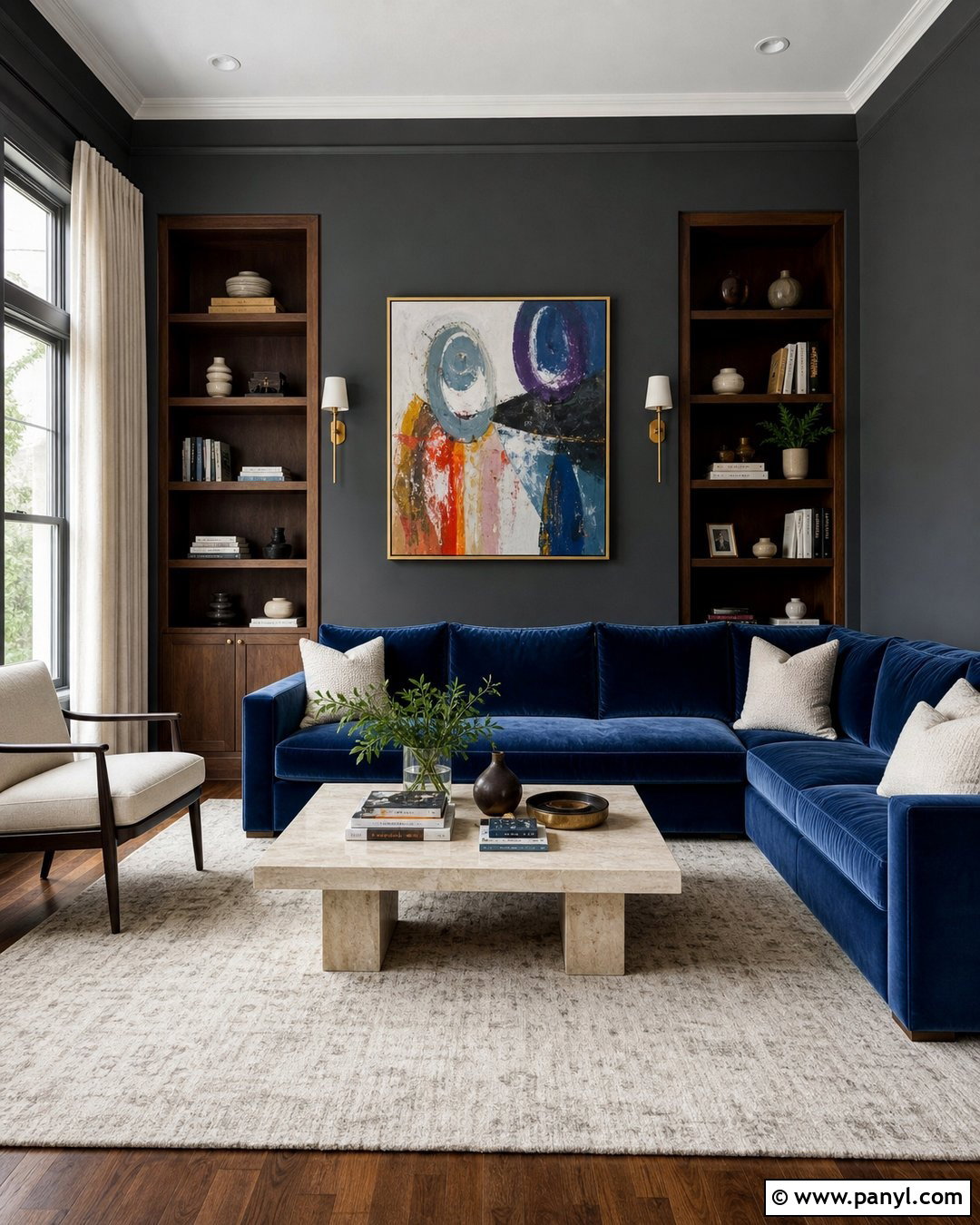
For a dramatic living room, charcoal walls create depth around a rich blue velvet couch. This palette works best when the room has generous daylight, layered lighting, or a lighter floor that prevents the overall design from feeling heavy. Choose a charcoal with a soft warm undertone and paint the trim in the same color for a seamless effect. Add a large ivory rug, pale linen curtains, and a light oak coffee table to brighten the center of the room. Brass sconces and warm abstract artwork provide contrast against the dark background. Include a camel leather chair to bring warmth and another substantial shape into the seating group. Finish with cream, ochre, and blue pillows, keeping smaller decor simple so the wall-and-sofa pairing remains the main feature.
7. Navy Walls With a Blue Couch
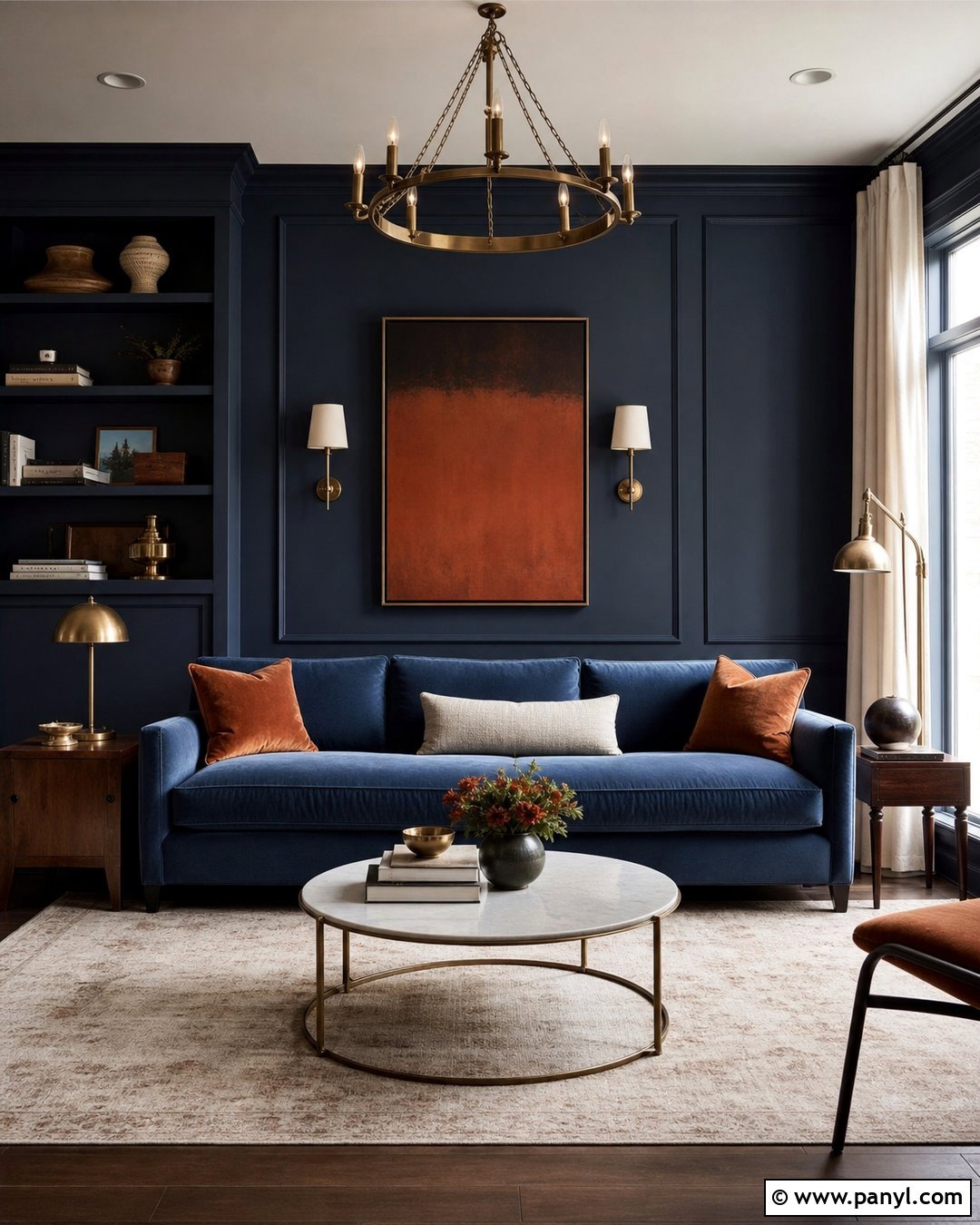
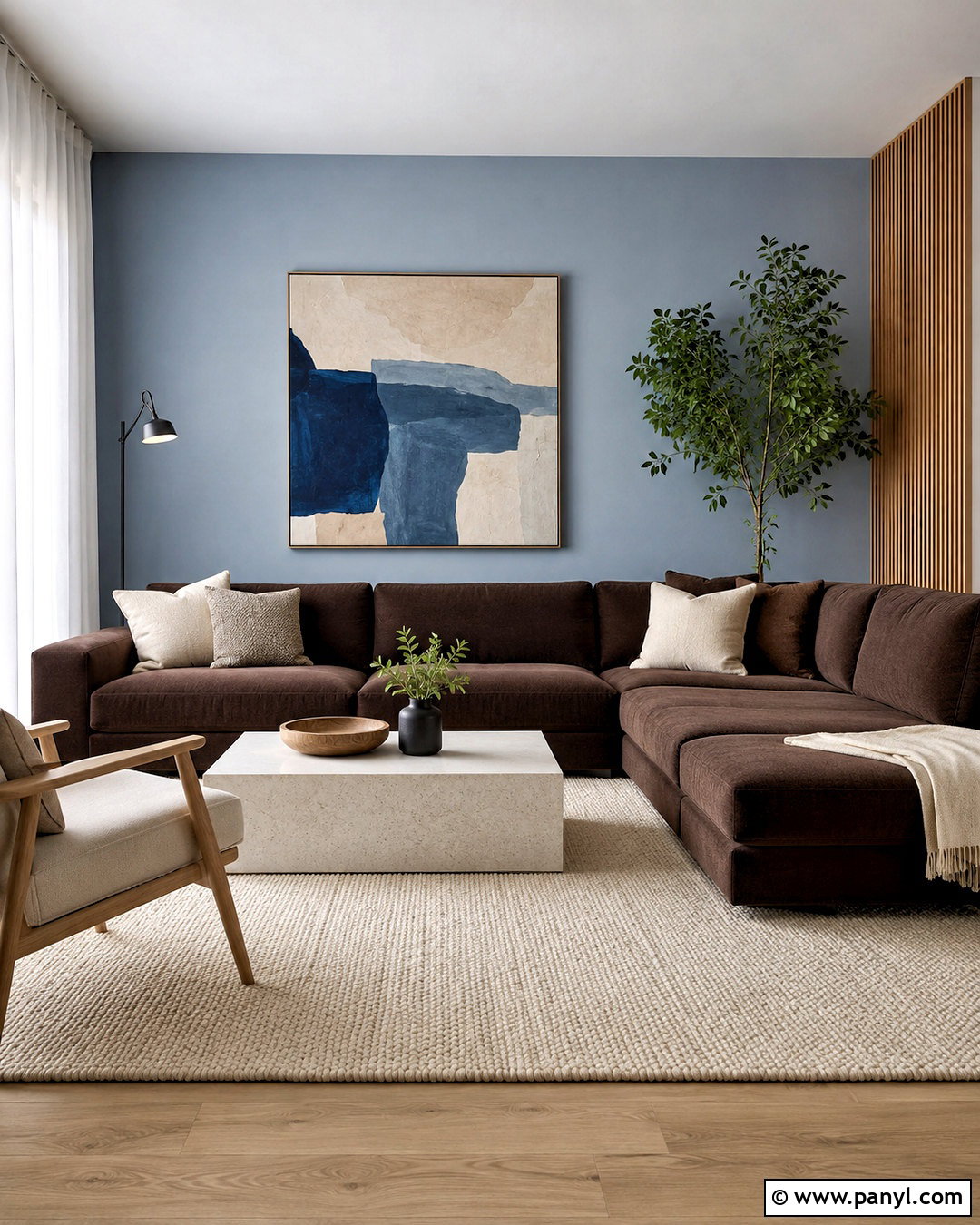
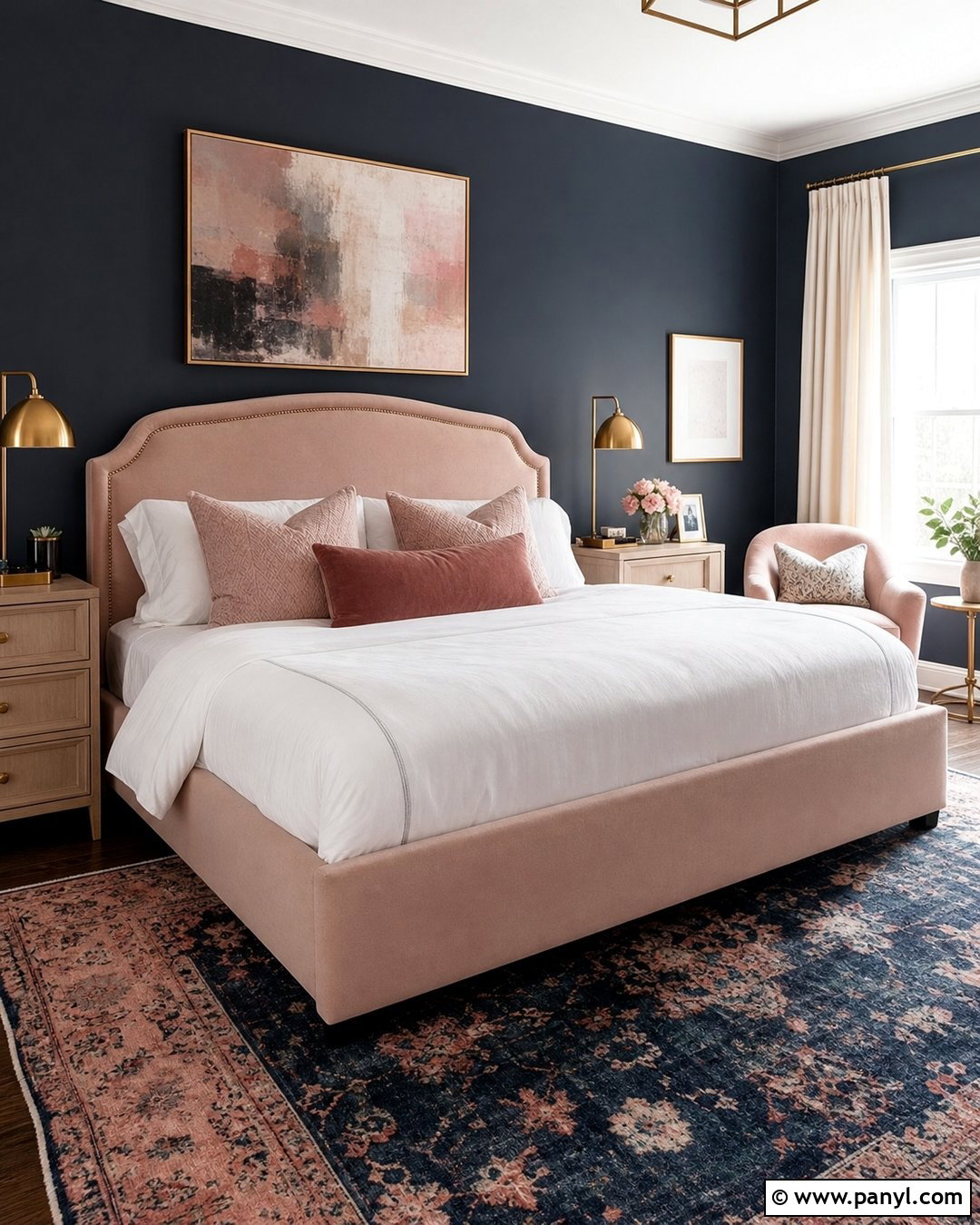
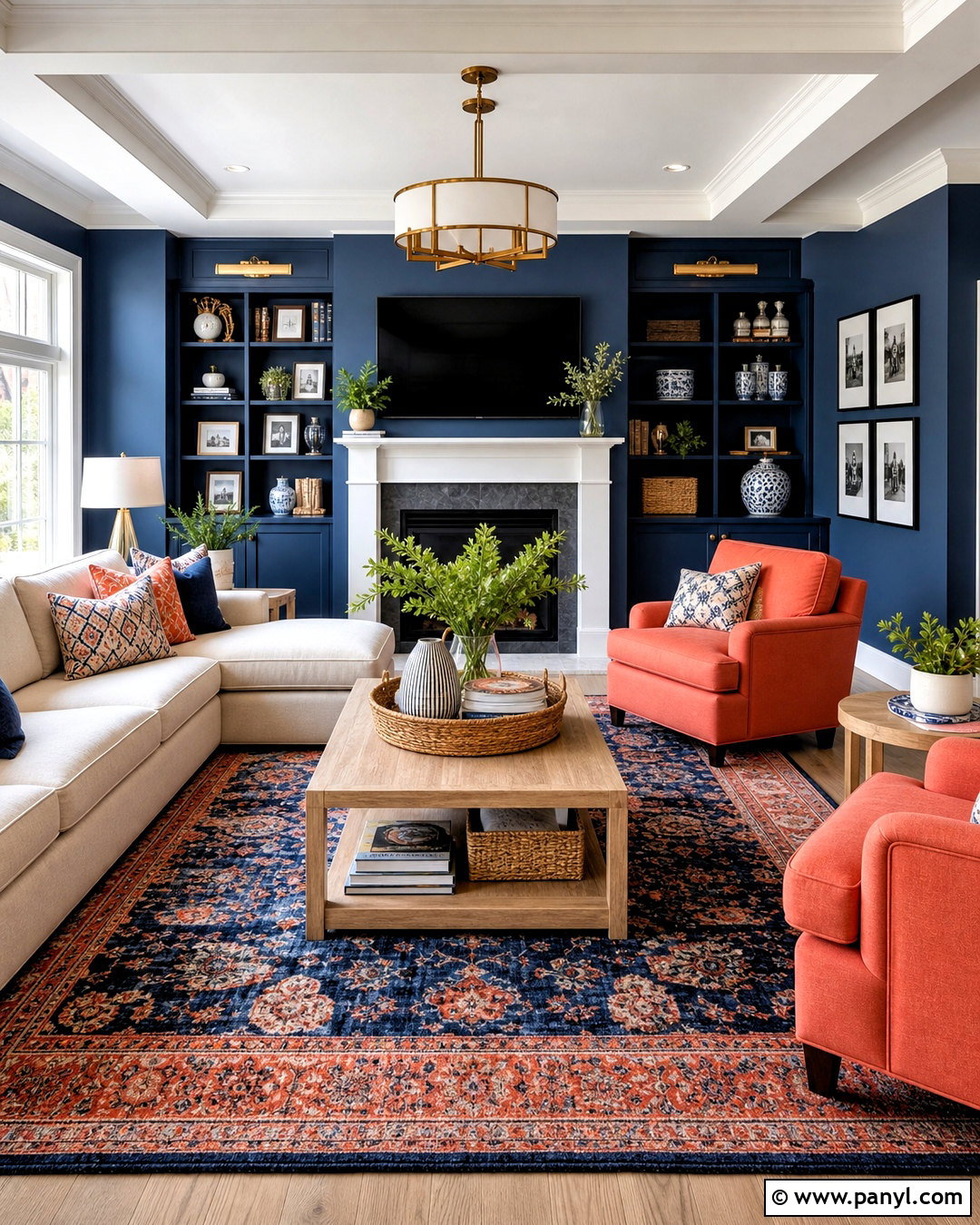
A blue-on-blue room can feel immersive rather than repetitive when the wall and couch use noticeably different tones. Place a medium cobalt or dusty blue sofa against deep navy walls, then introduce warm white through the ceiling, rug, and curtains. Walnut side tables and antique brass lighting will break up the cool palette while adding depth. Select artwork with cream backgrounds and touches of rust, green, or ochre. These contrasting colors keep the room from looking overly coordinated. For additional dimension, use velvet on the couch, linen at the windows, and wool underfoot. Navy walls can work in a small living room when the lighting is thoughtfully layered. Combine a central fixture with sconces and table lamps so corners remain visible and the saturated paint looks intentional.
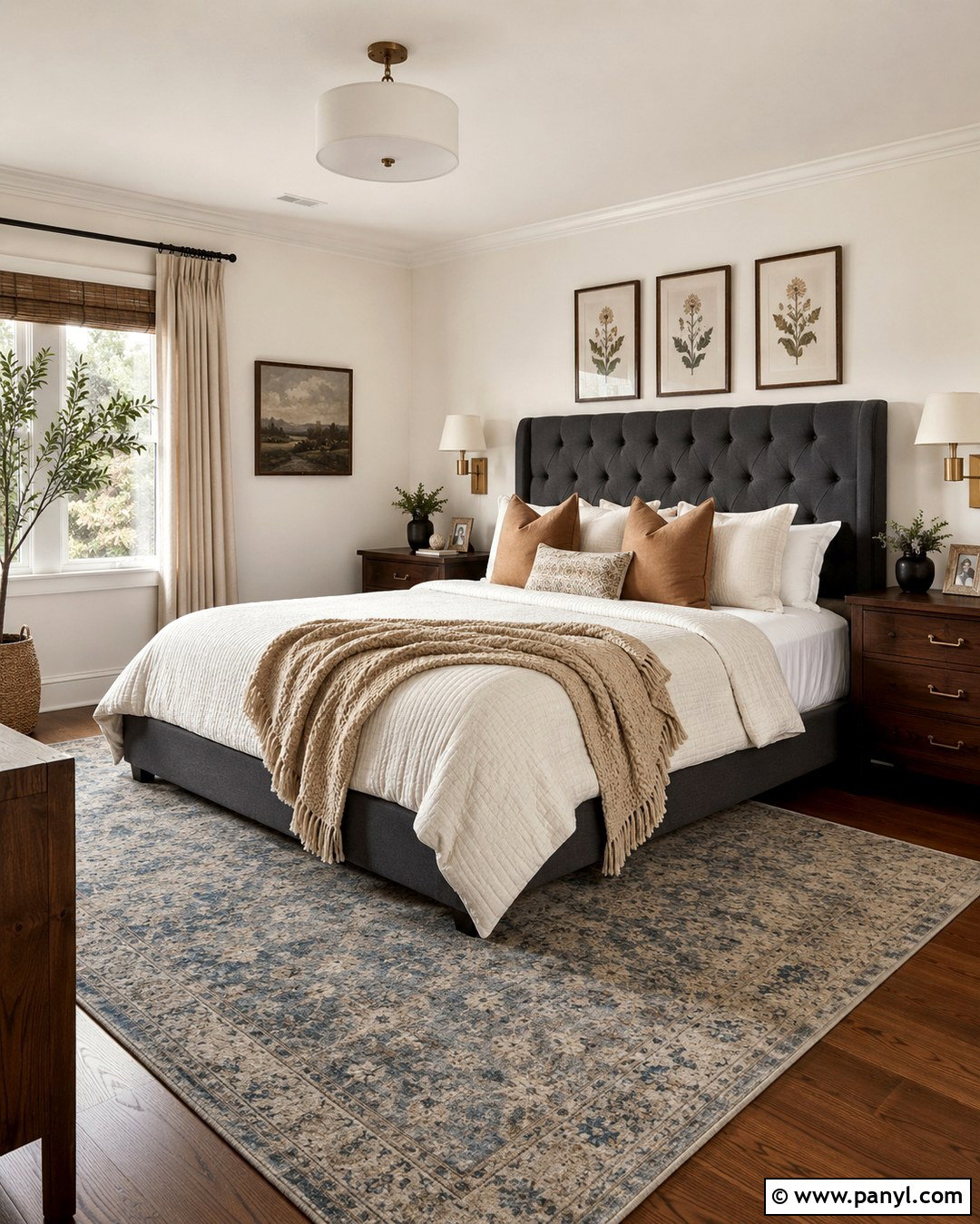
8. Pale Blue Walls With a Blue Couch
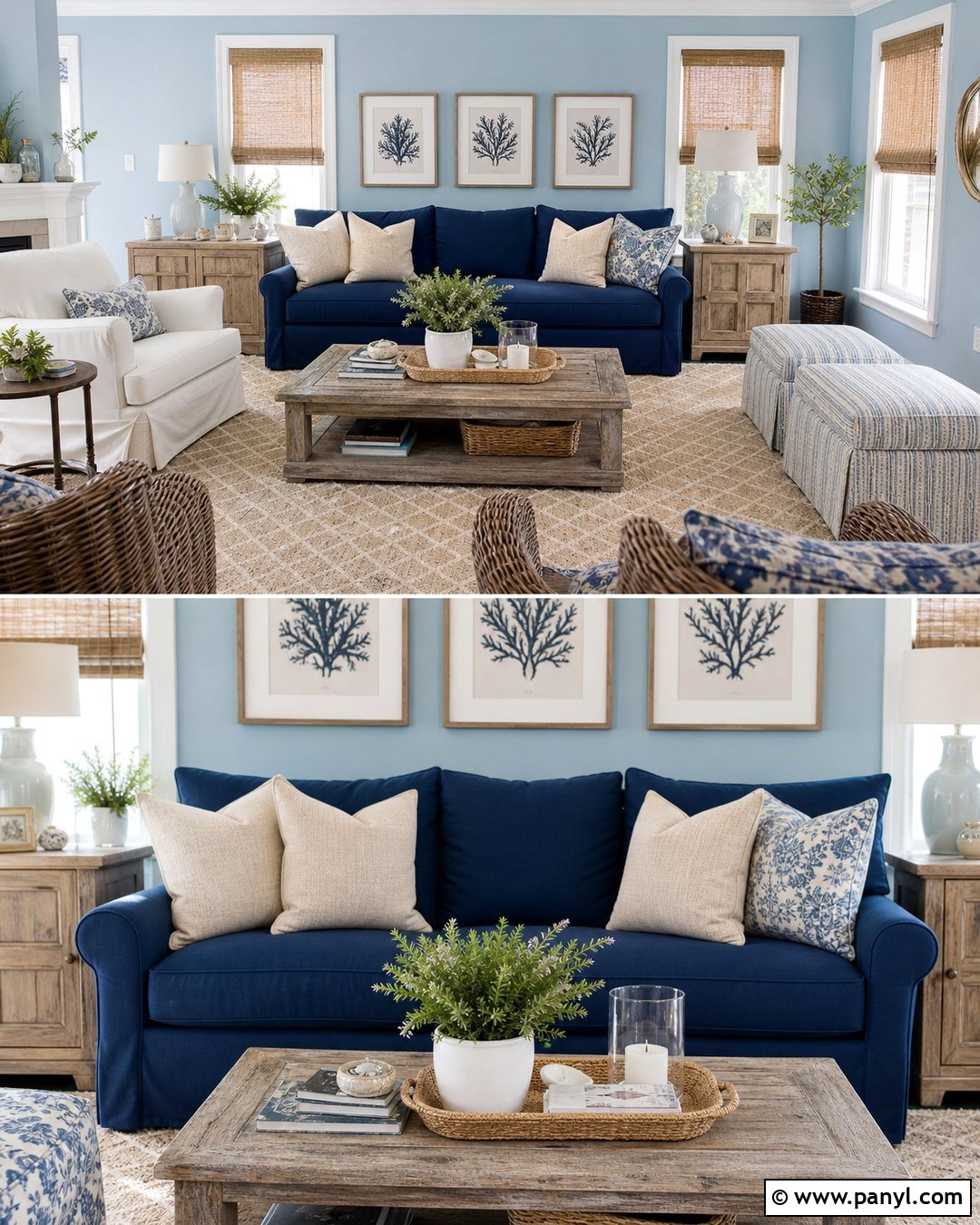
Pale blue walls and a deeper blue couch produce a restful, tonal living room that feels especially suitable for coastal or cottage interiors. Pick a wall color that is several shades lighter than the upholstery so the sofa does not disappear. Add white-painted trim, light oak or weathered wood furniture, and a cream rug with a subtle blue pattern. Sandy beige pillows and woven shades introduce natural warmth. Instead of obvious nautical decorations, display simple botanical prints, handmade ceramics, and a few glass accessories. A slipcovered armchair can provide lighter visual weight beside a substantial navy sofa. This room should feel layered rather than matched, so vary the blue tones across textiles. Include soft gray-blue, denim, navy, and one restrained touch of turquoise for dimension.
9. Dusty Blue Walls With a Blue Couch
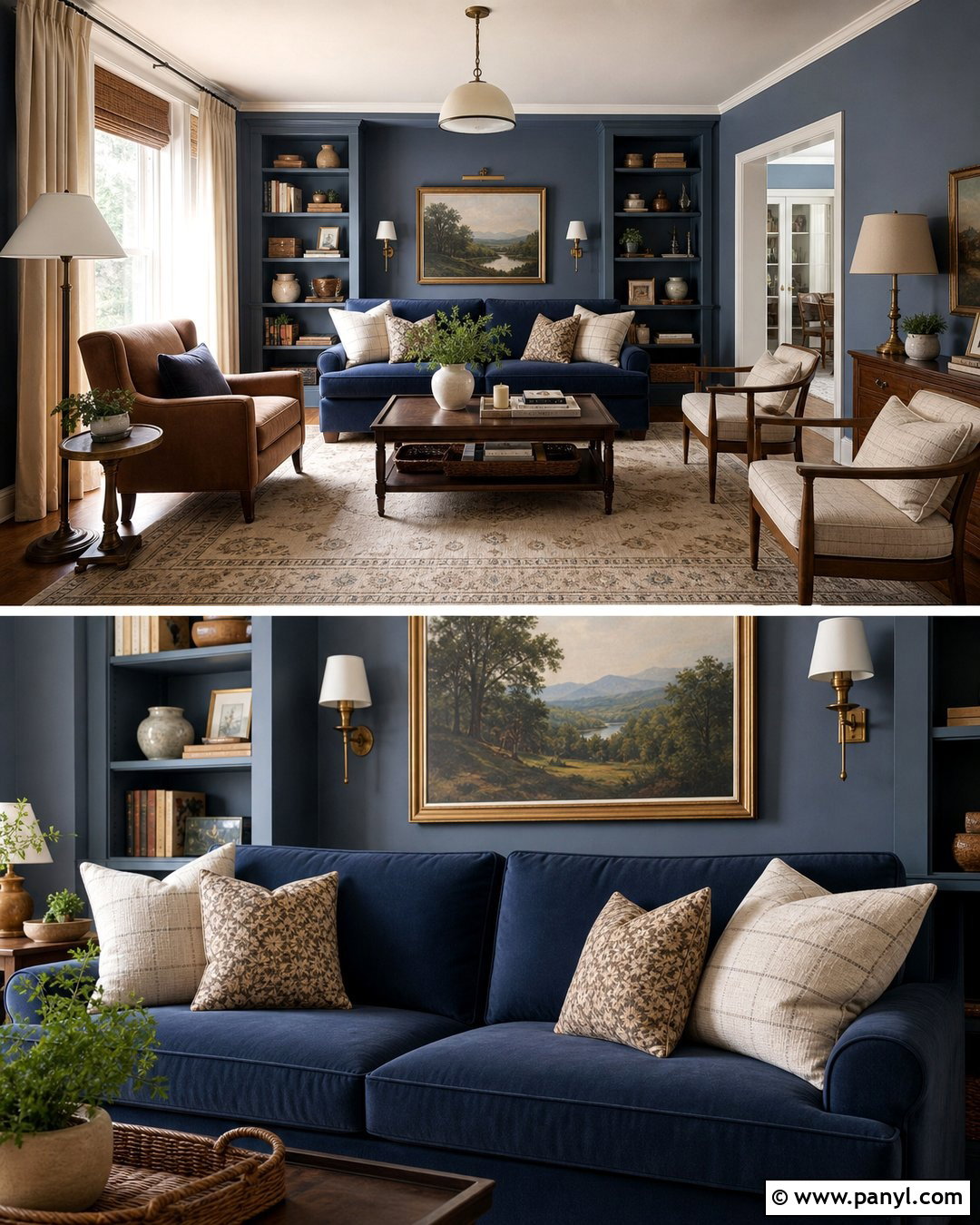
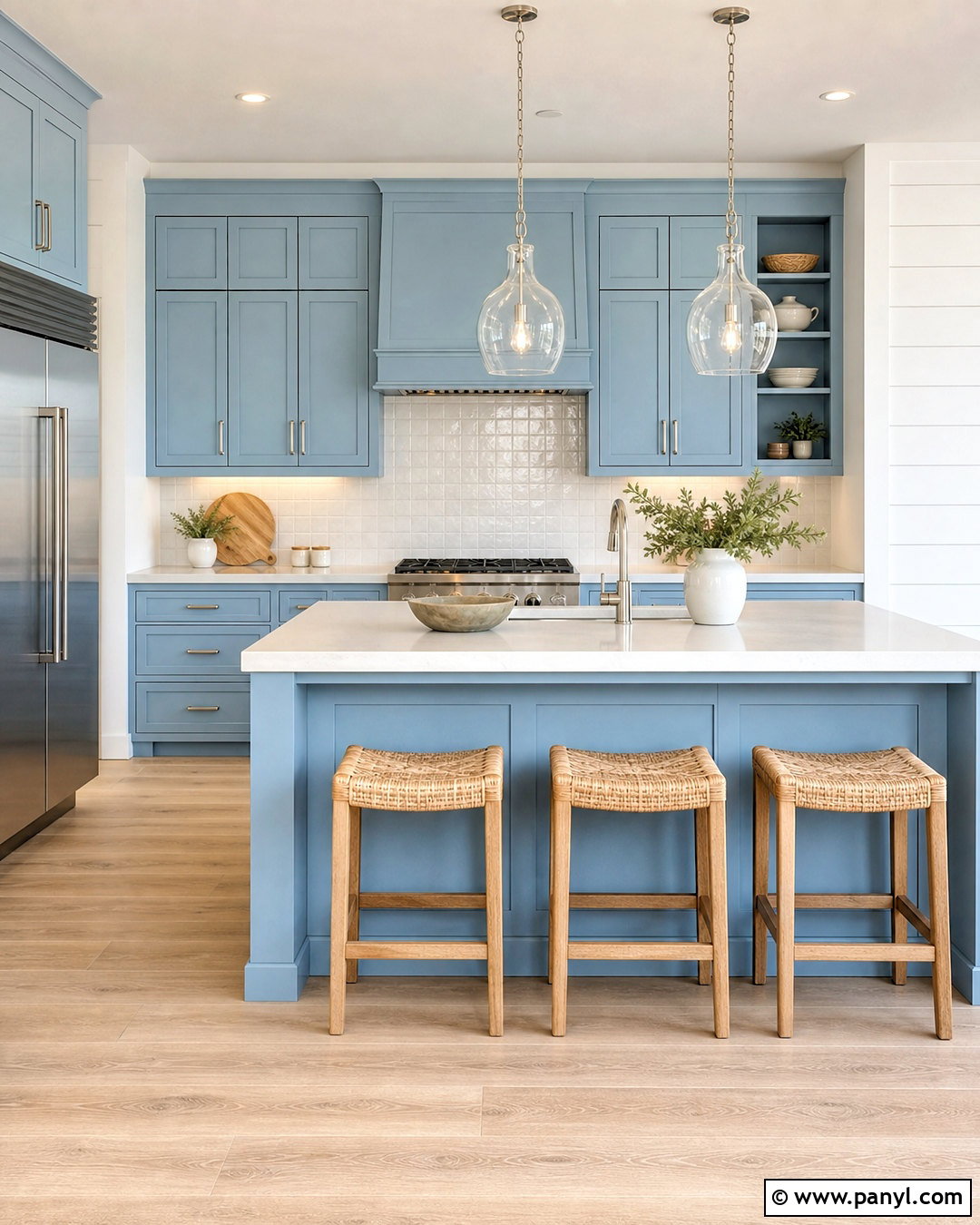
Dusty blue walls offer more character than a neutral while remaining quiet enough for everyday living. Pair this muted paint with a dark navy couch to establish gentle contrast. Use warm walnut furniture, an ivory-and-tan rug, and relaxed linen curtains to prevent the palette from feeling formal. A clay-colored armchair or ottoman introduces an earthy counterpoint that makes both blues appear richer. Hang vintage-inspired landscapes or abstract artwork in thin brass frames above the sofa. For a built-in appearance, paint shelving in the same dusty blue as the walls and style it with books, cream pottery, and small wood objects. Keep the ceiling warm white and choose soft white lamp shades. The finished room will feel collected, comfortable, and cohesive without depending on a stark neutral background.
10. Sage Green Walls With a Blue Couch
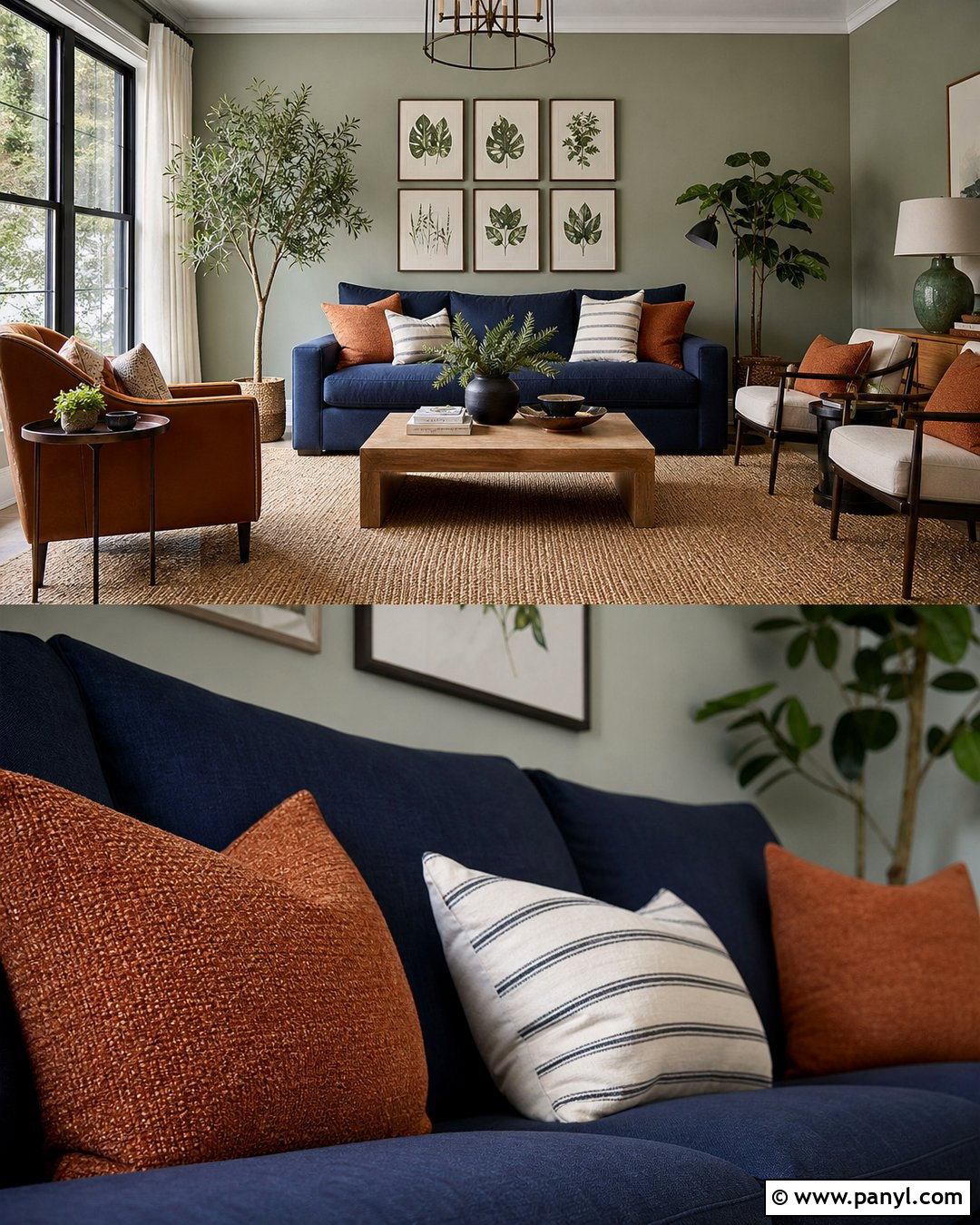
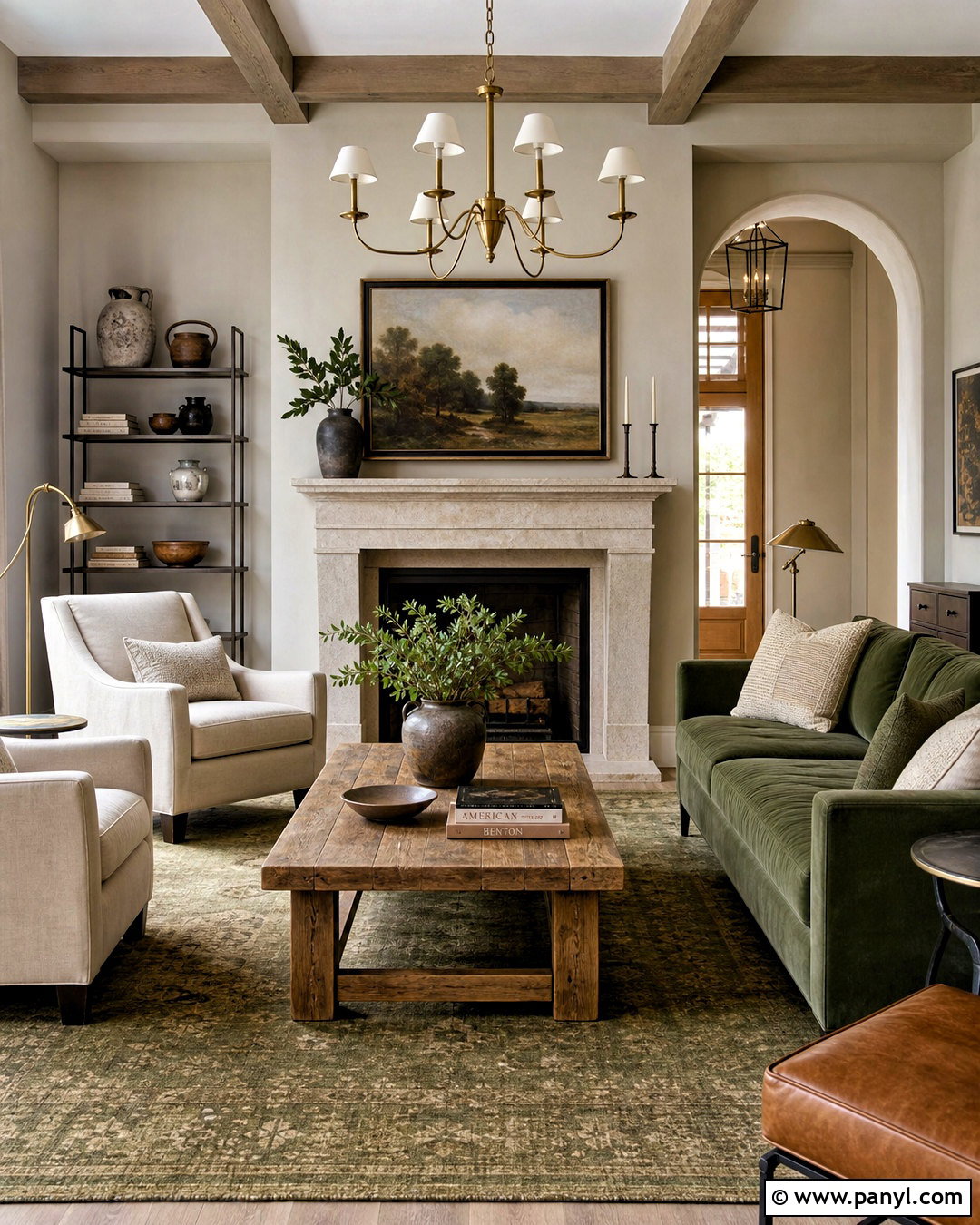
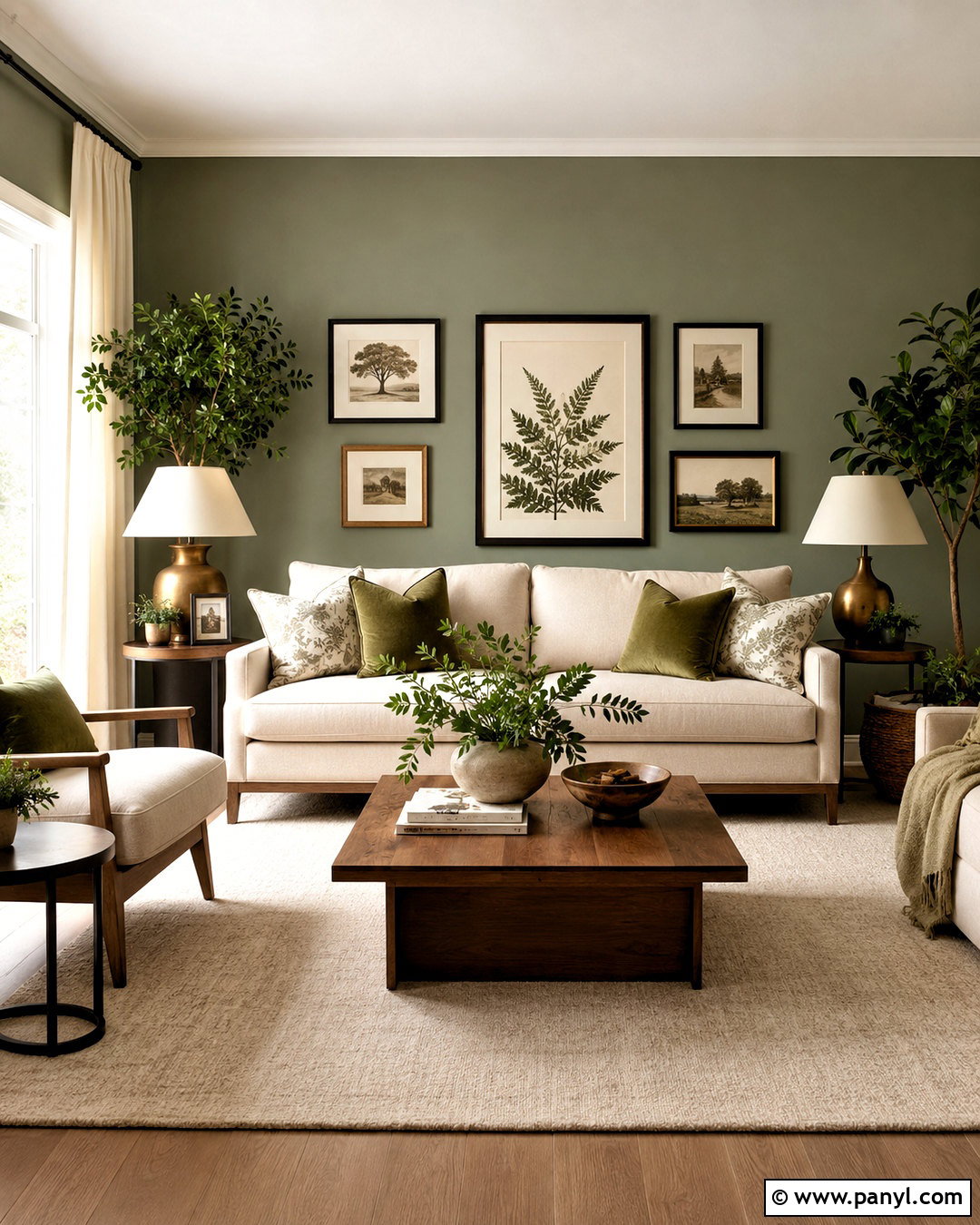
Sage green walls create a gentle connection between a blue couch and natural materials. The muted green works beautifully with navy, denim, and teal upholstery because neither color needs to dominate. Complete the room with an oak coffee table, woven jute rug, and cream linen curtains. Use a rust or cinnamon accent chair to introduce warmth, then repeat that color sparingly in patterned pillows and artwork. Houseplants can reinforce the organic palette, but vary their shapes and heights so the room feels styled rather than crowded. Black metal lighting provides a clean outline against the soft walls. This scheme is ideal for relaxed contemporary, farmhouse, and nature-inspired rooms. Choose a grayed sage rather than a bright mint to maintain a sophisticated, easy-to-decorate backdrop.
11. Olive Green Walls With a Blue Couch
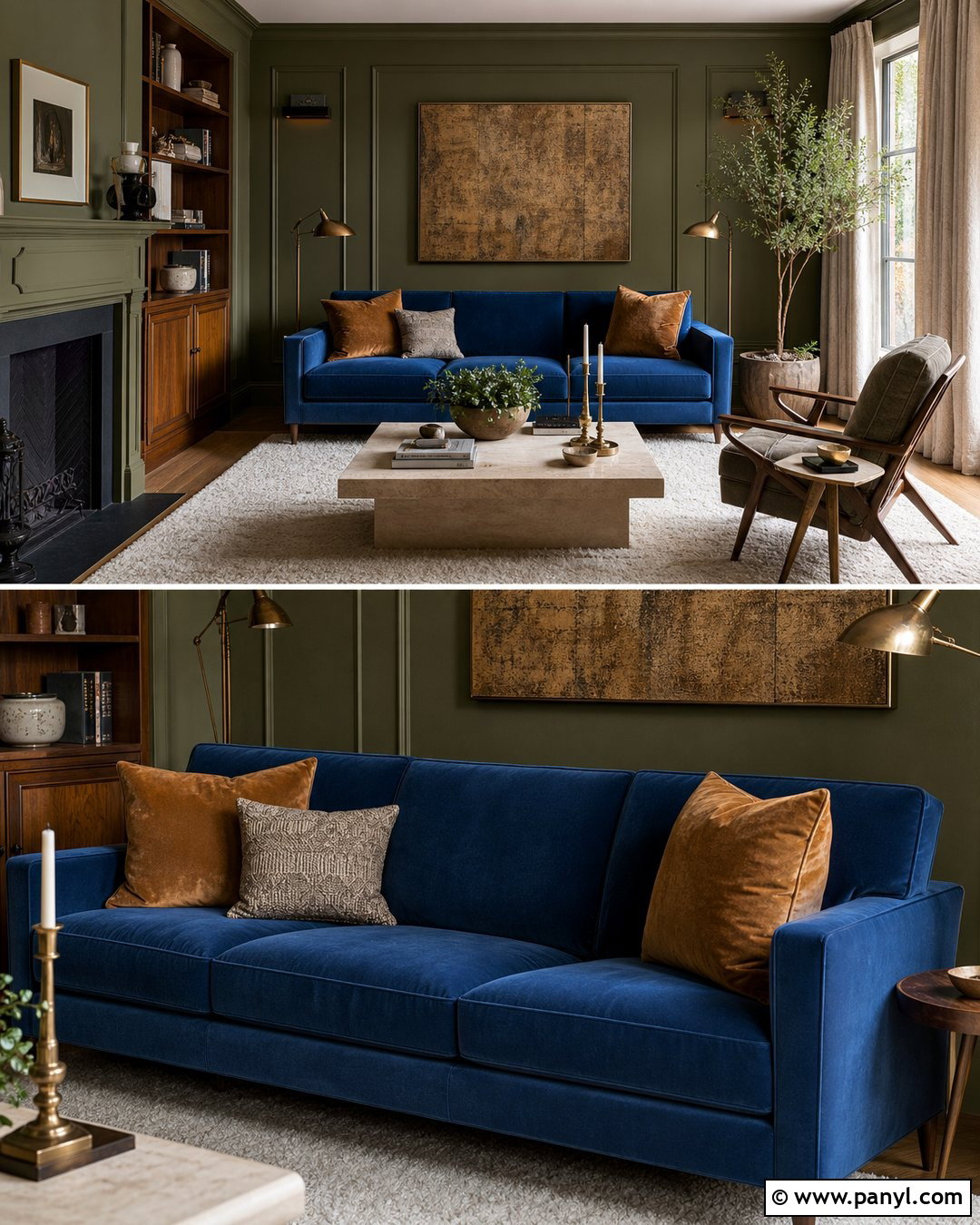
Olive green brings an earthy richness to a room with a navy or sapphire couch. Because both colors have substantial visual weight, incorporate lighter materials across the floor, windows, and larger accessories. An ivory wool rug, oatmeal curtains, and pale stone coffee table can create that balance. Add walnut shelving and aged brass lamps for a warm, established appearance. Pillows in cream, camel, and muted ochre connect the walls to the sofa without introducing too many unrelated colors. This combination works particularly well in traditional and midcentury-inspired spaces. Consider painting the baseboards and window trim olive for a wrapped, cohesive look, while leaving the ceiling warm white. A large landscape painting or textured wall hanging will brighten the area above the couch and interrupt the deeper background color.
12. Forest Green Walls With a Blue Couch
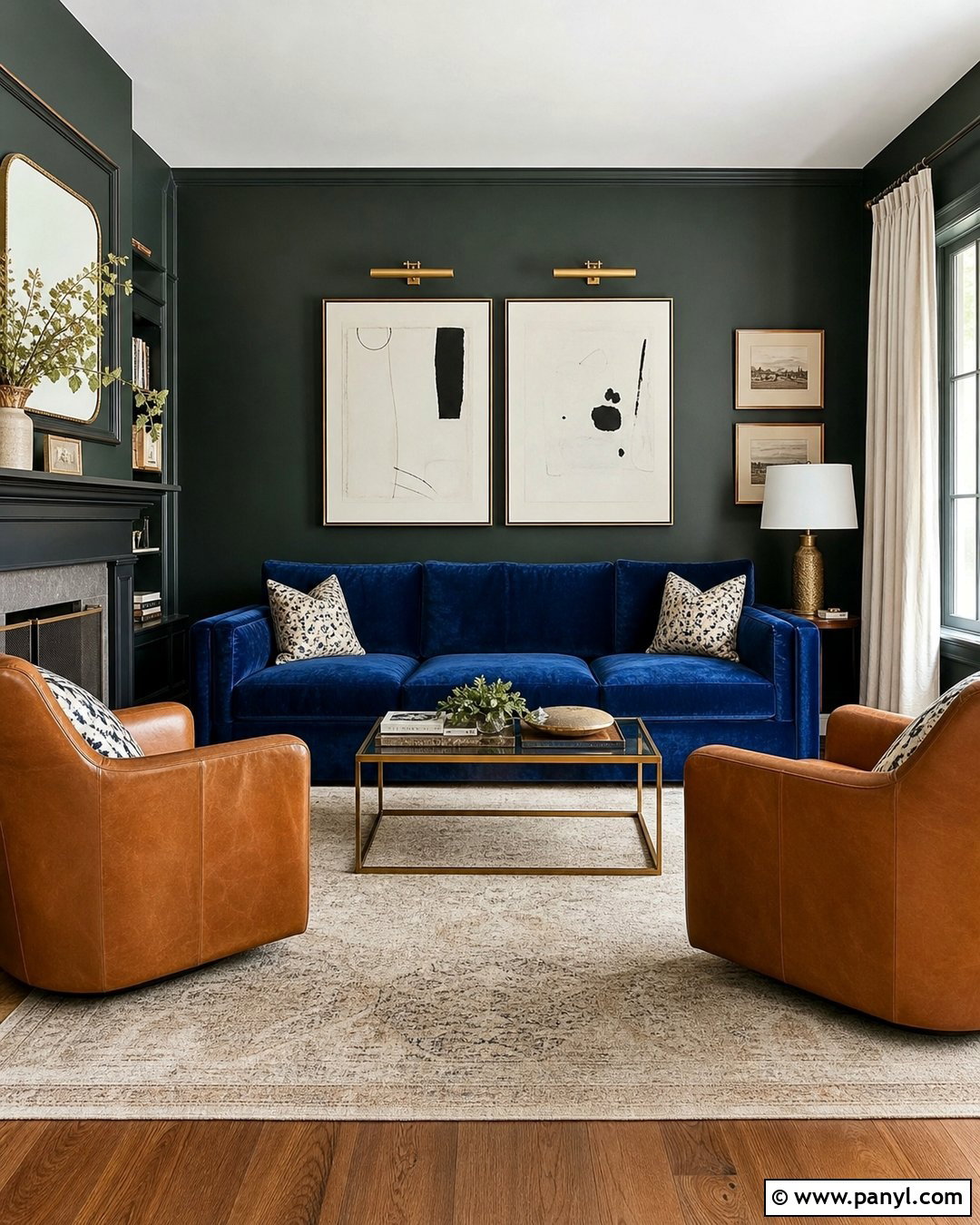
Deep forest green walls provide a striking backdrop for a vivid royal blue or lighter denim couch. The high-contrast pairing feels bold, so the rest of the room should use a controlled collection of warm neutrals. Choose a cream area rug, medium wood flooring, and caramel leather accent chairs. Brass picture lights or wall sconces will stand out beautifully against the green paint. Add artwork with generous white space to prevent the wall from becoming visually dense. Velvet upholstery can enhance the richness of the scheme, while linen curtains keep it approachable. If the room is small, apply forest green to the main wall and adjacent built-ins, then use a warm off-white elsewhere. Repeating green through only one pillow or ceramic piece is enough to connect the seating area.
13. Blush Pink Walls With a Blue Couch
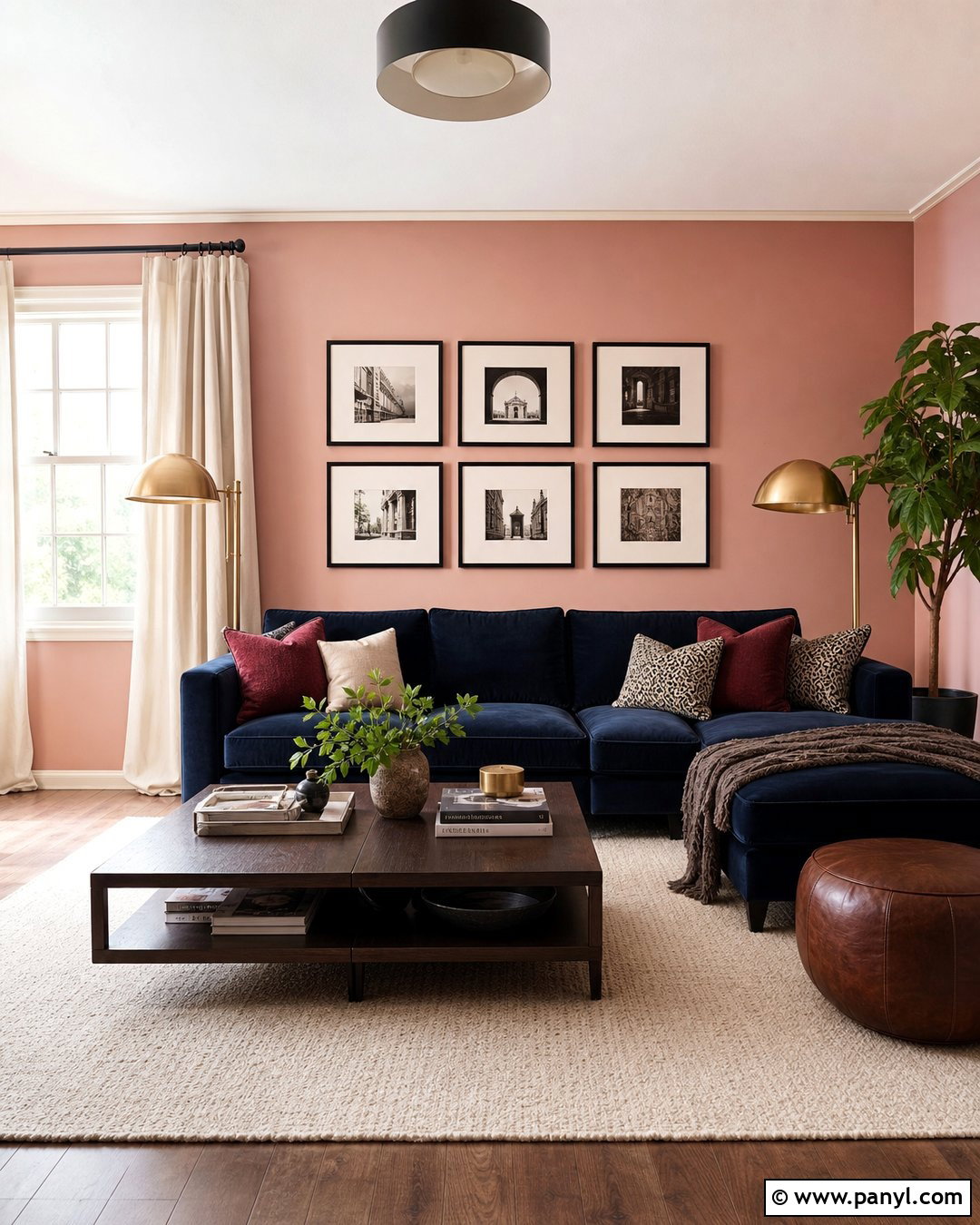
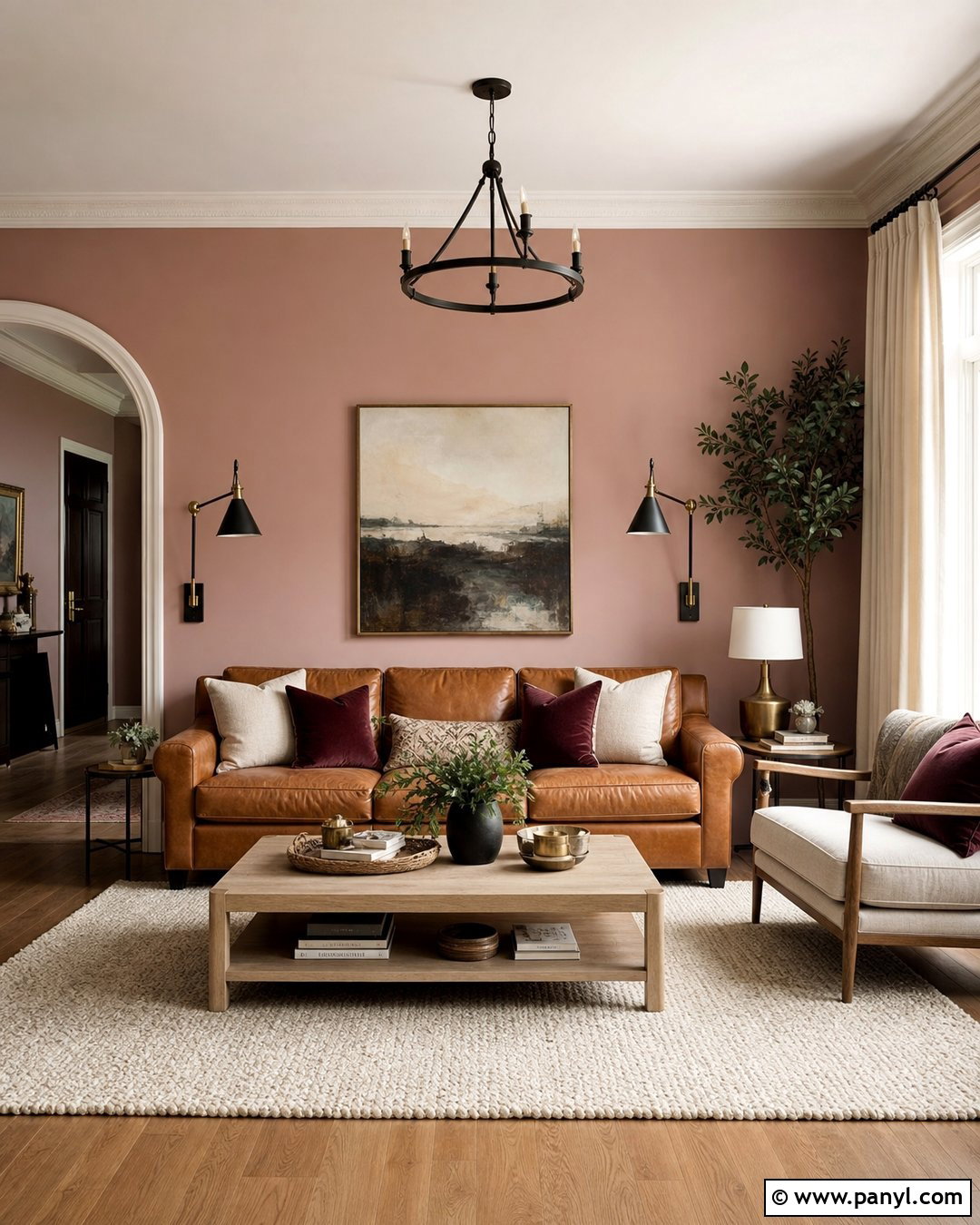
Blush pink walls soften a blue couch and create a warm contrast that feels cheerful without becoming overly sweet. Choose a dusty, beige-based pink rather than a bright pastel. Navy and cobalt sofas provide the clearest definition against this subtle background. Add a cream rug, dark wood coffee table, and ivory curtains to ground the room. Black-framed artwork and a sculptural floor lamp can give the palette a more contemporary direction. Introduce muted burgundy, rust, or plum through a few pillows for additional depth. Avoid filling the space with delicate accessories; substantial shapes and natural materials create better balance. A leather ottoman, chunky wood side table, and woven basket can make the room feel relaxed. Finish with brushed brass accents for a gentle, warm glow.
14. Dusty Rose Walls With a Blue Couch
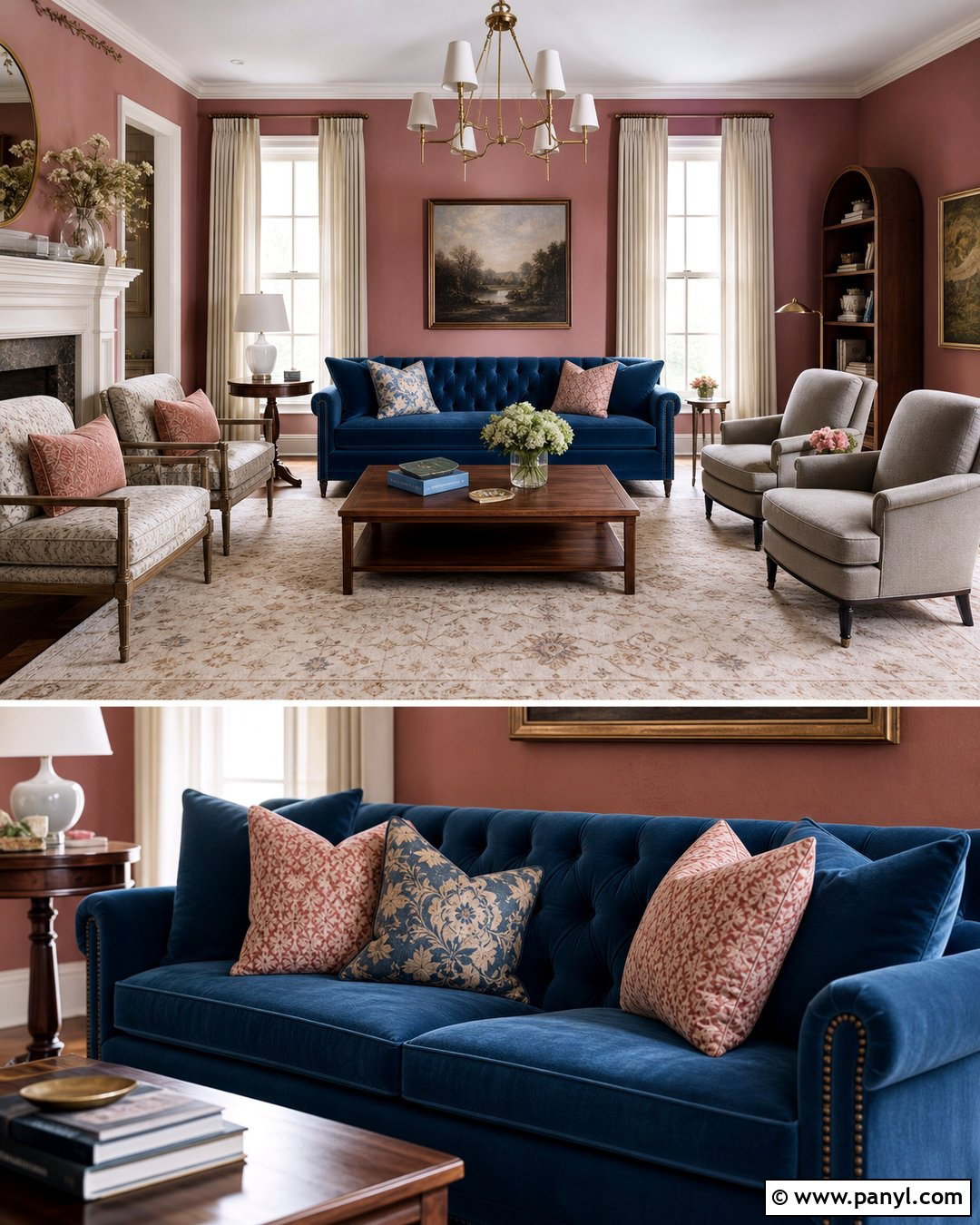
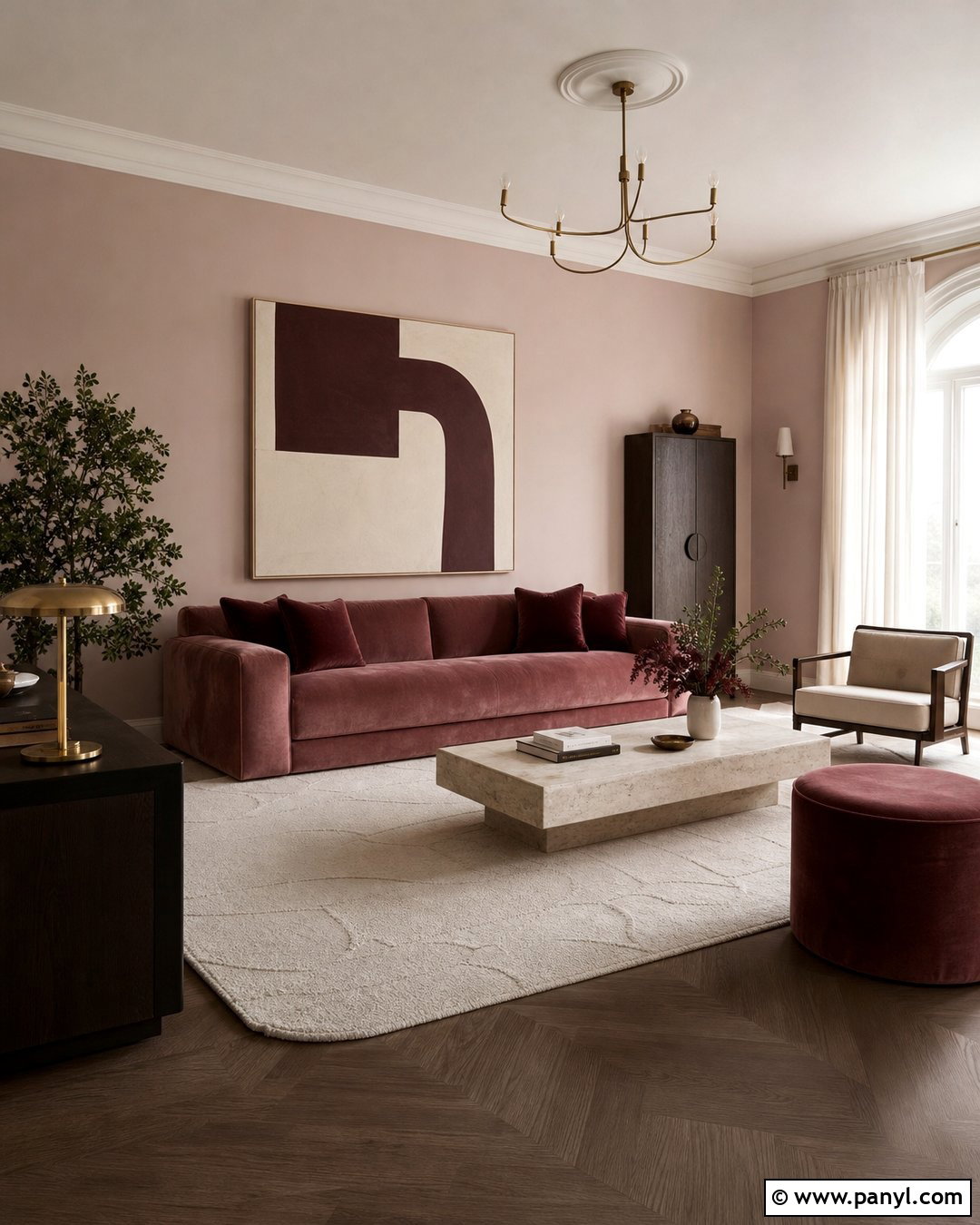
Dusty rose walls form a sophisticated partnership with a dark blue couch because the muted red undertones counterbalance cool upholstery. Build a comfortable living room with a navy velvet sofa, walnut tables, and an oversized cream rug. Add linen curtains in warm white and a pair of upholstered chairs in light taupe. Antique brass lighting and vintage-style artwork enhance the color’s established, slightly traditional character. Use patterned pillows that combine rose, blue, and tan, but keep other accessories quiet. Dark wood or medium oak flooring works equally well with this palette. If painting every wall feels too strong, use dusty rose on the wall behind the couch and carry it onto nearby built-in shelves. Keep surrounding walls warm cream so the feature looks connected rather than isolated.
15. Soft Peach Walls With a Blue Couch
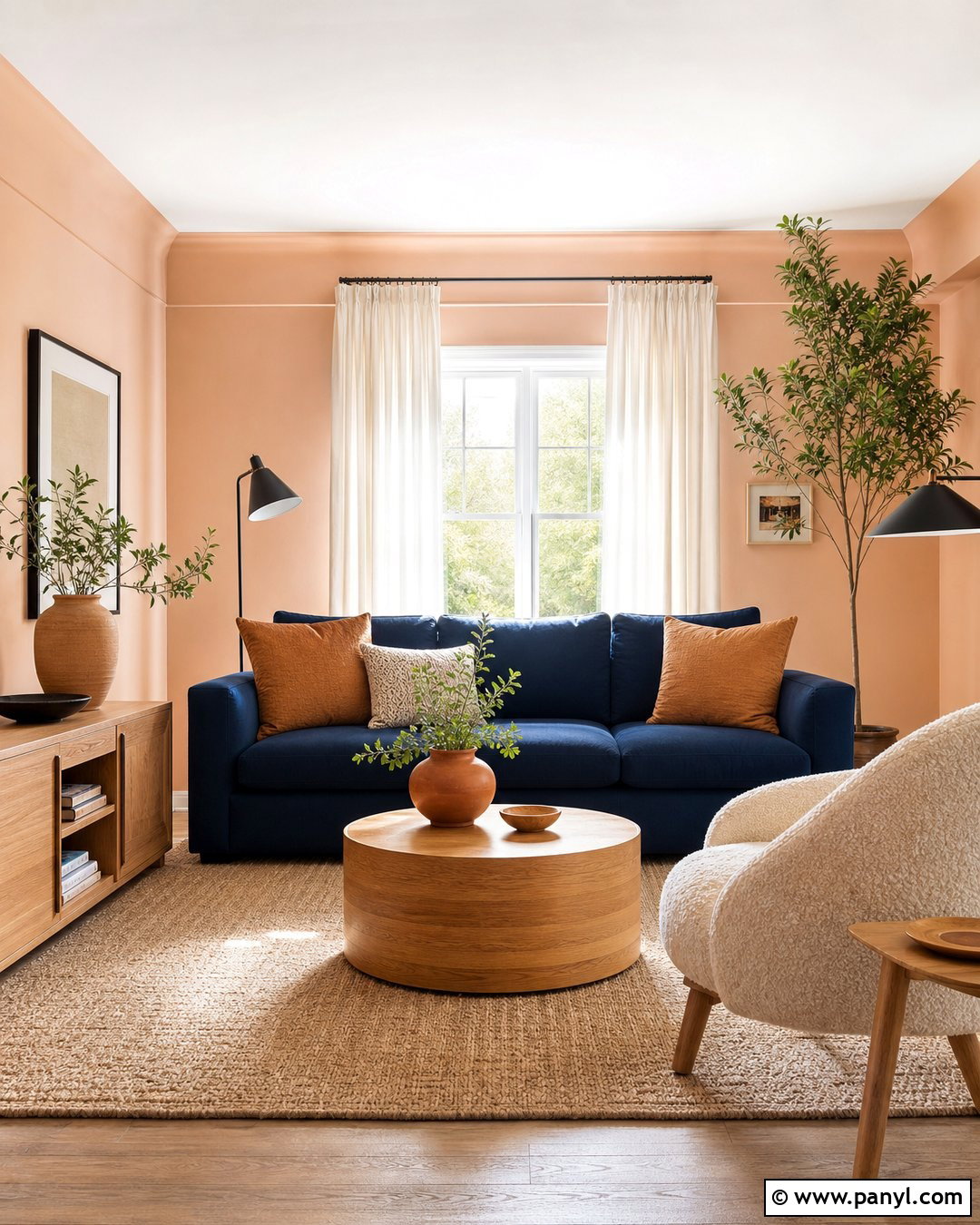
Soft peach walls add a sunny quality to a living room with a navy or medium blue couch. Look for a muted peach that leans toward clay or beige, avoiding shades that appear too orange. Furnish the room with natural oak tables, a creamy boucle chair, and a light woven rug. White linen curtains will filter daylight and maintain the fresh atmosphere. Add terracotta pottery, tan pillows, and small touches of black through frames or lighting. The black accents provide structure so the pastel wall color feels purposeful. Botanical prints can connect the peach background to greenery placed around the room. This combination is especially effective in north-facing spaces where cool daylight benefits from warmer paint. Use warm white on the trim for a softer transition between surfaces.
16. Terracotta Walls With a Blue Couch
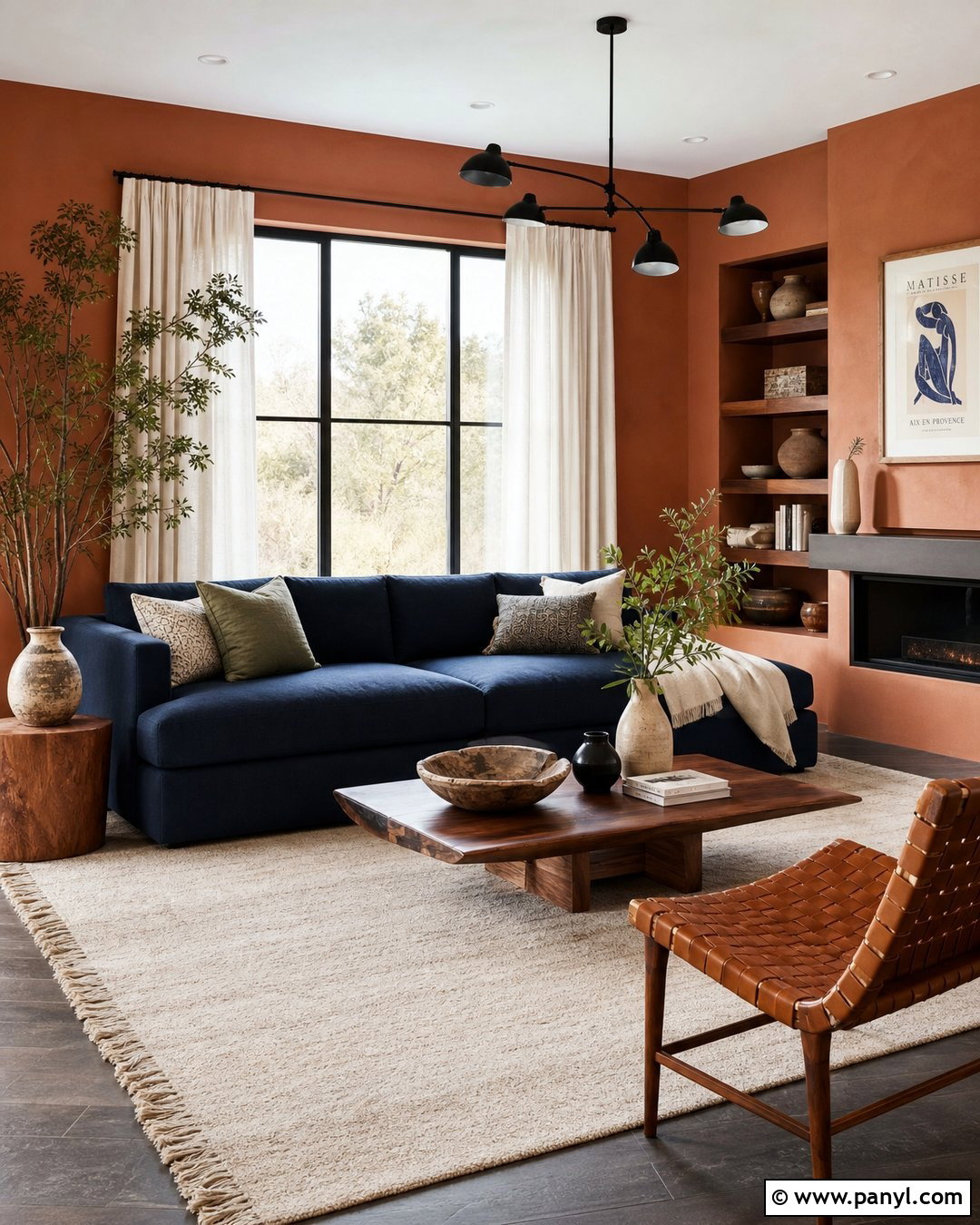
Terracotta walls create one of the warmest and most energetic settings for a deep blue couch. Choose an earthy, softened terracotta instead of a brilliant orange. The pairing already has strong contrast, so complete the room with simple shapes and natural finishes. Place a navy linen sofa on a large cream rug, then add a low walnut coffee table and woven leather chair. Off-white curtains and a pale ceiling will keep the saturated wall color from closing in the space. Repeat terracotta through only one or two small objects rather than covering the couch with matching pillows. Olive green, tan, and ivory accessories will bridge the two main colors. Black metal lighting and graphic artwork can give the final room a clean, modern Southwestern character.
17. Mustard Yellow Walls With a Blue Couch
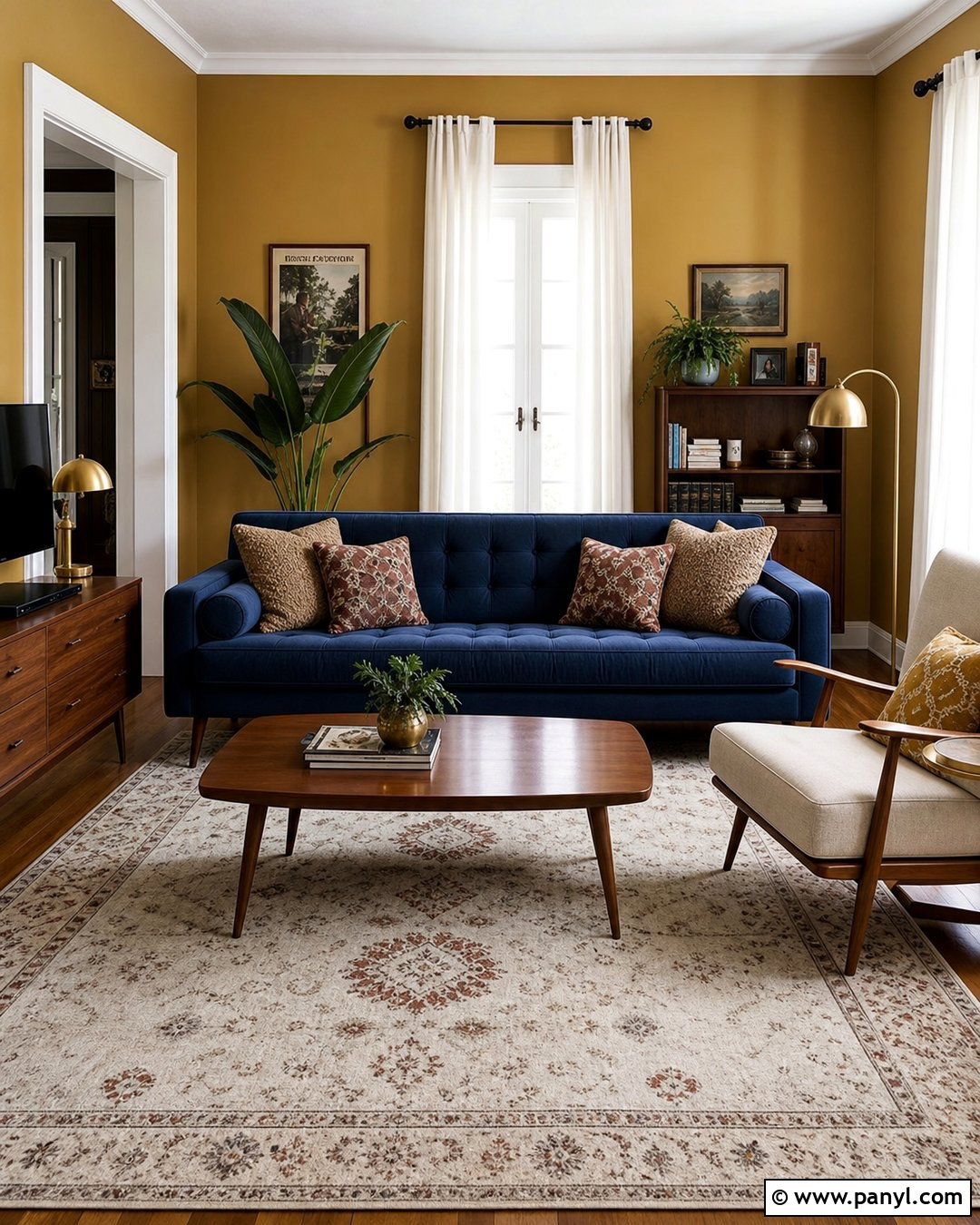
Mustard yellow walls can make a navy couch look exceptionally rich, creating a bold living room with a comfortable vintage influence. Select a muted golden mustard rather than a bright primary yellow. Balance the walls with a generous ivory rug, white ceiling, and light curtains. Midcentury walnut furniture works naturally with this palette, especially pieces with tapered legs and uncomplicated lines. Add a cream lounge chair and a few patterned pillows containing blue, tan, and soft red. Dark green plants can provide a fresh secondary color. Because yellow reflects strongly around a room, test it on several walls before painting. Keep picture frames, lamps, and decorative objects mostly black, brass, or wood. This restraint allows the blue-and-mustard combination to remain expressive without becoming visually overwhelming.
18. Taupe Walls With a Blue Couch
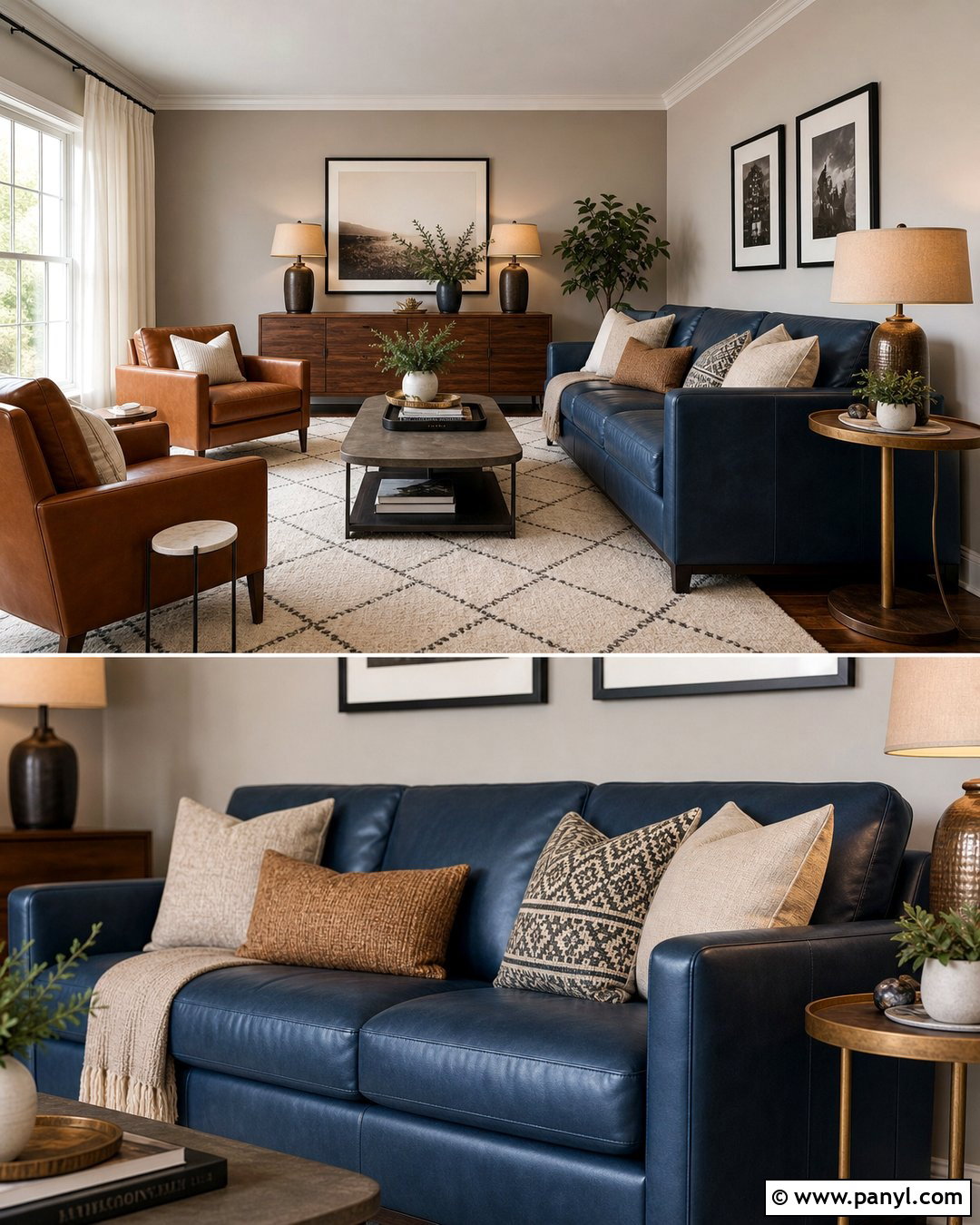
Taupe walls offer a mature neutral backdrop that works especially well with navy, slate blue, and blue-gray upholstery. Unlike basic beige, taupe contains subtle gray or brown notes that give the room more depth. Pair the walls with a tailored blue couch, walnut console, and an ivory rug featuring a restrained geometric pattern. Add two light camel chairs to establish a balanced conversation area. Cream curtains, bronze lamps, and black-framed artwork complete the warm contemporary palette. Use blue sparingly outside the sofa, perhaps in a ceramic bowl or one patterned pillow. Layering linen, wool, leather, and wood will keep the neutral surfaces interesting. Choose a lighter taupe for rooms with limited daylight and a richer mushroom-toned version for open living areas with large windows.
19. Lavender Walls With a Blue Couch
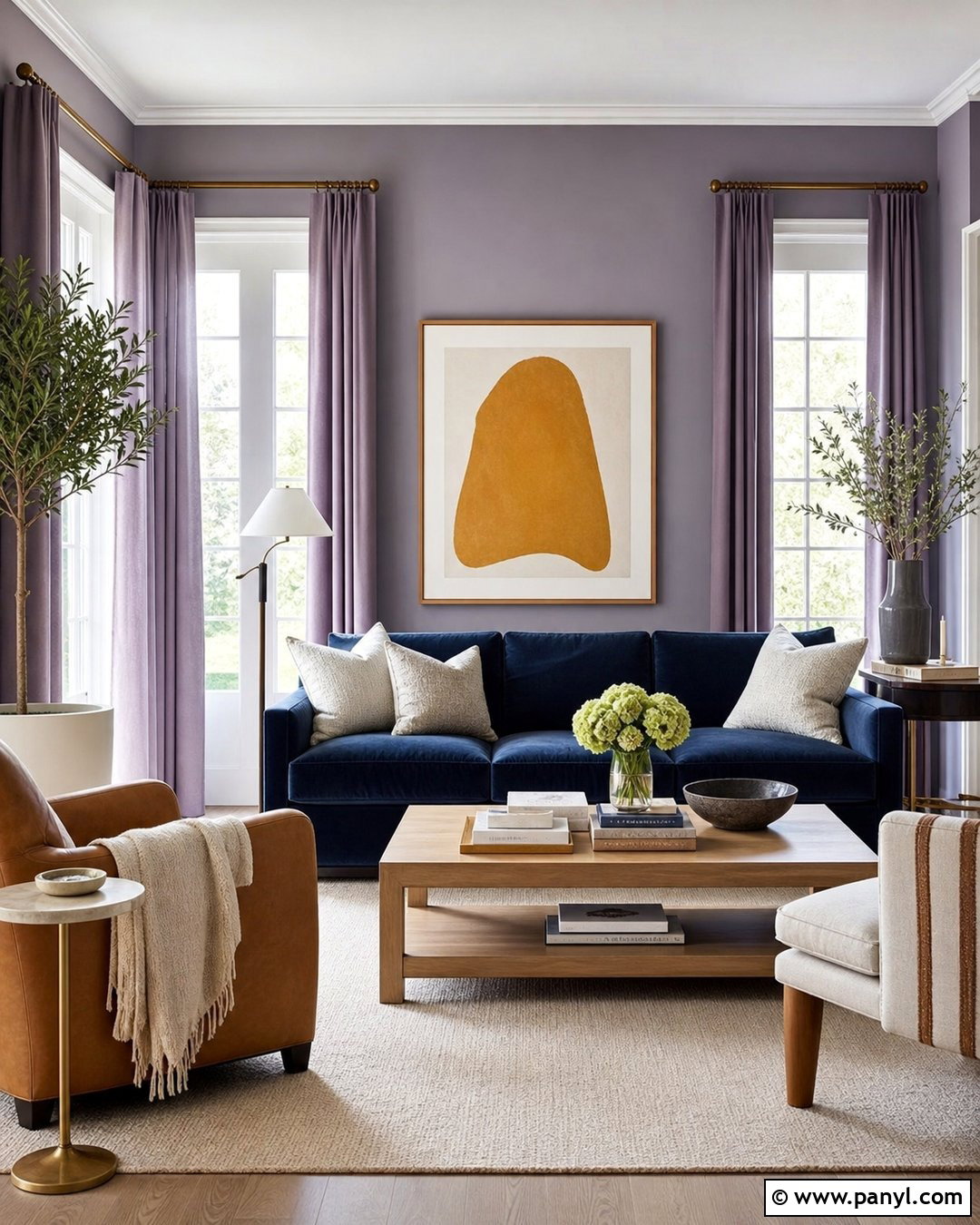
Lavender walls can create a graceful, unexpected background for a dark blue couch. The most livable version is a gray-based lavender that appears muted rather than sugary. Pair it with a navy sofa, warm white rug, and pale oak tables for a light contemporary look. A camel leather chair adds warmth and prevents the purple-blue palette from feeling too cool. Choose curtains close to the wall color for a seamless effect, then define the windows with black or bronze rods. Abstract artwork containing cream, ochre, lavender, and blue will connect the major colors. Keep decorative objects modern and uncomplicated. Textured pillows in oatmeal, plum, and soft gold can add depth. This combination performs particularly well in bright rooms where daylight reveals the wall color’s subtle complexity.
20. Mushroom Walls With a Blue Couch
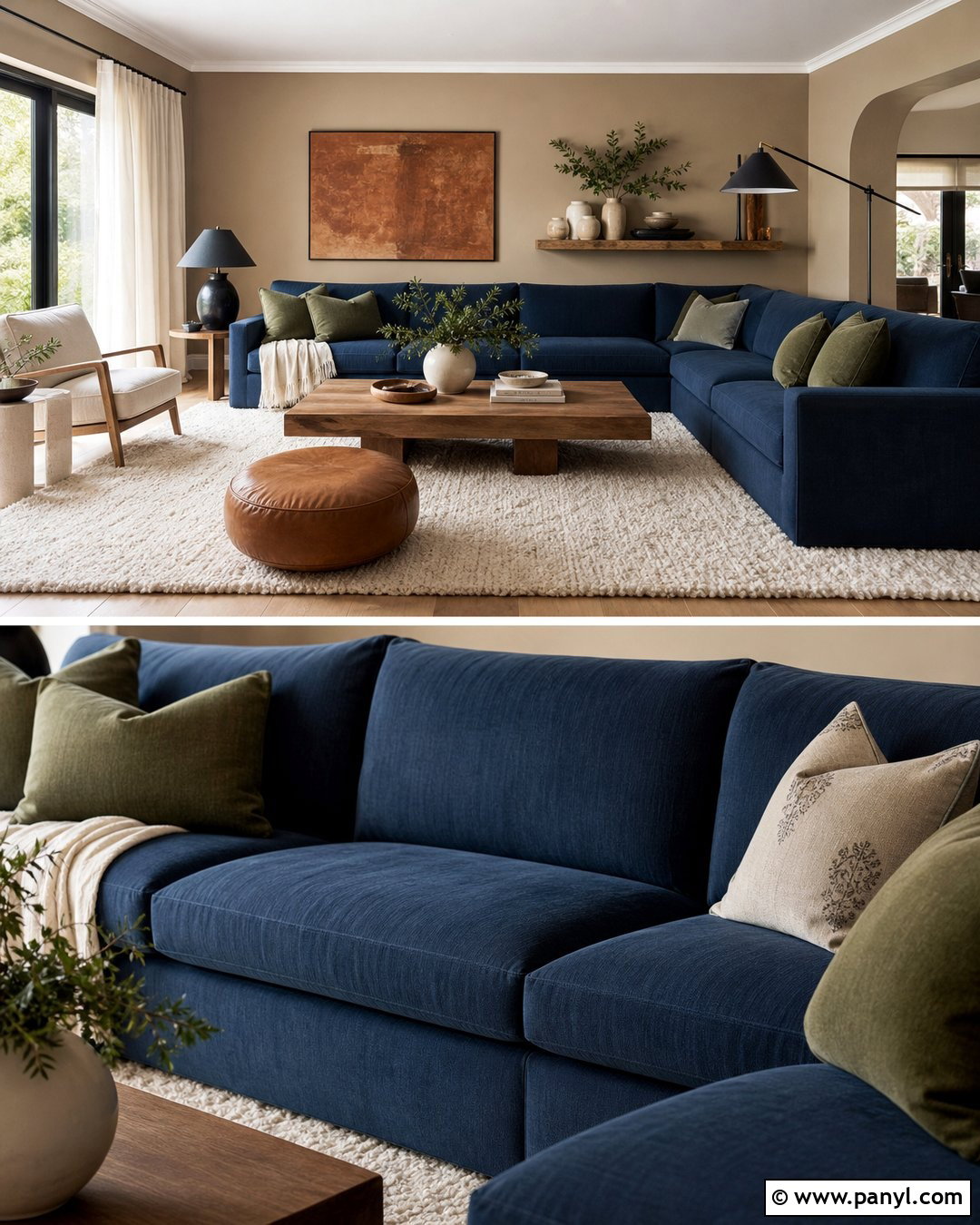
Mushroom paint gives a blue couch an understated, designer-like setting without relying on plain white or gray. This earthy neutral shifts between taupe, beige, and soft brown, making it useful for connecting cool upholstery with warm flooring. Place a deep blue sectional against mushroom walls and anchor it with a large ivory wool rug. Add an oak coffee table, cognac leather ottoman, and linen curtains in a slightly lighter neutral. Matte black lamps and frames supply crisp contrast. Incorporate olive, rust, and cream through pillows, artwork, and pottery to develop a complete natural palette. Keep the furniture arrangement open and practical, with a side table accessible from every seat. The finished room will feel warm, grounded, and adaptable across modern, rustic, or transitional decorating preferences.
Conclusion:
The most successful **20 Blue Couch Wall Color Ideas** do more than coordinate paint with upholstery. They create a complete room where flooring, furniture, lighting, curtains, and accessories support the same atmosphere. Warm white, cream, greige, and mushroom provide flexible backgrounds, while sage, blush, and dusty blue add quiet personality. Charcoal, navy, terracotta, and mustard deliver stronger visual impact. Before choosing, identify whether your couch has warm, cool, green, or gray undertones. Then compare large wall samples during morning, afternoon, and evening light. Select two or three supporting colors and repeat them thoughtfully through textiles and decor. This measured approach will make your blue couch feel intentionally connected to the entire living room.

Related Ideas and Inspiration:

Leave a Reply