
Dark blue walls bring depth, character, and a polished backdrop to almost any room. The key is choosing contrasting colors, materials, and finishes that prevent the space from feeling heavy. Crisp white can create a clean coastal look, while cream, natural wood, and woven textures add warmth. For a bolder room, mustard yellow, terracotta, coral, or blush pink can balance the cool blue with inviting color. Metallic finishes, pale flooring, patterned textiles, and thoughtful lighting also help define the overall mood. Whether you are updating a living room, bedroom, kitchen, bathroom, or office, these complete design schemes show how to coordinate every element. Explore these **20 Dark Blue Wall Contrast Ideas** to create a balanced, stylish space that feels personal and comfortable.

1. Dark Blue Walls With White Furniture
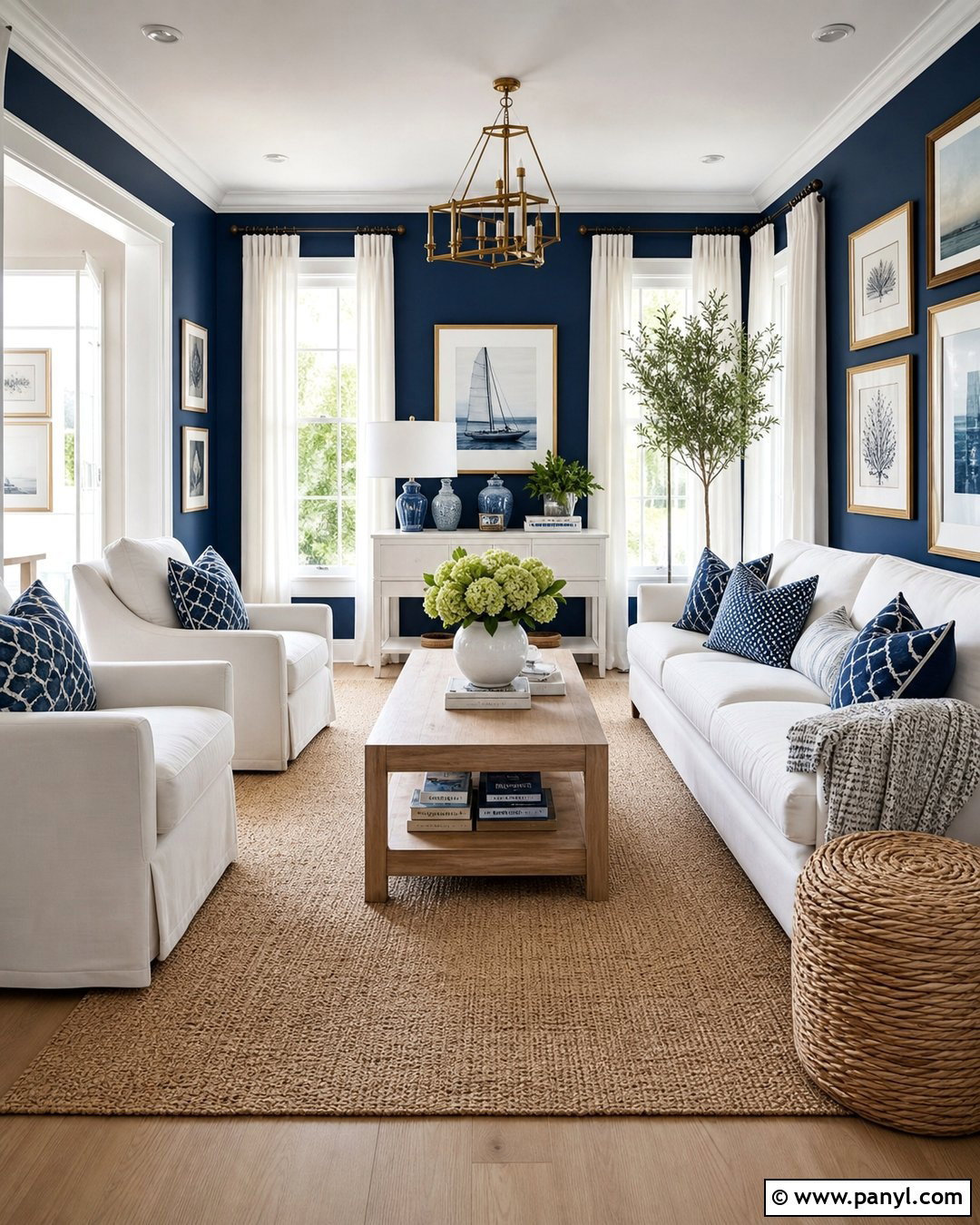
Crisp white furniture gives dark blue walls a clean, high-contrast appearance without making the room feel overly formal. In a living room, position a white linen sofa against the blue backdrop and add two matching armchairs around a pale oak coffee table. Use white trim and a white ceiling to continue the brighter color across the architecture. A light beige area rug softens the transition between the walls and wood flooring. Bring in navy-and-white patterned pillows, simple ceramic lamps, and a few natural woven baskets for texture. Brushed brass frames or hardware can add warmth in small amounts. Keep window treatments airy with white cotton or linen panels that allow plenty of natural light into the room.
2. Dark Blue Walls With Cream Decor
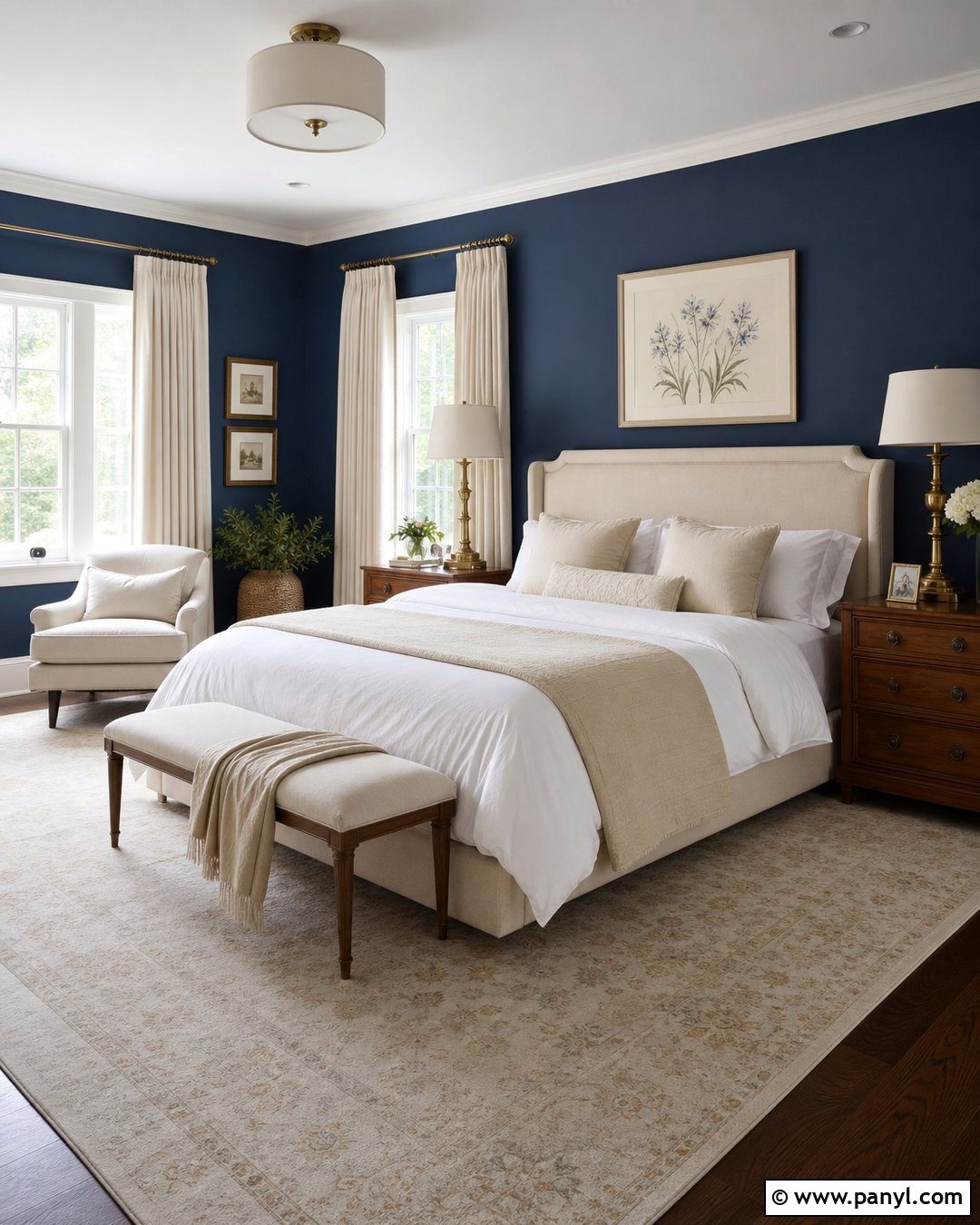
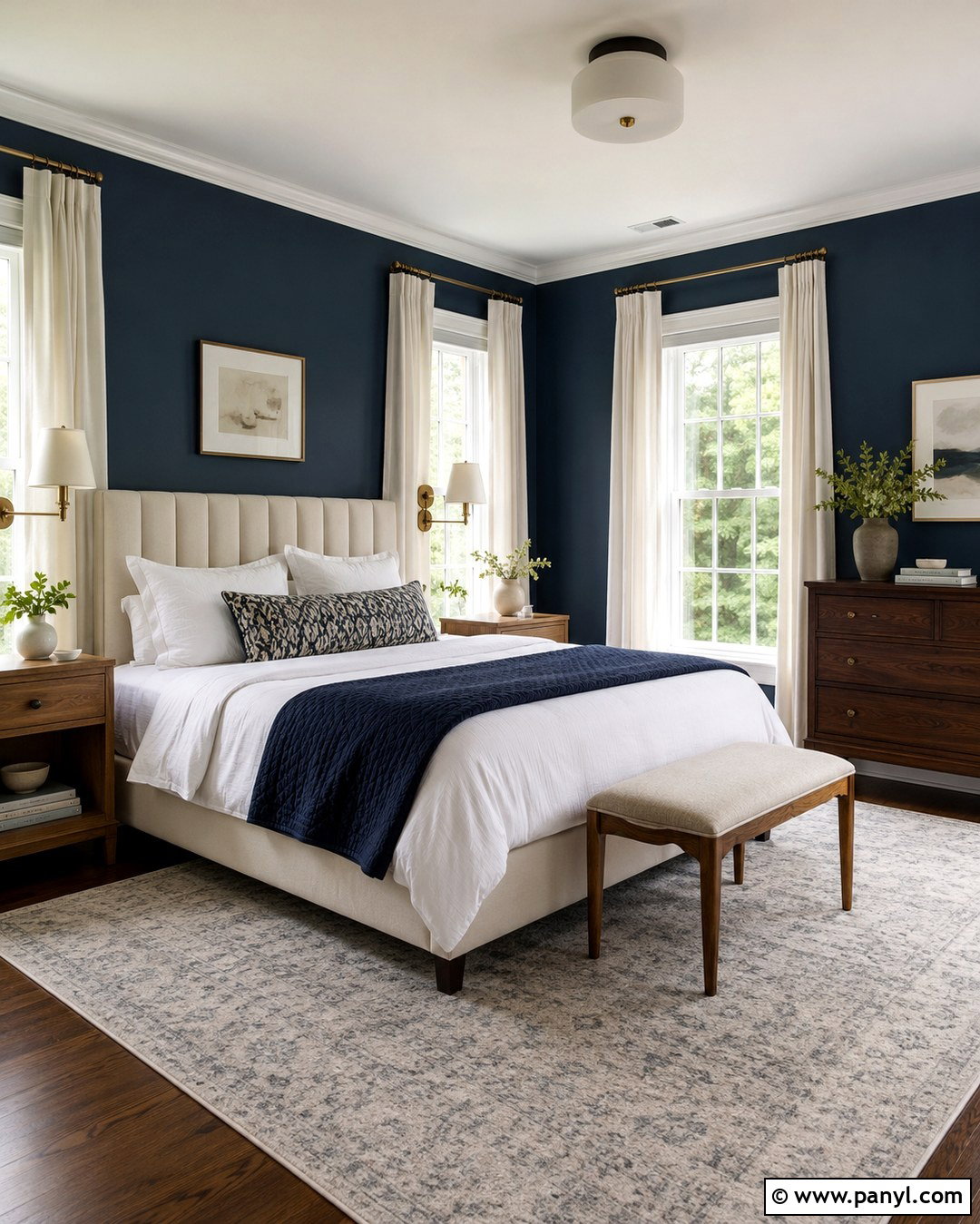
Cream creates a softer contrast than bright white, making it ideal for a comfortable dark blue bedroom. Start with an upholstered cream bed centered against the blue wall. Layer it with ivory bedding, a beige quilt, and subtle navy piping to connect the palette. Choose warm oak nightstands and place ceramic lamps with off-white shades on both sides. A large cream rug under the bed brightens the floor and gives the room a quieter foundation. Add natural linen curtains, antique brass hardware, and framed botanical artwork with cream backgrounds. The finished bedroom should feel warm rather than stark. Avoid introducing too much cool gray, which can flatten the inviting relationship between the rich walls and creamy textiles.
3. Dark Blue Walls With Mustard Yellow
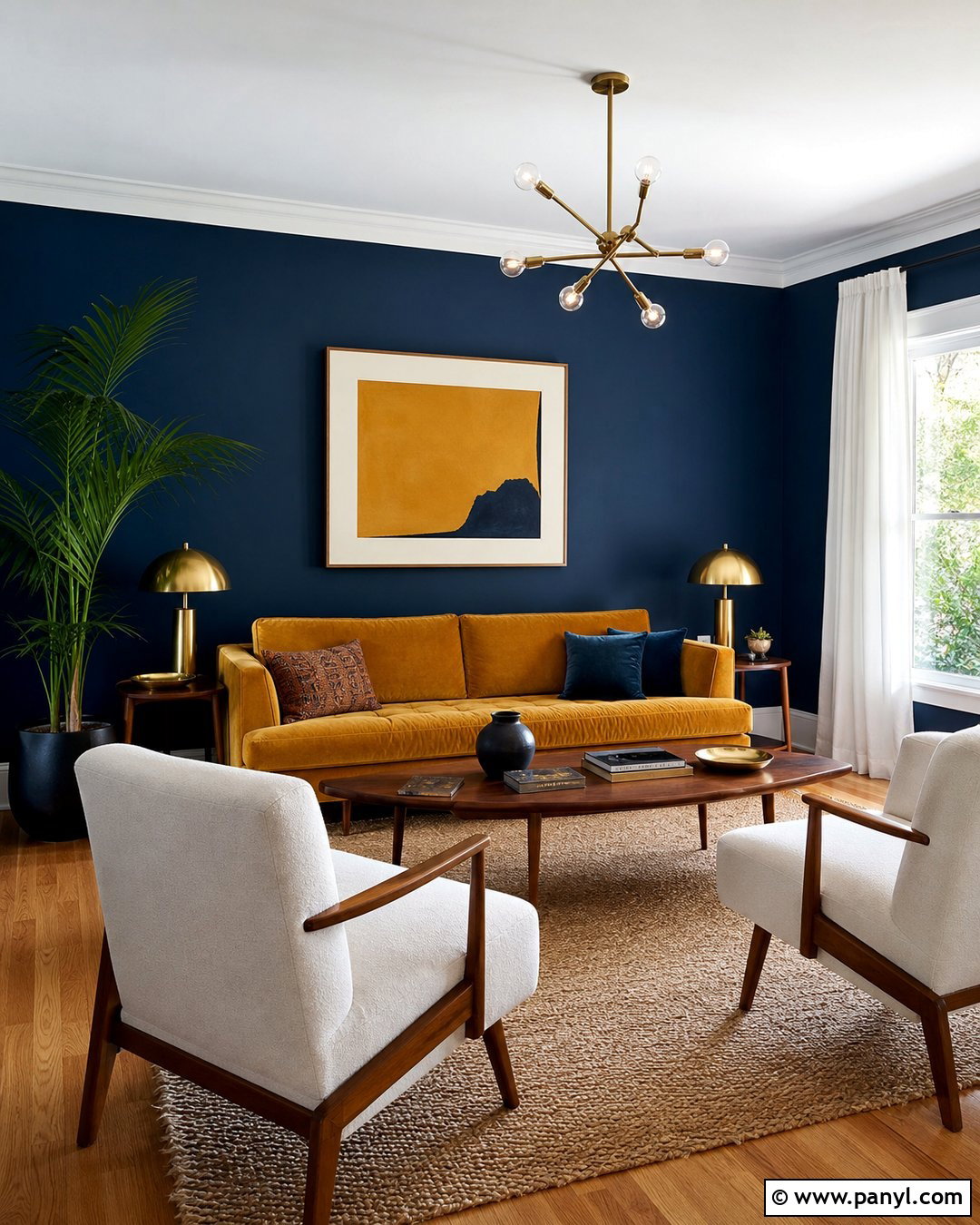
Mustard yellow adds energetic contrast to dark blue walls while remaining warm and grounded. Build the living room around a mustard velvet sofa, then balance its strong color with neutral oatmeal armchairs and a natural jute rug. A dark walnut coffee table adds depth without competing with the main palette. Use mustard again in a patterned pillow or ceramic vase, but keep these accents limited so the sofa remains the focal point. White trim and pale curtains will brighten the edges of the room. Complete the look with brass lighting, abstract artwork containing navy and ochre, and a few leafy green plants. This combination works especially well in a cheerful midcentury-inspired space with clean furniture shapes.
4. Dark Blue Walls With Terracotta Accents
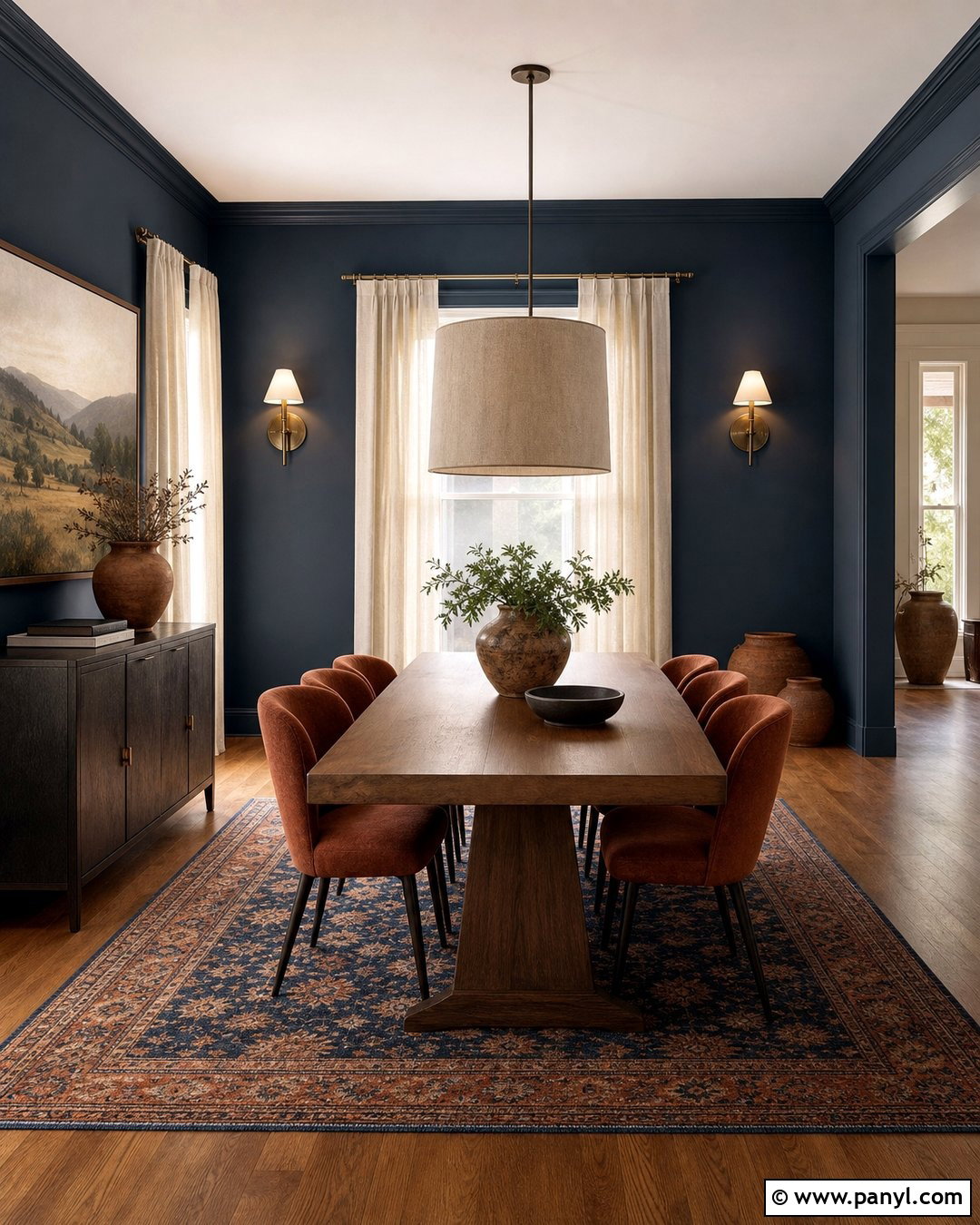
The earthy warmth of terracotta provides a natural counterpoint to cool dark blue walls. In a dining room, pair the painted walls with a medium-tone wood table and rust-colored upholstered chairs. Place a faded terracotta, cream, and navy rug beneath the dining set to connect the colors. A large linen drum pendant keeps the room relaxed, while aged brass sconces bring warm illumination to the blue surface. Style a sideboard with handmade clay vessels, simple greenery, and framed landscape prints. Warm white curtains can prevent the palette from becoming too dark. Select matte, textured materials rather than shiny finishes so the finished dining room feels organic, welcoming, and easy to live with throughout the year.
5. Dark Blue Walls With Blush Pink
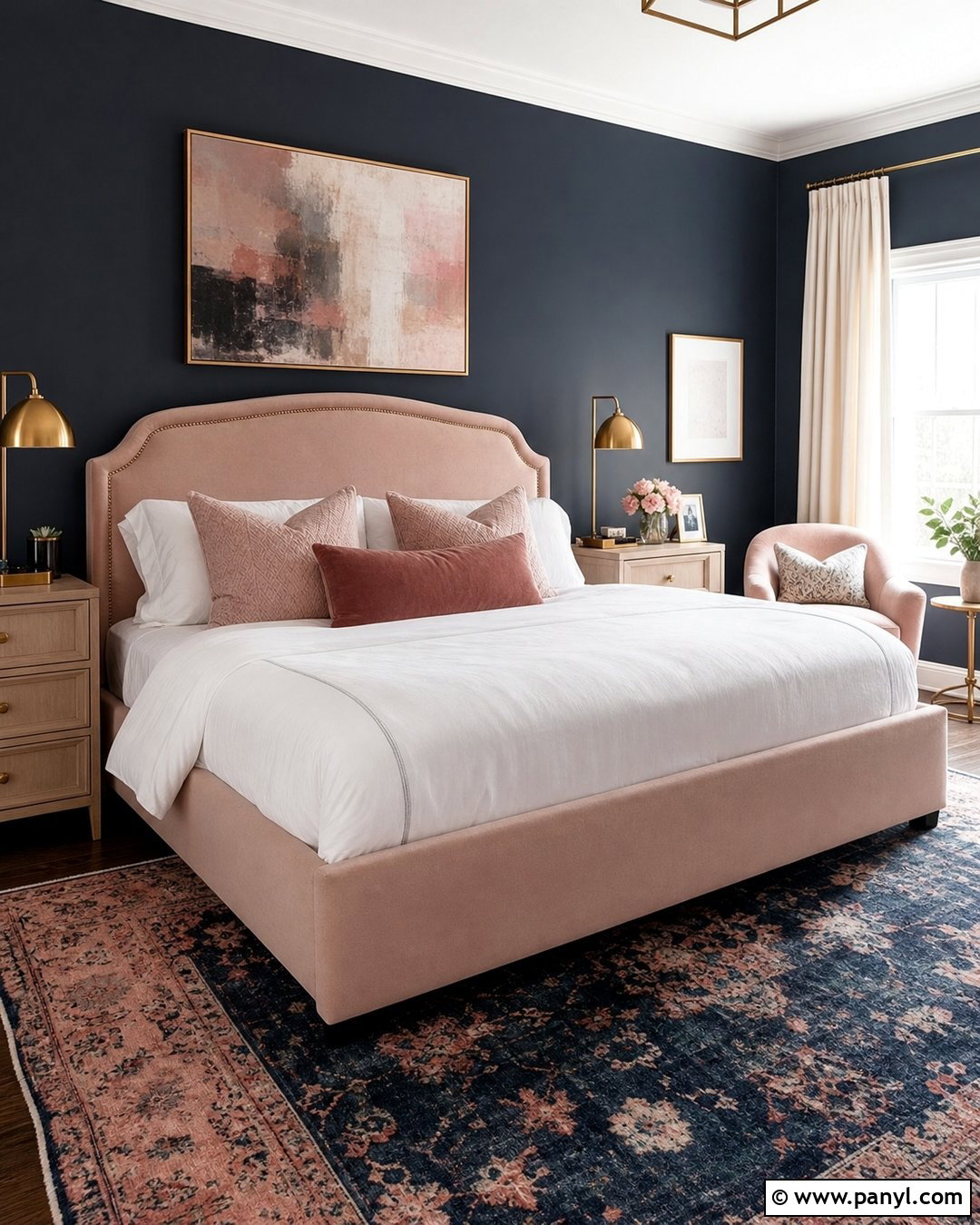
Blush pink can soften a dark blue bedroom without making the design feel overly sweet. Use the blue walls as a dramatic envelope, then introduce a light blush upholstered headboard and layered white bedding. Add dusty rose pillows, a muted pink throw, and a vintage-inspired rug containing navy, cream, and faded rose. Pale wood nightstands keep the room visually light, while brushed brass lamps offer a warm reflective detail. Choose simple ivory curtains and streamlined furniture to maintain a grown-up appearance. Artwork featuring soft abstract shapes can repeat both colors without becoming distracting. For extra balance, include a small amount of charcoal through picture frames or a bench, giving the romantic palette a tailored, contemporary edge.
6. Dark Blue Walls With Sage Green
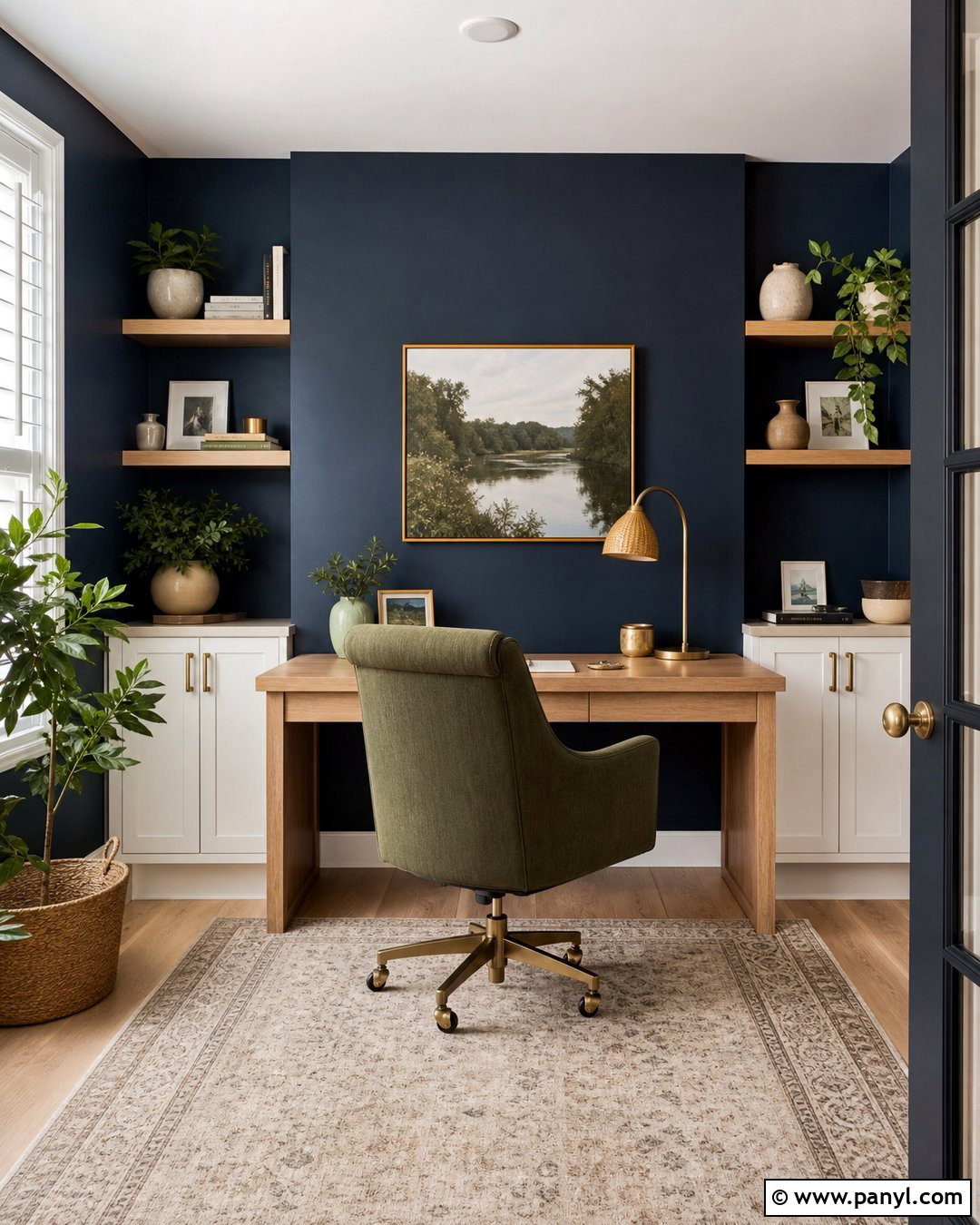
Sage green introduces a gentle botanical contrast that makes dark blue walls feel calmer and more connected to nature. Create a practical home office with a sage upholstered desk chair, light oak desk, and warm white storage cabinets. Use the dark blue wall behind the desk as a focused background for pale wood shelves. Decorate them with cream pottery, green books, and a few trailing plants. A flat-woven rug in beige, sage, and blue brings the palette down to the floor. Select a brass desk lamp and woven window shade for additional warmth. Keep the layout uncluttered and symmetrical. The resulting office feels focused yet comfortable, with enough color variation to remain interesting during long working hours.
7. Dark Blue Walls With Olive Green
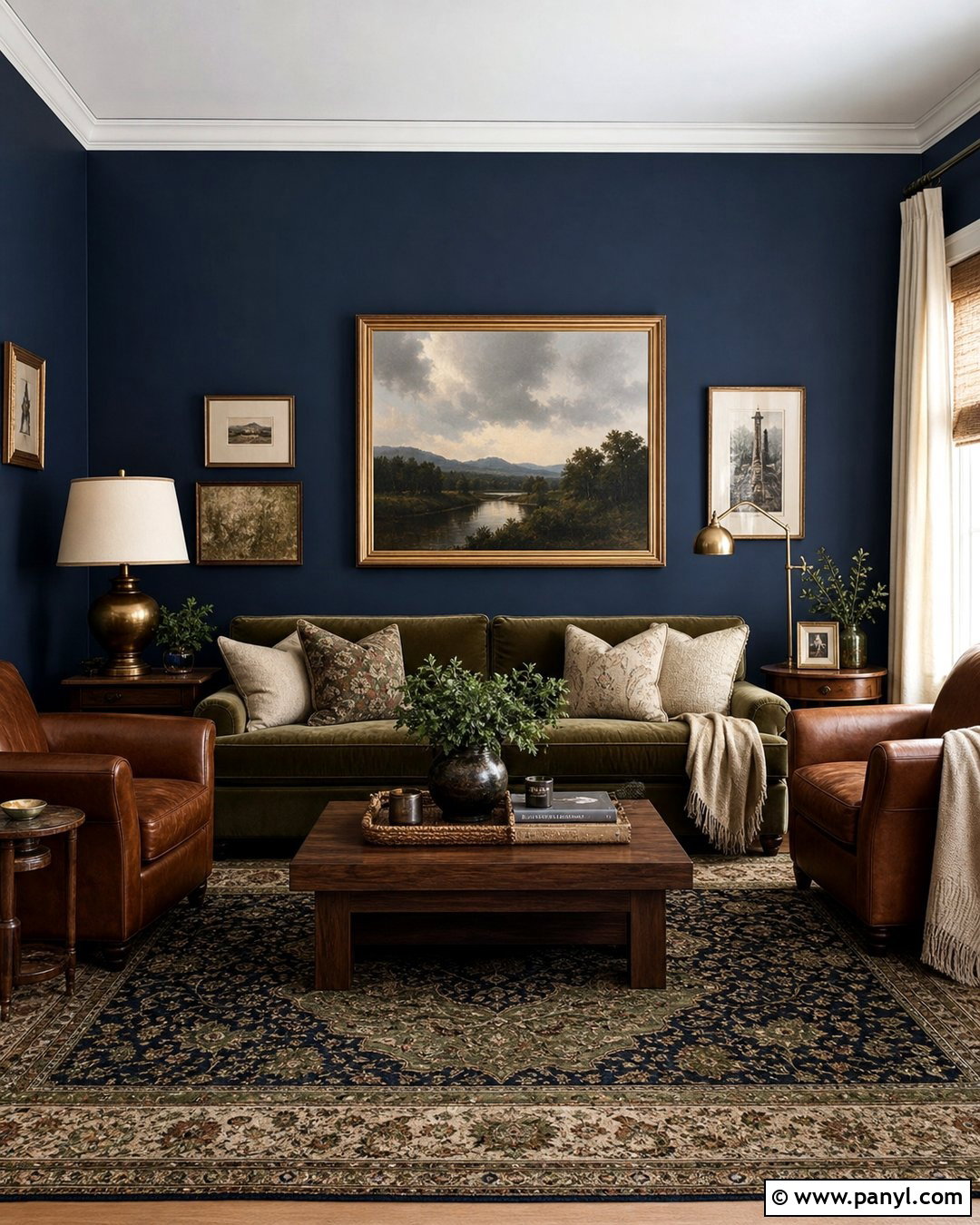
Olive green produces a richer, more dramatic contrast than pale sage, making it suitable for a layered living room. Place an olive velvet sofa in front of the dark blue walls and add cognac leather accent chairs on either side. A large traditional rug with faded blue, olive, tan, and ivory tones will unite the stronger colors. Choose a medium walnut coffee table and bronze floor lamps to reinforce the warm, collected appearance. Off-white curtains and a light ceiling keep the upper part of the room open. Finish with landscape paintings, patterned cushions, and dark wood frames. Because both main colors are deep, use olive selectively and include enough cream textiles to maintain visual separation between furniture and walls.
8. Dark Blue Walls With Burnt Orange
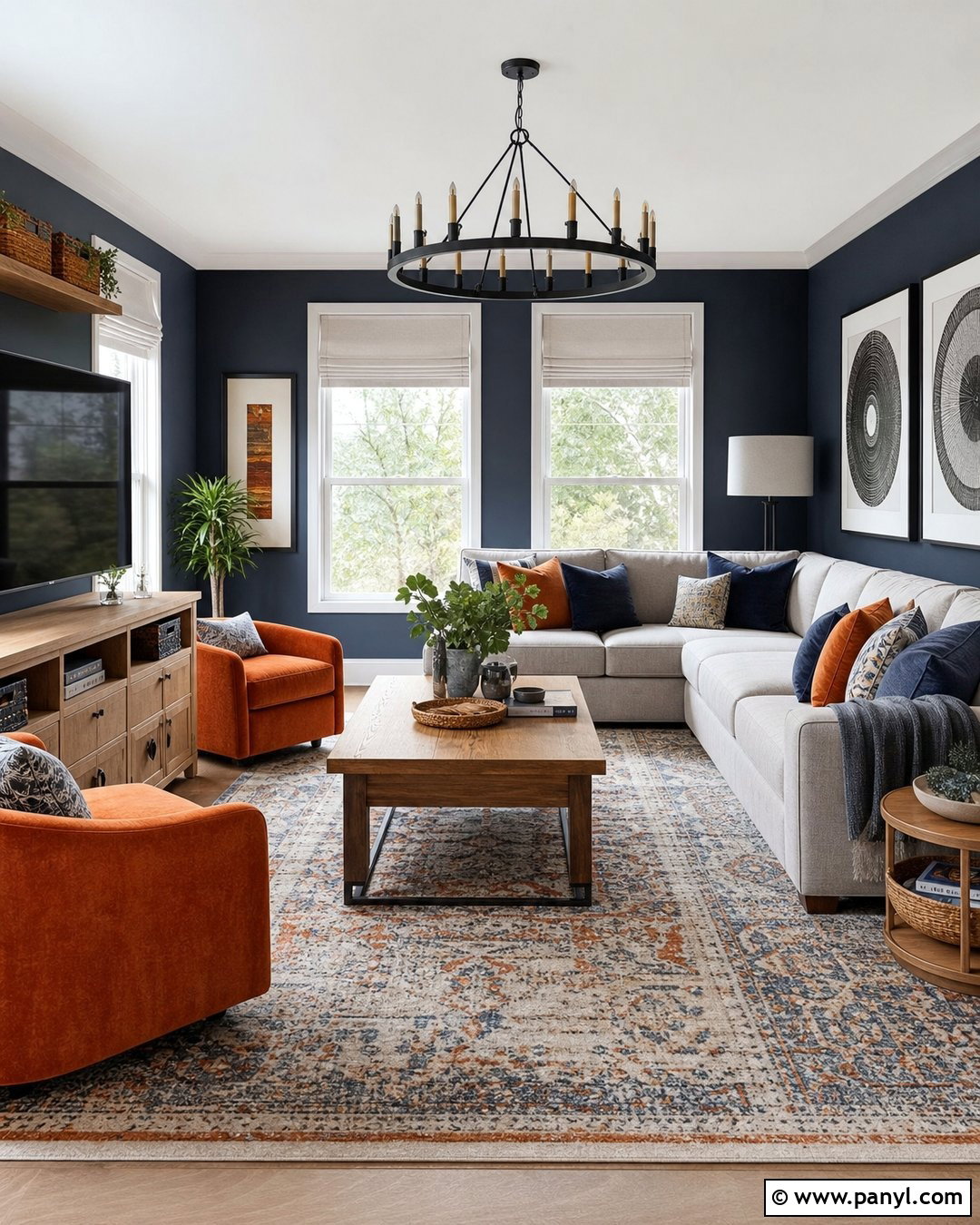
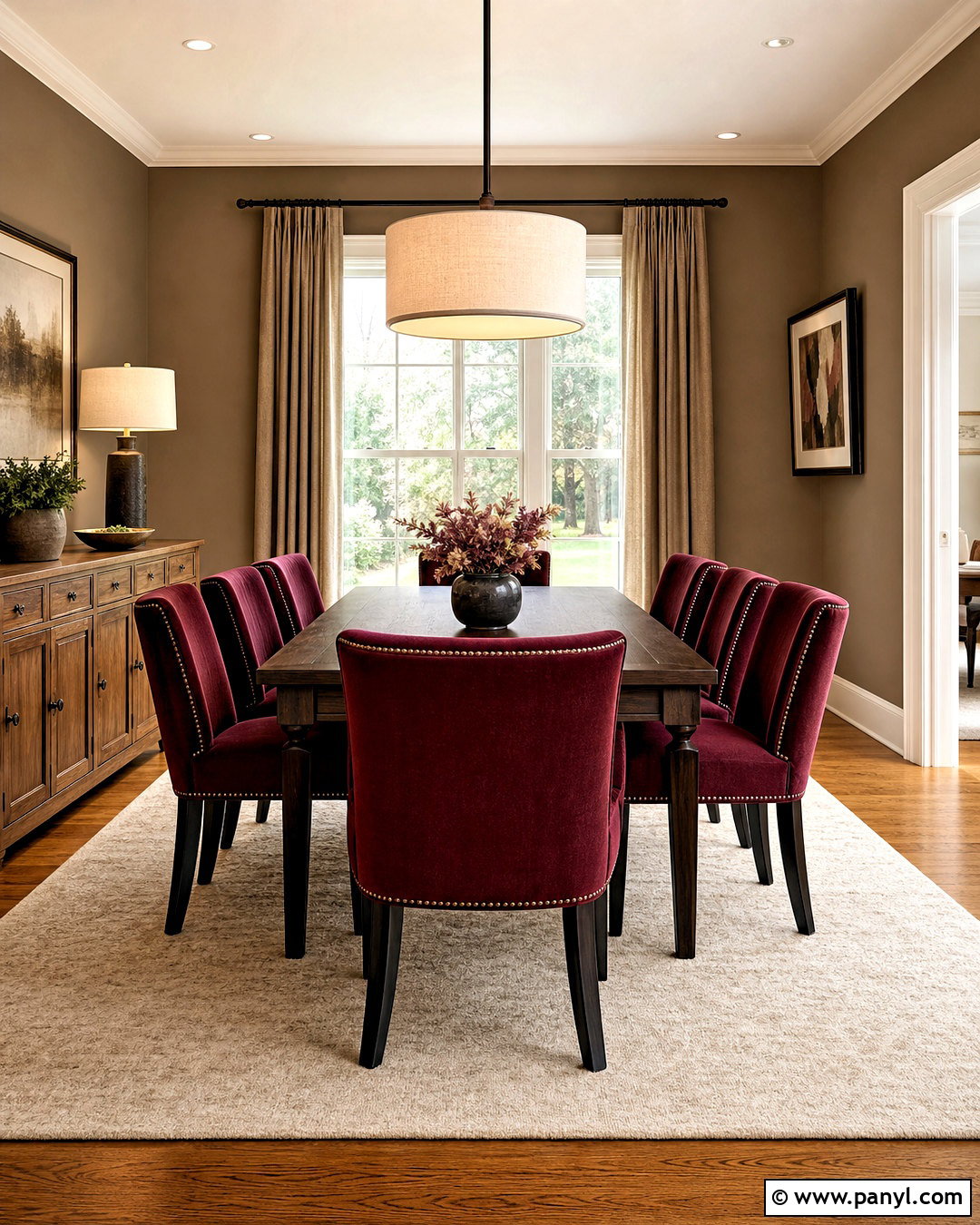
For a confident family room, pair dark blue walls with controlled touches of burnt orange. Begin with a soft greige sectional that provides a neutral break between the saturated colors. Introduce orange through two upholstered accent chairs, a large patterned rug, and a few striped pillows. Use medium oak tables and woven baskets to make the scheme feel casual and practical. White trim, pale Roman shades, and a warm white ceiling reflect light around the room. Black metal lighting can sharpen the look, while framed graphic artwork repeats small areas of blue and orange. Keep large storage pieces close to the wall color so they visually recede. The complete space feels lively, balanced, and suitable for everyday relaxation.
9. Dark Blue Walls With Camel Leather
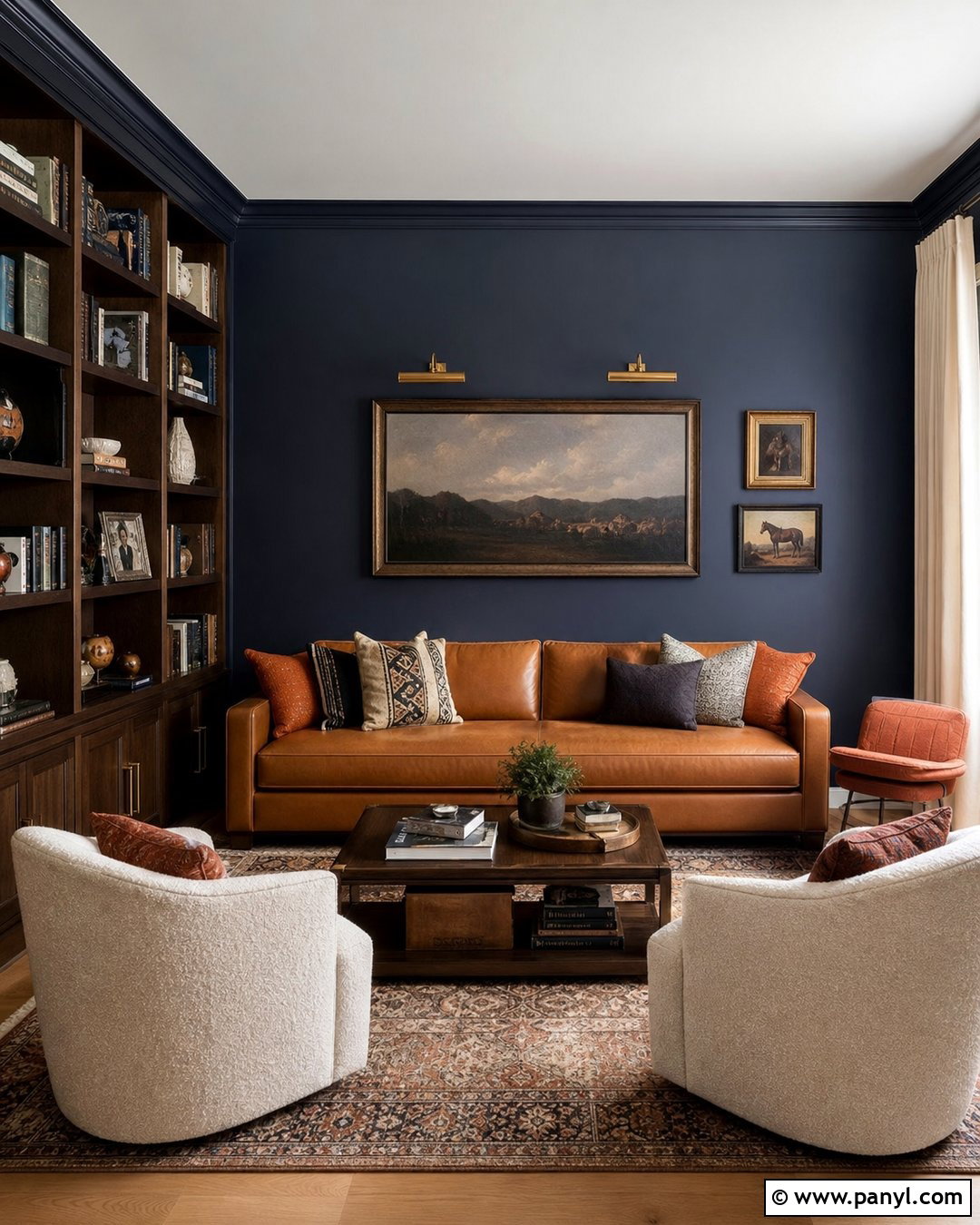
Camel leather brings immediate warmth and texture to a den with dark blue walls. Center the design around a streamlined camel leather sofa, then add a pair of cream boucle chairs and a vintage-style wool rug. A walnut coffee table and matching bookcase deepen the room’s natural material palette. Install aged brass picture lights over framed artwork to highlight the walls and create comfortable evening illumination. Use off-white curtains rather than gray ones, since warmer neutrals complement the leather more naturally. A few navy pillows can connect the sofa to the background, while rust and tan accents add subtle variation. The final room should feel tailored and inviting, with a classic library character that remains practical for modern living.
10. Dark Blue Walls With Light Gray
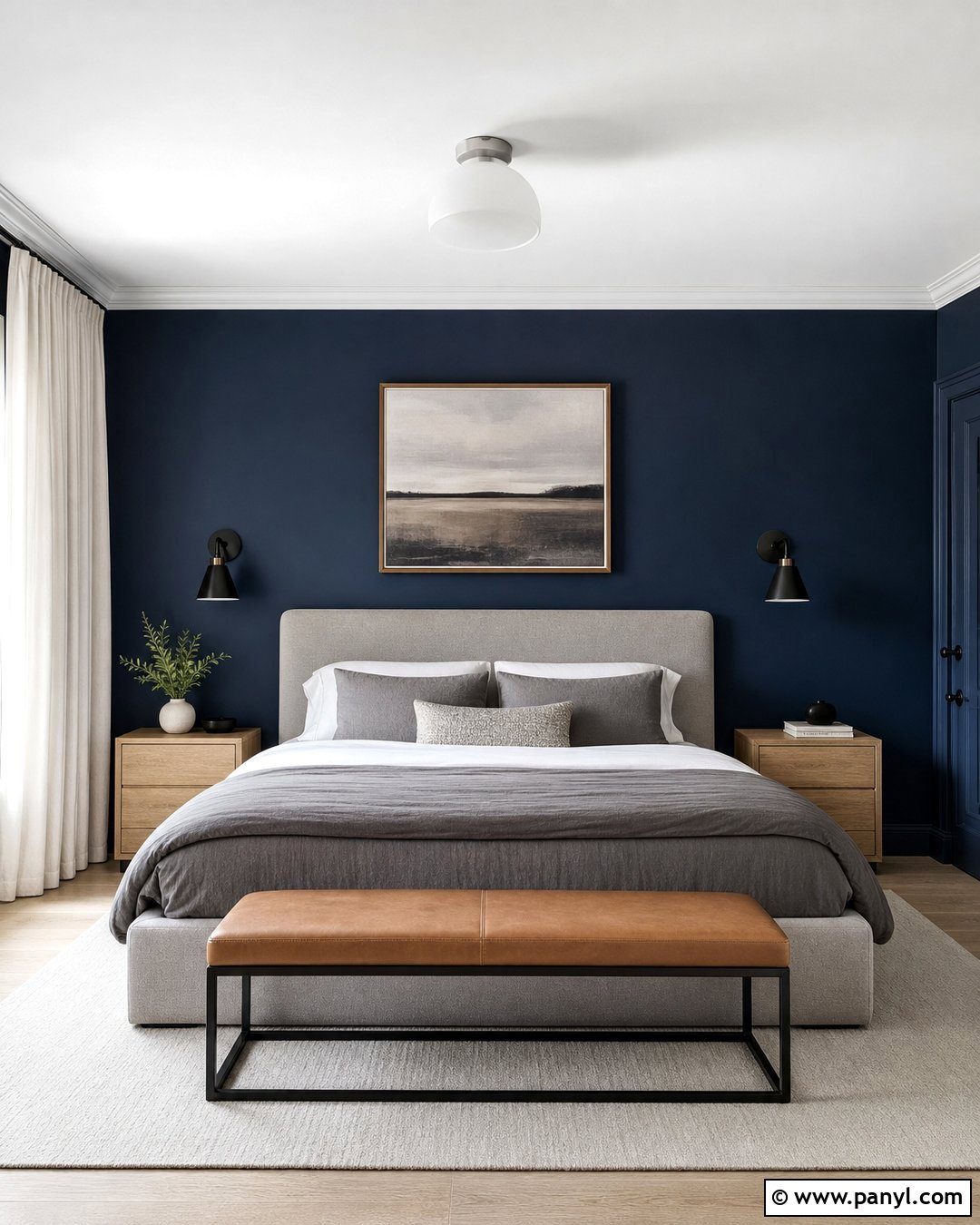
Light gray can create a sleek contrast with dark blue walls when the room includes enough warmth and texture. In a modern bedroom, use a pale gray upholstered bed with soft gray bedding and crisp white sheets. Place light oak nightstands beside the bed to prevent the blue-and-gray palette from feeling cold. A large ivory rug, warm white curtains, and a white ceiling help lift the overall scheme. Add black reading sconces for definition and use muted blue-gray artwork above the headboard. A small camel bench or tan throw introduces one warm accent without disrupting the minimalist design. Select gray fabrics with slightly warm undertones, and avoid filling the room with shiny silver finishes or harsh blue-white lighting.
11. Dark Blue Walls With Greige Furniture
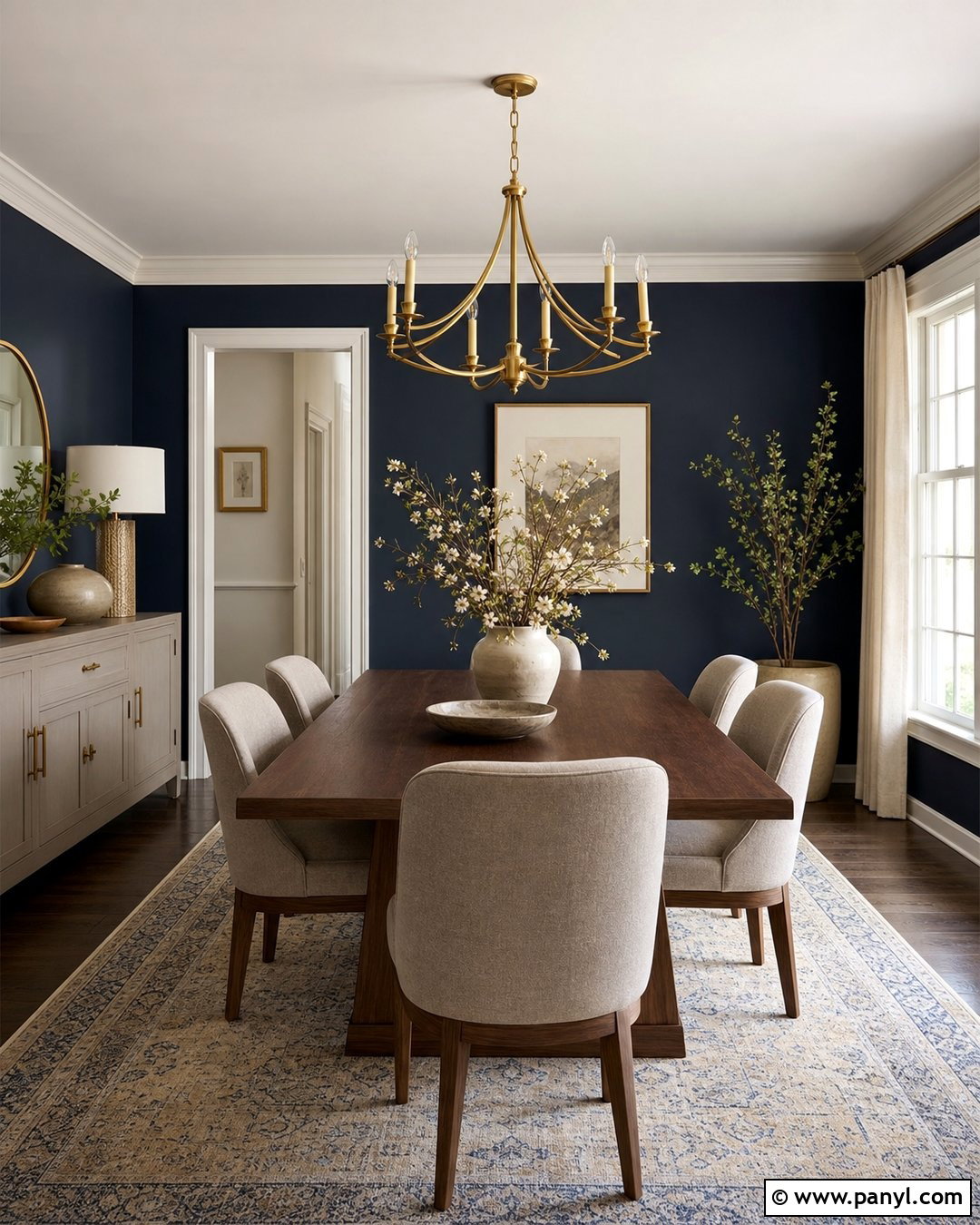
Greige furniture balances the intensity of dark blue walls while creating a polished, flexible dining space. Choose a warm greige sideboard and upholstered dining chairs, then anchor them with a substantial walnut dining table. A light patterned rug containing beige, blue, and taupe keeps the furniture from blending into the floor. Above the table, hang a modern brass chandelier with frosted glass shades. Warm white drapes soften the windows and add height. Decorate the sideboard with stoneware, a round brass-framed mirror, and a simple arrangement of branches. Repeat dark blue in only a few tabletop details. This combination feels understated but layered, making it suitable for both everyday meals and more formal gatherings without requiring frequent seasonal changes.
12. Dark Blue Walls With Pale Blue
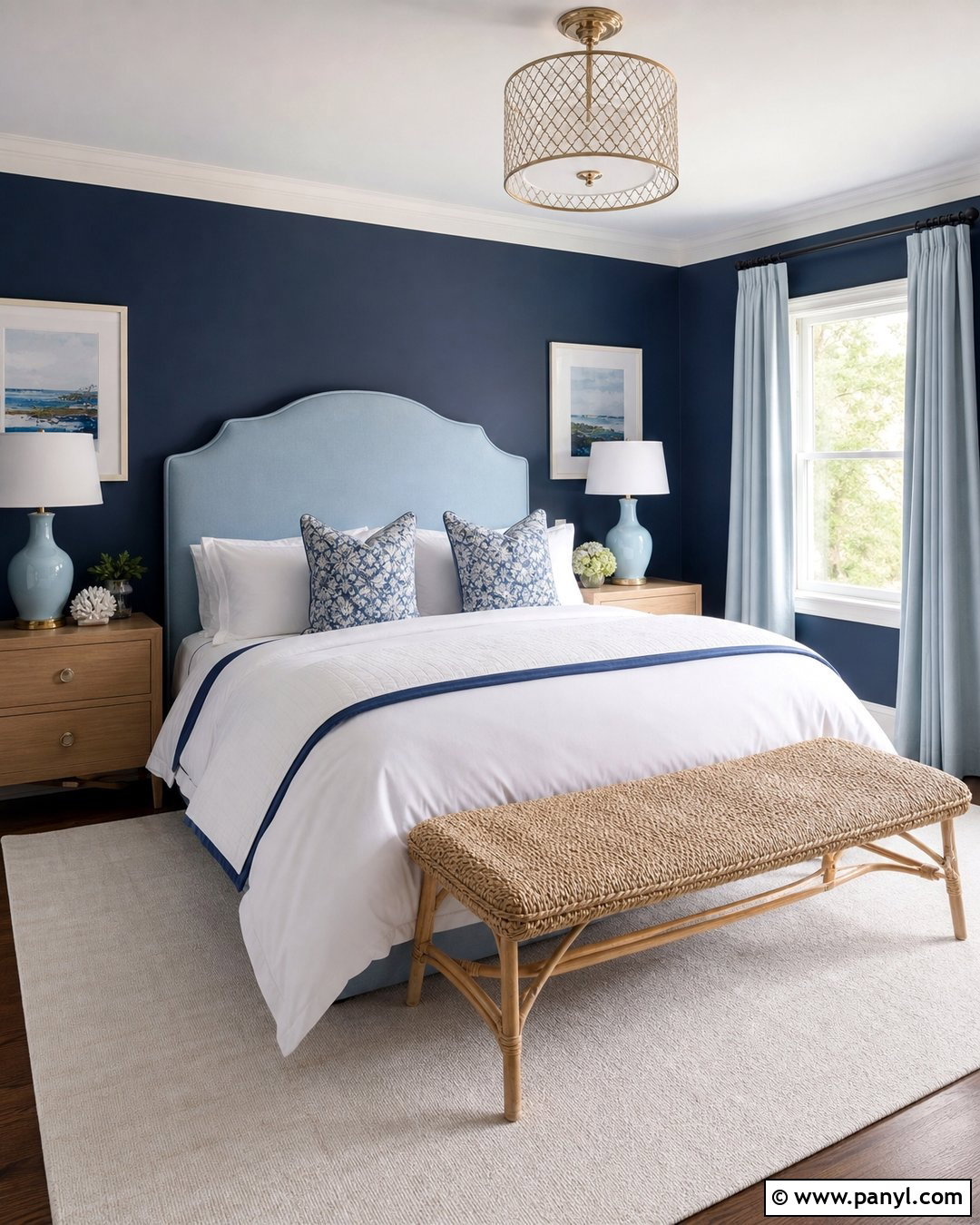
Layering pale blue against dark blue walls creates contrast while preserving a calm, tonal color story. For a guest bedroom, use a powder blue upholstered headboard, white bedding, and a quilt with narrow navy details. Add pale blue curtains that are lighter than the wall but substantial enough to frame the windows. Light maple nightstands and a natural woven bench bring warmth into the cool palette. Choose an ivory rug with a subtle blue border and ceramic lamps in a soft sky-blue glaze. Artwork featuring coastal landscapes or abstract watercolor shapes can repeat the full range of blues. Keep the ceiling and trim warm white. The finished room feels airy and restful instead of flat or overly matched.
13. Dark Blue Walls With Teal Velvet
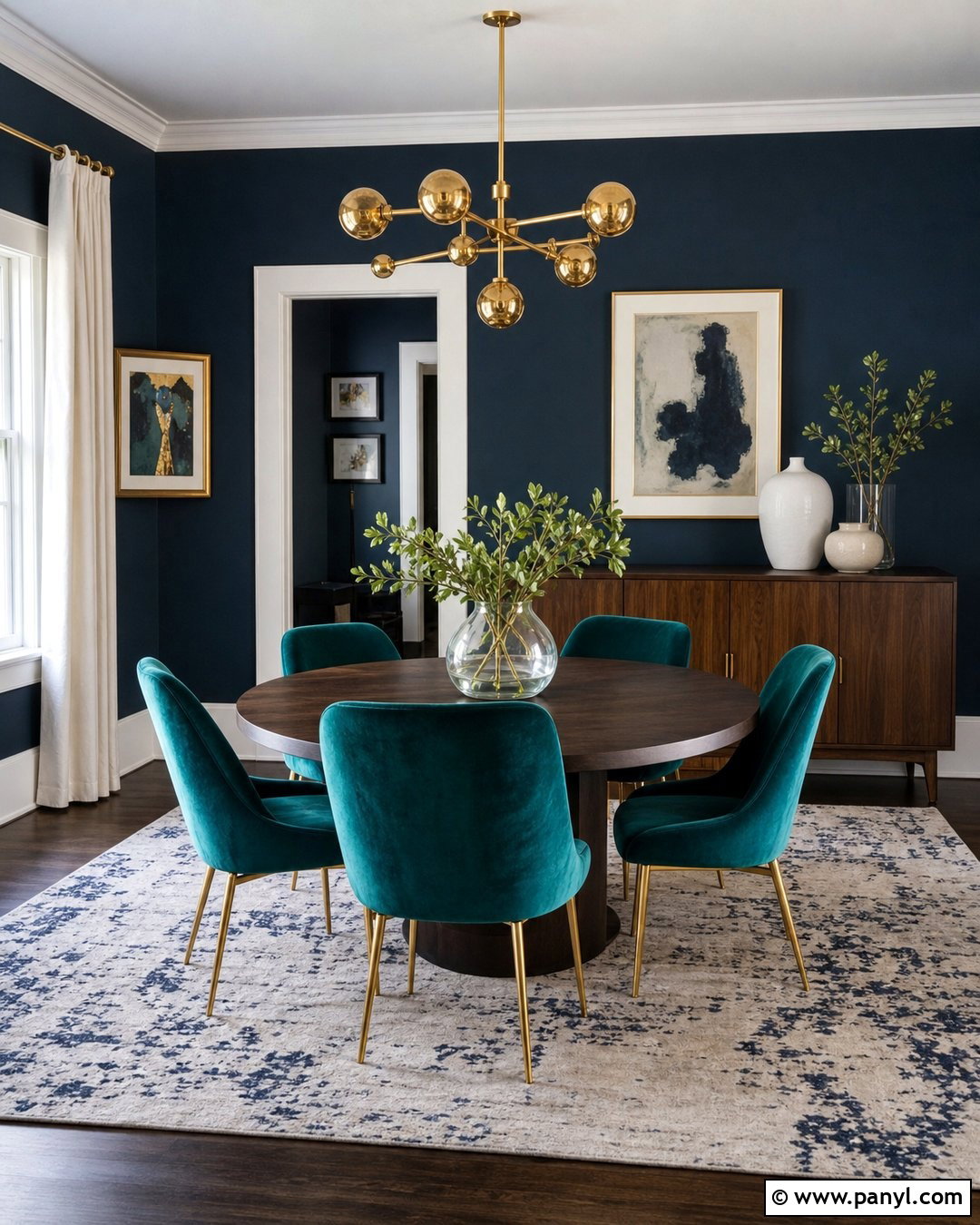
Teal velvet creates a jewel-toned contrast that gives dark blue walls a sophisticated, layered appearance. In a dining room, use teal upholstered chairs around a round dark wood table. Position a cream-and-navy patterned rug underneath to separate the furniture from the floor. A sculptural brass chandelier and matching wall sconces add warmth and reflect light across the saturated surfaces. Choose full-length ivory curtains and keep the ceiling white to frame the deeper colors. A walnut sideboard can hold pale ceramic pieces, clear glassware, and simple greenery. Include teal in one piece of artwork, but avoid repeating it everywhere. The goal is a rich dining space where the blue wall remains dominant and the velvet furniture provides visible distinction.
14. Dark Blue Walls With Coral Decor
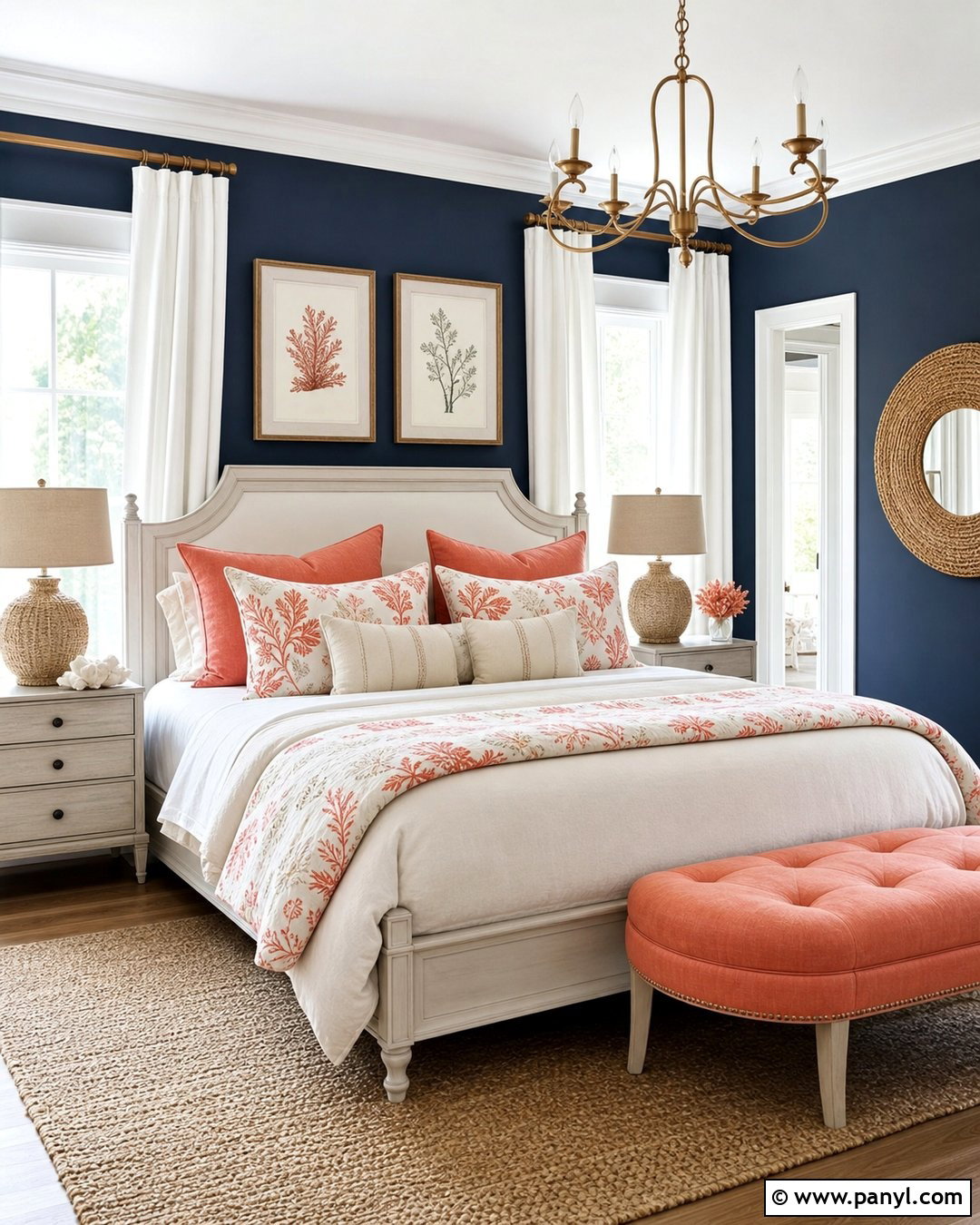
Coral accents can give dark blue walls a fresh, lively quality that works beautifully in a guest room. Start with a white painted bed and crisp ivory bedding. Add coral pillows, a patterned coverlet, and a small upholstered bench at the foot of the bed. Use pale oak nightstands and woven lamps to keep the room relaxed rather than overly polished. A cream rug with soft coral and navy motifs connects the stronger colors across the floor. Hang simple botanical artwork in light wood frames, and choose white linen curtains for brightness. Coral should appear in several small areas instead of one oversized block. This distributes the contrast evenly and creates a welcoming, coordinated bedroom that still feels restful.
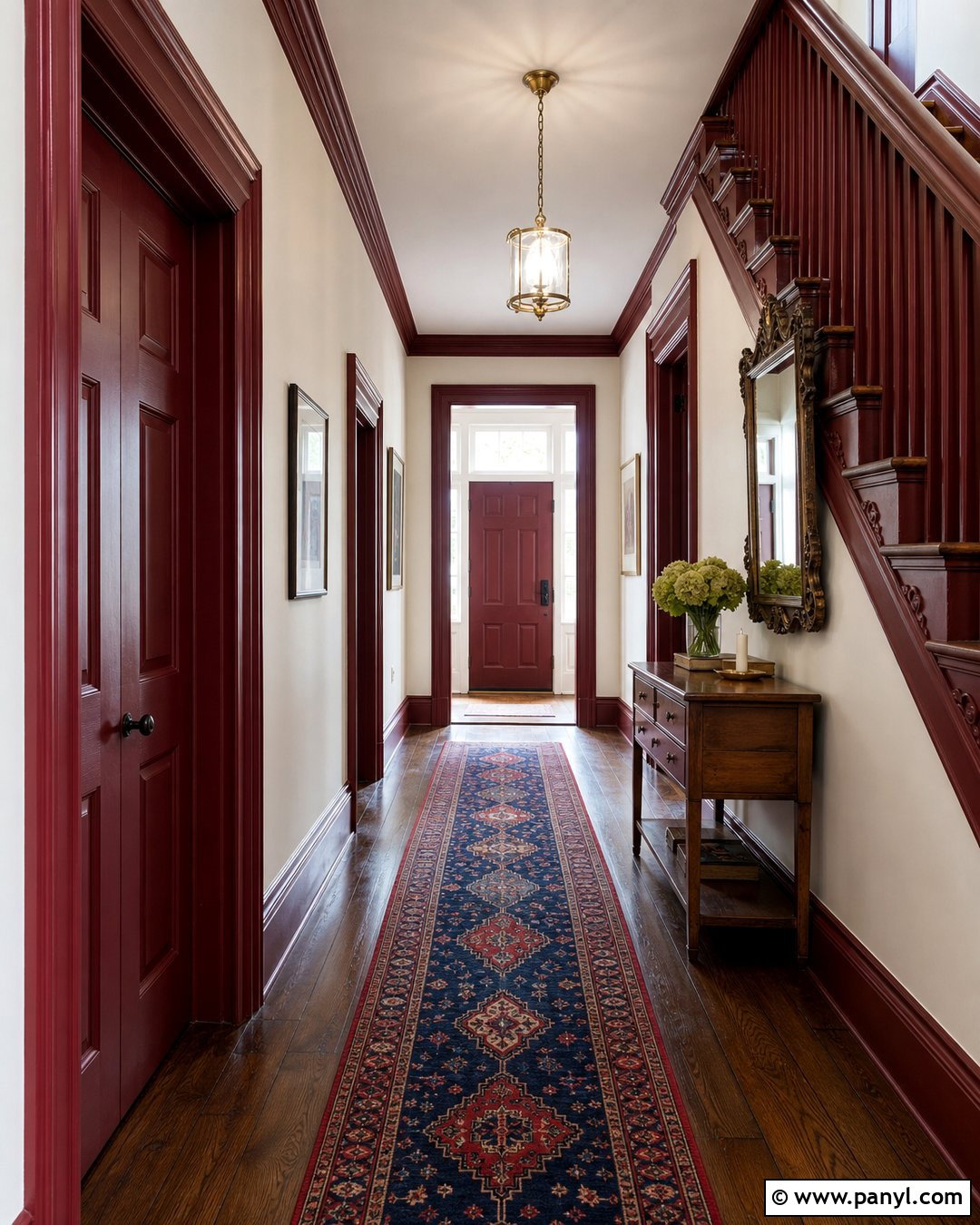
15. Dark Blue Walls With Burgundy Furniture
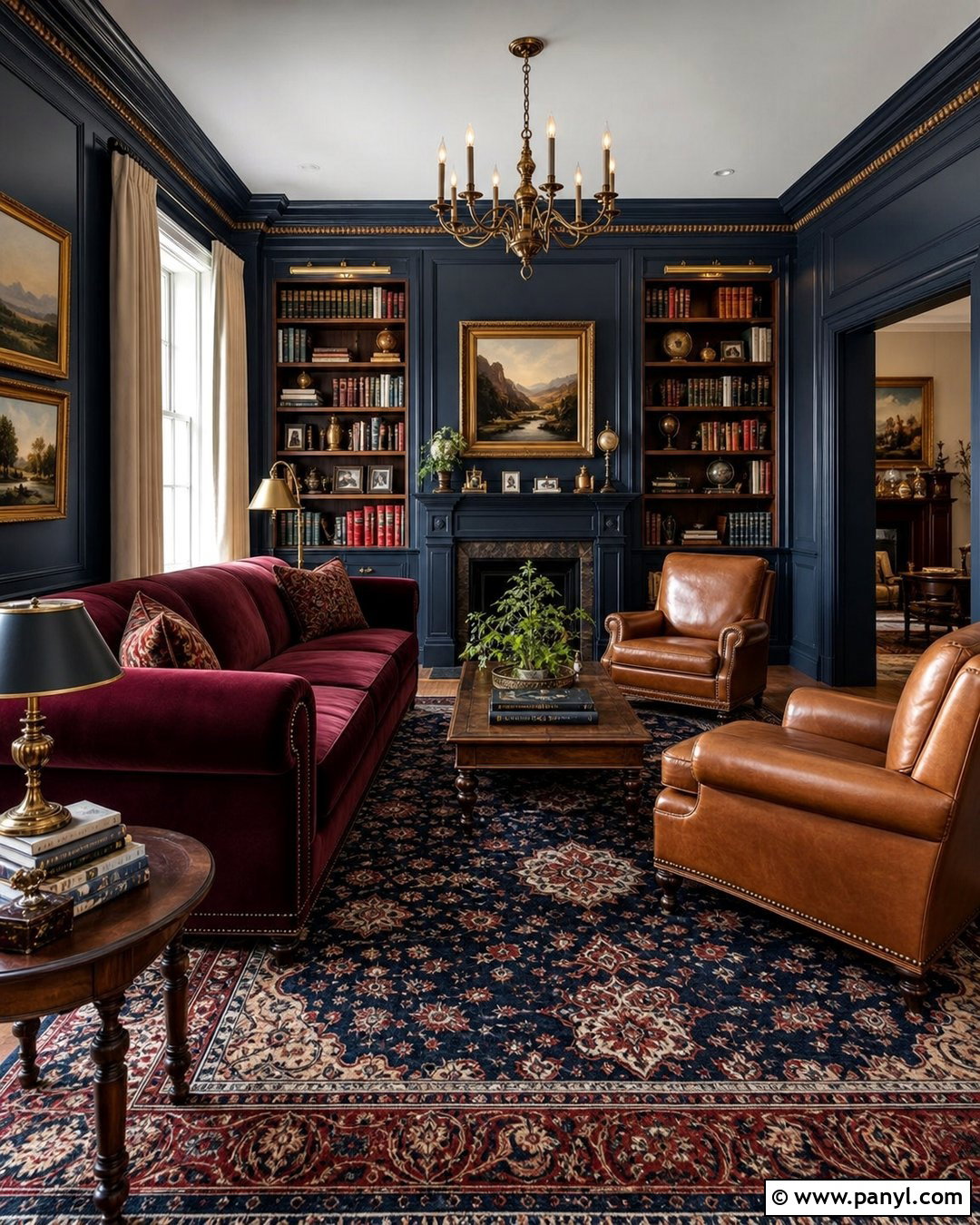
Burgundy creates an elegant contrast with dark blue walls, especially in a traditional library or reading room. Place a deep burgundy velvet sofa against the blue background and add two camel leather chairs nearby. A large Persian-style rug containing navy, red, cream, and brown will connect both saturated colors. Use dark walnut bookcases, an antique-inspired coffee table, and warm brass reading lamps to complete the room. Cream curtains and an ivory ceiling prevent the darker palette from feeling enclosed. Add framed portraits, landscape paintings, and neatly arranged books for character, but leave some open space on shelves. The final design should feel rich and established, with balanced lighting and enough warm neutrals to separate each dark surface clearly.
16. Dark Blue Walls With Black And White
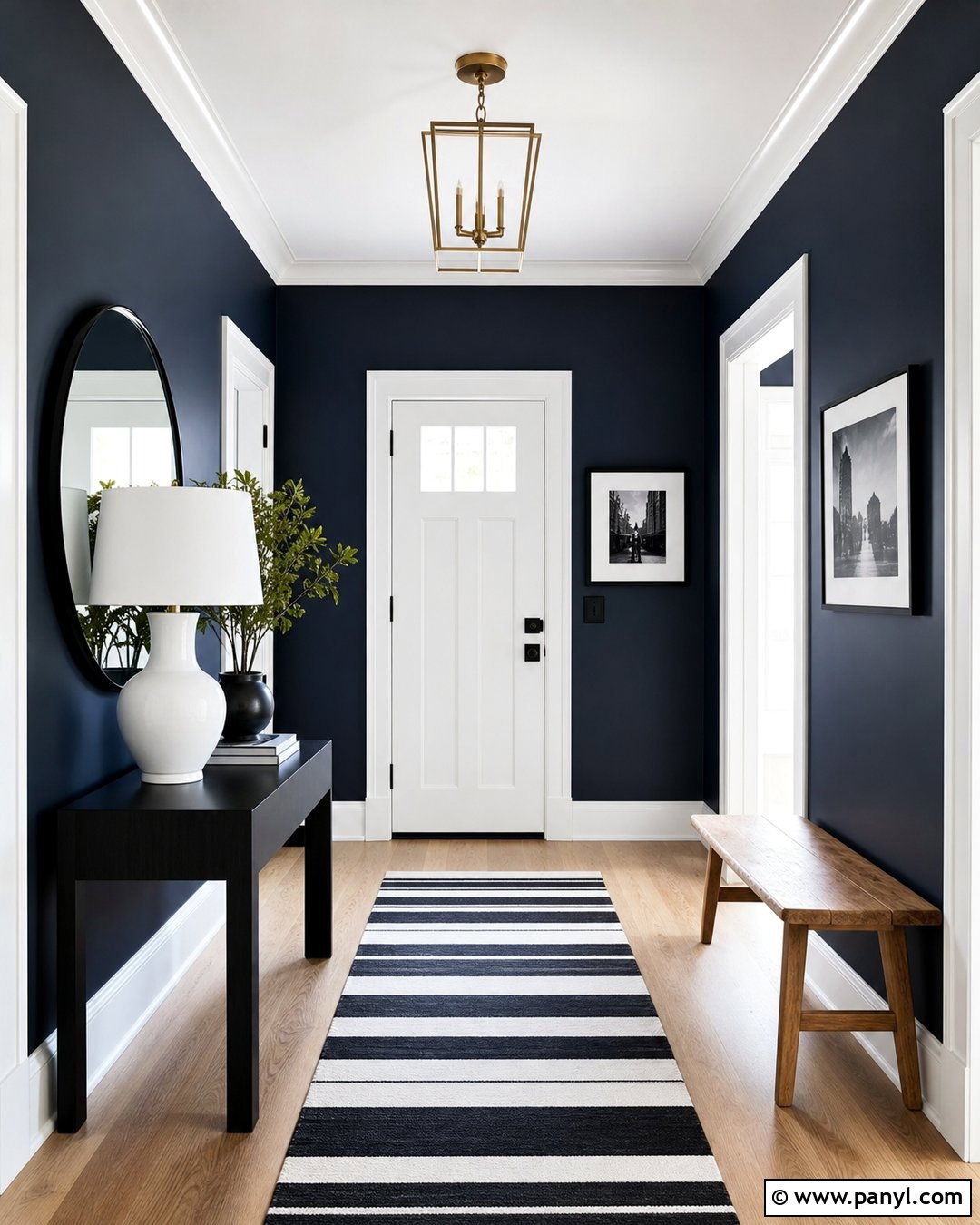
A black-and-white palette gives dark blue walls a crisp, graphic contrast that suits an entryway. Paint the walls deep navy and keep the doors, trim, and ceiling bright white. Use a narrow black console with clean lines, topped by a large round mirror in a matte black frame. A white ceramic lamp, striped black-and-white runner, and simple bowl create practical function without clutter. Add a light oak bench or woven basket to soften the sharp color combination. Framed monochrome photography can decorate the wall while allowing the blue to remain visible. Use warm white light bulbs and a brass ceiling fixture for subtle warmth. The finished entry feels organized, modern, and memorable without requiring a large amount of furniture.
17. Dark Blue Walls With Rattan Decor
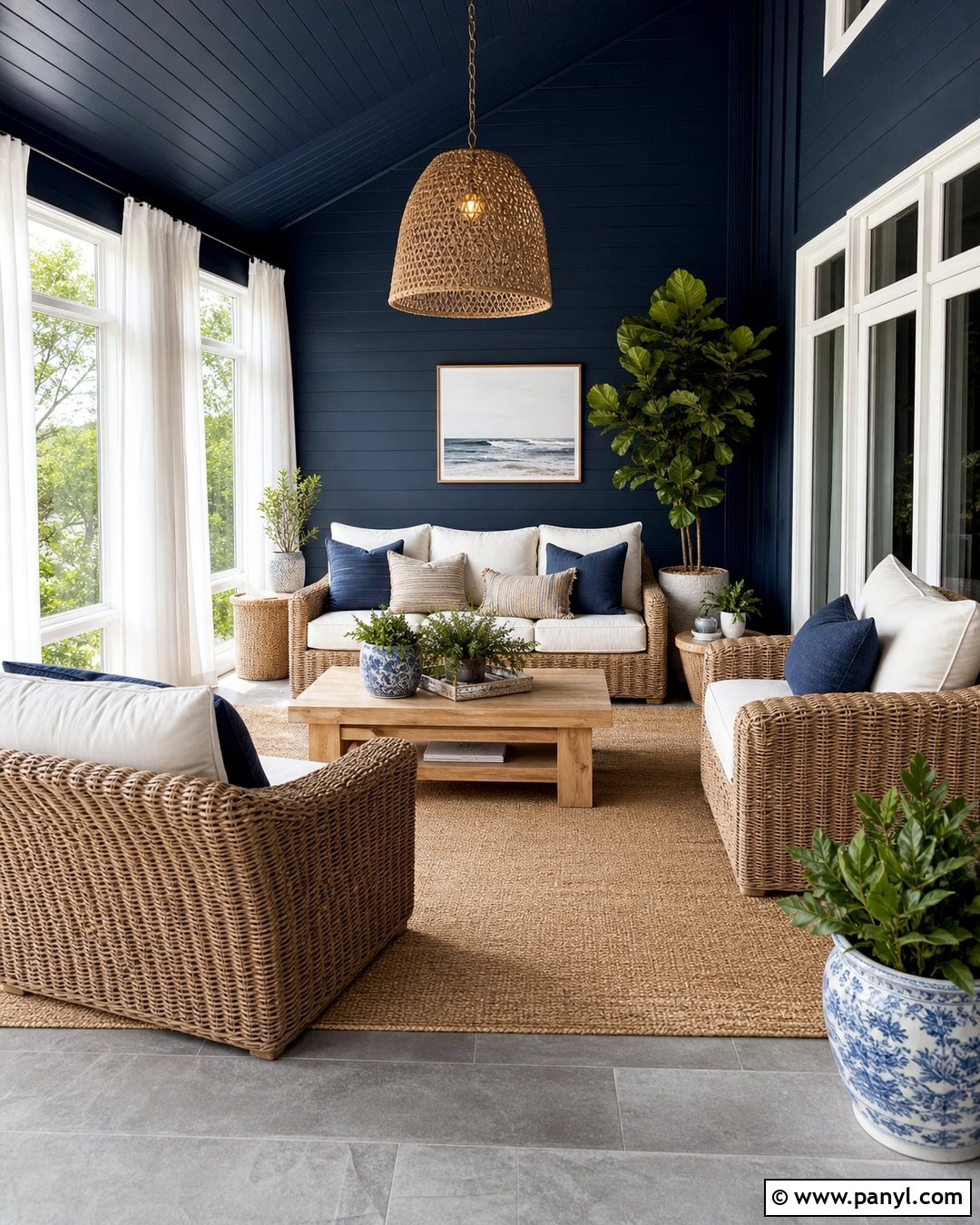
Natural rattan and dark blue walls form a relaxed contrast that feels especially inviting in a sunroom or casual sitting area. Arrange a woven rattan sofa and two matching chairs around a light wood coffee table. Use thick cream seat cushions for comfort, then add patterned pillows in navy, tan, and muted green. A large natural fiber rug brightens the flooring and reinforces the organic texture. White linen curtains allow sunlight to filter into the space, while leafy plants bring freshness against the blue background. Include ceramic planters, a woven pendant, and a few pale wood accessories. Keep the furniture silhouettes simple and avoid overly nautical decorations. This creates an easy coastal-inspired room that feels natural rather than themed.
18. Dark Blue Walls With White Marble
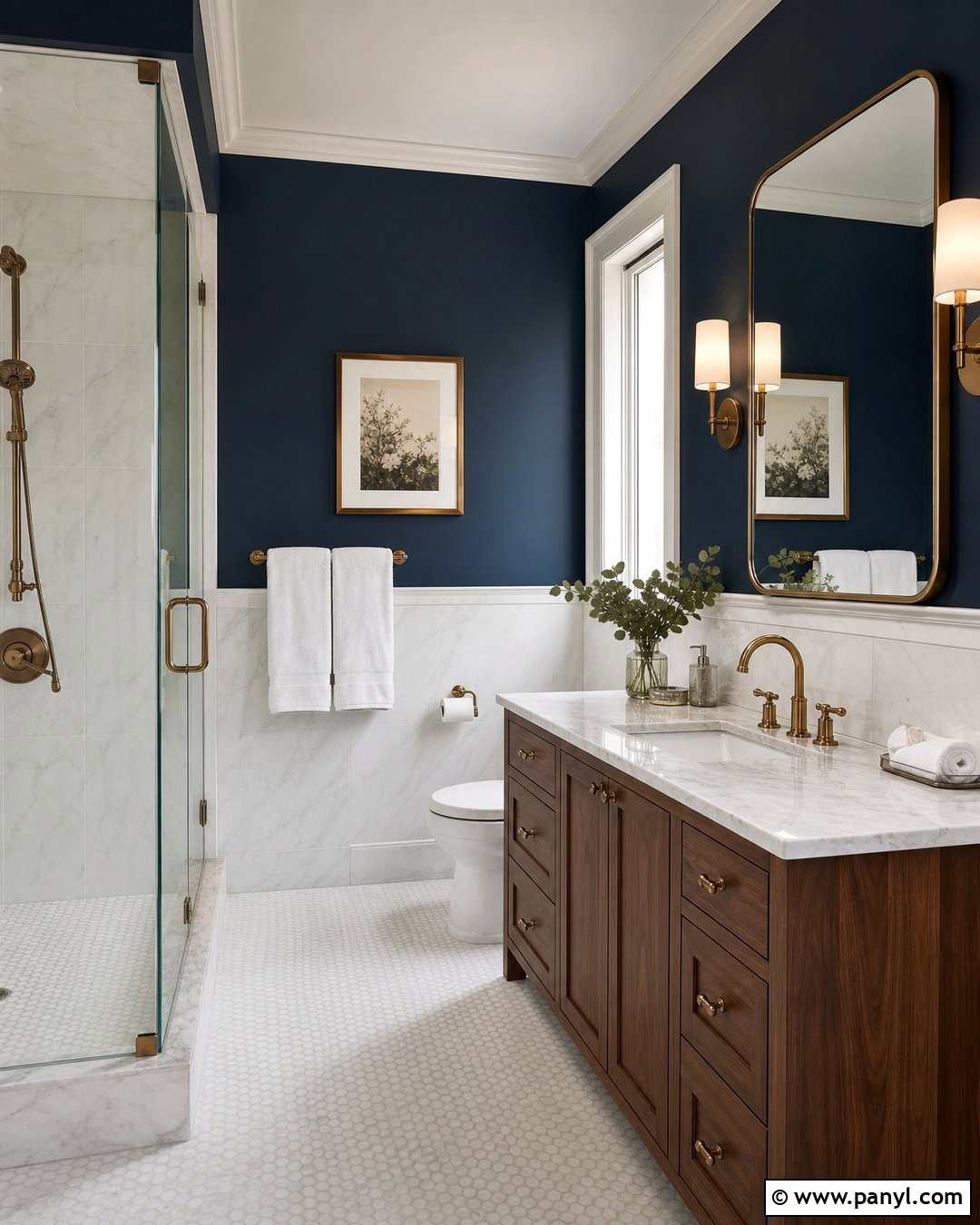
White marble introduces strong brightness and subtle pattern against dark blue bathroom walls. Use blue paint above white marble-look wall tile or wainscoting to protect high-splash areas while maintaining the contrast. Choose a walnut vanity with a white marble countertop, polished nickel faucets, and simple white sinks. A large mirror with a thin brass frame adds warmth without overpowering the materials. Continue white through the ceiling, towels, and shower curtain. Pale gray floor tile provides a quiet base and keeps attention on the walls and vanity. Add one small plant and neatly arranged bath accessories for a clean finish. Bright layered lighting is essential so the blue appears rich and the marble veining remains visible throughout the room.
19. Dark Blue Walls With Warm Wood Cabinets
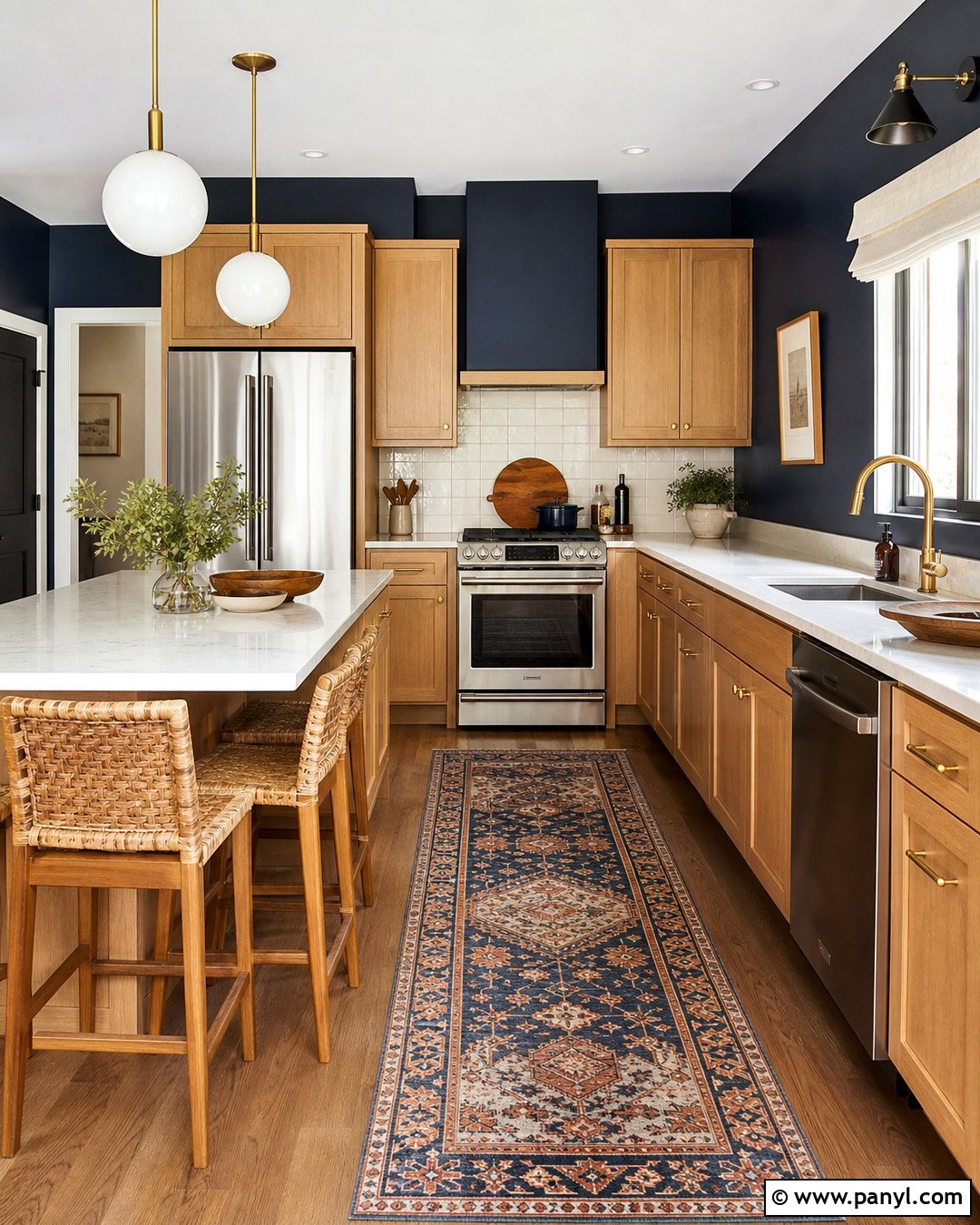
Warm wood cabinetry turns dark blue kitchen walls into a rich background rather than a heavy feature. Select flat-panel white oak cabinets with visible grain and pair them with creamy quartz countertops. Use the dark blue paint on open wall areas and around a simple breakfast nook. An off-white tile backsplash reflects light while separating the blue from the wood. Choose brushed brass cabinet pulls, woven counter stools, and globe pendant lights for a warm modern finish. Medium-tone wood flooring can continue the natural palette, while a washable vintage-style runner introduces blue and rust details. Keep appliances stainless steel or paneled. The completed kitchen feels grounded, functional, and bright because every dark surface is balanced by lighter materials.
20. Dark Blue Walls With Ivory Molding
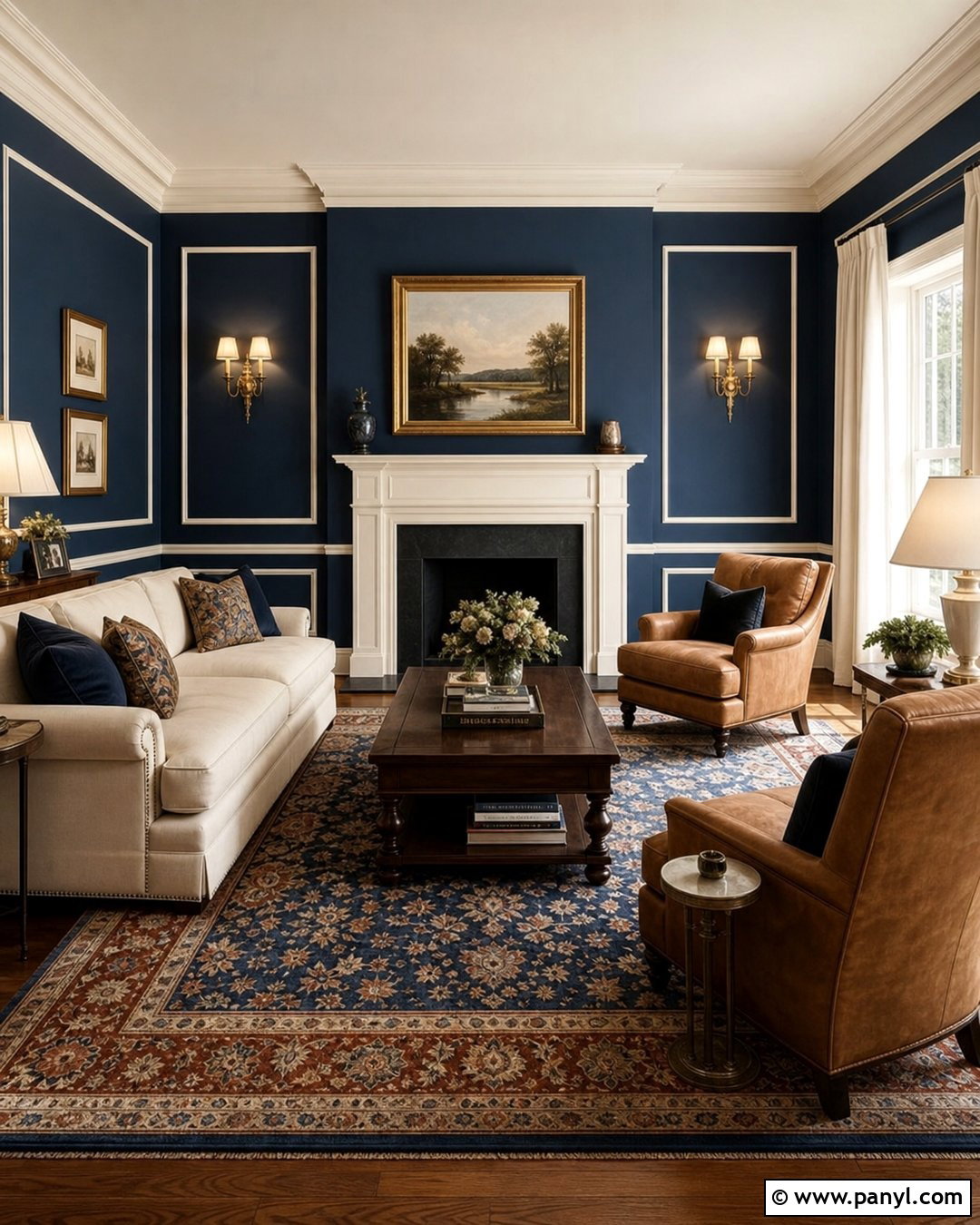
Ivory molding can transform dark blue walls into an architectural focal point while giving the room clear, structured contrast. In a formal living room, install picture-frame molding and paint it the same dark blue as the walls for subtle dimension. Use ivory on the ceiling, crown molding, baseboards, fireplace surround, and interior doors. Arrange an ivory sofa and two tan armchairs around a dark wood coffee table. A traditional rug with muted blue, cream, and rust tones adds softness. Finish the room with brass sconces, full-length neutral curtains, and large artwork in antique gold frames. This balanced design highlights the room’s architecture while keeping the dark blue surfaces connected, elegant, and comfortably suited to everyday use.
Conclusion:
Dark blue walls can support far more than one decorating style. Their deep color works with crisp whites, gentle neutrals, warm wood, earthy greens, and brighter shades such as coral or mustard. The most successful room uses contrast across the entire design, including furniture, flooring, curtains, lighting, artwork, and architectural trim. Before decorating, consider how much natural light the room receives and repeat each accent color in a few controlled places. Add warm materials when the palette feels too cool, or introduce white and ivory when it feels visually heavy. These **20 Dark Blue Wall Contrast Ideas** provide complete starting points that can be adjusted to match your room size, existing furniture, and preferred design style.

Related Ideas and Inspiration:
Leave a Reply