
A kitchen with red accents can feel energetic, warm, and memorable without becoming overwhelming. The key is deciding where red should lead and where it should simply add contrast. Crisp white cabinets make cherry red look clean and playful, while wood, cream, and brick soften deeper shades such as burgundy or barn red. Red can appear through an island, backsplash, range, lighting, seating, textiles, or one carefully chosen cabinet. Repeating the color two or three times helps the room feel connected rather than randomly decorated. The complete looks below balance color, materials, lighting, storage, and practical kitchen layouts, offering options for modern, farmhouse, retro, traditional, and renter-friendly homes. Explore these 20 kitchen with red accents to find a combination that fits your space.

1. White Kitchen With Red Bar Stools
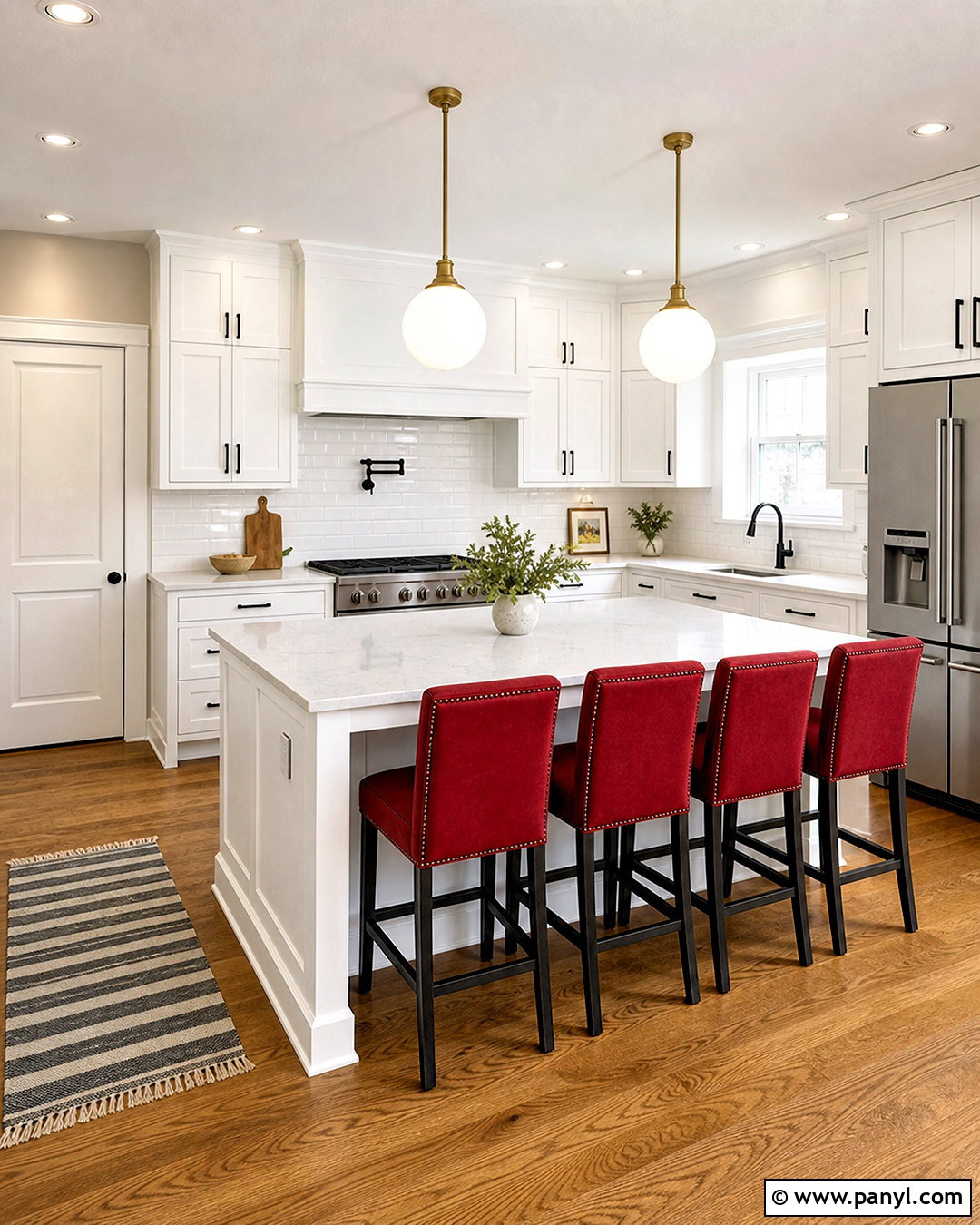
Bright red bar stools bring instant personality to an otherwise classic white kitchen. Start with white Shaker cabinets, pale quartz countertops, and a backsplash of glossy white subway tile. A medium-tone oak floor adds enough warmth to keep the room from feeling clinical. Place three cherry red stools at a large white island, choosing simple upholstered or molded seats with slim black legs. Repeat the red subtly through a striped runner, a ceramic utensil holder, and one framed print near the breakfast area. Matte black cabinet pulls and pendant lights sharpen the palette without competing with the stools. Keep appliances stainless steel and counters mostly clear. This balanced layout makes the seating the focal point while maintaining a bright, practical workspace.
2. Kitchen With Red Island
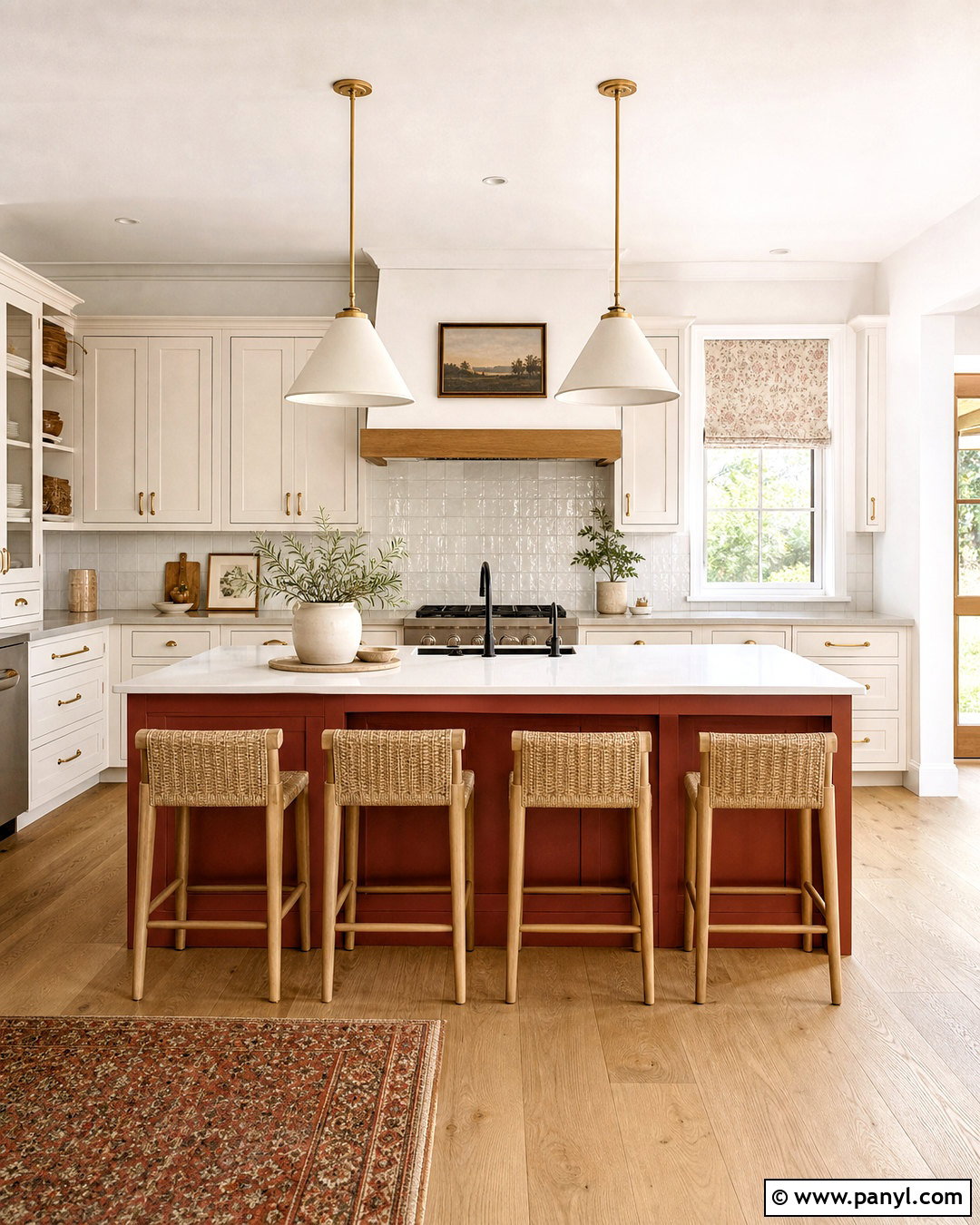
A red kitchen island creates a bold center without requiring colorful cabinets throughout the room. Choose a muted tomato red or deep brick red for the island base, then top it with white quartz or softly veined marble. Surround it with warm white perimeter cabinets and a light neutral backsplash to give the strong color breathing room. Natural oak flooring and woven counter stools add warmth and prevent the design from feeling too polished. Use aged brass hardware, a matching bridge faucet, and two cream pendant lights for a softer finish. A small red pattern on the window shade can connect the island to the outer edges of the room. This complete scheme works especially well in a spacious transitional or updated farmhouse kitchen.
3. Kitchen With Red Tile Backsplash
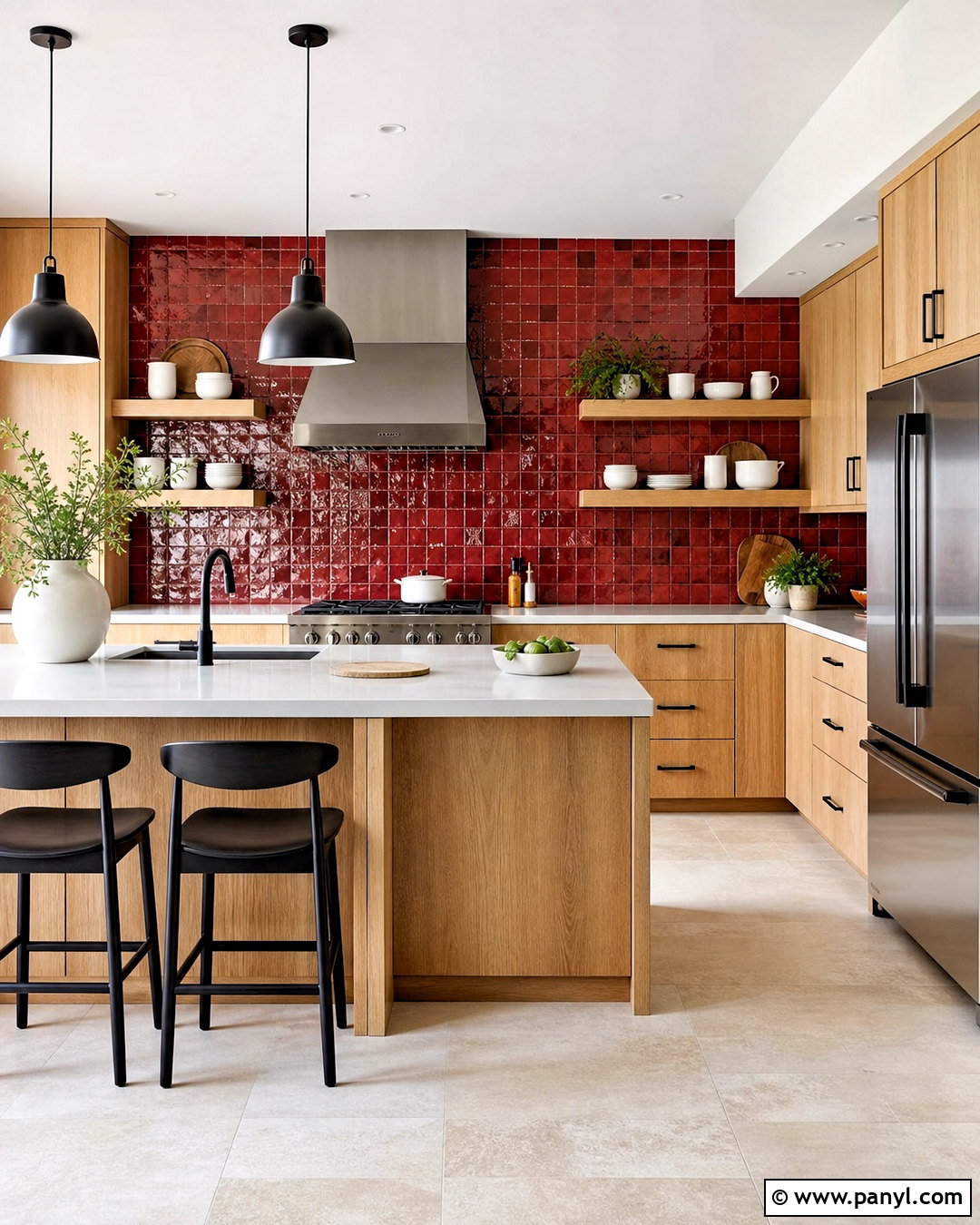
Glossy red tile can turn the backsplash into a lively architectural feature. Use handmade ruby red square tiles behind the range and continue them beneath the upper cabinets for a cohesive finish. Pair the backsplash with flat-panel white oak cabinetry, warm white countertops, and brushed stainless steel appliances. The wood grain reduces the intensity of the red while giving the room a natural modern character. Choose understated black hardware and a streamlined black faucet to define the cabinetry. Cream walls, pale stone flooring, and open oak shelves keep the overall space bright. Decorate with white pottery, wood cutting boards, and a few green herbs rather than adding more strong colors. The result feels bold, balanced, and easy to maintain visually.
4. Kitchen With Red Range
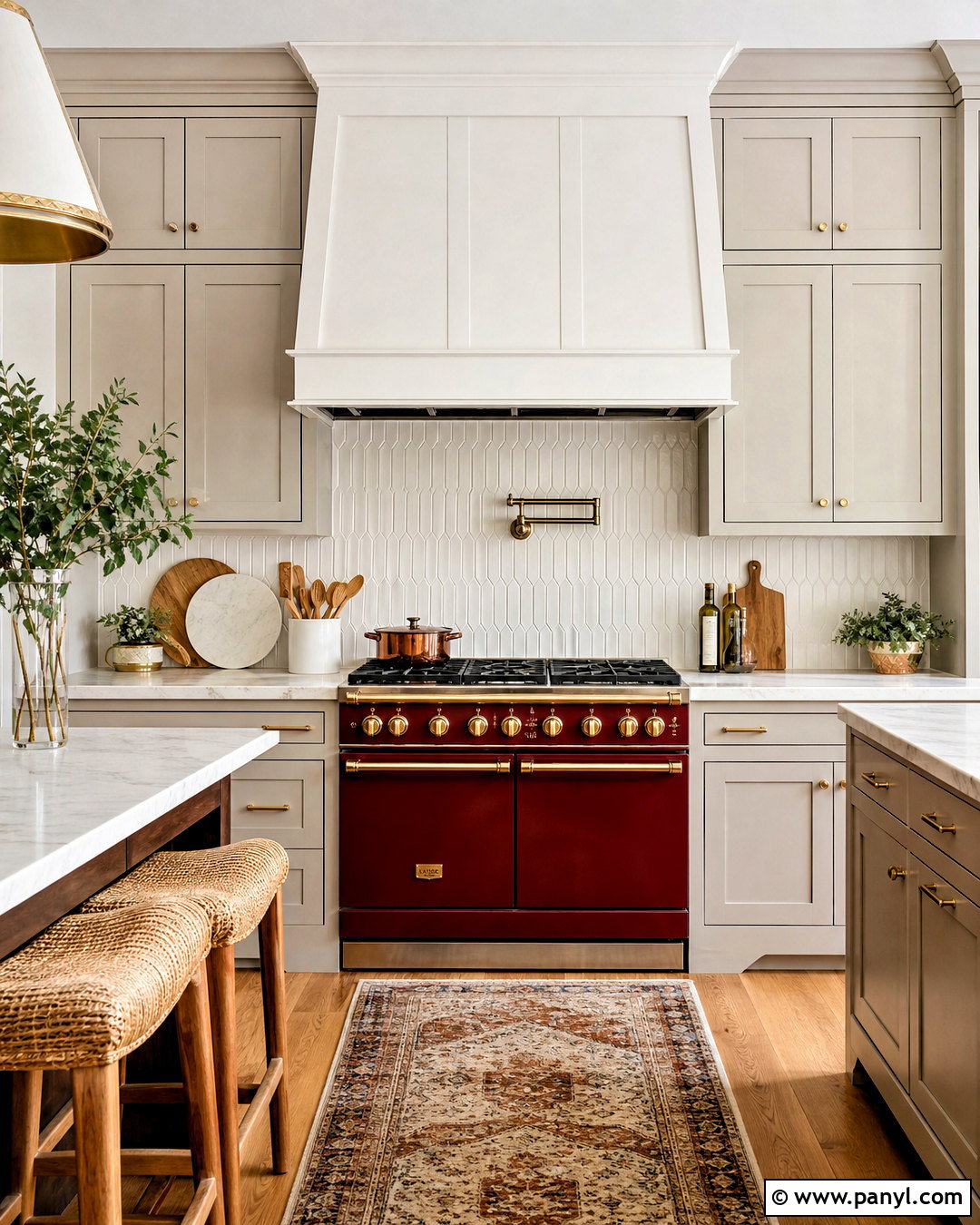
A red range offers a concentrated splash of color and gives the cooking zone a clear focal point. Build the room around a professional-style crimson range with a simple plaster or white paneled hood above it. Soft greige cabinets, creamy quartz countertops, and lightly textured white backsplash tile allow the appliance to stand out. Add unlacquered brass knobs and faucets for warmth, then ground the space with medium brown oak flooring. A narrow island can include woven wood stools and a butcher-block prep area. Repeat red once through a patterned runner that contains cream, rust, and small crimson details. Keep countertop accessories neutral and useful. This thoughtful approach makes the colorful appliance look intentional rather than like an unrelated statement piece.
5. Kitchen With Red Pendant Lights
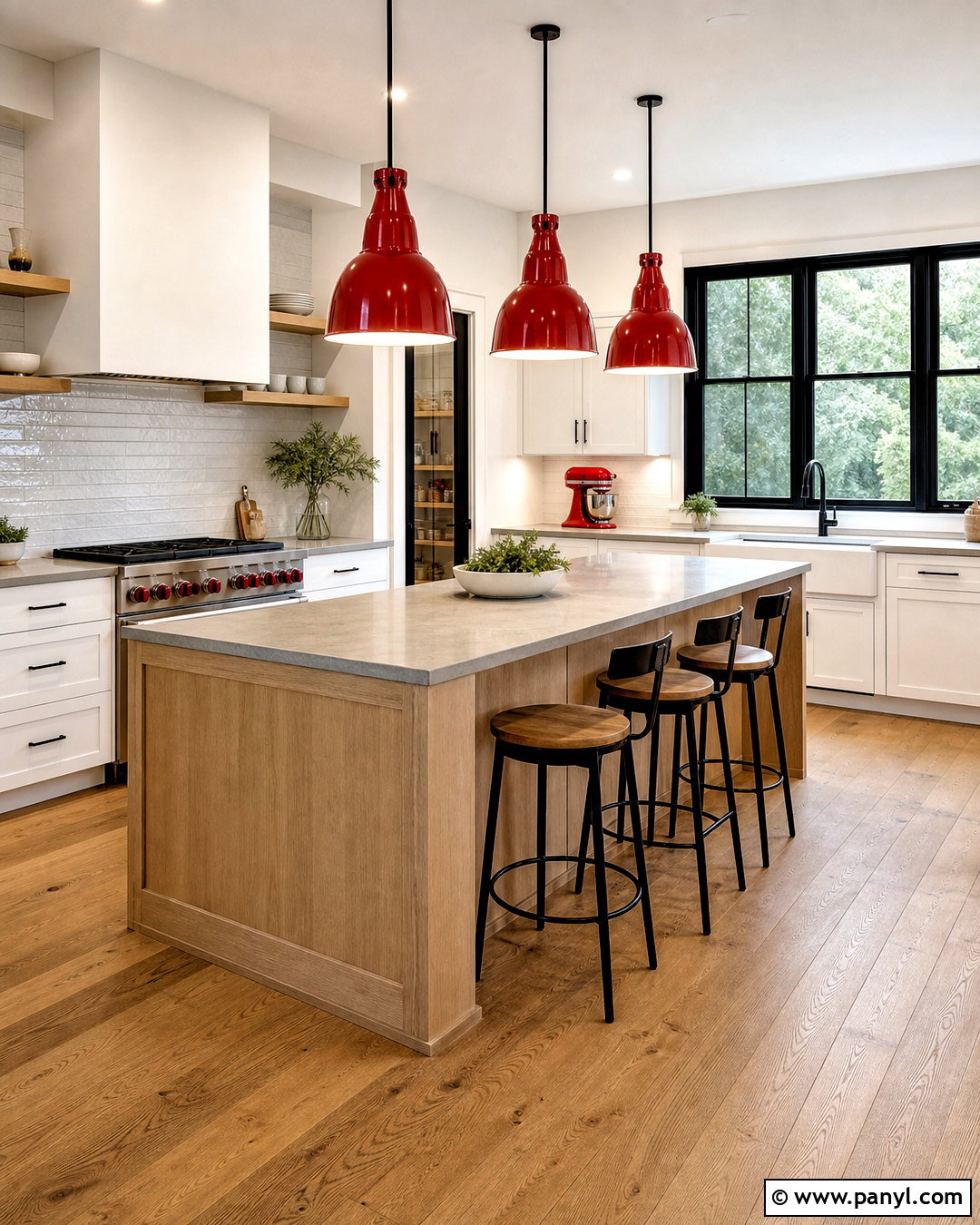
Looking up can be the easiest way to introduce red without changing permanent kitchen finishes. Hang two or three glossy red metal pendant lights above a pale wood island, allowing them to become a bright overhead rhythm. Use warm white cabinets, honed gray countertops, and a soft white backsplash for the surrounding surfaces. Black window frames and slim black stool legs provide definition, while natural oak flooring keeps the palette relaxed. Add one small red countertop appliance and a patterned rug with tiny red details to distribute the accent color. The pendant shades should be large enough to feel purposeful but not block views across the room. This look suits an open kitchen where colorful lighting can also connect with nearby living or dining furniture.
6. Kitchen With Red Pantry Cabinet
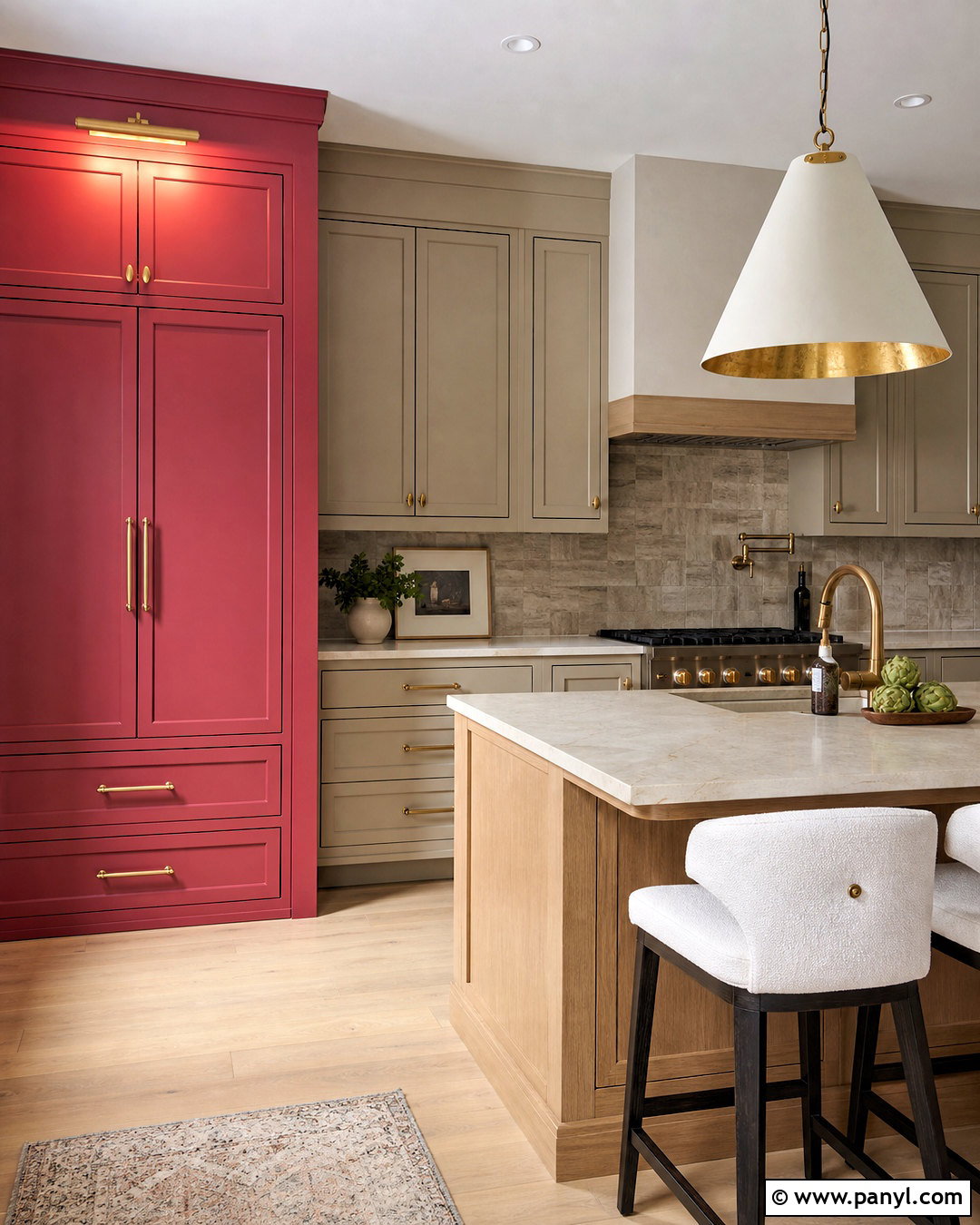
One tall red pantry cabinet can energize an entire wall while also adding valuable storage. Paint a floor-to-ceiling pantry in deep raspberry red, then surround it with pale taupe cabinets to create a sophisticated contrast. Use simple recessed-panel doors so the strong color remains refined rather than busy. Cream quartz countertops, a warm gray stone backsplash, and brushed brass hardware complete the cabinetry. Install light oak flooring and a matching oak island with comfortable cream stools. A brass picture light above the pantry can make it feel like built-in furniture. Repeat raspberry through a small Roman shade or a single bowl on the island. This arrangement is particularly effective when the pantry stands at the end of a cabinet run and remains fully visible.
7. Black And White Kitchen With Red Accents
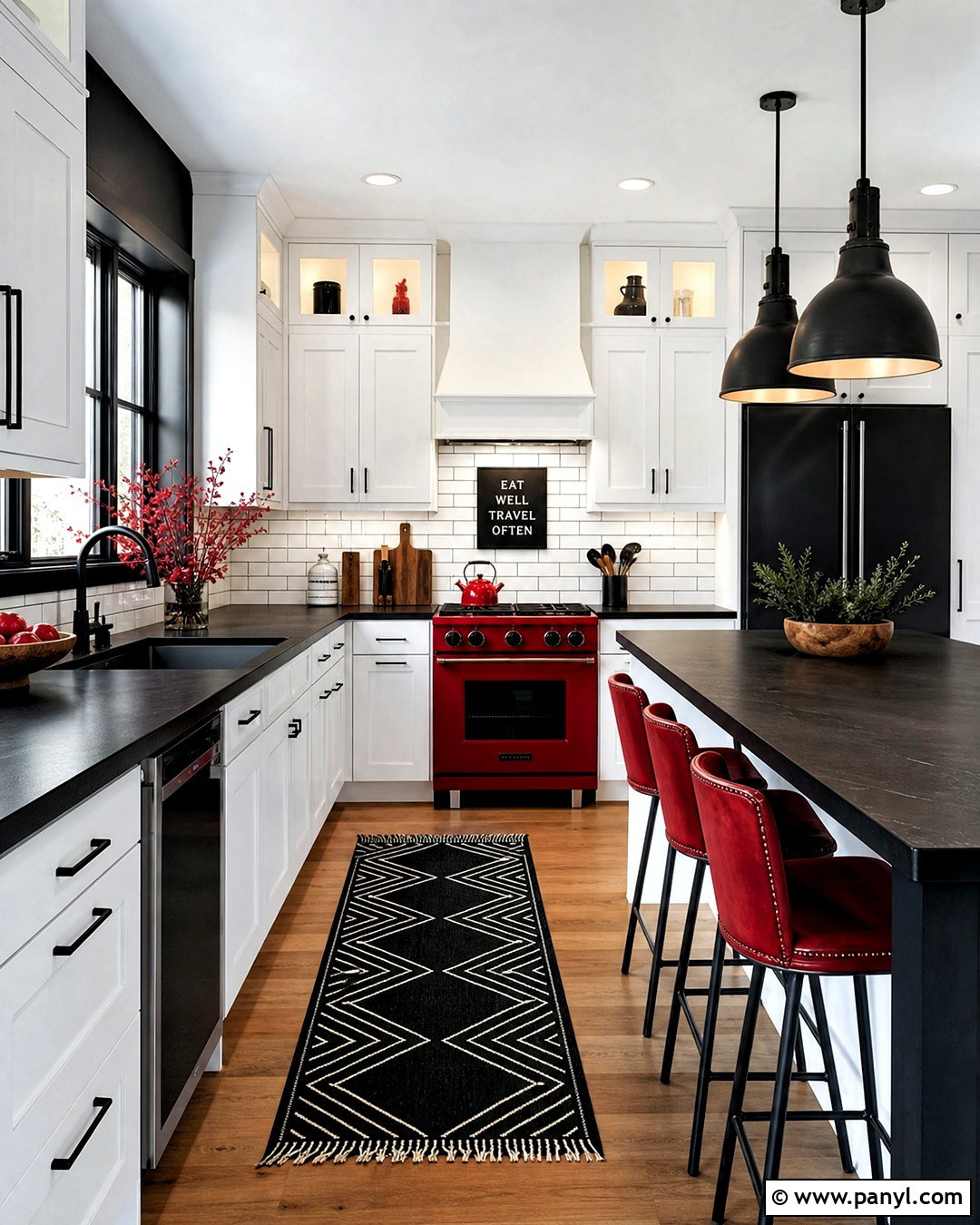
A black, white, and red kitchen can look crisp and graphic when each color has a defined role. Use white cabinets as the primary backdrop, black soapstone countertops, and a white backsplash with dark grout. Introduce red through leather counter stools, a compact red range, and a washable runner with a restrained geometric pattern. Black dome pendants and cabinet pulls connect the darker surfaces, while a medium oak floor prevents the scheme from feeling harsh. Keep walls soft white and choose stainless steel appliances for a practical neutral break. A few wood cutting boards and clear glass containers soften the clean lines. By limiting red to three purposeful areas, the room feels dynamic and coordinated instead of resembling a themed diner.
8. Farmhouse Kitchen With Red Accents
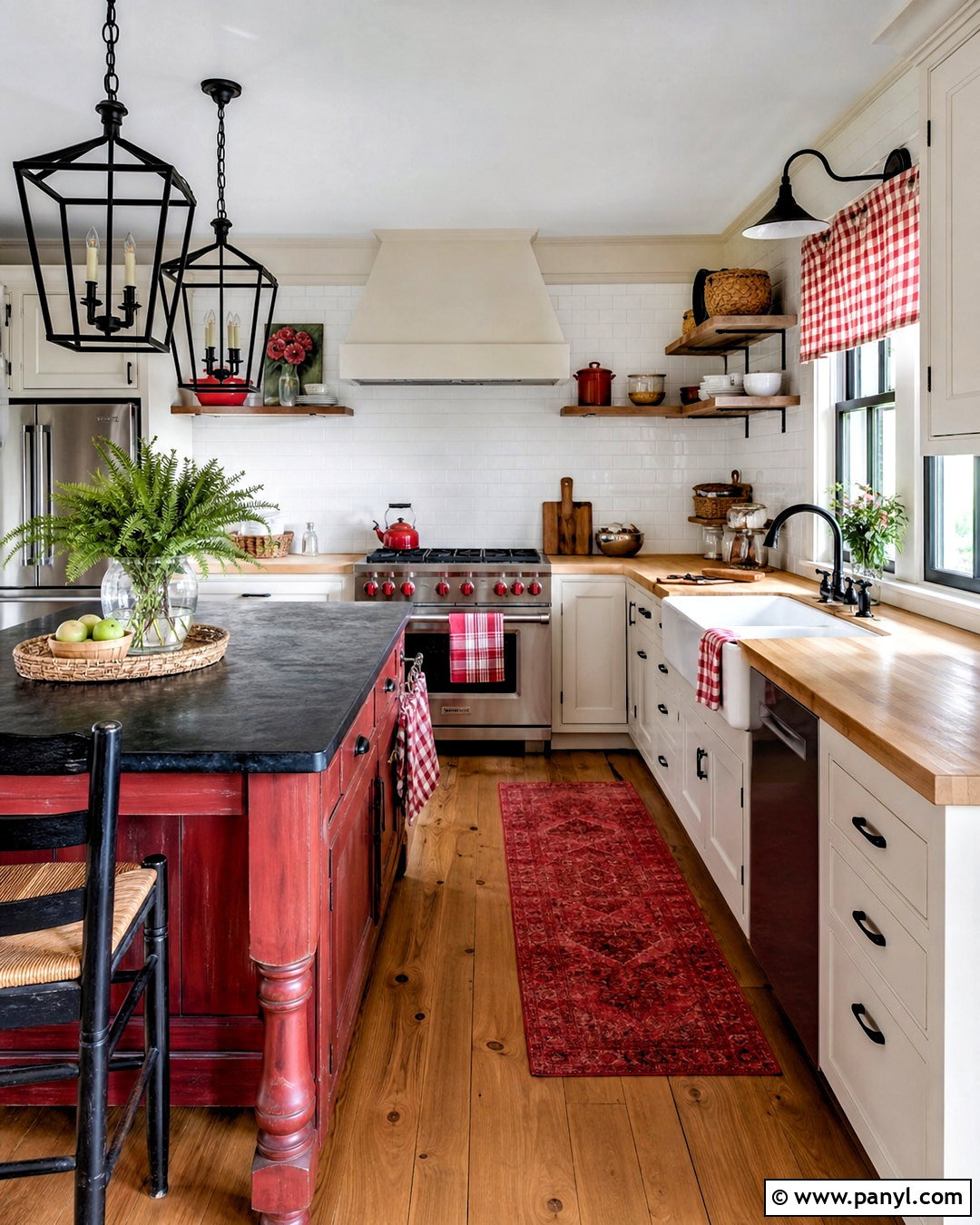
Warm barn red feels naturally at home in a farmhouse kitchen filled with texture and practical details. Choose creamy inset cabinets, butcher-block counters, and a white fireclay farmhouse sink beneath a simple window. Paint the island a faded barn red and top it with dark soapstone for an aged, substantial look. Wide-plank oak flooring, open wood shelves, and woven baskets reinforce the relaxed character. Use black iron pendant lights and cup pulls to provide contrast. A red-and-cream checked Roman shade can repeat the island color without appearing overly coordinated. Finish the room with stoneware, wood boards, and a washable vintage-style runner. The mix of muted red, cream, black, and natural wood creates a complete farmhouse setting that feels collected rather than overly rustic.
9. Gray Kitchen With Red Accents
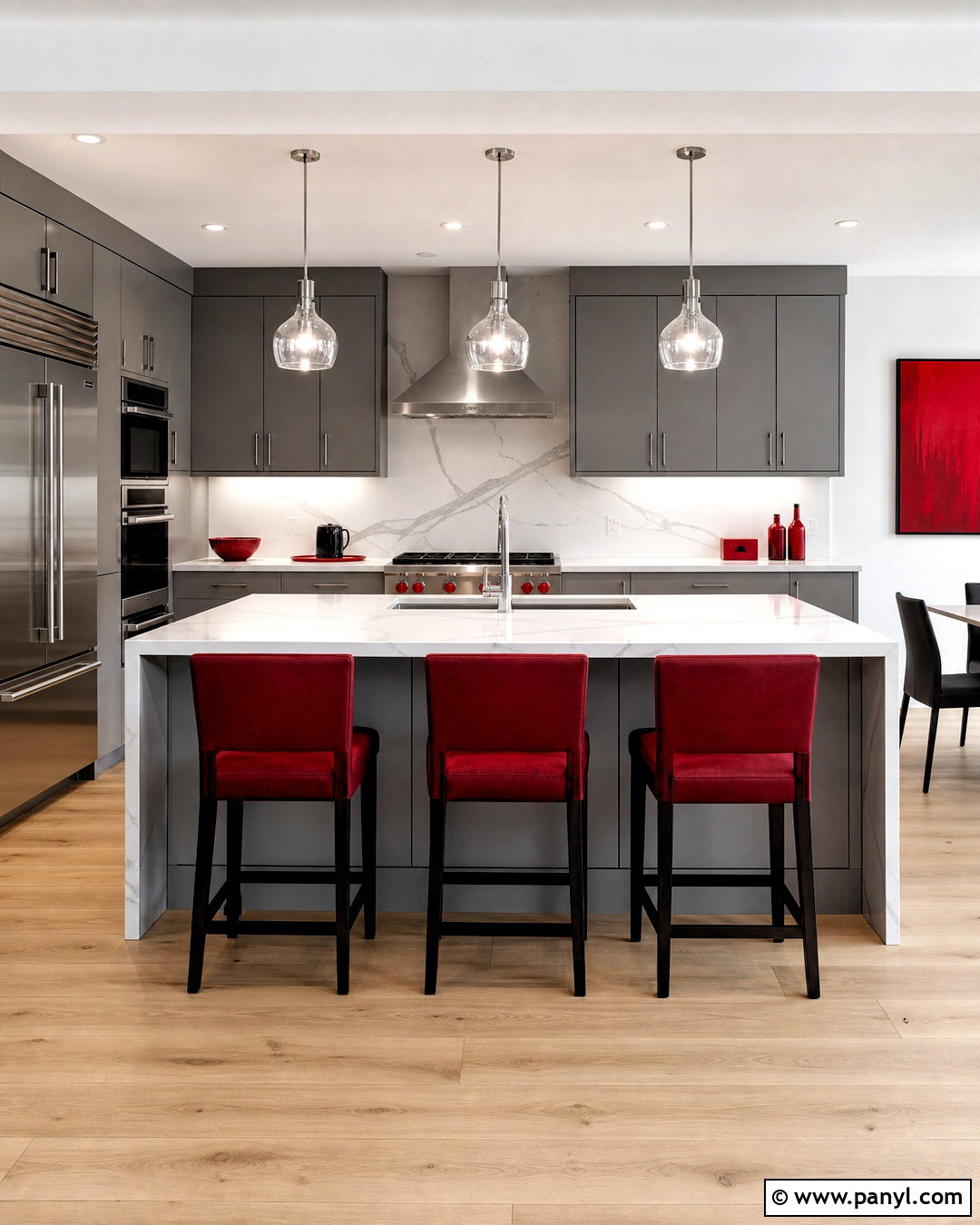
Cool gray cabinetry becomes more welcoming when paired with warm red details. Select medium gray flat-panel cabinets, white quartz counters, and a softly veined slab backsplash for a clean contemporary base. Add four deep red upholstered stools around a waterfall island, using black or dark bronze frames to ground the color. A red enamel kettle and one abstract print can carry the accent toward the perimeter without creating clutter. Pale oak flooring balances the cool cabinets, while clear glass pendants preserve an airy sightline. Use simple brushed nickel hardware and stainless steel appliances to maintain the streamlined palette. This design works best when the red has a slightly muted undertone. Avoid combining several unrelated red shades, which can weaken the polished, coordinated effect.
10. Navy Kitchen With Red Accents
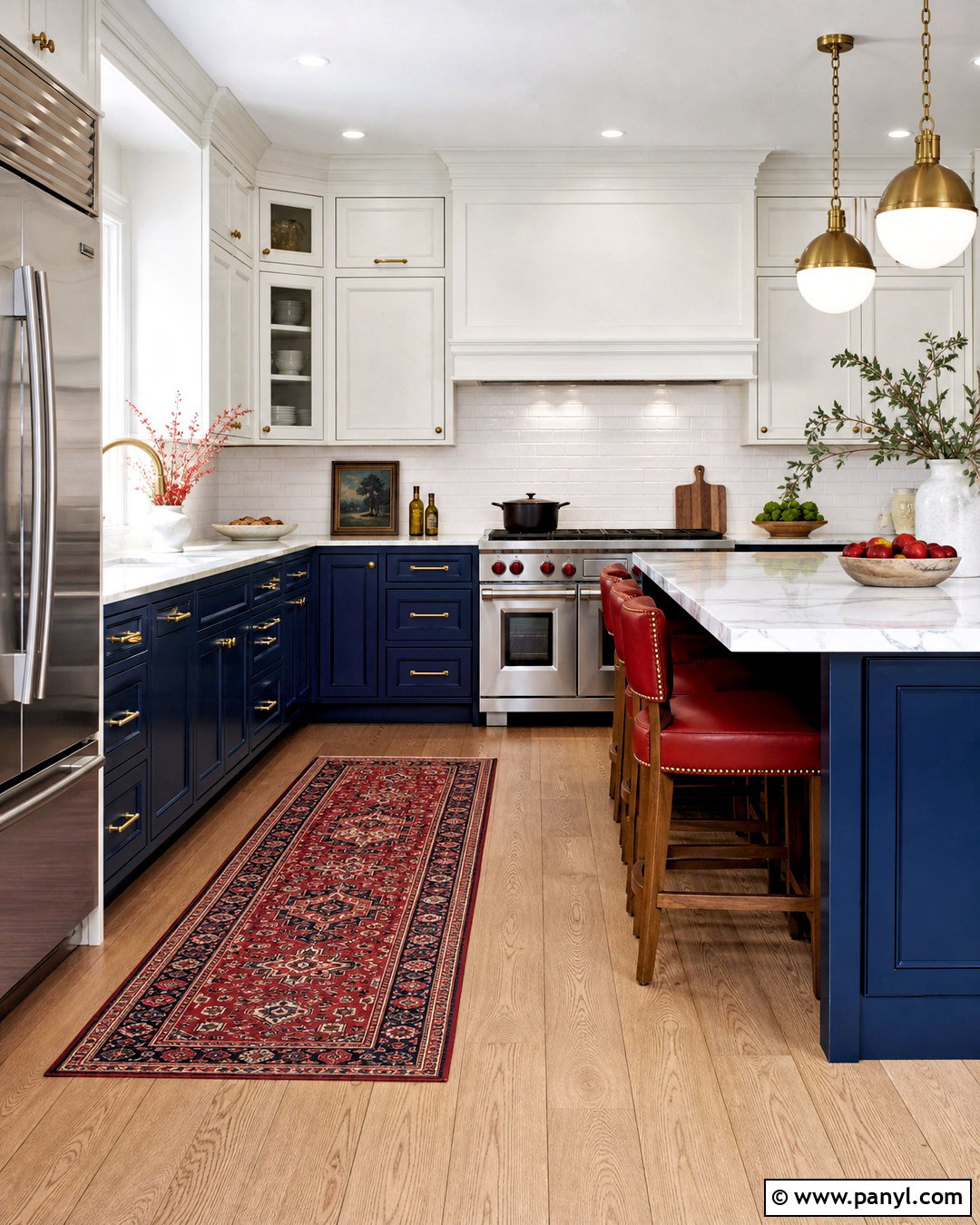
Navy blue cabinets and red accents form a confident palette that can still feel sophisticated. Use deep navy lower cabinets and warm white upper cabinets to prevent the room from becoming too dark. Add a white marble-look backsplash and matching countertops to brighten the work surfaces. Place muted cherry red stools at a navy island, then repeat the color through a patterned runner containing red, blue, and cream. Brushed brass pulls, pendant lights, and a brass faucet warm both strong colors. Natural oak flooring adds another softening layer and keeps the room comfortable. Display only a few white ceramics and wood accessories on the counters. With plenty of light and carefully spaced accents, this complete kitchen feels colorful, tailored, and appropriate for both traditional and modern homes.
11. Sage Green Kitchen With Red Accents
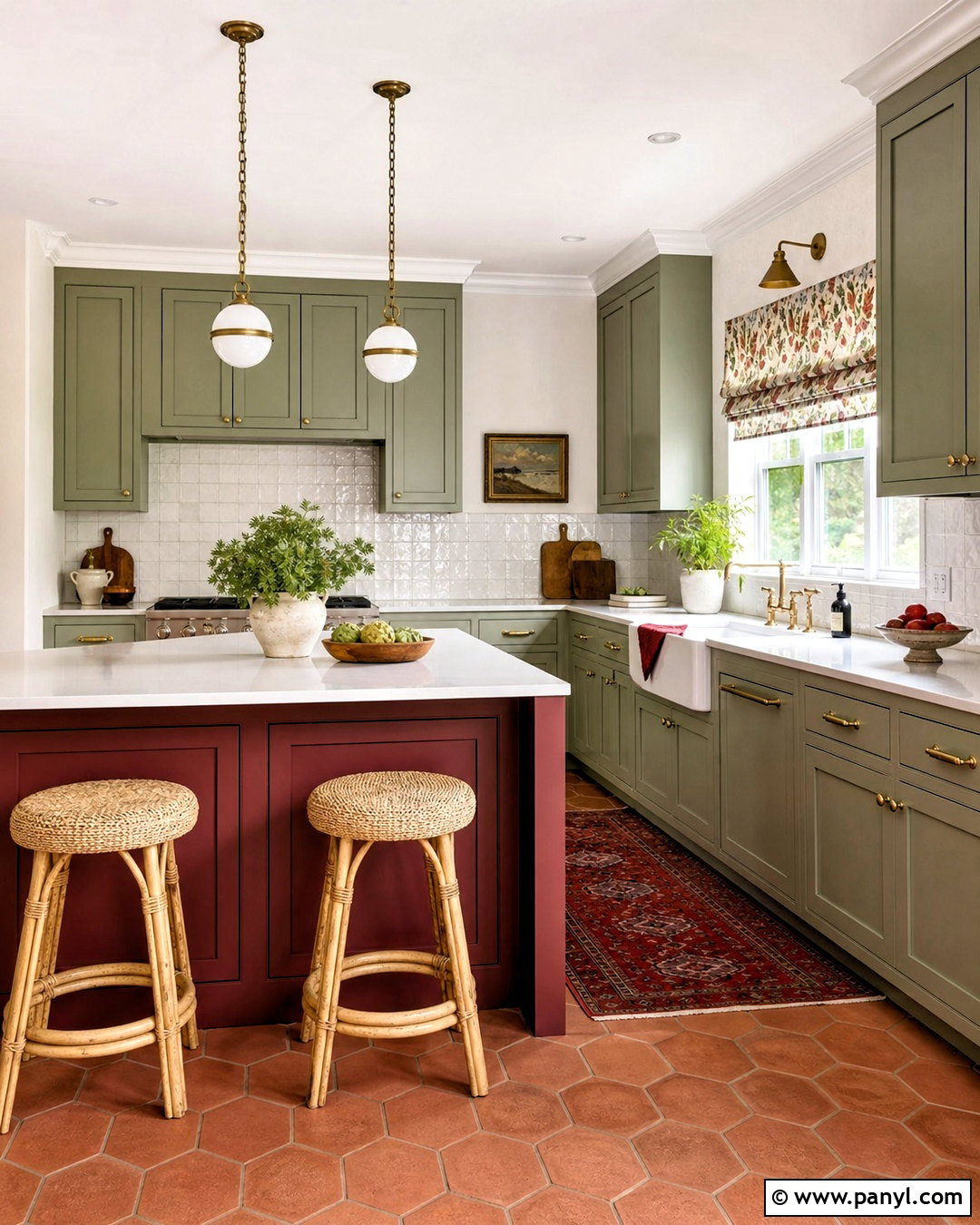
Sage green and warm red create an inviting kitchen inspired by natural, earthy colors. Paint Shaker cabinets a soft sage green and use creamy quartz countertops with a lightly textured off-white backsplash. A brick red island provides a grounded centerpiece, especially when topped with oak or pale stone. Add warm brass hardware and two milk-glass pendant lights to keep the look gentle. Terracotta floor tile strengthens the earthy palette, while woven stools add casual texture. Repeat red in a small floral Roman shade and a simple bowl near the range. Avoid highly saturated scarlet, which can compete with the quiet green cabinetry. The finished room feels layered and warm, with enough contrast to remain interesting throughout every season without relying on temporary themed decorations.
12. Wood Kitchen With Red Accents
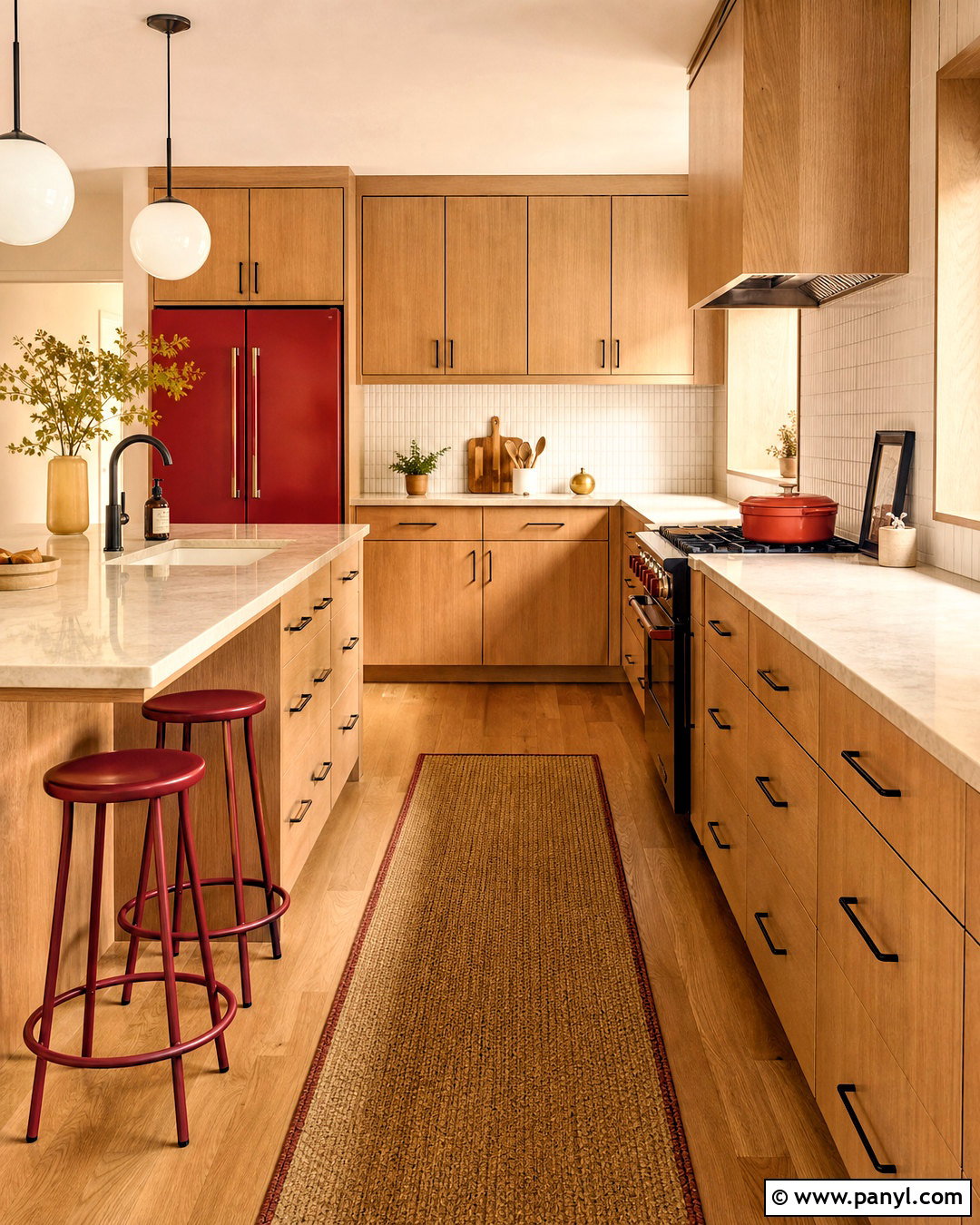
Natural wood cabinetry gives bright red accents a calm and timeless foundation. Choose rift-cut white oak cabinets with simple slab doors, creamy stone counters, and a backsplash made from warm white rectangular tile. Introduce red through a freestanding refrigerator, two counter stools, and a narrow woven runner. Keep the red pieces clean-lined so the kitchen feels modern rather than nostalgic. Matte black hardware and a black faucet add definition, while globe pendants provide soft visual contrast above the island. Continue the oak on the floor in a slightly darker finish to create depth without introducing another major color. White walls and uncluttered counters preserve the natural brightness. This complete look combines warmth, function, and color while allowing the wood grain to remain a central feature.
13. Small Kitchen With Red Accents
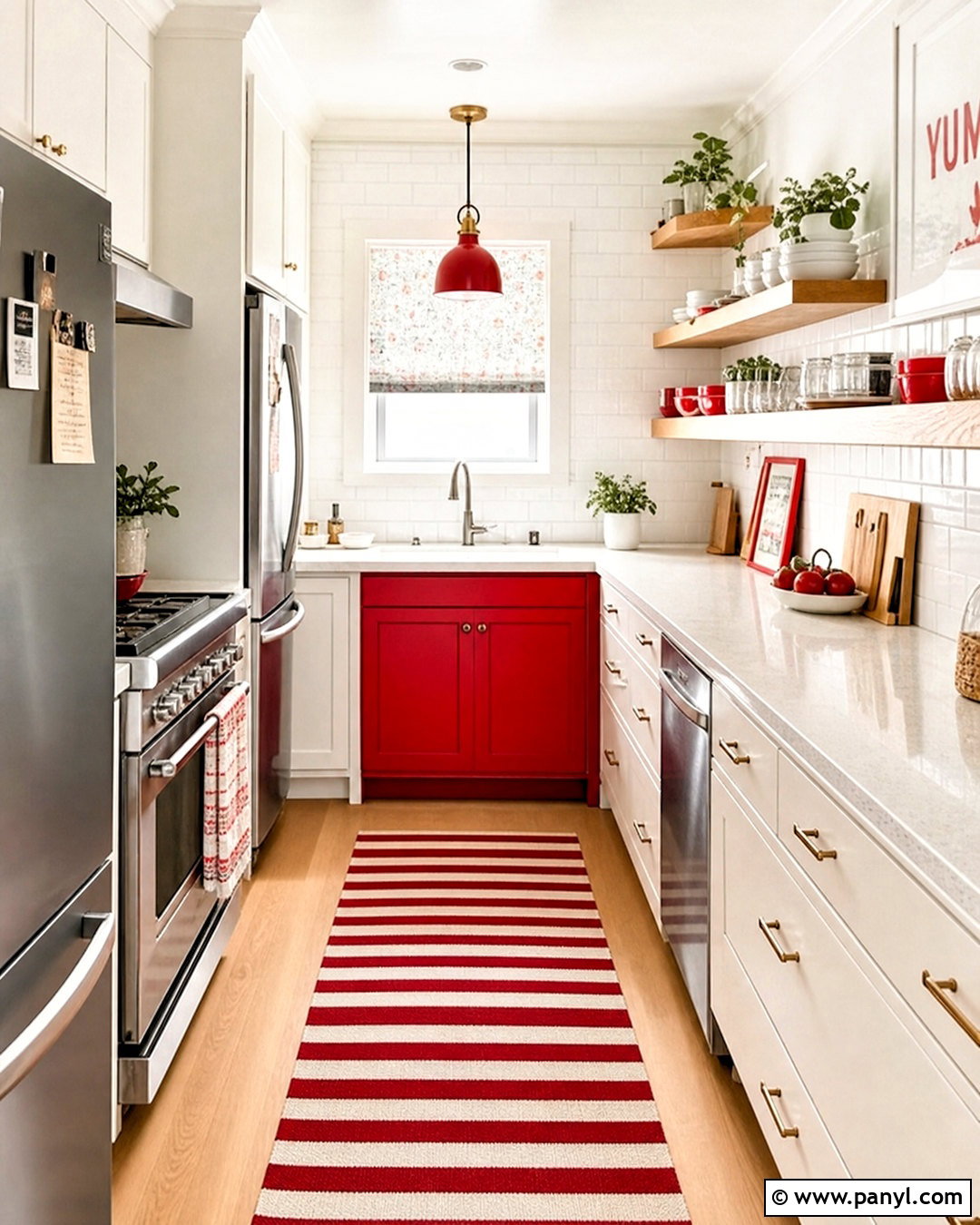
In a small kitchen, red works best when it directs attention to a few well-planned areas. Use soft white cabinets, pale quartz counters, and a glossy white backsplash to reflect light around the room. Paint the lower cabinet beneath the sink a cheerful tomato red, creating a compact focal point without shrinking the space visually. Add a red pendant above a tiny breakfast ledge and a striped runner along the main walkway. Light oak flooring and open shelves keep the layout feeling airy. Choose slim black hardware and compact stainless steel appliances for a clean finish. Store most accessories behind closed doors, leaving only a red kettle and two wood boards visible. The result feels colorful and complete while preserving valuable visual space and practical circulation.
14. Retro Kitchen With Red Accents
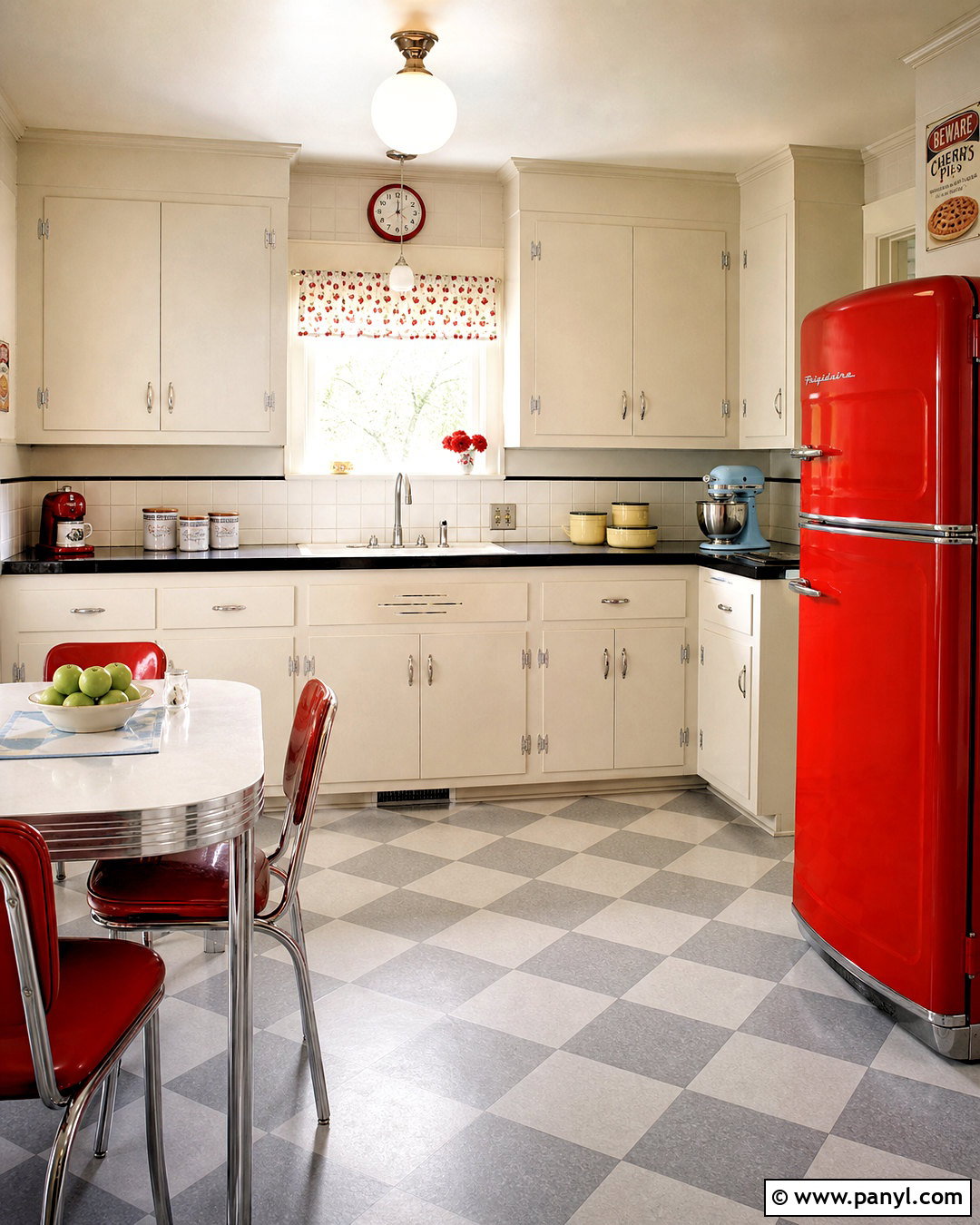
A retro kitchen can celebrate red without looking like a stage set. Begin with creamy white cabinets, rounded chrome hardware, and a pale gray checkerboard floor. Add a curved red refrigerator as the primary focal point, then include red vinyl seats on a compact chrome breakfast table. Keep the backsplash simple with white square tile and dark grout. Light blue accessories, used sparingly, can soften the classic red-and-white combination. Install opal glass ceiling lights and under-cabinet lighting so the room remains bright and functional. Open shelves may display a few cream mixing bowls and clear storage jars. The key is balancing recognizable retro forms with uncluttered surfaces and modern storage, creating a cheerful kitchen that remains practical for everyday cooking and dining.
15. Mediterranean Kitchen With Red Accents
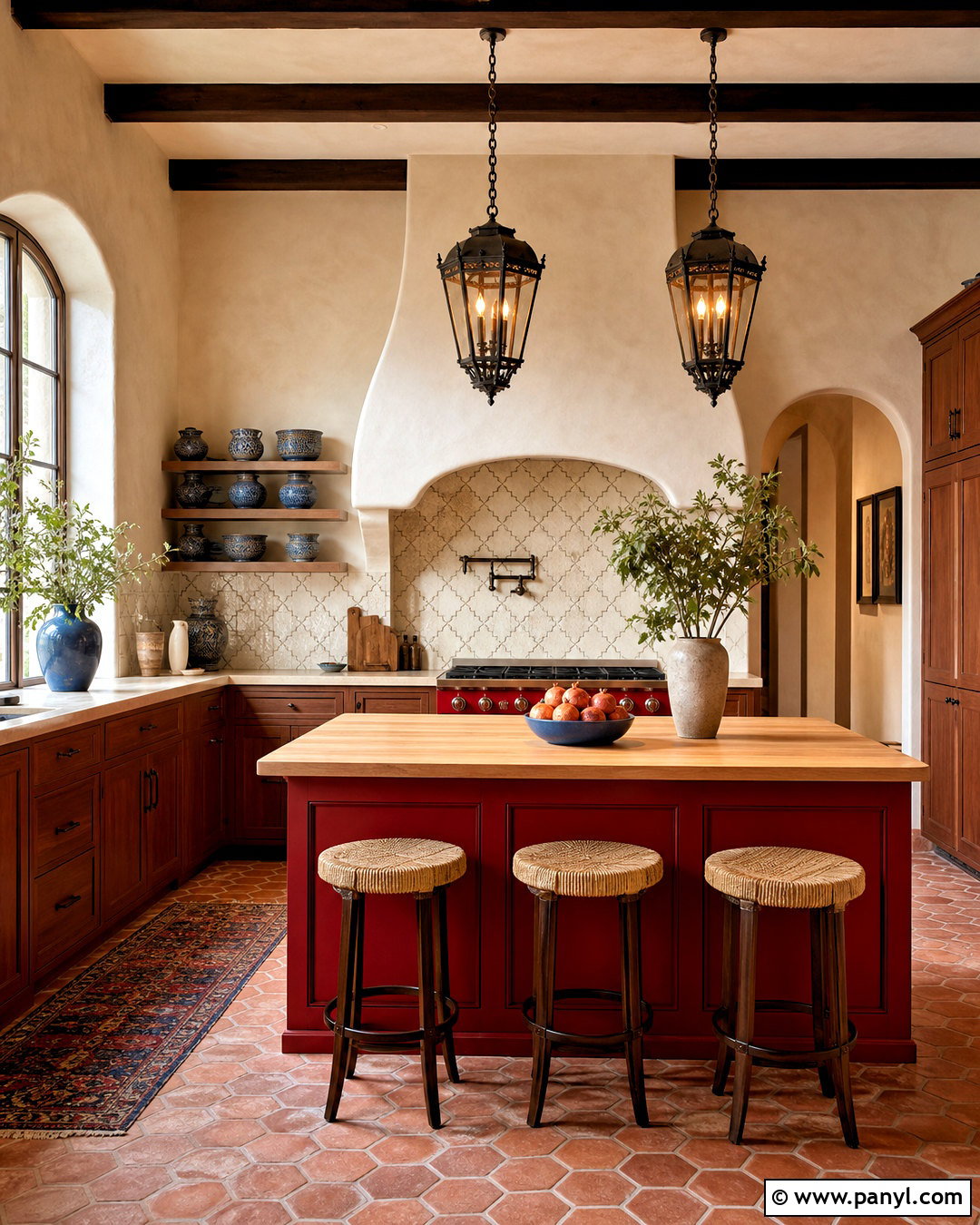
Sun-washed materials make red accents feel rich and organic in a Mediterranean kitchen. Use creamy plaster walls, warm wood cabinets, and handmade off-white tile across the backsplash. A deep paprika red island with an oak countertop becomes the heart of the room. Terracotta floor tile supports the earthy color story, while dark bronze hardware and lantern-shaped pendants add definition. Choose woven rush stools and open wood shelving for a casual, handcrafted character. Repeat red through patterned seat cushions and one ceramic serving bowl, mixing it with muted blue and warm beige details. Arched cabinet openings or a curved plaster hood can reinforce the architectural style. This layered kitchen feels colorful yet grounded because every finish shares a warm, slightly weathered quality.
16. Industrial Kitchen With Red Accents
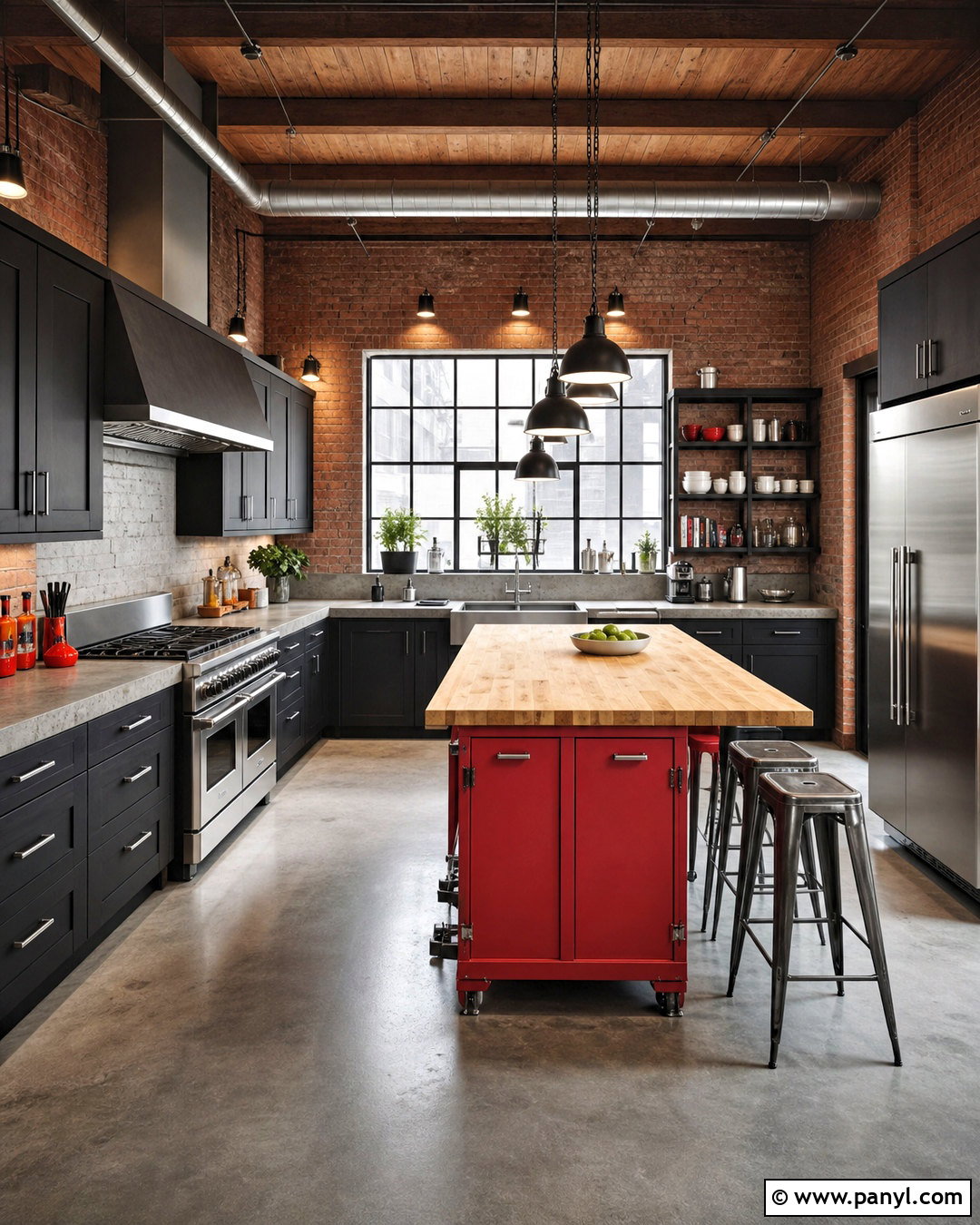
Concrete, steel, and brick provide a strong background for clear red accents. Use matte charcoal lower cabinets, open metal shelving, and light gray concrete countertops. A red metal island with a butcher-block top introduces color while doubling as a generous work surface. Add black steel stools, factory-style pendants, and a stainless steel range to support the industrial character. If the room has exposed brick, keep it natural and use white paint on the remaining walls to maintain brightness. Repeat the island color with a red wall clock and a small enamel container, but leave most accessories neutral. Sealed concrete flooring completes the durable palette. The finished kitchen feels practical and urban, with red adding warmth and energy to the harder architectural materials.
17. Cottage Kitchen With Red Accents
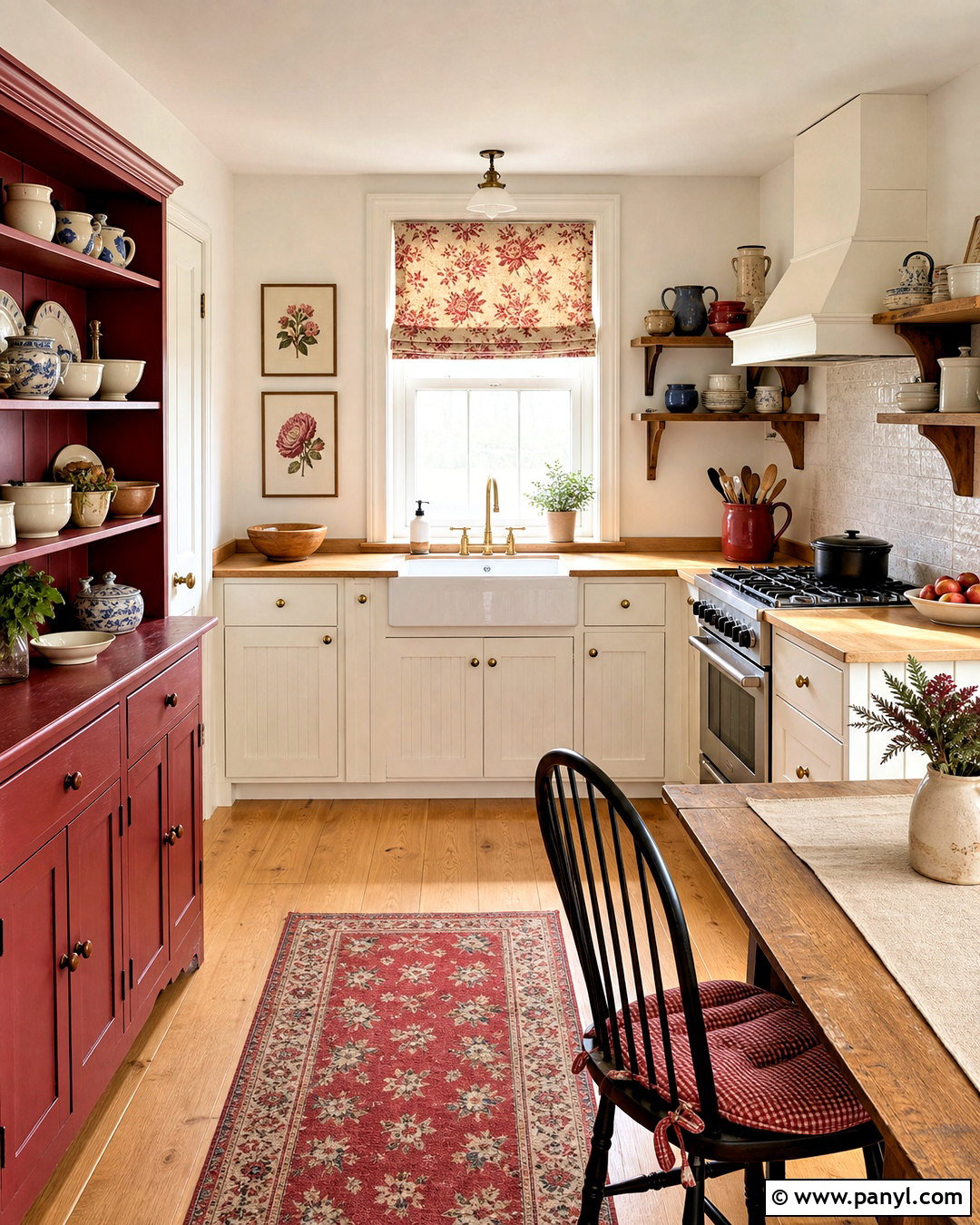
Soft patterns and painted furniture allow red to feel charming in a cottage kitchen. Start with warm white beadboard cabinets, oak countertops, and a small apron-front sink. Paint a freestanding hutch muted cranberry red, using it to store dishes and pantry items. Add a cream backsplash with subtle variation and honey-toned wood flooring for warmth. A floral Roman shade containing red, dusty blue, and green can tie the palette together. Choose simple brass knobs, a white enamel pendant, and two spindle-back chairs beside a compact breakfast table. Open shelves should hold everyday pottery rather than excessive decoration. With red concentrated on one useful furniture piece and repeated through modest textiles, the room feels cozy, personal, and visually balanced without becoming overly sweet or crowded.
18. Burgundy Kitchen With Brass Accents
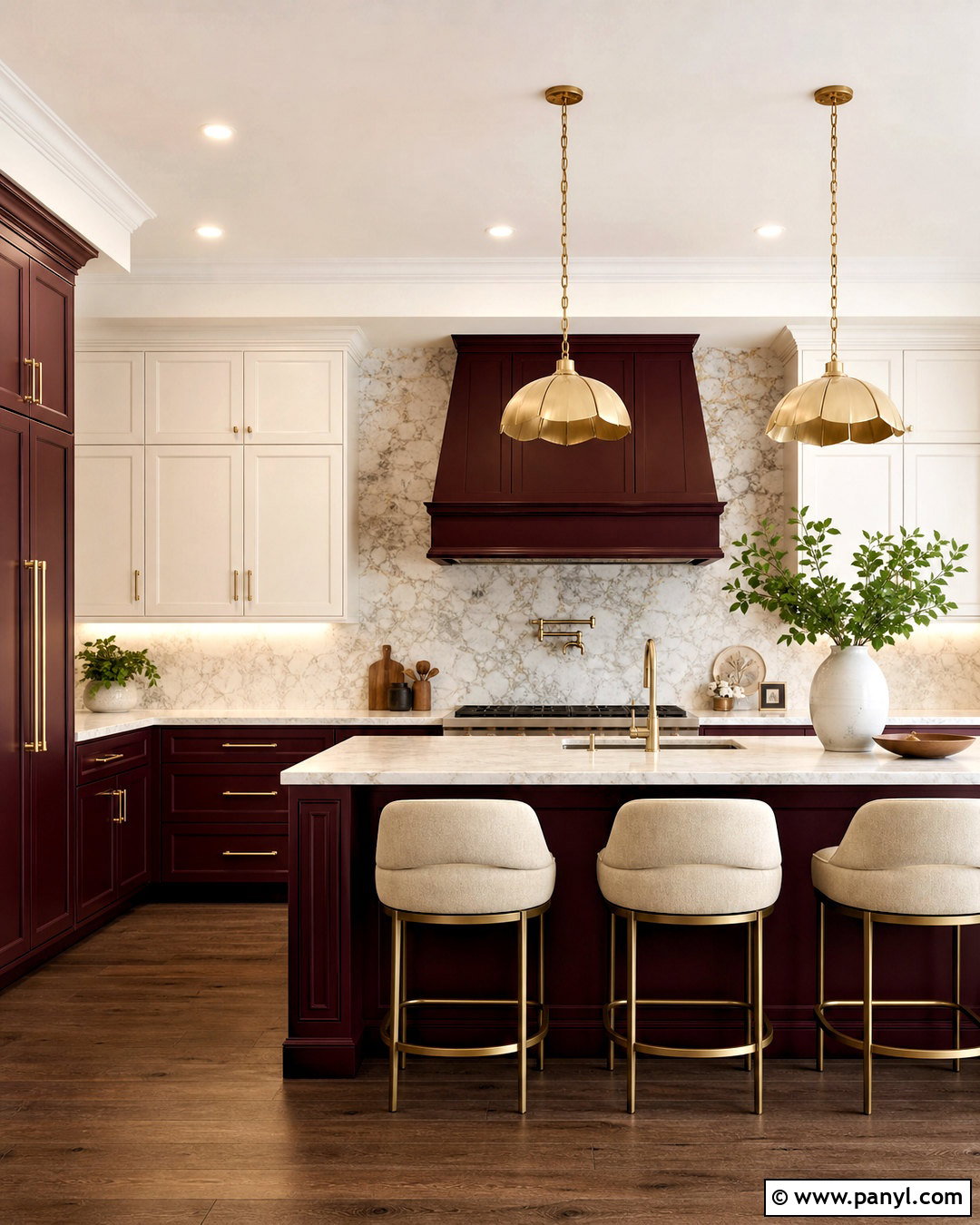
Deep burgundy creates a polished kitchen when paired with pale stone and warm metal. Use burgundy lower cabinets and a matching island, then install warm white upper cabinets to keep the room open. Select creamy marble countertops and a full-height marble backsplash with soft gray veining. Brushed brass pulls, a brass faucet, and sculptural pendant lights bring out the richness of the cabinet color. Dark oak flooring grounds the space, while cream upholstered stools add comfort and contrast. Keep small appliances concealed and decorate with only a few wood and ceramic pieces. Under-cabinet lighting is important because it illuminates the pale work surfaces beside the darker cabinetry. This complete palette feels luxurious and grown-up while still being comfortable enough for an everyday family kitchen.
19. Renter-Friendly Kitchen With Red Accents
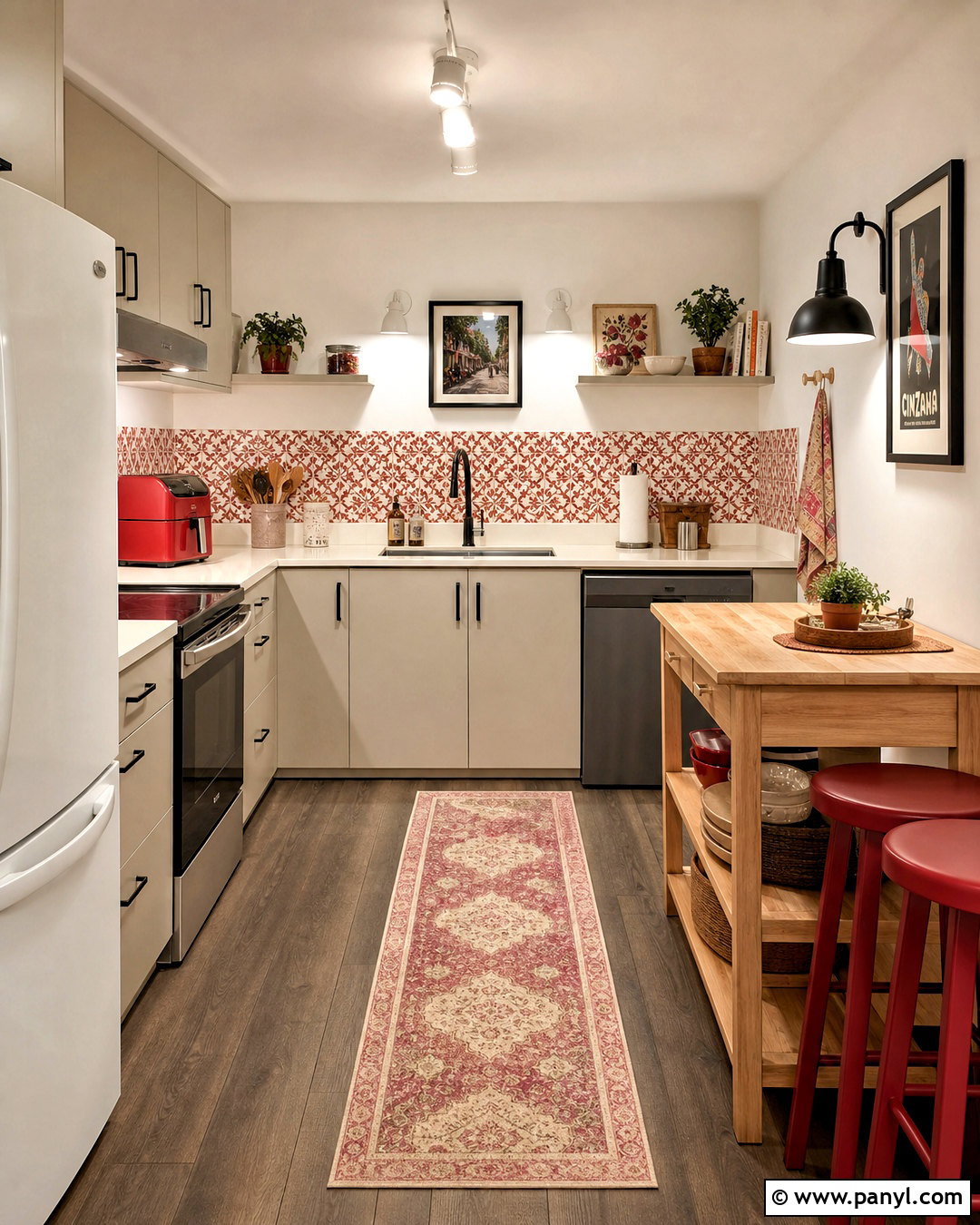
A rental kitchen can gain a cohesive red accent scheme without permanent renovations. Keep the existing white or neutral cabinets, then add removable red-and-cream backsplash panels behind the main counter. Use a washable red runner, cherry red counter stools, and a compact red appliance to distribute color throughout the room. Replace cabinet knobs with matte black pulls, storing the originals for move-out day. A plug-in white pendant or adjustable wall sconce can improve lighting without major electrical work. Add a freestanding wood cart for storage and display a red bowl beside natural wood cutting boards. Removable window film can soften an unattractive view while preserving daylight. These reversible layers create a complete, personalized kitchen that remains practical and easy to restore later.
20. Open Kitchen With Red Dining Accents
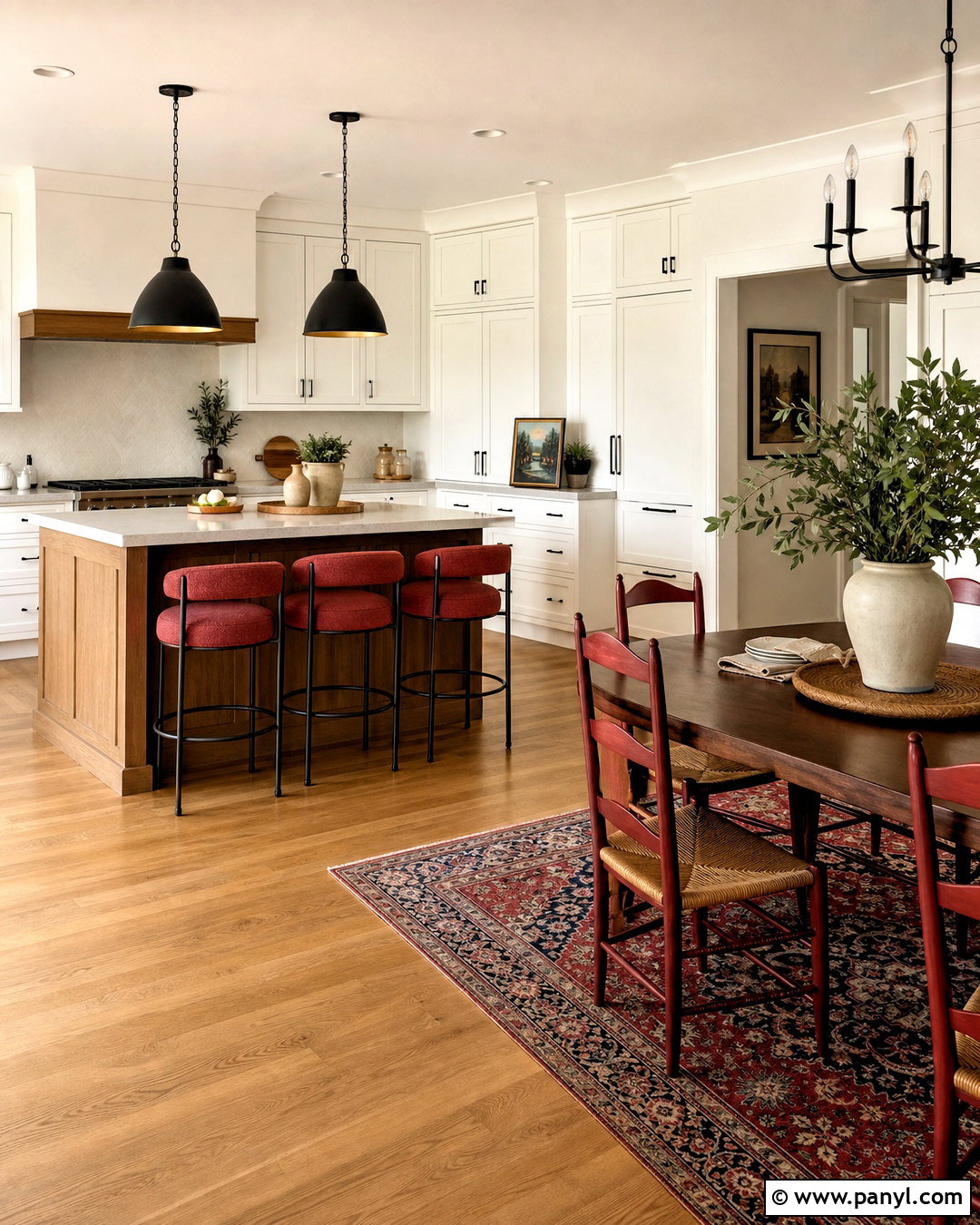
An open kitchen can use red to connect the cooking and dining zones. Keep the main cabinetry warm white with pale stone counters and a medium oak island. Place two muted red stools on the kitchen side, then repeat the same color on upholstered dining chairs nearby. A large patterned rug beneath the table can include red, cream, blue, and tan, linking both areas without requiring identical furniture. Use black pendant lights over the island and a coordinating black fixture above the dining table. Oak flooring should continue uninterrupted across the full space to strengthen flow. Add one red ceramic piece on open shelving and keep the remaining decor neutral. The finished layout feels unified, lively, and comfortable from every viewing angle.
Conclusion:
Red can transform a kitchen, but it works best when every accent supports a clear overall palette. A red island or range creates a powerful centerpiece, while stools, lighting, textiles, and small appliances provide easier, lower-commitment options. White and gray make red feel crisp. Wood, cream, sage, and terracotta give it a warmer character. Black and navy produce stronger contrast, especially when balanced with pale countertops and good lighting. Choose one main shade of red, repeat it in two or three locations, and leave enough neutral space around it. Whether you prefer farmhouse warmth or modern simplicity, these 20 kitchen with red accents offer practical ways to build a colorful, coordinated room.

Related Ideas and Inspiration:
Leave a Reply