
Blue can make a kitchen feel crisp, calm, coastal, dramatic, or playfully colorful, depending on how you use it. This collection of **20 kitchen with blue accents** explores complete, practical looks rather than isolated decorative touches. You will find navy islands, powder-blue cabinets, patterned backsplashes, blue seating, painted pantries, and smaller renter-friendly updates. Each design balances blue with countertops, flooring, hardware, lighting, and natural materials, making it easier to picture the finished space. Some schemes suit bright modern homes, while others bring character to farmhouse, cottage, traditional, or compact kitchens. Whether you are planning a renovation or refreshing what you already have, these approachable combinations offer a clear starting point. Explore these **20 kitchen with blue accents** to find a look that fits your home.
1. White Kitchen With Navy Blue Island
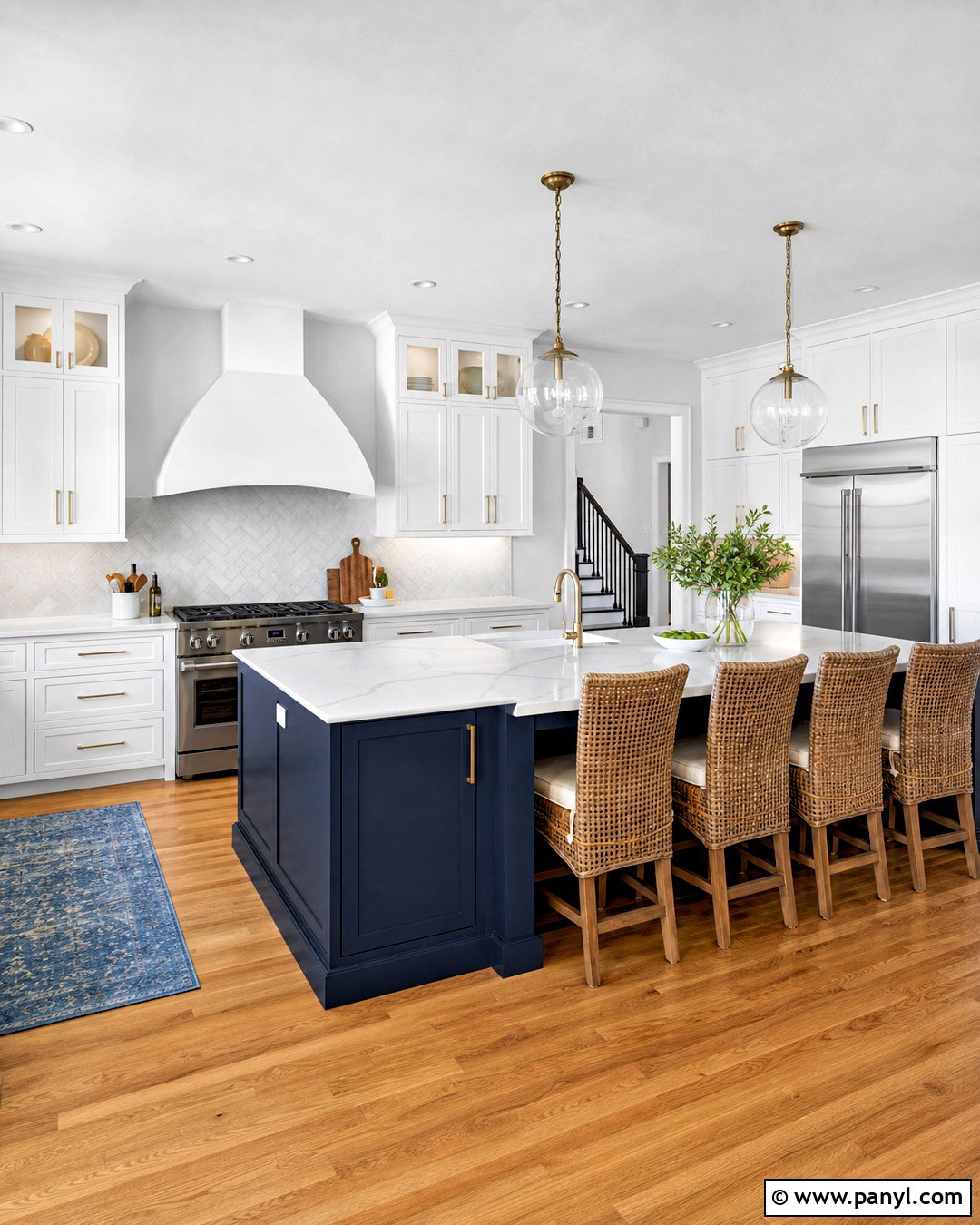
A navy blue island gives a white kitchen a strong focal point without making the entire room feel dark. Choose simple white Shaker cabinets, warm white walls, and lightly veined quartz countertops to create a clean background. Paint the island deep navy and add brushed brass pulls for a polished contrast. Natural oak flooring and woven counter stools introduce warmth, while clear glass pendants keep the sightlines open. Repeat the navy in a Roman shade, striped runner, or ceramic bowl so the island does not feel disconnected. For a balanced layout, keep tall cabinets and large appliances around the perimeter. This lets the blue island anchor the center while the surrounding white surfaces reflect natural and overhead light.
2. Light Blue Kitchen Cabinets
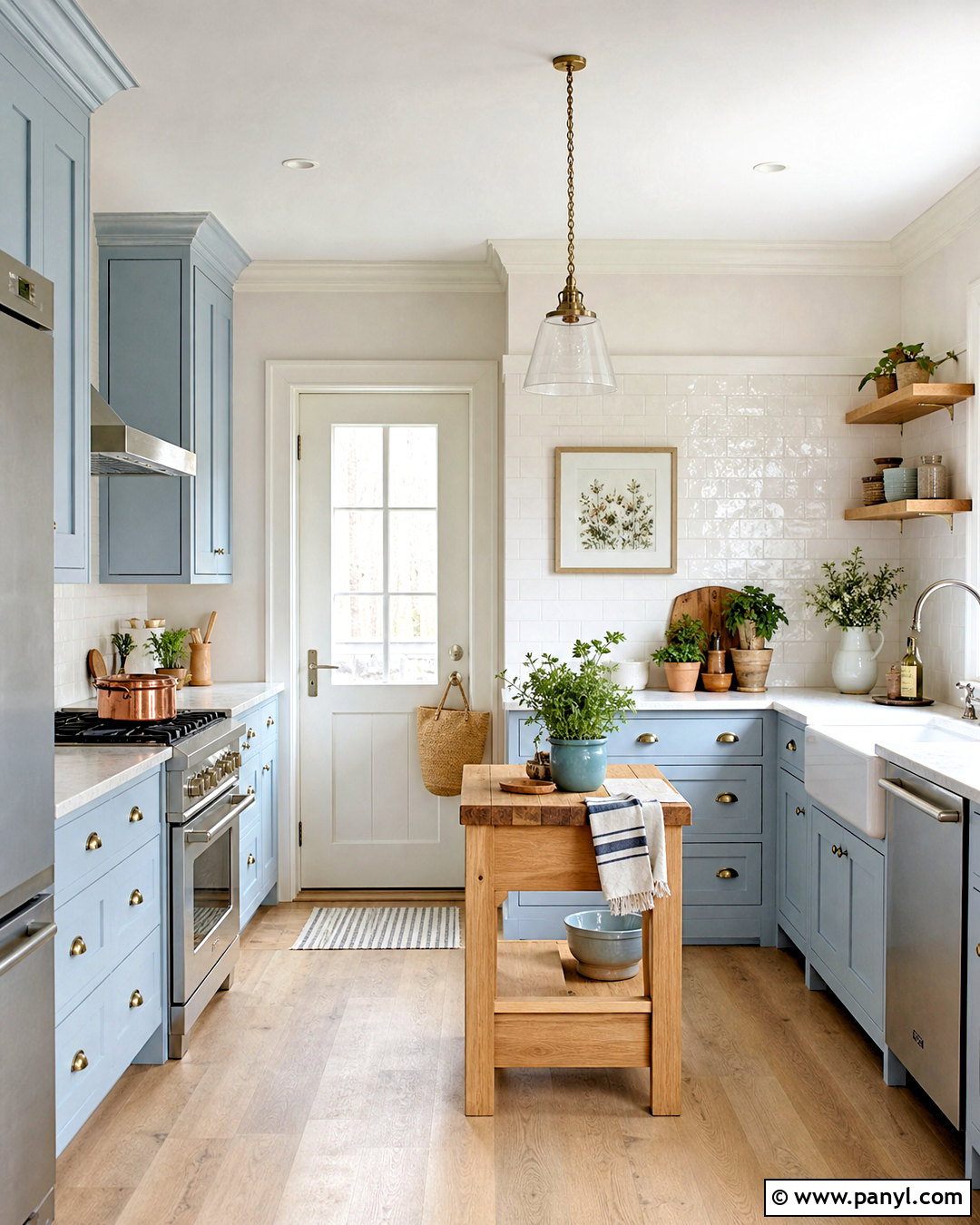
Light blue cabinets create a soft kitchen that feels colorful but easy to live with. Select a muted powder blue with gray undertones rather than a highly saturated pastel. Pair it with creamy white walls, white quartz counters, and a glossy off-white subway tile backsplash. Brushed nickel hardware maintains the cool, relaxed palette, while pale oak flooring prevents the room from looking cold. A small wood dining table or butcher-block island can add another warm layer. Keep window treatments simple so natural light reaches the painted cabinets. Finish the room with white ceramic dishes, glass pendants, and a few herbs in clay pots. The result feels especially comfortable in cottage, coastal, and transitional homes without relying on obvious nautical decorations.
3. Navy Blue Lower Kitchen Cabinets
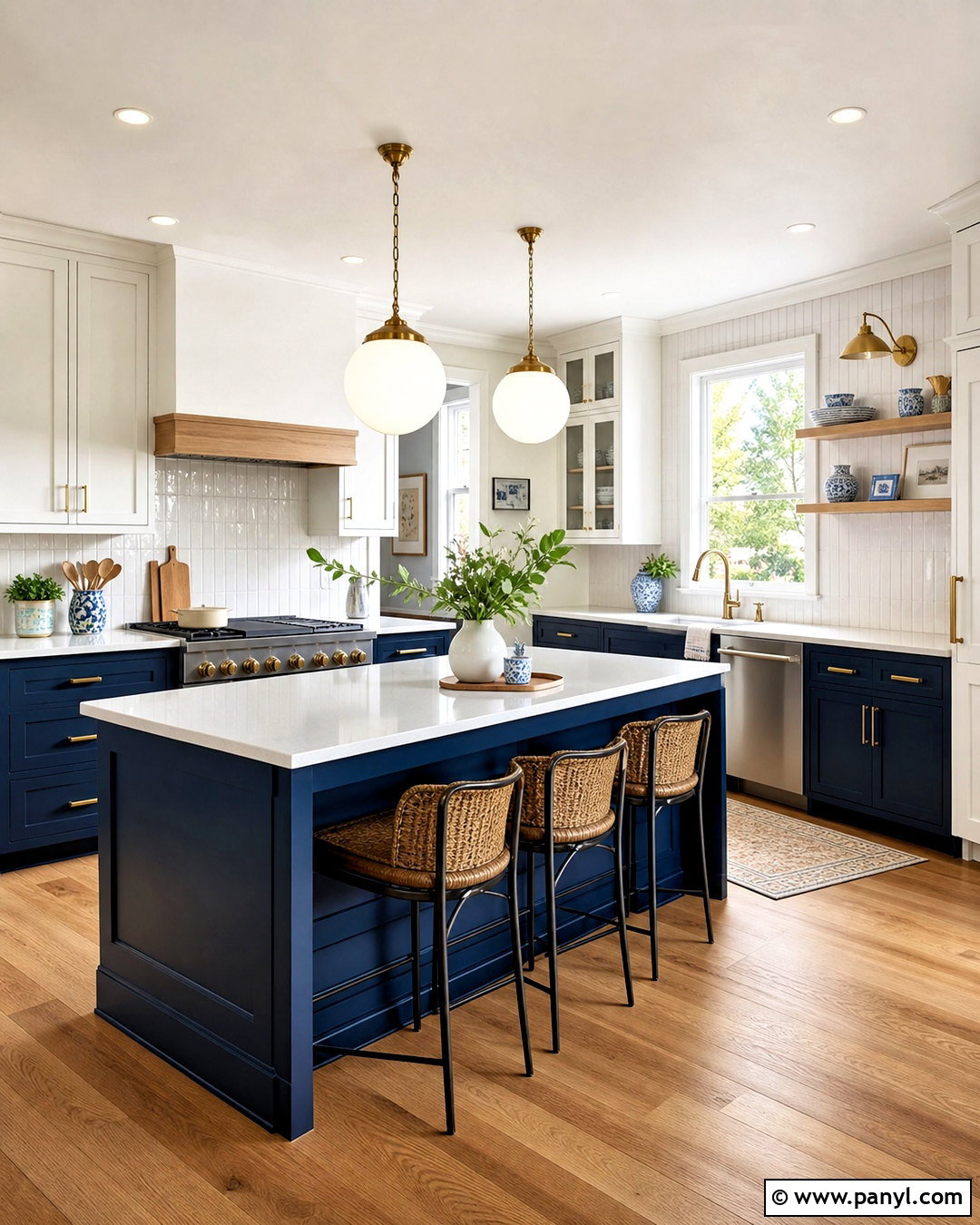
Painting only the lower cabinets navy gives the kitchen depth while preserving a bright, open feeling above the counters. Use warm white upper cabinets and matching wall paint to reduce visual breaks. A pale quartz countertop and white vertical tile backsplash will connect both cabinet colors. Choose aged brass knobs, a brass bridge faucet, and simple globe lights to warm the dark blue. Medium-tone oak flooring grounds the scheme and hides everyday marks better than very pale flooring. If the kitchen includes open shelving, use natural wood shelves that relate to the floor. Place blue-and-white pottery, wood cutting boards, and neutral linens around the room. This two-tone arrangement works particularly well in smaller kitchens where completely dark cabinetry might feel too heavy.
4. Blue Kitchen Backsplash With White Cabinets
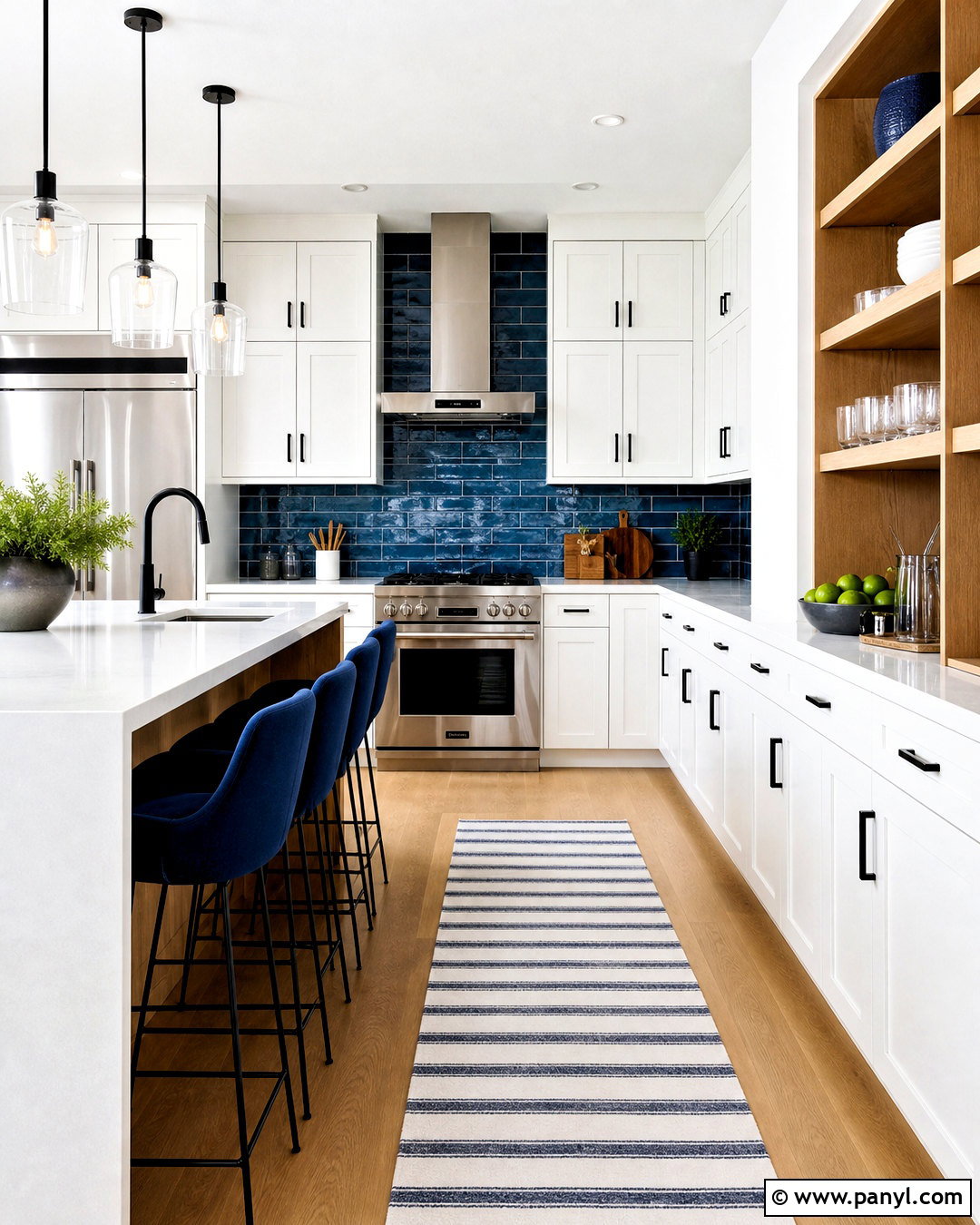
A blue backsplash can transform plain white cabinets while keeping the renovation focused and manageable. Try glossy blue ceramic tile in a handmade square or narrow rectangular shape. Subtle color variation across the tiles adds dimension without requiring a busy pattern. Run the backsplash from the countertop to the upper cabinets, using white or pale gray grout for a neat finish. Pair it with soft white quartz, stainless steel appliances, and matte black hardware for clean contrast. Light wood floors and a matching oak shelf soften the cool surfaces. Add blue counter stools or a striped rug to distribute the color beyond one wall. Under-cabinet lighting is important because it highlights the tile texture and makes the entire work area feel brighter and more finished.
5. Blue And White Farmhouse Kitchen
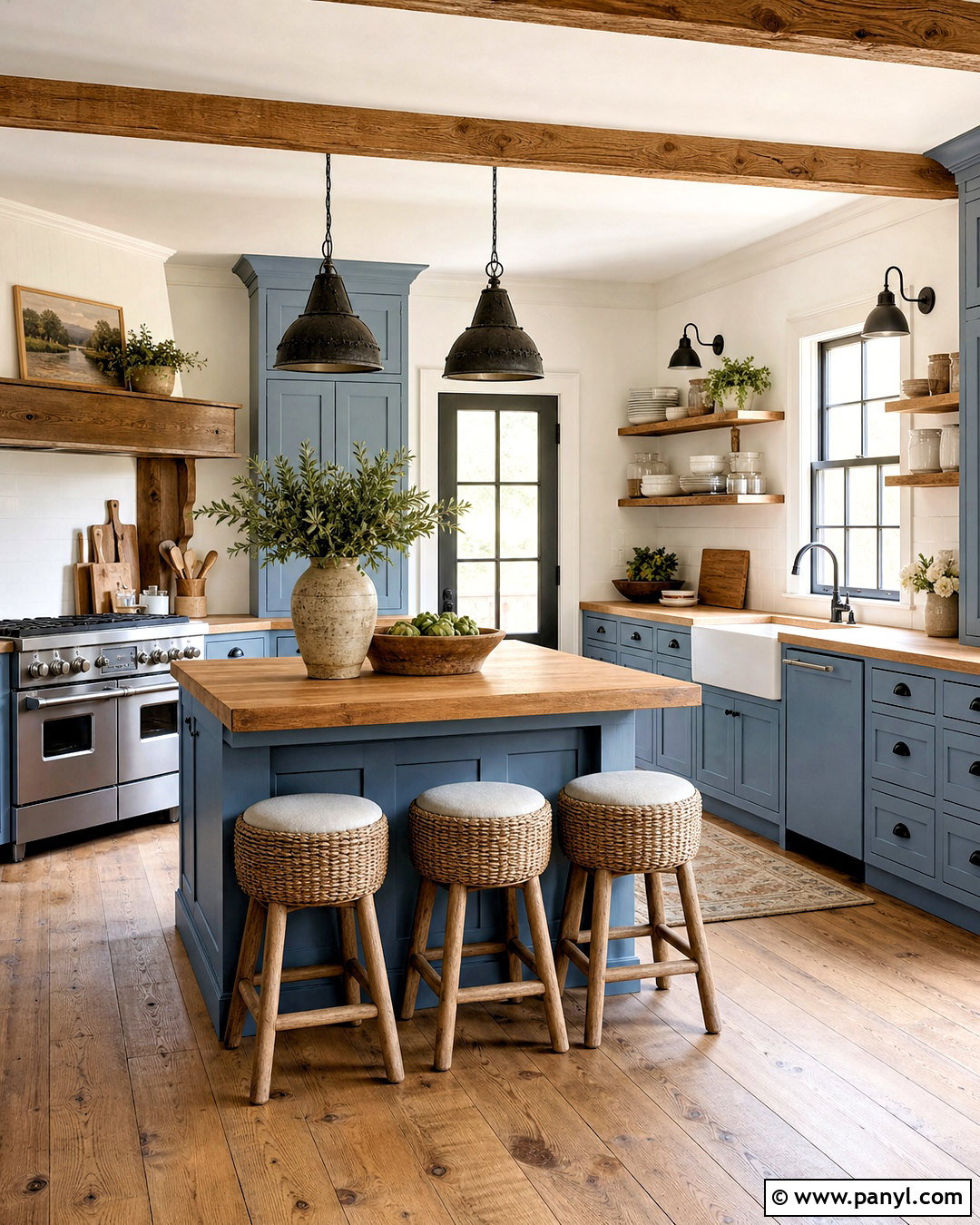
For a relaxed farmhouse kitchen, combine dusty blue Shaker cabinets with warm white walls and natural wood details. A white apron-front sink creates a classic focal point beneath the window, while butcher-block counters bring warmth to the painted cabinetry. Use simple white subway tile with light grout so the backsplash stays quiet. An oak island with a blue base can provide prep space and casual seating without appearing too formal. Black iron pendants, cup pulls, and a traditional faucet give the room definition. Wide-plank wood flooring and woven counter stools complete the welcoming atmosphere. Instead of filling every surface with rustic accessories, display a few useful pieces, such as stoneware pitchers, wood boards, and linen towels, for a farmhouse look that remains uncluttered.
6. Blue And Wood Modern Kitchen
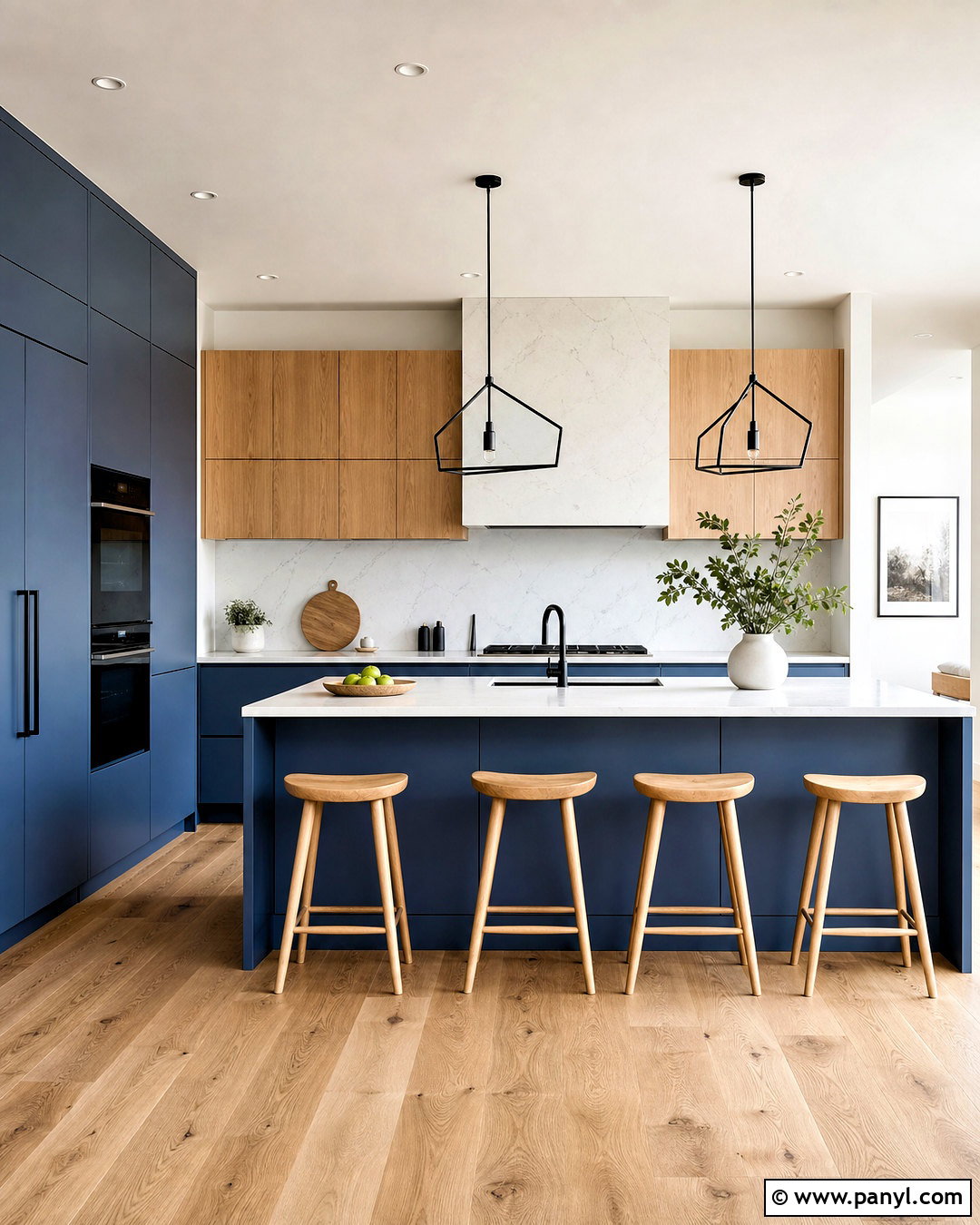
Blue and natural wood create a modern kitchen that feels warmer than an all-white minimalist space. Use flat-panel cabinets in a medium denim blue for the base units and tall storage wall. Add white oak upper cabinets or open shelves to introduce texture and soften the painted surfaces. Thin white quartz counters and a matching slab backsplash keep the lines clean. Choose integrated appliances where possible, along with understated black pulls and a matte black faucet. Wide oak flooring connects visually with the wood cabinetry. Over the island, install slim black pendants with simple geometric shapes. Keep decorative objects limited to a stone bowl, small plant, and neatly stacked ceramics. The combination looks streamlined and contemporary without feeling stark, cold, or overly industrial.
7. Small Kitchen With Blue Accents
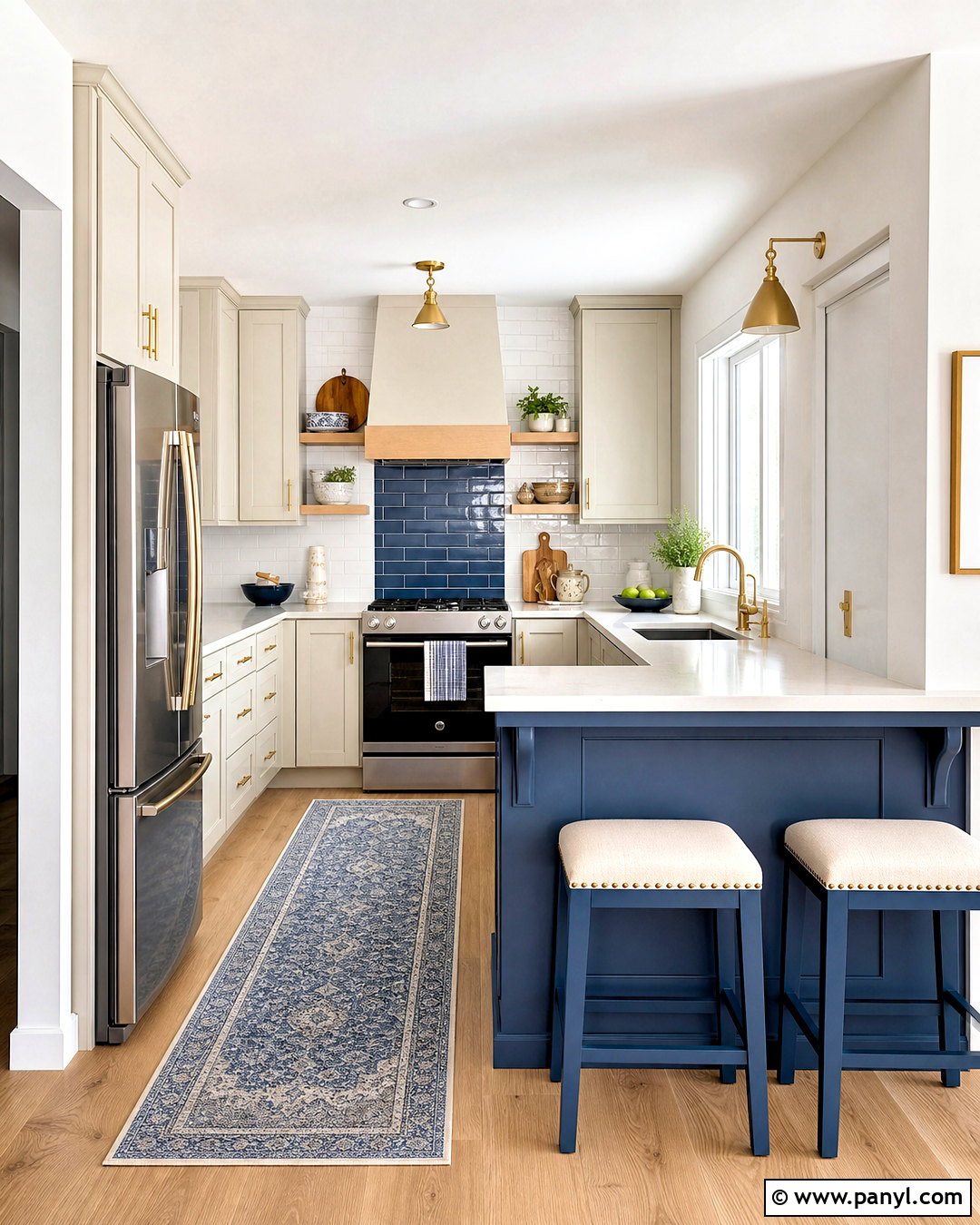
In a small kitchen, blue works best when it creates a clear focal point rather than covering every surface. Keep the main cabinets warm white and paint the narrow peninsula or lower cabinet run a medium slate blue. Install a glossy white backsplash to reflect light, then add a few blue tiles behind the range for controlled color. Pale quartz counters and light oak flooring make the room feel open. Select backless blue counter stools that tuck completely beneath the peninsula and avoid blocking the walkway. Brass hardware and a compact brass pendant add warmth without requiring extra decorative objects. A washable blue runner visually lengthens the floor. This restrained approach gives a compact layout personality while maintaining simple sightlines, useful work surfaces, and practical circulation.
8. Blue Kitchen With Brass Hardware
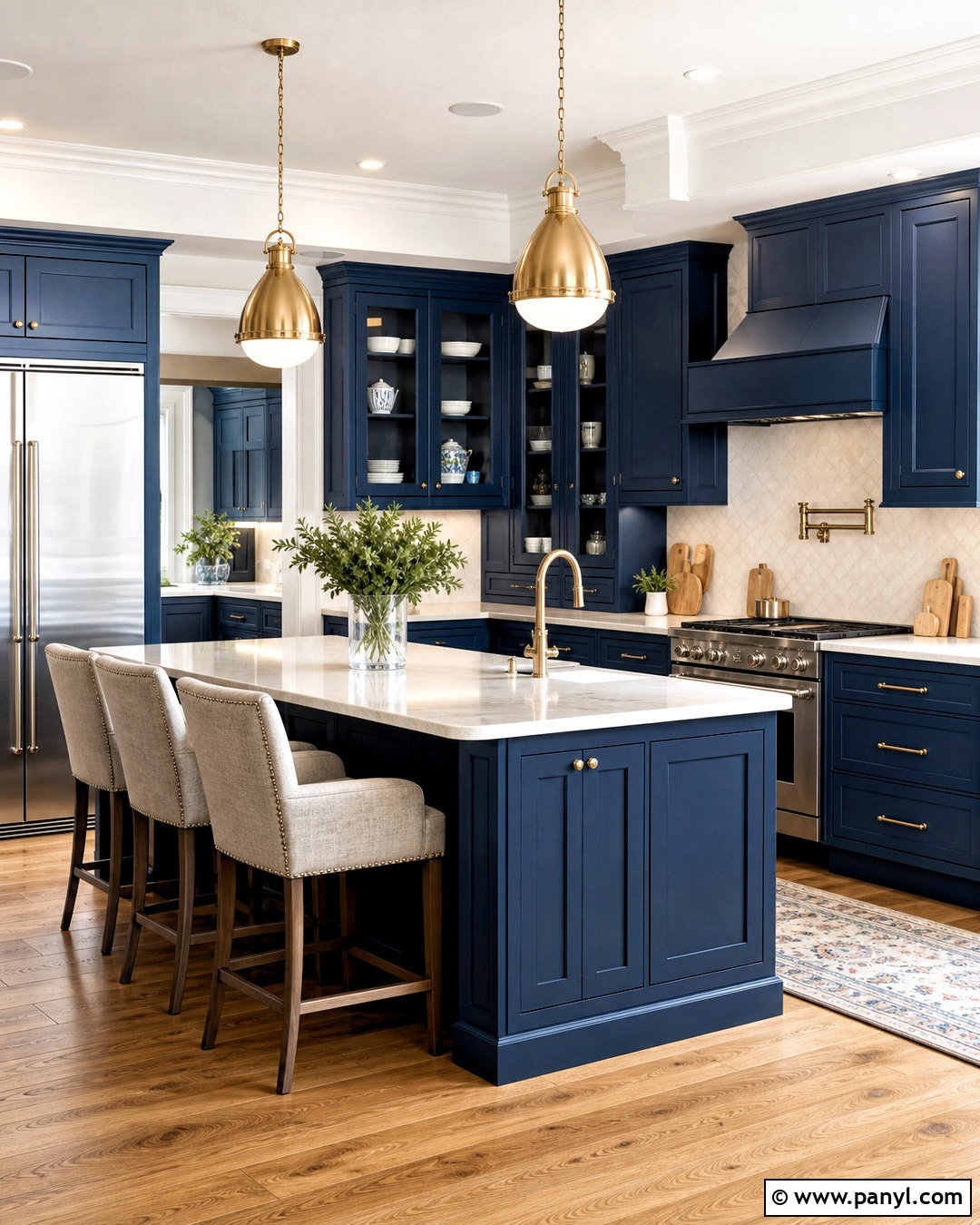
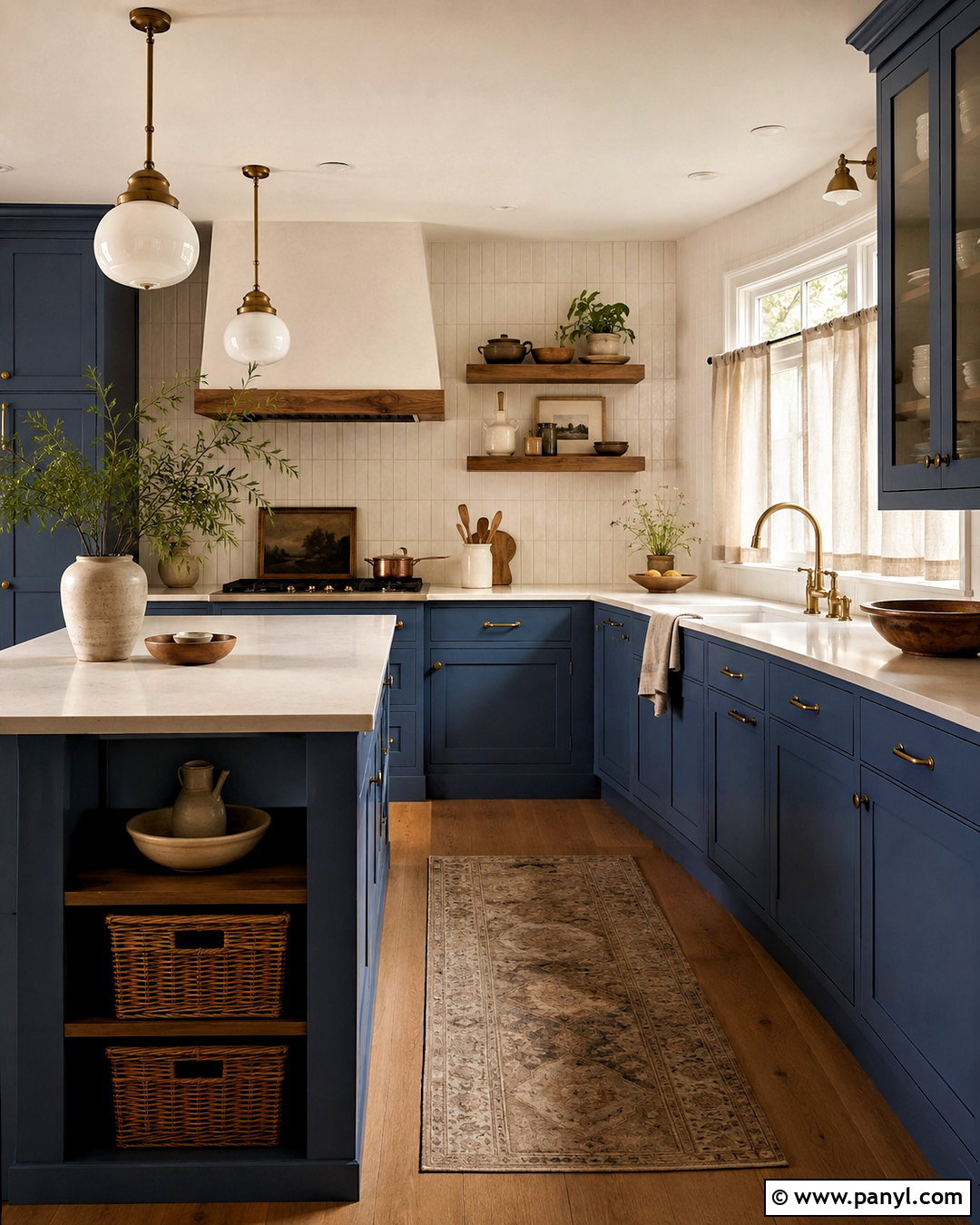
Deep blue cabinets and brass hardware create an elegant kitchen when the finishes are balanced with lighter surfaces. Choose a rich ink-blue cabinet color for the perimeter and island, then use creamy quartz or lightly veined marble-look counters. A warm white backsplash prevents the scheme from becoming too cool. Select unlacquered or softly brushed brass pulls rather than highly reflective yellow-gold hardware. Repeat the finish on the faucet and pendant lights for consistency. Medium oak floors and upholstered counter stools bring softness to the room. Glass-front upper cabinets can break up a long wall of blue and provide space for white dishes. Keep appliances paneled or stainless steel, and avoid adding too many competing metals. The finished kitchen will feel refined, cohesive, and welcoming.
9. Coastal Kitchen With Pale Blue Accents
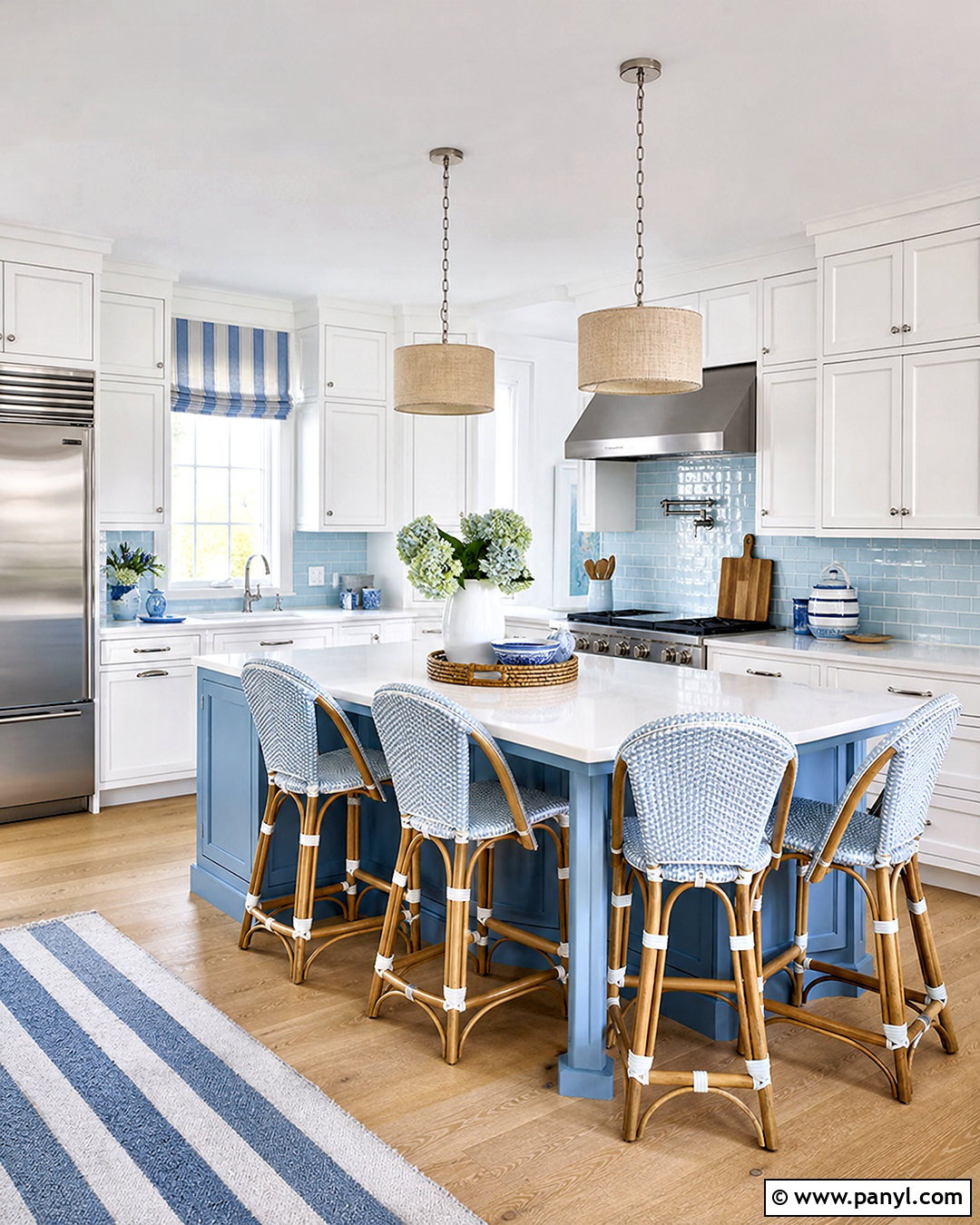
A coastal kitchen can feel relaxed without depending on anchors, shells, or other themed decorations. Begin with white inset cabinets and a pale sea-blue island topped with white quartz. Add light oak flooring, woven rattan stools, and linen pendant shades for natural texture. A glossy sky-blue backsplash introduces gentle color around the perimeter while bouncing light into the room. Use polished nickel hardware for a clean finish that complements the watery palette. Simple white walls and minimal window coverings keep the space airy. Repeat blue through striped seat cushions, ceramic serving pieces, and a washable runner. A few warm wood accents stop the blue and white combination from feeling sterile. This complete scheme works best when the materials remain casual, light, and pleasantly understated.
10. Dark Blue Kitchen With Marble Countertops
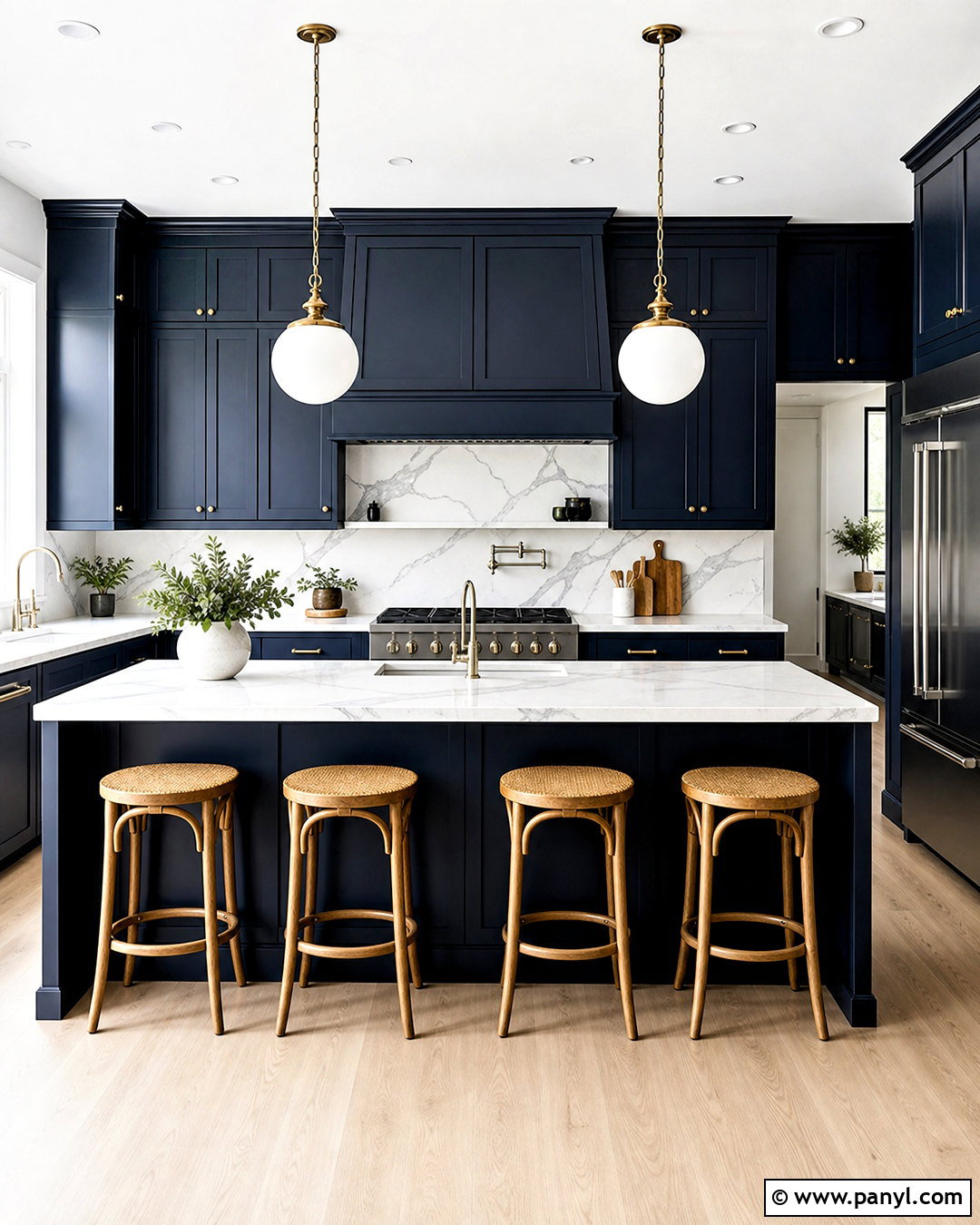
Dark blue cabinetry gains a luxurious character when paired with marble or realistic marble-look quartz. Use midnight-blue cabinets on both the perimeter and island for a dramatic, unified foundation. Select white counters with broad gray veining and continue the material up the wall as a full-height backsplash. This uninterrupted surface visually lifts the darker cabinetry. Add polished nickel hardware for a cool, tailored effect or aged brass for greater warmth. Pale oak floors provide essential contrast beneath the deep color. Large white globe pendants can brighten the island without competing with the stone pattern. Keep counter accessories simple and functional. White ceramics, clear glass, and one wood cutting board are enough. The result is bold and sophisticated but still suitable for everyday family use.
11. Blue Kitchen Island With Wood Countertop
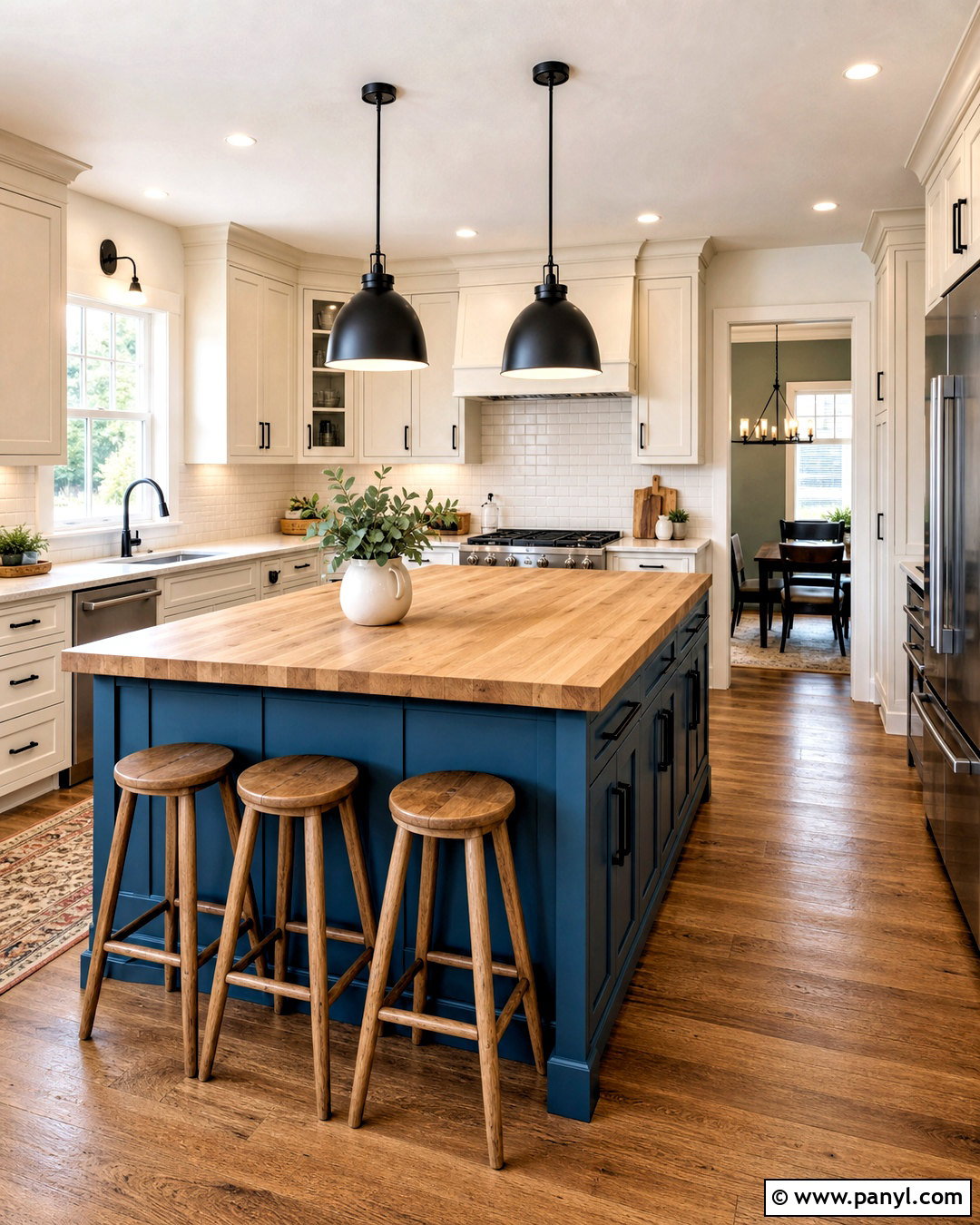
A wood-topped blue island can bring warmth and practical character to an otherwise neutral kitchen. Paint the island a muted ocean blue and finish it with a sealed white oak, walnut, or butcher-block countertop. Surround it with warm white cabinets and durable pale quartz along the main work surfaces. This allows the wood island to feel special without placing a high-maintenance material near every sink or cooking zone. Use black metal pendants and matching cabinet pulls to give the soft colors sharper definition. Saddle-style wood stools can echo the countertop without adding visual bulk. Complete the room with a white tile backsplash, medium-tone wood flooring, and a blue patterned runner. The mixed materials create a comfortable gathering place that feels collected rather than overly coordinated.
12. Blue And Gray Kitchen
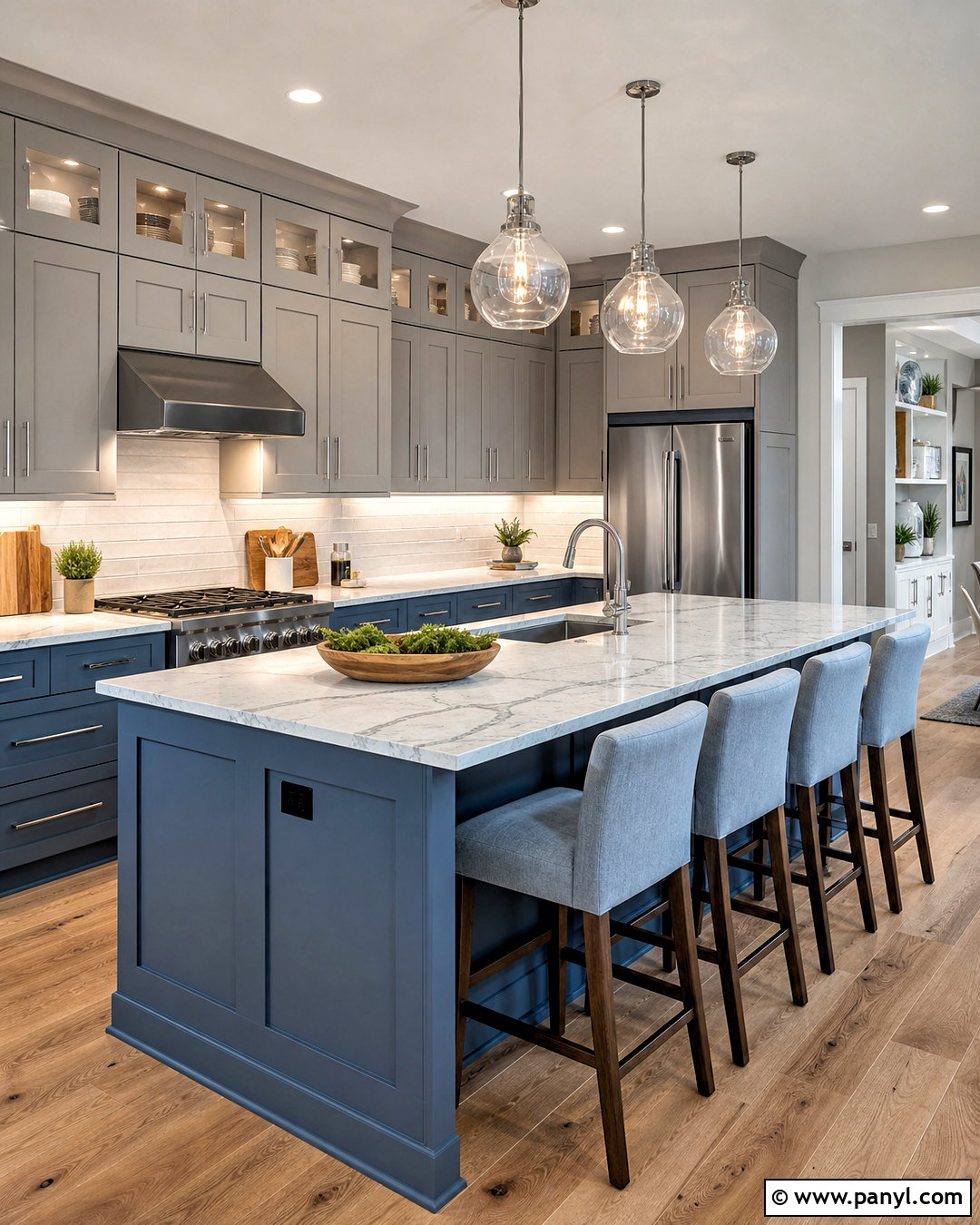
Blue and gray can create a calm kitchen, but the undertones should relate to one another. Pair muted steel-blue lower cabinets with soft warm-gray upper cabinets instead of mixing a vivid blue with a cold charcoal. Use a pale quartz counter containing subtle blue-gray veining to connect the cabinet colors. A warm white backsplash adds brightness and prevents the room from appearing cloudy. Brushed nickel hardware works naturally with this palette, while oak floors supply needed warmth. Choose simple glass pendants so the cabinets remain the main feature. Add blue-gray upholstery to the counter stools and introduce one or two wood accessories on the counter. Consistent undertones, plenty of light surfaces, and restrained decoration make this layered neutral scheme feel intentional rather than flat.
13. Blue Kitchen With Black Accents
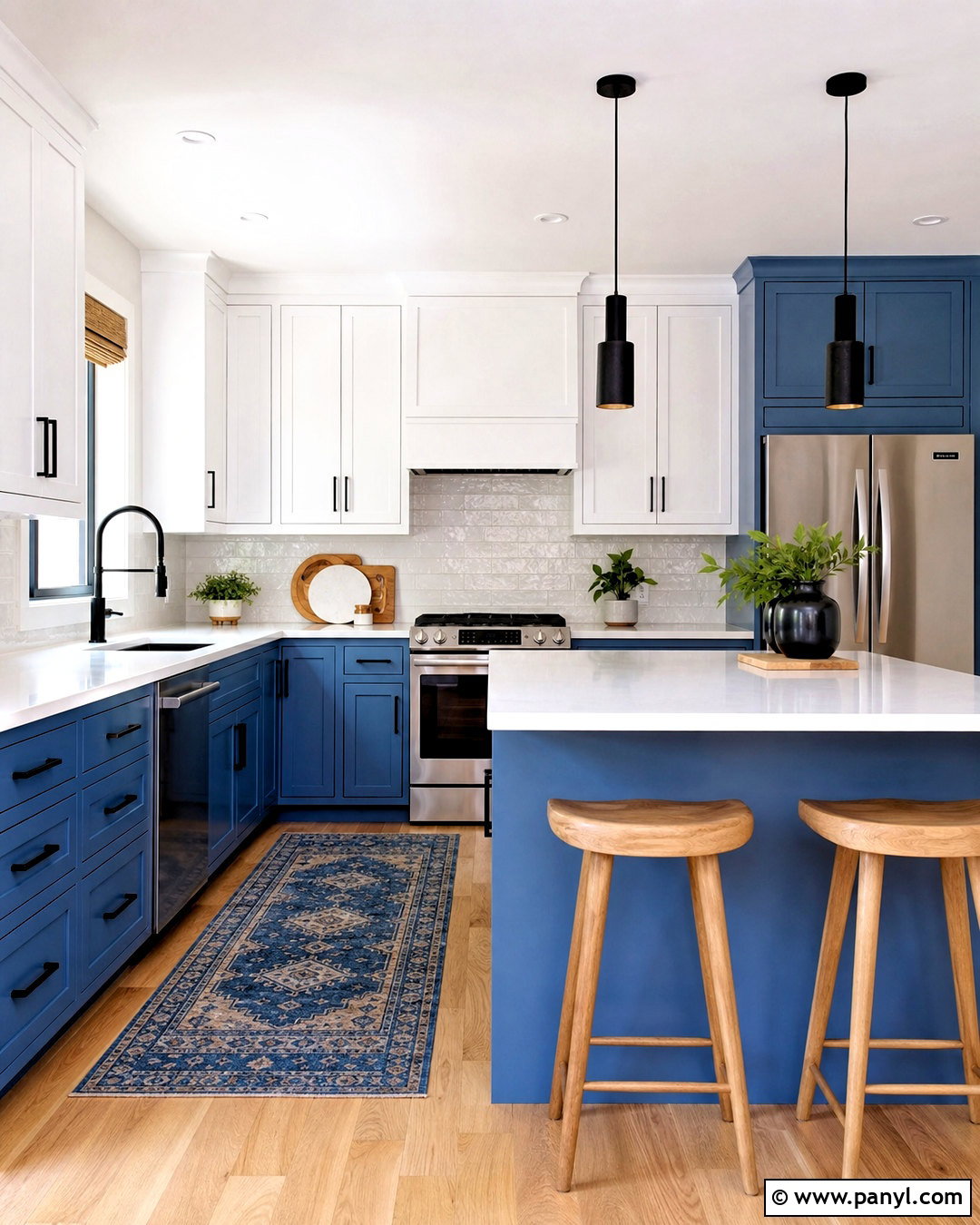
Blue cabinetry and black details create a crisp contemporary kitchen with plenty of contrast. Select a clear medium blue for the lower cabinets and island, then keep upper cabinets and walls white. Add matte black pulls, a black faucet, and slim black pendant lights to outline the room. White quartz countertops and a simple white backsplash provide visual breathing room between the stronger colors. Use natural oak flooring and stools to soften the blue, black, and white combination. Black window frames can reinforce the modern structure if they already suit the home. Avoid covering every fixture in black; stainless steel appliances can keep the finish mix practical. A patterned blue runner and a few wood boards finish the kitchen without distracting from its clean, graphic color scheme.
14. Blue Cottage Kitchen
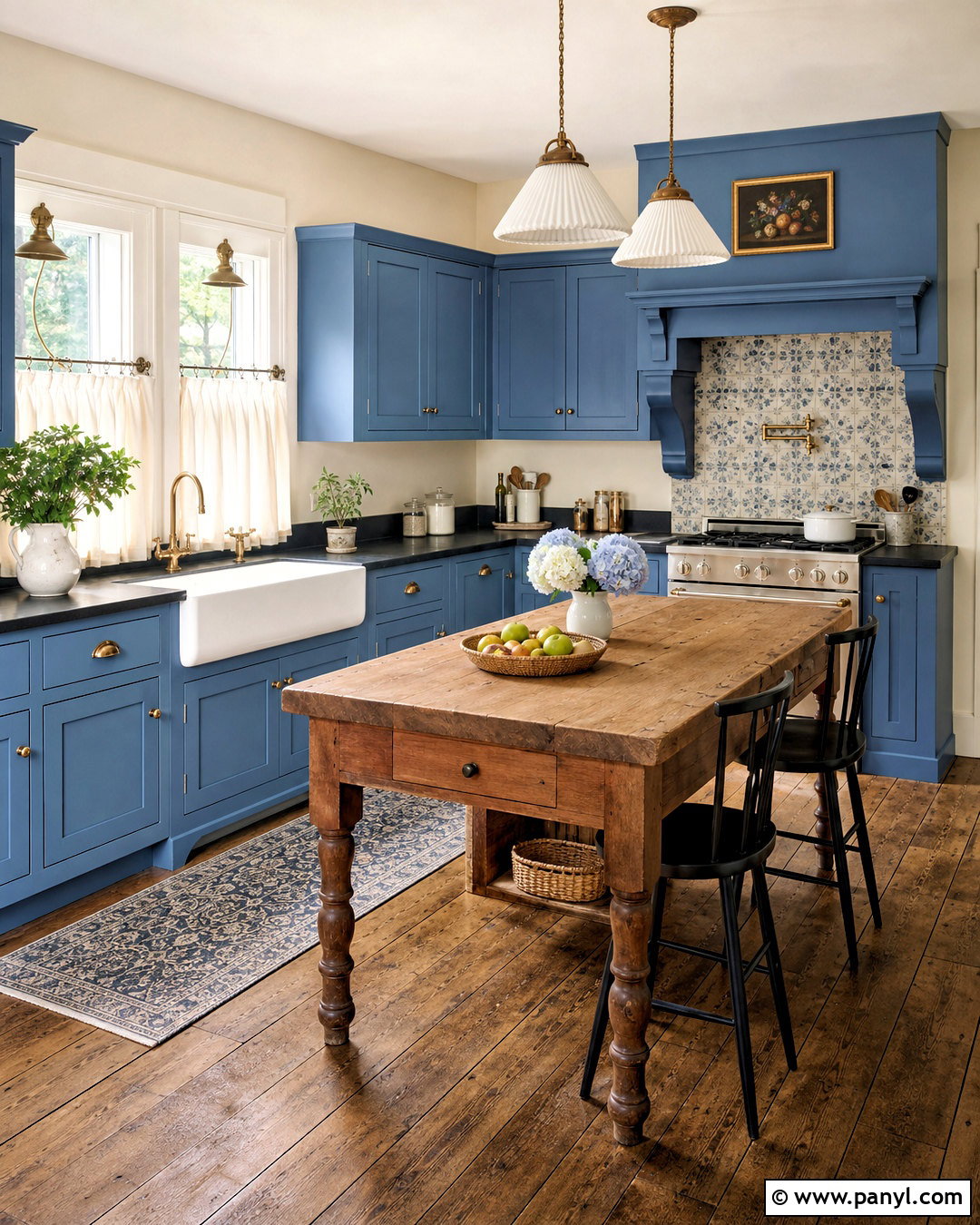
A cottage kitchen looks inviting with soft blue cabinetry, warm finishes, and furniture-like details. Choose muted cornflower blue for simple Shaker cabinets and pair it with creamy walls rather than stark white. Soapstone-look quartz or honed dark counters create a grounded work surface, while a white apron sink keeps the sink wall bright. Add an oak table-style island with open shelving for baskets and cookware. Small brass knobs, pleated pendant shades, and a cafe curtain introduce gentle traditional character. Use warm brick-look flooring or aged oak planks beneath the cabinets. A floral or checked backsplash can work behind the range if the remaining walls stay simple. The completed room should feel useful, layered, and charming rather than polished to the point of formality.
15. Blue Kitchen With Patterned Tile
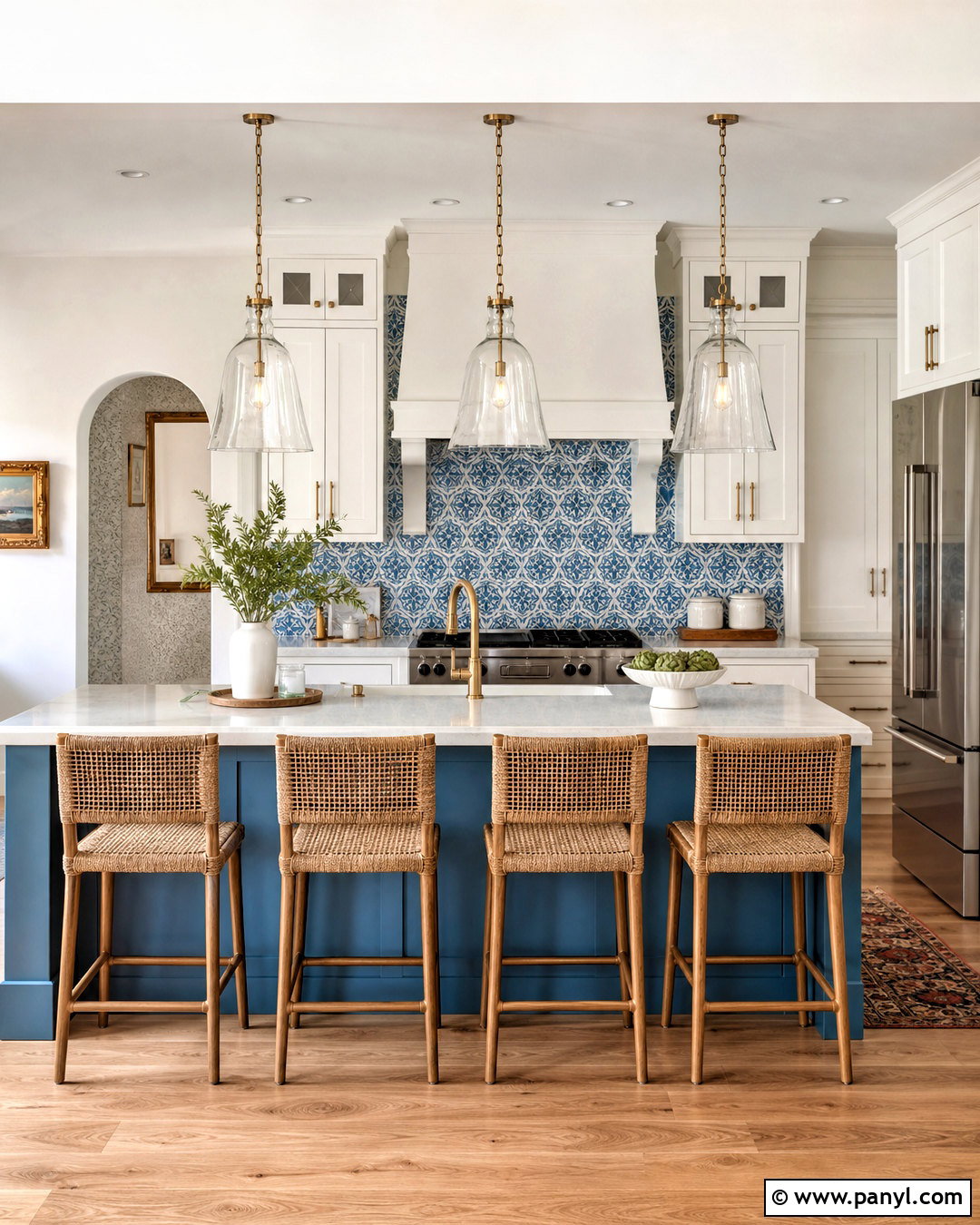
Patterned blue tile can become the centerpiece of a kitchen when the surrounding materials remain restrained. Install blue-and-white geometric or floral tile behind the range and continue a simpler coordinating tile along the remaining walls. Choose white cabinets, pale quartz counters, and a medium-blue island that picks up one shade from the pattern. Natural wood flooring and woven stools balance the energetic backsplash. Use small brass pulls and clear glass pendants so additional details do not compete with the tile. Keep countertop accessories in white, wood, or clear glass. Before installation, lay several tiles together to check how the repeated design will look across a large area. This complete approach produces an expressive kitchen that still feels orderly, practical, and visually connected.
16. Blue Pantry Cabinets
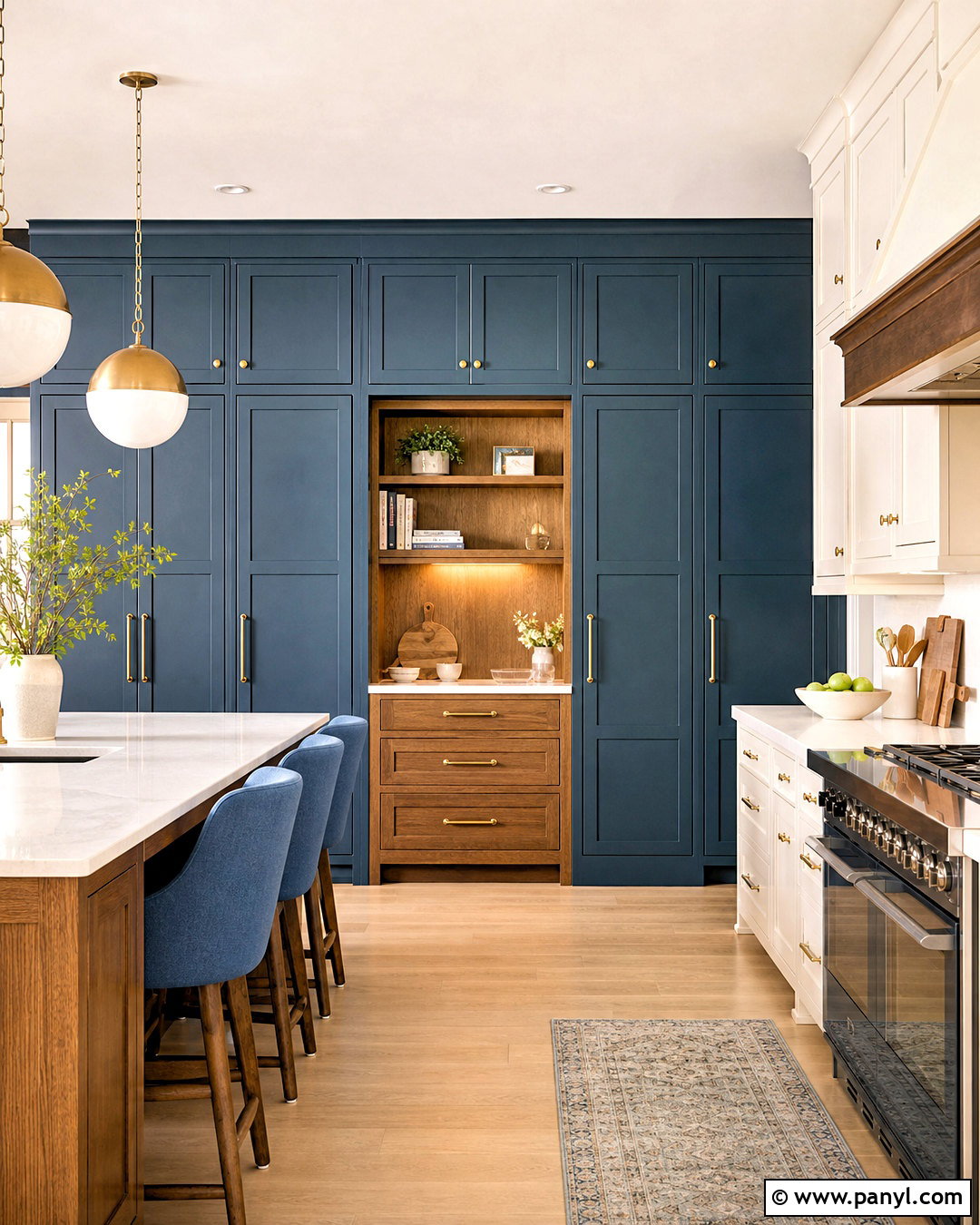
Painting pantry cabinets blue creates a distinctive feature without changing every cabinet in the kitchen. Use a deep teal-blue or navy on a floor-to-ceiling pantry wall, including the doors, trim, and cabinet panels. Keep the surrounding kitchen warm white with light quartz counters and pale wood flooring. Brass hardware helps the darker storage wall feel decorative and furniture-like. If space allows, include a central counter niche backed with blue tile or natural oak. Add under-shelf lighting so the niche remains useful for small appliances and morning preparation. Repeat the pantry color on the island stools, runner, or window fabric. This arrangement gives the room substantial blue color while concentrating it in one organized zone, leaving the main cooking area bright and visually open.
17. Blue Kitchen With Open Shelving
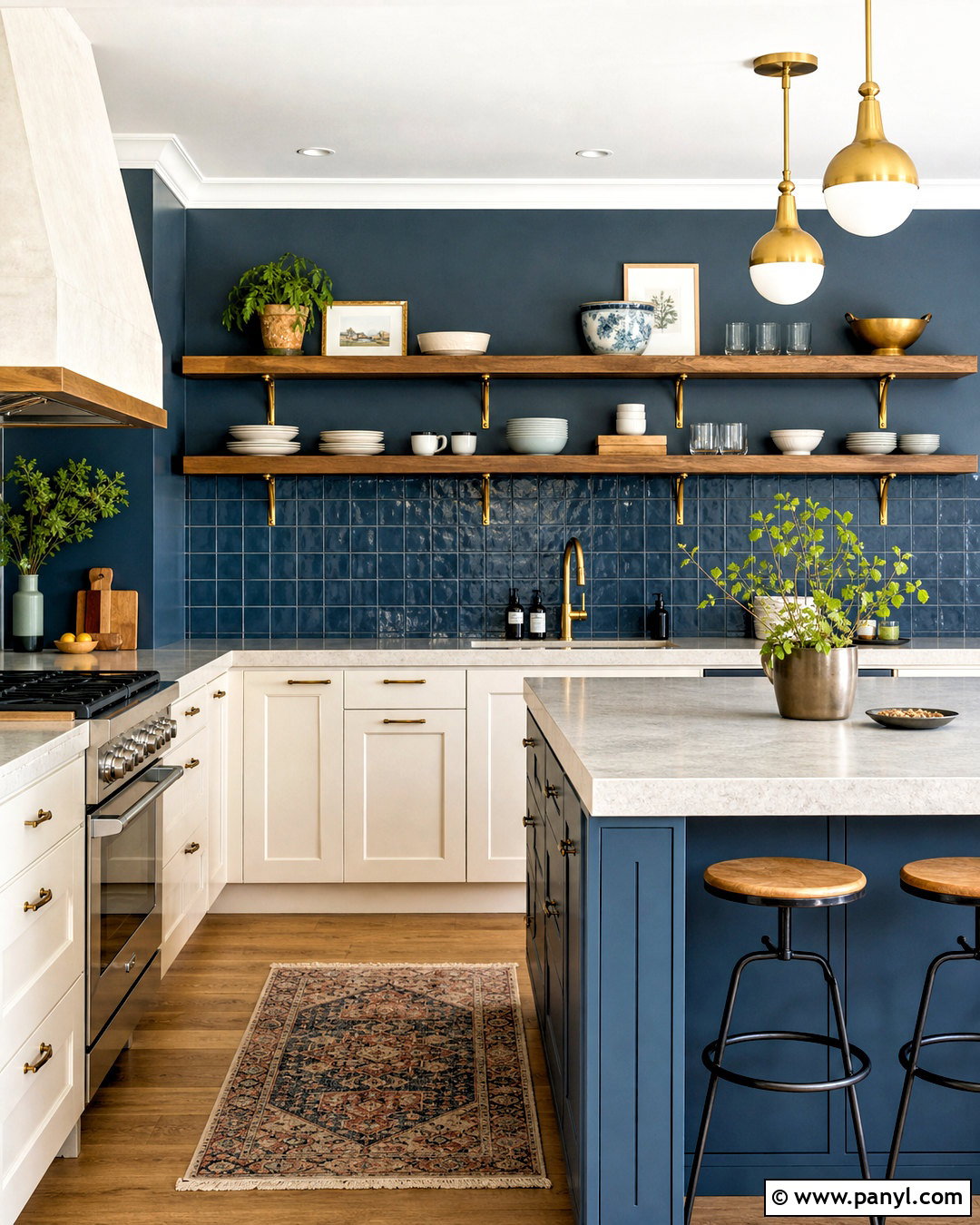
Open shelving offers an easy way to layer blue into a kitchen without covering the room in painted cabinetry. Start with warm white lower cabinets, pale stone counters, and a blue square-tile backsplash. Install two or three thick oak shelves across the focal wall, leaving enough open space to appreciate the tile. Arrange everyday white dishes, blue ceramic bowls, clear glasses, and a few wood pieces in tidy groups. A slate-blue island can repeat the backsplash color and add concealed storage elsewhere. Choose aged brass brackets, hardware, and pendants for warmth. Maintain practical spacing around the range and sink so displayed items stay accessible. This complete scheme feels casual and personalized while balancing decorative open storage with closed cabinets for less attractive kitchen supplies.
18. Blue Midcentury Modern Kitchen
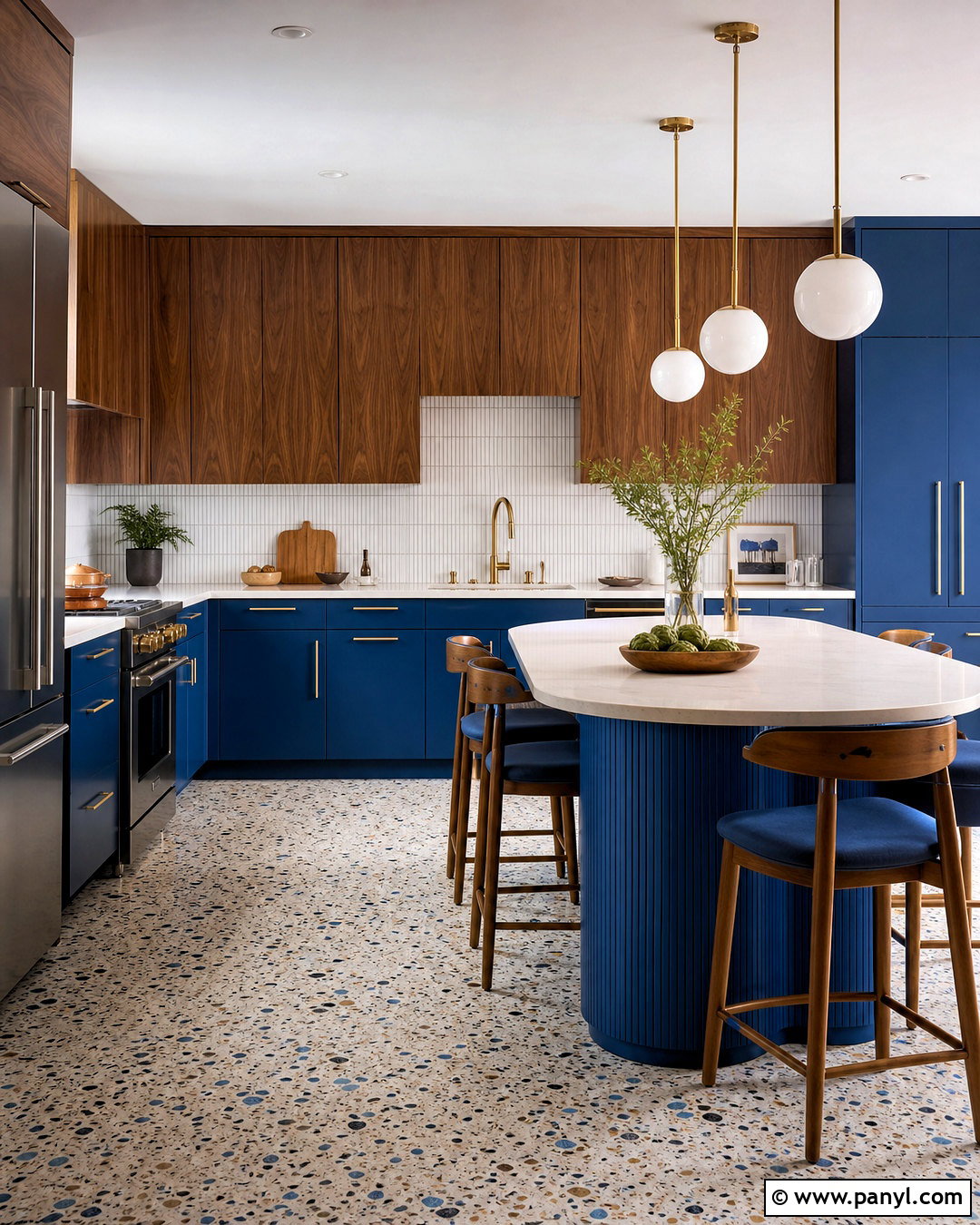
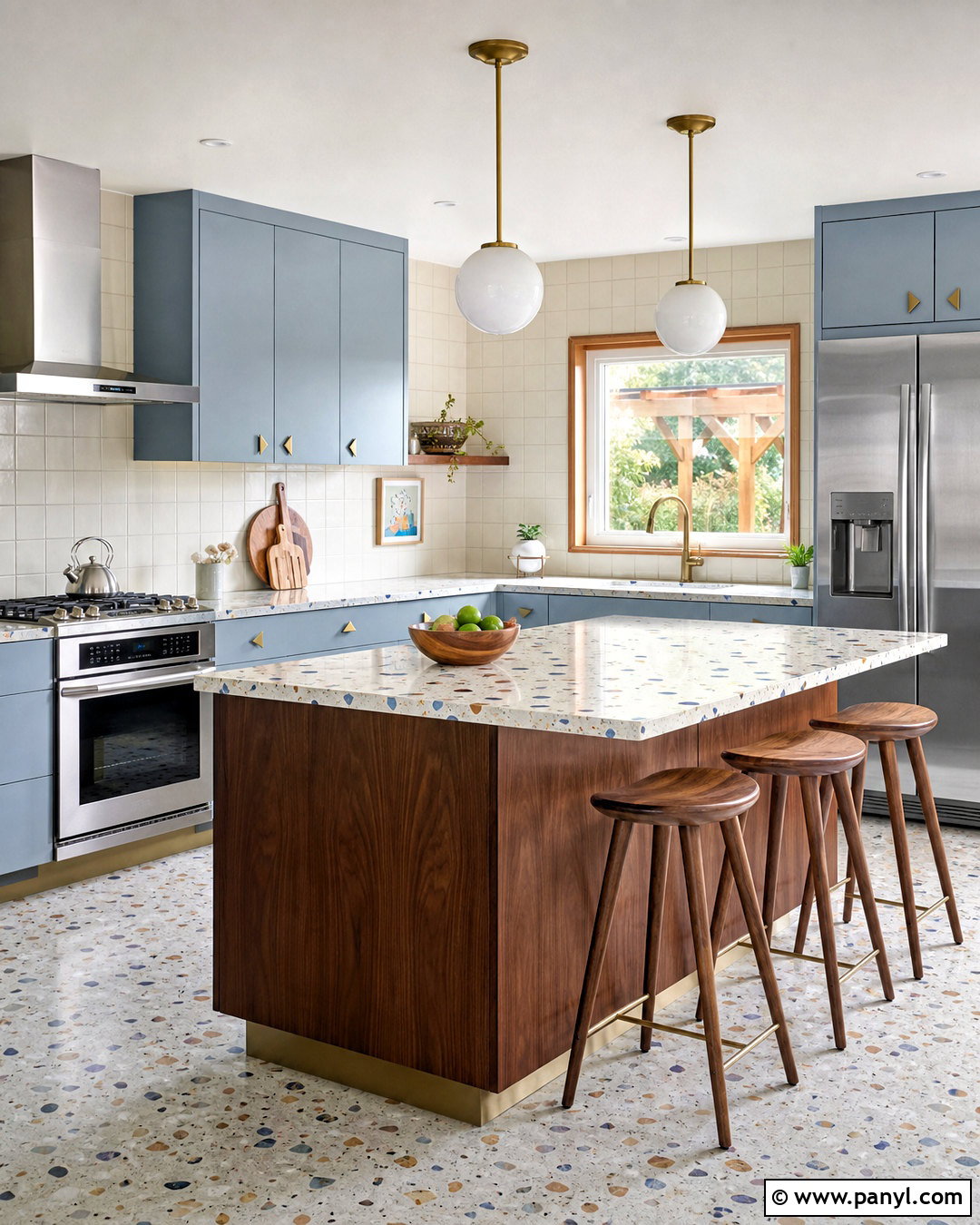
For a midcentury modern kitchen, pair saturated blue with warm walnut and clean geometric lines. Use flat-panel walnut upper cabinets and matte cobalt or peacock-blue lower cabinets. Select slim white quartz counters and a simple backsplash made from vertical rectangular tile. Brushed brass pulls and globe pendant lights add a subtle vintage reference without turning the room into a theme. Terrazzo or light oak flooring supports the period-inspired palette while keeping the space fresh. Choose an island with rounded corners or a walnut breakfast bar for a softer silhouette. Counter stools with wood frames and blue upholstery can connect the materials. Keep accessories graphic and minimal, using one sculptural bowl, a small plant, and neatly displayed ceramics to complete the colorful yet streamlined room.
19. Blue Traditional Kitchen
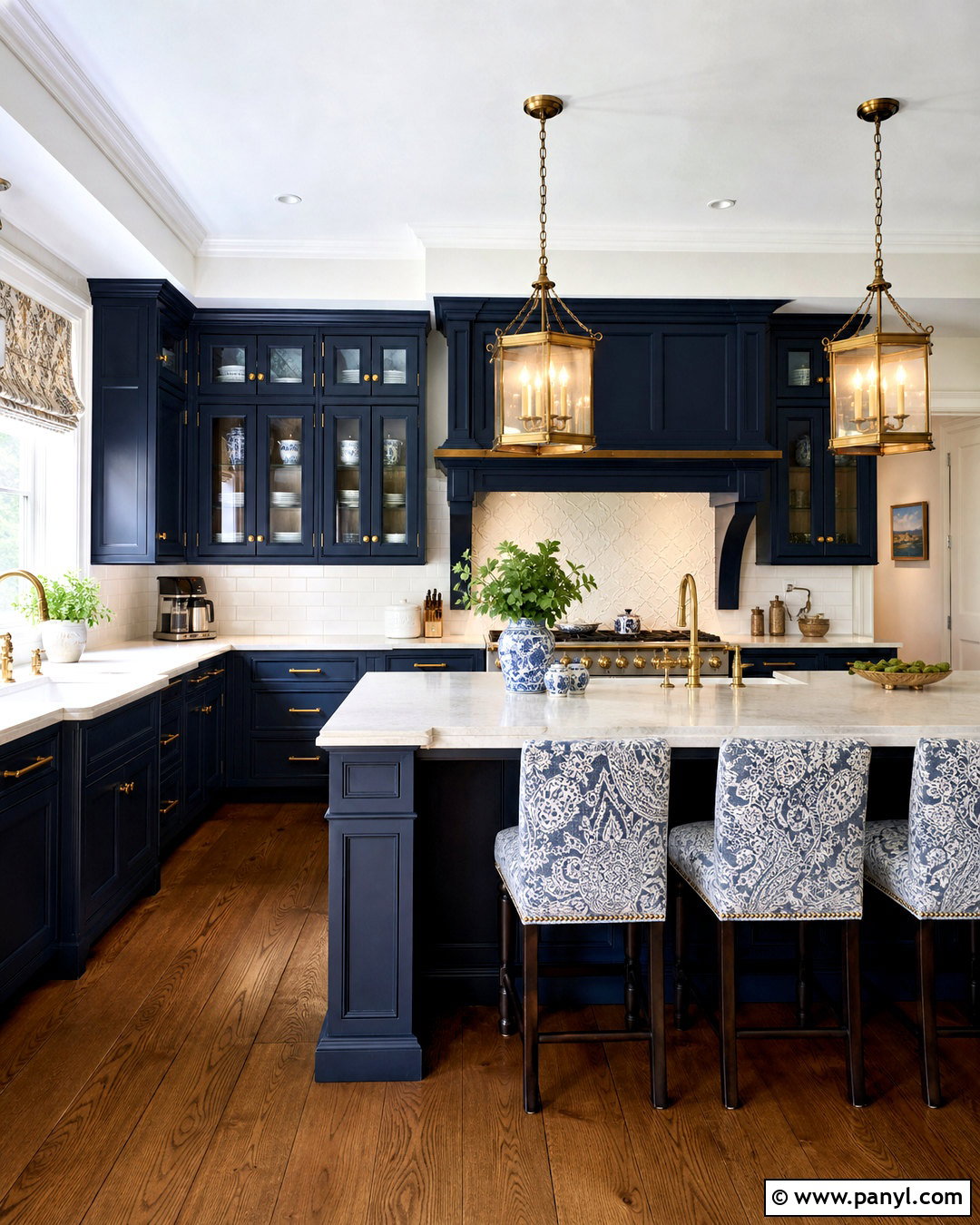
A traditional kitchen can handle deep blue when it includes layered millwork and warm classic finishes. Choose navy inset cabinets with detailed door frames, crown molding, and a furniture-style island. Add creamy marble-look countertops and a softly textured white backsplash to brighten the cabinetry. A walnut or medium oak floor brings richness underfoot. Use aged brass knobs, cup pulls, a bridge faucet, and lantern-shaped pendants for a coordinated finish. Glass-front cabinets placed near the sink can display white dishes and visually lighten the upper storage. Upholstered counter stools in a small blue-and-cream pattern add comfort without introducing another strong color. Keep the walls warm white and the window treatments tailored. The complete kitchen will feel established and graceful while still offering modern storage and durable work surfaces.
20. Budget Kitchen With Blue Accents
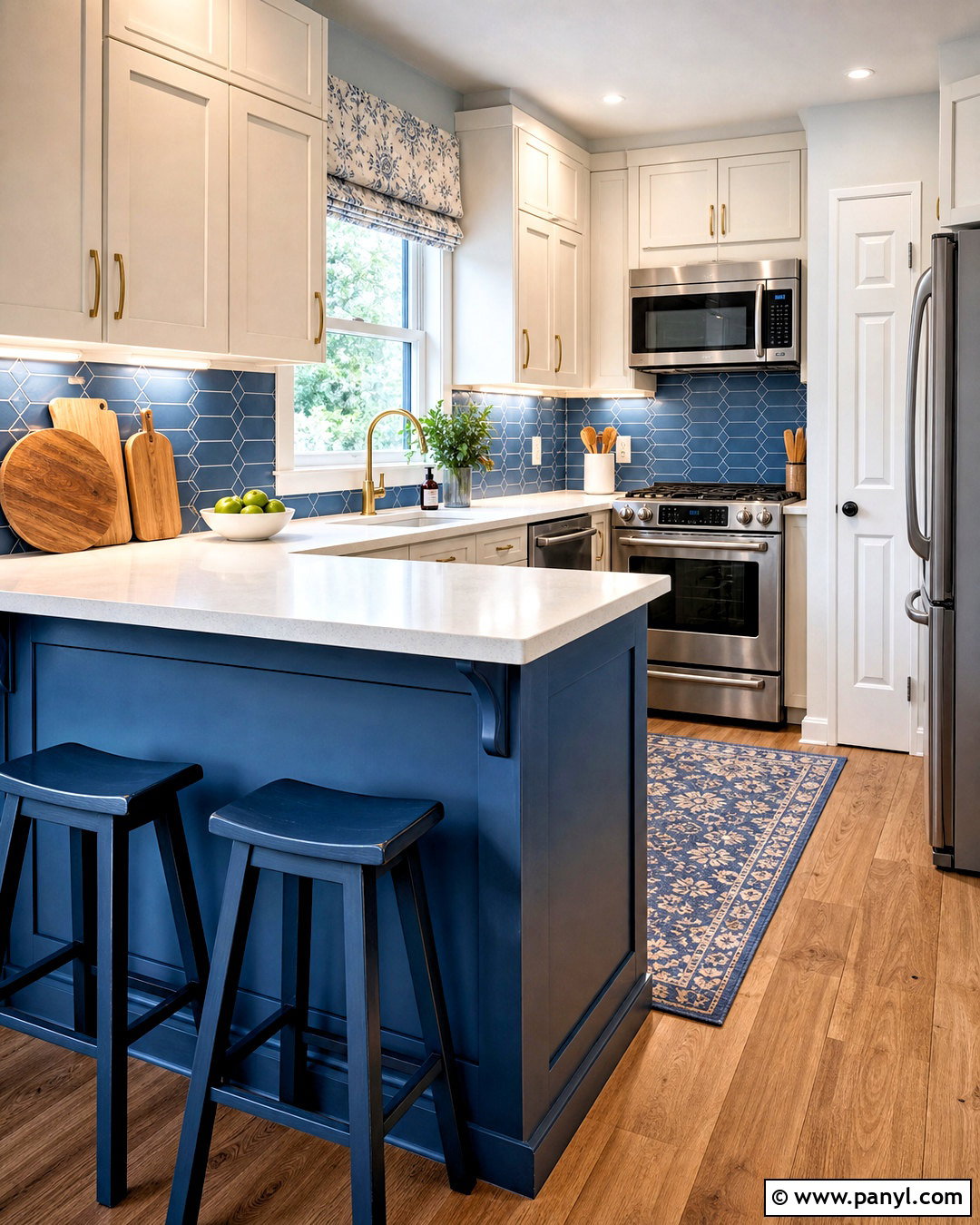
A budget-friendly blue kitchen refresh can feel complete when several affordable changes share the same palette. Keep existing white, cream, or wood cabinets, then paint the island, peninsula, or freestanding cart a medium denim blue. Replace dated knobs with simple matte black or brushed brass hardware. Install a peel-and-stick blue tile backsplash only if it is suitable for the surface and heat conditions, or use washable blue paint on an open wall. Add a durable blue runner, coordinated counter stools, and a simple fabric shade above the sink. White counter accessories and wood cutting boards will keep the color balanced. Finish with bright LED bulbs beneath the cabinets. Repeating one blue tone across useful features makes inexpensive updates look planned rather than temporary.
Conclusion:
Blue offers enough range to suit nearly every kitchen, from airy powder-blue cottages to dramatic navy rooms. The most successful designs repeat the chosen shade in a few intentional places and balance it with warm wood, white surfaces, metal finishes, or natural texture. Before making changes, consider the room’s daylight, existing flooring, counters, and appliances. Test painted colors and tile samples in the actual space because blue can shift noticeably under different lighting. You can begin with stools, textiles, and accessories or make a larger commitment through cabinetry, an island, or a backsplash. Use these **20 kitchen with blue accents** as flexible design plans, adjusting the materials and intensity to fit your space, budget, and everyday needs.

Related Ideas and Inspiration:
Leave a Reply