
Cornflower blue brings a fresh, cheerful quality to a kitchen without feeling as dark as navy or as sweet as many pastel blues. It can create a crisp coastal room, a relaxed farmhouse space, or a polished traditional kitchen depending on the cabinets, countertops, lighting, and accents surrounding it. Current kitchen inspiration commonly combines this approachable blue with marble, warm wood, creamy neutrals, brass, and occasional yellow details. () Before painting, sample the color on several walls and observe it during morning, afternoon, and evening light. This helps you choose a version that stays balanced rather than turning too gray or purple. The complete rooms below offer practical ways to recreate 20 Cornflower Blue Kitchen Walls.

1. Cornflower Blue Kitchen Walls With White Cabinets
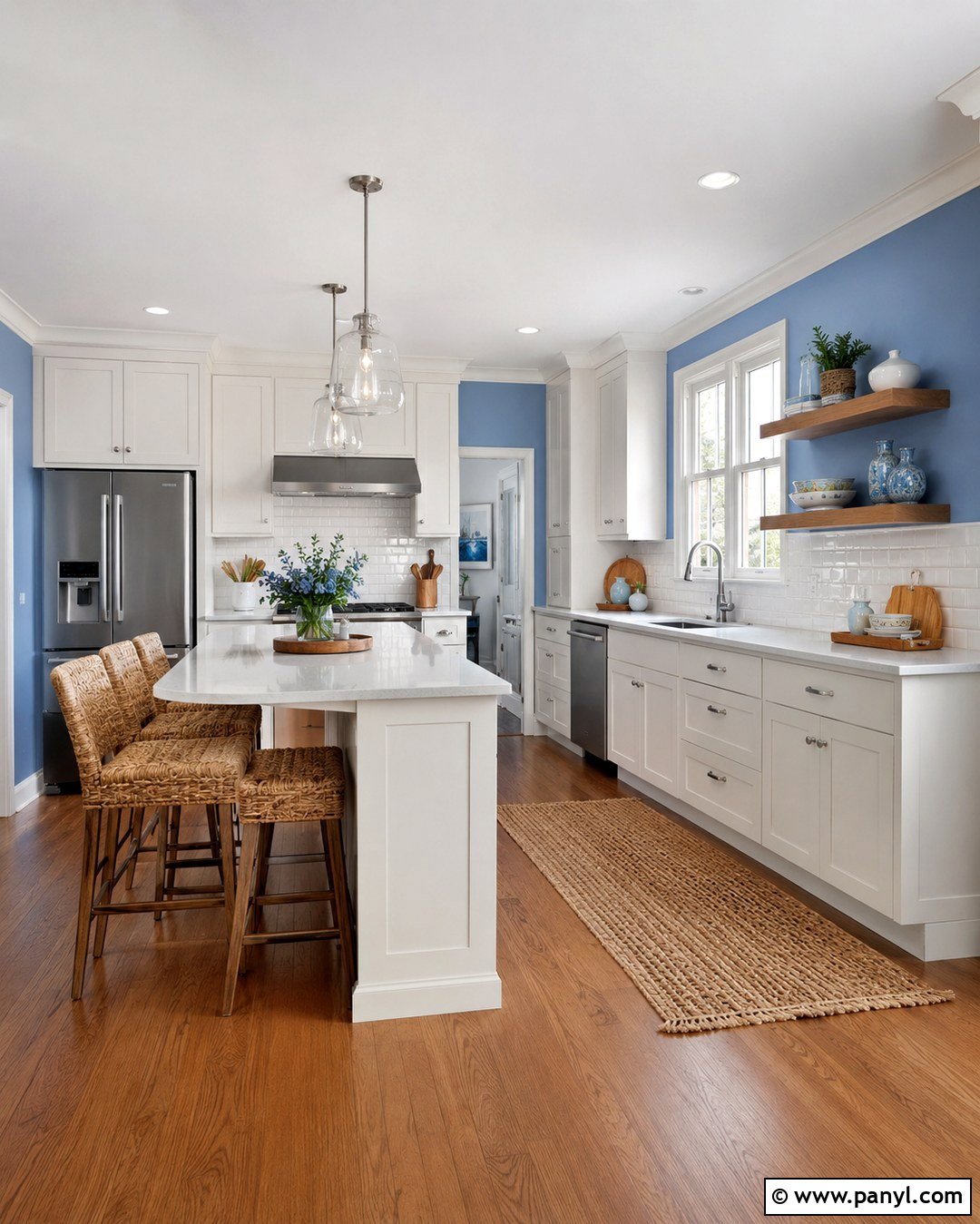
White Shaker cabinets give cornflower blue walls a clean, timeless frame. Choose a soft white with a slightly warm undertone so the room feels inviting rather than icy. Add white quartz counters with subtle gray veining and a glossy white subway tile backsplash. Medium oak flooring will introduce warmth and keep the blue from dominating the room. Brushed nickel knobs, a polished chrome faucet, and clear glass pendants create a light finish. Use woven counter stools and a natural jute runner to soften the harder surfaces. A few white ceramic canisters, wooden cutting boards, and leafy herbs complete the space. This combination works especially well in kitchens that need color but still require a bright, open appearance.
2. Cornflower Blue Kitchen Walls With Oak Cabinets
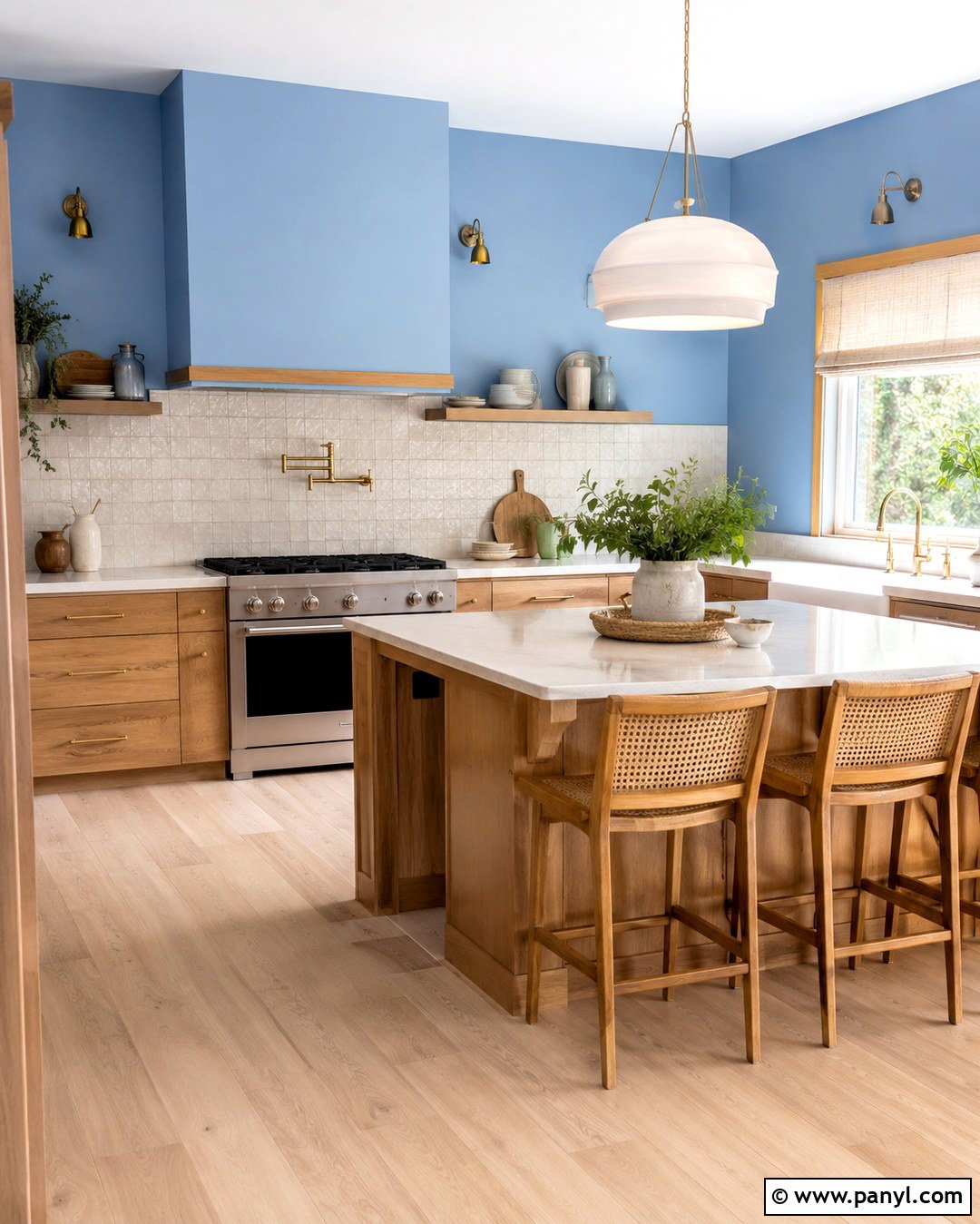
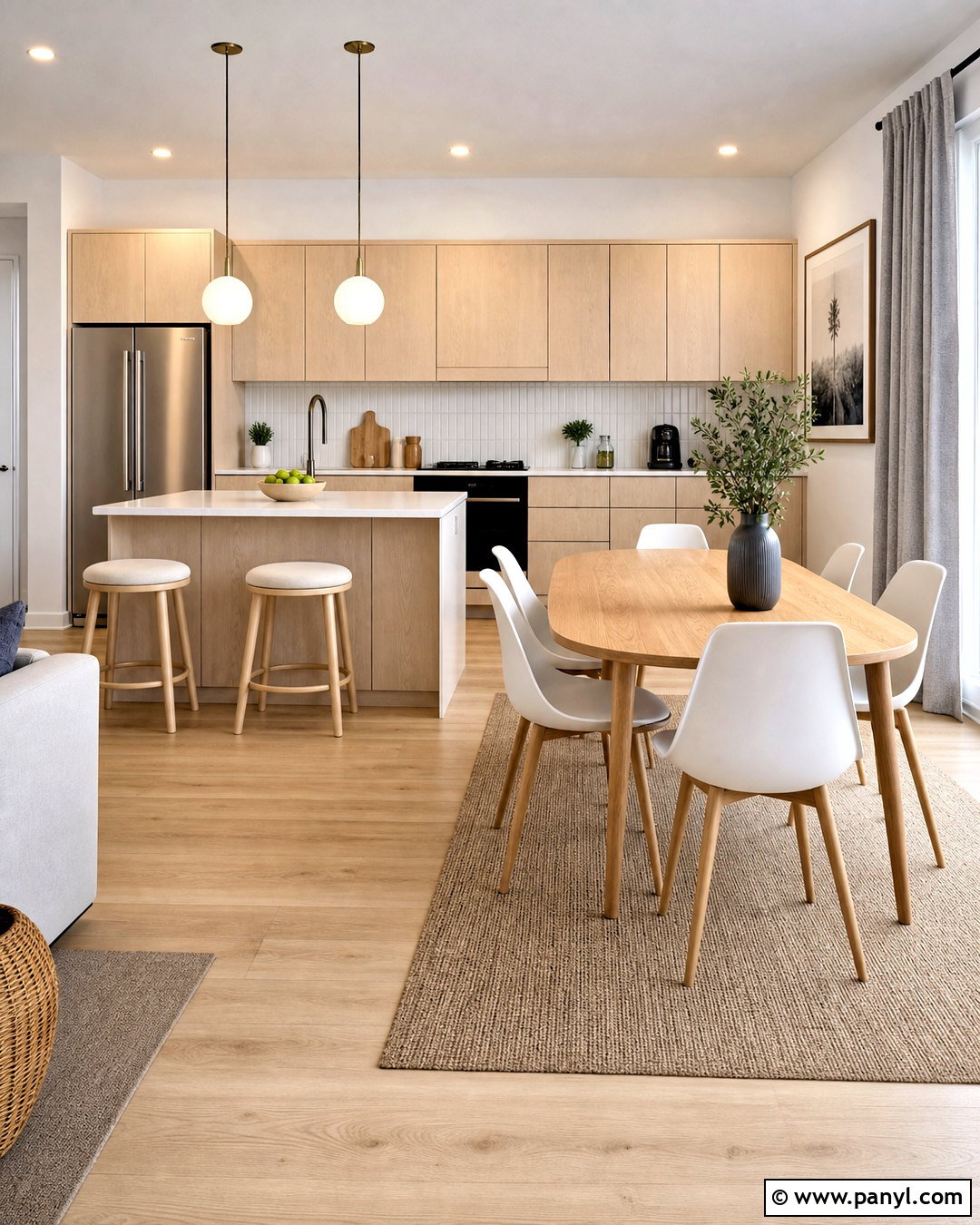
Natural oak cabinets make cornflower blue kitchen walls feel warm, relaxed, and grounded. Select cabinetry with a clear matte finish that highlights the wood grain without adding a strong orange cast. Creamy quartz countertops and handmade off-white backsplash tiles create a gentle transition between the blue walls and oak surfaces. Continue the warmth with wide-plank light oak flooring or a durable wood-look alternative. Aged brass hardware, an ivory ceramic pendant, and woven cane stools add texture without making the room busy. Keep window treatments simple with a cream linen Roman shade. Black accents can appear in small amounts through the faucet, range, or picture frames. The finished kitchen feels natural and current, with enough contrast to keep every material visually distinct.
3. Cornflower Blue Kitchen Walls With Cream Cabinets
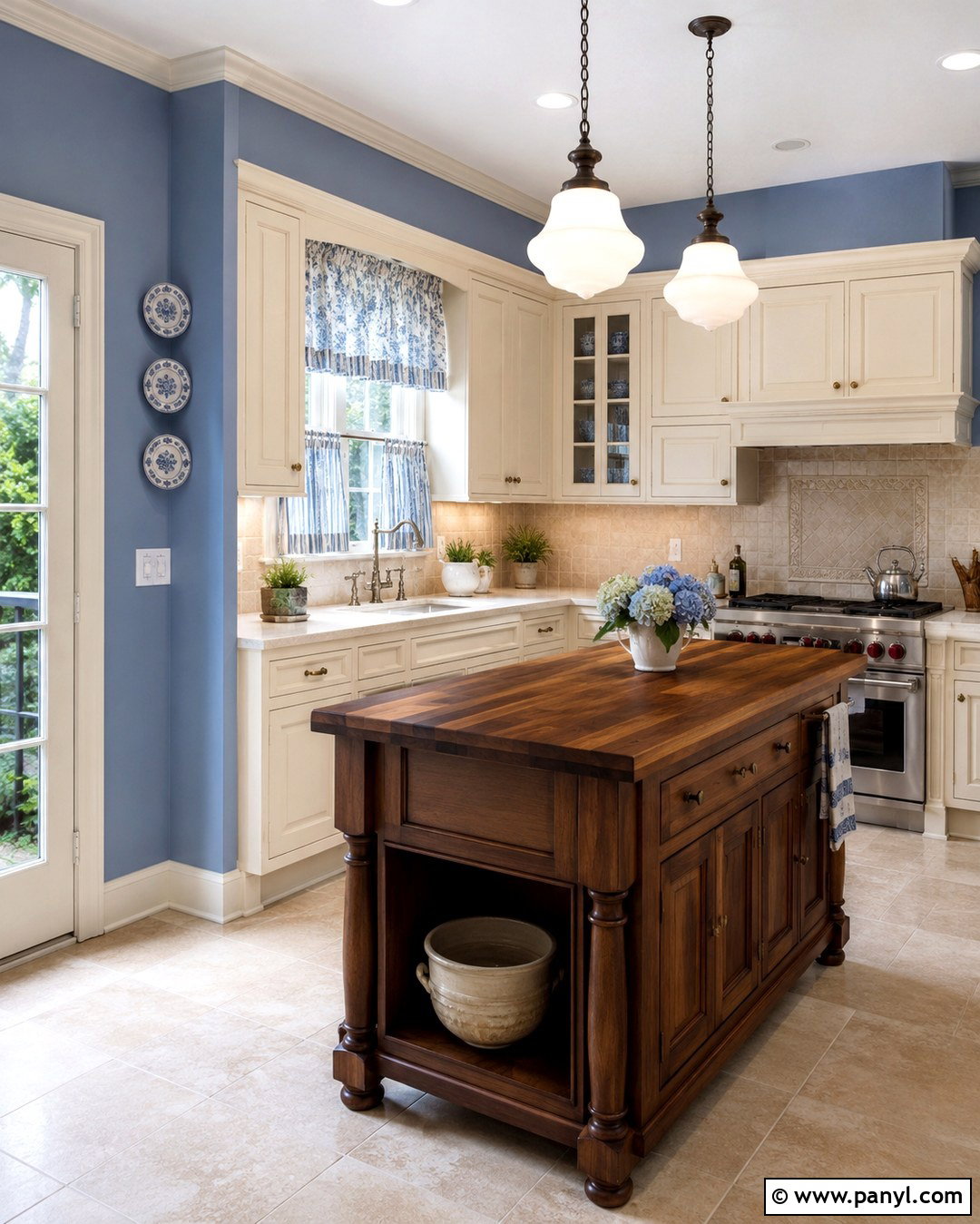
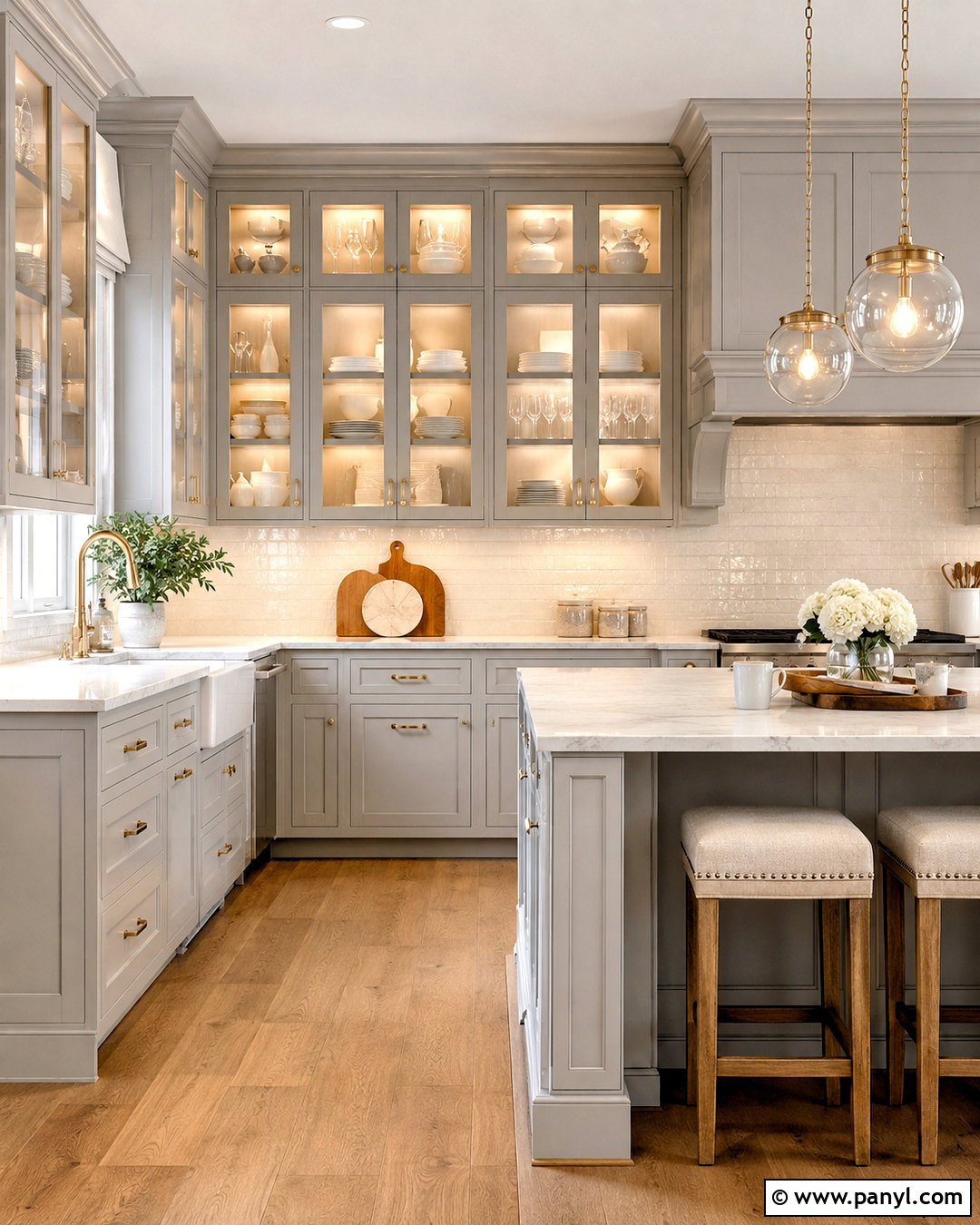
Can a colorful kitchen still feel soft and traditional? Pair cornflower blue walls with creamy cabinets, warm white countertops, and classic molding for an elegant answer. The cream should have a mild yellow or beige undertone that complements the cheerful character of the blue. Install a pale limestone-look backsplash and warm beige porcelain flooring for a calm foundation. Antique brass cup pulls, a bridge faucet, and milk-glass pendants reinforce the traditional mood. A walnut butcher-block island can provide a deeper natural accent and useful preparation space. Finish the room with patterned blue-and-cream café curtains, framed botanical artwork, and simple ceramic dishes. This balanced palette works beautifully in kitchens where pure white would appear too sharp against existing warm finishes.
4. Cornflower Blue Kitchen Walls With Black Cabinets
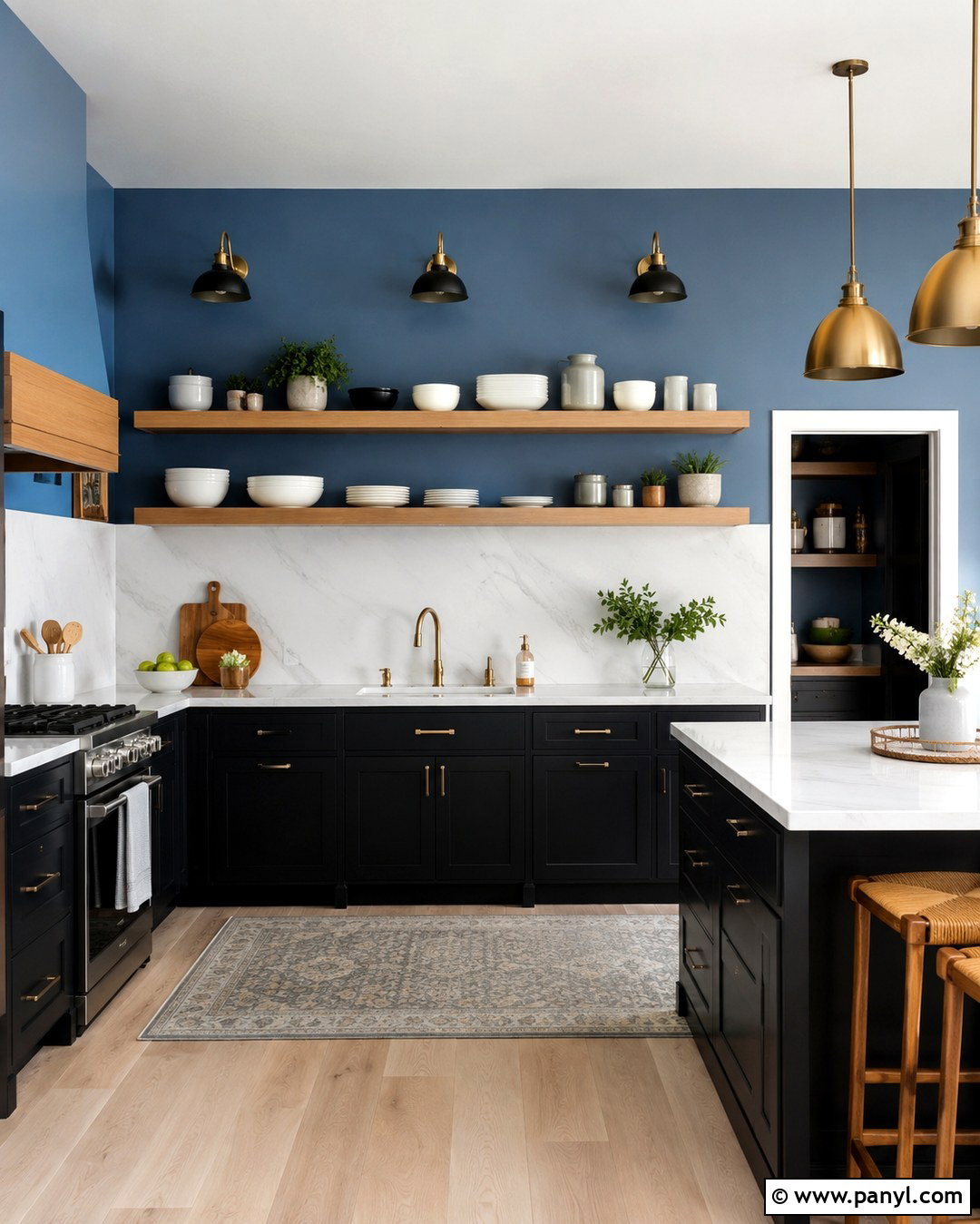
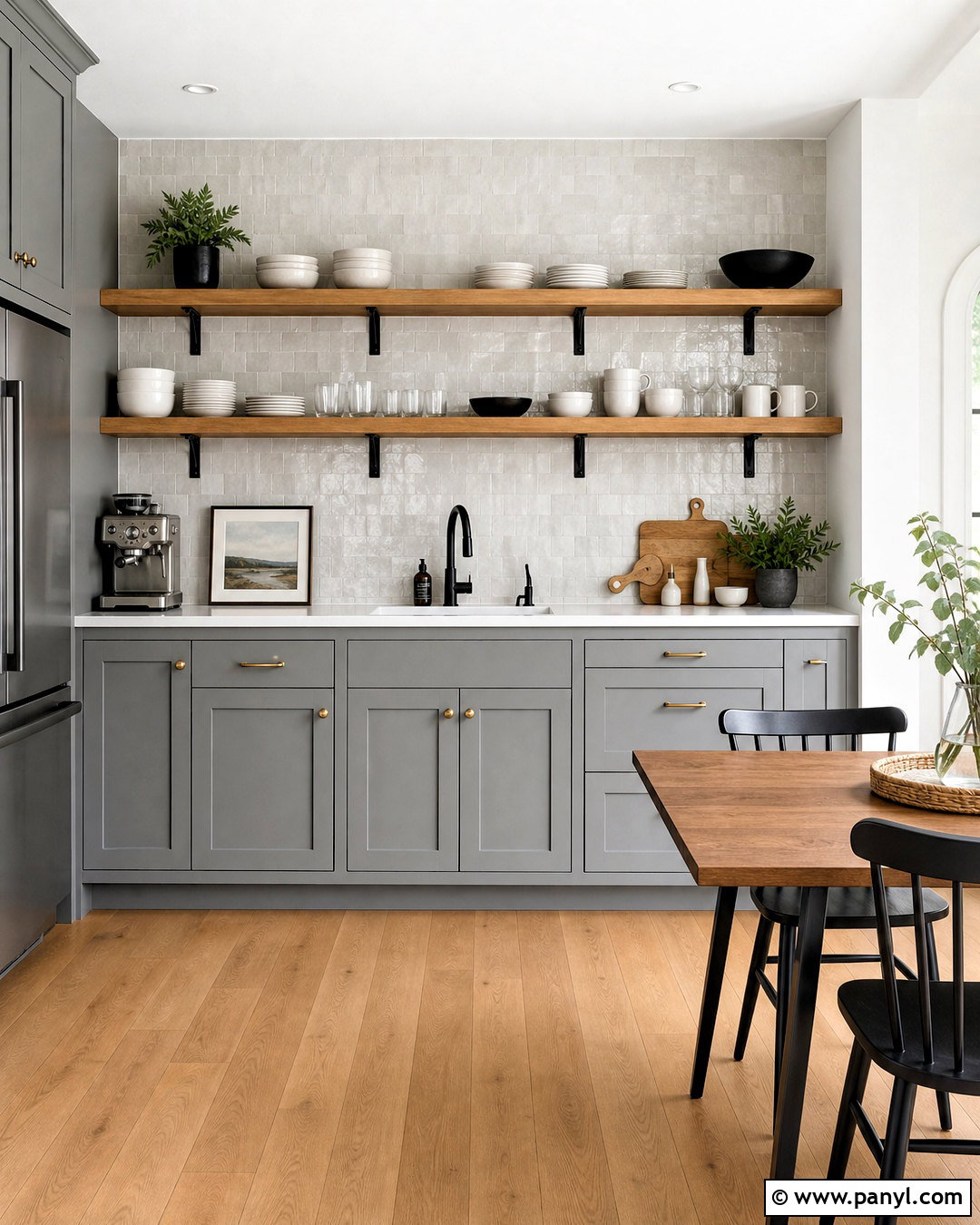
Bold black cabinets turn cornflower blue walls into a confident, structured backdrop. To keep the kitchen from looking heavy, reserve black cabinetry for the lower cabinets and use open oak shelves or glass-front uppers above. White marble-look quartz counters and a full-height white backsplash will reflect light across the darker surfaces. Choose matte black cabinet hardware for a streamlined effect, then introduce warmth through aged brass pendants or a brass faucet. Pale oak flooring and a light washable runner keep the lower half of the kitchen balanced. Display white dishes, clear glassware, and a few wooden accessories on the shelves. Strong under-cabinet lighting is essential. The completed room feels graphic and modern while the cornflower blue prevents the black-and-white scheme from becoming overly stark.
5. Cornflower Blue Kitchen Walls With Sage Green Cabinets
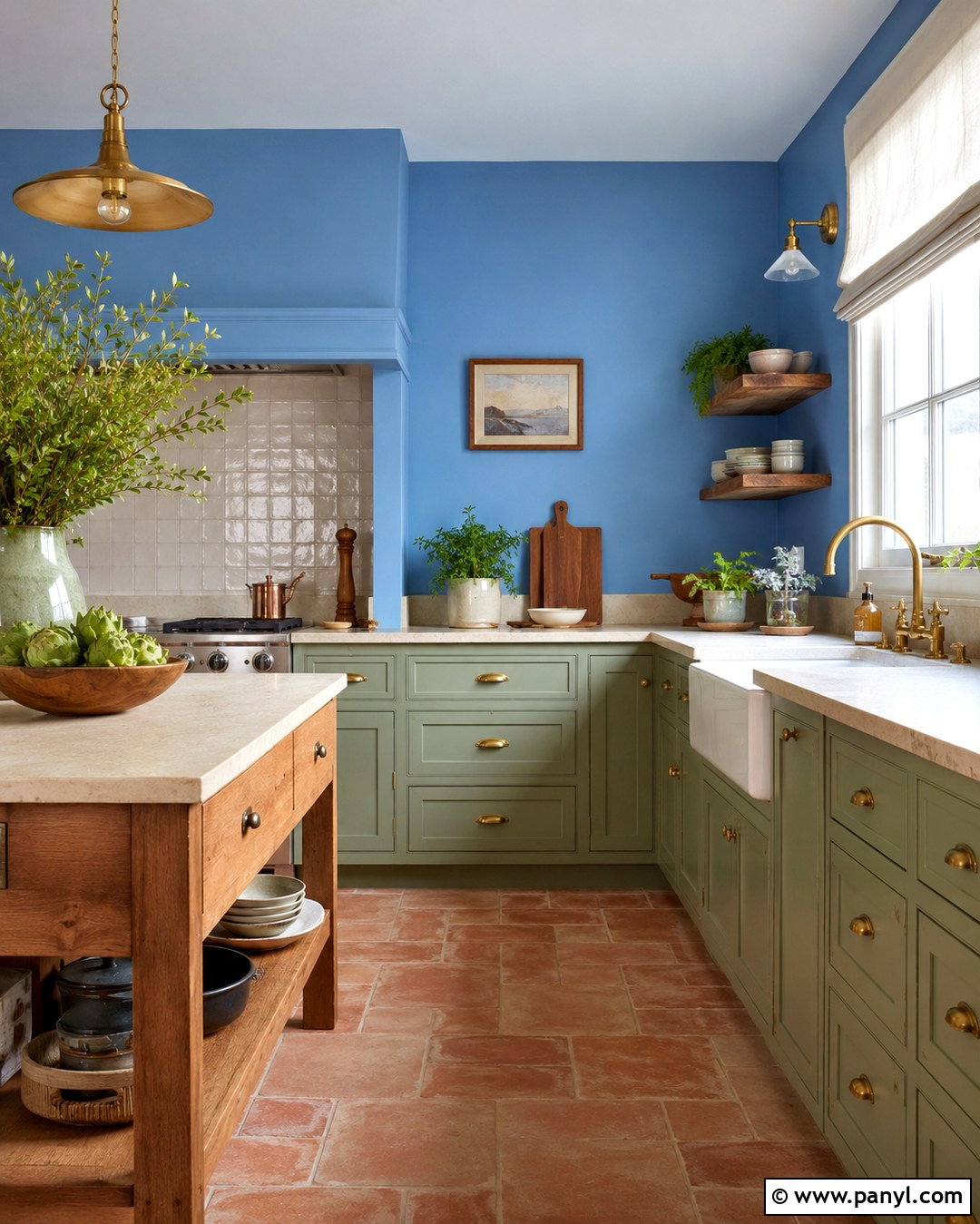
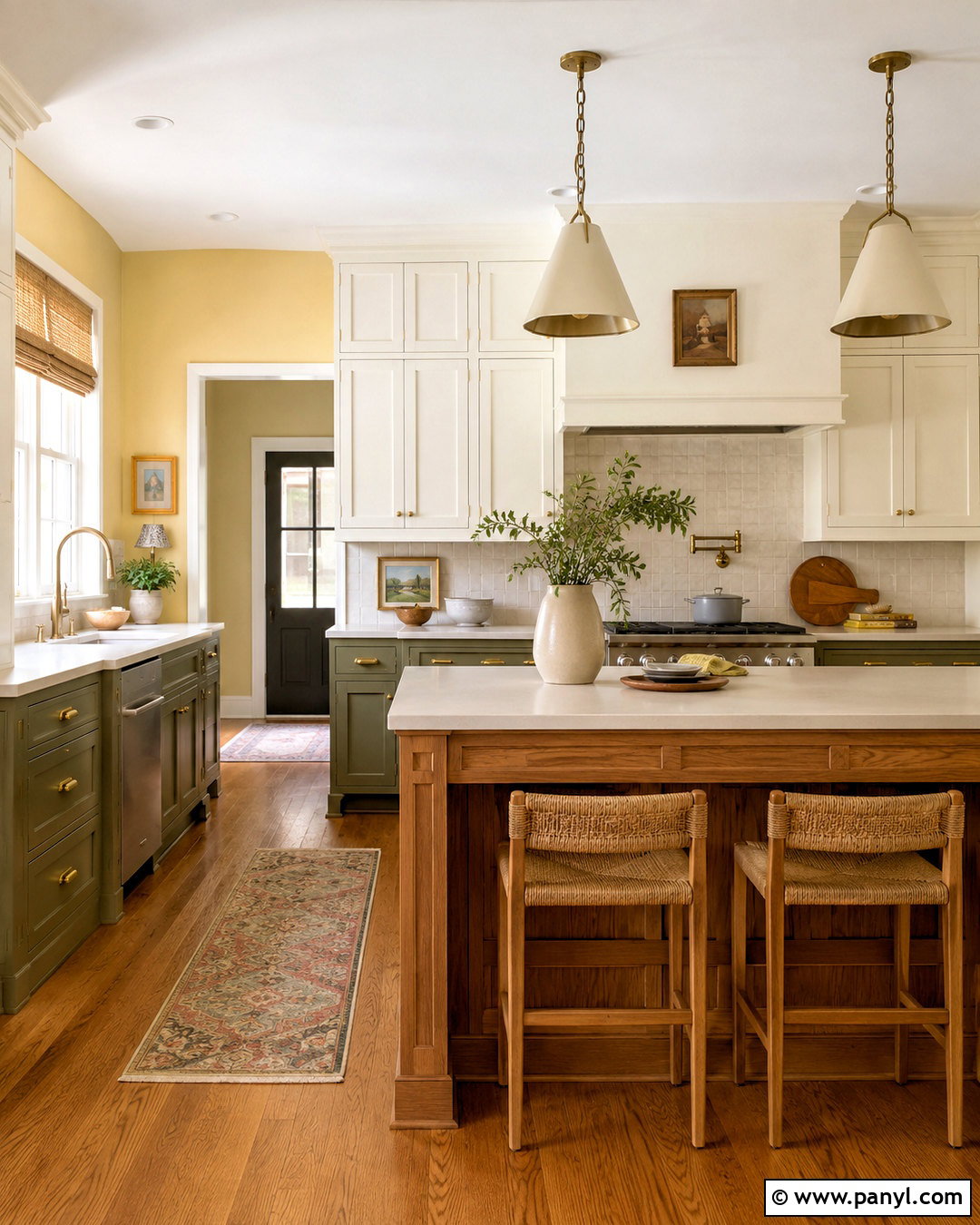
Cornflower blue and muted sage green create a colorful kitchen inspired by gardens and natural landscapes. Choose a dusty sage rather than a bright green so both colors share the same softened intensity. Warm white quartz counters and creamy square backsplash tiles provide a neutral pause between the green cabinetry and blue walls. Add unlacquered brass hardware, a white apron-front sink, and an oak island with a simple plank top. Terracotta floor tiles introduce earthy contrast and make the palette feel established rather than overly pastel. Keep fabrics restrained with ivory linen shades and a small striped runner containing blue, green, and tan. Potted rosemary or thyme can add living texture. This combination suits cottage, farmhouse, and transitional kitchens that benefit from gentle color and natural materials.
6. Cornflower Blue Kitchen Walls With Yellow Accents
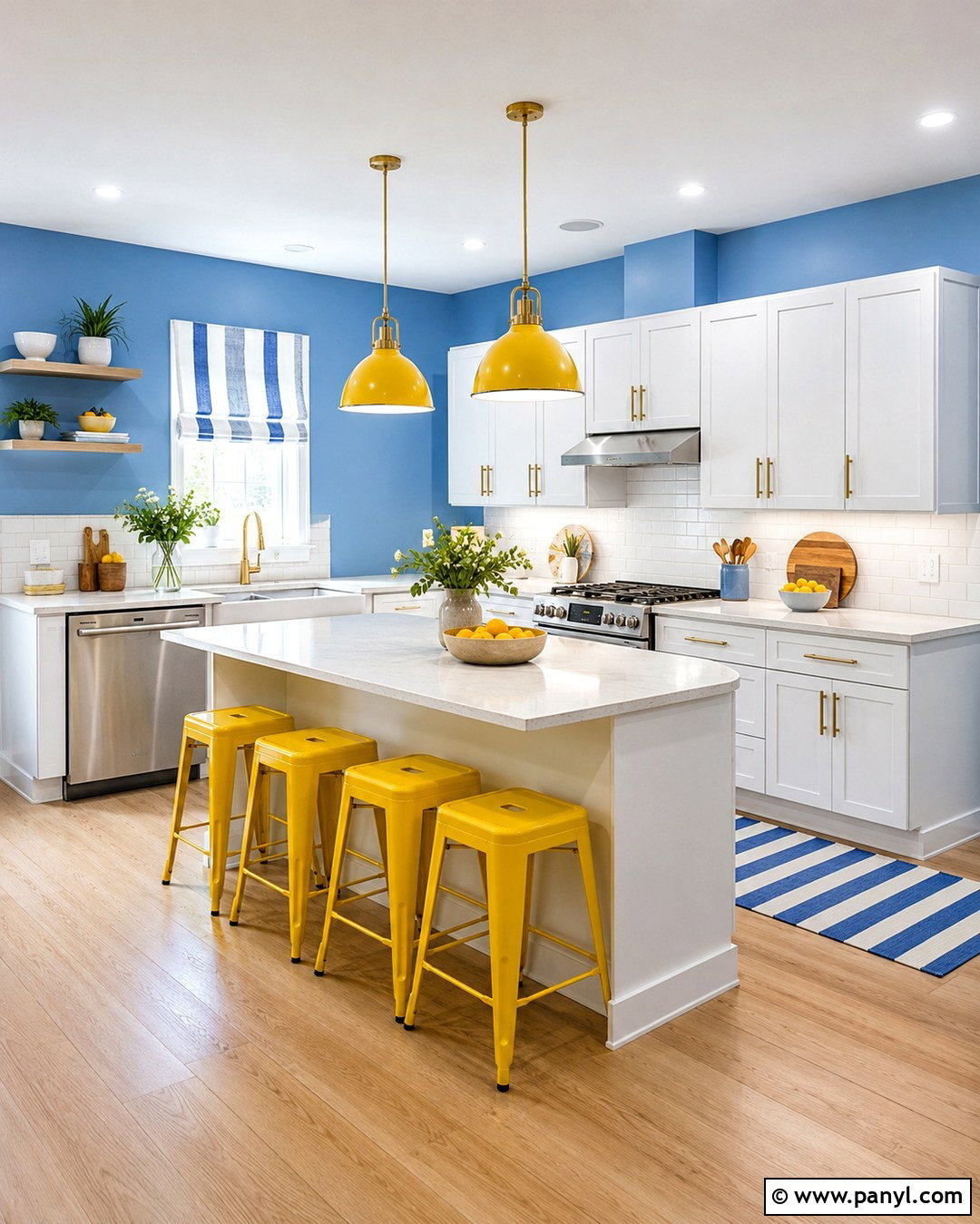
Sunshine yellow accents bring an energetic, welcoming lift to cornflower blue kitchen walls. Keep the permanent surfaces simple with white flat-panel cabinets, pale quartz countertops, and a clean white tile backsplash. Introduce yellow through upholstered counter stools, pendant shades, a striped window treatment, and two or three pieces of countertop pottery. A warm yellow and cornflower blue combination can create a particularly cheerful kitchen when the brighter color is used selectively. () Light maple flooring and brushed brass hardware help connect the yellow details to the rest of the room. Avoid scattering many tiny yellow objects everywhere. Instead, repeat the color in a few noticeable areas. The resulting kitchen feels playful and cohesive while remaining easy to update as preferences change.
7. Cornflower Blue Kitchen Walls With Navy Island
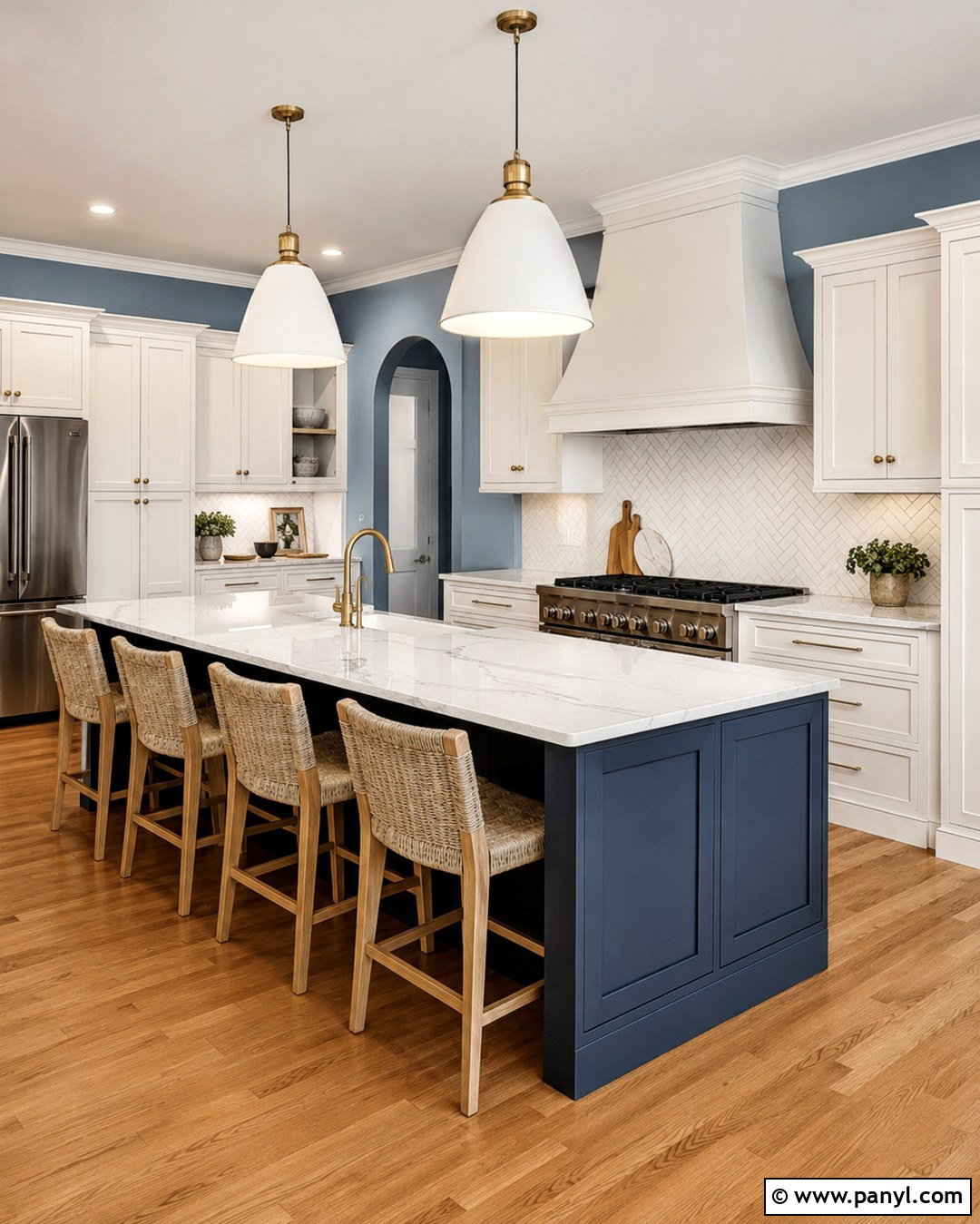
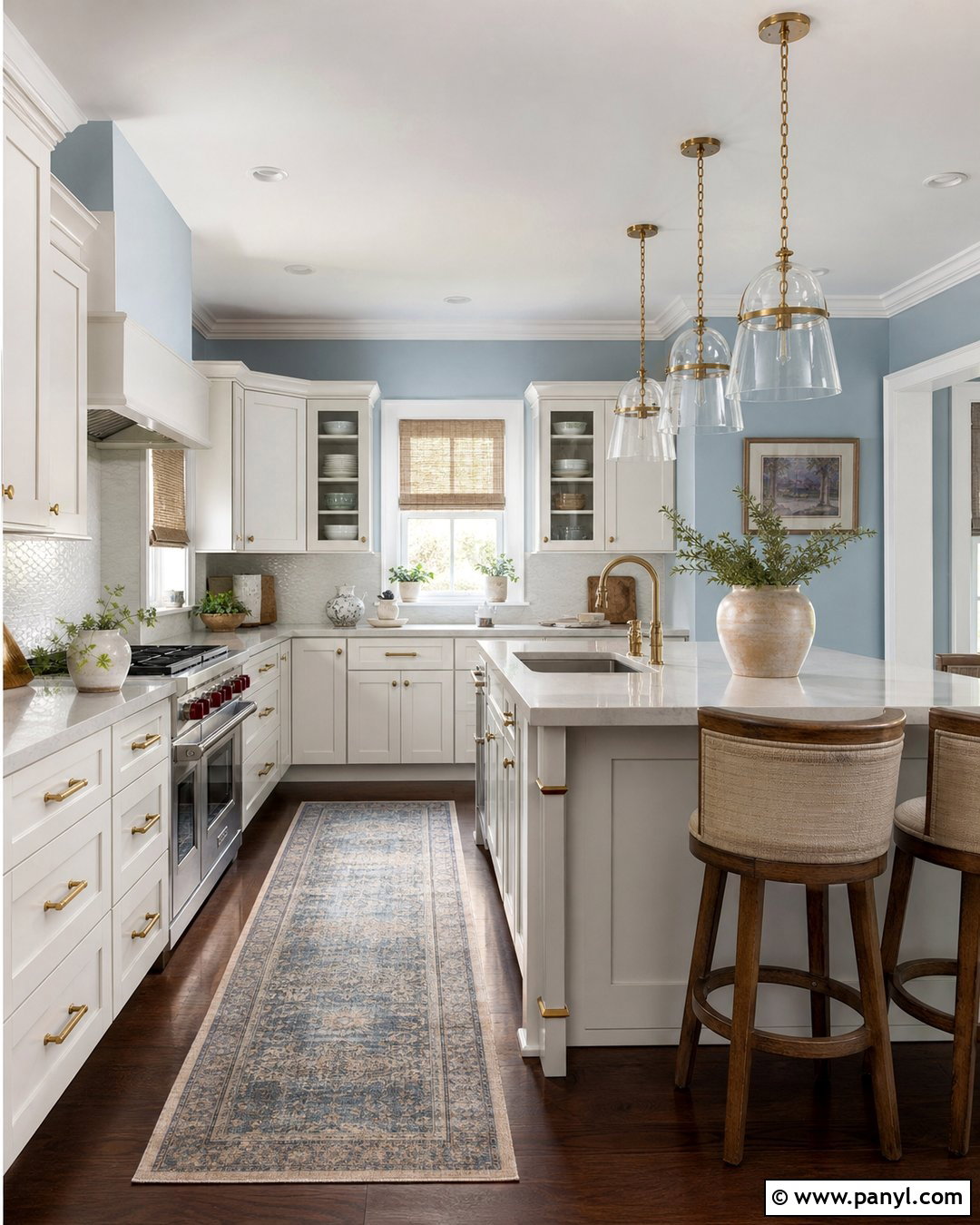
A navy island gives cornflower blue walls extra depth without abandoning the soothing blue palette. Use warm white cabinets around the perimeter so the room remains balanced and bright. Top every cabinet with white quartz or quartzite featuring restrained gray veining. The navy island can include deep drawers, open cookbook storage, and light oak stools for practical contrast. Choose brushed brass hardware across both cabinet colors to visually connect them. A pale herringbone tile backsplash adds movement without introducing another strong hue. Finish the design with medium oak flooring, oversized white pendants, and a blue-and-cream vintage-style runner. The darker island anchors the center of the room, while the lighter cornflower walls provide separation. This layered approach works best in kitchens with generous daylight and a clearly defined island.
8. Cornflower Blue Farmhouse Kitchen Walls
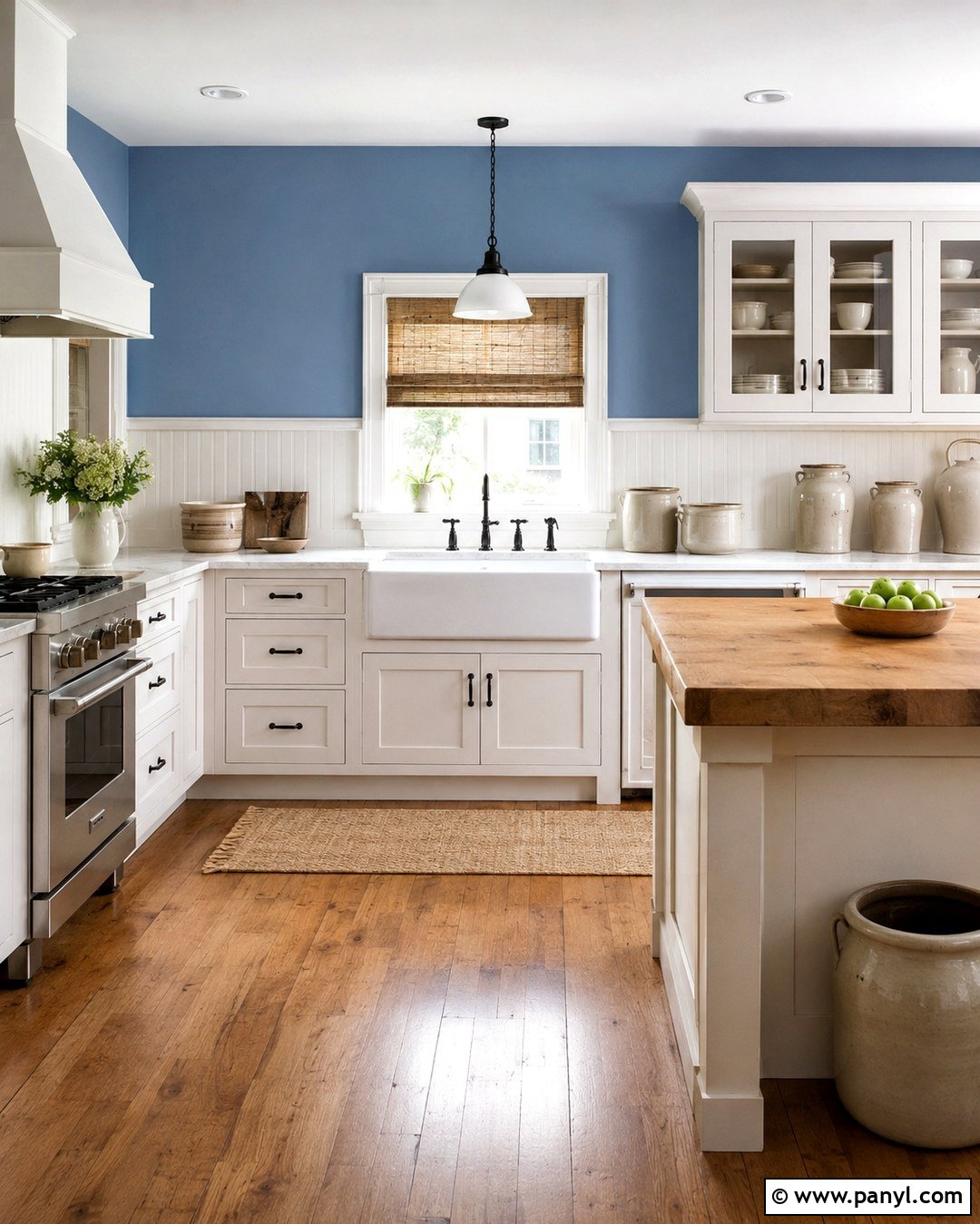
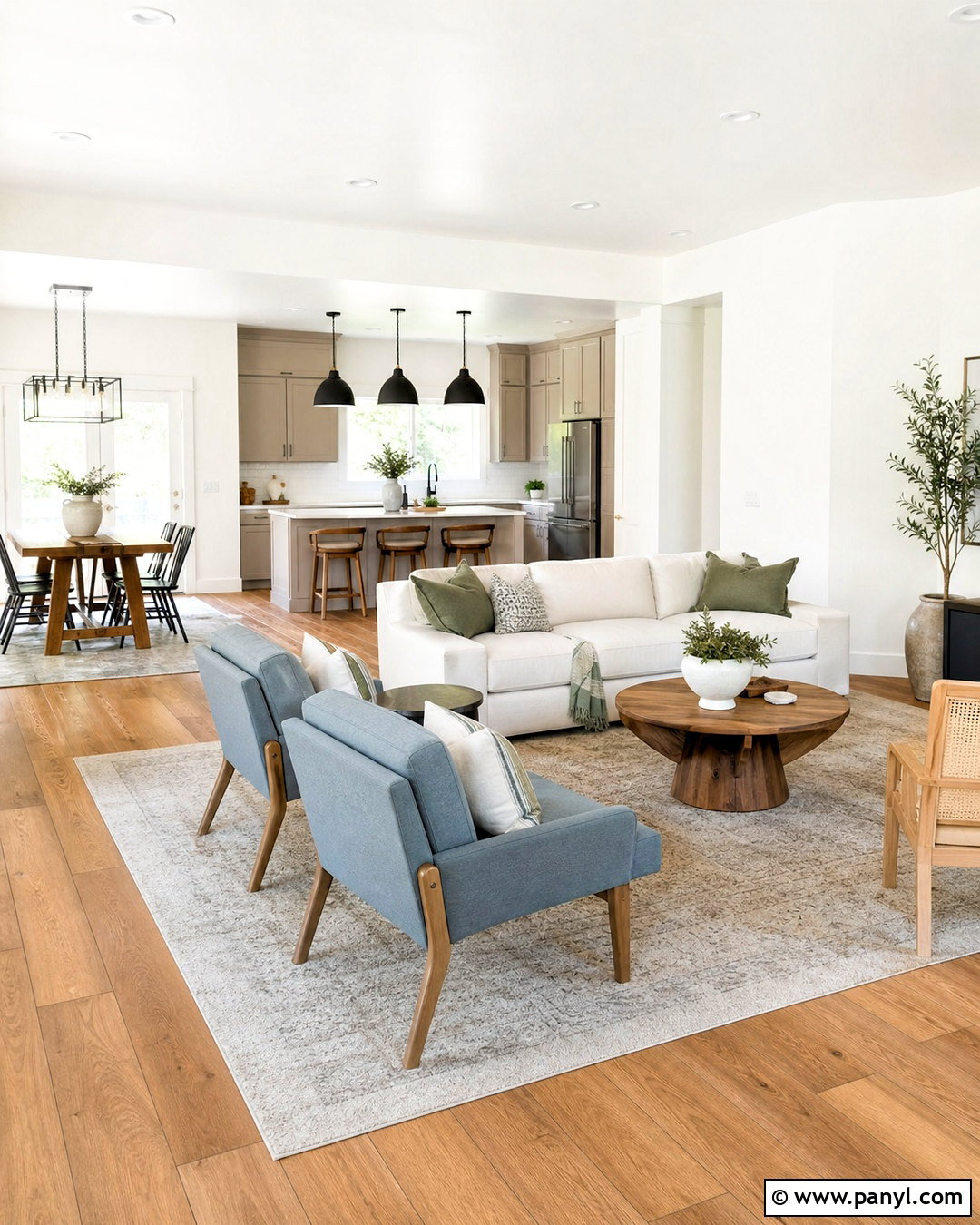
Imagine morning light falling across cornflower blue walls, a white apron sink, and softly worn oak floors. This farmhouse kitchen uses warm white Shaker cabinets, butcher-block counters on the island, and pale quartz around the sink and range. Install simple white beadboard behind open shelving to introduce texture while protecting busy work areas. Black iron bin pulls and an aged bronze bridge faucet provide modest rustic contrast. Choose two large enamel pendants over the island and woven wood shades at the windows. A freestanding oak hutch can hold everyday dishes and break up a long cabinet run. Keep decorations practical with stoneware crocks, cutting boards, and folded linen towels. The entire room should feel comfortable and functional, not overly themed or filled with unnecessary country accessories.
9. Cornflower Blue Coastal Kitchen Walls
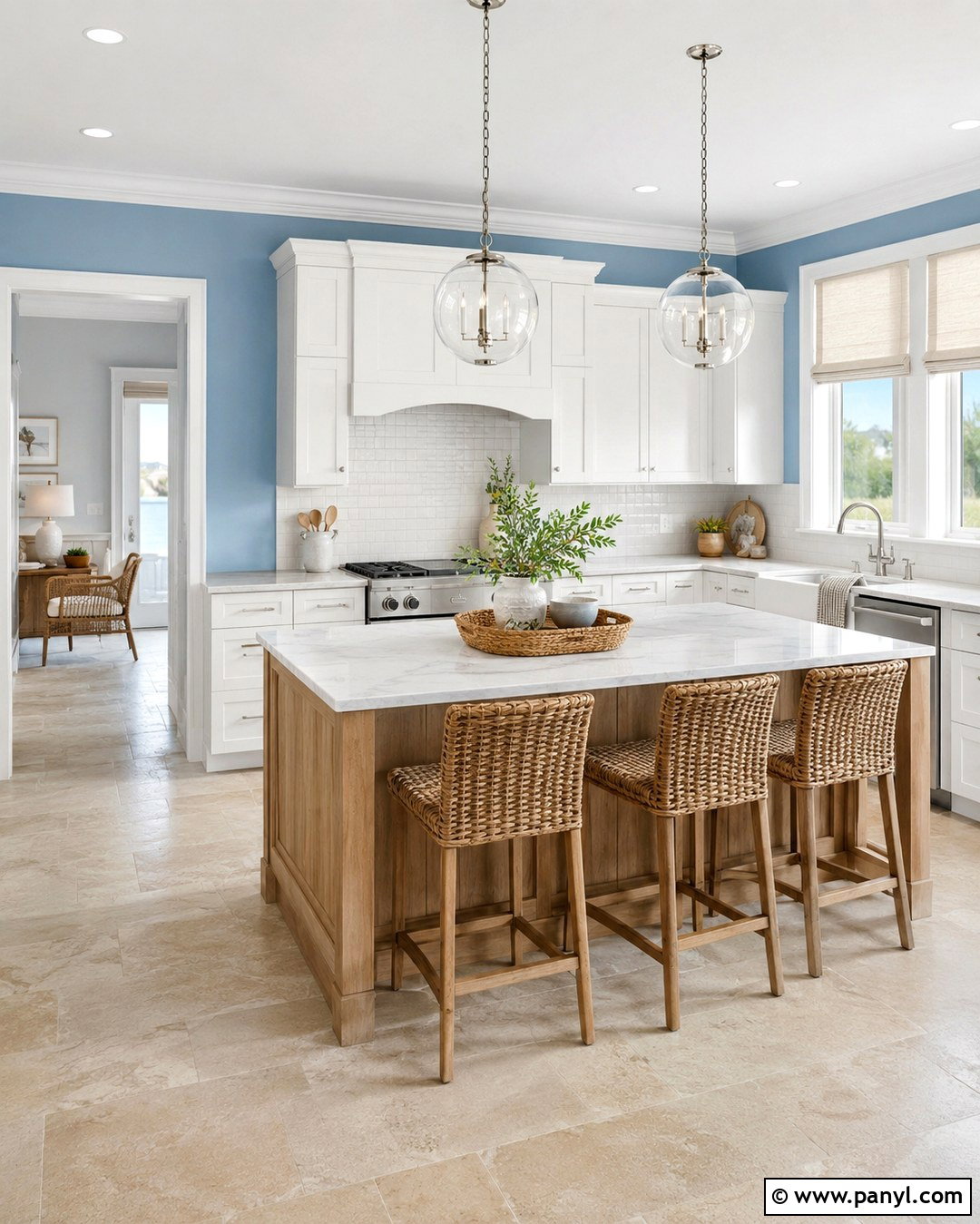
For a coastal look that avoids obvious nautical decorations, combine cornflower blue kitchen walls with white cabinetry, pale wood, and sandy beige textiles. Use a lightly veined white countertop and glossy shell-white backsplash tiles to reflect natural light. A bleached oak island with woven counter stools establishes an airy, casual center. Select polished nickel hardware and clear globe pendants for a subtle watery shine. Light oak or limestone-look flooring keeps the foundation neutral. Dress windows with simple off-white linen shades and place a washable beige-and-blue runner near the sink. Decorative details might include sea-glass-colored bottles, white pottery, and one piece of understated coastal artwork. The completed design suggests sky and water through color and texture without relying on anchors, signs, rope, or other literal seaside motifs.
10. Cornflower Blue Modern Kitchen Walls
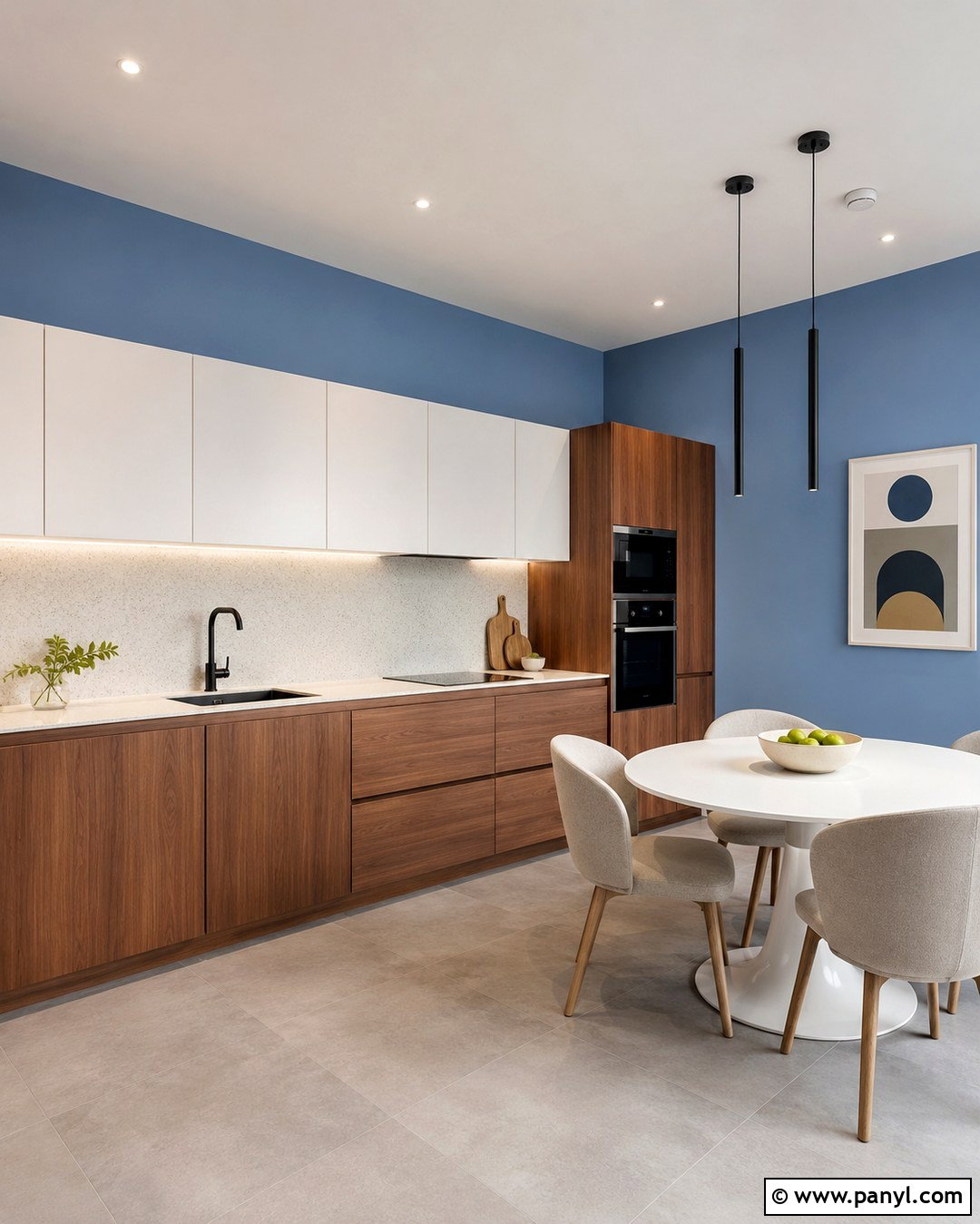
Clean lines make cornflower blue walls look crisp and architectural. Select handle-free white slab cabinets for the upper storage and flat-front walnut cabinets below. Continue a pale quartz backsplash from the counter to the upper cabinets for a smooth, low-maintenance work zone. The visible blue walls can frame a breakfast area, doorway, or uninterrupted section beside the cabinetry. Use a simple black faucet, slim black pendants, and integrated appliances to maintain the modern profile. Large-format light gray floor tiles provide a quiet foundation, while walnut introduces necessary warmth. Add a round white table with curved wooden chairs if space permits. Keep countertops mostly open, displaying only a sculptural bowl and one small plant. The result feels minimal but not cold because the wall color supplies personality.
11. Cornflower Blue French Country Kitchen Walls
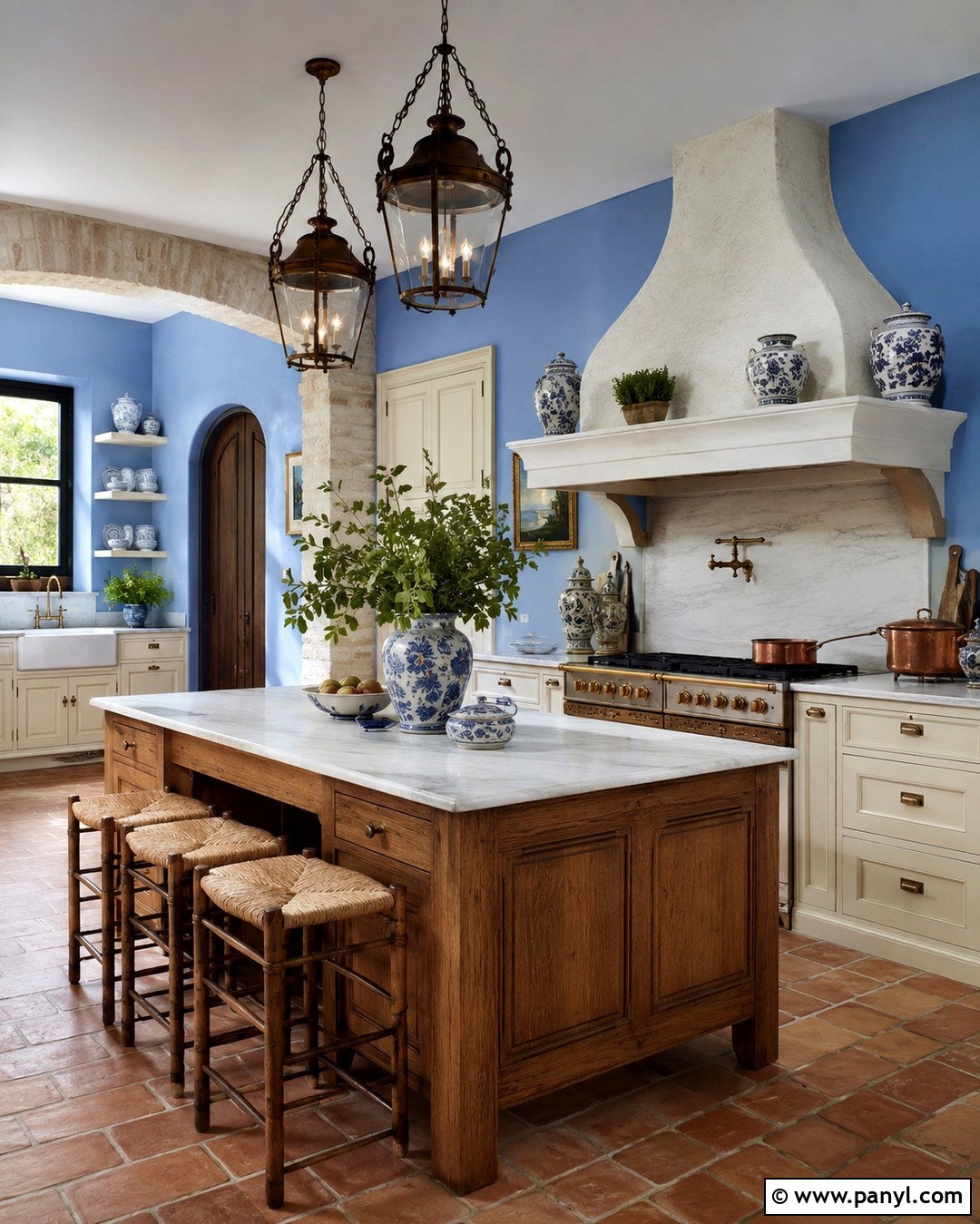
Cornflower blue naturally complements the aged finishes and graceful details of a French country kitchen. Pair the walls with creamy inset cabinets, antique brass latches, and a substantial plaster range hood. Select honed marble or marble-look quartz for the countertops and continue the material behind the range. A medium oak island with turned legs creates a warm focal point, while rush-seat stools reinforce the relaxed character. Use terracotta flooring or warm stone-look tile underfoot. Lantern pendants, linen café curtains, and a few floral ceramics bring softness without cluttering the room. Include one freestanding glass-front cabinet for dishes and serving pieces. The finished kitchen should look collected over time, balancing practical storage with gently aged materials, traditional silhouettes, and the clear freshness of cornflower blue walls.
12. Cornflower Blue Cottage Kitchen Walls
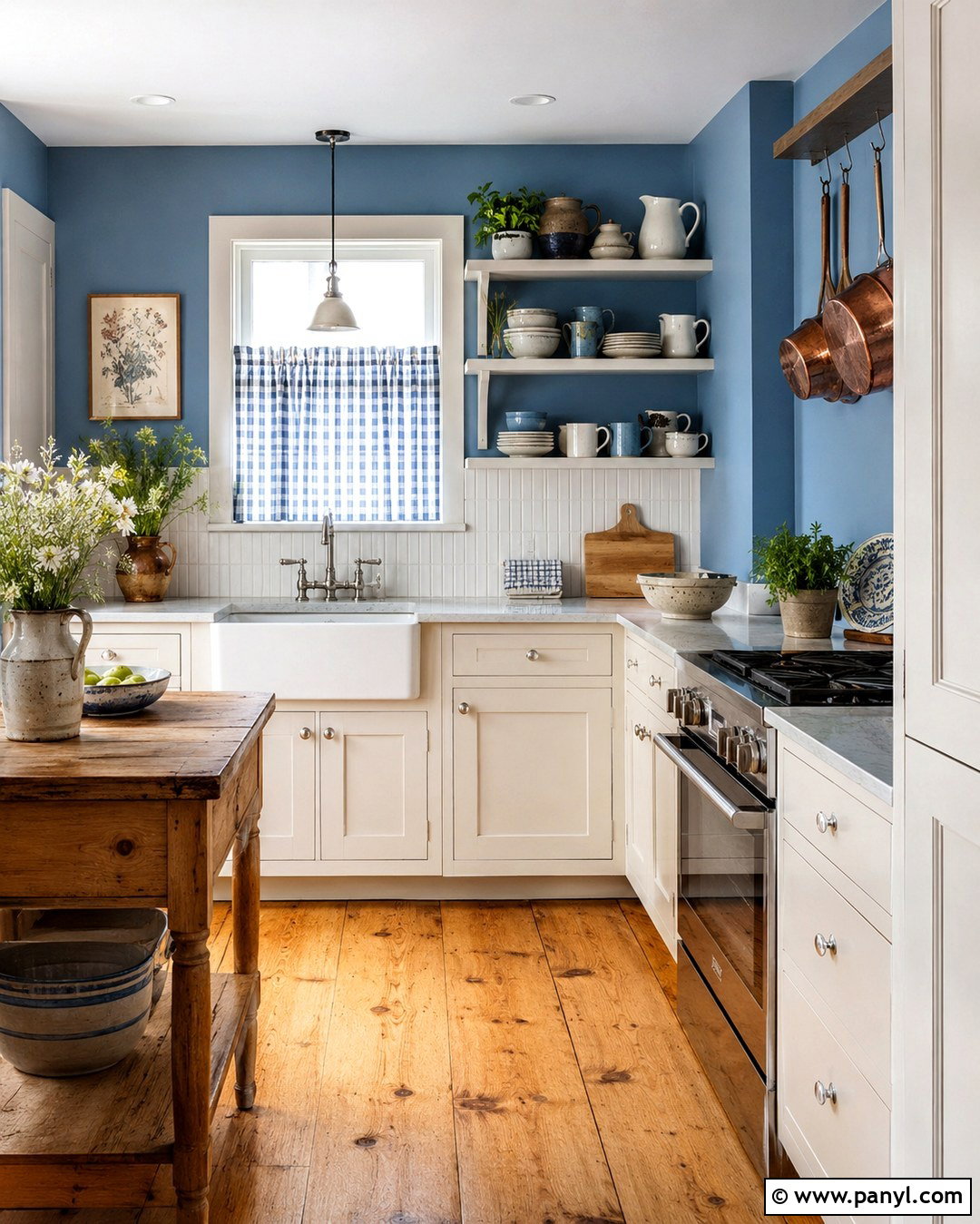
A small cottage kitchen can carry generous color when its remaining finishes feel simple and light. Cover the walls in cornflower blue, then add warm white cabinets with inset doors and small polished nickel knobs. Use white quartz counters and narrow vertical backsplash tiles to create a subtle sense of height. A compact oak worktable can replace a bulky island, providing preparation space without blocking movement. Install open shelving near the window for everyday dishes and keep taller storage on one wall. Painted wood flooring in a soft cream or natural pine boards enhances the cottage character. Complete the room with a pleated pendant, gingham café curtain, woven runner, and several pieces of handmade pottery. Every detail feels charming, but the uncluttered layout keeps the kitchen functional and visually spacious.
13. Cornflower Blue Kitchen Walls With Terracotta Floors
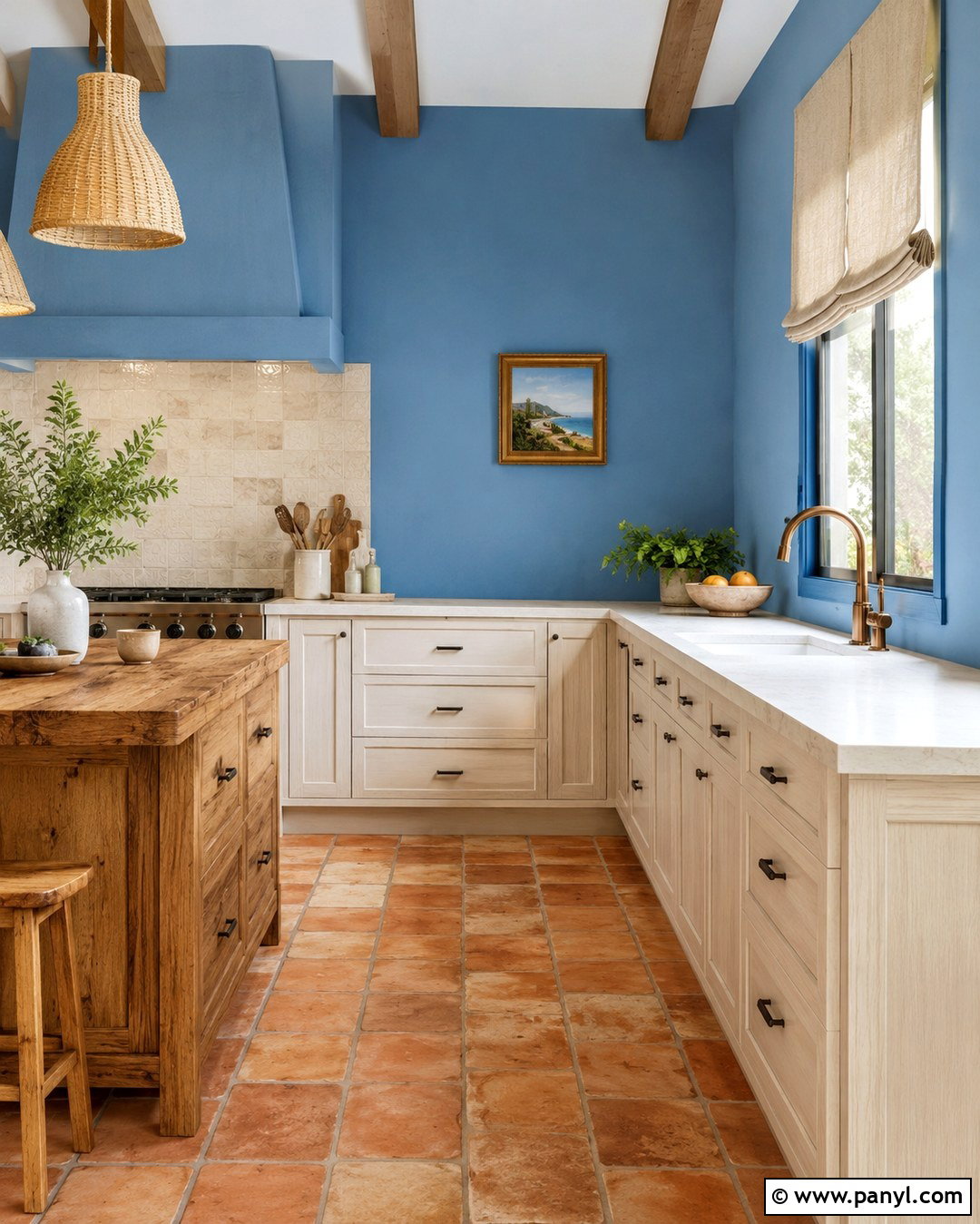
Warm terracotta flooring creates an earthy counterpoint to the cool clarity of cornflower blue kitchen walls. Choose medium-toned clay tiles with natural color variation and a matte finish. Pair them with warm white cabinets and creamy stone countertops to bridge the blue and rust-colored surfaces. A backsplash of handmade ivory zellige-style tiles will add texture without competing with the floor. Use dark bronze hardware, a copper-toned faucet, and simple wooden pendants to continue the warm accents. An oak island or worktable makes the room feel approachable and casual. Keep fabrics light with natural linen shades and an ivory runner containing small blue details. The overall palette has Mediterranean warmth, yet straightforward cabinetry and limited decoration allow it to fit comfortably inside an average contemporary American home.
14. Cornflower Blue Kitchen Walls With Marble
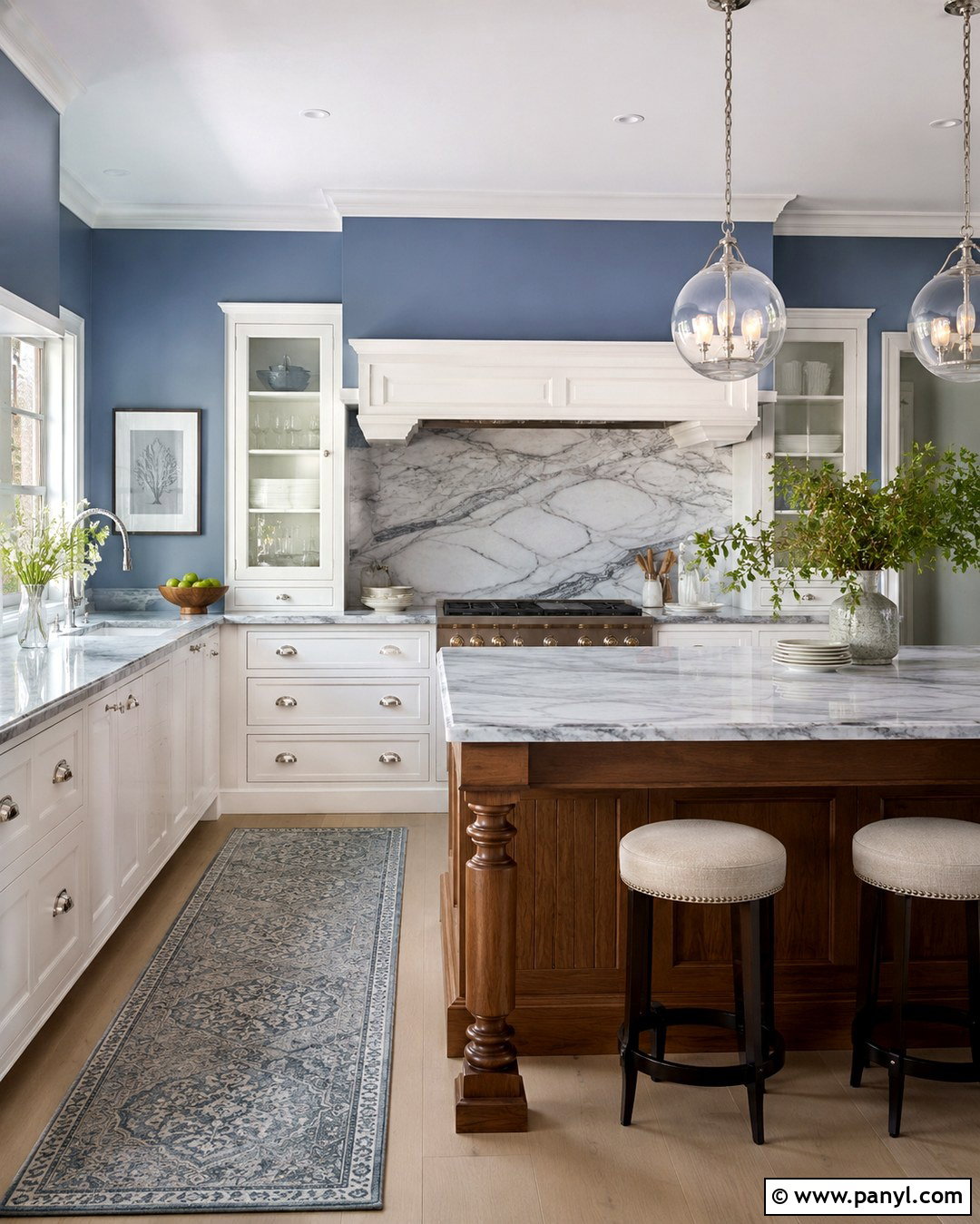
Marble gives cornflower blue walls a polished, graceful companion. Use white cabinets with minimal detailing and select marble or quartzite that contains soft gray-blue veining. Continue the stone from the countertops up the backsplash behind the range for a seamless focal area. A medium walnut island introduces contrast and prevents the kitchen from becoming too pale. Choose polished nickel hardware for a cool, refined finish, or aged brass if the room needs additional warmth. Large glass pendants will preserve open sightlines while illuminating the island. Pale oak flooring adds softness underfoot, and a simple blue-gray runner connects the surfaces. Keep accessories limited to white ceramics, clear glass, and wooden boards. This complete combination feels sophisticated while remaining bright enough for daily family cooking and casual meals.
15. Cornflower Blue Small Kitchen Walls
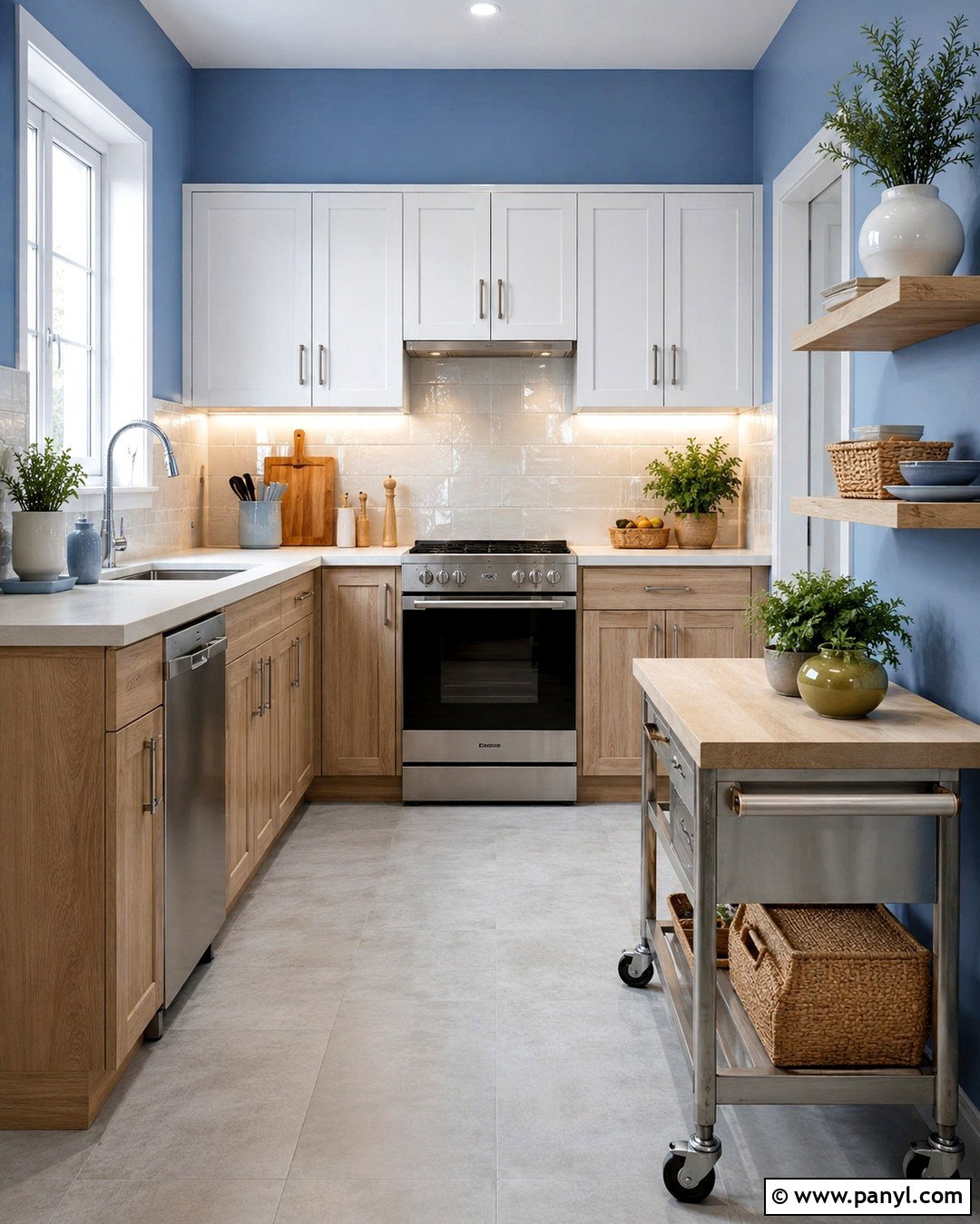
In a compact kitchen, cornflower blue walls can add personality while a carefully planned layout protects visual space. Choose white upper cabinets that blend into a white ceiling and pale oak base cabinets that ground the room. Install reflective off-white backsplash tiles and light quartz countertops to distribute light. A single-wall or L-shaped arrangement leaves the center open and improves movement. Replace a full island with a narrow movable cart or a wall-mounted breakfast ledge. Use under-cabinet lighting, one flush ceiling fixture, and a small pendant above the eating area. Polished nickel hardware and a light gray floor keep the palette crisp. Limit counter decor to essential items stored in matching containers. The blue remains noticeable, but the kitchen still feels organized, open, and easy to navigate.
16. Cornflower Blue Open Concept Kitchen Walls
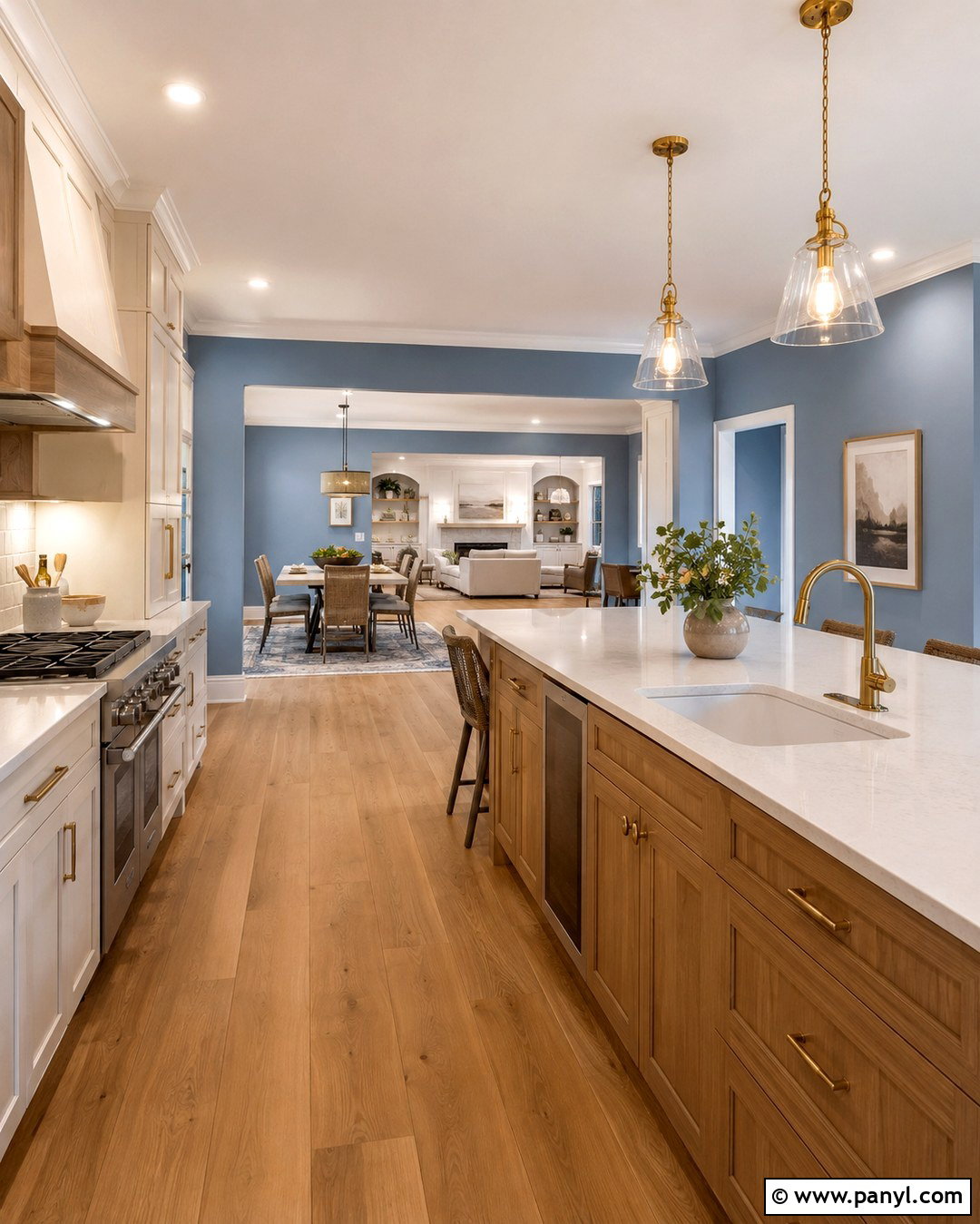
Open-concept rooms need colors that connect the kitchen to nearby living and dining spaces. Use cornflower blue on the kitchen walls, then repeat it sparingly through dining chair fabric, artwork, or living room pillows. Warm white kitchen cabinets and a large natural oak island create a neutral bridge between zones. Add pale quartz counters, soft white backsplash tiles, and aged brass hardware for a welcoming finish. Wide-plank oak flooring should continue throughout the entire open space to create uninterrupted flow. Define the kitchen with three simple glass pendants rather than a different floor material. Nearby walls can remain warm white or light greige. This strategy allows the blue kitchen to have its own identity while carefully repeated color, wood, metal, and fabric details tie the larger room together.
17. Cornflower Blue Galley Kitchen Walls
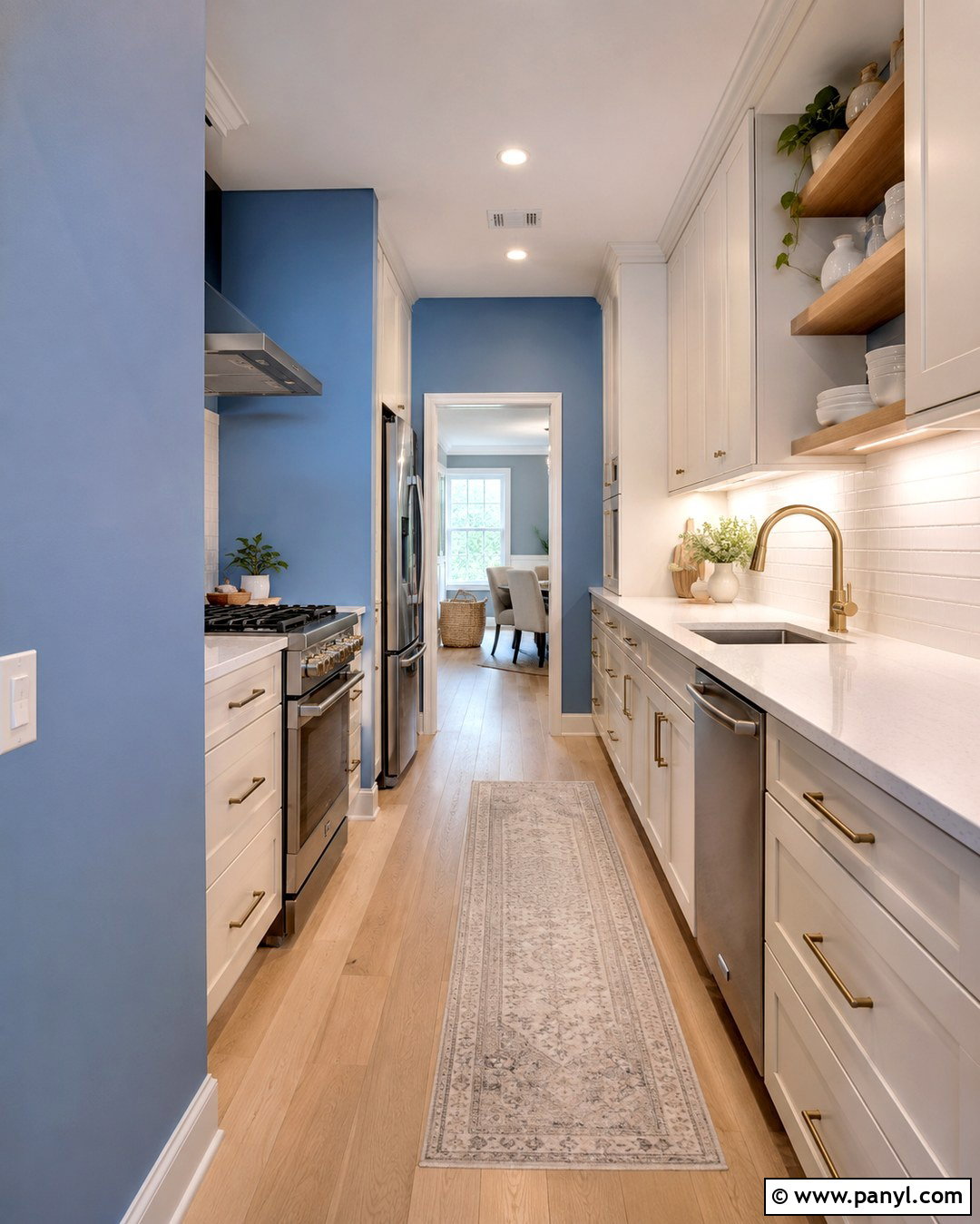
A narrow galley kitchen becomes more inviting when cornflower blue walls add color at eye level and pale finishes maintain brightness. Install creamy white cabinets on both sides, keeping one side limited to base cabinets or open shelves when possible. Use light quartz countertops and a glossy white backsplash that reflects both daylight and task lighting. At the far end, paint the uninterrupted wall cornflower blue and add a simple framed print to create a clear focal point. Choose pale oak flooring laid lengthwise to emphasize the room’s direction. Slim brass pulls, flush ceiling lights, and under-cabinet LEDs keep the design streamlined. A narrow washable runner introduces softness without restricting movement. The completed kitchen feels colorful and efficient rather than tight, shadowed, or visually crowded.
18. Cornflower Blue Eat-In Kitchen Walls
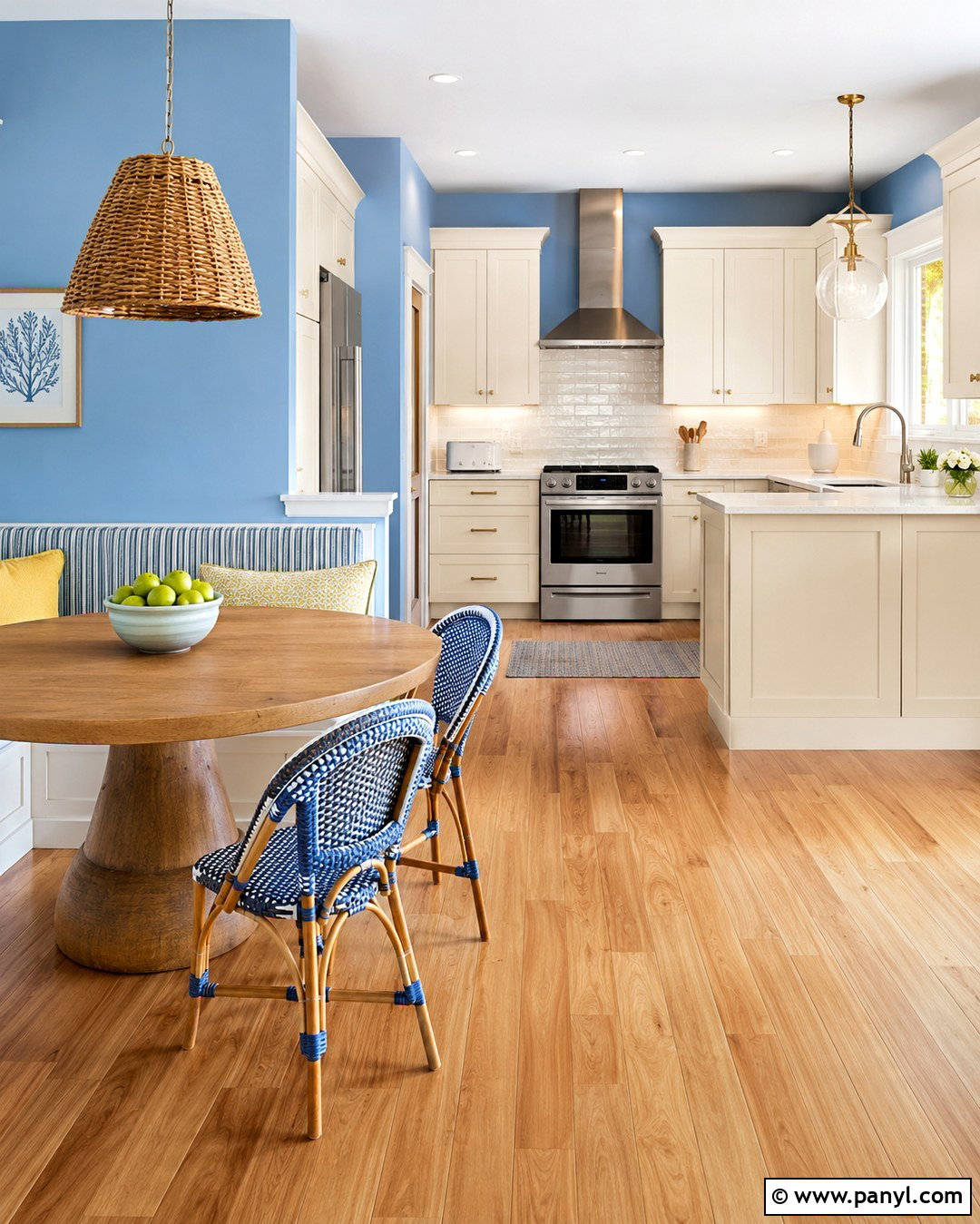
Cornflower blue walls can turn an everyday breakfast corner into a cheerful destination. Pair the color with warm white cabinets, maple flooring, and pale quartz countertops throughout the cooking area. Place a built-in cream banquette beneath a window, then add a round oak pedestal table and two lightweight dining chairs. Upholster the bench in a small blue-and-white stripe and include a few washable cushions in soft yellow and ivory. A woven pendant centered over the table visually defines the eating zone. Use brass cabinet hardware and natural woven shades to carry warmth across the room. Keep the backsplash quiet with glossy ivory tiles. This complete layout creates a comfortable place for breakfast, homework, and casual conversation while ensuring the kitchen and dining corner feel like one coordinated space.
19. Cornflower Blue Vintage Kitchen Walls
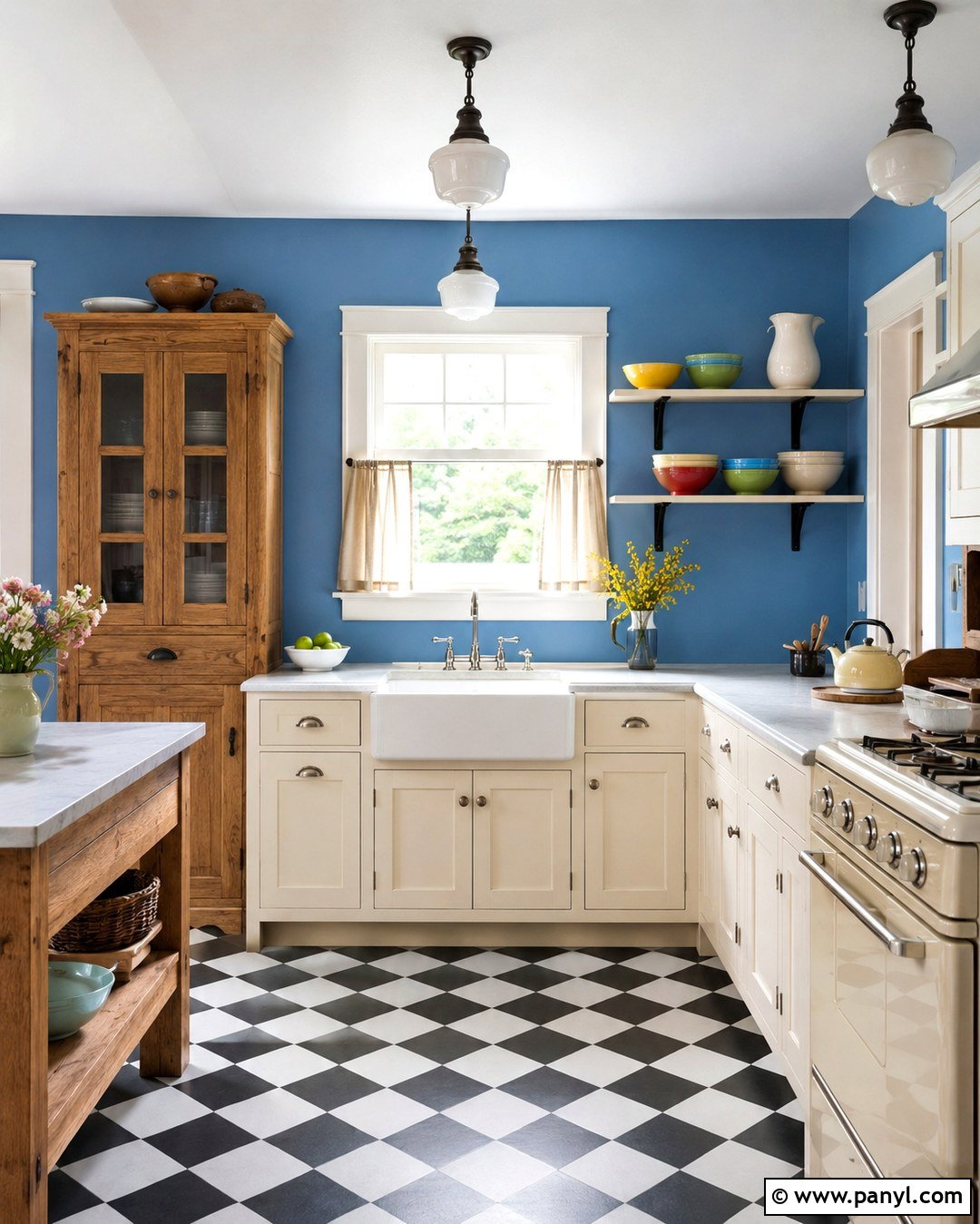
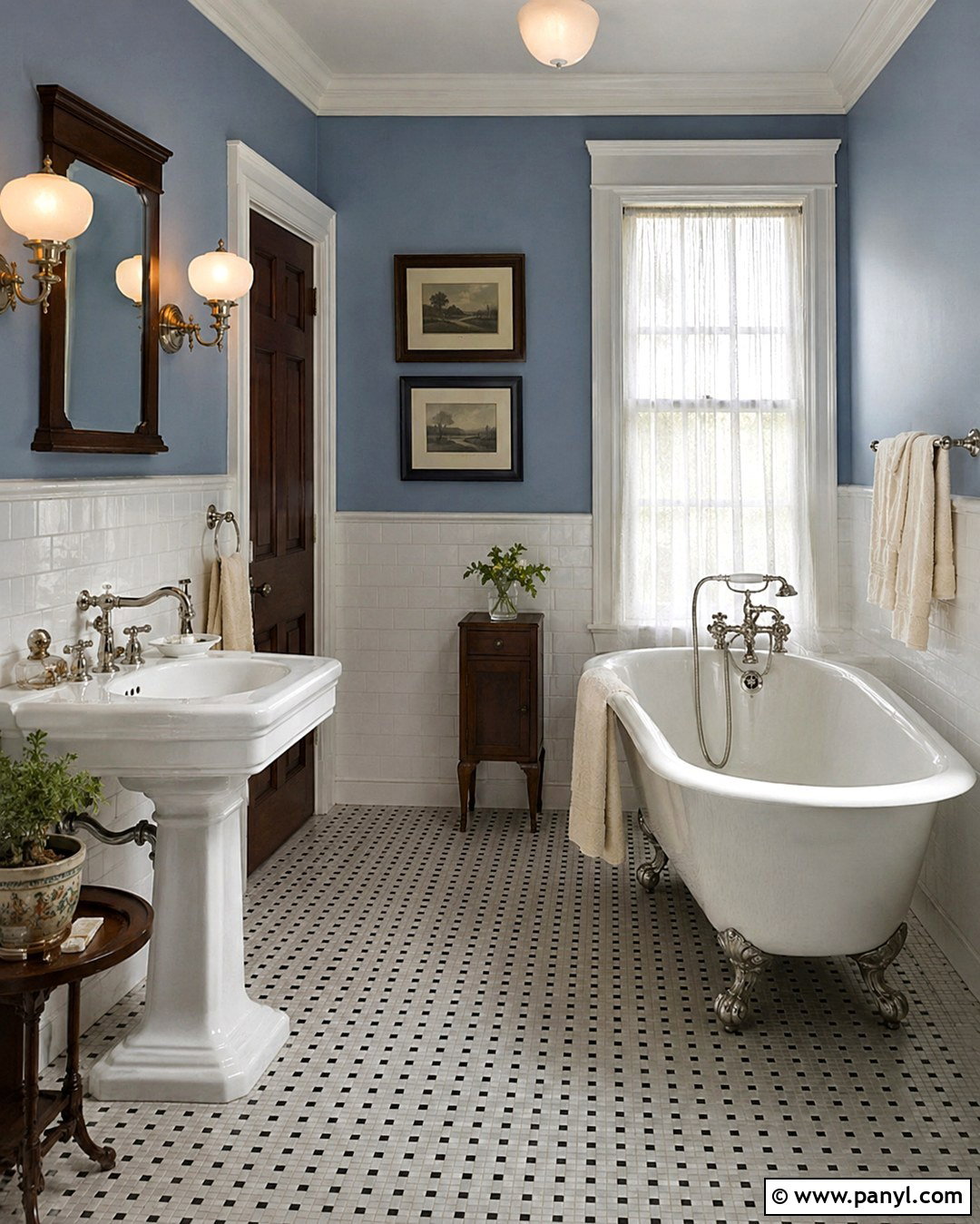
Vintage details feel lively rather than dated when placed against clean cornflower blue kitchen walls. Begin with cream cabinets, simple inset doors, and polished nickel latches. Choose a white apron sink, a bridge faucet, and durable white quartz counters with a subtle marble appearance. Small black-and-white checkerboard floor tiles create a graphic foundation, while a plain white backsplash keeps the room from becoming too busy. Add a freestanding oak pantry cabinet, milk-glass ceiling lights, and a compact retro-style range in cream or white. Café curtains with a restrained blue pattern provide softness at the window. Display colorful mixing bowls and classic cookware on one open shelf. The design celebrates older kitchen character while modern storage, lighting, and work surfaces support practical daily use.
20. Cornflower Blue Color Drenched Kitchen Walls
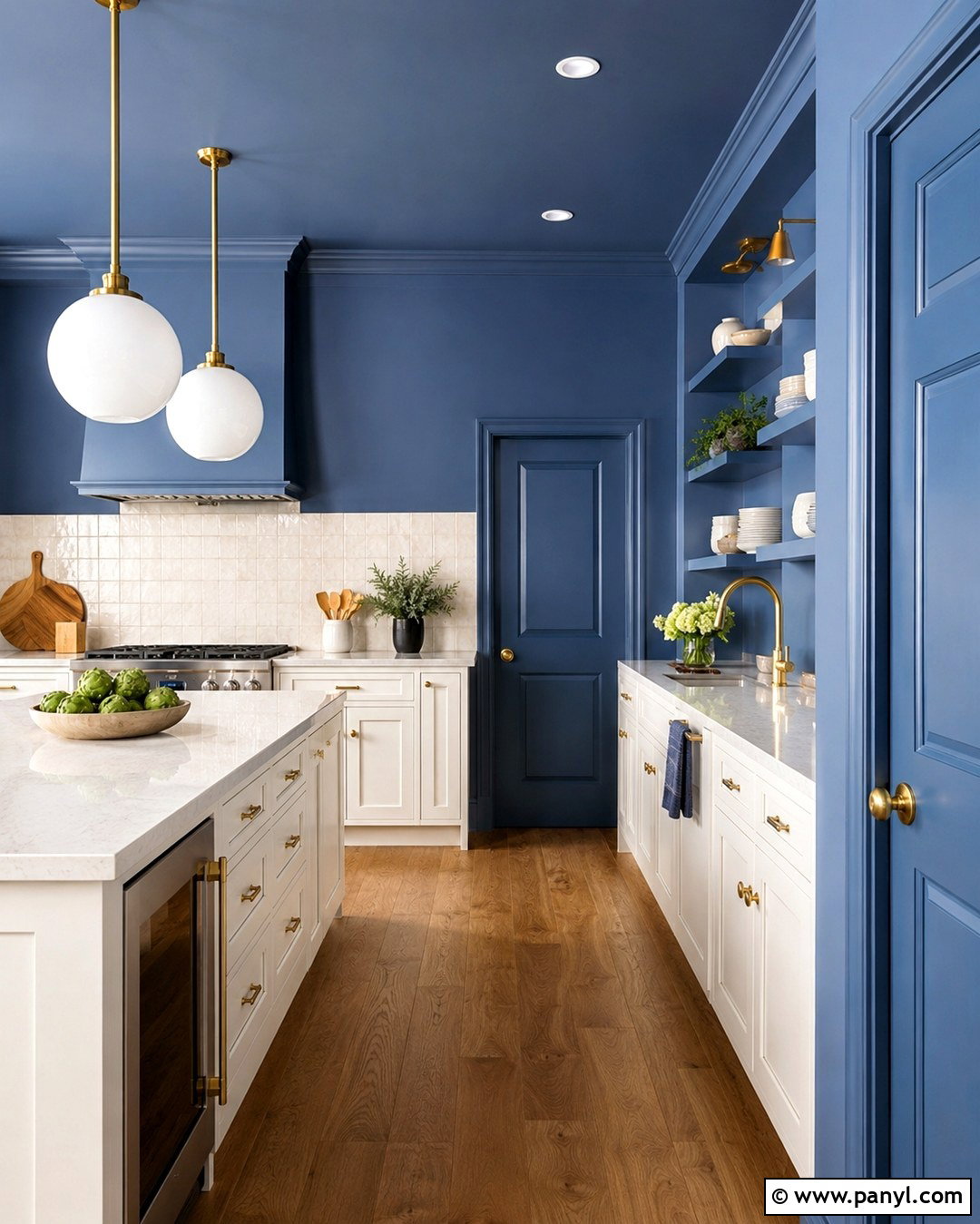
For an immersive finish, carry cornflower blue from the kitchen walls onto the trim, doors, open shelving, and ceiling. Use slightly different sheens to create definition: washable eggshell on the walls, satin on the woodwork, and a flat ceiling finish. Keep the cabinets warm white or natural oak so they remain visible against the continuous blue background. White quartz counters and a creamy backsplash will introduce necessary brightness. Add aged brass hardware, medium oak flooring, and oversized white globe pendants to balance the saturated envelope. A matching blue pantry door can make the room feel intentionally complete. This approach works best with strong natural and artificial lighting. The result is bold and cohesive, yet practical neutral surfaces keep the kitchen from appearing overwhelming or visually flat.
Conclusion:
Cornflower blue is flexible enough to support coastal, modern, farmhouse, cottage, vintage, and traditional kitchens. The most successful rooms treat it as part of a complete palette rather than an isolated paint choice. White and cream create brightness, oak adds natural warmth, black introduces structure, and sage or yellow supplies playful contrast. Countertops, backsplash materials, floors, hardware, lighting, and textiles should all reinforce the intended atmosphere. Always test large painted samples beside existing finishes before committing, since natural and artificial light can shift the color throughout the day. Whether you prefer a quiet neutral pairing or an immersive color-drenched room, these 20 Cornflower Blue Kitchen Walls provide practical starting points for a distinctive, welcoming kitchen.

Related Ideas and Inspiration:
Leave a Reply